
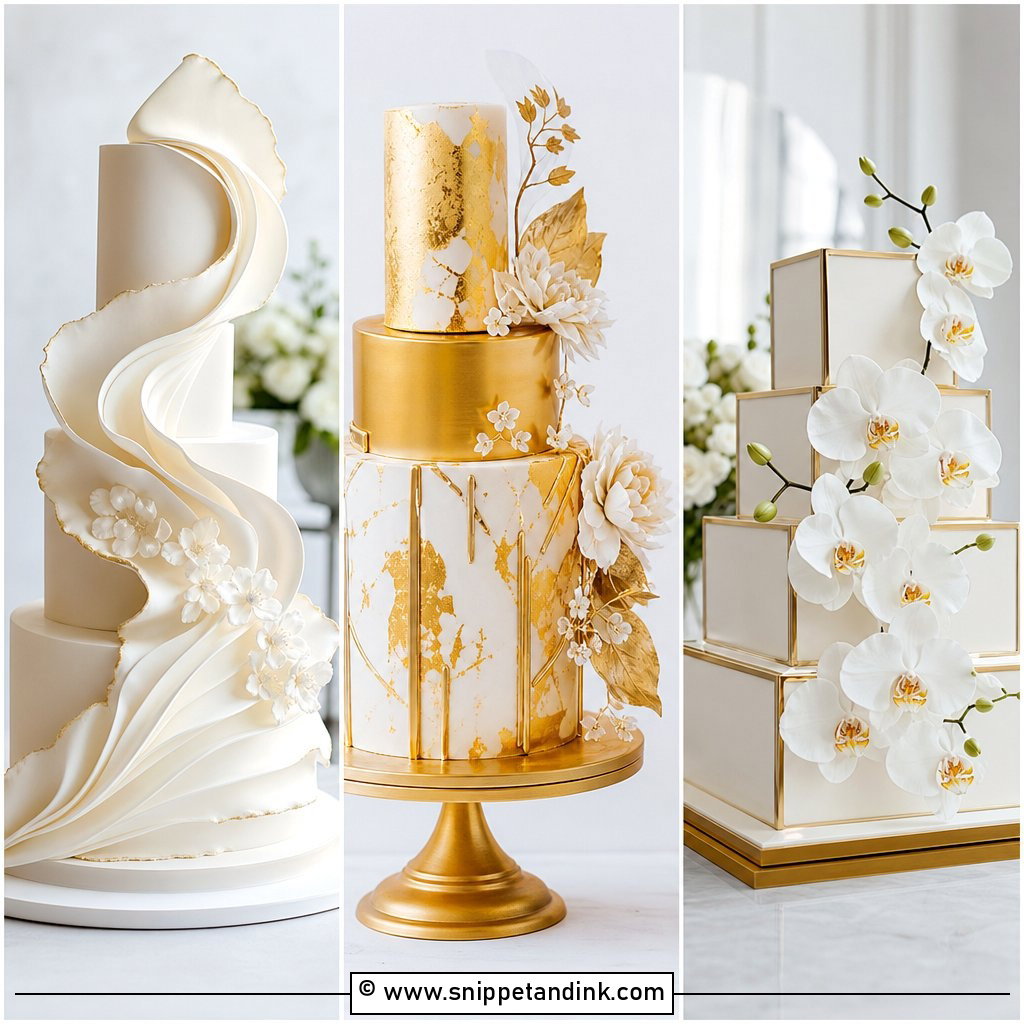
A wedding cake can look polished without being complicated, expensive or stressful to plan. Nearly every easy design I make relies on the same few things: a clean shape, smooth or lightly textured buttercream, and one detail that carries the look, such as flowers, fruit, piping or a single color. That holds if you’re baking it yourself, ordering from a local baker or gathering ideas before a tasting. The right cake is the one that suits your venue, your season and the number of people you need to feed, so start simple and add one memorable detail.
How Many Guests Each Tier Size Feeds
Before falling for a design, work out how much cake you actually need. Wedding portions are narrower than party slices, usually about one inch by two inches and the full height of the tier, which is why a modest cake feeds more people than you’d expect. These are the round-tier figures most bakers start from:
- 6 inch round: about 12 wedding slices
- 8 inch round: about 24
- 10 inch round: about 38
- 12 inch round: about 56
A square tier of the same width gives a few more slices than a round one. Bakers cut differently and tier heights vary, so treat these as a starting point. Some couples order a little under the full guest count when there’s also a dessert course; I’d only do that if you’re comfortable with a few guests going without.
1. Simple Buttercream Wedding Cake
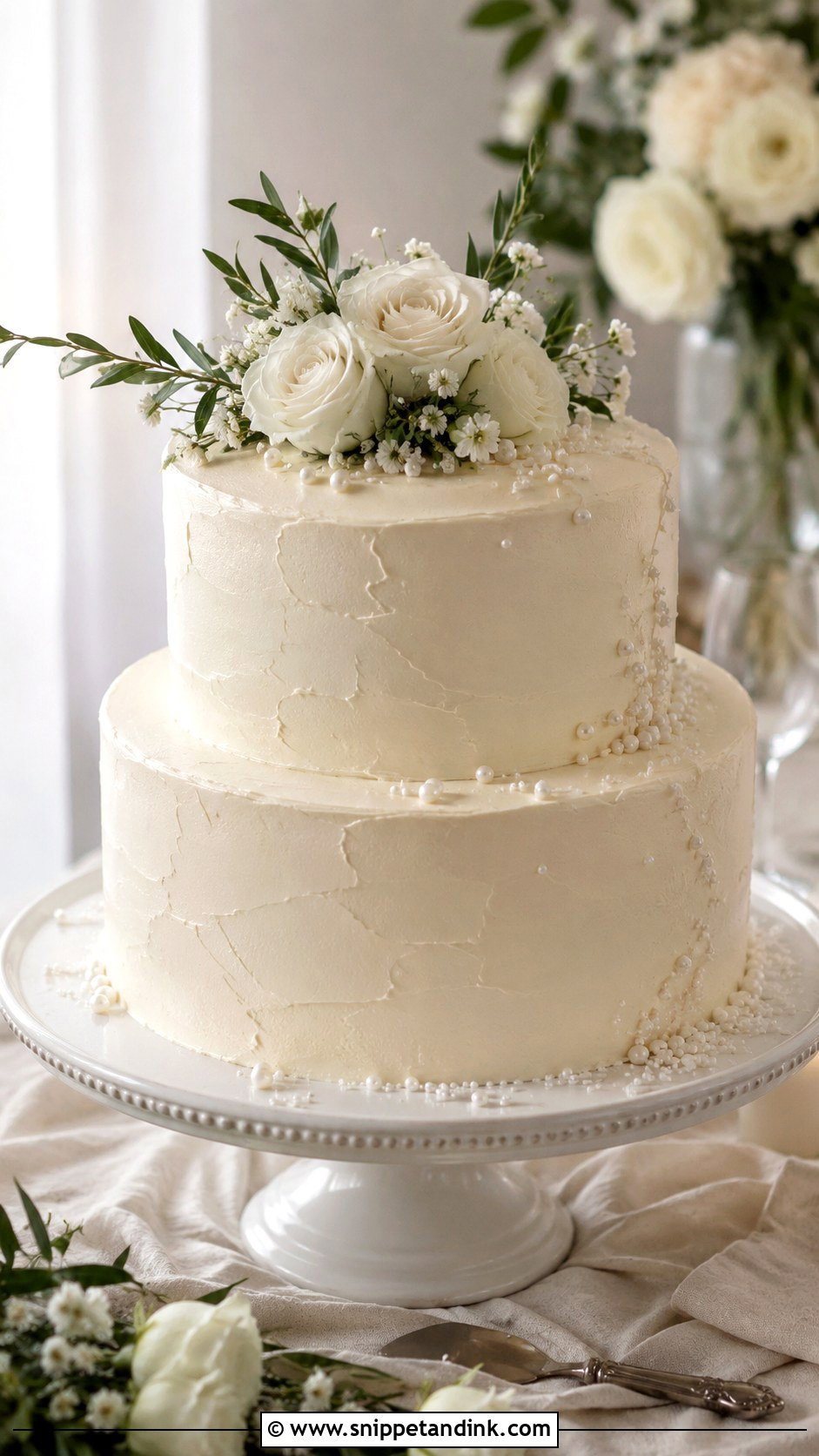
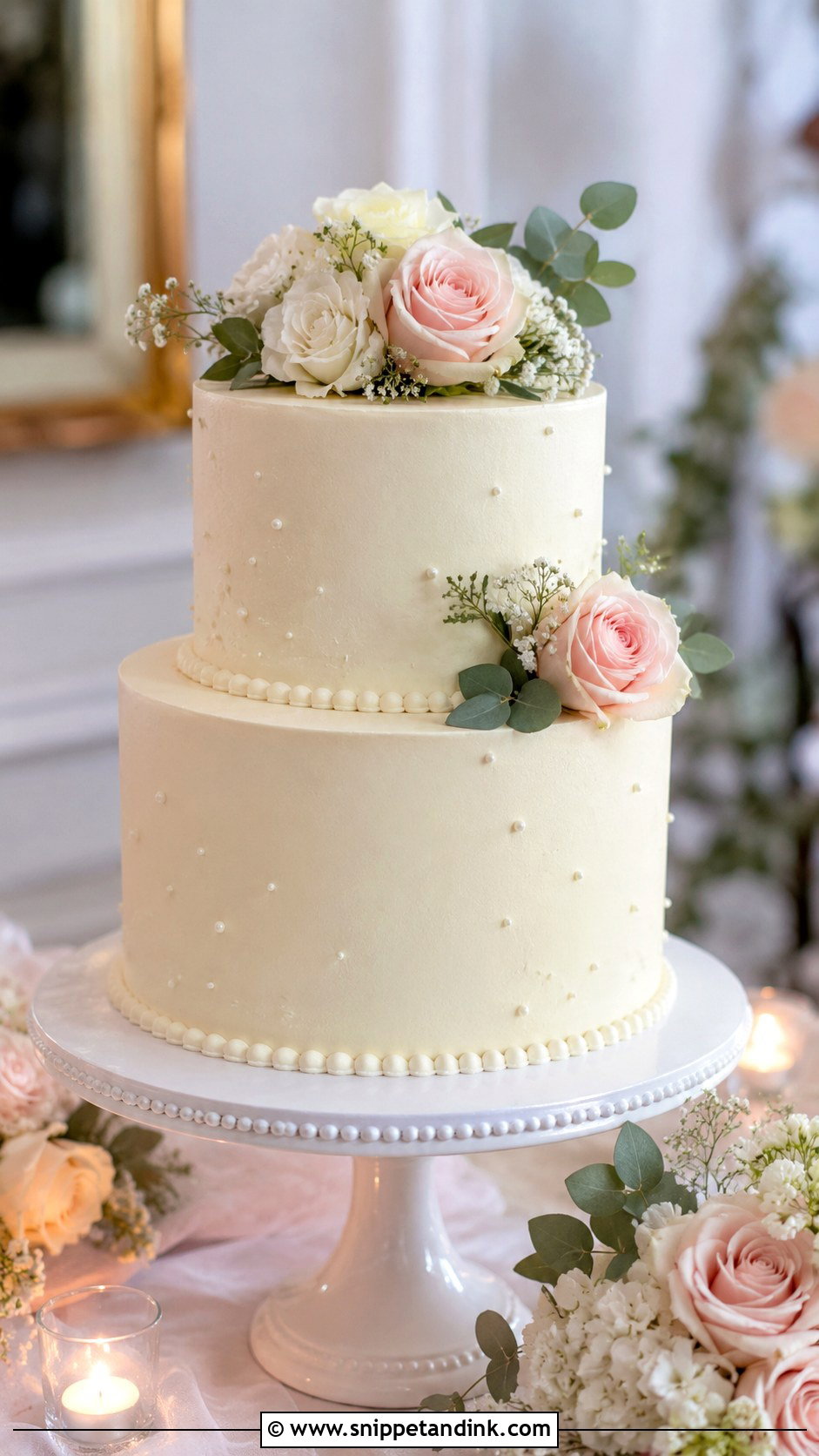
Smooth buttercream works with almost every wedding style, and soft spatula marks stop it from looking stark. This design is great for beginners because buttercream can be scraped back and reworked, whereas fondant shows every dent once it’s laid. Small flaws soften under a warm scraper or a few piped dots. Vanilla, almond, lemon and white chocolate sponges all suit it. One warning: true white buttercream is hard to get because butter is yellow, so expect ivory unless your baker whitens it.
2. Two Tier Wedding Cake
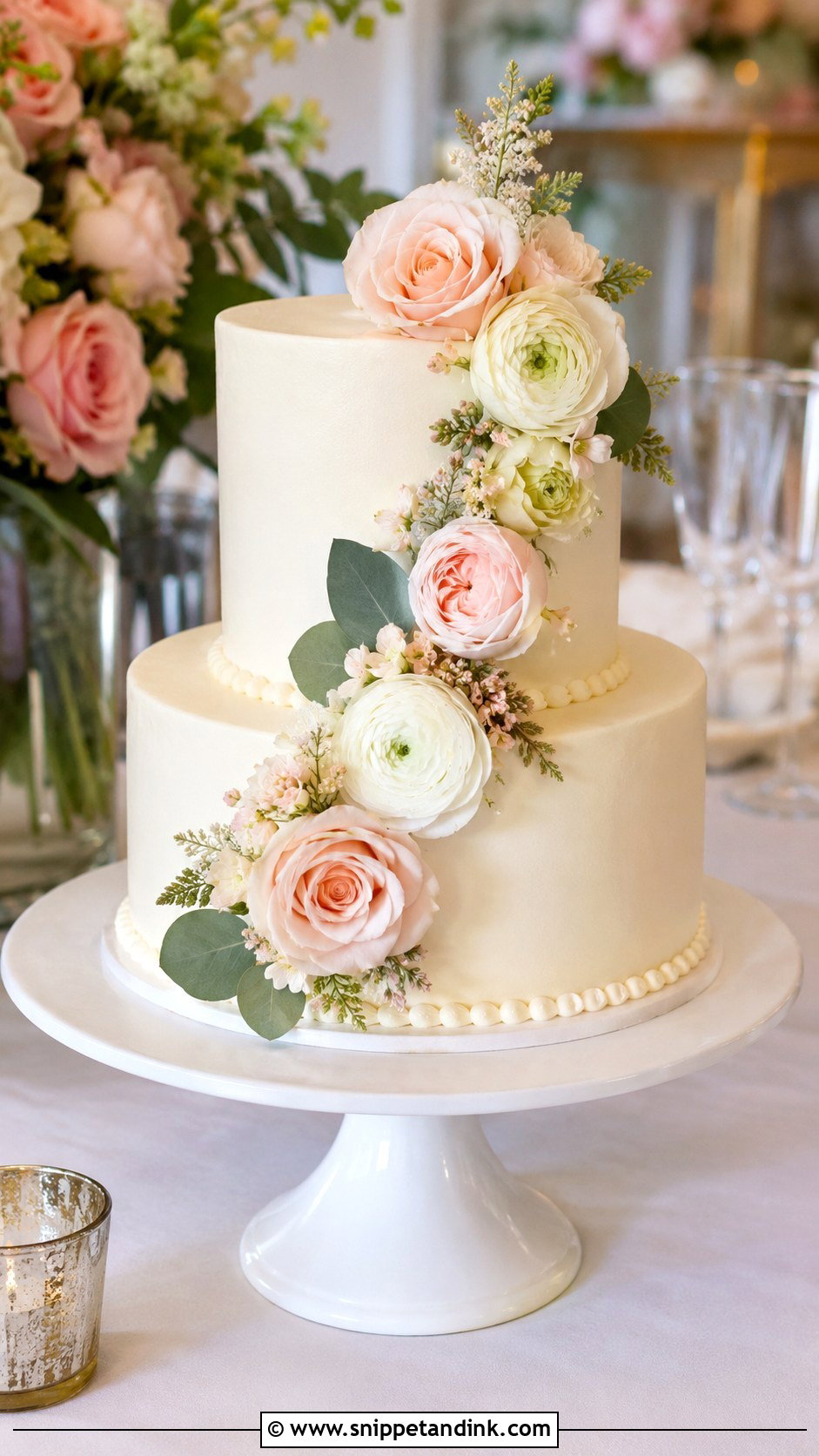
Two tiers are my default for a reception of around fifty guests or fewer. You get the stacked wedding look, but the cake is far easier to carry, decorate and serve than a tall one. An eight inch base under a six inch top is a balanced pairing and gives roughly three dozen standard wedding slices. Keep the frosting smooth or lightly textured and decorate one side only. Cupcakes or cookies on the same table fill any gap in servings.
3. Single Tier Wedding Cake
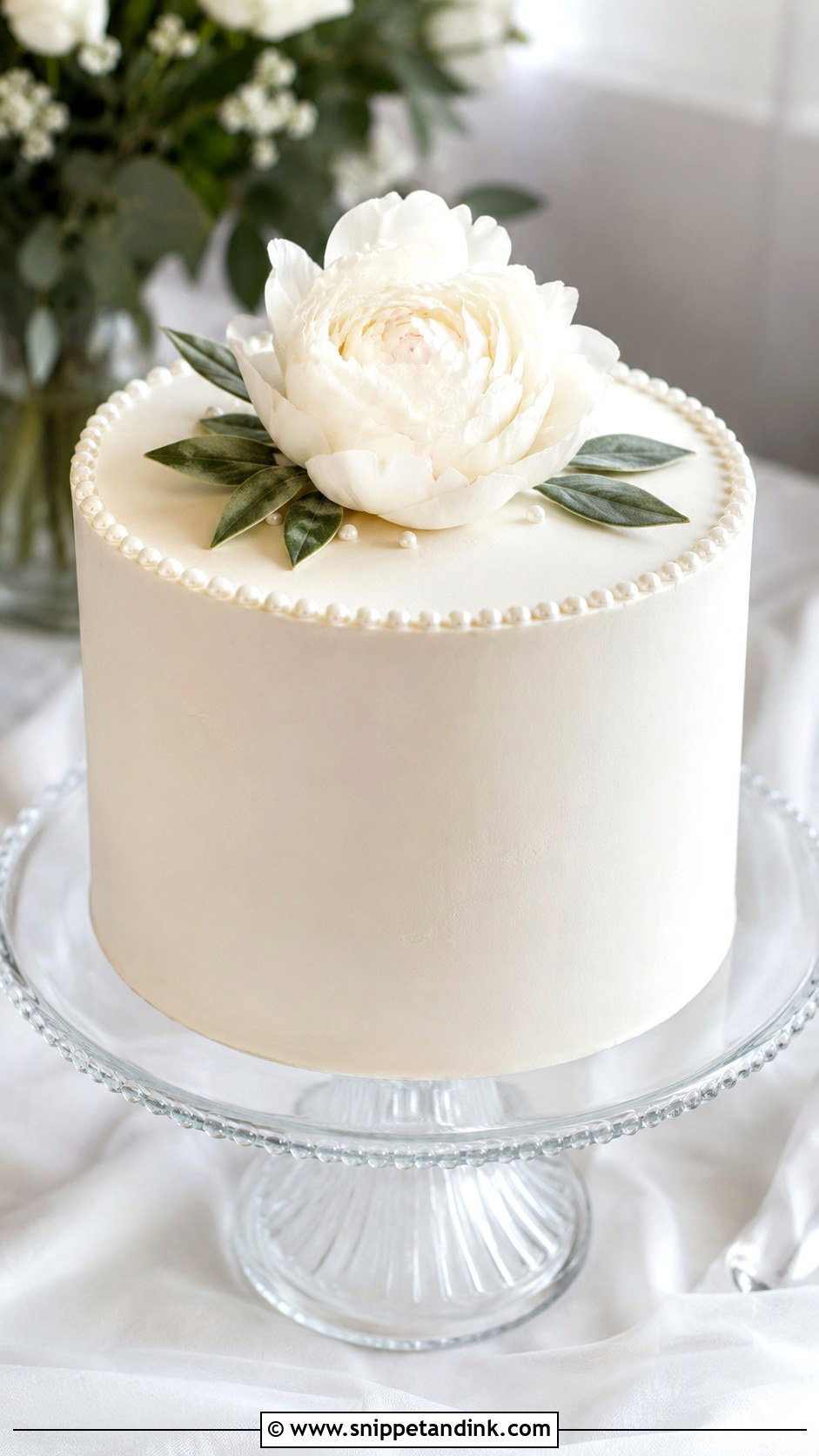
A single tier is the sensible answer when the cake is mainly there for the cutting photo. Set it on a tall stand and it still holds its own. The easiest version is a round cake, smooth buttercream, a tidy top border and a small cluster of flowers or fruit. It needs fewer layers, less frosting and much less setup. If you need more servings, a sheet cake in the kitchen, baked from the same recipe, covers them, and nobody can tell the difference on the plate.
4. Naked Wedding Cake
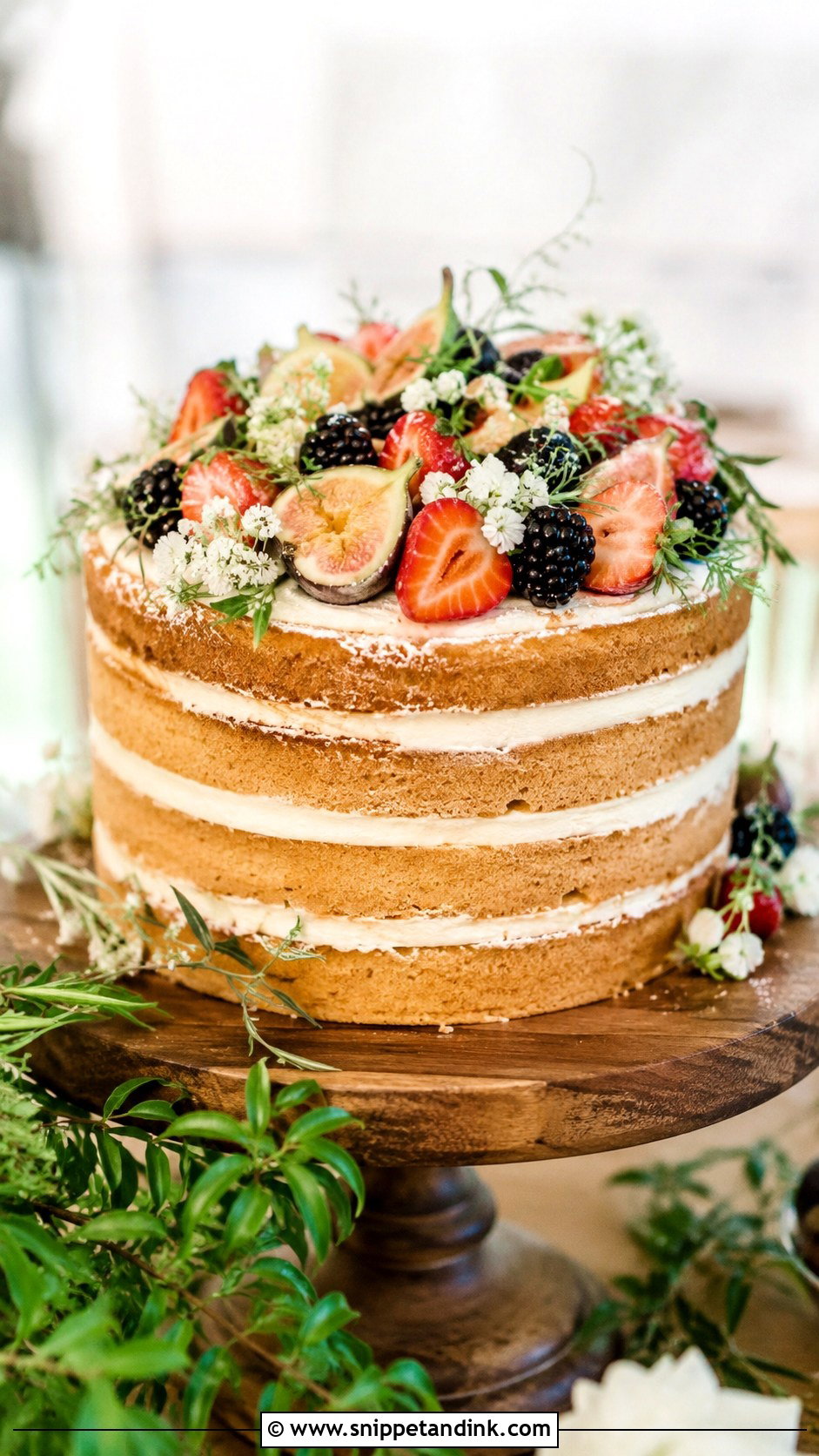
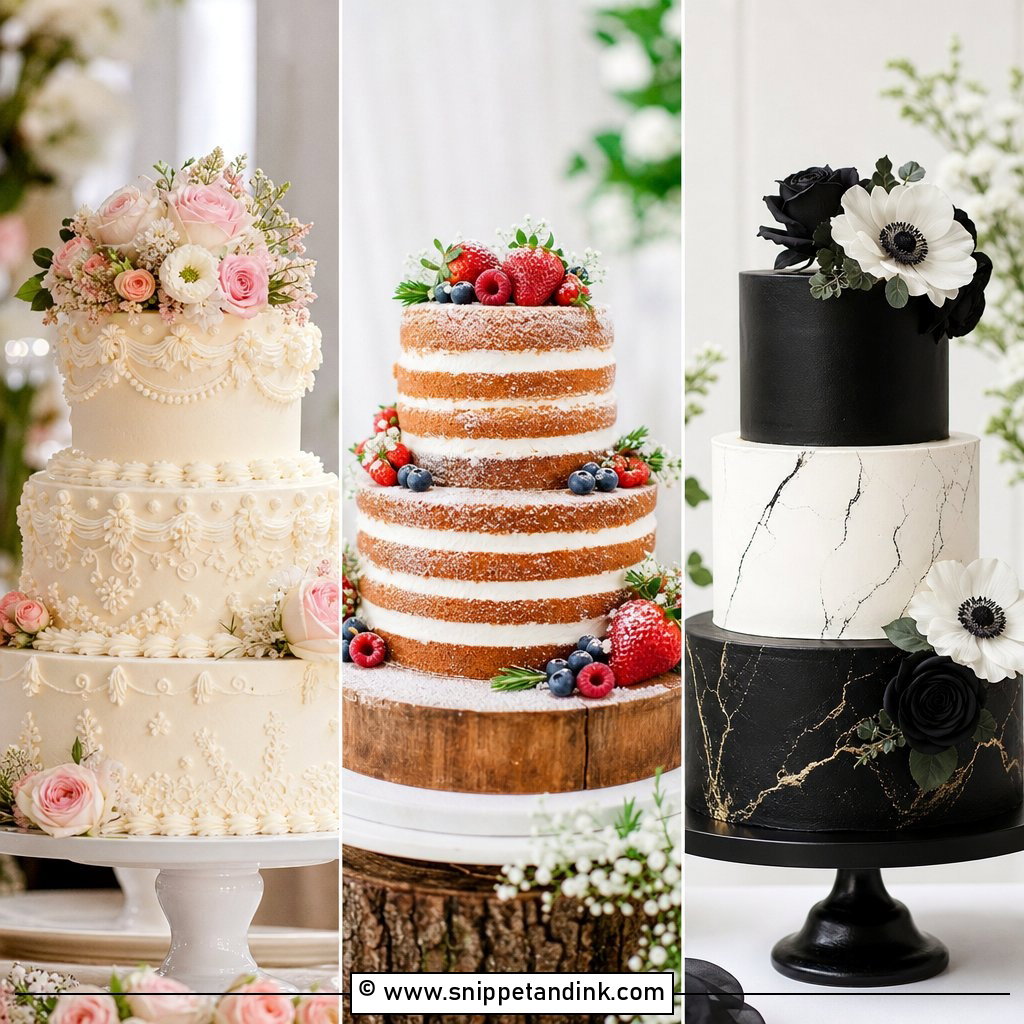
A naked wedding cake has little or no frosting on the outside. That spares you a smooth finish but brings its own problem: exposed sponge goes stale quickly. I use sturdy, slightly denser layers, even fillings and a thin crumb coat, and I assemble as close to the event as I can. Berries, figs, citrus and herbs make it look finished. It belongs at barn, garden and outdoor receptions, though in direct summer sun the filling softens, so shade isn’t optional.
5. Semi Naked Wedding Cake
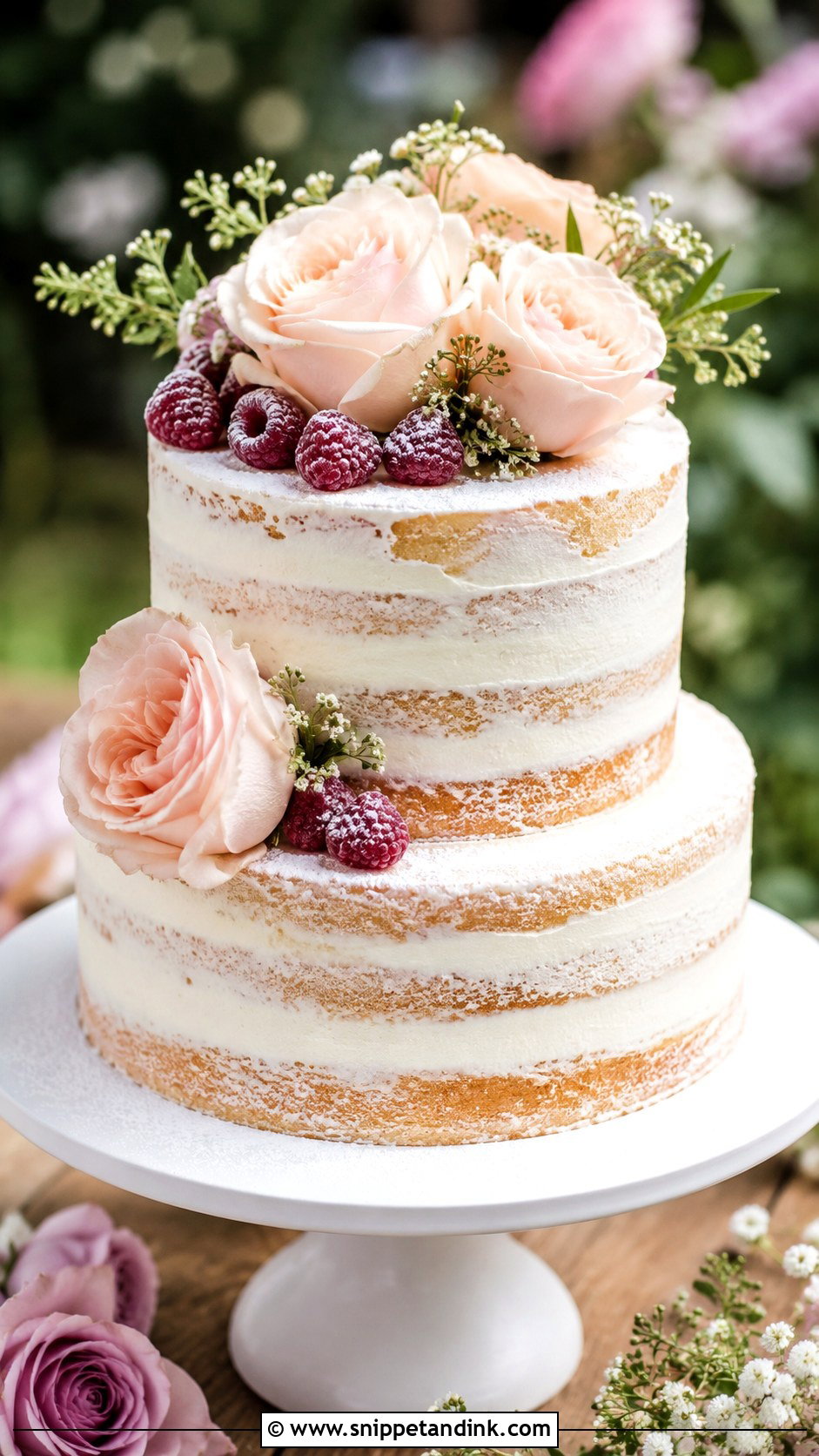
Semi naked sits halfway, with buttercream scraped thin so the sponge peeks through. The trick is scraping in one steady turn rather than several stop-start passes, which leave ridges. It forgives a lot, so it’s a good first attempt. Vanilla, lemon and spice sponges look warm through the thin frosting. Finish with flowers between the tiers, a dusting of powdered sugar or fresh fruit on top; it suits spring and summer best.
6. Fresh Flower Wedding Cake
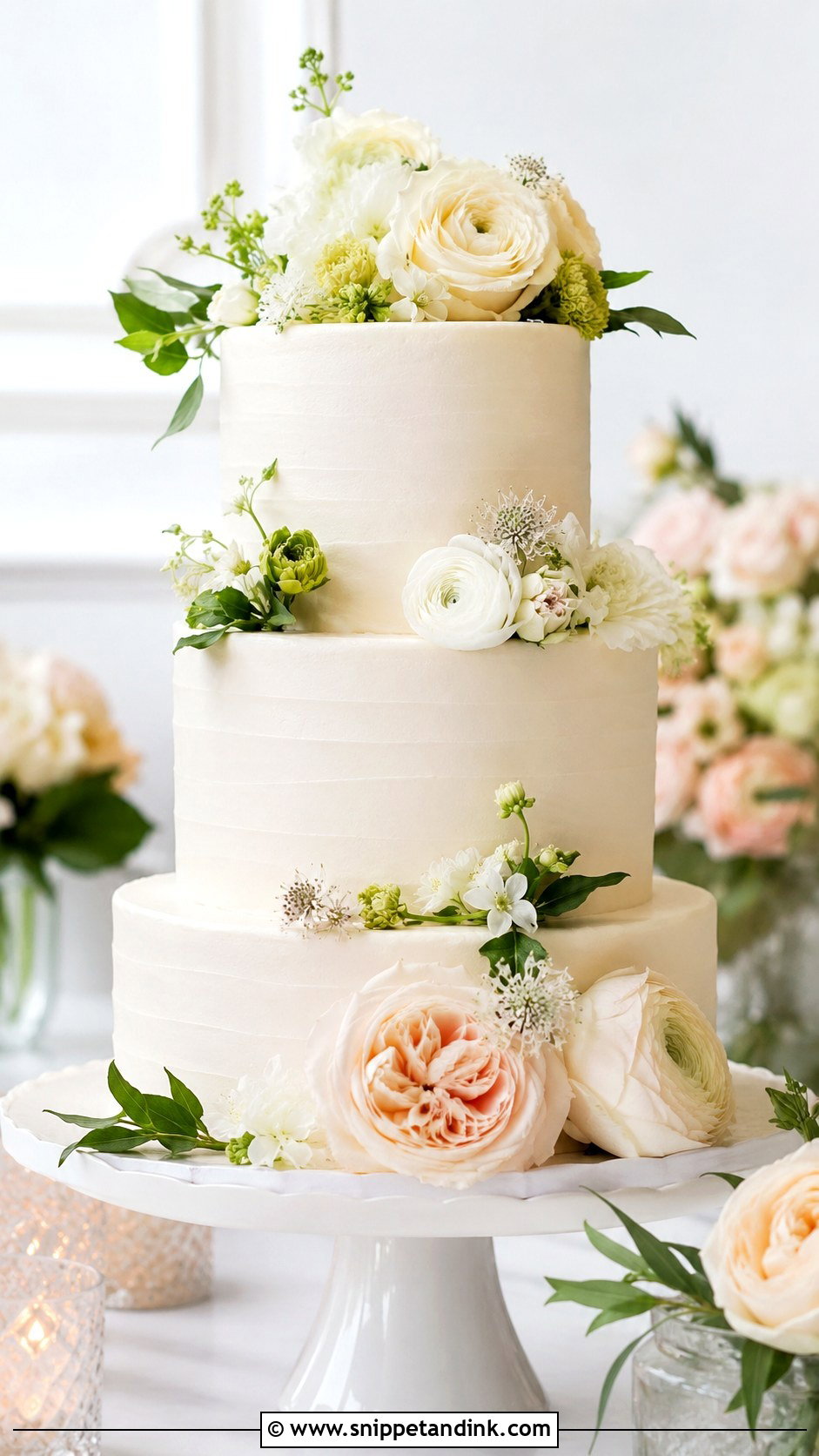
Here the flowers do most of the decorating. Start with a plainly frosted cake, then add blooms in small clusters or a gentle cascade. Roses, ranunculus and orchids are common; pansies and violas are the easy edible ones. Anything touching the cake should be pesticide-free and prepared by your florist or baker, with stems in floral picks or tape and a parchment barrier underneath. I always agree in advance who places the flowers, because when the florist and the baker each assume the other will do it, the cake arrives bare.
7. Greenery Wedding Cake
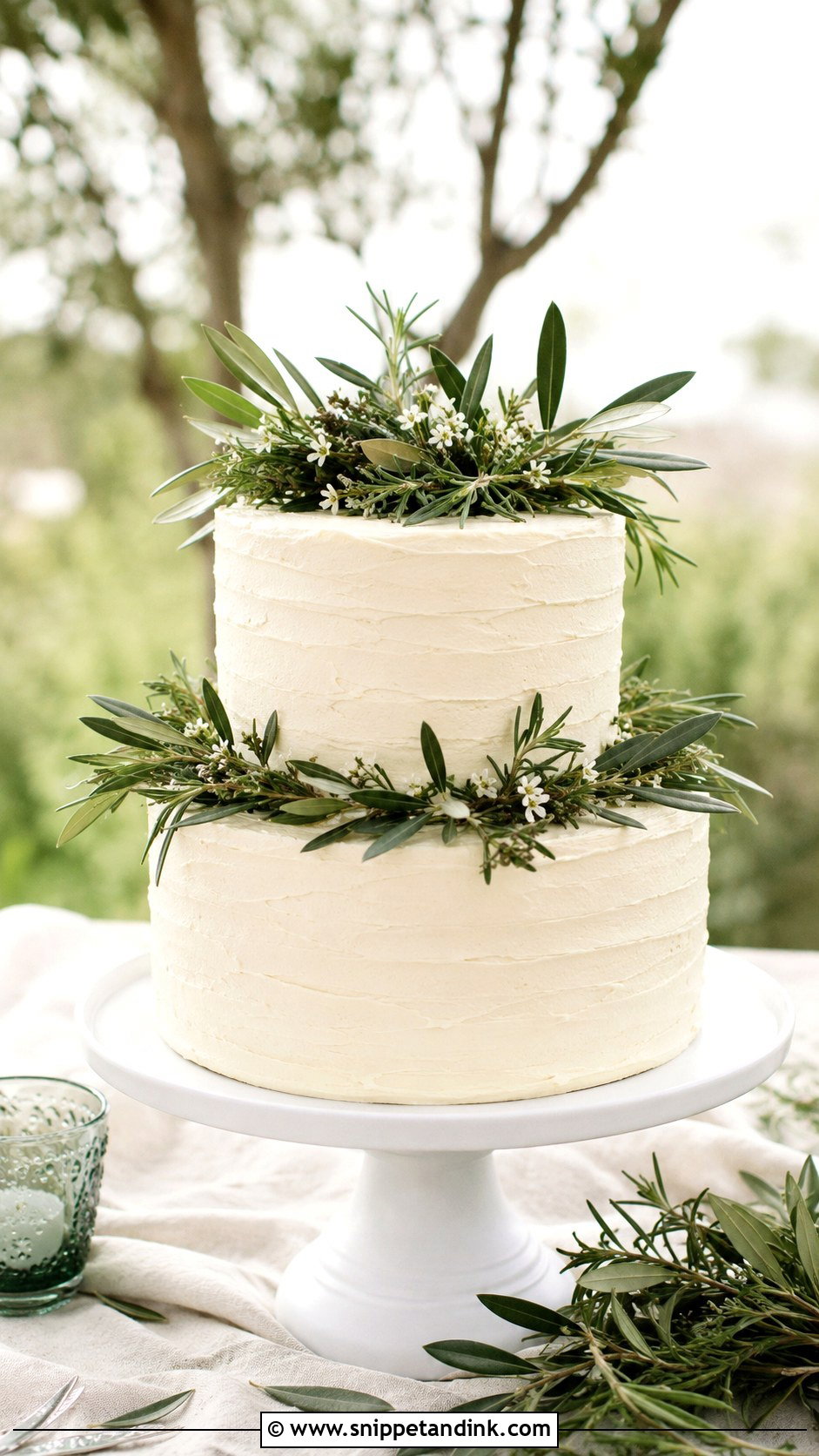
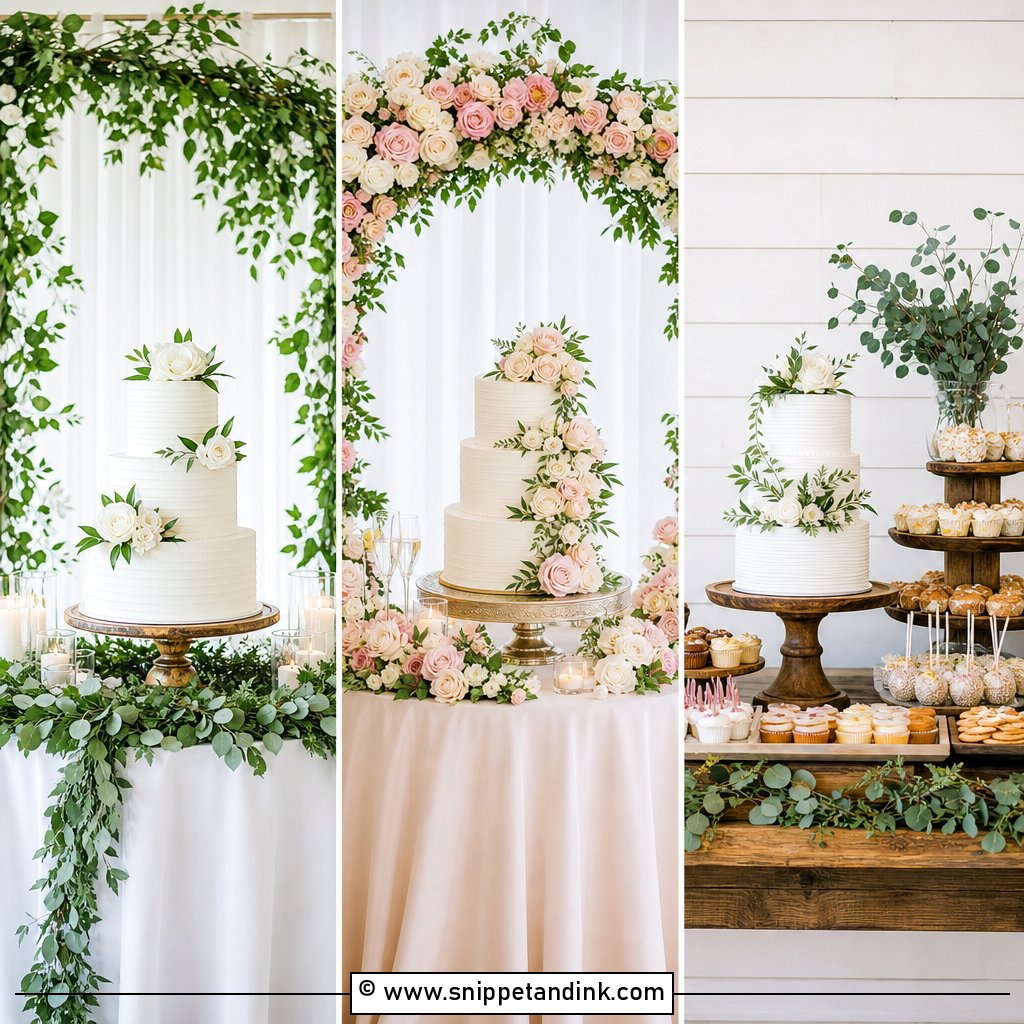
Greenery gives a natural look with almost no color. Small sprigs of herbs, olive branches or safe edible leaves go in clean lines around the base, between the tiers or down one side. Real eucalyptus looks the part but isn’t edible, so I either keep it wrapped and away from served portions or swap it for rosemary, which smells good next to a lemon or vanilla cake. White or ivory buttercream is the best background, and the style sits as comfortably at a modern venue as in a garden.
8. Pearl Wedding Cake
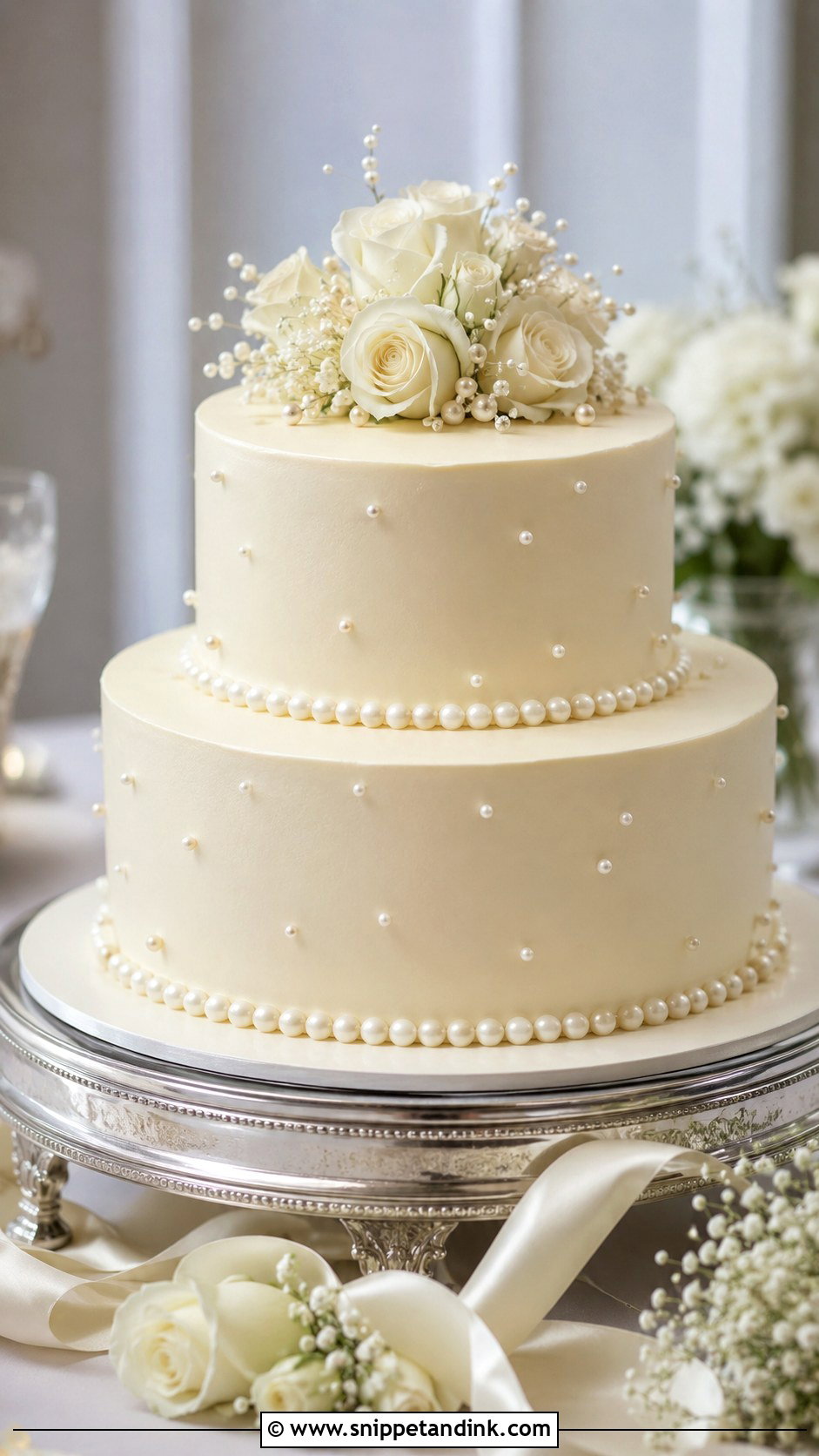
Pearls finish a simple cake with very little work. Sugar pearls, piped buttercream pearls or pearl sprinkles can circle each tier base, scatter across the sides or form neat dots. Piped pearls cost almost nothing and match the frosting exactly; I use a small round tip and pull away sideways so they don’t form peaks. Keep the rest of the cake bare. They echo pearl jewelry or a satin dress at a classic or ballroom wedding.
9. Vintage Wedding Cake
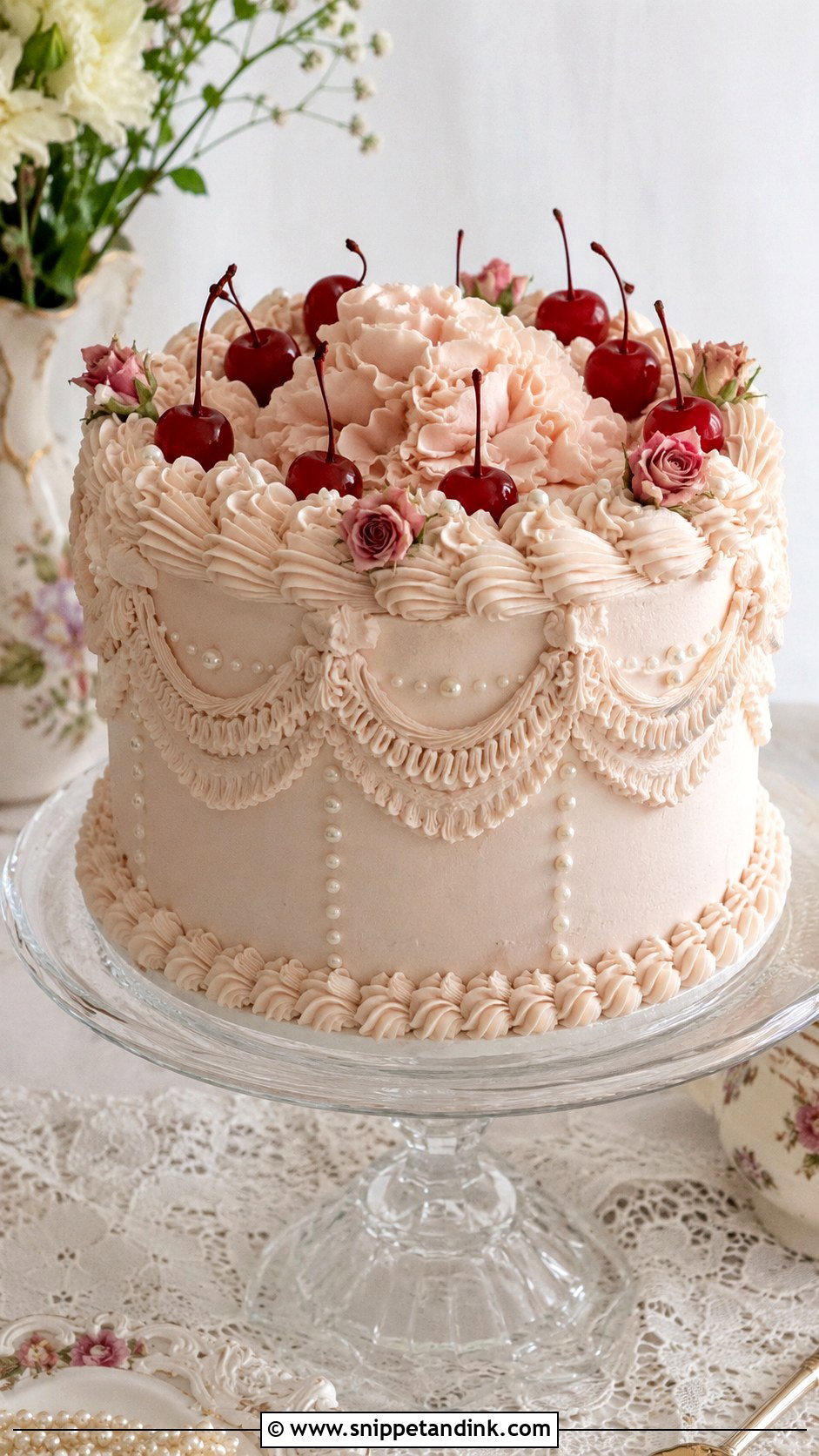
Vintage looks intricate, but small shapes and repeated piping keep it manageable. Shell borders, dots, swags and ruffled buttercream give the old-fashioned feel. One or two tiers is plenty, since a tall vintage cake takes hours of piping and a very steady hand. Stick to one frosting color, such as ivory or pale blue, and add cherries, pearls or a small flower topper. If you’re ordering, ask to see photos of the baker’s own piped work, because this style depends entirely on the decorator’s hand.
10. Textured Buttercream Wedding Cake
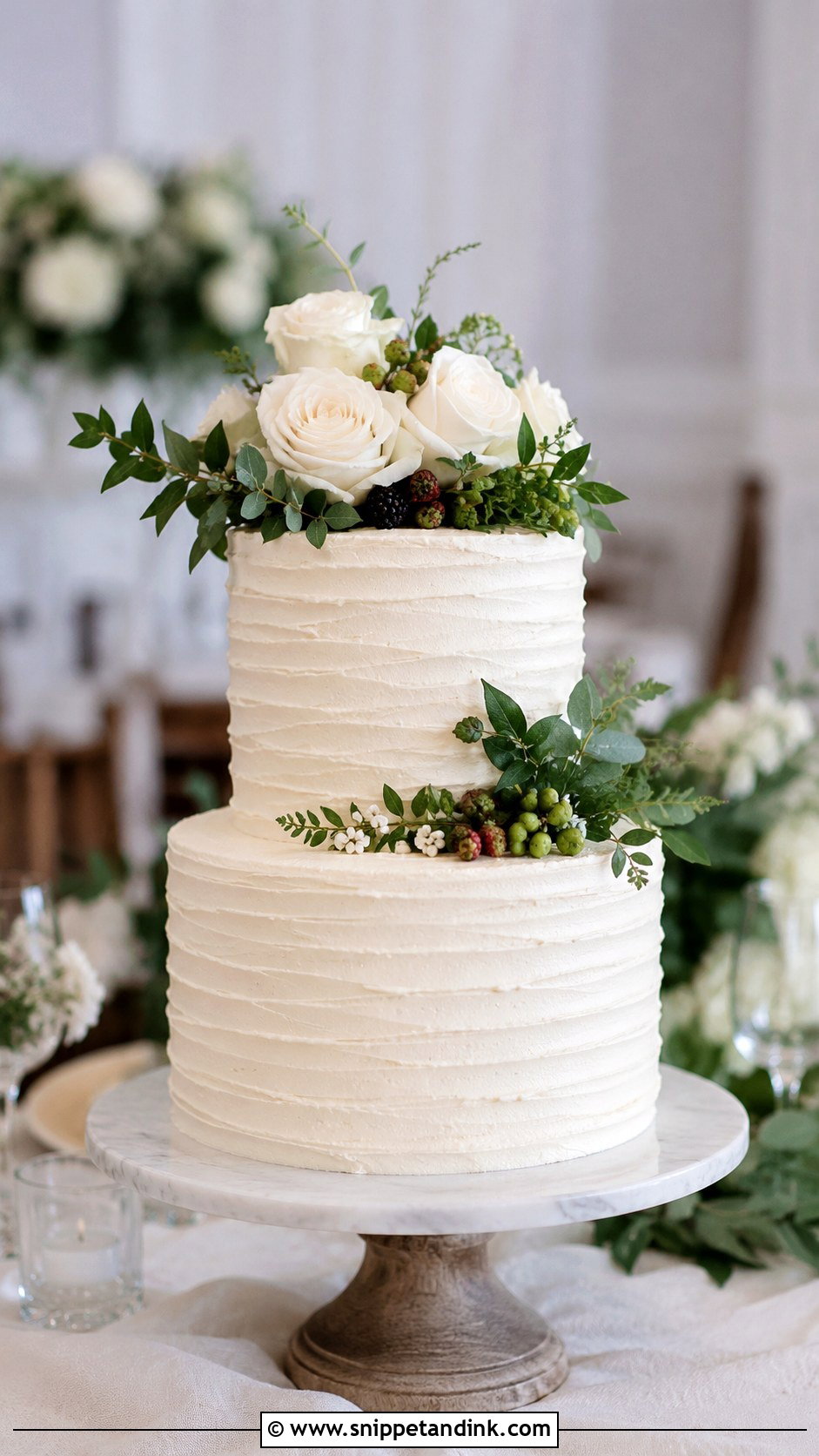
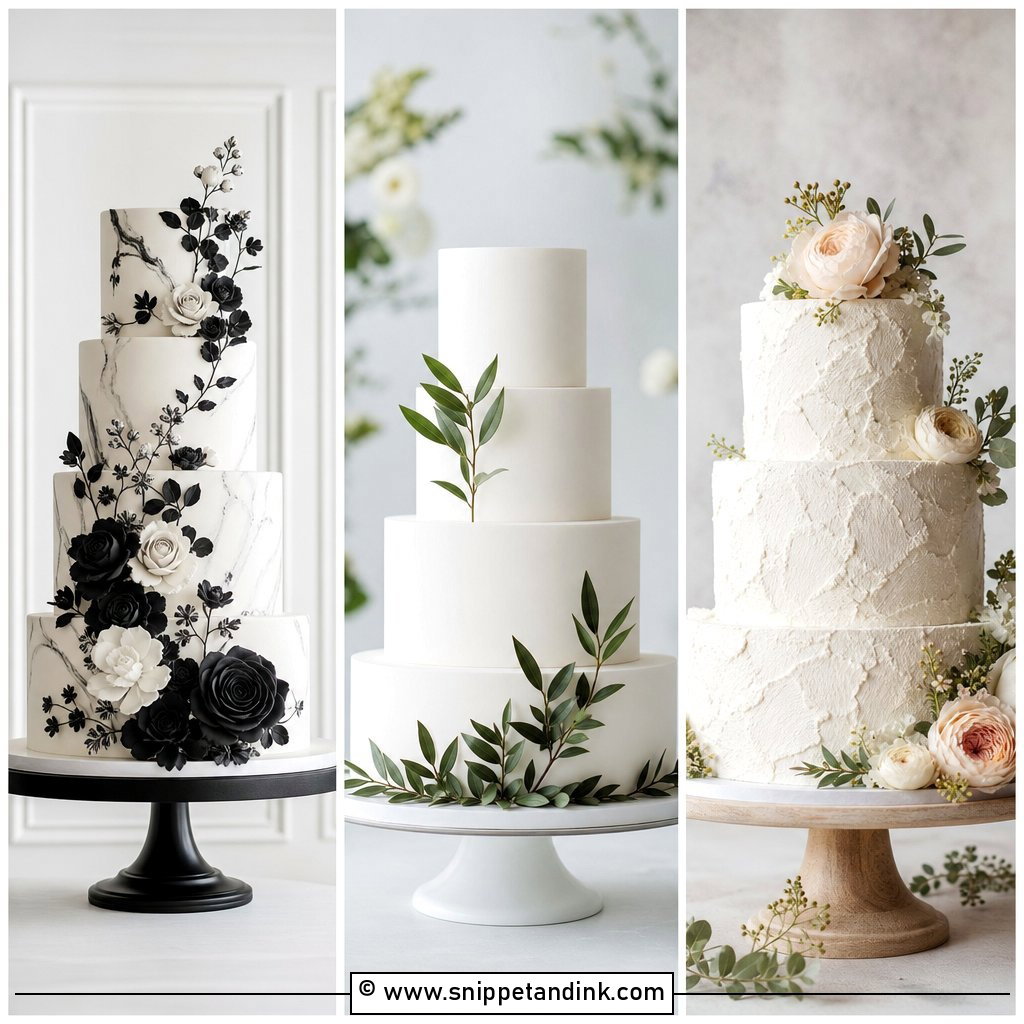
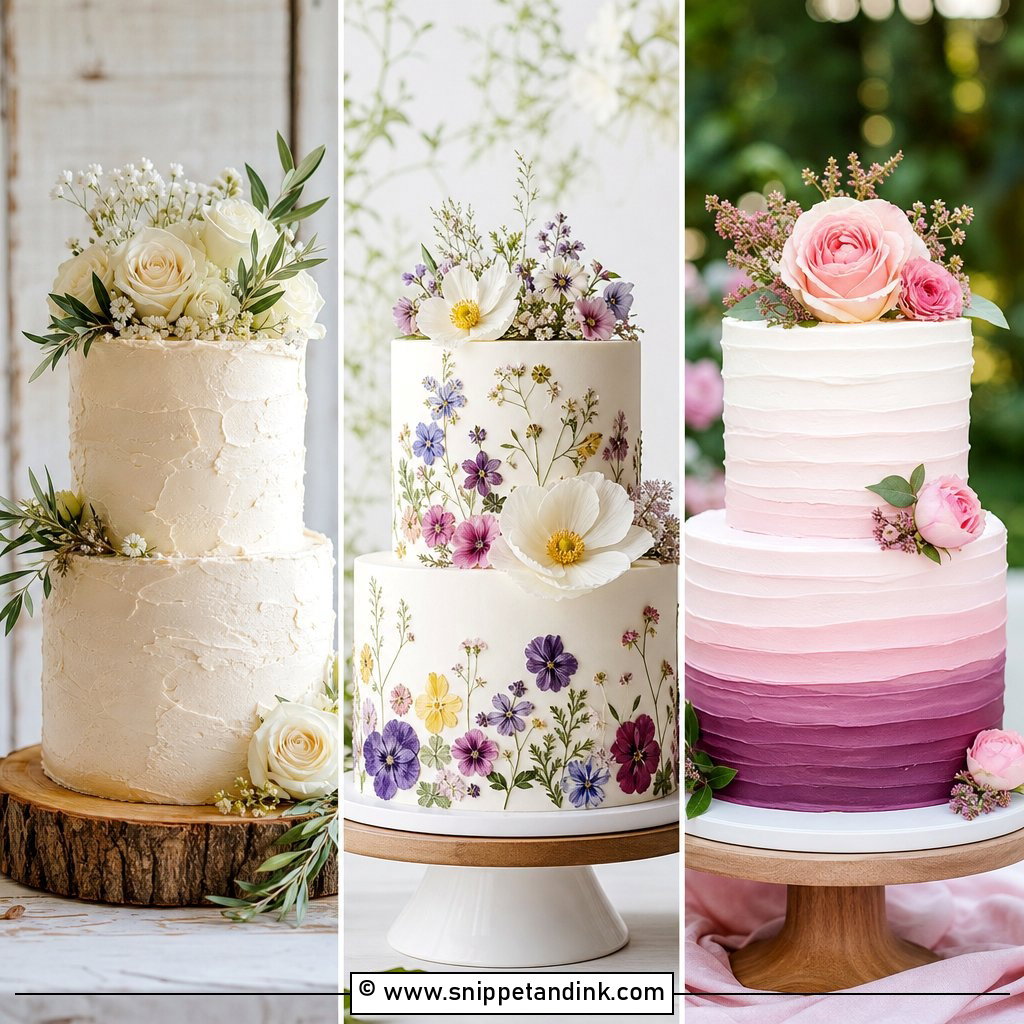
A textured buttercream wedding cake forgives uneven sides. A spatula, spoon or cake comb gives you horizontal ridges, rustic swirls or vertical lines. Comb texture is the most even of these and the easiest to repeat across tiers so they match. Ivory keeps it classic, while a pale pastel tint suits a seasonal palette. A few flowers or berries is all the decoration it needs.
11. Minimalist Wedding Cake
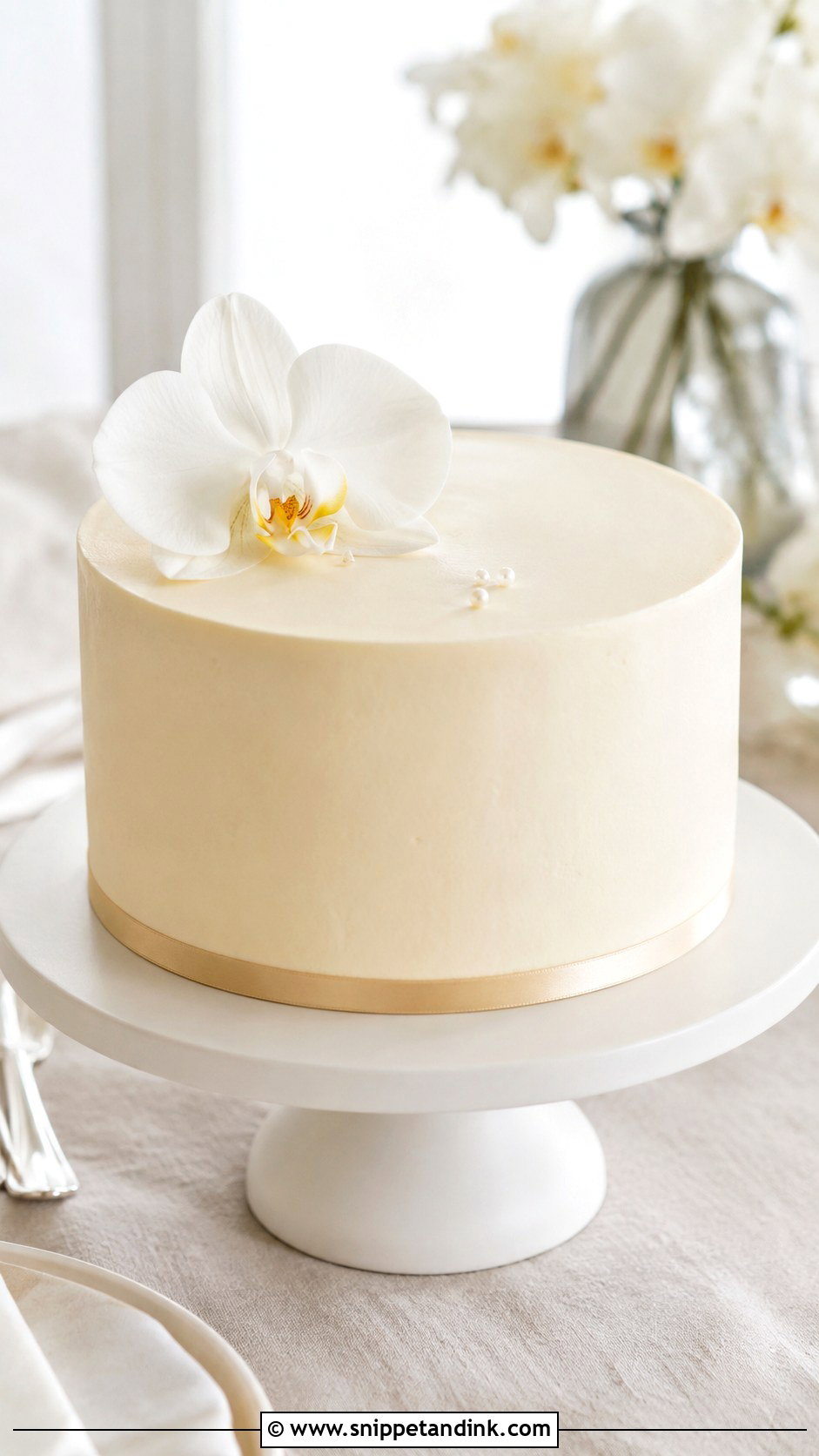
Minimalism comes down to one clear detail instead of several. A smooth white cake with one flower, one ribbon or one gold edge looks deliberate. The frosting has to be neat, though: sharp edges come from a cold cake, a straight scraper and patience, not from extra decoration. It suits modern venues and intimate weddings. Keep the stand plain too, in white ceramic or clear acrylic.
12. Drip Wedding Cake
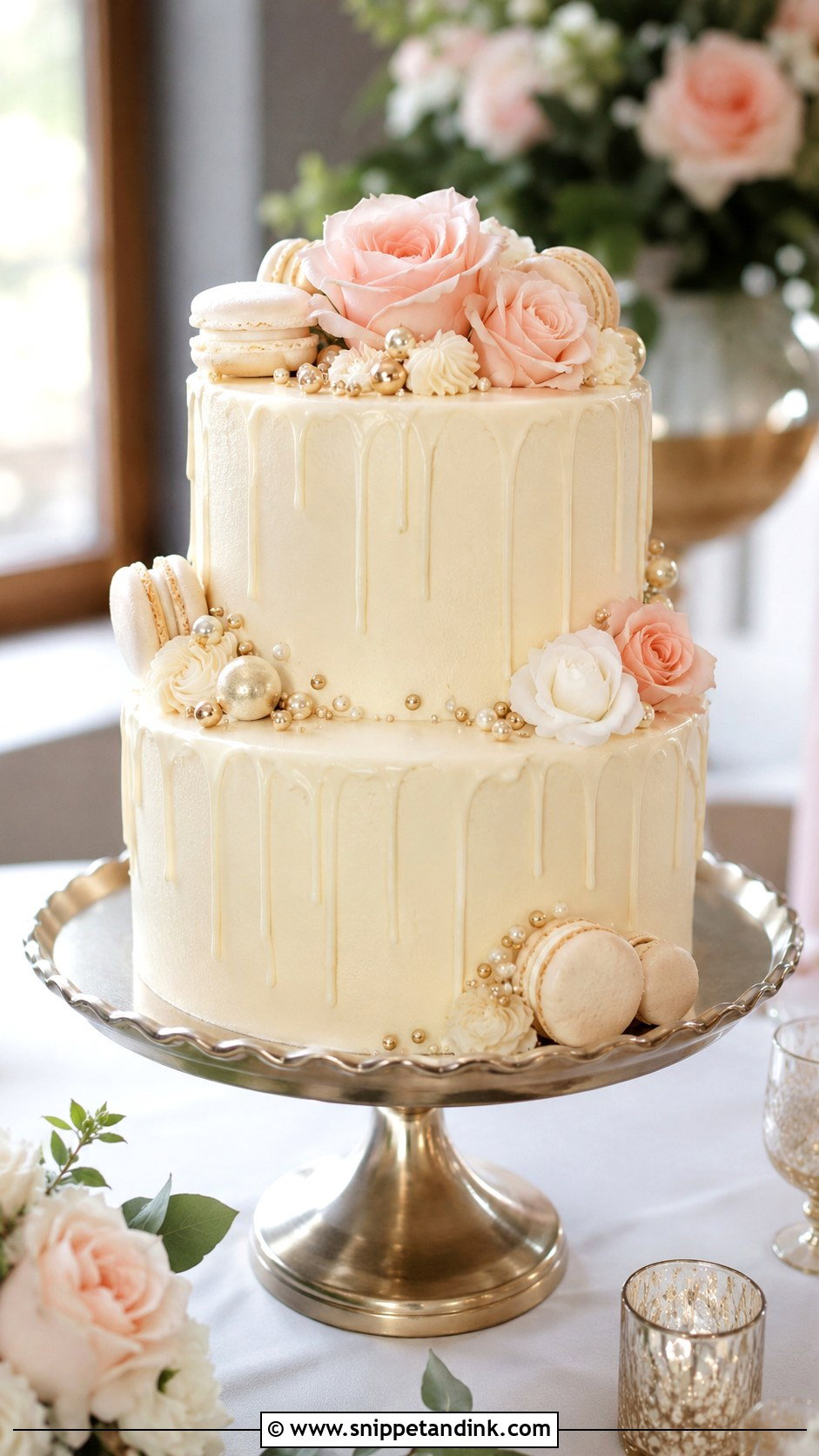
Chill the cake first and a drip is one of the quickest ways to look impressive. White chocolate, caramel, ganache or tinted candy melts all work. Keep it soft and controlled and let it fall only partway down, then add flowers, macarons or berries on top. Drips usually go wrong at the temperature stage, because warm ganache on a warm cake runs straight to the board. White over ivory buttercream is the easiest version to make look bridal.
13. Cupcake Wedding Cake
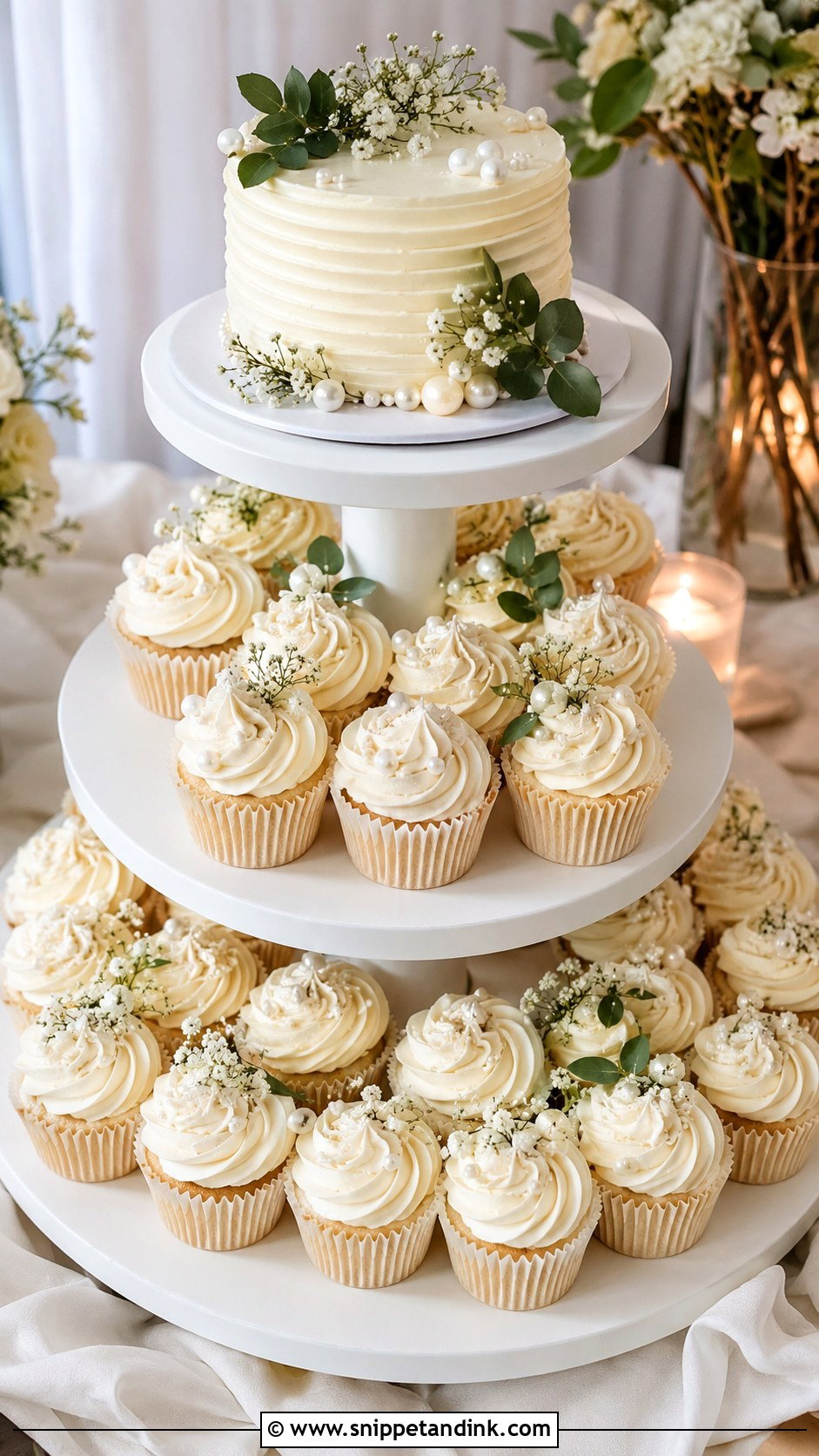
A cupcake wedding cake puts a small cutting cake on top with matching cupcakes on the tiers below. Cupcakes are easier to portion and serve, and you can offer several flavors. Frost them all in the same color for a polished display. The catch is the stand: cupcakes slide on a stand that isn’t level, so set it up on a steady table at the venue and check it before the top cake goes on. Swirls with tiny flowers or sugar pearls are quick to repeat in batches.
14. Small Wedding Cake
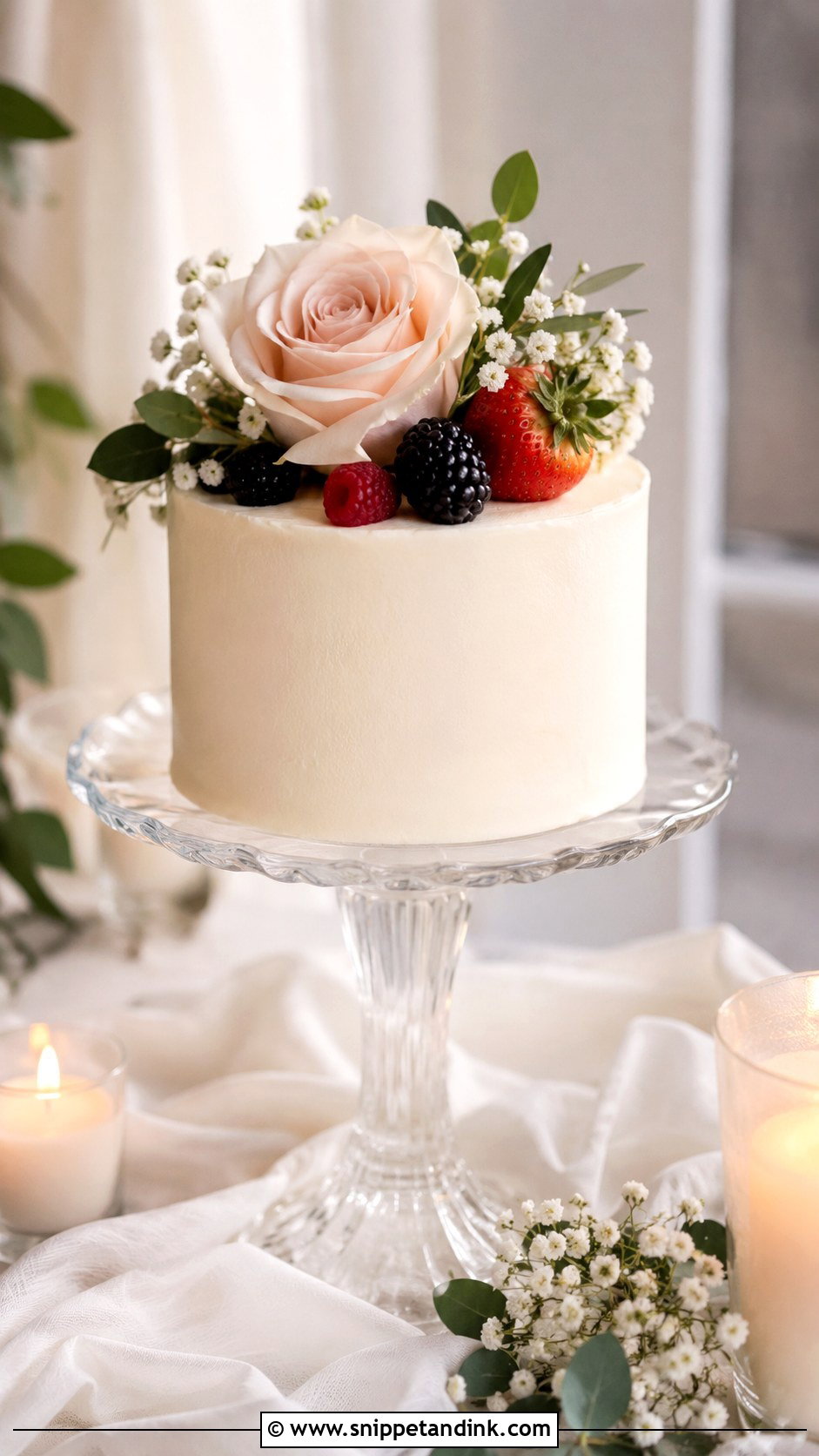
Styled with care, a small cake feels every bit as special as a big one. A six or eight inch cake on a raised stand gives height without many servings, which suits elopements and micro weddings. Smooth buttercream and one strong detail, such as fresh flowers or piped pearls, is plenty. Candles and fabric on the table around it add presence. Small cakes are also the easiest to chill, move and finish on the day.

15. Sheet Wedding Cake
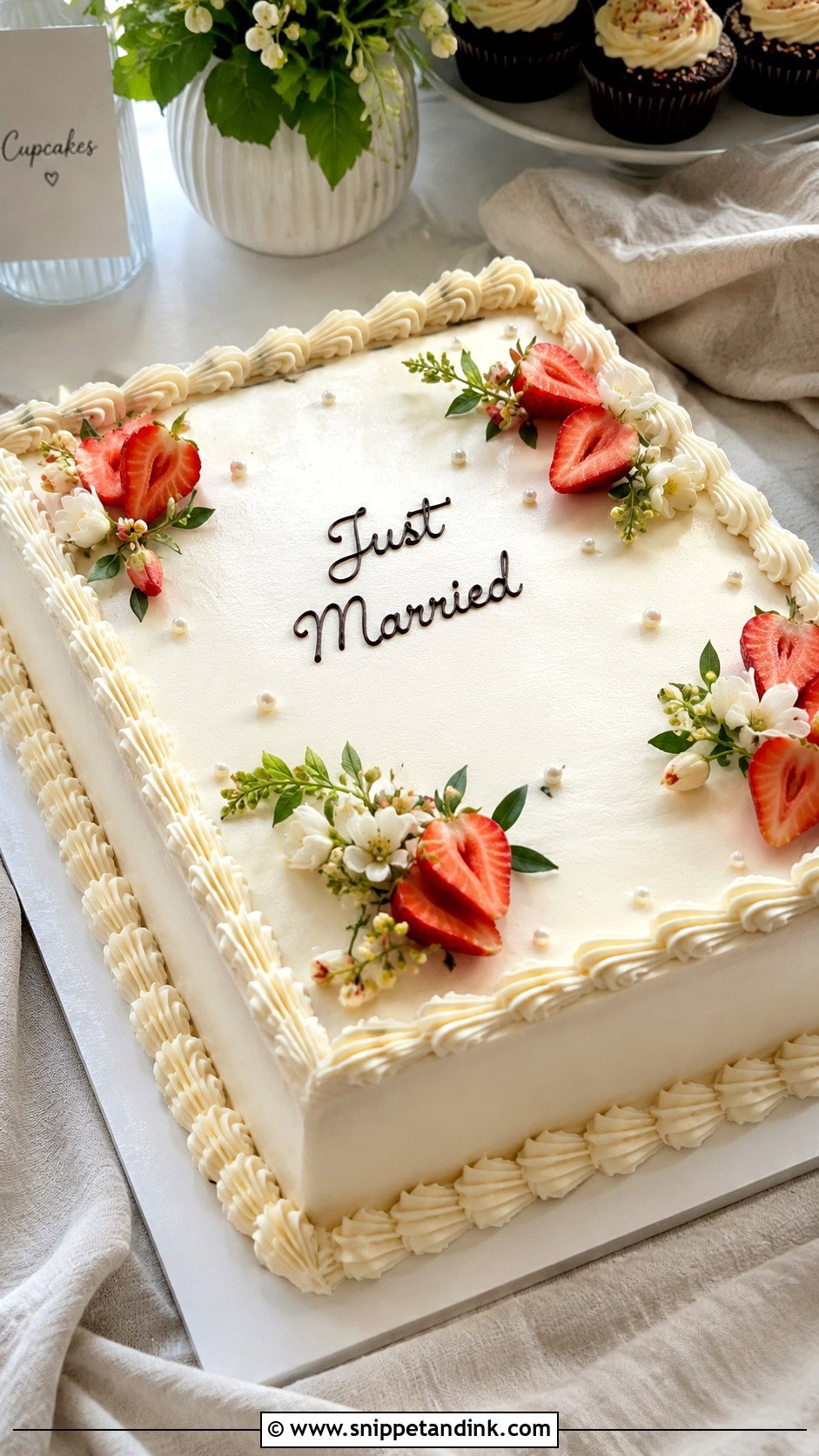
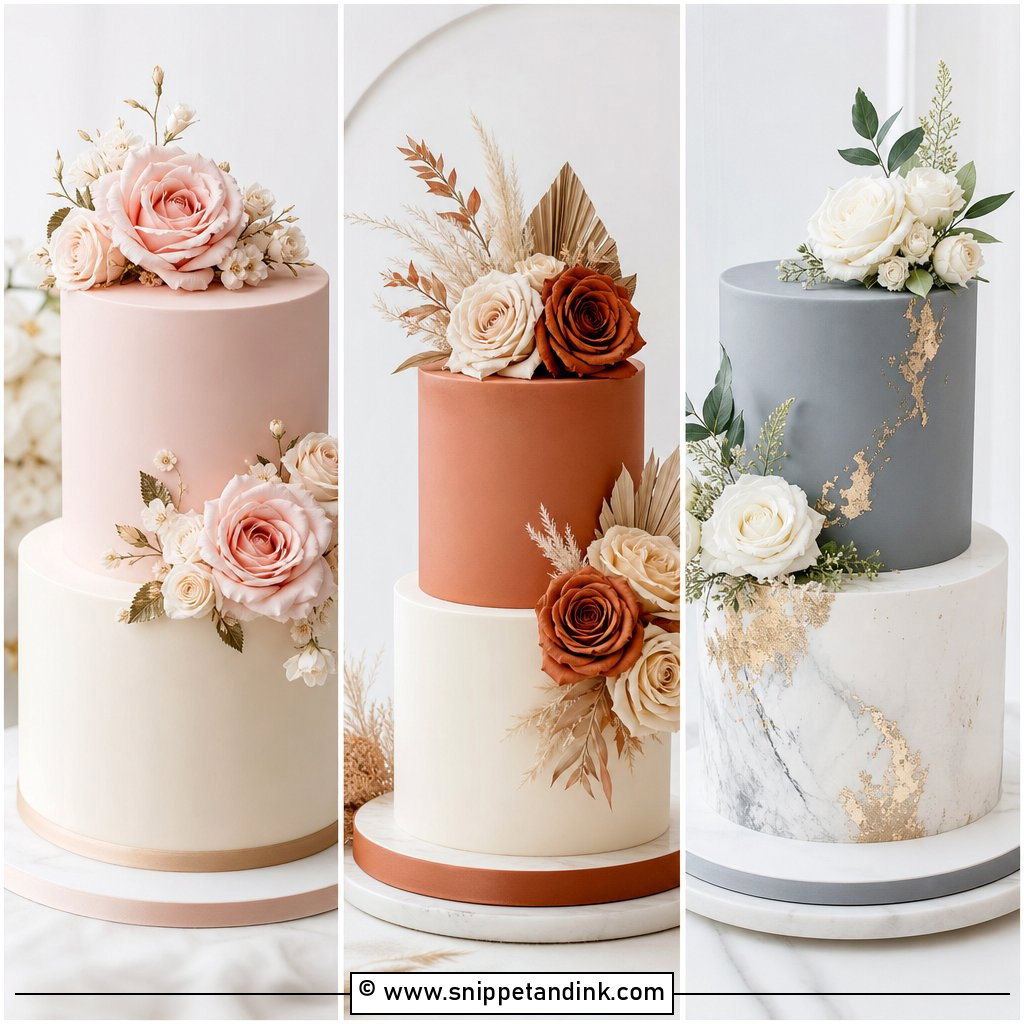
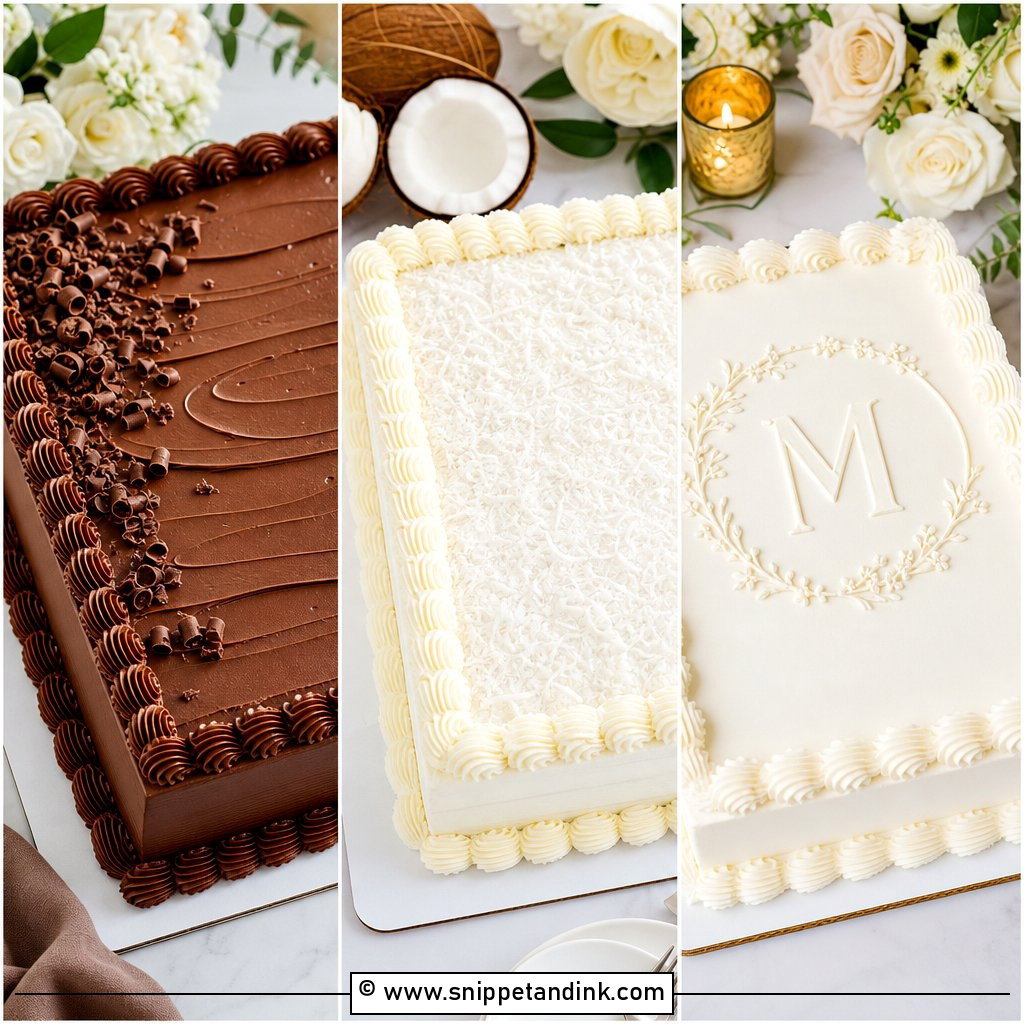
A sheet wedding cake is the simplest way to feed a crowd. Piped borders, flowers, fruit or textured buttercream make it look dressed. Many couples pair a small display cake for photos with sheet cake for serving, though a well decorated sheet can stand alone. Sheet cake usually costs less per serving than tiered cake, and it travels flat in its box. It fits backyard weddings and brunch receptions well.
16. Square Wedding Cake
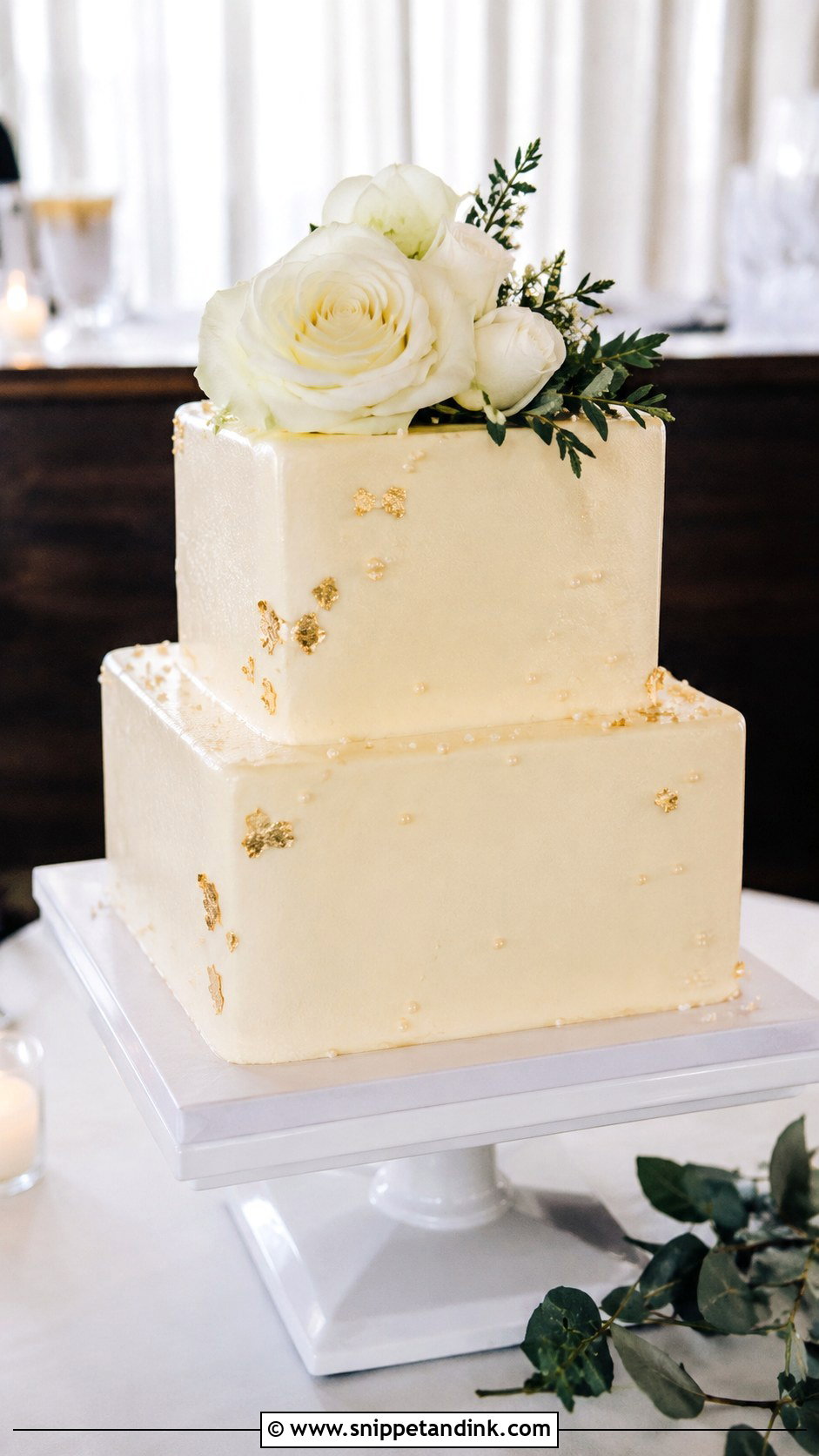
Square tiers look modern and make a strong shape on the table. Smooth buttercream, sharp edges and a small flower arrangement are enough. Corners are the hard part: buttercream builds up on them and they tend to round off, so I chill the cake and scrape each side separately. If crisp corners feel beyond you, soften them with a thin piped border or some texture. Squares also cut into very even slices, which caterers appreciate.
17. Round Wedding Cake
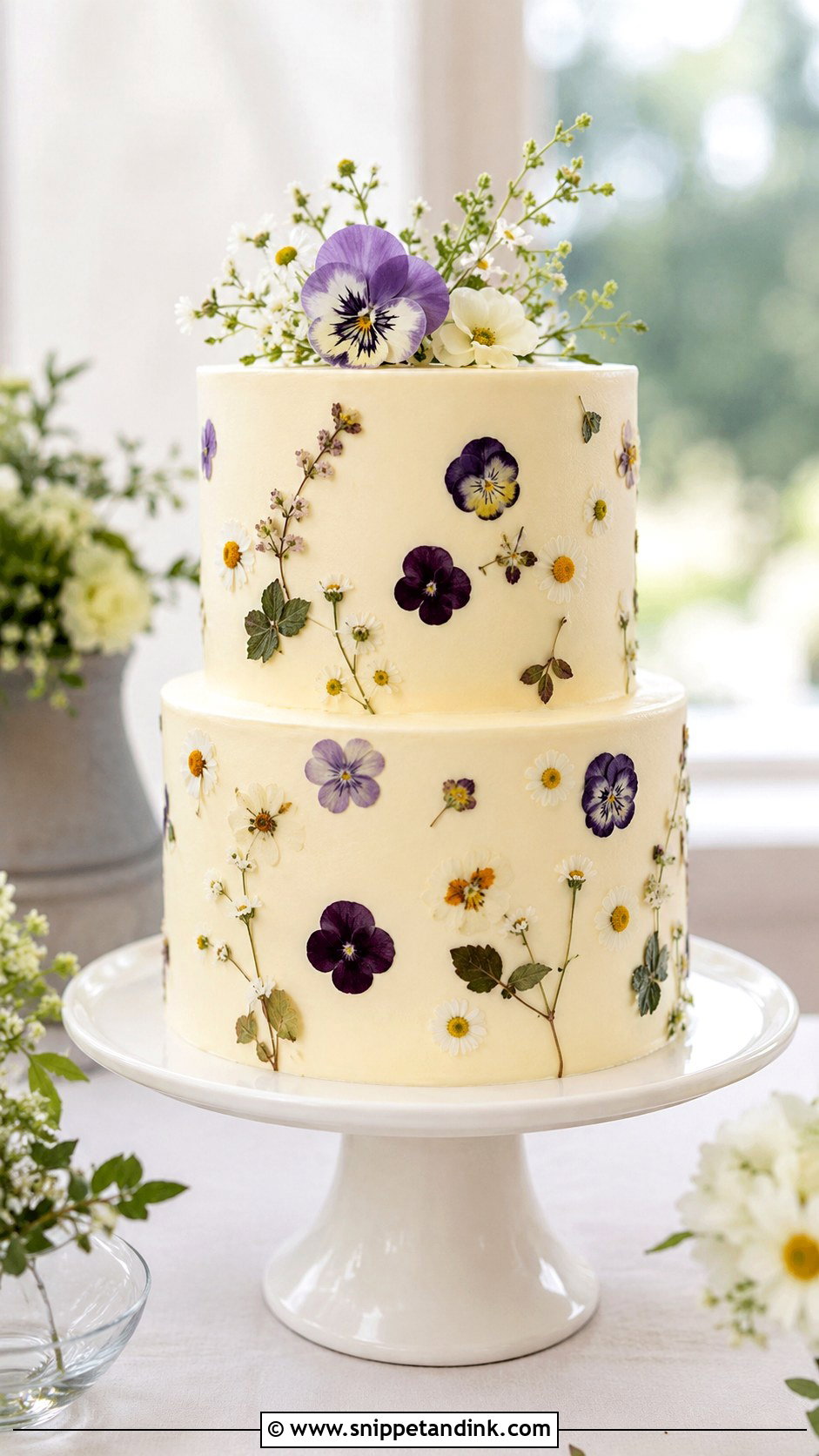
Round is the shape most people picture, and it adapts to any style. It’s also the most forgiving to frost, because you smooth it in steady turns on a turntable. For an easy design, stack two round tiers with a simple bottom border and flowers on one side. Round cakes fit standard boxes, boards and stands, which matters more than you’d think on delivery day.
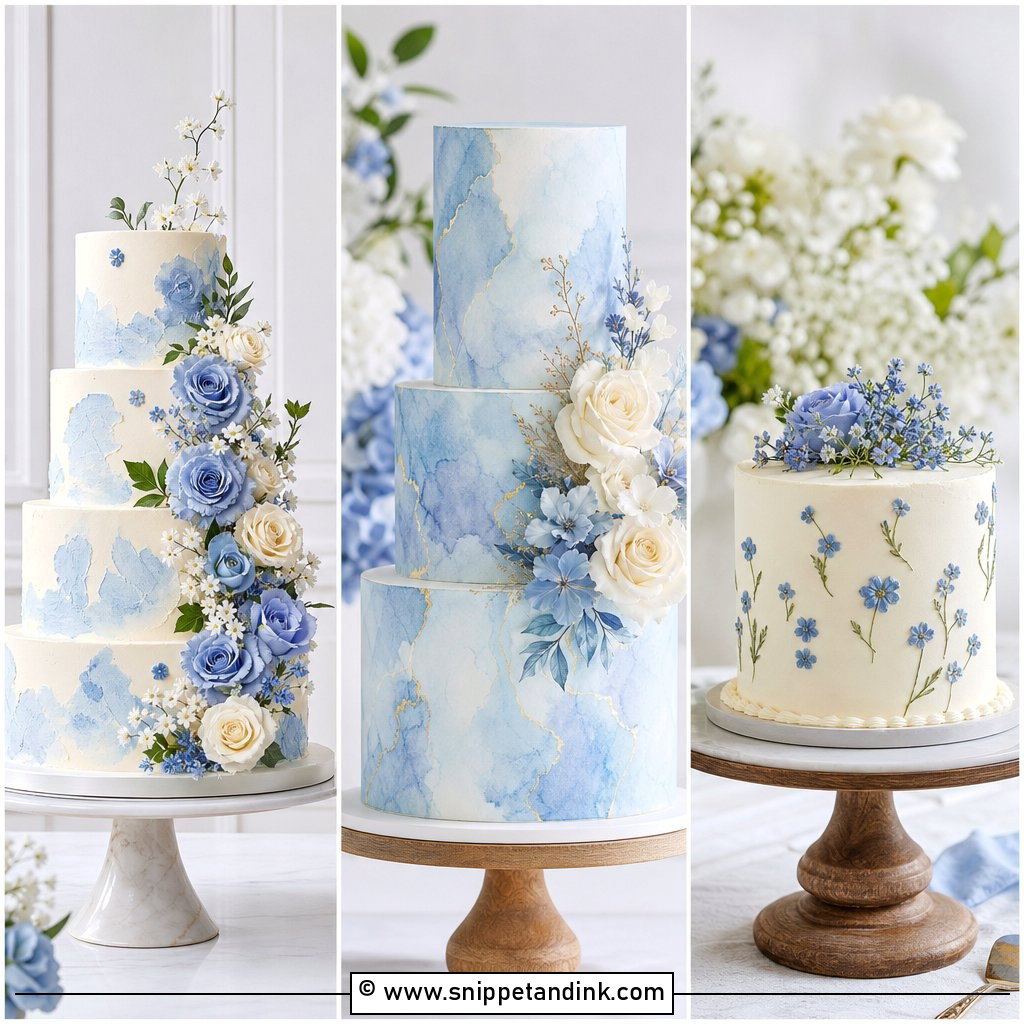
18. Floral Cascade Wedding Cake
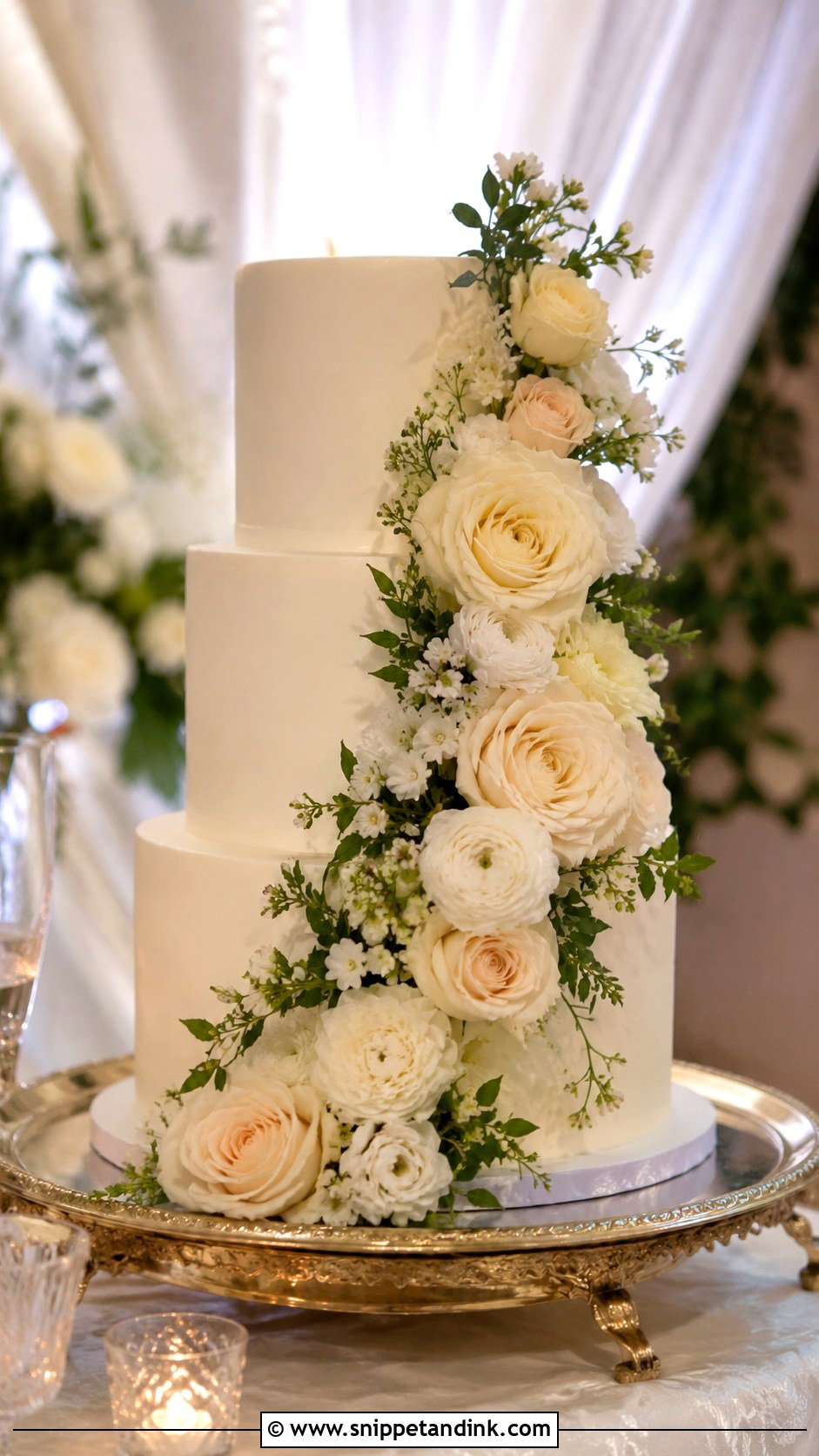
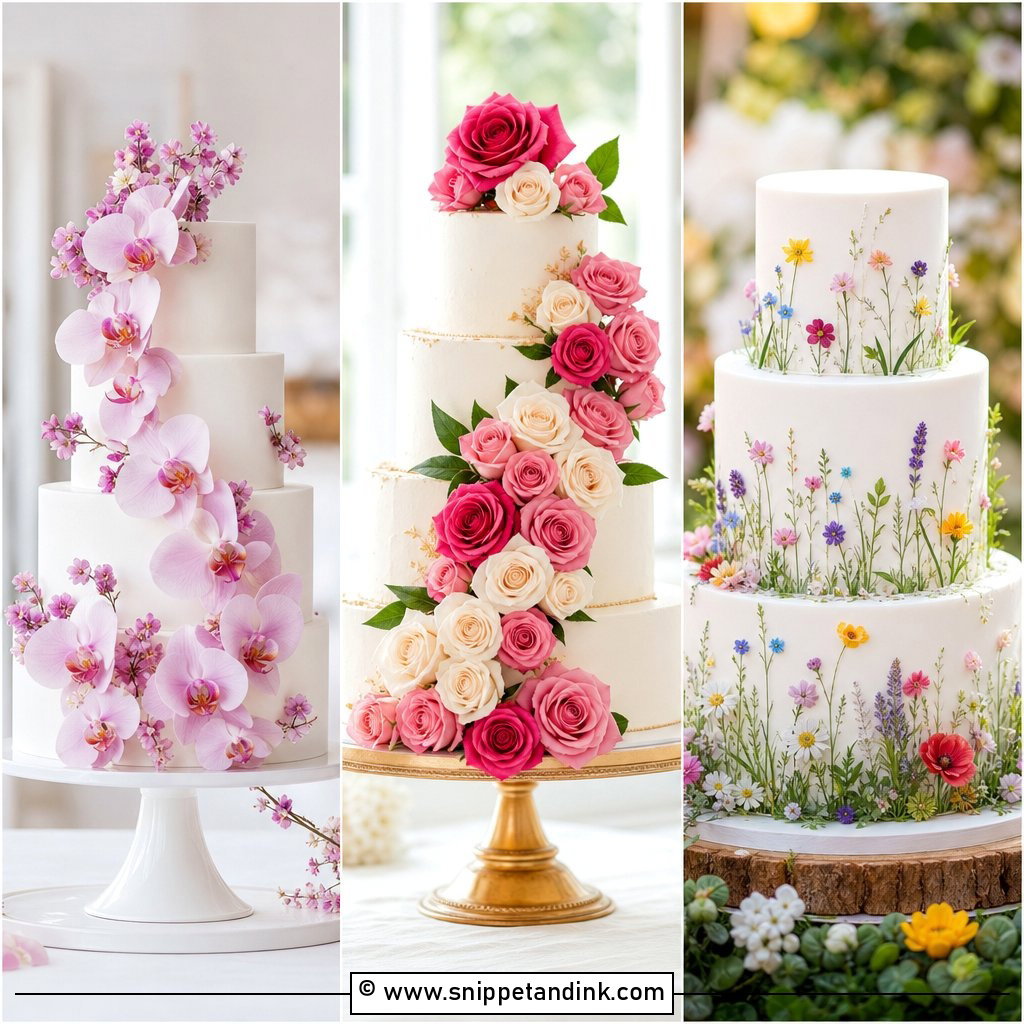
A cascade looks dramatic, but the cake beneath can be very plain. Set flowers in a diagonal line from the top tier down to the lower one; the movement makes the whole cake look taller. One flower type gives a clean result, while mixing roses, small blooms and greenery gives a fuller one. On two or three tiers I let the cascade break at each tier edge instead of covering every inch, so the frosting still shows.
19. Fruit Wedding Cake
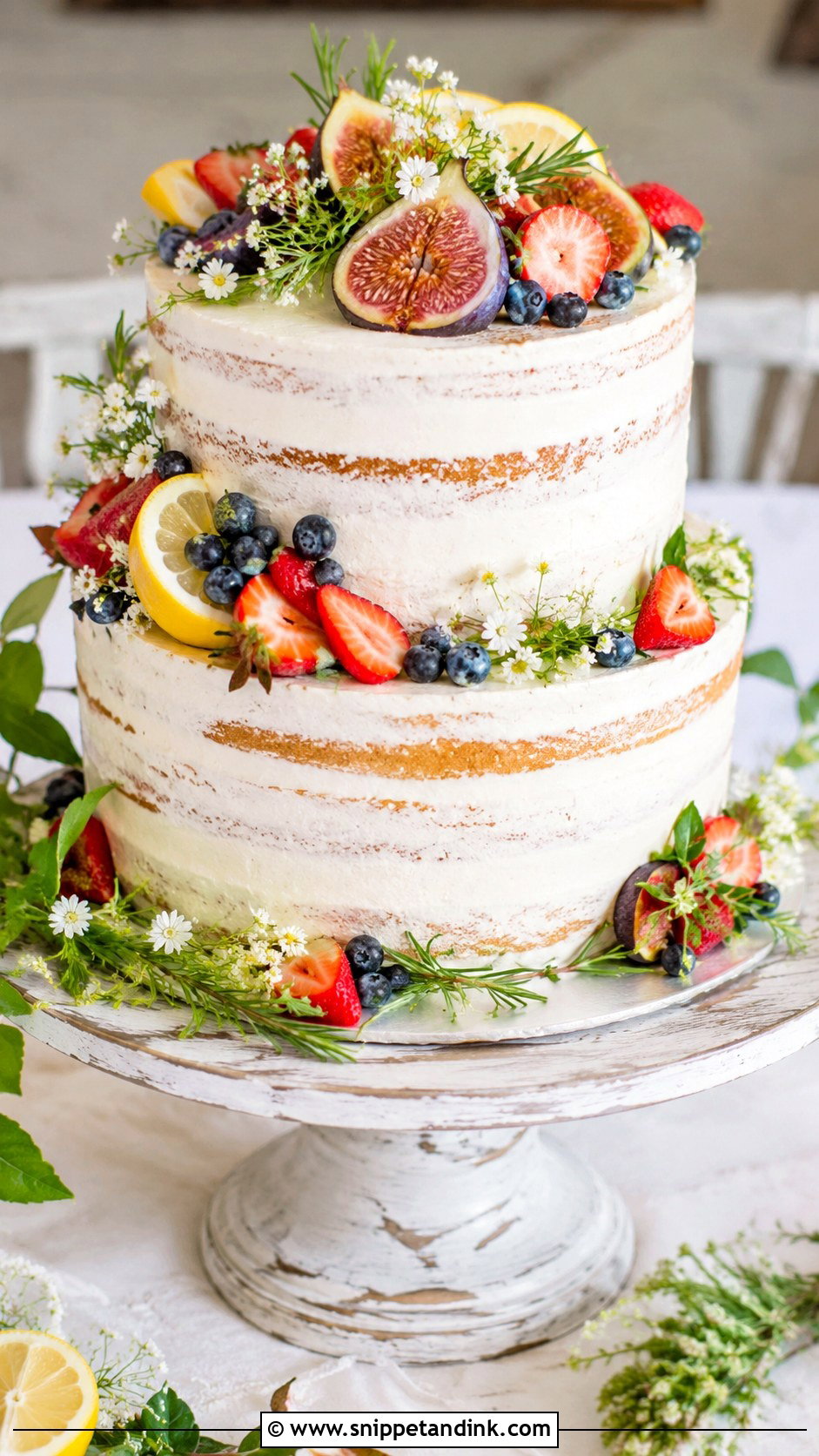
Fruit needs no special tools. Berries, figs, grapes, peaches or cherries turn a plain cake into a seasonal one. Arrange them in neat clusters rather than piling them on, and dry everything thoroughly, since wet fruit leaves pink streaks on white buttercream. Sliced peaches brown and weep, so they go on at the venue. Tie the fruit to the flavor inside, like lemon cake with berries.
20. Pressed Flower Wedding Cake
Pressed flowers give a soft botanical look on white or ivory buttercream, where the petals stand out clearly. Use edible pressed flowers or food-safe ones prepared for cake contact. More flowers near the base and fewer near the top looks balanced; a scattered meadow pattern looks looser. I press them on with a clean fingertip while the buttercream is still soft, then chill the cake so the petal edges don’t lift. Spring weddings and garden parties suit it.
The Brief I Need Before I Can Quote a Cake
Popular bakers book up months ahead, so start the conversation three to six months out for a busy season date, earlier if you have your heart set on one baker. A short brief in your first message saves several rounds of emails:
- Date, venue and the delivery window the venue allows
- Guest count, and whether cupcakes or sheet cake will also be served
- Where the cake table will stand: indoors or out, in sun, near a dance floor
- Who is supplying fresh flowers, and who will place them on the cake
- Two or three photos of designs you like, plus one you don’t
- Flavors you’re drawn to and any allergies among the guests
At the tasting, try each flavor with its actual filling and frosting rather than plain sponge, because a lemon curd or salted caramel filling changes how firm a tier is and how well it stacks. If you’re set on a soft filling or whipped cream frosting, ask how the baker will keep it stable at your venue; some of the easy designs above suit those fillings far better than others.
Who cuts it after the photos
Ask the venue or caterer how cutting and serving works. Some charge a per-guest cake cutting fee when the cake comes from an outside baker, and someone needs a box ready if you plan to keep the top tier. Sorting this early means the cake doesn’t sit uncut at the end of the night.
Venue, Weather and Guest Count Matter More Than Style
Easy cakes don’t have to look basic. Texture, fresh flowers, greenery, fruit, pearls, soft piping and clean shapes can each make a cake feel finished. Before you settle on a design, weigh up your venue, the weather, your guest count, the flavor and how the cake will get there. A small cake can cover the photos while sheet cake or cupcakes feed everyone. Keep the design focused, ask for safe decorations, and go with a finish that suits your own skill or your baker’s style.
You'll Like These Ideas:







Leave a Reply