
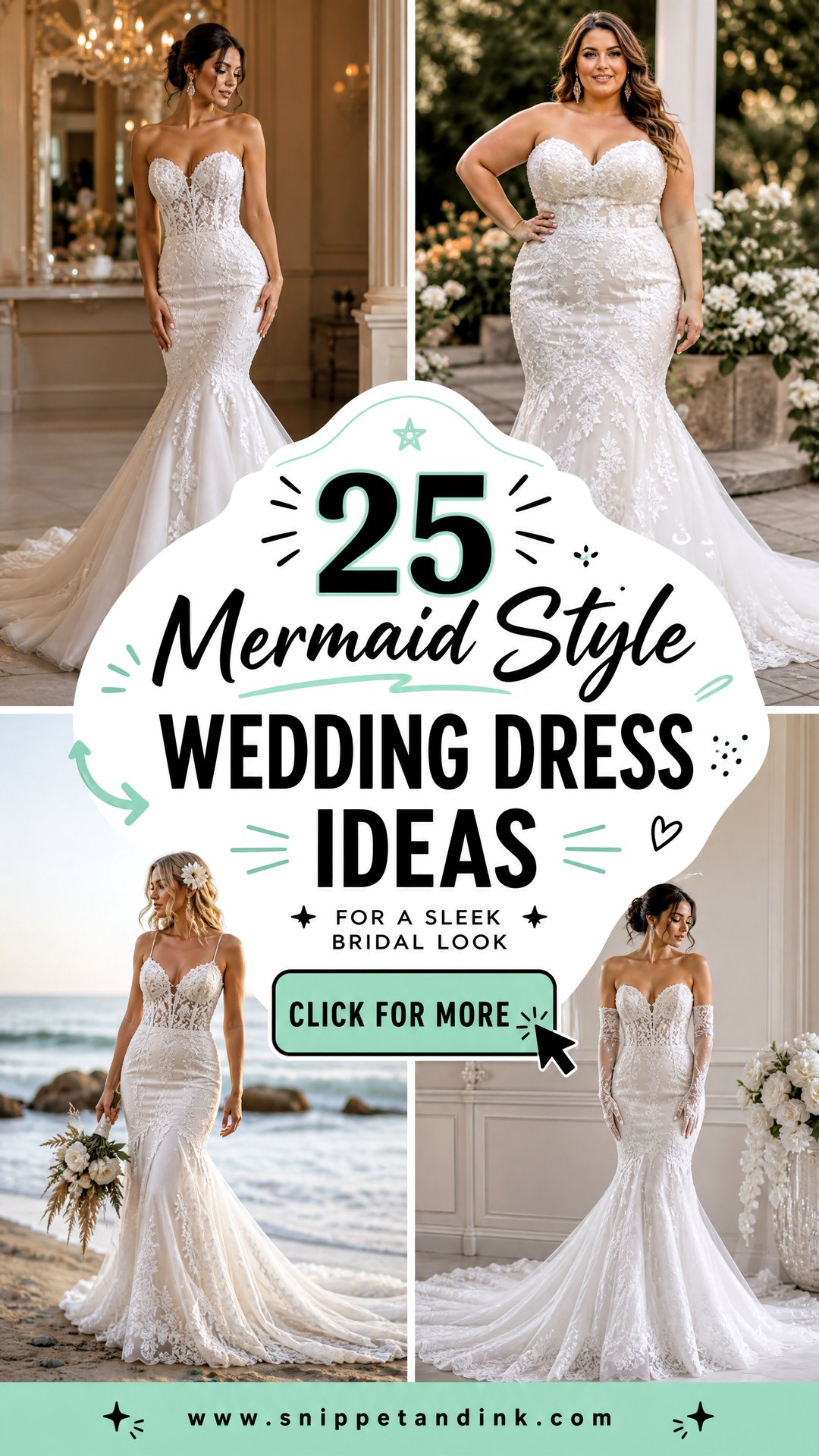
A mermaid wedding dress follows you closely from the bust to below the hips, then breaks into a flare near the knee. Few silhouettes show your shape so honestly, and few depend so much on getting the details right. Right now the cut is looking fresher thanks to softer fabrics, sculpted corsets, detachable overskirts and cleaner, quieter lines. Below are the variations I show brides most often, with what each one needs from you: the venue it suits, how it moves, and where it can let you down if the fit or fabric is wrong.
What Goes Underneath a Close-Fitting Gown
A mermaid skirt shows everything under it, so I plan the underwear before the dress shopping, not after. Satin and crepe are the most revealing. Lace and beading are more forgiving.
- Smooth, edge-free shapewear that ends below the knee, where the flare begins. Shorts that stop mid-thigh leave a ridge you can see across the tightest part of the skirt.
- A bra only if the bodice needs it. Many mermaid gowns have cups and boning sewn in, and a seamstress can add cups if they don’t.
- Skin-tone pieces, not white. White shows through ivory satin and lace in daylight.
- Wear the same set to every fitting. Shapewear can change the measurements at the hip enough to throw off the final fit.
If you hate shapewear, say so at the first appointment. A gown with a stretch lining or a lined crepe body can do much of the smoothing on its own.
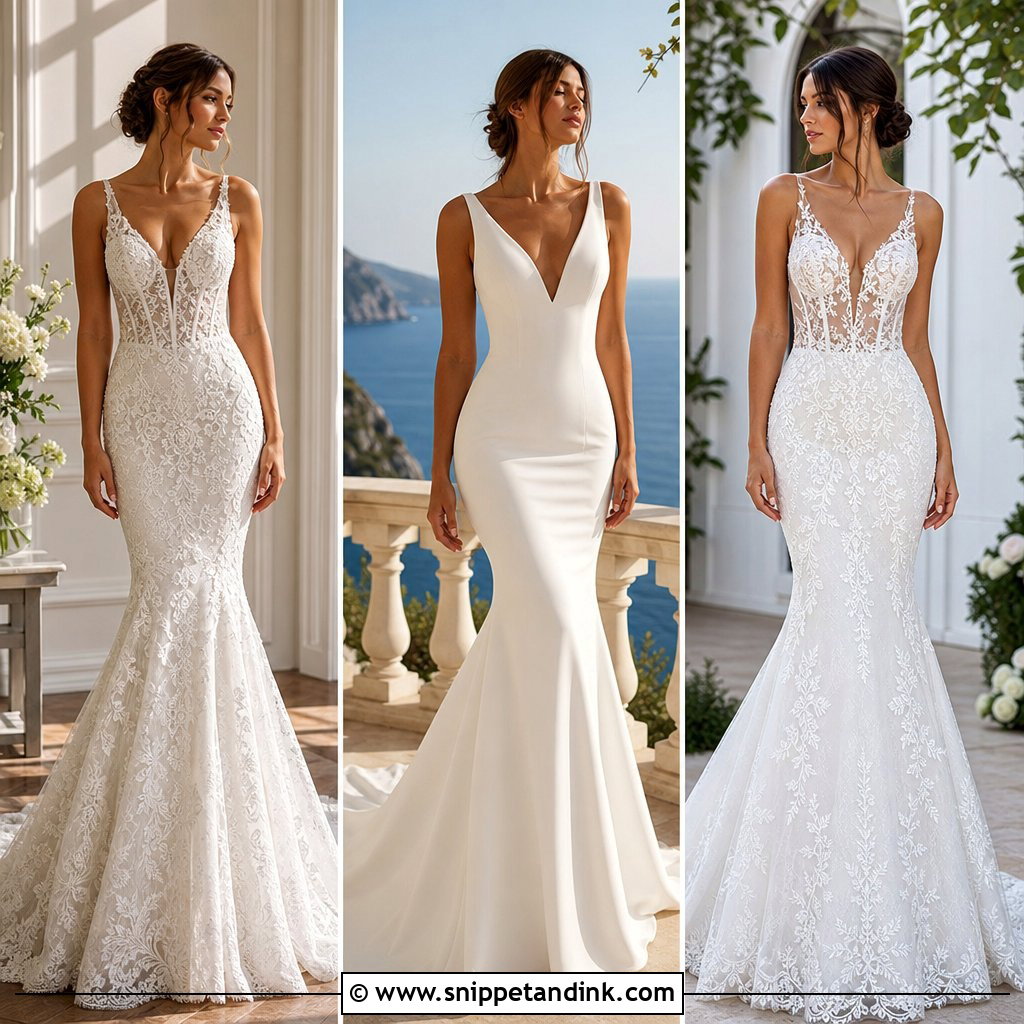
1. Lace Mermaid Wedding Dress
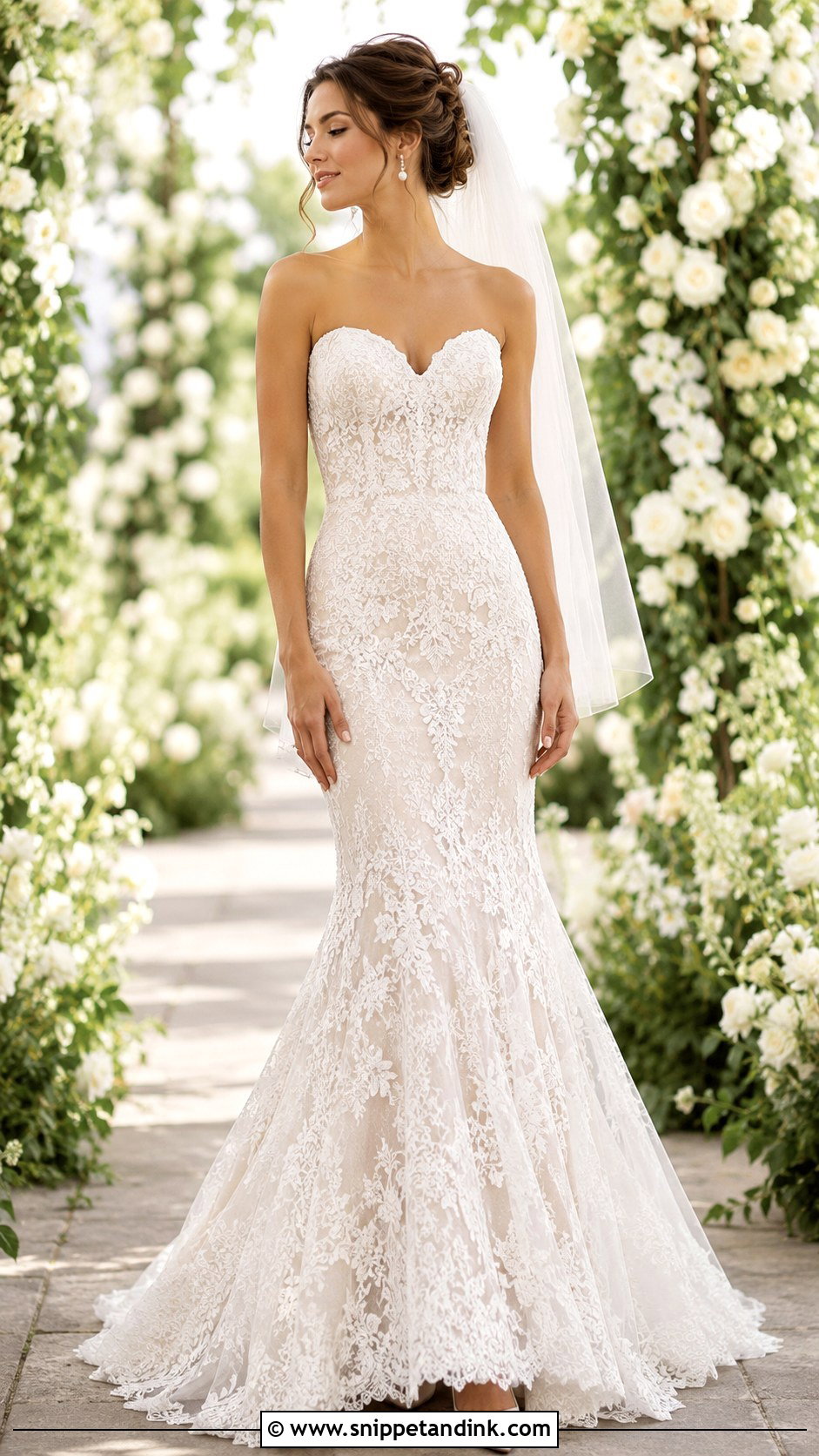
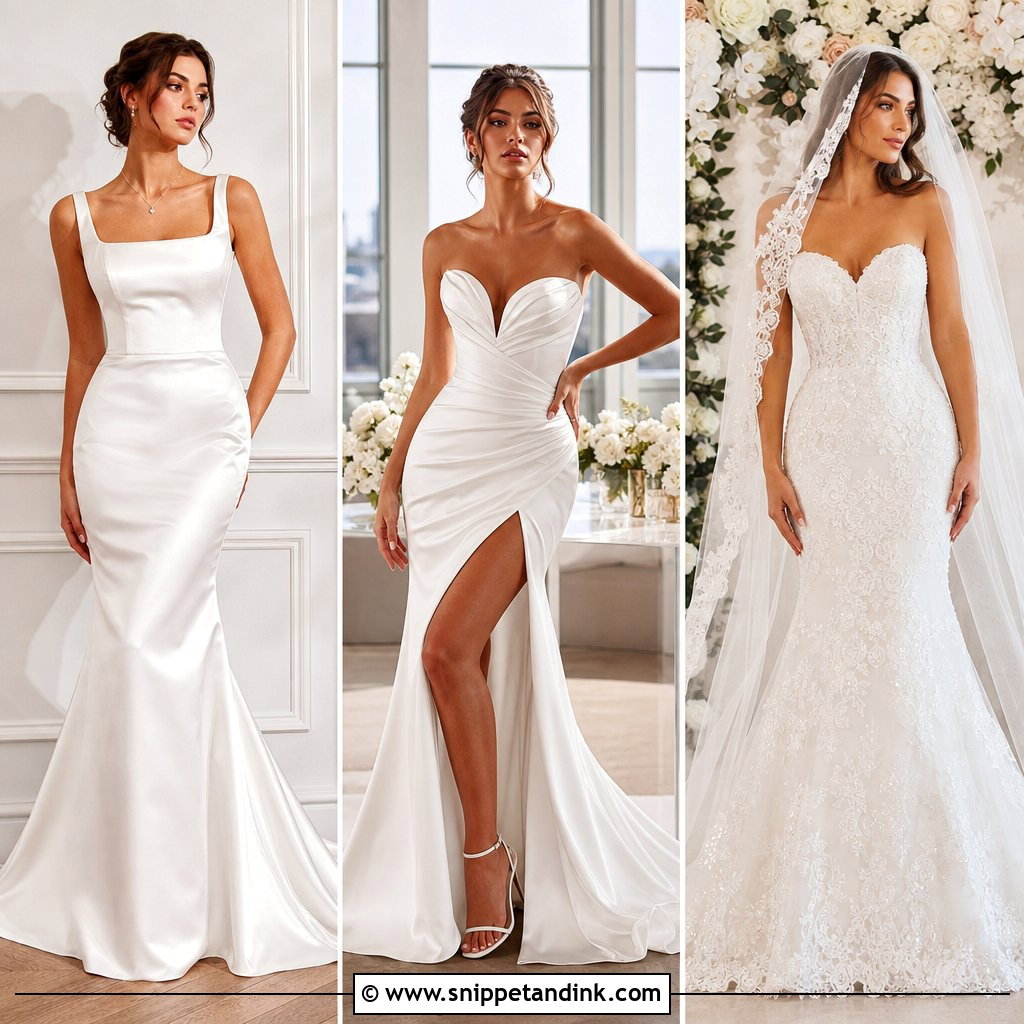
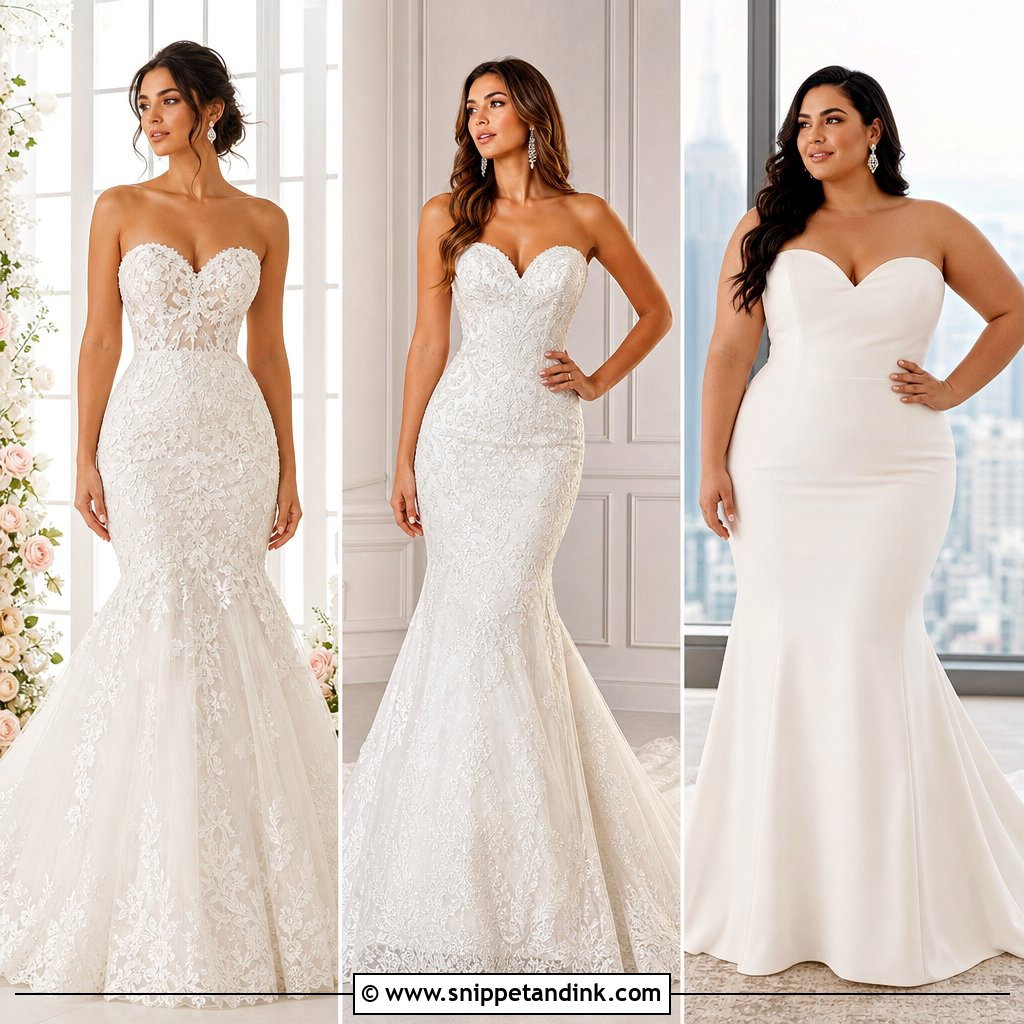
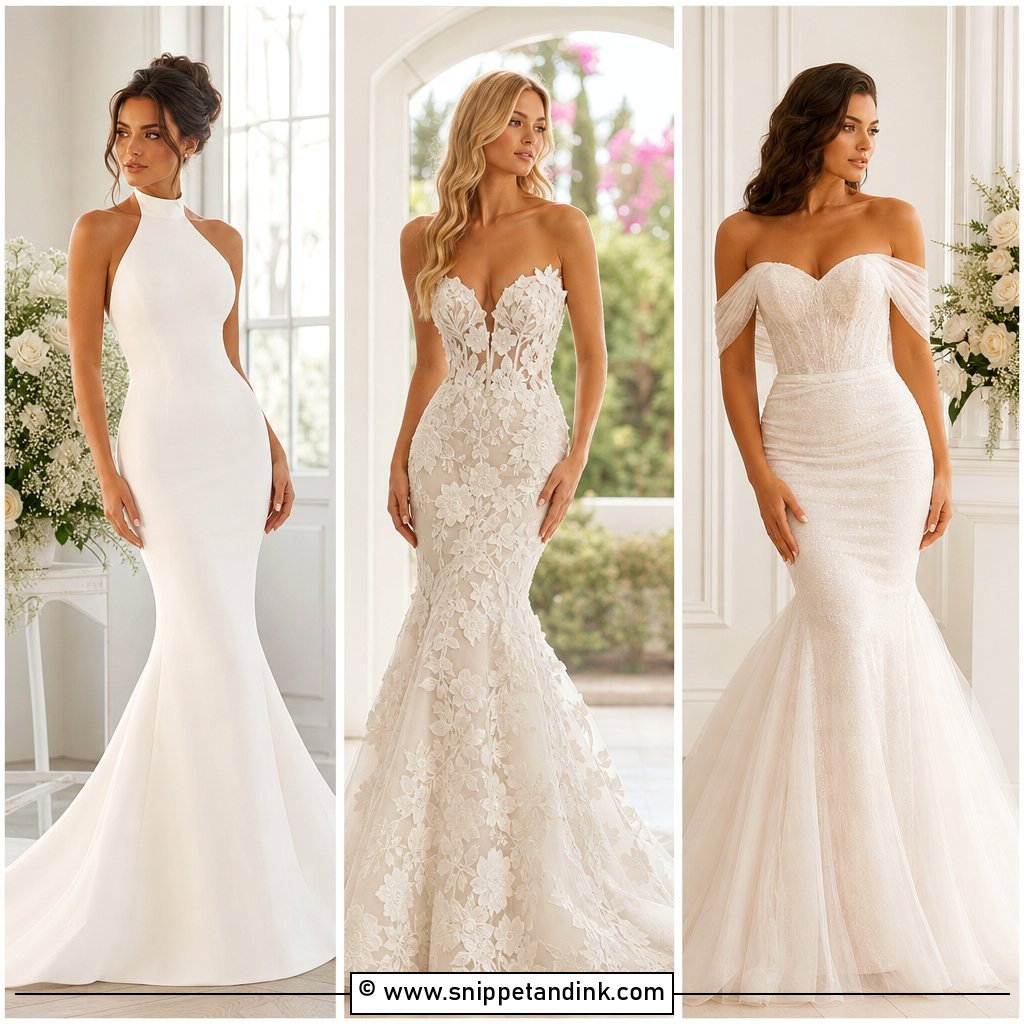
Lace is where most brides start, and for good reason. The pattern softens a close fit and hides small seam adjustments well. I look for a sweetheart or bateau neckline over a nude lining that matches the skin, because a lining that’s too pink or too yellow shows straight through in daylight. Floral appliqué with a little beading looks more current than heavy embroidery. Keep the veil fine enough that the lace pattern reads through it, and keep the bouquet simple.
2. Satin Mermaid Wedding Dress
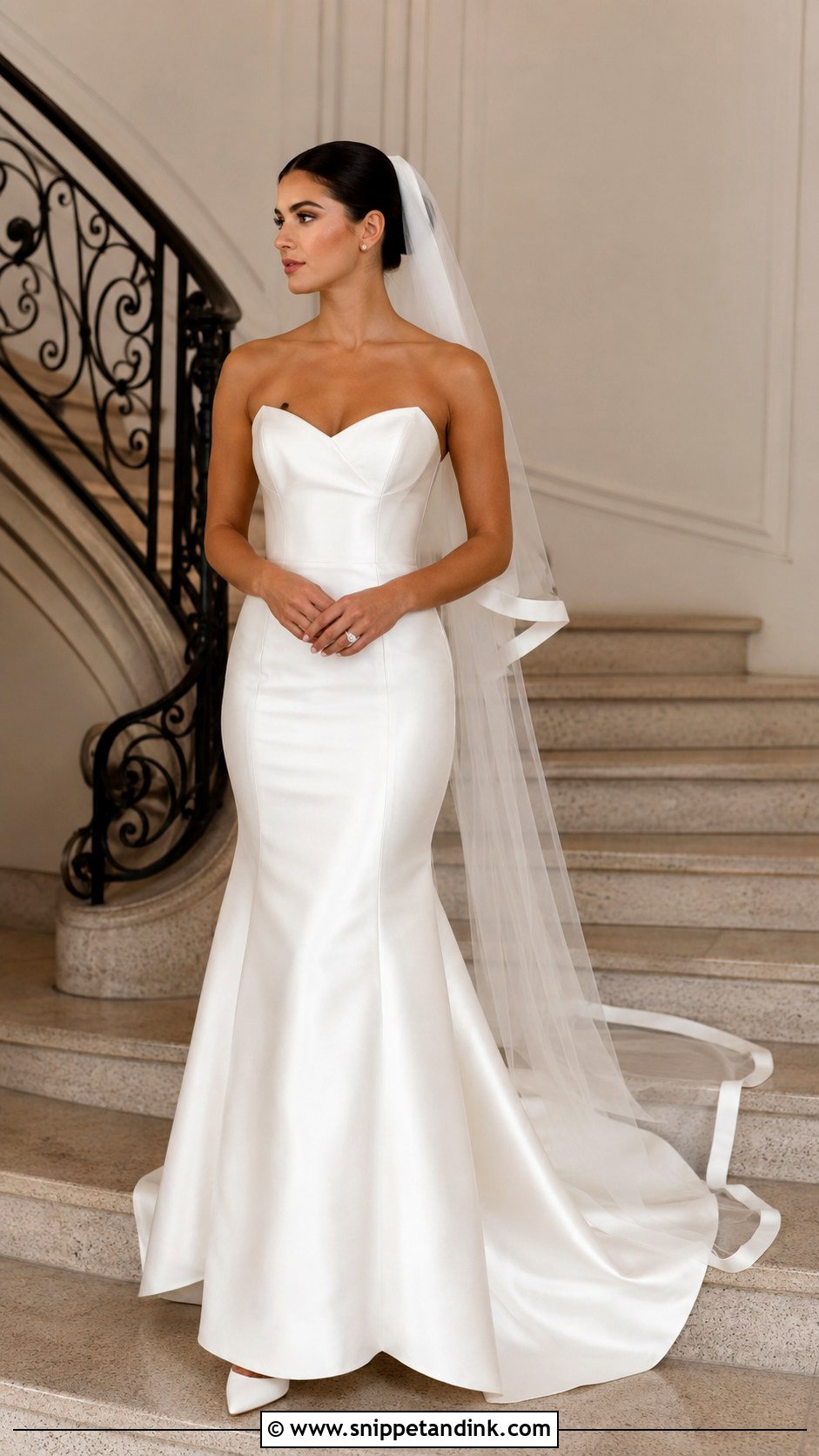
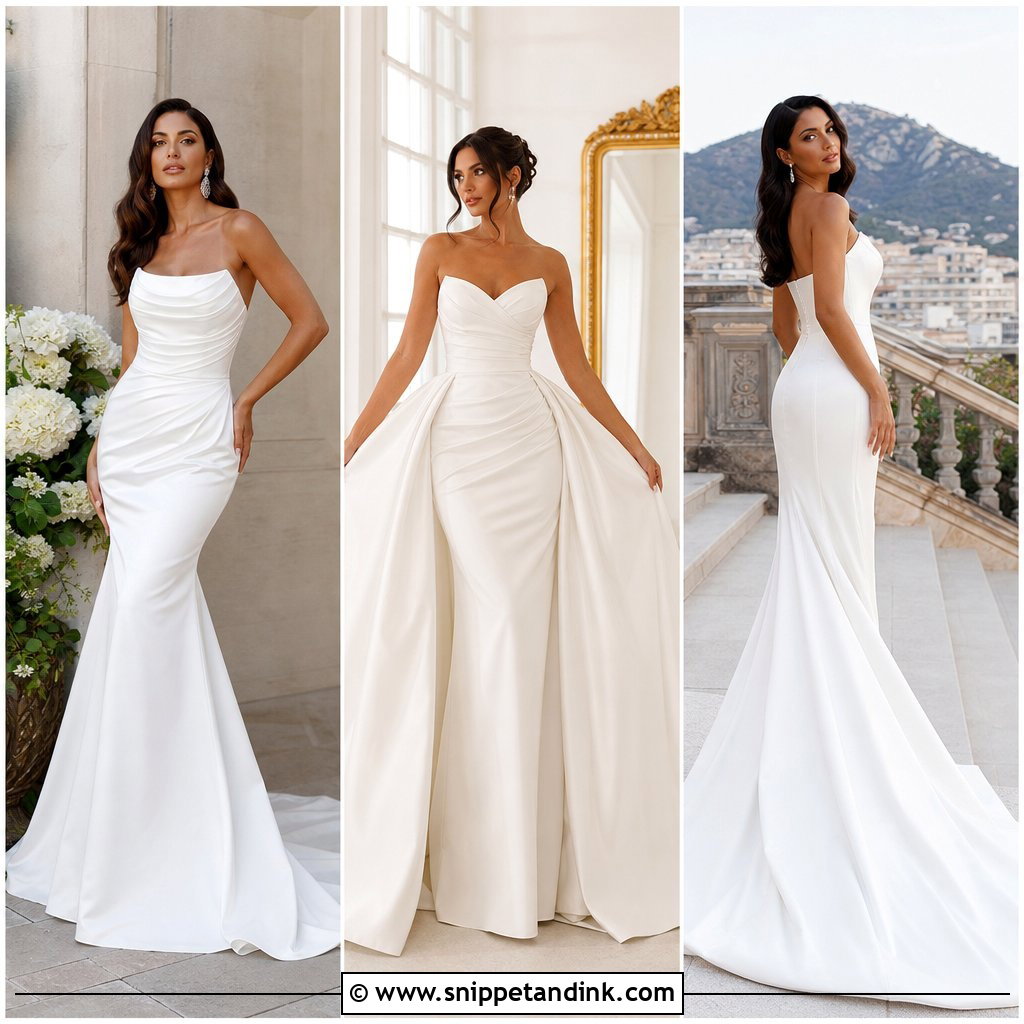
Satin is sculpture. It holds a defined seam and a chapel train with real authority, and it reflects light so strongly that ballrooms and hotel venues suit it best. Look inside before you buy: a satin mermaid with internal corsetry and contour seams keeps its line; one without will crease across the lap within an hour. Crystal studs and a low bun are enough. A long veil edged in satin softens it without breaking the smooth surface.
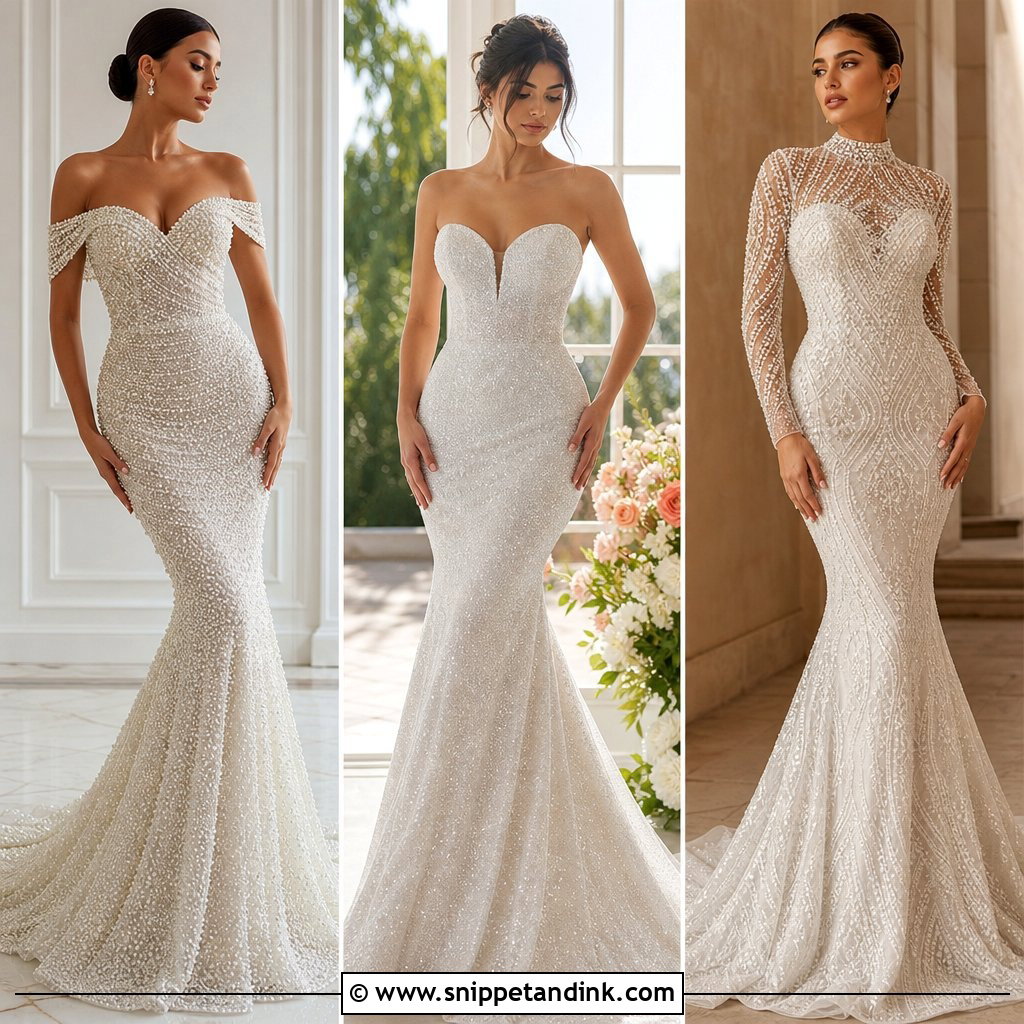
3. Strapless Mermaid Wedding Dress
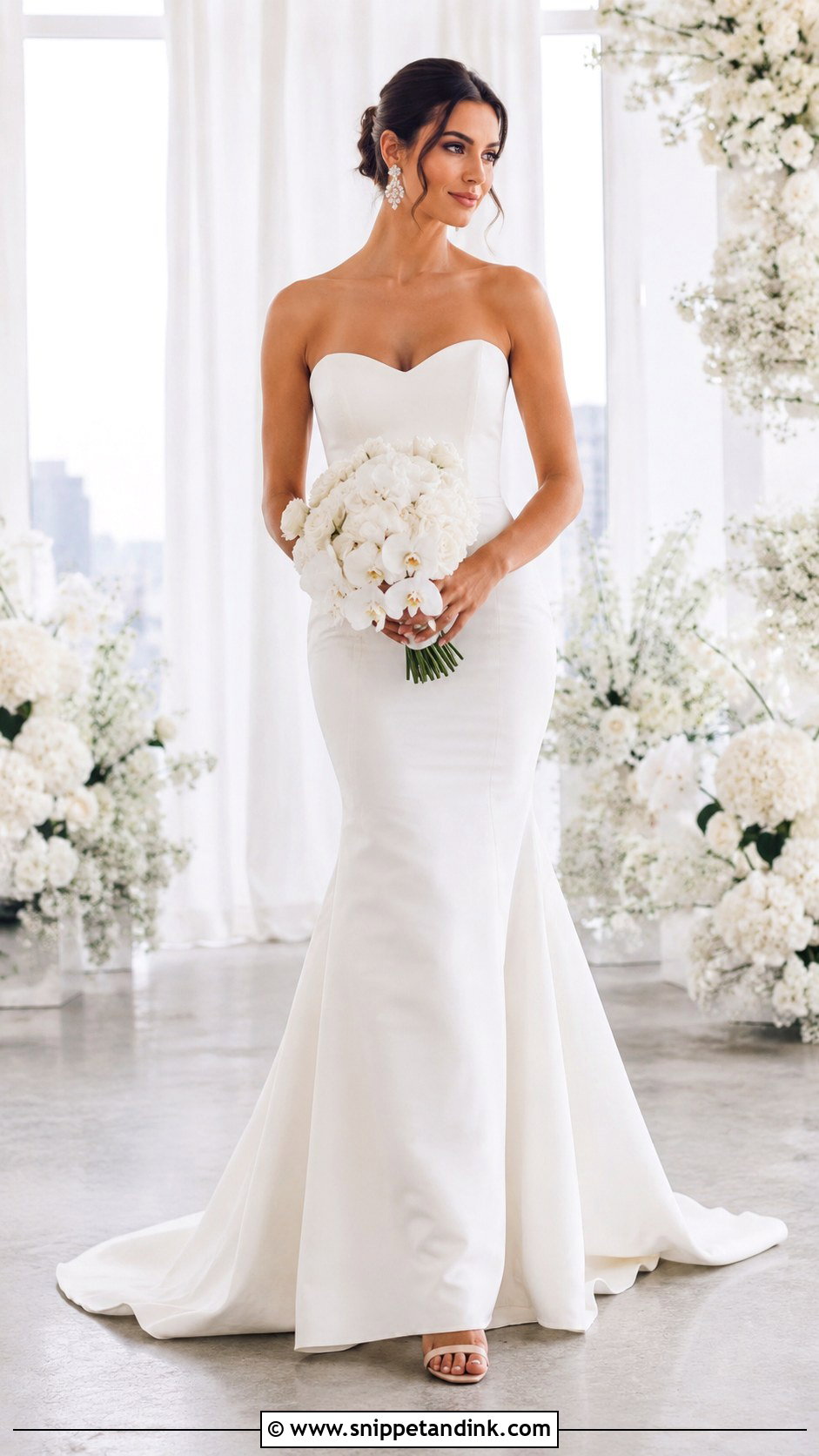
Strapless puts all the work on the bodice. I won’t send a bride out in one until we’ve done the arm test: arms up, a hug, a bend to pick up the train. If the neckline shifts, it needs more boning or a tighter fit at the ribs, not at the bust. Straight-across feels sharper; a curved neckline is softer near the face. For a church service, a removable bolero or sheer wrap gives coverage and comes off for the party.
4. Long Sleeve Mermaid Wedding Dress
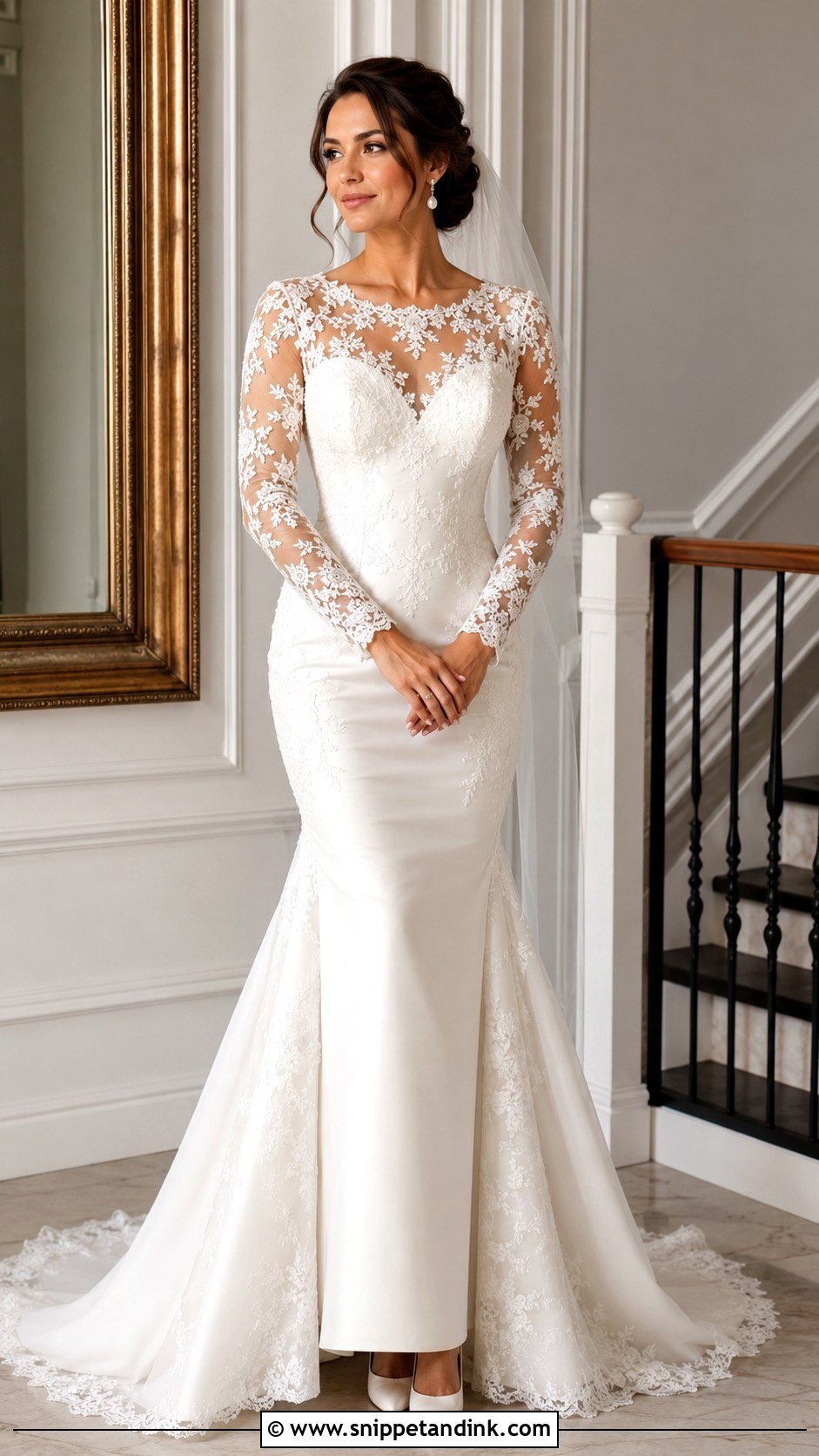
Sleeves and a fitted skirt balance each other well. You get coverage above and shape below, and the result still looks clearly bridal. Sheer lace sleeves read romantic, crepe or satin sleeves read tailored. The thing I check every time is a stretch lining in the arms, because rigid lace sleeves restrict hugging and can tear at the elbow. Closed-toe heels, pearl earrings and a low chignon suit autumn and winter ceremonies.
5. Off Shoulder Mermaid Wedding Dress
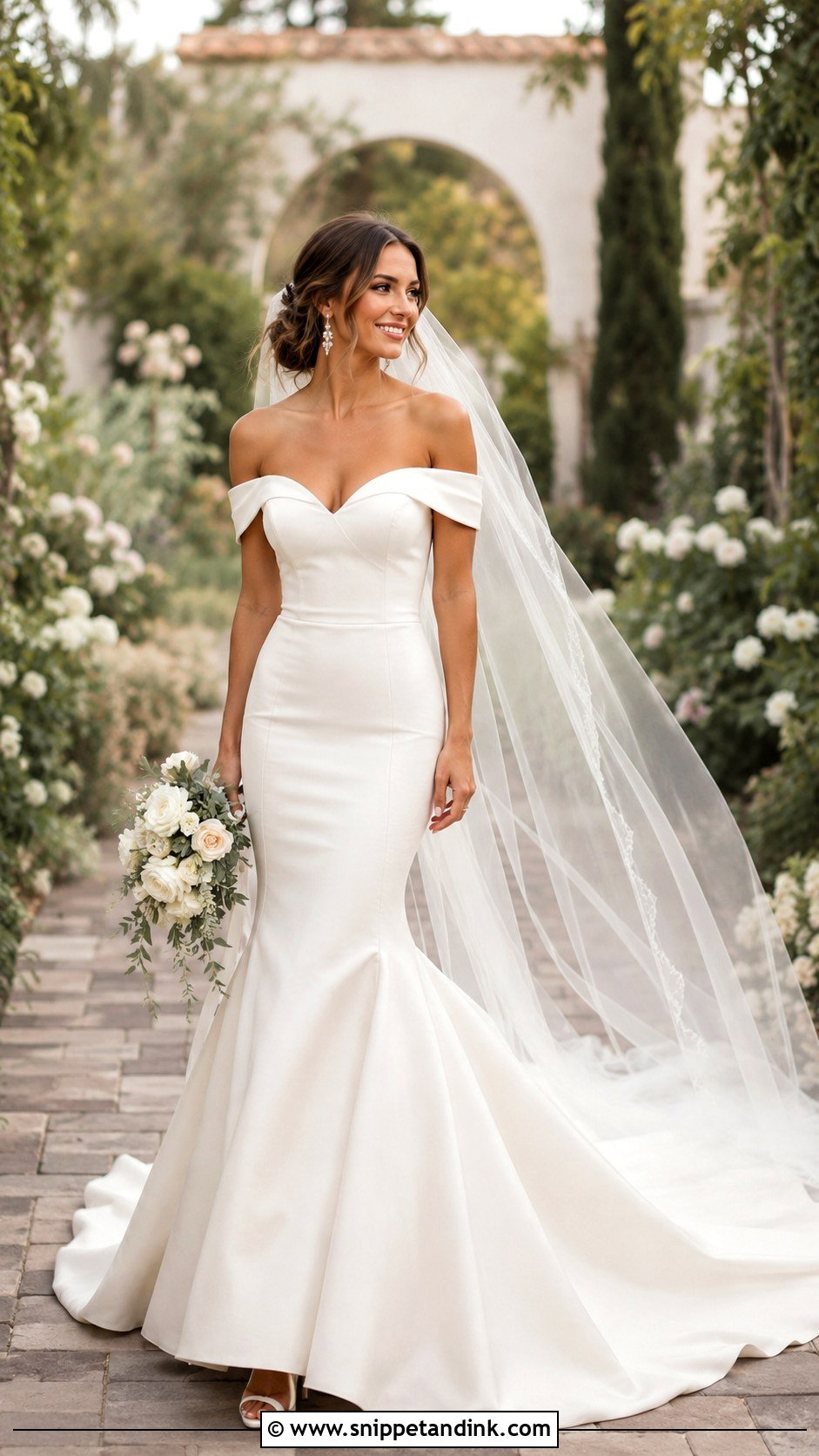
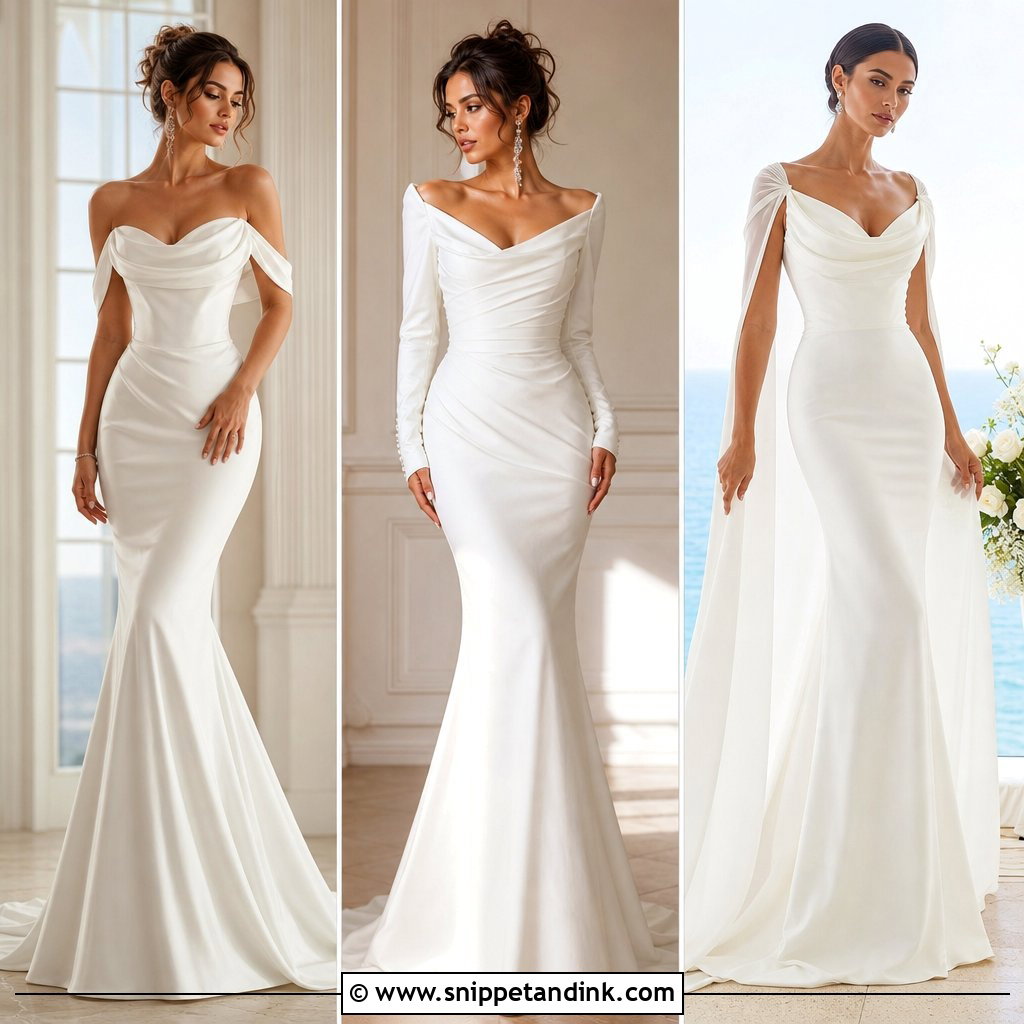
Off-shoulder frames the collarbones and draws attention up and away from the close skirt, which makes it a good starting point for a nervous first-time mermaid bride. Lace looks dreamy, satin refined, crepe minimal. The band across the arms is the weak point. If it’s cut too tight, you won’t be able to raise your arms to dance; too loose, and it slides. Swept-back hair, drop earrings and a fingertip veil keep the neckline open.
6. Corset Mermaid Wedding Dress
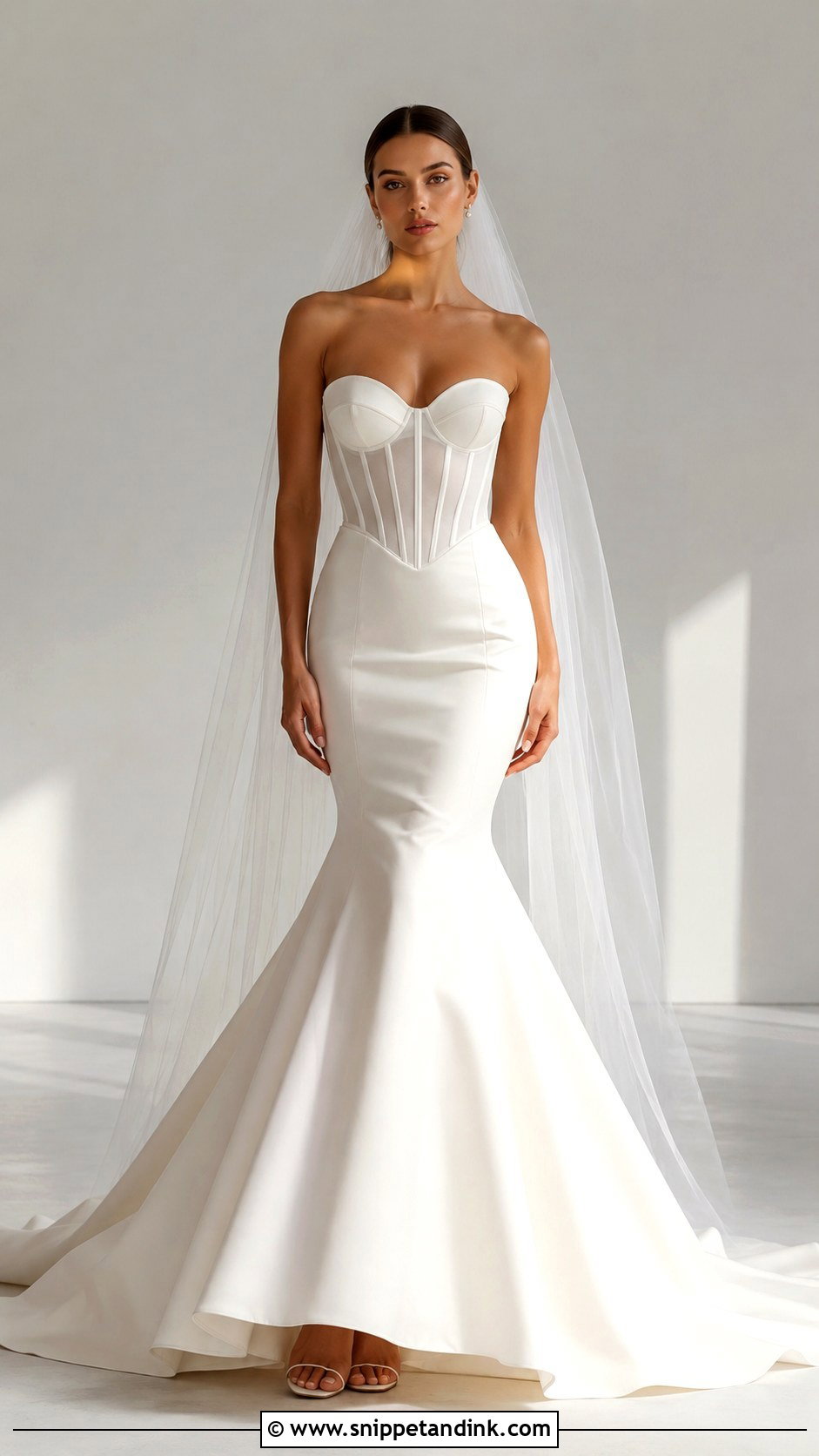
Visible boning, a basque waist or sheer corset panels turn a mermaid into something more fashion-led. It’s a modern editorial look, and it gives genuine support. A lace-up back is my preference here because it can be loosened a little after dinner. The structure is already detailed, so keep the shoes and jewelry simple and the veil smooth. Sit down at your fitting for a few minutes; firm should never mean breathless.
7. Beaded Mermaid Wedding Dress
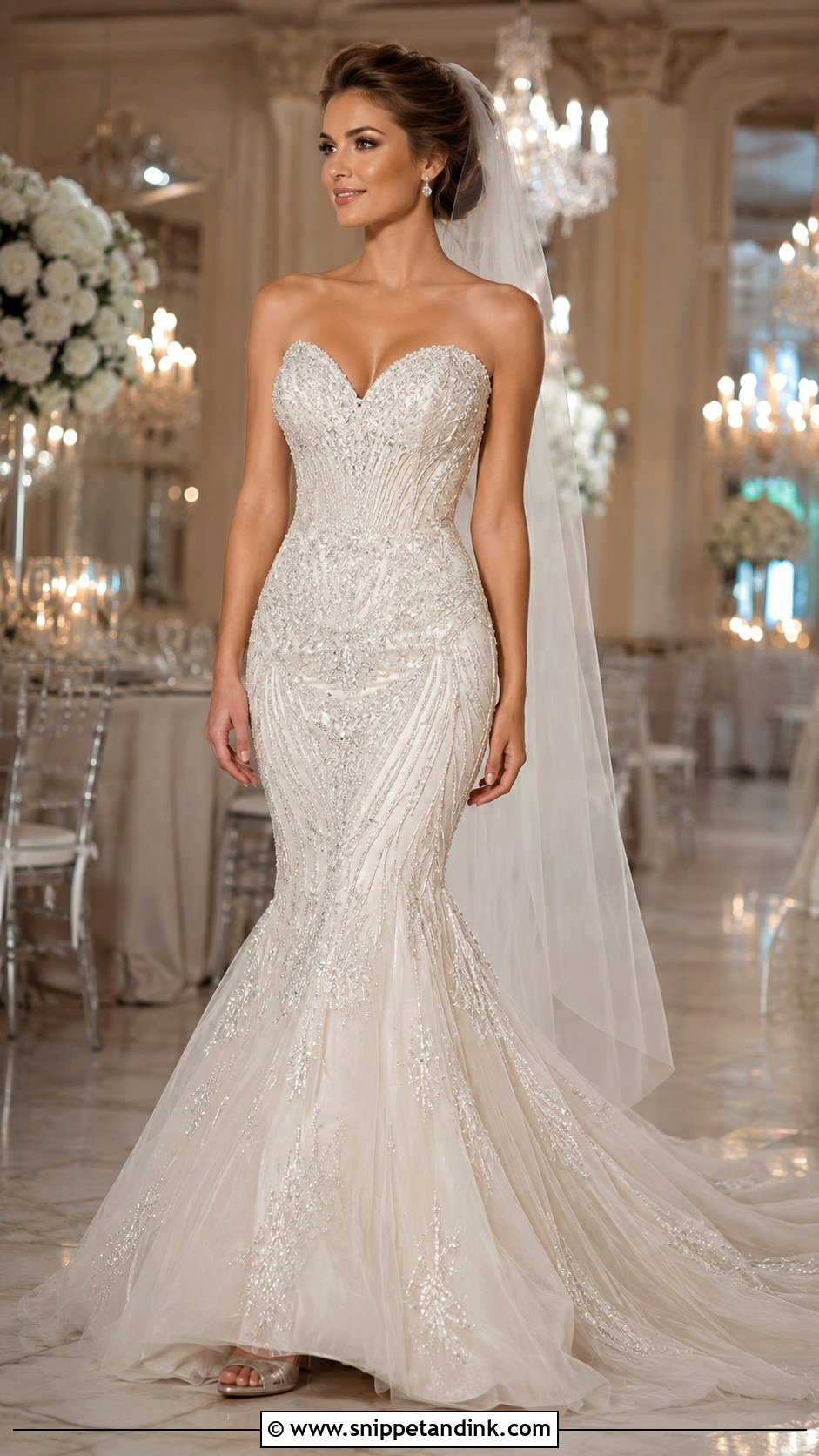
Beading that follows the body, such as vertical trails, scattered pearls or art deco lines, lengthens the silhouette and catches candlelight at an evening reception. It also adds weight that hangs from your hips all day. Lift the gown off the hanger before trying it on and you’ll feel the difference. A waist stay sewn inside takes some of that load. Keep accessories small and the veil plain.
8. Crepe Mermaid Wedding Dress
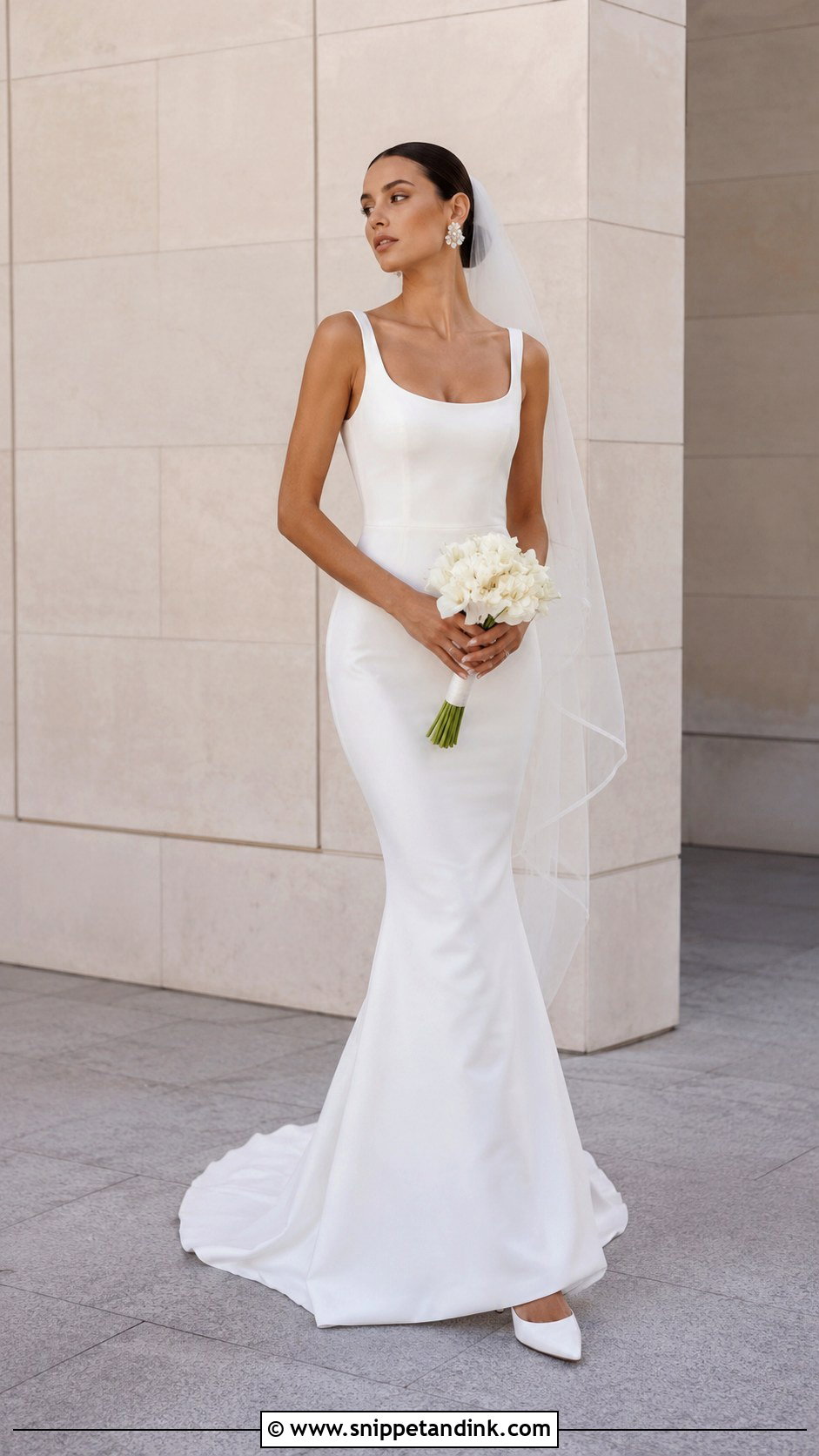
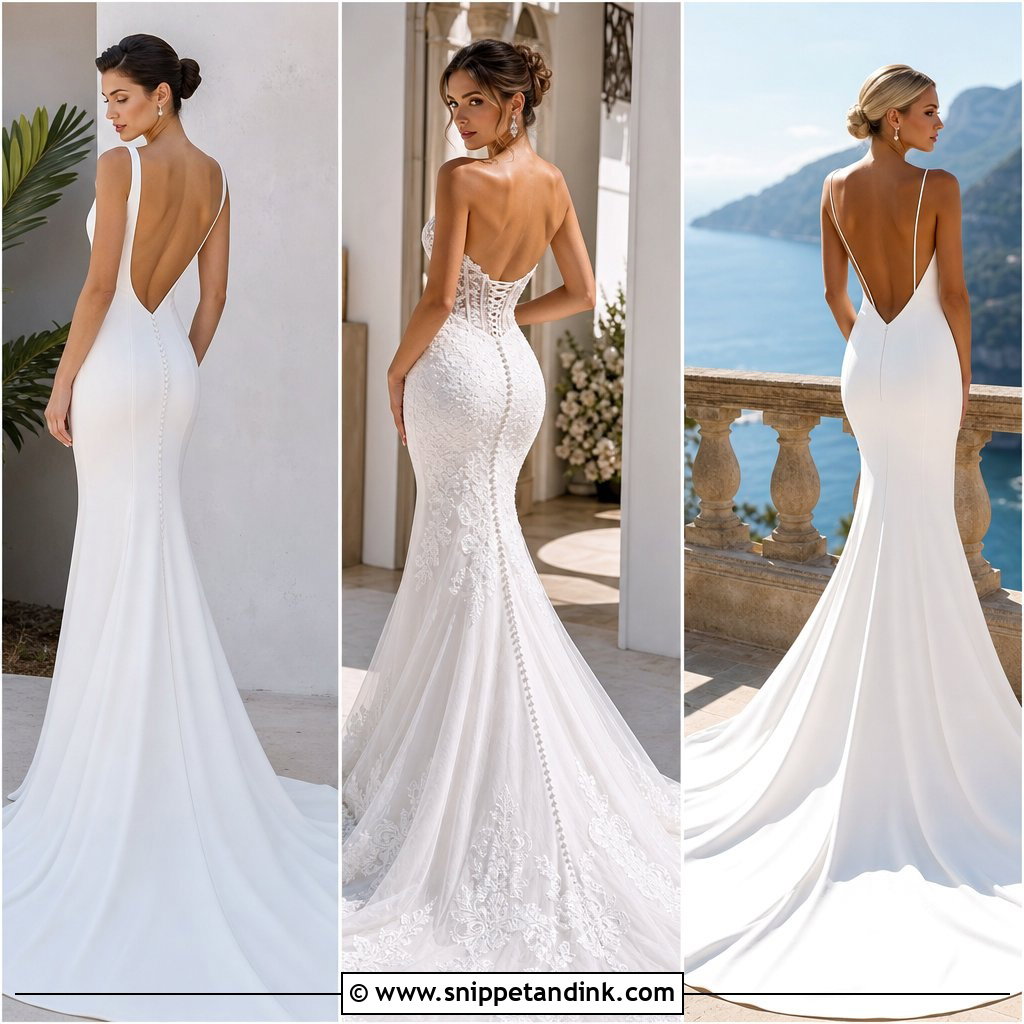
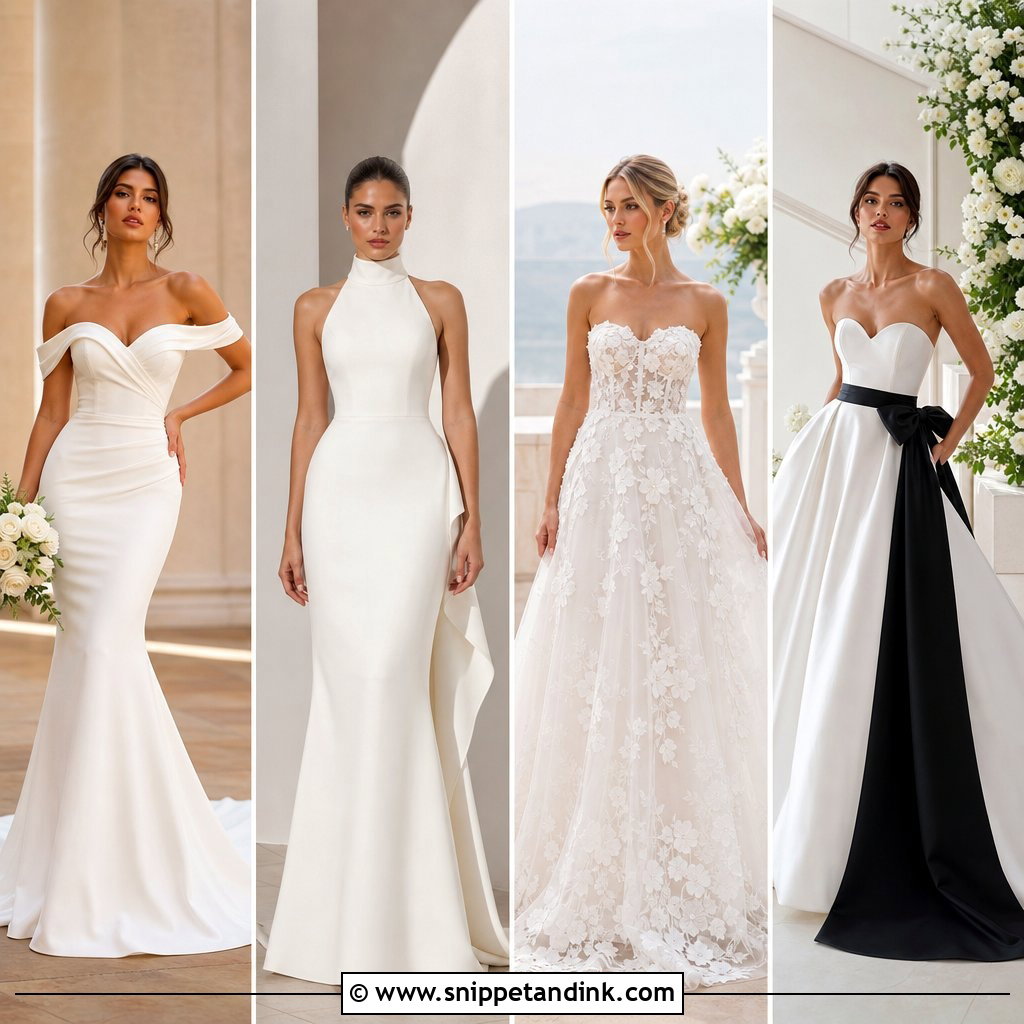
Crepe has a matte surface and usually some stretch, which makes it the most comfortable fabric on this list. It suits a scoop neck or a low back and looks right at city venues and registry offices. Because it’s so plain, every seam is on display, and a slightly crooked side seam is obvious. Good tailoring is what makes a crepe mermaid look expensive. Sculptural earrings and pointed pumps finish it.
9. Simple Mermaid Wedding Dress
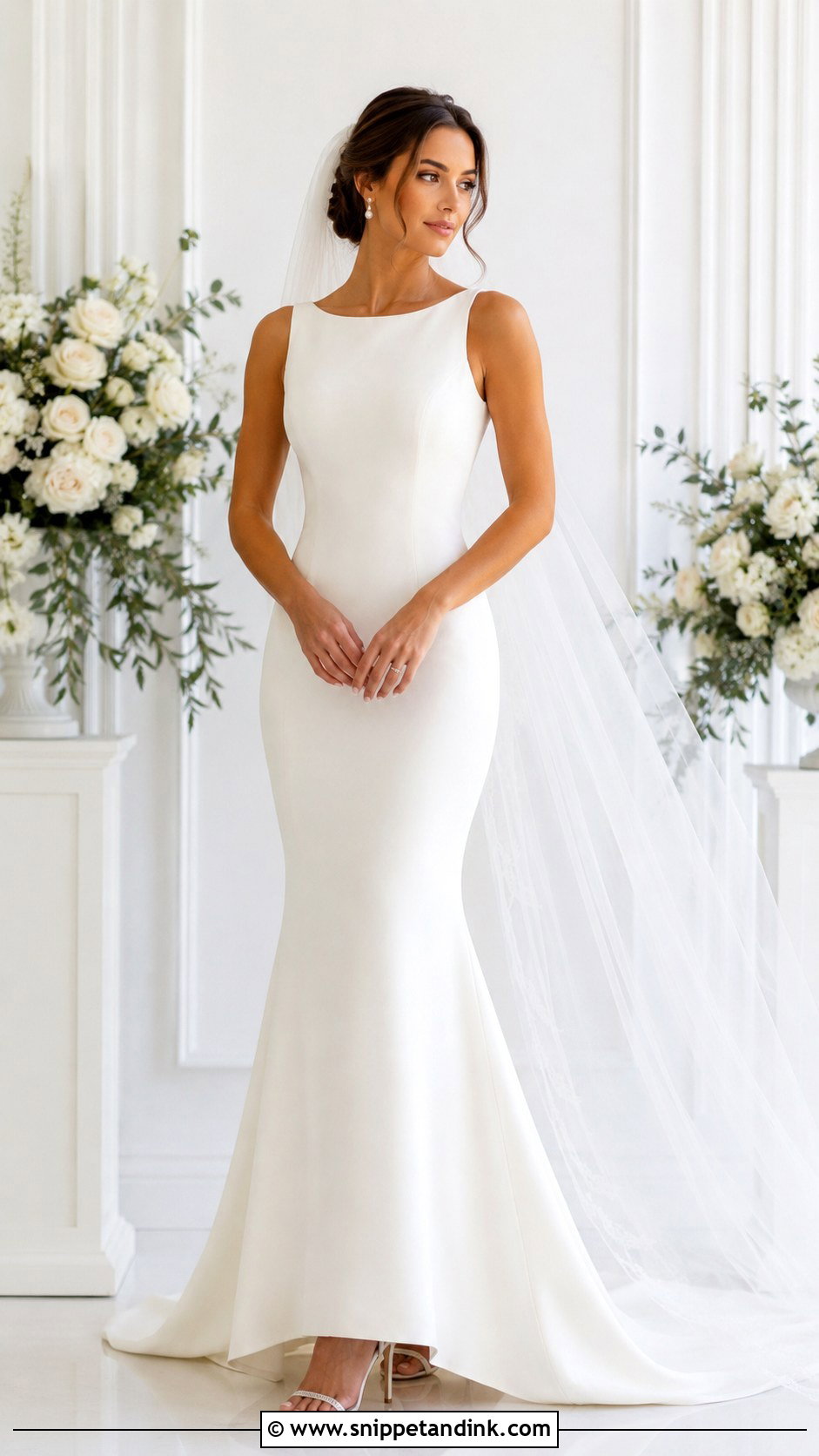
A plain mermaid relies on three things: clean fabric, a well-cut neckline and a flare that falls evenly all the way around. Satin, crepe or mikado give the smoothest finish. With so little decoration, your accessories change the mood completely. A cathedral veil makes it formal, sleek gloves make it fashion, pearls keep it classic. I like this option when a bride wants photos that won’t date, but it does show every styling choice, so pick each one carefully.
10. Plus Size Mermaid Wedding Dress
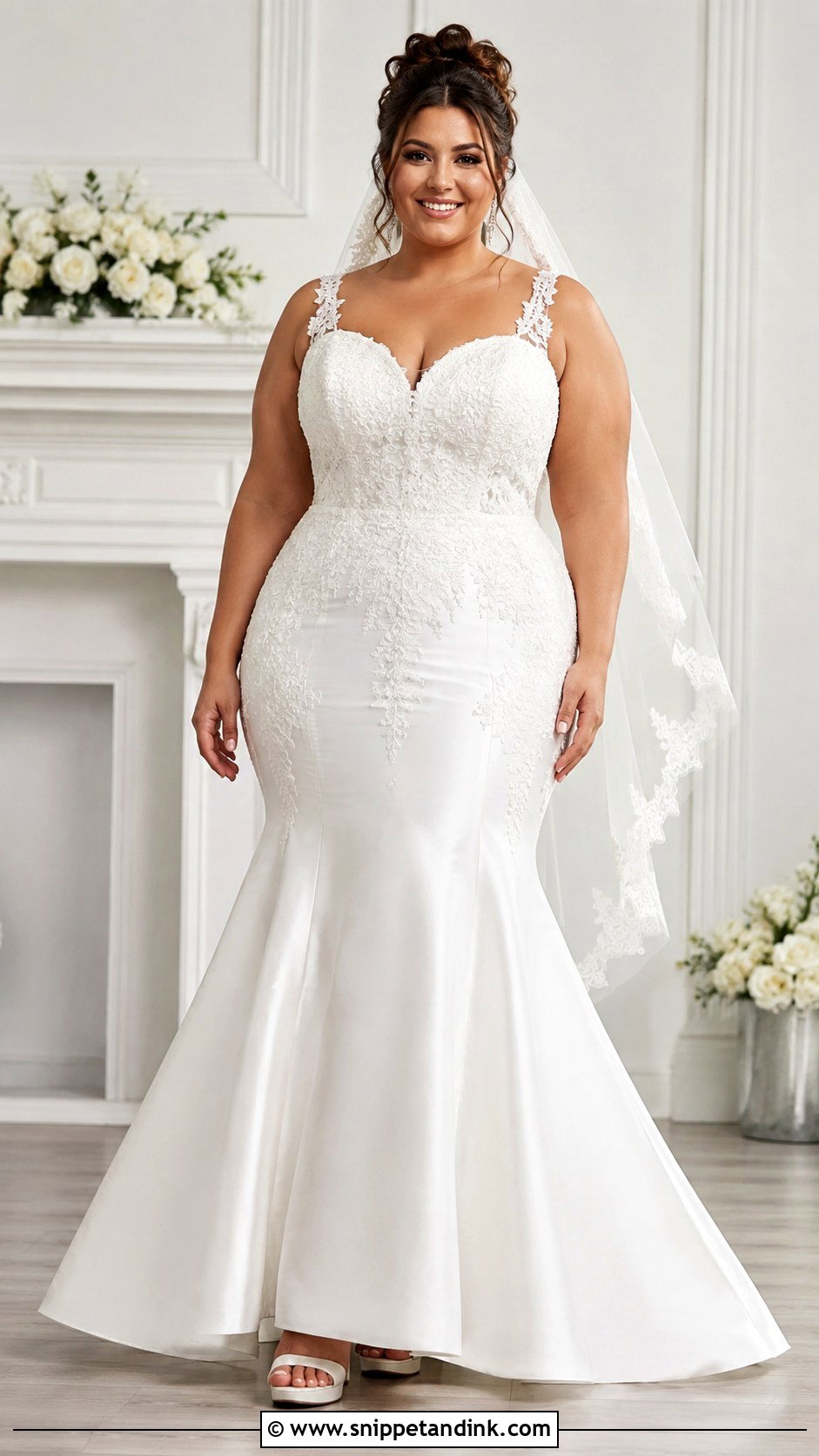
A mermaid can look wonderful on a curvy body when the construction supports you instead of squeezing you. I look for strong internal structure, stretch lining and seams that follow your shape rather than cutting across it. Lace appliqué and ruching add dimension and hide shapewear lines. Never size down to look smaller. A gown ordered to your largest measurement and tailored in will always look better than one that pulls at the hips.
11. Petite Mermaid Wedding Dress
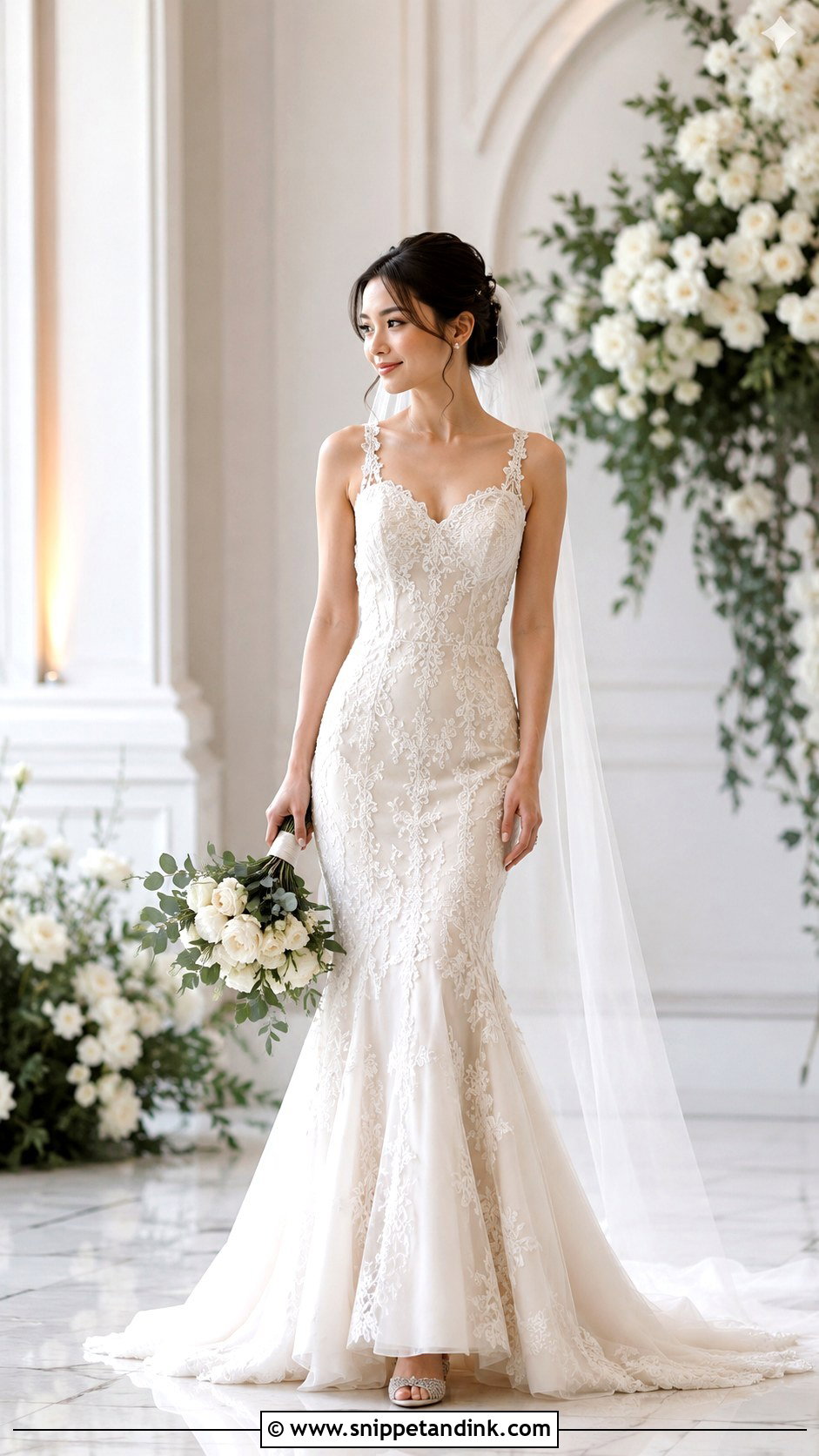
On a petite frame, a flare that starts too low eats up your height. I usually suggest a trumpet-mermaid hybrid with the flare a little higher, vertical lace or clean crepe seams, and details scaled down to your size. A deep V or strapless bodice adds visual length too. Watch the train. A heavy one can overpower a small bride, so make sure it bustles neatly before you commit.
12. Boho Mermaid Wedding Dress
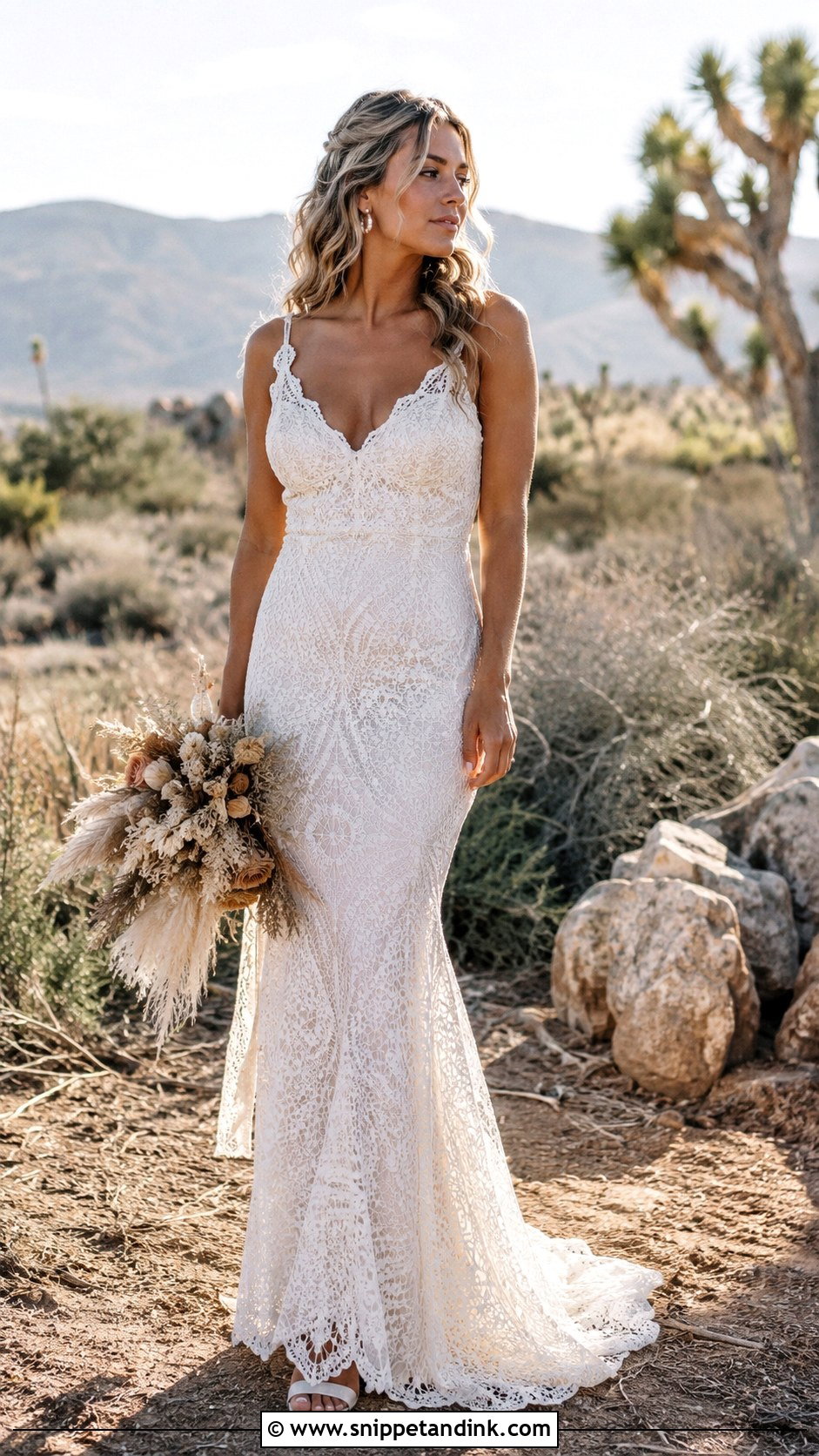
Boho mermaid gowns use crochet-style lace, flutter sleeves or a low back with fine straps to relax the shape. The fitted cut keeps it bridal; the texture keeps it easy. Loose waves, simple sandals and a wildflower bouquet suit beach, desert and barn venues. Pearl hoops or woven pins add polish. One caution: crochet lace snags on outdoor surfaces, so check the hem after the ceremony walk.
13. Beach Mermaid Wedding Dress
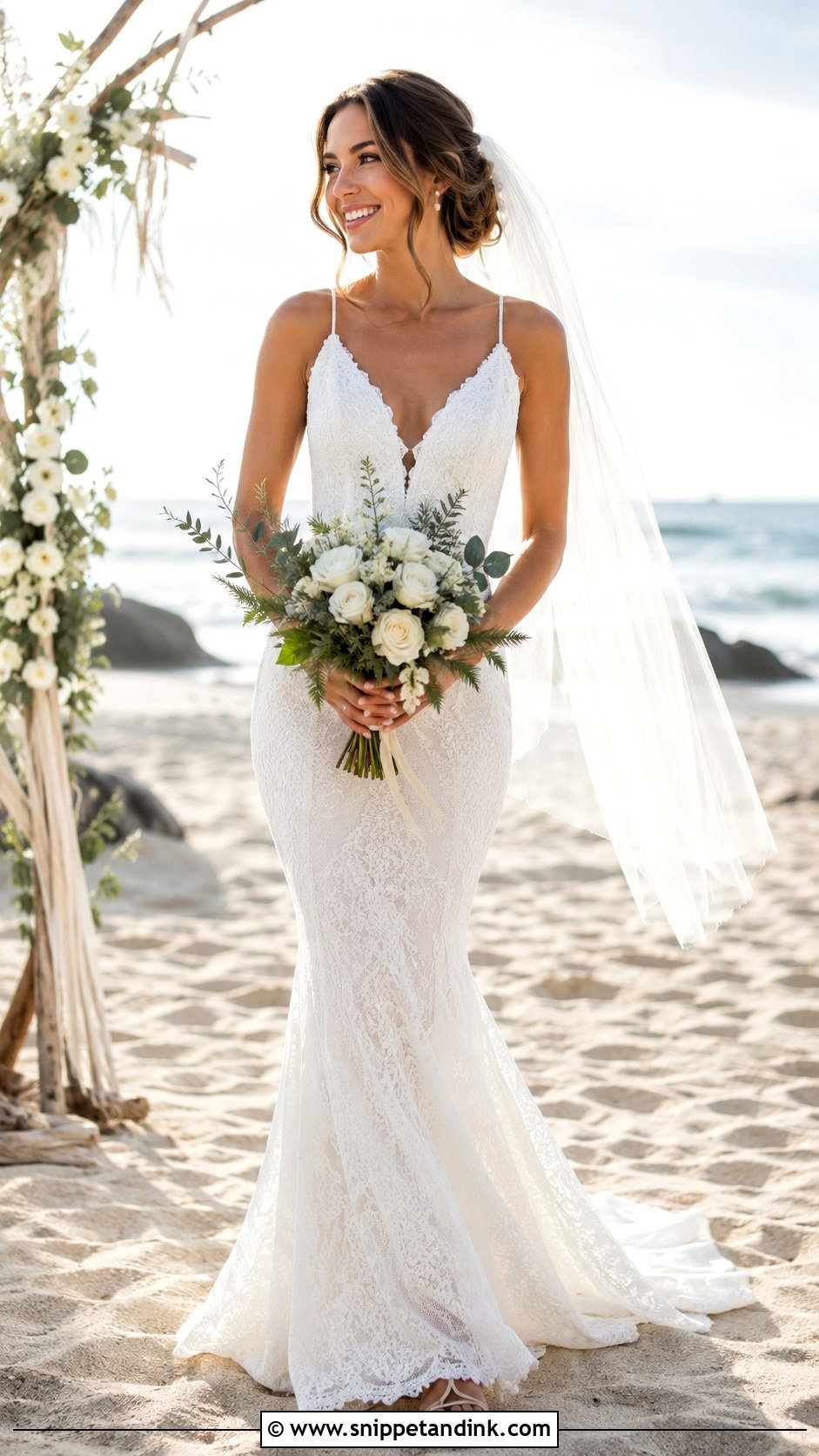
Sand and heavy satin don’t mix. For the beach I steer brides toward soft lace, stretch crepe or light tulle, and a flare that starts slightly higher so you can walk on uneven ground. Choose a short or detachable train, because a long one fills with sand within minutes. Flat bridal sandals, pearl studs and a short veil that won’t wrap around your face in the wind work best. Natural makeup and soft waves suit the relaxed coastal setting.
14. Glam Mermaid Wedding Dress
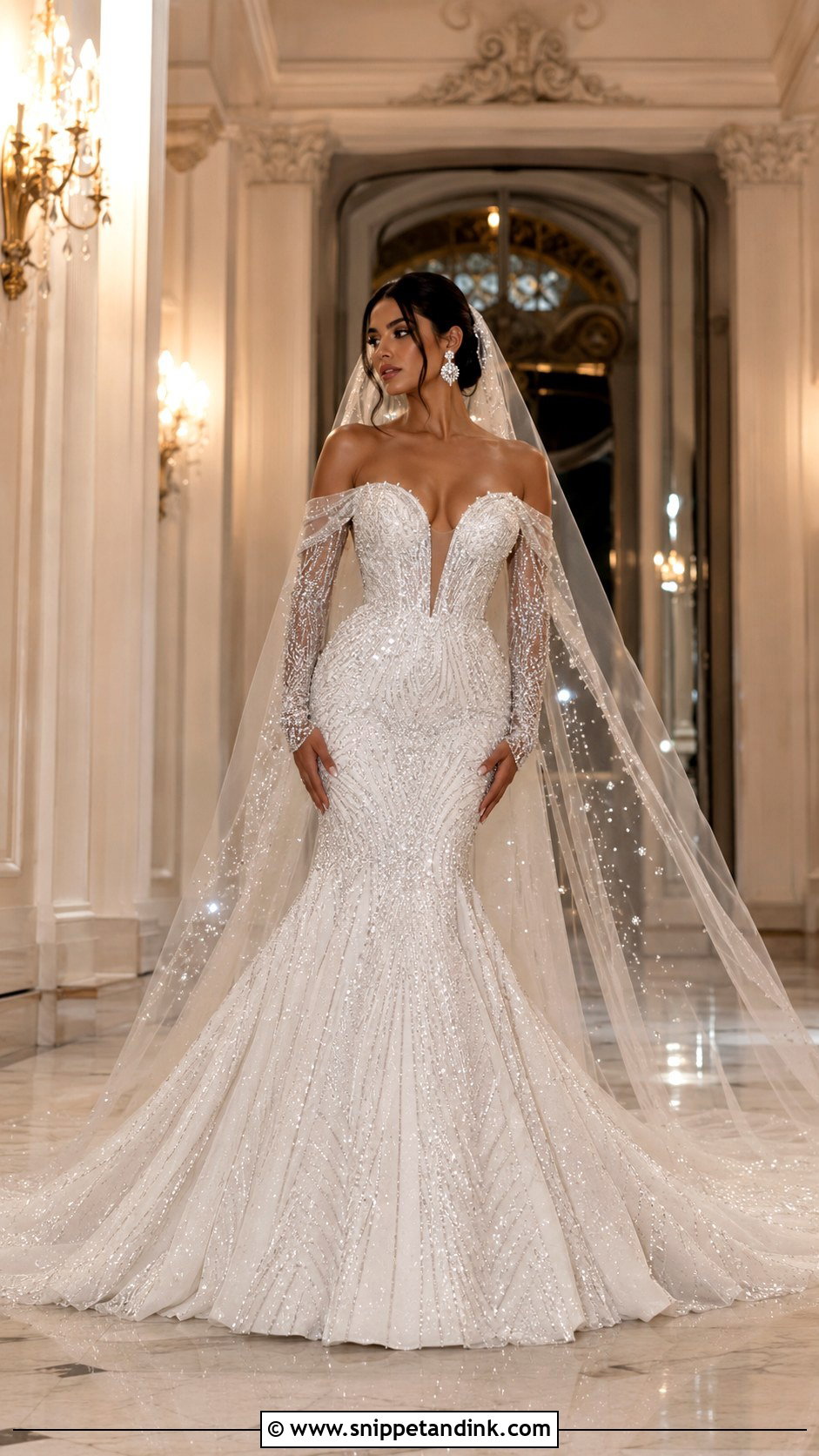
Glam means crystal beading, sculpted satin, a big train or a structured corset, and the trick is picking one of those as the hero. Brides who try all four end up looking costumed. High-shine earrings and a smooth hairstyle hold it together. For an evening wedding in a grand room, a veil that runs slightly longer than the train adds real impact. Budget extra time for the bustle on a train this size.
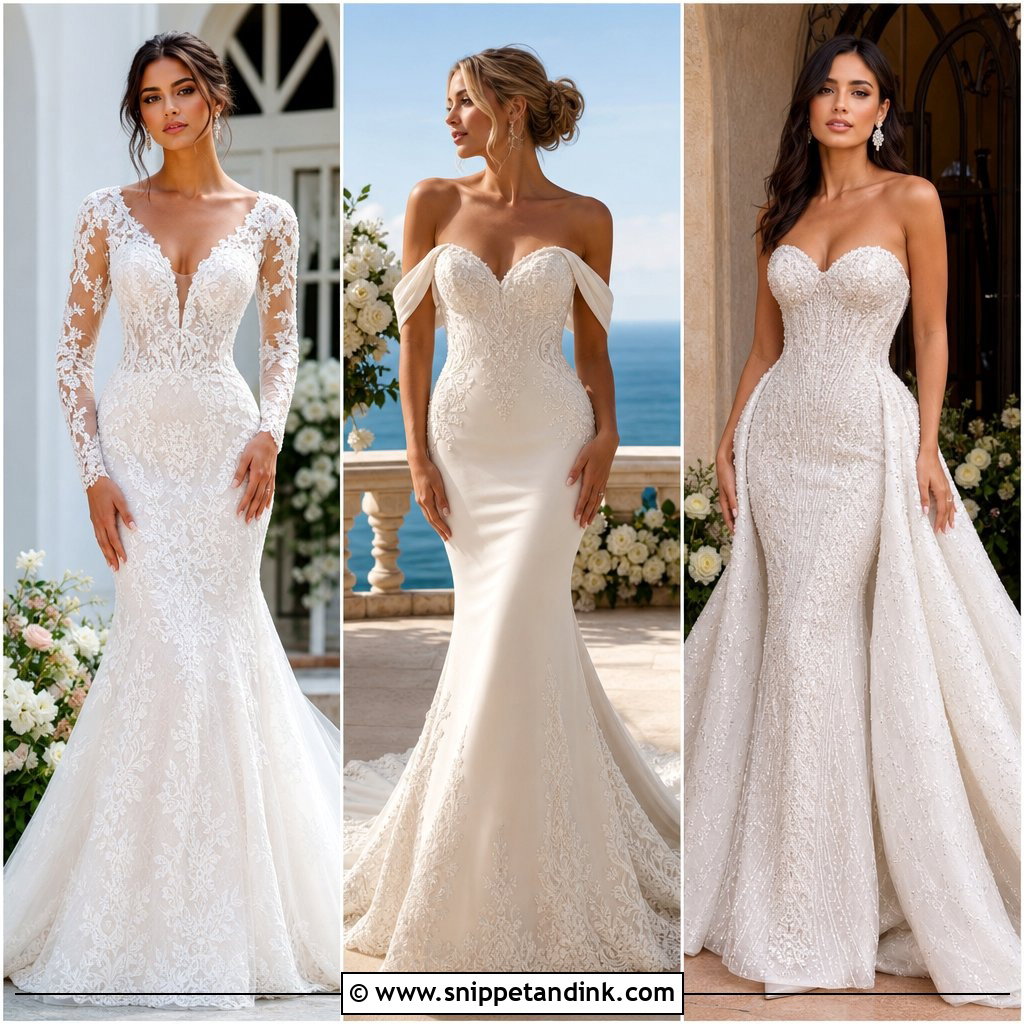
15. Vintage Mermaid Wedding Dress
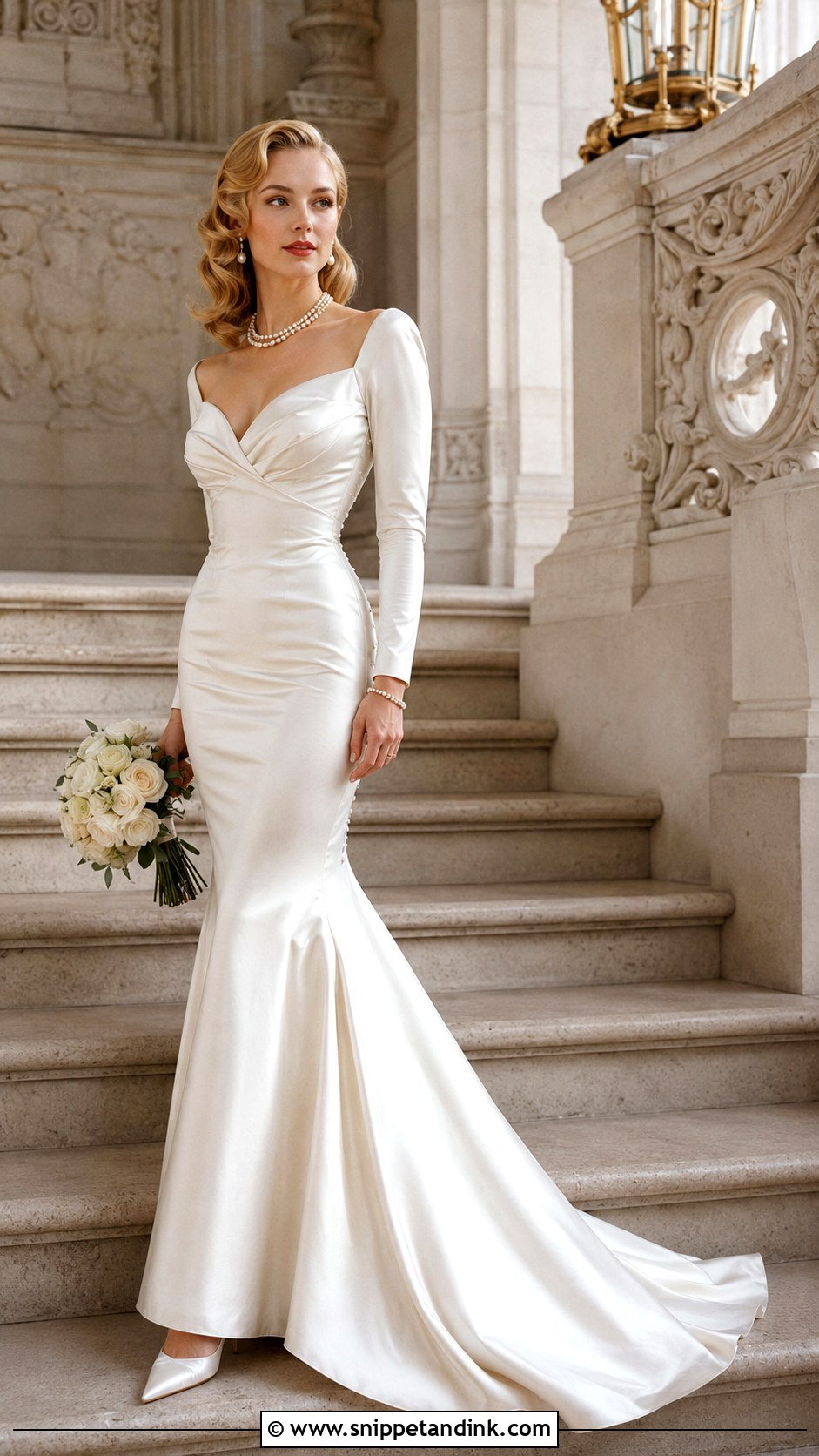
Vintage mermaid gowns borrow from old-Hollywood elegance: liquid satin, lace sleeves, covered buttons, a high neck. My rule is one vintage element per look, so it reads as a reference rather than a costume. Pair a period neckline with a clean modern skirt, or antique-style lace with very simple jewelry. Soft curls and pearls fit historic or art deco venues. A birdcage veil leans retro, while a long lace veil leans traditional.
16. Floral Mermaid Wedding Dress
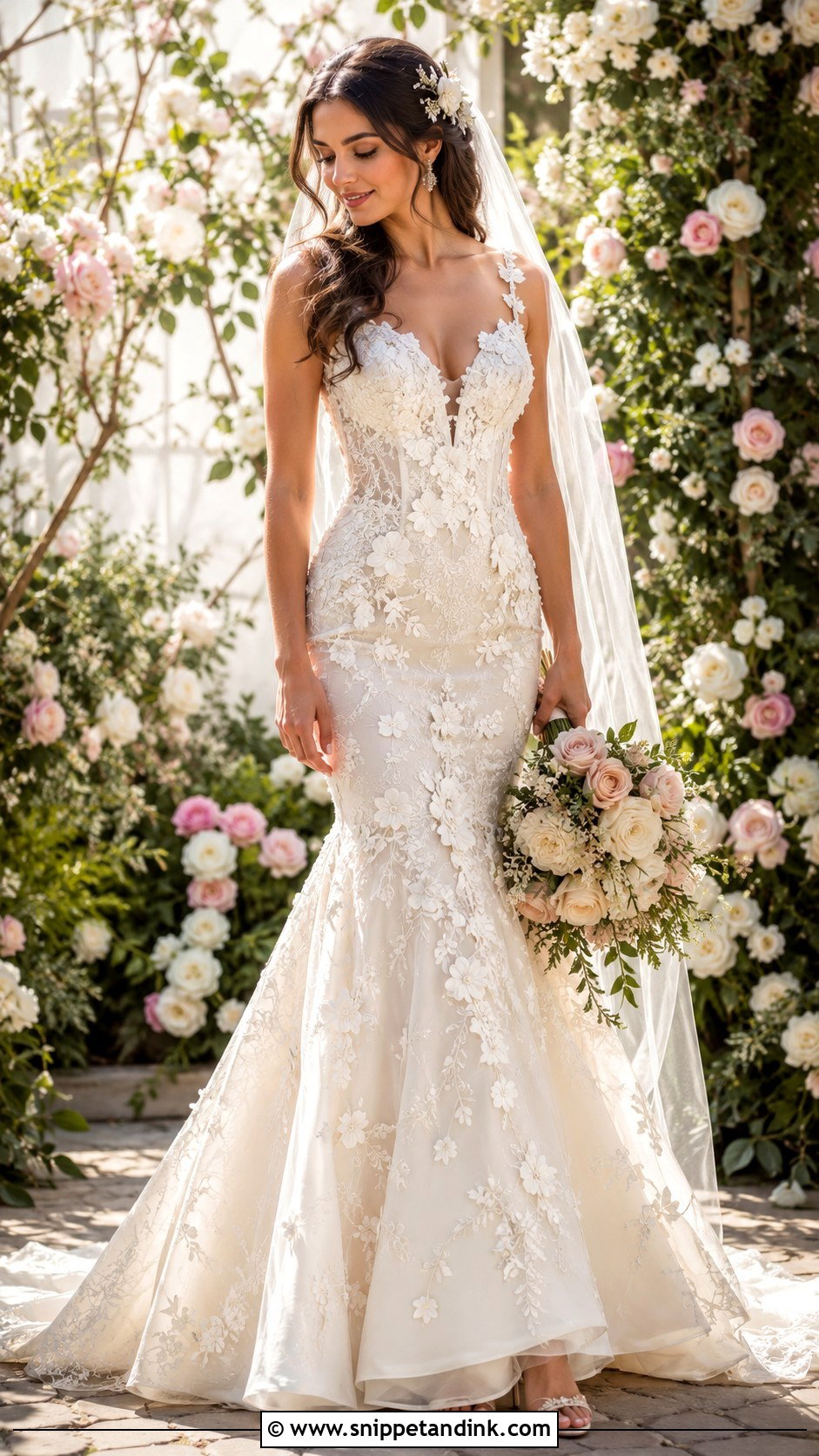
Floral appliqués that trail down the bodice and fade into the skirt give texture without color. Tonal embroidery or a sheer floral overlay feels fresher than flat lace. If the flowers are 3D, ask where they sit when you’re seated, because petals at the hip get crushed by evening. Large flowers mean simple jewelry. Small, delicate flowers leave room for pearl earrings or a bracelet. Spring and garden ceremonies suit it best.
17. High Neck Mermaid Wedding Dress
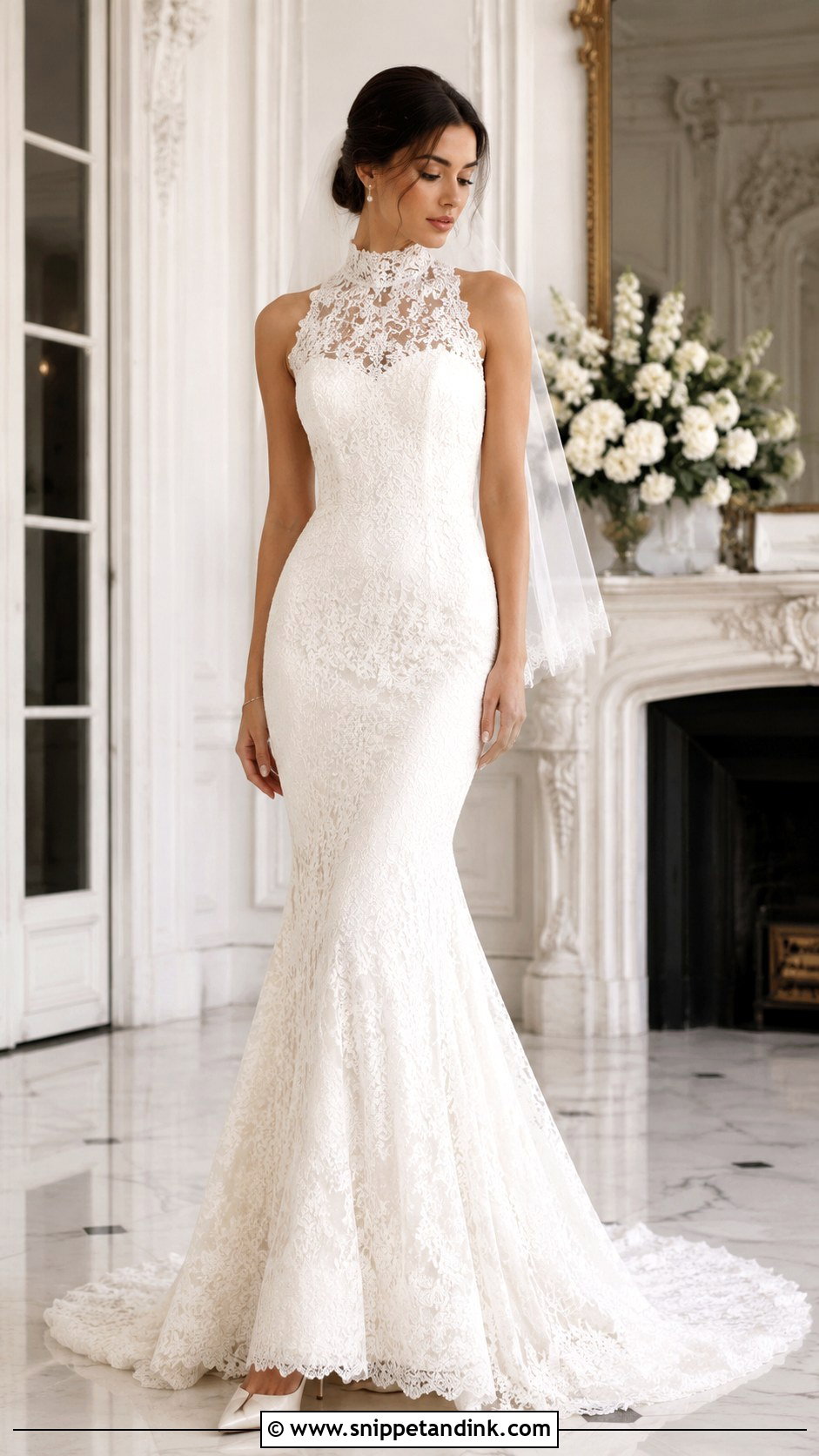
A high neck gives coverage up top while the fitted skirt keeps the shape defined, and the two together look very composed. Lace, sheer mesh, satin or crepe all work at the neckline. Pair it with an updo and small earrings so nothing crowds the throat. If you want contrast, a high front with an open back is one of my favorite combinations. Make sure you can turn your head and swallow without the collar pressing.
18. V Neck Mermaid Wedding Dress
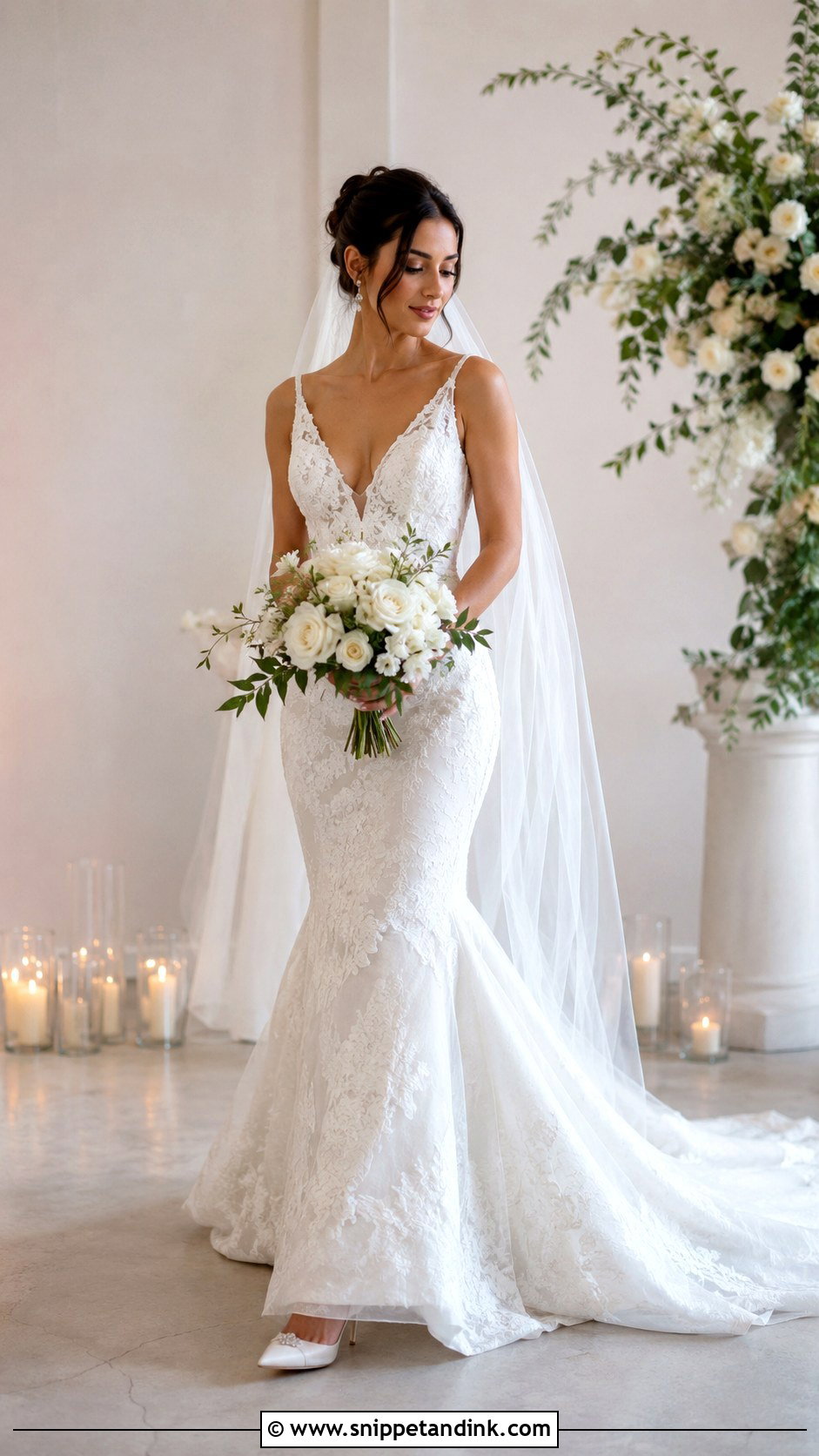
A V neckline draws the eye down in a straight line, which lengthens the whole fitted body. A deep V looks modern, a shallow one more classic. It adapts to almost any bust with illusion mesh, wider straps or built-in cups, which is why I recommend it so often. Choose a pendant or skip the necklace for statement earrings, not both. Lace, crepe and satin all suit it.
19. Sweetheart Mermaid Wedding Dress
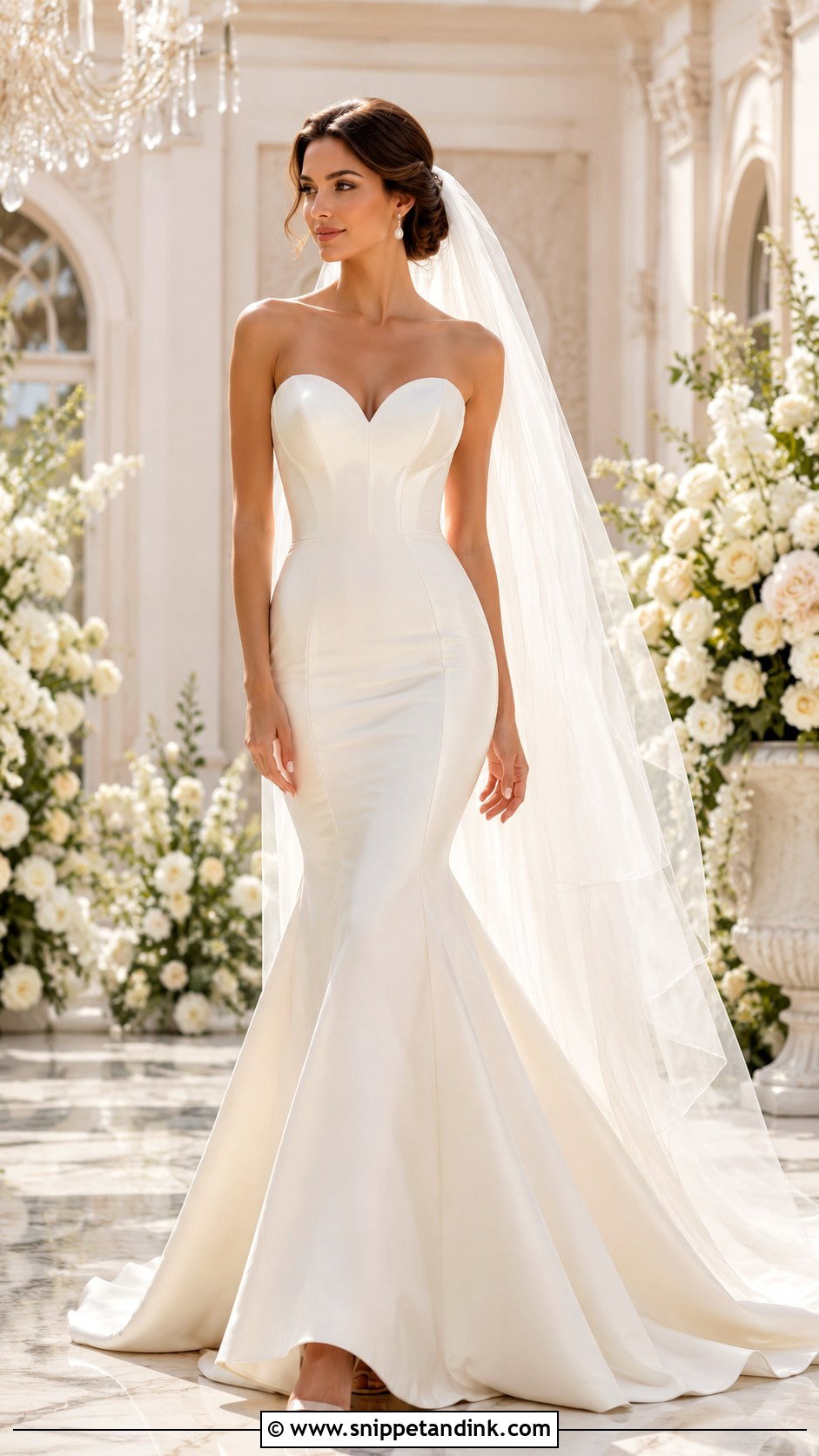
The sweetheart curve frames the bust and softens the strong line of a mermaid skirt. It pairs easily with detachable sleeves, lace straps or a sheer off-shoulder layer. A softer curve looks more current than a deep dip. Structure matters: the bodice needs to hold firm or the curve flattens out by the reception. Pearls and classic ivory heels suit it, with a tulle veil for romance or a satin veil for a cleaner finish.

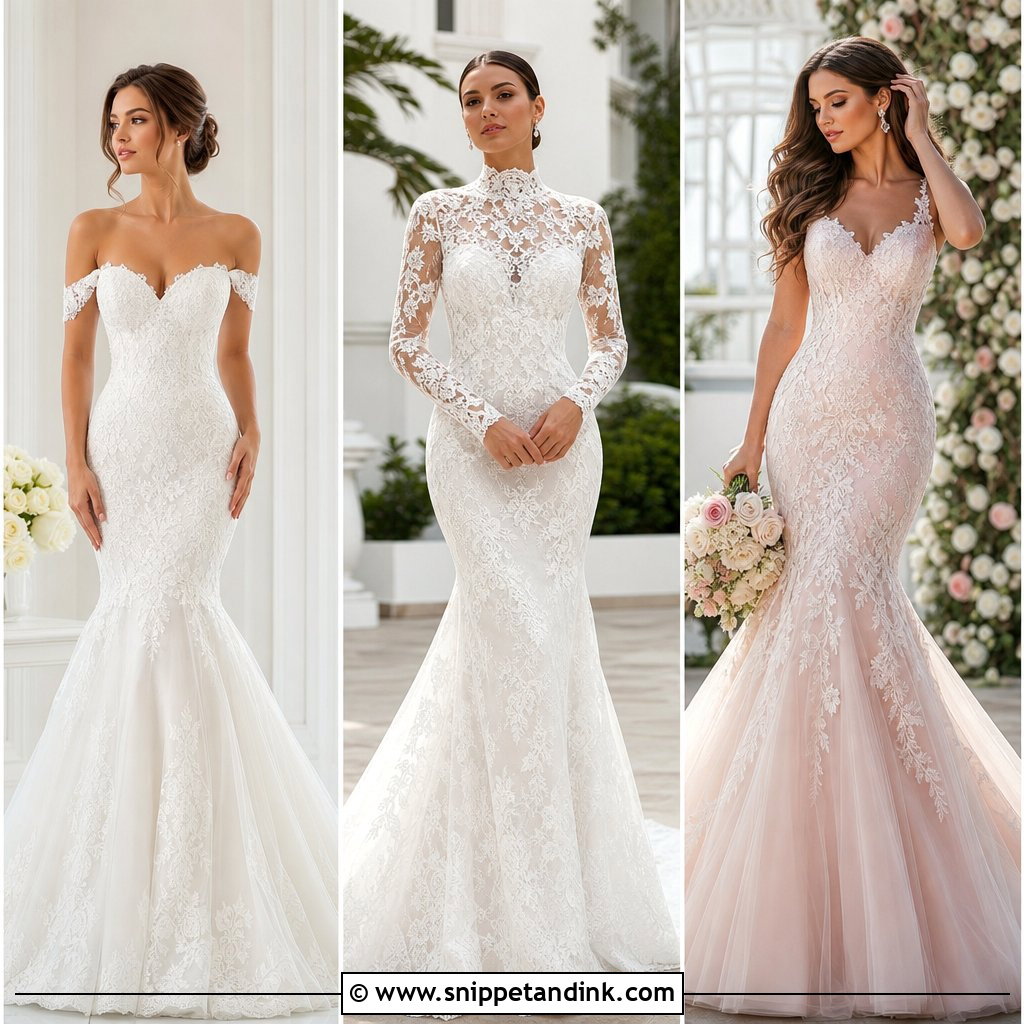
20. Square Neck Mermaid Wedding Dress
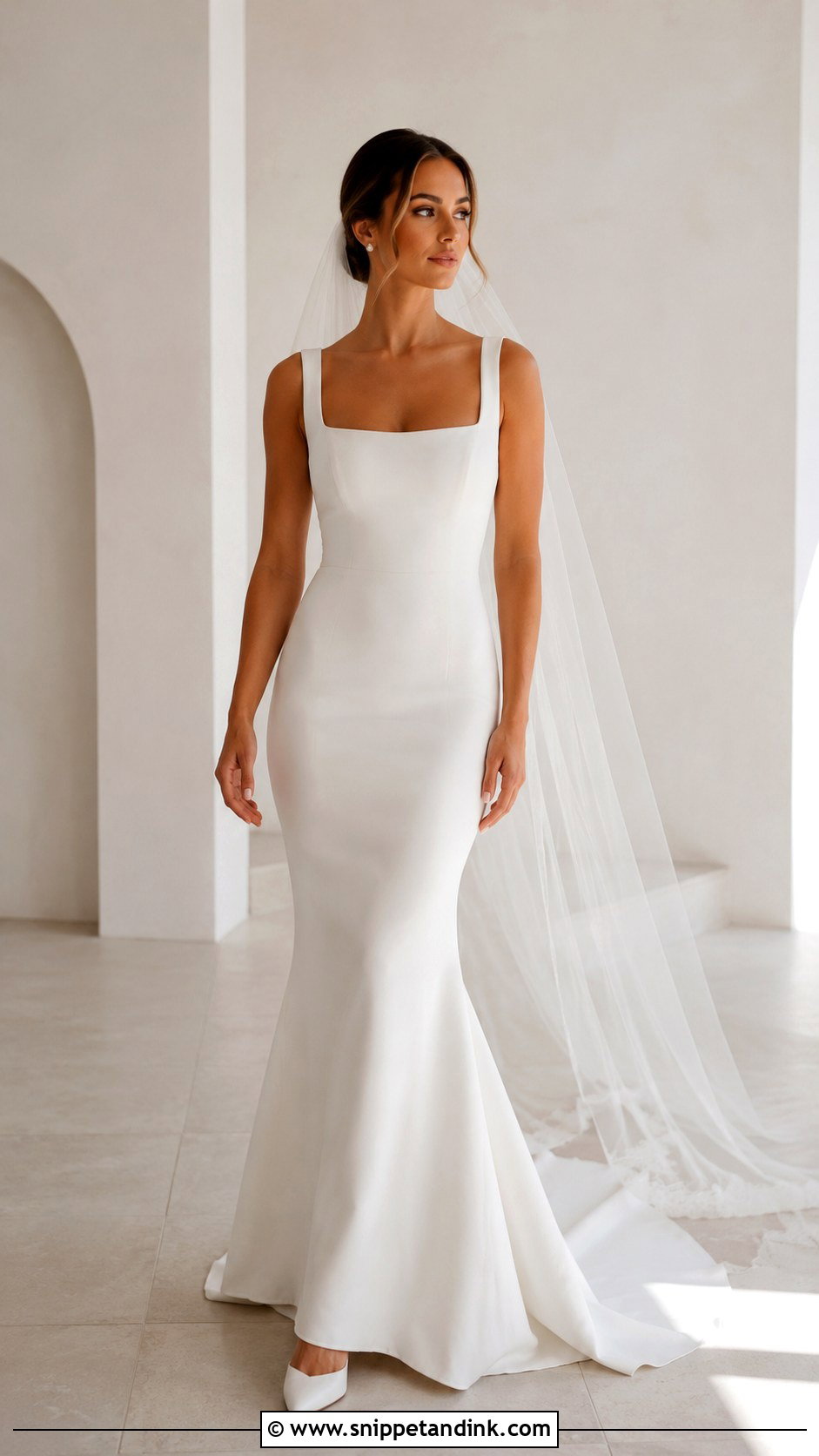
A square neck builds structure across the shoulders and balances the close skirt. It’s a good middle ground if you want some coverage without a high collar. Crepe keeps it minimal, lace softens it. Pearl studs, a sleek bun and pointed heels finish it cleanly. I’d pair it with a chapel or narrow tulle veil so the straight neckline isn’t hidden by volume.
21. Detachable Skirt Mermaid Wedding Dress
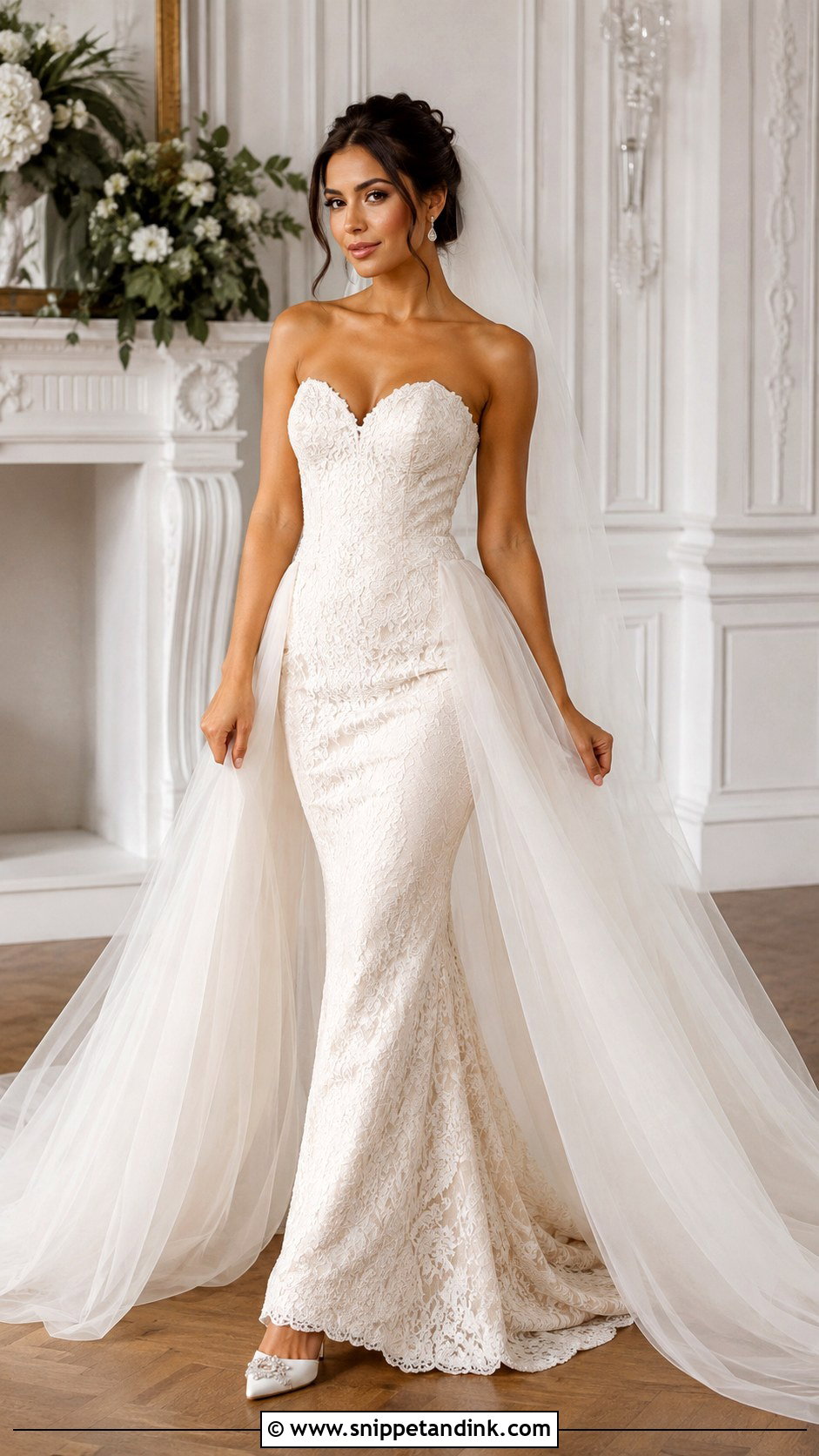
A detachable overskirt gives you ball-gown volume for the aisle and the fitted mermaid for dancing. Tulle, organza or satin overskirts all work, as long as they fasten smoothly at the waist with no visible bump. Test the attachment at your final fitting with the person who will help you change. Hooks are quicker than buttons, and snaps can pop. Choose accessories that suit both versions, such as simple earrings and a clean veil.
22. Mermaid Wedding Dress With Train
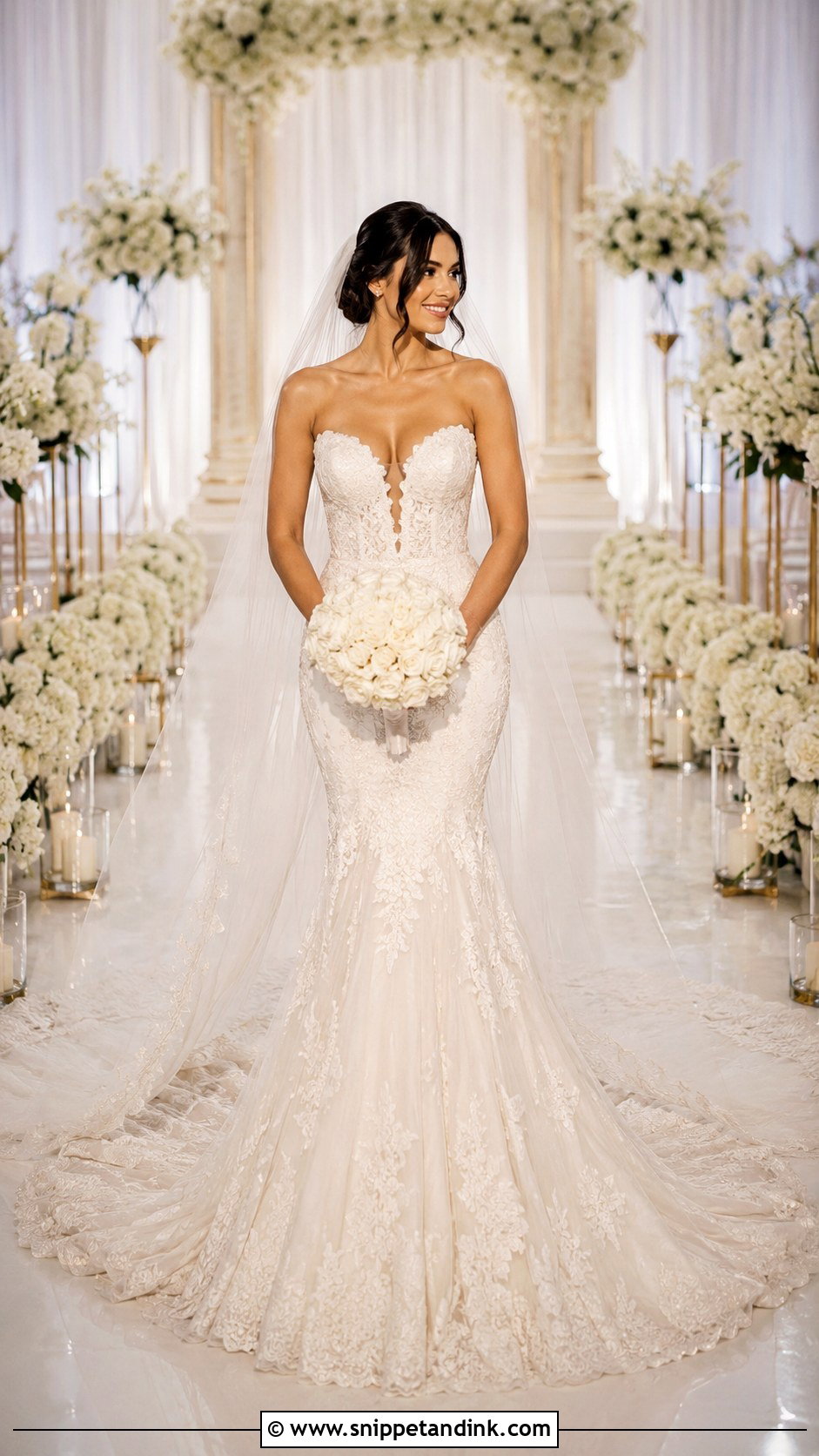
A train gives a fitted gown its sweep in full-length photos. Chapel length is manageable for most venues; cathedral length is formal and needs a smooth aisle and space to spread out. Choose heels that match the hem height set at your fitting, and keep jewelry minimal. Ask about bustle options early. A mermaid flare leaves less fabric above the train to fold into, so the bustle has to be planned, not improvised.
23. Mermaid Wedding Dress With Bow
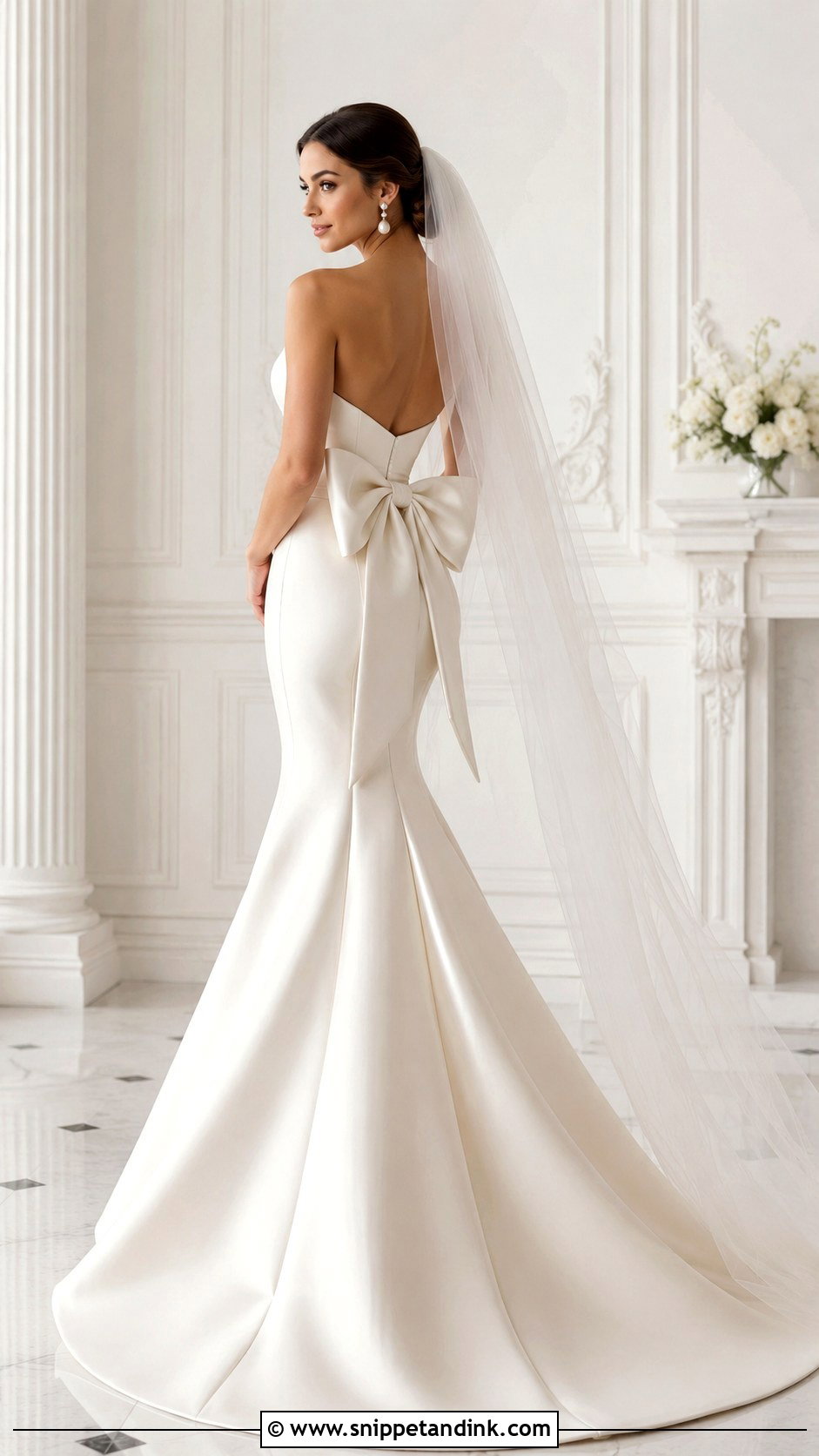
A bow adds sweetness to a sleek shape. A small one at the waist reads classic; a large back bow becomes the main event. Satin or mikado keeps the bow crisp. Organza or tulle softens it but may droop after hours of sitting against a chair. Keep the veil smooth so it doesn’t flatten the bow, and keep the rest of your accessories minimal so the detail looks deliberate.
24. Mermaid Wedding Dress With Cape
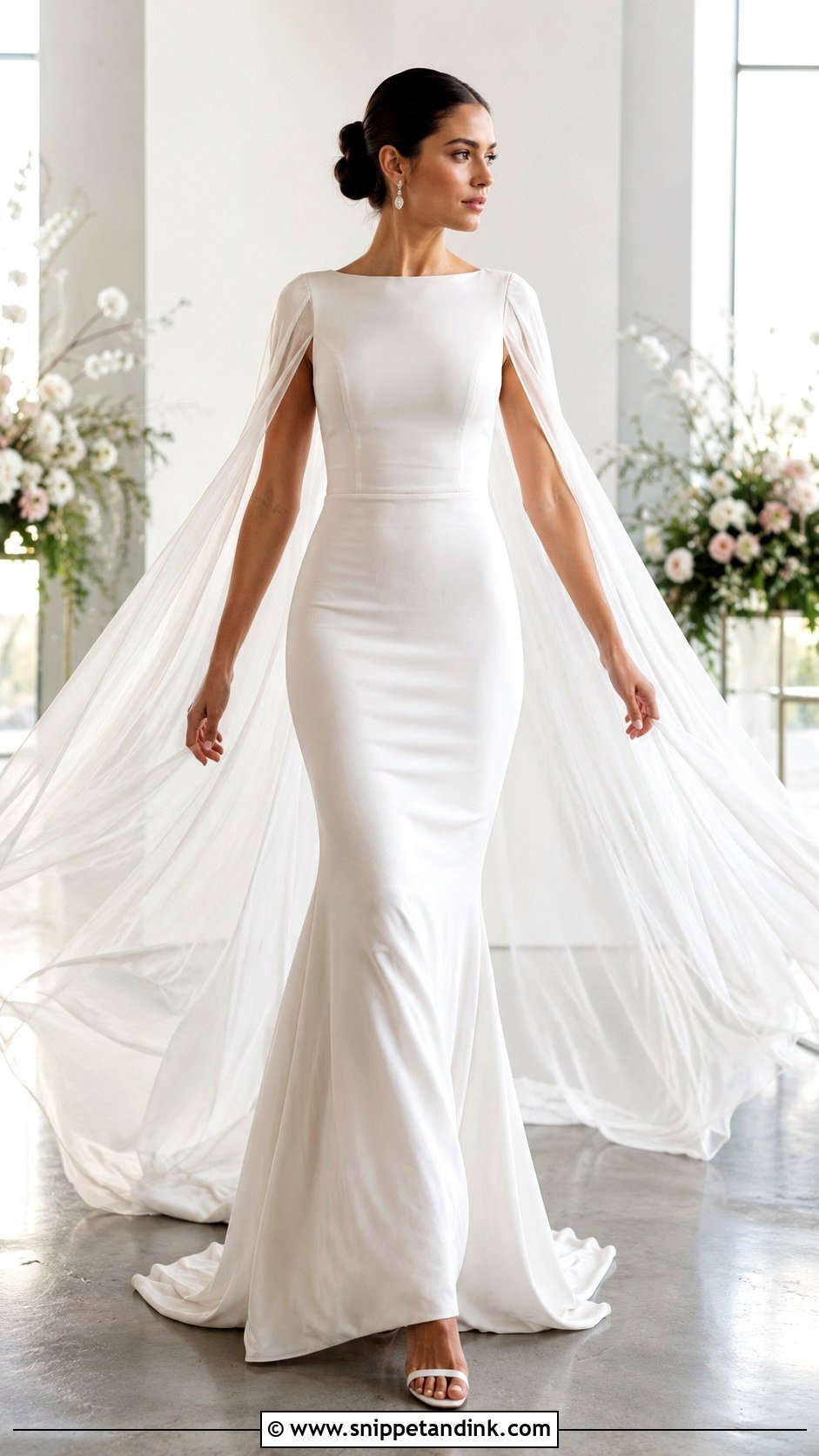
A cape can replace a veil, and it moves well behind a fitted silhouette. It can be sheer, lace-trimmed, pearl-dotted or soft tulle. I’d suggest one for a bride who wants drama without a heavy train. A detachable cape is the most practical choice since it comes off for the reception. Keep the hair clean so the cape has room to fall, and check how it attaches; shoulder snaps are more secure than a single hook at the neck.
25. Mermaid Wedding Dress With Gloves
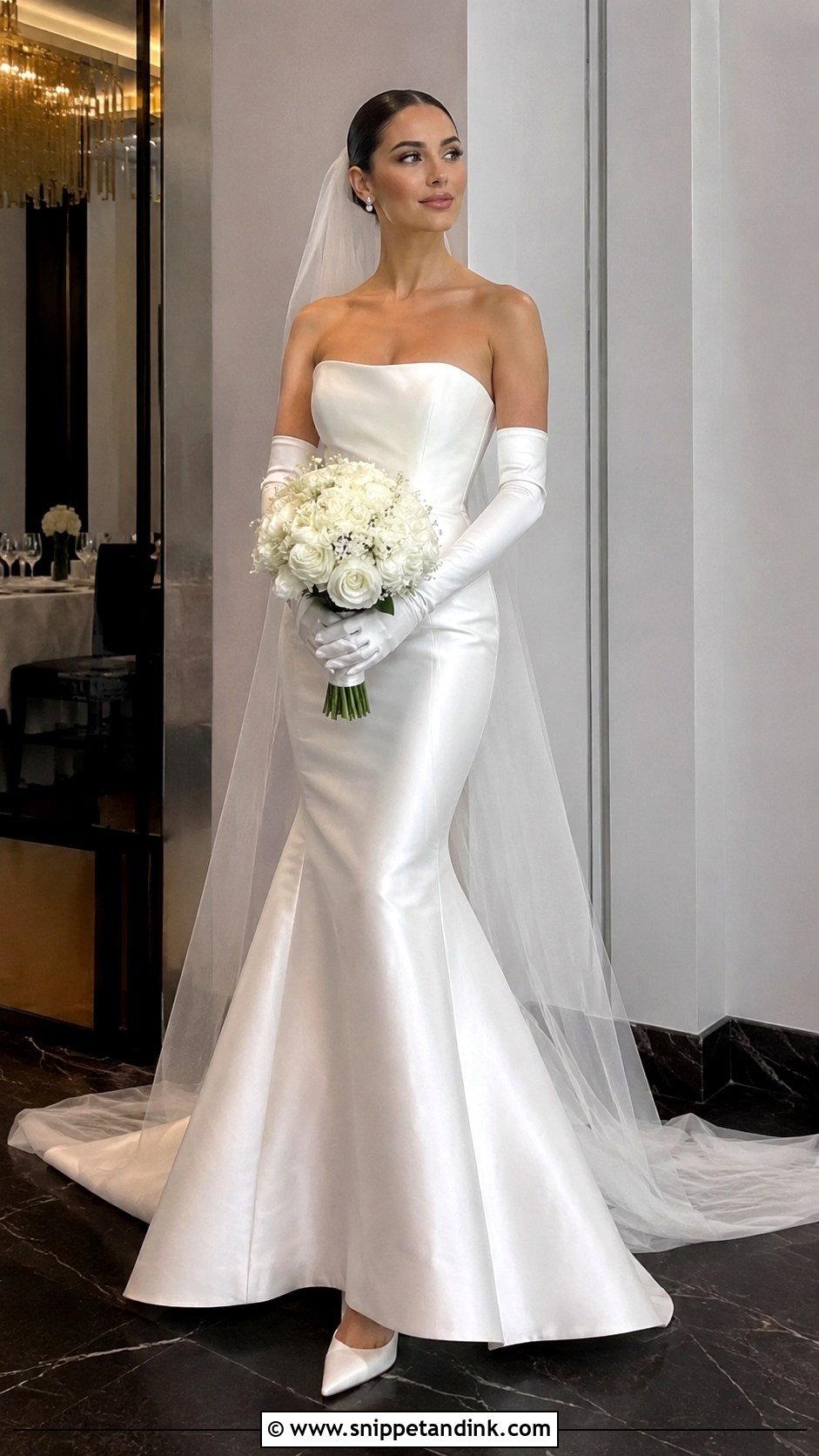
Gloves are back, and they suit a mermaid’s clean lines. Long satin gloves go best with strapless or off-shoulder gowns; sheer gloves suit lace and pearls. Balance the two: dramatic gloves need a clean dress, a heavily beaded gown needs simple gloves. Match the glove fabric to the dress, since ivory satin next to white crepe looks mismatched in photos. Plan to remove them for the ring exchange, or choose fingerless styles.
How Early Should You Order a Mermaid Gown?
Earlier than you think. Most made-to-order bridal gowns take several months to arrive, and a mermaid then needs more alteration time than a looser cut. I tell brides to aim for ordering around nine months to a year ahead and to treat six months as tight. Delivery times vary a lot by designer, so ask the shop for a written estimate.
Sizing surprises
Bridal sizes usually run smaller than everyday clothing sizes, so don’t be thrown by the number on the label. A gown is normally ordered to your largest measurement. On a mermaid, that’s often the hips, and the waist and bust are then taken in. That’s normal, and it is much easier to take a gown in than to let it out.
A rough order of events
- Try on samples and settle the cut, especially where the flare starts.
- Order with your measurements taken by the shop, not at home.
- Book your first fitting for when the gown arrives, ideally two to three months out.
- Final fitting one to two weeks before, with your shoes, shapewear and whoever will bustle the train.
Treat the Dress as a Tailoring Project
A mermaid dress should feel supportive and wearable from the first look to the last dance. Fabric, neckline, train and accessories can make this cut simple, glamorous or modest, but none of that matters if the fit is wrong. Start with tailoring and the way you’ll move, then think about the venue, the season and what feels like you. Lace, satin, crepe, beads, an overskirt or gloves: any of them can be the right choice once the gown fits.
You'll Like These Ideas:






Leave a Reply