
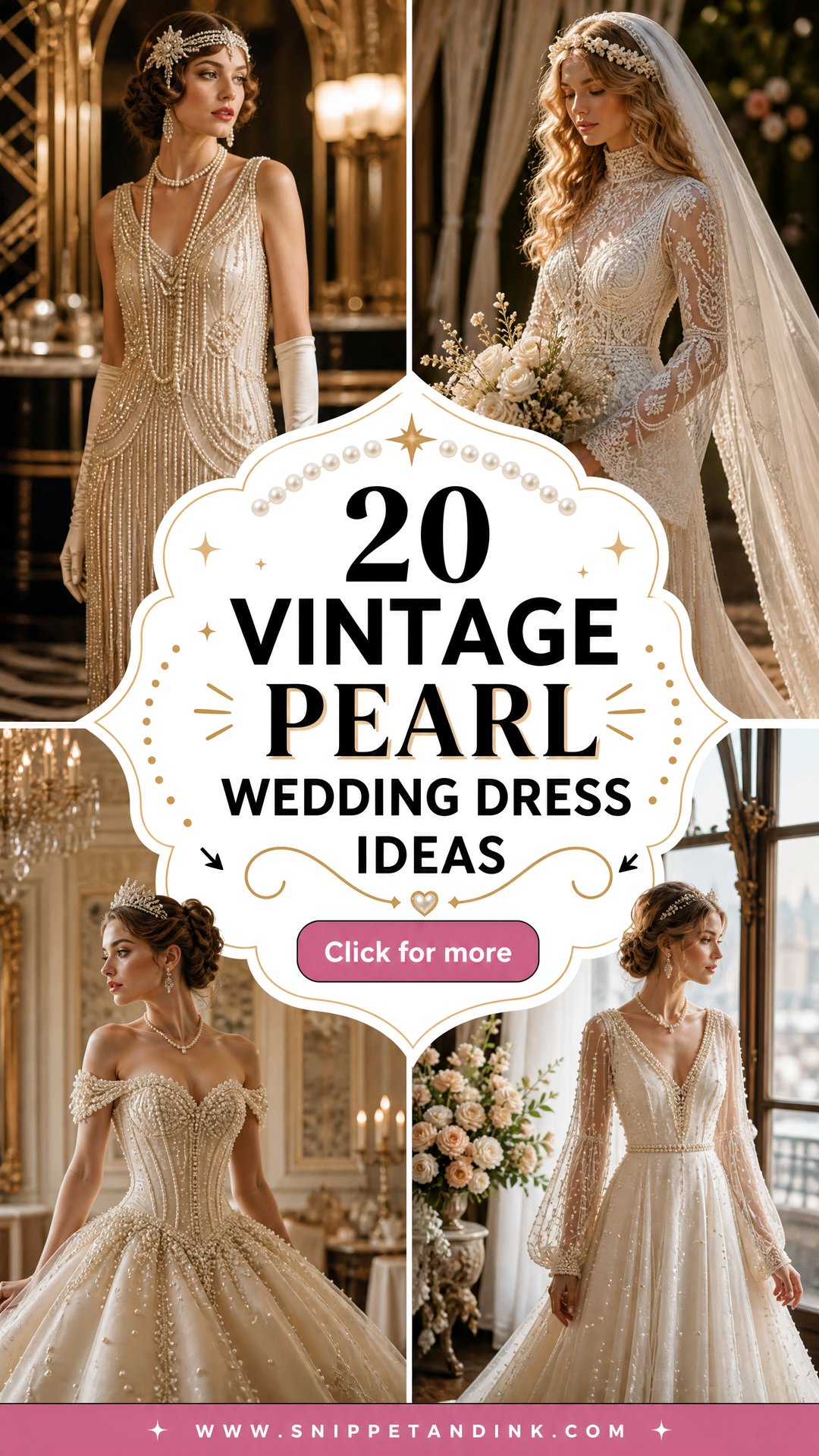
True Vintage or a New Gown Built on an Old Pattern?
Some brides want an actual dress from the period, and some want a new gown that borrows its shape. Both work, but they ask different things of you. An original gown from the twenties to the fifties was cut for different underwear and often for a smaller frame, and its sizing bears no relation to modern labels. Go by tape measure only: bust, waist, hip and, on a bias or drop-waist dress, the back length from neck to waist.
Before buying old, I look at three things. First, the silk itself. Old silk can shatter, splitting along the grain in a way no seamstress can mend, so hold it to the light and look for fine cracks at the folds and underarms. Second, the pearls. Original glass or early plastic pearls often have worn coatings that show the bead underneath, and replacing a few hundred of them is slow, careful handwork. Third, the seam allowances. Older gowns sometimes have generous ones that allow letting out; many do not.
A reproduction gives you modern sizing, sturdy fabric and new pearls that won’t lose their finish. If you love one specific decade but need a dress you can dance in for hours, that’s usually the kinder route.
1. 1920s Pearl Fringe Wedding Dress
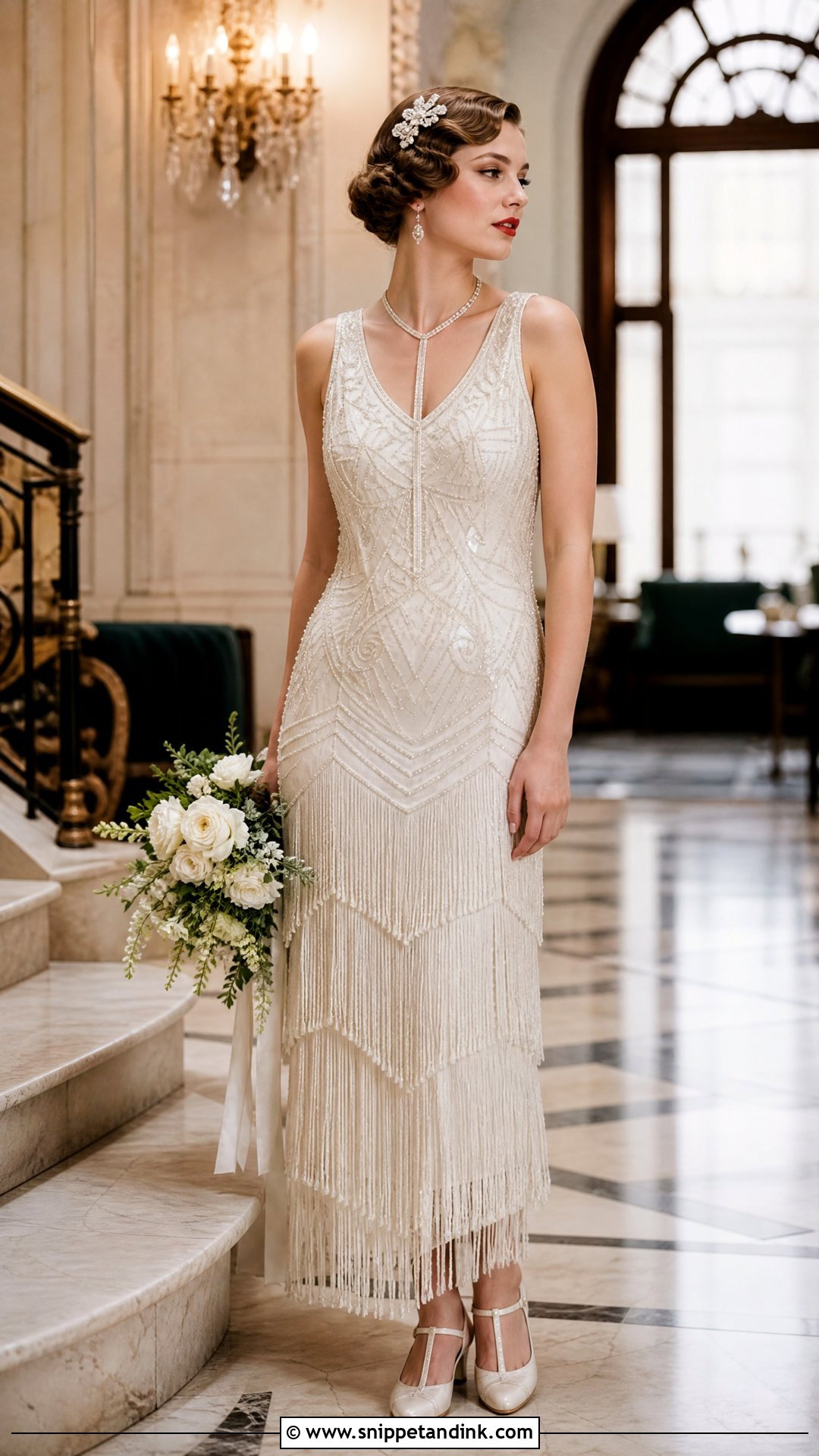
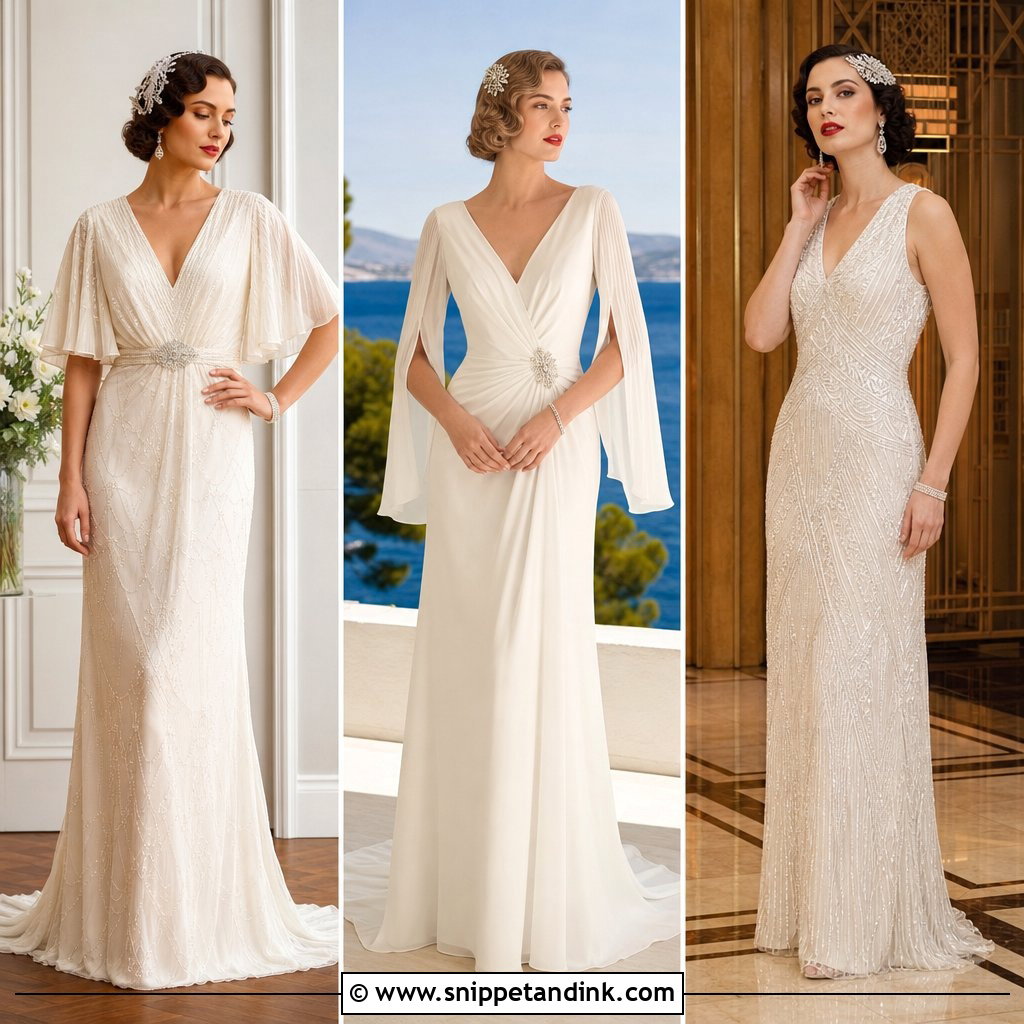
A 1920s pearl fringe wedding dress moves every time you do, which is the whole point of it. Go for a straight or softly fitted column with pearl strands, geometric beading or layered fringe, over a champagne or cream lining that keeps it from looking like a costume. Low T-strap heels, pearl drops, a small satin clutch and a jeweled comb above finger waves finish it. I always ask brides to dance a few steps in the fitting room, because fringe swings out and settles back heavier than you’d guess, and long strands can catch on a bracelet or a beaded clutch clasp. With a heavily worked gown, leave the necklace off. A fingertip veil is the easy pairing; a beaded Juliet cap is the braver one. Ballrooms, historic hotels and evening receptions suit it best.
2. Art Deco Pearl Wedding Dress
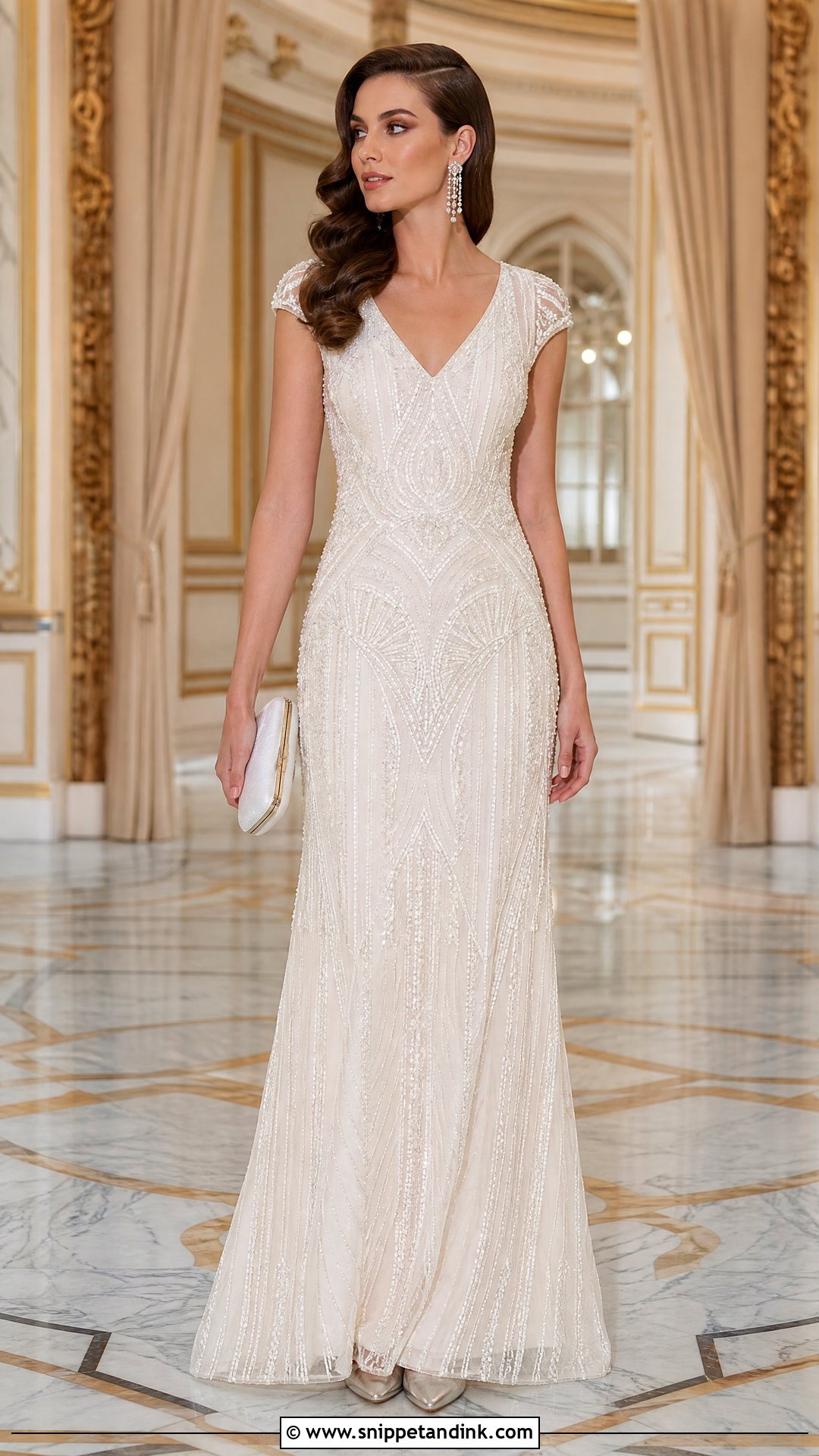
Sharp symmetry is what makes an Art Deco pearl gown. Look for a sheath or slim A-line with fan beadwork, vertical pearl lines or geometric panels over the bodice and hips, which pull the eye up and down and make you look taller. Metallic low heels, small pearl and crystal earrings and a structured ivory clutch keep it in period, with a sleek bob, polished low bun or side-parted waves. Keep the veil plain, chapel or cathedral length with no lace, so the pattern on the dress isn’t fighting a second pattern behind you. One thing to watch: geometric beading has to line up at the side seams, and a cheaper gown often breaks the pattern there. Check it in a side mirror. A sheer beaded capelet adds coverage if you want it.
3. 1930s Bias Cut Pearl Wedding Dress
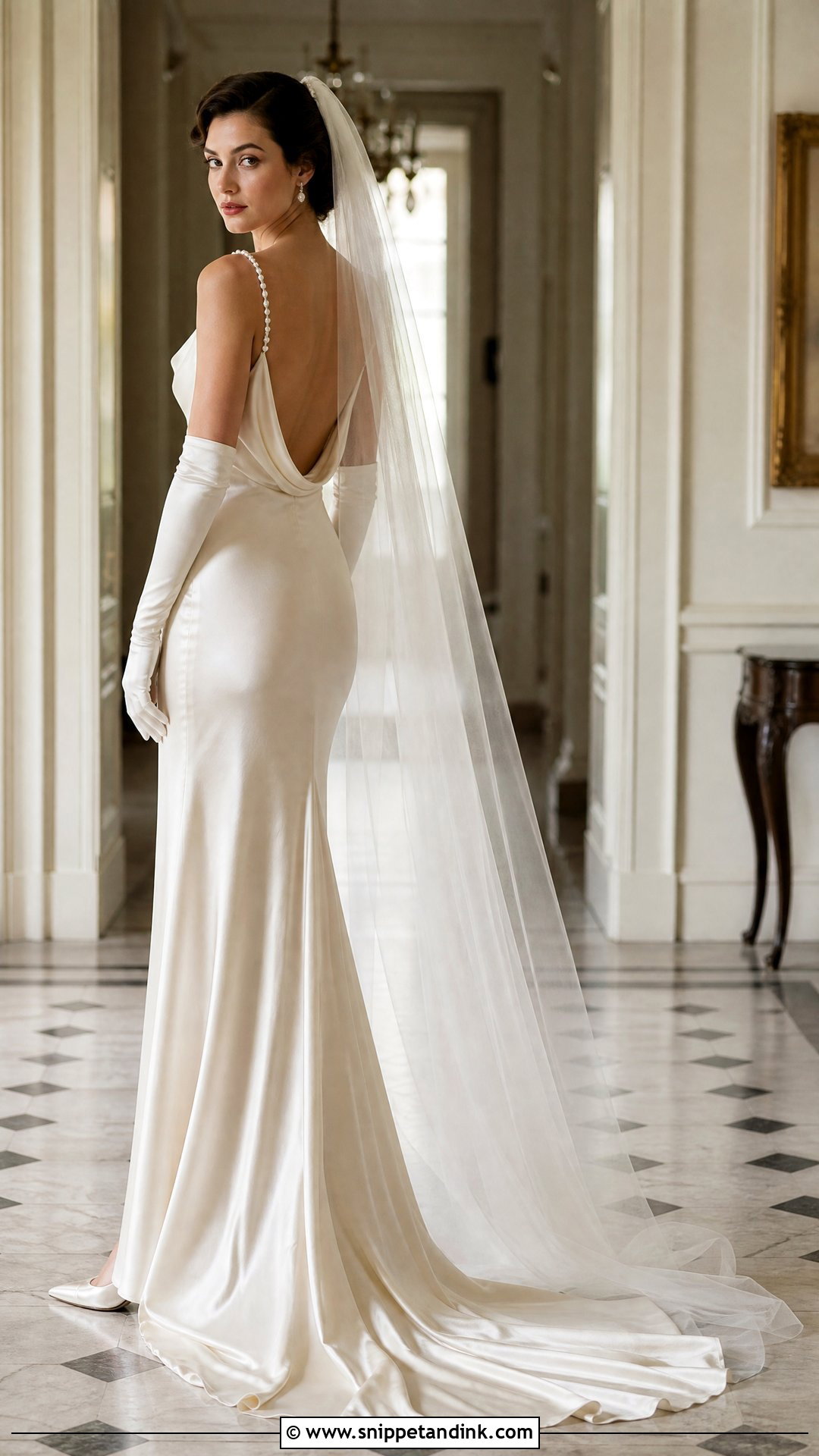
A 1930s bias cut pearl wedding dress lives or dies on fabric. Silk, satin or crepe cut on the bias drapes over the body instead of holding a shape, so a cowl neck, low back or gathered waist falls naturally. Pearls belong sparingly here, on the straps, neckline or back drape. Heavy beading on bias cloth pulls the fabric down and makes it ripple. Pointed satin pumps, elbow gloves and small pearl earrings suit it, with a single-layer long veil. Underwear matters more than with any other cut: bias satin shows every edge, so bring smooth, laser-cut pieces to the first fitting, not the last. A satin cape or faux-fur wrap covers cooler evenings. Estate weddings and intimate indoor ceremonies are its natural home.
4. 1940s Long Sleeve Pearl Wedding Dress
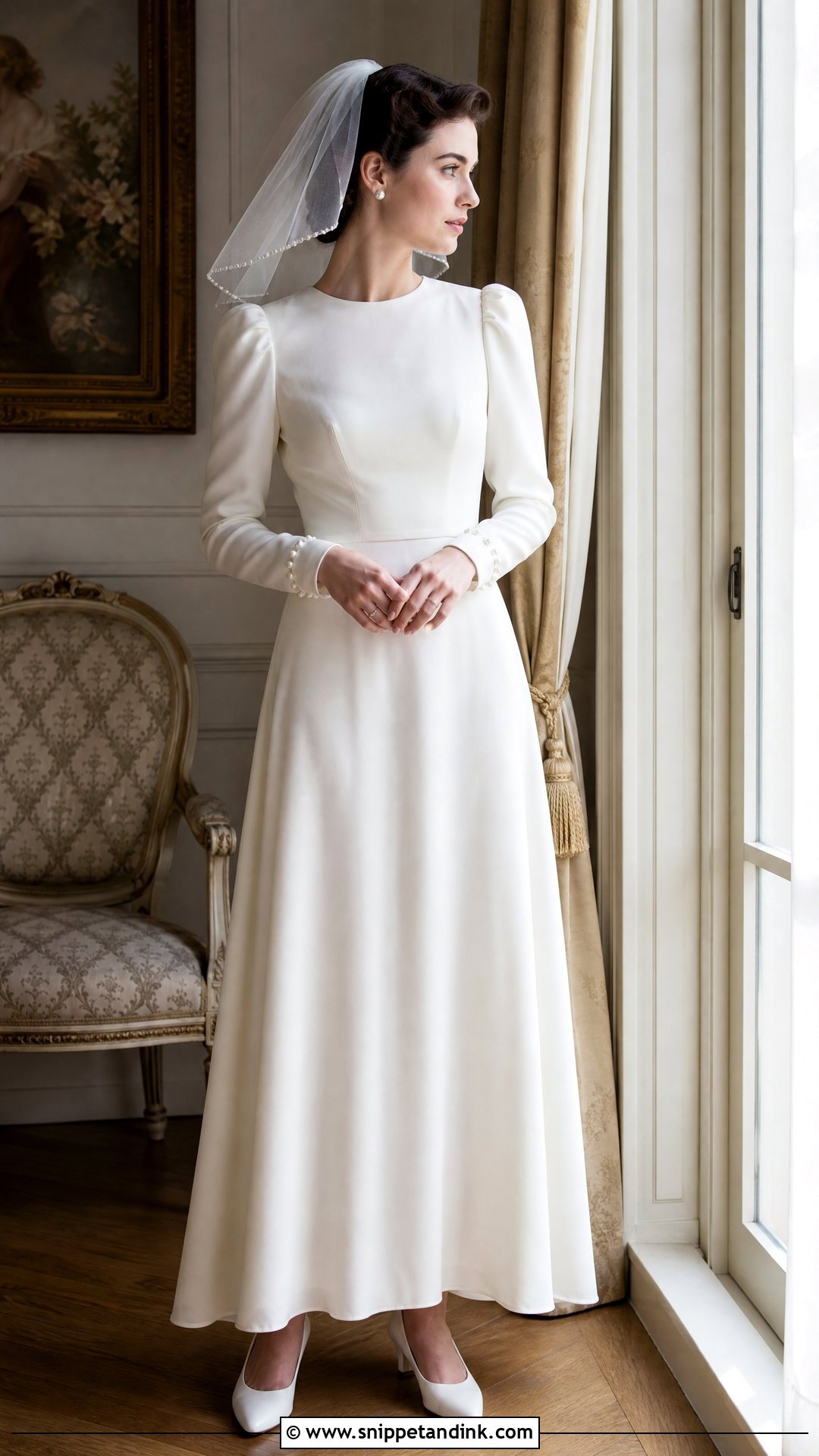
Forties tailoring gives you coverage without frumpiness: softly padded shoulders, a fitted waist, covered buttons and an A-line skirt, with pearls on the cuffs, around the neckline or over lace bodice panels. Ivory crepe or satin holds that structured line best. Close-toed pumps, a compact bouquet and pearl studs suit it, with a rolled updo or polished shoulder-length waves and a shoulder-length veil or small comb rather than anything oversized. The detail I check first is sleeve length with your arms raised. A long fitted sleeve that looks right with your arms down will ride up toward the forearm as soon as you hug someone, so ask for a little ease at the elbow. A tailored coat over it is wonderful in winter.
5. 1950s Tea Length Pearl Wedding Dress
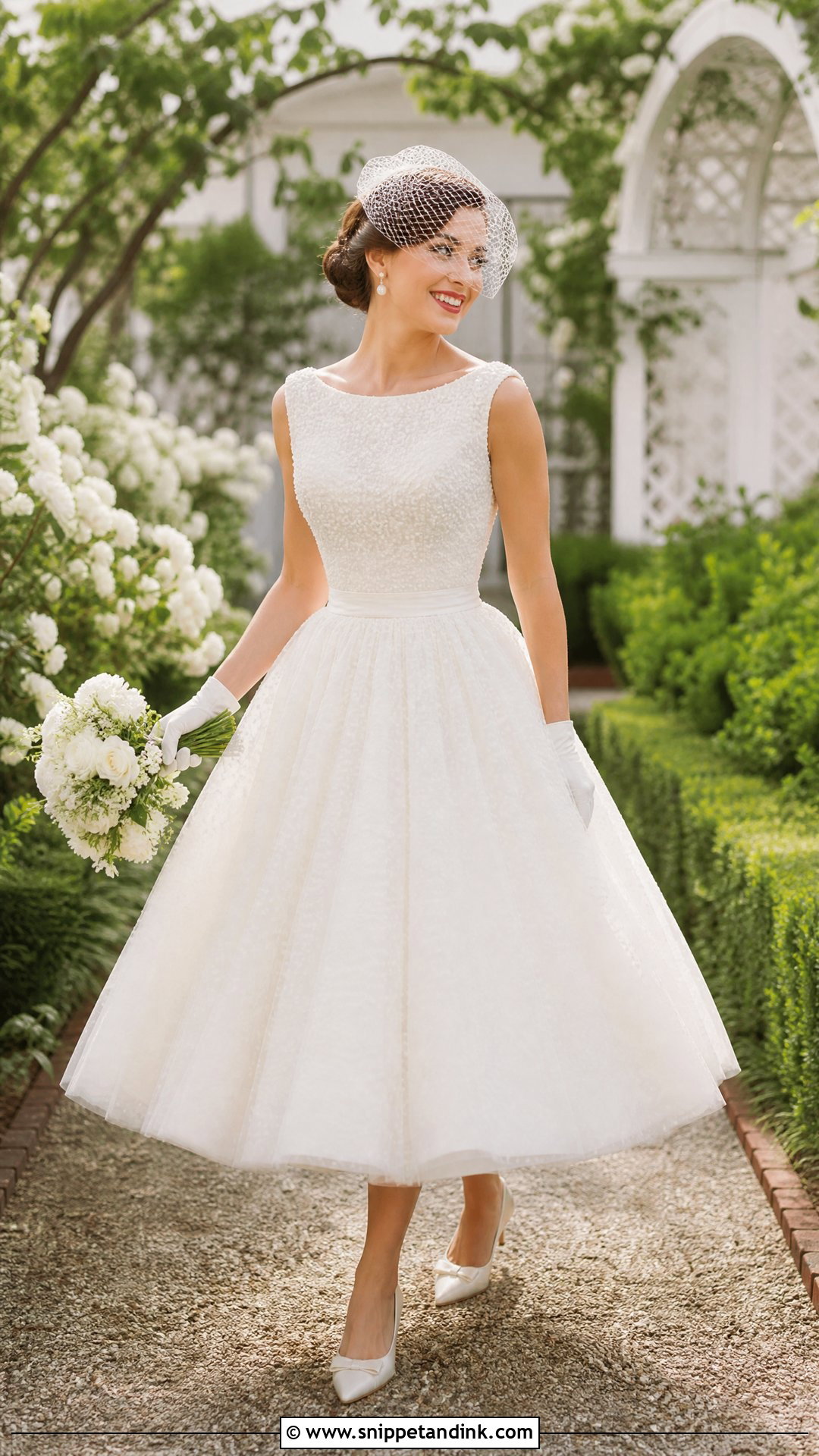
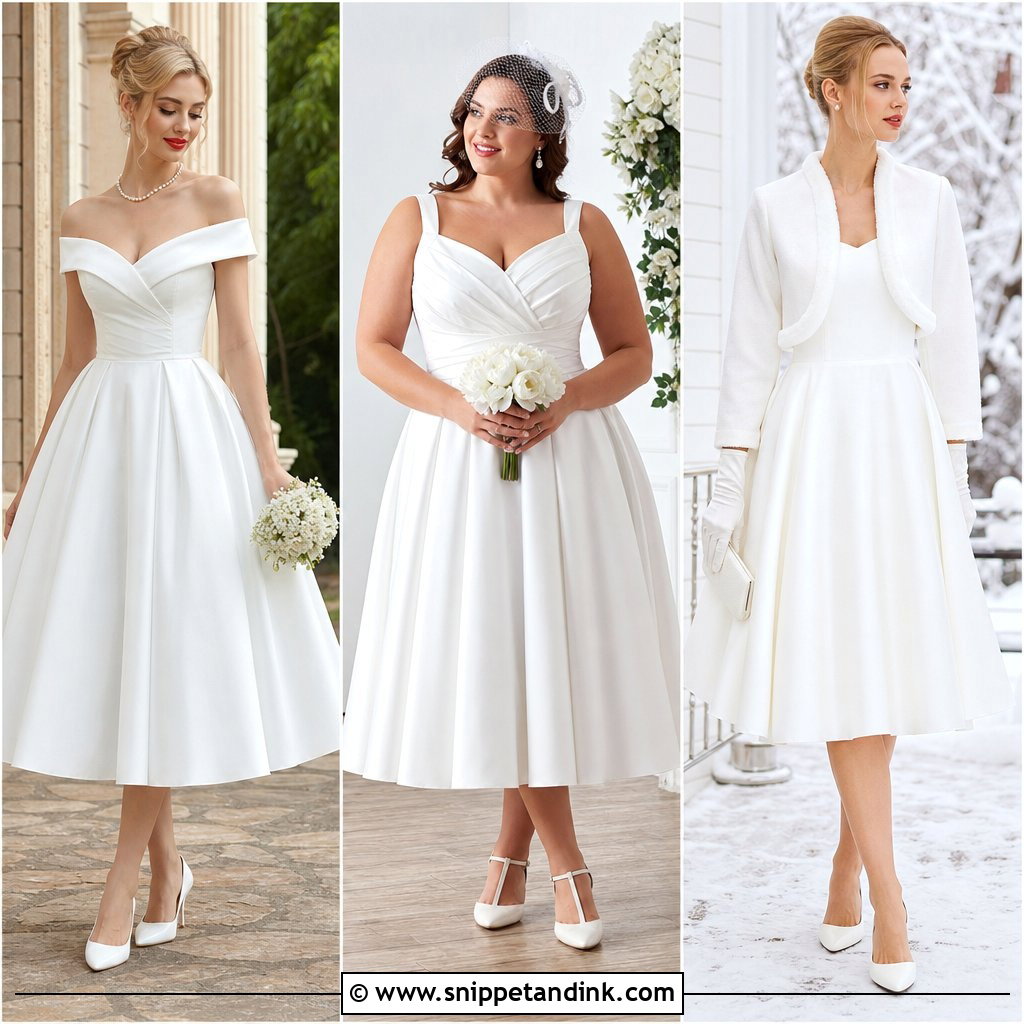
With a 1950s tea length pearl wedding dress, your shoes become part of the outfit, so choose them before your hem is set. A fitted bodice, bateau neckline, defined waist and full skirt ending somewhere between knee and ankle is the classic shape, and scattered pearls give texture without crowding a shorter skirt. Pointed kitten heels, pearl studs and short wrist gloves suit it; a slim belt helps on a plain satin skirt. A birdcage veil or short blusher keeps the proportions right. A petticoat adds that bounce, but a very full one reads as costume quickly. I’d go one layer and see it in a full-length mirror. Courthouses, gardens and daytime receptions are where it shines.
6. 1950s Pearl Ball Gown Wedding Dress
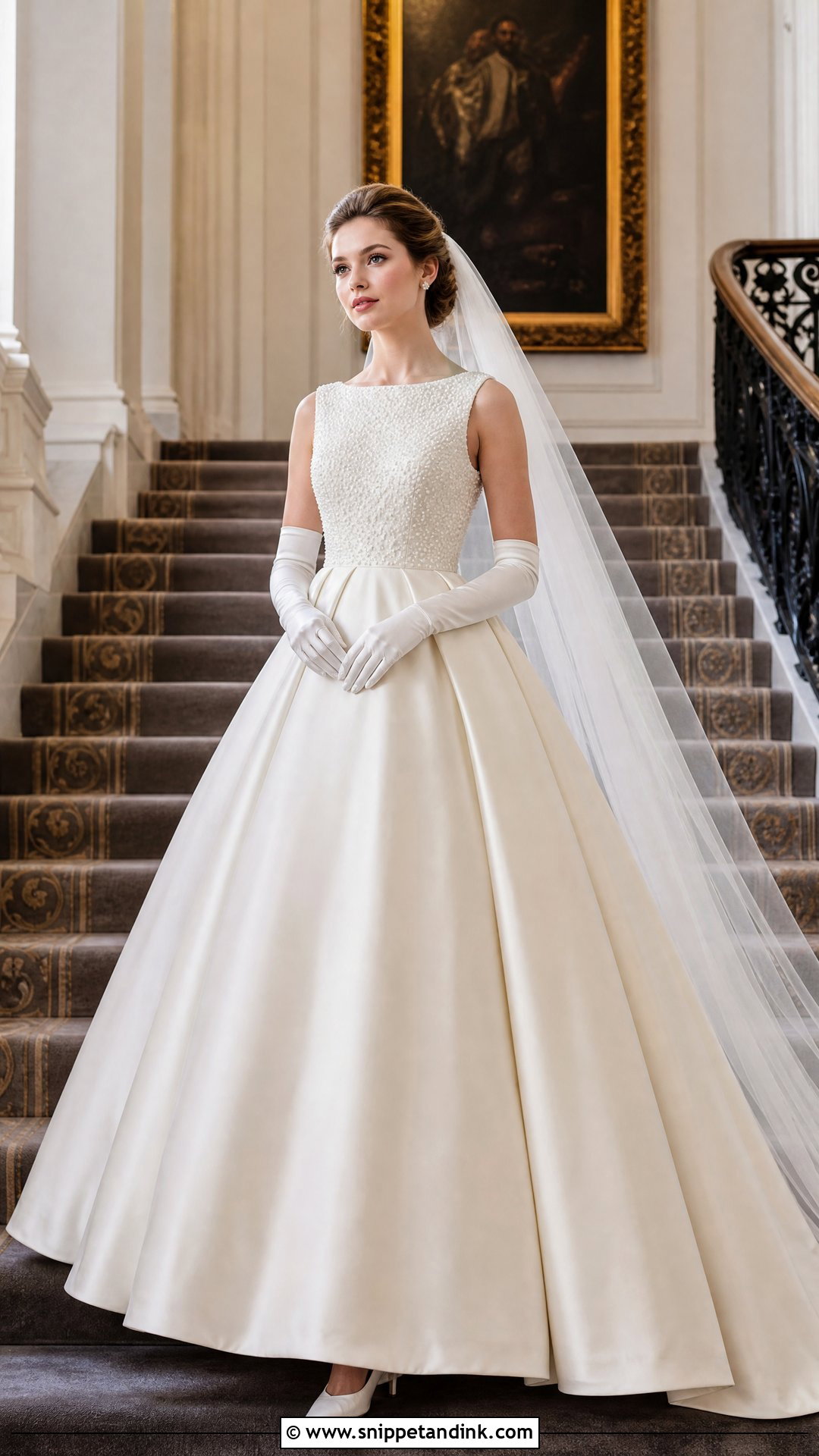
A 1950s pearl ball gown is classic bridal drama: a sculpted bodice, strapless or portrait neckline, natural waist and a sweeping skirt. Keep the densest pearl embroidery on the bodice and let it thin out onto the skirt, which also keeps the weight where the boning can carry it. Satin opera gloves, pearl button earrings and pointed ivory pumps complete it. If you add a cathedral veil, choose a clean edge, because a beaded veil edge drags across beaded tulle and snags. A corseted bodice with discreet internal structure gives the most support. Hold a rounded, compact bouquet; a big cascade hides the waist the whole dress is built around. Ballrooms, museums and grand estates suit it.
7. 1960s High Neck Pearl Wedding Dress
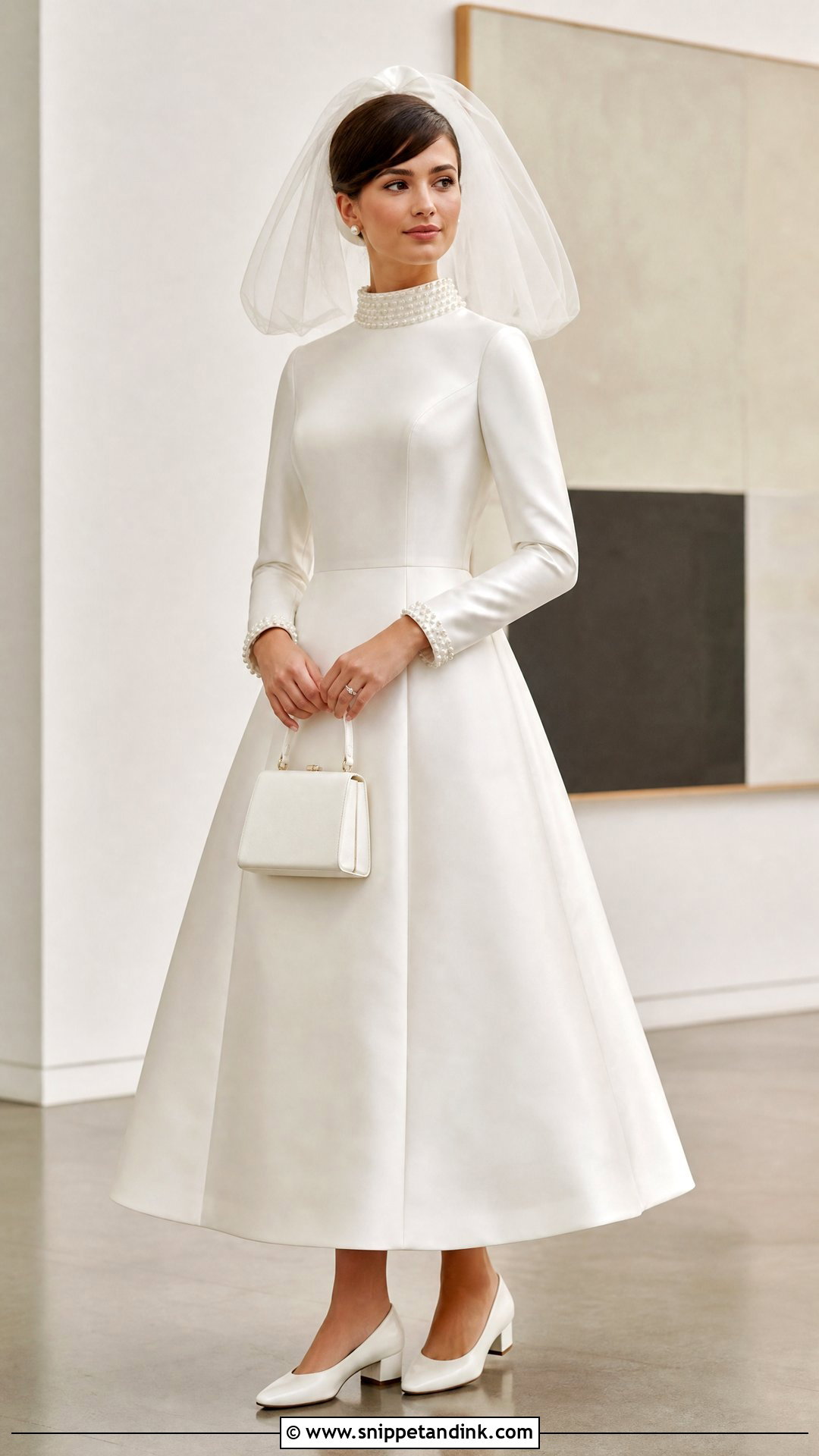
The high neck is the defining line of this sixties gown: a mock collar, fitted upper bodice and a lightly structured A-line skirt, with pearls on the collar, cuffs or yoke to frame your face. Block heels, pearl studs and a small top-handle bag suit it, with a smooth bun or a soft lift at the crown. Swap a full veil for a short bubble veil or a streamlined fingertip one. A high neck is unforgiving on a shorter neck, and I’ll usually suggest a shallower mock collar or a sheer pearl yoke instead. Have your makeup artist know about the collar, too, since foundation transfers onto a light fabric within minutes of the first hug. Galleries, minimalist venues and formal daytime weddings suit this one.
8. 1960s Pearl Mini Wedding Dress
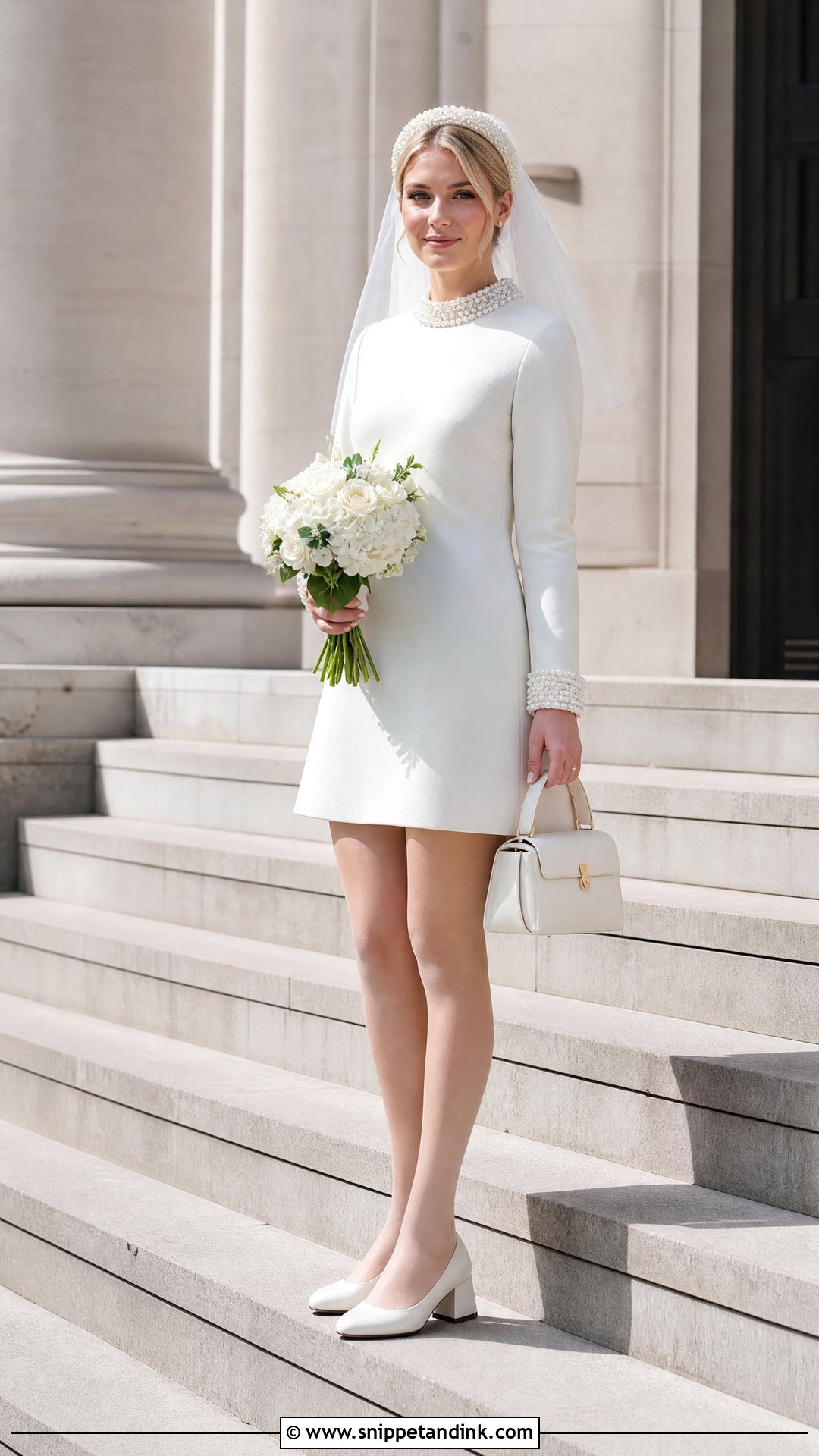
A 1960s pearl mini is lively and short, good for a courthouse ceremony, an evening change or a small wedding. Look for a clean shift silhouette, long sleeves or a fitted bodice over a slightly flared skirt, with pearls at the collar, cuffs and hem. Block-heel pumps, sheer tights if you like them and a small structured bag finish it, plus a wide pearl headband or short veil with plain earrings. Hem length is the fitting that matters. Sit down in it, then climb a step: a mini that’s fine standing can ride high on a chair or in the car, and pearls on the hem make it hang heavier than an unbeaded one. It dances well and photographs crisply.
9. 1970s Lace And Pearl Wedding Dress
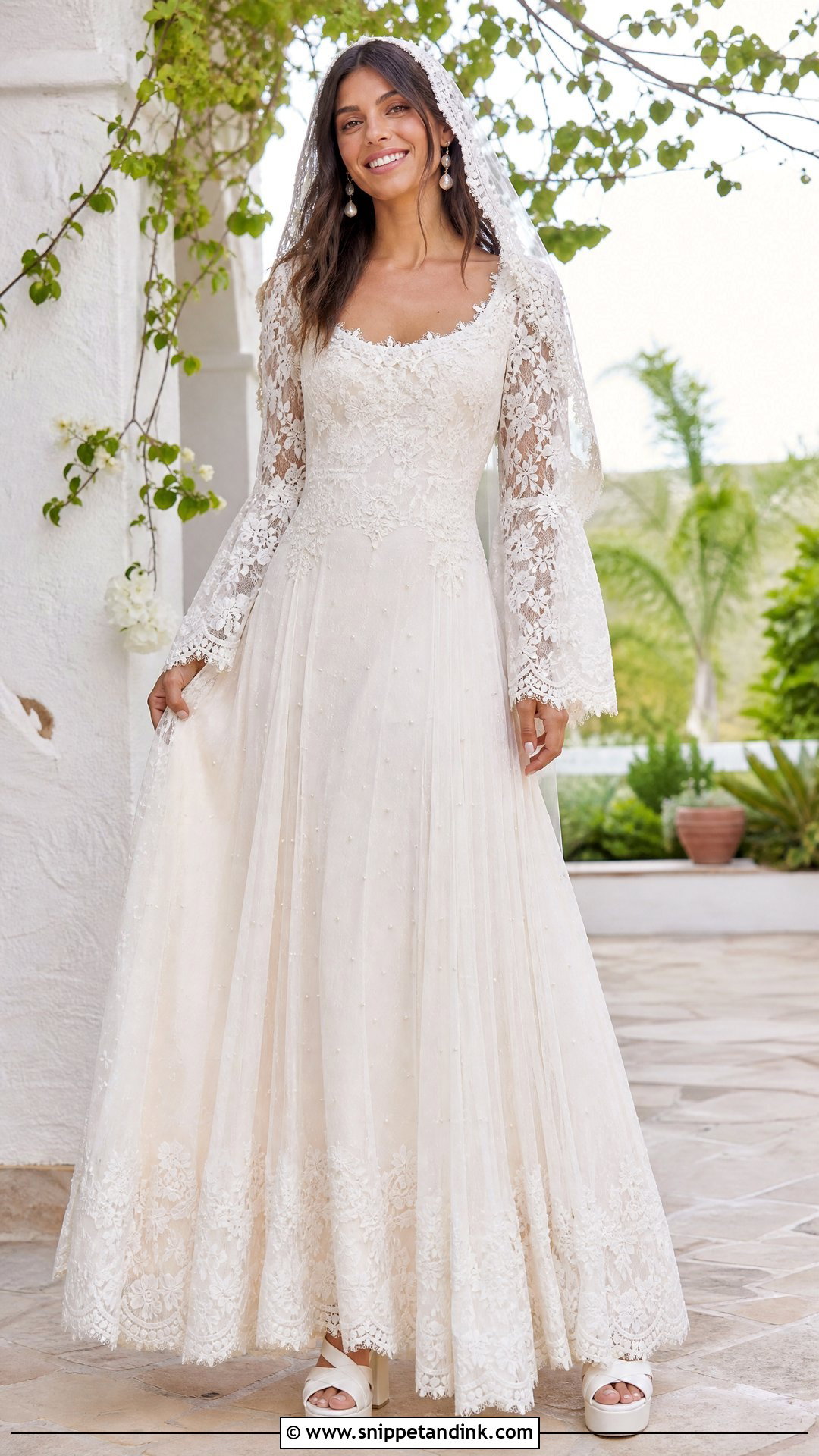
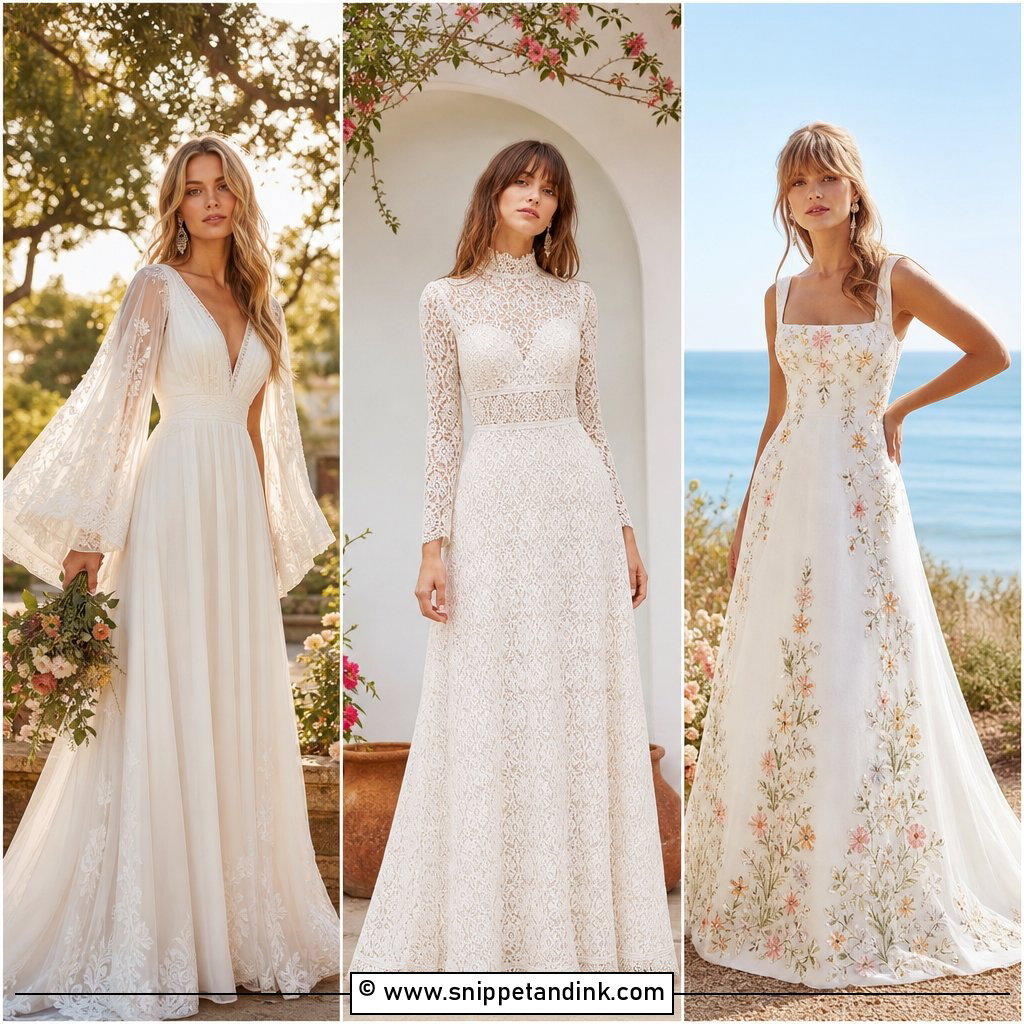
Seventies lace and pearls are the relaxed end of this list. Look for a flowing A-line with bell sleeves, a gathered waist and floral lace with tiny pearls sewn in for texture rather than sparkle. Ivory platform sandals, pearl drops and a loose, green bouquet suit it, with natural waves, a low braid or a half-up style. A light chapel veil works, or a lace-edged head scarf if you want to lean into the decade. Bell sleeves are the practical issue. They swing into cake, candles and the guest book, so try picking up a glass in them at your fitting and ask whether a small inner elastic is possible. Keep the accessories few; the sleeves and lace already do enough.
10. Victorian High Neck Pearl Wedding Dress
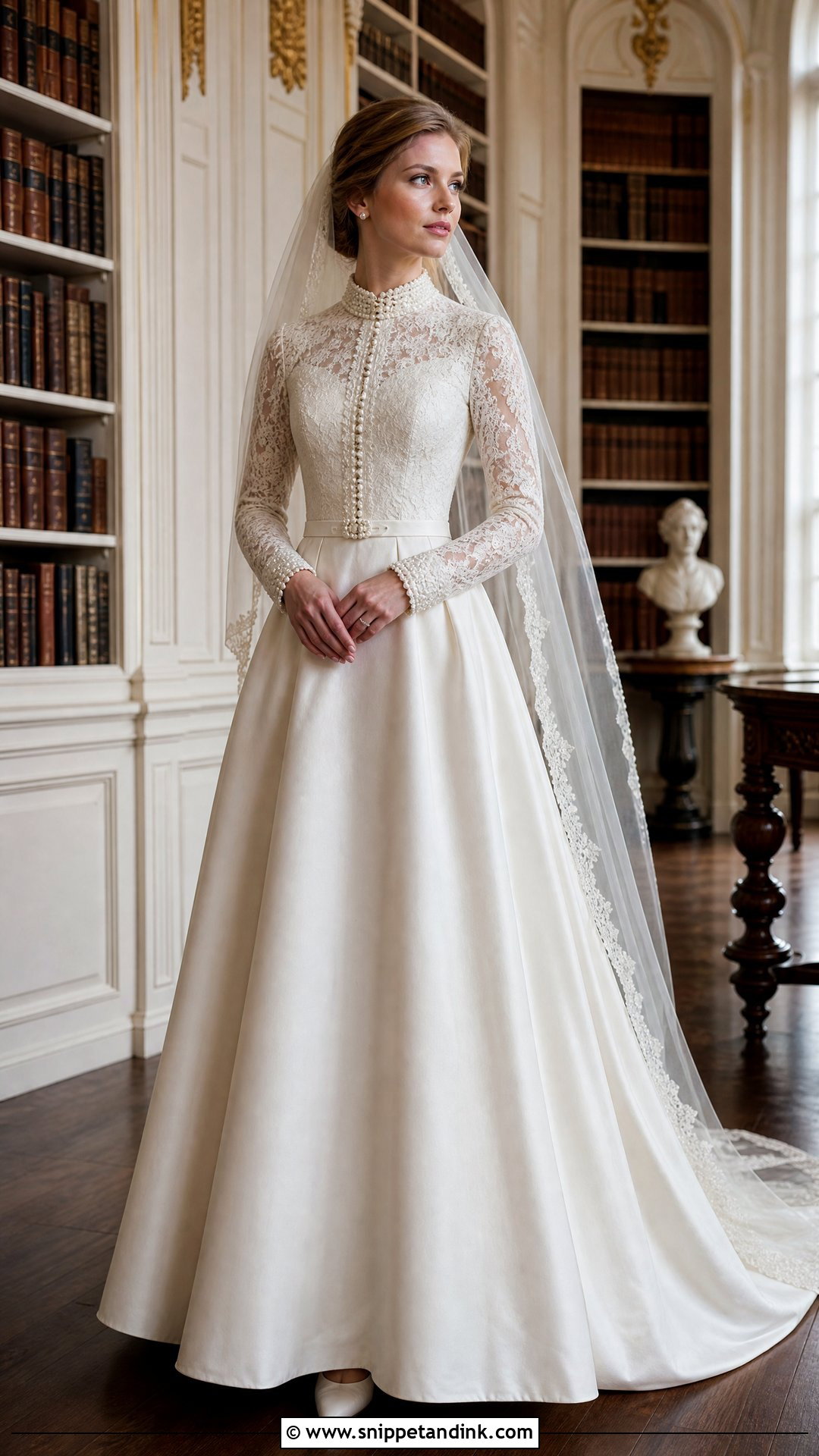
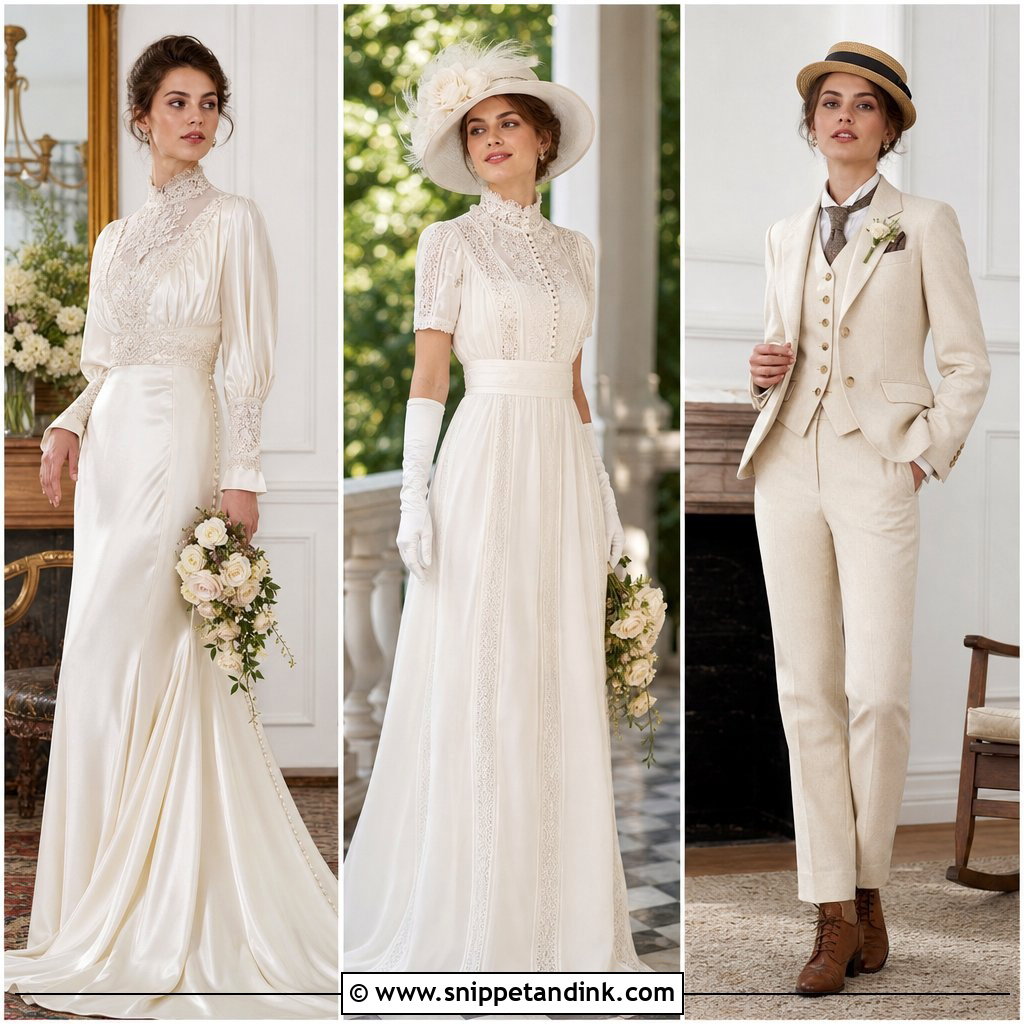
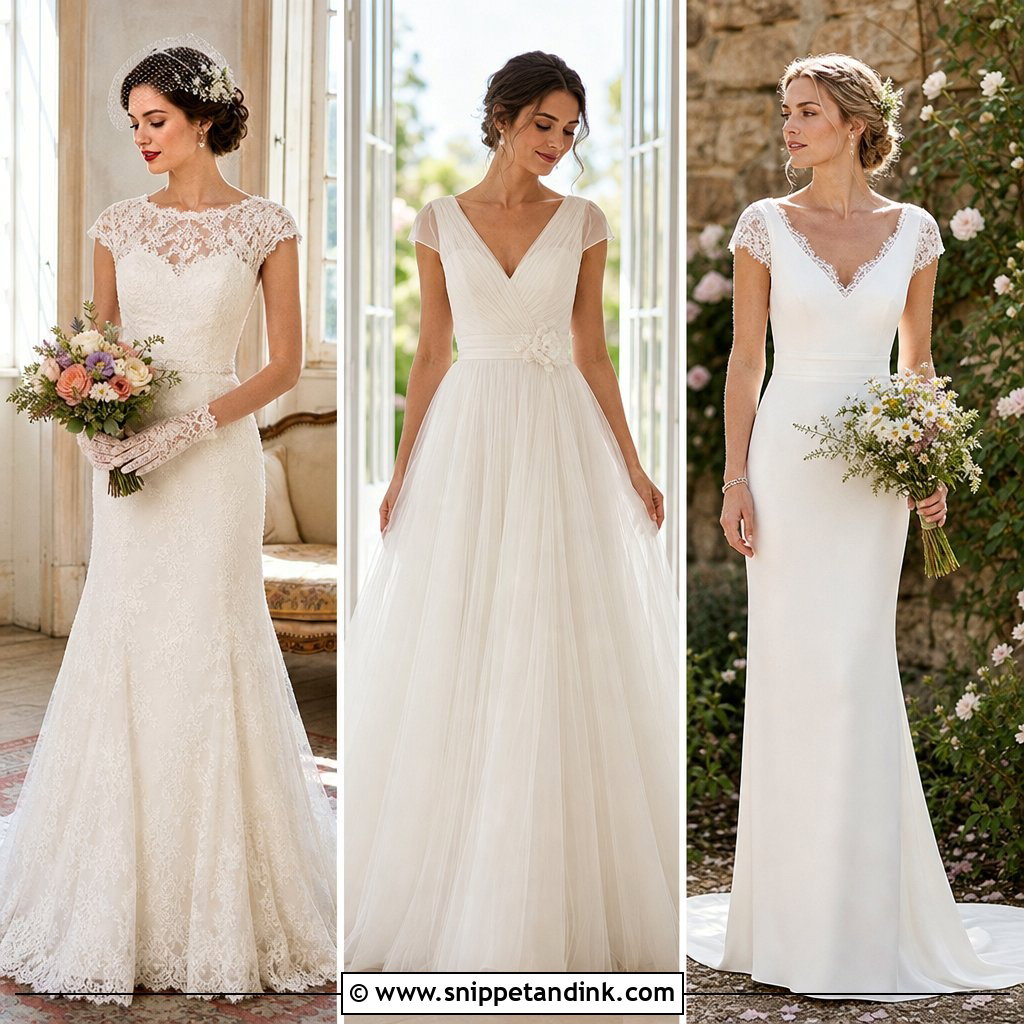
Victorian detail gives you a lace collar, long sleeves, a fitted bodice and a full or softly flared skirt, with seed pearls outlining appliqué flowers, lining the cuffs or set in rows at the neck. Pair that much detail with plain pointed pumps and pearl studs, nothing else, or it slides into costume. A low textured bun with a narrow cathedral veil set beneath it suits the line. Modern versions add a sheer yoke, open back or removable sleeves, which I’d take for a summer date. Test the collar before alterations are finished: turn your head fully left and right, and look down at your bouquet. A high lace collar that scratches or presses at the throat gets worse every hour. Libraries and historic homes suit it.
11. Edwardian Lace Pearl Wedding Dress
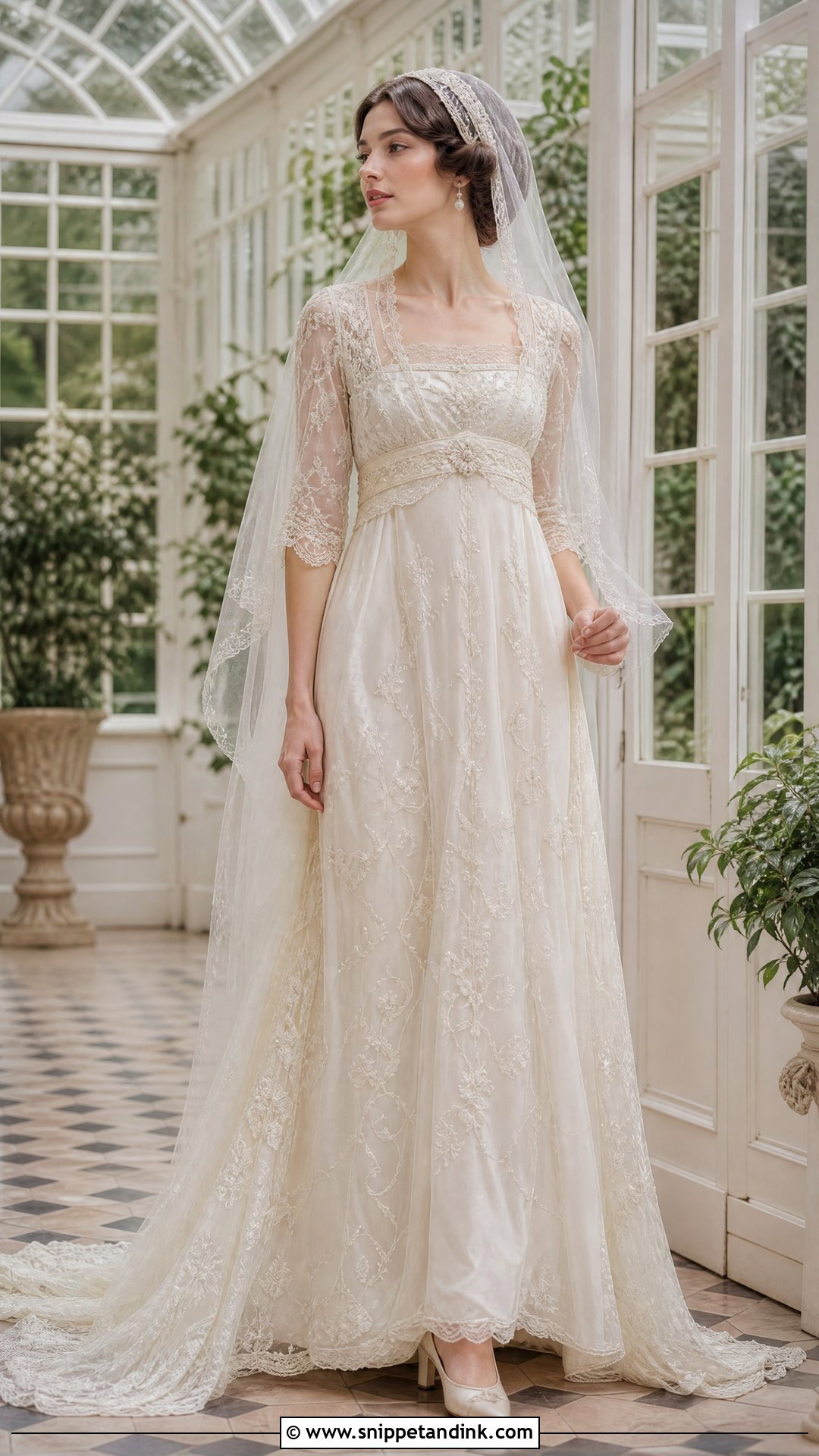
An Edwardian gown is lighter than a Victorian one: a raised waist, delicate lace sleeves and a skirt that skims instead of hugging, with small pearls scattered through botanical embroidery. Low lace-up boots or almond-toe pumps, a pearl comb and small drops suit it. A Juliet cap veil frames the face and leans into the early twentieth century, and a narrow lace-edged veil at a low bun is the simpler route. A raised waist moves the eye up to the bust, so the bodice fit there is the fitting to fuss over; a small gap shows clearly in profile photos. Carry a loose, natural bouquet. Gardens, conservatories and estate venues are a good match.
12. Pearl Corset Ball Gown Wedding Dress
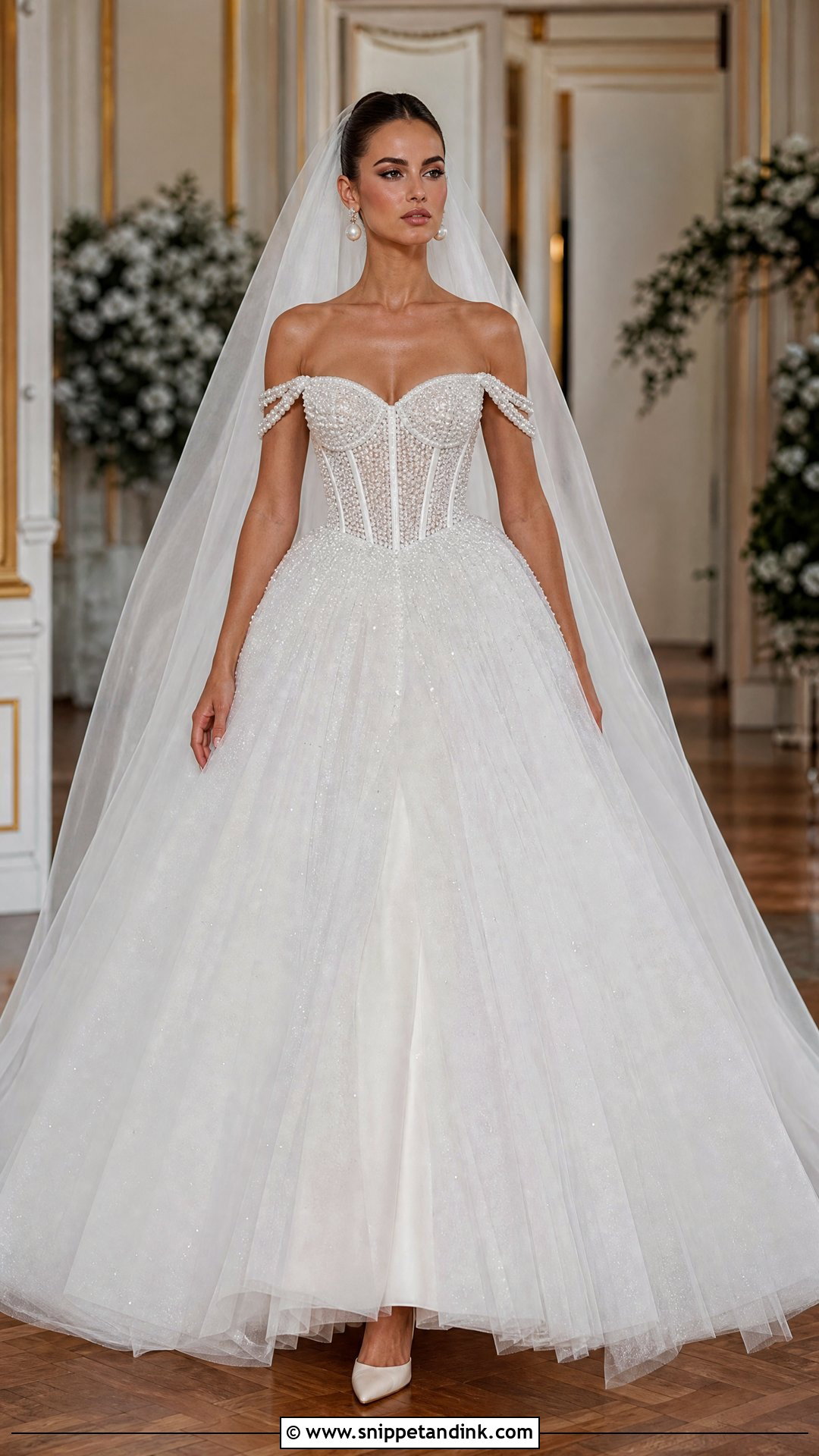
A pearl corset ball gown takes vintage foundation wear and puts it on the outside: visible boning, a curved neckline, pearls along the seams and a full satin or tulle skirt underneath. Pointed pumps, pearl earrings and a plain cathedral veil keep it from getting busy, and if the corset is densely beaded near the neckline, skip the necklace. Detachable off-the-shoulder straps soften the ceremony look and come off for dancing. In fittings, sit, walk, lift your arms and take a deep breath. If the boning digs at the top of your hip when you sit, it will be the only thing you notice by the speeches, and your seamstress can shorten a bone far more easily than you can ignore one.
13. Pearl Button Satin Wedding Dress
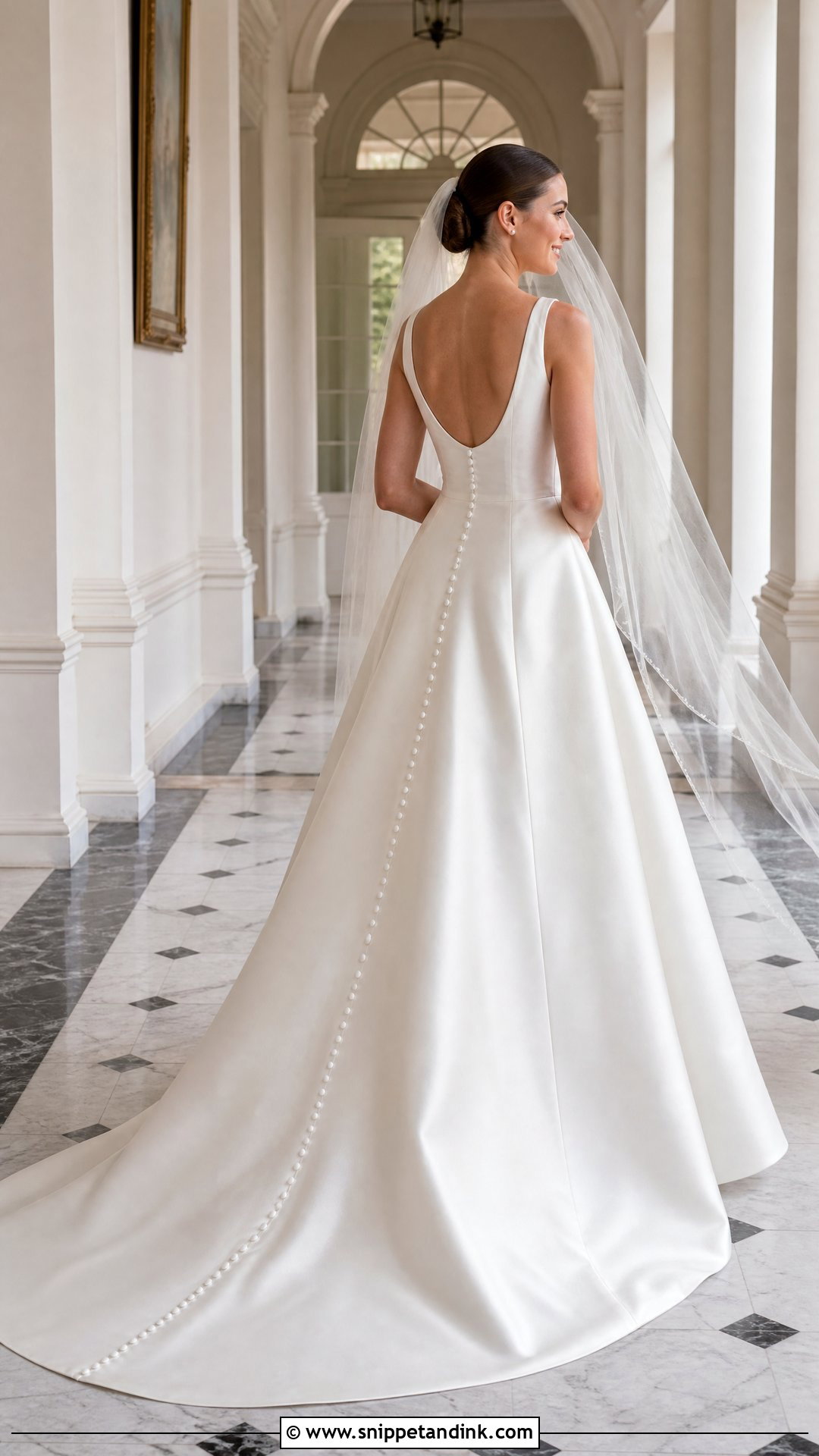
The best detail here is the one you only see when the bride turns around. A pearl button satin dress keeps the front clean and runs covered pearl buttons from the neck toward the train, on a column, A-line or ball gown. Pearl studs, satin pumps and a sleek low bun leave the back on show, and a sheer veil lets the buttons read through it during the ceremony. Carry a clutch with a single pearl closure, not a fully beaded one. If the buttons actually fasten, ask for them to be reinforced at the waist and hips, where the strain is. Better still, ask whether a hidden zip sits under them. Doing up forty loops in the morning takes far longer than anyone allows for.
14. Pearl Cape Sleeve Wedding Dress
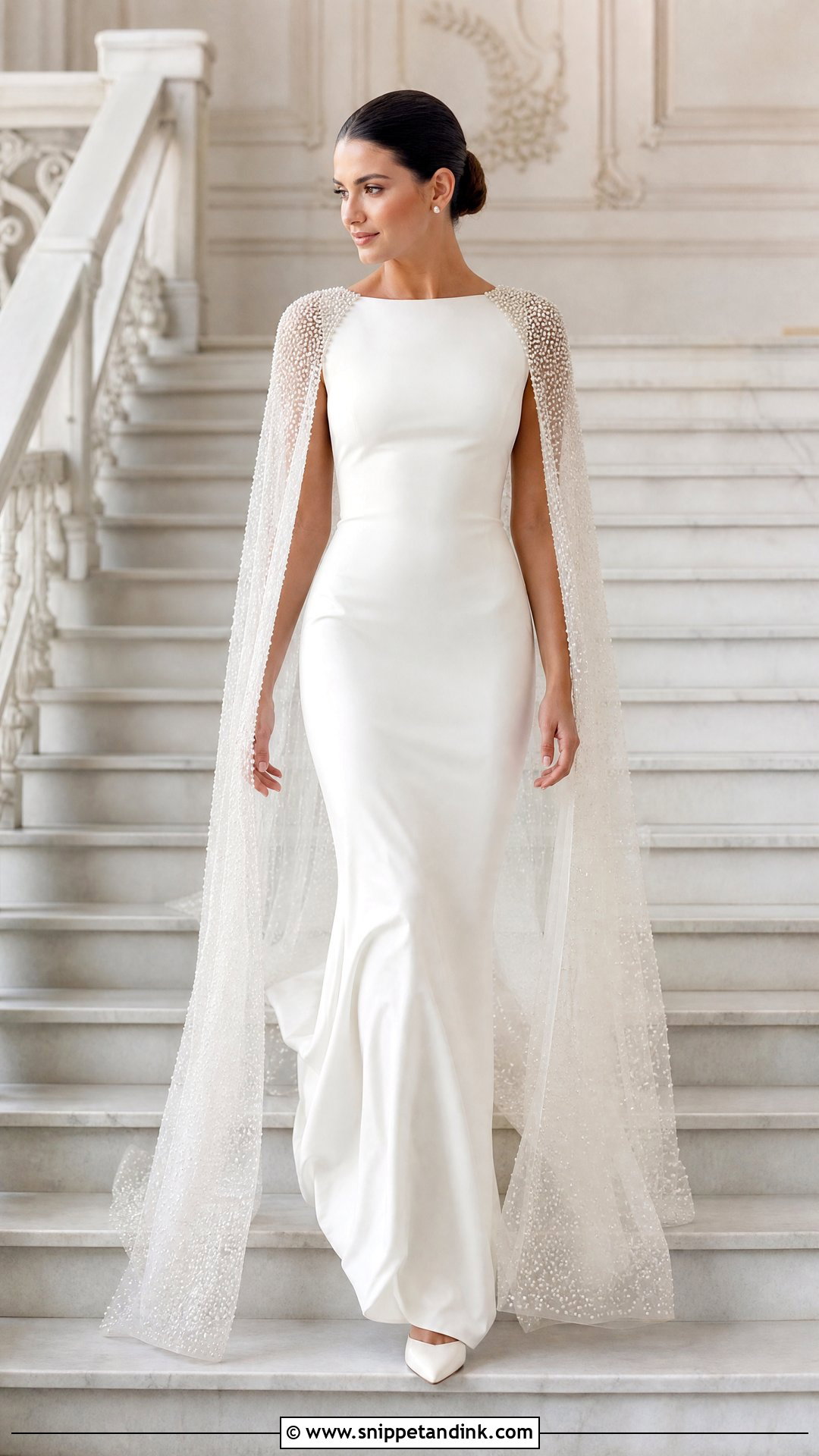
A cape sleeve covers the arms without the tight fit of a real sleeve. Start with a plain crepe or satin sheath and add a sheer pearl-scattered cape, ending at the elbow, waist or floor. Pointed heels and small pearl earrings keep the attention on that layer, and a polished bun or waves pushed behind the shoulders stop your hair from covering it. Choose the cape or a long veil, not both, because two long sheer layers tangle and both lose their shape. A floor-length cape needs someone to straighten it before every walk and photo. If it’s detachable, take it off after the ceremony. Cooler months and venues with wide staircases suit it particularly well.


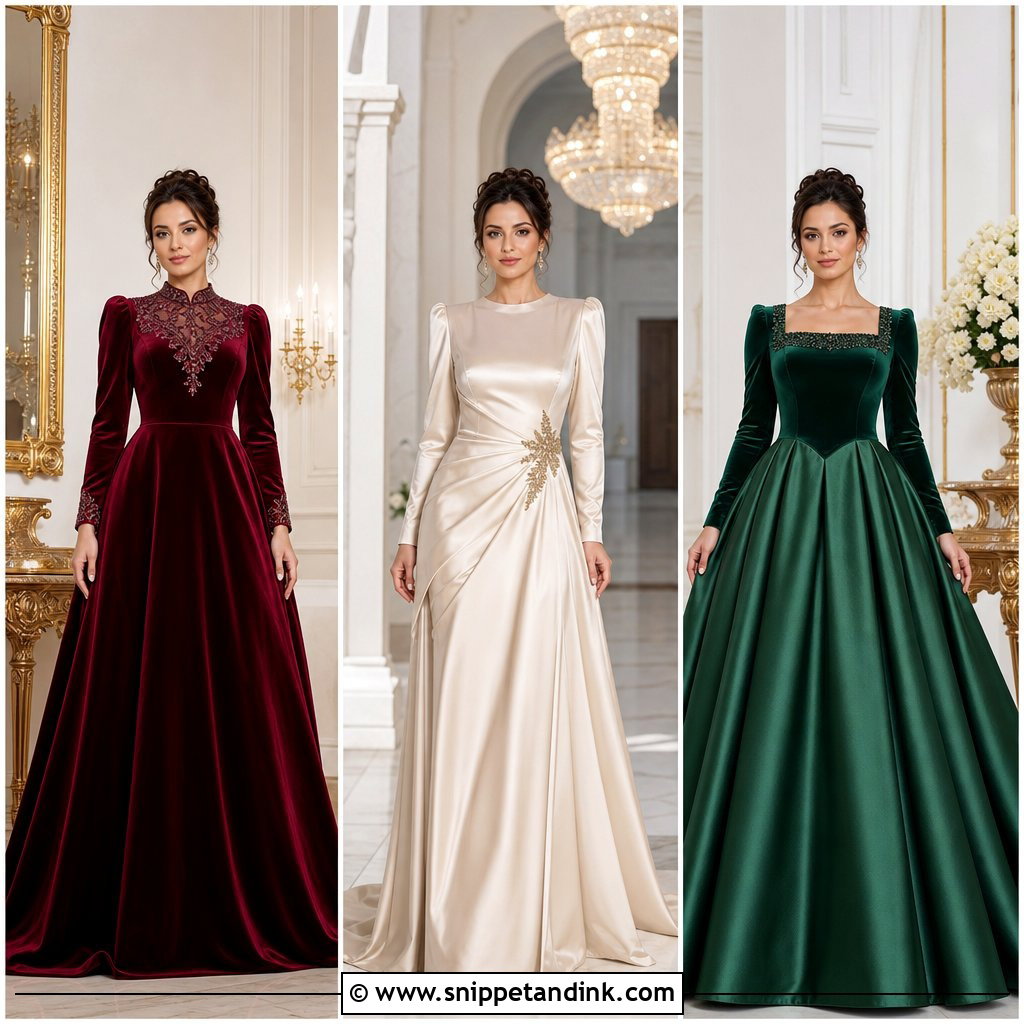
15. Off Shoulder Pearl Wedding Dress
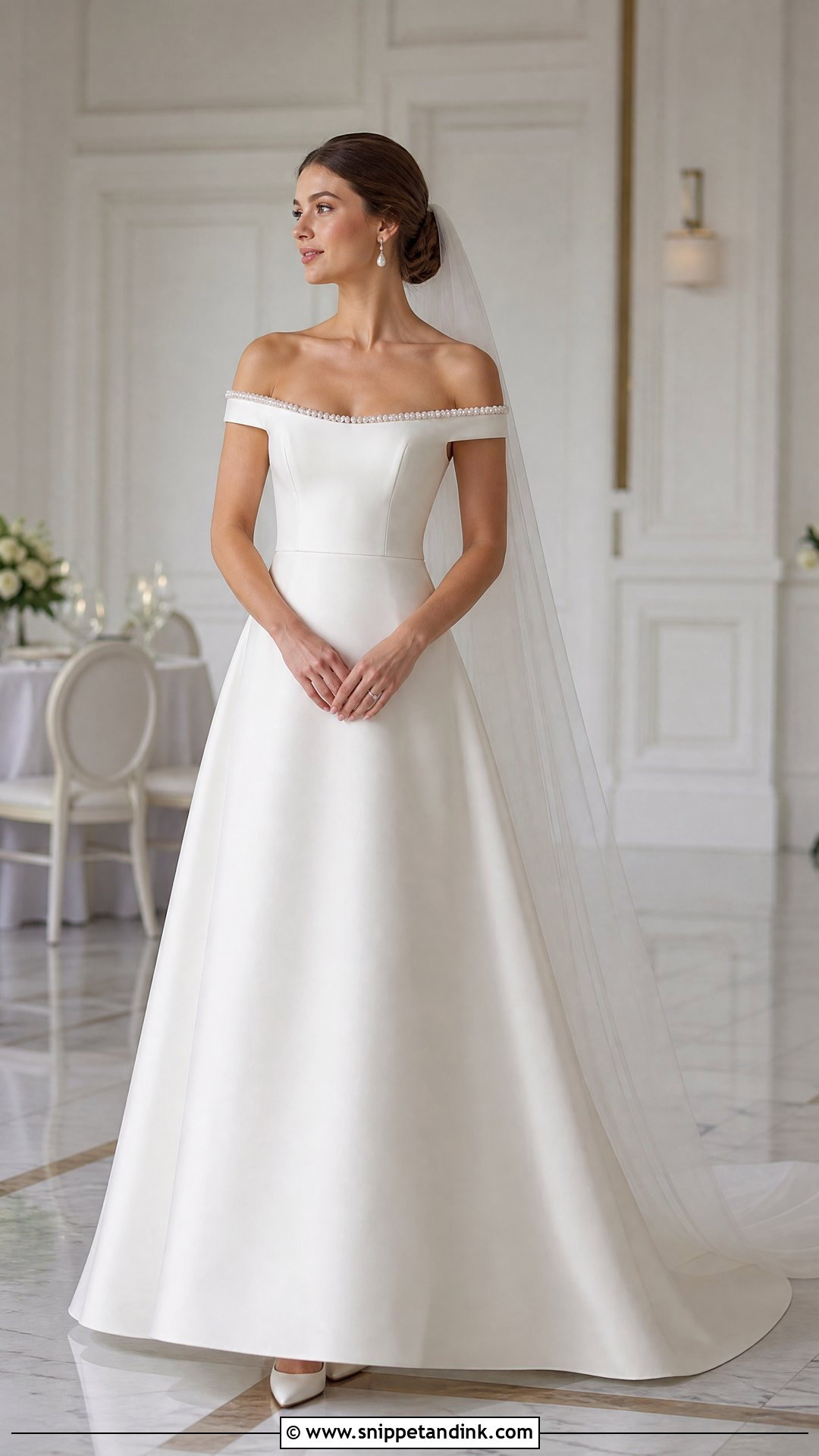
Off the shoulder shows the collarbone and makes a portrait neckline. A fitted satin bodice, A-line skirt and pearl embroidery along the folded neckline draw the eye up and leave the skirt smooth. Pearl drops, closed-toe pumps and a chapel veil fixed beneath a low bun suit it; a heavy necklace crowds an open neckline. The honest trade-off is arm movement. With the sleeves sitting on your upper arm, you can’t lift much above shoulder height, so hugging, dancing and throwing a bouquet all feel restricted. Raise your arms in every fitting, and if it bothers you, ask about illusion tulle across the shoulders or detachable pearl straps for the reception.
16. Drop Waist Pearl Wedding Dress
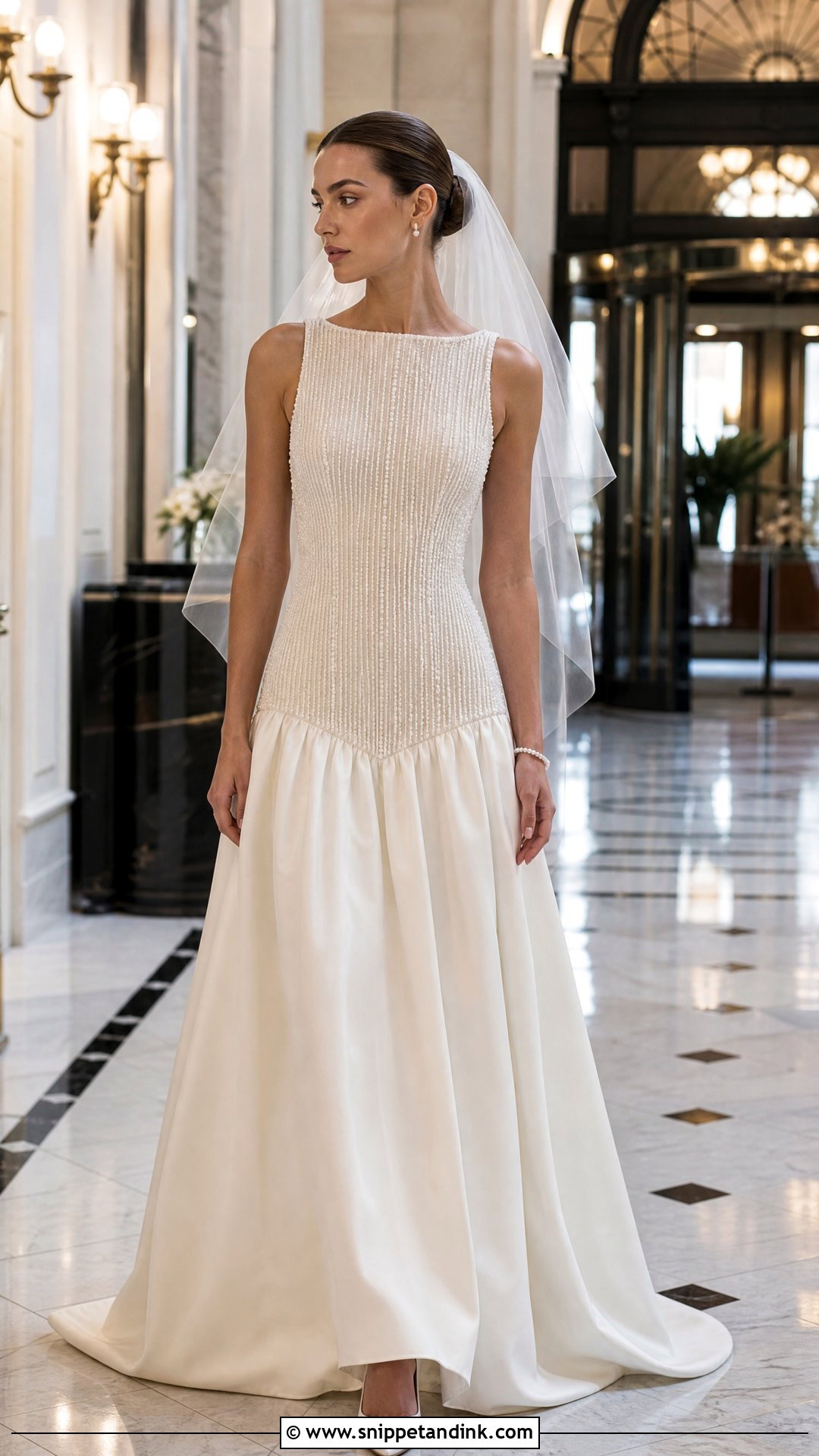
A drop waist lengthens the torso and opens into a fuller skirt lower down, a line borrowed from the twenties and its later revivals. Pearl embroidery that follows the long bodice and stops at the low seam keeps the line unbroken, and a lightly gathered skirt adds movement below the hip. Pointed heels, a narrow pearl bracelet, a plain veil and a sleek updo keep the proportions clean. This silhouette draws the eye straight to the hips. If yours are fuller, the seam placement is everything: a couple of centimetres higher or lower changes the whole look, so ask your seamstress to pin a few positions while you stand side-on to the mirror. Ballrooms, historic hotels and evening weddings suit it.
17. Basque Waist Pearl Wedding Dress
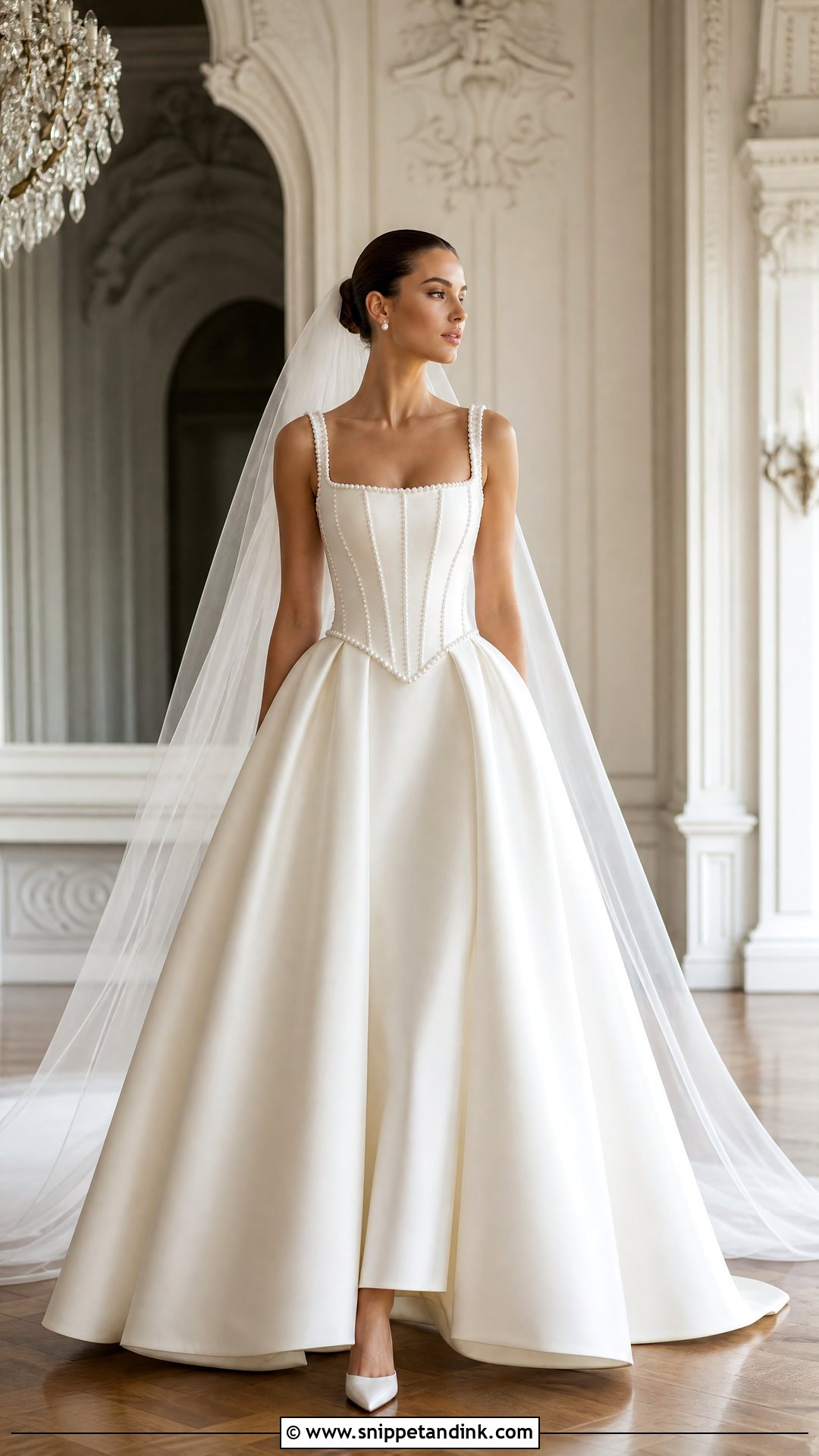
A basque waist dips into a V or U below the natural waist, defining the middle before the full skirt flows out. Pearls along the neckline, the boning and the pointed seam stress that sculpted shape. Satin pumps, pearl studs, a long plain-edged veil and a smooth bun or controlled waves keep it formal. A petticoat with moderate volume supports the waist without swamping your frame. What I check most is that the point sits dead centre and stays level when you sit. A basque point that twists by even a little looks crooked in every front-on photo, and it’s usually fixed by adjusting the side seams, not the point itself.
18. Pearl Sheath Wedding Dress
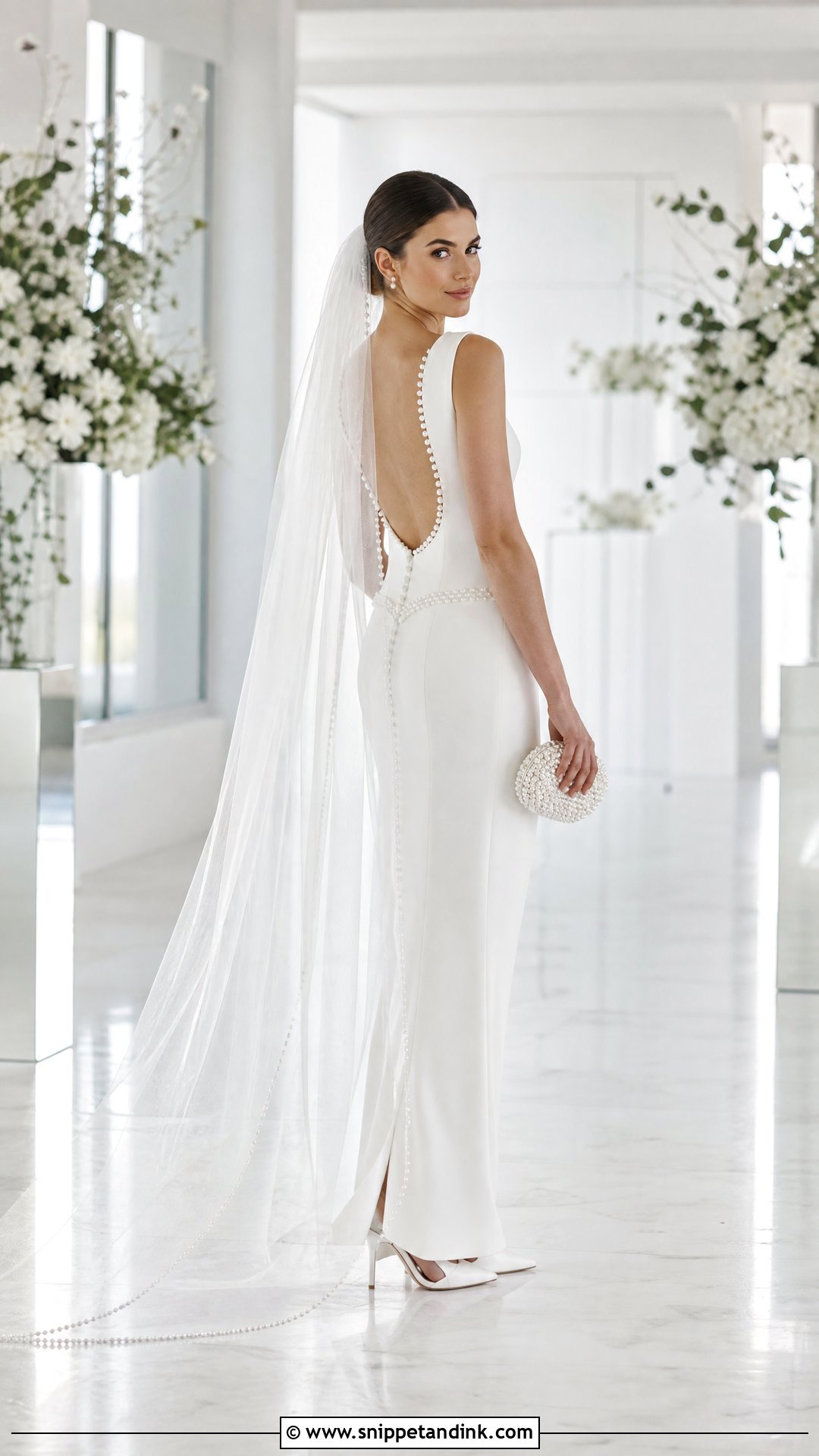
A pearl sheath shows that vintage doesn’t always mean a big skirt. Slim crepe, silk or satin with pearls at the neckline, waist or open back, especially in long vertical rows, keeps the line clean. Pointed pumps, a small pearl clutch and simple earrings suit it, with a single-layer cathedral veil for ceremony drama and a low chignon or glossy side-parted waves. A sheath has very little give, so check your stride and how you sit at the fitting. If you can’t take a normal step, a hidden kick pleat or a short back slit will fix it without spoiling the front. A detachable overskirt is the way to get more ceremony volume, then remove it for dinner.
19. Pearl A Line Wedding Dress
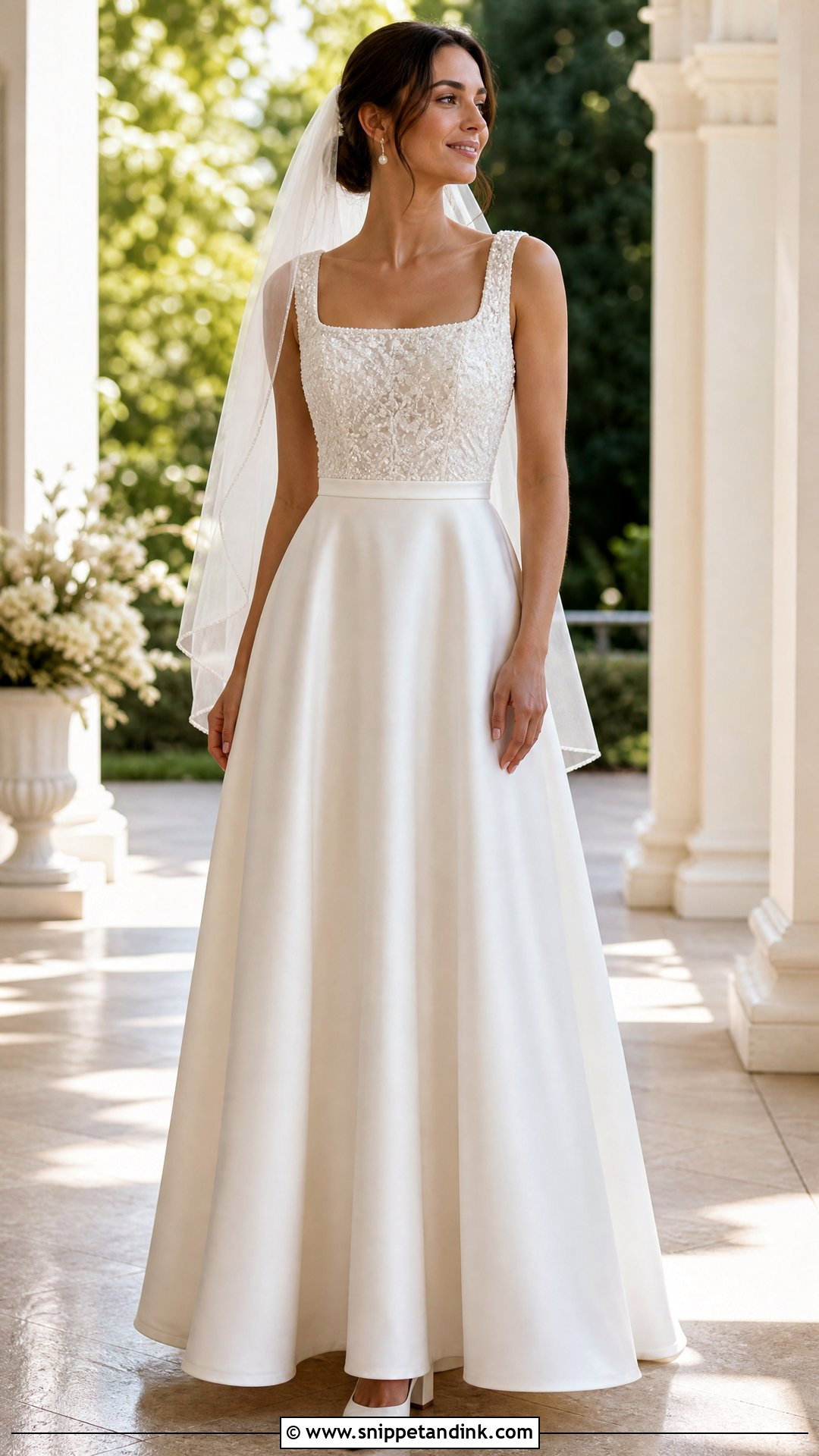
The A-line is the one I can put on almost anyone: structure through the bodice, room through the skirt. Choose a sweetheart, square or bateau neckline depending on the coverage you want, then decide where the pearls go, scattered over lace appliqué, gathered at the waist or in fine lines on the bodice. Block-heel pumps, pearl earrings, a fingertip veil and a soft updo work well. If the skirt is beaded too, keep the veil and jewelry plain. A narrow satin waistband with a small pearl clasp adds definition if the bodice runs straight into the skirt. Because the shape is so forgiving, the pearls are where your personality goes, so spend your try-on time comparing those placements.




20. Pearl Embellished Wedding Dress With Gloves
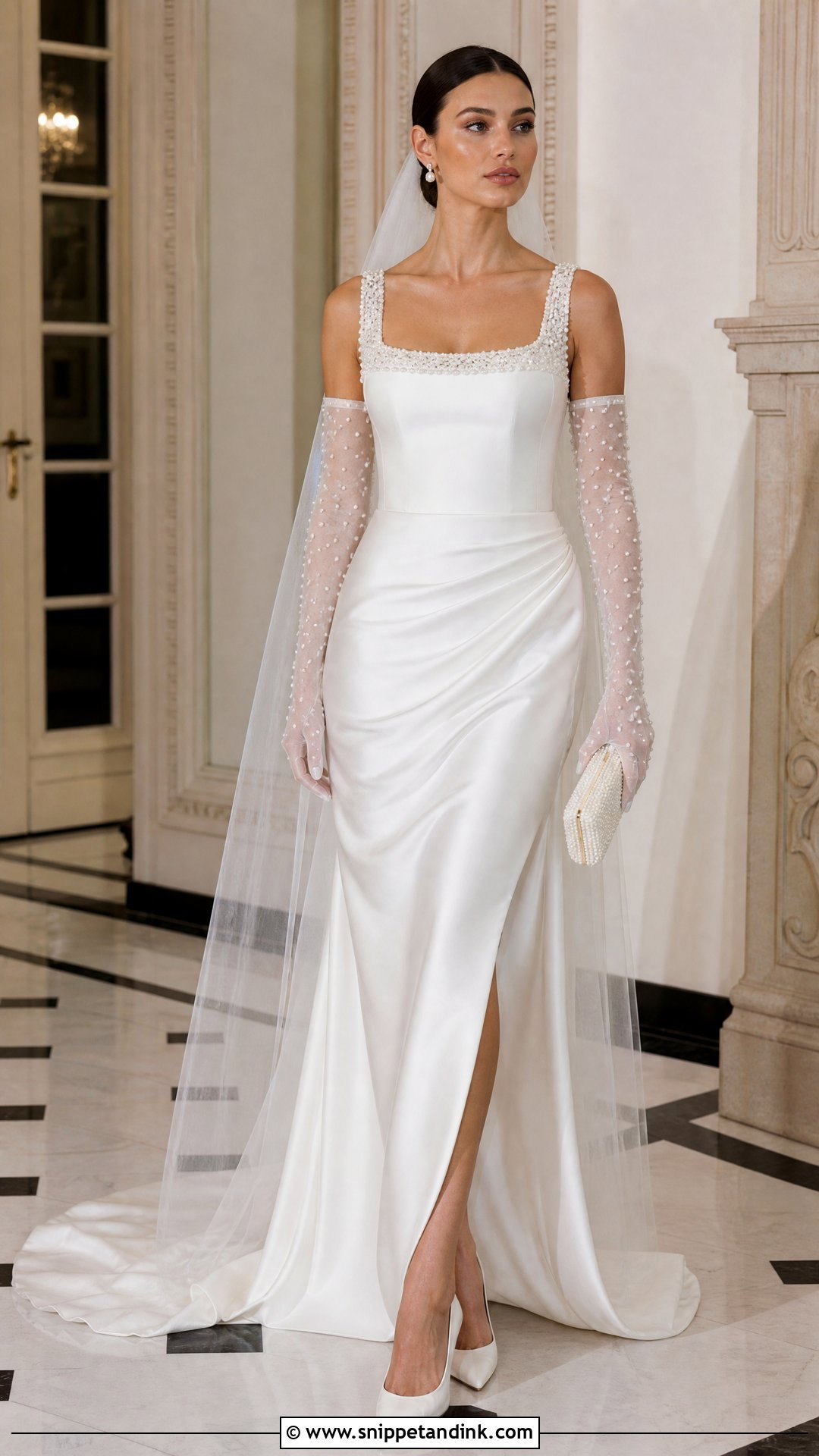
Accessories can make a simple gown read as vintage. Start with a clean satin dress, fitted at the waist with a softly flared skirt, then add sheer opera gloves dotted with tiny pearls and echo them with pearl earrings and back buttons. Pointed satin pumps and a structured clutch keep it tidy, and a plain veil leaves the gloves on show. Gloves need planning for the ring exchange. Look for a pair with a discreet opening on the ring finger, or pull the left glove off and hand it to your maid of honour just before the vows. Fingers in stiff mesh get clumsy, so take them off for dinner. You get plenty of pearl detail here without committing to a heavily beaded gown.
What Hairspray and a Loose Thread Do to Pearl Beading
Pearls on a bridal gown are almost never real. They’re glass or acrylic beads with a pearly coating, and that coating is the fragile part.
At Fittings
- Run your hand lightly over the beaded areas and feel for any pearl that wobbles. One loose stitch can unravel a whole row once the thread end works free.
- Ask whether the pearls are hand sewn or glued. Glued pearls pop off when the fabric flexes, so expect a few to go during the reception.
- Lift the skirt and check its weight. Heavy embroidery on the hem drags a satin train and can pull a light bodice downward over a long day.
On the Morning
Get into the dress after hair and makeup, not before. Hairspray, perfume and self-tan dull the coating and can leave it tacky, so step into the gown and spray nothing near it afterward. Pack a tiny kit with ivory thread, a needle and a few spare pearls, which most shops will give you if you ask.
Afterward
Steam from a distance and never press an iron onto the beading, since heat can blister the finish. Send it to a cleaner who handles beaded bridal wear, then store it flat or folded with acid-free tissue in a breathable box, away from plastic and away from sunlight. Hanging a heavily beaded gown for months stretches the shoulders out of shape.
Pearls Look Best When the Dress Fits First
A good vintage look borrows from the past without hiding the bride. Across these pearl dresses there are ball gowns, sheaths, modest sleeves, minis and loose seventies lace. Whichever direction you lean, think about where the pearls sit and how heavy they are, then about support and movement. Let a heavily beaded dress carry itself with plain accessories, and use gloves, a veil, a cape or jewelry to dress up a clean one. Bring your actual wedding shoes and underwear to every fitting. That single habit gets the hem, the bust and the waist right far more often than anything else I could tell you.
You'll Like These Ideas:




Leave a Reply