
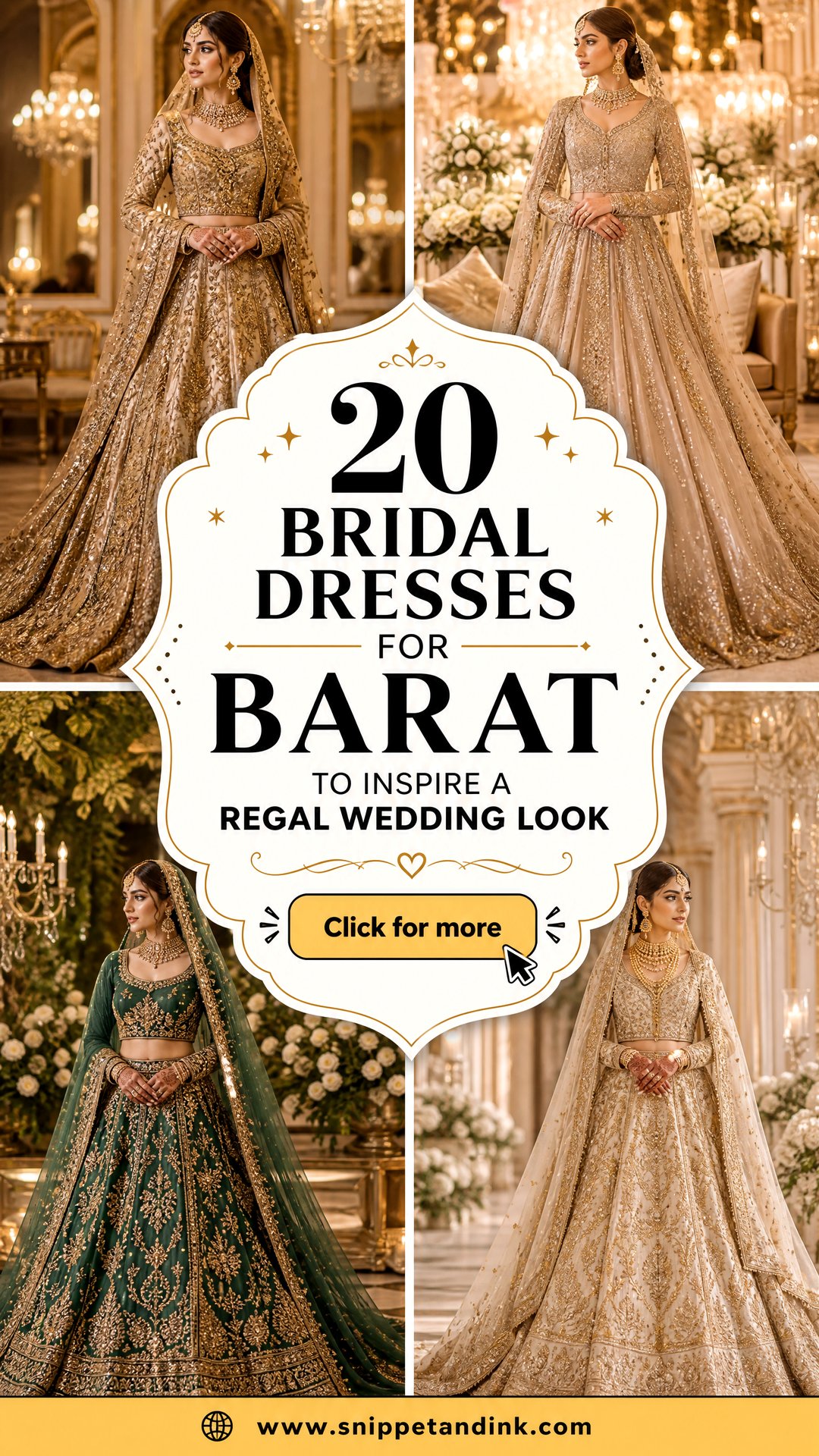
A Barat outfit has a long day ahead of it: the entrance, the nikah or ceremony, an hour or more of portraits on stage and finally the rukhsati, when emotions run high and you still need to walk out gracefully. That’s why I always look at the whole look on the bride, not a swatch of embroidery on a table. Red and maroon are still the colors most families expect, yet burgundy, rust, emerald, ivory and antique gold can look every bit as bridal. Heavy handwork, structured flares and the double dupatta remain the backbone of formal Pakistani bridal wear. Your height, the venue, the season and how much coverage you want should all shape the final decision, from a farshi lehenga right through to a gown.
Ordering Handwork Early Enough for Two Proper Fittings
Heavily embroidered bridal wear is slow. Zardozi, dabka and kora are stitched by hand, and most workshops ask for several months between confirming the design and delivery, with the busy winter wedding season stretching that further. I tell brides to place the order early enough to leave room for at least two fittings, because the first fitting almost always reveals something: a blouse that’s tight once the lining goes in, or a hem that needs levelling.
Before you sign off the design, ask a few practical questions:
- Roughly how much will the finished lehenga or skirt weigh, and can the heaviest work move from the waist to the hem?
- Is the can-can attached or separate? A separate one can be adjusted or removed for sitting.
- Will the blouse have extra seam allowance in case your measurements change before the wedding?
- Are the dupatta borders the same color batch as the outfit, or dyed separately?
Bring your jewelry, or photos of it, to the fittings. A choker needs a different neckline depth from a long rani haar, and it’s far easier to adjust the cut now than to compromise on the jewelry later.
1. Red Barat Bridal Lehenga
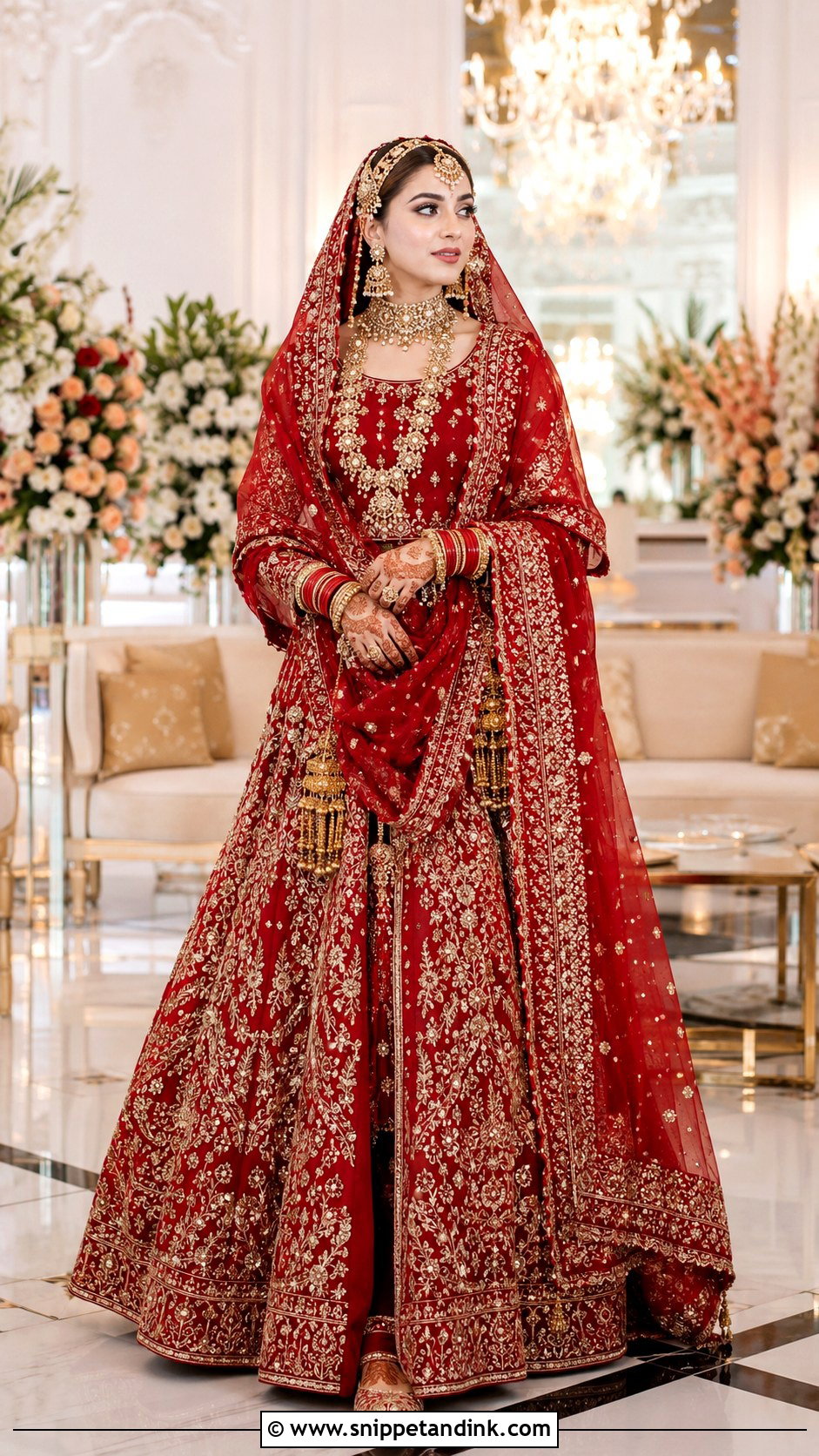
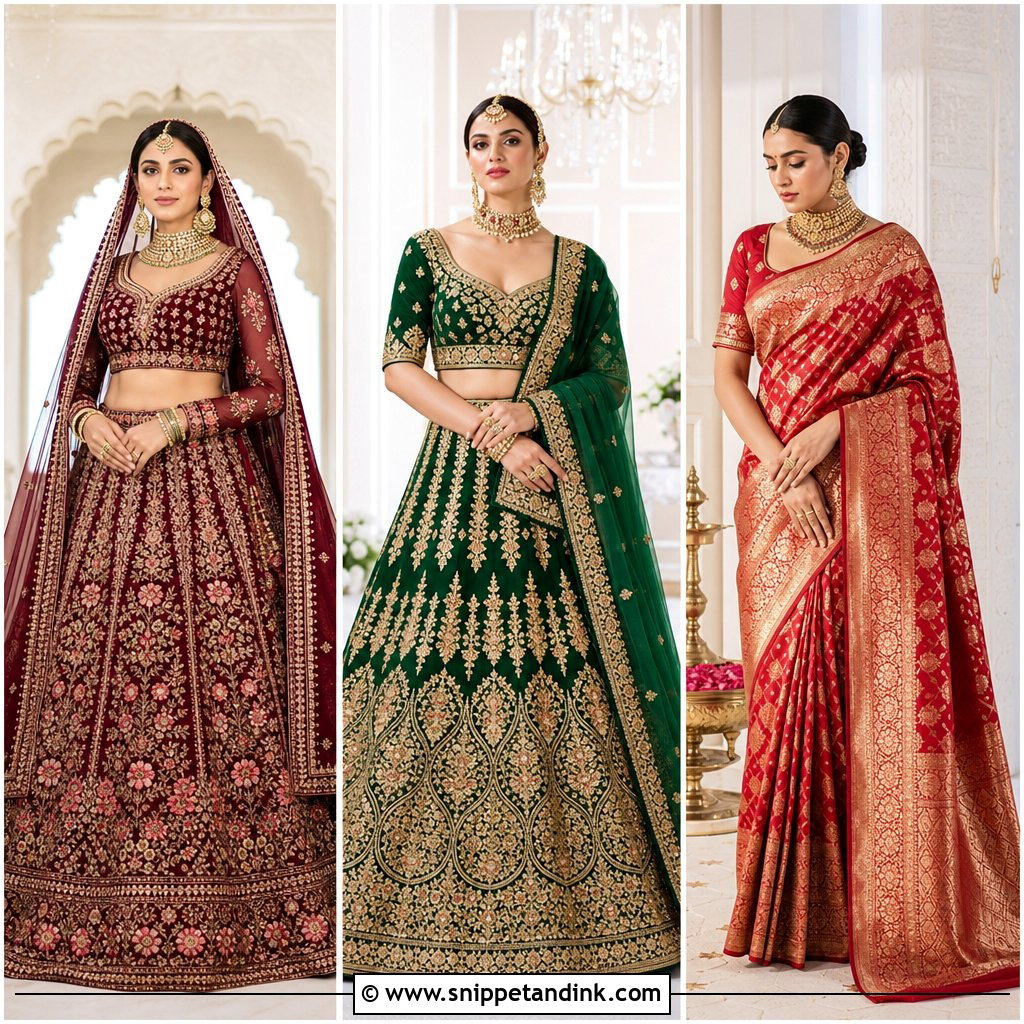
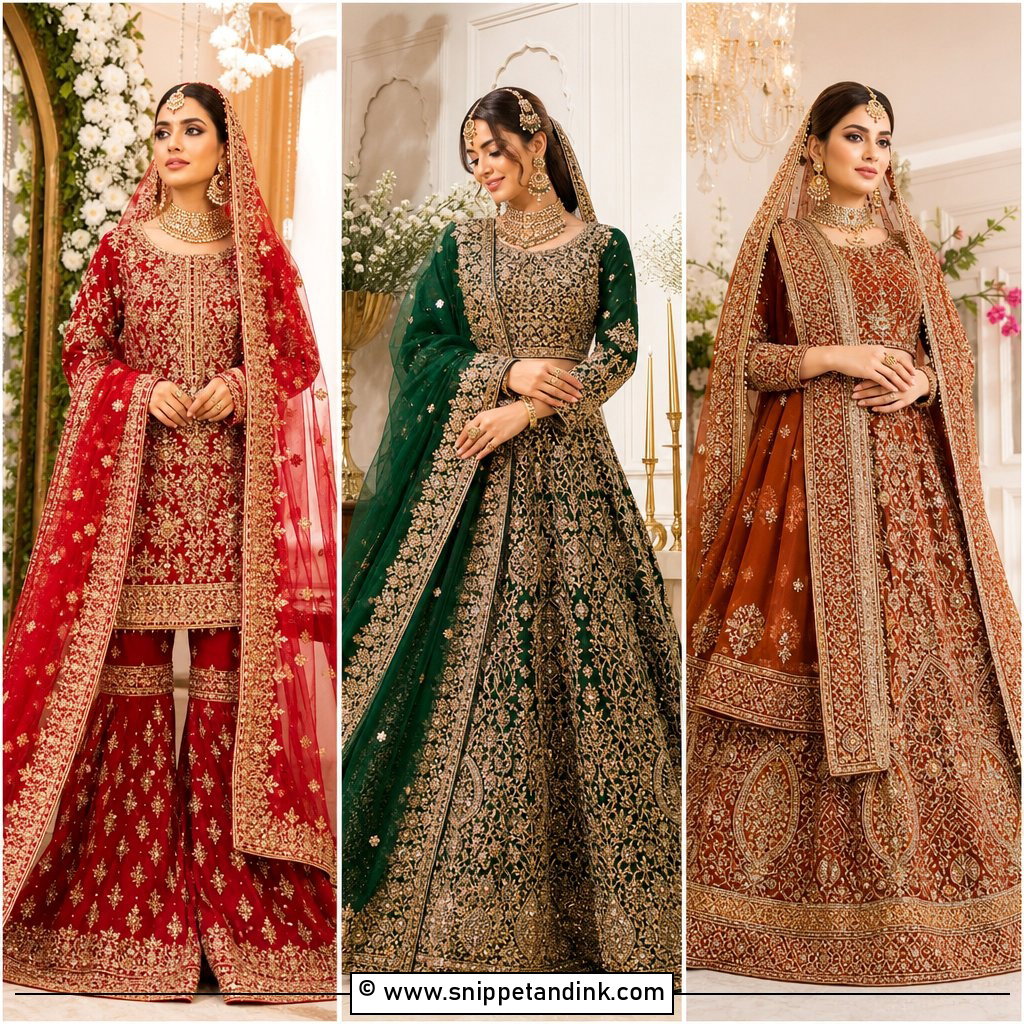
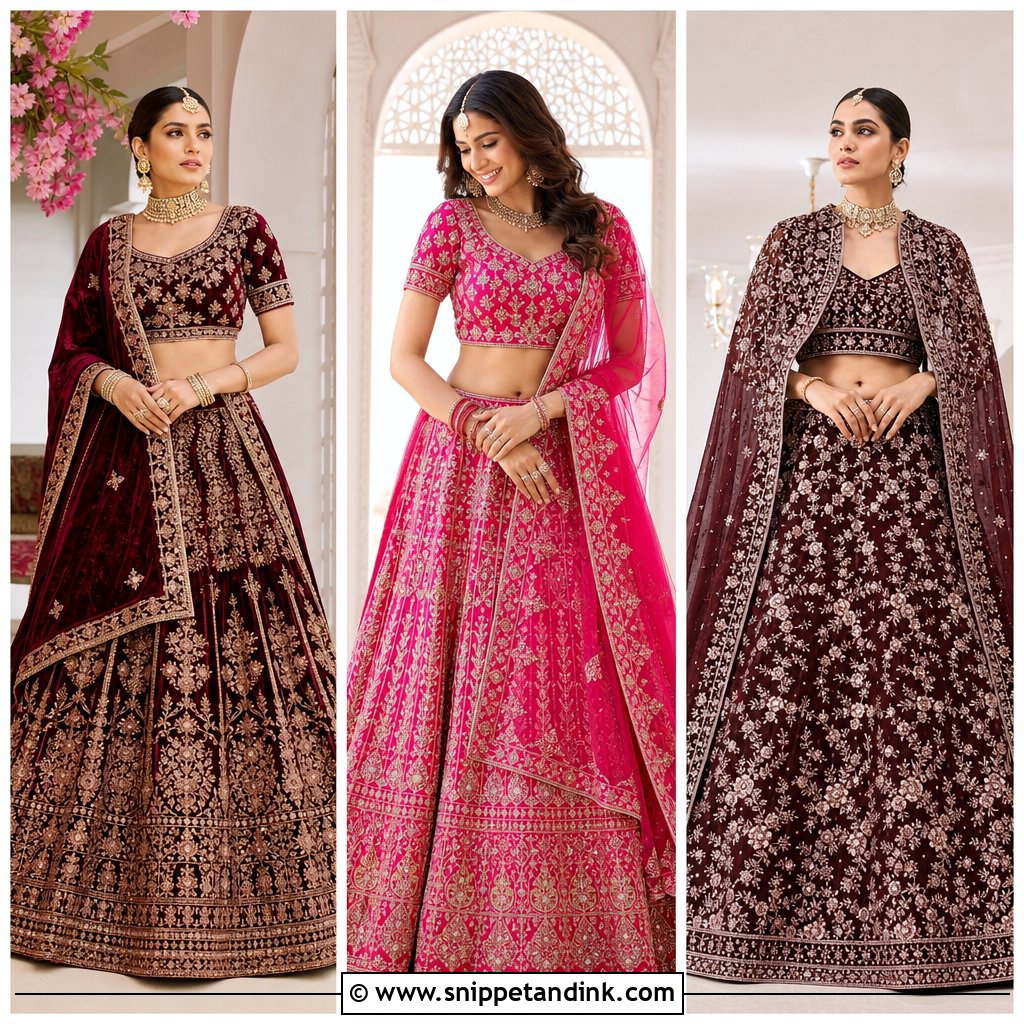
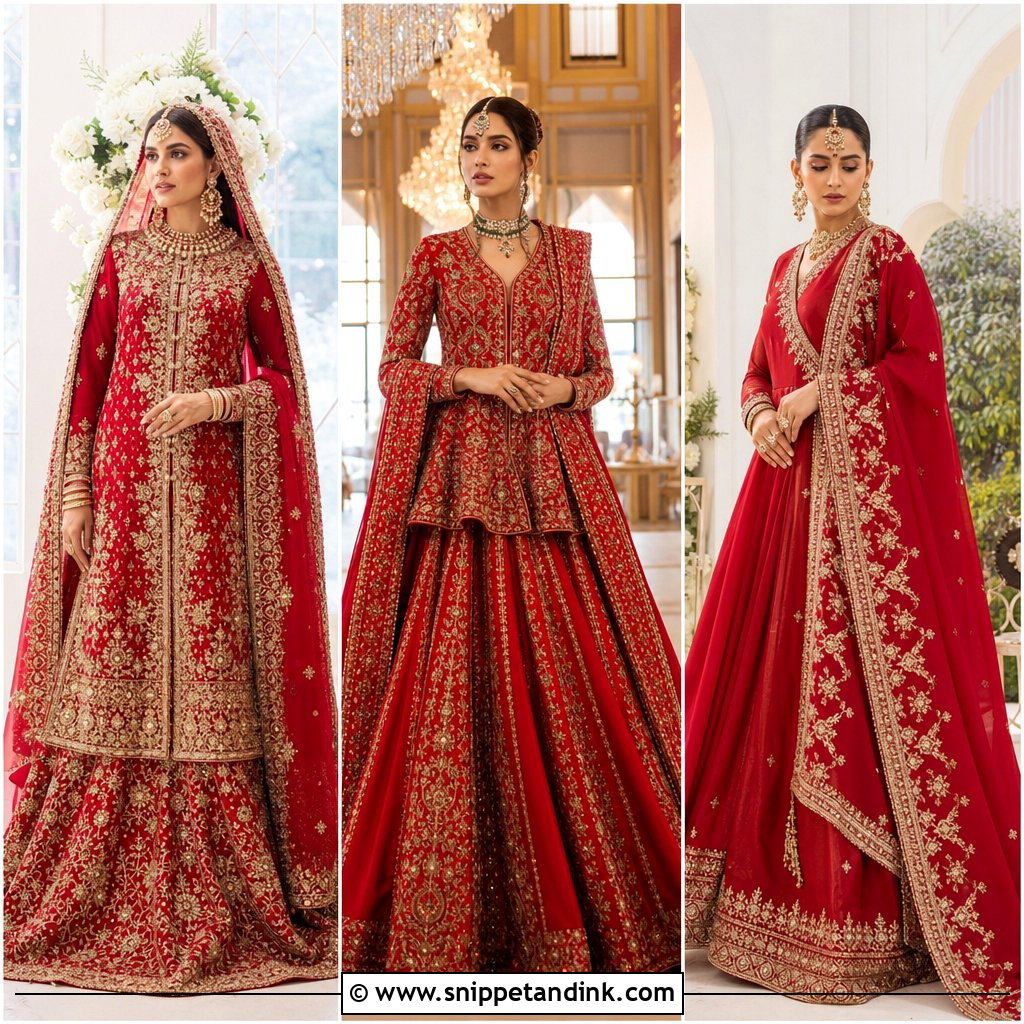
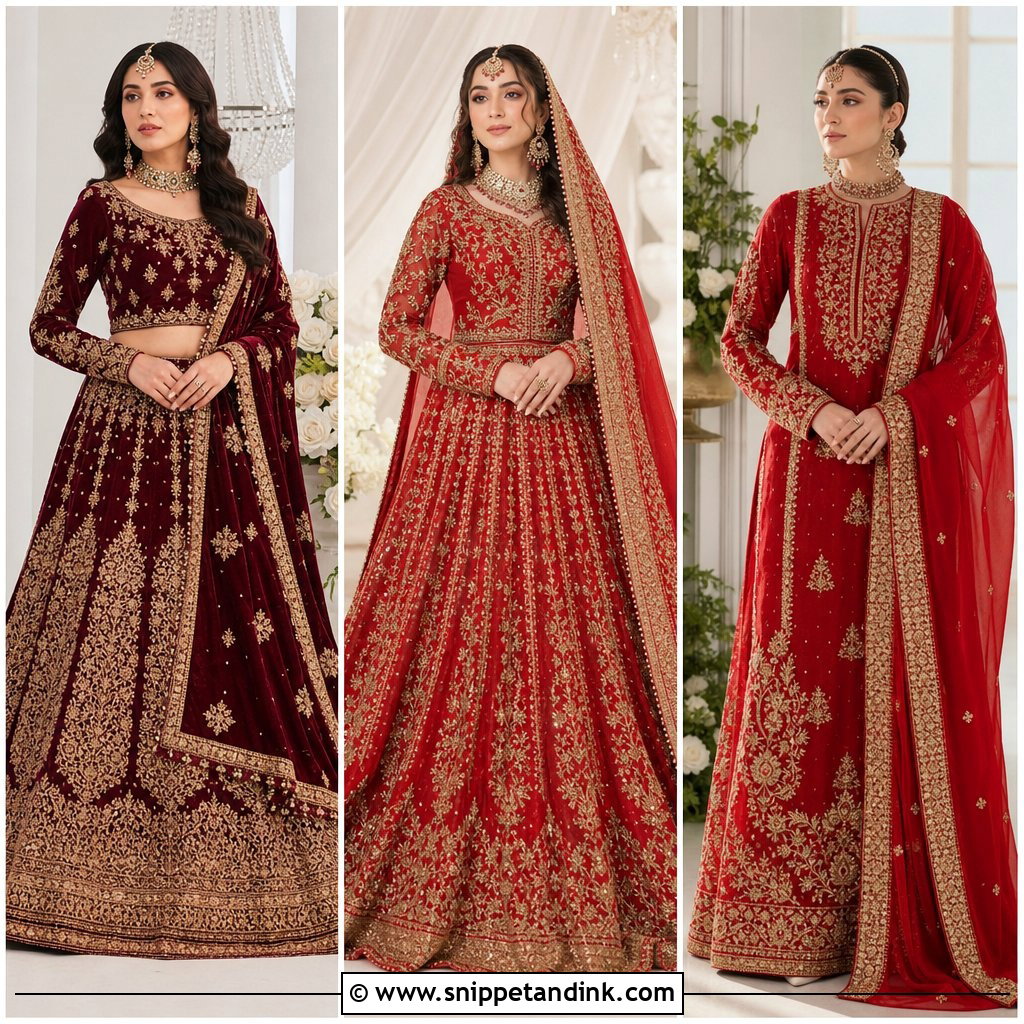
Red is the shade elders picture when they think of a Barat, and it earns its place. Pick the fabric by season: raw silk or jamawar for mild weather, velvet for winter. The trick with gold zardozi, dabka, kora and sequins is to concentrate the weight at the hem and let it thin out toward the waist, so the skirt hangs properly instead of pulling the waistband down. A fitted blouse or modest short shirt, a red head dupatta and a lighter second dupatta over one shoulder finish the classic version. With a choker, long necklace, jhumkas, matha patti and bangles already in play, keep the makeup luminous rather than heavy.
2. Maroon Velvet Barat Bridal Lehenga
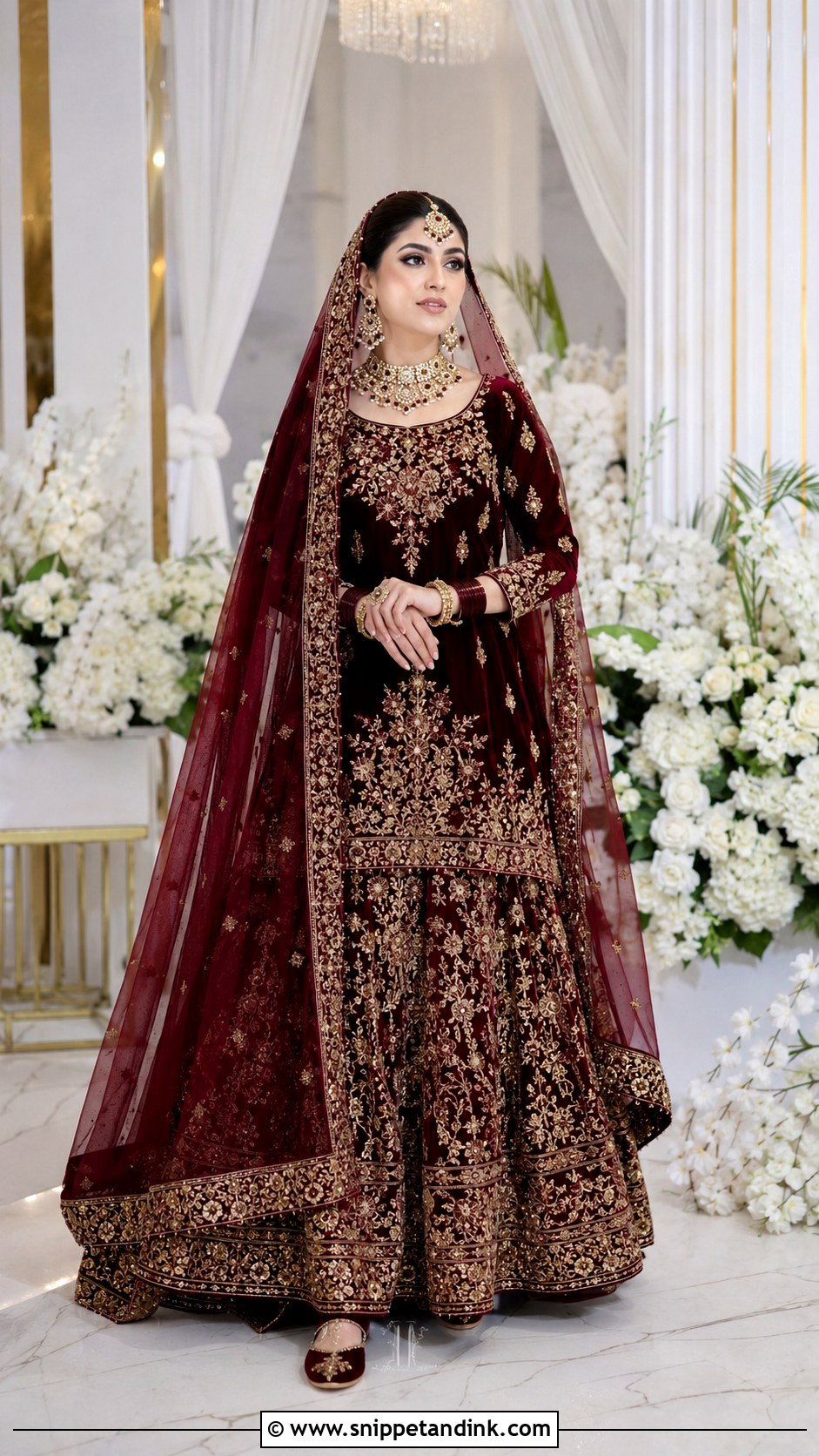
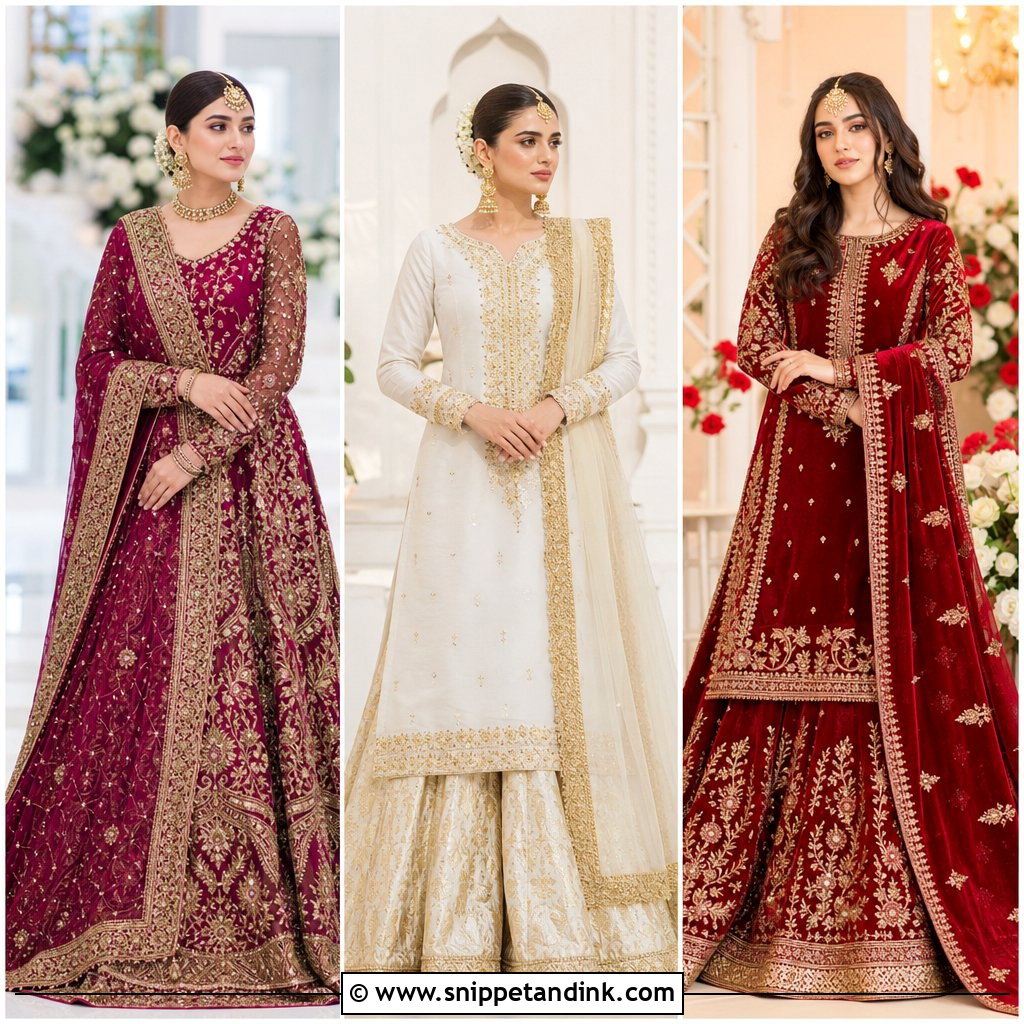
Deep maroon velvet is my favorite base for a winter evening Barat, because velvet holds a flare on its own and makes antique gold glow. Ask for embroidered borders, architectural motifs or floral vines rather than work covering every inch; the velvet itself should still show. A sheer maroon net dupatta keeps the top half from feeling dense. Be honest with yourself about weight. Velvet, lining, can-can and solid handwork together can get very heavy, and I always ask the workshop to weigh the skirt before final payment. Pearls in the jewelry and a low bun suit the mood.
3. Crimson Farshi Barat Bridal Lehenga
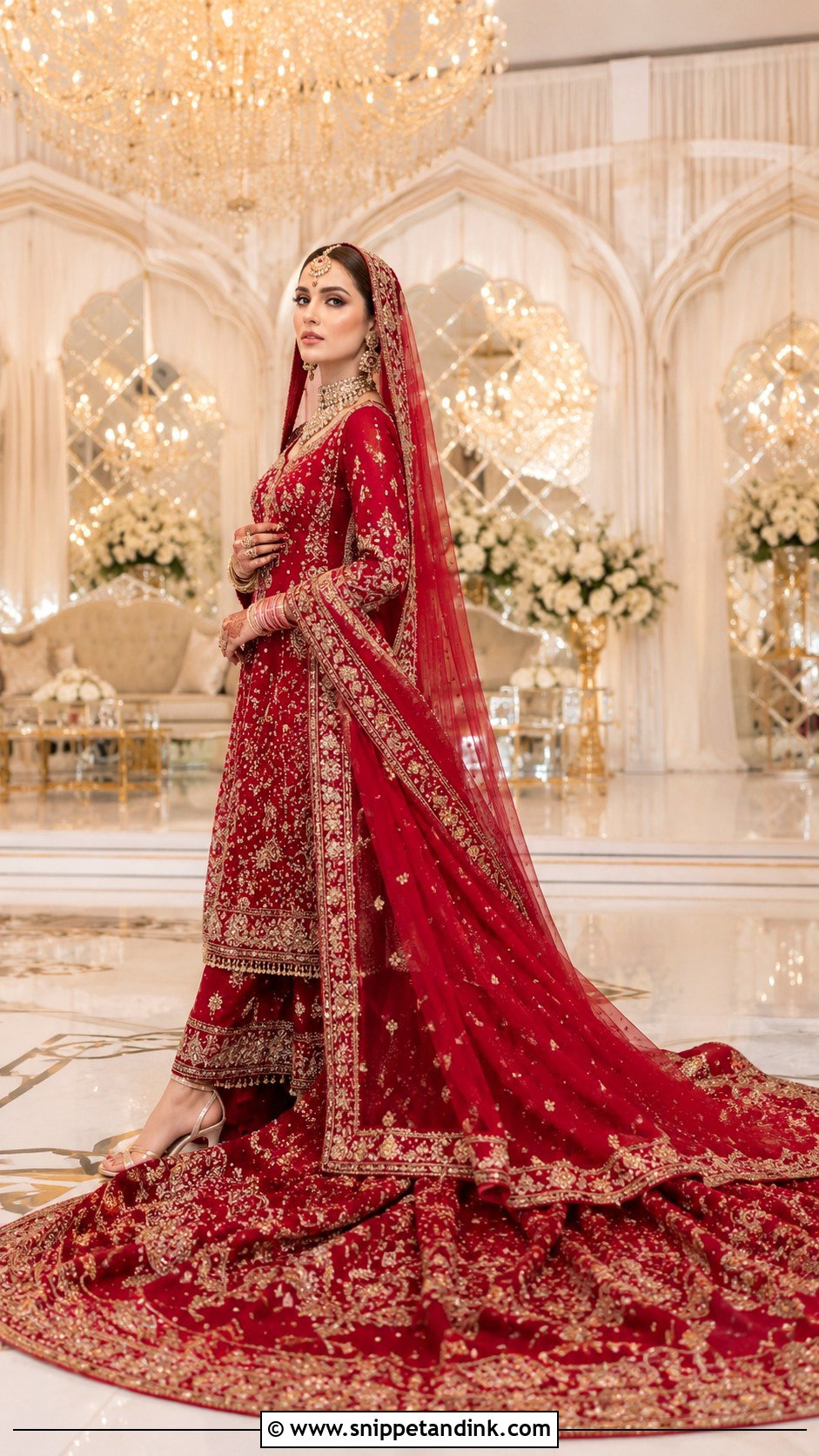
The trailing hem of a crimson farshi lehenga needs space, so it’s at its best in a large hall or on a wide stage. Concentrate the embroidery on the trail, the front panels and the border, since those are the areas the camera sees during the walk. A knee-length straight shirt balances the width and gives more coverage than a short choli. Practice turning in the full outfit at home; a farshi doesn’t swing round with you, it has to be lifted and resettled. Give one cousin the job of arranging the trail every time you stop for a portrait. Polki, a jhoomar and stacked bangles complete it.
4. Burgundy Long Shirt Barat Lehenga
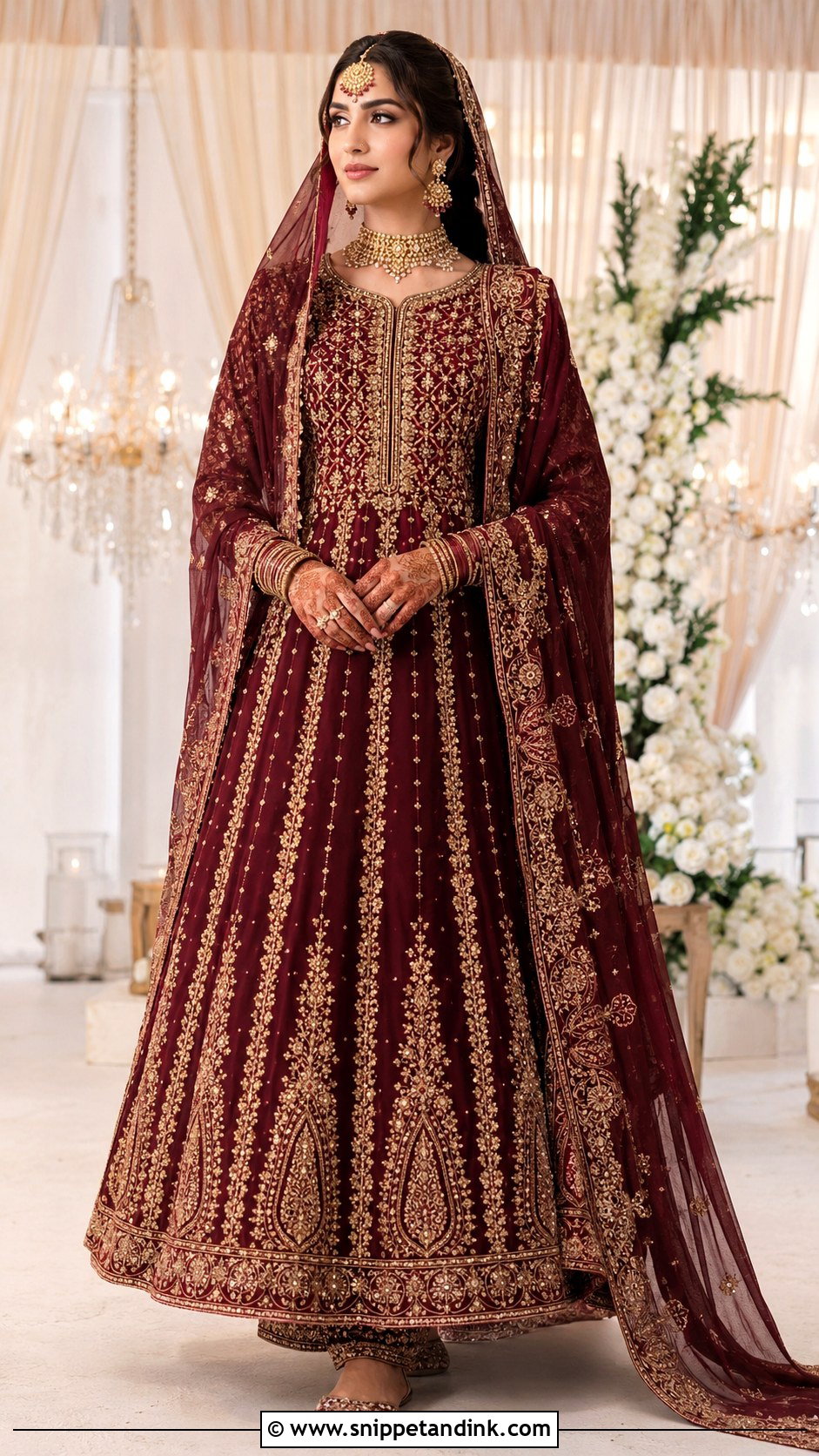
Burgundy sits close enough to red to satisfy tradition but reads deeper and calmer on camera. A long straight shirt over a flared lehenga makes a long, clean line, and vertical embroidery on the shirt adds height, which is why I suggest this pairing to petite and taller brides alike. Copper, antique gold or muted champagne handwork suits the dark base better than bright gold. A round neckline leaves room for a statement choker. The one proportion I watch is shirt length: if it falls too low, it hides the lehenga border you paid for, so mark it in your actual footwear.
5. Rust Barat Bridal Pishwas
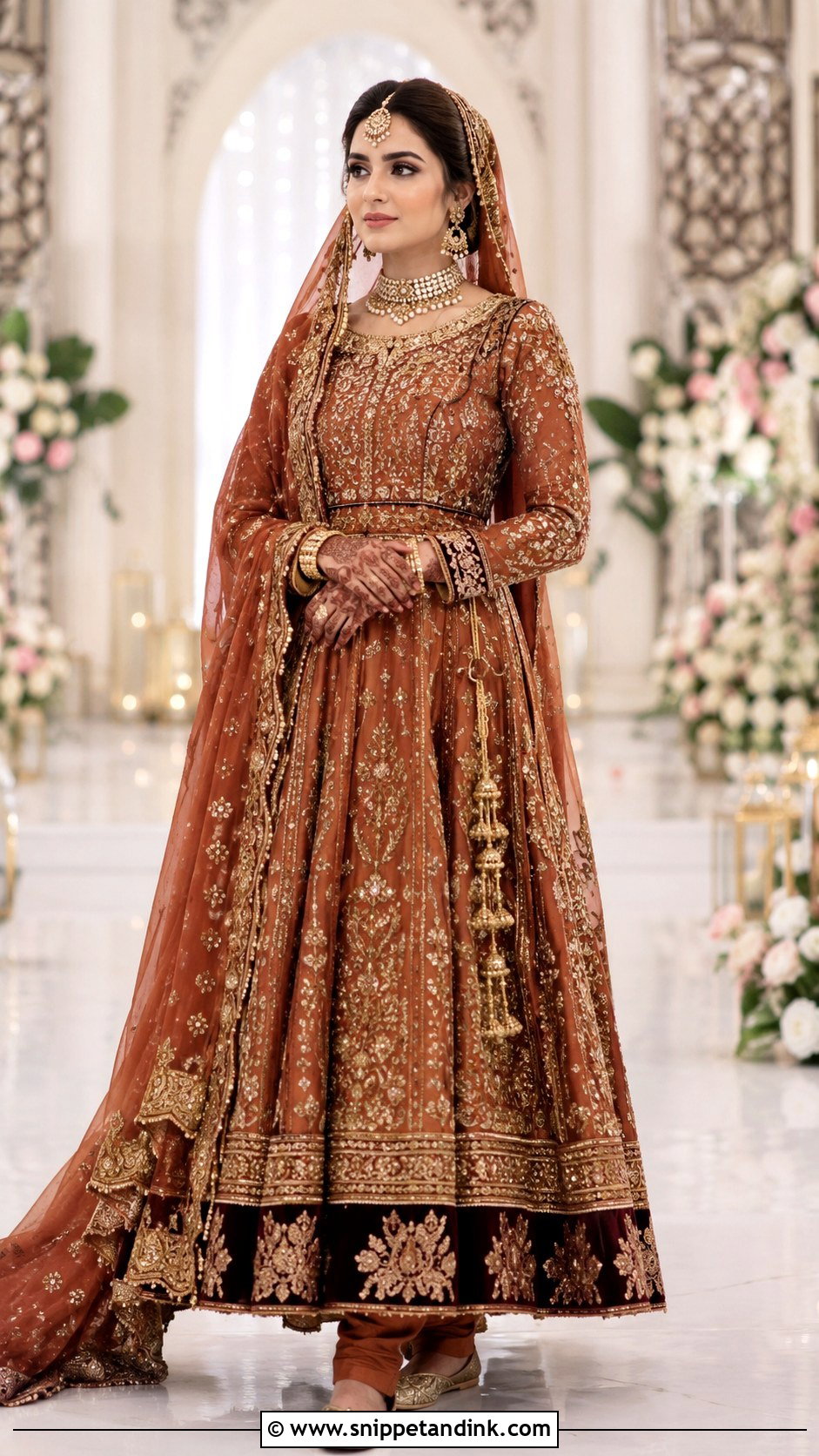
Rust feels warm and individual without leaving the Barat palette. A floor-length pishwas with a fitted bodice and full flare moves beautifully and needs no visible waistband. Raw silk, tissue or organza panels take antique gold dabka, resham and fine sequins well, and a darker rust or maroon velvet border gives the hem weight and definition in winter. Wear fitted trousers underneath and secure a sheer dupatta over the head. Ask the tailor to level the hem with you standing in your khussas, because an uneven pishwas folds under your feet on stairs. Bronze makeup and kundan pick up the warmth.
6. Ruby Red Barat Bridal Gown
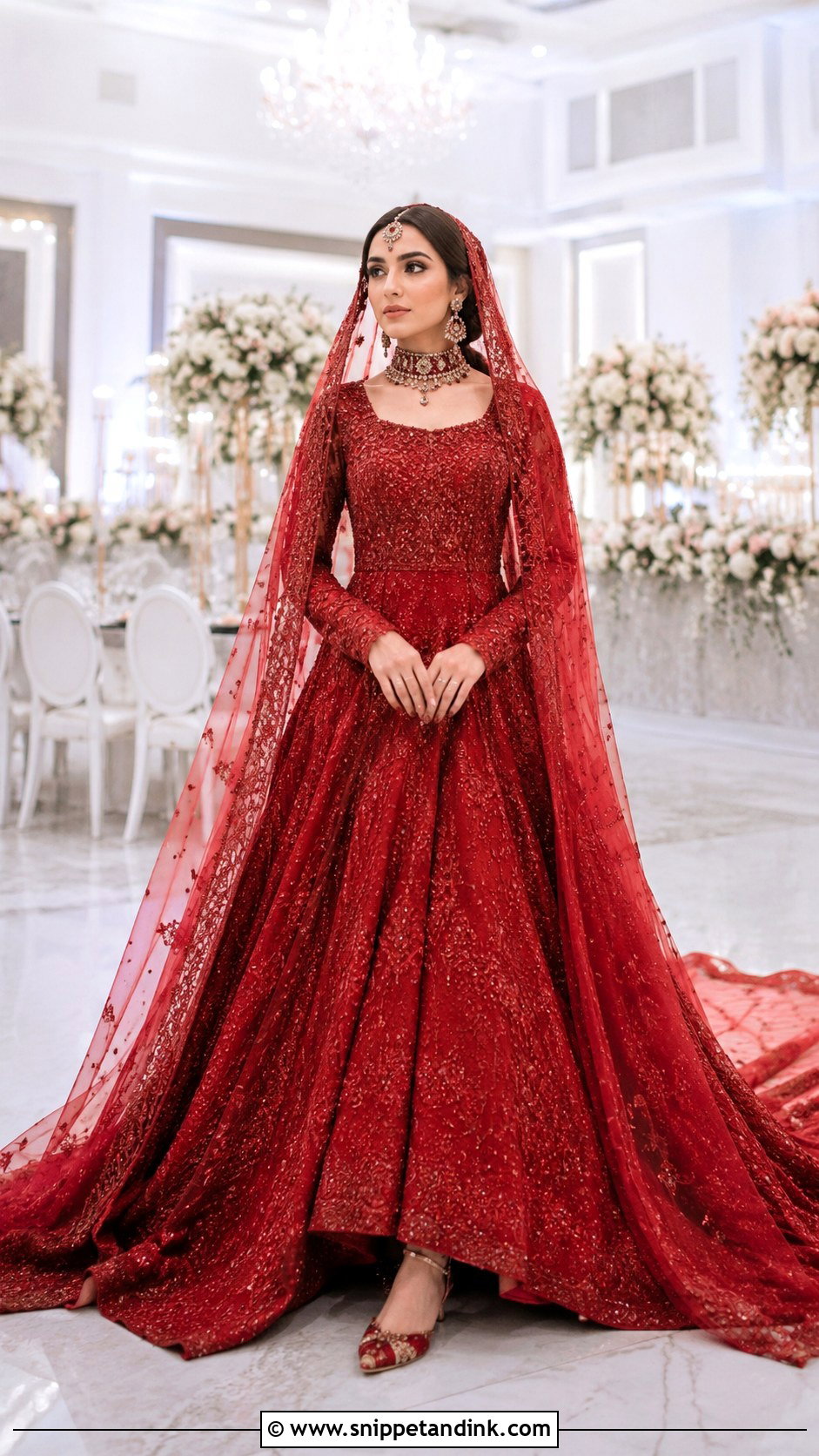
A ruby red gown suits the bride who wants a western silhouette without giving up surface work. Look for a fitted bodice, defined waist and a full skirt that ends in a short train, with embroidery framing the neckline, sleeves, waist and hem and some plain fabric left showing. That breathing room is what keeps a gown from looking costume-heavy. A sheer red dupatta or veil with a narrow embellished edge keeps it recognizably Barat. Check the bodice by raising both arms and taking a full breath. Boning plus heavy sleeves can lock your shoulders, and you’ll be lifting your arms for hours of photos.
7. Red Barat Bridal Sharara
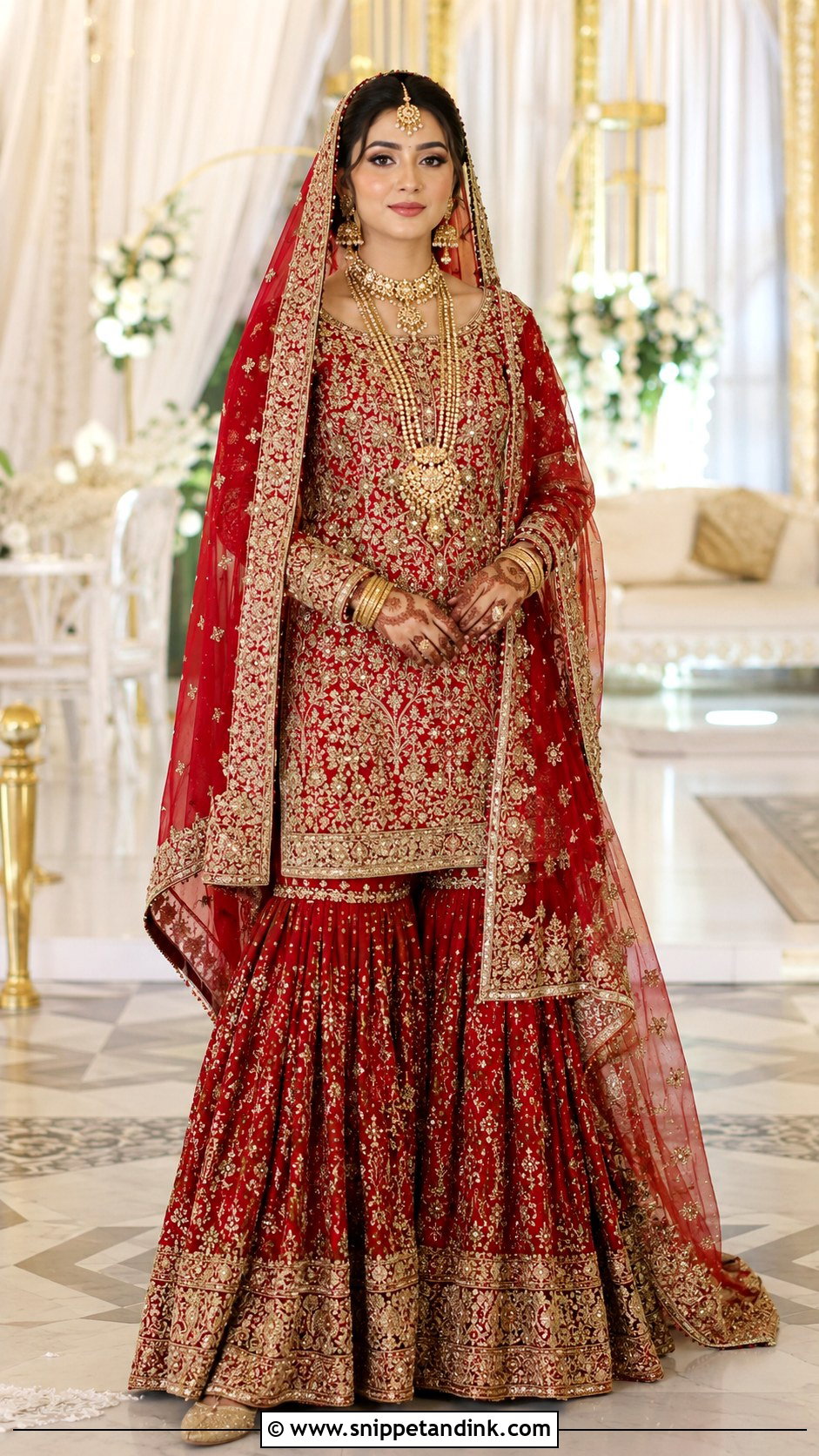
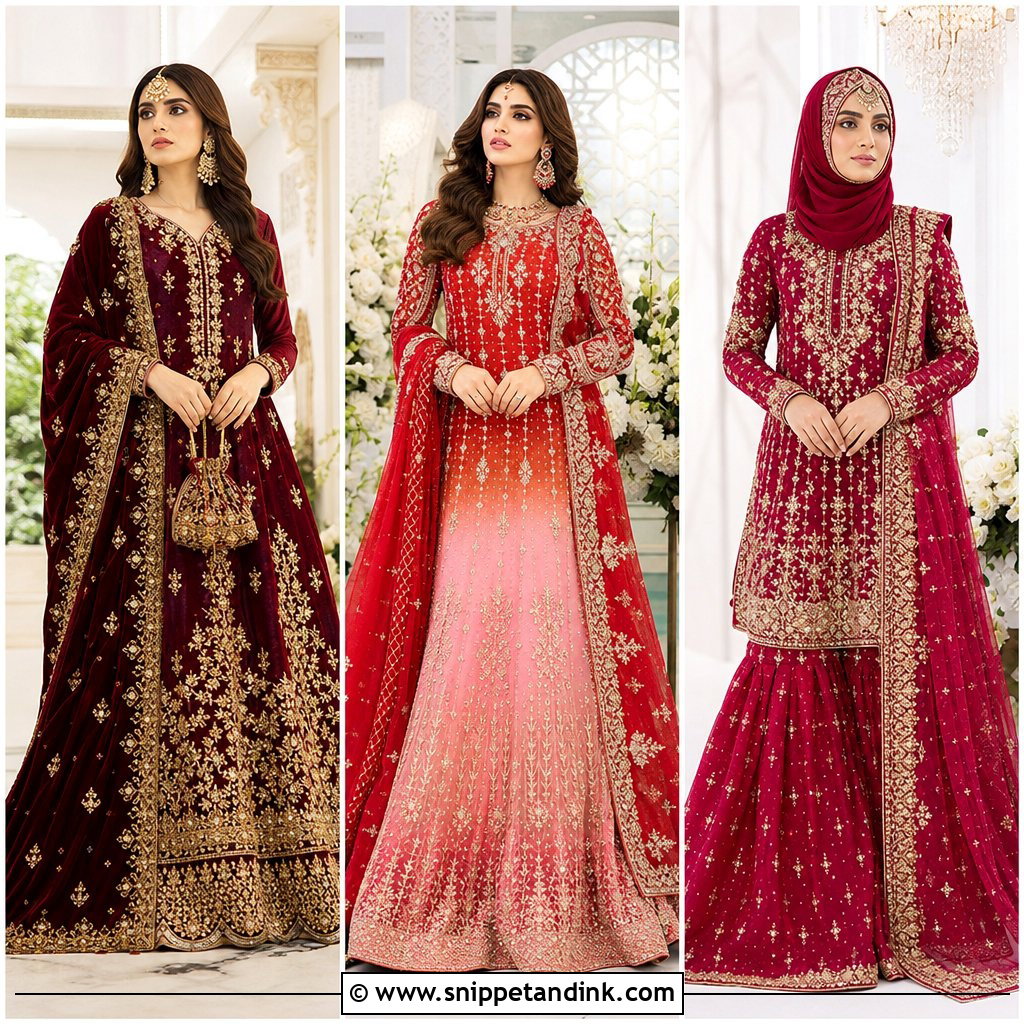
Shararas give you volume with far more freedom than a layered lehenga, because the flare is split between two legs and doesn’t trap you when you sit. Pair the flared pants with a knee-length shirt worked along the neckline, sleeves, side slits and hem in gold zardozi. The flare should begin around the knee and the hem should just cover your shoes; a few centimetres too long and you’ll trip on the steps to the stage. One dupatta goes over the head, another across the front or shoulder. Keep the shirt tailored. A loose kameez over that much flare makes the whole outfit look shapeless.
8. Maroon Barat Bridal Gharara
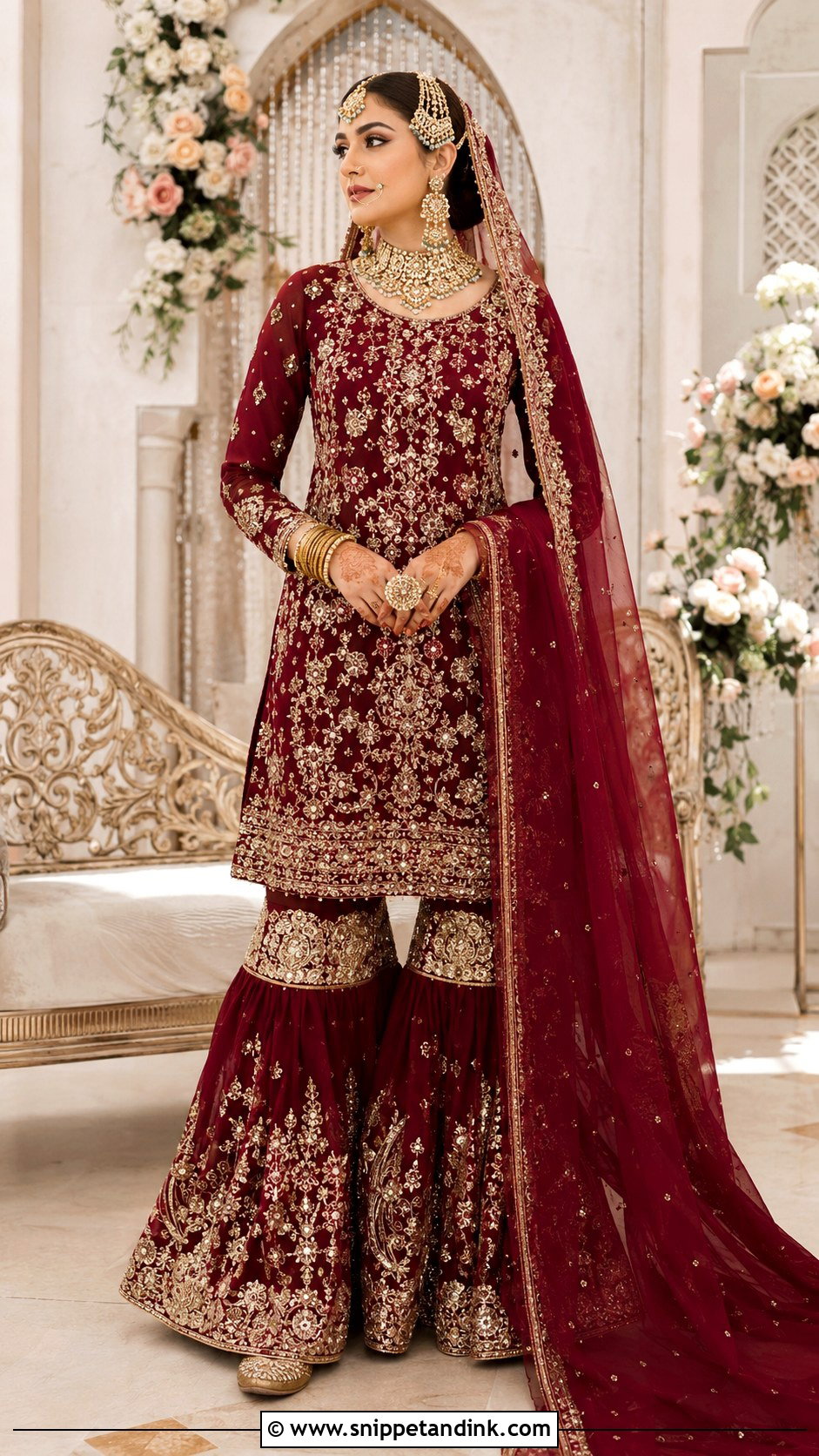
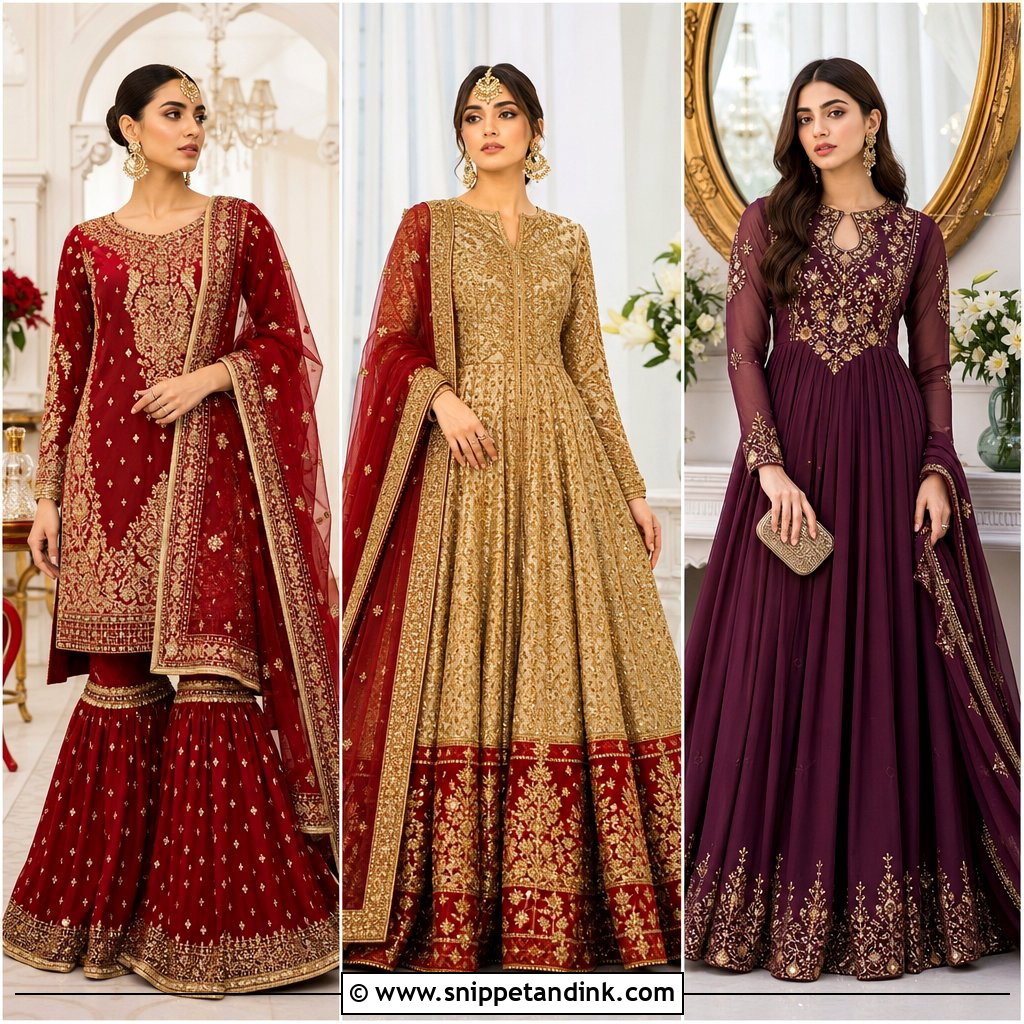
The gharara is all about its joint: fitted to the knee, then a gathered band, then a generous flare. A short or medium shirt keeps that construction on show. Put the densest gold work around the joint and the hem, with smaller motifs on the shirt, and choose a maroon chiffon or net dupatta with a wide border that you can wear over the head without hiding the detail. In fittings, sit cross-legged and on a chair. If the knee band sits even slightly low, it pulls when you sit and bunches when you stand. Polki, a jhoomar and an optional nath complete the heritage look.
9. Scarlet Barat Bridal Anarkali
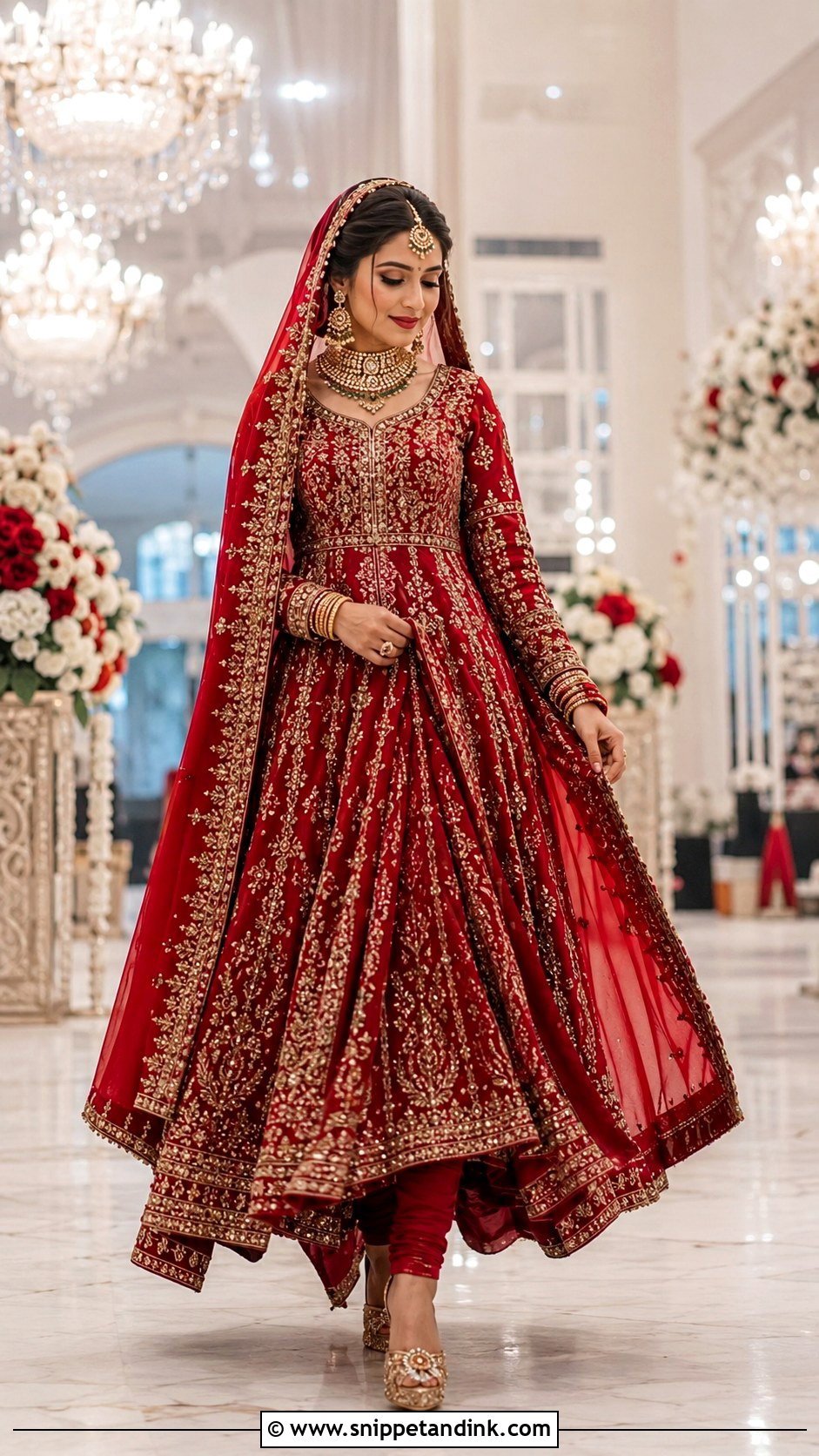
An Anarkali makes a bride look tall and moves like water when the panels are cut well. A slightly raised waist lengthens the frame, while a natural waist gives a more structured result, so try both. Scarlet takes muted gold, bronze or antique silver work; let your jewelry metal decide. Churidar underneath keeps the legs neat. The common mistake is loading the hem with embroidery. A heavy border drags the panels straight down, and you lose the swirl that makes an Anarkali worth wearing, so ask the tailor to spread the work evenly. Secure the hair firmly to carry the head dupatta.
10. Red Peplum Barat Bridal Lehenga
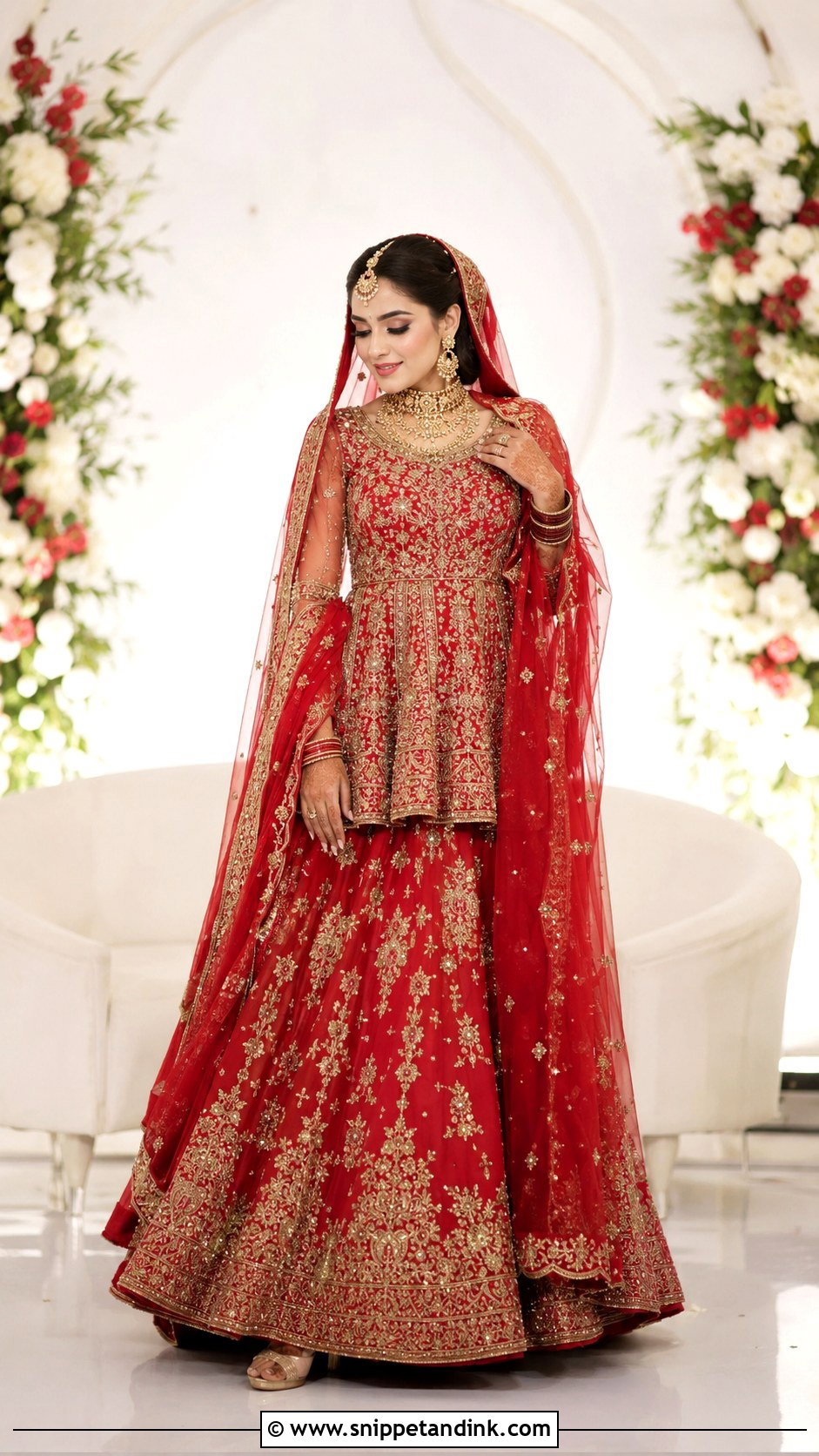
Peplum over lehenga looks structured and young, and it gives more coverage around the midriff than a cropped blouse. The length rule is simple: the peplum should end above the widest point of the skirt, otherwise the two shapes fight each other. Gold embroidery along the neckline, waist, sleeves and peplum edge ties it to a heavily bordered skirt. Ask for a softer interfacing in the peplum rather than a stiff one. Rigid peplums flip up when you sit on a low sofa, which is exactly where most Barat stage photos are taken. A smooth bun keeps the tailored line clean.
11. Red Double Dupatta Barat Lehenga
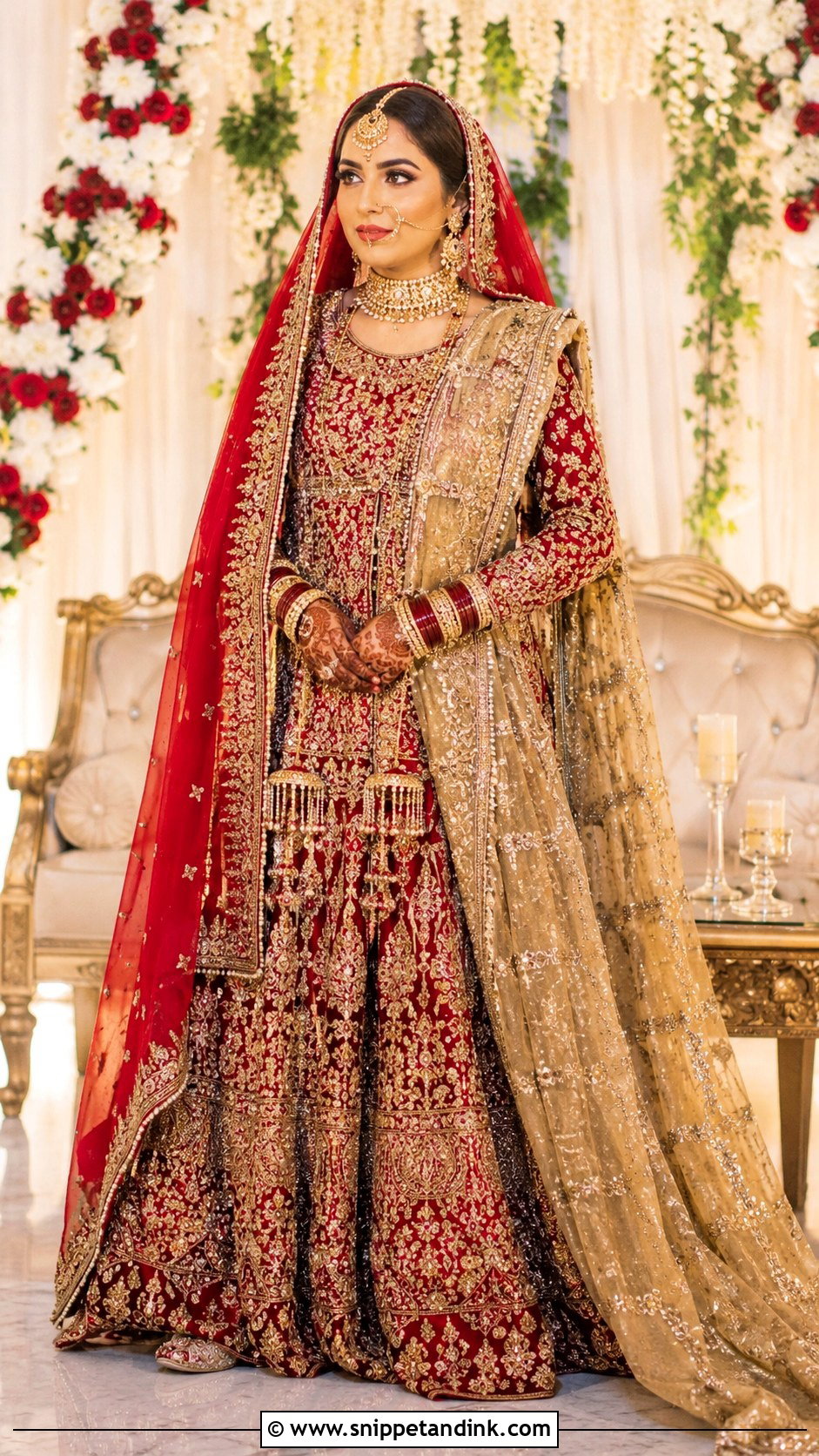
Two dupattas are what make a red lehenga feel ceremonial, but only if each has the right weight. The head dupatta should be a light net so it pins securely without dragging the hairstyle backward through the evening. The second can be heavier, with an embroidered border, for the shoulder or front drape. They can both be red, or one can shift to muted gold, blush or maroon. When I pin them, the head dupatta goes on first and is anchored to the bun, then the shoulder drape is pinned to the blouse strap, never to the skin side. Test every drape at the final fitting, with your arms moving.
12. Antique Gold Barat Bridal Lehenga
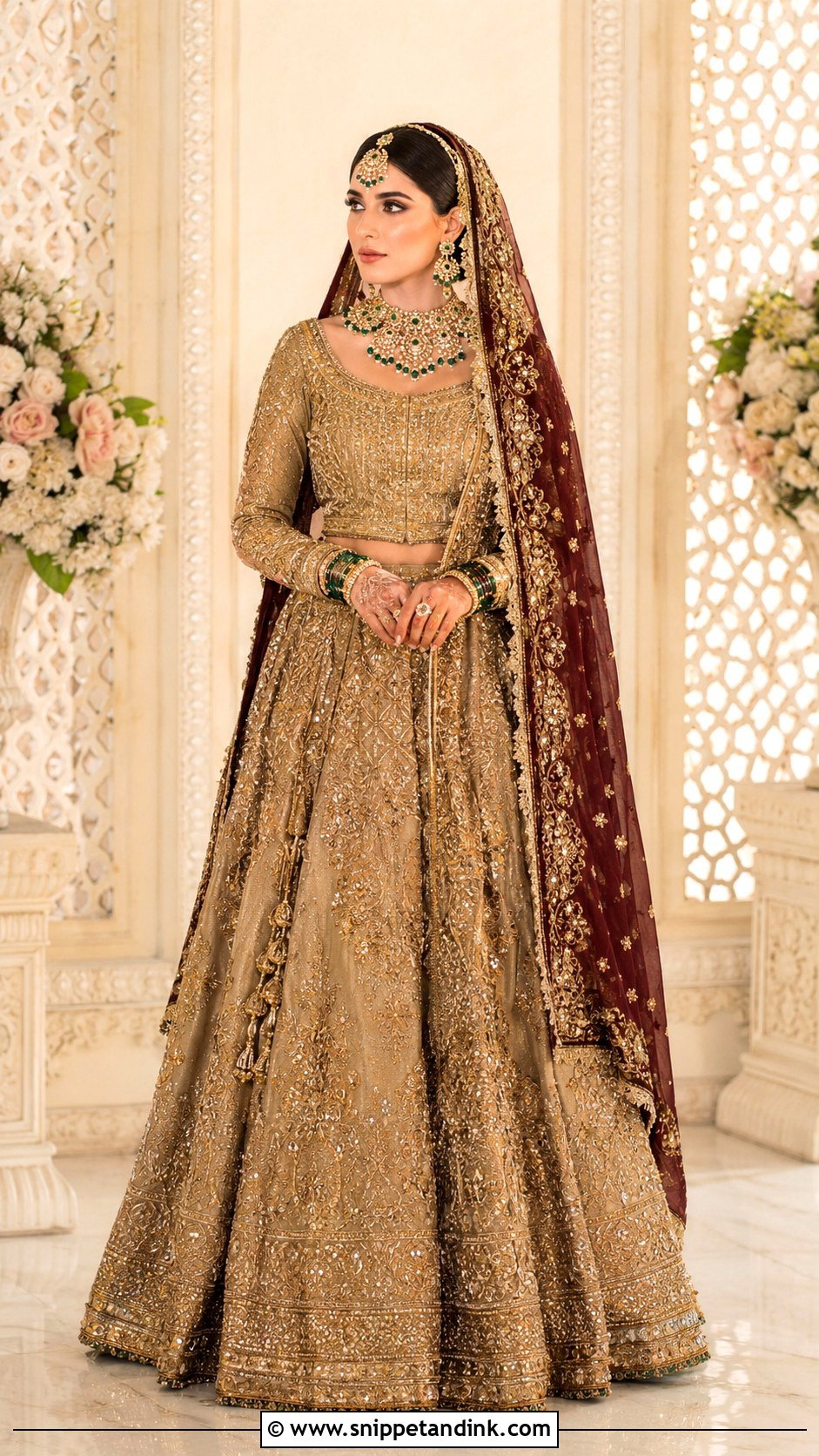
Antique gold lets you step away from red without losing richness. Tissue, raw silk or brocade in muted gold, with dimensional work in bronze, dull gold, champagne and touches of maroon, gives depth. A matching blouse builds a monochrome base and a maroon or deep red dupatta brings the classic Barat color up to the face. Don’t match every piece to the same bright gold; under strong hall lighting it all merges into one flat sheet. Mixing metallic textures, with emerald accents in the jewelry, gives the eye something to read. A muted rose lip suits this palette better than a deep red one.
13. Champagne Gold Barat Bridal Gown
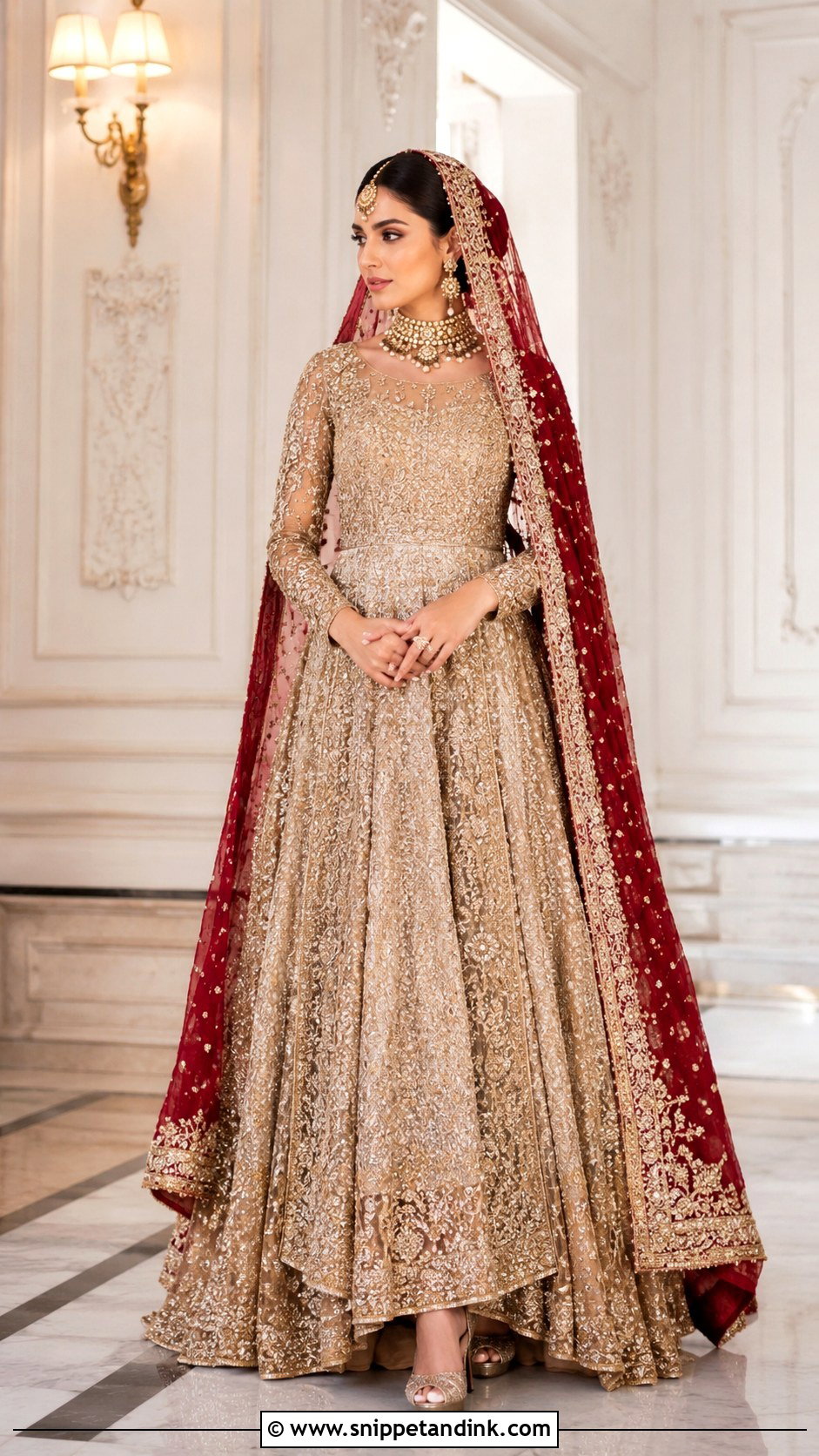
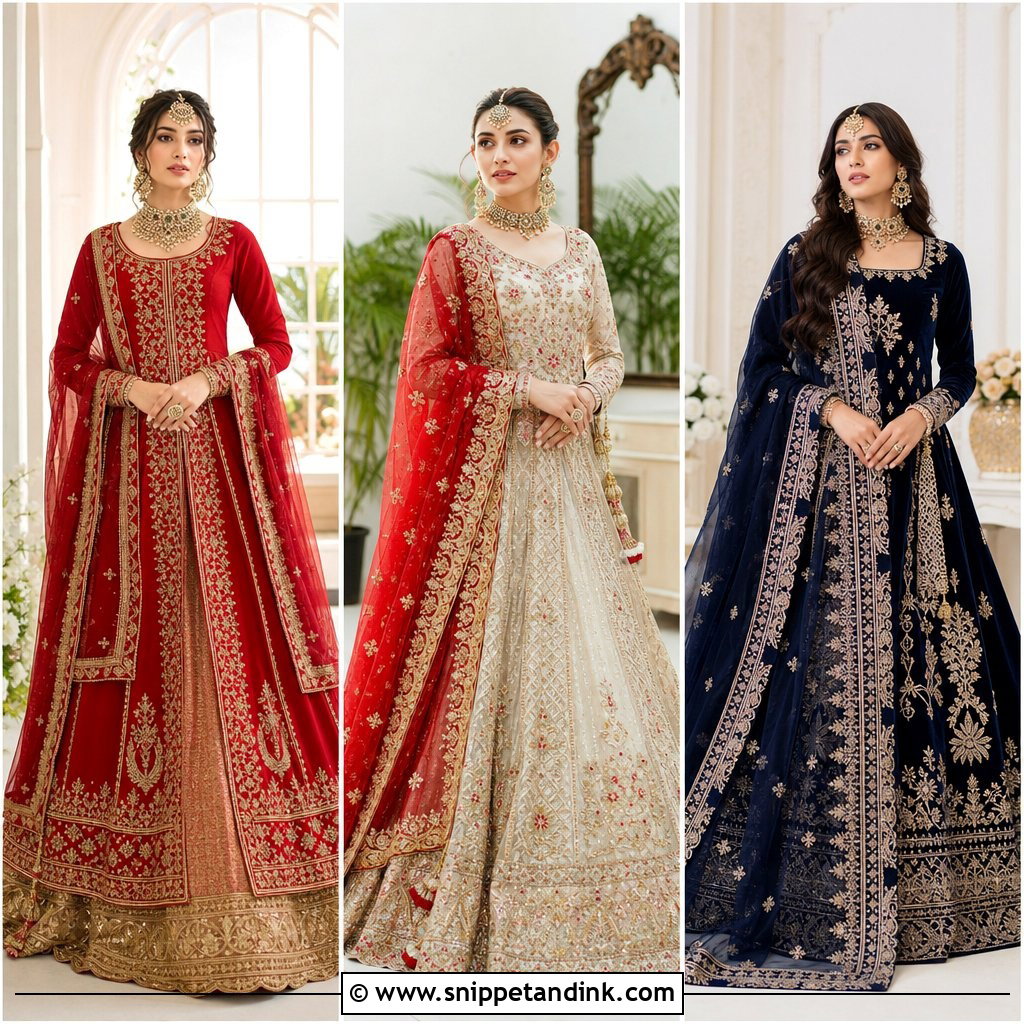
Champagne gold in a gown looks luminous and modern, and it’s formal enough for a grand ceremony when you choose long sleeves, a fitted bodice and a flowing skirt or manageable train. Crystal, pearl, sequin and dabka add dimension without the weight of solid metallic work. Warmth comes from the dupatta, in dusty rose, burgundy or red. Pale metallics are unpredictable under camera flash and white LED lighting; some go grey, some go yellow. View the fabric sample by a window and under a white bulb before you commit, and ask about lining, since champagne fabrics can turn sheer under stage lights.
14. Emerald Green Barat Bridal Lehenga
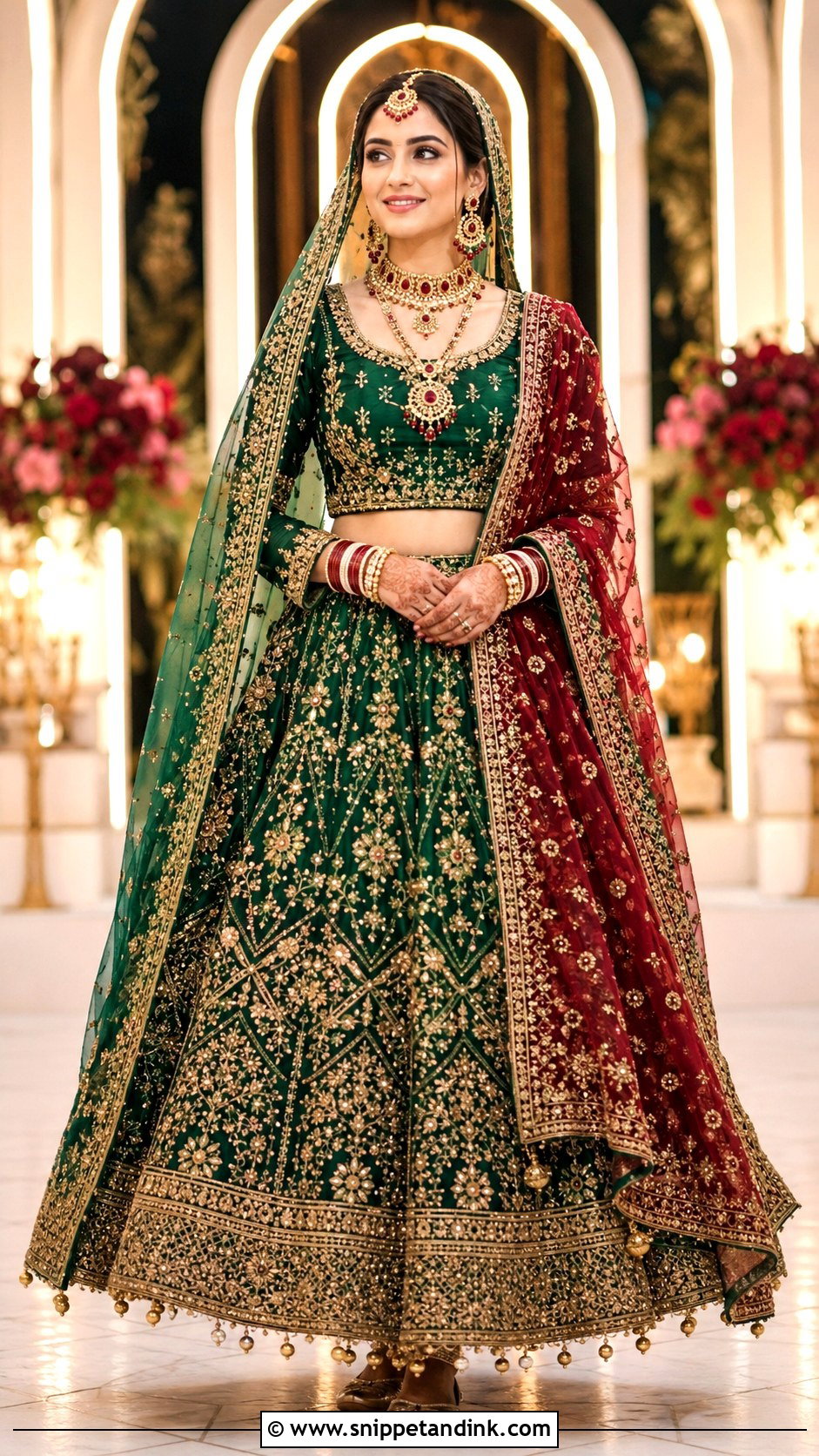
Emerald is for the bride who wants to be remembered for her color. A richly flared green lehenga with antique gold work on the blouse or long shirt looks regal, and small maroon, ruby or rust details tie it back to traditional jewelry. A deep red second dupatta adds strong contrast. Keep green off the eyelids; warm, balanced makeup flatters better. The thing I check is the shade under stage lighting. Very dark green can photograph almost black unless texture and embroidery break it up, so view a swatch in the hall or under warm lamps before ordering.
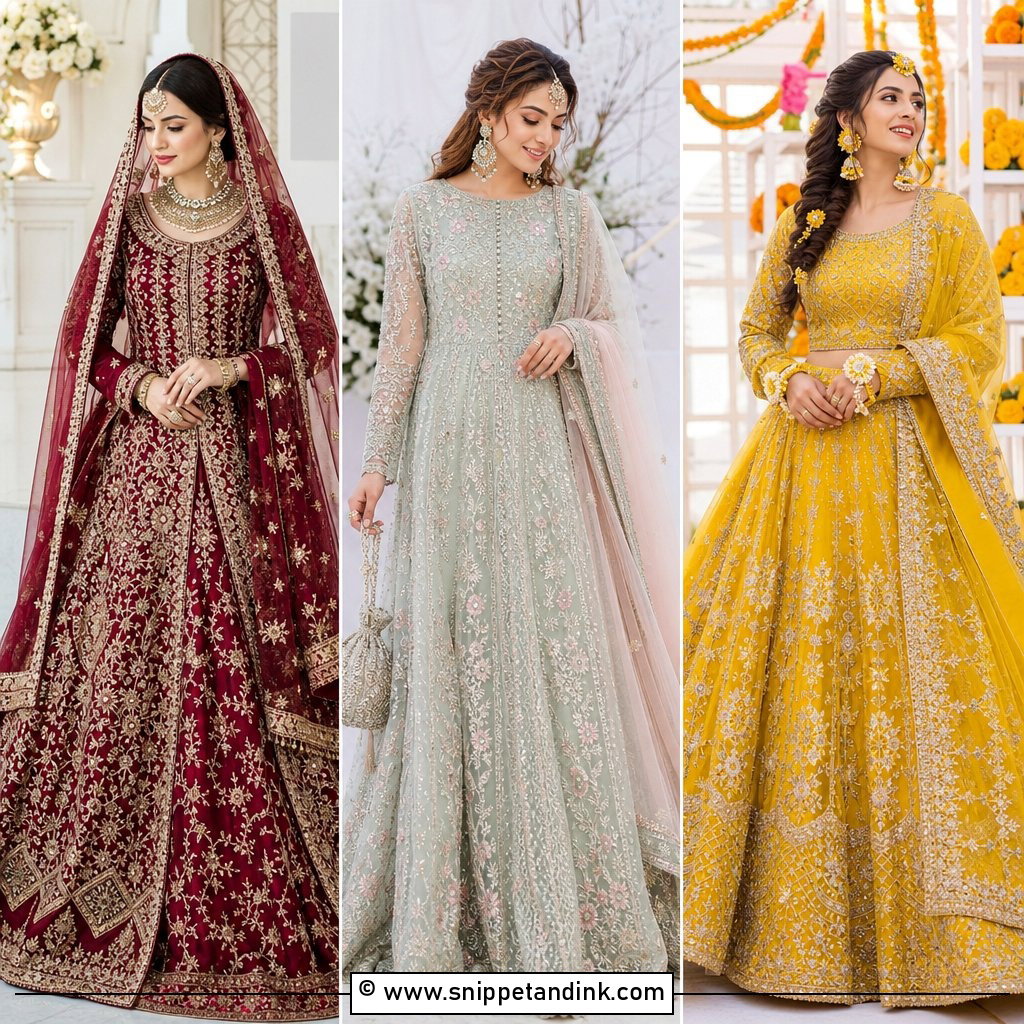
15. Ivory Gold Barat Bridal Lehenga
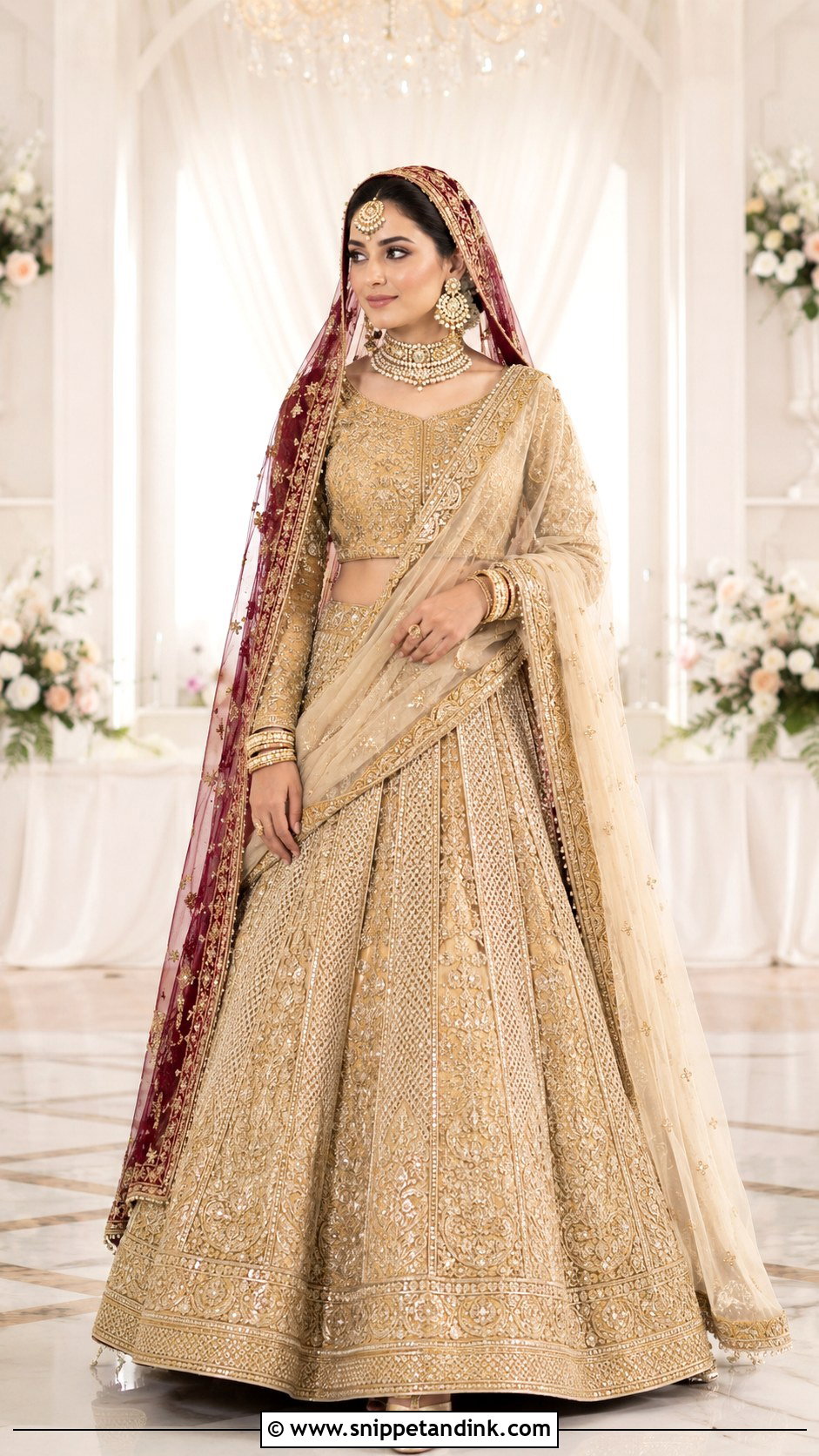
Ivory and gold suits a bride drawn to softer colors, and with a red, maroon or deep pink dupatta over the head it still reads clearly as Barat. Look for raw silk or tissue with gold zardozi, pearls, sequins and resham laid out in defined panels, plus a lighter ivory dupatta over the shoulder. Ivory is the color I worry about most on the day. It shows every mark, so keep the hem covered until the entrance and keep henna-stained hands away from the skirt. Insist on good lining, because pale fabric goes see-through under photography lights. A rose or berry lip keeps your face from fading into the outfit.
16. Dusty Pink Barat Bridal Lehenga
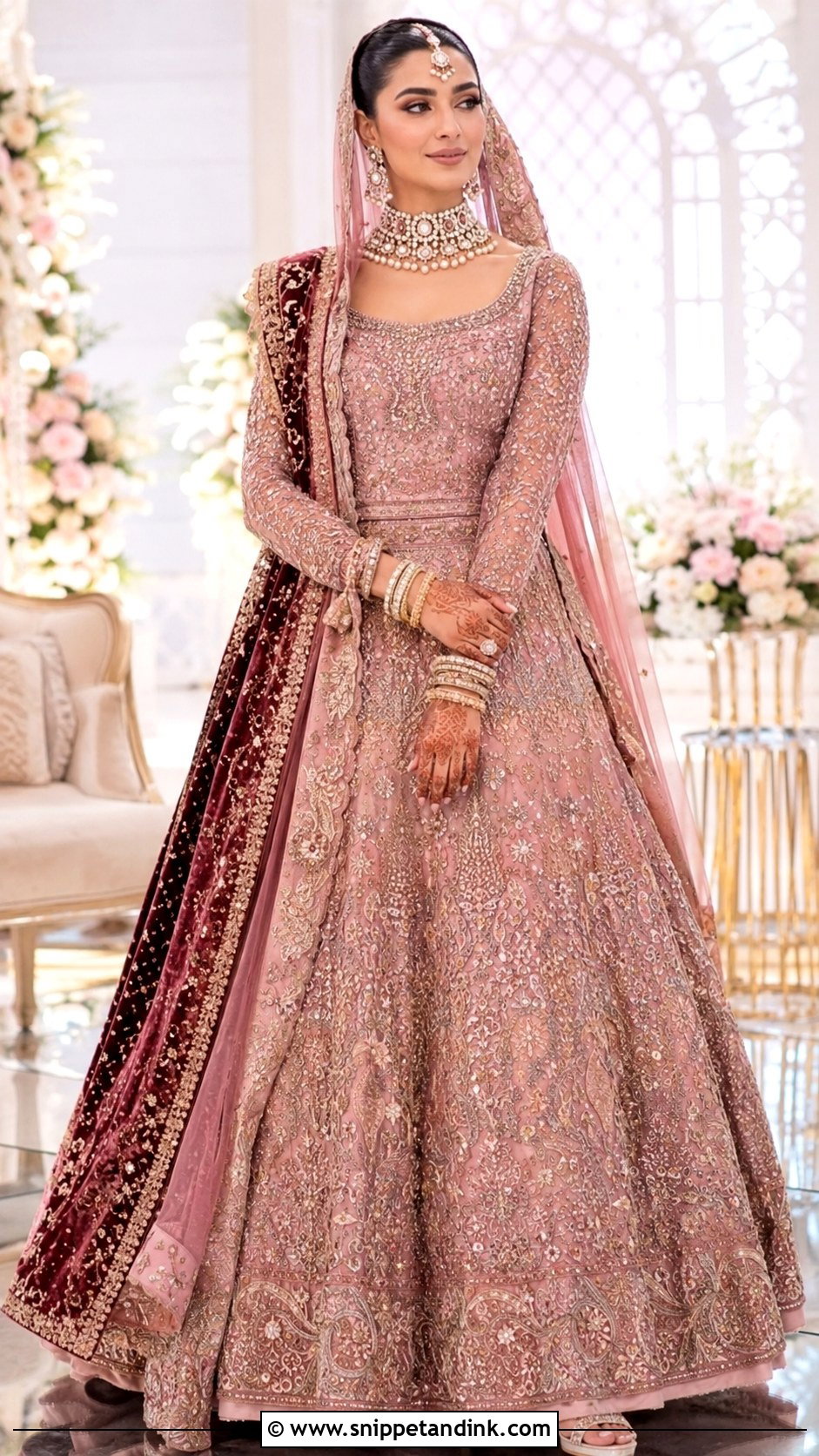
Dusty pink is romantic and still carries detailed embroidery well in raw silk, organza or tissue with antique gold, pearl and muted rose work. A structured blouse with sleeves makes the soft color feel formal; a long shirt adds coverage. Bring maroon in through the second dupatta, a velvet border or the jewelry stones so the outfit has an anchor. Makeup matters more with pastels than with red. A pale base melts into the fabric, so I’d ask your makeup artist for defined eyes, some contour and a rose lip. Check test photos under white light, since dusty pink can wash out to beige.
17. Oxblood Velvet Barat Bridal Dress
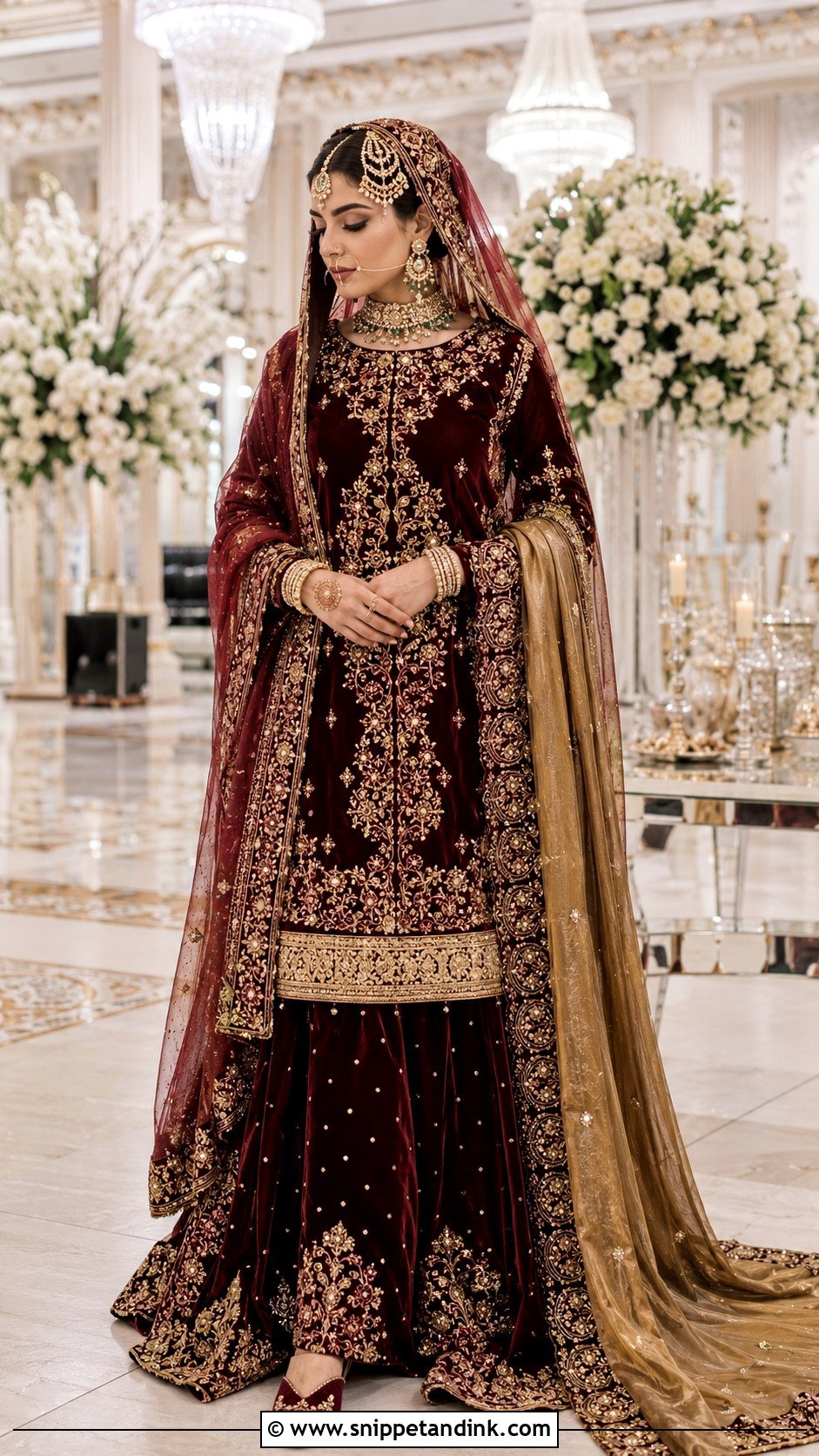
Oxblood velvet stays in the red family but feels darker and more sophisticated. A long velvet shirt over a farshi or widely flared skirt creates a stately outline, with antique gold at the neckline, cuffs, side slits and hems and plenty of velvet left plain. A sheer oxblood dupatta lightens the top half. Be realistic about the season: this is an indoor, cool-weather outfit, and a packed summer marquee will make it miserable. Ask for a breathable cotton or silk lining and skip extra layers under the velvet. A center-parted bun and berry tones suit it.
18. Maroon Angrakha Barat Bridal Pishwas
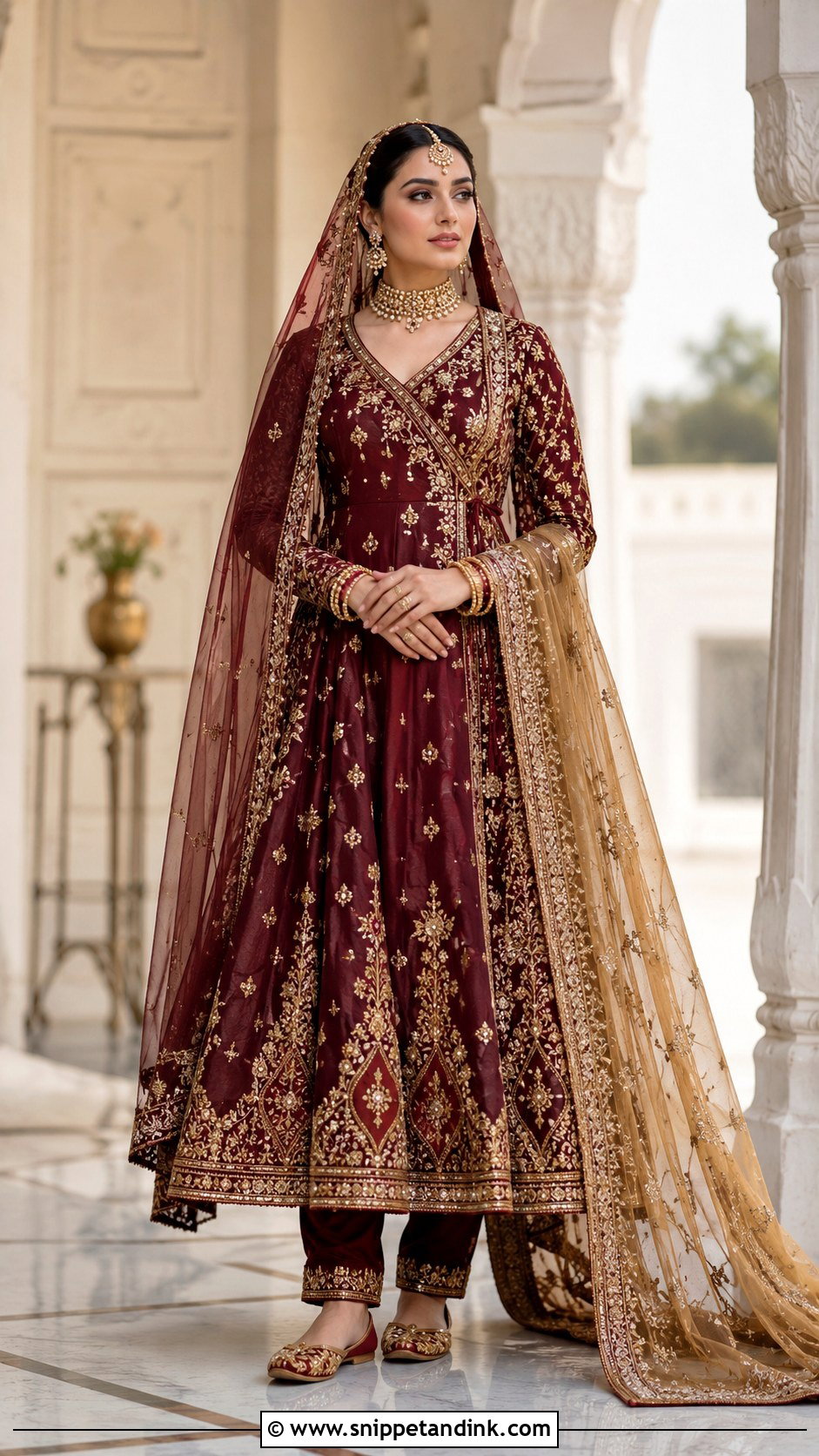
A maroon Angrakha pishwas pairs a wrap-style bodice with a full skirt, and the overlapping neckline frames a choker very naturally. Embroidered ties at the waist draw the eye in. Keep the antique gold work along the neckline, cuffs, panel seams and hem. The wrap is the weak point. Unless it is fastened with hidden hooks and fully lined, it will gape the moment you raise your arms for a photo, so ask your tailor how it’s secured and test it with your arms up. Fitted trousers and a sheer maroon head dupatta complete it.
19. Red Straight Shirt Barat Lehenga
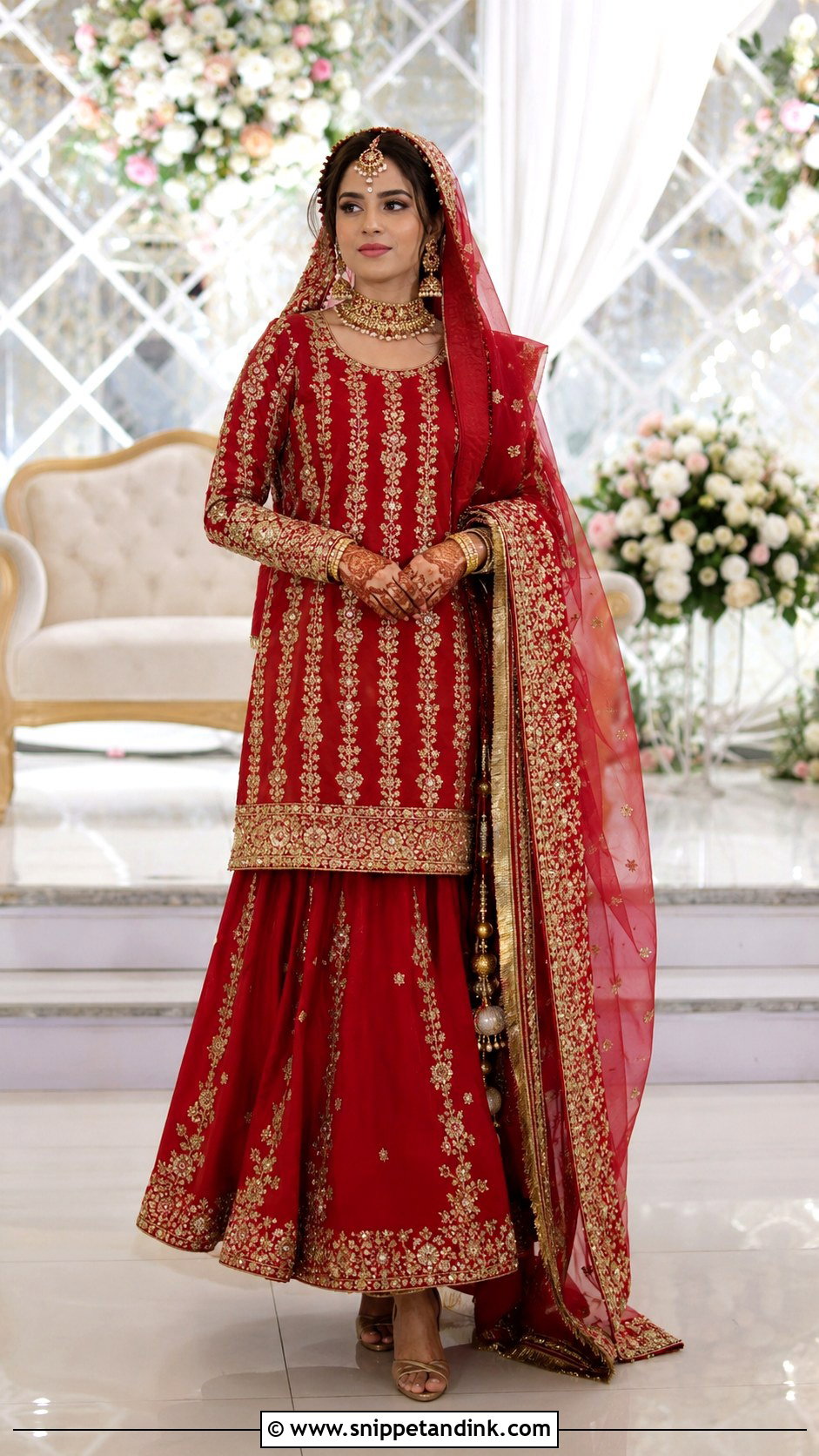
A red straight shirt over a coordinated lehenga gives clean lines and easy coverage. Shirt length depends on height and how much skirt you want to show: somewhere between the knee and lower calf. Vertical embroidery, worked side slits and a defined hem border keep the top half refined without bulk, and a moderately flared lehenga with a strong border balances it. Tailor the shirt closely through the shoulders and bust, then leave ease at the hips. Without that ease the slits pull open when you sit on the stage sofa.
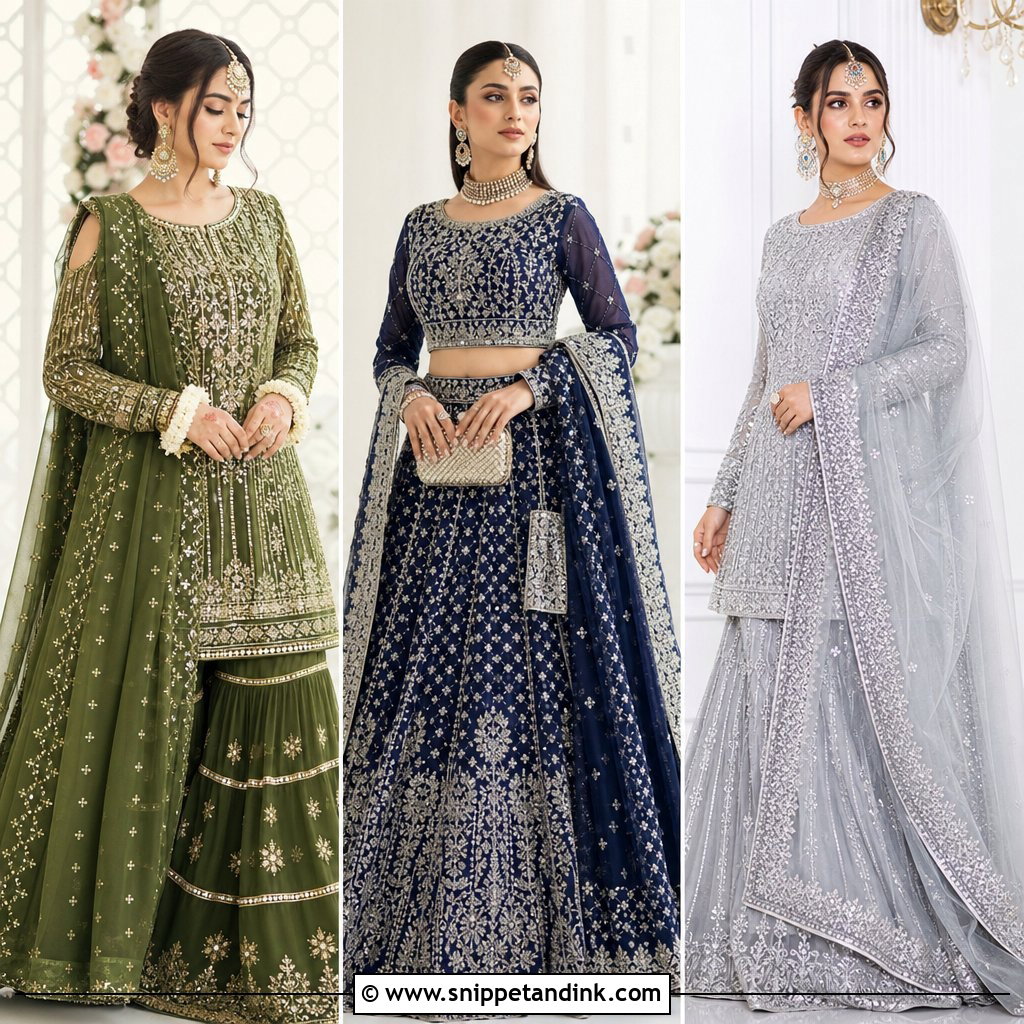
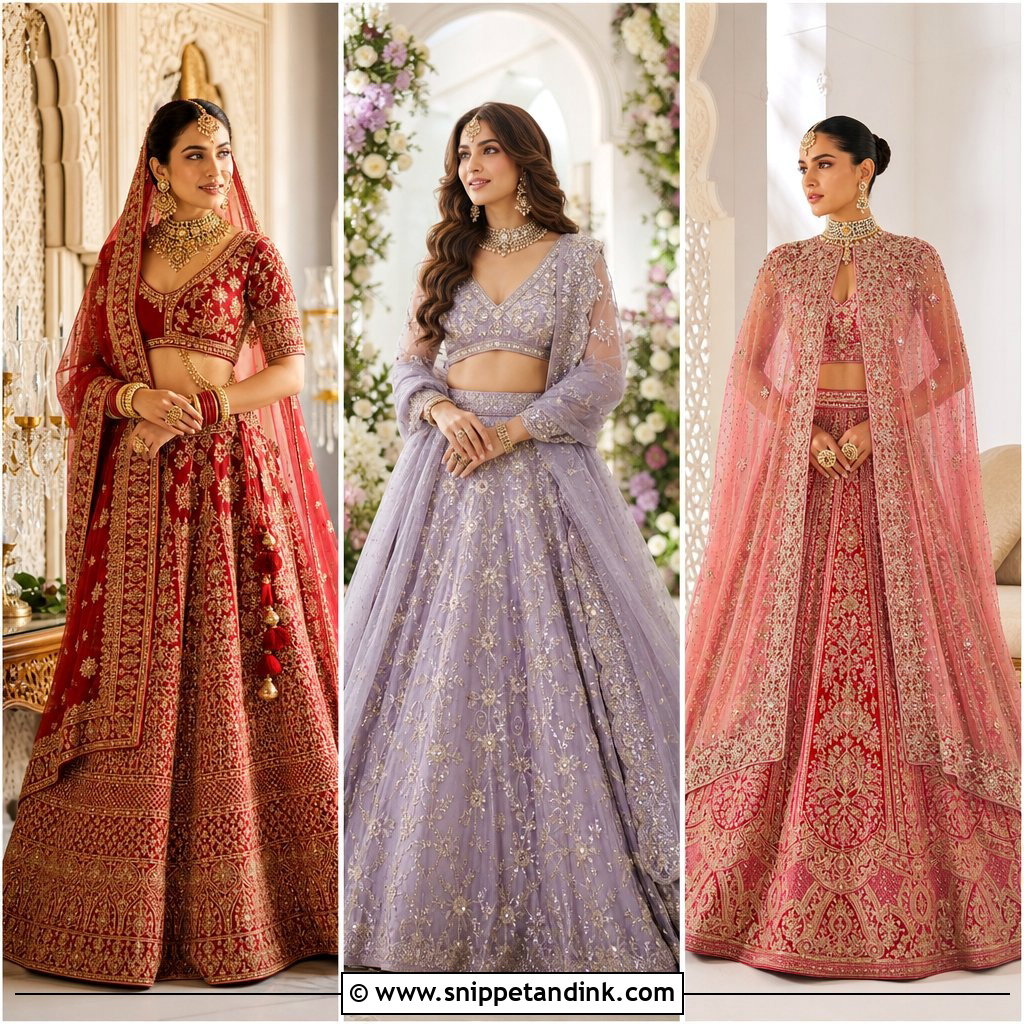
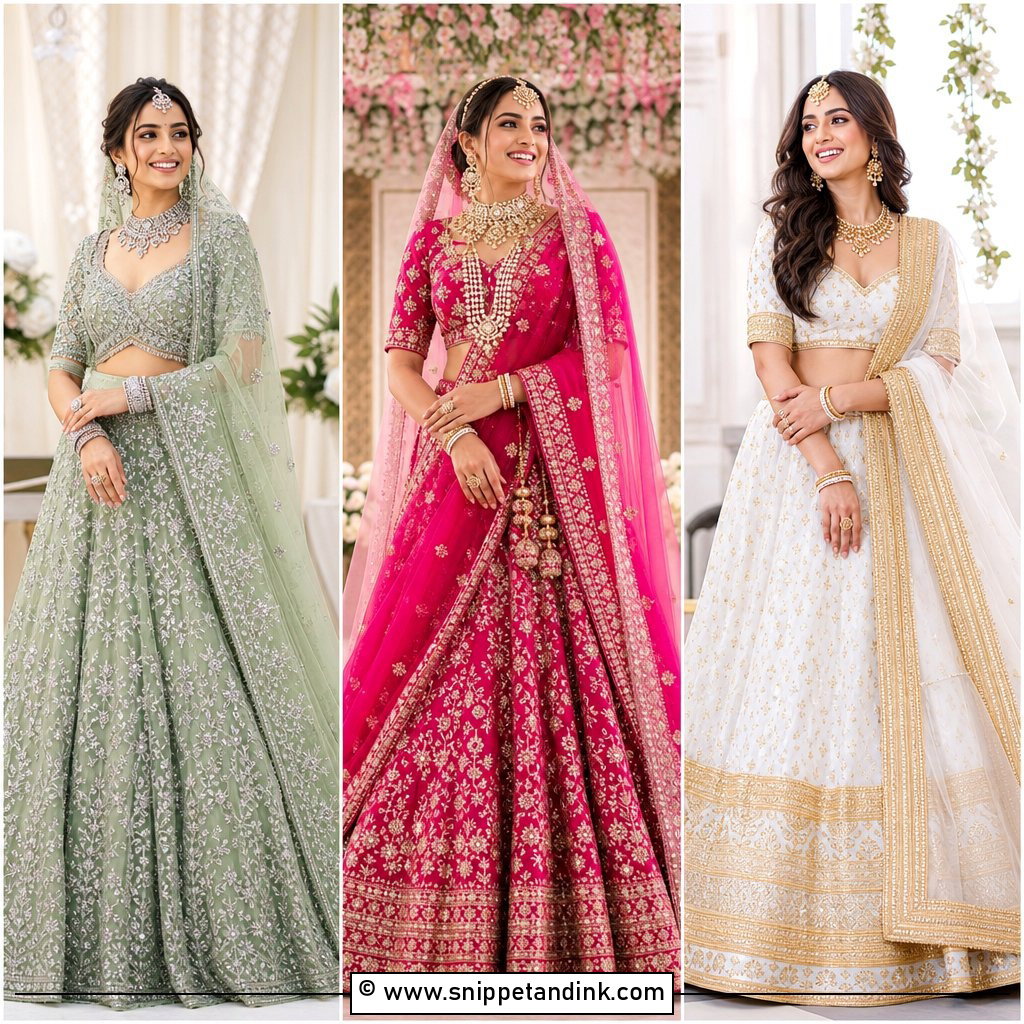
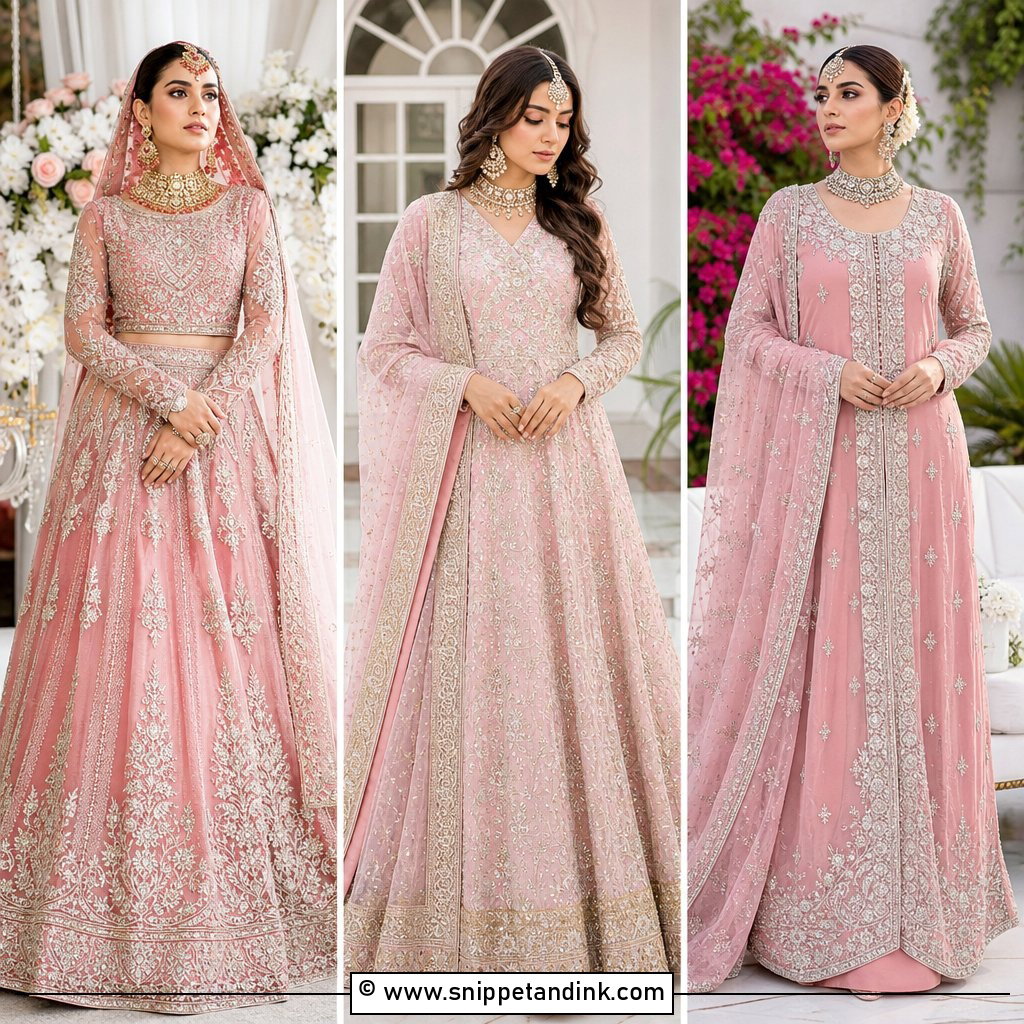
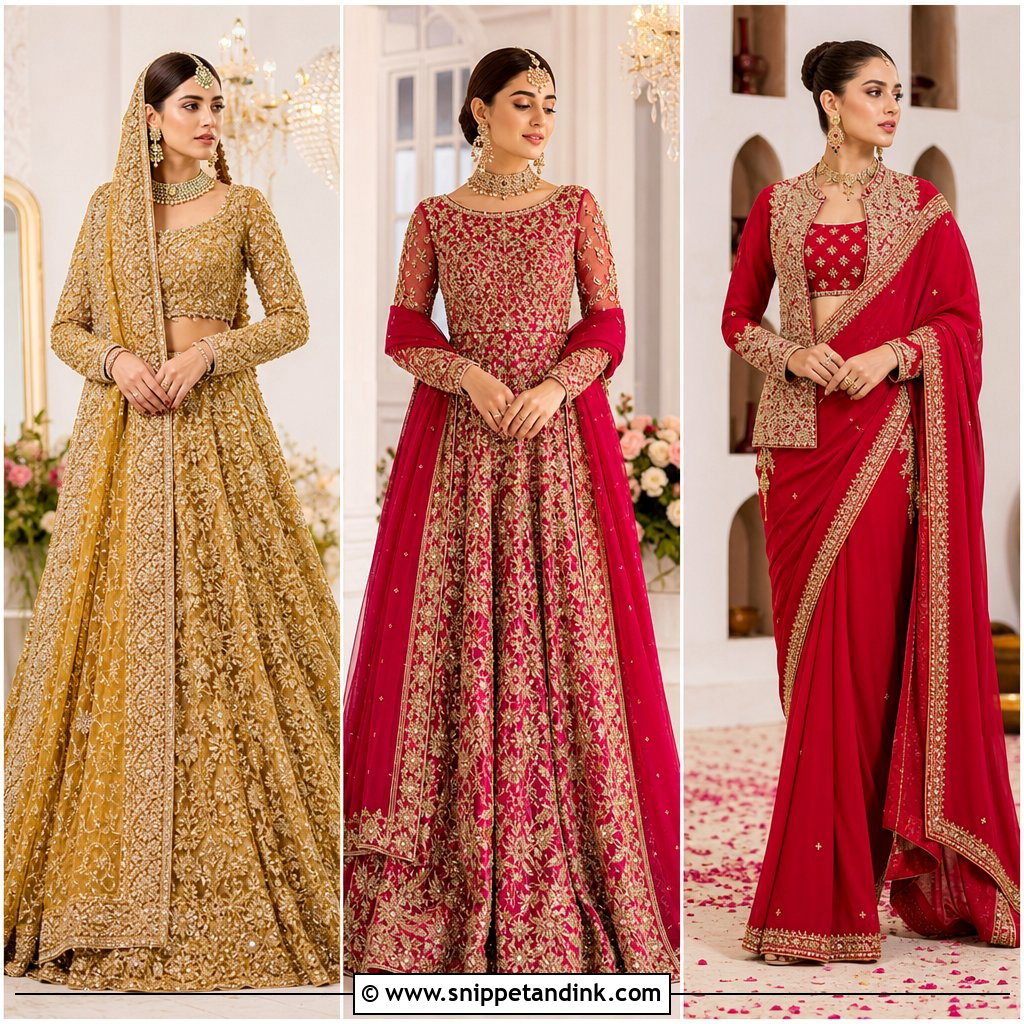
20. Red Bridal Saree for Barat
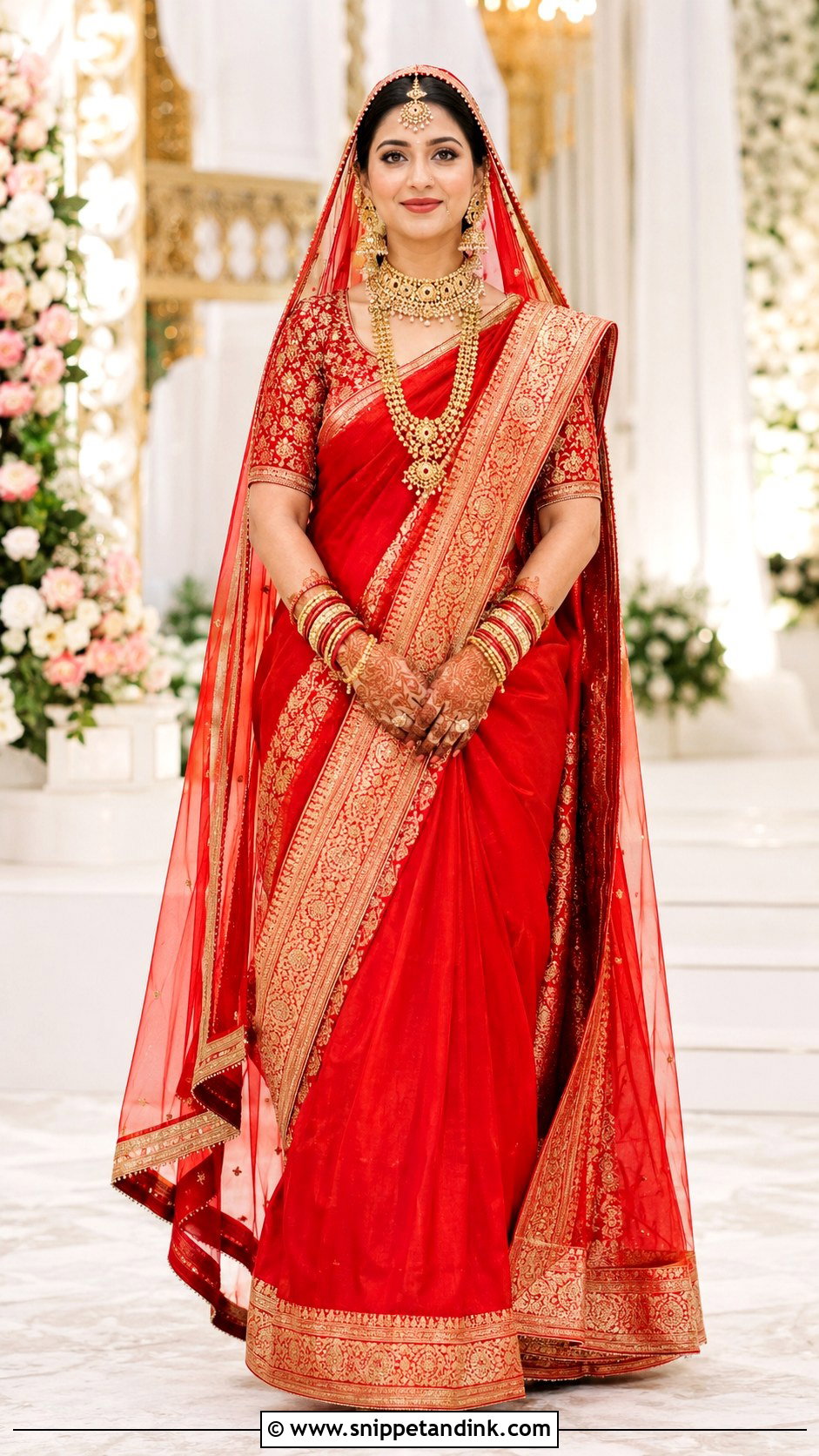
A red saree suits the bride who prefers drape to volume. Raw silk, tissue, organza or a velvet-trimmed fabric with a substantial gold border works best, paired with a structured, fully lined blouse. A separate sheer red dupatta can go over the head while the pallu stays across the shoulder. If you don’t wear sarees often, have it pre-pleated or stitched by the tailor; it holds far better through a long ceremony than pleats tucked on the day. Practice walking and sitting in it at least once. Pin the pleats and pallu with small safety pins hidden on the inside.
Wrapping Heavy Handwork in Muslin After the Wedding
Metal thread embroidery tarnishes when it’s left in plastic or a damp cupboard, and that dull black film on zardozi is very hard to reverse. After the rukhsati, hang the outfit in a dry room for a day so sweat and perfume can air out, then spot-check for makeup and food marks. Give it to a cleaner who handles bridal embroidery specifically, and ask for dry cleaning of only the fabric that needs it.
- Wrap each piece in plain white muslin or soft cotton, never in a plastic garment bag.
- Store heavy lehengas folded flat in a box, not on a hanger, where the weight stretches the waistband over time.
- Put acid-free tissue between folds so the embroidery doesn’t rub against itself.
- Unfold and refold along new lines every few months to avoid permanent creases.
- Keep perfume and attar off the embroidery on the day; alcohol-based scents speed up tarnishing.
If you plan to wear the dupatta again or hand the outfit down, a small sachet of silica gel inside the box during humid months helps keep the metal work bright.
Red or Not, Let the Outfit Carry You Through Rukhsati
The right Barat outfit should feel like you and still handle a long, emotional day. Red, maroon and burgundy will always read as bridal, but rust, emerald, ivory, pink and antique gold hold their own when the craftsmanship and jewelry are right. Compare full silhouettes, not embroidery swatches. Think about weight, fabric, flare, coverage, how the dupattas sit and whether your jewelry has room. Go to the final fitting in your real shoes and walk, sit and turn. Lehenga, farshi, pishwas, sharara, gown or saree, balanced proportions are what let you enjoy the evening instead of enduring it.
You'll Like These Ideas:


Leave a Reply