
Hours of greetings, photographs and rituals: that is what a Barat outfit actually has to survive, and it still needs to feel ceremonial and like you. Here you’ll find the classic Pakistani silhouettes (red lehengas, farshi cuts, ghararas, shararas, peshwas, sarees) alongside fresher color pairings and layered modern pieces. With each one I’ve noted the dupatta arrangement, jewelry, shoes and the small construction details I ask tailors for, so the outfit comes together without tipping into too much. Keep your venue, the season, the embroidery weight and how easily you can walk and sit in mind as you read. Then go with the design that feels like your own idea of grand.
Matching the Silhouette to Your Venue’s Floors and Stairs
I ask every bride to describe the venue before we talk about color: the stage height, the floor, how far she walks and whether there are steps. The silhouette should come from that answer.
- Hotel ballroom or banquet hall: smooth floors and short distances, so a farshi lehenga, trail or full velvet skirt is realistic.
- Marquee or garden: grass, gravel and matting catch hems. A sharara, gharara or ankle-length lehenga is far easier than anything that trails.
- High stage with steep steps: separated legs win. Sharara and gharara let you climb without a helper lifting your skirt.
- Summer or a crowded hall: raw silk, organza and net breathe; velvet and layered peshwas get hot fast.
- Floor seating for the nikah: a lehenga or sharara pools neatly when you sit cross-legged, while a fitted maxi or gown pulls tight across the knees.
Think about the rukhsati too. Getting into a decorated car in a wide farshi skirt takes two people and some patience, so a softer, shorter shape is kinder for the end of the night.
1. Red Lehenga Choli Barat Dress
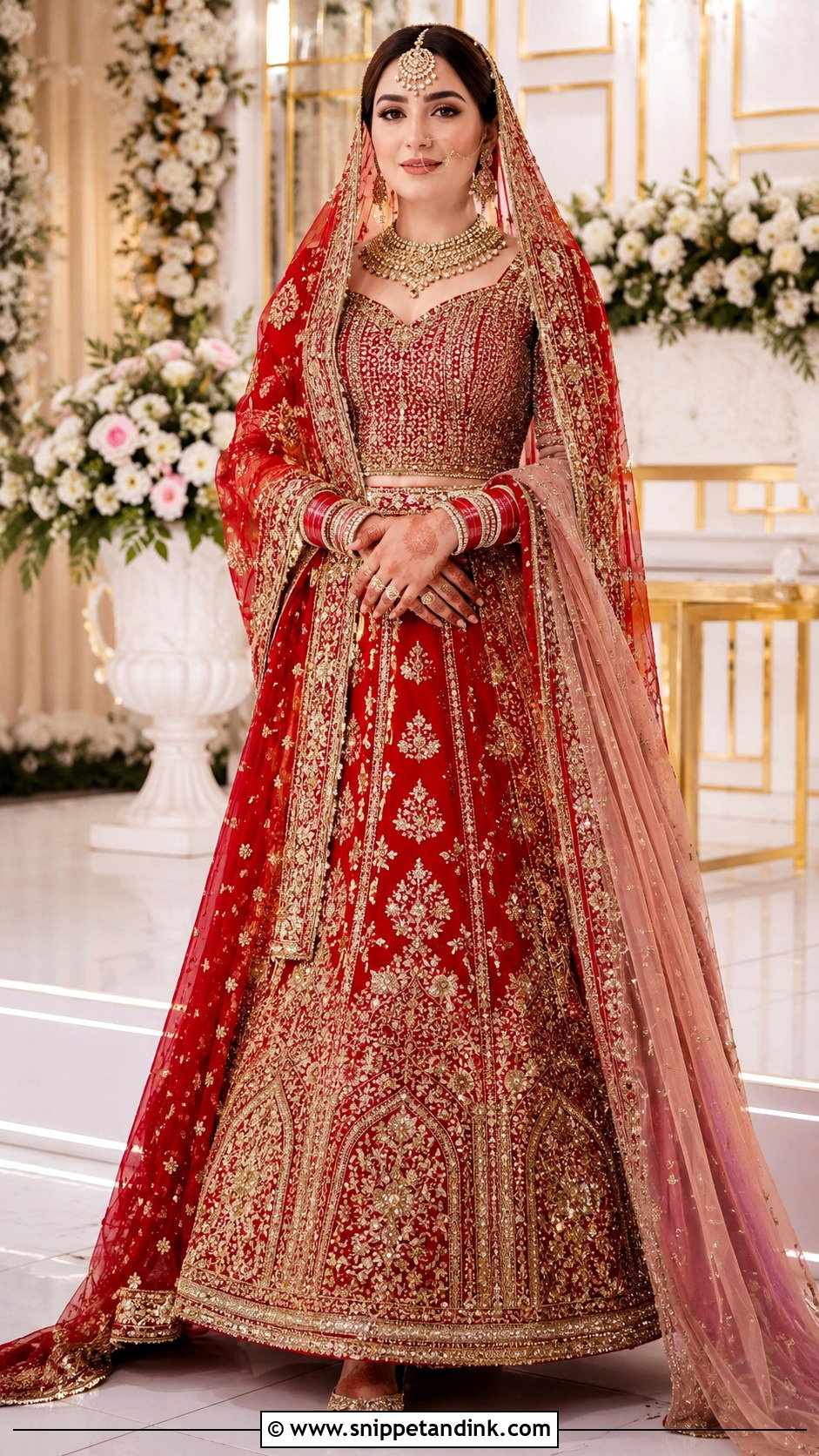
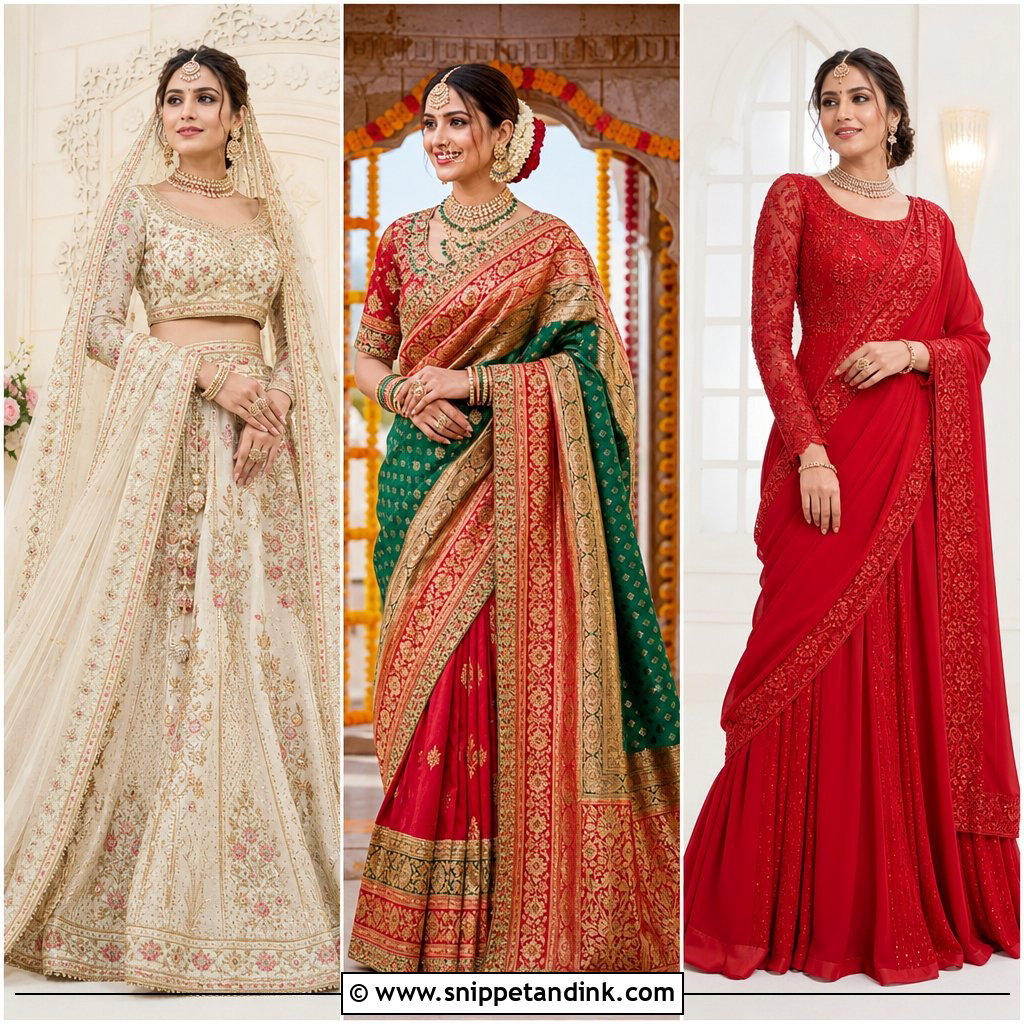
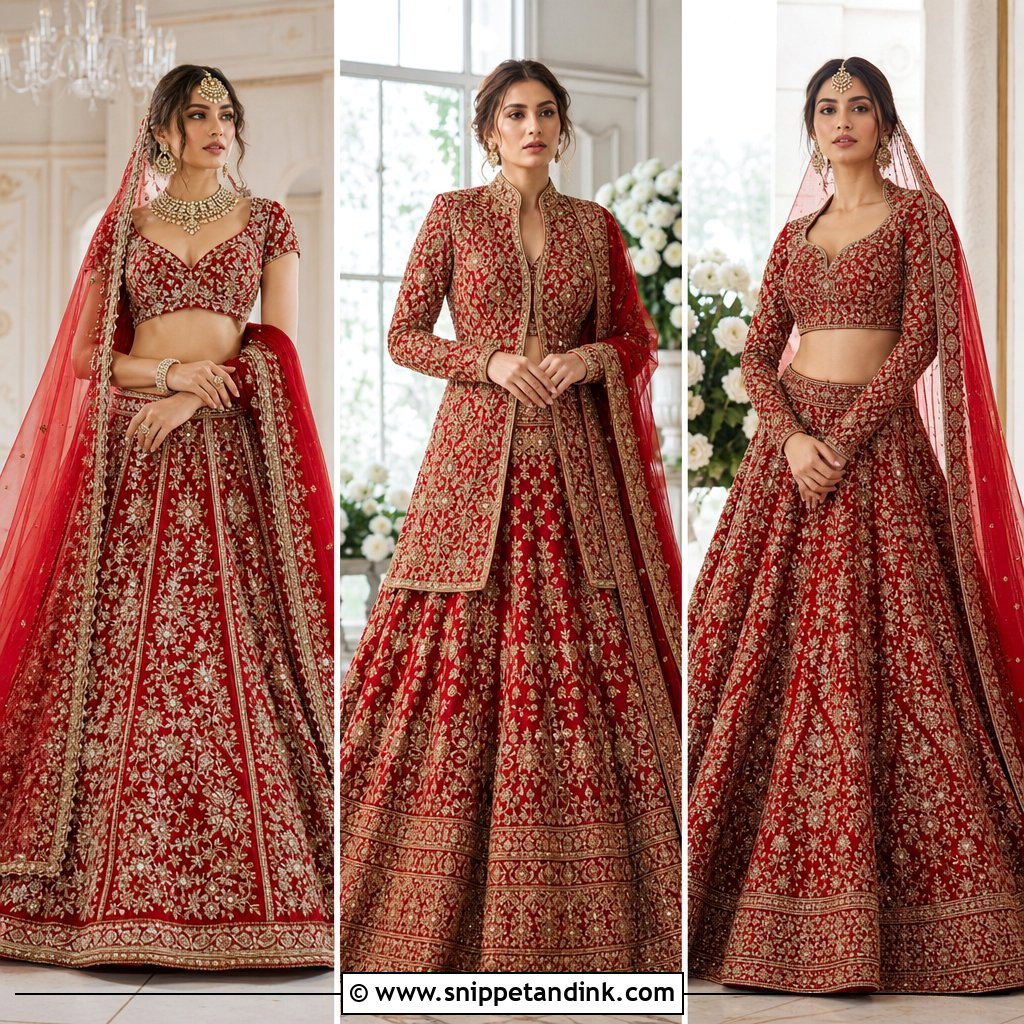
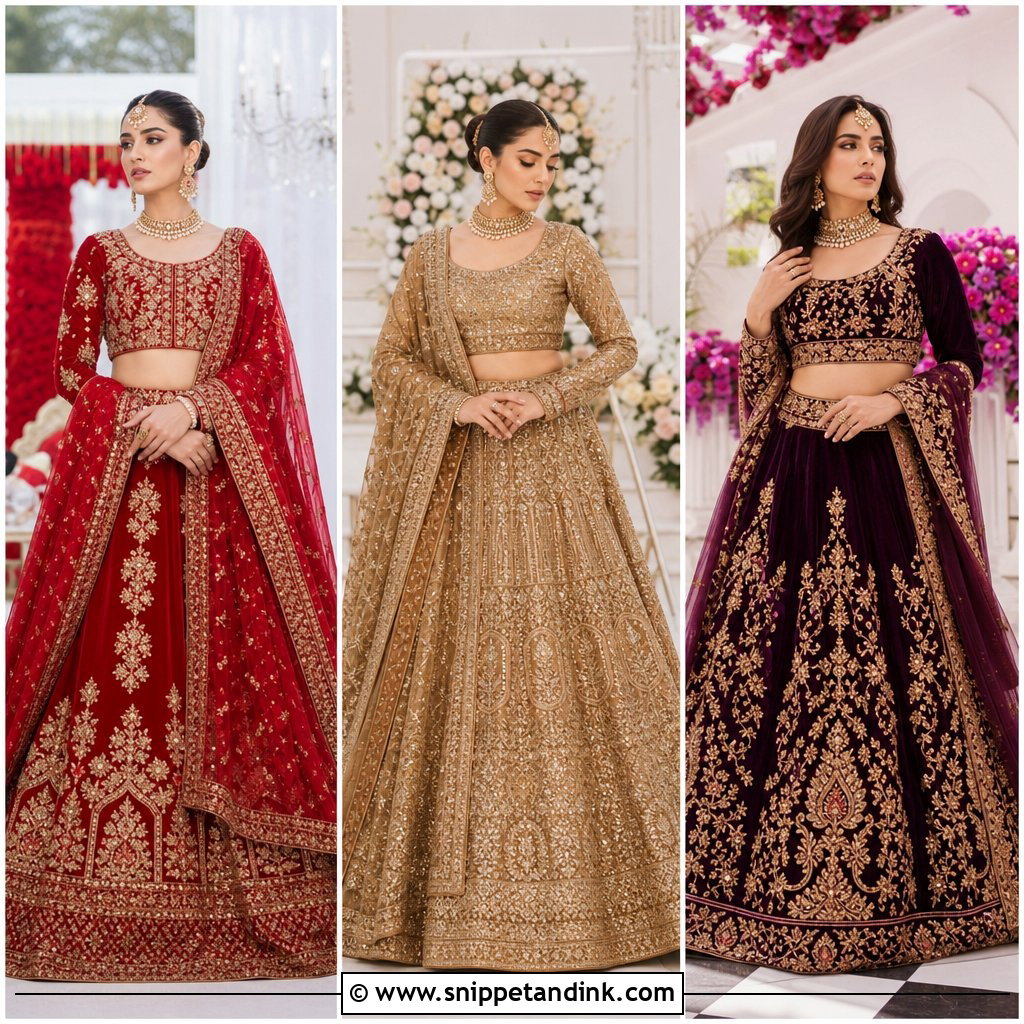
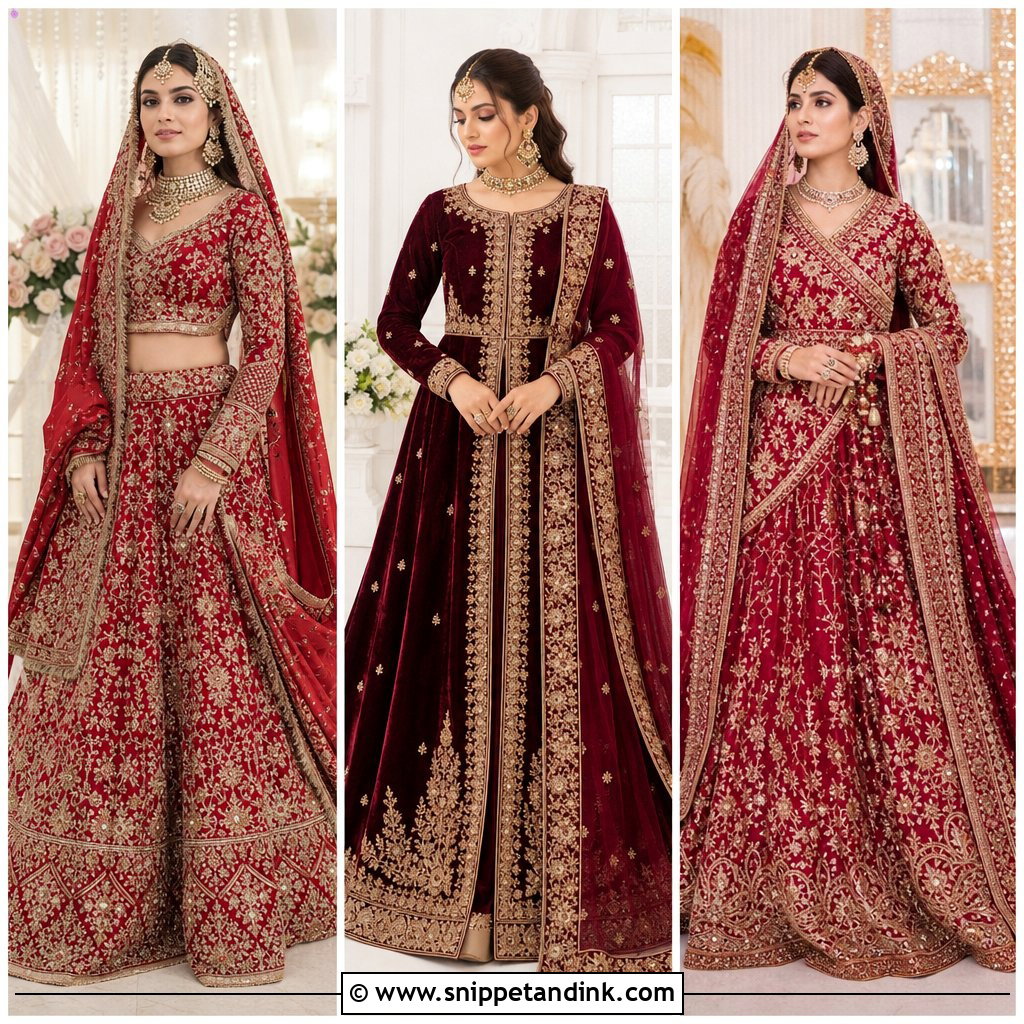
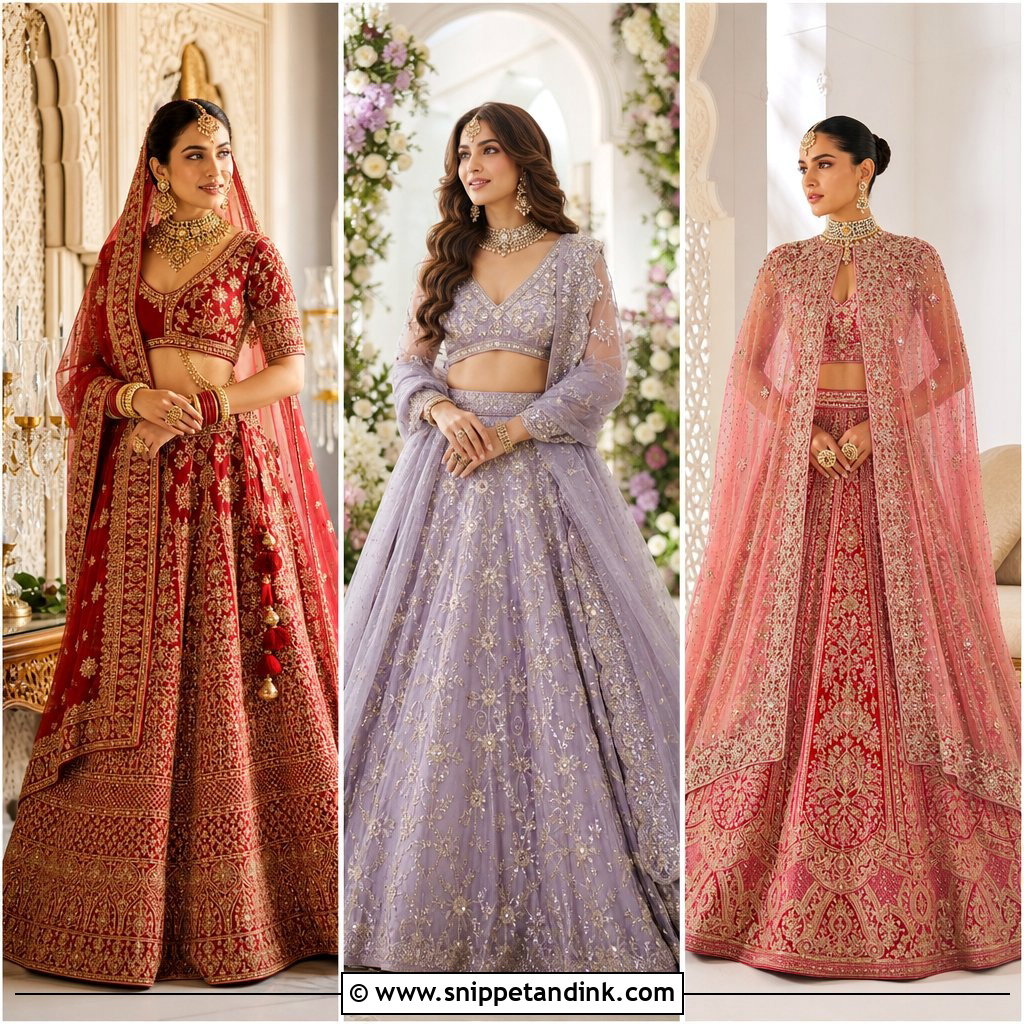
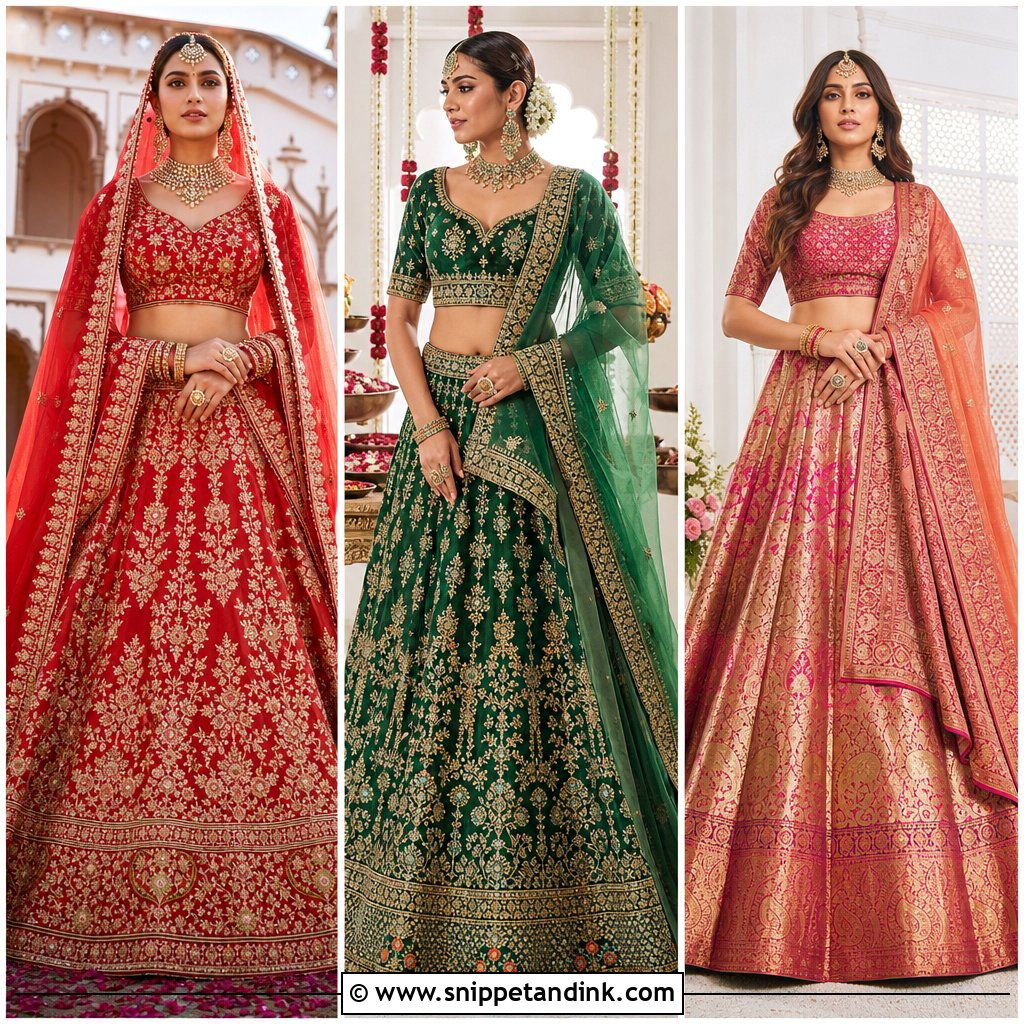
Nobody at a Barat mistakes a red lehenga choli for anything but the bride. A full structured skirt in antique gold zardozi, dabka, pearls and placed florals; a fitted choli with a modest neckline and elbow sleeves, which give the heavy embroidery something to anchor to. A light net dupatta goes over the head and a bordered organza one across the shoulder. Kundan, a coordinating matha patti, stacked bangles and khussa complete it. I never let a hem be set without the wedding shoes on. Even half an inch of difference means the skirt drags at the front and you end up kicking it forward with every step.
2. Maroon Farshi Lehenga Barat Dress
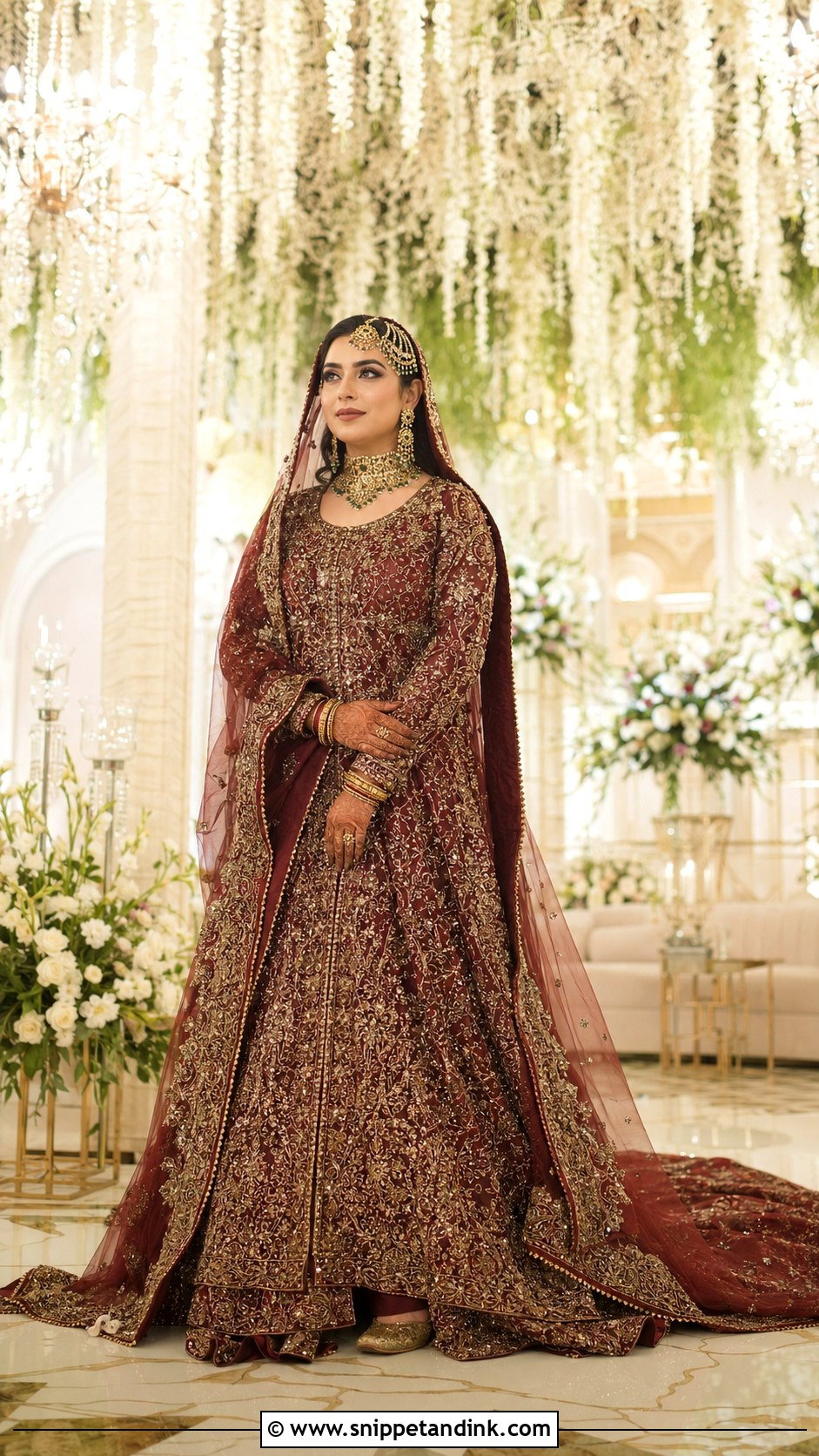
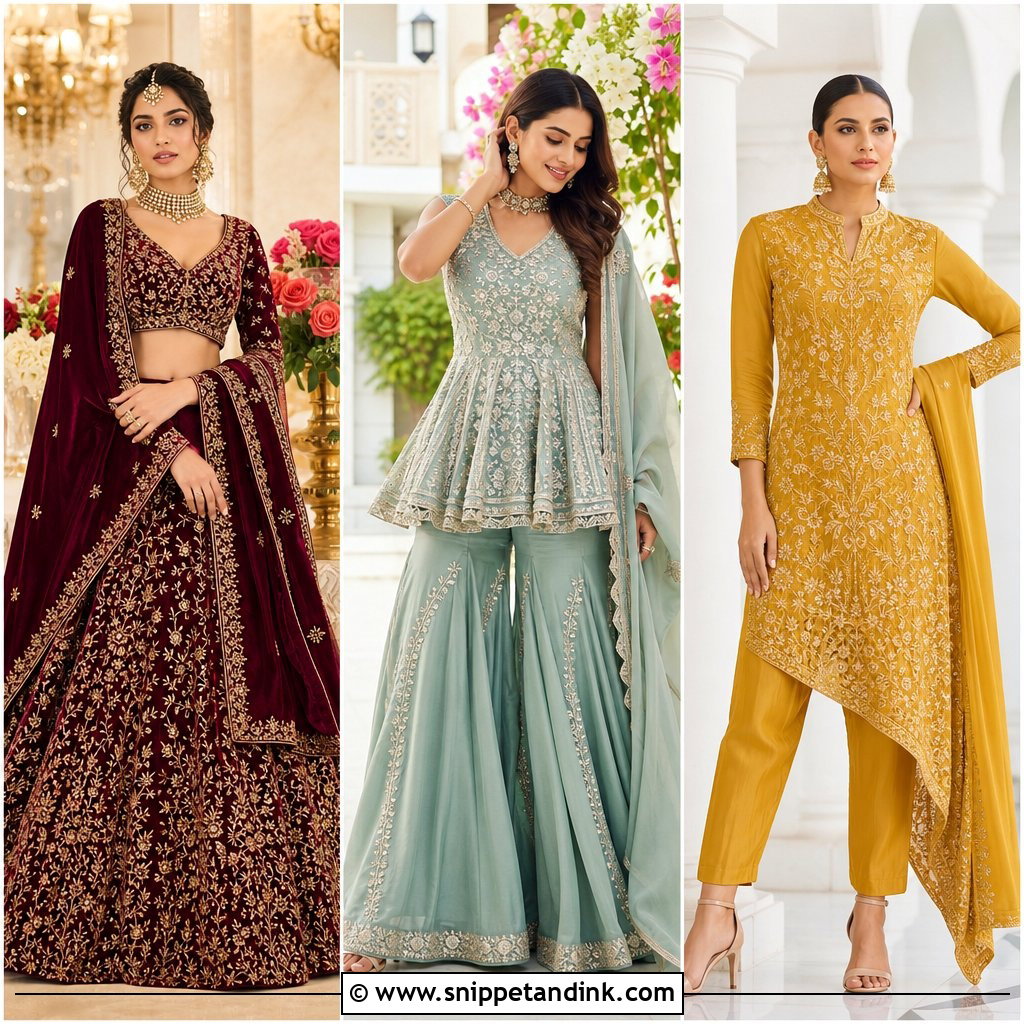
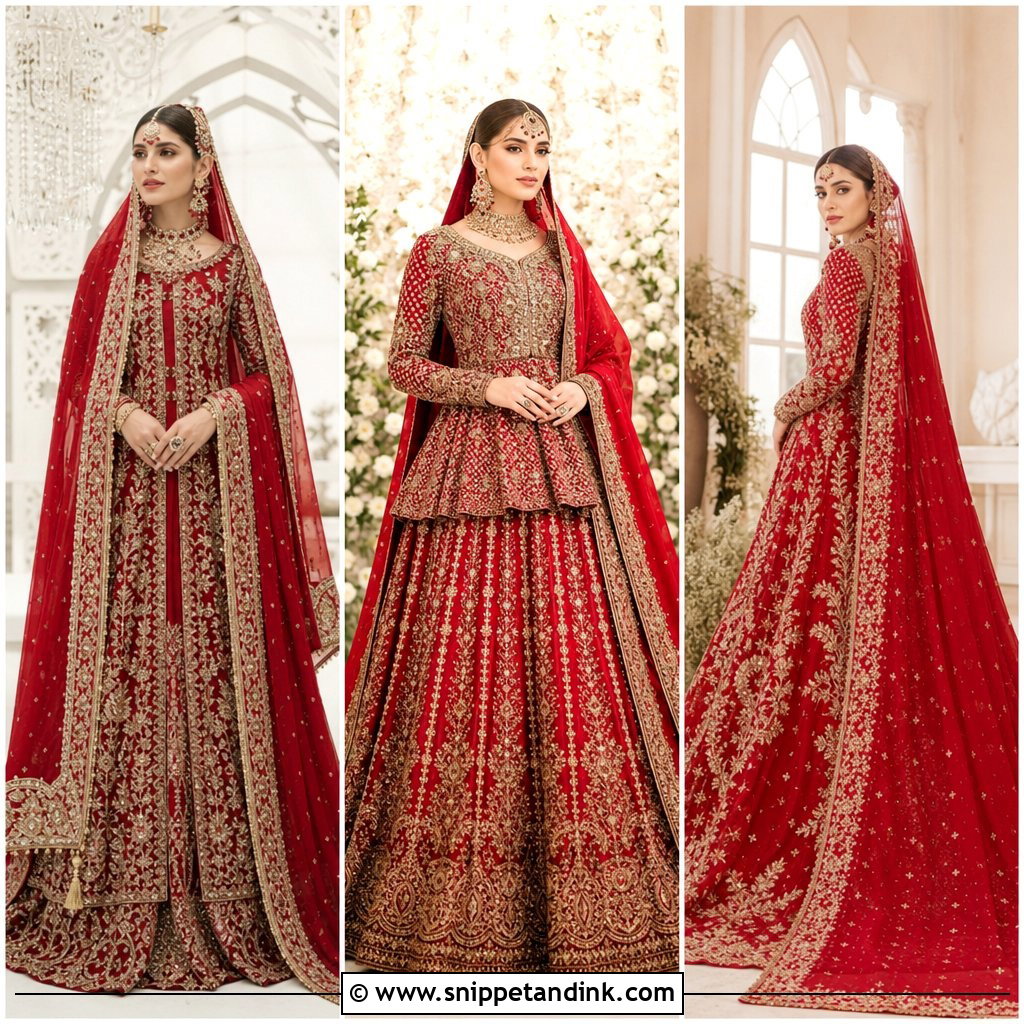
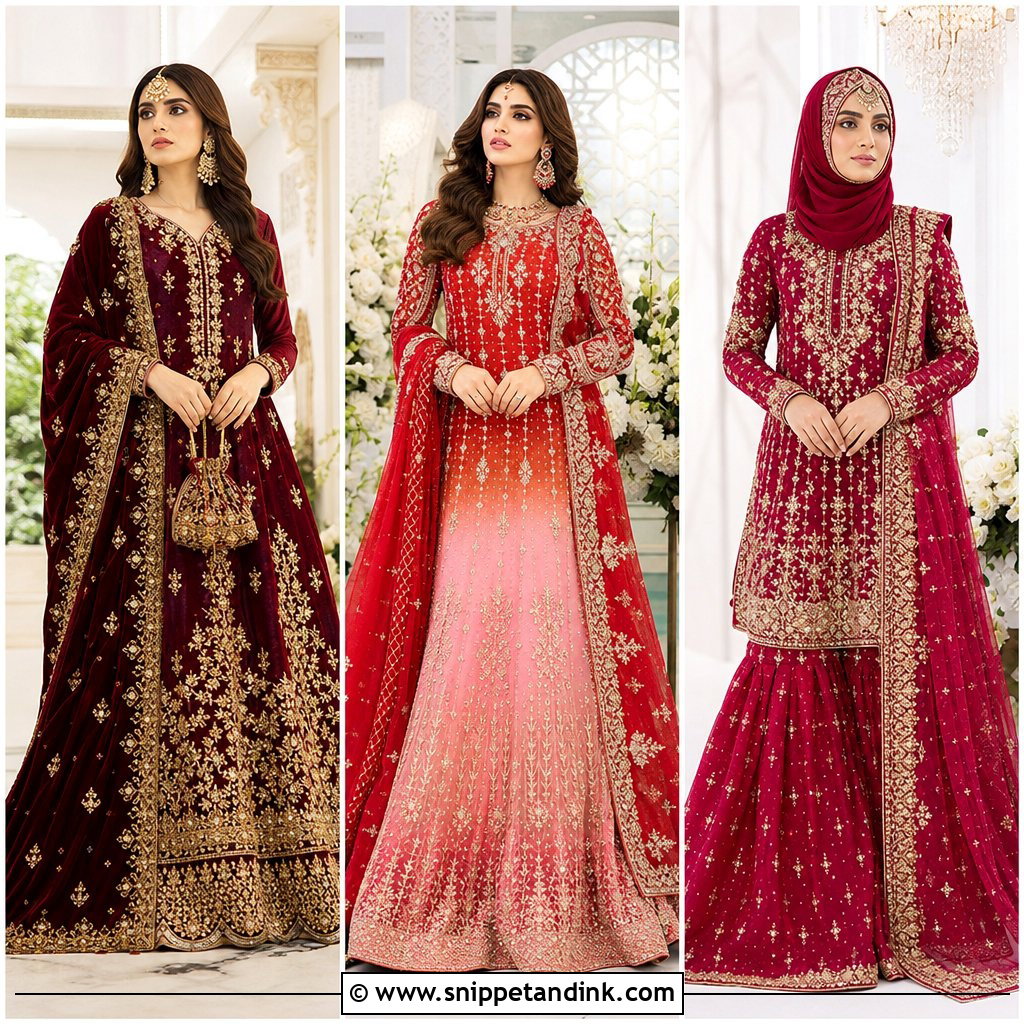
A maroon farshi lehenga under a long embroidered shirt gives a regal sweep without a ball-gown shape. Raw silk or jamawar holds the structure, and antique gold, copper and muted pink thread add depth. Side slits in a straight shirt let the skirt’s work show. A sheer maroon head dupatta, a lighter contrasting one over the arms, polki, a jhoomar and low block-heel khussa finish it. I keep farshi trains short enough that one helper can manage them, and I always sew in a concealed wrist loop, because you’ll be moving between stage, dining hall and car more times than you expect.
3. Long Shirt With Lehenga Barat Dress
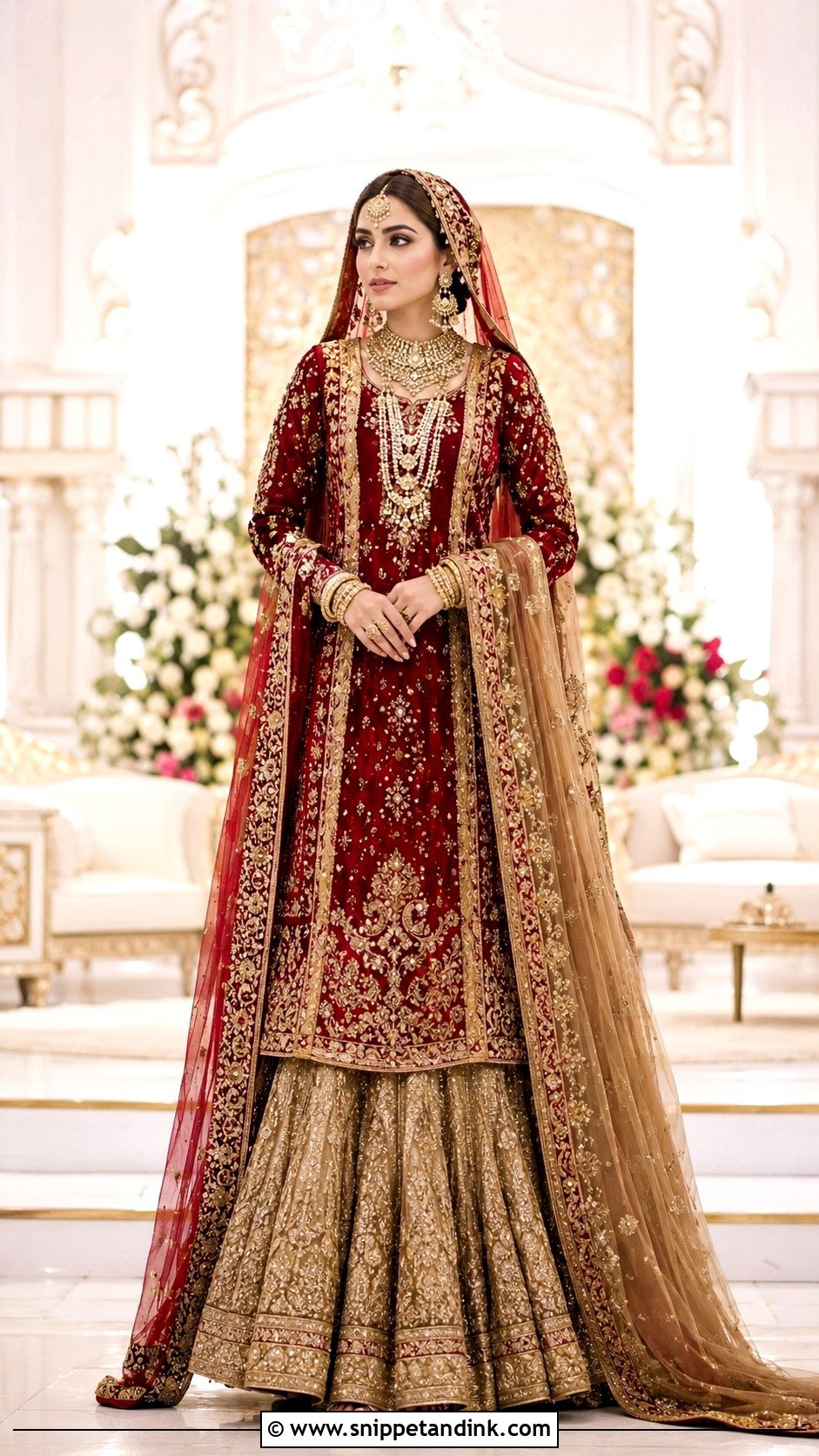
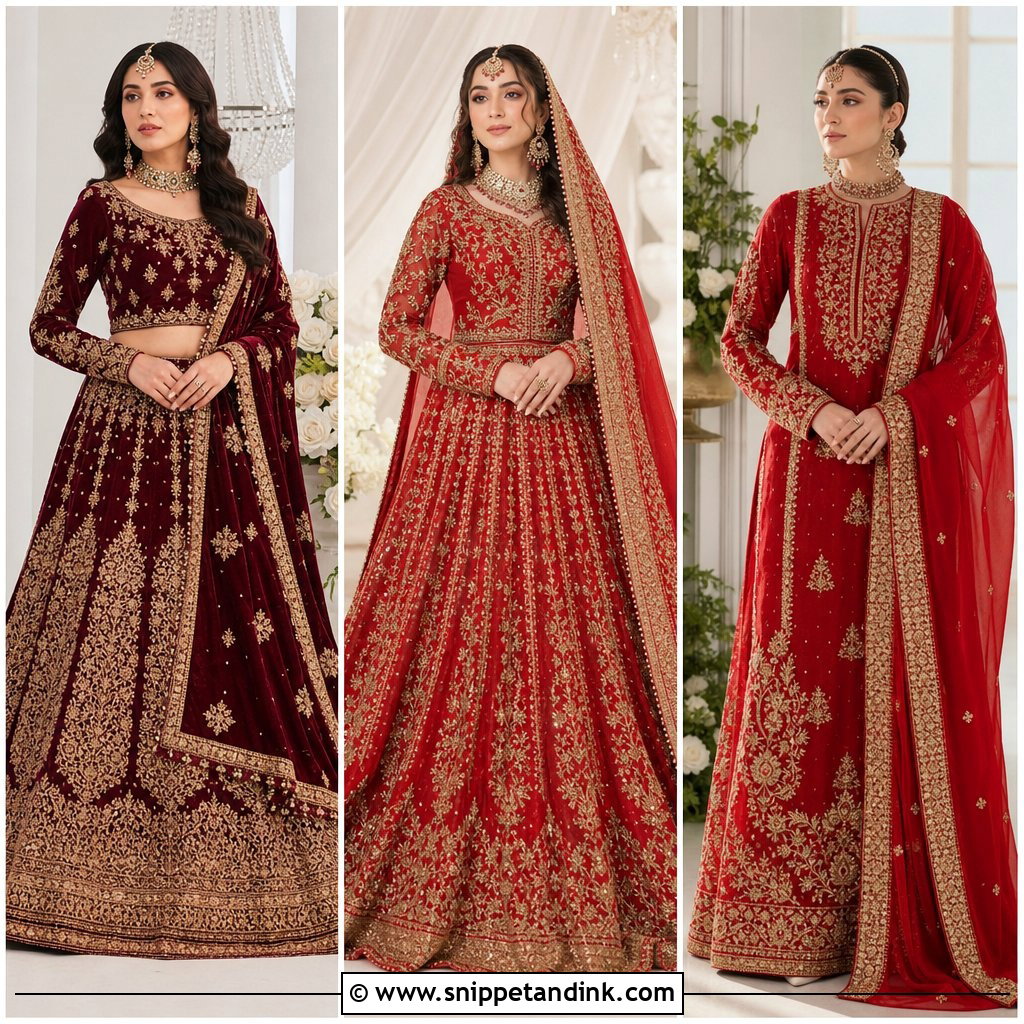
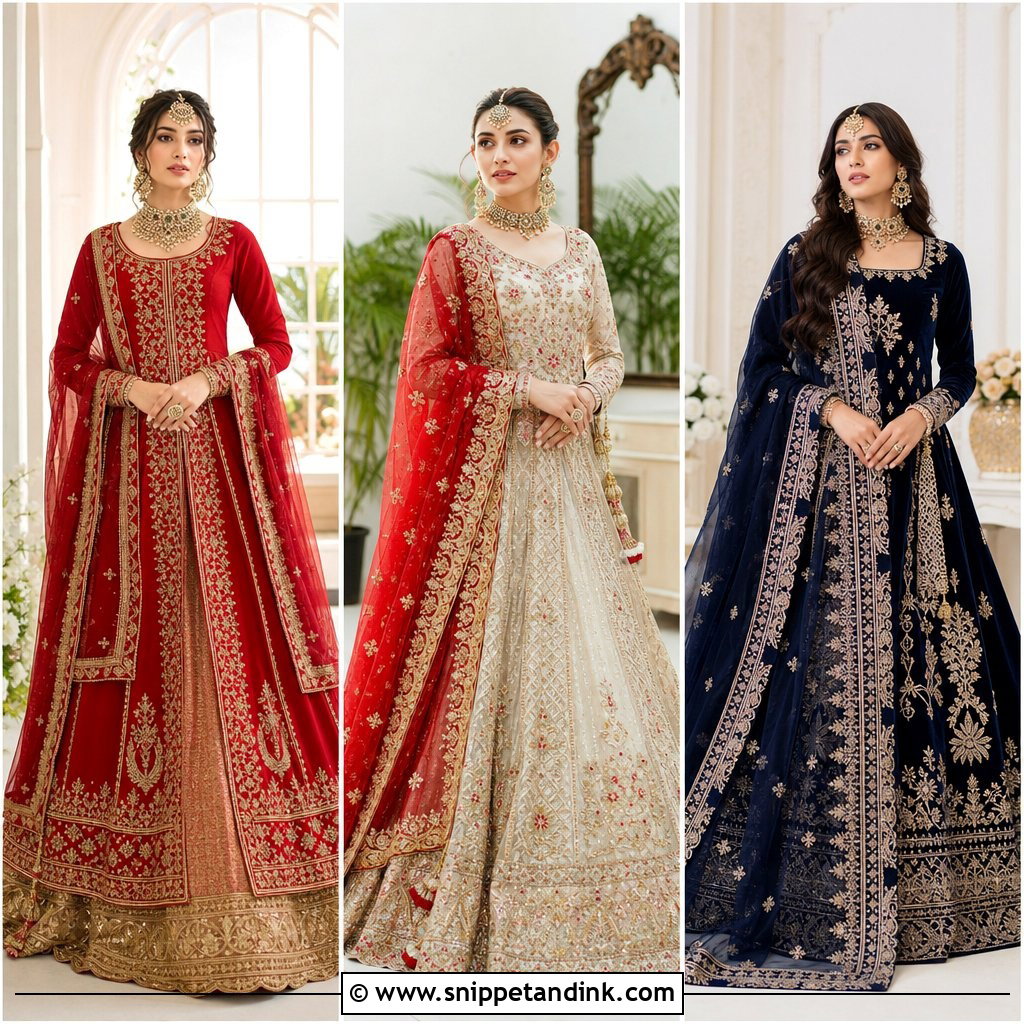
The long shirt over a flared lehenga gives coverage with real traditional presence. A deep crimson shirt with heavy work at the neckline, sleeves, side panels and hem, over a gold or tonal red lehenga with scattered motifs instead of equally dense embroidery. Splitting the weight like that keeps it luxurious without every layer being heavy. A broad-bordered dupatta goes over the head; the second falls from one shoulder. A choker, long necklace, earrings, bangles and platform khussa suit it. On a petite bride I raise the shirt hem a little and narrow the borders, so more skirt shows and the line from shoulder to floor looks longer.
4. Deep Red Gharara Barat Dress
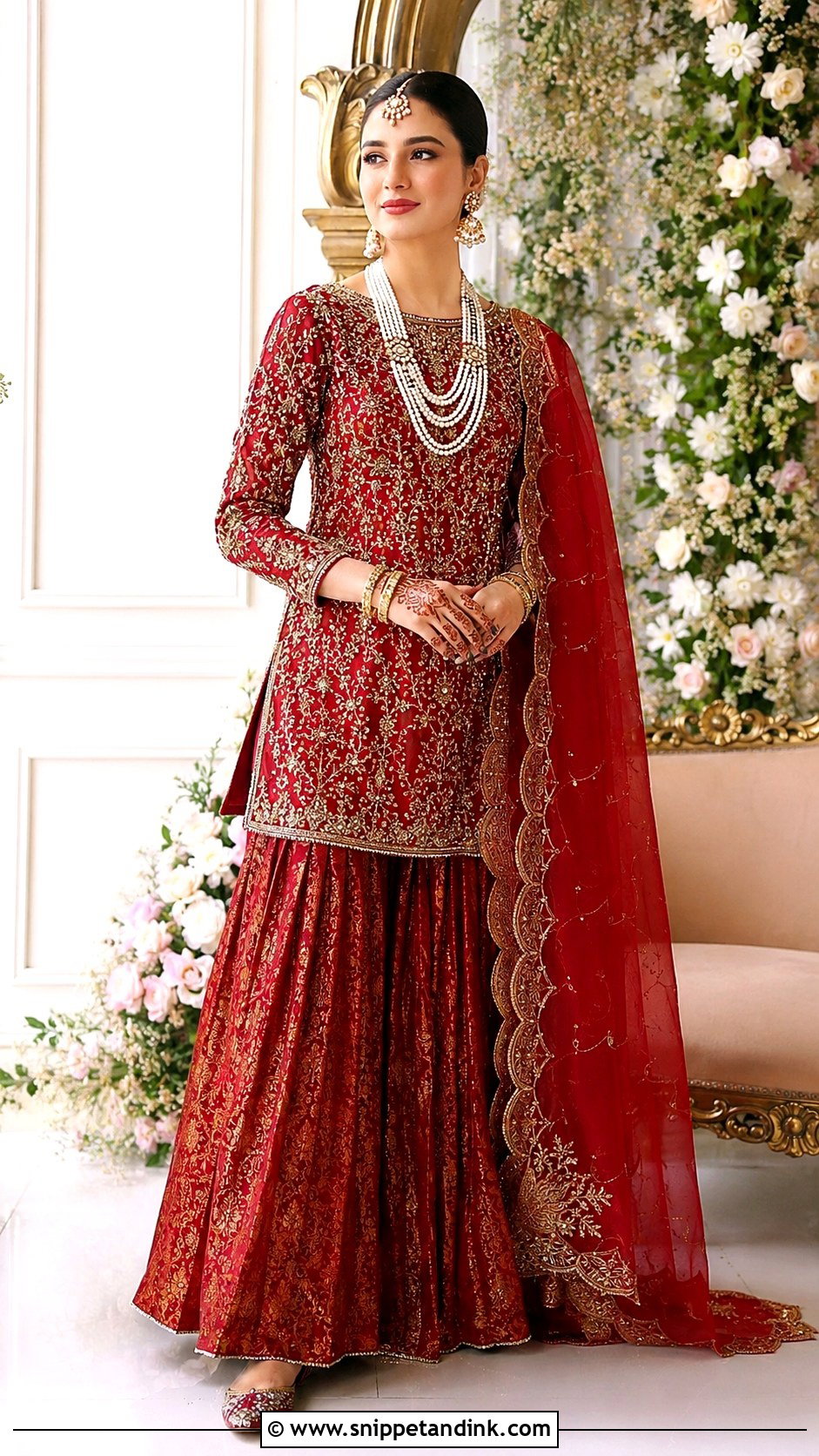
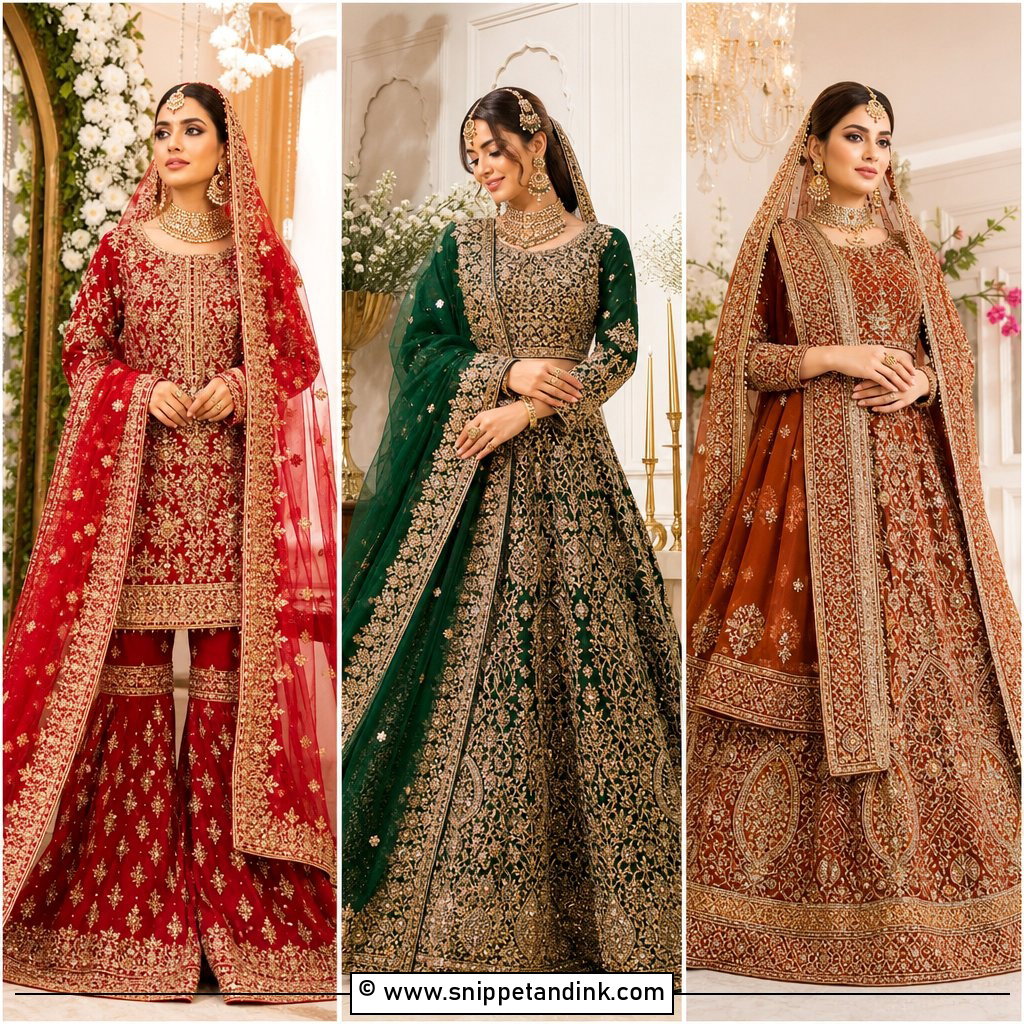
What makes a gharara is its knee seam and the flare below it. Pair a deep red gharara with a short structured kurti so that shape stays visible, using jamawar for the pants and raw silk for the top, linked by matching gold embroidery. Put detailed work on the gharara joint; it is the signature, and it should read in photos. A long net dupatta with a scalloped border goes over the head and loosely around the arms, with a passa, layered pearls, statement earrings and pointed khussa. The kurti must stop above the knee detailing. One inch lower and it covers the joint, and the outfit loses the one feature that makes it a gharara.
5. Crimson Sharara Barat Dress
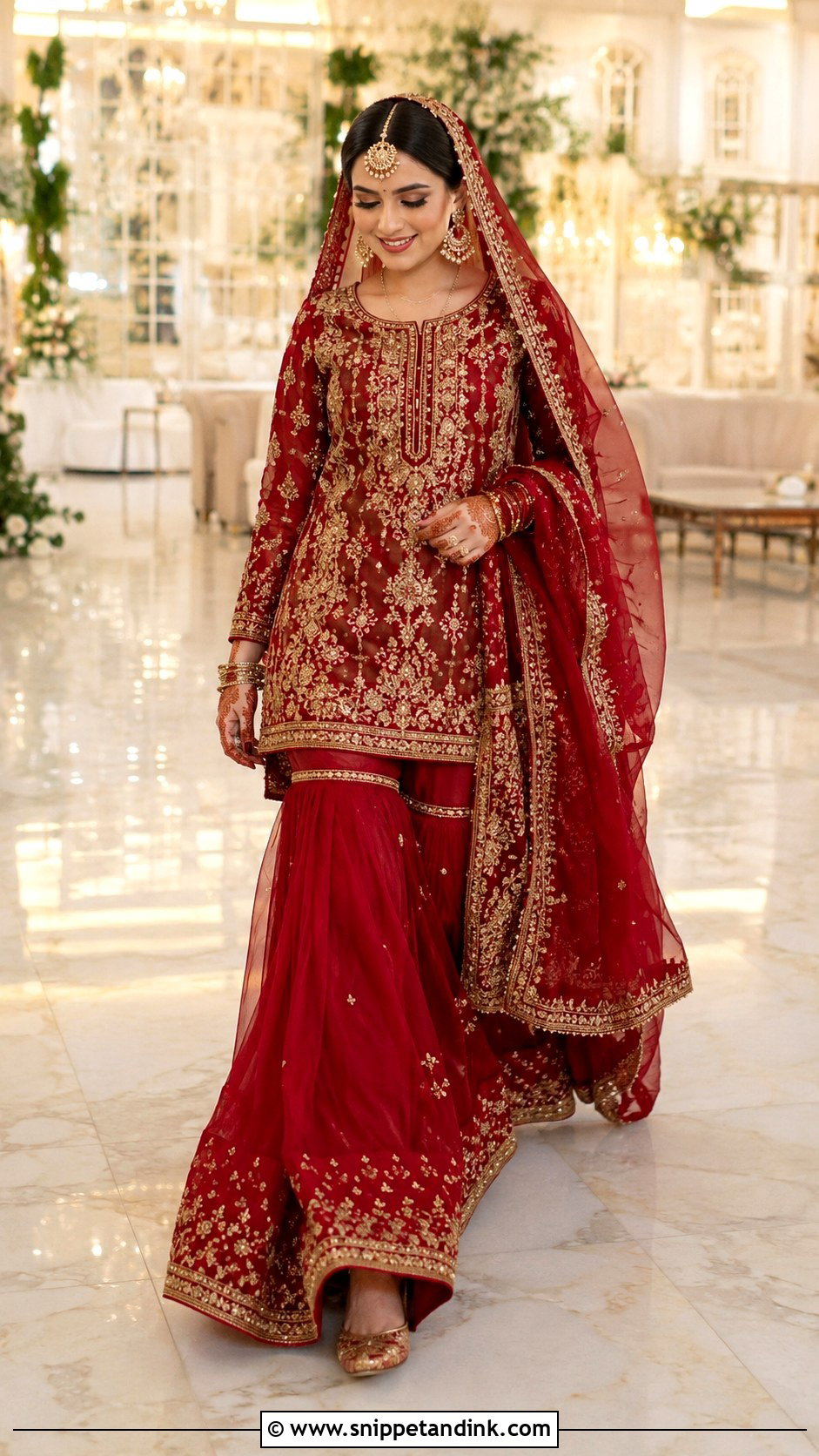
Comfort is the sharara’s quiet advantage. Its legs flare smoothly from the upper thigh, unlike a gharara’s knee seam, so sitting cross-legged on a stage or climbing into a car is simple. A short kurti in fine gold naqshi, dabka and pearls gives shape above; the wide pants give volume below. Choose a sheer organza dupatta with a worked border and small scattered motifs, draped over the head without piling layers at the neckline. Chandelier earrings, a medium tikka, bangles and low embellished heels suit it. Ask for a wide finished waistband. A narrow drawstring bunches under a fitted kurti and shows as a ridge by the second hour.
6. Red Velvet Lehenga Barat Dress
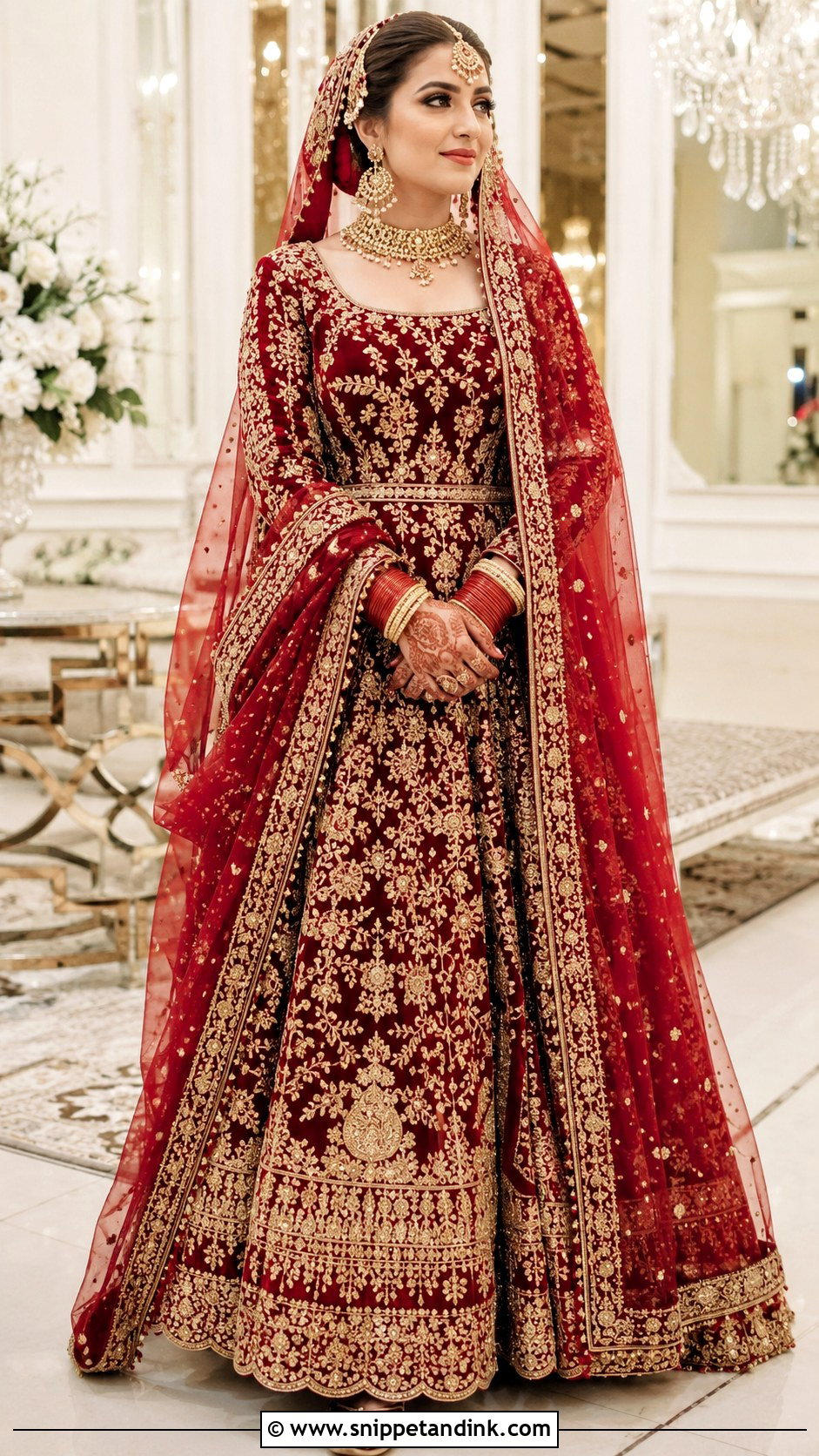
A red velvet lehenga with antique gold belongs to cool-weather ceremonies. Velvet’s pile holds color deeply, so red, maroon and burgundy look especially rich under bright venue lights, which is why I keep the heaviest work to the hem and blouse instead of covering everything. A fitted velvet choli with full sleeves balances it, and a light net or tissue dupatta keeps the total weight down. Gold jewelry, a centered tikka, velvet khussa and a small potli complete it. Ask for a soft lining and a firm internal waistband. With stairs or a long walk, skip the train; velvet is heavy enough already, and a train adds drag on every step.
7. Rust Peshwas Barat Dress
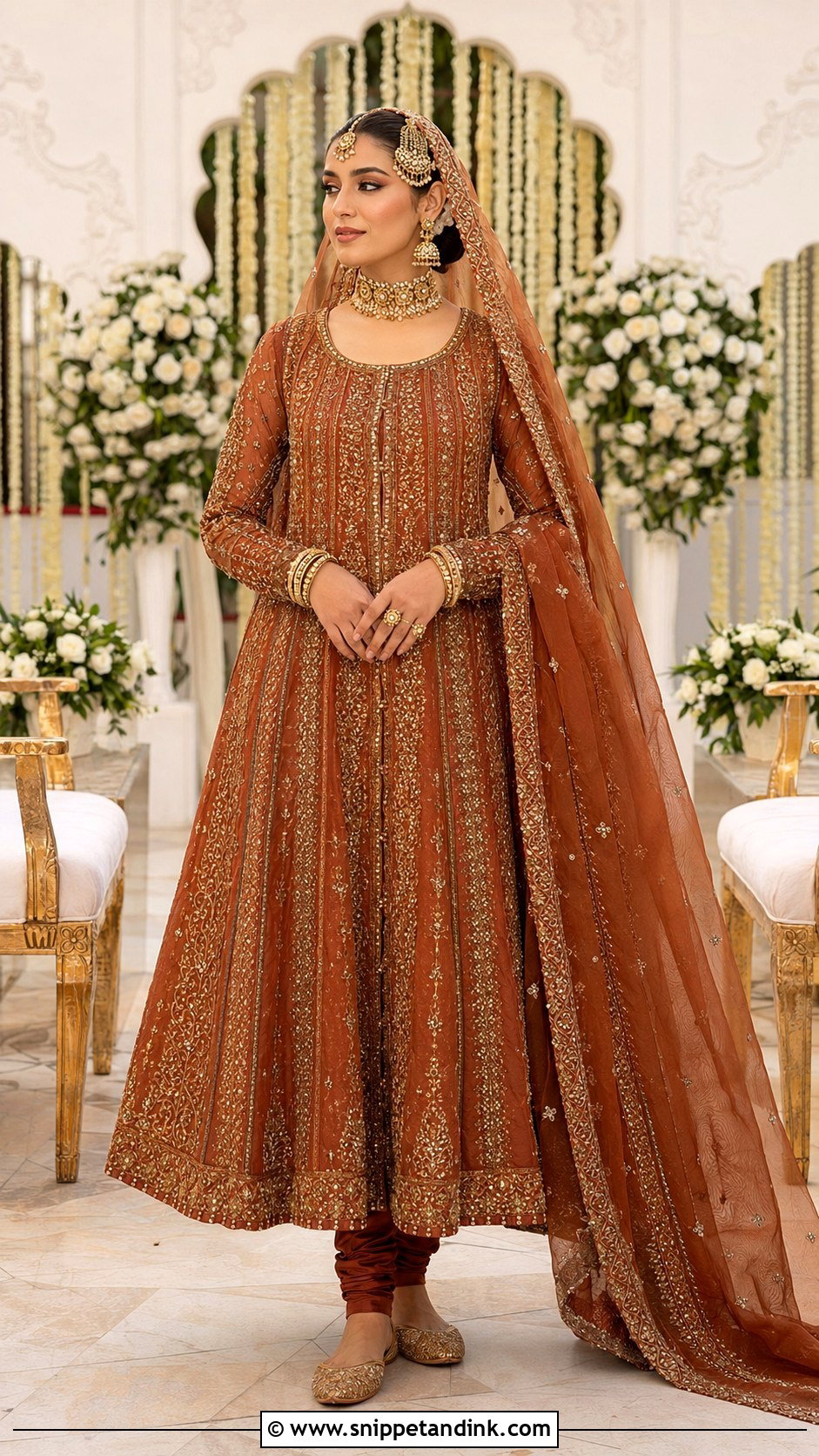
Rust is the earthy alternative to bright red, and in a peshwas it moves beautifully. A fitted bodice and many flared panels keep the shape modest and graceful. I ask for antique gold, dull bronze and muted red embroidery to follow the vertical panel seams, which lengthens you and stops the fullness from overwhelming a smaller frame. Fitted churidar underneath and an organza dupatta with a detailed border over the head, falling down one arm. Kundan earrings, a choker, jhoomar and bronze khussa finish it. A lightly stiffened hem lets the panels hold their flare, and a breathable lining matters because the layers trap warmth.
8. Gold And Red Anarkali Barat Dress
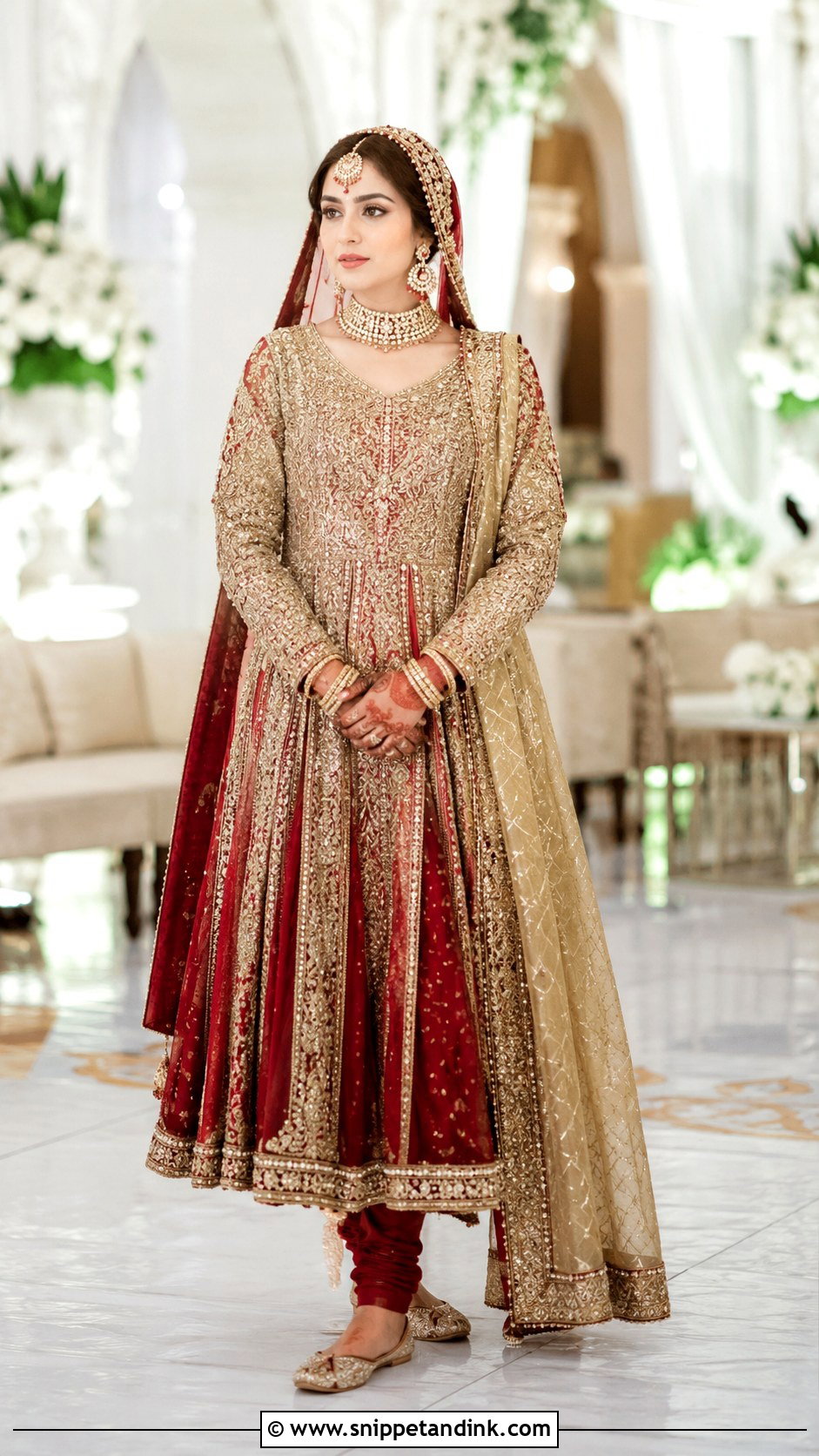
Gold and red on an Anarkali Barat dress can go either way: a gold bodice flowing into deep red panels, or gold embroidery across a red base. A defined waist and evenly spaced panels flatter most body types. Wear a fitted churidar and shoes tall enough to keep the hem off the floor. A red head dupatta reinforces the bridal color while a lighter gold one sits on the shoulder, with polki, red bangles and metallic khussa. With a large choker, I keep the neckline moderately open; the gap between jewelry and embroidery is what lets each one show instead of merging into a crowded upper half.
9. Emerald And Red Lehenga Barat Dress
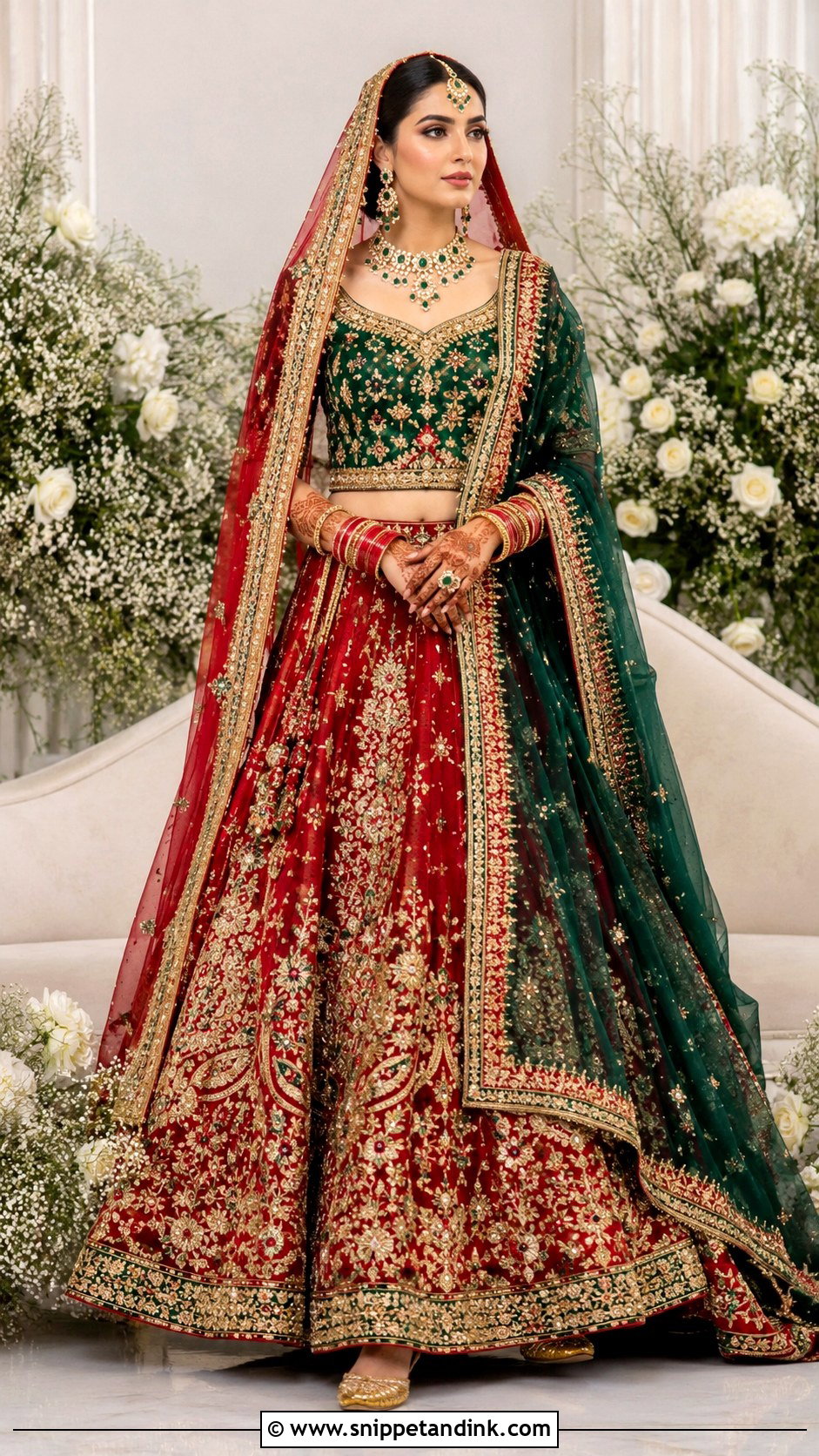
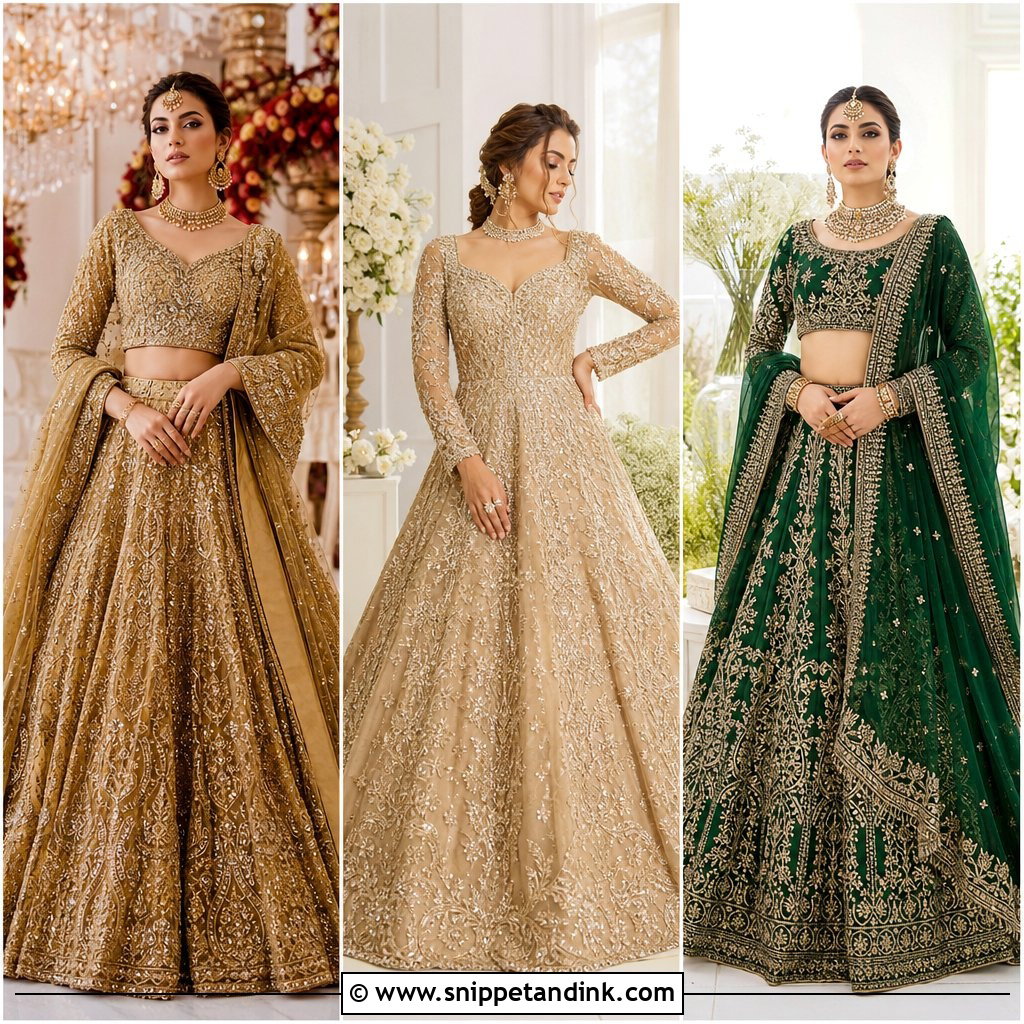
Emerald accents turn a traditional red lehenga into something layered and distinctive. A red raw-silk skirt with antique gold and small emerald details in the borders; then either an emerald choli, or a red blouse with the green brought in through the dupatta. Floral vines, Mughal arches and geometric borders suit the contrast. Kundan with green stones, gold khussa and red bangles keep it to two colors. My rule with two dupattas here: the red goes over the head and the emerald drapes from the shoulder. The bridal color should sit nearest your face.
10. Blush Pink Lehenga Barat Dress
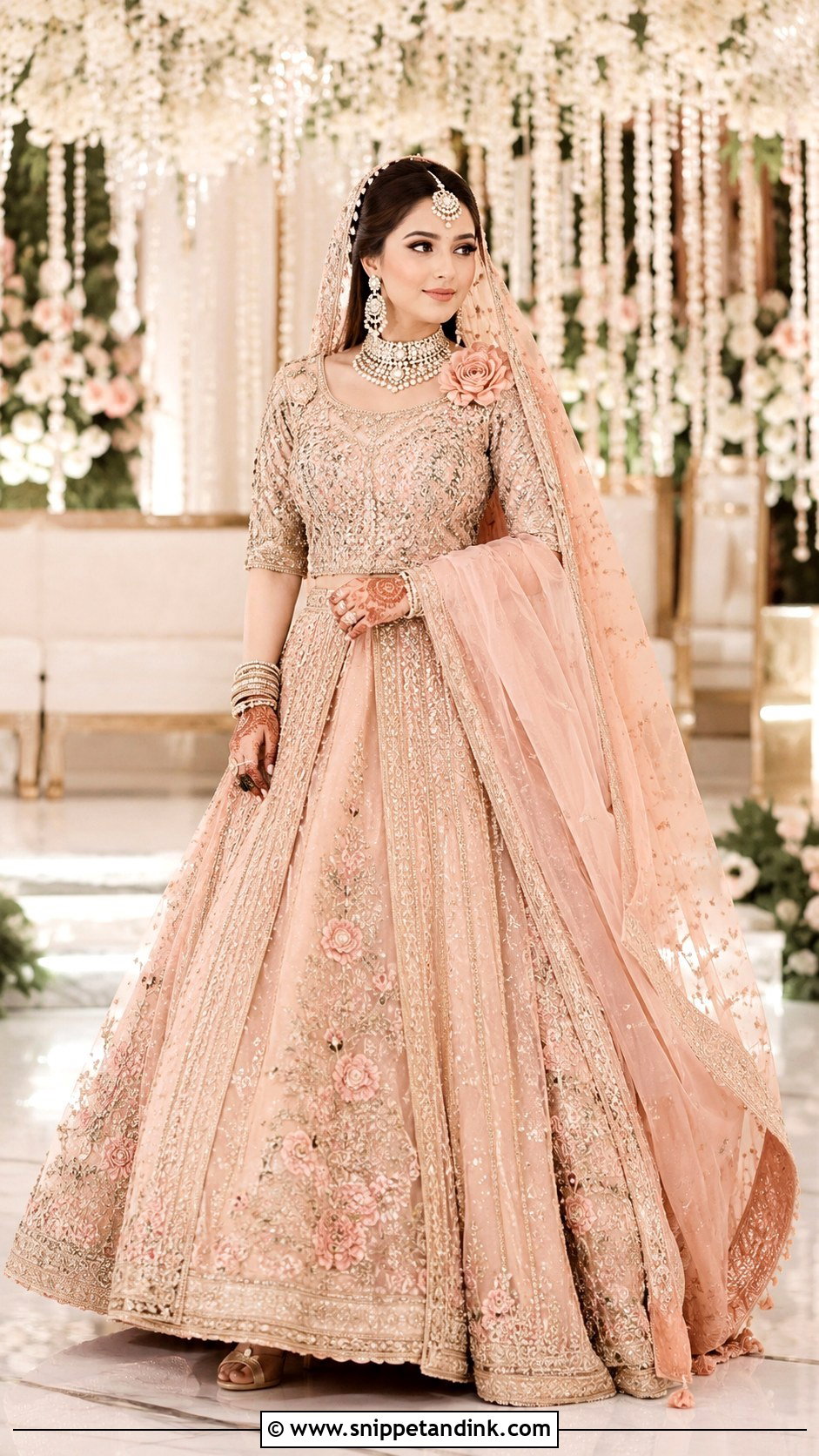
Blush can carry a Barat if the silhouette is structured and the embroidery is substantial. A full raw silk, organza or tissue lehenga in champagne gold, silver-gold and muted rose, with an elbow-sleeve blouse so the skirt leads. A blush net dupatta on the head and a deeper rose one across the shoulder add dimension. Pearl and polki, rose bangles and pale gold heels complete it. With a light palette I build stronger eyes or a more defined lip than usual, or the face disappears into the fabric in photos. View the swatch in daylight and under warm indoor light before approving; blush can turn peach or grey between the two.
11. Ivory And Red Lehenga Barat Dress
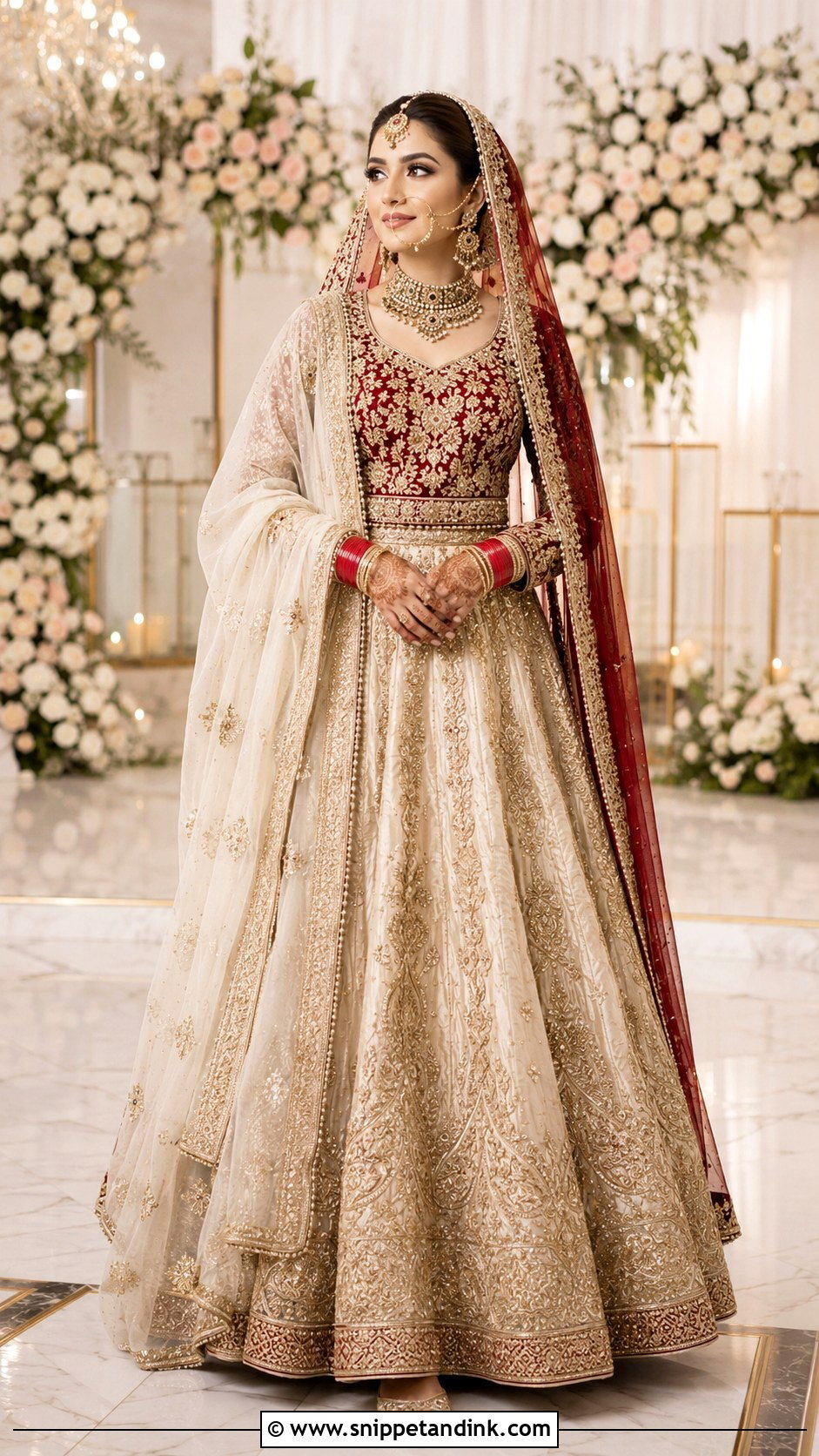
Ivory with red lets you have a light base and still wear unmistakable bridal color. An ivory skirt in antique gold motifs framed by a broad red border, a red blouse to define the upper body, a red head dupatta and an ivory shoulder dupatta. Kundan, red bangles, an embroidered waist belt and ivory khussa with red detail complete it. Line the ivory fully so it looks opaque and rich under bright photography. Vertical red panels lengthen the figure. I suggest this pairing to brides who love red but find a full red outfit heavy on them; it keeps the tradition while giving the face more light.
12. Plum Maxi Barat Dress
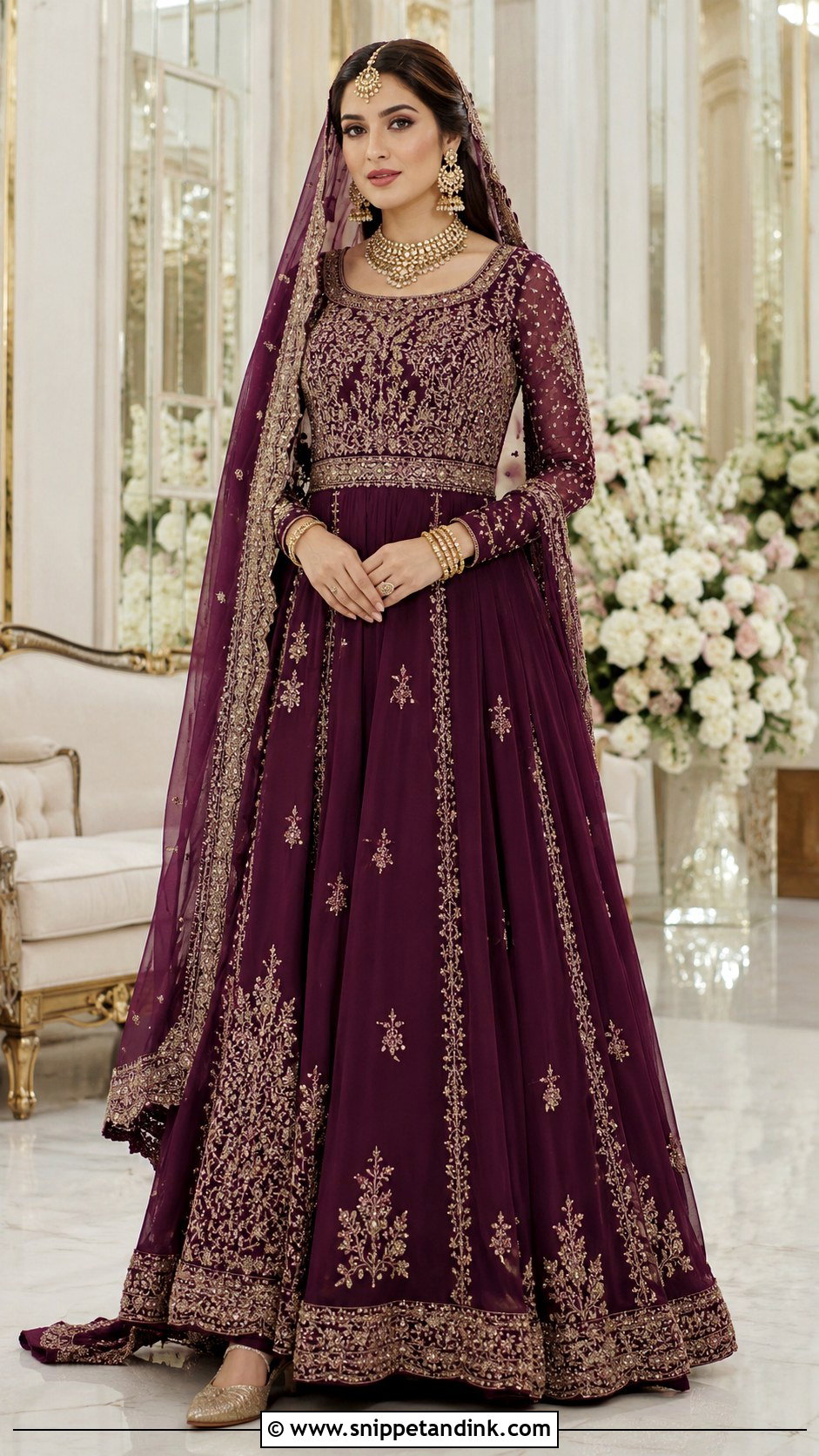
A heavily embroidered plum maxi is the streamlined choice beside a wide lehenga. A fitted bodice, softly defined waist and a skirt widening gradually to the hem; vertical work and repeated panel motifs lengthen the body. Antique gold, muted bronze or soft pink embellishment all sit well on plum. A coordinating dupatta over the head should have a narrow border, since a wide one crowds the face on a slimmer silhouette. Polki earrings, a layered necklace, bangles and closed metallic heels finish it. Check the circumference at the knee. If you can’t take a full stride, ask for a concealed back slit or more flare; a maxi should skim the hips, never grip them.
13. Coral Kalidar Barat Dress
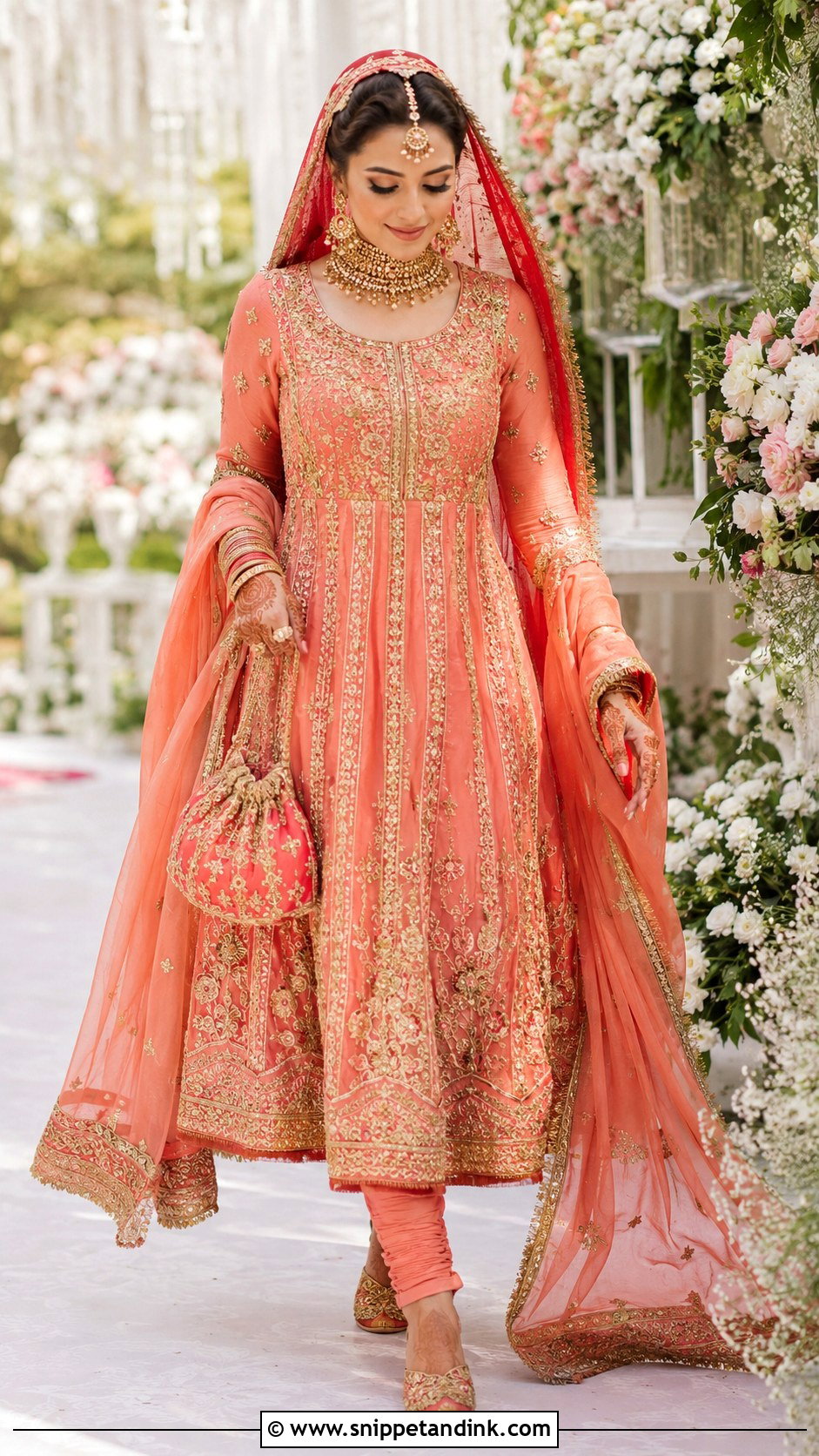
Kalidar means many panels, and those panels make a rounded flare that swings as you walk in. In coral, it is bright and celebratory without the deepest bridal shades. Silk or raw silk with gold embroidery, plus red details at the neckline, cuffs and hem to tie it to the Barat. A fitted churidar and a red organza dupatta over the head; a second coral dupatta can fold over one arm. Gold jewelry, coral bangles, a small potli and khussa complete it. I check where the panels start at the first fitting. They should begin at the natural waist; set too high on the bodice and the dress loses its shape entirely.
14. Red Peplum Lehenga Barat Dress
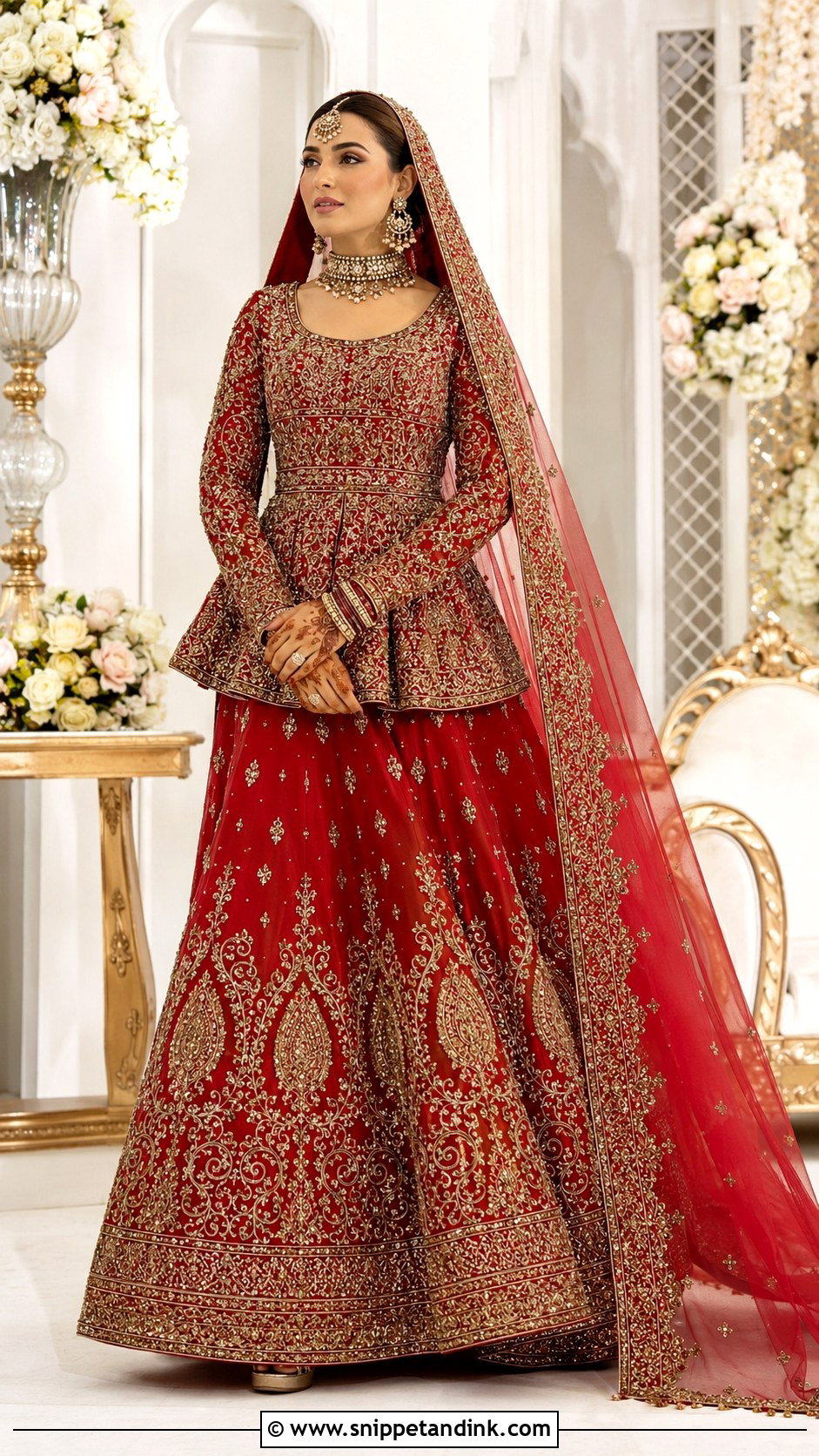
A red peplum blouse over a bridal lehenga gives a modern line with traditional fabric and work. The fitted bodice defines the waist and the flare covers the top of the skirt. End the peplum above the widest part of the lehenga so both pieces stay visible, and connect them with antique gold, pearls and tonal thread. A long net dupatta goes over the head with its other end behind a shoulder; a structured choker, medium earrings, bangles and low platforms finish it. If you’ll be seated for hours, ask for soft internal support rather than a stiff peplum. Stiff interlining presses into the waist every time you lean forward.
15. Red Angarkha Lehenga Barat Dress
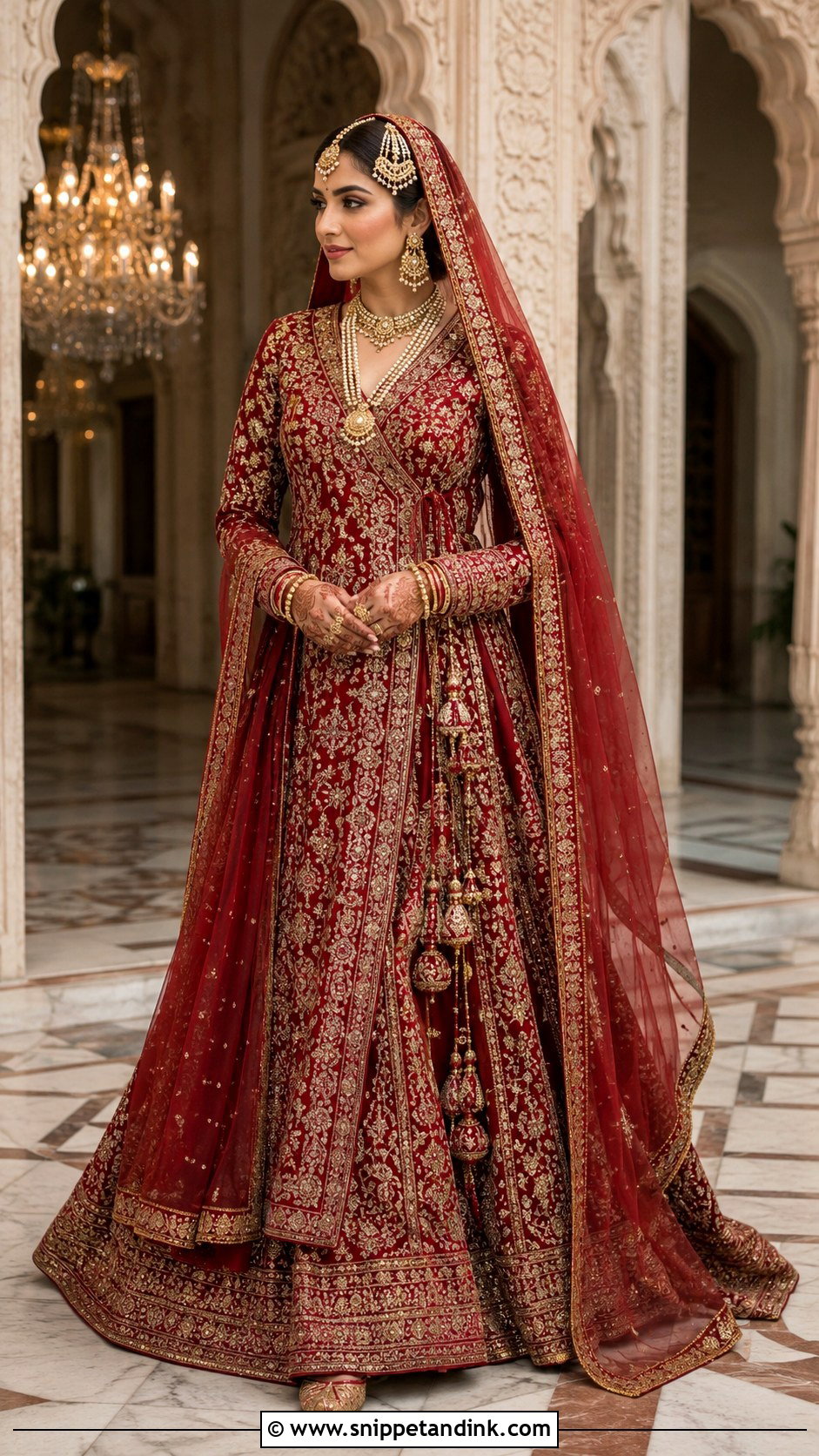
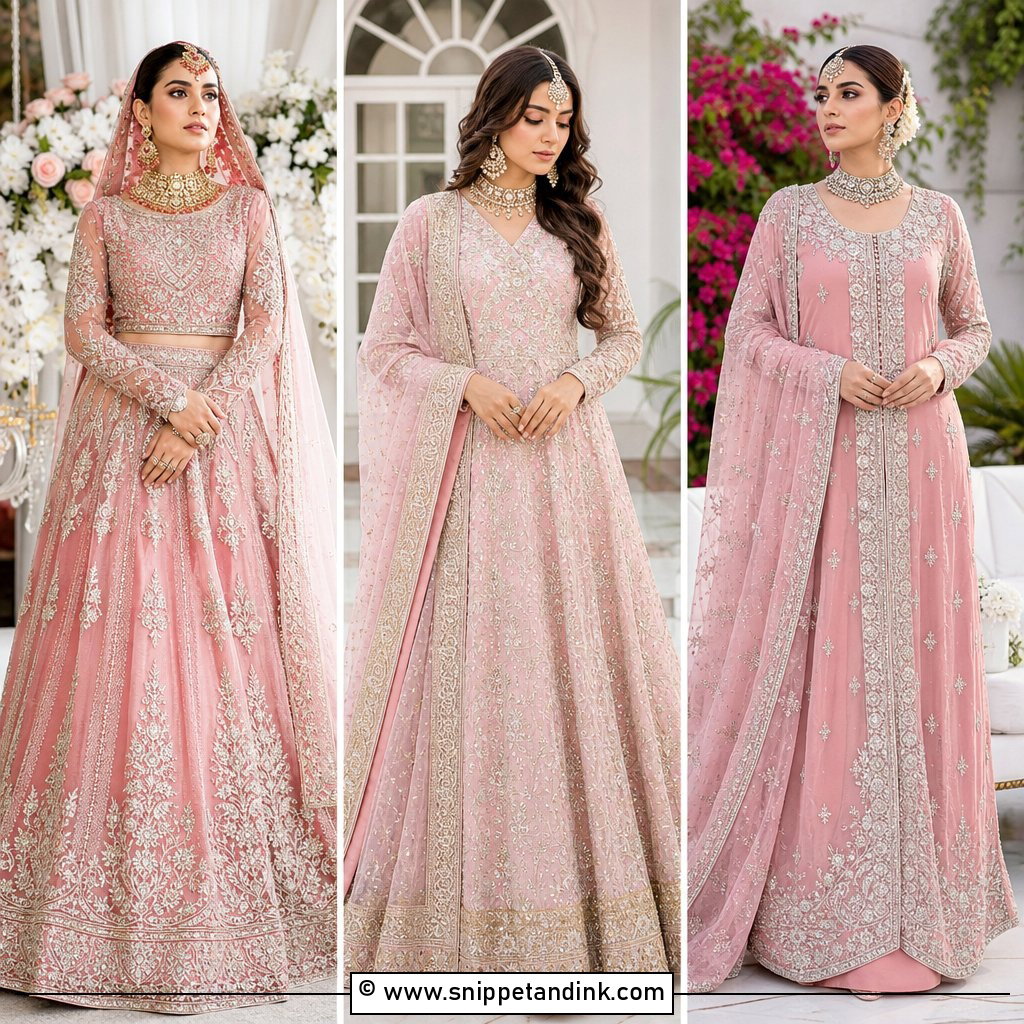
An angarkha blouse’s overlapping neckline gives a red lehenga traditional character. Choose a longer angarkha that ties securely at the side and opens slightly at the front to show the skirt. Gold piping, tassels and floral zardozi can trace the wrap without bulk. A tonal lehenga with a broad border and lighter center, plus a sheer dupatta with fine edging over the head, keeps the neckline visible. A passa, earrings, layered necklaces, bangles and gold khussa complete it. Watch where the tassels hang. I move them away from the natural hand position, otherwise they tangle in bangles every time you greet someone.
16. Antique Gold Gown Barat Dress
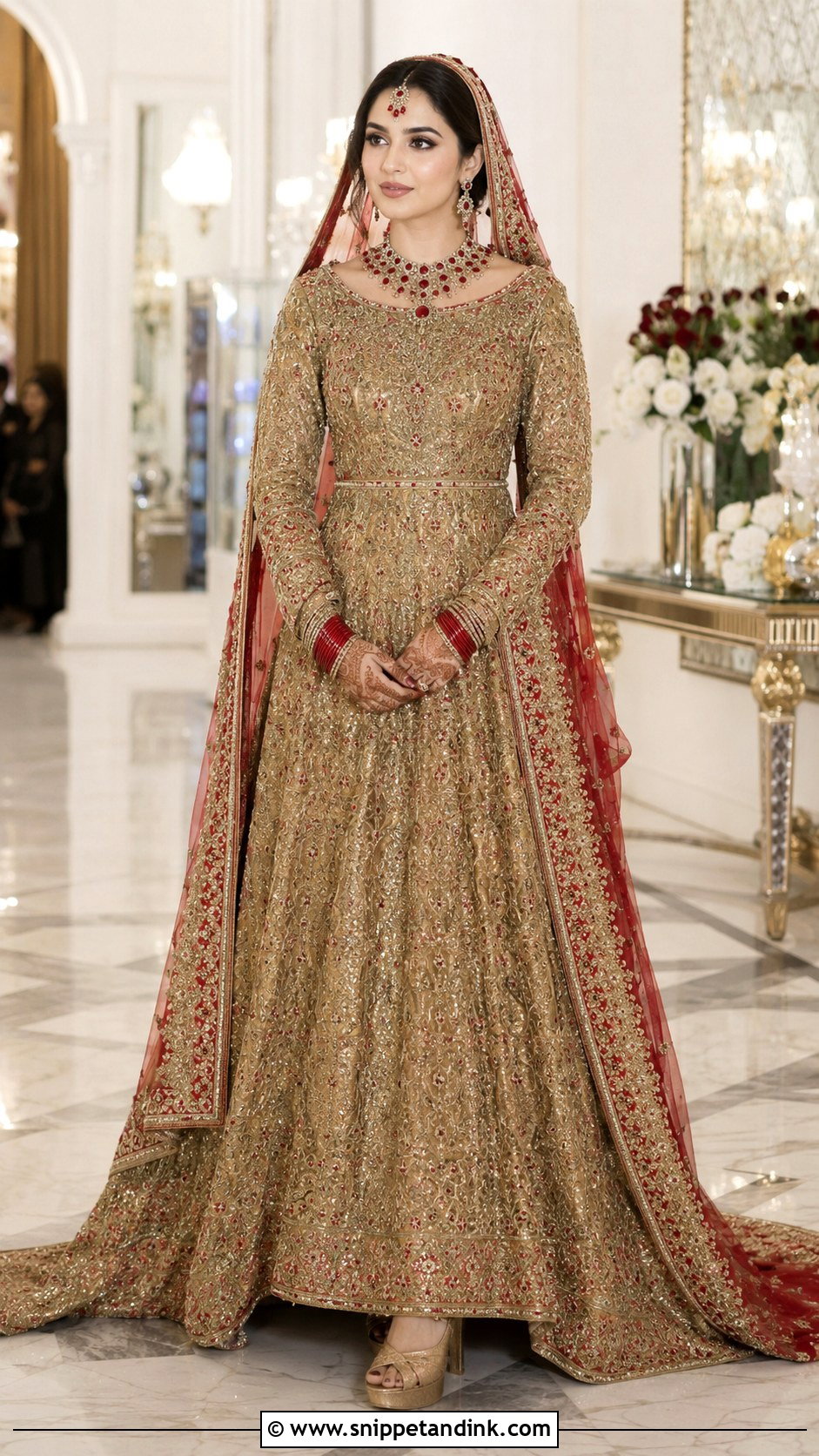
An antique gold gown suits a formal indoor Barat. A modest floor-length cut with a fitted upper body, defined waist and controlled flare; red embroidery, velvet appliqué or crimson borders link it to bridal tradition. Full sleeves and a structured neckline support heavy jewelry. Pin a red net dupatta over the head without covering the bodice work, and add ruby-toned kundan, red bangles and gold platforms. Don’t match every accessory to the metallic gown. Red accents give contrast so you don’t flatten into one gold block under the lights, and a short detachable train lets you keep the drama for the entrance and lose it for dinner.
17. Red Banarasi Saree Barat Dress
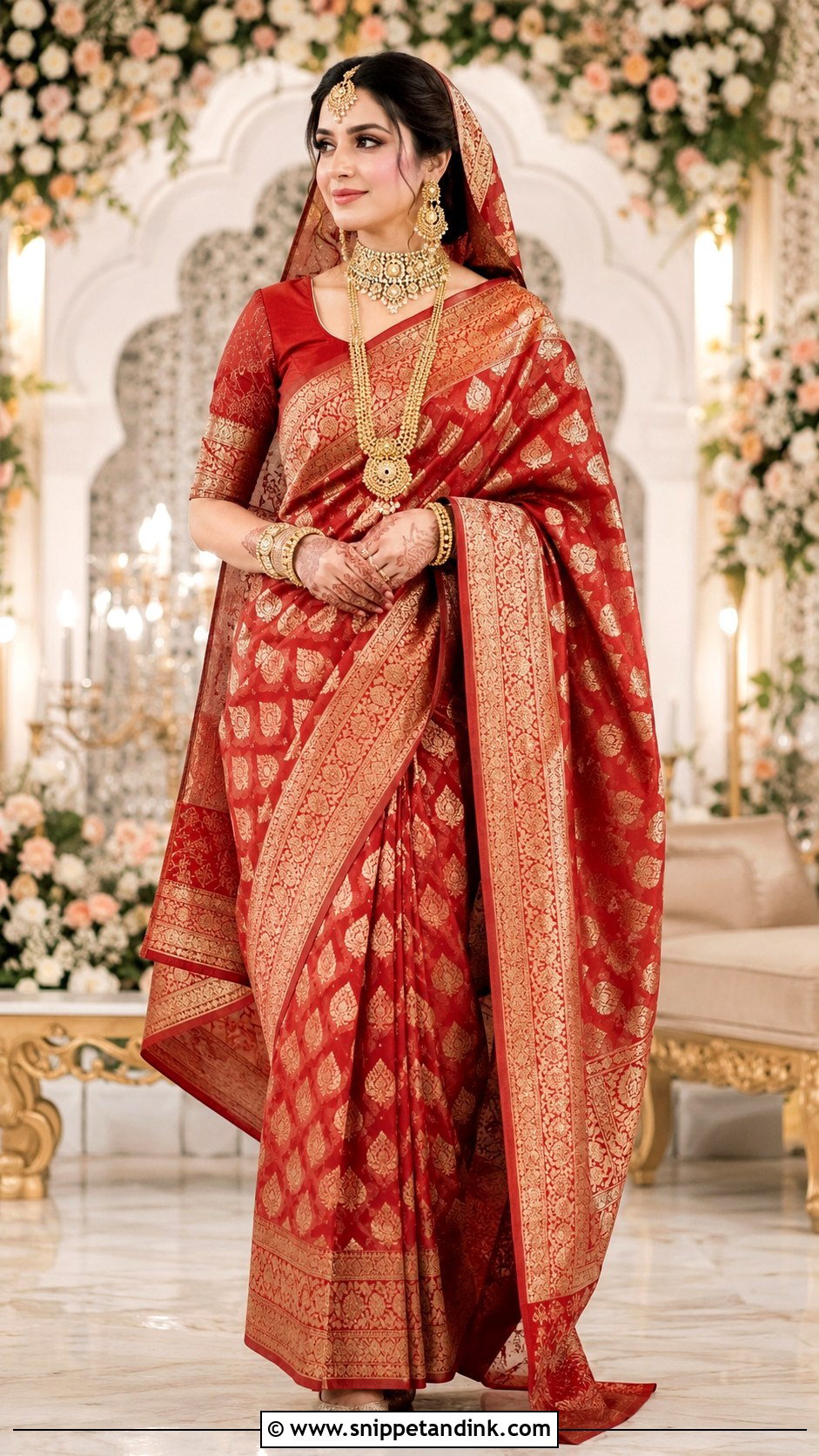
A red Banarasi saree brings woven texture and traditional gold zari into a refined bridal look. Pick an ornate border with balanced motifs instead of dense weaving all over, which makes the drape stiff. A structured blouse with elbow sleeves, secure fastenings and coordinating embroidery suits it. Pin the pleats at several points so the saree stays stable, and add a light separate dupatta over the head for a more bridal finish. A gold choker, long necklace, tikka, bangles and closed heels complete it. Banarasi silk is heavier than chiffon, so if you’re new to sarees, practice walking and sitting in it; a pre-stitched version keeps the look and removes most of the risk.
18. Jamawar Lehenga With Short Kurti Barat Dress
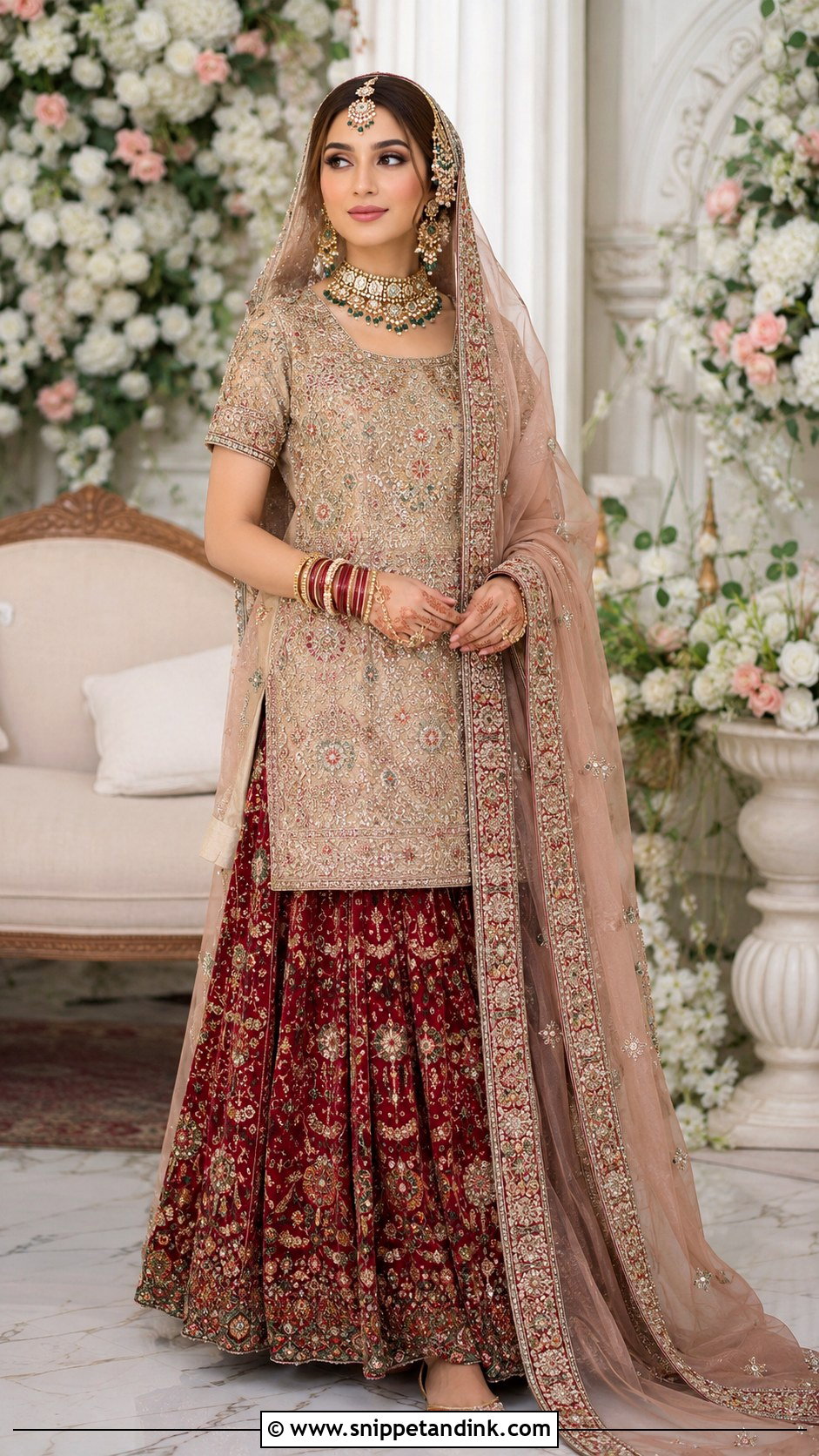
A jamawar lehenga with a short kurti shows off woven fabric in classic Pakistani proportions. A deep red, maroon or muted gold jamawar skirt with traditional motifs pairs with a solid raw-silk kurti, and the hand embroidery sits on the kurti’s neckline, sleeves and hem so the two patterns don’t compete. An organza dupatta with a broad gold border and scattered motifs goes over the head, one end down the side. A kundan set, jhoomar, bangles and khussa finish it. Jamawar is firm, so I ask for a soft lining and controlled gathers at the waist. Too much fabric there creates a bulge right under the fitted kurti.
19. Red Jacket Lehenga Barat Dress
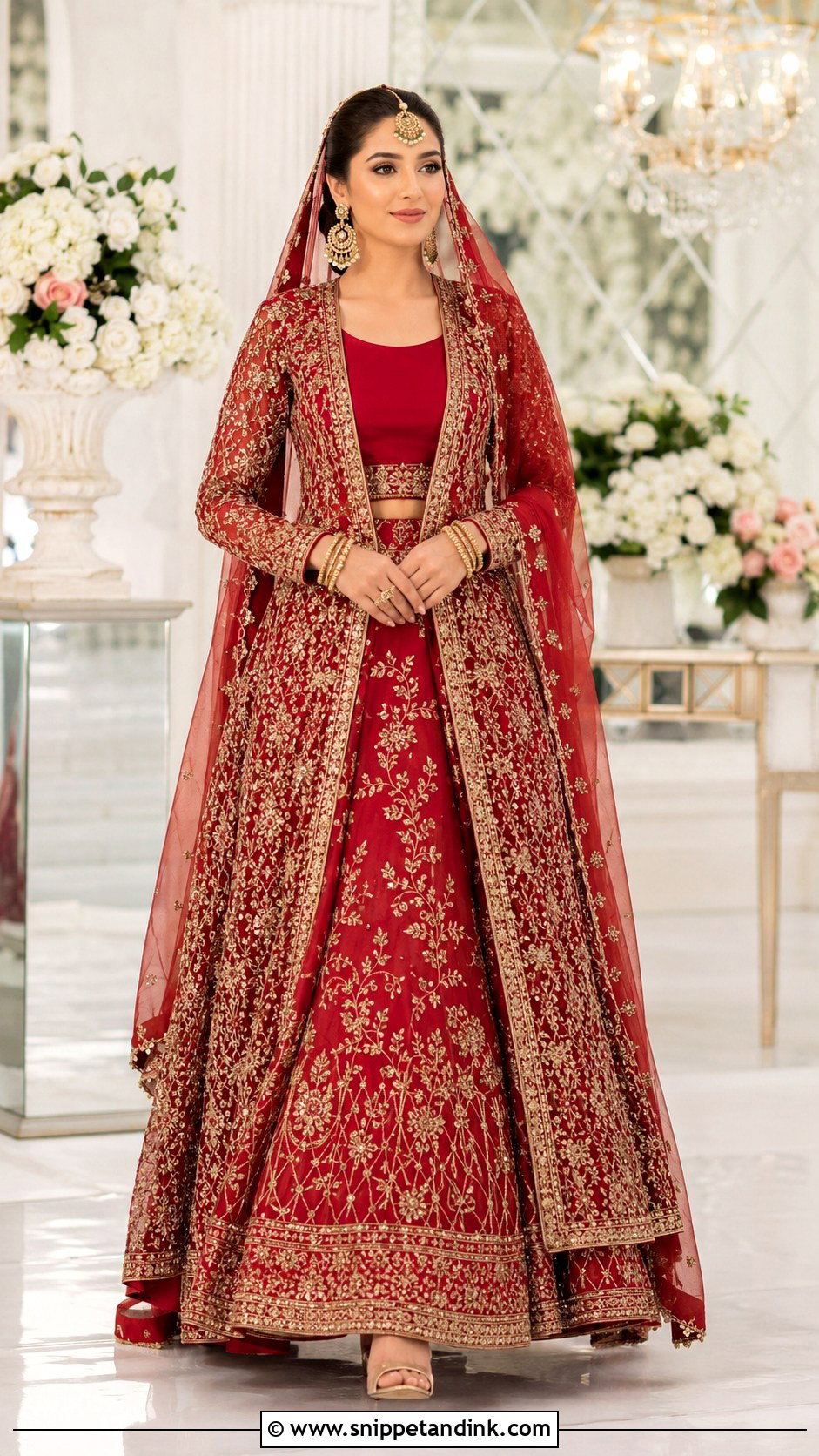
A long embroidered jacket over a red lehenga gives depth, coverage and a strong modern line. Start with a fitted blouse and a moderately flared skirt in one red, then add a front-open organza, net or velvet jacket with heavy work along the edges, sleeves and lower panels. The opening should show enough blouse and skirt that each layer reads separately. Choose a light head dupatta rather than another heavy drape, with statement earrings, a tikka, bangles and simple gold heels. I end the jacket slightly above the lehenga hem so fabric doesn’t pool at the feet, and put hidden hooks at the waist to hold it in place for photographs.
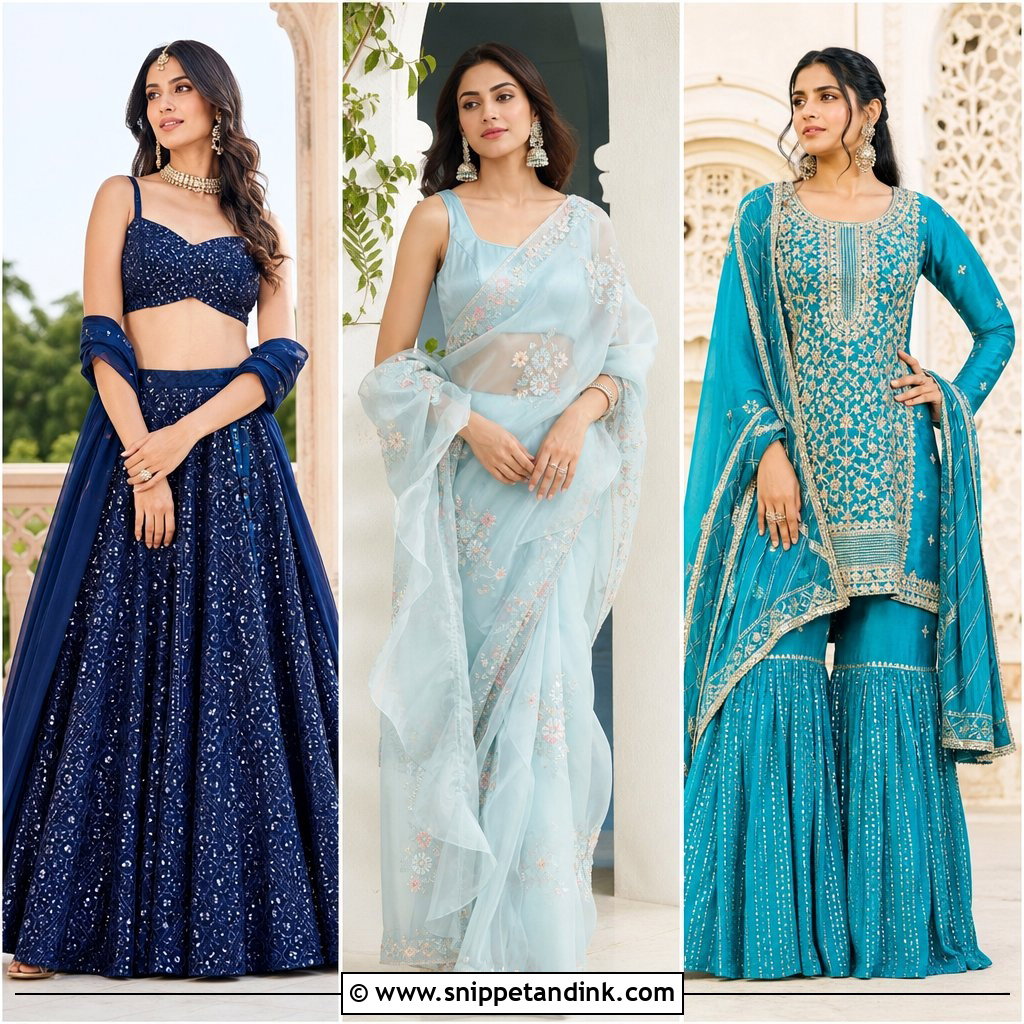
20. Minimal Red Lehenga Barat Dress
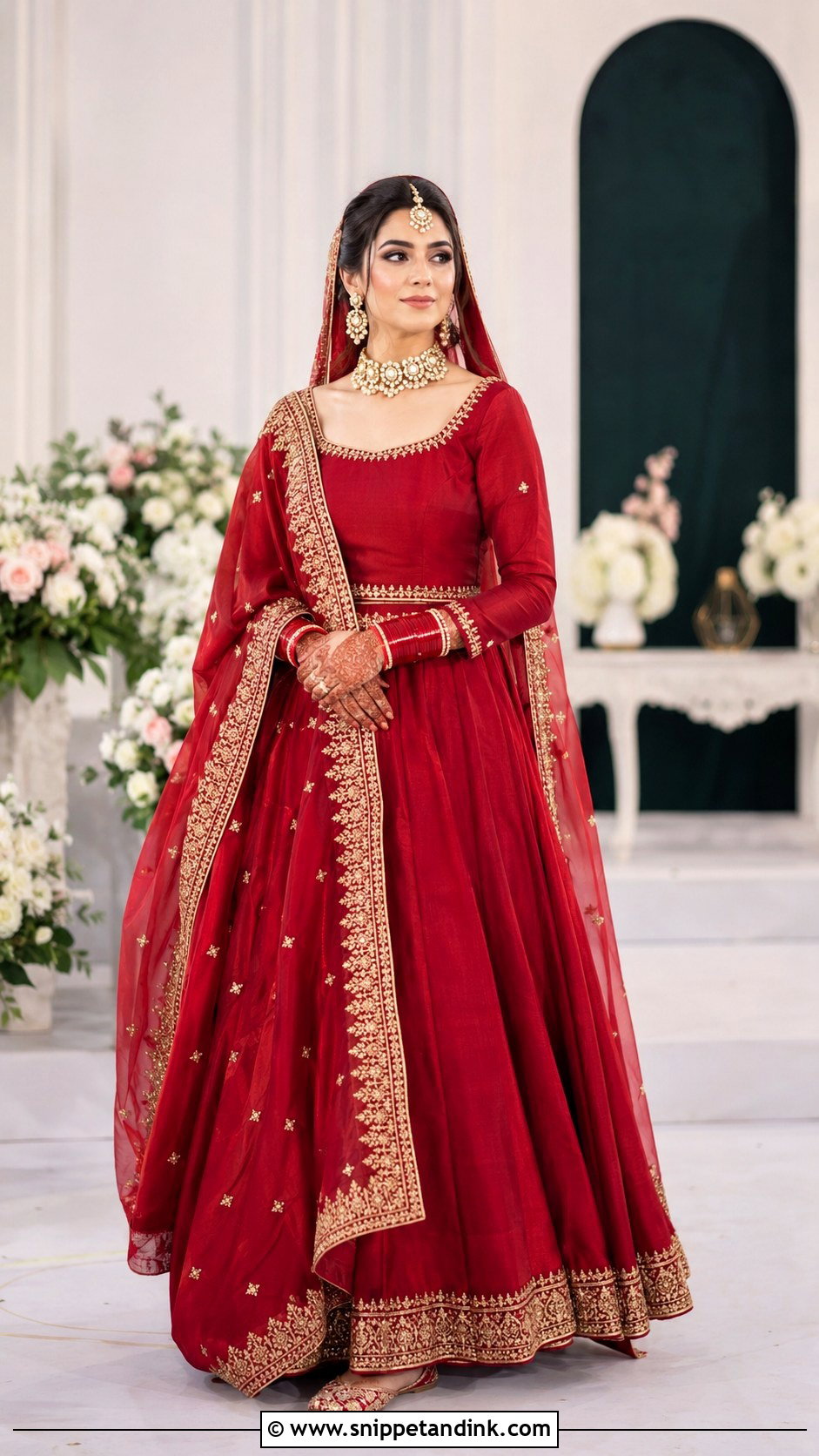
Minimal can look deeply bridal when the fabric, tailoring and accessories are right. Rich raw silk with embroidery only at the hem, blouse neckline, sleeves and dupatta border; open space across the skirt lets the handwork stand out and cuts the weight. One long, well-finished dupatta over the head and shoulder, plus a polki choker, earrings, tikka, red bangles and khussa. Spend the budget on fit and on a red that suits your skin. I hold red swatches against a bride’s bare face without makeup: blue-reds brighten some skin tones, orange-reds warm others. This route suits a smaller venue, a daytime ceremony or a bride who simply prefers restraint.
If a Hook Pops During the Nikah
Something small almost always goes wrong with a heavy bridal outfit. Most of it can be fixed in two minutes if the right person knows what to do.
A blouse hook gives way
A safety pin through both edges from the inside holds well until you can sew a new hook. I ask tailors for a spare hook and eye stitched inside the waistband for exactly this reason.
The head dupatta keeps sliding
Re-pin it into the bun or the hair base with U-pins crossed in an X, not into loose hair. If it still slips, the border is too heavy for the pinning point; fold the back edge under once to shift the weight.
A hem or border tears
Turn it under and hold it with double-sided fabric tape or a couple of hidden safety pins. Don’t trim threads on the day; a pulled metallic thread can unravel a whole row of embroidery.
Give these fixes to one calm person, a sister or friend who stays within reach all evening, and show her where the kit is before you leave for the venue.
Walk, Sit, Turn and Lift Your Arms in It
Cultural beauty, sound construction and enough comfort for a long celebration are what make a Barat outfit work. You’ve seen red lehengas, ghararas, shararas, gowns and lighter contemporary options here. Before you finalize, try on the complete look with dupatta, jewelry, shoes and underskirt, then walk, sit, turn and lift your arms to catch fit problems early. Let the venue and weather guide the choice between velvet, silk, organza and net. You don’t need heavy embroidery to look memorable. A flattering shape, secure draping, skilled tailoring and a color you love will carry the day.
You'll Like These Ideas:


Leave a Reply