
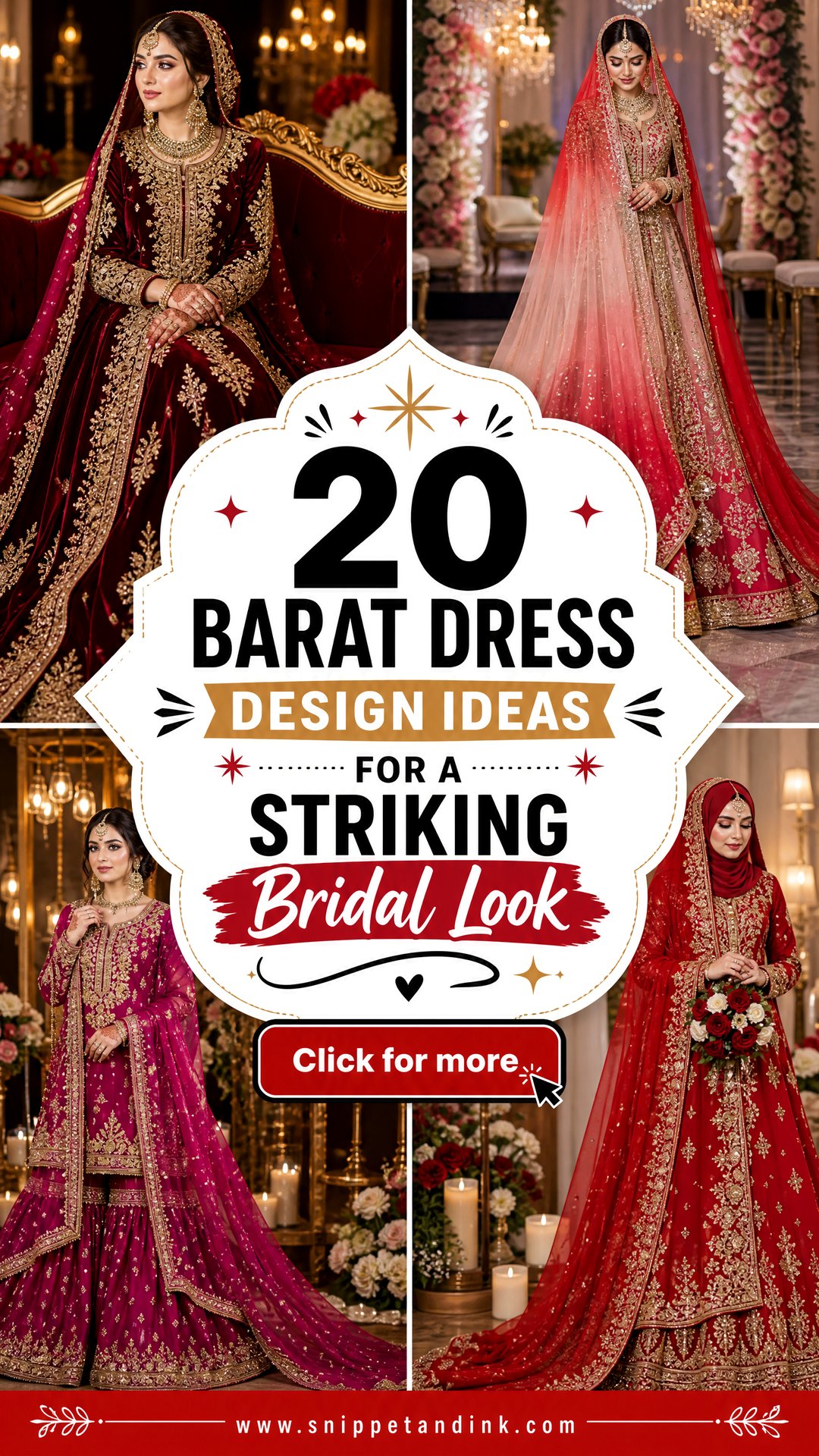
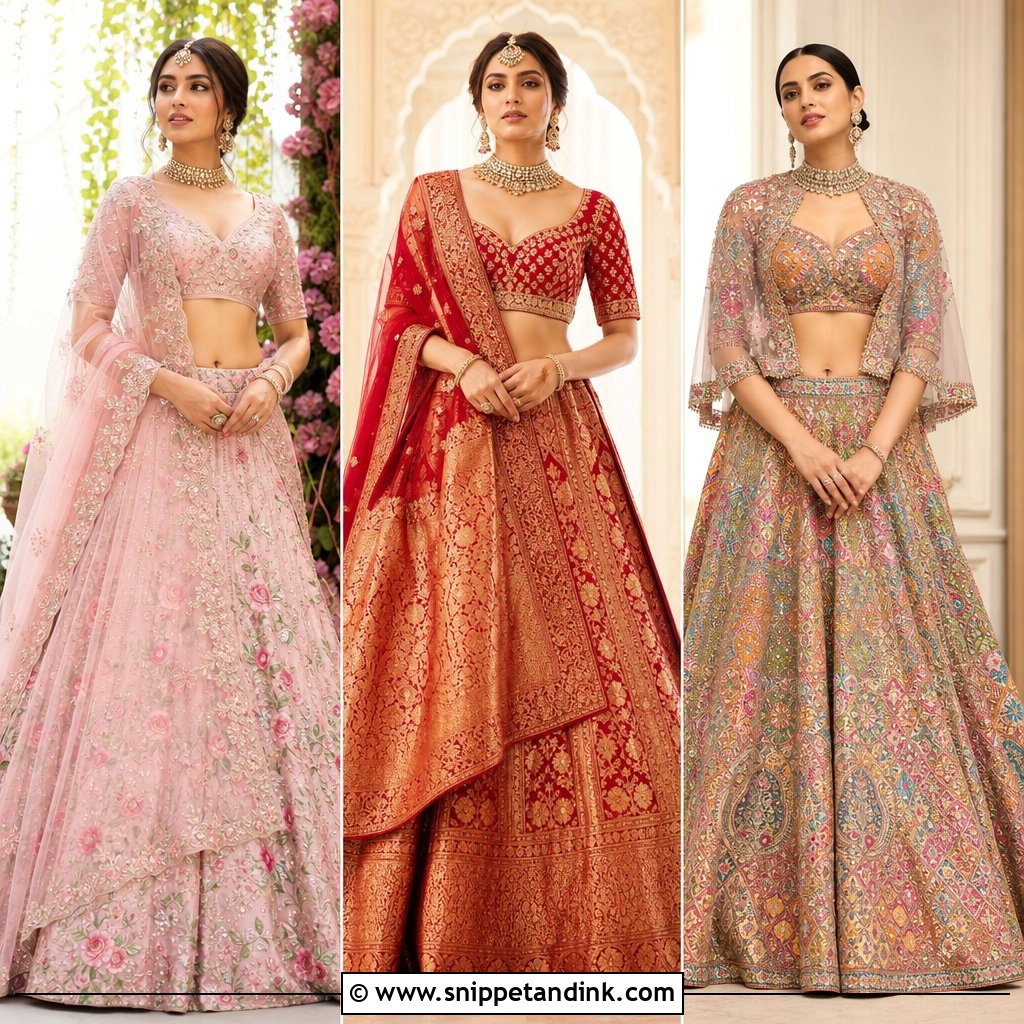
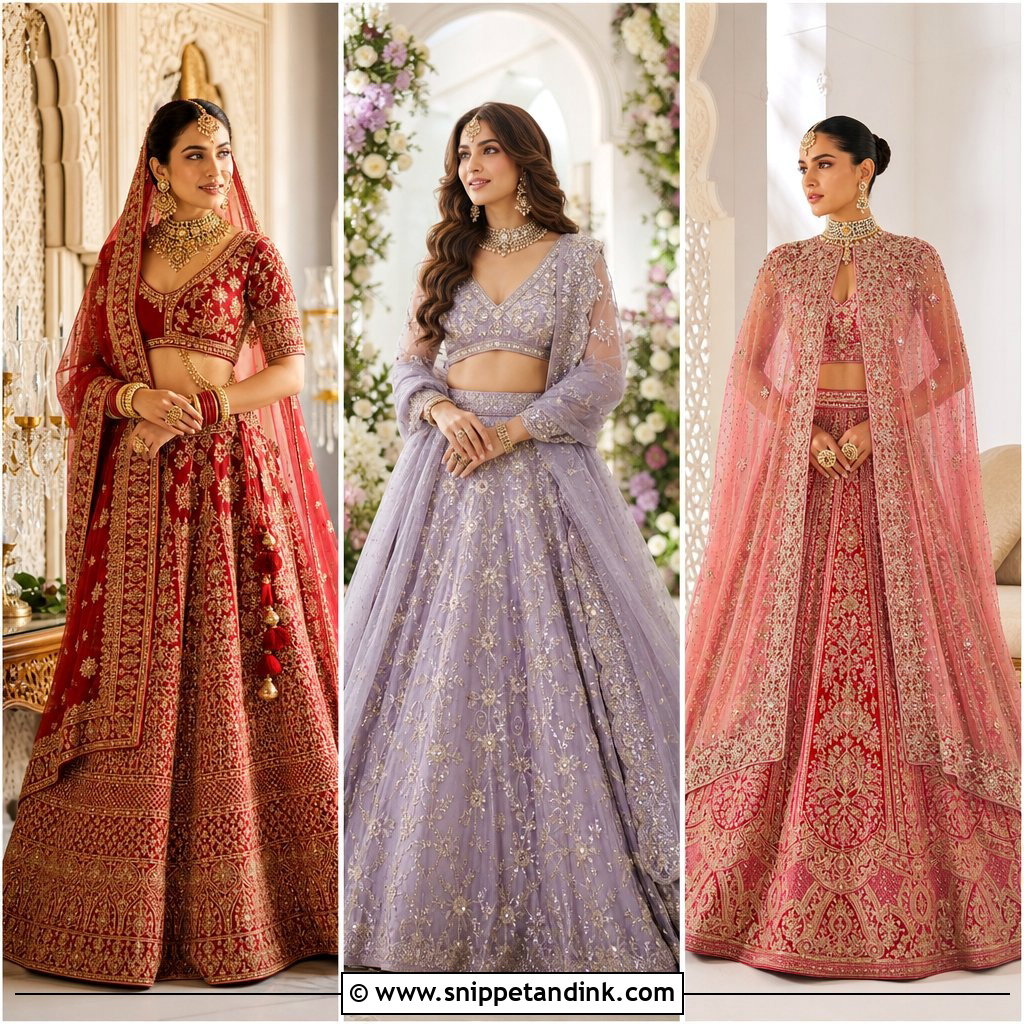
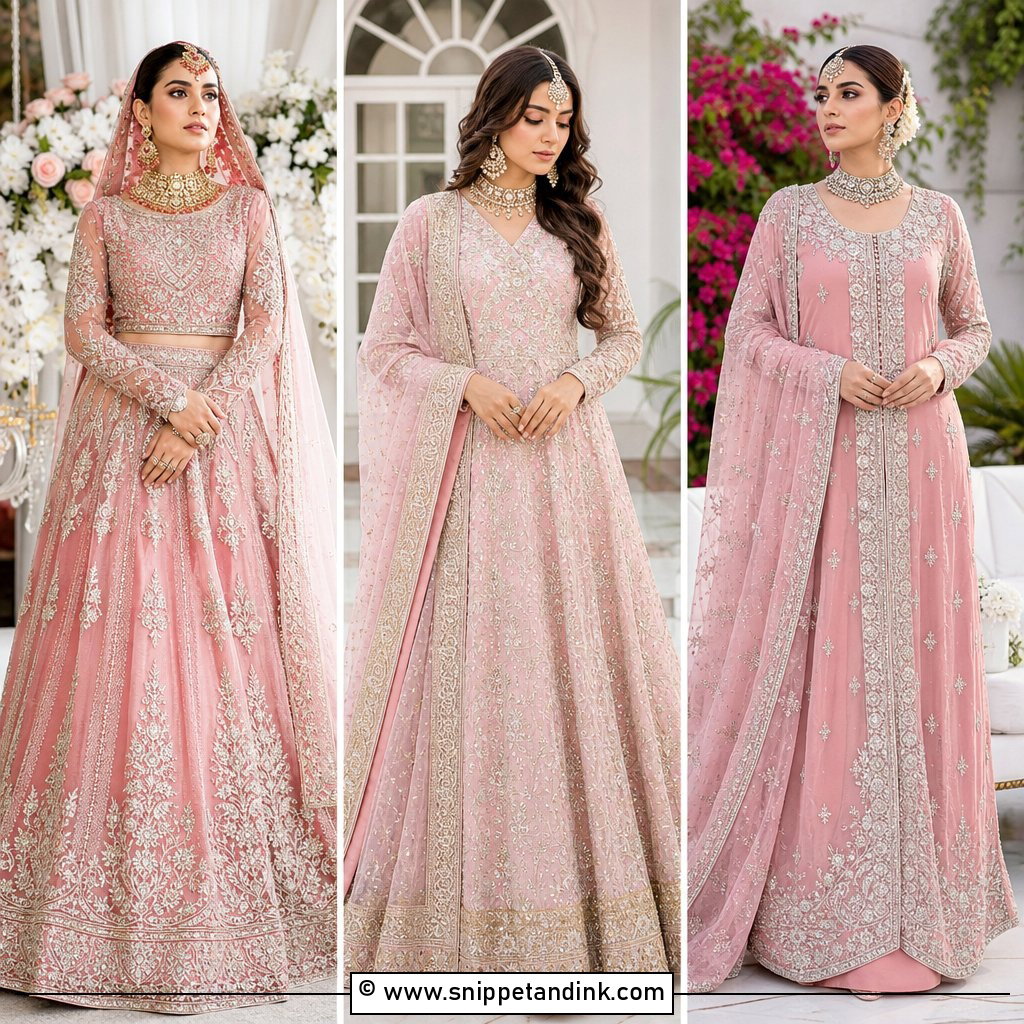
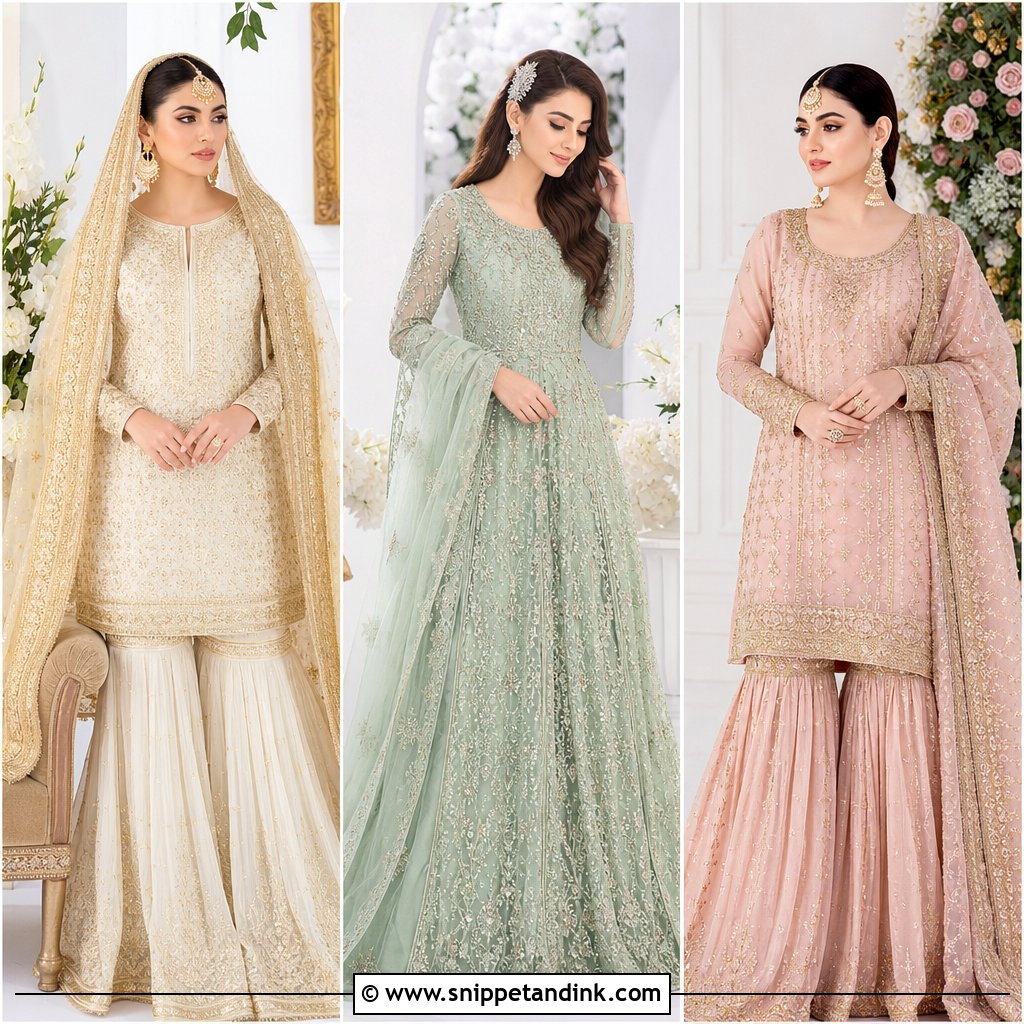
Most brides start with embroidery samples and end up overwhelmed. I’d start somewhere else: the full picture of you on the stage, from dupatta to shoes. The outfit has to feel ceremonial, hold up in photographs and still look like your taste. Red is the classic, but maroon, burgundy, pink, gold and jewel tones are every bit as regal. Shape matters as much as color: a lehenga choli for grandeur, a farshi gharara for movement, a pishwas for graceful coverage. The designs below are complete outfits, with notes on where the dupatta sits, what jewelry suits the neckline and what each one asks of you on the day, from heritage handwork to cleaner modern finishes.
Reading a Designer’s Sketch Before Paying a Deposit
A sketch is a promise, and a vague one. Before I let a bride sign off on a custom Barat outfit, we turn the drawing into something you can hold. Ask for these at the design meeting:
- A fabric swatch of the actual base cloth, dyed in your shade, not a color from a catalogue page.
- A worked sample of the main motif, so you can see the density and how much metal thread is in it.
- A written note of where embroidery goes on each piece: blouse, skirt panels, border depth and both dupattas.
- The dupatta sizes and fabric weights, because the head dupatta decides your comfort more than the skirt does.
- The fitting dates and the delivery date, agreed in writing.
Hold the swatch next to your face by a window and again under warm indoor light. Reds and pinks shift more than any other bridal colors between those two settings, and it is far easier to change a dye now than to live with a shade you didn’t expect.
Ask one more question before money changes hands: what happens if the first fitting is wrong? A good workshop will tell you how many alteration rounds are included and how close to the date they can still re-cut a blouse. If the answer is vague, I’d treat that as a warning.
1. Classic Red Barat Dress With Double Dupatta
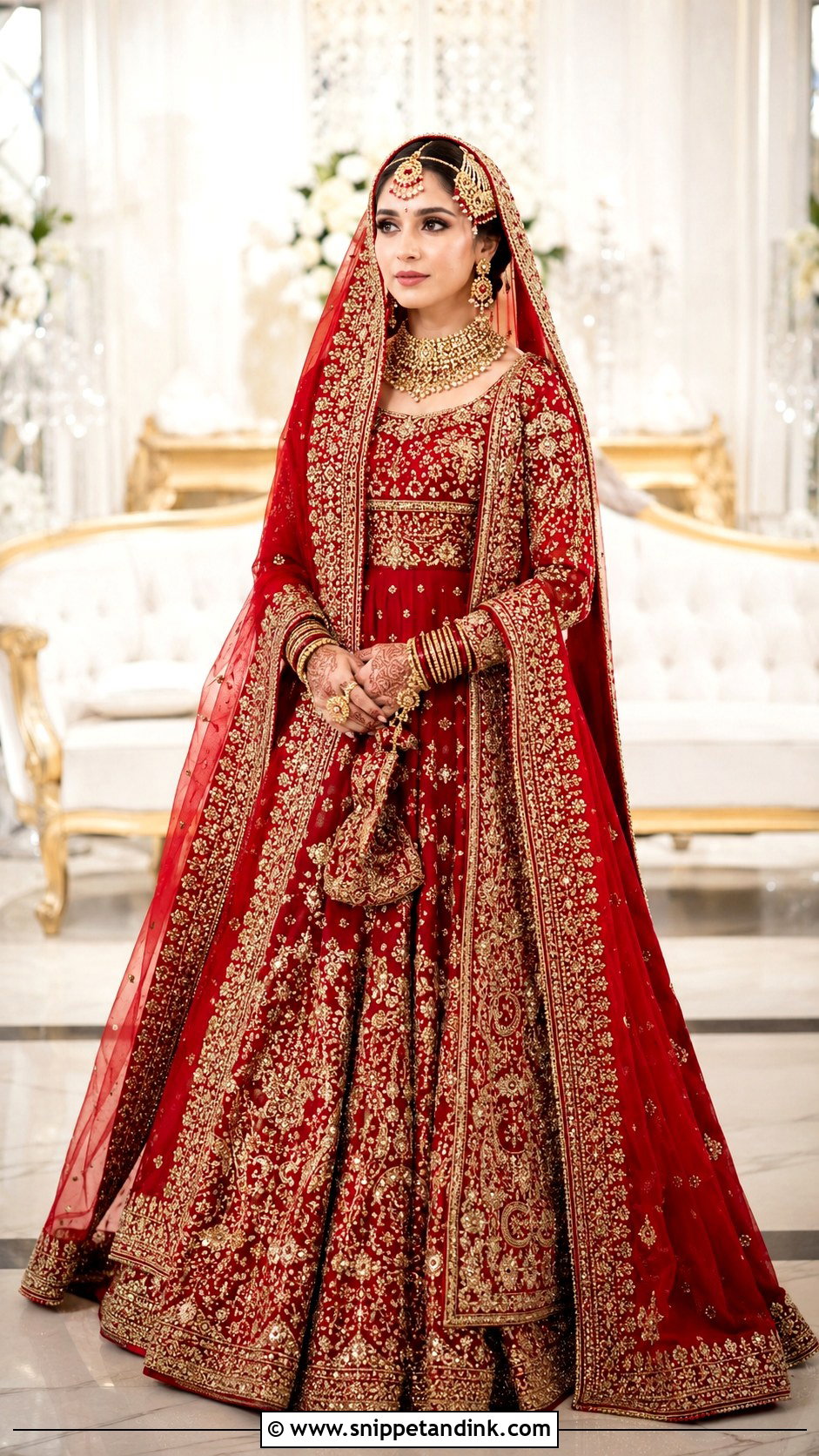
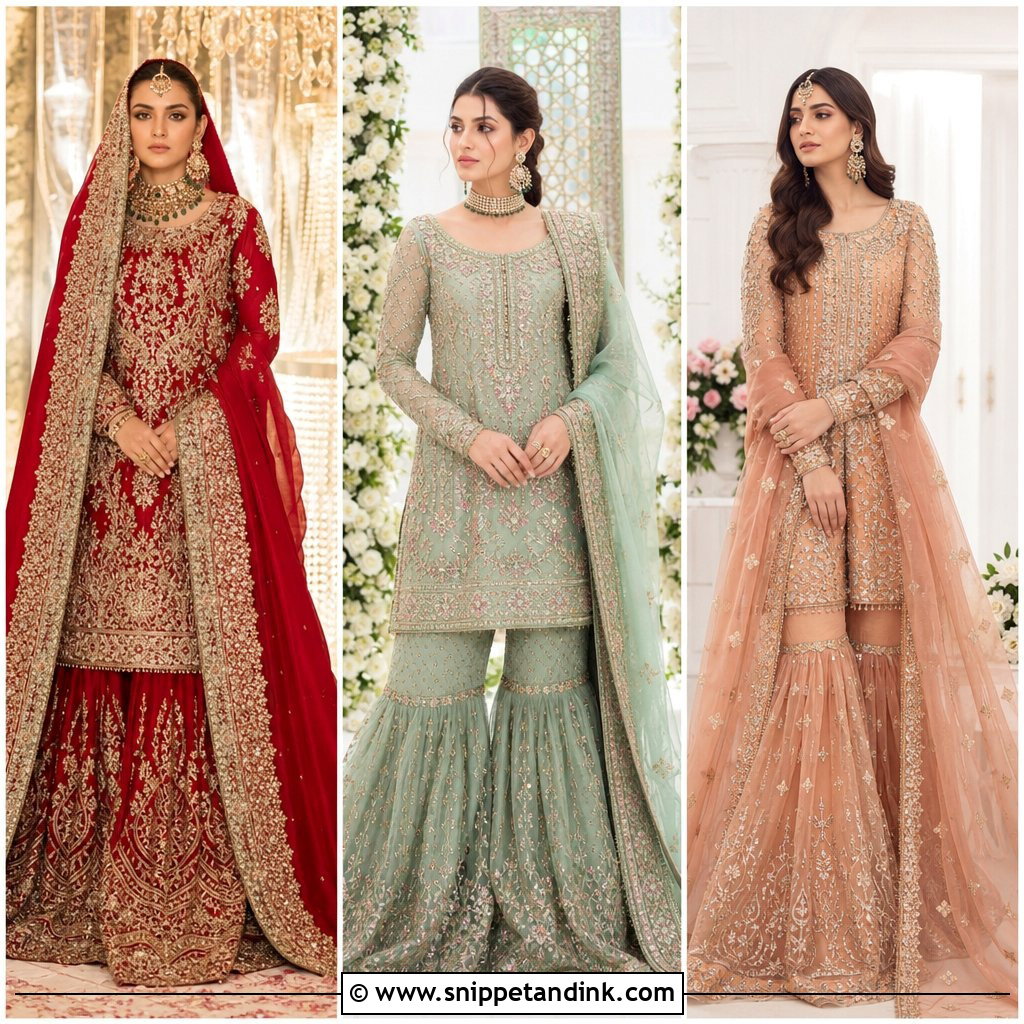
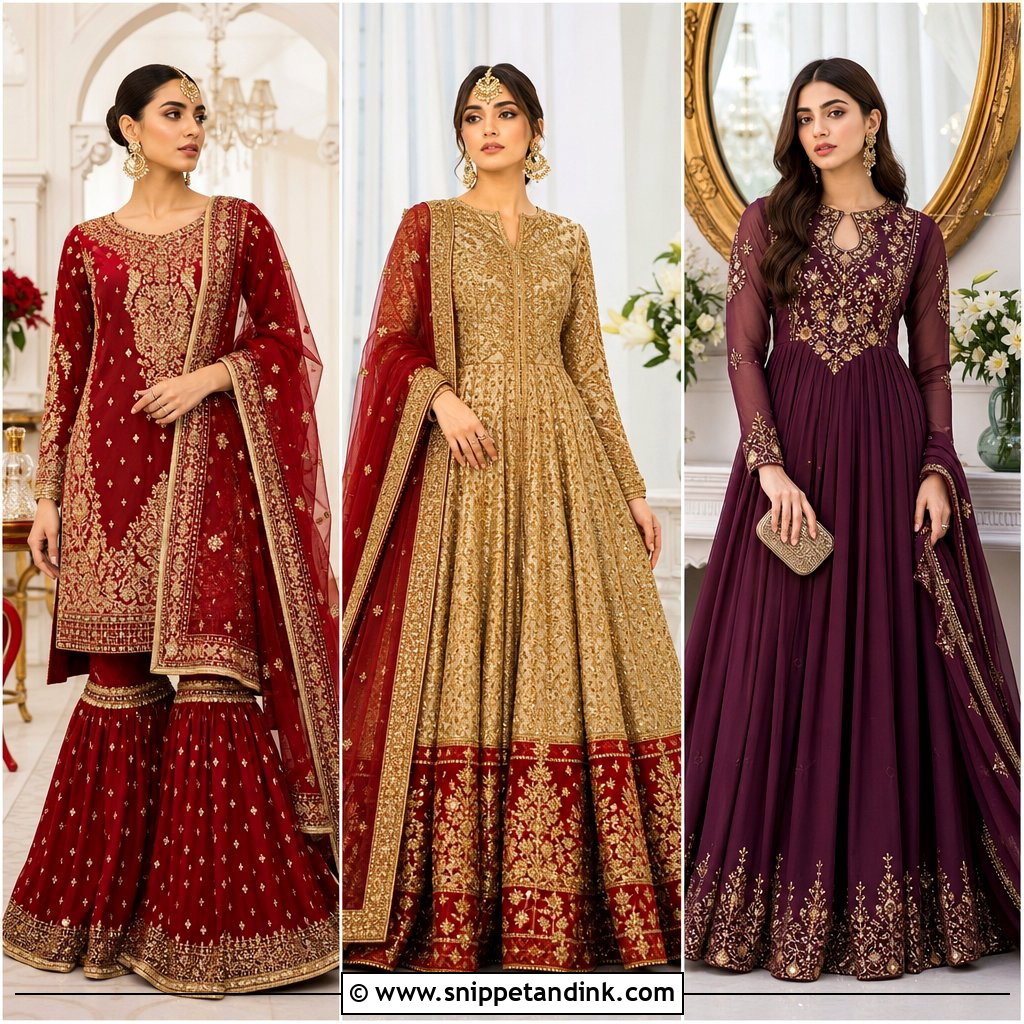
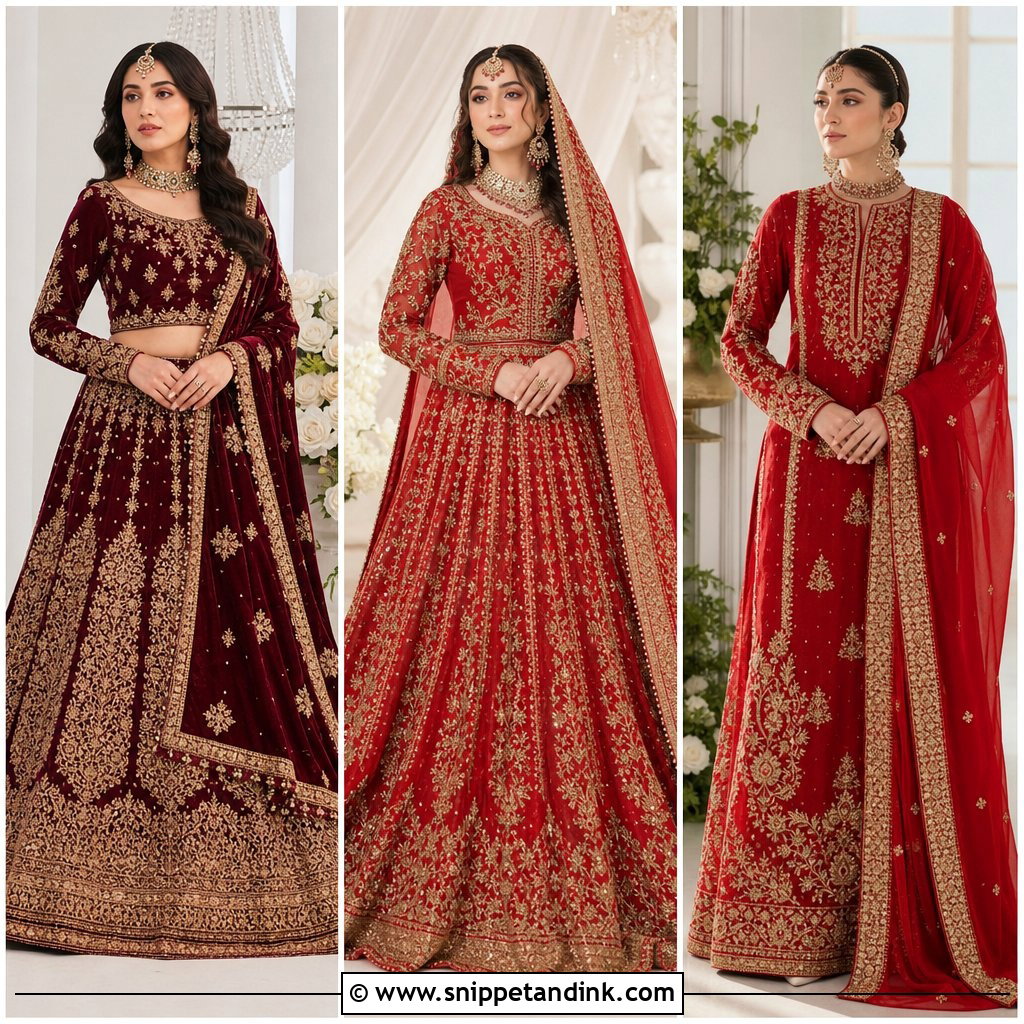
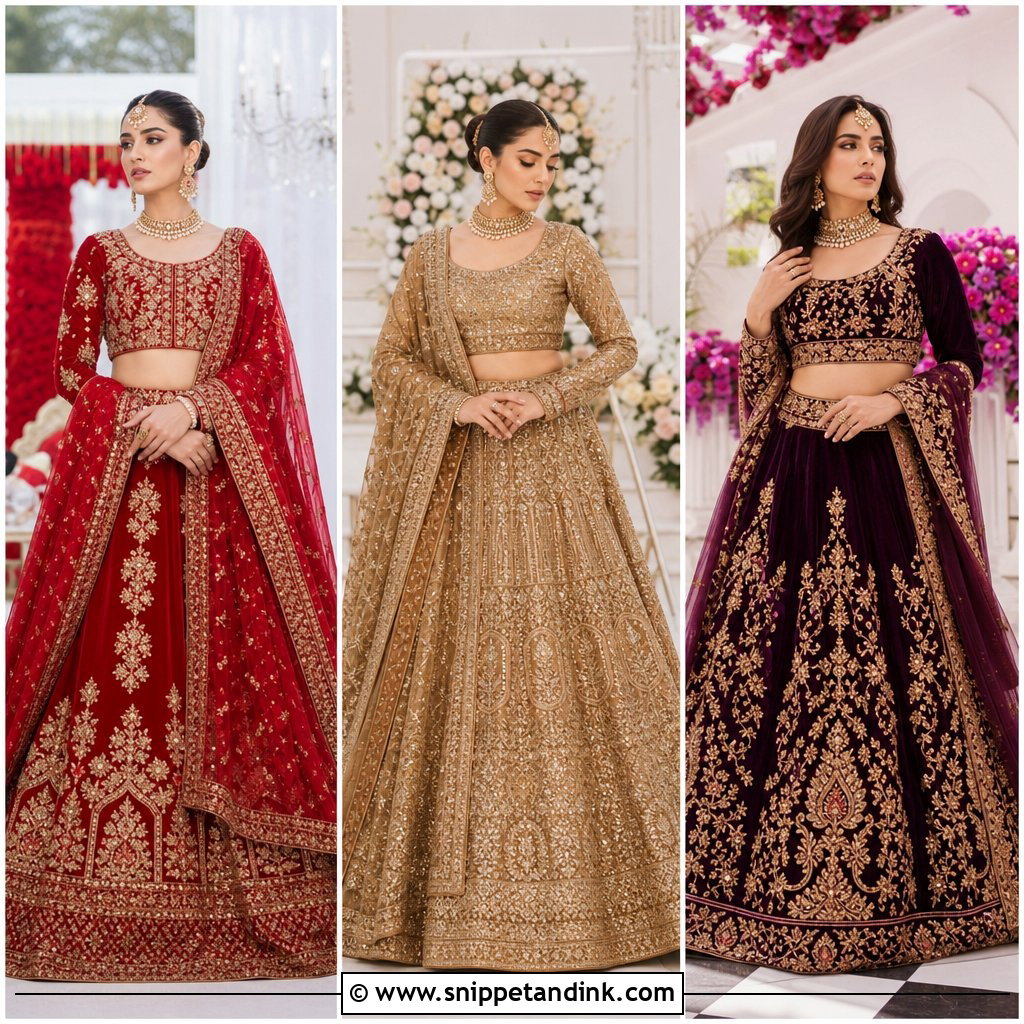
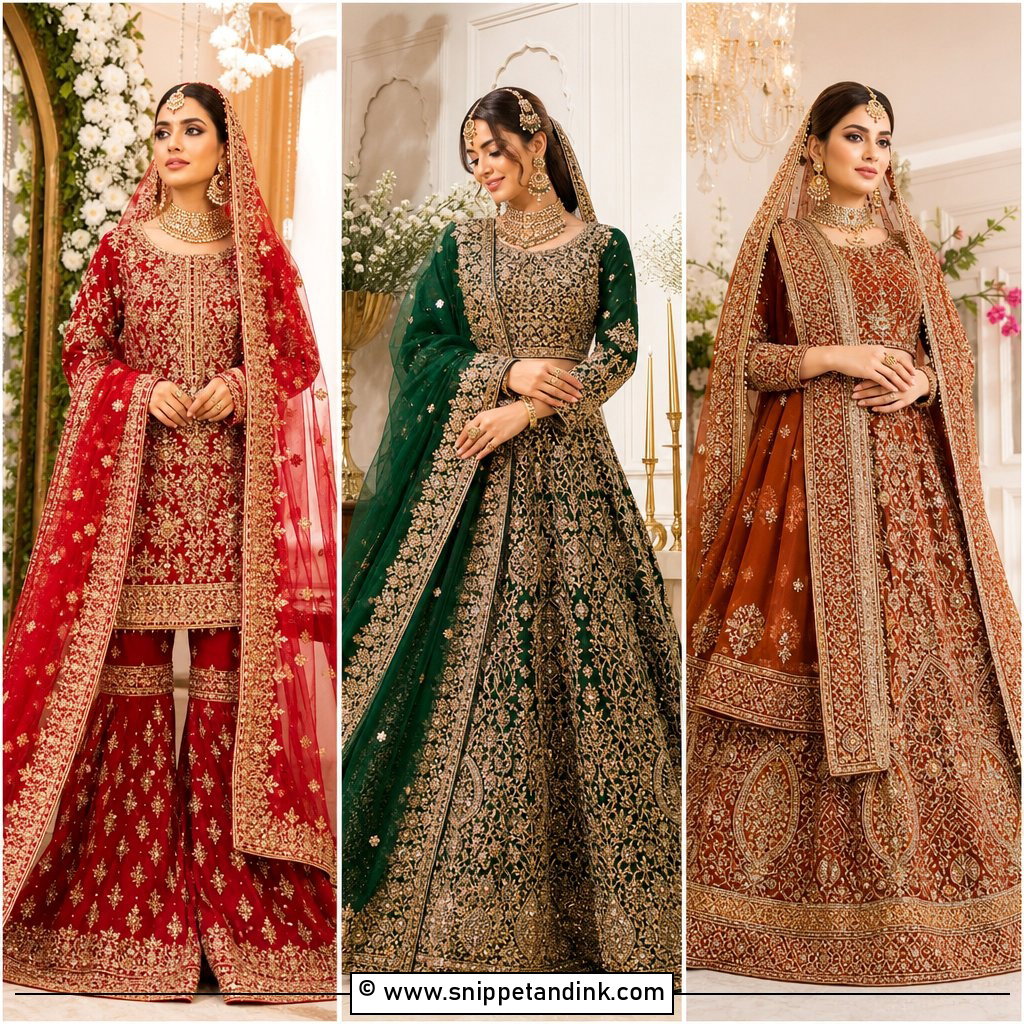
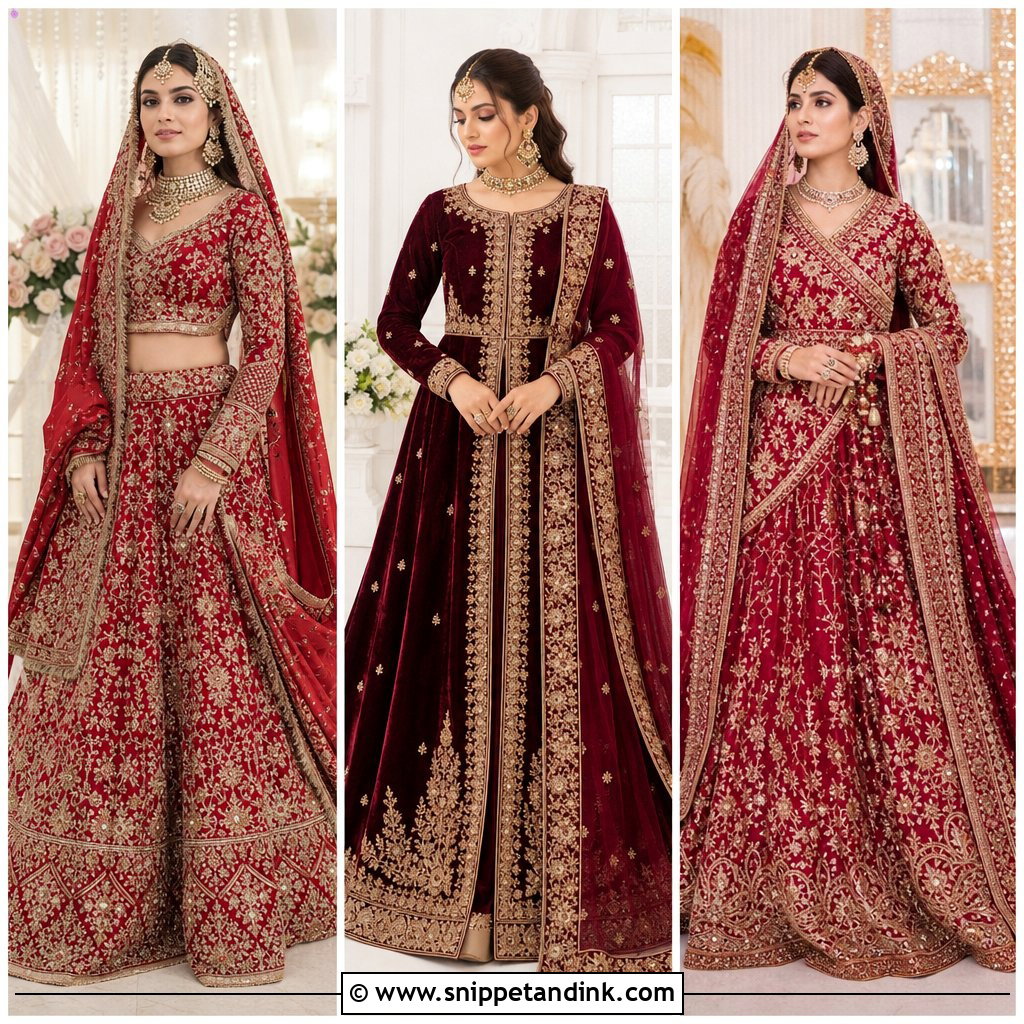
The double-dupatta red lehenga is the image most Pakistani families carry in their heads. A structured raw silk skirt with zardozi, dabka and fine thread in balanced borders, a fitted blouse with secure sleeves, a light red net dupatta over the head and an embroidered one across the shoulder. Putting the lighter piece on the head is the clever part: you get fullness without a heavy weight on your hair, and the blouse work stays visible. Gold jewelry, a matha patti, stacked bangles and khussa complete it. On petite brides I scale the motifs down and lift the waistline slightly; taller brides carry wider borders well.
2. Deep Maroon Barat Dress With Farshi Lehenga
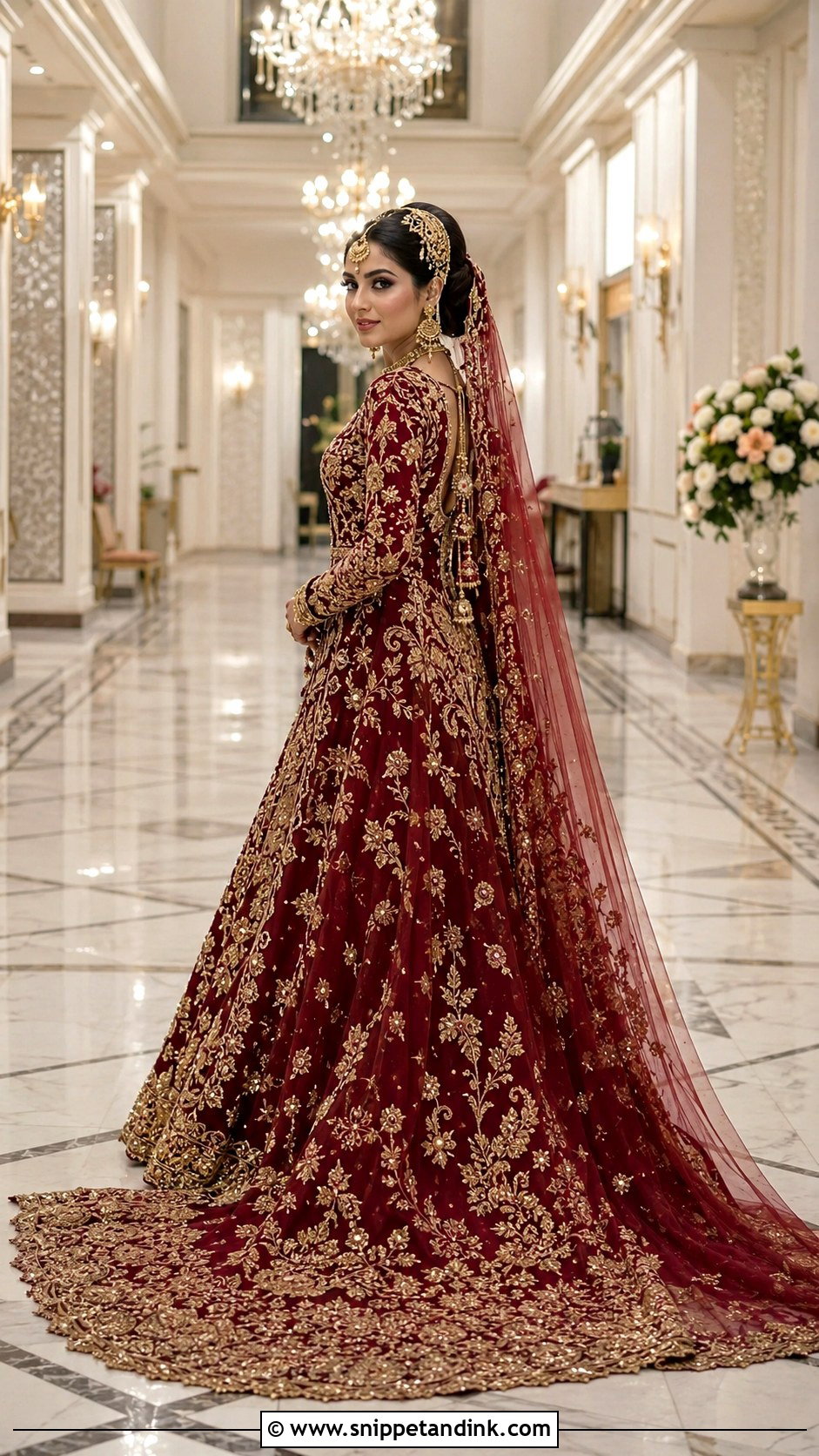
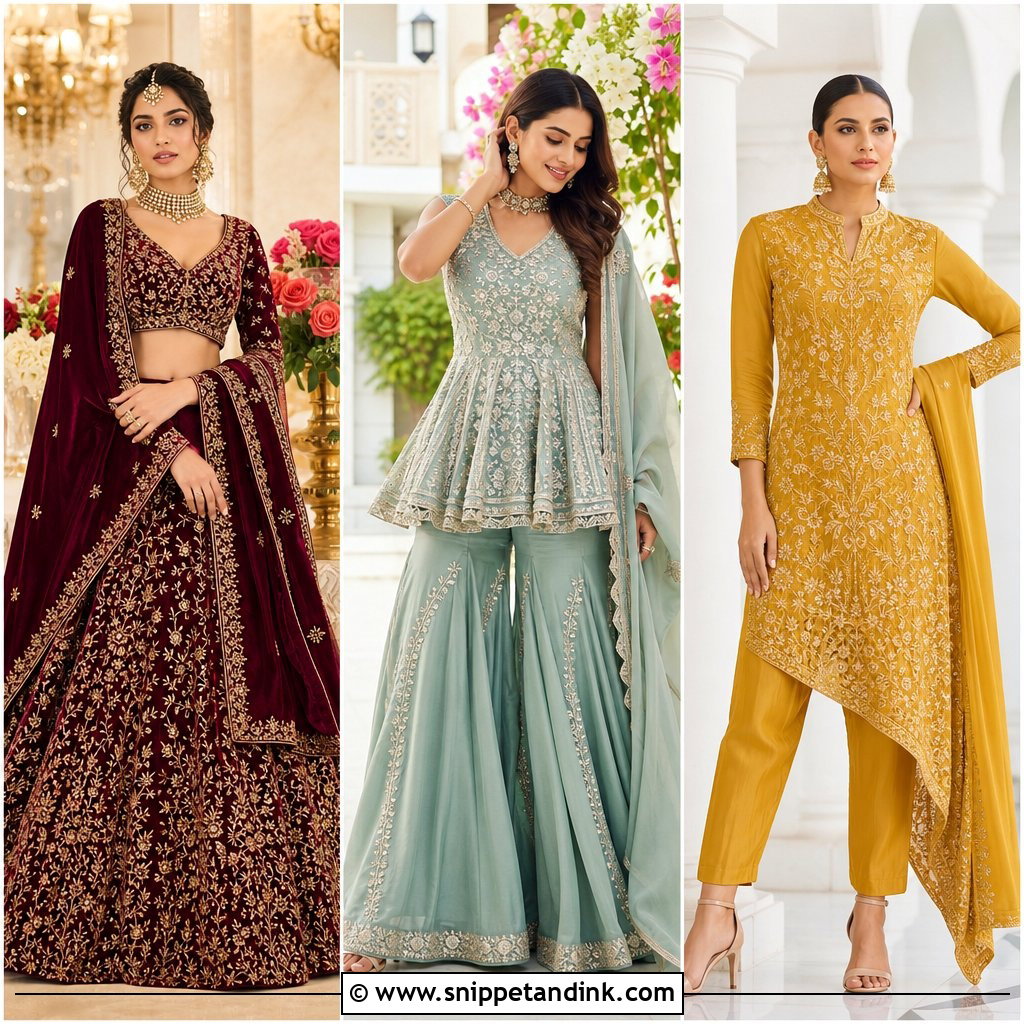
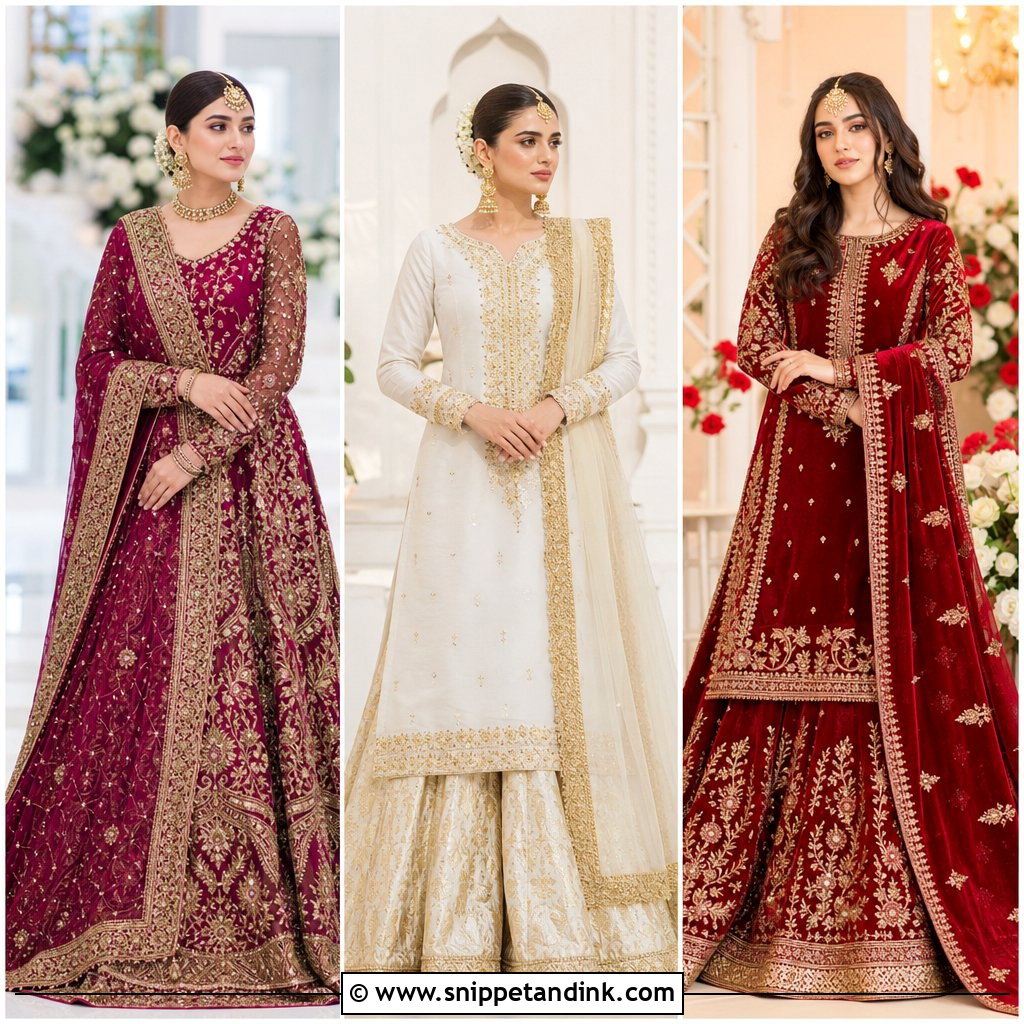
A farshi lehenga in deep maroon is about the sweep behind you. Velvet, jamawar or heavy raw silk with antique gold concentrated at the hem, a longer shirt for a modest line, fitted sleeves with worked cuffs and a neckline that can hold a heavy necklace. A broad-bordered maroon dupatta covers the head and a lighter one falls over the arm, with a passa, maroon bangles and cushioned heels. I always ask the tailor for a small loop sewn inside the trailing panel. After the entrance you slip it over your wrist, and the train stops sweeping up petals and dust for the rest of the night.
3. Crimson Barat Dress With Gharara
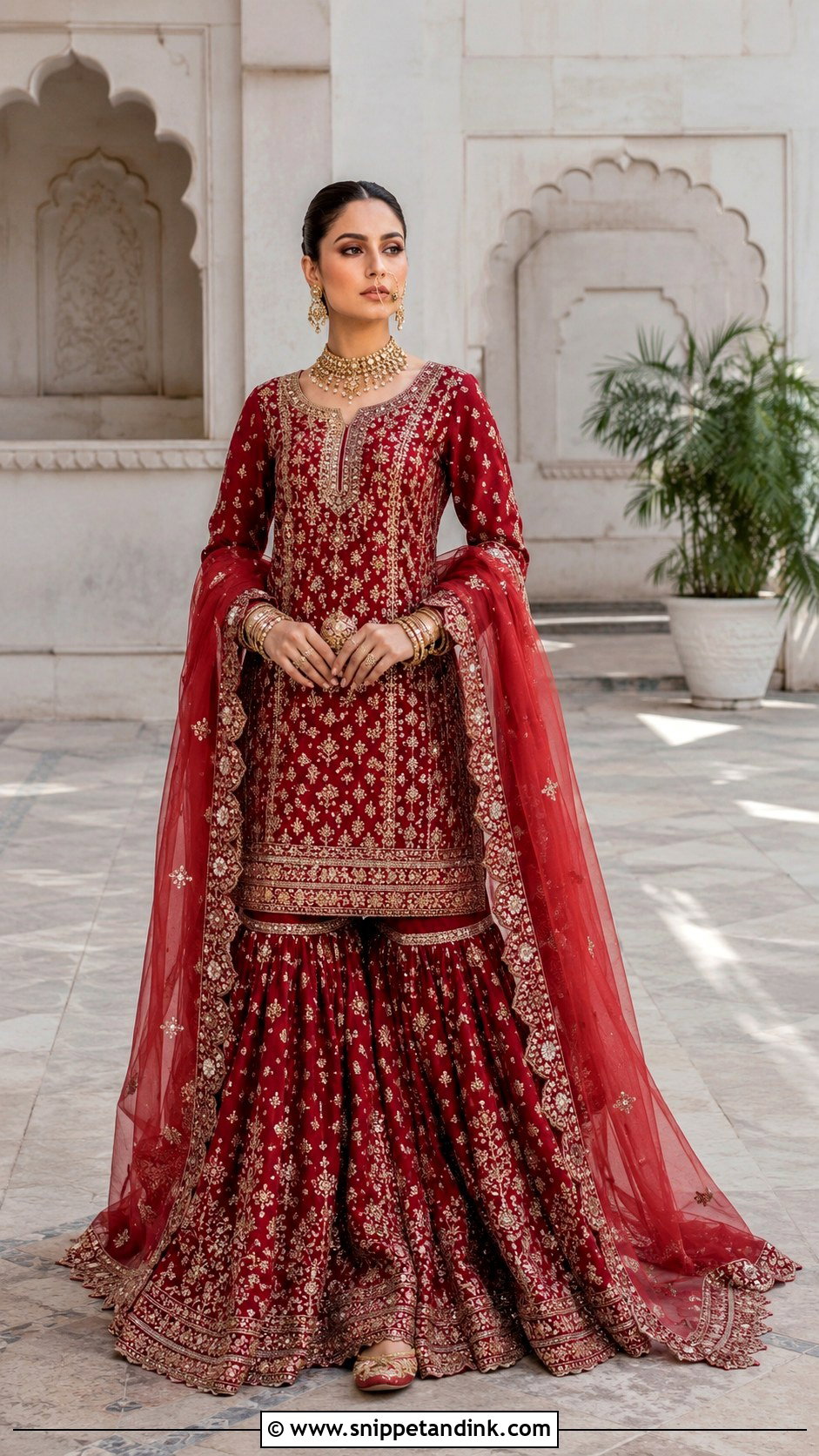
A crimson gharara gives freedom at the waist and hips that a lehenga never will. Heavily worked pants with gota, zari or zardozi flaring from the knee, under a straight knee-length shirt with a neat neckline and full sleeves. The shirt must end above that knee flare, or the gharara’s whole shape disappears. I prefer a soft net dupatta with scattered motifs and a worked border here; a heavy one drags the shirt’s shoulders down. Jhumkas, a layered choker, a fine nose ring and khussa finish it, and a sleek bun keeps the focus on the neckline.
4. Red Pishwas Barat Dress With Lehenga
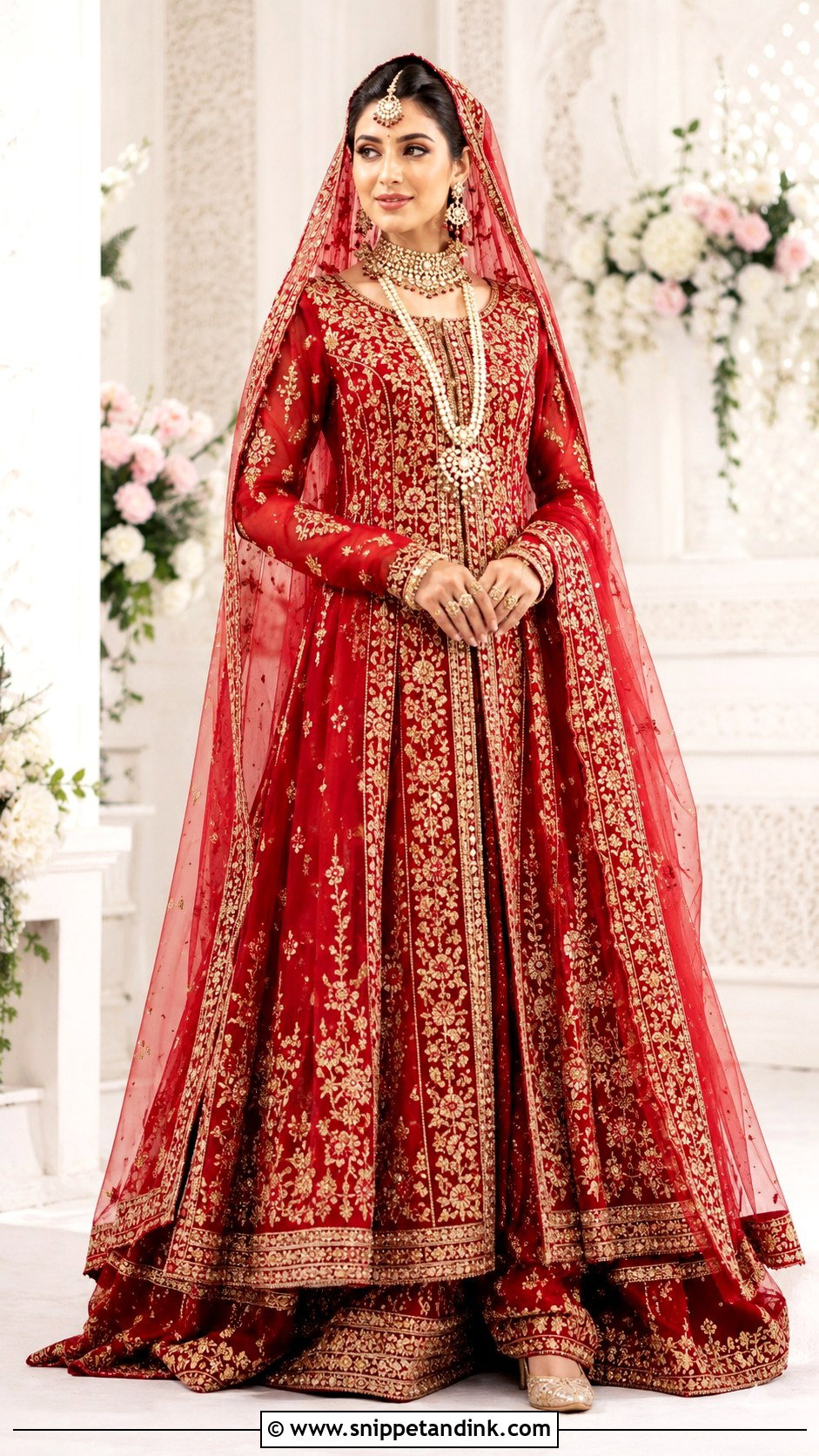
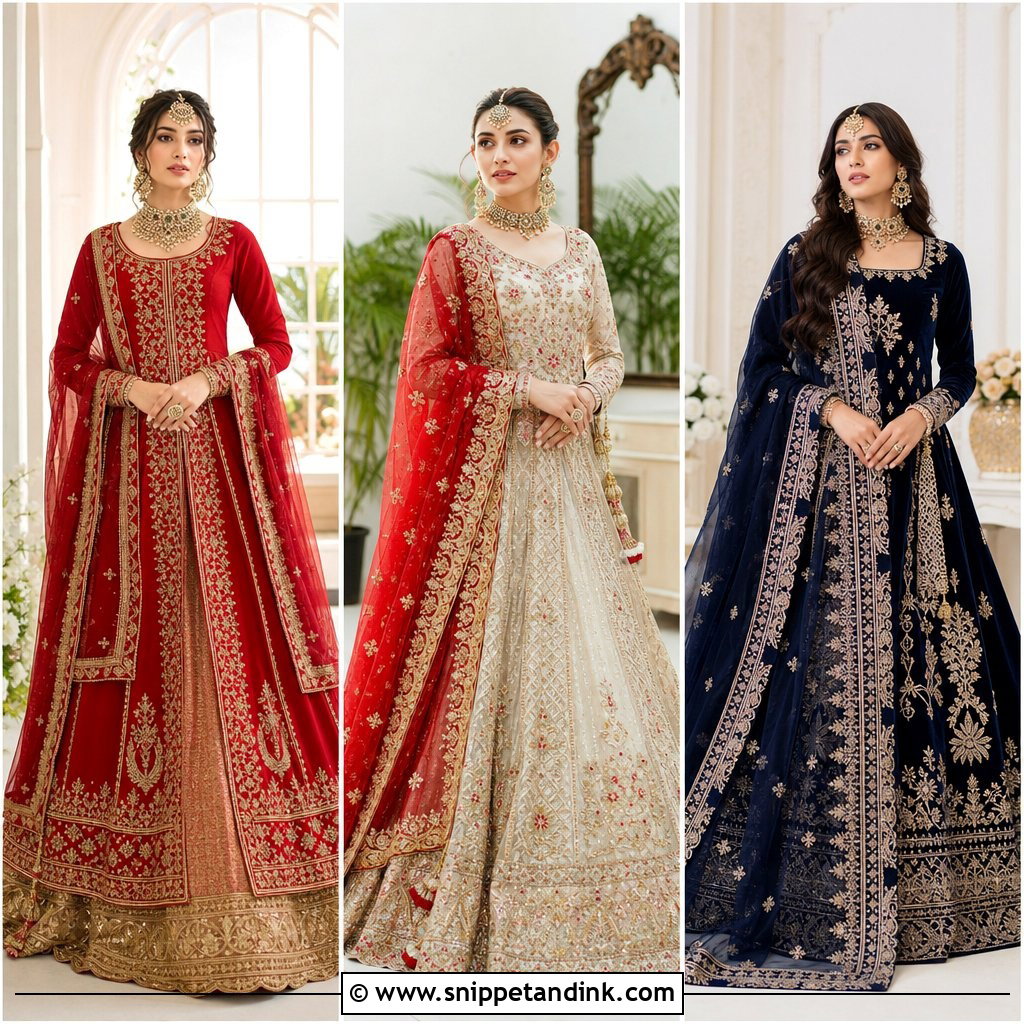
Pishwas panels over a lehenga give an almost architectural flare. The pishwas needs a fitted bodice, a defined waist and evenly embroidered panels; underneath, a plain lehenga or underskirt adds volume without the weight of a second embroidered layer. Gold florals, small sequins and traditional borders keep it rich but fluid. A sheer red dupatta over the head can fall naturally down one arm. With a rounded neckline I pair a choker plus a longer necklace, statement earrings and a centered tikka. Full sleeves and a higher back give more coverage. Bring your shoes to the hemming: low block heels or padded khussa only, because the pishwas length is set to a single height.
5. Burgundy Velvet Barat Dress With Gold Embroidery
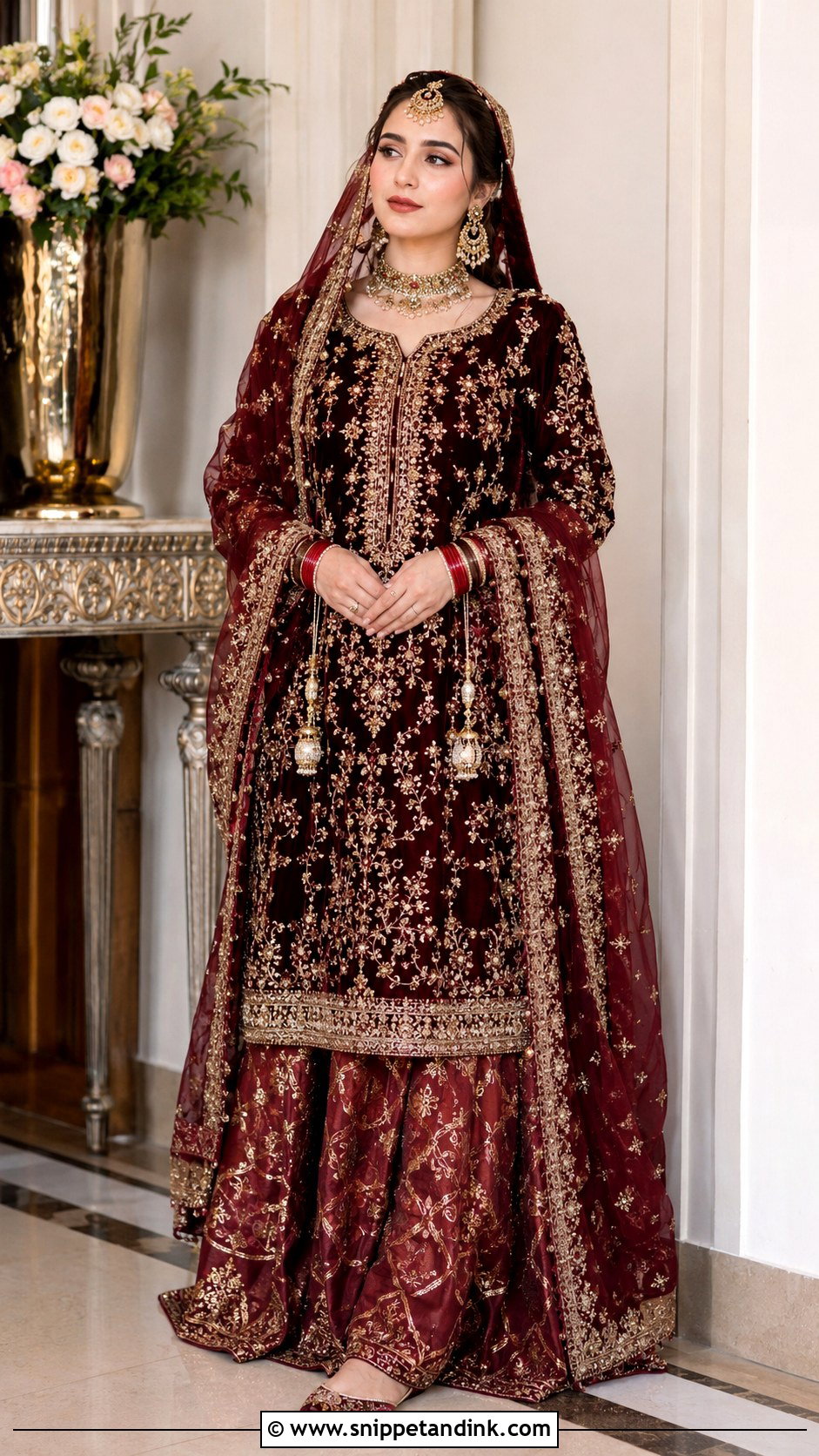
Burgundy velvet is a cold-weather fabric, full stop. Build the outfit around a long velvet shirt with antique gold zardozi, resham and beadwork at the neckline, sleeves and hem, and pair it with a raw silk lehenga so you are not wearing velvet from shoulder to floor. A sheer organza or net dupatta softens it. Antique gold, burgundy bangles and closed embellished heels suit the season. Velvet needs ease to fall well, so I have the shirt cut tailored rather than tight; too snug and the pile pulls into shiny stress lines across the back. Ask for a breathable lining, and keep the makeup glowing with a low bun.
6. Rust Red Jamawar Barat Dress
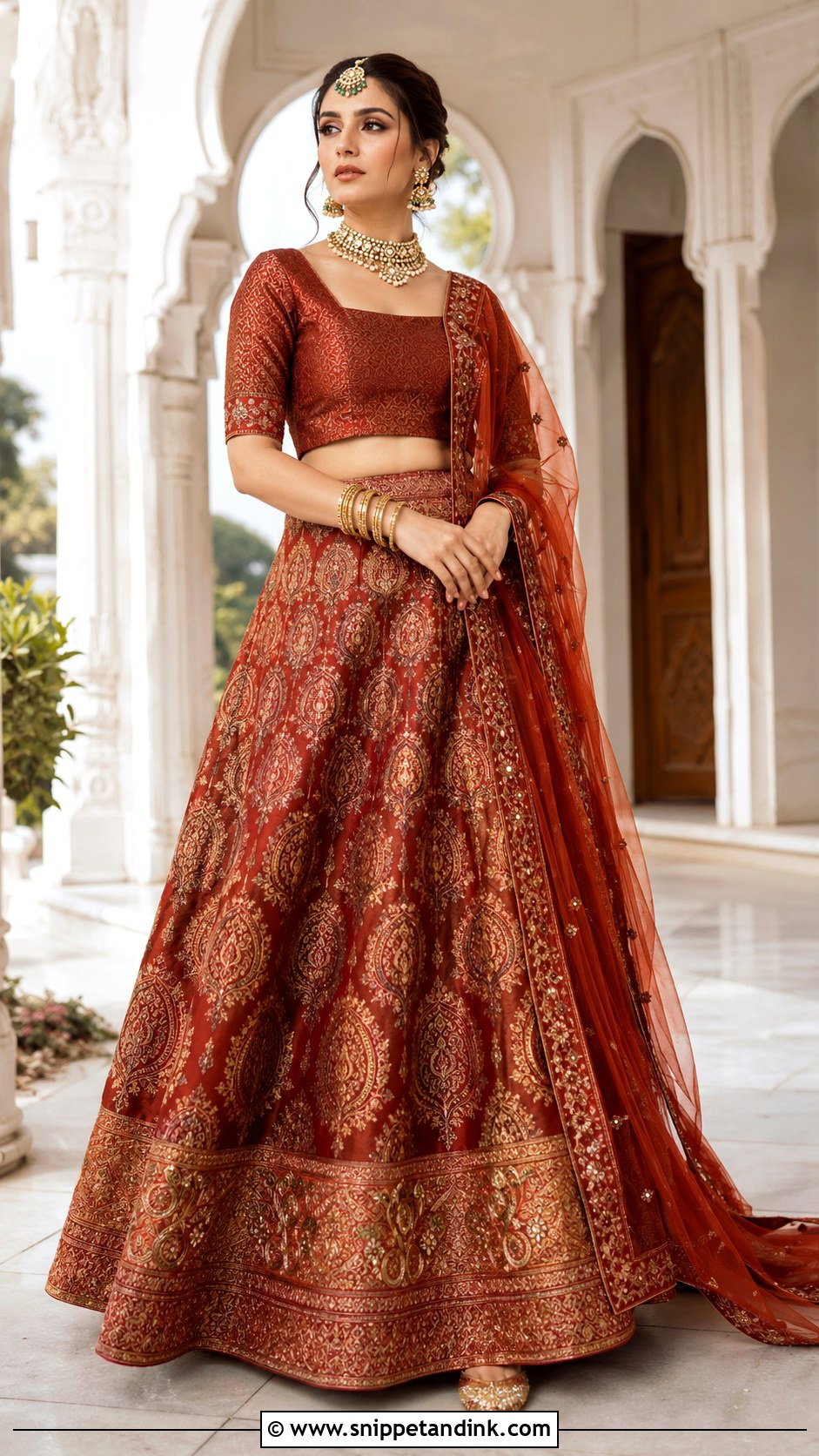
Rust red is warmer and less expected than crimson. A jamawar lehenga already carries a woven pattern, so I pair it with a plain rust raw silk blouse and add hand embroidery only at the neckline, cuffs and waist to link the two. A red-orange organza dupatta with an antique gold border lightens the skirt. Kundan, a statement tikka, gold bangles and copper-toned khussa suit it, with warm neutral makeup and a muted red lip. Don’t add dense embroidery on top of jamawar; the woven motifs and the handwork start fighting, and from a few feet away the skirt just looks busy. A clean A-line cut lets the weave show.
7. Red And Antique Gold Barat Dress
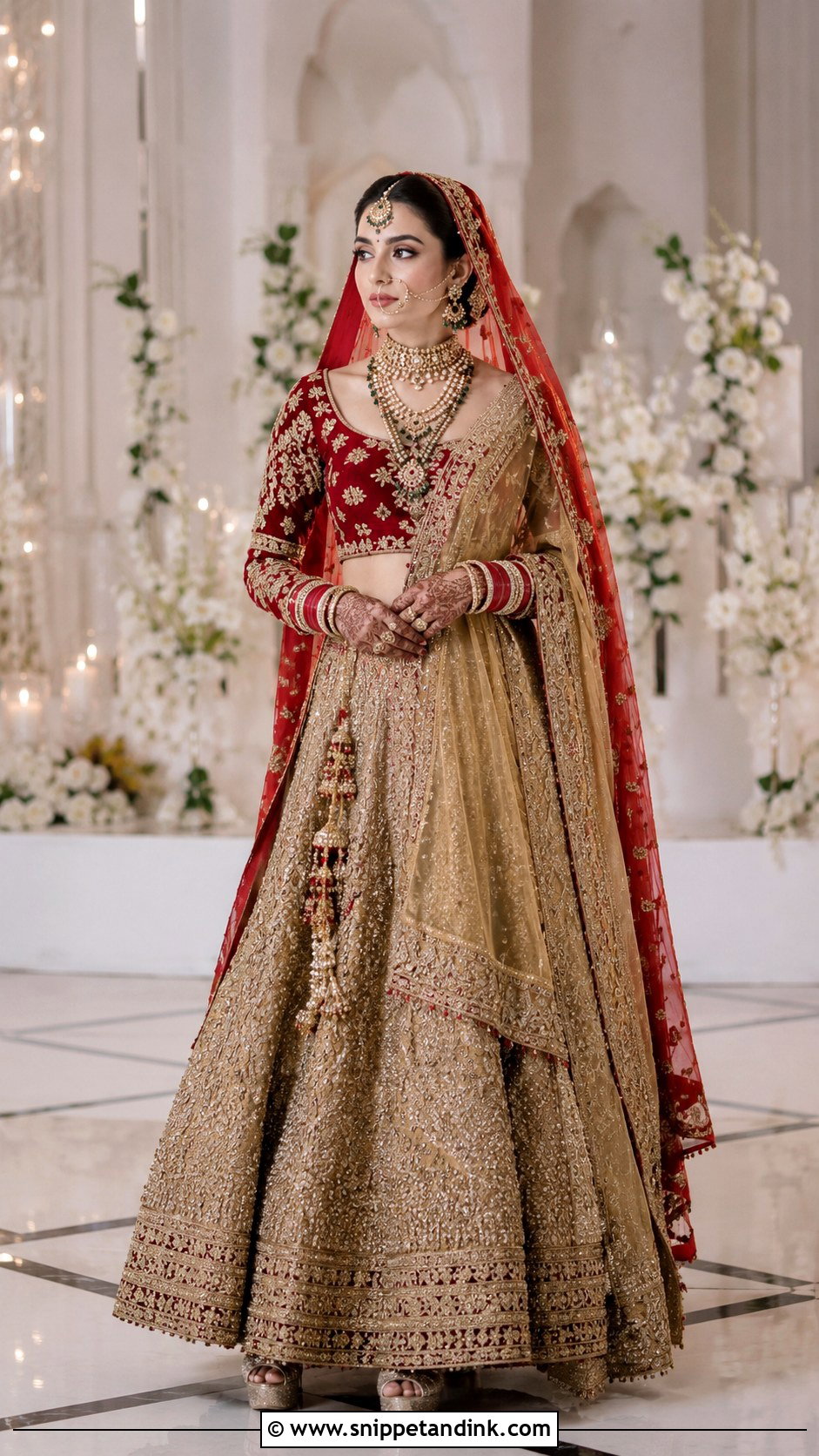
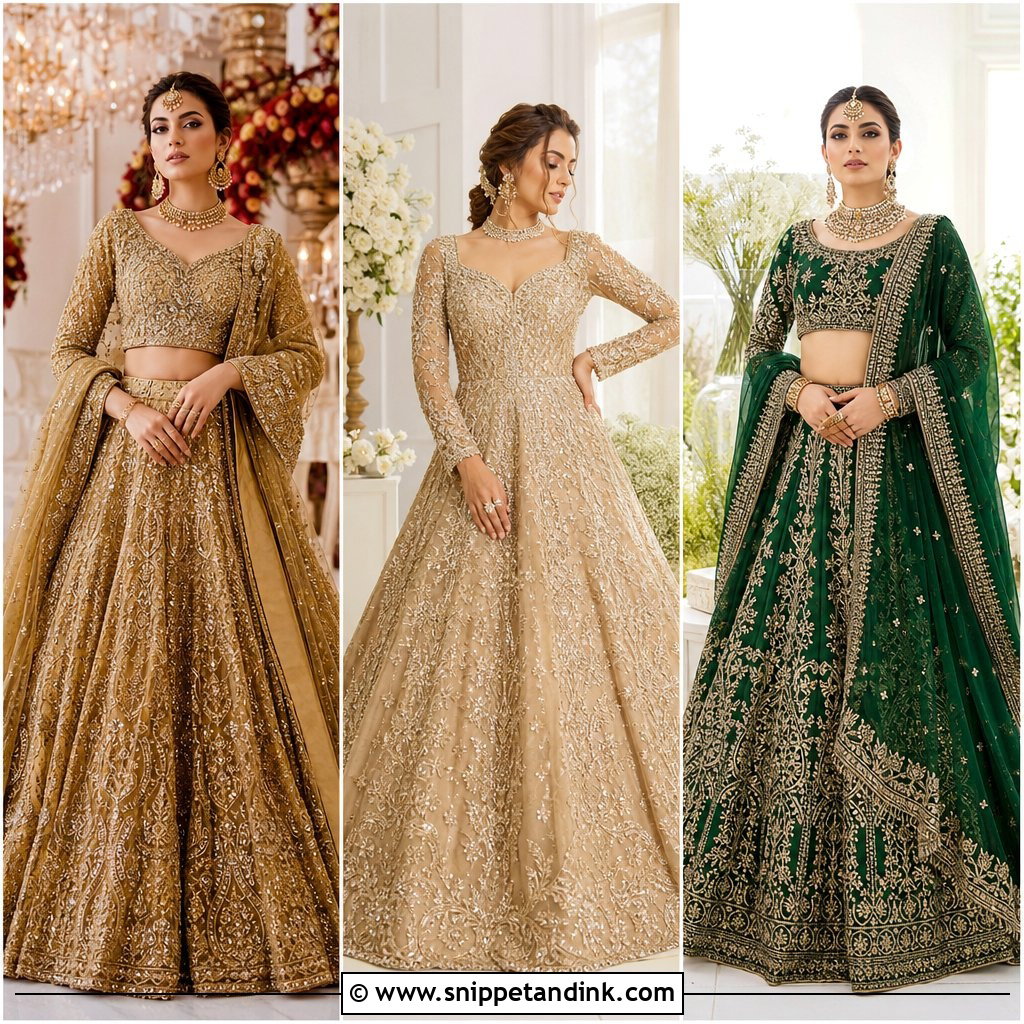
Pairing an antique gold lehenga with a deep red blouse gives you a regal look that isn’t one solid block of color. Woven motifs or carefully spaced embroidery on the skirt, red panels or a red border repeated at the hem to tie the pieces together, a red head dupatta and a light gold one on the shoulder. Antique kundan, a passa, red-and-gold bangles and metallic heels complete it. For broader shoulders I suggest a softly curved neckline and very little work at the shoulder seam. Keep the gold muted. Bright gold bounces flash back into the lens and looks yellow in the album.
8. Red And Pink Ombre Barat Dress
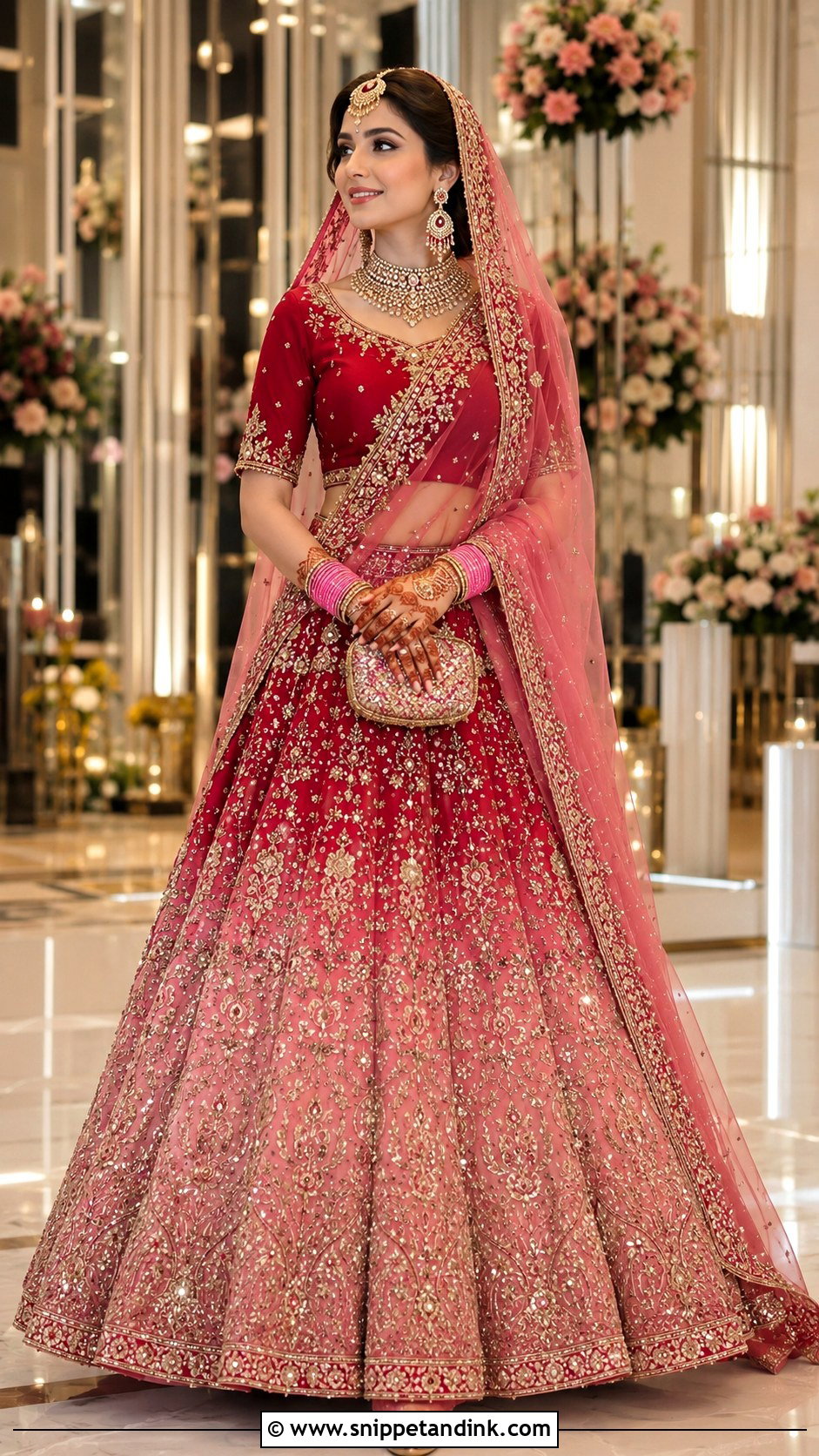
An ombre lehenga that shades from deep red into rose pink softens tradition without losing it. A solid crimson blouse keeps the outfit formal enough for the Barat. The embroidery should follow the color change in antique gold, silver-gold or tonal thread, never sharp contrasting motifs that interrupt the fade. A rose net dupatta over the head and a narrower red drape on the shoulder echo the two ends of the gradient. Polki, pink bangles, embroidered heels and a floral clutch finish it. I ask for a short, clean blouse here, since a long shirt would hide exactly the part of the skirt you paid for.
9. Deep Pink Barat Dress With Gold Work
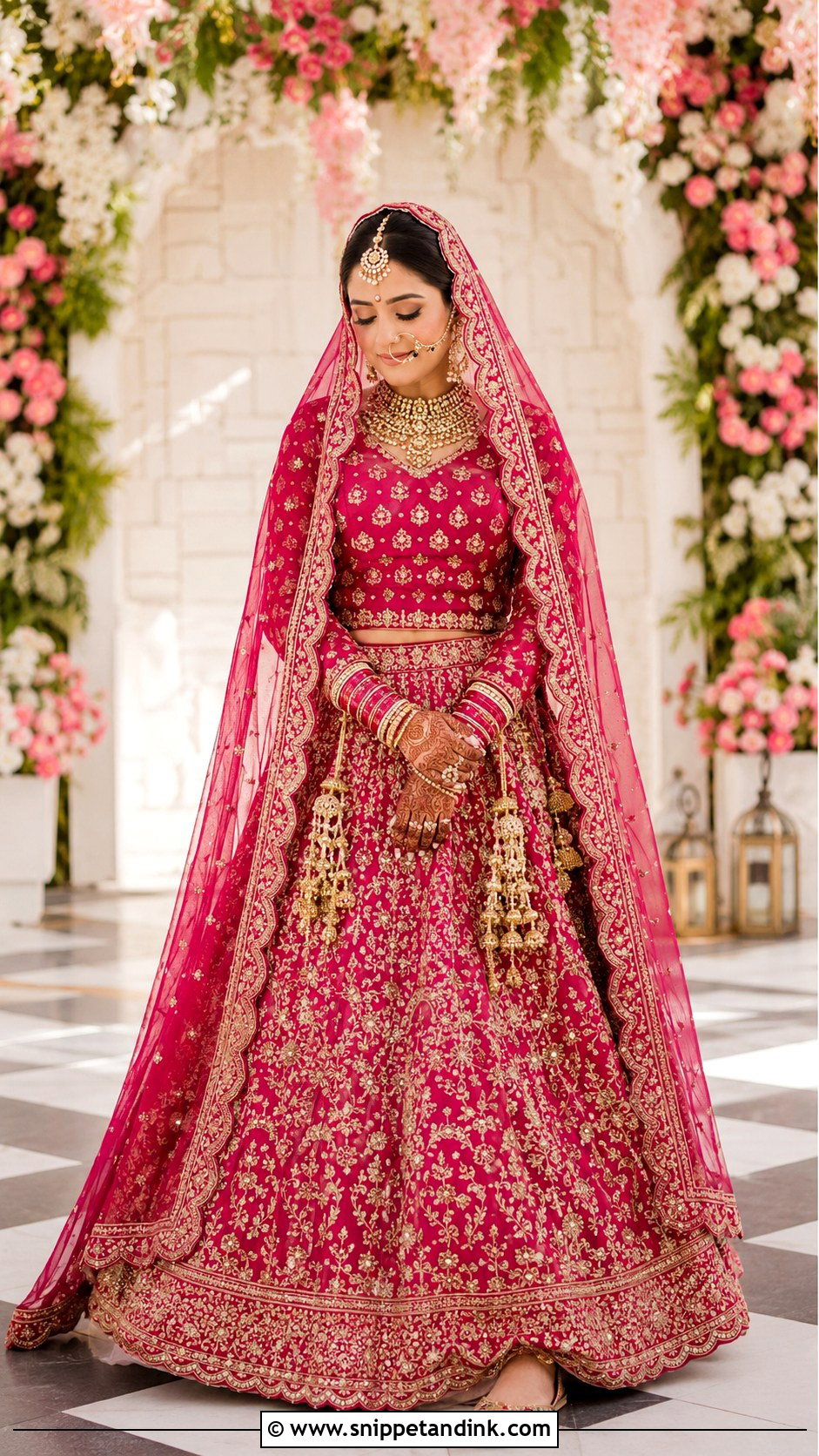
Deep pink with rich gold work is as ceremonial as red. A fuchsia or raspberry lehenga with heavy embroidery at the hem fading lighter toward the waist, a matching blouse with elbow or full sleeves, and a pink net dupatta with a scalloped gold border pinned over the head without hiding the bodice. Gold or polki, a fine nose ring, pink-and-gold bangles and khussa complete it. One caution I give every bride in pink: keep to one pink across all the fabric. Two near-matching pinks from different dyers look like a mistake in daylight. If you want more shades, bring them in through the embroidery thread instead.
10. Magenta Barat Dress With Farshi Gharara
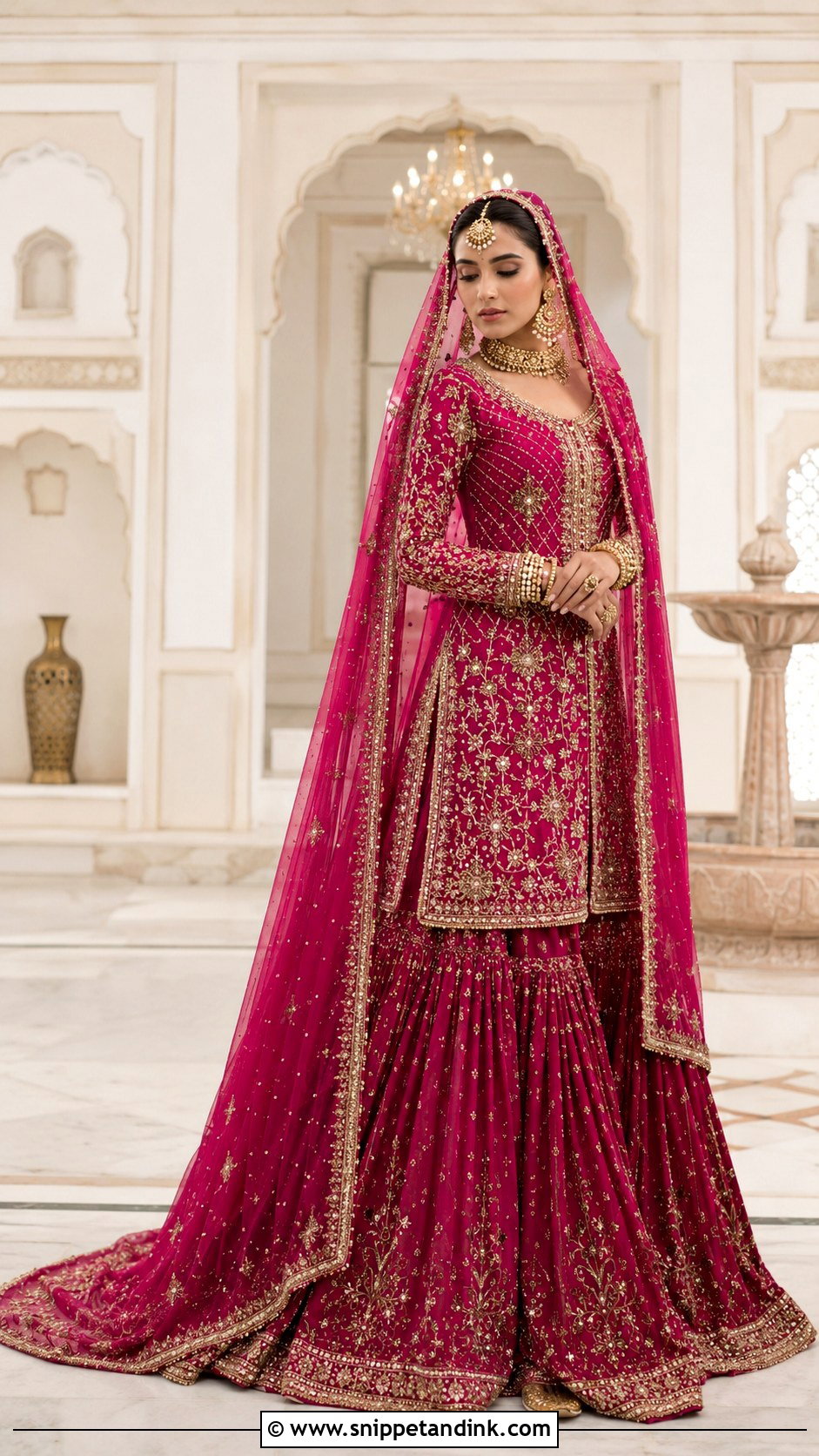
Magenta and a farshi gharara together make a confident entrance. The fitted long shirt must end above the knee flare so the signature shape stays visible, with antique gold, dabka, pearls and fine resham across the shirt and lower panels. A lighter magenta dupatta goes over the head, its border pinned at the shoulders. A gold choker, earrings, matha patti and stacked bangles suit it. The farshi hem trails behind you, so the shoes must be soft and low, and the hem set with them on. Vertical work on the shirt lengthens the body. Leave the neckline open enough that jewelry and embroidery aren’t competing for the same space.
11. Ivory And Red Barat Dress
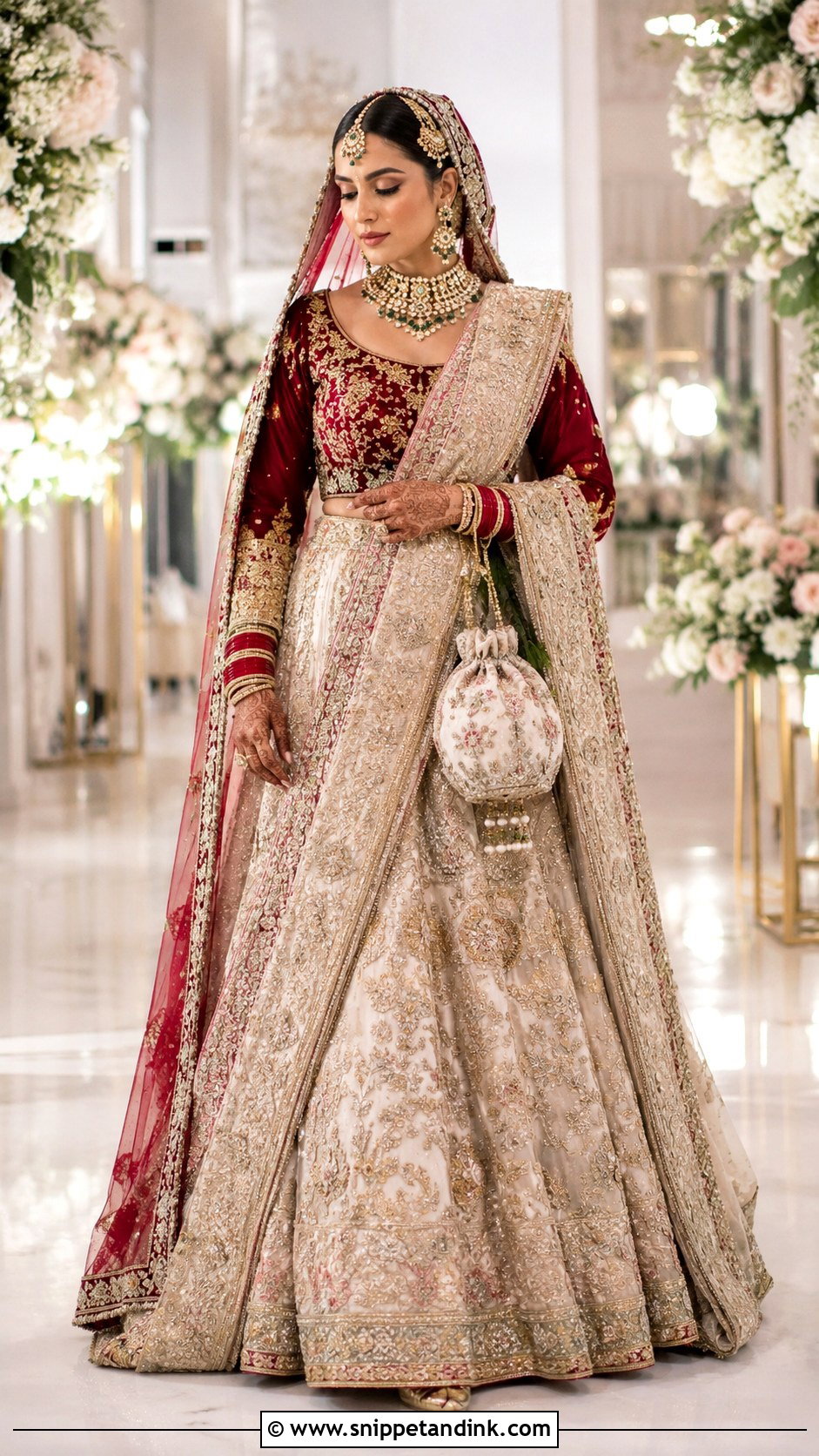
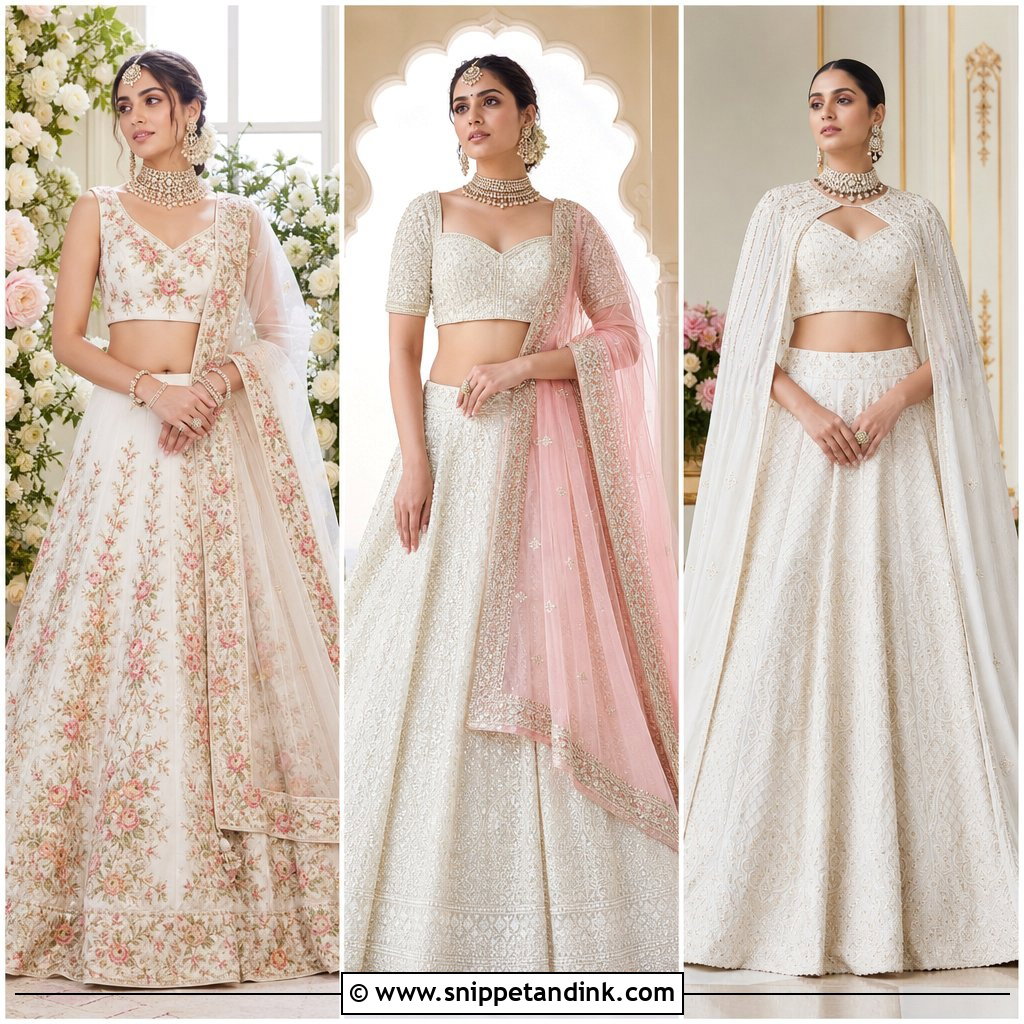
Ivory with red is softness plus drama. Start with an ivory lehenga in antique gold work, then bring red in through the blouse, hem borders and dupatta. The red veil over the head is what makes it read as Barat-ready; a narrow ivory dupatta can cross the torso. Kundan, red bangles, gold heels and a small potli suit it. I always push for a warm cream base rather than stark white, because pure white beside antique gold makes the embroidery look dull and slightly grey. Organza panels in place of raw silk make it lighter. Place the red symmetrically, and a defined red lip ties the two halves together.
12. Emerald Green And Red Barat Dress
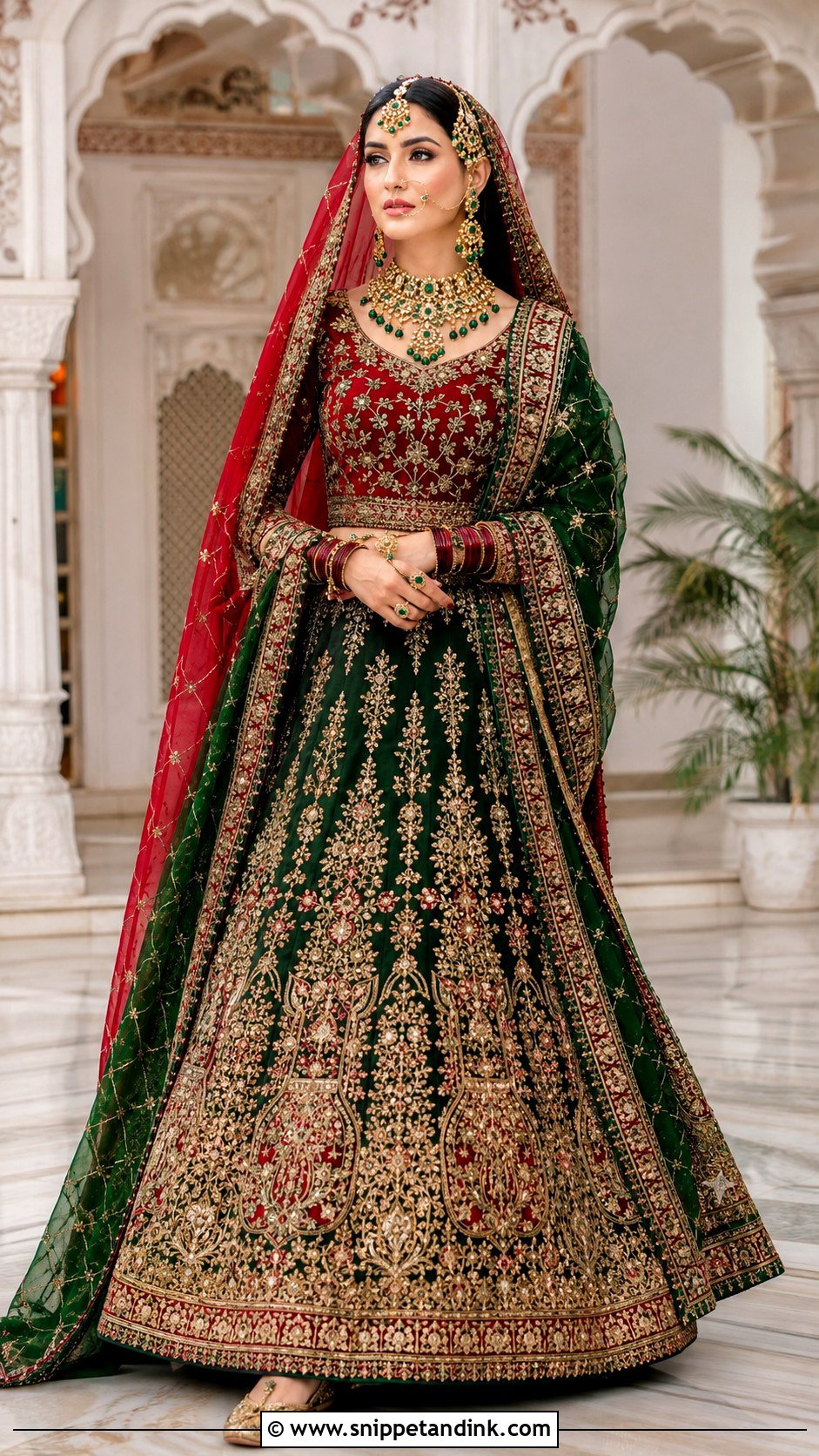
Emerald brings a royal note to red, and there are two ways to do it. Either a deep green lehenga with antique gold motifs and a red blouse carrying small green accents, or a red skirt with emerald in the blouse and second dupatta. In both, a red veil keeps the bridal tradition and the green drape adds depth at the shoulder. Kundan with emerald beads, red bangles and gold khussa suit it. I hold the palette to red, green and antique gold, nothing more. For a quieter version, keep green to the borders and jewelry. A center-parted bun, defined eyes and neutral lips stop these saturated colors from overwhelming your face.
13. Navy And Maroon Barat Dress
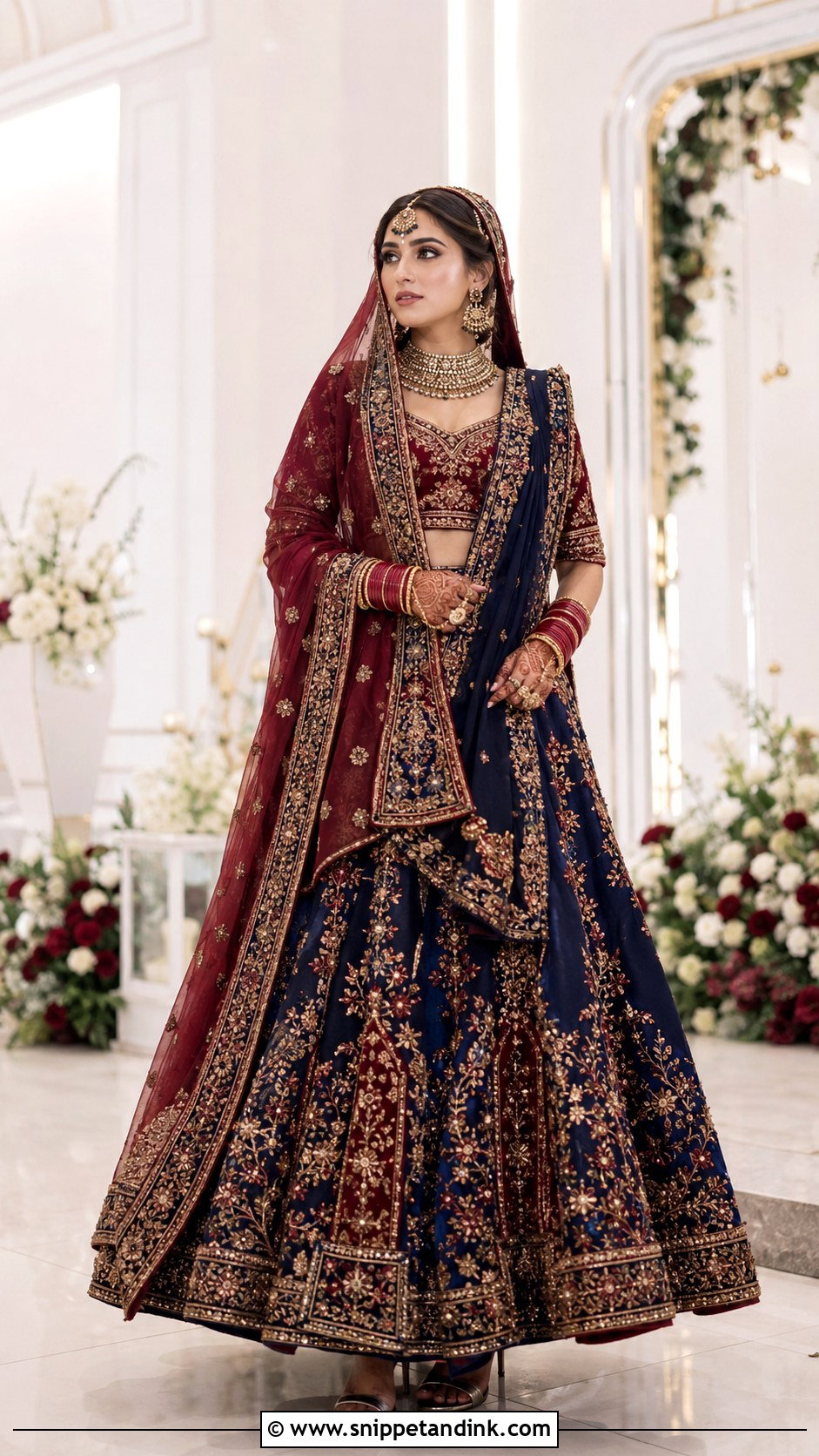
Navy and maroon is for the evening bride who loves dark jewel tones. A navy velvet or raw silk lehenga with maroon panels and antique gold, paired with a fitted maroon blouse so the color nearest your face stays warm. A sheer maroon dupatta covers the head, a narrow navy drape crosses one shoulder, and antique gold, deep red bangles and dark metallic heels finish it. Use clear borders rather than scattered work everywhere. Dark fabric shows every uneven fold under bright photography lights, so tailoring has to be exact. Choose a berry lip and glowing skin; very dark eyes on top of navy make the whole look heavy.
14. Plum Barat Dress With Bridal Maxi
A plum maxi gives graceful coverage without a separate waistband. A fitted bodice opening into a wide paneled skirt, antique gold framing the neckline, sleeves, waist and lower panels, a matching plum net dupatta over the head so the shape still shows. A gold choker, long earrings, a tikka and comfortable platforms complete it. The thing I ask for on a heavy maxi is an internal waist stay: a grosgrain band stitched inside that carries the skirt’s weight at your waist, so the bodice doesn’t get dragged down over the evening. Place the waist embroidery carefully, as that is what keeps a maxi from looking shapeless.
15. Red Angrakha Barat Dress With Lehenga
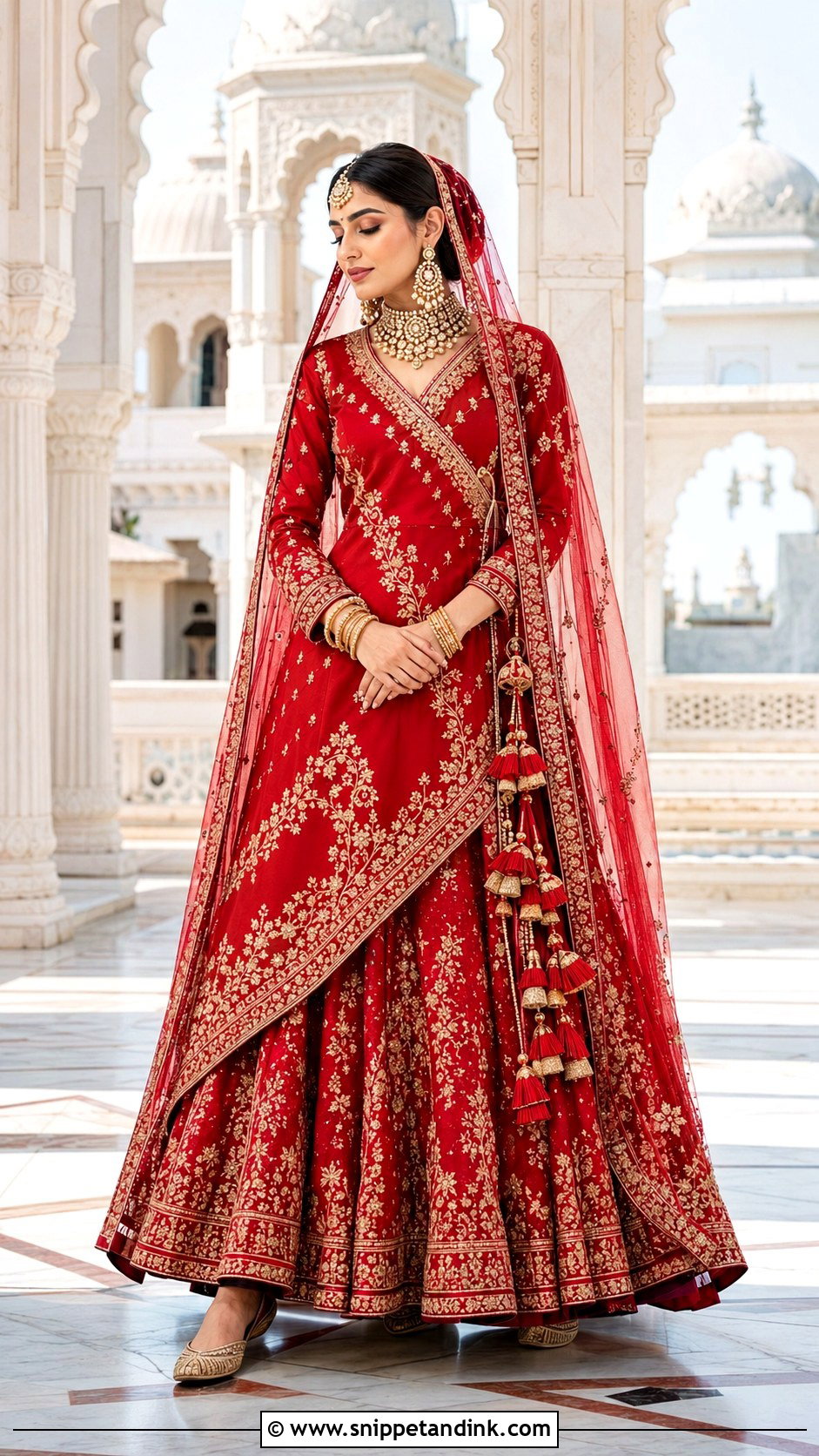
An angrakha’s diagonal neckline sets a red outfit apart. A long top with embroidered overlapping panels, decorative ties and a soft flared hem, over a lehenga with a broad border and little work near the waist, so the wrap stays the focus. A light red dupatta on the head can frame the diagonal line. Kundan earrings, a layered necklace, small tikka, bangles and gold khussa suit it. Never trust the tassels to hold the wrap closed; hidden hooks do the work. With a fuller bust I raise the overlap point and add structured lining, which stops the wrap from opening when you lean forward to greet guests.
16. Long Red Shirt With Farshi Gharara
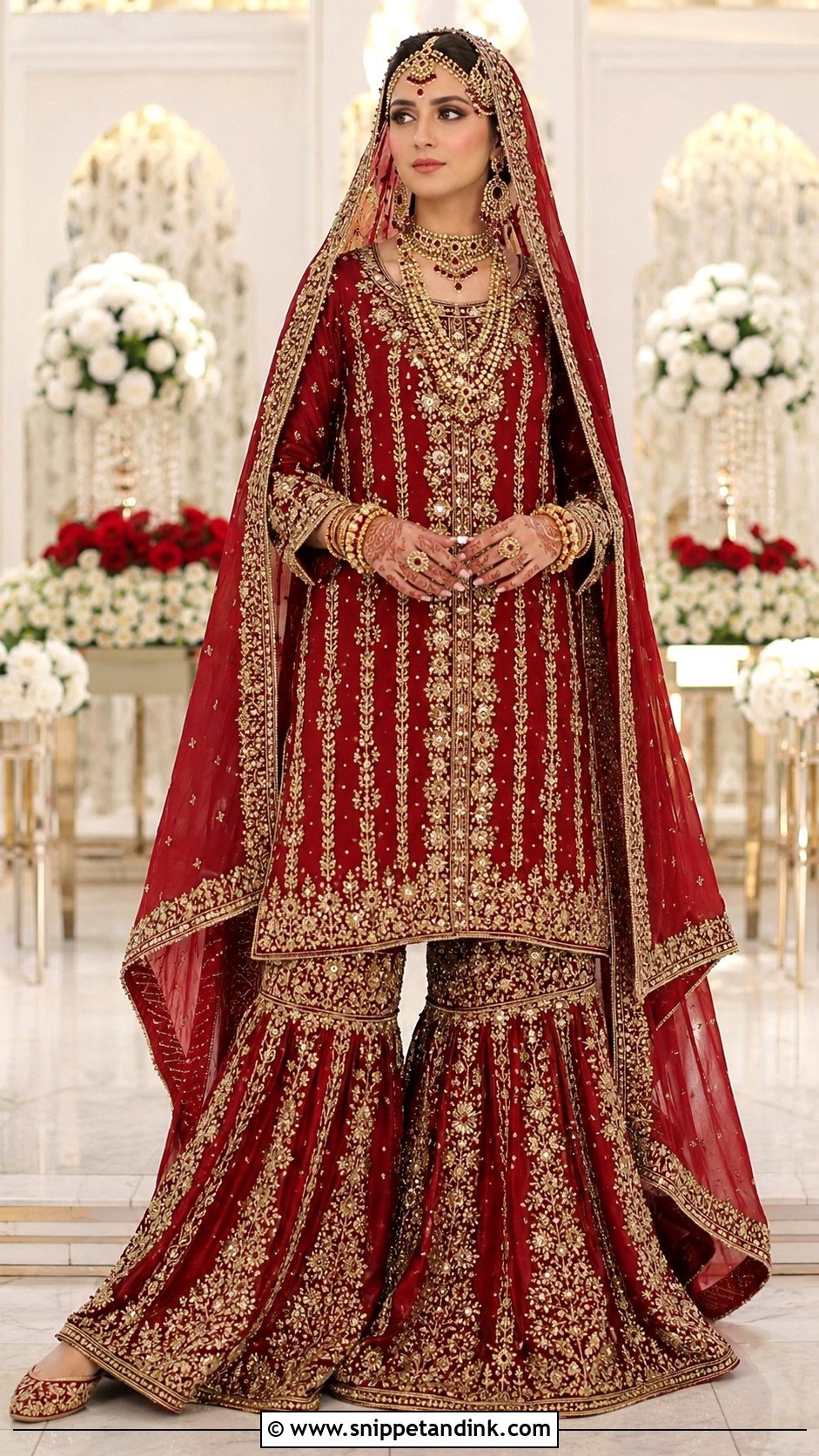
Classic formal dressing gives this pairing its stateliness: a long red shirt over a farshi gharara. A straight or slightly flared shirt with side slits placed to reveal the gharara’s knee and hem embroidery, vertical zardozi to lengthen the body, ornate cuffs to frame the hands. A red net dupatta with a structured border stays neat over the head, with a choker, long necklace, earrings, matha patti and embroidered flats. Keep the shirt from dropping so low it swallows the flare. I also have the tailor add ease through the hips, because a shirt that is fitted standing will pull into horizontal creases the moment you sit.
17. Red Peplum Barat Dress With Lehenga
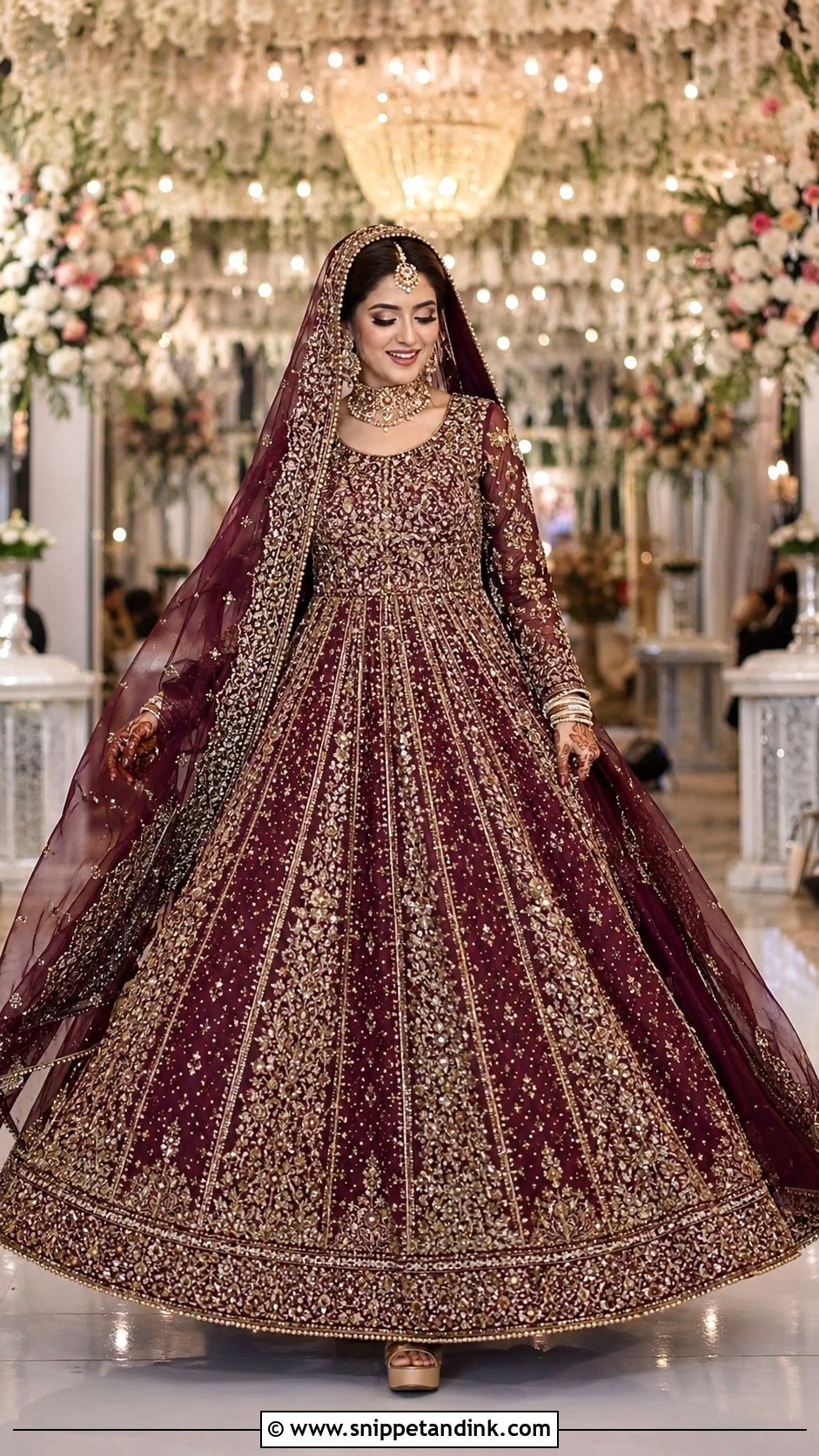
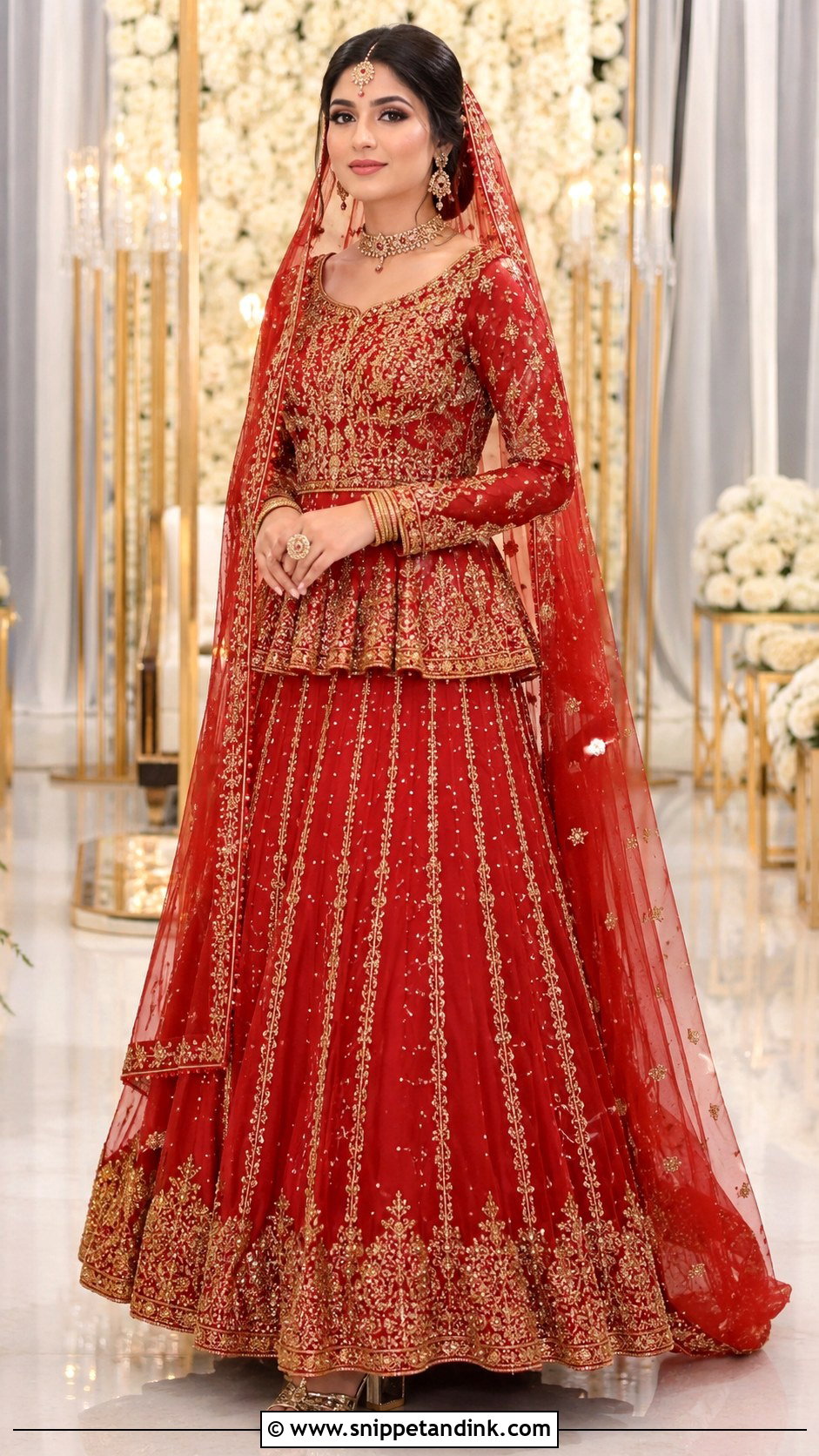
A peplum brings a modern shape to a traditional lehenga. The top should fit at your natural waist and open into a soft flare that ends before the fullest part of the skirt; below it, a high-waisted lehenga with vertical motifs and a broad hem. A sheer red dupatta over the head with the other end behind one arm, a choker, medium earrings, bangles, a statement ring and block heels finish it. Peplums need real structure in the bodice, with boning or firm interlining, or they collapse at the waist by mid-evening. For more coverage, choose a longer peplum with full sleeves and keep the flare light.
18. Red Tissue Silk Barat Dress
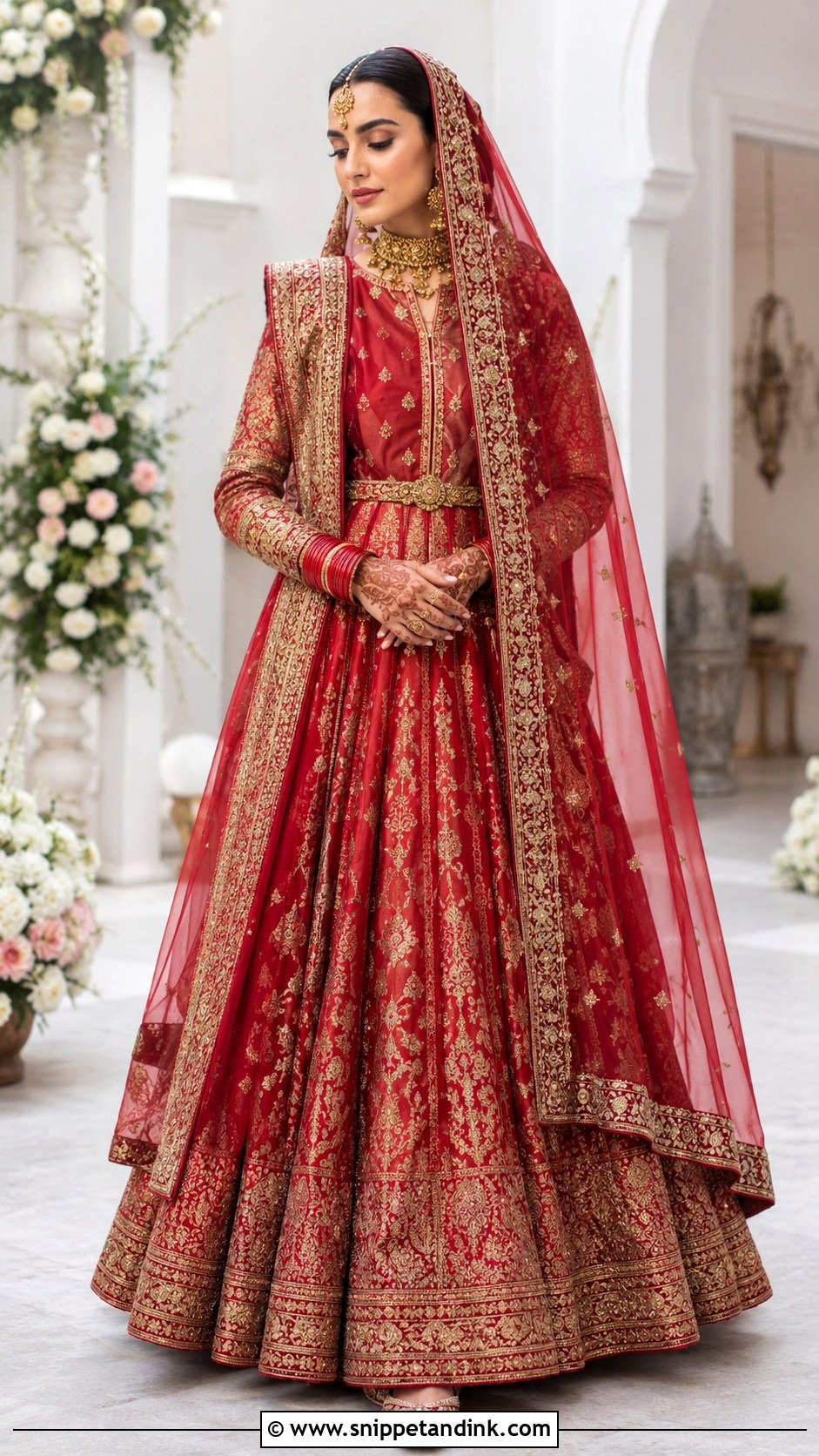
Tissue silk catches light all by itself, so it needs far less embellishment than you’d think. A full red tissue lehenga with antique gold woven details and placed zardozi borders, over a raw silk blouse that adds structure and calms the shine, and a soft organza dupatta for contrast. Classic gold jewelry, red bangles, a waist belt and padded khussa complete it. Tissue holds volume on its own, so I cut back on underskirt layers and skip the stiff lining. It also creases sharply and the creases catch light, which is why I have tissue lehengas steamed on a hanger the morning of, never folded in a suitcase the night before.
19. Red Bridal Saree Barat Dress
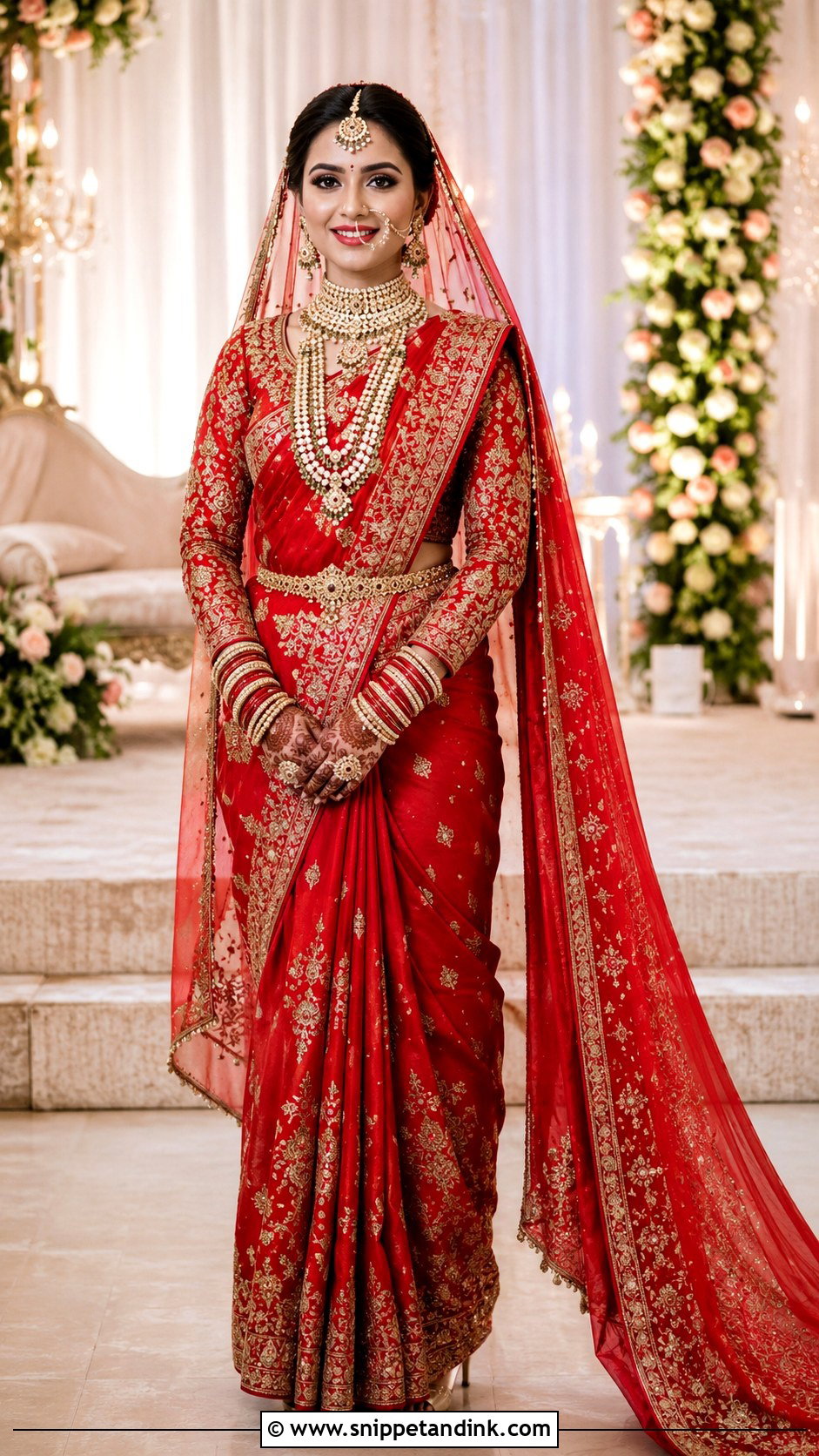
A red bridal saree suits a bride who loves fluid draping over volume. Raw silk, velvet-trimmed chiffon or embroidered organza with a substantial border, over a fitted full-sleeve blouse with a secure neckline and worked back. Have it draped and pinned by someone who drapes bridal sarees regularly, so the pleats survive walking, sitting and greetings. A light veil over the head is optional. Layered kundan, a tikka, bangles and comfortable heels finish it, and an embellished belt locks the waist. I keep the pallu long enough to feel ceremonial but short of the floor, since a trailing pallu gets stood on during the entrance.
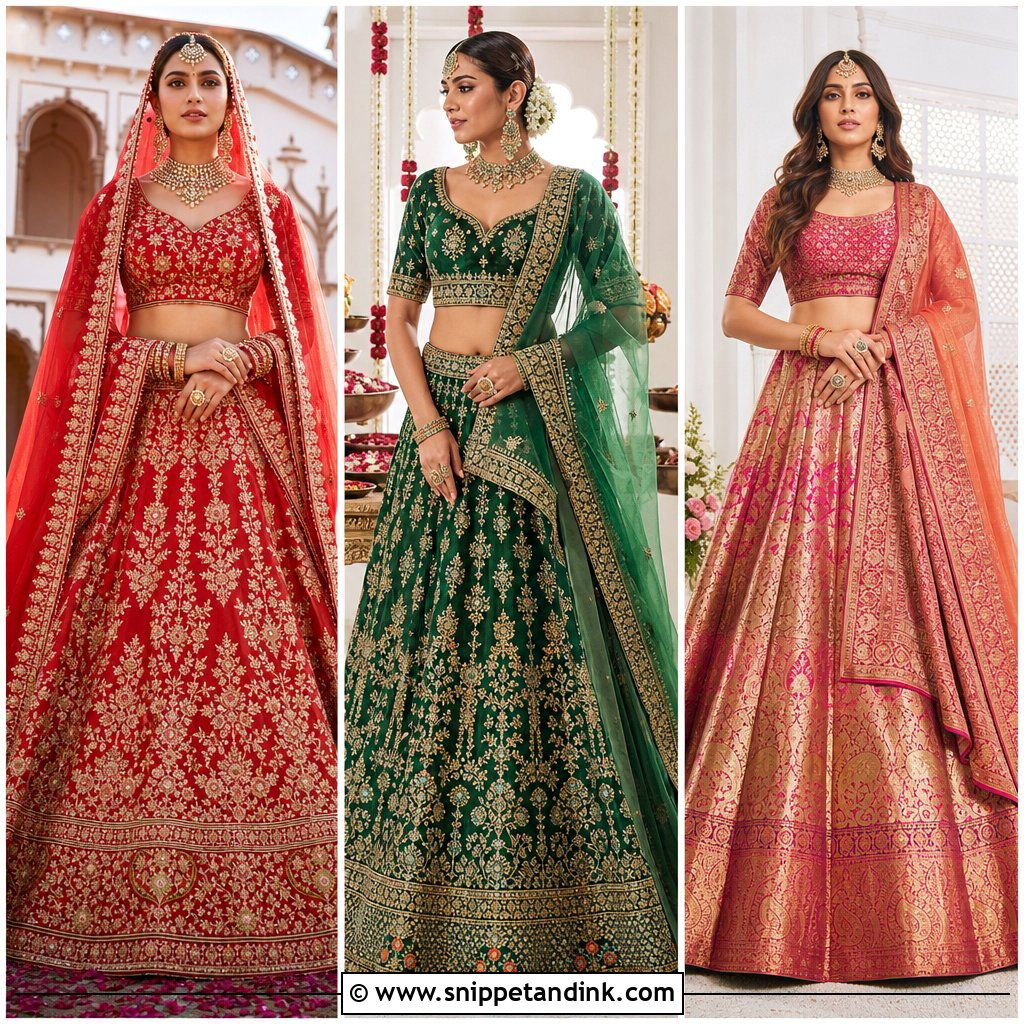
20. Modest Red Barat Dress With Bridal Hijab
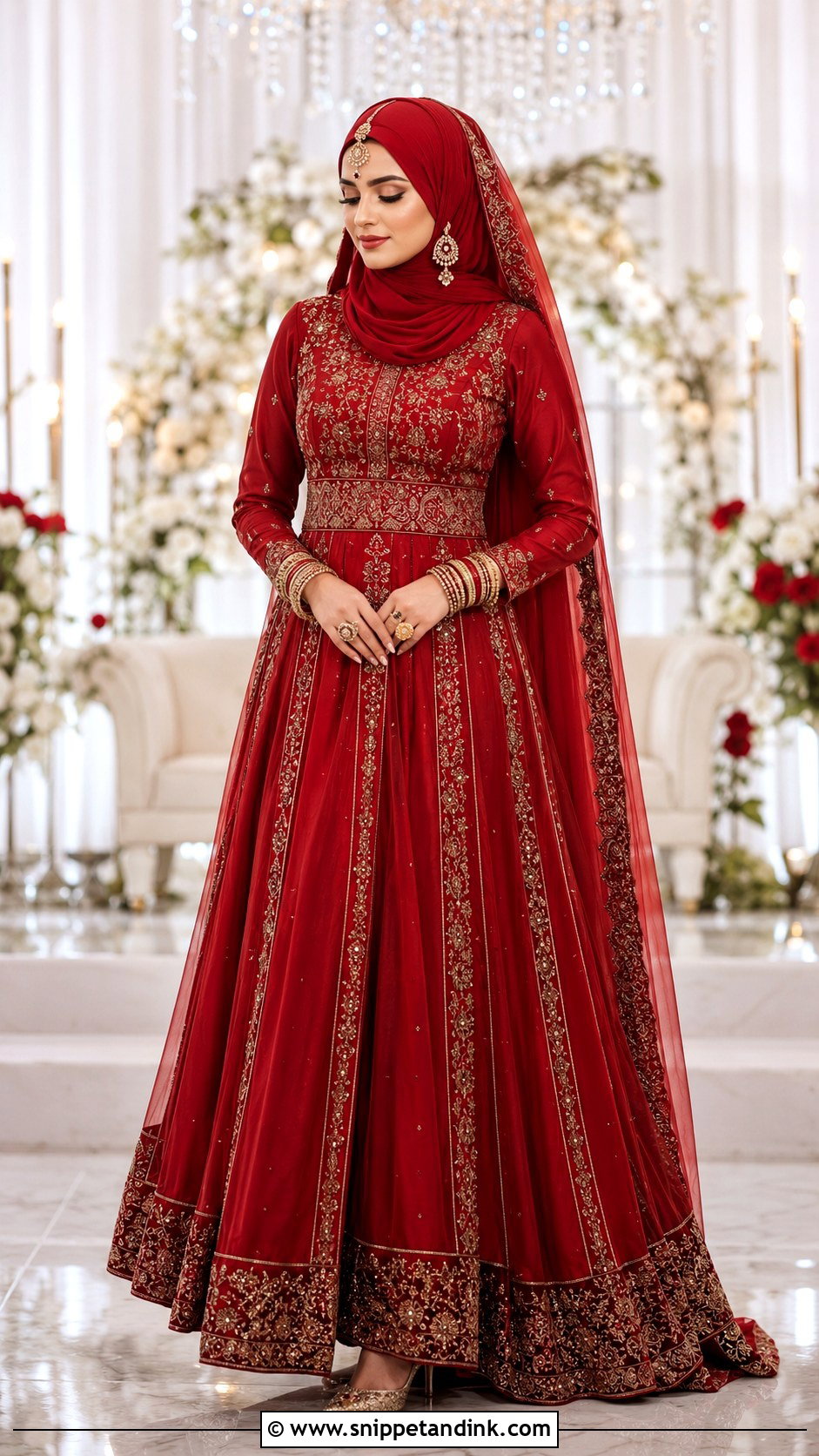
Full coverage can still look luxurious. A long-sleeved pishwas or paneled maxi with a higher neckline and full skirt, embroidered at the cuffs, neckline, waist and lower panels, with some open fabric left so the handwork reads. A smooth red hijab is wrapped close to the face and secured under a light embroidered veil. Skip the necklace; put the emphasis on statement earrings, a tikka set over the veil, bangles and rings. When I style a hijab bride I pin the tikka through the veil into the underscarf cap, not the hijab layer itself, so it stays centered all night. Closed heels or flats, a breathable lining and closely matched reds across hijab, veil and dress finish the look.
Does the Groom’s Sherwani Need to Match Yours?
It shouldn’t match, but it should answer. When the couple sit side by side on the stage, two identical reds turn into one block in photographs. I usually suggest the groom wears ivory, gold, champagne or a muted version of one accent from your outfit, then repeats your color in a small place: the safa, a pocket square, or the stitching on his khussa.
- Send his tailor a photo of your swatch and embroidery sample, not just the color name.
- Keep the metal tone the same on both outfits. Antique gold beside bright gold looks like a mismatch up close.
- If you wear a heavy farshi or trail, ask him to stand on the side the train falls away from, so no one steps on it during photos.
The same thinking applies to sisters and the mothers. I’d give the families a palette rather than a uniform, so the bride is still the only one in full bridal color.
Does the Design Still Work at the End of the Night?
Color, silhouette, embroidery and accessories all have to agree for a Barat outfit to work. Red lehengas and farshi ghararas carry the classic grandeur; jewel-toned maxis, sarees and peplums offer something different. Before you finalize, think about the venue, the season, how much space you’ll have to walk, how it will photograph and how long the event will run. Try the whole outfit at once with shoes, jewelry, underskirt and dupatta, not piece by piece. Good tailoring and balanced work matter more than any trend. Above all, wear something you can move in and still recognize yourself in.
You'll Like These Ideas:


Leave a Reply