
A plain cake has nowhere to hide, and that’s exactly why I enjoy making them. The couples who ask me for something simple usually want clean buttercream, soft texture, a few pearls, real flowers or one sculptural detail, and they care more about flavour and proportion than about how many tiers go on the table. What follows is twenty pared-back cake designs, from a single tall tier to a three-tier classic. With each one I’ve added what I’d tell you at a consultation: how it behaves, what it costs in labour, and who it doesn’t suit.
Why a Plain Cake Isn’t Always the Cheaper Cake
I get this question at almost every consultation. Couples expect a simple design to cost much less than an ornate one, and sometimes it does. But cake pricing is mostly about labour and size, and a flawless plain finish can take as long as a lot of decoration.
- Sharp-edged smooth buttercream or fondant takes time to get right. Texture and semi naked finishes are usually quicker.
- Sugar flowers are priced per flower, because each one is hand-built. One large statement bloom often costs less than a cluster of small ones.
- Fresh flowers usually come from your florist, not your baker, so check which quote they sit on.
- Guest count drives the price more than design. Fewer servings on display plus a kitchen cake is the standard way to save.
Prices vary widely by region and baker, so I’d compare quotes for the same tier sizes and finish rather than comparing cake photos.
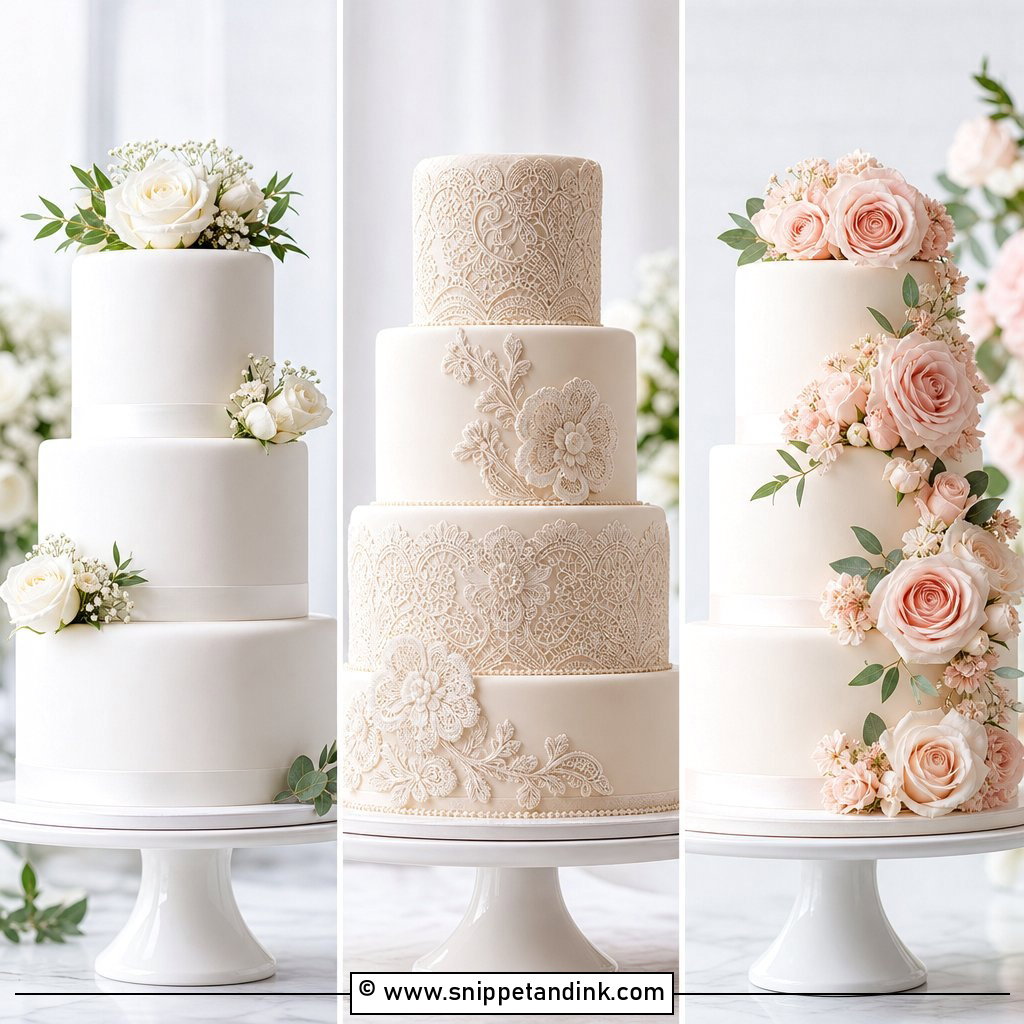
1. Simple Two Tier Wedding Cake
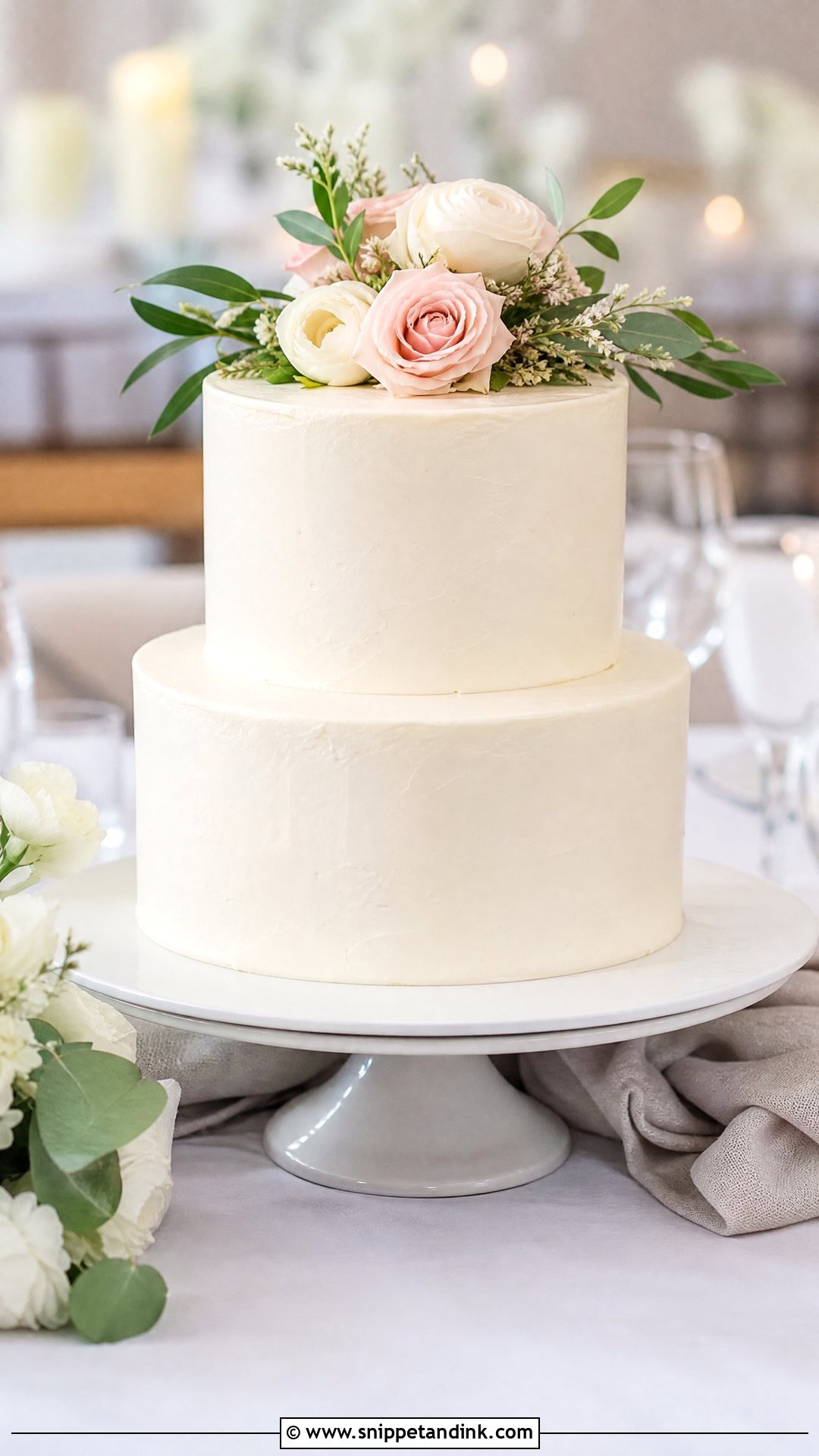
Two tiers is the size I’d suggest to most couples with fewer than about eighty guests. It looks formal on a cake table and stays relaxed in feeling. My standard version is smooth ivory buttercream over a vanilla or almond sponge, with one small flower cluster at the base or between the tiers. A plain stand in white ceramic, clear glass or brushed gold keeps the focus on the shape. The thing I watch is the size jump between tiers: two inches looks stepped and neat, four inches looks more dramatic.
2. One Tier Wedding Cake
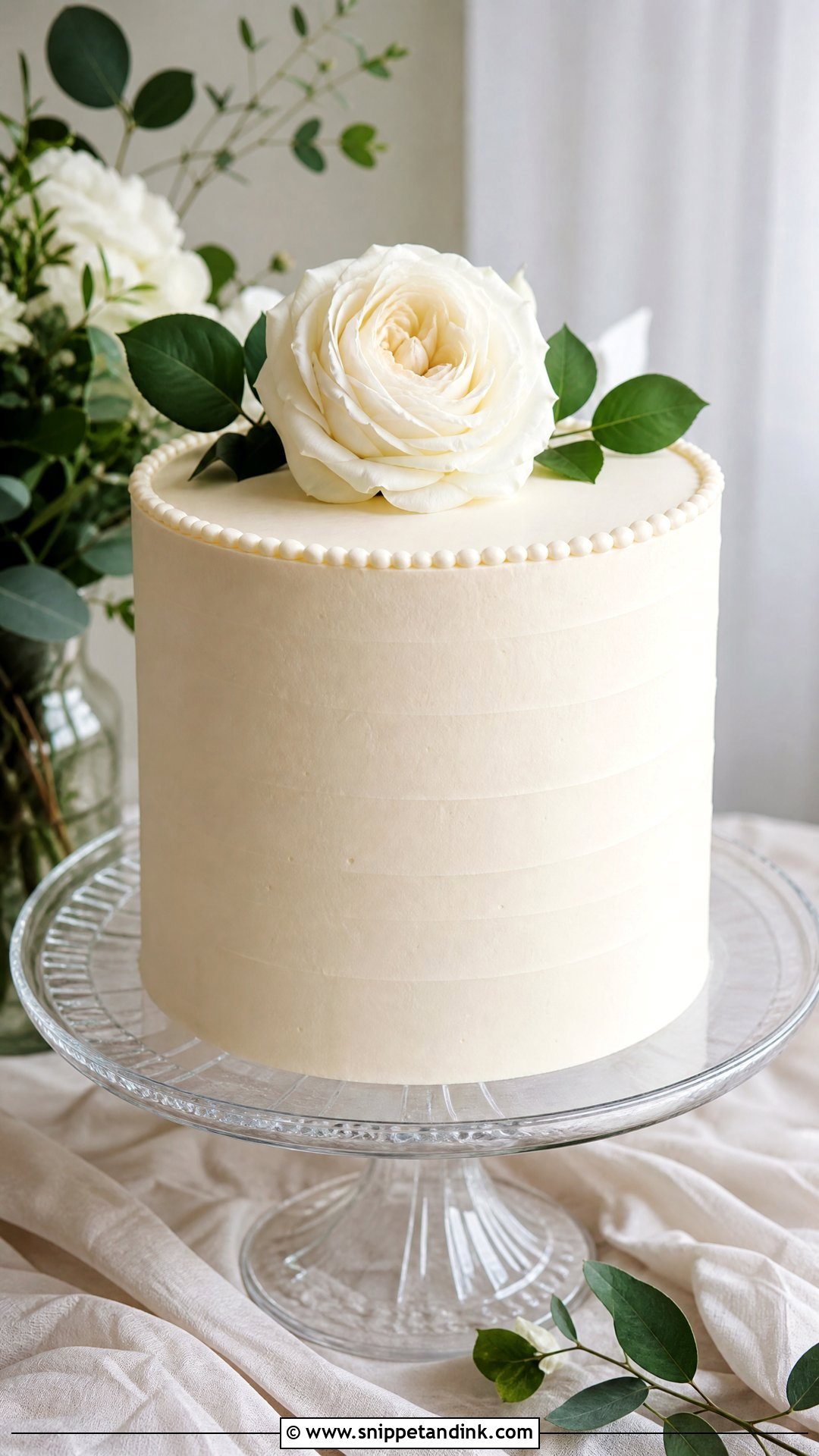
Height is what saves a one-tier cake from looking like a birthday cake. I make it taller than a standard tier, usually double height, so it has presence on the table. Then a single oversized bloom, a pearl border or a thin ribbon of buttercream is all it needs. It fits elopements, courthouse weddings and backyard receptions, and it’s the obvious choice when the dessert table is doing most of the feeding. If the guest list grows, a sheet cake in the kitchen covers the extra slices. Keep the colour bridal: ivory, warm white, champagne or blush.
3. White Buttercream Wedding Cake
Buttercream tastes better than fondant to most guests, and that’s the main reason I push it. It also looks softer and warmer under reception lighting. A perfectly smooth finish reads modern; light texture reads handmade and hides small marks. White buttercream sits happily beside almost any palette, from all-white flowers to sage greenery or pale pink roses. Ask for minimal piping and a neat bottom edge, because a messy base border is the first thing I notice in a photo. One honest caveat: true white buttercream is hard to get, since butter is yellow, so most buttercream cakes are a soft ivory.
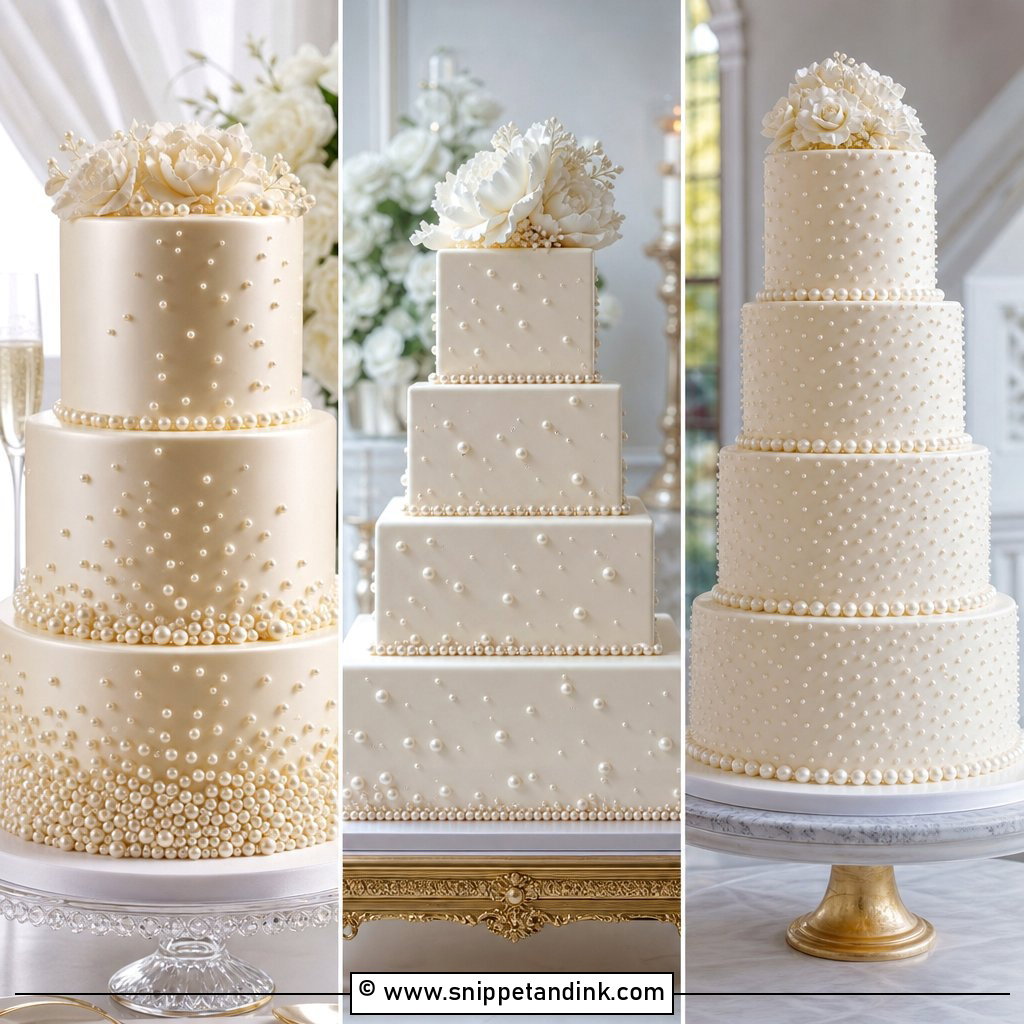
4. Elegant Pearl Wedding Cake
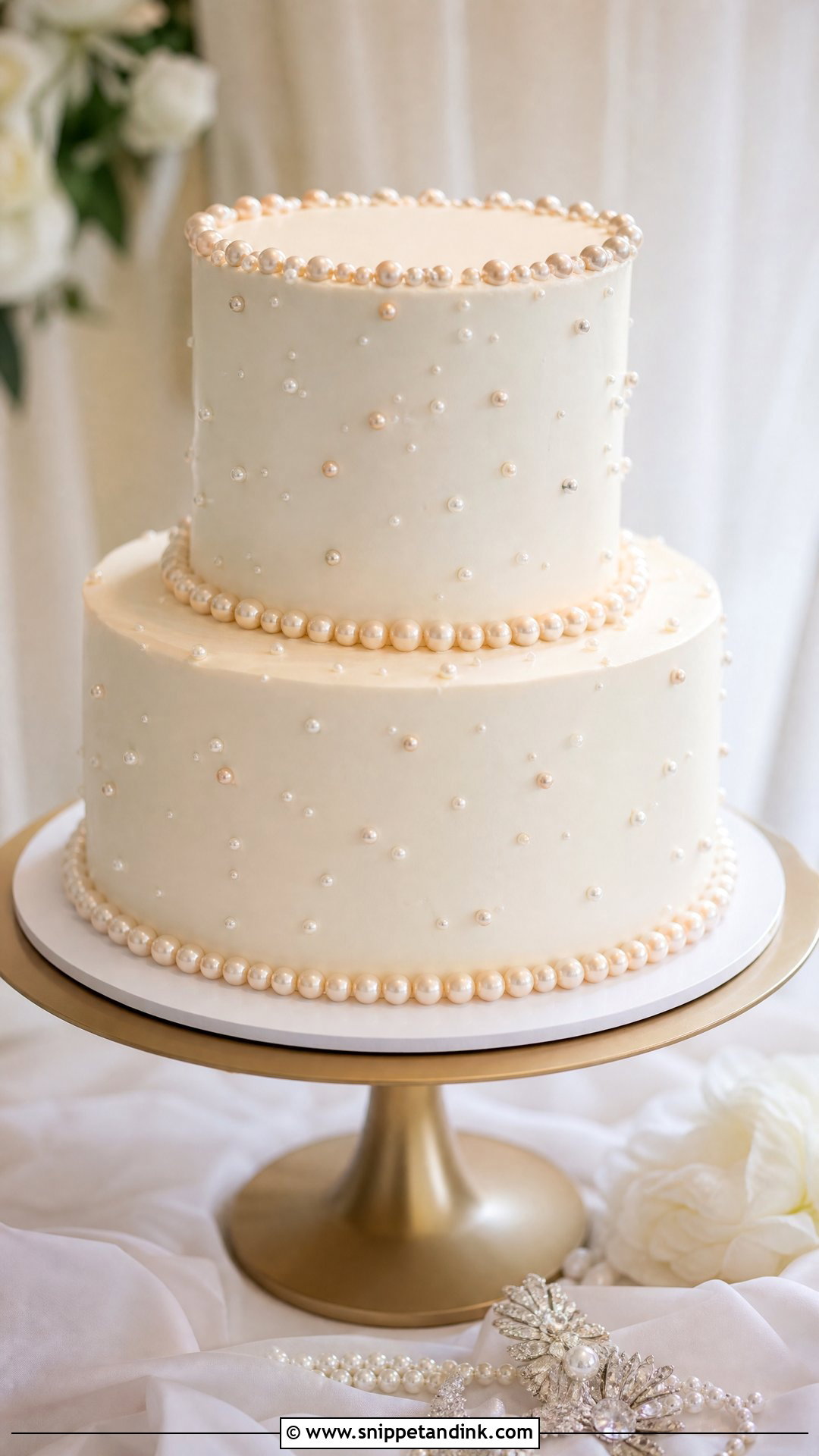
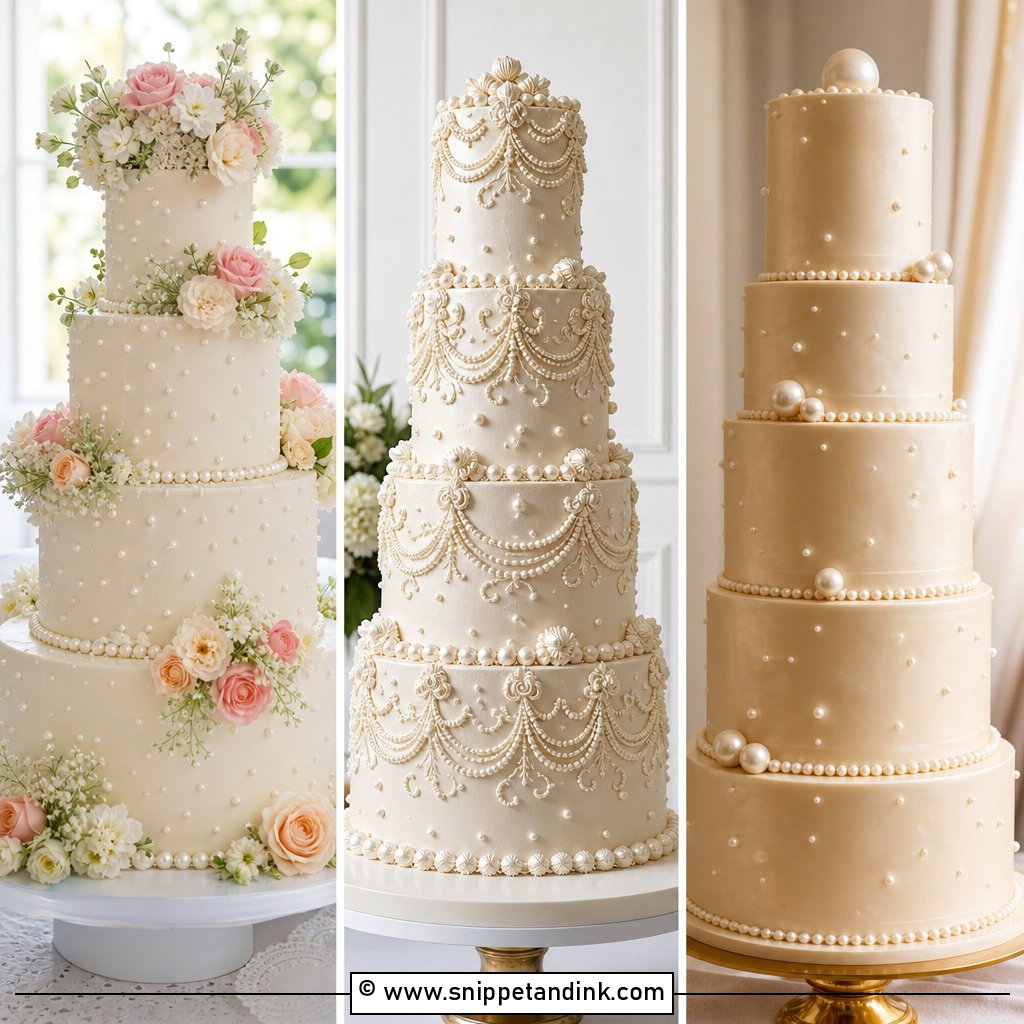
Edible pearls make a cake look finished without busyness. I either scatter tiny ones across smooth buttercream or press them in neat rows at the base of each tier. White or ivory pearls stay soft; a few champagne-toned ones add shine. They suit formal and coastal weddings and anyone wearing pearl or satin accessories. Keep flowers minimal, otherwise the pearls just become noise. Placing them takes longer than people think, since each one is set by hand with tweezers, which is worth knowing when you see the quote.
5. Minimalist Wedding Cake
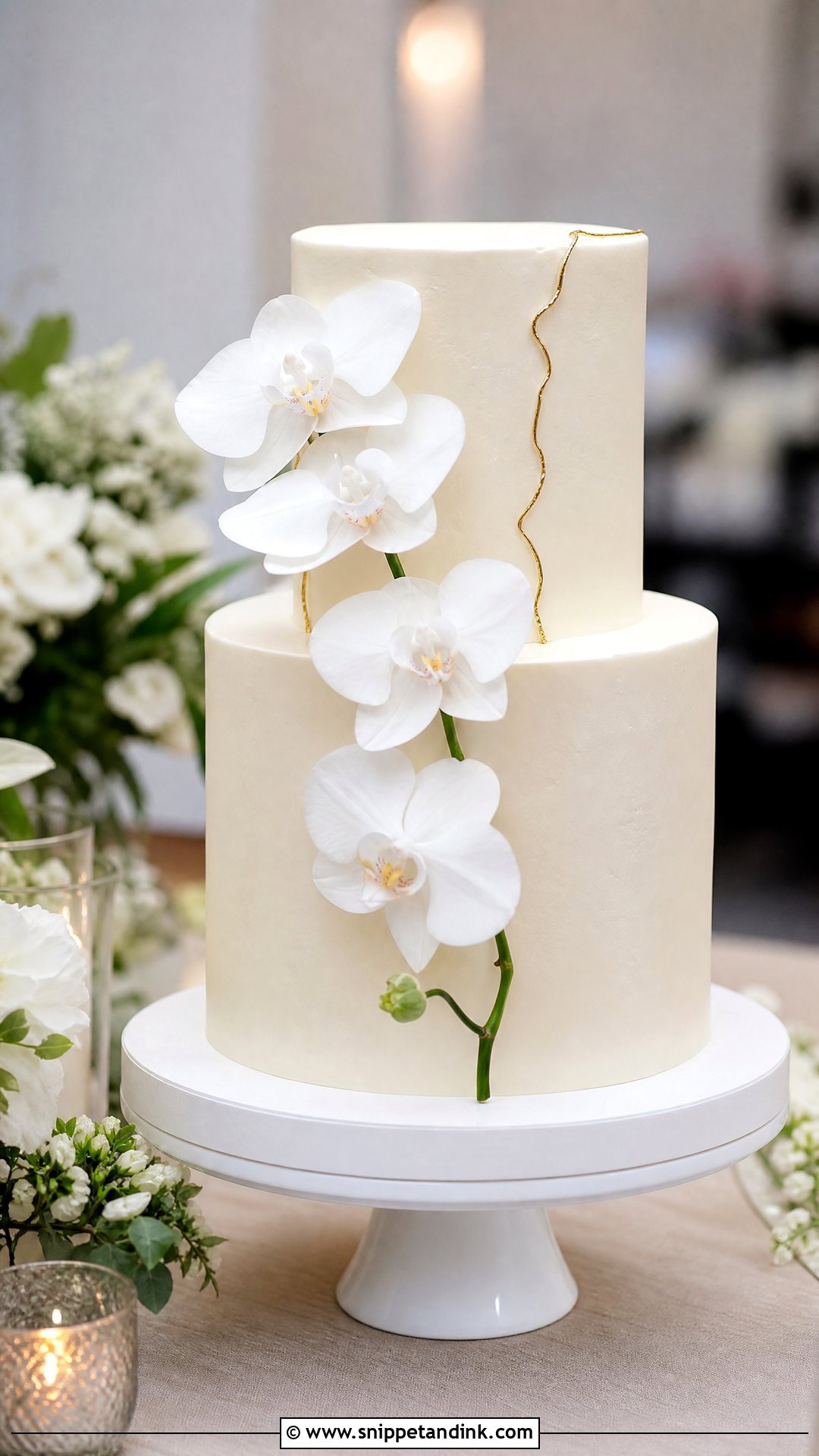
Minimalism is the hardest brief I get, because there’s nothing to distract from a slightly bowed side or a soft edge. The whole look depends on sharp edges, smooth frosting and one accent: a thin line of gold, a single stem, a small cluster of white orchids. It can be one tier or three, depending on guest numbers. Keep the display table uncluttered too, with a simple stand, neutral linen and soft light. I’d ask any baker for photos of their plainest cakes before booking this one.
6. Vintage Piped Wedding Cake
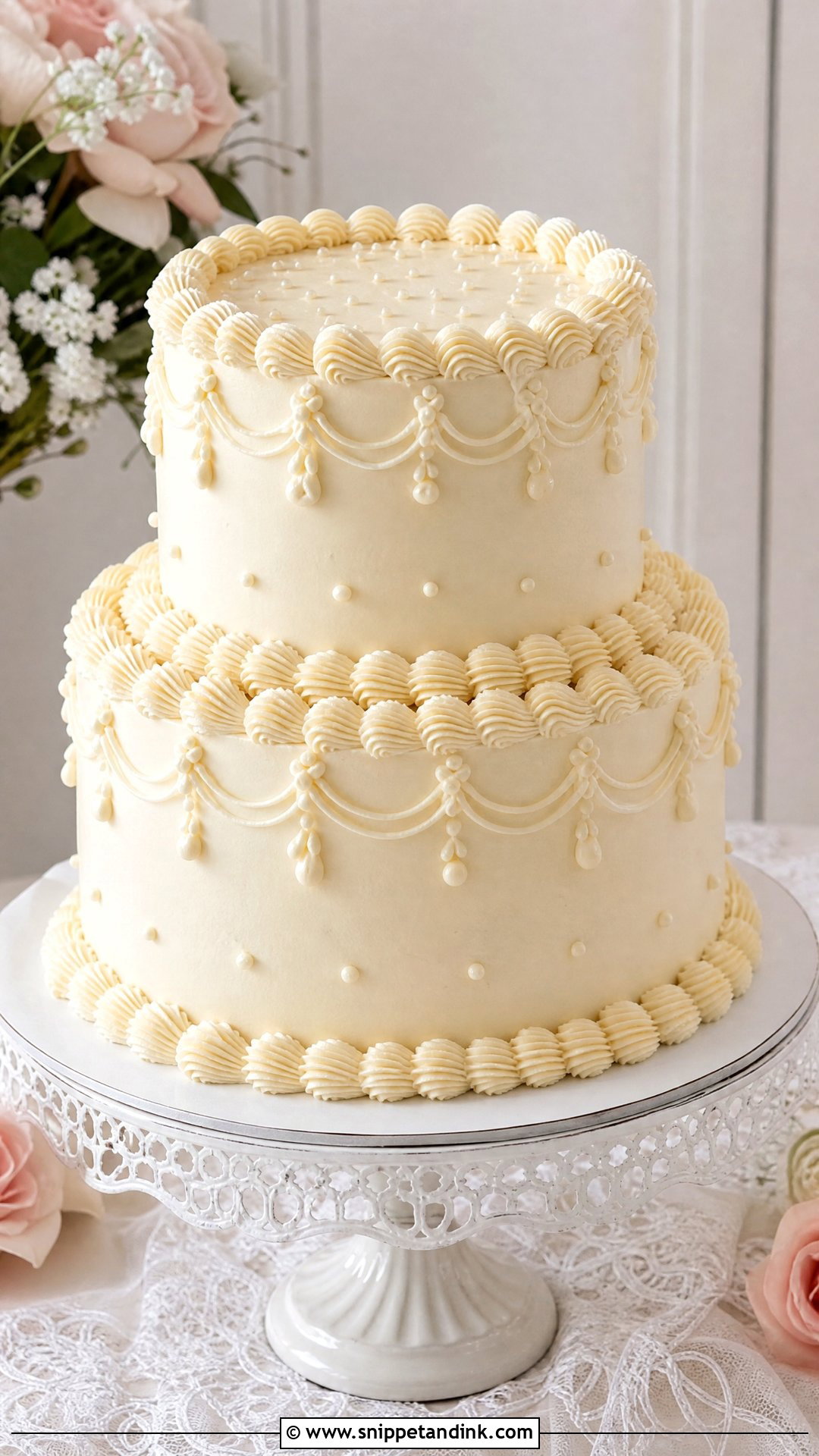
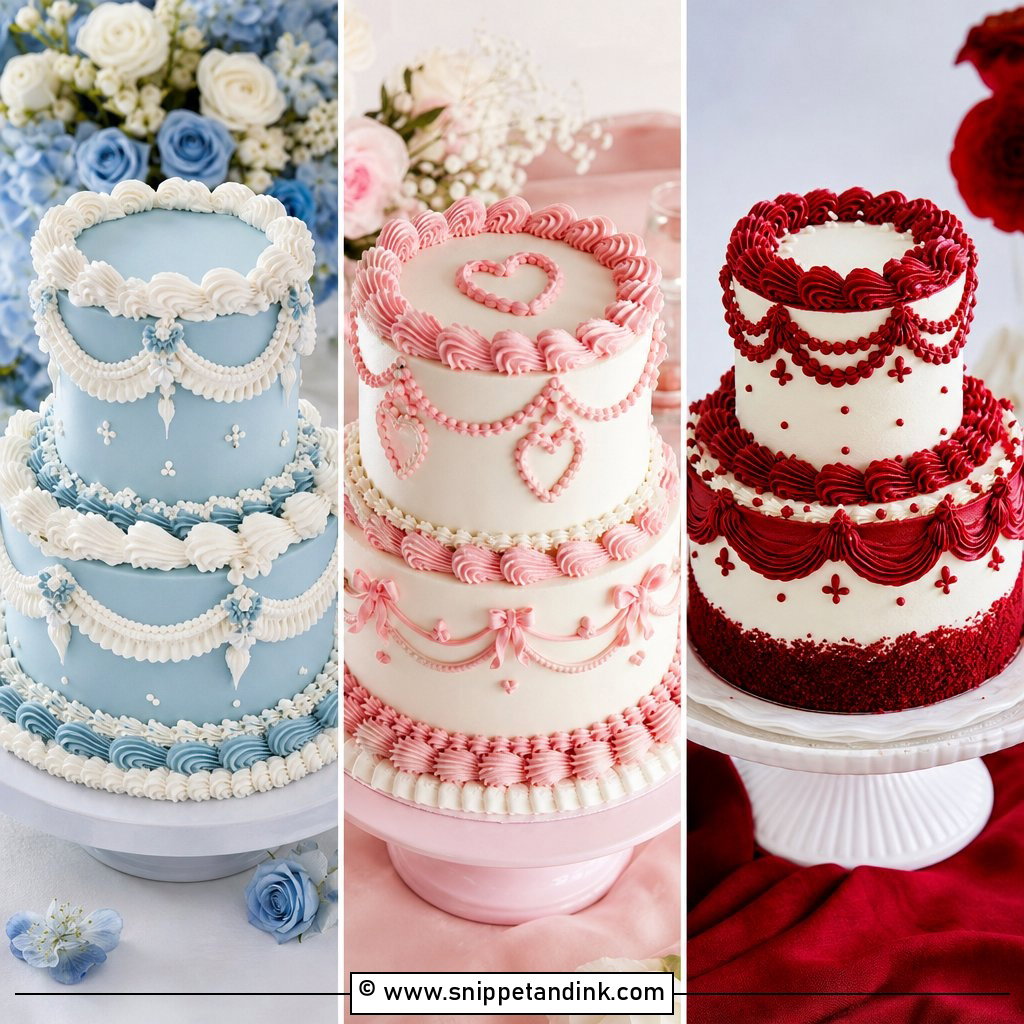
Vintage piping only stays simple when it’s tone-on-tone and controlled. I keep it to shell borders, small swags and soft buttercream dots in the same white or ivory as the cake, so the detail shows in shadow rather than colour. It pairs naturally with lace gowns and pearl accessories. Piped detail softens in a hot room and can slide, so for a summer wedding outdoors I’d use a firmer piping buttercream or move the cake inside. Keep the tiers modest in number.
7. Small Wedding Cake With Flowers
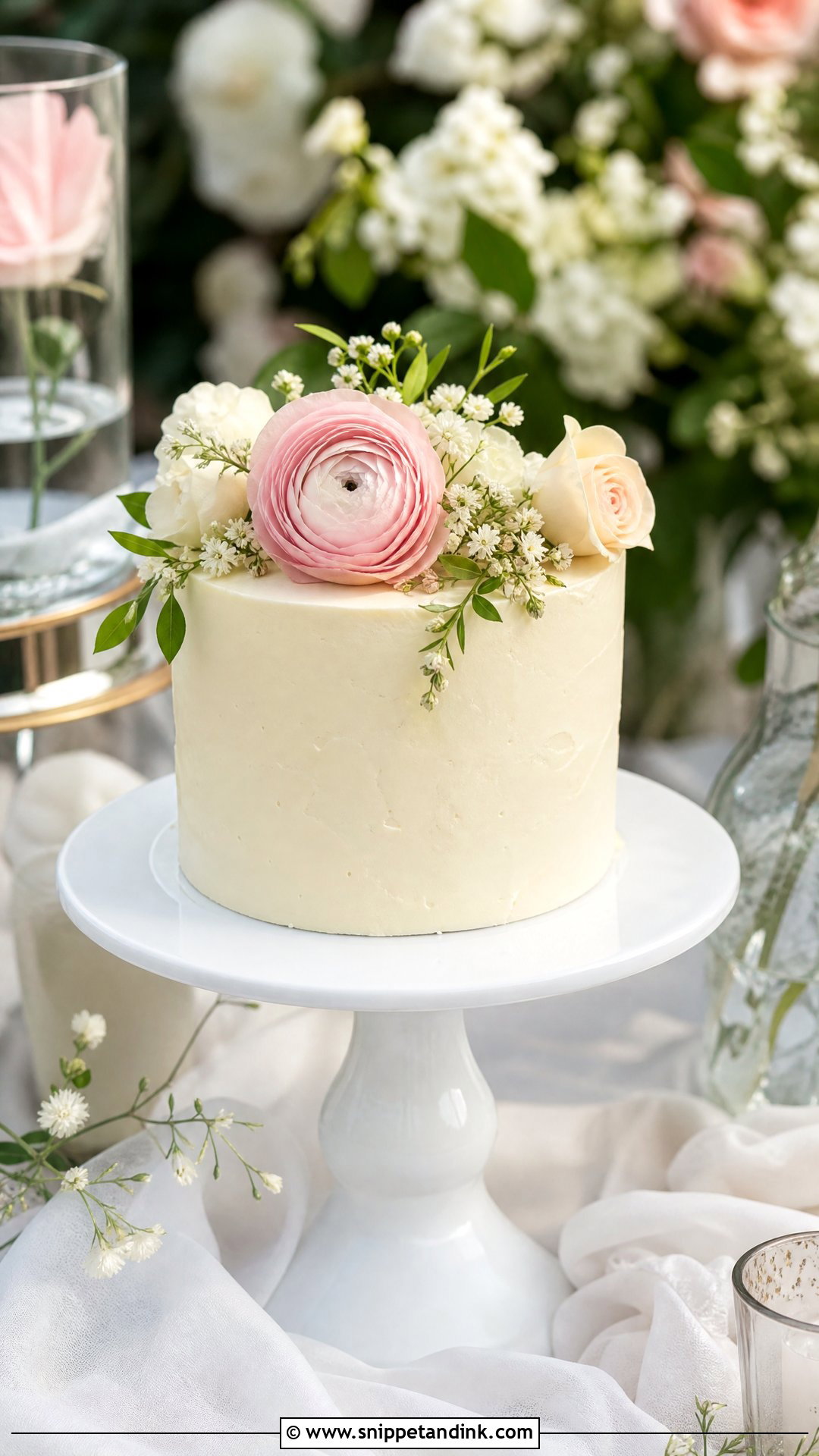
For a micro wedding or a brunch reception, a small cake with real flowers does the job of a centrepiece. The cake stays plain; the flowers bring colour and shape. I’d match the blooms to the bouquet, such as roses, ranunculus, sweet peas or loose garden greenery. Sweet peas are lovely but wilt fast out of water, so they go on at the very last moment. Any fresh stem needs a food-safe barrier, and your baker and florist should agree who handles it. A white buttercream base lets the flowers stand out.
8. Wedding Cake With Fresh Roses
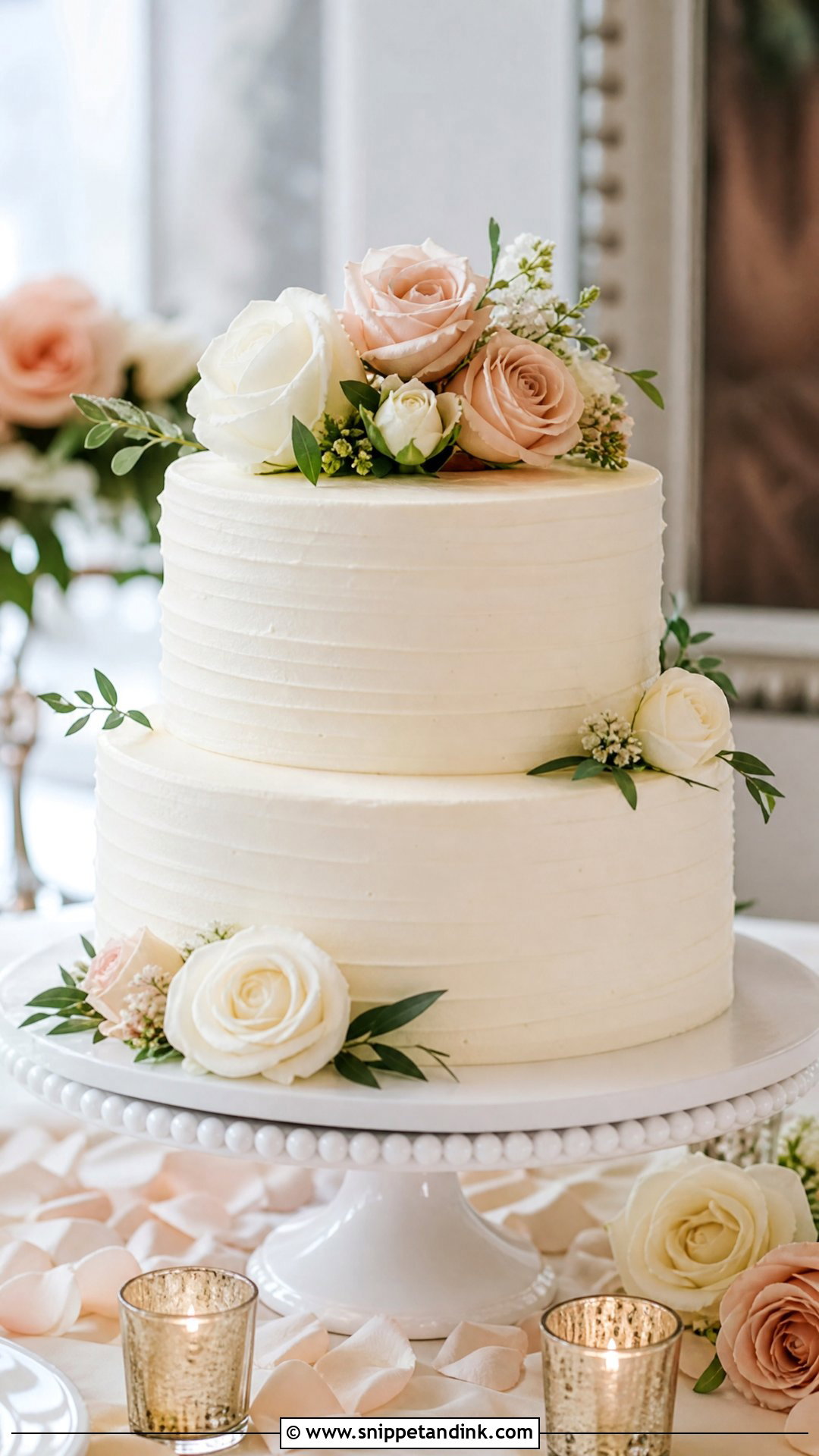
Roses are the flower couples ask me for most, and restraint is what keeps them elegant. Try one small cluster on top, a diagonal trail down two tiers, or a few blooms gathered at the base. White roses read traditional, blush softer, pale peach warmer. Before they go near the cake I wrap the stems and check the petals for pesticide residue and insects, since florist roses are grown for looks, not for food. Smooth or lightly textured frosting keeps the flowers as the focus, and the design works from a garden tent to a hotel ballroom.
9. Wedding Cake With Greenery
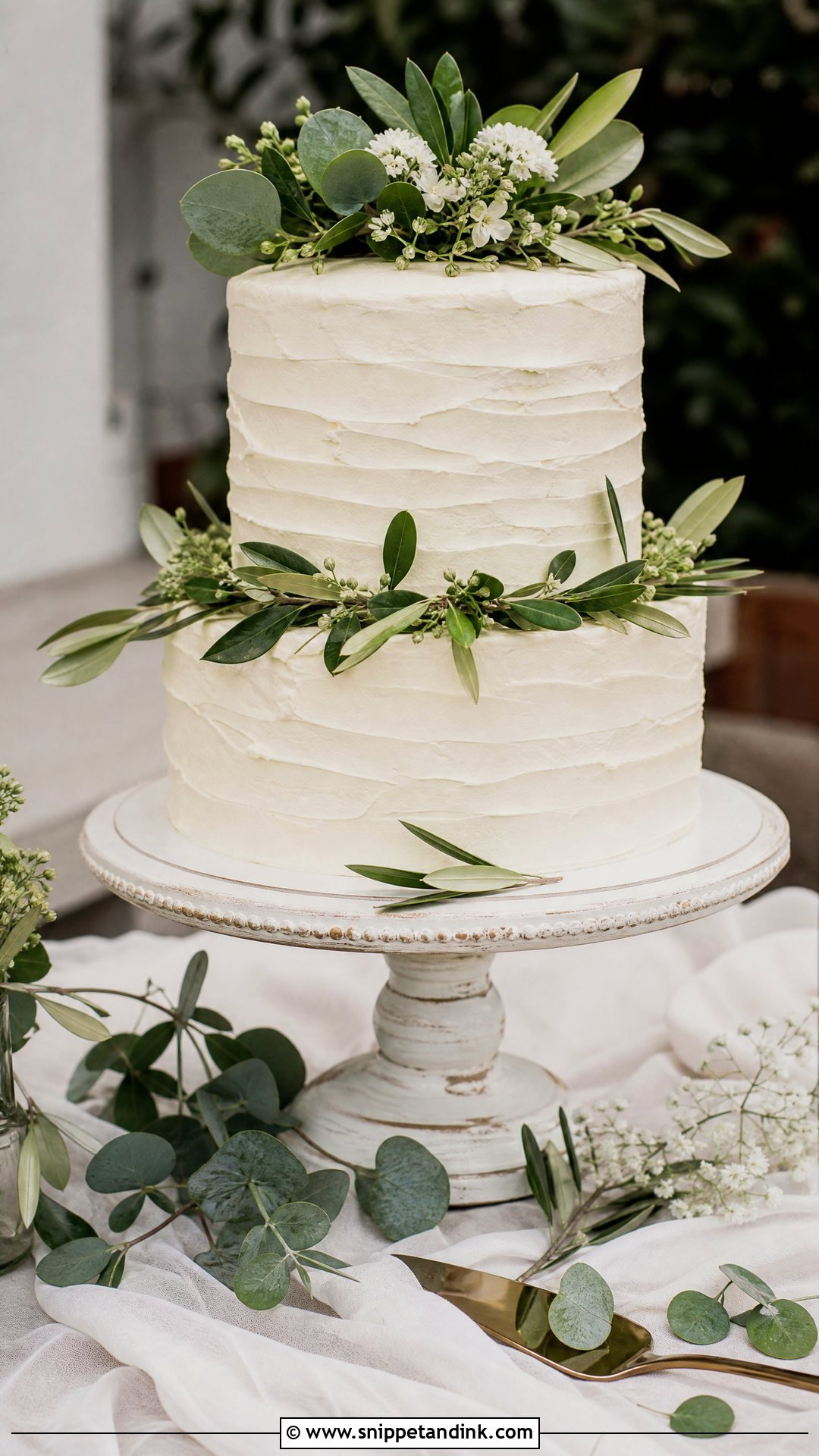
Greenery gives a natural look without many flowers. Olive leaves, rosemary and small edible herbs frame the tiers and add movement; eucalyptus is popular too but is not edible, so I keep it on a barrier or off the frosting. I pair the leaves with ivory buttercream and a plain round shape. Don’t overload it. Too many leaves hide the shape of the cake, and a few placed sprigs look far more considered. It suits barns, gardens and neutral minimalist receptions.
10. Textured Buttercream Wedding Cake
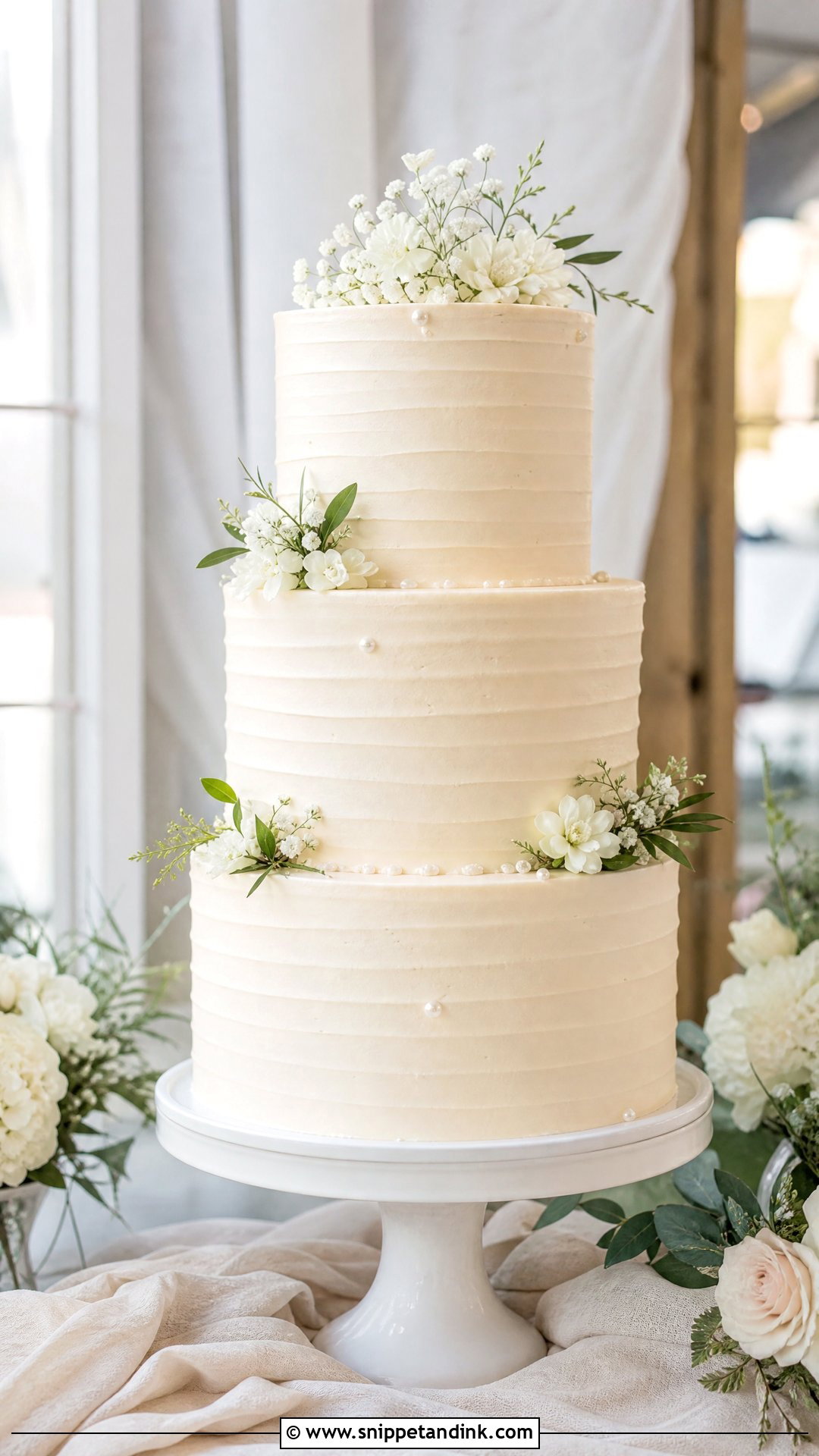
Texture is my go-to when a venue is warm or the cake has a long drive, because small dents and smudges disappear into it. The finish can be light horizontal strokes, a gentle stucco effect or palette knife marks. Done neatly, it still looks polished. Vanilla, almond, lemon and champagne sponges all suit it. Add a few white flowers, tiny pearls or a clean topper. Keep the colour light, as heavy colour on deep texture starts to look like a stucco wall.
11. Semi Naked Wedding Cake
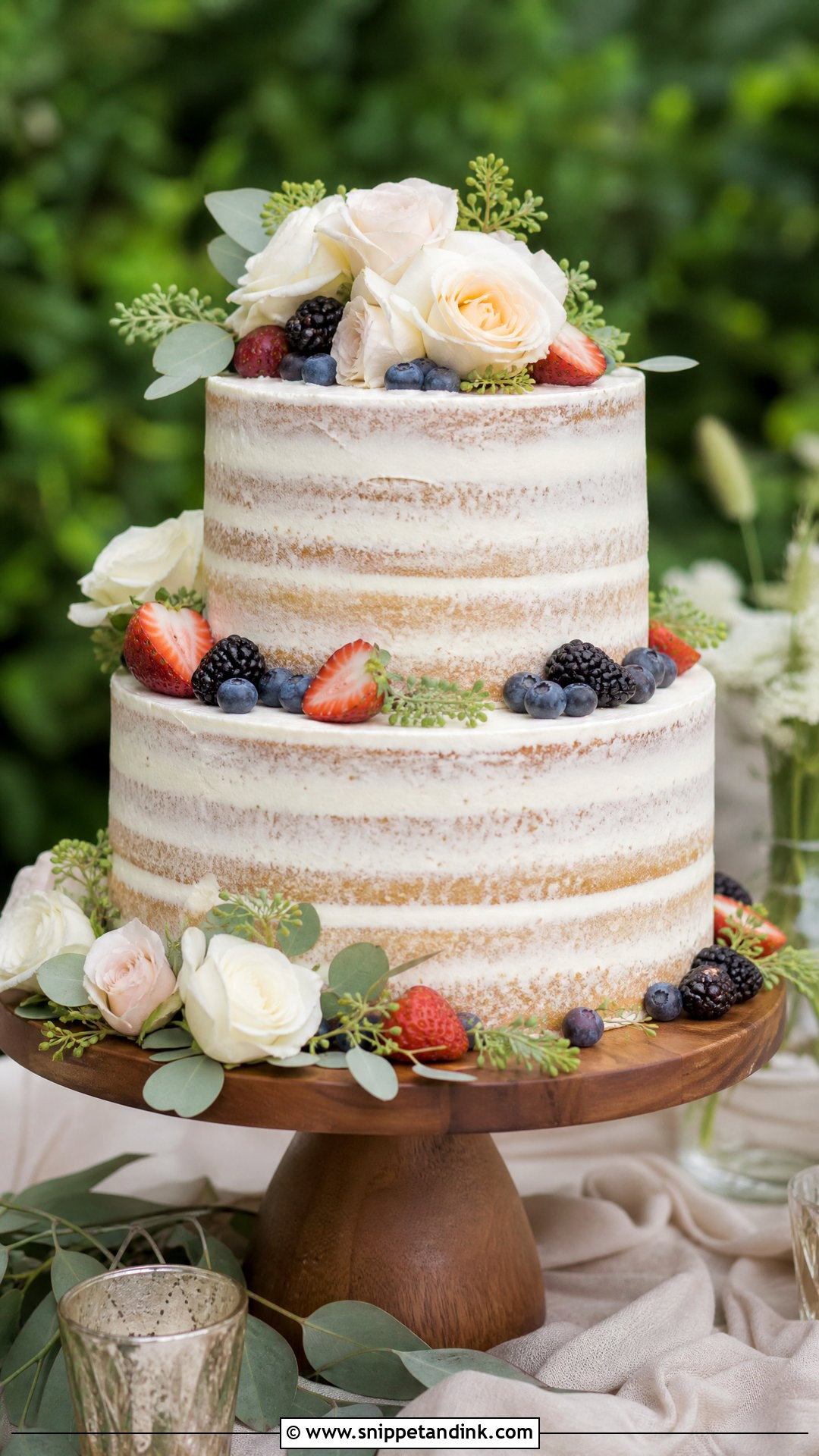
A semi naked cake shows a little crumb through a thin scraped coat, so the sponge itself becomes part of the design. Vanilla, spice, carrot and almond layers look best because their crumb has some colour and character. It fits barns, gardens and relaxed outdoor weddings. My warning is timing: the thin coat protects the sponge less than full frosting, so it should be finished as late as possible and kept out of sun. Berries, soft flowers or a little greenery complete it, and the coat must be even, or it looks unfinished rather than rustic.
12. Smooth Fondant Wedding Cake
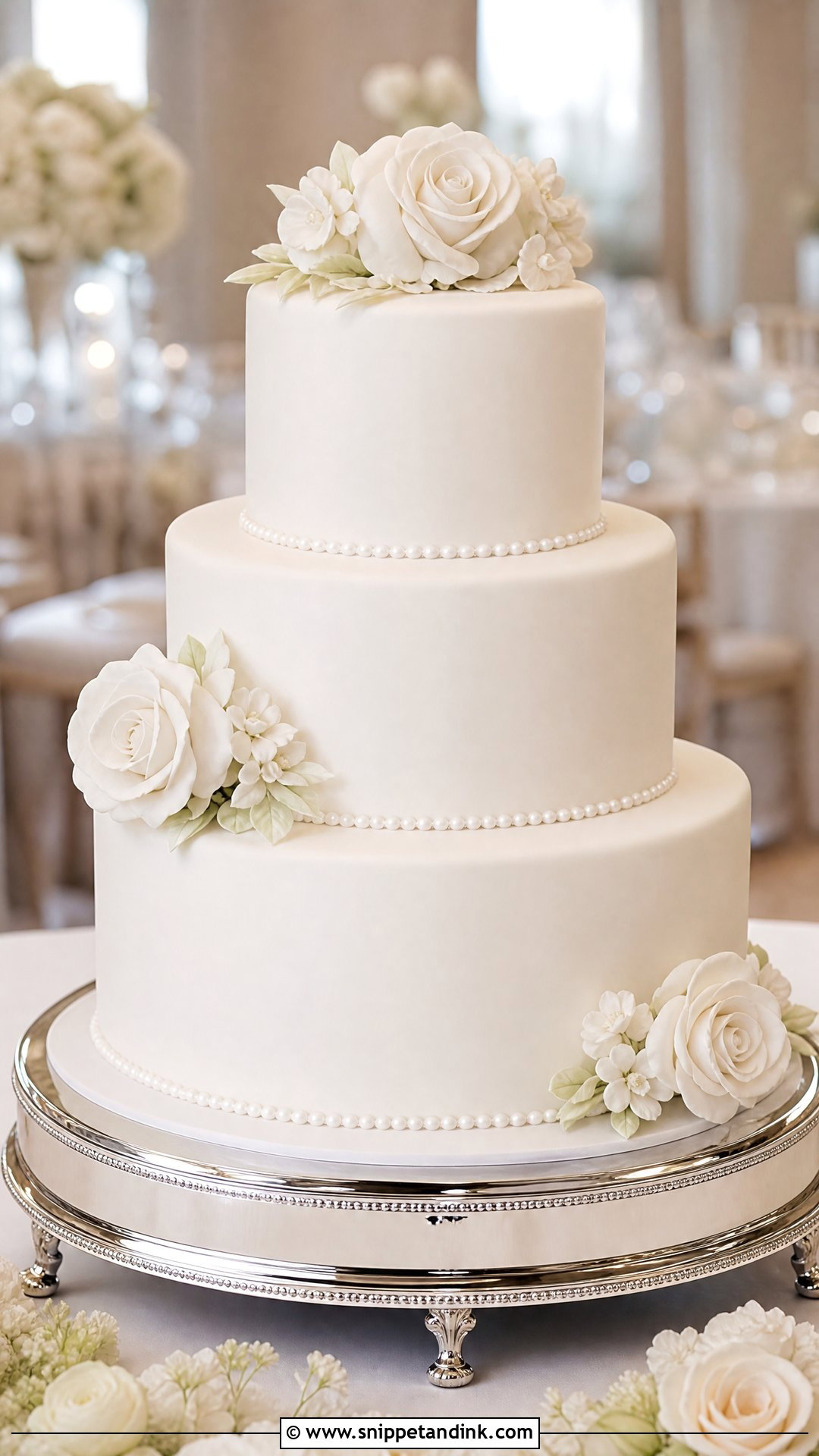
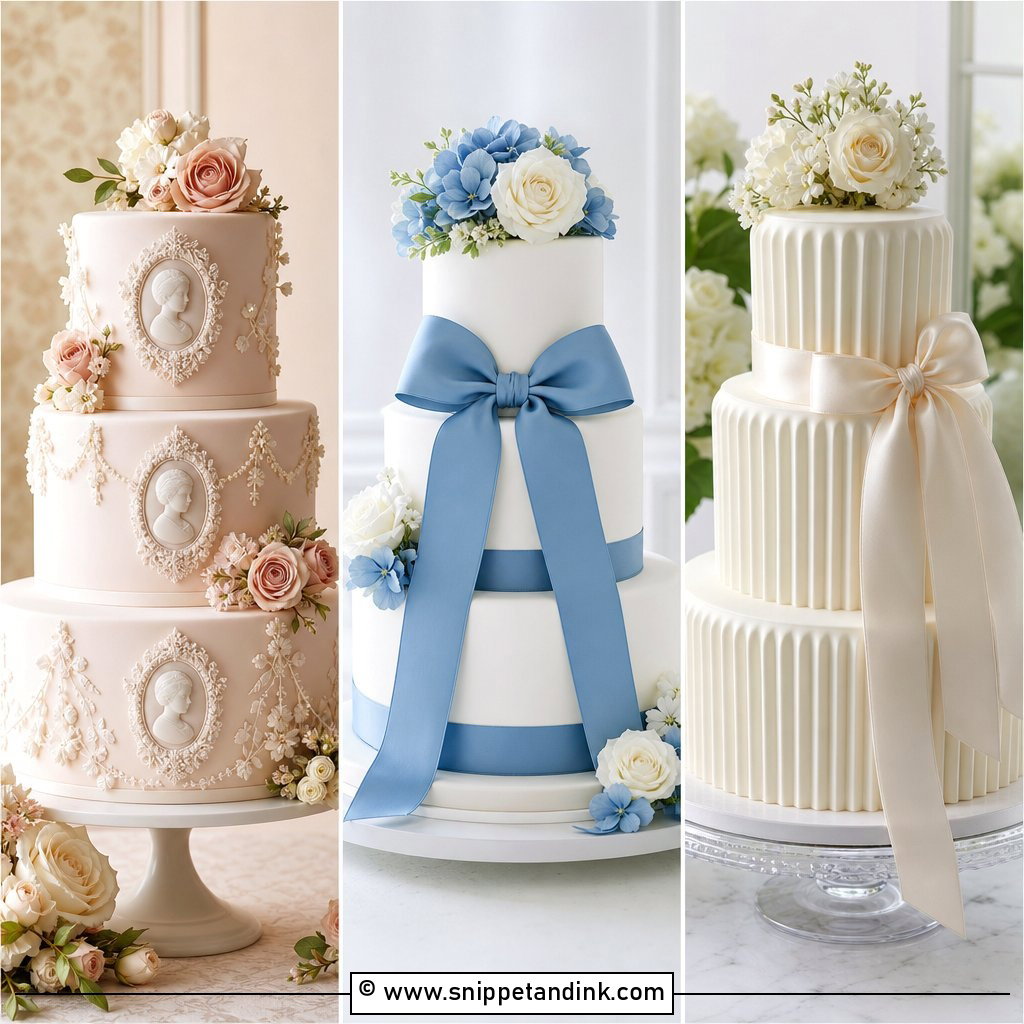
Fondant gives crisp edges and a flawless surface, which is why I use it for black-tie receptions and sleek hotel venues. It also handles warmth better than buttercream and adds structure to taller cakes. White, ivory and soft champagne are the most versatile colours. One ribbon, a few sugar flowers or a fine pearl border is enough on top of it. Many guests peel fondant off, so I keep it thin and put a generous layer of buttercream or ganache underneath.
13. Three Tier Wedding Cake
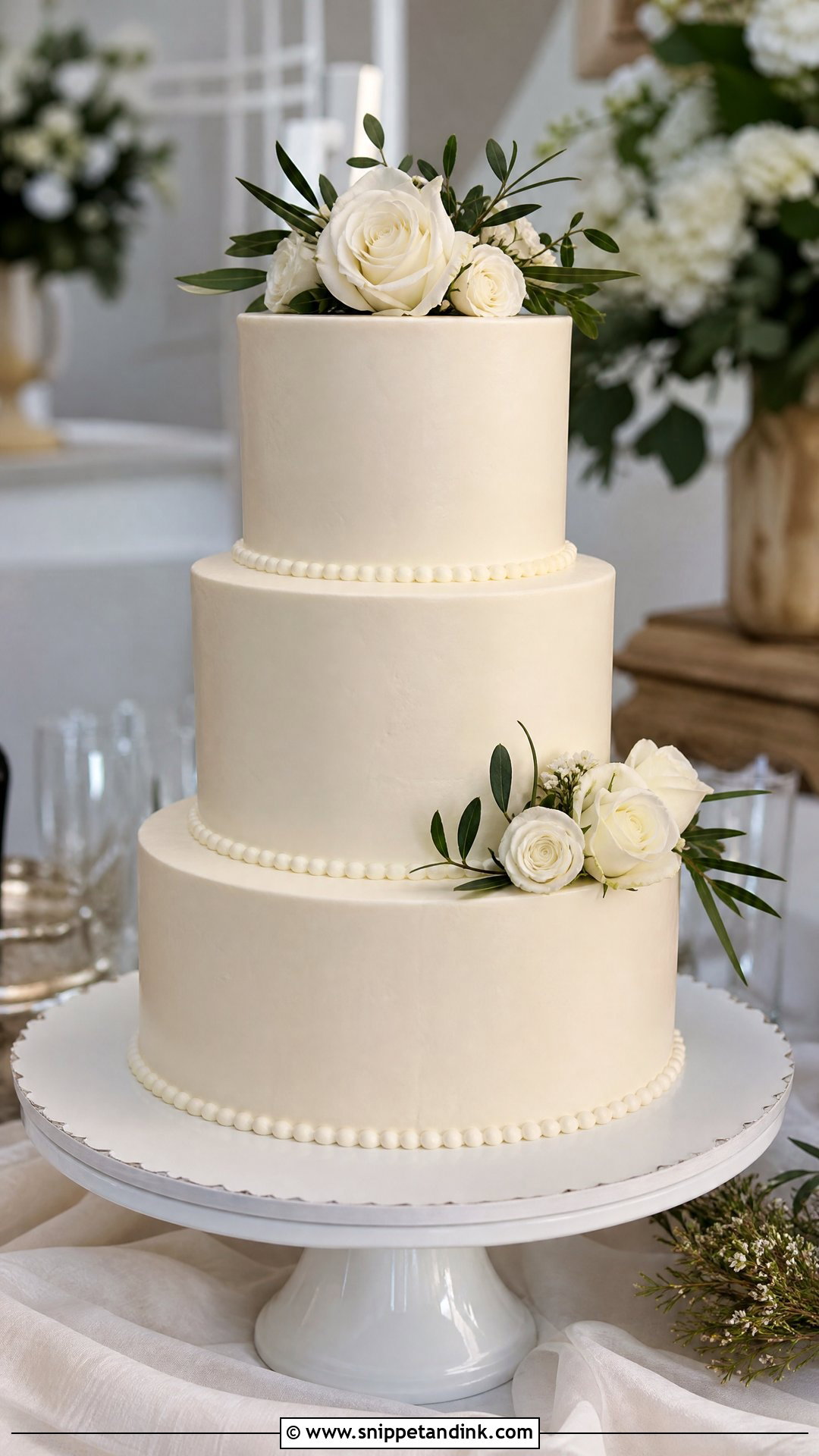
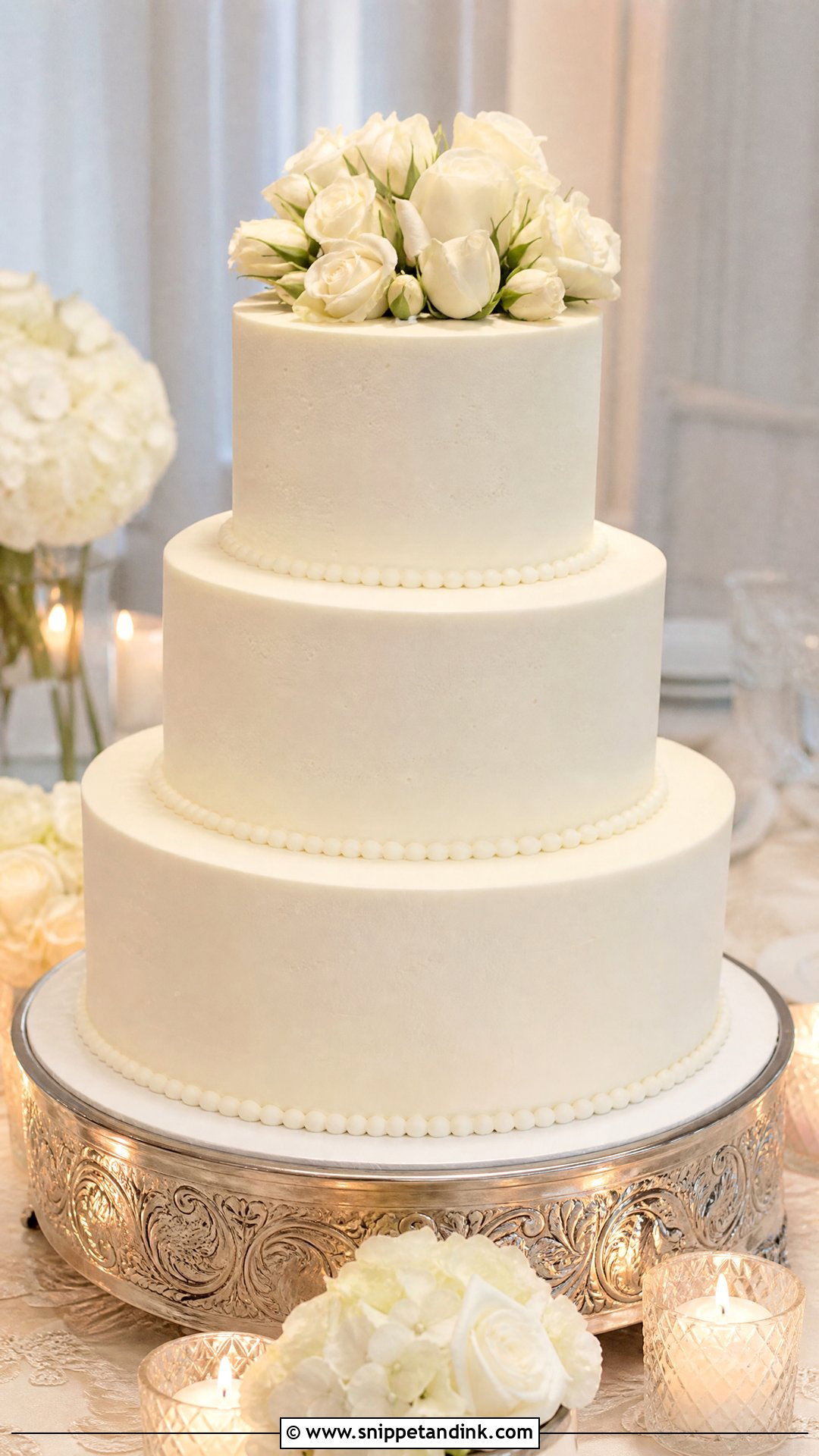
A three tier wedding cake already reads as traditional and celebratory, so the outside can stay very simple: smooth ivory buttercream, a neat border and one small floral accent. It earns its place at medium and larger weddings where the cake table needs a focal point. Each tier can be a different flavour while the outside stays consistent, which is the easiest way to please a crowd; vanilla, lemon and almond are the safe trio. Three tiers need proper dowelling, so this is a cake I always stack on site rather than transport fully assembled over a long distance.
14. Square Wedding Cake
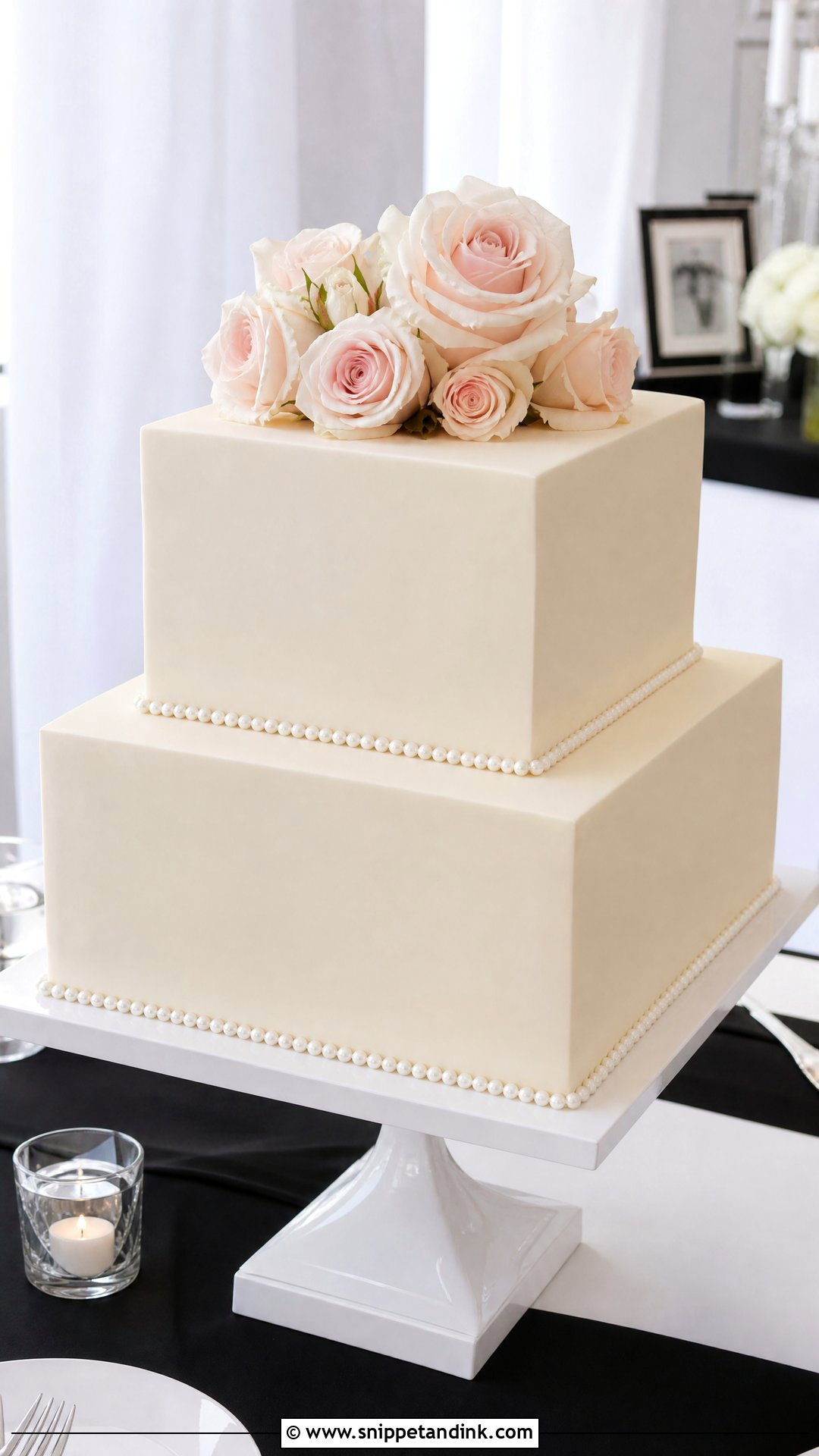
Square cakes look tailored and modern, and they’re unforgiving. Every corner has to be sharp and every side flat, which takes more finishing time than a round cake of the same size. Smooth buttercream or fondant with a single floral placement is all it needs. Black-and-white palettes and modern venues suit it, and blush flowers, pearls or a satin-look ribbon soften the geometry. I’d only book this design with a baker who can show you square cakes in their portfolio.



15. Wedding Cake With Gold Accent
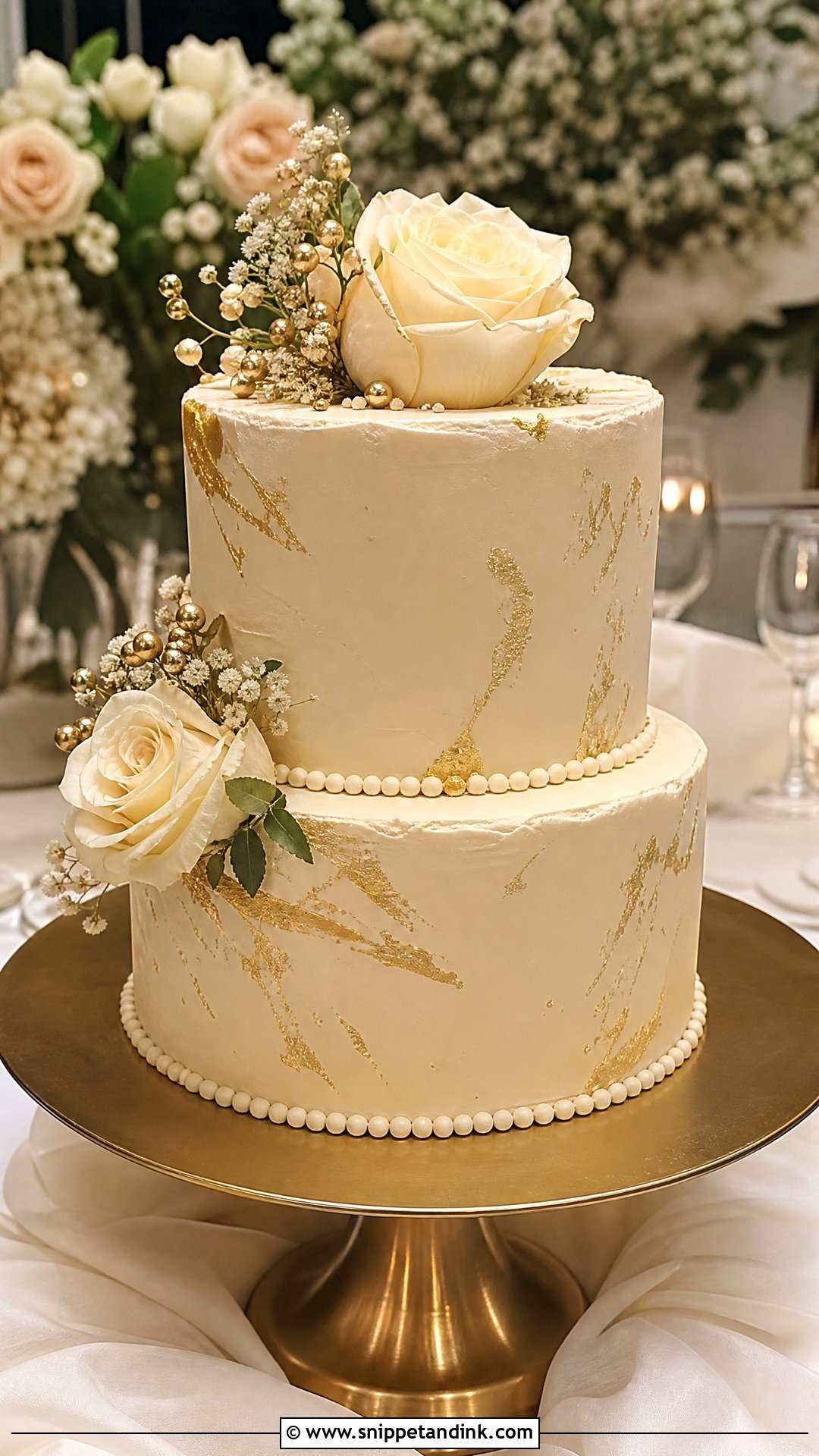
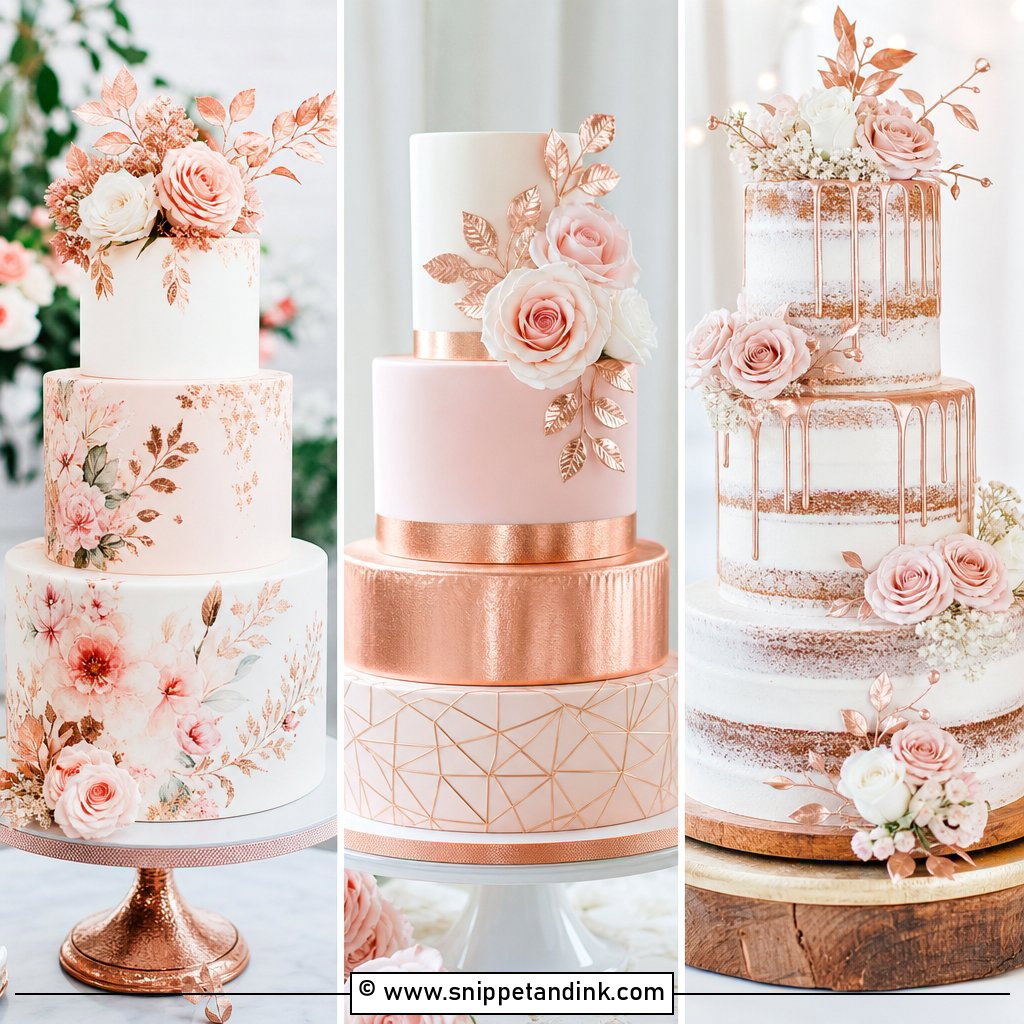
A wedding cake with gold accent adds warmth without flash. The gold can be a thin painted edge, a few pieces of edible leaf, a small monogram or a narrow band around one tier. Painted gold is mixed from edible lustre dust and a little alcohol, and it needs a dry, firm surface, so it works best on fondant or chilled buttercream. Pair it with ivory, champagne tones or blush flowers. I’d use it on evening receptions especially, since gold catches candlelight. Less is the point here; a small shimmer lifts the cake more than a full metallic tier.
16. Blush Wedding Cake
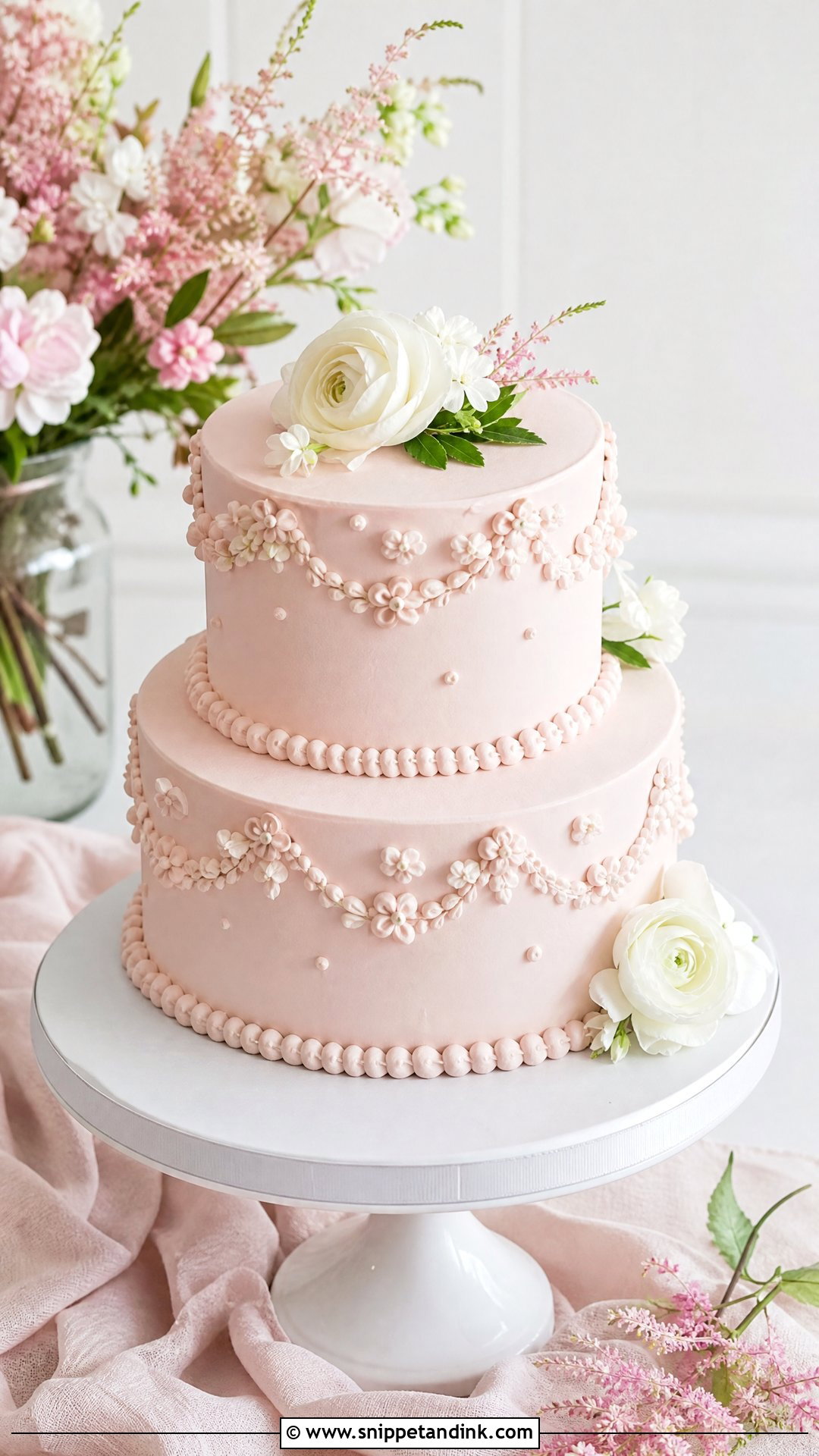
Blush is a colour I mix very carefully, because pink deepens as the buttercream sits and can look stronger by evening than it did in the morning. The tone can be almost tinted ivory or a soft dusty pink. Keep the frosting smooth and add white flowers, pearls or a simple border. Rose, vanilla, almond, strawberry and champagne sponges suit it. It’s at its best at spring weddings and candlelit indoor receptions. Avoid bright pink decorations, which pull the whole cake toward a children’s party.
17. Champagne Wedding Cake
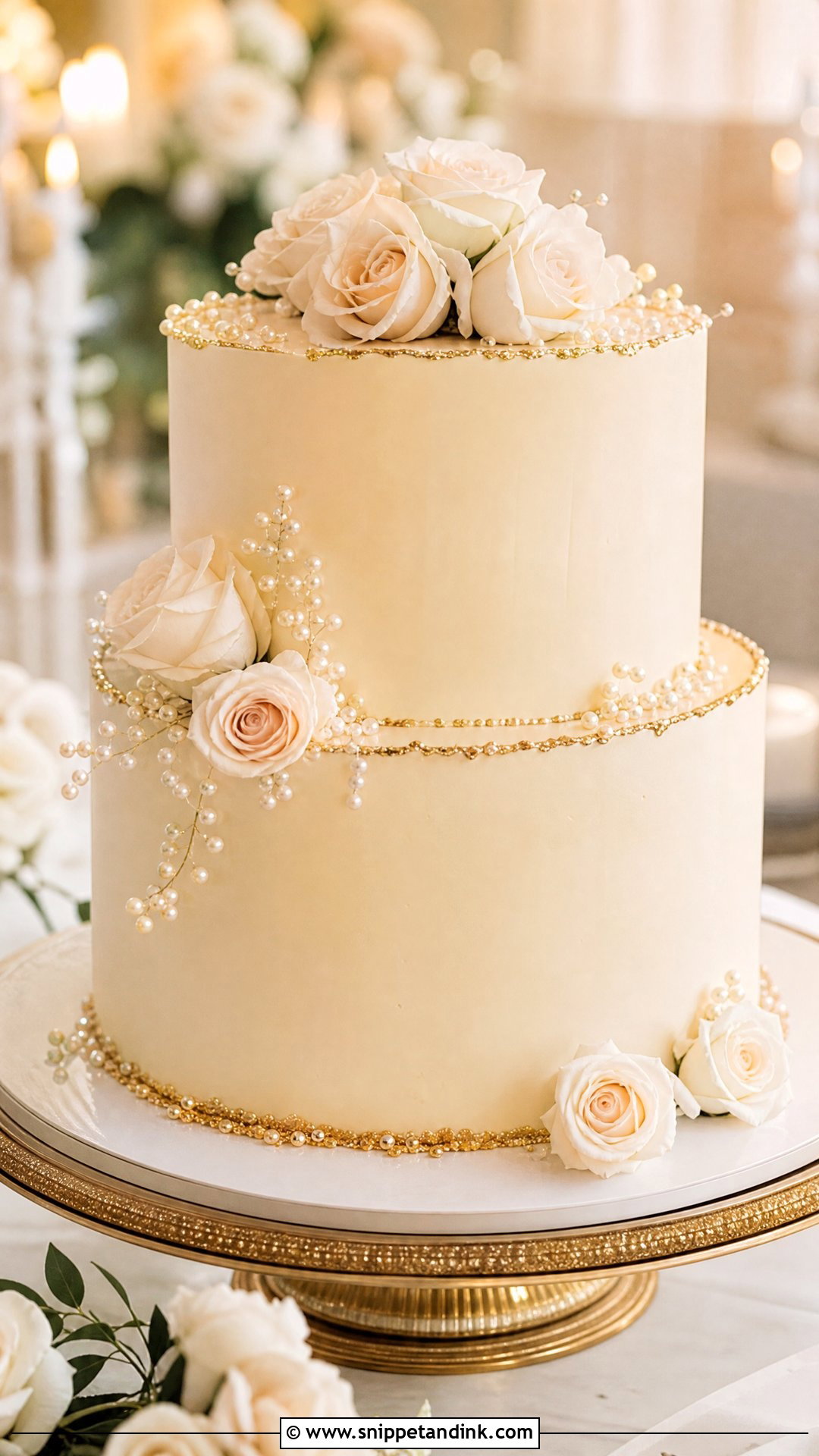
Champagne sits between ivory and gold, and it’s flattering in warm evening light. I get the tone from tinted frosting, a satin-finish fondant or a few gold pearls. Champagne sponge with vanilla buttercream or white chocolate filling is a natural flavour match. One cluster of cream roses, a few sugar pearls or a fine gold edge finishes it. Aim for a soft glow; glitter makes it look cheap. Colour-matching is harder than it sounds, so I’d bring a fabric swatch from the dress or the linens to the tasting.
18. Wedding Cake With Sugar Flowers
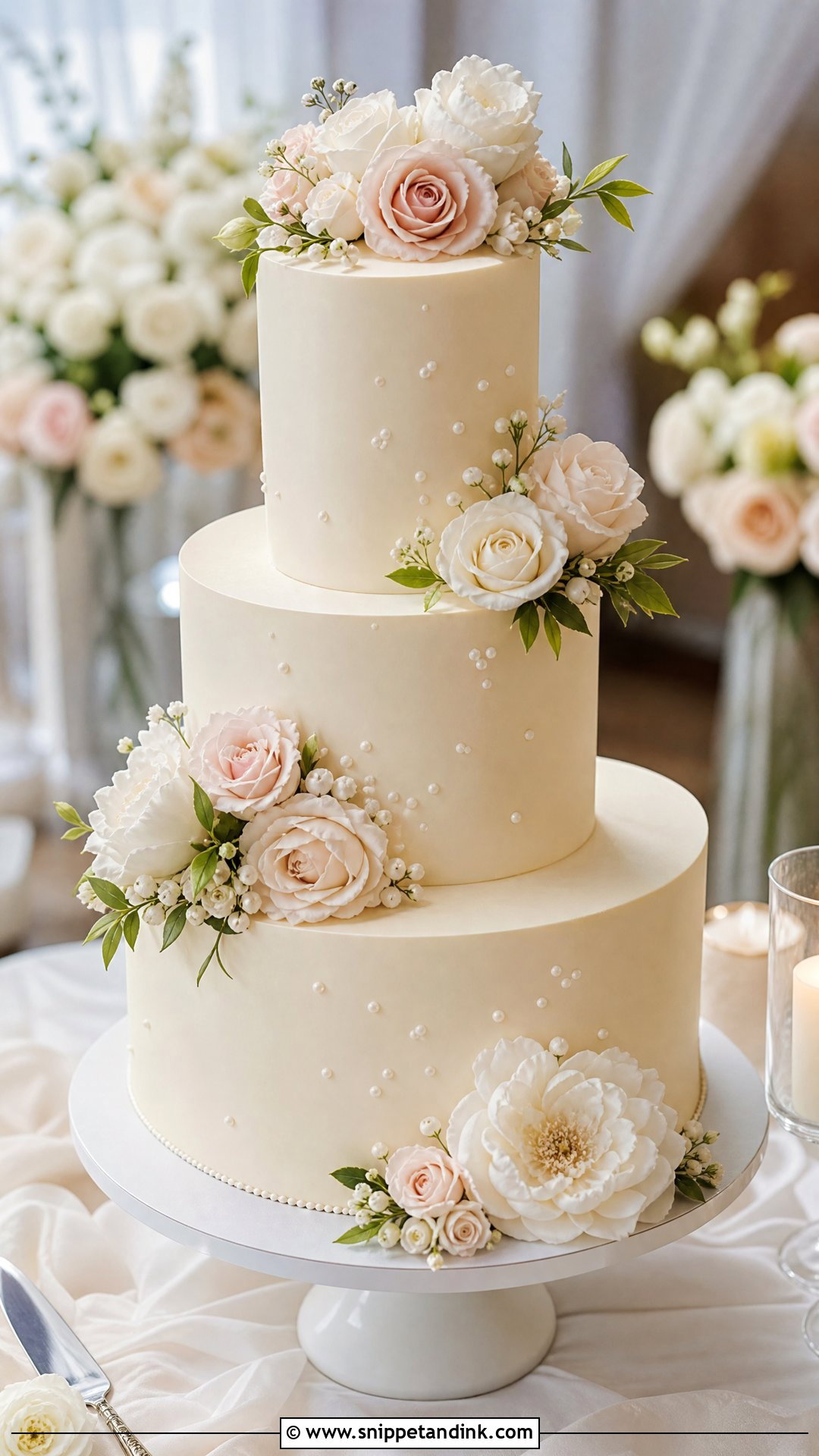
Sugar flowers are slow to make, built petal by petal from gum paste and left to dry, so they need ordering well ahead. In return they hold their shape all night in heat that would wilt fresh blooms. I’d use only a few on a simple cake, at the top, between tiers or along one side, over a smooth ivory base. They’re the answer when your favourite flower is out of season at your wedding date. Every petal is shaped by hand, which is why they cost more than fresh flowers, and many couples keep the top flower afterwards.
19. Tall Single Tier Wedding Cake
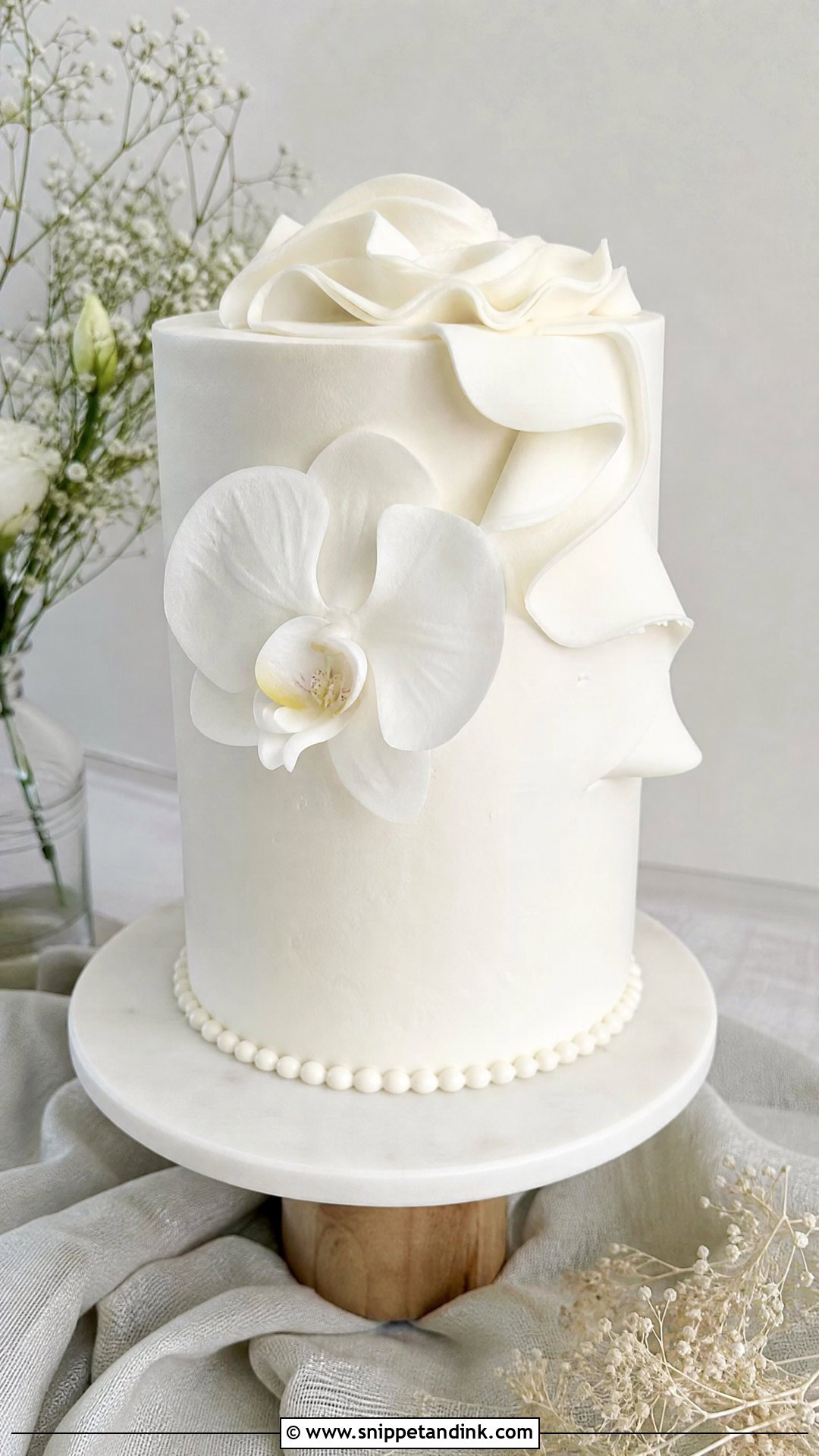
A tall single tier wedding cake gets its presence from height alone, which suits small weddings where a cake still needs to look impressive. Inside, a tall tier needs a board and dowels partway up, just like a stacked cake, or the bottom layers compress. Smooth buttercream, a clean top edge and one detail finish it: a single orchid stem, a pearl border or a soft ribbon of frosting. It also shows off its layers when it’s sliced, so pick a filling with a contrasting colour.


20. Wedding Cake With Orchid Flowers
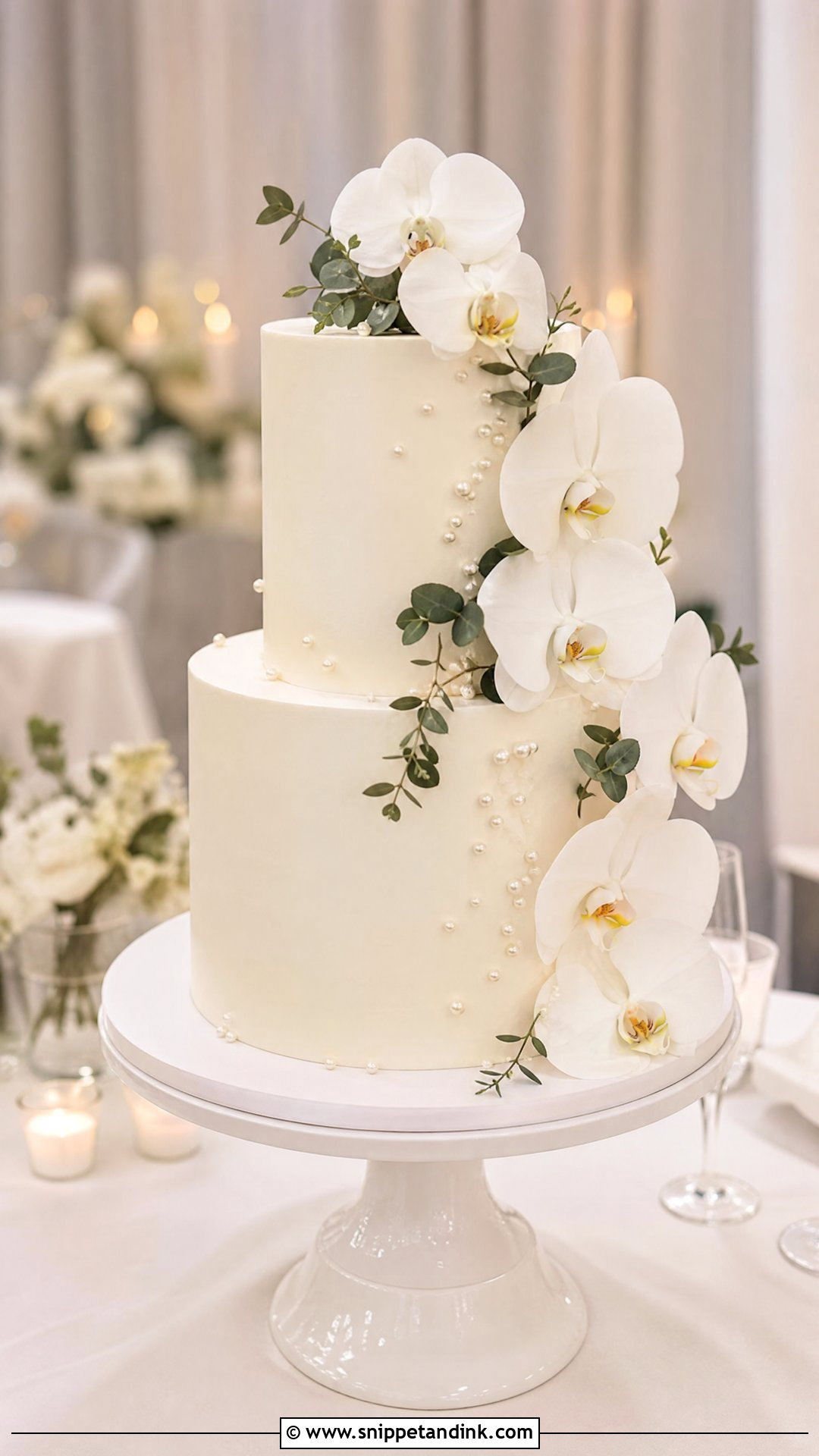
Orchids are sculptural, so two or three are enough to finish a cake. White orchids on white or ivory look clean and upscale; pale pink with champagne accents is softer. Phalaenopsis orchids are the type I’d use, and they hold up well out of water for several hours, which makes them reliable for a long reception. I place them with wrapped stems. Keep the frosting smooth or lightly textured so the shape of each flower reads. They suit modern venues and destination weddings with pared-back flowers.
Your Tasting Appointment Decides More Than Flavour
A tasting is where I learn what you actually like, and it’s also where I check the practical side of the menu. Taste the sponge and the filling together, not separately, because a rich filling can make a light sponge feel heavy.
Fillings and the room temperature
Fresh cream, custard, cream cheese frosting and fresh fruit fillings need refrigeration, so they’re risky on a cake that sits out for hours at a summer reception. If your cake is cut late, I’d steer you to ganache, buttercream or jam-based fillings, which are stable at room temperature.
Questions I’d want you to bring
- Allergies in the wedding party, especially nuts, since almond flavouring and praline are common in wedding sponges.
- Whether you need a gluten-free or vegan tier, which is often easier to make as one separate tier than the whole cake.
- When the cake will be cut and served, so I can plan fillings and finish for that timing.
- Whether you want to keep the top tier. If so, it should be a flavour that freezes well.
Bring photos of your flowers, your dress and the room if you have them. A plain cake is all about proportion, and seeing the space helps me judge the right height for the table.
A Quiet Cake Still Needs a Strong Idea
You don’t need heavy decoration for a cake to feel like a wedding cake. The best plain designs rely on a clean shape, a soft colour, good frosting and one strong detail, whether that’s fresh roses, pearls, texture, gold or a single orchid. Think about the venue, the dress, the flowers, your guest count and where the cake will stand. A small cake feels intentional; a tall one adds drama without clutter. When every choice points the same way, the cake becomes part of the room, and that’s when it looks its most beautiful.
You'll Like These Ideas:







Leave a Reply