
Blush is the accent color I mix most often, and it’s harder to get right than it looks. A few drops too many and it’s bubblegum; too few and it vanishes against white under reception lighting. When it works, it warms a white cake just enough to tie it to the bouquet without competing with the dress. The 25 cakes below cover everything from fondant tiers to piped flowers, and for each one I’ve noted where the blush goes and what I’d watch out for when building it.

Which Blush? Peach, Rose and Dusty Pinks Are Not the Same
“Blush” covers a wide range. Some lean warm, toward peach and apricot. Others lean cool, toward rose. A dusty blush has a little grey or brown in it. Couples often bring me a photo of a cake they love and a photo of their bridesmaid dresses, and the two are different pinks entirely.
So before we talk tiers, I ask for physical swatches: a ribbon from the bouquet, a fabric sample from the dresses, the invitation. Screens shift color too much to rely on. I then tint a small amount of frosting and hold it against the swatch in daylight and again under warm indoor light, because a peachy blush can look orange under a tungsten bulb.
- Ivory dress: a warmer blush sits more comfortably beside it than a cool pink.
- Bright white dress: cooler rose blush looks cleaner.
- Gold accents: warmer blush. Silver accents: cooler blush.
Once the shade is settled, I write it down as a recipe, the gel colors and drop counts per batch, so every tier and every piped flower comes from the same formula. That’s the only reliable way to keep a top tier made on Tuesday matching a bottom tier finished on Friday.
1. White And Blush Wedding Cake With Roses

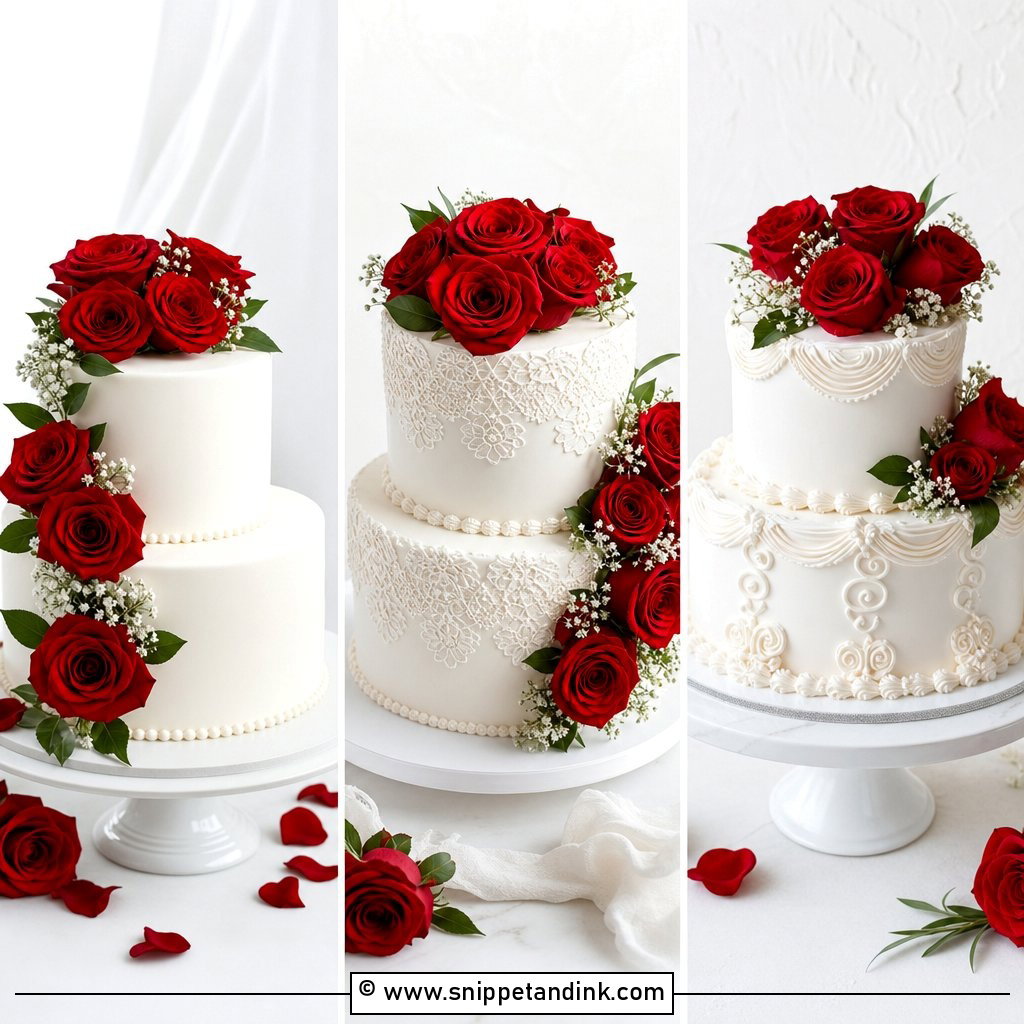
Roses are the easiest route to this palette, and the diagonal placement is what keeps them from looking like a pile. I’ll usually start the line on the top tier’s shoulder and let it break across the middle, leaving most of the white showing. Fresh garden roses bruise at the edges after a few hours out of water, so if the cake will stand for a long reception, I’d choose sugar roses instead. A few small white filler blooms soften the transitions.
2. White And Blush Buttercream Wedding Cake

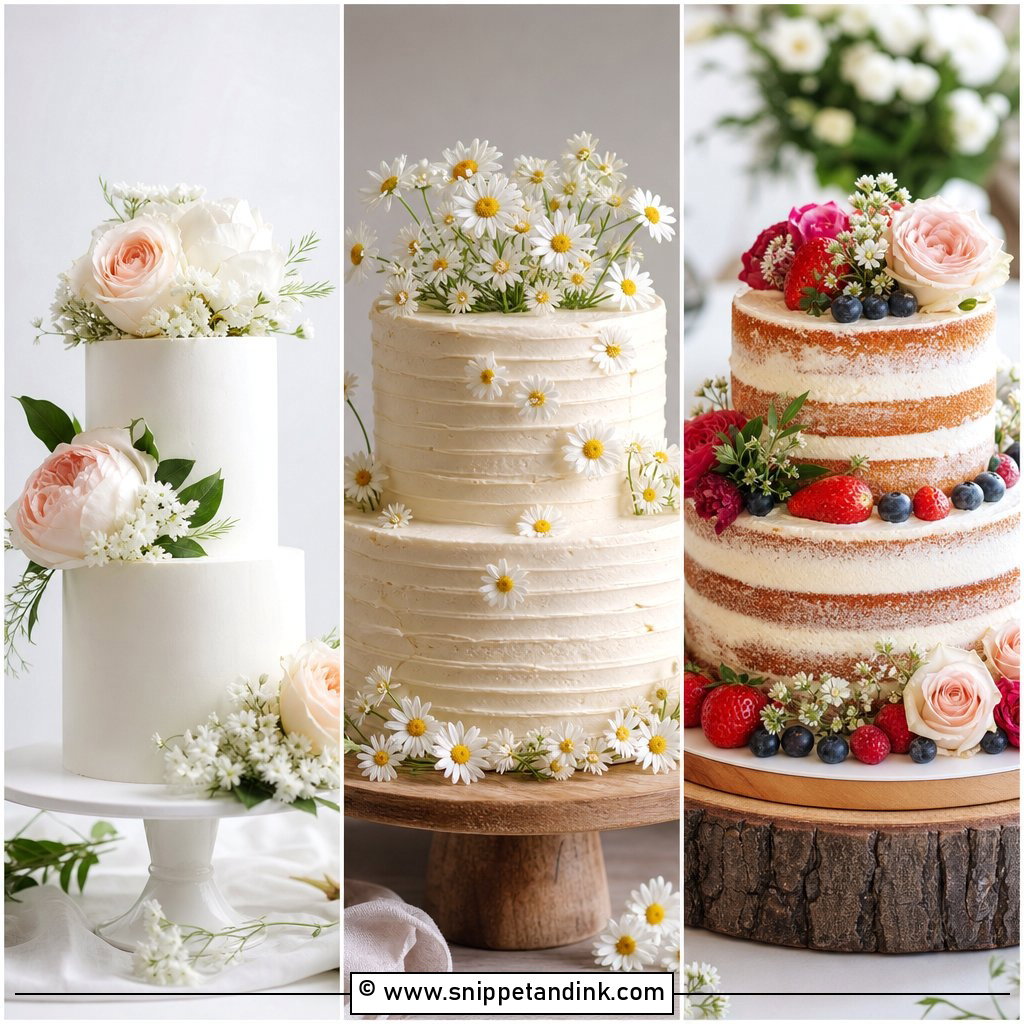
Buttercream has a softness fondant can’t fake, and couples who care about flavor tend to land here. The catch with this palette is that butter is yellow, so a buttercream base reads ivory and any blush you mix into it leans peachy. I whiten the base with a tiny touch of violet coloring before tinting. Spatula texture or horizontal combed lines both suit it, and the blush can be piped, painted or tucked in as real blooms. Leave generous white space between the pink accents.
3. White And Blush Fondant Wedding Cake

Fondant is my choice for a ballroom or black-tie reception, where crisp edges suit the room. It also holds blush detail precisely: sugar ribbons, edible lace and painted panels all sit cleanly on it. I suggest texturing one tier and keeping the others smooth, because a fully plain fondant cake can read stark from a distance. Tall tiers help it look deliberate.
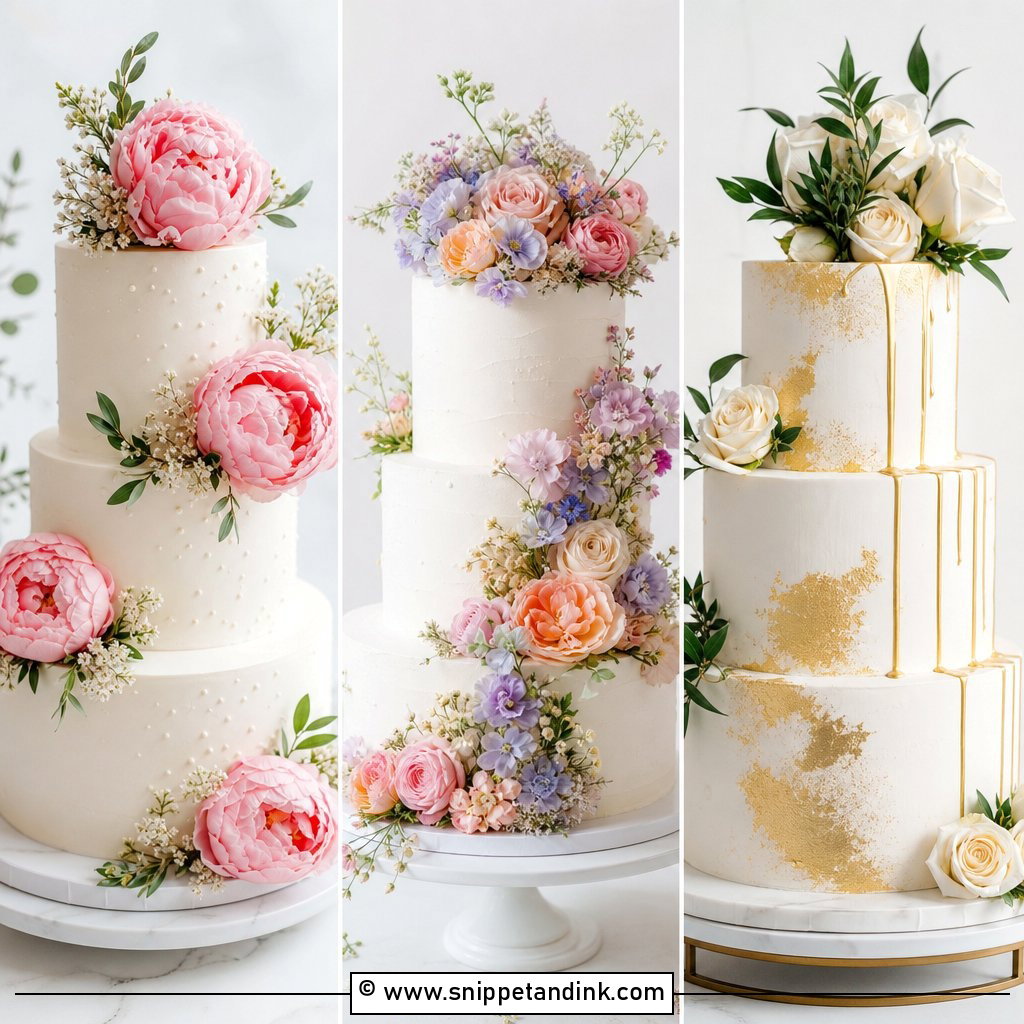
4. White And Blush Wedding Cake With Peonies

Peonies do the decorating almost by themselves, since one open bloom covers a lot of tier. Three placements, base, middle and top, are usually all a smooth white cake needs. Fresh peonies have a short season, roughly late spring into early summer, and they open fast in a warm room, so a tight bud at setup can be blown wide by the cutting. Sugar peonies avoid that problem for summer or destination weddings. A few pale ranunculus fill the gaps.
5. White And Blush Wedding Cake With Pearls

Pearls sit somewhere between vintage and modern depending on how you place them. A neat row at each tier’s base looks classic; a loose scatter looks newer. Edible sugar pearls need a firm surface to grip, so on buttercream I set them after the cake has chilled and the crust has formed, otherwise they sink. Blush flowers take the formality down a notch. A white or gold stand finishes the look.
6. White And Blush Ruffle Wedding Cake

Ruffles echo fabric, which is why they often get matched to a gown with tiers or layers in the skirt. One blush ruffle tier among white ones gives clear contrast; blending the two into an ombre is softer. I build them in fondant, wafer paper or buttercream, and wafer paper gives the lightest edge but wilts in humidity. With this much movement on the cake, a few roses or a single sugar flower cluster is enough.
7. White And Blush Wedding Cake With Gold

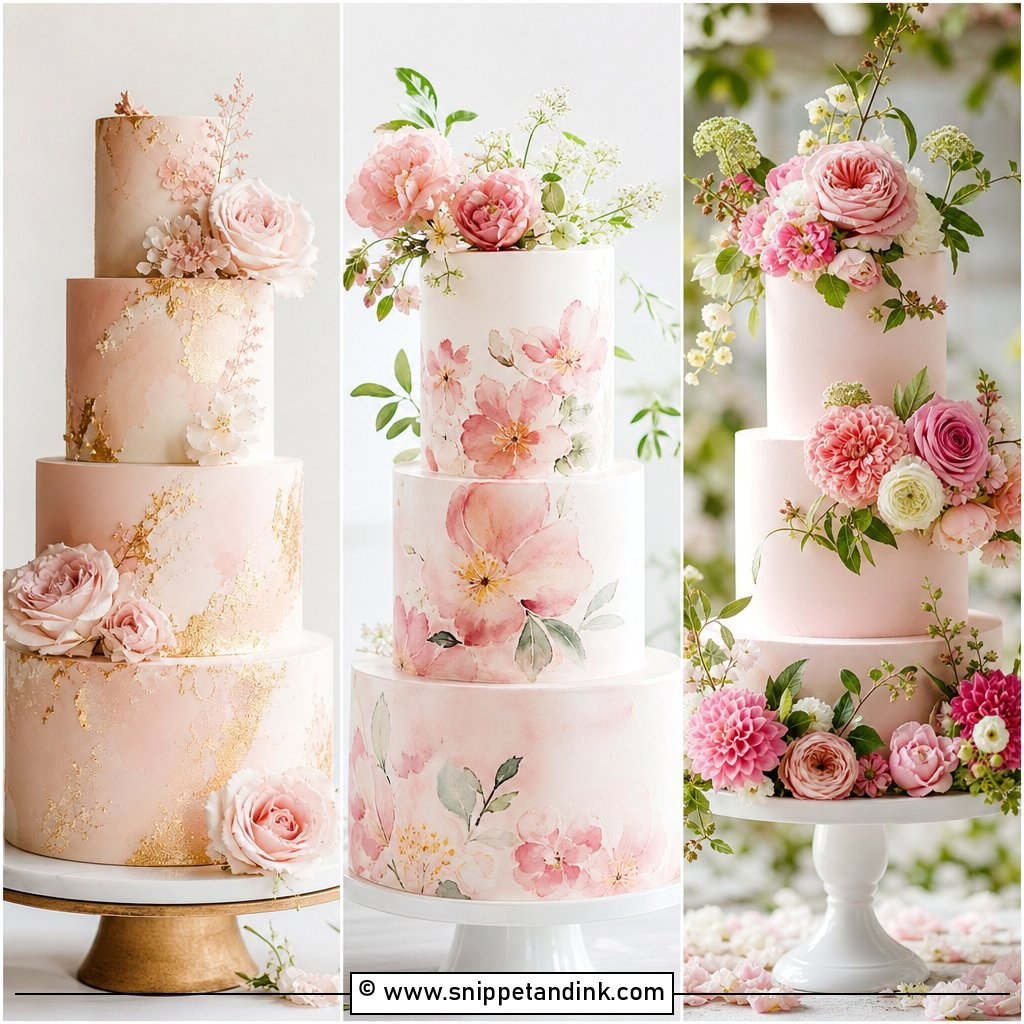
Gold works with blush only as a highlight. I use white as the main color and blush as the accent, then add gold as edible leaf, a thin painted line or a rim on one tier. Edible gold paint is mixed with alcohol and brushed on a firm surface, and it goes on best over fondant or well-chilled buttercream. Evening light flatters it. A cake that gleams on every tier tends to look busier than the room around it.
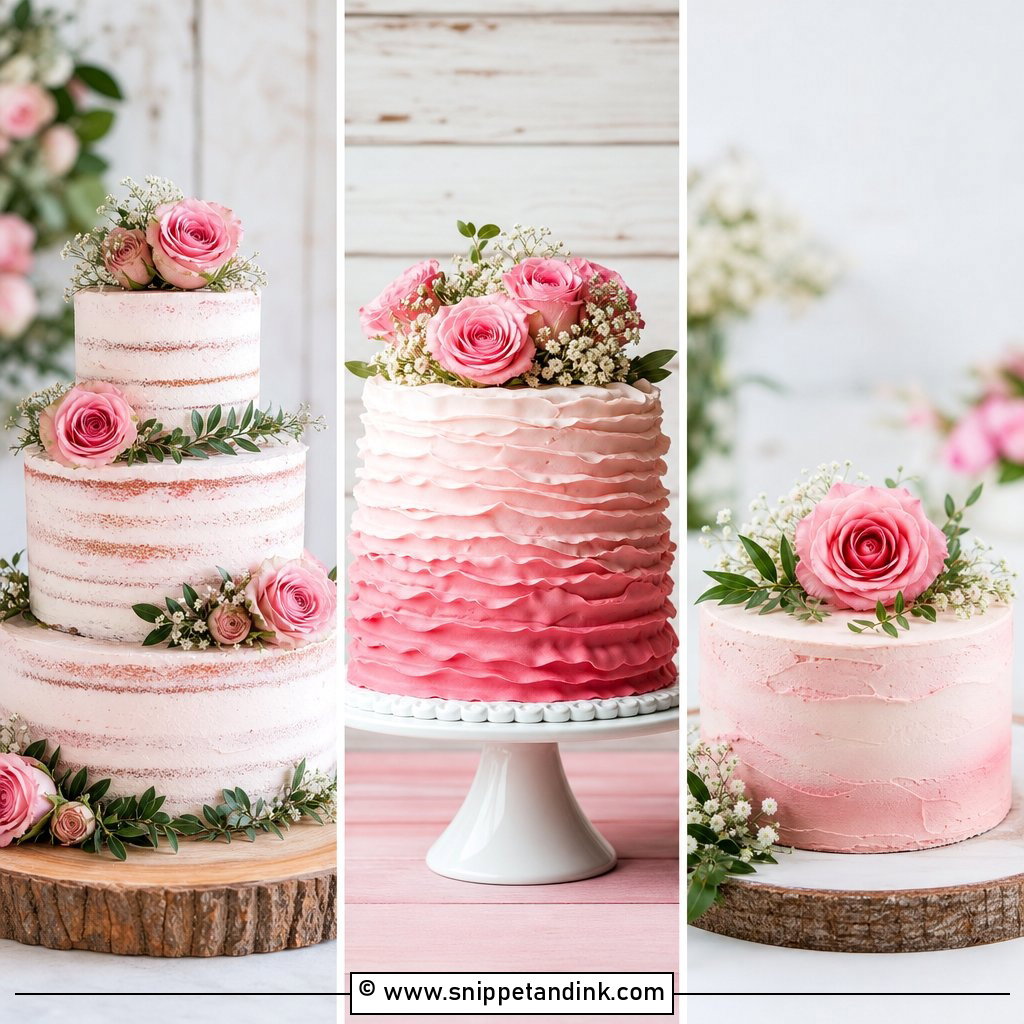
8. White And Blush Semi Naked Wedding Cake

A semi naked cake lets the sponge show through a thin scrape of buttercream, which suits a barn or garden setting. Pale sponges like vanilla, almond or champagne keep the exposed layers looking light; a chocolate sponge would muddy the blush. Exposed cake dries out faster than a fully coated one, so I assemble these close to the day. Berries and herbs suit an outdoor setting.
9. White And Blush Wedding Cake With Fresh Flowers

Fresh flowers tie the cake directly to the bouquet, which is why so many couples ask for them. The cake stays plain white and the blooms do the work. Roses, ranunculus and lisianthus are reliable. Most florist flowers have been treated with chemicals, so I tape every stem and set it in a food-safe pick, and I work out with the florist which blooms are safe near food before the day. A cascade is dramatic; small clusters are calmer.
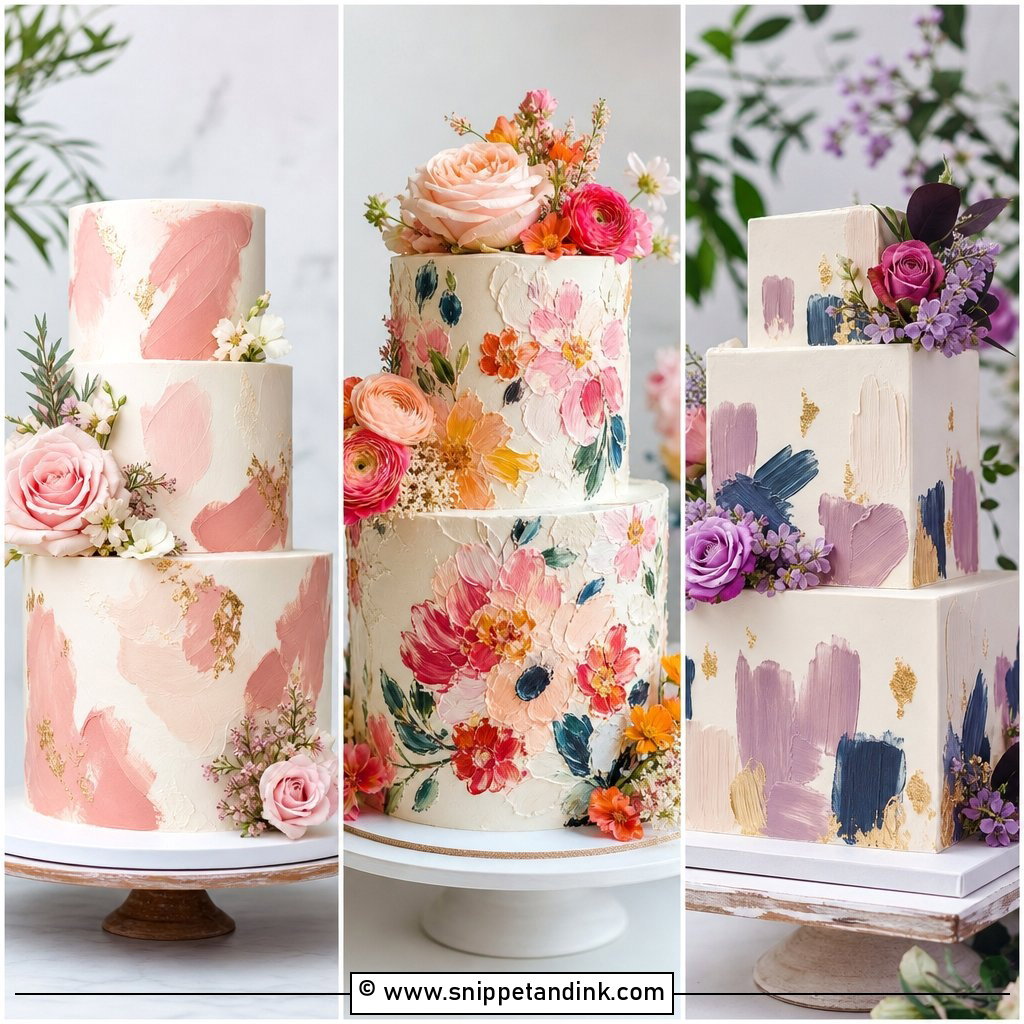
10. White And Blush Watercolor Wedding Cake

A watercolor wedding cake gets its painterly look from color brushed or smeared on, not blocked in. On buttercream I spread blush and white together with a scraper; on fondant I paint thinned gel color with a soft brush. The edges have to be blended, because a hard streak reads as a mistake from across the room. A few sugar flowers or gold flecks are enough on top.
11. White And Blush Ombre Wedding Cake

Ombre is the gentlest way to bring in more pink. The fade can run white at the top to blush at the bottom, or the reverse, and darker at the base generally looks more grounded. I tint each tier from one batch of buttercream, adding color in steps, so the shades actually relate to each other. Mixing separate batches by eye is how you get a tier that jumps. Keep decoration light so the gradient stays the subject.
12. White And Blush Wedding Cake With Lace

Edible lace can be pressed from a mold to echo the lace on a dress or veil, and white lace laid over a blush tier gives soft contrast. I ask for a photo of the gown’s lace before choosing the mold, because a heavy, dense pattern looks clumsy at cake scale. Sugar lace sets brittle, so it goes on late in decorating. Smooth fondant behind it gives the cleanest lines.
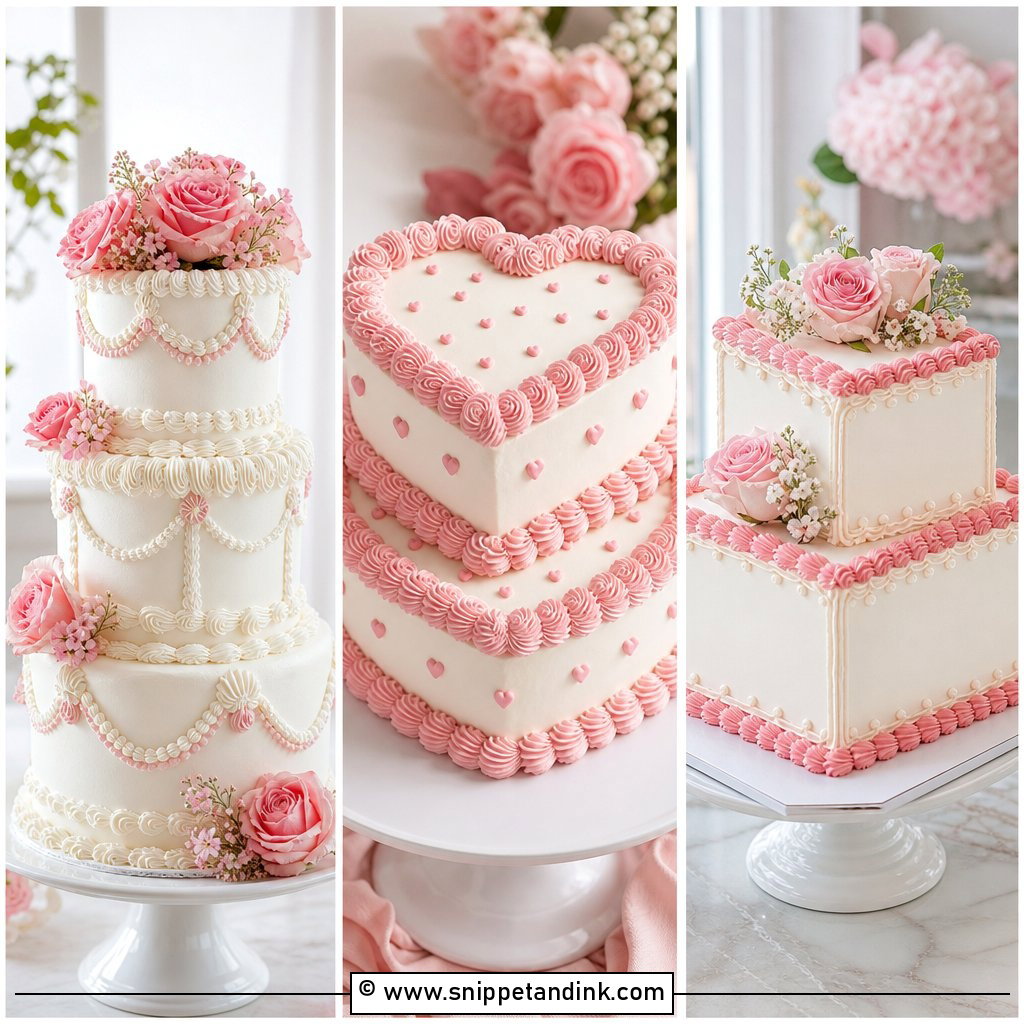
13. White And Blush Vintage Wedding Cake

Vintage cakes lean on piping: shell borders, swags, bows, pearls and rosettes. Try white buttercream tiers with blush Lambeth-style piping, which builds layer upon layer of overpiped detail. That technique takes time and stiff buttercream, and in a warm room the layers can slump, so I chill between passes. Keep the blush pale; strong pink makes this style look sugary. A heart-shaped top tier is fun, but a round cake is easier to keep balanced.
14. White And Blush Modern Wedding Cake

Modern cakes depend on restraint. Tall white tiers carry one blush element, a single large flower, a painted panel or a curved fondant sweep, and nothing else competes. Asymmetry helps, and so does height. The one thing I’d avoid is adding a second focal point once the first is placed. A slim gold line or an acrylic stand is the most I’d add.
15. White And Blush Square Wedding Cake

Square tiers look architectural, but they’re harder to finish than rounds. Every corner has to be sharp, and buttercream tends to round off, so I usually recommend fondant or a ganache base under it. Stacking evenly looks formal; rotating each tier slightly adds movement. Blush roses at one corner soften the geometry. Square tiers also give more servings than rounds of the same width, which is worth knowing.
16. White And Blush Two Tier Wedding Cake

A two-tier cake suits a smaller guest list or a brunch reception, and its success is all in proportion. A tall bottom tier and a top tier a few inches narrower gives it presence. Add blush flowers in one side cluster or a few edible pearls, and resist decorating both tiers equally. A pedestal stand adds height without adding cake.
17. White And Blush Three Tier Wedding Cake

Three tiers give me room to vary texture without the cake looking busy. One option: a smooth white tier, a blush floral tier and a pearl or lace tier. Another: all three white with a blush flower cascade. The tier sizes can be adjusted to suit a wide range of guest counts, which is part of why it’s the size I’m asked for most. Whichever version you pick, keep the blush in a single shade.
18. White And Blush Four Tier Wedding Cake

Four tiers need a big room, or they look out of scale. Smooth white frosting as the base, with blush detail in measured places, keeps that height from feeling heavy. A floral cascade connects the tiers from top to bottom. A cake this tall needs a central dowel through all tiers and is best stacked at the venue, not carried assembled. Candles around the stand show it off well.
19. White And Blush Wedding Cake With Orchids

Orchids give this palette a slightly tropical lift. Their flat, clean shape sits well on smooth tiers, especially in a long cascade. Phalaenopsis orchids are sturdier than many flowers once cut, which suits a warm venue, though they still need wrapped stems if they’re fresh. Pair them with a couple of roses or use them alone. I like how the blush throat of the flower picks up a blush tier without any extra color.
20. White And Blush Wedding Cake With Sugar Flowers

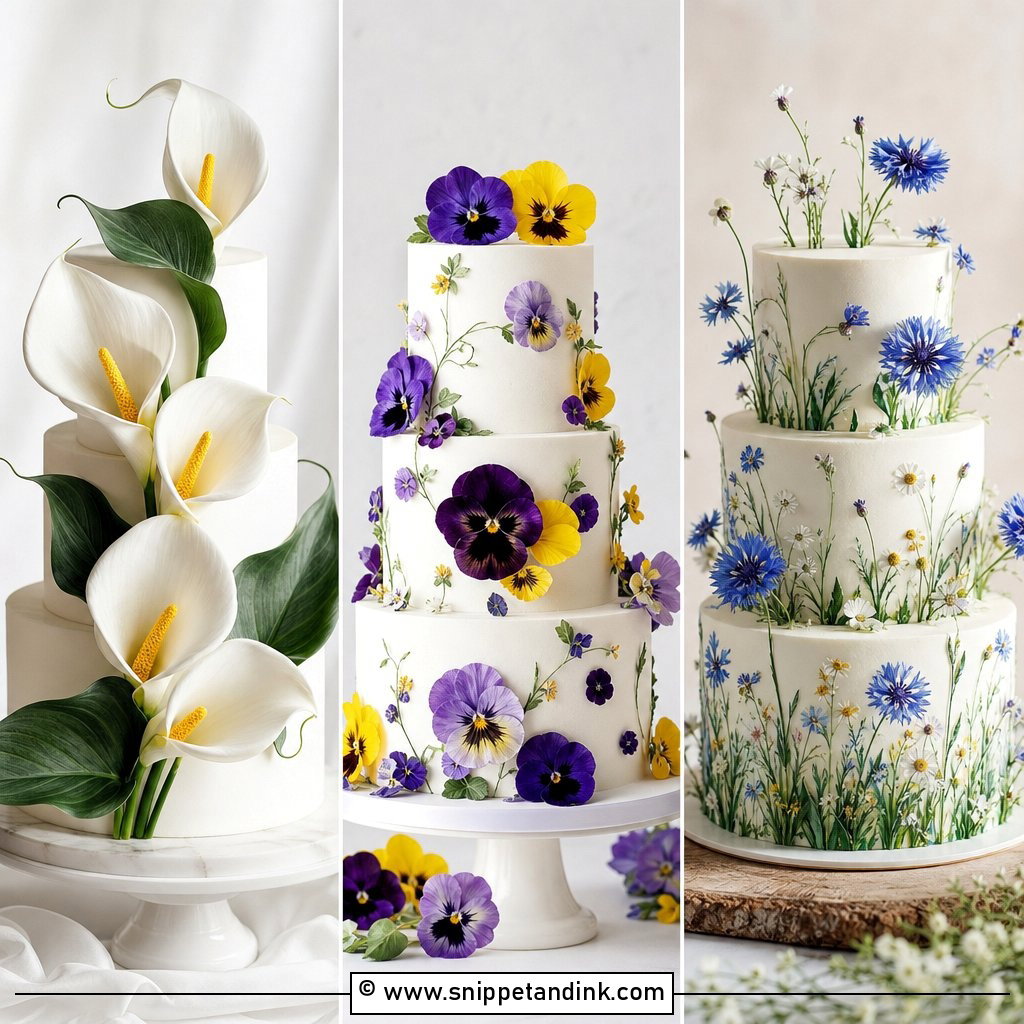
Sugar flowers give me complete control over color, size and placement, and they last as a keepsake. They can be modeled as peonies, roses, ranunculus, sweet peas or cherry blossoms, and they solve the problem of out-of-season blooms. They also take time: a realistic sugar peony is many hours of petal work, so order them early. Vary the sizes so the arrangement looks grown rather than stamped.
21. White And Blush Wedding Cake With Buttercream Flowers

Buttercream flowers are fully edible and piped straight onto the cake, so there’s nothing to remove before cutting. Blush roses, small white blossoms and buds work best in a pale, creamy shade. Piped flowers are softer than sugar ones, so they suit a crescent or cascade more than a dense garden. In heat, they’re the first thing to droop, so keep the cake cool.
22. White And Blush Wedding Cake With Drip

A drip pulls a dessert-table look into a wedding. Blush ganache over white buttercream, white chocolate over a blush tier or a pearl-toned drip all work. The cake must be cold and the ganache only barely warm, or the drips run to the board. I test one at the back first. Blush roses or macarons on top finish it for a modern reception.
23. White And Blush Wedding Cake With Ribbon

Ribbon is the simplest way to bring in blush, and it’s easy to match to the rest of the decor. A blush satin ribbon around each white tier frames it cleanly. Fabric ribbon on buttercream will absorb grease and darken, so I back it with a strip of clear tape or use a fondant ribbon instead. A small bow or floral cluster can hide the seam.
24. White And Blush Wedding Cake With Macarons

Macarons bring a playful note, and a white and blush wedding cake with macarons stays elegant when the colors stay soft. Place them around the base, up one side or as a small cluster on top. Macarons soften on buttercream over time because they pull moisture from it, so I add them shortly before the cake goes out. Match their flavors to the cake, such as raspberry or almond.
25. White And Blush Wedding Cake With Bows

Bows can be fondant, wafer paper or sugar paste shaped to look like silk, and a large blush bow on a white tier makes a strong focal point. Smaller bows around each tier look more vintage. A big fondant bow needs to dry for a day or two to hold its loops, so it’s made ahead and attached late. Smooth fondant behind it lets the shape read clearly. Pearls or a little piping can go alongside.
Why Pink Frosting Fades on the Day
Pink and purple food colors are notoriously sensitive to light. A blush cake left in sunlight or under bright window light can lose color within hours, and the side facing the window will fade first. It’s the most common surprise couples have with this palette.
I deal with it in a few ways. I tint the frosting a shade deeper than the target, because the color also develops and settles as it sits. Finished cakes are boxed and kept out of daylight until delivery. At the venue, I ask for the cake table away from windows, or shaded if the reception is outdoors.
Questions Worth Asking at Your Tasting
- Can I see a frosting sample tinted to my swatch before the final cake?
- Are the flowers sugar, buttercream or fresh, and who supplies and prepares the fresh ones?
- How long can the cake stand out at the venue’s expected temperature?
- Will the cake be delivered stacked or assembled on site?
Clear answers to those four cover most of what goes wrong with a blush cake on the day.
One Blush, Plenty of White, and Your Venue in Mind
Every cake here works on the same principle: white does most of the work and blush is the warm accent. A garden wedding might suit fresh flowers or piped blooms, a modern room suits a single sugar flower, and a vintage look suits pearls, lace and bows. Pick one or two strong details, settle the exact shade against your flowers, and leave the rest of the cake quiet so the pink stays soft.
You'll Like These Ideas:


Leave a Reply