
Most of the wedding cakes I’m asked for now are softer and more personal than they were a few years ago, and flowers are usually the reason. Fresh blooms, pressed edible petals, piped buttercream and handmade sugar flowers each give a different finish, and none of them needs a complicated cake underneath. A smooth white tier with one rose can hold its own against a tall cake covered in flowers. What decides the design is your venue, the season, the flowers already in your bouquet and how much detail you want the camera to catch. These are twenty floral cakes I’d make without hesitation, and the questions I’d ask you about each.
Who Supplies the Flowers on Your Cake?
This sounds like a small detail, and it’s the one that causes the most last-minute trouble. There are three routes, and I’d settle which one you’re taking before you finalize the design.
Your florist supplies, the baker places
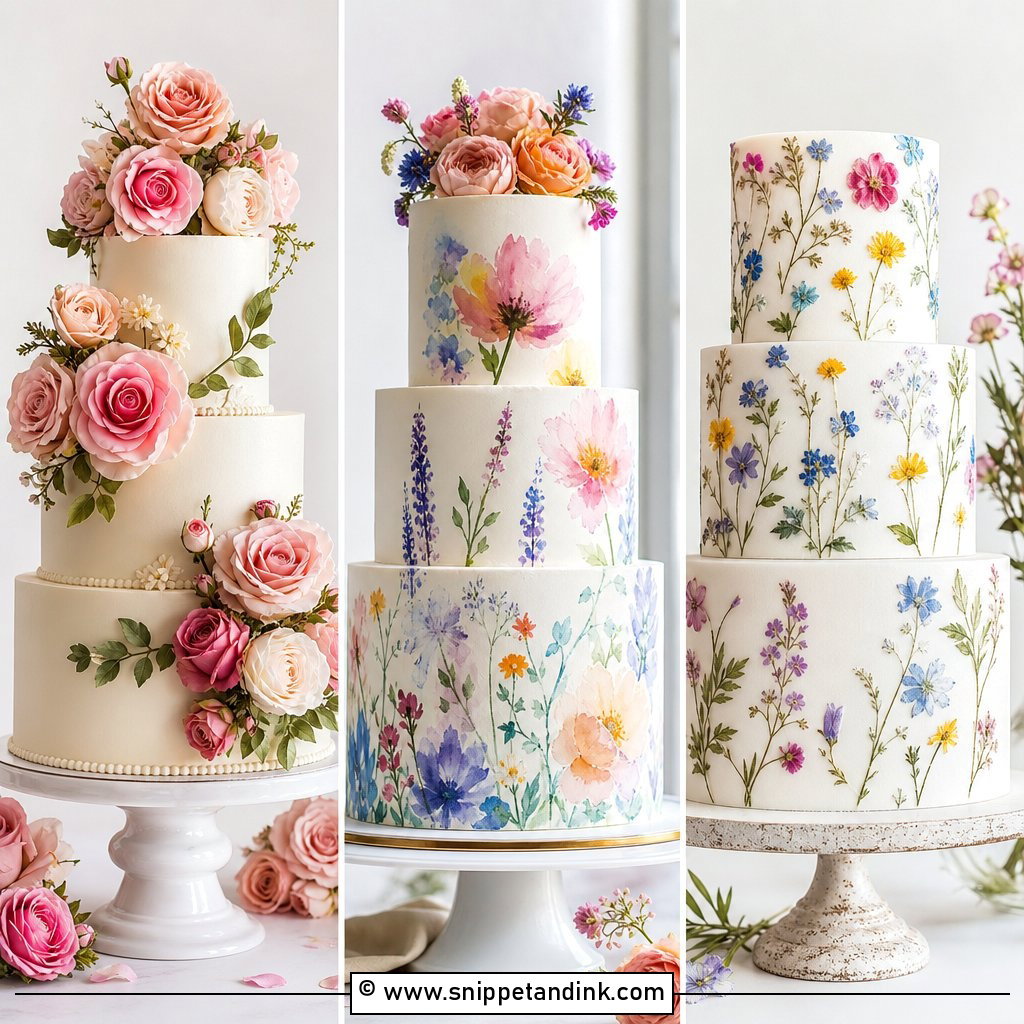
This is the most common setup. Your florist sets aside matching stems, unsprayed if possible, and leaves them at the venue. I wrap and place them when I set up the cake. Tell your florist early, and agree on a time and a spot for the handover, so the flowers aren’t sitting in a hot van.
The baker makes them
Sugar and buttercream flowers come from the baker and arrive already in place. Sugar flowers need several weeks of work, so most bakers want the design agreed two to three months out. Buttercream flowers can be decided closer to the date.
Edible fresh or pressed flowers
These come from a grower who produces food-safe blooms. Ask your baker whether they source them or expect you to. Either way, budget for them separately from your florist’s order.
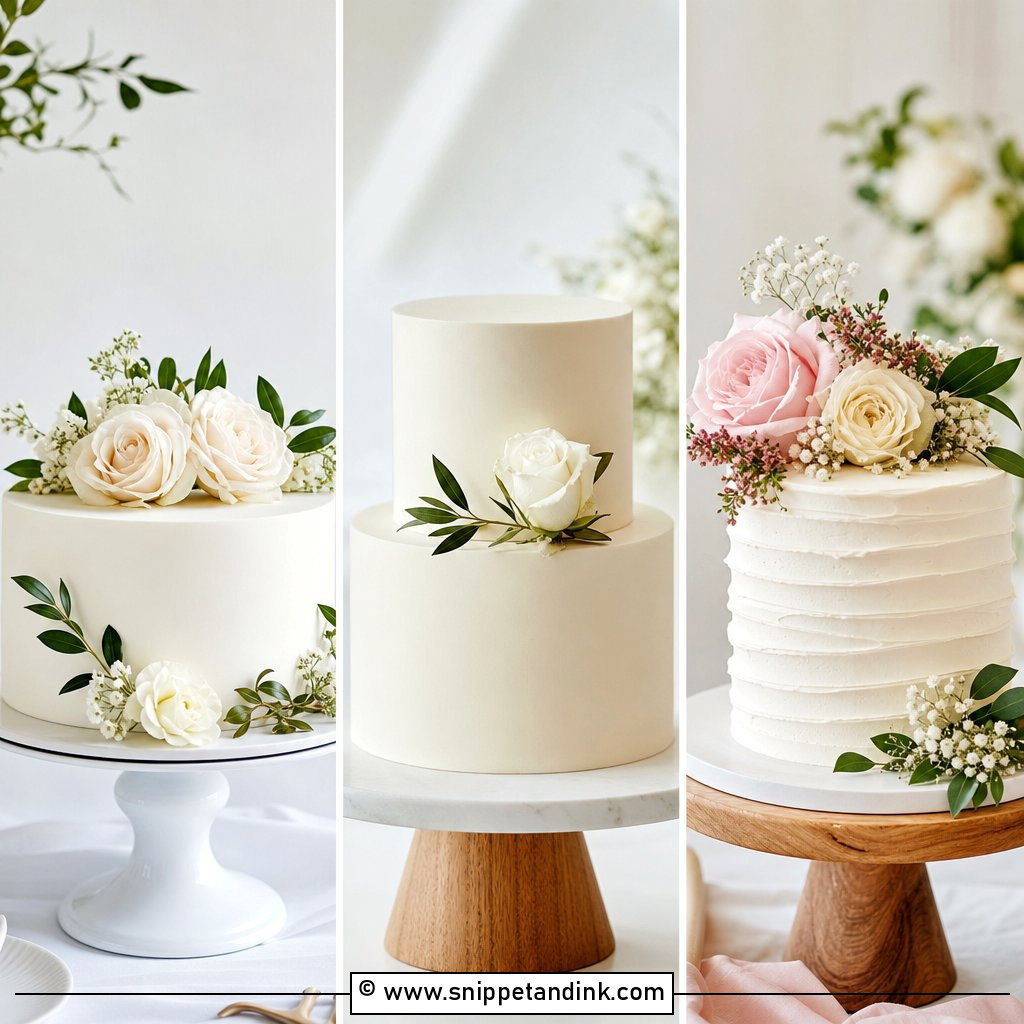
1. Simple White Floral Wedding Cake
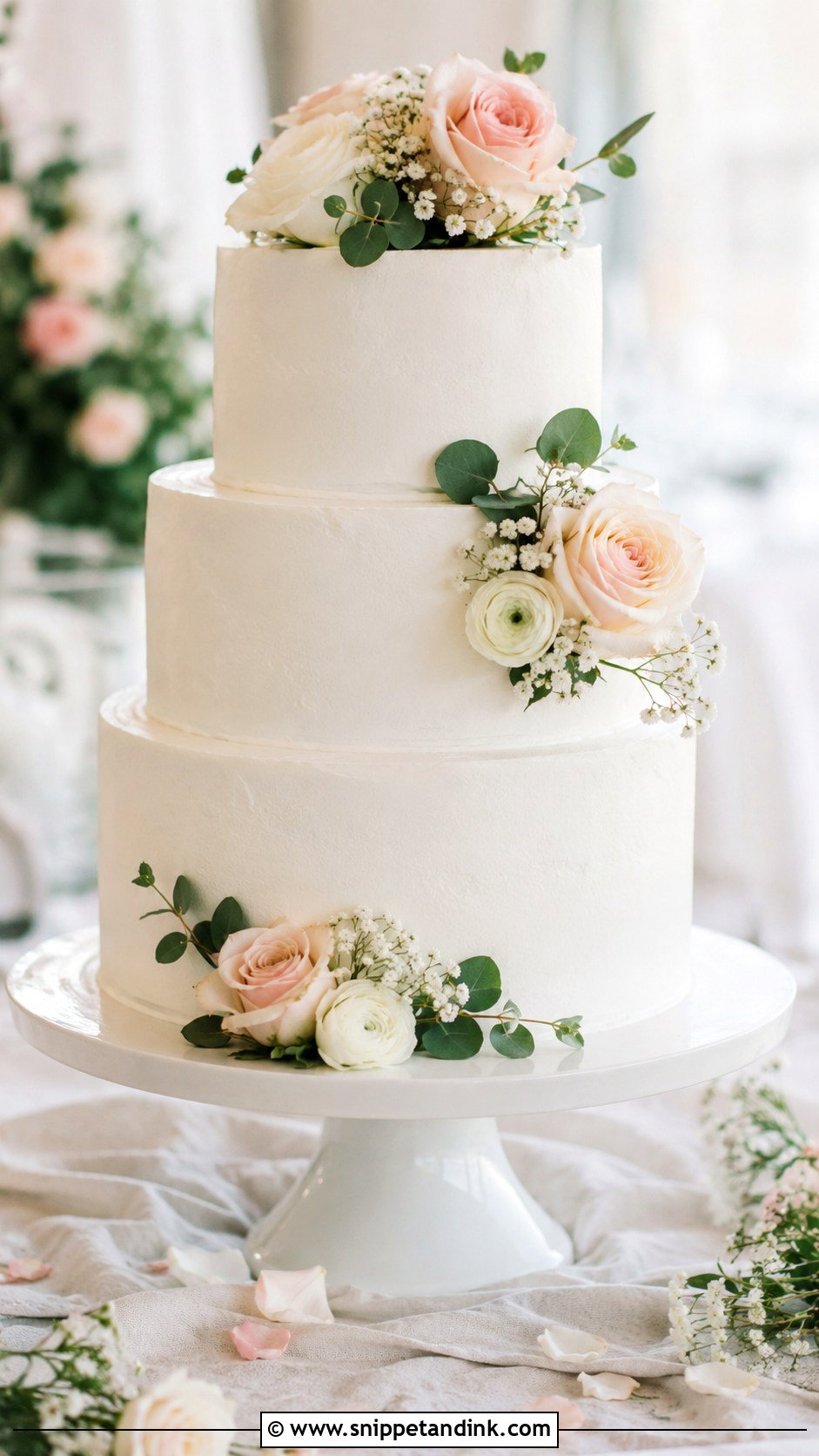
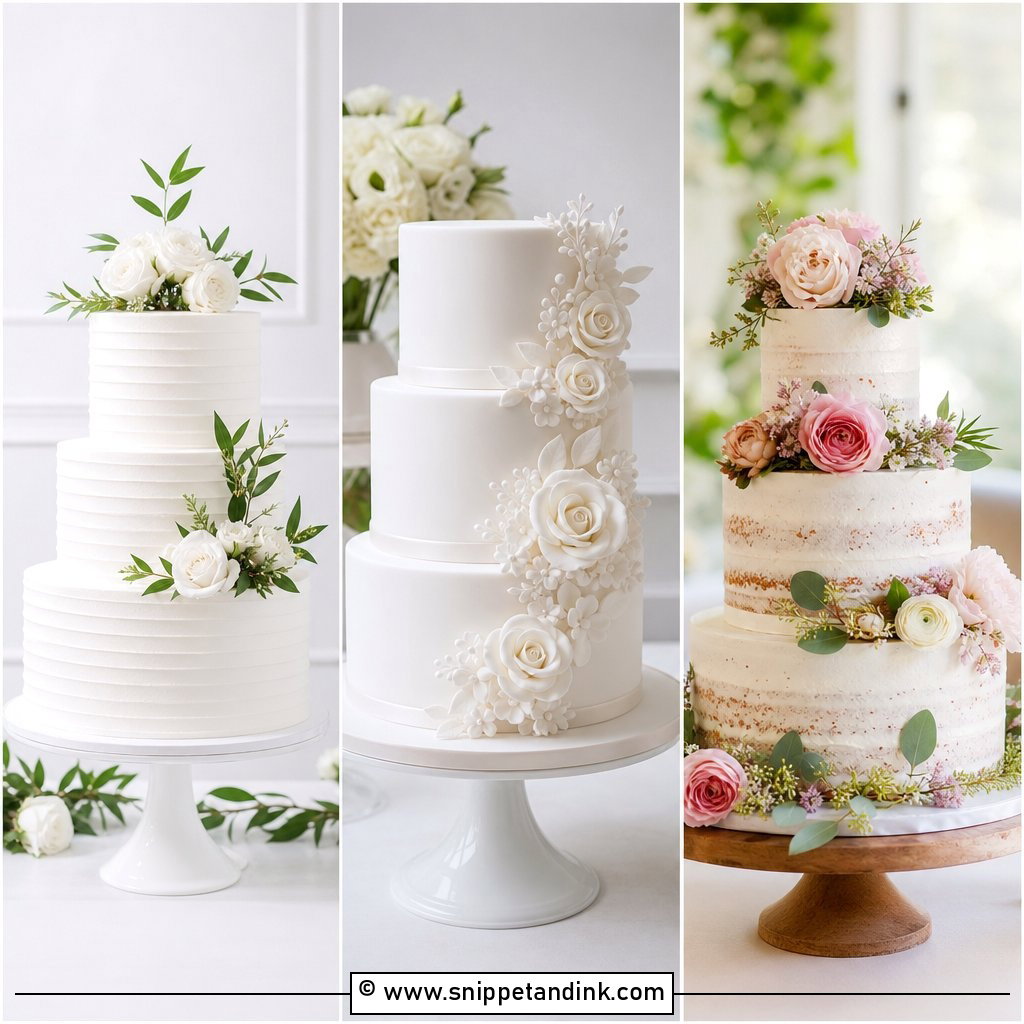
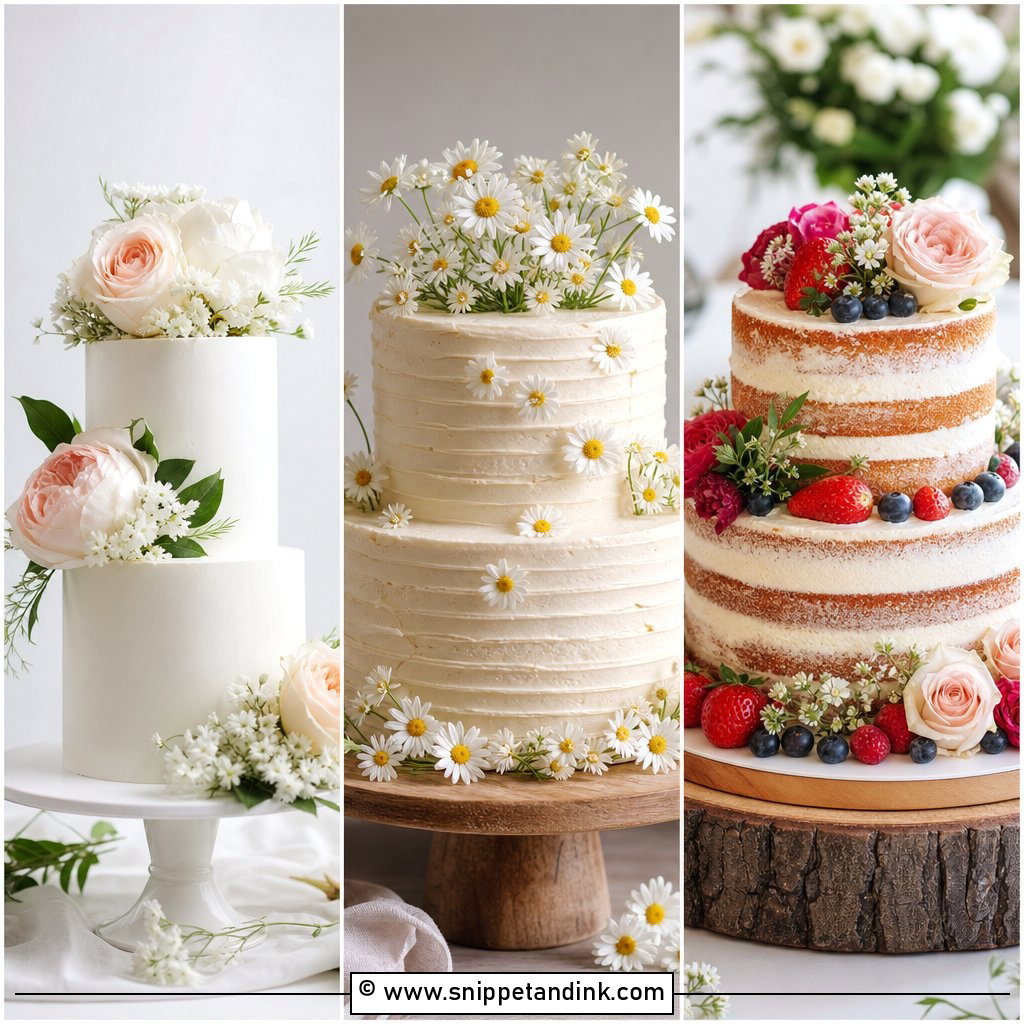
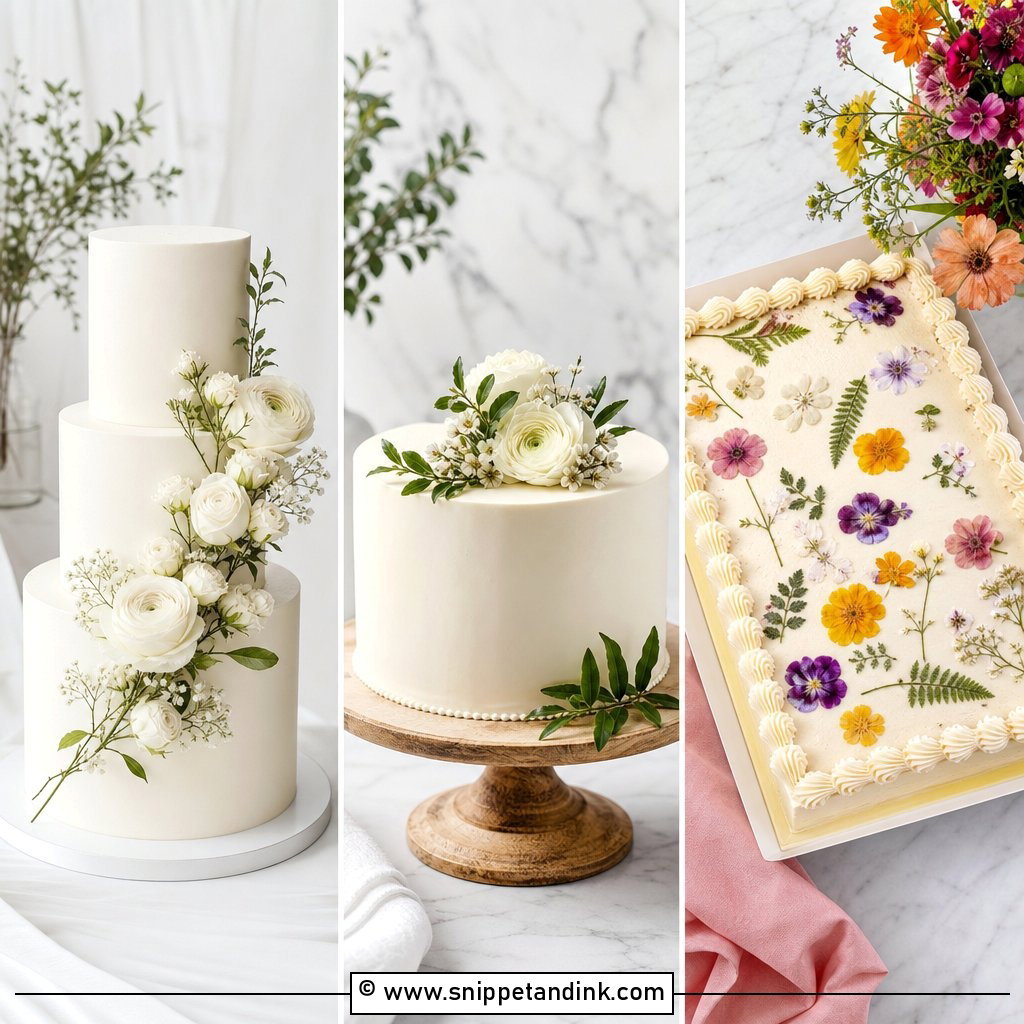
White cake, one small cluster of flowers on the top or the side: this is the floral cake I build most often. I’ll use roses, ranunculus or lisianthus with a few tiny fillers, because they have enough shape to read from across a room without swamping the tiers. Buttercream or fondant both work; fondant gives a whiter, flatter surface for the flowers to stand out against. Ask your florist for blooms from your own palette, and a sprig of greenery softens the edges of the cluster.
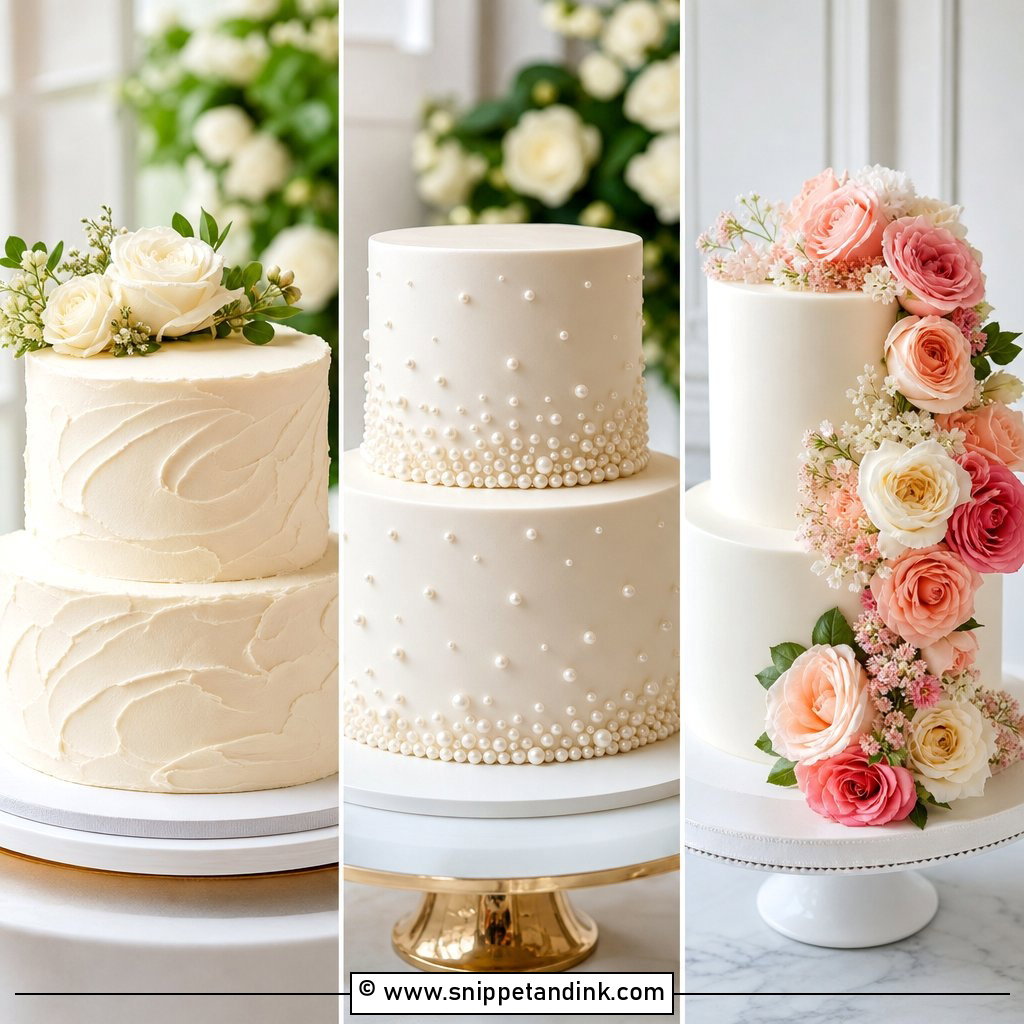
2. Two Tier Floral Wedding Cake
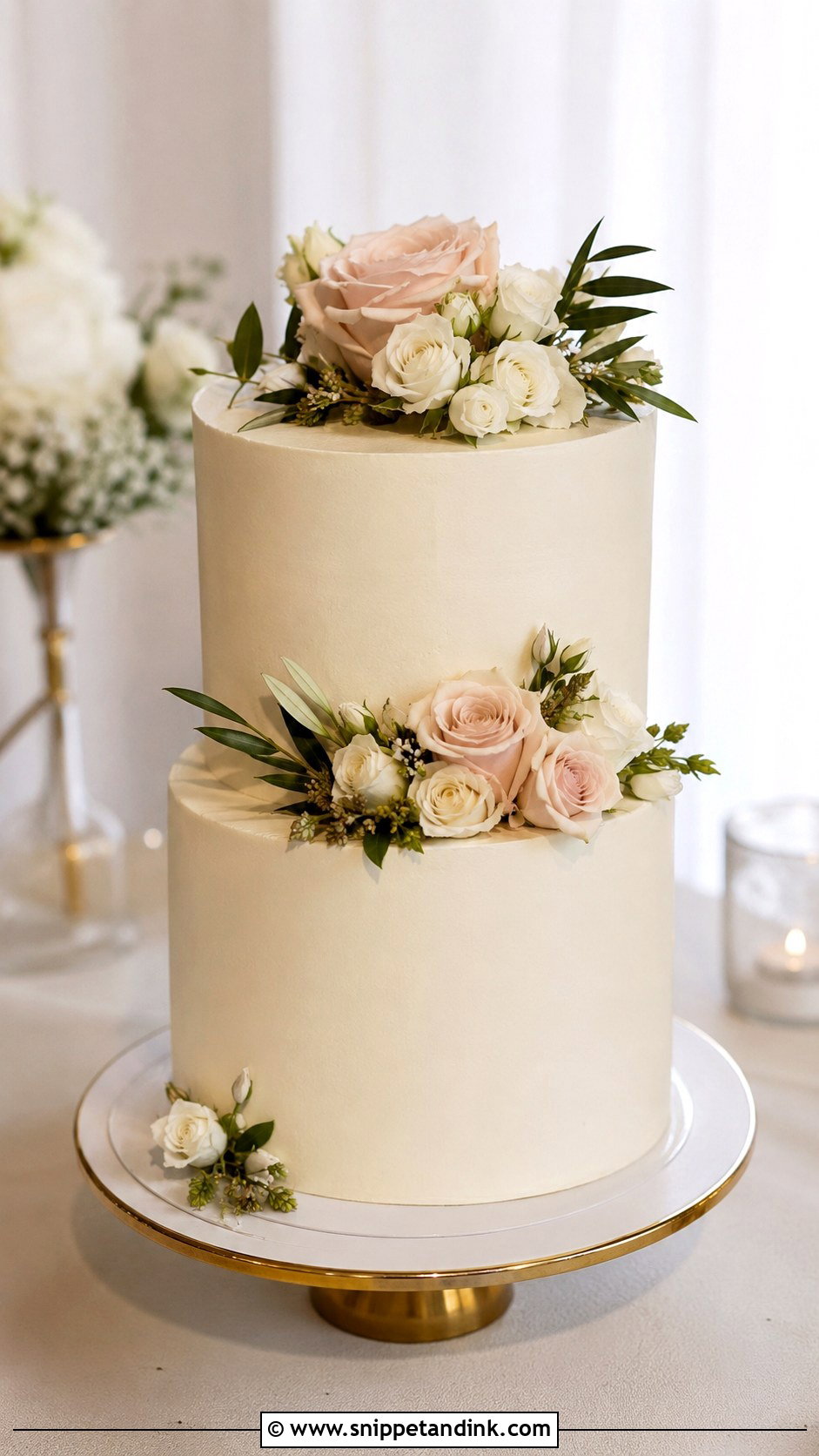
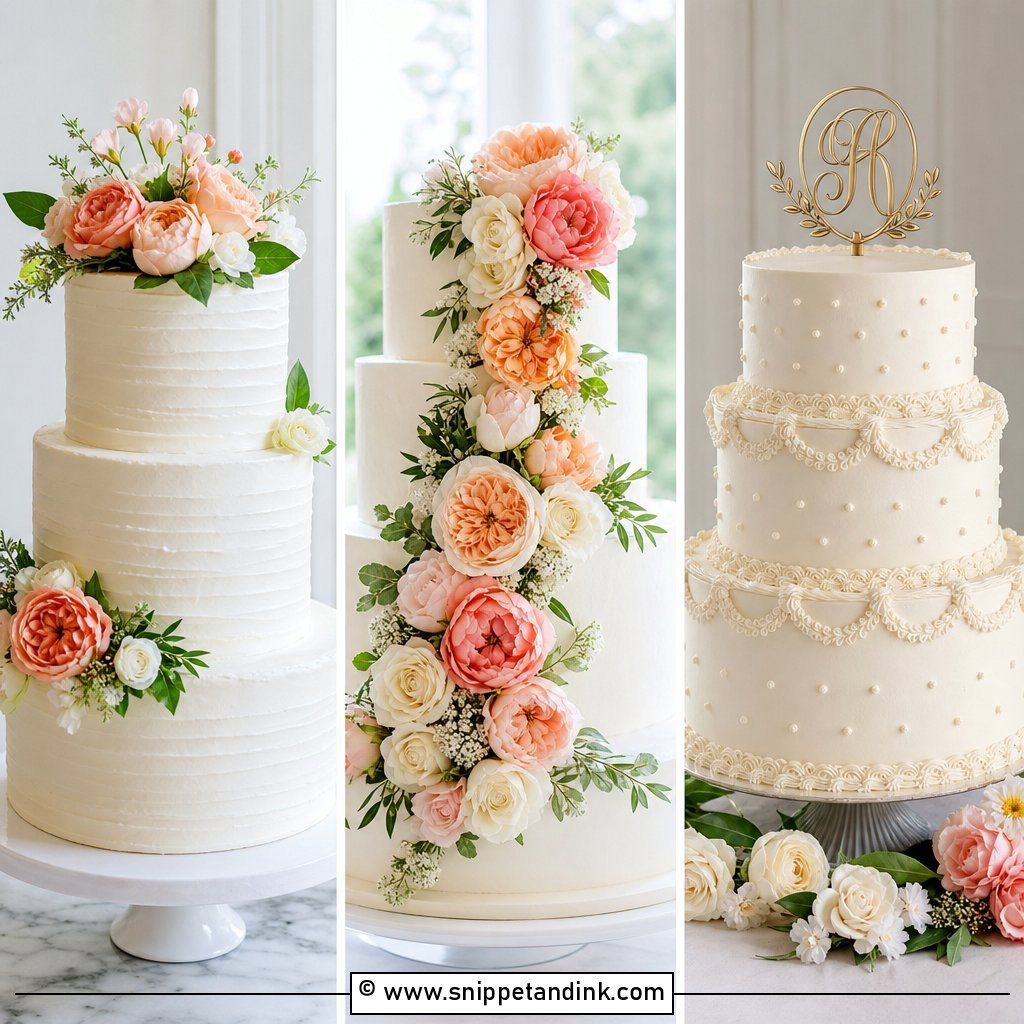
Two tiers suit smaller weddings and receptions with a dessert table alongside, since you get the height of a wedding cake without slices nobody eats. I put the main flowers at the base of the top tier and a smaller cluster near the bottom board, offset to the other side, so the eye travels down the cake. Blush roses, white spray roses and eucalyptus are a reliable trio. Smooth buttercream keeps the whole thing soft, and it can be photographed from any side.
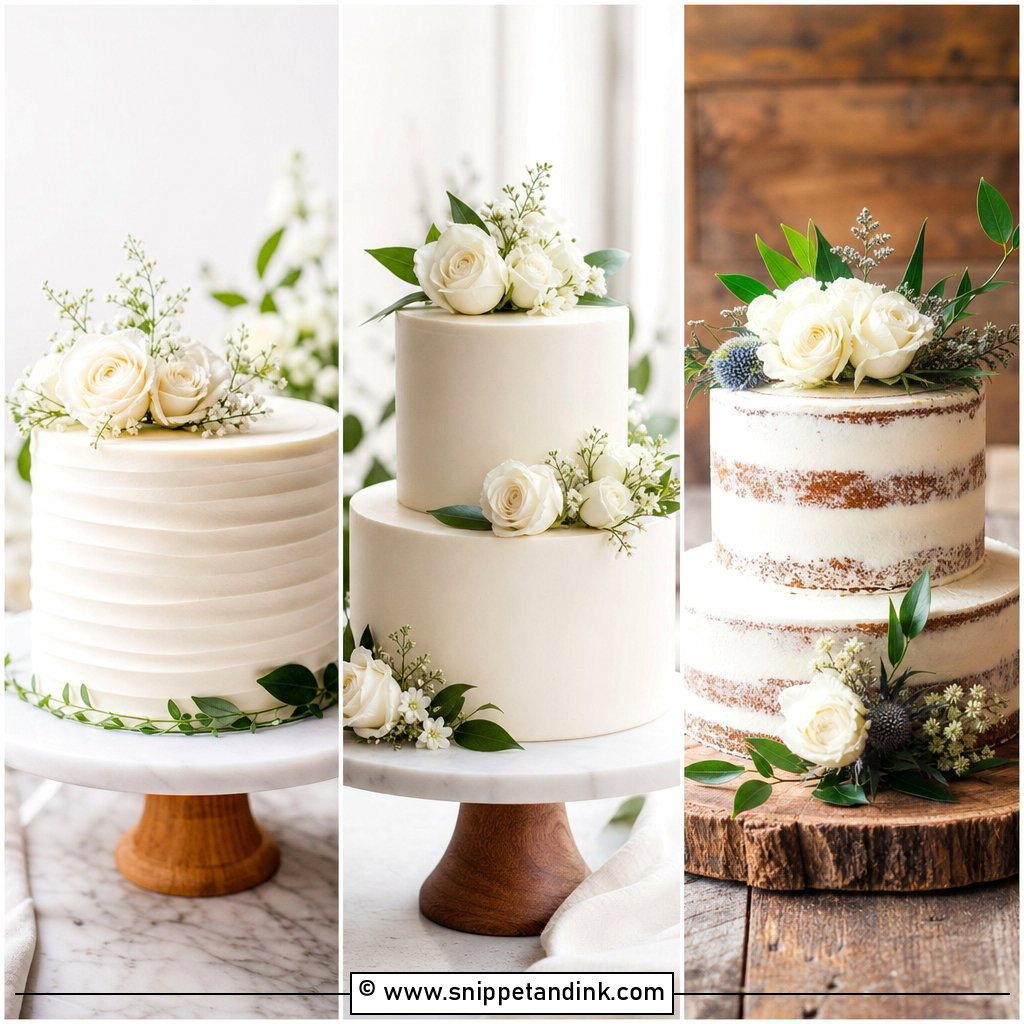
3. Single Tier Floral Wedding Cake
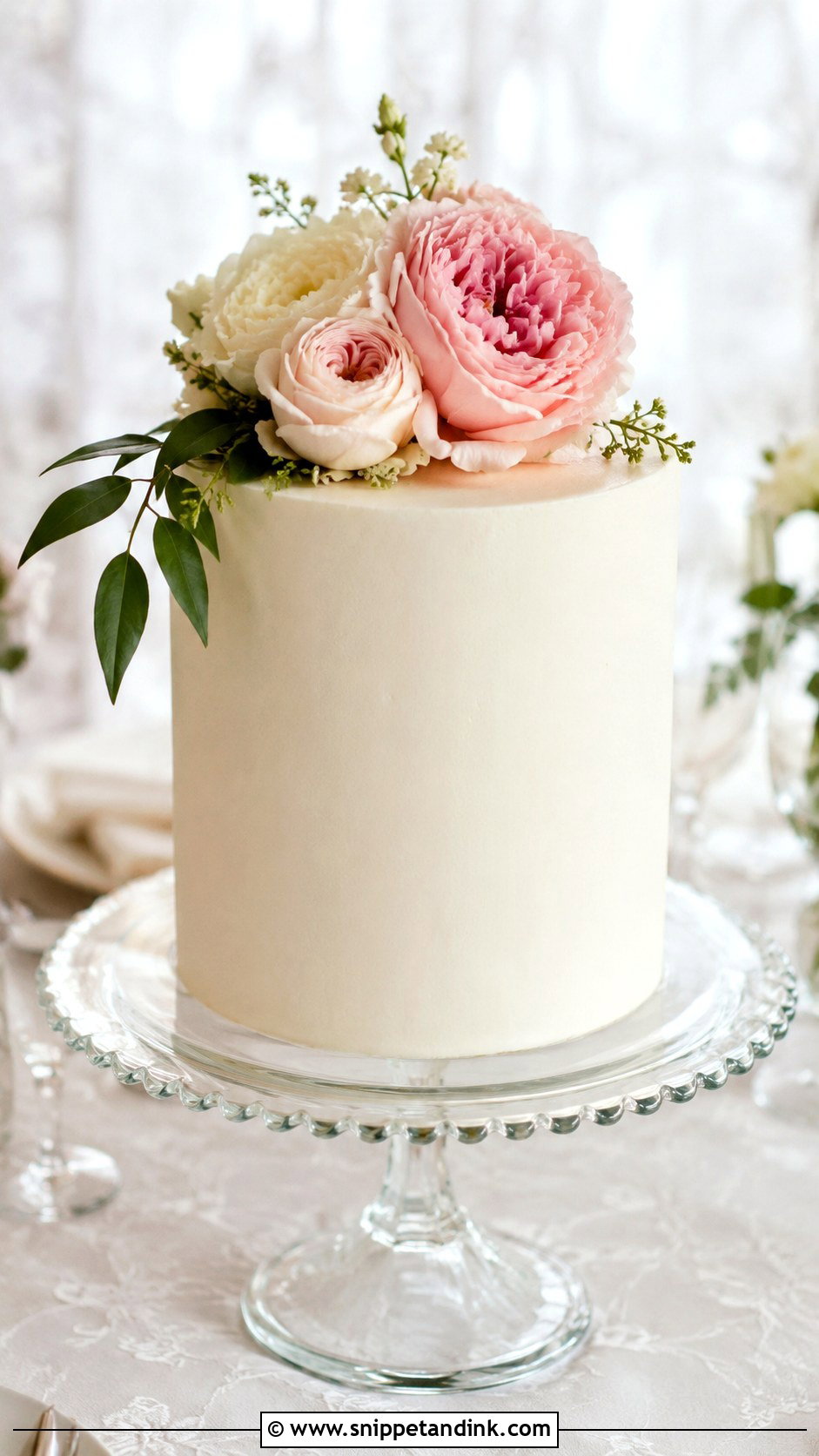
With a single tier, proportion is everything. A standard round can look like a birthday cake; I build it taller, usually four or five layers, so it has some presence. One larger flower cluster on top, set a little off center, is enough. This is the cake I’d suggest for courthouse weddings, elopements or a small cutting cake beside a dessert table. Peonies, roses, daisies or edible flowers all suit it. A raised stand matters more here than on any tiered cake.
4. Pressed Flower Wedding Cake
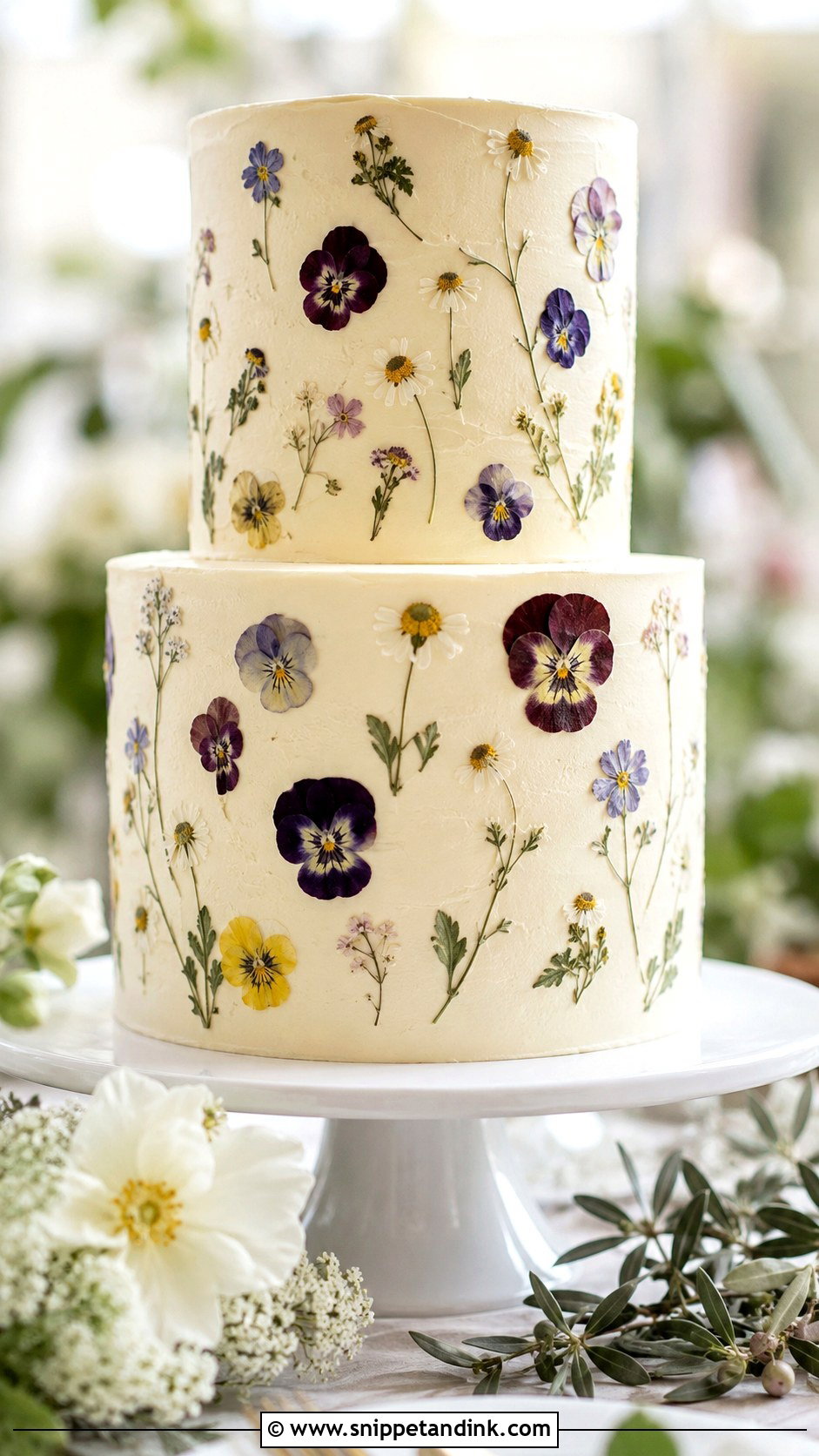
A pressed flower wedding cake lies flat against the frosting, so it keeps a clean outline. I only use edible varieties grown for the purpose, like pansies, violas, chamomile and cornflowers, and I press them myself weeks ahead. On buttercream they slowly draw in moisture and can turn translucent at the edges, so I place them on the day and lean toward a pale ivory base. Scatter them for a wildflower look or set them in neat rows for something more graphic. Spring and outdoor receptions suit them best.
5. Fresh Rose Wedding Cake
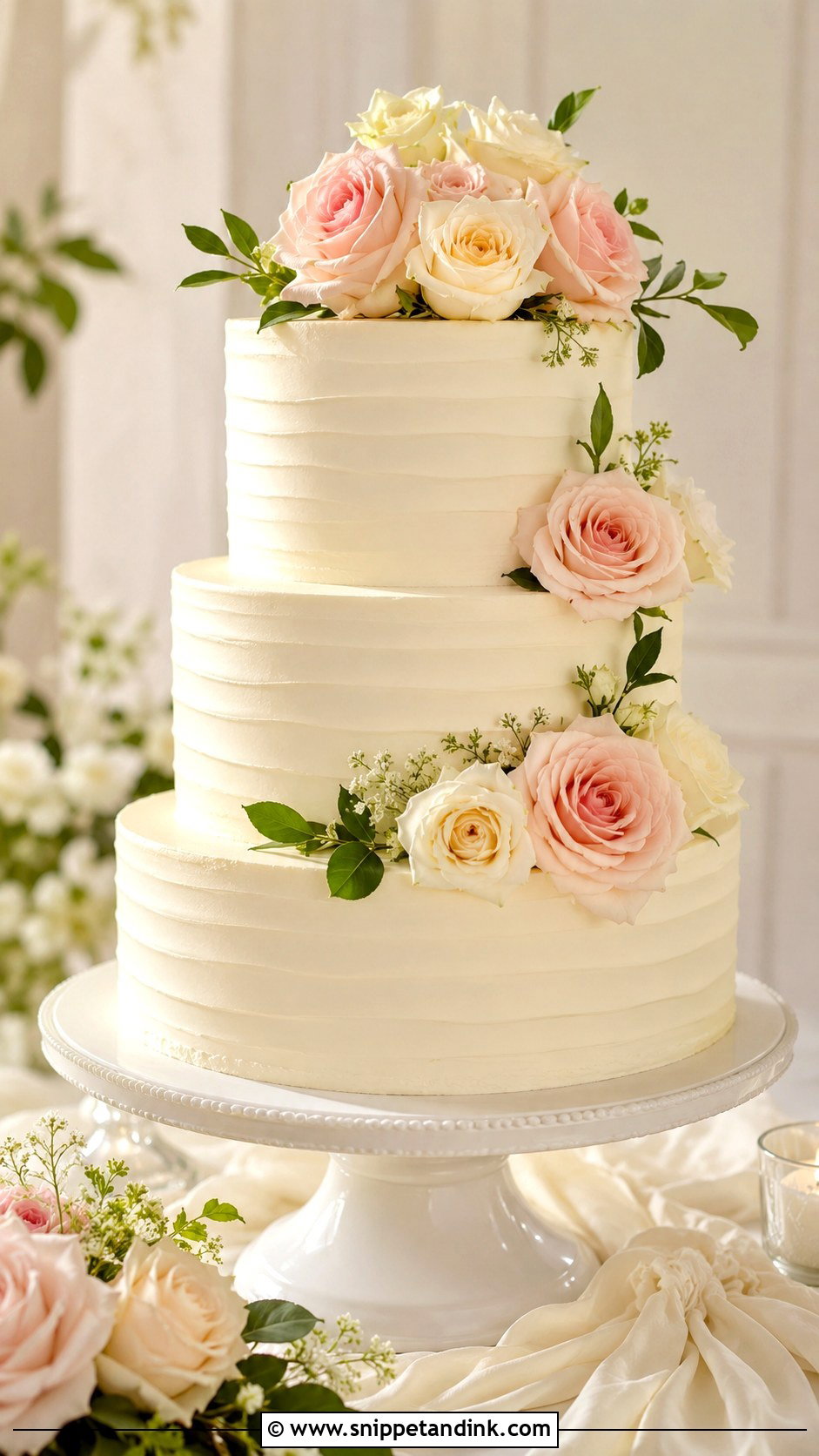
Roses earn their place because they’re sturdy. They hold their shape for hours out of water, and most florists stock them in every color. For a simple design I keep the cake white or ivory and group a few roses in one spot: blush for a softer finish, deep red if you want contrast. One rose tucked between tiers is the lightest version. If your bouquet uses the same rose, ask your florist to set aside a few stems for the cake so they match exactly.
6. Baby Breath Wedding Cake
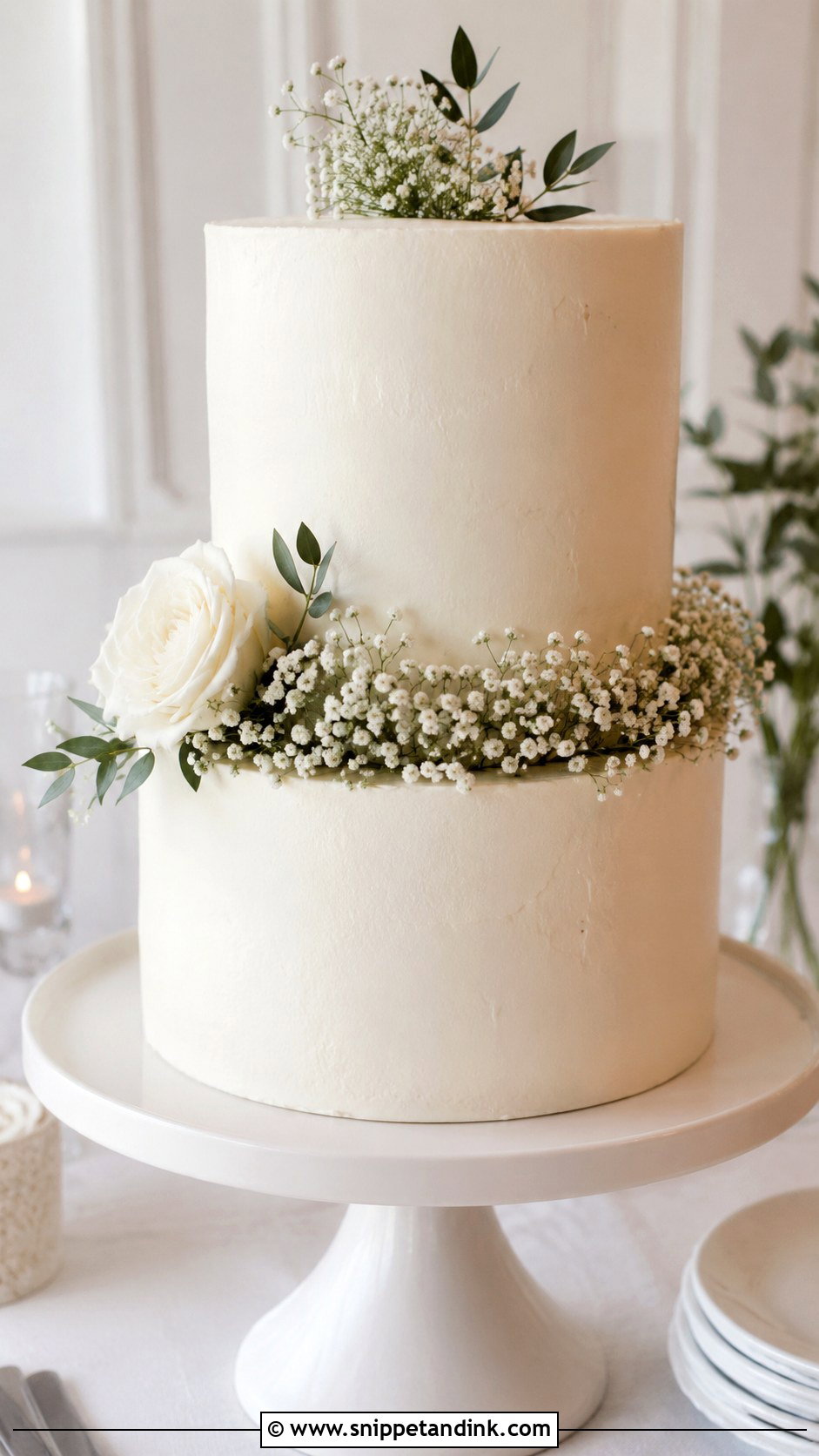
A baby breath wedding cake costs less than one built on large blooms, and the tiny flowers add texture without weight. I should be honest, though: baby’s breath isn’t safe to eat, so every bunch I use is wrapped and sits on a barrier, never pressed straight into the buttercream. A single ring around one tier is plenty on a smooth white cake or a semi-naked one. If the cake looks flat, one or two larger blooms give it a focal point. Minimal weddings suit it well.
7. Wildflower Wedding Cake
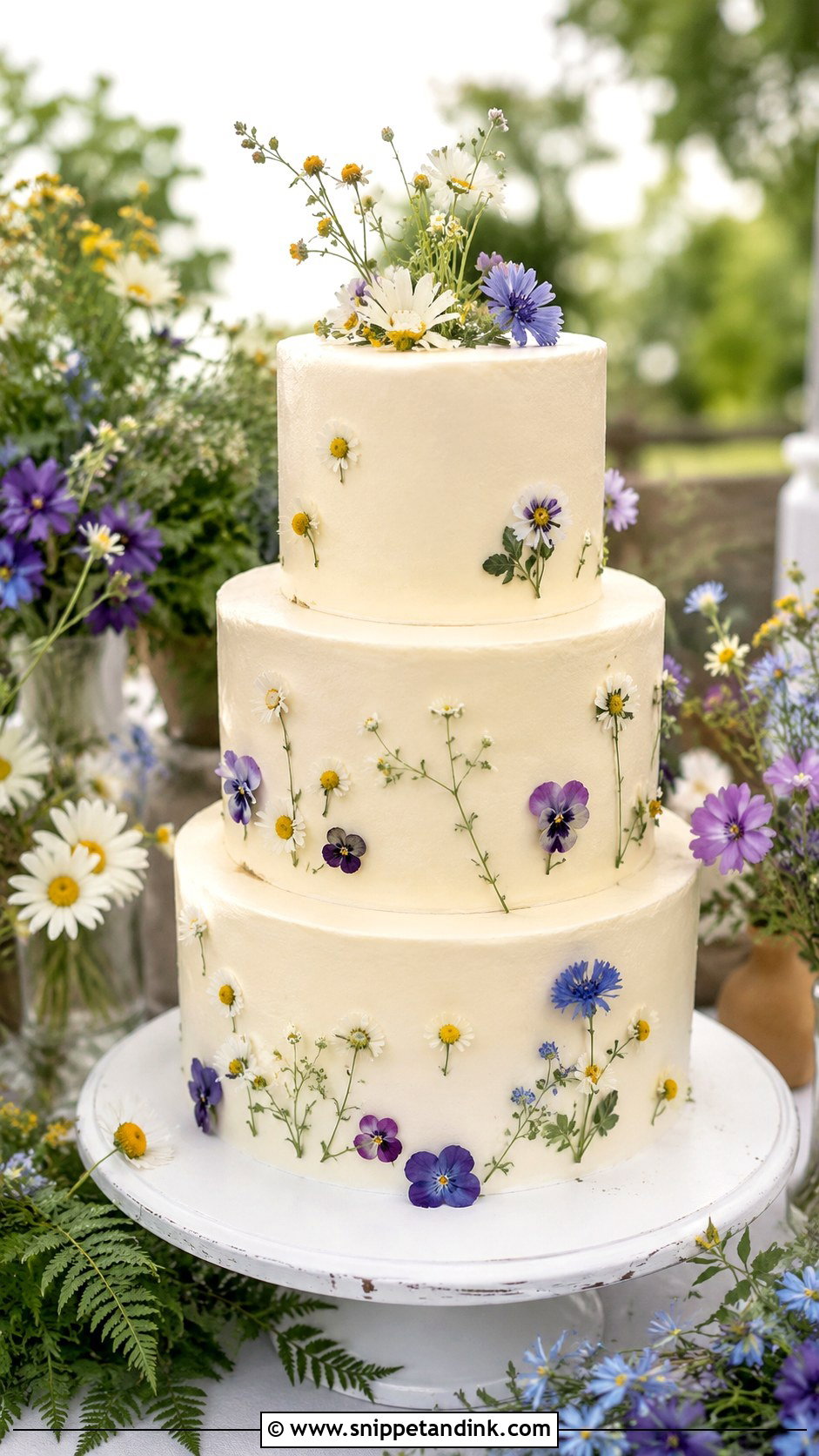
A wildflower wedding cake uses a loose mix of small blooms in place of a single variety. Daisies, cornflowers, chamomile and violets give a meadow look on plain white buttercream. Wildflowers are the most delicate thing you can put on a cake; many wilt within an hour or two out of water, so I either use edible pressed versions or keep the fresh stems in water tubes until the last moment. Brighter shades suit spring and summer, deeper ones autumn. Barns, gardens and outdoor receptions are its natural home.
8. Buttercream Floral Wedding Cake
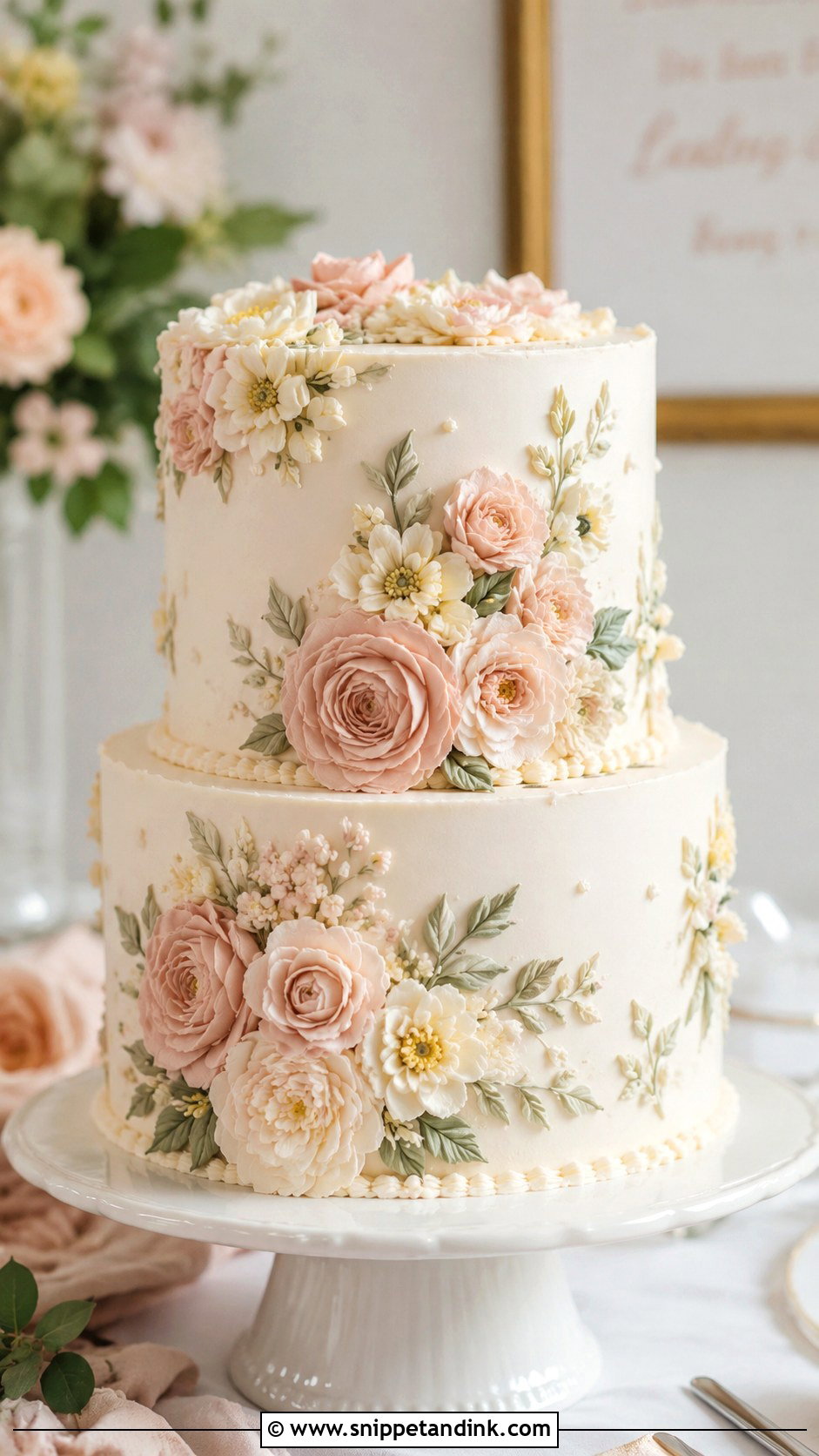
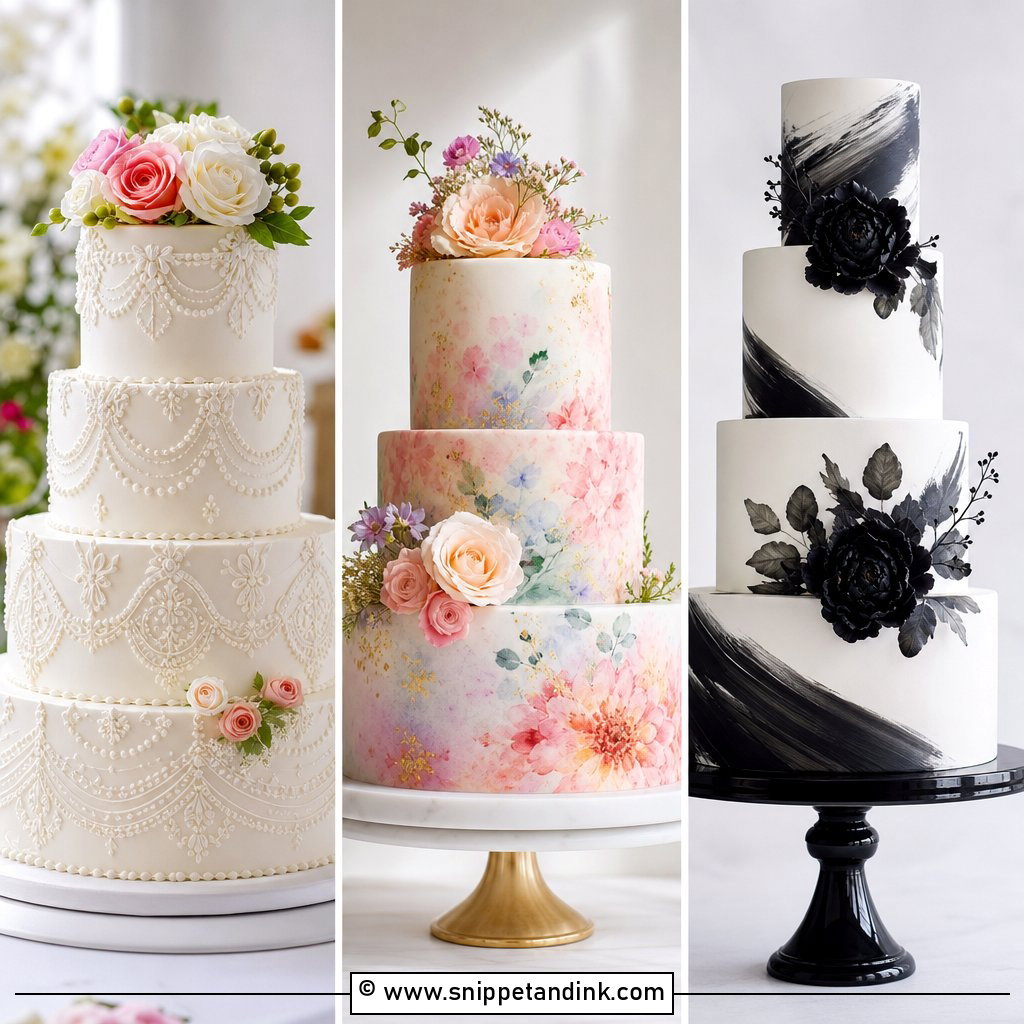
Piped buttercream flowers are the only option here with no stems, picks or removal before cutting. Roses, small blossoms, leaves and vines go straight onto the tiers in a simple pattern. I pipe the larger roses separately on parchment, chill them, then place them, because piping a full rose on a vertical side tends to droop. A soft palette of blush, ivory, sage and pale yellow keeps it from looking like a child’s cake, and the background can be smooth or lightly textured.
9. Sugar Flower Wedding Cake
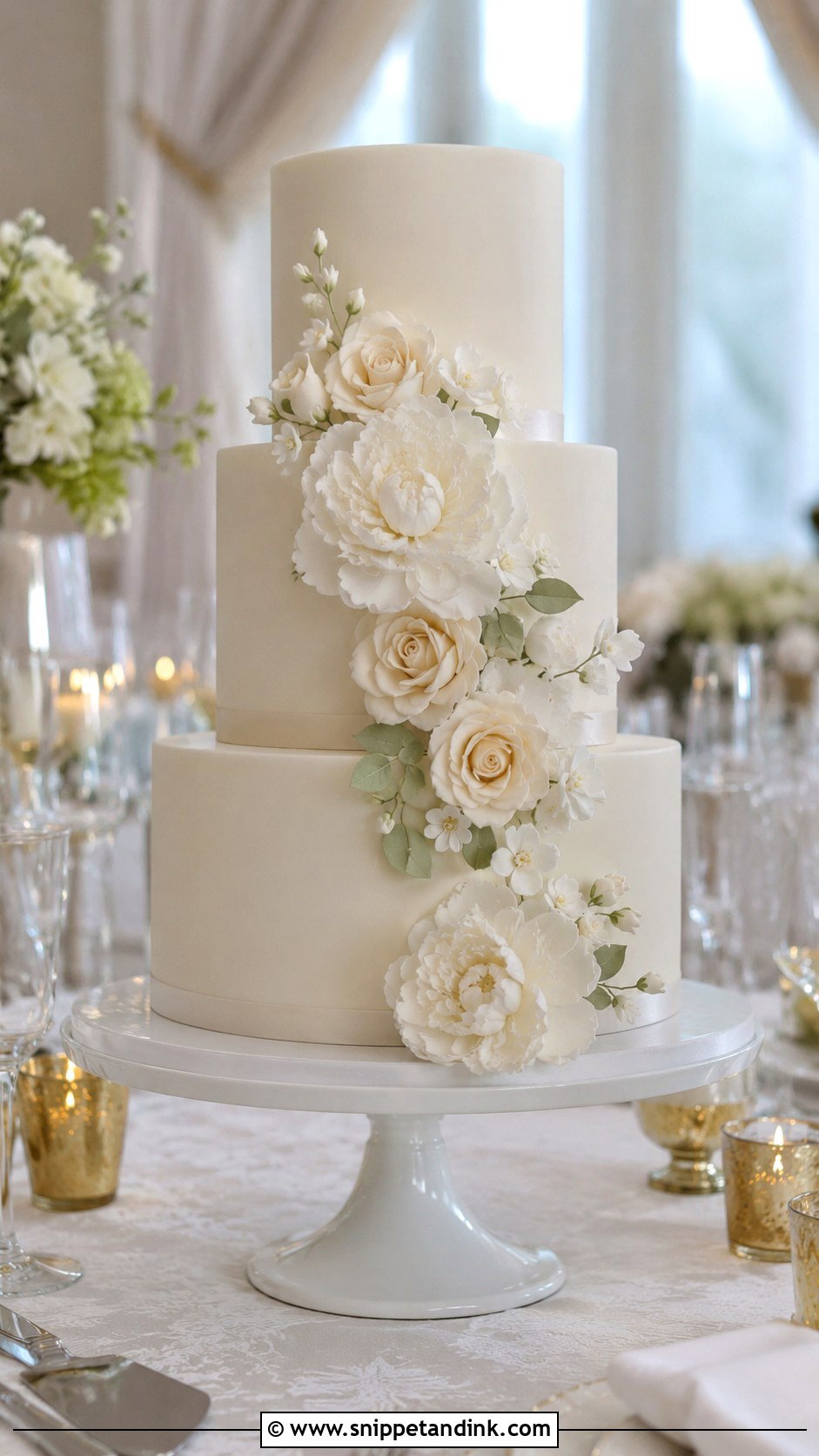
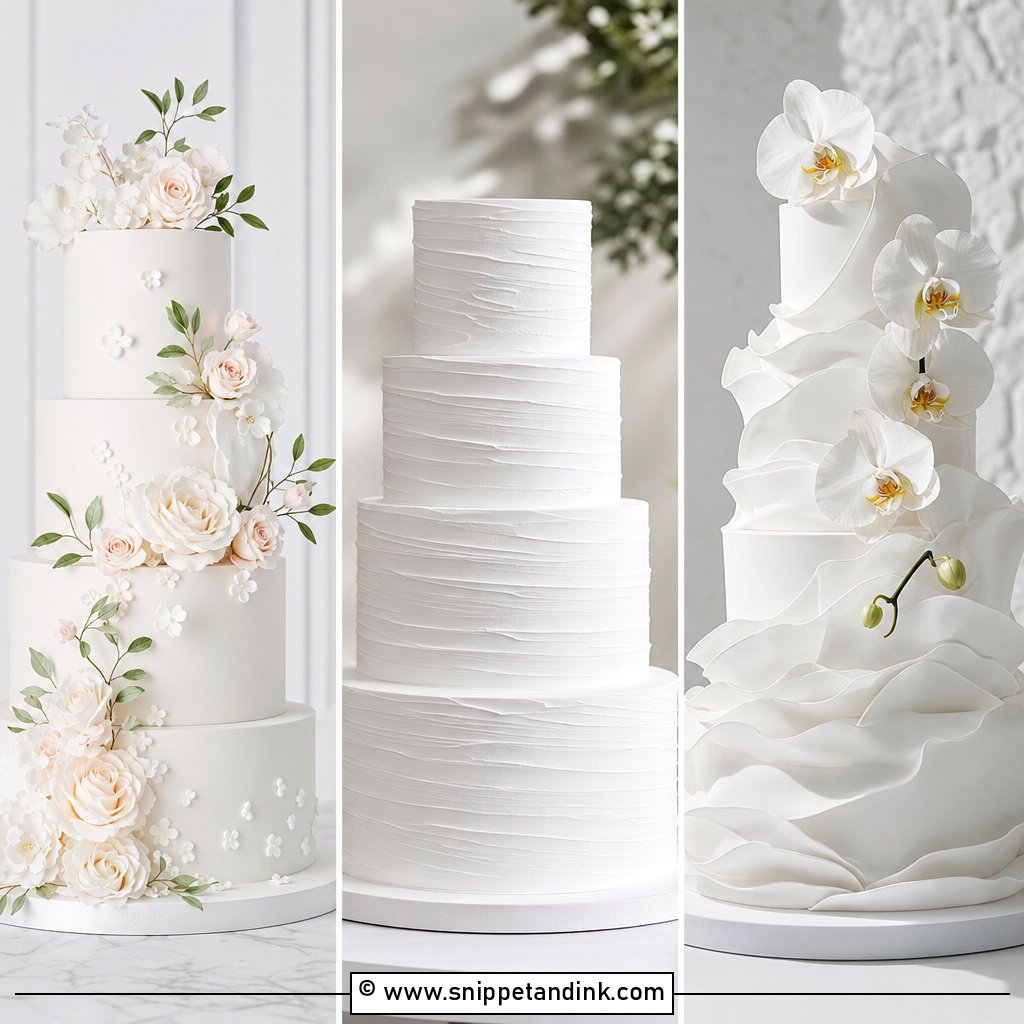
Sugar flowers are handmade petal by petal from gum paste, then dusted with color, so they can be any shade and any season. If your favorite flower isn’t available in the week of your wedding, this is how you still get it on the cake. They take time, which is what you’re paying for; I need several weeks for even a small arrangement. For a simple cake, use a few: a small cascade, a top cluster or one side arrangement. They’re also the only flower here that you can keep afterwards.
10. Cascading Floral Wedding Cake
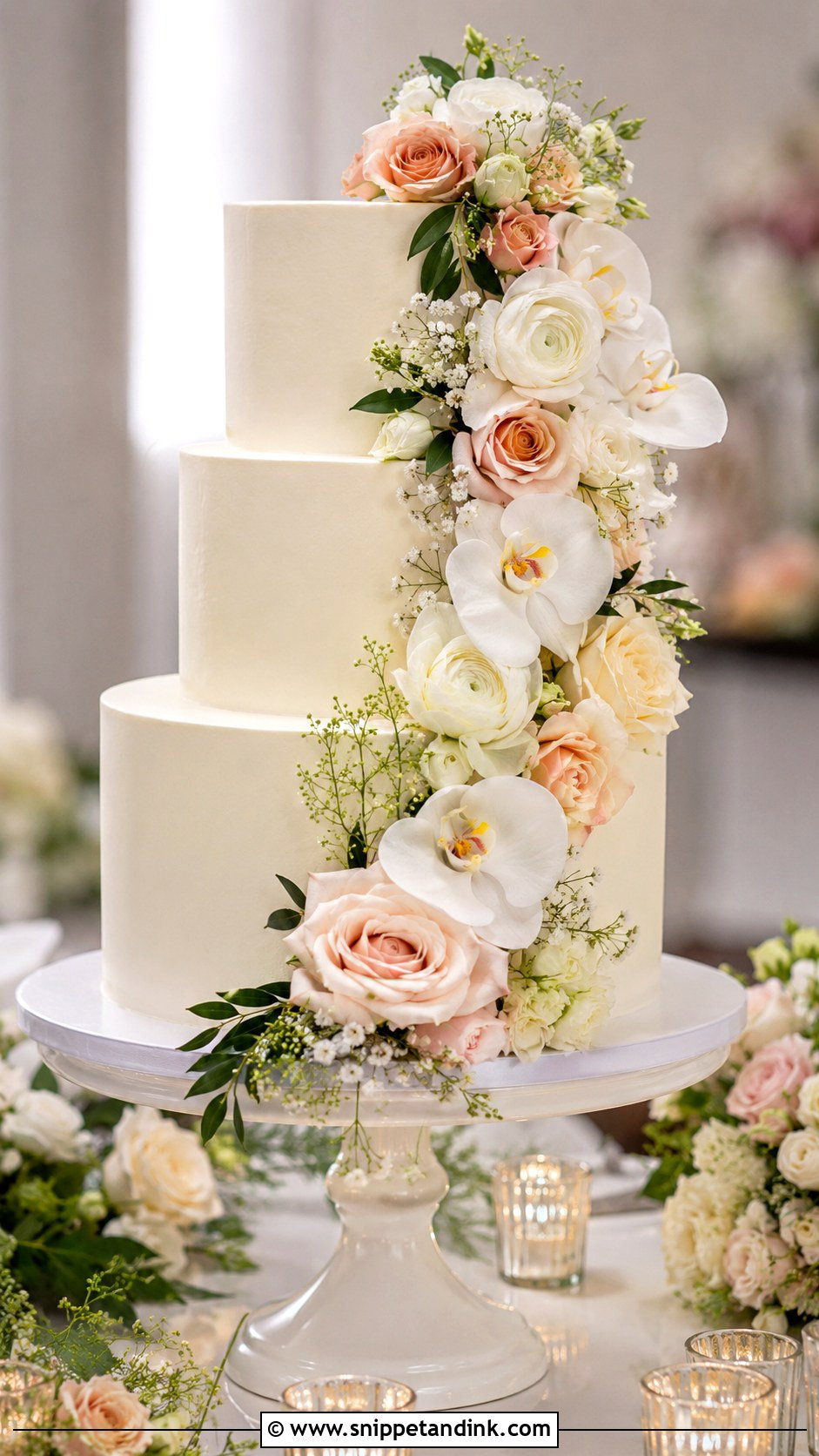
A cascade starts at the top and runs down one side like a ribbon. I keep it to one side only, on smooth white buttercream, and build it from roses, orchids, ranunculus, greenery and a few small fillers. The trick is setting the larger flowers first and filling the gaps last, otherwise the cascade looks lumpy. It suits three tier cakes especially, though two tiers work too. Match the colors to your bouquet and the cake ties into the rest of the day.
11. Semi Naked Floral Wedding Cake
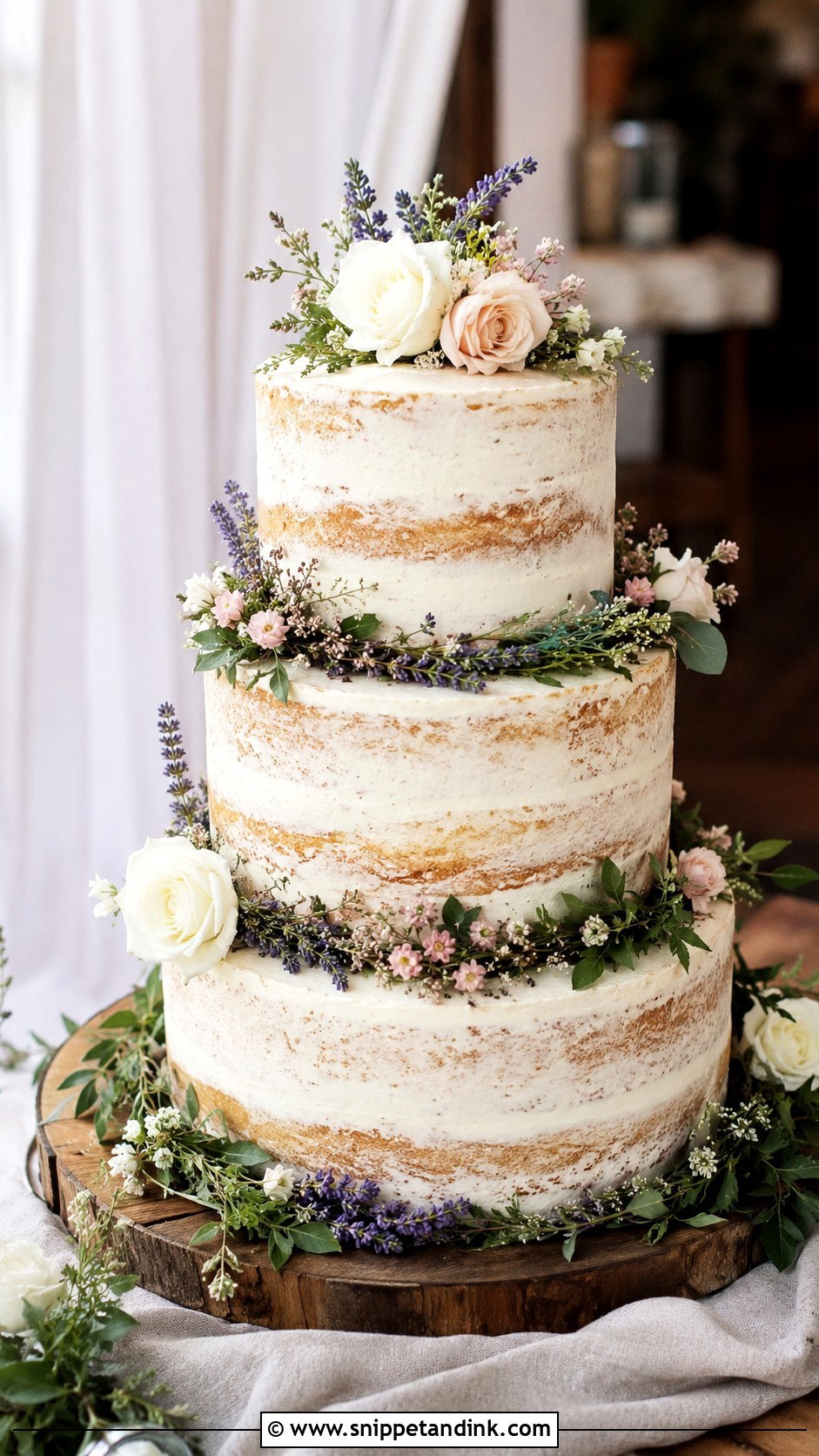
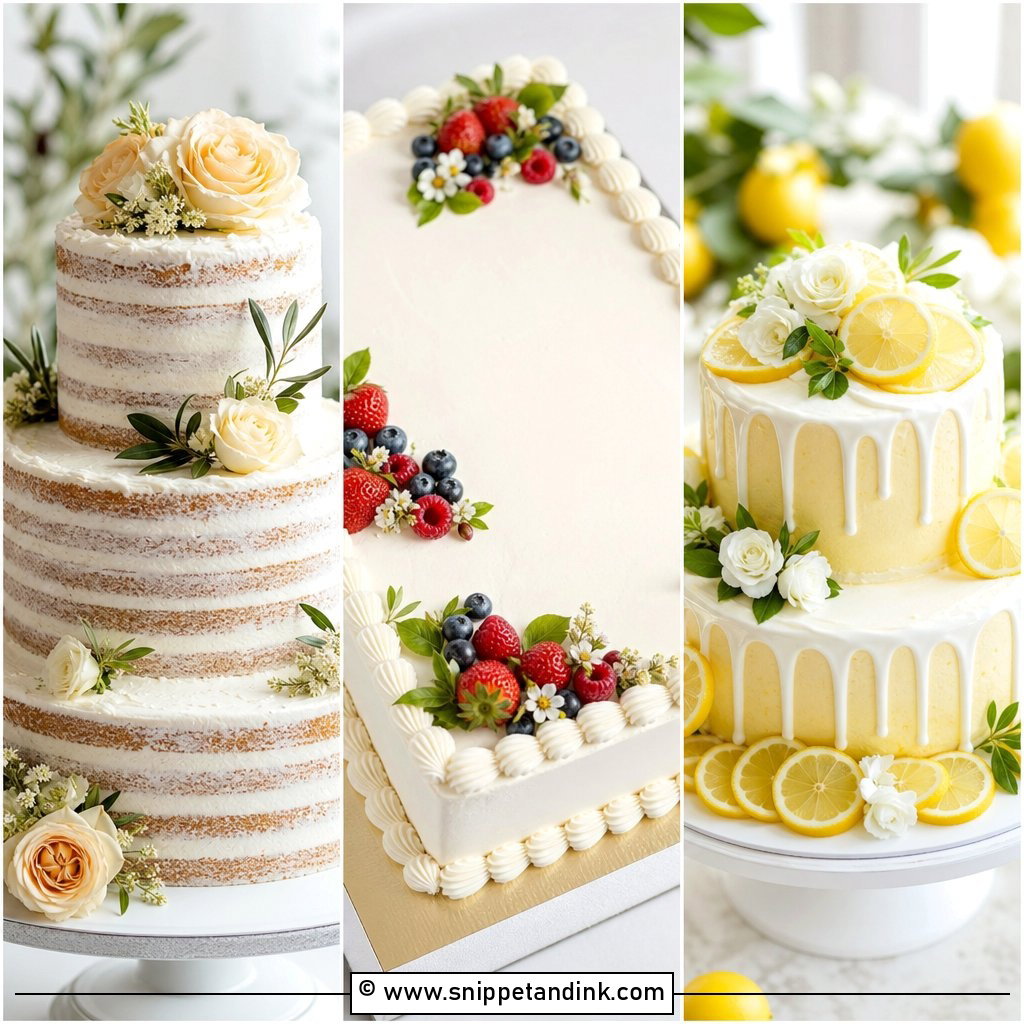
Semi-naked cakes have a thin scrape of frosting that lets the sponge show through, which is why they read as homemade. The thin coat is also their weak point: the exposed sponge dries out faster than a fully frosted cake, so I don’t set one out hours before the reception. Fresh blooms between tiers, on top or around the base finish it. White roses, blush flowers, lavender sprigs and greenery look right against vanilla or almond layers. Wood stands and linen tablecloths go with it naturally.
12. Minimal Floral Wedding Cake
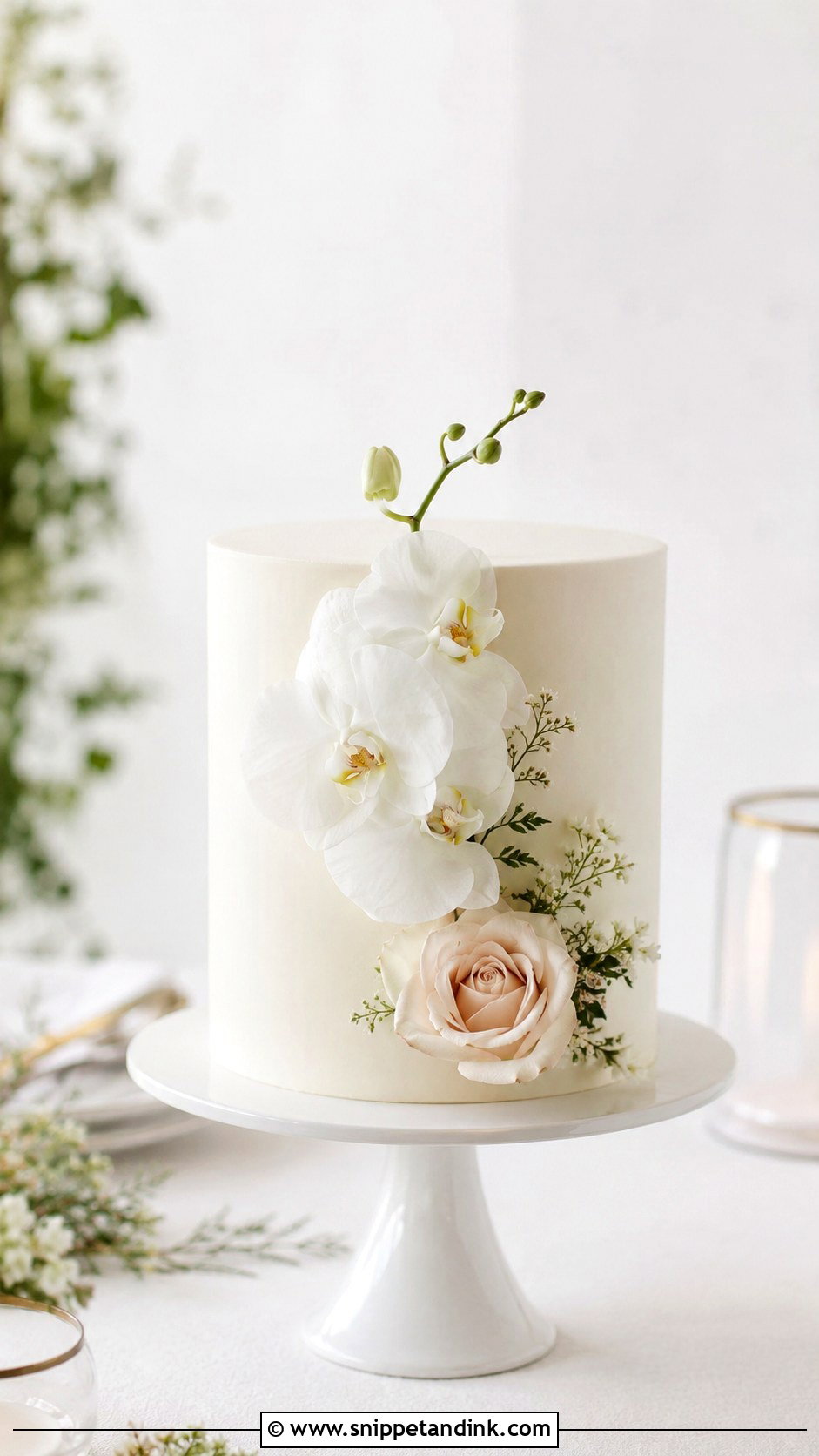
Restraint is the whole idea. One rose, one orchid stem or one tiny cluster, placed with care on a smooth white cake. With so little decoration, the finish of the cake has to be flawless, sharp edges and no air bubbles, because there’s nothing to hide behind. Neutral palettes and uncluttered receptions suit it. Put it on a crisp stand and keep the table around it light.
13. Rustic Floral Wedding Cake
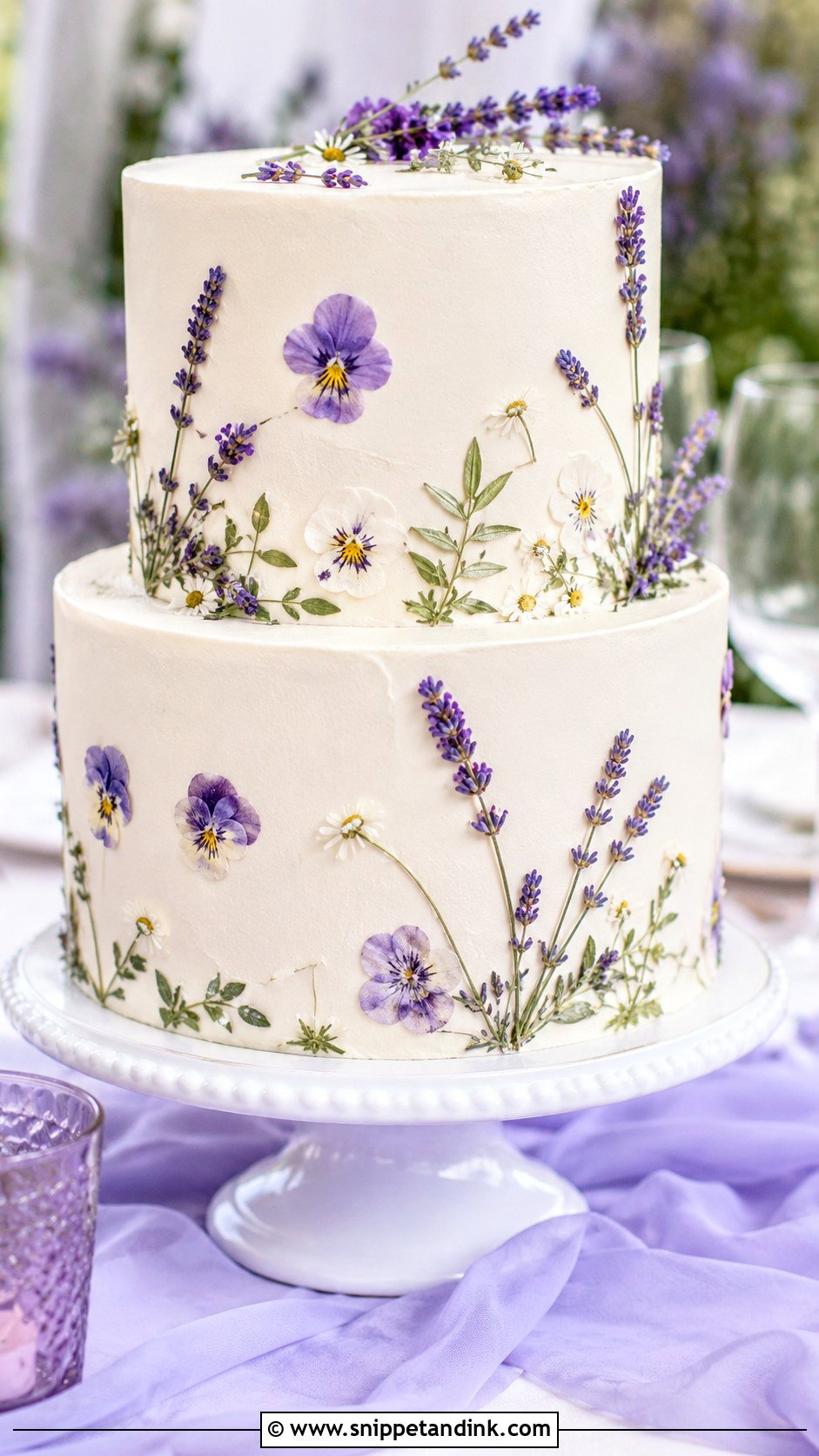
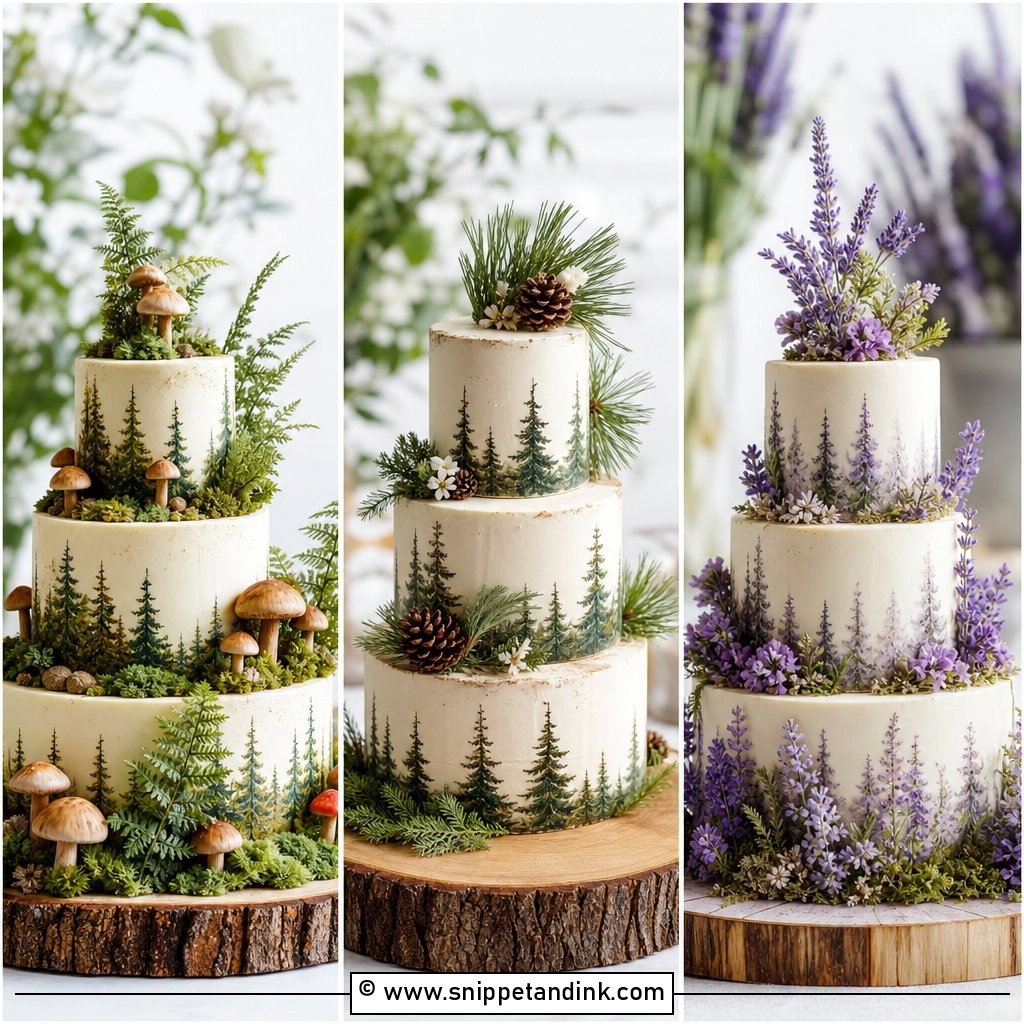
Rustic cakes take semi-naked frosting, textured buttercream or a soft ivory finish. I choose flowers that look gathered rather than arranged: garden roses, daisies, lavender and small seasonal blooms, with greenery to link them to the setting. A wood slice stand, a linen runner or a few leaves around the base complete it. Barn and countryside venues often run warm in summer, so I’d steer away from fully exposed sponge on a hot day.
14. Garden Floral Wedding Cake
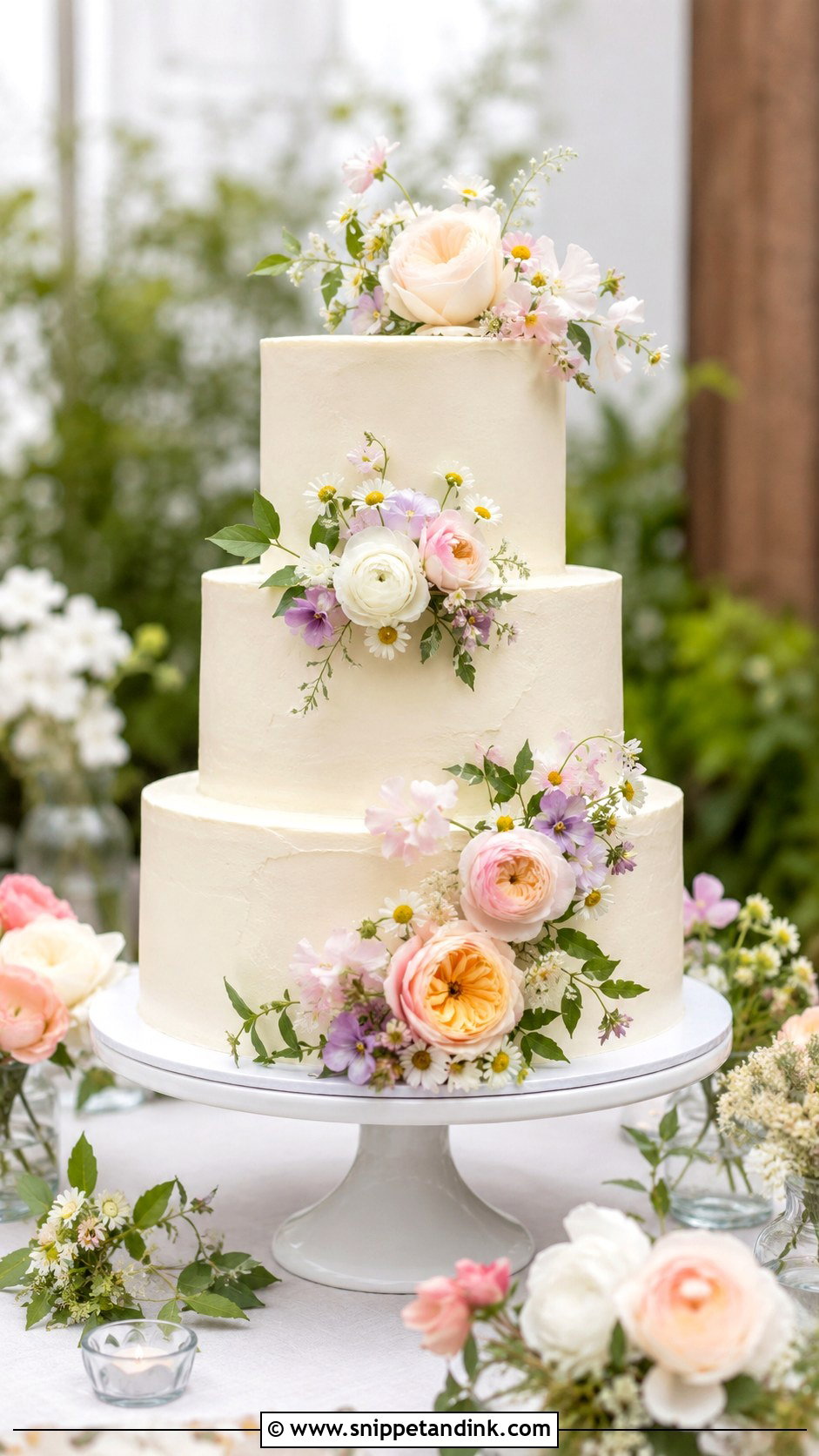
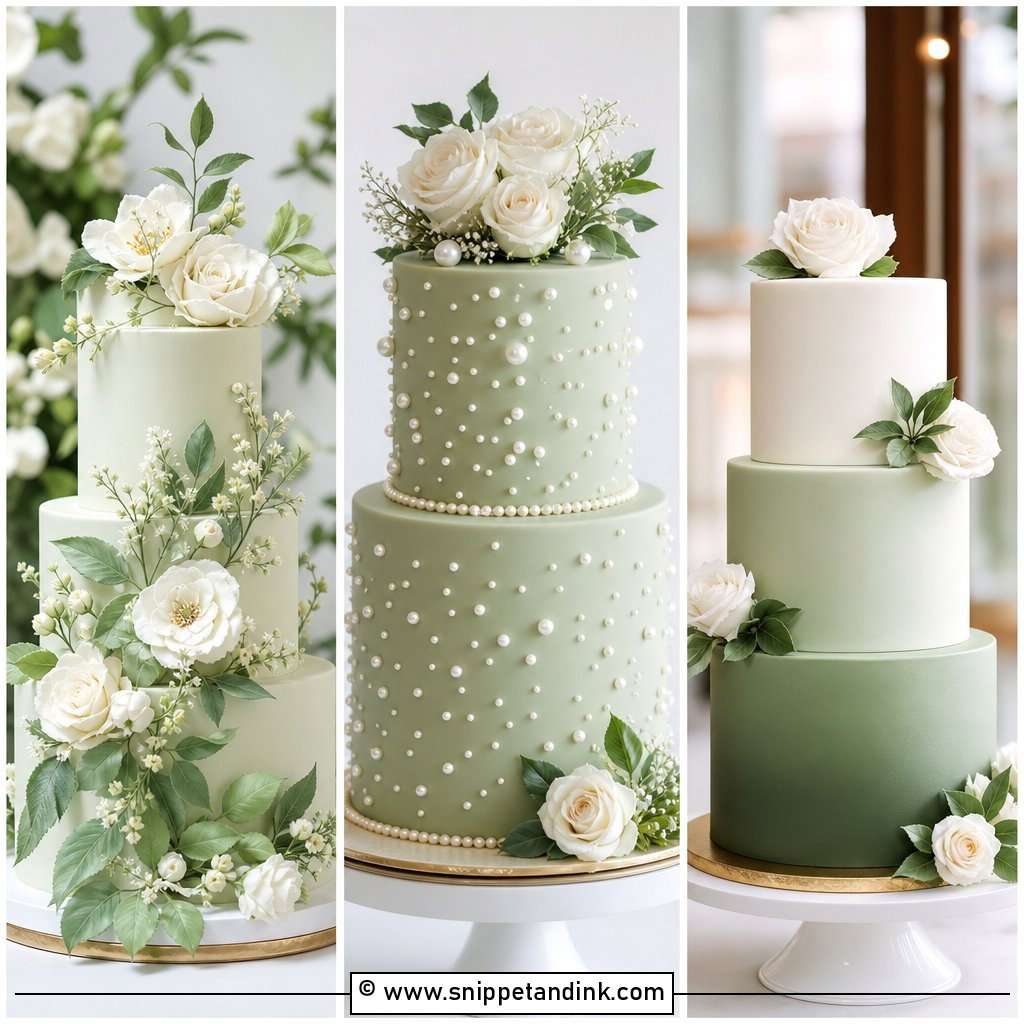
A garden cake should look like the flowers were picked that morning. Roses, ranunculus, sweet peas, daisies or small edible blossoms, placed around the tiers in small clusters rather than one big arrangement. Smooth buttercream keeps the base clean while the blooms add the charm. Soft pink, cream, lavender and sage work well. Sweet peas are the fragile one in that list; they droop quickly, so I add them last.
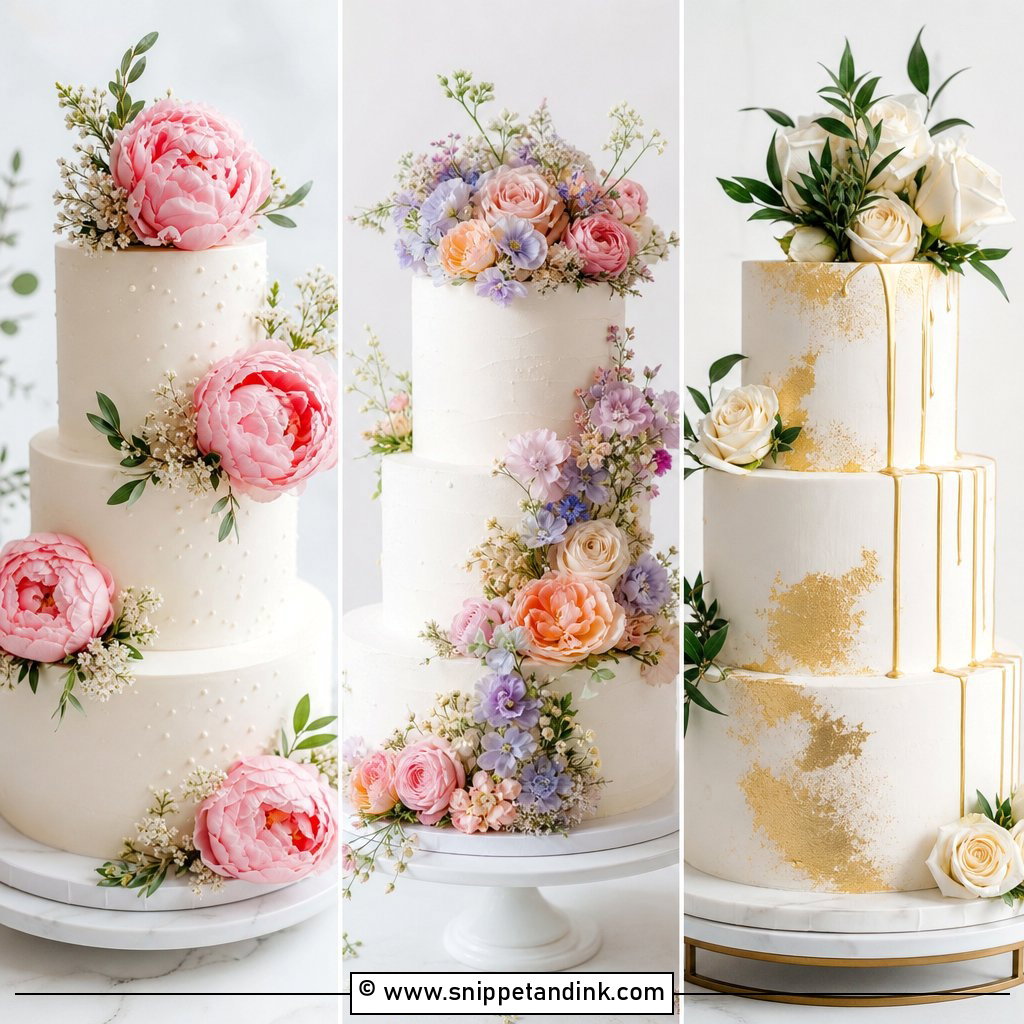
15. Floral Wedding Cake With Greenery
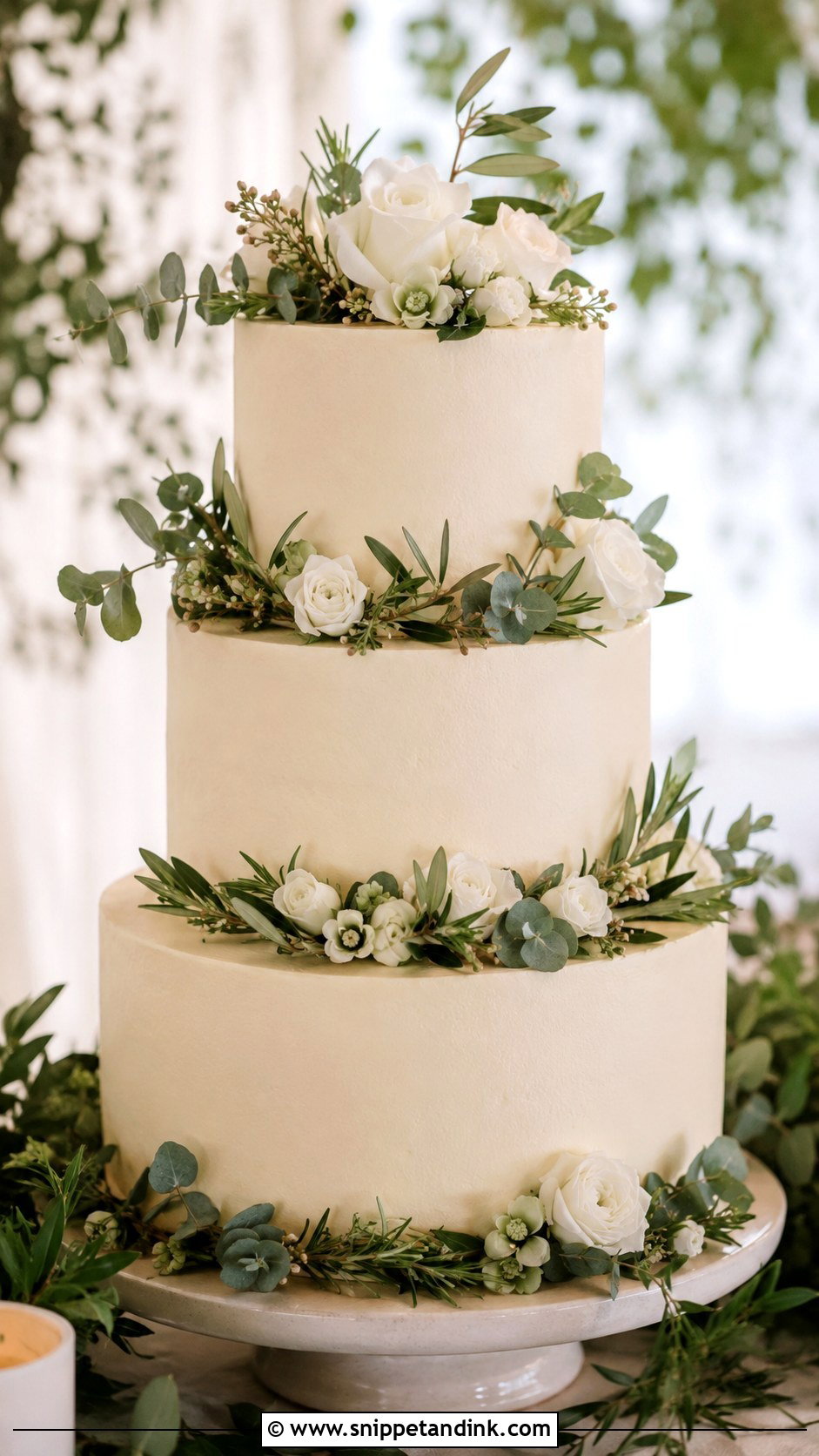
Greenery lets you use fewer flowers and still make a cake look decorated. Eucalyptus, olive leaves, rosemary and soft fern-like greens frame roses or small white flowers well. I check what the florist is sending, because some greens drop leaves or leave sap, and those shouldn’t sit on the frosting. White or ivory frosting with a few clusters and greenery between the tiers fits modern, rustic and classic weddings alike.
16. Floral Wedding Cake With Gold
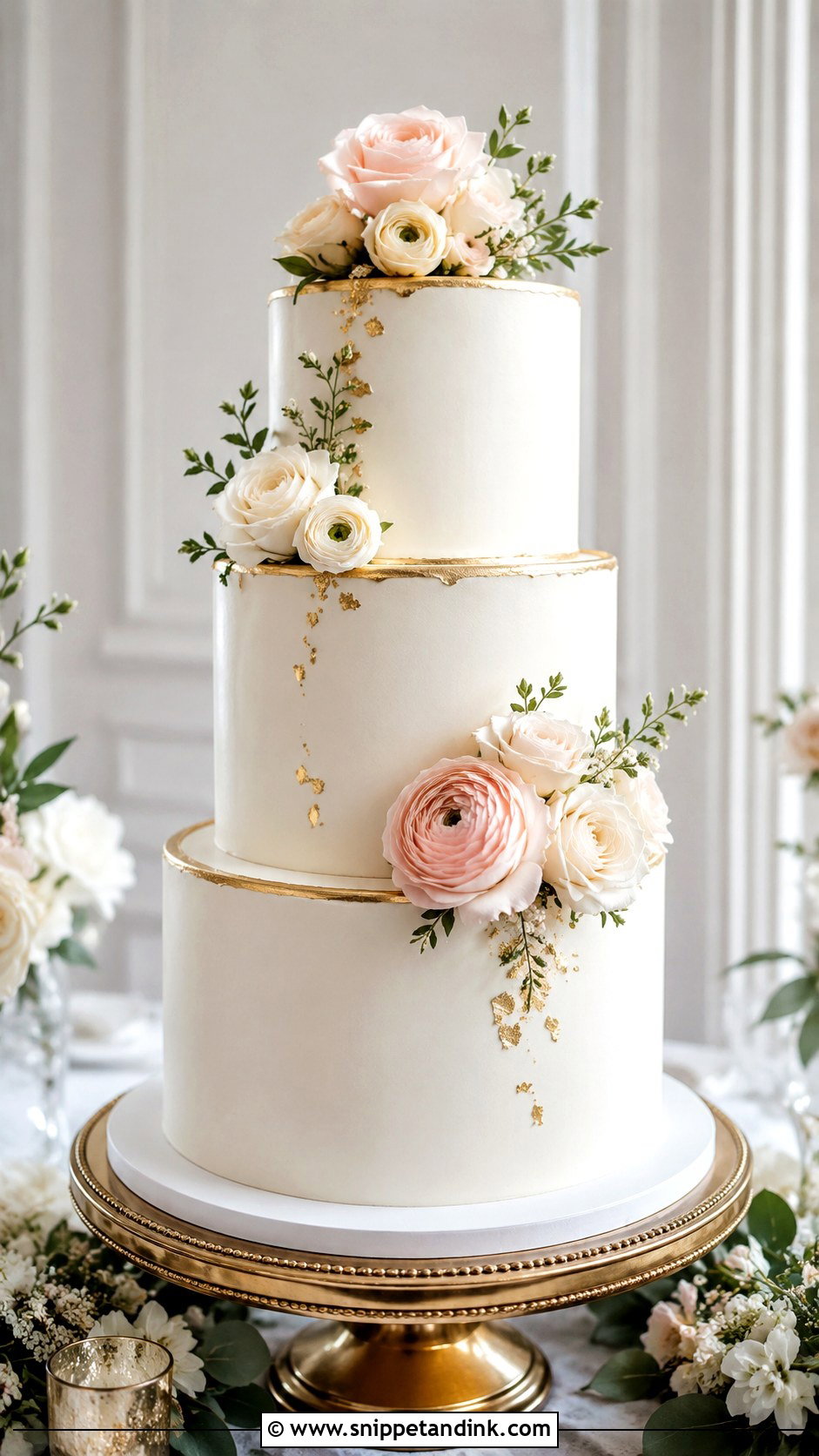
Gold works as an accent and nothing more. A thin rim, a brushed edge or a few flakes of edible gold leaf beside the flowers. I always check that the gold is genuinely edible; some decorative paints are labeled only as non-toxic. White buttercream, ivory fondant and pale blush frosting all take gold well, and roses, orchids or ranunculus finish it. Evening and ballroom receptions show it off under warm light.
17. Blush Floral Wedding Cake
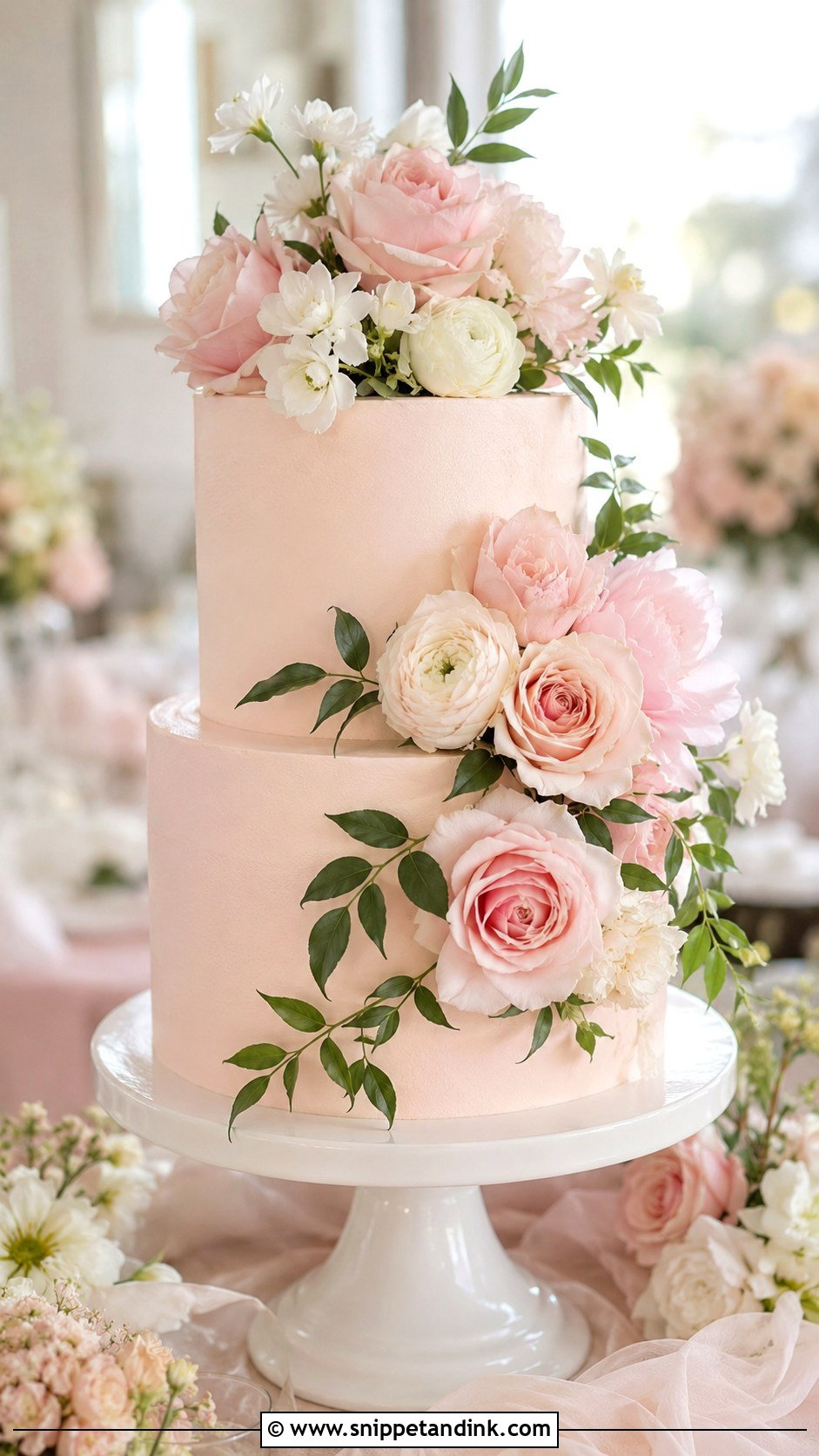
Blush flowers on a white cake, or a very pale pink frosting with flowers in a deeper tone. Roses, peonies, ranunculus and sweet peas all suit it. The thing I watch for is contrast: blush flowers on blush frosting disappear in photos, so a few green leaves between them are essential. One top cluster and one smaller side cluster keep it simple. Spring and summer palettes suit it best.
18. Lavender Floral Wedding Cake
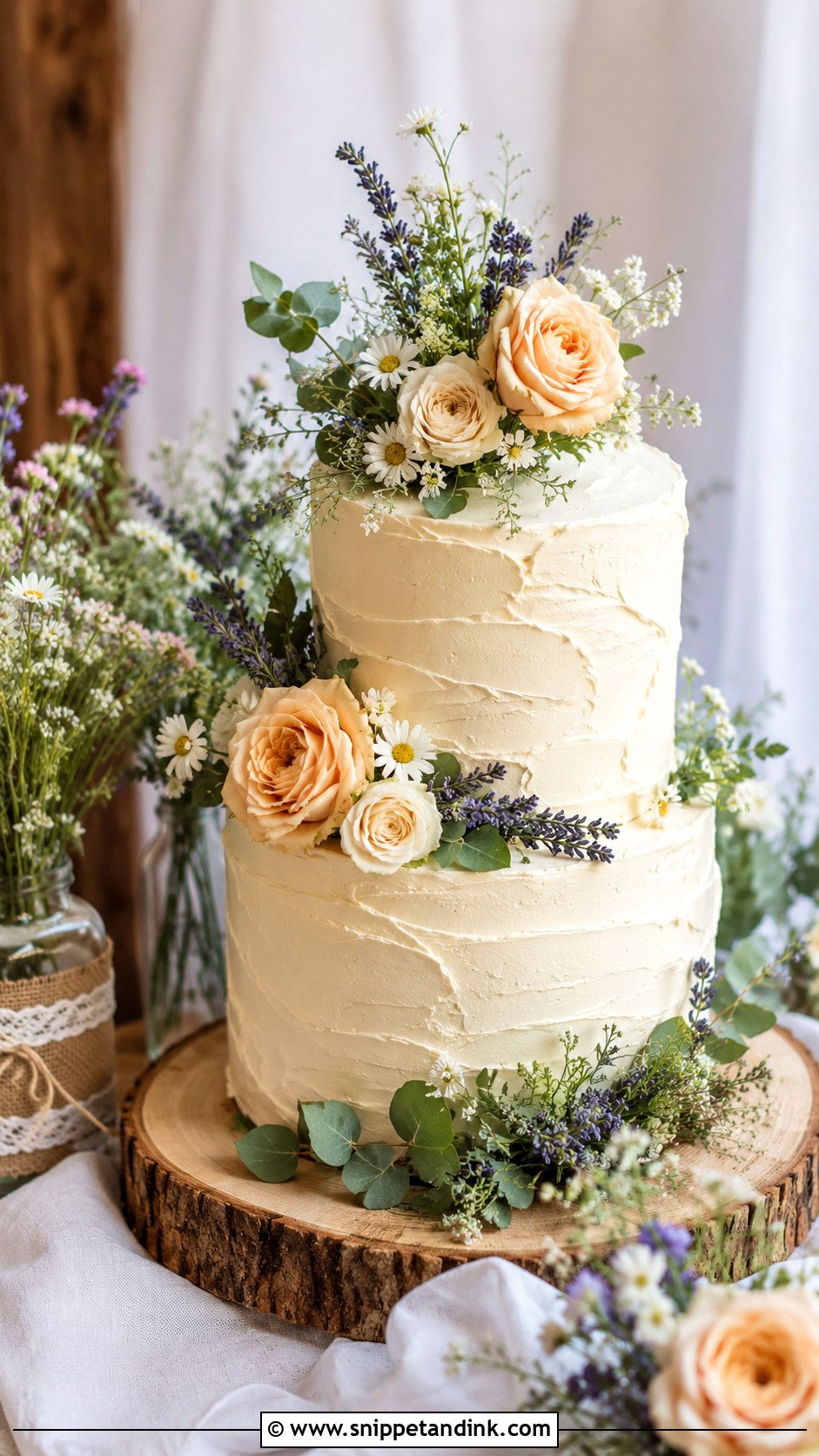
A lavender floral wedding cake can use fresh sprigs, small purple flowers or pressed blossoms. I use culinary lavender if it’s going anywhere near the frosting, and I go easy, because lavender’s scent is strong and a cake covered in it can taste of soap. White buttercream, ivory frosting or a semi-naked finish keeps the base calm. Lemon, honey, vanilla and almond sponges pair naturally with it. Garden and countryside weddings and purple palettes suit it.
19. Daisy Floral Wedding Cake
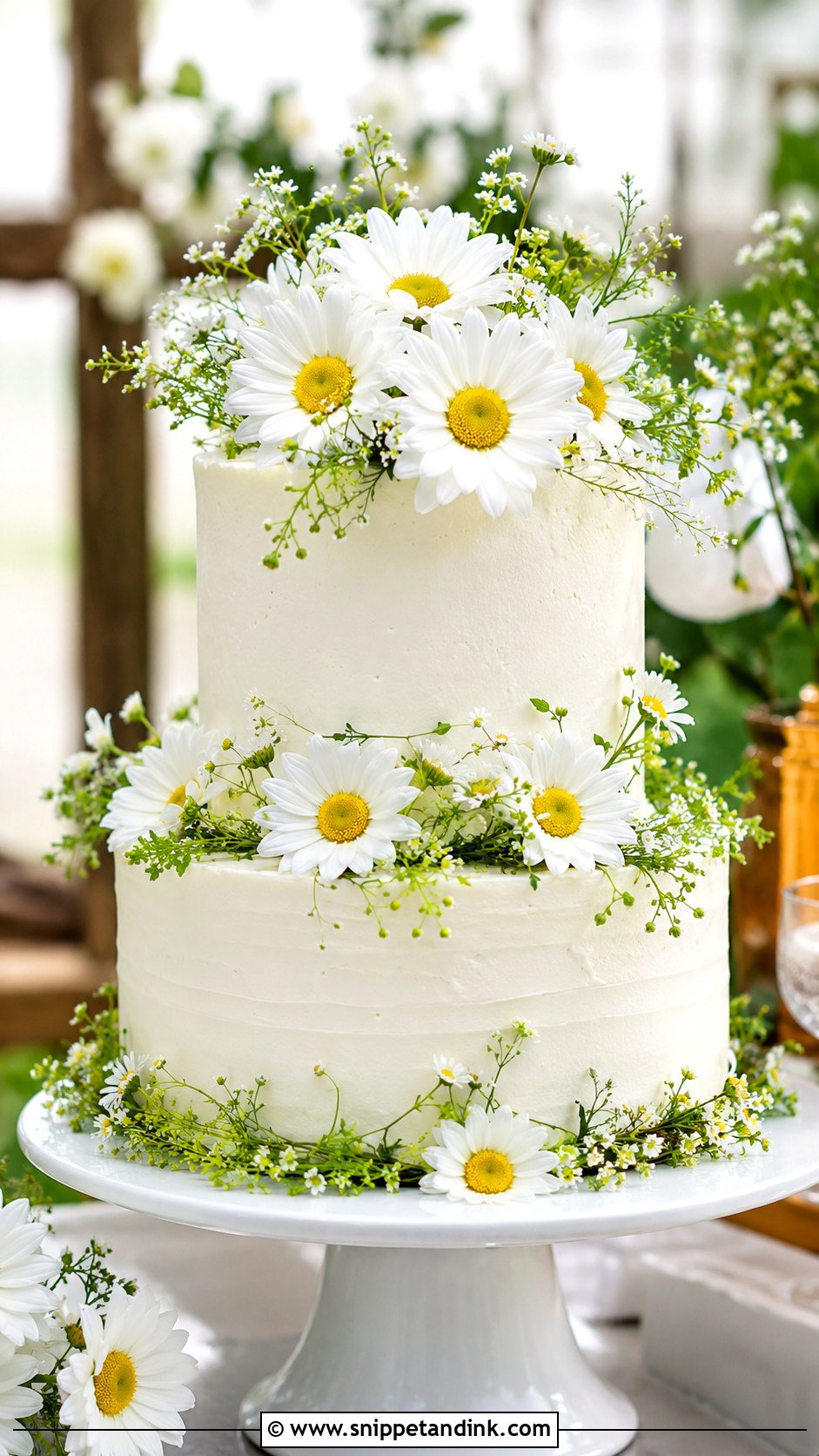
Daisies are cheerful and almost foolproof on white buttercream, since the yellow centers give color without anything else. Scatter small daisies across the tiers, ring the base with them or put one loose cluster on top. If they’re touching the frosting, they need to be an edible variety grown without sprays, which your baker can source. Keep the rest of the cake plain so it looks fresh rather than busy, and add a little greenery to soften the edges. Spring weddings and backyard receptions suit it.

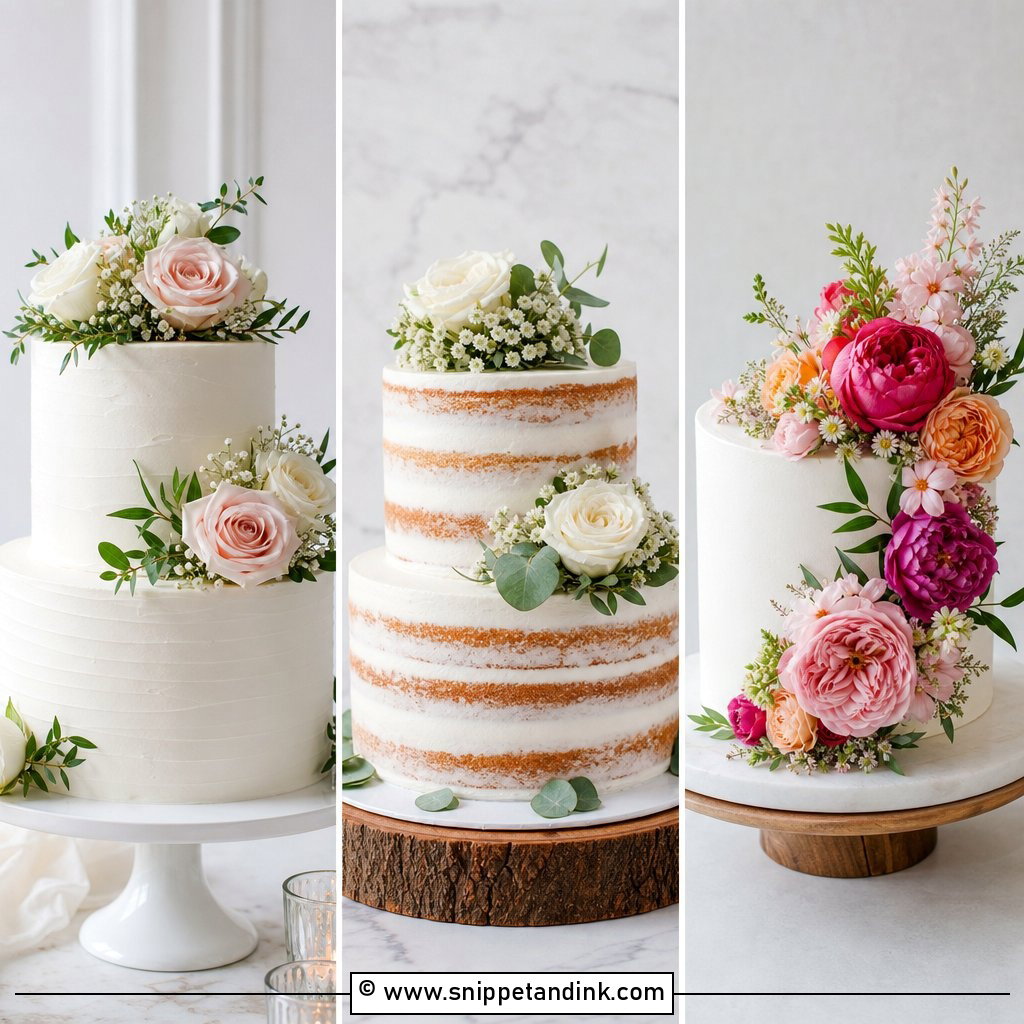
20. Orchid Floral Wedding Cake
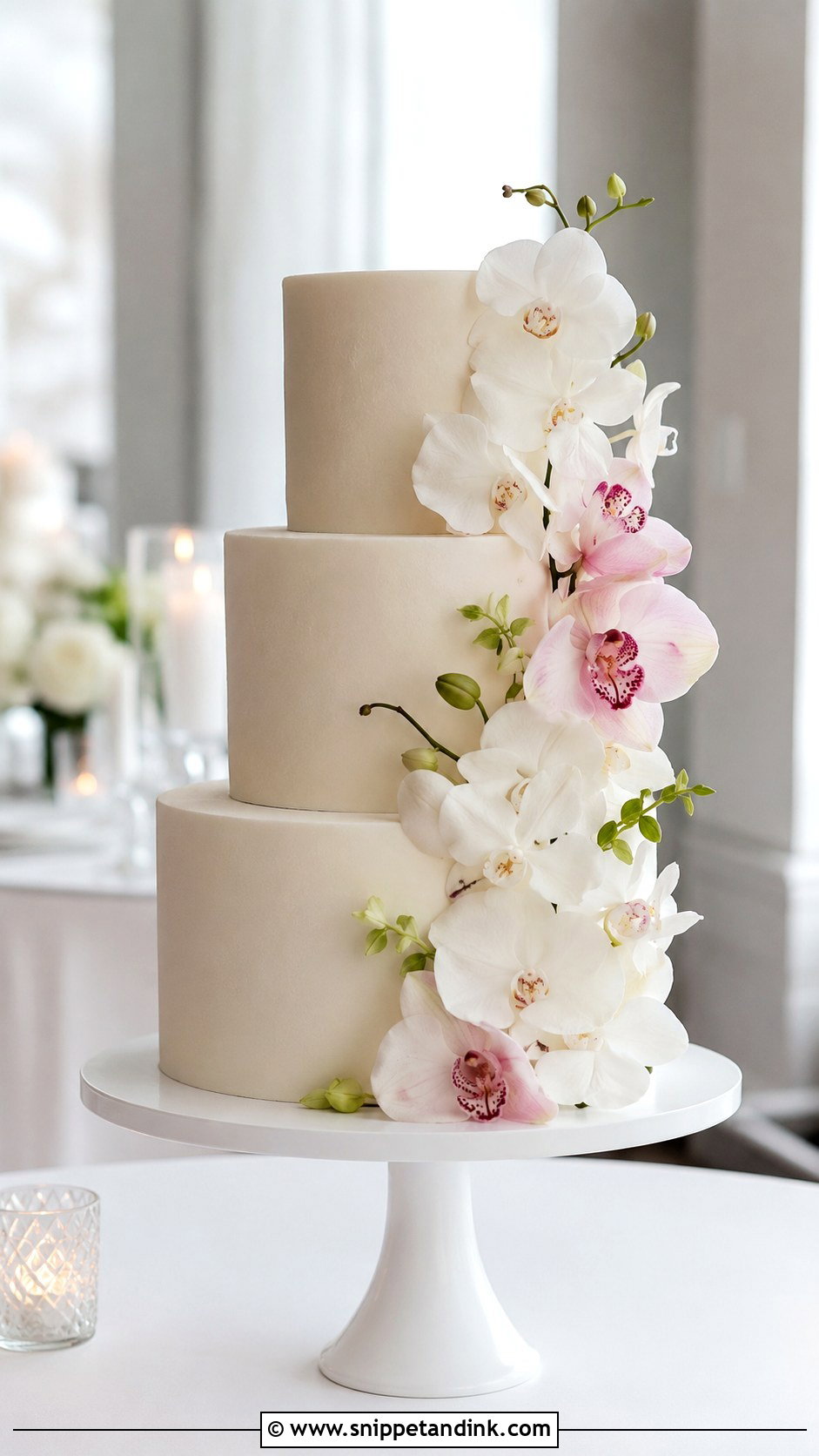
Orchids are sculptural, so three or four are enough to finish a cake. I place them down one side of a smooth white or ivory cake. White orchids are the classic choice; pale pink or soft purple gives a gentle accent. They hold up in warm rooms better than most flowers, which is why I like them for hotel receptions and tropical venues. Keep the frosting sleek and the table simple.
Flowers That Wilt Before the Cake Is Cut
A cake is often set out an hour or more before it’s cut, sometimes in a warm room or a tent. Flowers on a cake have no water. Some cope with that and some don’t, and I’d plan around it.
- Holds up well: roses, spray roses, orchids, lisianthus, carnations, waxflower, most eucalyptus.
- Fairly reliable: ranunculus, peonies once open, daisies, chamomile.
- Fragile out of water: sweet peas, hydrangea, most wildflowers, delicate garden roses on a hot day.
For anything in the last group, I’d use small water tubes hidden behind larger blooms, or place them as late as possible. If your reception is outdoors in summer, ask whether the cake can wait inside until shortly before cutting.
Can I Keep the Sugar Flowers?
Yes, and many couples do. Sugar flowers last for years if they’re kept dry, away from sunlight and humidity, in a box or a glass dome. Lift them off before the cake is cut, and set them aside somewhere dry so they don’t absorb moisture from the buttercream. They won’t be good to eat after a day out, but they make a keepsake that looks the same on your anniversary.
Start With a Clean Cake, Then Add Flowers
Floral cakes suit almost every wedding because the flowers adapt to the setting. Fresh blooms, pressed petals, piped roses, sugar flowers, greenery or a single focal flower can all be the right choice. My method rarely changes: a clean base first, then flowers placed with a reason. Think about the season, the venue and what’s already in your bouquet. Then decide who supplies the flowers and how long they’ll sit out. A small cake can feel bridal with the right detail, and a large one stays graceful with restraint.
You'll Like These Ideas:






Leave a Reply