
I dress Punjabi brides for two audiences at once: the camera, and a long morning on the gurdwara floor. The red lehenga, the phulkari, the Patiala suit, the chooda and kaleere all carry family meaning, but they also come with weight, pins and hems that either behave or don’t once you sit down for the Anand Karaj and rise again for each of the four laavan. Plenty of brides now pair a grandmother’s jewelry with newer tailoring and a lighter dupatta, and that mix works well when the fit is settled early. Below are twenty-five looks I’d happily style, with notes on how each one actually wears through the ceremony, the portraits and the family rituals around them.
The Ten-Minute Floor Test I Give Every Punjabi Bridal Outfit
Every outfit below gets judged on one hour. During the Anand Karaj you sit on the floor before the Guru Granth Sahib, then rise and walk around it four times as the laavan are sung, holding one end of the palla your groom carries. That’s sitting, standing and walking, four times over, with your head covered throughout. A lehenga that looks perfect on a hanger can fail all three.
What I check at the final fitting
- Sit cross-legged on the floor for ten full minutes. If the waistband digs in or the blouse rides up at the back, it needs taking out before the day, not a safety pin on the morning.
- Stand up without using your hands. Someone will help you on the day, but you should be able to rise without treading on the hem.
- Walk a slow circle holding a scarf as a stand-in for the palla, and watch whether the head dupatta slides back as your arm moves.
- Bow forward as you would to matha tek, then check the blouse neckline from the front and from above.
Bring your real jewelry and your jutti to this fitting, and do the floor test barefoot. A heavy necklace changes how a blouse sits, and a skirt hemmed in heels will drag once your shoes are off inside the gurdwara.
1. Red Punjabi Bride Lehenga
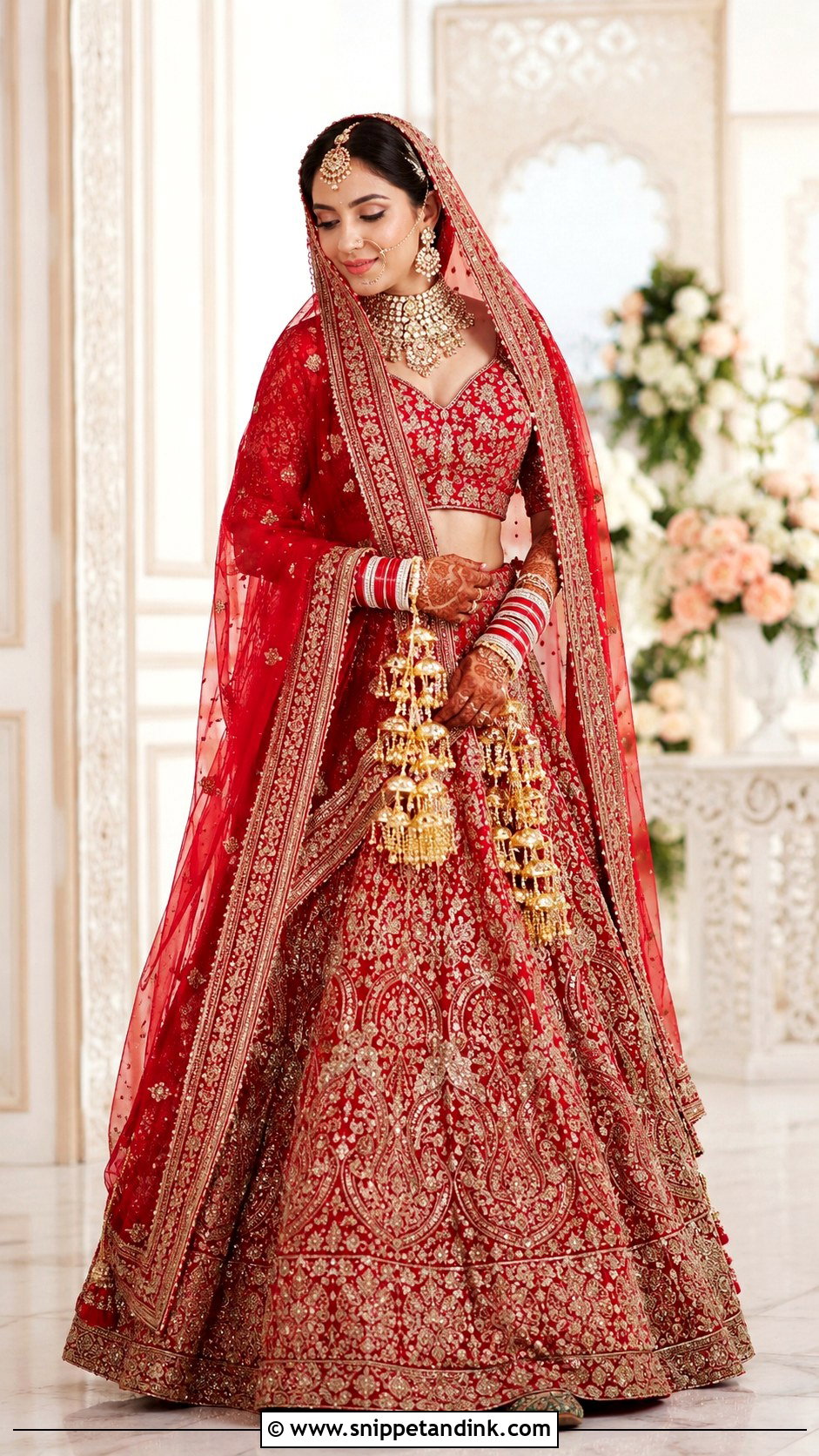
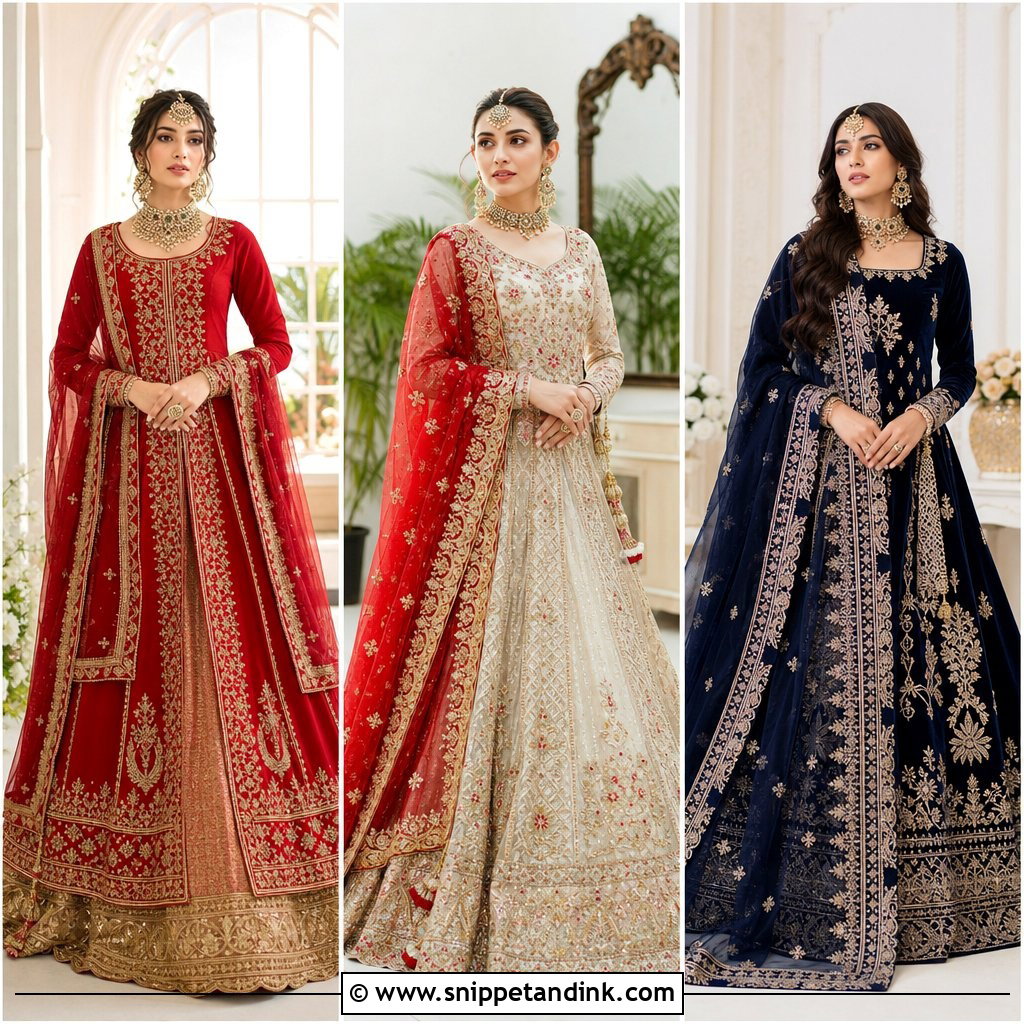
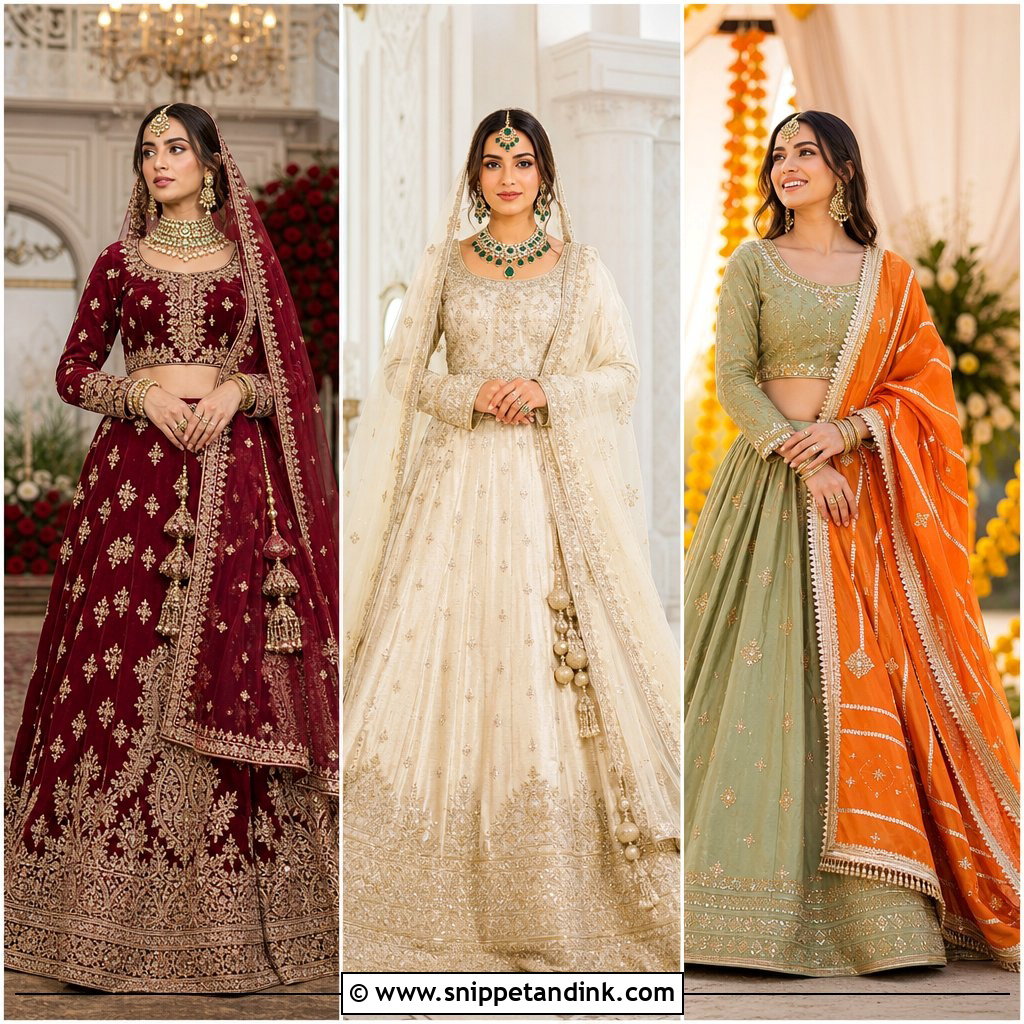
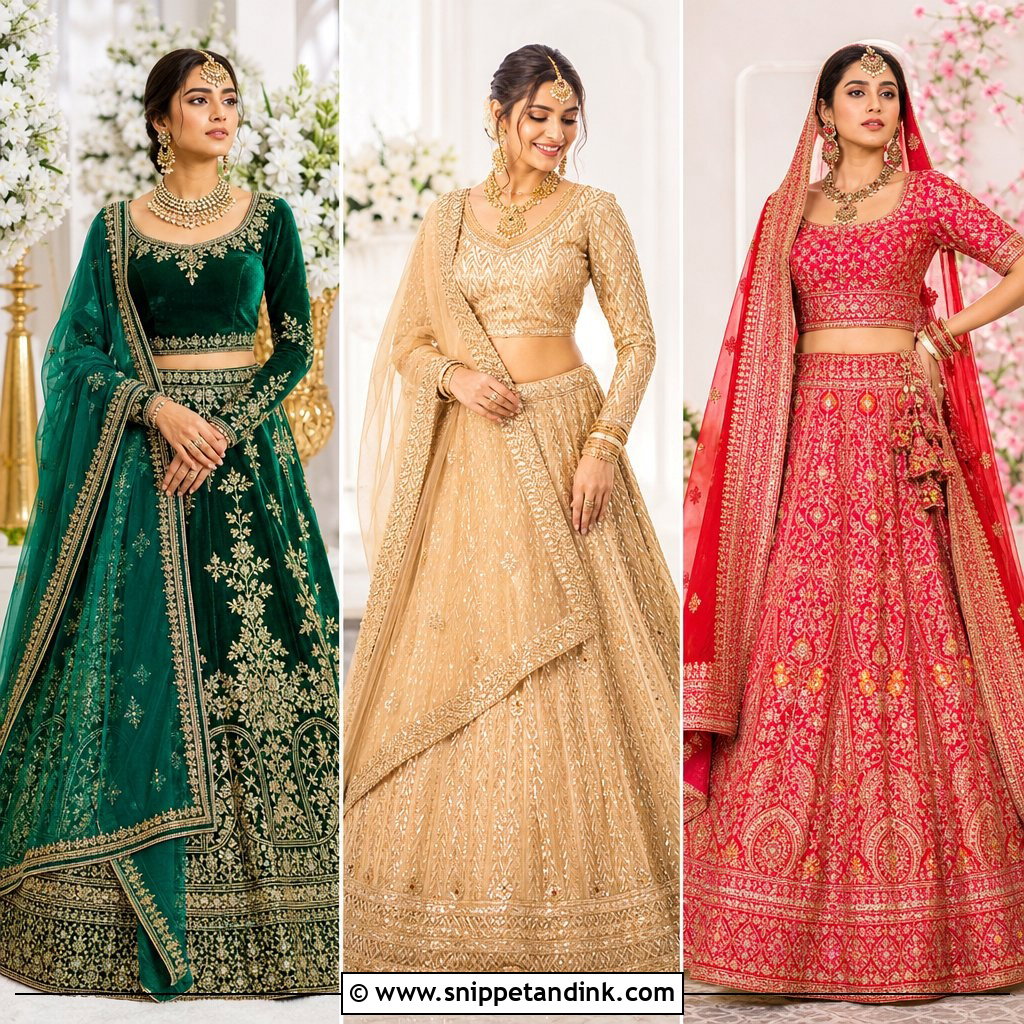
Red stays the default for a reason: against the white sheets of a gurdwara hall it reads clearly from every angle. Velvet, raw silk and brocade all take gold zari and dabka well, and that raised work gives the camera shadows to catch instead of a flat block of color. The part I fuss over is the head dupatta. On a red lehenga it’s usually net with a heavy border, and that border is what drags it backward, so I anchor it with U-pins into a small bun base behind the crown, never into loose hair. Finish with red and ivory chooda, gold kaleere, kundan, a maang tikka, nath and embellished jutti, and keep the blouse modest enough that you aren’t adjusting it during the laavan.
2. Maroon Punjabi Bride Lehenga
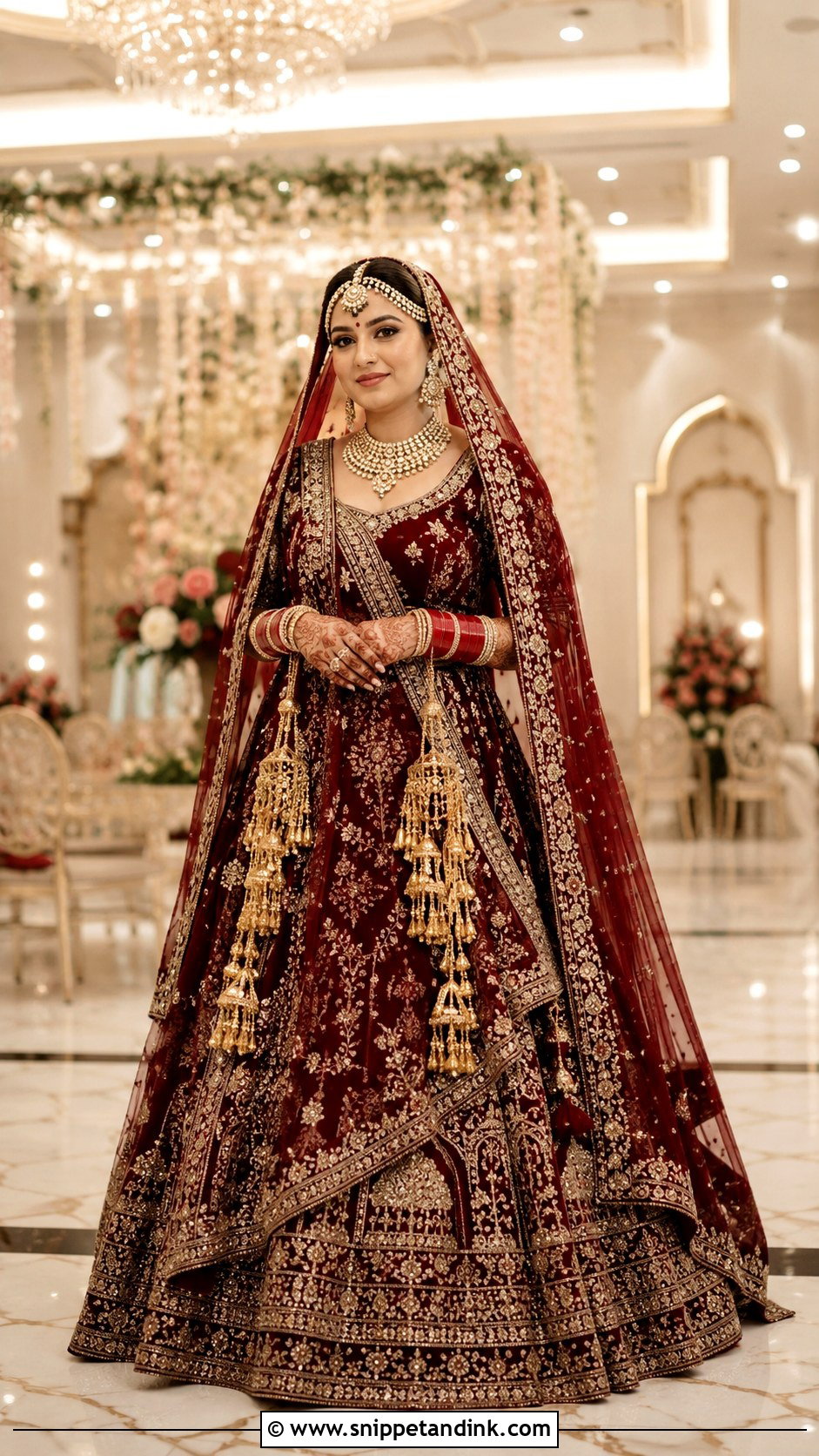
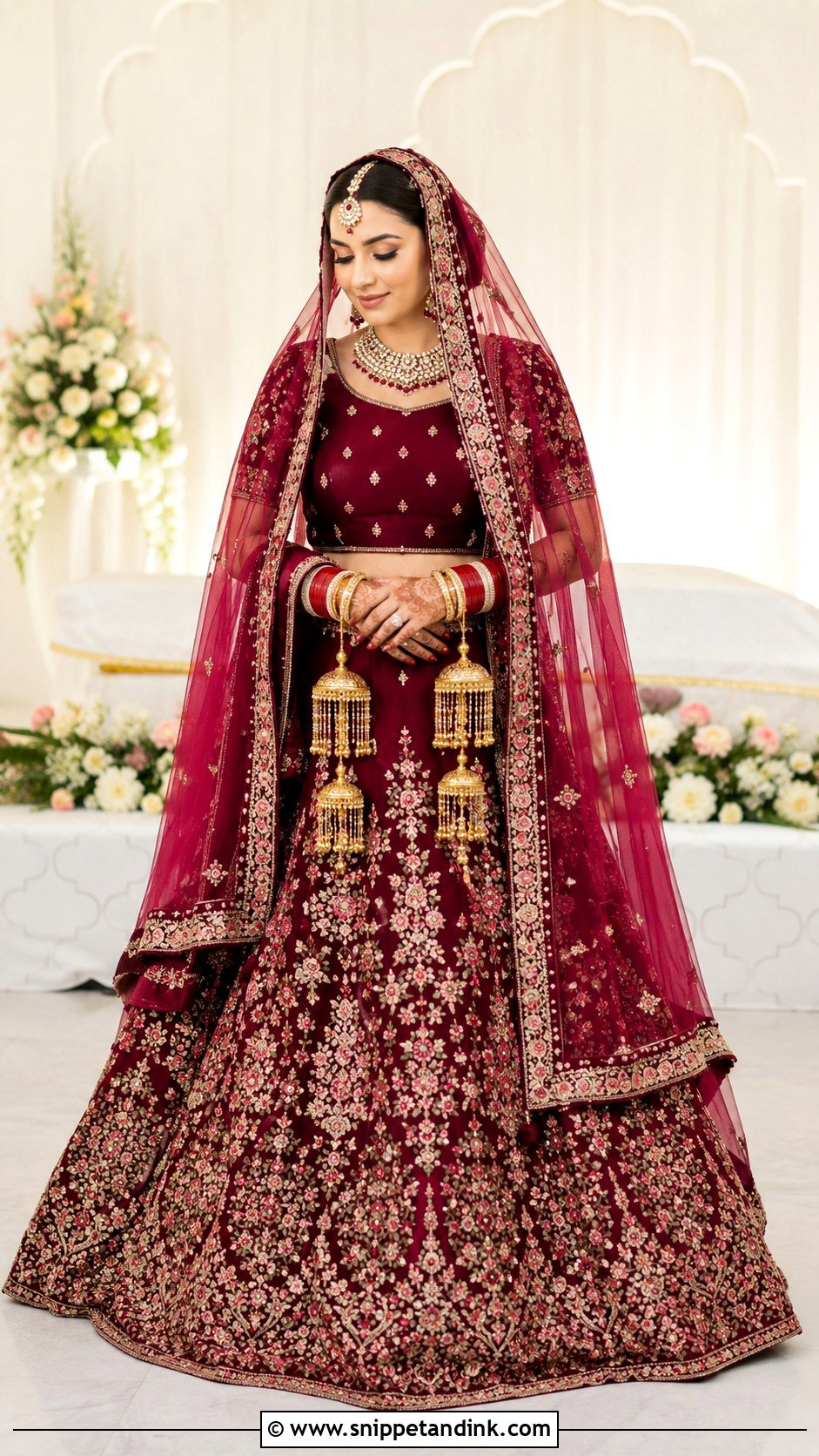
Maroon is my suggestion when a bride wants tradition but finds scarlet too sharp against her skin. It sits a step deeper, and antique gold embroidery on it holds its tone under both daylight and warm hall lighting, where bright red can tip toward orange. I’ll often layer two dupattas here: a matching or soft gold one over the head, then a lighter one across the shoulder. Polki, a bold matha patti, chooda, kaleere and gold jutti round it off. One caution: dark maroon velvet can turn almost brown in dim indoor photos, so ask your photographer for a test frame in the venue light.
3. Pink Punjabi Bride Lehenga
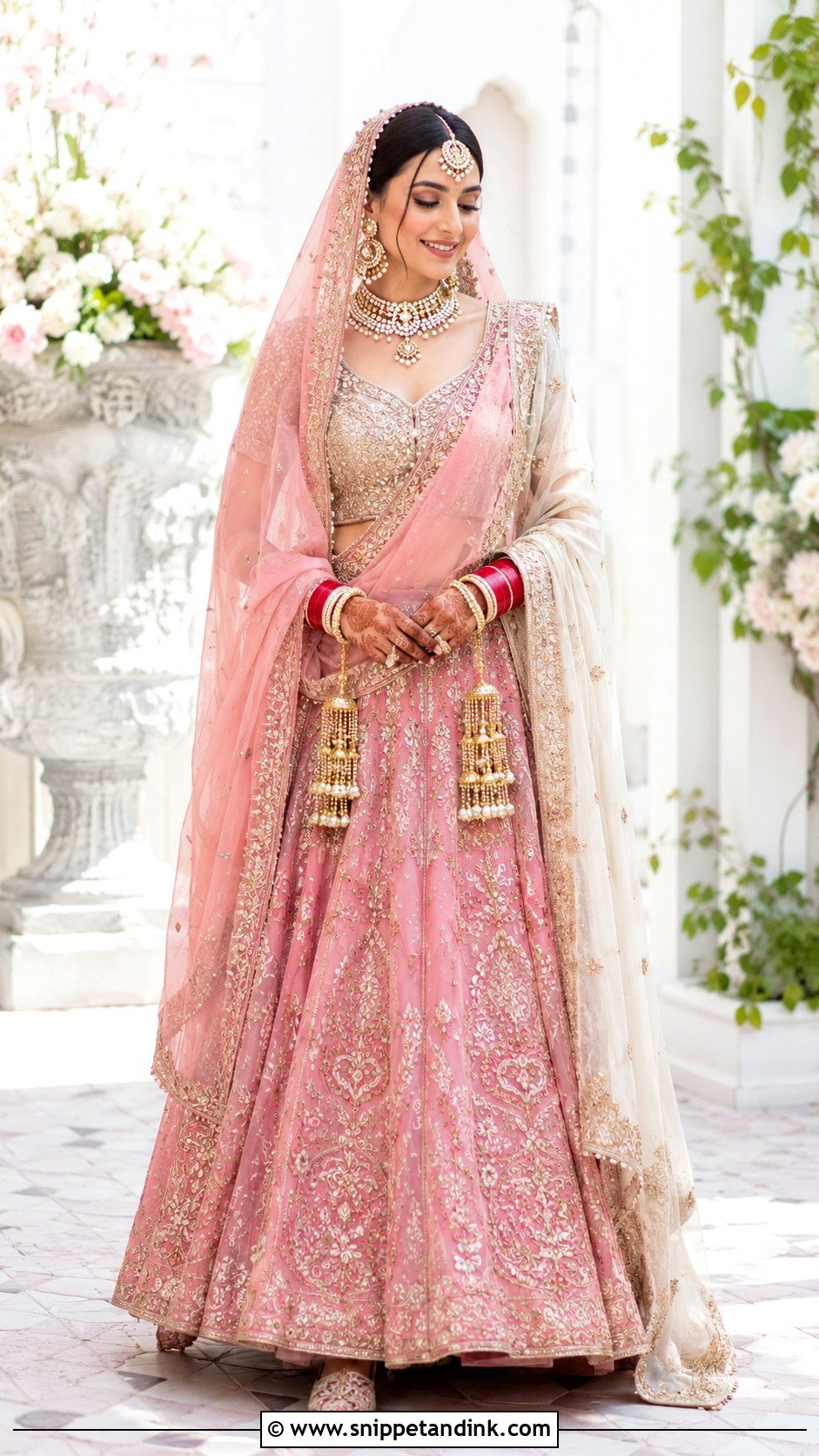
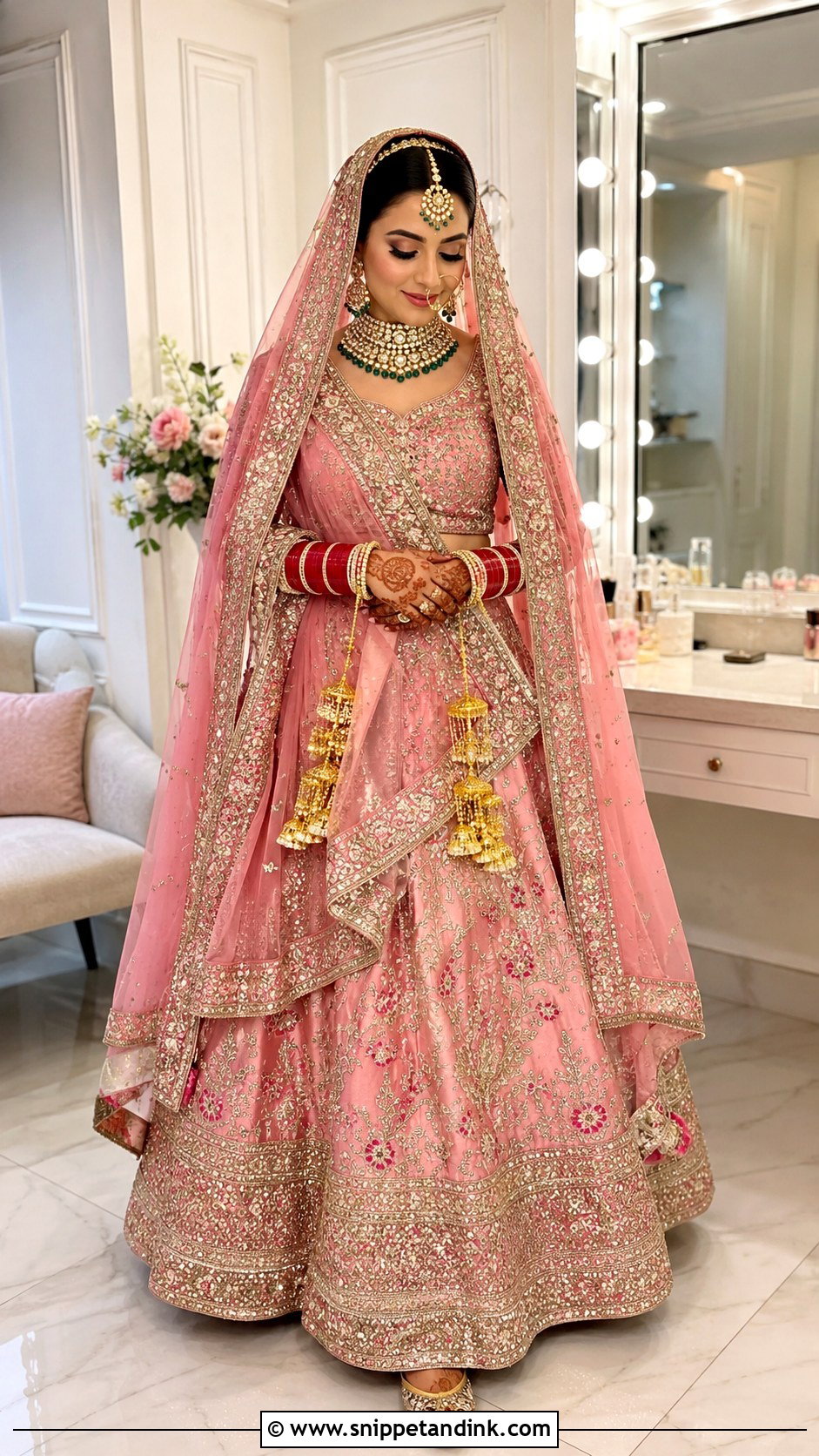
Pink is where brides drift furthest from tradition without meaning to. Blush, rose and rani pink each take gold, pearl or silver embroidery, but blush in particular can wash out next to fair skin and pale gurdwara walls. That’s why I pair it with a contrasting red chooda and classic kaleere; they pull the outfit back toward something unmistakably Punjabi. Keep a pink dupatta over the head for the ceremony and add a second in ivory or gold across the shoulder if you want depth. If you’re worried about looking pale, rani pink is the safer shade.
4. Orange Punjabi Bride Lehenga
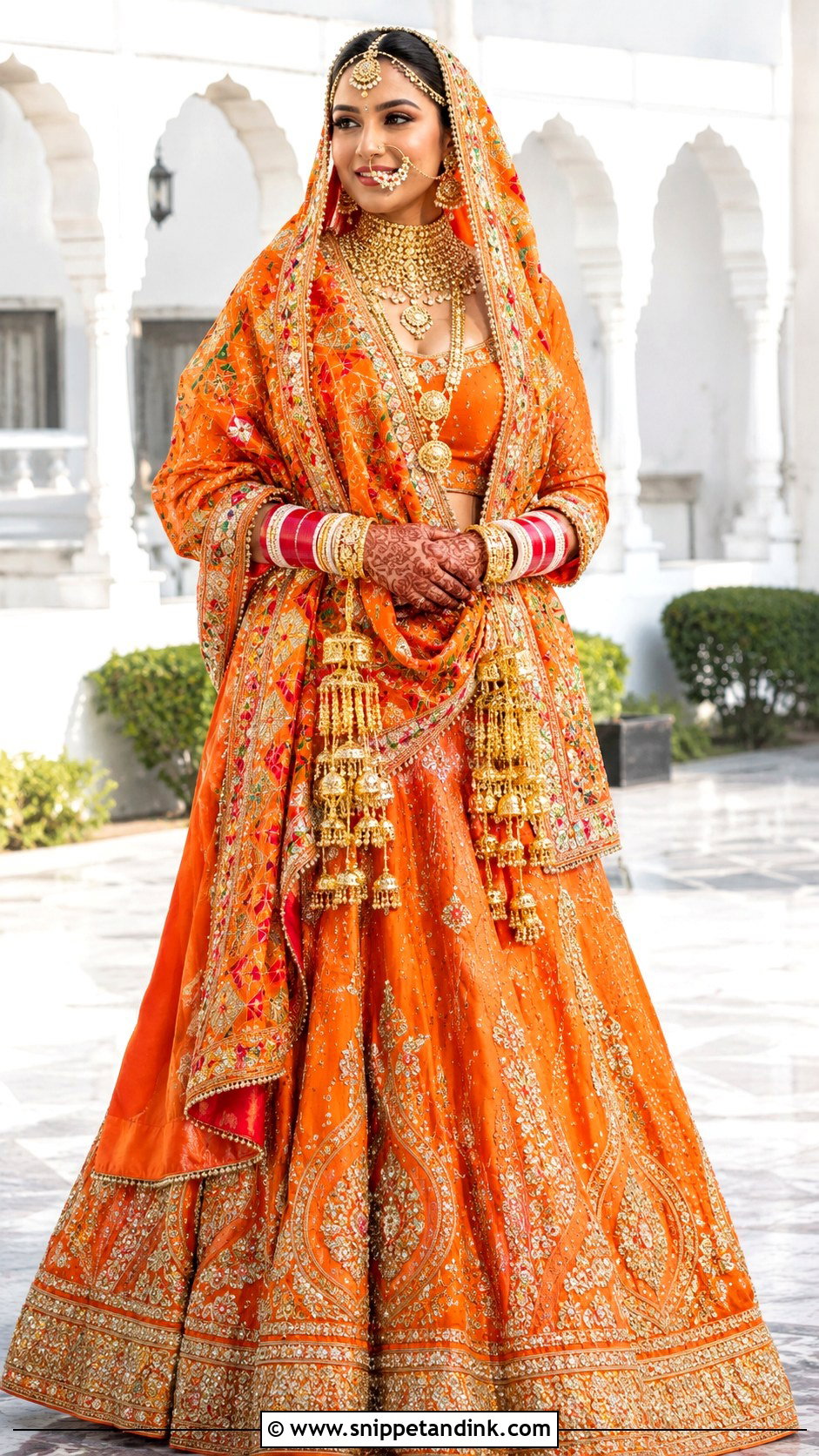
Kesari and burnt orange glow in daylight, so I steer orange lehengas toward morning ceremonies, which suits the Anand Karaj since it is traditionally held before noon. Rust and tangerine carry gold embroidery and traditional jewelry just as well. A phulkari-inspired dupatta, chooda, kaleere, a statement nath and gold jutti complete it. When the skirt is very bright, I keep the blouse neckline plain and let the embroidery do the talking. Red bangles or a red-bordered dupatta tie it back to the classic palette if elders in the family expect red somewhere in the look.
5. Gold Punjabi Bride Lehenga
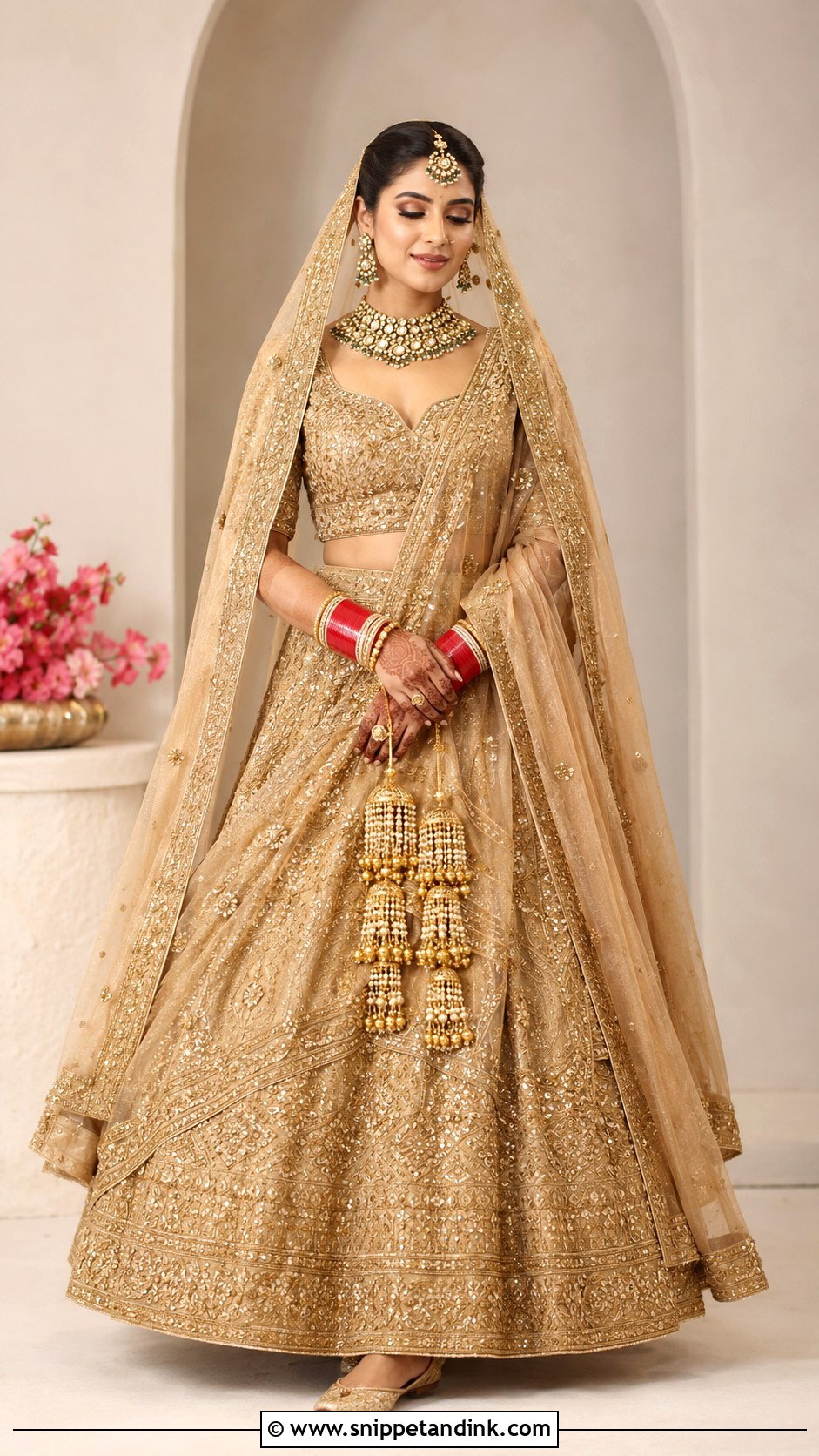
Gold is the trickiest color to wear well, because everything else on you is also gold. Champagne suits cooler skin, antique gold suits warm undertones, and deep metallic needs evening light to look its best. With a heavily worked skirt, I choose a softer head dupatta with a defined border so the face isn’t lost in sparkle, and red chooda and kaleere give the outfit its Punjabi anchor. Kundan, polki or temple jewelry can all work. The mistake I see most is wearing several oversized sets at once, which crowds the neckline. A sleek bun with fresh flowers keeps the head simple.
6. Ivory Punjabi Bride Lehenga
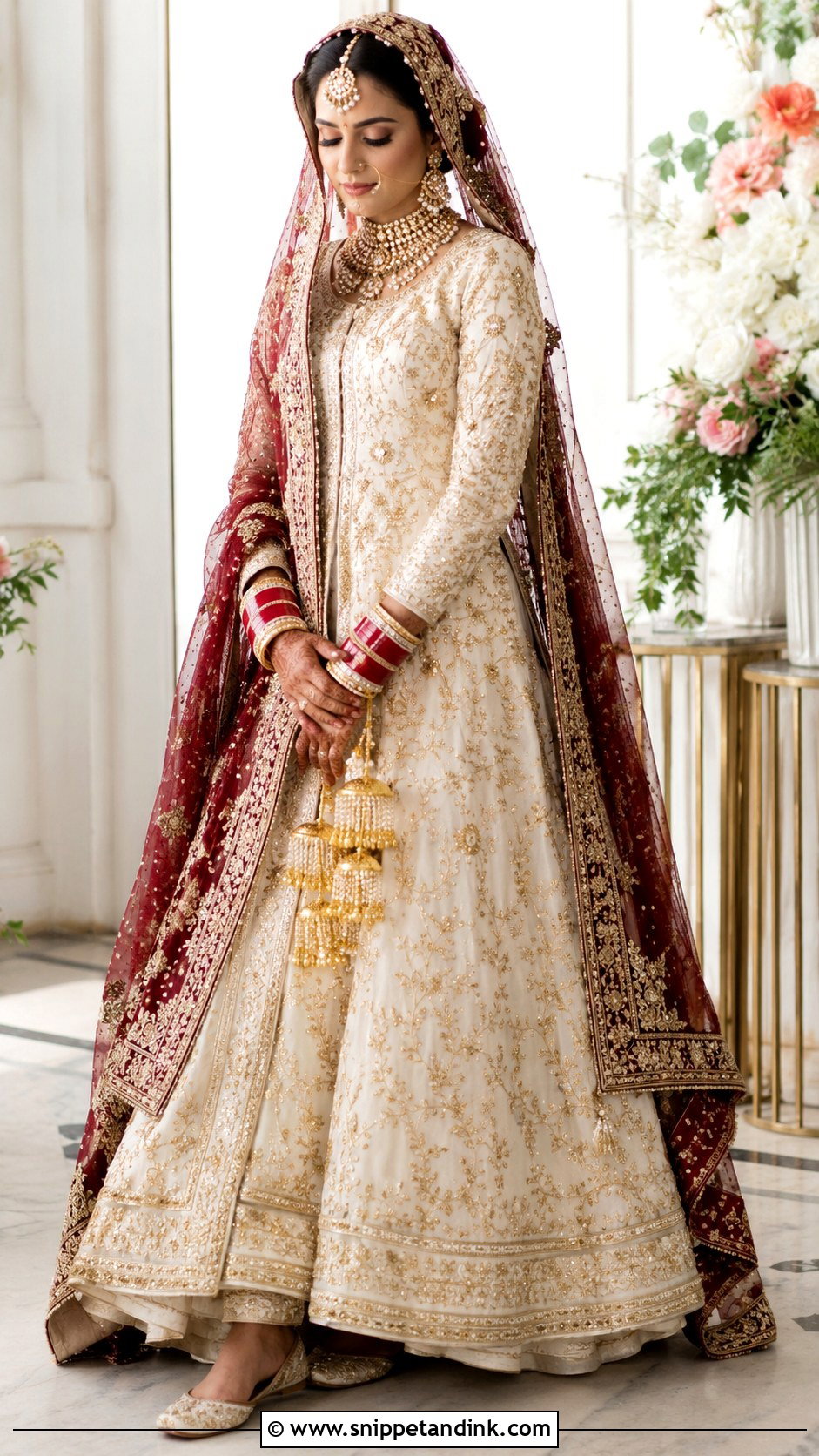
Ivory needs color somewhere or it reads as a guest outfit. I look for gold, red, maroon or pink embroidery on the base rather than plain cream, then bring in a red chooda, statement kaleere and bolder jewelry. A red or maroon head dupatta gives the contrast many families expect. Pearls and polki suit it, and so does soft dewy makeup. Hold the fabric up to a window before you buy: some ivory georgettes and nets turn sheer in daylight, and the Anand Karaj is not where you want to discover that. Ask for a full lining and a blouse with real coverage.
7. Punjabi Bride Patiala Suit
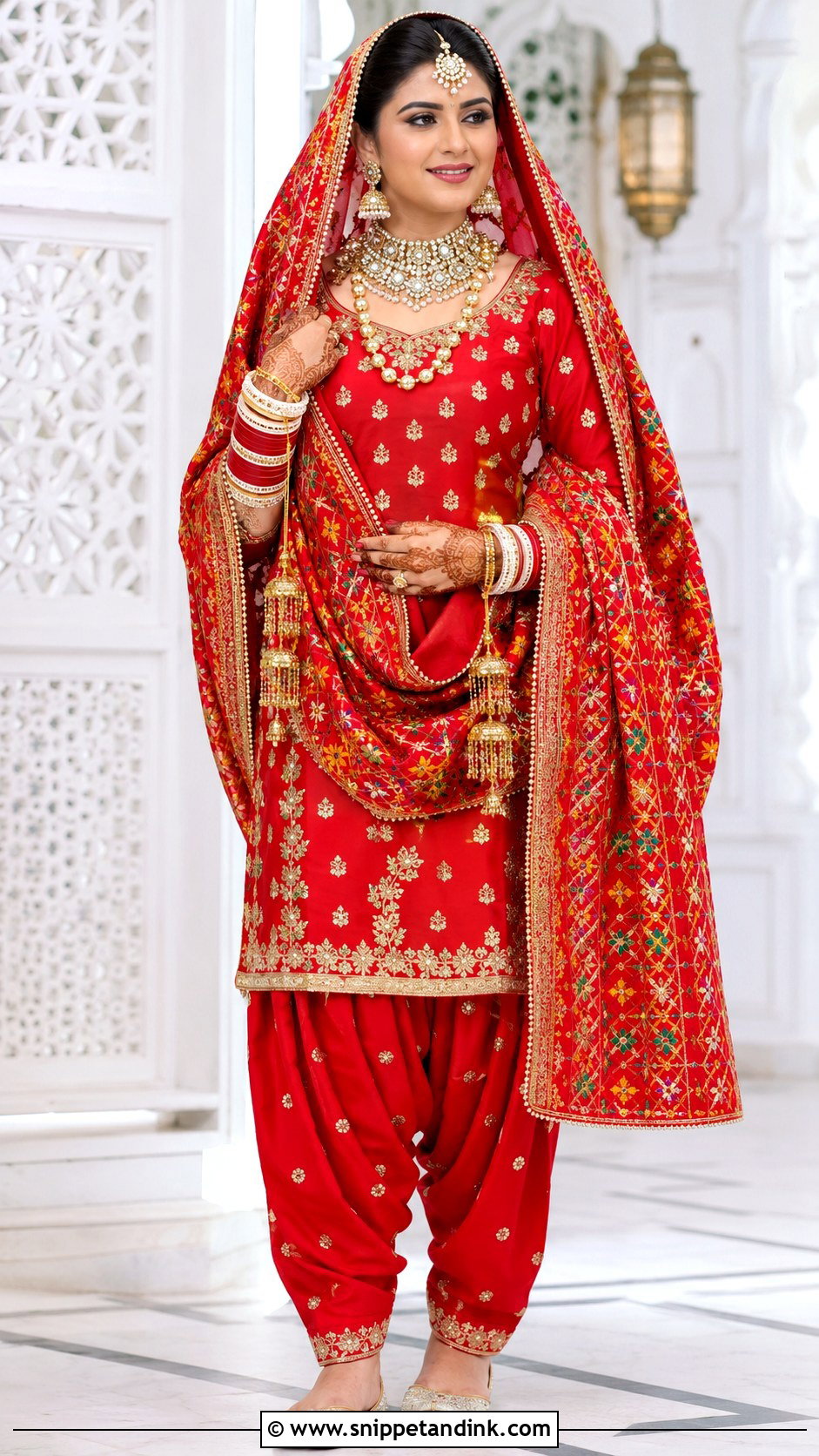
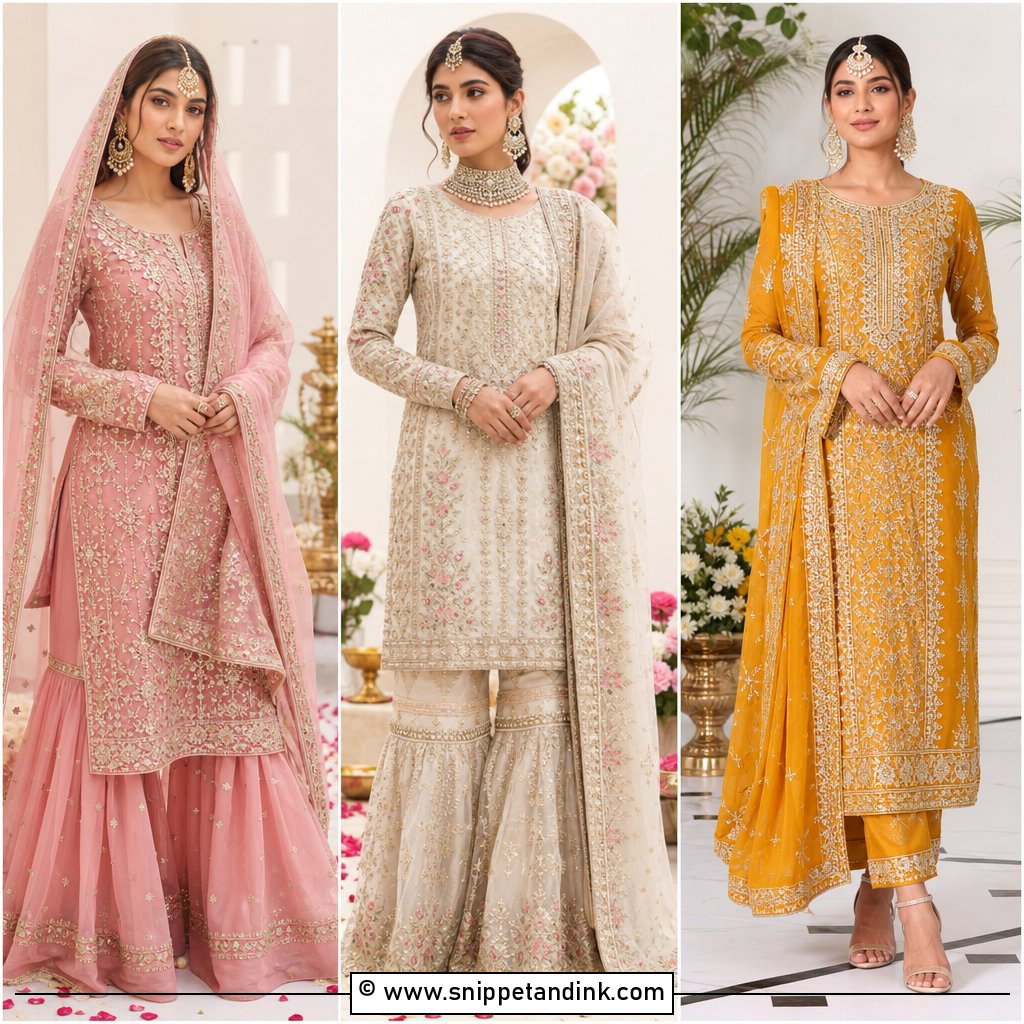
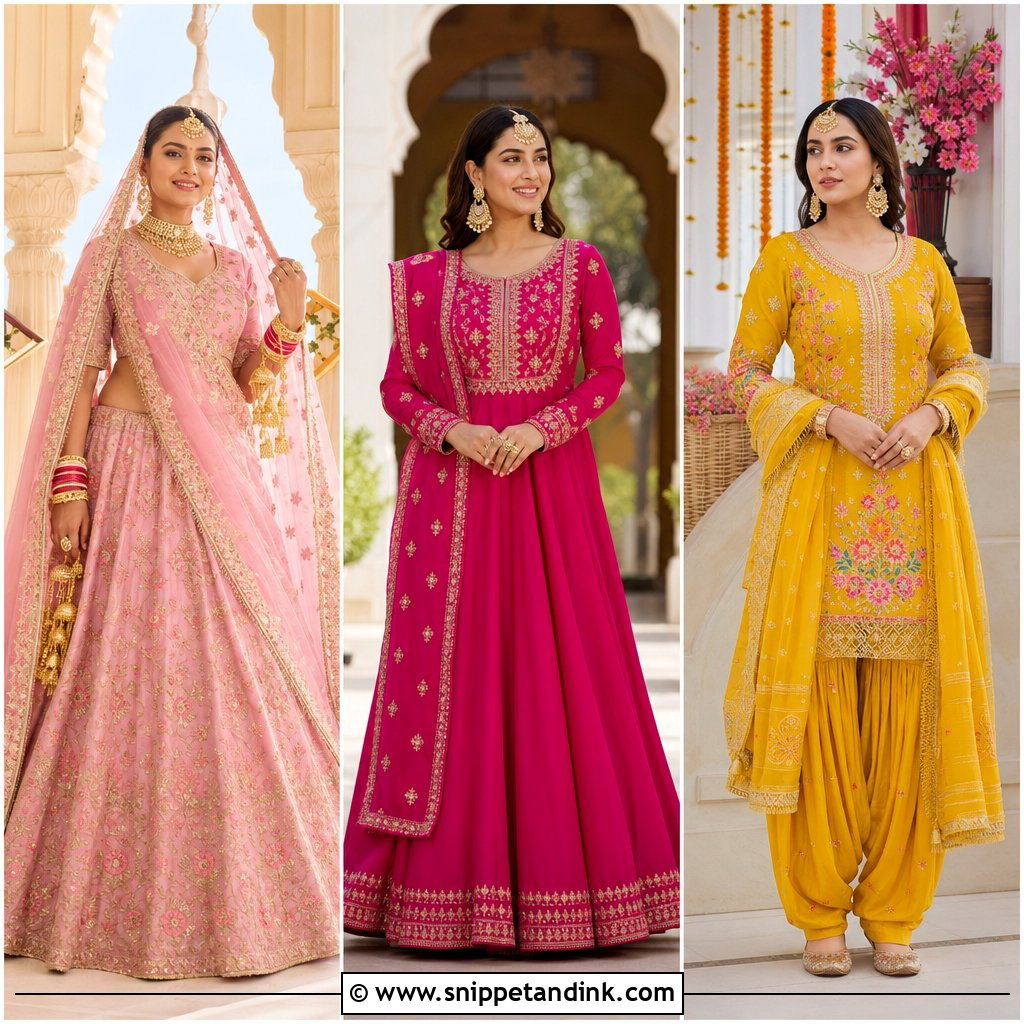
A Punjabi bride Patiala suit is what I’d put on a bride who dreads sitting cross-legged in a heavy skirt. The pleated salwar gathers at the ankle, so nothing bunches under you on the floor, and a short or mid-length kurti doesn’t fight your knees. Silk, brocade, velvet or dense embroidery makes it bridal; a phulkari dupatta makes it personal. At the fitting, check the salwar’s volume. A true Patiala uses several meters of cloth, and in stiff brocade that can feel bulky, so a softer silk usually drapes better. Style with chooda, kaleere, a maang tikka, jhumkas, layered necklaces and embroidered jutti.
8. Punjabi Bride Salwar Kameez
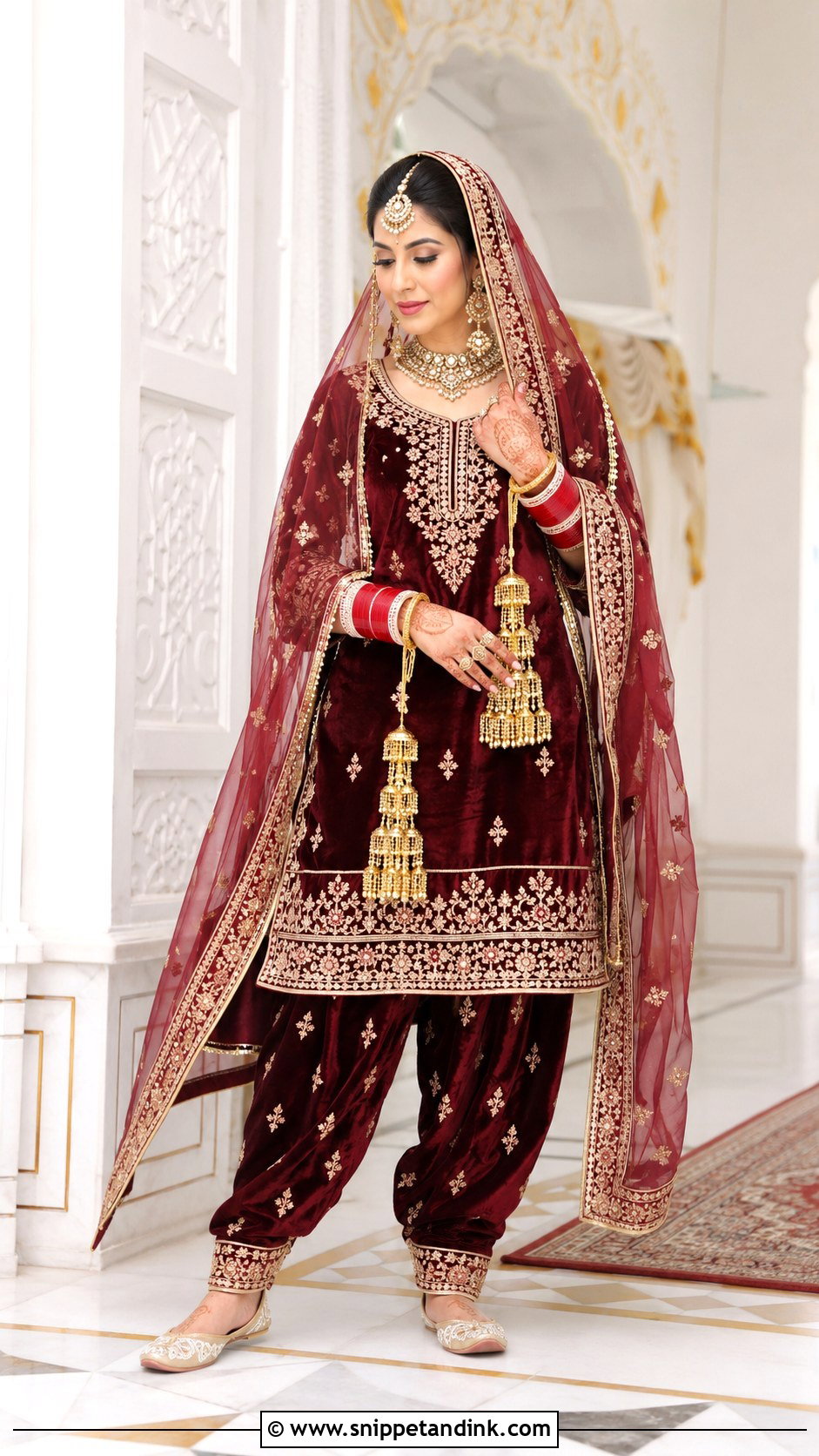
Fabric and finish decide whether a salwar kameez looks bridal or like a smart outfit for a family function. A long embroidered kameez with a heavy dupatta gives a modest line, and I push for a rich border at the hem and sleeves, because that’s where the eye lands when you’re seated. Red, maroon, gold and deep pink are the strongest traditional colors, though rust, coral and ivory work too. Add a head-covering dupatta, chooda, kaleere, jutti and classic jewelry. Have the side slits finished with a small reinforcing stitch; they pull open when you sit on the floor.
9. Punjabi Bride Anarkali Suit
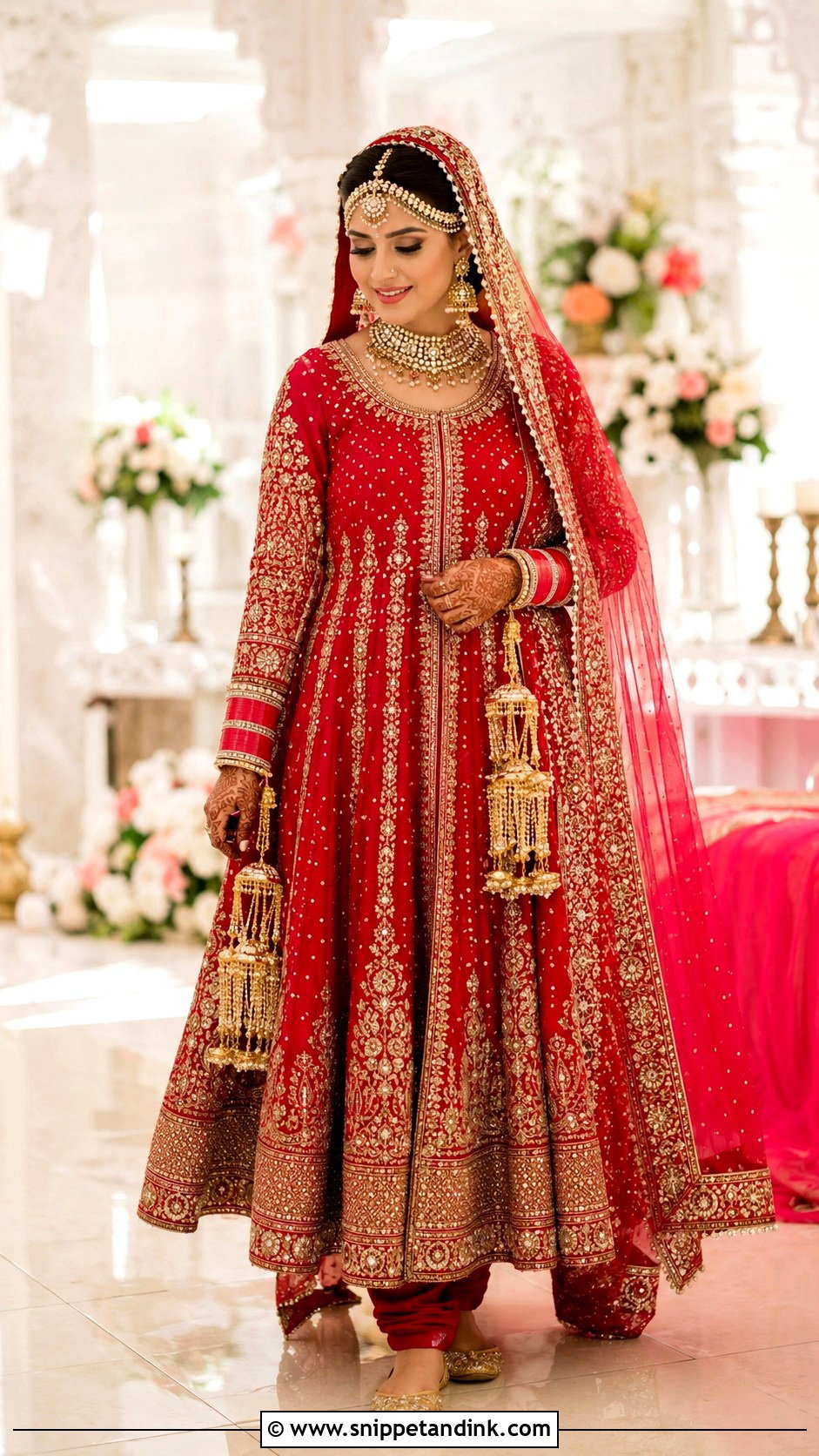
An Anarkali gives you drama in the walk and comfort in the seat. The flare comes from its panels, so I look at how many there are and how they’re cut: a skirt built from many narrow kalis swings as you walk the laavan, while a cheaply gathered one just hangs. Floor length in red, maroon, gold or deep pink looks regal under a heavy head dupatta, and a matha patti suits the silhouette. Slim churidar, embroidered jutti, chooda, kaleere and a statement set complete it. Have the hem measured barefoot, since your shoes come off inside the gurdwara, or the front will catch your toes on every round.
10. Punjabi Bride Sharara Suit
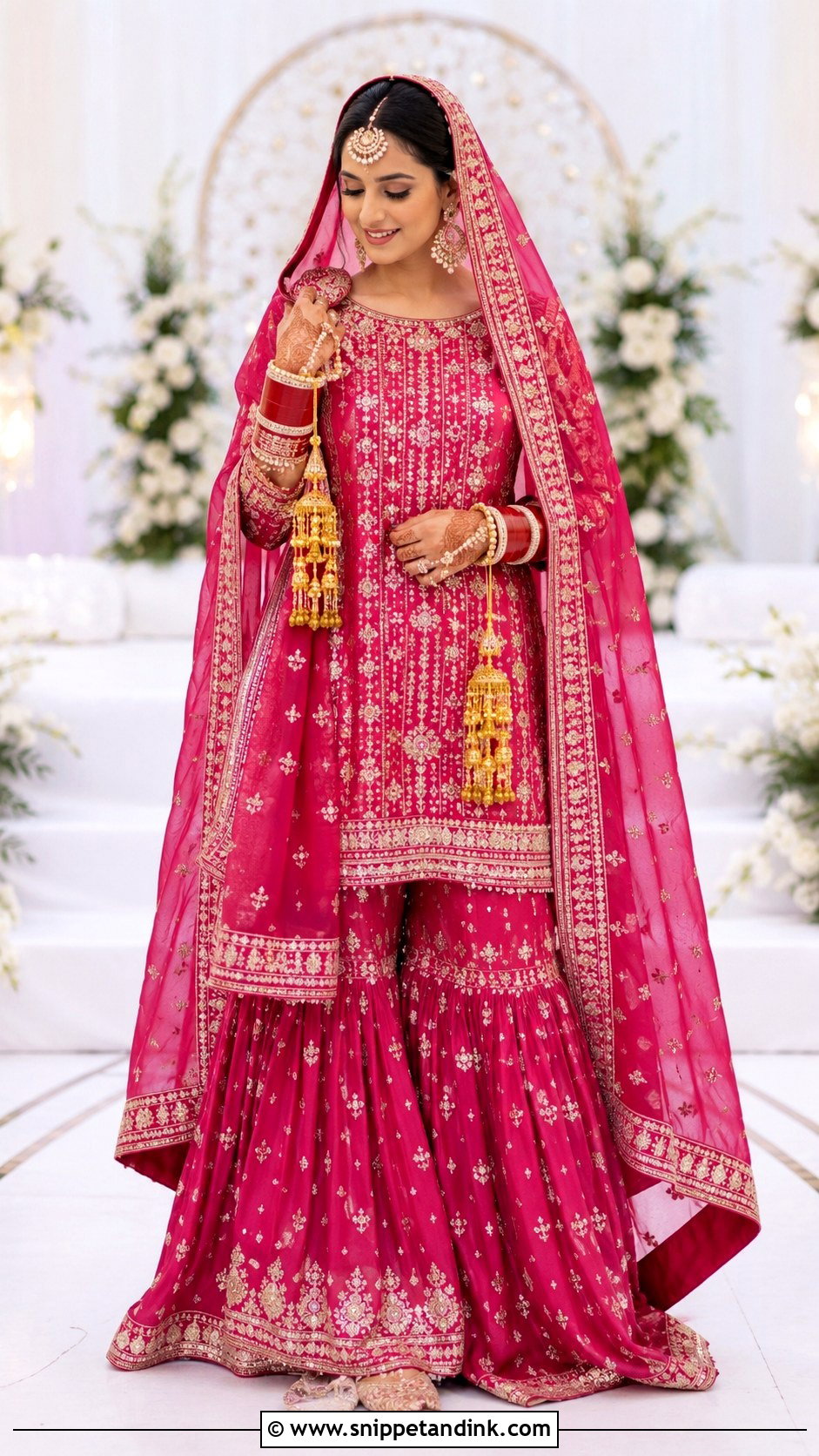
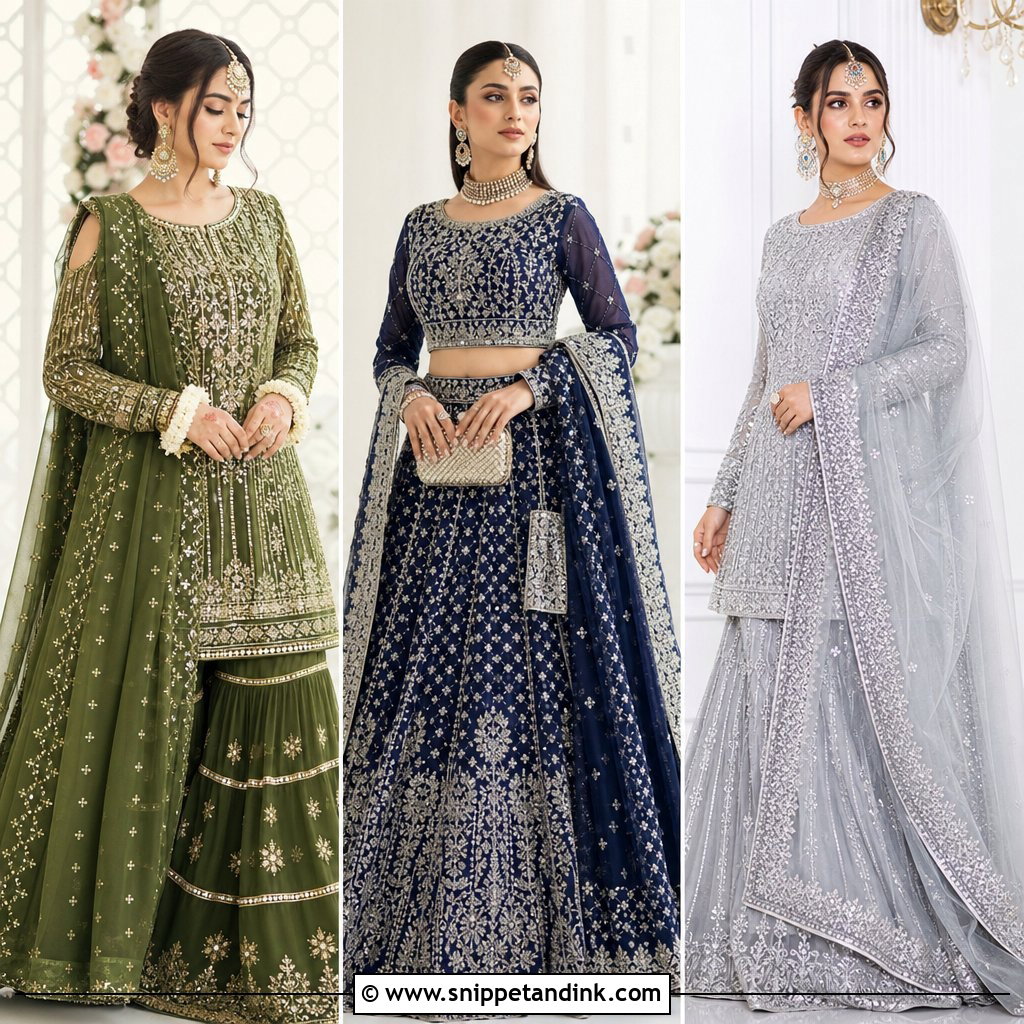
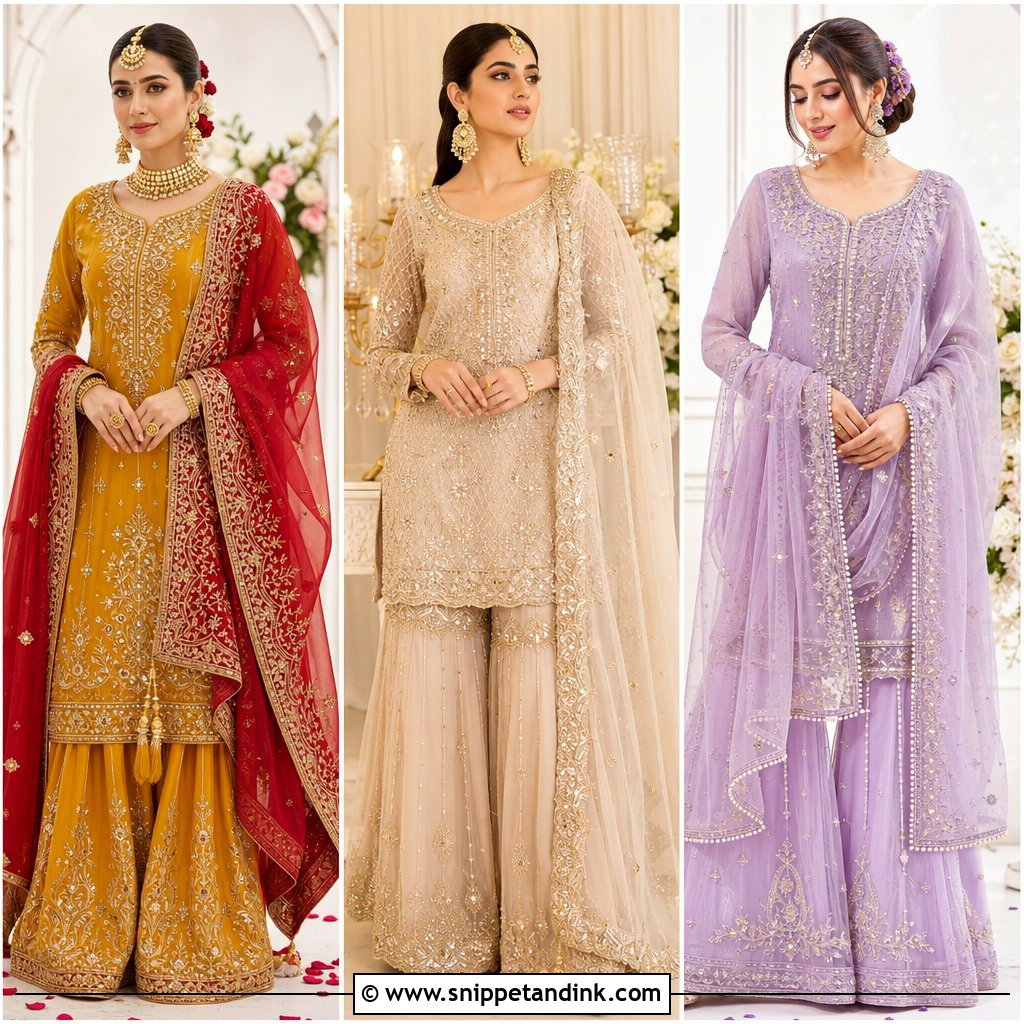
Shararas move well, but the volume needs editing. Wide legs weighed down with embroidered hems can make it hard to sit without someone rearranging the fabric around you, so aim for enough flare to feel festive and a hem you can lift with one hand. Deep red, maroon, pink, gold or emerald all work, with the embroidery concentrated at the hem, neckline and dupatta border. Add chooda, kaleere, jhumkas, a maang tikka and embellished jutti. It suits the ceremony and the more relaxed family moments around it equally well.
11. Punjabi Bride Gharara Suit
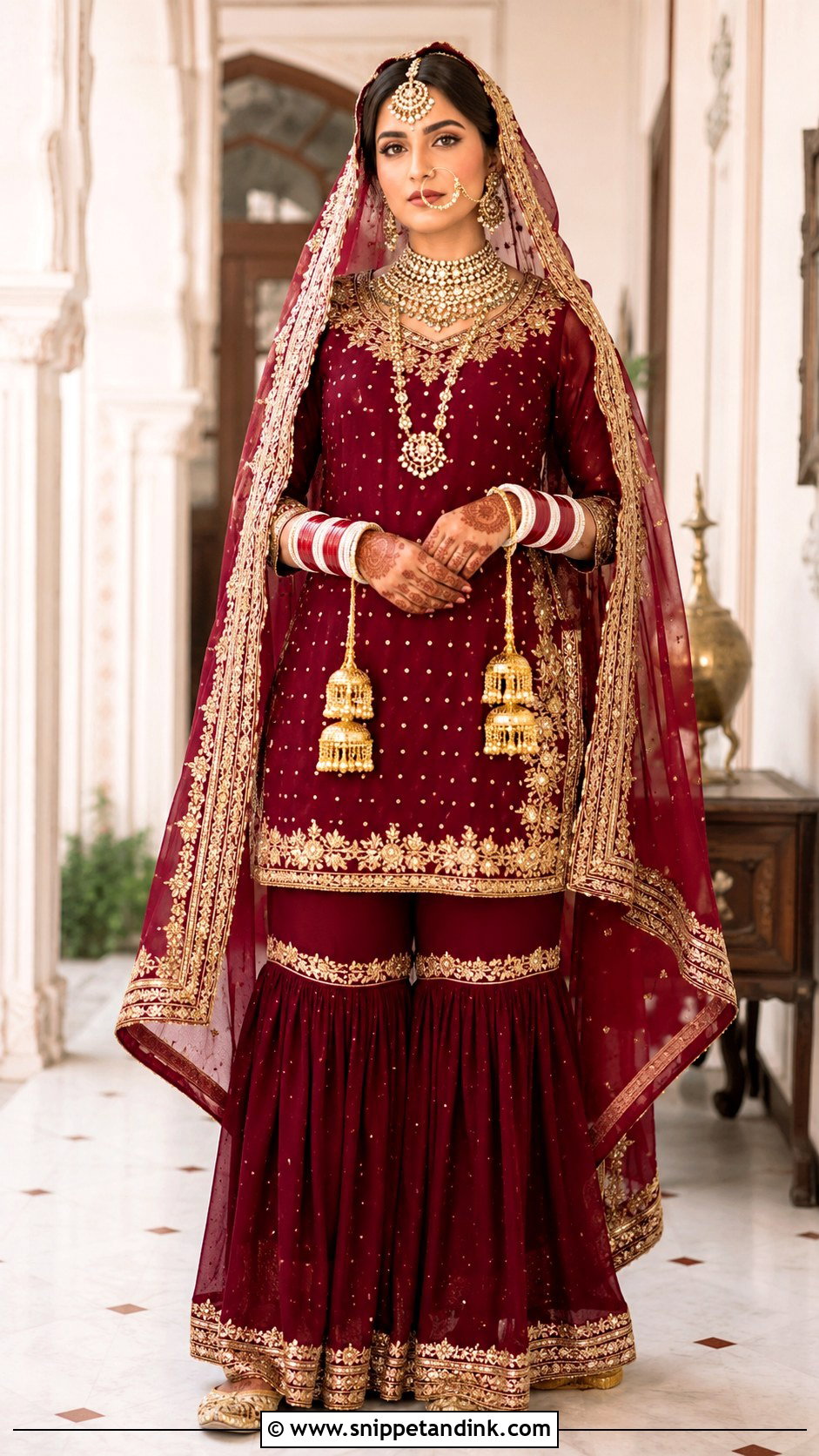
The gharara’s gathered joint at the knee is its signature, and also its fitting risk. That band, often covered in embroidery, has to sit exactly at your knee, or the flare starts too high and the whole line looks short, so stand barefoot at every fitting. Velvet, silk or brocade in maroon, deep red, dusty rose or antique gold suits the old-world shape, with a short kurti and a heavily bordered dupatta. Add chooda, kaleere, a nath, layered necklaces and jutti, and pin the dupatta firmly over the head for the Anand Karaj. Of all these looks, this one carries the most vintage character while still letting you walk freely.
12. Punjabi Bride Phulkari Dupatta
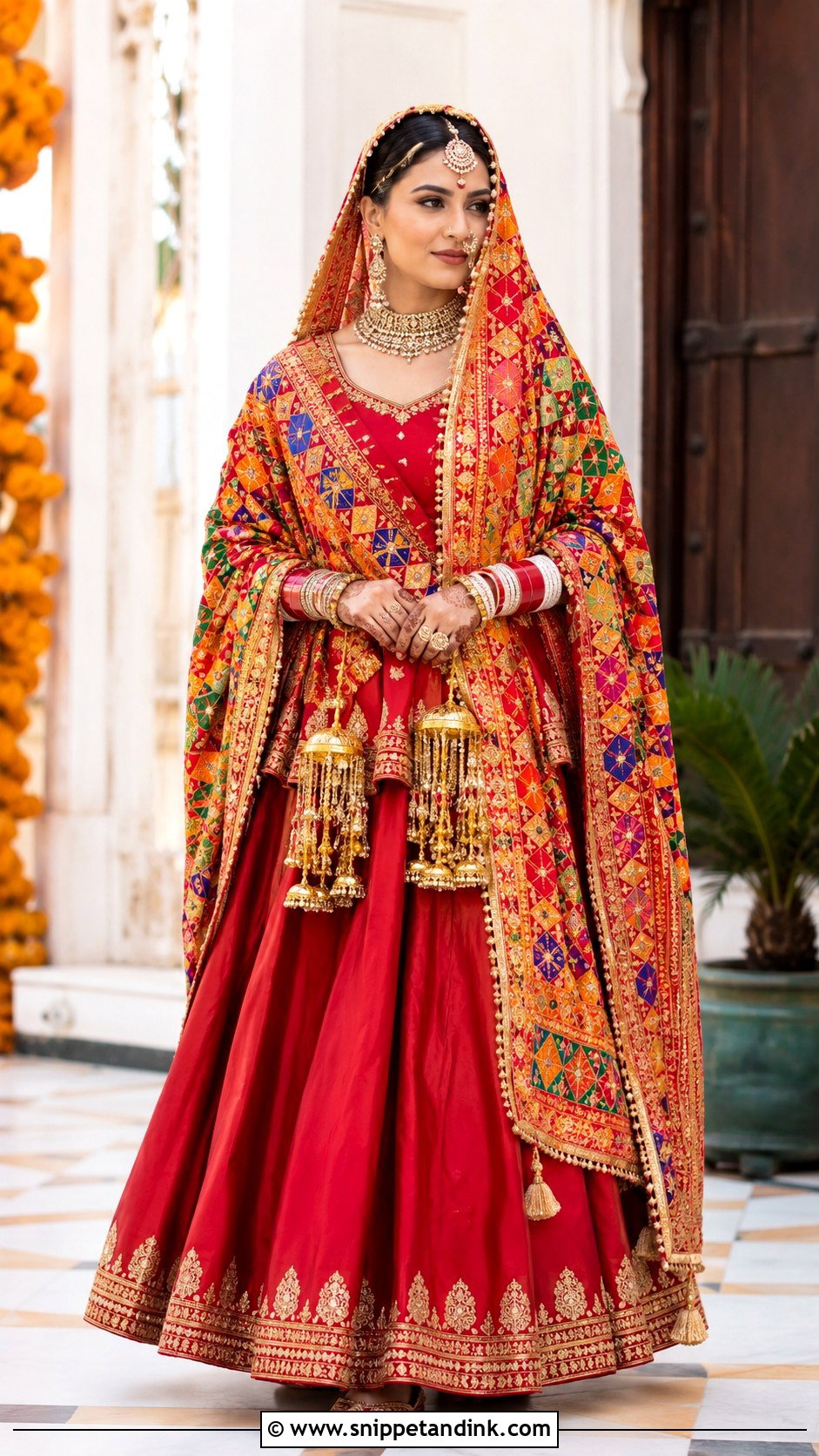
A phulkari dupatta can carry more meaning than anything else here, especially if it came from a mother’s or grandmother’s trousseau. It sits well with a red lehenga, Patiala suit, salwar kameez or sharara. Old phulkari is darned silk floss on hand-woven khaddar, so it’s heavier and stiffer than modern net, and I won’t put a vintage piece over the head with a dozen pins because the floss snags. Drape the heirloom over the shoulders and use a lighter head dupatta, or have a second, lighter phulkari made for the head. Keep the base outfit quieter so the embroidery stands out, then add chooda, kaleere, gold jewelry and jutti.
13. Punjabi Bride Double Dupatta Lehenga
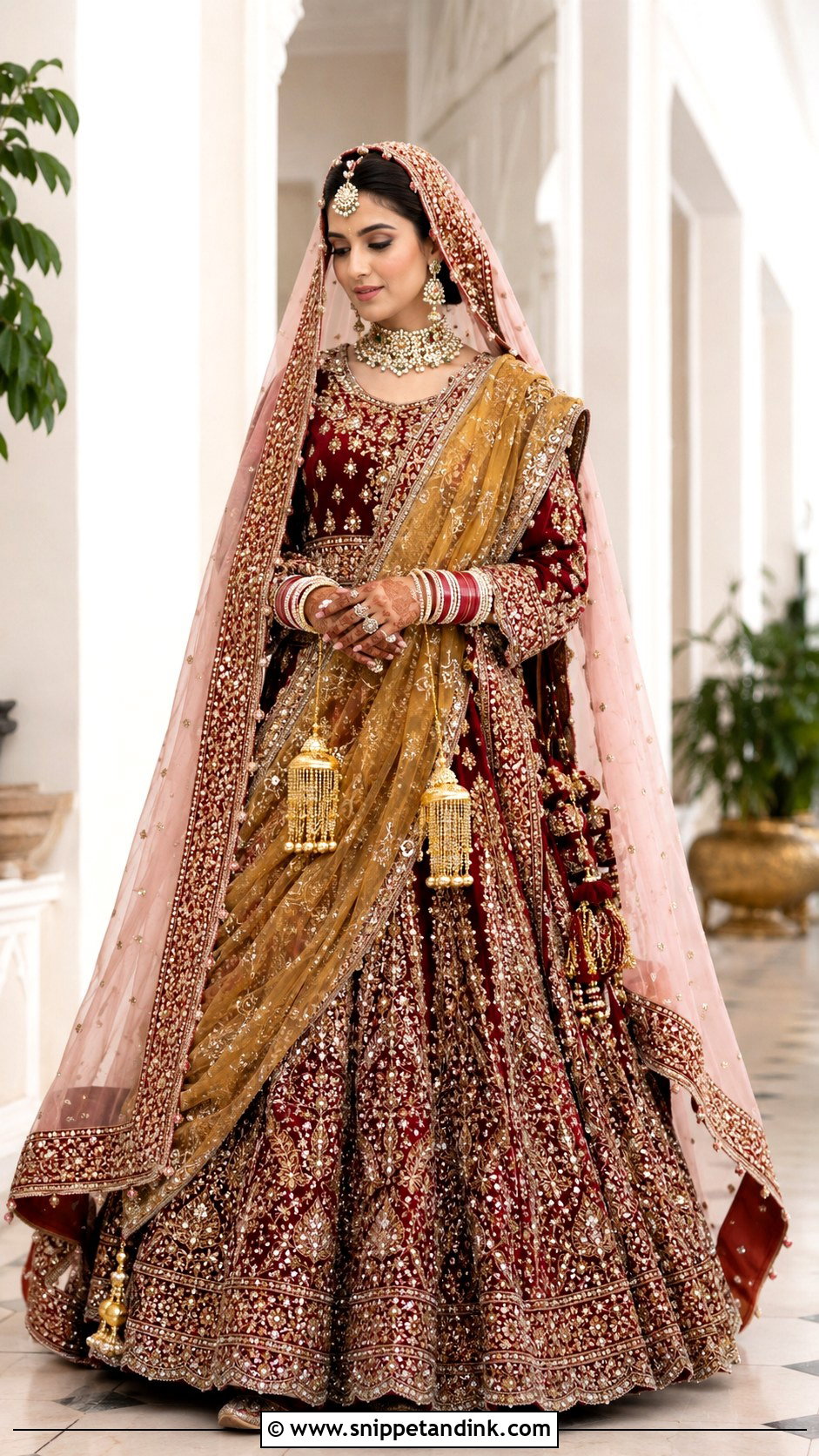
Most of my lehenga brides end up with two dupattas, for practical reasons. One is pinned neatly over the head for the ceremony; the other is draped across the shoulder or tucked at the waist, showing the blouse and skirt work that a single heavy dupatta would hide. Make the head one the lighter of the two. Hours of a weighted border pulling at the hairline is how brides end up with a headache by the doli. Red with gold, maroon with ivory and pink with champagne all pair well. Secure it with hidden U-pins and a couple of safety pins at the shoulder, then add chooda, kaleere, layered jewelry and jutti.
14. Punjabi Bride Velvet Lehenga
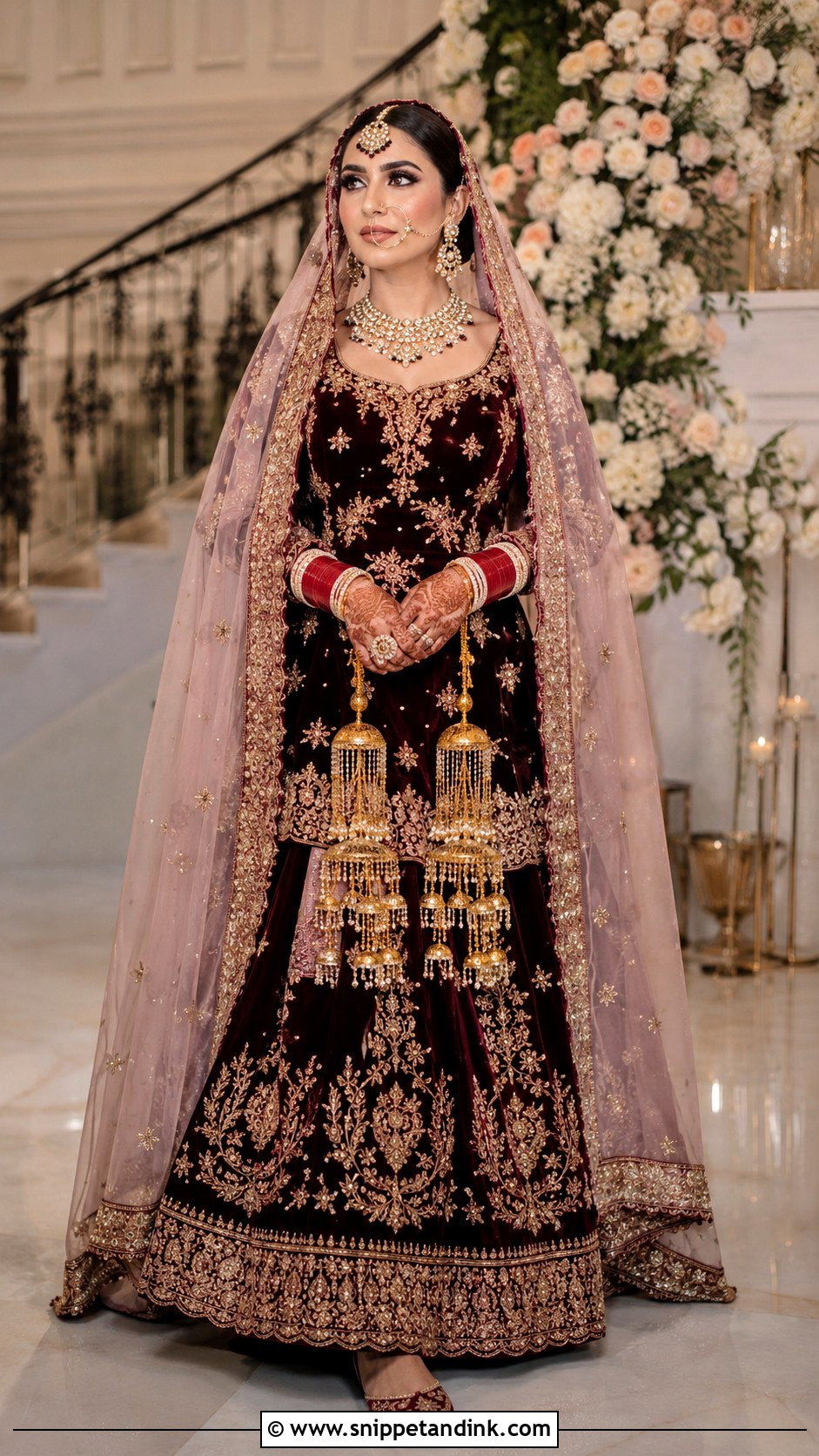
Velvet is a winter fabric, and I wouldn’t put a bride in it for a hot outdoor ceremony. In cool weather, deep red, wine, maroon, emerald and navy velvet sit richly under antique gold work. The fabric is heavy by nature, so I compensate on top: a comfortable blouse and a light net or organza head dupatta with a strong border, never velvet over the head. Polki, chooda, kaleere, a nath and velvet or gold jutti complete it. Velvet also crushes where you sit, so pack a handheld steamer for a touch-up between the ceremony and the portraits.



15. Punjabi Bride Silk Lehenga
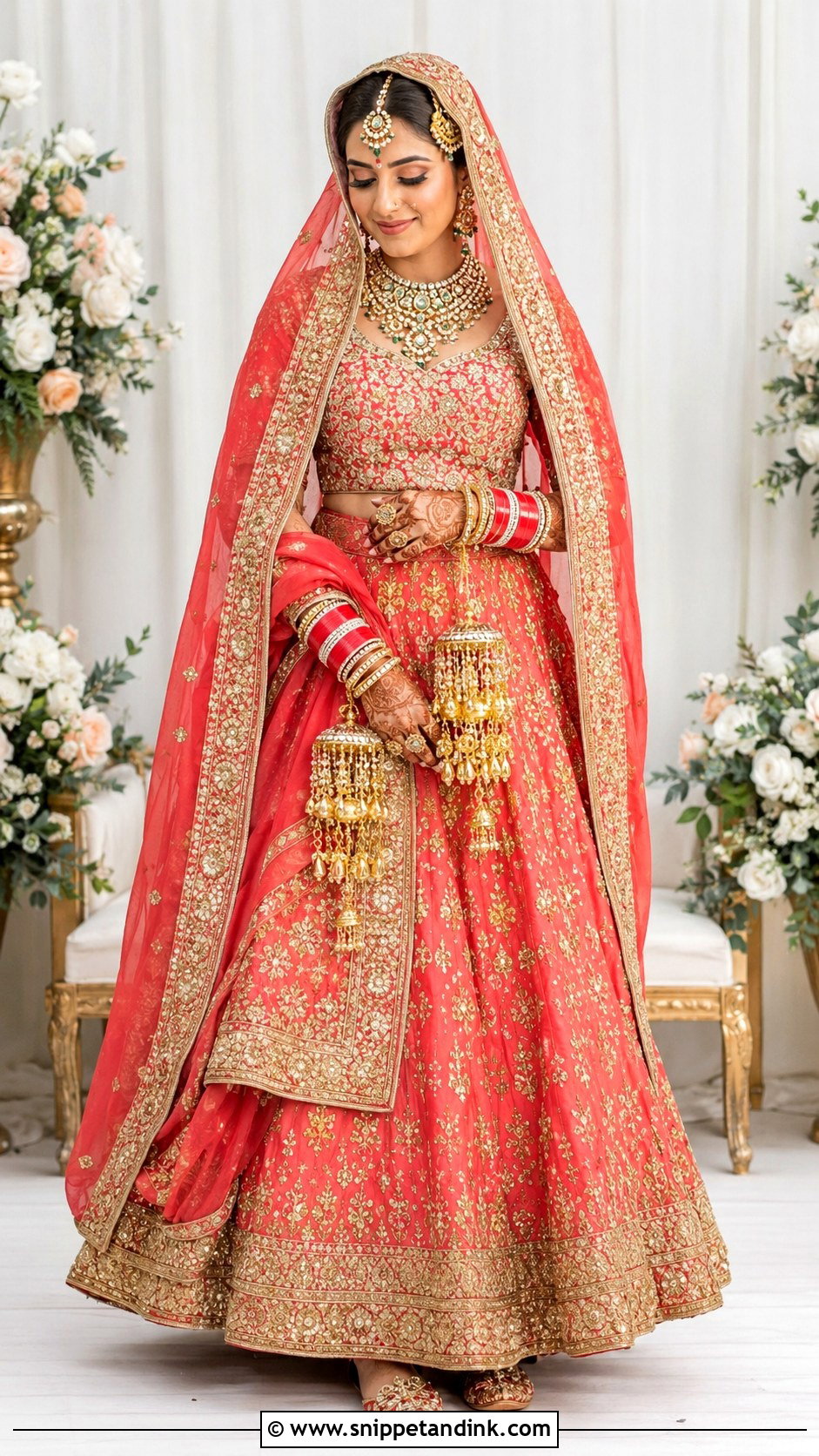
Silk is the fabric I reach for when a bride wants a classic look with less sparkle. Raw silk, Banarasi and brocade silk hold embroidery and keep a structured shape, and red, coral, magenta, maroon and gold all look rich in it. Raw silk does show water marks, so keep dry tissues rather than wet wipes near you through the ceremony and the langar. Pair the lehenga with a bordered dupatta that gives full coverage, plus chooda, kaleere, jhumkas, layered necklaces and jutti. On camera it gives a soft sheen rather than glitter.
16. Punjabi Bride Banarasi Lehenga
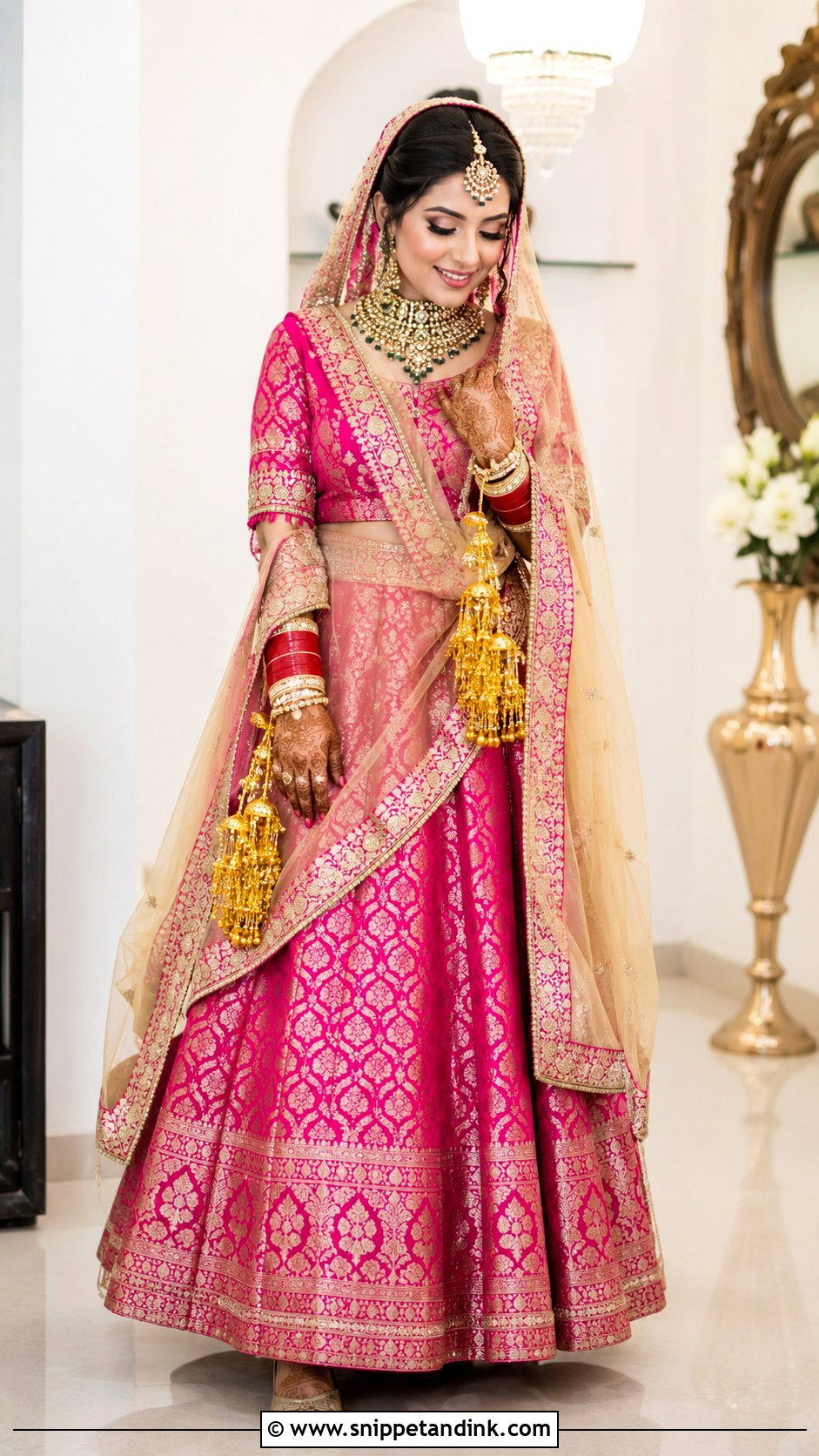
With Banarasi, the pattern is woven into the cloth rather than stitched on top, so you get heritage texture without the weight of heavy surface work. That makes it one of the easier traditional skirts to sit in for a long ceremony. Red, rani pink, maroon or gold Banarasi works for the skirt with a matching blouse and lighter dupatta, and a contrast dupatta in ivory, green or deep pink adds a twist. Add kundan, a maang tikka, chooda, kaleere and embroidered jutti. Handle the fabric before you commit, since pure zari and imitation zari feel and drape quite differently.
17. Punjabi Bride Gota Patti Lehenga
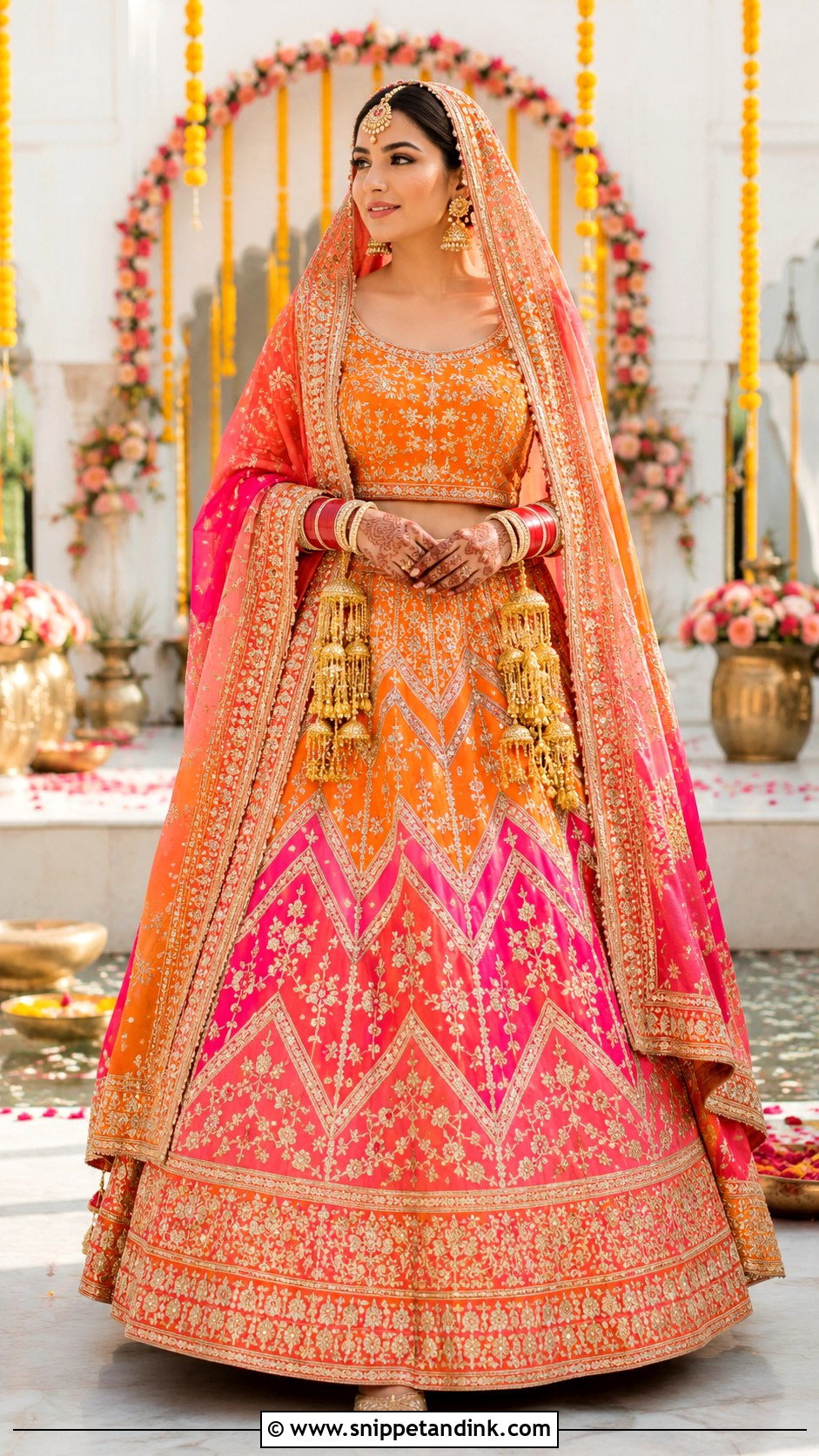
Gota patti is metallic ribbon appliqué, so it catches daylight without the weight of stones. On red, orange, pink, yellow or maroon it looks handmade and bright. Pair it with a dupatta that has a gota border, then add chooda, kaleere, jhumkas, a maang tikka and gold jutti. I size the jewelry down here, because the gota already puts plenty of shine around the face. After the wedding, wrap it in muslin and keep it out of plastic and damp cupboards, as metallic gota tarnishes.
18. Punjabi Bride Zardozi Lehenga
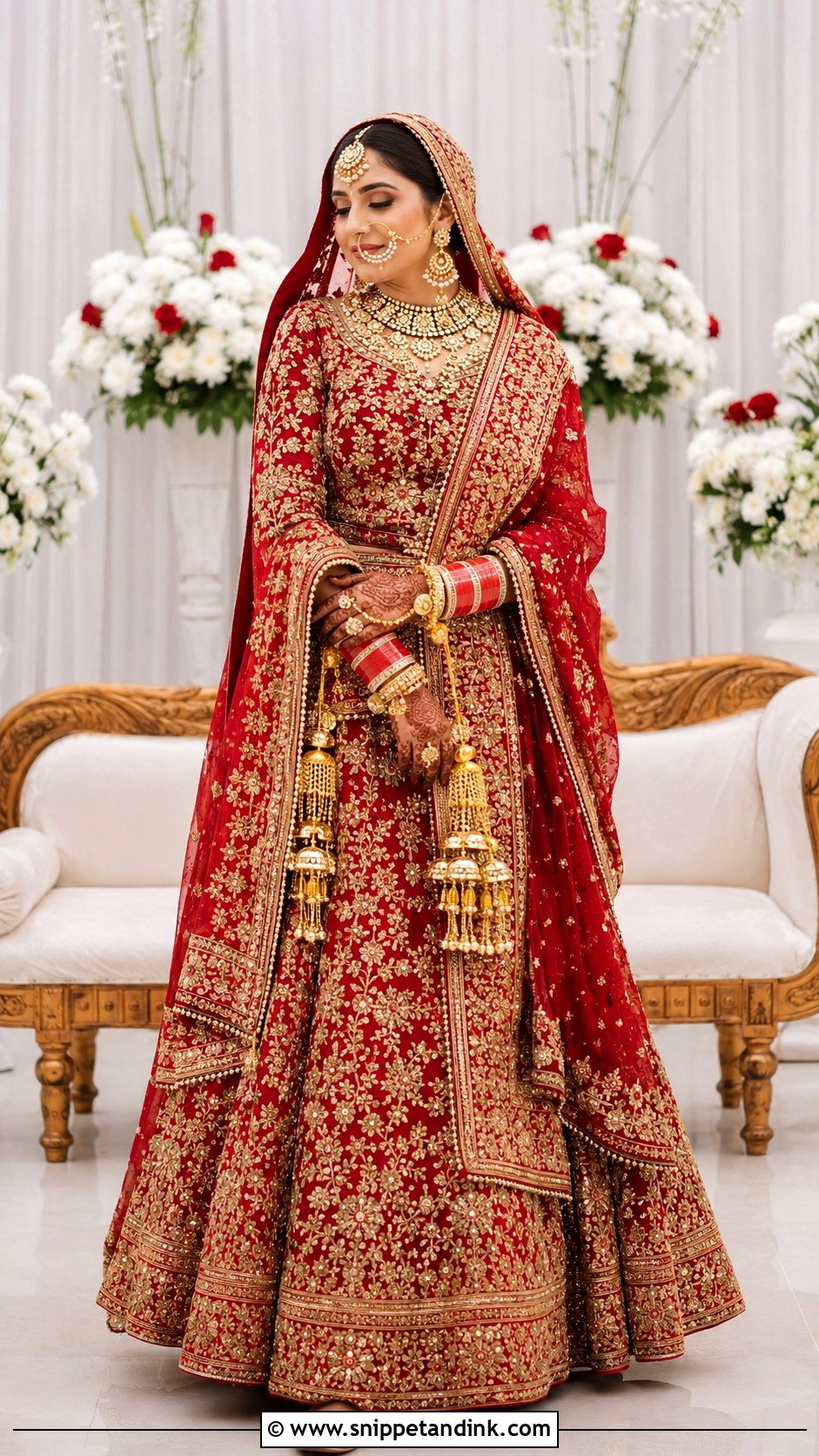
Zardozi is metal thread coiled and couched onto the fabric, and it adds real weight. At a fitting I’ll lift a heavily worked zardozi skirt and ask the bride to imagine holding it through hours of ritual, because that’s the honest test. Red, maroon, rust and deep pink suit gold zardozi best. Ask for a broad waistband, since a narrow one digs in under that load, and a dupatta that pins without pulling at the temples. Polki or kundan, a nath, chooda, kaleere and embroidered jutti finish it, with classic makeup and a tidy hairstyle so the embroidery stays the focus.
19. Punjabi Bride Mirror Work Lehenga
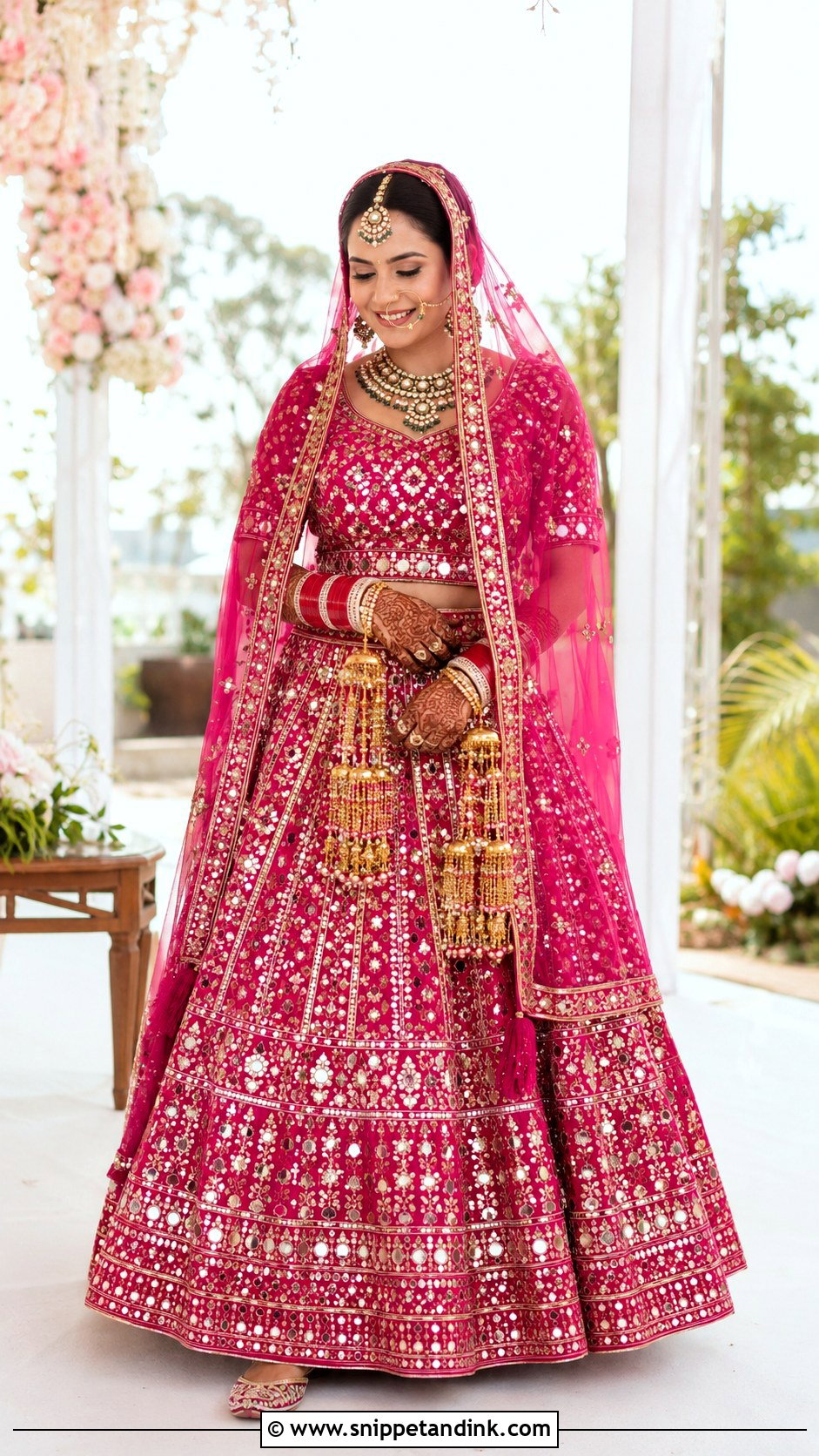
Mirror work usually belongs to mehndi and sangeet outfits, so on a bridal lehenga I keep it fine. Small mirrors set into threadwork read festive; large reflective discs bounce flash back into the lens and can leave hot spots in photos. Red, maroon, magenta or orange keeps it ceremonial. Add a head dupatta, chooda, kaleere, kundan jewelry and jutti. It shines most in daylight and open spaces, and traditional accessories are what stop it from looking like a party outfit.

20. Punjabi Bride Green Lehenga
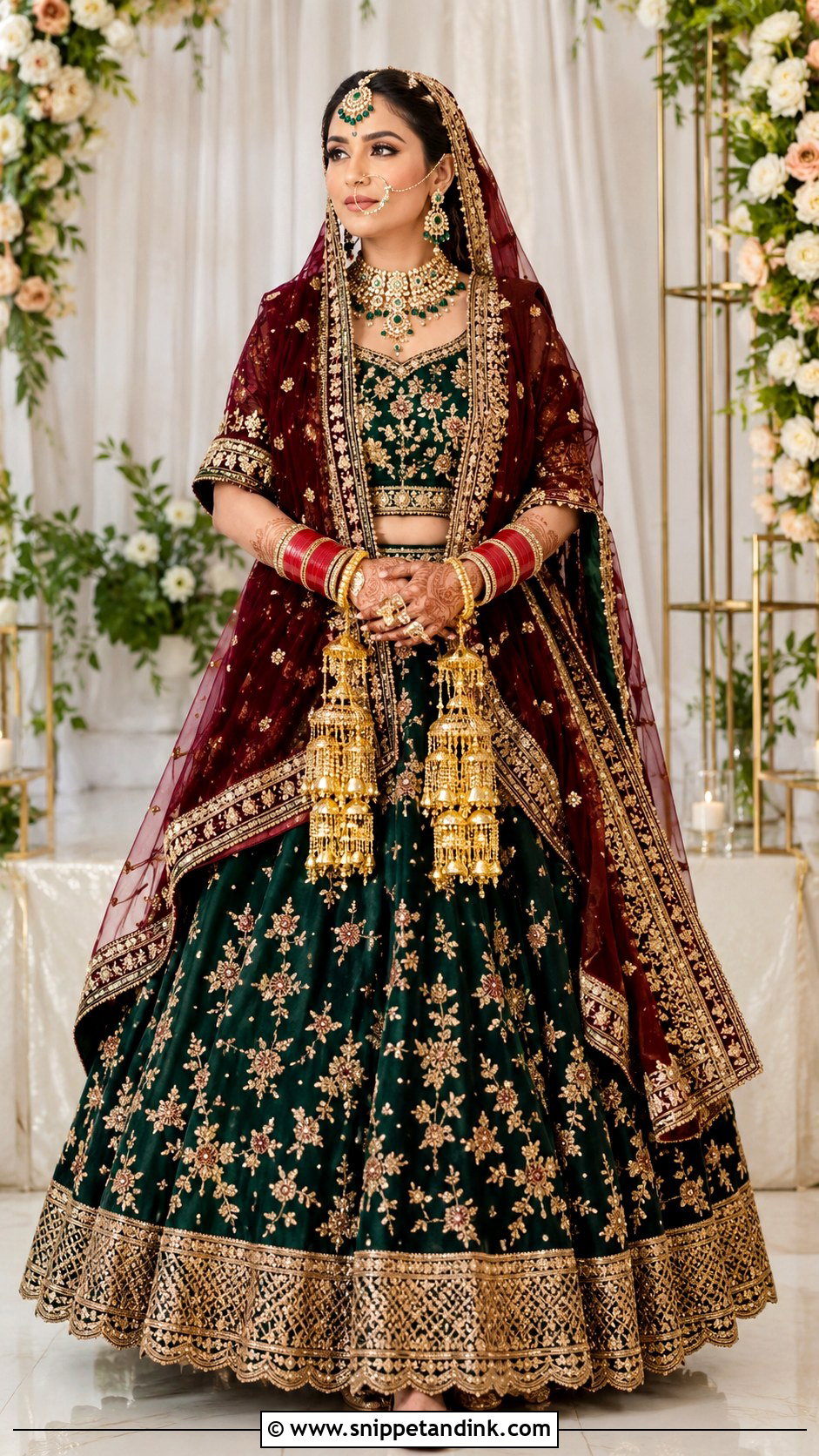
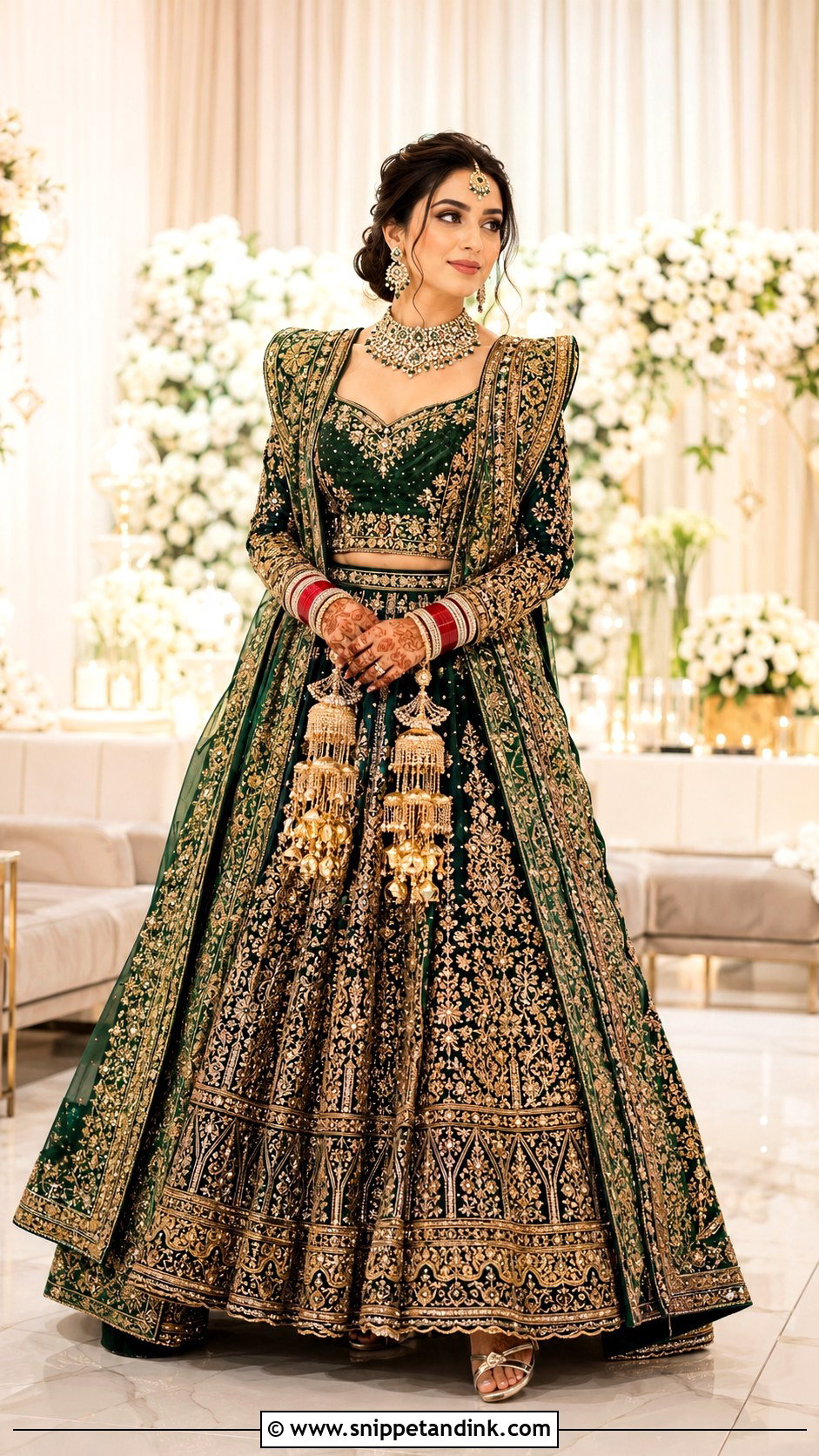
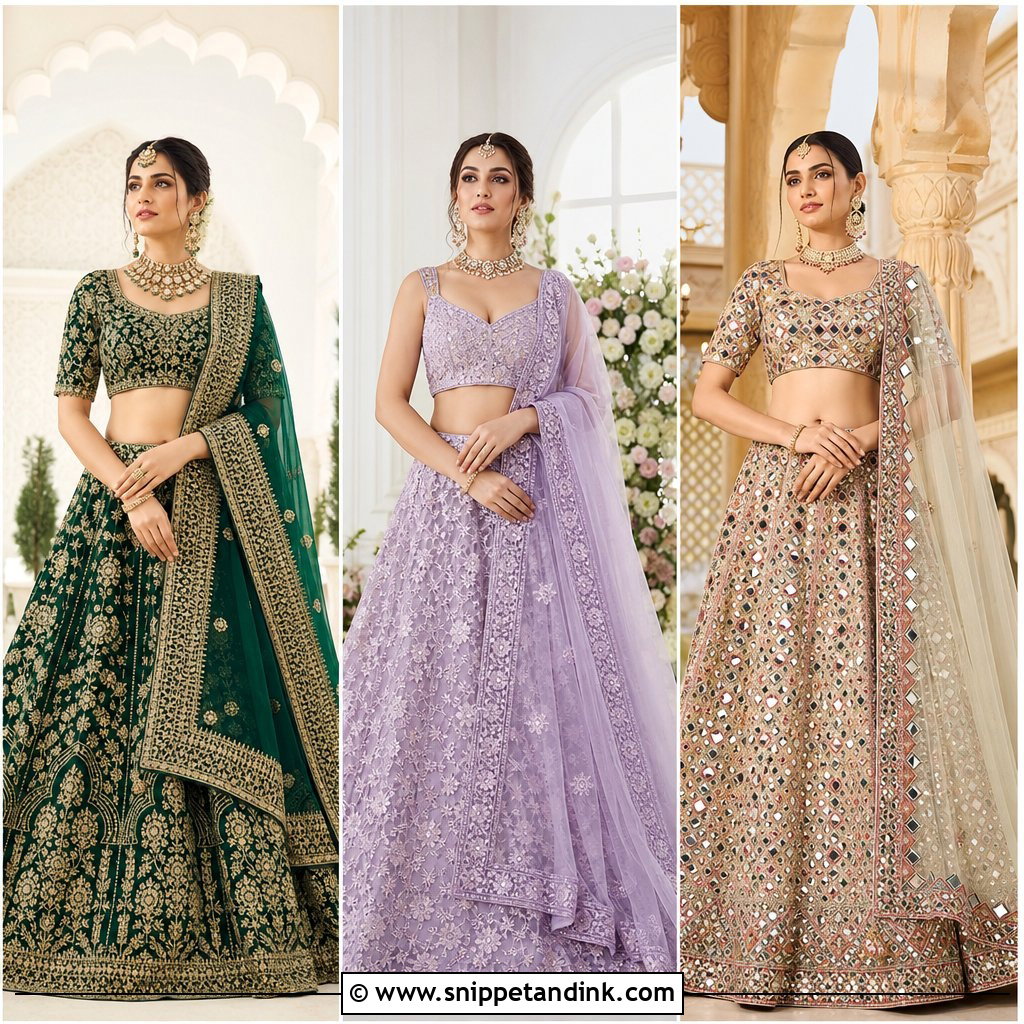
Green is the alternative I suggest most often to brides who want to step away from red without losing a traditional feel. Emerald, bottle green and olive all take gold embroidery and red bridal accessories well. A red chooda and a red or maroon dupatta bring it back into Punjabi bridal territory, while gold jewelry links the two colors. Zari, zardozi or brocade gives a ceremonial finish; add kaleere, a maang tikka, nath and gold jutti. If your family expects red, this red-on-green layering is usually the compromise everyone accepts.
21. Punjabi Bride Yellow Lehenga
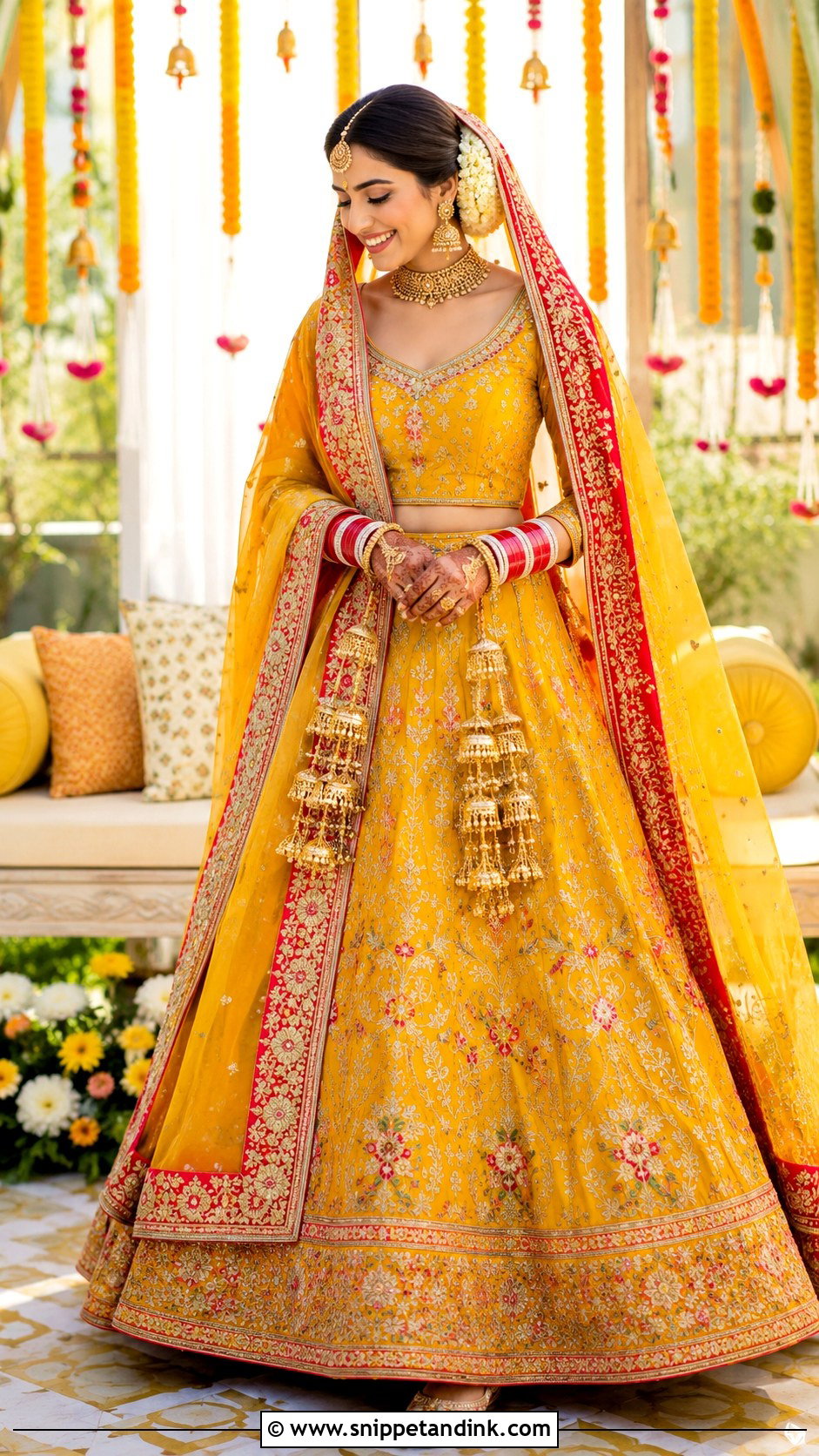
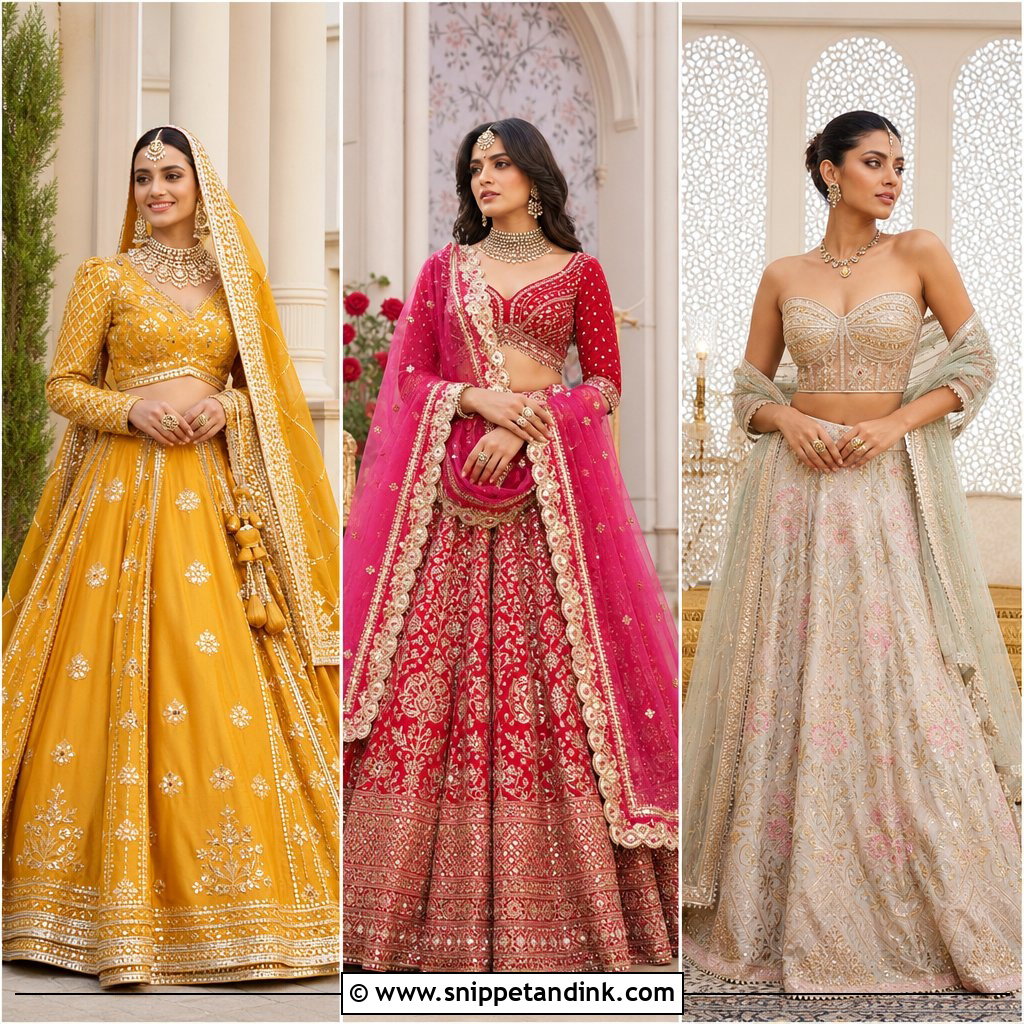
Yellow makes most Punjabi families think of the maiyan, which is exactly why a bridal yellow lehenga has to look clearly different from your pre-wedding outfit. Rich embroidery, a heavy dupatta border and statement jewelry do that work, along with chooda and kaleere. Mustard, haldi yellow, marigold and golden yellow pair with red, pink or orange accents. A red or maroon head dupatta adds tradition; a matching yellow one gives a softer monochrome look. Embroidered jutti and fresh flowers in the hair finish it. I’d keep this one for daytime ceremonies and smaller weddings.
22. Punjabi Bride Chooda Kaleere Look
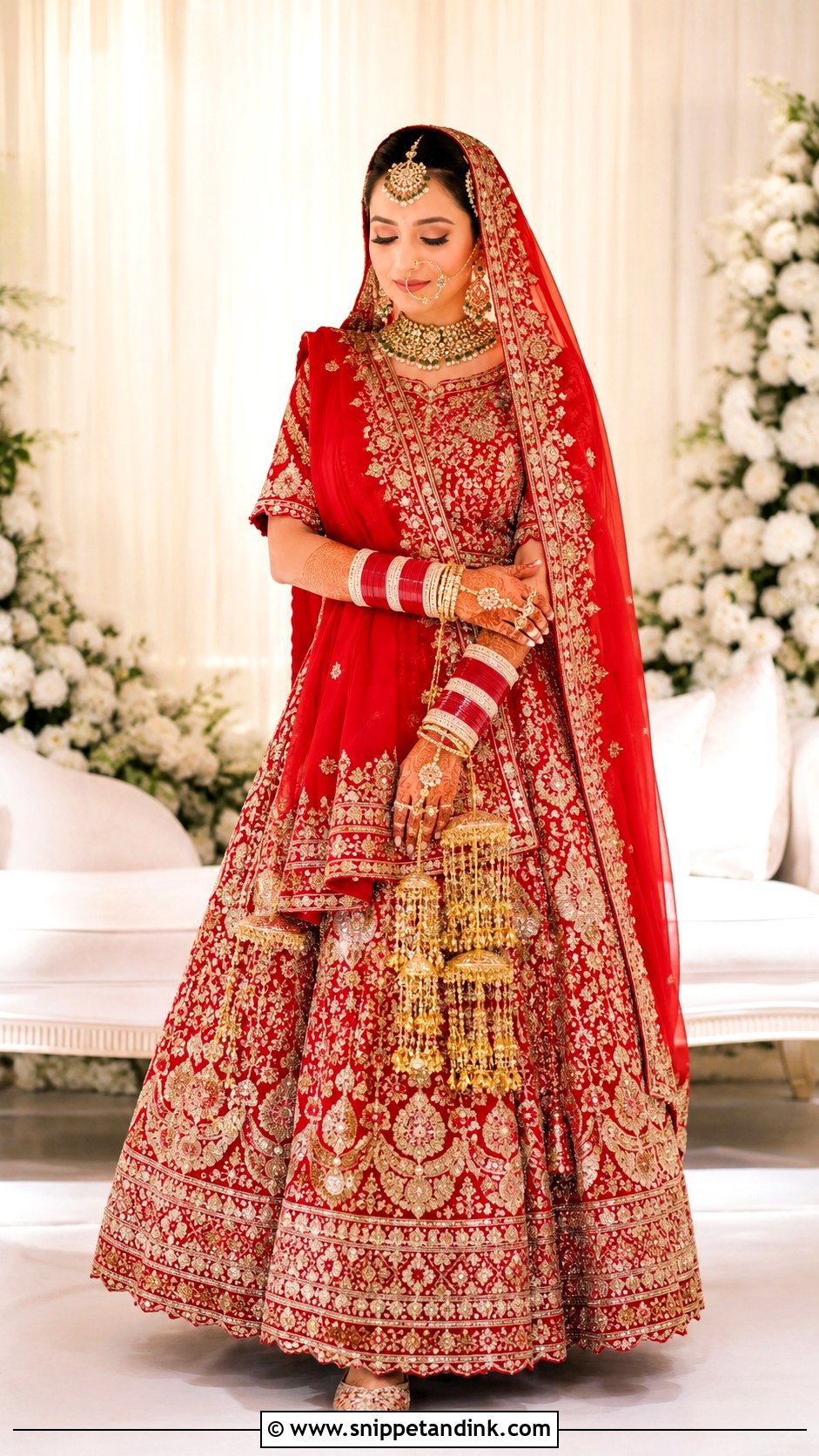
The chooda and kaleere are what most people notice first on a Punjabi bride, so here they lead the outfit. Choose a lehenga, Patiala suit, or salwar kameez with sleeves that end above the wrist, so nothing hides or snags on them. Red and ivory chooda sits well with red, maroon, pink, gold or ivory. Kaleere range from classic gold to pearl, floral or personalized; the long, heavy ones swing hard when you move your hands, so I have them tied a little shorter if the bride will be holding the palla. Add mehndi, rings and a haathphool for a fuller finish.
23. Punjabi Bride Jutti Outfit
Jutti finish the outfit, and new ones can ruin your feet by lunchtime. Leather jutti are stiff at first and rub at the heel and across the toes, so I ask brides to wear theirs around the house with socks for a week or two beforehand until they soften. Choose gold, red, maroon, ivory or personalized pairs with beads, zari, pearls or threadwork, and match them to the dupatta border or embroidery rather than just the base color. They work under a lehenga, Patiala suit, Anarkali or sharara. You’ll slip them off at the gurdwara door, so easy on and off matters more than a fiddly strap.
24. Punjabi Bride Minimal Jewelry Look
Less jewelry still reads traditional when the outfit is rich and the key pieces are there. With a red, maroon, ivory or pink lehenga carrying strong embroidery, I’d style a clean kundan necklace, small earrings, a maang tikka, chooda and simple kaleere, and drop the extra layers. Brides who get headaches from heavy earrings or a big nath are usually glad they did within the first hour. A neat dupatta drape and polished hair keep it from looking underdressed, and the core of Punjabi bridal style is all still there.




25. Punjabi Bride Royal Reception Outfit
The reception is where you can loosen the rules. Deep maroon, gold, emerald, navy or champagne lehengas all suit the evening, and you can go for heavier jewelry, a structured blouse and a bolder drape now that the head no longer has to stay covered. Velvet, silk, brocade and crystal embroidery catch evening light well. Keep the chooda and, if they’re comfortable, a few kaleere so the look still connects to the morning. If you plan to dance, try a few spins in the skirt at your fitting, and keep jutti in your bag for when the heels start to hurt.
When the Chooda Goes On and How Long It Stays
The chooda is usually put on the morning of the wedding at the chooda ceremony, traditionally by the bride’s maternal uncle, after the bangles have been washed in milk and rose petals. Families differ on whether the bride may look at it before then, so ask your elders rather than assuming. The kaleere are tied on afterward by sisters and friends, and the bride shakes them over the heads of unmarried girls, with whoever catches a falling piece said to marry next.
From a styling point of view, sizing is where things go wrong. A chooda has to pass over the widest part of your hand, so I ask brides to bring a bangle that slides on comfortably when ordering, and to order early enough that a wrong size can be exchanged. Too loose and it rattles against the kaleere and slides up your forearm in photos; too tight and getting it on that morning turns into a soapy struggle.
Wearing it after the wedding
Tradition once kept the chooda on for anywhere from forty days to a year. Many brides now wear it for a few weeks, or until a family function, and that’s a choice to settle with your own household. If you’re going back to a desk or a lab job, the ivory sections chip on keyboards and door frames, and a thin silk scarf wrapped around the wrist at night saves a lot of scratches.
After the Wedding, Before the Lehenga Goes in a Box
Heavy bridal wear lasts decades if it’s put away properly. Air the outfit for a day before storing it, since perspiration left in the blouse lining stains and weakens the fabric over time. Fold zardozi and gota pieces with muslin between the layers so the metal work doesn’t press marks into the cloth, and refold along different lines every few months. Keep everything out of plastic, which traps damp. Sweat marks and makeup on the dupatta edge should go to a specialist dry cleaner who handles embroidered Indian bridal wear, not a general high-street cleaner.
Dress for the Laavan First and the Photos Second
Whatever you wear, fit it for the Anand Karaj first. A head dupatta that stays put, coverage you don’t have to think about and jutti that don’t hurt matter more in that hour than any embroidery detail, and the photos look better when you aren’t adjusting yourself. Then build in the pieces that carry your family: the chooda, the kaleere, heirloom jewelry, perhaps a phulkari handed down. Treat these looks as a starting point and adjust the color, fabric and jewelry to your ceremony, the season and your own family’s customs.
You'll Like These Ideas:







Leave a Reply