
A Punjabi bride usually wears her outfit for twelve hours or more, through the choora ceremony, the Anand Karaj, lunch, portraits and often a reception, so I plan bridal looks around the longest stretch of the day, not the photos. Below are complete looks for the Anand Karaj, the wedding lunch and the evening, across lehengas, salwar suits, anarkalis, shararas and ghararas. For the gurdwara, coverage, easy movement and a head dupatta that stays put come first. Then think about season, embroidery weight, jewelry and footwear. The colours run from red and maroon to pink, ivory, green and gold.
Sleeves Have to Clear the Choora
The choora is put on the morning of the wedding, traditionally by the bride’s maternal uncle, and the kaleere are tied to it by friends and family. Many brides keep wearing the choora for weeks afterward. It’s a stack of red and ivory bangles that can cover a good part of the forearm, and it changes how your sleeves should be cut.
- Full-length fitted sleeves either hide the choora or bunch on top of it. Either end the sleeve at the elbow or just below, or have the cuff opened with hooks so it can sit above the stack.
- Three-quarter sleeves that stop right on top of the choora rub and ride up. Aim for the sleeve to end a little above where the stack begins.
- Heavy embroidered cuffs and long kaleere tangle. If your kaleere are large, keep the cuff plain.
- Bring a set of bangles in roughly your choora size to every blouse fitting so the tailor can check the sleeve with weight on the arm.
This is also why I rarely recommend bell or flared sleeves for the ceremony outfit. They swing into the kaleere and pull at them every time you move.
1. Red Punjabi Bridal Lehenga With Gold Zardozi
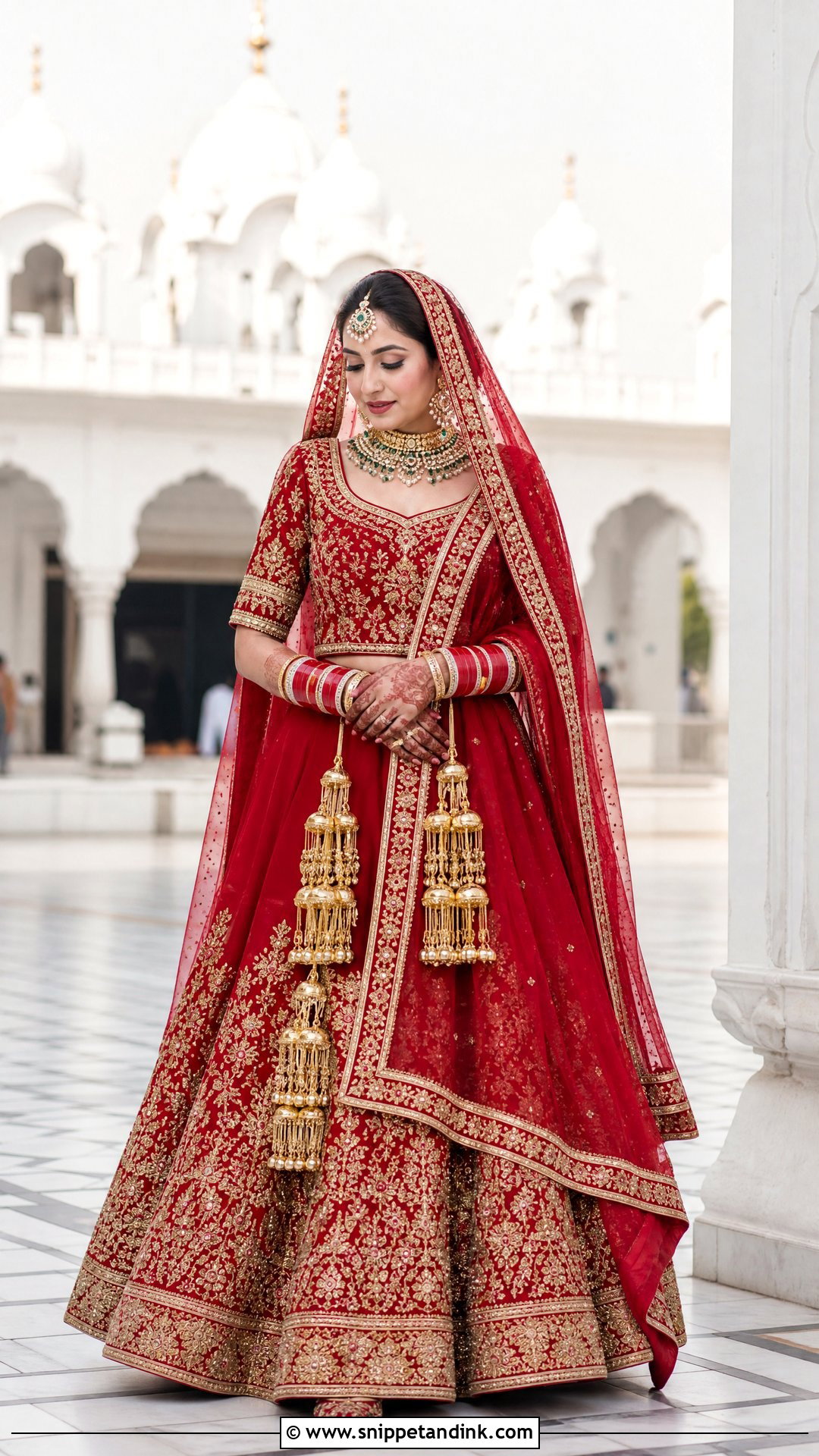
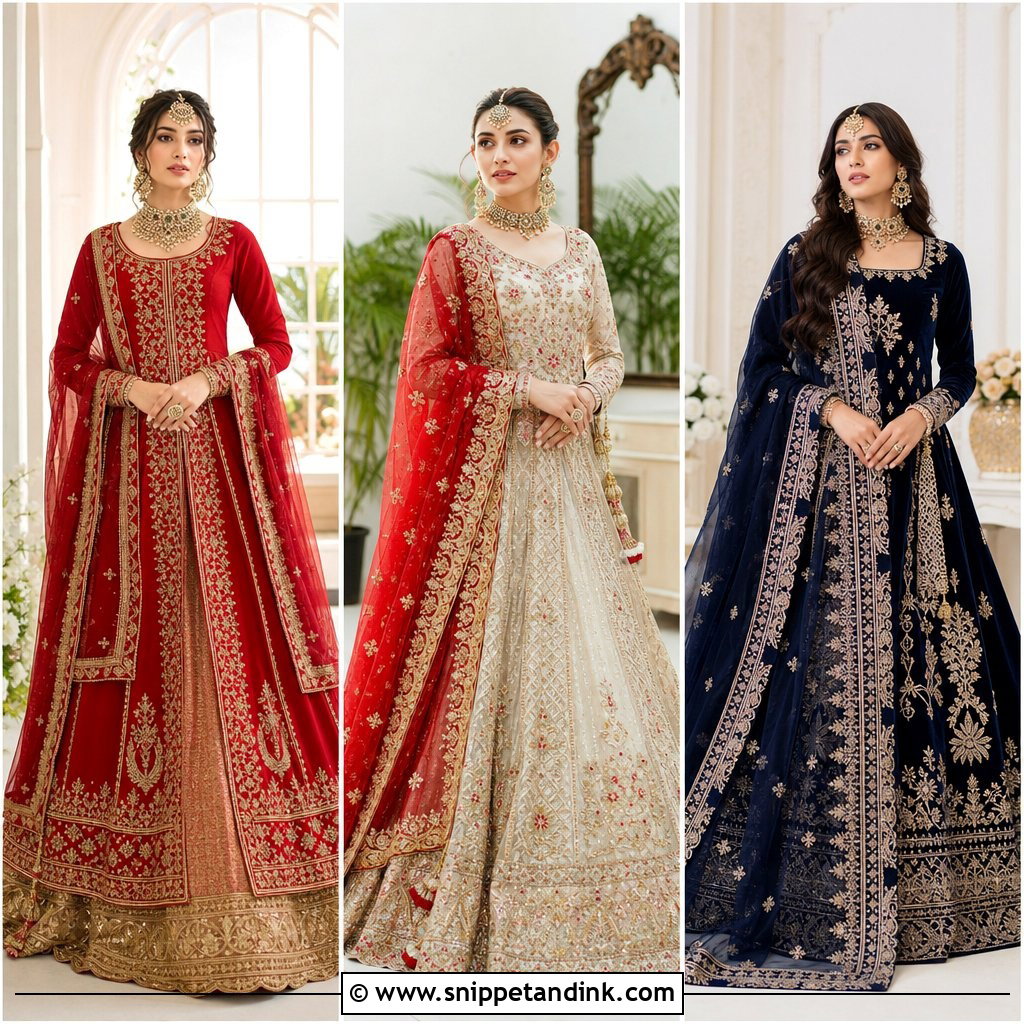
Gold zardozi on red is the look most Punjabi families picture, and it still earns its place. My advice is to choose balanced embroidery rather than solid work from waist to hem; dense zardozi is metal wire and gets very heavy. A high-waisted skirt sits more comfortably when you’re seated on the floor. Pair it with a modest elbow-sleeve blouse, a red head dupatta and a lighter second drape across one shoulder. Gold choker, earrings, maang tikka, choora and kaleere complete it. Juttis give better footing than narrow heels. A low bun gives the dupatta pins something solid to grip.
2. Maroon Punjabi Bridal Salwar Suit
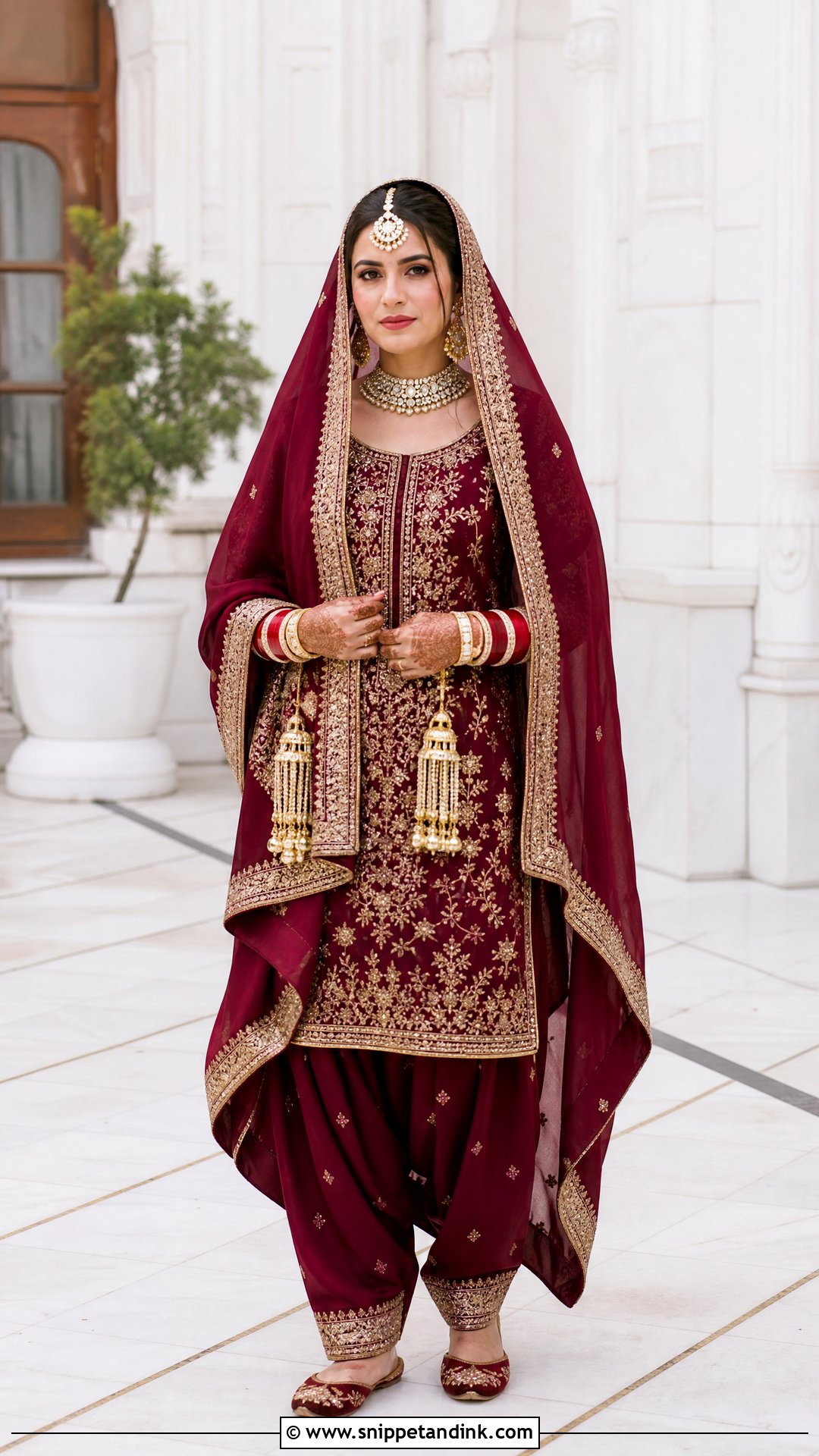
Some brides never feel like themselves in a lehenga, and a rich maroon salwar suit with antique-gold embroidery is my answer for them. A straight or gently flared kameez gives structure; a roomy salwar makes sitting and walking easy. Put the embroidery at the neckline, sleeves, hem and dupatta border. Pin the long dupatta over the head and at both shoulders. Kundan jewelry, a centred tikka, choora, kaleere and maroon velvet juttis finish it, with a braid or low bun underneath.
3. Rani Pink Punjabi Bridal Lehenga
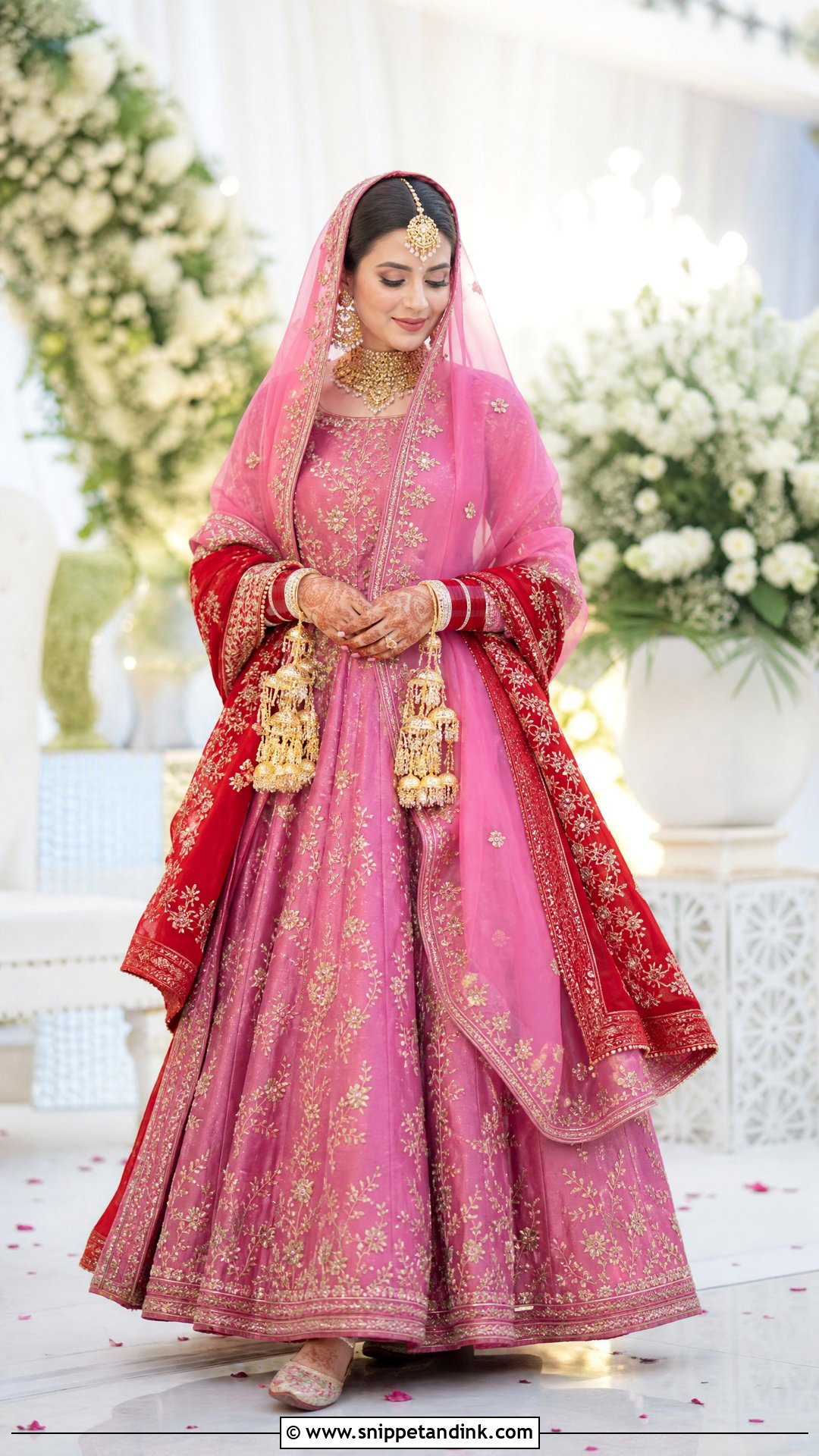
Rani pink is loud in the best way. In silk or raw silk with gold threadwork and a defined border, it feels as grand as red. A longer blouse with short or elbow sleeves covers comfortably. Add a matching pink head dupatta and, if you like layered colour, a red or orange second drape. Kundan with pink enamel, choora and statement kaleere suit it, with embroidered pink juttis under the skirt. Fresh flowers in the bun look pretty but must sit below the dupatta line, or the pins and the flowers end up fighting.
4. Deep Red Punjabi Bridal Anarkali Suit
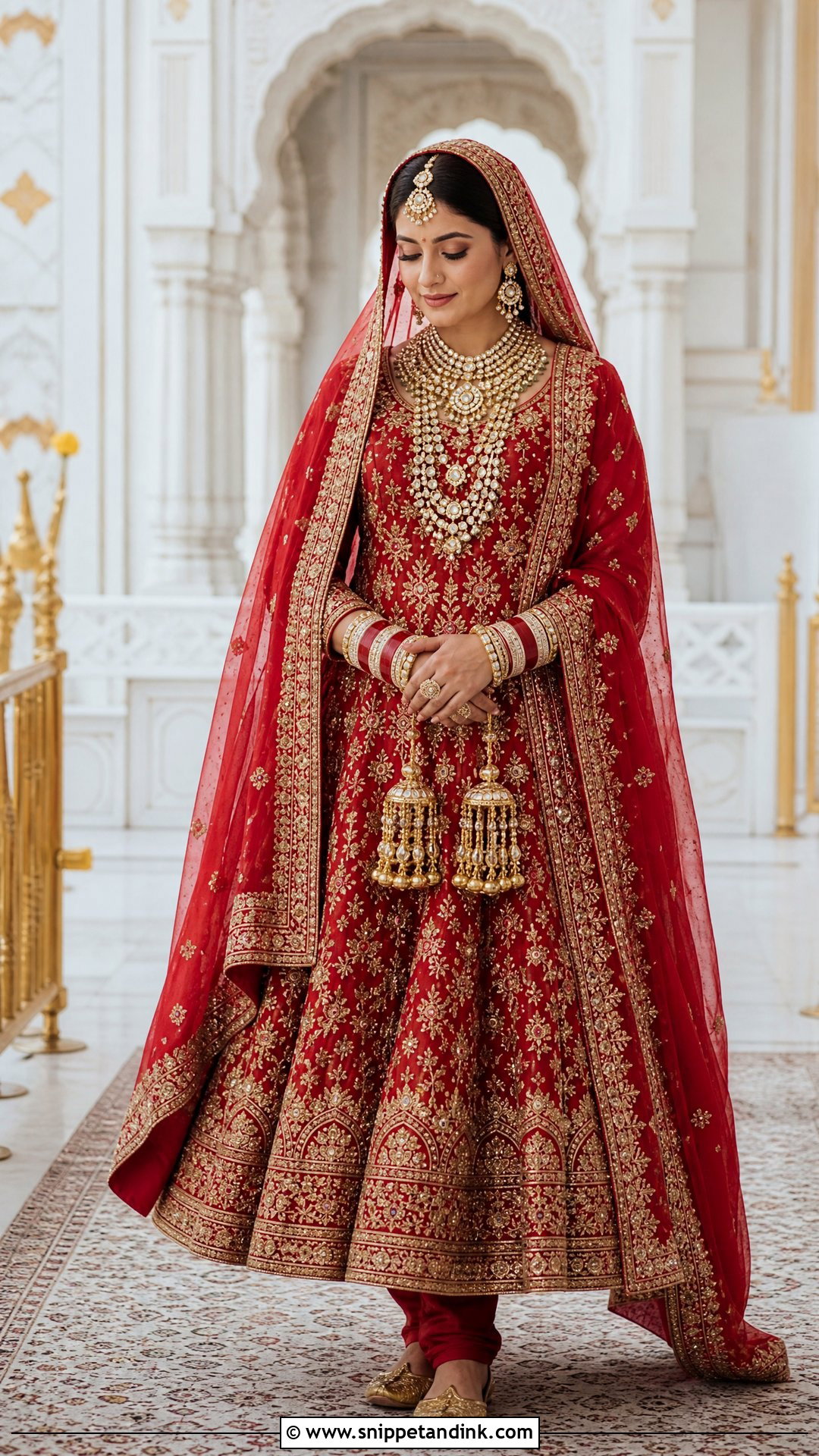
An anarkali moves like a gown but sits like separates, which is why I suggest it to brides worried about a heavy skirt. Floor or ankle length, a fitted bodice, a modest neckline and a full flare. Embroidery running down the panels lengthens the body. Slim churidar pants and cushioned gold juttis go underneath. The flare is the issue on the gurdwara floor: practise gathering it to one side as you sit. Layered kundan, earrings, tikka, choora and kaleere, kept in proportion to the skirt’s volume.
5. Ivory Punjabi Bridal Lehenga With Red Dupatta
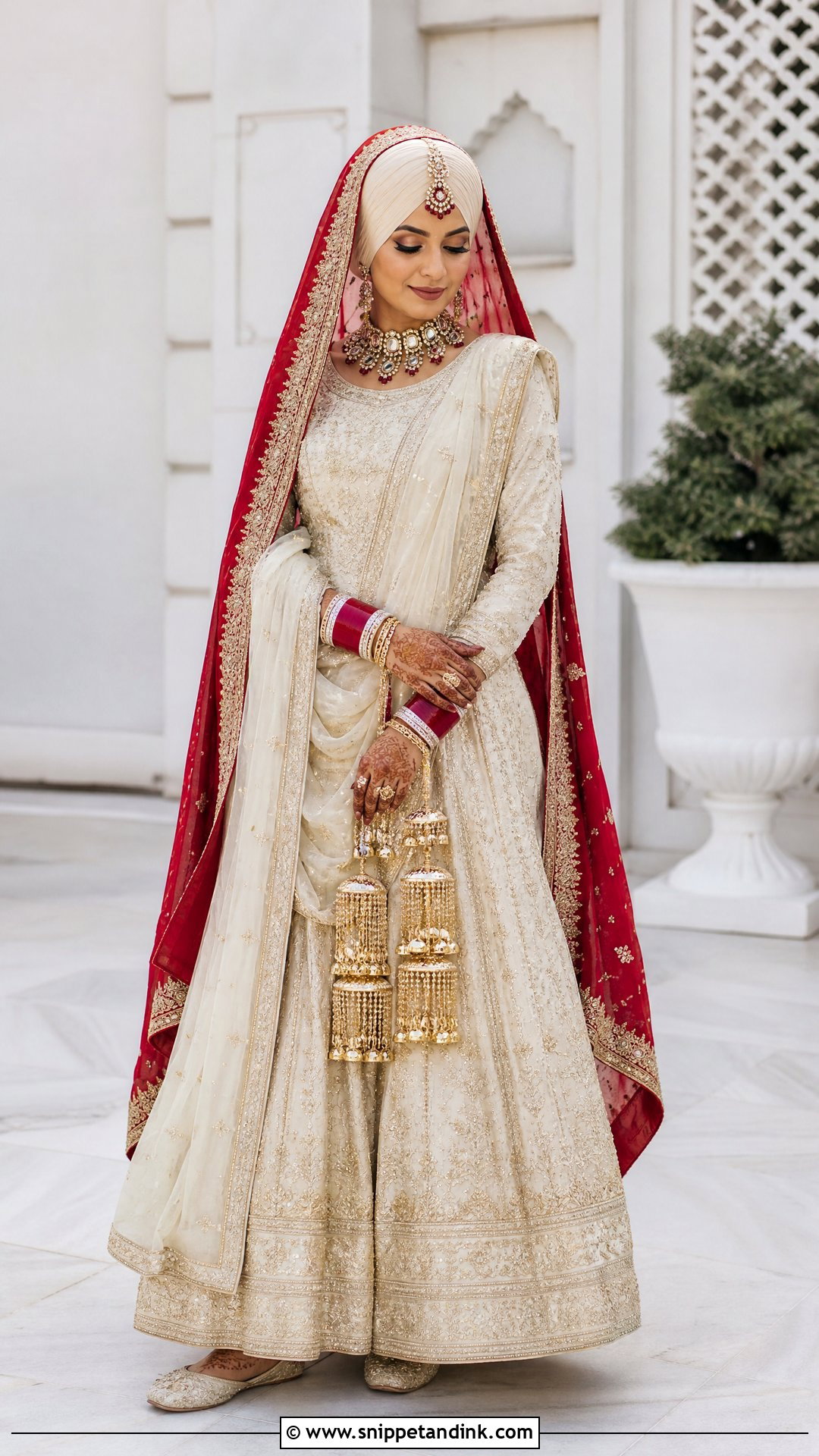
Ivory with a red dupatta keeps red where it matters most, around the face, while the lehenga stays light. Fine gold embroidery and pearls on the ivory, a modest matching blouse and the deep red dupatta over the head, with an optional second ivory dupatta across the torso. Kundan with red stones, red choora, delicate kaleere and ivory juttis with gold thread. Before committing, talk to your family and your gurdwara about the ivory base; expectations differ, and it’s better to know early.
6. Peach Punjabi Bridal Lehenga With Pearl Embroidery
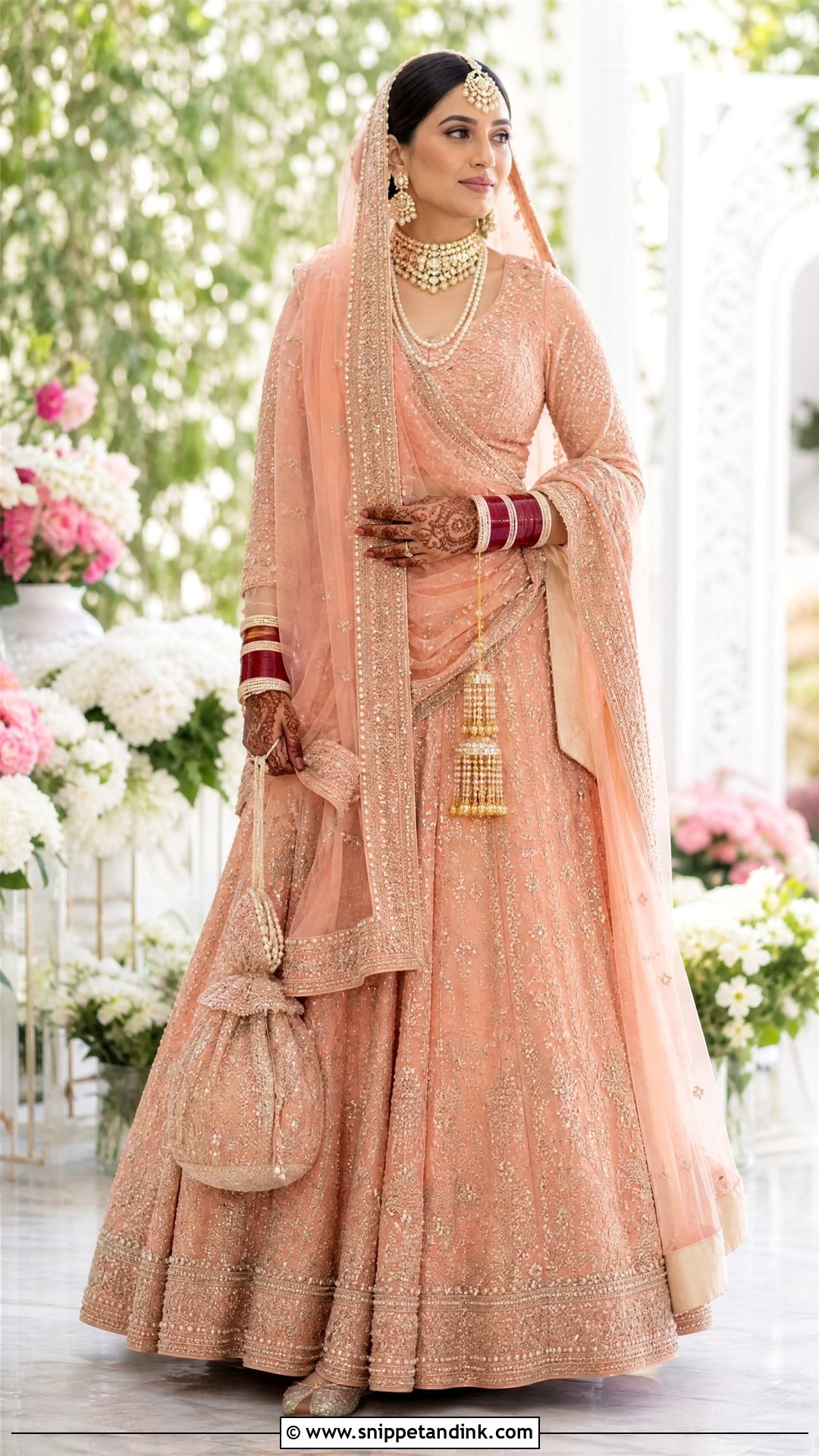
Peach suits a daytime wedding, but pale colours need enough embellishment to read as bridal. Pearl, sequin and pale-gold embroidery on raw silk or organza does that. The blouse needs real support and comfortable sleeves. A peach head dupatta with a finished border, plus a lighter net drape across one shoulder, and pearl-and-kundan jewelry keep the palette together; red or ivory choora gives a traditional contrast. Organza creases where you sit, so steam it on the morning, not the night before.
7. Coral Punjabi Bridal Sharara Suit
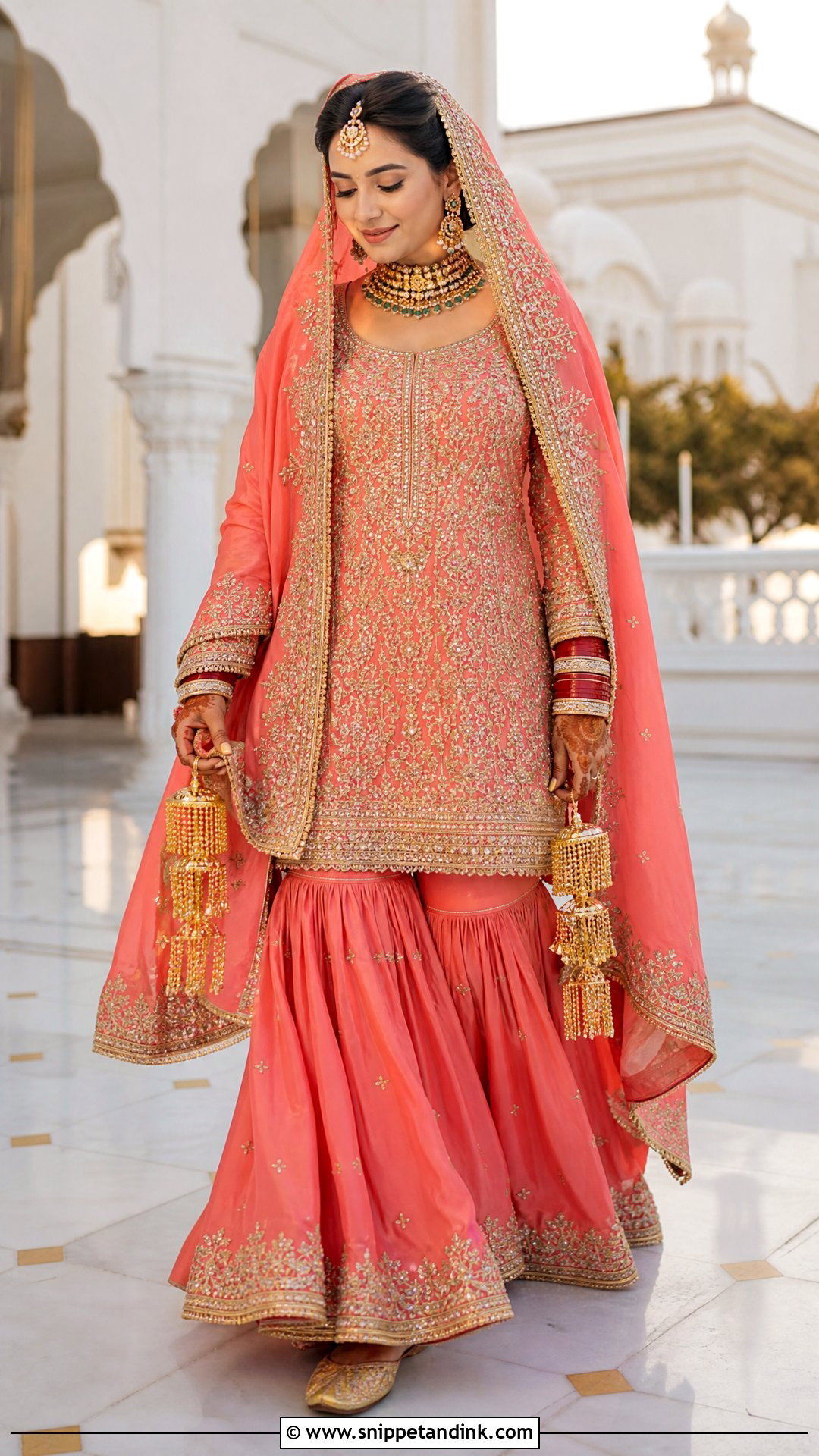
A sharara gives you a skirt’s swing with two legs to walk on. Pair a long, modest kameez with a wide sharara decorated at the knees and hem with gota, thread or small mirrors. Keep the kameez well fitted, because the volume is already below. Coral dupatta with a heavy border, pinned at the crown and shoulders. Gold jhumkas, a kundan choker, tikka, choora, kaleere and embroidered juttis. Mirror work catches on the kaleere, so check where they hang when your arms are at rest.
8. Magenta Punjabi Bridal Gharara
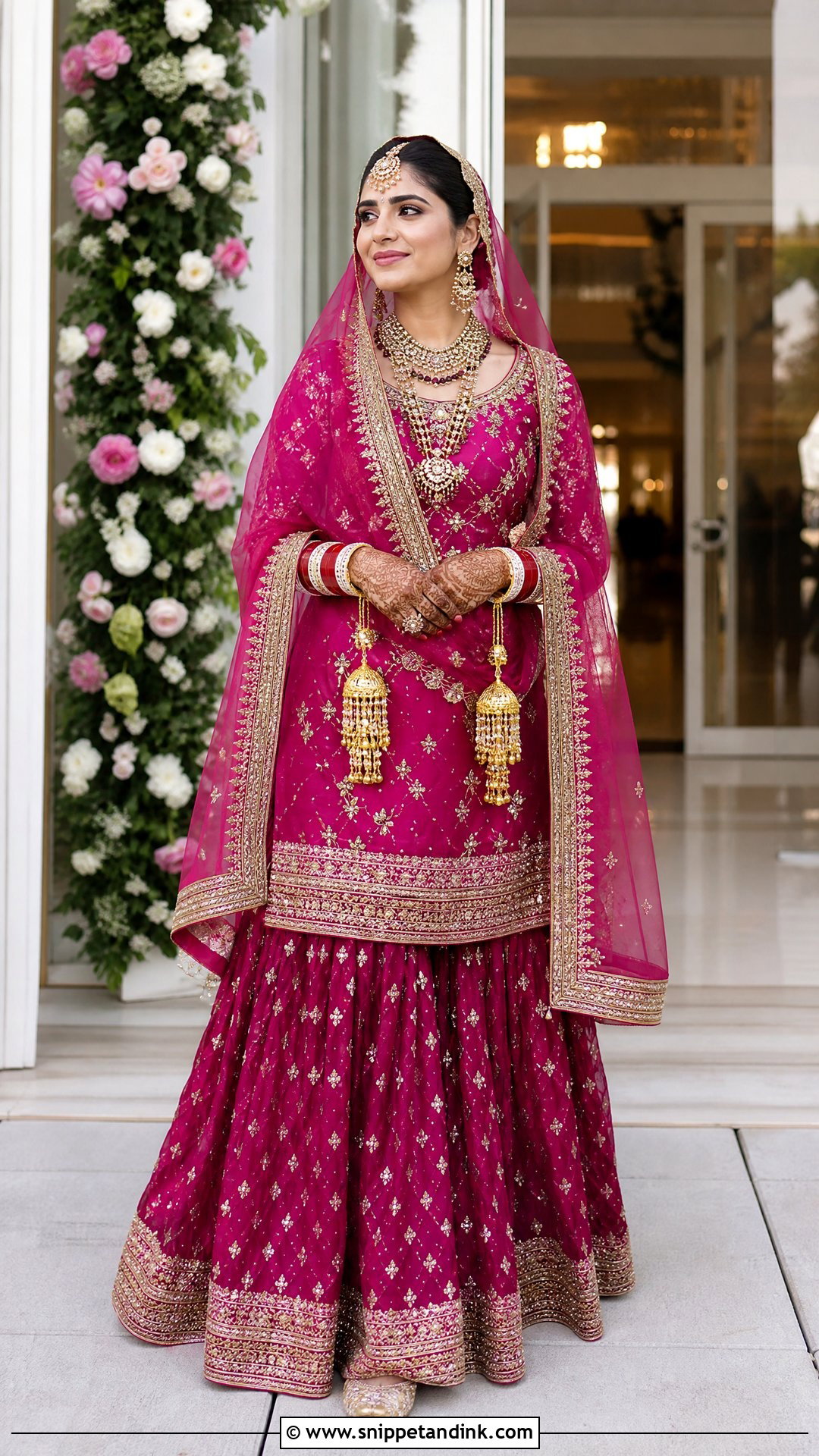
Magenta has instant presence, and the gharara’s fitted-then-flared shape is distinctive. A knee-length kameez with elbow sleeves and gold embroidery at neckline and hem, over a gharara that flares clearly from the knee but still lets you walk. If the outfit is heavily worked, choose a lighter head dupatta to take pressure off the hairstyle. Antique-gold jewelry, a traditional tikka, choora, kaleere and pointed juttis. A centre-parted low bun suits the shape.
9. Orange Punjabi Bridal Patiala Suit
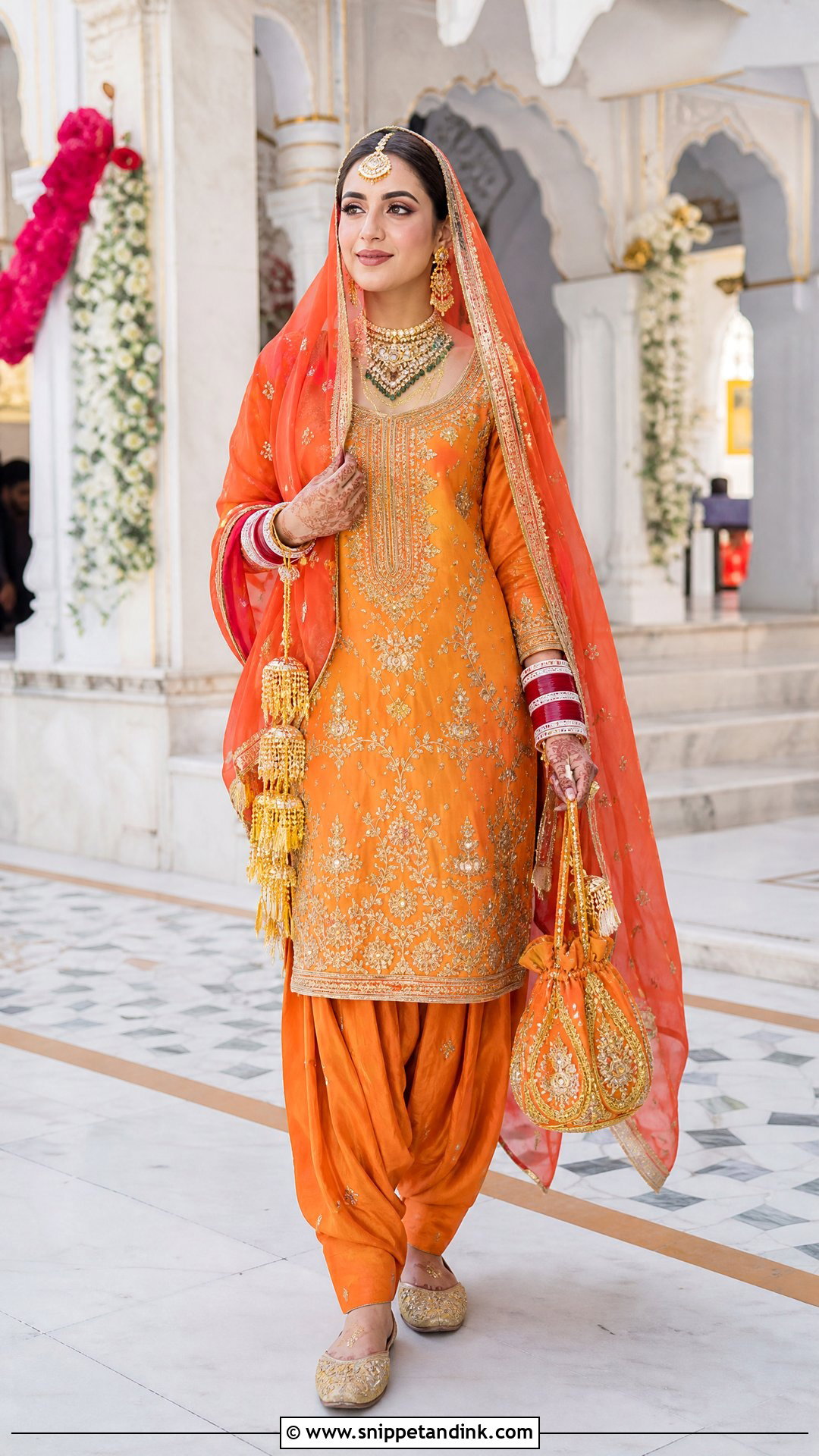
Orange is Punjab in a colour. A long raw silk or brocade kameez with antique-gold embroidery and side slits shows off the pleated salwar. The Patiala should be generously cut but neat at the ankle so it doesn’t drag barefoot. A red-orange dupatta with a gold border covers the head. Layered necklace, jhumkas, maang tikka, choora, kaleere and gold juttis, plus a potli in matching fabric for portraits. Orange flatters bronze eye makeup and a muted red lip.
10. Burgundy Punjabi Bridal Velvet Lehenga
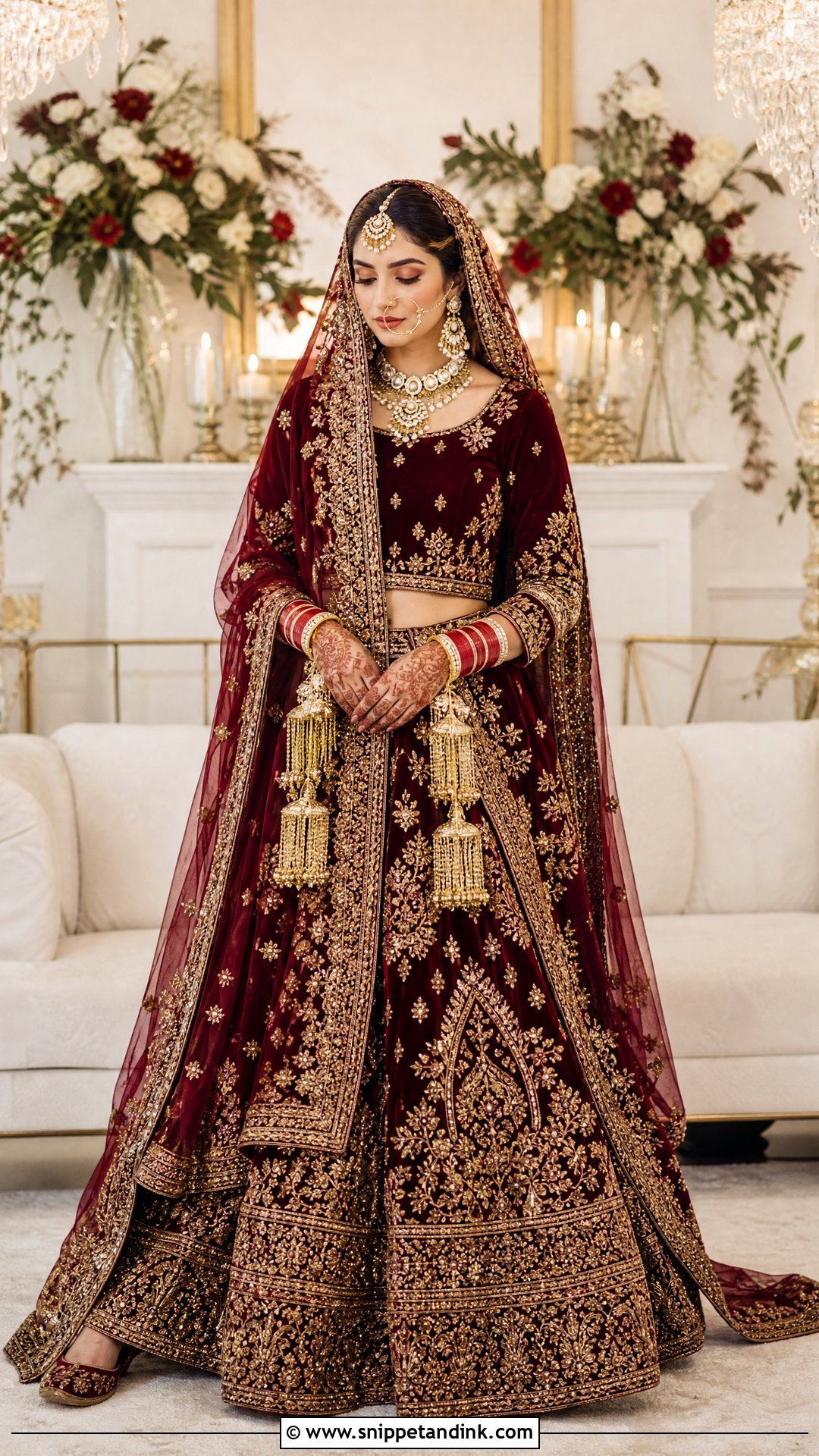
Velvet only makes sense for a cool-season wedding, and in burgundy it looks rich. Keep the gold embroidery to the borders and panels, because velvet is already heavy. A matching blouse with comfortable sleeves and a supportive neckline. Over the head, use a lighter silk, tissue or net dupatta; a second layer of velvet is bulky and slides. Antique-gold kundan, a statement tikka, choora, kaleere and burgundy juttis. A neat bun with strong hidden pins. Wear the whole outfit for an hour before the day.
11. Ruby Red Punjabi Bridal Raw Silk Lehenga
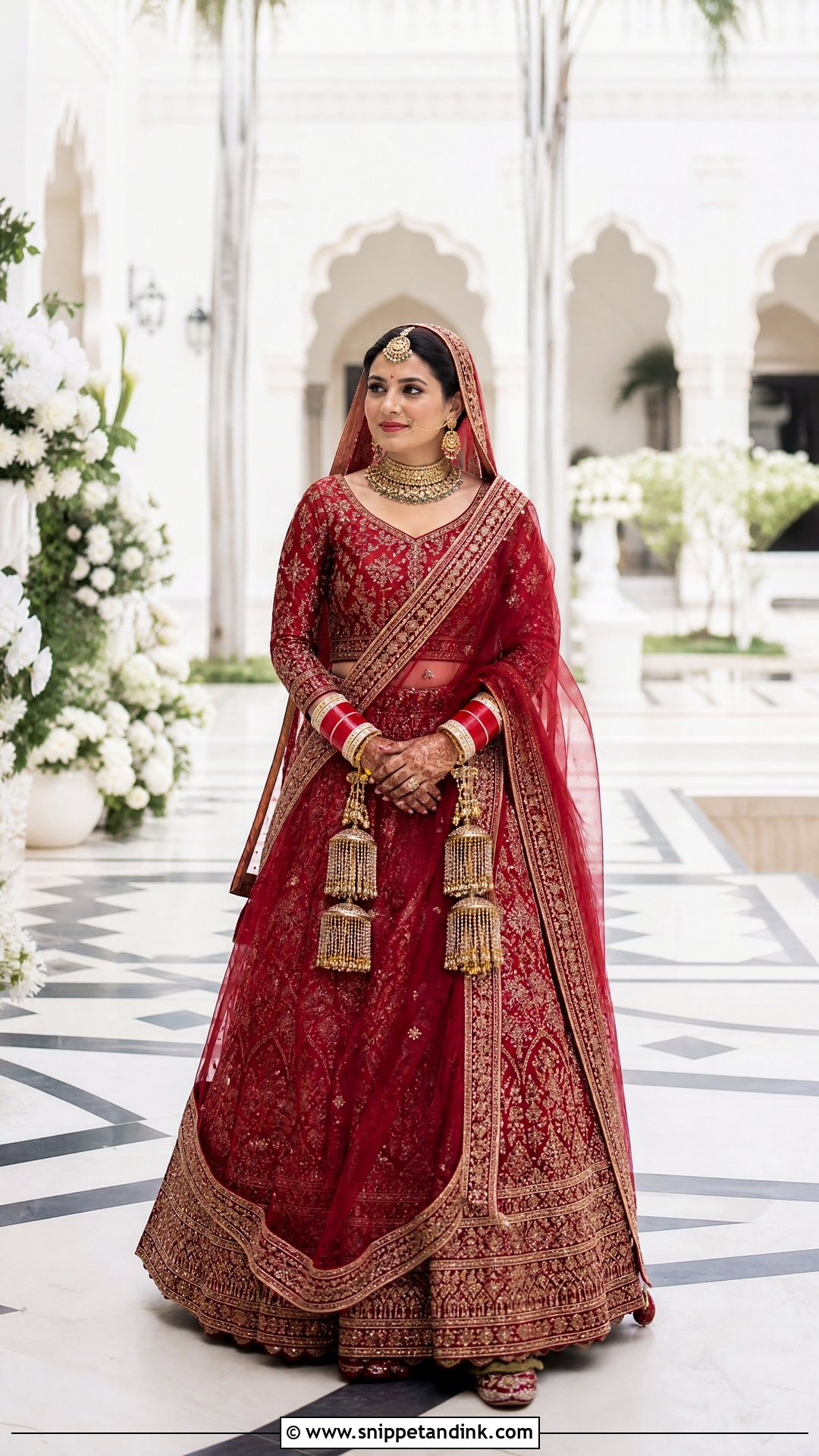
Raw silk has a crisp slub texture that holds a paneled skirt without sparkle. Ruby red with gold thread, dabka or floral embroidery, and a fitted longline blouse. A ruby head dupatta with a medium border and a sheer second drape across the torso. Traditional gold jewelry, red-and-ivory choora, kaleere and matching juttis. Because raw silk holds its shape, it also holds a stiff waistband, so ask your tailor for a soft inner lining at the waist. A sleek low bun keeps attention on the colour.
12. Red Banarasi Punjabi Bridal Lehenga
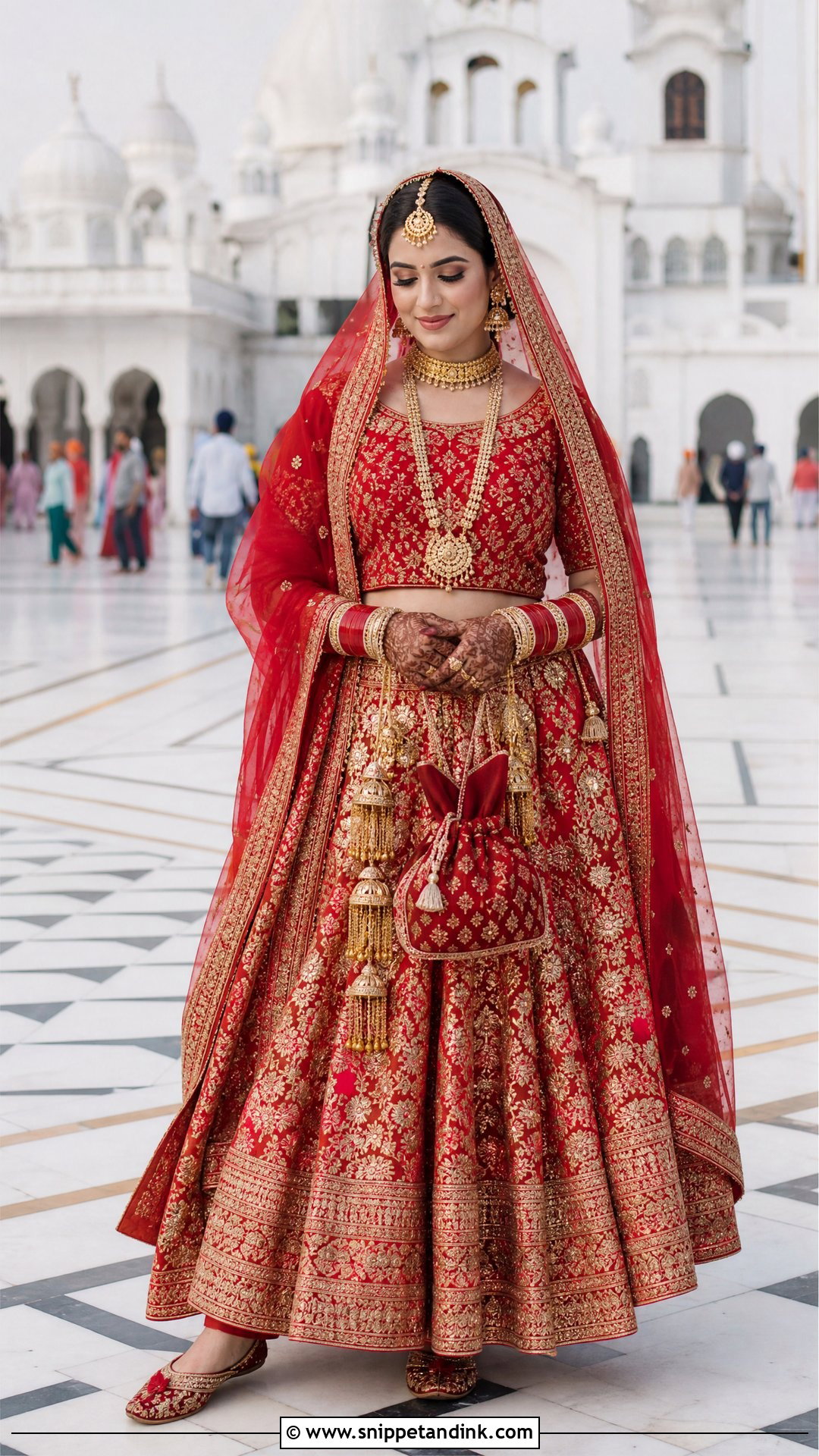
Banarasi weaving builds the richness into the cloth, so you need less surface work. Choose a skirt with traditional gold motifs, a modest matching blouse and a coordinated red dupatta. Keep any extra embroidery to the neckline, cuffs and borders. A gold choker, long necklace, jhumkas, tikka, choora and kaleere suit it, with brocade juttis. For the head, a plain or lightly worked dupatta is far easier to pin than a second heavy Banarasi layer. A red potli with gold tassels for portraits.
13. Pink Punjabi Bridal Phulkari Suit
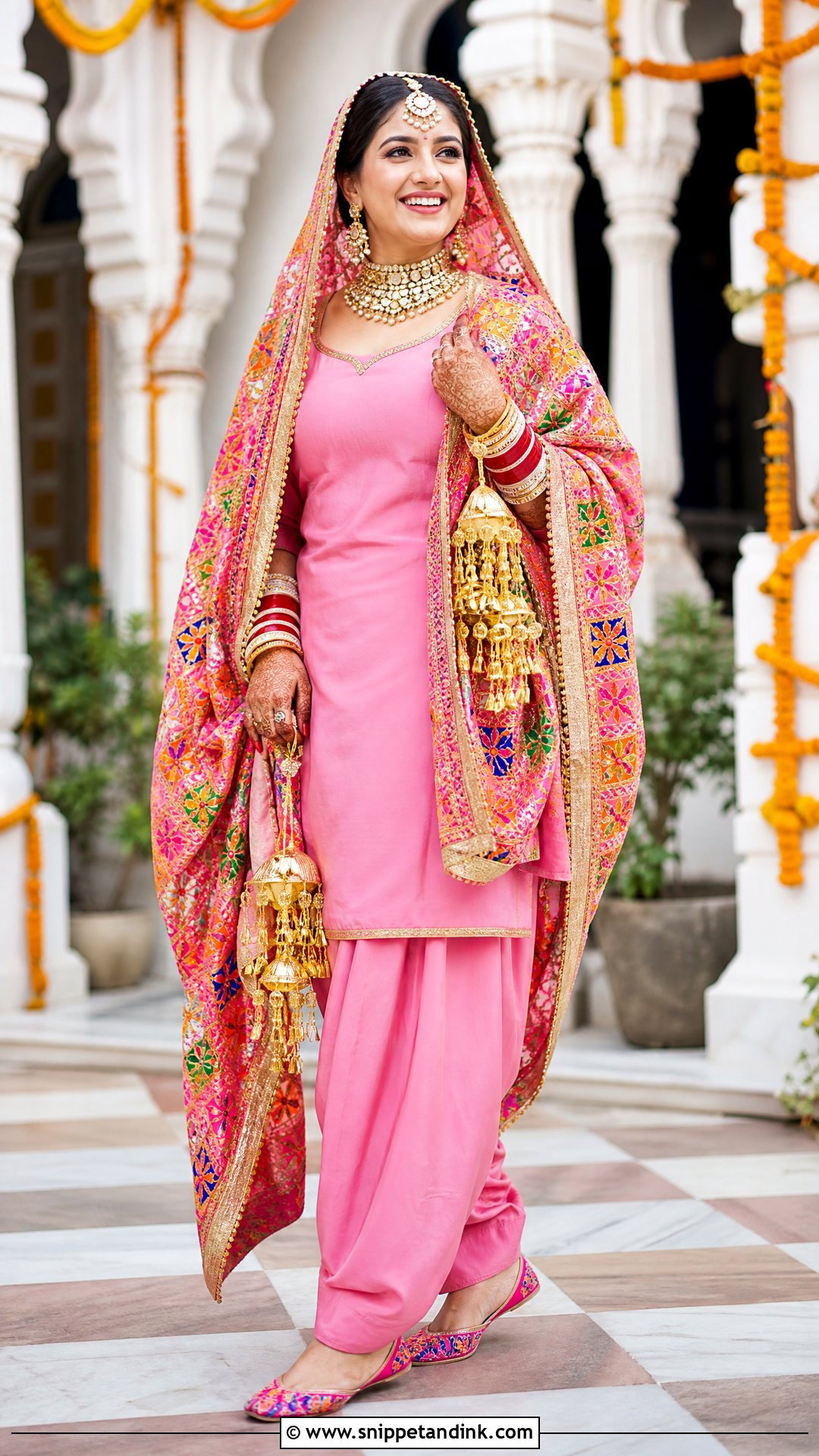
Phulkari gives a pink Punjabi bridal suit real heritage, and many families have an old phulkari bagh passed down for exactly this. Pair a solid pink kameez and salwar with the embroidered dupatta, or choose phulkari panels at the neckline, sleeves and hem. Antique phulkari is fragile, so I pin it through the plain border, never through the embroidery. Gold earrings, a simple kundan necklace, tikka, choora, kaleere and bright juttis. Keep the jewelry colours few; the thread already supplies plenty.
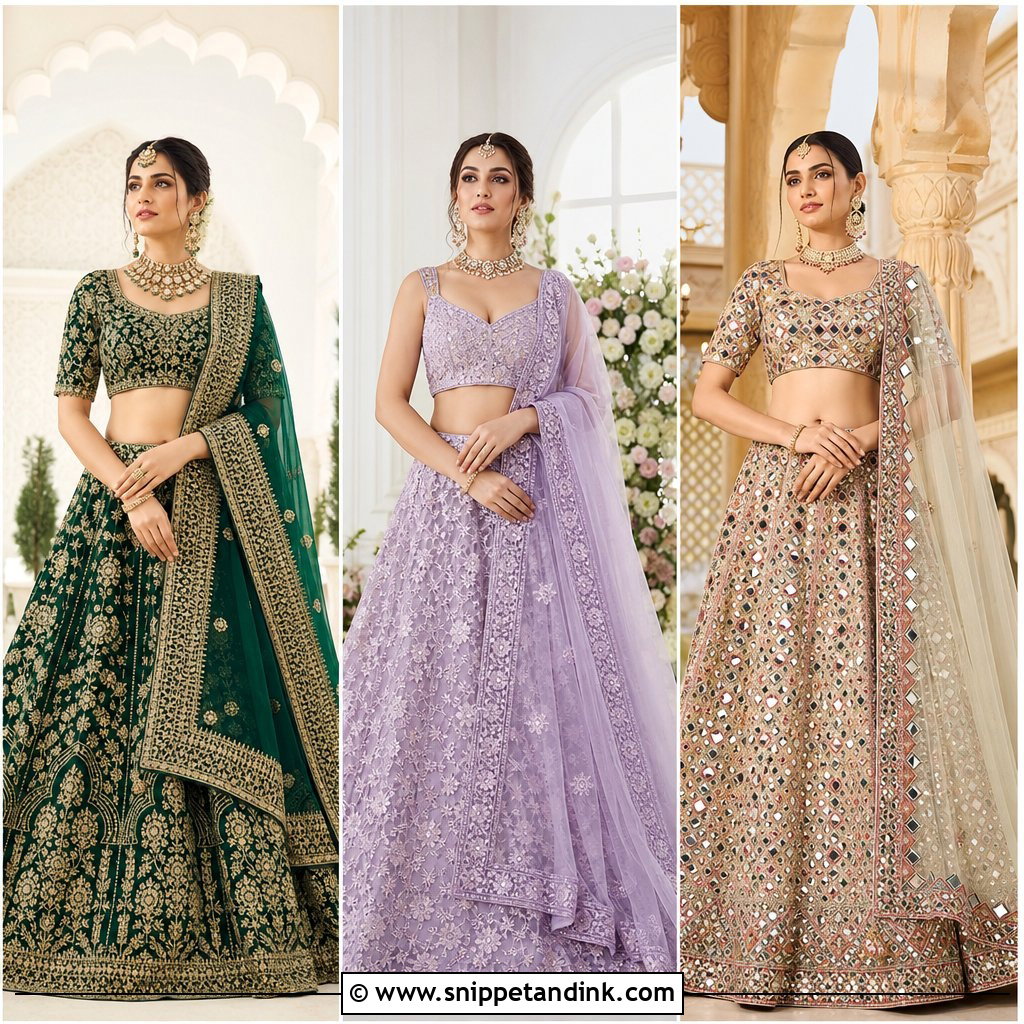
14. Emerald Green Punjabi Bridal Reception Lehenga
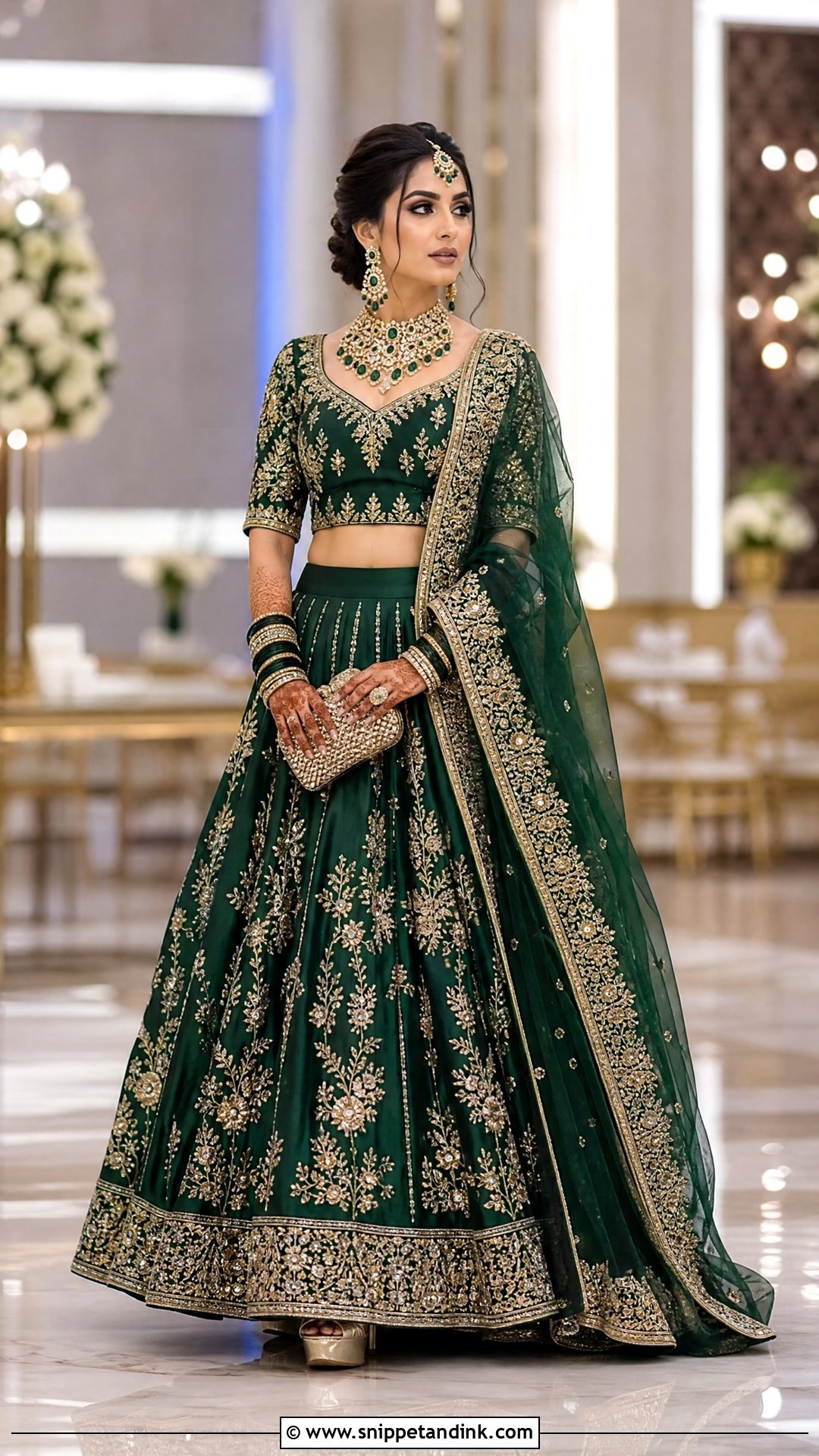
Emerald is a confident reception colour, and by evening you can finally let the dupatta come off your head. Silk or velvet with gold embroidery, a fitted blouse and a sweeping skirt that you can still manage at a crowded party. Drape the dupatta over one shoulder or across both arms. Kundan with emerald-coloured stones, a layered necklace, statement earrings and bangles. Gold platforms or embellished juttis. Evening makeup, a berry or neutral lip and a bun, low ponytail or waves.


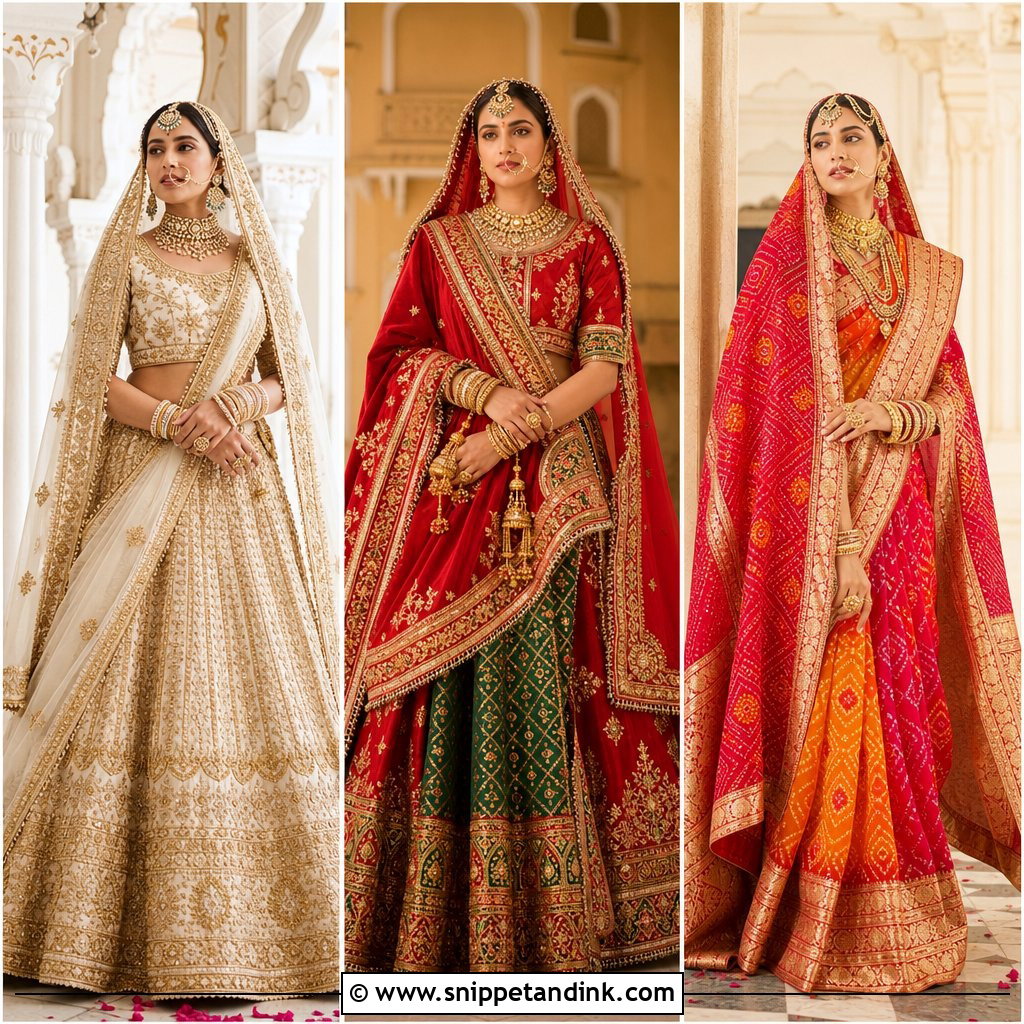
15. Royal Blue Punjabi Bridal Reception Lehenga
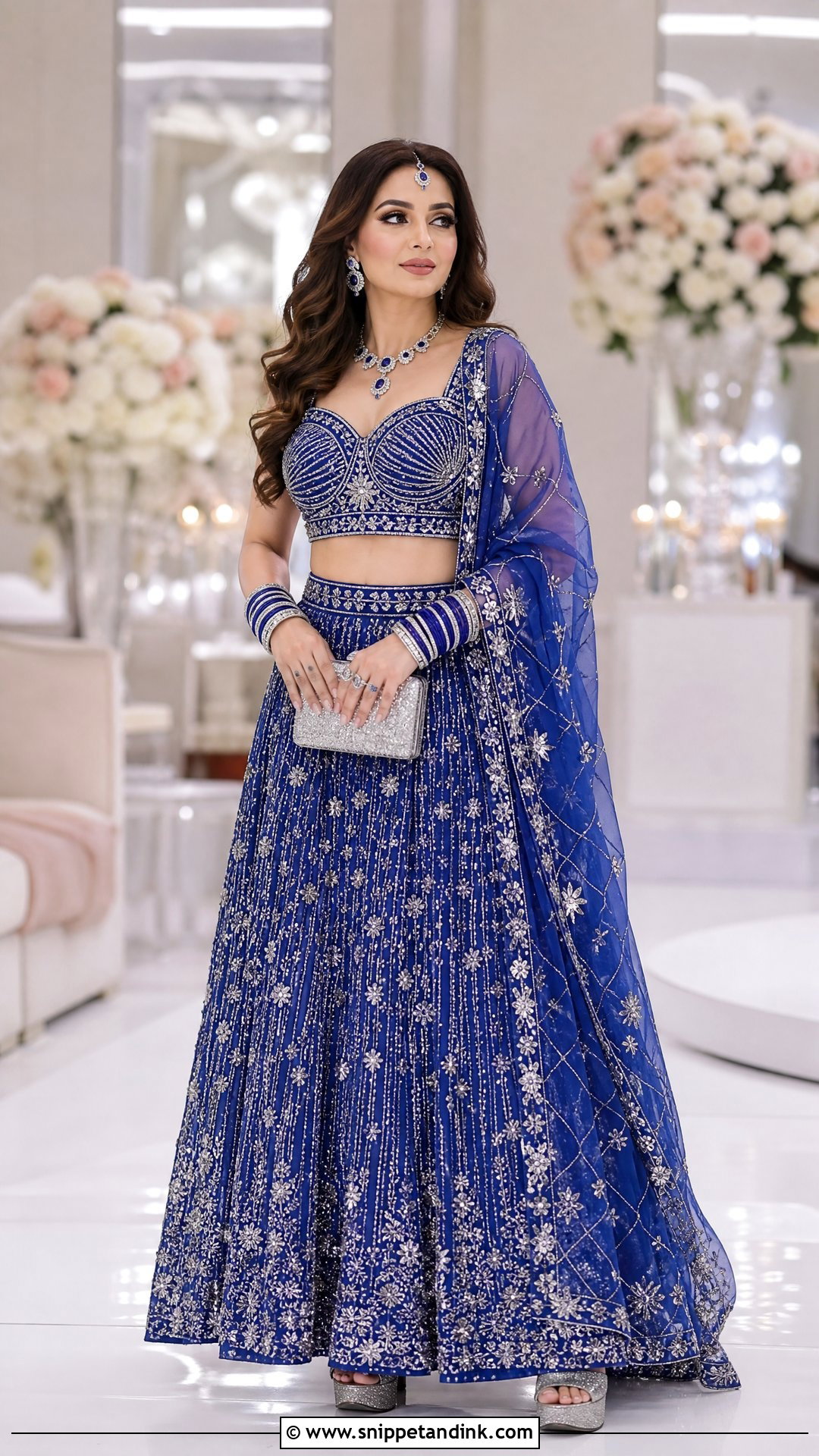
Royal blue under reception lights looks bold. Pick the embroidery to match your jewelry: silver or crystal with diamond-style pieces, antique gold with kundan. A structured blouse and a lightweight dupatta at one shoulder. Stacked bangles and a small metallic clutch. Block heels or embellished platforms hidden under the skirt give stable footing on a polished floor. Cool-toned eye makeup and a soft rose lip suit the blue. Let the colour lead and keep accessories coordinated rather than matched.
16. Champagne Gold Punjabi Bridal Reception Lehenga
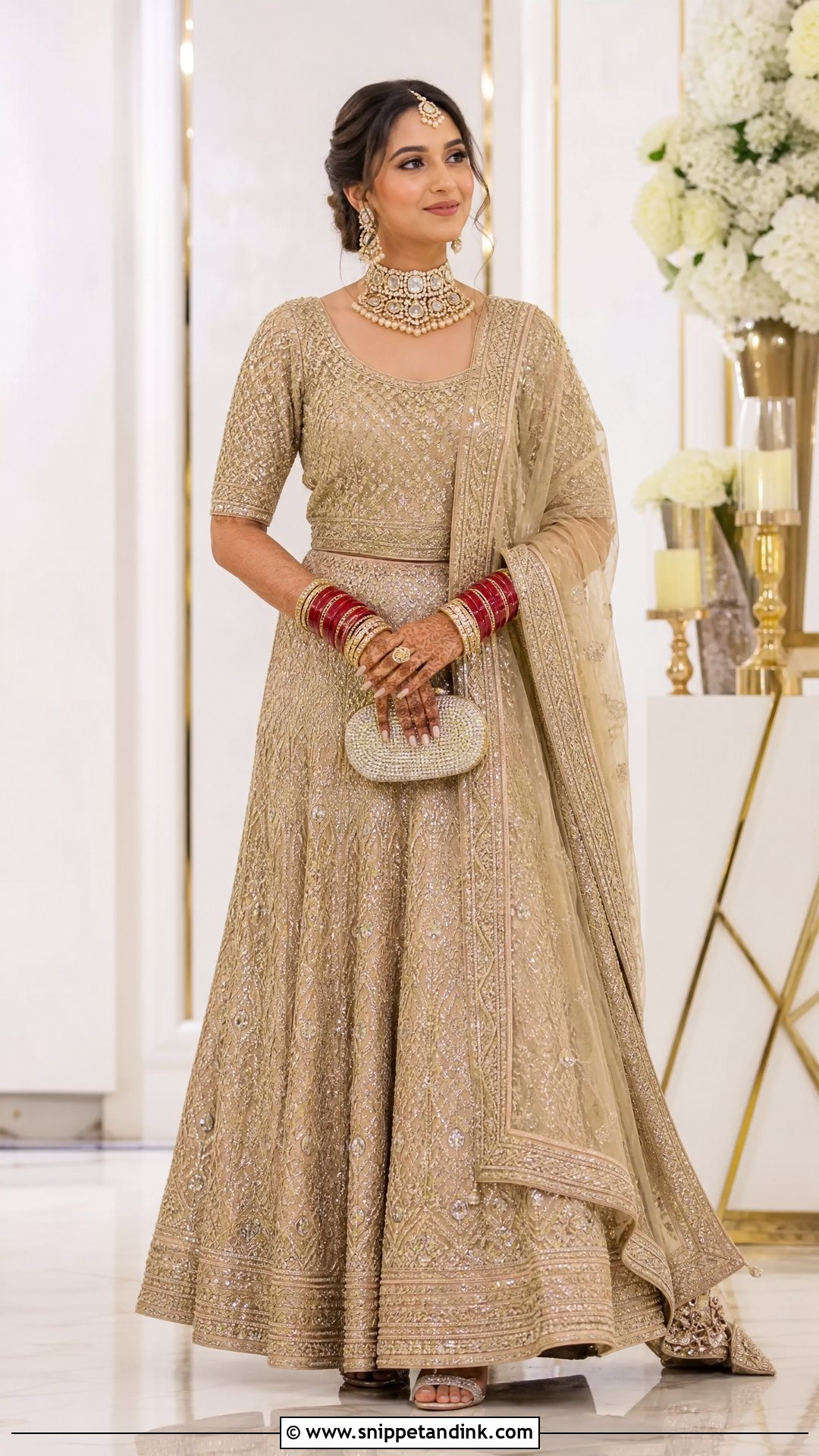
Champagne gold is softer than bright metallics, and tonal beading, sequins and embroidery add texture without new colours. A fully lined blouse with elbow sleeves or a high neckline balances the shimmer. Drape a lightweight matching dupatta over one shoulder and secure it at the waist. Polki with pearl accents, gold bangles, a crystal clutch and metallic heels. Add red choora for a clear Punjabi contrast against the pale gold; without it, the look can drift toward Western party wear.
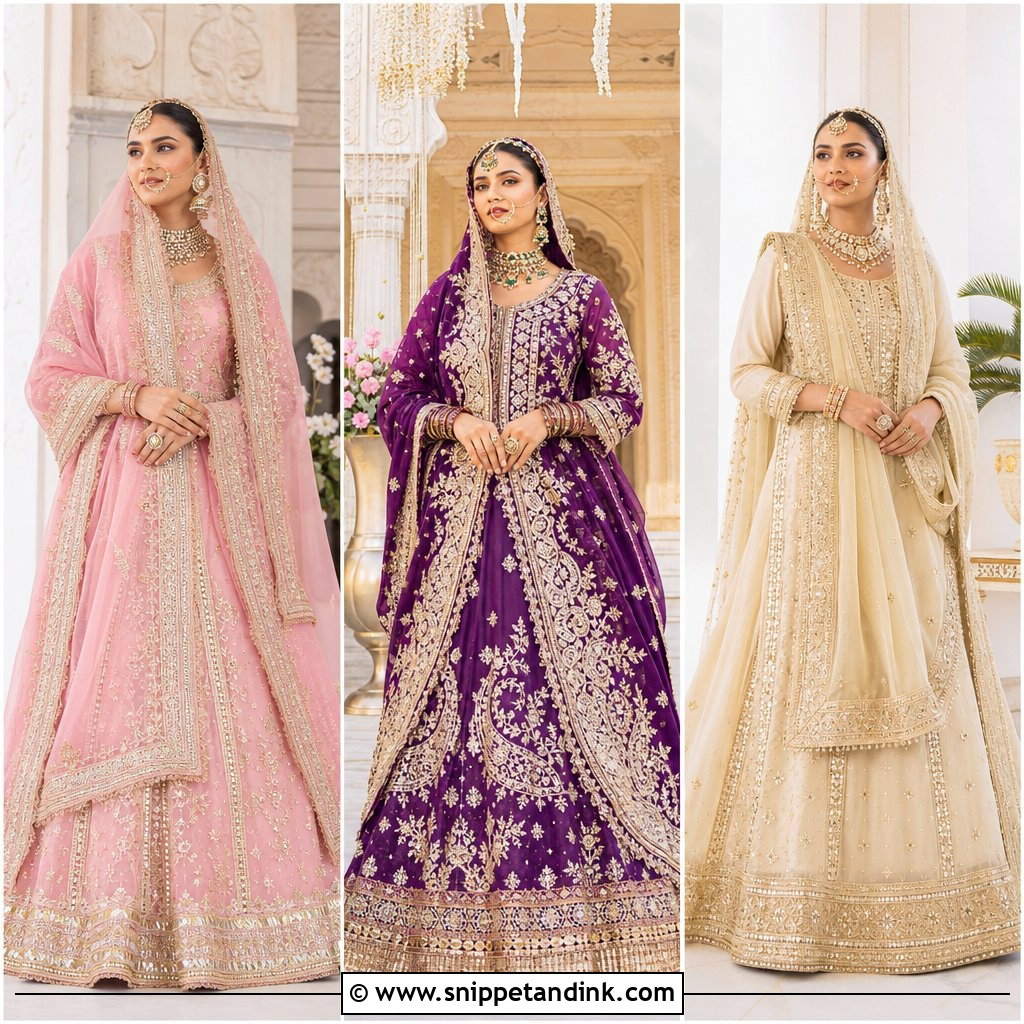
17. Pastel Pink Punjabi Bridal Lehenga
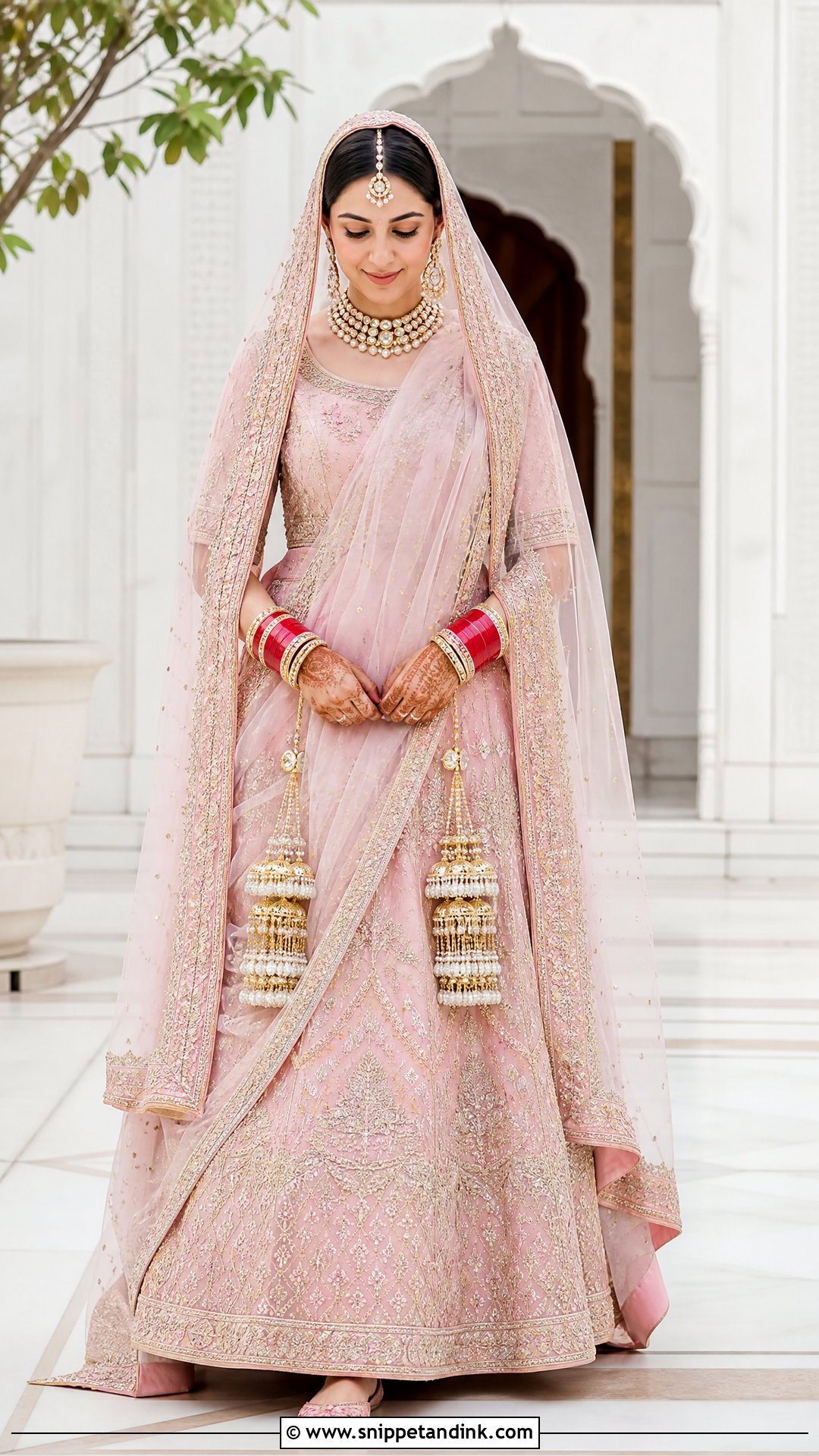
Pastel pink suits a morning ceremony, but pale bridal colours need structure and detail or they look like guest wear. Choose pearl, silver or pale-gold embroidery on a skirt with enough body to hold its shape. A modest blouse and a bordered head dupatta, with an optional sheer second drape. Pearl-and-kundan jewelry, a fine tikka, choora, slim kaleere and blush juttis. Flowers in the bun must sit clear of the dupatta. If your family has strong colour traditions, raise very pale shades early.
18. Lavender Punjabi Bridal Reception Lehenga
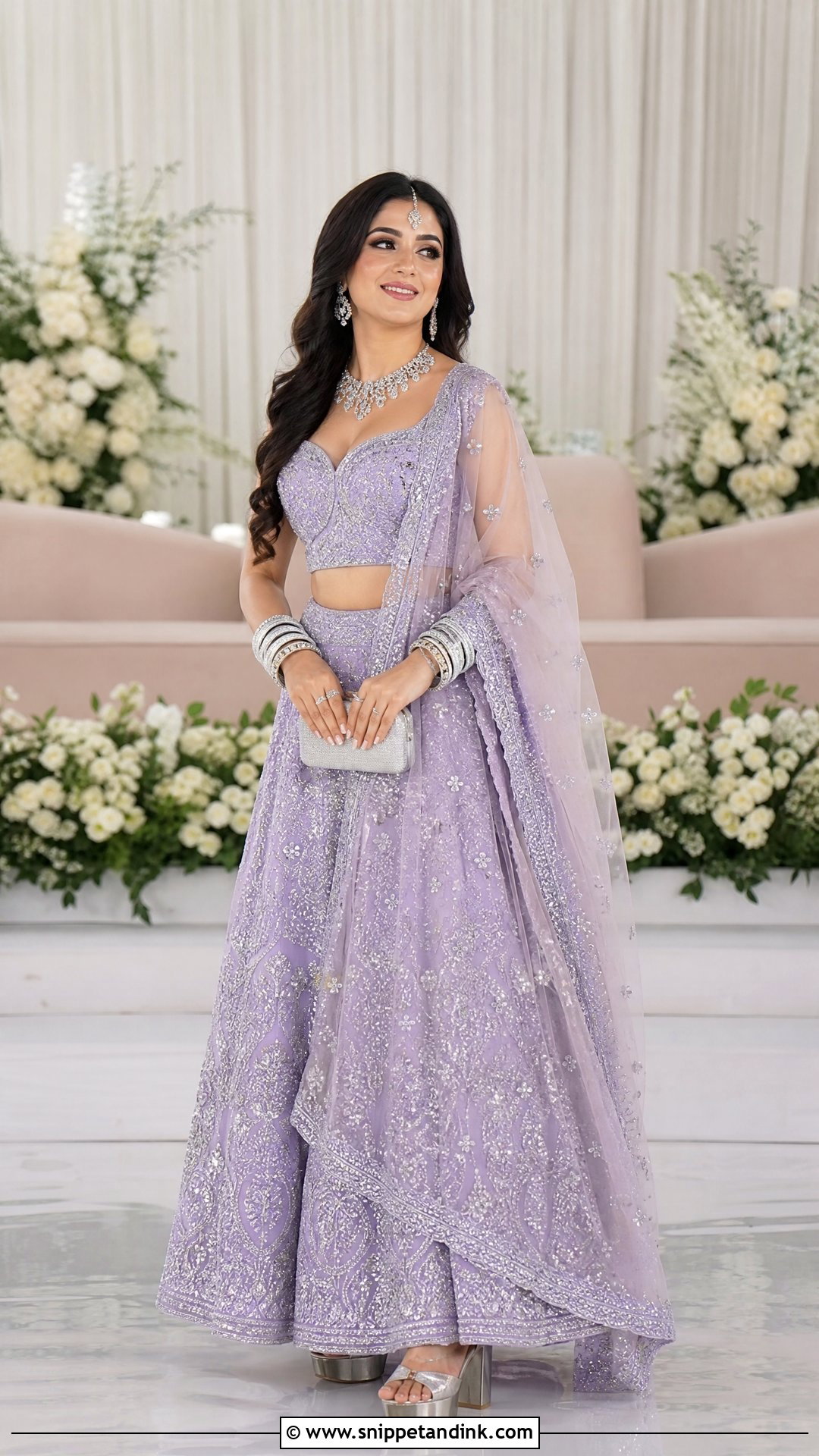
Lavender is a fresh second outfit for the reception. A flowing lehenga with silver embroidery and crystals, a supportive fitted blouse and a sheer lavender dupatta from shoulder to opposite wrist or waist. Diamond-style jewelry with amethyst accents, silver bangles and a small clutch. Metallic block heels are steadier than stilettos. Keep the palette strictly lavender, silver and crystal. Lavender dyes vary wildly between batches, so match the dupatta and skirt in daylight before the tailor finishes them.
19. Mint Green Punjabi Bridal Lehenga
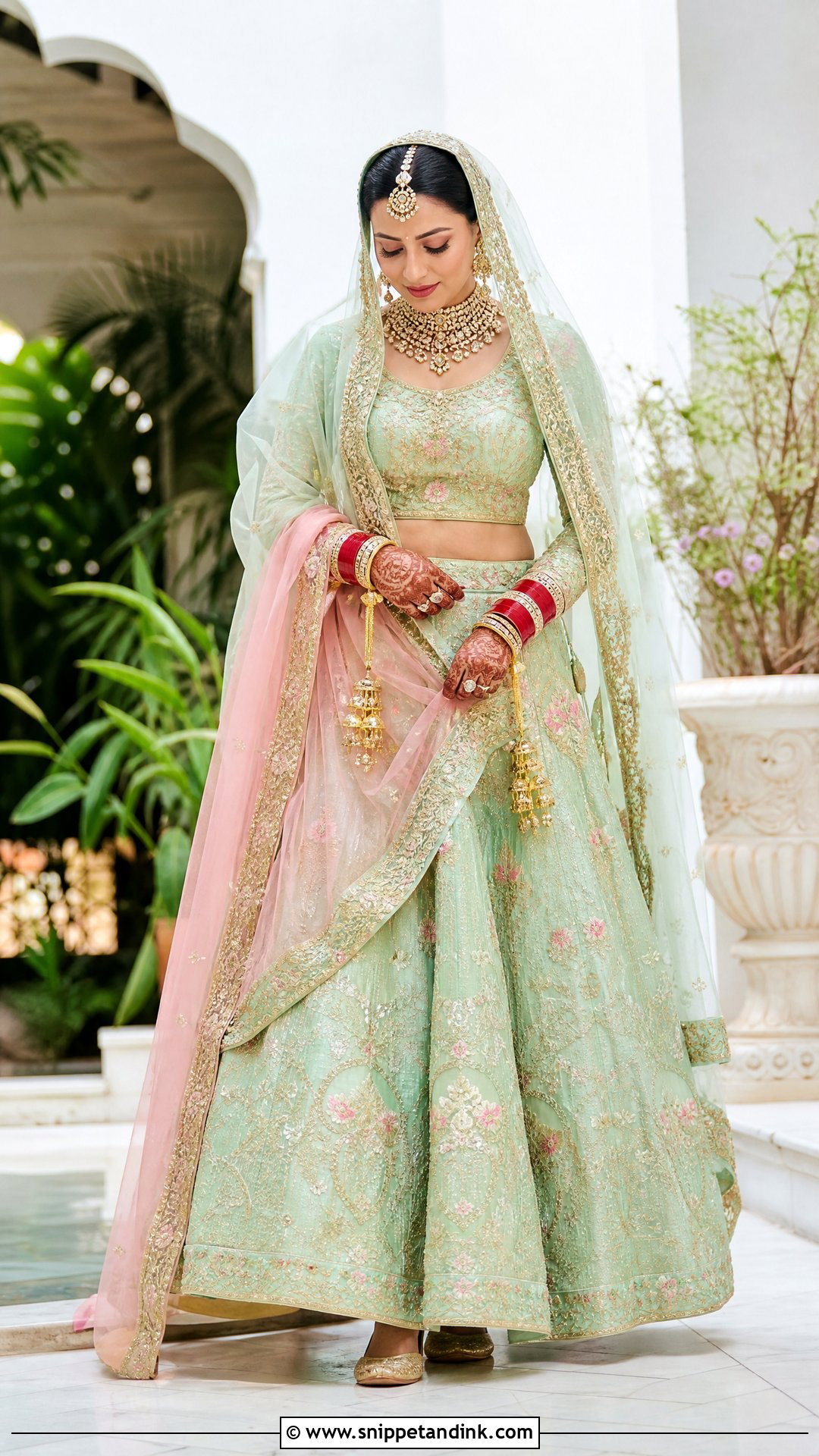
Mint can look flat on its own, so small pink florals in the embroidery are what bring it to life. Silk or organza with gold work, a modest blouse, a bordered mint head dupatta and an optional pale pink second drape. Kundan with pink stones, choora, fine kaleere and gold juttis. For the Anand Karaj, hold the dupatta up to light: thin mint net can be close to see-through, and it needs to be opaque and wide enough to cover properly. A low bun with a few restrained fresh flowers.

20. Red And Pink Punjabi Bridal Lehenga
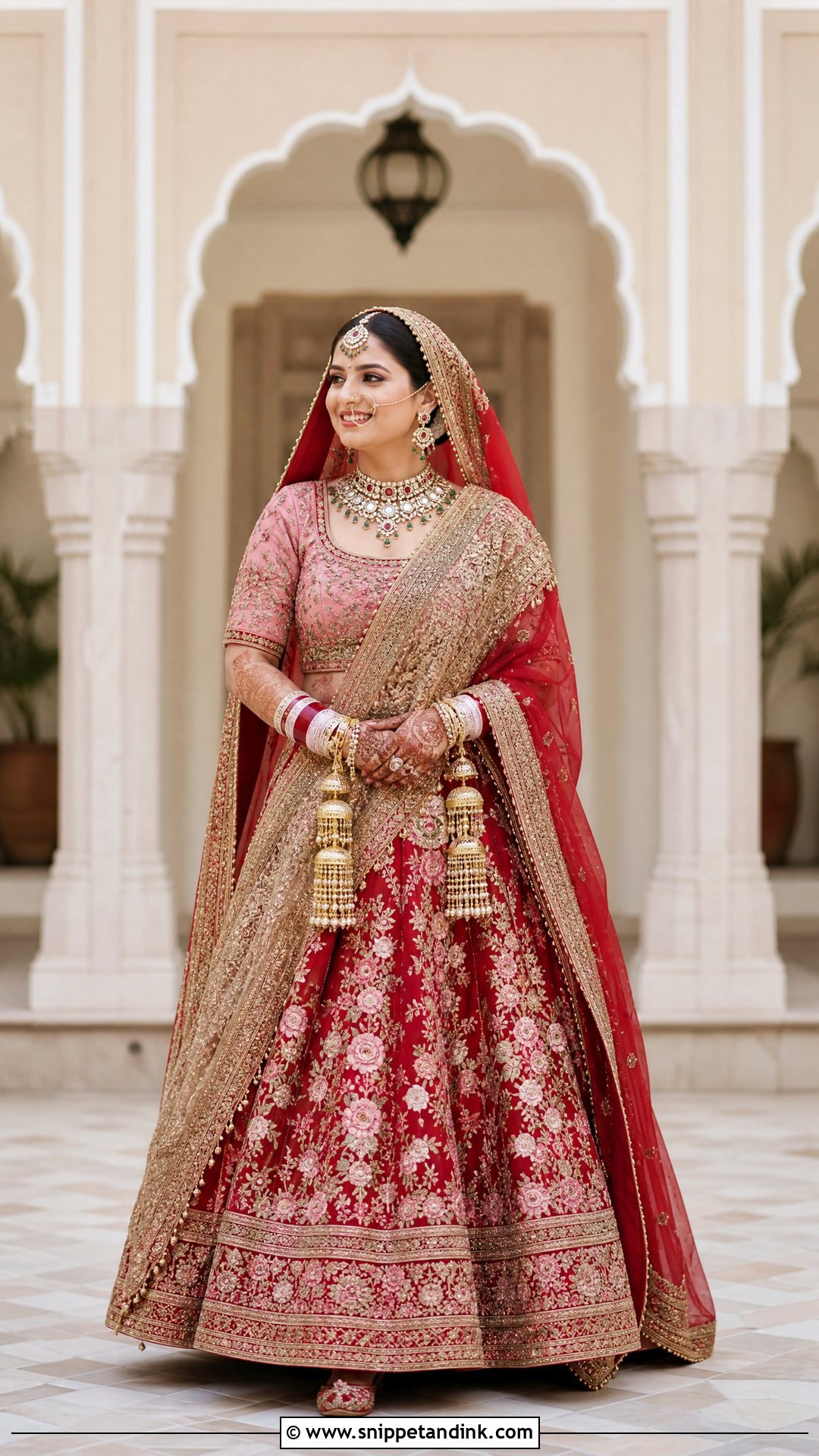
Torn between red and pink? Use both, but let one lead. A deep red skirt with pink floral embroidery, with a pink blouse or a pink contrasting dupatta, and the head dupatta in red to connect with the skirt. Gold embroidery ties the two colours together. Kundan with red and pink stones, a centred tikka, choora, kaleere and red juttis. Equal amounts of both colours look busy; something like two-thirds red to one-third pink looks deliberate.
21. White And Red Punjabi Bridal Salwar Suit
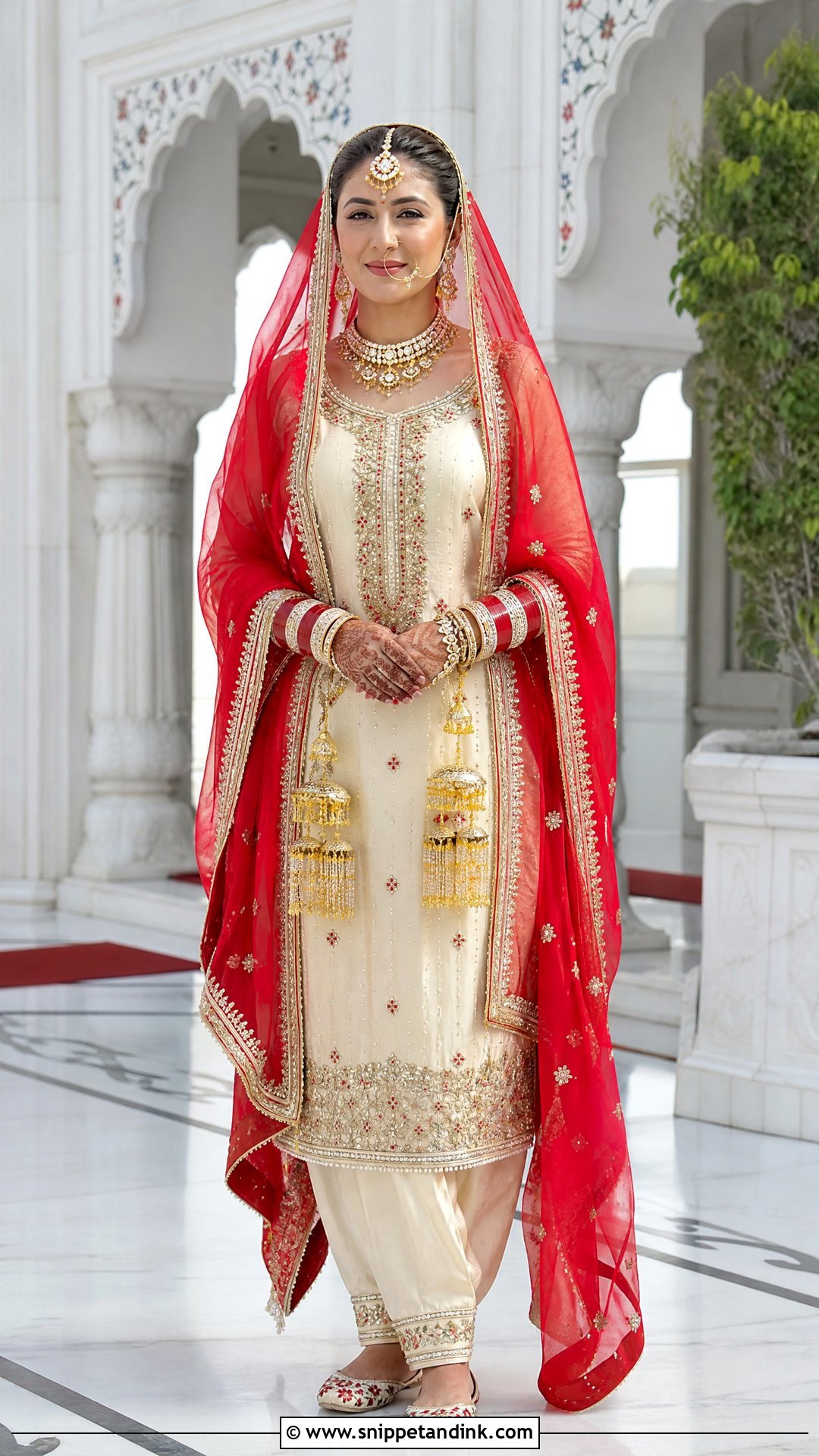
White and red together are crisp and graphic. Start with an off-white or ivory kameez in gold embroidery, matching trousers and a vivid red dupatta, with a red border at cuffs and hem to tie the pieces together. Gold kundan with a red tikka accent, choora, kaleere and ivory juttis worked in red thread. Expectations about pale bridal colours vary between families and gurdwaras, so confirm this one before ordering. White silk also shows every mark from sitting on the floor, so plan a clean sheet or mat for the photos.
22. Mustard Punjabi Bridal Phulkari Lehenga
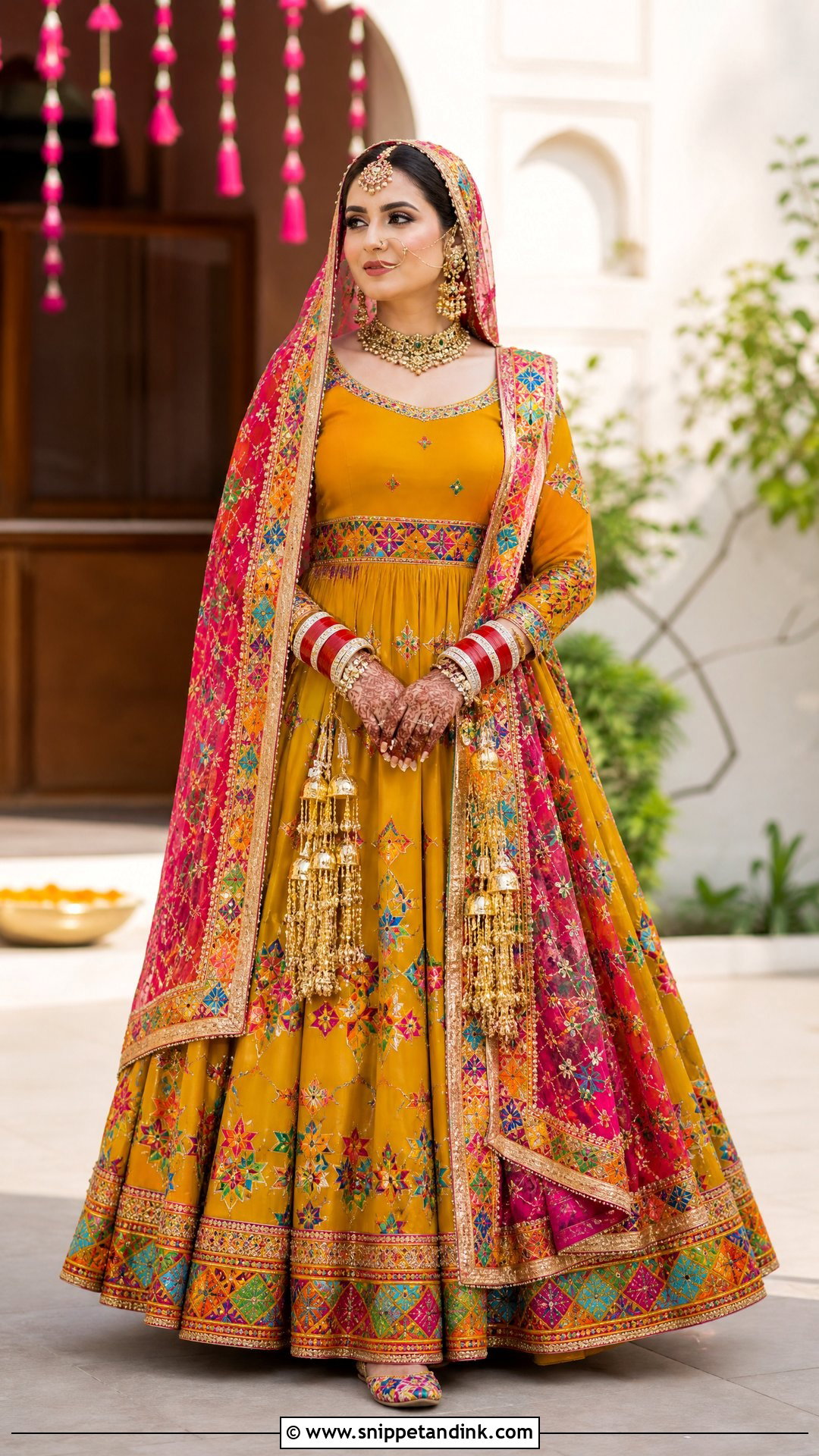
Mustard and multicoloured phulkari are warm and joyful. A mustard lehenga with embroidered floral panels, a long blouse and a red or pink phulkari dupatta. For the Anand Karaj, choose a dupatta soft enough to drape over the head; stiff, densely stitched phulkari won’t sit close. Antique gold, colourful enamel bangles, choora, kaleere and juttis repeating one or two phulkari shades. A low bun holds the dupatta better than a braid. It also suits a wedding lunch or pre-wedding event.
23. Multicolor Punjabi Bridal Mehndi Lehenga
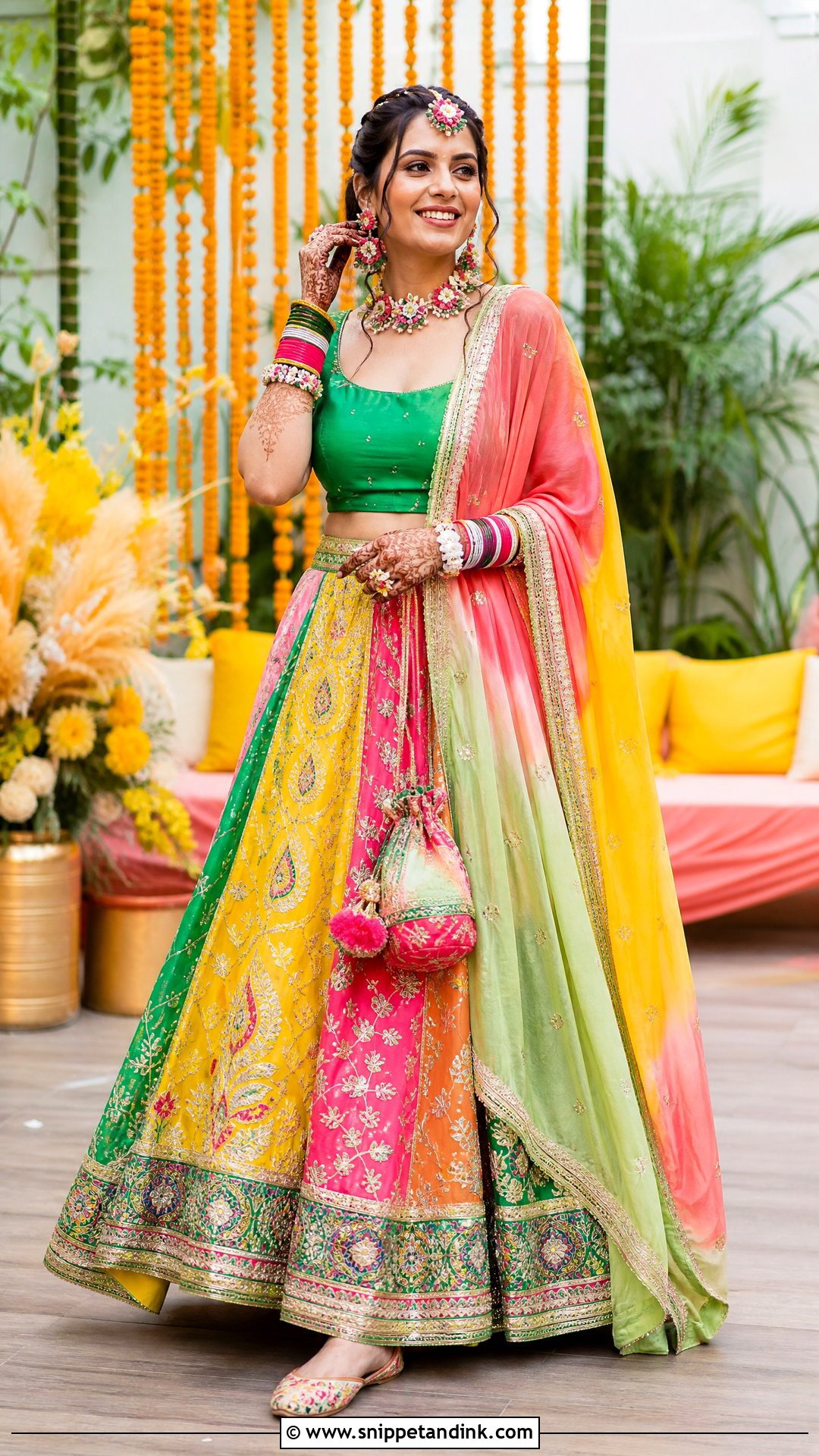
Mehndi day is for playful dressing for the mehndi celebration, and multicolour lehengas suit the mood. Green, yellow, pink and orange with mirror work, thread embroidery or phulkari details, a solid blouse picking up one colour and a light contrasting dupatta. The practical point: you’ll sit still for hours with your hands and feet out, so choose short or three-quarter sleeves that won’t touch wet paste, and a skirt you can lift off your feet easily. Floral jewelry, colourful bangles, comfortable juttis and a small potli.
24. Gold Punjabi Bridal Saree Reception Outfit
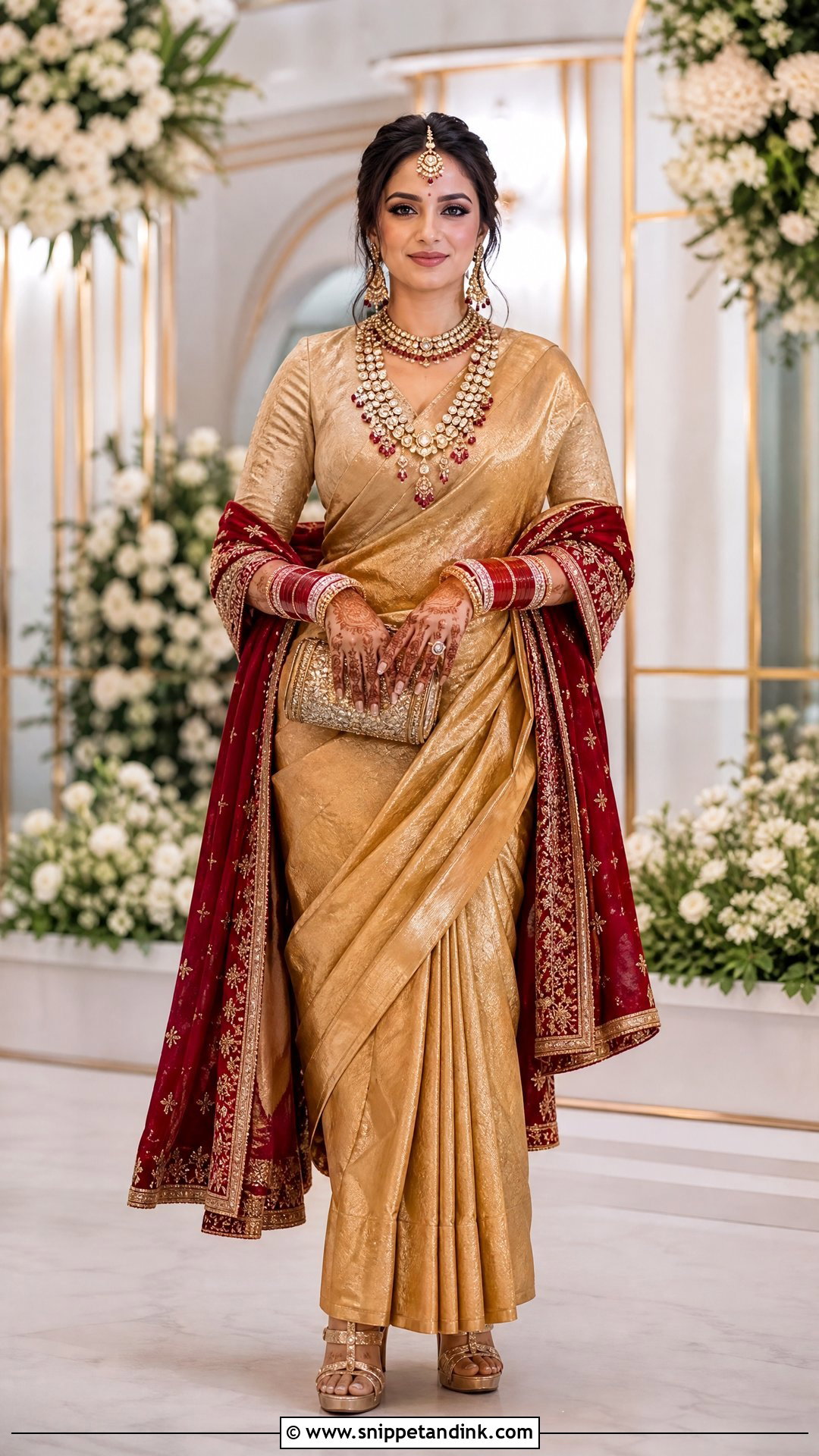
A gold saree is a fresh change at the reception for a bride who’s had enough of skirts. Silk, tissue or embroidered net with a firm border and a structured blouse for reliable coverage. Pre-stitched or professionally pleated sarees save you from re-tucking all evening. Kundan or polki, red choora, statement earrings, a small clutch and stable metallic heels. A red shawl or dupatta adds colour for family portraits. Keep it for the reception unless your family and gurdwara are happy with it for the ceremony.




25. Red Punjabi Bridal Long Kurta With Lehenga
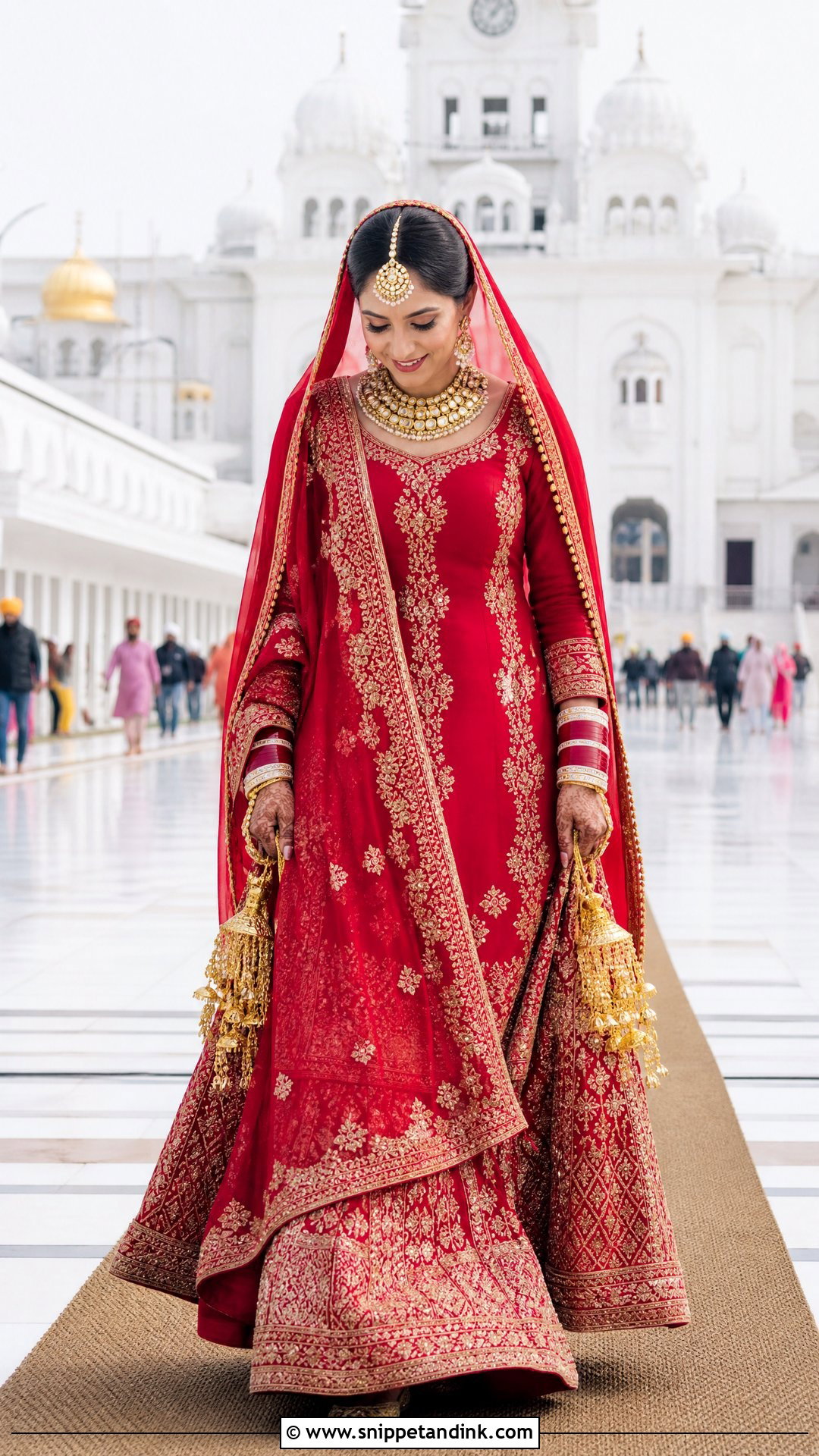
A calf-length kurta over a lehenga gives a suit’s coverage with a skirt’s movement. Choose red with side slits, fitted sleeves and gold embroidery at neckline and hem, over a lighter flared skirt. The embroidery underneath can be minimal where the kurta covers it, which cuts weight and cost. A matching red dupatta with a medium border, pinned over the head and along both shoulders. Kundan, tikka, choora, kaleere and cushioned gold juttis. It’s one of the most comfortable bridal options for sitting through the laavan.
How Far Ahead a Custom Punjabi Bridal Outfit Needs Ordering
Hand embroidery is slow. Zardozi, dabka and full phulkari are done by hand, and a heavily worked bridal lehenga or suit from a designer or boutique commonly needs three to six months from order to delivery. Timelines vary by maker and season, and the busy wedding months fill up early, so ask for a firm date in writing.
A rough working timeline
- Six to eight months out: shortlist styles and colours, talk to family about any colour traditions, and place the order.
- Two to three months out: first trial of the blouse and skirt or kameez, with the dupatta.
- Four to six weeks out: final fitting in your wedding shoes or barefoot for the ceremony outfit, with jewelry on.
- One week out: steam, check every hook and button, and pack a small kit of matching thread, pins and a spare blouse hook.
If your outfit is being made abroad and shipped, add several weeks for shipping and customs, and find a local tailor before it arrives. Something nearly always needs adjusting after a long journey and a few months of wedding nerves.
Wear It All Once, Choora and Dupatta Included, Before the Day
A Punjabi bridal outfit should feel comfortable and rooted in the celebration. Traditional salwar suits, embroidered lehengas, anarkalis, shararas and reception looks all have a place. Before deciding, wear the full outfit with its dupatta, jewelry, choora, kaleere and shoes. Sit, stand, walk and raise your arms so you find tight waistbands, slipping drapes and heavy pieces early. For the Anand Karaj, confirm coverage and dupatta expectations with your family and gurdwara, then make the colour your own.
You'll Like These Ideas:






Leave a Reply