
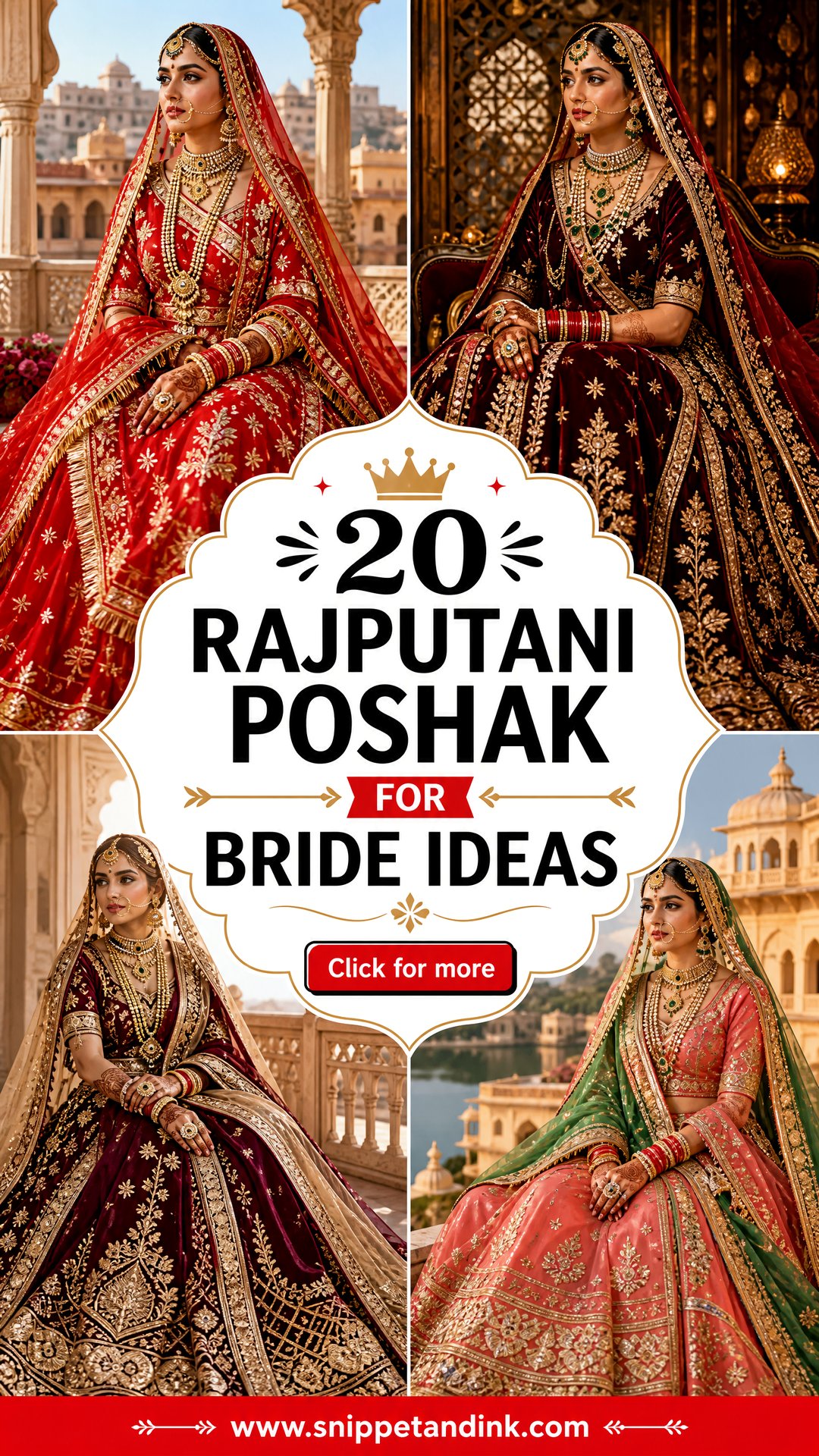
Ordering a Made-to-Measure Poshak, Month by Month
Almost every poshak below is stitched to order, and handwork can’t be rushed. Gota patti, aari and zardozi are all done by hand, and in wedding season a busy workshop is working on many brides at once. I plan in rough stages, because every workshop’s queue is different.
- Five to six months out: settle the color and type of work with your family, and place the order. Heavy zardozi takes longest, so it should be the first thing confirmed.
- Before cutting starts, ask for a small sample of the border and the gota. Hold it next to your jewelry in daylight.
- Two to three months out: first fitting of the kanchli and kurti. Wear the same inner layers you’ll wear on the day.
- Four to six weeks out: second fitting with the real jewelry on, since a heavy aad and rani haar change how the neckline lies.
- About two weeks out: final fitting in your juttis, with the ghagra hem checked while you walk.
The measurements most often taken wrong
Ghagra length is the usual problem. It should run from where you’ll actually tie it, at the natural waist, to the floor while you stand in your juttis. I also have the kanchli measured with arms raised as well as lowered, because a bride lifts her arms for the varmala and the rituals far more often than she expects.
1. Red Gota Patti Rajputani Bridal Poshak
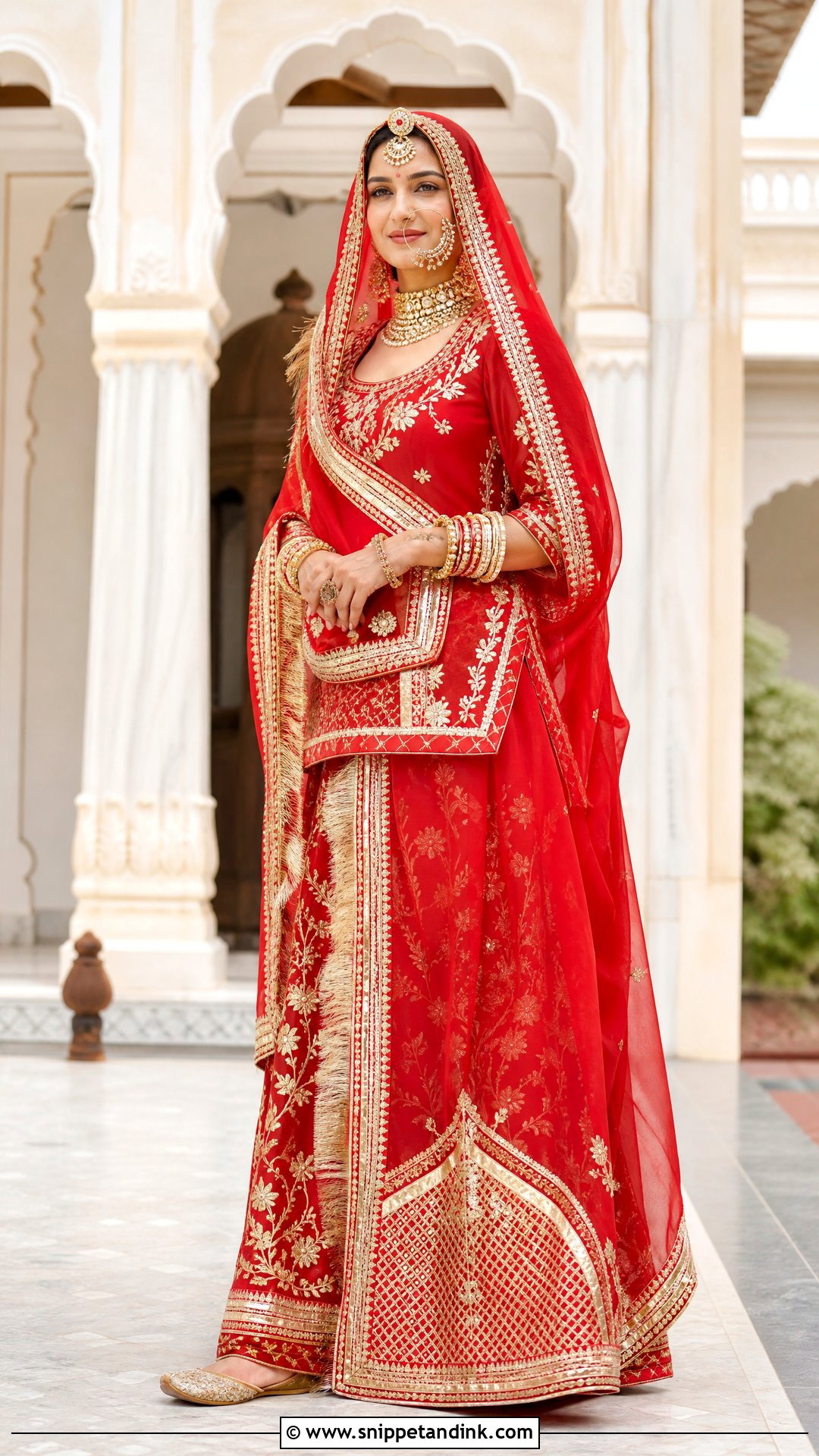
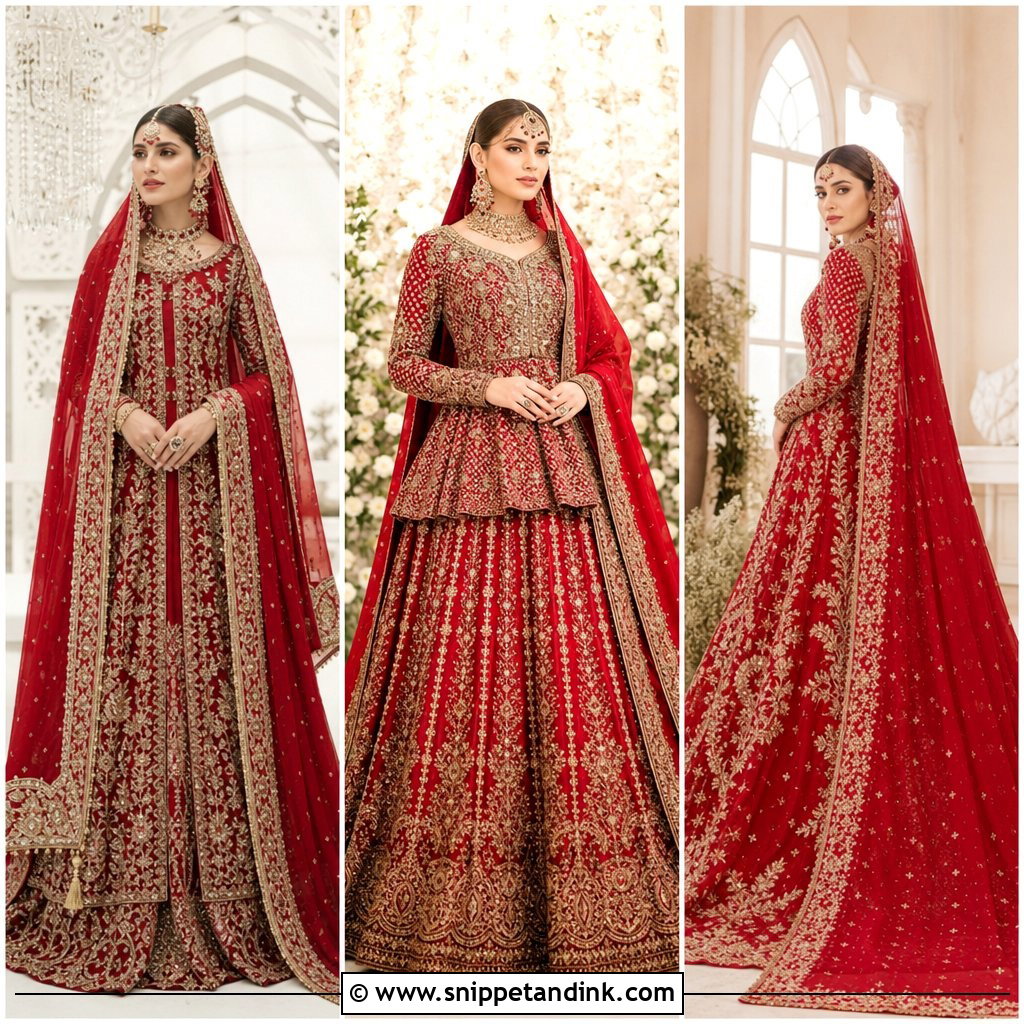
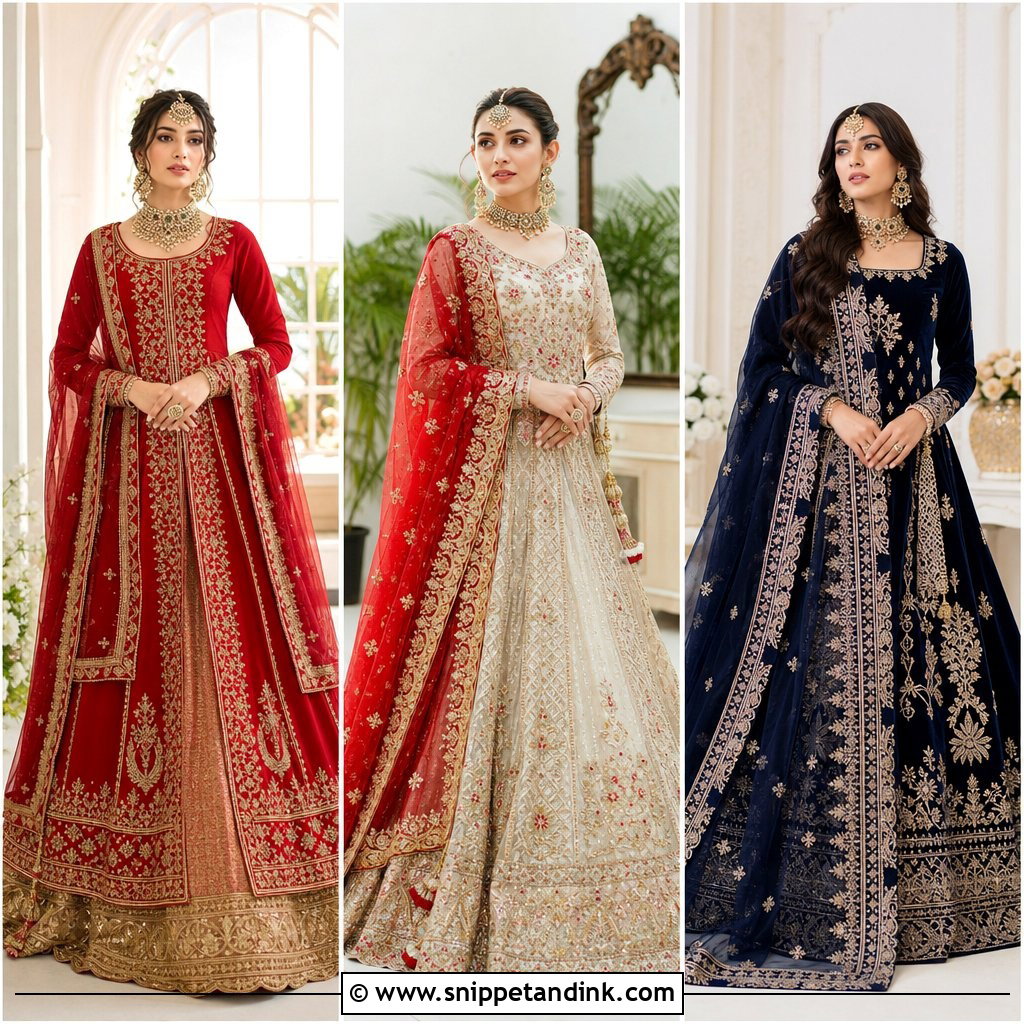
For the main ceremony, red with gold gota patti is the poshak most elders recognize at once as bridal. I’d go for a silk or satin ghagra with a broad gota border at the hem and smaller floral motifs scattered higher up, because a weighted hem is what gives the skirt its swing. The kanchli and kurti should repeat that gold pattern more lightly; when they’re as dense as the hem, the torso looks crowded once the jewelry goes on. A red georgette odhni keeps the head drape light enough to wear all day. Gold borla, a statement nath, aad, layered rani haar, bajuband and red bridal bangles, with embroidered gold juttis. Red and gold hold up under daylight and evening flash alike, which matters when the rituals run across both.
2. Maroon Zardozi Rajputani Bridal Poshak
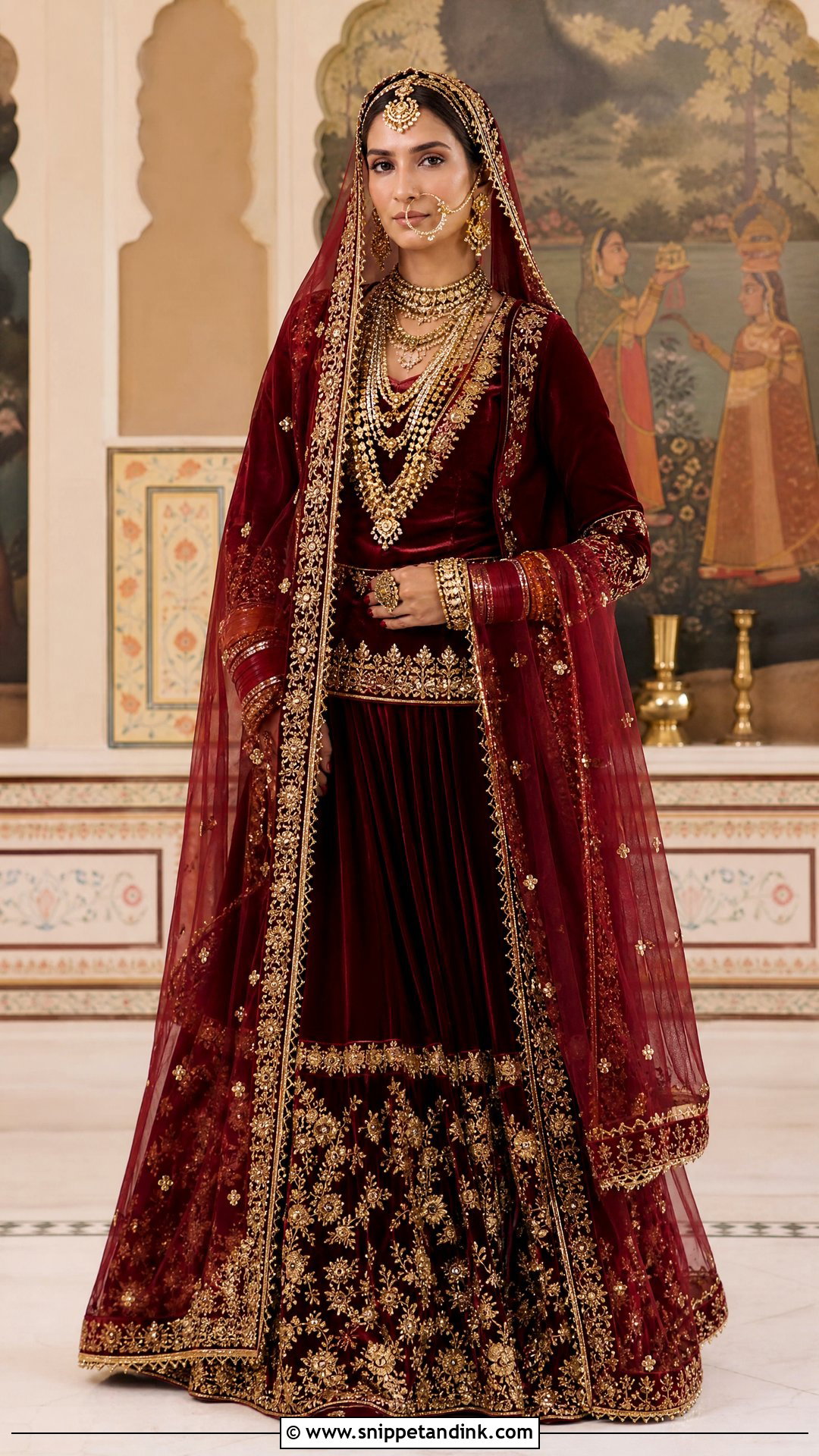
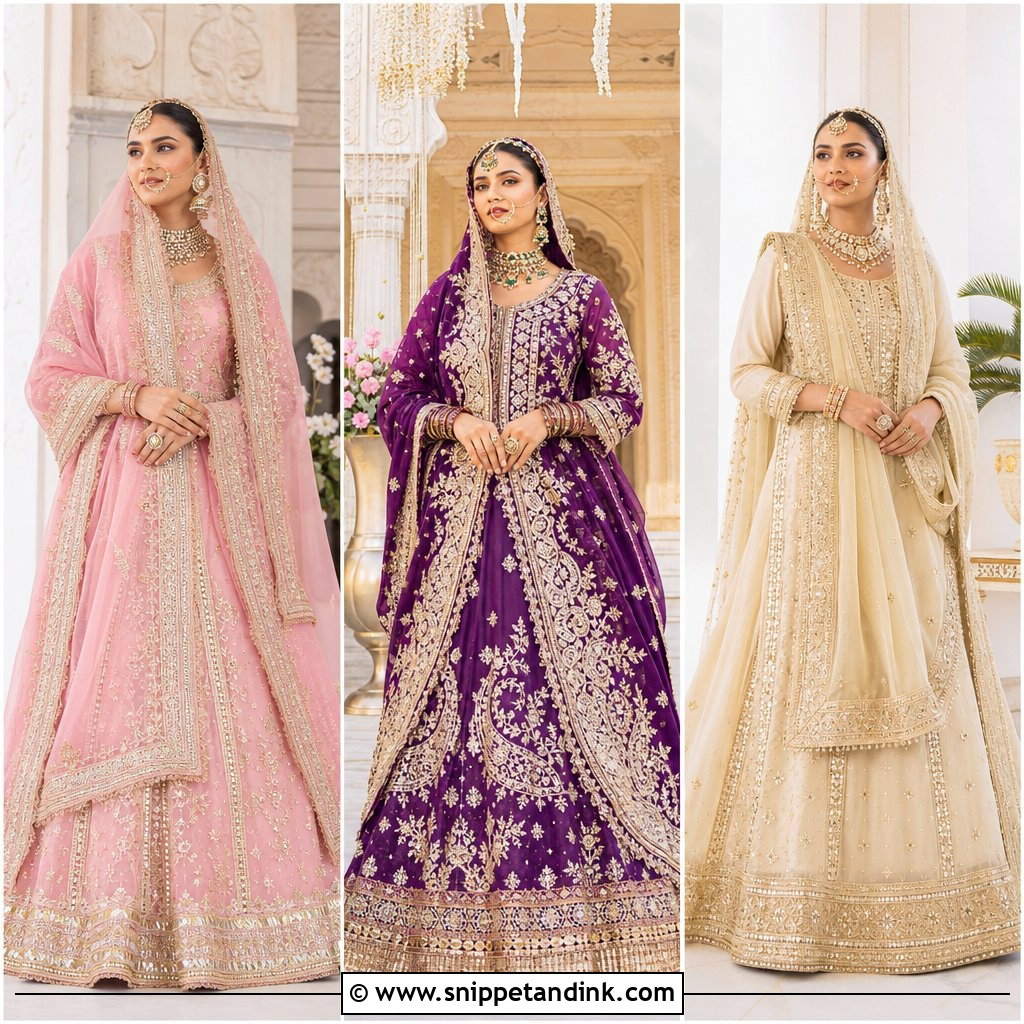
Maroon is quieter than red, and I find it suits brides who feel self-conscious in very bright color. Start with a velvet or silk-blend ghagra with antique-gold zardozi along the lower border and scattered buti above it. A structured maroon kurti and kanchli give it shape. Velvet and zardozi together are heavy, so the odhni has to be sheer; check that its zardozi frame runs right along the edge, or it won’t show once the veil is over the head. Antique-gold borla, aad, long necklace, nath and stacked bangles, with maroon velvet juttis in restrained gold. I’d save it for palace venues, winter dates or evening rituals.
3. Rani Pink Rajputani Bridal Poshak
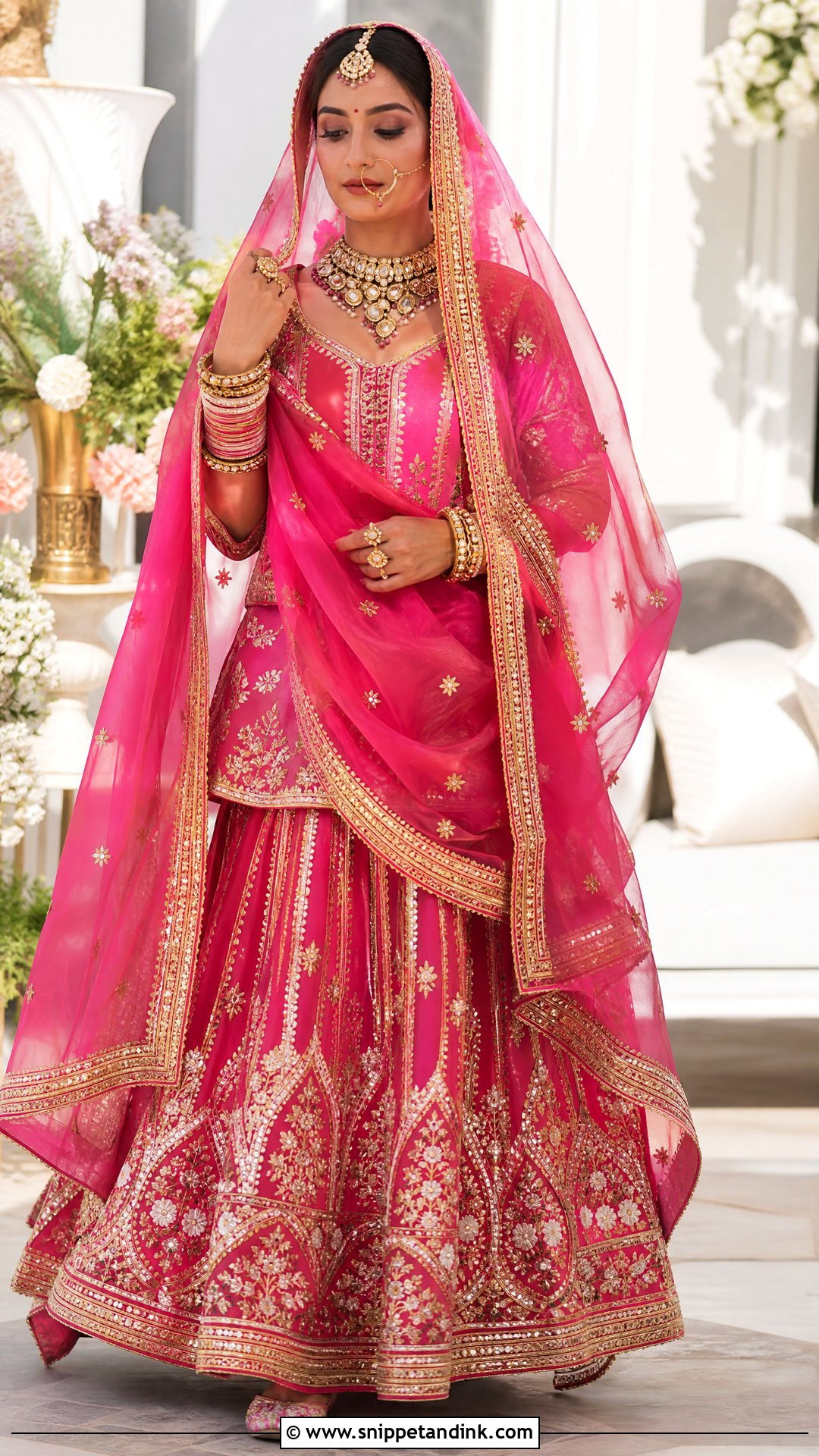
Rani pink is loud in the best way. It belongs to traditional Rajasthani dressing as much as red does, and it reads cheerful from across a courtyard. A full silk ghagra with gold gota borders, floral aari work and tiny reflective accents moves easily without much weight. Keep the kurti’s embroidery concentrated at the neckline and edges. For the odhni, choose a sheer rani pink with small motifs and a medium border; a very wide border on a sheer veil tends to drag it backwards off the head. Gold and kundan stand out sharply against pink, so the set can stay classic: borla, aad, nath, bangles and pink embroidered juttis. I point daytime and garden weddings toward this one.
4. Green And Red Rajputani Bridal Poshak
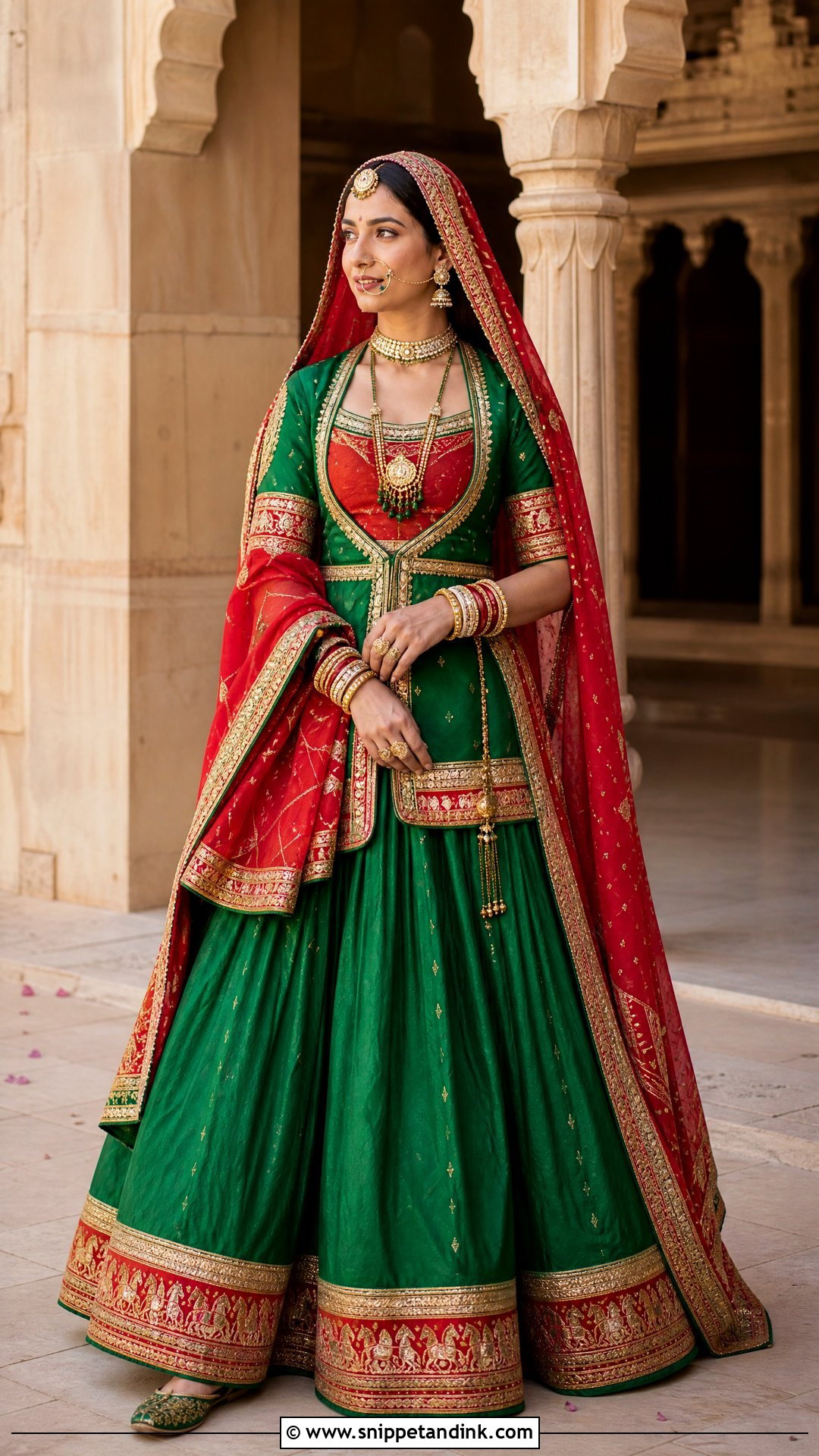
Getting two strong colors to share one poshak comes down to placement. Begin with an emerald silk ghagra carrying red panels or a red border edged in gold gota patti, then cross the colors on top with a red kanchli and a green kurti. A red odhni with an emerald edge frames the face. The jewelry shouldn’t introduce a third dominant color, so stay with gold carrying green enamel or kundan: borla, aad, layered haar, nath, bajuband and red-and-green bangles. Green juttis with red piping are a small touch, but they tie the hem back to the veil. Colorful heritage venues and family ceremonies with strong traditions suit it.
5. Orange Bandhani Rajputani Bridal Poshak
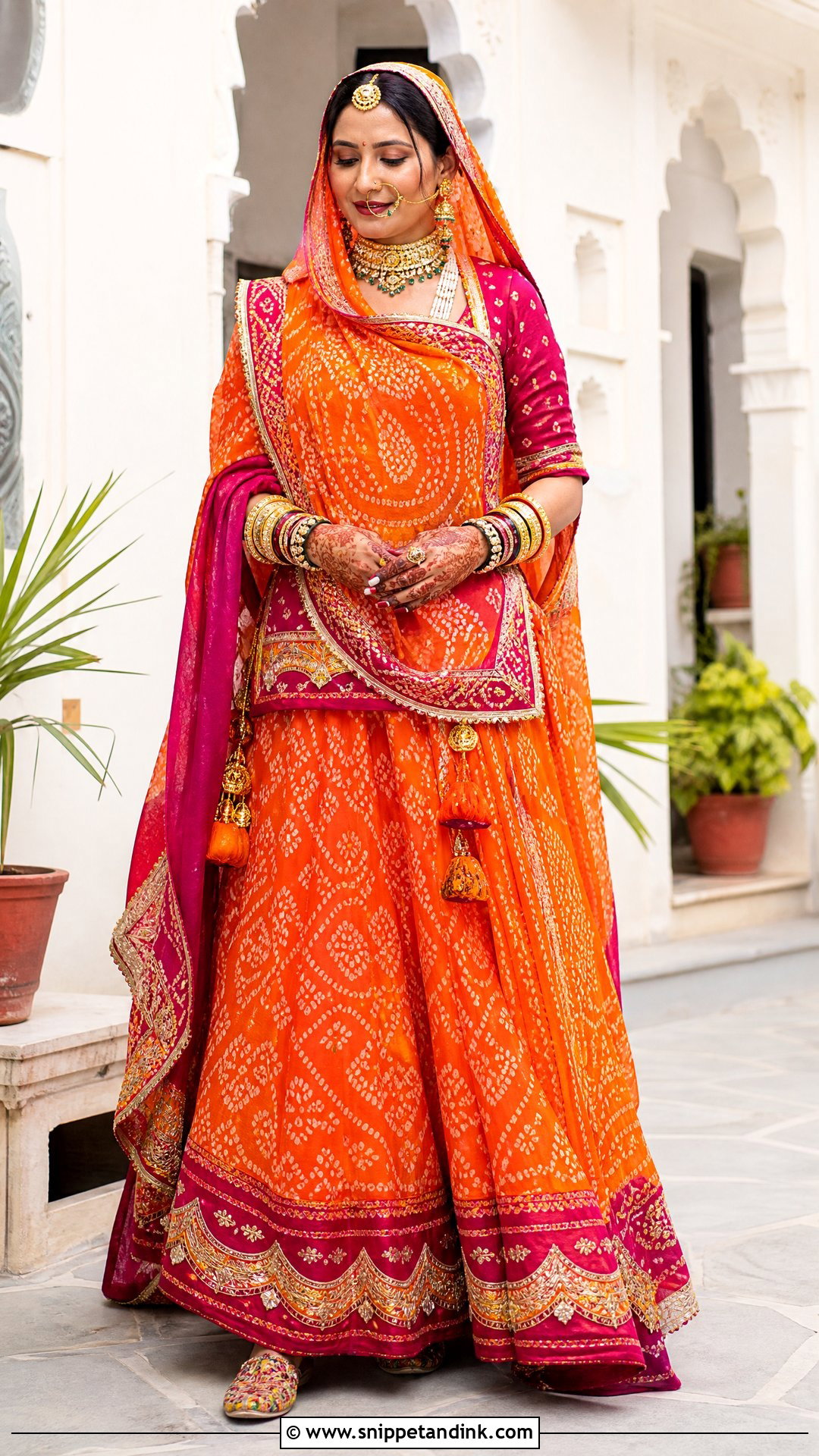
Orange bandhani is unmistakably Rajasthani, and since bandhani is usually tied on light georgette or cotton, it’s one of the cooler options for a hot day. Pair an orange ghagra with fine bandhani dots, a broad magenta border and carefully placed gota patti. The kanchli can take denser embroidery, while a magenta kurti brings contrast up near the face. Finish with a lightweight bandhani odhni that combines both colors and has a gold edge. With this much pattern, I choose jewelry with clean shapes: a gold borla, traditional aad, medium-length haar, nath and coordinated bangles. Orange or magenta juttis with modest embroidery.
6. Crimson Velvet Rajputani Bridal Poshak
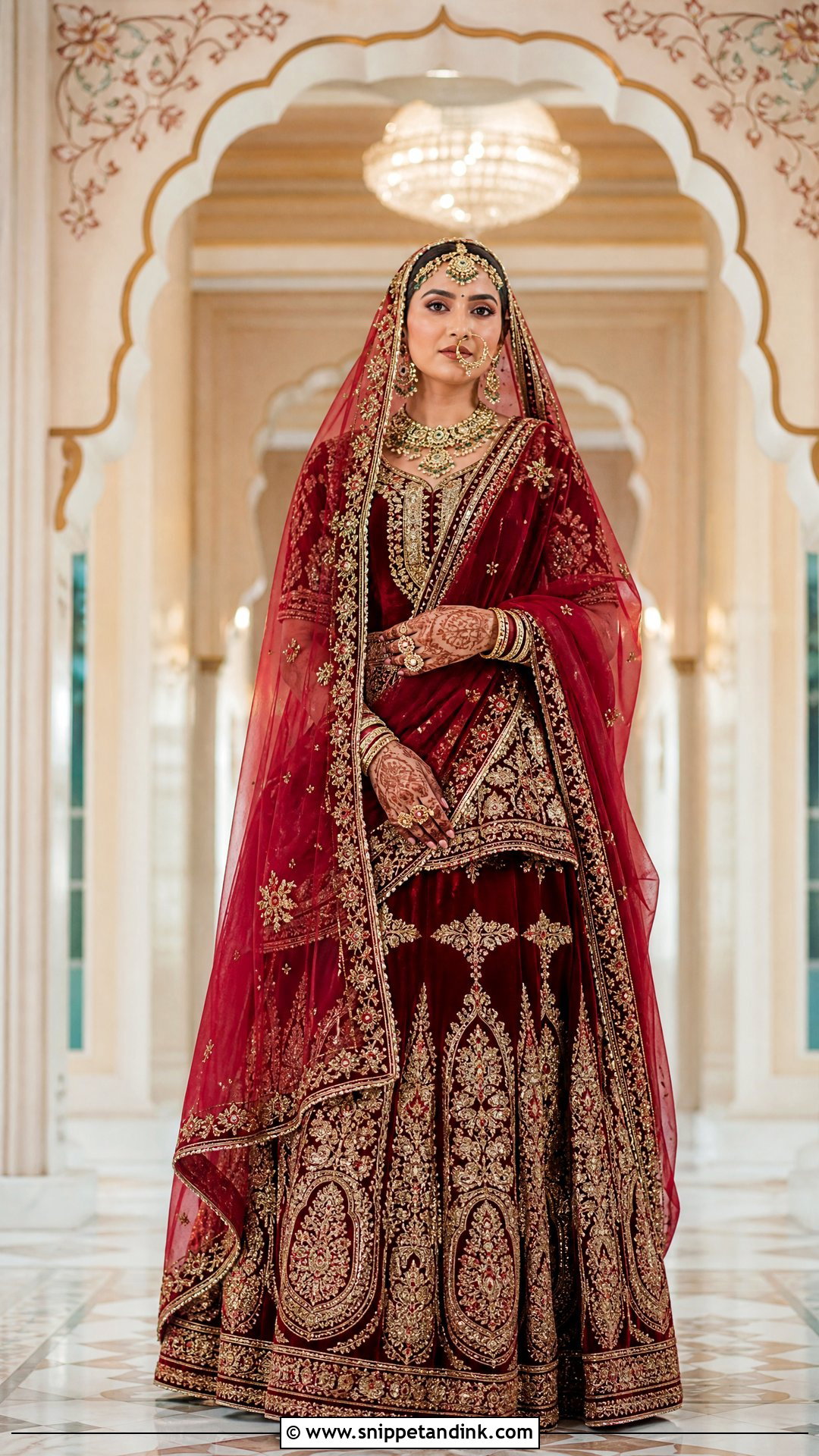
I like velvet best when it’s limited to the pieces that need structure. Here the ghagra and kanchli are crimson velvet, and a lighter silk kurti cuts the weight around the torso. Antique-gold zardozi, fine beadwork and clear floral borders suit the pile without hiding its texture. A sheer crimson odhni with a velvet-trimmed edge links the veil to the outfit while staying comfortable on the head. Borla, aad, rani haar, large nath, bajuband and stacked bangles, plus crimson velvet juttis. Keep it for cool weather, evening ceremonies and large indoor venues. In real heat, velvet becomes miserable within the first hour.
7. Peach And Gold Rajputani Bridal Poshak
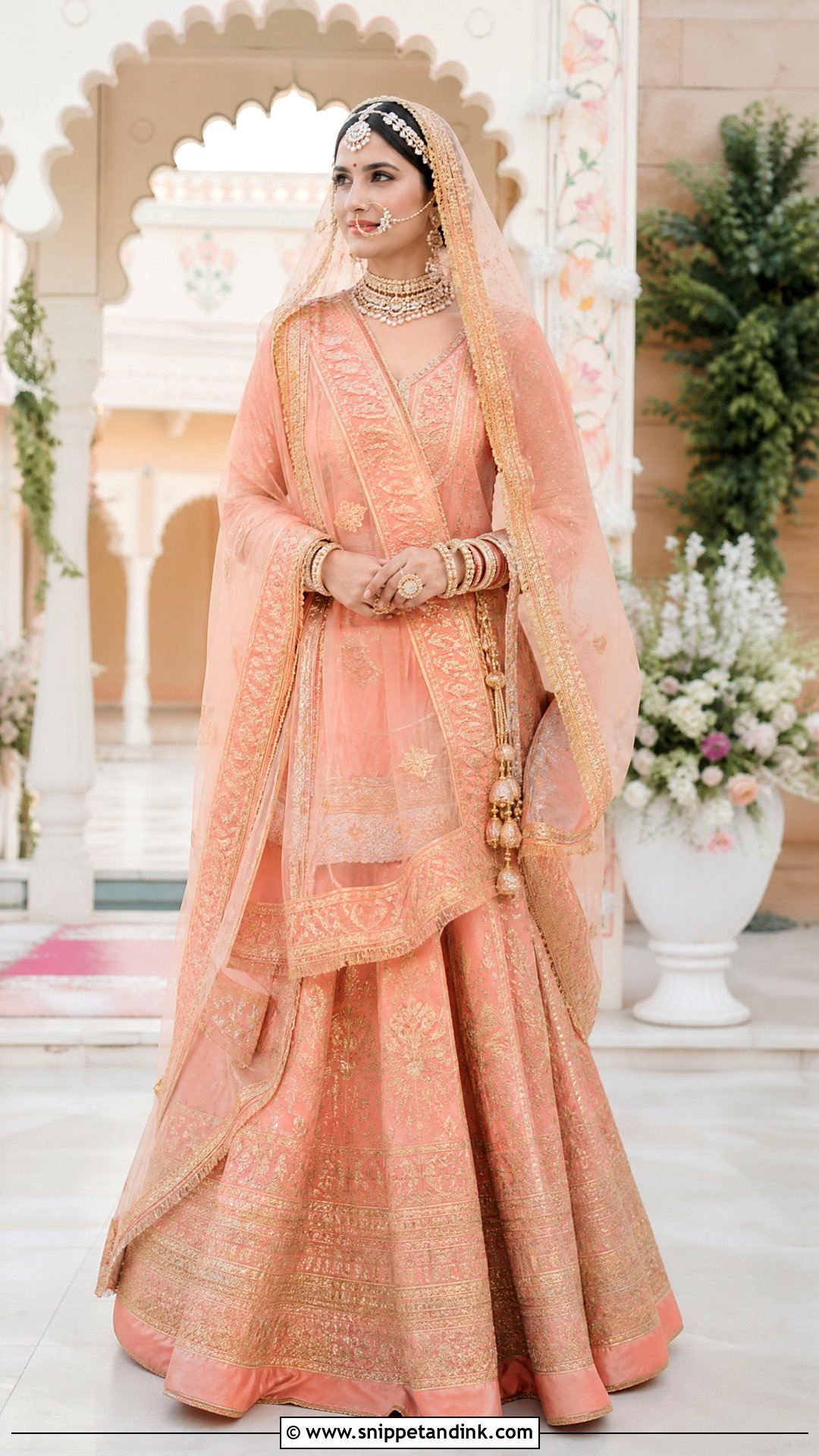
Peach is the softest color on this list, and the risk with soft colors is that the bride fades into the decor. Gold aari embroidery, gota patti borders and small pearl details give a peach silk or satin ghagra enough dimension to hold its own. A matching kanchli and kurti keep one long, unbroken line of color, and the odhni can be sheer peach with a broad gold frame. I’d steer you to champagne-gold or kundan rather than dark antique metal, which looks muddy against such a pale shade. Borla, aad, layered haar, nath, pearl-accented bangles and pale gold juttis. Morning light and courtyard settings flatter it most.
8. Mustard Yellow Rajputani Bridal Poshak
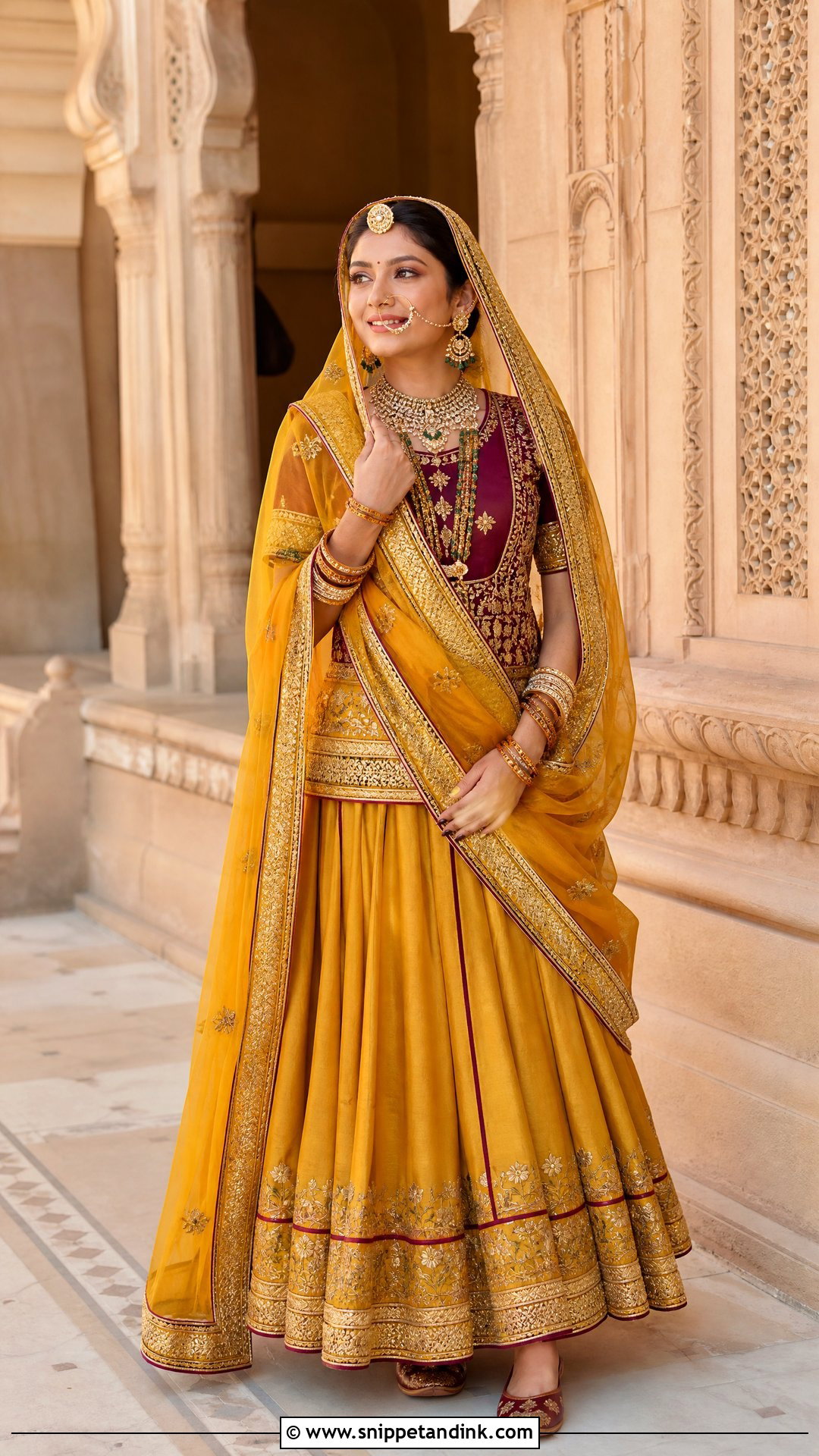
Mustard is underused for brides, which is a shame. Build the outfit around a mustard silk ghagra with maroon piping, antique-gold gota and evenly spaced motifs, then pair it with a maroon kanchli and a mustard kurti. A mustard odhni with a maroon-and-gold border completes the drape. Bright yellow gold can look brassy against mustard, so my pick is antique gold with a softer finish: borla, aad, long haar, nath, bangles and bajuband. Maroon juttis embroidered in mustard. Before committing, hold the fabric up to your face in daylight. Mustard flatters warm and olive skin readily but can make some complexions look sallow, and a maroon border near the face only partly corrects that.
9. Wine And Antique Gold Rajputani Bridal Poshak
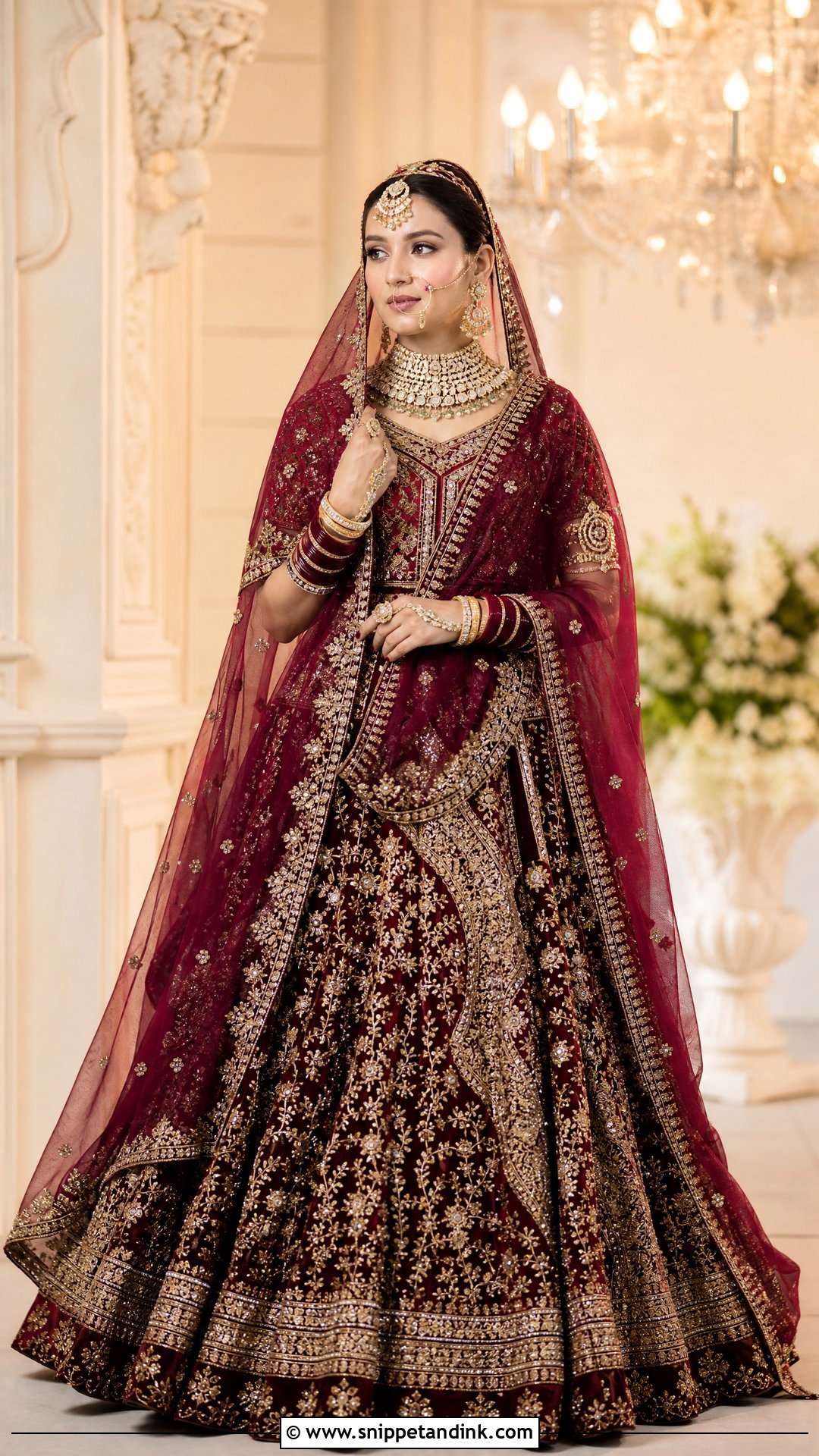
Wine is the most grown-up color here. A silk ghagra with antique-gold zardozi, fine sequin accents and a structured hem border, then a fitted wine kanchli and kurti with embroidery at the neckline, sleeves and front edges. Keep the odhni sheer and light, but insist on a border firm enough to stay visible over the head and shoulders. Polki and antique gold sit naturally on the dark base. I split the wine-colored bangles with gold kadas, because a solid run of dark bangles disappears in evening photographs. Borla, wide aad, layered haar, nath and bajuband, with matching embroidered juttis. An evening wedding or a stone-walled historic venue suits it.
10. Ivory And Red Rajputani Bridal Poshak
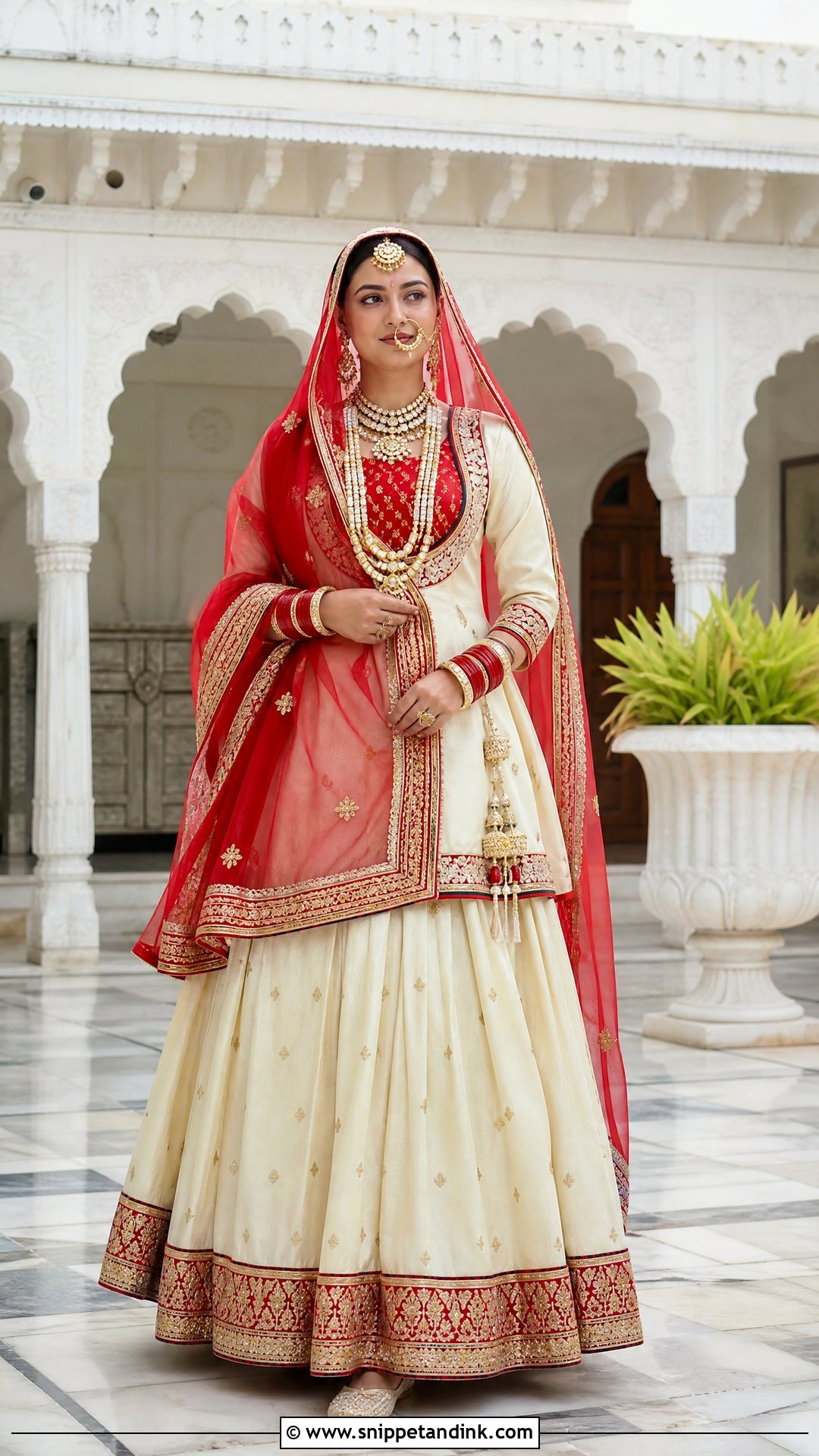
Ivory brings a lot of light into a poshak, and red keeps it bridal. Start with an ivory silk ghagra covered in fine gold embroidery and finished with a bold red border, then add a red kanchli and an ivory kurti with red piping and gota detail. The red odhni puts the traditional color right at the face, and an ivory inner drape can add fullness without weight. Classic yellow gold or kundan links the two shades: borla, aad, long haar, nath, bajuband and red bangles, with ivory juttis embroidered in red and gold. One honest caution: ivory shows every mark, from haldi to mehndi to the dust of a courtyard floor, so treat it as the wedding outfit only. Pale architecture in daylight shows the contrast best.
11. Emerald Green Kundan Rajputani Bridal Poshak
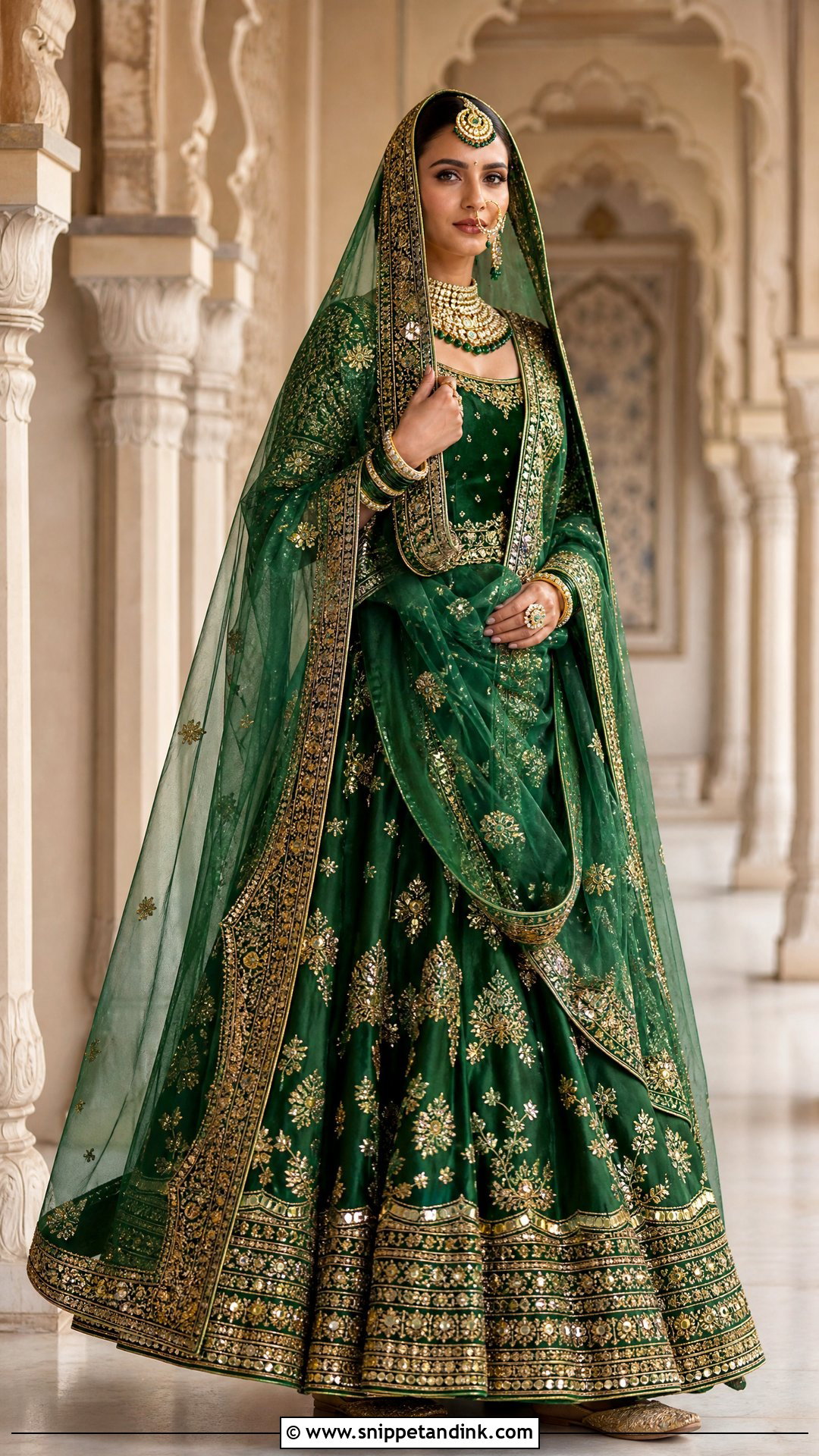
Emerald is a jewel tone, and it asks for jewel-like decoration, which is where kundan-inspired embellishment comes in. Choose a rich satin ghagra with gold aari work, kundan-style accents and a designed border, plus a matching kanchli and kurti with detail concentrated at the neckline, front panels and sleeves. A sheer emerald odhni with tiny gold motifs keeps the head covering refined. Kundan with a few red stones gives controlled contrast: borla, aad, rani haar, large nath, bajuband, and green bangles with gold kadas. Gold juttis with emerald embroidery. I check stone accents on the ghagra carefully at fittings, because glued stones catch on chairs and pop off when you sit. Evening weddings and heritage properties suit it.
12. Rose Pink Pearl Rajputani Bridal Poshak
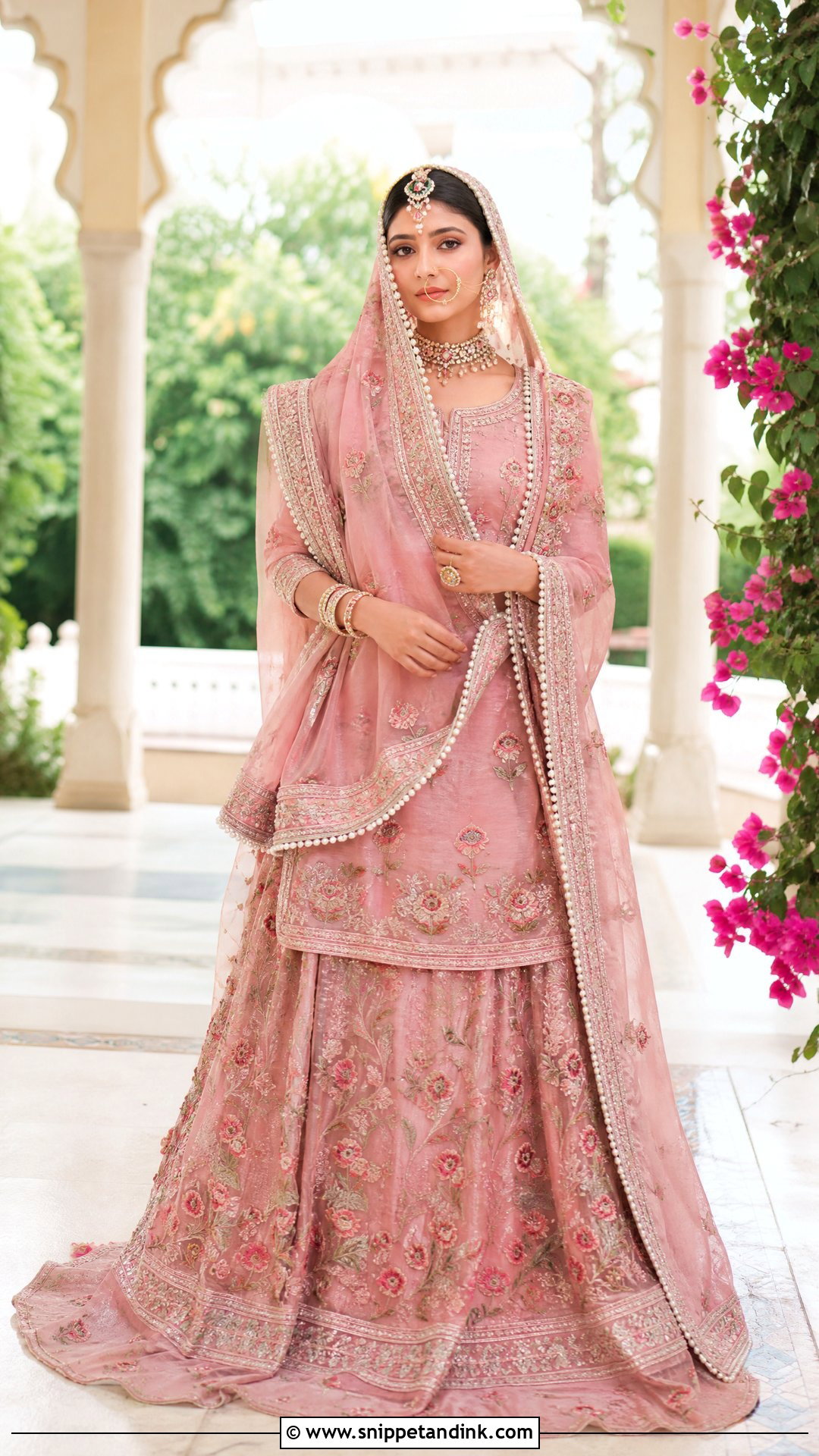
Pearls are soft against fabric and kind to the skin, which is part of why I like them on a poshak worn for a long day. A rose silk ghagra with floral threadwork, small pearl clusters and narrow gold gota borders, a matching kanchli and a slightly longer kurti that gives a little more coverage. Pearl edging on a lightweight rose odhni frames the face gently. Pearl-and-kundan jewelry keeps the palette quiet but formal: borla, aad, long haar, nath, pearl-detailed bangles and a slim bajuband. Rose juttis with cream and gold embroidery. Ask whether each pearl is stitched down individually; loosely strung clusters snag and shed pearls during a long ceremony.
13. Saffron And Magenta Rajputani Bridal Poshak
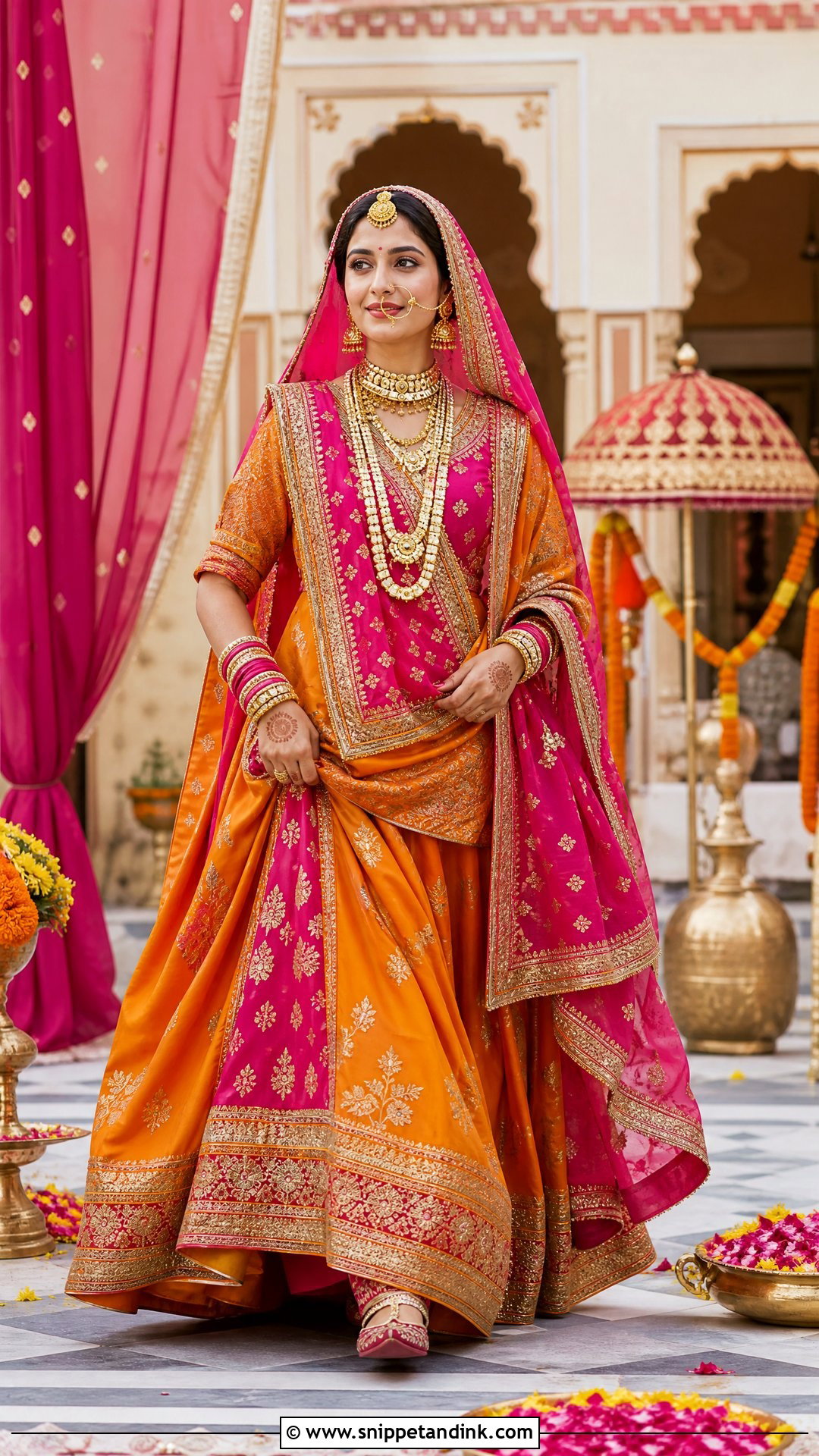
Saffron and magenta together have plenty of energy, and the trick is deciding which one leads. I let saffron take the ghagra, worked with magenta panels, gold gota patti and floral motifs, then put magenta on the kanchli so the stronger pink sits near the face, with a saffron kurti over it. A magenta odhni with a saffron underside or border makes the face drape striking. Warm palettes want yellow gold: borla, aad, layered rani haar, nath, bajuband and mixed saffron-and-magenta bangles. Magenta juttis with gold embroidery ground the brighter skirt. Daylight ceremonies and colorful decor are its natural home.
14. Royal Blue And Red Rajputani Bridal Poshak
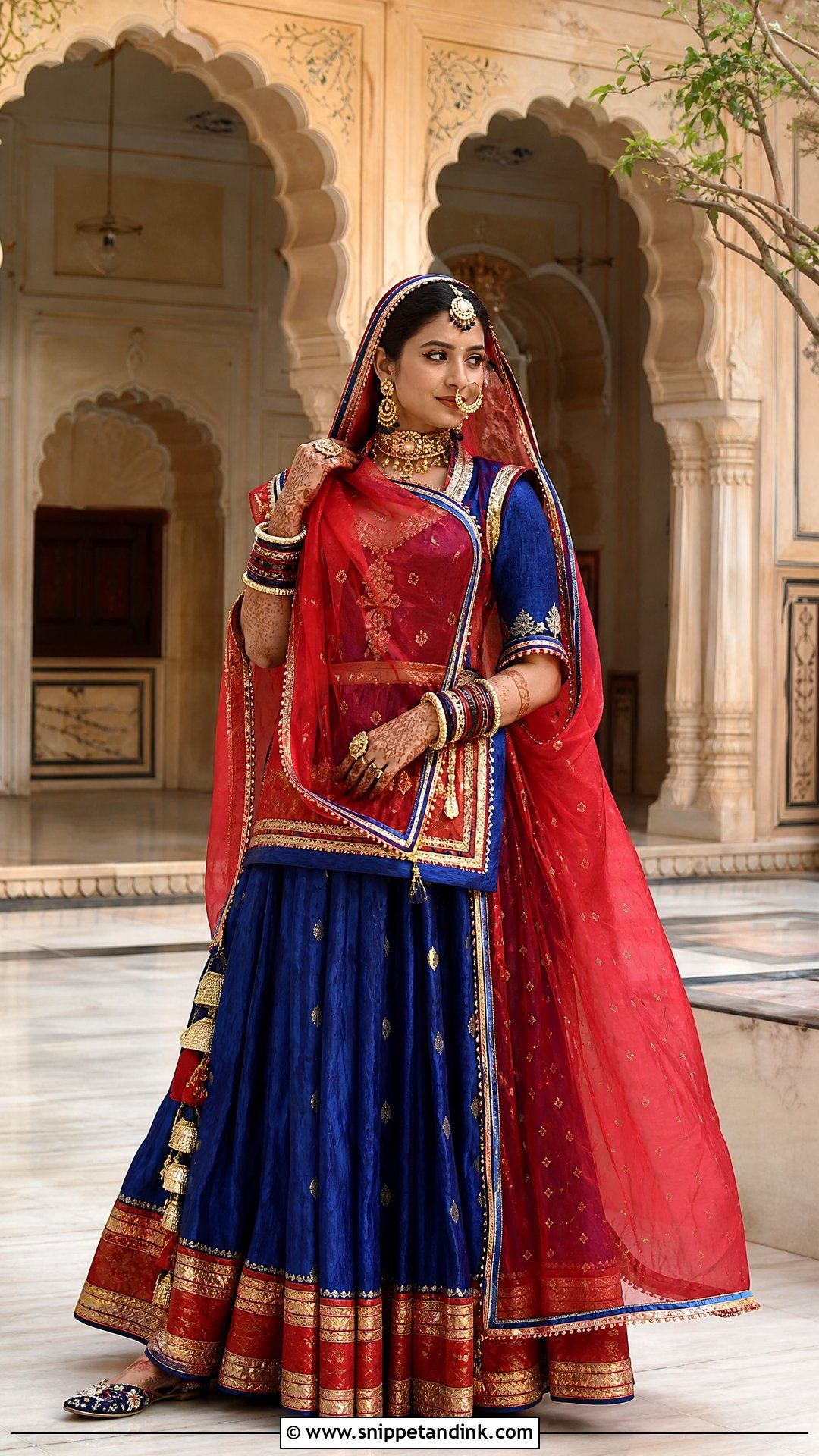
Before you fall for royal blue and red, ask the elders. Blue is avoided for brides in some families and regions, and it’s far easier to find that out now than at the final fitting. Where it’s welcome, the combination has very strong definition in photographs. A royal blue silk ghagra with red edging, gold zardozi borders and restrained motifs, then a red kanchli and royal blue kurti to spread the contrast evenly. A red odhni with blue piping keeps a bridal shade near the face. Antique gold with small red or blue enamel details, borla, aad, long haar, nath, bajuband and red bangles. Blue velvet juttis with red-and-gold embroidery finish it.

15. Burgundy Aari Work Rajputani Bridal Poshak
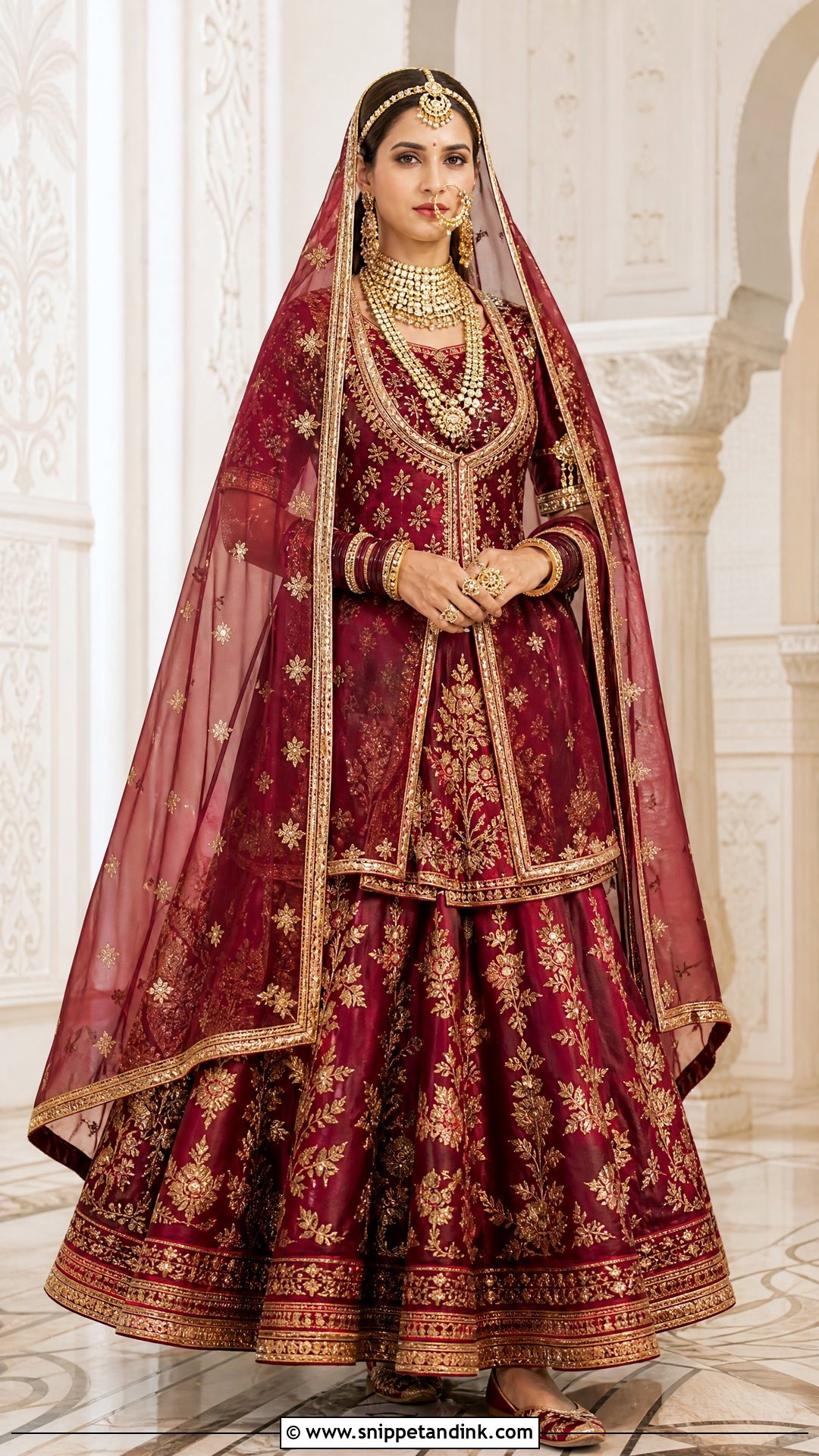
Aari work is done with a hooked needle that lays fine, continuous lines, so a dark base like burgundy shows it more clearly than any bright color would. Choose a silk-satin ghagra with gold floral vines, small buti and an ornate border that follows the skirt’s movement, and a burgundy kanchli and kurti with denser work at the neckline and front opening. A sheer burgundy odhni with an embroidered pallu adds ceremony without a second heavy layer. Antique gold and muted kundan suit the shade: borla, structured aad, long rani haar, nath, bajuband, and burgundy bangles divided by gold kadas, with coordinated juttis. I’d wear it for an evening or winter wedding.
16. Coral And Green Rajputani Bridal Poshak
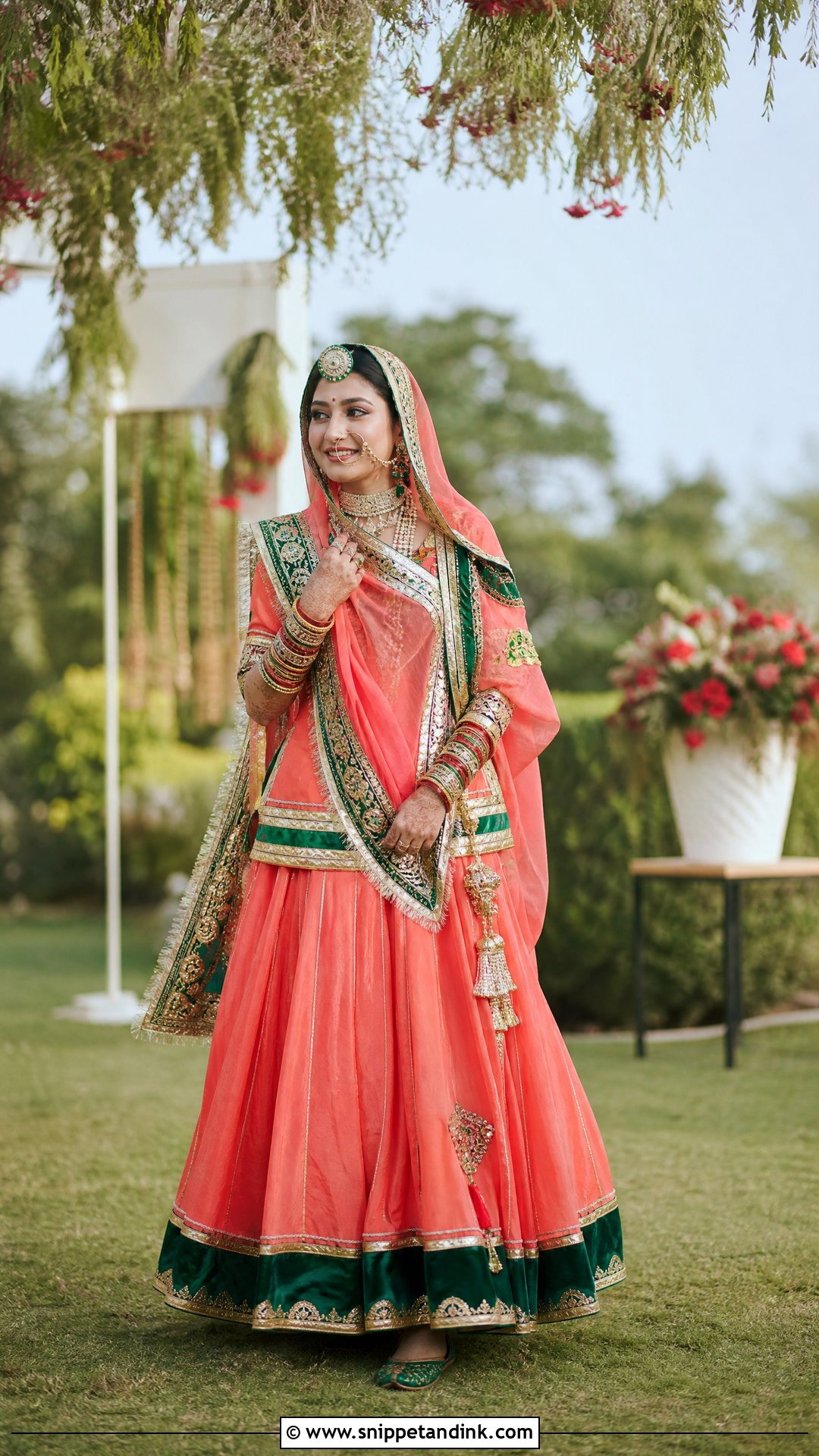
Coral and green is the combination I suggest when a bride wants color but finds maroon and burgundy too heavy. A coral silk ghagra with emerald borders, gold gota patti and balanced floral embroidery, then an emerald kanchli and coral kurti to put green definition at the neckline and waist. A coral odhni with an emerald edge repeats the skirt’s contrast. Yellow gold with green stones or meenakari reinforces the palette. A borla, aad necklace, layered haar, nath, bajuband and coral bangles with green details complete it, with emerald juttis embroidered in coral and gold. Coral can turn orange under warm indoor lights, so I keep it for daytime and garden venues.
17. Red Bandhani And Green Odhni Rajputani Bridal Poshak
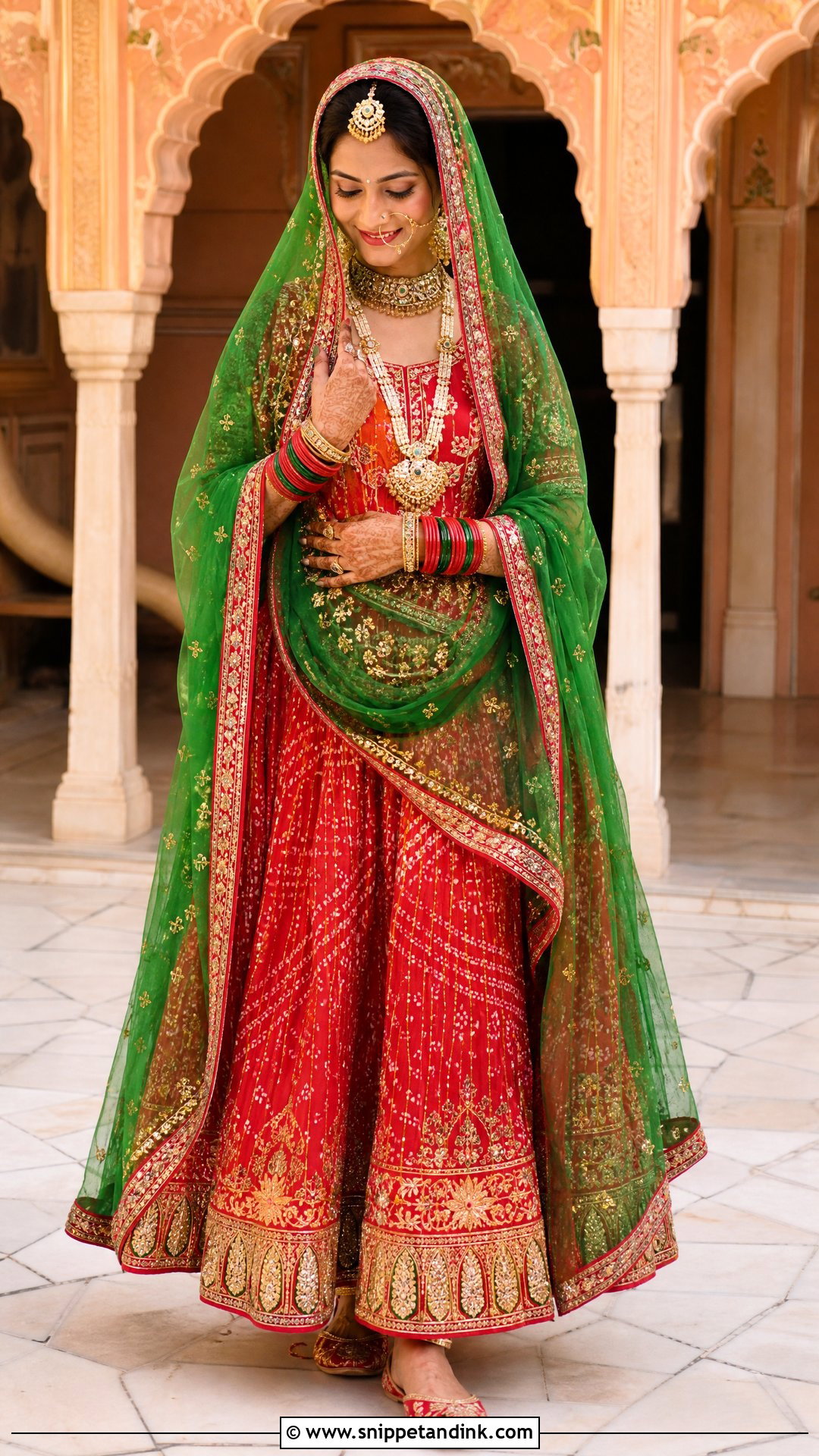
Red bandhani under a green odhni is about as traditional a pairing as a Rajasthani bride can wear. The ghagra is red bandhani with a broad green-and-gold hem, and the kanchli is red with focused gota embroidery. Keep the kurti fitted and fairly plain so the patterned skirt leads. Over the head goes a sheer green odhni with red piping and gold gota, so every piece talks to the others. Gold jewelry suits the bold colors: borla, aad, rani haar, nath, bajuband and a mix of red and green bangles, with red embroidered juttis. Greens vary enormously between dye lots, so I compare the odhni and the hem border side by side in daylight before anything is bought. Two clashing greens are far more noticeable than a red that is slightly off.
18. Blush Pink And Maroon Rajputani Bridal Poshak
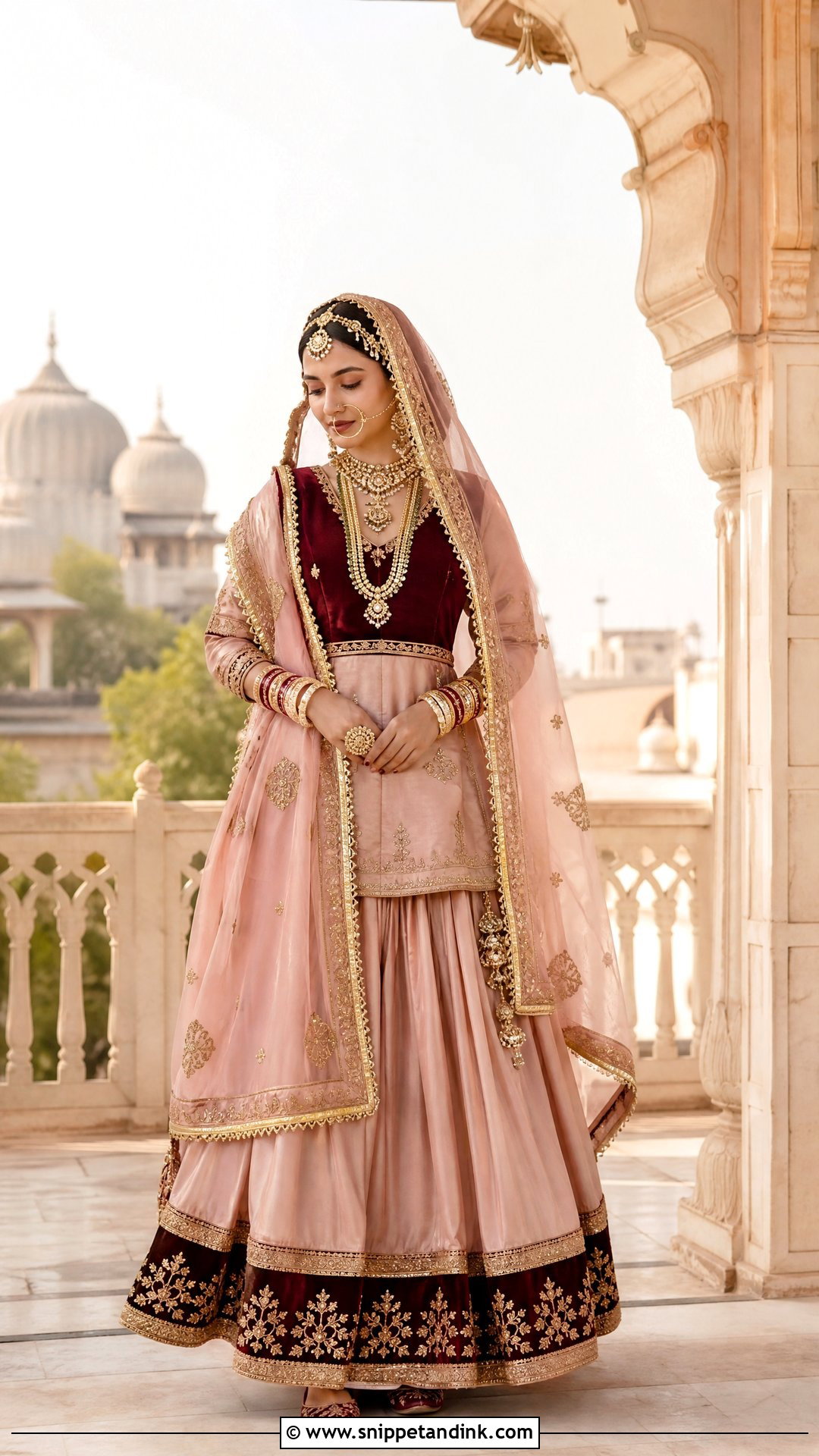
Blush on its own can look too sweet for a bridal ceremony. Maroon fixes that. A blush silk ghagra with maroon velvet borders, gold embroidery and fine pearl details, with a maroon kanchli and blush kurti for structure up top, and a blush odhni edged in maroon and gold. Kundan with pearl drops suits the lighter fabric while maroon stones add definition: borla, aad, layered haar, nath, bajuband, blush bangles divided by maroon and gold kadas, and maroon velvet juttis. This is one of the few poshaks here I’d happily see carried from a daylight ceremony straight into an evening reception without a change.
19. Rust And Gold Rajputani Bridal Poshak
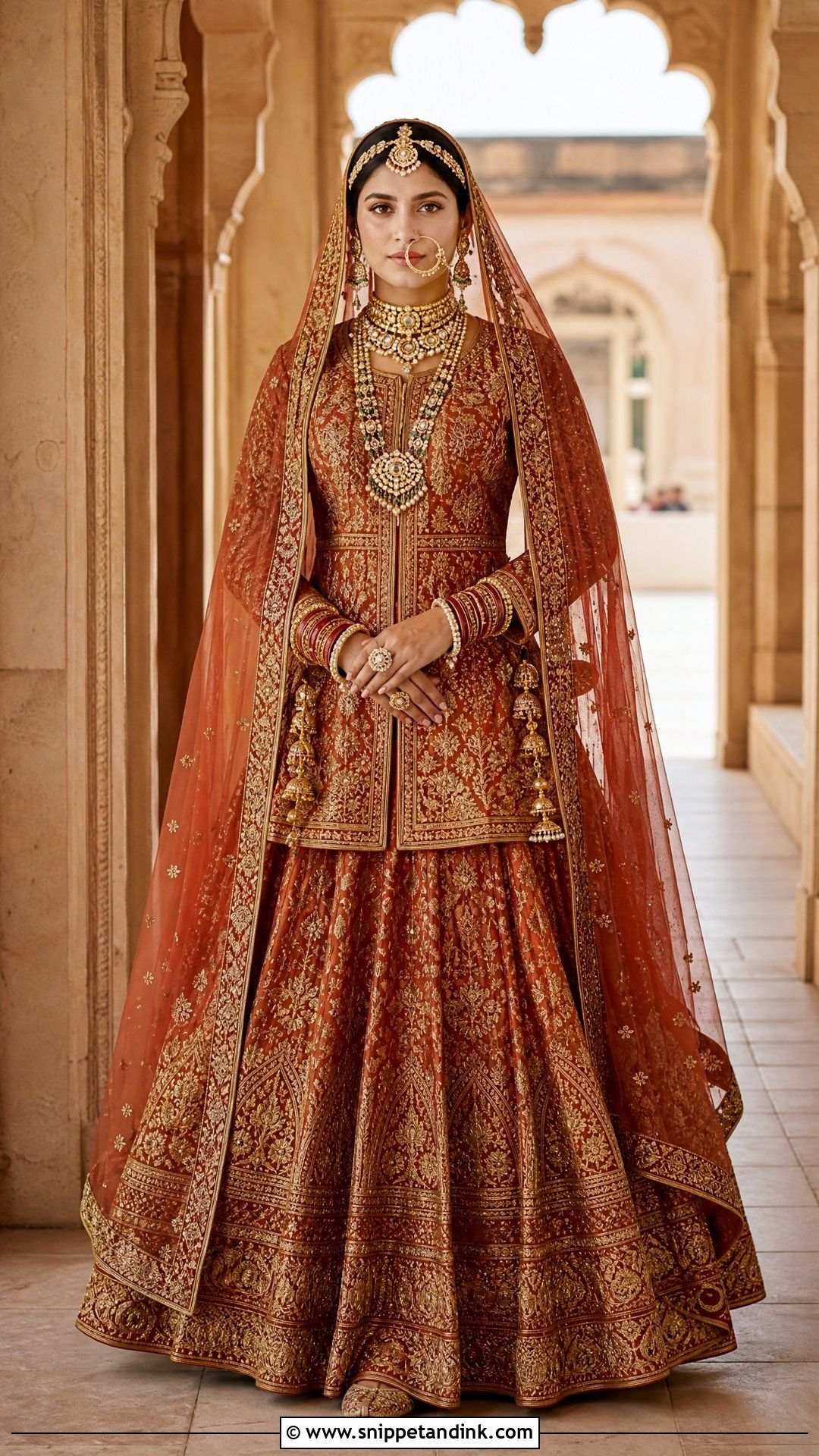
Rust sits between red and brown, and on many skin tones it’s warmer and more flattering than a cool crimson. Choose a rust silk ghagra with antique-gold zari, gota borders and florals arranged in clean vertical sections; vertical placement draws the eye down the skirt and makes the bride look taller. Matching kanchli and kurti keep the line unbroken, and a sheer rust odhni with a detailed gold pallu lets the upper embroidery show through. Antique gold is the most flattering metal with warm color: borla, aad, long haar, nath, bajuband, and rust bangles mixed with textured gold kadas. Rust juttis with a softly pointed toe. Autumn or winter weddings and sandstone venues suit it.

20. Multicolor Panel Rajputani Bridal Poshak
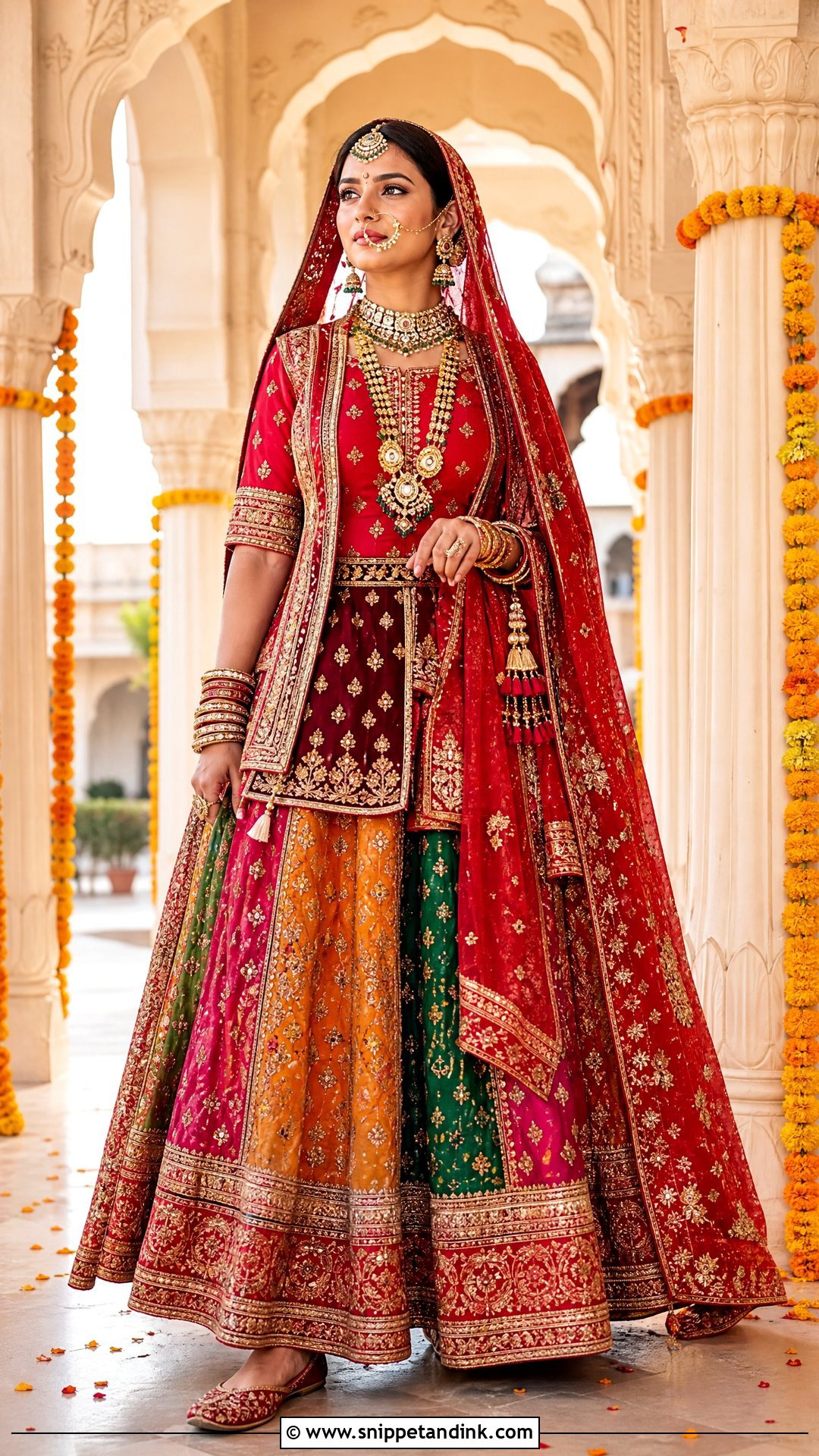
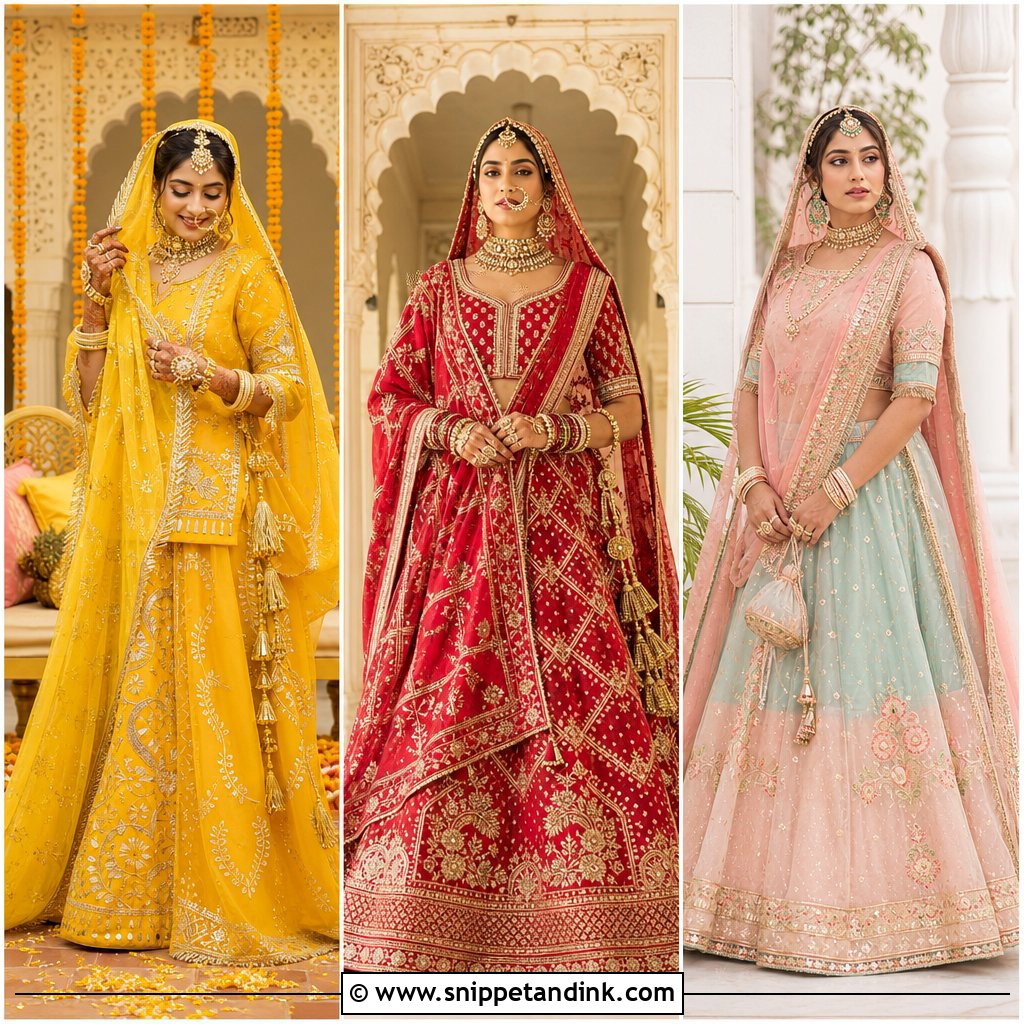
Multicolor panels can look chaotic or controlled, and the difference lies in the top half. Choose a red-based silk ghagra with alternating saffron, emerald, pink and maroon panels unified by repeating gold gota borders, then calm everything above the waist with a red kanchli, a maroon kurti and a red odhni carrying small multicolor motifs. I’d keep the jewelry plain gold rather than multicolored stones so the clothing stays central: borla, aad, rani haar, nath, bajuband and red-and-gold bangles. Red juttis with tiny details in the skirt colors. When the bride turns, the panels fan open, and that moment is worth pointing out to your photographer.
Real Gota, Polyester Gota and Why It Matters
Gota was originally woven from metal-coated wire, and some workshops still make it that way. Most bridal wear today uses a metallized polyester ribbon instead. Neither is wrong, but they behave differently, and you should know which one you’re paying for.
- Metal-based gota feels heavier and slightly cool, crinkles rather than bends, and has a softer glow. It can tarnish over the years if it’s stored damp.
- Polyester gota is lighter and shinier and won’t tarnish, but it can look flat in close-up photos and will pucker or melt under a hot iron.
- Ask the workshop which one they use and have the answer written on your order slip.
- Press any gota poshak from the reverse, over a towel, on low heat, or simply have it steamed.
Can You Wear a Poshak Through a Hot Afternoon?
Yes, with some planning. Ask for cotton or cotton-silk linings in the kanchli and ghagra rather than synthetic ones, and have sweat shields stitched into the kanchli underarms, since perspiration marks on silk often don’t come out. Keep heavy velvet and dense zardozi for winter dates. A lighter odhni helps more than anything else, because it’s the layer that traps heat around the head, and I always ask for a cool, shaded room between rituals where the bride can lift it off for a few minutes.
Wear the Whole Poshak Once Before the Wedding
A bridal poshak has to respect tradition and still suit the woman wearing it, her comfort and the place she’s getting married. Classic red, jewel tones, pastels, bandhani and fine handwork all appear above, and any of them can be the right answer. Before you finalize, check the fabric weight, the ghagra length, the kurti fit, the way the odhni sits and the finish on every border. Try everything on together with your jewelry and juttis instead of judging pieces one at a time, and practice sitting, walking and handling the head drape. Ask family members about regional customs and ceremonial colors early. Put together with that much care, the outfit will feel regal, comfortable and respectful of where it comes from.
You'll Like These Ideas:









Leave a Reply