
A pared-back Indian bridal look isn’t a plain one. When I style a bride who wants less, I’m deciding which single element gets to lead, the textile, the jewellery or the flowers, and then keeping everything else quiet enough to let it. A rich Banarasi needs only delicate jewellery. A simple organza saree can feel ceremonial with jasmine, bangles and a well-placed dupatta. Many brides now also want lighter makeup, with their own skin showing through and hair they can sit comfortably in for hours of rituals. The twenty looks below cover sarees, lehengas, shararas and suits across several traditions, each with how I’d balance it.
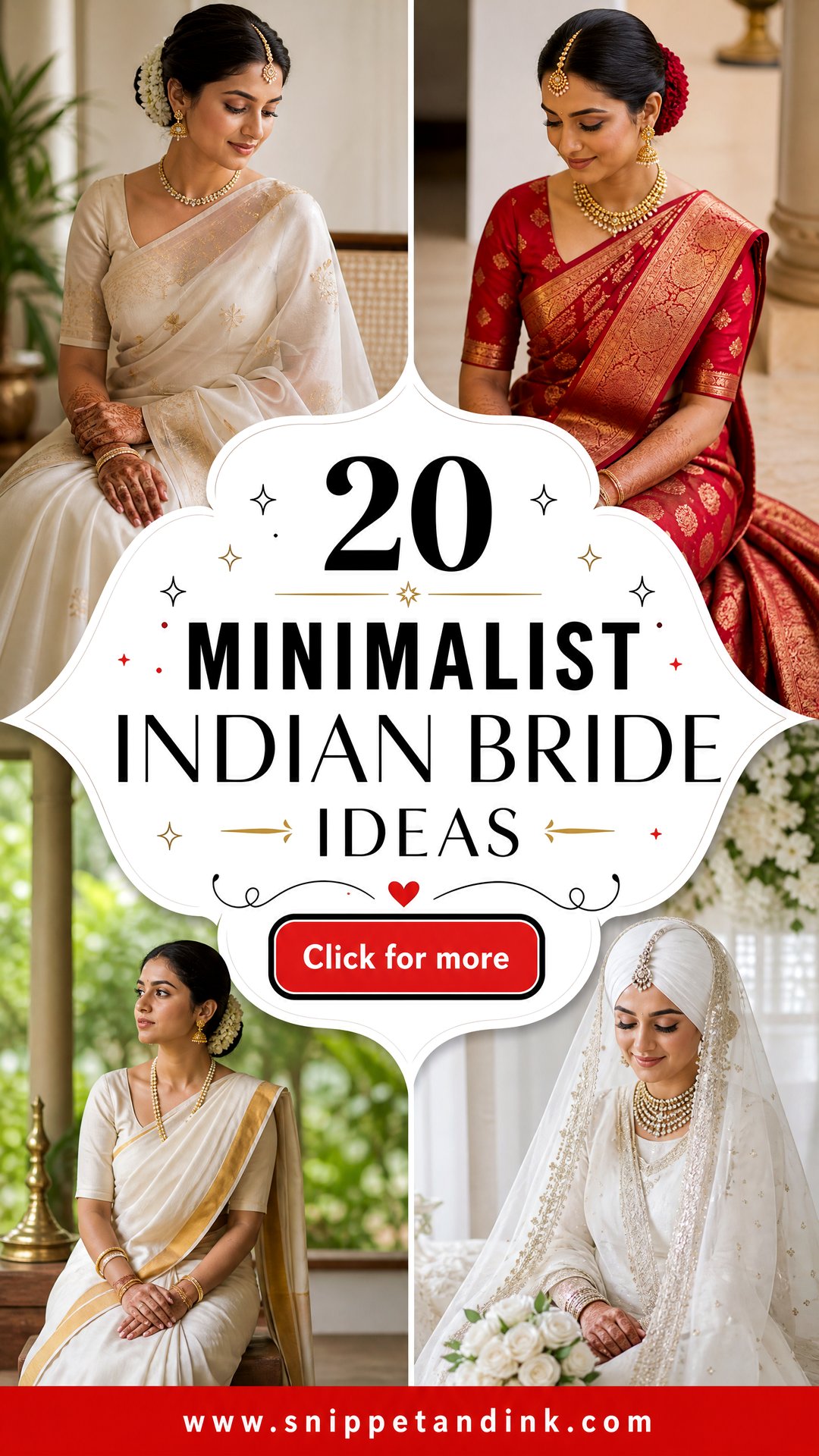
One Loud Piece of Jewellery, and Which One It Should Be
With a pared-back outfit, I let one piece of jewellery carry the bridal weight and keep the rest supporting. Which one depends on the outfit and the face.
- A necklace leads best with a deep or open neckline. With a high-neck blouse, it crowds the collar, so move the focus elsewhere.
- A maang tikka or matha patti suits a centre-parted bun and works well with a dupatta on the head, since it stays visible beneath it.
- Large jhumkas or chandbalis can lead when the necklace is skipped, but test their weight. Heavy earrings pull on the lobe across a long ceremony; chains looped into the hair take some of the strain.
- A nath is a strong focal point for the face, though it can get in the way while eating and needs a secure fit, especially if your nose isn’t pierced.
If you’re inheriting a heavy set, you don’t have to wear all of it. Choosing the one piece that matters most often looks more meaningful than wearing the whole set at once.
1. Minimalist Red Silk Lehenga Bride
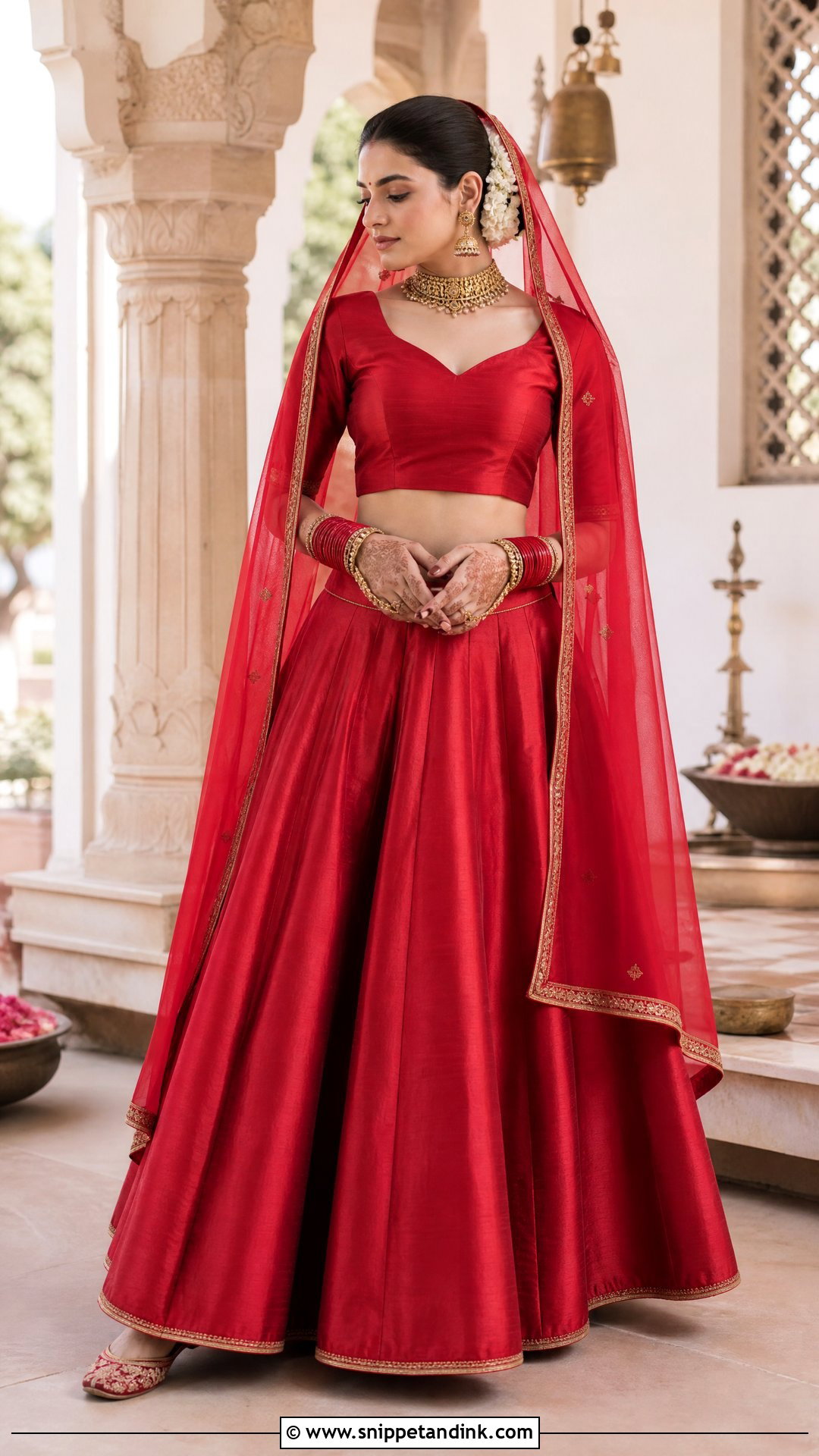
Red silk carries the bridal message by itself, so the embroidery can step back to a narrow zari border on a clean A-line skirt. A light dupatta over one shoulder or the head, a fitted blouse and medium jhumkas are enough alongside one gold choker. I’d keep red glass bangles rather than heavy gold so the hands don’t compete with the neck. A sleek centre-parted bun with a small circle of fresh jasmine finishes it. A satin base, softly lined eyes and a muted red lip keep the face in the same register. The real benefit is weight: a lehenga without dense embroidery is far easier to sit in through a long ceremony.
2. Minimalist Ivory Organza Saree Bride
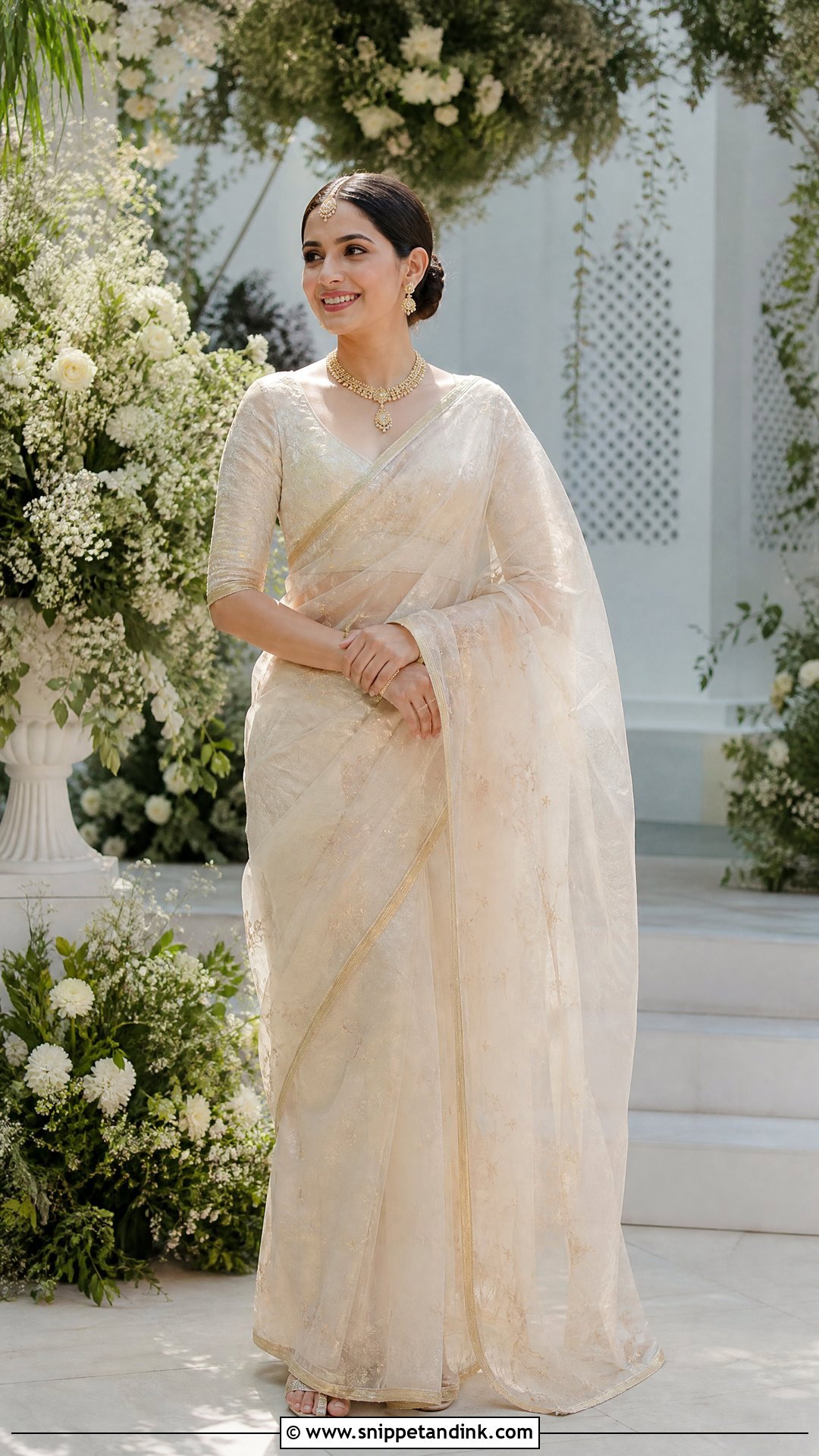
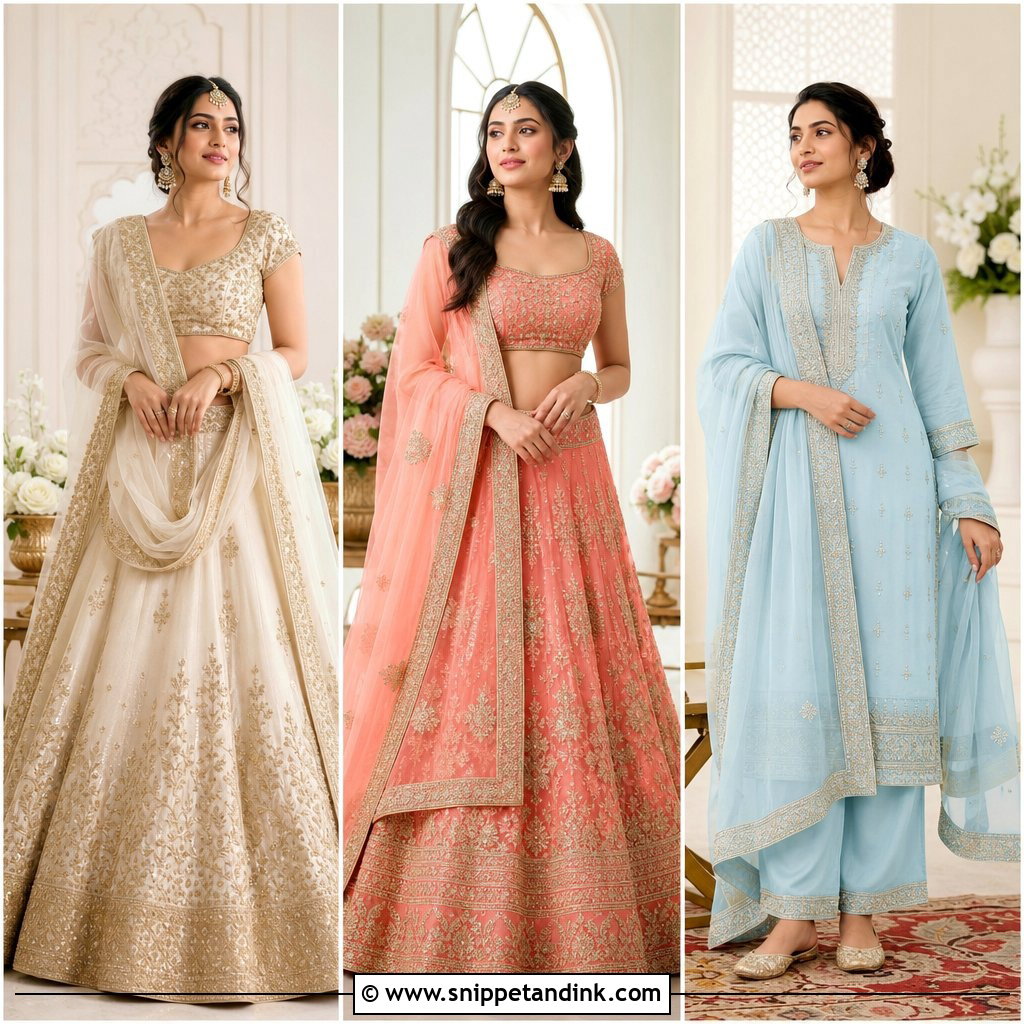
Will ivory feel bridal enough for the main ceremony? It does when the texture carries it. Organza with fine gold threadwork or a narrow embroidered edge catches light in a way plain cotton never would. An elbow-sleeve blouse in the same ivory adds structure under the sheer fabric. One heritage necklace, small drops and a slim maang tikka are plenty. Leave the pallu long and loose; folded tight, organza loses the translucency that makes it special. I’d keep this one for an intimate daytime wedding, where natural light flatters the pale fabric, and check first whether any elders in the family will expect red.
3. Minimalist Blush Pink Lehenga Bride
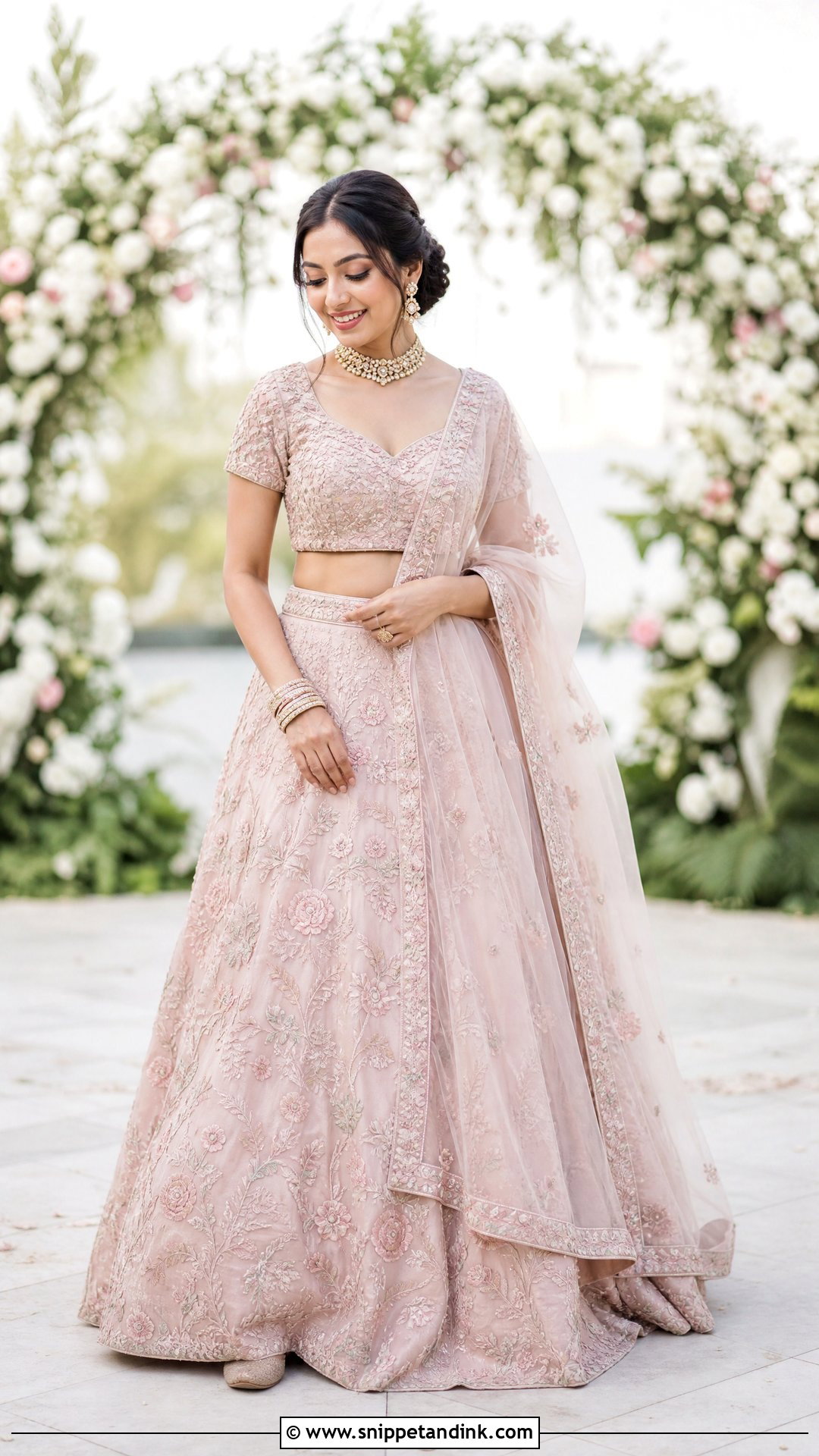
Blush pink softens the whole bridal picture, which suits brides who find deep red overwhelming on them. Tonal embroidery or scattered floral motifs keep the lehenga quiet; contrast work in gold or a darker pink would break that up. One sheer dupatta and a short-sleeve blouse keep the silhouette light. A delicate kundan choker and a few coordinated bangles are enough. One caution from fittings: pale pink can wash out in strong midday sun, so if you’re outdoors, a slightly deeper rose holds its colour better. Peach blush and a pink-nude lip suit the palette, and pale roses in a low bun tie it together.
4. Minimalist Red Banarasi Saree Bride
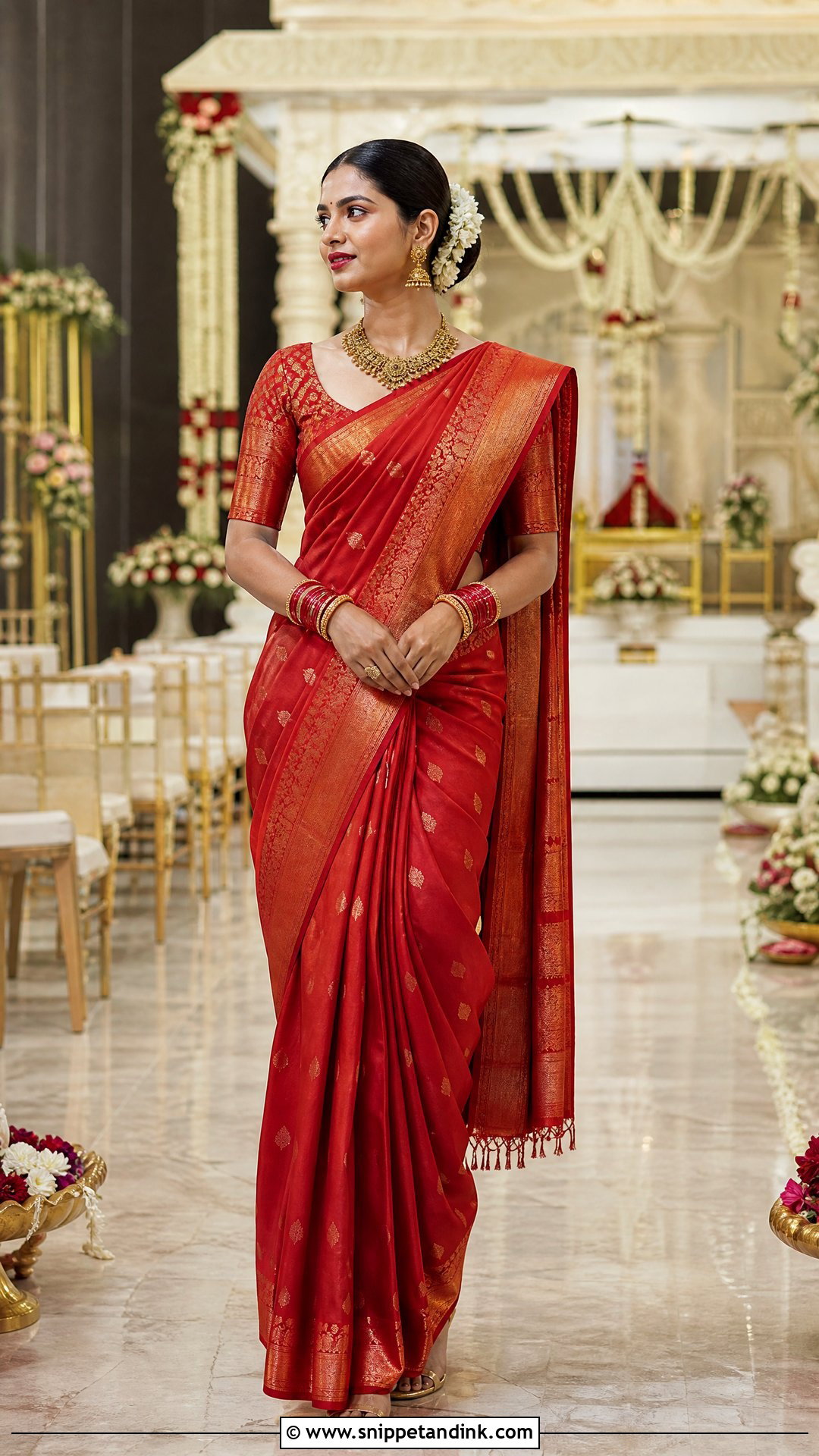
The sheen of Banarasi silk does most of the dressing for you. I’d look for small woven motifs and a defined gold border rather than an all-over brocade, which reads heavy in photographs. A matching red blouse keeps it unified. One short gold necklace, traditional earrings, a few red-and-gold bangles and a small bindi finish it. Banarasi silk is heavier than it looks, so I pin the pleats at the waist and the pallu at the shoulder with more care than usual; a loose pallu slides off during rituals. A classic red lip and roses or jasmine in a sleek bun keep it traditional.
5. Minimalist Gold Kanjivaram Saree Bride
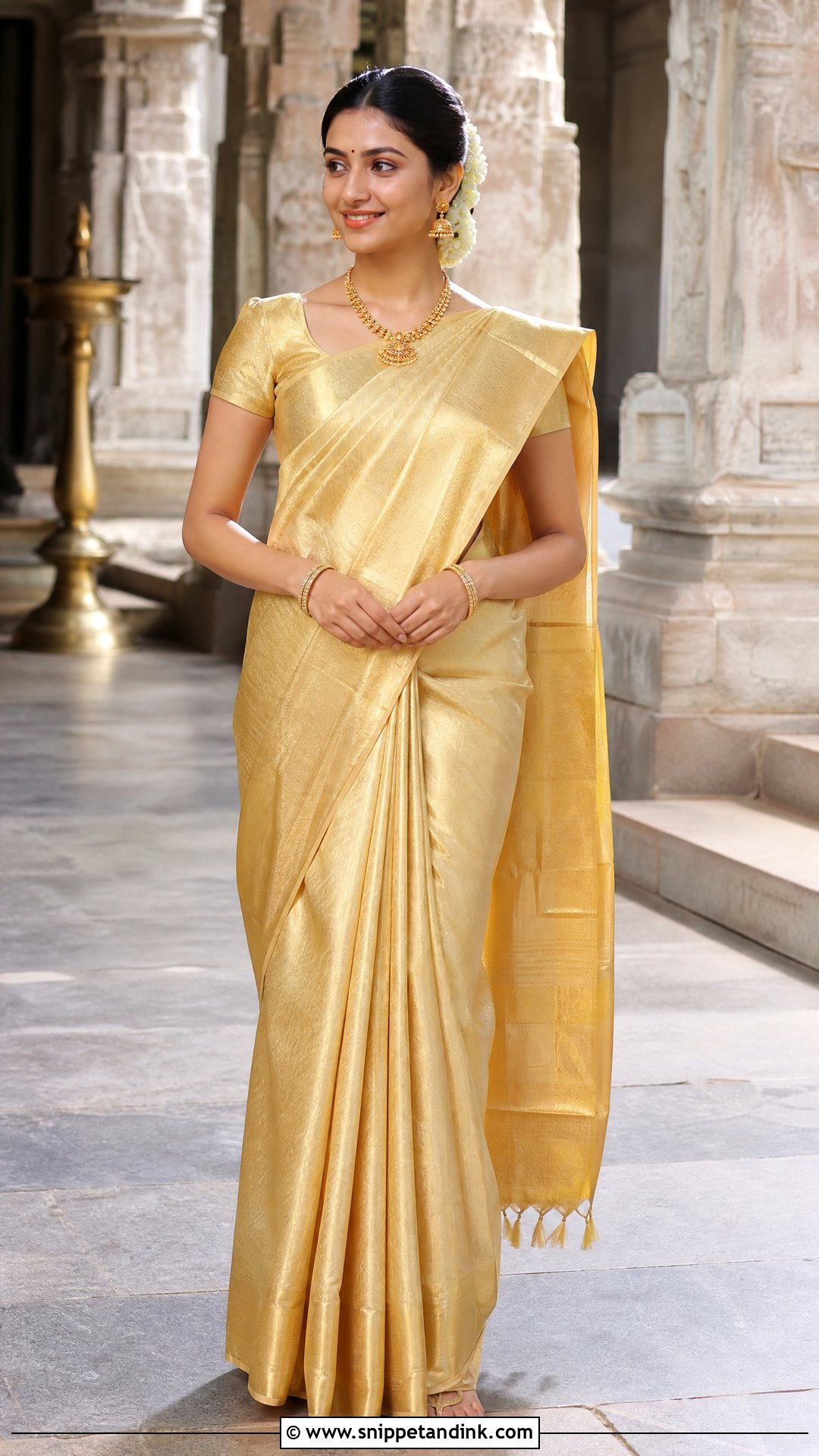
Golden Kanjivaram glows in temple light and daylight, especially when the motifs are limited and the border is clean. Champagne, antique gold or muted beige all work; a blouse in the same family keeps it streamlined rather than the usual contrast colour. One temple necklace with matching earrings, slim bangles and a discreet nose stud are enough. Kanjivaram silk is thick and stiff when new, so I ask the bride to have it pre-pleated or at least practise draping once, or the pleats bulk at the waist. A braid or bun with jasmine, warm blush and softly kohled eyes complete it.
6. Minimalist Kerala Kasavu Saree Bride
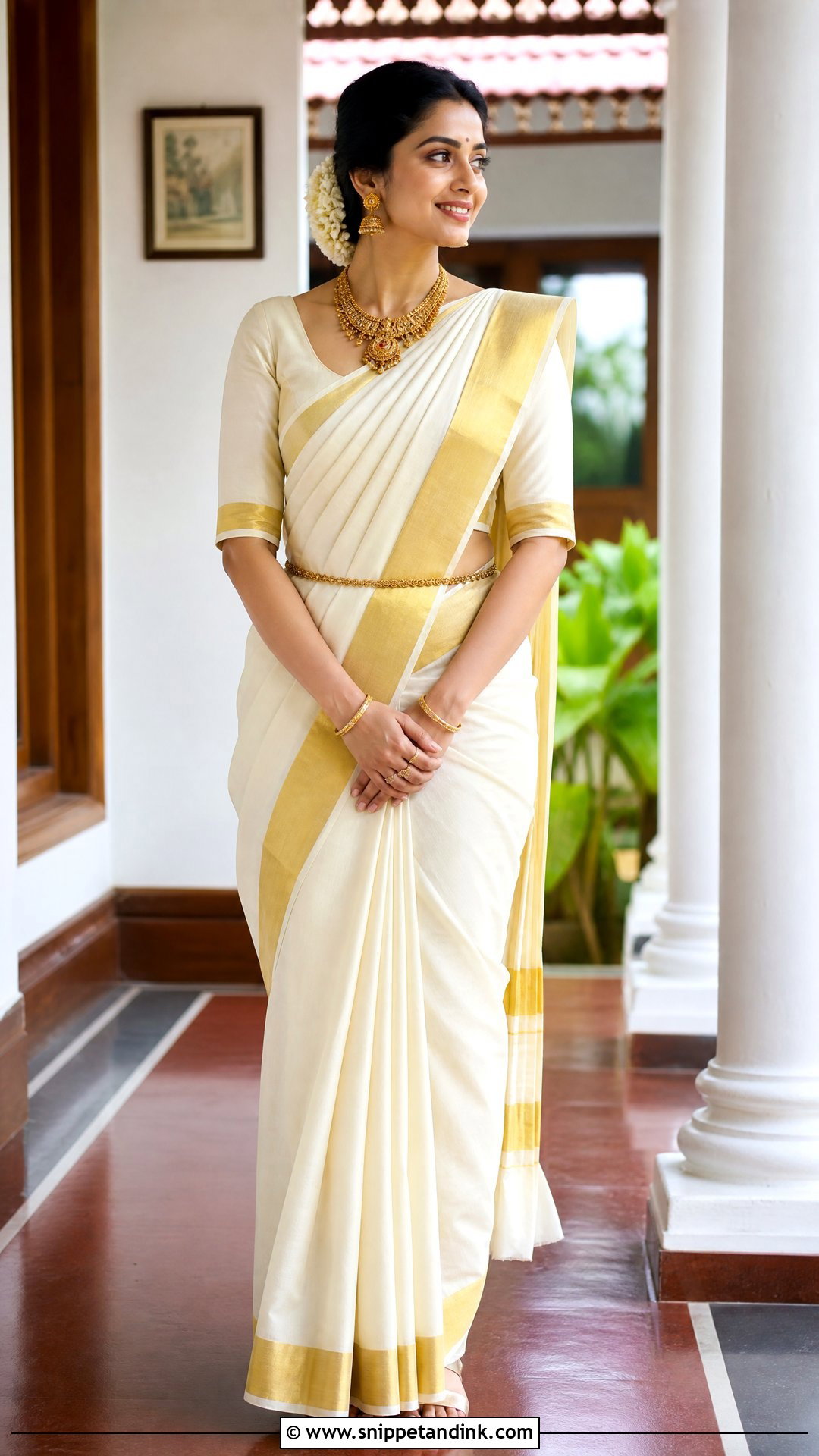
Kasavu is about as understated as Indian bridal dressing gets: crisp off-white handloom cotton with a gold border. A broad but uncluttered border looks best. Pair it with an ivory, cream or muted gold blouse; a high neck or elbow sleeves make the cotton feel more formal. One traditional gold necklace, small jhumkas, a slim waist belt and a modest stack of bangles are traditional. Kasavu creases more than silk, so steam it the morning of and avoid sitting on the pallu in the car. Jasmine over a low bun, a small red bindi and berry lips add enough colour.
7. Minimalist Pastel Sharara Bride
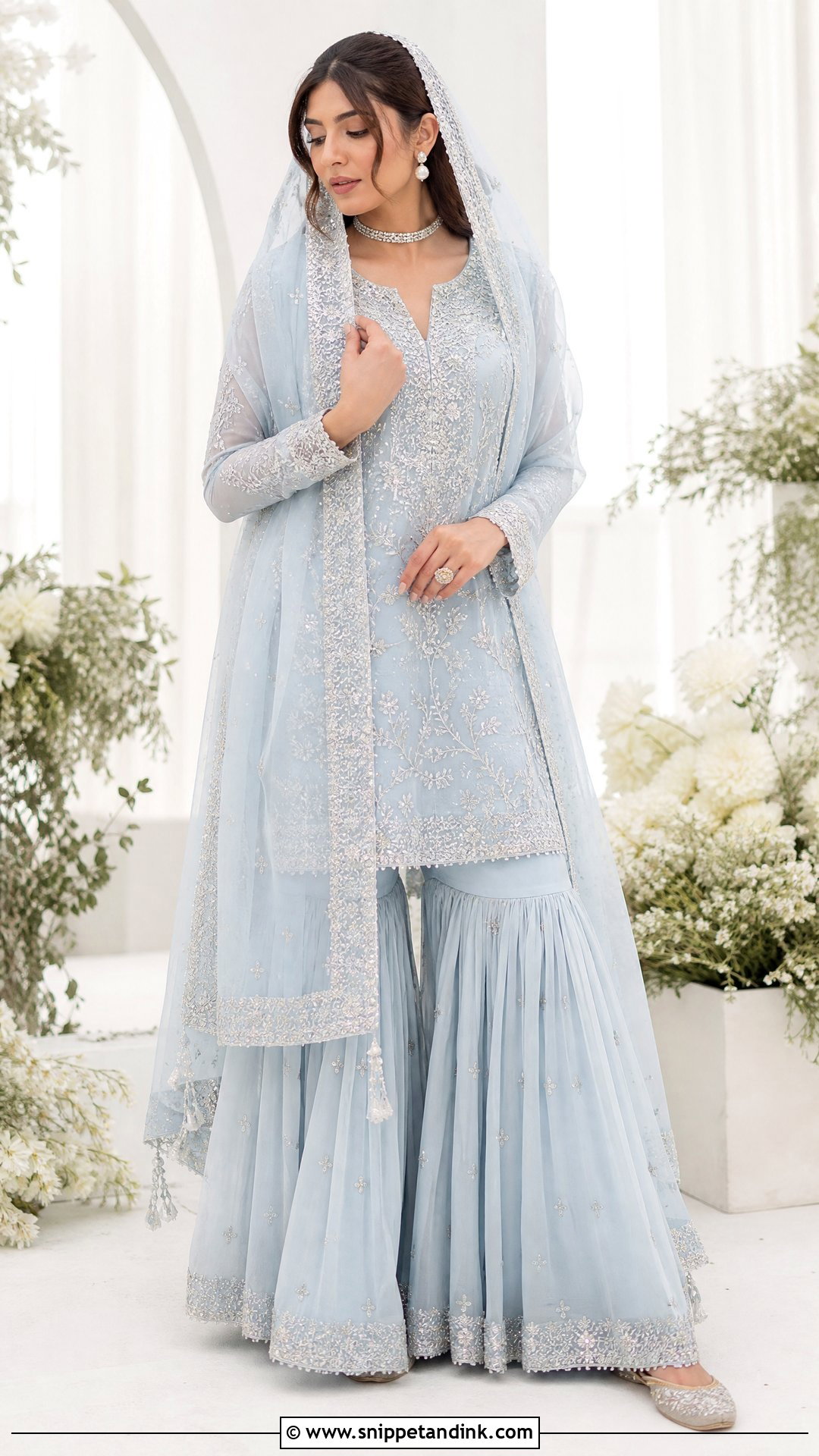
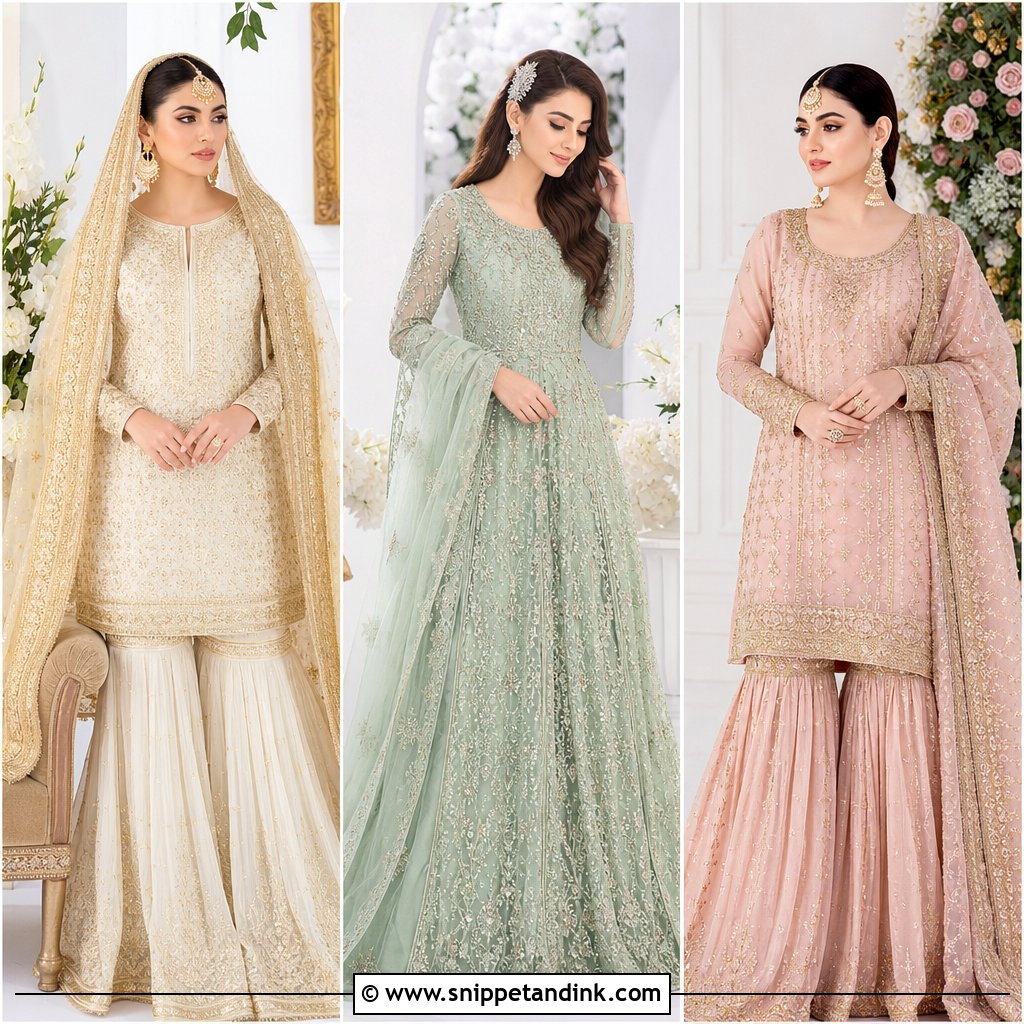
Shararas give a bride freedom to move, which matters for a nikah or a wedding where you’ll be on your feet greeting guests. A long kurta with fine threadwork over gently flared sharara pants and a sheer matching dupatta is the structure. Powder blue, mint, dusty rose and pale peach all take minimal embellishment well. Earrings in pearl or polki do the work, so if you add a choker, keep it slim. A dupatta draped loosely over the head adds ceremony. Get the length right: sharara hems that touch the floor catch on heels and steps, so hem them to your actual flats.
8. Minimalist Red Chanderi Saree Bride
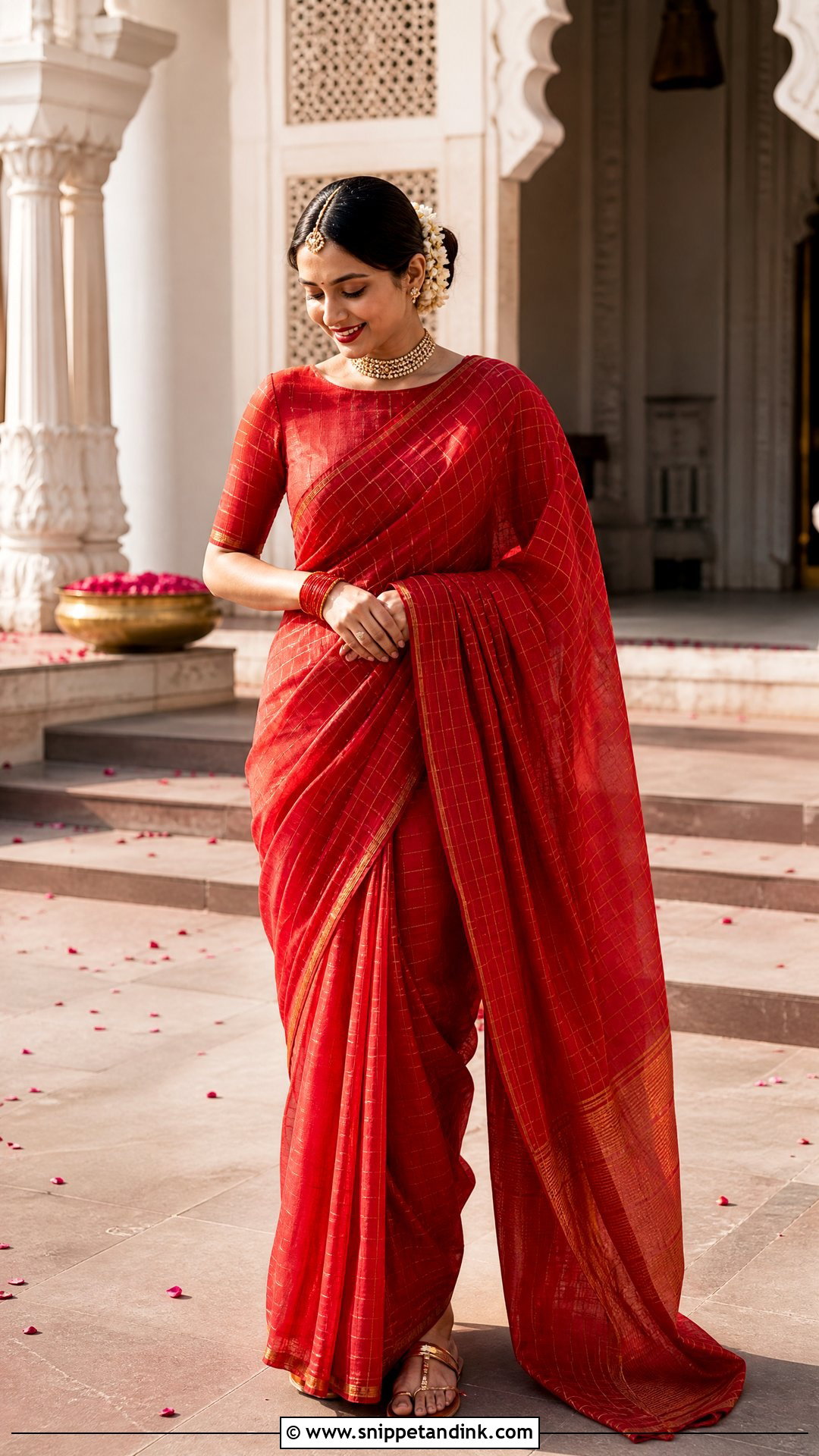
Chanderi is light enough that a bride can wear traditional red without wrestling heavy silk for hours. Sindoor red or vermilion with delicate gold checks or tiny motifs suits it, paired with a boat-neck or elbow-sleeve blouse in matching red. One antique gold choker, a small maang tikka and red bangles establish it as bridal. Because Chanderi is so fine, it shows pin marks and can tear at a stressed pin, so I use small pins and place them through the blouse, not the bare fabric. A centre-parted bun with fresh flowers, sindoor where it fits your tradition, brown kajal and a warm red lip finish it. Its pleats fall crisply in photos.
9. Minimalist White Sikh Bride
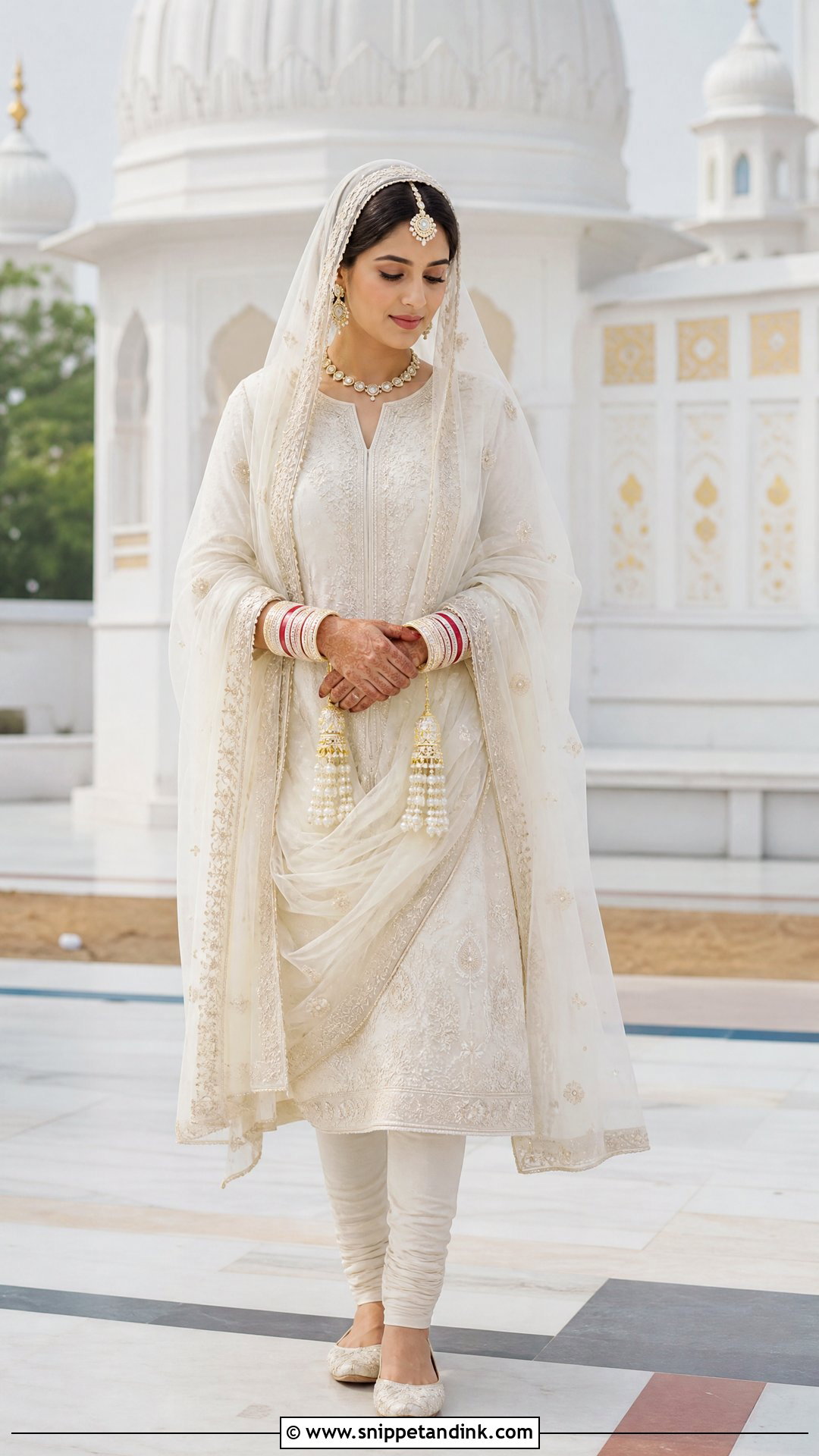
A white or soft ivory salwar suit can be a serene choice for an Anand Karaj, provided the fabric and proportions feel ceremonial. A straight or gently flared kurta with restrained gold embroidery, churidar and a long embroidered dupatta form the base. The dupatta stays over the head for the ceremony, so I pin it at the back of a low bun and once more at the shoulder, with its border framing the face. Choora in a softened palette and simple kaleere keep tradition intact. Ivory juttis, small kundan earrings and natural makeup with a rose lip suit the gurdwara setting. Do check family expectations around colour before buying; some families have strong views.
10. Minimalist Monochrome Lehenga Bride
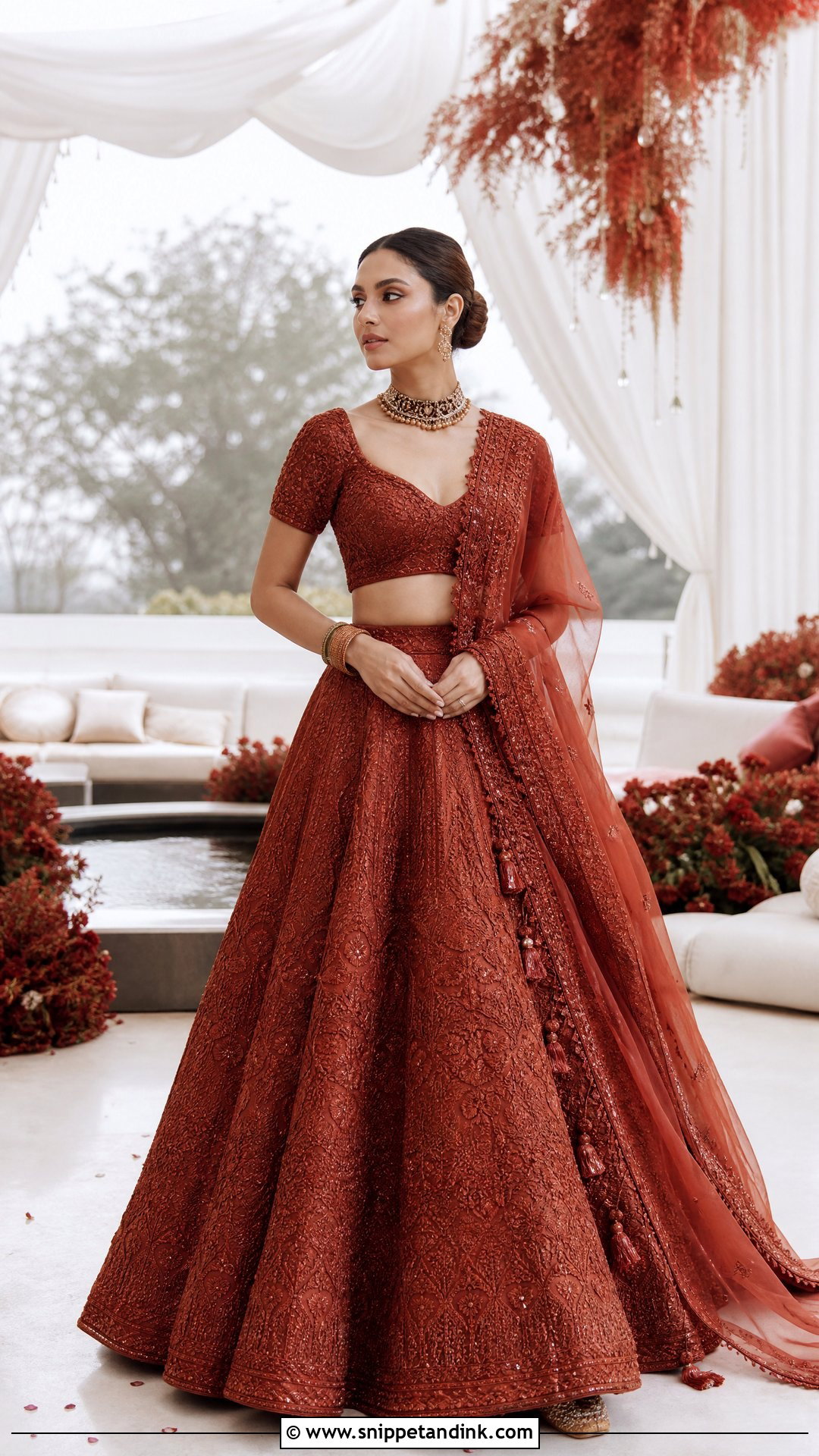
One colour from skirt to dupatta instantly makes an embroidered lehenga look cleaner. Deep red, rose, ivory, rust or sage all work; tonal threadwork adds depth without breaking the colour. Stick to one metal across your jewellery, all antique gold or all silver or all pearl; mixing them is what makes a single-colour look busy. Makeup can echo the outfit, rose blush with pink or bronze eyes with rust. This approach helps petite brides most, since contrasting blouse and dupatta colours cut the body into sections.
11. Minimalist Floral Lehenga Bride
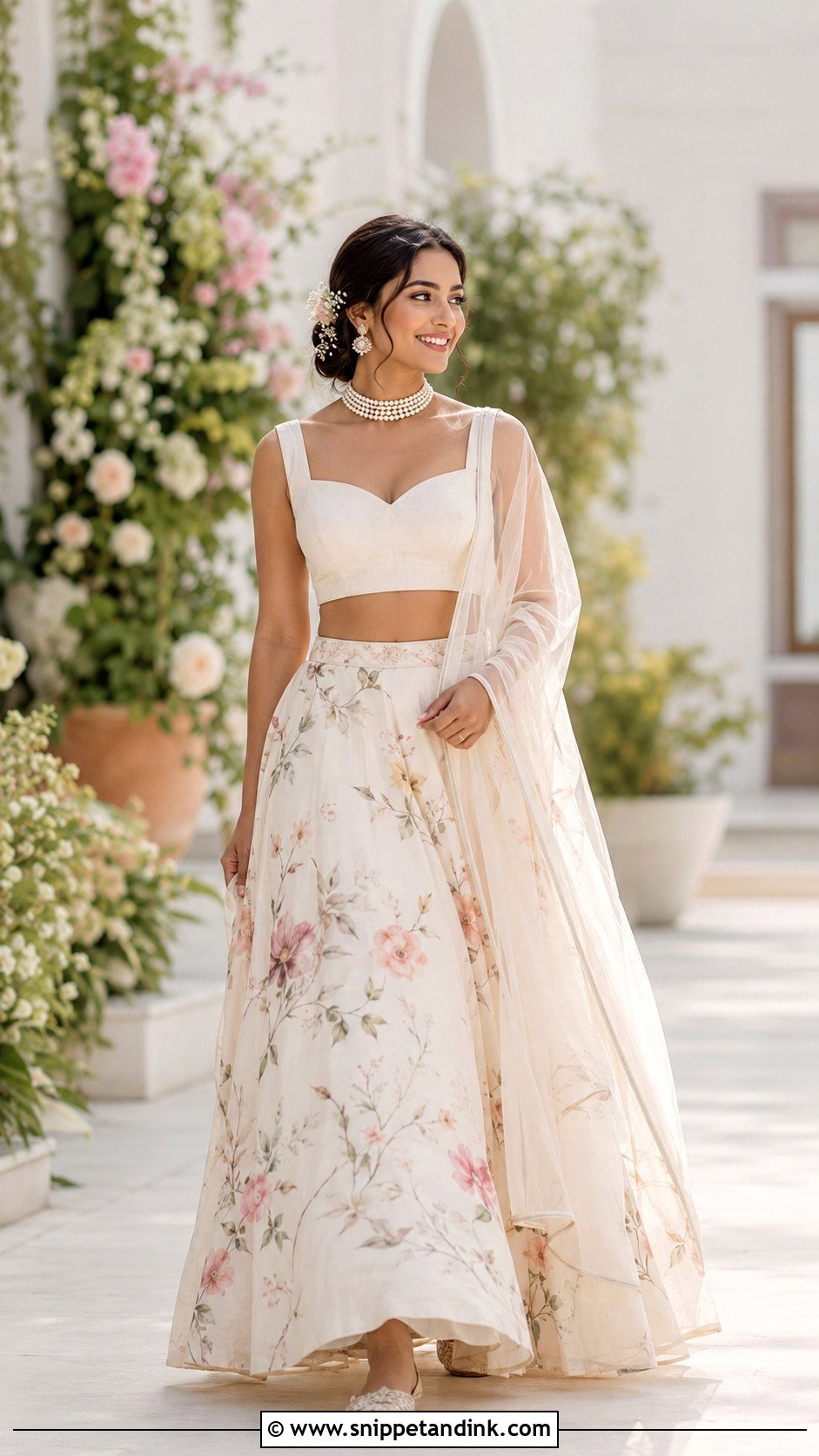
A printed lehenga moves easily through an outdoor ceremony without the stiffness of heavy embellishment. Watercolour florals, hand-painted motifs or fine floral embroidery on ivory or pastel ground set the mood. A plain fitted blouse and a sheer dupatta with a narrow border keep the print as the focus. If you’re wearing real flowers too, keep them in one place, usually the hair, so they don’t fight the print. Pearl earrings and a light choker suit it. Loose waves or an airy bun work, though in humidity I’d go for the bun. It’s my pick for a spring garden or daytime destination wedding.
12. Minimalist Tissue Saree Bride
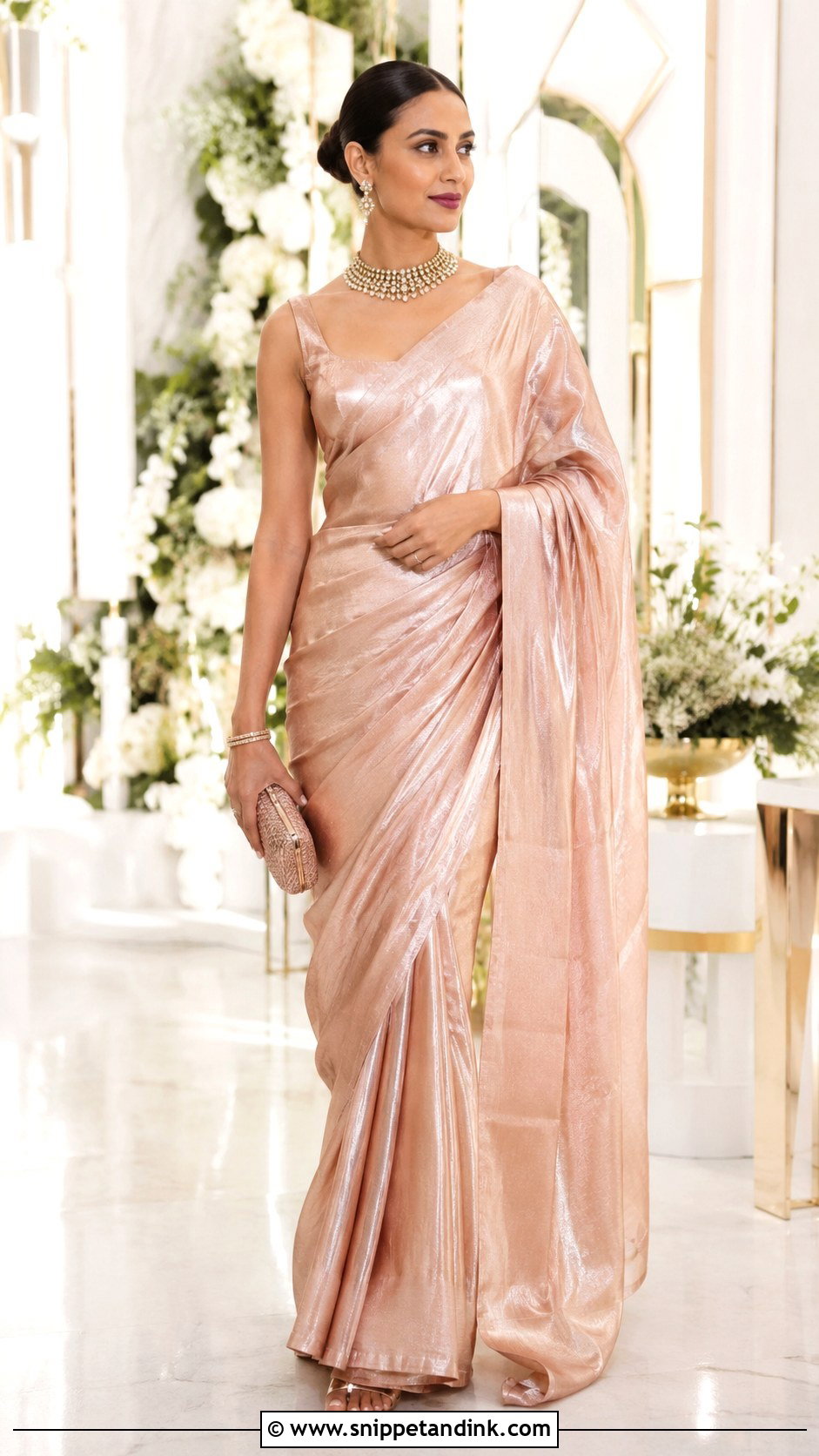
Tissue has metallic threads woven through it, so it shines on its own. That means sequins and layered jewellery are surplus. Soft gold, rose gold, silver or champagne with a narrow woven border drapes fluidly. Line the blouse or cut it in raw silk, because unlined tissue scratches. One sculptural choker or a short pearl necklace gives definition near the face. Keep the makeup base satin rather than glossy; with a reflective saree, a dewy face can look oily on camera. Defined eyes and muted berry lips give enough depth for an evening ceremony.
13. Minimalist Handloom Saree Bride
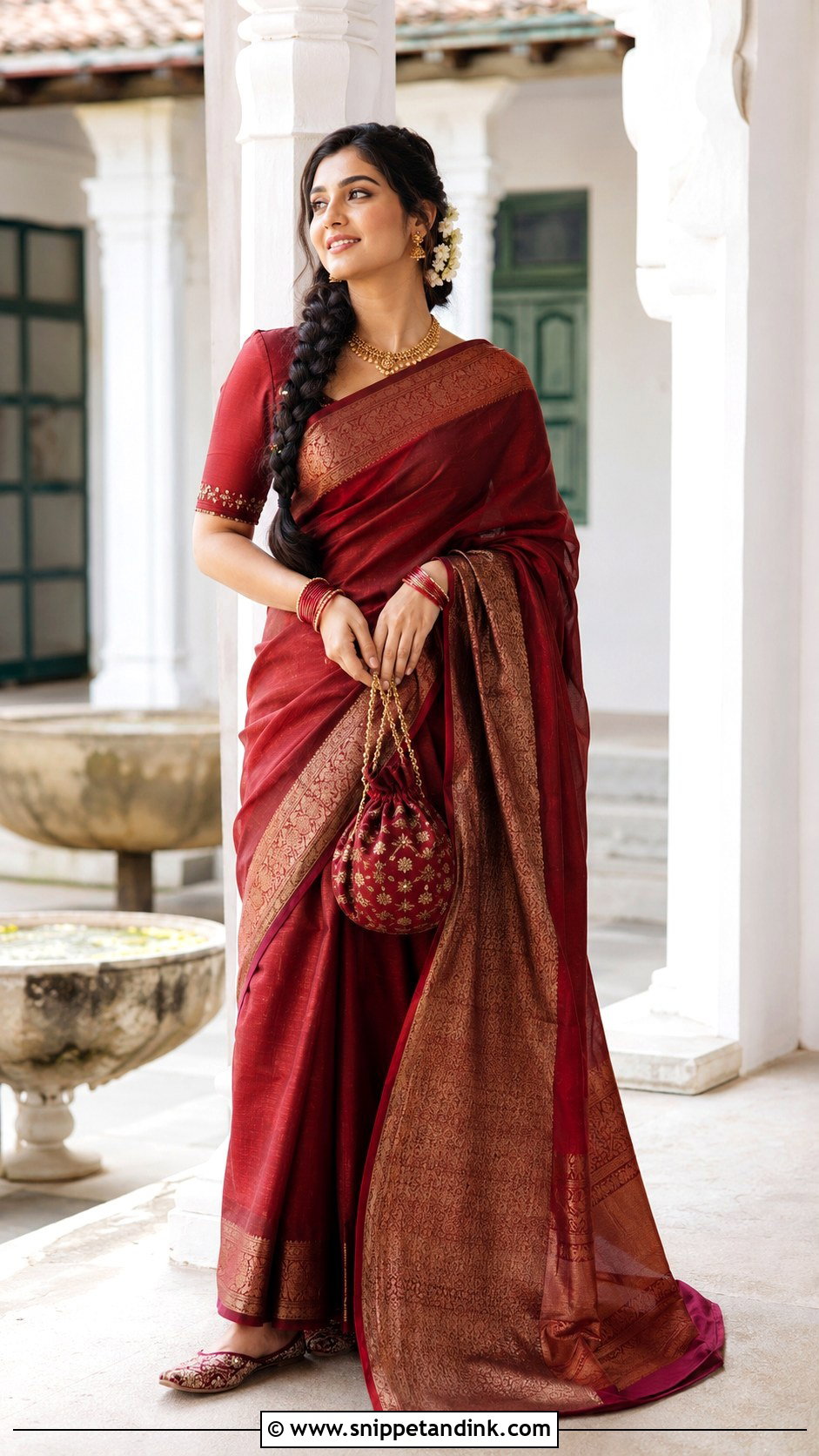
Handloom carries its character in the weave itself. Silk, cotton-silk or linen-silk in red, maroon, turmeric yellow or ivory can all feel bridal with a strong woven border. A well-fitted blouse matters more here than on embellished pieces, because there’s no decoration to draw the eye away from a poor fit. One traditional necklace, small earrings, bangles and a matching potli are enough. A long braid or smooth bun suits it. Practically, this is the bridal saree you’ll actually wear again, with a new blouse and different jewellery.
14. Minimalist Velvet Lehenga Bride
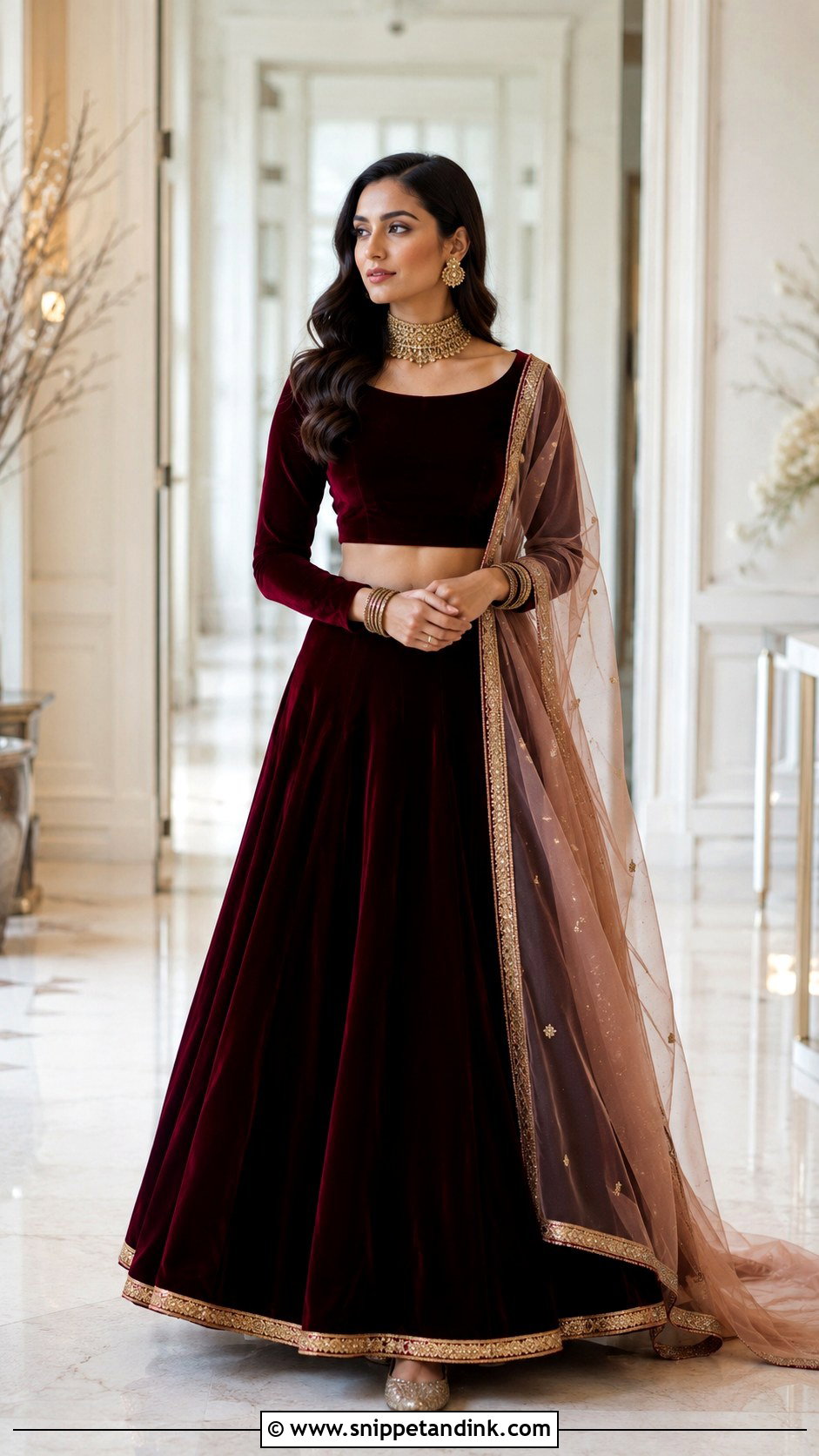
Velvet already has depth before any embroidery goes on, which is why I reach for it at winter weddings. Burgundy, bottle green, navy or deep maroon with a simple gold border or sparse motifs is plenty. It’s heavy, so balance the skirt with a lighter net or organza dupatta and a clean blouse. One antique gold choker is enough; stacked necklaces disappear into velvet’s dense pile. In a warm indoor venue velvet gets hot quickly, so think about where the ceremony is. Matte makeup with defined liner and a berry or brick lip hold up against the saturated fabric.
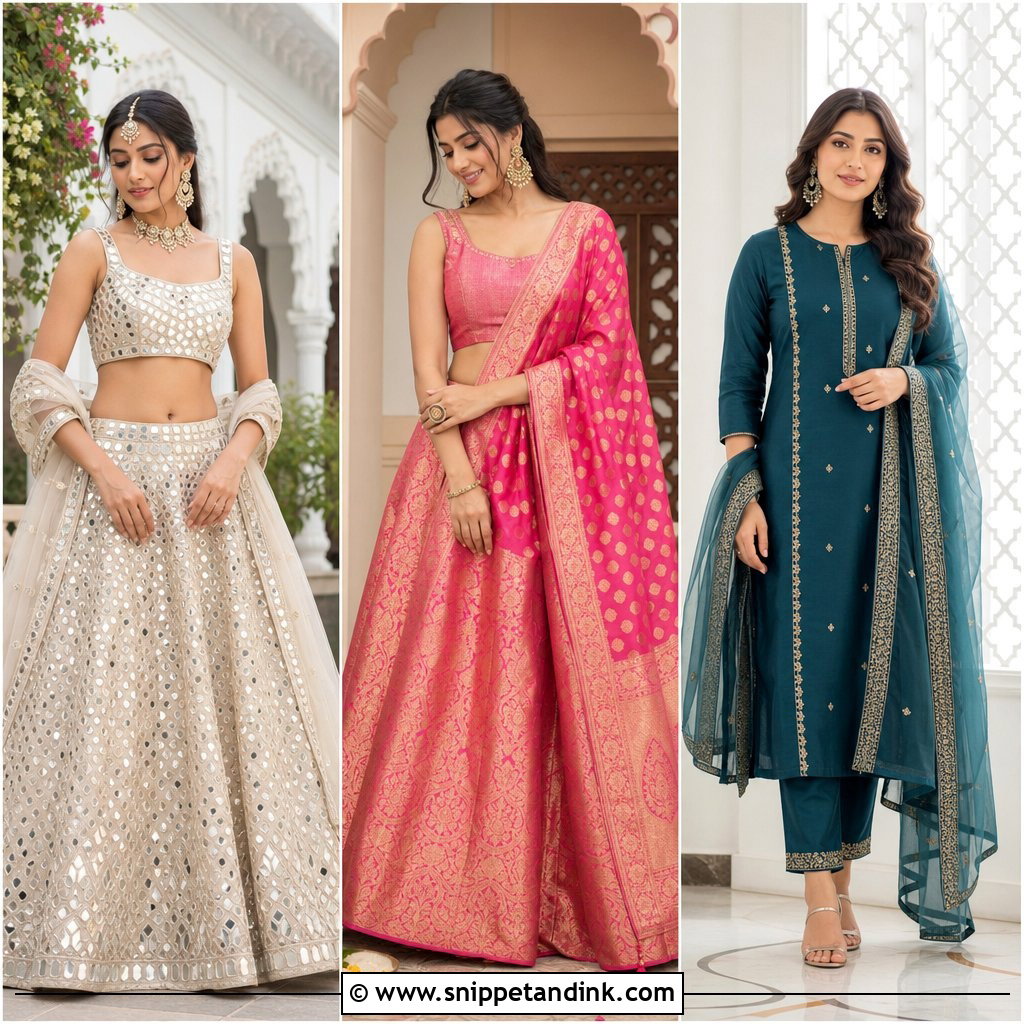


15. Minimalist Gota Patti Lehenga Bride
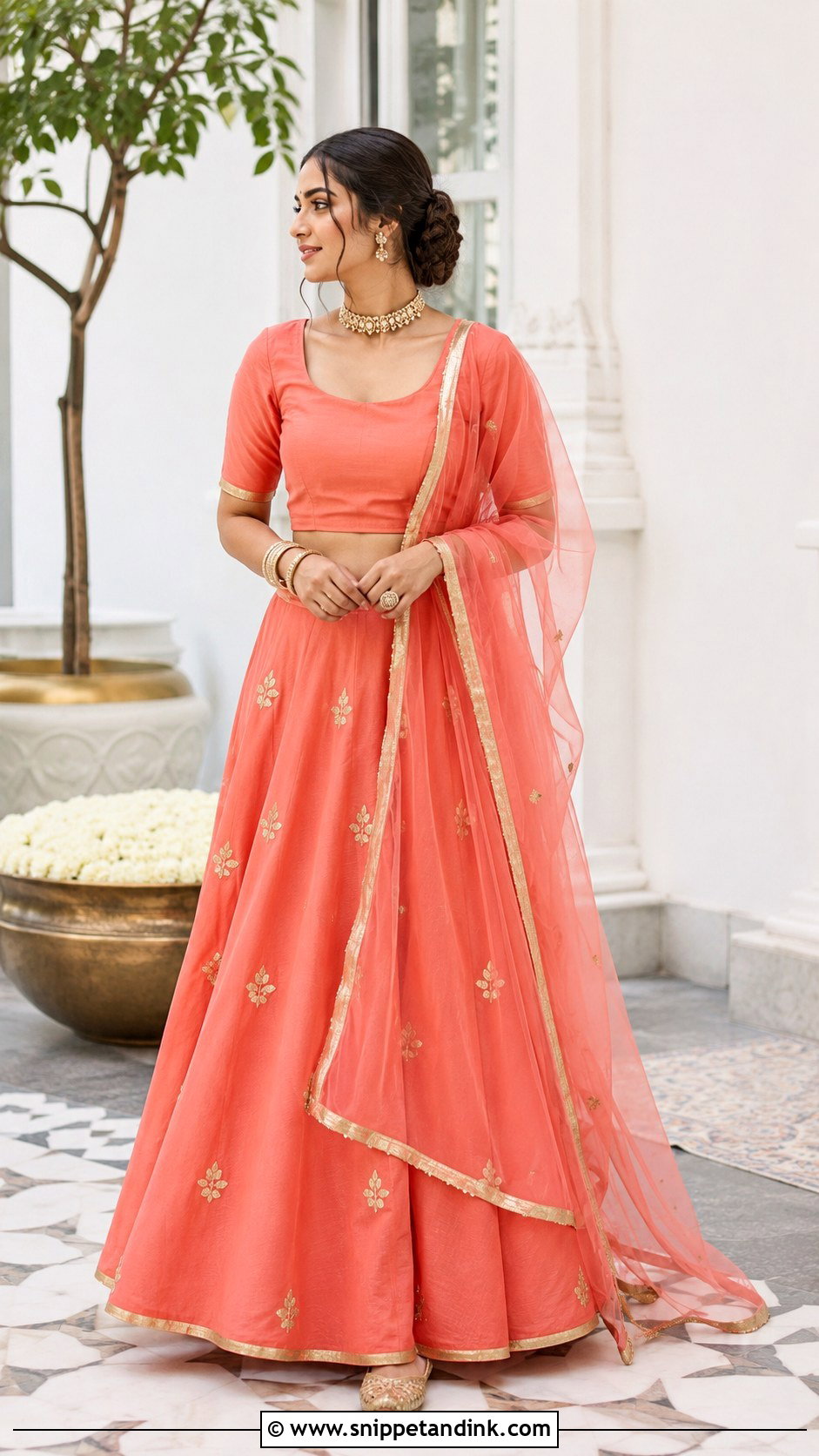
Gota patti suits a minimal bride only when the motifs are spaced out. Small gota pieces on a lightweight red, coral, blush or mustard lehenga, with one border, keep it airy. Gota is metallic ribbon, so it catches light by itself; I’d avoid adding sequins or a glittery dupatta alongside it. A small kundan choker and a few bangles are enough. A low braided bun gives the dupatta something to pin into. Gota lehengas are usually light, which makes this a good daytime choice when you’ll be moving around a lot.
16. Minimalist Chikankari Lehenga Bride
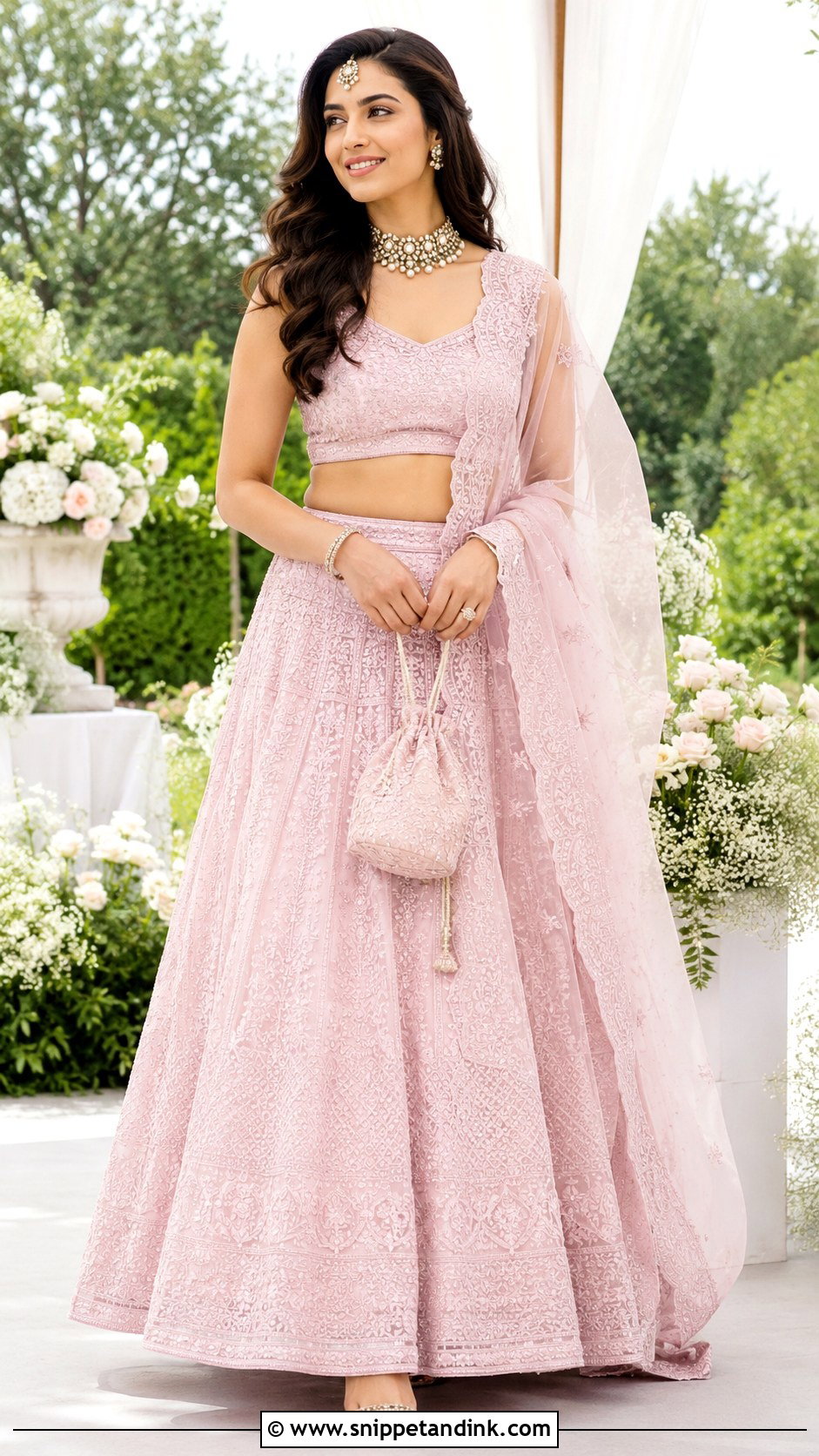
Chikankari is fine white-on-white or tone-on-tone hand embroidery, which is why it reads intricate up close and calm from across the room. Ivory, pale pink, powder blue or muted peach work best. A few sequins add a glint, but no more. One soft net dupatta over the shoulder or head, pearl or polki jewellery and metallic sandals complete it. The embroidery is delicate and can snag on chunky bangles or rings, so I keep jewellery smooth near the sleeves. A relaxed bun or half-up style suits a refined daytime ceremony.
17. Minimalist South Indian Temple Bride
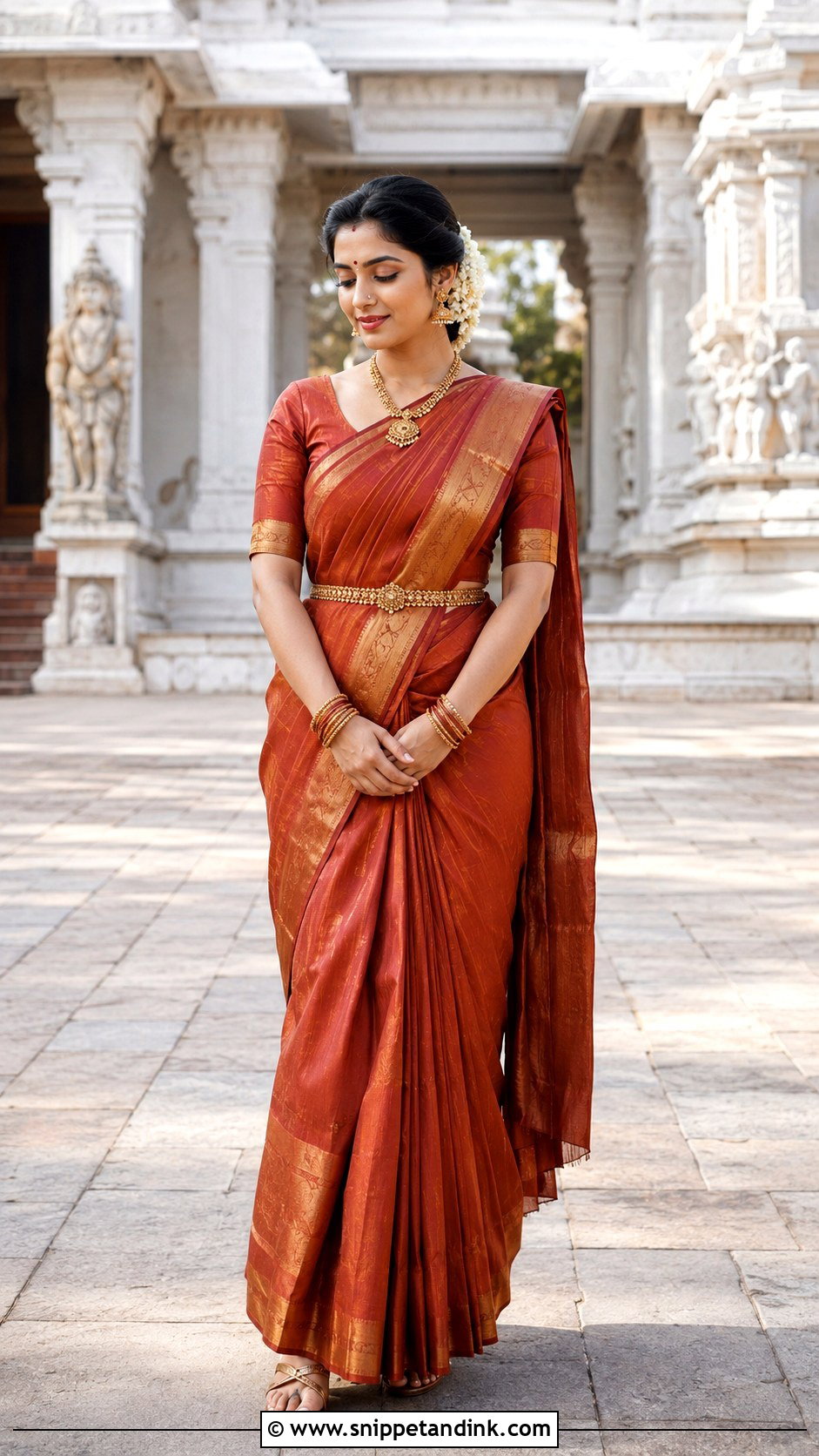
In a temple, traditional silk and fresh flowers mean more than contemporary embellishment. A red, rust, green or gold Kanjivaram with a clear zari border, a matching short-sleeve blouse and a neatly pleated pallu form the base. One temple necklace, jhumkas, a waist belt, glass bangles and a nose stud give recognisable bridal detail without layering. Rituals often involve sitting on the floor, so pin the pleats securely at the waist and keep footwear easy to slip off. A center-parted bun or long braid with tidy jasmine, kajal, a red bindi and a warm lip finish it.
18. Minimalist Bengali Saree Bride
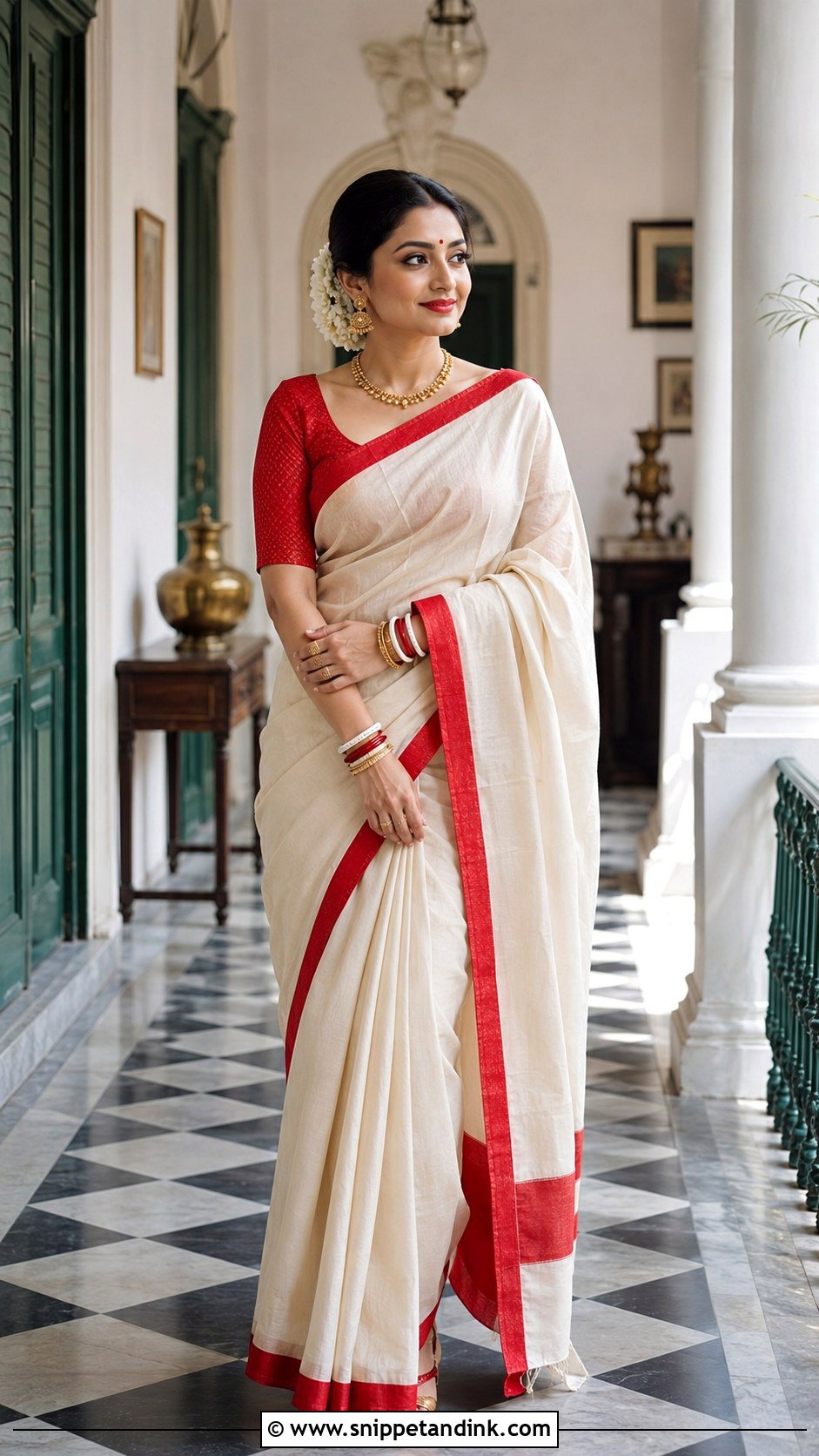
Red and white is the Bengali bridal palette, and it stays recognisable even pared right back. Ivory silk, garad or a lightweight Banarasi with a strong red border and minimal motifs is the start. A fitted red blouse and the classic drape show off the border. Shakha-pola style red-and-white bangles are often part of the ritual itself, so check with your family what’s expected. White flowers in a smooth bun, a small red bindi and restrained forehead detailing instead of a full design keep it light. Soft kohl and red lips finish it.
19. Minimalist Heirloom Saree Bride
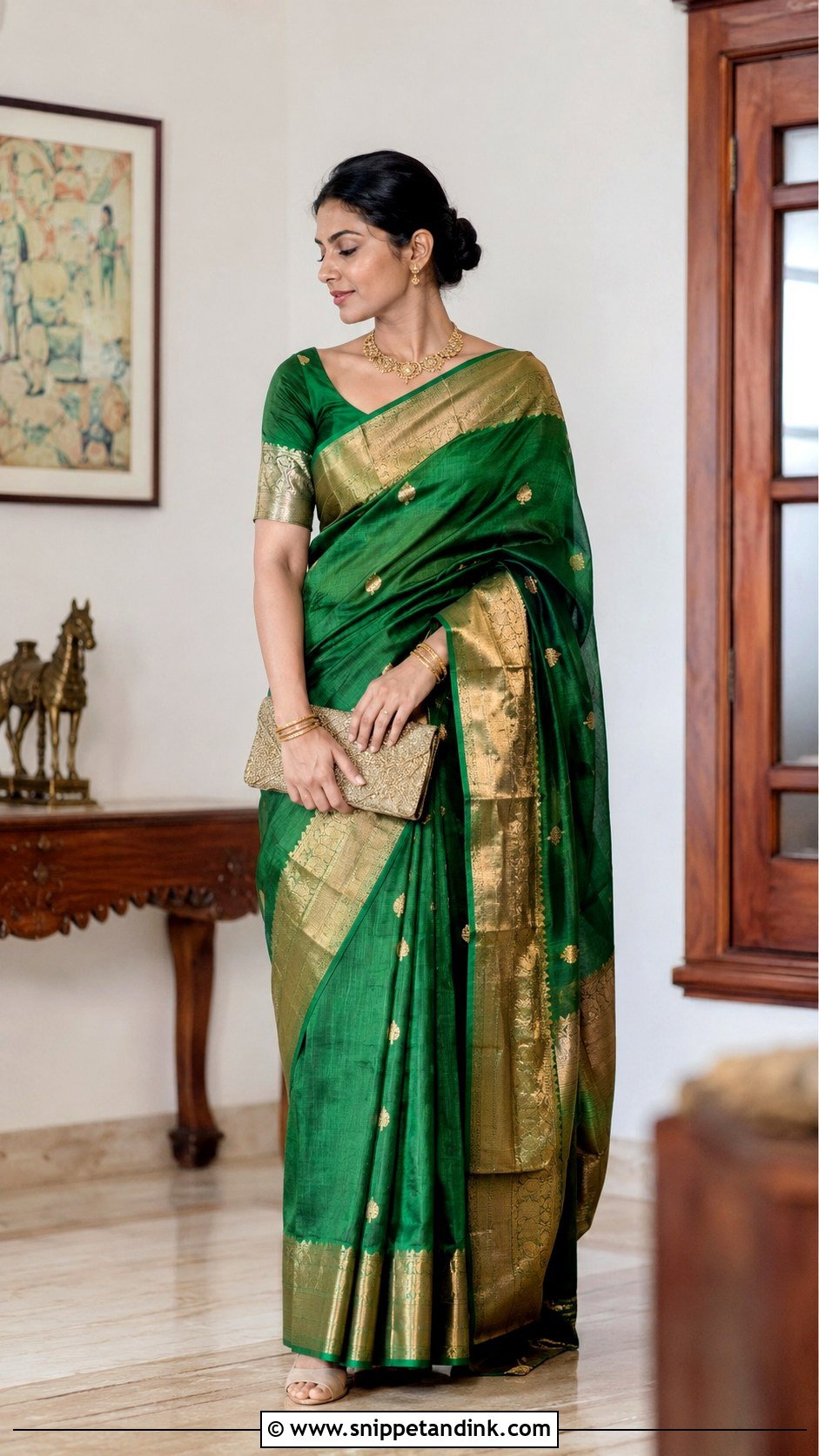
An heirloom saree makes a restrained look feel more personal than anything new. Before the wedding, have your mother’s or grandmother’s silk checked by a specialist cleaner; old silk weakens along fold lines and zari can tarnish, and both are easier to fix months ahead. Have a new blouse tailored so it fits you now. Wear one inherited piece of jewellery and keep the rest simple. If the border is the saree’s best feature, I drape it so the pleats and pallu show it. Natural makeup stops the look feeling costume-like.
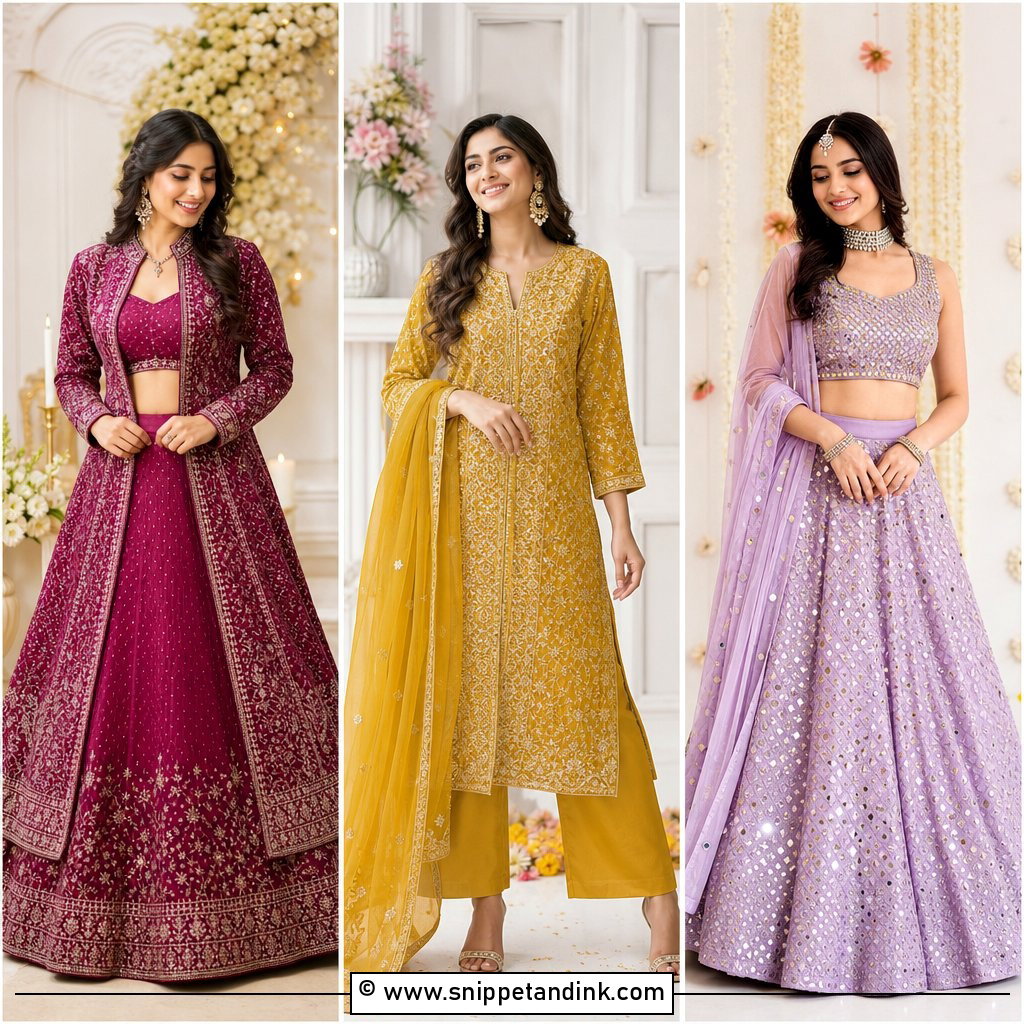
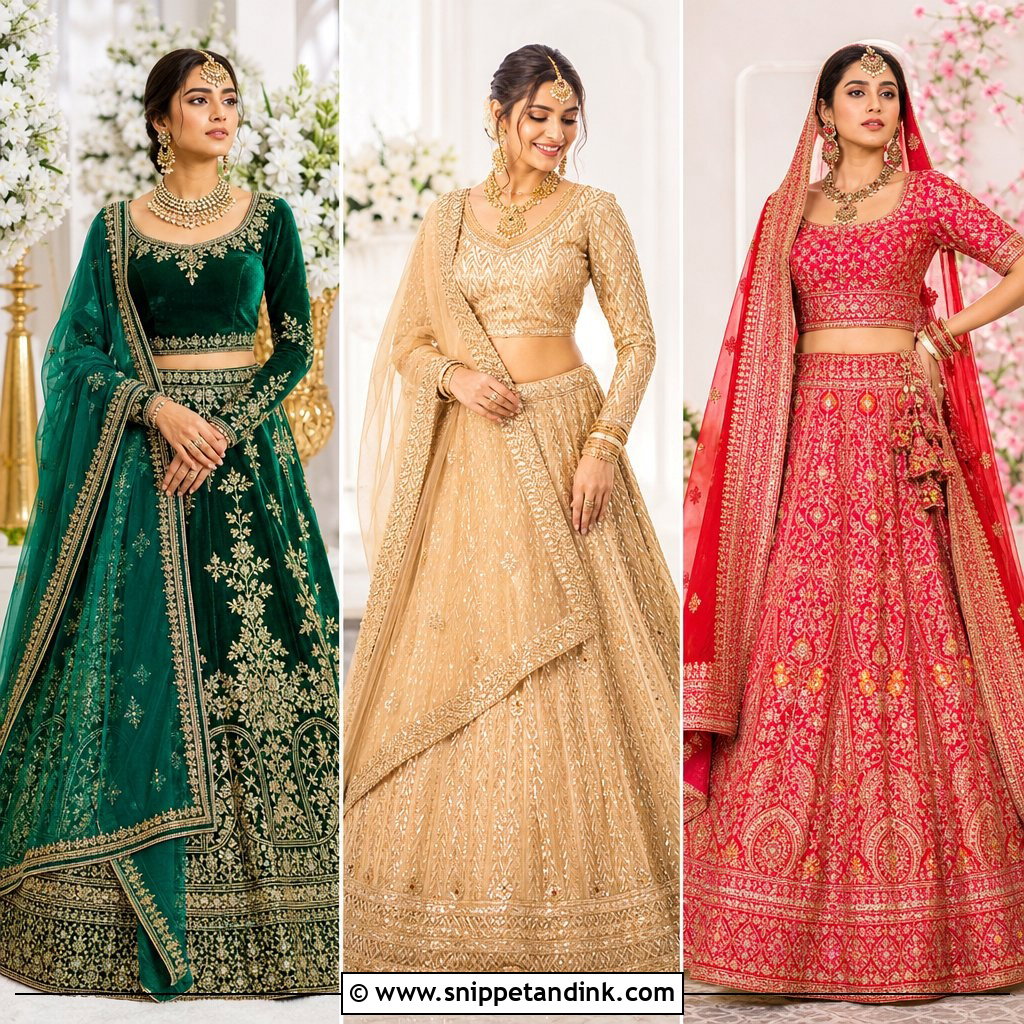
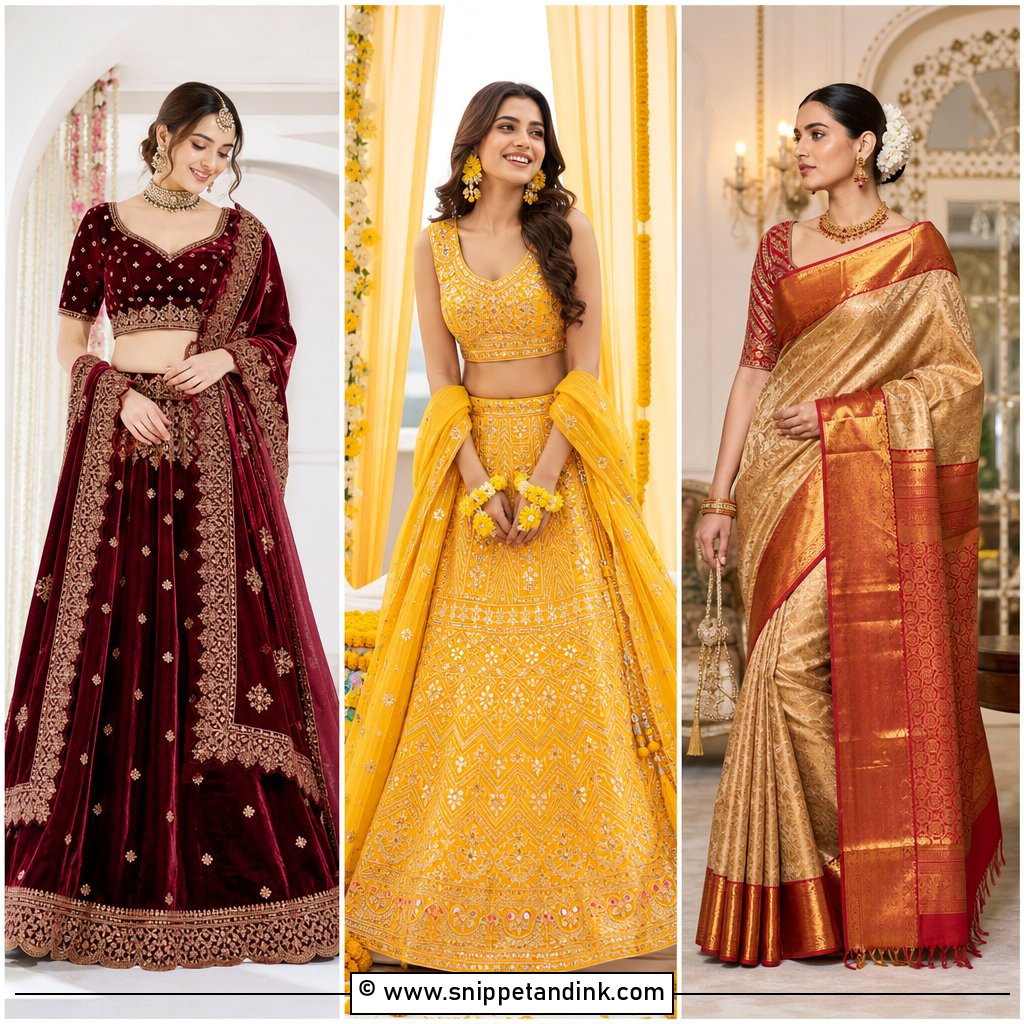


20. Minimalist Ivory Bridal Anarkali
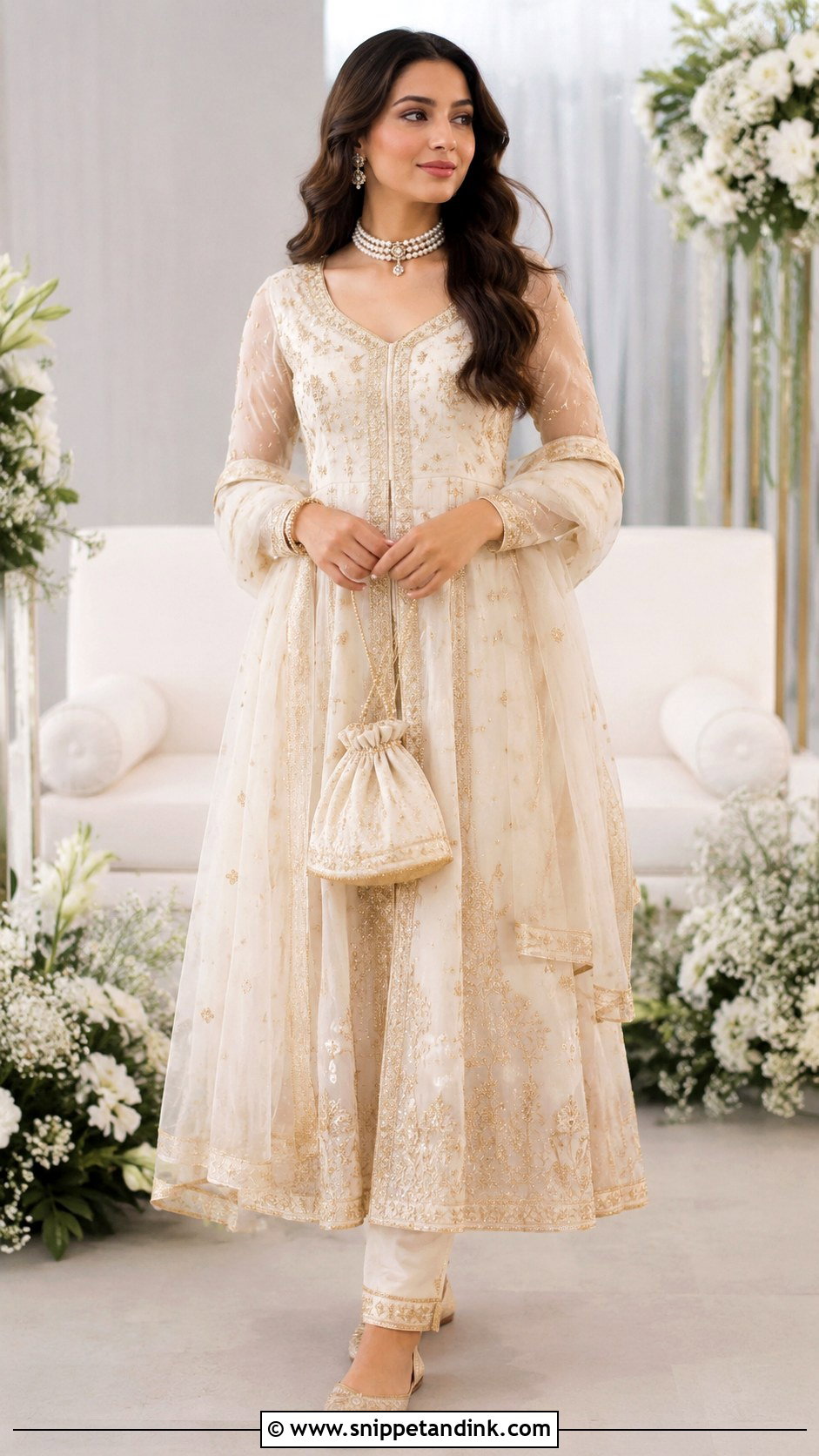
An ivory Anarkali works for a bride who doesn’t want a saree or lehenga. A floor-length cut with fine gold embroidery at the neckline, cuffs and hem gives ceremony, and the gentle flare is far easier to manage than a wide skirt. Slim pants, a light dupatta and gold or ivory juttis complete it. One pearl choker or delicate polki necklace is enough. Anarkalis with lots of panels can twist when you walk, so I check the flare hangs evenly at the final fitting. It suits a nikah, a civil ceremony or a quieter reception.
How Many Pins a Silk Saree Really Needs on the Day
A minimal look depends on a clean drape, and a drape that slips halfway through the rituals undoes it. Most of this is preparation.
The night before
Have the saree steamed, and for thick silks like Kanjivaram or Banarasi, consider having the pleats pre-set or pressed in by a draper. Check the petticoat drawstring is strong, since it holds the entire weight of the tucked pleats. Lay out small safety pins in a matching colour, plus a few U-pins for the dupatta and hair.
Where the pins go
- One pin across the pleats at the waist, hidden on the inside, keeps them from fanning open when you sit.
- One or two at the shoulder, through the blouse, hold the pallu. Pin through the blouse fabric rather than only the saree.
- For a dupatta on the head, pin it into the bun at the back and once at each shoulder.
- Give a few spare pins to whoever holds your kit, because one usually works loose.
On fine fabrics like Chanderi or organza, use the smallest pins you can, and never pull hard against one. These weaves tear where the tension sits.
Start With One Thing Worth Looking At
Minimal isn’t the same as lightest. It means each colour, textile, piece of jewellery and makeup choice has room to be seen. You can wear traditional red, gold, pastel or ivory and still keep it restrained. Pick one defining feature, perhaps a handwoven saree, an heirloom necklace or a meaningful flower arrangement, and build everything else around it. Wear the whole look at least once before the day, sit down in it, and photograph it in daylight and in the kind of light your venue has.
You'll Like These Ideas:









Leave a Reply