
A Rajputana bride is dressed in layers, and each layer has a job. The poshak is four pieces: a kanchli bodice, a kurti worn over it, the ghaghra, and an odhni that runs from the waistband up over the head. The ornaments carry as much meaning as the fabric, from the borla at the parting to the aad sitting close at the neck, the nath and the bajuband on the upper arm. Red and maroon are what most families expect, though saffron, green, pink and gold have all been worn by royal brides. Before I suggest a single color, I ask about family customs, the rituals planned and the weather, because a velvet poshak at a noon ceremony is a very different day from the same outfit on a winter night. The looks below run from heritage poshaks to lehengas styled with Rajputi jewelry, and each one covers clothing, ornaments, footwear, hair and makeup together, so you can see a complete bride rather than a single garment.

How a Poshak Goes On, From Kanchli to Borla
Dressing a Rajputana bride is a sequence, and doing it out of order usually means starting again. I allow at least an hour for the outfit and jewelry alone, separate from hair and makeup, and I want the hair completely finished before any garment goes over the head.
- Kanchli first, fastened at the back. Check that you can lift both arms to shoulder height without it riding up.
- Kurti over the kanchli, then the ghaghra, tied at the natural waist. Have someone check the hem while you stand in the juttis you’ll actually wear.
- Neck and arm jewelry next: aad, haar and bajuband. The aad sits high on the throat, so it goes on before anything can catch on it.
- Borla into the parting, with its string anchored into the bun so it doesn’t tilt forward when you look down.
- Odhni last. One end tucks into the front of the ghaghra waistband, the rest rises over the head, and I pin it behind the borla and again at the shoulder.
- Nath and haathphool at the very end, once the veil has settled, because a nath chain snags easily on the odhni.
Test the weight before the wedding, not during it
A full bridal poshak with zardozi and a heavy kundan set is genuinely heavy, and that weight sits on the waist and the crown of the head. I ask brides to wear the complete outfit for at least an hour at the final fitting, sitting down and standing up, and to tell me honestly where it presses. A tight waistband, scratchy lining at the underarm or a borla string that pulls are easy to fix a week before. During the pheras there is nothing anyone can do about them.
1. Red Rajputana Bridal Poshak
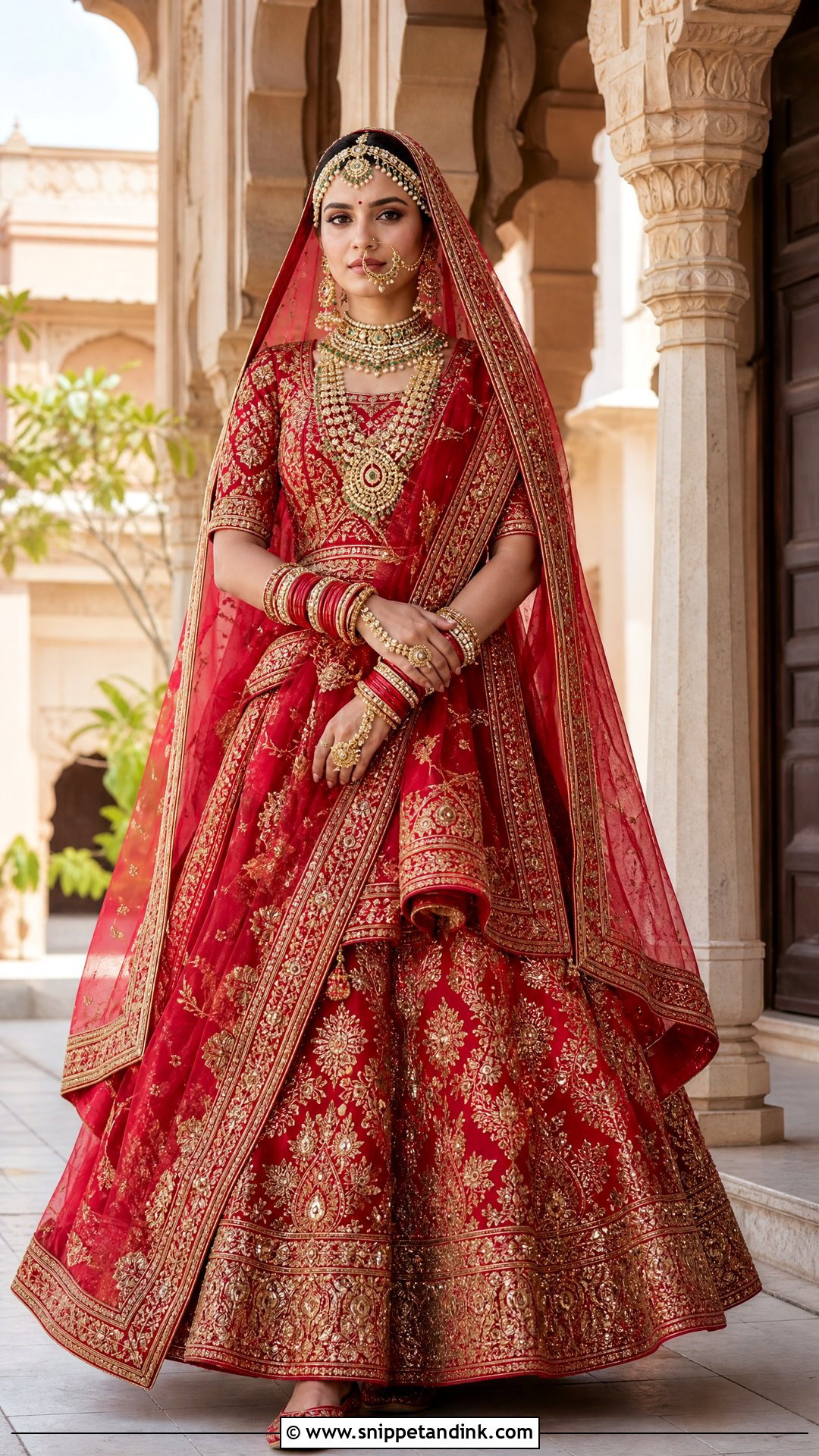
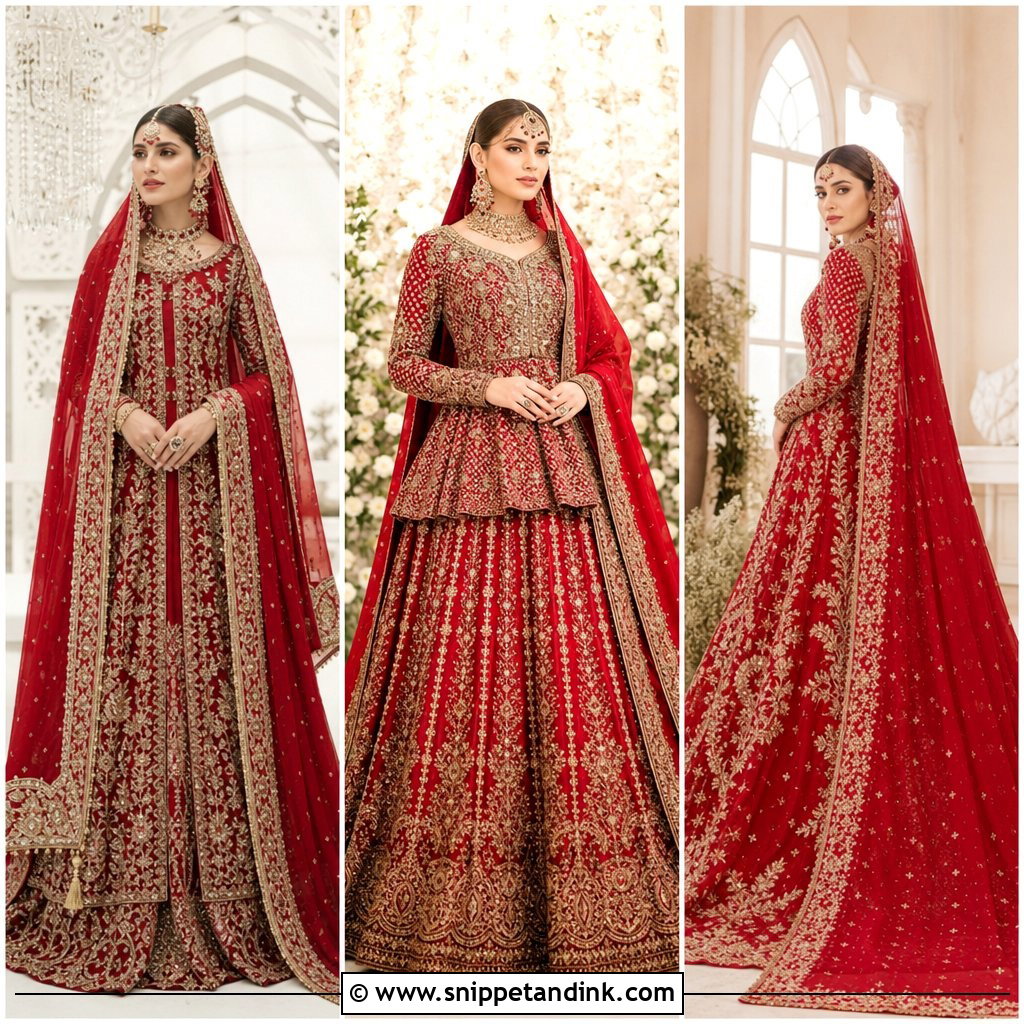
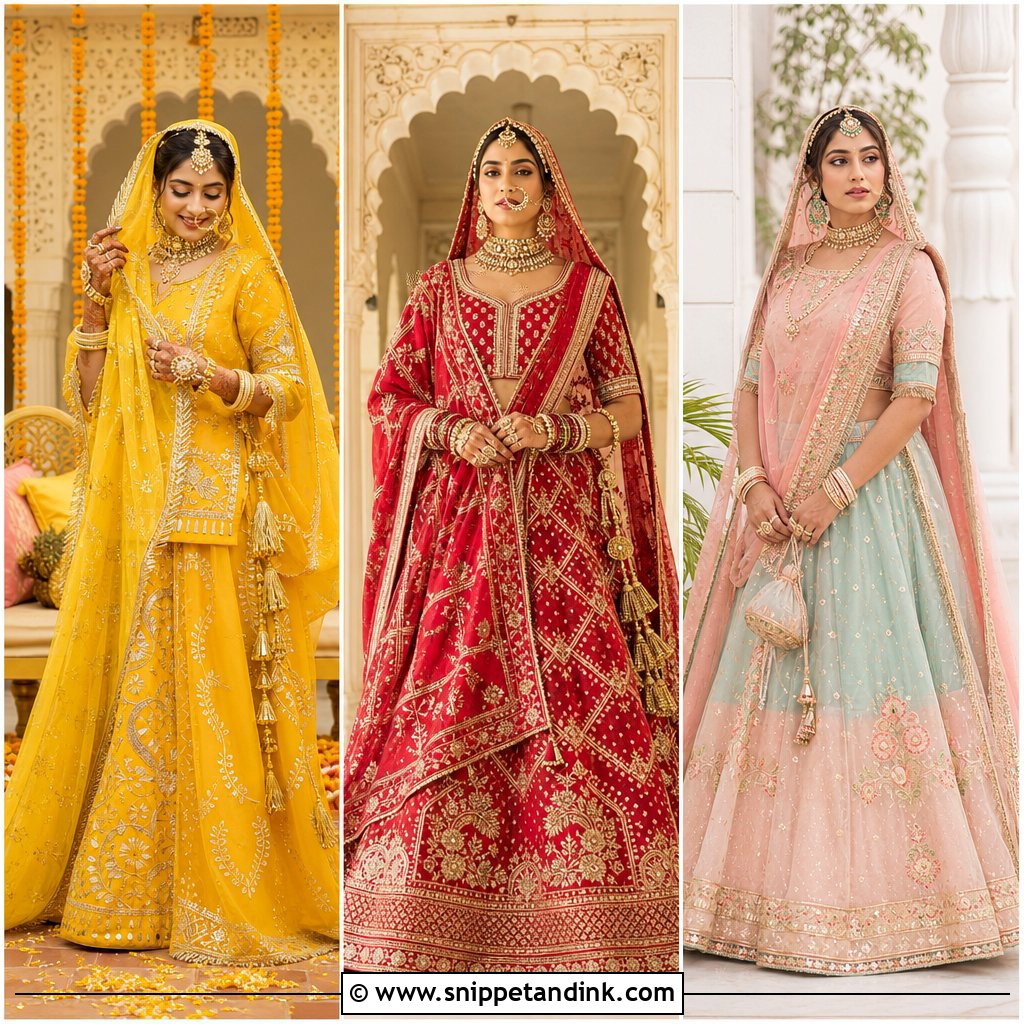
Red is the color most Rajput families still expect at the pheras, and it is the hardest one to get wrong. I’d pick silk or satin with antique gold gota patti, dabka or zardozi, because antique gold sinks into red instead of glaring off it under flash. The ghaghra should be wide enough to swing as you walk, while the kanchli and kurti keep the upper body structured. The odhni goes over the head with its border framing the face, and I pin it just behind the borla so the ornament stays in view. The jewelry is the full set: borla, broad aad, long rani haar, a large nath, bajuband, haathphool and stacked bangles. Red or gold juttis, a center-parted bun, defined eyes, red lips and a small bindi complete it.
2. Maroon Rajputana Bridal Poshak
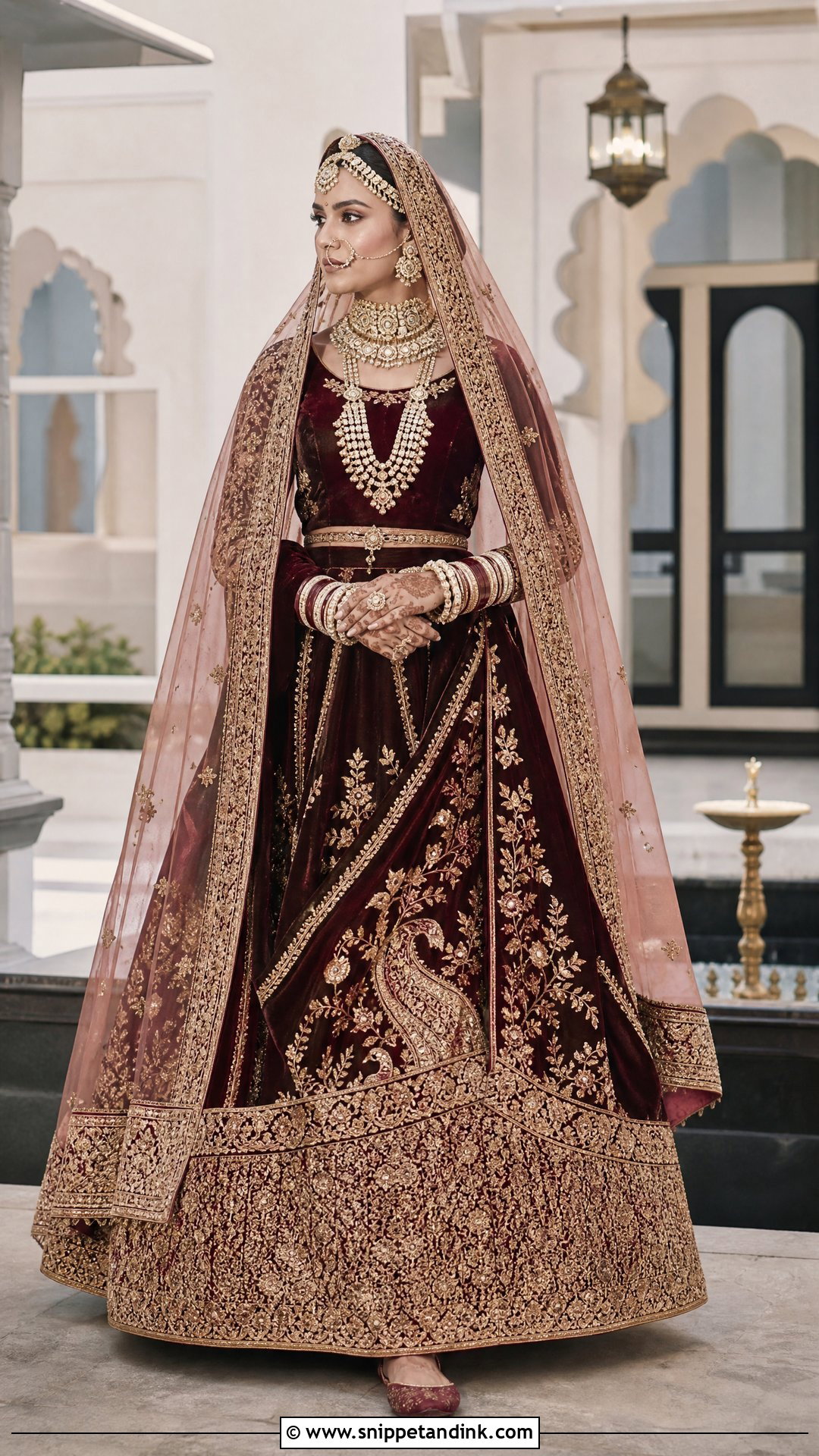
Maroon looks richer by lamplight than in sun, so I keep it for evening ceremonies. Velvet, raw silk or satin all hold the color well. Ask for antique gold embroidery rather than bright sequins, which can flare into white spots under evening flash. The dark base pushes zari borders and handworked panels forward. Kundan or polki with small green enamel accents suits it, and a borla, aad, rani haar, chain nath and kamarband give the ceremonial weight. Maroon juttis with gold thread are fine as long as you’ve broken them in. A sleek low bun with fresh flowers softens all that structure, and I keep the face warm with bronze eyes, set brows and a muted maroon lip so nothing fights the fabric.
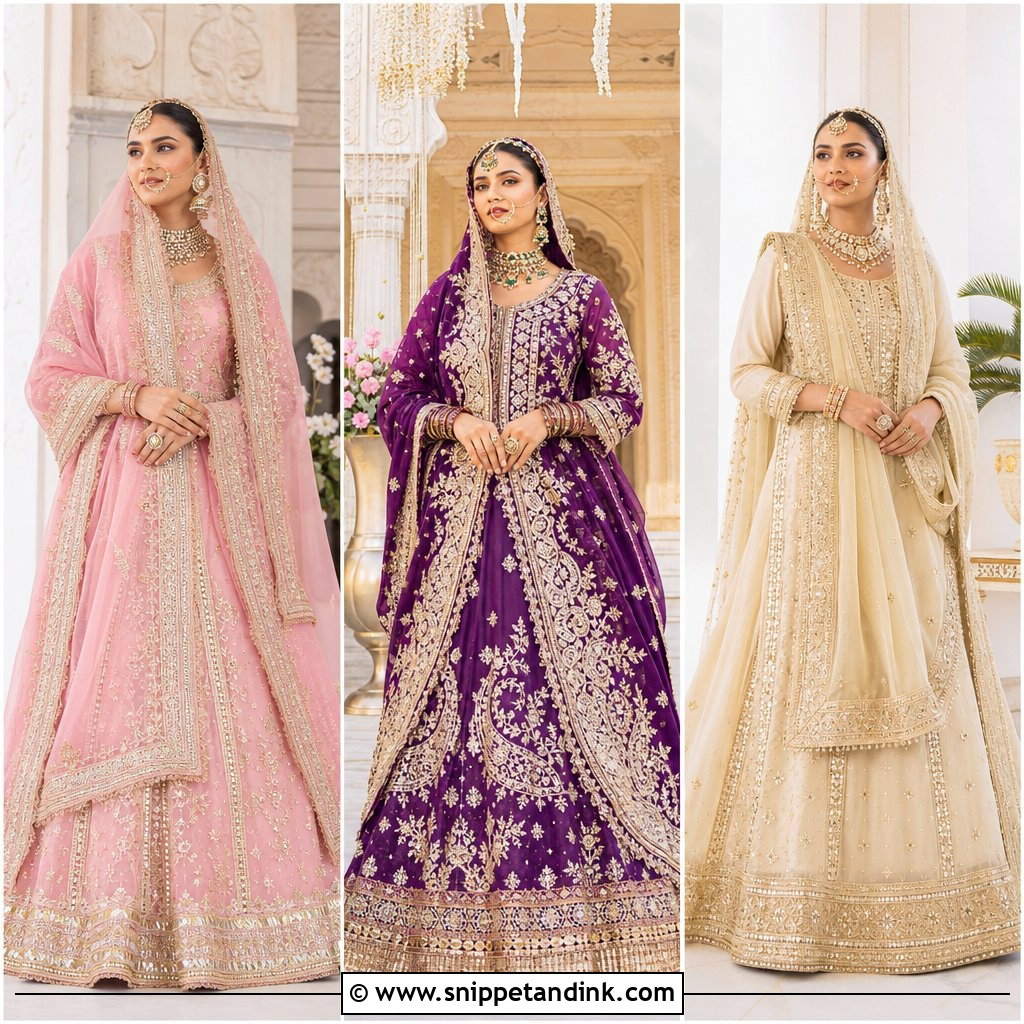
3. Rani Pink Rajputana Bridal Poshak
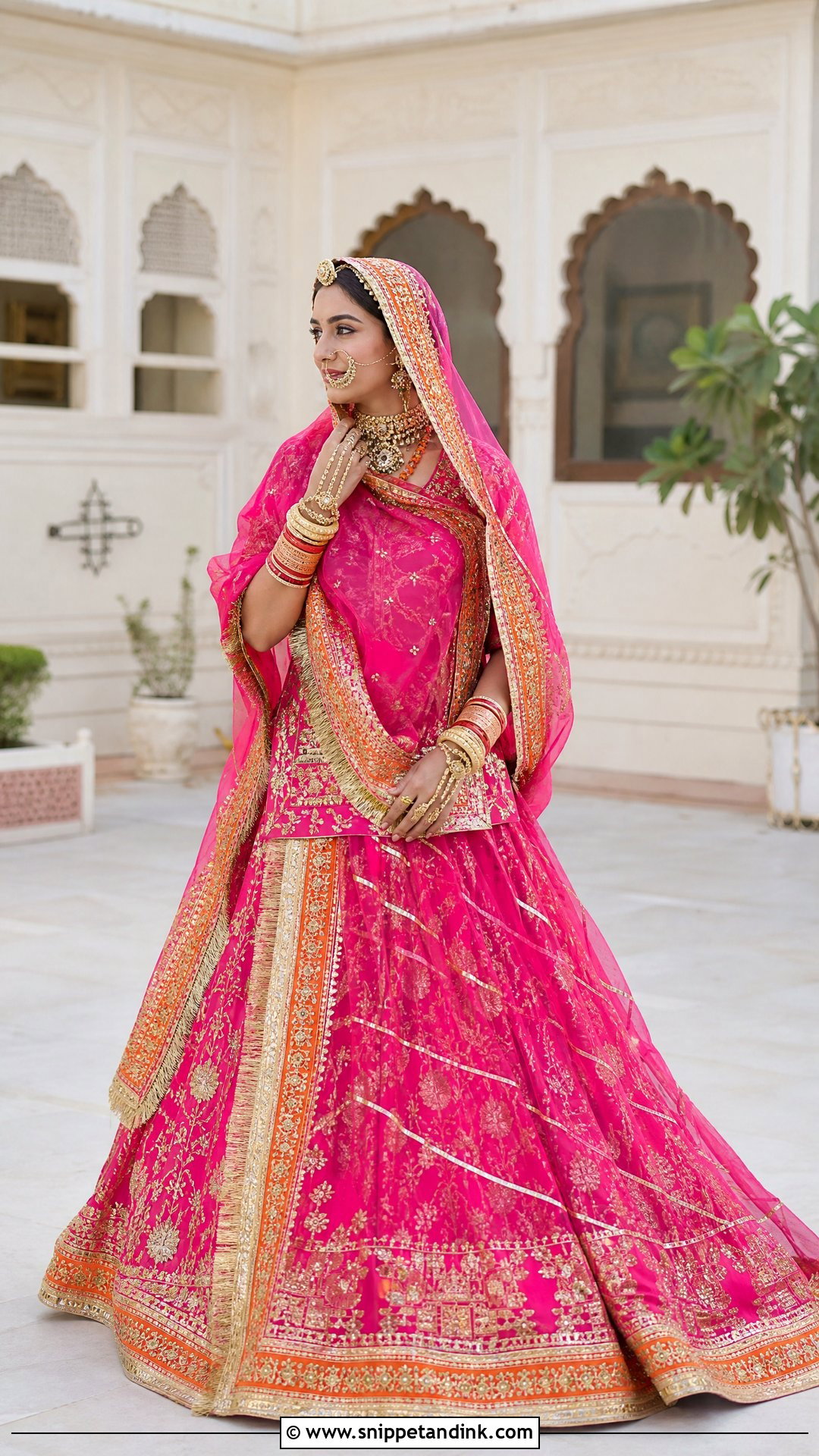
Rani pink is the color I suggest when a family is relaxed about red but the bride still wants the day to feel festive. Look for a flared poshak with gold gota patti borders, fine aari work and small scattered motifs, which hold their shape in photographs far better than very fine all-over embroidery. A red, orange or green border gives that classic Rajasthani color clash. The odhni needs enough body to show its border over the head without sliding forward across the necklace; a georgette that is too soft keeps collapsing. Kundan borla, aad, a layered necklace, nath and haathphool, with gold juttis and pink-and-gold bangles. For daylight I keep the makeup fresh: rosy cheeks, soft eyes and a rose lip.
4. Saffron Rajputana Bridal Poshak
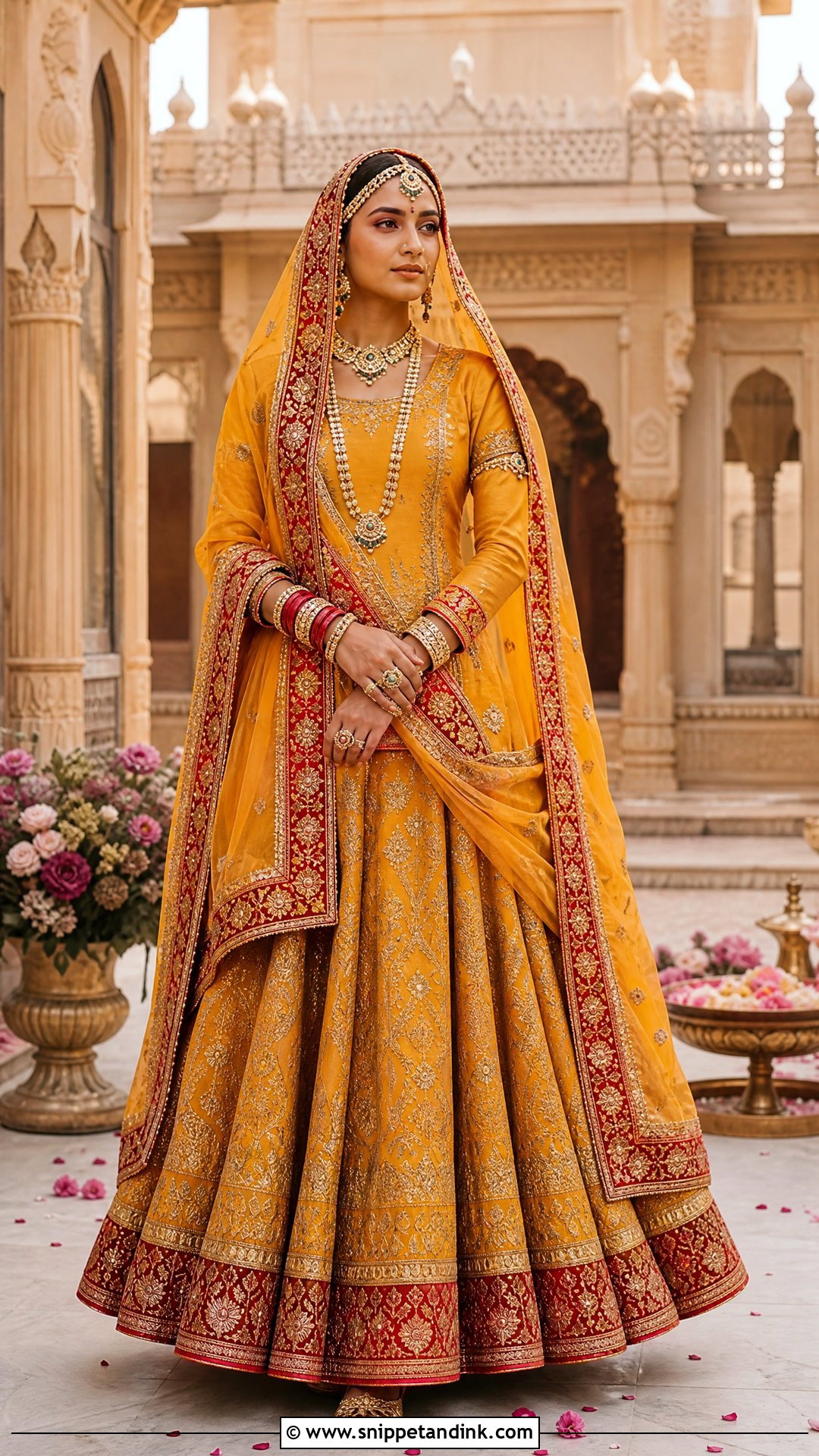
Saffron is at its best outdoors. At a palace courtyard or garden ceremony it catches warm light in a way red sometimes doesn’t, and it stands out clearly against sandstone. I’d choose silk, or a lighter georgette if the event runs through afternoon heat, with gold borders and red detailing on the ghaghra, sleeves and odhni so the look still reads as bridal. Antique gold or meenakari jewelry suits it, with a traditional borla, aad, long haar and sculpted bajuband. Red bangles and a red-bordered veil pull everything together. Pin the low bun firmly, because it carries the odhni’s weight all day. Copper eyes, a soft flush and a deep rose lip stop the face from going pale against such a strong color.
5. Bottle Green Rajputana Bridal Poshak
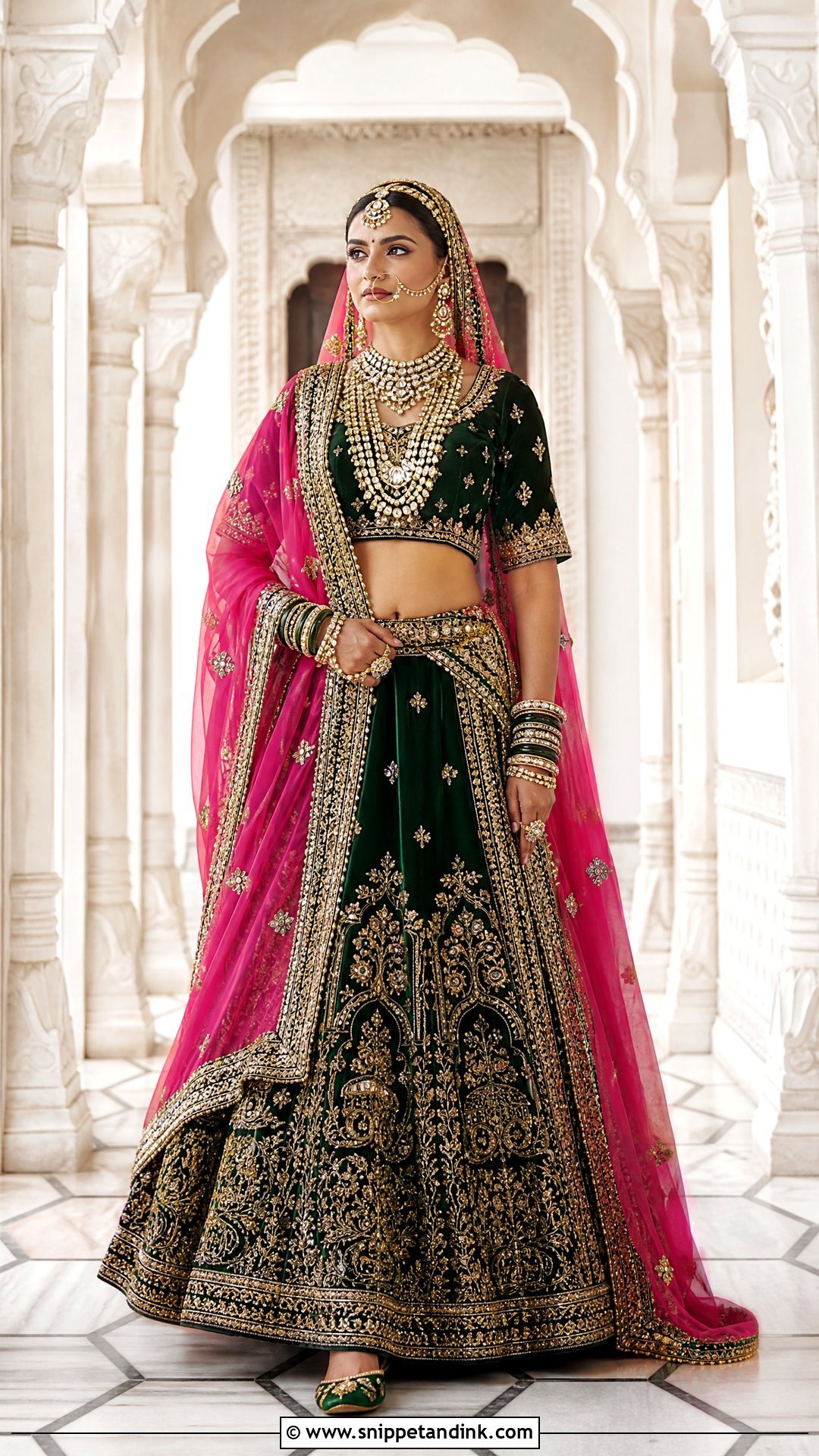
One question to settle first: is red required for the ceremony itself? In many families it is, and bottle green moves to the reception or a family function. Where it’s allowed, green is an excellent ground for gold, and silk or velvet with broad gota, zari or zardozi borders looks rich. A maroon or rani pink odhni brings the traditional contrast back to the face, and kundan with red enamel links both colors. I’d wear a borla, a structured aad, rani haar, nath, bangles and a slim kamarband, then stop. Several competing statement pieces on dark green start to look busy very quickly. Green velvet juttis, a center-parted bun, kohl-lined eyes, light contour and a berry lip finish it.
6. Gold Rajputana Bridal Poshak
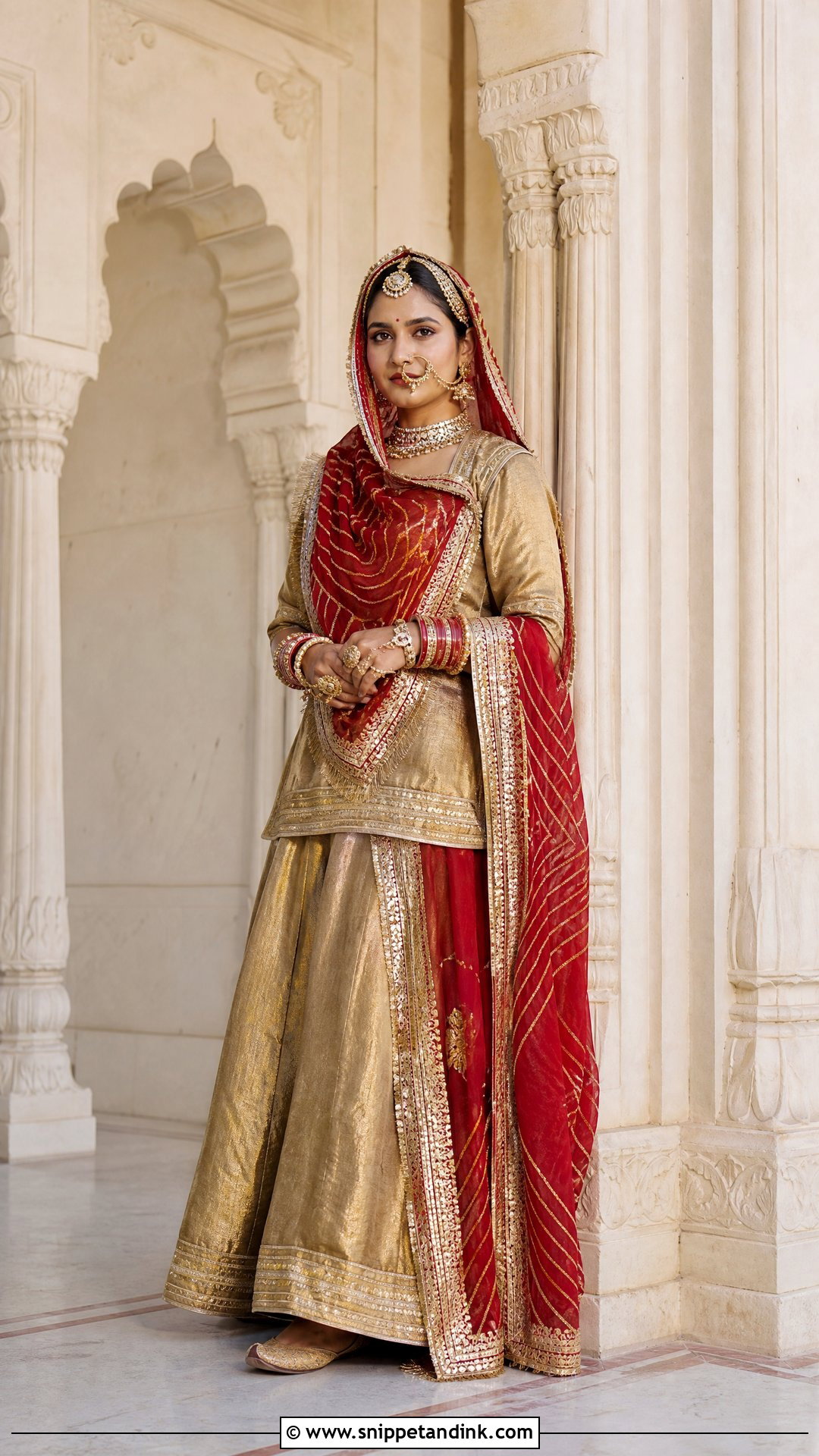
All-gold is the poshak I see fall flat most often, because every surface reflects light the same way. The fix is texture. Start from champagne, antique gold or a beige-gold base instead of high-shine fabric, then add embroidered panels, metallic gota borders and a red or maroon odhni so there is a clear bridal color near the face. Kundan with red and green meenakari breaks up the gold. Borla, aad, a long necklace, nath, haathphool and red bridal bangles complete the arrangement, and neutral gold juttis disappear under the ghaghra. Keep the hair smooth and structured. I’d insist on a deep crimson lip and a red bindi here; without that anchor the face washes out against so much pale fabric.
7. Red Bandhani Rajputana Bridal Look
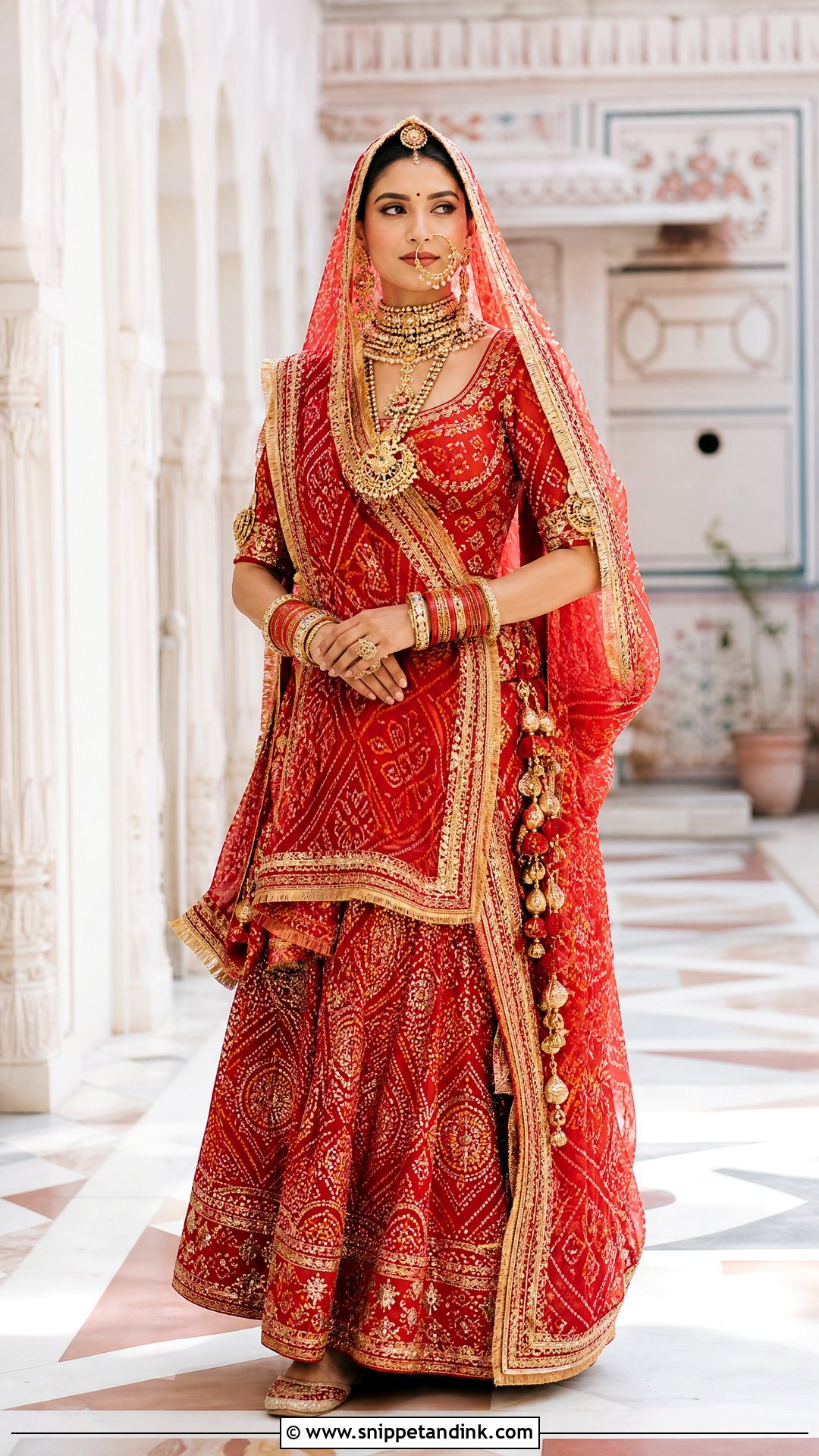
Bandhani is tied and dyed by hand, so every dot is slightly irregular, and that irregularity is what makes it look genuine on camera. A red silk or georgette poshak with small bandhani motifs and heavy gold borders gives ceremonial weight. I usually let the odhni carry the bandhani and keep the ghaghra and kanchli plainer, because pattern on every layer leaves the jewelry nowhere to sit. Complete it with a gold borla, kundan aad, rani haar, large nath, bajuband and traditional bangles, plus red-and-gold juttis. A neat center-parted bun, softly smoked eyes, warm blush and a clear red lip. One practical warning: bandhani dyes can bleed when damp, so keep wet mehndi and perfume well away from it.
8. Leheriya Rajputana Bridal Poshak
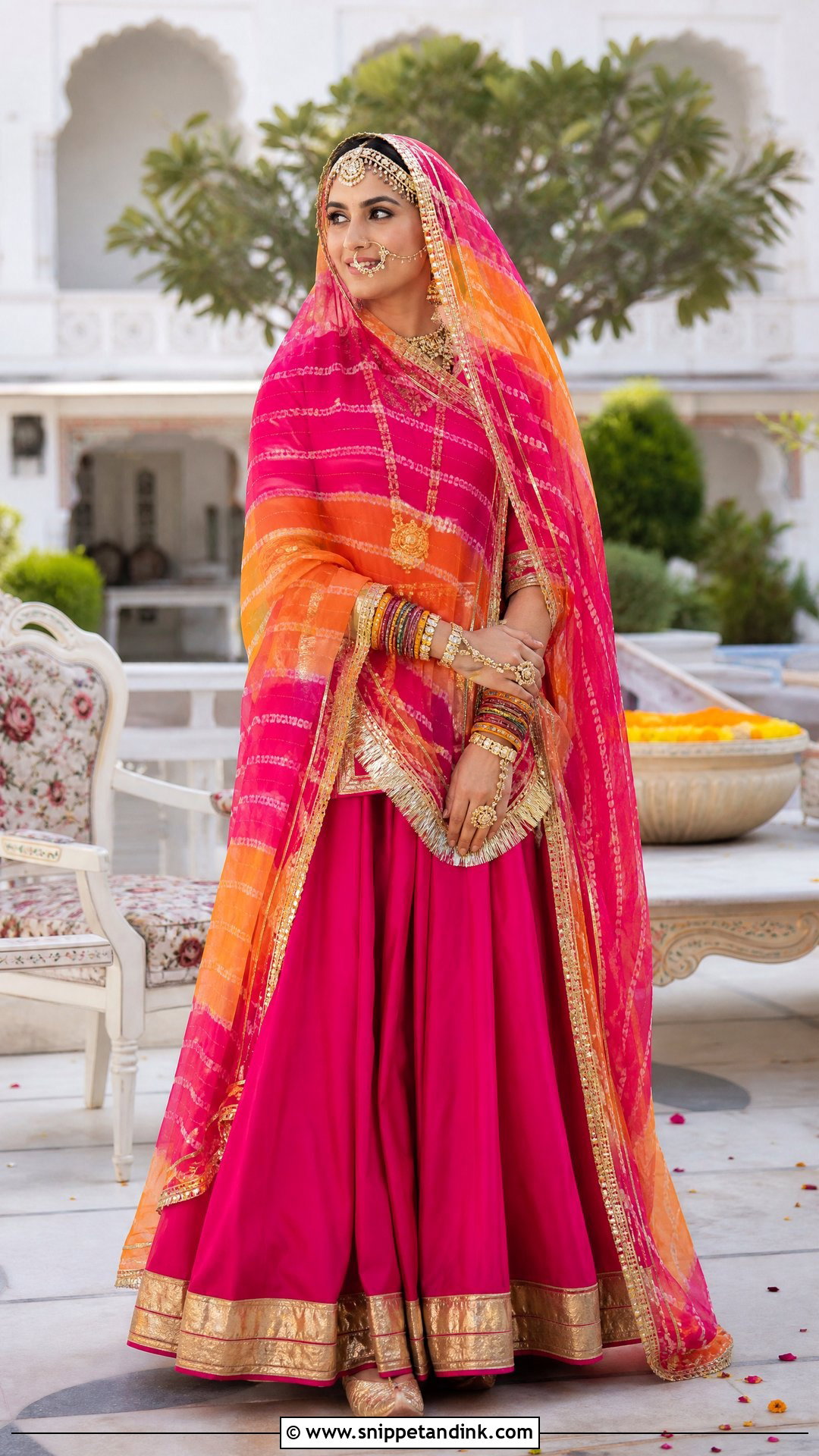
Leheriya is a wave-dyed stripe, and it belongs to daytime. I like it for a pre-wedding function or a morning ceremony where the color is allowed to be cheerful. Put the stripes on the odhni, in rani pink, saffron, red or a multicolor, and keep the ghaghra in solid silk so the pattern has room. Gold gota patti on the hem, neckline and veil border adds richness without breaking the waves. With a striped veil so close to the face, I trim the jewelry back to a streamlined aad and one long haar instead of layers, plus a borla, medium nath, haathphool and colorful bangles. A braided bun with small flowers, glowing skin, peach blush and a rose-red lip suit it.
9. Gota Patti Rajputana Bridal Poshak
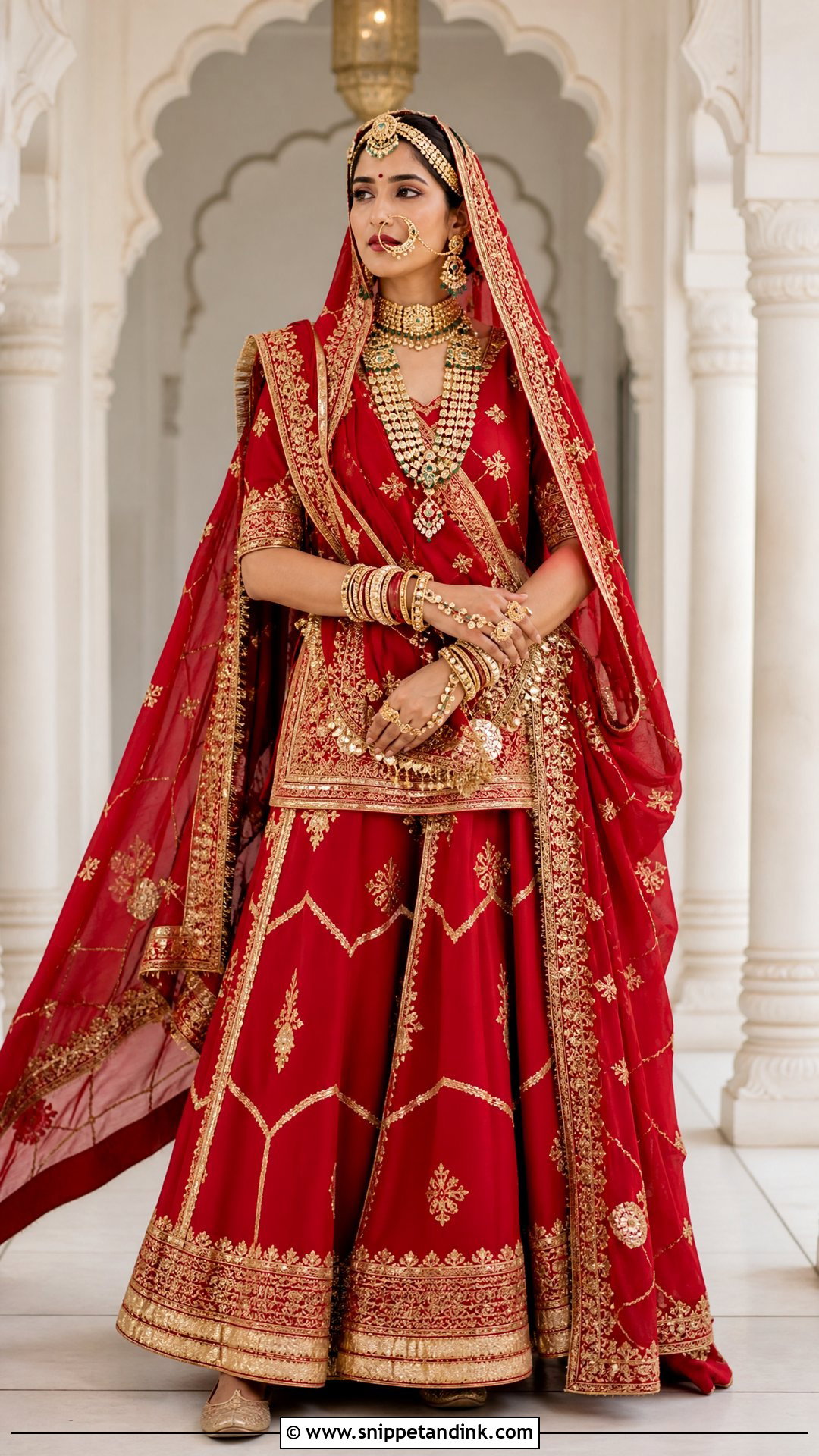
Gota patti is metallic ribbon stitched onto the fabric, which is why it gives so much shine for so little weight. That makes it the work I recommend to brides who want detail but need to dance at the sangeet or sit through long rituals. Ask for arranged motifs rather than a fully covered surface: a broad border on the ghaghra and smaller accents on the kanchli and odhni. Match the jewelry’s gold tone to the gota, since yellow-gold kundan against silvery gota looks mismatched up close. Borla, aad, rani haar, nath, haathphool, coordinated bangles and metallic juttis. I secure the odhni border before the ceremony starts, with one pin at the borla and one at the shoulder, so it stays around the face. Gold-toned eyes and a classic red lip finish it.
10. Zardozi Rajputana Bridal Poshak
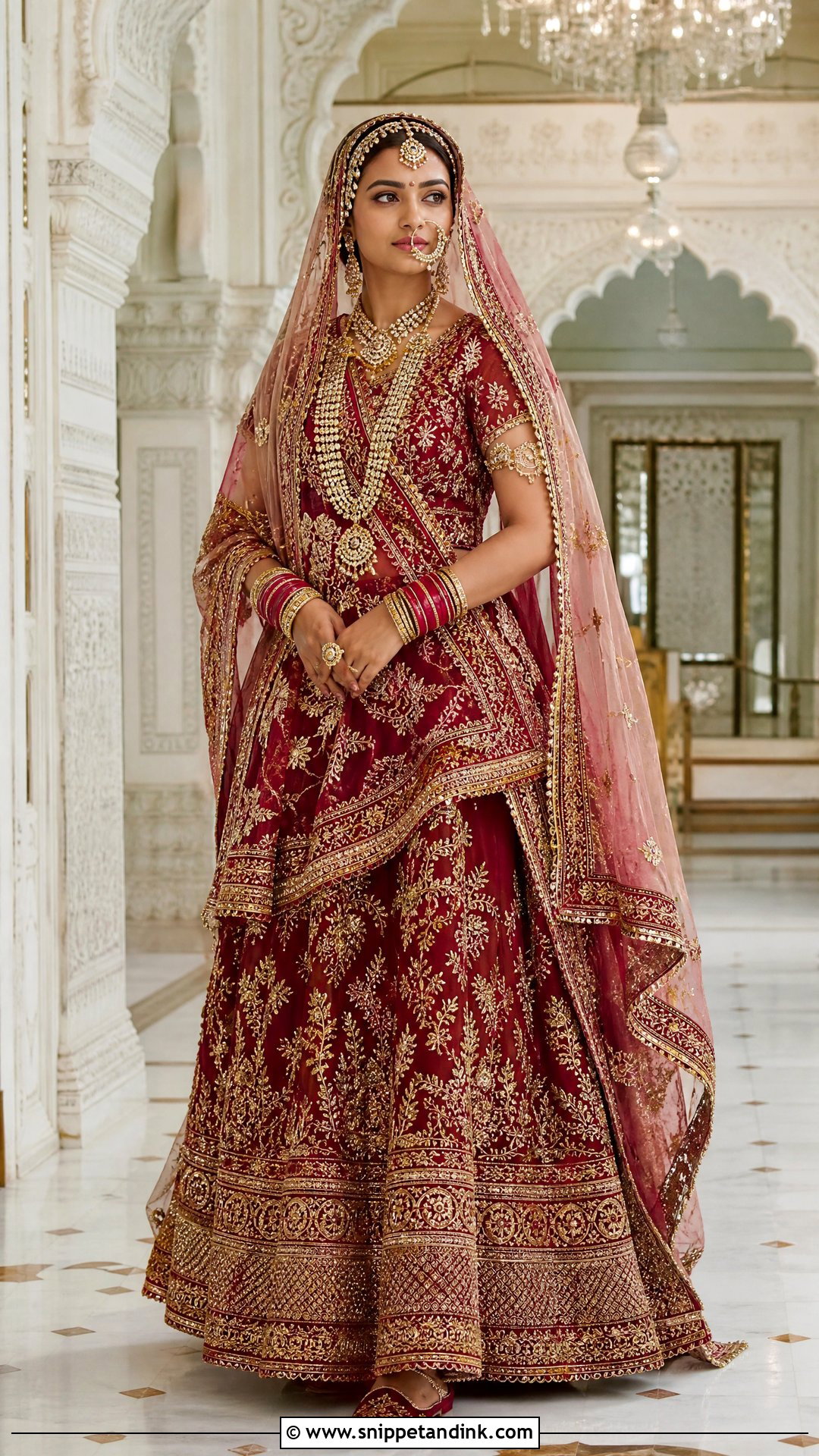
Zardozi is raised metal-thread embroidery, and it is heavy. For a formal evening wedding, a zardozi Rajputana bridal poshak in maroon, crimson or deep pink has a depth nothing else matches, but I plan the whole outfit around that weight. Concentrate the embroidery at the hem and neckline, keep the odhni lighter with only a matching border, and have the tailor reinforce the blouse so a heavy aad doesn’t drag the neckline down. Antique gold polki or kundan suits the dimensional threadwork: borla, broad aad, long rani haar, nath, bajuband and stacked bangles. Choose cushioned velvet juttis even though nobody will see them, because you’ll be standing for hours. A structured low bun, softly smoky eyes, set brows and a deep red lip.
11. Double Odhni Rajputana Bridal Look
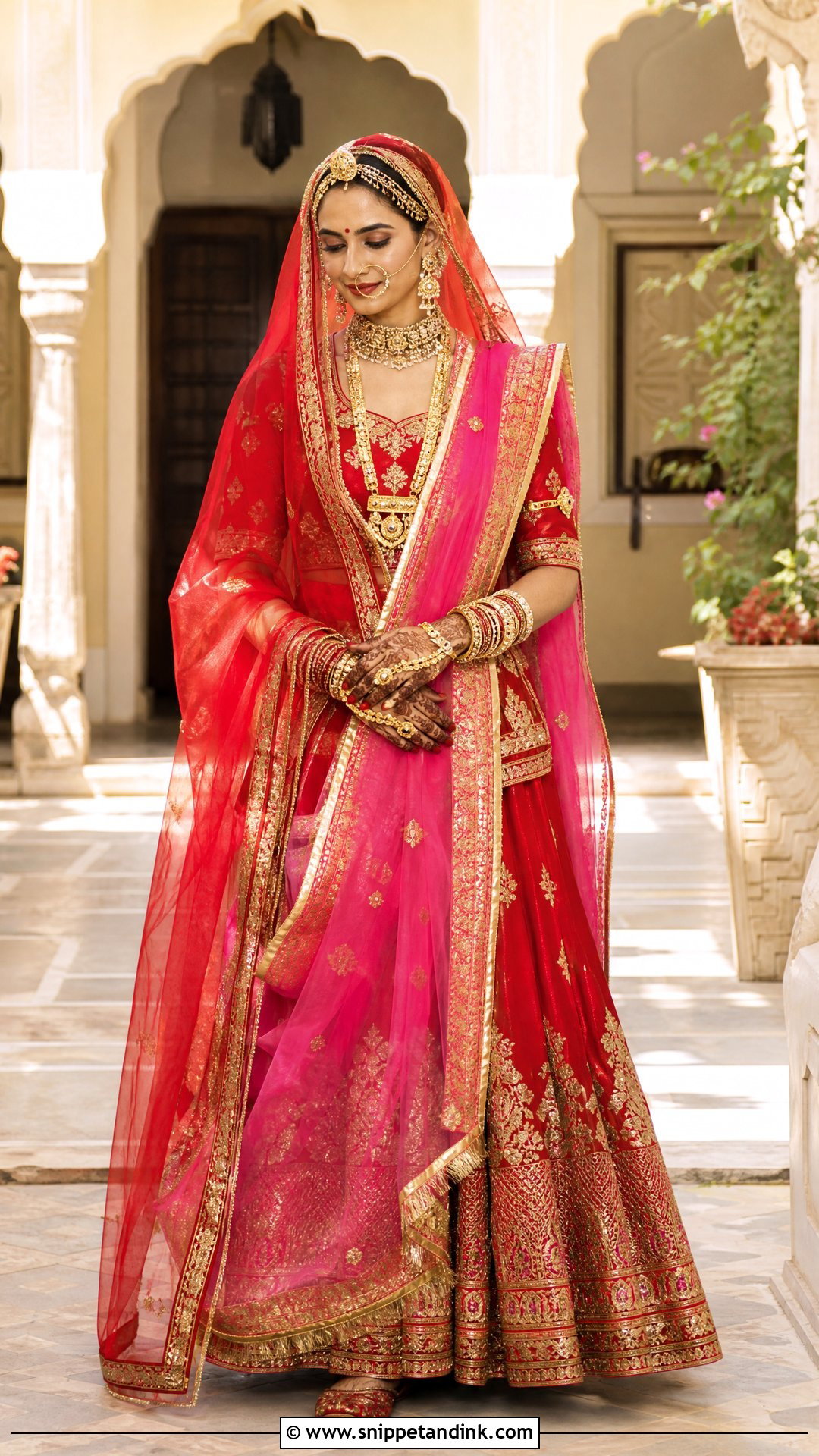
Two odhnis let a bride wear her family’s veil and her own choice at the same time. The head odhni should be the lighter of the two, because it hangs from the borla, rakhdi or sheeshphool and every extra bit of weight pulls on the pins. The second drapes across the shoulder or wraps the torso. A red poshak with a pink, saffron or green second veil works as long as both borders share the same gold finish. Add a traditional aad, long haar, nath, bajuband, haathphool and bangles, with juttis in one of the accent colors. At the trial I ask the bride to turn her head quickly a few times; if the veil shifts then, it will shift more at the pheras. Defined eyes, warm cheeks and a rose-red lip.
12. Red Lehenga With Rajputi Jewelry
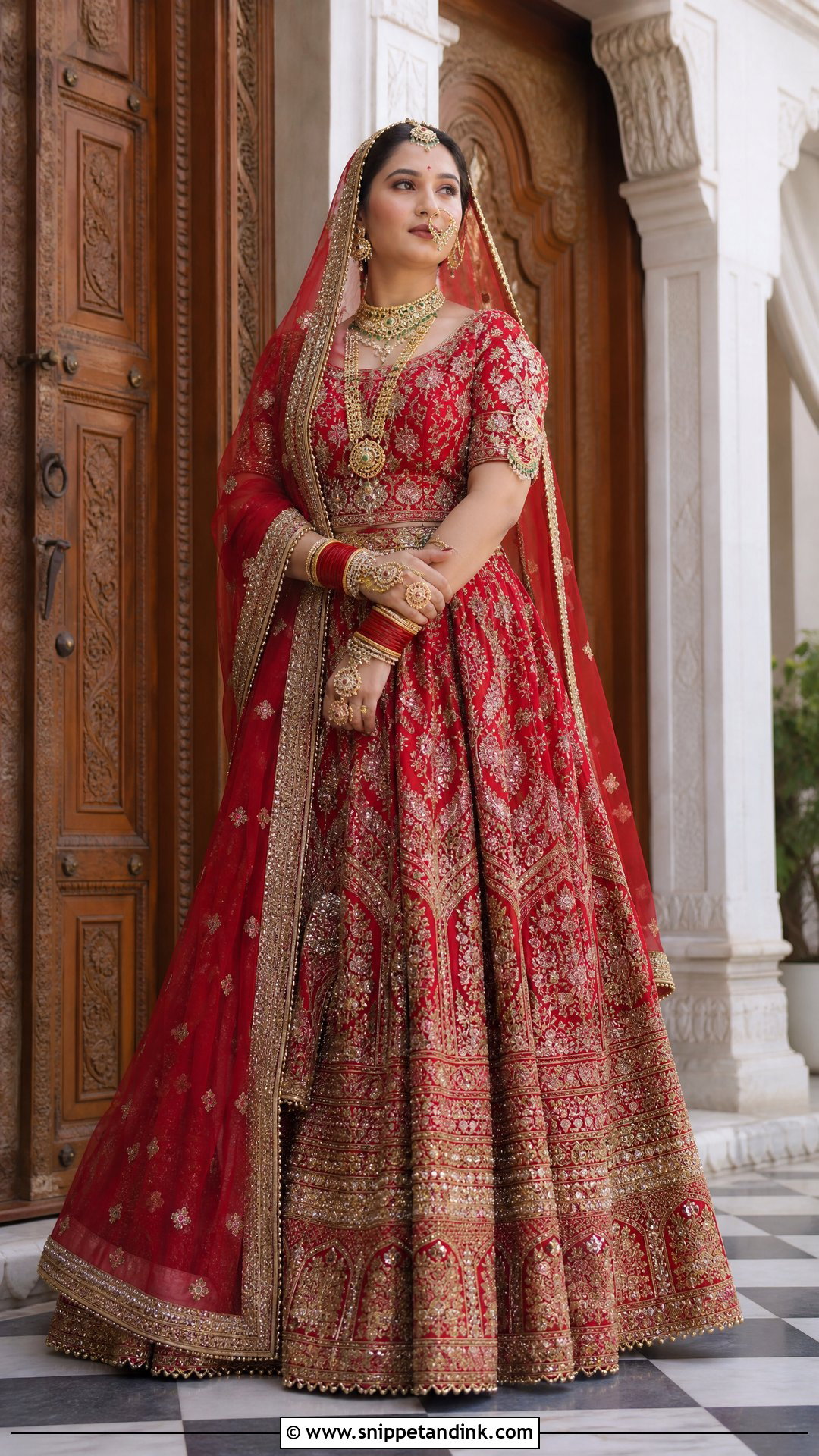
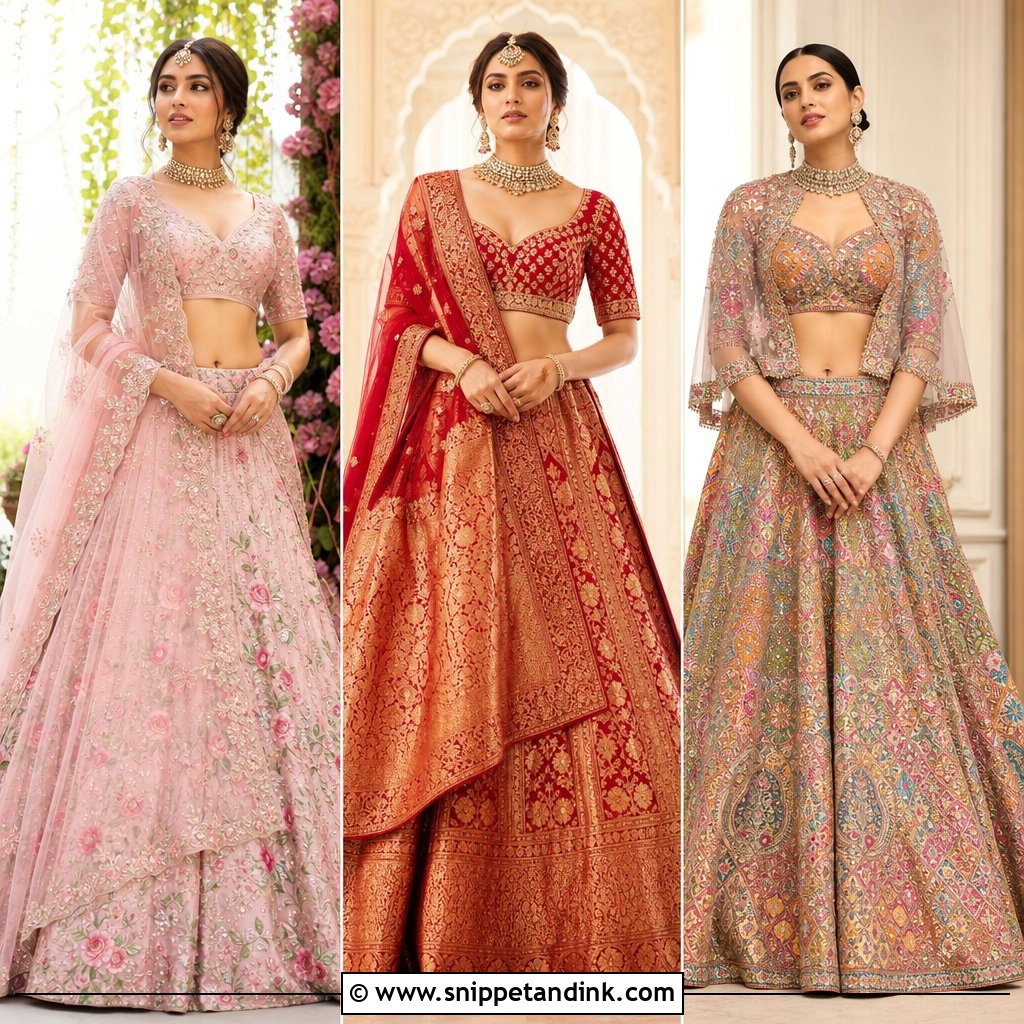
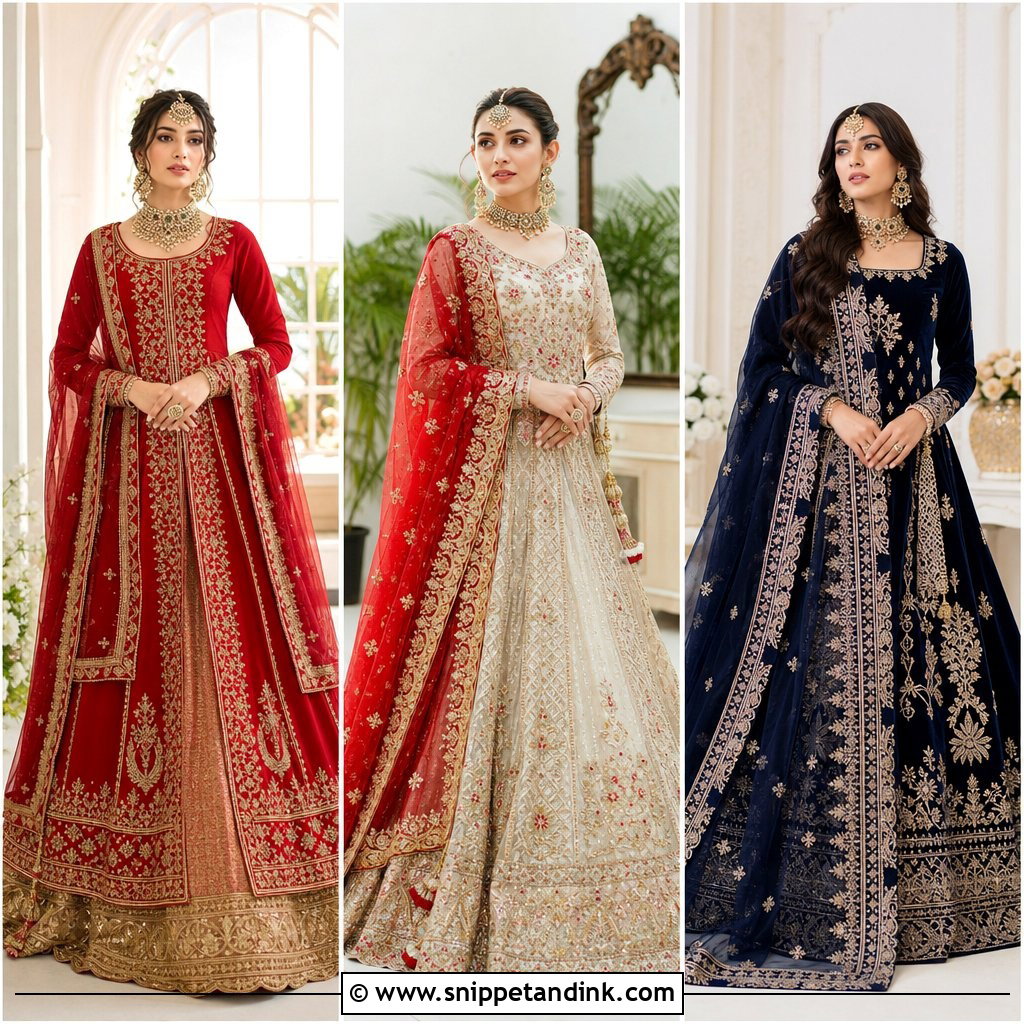
A lehenga can carry real Rajputana character, but only when the styling does the work. I’d choose a full skirt, a fitted blouse and a head-covering dupatta with antique gold embroidery, and avoid very contemporary blouse cuts, like a deep back or a sheer yoke, if you want the look to stay rooted. The jewelry is what tells people where you’re from: a round borla or traditional rakhdi at the parting, a broad aad and a longer rani haar, then a chain nath, bajuband, haathphool, kamarband and stacked bangles. Red or gold juttis rather than contrasting heels. A middle-parted bun sits neatly under the veil. Finish with kohl-lined eyes, a red bindi, defined lips and setting spray for a long ceremony.
13. Brocade Rajputana Bridal Poshak
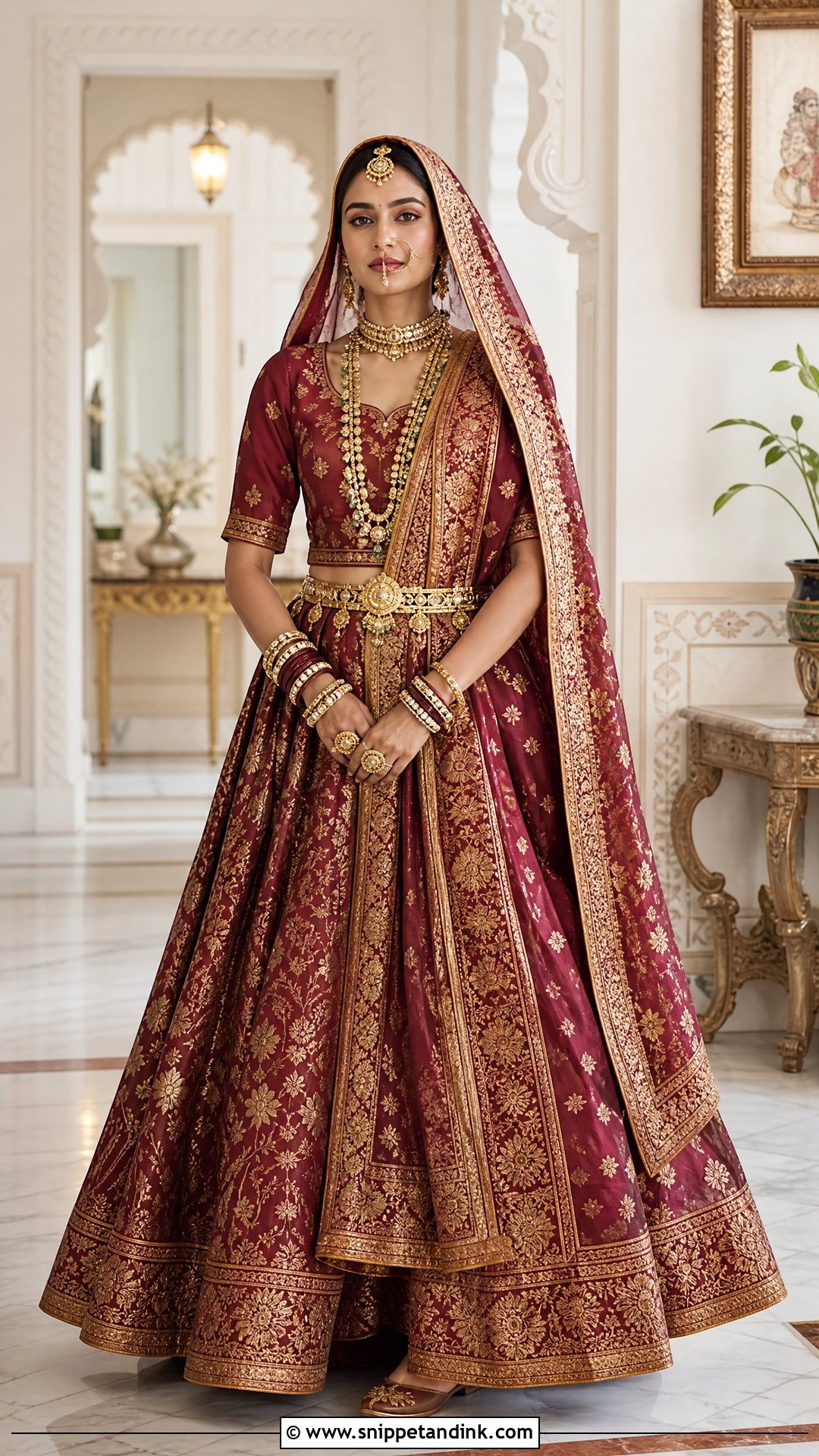
Brocade gets its pattern from the weave, not from embroidery added afterwards, so it looks rich without heavy work on top. A red, maroon, saffron or green poshak with understated gold florals woven in suits a bride who finds dense embroidery scratchy against her skin. Pair it with a plain or lightly worked odhni with a broad border so the layers stay distinct. Antique kundan matches the fabric’s texture: borla, aad, one long necklace, nath, bangles and a structured kamarband to define the waist. Brocade is warm, so I reserve it for cool weather, and I still ask for a cotton lining underneath. Embroidered silk juttis, a sleek bun, smoked brown eyes and a muted crimson lip complete the look.
14. Velvet Rajputana Winter Bridal Look
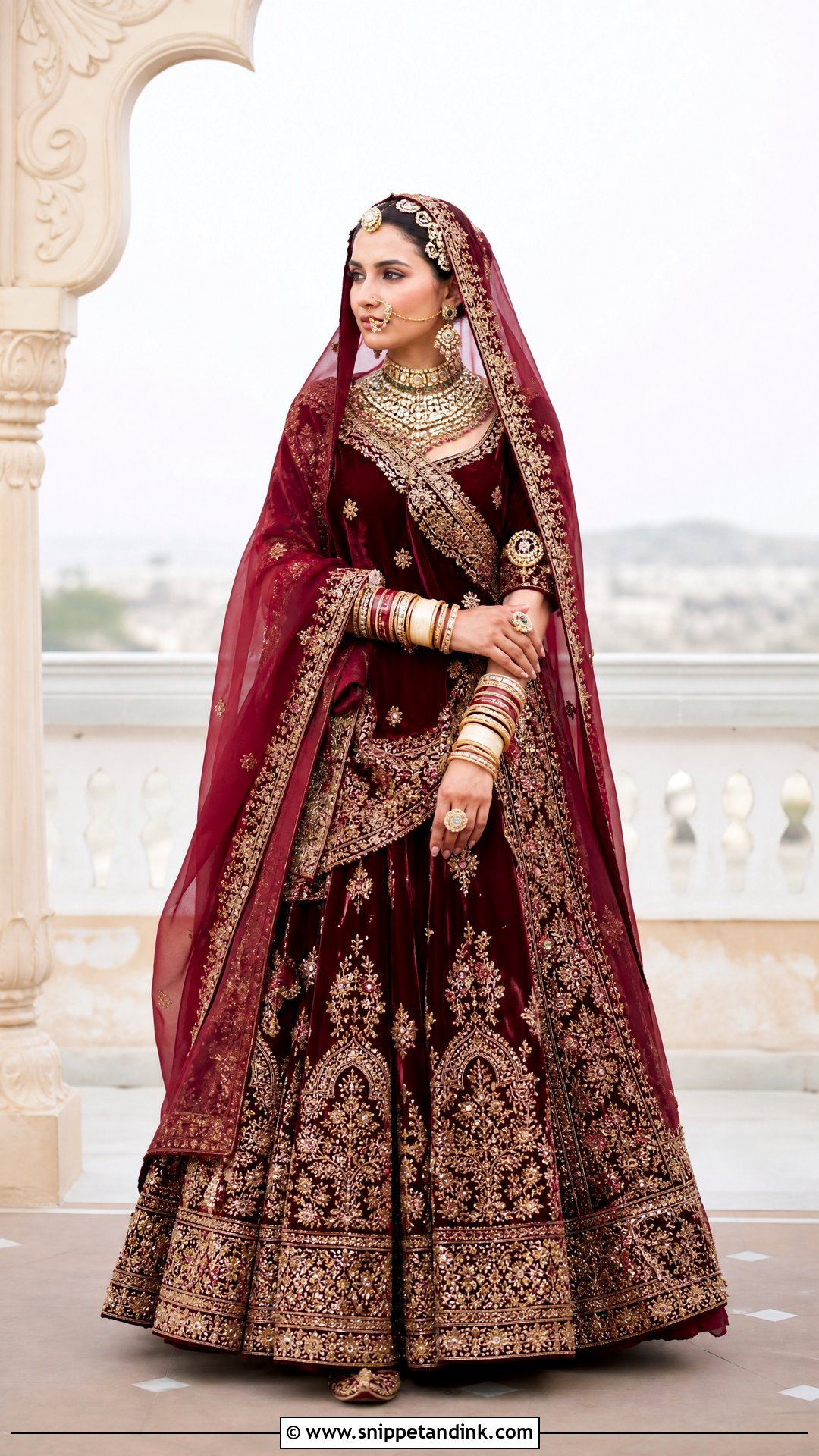
Velvet is the obvious winter fabric, but a full velvet poshak is heavier than most brides expect once the jewelry goes on. Maroon, bottle green or deep red velvet for the ghaghra and blouse gives warmth and a dark ground for antique gold work, while a net or georgette odhni spares the head from carrying velvet weight too. Velvet pile also crushes where you sit, and those marks don’t brush out quickly, so lift the back of the ghaghra when you’re seated for long rituals. Substantial kundan or polki suits it: borla, aad, rani haar, nath and bajuband. Velvet juttis and lined sleeves help at an outdoor venue. Secure the veil to a center-parted low bun with discreet pins, and finish with matte skin, bronze eyes and a berry-red lip.


15. Silk Rajputana Daytime Bridal Look
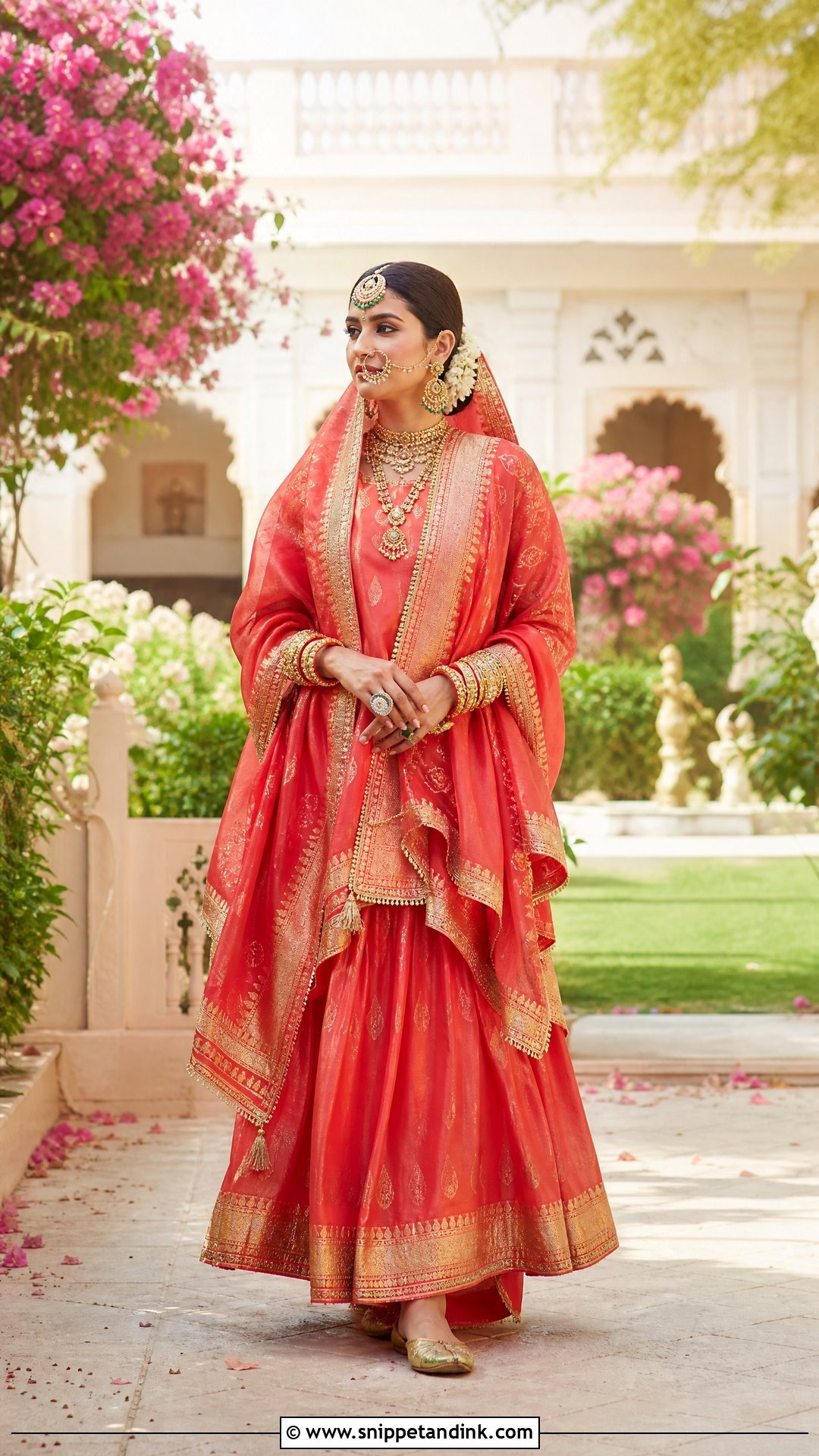
Silk has a natural sheen that comes alive in daylight, which is why I like it for morning and afternoon ceremonies. Think red, coral, saffron or rani pink with woven gold borders and restrained embroidery. A lightweight odhni keeps the covered-head silhouette without trapping heat. Here I’d choose a medium aad, rani haar, borla, nath and bangles over very oversized pieces, which look heavy in sunlight. Gold juttis with cushioned soles make a lawn or courtyard much easier to cross. Keep the low bun neat with small fresh flowers at the back. Daylight shows every layer of foundation, so I keep the skin luminous but thin, with soft eyes, pink blush and a rose lip.
16. Peach Rajputana Reception Look
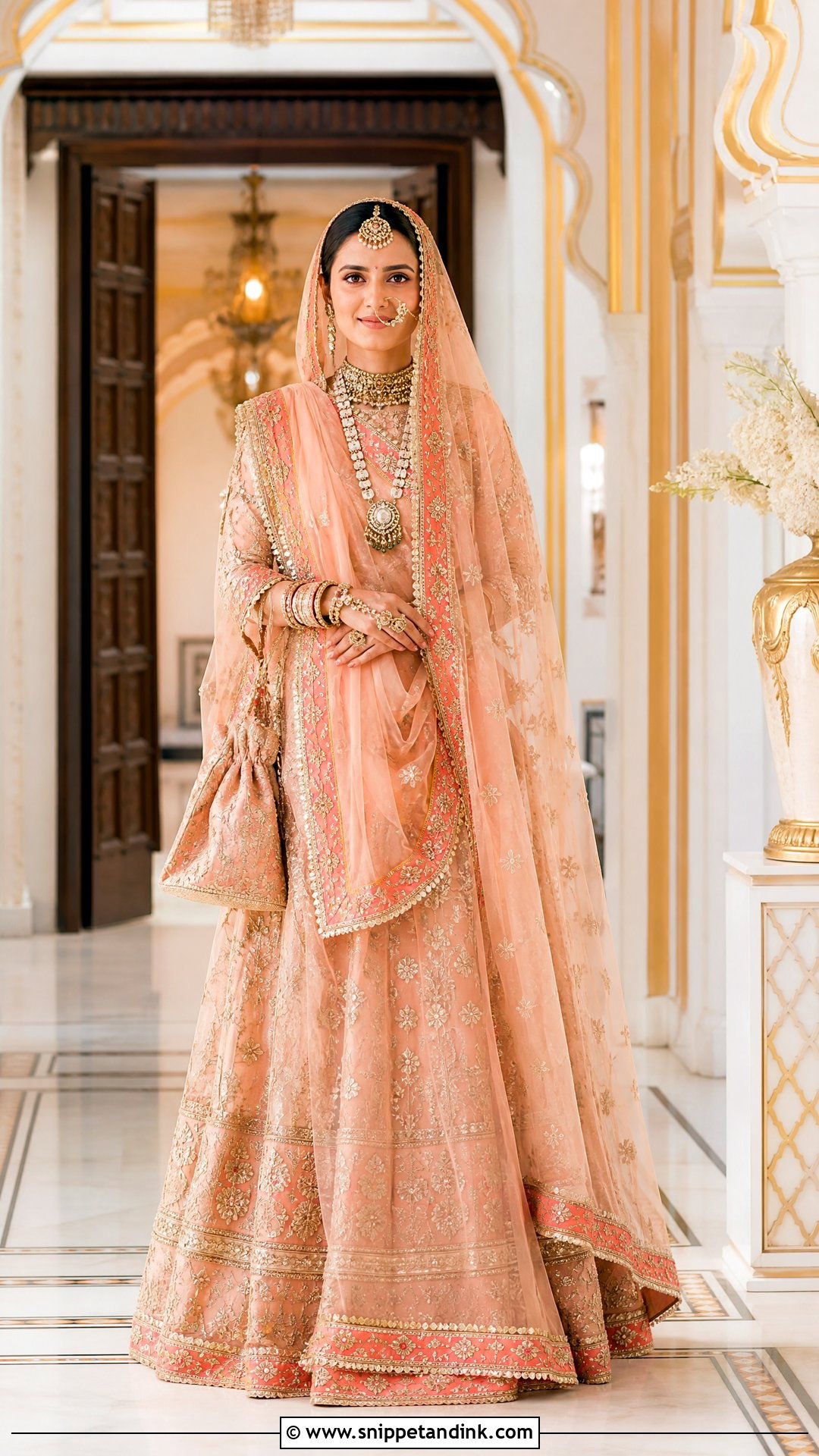
Peach is a reception color for most families, and it stays recognizably Rajputana because the Rajputi jewelry carries the heritage. A peach silk or georgette poshak with antique gold embroidery and a deeper coral or rani pink border gives the pastel enough definition. A flared peach lehenga with a modest blouse and an odhni over the head is the other route. Kundan with green or pink enamel adds gentle contrast. Pastels are easy to overload, so I scale the set down: borla, a refined aad, a long necklace, smaller nath, haathphool and coordinated bangles. Champagne-gold juttis, a small embroidered potli, a sleek bun, brown-lined eyes, peach blush and a rose-nude lip.
17. Yellow Rajputana Haldi Look
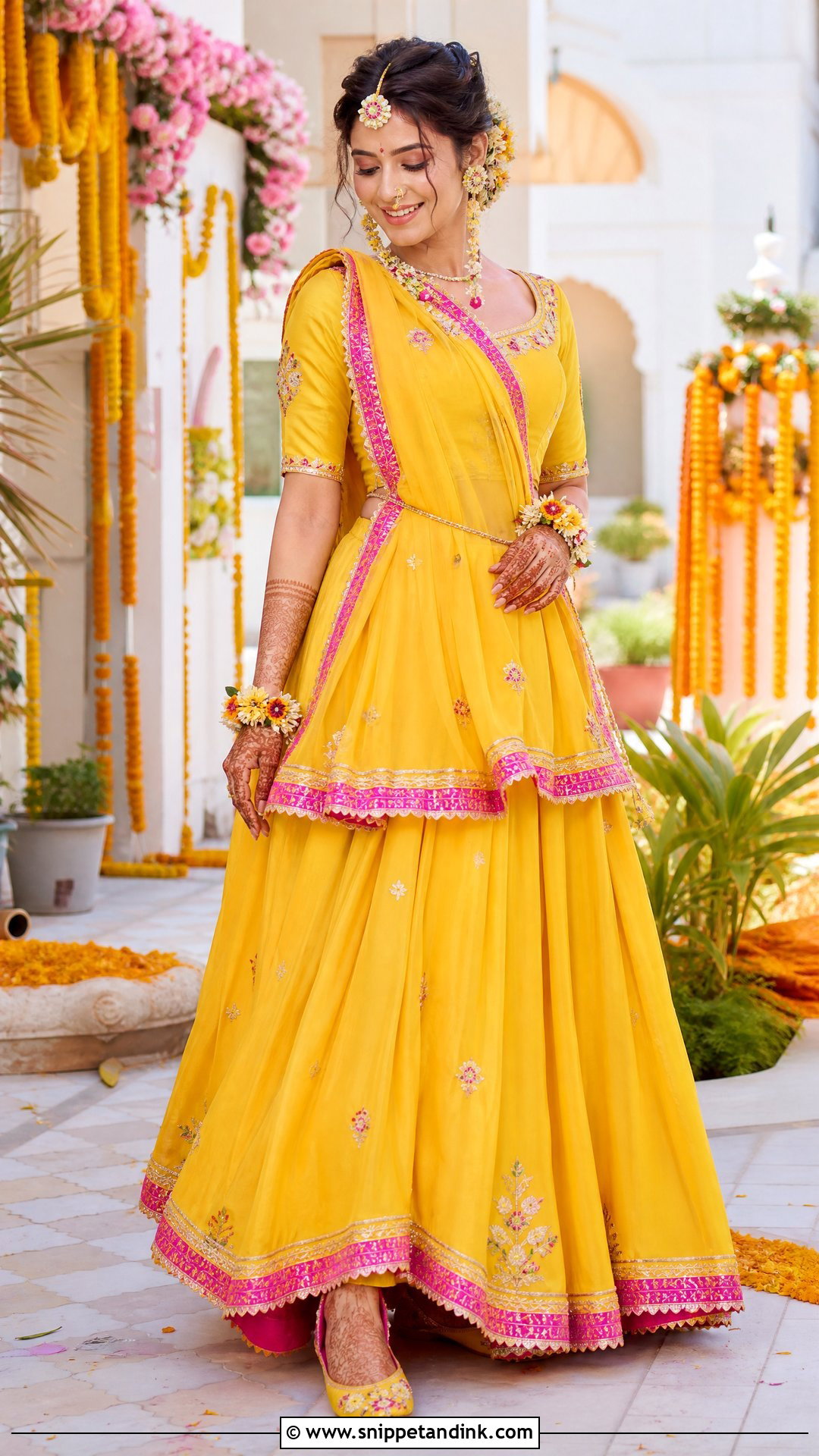
Haldi paste stains, so I never send a bride into haldi in anything she wants to keep pristine. A yellow poshak in breathable cotton-silk, organza or georgette, with a comfortable ghaghra, fitted kanchli and lightly bordered odhni, is practical and looks right in the photos. Marigold yellow with pink, orange or green edging gives the festive palette. Keep the embroidery lighter than the wedding outfit so you can sit, move and get messy. A small borla, a delicate aad, lightweight bangles and floral or meenakari accessories are enough; I’d leave real gold heirlooms in the box for this one. Yellow embroidered juttis, a secure braid or low bun, water-resistant kohl, fresh skin and tinted lips.
18. Green Rajputana Mehndi Look
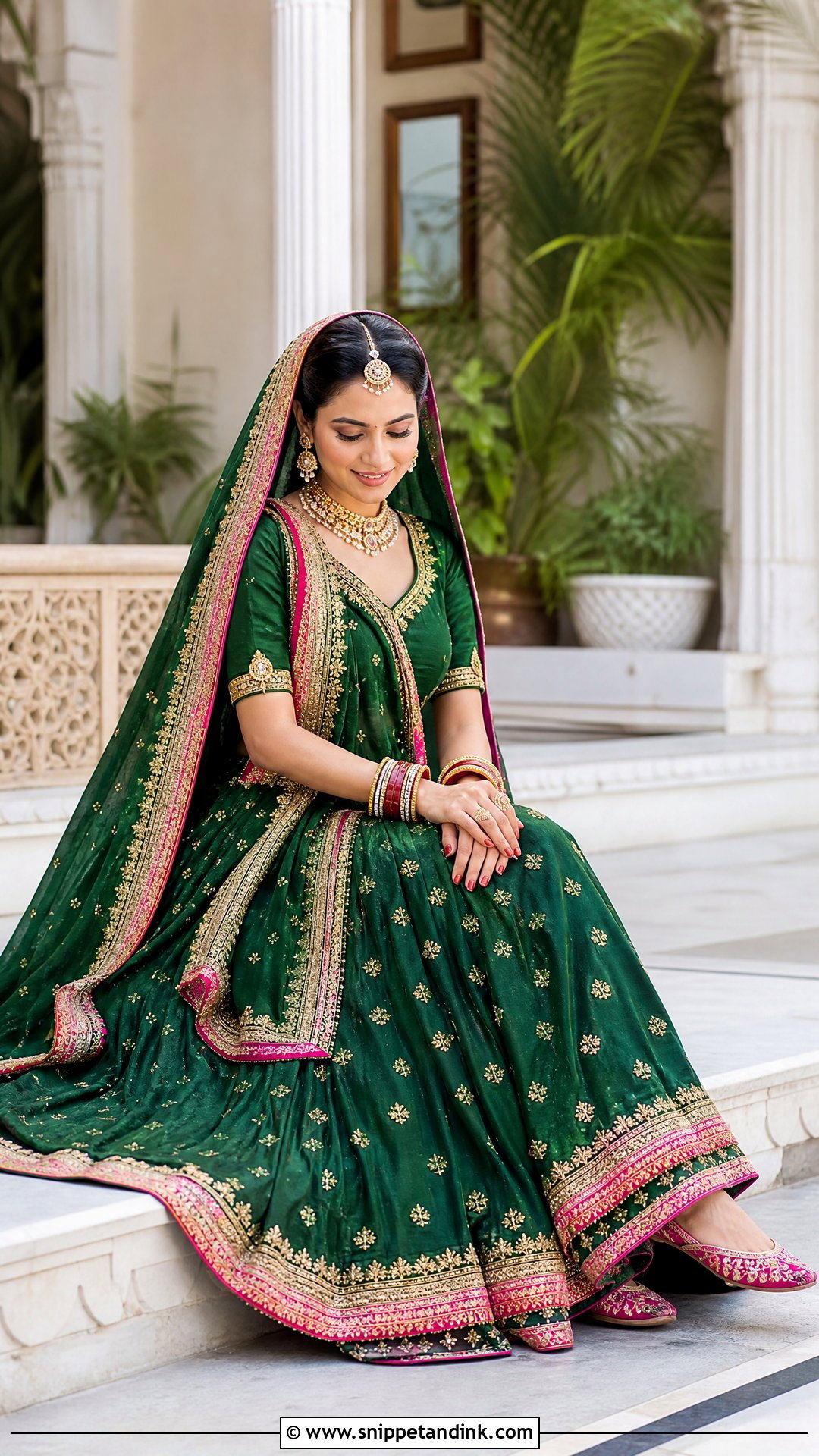
Mehndi takes hours, and you can’t use your hands while it dries, so this outfit is built around sitting still. An emerald, parrot green or lime poshak with rani pink and gold borders photographs well. A lightweight ghaghra and short sleeves keep fabric away from wet paste, and I pin the odhni at the shoulder and drape it back so it never brushes the hands. A small borla, compact aad, statement earrings, a simple bajuband and bangles that come off before the artist starts. Skip the clutch entirely; you won’t be able to hold it. Green or pink juttis, a braid with small flowers, softly lined eyes and a long-wear lip color that won’t need retouching.
19. Royal Blue Rajputana Engagement Look
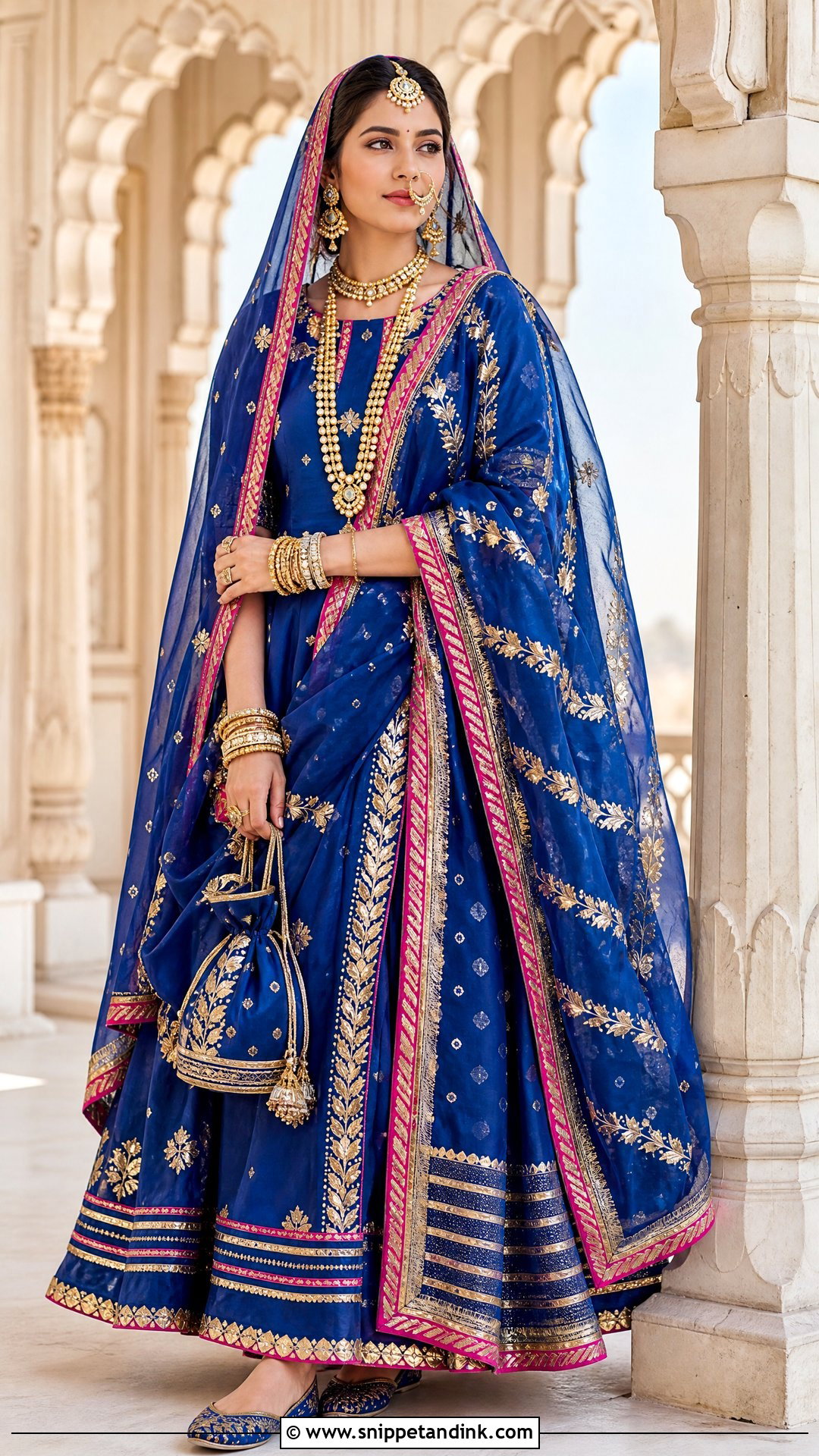
Royal blue isn’t a traditional bridal color, which is exactly why I keep it for an engagement or a formal pre-wedding gathering. Gold reads strongly against it. Go for a silk or georgette poshak with antique gold gota work and a rani pink, red or green border, and make sure the contrasting odhni repeats at least one color from the jewelry so the face and outfit connect. Kundan with subtle blue or green enamel, a borla, medium aad, long necklace, small nath and coordinated bangles. Royal blue juttis with gold thread and a structured potli. Blue can throw a cool cast onto the skin in photographs, so I warm the face with bronze eyeshadow, light contour and a berry-pink lip.



20. Heirloom Rajputana Bridal Look
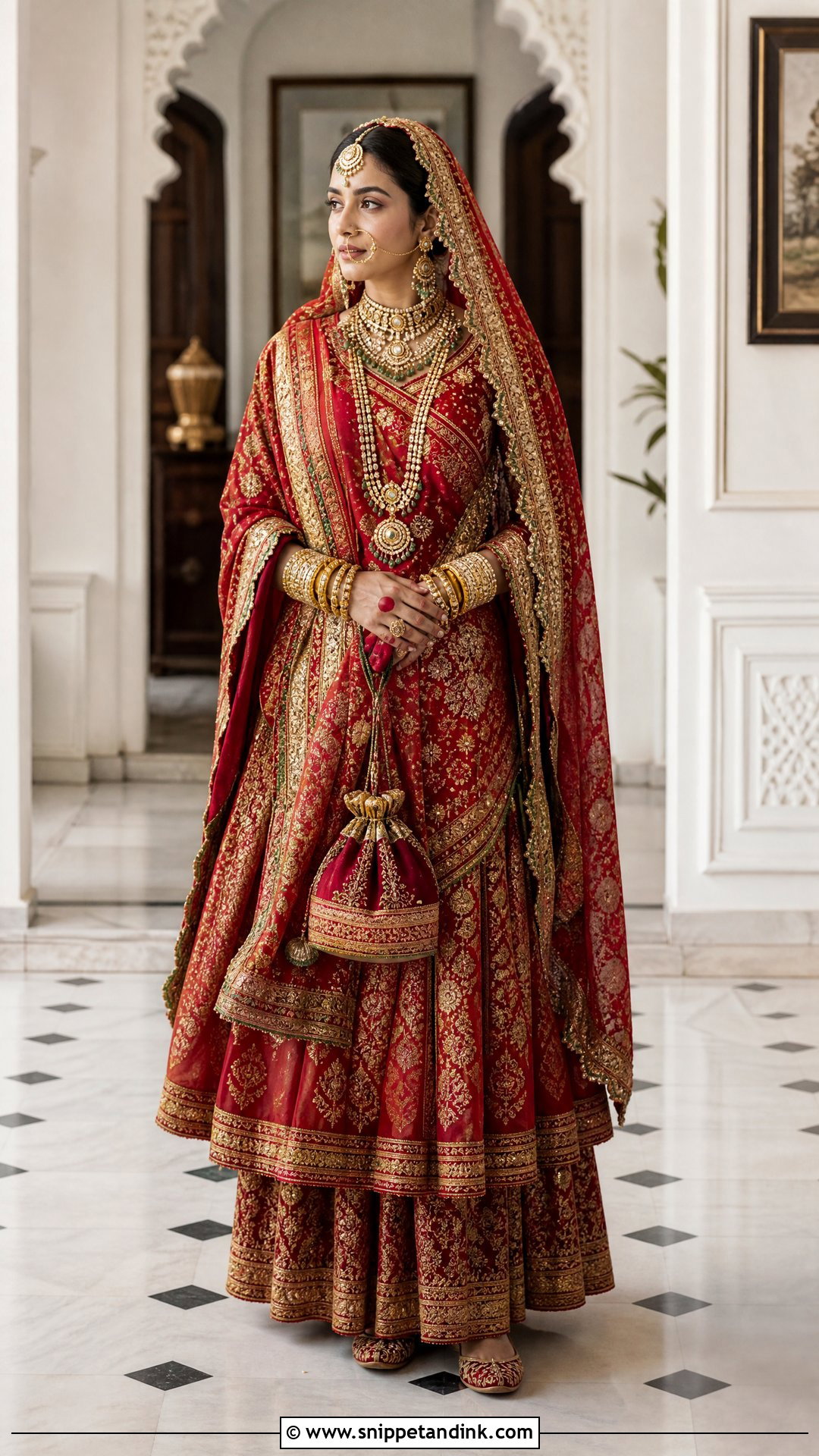
An heirloom piece changes how I plan the whole outfit: it becomes the starting point and everything else follows. That might be a family poshak, odhni, aad, borla, necklace or bangles. Old textiles need checking before anyone commits to wearing them, so I send them to someone experienced with traditional work to look for weak seams, brittle zari and fabric that has worn thin along old folds, then have them restored, lined and altered. If an old odhni is fragile, wear it over a new lightweight poshak in a closely matched red, maroon or pink rather than asking it to bear any weight. Keep new jewelry in the same metal tone and workmanship as the family pieces. Embroidered juttis, a simple potli, a classic low bun, soft eyes, red lips and understated skin keep the heirloom at the center.
After the Pheras, Packing Gota and Zari So It Lasts
The metallic work is what makes a poshak precious, and it is also what suffers in storage. Real zari and most gota darken when they meet moisture and air, and the plastic bags many outfits come home in trap exactly that combination. A little care in the first week decides how the outfit looks when a daughter or niece unfolds it years later.
- Air the outfit for a day after the wedding, inside out and away from direct sun, before packing anything.
- Use a cleaner who handles embroidered bridal wear, and point out haldi, mehndi and makeup marks yourself rather than hoping they get noticed.
- Wrap each piece in clean, undyed cotton or muslin. Skip plastic, newspaper and colored tissue, which can transfer dye.
- Lay acid-free tissue along the folds of heavily worked areas so metal threads aren’t bent sharply, and refold along different lines every few months.
- Keep the jewelry in its own soft pouches. Kundan settings packed against fabric will snag the threads.
If the odhni is meant to be passed down, write a short note about who wore it and for which wedding, and keep it folded inside the muslin. Families remember the outfit and forget the details surprisingly fast.
Red, Rani Pink or Your Grandmother’s Odhni?
Color, fabric, drape and jewelry have to be planned as one outfit, not four separate purchases. Red is the traditional answer, but maroon velvet, rani pink silk, saffron, green, brocade and bandhani are all honest options when the family is comfortable with them. What I check in every look is balance: heavy embroidery needs a lighter veil, a big aad needs an uncluttered neckline, and juttis have to be comfortable before they are pretty. Customs differ from one family to the next, so settle the colors, the odhni placement and the ceremonial ornaments with your elders before you finalize anything. A full poshak, a lehenga with Rajputi jewelry or a set of restored heirlooms can all look regal when every piece is coordinated with care.
You'll Like These Ideas:







Leave a Reply