
A convertible bridal dress gives you a formal entrance and an easier reception outfit from one purchase. Today’s versions do it with detachable overskirts, sleeves, capes, boleros, trains and bows, or with separates that swap a single piece. I like them, but I judge every one on the same question: does the second version look finished on its own, or like a dress with something missing? Below are twenty pairings, from a mermaid hidden under tulle to a jumpsuit under a ball skirt, with what I’d check on each before you sign off the final fitting.
Ordering a Gown and Its Add-On Pieces So the Whites Match
Convertible pieces come two ways: designed as a set by one maker, or bought separately and attached by a seamstress. Sets are easier because the fabric, shade and fastenings were planned together. Adding an overskirt or bolero from another brand gives you more choice but more risk, since ivory from one mill can sit noticeably warmer or cooler than ivory from another.
Timing the order
Made-to-order bridal gowns commonly take several months to arrive, and alterations need their own block of roughly two to three months after that. Add-on pieces from a different supplier often run on a separate schedule, so order everything at once and bring all of it to the first fitting. A seamstress fitting the base dress without the overskirt is guessing at the waist.
- Ask for fabric swatches of each piece and compare them in daylight, not under shop spotlights.
- Check how each piece fastens (hooks and bars, snaps, buttons and loops, or a hidden zip) and whether the base dress already has the matching half sewn in.
- Get the alteration quote for both layers together, since fitting two pieces to one waist is more work than fitting one.
1. Strapless Mermaid Wedding Gown With Detachable Overskirt
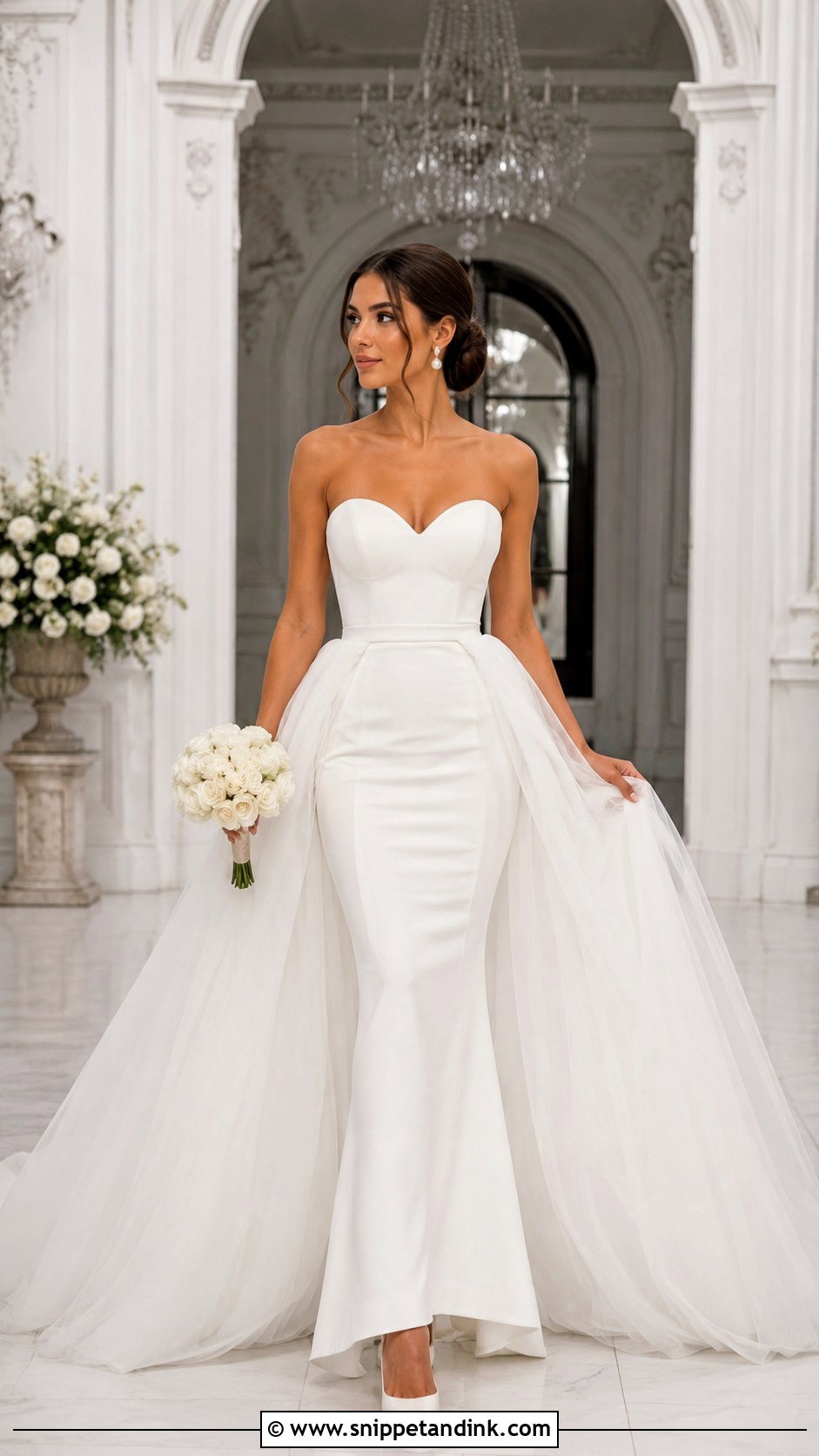
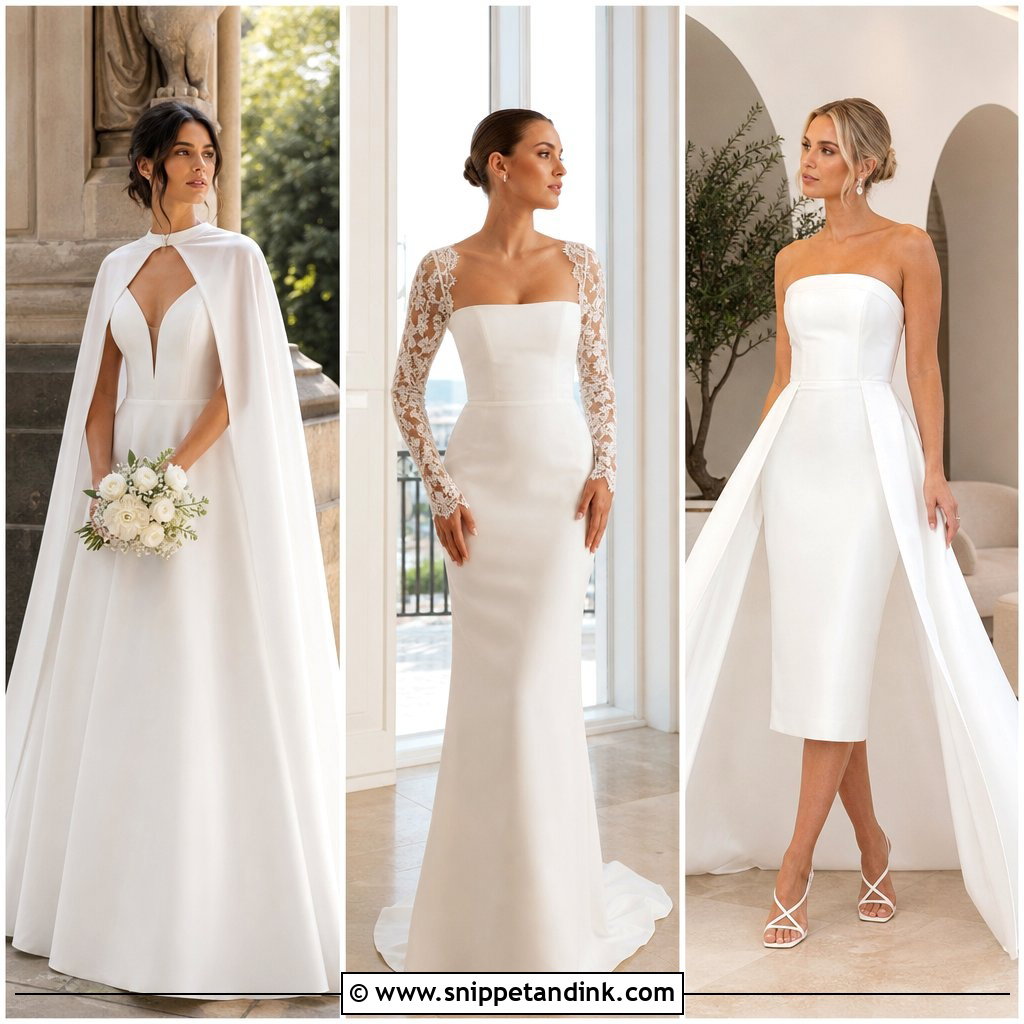
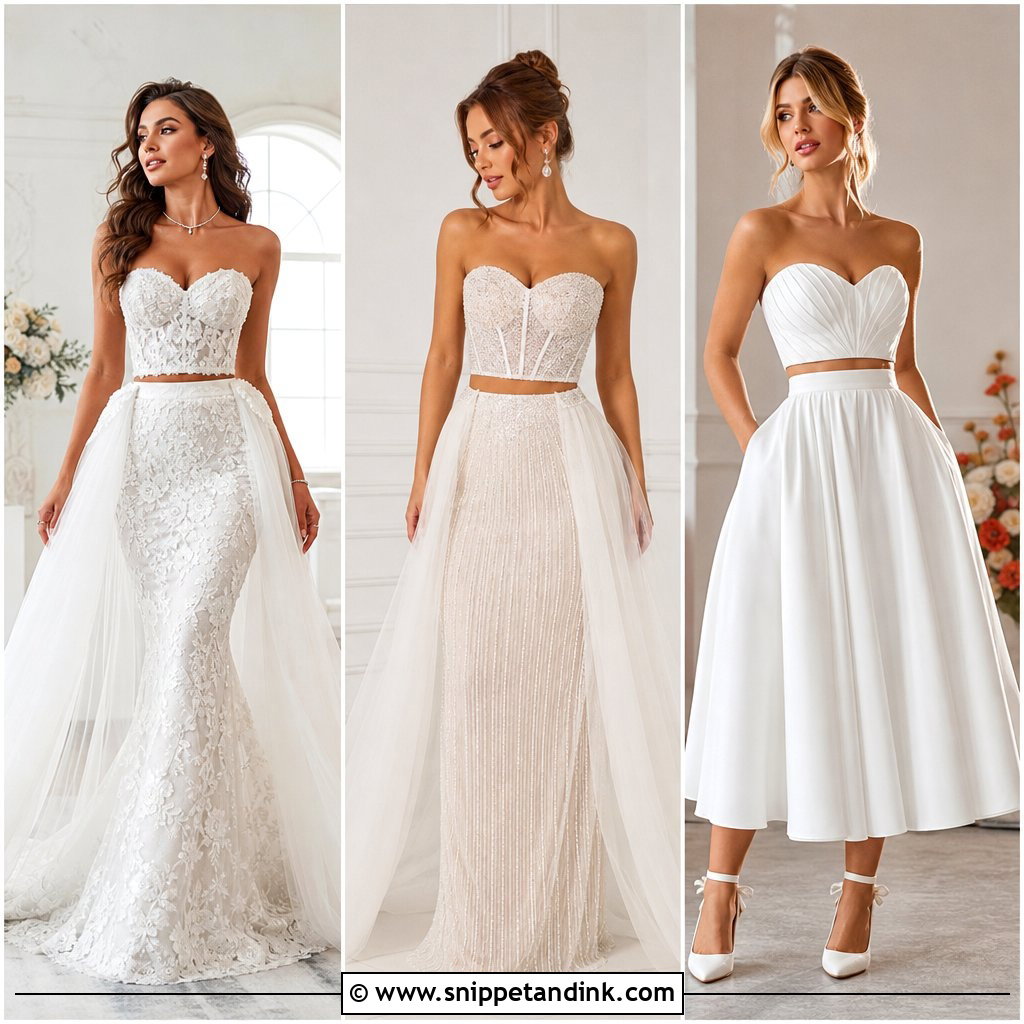
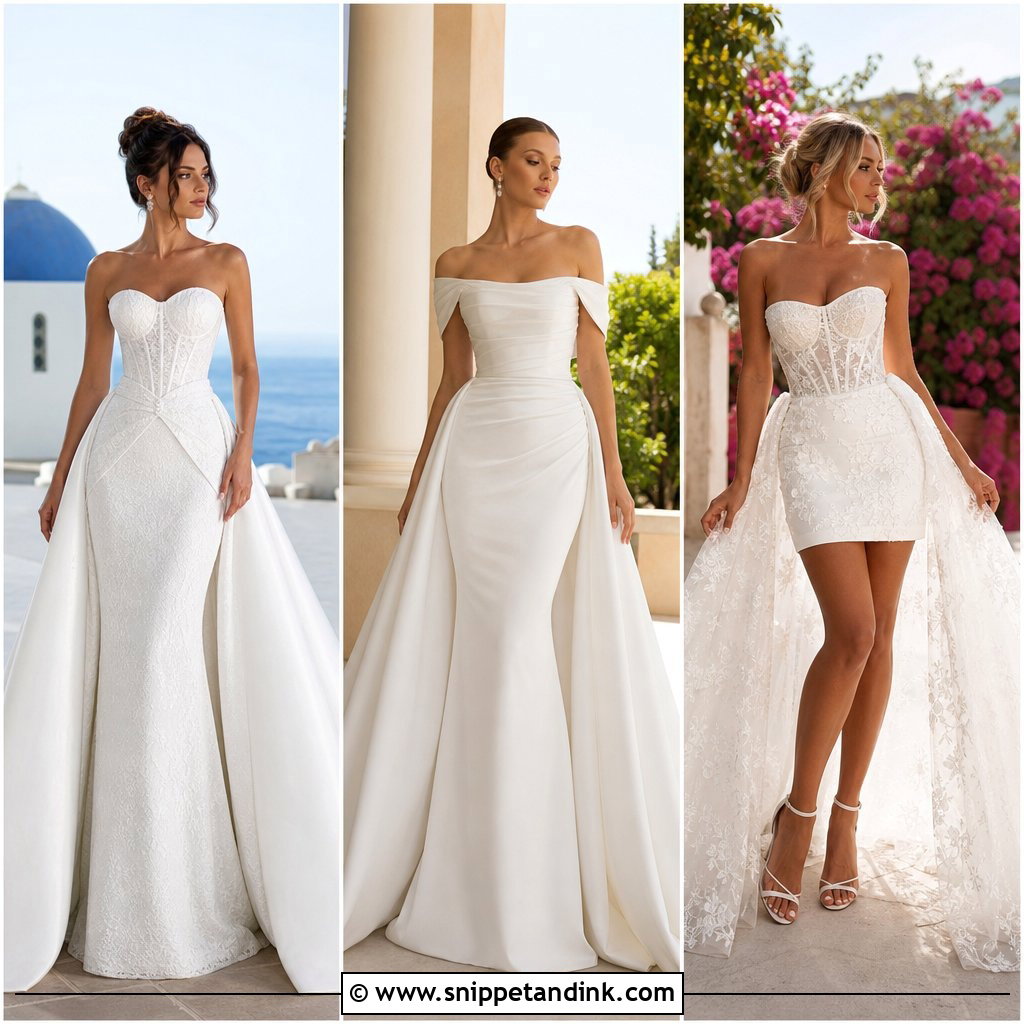
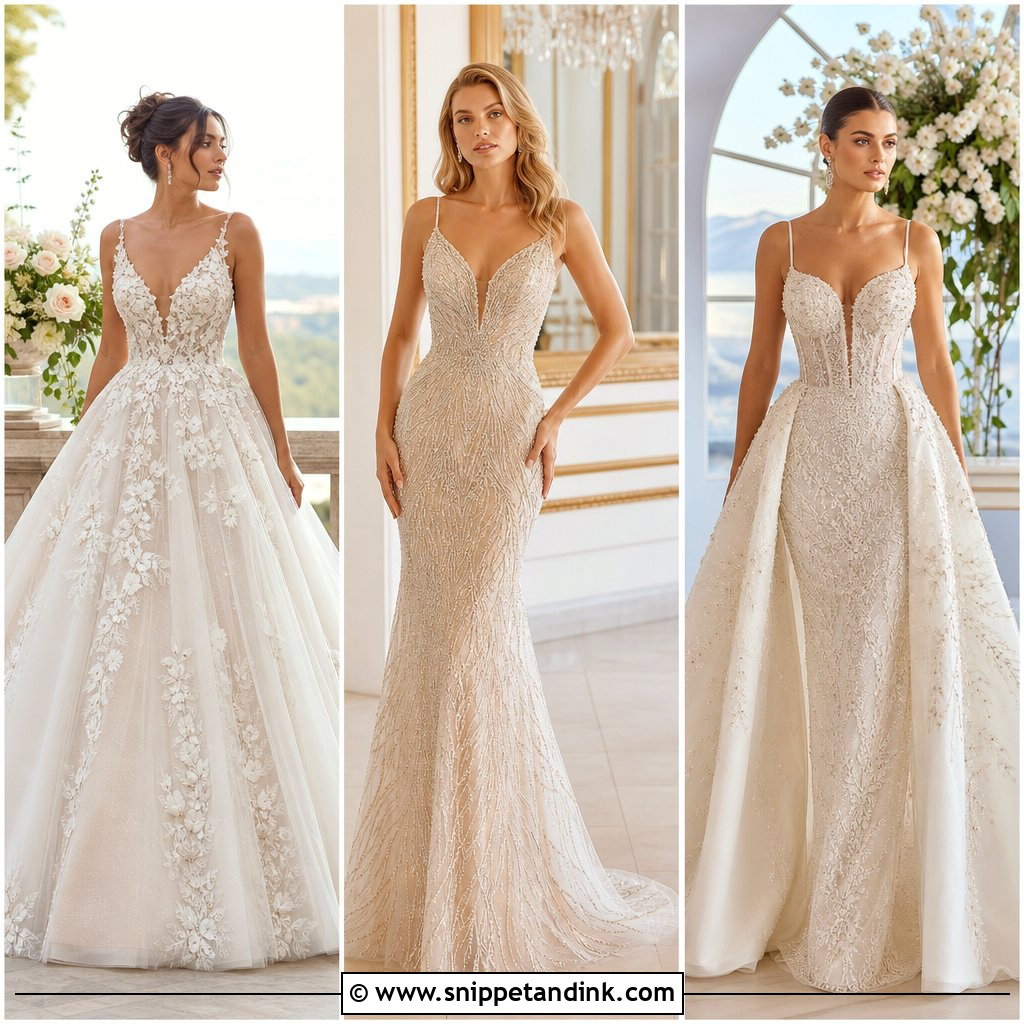
Under a full tulle or organza overskirt, a fitted mermaid passes for a ball gown at the ceremony and then shows its line for the party. The base needs a properly structured strapless bodice in crepe, satin or lace that hugs to the knee before it flares. Here’s what usually goes wrong: the overskirt hooks onto the waist and leaves a ridge of hardware on a fitted dress that hides nothing. I have those fastenings buried under a narrow waistband so the reception look stays smooth. Pointed ivory pumps, pearl drops and a compact bouquet sit happily with both versions.
2. Lace Wedding Gown With Detachable Long Sleeves
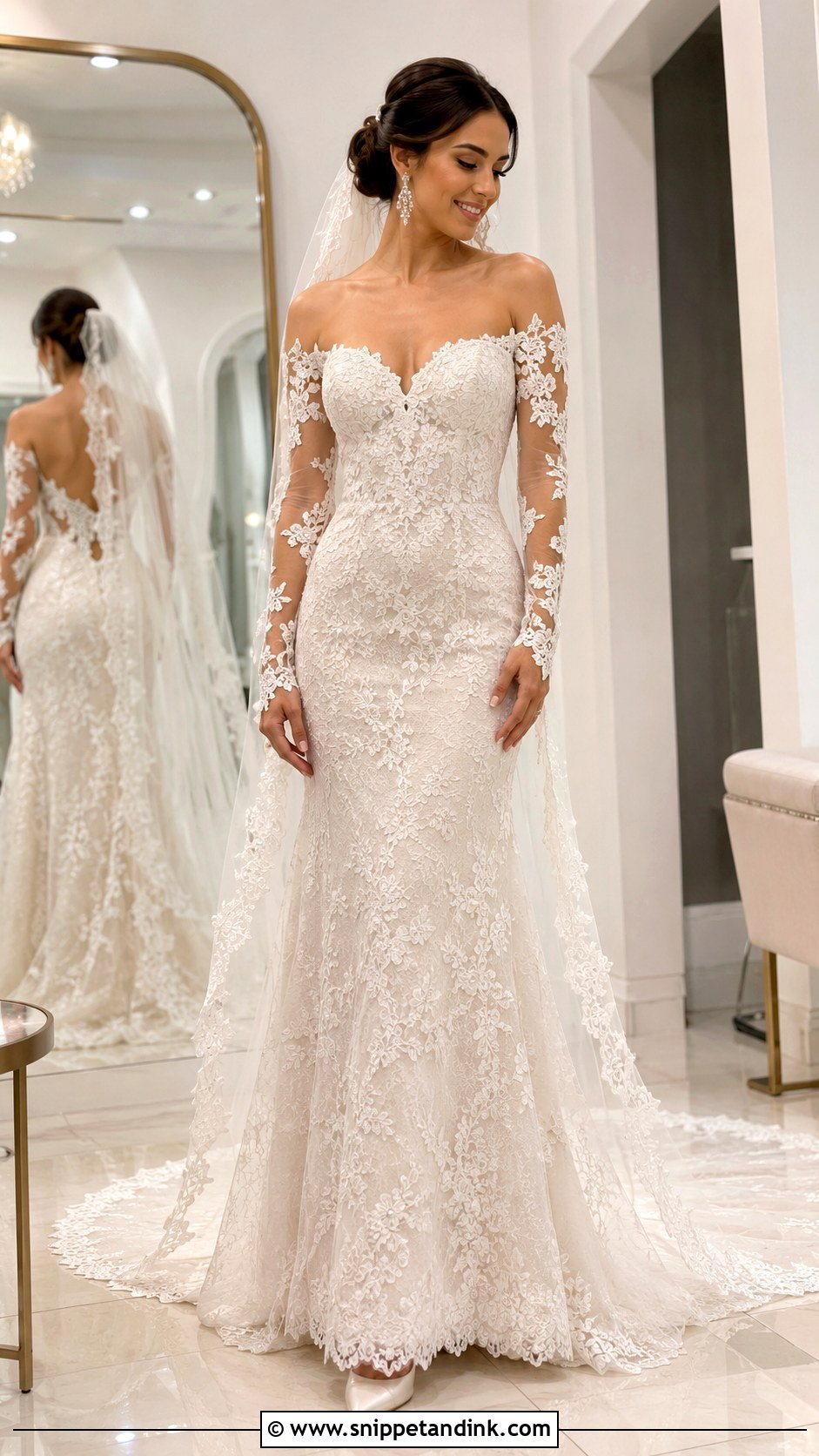
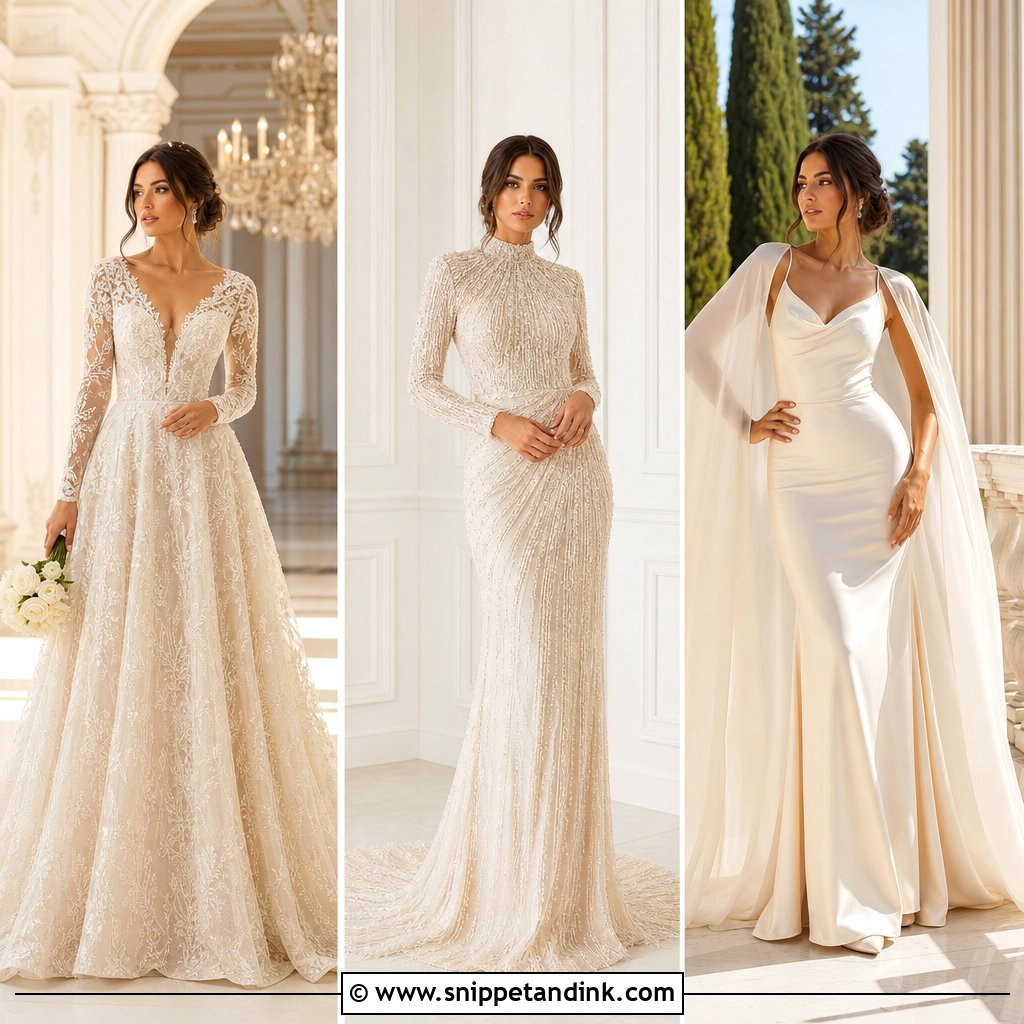
Detachable illusion sleeves let a sleeveless wedding gown wear two moods. Start with a fitted A-line or sheath with a sweetheart or straight neckline, and add sleeves covered in lace that matches the bodice appliqués. The fitting I care most about is the armhole. A sleeve tight enough to stay put can leave red pressure lines on the upper arm, and those show the moment the sleeves come off, so I want a finger’s room around the arm. Satin ankle-strap heels, a lace-edged veil and small crystal earrings suit it, with a low chignon that keeps the shoulders clear.
3. Bridal Mini Dress With Full Detachable Skirt
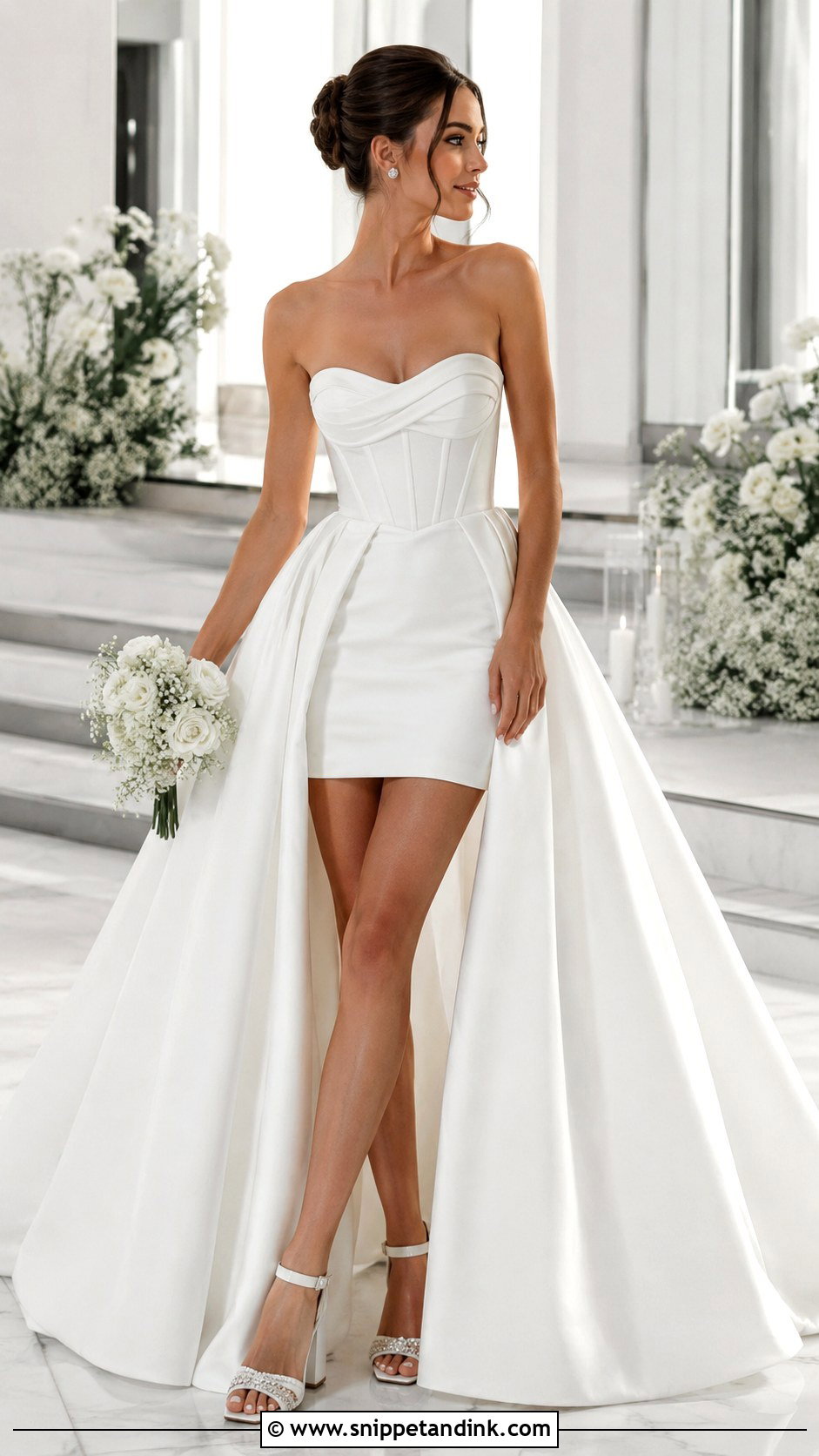
Yes, a short dress can still give you a grand walk down the aisle. Put a structured mini with a corseted bodice and sturdy straps under a voluminous satin or mikado skirt with soft pleats and a chapel train, then take the skirt off after photos. The mini has to look intentional, which means a finished hem, clean seams and some detail of its own. Sit down in it at the fitting. A mini that’s right standing can ride up badly in a dining chair. Embellished block heels, sparkling studs and a small top-handle bag carry over to the party.
4. Crepe Column Wedding Gown With Detachable Cape
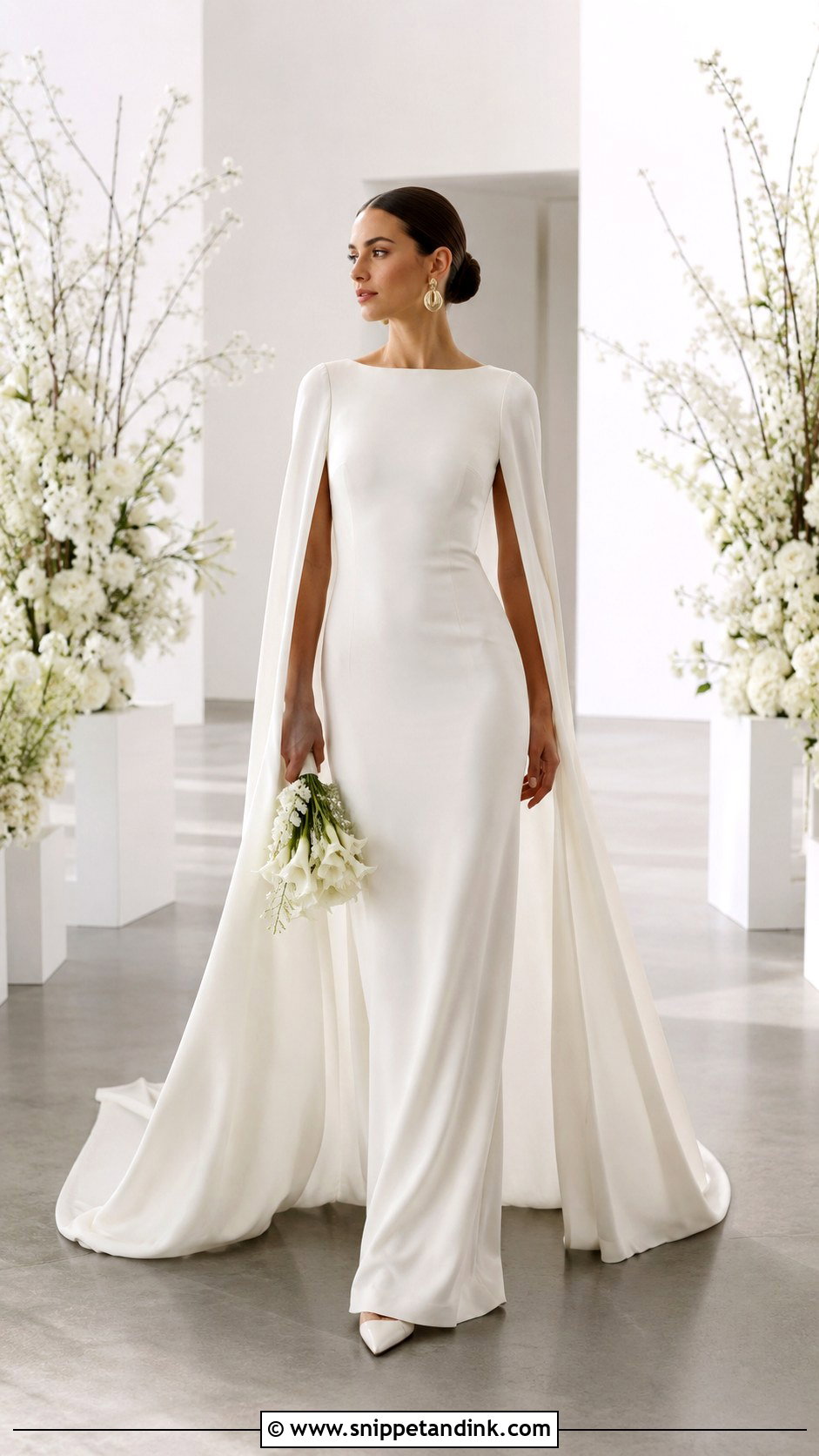
This pairing is for the bride who wants clean lines. A sleeveless crepe column with a square, bateau or draped neckline takes a long chiffon or crepe cape that clips near the shoulders and falls behind like a train, and it can stand in for a veil. The clips matter more than the cape. If they sit under your hair, your bridesmaid has to dig through your updo to release them, so I place them at the outer shoulder where they’re easy to reach. Finish with pointed pumps, sculptural earrings, a sleek low bun and a bouquet of a single flower variety.
5. Sweetheart Ball Gown With Detachable Bolero
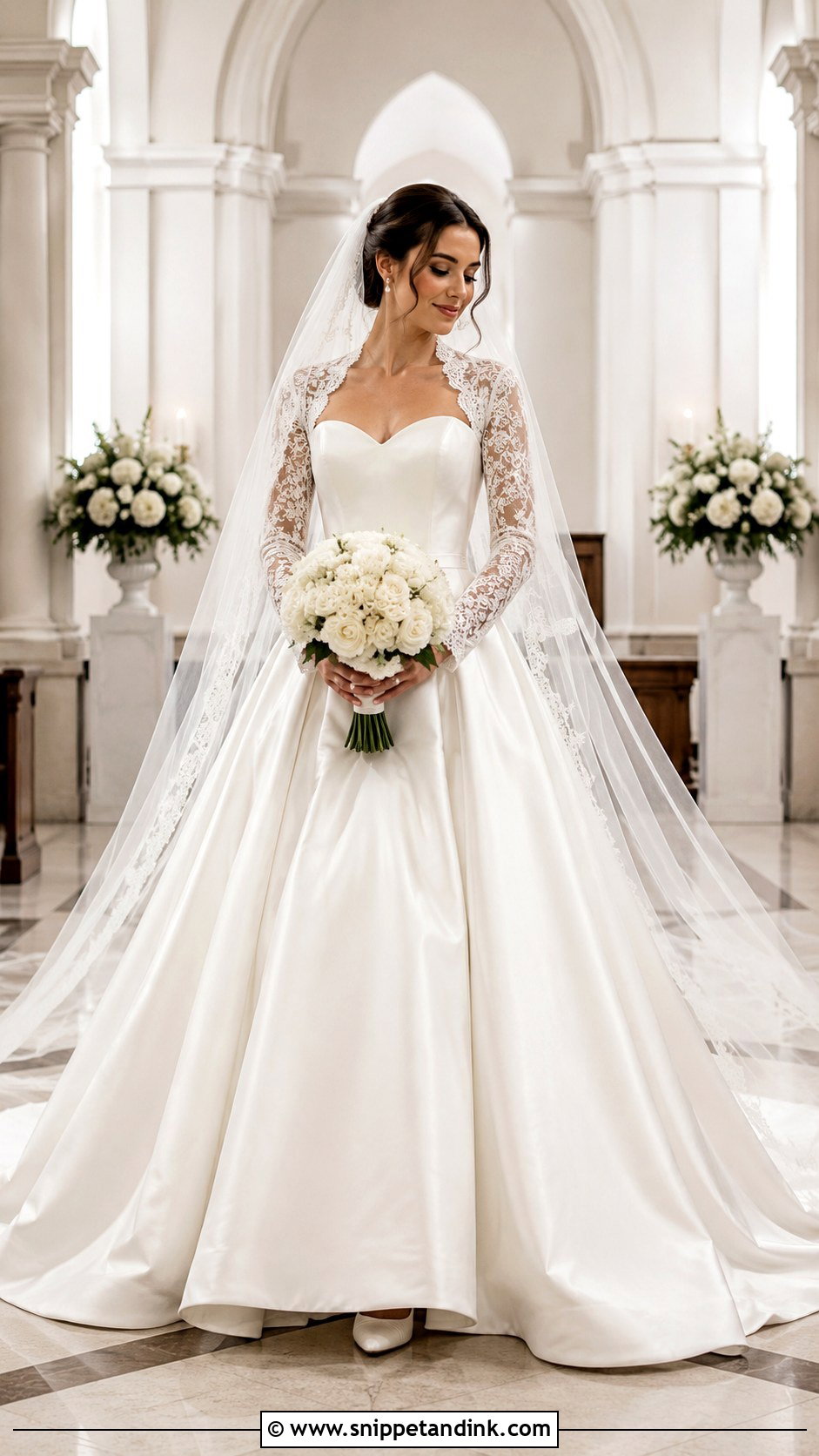
A bolero turns a classic sweetheart ball gown into a covered ceremony dress without hiding its shape for good. Lace, tulle or satin with long sleeves and a slightly raised neckline works for a formal service, and dinner and dancing show off the open neckline and corsetry. Length decides whether this looks right. A bolero should end at or just above the natural waist; stopping across the top of the skirt cuts the ball gown in half visually. Pearl earrings, a cathedral veil and closed-toe satin heels suit the first look, and a fine necklace can fill a bare neckline later.
6. Halter Mermaid Wedding Gown With Detachable Train
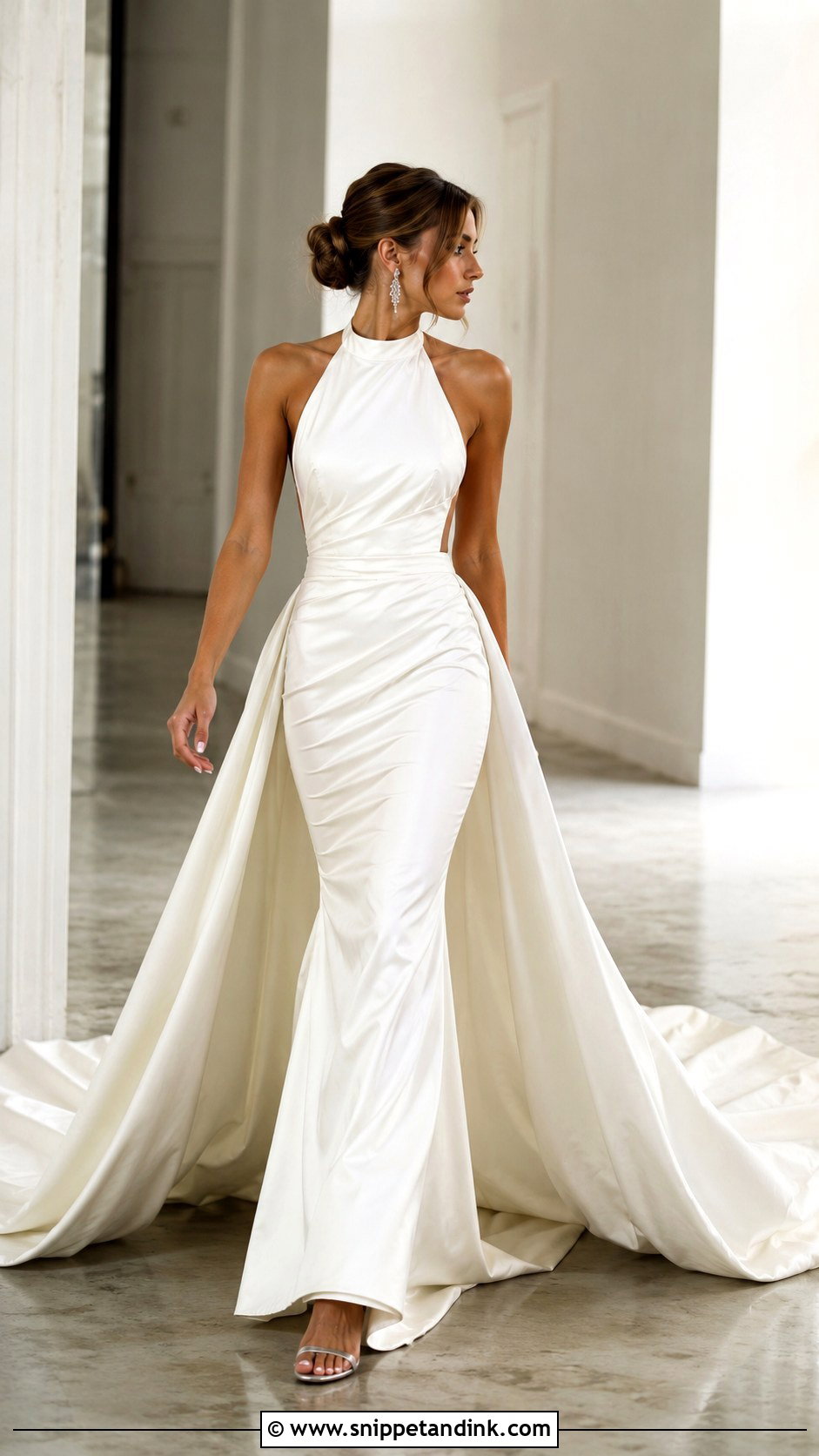
Halter mermaids are sleek enough already; a detachable train simply gives them ceremony weight. Use a smooth satin or beaded base with a fitted bodice and open back, and attach the train at the lower back or waist so it doesn’t add bulk at the hips. Once it’s off, the floor-length hem is easy to dance in. Mermaid skirts restrict your stride, and a train behind them makes stairs harder still, so I walk brides up and down steps at the fitting with the train attached. Crystal earrings, metallic sandals and a polished updo show off the halter. Skip the necklace.
7. Square Neck Wedding Gown With Detachable Puff Sleeves
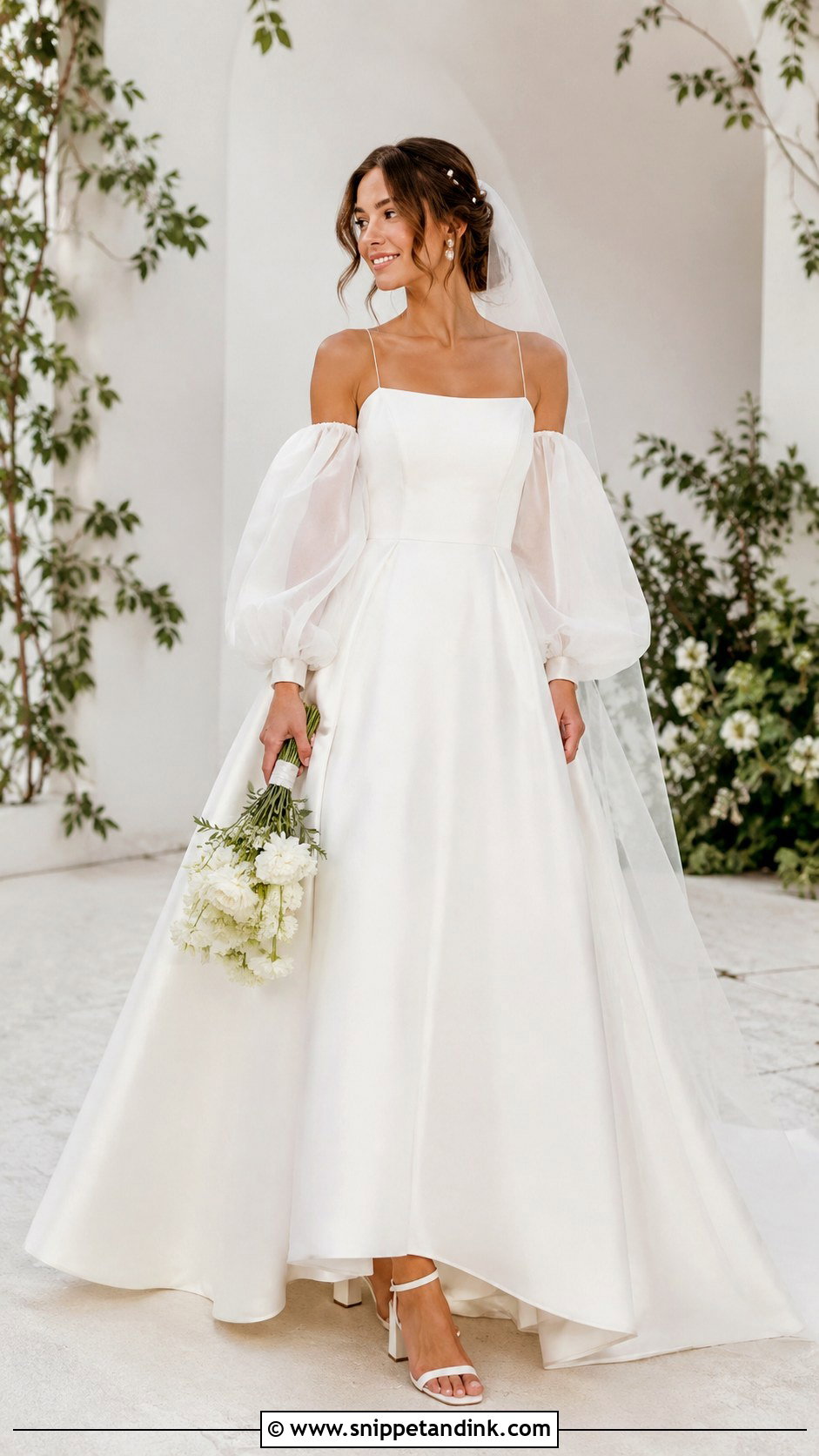
Organza puff sleeves soften a square neckline with wide straps and a defined waist. They attach under the straps for the ceremony and come off for a cooler reception. Look at the bodice from the back and sides once they’re removed. The loops must be hidden and the straps fully finished, or the second look reads as a gown with parts missing. Pearl hairpins, a fingertip veil and block-heel sandals will see you through hours on your feet, and a loosely gathered bouquet echoes the sleeves without copying them.
8. Corset Wedding Gown With Detachable Lace Topper
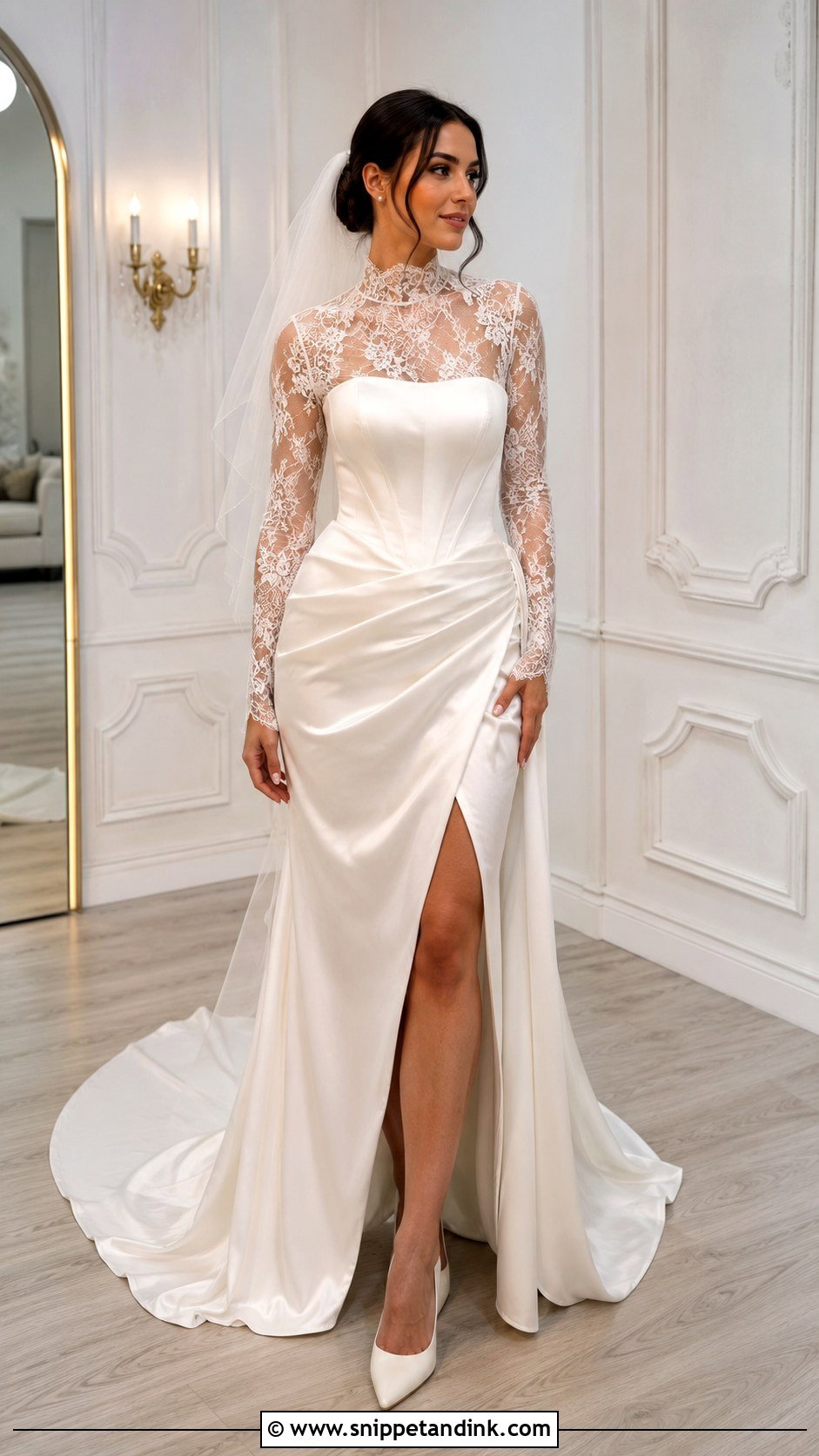
Some families find a strapless corset gown too bare for a religious service, and a fitted lace topper over satin, crepe or tulle solves that. Long sleeves, a high neck or a line of buttons down the back give coverage, and the corset appears at the reception. The topper must follow the corset’s waistline without wrinkling. When the gown has its own appliqués, I ask the seamstress to carry a few motifs onto the topper so it looks original to the dress. Plain veil, pearl studs and pointed shoes first; statement earrings or a fine pendant after.
9. Satin Slip Wedding Gown With Detachable Train
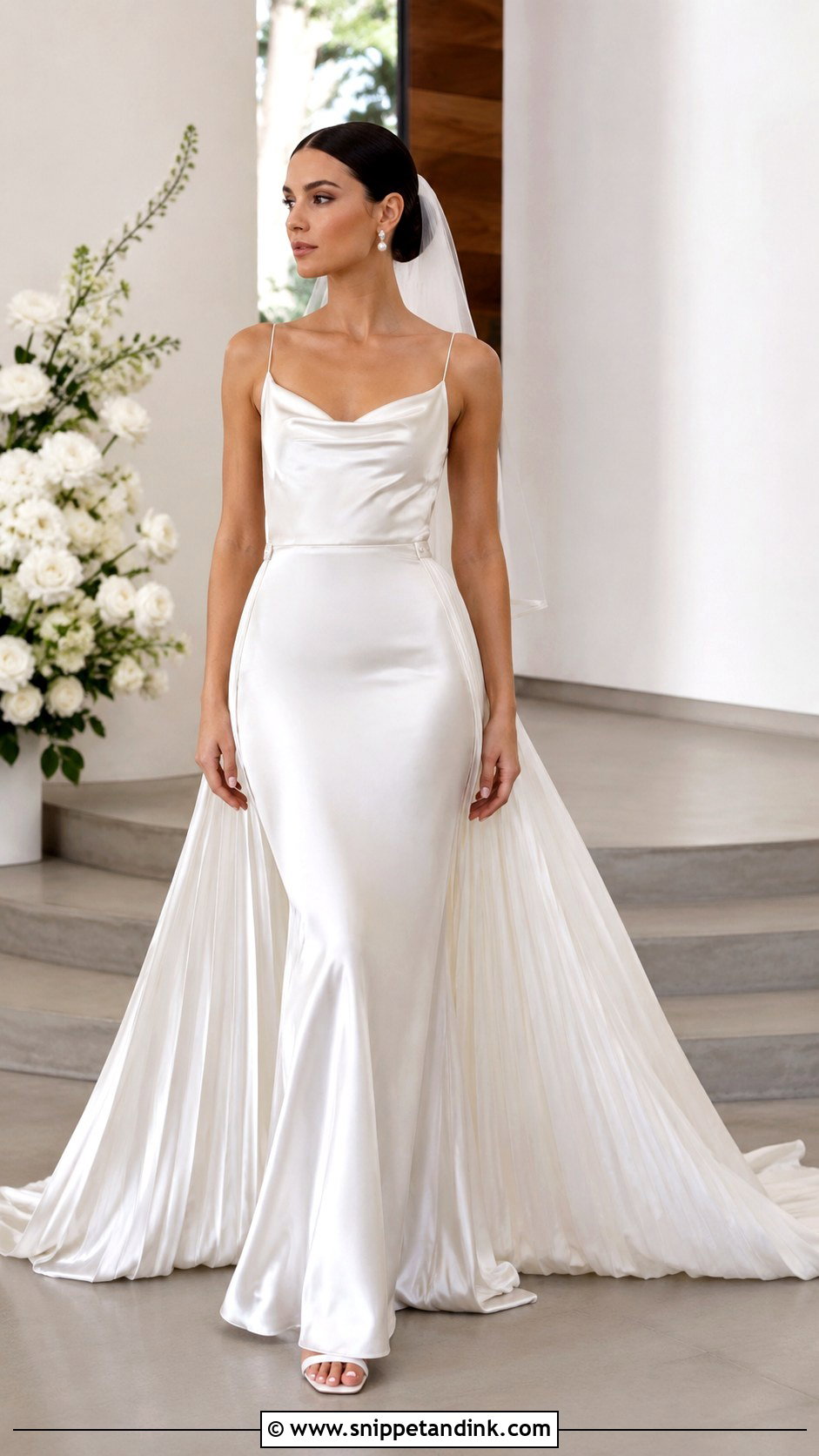
One well-made train is all a bias-cut satin slip needs. Choose supportive straps, a softly draped neckline and a skirt that falls cleanly over the body, then add a gathered or pleated satin train at the back waist for the ceremony. Satin cut on the bias shows everything underneath, including a snap the size of a pea. The fastenings must lie completely flat, and you should bring your actual underwear to every fitting. Slim heeled sandals, a short veil and modern pearls suit it, with a smooth bun or glossy waves.
10. Tea Length Wedding Gown With Detachable Overskirt
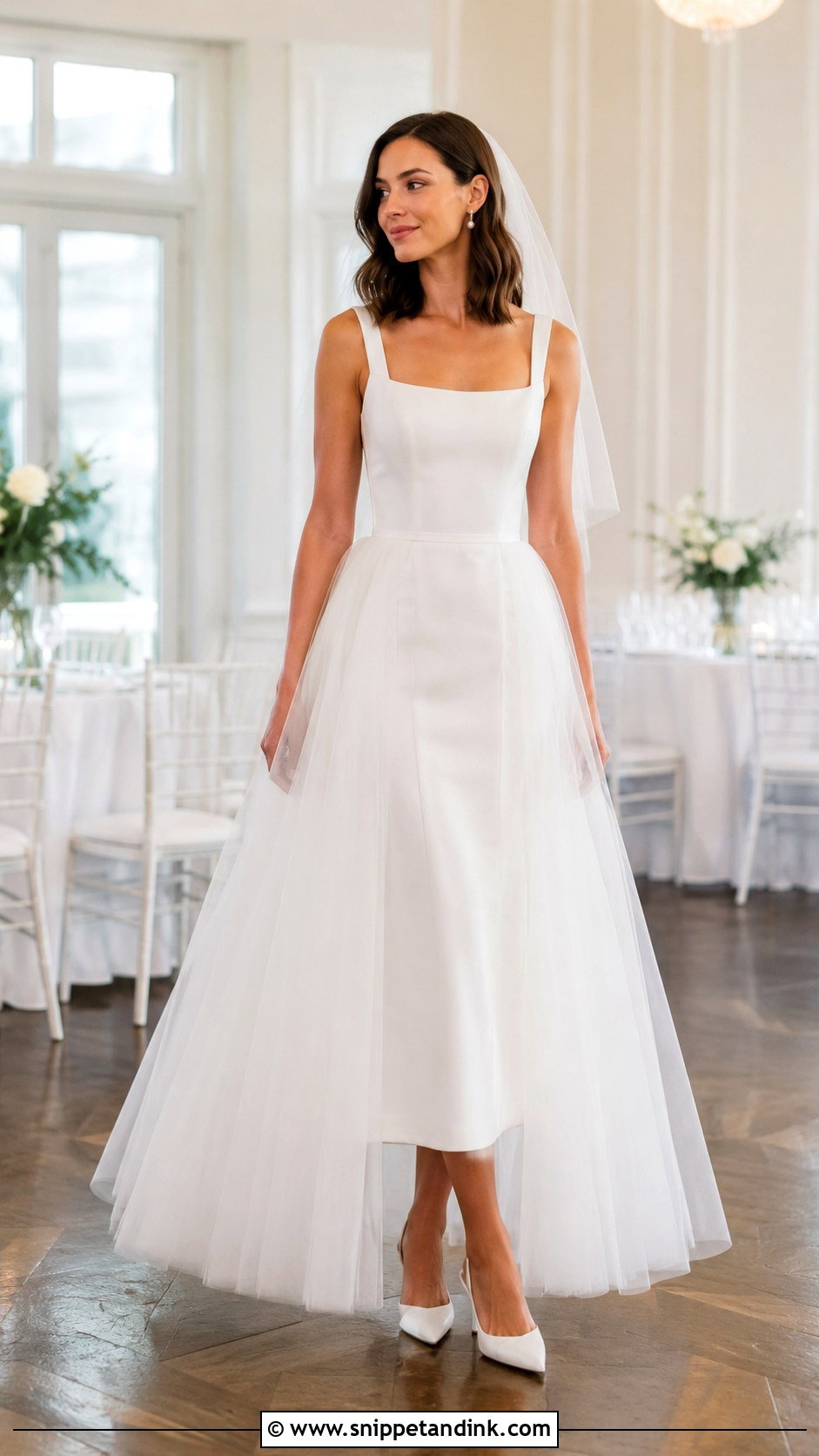
Hide a tea-length dress under a floor-length tulle or organza overskirt and you go from formal to playful in a few minutes. The bodice should be fitted and the base skirt should end between knee and ankle. My test is whether that shorter skirt has volume of its own. If it was cut flat to fit under the overskirt, it can look deflated afterward. Match the overskirt waistband to the bodice at the natural waist. Pointed slingbacks, pearl earrings and a birdcage or shoulder-length veil fit the silhouette, and a structured clutch suits the reception. Rehearse the change at home before the day.
11. Bridal Jumpsuit With Detachable Ball Gown Skirt
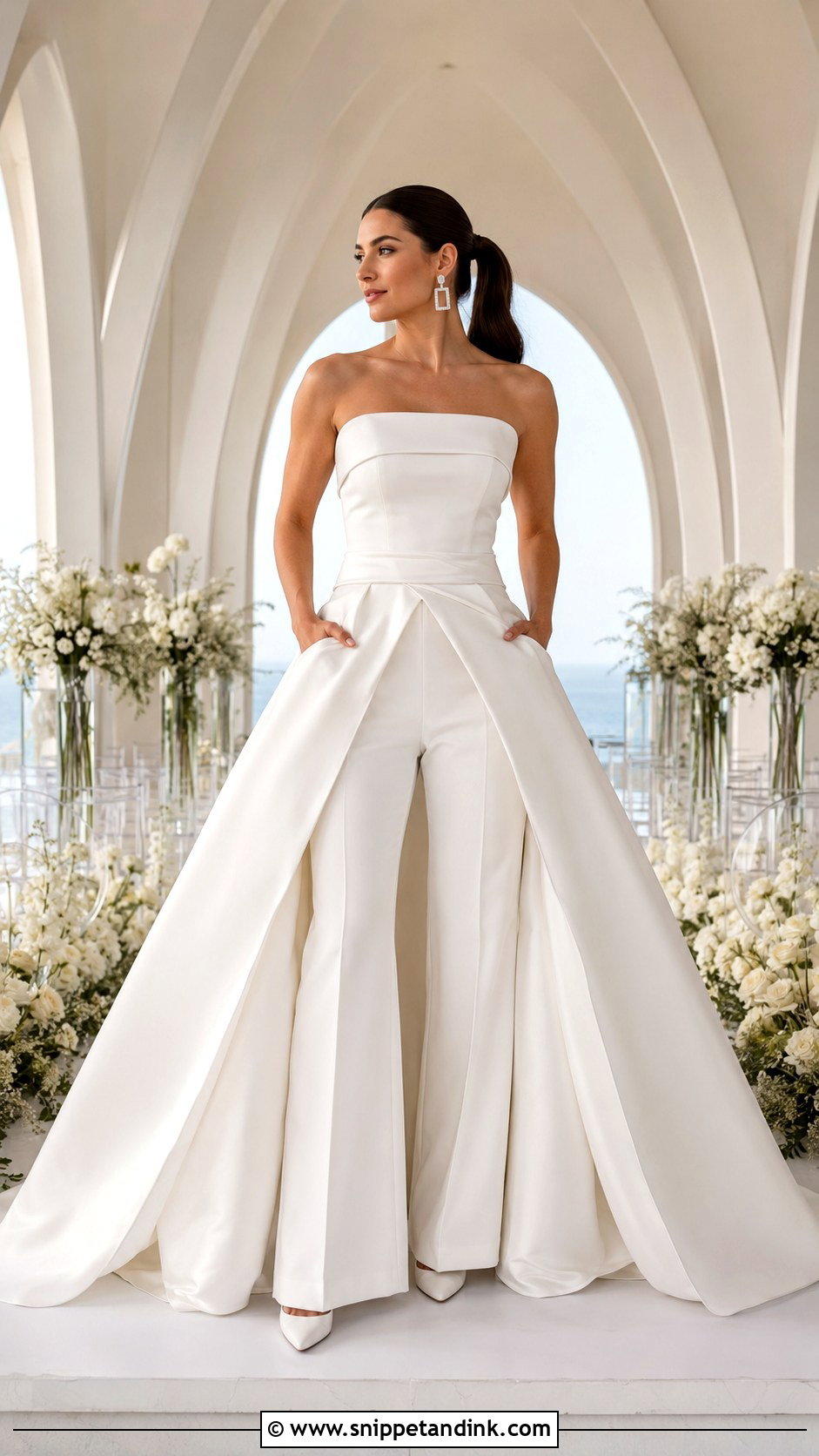
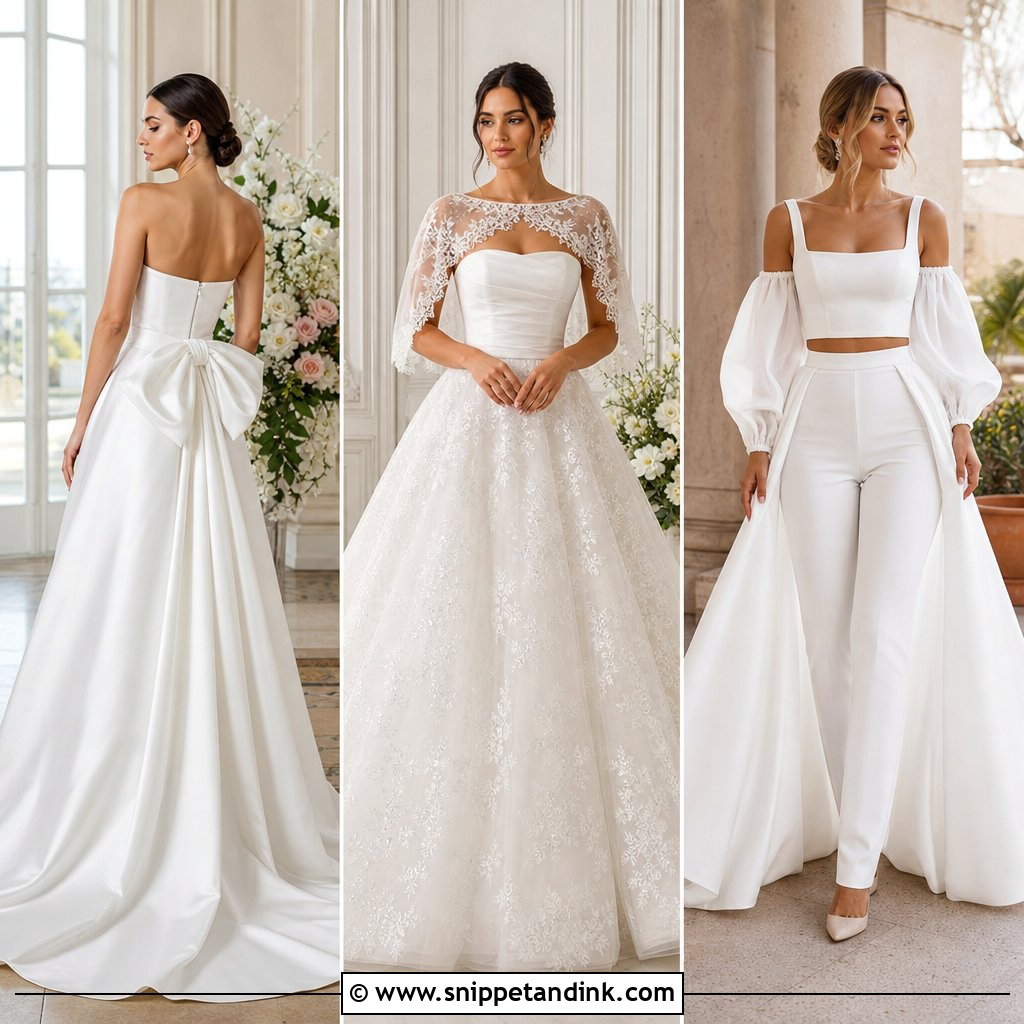
A tailored jumpsuit becomes a ceremony gown once a mikado or satin skirt goes over it. Pick wide or straight legs, a structured bodice and a clearly marked waist, and make sure the skirt is opaque enough to hide the trouser shape under bright light. The skirt has to open fully, ideally with a concealed side opening. Anything that goes over the head risks your hair and makeup, and stepping out of a full skirt in heels is harder than it sounds. Pointed pumps, geometric earrings and a sleek ponytail or bun suit the tailoring.
12. Strapless Wedding Gown With Detachable Lace Jacket
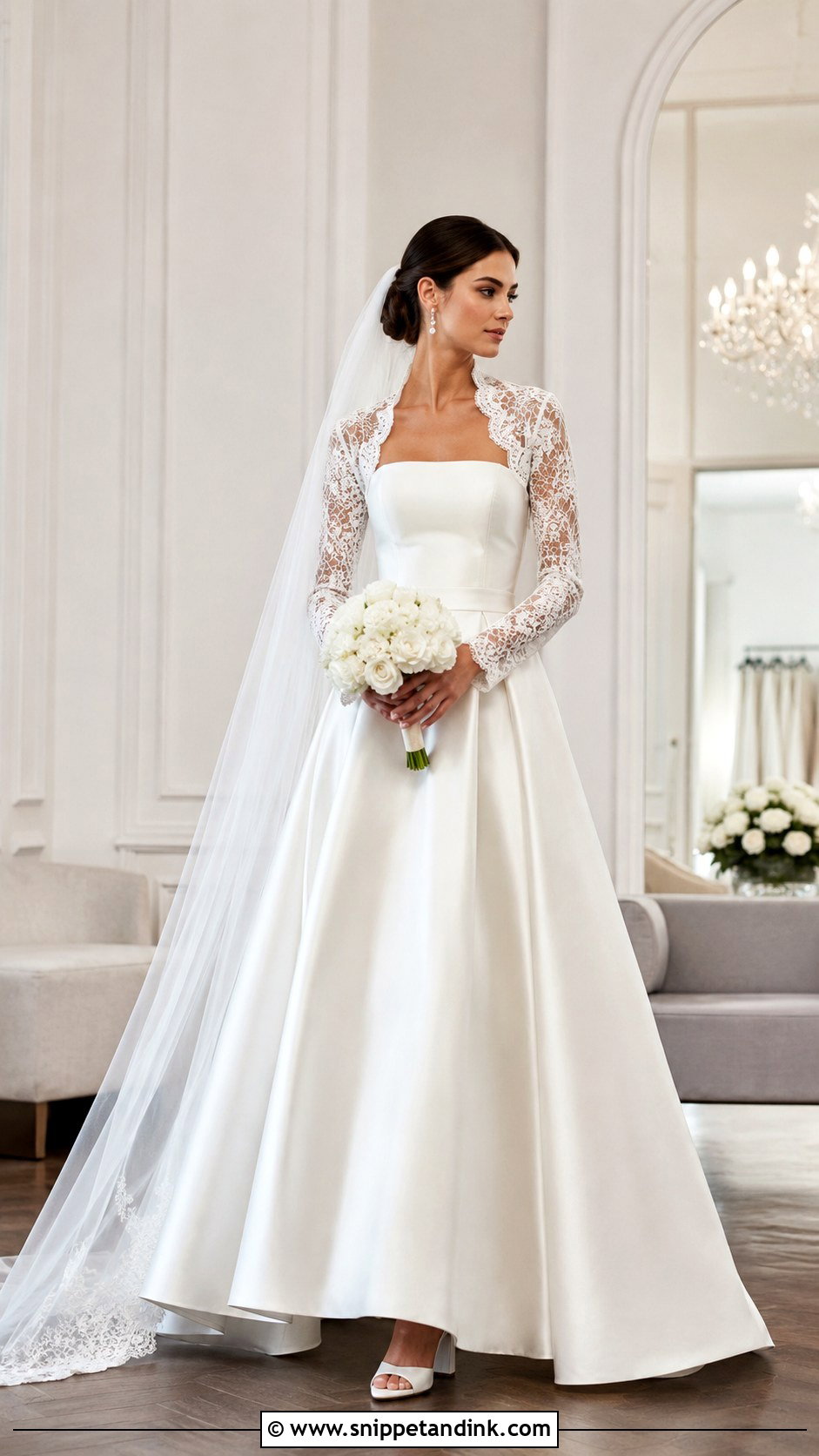
A cropped lace jacket with full sleeves and covered buttons makes a strapless gown look like an illusion-neckline dress until the reception. Satin A-lines, fitted crepe or a simple ball gown all work underneath. Shade is where these go wrong. Lace bought separately is rarely the same white as the gown, so I hold the two together in daylight before ordering, because bright white, natural white and ivory look very different side by side. The shoulders must fit exactly or the jacket wrinkles and pulls when you lift your arms. Drop earrings, a low bun, a classic veil and block heels finish it.
13. One Shoulder Wedding Gown With Detachable Draped Sleeve
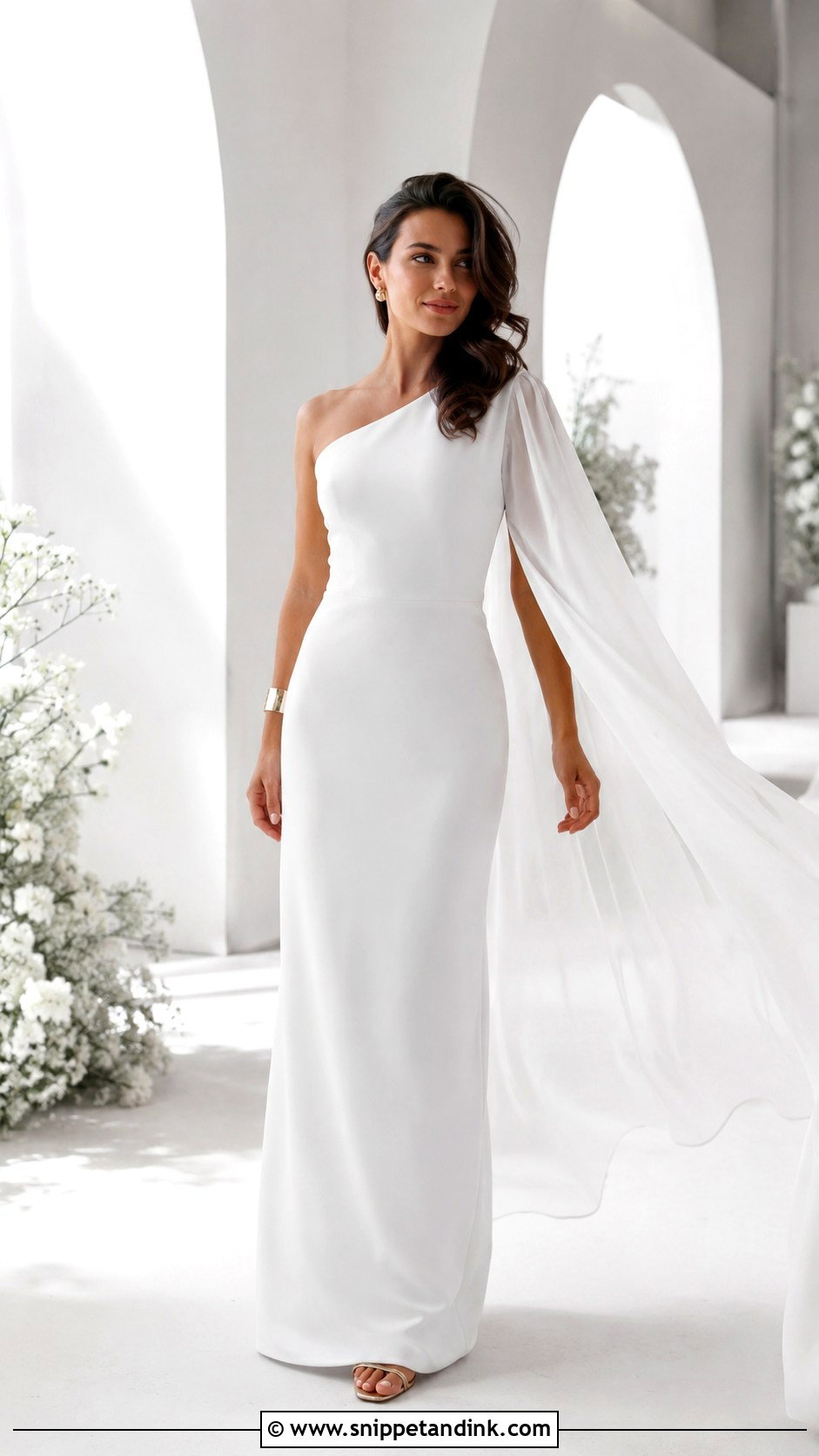
One-shoulder gowns, column or A-line, can take a long chiffon, satin or organza panel at the shoulder that falls over the arm and trails behind. Off it comes for the reception, leaving a clean line. Weight is the risk. A heavy drape drags the neckline down on that side all through the ceremony, so I prefer chiffon and ask for hidden snaps on reinforced inner stitching. Metallic sandals, a sculptural bracelet and small earrings suit it, with hair swept to the opposite side.
14. Off Shoulder Wedding Gown With Detachable Straps
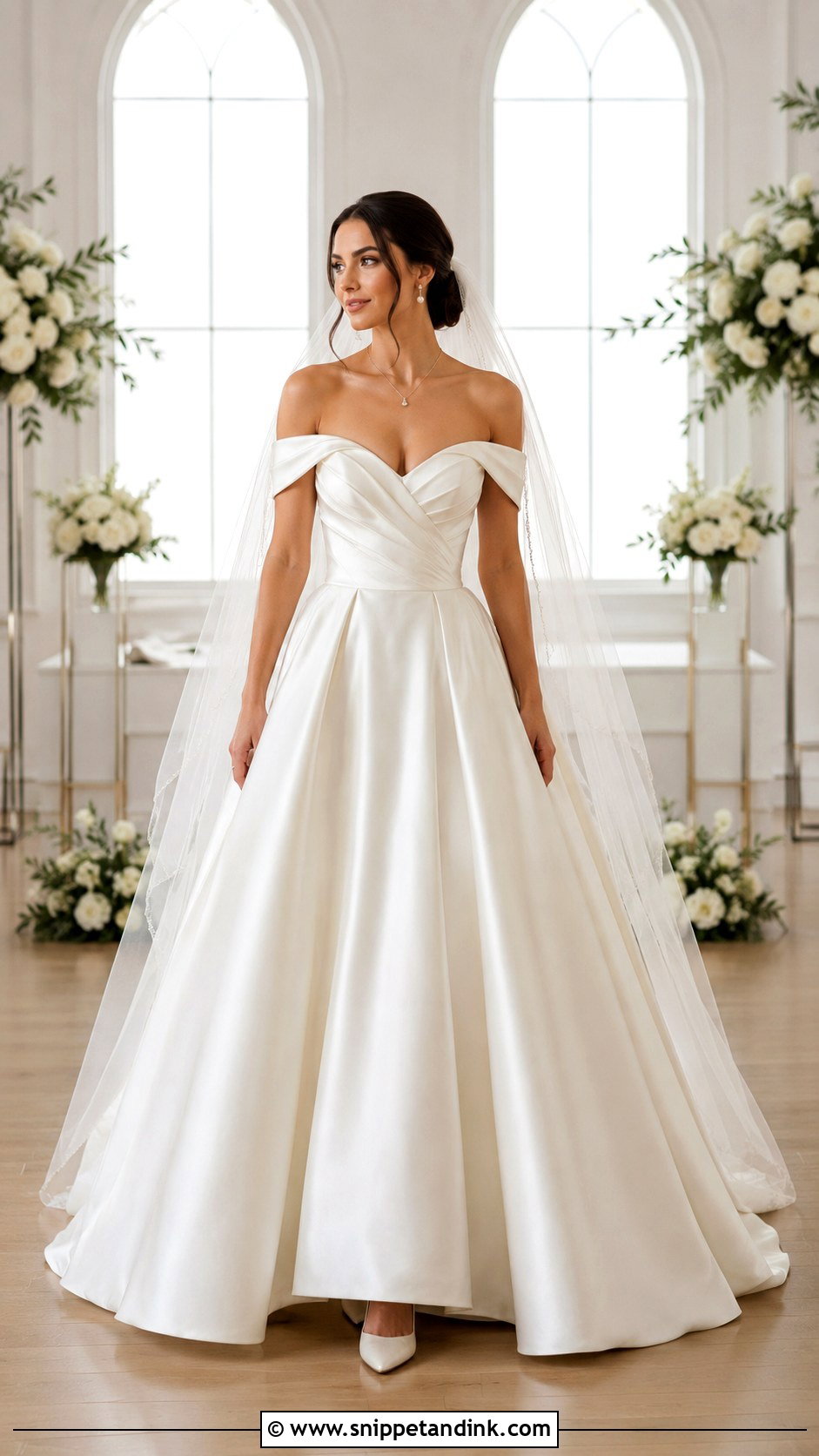
Off-shoulder straps are the smallest change on this list and one of the most useful. Worn for the ceremony, they frame a strapless neckline; removed, they leave a structured sweetheart or straight-neck bodice. Satin ball gowns, lace fit-and-flares and A-lines all take them. Lift your arms in them at the fitting, since straps that sit low on the arm can pin your elbows to your sides. I have both attachment points reinforced and the loops tucked inside the bodice. A fine necklace, pearl earrings, a fingertip veil, closed-toe pumps and a neat updo complete it.


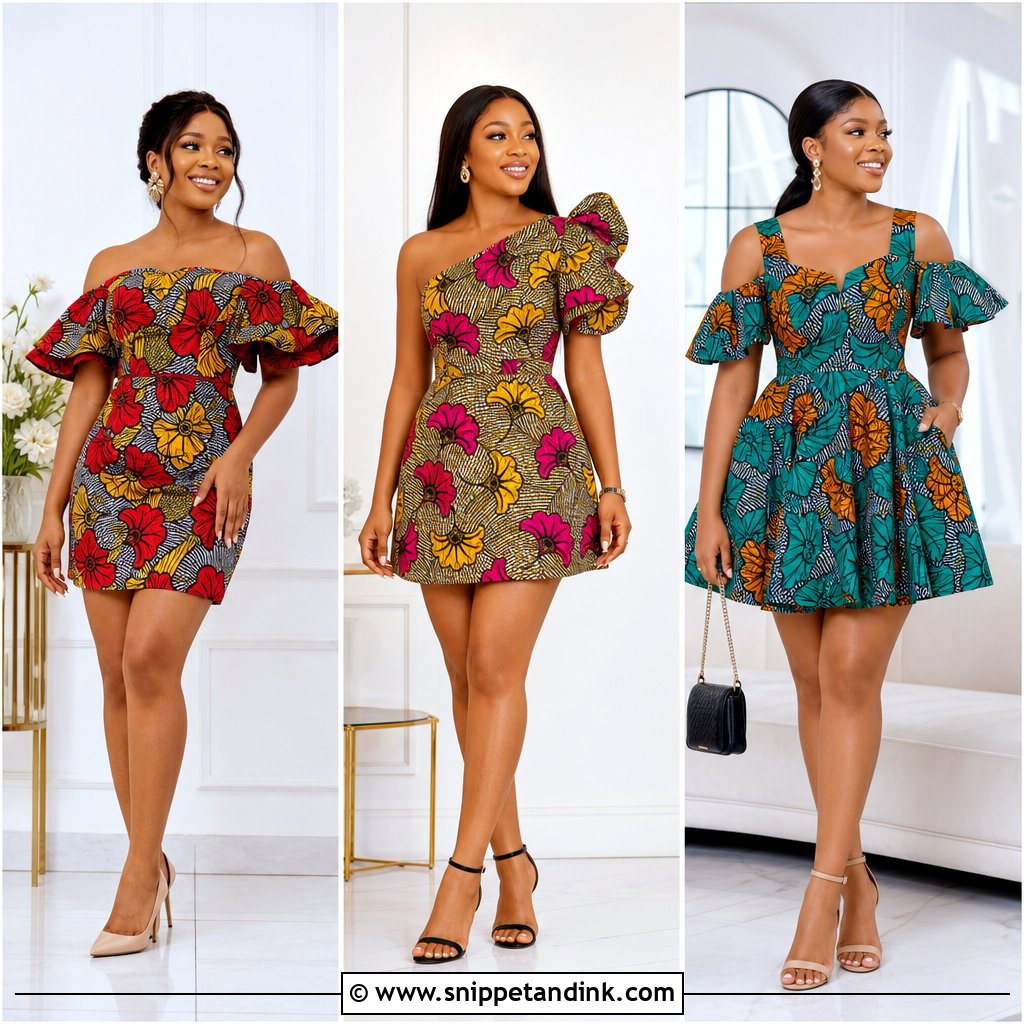
15. Beaded Sheath Wedding Gown With Detachable Tulle Skirt
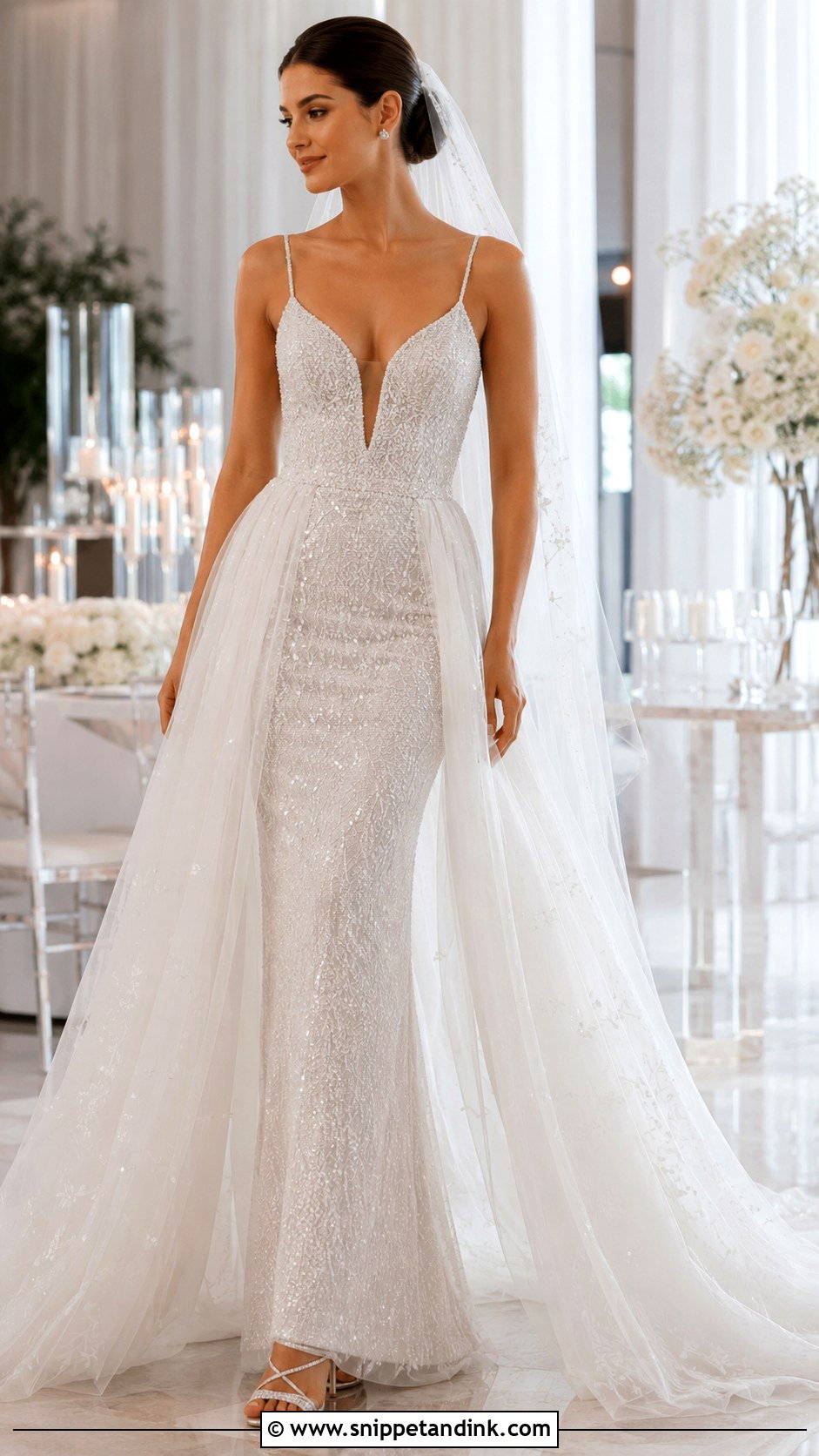
Sparkle under softness: a fitted sheath with subtle sequins, pearls or tonal embroidery, covered for the ceremony by a light tulle skirt scattered with matching embellishment. The beading shows properly once the tulle comes off. Watch the waistband. Hooks and the edge of the overskirt can catch on beads and pull threads, so I ask for a soft lining inside the waistband and closures placed away from the beaded areas. Crystal sandals, simple studs, a smooth updo and a lightly embellished veil keep it balanced.
16. Satin Wedding Gown With Detachable Statement Bow
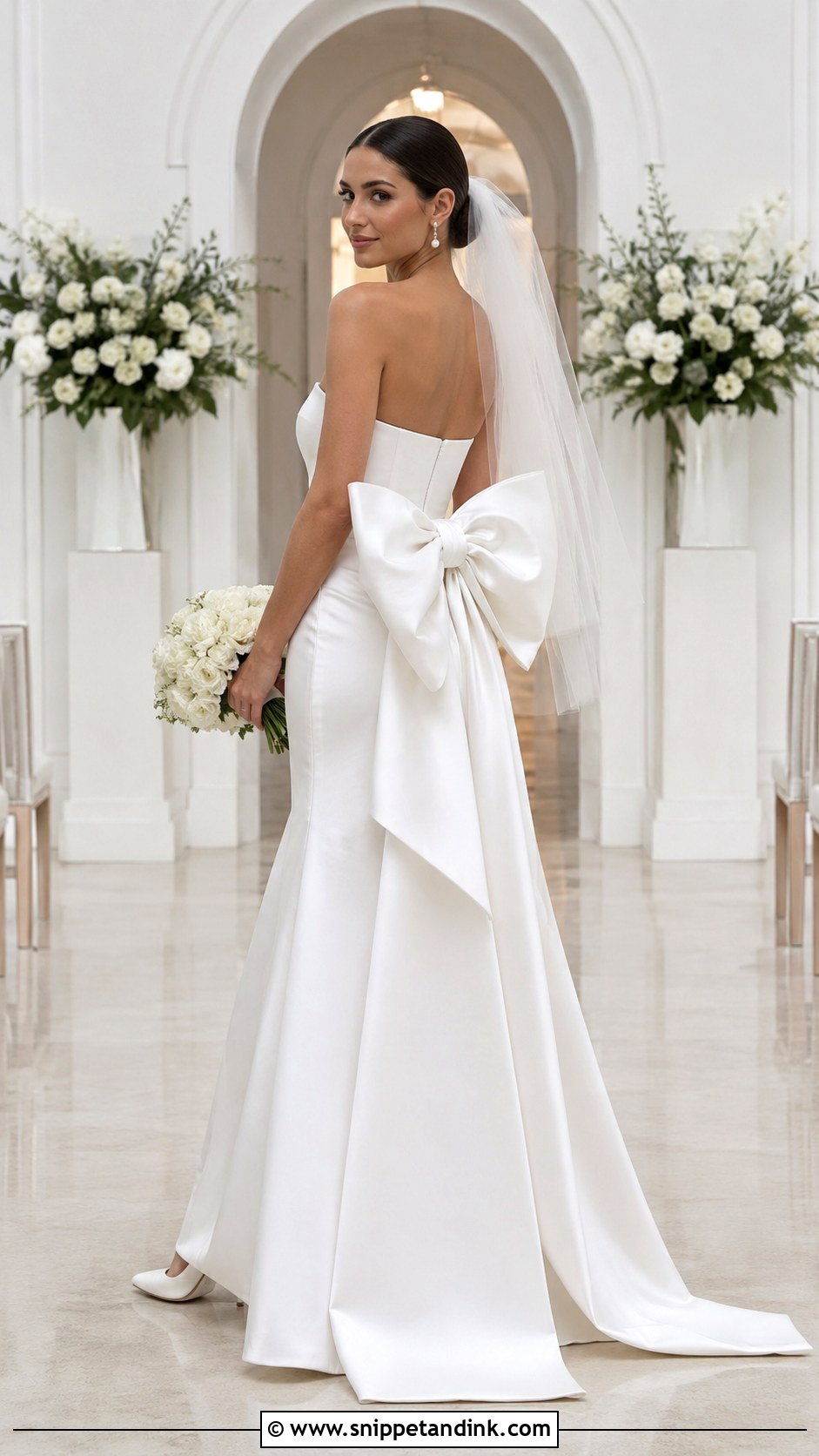
A big bow gives a plain satin gown a focal point. Pick a clean column, fit-and-flare or A-line with a straight neckline, and attach the bow at the back waist with tails falling over the skirt or into a short train. A large satin bow is heavier than it looks and tends to drag the back waist down, so it needs internal structure and secure hooks under the waistband. Polished pumps, pearl drops and a sleek veil keep it refined, with a compact bouquet so attention stays on the back.
17. Floral Lace Wedding Gown With Detachable Train
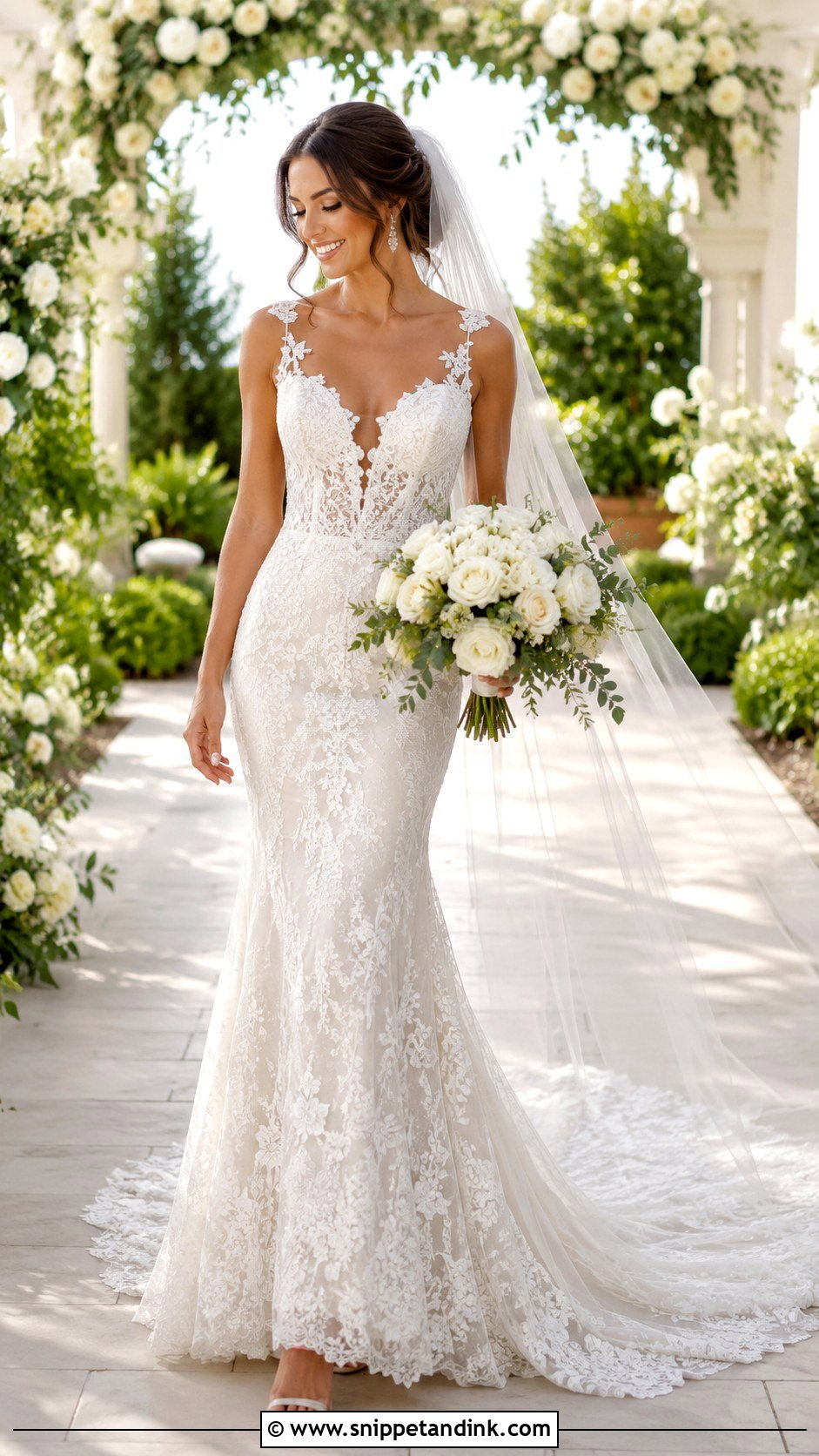
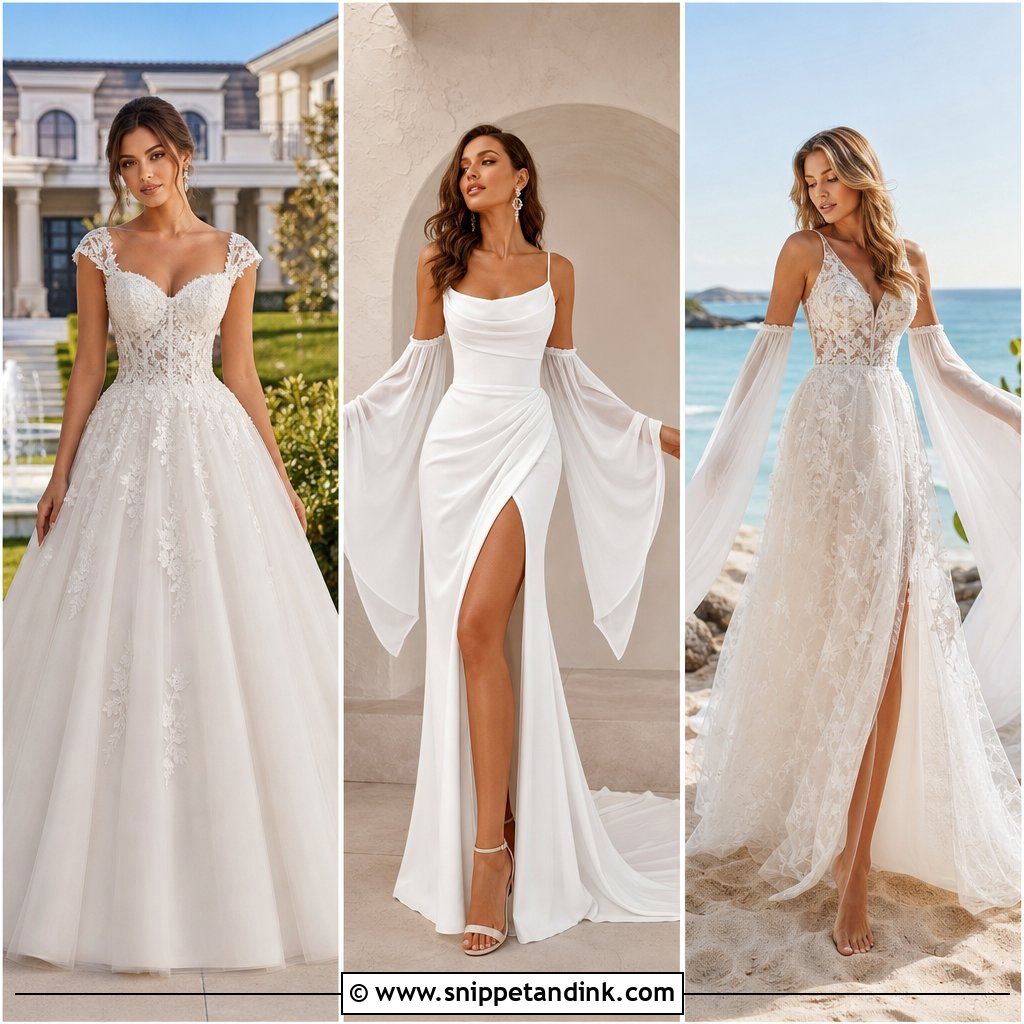
Floral lace that carries across a detachable train makes the ceremony look much grander. A fitted trumpet or A-line with botanical appliqués from bodice to skirt pairs with a matching train at the back waist. At fittings I look hard at the join. Placing a few appliqués across the attachment line hides the closures, and the base gown must still have a neat, complete back once the train is gone. Delicate drops, a plain-edged veil and neutral ivory heels keep out of the lace’s way, and a few coordinating flowers in the bouquet tie it together.
18. Plus Size A Line Wedding Gown With Detachable Cape Sleeves
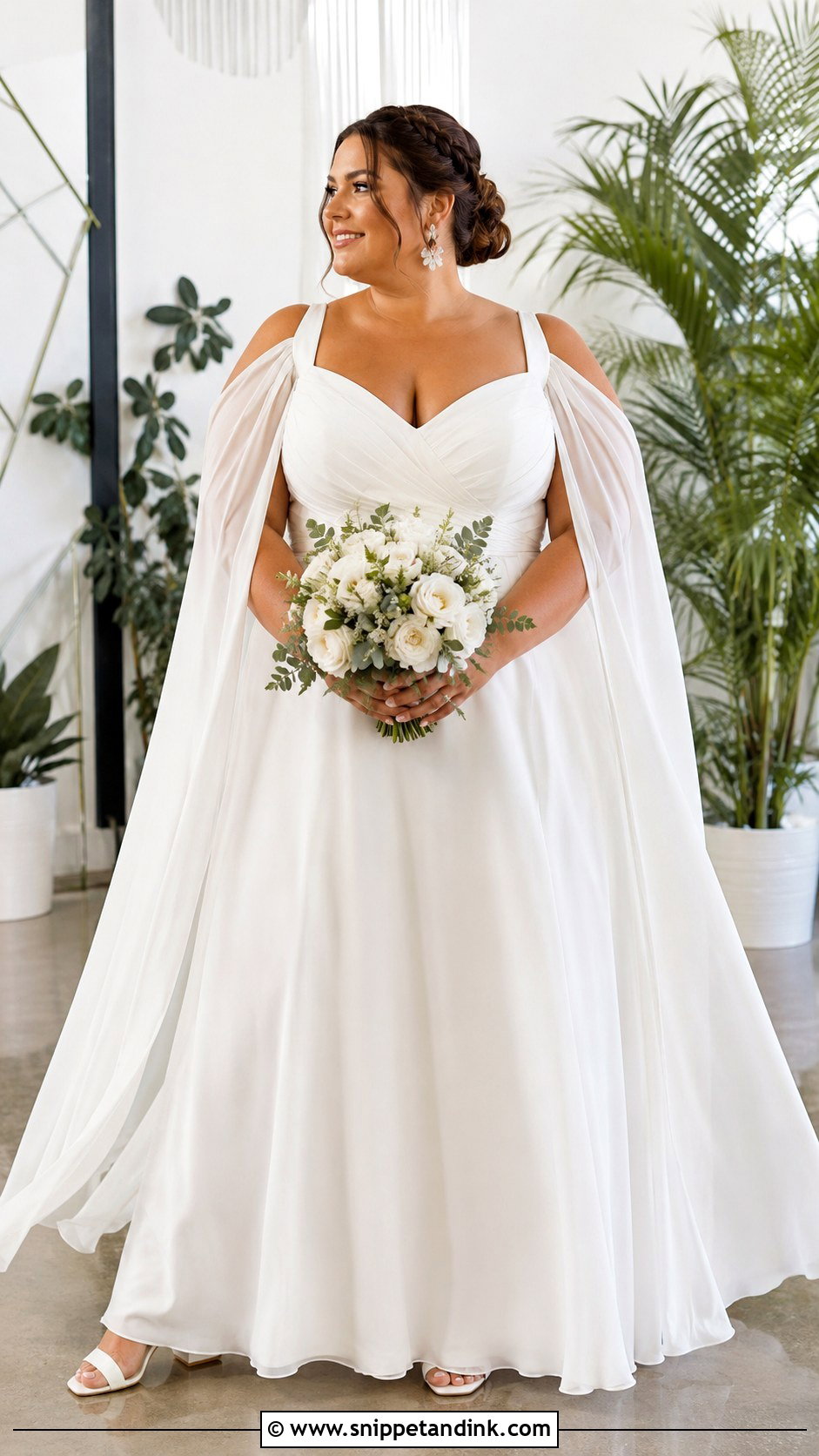
Cape sleeves in chiffon or soft tulle give movement and coverage without clinging to the arms, which is why I like them on a supportive plus-size A-line. The bodice needs wide straps, a strong internal foundation and a skirt that glides over the hips. Go by how it feels, not the size on the label. Most important, the bodice must stay exactly where it was after the sleeves come off; if the capes were doing any of the holding, you’ll feel it straight away. Supportive block heels, statement earrings, a low braided bun and a medium bouquet finish it.
19. Modest Wedding Gown With Detachable Sleeves And Neckline
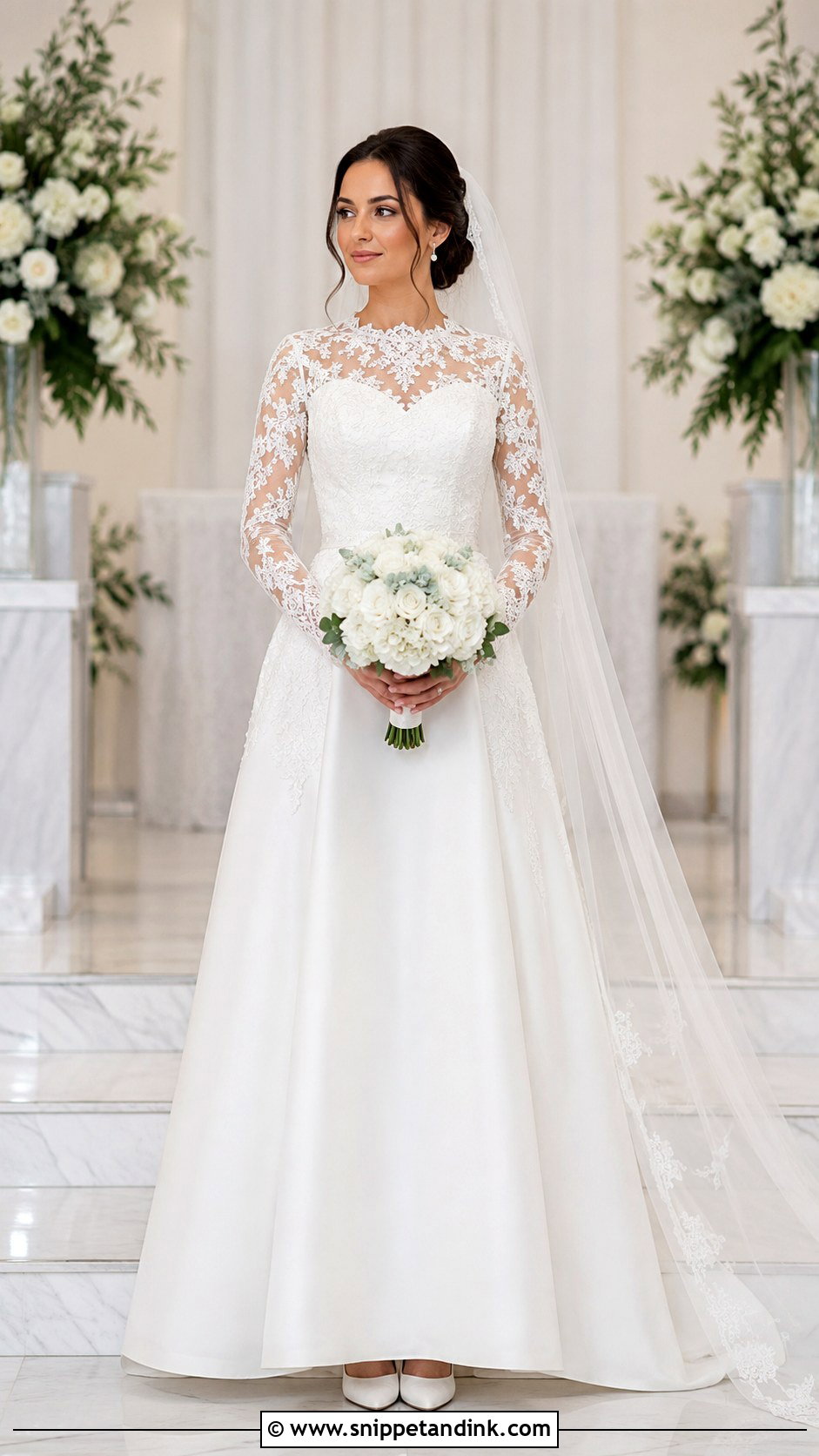
A detachable illusion yoke with long sleeves lets a strapless or sleeveless A-line serve a modest ceremony and an open reception. Lace appliqués, covered buttons or a raised neckline make the first version look integrated. These pieces often fasten at several hidden points around the neckline and armholes, so I insist one helper practices removing it while protecting your hair and makeup. Closed-toe heels, pearl earrings and a chapel veil suit the formal look, and a delicate necklace fills the open neckline later.
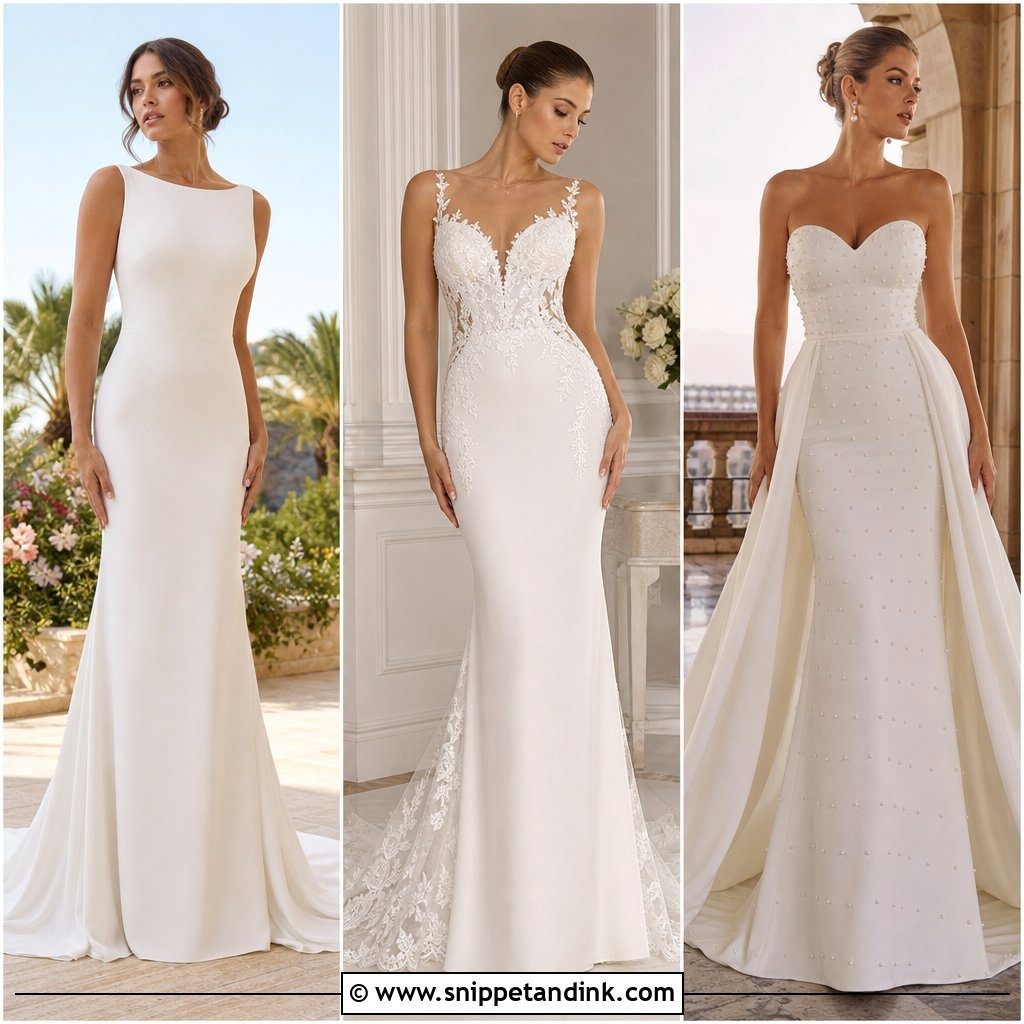
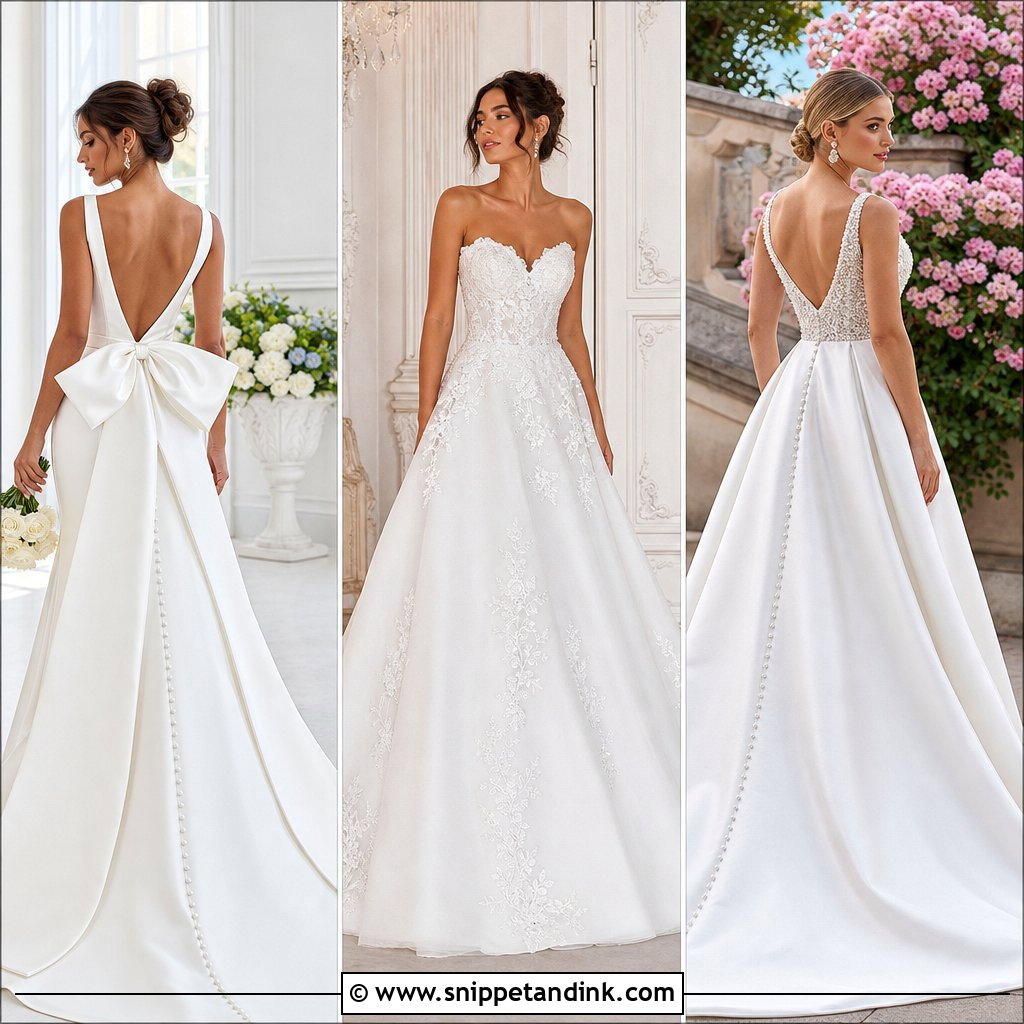


20. Two Piece Wedding Gown With Convertible Skirt And Trousers
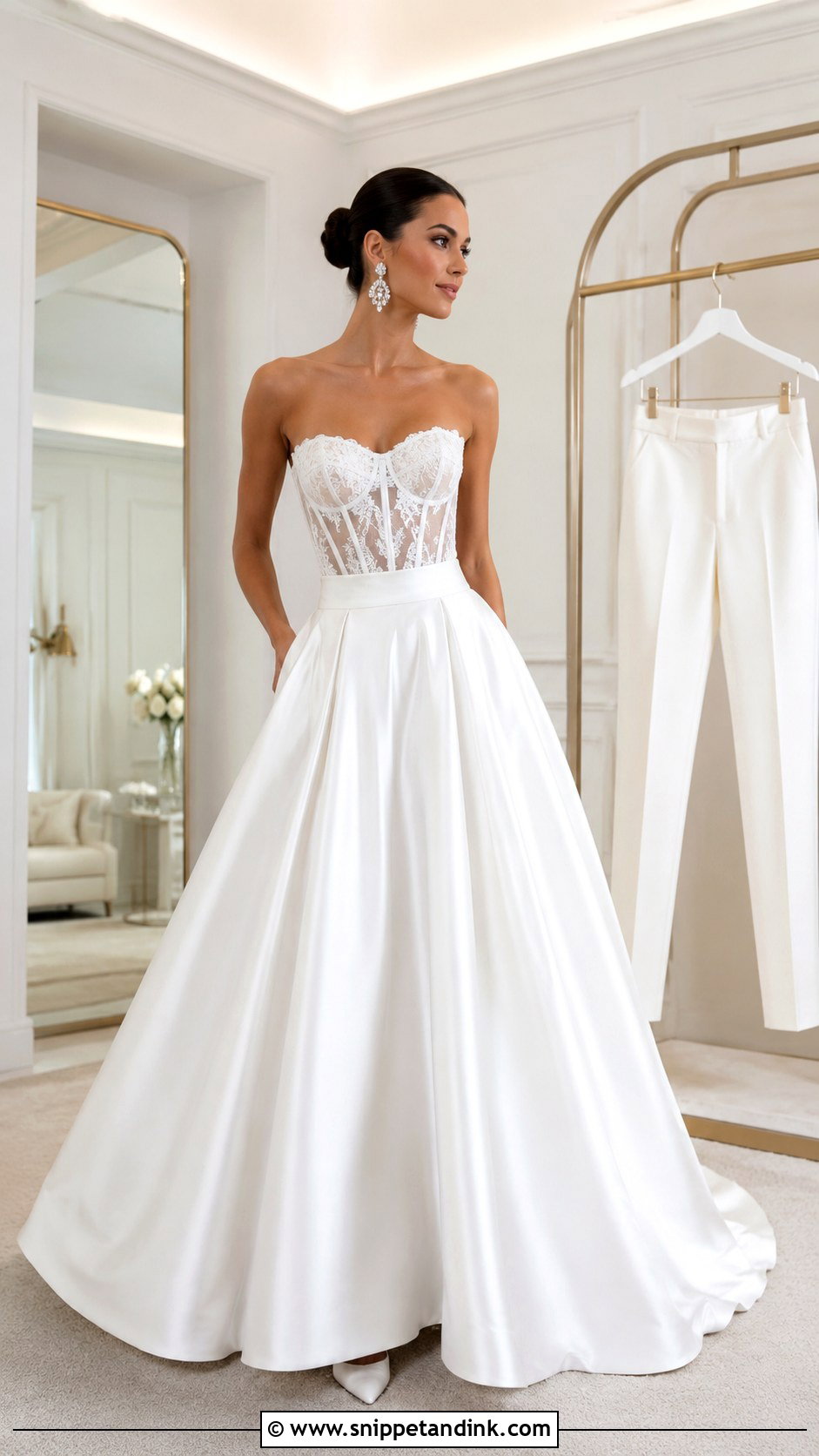
Bridal separates build two outfits around one bodice. Pair a corset, halter or sleeved lace top with a full floor-length skirt for the ceremony, then switch to tailored high-waisted trousers for the reception. It’s a full change of the bottom half, so you’ll need a private room, but it gives the most comfortable second look here. Keep fabric undertones consistent and put a matching fitted waistband on both bottoms. Choose pointed pumps that work under both hems, plus bold earrings and a compact bag.
Planning the Changeover Between Ceremony and Reception
The change itself is quick. What brides forget is the room, the helper and the bag. I’d pencil about fifteen to twenty minutes into the timeline, usually after portraits or during cocktail hour, rather than trying to squeeze it into the walk to the reception.
- Pick one person, not three, and have her practice the removal at the final fitting while the seamstress watches.
- Find a private room near the reception with a full-length mirror and somewhere clean to lay fabric down.
- Bring a padded hanger and a breathable garment bag for the removed piece, and decide in advance who carries it to the car.
- Pack a small kit with safety pins, a few spare snaps or hooks, a needle threaded in white and a lint roller.
Before you walk back out, check the reception version in that mirror from the front and back. A leftover loop, a twisted waistband or a tulle thread caught in a hook takes seconds to fix in the room and can’t be fixed at all once you’re on the dance floor.
Two Looks From One Dress, and a Final Fitting That Tests Both
A convertible gown earns its place only if both versions feel secure and finished. Think about how each piece attaches, where it goes once it’s off and who will help you. Then test both looks with your shoes, underwear, jewelry and hair: walk, sit, raise your arms and dance before approving the fit. Overskirt, sleeves, cape or separates, the right choice is the one you forget you’re wearing ten minutes after the change.
You'll Like These Ideas:







Leave a Reply