
Dressing a Sikh bride for the Anand Karaj is different from dressing her for a reception. She will sit on the floor of the darbar hall, rise and walk the four laavan around the Guru Granth Sahib, and keep her head covered from start to finish, often in a long morning ceremony. A suit handles all of that better than a heavy lehenga, which is why so many Punjabi brides choose one. Below are the suit styles I reach for, from red Patiala sets to ghararas, Anarkalis and phulkari, with notes on fabric weight, dupatta choice and how each one behaves when you sit and stand.
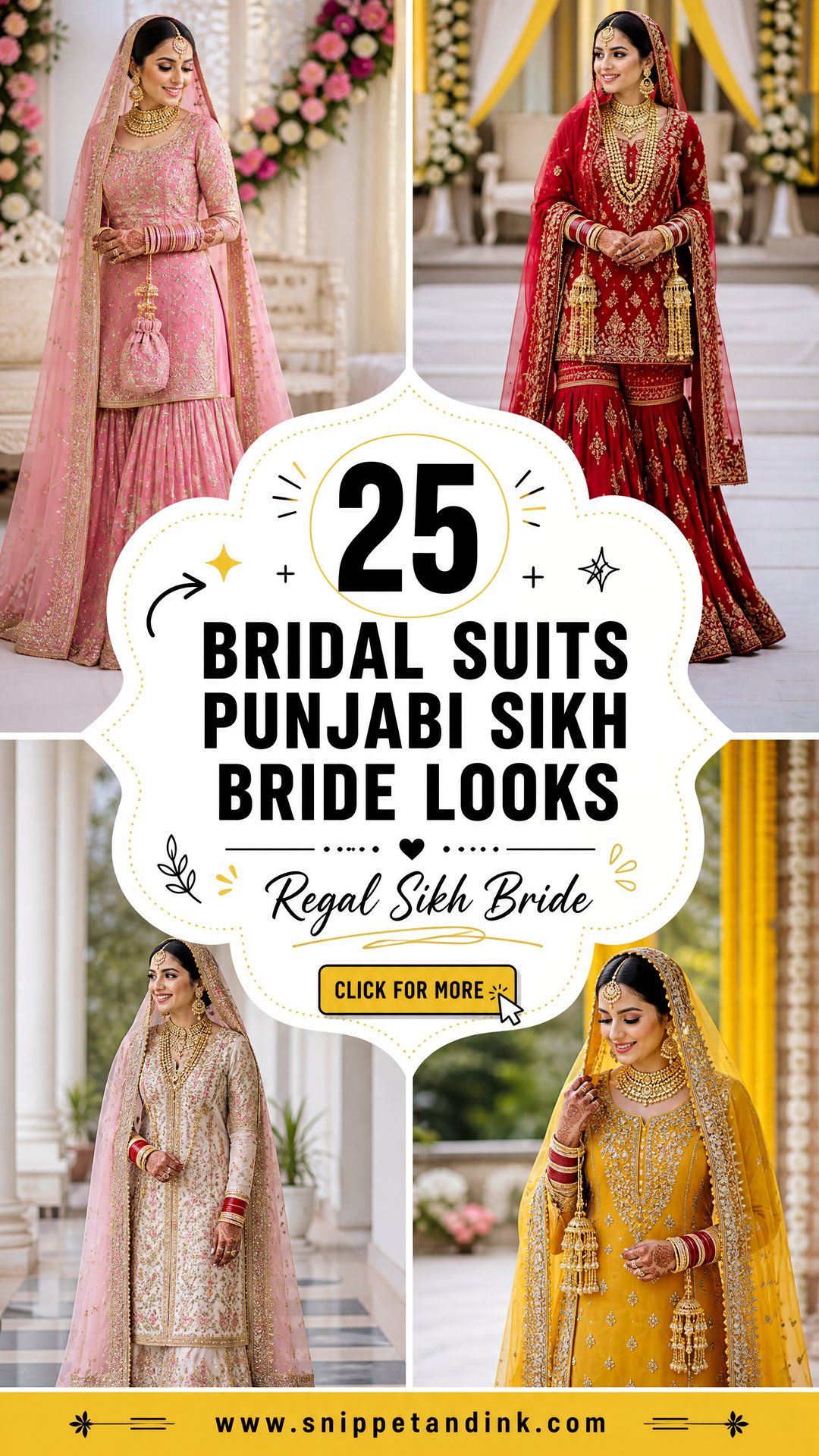
Dressing for the Darbar Hall Floor and the Four Laavan
The Anand Karaj shapes what you can wear more than any fashion trend does. Before I look at colours with a bride, I walk through what her body will actually do in the ceremony.
- You’ll sit on the floor. Couples sit cross-legged before the Guru Granth Sahib, often for an hour or more. Anything tight across the hip or knee, or with a long stiff kameez, becomes uncomfortable quickly.
- You’ll stand and walk four times. For each laav you rise and walk around the Guru Granth Sahib, holding the palla. Hems must clear your feet, and long flares need watching on the turns.
- Shoes come off at the entrance. Your juttis won’t be part of the ceremony at all, so don’t build the outfit around them. They matter for arrival and photos outside.
- Your head stays covered throughout. The dupatta has to stay on through sitting, rising and bowing, so it needs a secure pinning plan.
- Modest cuts are expected. Most families prefer covered shoulders and a neckline you won’t need to adjust in front of the sangat.
Once those are settled, the choice between Patiala, Anarkali or sharara becomes much easier. You’ll see from the notes below which styles handle the floor well.
1. Red Patiala Bridal Suit
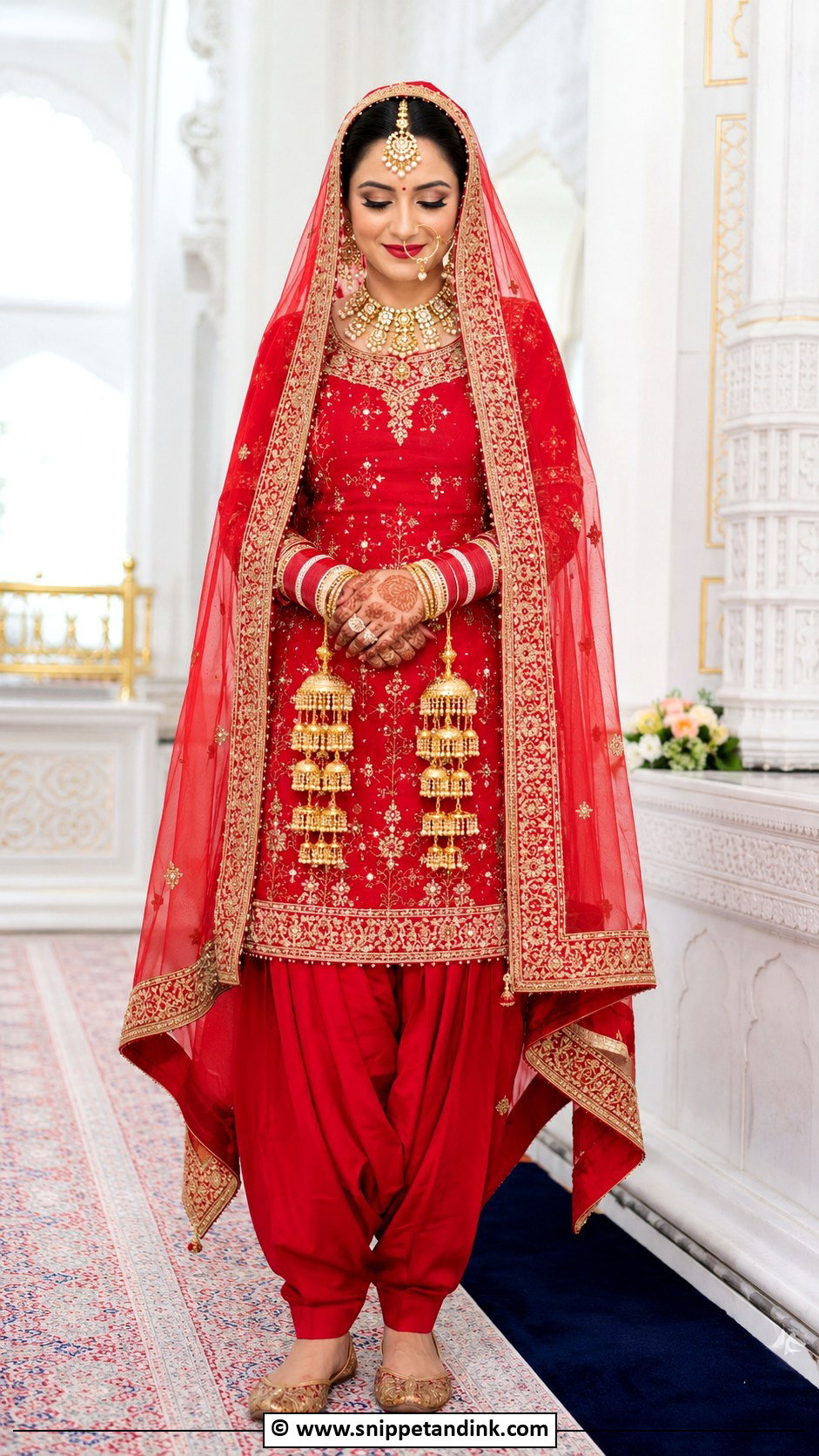
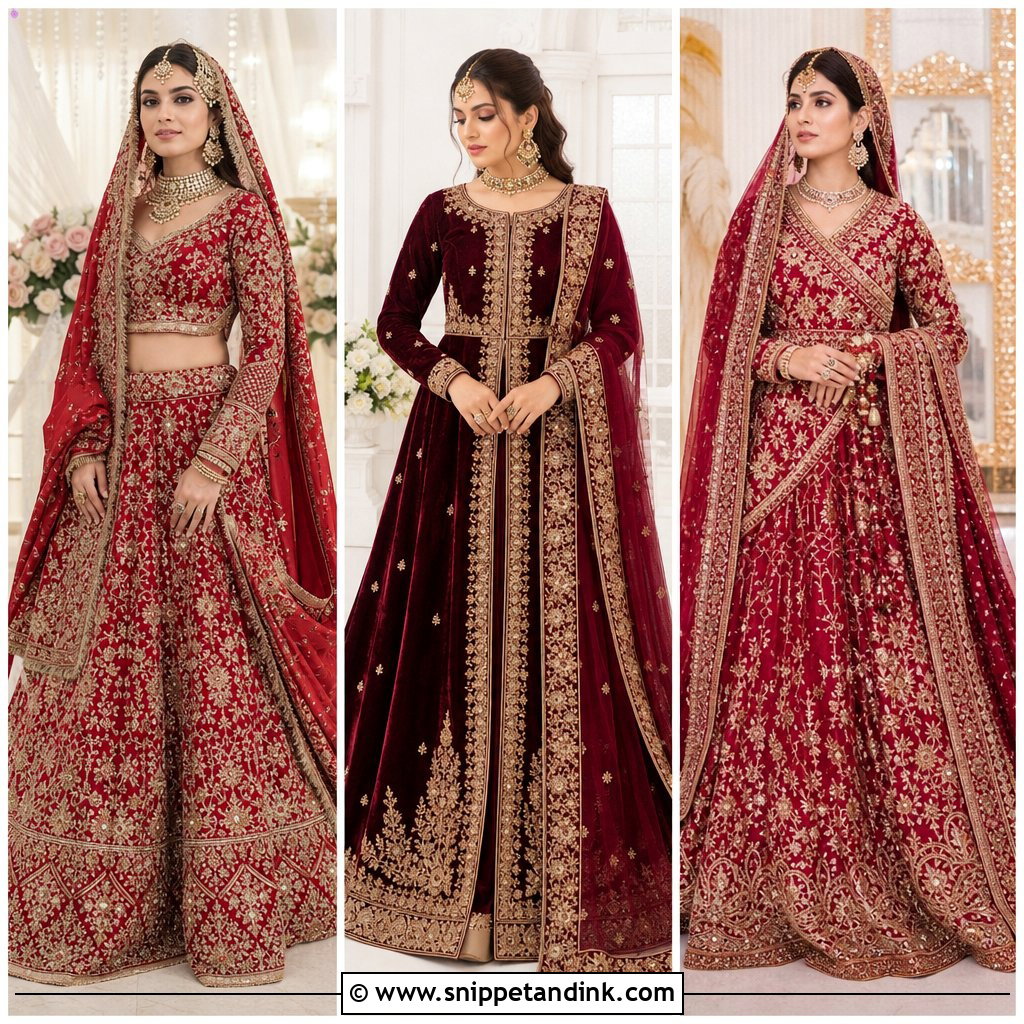
The red Patiala bridal suit is the one many grandmothers picture, and for good reason. The deep pleats of the Patiala salwar give you room to sit cross-legged without strain, which a fitted churidar does not. Pair a short or mid-length kameez in zardozi, gota patti or dabka with a heavy dupatta over the head. I ask for the salwar’s pleats to be stitched down at the waistband, so the volume falls from the hip instead of bunching at the stomach when seated. A kundan choker or rani haar, tikka, passa, chooda and kaleere complete it.
2. Maroon Salwar Kameez Bridal Suit
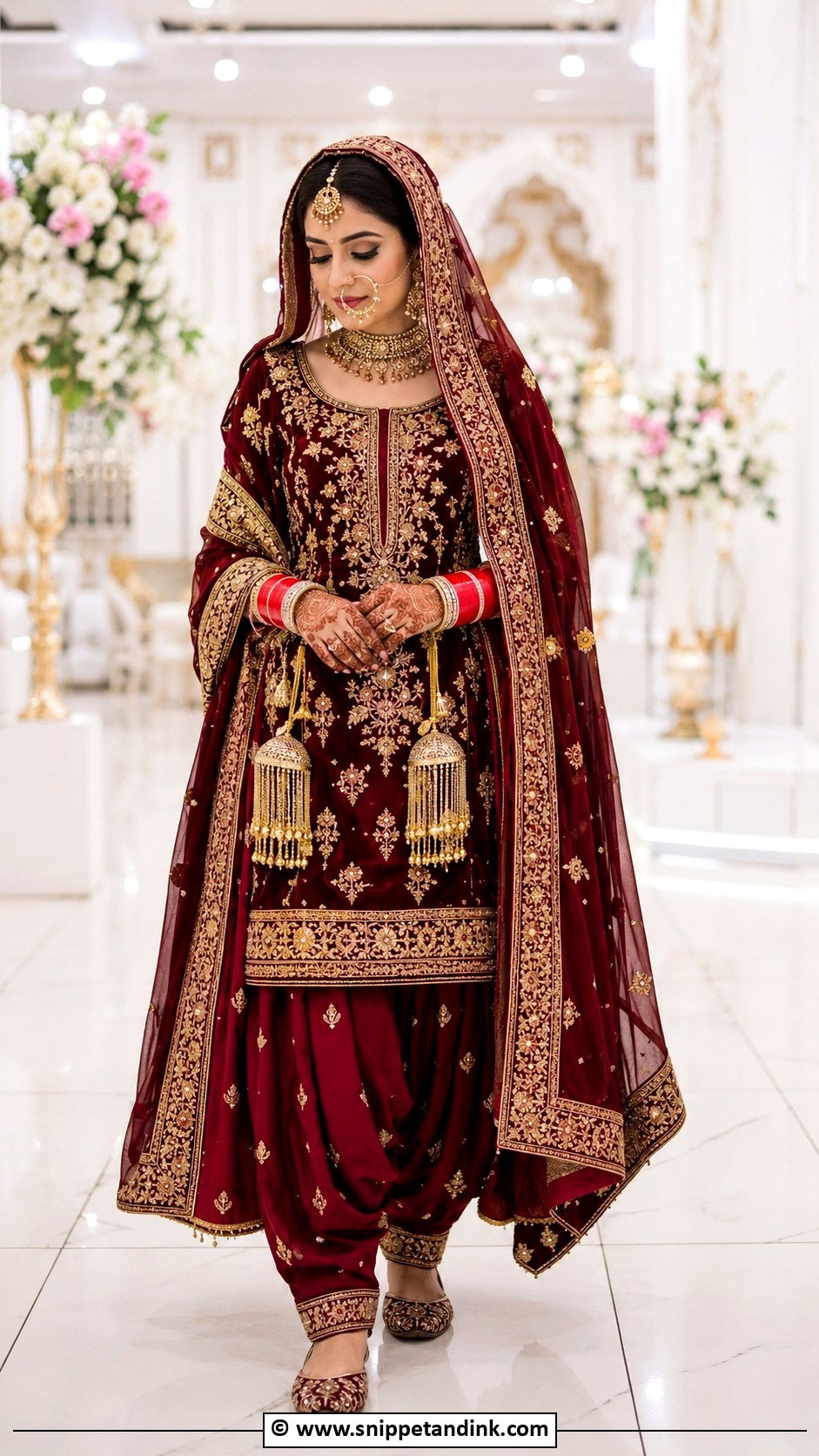
Maroon reads richer than bright red and suits brides who find red too loud against their skin. A long kameez with a classic salwar keeps the outline modest in the gurdwara, and a dupatta with a wide border frames the face once it’s over the head. Daylight is kind to maroon, so it holds its depth in a morning ceremony where some reds turn orange in photos. Antique gold, layered necklaces, a nath and red chooda suit the deeper tone.
3. Pink Sharara Bridal Suit
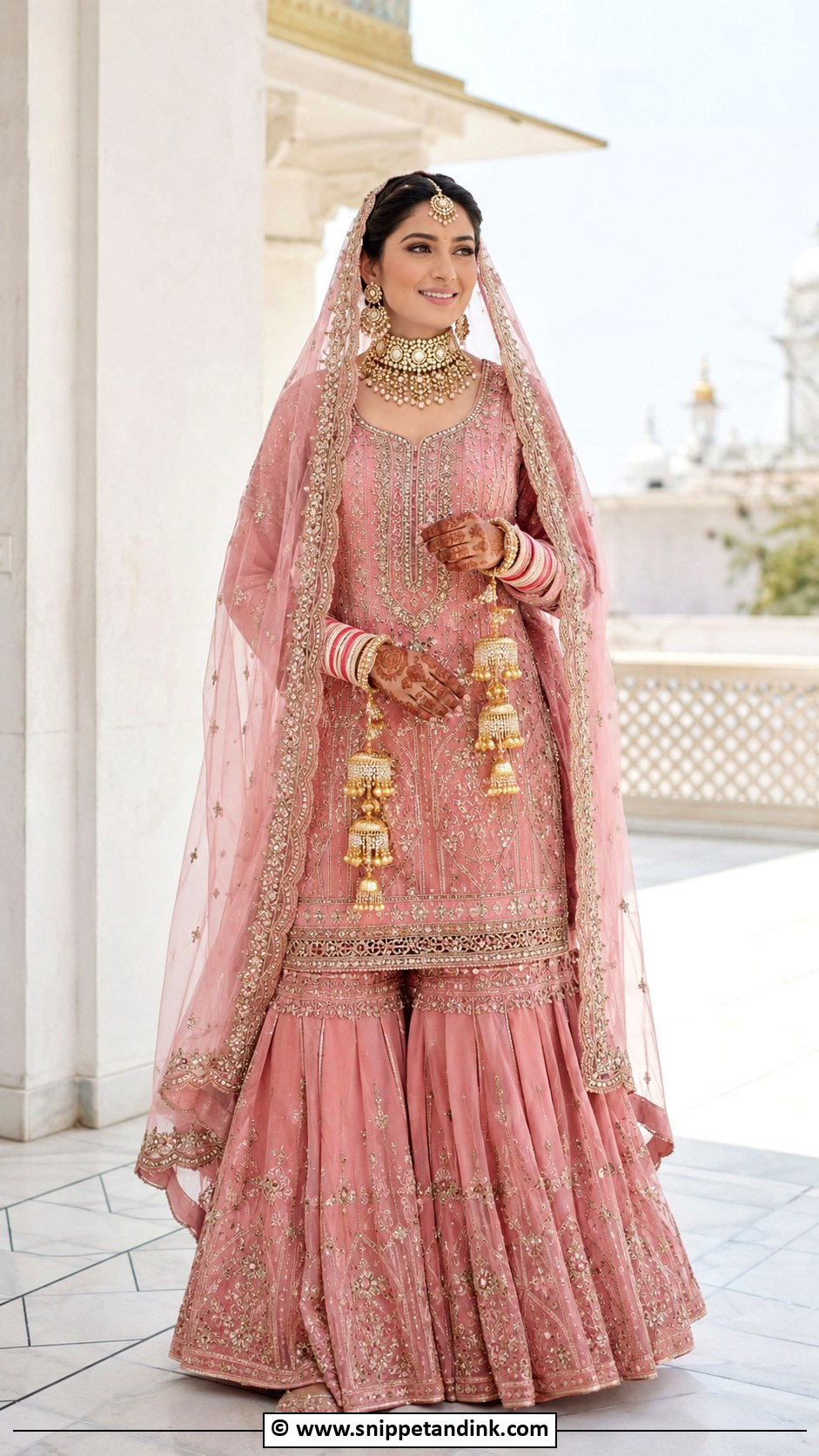
Pink in a sharara is softer than red but still clearly bridal, from pale blush through to rani pink. The catch is the sharara itself. Those wide, flared legs pool around you on the floor and can catch under your feet when you stand for the laavan, so I keep the hem just off the ground in flat juttis. Fine zari borders, sequins or pearls keep it light enough for a long morning. Polki jewellery and pink bangles mixed with the chooda finish it.
4. Ivory Anarkali Bridal Suit
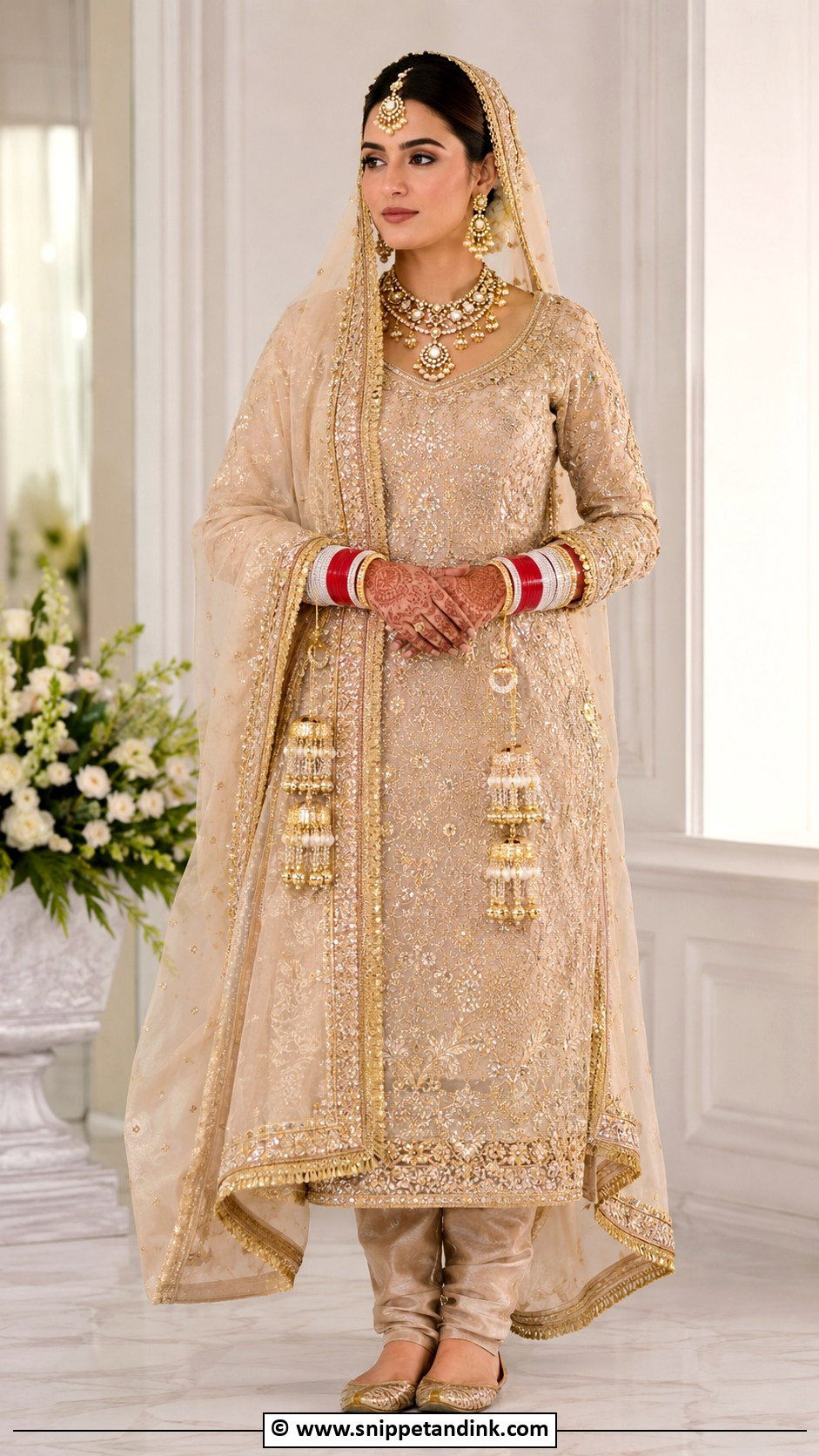
Ivory with gold or champagne embroidery is a calmer option for a daylight Anand Karaj, and the long flare of an Anarkali settles neatly around the knees when you sit. Ivory needs the most care, though. Chai, turmeric from earlier ceremonies and dusty floors all show on it, so I’d keep a spare dupatta and stain wipes with your family on the day. A sheer embroidered dupatta over the head softens the look. Kundan, a few pearls and a red or ivory chooda tie it together.
5. Pastel Punjabi Bridal Suit
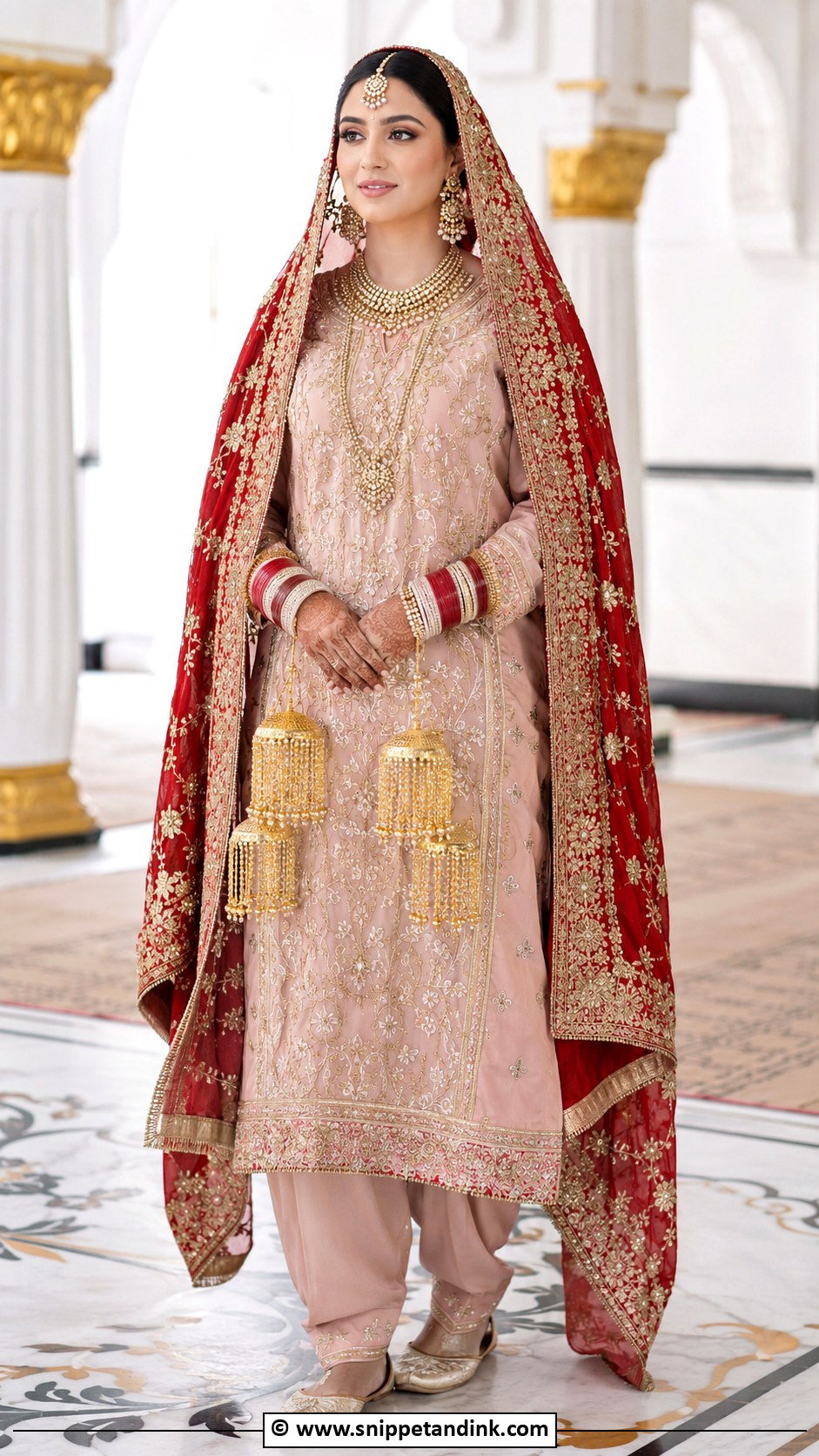
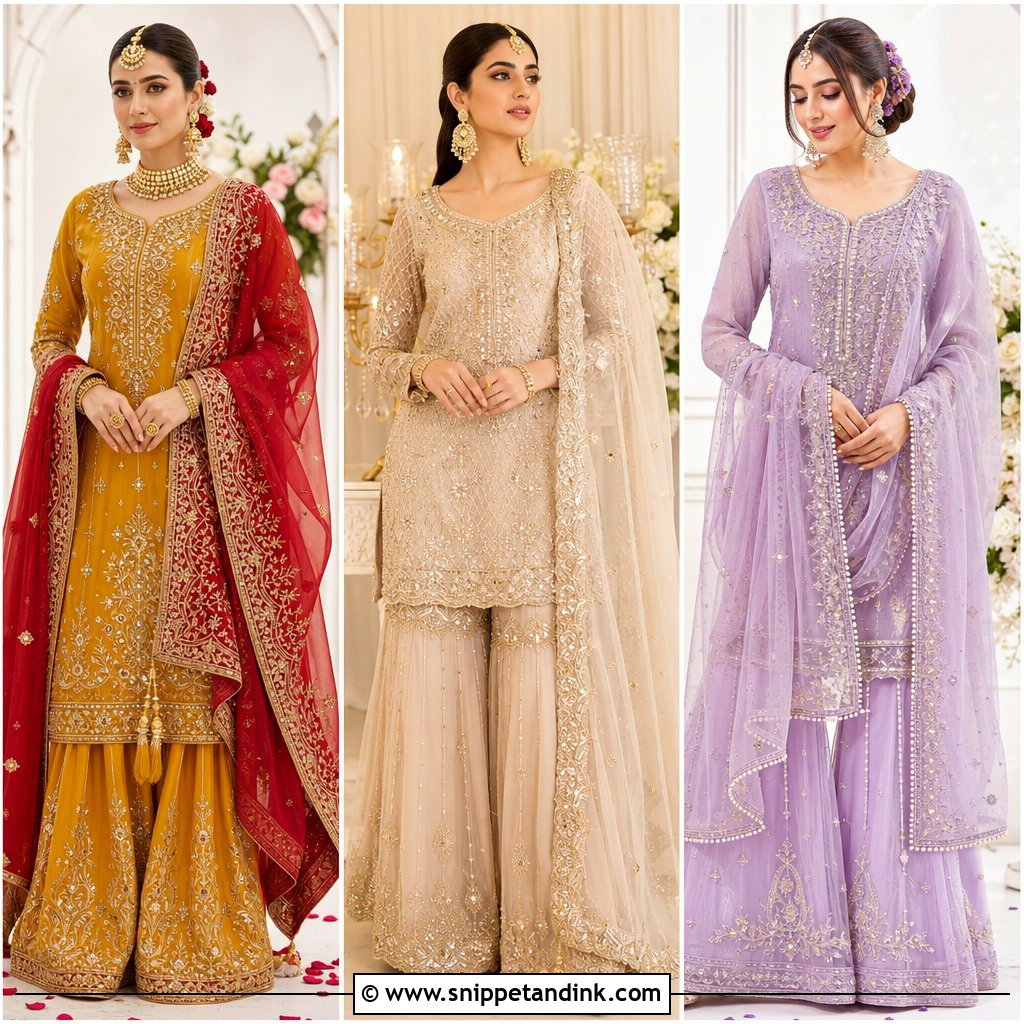
Pastels like powder pink, mint, peach, lavender and sky blue look fresh for spring and summer weddings, but on their own they can look like a guest outfit. The dupatta is what makes a pastel suit bridal. Choose one with a strong embroidered border, because that’s the part people see as you sit in the darbar. A straight kurta with salwar, sharara or palazzo all work. A delicate matha patti and kundan earrings add weight to the look without heat.
6. Gold Embroidered Bridal Suit
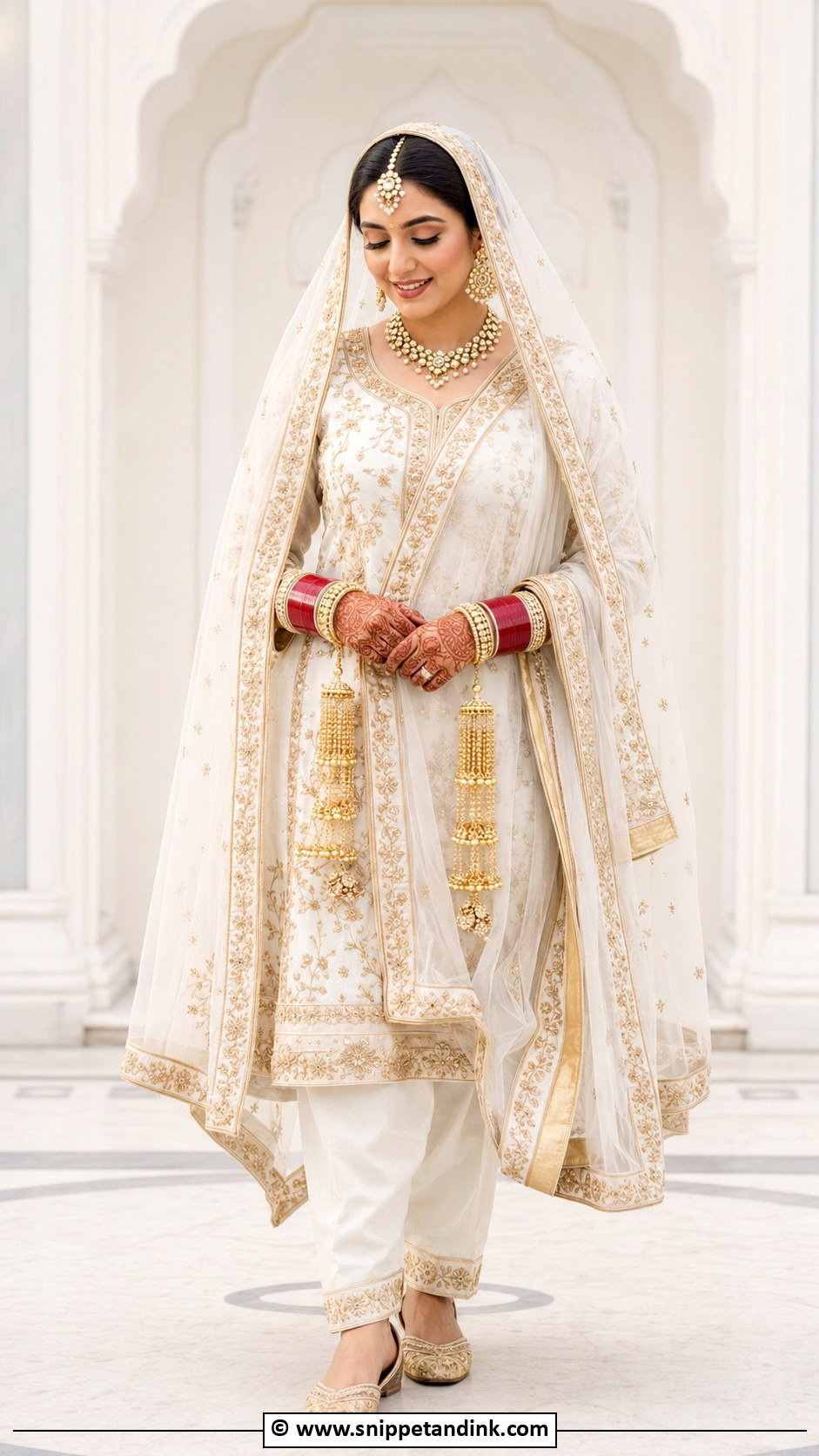
A beige, cream, blush or muted champagne base covered in gold threadwork gives richness without a strong colour. I check one thing before suggesting it: how the gold sits against your skin in daylight. Warm skin tones glow with it; cooler undertones can look washed out next to yellow gold, where a rose-gold or antique finish is kinder. A long kameez with slim pants or a sharara balances it. Add a gold-bordered dupatta over the head and metallic juttis.
7. Heavy Dupatta Bridal Suit
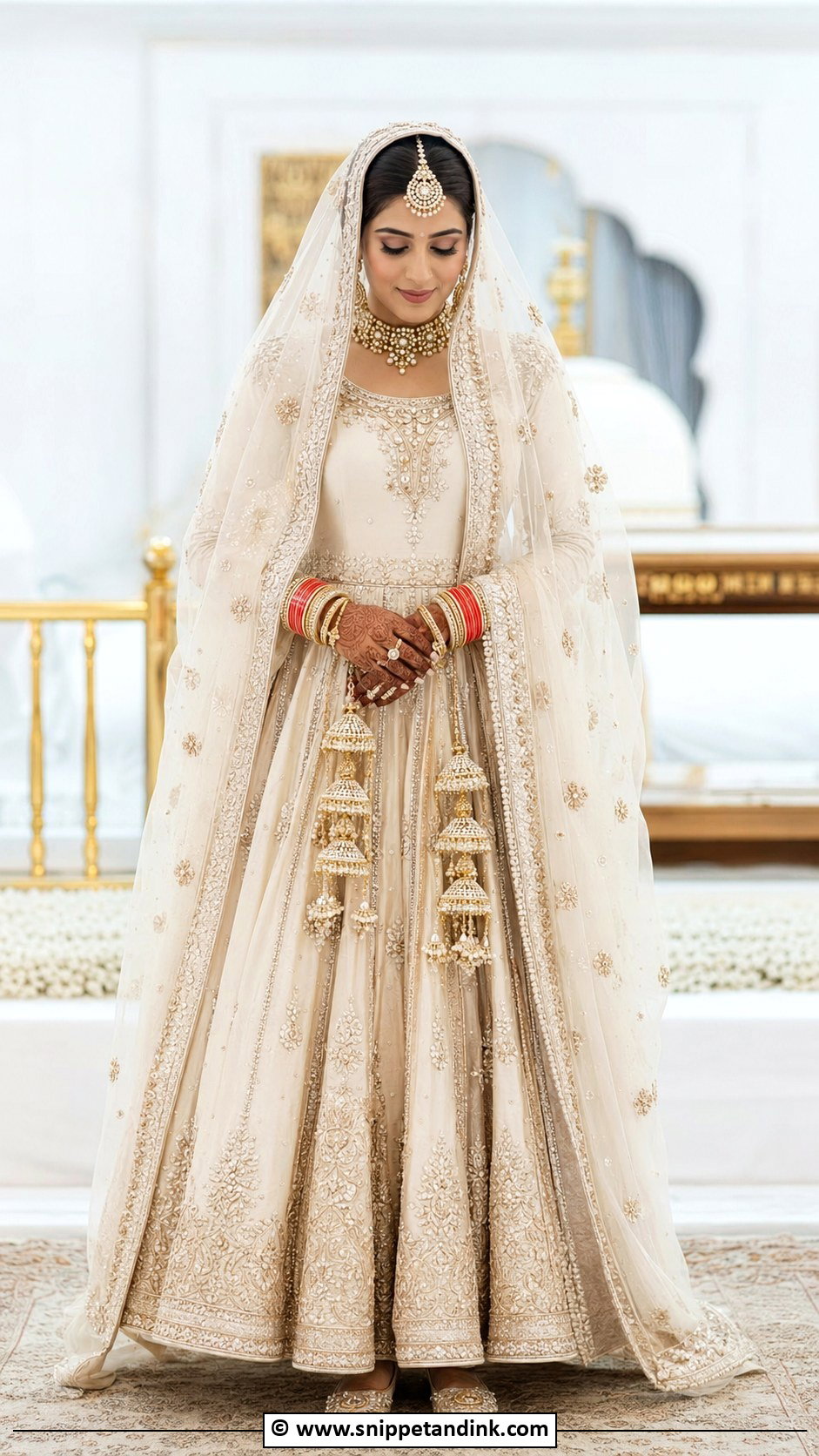
In the Anand Karaj, the dupatta is the most visible part of your outfit, because guests see you from behind and from the side while you sit. That makes it a smart place to spend. A lighter suit with a heavy dupatta, scalloped, sequinned or edged in gota, gives the bridal drama where it shows. Weight matters, though. A very heavy dupatta pulls backwards on the head all morning, so I pin it at several points rather than one. Frame the face with a tikka, passa and jhumkas.
8. White And Gold Bridal Suit
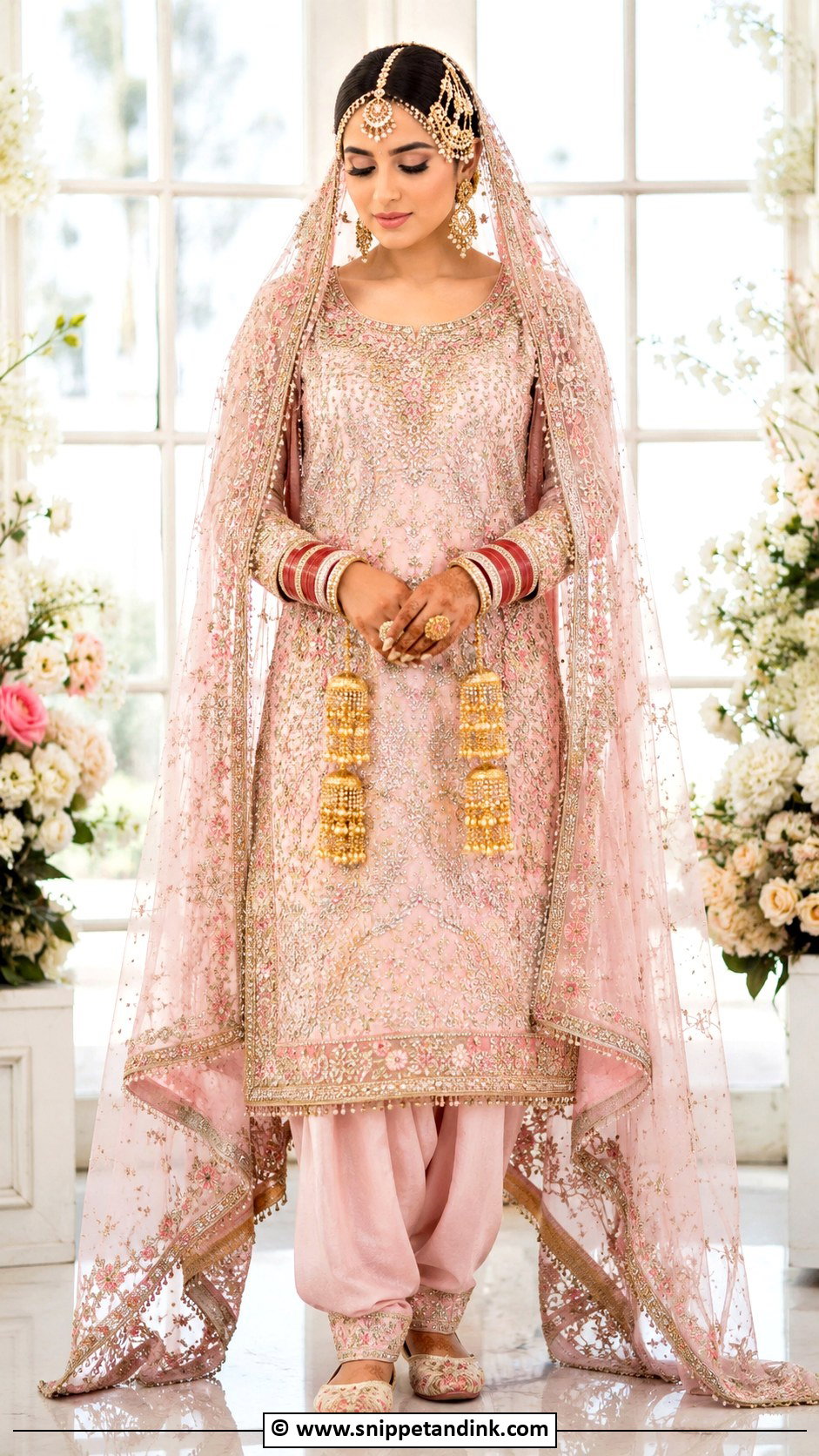
White and gold looks calm from across the hall and detailed close up, which suits a bride who wants restraint. In some Punjabi families white is associated with mourning, so I always suggest checking with elders before committing; many brides solve it with a red chooda or a red-bordered dupatta for contrast. The pairing works as an Anarkali, a straight suit or a sharara. Kundan or polki and soft gold juttis fit the palette.
9. Peach Sharara Bridal Suit
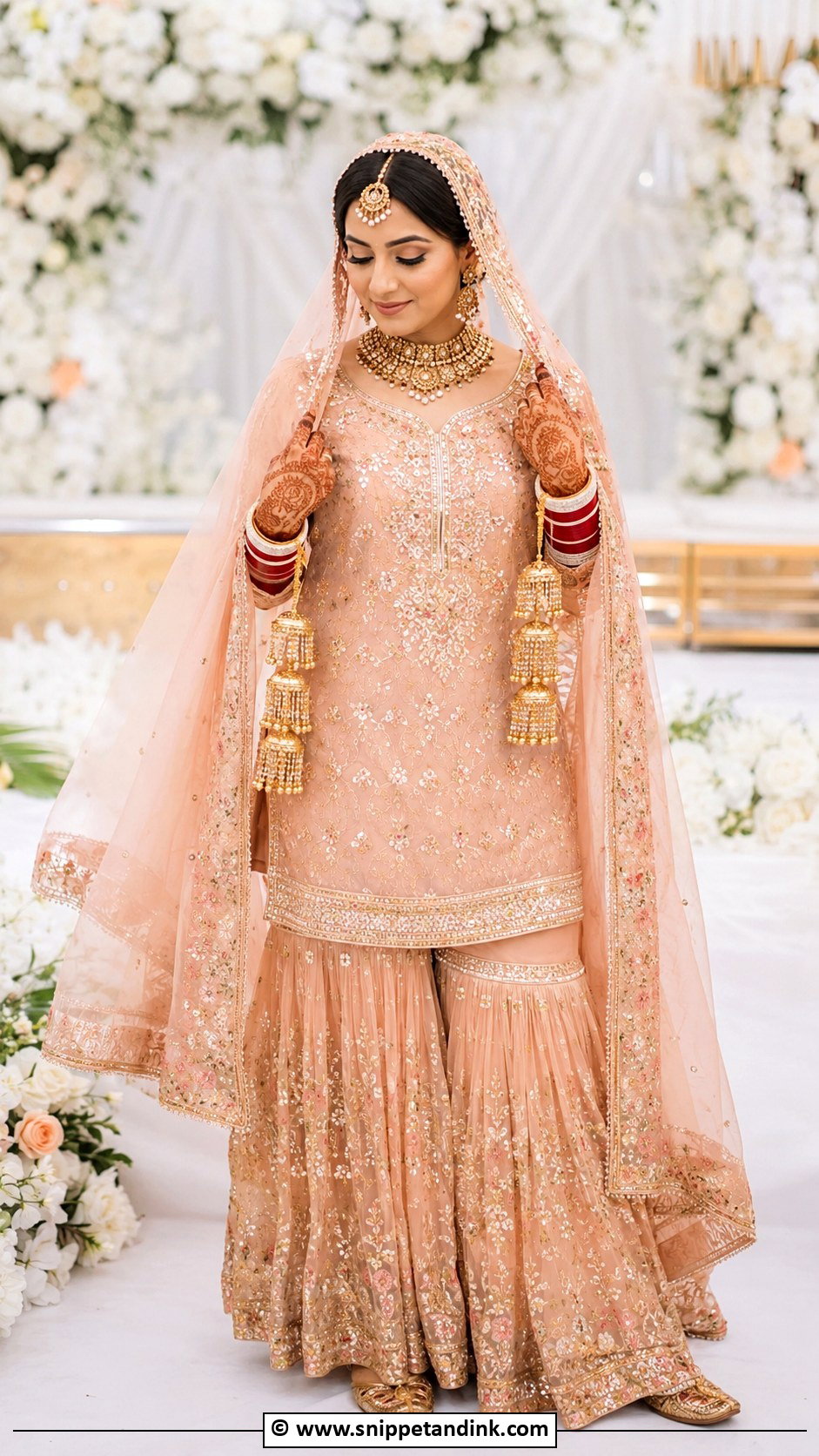
Peach sits between traditional pink and a modern pastel, and it warms most skin tones in morning light. Gold, pearl or rose-gold embroidery all work on it. A short kurta with wide sharara pants moves well, while a matching dupatta keeps it cohesive. Drape the dupatta so the border lies along the hairline rather than slipping back toward the crown. Kundan, chooda, kaleere and fresh makeup are all it needs.
10. Green Punjabi Bridal Suit
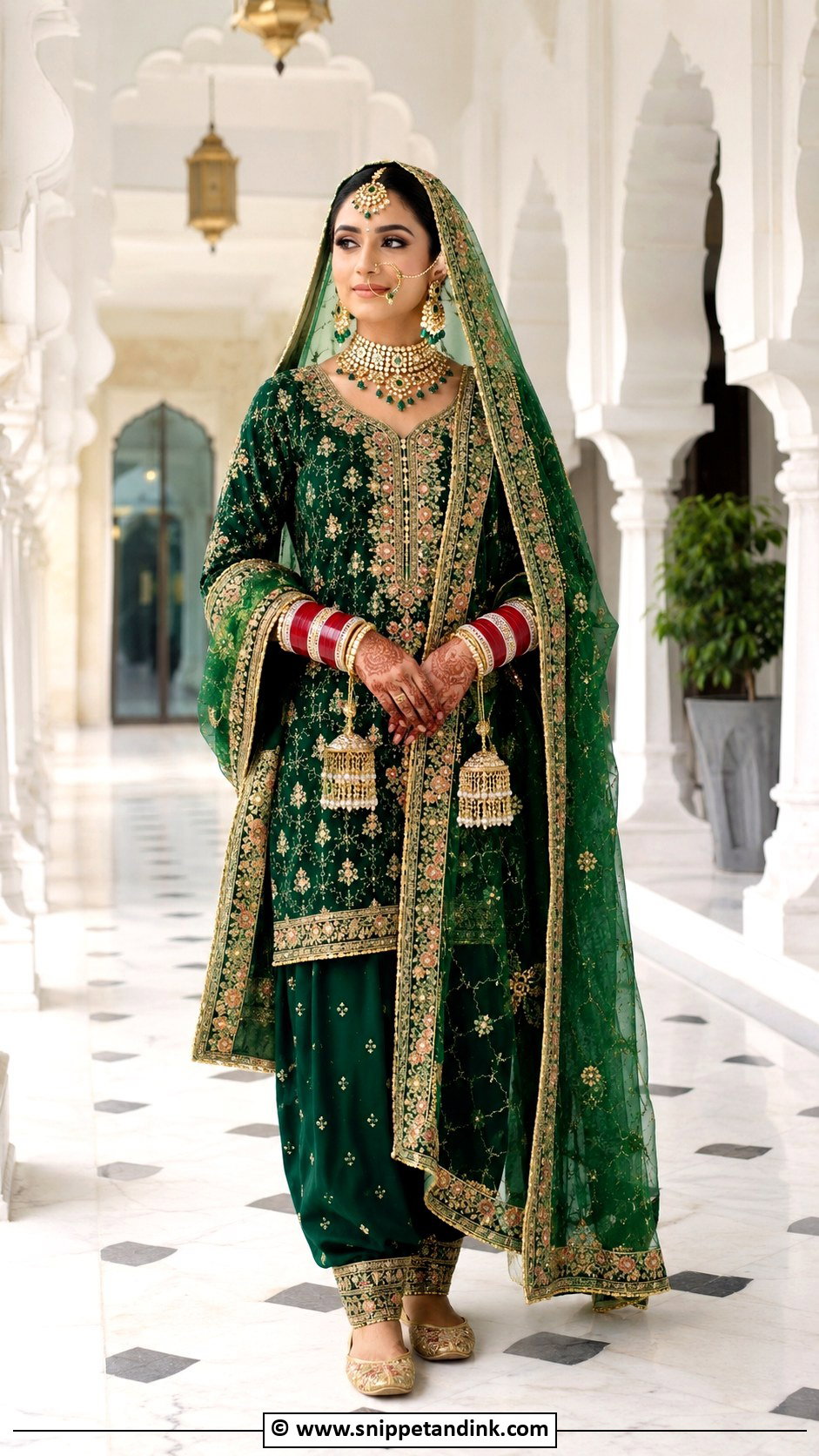
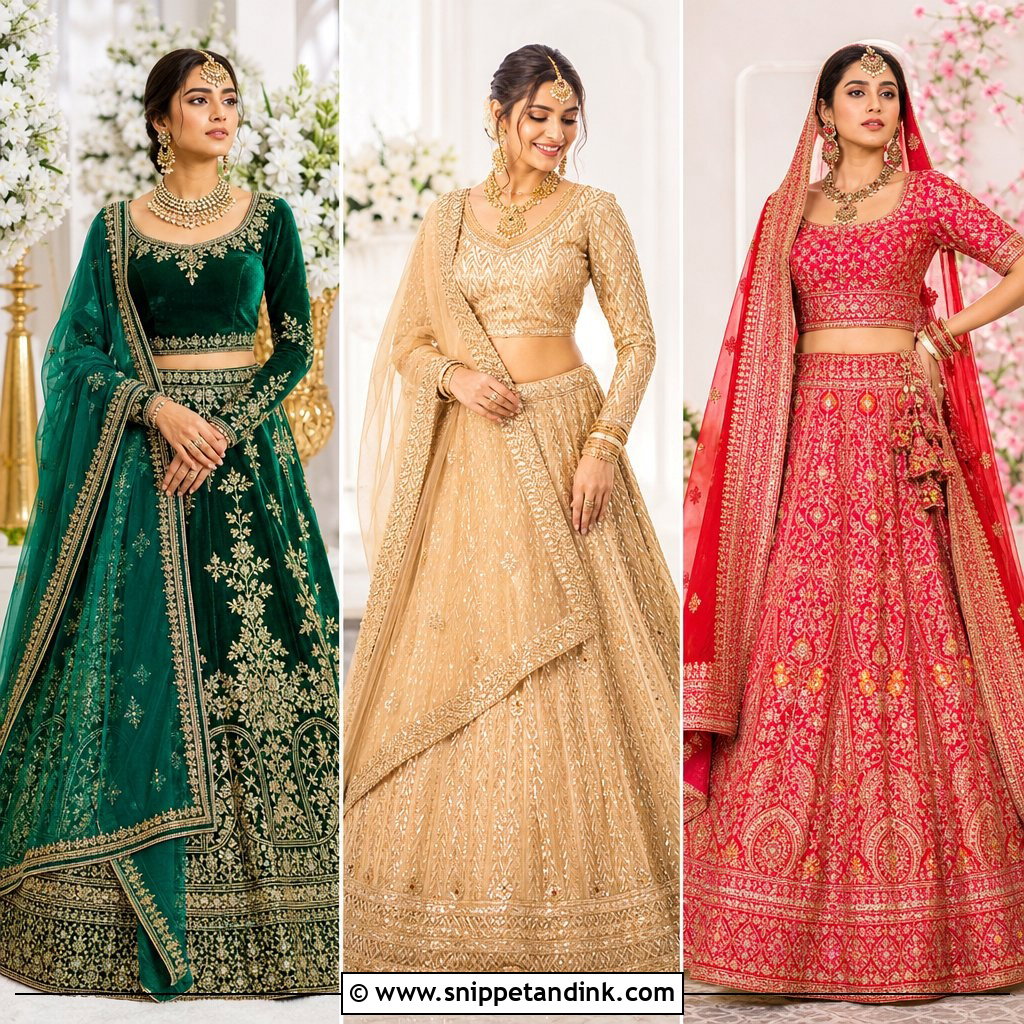
Green covers a wide range: emerald and bottle green feel royal, mehndi green feels traditional, and sage reads modern. Gold embroidery is what pulls each of them into bridal territory. For a bride who still wants a nod to red, a red or maroon dupatta over a green suit is a classic contrast. I’d test the exact shade under the gurdwara lights if you can, because some emeralds turn almost black indoors. Kundan, gold juttis and red chooda balance it.
11. Velvet Bridal Salwar Suit
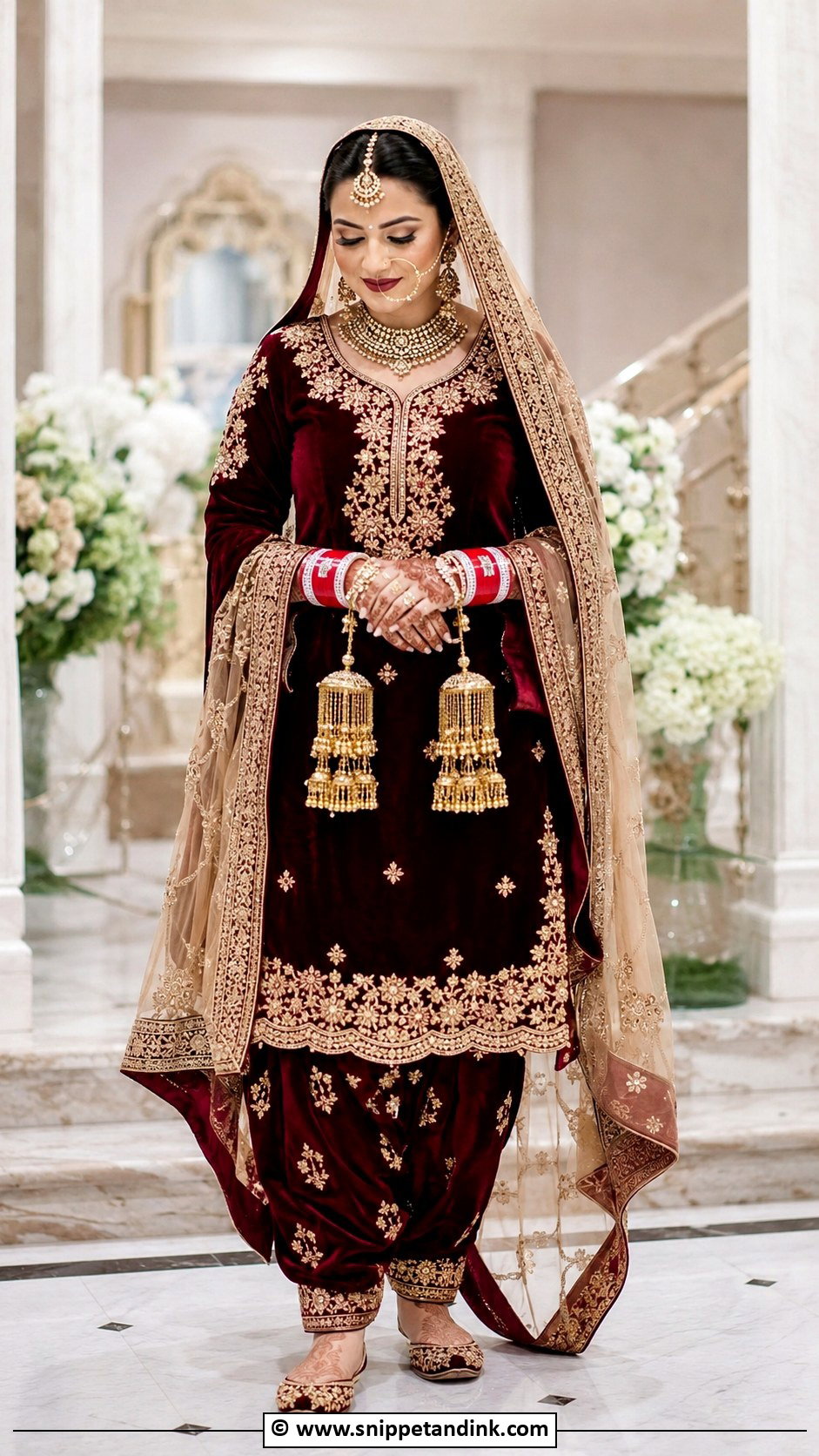
Velvet is a winter fabric and I’d only suggest it for a cold-season wedding or an evening event during the wedding week. It’s warm and heavy, and a velvet suit in a heated hall during a long ceremony can be uncomfortable. Maroon, emerald, navy, plum and ruby look richest in it. A long velvet kameez with gold embroidery over a salwar works well, with a lighter net or georgette dupatta so the head covering doesn’t add more weight. Antique jewellery suits the texture.
12. Chikankari Bridal Suit
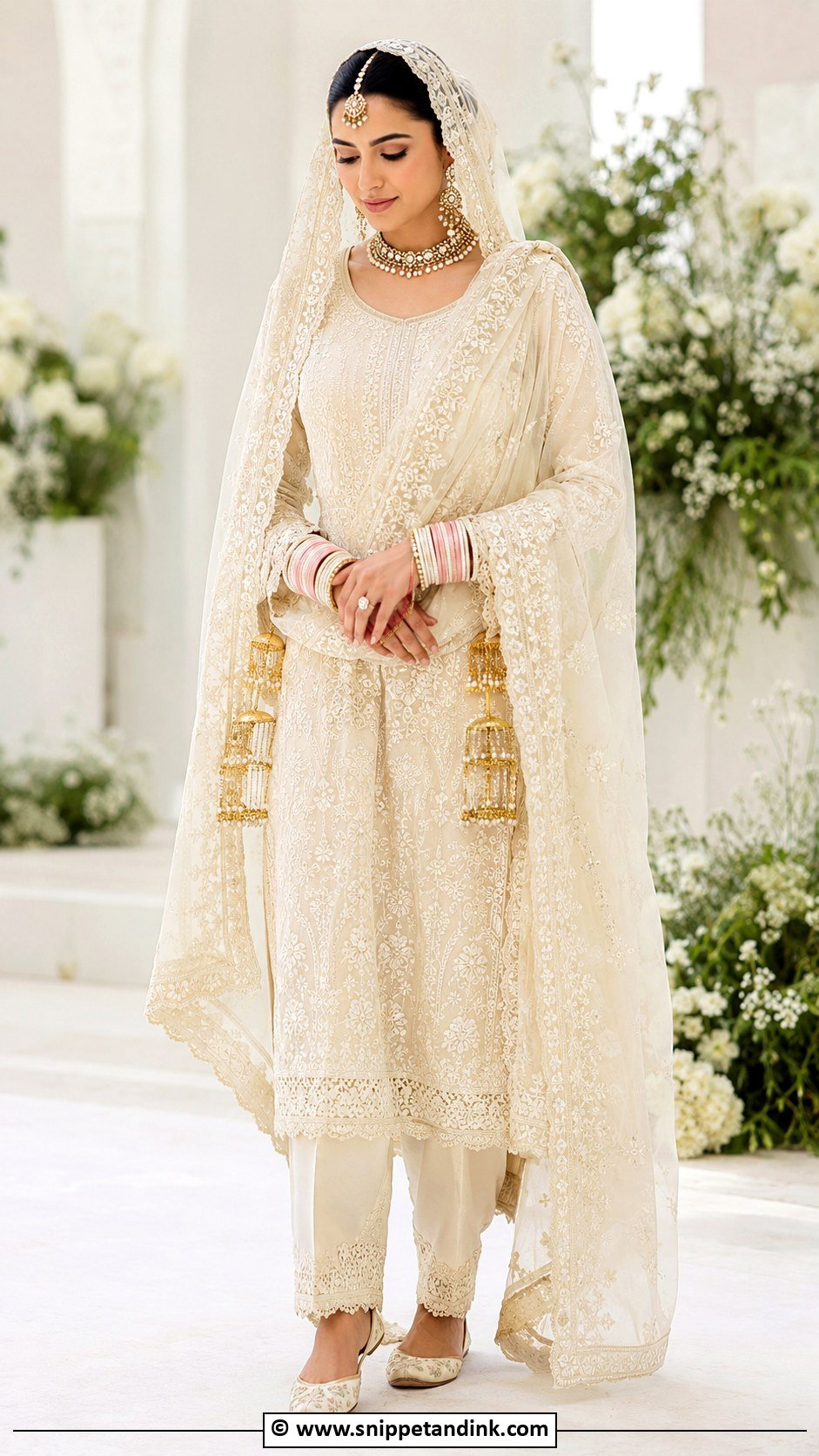
A chikankari bridal suit relies on fine white shadow stitching rather than metallic shine, and it’s the most breathable choice here for a warm morning. On its own it reads quite casual, so I build it up: pearls and kundan, a longer kurta or Anarkali shape for coverage, and a dupatta with a decorative border. White, ivory, blush, mint and pale yellow all suit the technique. Real hand chikankari is delicate, so dry clean only and store it folded in muslin.
13. Phulkari Bridal Suit
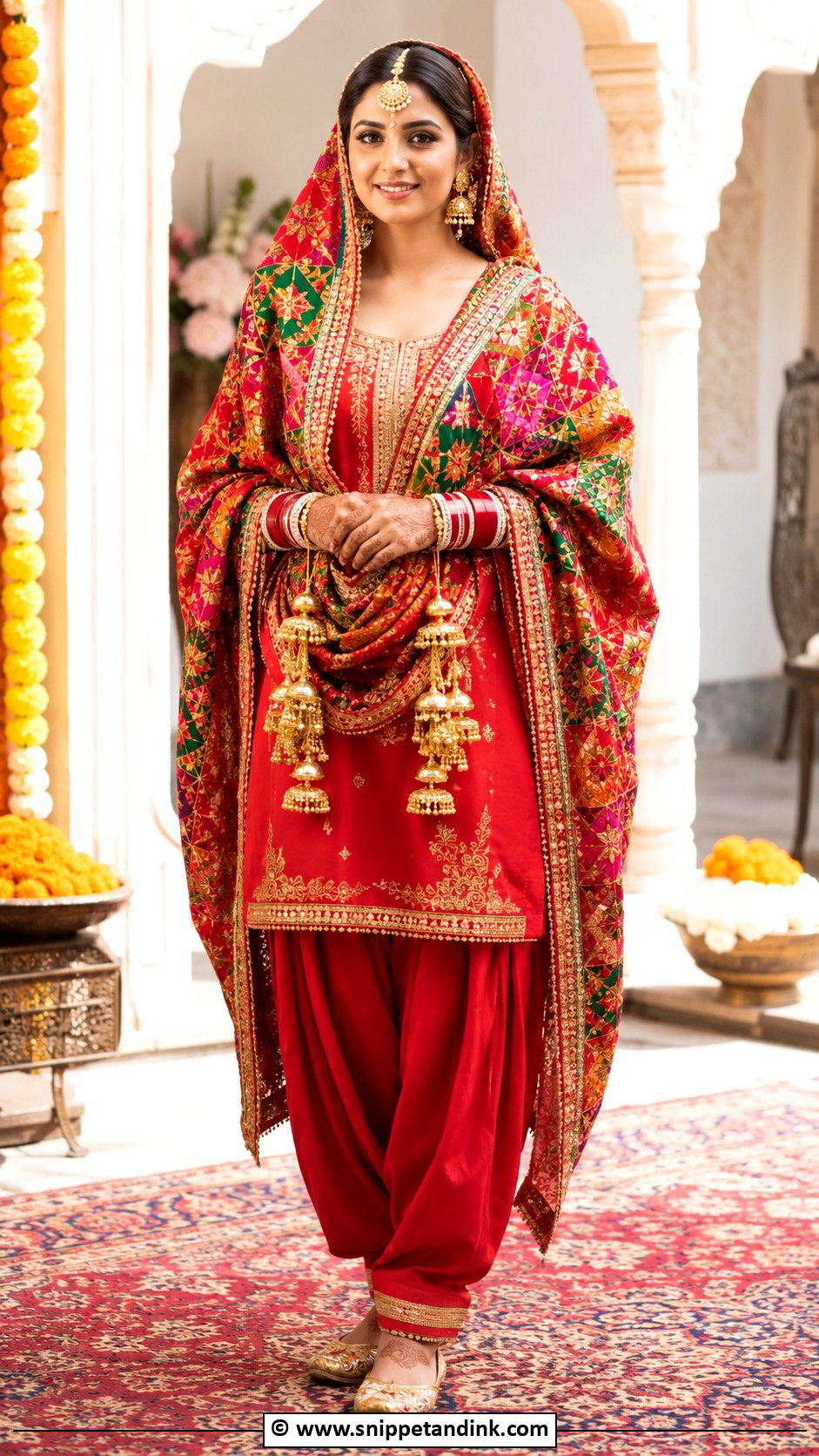
Phulkari is Punjab’s own embroidery, darned in silk floss on the reverse of the cloth, and many families still keep a phulkari or bagh passed down from earlier generations. That makes it one of the most personal choices for a Sikh bride. The simplest approach is a plain silk or cotton-silk suit with a heavily embroidered phulkari dupatta over the head; a full phulkari set is bolder. Red, orange, pink, mustard and magenta are the traditional colours. Gold jhumkas and a tikka keep the rest simple.
14. Gharara Bridal Suit
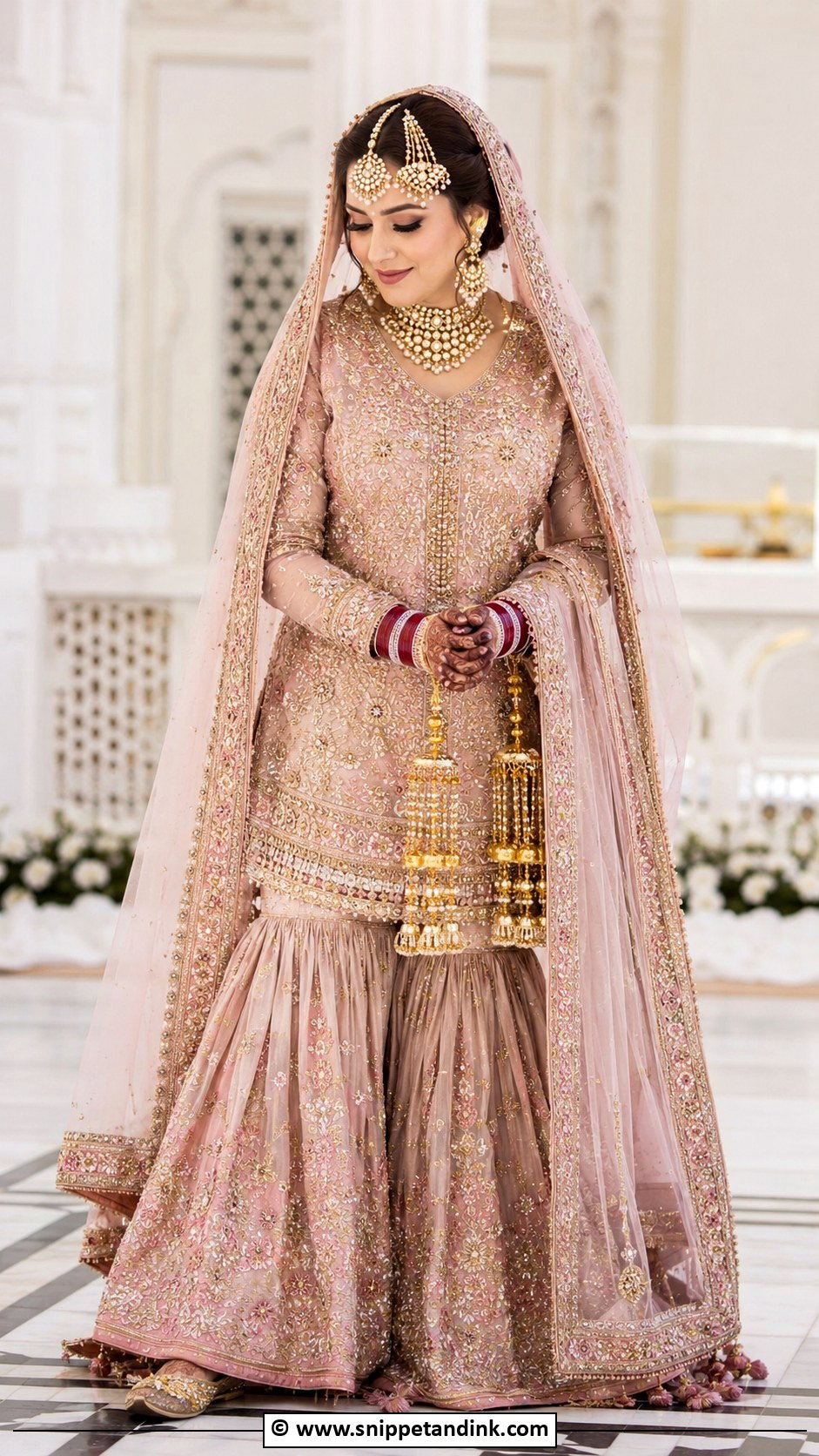
A gharara is fitted to the knee and then flares out, usually with a gathered joint at the knee, so it gives more shape than a salwar and less bulk than a lehenga. Sitting is where you notice the difference: that knee seam takes the strain, so check it’s reinforced at the fitting. A short or mid-length kurta shows off the flare, especially when the embroidery continues along the hem. Polki, a passa, chooda and embroidered juttis suit its old-world feel.
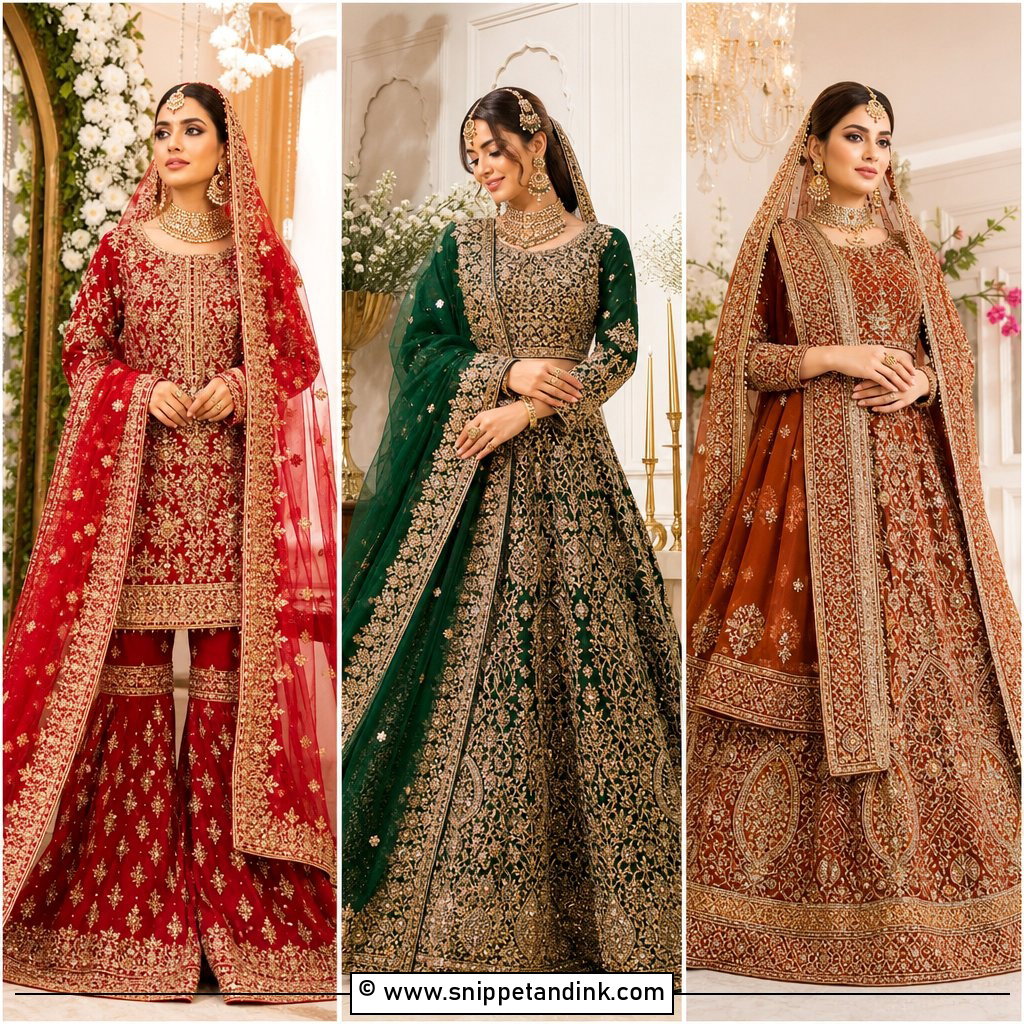
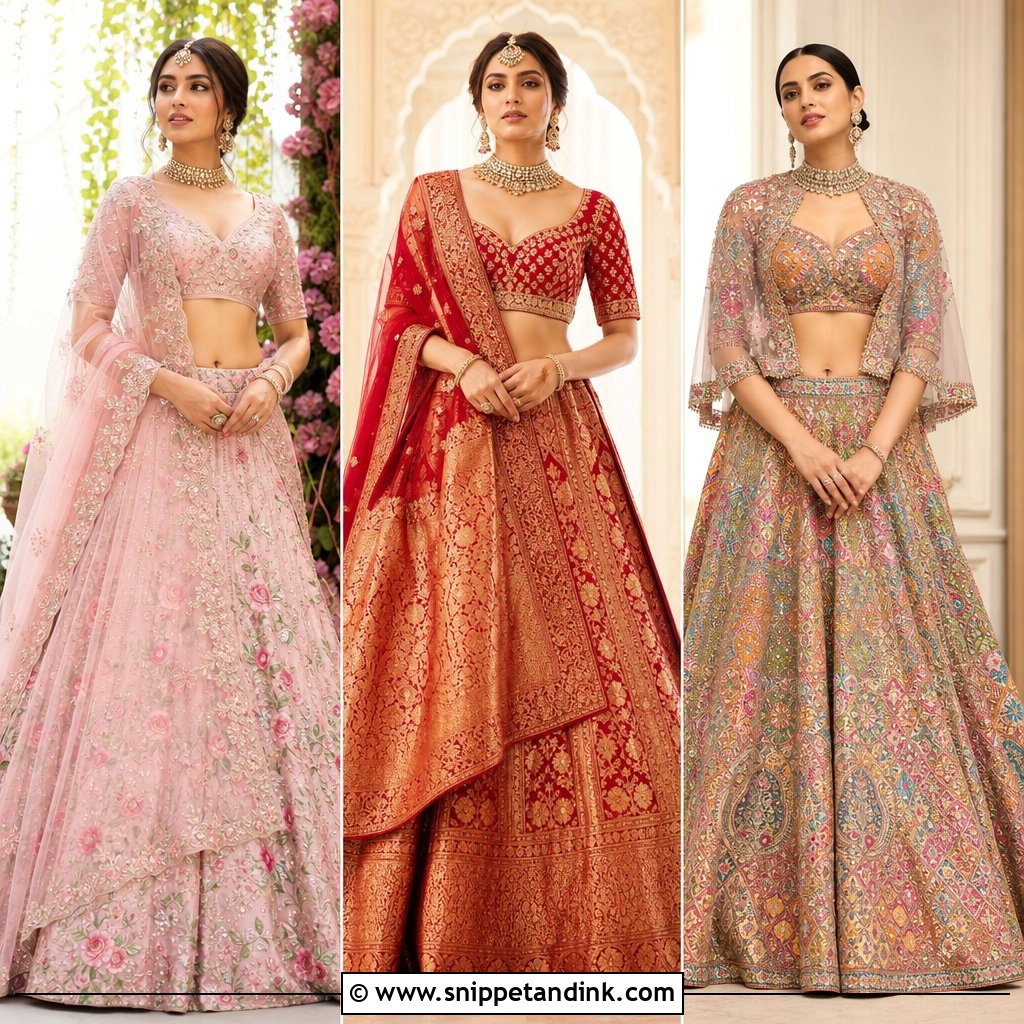

15. Straight Cut Bridal Suit
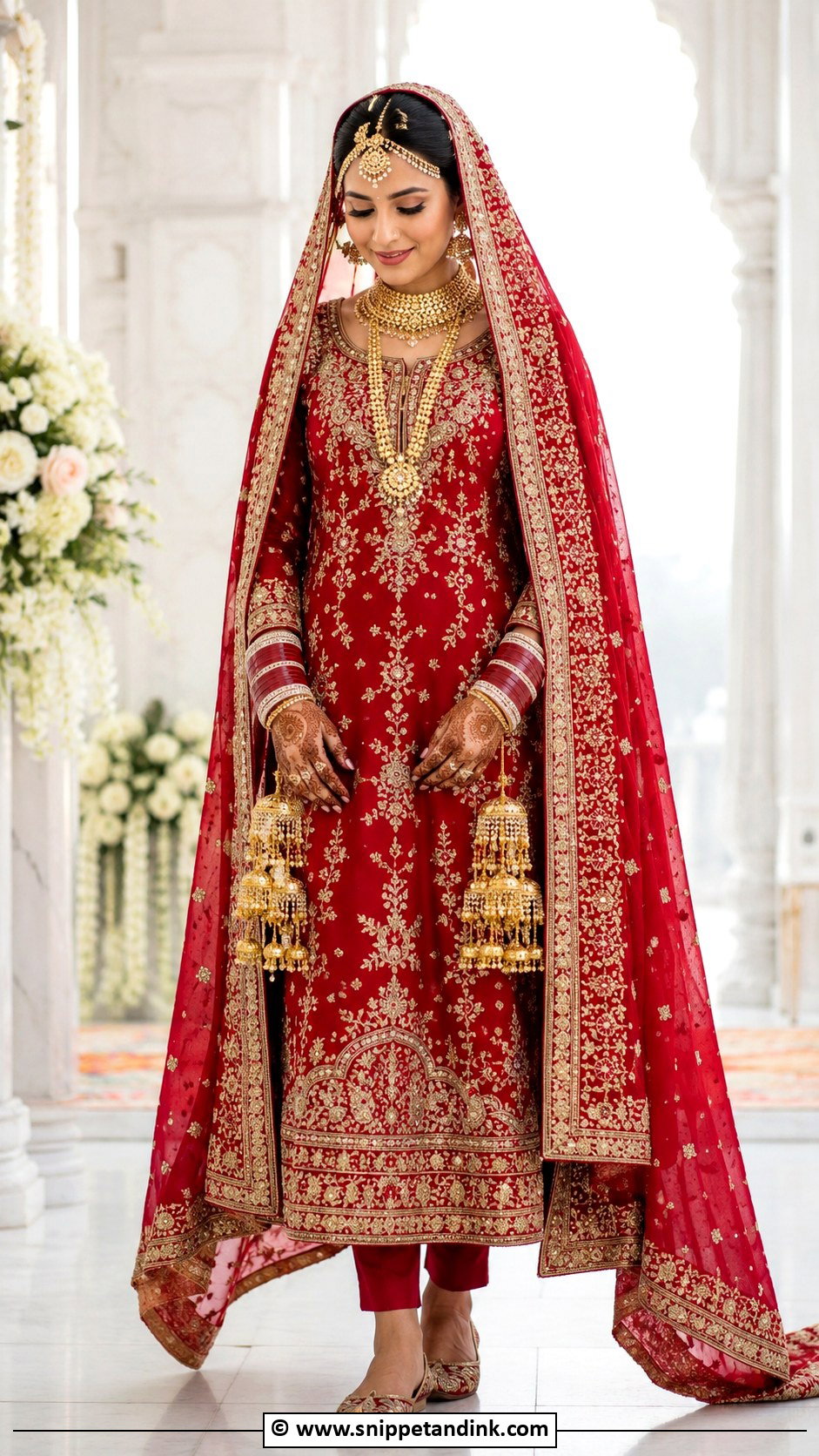
A long straight kameez gives a clean line from shoulder to shin and is the easiest silhouette to sit in. Keep the side slits high enough to fold your legs under you. The bridal detail has to come from fabric and embroidery: silk, brocade or organza with work at the neckline, sleeves and hem. Salwar, churidar or palazzo underneath all work. A heavily bordered dupatta does the rest, since it frames the head and shoulders throughout the ceremony.
16. Red And Gold Anarkali Bridal Suit
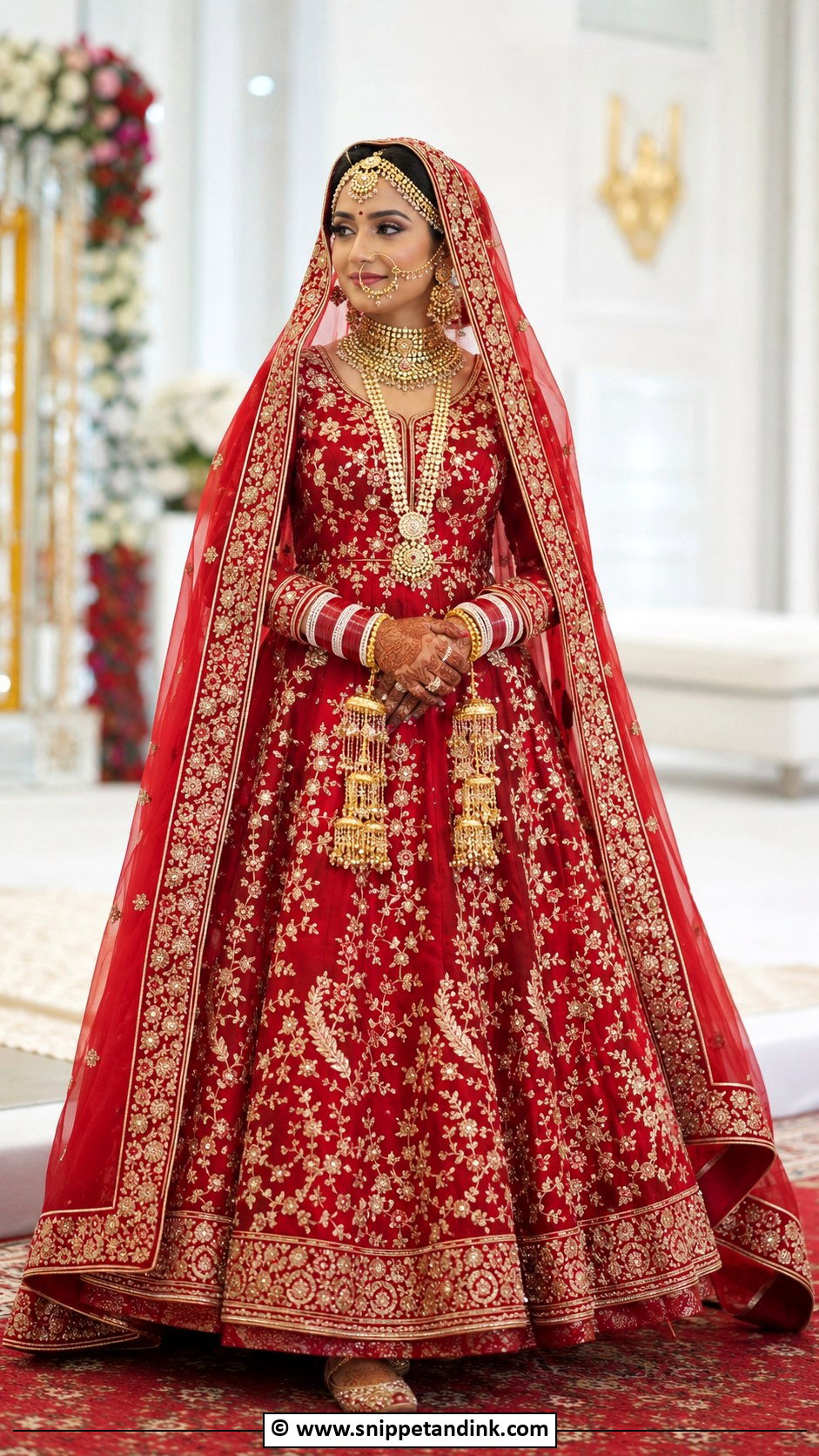
Red and gold in an Anarkali gives you the presence of a lehenga with far less to manage. The flared panels spread neatly when seated and swing as you walk the laavan. For the gurdwara I’d choose a neckline you won’t need to adjust and sleeves to at least the elbow. A matching red dupatta with gold borders goes over the head. Kundan, a tikka, nath, chooda and kaleere complete a very traditional look.
17. Blush Pink Anarkali Bridal Suit
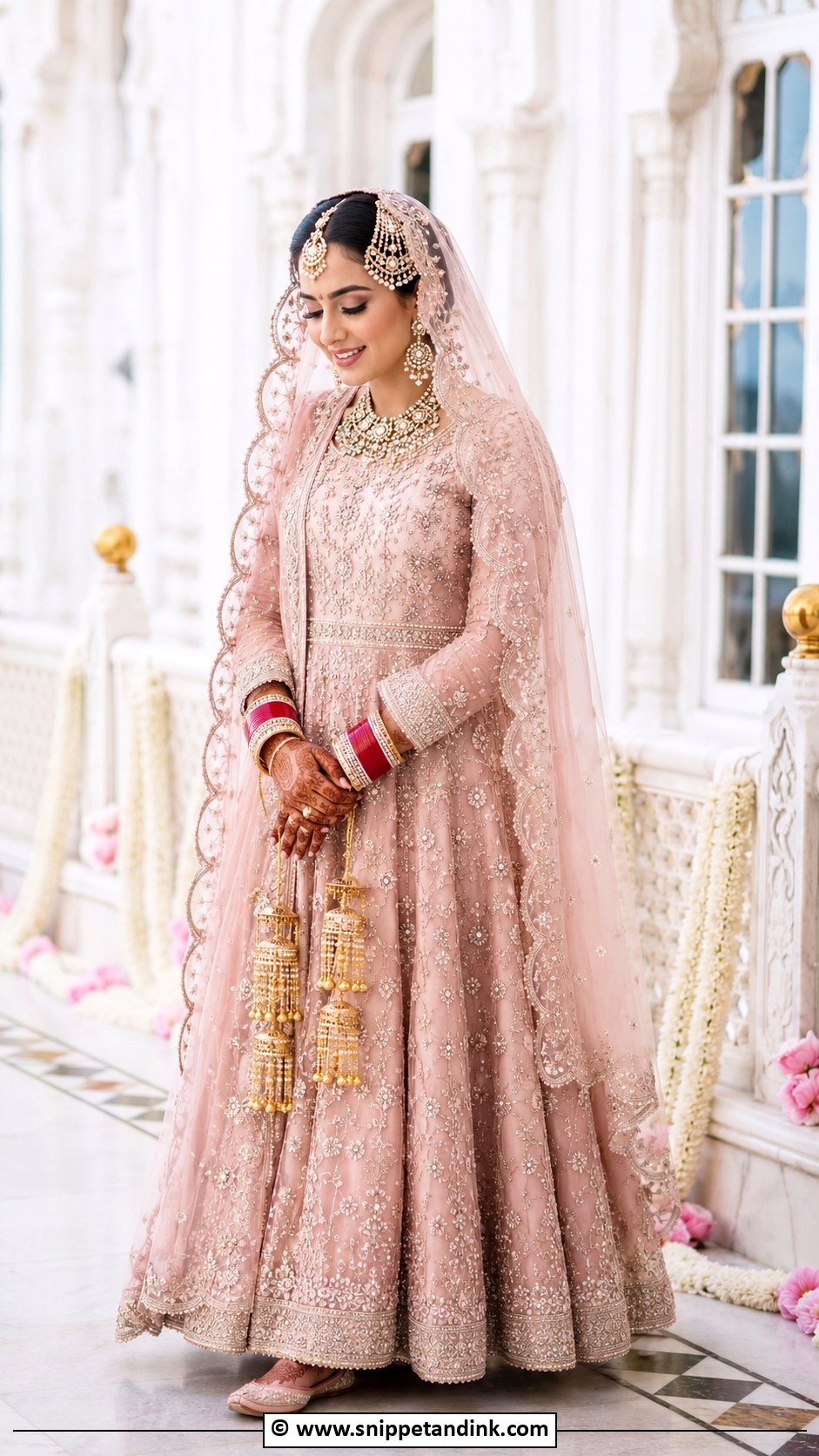
Blush in a floor-length Anarkali is the softest option on this list. Pearl, silver or gold embroidery each changes its mood, from delicate to warmer. My caution with pale colours is the floor: the hem of a long Anarkali picks up marks in a busy hall, so have it finish at the ankle in flat juttis. A sheer dupatta with a scalloped or embroidered border covers the head. Kundan earrings and a matha patti add enough without competing.
18. Royal Blue Bridal Suit
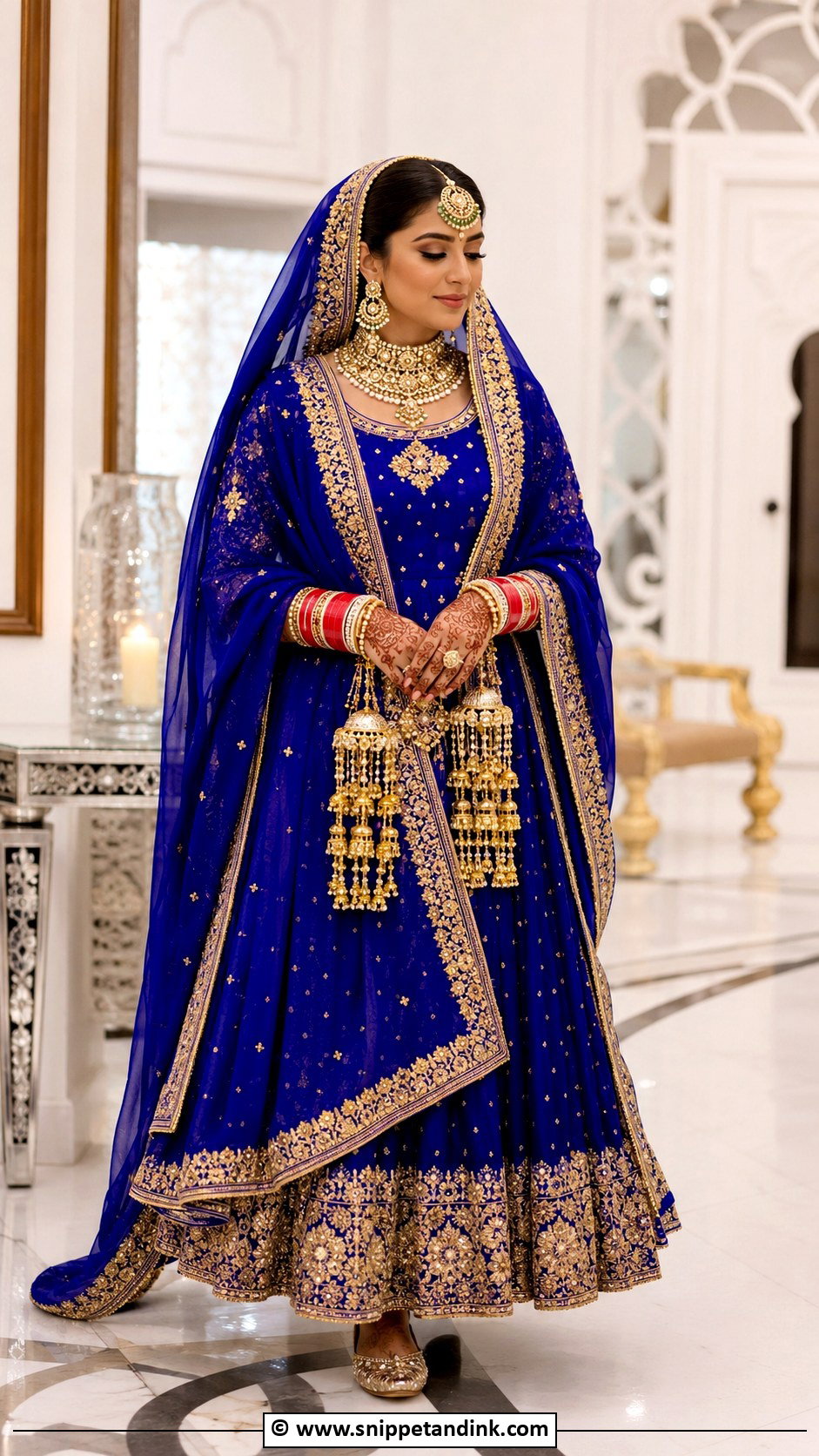
Royal blue is the confident pick for a bride who doesn’t want red or pink. Gold embroidery looks bold against it; silver or pearl work cools it down. It’s worth discussing with family first, as some households prefer traditional wedding reds for the Anand Karaj itself and save blue for the reception. A straight suit, Anarkali or sharara all suit the shade. Kundan, gold juttis and red chooda give it a bridal anchor.
19. Mustard Bridal Suit
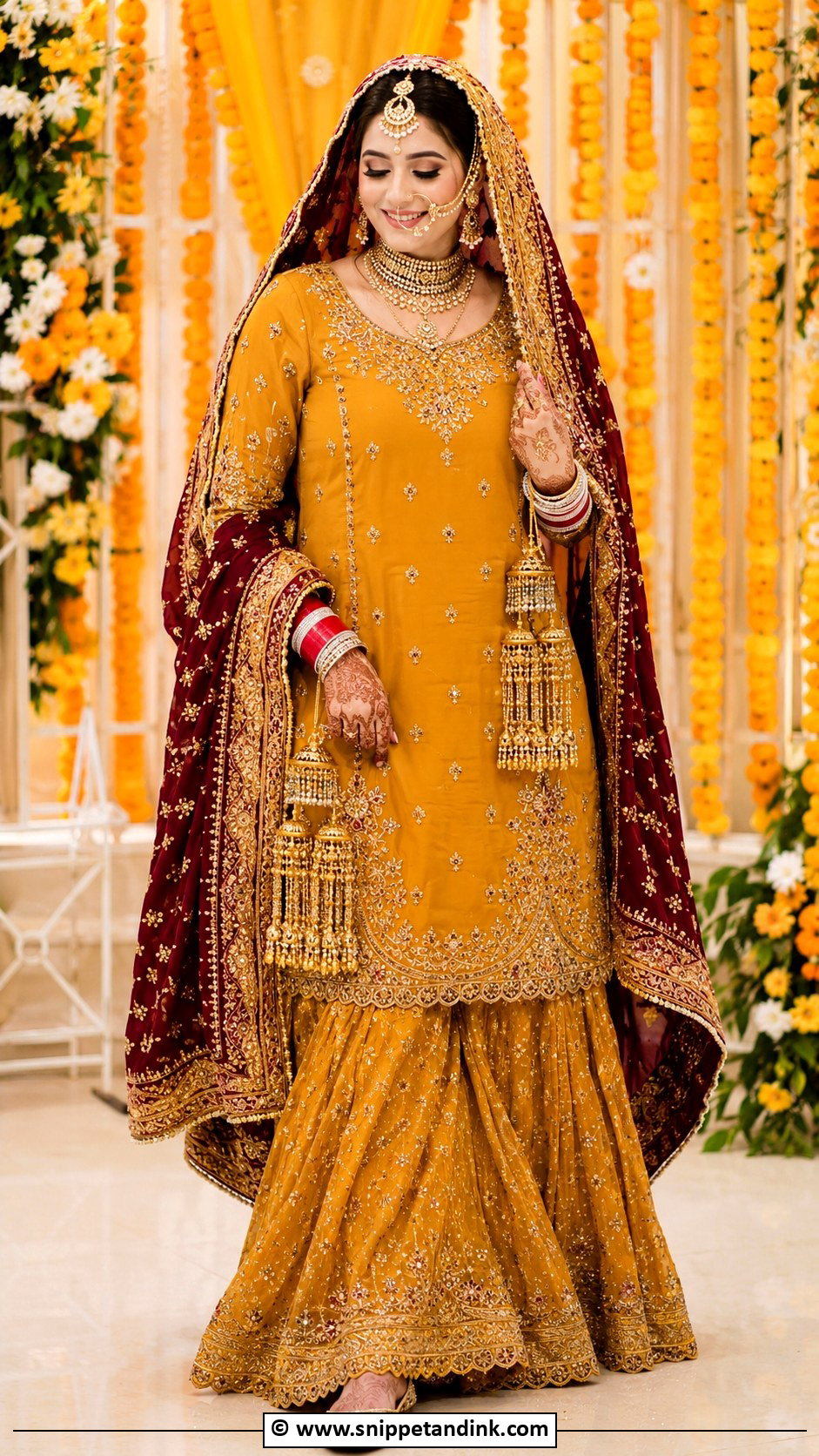
A mustard bridal suit is warm and cheerful, and many brides wear the colour for the maiyan or other pre-wedding events. For the Anand Karaj itself, it needs heavier work to feel ceremonial: mustard silk, georgette or brocade with gold, mirror or thread detail. A red, maroon or gold dupatta adds the bridal contrast. Sharara, Patiala or a straight salwar all keep it rooted in Punjabi style.
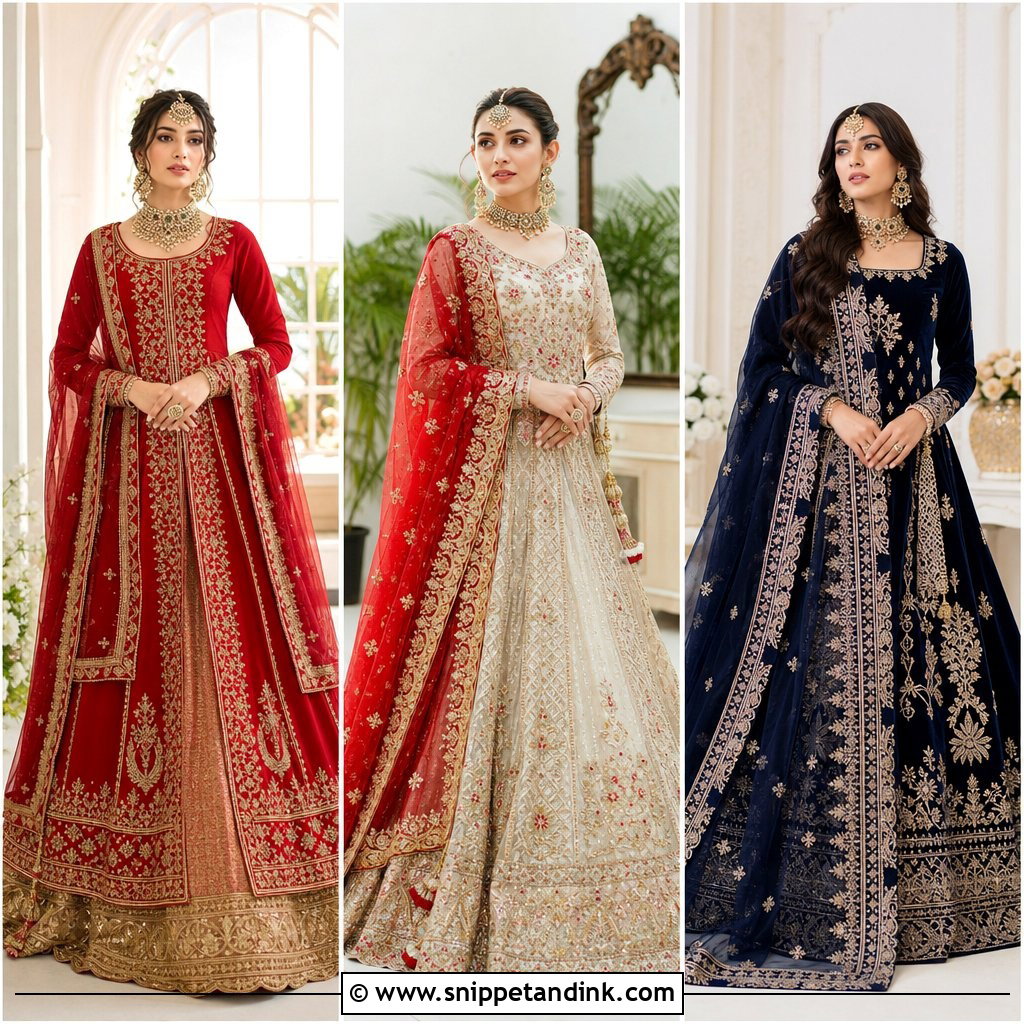


20. Mirror Work Bridal Suit
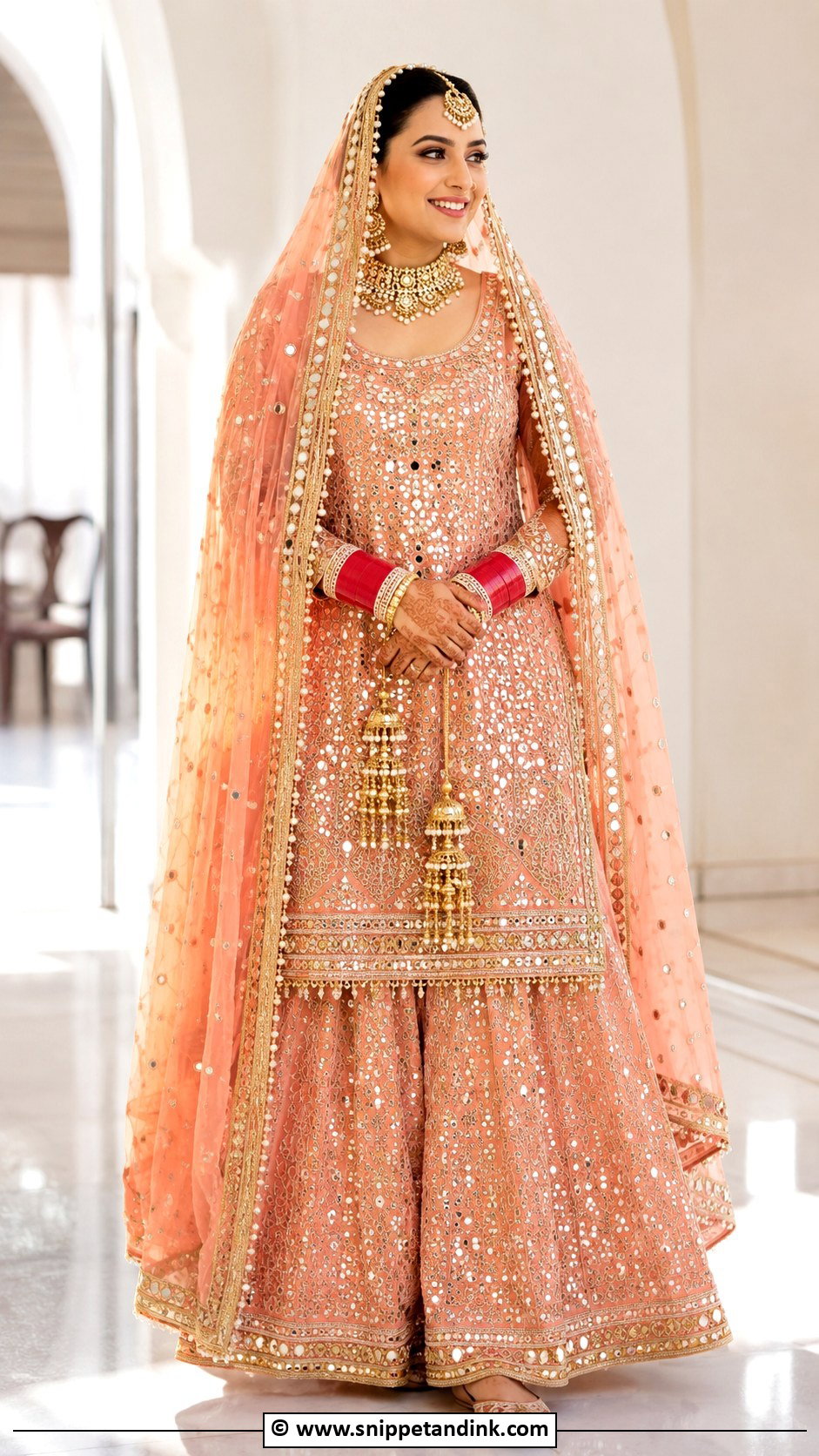
Mirror work is hand-stitched around tiny pieces of glass, so it catches light in a softer, more scattered way than sequins. It also adds real weight and can scratch delicate skin at the underarm, so I check for a smooth lining behind any mirrored panel. It suits peach, ivory, pink, red, green and mustard. A sharara or straight salwar kameez lets the work spread across kurta, pants and dupatta. Keep the jewellery lighter, because the outfit already sparkles.
21. Silk Punjabi Bridal Suit
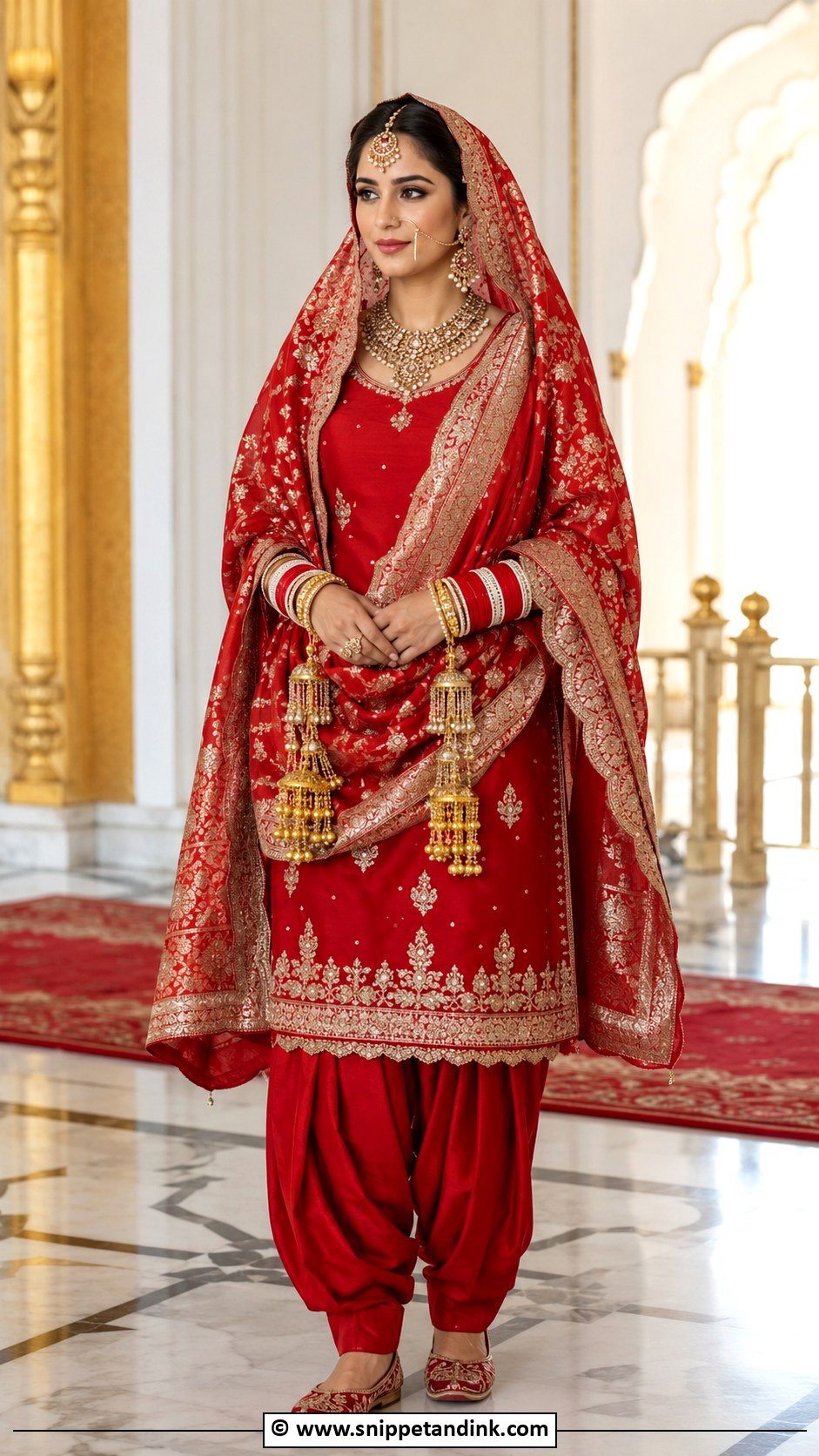
Silk gives a suit body, so it holds its shape and looks pressed even after hours of sitting. Raw silk is crisp and slightly textured, banarasi silk carries woven zari, and softer silks drape more closely. A silk kameez with a Patiala salwar or straight pants is a classic combination in red, maroon, pink, gold, ivory or green. One caution: water spots show on silk, so be careful with drinks and the sweet karah prashad served at the end. A brocade dupatta over the head completes it.
22. Organza Bridal Suit
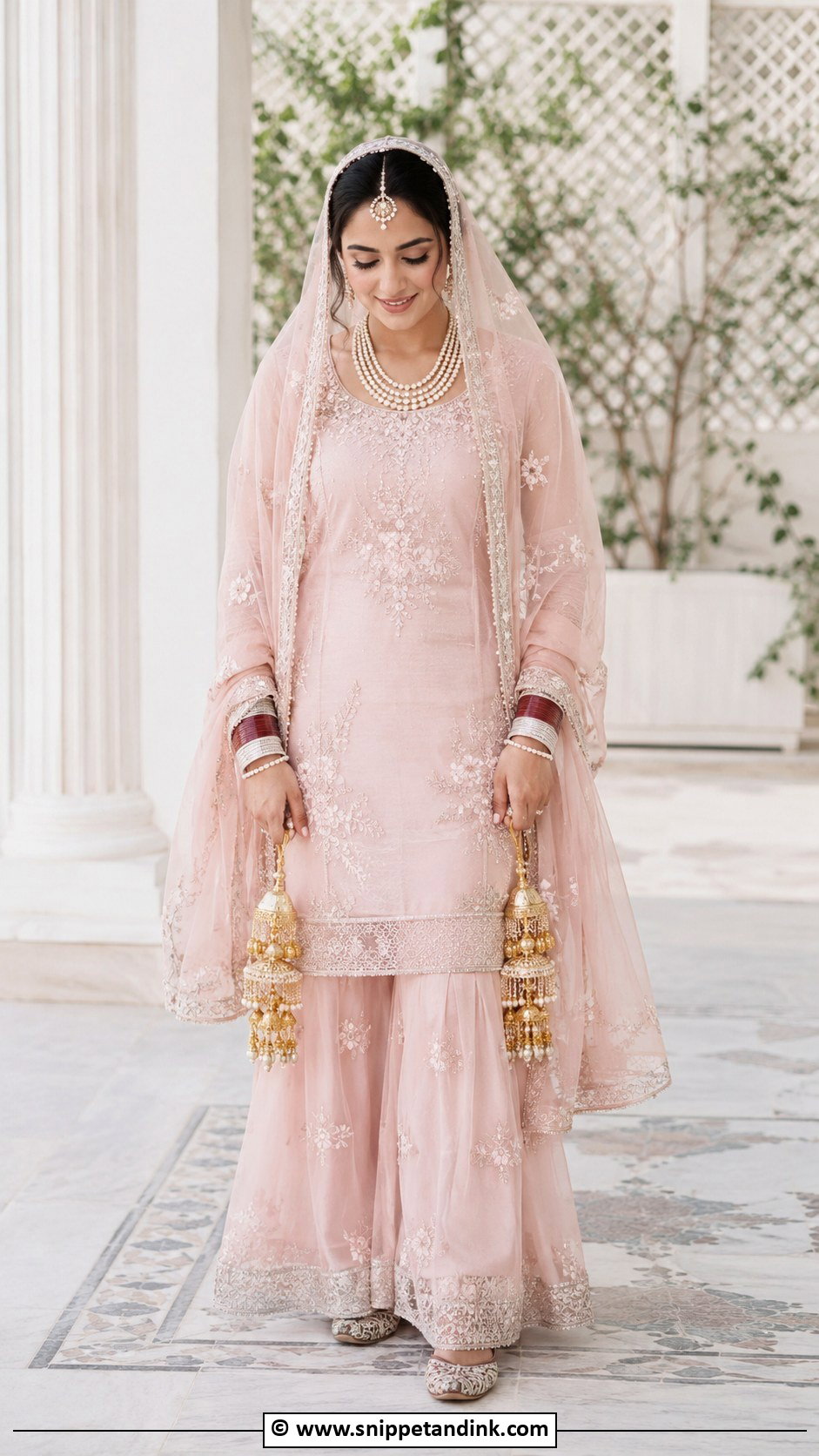
Organza is light, crisp and slightly sheer, which makes it ideal for an outer layer or dupatta in warm weather. The difficulty is that a light organza dupatta slides off the head easily. Choose one with a weighted border or embroidery along the edge, and plan to pin it. Pastels, ivory, blush and champagne show off floral embroidery, pearls or sequins on organza. A straight kurta with palazzos or a soft Anarkali keeps it graceful.
23. Banarasi Bridal Suit
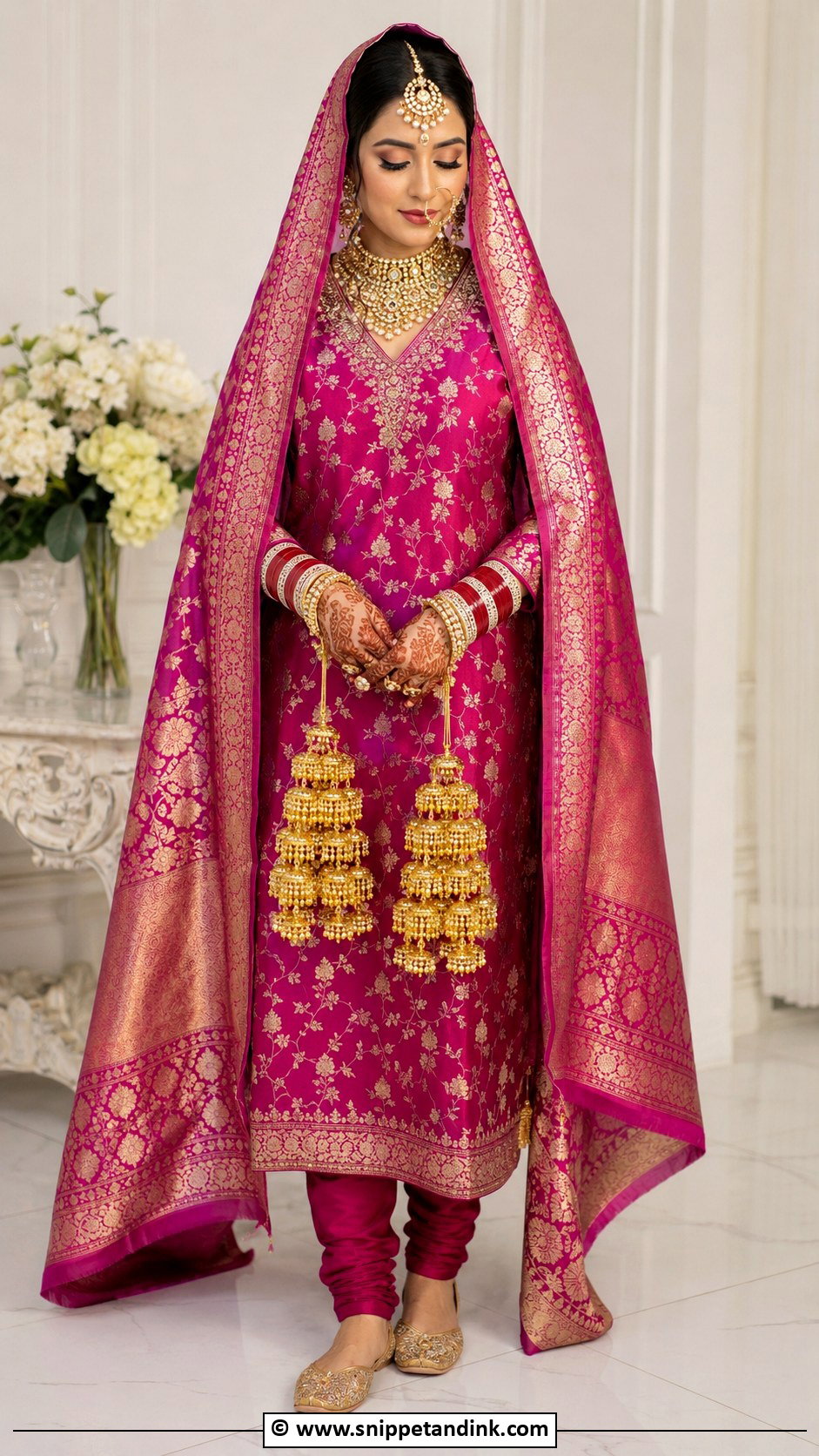
Banarasi fabric is woven with zari patterns on the loom, so the cloth carries the decoration and needs little extra embroidery. That also makes it durable enough to wear again for family weddings years later. Red, magenta, maroon, emerald and gold are the classic bridal choices. A straight kameez with salwar or churidar shows off the weave, and a Banarasi dupatta over the head finishes the set. Temple-style or kundan jewellery suits the traditional texture.
24. Palazzo Bridal Suit
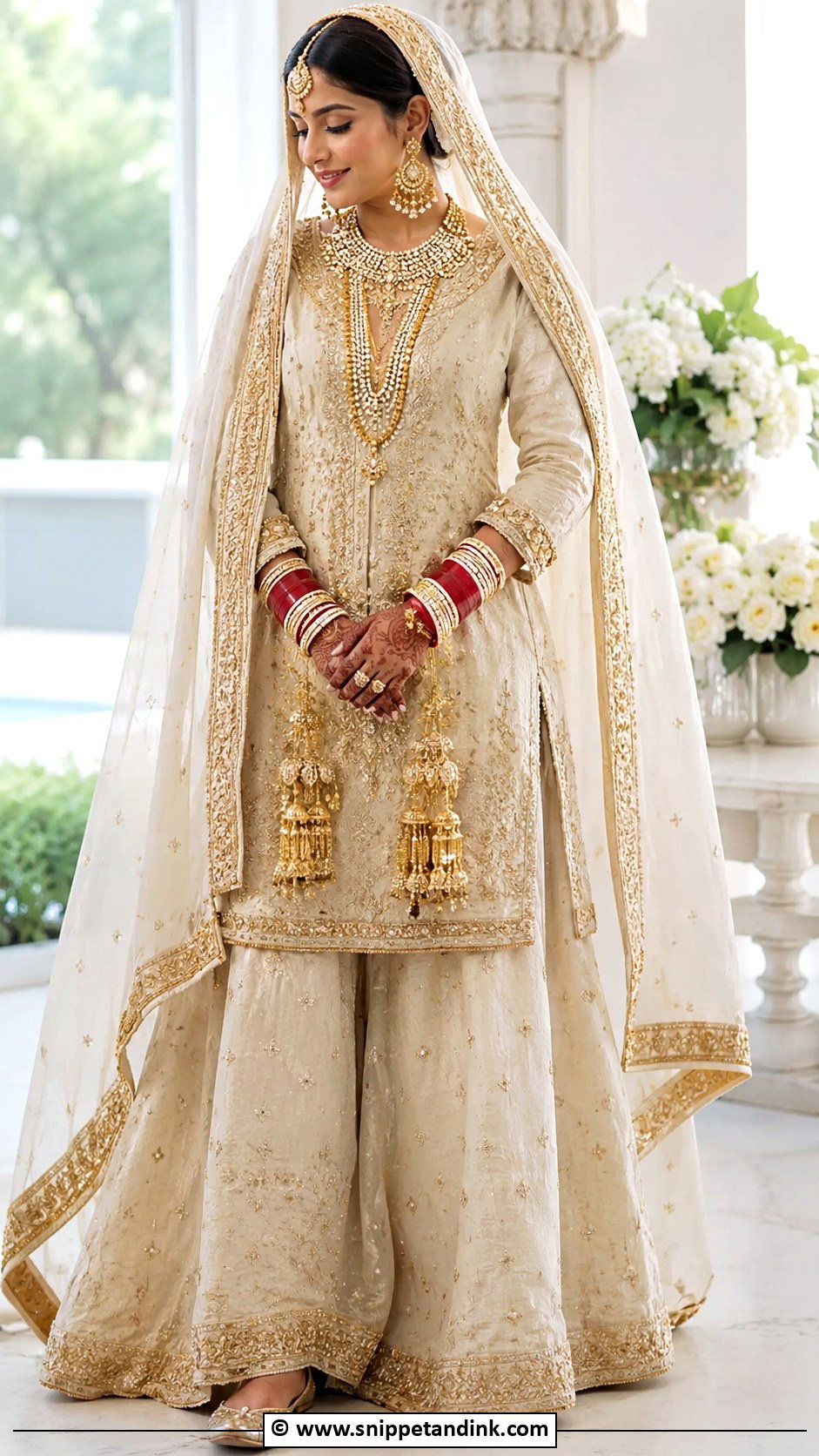
Palazzos give flow without the volume of a lehenga or sharara, which makes them easy to sit and walk in through a long wedding morning. Pair them with a long embroidered kurta or an Anarkali-style top so the outline stays bridal. Palazzos are wide but light, so they can look thin next to a heavy dupatta; I keep the fabric weights similar. Red, blush, ivory, maroon or emerald all work. A statement tikka and earrings help.




25. Double Dupatta Bridal Suit
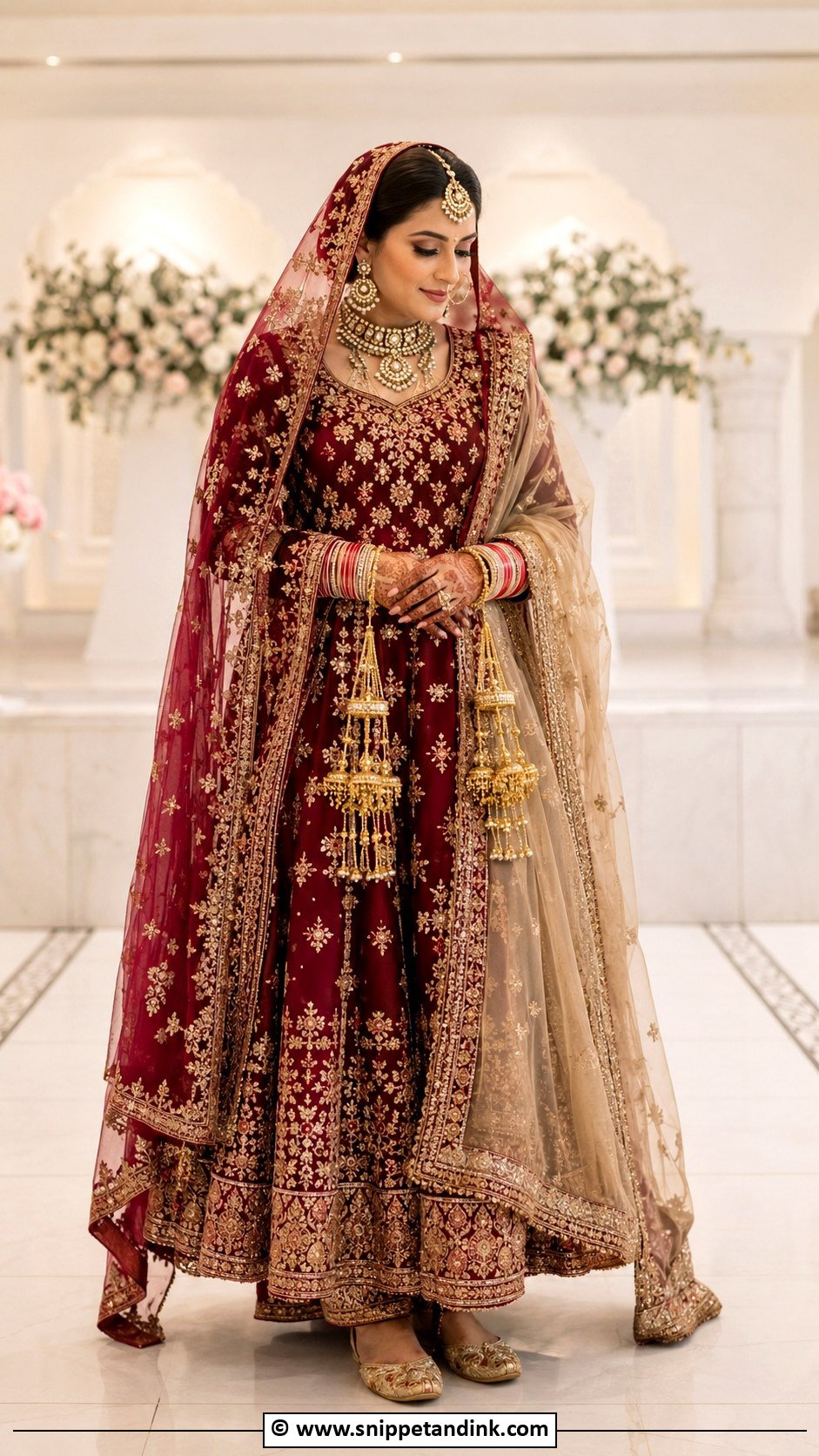
A double dupatta bridal suit layers one dupatta over the head and a second across the shoulders or front. I always make one heavy and one light, because two heavy dupattas together become hot and hard to manage. The head dupatta should be the lighter one so it can be pinned securely. Red with ivory, blush with gold, maroon with peach or green with champagne all pair well. It works with Anarkali, sharara, gharara or straight suits.
Pinning a Bridal Dupatta So It Holds Through Every Bow
A dupatta slipping off the head mid-ceremony is the most common wardrobe problem I’m called over to fix. It’s almost always a pinning issue, not a fabric issue. This is how I secure one:
- Ask your hairstylist for a firm base, usually a low bun, because pins need something to grip. Loose waves alone give a dupatta nothing to hold.
- Set the tikka first, then lay the dupatta so the border sits just behind it along the hairline.
- Use U-pins or bobby pins into the bun at the crown and each side, pushed through the dupatta into the hair. A heavy dupatta needs more points than a light one.
- Pin it at each shoulder to the kameez with small safety pins hidden under the fold, so it can’t be dragged backward as you walk.
- Turn your head, bow and stand up in front of a mirror. If anything moves, add a pin before you leave.
Give your sister or a cousin a few spare pins in a pouch. Someone who knows how it was pinned can fix it in seconds between laavan.
How Long Hand Embroidery Takes to Order
Zardozi, dabka, phulkari and mirror work are mostly done by hand, so custom bridal suits take far longer than people expect. I’d start talking to a boutique several months before the wedding, and earlier if you’re ordering from India or Pakistan and shipping abroad. Leave room for at least one fitting after the embroidery is finished, because heavy work changes how the fabric falls and the kameez often needs adjusting at the shoulders and side seams once it’s added.
Sit on the Floor at Your Final Fitting
The right suit for the Anand Karaj is the one you can sit in cross-legged, rise from without help, and walk four laavan in with your head covered and your mind on the ceremony. Colour and embroidery matter, but comfort and coverage matter more in the gurdwara. Try sitting on the floor at your final fitting, with the dupatta pinned and the jewellery on. If everything still feels right after ten minutes, you’ve found it.
You'll Like These Ideas:








Leave a Reply