
Pakistani bridal dressing has a vocabulary all its own: zardozi and dabka, gota and mirror work, jamawar and tissue, and silhouettes like pishwas, shararas, sarees and the trailing farshi pajama. A bride usually needs a look for the mayon, mehndi, nikkah, baraat and walima, and each one has a different job. I’ve grouped thirty outfits here by silhouette as much as by colour, because in fittings the cut is what decides whether a bride feels like herself or like she’s wearing a costume. Read them with your own height, the season and the venue in mind.
Settle the Silhouette for Your Frame Before the Colour
Most brides arrive at a fitting with a colour in mind. I’d rather start with the cut, because the same red looks completely different on a lehenga, a gharara and a pishwas, and only one of those will suit her height and the way she moves.
- Petite brides: a long shirt or anarkali that falls close to the ankle lengthens the line. Short shirts over very wide ghararas can swallow a shorter frame unless the gharara joint is placed high.
- Tall brides: ghararas, farshi pajamas and full lehengas look right at home, and a short shirt breaks the height nicely.
- Fuller figures: an anarkali, pishwas or peplum shapes the waist without clinging. I avoid very stiff can-can volume at the hip, which adds width in seated photos.
- Brides who will dance: sharara and gharara are easier to move in than a heavy lehenga, and you won’t be holding your skirt up all night.
Once the shape is settled, colour and embroidery fall into place much more easily, and the fittings go faster.
1. Red Pakistani Bridal Lehenga
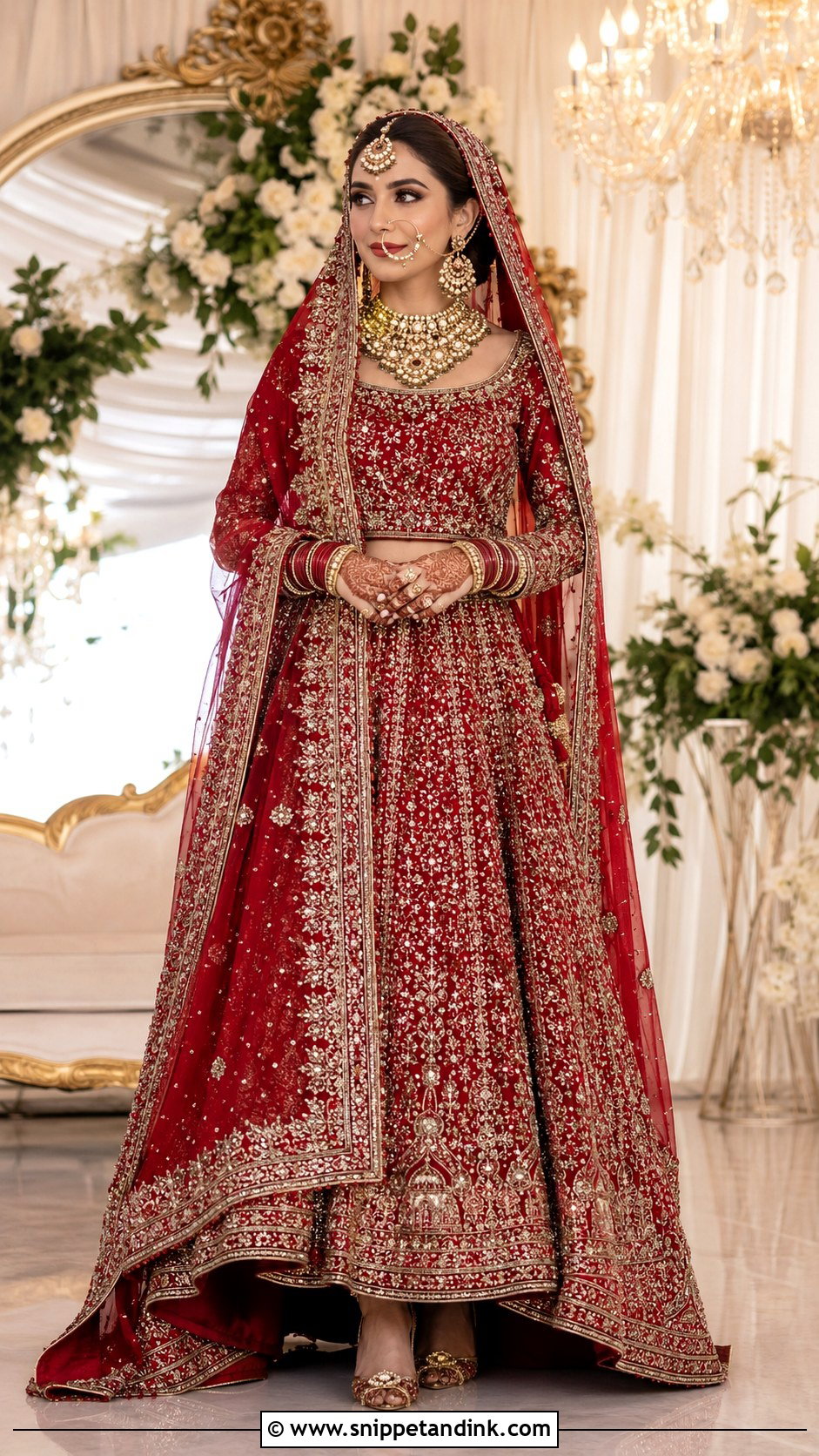
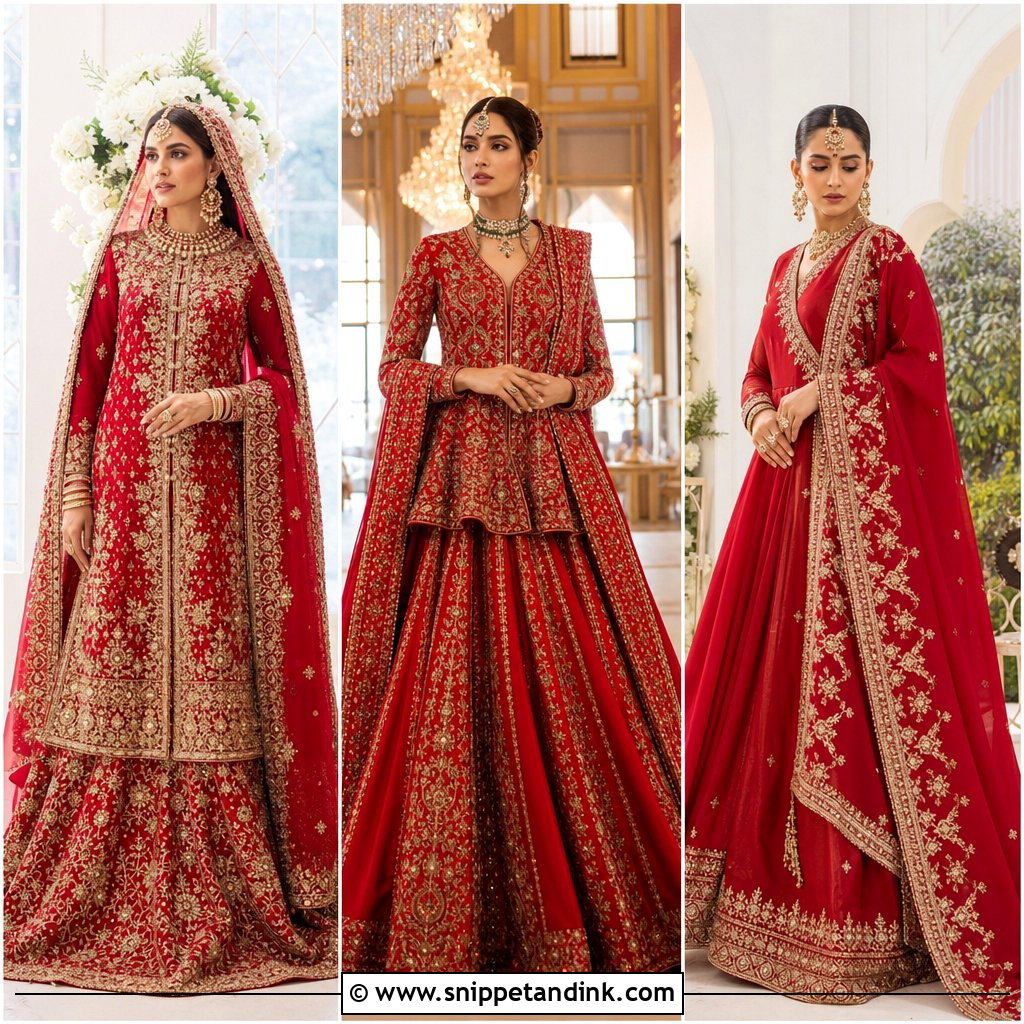
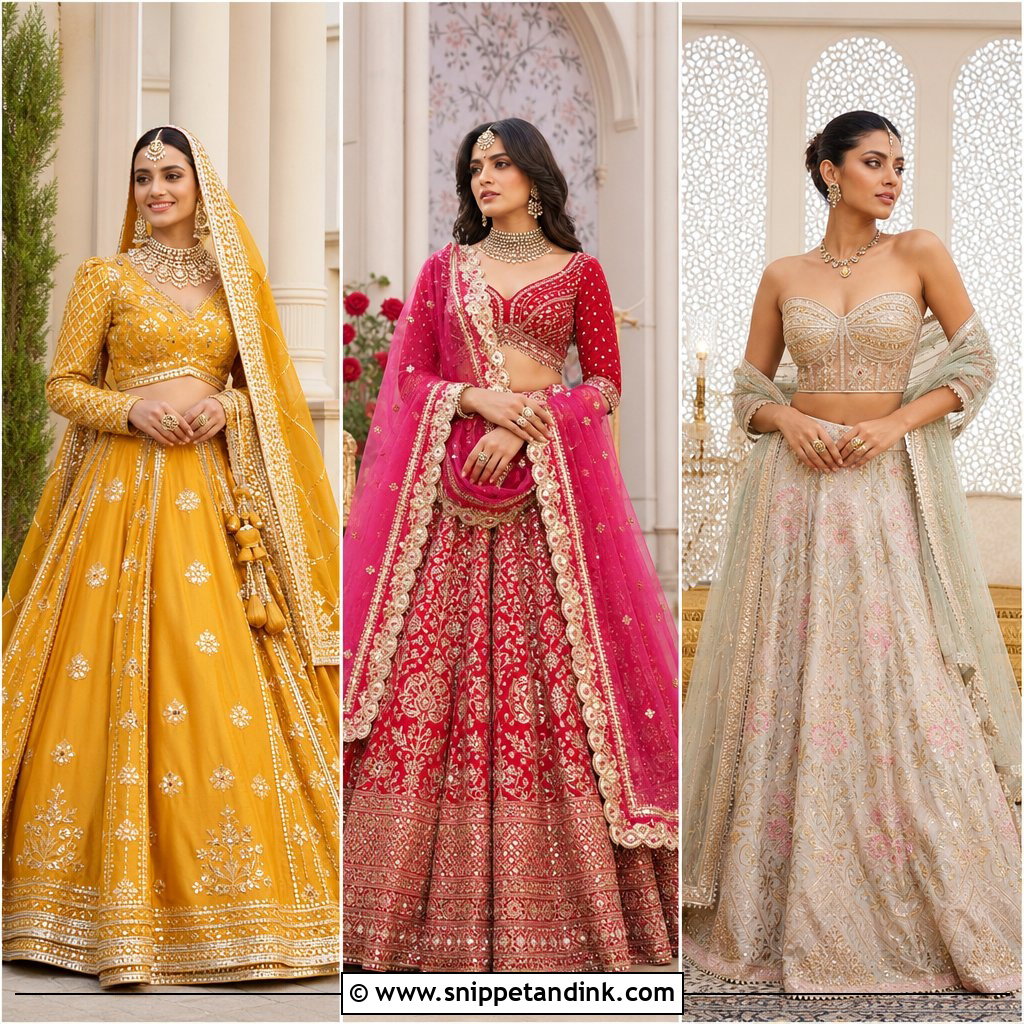
Deep red or ruby, worked in zardozi, dabka, resham and sequins: this is the baraat lehenga most families picture. A fitted blouse, a full skirt and a heavy dupatta over the head give the classic shape. With all that embroidery, I keep the jewellery in one metal, usually kundan in gold, so the matha patti, nath, jhumkas and bangles read as a set rather than a pile. Choose embellished khussas or low block heels; you’ll be standing for photos far longer than you expect. Matte skin, kohl and a red-toned lip finish it without tipping into overdone.
2. Maroon Pakistani Bridal Gharara
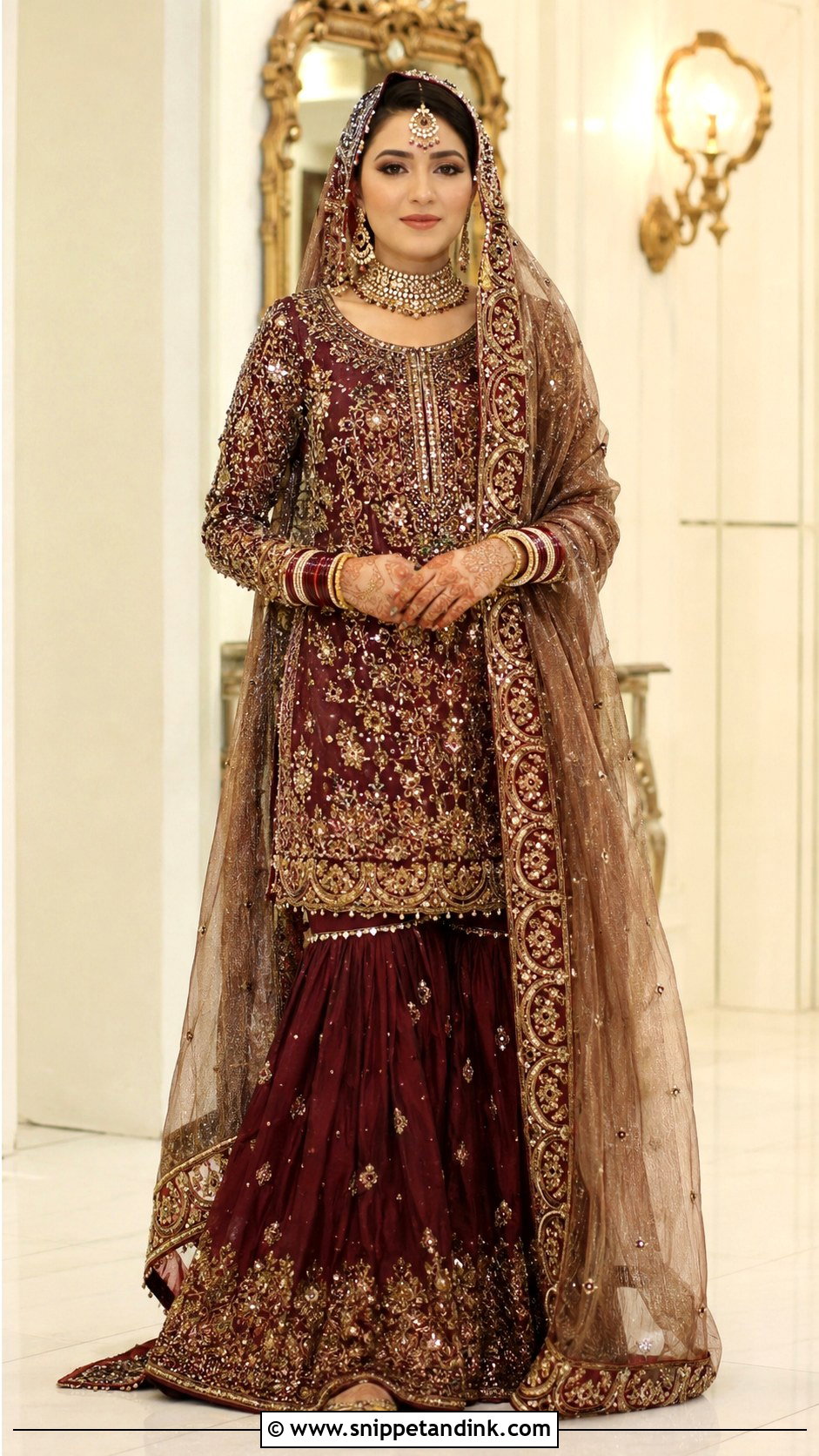
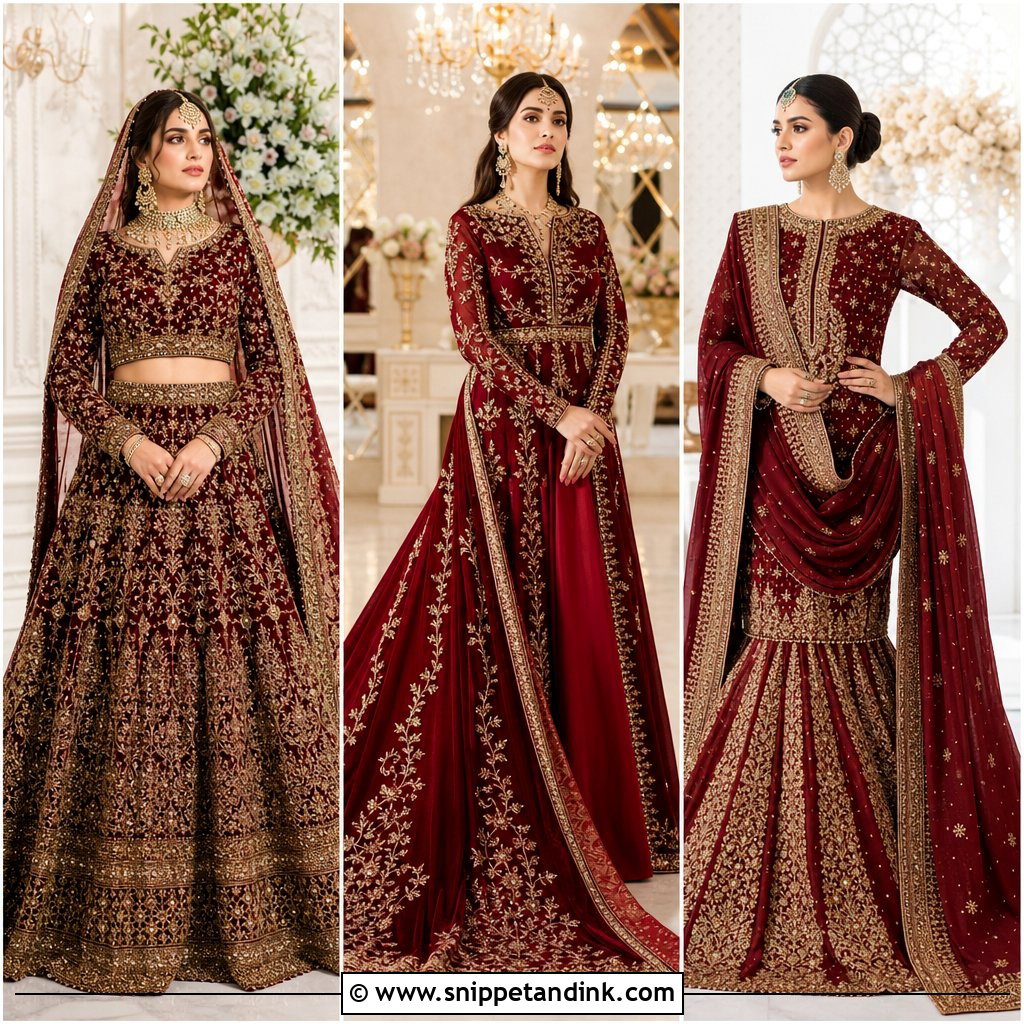
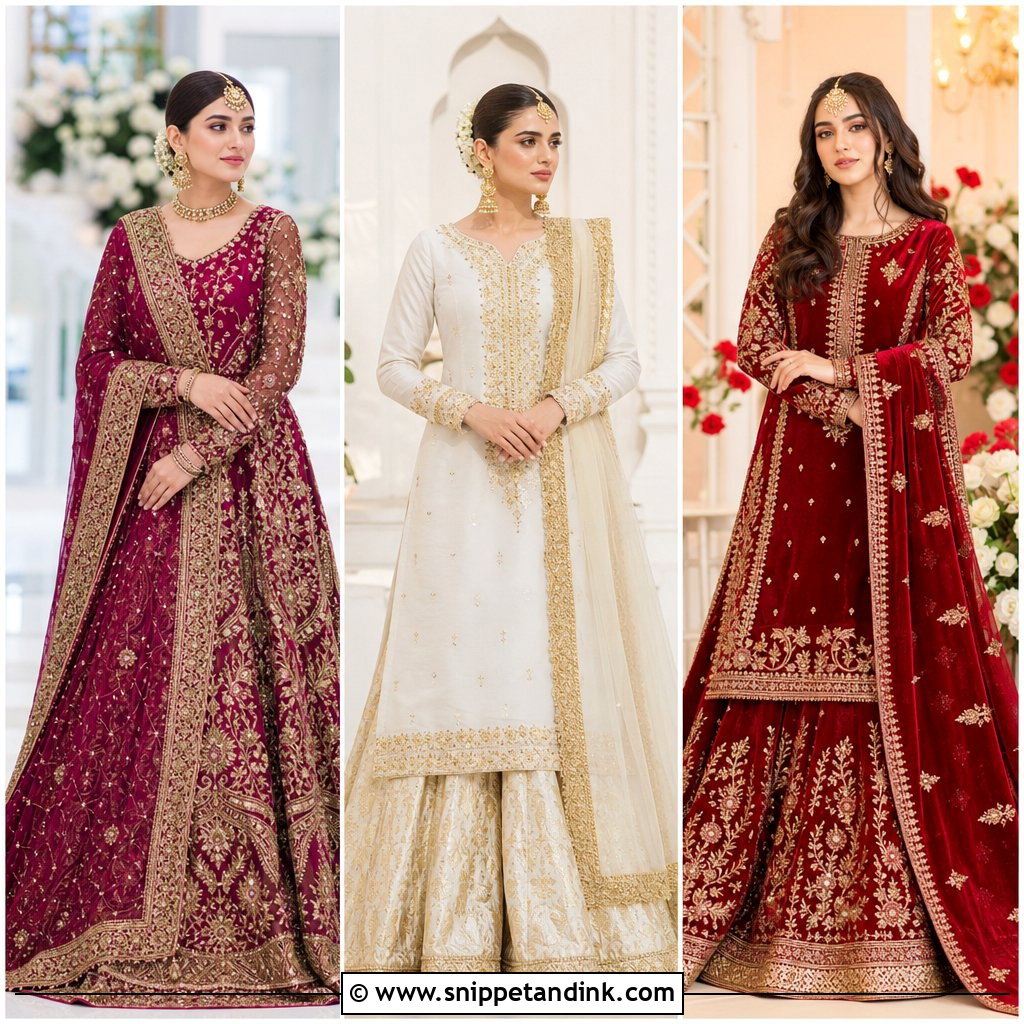
The gharara has a vintage quality that I love on a bride with a strong sense of heritage. A maroon bridal gharara in velvet, raw silk or jamawar, with antique gold embroidery and a short kameez, moves like nothing else when she walks. Jamawar is woven rather than embroidered, so it carries pattern without adding much weight, which makes it a smart base for heavier dupatta work. A tissue or organza dupatta with a thick border holds its shape well on camera. Style with a polki choker, a long haar, a passa and stacked bangles.
3. Ivory Pakistani Nikkah Outfit
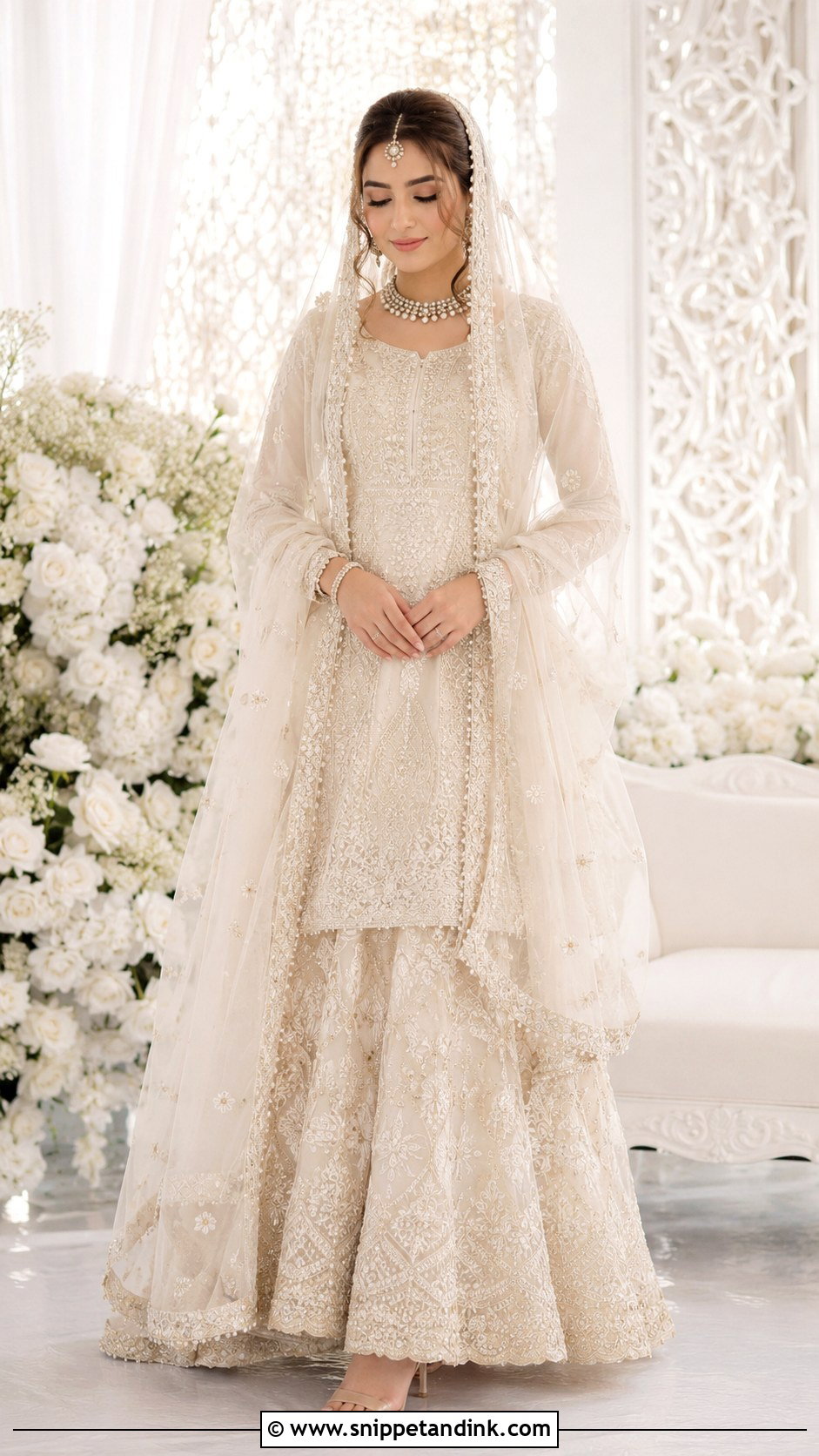
Ivory for a nikkah reads calm and formal at the same time. A lehenga, long shirt or gharara with gold, pearl or champagne embroidery, plus a sheer dupatta draped over the head, keeps it modest. My first check with ivory is how it sits beside her skin with no makeup on; some ivories lean pink, some lean yellow, and only one of them will flatter her. Pearl jewellery, kundan earrings, a small tikka and ivory or nude heels, with peach blush and a muted rose lip, complete the look.
4. Gold Pakistani Bridal Sharara
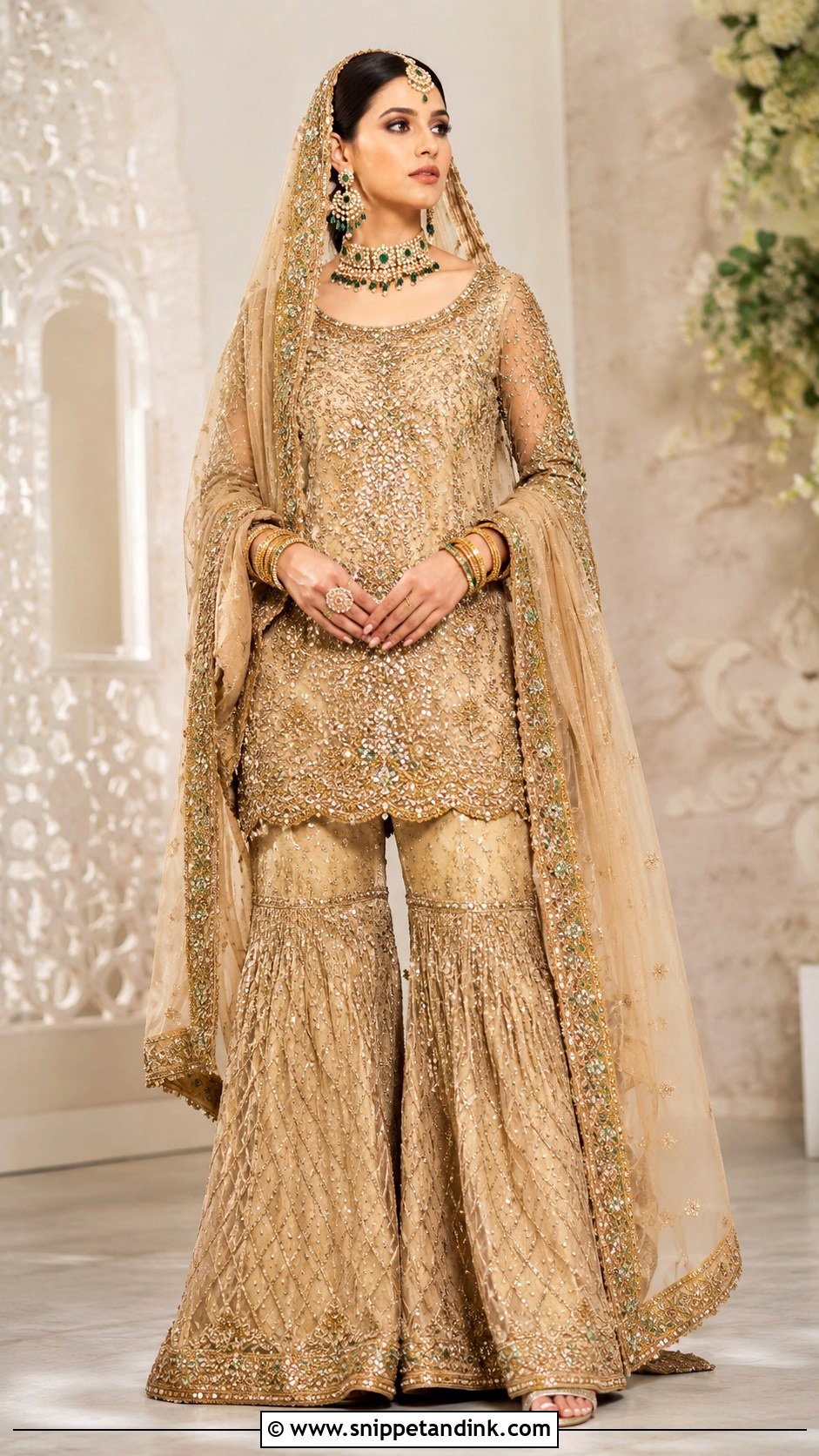
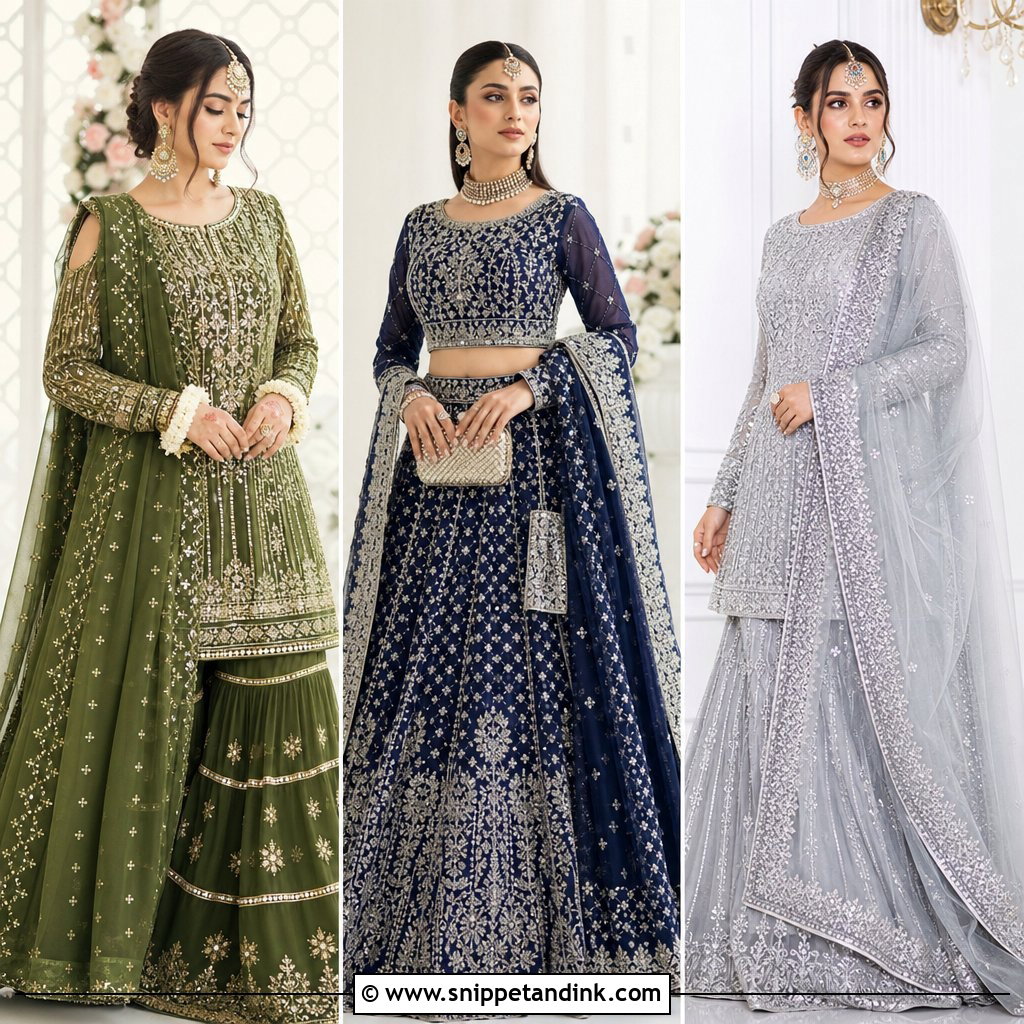
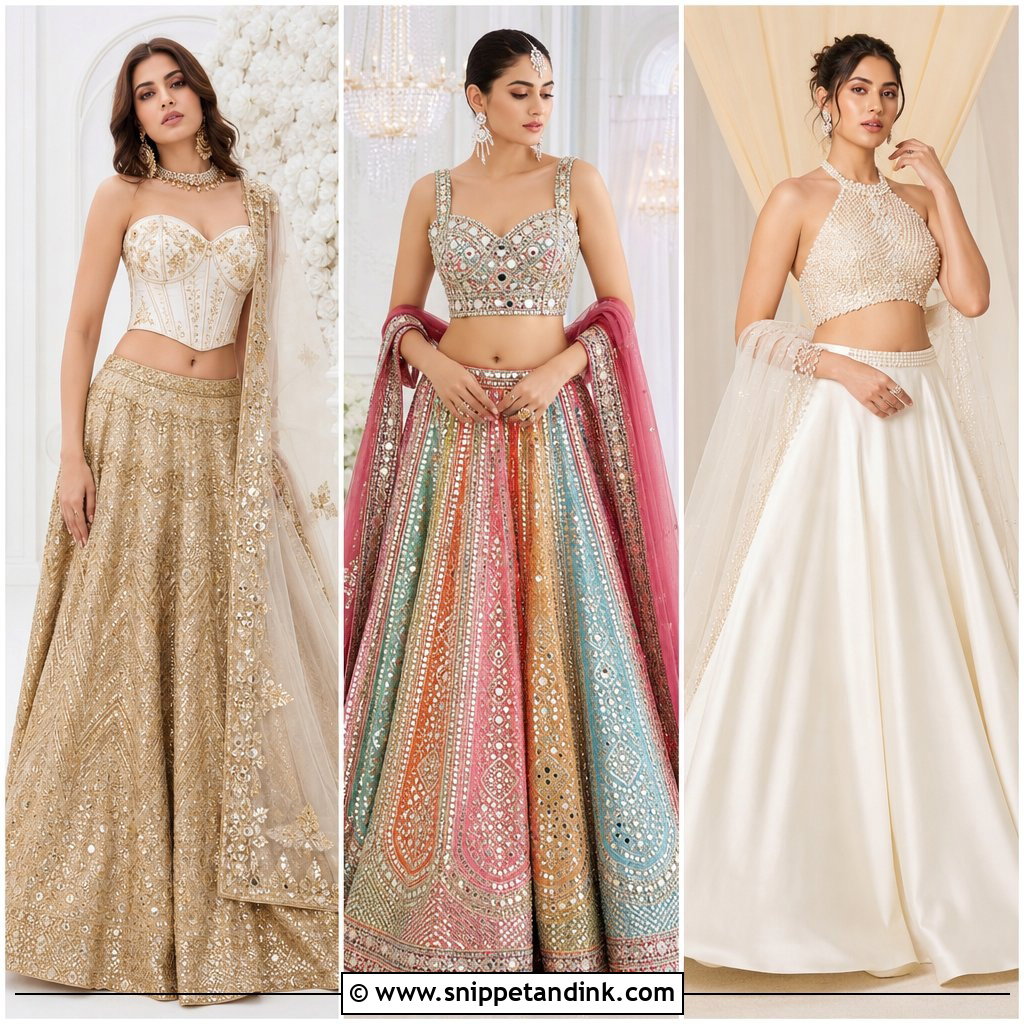
Gold makes a bride glamorous without a loud palette. A champagne or antique gold short shirt with flared sharara pants, worked in zardozi, gota, sequins or mirrors, can carry a nikkah, a baraat or a reception depending on how heavy the embellishment goes. The question I always ask is whether she wants contrast or calm: emerald or ruby jewellery pops against gold, while tonal kundan and pearls keep everything quiet. An organza dupatta with border work softens all that shine.
5. Pastel Pakistani Walima Dress
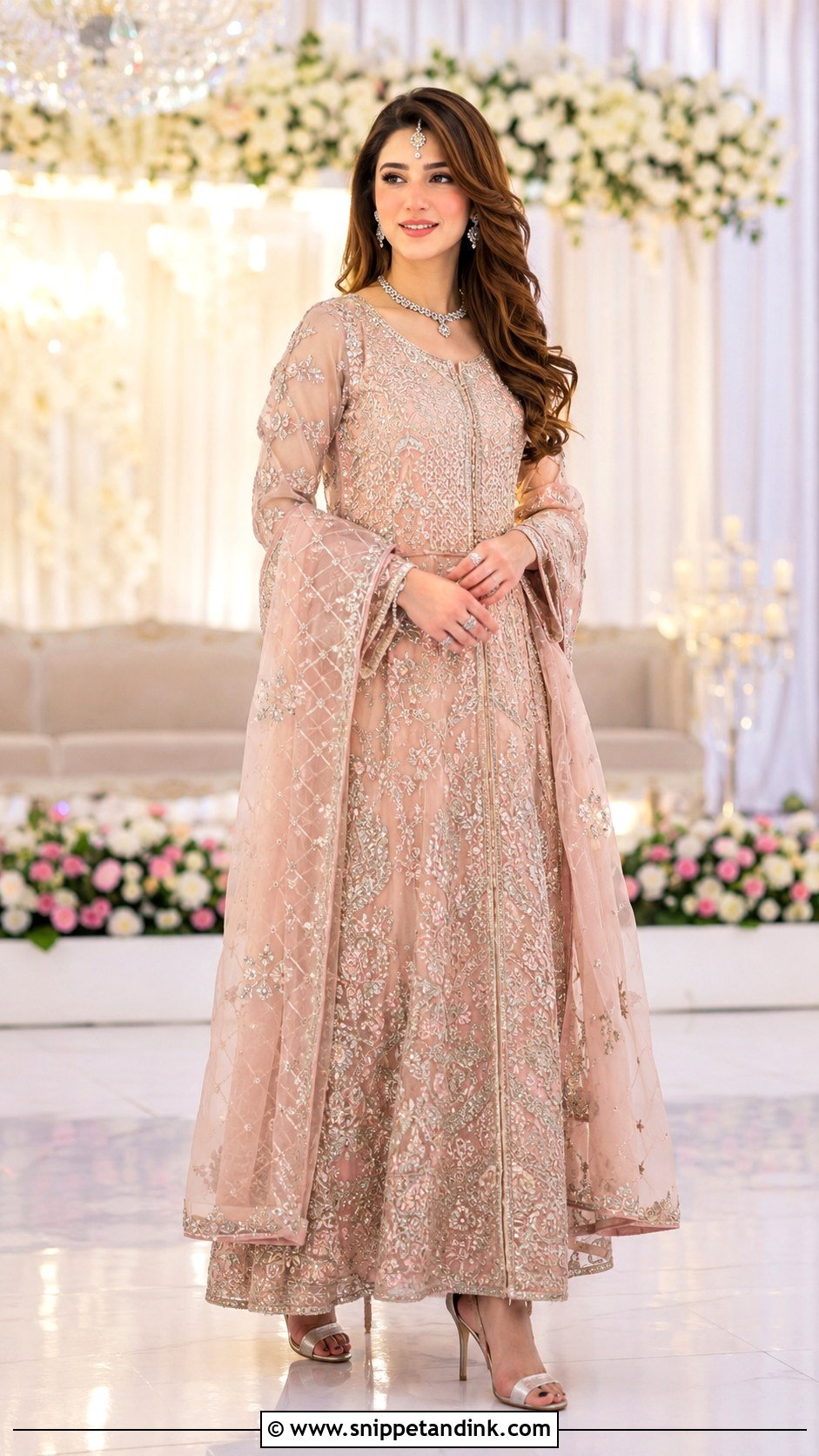
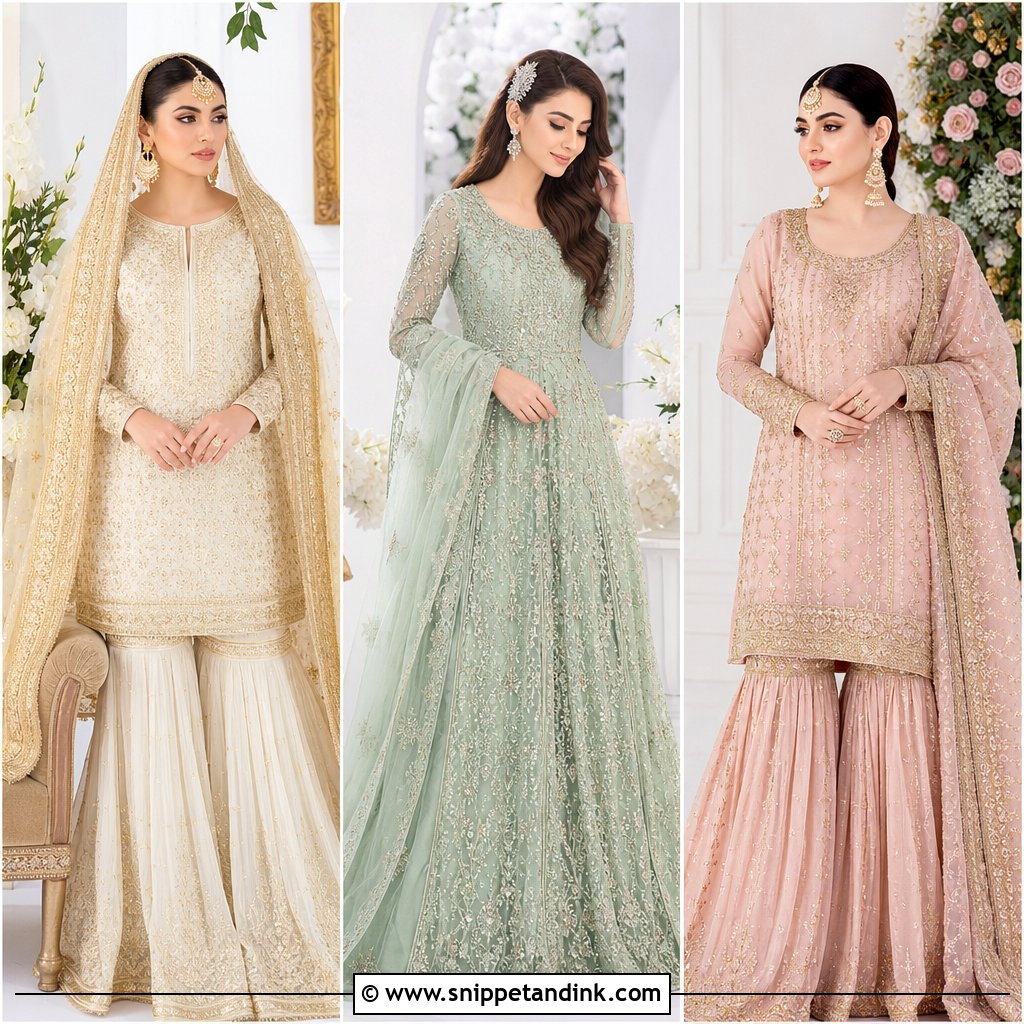
After the weight of a baraat, a pastel Pakistani walima dress feels like relief. Blush, mint, powder blue, lilac, champagne and sage are the usual shades, worked in silver, pearls or crystals on a maxi, lehenga or gown. I often suggest a cape-style layer instead of a full dupatta here, since the bride is up and down greeting guests all evening. Diamond-style or delicate polki jewellery, soft waves and rosy makeup keep the reception light.
6. Green Pakistani Mehndi Lehenga
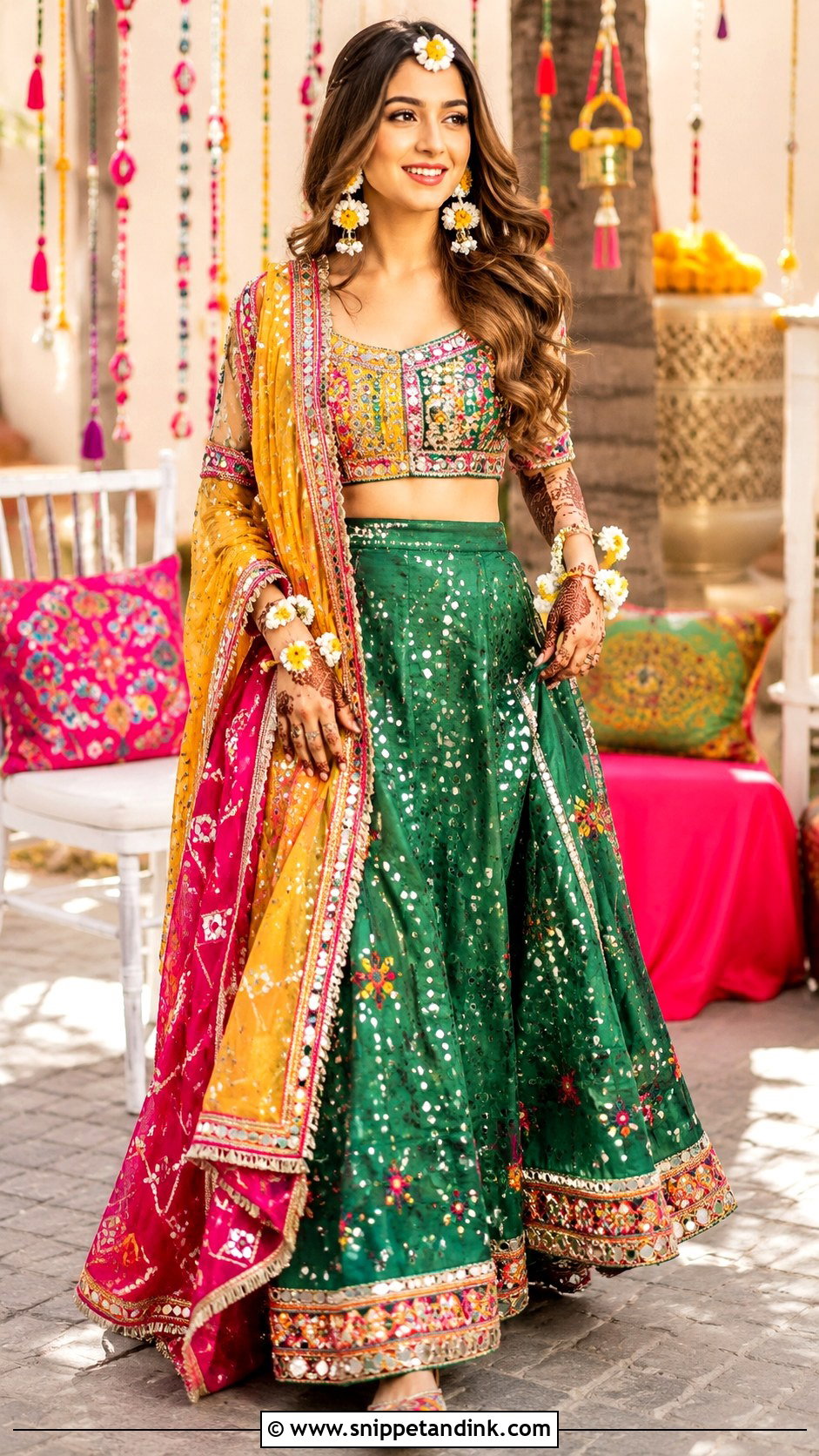
Mehndi needs movement and colour, so I push green lehengas in mehndi, emerald or parrot tones with a yellow, pink, orange or gold choli. Mirror work, gota, tassels and thread embroidery all suit it. Drape the dupatta to one side and pin it at the shoulder so both hands are free for the rasams. Embroidered khussas over heels, every time; the floor at a mehndi is often covered in cushions, rugs and flower petals.
7. Yellow Pakistani Mayon Outfit
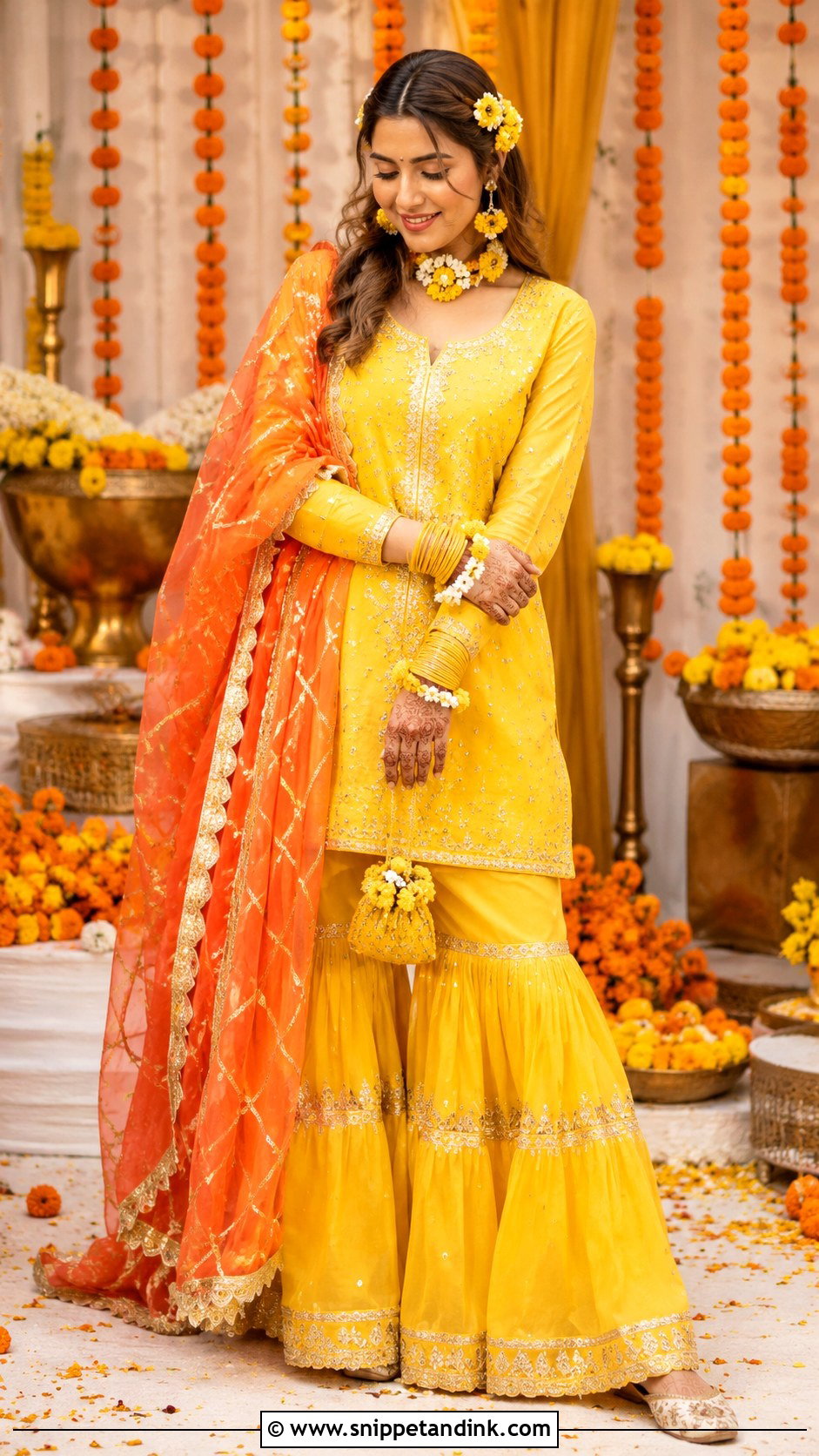
Mayon is the most relaxed event, and the outfit should be too. A yellow kameez with gharara, shalwar or a simple lehenga in cotton silk or raw silk stays breathable when the ubtan comes out. That’s the practical point most people forget: turmeric paste stains, so I tell brides never to wear anything precious or hard to clean. Gota borders, lace or a little mirror work give charm. Floral jewellery, bangles, soft khussas and fresh, dewy makeup are all it needs.
8. White Pakistani Bridal Maxi
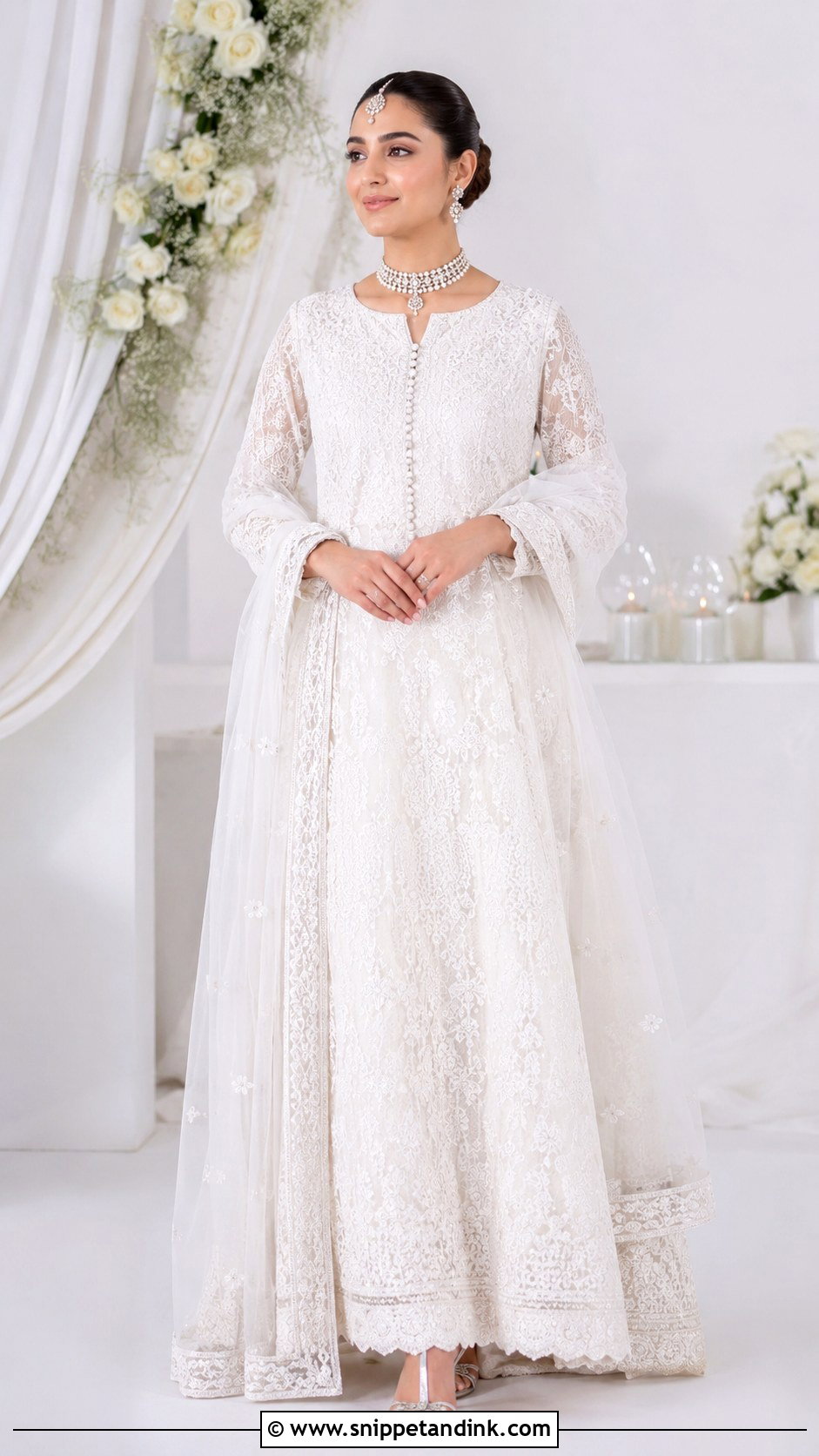
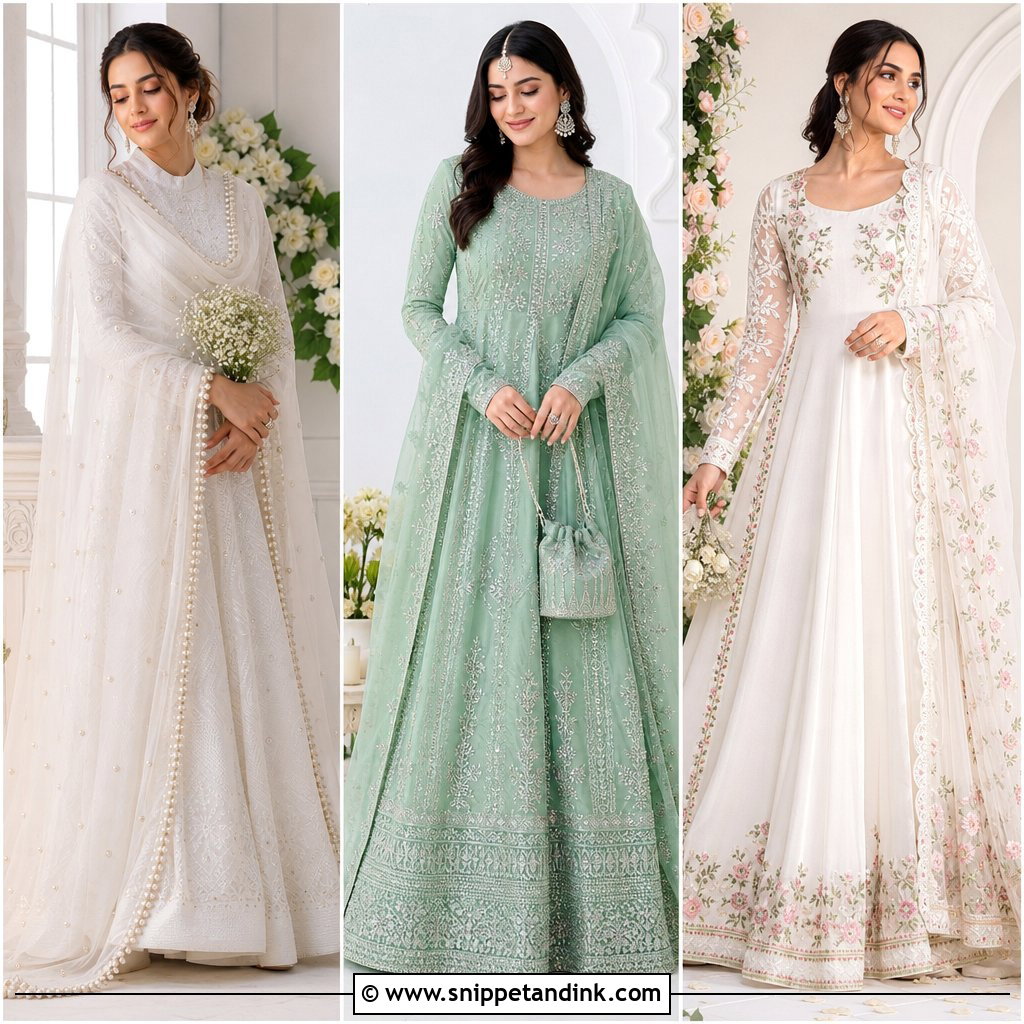
A white maxi suits a bride drawn to clean, modern lines. Floor length, a fitted bodice, a flowing skirt and gold, silver, pearl or crystal embroidery keep it bridal for a nikkah, engagement or walima. Pure white is harder to wear than ivory against deeper skin tones, and it can glare under flash, so I lean toward an off-white with a little warmth. A sheer dupatta over the shoulders or head, pearl earrings, a delicate choker and a small tikka are plenty.
9. Pink Pakistani Bridal Lehenga
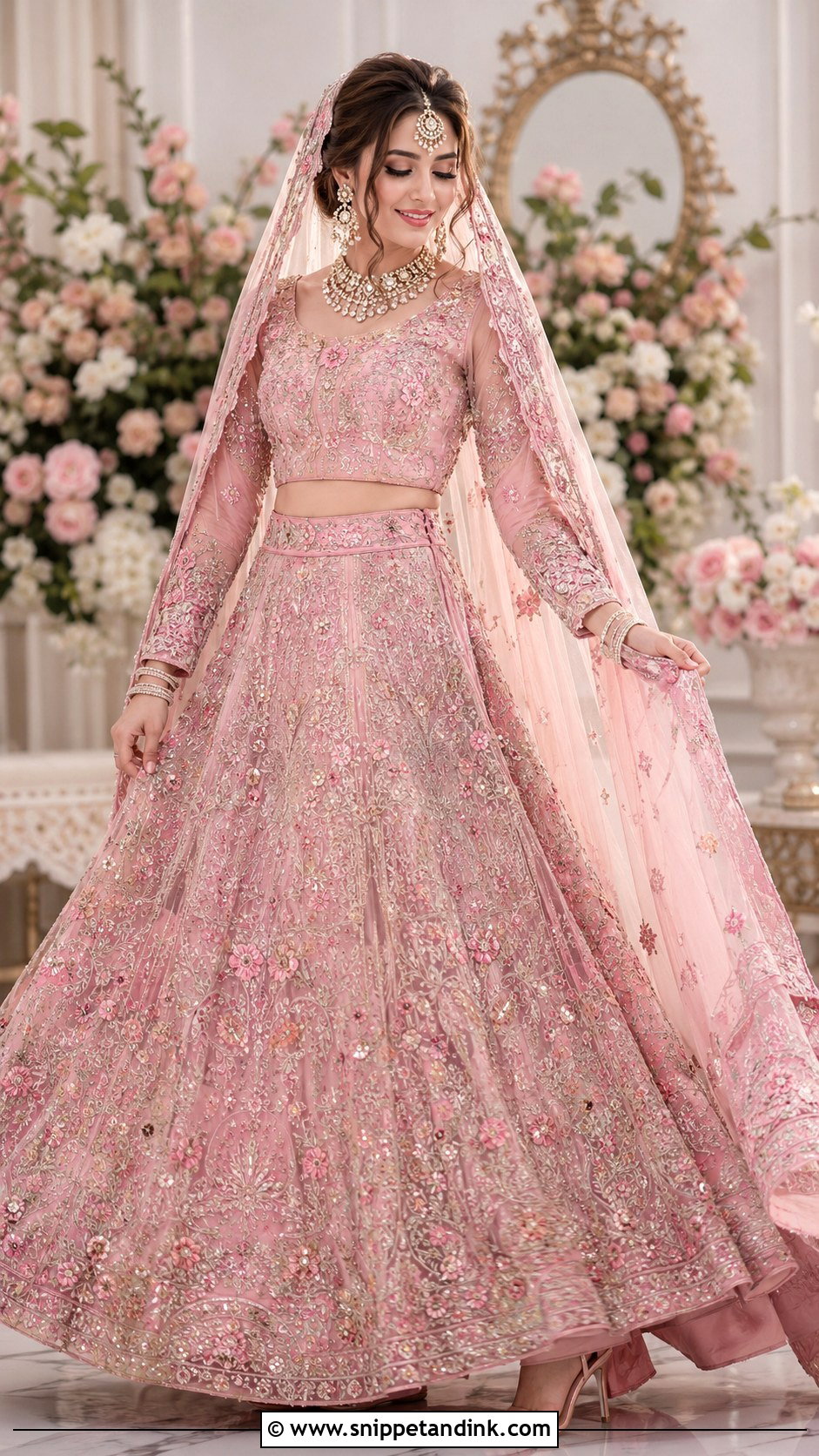
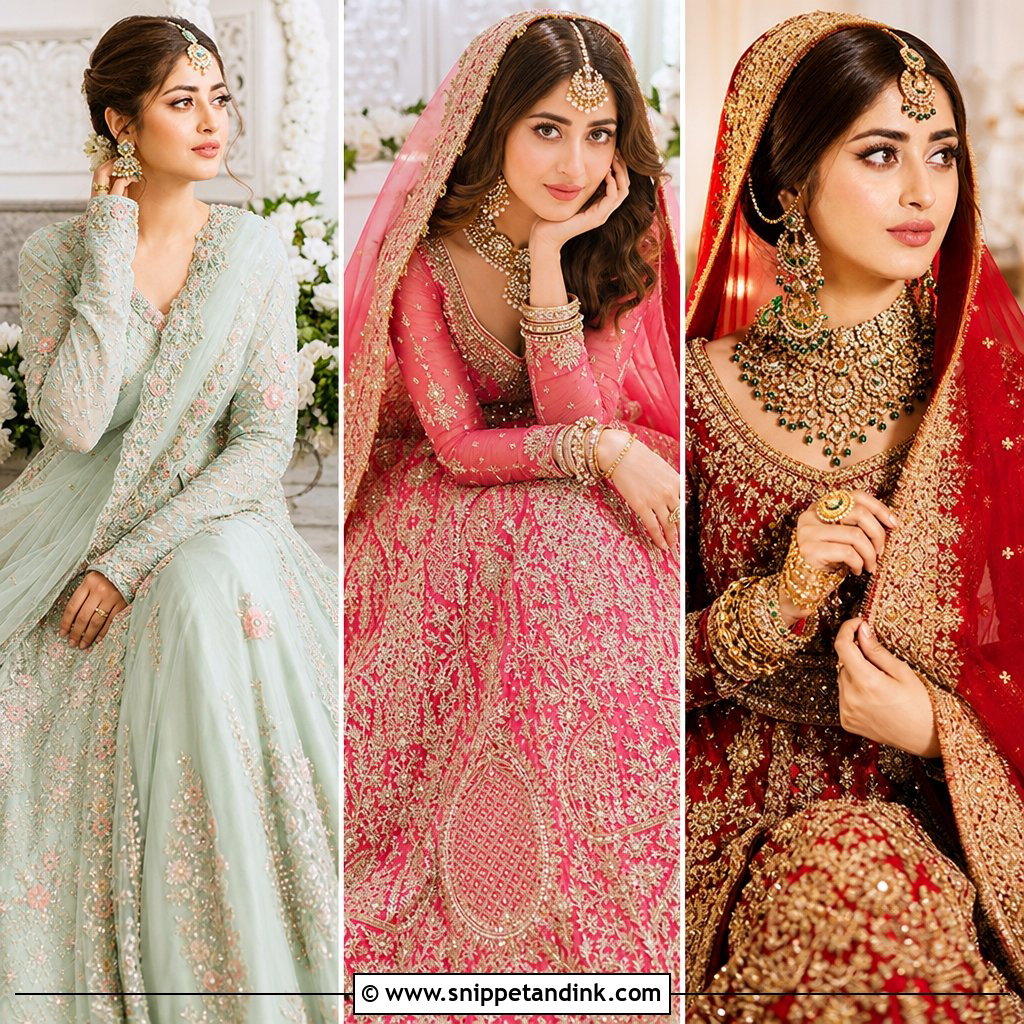
Pink is the most adaptable bridal colour on this list. Blush suits walima or nikkah; deeper rose and rani pink belong at mehndi or even baraat. Let your jewellery decide the embroidery metal: gold zari with kundan or polki, silver work with pearls. A matching dupatta looks polished, while a contrast one is more festive. Rosy makeup and soft smoky eyes complete it, with gold heels or embroidered khussas underneath.
10. Pakistani Bridal Saree
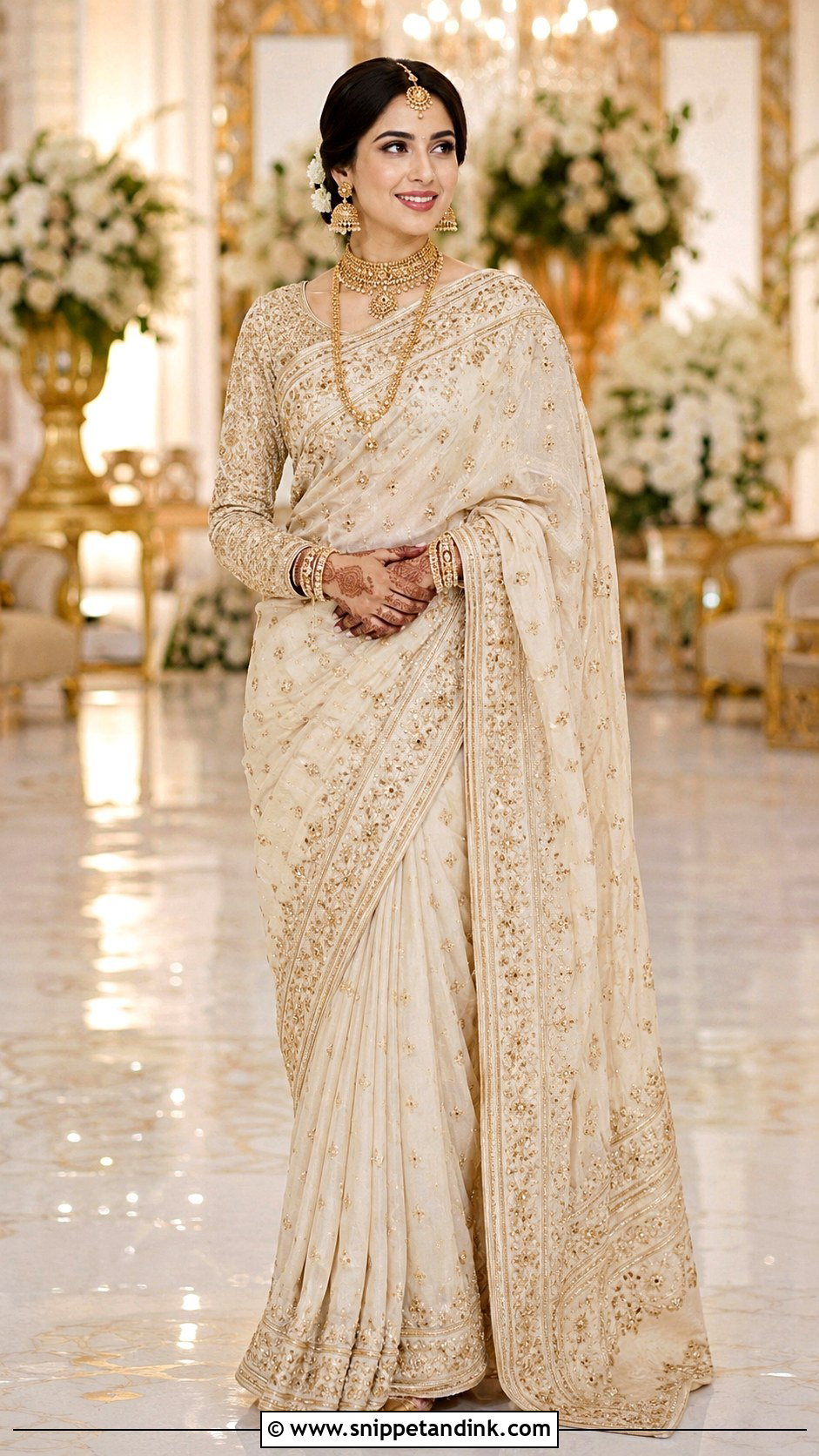
A saree is the choice for a bride who wants something different from a lehenga and moves comfortably in a drape. Red, ivory, gold, champagne or pastel pink with heavy embroidery, paired with a modest sleeved blouse and a structured neckline, keeps it refined. In my experience the pallu is where sarees succeed or fail: pleat it and pin it to the blouse at the shoulder, then drape it over the head only after the hair is set. Heels matter here, because they let the pleats fall to the floor cleanly.
11. Pakistani Bridal Angrakha Dress
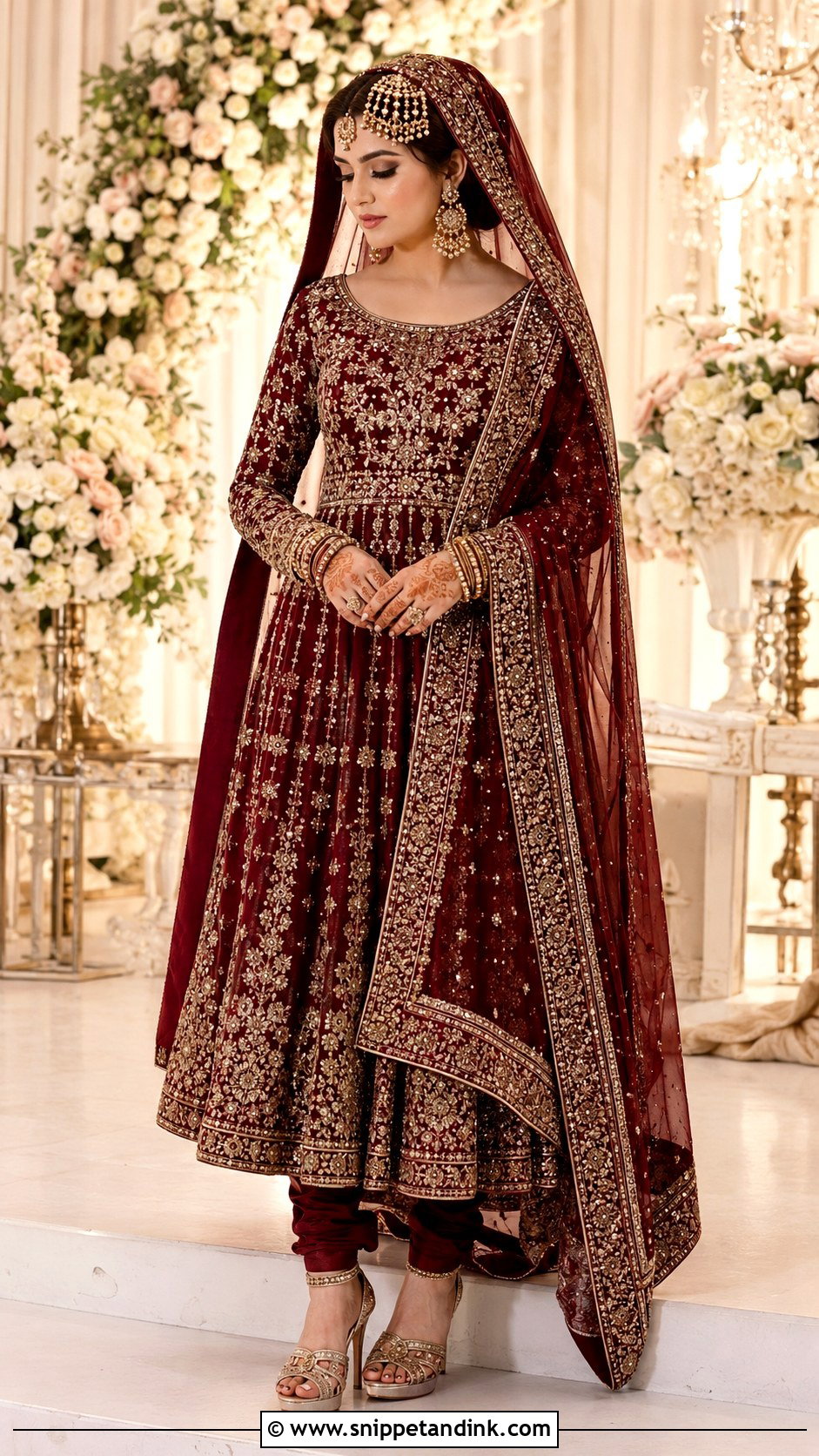
The angrakha’s overlapping front has an old-world, courtly feel. Over a lehenga, gharara or churidar, in ivory, maroon, mustard, teal or gold, it suits nikkah, mehndi or smaller family events. Dabka, gota, mirror and resham embroidery bring out the cut. Keep the dupatta on one shoulder so the wrap stays visible; covering it with a full drape wastes the design. Jhumkas, a tikka, bangles and embellished khussas finish it.
12. Pakistani Bridal Pishwas
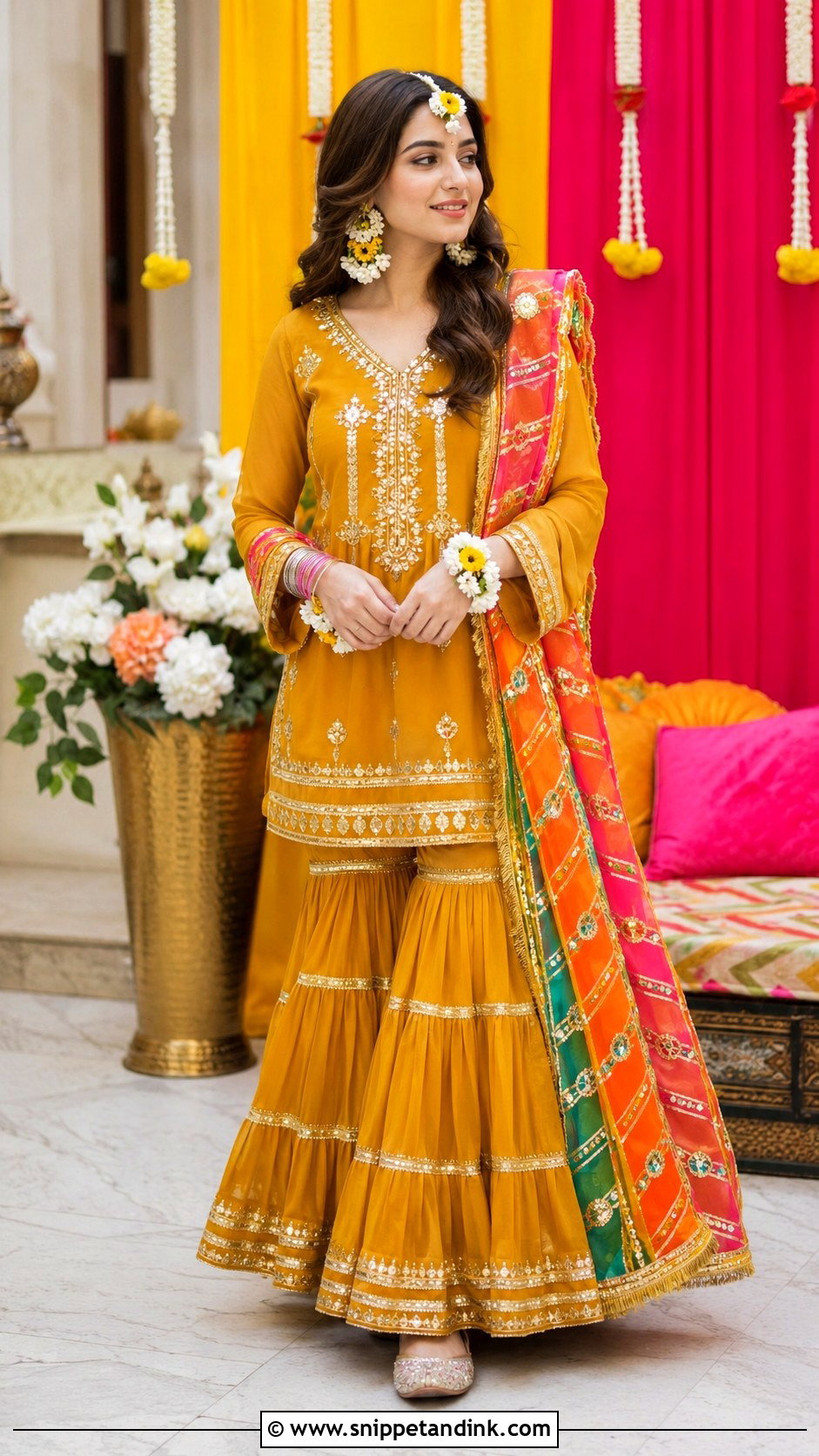
A pishwas is all about the swing of its long flared panels. Deep red, ivory, sage, blush or champagne with fine embroidery on the bodice and hem, and a churidar or slim trouser underneath, keep the line neat. I check the hem length with her actual shoes on, because a pishwas that brushes the floor gets stepped on every time she turns. A choker with jhumkas and bangles never fails. It suits nikkah, walima and formal family events.
13. Pakistani Bridal Anarkali
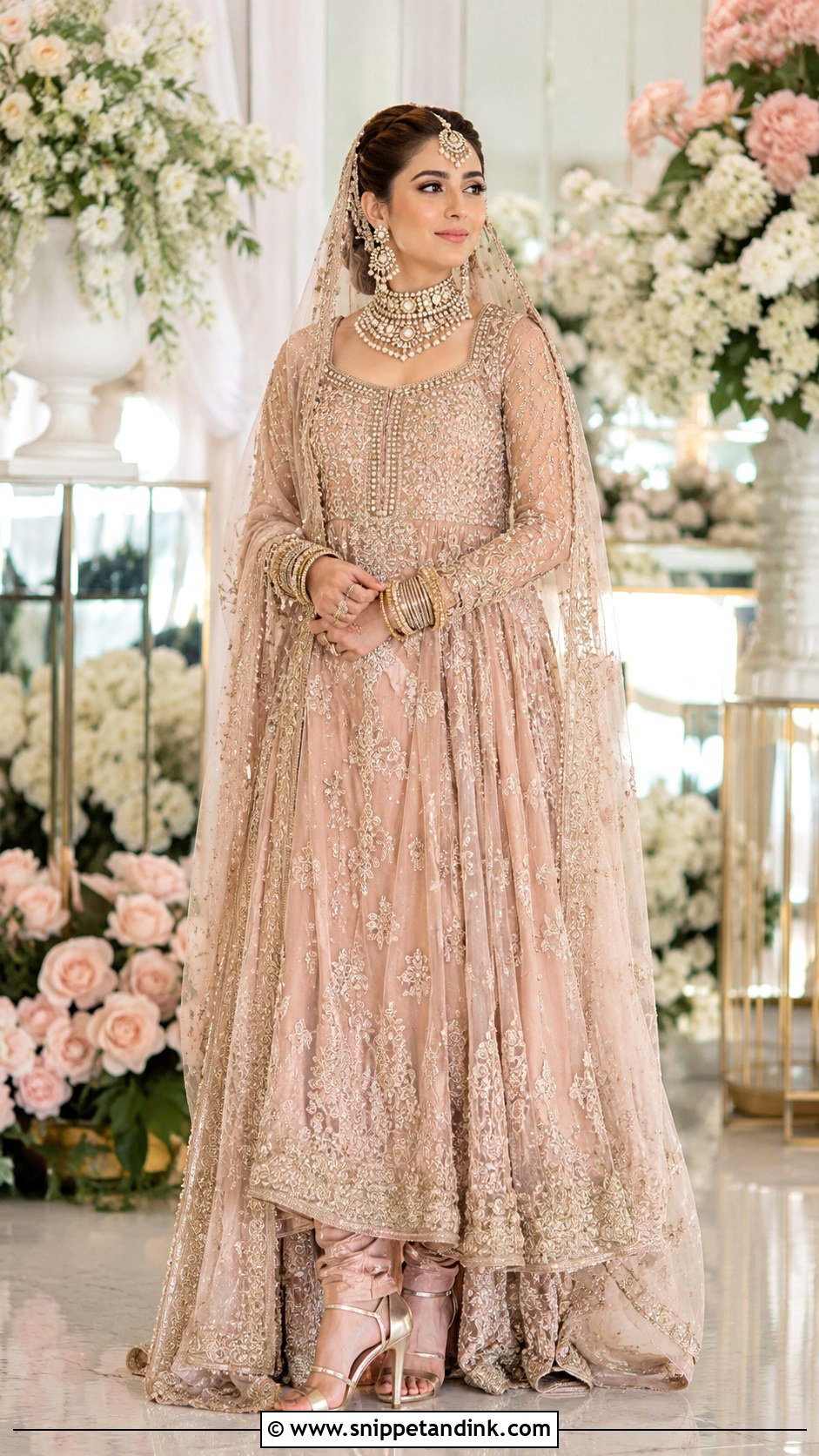
The anarkali is the silhouette I recommend most often to brides who worry about their figure. Its long, flowing line adds height and hides nothing awkwardly, without the weight of a full lehenga skirt. In maroon, ivory, gold, blush or emerald, with embroidery at the neckline, sleeves and hem, over churidar pants and with a statement dupatta, it reads fully bridal. A matha patti, earrings, bangles and embroidered heels, with a sleek bun or soft curls, complete it.
14. Pakistani Bridal Farshi Pajama
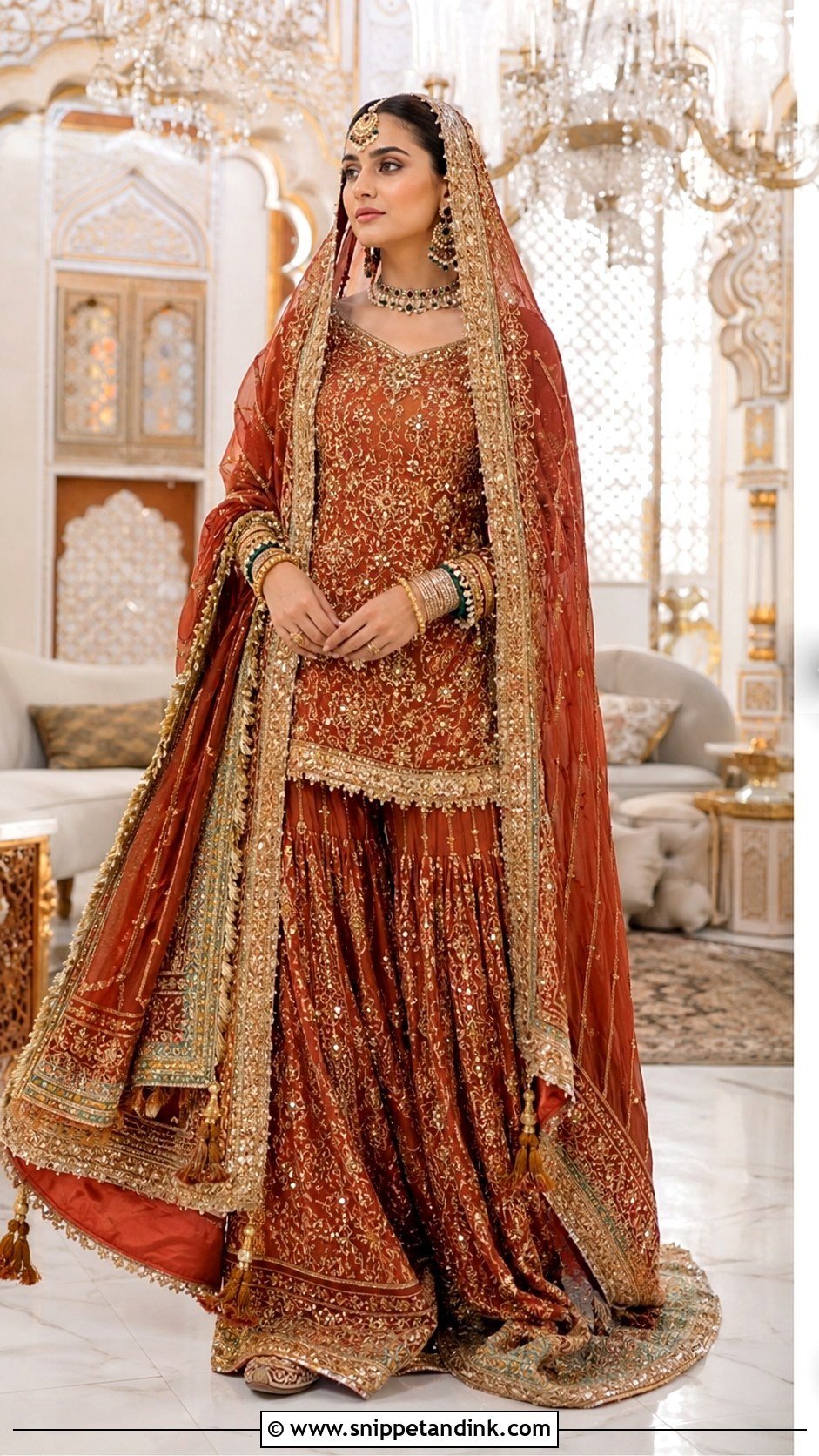
Farshi pajama is the most dramatic thing a Pakistani bride can wear, and the hardest. The trailing wide legs pool on the floor, so walking takes practice and a helper on the stairs. Rich jamawar, brocade, velvet or raw silk in red, rust, maroon, gold or deep green, with heavy borders, suits the heritage look. Because the bottom carries so much volume, the shirt must be structured and well fitted or the whole outfit looks sloppy. A dupatta over the head, traditional jewellery and ornate khussas finish it. I’d skip it for an outdoor venue with grass or gravel.



15. Pakistani Bridal Velvet Lehenga
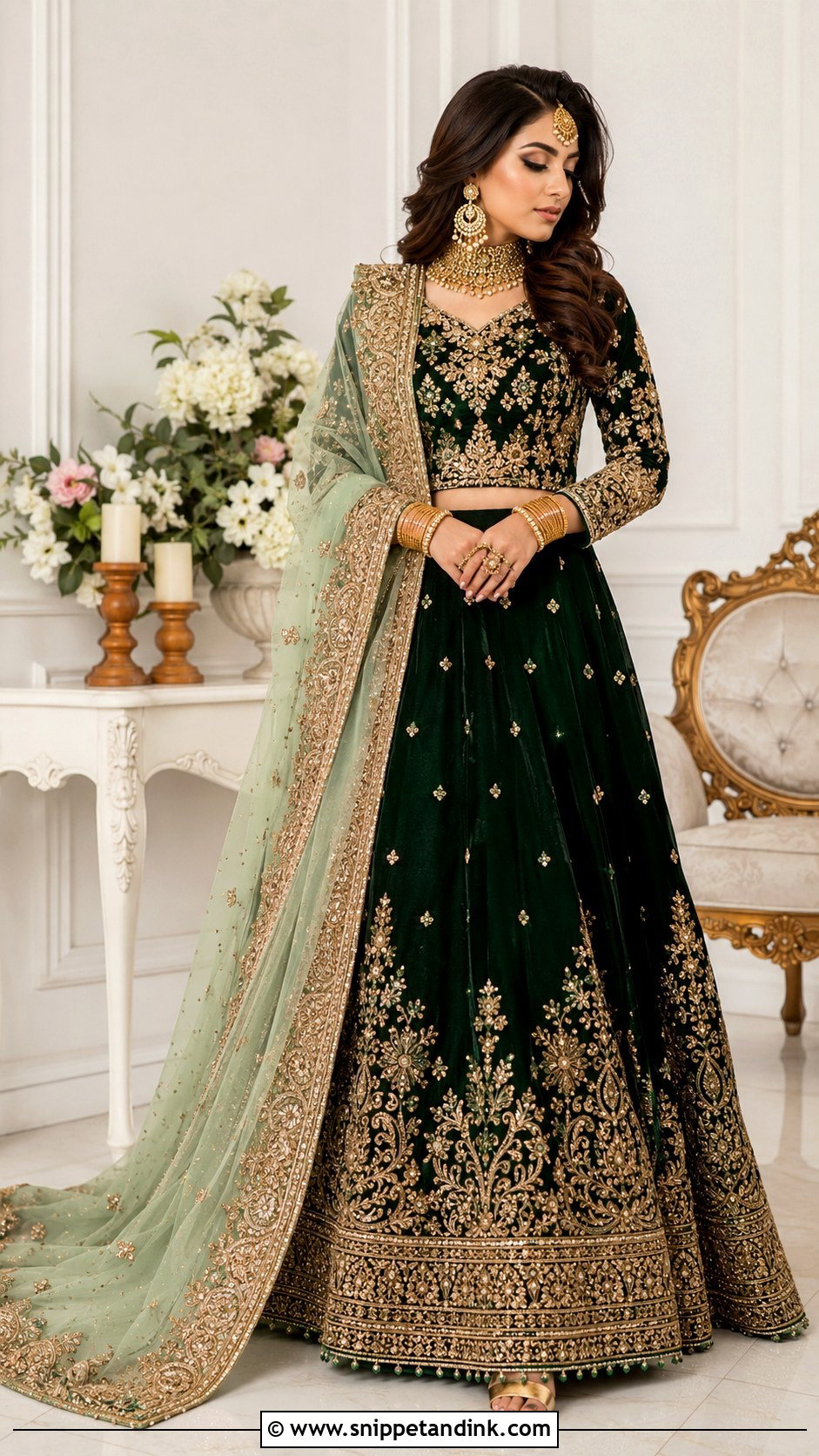
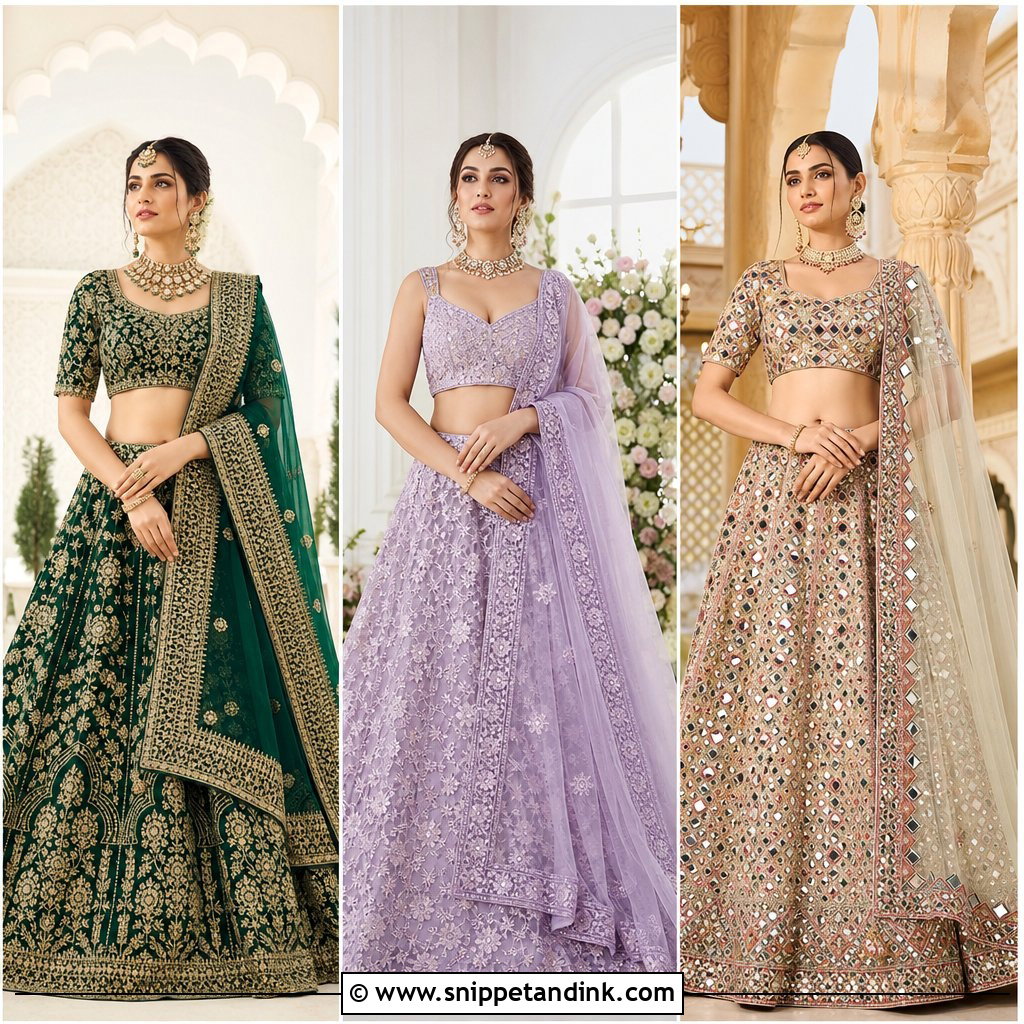
Velvet holds deep colour better than any other bridal fabric, which is why maroon, emerald, navy, wine and red look so rich in it. Pair a velvet blouse or shirt with a matching or contrast lehenga, worked in zardozi, dabka and sequins. Velvet is warm, so I reserve it for winter weddings and air-conditioned evening halls, and always pair it with a lighter organza or net dupatta. Antique gold jewellery, bold earrings and a structured hairstyle suit it; choose heels you can stand in for hours.
16. Pakistani Bridal Organza Lehenga
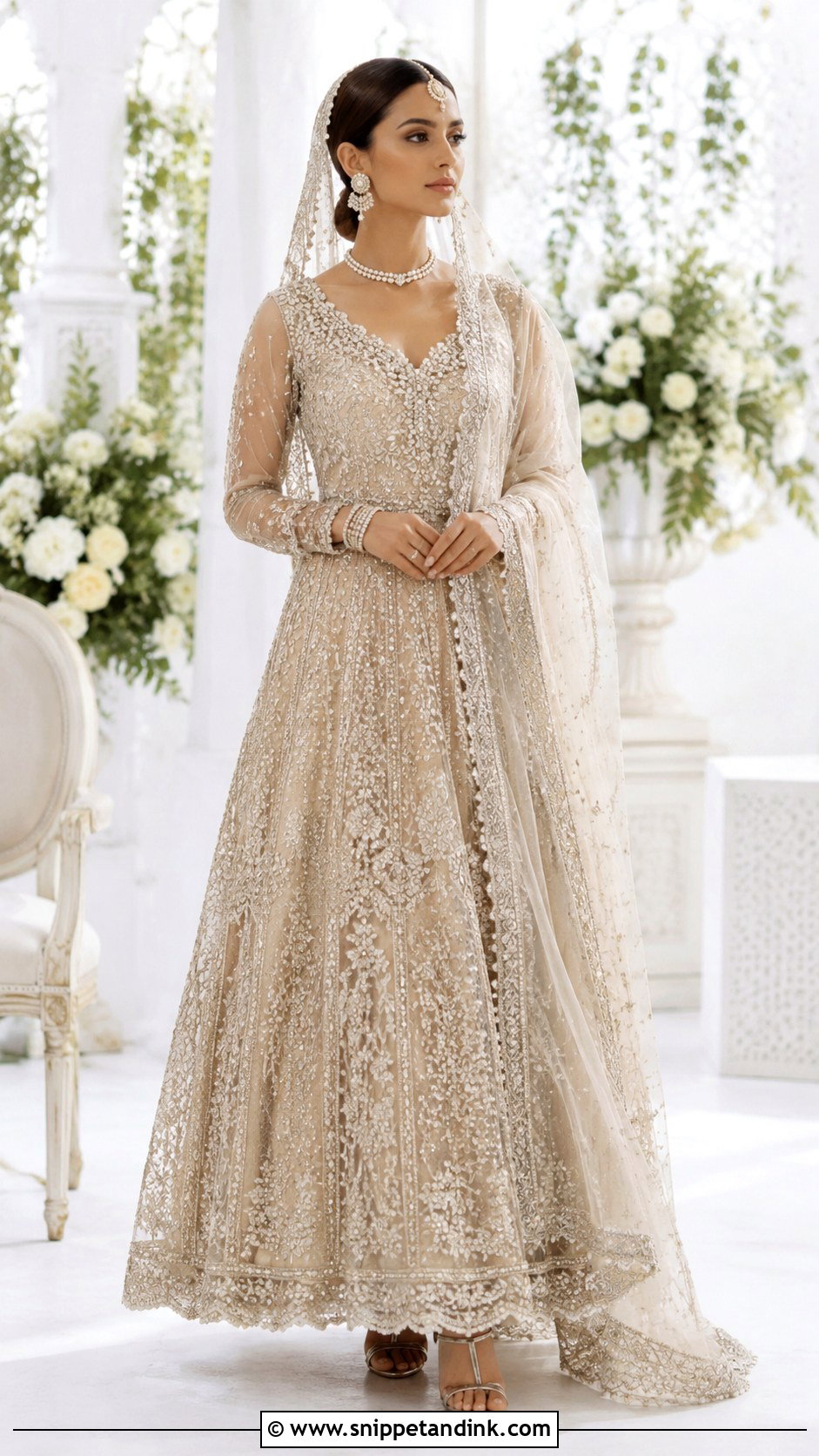
Organza gives volume with almost no weight, which makes it my first suggestion for summer weddings, nikkah and walima. In ivory, champagne, mint, blush, lavender or soft gold, with pearls, sequins, thread or crystals, the outfit stays light and current. The trade-off: organza is crisp and scratchy at the seams, so I ask tailors to line the blouse and bind any inner edges. Pearl jewellery, delicate bangles, metallic heels and fresh makeup suit it.
17. Pakistani Bridal Mirror Work Lehenga
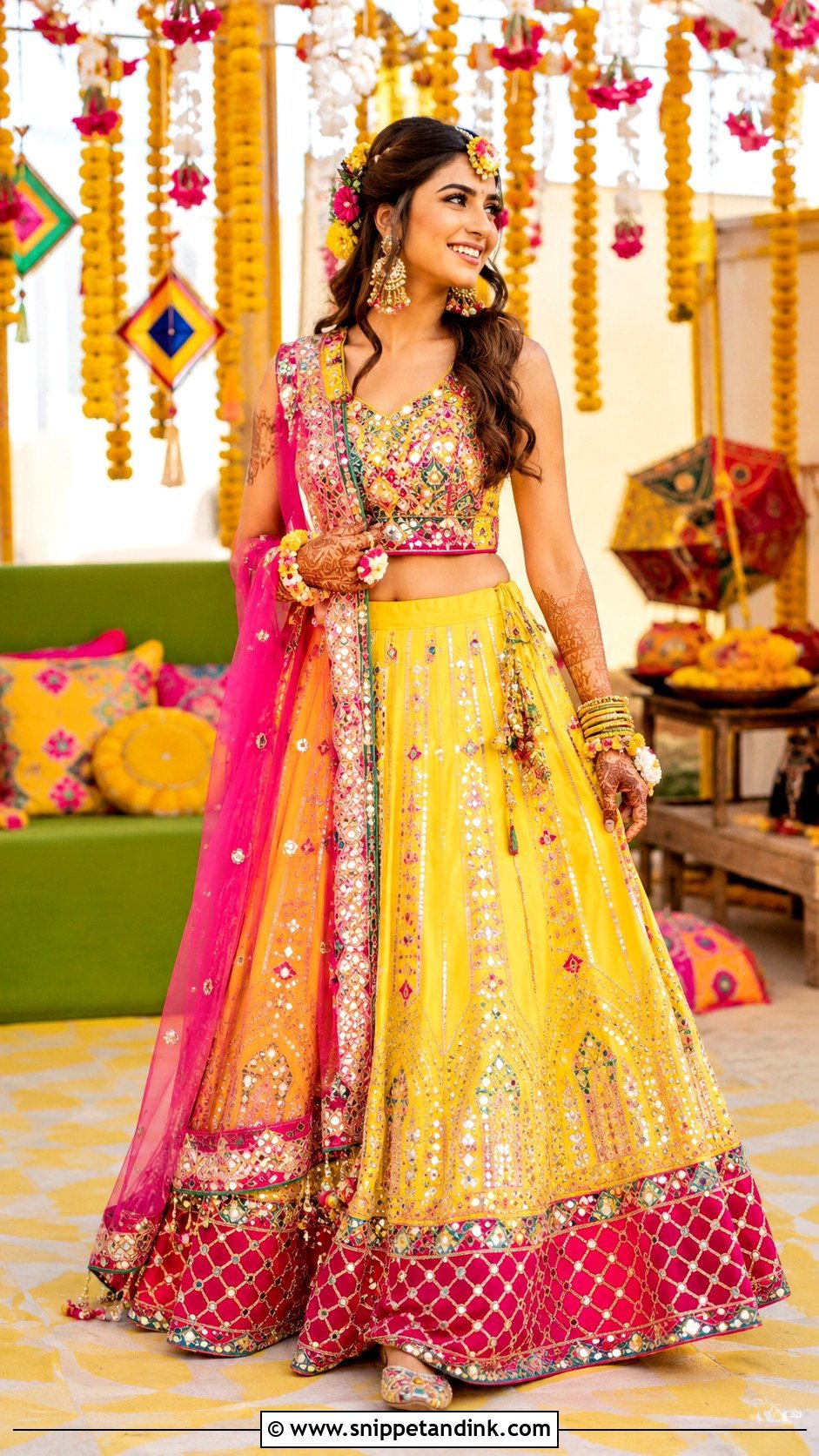
Mirror work is made for mehndi because it throws back every bit of light at night. A yellow, green, orange, pink or turquoise lehenga with a matching or contrast choli and a mirror-edged dupatta looks playful and bright. Real glass mirrors are heavier than plastic ones and can scratch delicate skin at the underarm, so I check the inside of the blouse before the final fitting. Colourful bangles, jhumkas, a tikka and khussas keep it festive; coral blush and defined eyes finish the face.
18. Pakistani Bridal Gota Work Dress
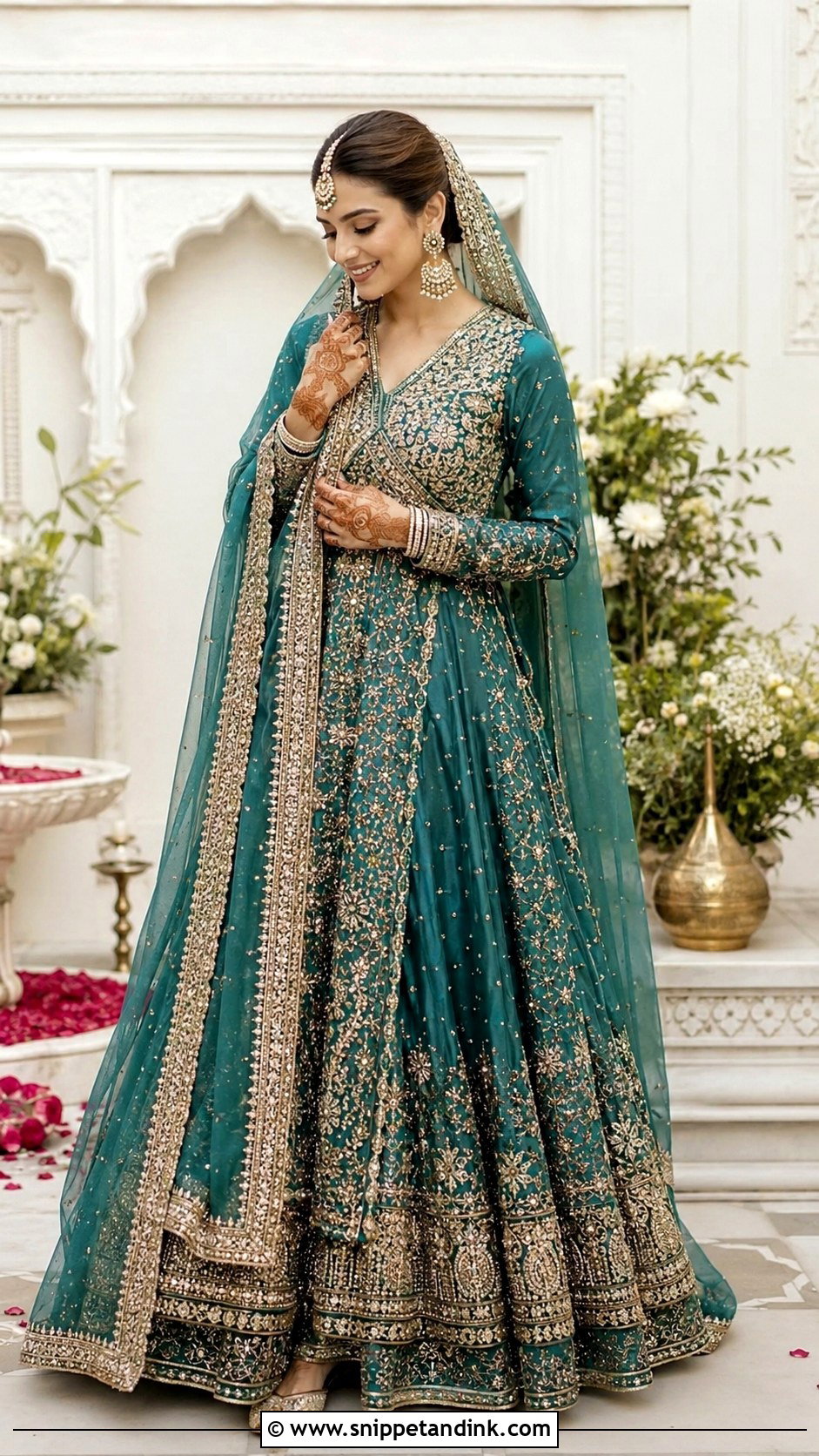
Gota is festive shine at a gentler level than zardozi, which is why it suits mayon, mehndi, dholki and even a traditional nikkah. A short shirt with gota borders over a gharara, sharara or lehenga feels classic; a long frock is softer. Gota is woven metallic ribbon, so it doesn’t snag on bangles the way loose sequins do. Floral jewellery for mayon, kundan for a formal mehndi, and khussas or low heels for comfort through a long night.
19. Pakistani Bridal Cape Dupatta Outfit
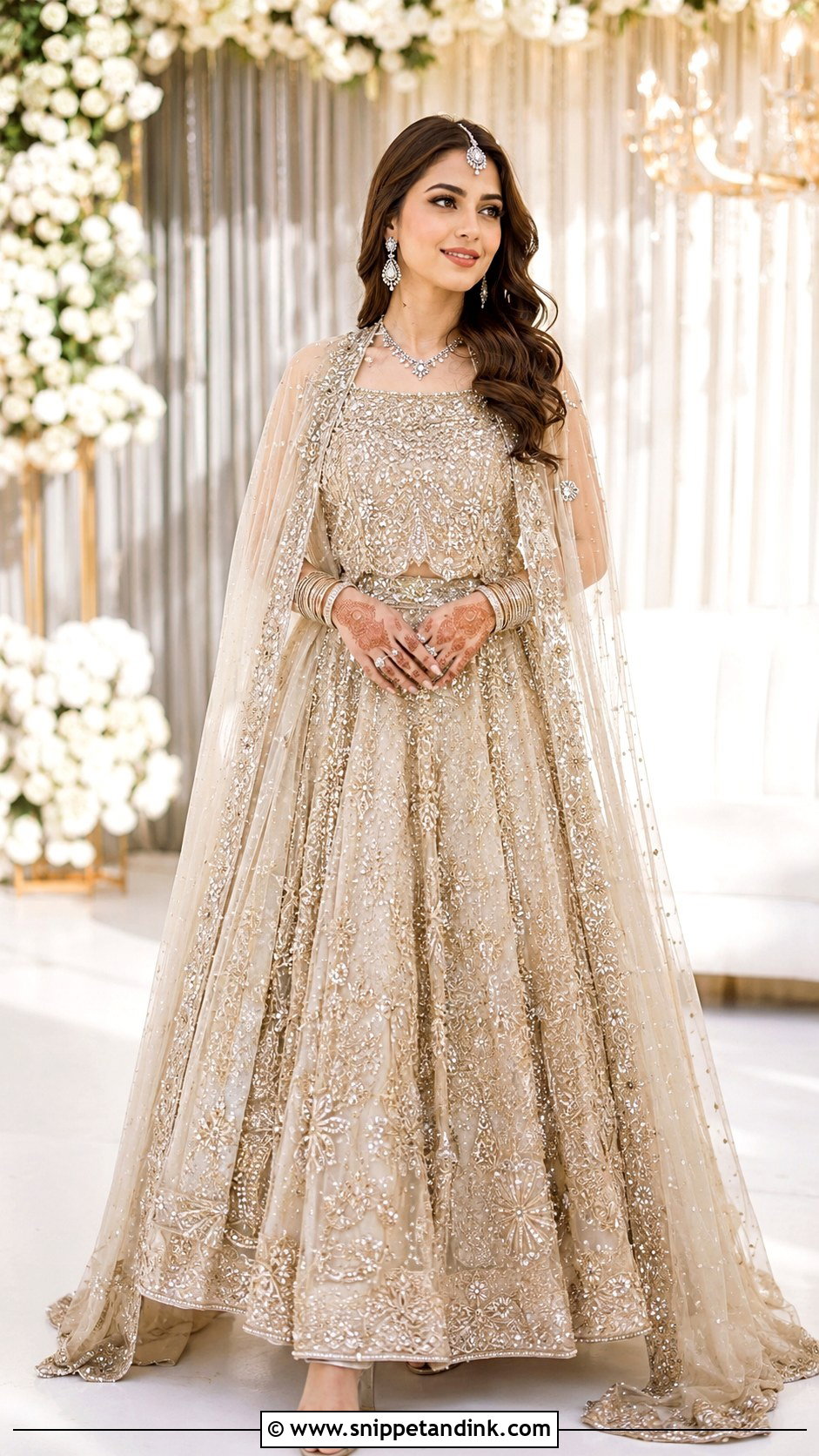
Brides who hate fussing with a dupatta all night will appreciate a cape. It sits on the shoulders and stays put, over a lehenga, maxi or gown. Pastel, ivory, champagne or silver suits a walima, while emerald or maroon handles a formal event. Embellished shoulders, pearls or crystals make the cape feel bridal. If you plan to cover your head for any rasam, keep a light second dupatta handy, because a cape alone won’t do that.
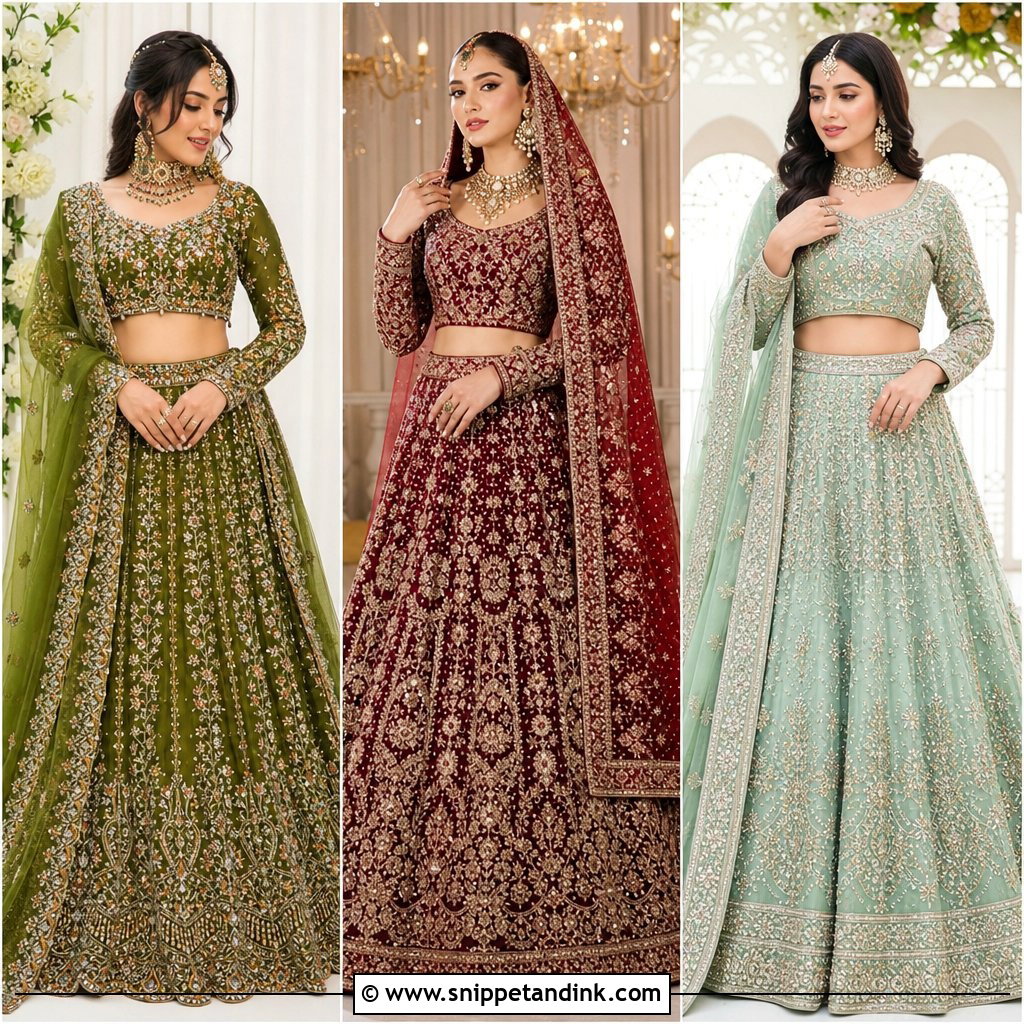
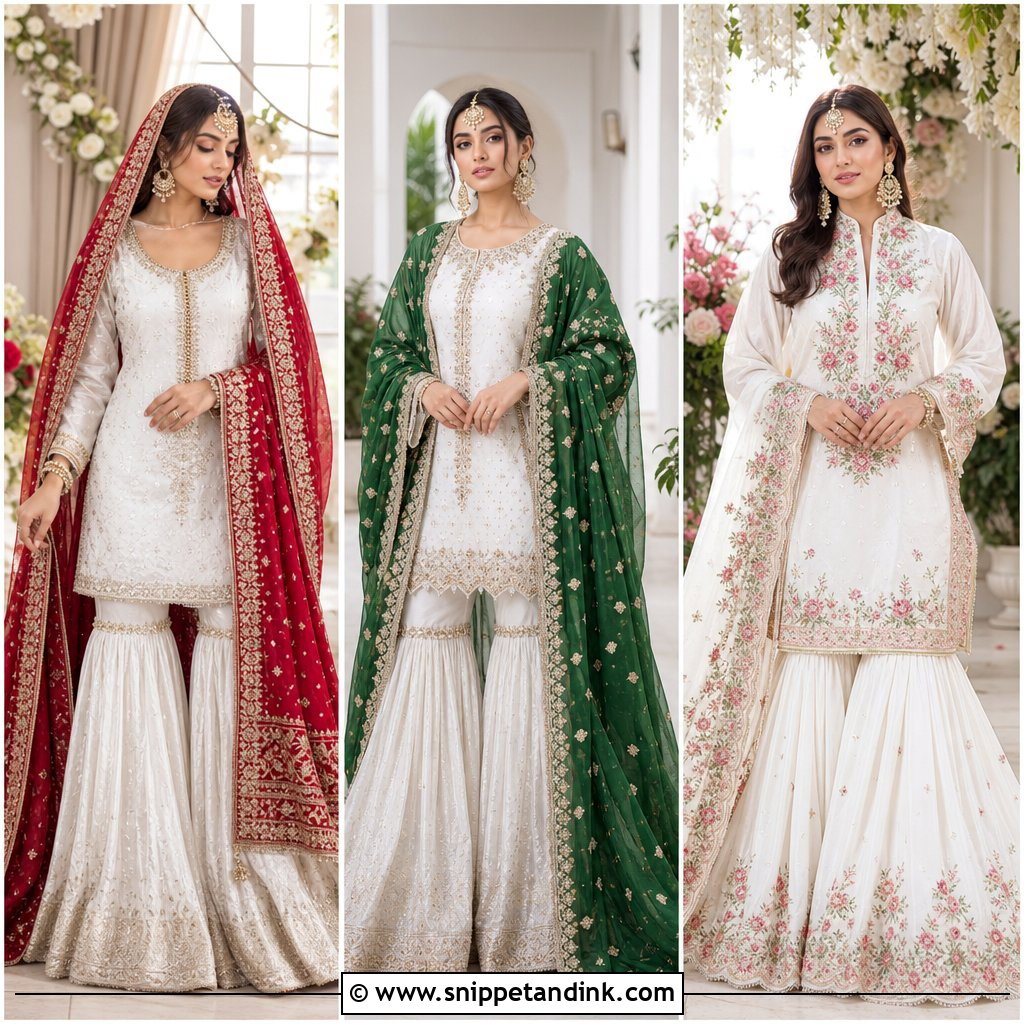
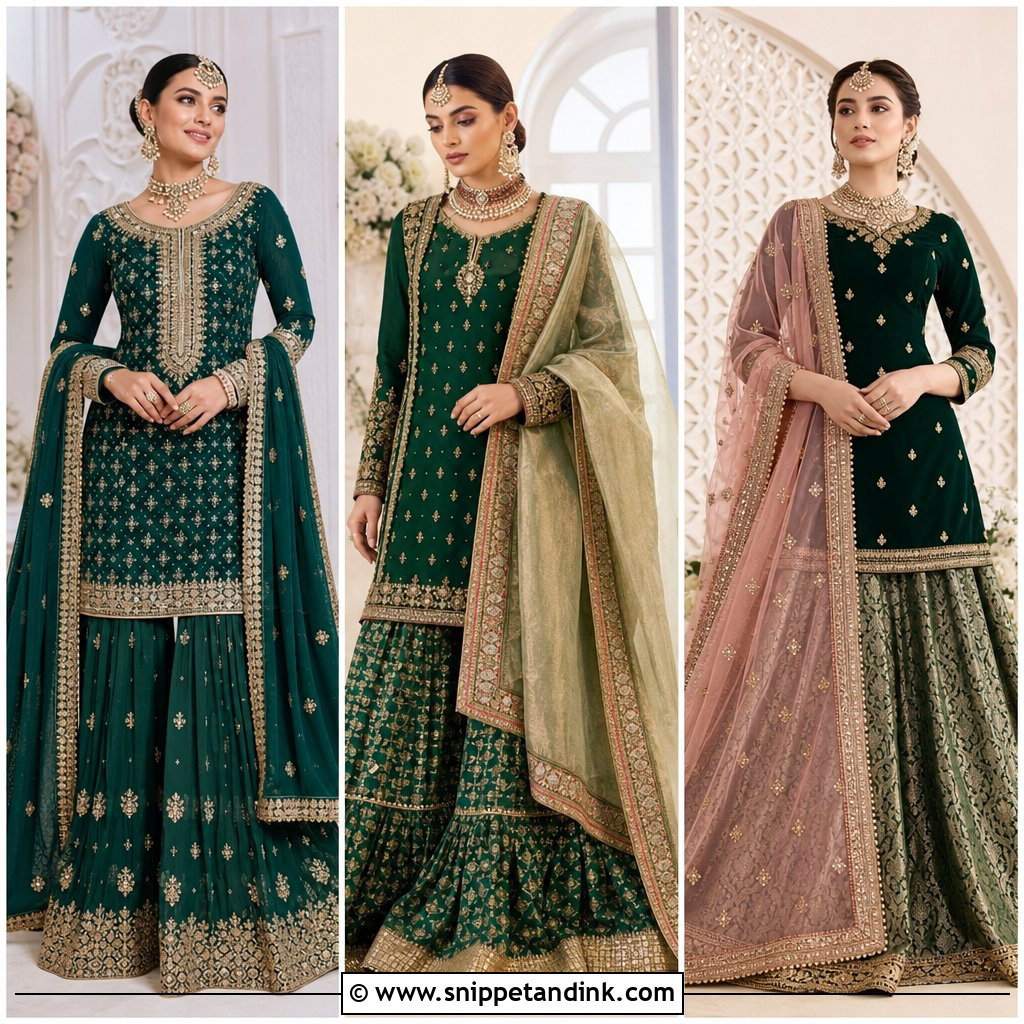
20. Pakistani Bridal Peplum Lehenga
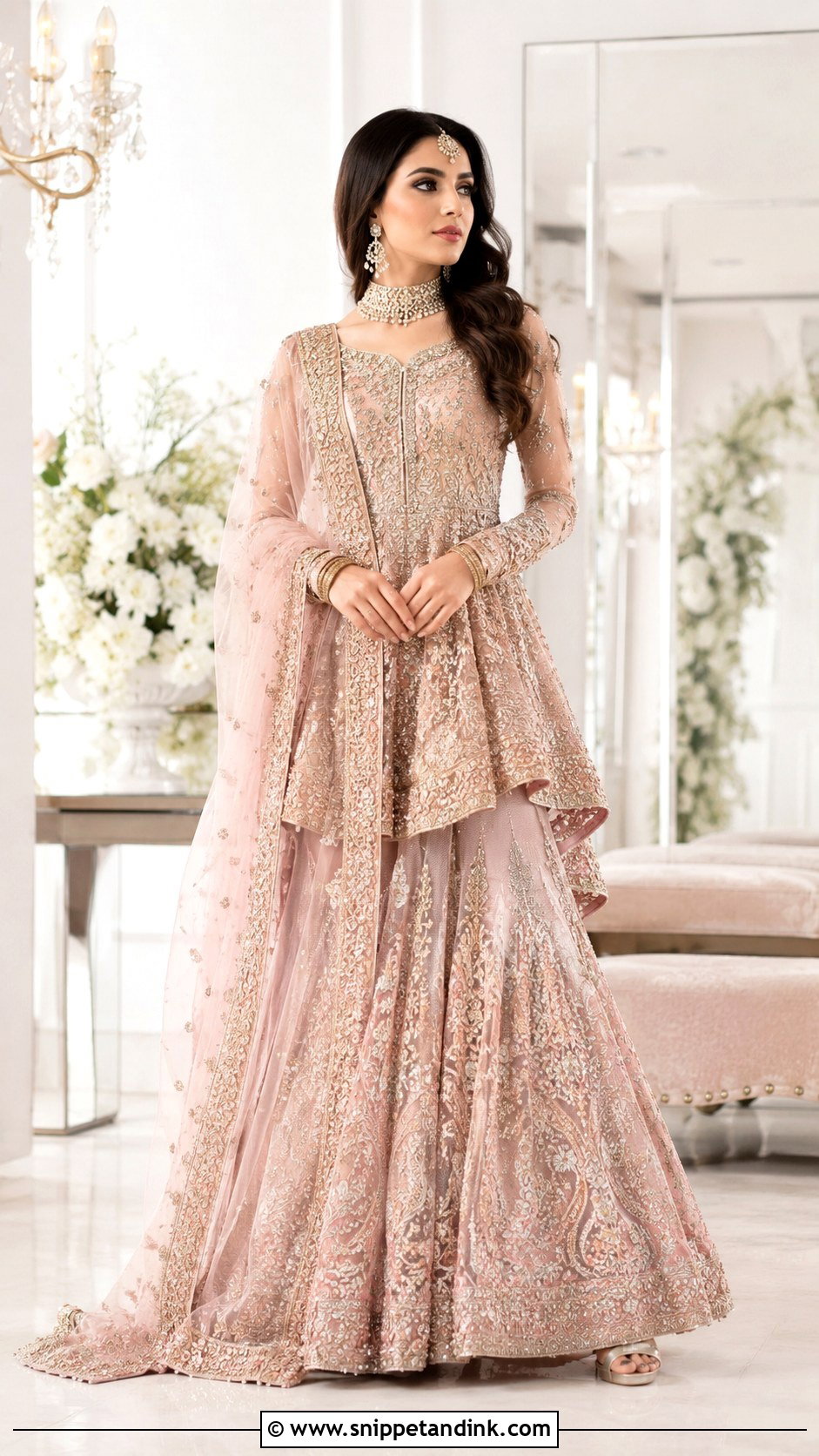
A peplum top defines the waist without needing a very short blouse, which is exactly why some brides ask for it. Over a flared lehenga in red, gold, blush, emerald or ivory, put the heavier embroidery on the peplum and keep the skirt slightly lighter for balance. The peplum flare should start at the natural waist; if it starts lower, it shortens the leg in photos. A dupatta draped over one shoulder, a choker, earrings and heels finish it for engagement, nikkah, walima or a contemporary baraat.
21. Pakistani Bridal Long Shirt Lehenga
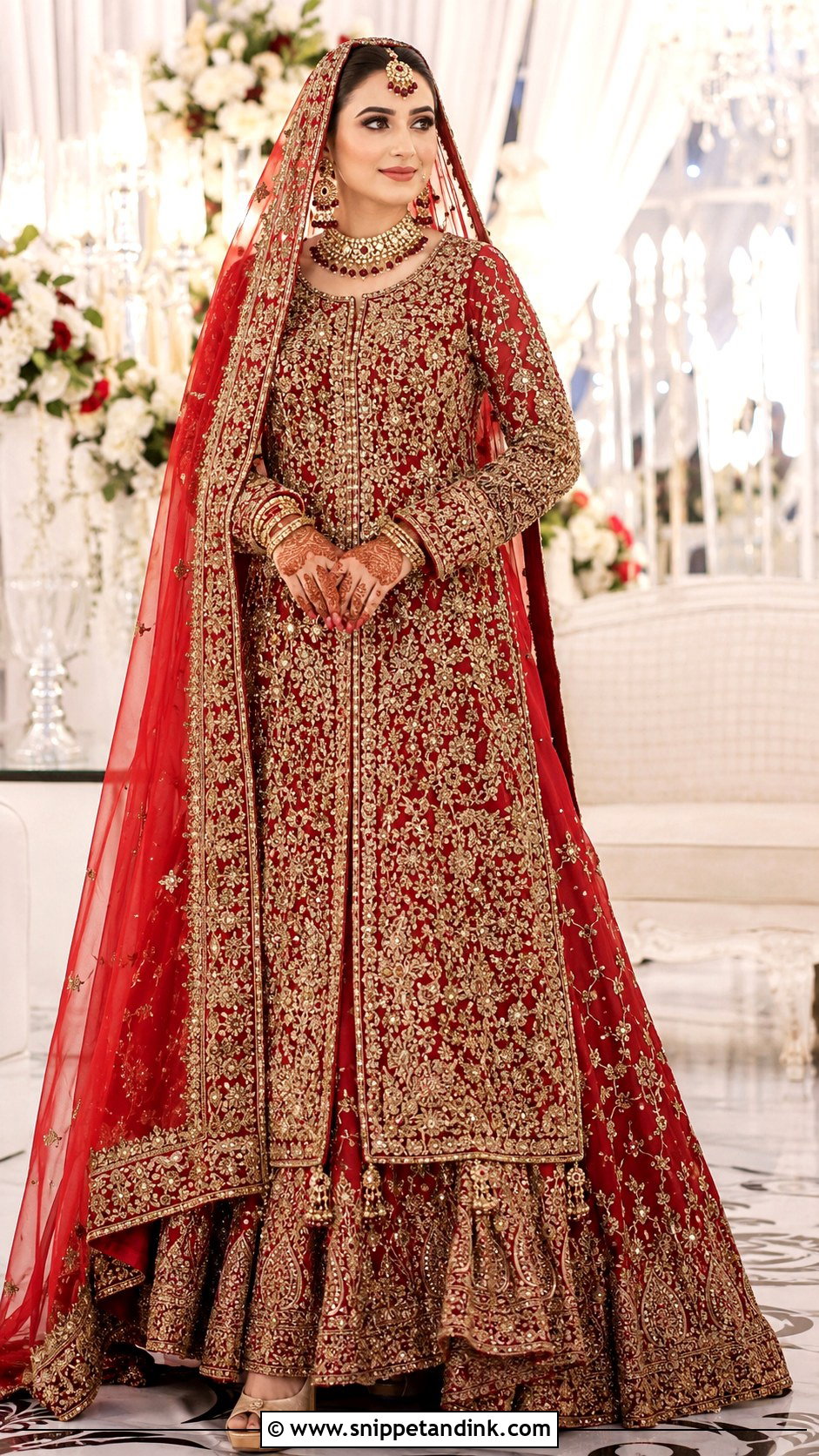
Long shirt over lehenga is the shape I see most often in Pakistani bridal fittings, and it earns its popularity. The shirt gives coverage, the lehenga gives volume. Red or maroon for baraat, ivory for nikkah, pastel for walima. Embroidery on the neckline, sleeves, front panels and border keeps it detailed from every angle, because the long shirt gets photographed side-on more than you’d think. Pin the dupatta over the head or on both shoulders and add kundan with a tikka.
22. Pakistani Bridal Short Shirt Gharara
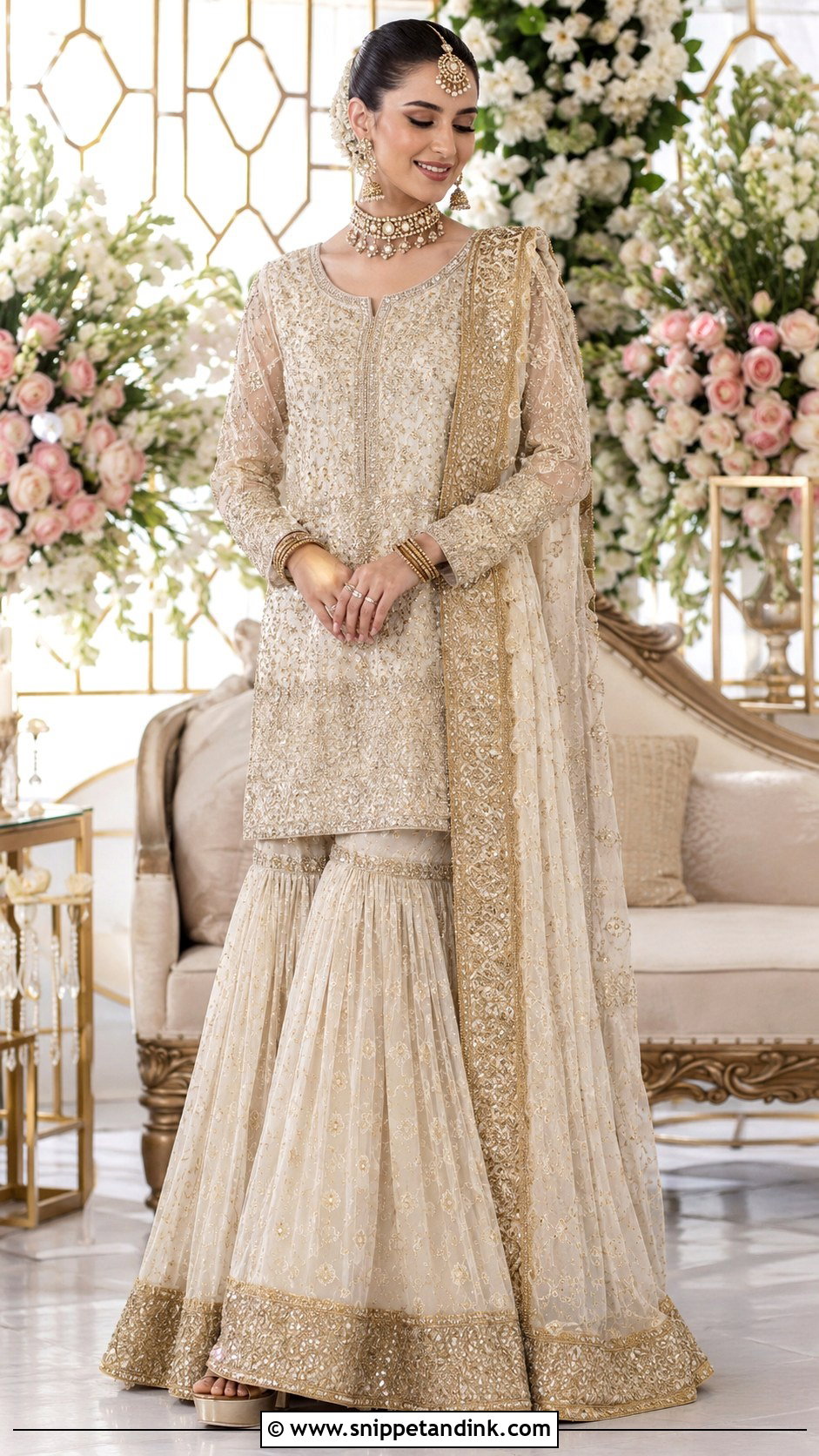
Short shirt over gharara is the classic pairing, and the short length lets the gharara’s flare show properly. Ivory and gold for nikkah, green and yellow for mehndi, maroon and antique gold for baraat. Heavy borders at the hem give it richness. Watch the shirt length on a petite bride: too short and it exposes the waistband when she lifts her arms. A choker, passa, jhumkas and bangles complete it, with khussas or platform heels underneath.
23. Pakistani Bridal Champagne Walima Gown
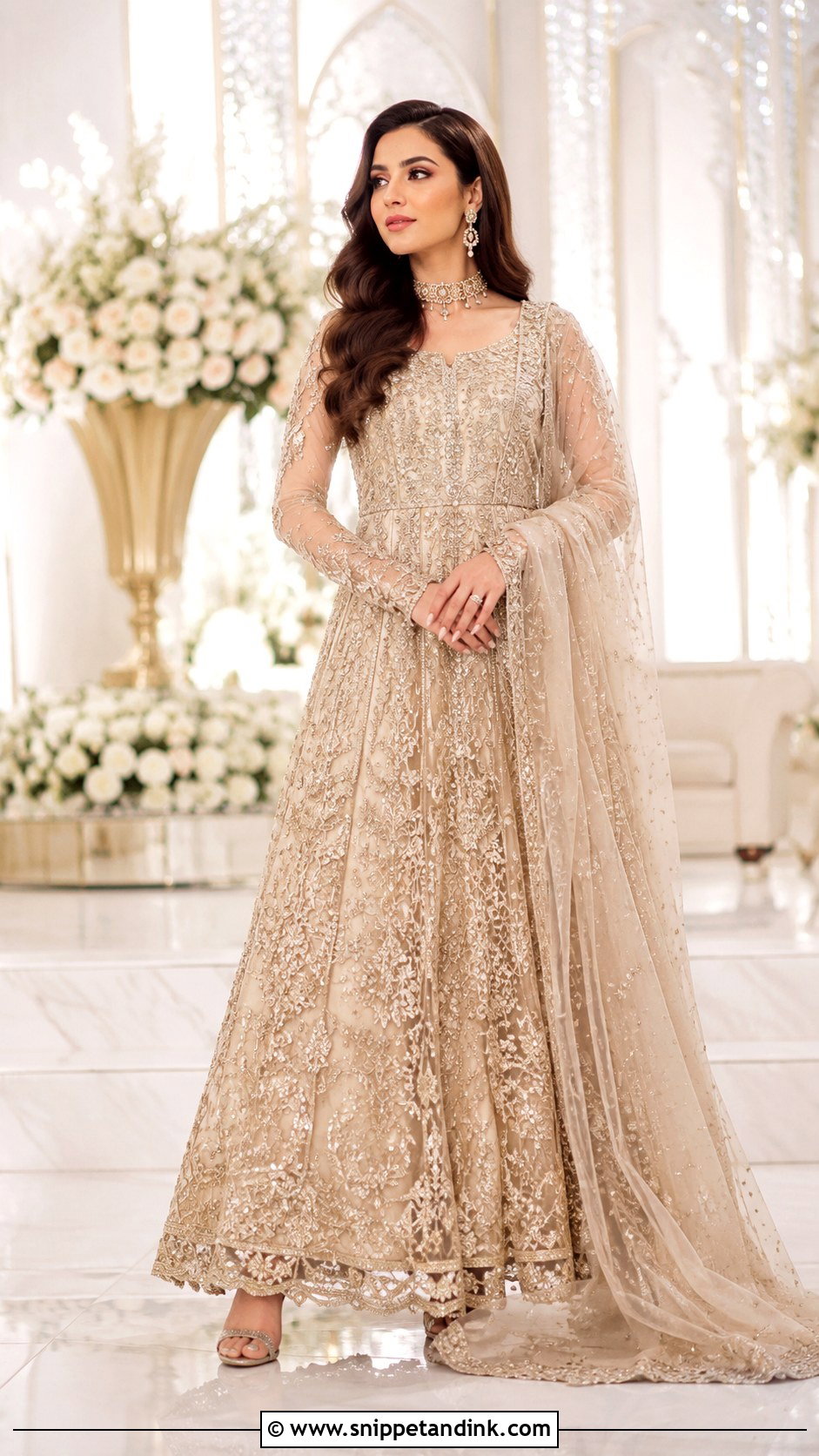
Champagne reads neutral but still special under event lighting, which is why it’s a walima favourite. A gown or maxi with crystal, pearl, sequin or silver embroidery, a fitted bodice and a flowing skirt keeps the shape graceful. Add a sheer dupatta, cape sleeves or a light veil-style layer for more coverage. I keep the jewellery refined, a delicate choker or diamond-style earrings, and let soft glam makeup do the rest.
24. Pakistani Bridal Powder Blue Dress
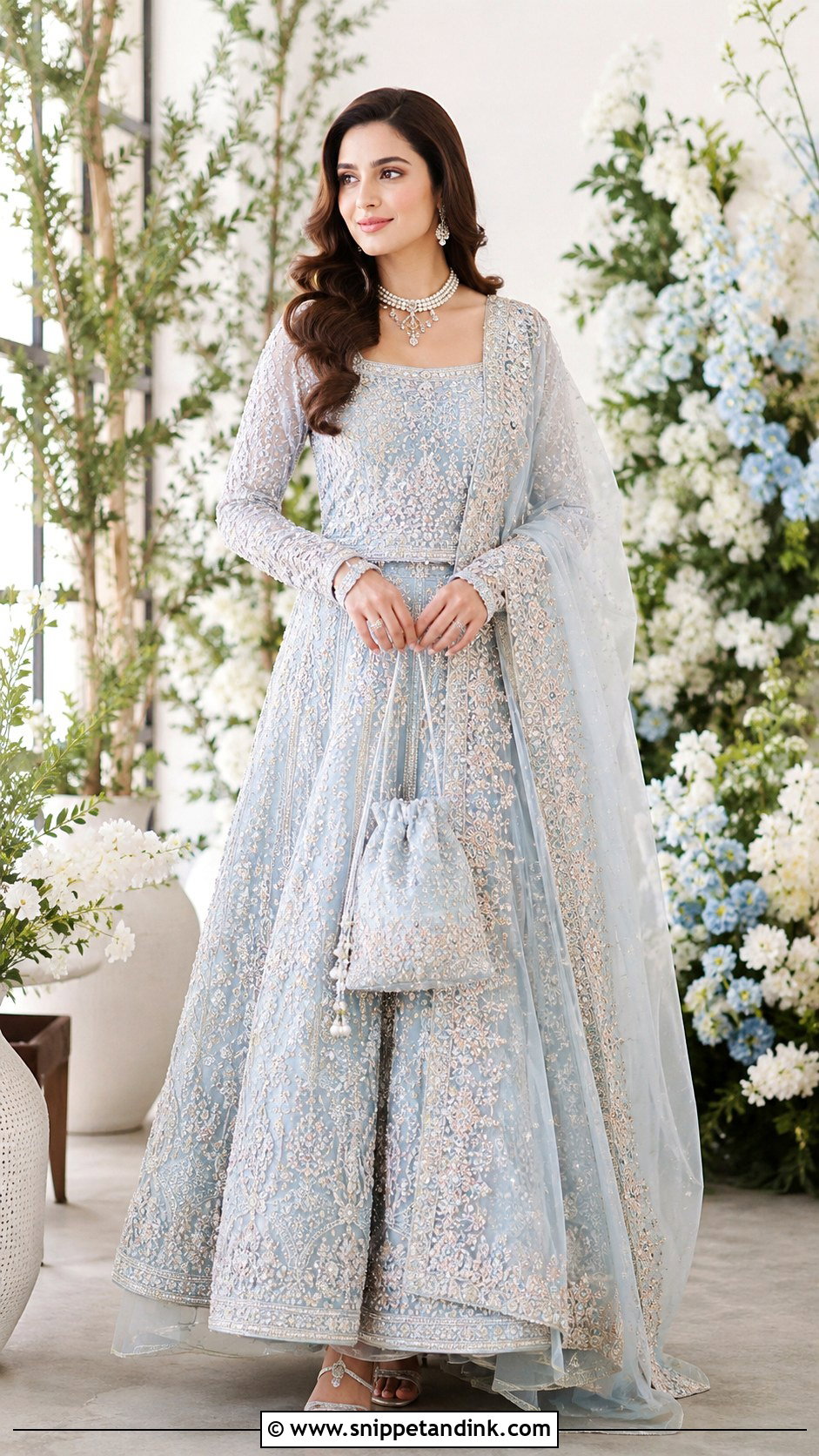
Powder blue is calm and clearly not red, yet it still reads bridal with the right styling. A lehenga, maxi or gharara in silver, pearl or crystal work with a matching dupatta keeps it cohesive. It shines at daytime events and garden settings; at night under warm yellow lights it can drift toward grey, so I would test a swatch at the venue if you can. Silver heels, pearls, soft pink lips and glowing skin suit the palette.
25. Pakistani Bridal Sage Green Outfit
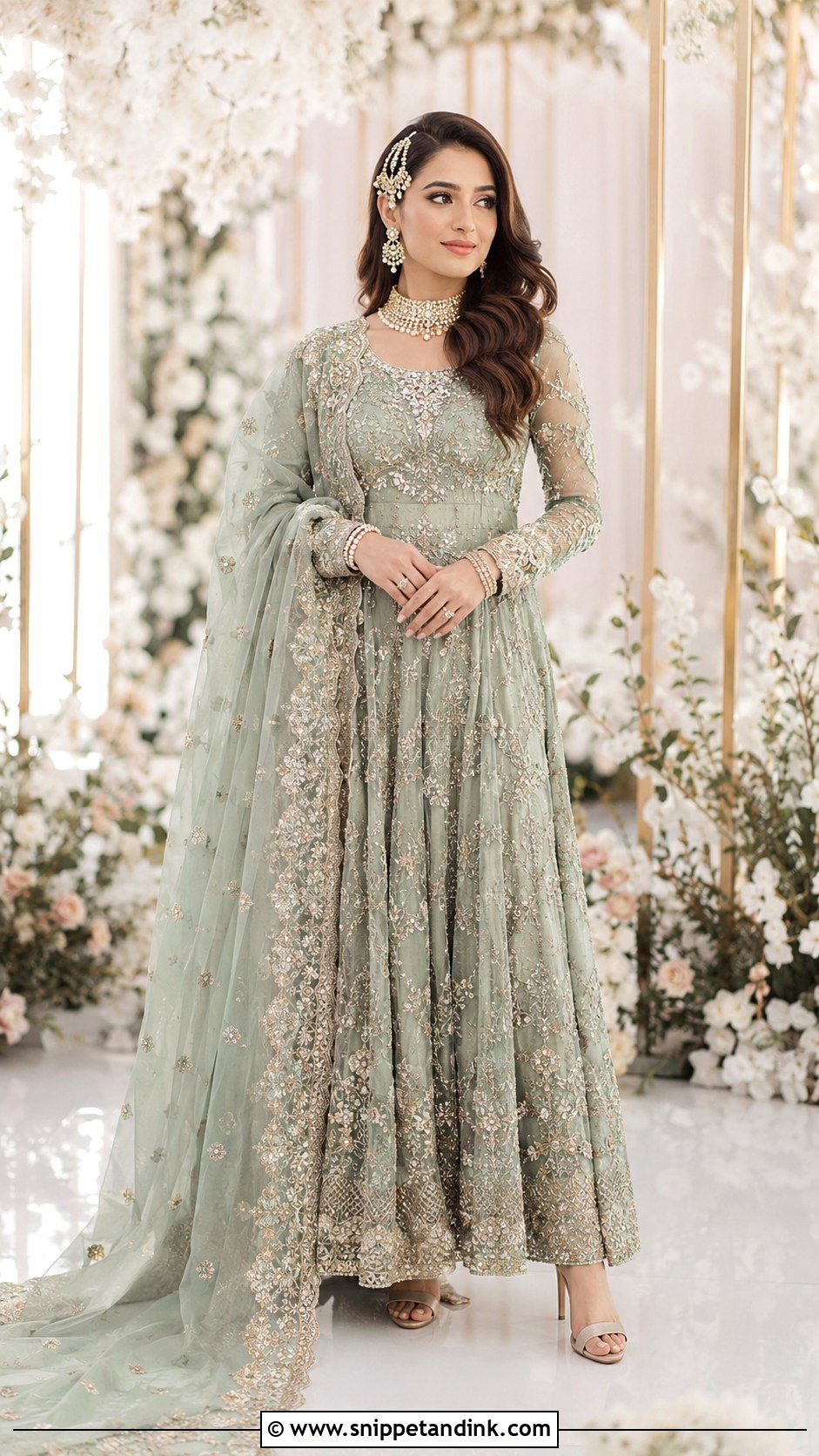
Sage is soft without being plain, and it suits nikkah, walima or engagement. A sage lehenga, long shirt or pishwas in gold, silver or pearl embroidery with a light organza dupatta stays airy. Sage is sensitive to undertone: on warm skin, gold embroidery helps; on cooler skin, silver. Emerald-accented jewellery adds depth, and a low bun or centre-parted hair suits the quiet mood.
26. Pakistani Bridal Rust Lehenga
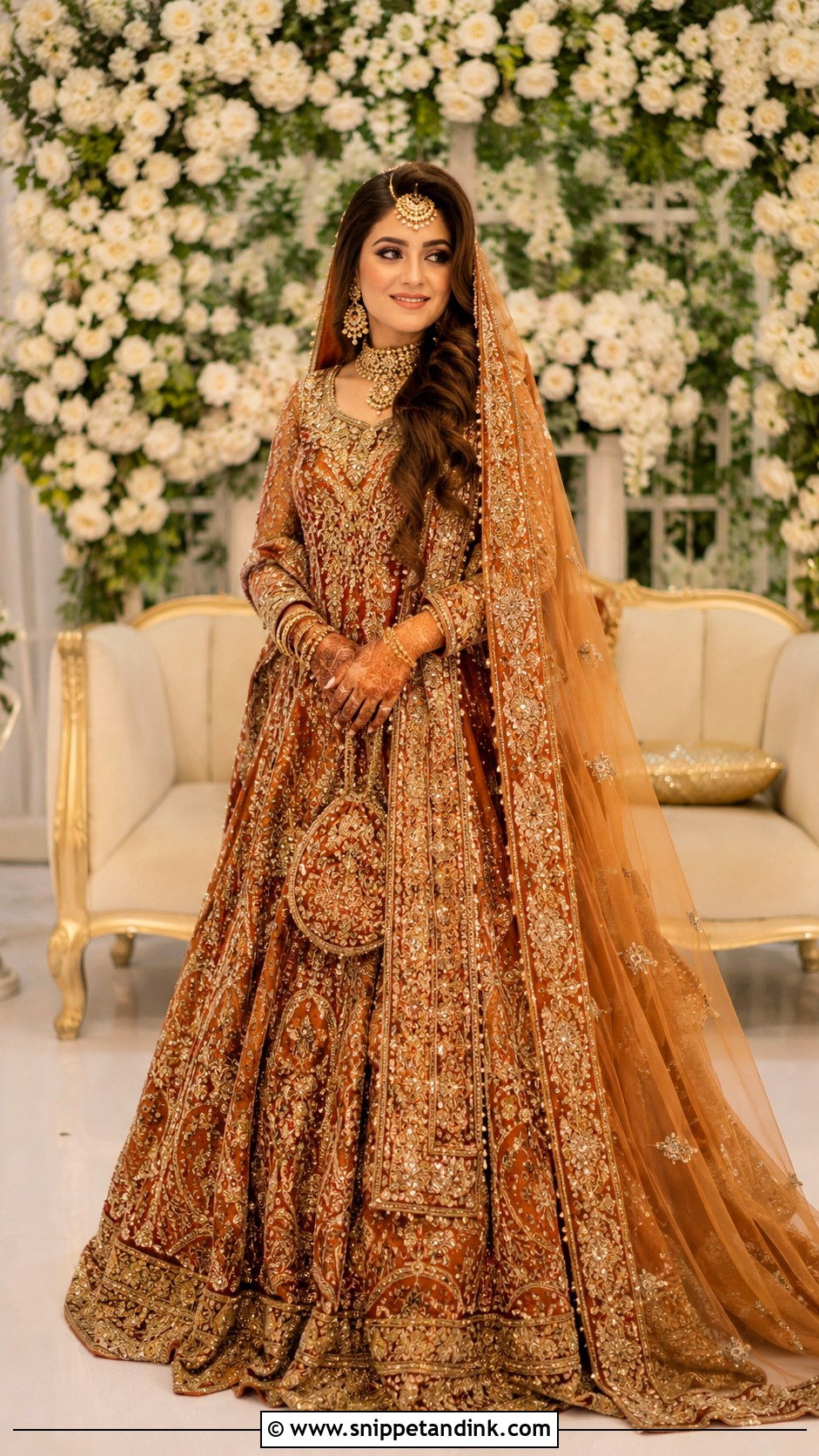
Rust is red’s warmer, earthier relative, and it suits brides who want tradition without the obvious. Rust, copper and burnt orange shine against antique gold embroidery. Pair a lehenga with a fitted blouse or long shirt and a heavily bordered dupatta, then add polki, kundan or temple-style jewellery. Makeup goes warm: bronze eyes, terracotta blush and a muted brown-red lip. It reads especially rich at autumn weddings, at mehndi or baraat.
27. Pakistani Bridal Emerald Green Dress
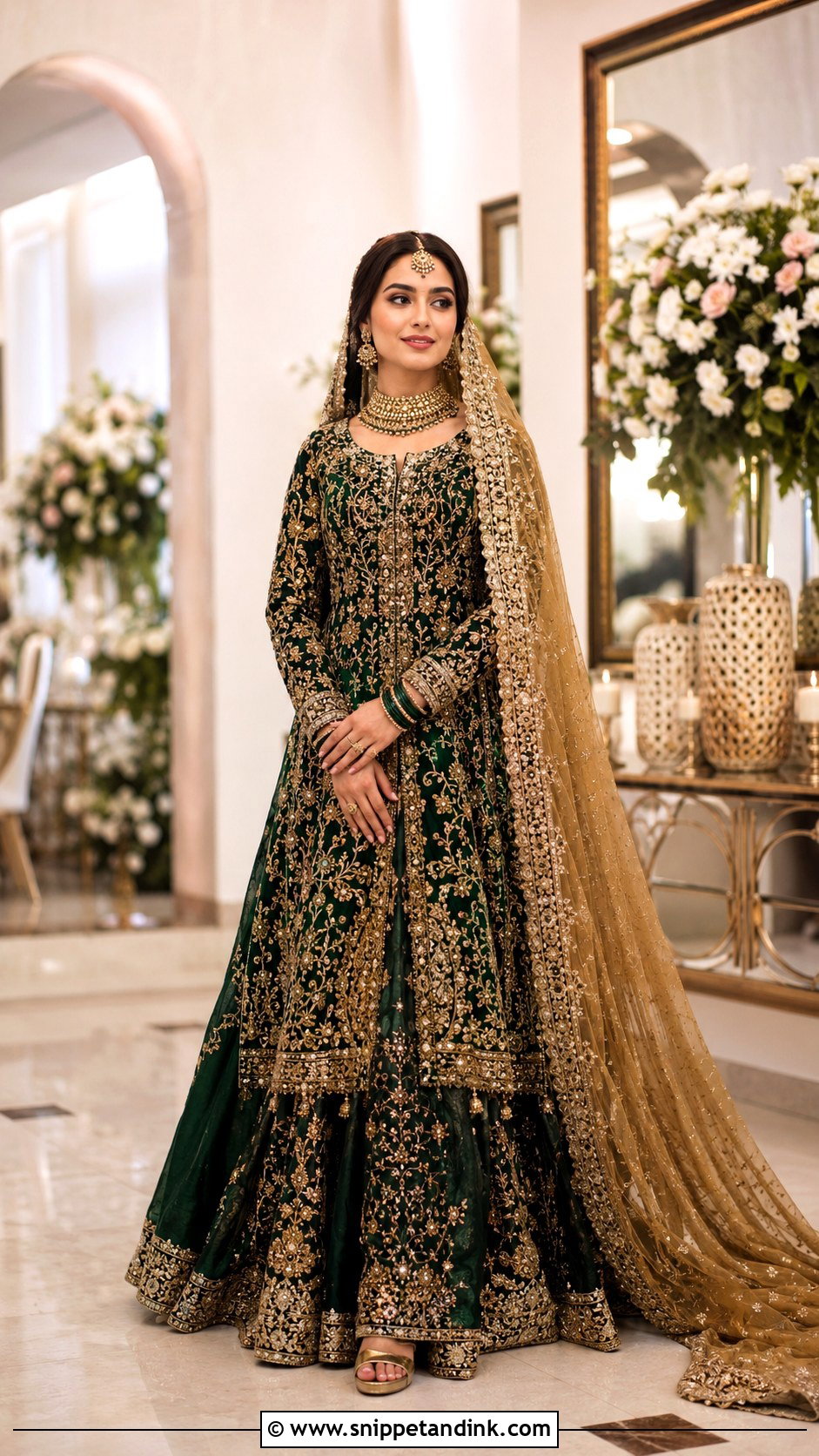
Emerald is bold and regal for a baraat, reception or formal evening. Velvet, raw silk or jamawar with gold embroidery gives the classic Pakistani bridal richness, in a lehenga, gharara or long shirt. The lip is the decision: a red or maroon lip against emerald is dramatic, a nude keeps it softer. I tend to go with the dramatic version for evening and nude in daylight. Antique gold jewellery, a statement choker and a tikka complete it.
28. Pakistani Bridal Multicolor Mehndi Outfit
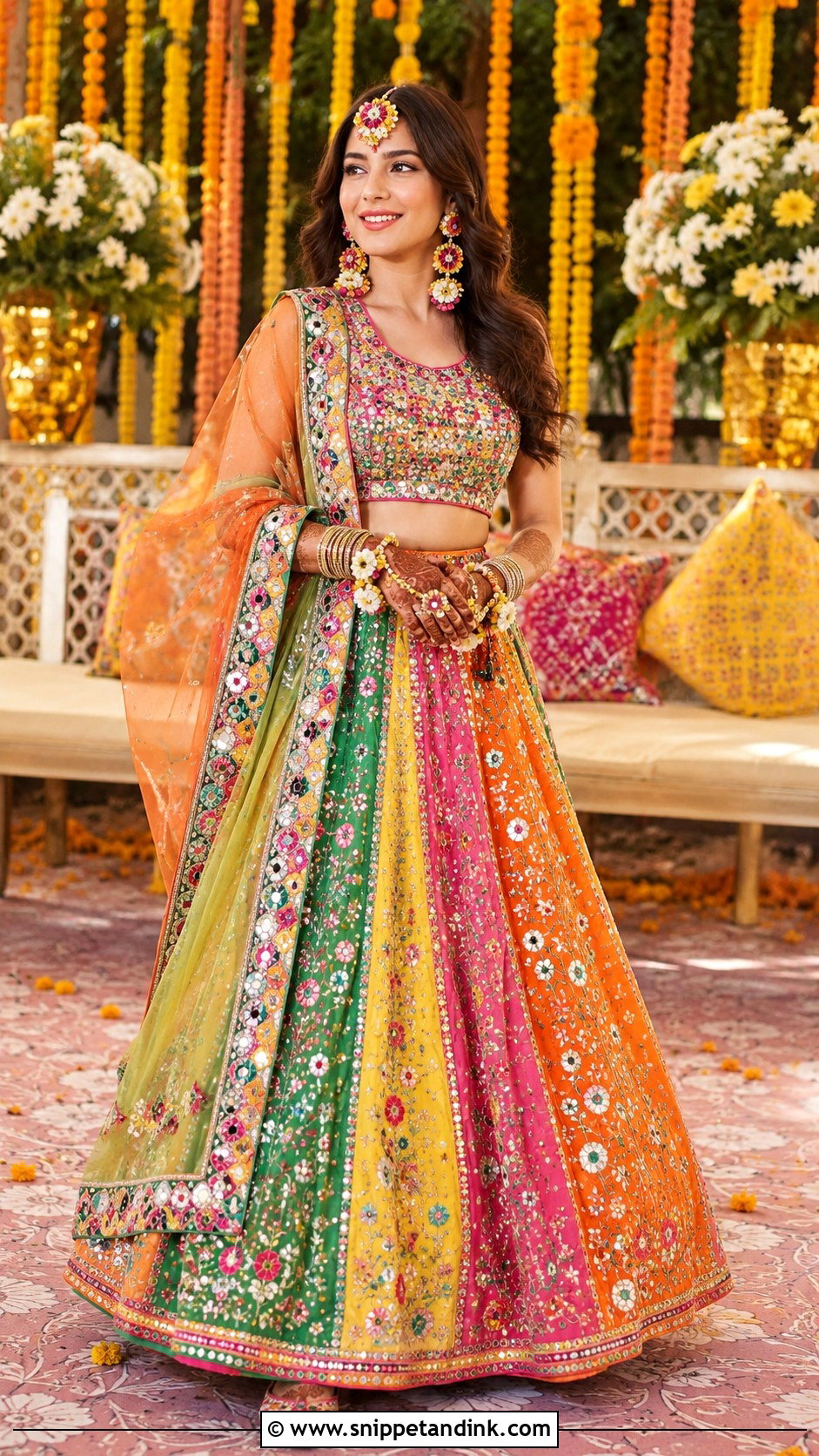
A multicolor mehndi outfit lets a bride celebrate every colour of the night at once. Yellow, green, pink, orange and turquoise can be split across the lehenga, choli, dupatta or a panelled skirt, with mirrors, gota, tassels and thread embroidery. To keep it from looking chaotic, I anchor it with one dominant colour and let the rest appear in panels and borders. Keep the silhouette comfortable for walking and dancing, and finish with colourful bangles, jhumkas and khussas.
29. Pakistani Bridal Pearl Work Dress
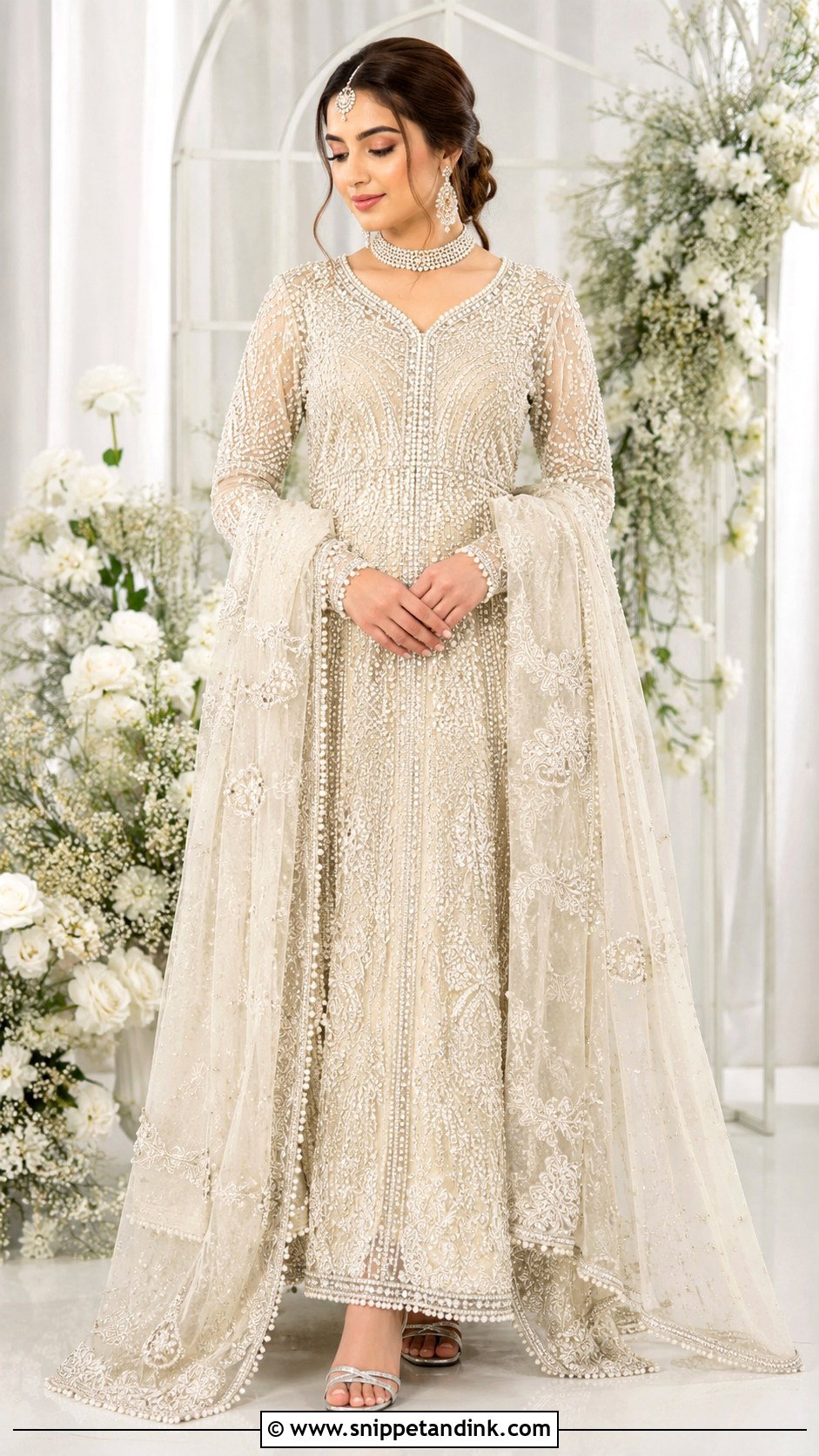
Pearl work adds texture without weight, which makes it quietly luxurious on ivory, blush, champagne, powder blue or silver fabric. Spread it across the bodice, sleeves and dupatta border of a maxi, lehenga or pishwas. Real or glass pearls are heavier than they look in bulk, so on a long dupatta I ask for them to be concentrated at the border rather than scattered all over. Pearl earrings, a delicate choker and simple ivory or nude shoes keep it graceful for nikkah or walima.
30. Pakistani Bridal Minimal Nikkah Look
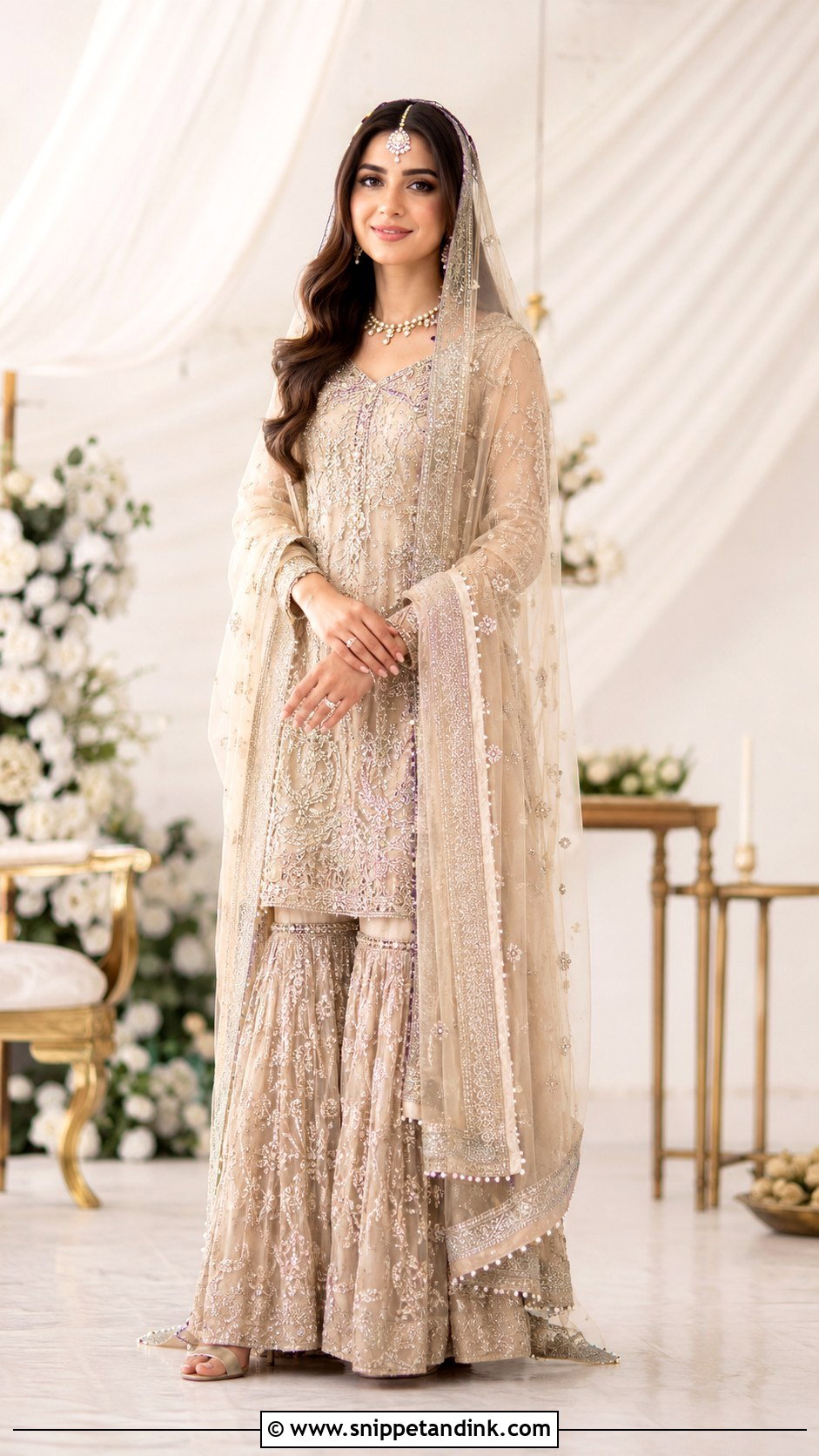
Minimal is not the same as plain. For a quiet nikkah, choose ivory, white, beige or a soft pastel in a gharara, lehenga or long shirt with fine embroidery instead of heavy work. The styling carries the bridal message: a good dupatta, pearl or kundan jewellery, a small tikka, soft bangles and elegant heels. A sleek bun or soft waves finish it. I keep makeup to fresh skin, defined eyes and a natural lip, so the bride looks like herself on her best day.
Changing Between Mayon, Mehndi and Baraat Without Chaos
Wedding weeks with back-to-back functions are where outfits get damaged. Clothes are pulled from suitcases, pressed in a rush, and someone irons straight over zari. I make a simple plan with every bride before the week starts.
- Hang every outfit with its dupatta, inner layers and jewellery bag on one hanger, labelled by event.
- Steam, never iron, embroidered pieces. If an iron is the only option, press from the reverse through a cotton cloth on a low setting.
- Pack a small kit: safety pins, U-pins, double-sided fabric tape, a needle with neutral thread, blotting papers and a stain pen.
- Allow at least an hour between hair and makeup finishing and leaving the house; the dupatta setting always takes longer than people plan for.
Wearing Your Bridal Pieces Again After the Wedding
A heavy baraat lehenga is unlikely to come out again soon, but many of the other pieces can. A pastel walima maxi, a gota mehndi shirt or a velvet dupatta all restyle easily for Eid, family weddings and dinners. I suggest separating the dupatta from the outfit in your mind: a bridal dupatta thrown over a plain silk suit instantly makes it formal, and that’s often the piece that gets the most use in the years after.
Five Functions, Five Moods, and a Dress for Each
A Pakistani wedding is several weddings in one, and each function suits a different mood: red and maroon for the baraat, pastels for walima, bright colour for mehndi, softness for the nikkah. Comfort counts as much as colour. Think about fabric weight, jewellery, how you will wear the dupatta, shoes and makeup together, not one at a time. Velvet, maroon, gold and emerald give you regal; ivory, champagne, blush and powder blue give you calm. Pick the one that feels personal to you.
You'll Like These Ideas:






Leave a Reply