
A Pakistani wedding isn’t one outfit, it’s a wardrobe. Dholki, mehndi, nikkah, baraat and walima each have their own mood, and a bride may change three or four times across a week. Red still rules the baraat for most families, but I’m seeing brides pick lighter dupattas, pastel walima gowns, ivory nikkah outfits and ghararas that let them actually walk. Heavy embroidery alone doesn’t make a bridal look. The dupatta drape, the jewelry, the shoes, the hair and how the bride feels carrying all that weight matter just as much. Below are thirty outfits across every event, with what I’d check on each before you commission it.
Planning Mehndi, Nikkah, Baraat and Walima as One Wardrobe
When I plan a Pakistani bridal wardrobe, I look at all the events together before anyone buys fabric. Seen side by side in photos, the outfits tell a story, and they should feel different from each other rather than four versions of the same heavy lehenga.
- Give each event its own color family. Bright yellow or green for mehndi, ivory or a soft tone for nikkah, red or maroon for baraat, pastel for walima is the usual arc, and it works because the contrast shows in the album.
- Put the weight where the photographs are formal. Heavy zardozi belongs at the baraat; mehndi and walima outfits should be lighter, since you’ll dance at one and greet guests for hours at the other.
- Order the most complex outfit first. Heavily worked bridal outfits from designers often need several months, so ask for lead times at the first meeting.
- Plan jewelry to cover two events. A polki or kundan set can serve the nikkah and walima with a different dupatta and hairstyle.
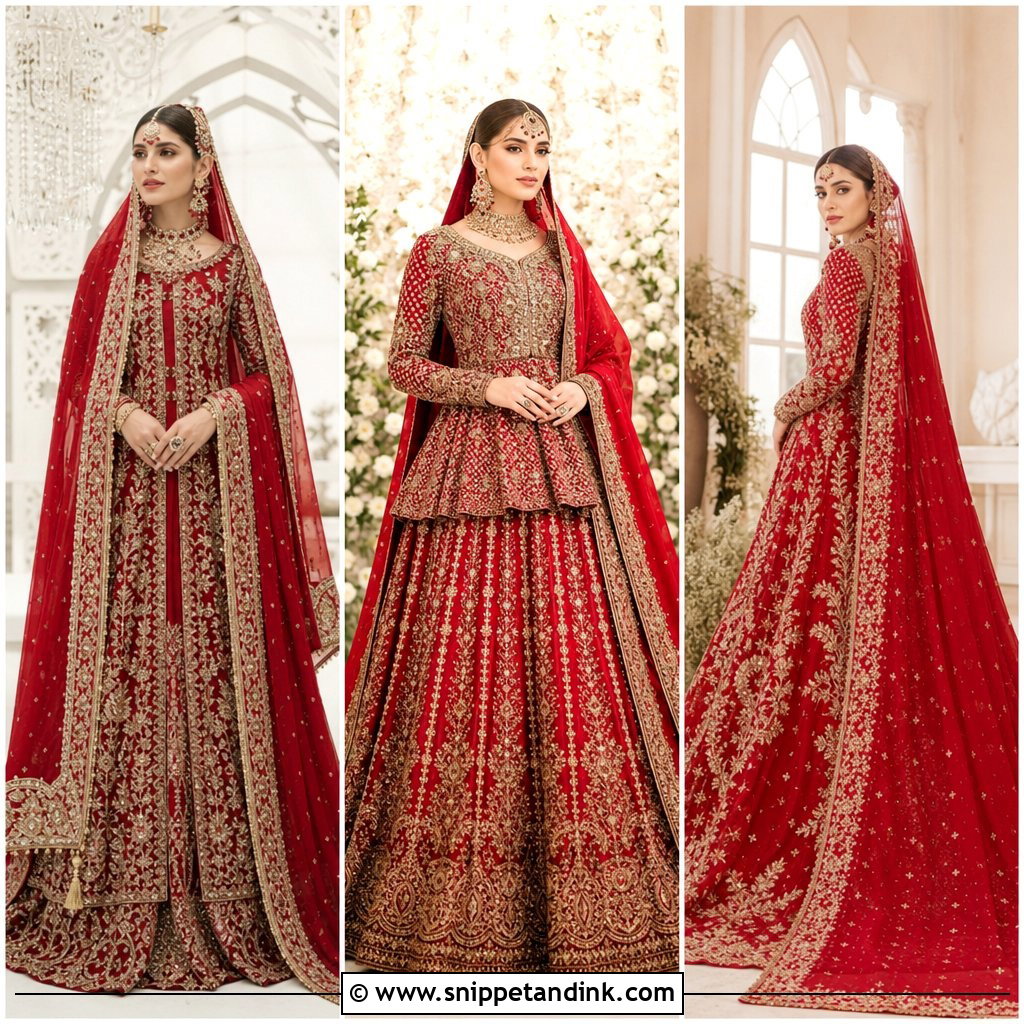
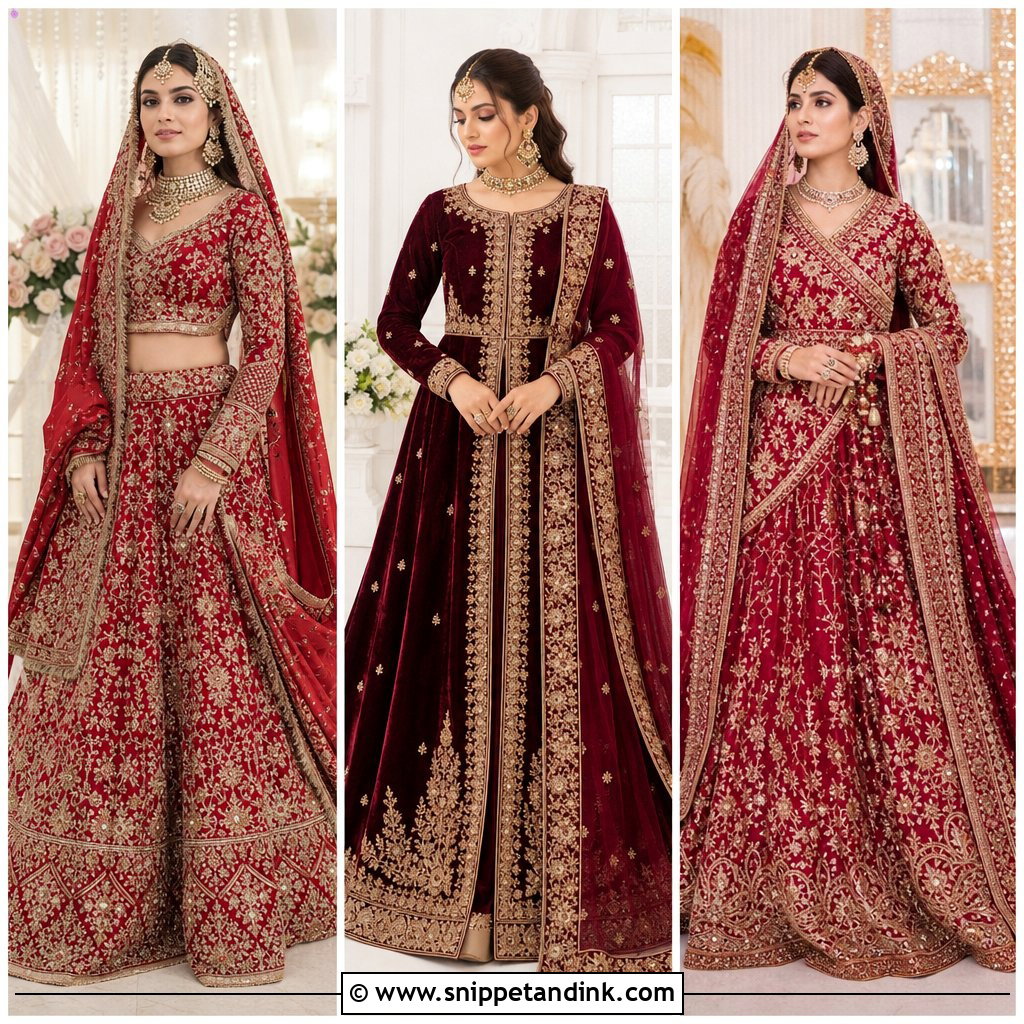
1. Red Pakistani Bridal Lehenga
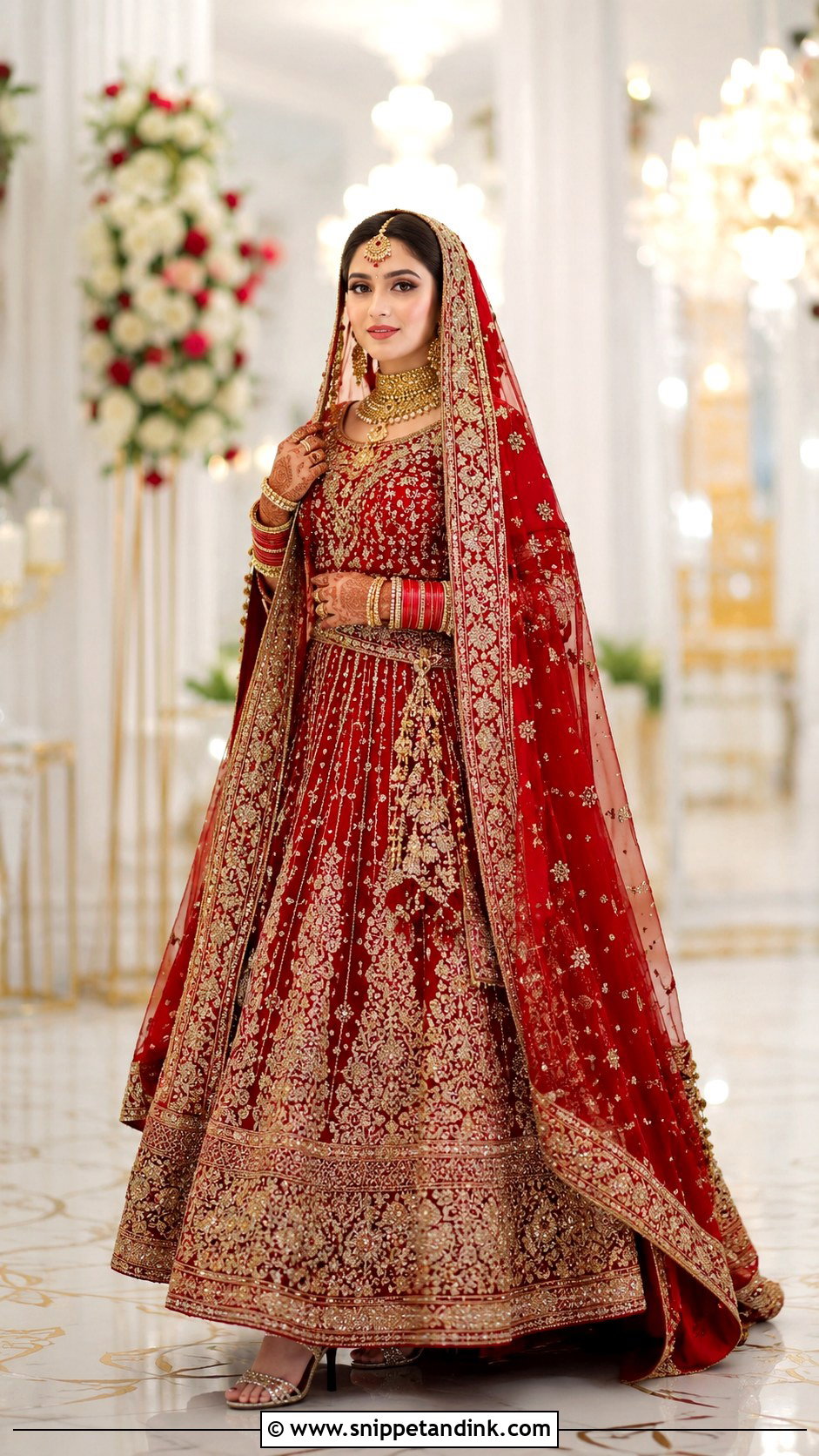
Red remains the baraat color for a reason: under stage lights and against gold jewelry, nothing else reads as unmistakably bridal. A deep red lehenga with zardozi, dabka, resham and sequins is the classic. The choice between a choli and a long shirt is usually about family comfort and how much movement you want. The head dupatta is the piece I spend most time on, because a heavily bordered dupatta needs pins placed into a secure base, not just into loose hair, or it slides back during the rukhsati. Matha patti, jhumkas, choker, long haar, bangles and khussa or heels complete it, with defined eyes and a red or rose lip.
2. Maroon Pakistani Bridal Gharara
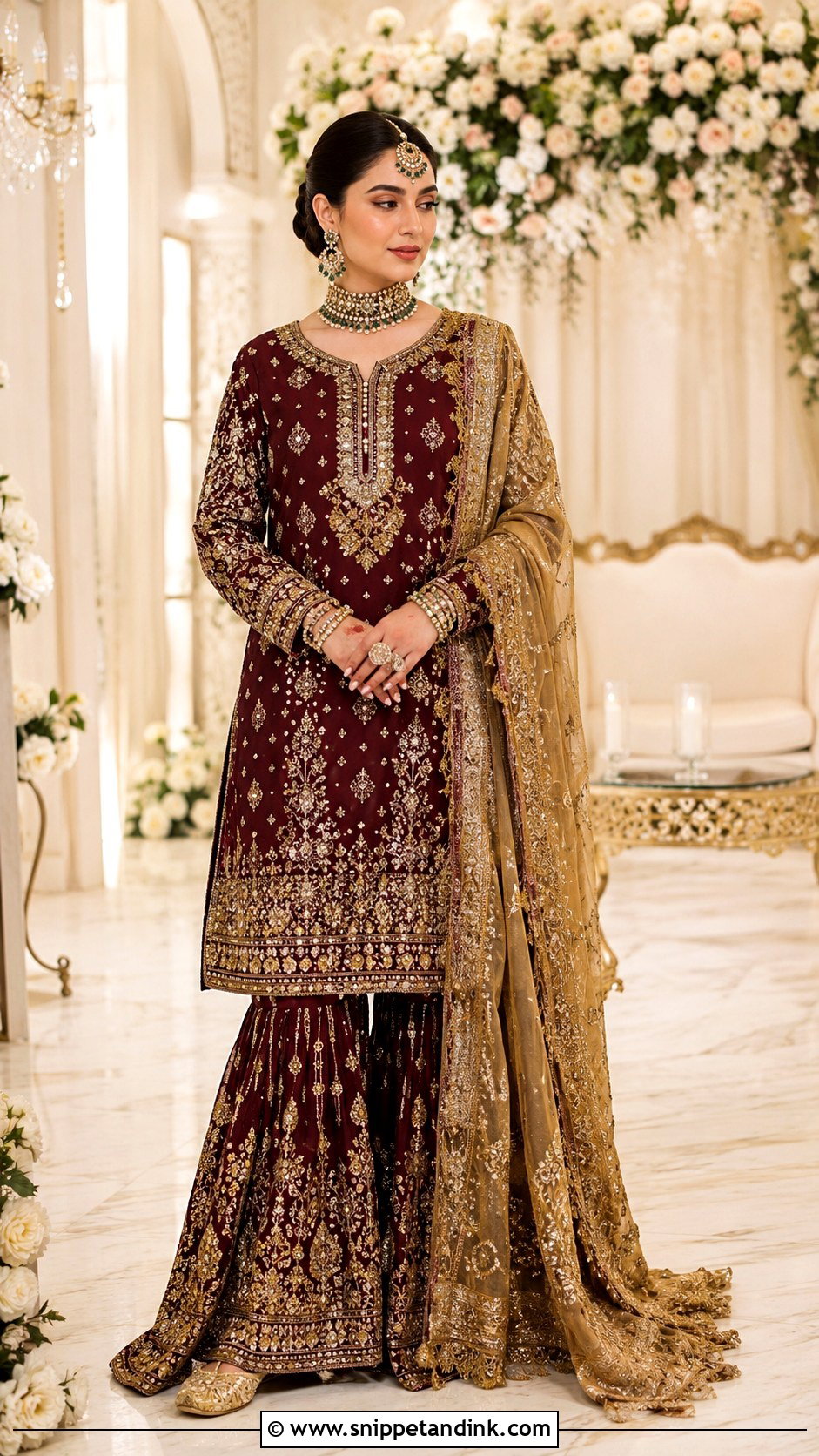
Maroon carries the same royalty as red with more depth, and it suits brides who find bright red overwhelming against their skin. A gharara’s fitted knee joint and flared lower panels give movement when you walk and a lovely spread when you sit for portraits. Velvet, raw silk and tissue all work. Check the gharara’s joint height on you: it should sit just at or below the knee, or the flare starts too early and looks short. A heavy maroon dupatta on the head and a lighter one across the shoulder, with kundan, a passa, stacked bangles and gold khussa, suits baraat or a traditional nikkah.
3. Ivory Pakistani Nikkah Dress
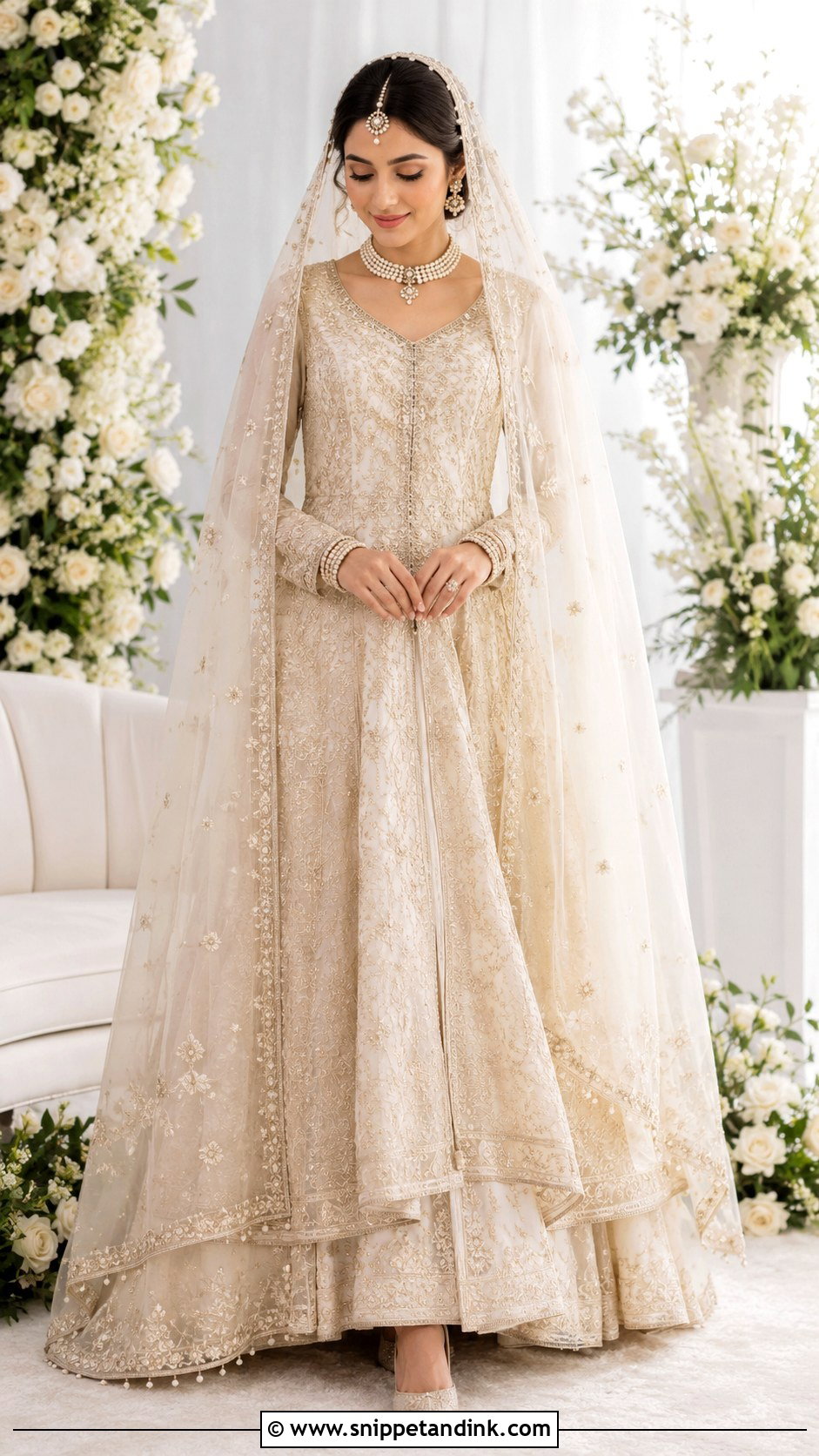
The nikkah is the spiritual heart of the wedding, and many brides want an outfit that feels quieter than the baraat. An ivory Pakistani nikkah dress does that well: an ivory pishwas, a long shirt with gharara, or an embellished maxi with fine gold, silver or pearl work. A sheer organza dupatta with scalloped edges looks soft over the head. Ivory shows makeup marks along the neckline easily, so I set the foundation well and ask the bride to dress before her final face powder. Pearls, polki earrings, a small tikka, champagne eyes and a nude pink lip suit a daytime nikkah.
4. White Pakistani Bridal Sharara
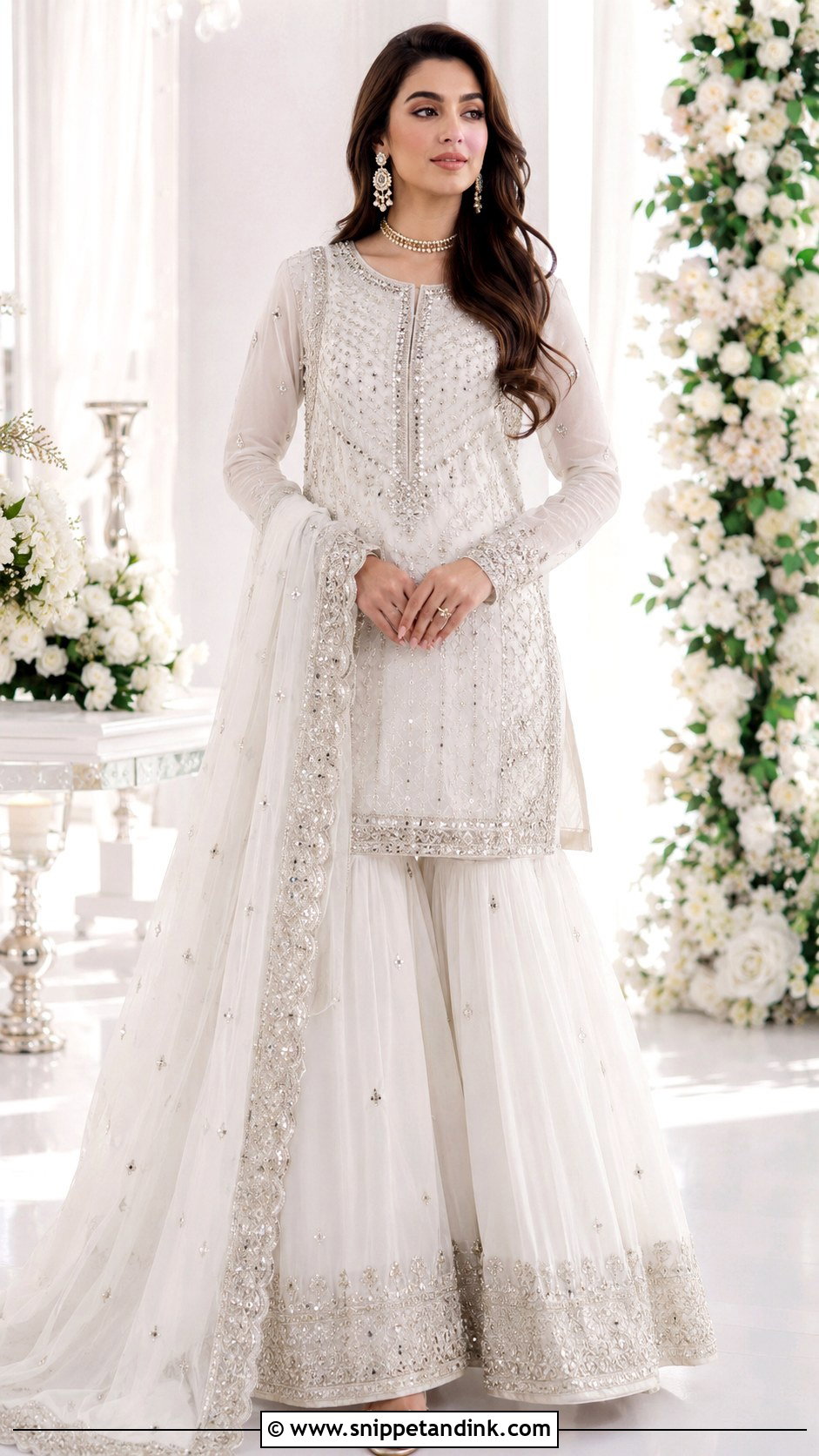
White has become a popular nikkah and walima choice, and a sharara gives it volume without the weight of a full lehenga. A long kameez with pearl, mirror or silver embroidery keeps it traditional. The risk with white is looking washed out on stage, so I’d add warmth through silver-gold jewelry or a dupatta border with some color. Neat dupatta draping matters more on white than on red, because every fold shows. Silver heels, pearl earrings, a dainty choker and soft glam finish it.
5. Gold Pakistani Bridal Lehenga
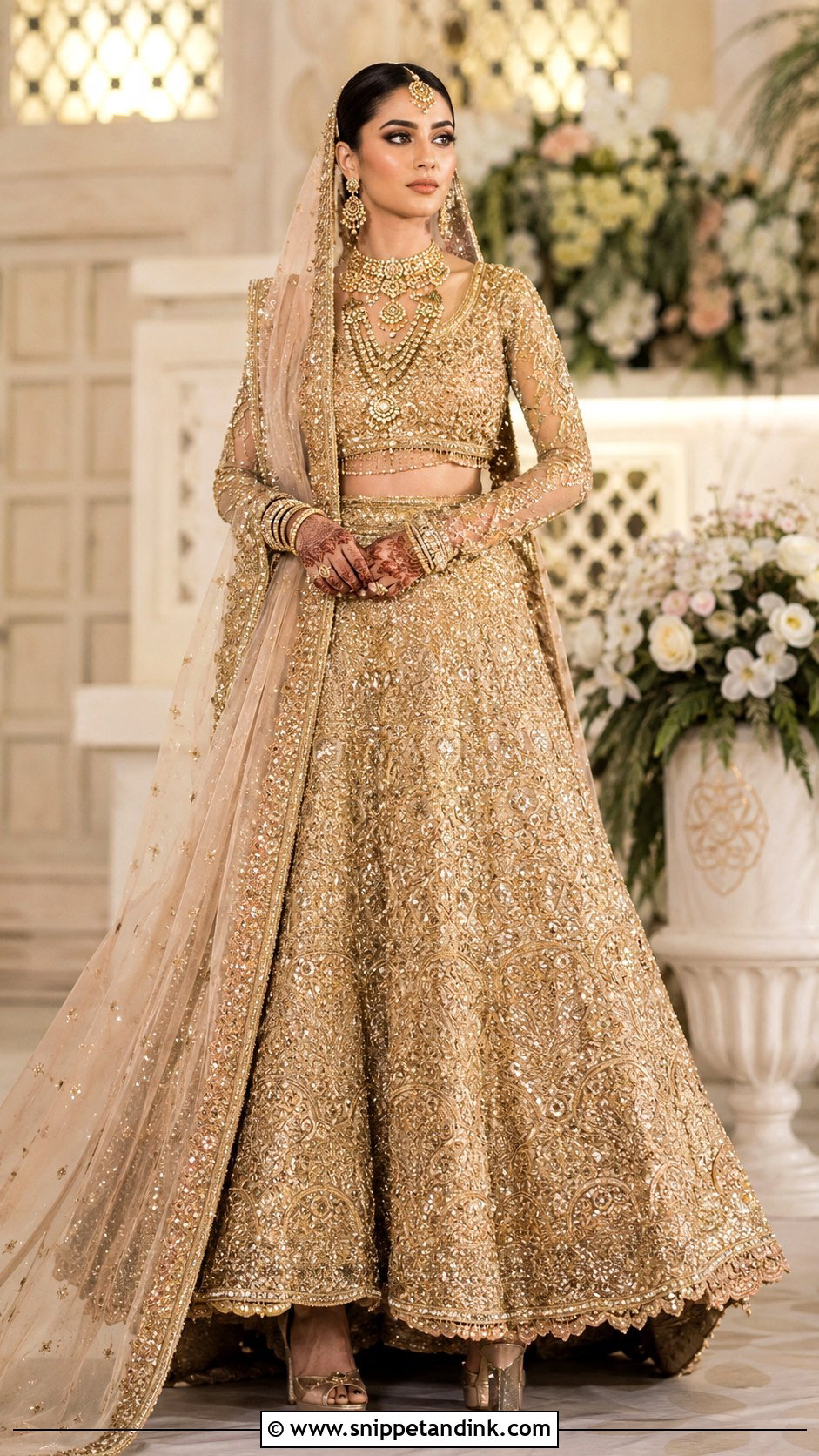
Gold reflects light from every angle, which is why it holds up under the harsh lighting at most wedding halls. Antique gold embroidery, zari, dabka and sequins give it depth so it doesn’t look flat. A long jacket or long shirt over the lehenga makes it more modest and regal. A dupatta in champagne or soft beige layers well over gold. Polki, a bold choker and long earrings suit it. I’d keep makeup warm, with bronzed eyes and a brown-pink lip, since cool tones fight the gold.
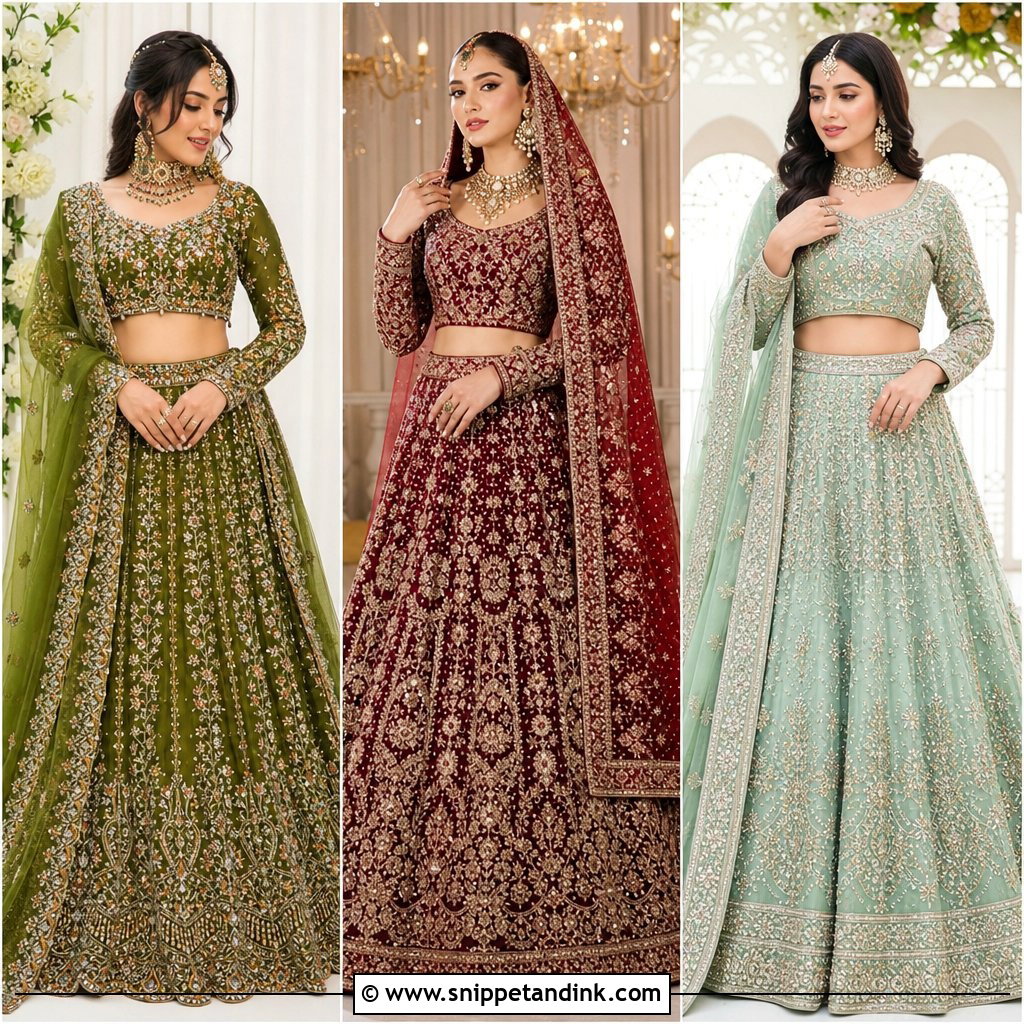
6. Pastel Pakistani Walima Gown
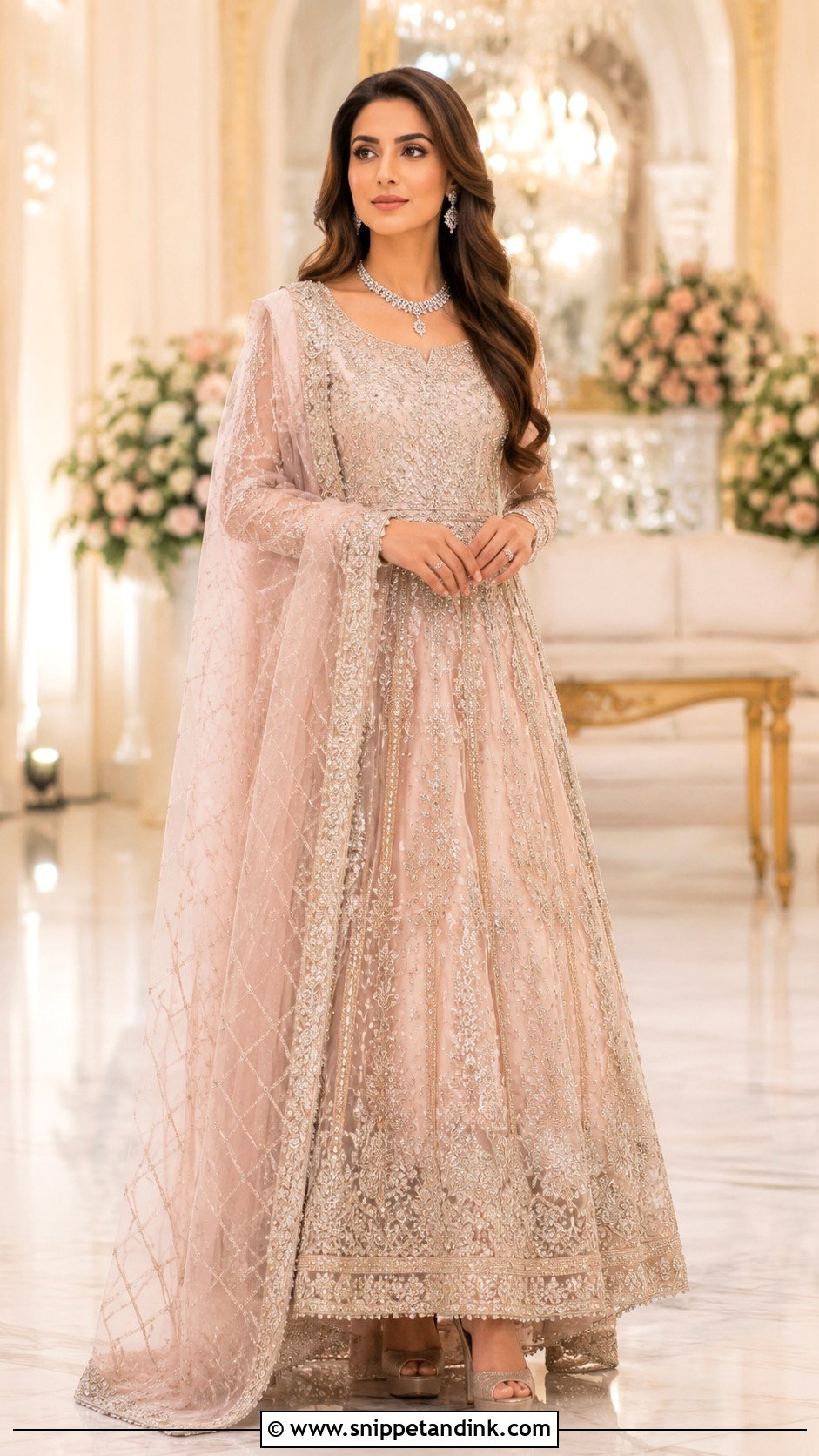
The walima is usually the lighter, more relaxed event, and a pastel gown suits the mood. Blush, champagne, powder blue, mint and lavender feel modern. A flowing gown with crystal, pearl or fine thread work lets you move between tables greeting guests. Drape the dupatta lightly over one shoulder or wear it as a veil. One caution with pastels: bright stage lights and camera flash can wash them out, so I’d pick a shade with a little more depth than you think and test it under strong light. Diamond-style jewelry, sleek heels and soft waves or a low bun finish it.
7. Pink Pakistani Bridal Lehenga
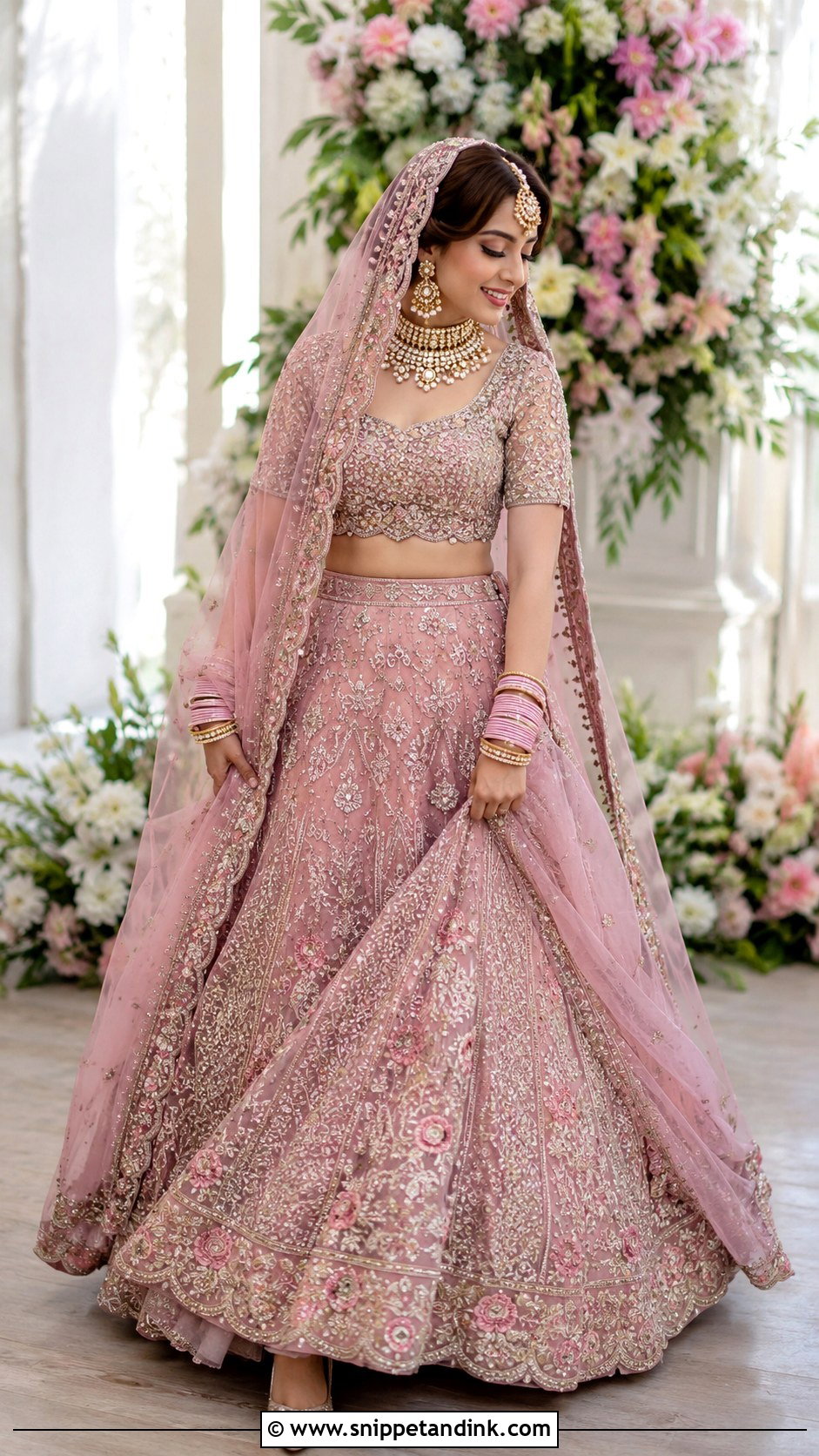
Pink flatters a wide range of skin tones and is the most common alternative to red at a baraat. Rose, rani, blush and dusty pink all have their place. A heavily worked rani pink lehenga with gold or silver can carry a baraat; softer blush suits a walima or nikkah. Match the jewelry metal to the embroidery, since gold kundan on silver-worked pink looks mismatched up close. A pink lip, soft blush and defined eyes tie it together.
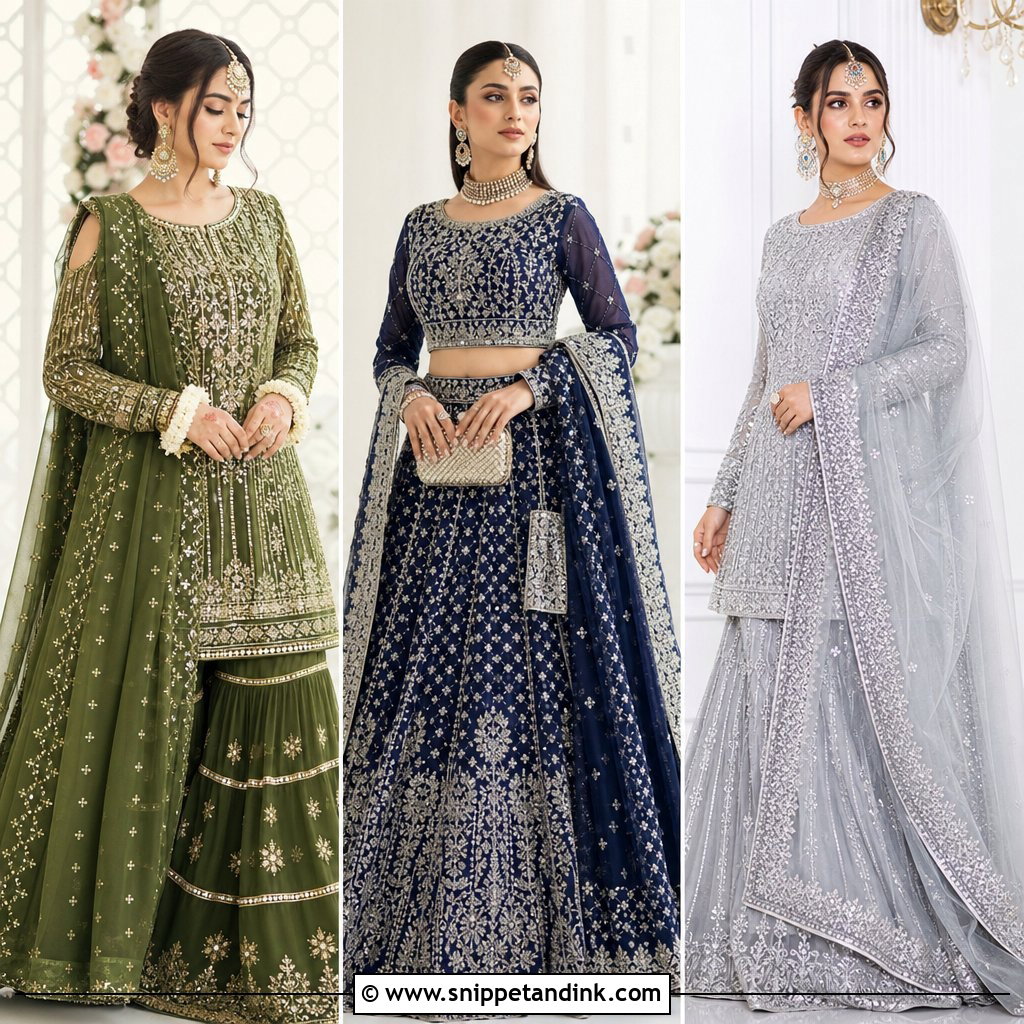
8. Green Pakistani Mehndi Bridal Outfit
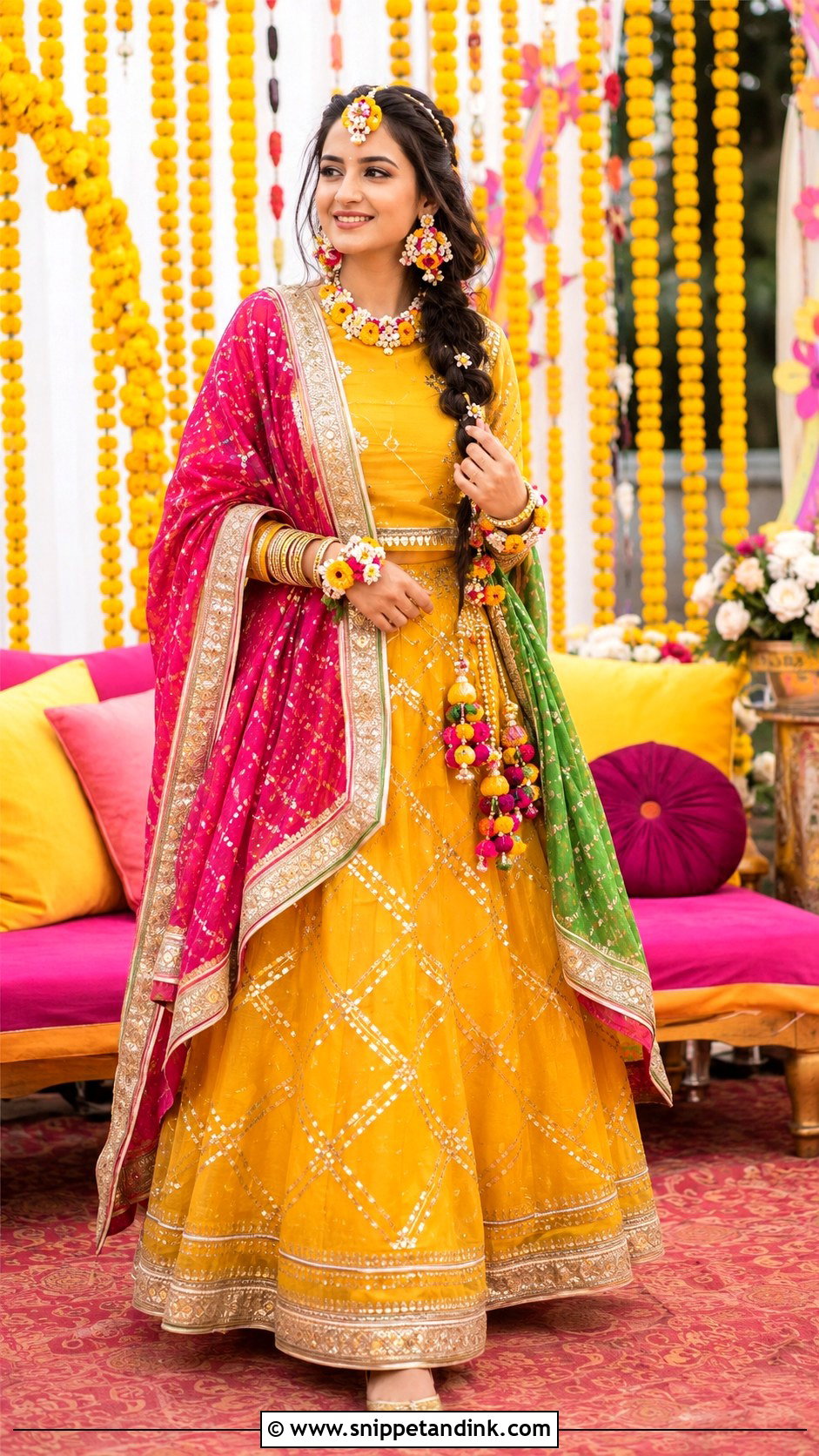
Mehndi nights are loud, colorful and long, and a green Pakistani mehndi bridal outfit is built for them. Green pairs with yellow, orange, fuchsia and gold, so the dupatta can contrast strongly. A lehenga choli, sharara set or long shirt with gharara all work. Gota patti, mirror work and tassels add play. Choose khussa or block heels, because you’ll dance and sit cross-legged for the rasm. Keep the fabric light; heavy outfits make a mehndi feel endless. Floral jewelry, a paranda, bangles and jhumkas suit it.
9. Yellow Pakistani Mehndi Lehenga
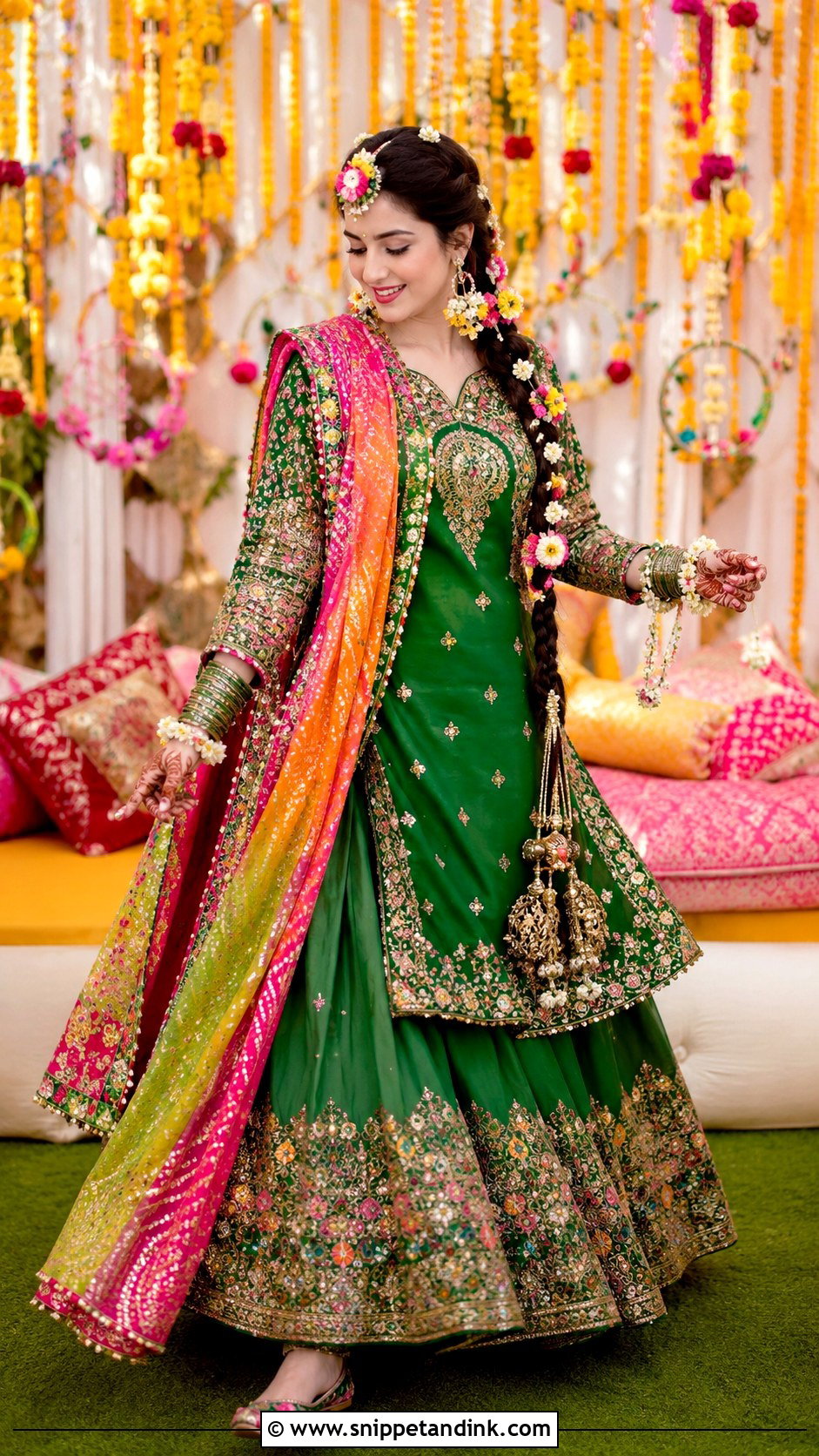
Yellow is the traditional color of the mayun and mehndi, and it’s the one outfit where the bride can be completely playful. Mustard, marigold and soft yellow suit different skin tones; mustard is more forgiving on warmer complexions. Gota, mirror work, colorful thread and small sequins keep it festive without weight. A contrasting dupatta in green, pink, orange or turquoise adds movement. Expect turmeric and oil from the ubtan to stain the outfit if worn during the ritual, so many brides wear an older outfit for the haldi itself and change for the evening. Floral jewelry, a paranda braid, embroidered khussa, peach blush and a coral lip finish it.
10. Orange Pakistani Bridal Sharara
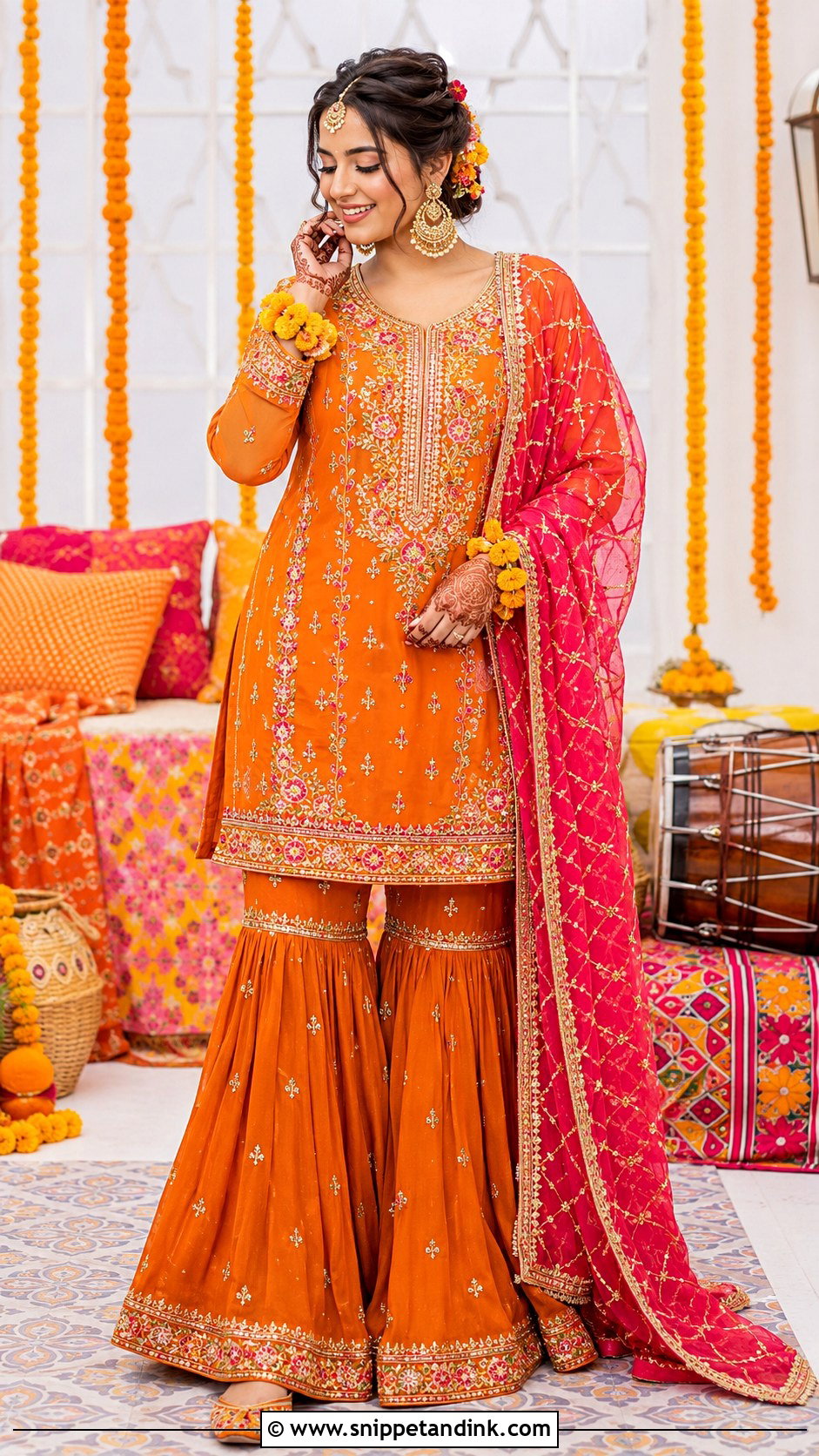
Orange is warm and festive and belongs naturally at a mehndi or dholki. An orange Pakistani bridal sharara in silk, organza or chiffon, with a long or short kameez, gives you room to dance. Gota patti, mirror work and multicolor thread make it lively, and a pink, green or yellow dupatta pushes it further. Orange can clash with some henna stains on day two, so I’d hold your mehndi color against the fabric before settling on a shade. Chaandbalis, floral jewelry and a loose braid or half-up style suit it.
11. Pakistani Farshi Gharara Bridal Look
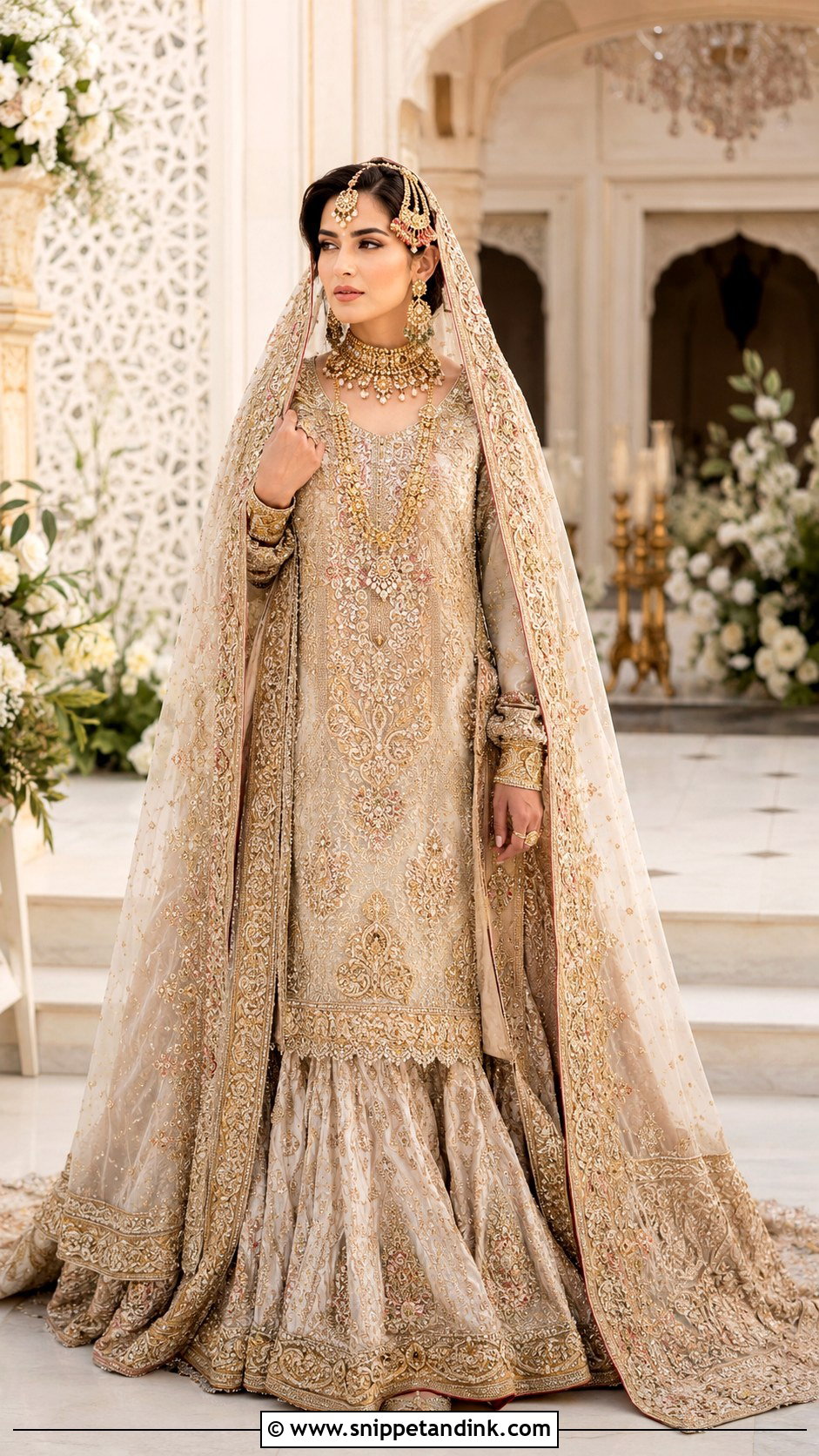
The farshi gharara trails on the floor, and that trail is what makes a Pakistani farshi gharara bridal look so dramatic in seated portraits. Jamawar, tissue, velvet and raw silk all carry it. Zardozi, kora and dabka work in antique gold suits the heritage feel. It’s beautiful and it’s also hard to walk in, so somebody should be assigned to lift the trail for steps and stage entrances. A long kameez, a head dupatta, a passa, layered necklaces and a neat bun suit a baraat or nikkah.
12. Pakistani Pishwas Bridal Dress
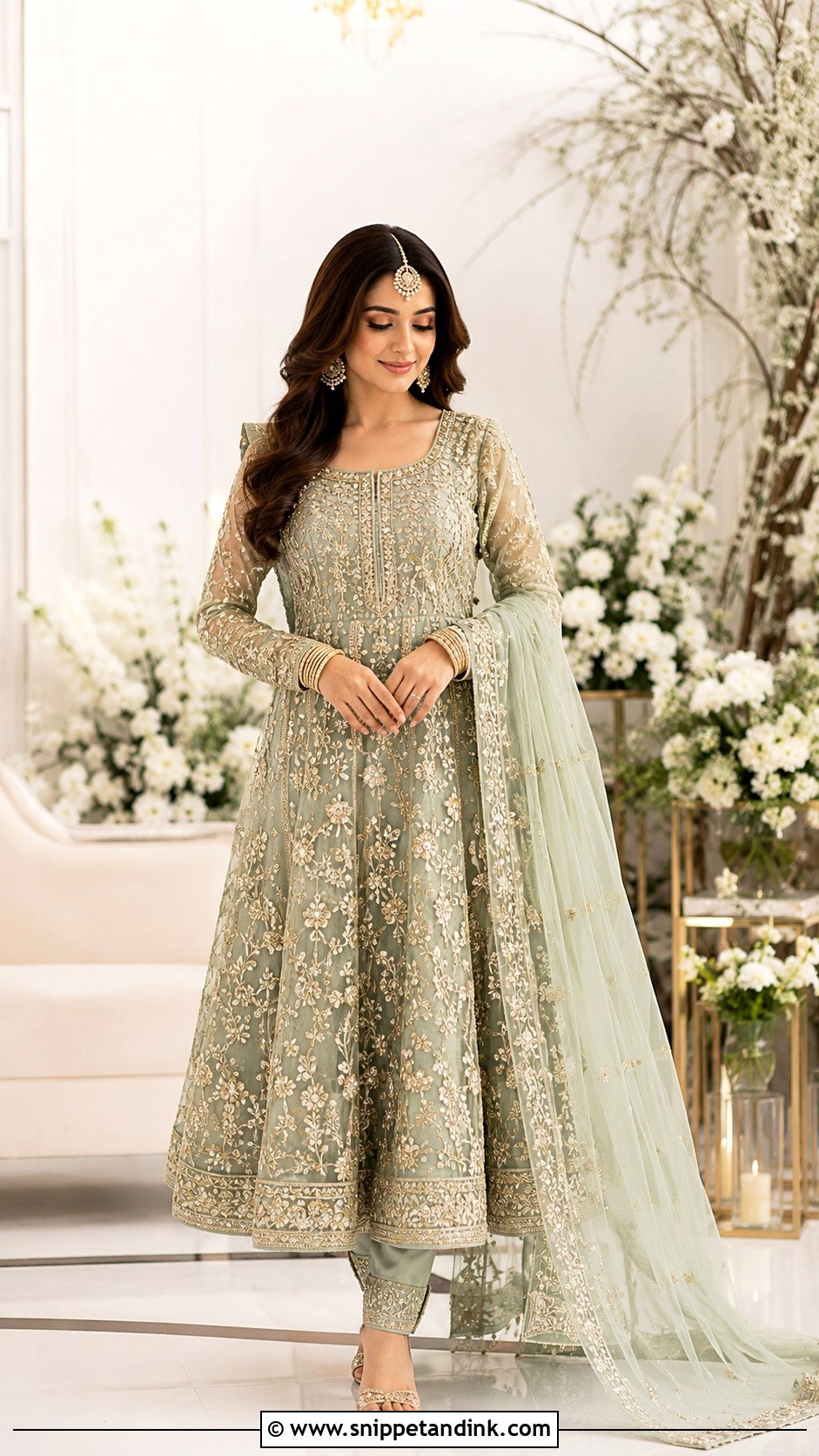
Pishwas outfits flow from a fitted bodice into a long flared skirt, and that movement makes them a favorite for nikkah, engagement and walima. They feel formal without being stiff. Ivory, gold, blush, sage and soft blue work well with pearls, zari or kamdani. Check the waist seam height in the fitting: a pishwas with the seam too low makes most brides look shorter, while a slightly raised waist lengthens the skirt. A churidar underneath, a sheer dupatta, a small tikka and soft waves complete it.
13. Pakistani Anarkali Bridal Dress
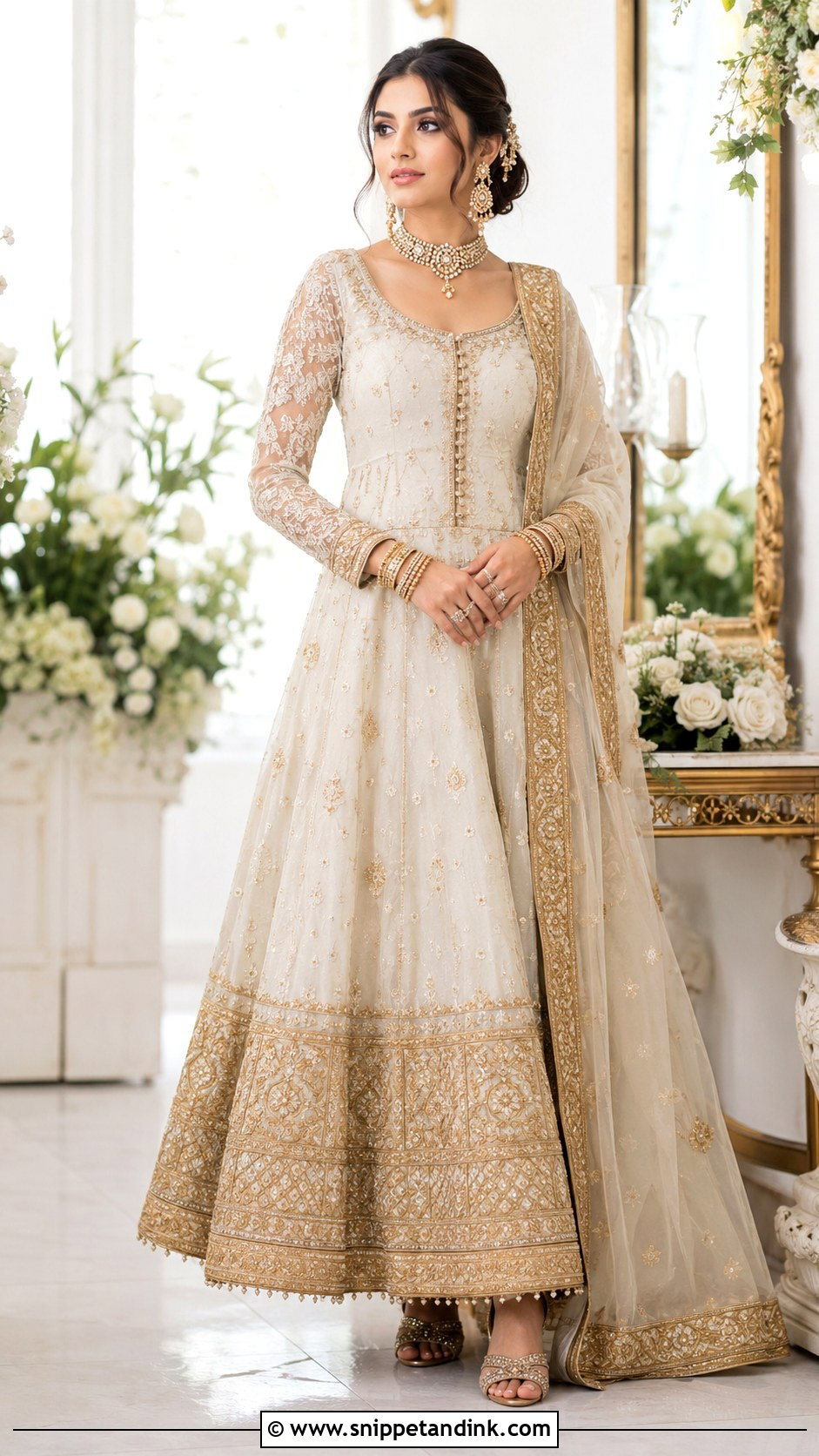
An anarkali gives a lehenga’s flare in one piece, which is simpler to wear and quicker to change into between events. Raw silk, chiffon, organza or net with embroidery at the neck, sleeves, hem and dupatta all work. Ivory, red, blush, gold and emerald read bridal. The kalis, or panels, should be cut generously enough to flare when you turn; a skimpy anarkali hangs flat in photos. A dupatta over the head or one shoulder, a choker, bangles and embellished heels suit nikkah or reception.
14. Pakistani Bridal Maxi Dress
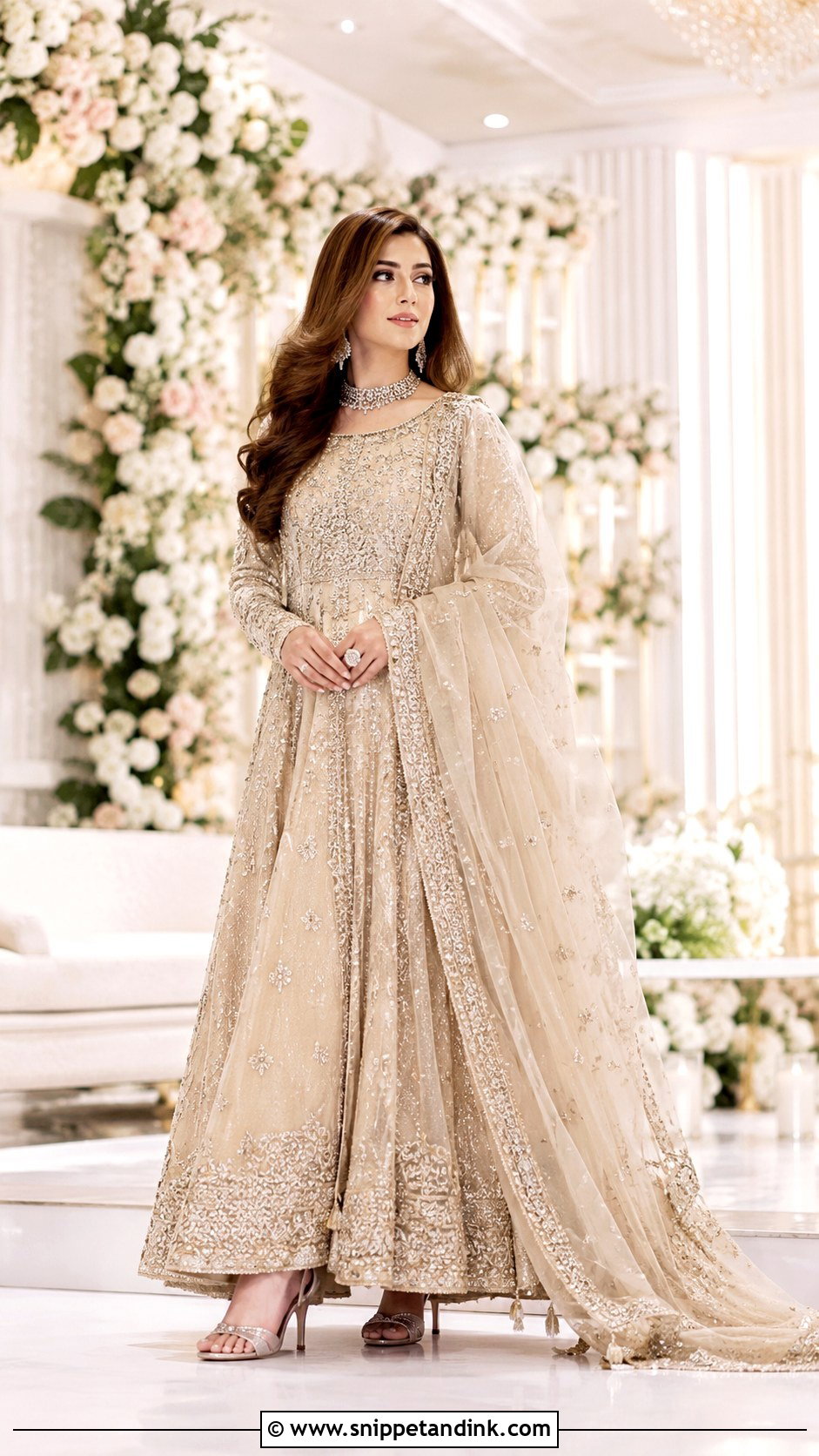
A maxi gives the walima or engagement bride a long, sleek line while still carrying embroidery and a dupatta. Fitted bodice, flowing skirt, embellishment across the front, sleeves and hem. Pastels, champagne, silver, ivory and soft pink all suit it. I’d keep the dupatta very light here, styled over one shoulder or pinned as a veil, because a heavy one drags a fluid maxi off line. Crystal jewelry, sleek heels and a small clutch complete it.


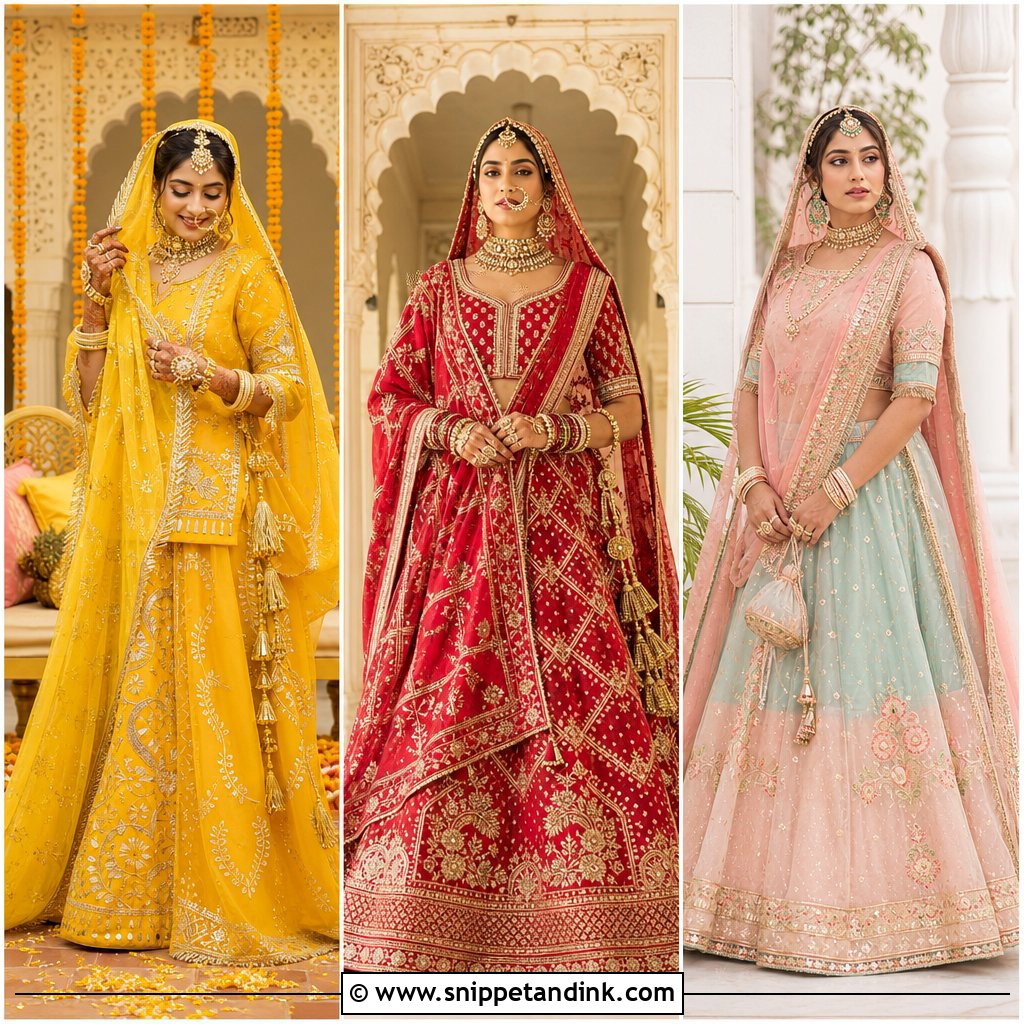
15. Pakistani Bridal Lehenga With Long Shirt
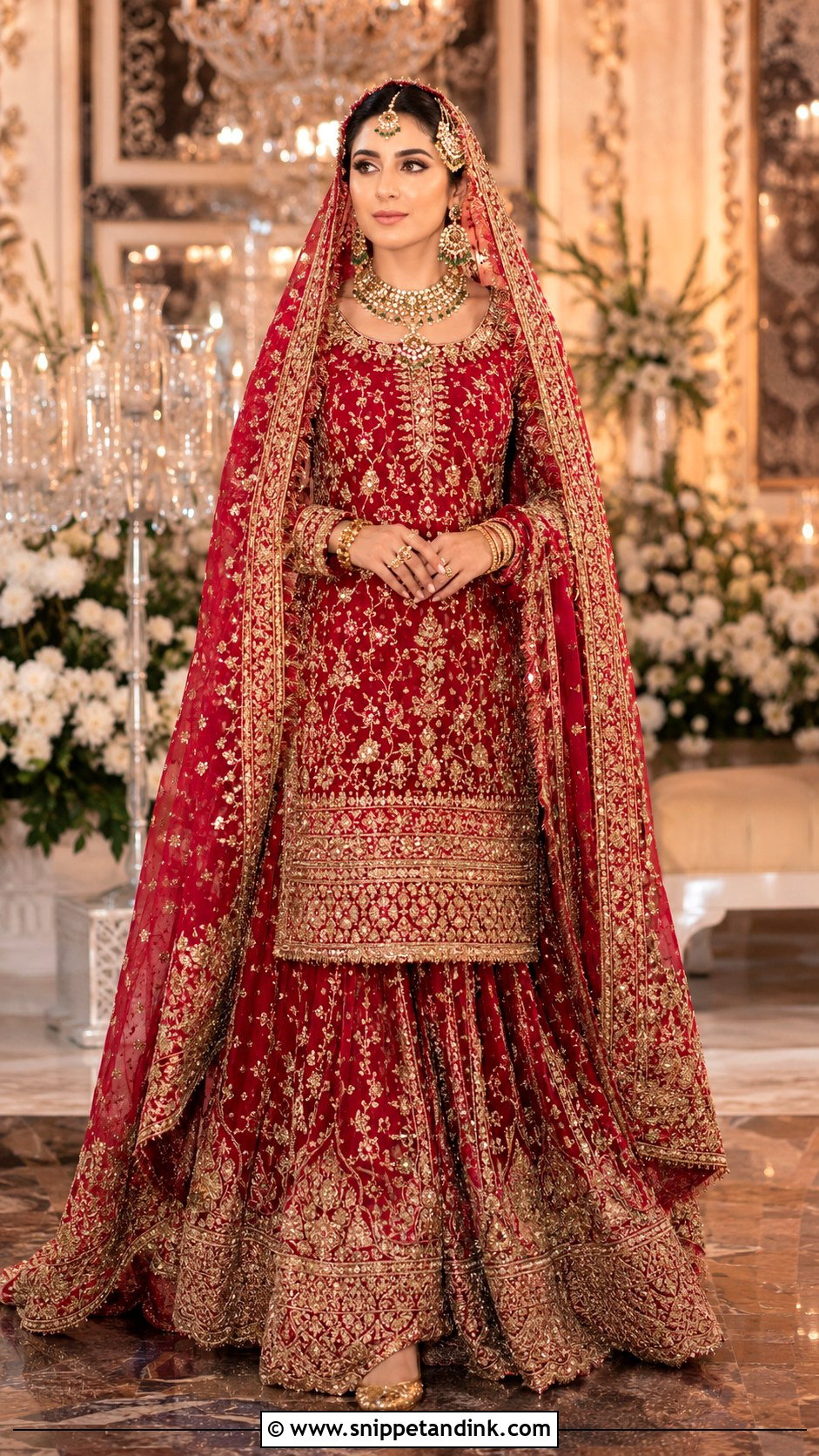
A long shirt over a lehenga gives the volume of a lehenga with far more coverage than a choli, and many families prefer it. The shirt can be straight, slightly flared or front-open. Embroidery should run around the neck, sleeves, borders and hem, since the outfit is seen from every side on stage. Red, maroon, gold, ivory and pink all suit it. The fitting point I watch is the shirt’s side slits: too high and the lehenga waistband shows when you sit. A head dupatta plus a lighter drape, kundan, a matha patti and khussa finish it for baraat or nikkah.
16. Pakistani Bridal Lehenga With Short Choli
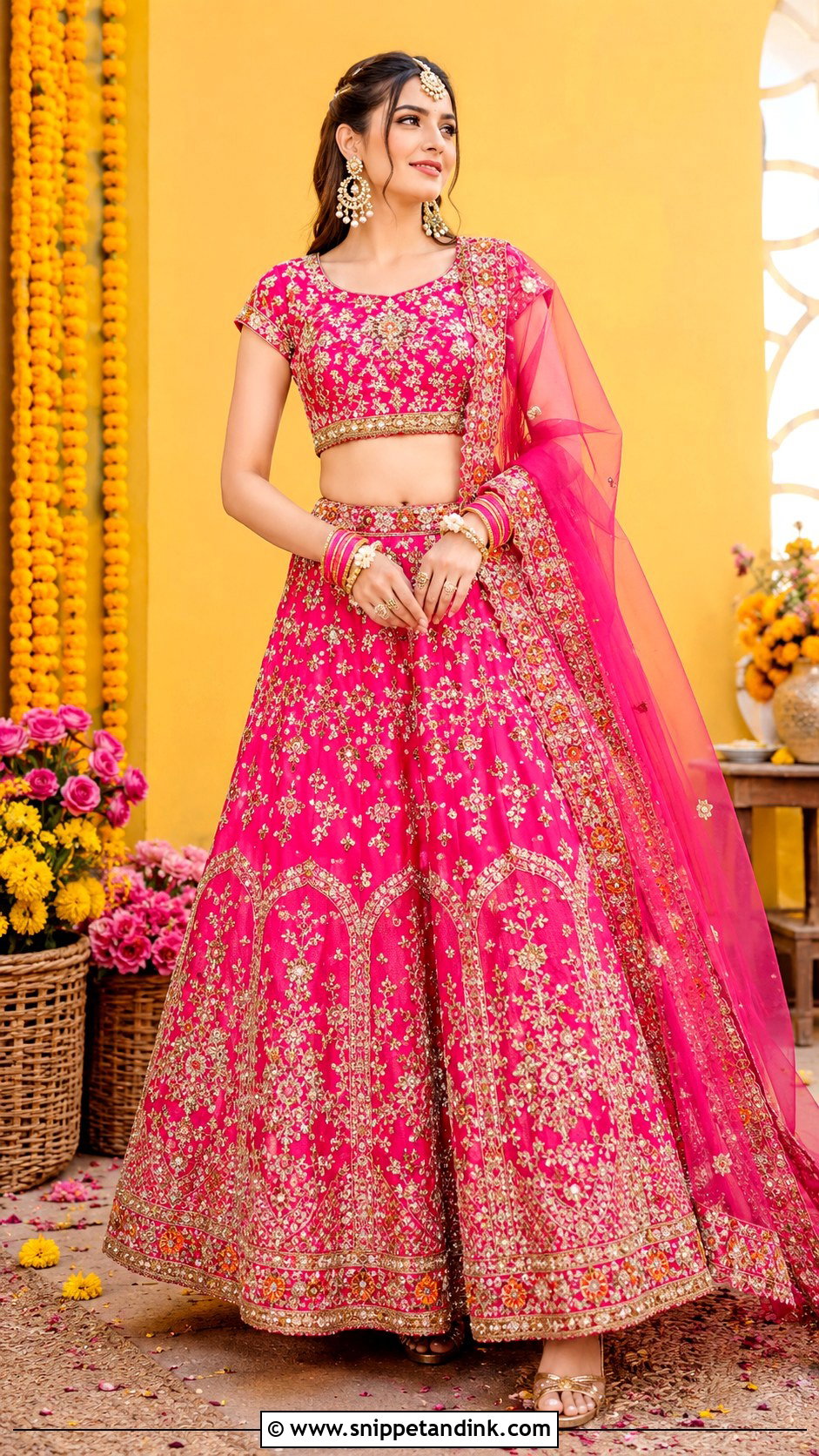
A short choli with a flared lehenga feels youthful and festive, and it shows off back and sleeve embroidery well. It suits mehndi and modern baraat looks. If you want more coverage, a high-waisted lehenga or a longer dupatta drape across the midriff solves it. Pink, green, yellow, red and orange all work. The choli needs a precise fit, because a short blouse rides up when you raise your arms to dance. Statement earrings, a tikka, bangles and embroidered heels suit it.
17. Pakistani Bridal Saree Look
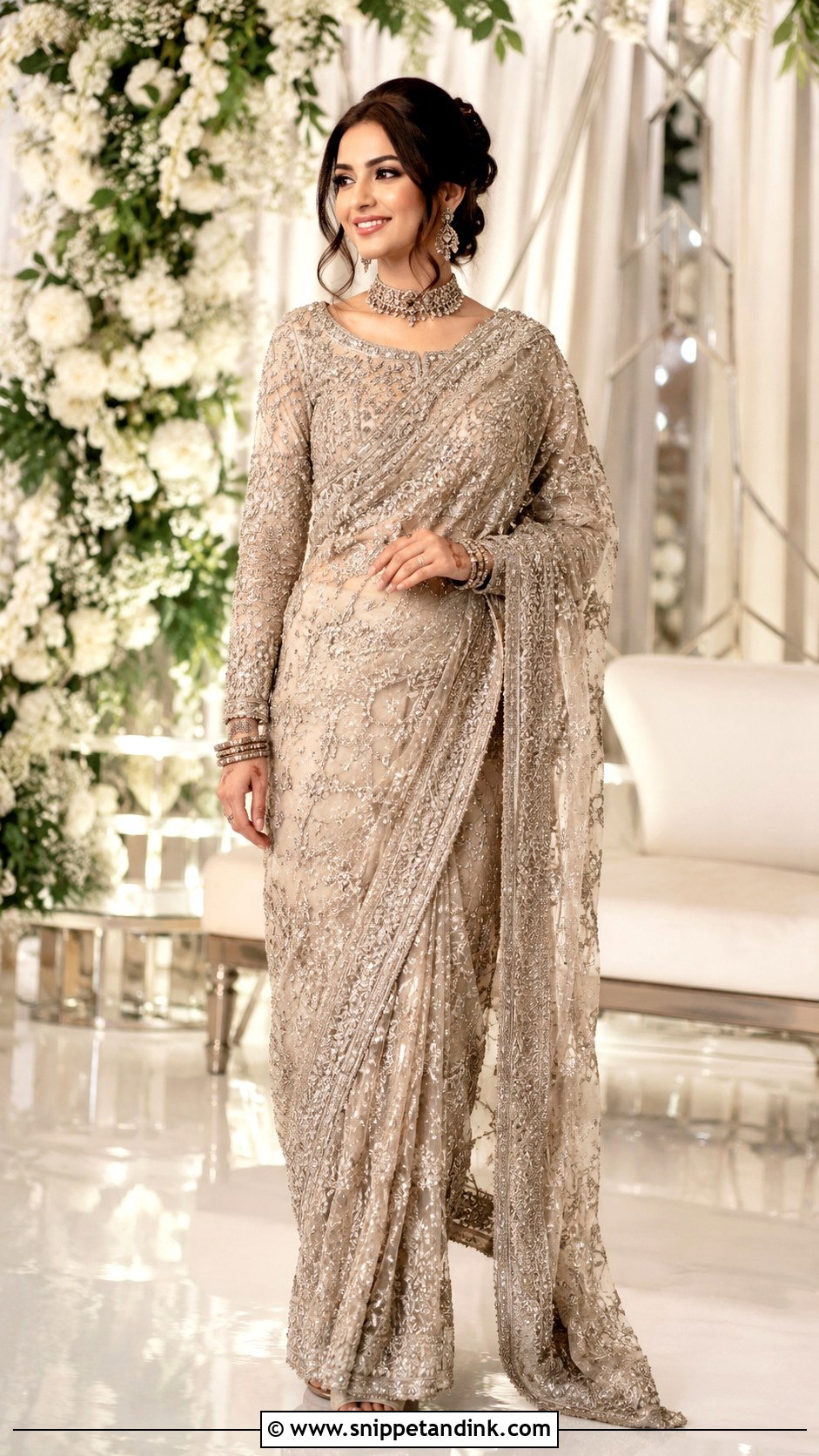
A saree is slightly unexpected for a Pakistani bride, which is part of its charm at a walima, reception or engagement. Tissue, organza, chiffon or silk with heavy embroidery works, in gold, ivory, champagne, blush, silver or soft green. A full-sleeve, longer or jacket-style blouse gives it a Pakistani feel and more modesty. Have the saree pre-pleated and stitched if you aren’t used to wearing one; it saves time and keeps the pleats crisp through hours of greeting. A choker, drop earrings and a sleek bun finish it.
18. Pakistani Bridal Saree With Jacket
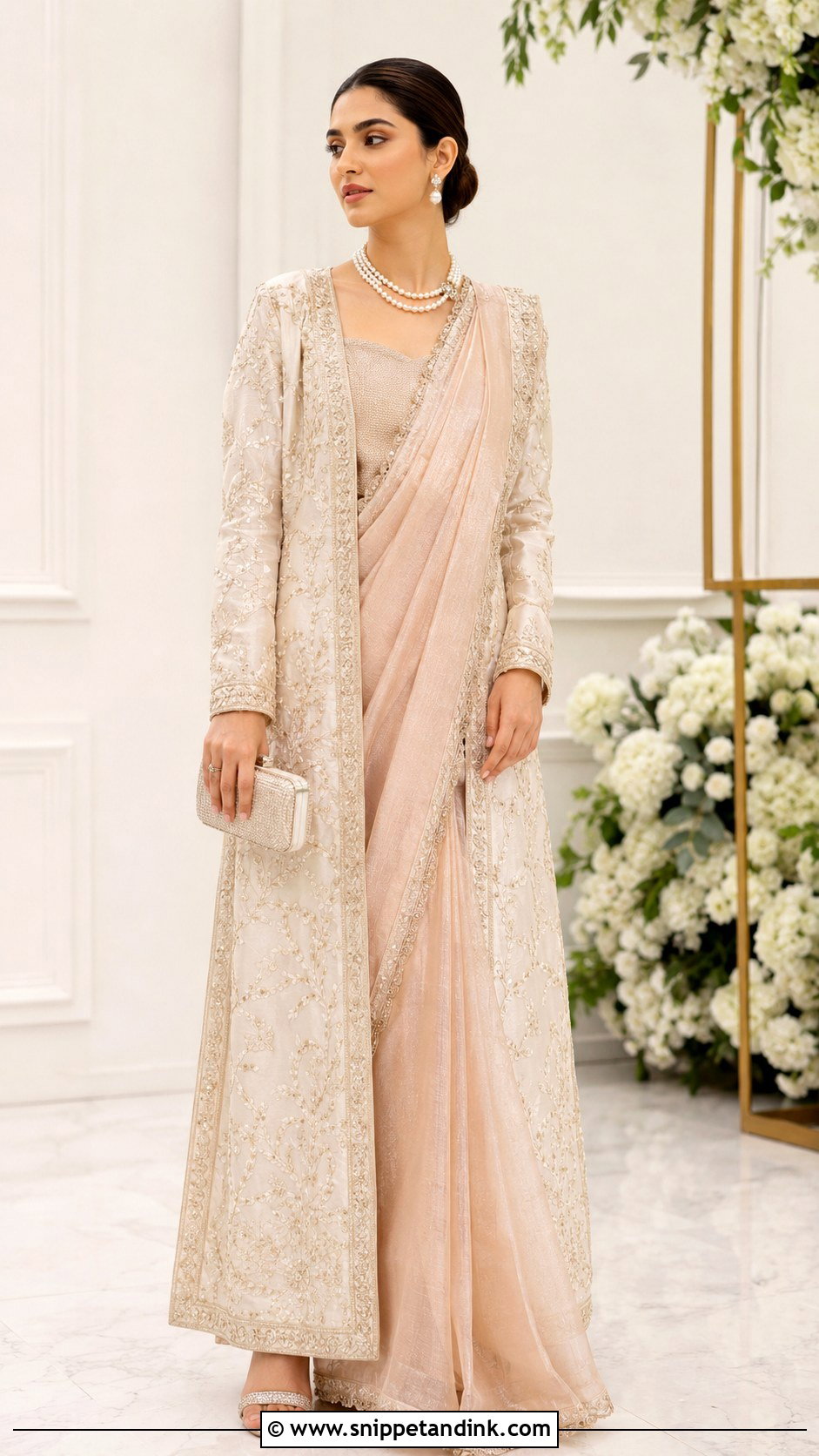
Layering a jacket over a saree adds coverage and a tailored line, and it suits a reception or walima where you’ll stand most of the night. Silk, tissue or organza saree, with a long embroidered jacket in the same shade or a soft contrast. Champagne with ivory or blush with silver work both look refined. Keep the blouse simple so the jacket leads. The jacket’s shoulder fit is everything; a jacket cut too wide makes the whole outfit look borrowed. Pearl or diamond-style jewelry and a sleek bun or side-parted waves suit it.
19. Pakistani Bridal Velvet Lehenga
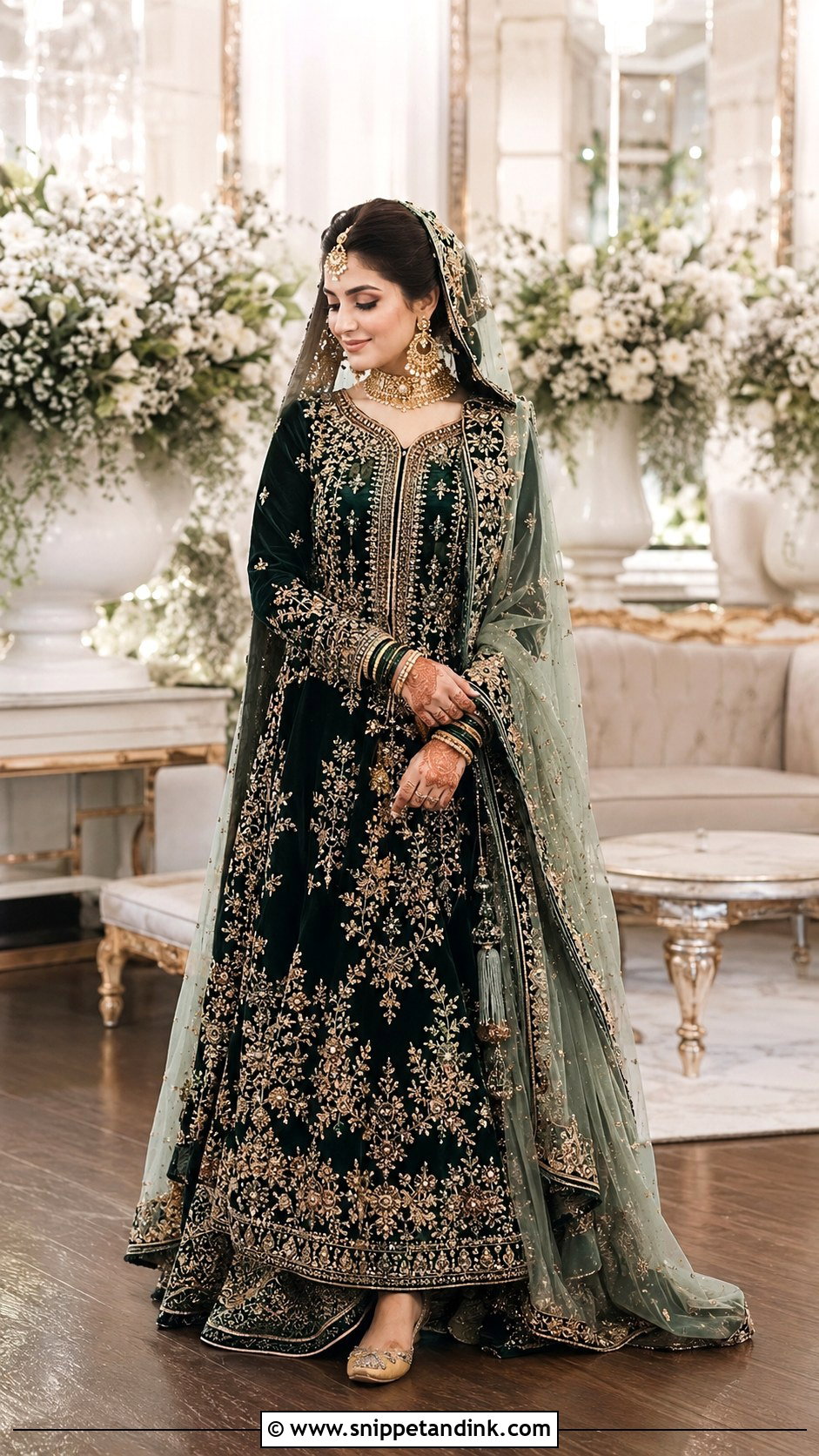
Velvet suits the winter wedding season and holds heavy embroidery without puckering. Maroon, emerald, deep red, navy and plum give it royal depth, and gold zardozi and dabka sit beautifully on the pile. It’s warm and heavy, so I’d balance it with a net or organza dupatta and plan for a cool room. If the hall is overheated, velvet becomes uncomfortable within an hour on stage. A long shirt or structured blouse both work. Antique jewelry, a bold choker, jhumkas and comfortable shoes complete it.

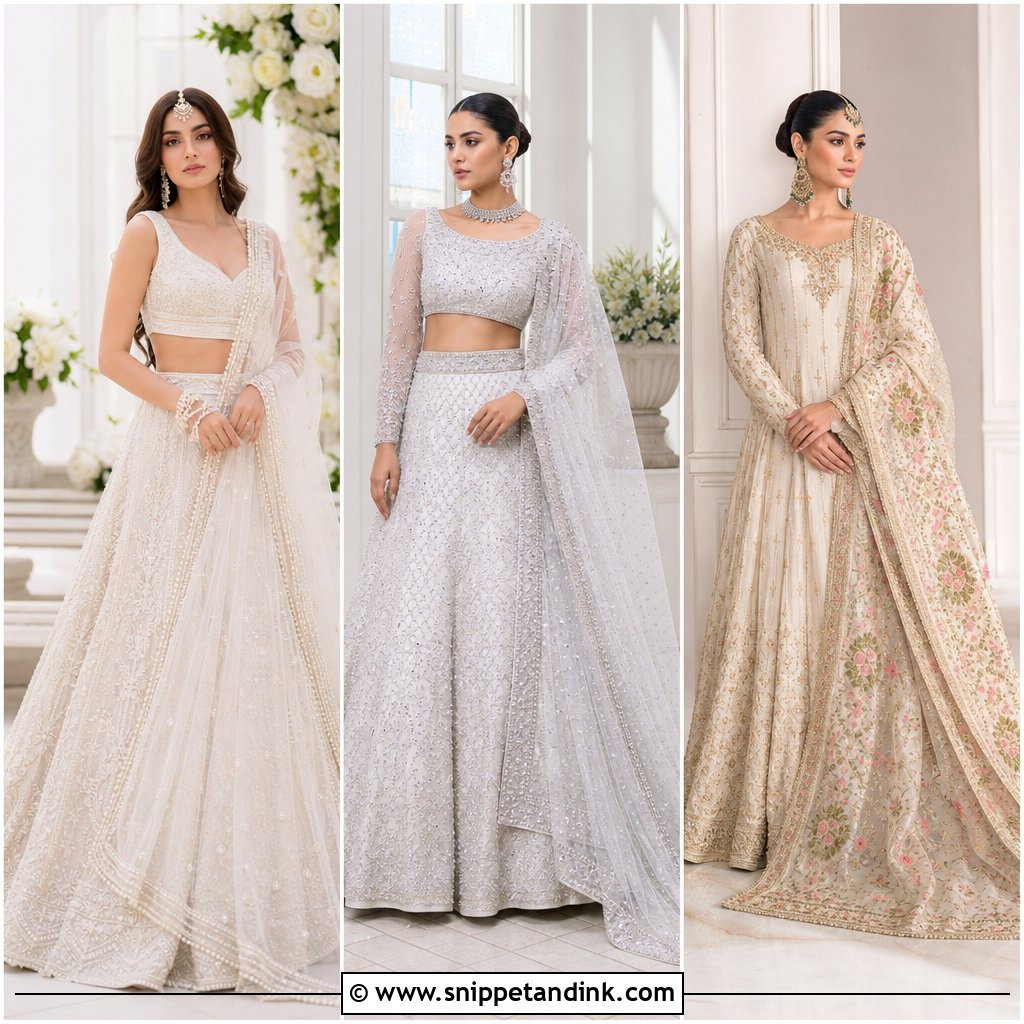

20. Pakistani Bridal Organza Lehenga
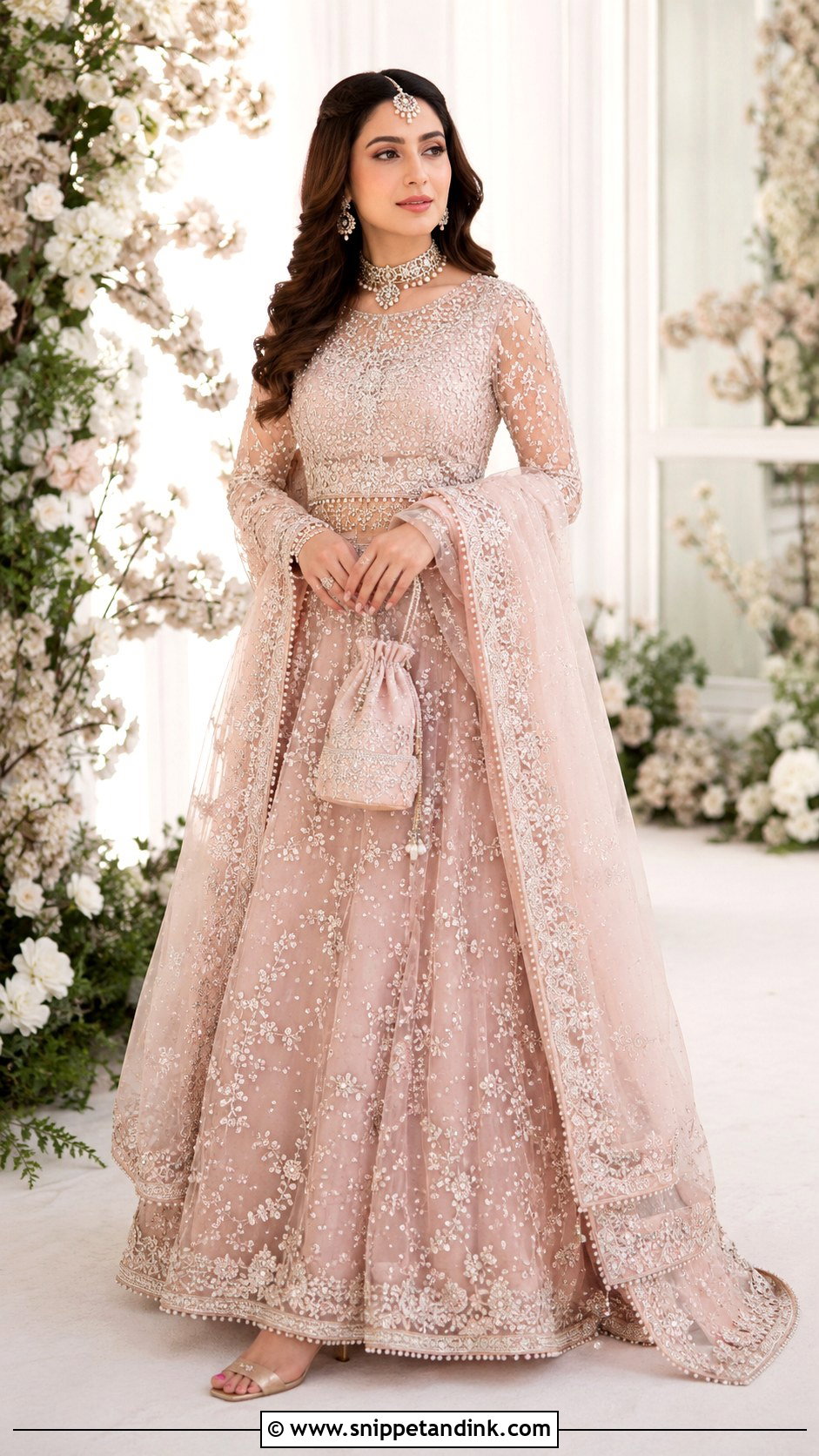
Organza gives a lehenga volume without weight, and that’s the reason brides choose it for daytime events and warmer months. Pearls, sequins and fine threadwork suit its crispness. Pastels, ivory, blush, mint and champagne look fresh in it. The trade-off is that organza creases sharply and can feel scratchy at the waist, so I’d ask for a soft lining on the inner waistband and steam it on a hanger, never iron it directly. A structured blouse or long shirt, a sheer bordered dupatta and dainty jewelry finish it.
21. Pakistani Bridal Tissue Dress
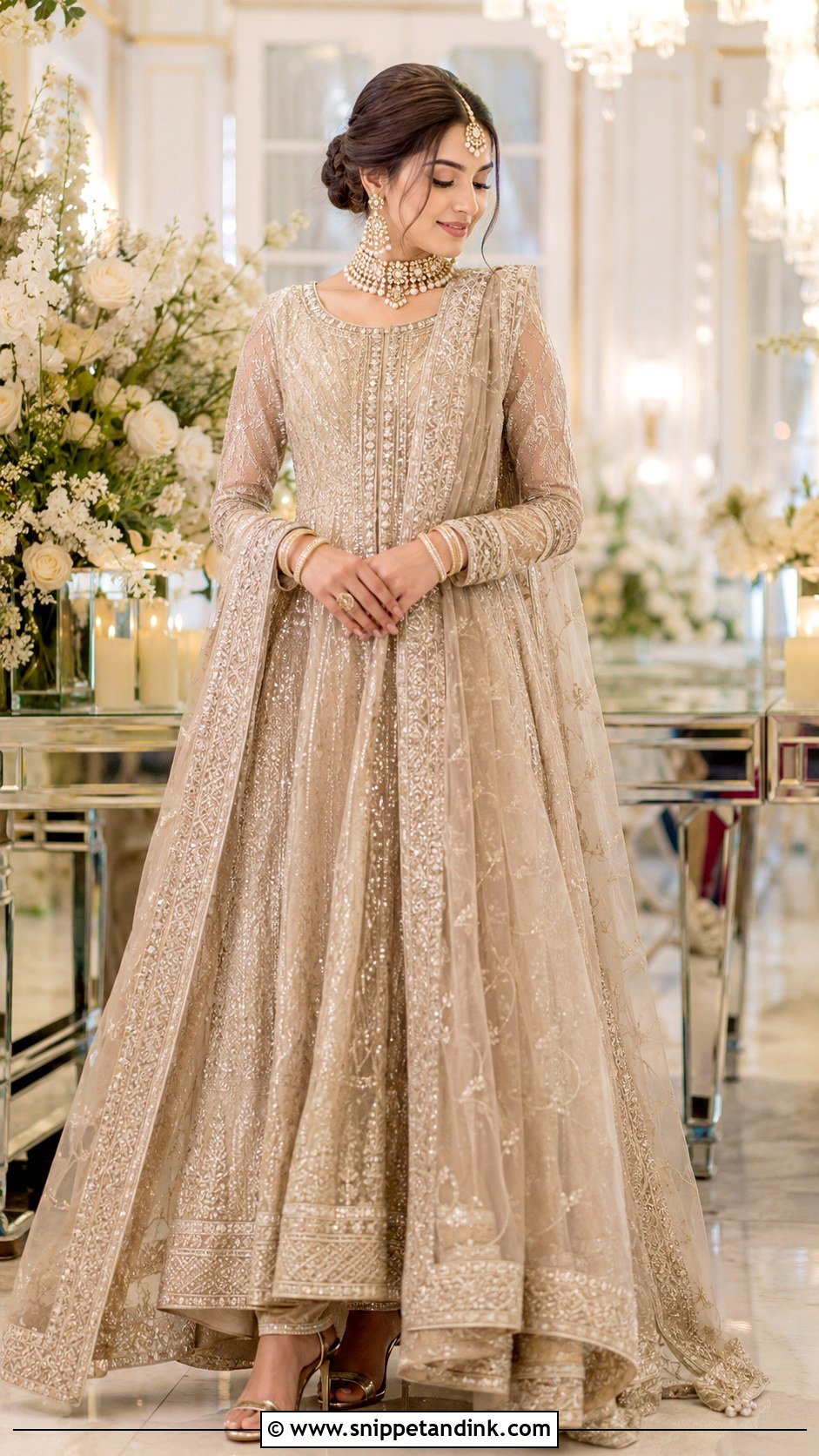
Tissue has a soft metallic sheen built into the weave, so it needs less embellishment to look festive. Lehengas, ghararas, shararas and pishwas all come in tissue. Gold, champagne, rose, ivory and soft peach work well, with light zardozi, pearls and fine borders. Tissue shows every crease, so travel it on a hanger and steam it the morning of. A scalloped tissue dupatta, pearl or polki jewelry, delicate bangles and metallic heels suit nikkah, walima and engagement.
22. Pakistani Bridal Angrakha Dress
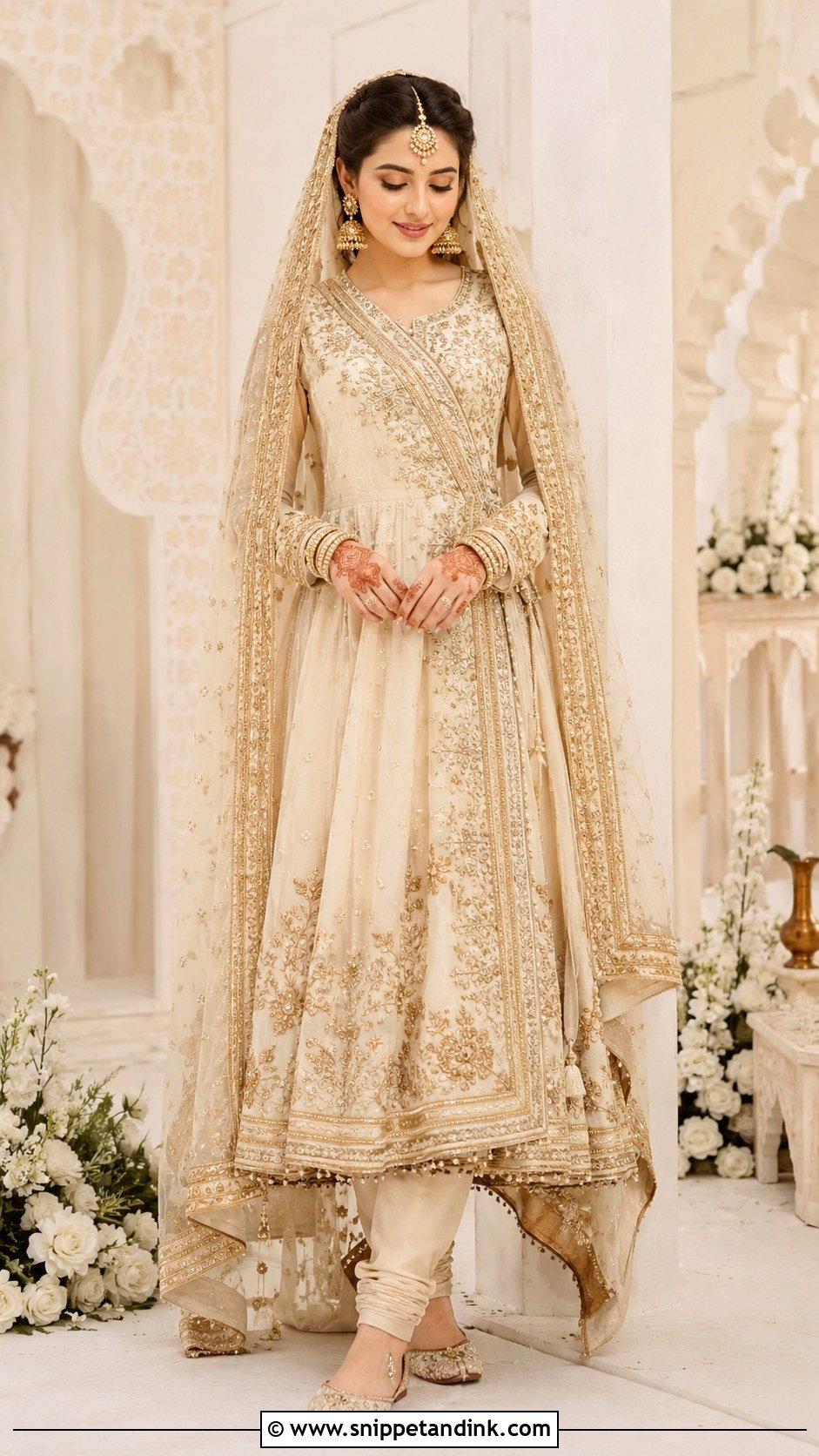
The angrakha’s overlapping front is an old, artisan-looking cut, and it flatters most figures by creating a diagonal across the body. A Pakistani bridal angrakha dress in ivory, red, sage, gold or pink with embroidery on the neck, panels, sleeves and hem works with churidar, lehenga, sharara or gharara. The overlap is held by ties or hooks, and I’d add a hidden hook at the chest so it doesn’t open when you lean forward to sign the nikah nama. A heavy-bordered dupatta, jhumkas, a tikka and soft curls suit it.
23. Pakistani Bridal Peplum Lehenga
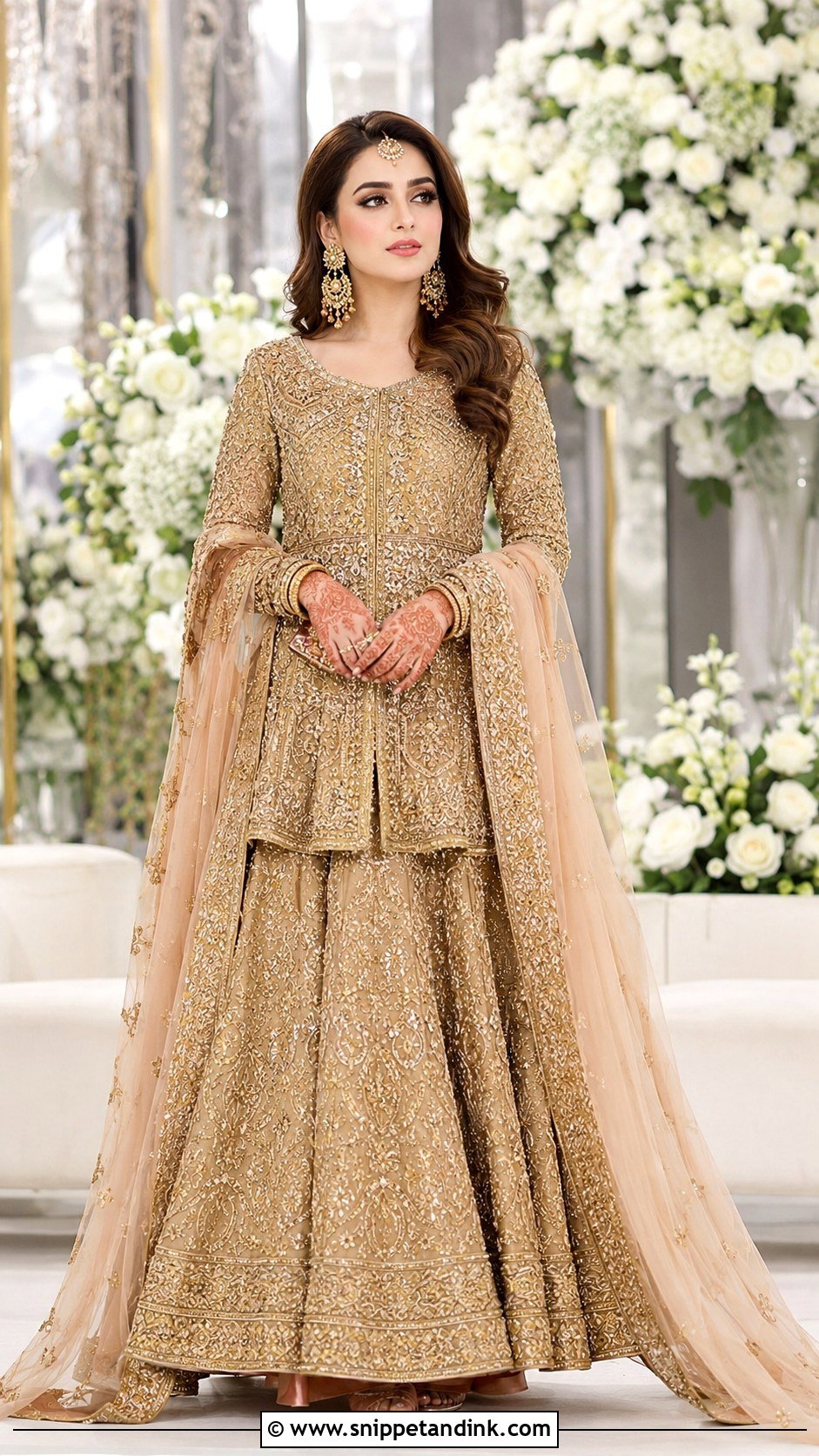
A peplum top gives shape at the waist and a little coverage around the midsection, without the length of a long shirt. Balance is the rule: a heavily embroidered peplum with a simpler lehenga, or the other way round. Red, pink, gold, green and ivory all suit it. The peplum flare should start at your natural waist, not below it, or it adds width at the hip. A dupatta over one shoulder or the head, statement earrings and soft glam suit mehndi, baraat or engagement.
24. Pakistani Bridal Cape Dupatta Look
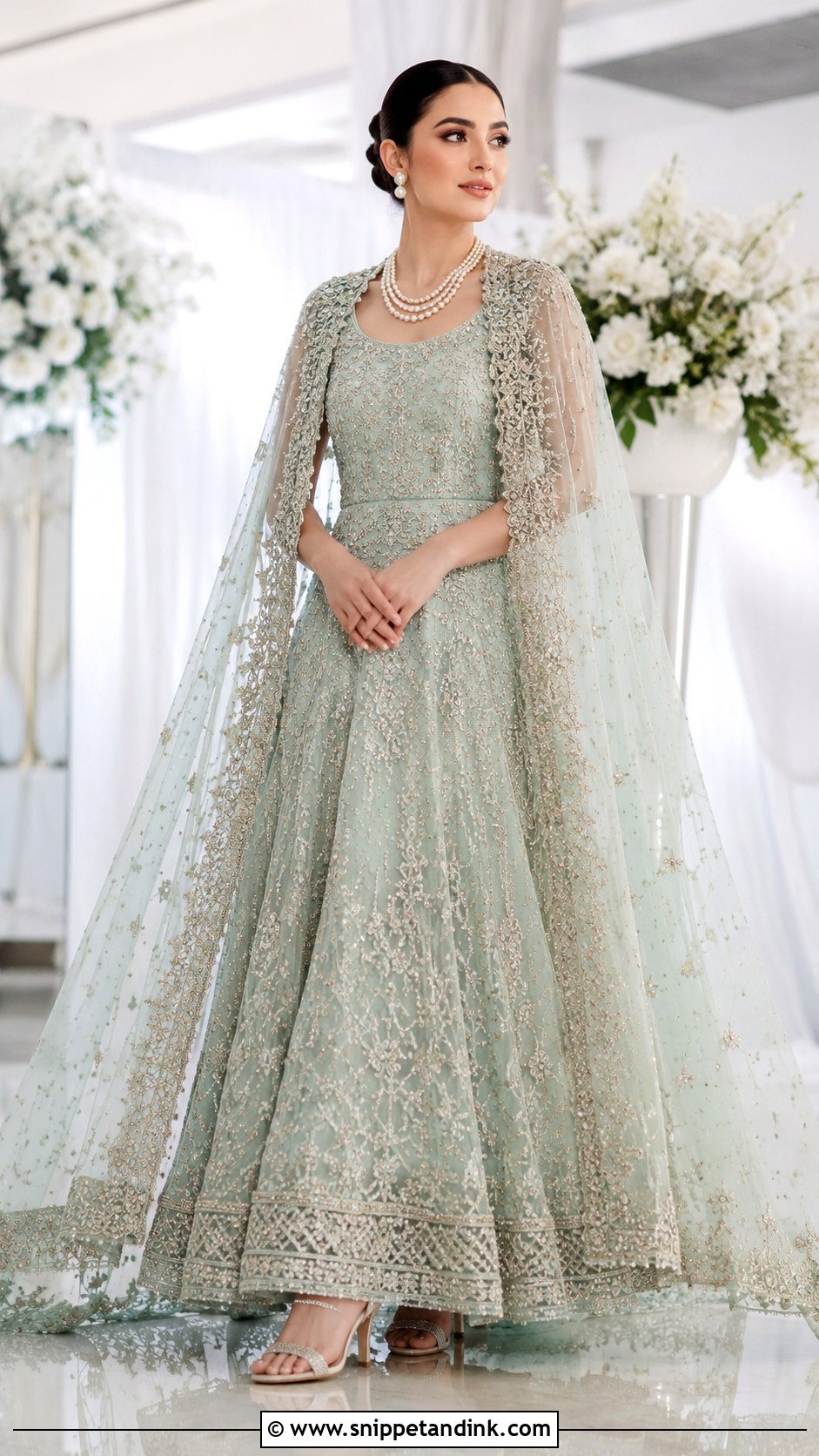
A cape dupatta stays put, which is the main reason I suggest it. Instead of a drape that needs constant fixing, an embroidered sheer cape attached at the shoulders gives coverage and frees your hands for greeting guests. It works over a lehenga, sharara or gown. Pearls, sequins and thread work keep it light. Blush, ivory, mint and champagne suit it. Choose neat hair and sleek jewelry so the cape shows. It suits mehndi, walima and reception brides who want modest styling with a modern line.
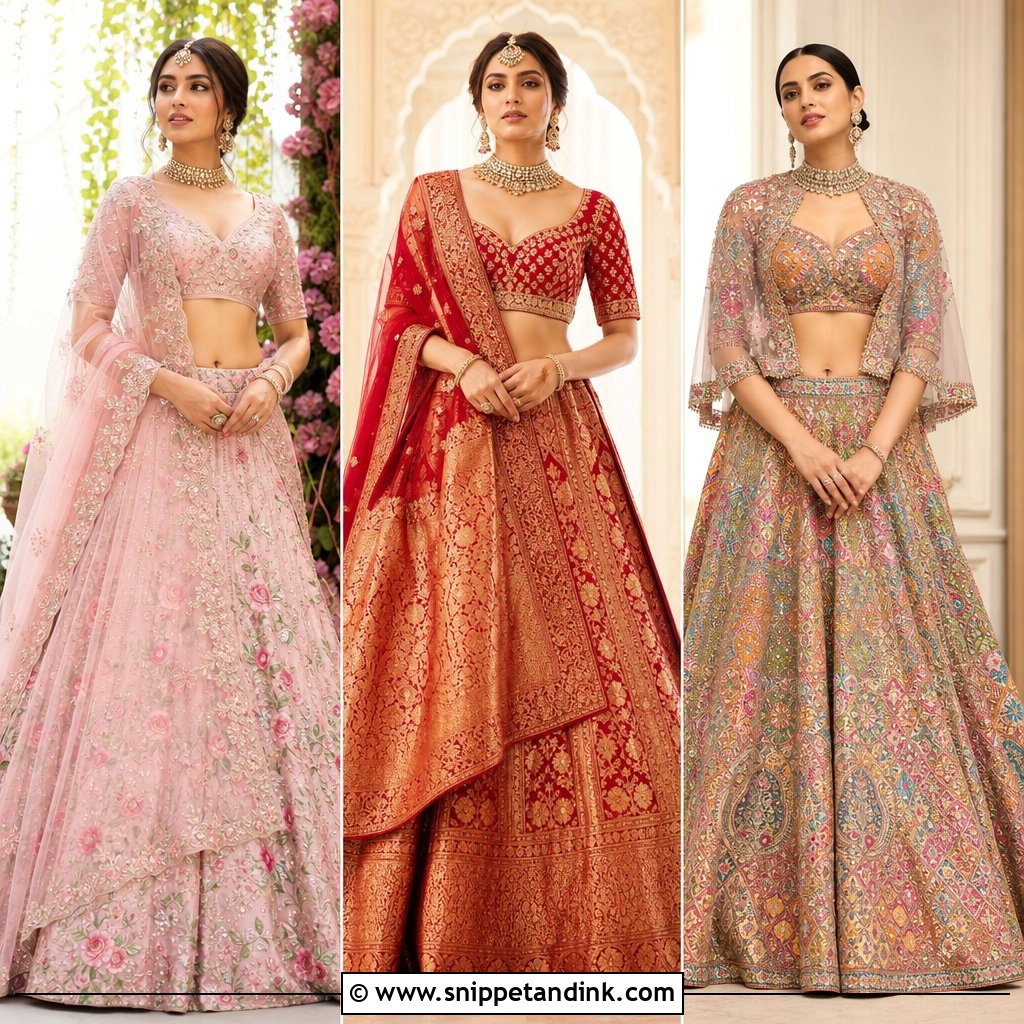
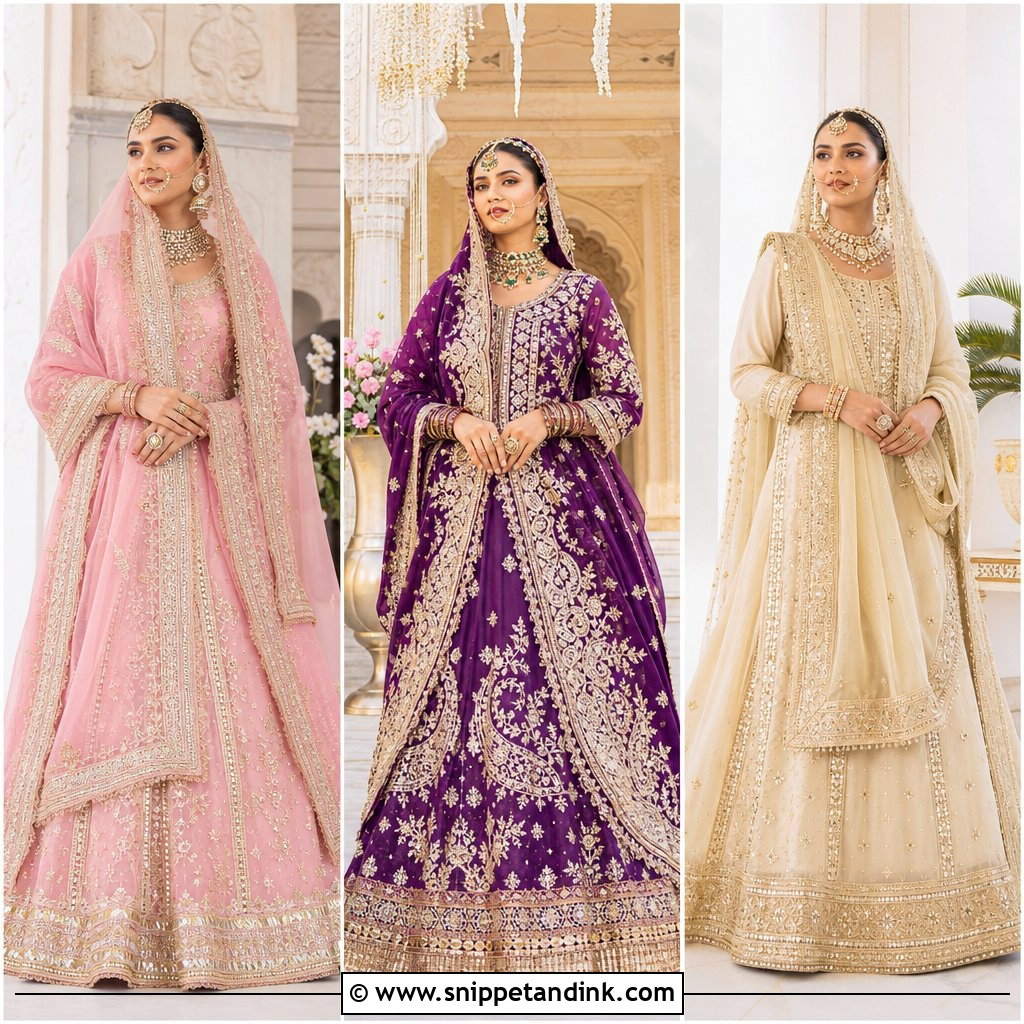
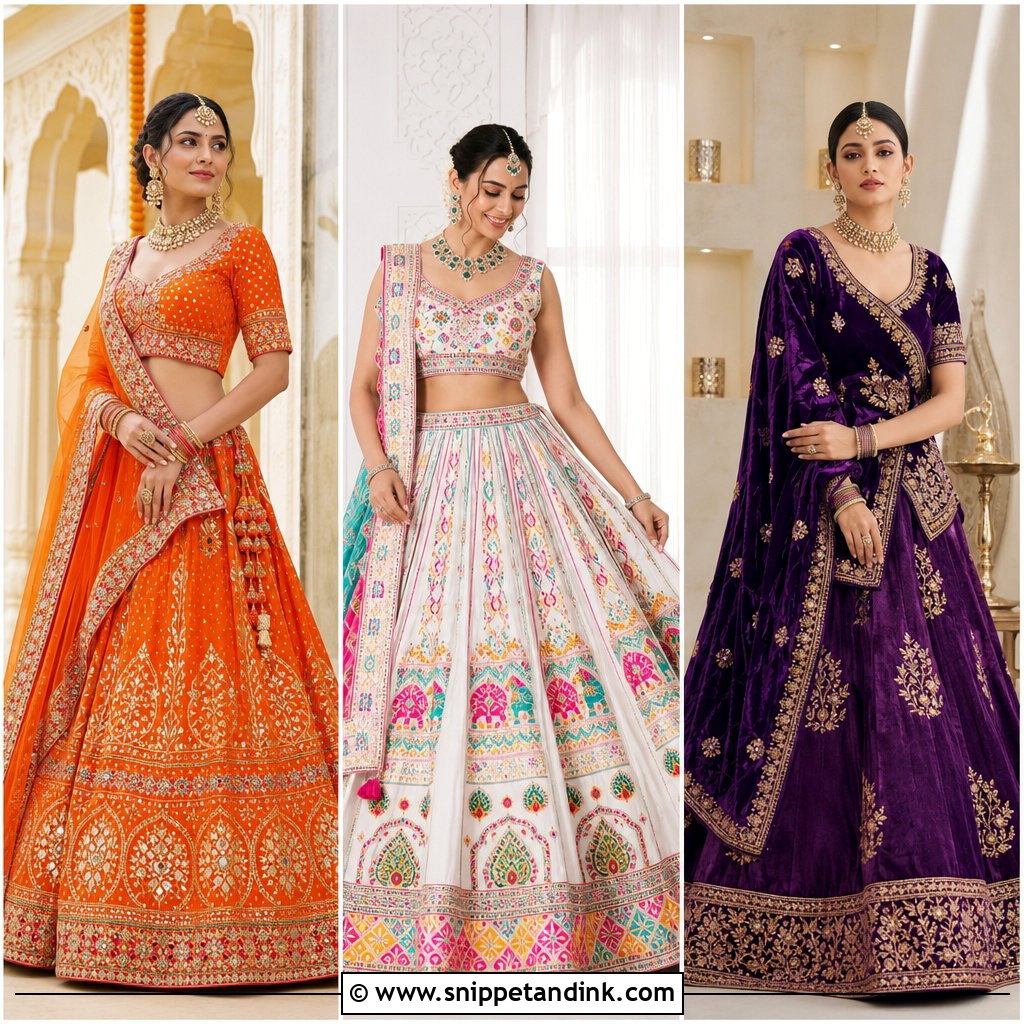


25. Pakistani Bridal Double Dupatta Look
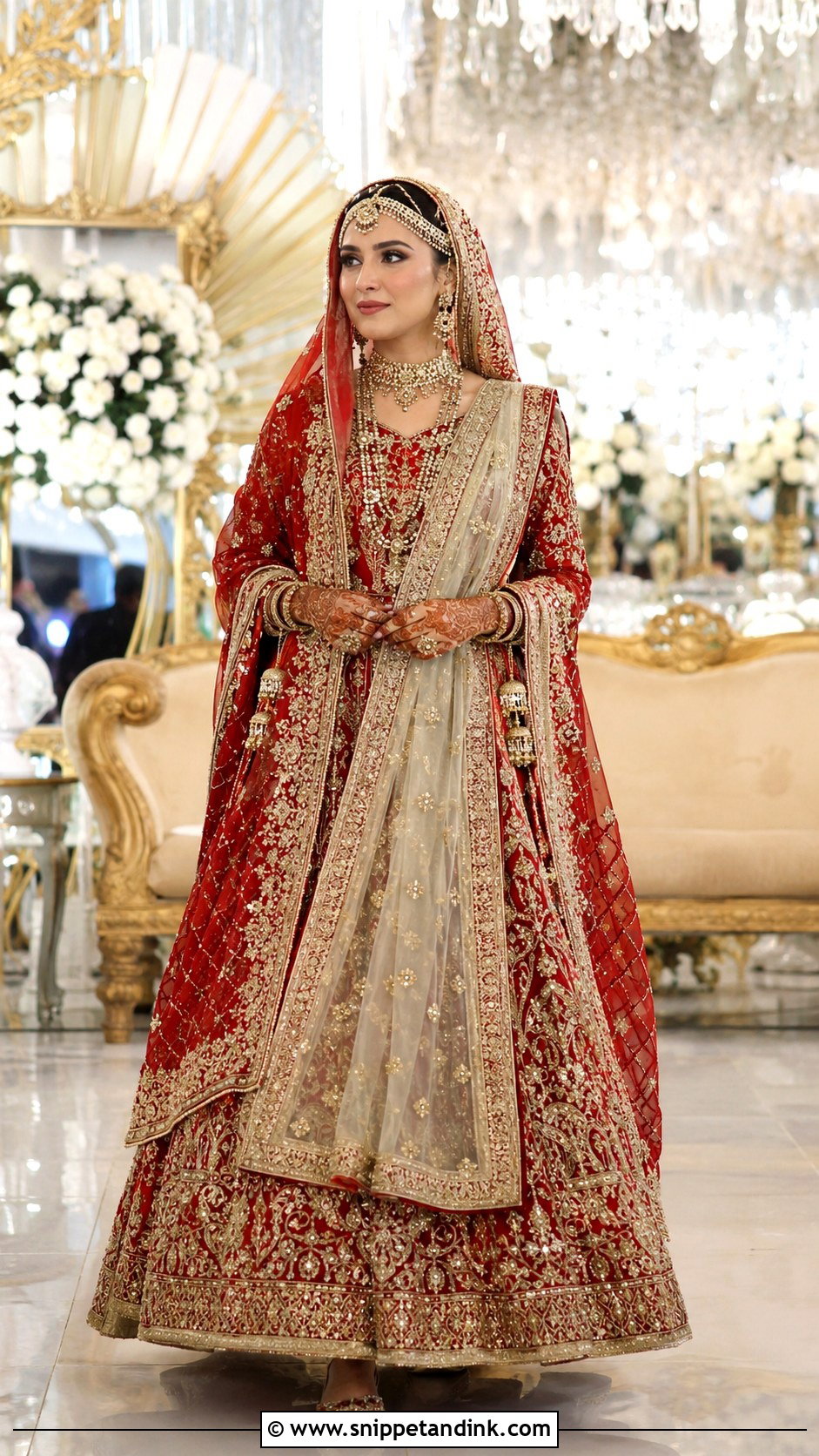
Two dupattas make a baraat outfit look fuller and more regal, and they’re also twice the weight on your head and shoulders. One heavy dupatta with a bold border goes over the head; a lighter one drapes across the front or side. Red with gold, maroon with antique work or ivory with champagne all look grand. The head dupatta needs a firm base: I set it on a bun or a small padded base with plenty of pins, so the weight doesn’t pull on the hairline. A matha patti, layered necklaces and bangles complete it.
26. Pakistani Bridal Lehenga With Veil
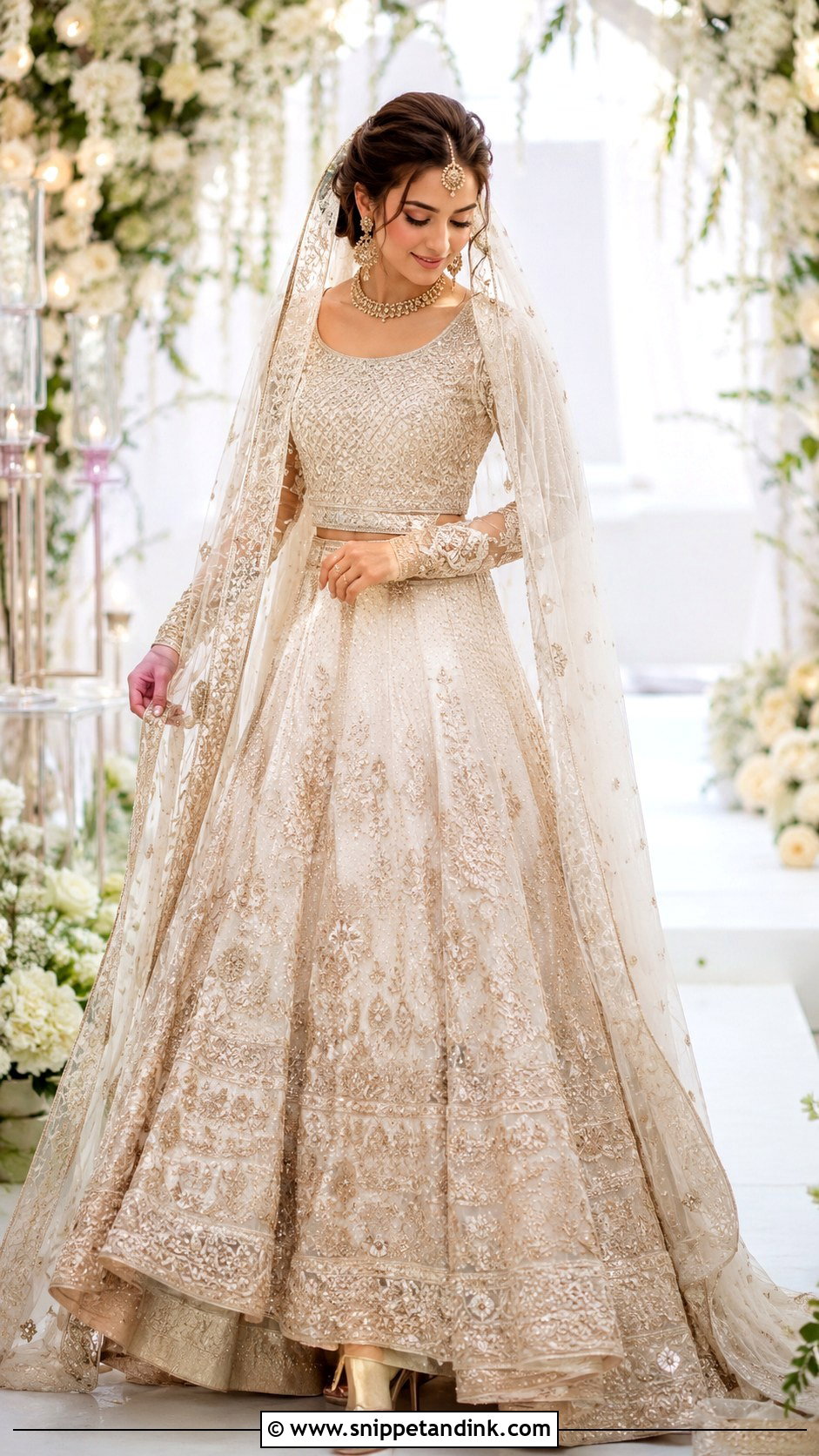
A veil over a lehenga softens the whole look, especially for a nikkah or an evening walima. The veil can be a sheer dupatta, net overlay or organza drape over the head and flowing behind. Ivory, blush, red, gold or champagne lehengas suit it. If the lehenga is heavily worked, keep the veil light, or the head starts to feel crowded in photos. I’d pin the veil before the jewelry goes on, so the matha patti sits over it rather than being caught underneath.
27. Pakistani Bridal Sharara With Long Kameez
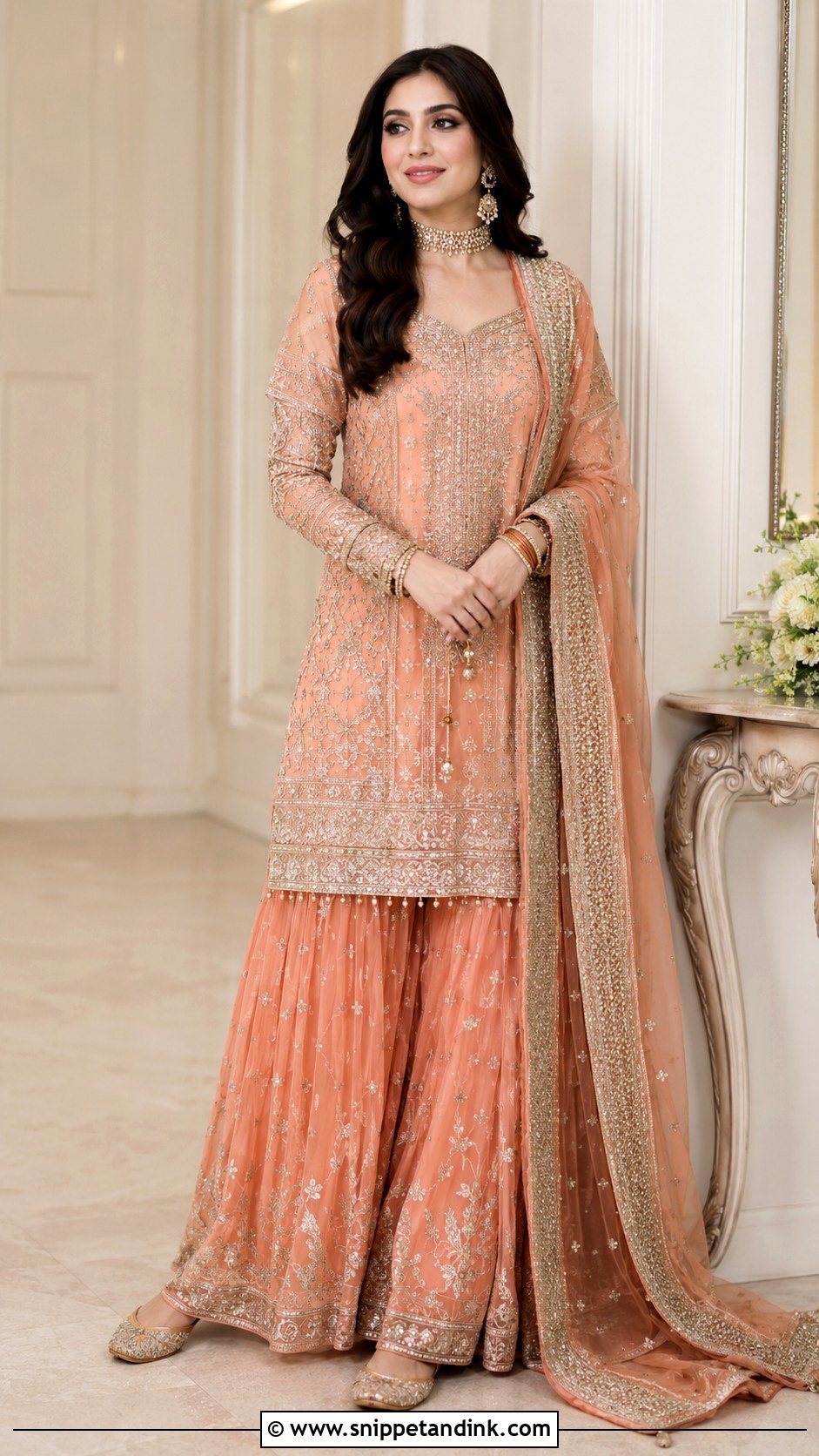
A long kameez over a sharara is modest, easy to move in and useful across several events. Rich embroidery on the hem, sleeves, neckline and sharara borders balances the look. Ivory, red, gold, peach, green and pink all work. The sharara’s width is worth discussing with your tailor: very wide legs look dramatic standing but bunch awkwardly on a stage sofa. A dupatta over the head or pinned on one shoulder, a choker and khussa or heels finish it.
28. Pakistani Bridal Gharara With Short Shirt
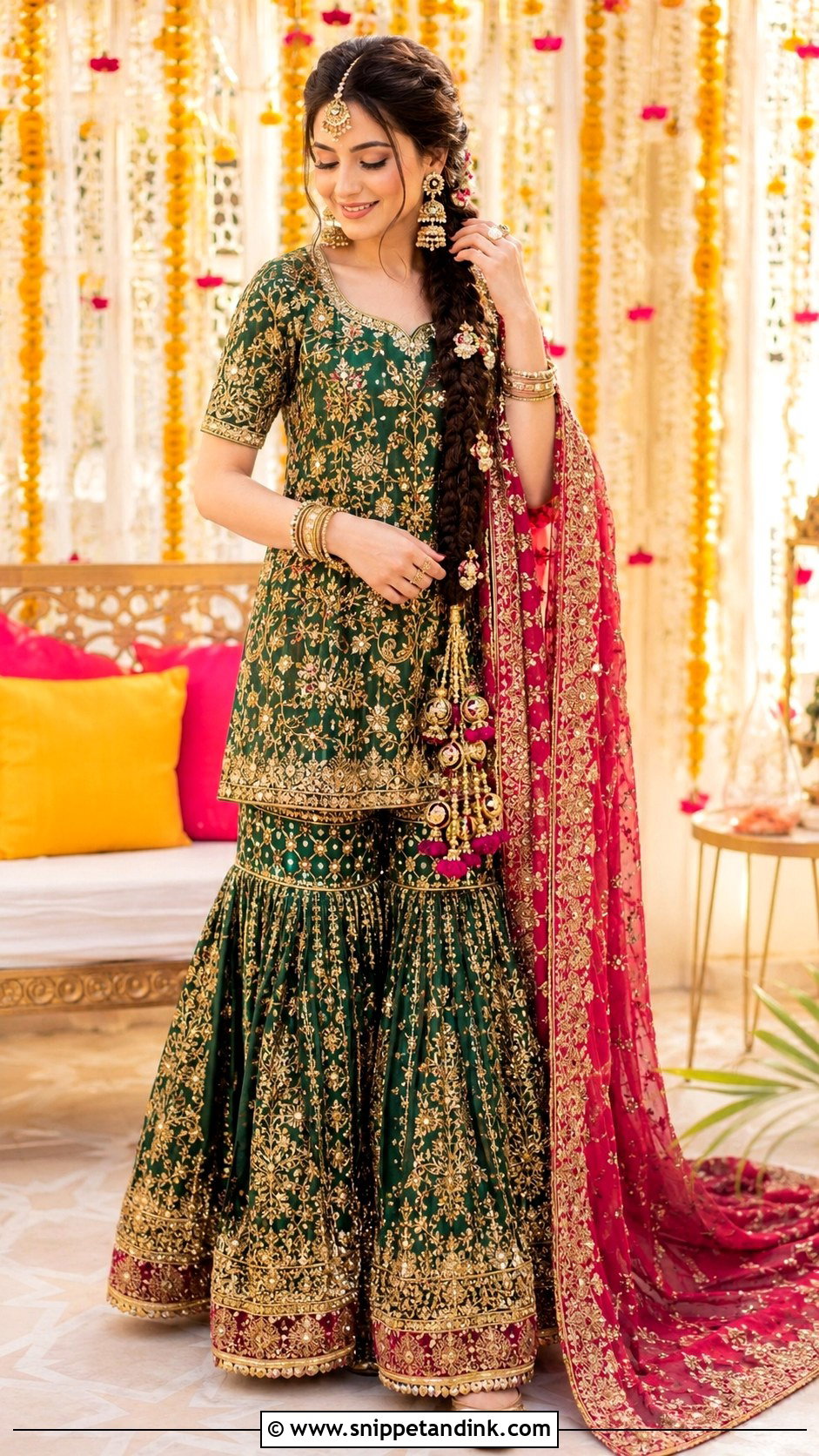
A short shirt shows off the gharara’s panels and the gota at the knee, which is often where most of the craftsmanship sits. Mehndi and nikkah suit it best. Heavy borders, gota, zari or mirror work on the gharara and detail at the sleeves and neckline on the shirt keep the balance. A paranda braid suits mehndi; a bun feels more formal for nikkah. I’d check the gharara in motion before the final fitting, since the flared panels need enough fabric to swing when you walk.
29. Pakistani Bridal Reception Gown
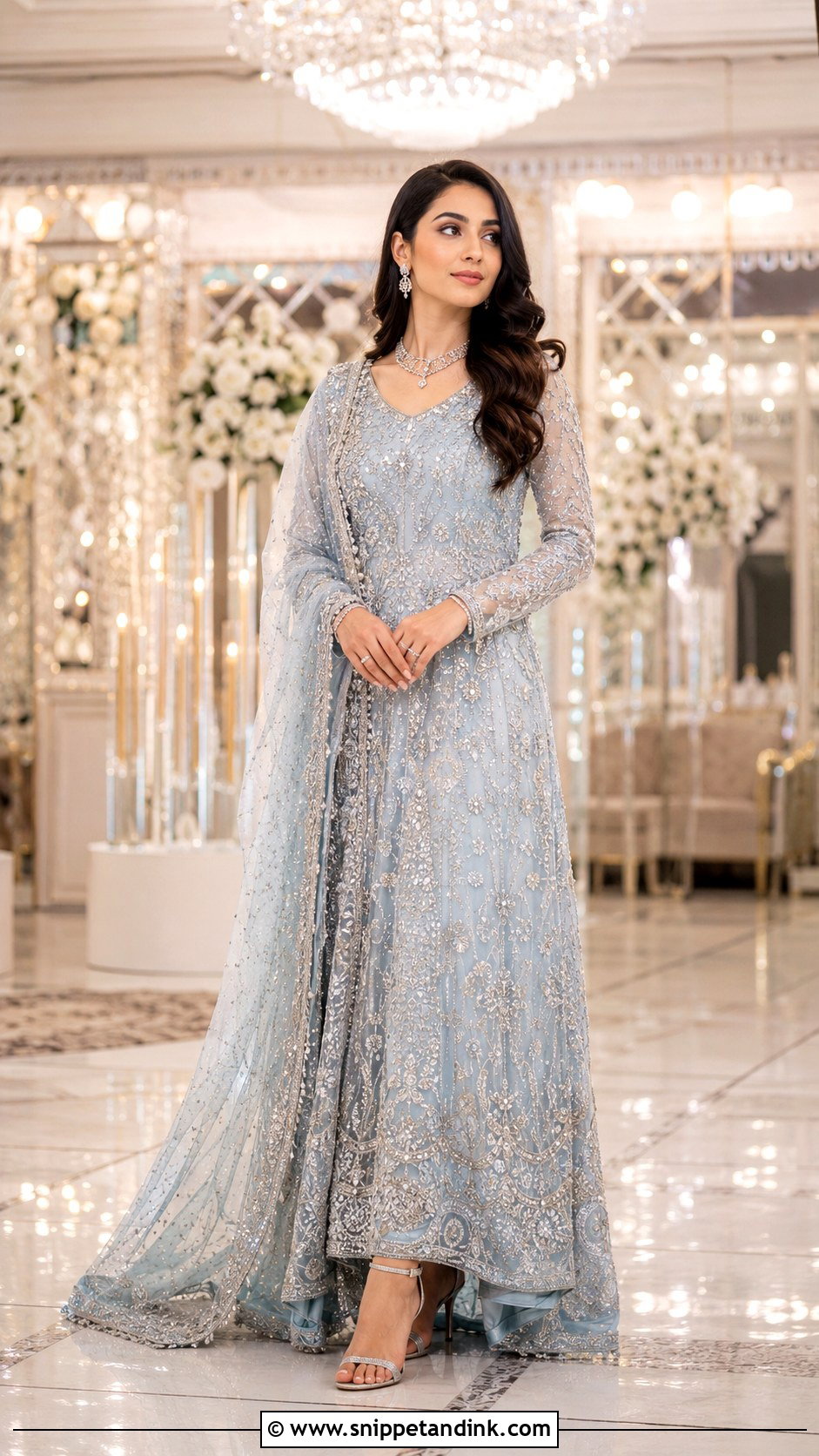
Reception gowns tend to be softer than baraat outfits: lighter colors, cleaner embroidery, flowing shapes. Champagne, silver, blush, ivory and powder blue hold up under the strong lighting most reception halls use. Crystals, pearls, sequins and fine thread add sparkle. A sheer dupatta over one shoulder or a cape-style overlay finish it. Make sure you can sit and stand easily, since you’ll be up and down greeting guests all night. Diamond-style jewelry, smooth waves or a sleek bun and luminous makeup complete it.
30. Pakistani Bridal Gold Jewelry Look
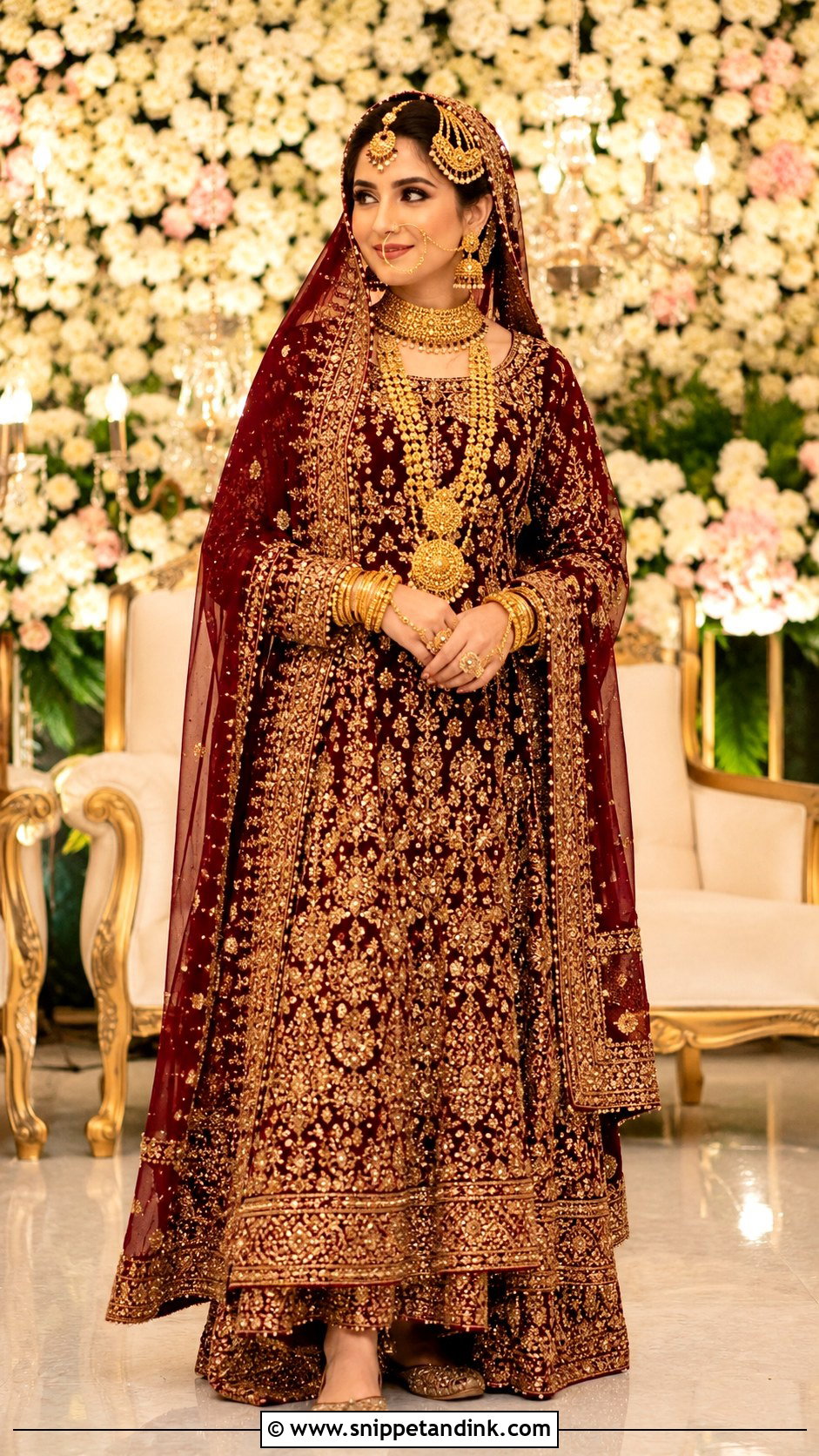
Jewelry isn’t an add-on in a Pakistani bridal look; it’s half the outfit. The skill is balancing it against the neckline, dupatta and face shape. A red, maroon, green, ivory or gold outfit takes antique gold well. For a formal baraat, a choker with a rani haar, jhumkas, a matha patti, passa, nath and bangles. For a nikkah or walima, I’d use fewer pieces and let one necklace or one pair of earrings lead. Pin the dupatta clear of the neck so the jewelry shows, and try the full set on with the outfit before the day, since heavy earrings may need support chains.
How Heavy Should a Baraat Lehenga Be?
Heavily embroidered bridal lehengas can weigh several kilos once the can-can, lining, embroidery and dupatta are added up, and the bride carries that for hours on stage. I always ask a bride to wear the outfit for at least half an hour at the final fitting, sitting and standing several times.
If it feels heavy at the fitting, it will feel much heavier by the rukhsati. A tailor can move weight off the hips with wider waistbands and shoulder-supported blouses, swap a heavy can-can for a lighter one, and reduce embroidery on parts of the skirt that sit against the floor in seated photos.
Storing Zardozi, Velvet and Tissue After the Walima
Metallic embroidery tarnishes and fabric yellows if bridal outfits are put away carelessly. Have the outfit cleaned by someone experienced with embellished garments before storing it, since makeup and perfume marks set over time.
- Wrap it in soft cotton or muslin, never sealed plastic, which traps moisture.
- Fold with acid-free tissue between layers so the embroidery doesn’t rub against itself.
- Refold it along different lines every few months to avoid permanent creases.
- Keep it somewhere dry and away from sunlight, which fades velvet and dulls zari.
Start With the Baraat Outfit and Build Outward
Most families commission the baraat outfit first, and I’d follow that lead: once the main outfit is set, the nikkah, mehndi and walima looks can be planned around it in color and weight. A classic red lehenga, a soft ivory nikkah dress, a bright mehndi sharara or a pastel walima gown can all sit in the same wardrobe without clashing. Choose what fits the ceremony, your comfort and your family’s traditions. Then plan the dupatta drape, jewelry, shoes, hair and makeup as part of each outfit rather than as afterthoughts.
You'll Like These Ideas:








Leave a Reply