
Two tiers is where a small cake starts to look like a wedding cake. You get height, a proper cutting moment and a top tier that can be lifted off and kept, all without a five-tier price or a table to hold it. Small two tier wedding cakes suit micro weddings, courthouse lunches, backyard receptions and dessert tables padded out with other sweets. On a cake this size, the finish and one chosen detail carry the design, so I’ve written each idea below with what it needs from the baker and where it tends to go wrong.
Tier Sizes That Look Balanced on a Small Cake
The proportion between the two tiers decides whether a small cake looks graceful or squat. I usually leave two to three inches of difference in diameter. Less than that and the ledge is too narrow for flowers or piping; much more and the top tier looks lost.
These are the pairings I suggest most, with approximate wedding-portion counts for standard four-inch-tall tiers. Portions are thin fingers, not dessert slices, and every baker cuts slightly differently, so treat them as a starting point.
- 4 inch on 6 inch: roughly 15 to 18 portions, for an elopement or very small dinner
- 6 inch on 8 inch: roughly 30 to 35 portions, the most common small two-tier
- 6 inch on 9 inch: roughly 40 portions, with a wider ledge for flowers
- 8 inch on 10 inch: roughly 55 to 60 portions, still compact on the table
If you plan to keep the top tier, take it out of the count. Taller tiers add servings without widening the cake, which helps when the cake table is small.
1. Small Two Tier Buttercream Wedding Cake
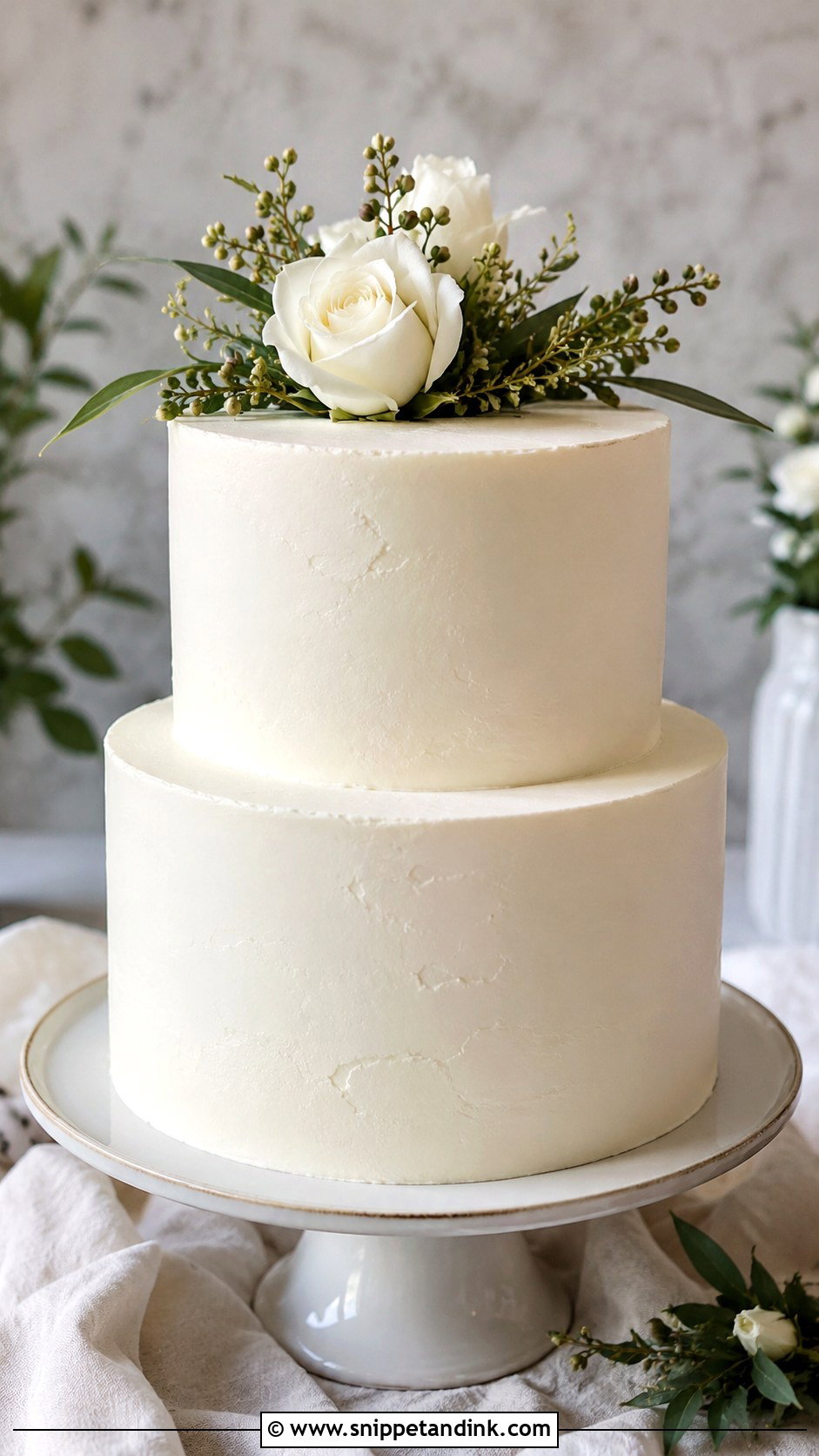
Plain ivory buttercream on two tiers is the design I’d build every other one on. The decision that changes its character most is the edge: a crisp, sharp top edge looks tailored and bakery-made, while a softly rounded one feels homely and relaxed. Ask to see photos of both from your baker. Vanilla, almond, lemon and champagne-style sponges sit well under it. A few flowers near the base and on the top tier are plenty.
2. Small Two Tier Wedding Cake With Fresh Flowers
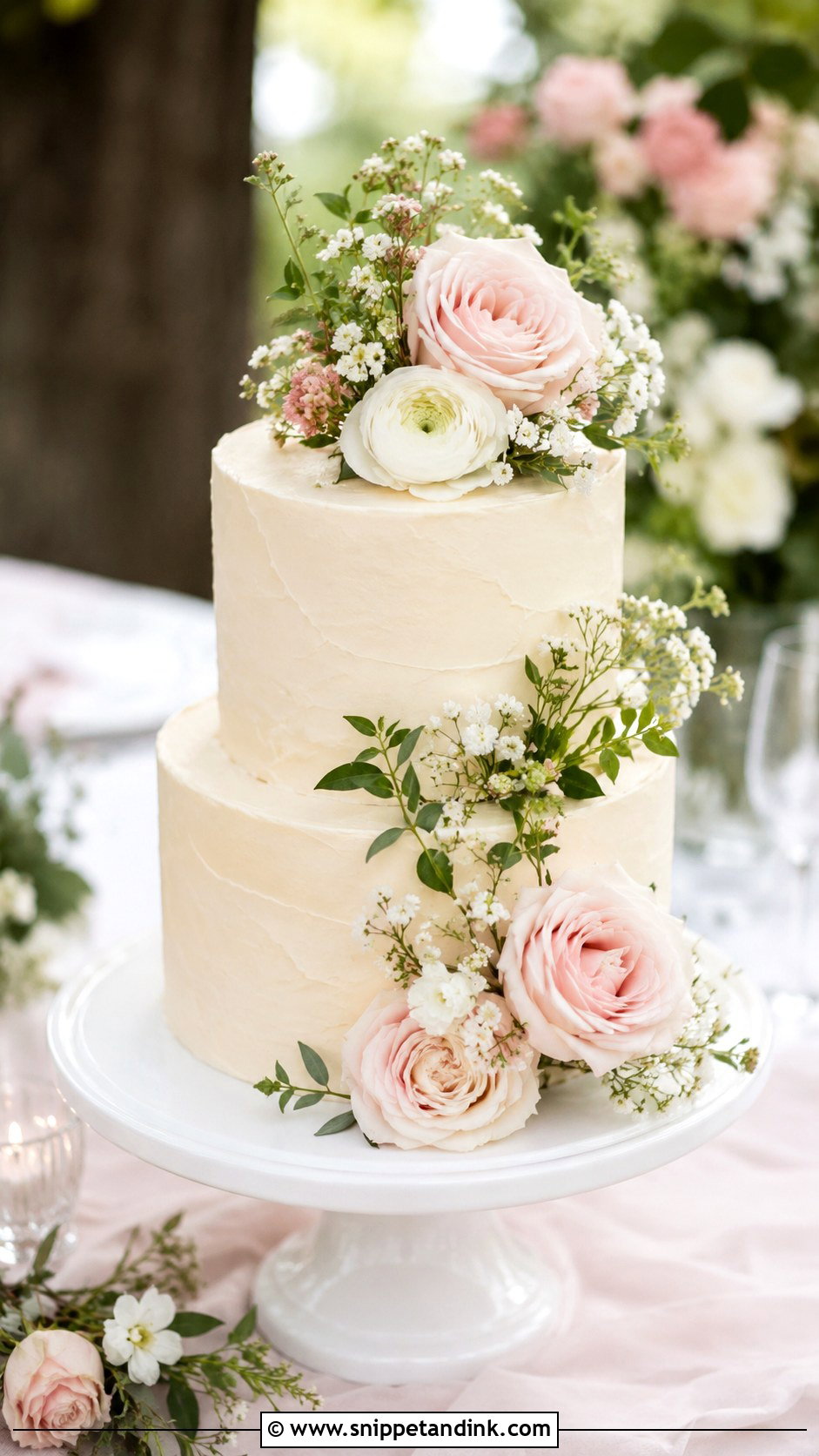
With flowers on a stacked cake, the gap between the tiers is the natural place to start. A small cluster tucked into that ledge, plus a few blooms on top, looks planned. White roses, blush garden roses, baby’s breath, ranunculus or small seasonal flowers all work when they echo the bouquet. Plain white buttercream or fondant lets the flowers lead. Your florist and baker should agree beforehand who’s placing them and how: stems wrapped or set in food-safe picks, never pushed bare into the cake.
3. Small Two Tier Wedding Cake With Pearls
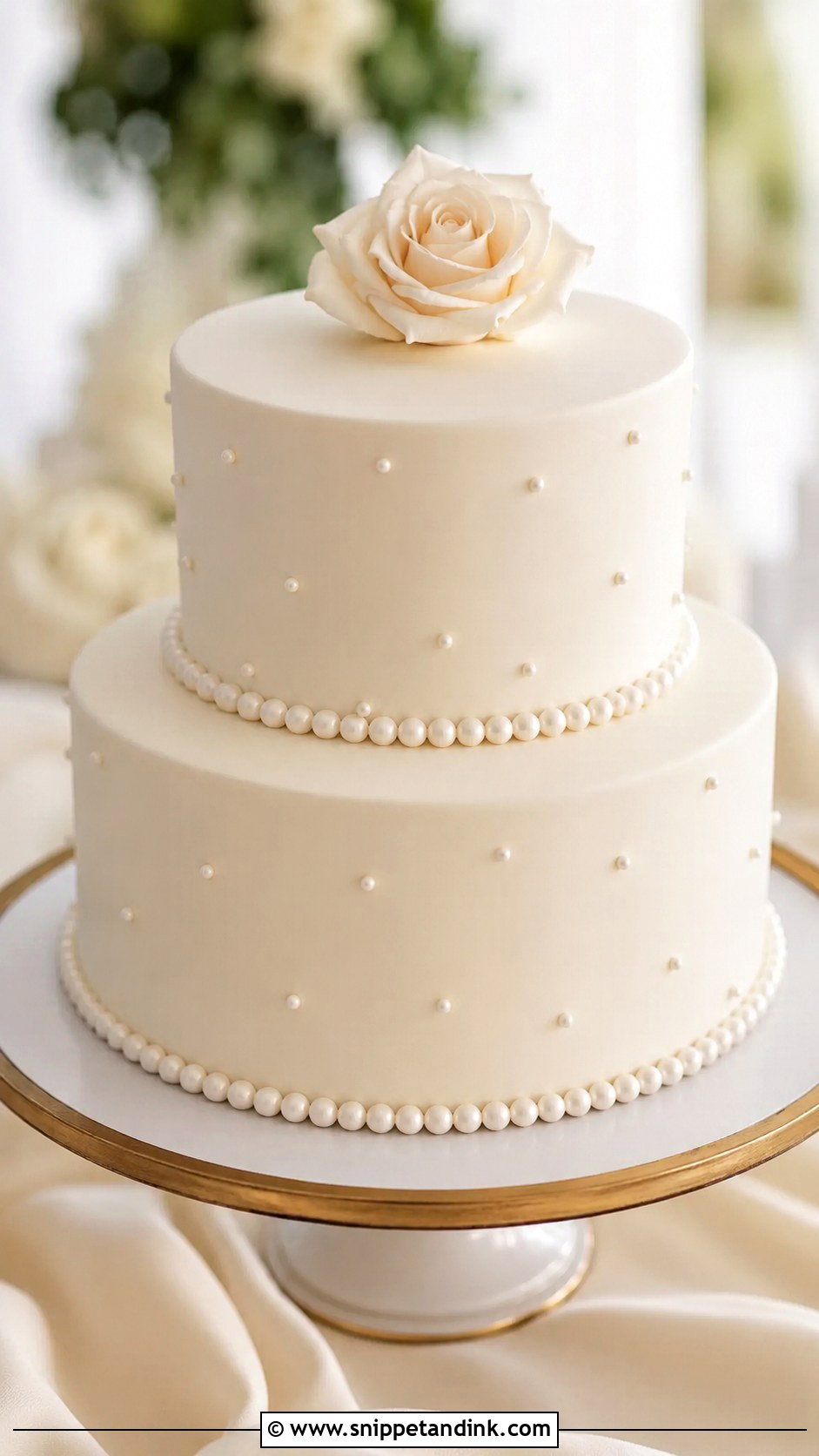
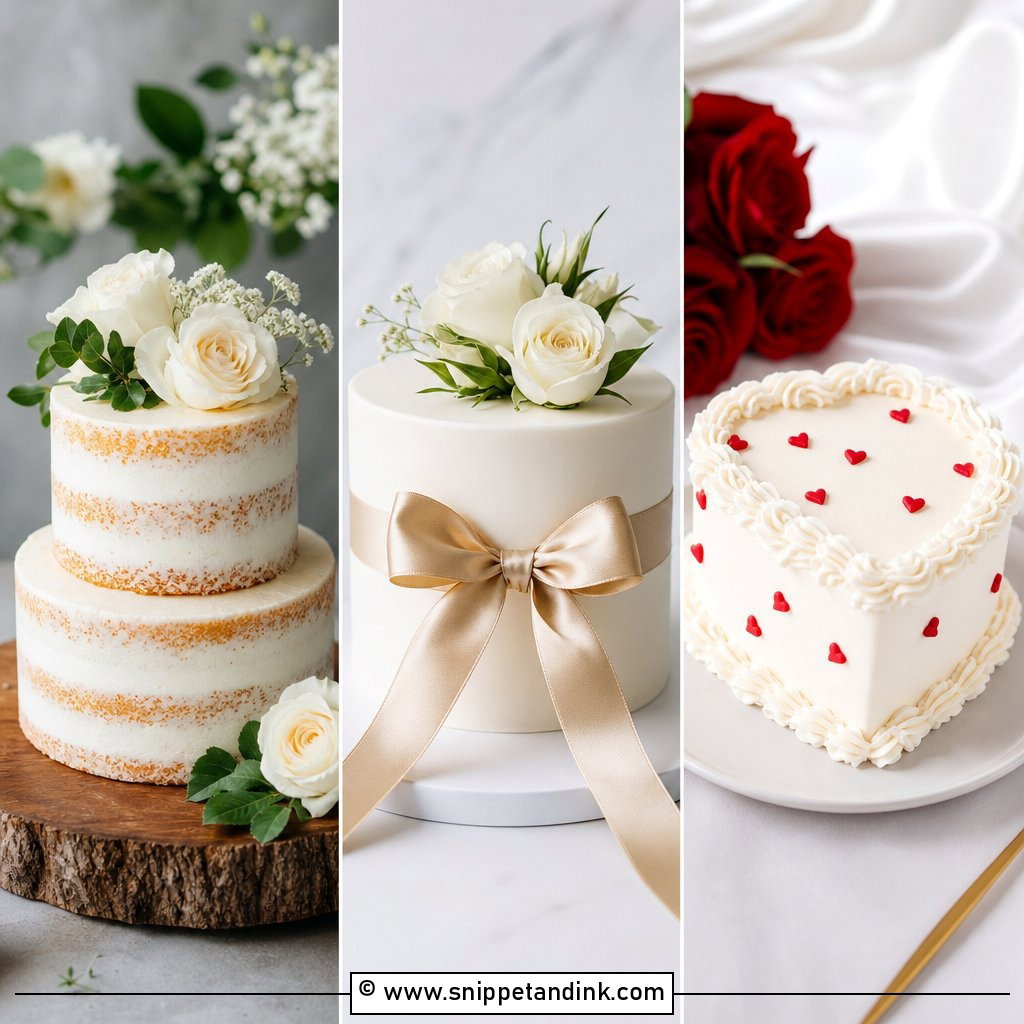
Pearls need a smooth surface, so this is a design for sharp buttercream or fondant, not textured finishes. I like a single row of pearls along the base of each tier, because it hides the seam where the tier meets its board and looks deliberate at the same time. A light scatter across both tiers is softer. Ivory, white and champagne pearls match most palettes. One floral accent or a satin ribbon is all it needs beside them.
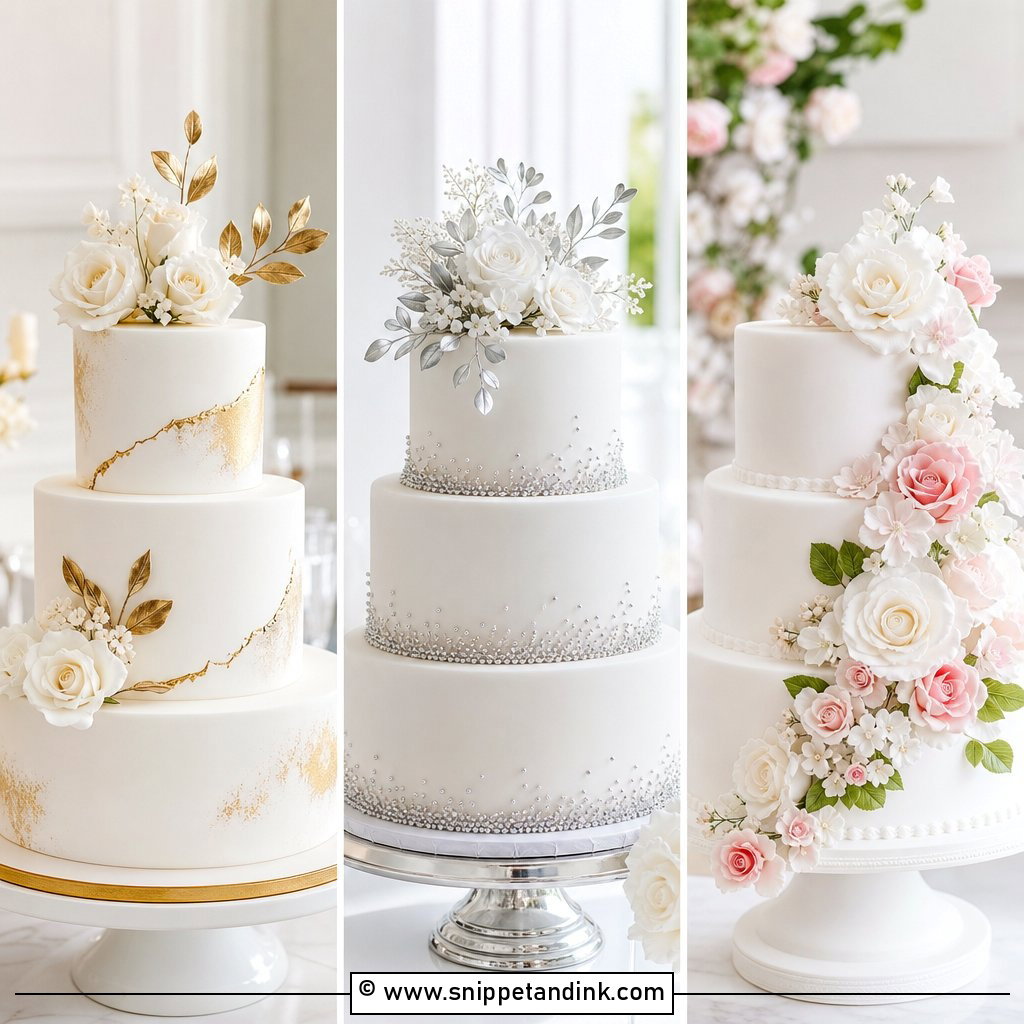
4. Small Two Tier Wedding Cake With Gold Leaf
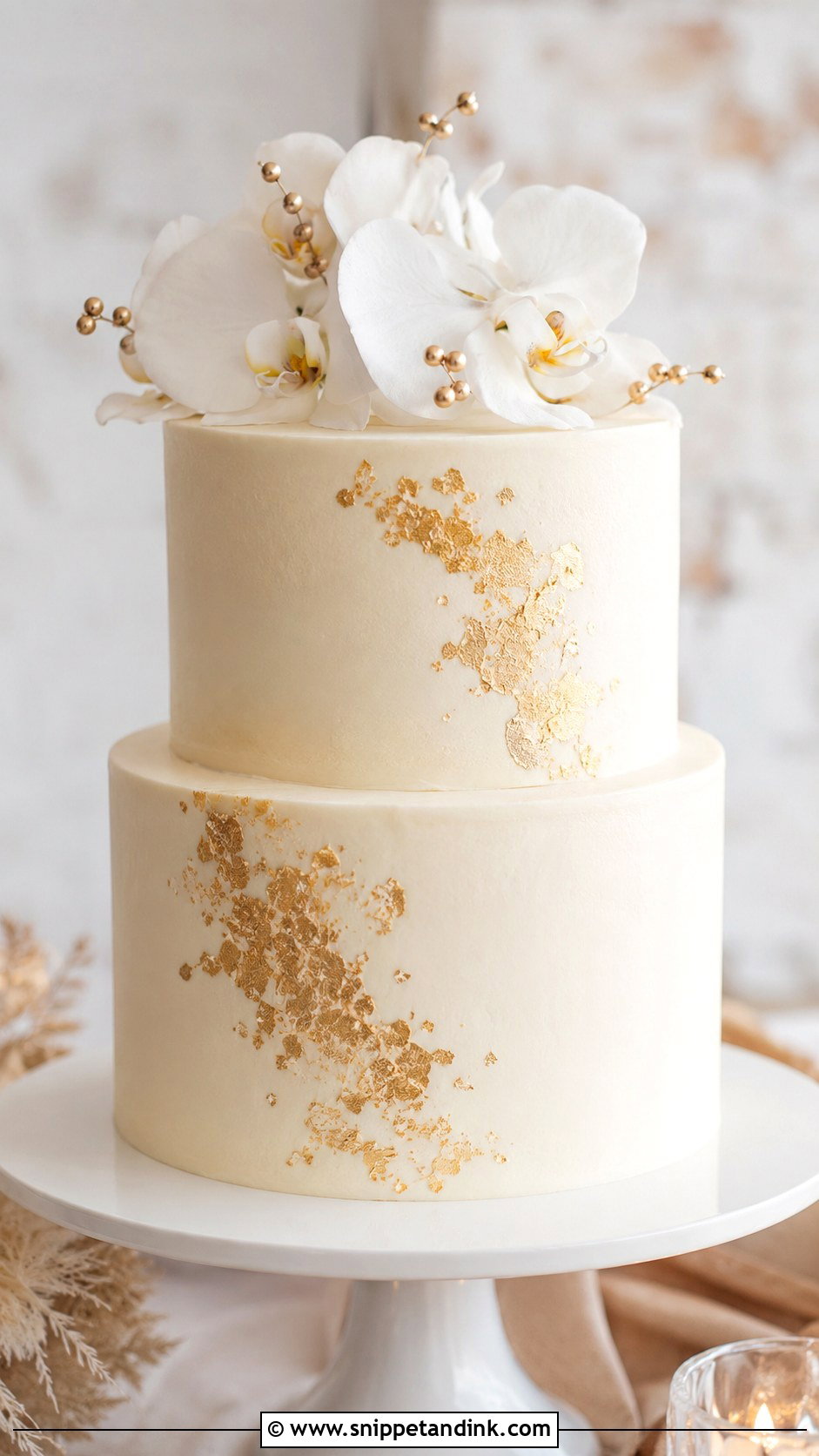
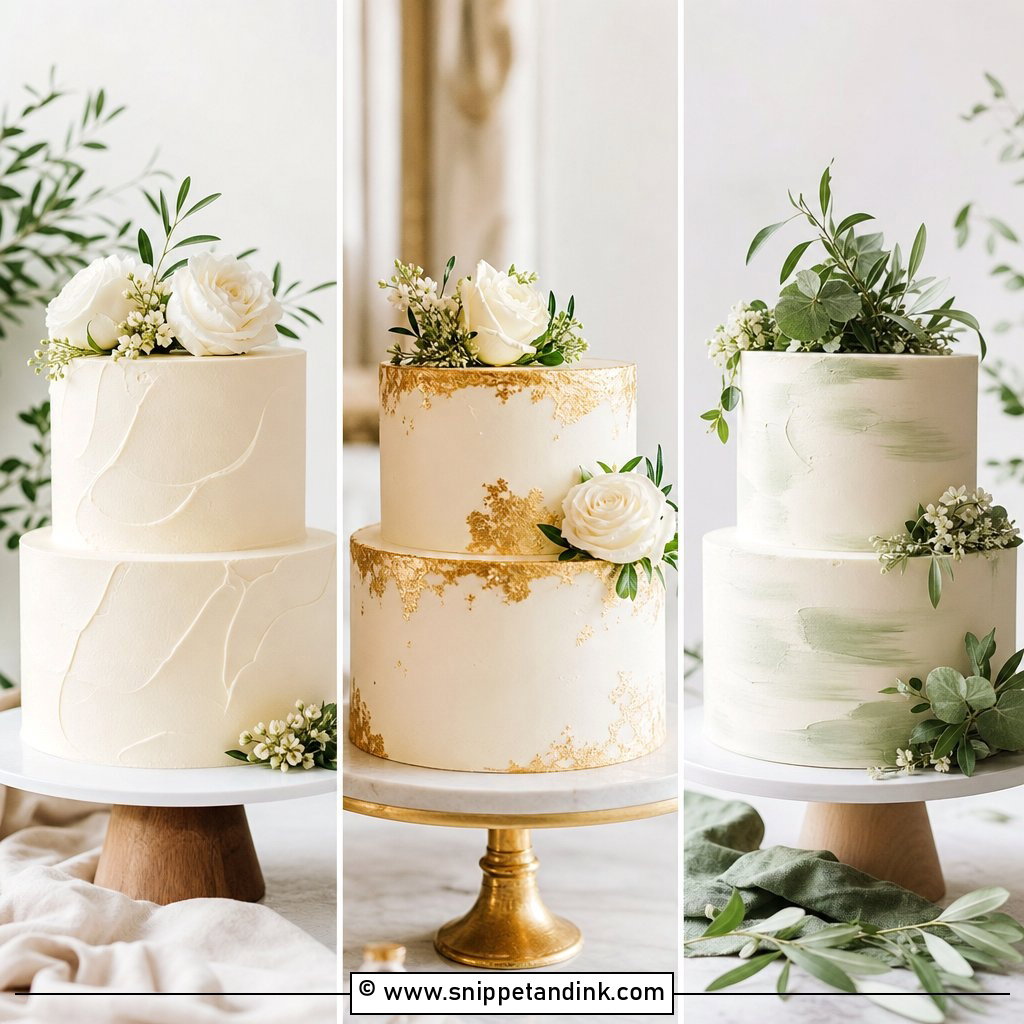
Gold leaf on two tiers works best concentrated in one area: a torn patch on one side of the lower tier, say, rising into a floral cluster above. Spread across both tiers it starts to look patchy. It suits white, ivory, blush, sage and soft beige frosting, and flavours like vanilla bean, almond, honey or caramel. Under warm reception lighting, gold glows, which is why I suggest it for hotel and evening weddings. A plain stand finishes the look.
5. Small Two Tier Wedding Cake With Simple Piping
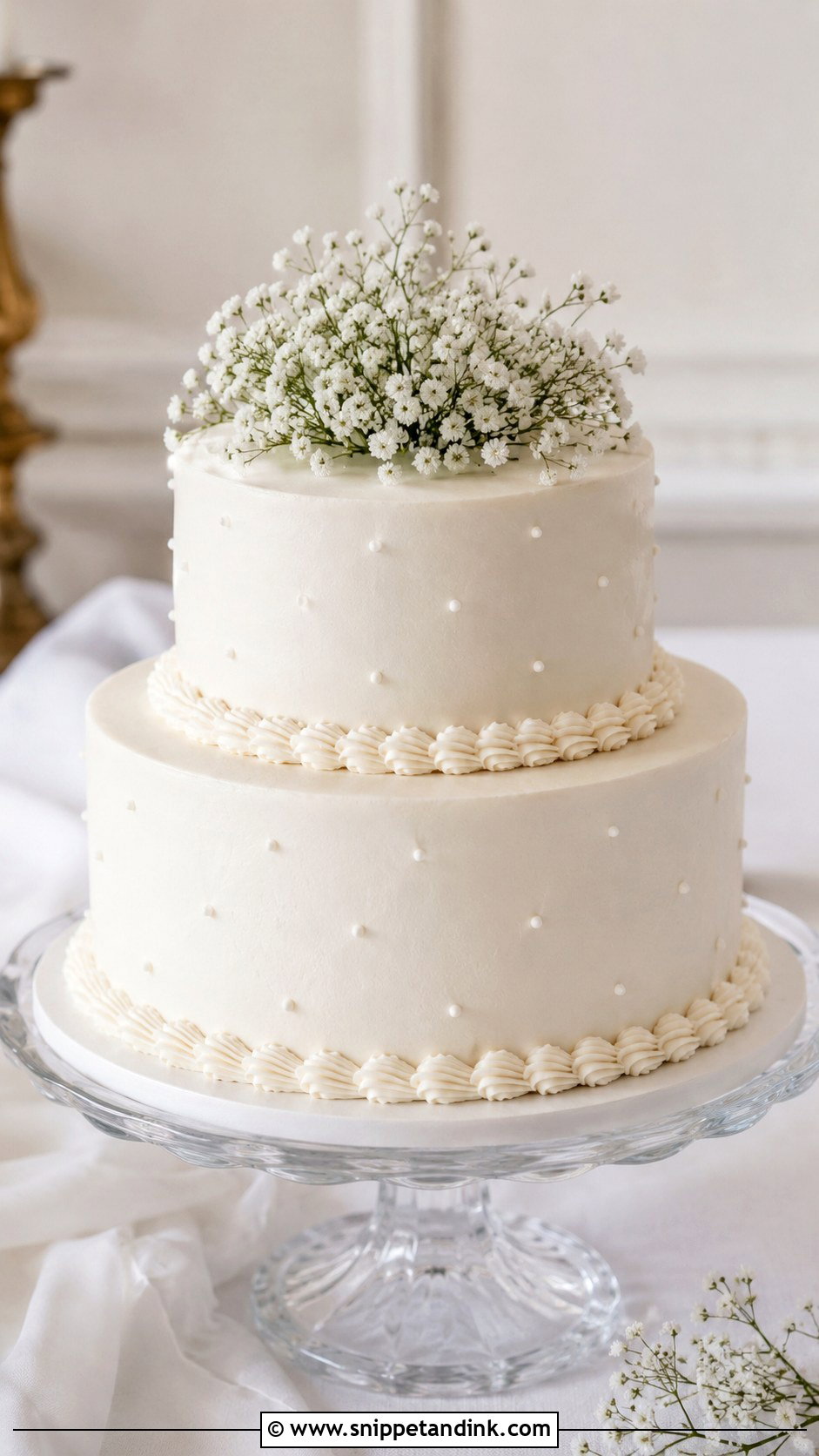
Piping is where you see a cake decorator’s hand, and small tiers are a good canvas because the details stay readable. On a cake this size, simple piping can mean tiny shell borders, dots, small swags or fine lines. White on white is classic; blush or pale blue piping adds colour quietly. Keep the tiers themselves smooth so the texture shows up. Piped borders also cover the join between tiers neatly, which is one practical reason they’ve been used for so long.
6. Small Two Tier Wedding Cake With Ribbon
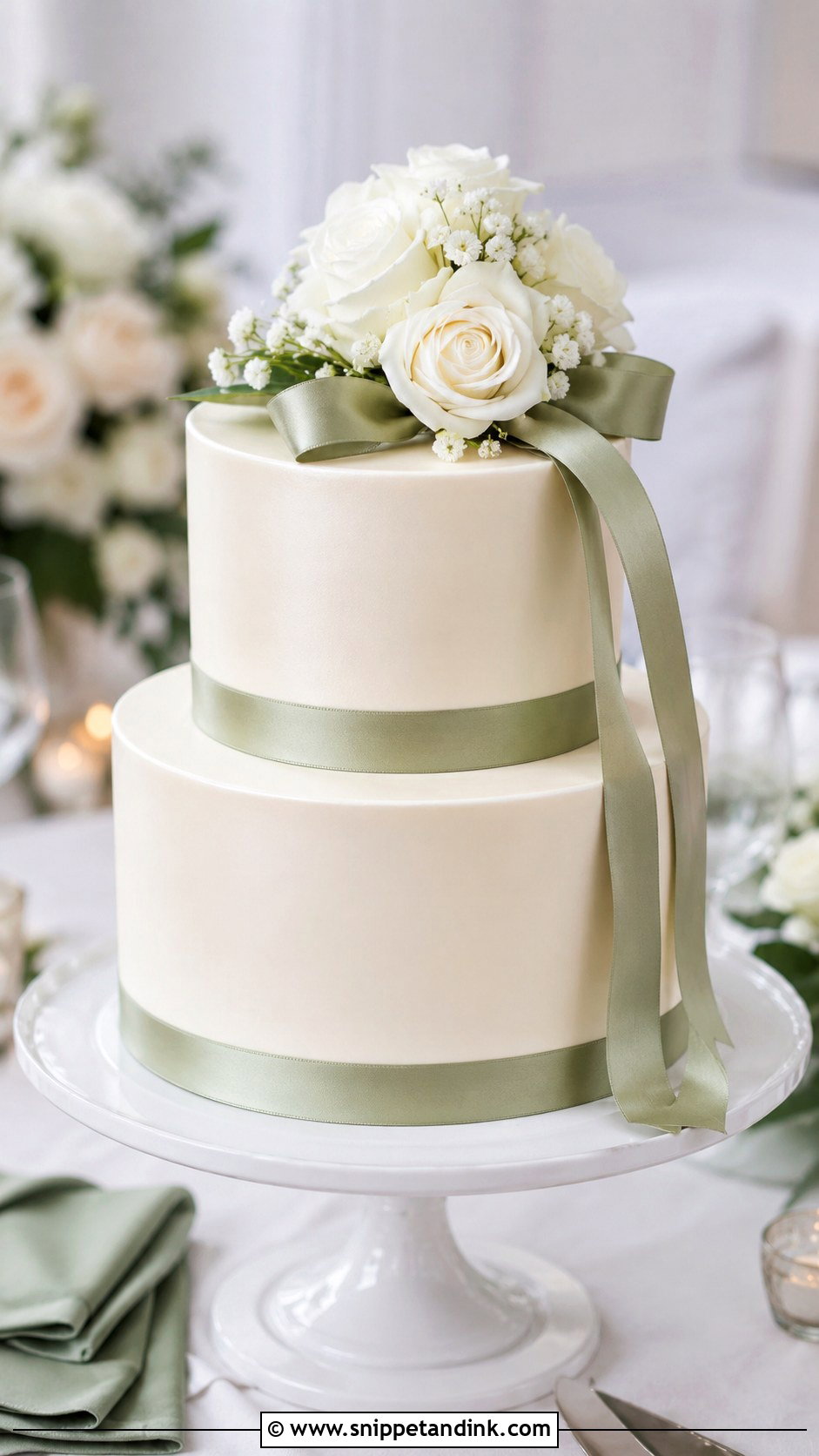
A ribbon at the base of each tier connects the cake to your colours without tinting the frosting. The fabric matters: satin looks formal, velvet looks romantic, and raw-edged silk looks soft and organic. Butter migrates into ribbon and leaves grease spots, so I back it with a strip of food-safe acetate or tape before wrapping. Ivory is classic; sage, blush, dusty blue and champagne match most decor. Keep the top simple, with a small floral cluster or monogram.
7. Small Two Tier Wedding Cake With Roses
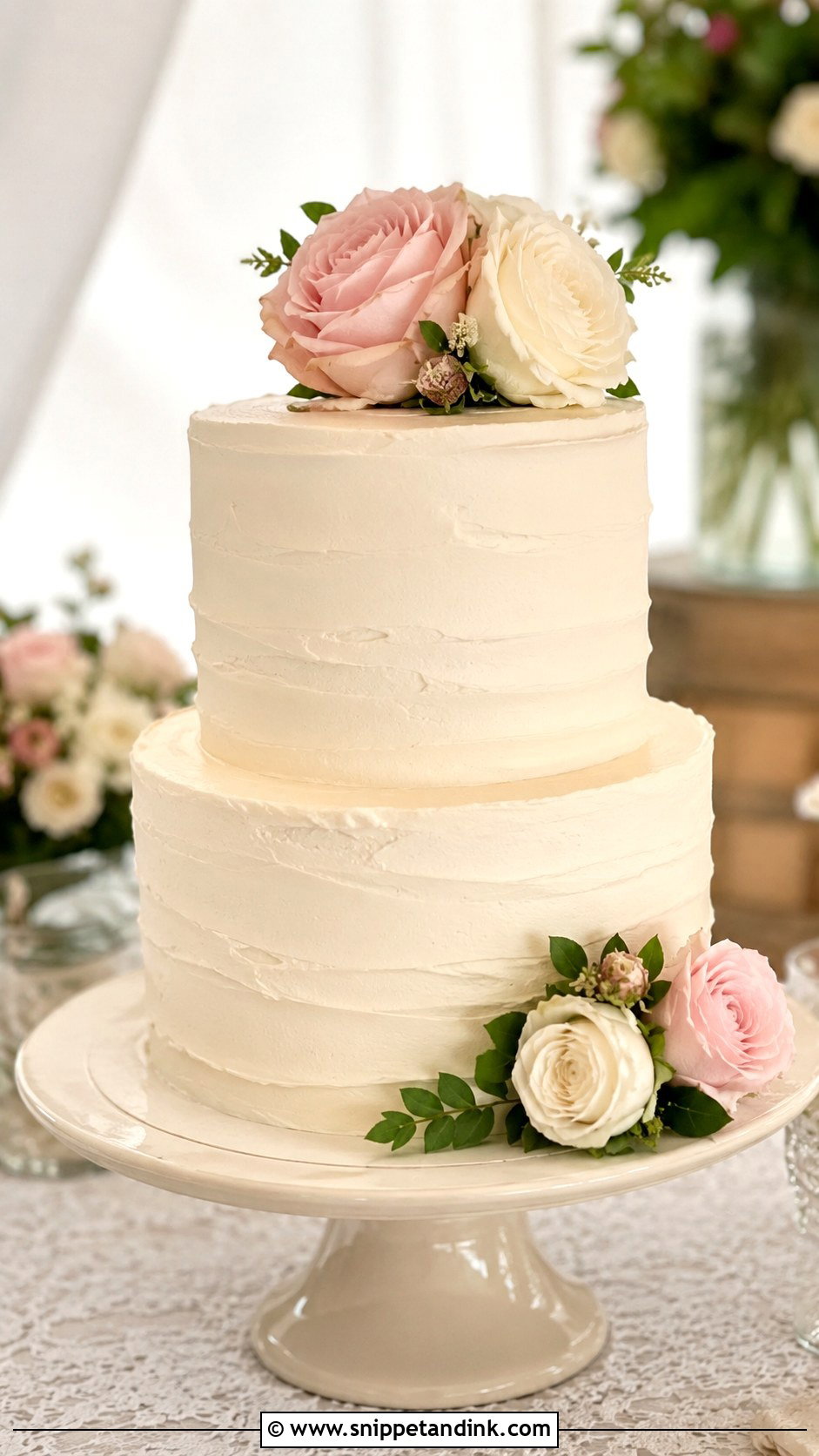
Roses read as wedding the instant anyone sees them. Restraint keeps them simple: one rose on the top tier and a small group near the base, set diagonally opposite, gives balance without covering the cake. White roses are classic, blush soft, and peach warm. Garden roses with open petals look more relaxed than tight florist roses. Smooth buttercream, light texture or a fine pearl border all suit them.
8. Small Two Tier Wedding Cake With Greenery
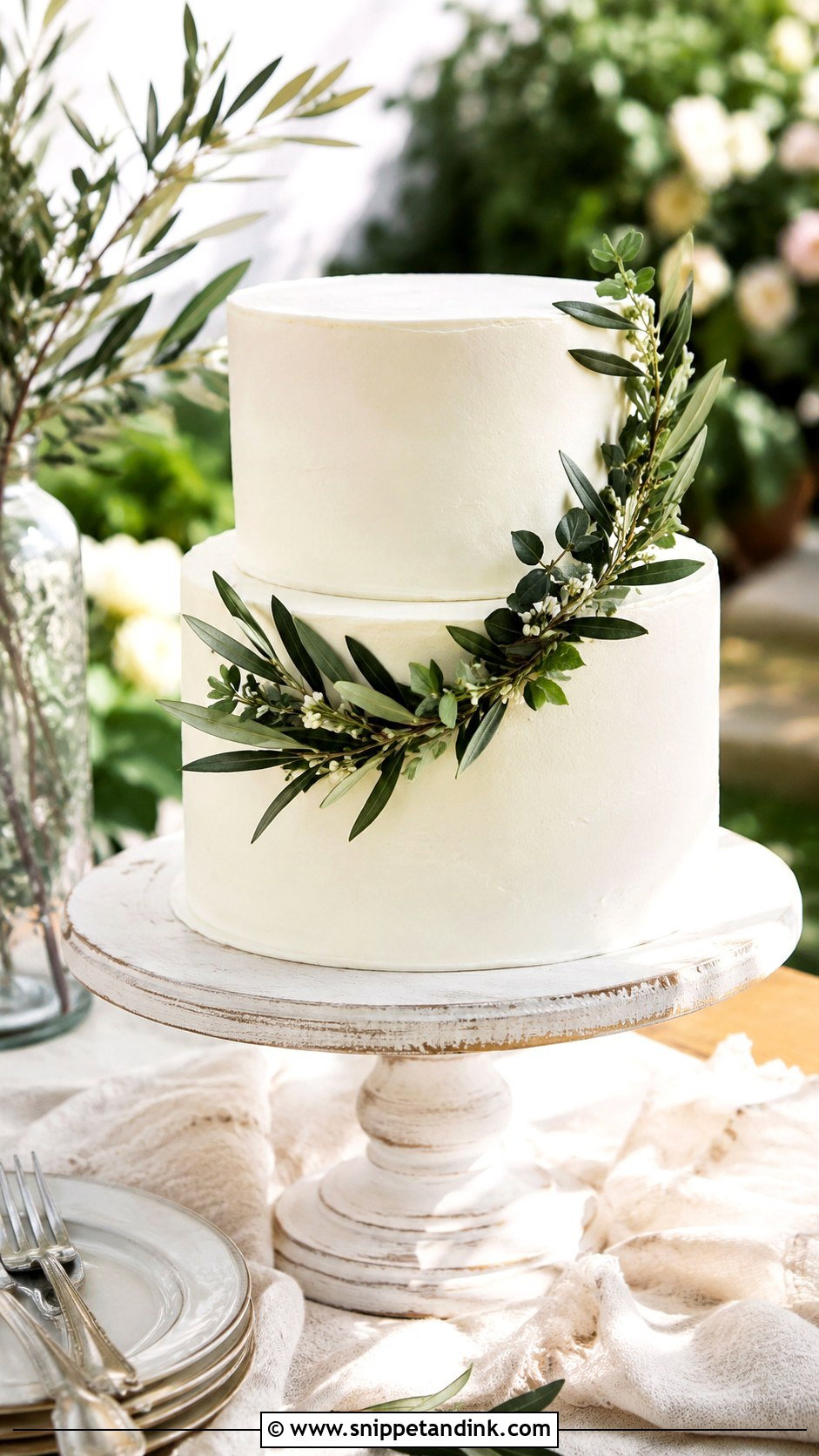
Greenery is lighter on the budget and tends to hold up better than petals on a warm day. Rosemary, bay and small herb sprigs are edible and safe to touch the frosting. Eucalyptus and olive look lovely but aren’t meant for eating, so they belong on a barrier or around the cake board rather than pressed into buttercream. A crescent across both tiers, a side cluster or a loose ring at the base all work. Lemon, vanilla, almond and olive oil sponges pair naturally.
9. Small Two Tier Wedding Cake With Berries
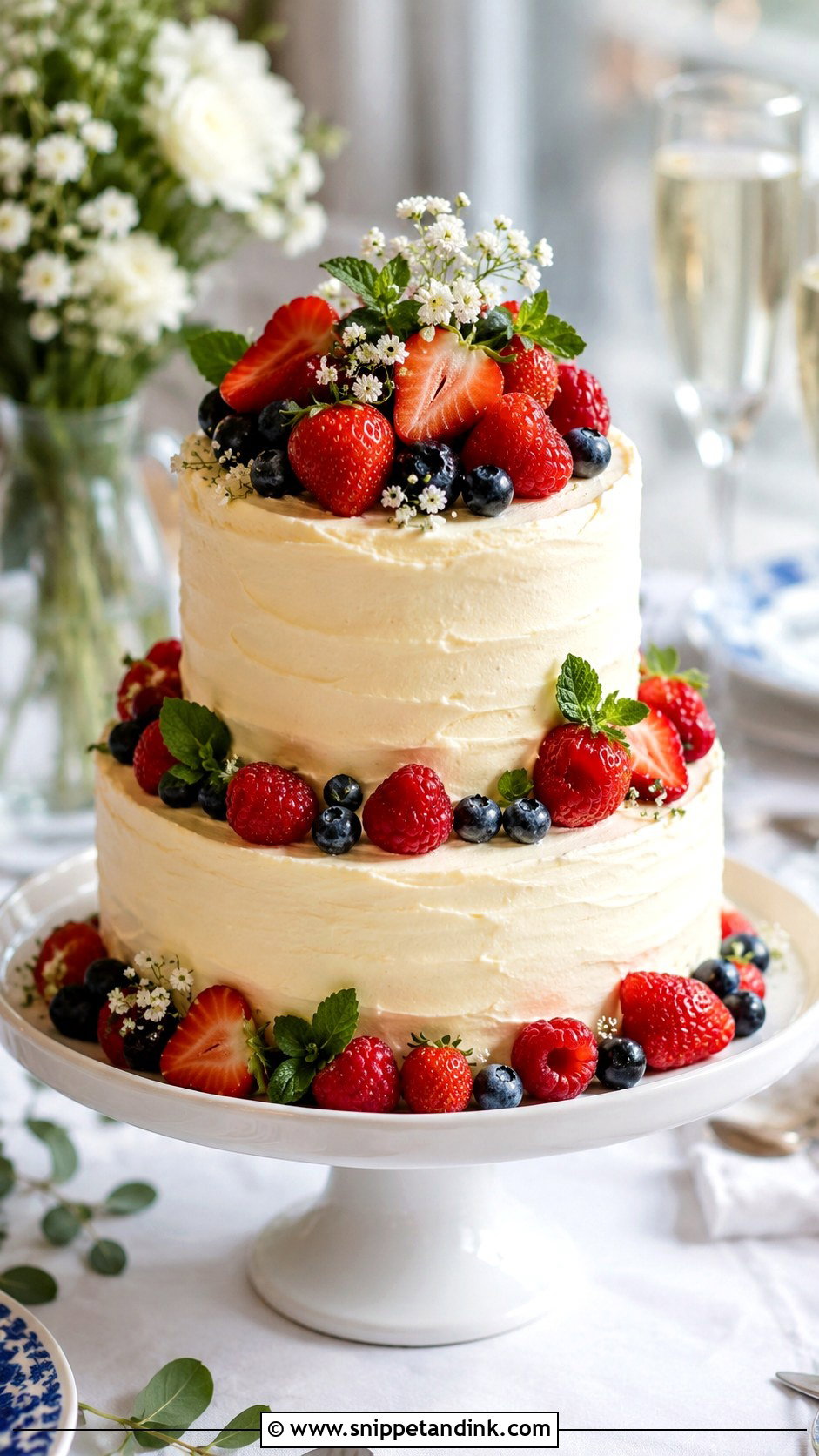
Berries make a small cake look generous. Strawberries, raspberries, blueberries and blackberries, placed neatly around each tier, need no other decoration. Here’s the catch: cut strawberries bleed juice into buttercream within a couple of hours, so I use whole berries or halve them only at the venue. Whipped buttercream, vanilla frosting or a light cream cheese finish all go well. Mint leaves or a few small flowers can be tucked in, but let the fruit lead.
10. Small Two Tier Wedding Cake With Smooth Fondant
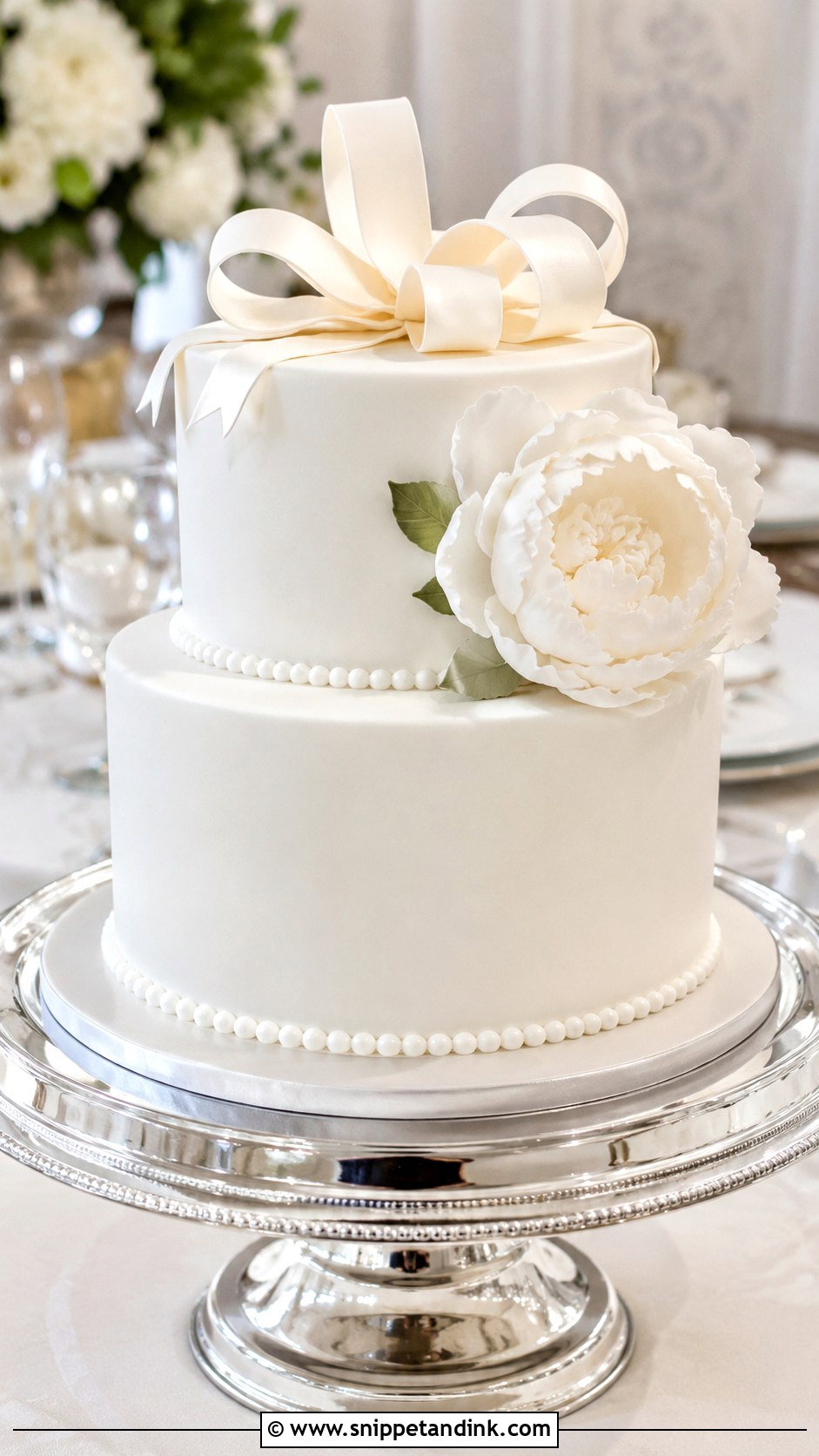
Fondant is the finish to choose if you want razor edges and a surface with no marks at all. It also protects the cake underneath from humidity and handling better than buttercream, which helps on a hot day. Some guests peel it off, so I roll it thin and put a good buttercream layer beneath. White and ivory are traditional; blush, pale grey and warm cream feel modern. One or two accents are plenty: ribbon, sugar flowers, pearls or a gold detail.
11. Small Two Tier Wedding Cake With Textured Buttercream
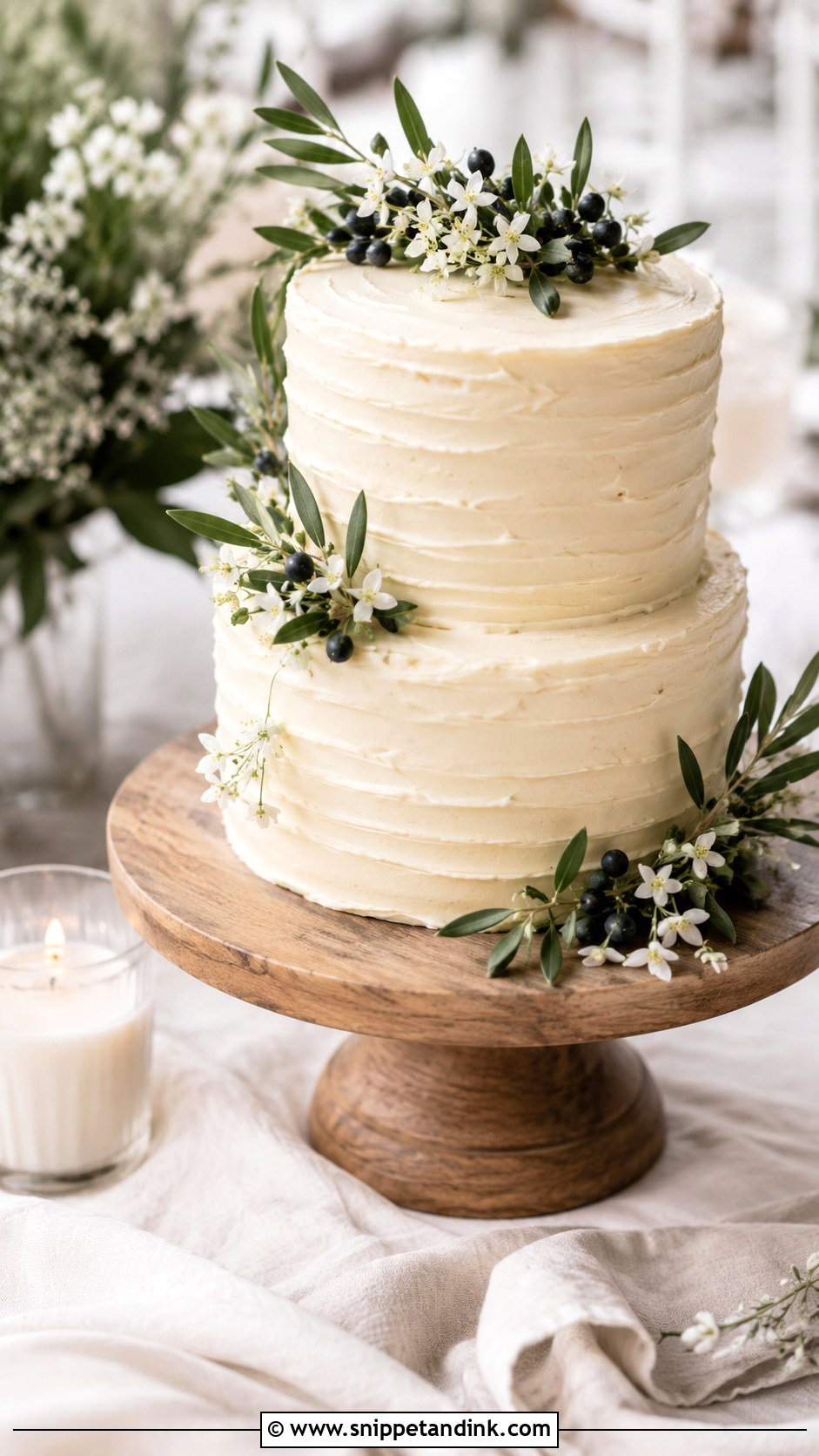
Texture is my honest recommendation for anyone worried about perfection. Soft horizontal lines, spatula marks or gentle ridges hide small dents from transport and look handmade on purpose. Ivory, cream and pale beige suit it best. A few flowers, some greenery or fresh fruit completes it. It’s a natural fit for outdoor, farmhouse and beach weddings, where a crisp fondant cake can feel out of place.
12. Small Two Tier Wedding Cake With Dried Flowers
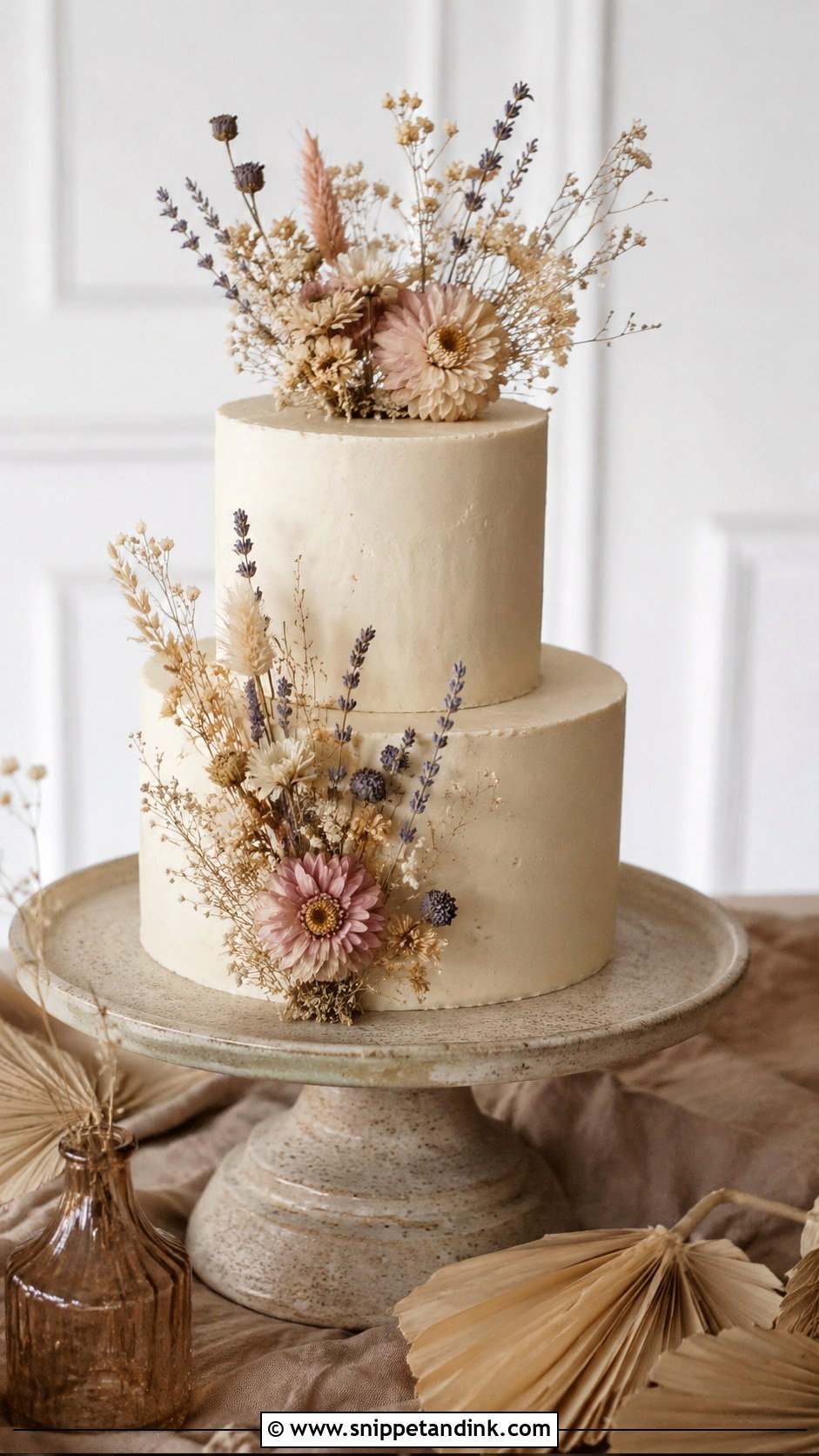
Dried flowers give colour and texture that won’t wilt, which makes them useful for autumn and desert weddings. Pressed petals, small dried grasses, lavender, strawflower or preserved baby’s breath all suit the look. Craft-store dried flowers are often treated or dyed, though, so they should never touch the frosting directly; I set them on small food-safe discs or pressed into a chilled surface on a barrier. Neutral buttercream, beige and warm ivory let them stand out.
13. Small Two Tier Wedding Cake With Sugar Flowers
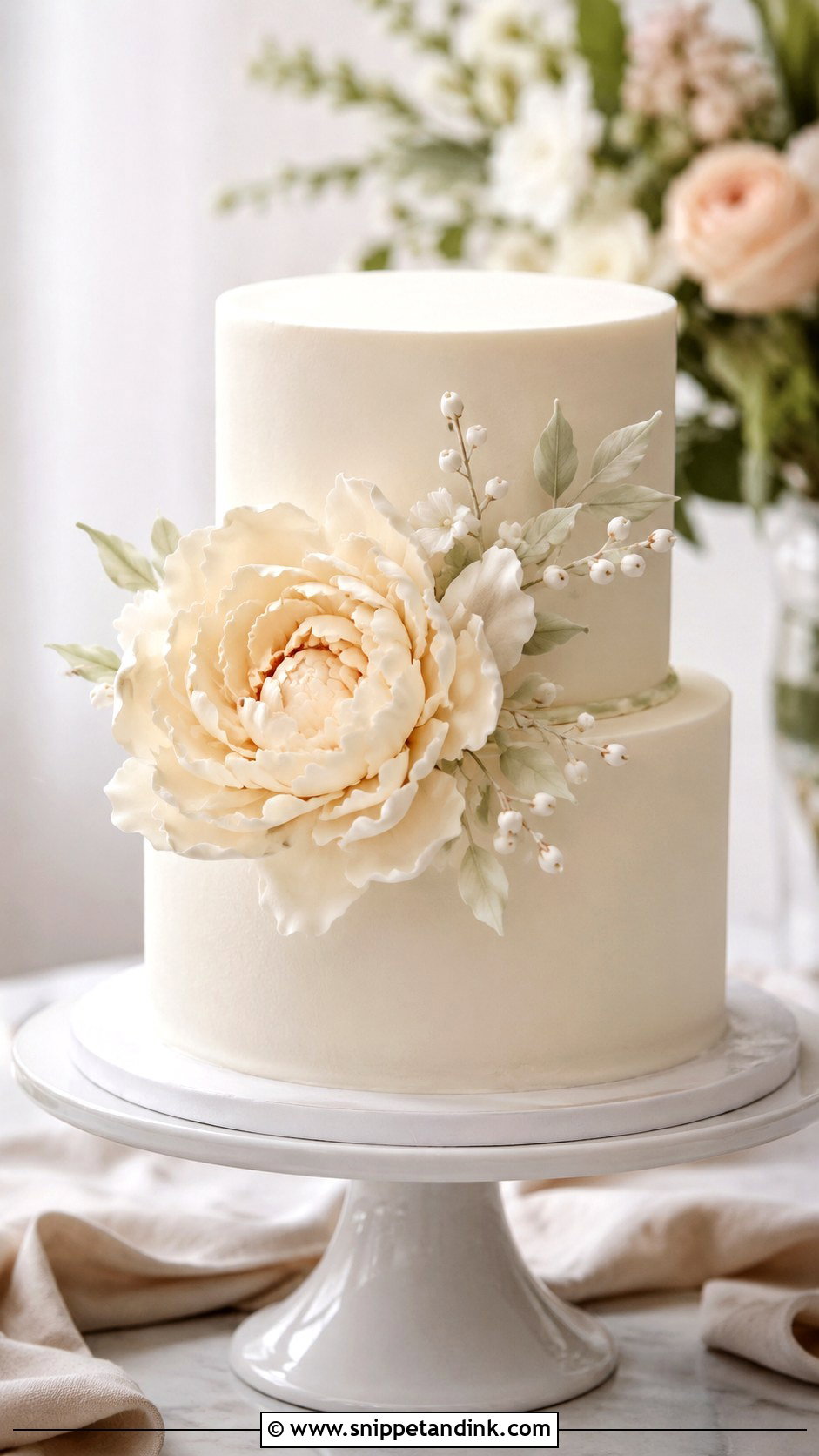
Sugar flowers are made petal by petal from gum paste and dried for days, so they need ordering well ahead. The upside is that they won’t wilt in a warm room and can be coloured to match your palette exactly. One statement bloom and a few buds look refined on two small tiers. Peonies, roses, orchids and sweet peas are common choices. They also last for years afterward as a keepsake, as long as they’re kept dry and out of sunlight.
14. Small Two Tier Wedding Cake With Cake Topper
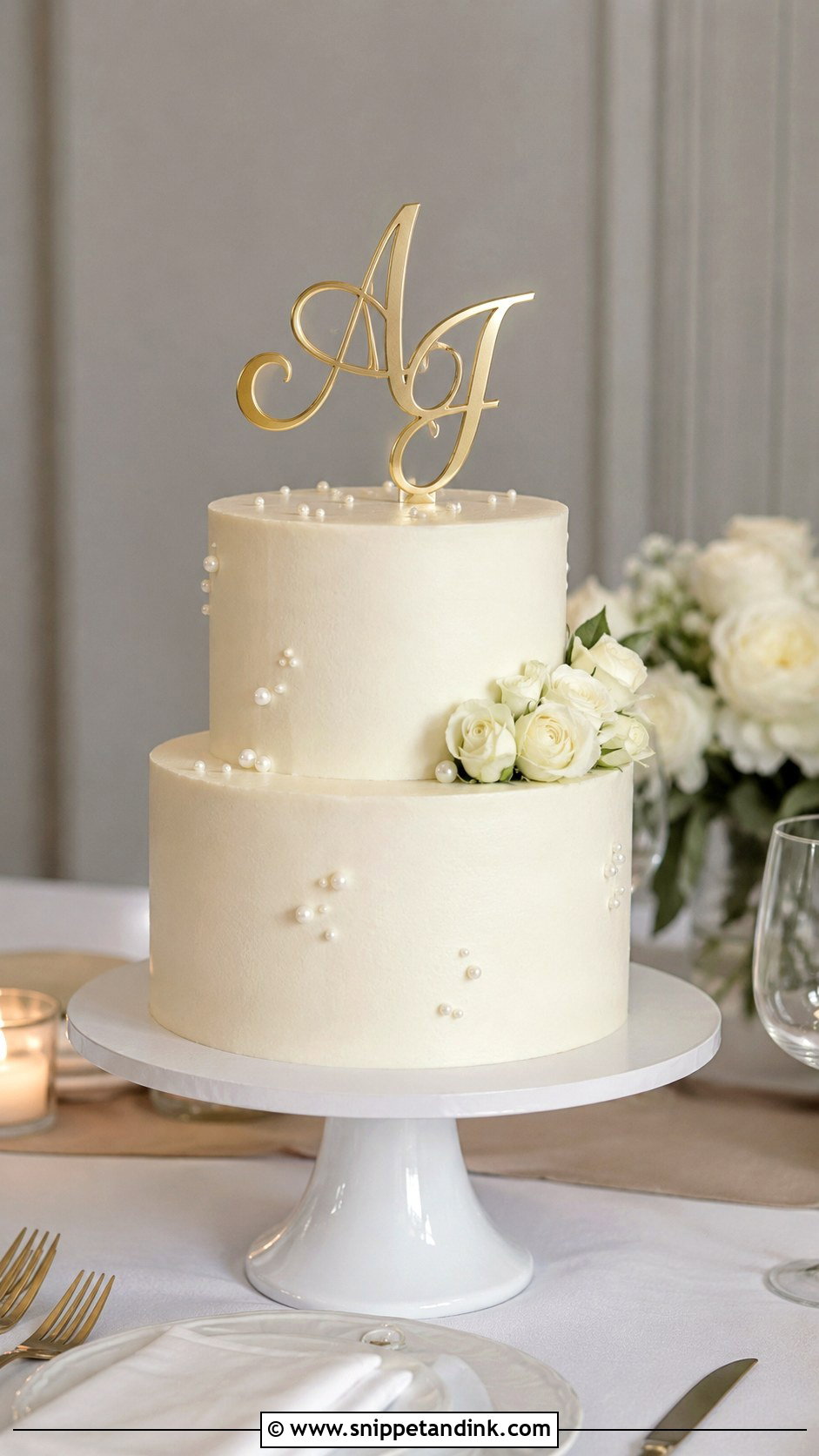
Toppers personalise a plain cake quickly: initials, a surname, a short phrase or a silhouette. Size is what people get wrong. A topper wider than the top tier makes the whole cake look top-heavy, so measure the top tier, usually six inches on a small cake, before you order. Keep the frosting smooth and neutral so the topper reads clearly, with a small floral cluster at the base for balance.
15. Small Two Tier Wedding Cake With Blush Flowers
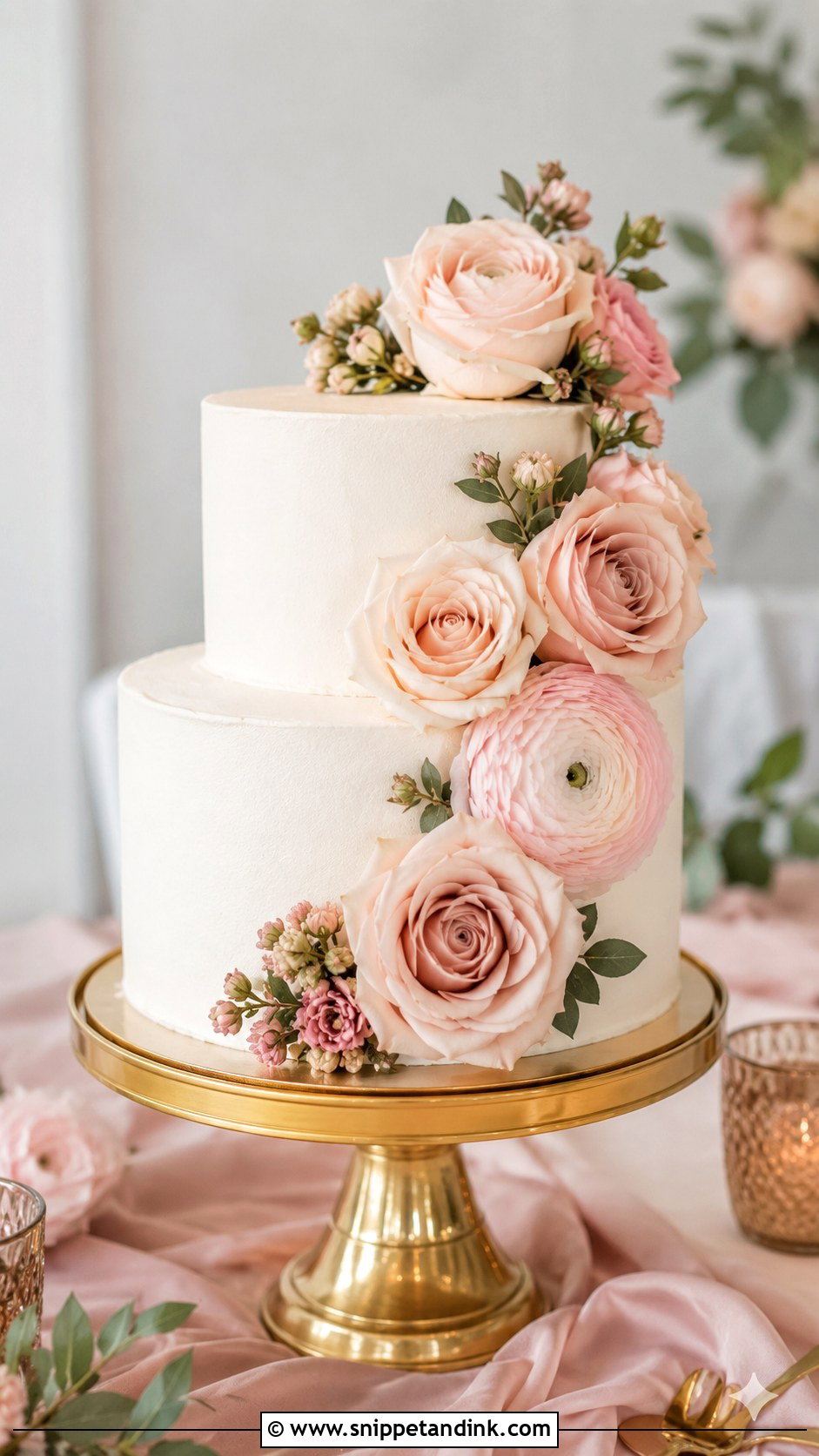
Blush flowers soften the cake without introducing strong colour. Pale pink roses, ranunculus and small garden blooms on ivory buttercream look warm and bridal. I place them in two small clusters, one high and one low on opposite sides, so the cake stays airy rather than wrapped. A gold stand or white ceramic pedestal suits it. It’s equally at home at a spring garden party or an indoor dinner.
16. Small Two Tier Wedding Cake With Sage Green Accent
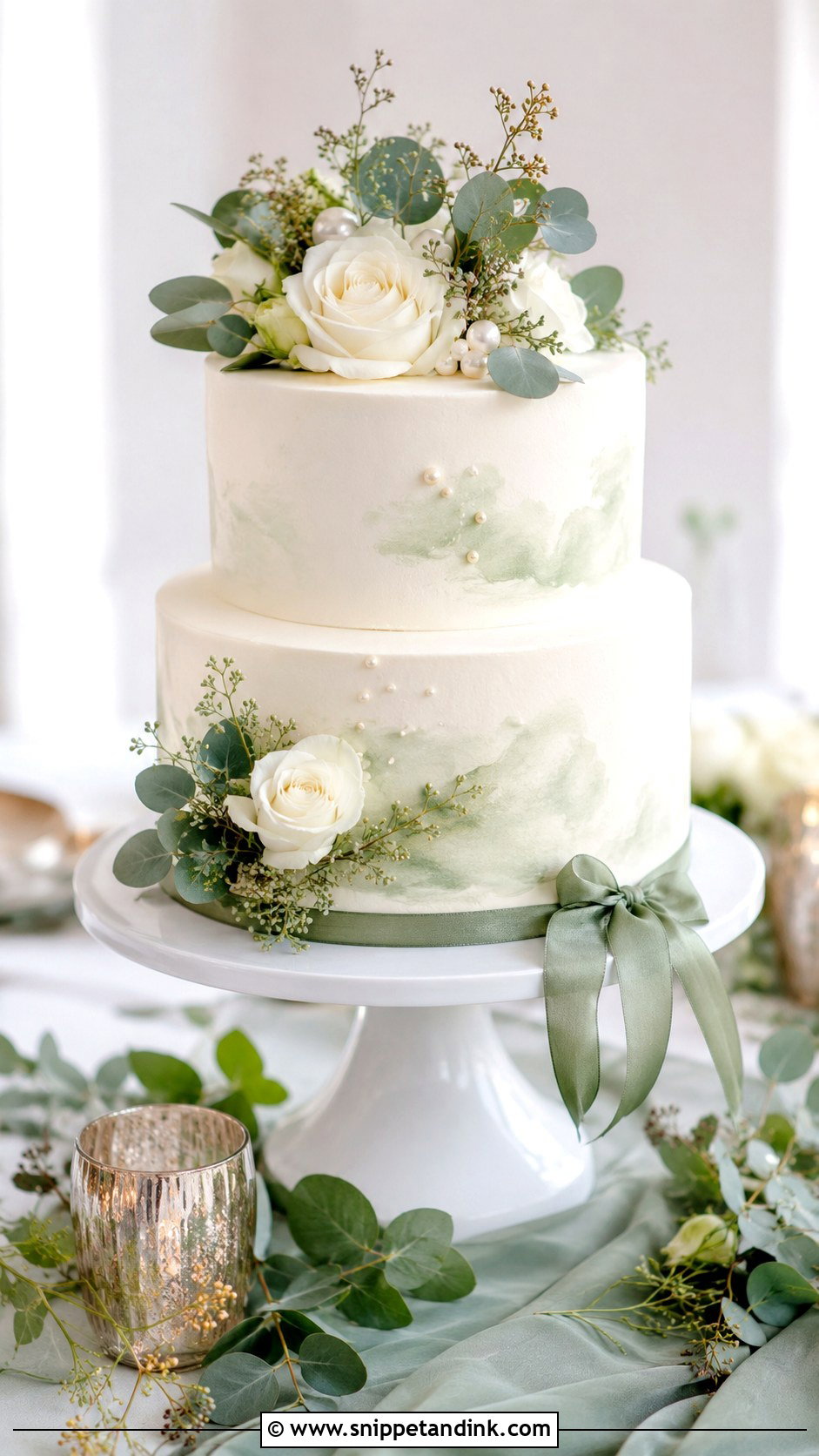
Sage is easy to overdo in frosting, where it can turn murky under warm light. I keep it to one element, such as a painted buttercream wash on one tier, a sage ribbon, green floral details or a subtle watercolour effect, and leave the rest ivory or white. A sage green accent pairs well with eucalyptus, white roses, olive leaves and neutral linens. Always check a tinted sample in daylight before the day, because greens shift more than most colours.
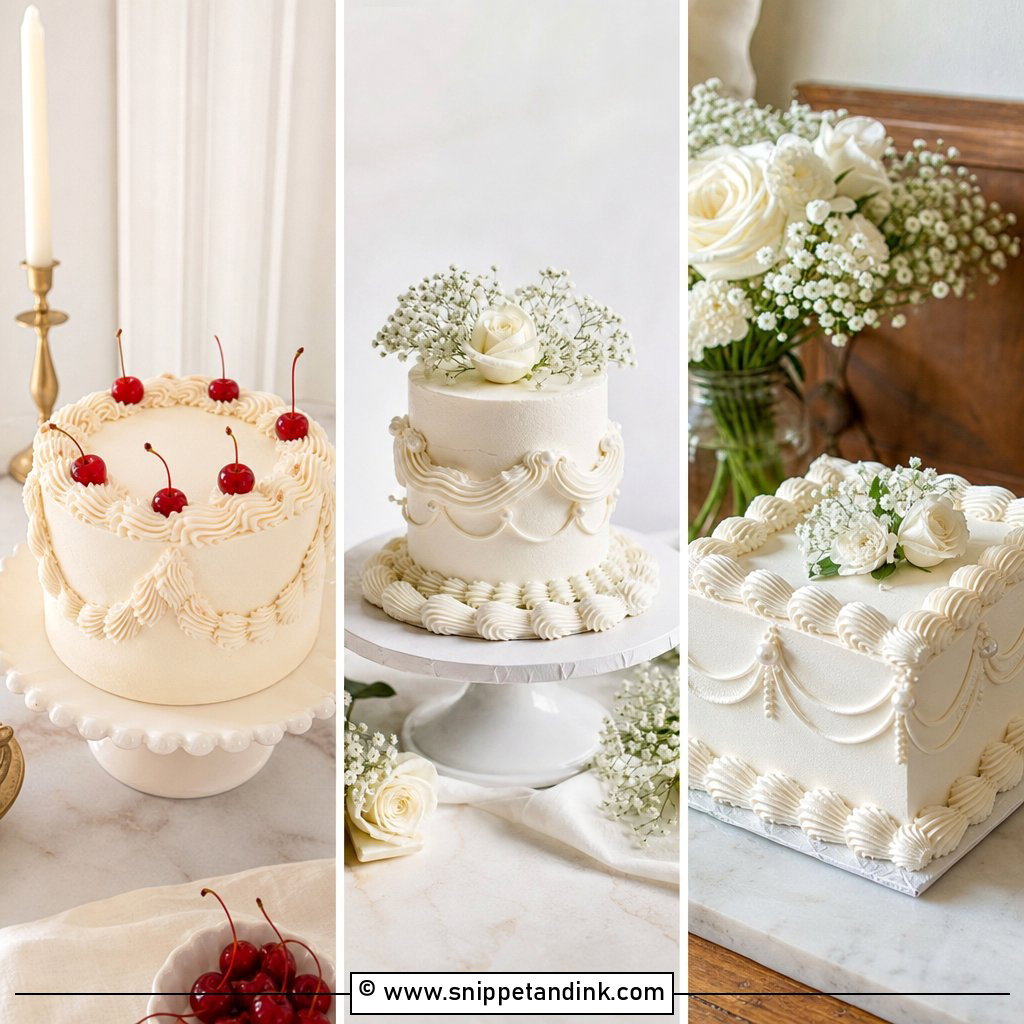
17. Small Two Tier Wedding Cake With Vintage Piping
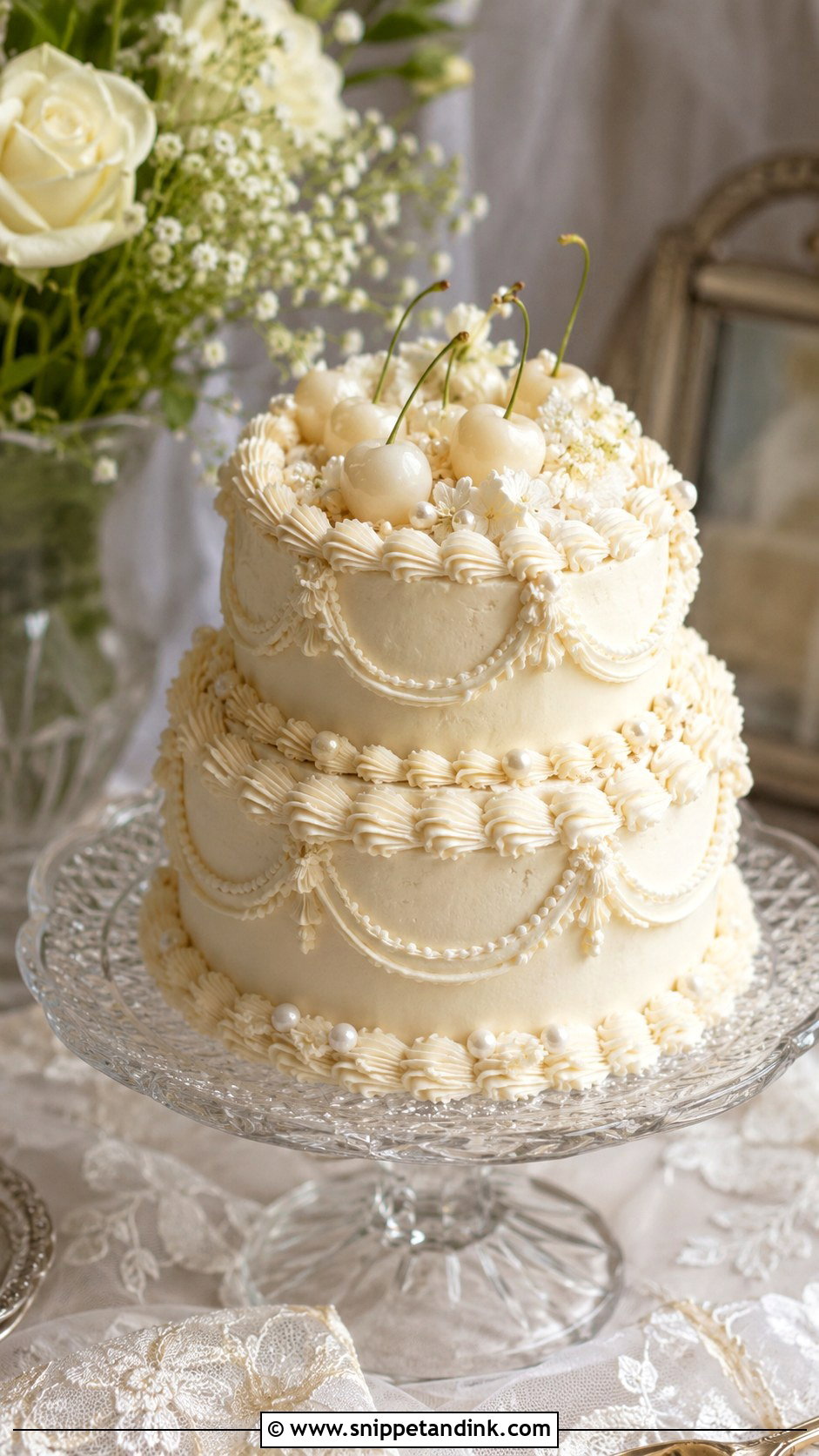
Vintage piping, with shells, swags, scrolls, dots and soft borders, gives a small cake real character. Keeping it to one frosting colour stops it from looking fussy. Ivory on ivory looks refined, while pale pink or soft blue is sweetly retro. This is slow, detailed work, so book early and expect it to cost more than a smooth cake of the same size. A vintage stand and a few simple flowers complete it.
18. Small Two Tier Wedding Cake With Minimal Flowers
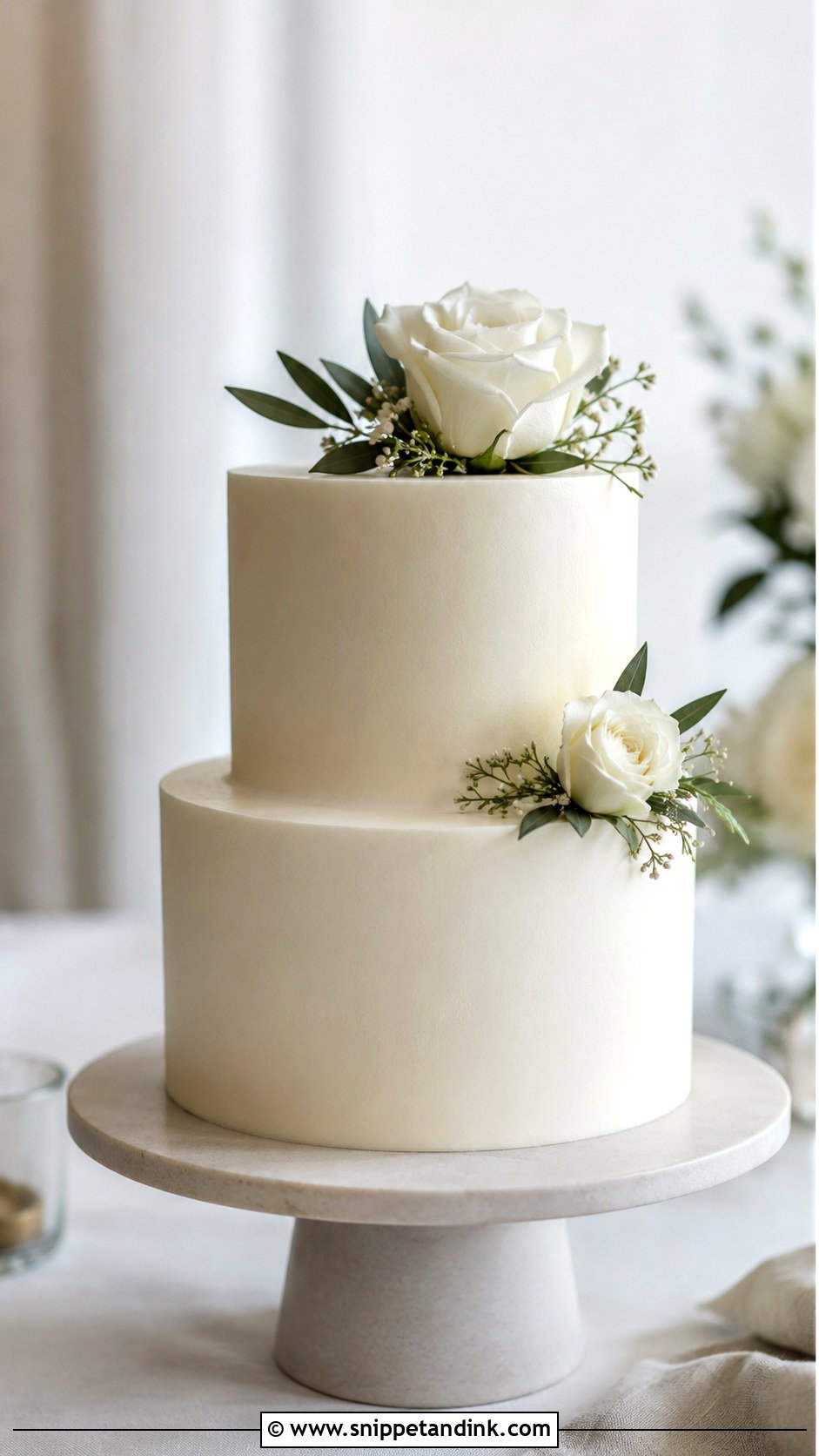
Two flowers can be enough. One small bloom on top, one accent near the lower tier and a few leaves or buds: that’s the whole design, and it suits restaurant tables and elopements where a big cake would crowd the room. White, cream, blush and pale yellow show best on smooth buttercream. The temptation is to keep adding stems; I’d stop as soon as it looks balanced.
19. Small Two Tier Wedding Cake With Lemon Filling
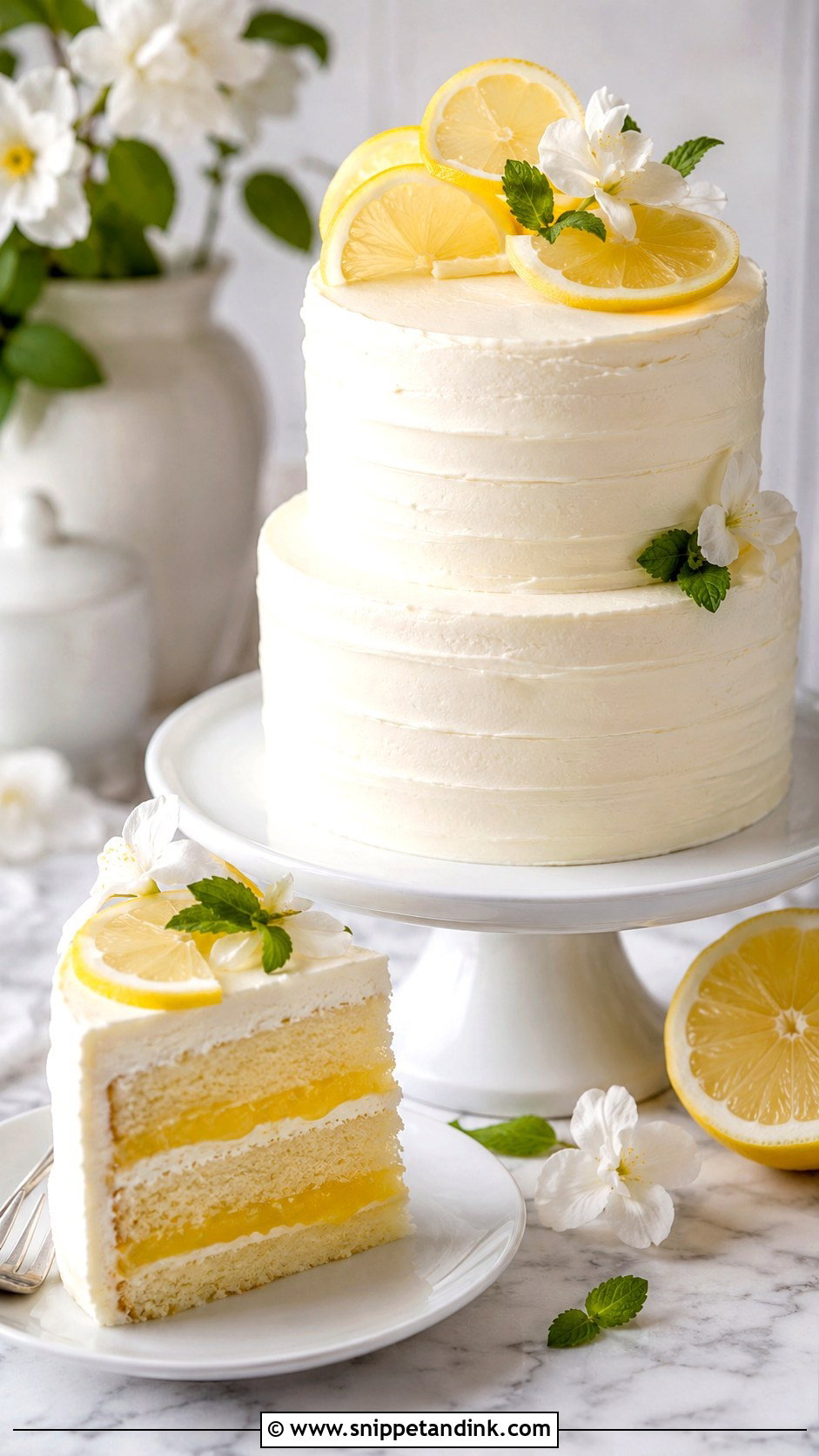
Citrus inside a plain white cake is a nice surprise when it’s cut. A sharp lemon filling pairs with vanilla or almond sponge, raspberry filling, blueberry compote or a light cream cheese frosting. Curd is soft, so on a stacked cake I pipe a stiff buttercream ring around each layer first; without it, the weight of the top tier squeezes the filling out of the sides. Small white flowers, thin lemon slices or a little greenery finish the outside.



20. Small Two Tier Wedding Cake With Chocolate Drip
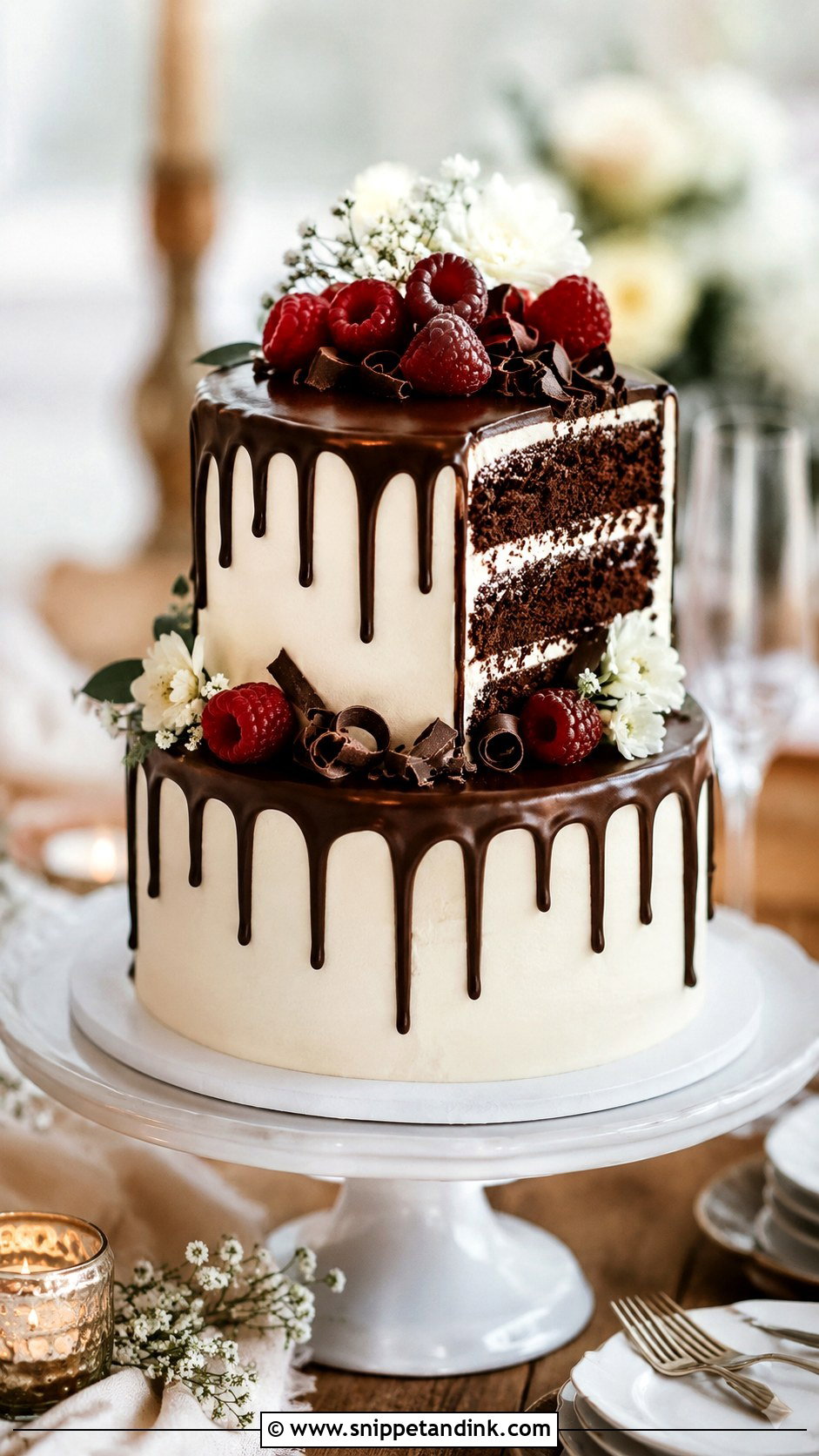
A drip gives a small cake a playful, less traditional feel. On two tiers it’s best on the top tier only, or with the lower tier dripped more lightly, so the drips don’t collide at the ledge. Dark chocolate on white buttercream gives contrast; caramel looks warmer. Ganache should be just warm enough to flow; too hot and it pools on the board. Berries, small flowers or chocolate curls on top are all it needs, and it suits evening receptions and dessert-loving couples.
Even Two Small Tiers Need Dowels
Couples are sometimes surprised that a cake this size needs internal support, but it does. A six-inch top tier weighs more than it looks, and without dowels it slowly sinks into the soft sponge below. I set food-safe dowels into the bottom tier, cut level with its surface, and the top tier sits on its own thin board on top of them. Ask your baker how the cake is supported, especially if it’s being moved after stacking. Some prefer to stack at the venue, which is the safest choice for a long drive.
Saving the Top Tier for Your First Anniversary
This is the one real advantage a two-tier cake has over a single tier. If you want to keep it, here’s how I’d do it:
- Remove flowers, toppers and any non-edible decorations as soon as it comes off the cake.
- Chill it uncovered for an hour or so until the frosting firms, so wrapping doesn’t crush it.
- Wrap it tightly in several layers of cling film, then foil, and freeze it in an airtight box.
- Thaw it slowly in the fridge, still wrapped, the day before you eat it.
Buttercream and ganache cakes freeze well. Fresh fruit, whipped cream and custard fillings don’t, and a year in a home freezer will dull any cake’s flavour. If your top tier has those, ask your baker for a small fresh anniversary cake in the same flavour instead. Many will happily recreate it.
Which One Feature Should Your Cake Lead With?
On two small tiers, one main feature is enough. That might be smooth buttercream, fresh flowers, pearls, gold leaf, ribbon, greenery, berries or a neat topper; let it lead and scale everything else down to the tiers. If you need more servings than the cake gives, add sheet cake, cupcakes or a dessert table rather than another tier. Classic, modern, rustic or colourful, a small two-tier cake can carry the meaning of the day just as well as a tall one.
You'll Like These Ideas:



Leave a Reply