
Small cakes are some of my favorite orders, because with two to ten people eating it, every detail on the cake actually gets seen. A single tier can be the whole dessert, and a tiny vintage cake can carry a full set of portraits on its own. What makes elopement cakes different is the journey: a cake for a courthouse step, a mountain overlook or a hotel balcony often travels further, waits longer and sits outdoors with no venue fridge nearby. Below are 20 designs, and for each one I’ll tell you how it holds up and what I’d ask your baker.
Heat, Bumps and No Fridge: Planning the Cake’s Day
Before we talk design, I ask where the cake will spend the hours between pickup and cutting. A cake on a reception table sits in air conditioning. An elopement cake might ride in a hot car, wait in a hotel room or stand on a rock in the sun.
- Frosting choice: American buttercream and ganache hold shape in warmth better than whipped cream, cream cheese frosting or a soft meringue buttercream. If the cake will be outside on a warm afternoon, tell your baker so they can adjust the recipe.
- Fondant: it seals the cake, but moving a chilled fondant cake into humid air makes it sweat with condensation. Let it come up to temperature in its closed box.
- Height: one tier or a mini cake travels far better than a stacked cake. If you want two tiers, carry them separately and stack on site.
- Lead time: many bakers have a minimum order or book out months ahead for weekends, even for tiny cakes. I’d reach out as soon as you have a date and town.
If you’re flying to your elopement, I’d rather you order from a baker near the location than carry a cake on a plane. Ask them to deliver to your accommodation or arrange pickup the same morning.
1. Single Tier Elopement Wedding Cake
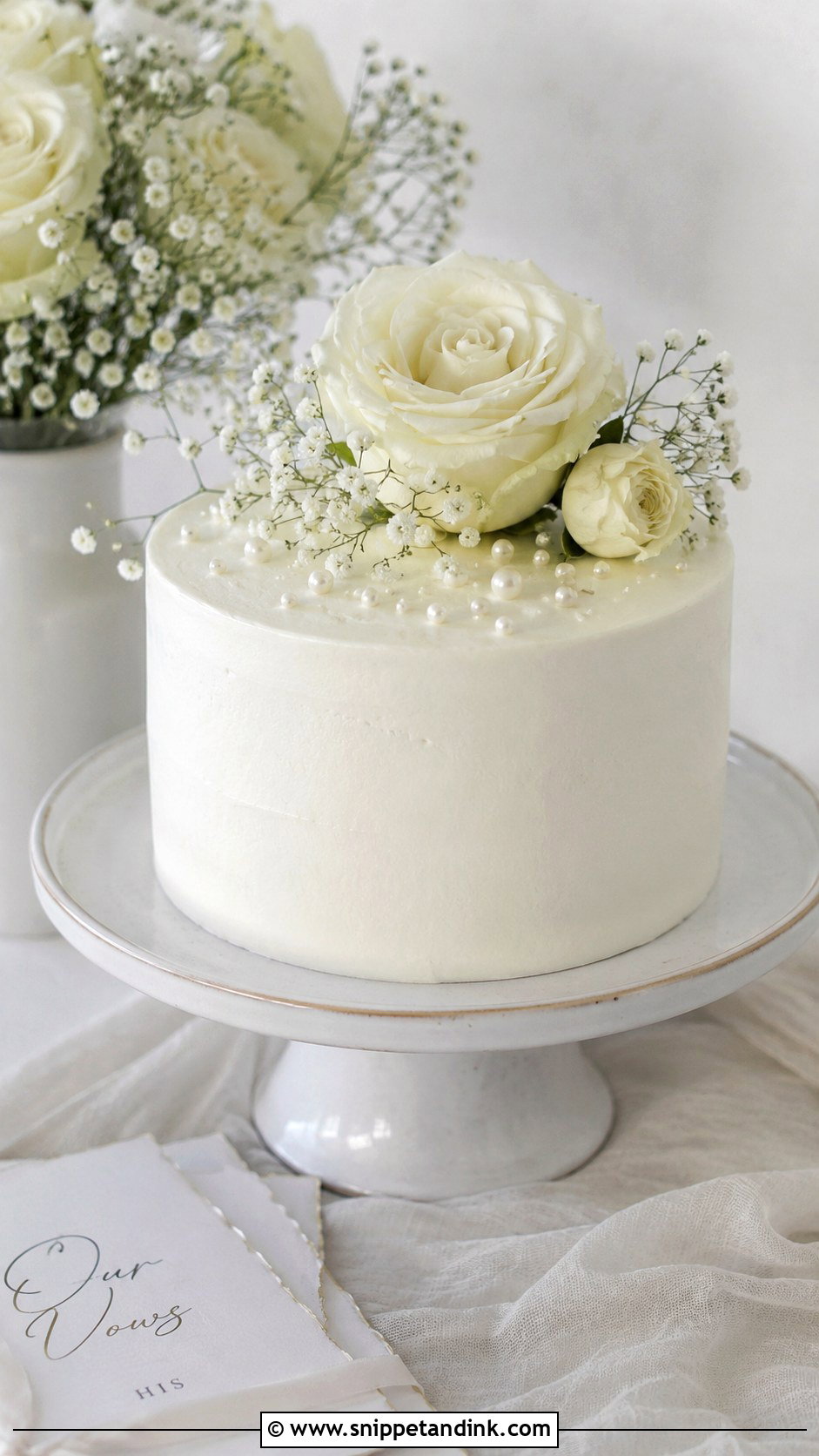
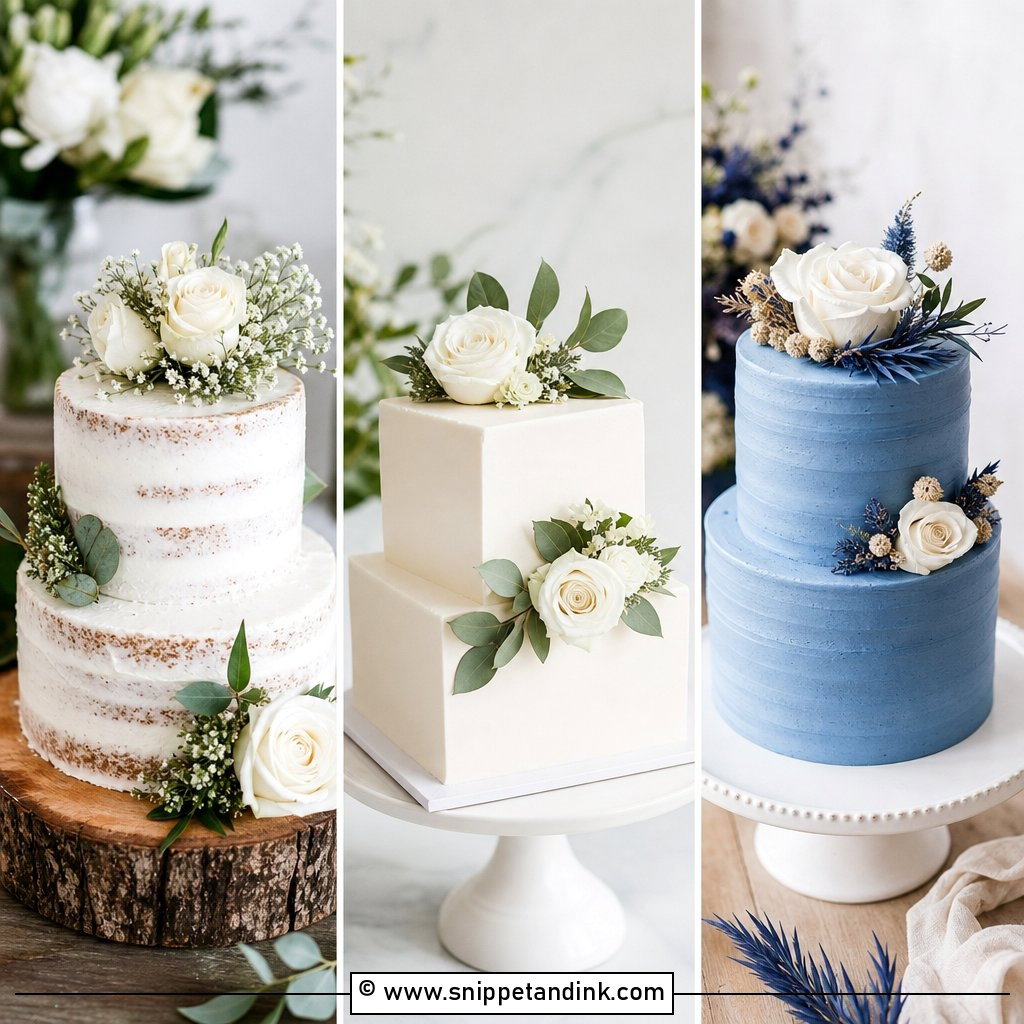
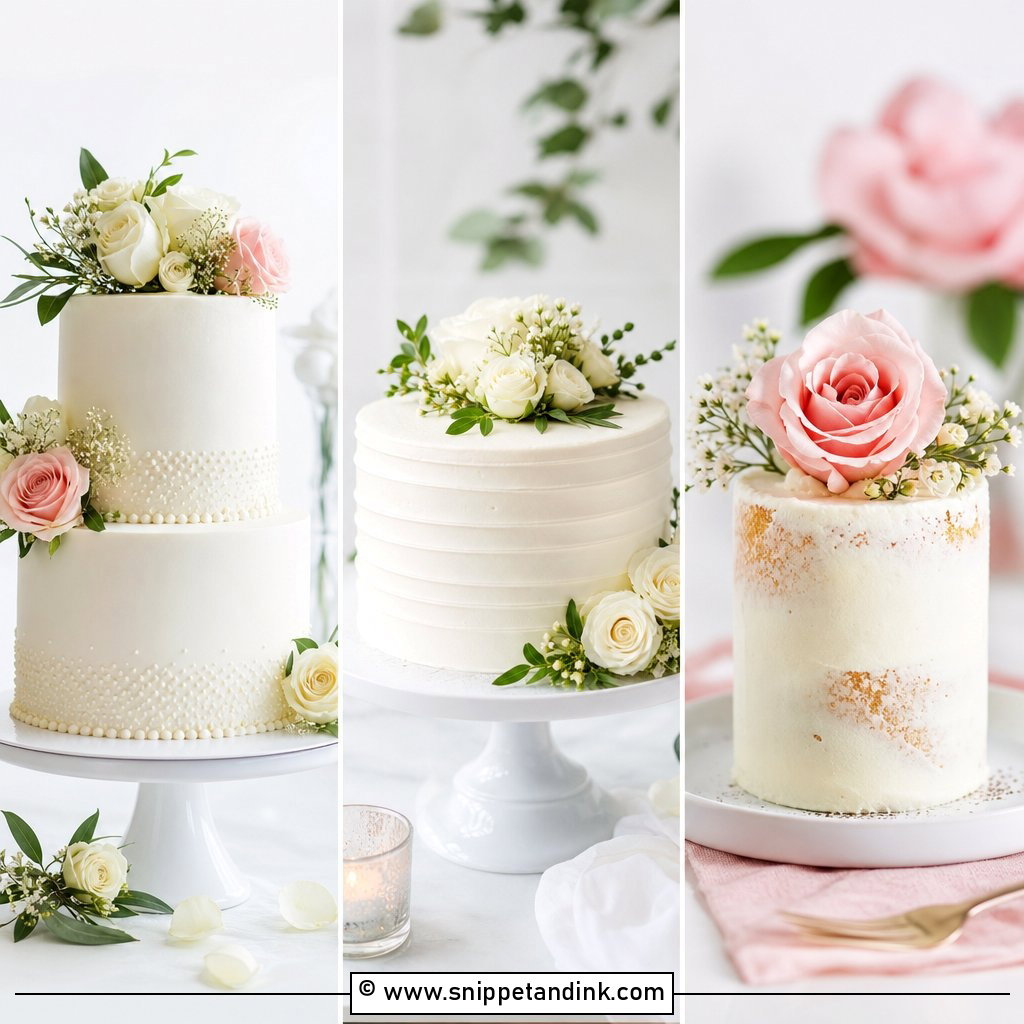
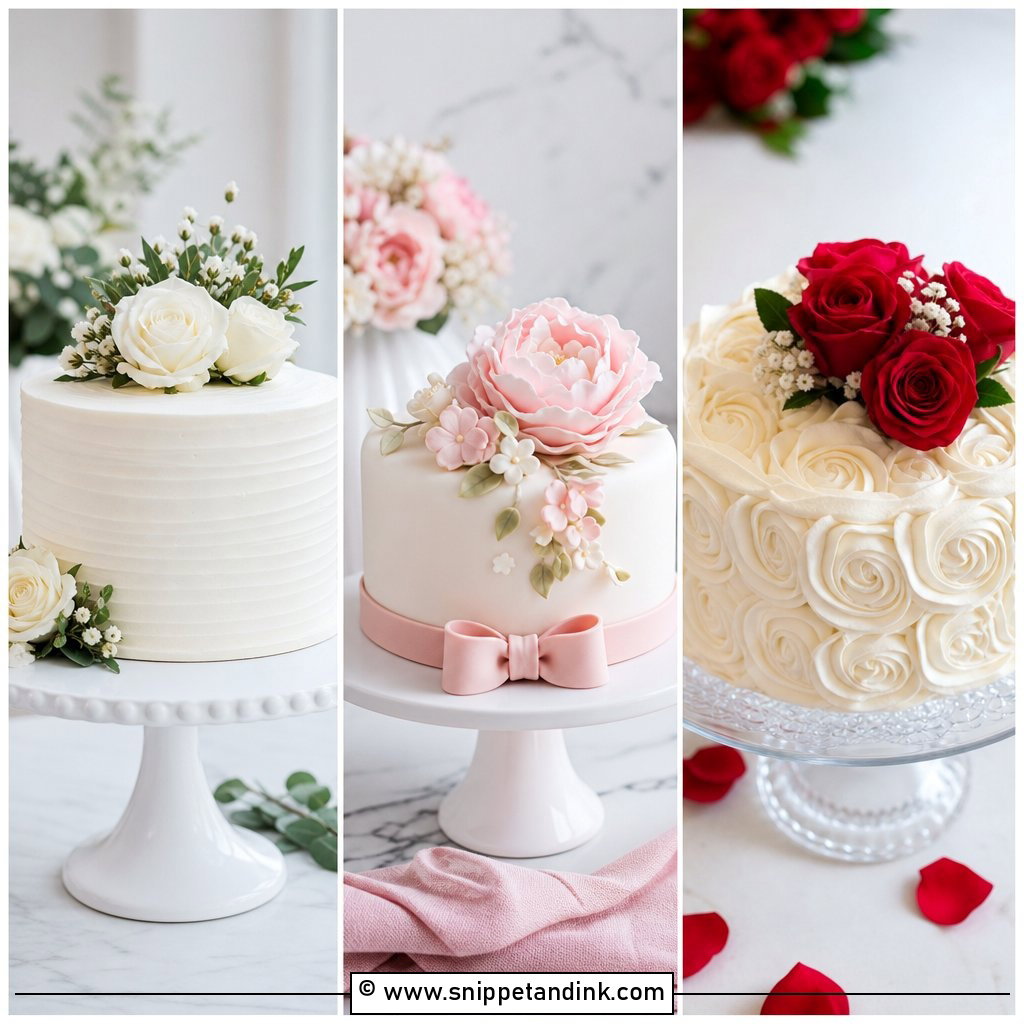
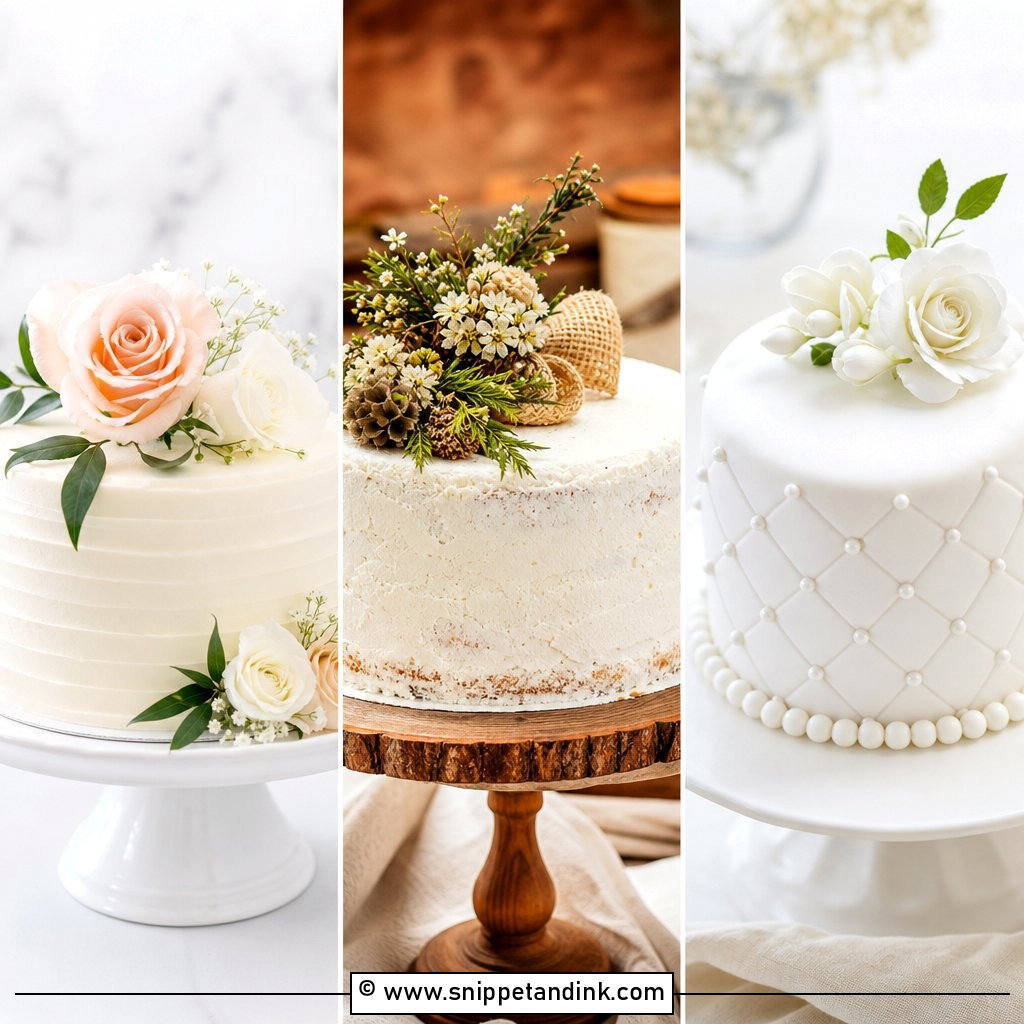
This is the cake I make most for elopements. A 6-inch round cuts into roughly a dozen thin wedding-style slices, which covers two people with plenty of leftovers or a small family group; an 8-inch serves a few more. A smooth finish reads modern, and a softer spatula texture suits outdoor settings and hides the odd travel scuff. Fresh flowers, tiny pearls, a ribbon or a small topper are enough decoration. Because it’s short and has no internal supports to shift, it’s also the safest shape to carry to a park, beach or destination.
2. Two Tier Elopement Wedding Cake
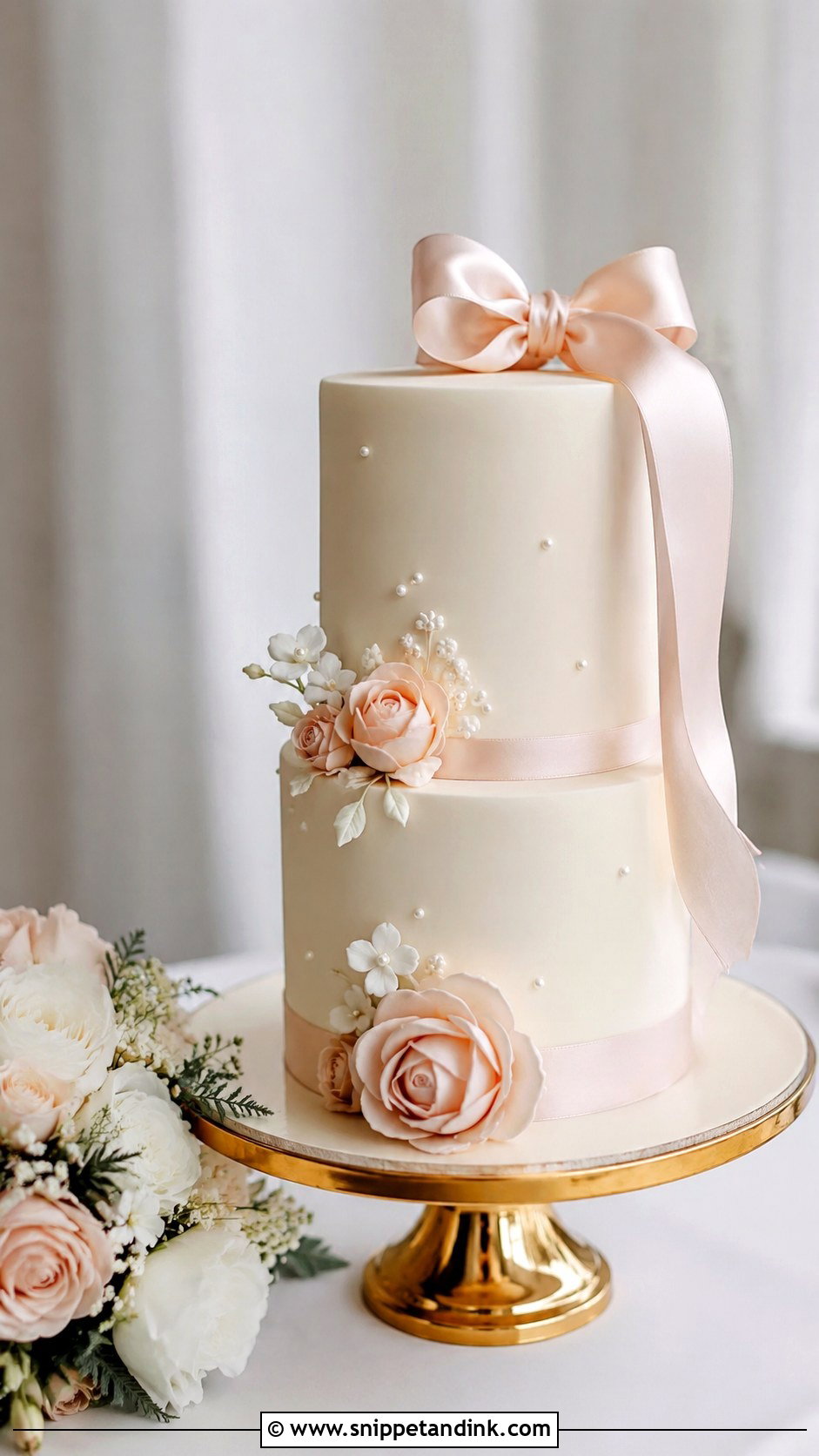
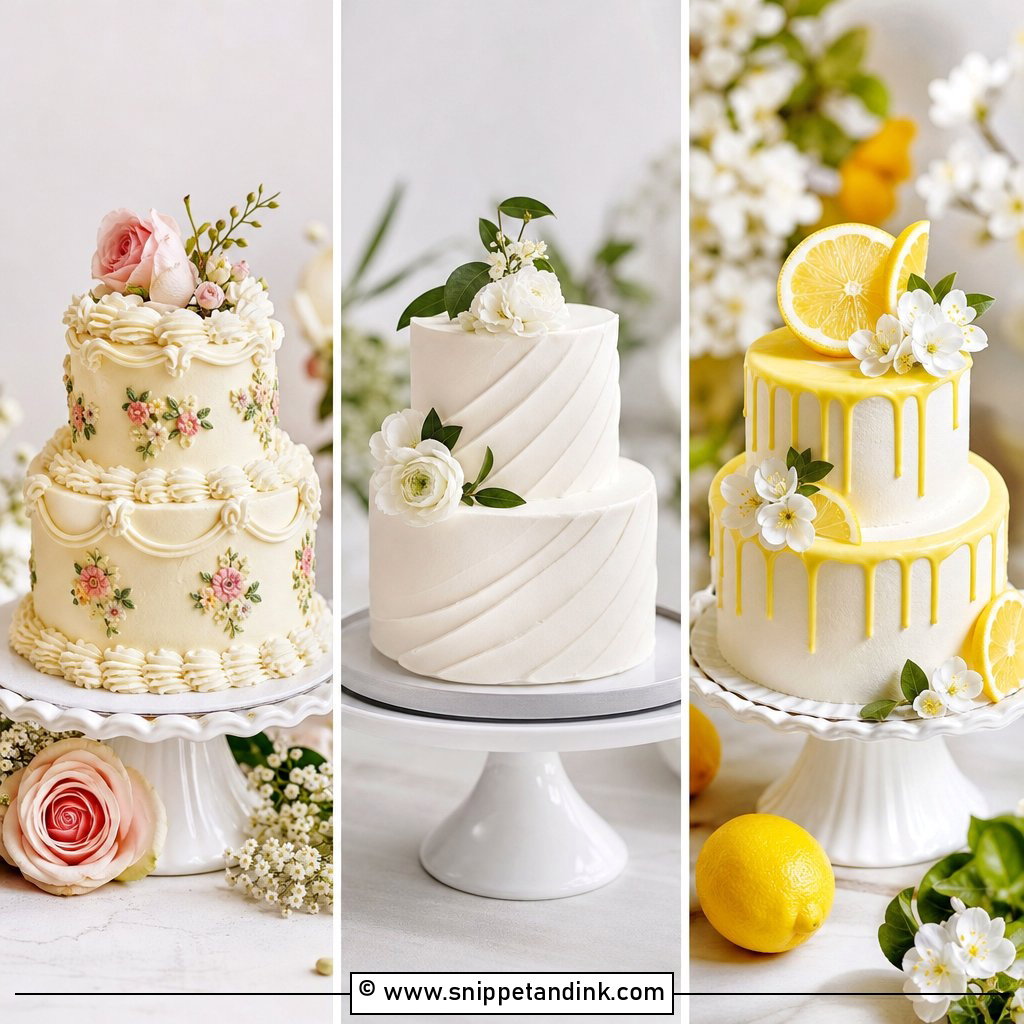
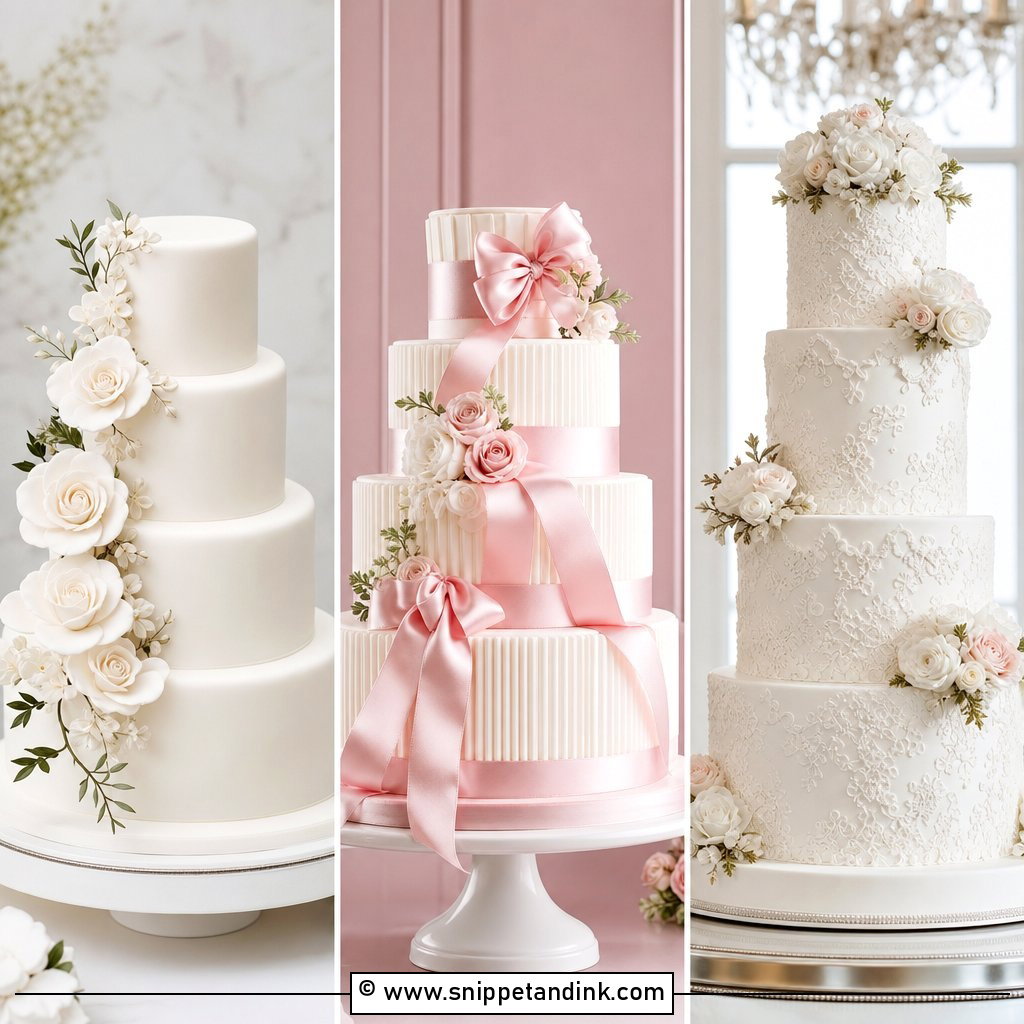
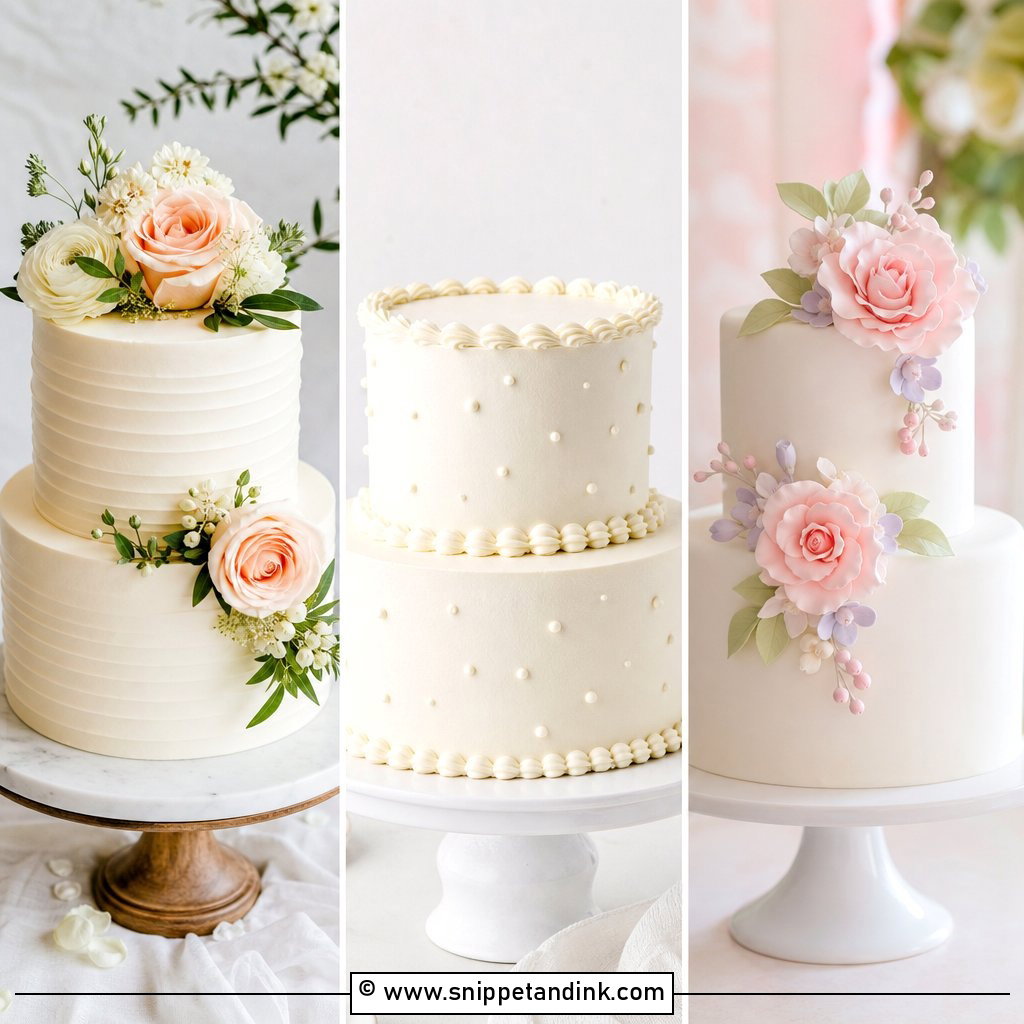
Two tiers give you height in photos, and on a small table that presence matters. I put a dowel structure and a cake board under the top tier even on small cakes, because the bottom tier will compress under it on a warm drive otherwise. The lower tier does the serving while the top can be saved. Smooth buttercream, simple fondant or soft ruffled icing all work, and light flavors like vanilla bean, almond, lemon or champagne keep it traditional. I’d only choose this if someone can carry it level the whole way.
3. Mini Elopement Wedding Cake
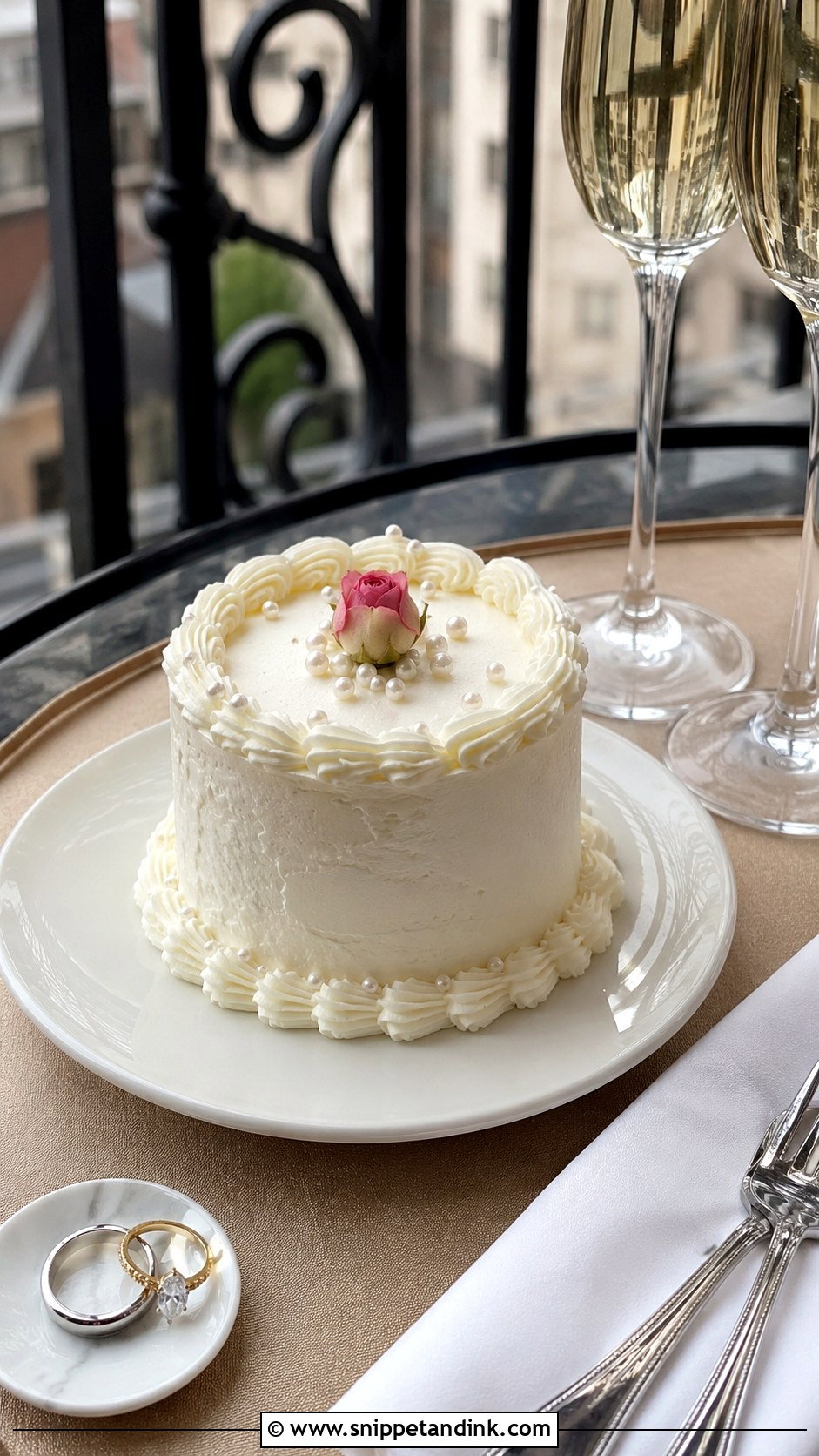
Mini cakes, usually four inches across, give you two generous slices and real design space on top: vintage piping, pressed flowers, glossy cherries or one bloom on clean buttercream. They suit hotel-room celebrations and picnics. The practical bonus is that they fit in a small cooler and chill fast. Tell your baker the cake is traveling so they choose a firm filling like ganache or buttercream rather than a soft mousse, and ask for a snug box with a non-slip mat inside.
4. Vintage Lambeth Elopement Wedding Cake
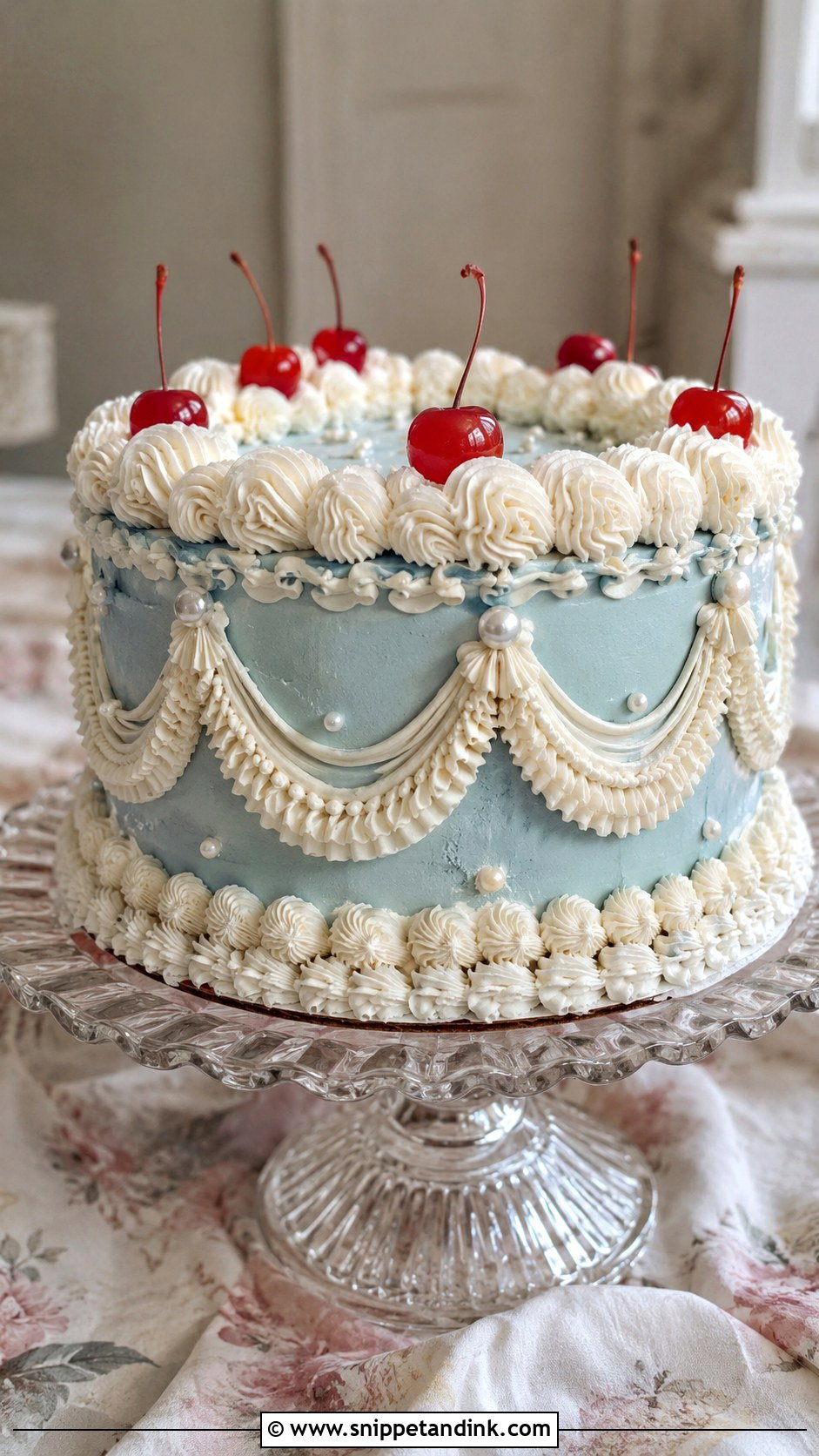
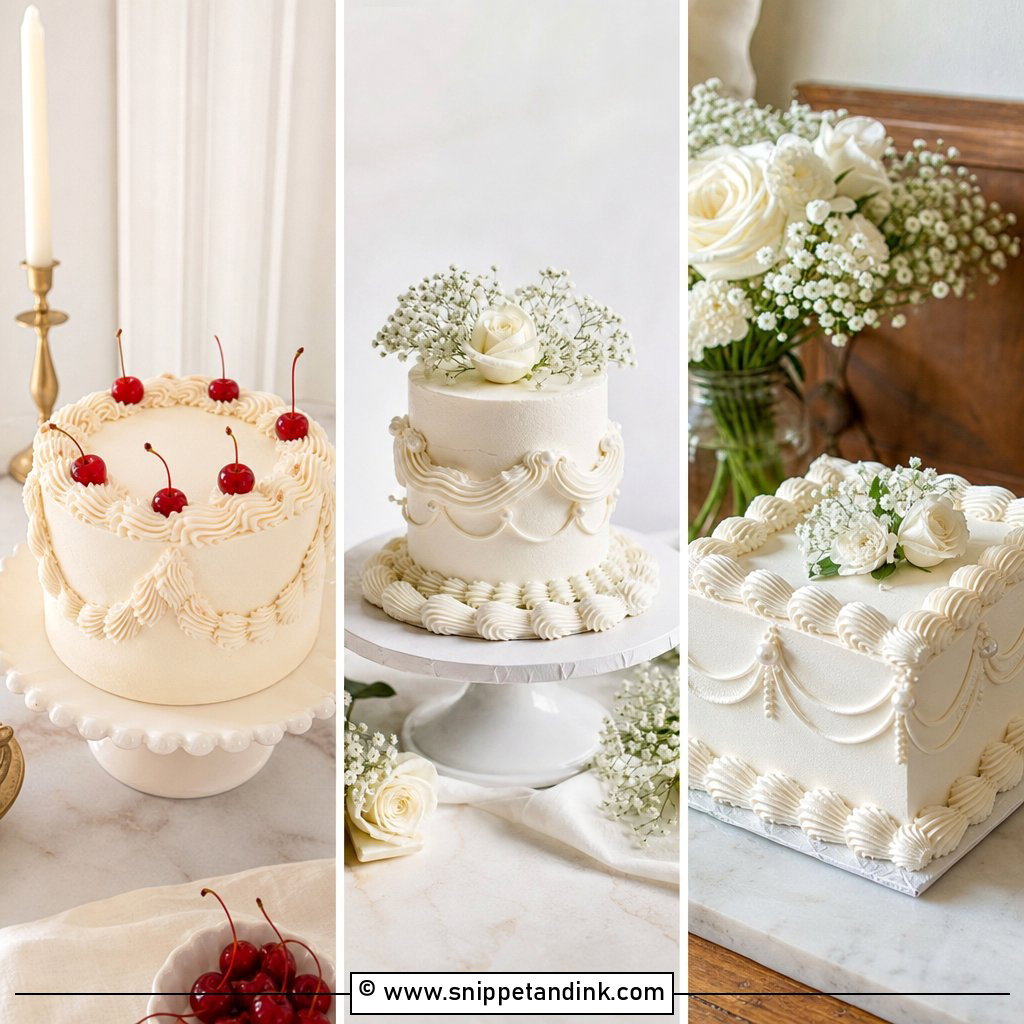
Lambeth piping turns even one tier into a showpiece: layered shells, swags, ruffles and borders, built up by hand. Soft white, butter yellow, blush, pale blue and ivory all suit it, with cherries for a retro touch or pearls for something softer. From the baking side, this is the design most likely to suffer on a hot day. Heavy piping is mostly buttercream, and those thin ridges are the first thing to slump, so I pipe these with a stiffer, more heat-tolerant buttercream when I know the cake will be outside. Keep the table plain and let the piping work.
5. Heart Shaped Elopement Wedding Cake
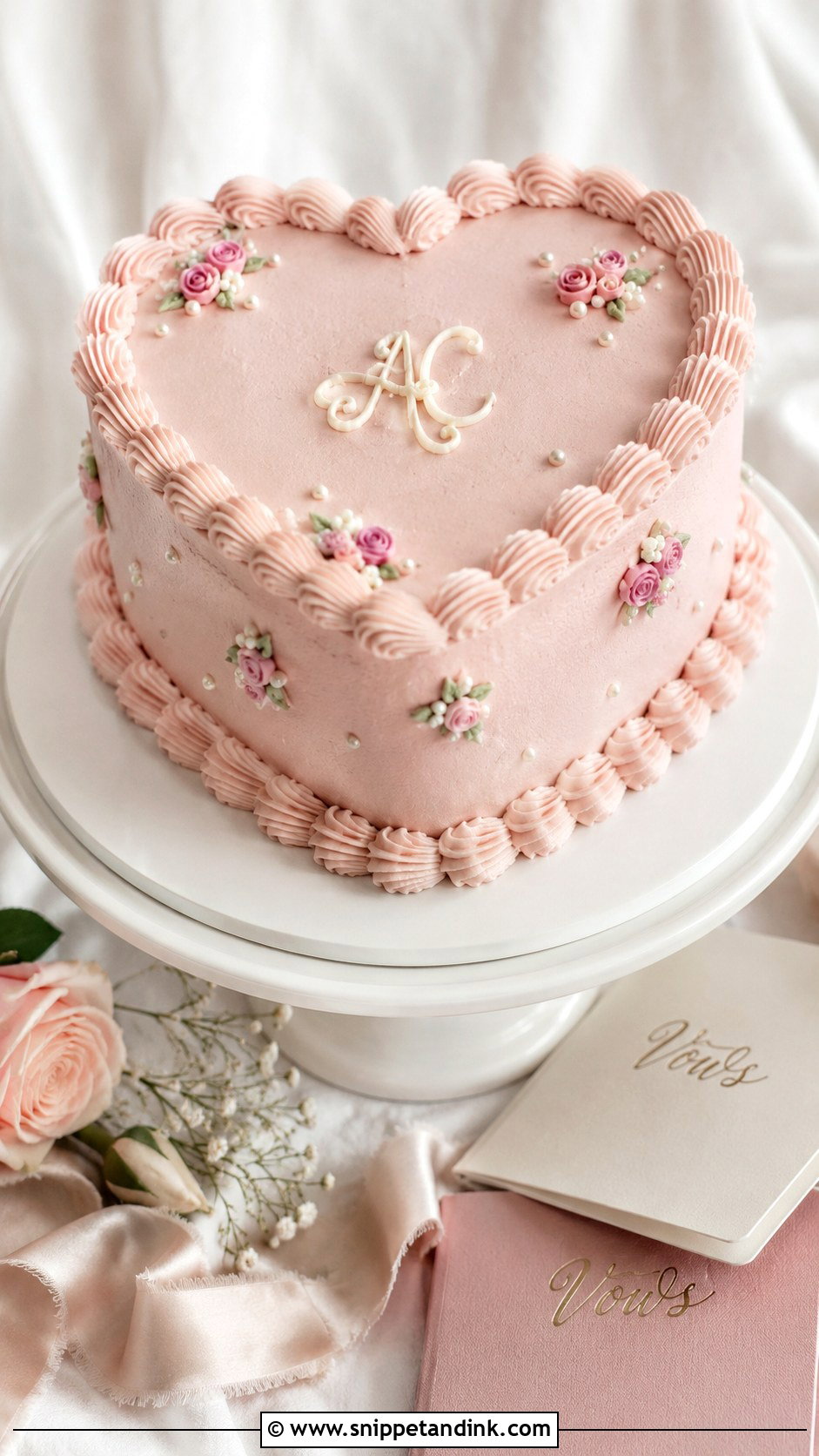
The heart shape does most of the decorating for you. I finish these in smooth buttercream with a piped border at the top and bottom, sometimes with vintage piping or a short message. Blush, ivory, pale pink, white or a red velvet interior all fit. Tiny sugar flowers or pearls are plenty. The point of a heart cake shows best from above, so plan on flat lays with rings, vows and the bouquet. Ask for a cake board cut to the shape so it doesn’t flex when lifted.
6. Floral Elopement Wedding Cake
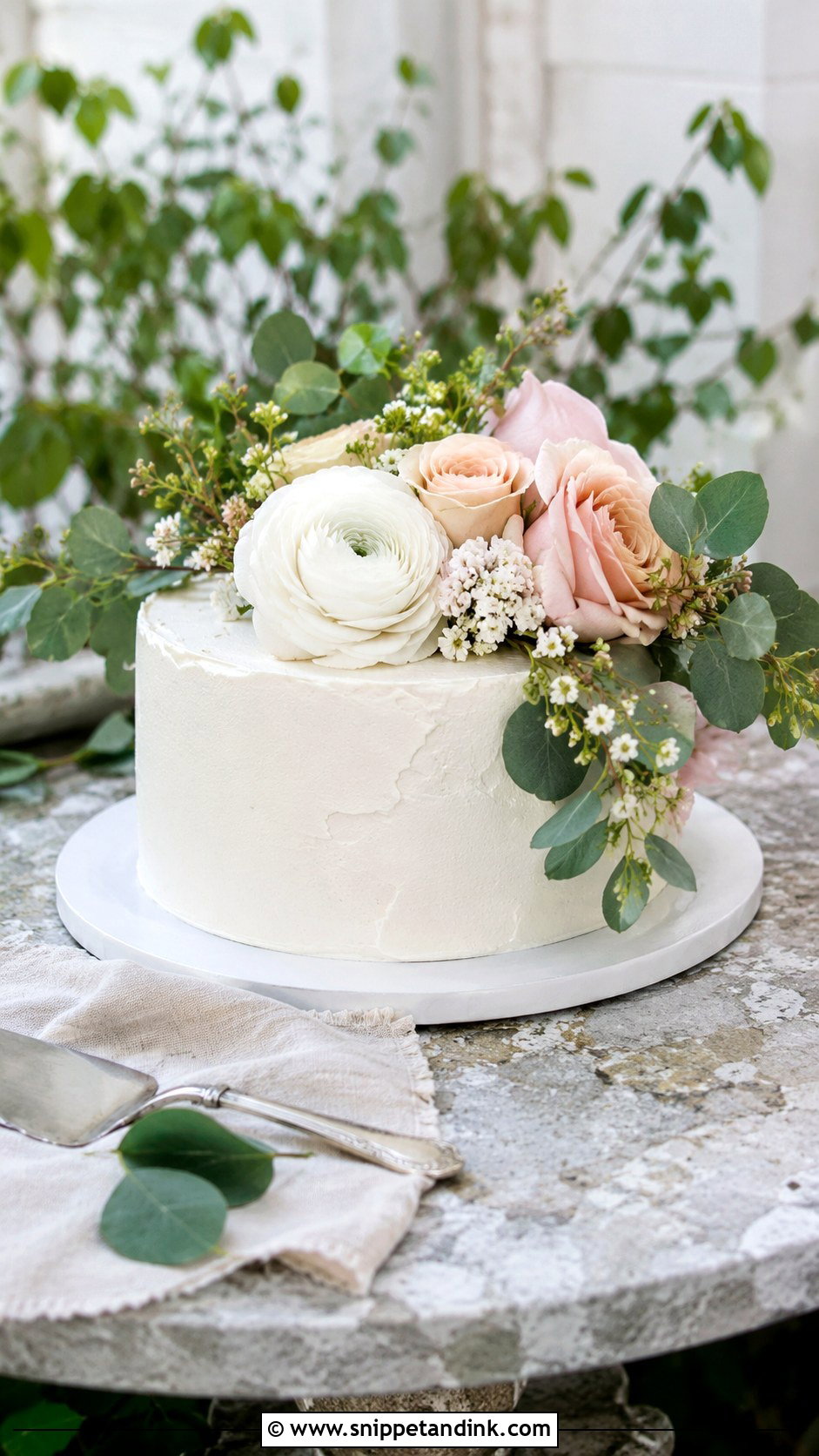
Flowers suit garden and backyard elopements, and on a small cake a few well-placed blooms do more than a heap. Roses, ranunculus, chamomile, lavender or tiny wildflowers can echo the bouquet over a buttercream base. Not every flower is safe near food, and some common ones are toxic, so I check every variety with the florist and never push a raw stem straight into the cake. I wrap stems in floral tape and use food-safe picks. One main color supported by greenery keeps it calm.
7. Wildflower Elopement Wedding Cake
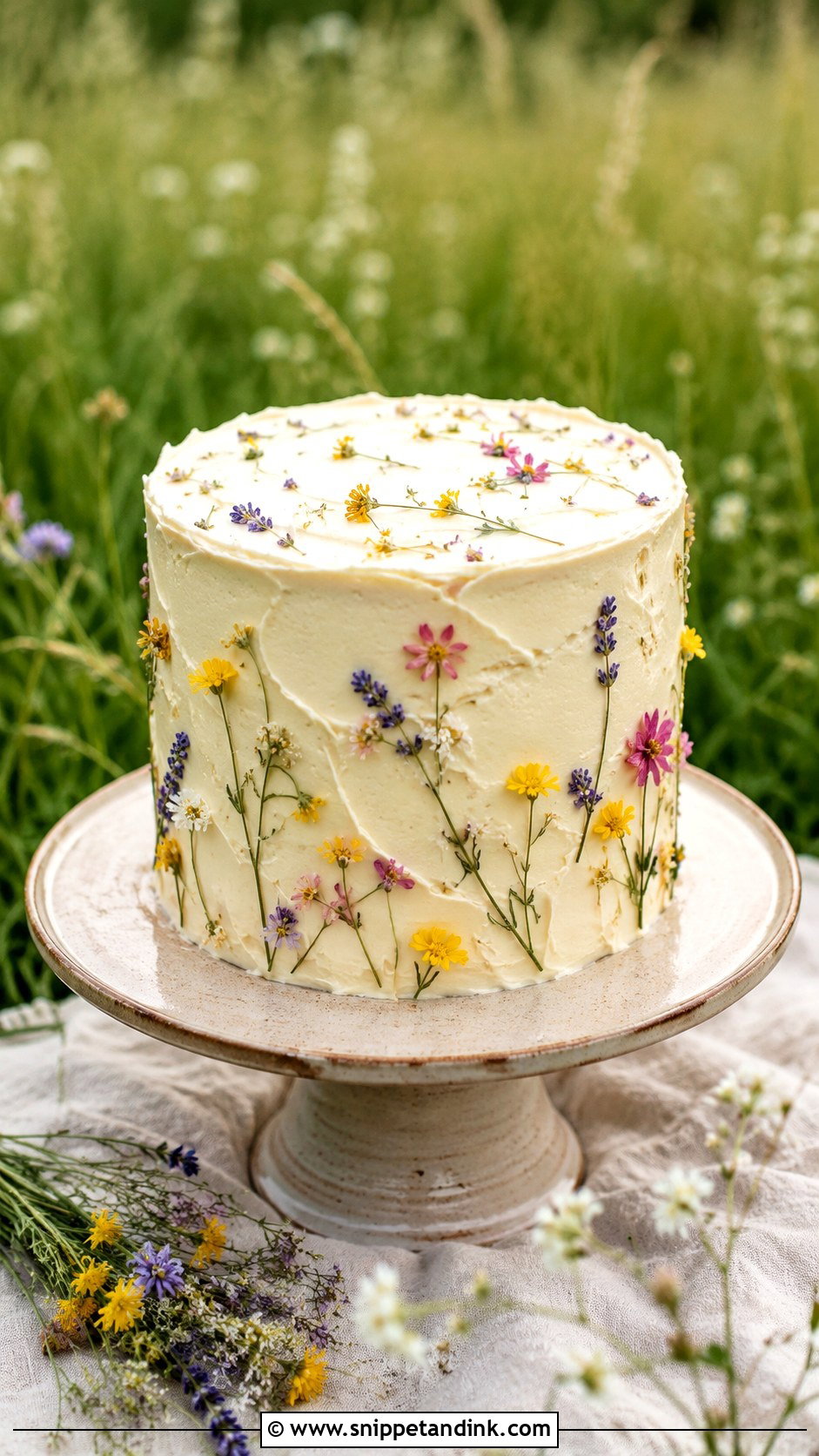
A wildflower cake should look picked, not arranged. Underneath it’s simple: a vanilla, lemon or honey sponge with smooth buttercream. Then I scatter small yellow, purple, white and dusty pink blooms loosely across the top, side or base, leaving gaps so it doesn’t look crowded. I add the flowers as late as possible, ideally on site, because delicate wild blooms wilt fast in sun. A linen cloth, wooden stand or ceramic plate finishes it for meadow, forest or picnic vows.
8. Beach Elopement Wedding Cake
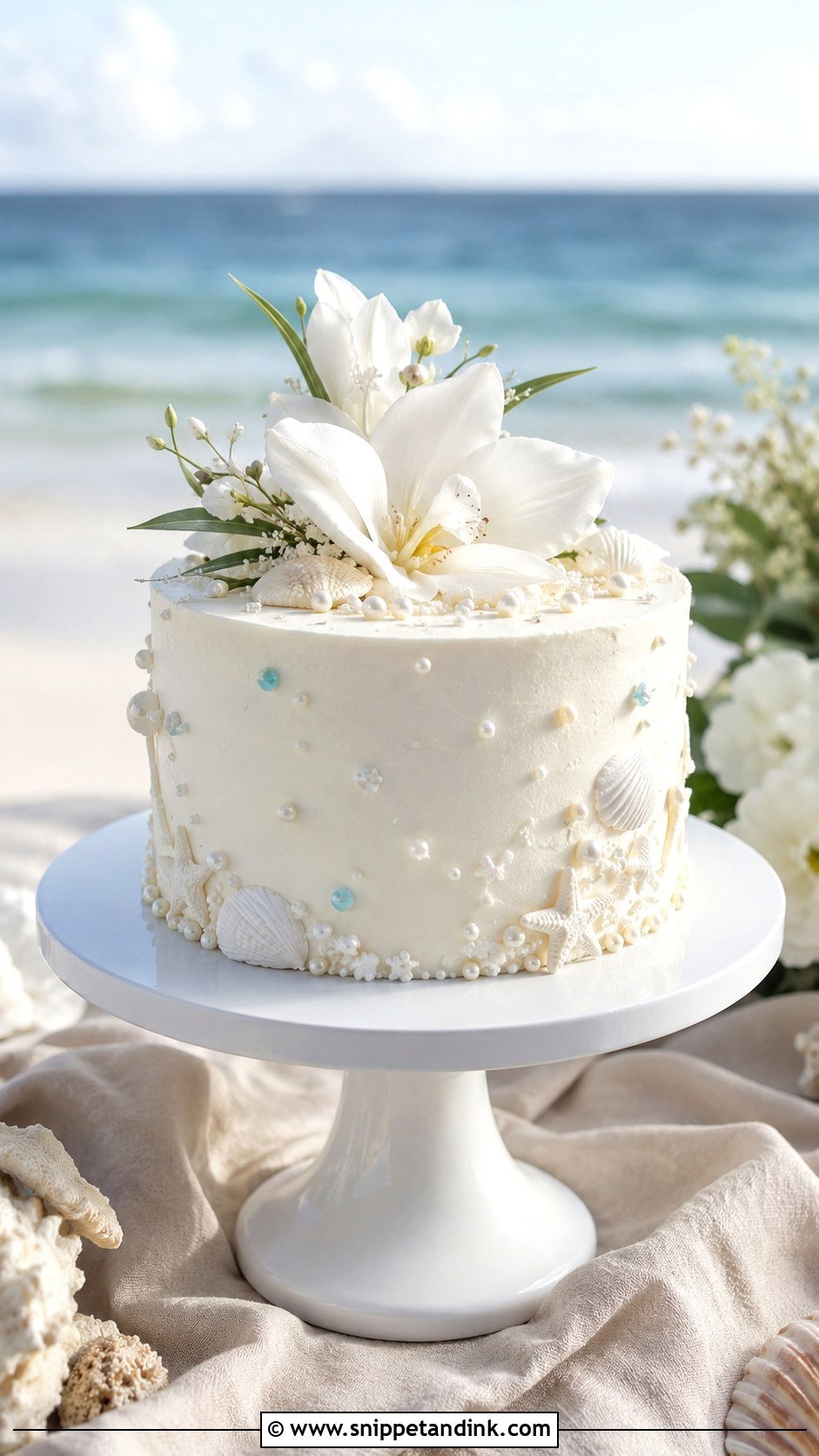
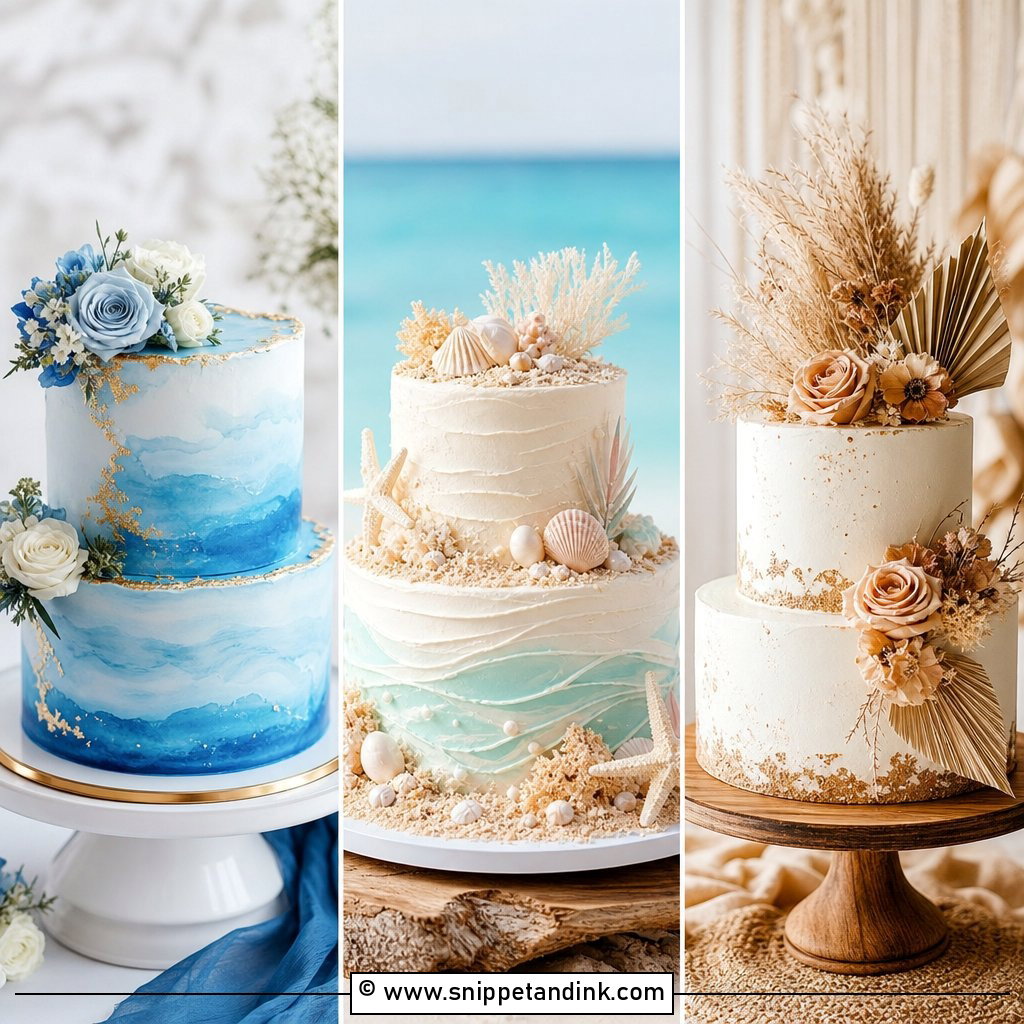
Beach cakes are where I’m most cautious. Sun, salt air and wind all work against buttercream, so I keep the finish smooth or lightly textured and skip anything tall or heavily piped. Ivory, pale blue, sand and pearl white suit the coast, with edible pearls, small sugar shells, dried citrus or tropical flowers on top. Coconut, vanilla, passion fruit, lemon and key lime flavors fit nicely. Keep it in a cooler in the shade until the moment you cut, and set it on a stable table, never on the sand.
9. Mountain Elopement Wedding Cake
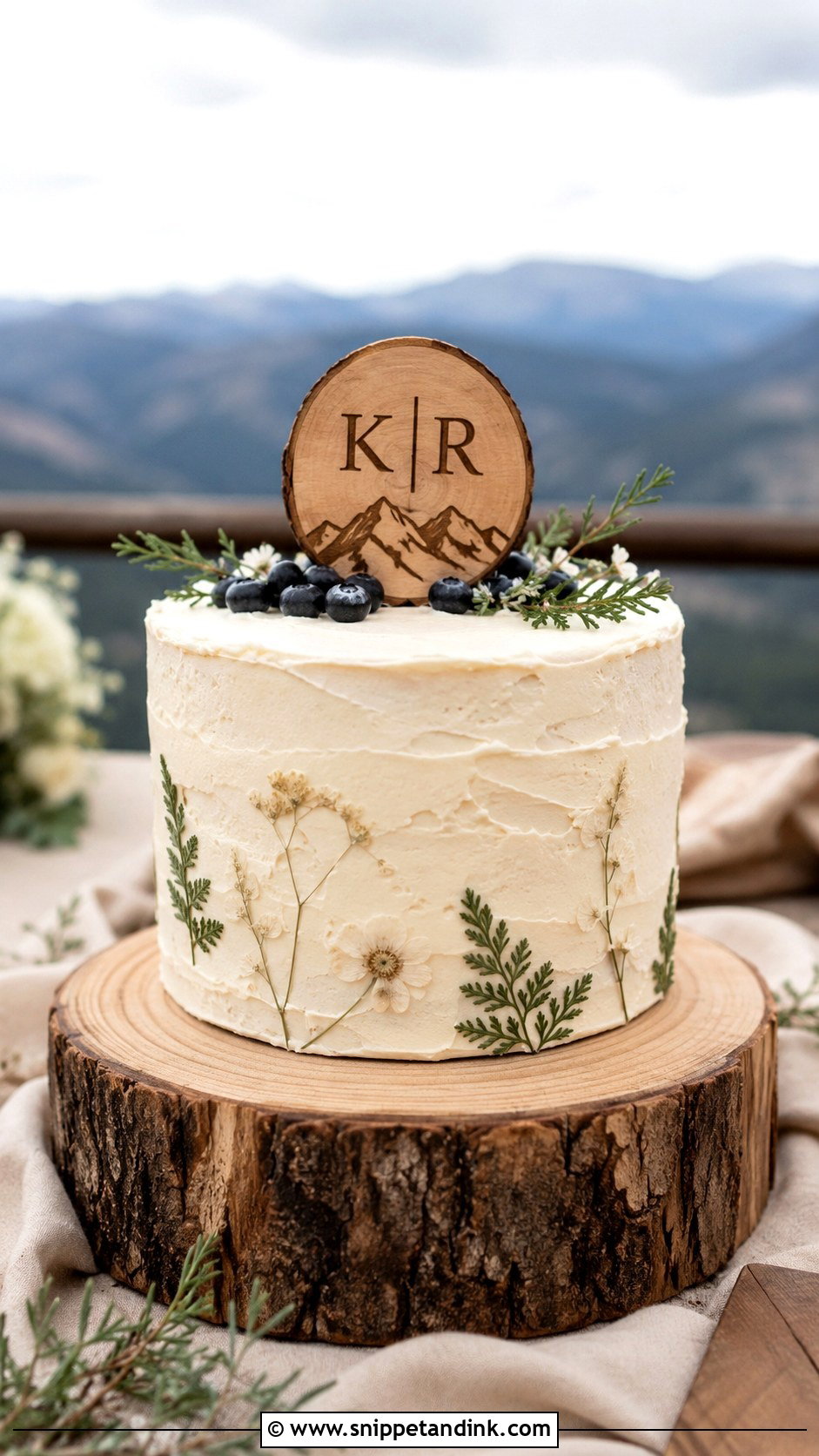
For mountain vows I’d pick a single tier with rough-textured buttercream that looks like stone or snow and doesn’t show a smudge from a bumpy road. Ivory, sage, warm beige and dusty blue match the landscape, decorated with greenery sprigs, pressed flowers, berries or a wooden topper. Carrot, spice, vanilla bean and brown butter flavors taste right after a cold ceremony. Altitude matters for baking, not for eating, so a cake baked at home elevation travels up fine; the real risks are bumps and heat in the car.
10. Courthouse Elopement Wedding Cake
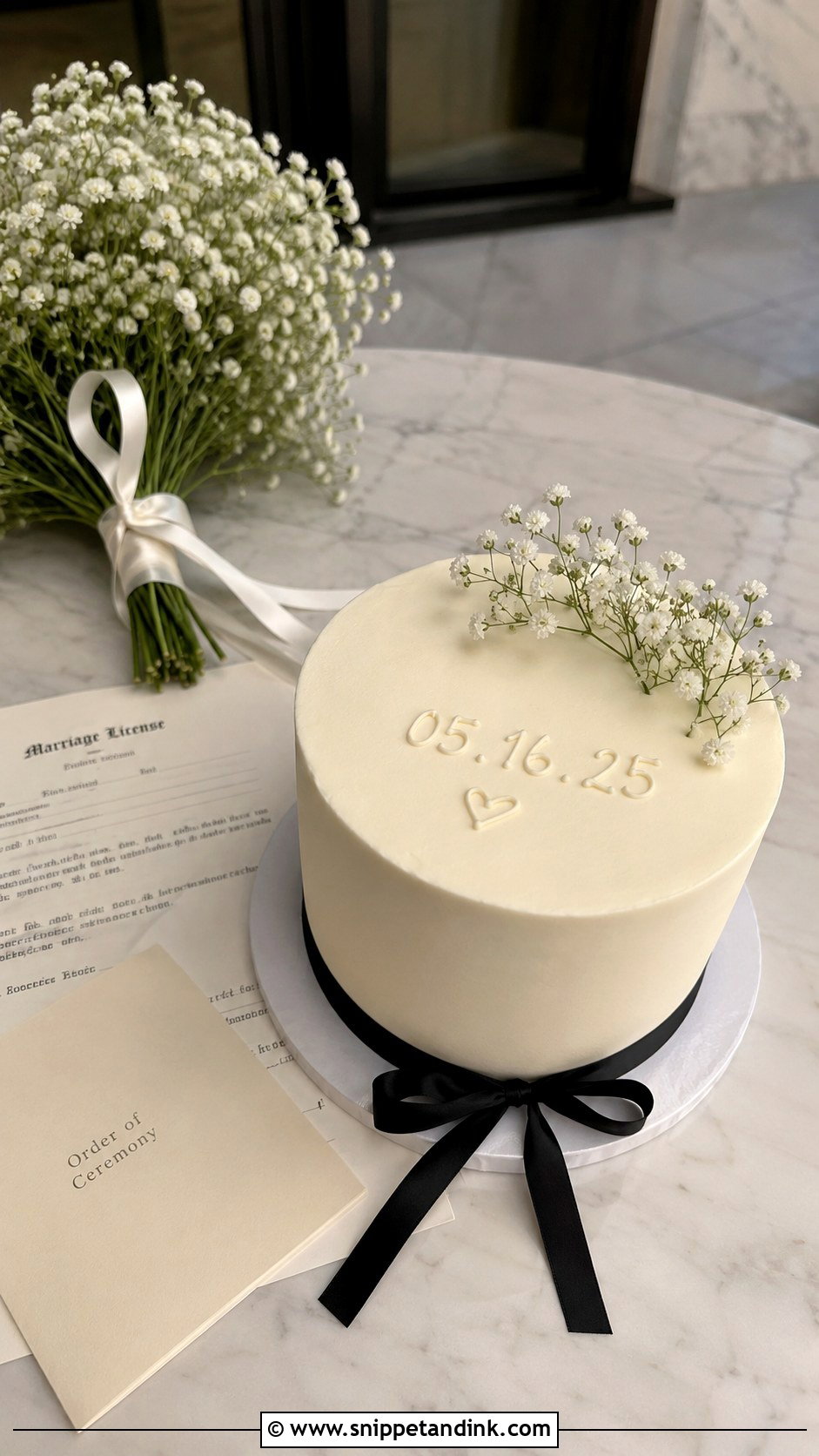
After a city hall ceremony most couples want something neat to cut at a restaurant or back at the hotel. A small round with smooth buttercream, a satin ribbon and tiny florals suits that, in white, ivory, blush, black and white, or champagne. I can pipe initials, the date or a short phrase. Since this cake often sits in a bakery box for hours, I’d ask for it to be collected chilled and kept in the room fridge, then brought out about an hour before cutting so the buttercream softens and the flavor comes back.
11. Picnic Elopement Wedding Cake
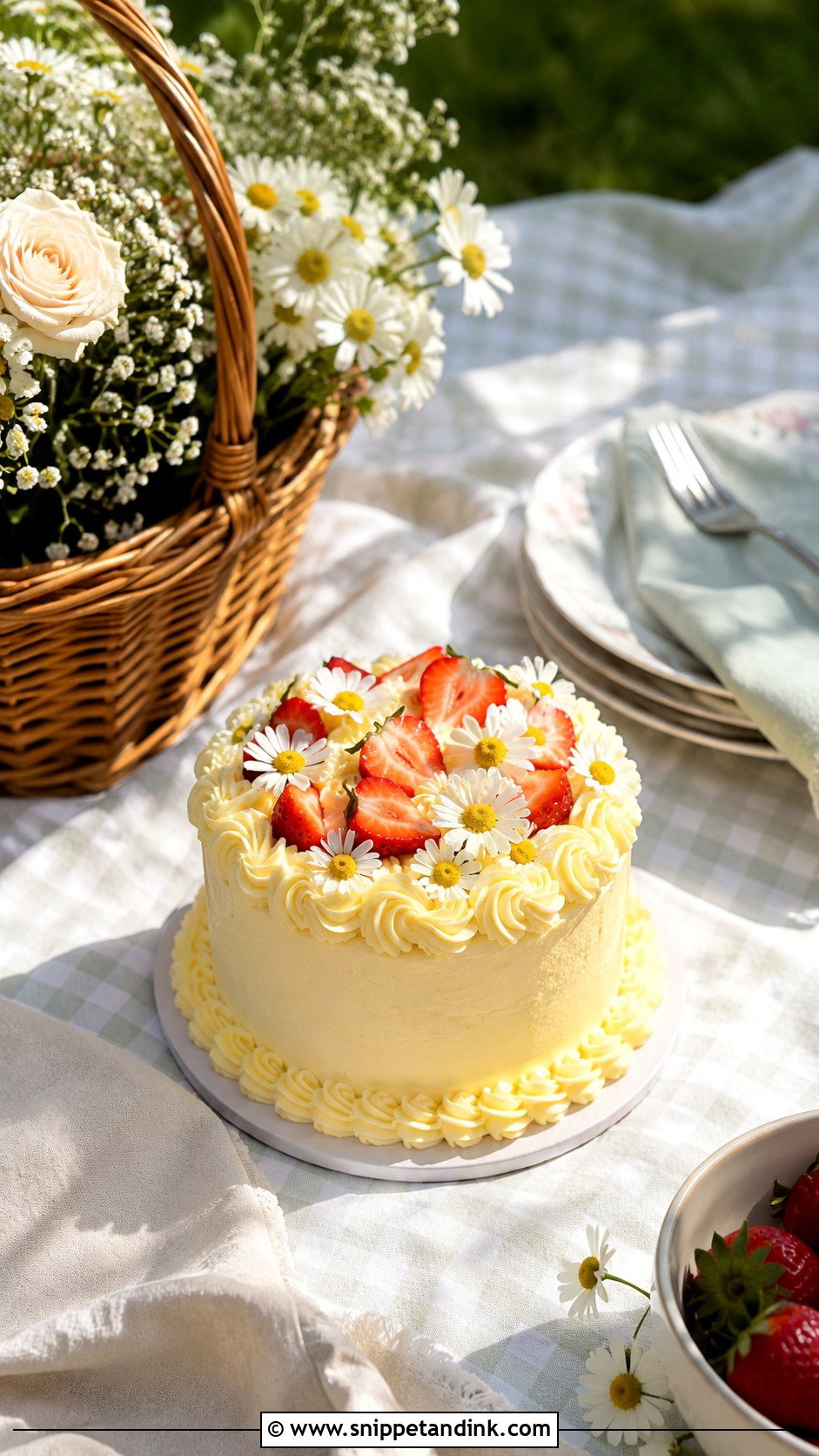
Picnics are lovely, but there’s no fridge in a field. I’d order a small vanilla, lemon, strawberry or almond cake in buttercream rather than whipped cream, and keep it boxed in a cooler with ice packs underneath, not touching it. Fresh berries, pressed flowers or a simple piped border are enough on top. Style it with a gingham blanket, linen napkins and small plates. Cut it within an hour or so of taking it out on a warm day.
12. Rustic Elopement Wedding Cake
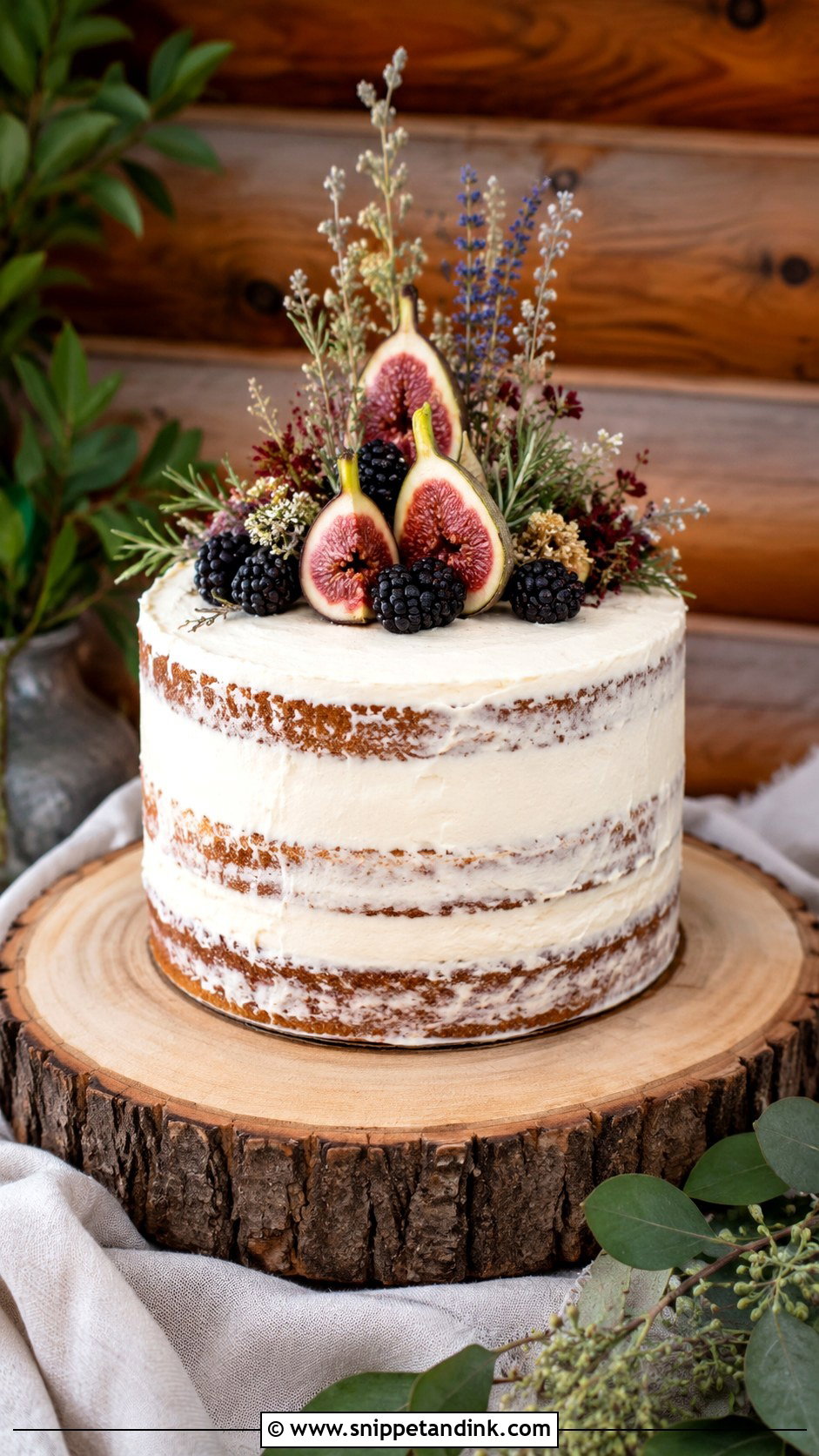
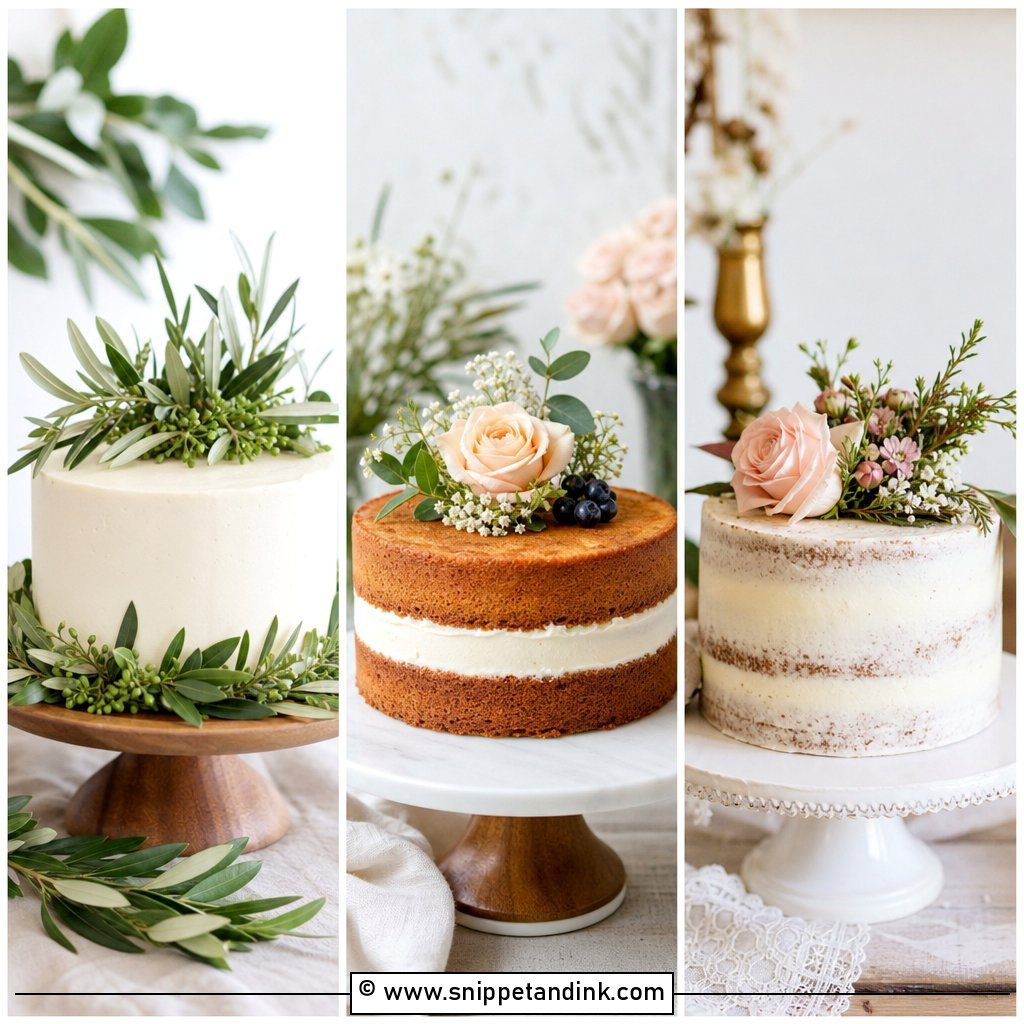
Rustic cakes forgive a lot, which is why I like them for cabins and woodland vows. Textured or semi-naked buttercream doesn’t need to be perfect, so travel marks disappear into it. Vanilla bean, honey, spice, carrot and apple cake all fit. Decorate with greenery, figs, berries, dried flowers or a few bouquet blooms. A wood slice stand looks right, but put a cake board or a sheet of parchment between the wood and the cake, since raw timber isn’t a food surface. One caution with semi-naked: the exposed sponge dries out faster, so I’d keep it wrapped until close to cutting.
13. Modern Minimalist Elopement Wedding Cake
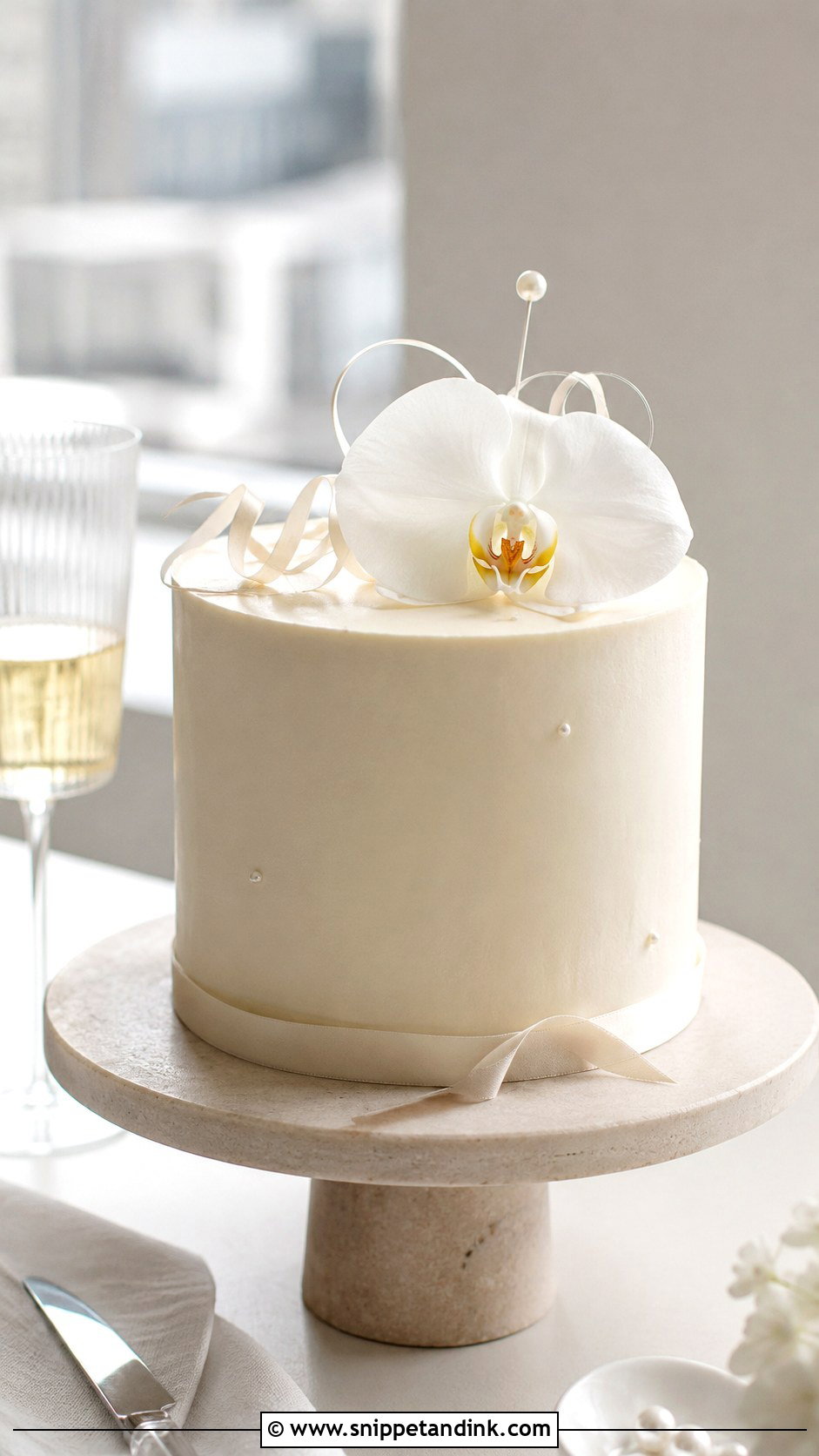
Minimal cakes look simple and are the hardest to make. Sharp edges on smooth buttercream or fondant show every flaw, so this style needs a confident baker and careful transport. One flower, a slim ribbon, a pearl detail or a single sculpted frosting wave is all the decoration it gets, in white, ivory, cream, soft gray or beige. Vanilla bean, almond or white chocolate keep the flavor classic; lemon and raspberry freshen it. Rooftops, studios and restaurant dinners suit it, and the background should be just as uncluttered.
14. Pearl Elopement Wedding Cake
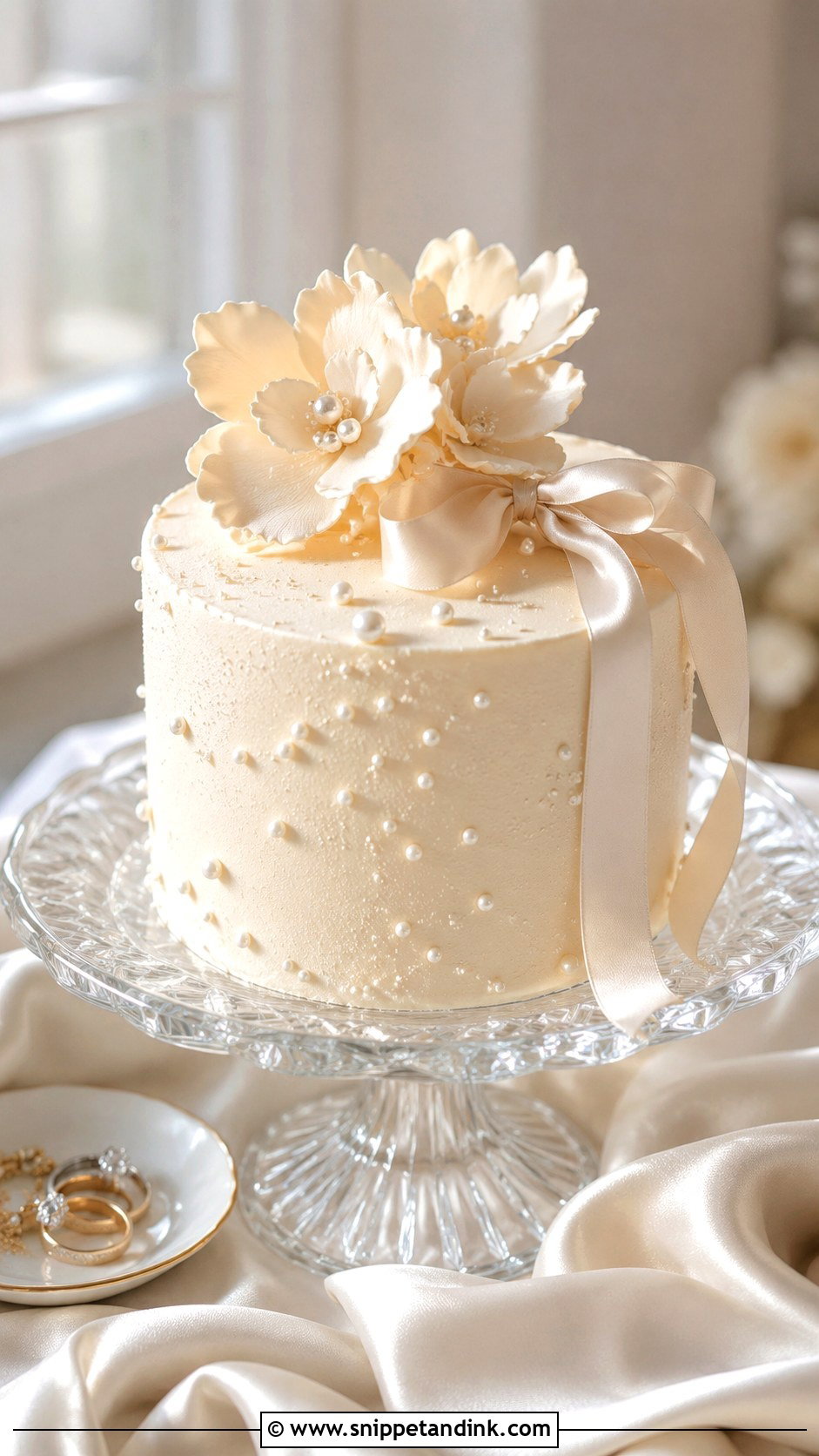
Pearls give a bridal look without color or flowers. I scatter them over smooth buttercream, line them along a border or cluster them in small groups. Ivory, white, champagne and blush suit it, with almond, vanilla, coconut or champagne cake inside. Hard sugar pearls can be tough on teeth, so on small cakes I use softer ones or fewer of them and tell couples to brush them off their slice if they prefer. A silk ribbon or a few pale sugar flowers soften it, and it sits well beside rings and lace in window light.


15. Pressed Flower Elopement Wedding Cake
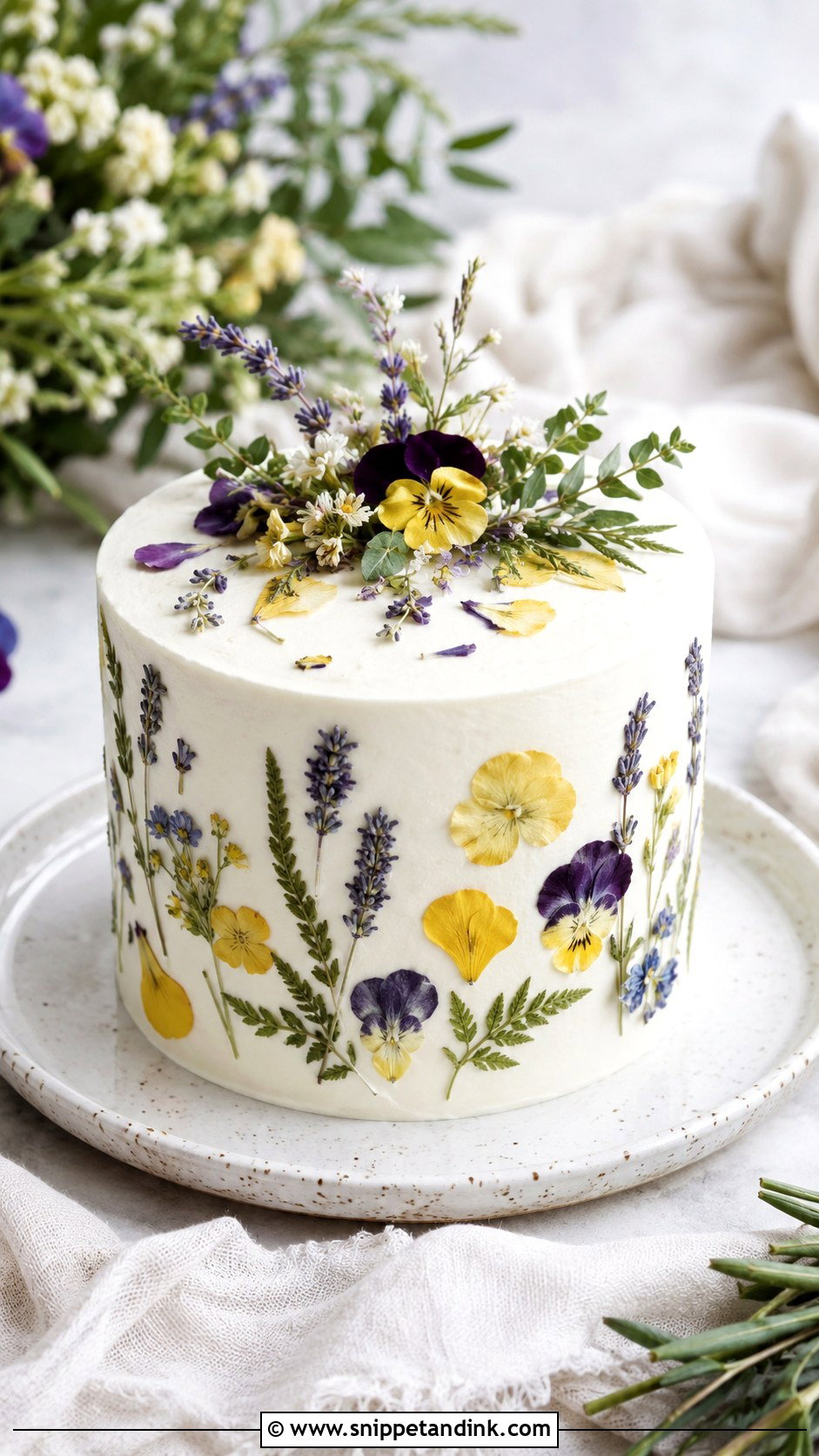
Pressed flowers lie flat against the frosting, so the cake stays graceful and nothing sticks out to snag in a box. That makes this style a quiet favorite of mine for traveling cakes. I press them onto a smooth white or ivory buttercream single tier, using edible pressed flowers in lavender, yellow, pink, blue or soft green to match the bouquet. Lemon, vanilla, honey or chamomile cake flavors fit the botanical feel. Check that every flower is food-safe and was grown for eating.
16. Fruit Elopement Wedding Cake
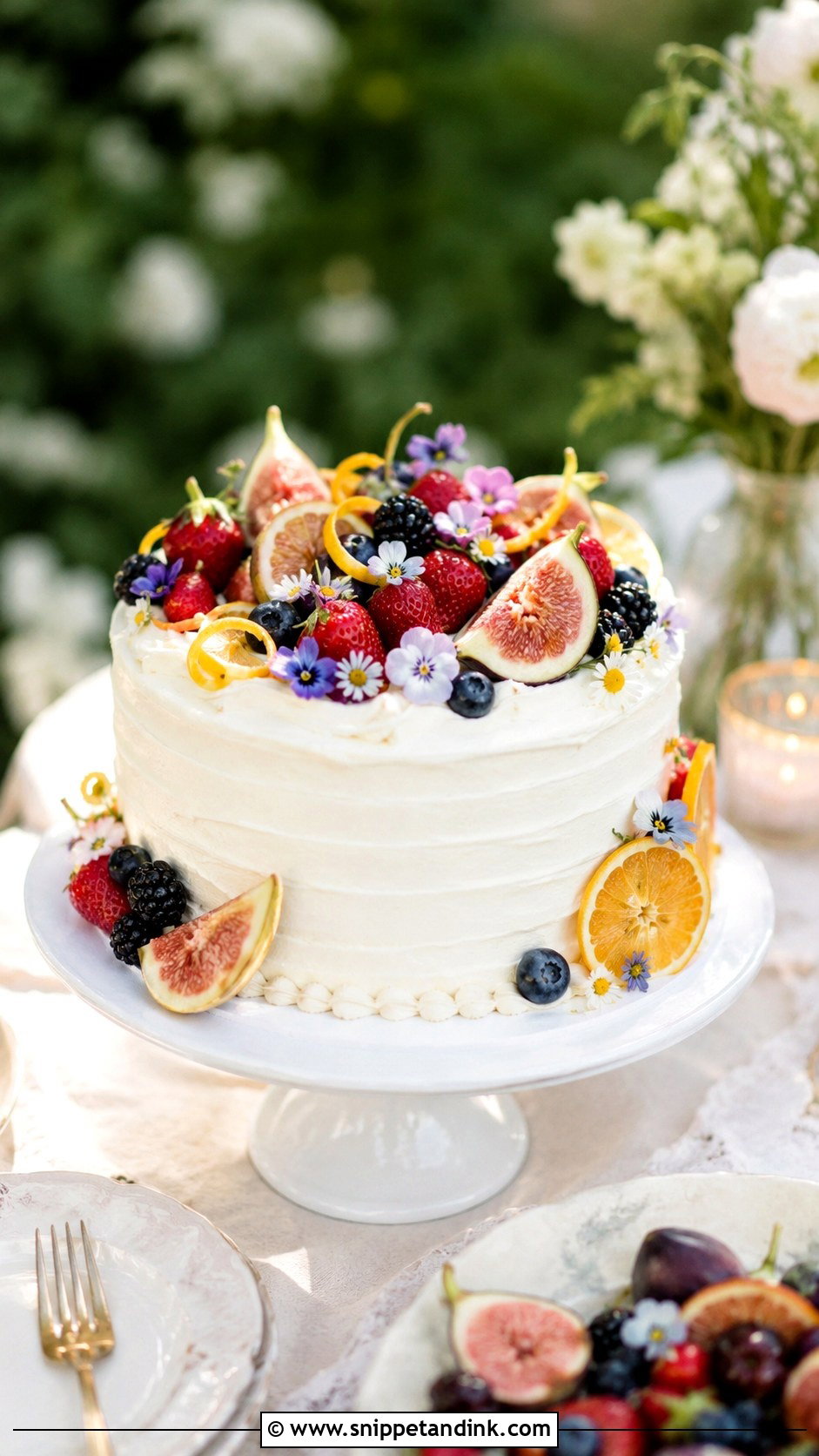
Fruit brings color with little frosting work, which suits warm weather. Berries, figs, citrus slices, cherries, peaches or pomegranate can sit on whipped frosting, light buttercream or a glaze. Lemon blueberry, vanilla strawberry, almond raspberry and olive oil citrus are all good pairings. Cut fruit weeps juice onto frosting within a few hours, so I add it last, often brushed with a thin glaze, and keep whole berries on top rather than sliced. A balanced arrangement, not a pile, keeps it neat for brunch or patio vows.
17. Chocolate Elopement Wedding Cake
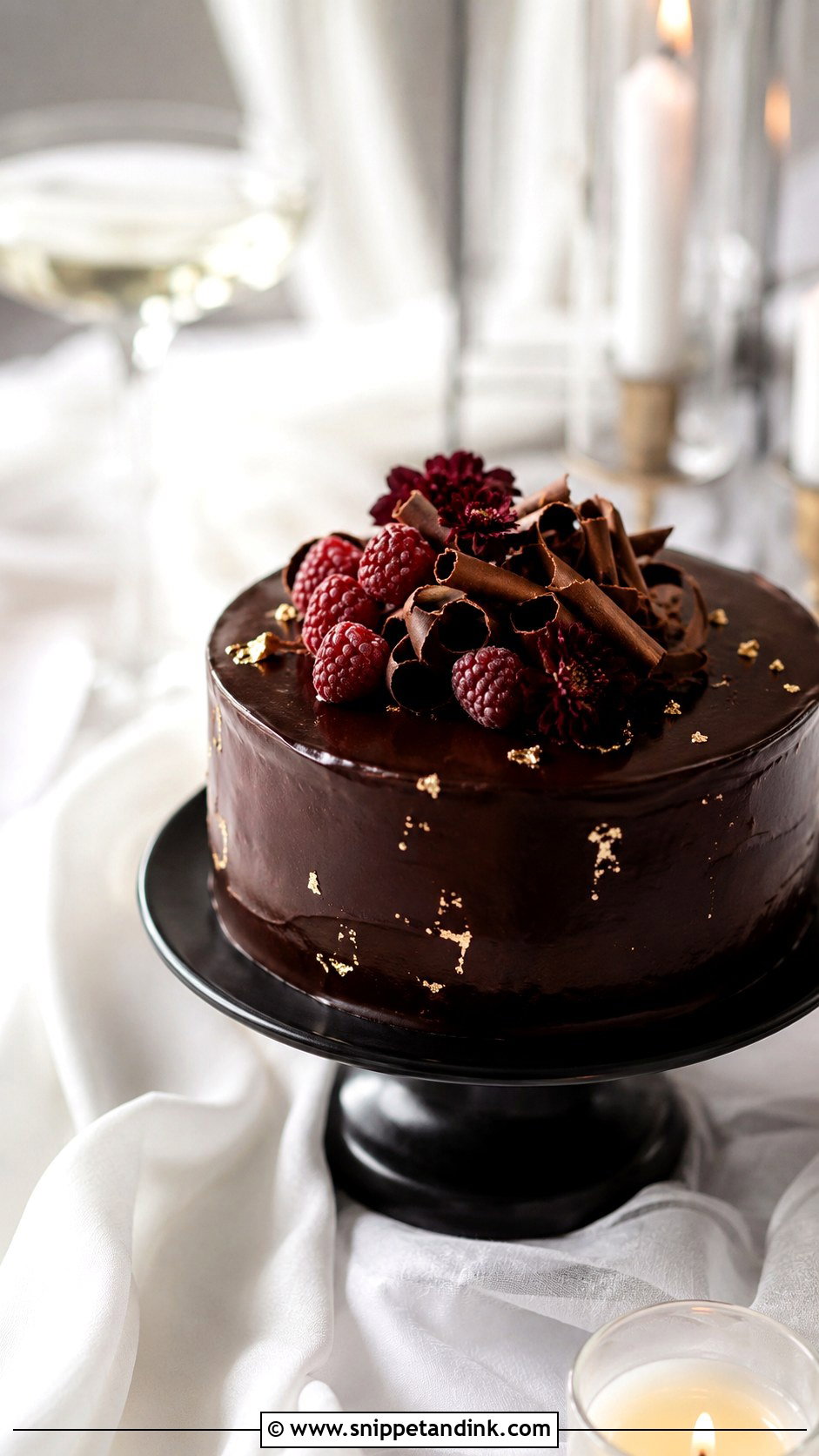
Chocolate cakes suit evening elopements and candlelit restaurant dinners. Glossy ganache, chocolate buttercream or a cocoa dusting each give a different finish, with berries, gold flecks, curls or a few flowers on top. Dark chocolate, mocha, raspberry chocolate and salted caramel all suit a small celebration. I’d warn against a glossy ganache for an outdoor summer cake: it softens and fingerprints easily. On a white or black stand indoors, it looks rich and simple.
18. Lemon Elopement Wedding Cake
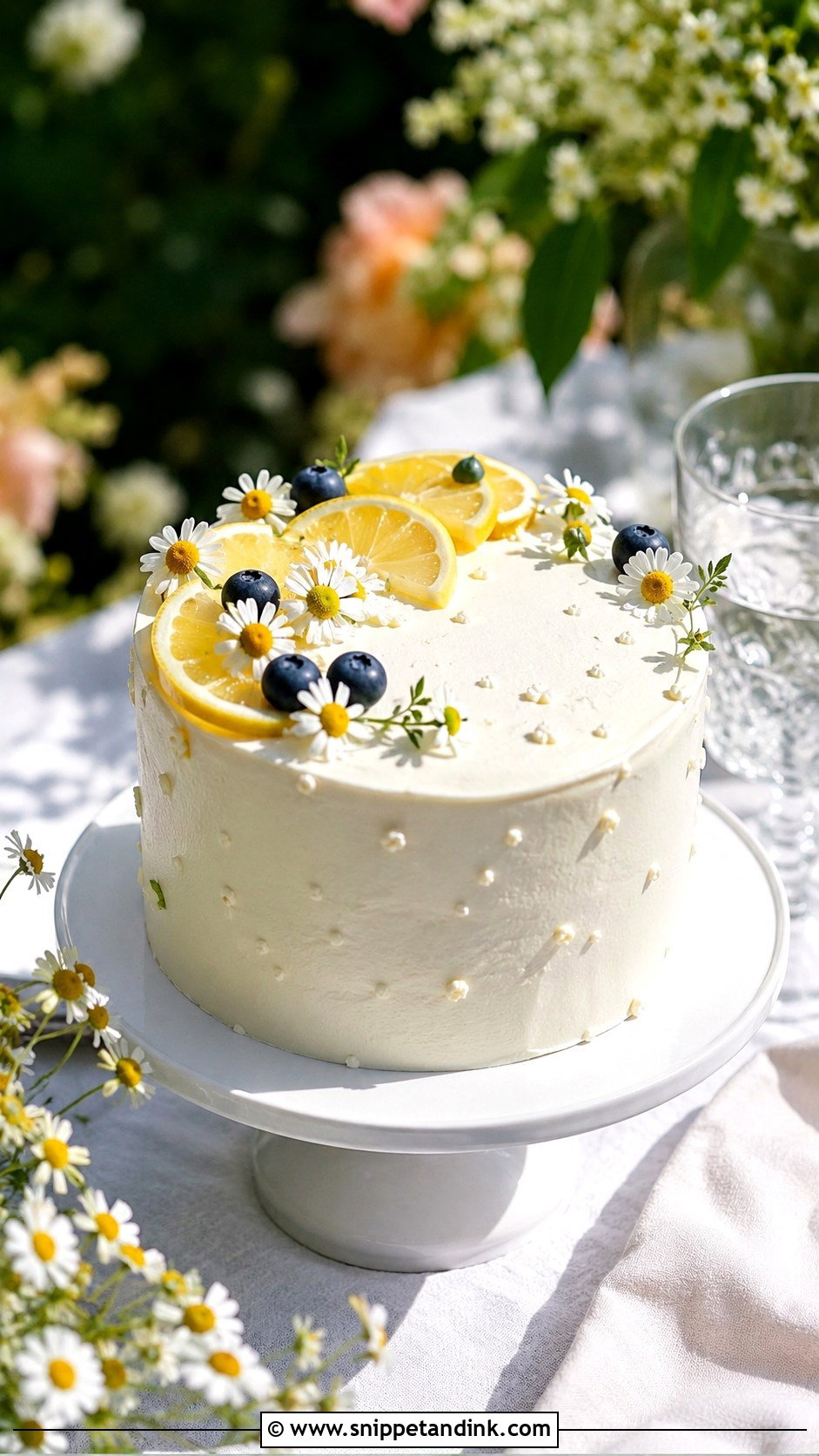
A lemon elopement wedding cake tastes bright after vows and suits spring, summer, garden or brunch ceremonies. Inside, I’d fill it with lemon curd, raspberry jam, elderflower cream or vanilla buttercream. Curd is soft, so I pipe a buttercream dam around each layer to stop it bulging out on a drive. Outside, keep to smooth white frosting with pale yellow accents or tiny piping, and add lemon slices, edible flowers, chamomile or blueberries. It looks at its best in daylight beside linen and glassware.
19. Red Velvet Elopement Wedding Cake
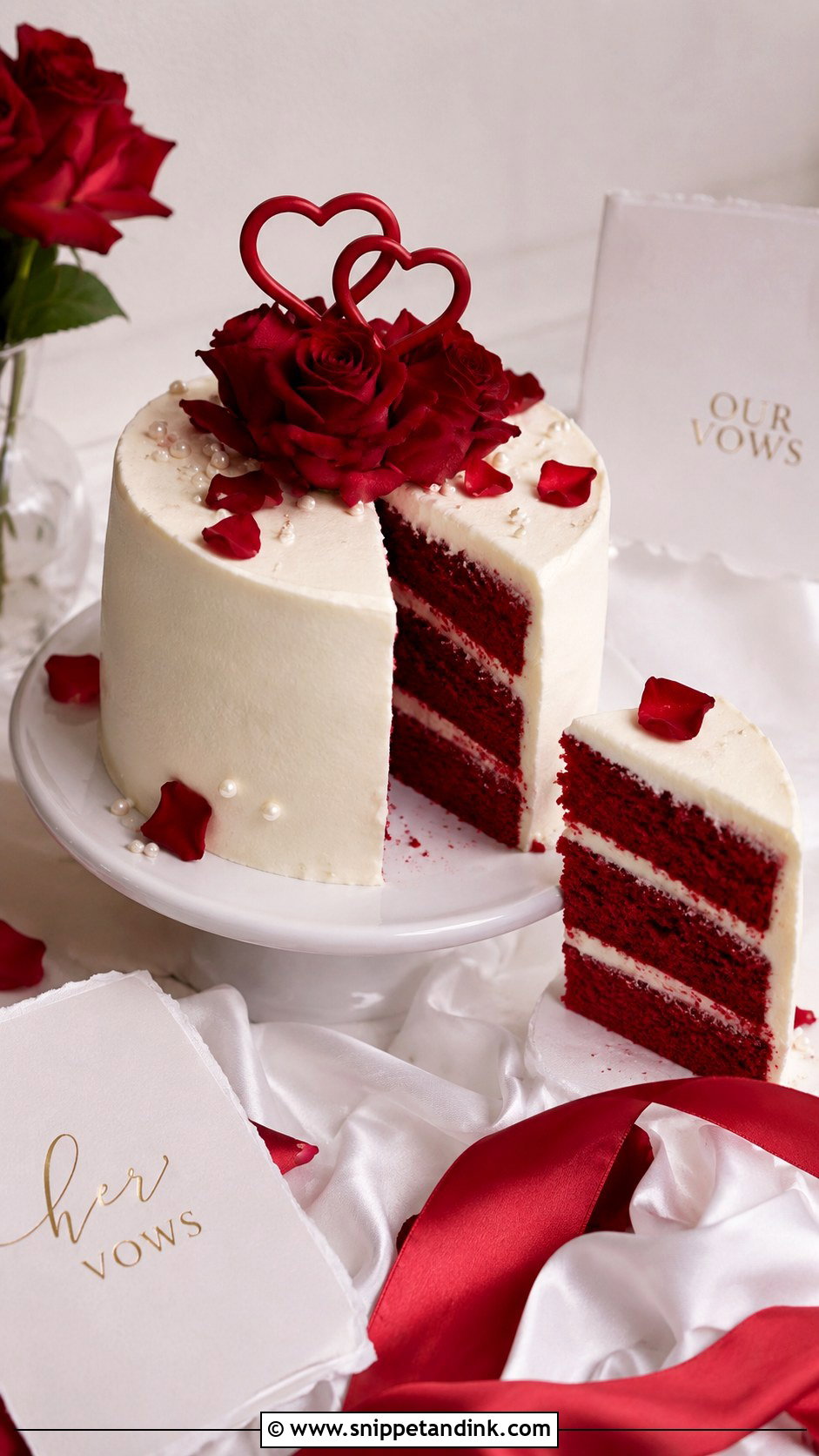
Red velvet gives you a reveal: the deep red crumb only appears when you cut it, so ask your photographer to catch the first slice. Cream cheese frosting is traditional and makes a soft white contrast, with pearls, red blooms or a small heart topper on a smooth finish. It’s a good fit for courthouse weddings and winter evenings. The catch is that cream cheese frosting is softer than buttercream and needs refrigeration, so it isn’t the cake for a long, warm day outdoors. Ask your baker how long it can safely sit out.



20. Individual Mini Wedding Cakes
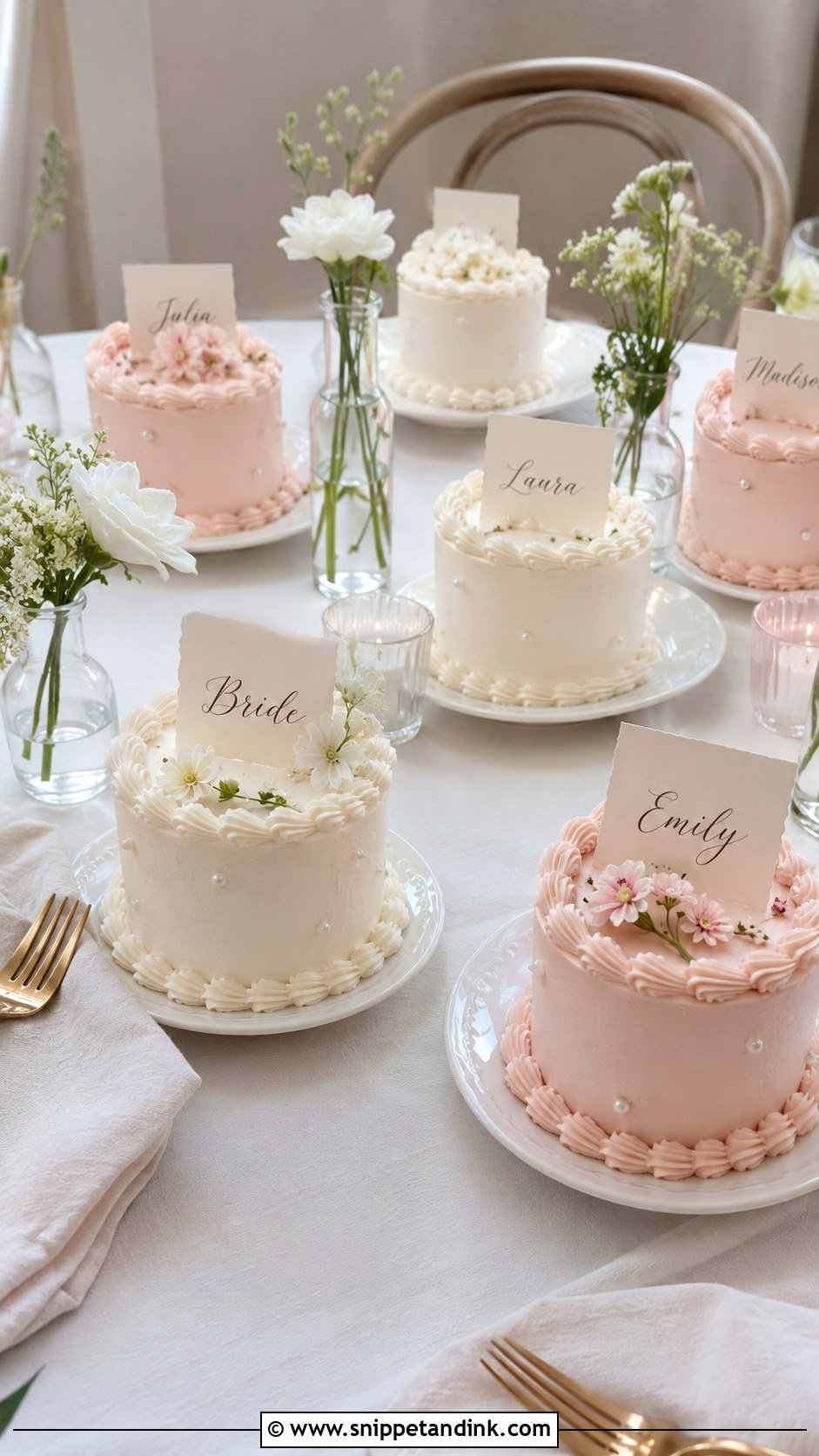
Individual mini wedding cakes make sense once your elopement has a handful of guests. Each person gets a little cake, and you two can still have a slightly larger cutting cake for photos. They can be simple rounds, tiny hearts or petite vintage cakes with piped borders. I’d stick to one or two flavors; more than that is a lot of extra work for a small group. Display them on small plates with place cards or linen napkins. They travel well in a box with individual inserts.
Who Brings the Knife? Cutting and Serving Without a Caterer
At a big wedding someone else handles all of this. At an elopement it’s usually you, so pack it the day before.
- A long, sharp knife and a cake server. Dip the knife in hot water and wipe it between slices for clean cuts.
- Small plates, forks and napkins, plus a damp cloth for sticky fingers.
- A flat, sturdy board or stand, and something to level it if the table or ground is uneven.
- A lidded container for leftovers, since a cake for two rarely gets finished.
For the photos, cut from the back of the cake so the decorated front stays intact for more shots. If you want to save some for your anniversary, wrap a slice or the top tier tightly in plastic wrap and then foil and freeze it within a day. Delicate decorations like fresh flowers should come off first. Many couples prefer to have a fresh small cake made for their first anniversary instead, and I think that’s a fine choice too.
A Small Cake Still Deserves a Plan
When I design for an elopement, the questions come in this order: how far it’s going, how long it waits, how hot it is, then what it looks like. Get the first three right and almost any style here will arrive looking the way it did in my kitchen. Pick flavors you both love, keep the design compact and give the cake one detail that’s yours, whether that’s vintage piping, a few flowers or your initials on top.
You'll Like These Ideas:




Leave a Reply