
Hearts are one of the few cake shapes that work at any scale. I’ve made them as the only cake for a dinner of twelve and as a sweetheart-table cake beside a much bigger tiered one. Right now most requests mix the same ingredients: smaller statement cakes, Lambeth piping, pastels, cherries, bows, pearls and fresh flowers. Below are twenty variations, and for each I’ve added what I actually watch for when I make it, so you can brief your baker with more than a screenshot.
Main Cake, Sweetheart Cake or Groom’s Cake?
Before we talk colour, I ask what job the heart is doing. The answer decides size, structure and flavour more than any picture does.
- As the only cake, it has to feed everyone, which often means two tiers or a heart backed up by kitchen slabs cut out of sight.
- On the sweetheart table, it only serves the two of you and maybe the wedding party, so it can be small and as ornate as you like.
- As a groom’s or second cake, it can carry a different flavour from the main cake and a more playful finish, like cherries or a cheeky message.
Sponges that keep a sharp point
Hearts are baked in shaped pans rather than carved, but the sponge still matters. A sturdy butter sponge or a dense chocolate cake holds a clean point; very light chiffon or delicate mousse layers can sag at the narrow end once the cake is stacked or warm. If you want a soft filling, I pipe a firm buttercream dam around the edge of each layer first so it doesn’t squeeze out toward the tip.
1. Vintage Heart Wedding Cake
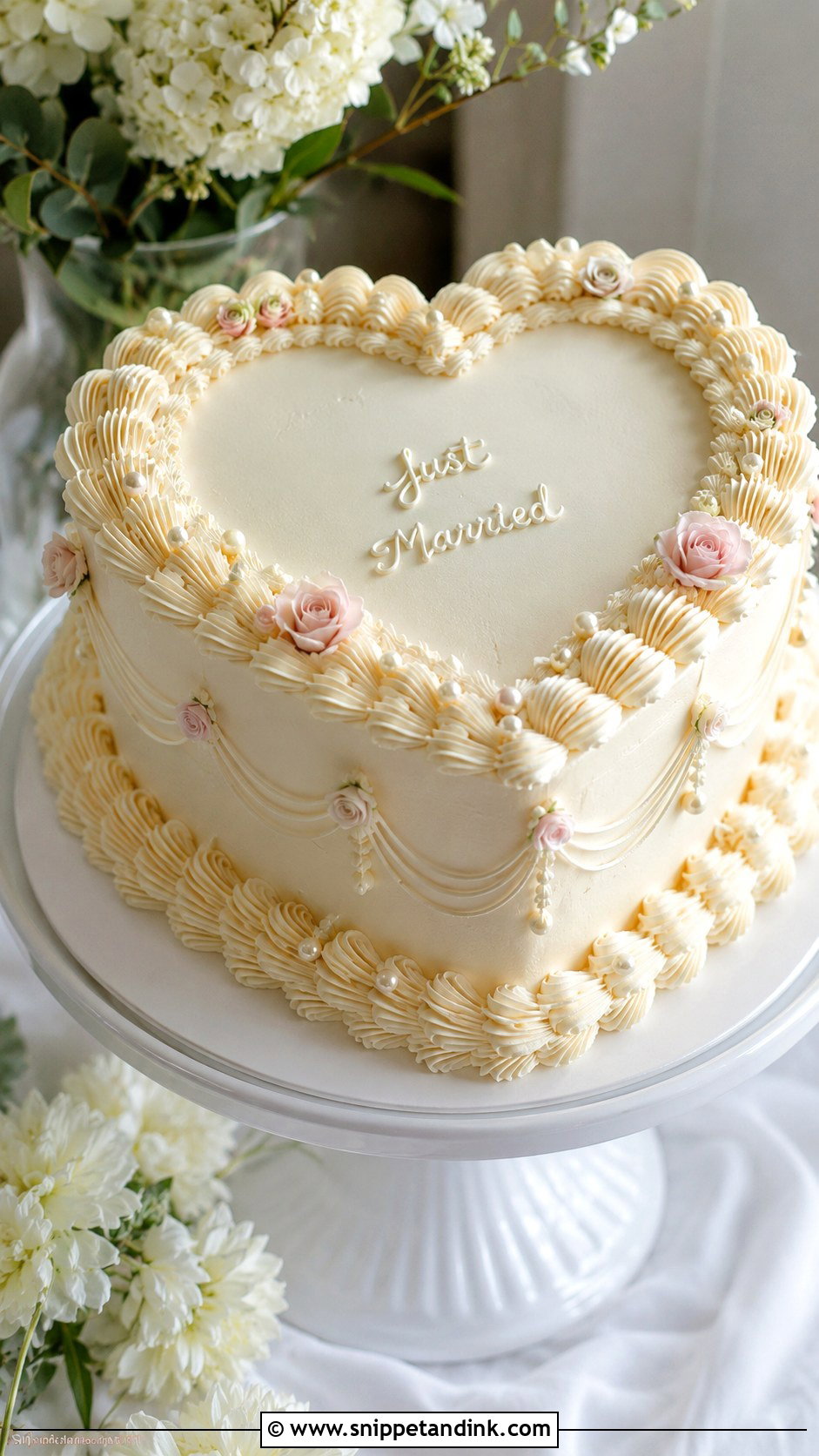
Think of an old bakery window: a heart base, smooth buttercream, layered shell borders, ruffles, pearls and swags around the sides. White, ivory, blush, butter yellow and soft blue all suit it. On top, I keep the message short, “Just Married” or two initials, because the heart narrows too quickly for anything longer. A simple stand and a few flowers nearby give the piping room to be seen. Vanilla, almond or champagne sponge keeps the inside as light as the outside.
2. Lambeth Heart Wedding Cake
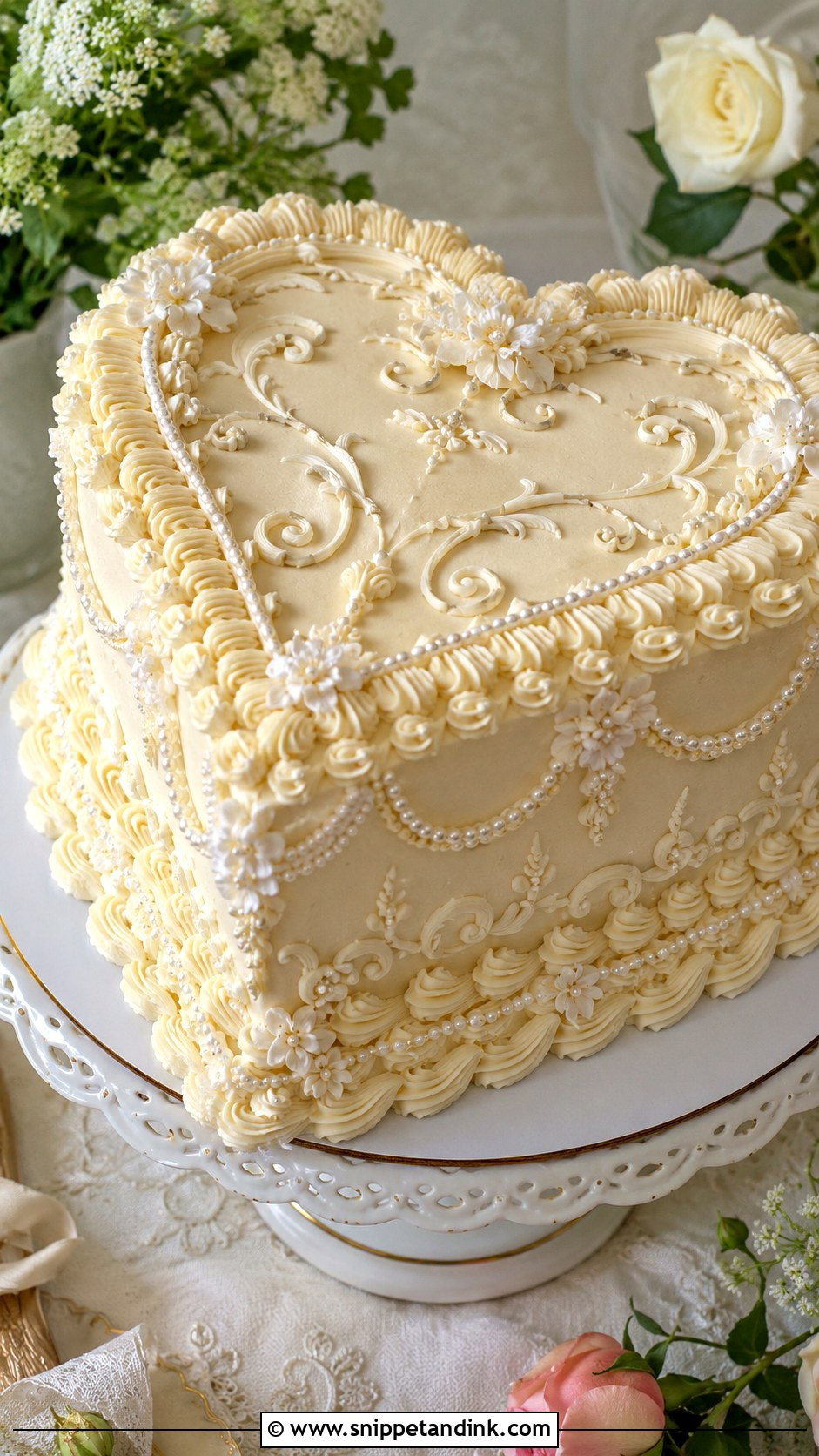
Lambeth goes further than ordinary vintage piping. Borders are built in raised layers, with swags, shells and scrolls stacked on top of each other until the sides look carved. All white, it’s dramatic; in pastels with a contrasting trim, it’s playful. The common mistake is decorating the top as heavily as the sides. I plan the two together so one area rests while the other works, otherwise the cake just looks crowded. It suits vintage weddings, garden receptions and ballrooms alike.
3. Pink Heart Wedding Cake
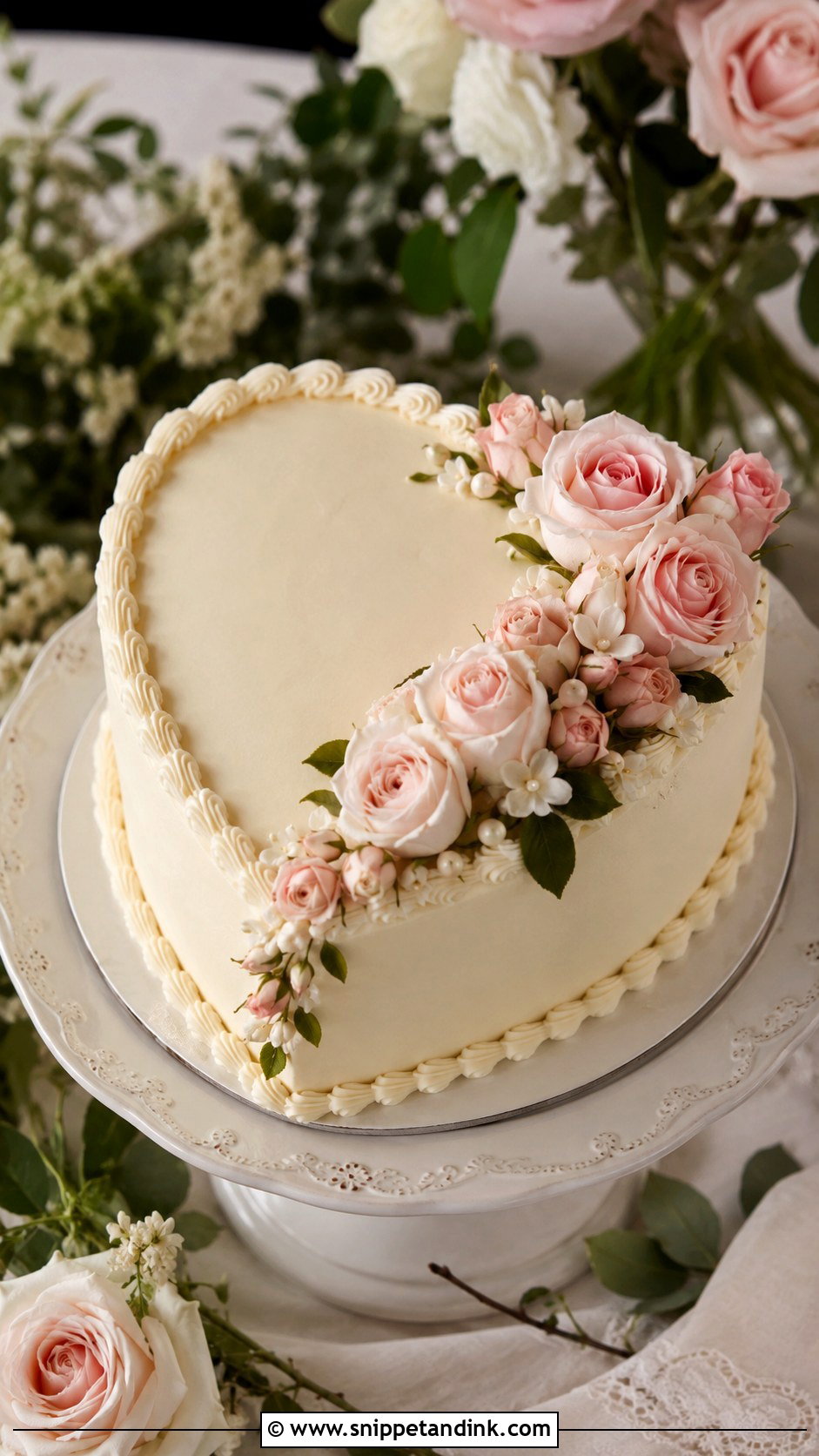
Blush is the safest pink for a wedding; brighter pinks feel younger and more modern. White piping, a few pearls, small bows or fresh roses finish it. Pink also lets you bring colour in without making the whole reception loud. I pipe borders on a heart so they follow the curve rather than running in straight lines, which keeps the outline clean. Strawberry, vanilla raspberry or almond sponge suits the shade. It’s at home at a spring or summer wedding.
4. White Heart Wedding Cake
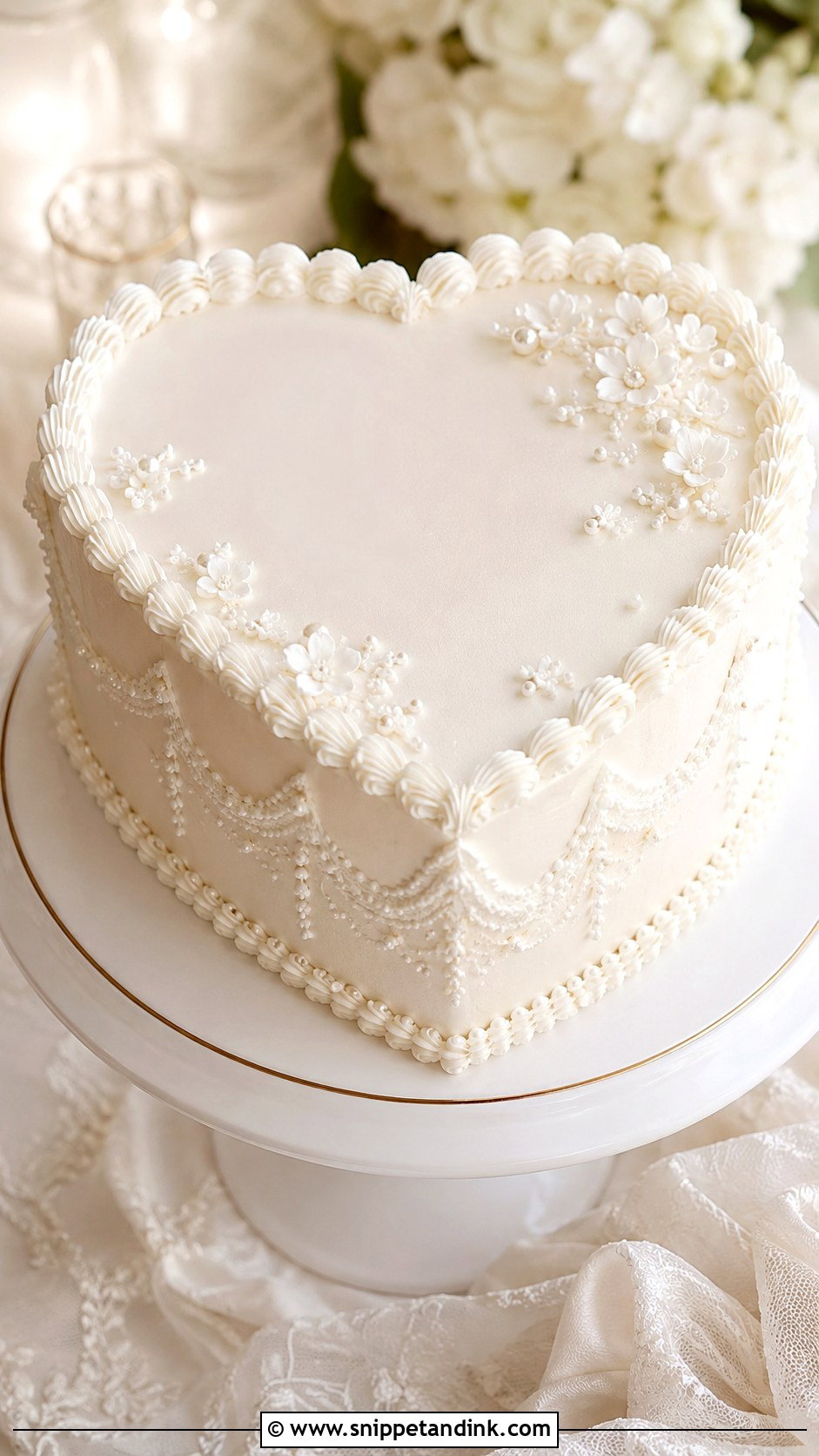
With no colour to lean on, texture carries an all-white cake. Smooth buttercream, piped borders, fondant pearls, lace-style piping and small sugar flowers each add a different surface. I like using two or three whites at once, bright white, cream and ivory, because the slight difference reads as depth in a photo. It fits formal weddings, courthouse celebrations and classic receptions. Vanilla bean, coconut, almond or white chocolate sponge keep it clean inside, and candles, linen and silver or gold accents frame it well.
5. Red Heart Wedding Cake
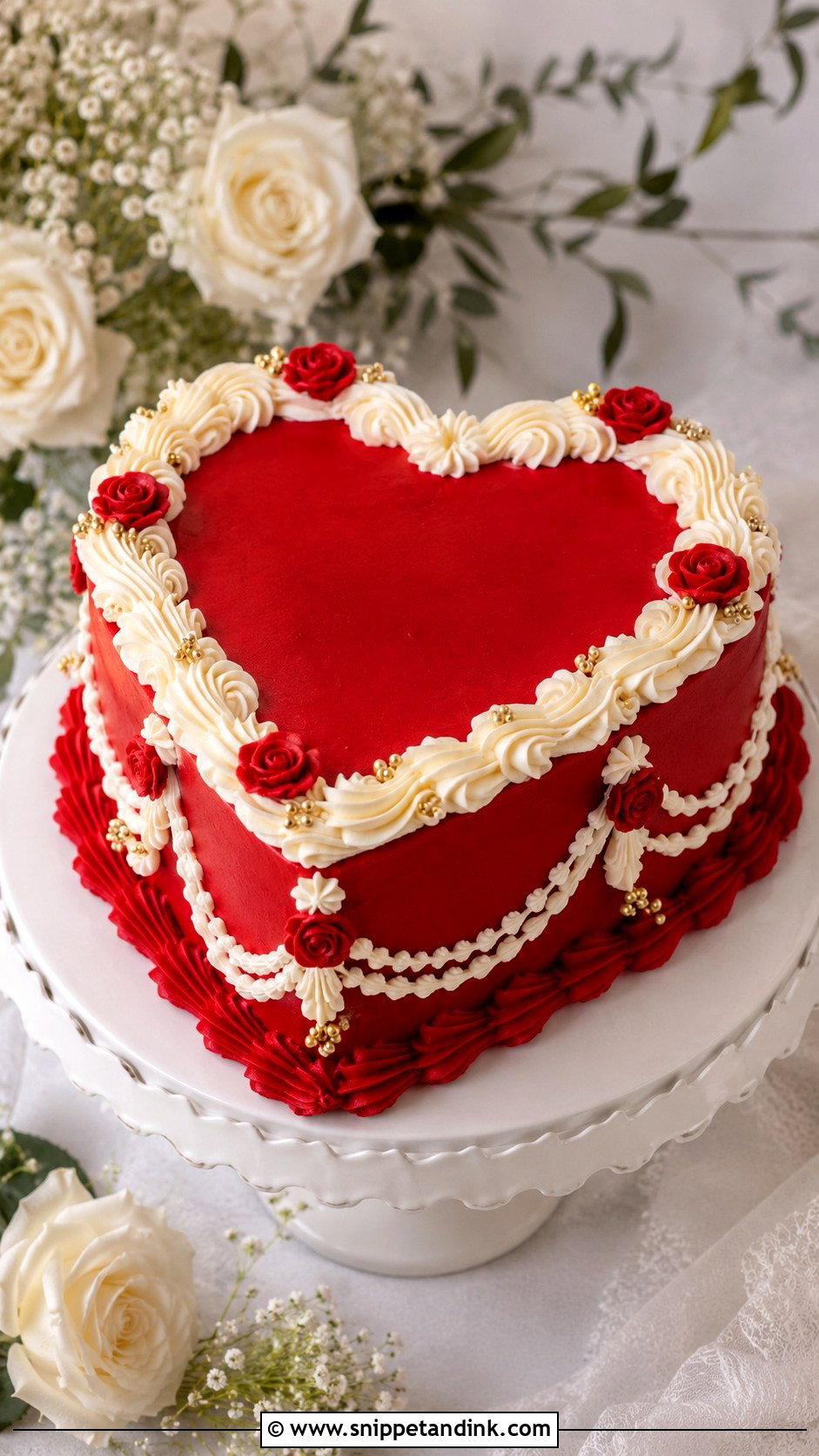
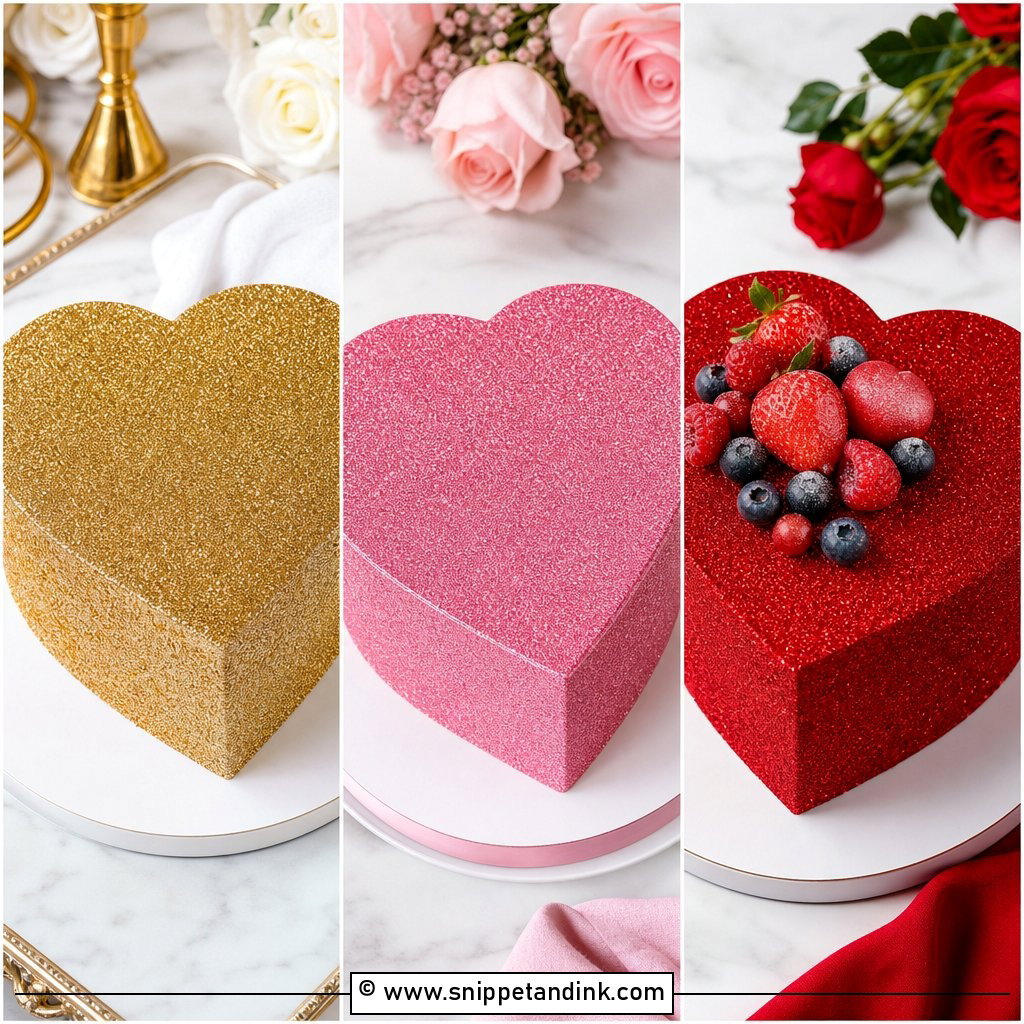
Red makes the cake the focal point of the room, so it needs very little else. Deep red buttercream with white piping gives a vintage bakery look; red fondant with a few pearls is sleeker. I’ll warn you that red buttercream and red fondant both transfer onto fingers and knives, so the cutting needs a clean blade between slices. Red velvet with cream cheese filling is the natural flavour. Satin-finish piping, small sugar roses or a little gold keep it formal. Hold back on extras; the colour is doing enough.
6. Heart Wedding Cake With Cherries
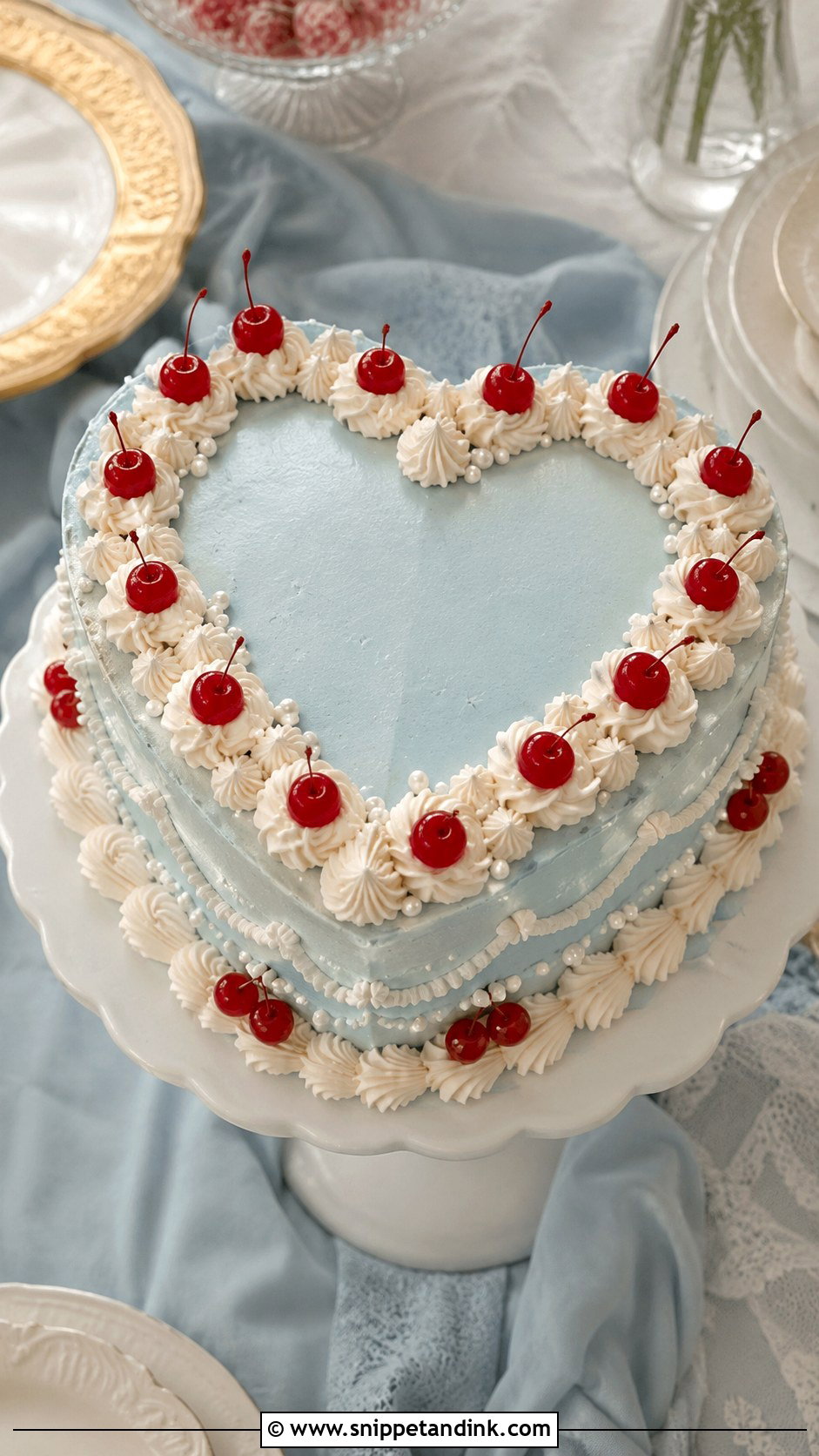
A heart wedding cake with cherries is the retro option. The popular version is pastel buttercream, white vintage piping and glossy red cherries along the border or in the middle, a bit of diner charm dressed up for a wedding. I place cherries last and on a thin dot of buttercream so they don’t roll when the cake is carried. Vanilla, almond, chocolate or cherry chip sponge all go with it. To make it look more refined, ask for piped shells, a few small pearls and a plain stand instead of more toppings.
7. Heart Wedding Cake With Pearls
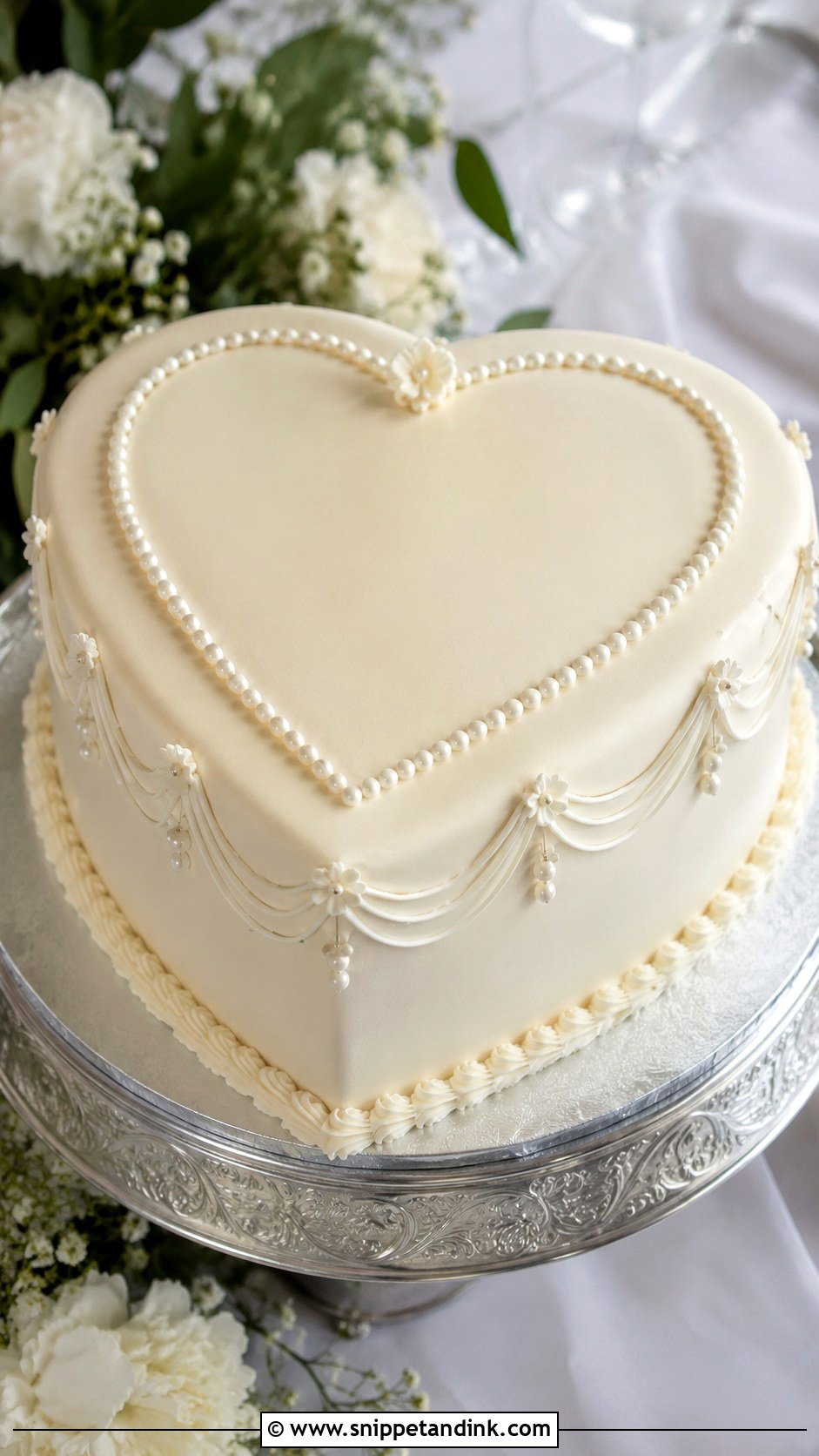
Pearls suit a formal room. They can trace the piping, scatter across the top or sit in neat rows down the sides, and they look right on white, ivory, blush, champagne or pale blue. Pair them with smooth buttercream for something modern, fondant for something crisp, or Lambeth piping for something ornate. Restraint is the whole trick. I place pearls with tweezers, one by one, and stop sooner than feels natural, because too many turn graceful into busy. Vanilla almond, white chocolate raspberry or lemon cream are good flavours here.
8. Heart Wedding Cake With Bows
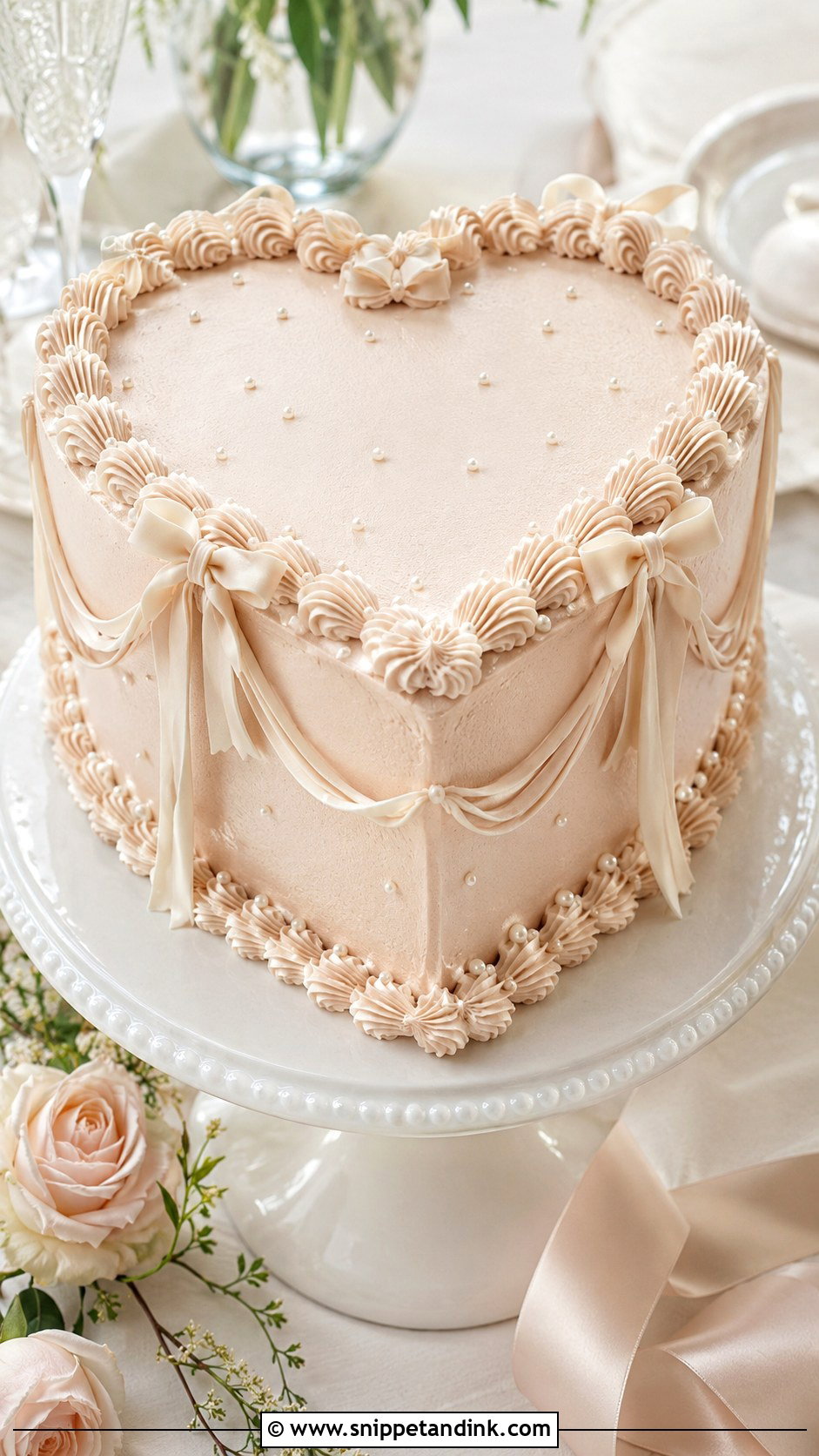
Bows are everywhere at the moment, and a heart wedding cake with bows follows that coquette mood. I make bows from fondant, gum paste, buttercream, silk ribbon or wafer paper, and the material changes the look: gum paste dries hard and holds crisp loops, wafer paper is light and almost translucent, buttercream stays soft. One bow on top is clean; small bows around the sides are sweeter. Ivory, pink, blue and pale yellow suit it, and vanilla, strawberry, champagne or lemon sponge keeps it gentle.
9. Heart Wedding Cake With Roses
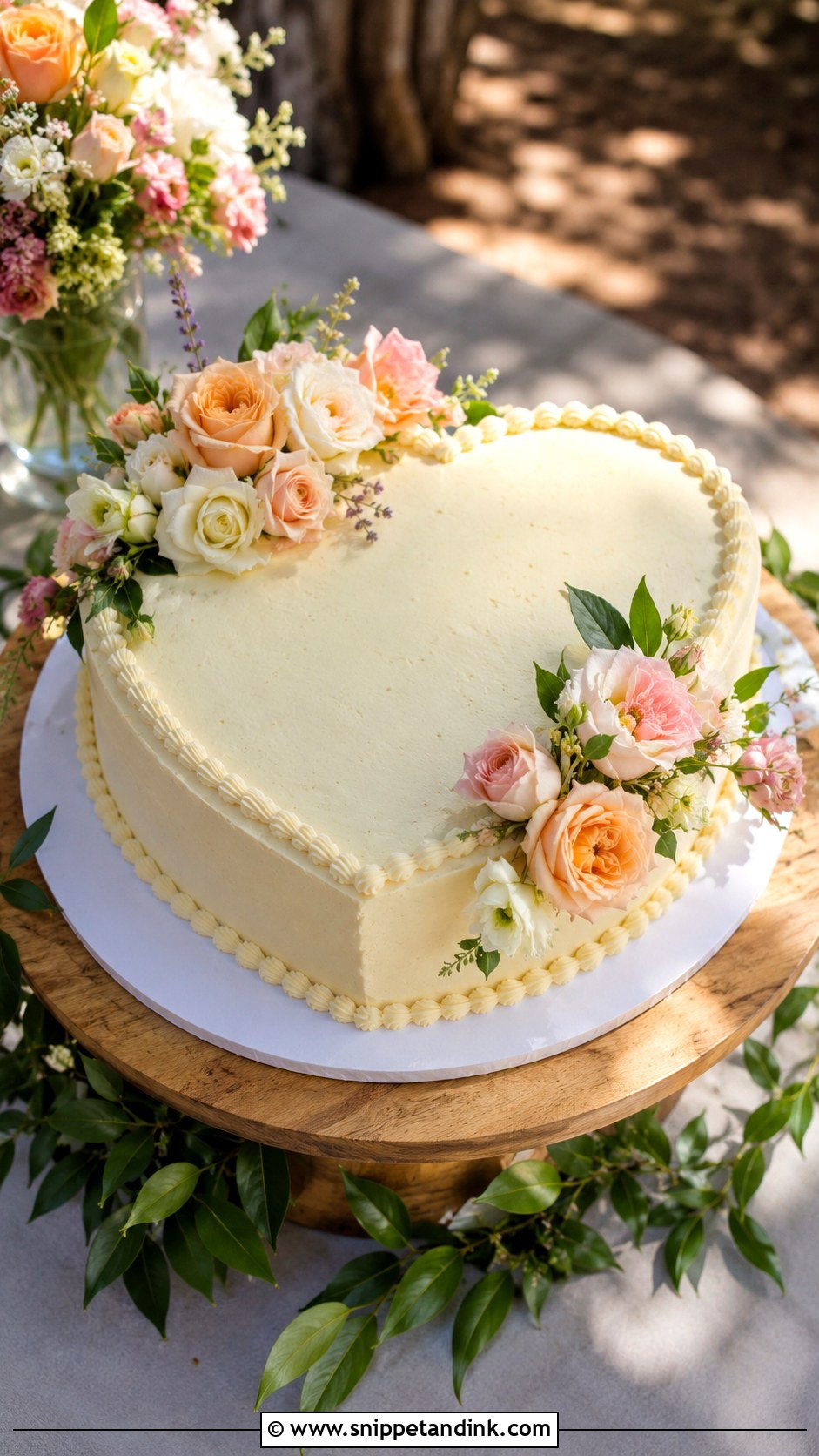
Roses are the obvious match for a heart, and there are four ways to do them: fresh, sugar, piped buttercream, or pressed-style flat details. Blush, cream, peach or dusty pink on ivory frosting is soft. Red or deep pink on white is bolder. Whatever the type, I let the roses follow one curve of the heart rather than covering the top, so the shape stays visible. Vanilla, raspberry, pistachio or almond sponge all suit roses, indoors or out.
10. Heart Wedding Cake With Fresh Flowers
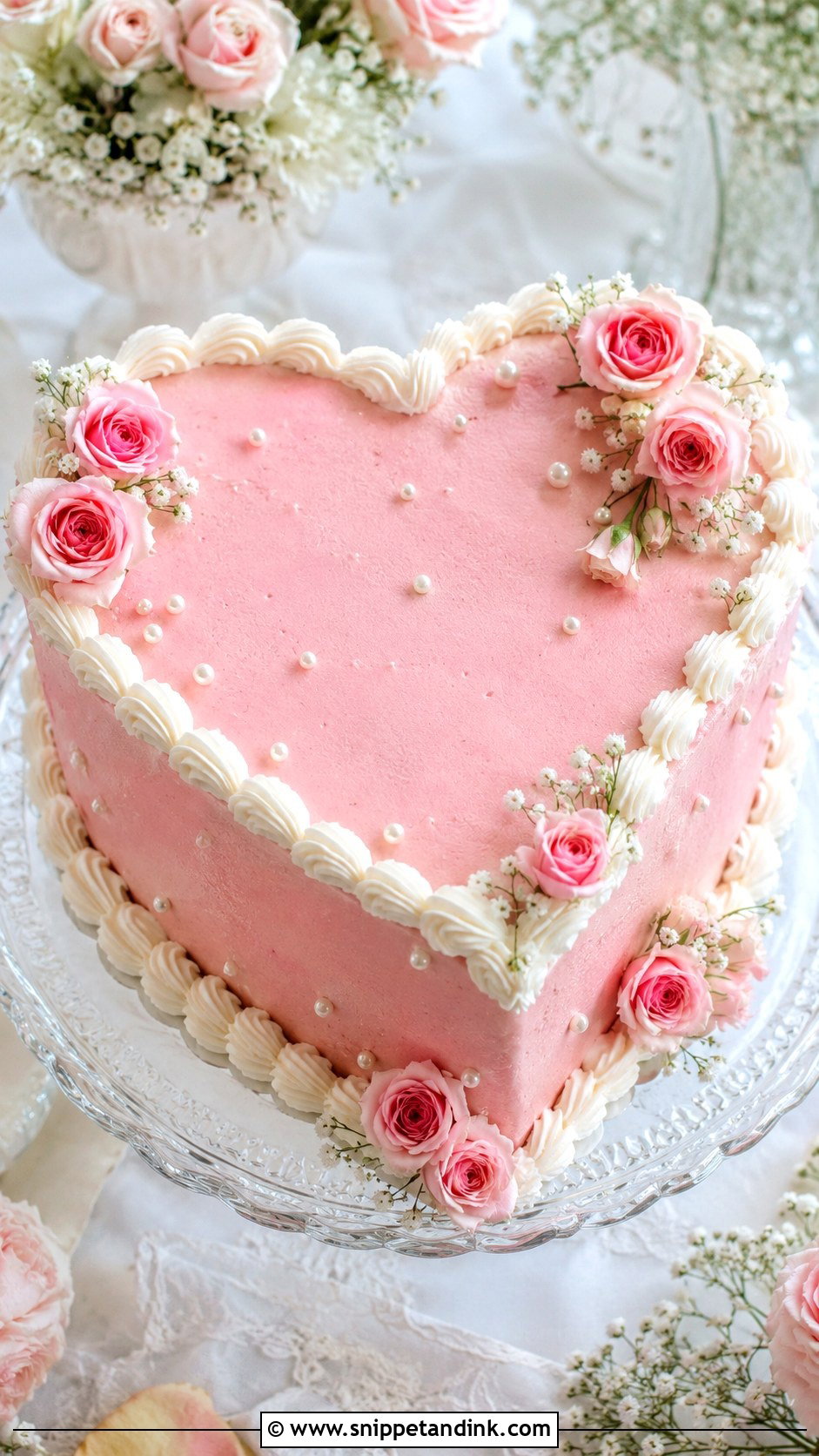
Fresh flowers tie the cake to the bouquet. A few small blooms on one side look airy and garden-like; a full crown looks lush. The placement should be done by someone who knows how to make flowers food-safe, either your baker or your florist, and it helps to decide which of them is responsible before the day. Ivory buttercream is the easiest base, though soft pink, sage and pale yellow work too. Lemon, vanilla, coconut or berry sponge suits it. Garden, spring and summer receptions are where it fits best.
11. Minimal Heart Wedding Cake
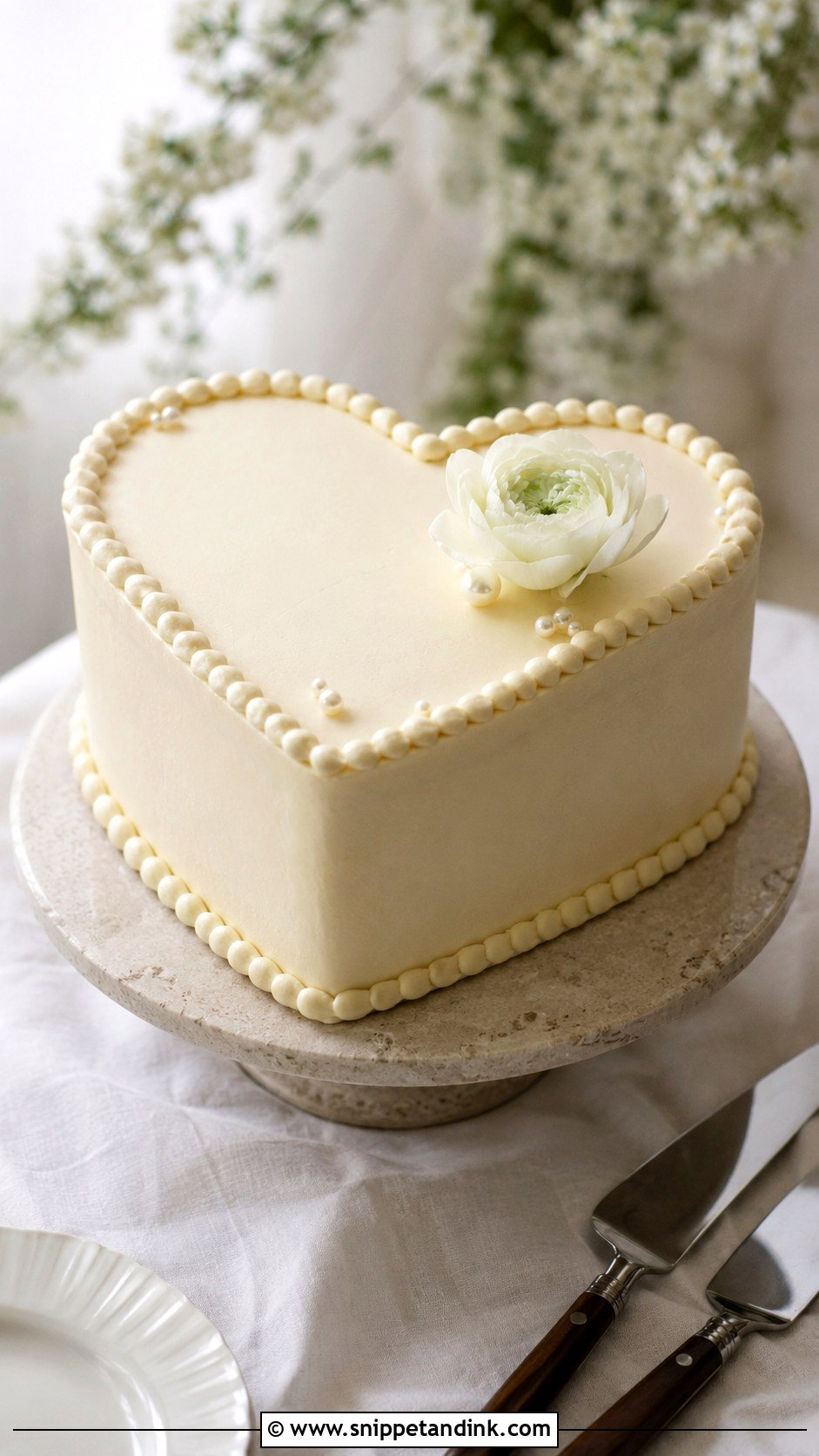
Strip back the piping and the heart has to carry the design on its own. That means clean frosting, a smooth finish and maybe one detail: a fine border, a few pearls, a soft inscription or a single flower. White, ivory, beige, pale pink and buttercream yellow all suit it. A minimal cake is actually harder to make than a busy one, because there’s nothing to hide a bump in the side or a soft point. Vanilla bean, almond, lemon or coconut keep it clean inside. Small weddings, modern venues and simple dessert tables suit it.
12. Two Tier Heart Wedding Cake
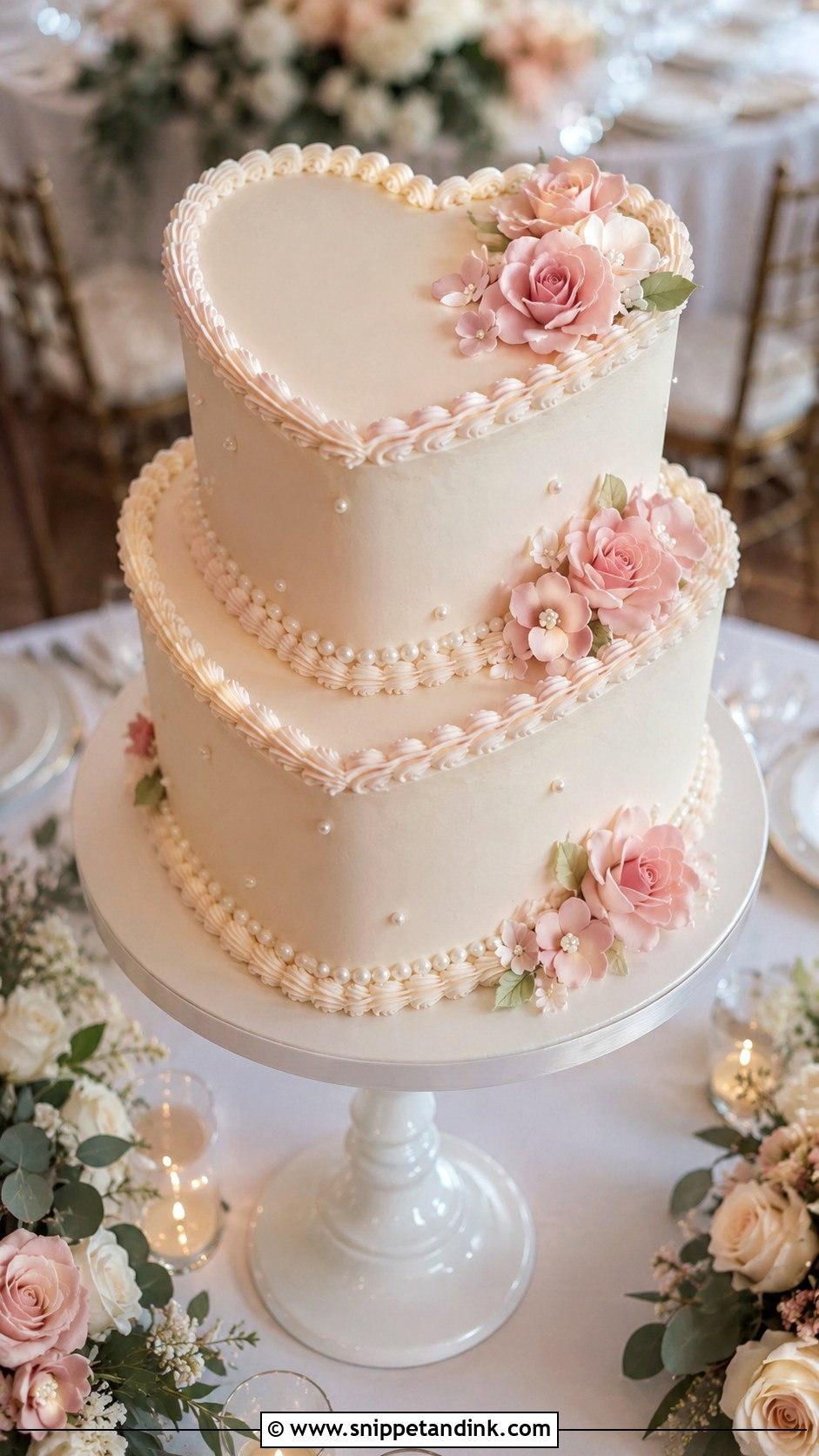
Two tiers mean more height and more servings. You can stack two hearts, or set a heart top on a round base, which I find balances better and is simpler to support. Keep the decoration consistent across both tiers, with matching piping, pearls, flowers or ribbon. Ivory buttercream with blush accents works well here. Two tiers also give you two flavours, so I often suggest one classic and one more adventurous, such as vanilla almond below and raspberry lemon on top. It suits medium-sized weddings and formal receptions.
13. Small Heart Wedding Cake
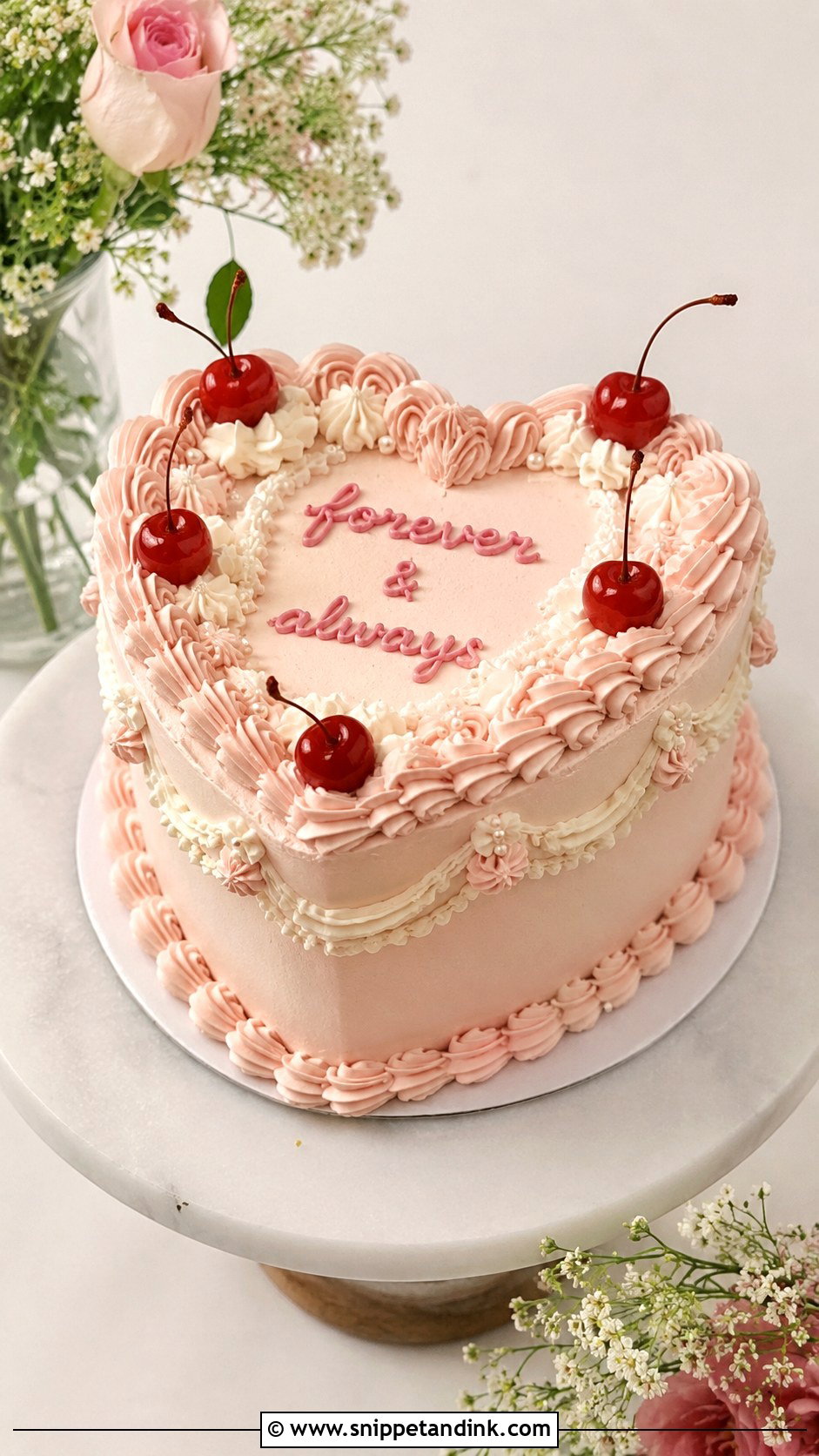
Six or eight inches is enough for an elopement, an intimate wedding or a dessert table with plenty of other sweets. With careful styling, vintage piping, a few cherries, a pearl border, buttercream roses or a short message, it still holds the centre of the table. Because a small cake is shared among so few people, pick the flavour you actually love most. Strawberry, almond, lemon, red velvet or chocolate raspberry are good starts. Set it on a raised stand; height makes a small cake look important.
14. Heart Wedding Cake With Piped Message
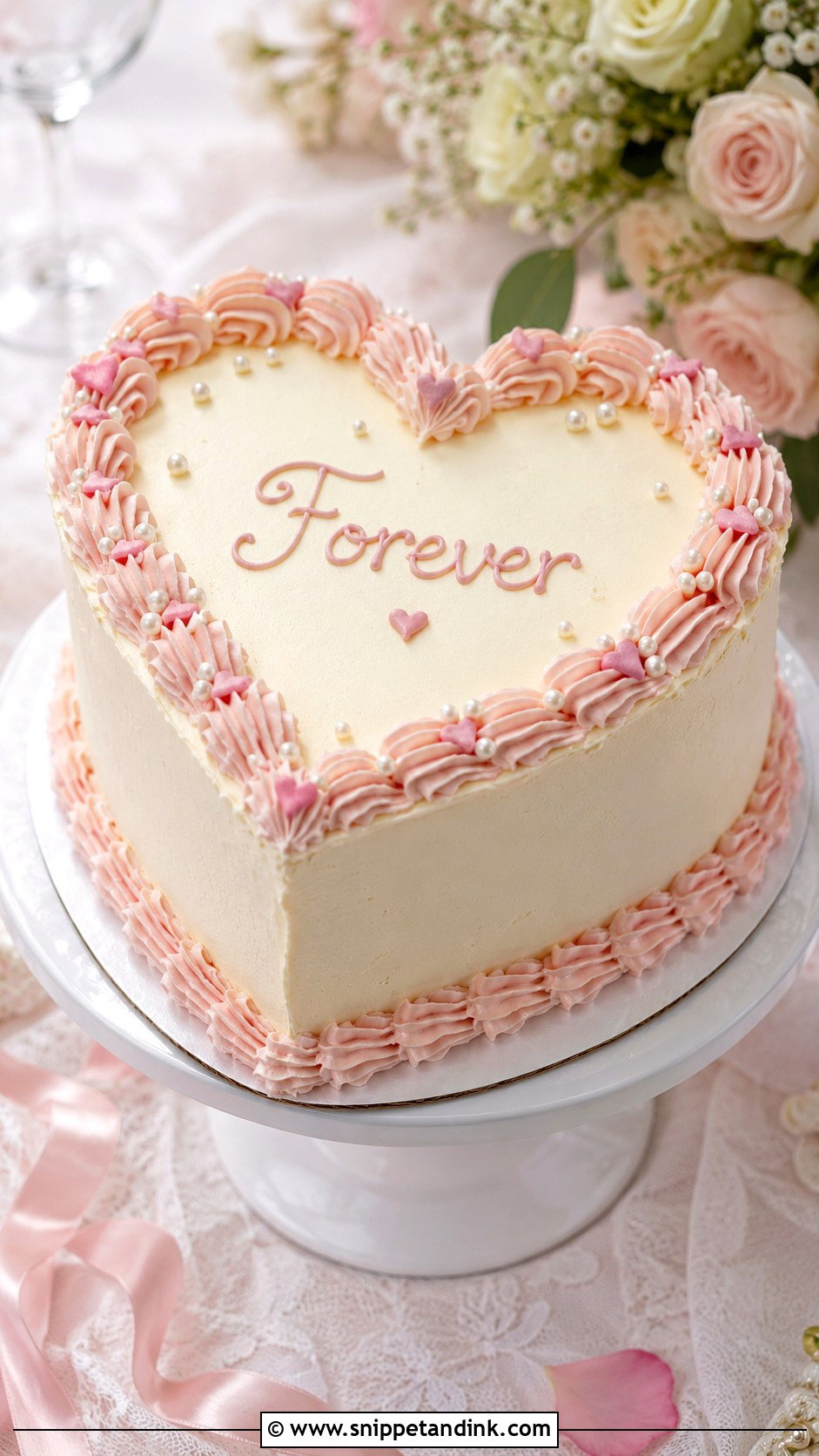
A piped message makes a heart cake feel personal. “Just Married,” “Forever,” “The Newlyweds” or a shared last name all fit. Keep it short. I leave the centre clean for the words and push all the detail out to the borders, otherwise the lettering fights the piping. Contrast matters: ivory with pink script, blue with white or blush with red will read from across a room. Vanilla, funfetti, strawberry or chocolate sponge can go underneath depending on how playful the wedding is.


15. Blue Heart Wedding Cake
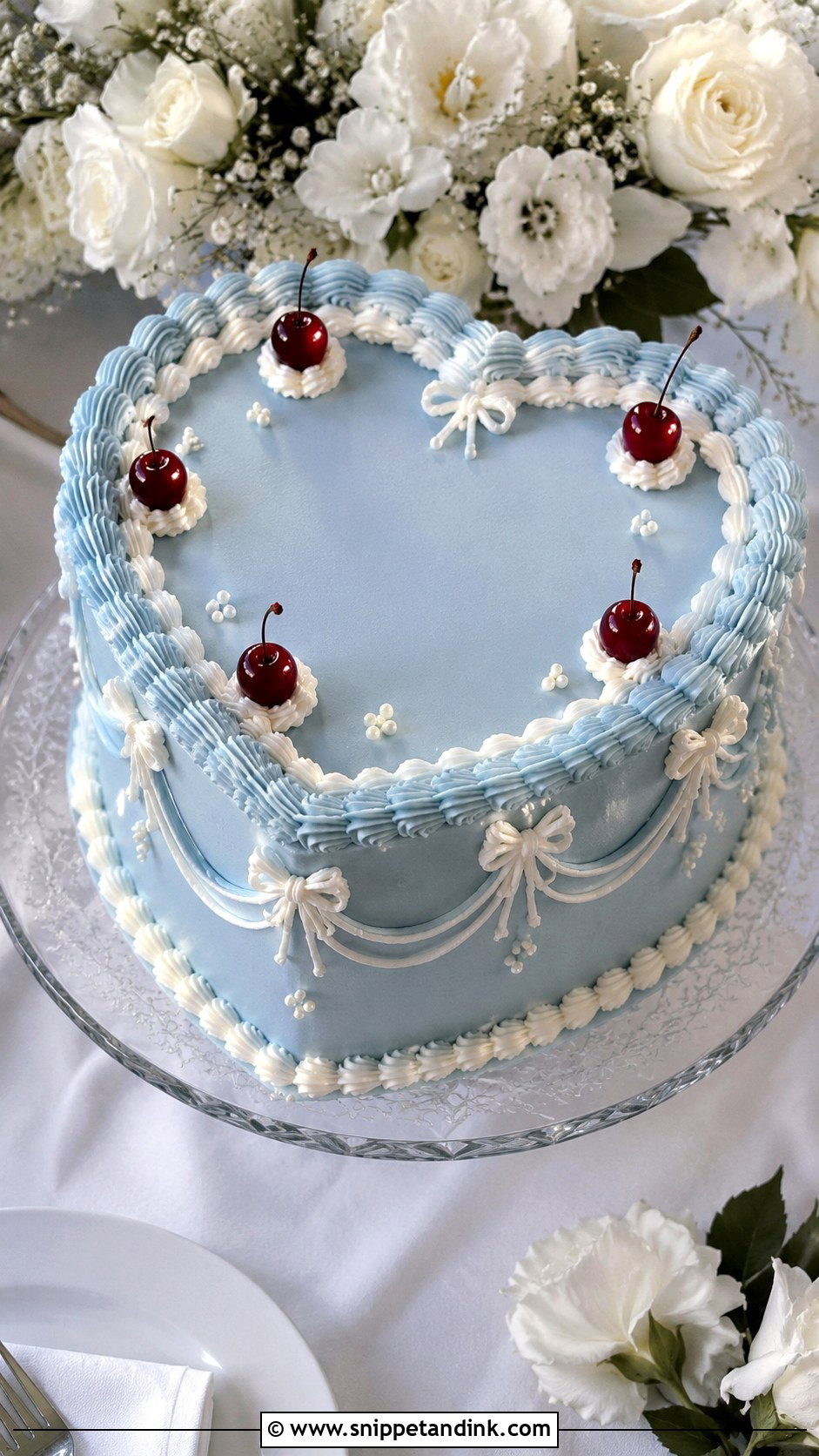
Blue gives you “something blue” on the dessert table. Dusty blue is soft and grown up; baby blue is sweeter and more vintage. White piping, pearls, cherries, bows or small sugar flowers complete it. Blue is also one of the best backgrounds for Lambeth work, because white piping on blue throws every ridge into relief in photos. Vanilla, almond, blueberry lemon or white chocolate are good flavours. Keep the stand plain so the colour looks deliberate.
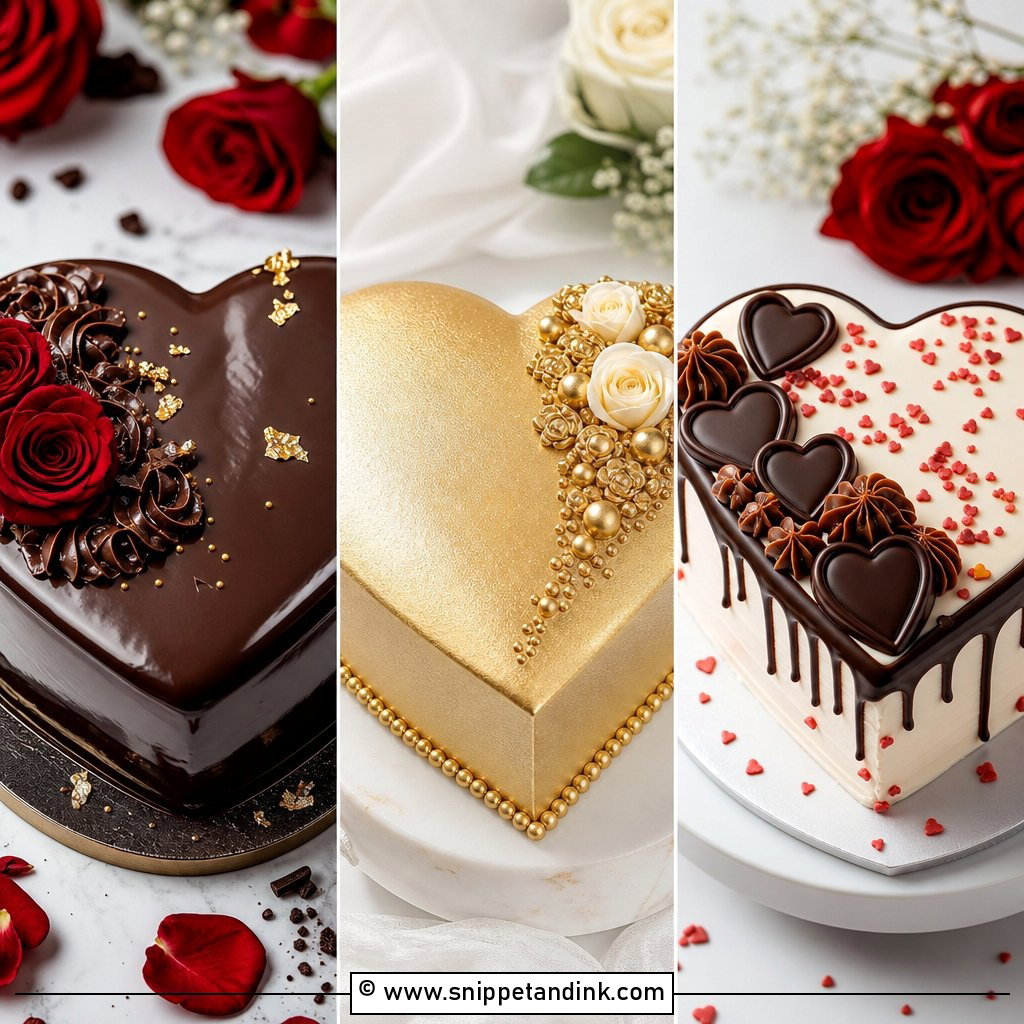
16. Black And White Heart Wedding Cake
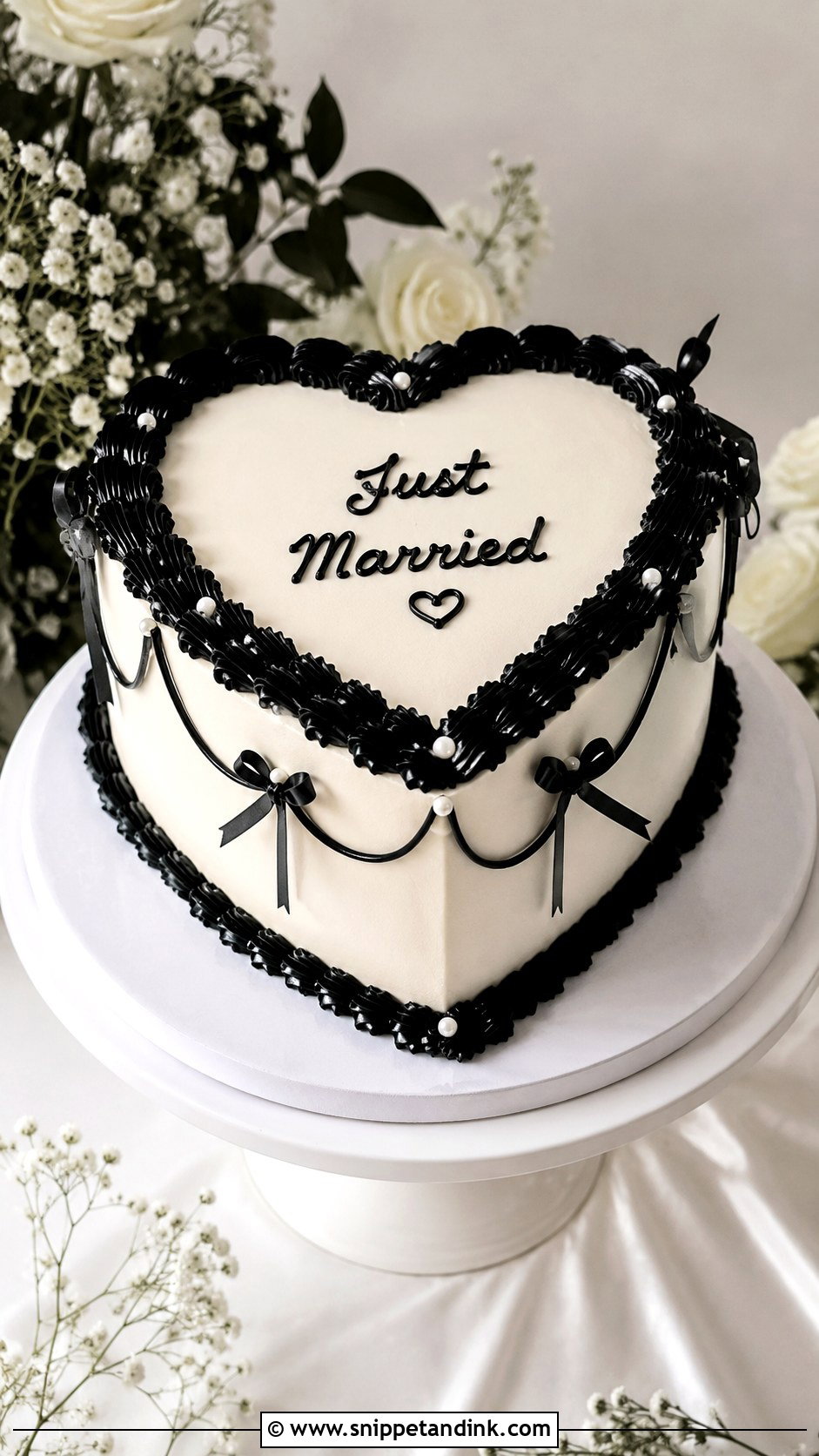
Modern and a little dramatic: usually a white or ivory base with black piping, black bows or a black message on top. A black base with white details is the stronger version. Honestly, I’d only suggest a fully black heart for an evening reception, because deep black frosting needs heavy colouring and leaves dark marks on teeth. Chocolate, cookies and cream, vanilla or black cocoa sponge suits it. Keep everything crisp, because contrast shows every uneven line, and let the curves of the heart keep it romantic.
17. Gold Heart Wedding Cake
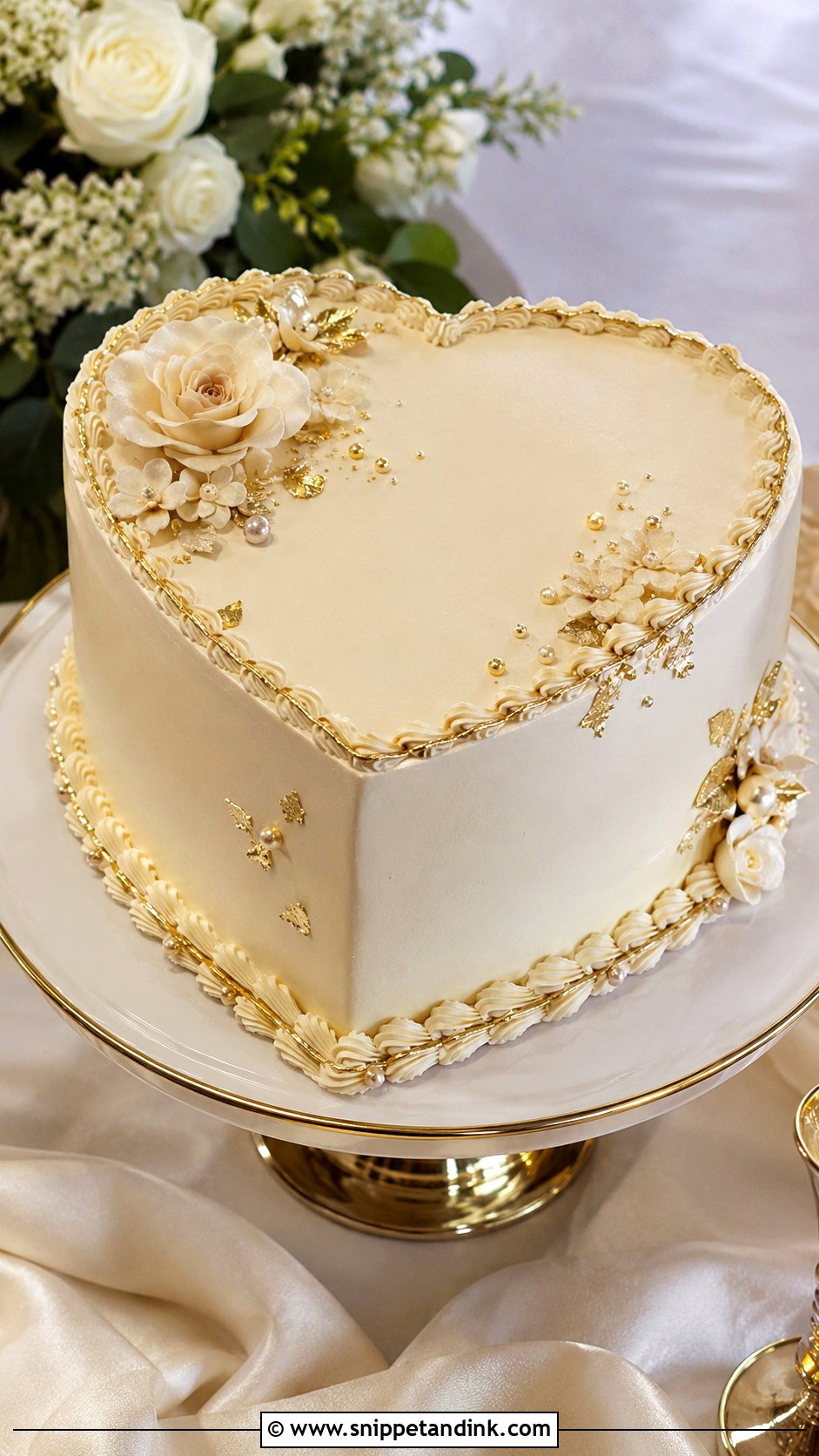
Gold adds warmth and a formal note. It can be edible leaf, painted edges, pearl accents, metallic piping or a small topper. Ivory, champagne, white, blush and soft beige frostings suit it. Use it sparingly: a little shimmer along the border or on a few flowers does more than a fully gilded cake. Before painting, I let the frosting set firm, since metallic paint on soft buttercream drags and streaks. Vanilla bean, champagne, caramel or almond sponge pairs with it.
18. Heart Wedding Cake With Buttercream Flowers
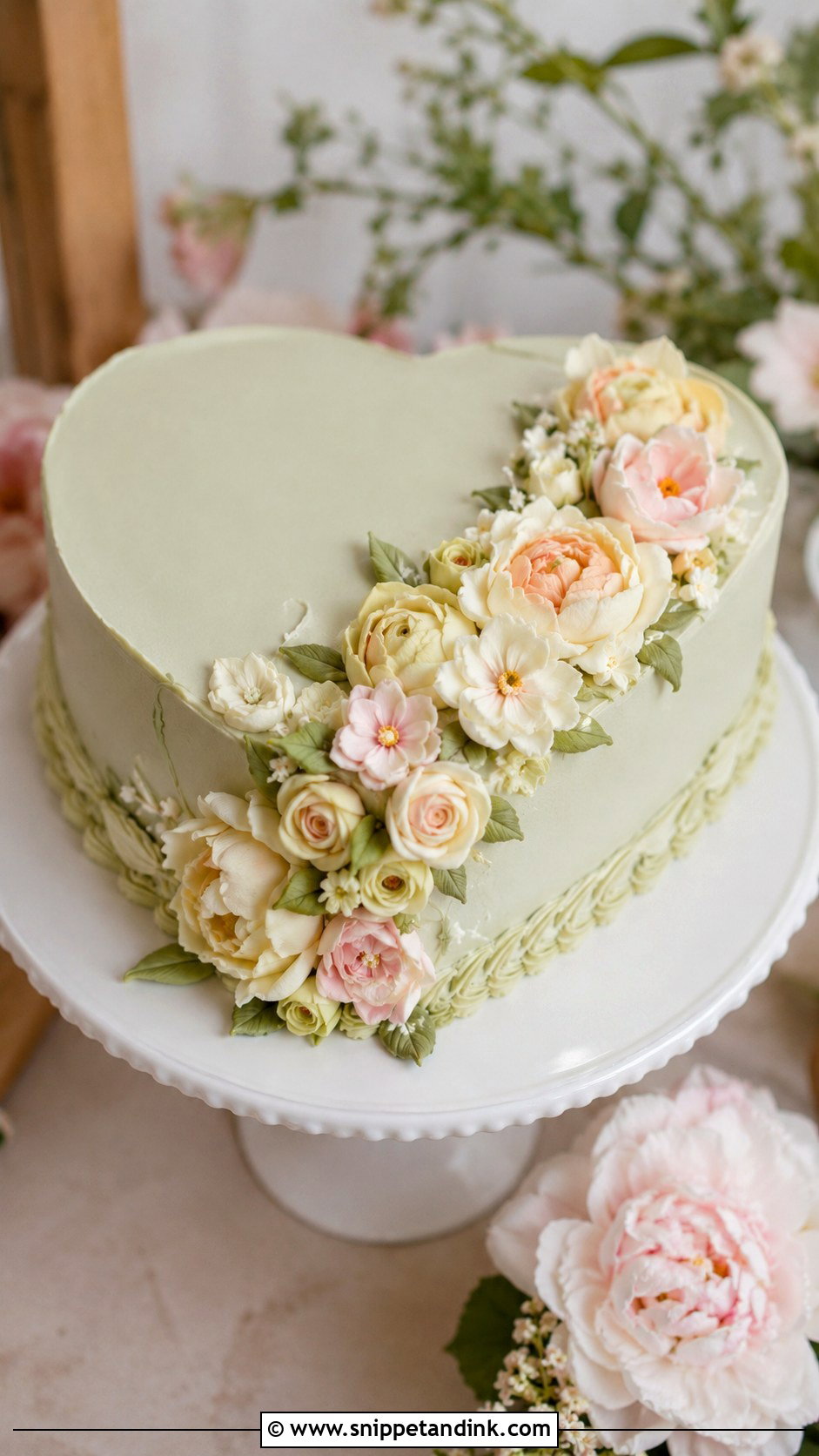
If you want flowers that guests can eat, buttercream flowers are the answer. I pipe roses, peonies, daisies, blossoms and tiny garden flowers, and then either cluster them on one side, frame the border or cover the top. They need a firm buttercream that holds petals in warmth; a soft frosting will make them droop by evening. Ivory frosting with pastel flowers is the classic wedding version. Lemon, vanilla, strawberry or pistachio sponge suits it, and the close-up photos are worth it.
19. Heart Wedding Cake With Lace Piping
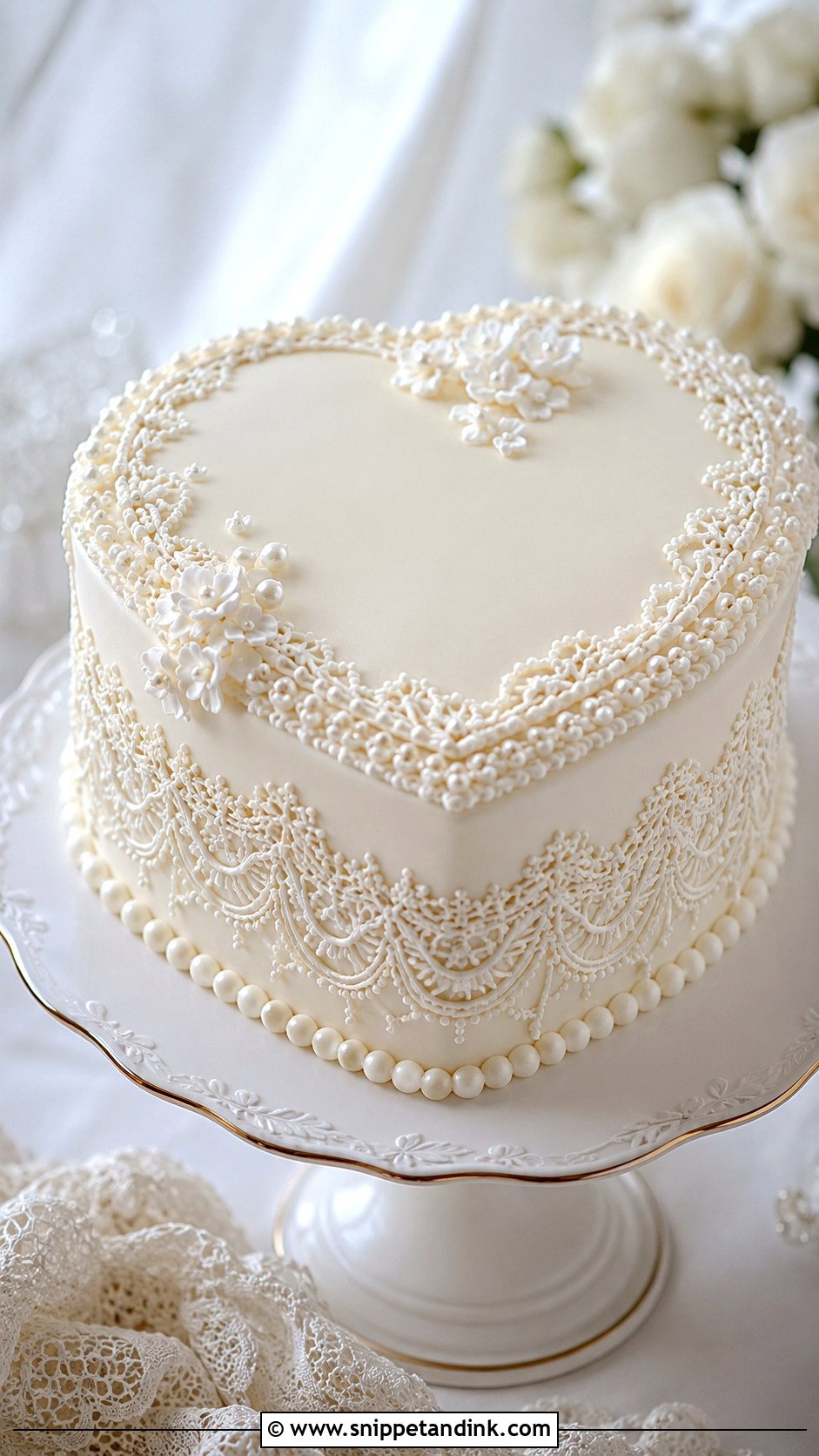
Piped lace can mimic embroidery or the actual pattern of a wedding gown, using fine buttercream or royal icing. If a bride brings me a scrap of her lace, I sketch the motif and simplify it, because fine lace reproduced too literally just looks like a smudge from a few feet away. White, ivory or champagne frosting suits it. Keep the lace on the edges, the sides or one part of the top, and let the heart stay clear. Pearls and tiny sugar flowers soften it. Almond, vanilla, coconut or lemon sponge suits classic weddings and formal venues.




20. Heart Wedding Cake With Fruit
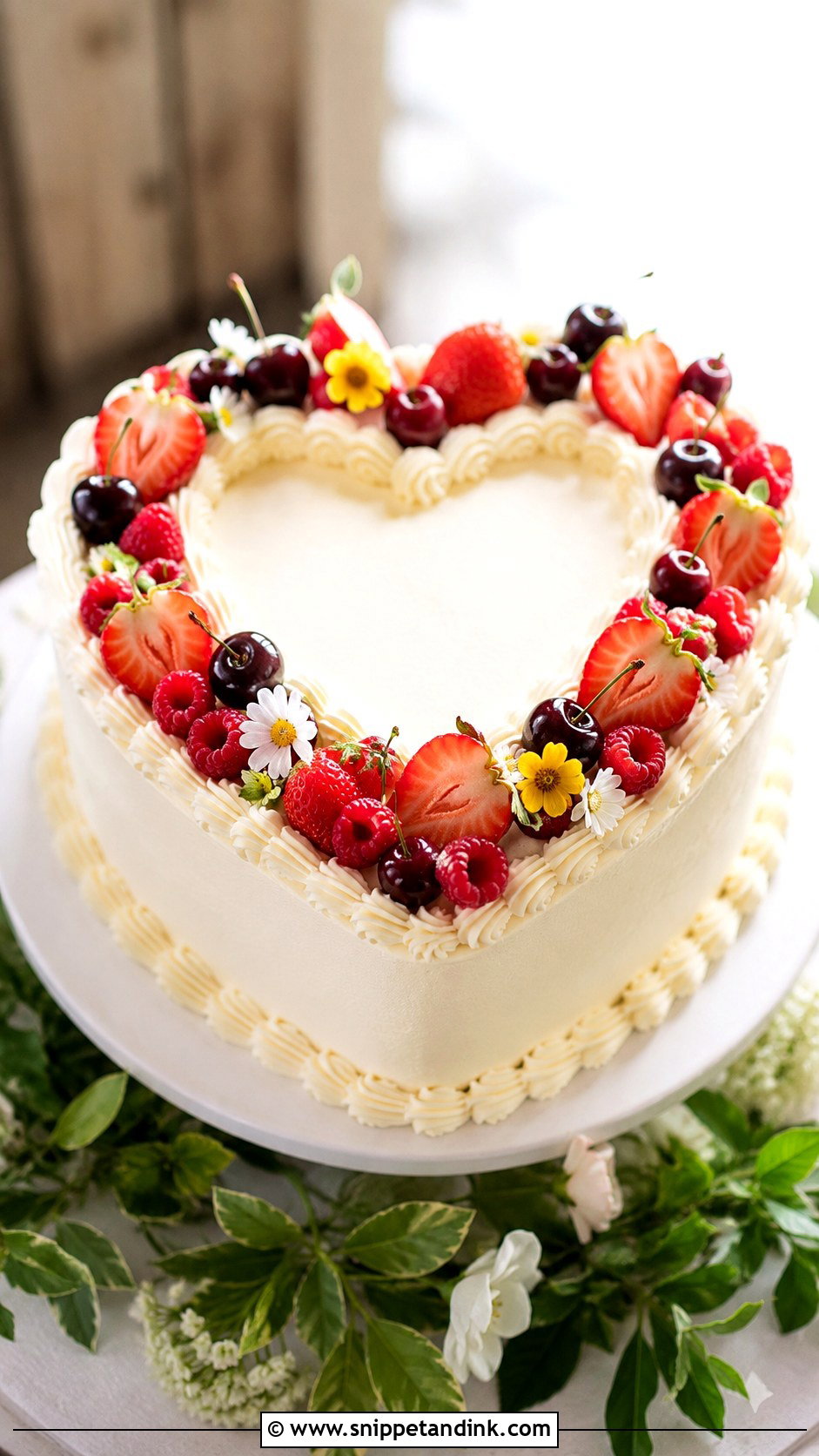
Fruit lightens both the look and the flavour. Berries are easiest, and strawberries, raspberries and cherries already echo the heart theme. Figs, peaches, citrus slices and grapes give a garden feel. Whipped frosting, vanilla buttercream or a soft cream cheese frosting all pair with fruit, though whipped frosting needs to stay chilled and is the least forgiving in summer heat. Arrange fruit around the curve or in one cluster. Lemon, vanilla, berry, almond or olive oil cake all work, and it’s a bright, relaxed choice for a warm-weather wedding.
Setting the Cake Table So the Shape Reads
A heart is only a heart from the front and from above. Seen from the side, it’s a slab with a curve. Where you place it changes how guests and the camera see it.
I point the tip toward the room, with the two lobes at the back, so anyone walking up sees the full outline. A raised stand helps a lot, because people look down at a cake from standing height and a flat cake on a low table loses its shape. Leave space on either side; when the cake is boxed in by favours, candles and signs, the outline gets lost in the clutter.
Light it from the side if you can. A lamp or window to one side picks out piping ridges, while flat overhead light washes them away. Avoid hot spotlights directly above, which soften buttercream fast. When your photographer arrives, mention that you’d like one shot from straight above; on a heart cake it’s often the frame couples end up loving most.
Does the Heart Still Show Once It’s Decorated?
That’s the one test I’d apply to every design here. Heart cakes give a lot of personality through one simple shape, whether vintage and heavily piped, soft and floral, bold in colour or clean and modern. Let your venue, palette and guest count make the first cut. Then keep the outline visible, match the decoration to your flowers or table styling, and keep any message short. Pearls, roses, bows, cherries, lace or fruit, the cake will hold the room as long as the shape isn’t buried.
You'll Like These Ideas:







Leave a Reply