
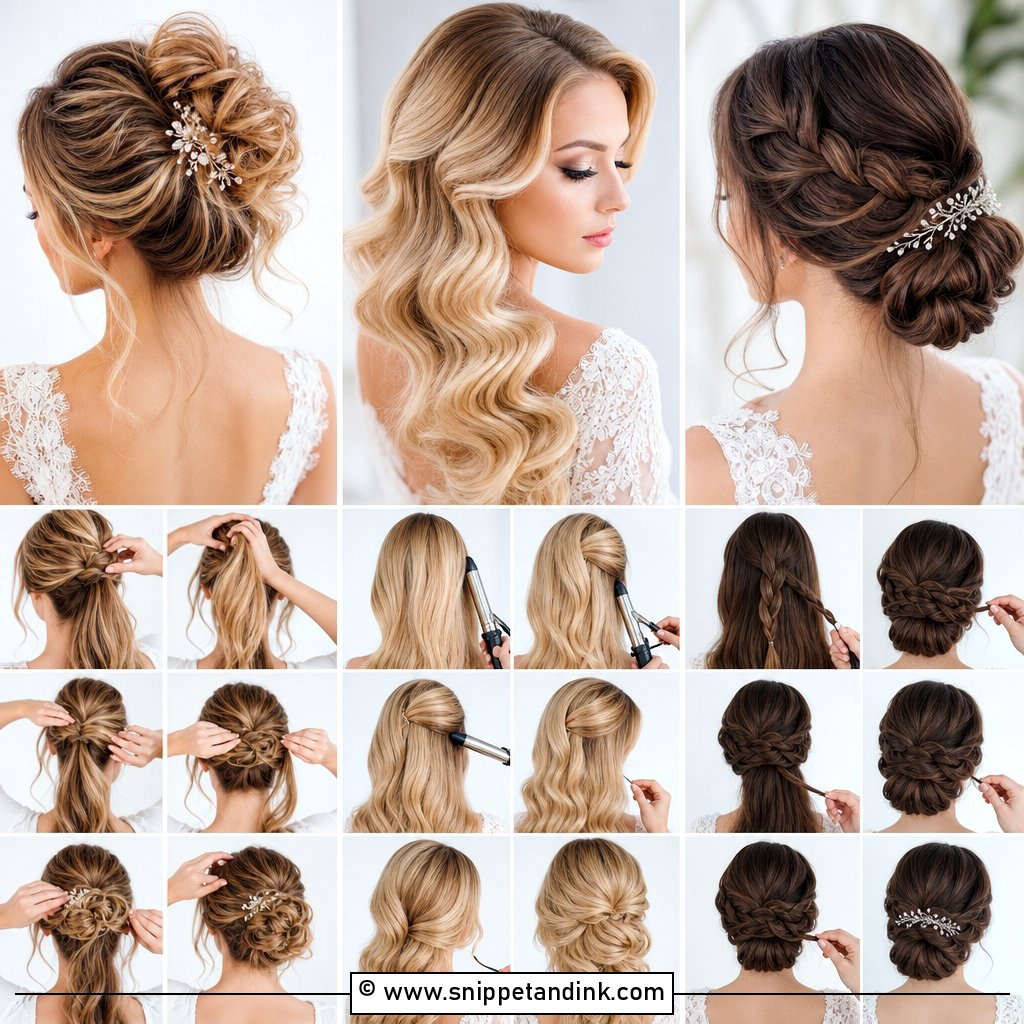
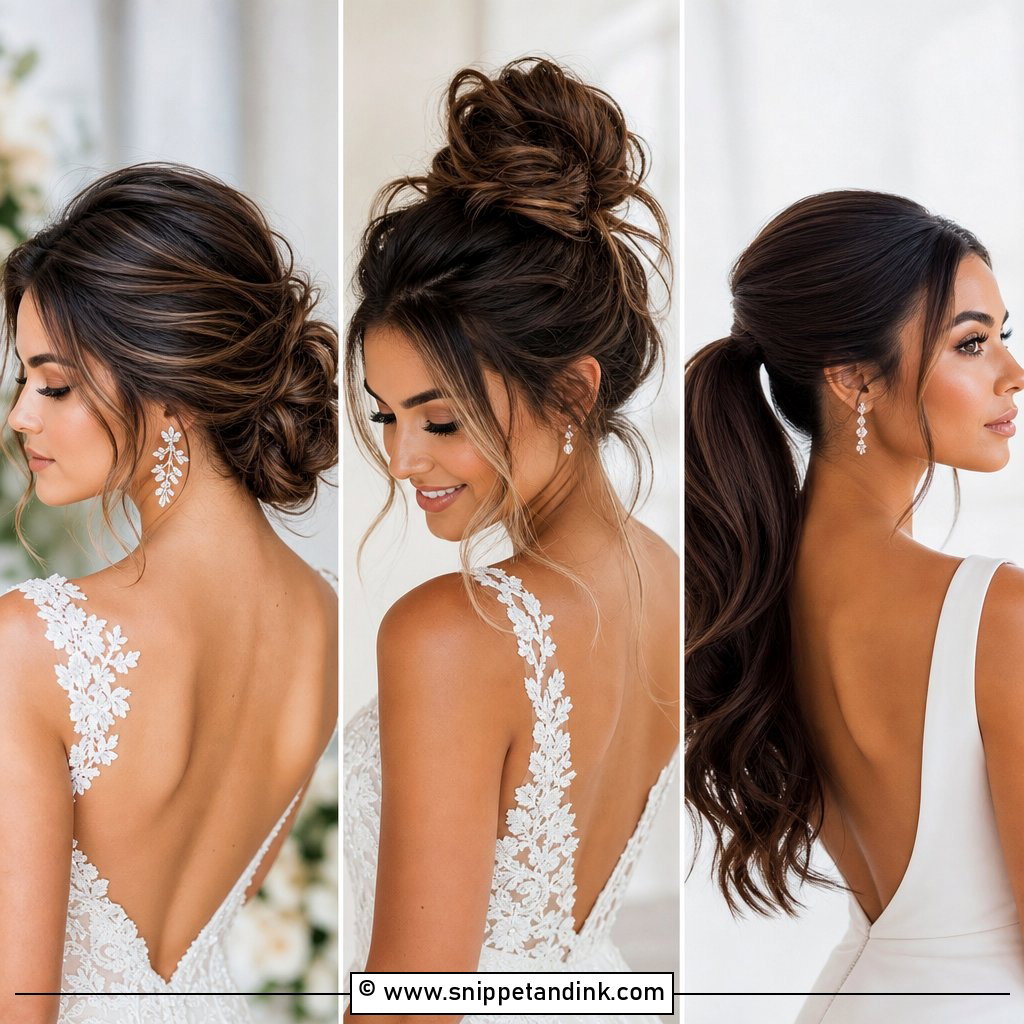
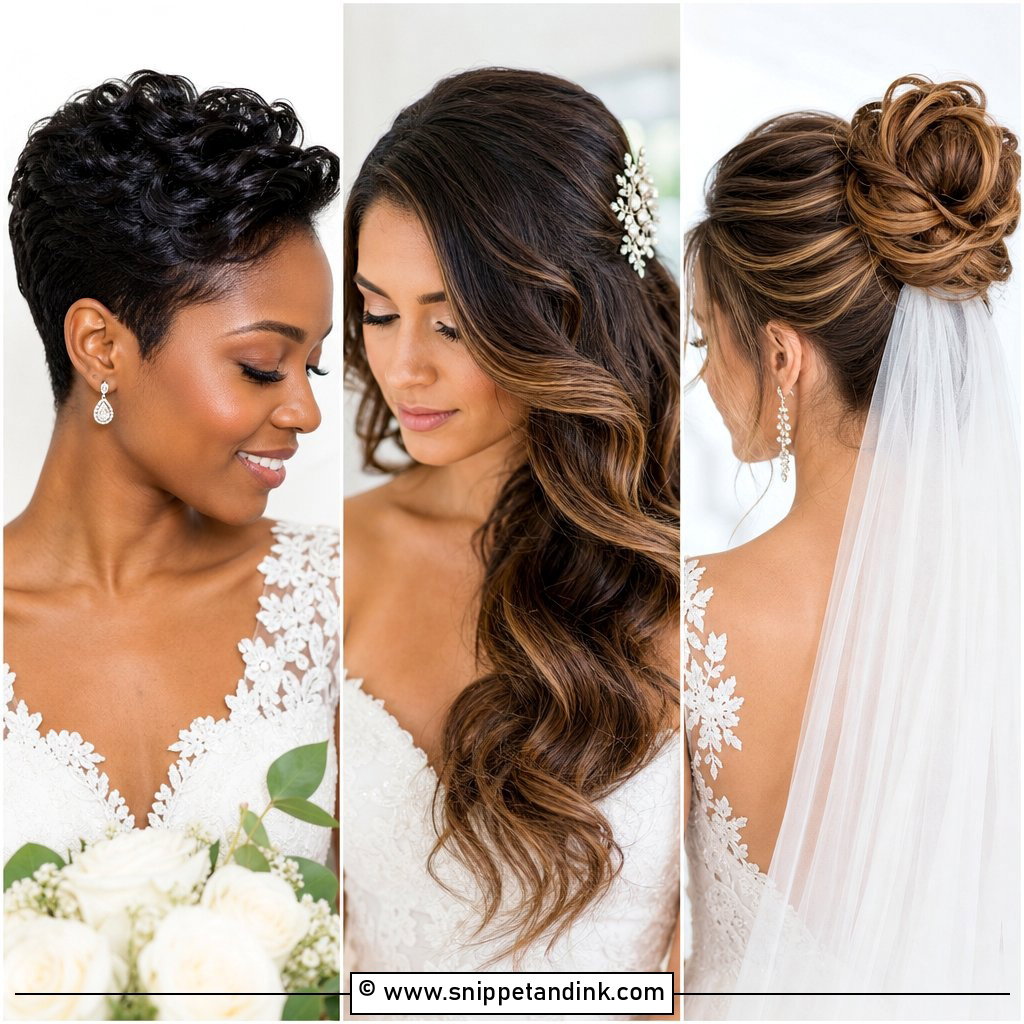
I’ve pinned more buns than any other bridal style, and the reason is simple: a bun holds. It keeps a veil anchored, stays off your neck and looks just as neat at midnight as it did at the ceremony, whether the venue is a courthouse, a garden, a ballroom or a beach. A useful hair bun tutorial has to explain more than the finished picture. Where the bun sits, how much texture goes in first and how it’s pinned decide whether it lasts. Each of the fifteen buns below comes with the steps and the one detail I’d never skip.
What Goes on the Counter Before You Start
Half of a good bun is having the right things within reach, so you’re not holding a twisted ponytail in one hand while hunting for a pin with the other. I lay everything out first.
- A boar bristle brush for sleek buns, and a wide-tooth comb or just your fingers for curls
- A tail comb for clean parts and for lifting the crown
- Snag-free elastics, plus a couple of small clear ones for braids
- Bobby pins and U-pins, matched to your hair colour rather than black by default
- A bun form or padding in your shade if your hair is fine or shoulder length
- Dry texture spray for grip, smoothing cream for the hairline, a flexible finishing spray
- A second mirror, or your phone propped up on a timer so you can see the back
Hair washed that morning is the hardest to work with. Washing the evening before usually gives a bun more grip and fewer slippery ends poking out.
1. Low Bridal Bun Tutorial
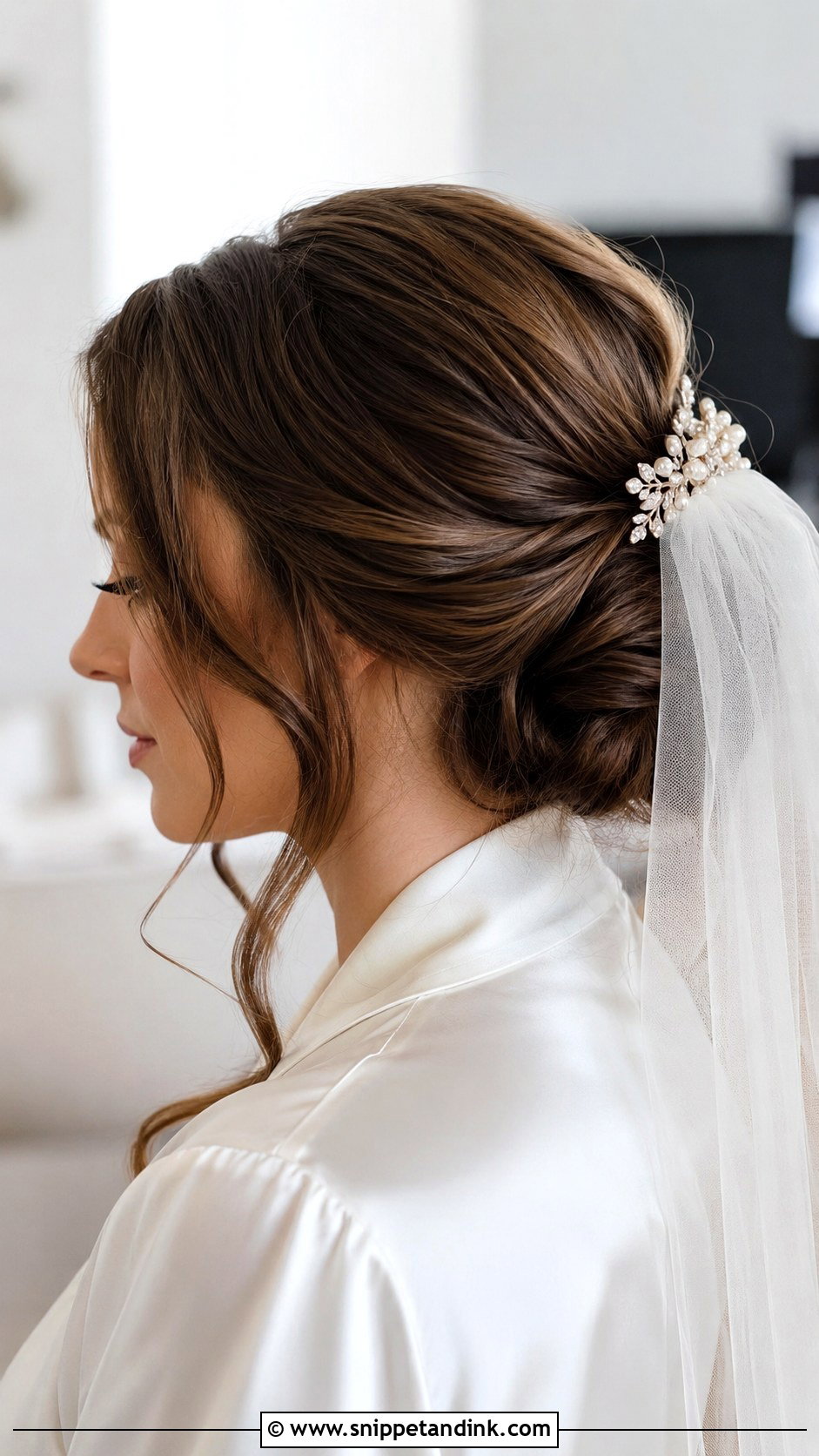
Start here if you’re unsure. The low bun sits at the nape, carries a veil without strain and leaves the neckline free for earrings or a detailed bodice. Brush the hair smooth with a little styling cream, make a low ponytail, twist the length loosely and wrap it into a round bun, pinning close to the head. The detail I never skip: the ponytail must sit dead centre, so check it in a second mirror before wrapping. An off-centre base is the cause of nearly every lopsided bun I’m asked to fix.
2. Messy Wedding Bun Tutorial
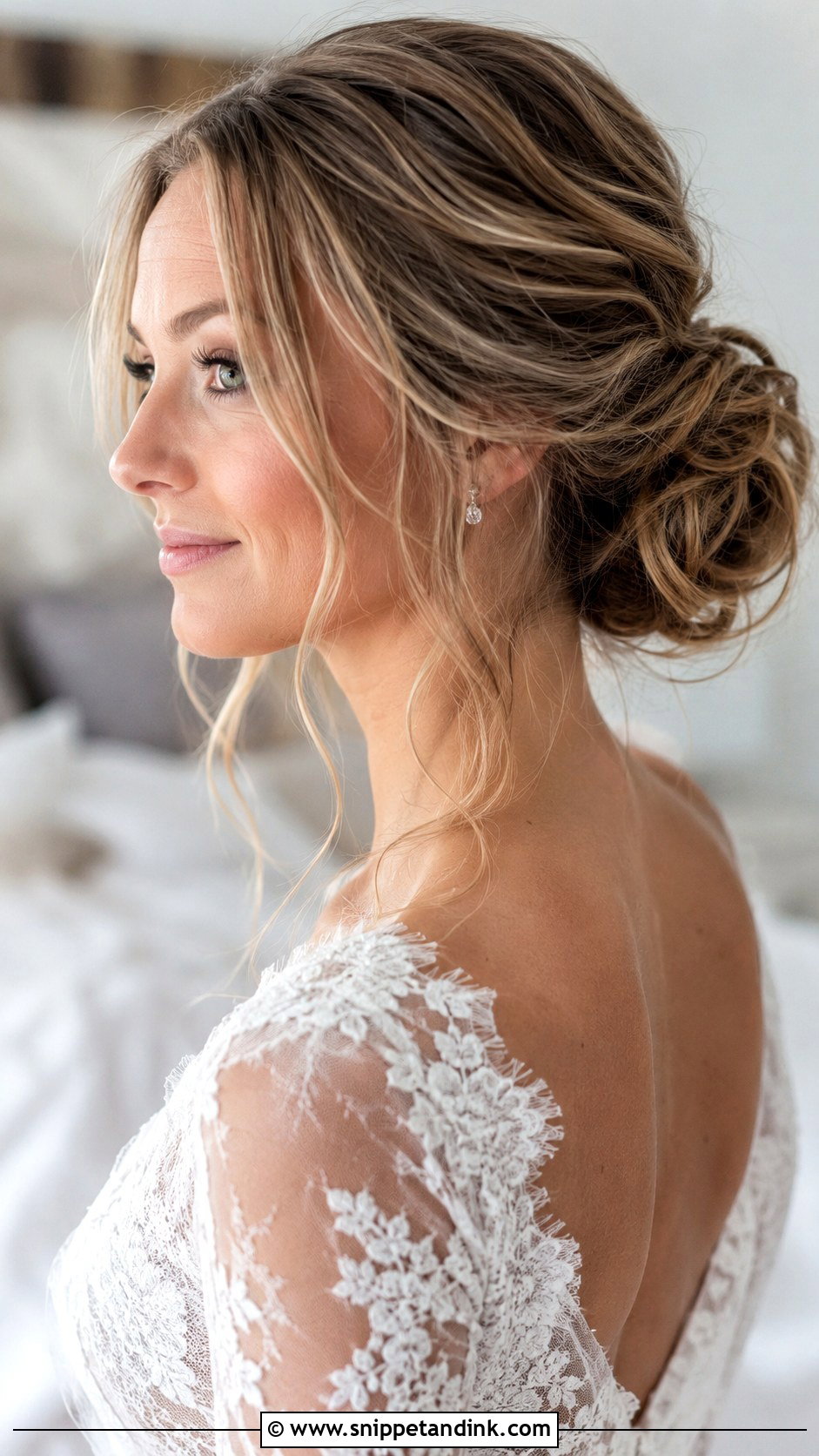
Curl the hair in loose waves and mist with texture spray before you even think about gathering it. That grip is what keeps a messy bun from turning into a collapsing one. Gather into a low or mid ponytail, twist small sections loosely and pin them around the base until it looks full. I pin each section with a U-pin rather than a bobby pin, because U-pins hold the shape without flattening the loops. A few curled strands near the face and neckline give it movement. Lace dresses and outdoor venues suit it.
3. Sleek Wedding Bun Tutorial
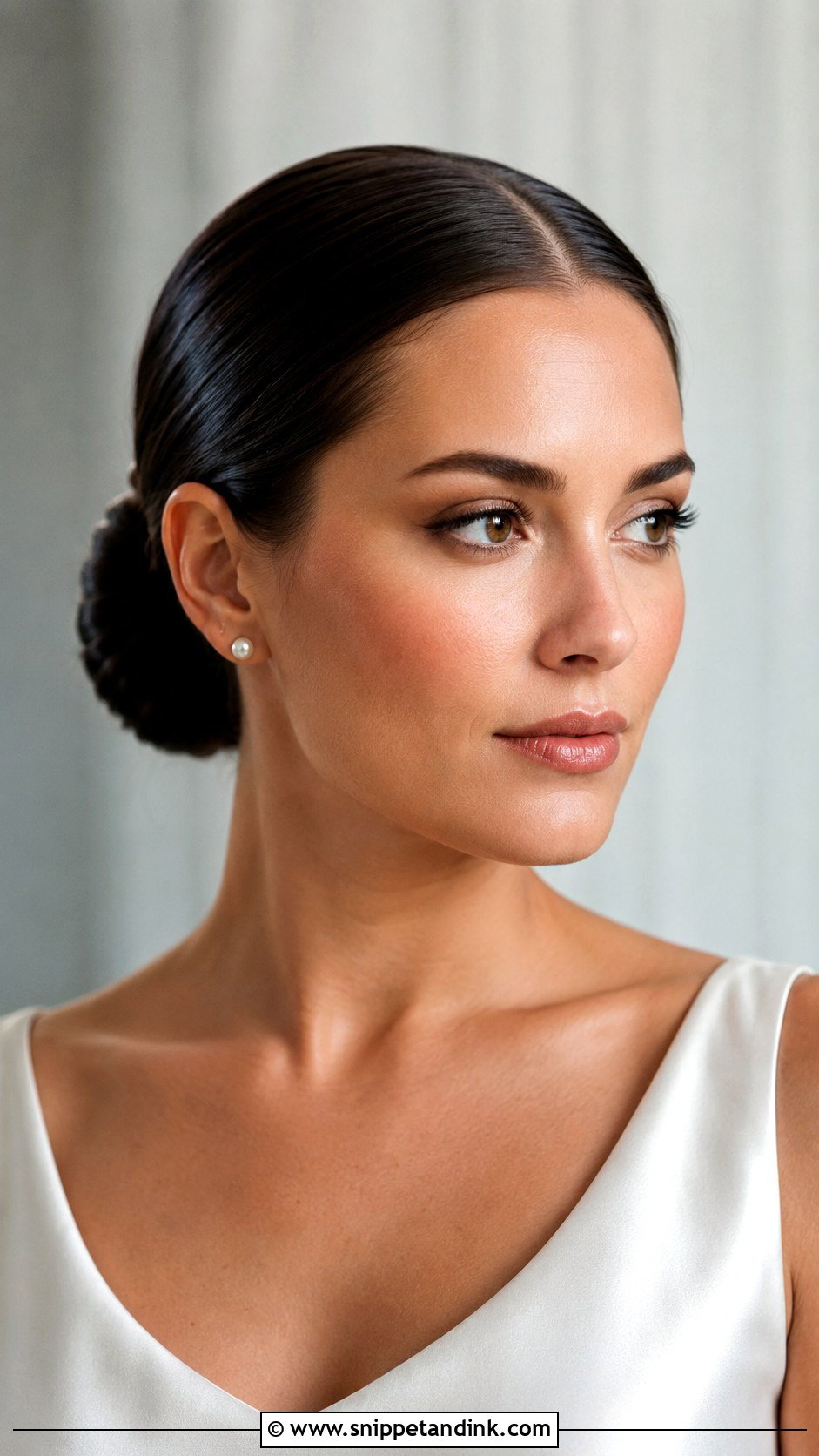
Sleek buns show every mistake, so the prep is most of the work. Straighten the hair, then work smoothing cream from roots to ends. Make a sharp centre or side part and brush everything into a low ponytail, then twist tightly and wrap into a compact bun. Finish with shine spray on a soft toothbrush along the hairline. The common error is too much product: a heavy layer of cream makes the hair look wet in flash photos rather than glossy. It belongs with satin, minimal gowns and bold earrings.
4. Braided Wedding Bun Tutorial
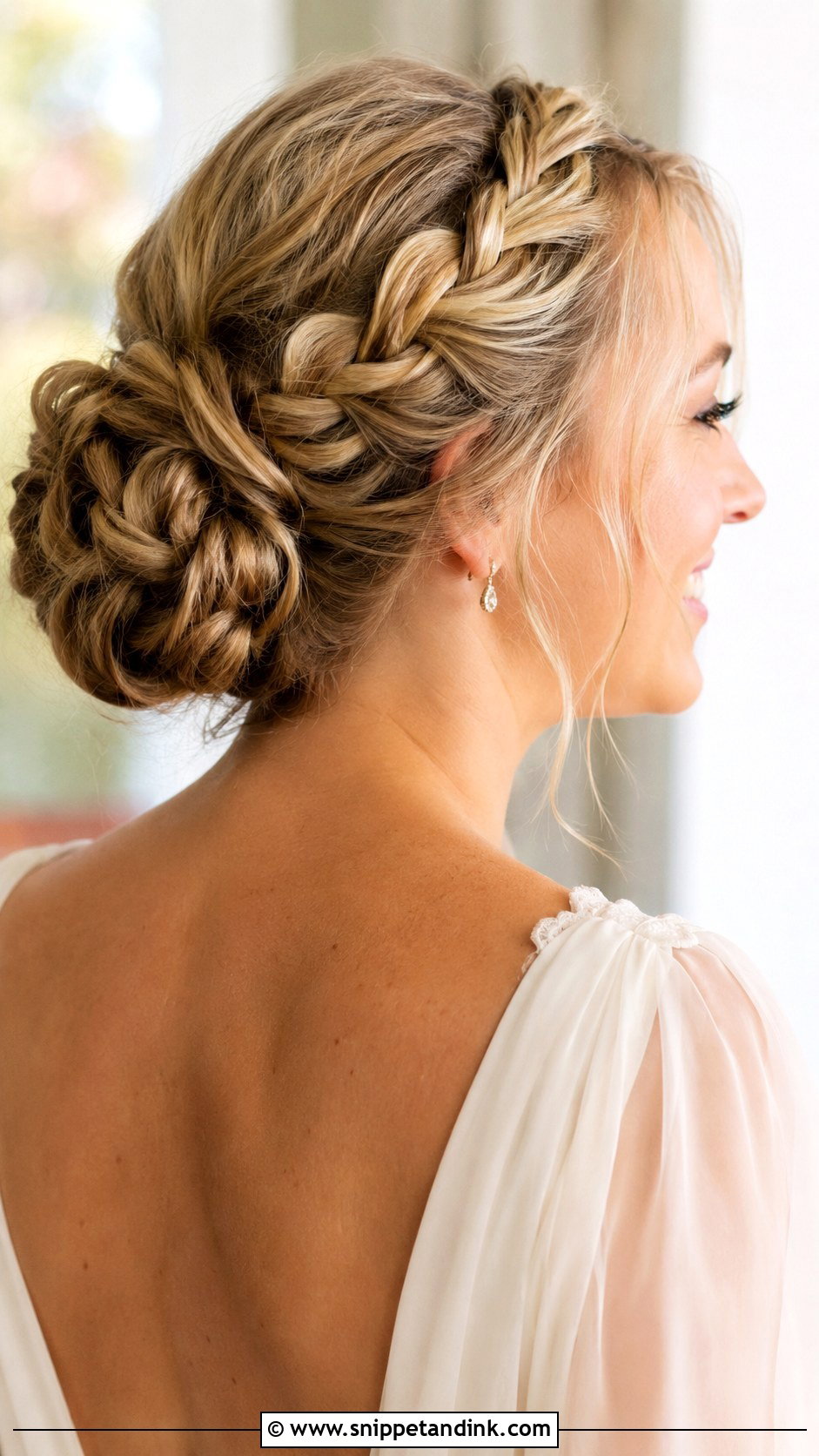
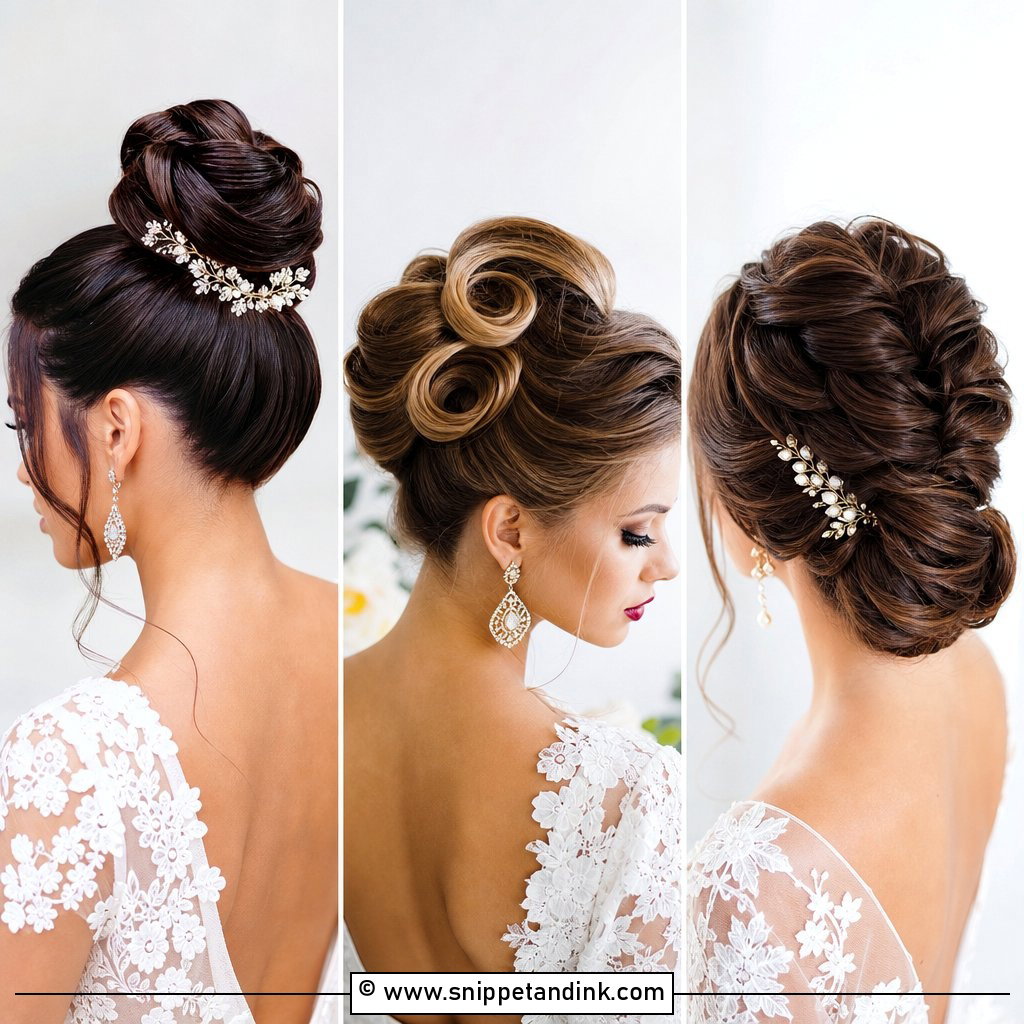
Why braid into a bun at all? Because a plain bun can look flat from the side, and a braid gives the camera something at every angle. Make one or two loose braids along the side or through the ponytail, gather the rest into a low pony, then wrap the braid and loose hair together into a soft bun. Pin so the braid stays on the outside where it shows. Pull each loop slightly apart for fullness. Medium to long hair works best; very layered hair may need a clear elastic at the end of each braid to stop short pieces escaping.
5. High Wedding Bun Tutorial
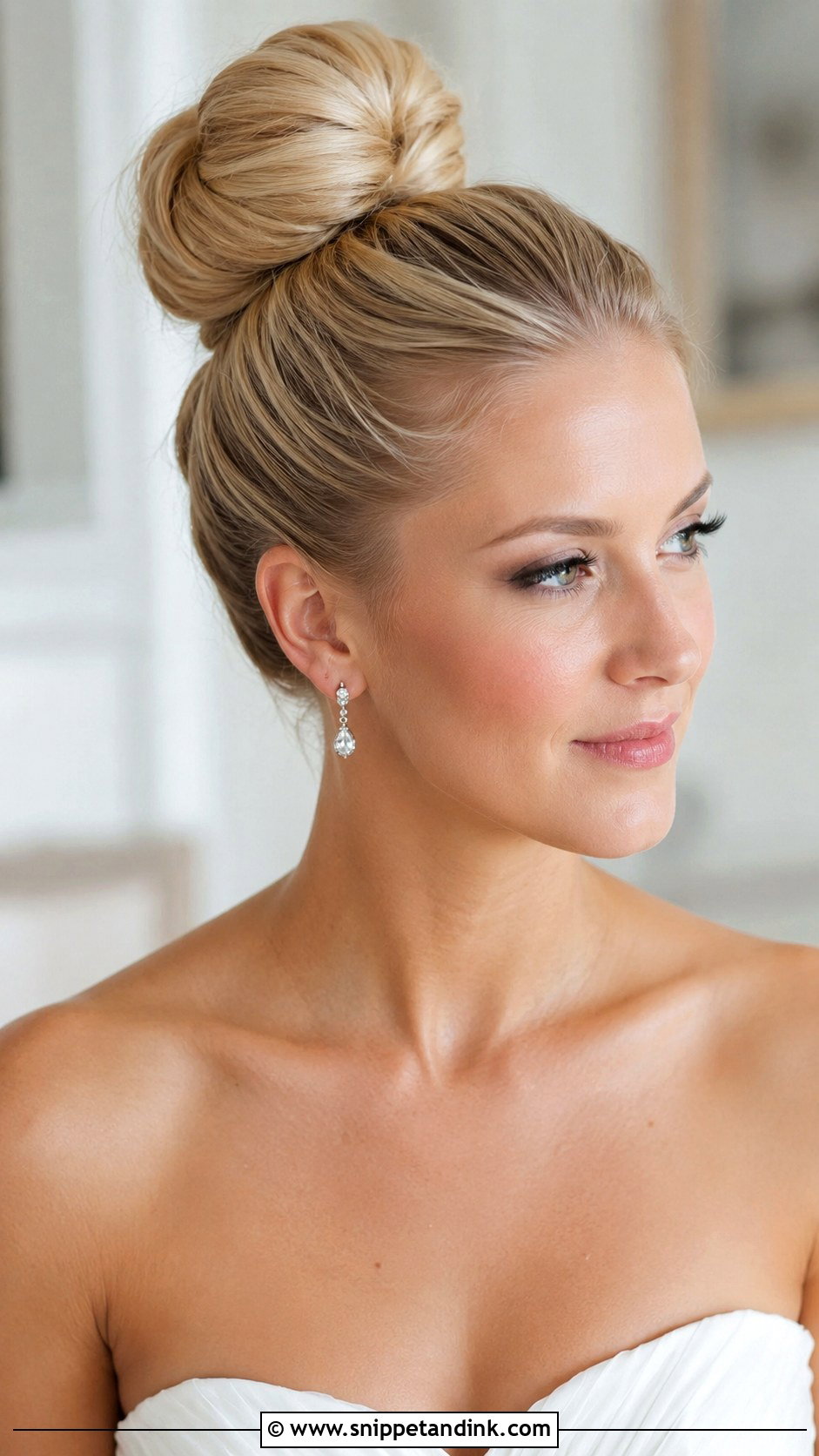
A high bun lifts everything: cheekbones, neck, shoulders. Strapless, halter and high-neck dresses suit it. Brush the hair into a high ponytail at the crown, adding texture spray if it’s slippery, then twist around the base, shape it into a full bun and pin evenly. A bun padding in your hair colour helps if the hair is fine. Think about the veil before choosing this one, though. A high bun pushes the comb up near the crown, and some long veils look awkward from there.
6. Chignon Wedding Bun Tutorial
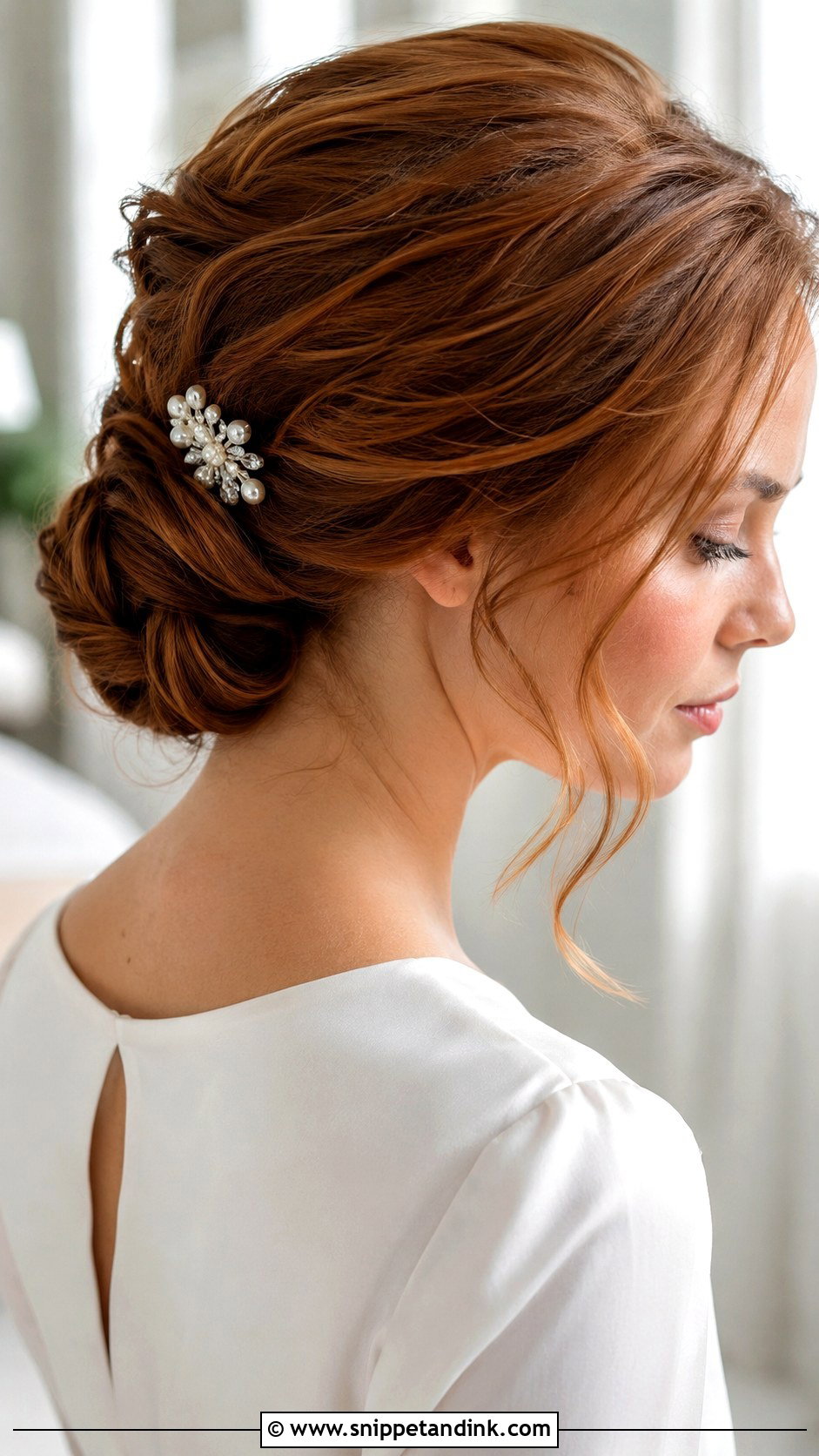
Rather than a round coil, a chignon is folded, which gives it that soft tucked shape at the nape. Make a low ponytail with a little looseness left at the crown. Roll the ponytail upward or sideways, tuck the ends inside and pin them out of sight. Then smooth the outer shape with your fingers. I hold the roll in place with long pins slid in horizontally, which grip much more hair than short bobby pins pushed in straight. Pearl pins, a comb or a veil set just above it all work well.
7. Curly Wedding Bun Tutorial
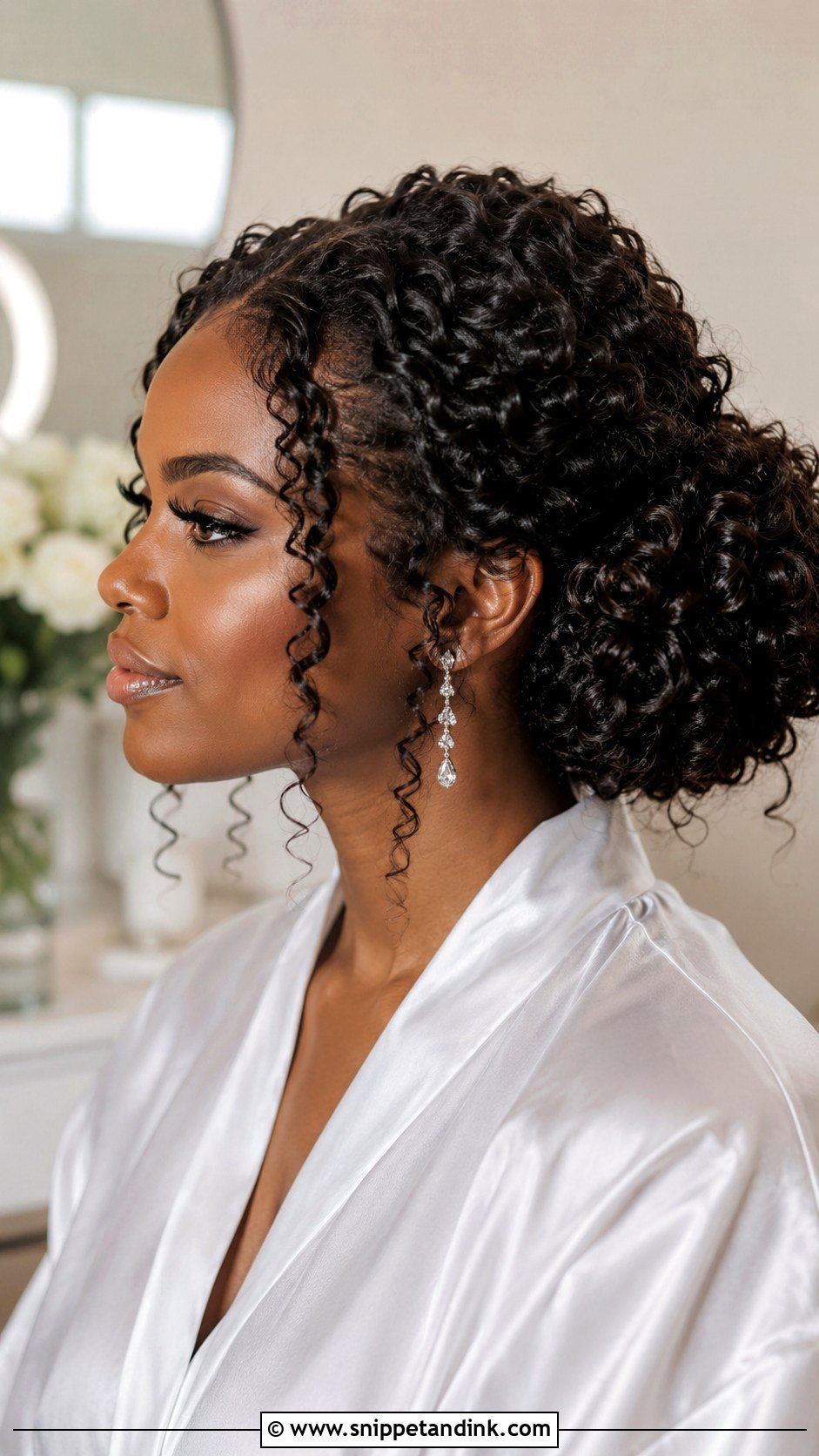
Define the curls first with cream or gel, and let them dry completely. Styling curls while they’re damp is how you end up with frizz by the reception. Gather them into a low or mid ponytail without brushing, then pin curl clusters around the base one at a time so the pattern stays visible. Leave a few at the temples or neckline if you like a softer frame. The bun’s volume comes from the curls themselves, so you rarely need padding. Avoid heavy tension on the hairline, which curly hair doesn’t forgive.
8. Side Wedding Bun Tutorial
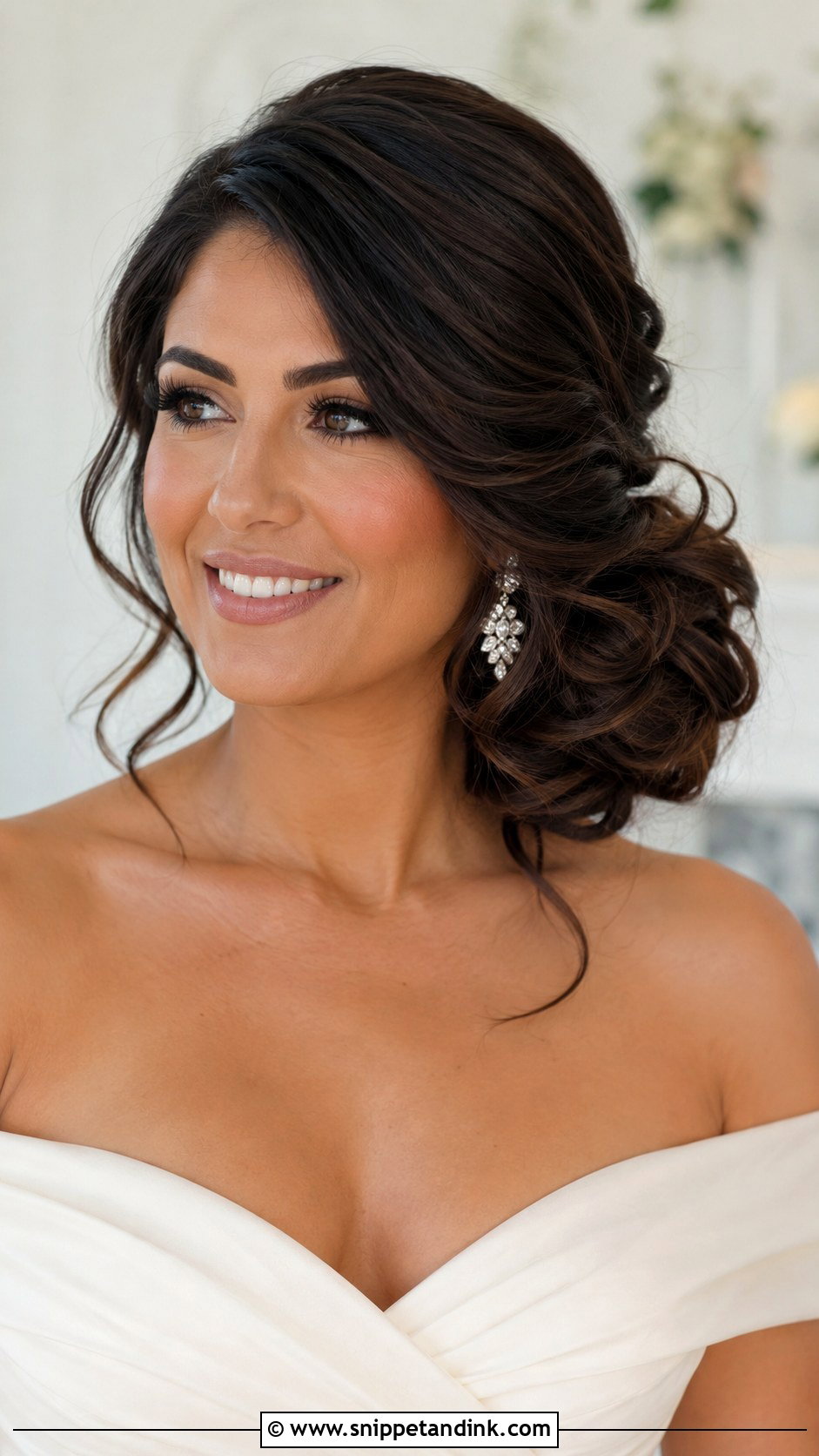
There’s something old Hollywood about a bun pinned low near one shoulder, and because it’s visible from the front, it shows up in portraits that hide a centre-back bun. Begin with loose curls and a deep side part. Sweep the hair to one side, secure a low ponytail and twist it into a bun slightly off-centre. Keep the other side smooth or softly draped. I add an extra set of crossed pins on the underside, since a side bun has no head behind it to lean against. One-shoulder dresses and floral pins suit it.
9. Twisted Wedding Bun Tutorial
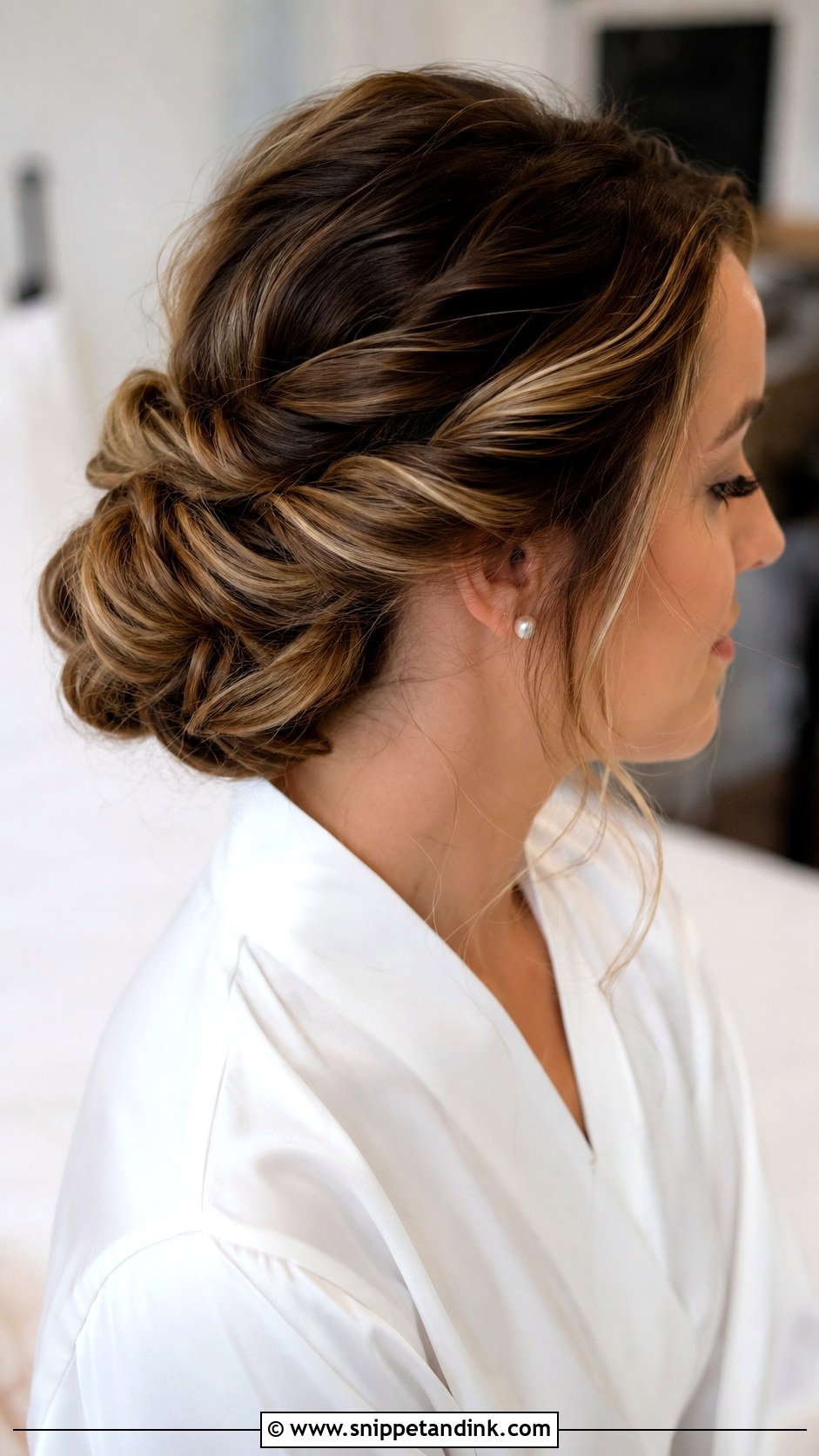
No braiding skills needed. Section the hair into two or three parts, twist each away from the face and bring them together at the back into a low ponytail. Wrap the twisted lengths around each other and pin into a bun, then loosen the twists gently with your fingertips for fullness. Twist each section in the same direction you’ll wrap it, or the twists undo themselves as you pin. Highlighted or balayage hair shows the dimension well.
10. French Twist Bun Tutorial
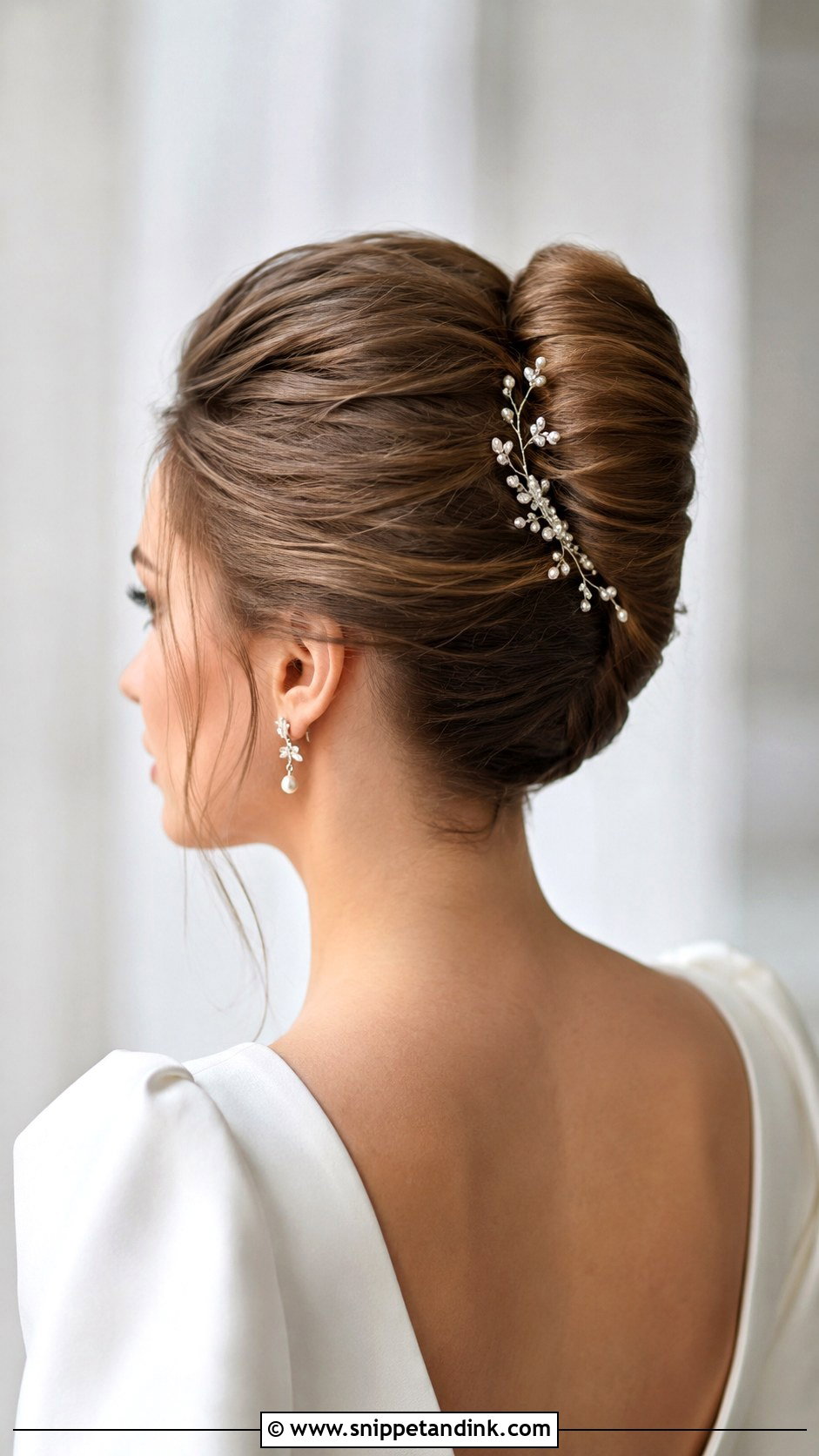
The French twist is vertical rather than round, an elongated shape that leans vintage without looking costume. Add light texture spray for hold. Sweep the hair back as if making a low ponytail, then twist it upward flat against the head, tuck the ends into the roll and secure with long pins. The top can stay smooth or be gently lifted. This one needs medium to long hair; shorter lengths poke out of the seam. A comb or small pearl details tucked along the twist suit it, and a veil can sit just above the roll.
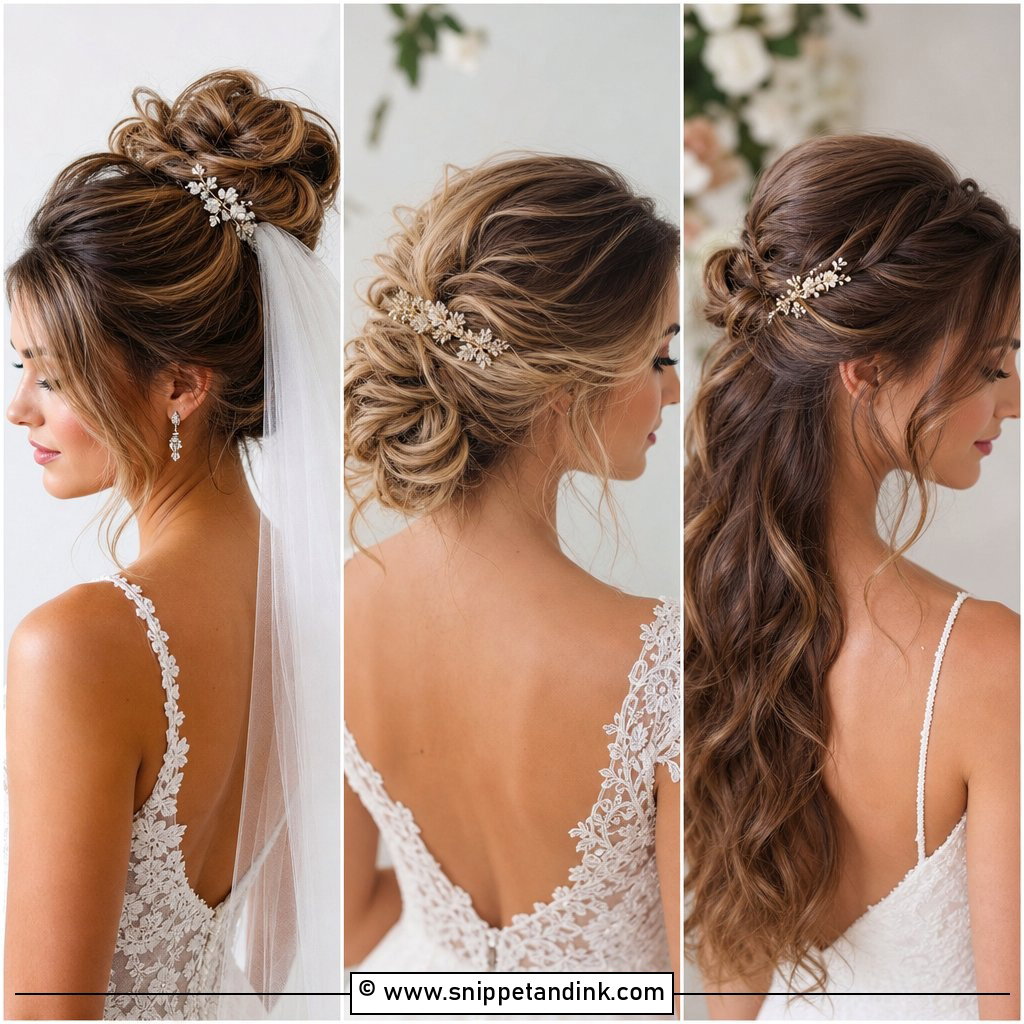
11. Bun With Veil Tutorial
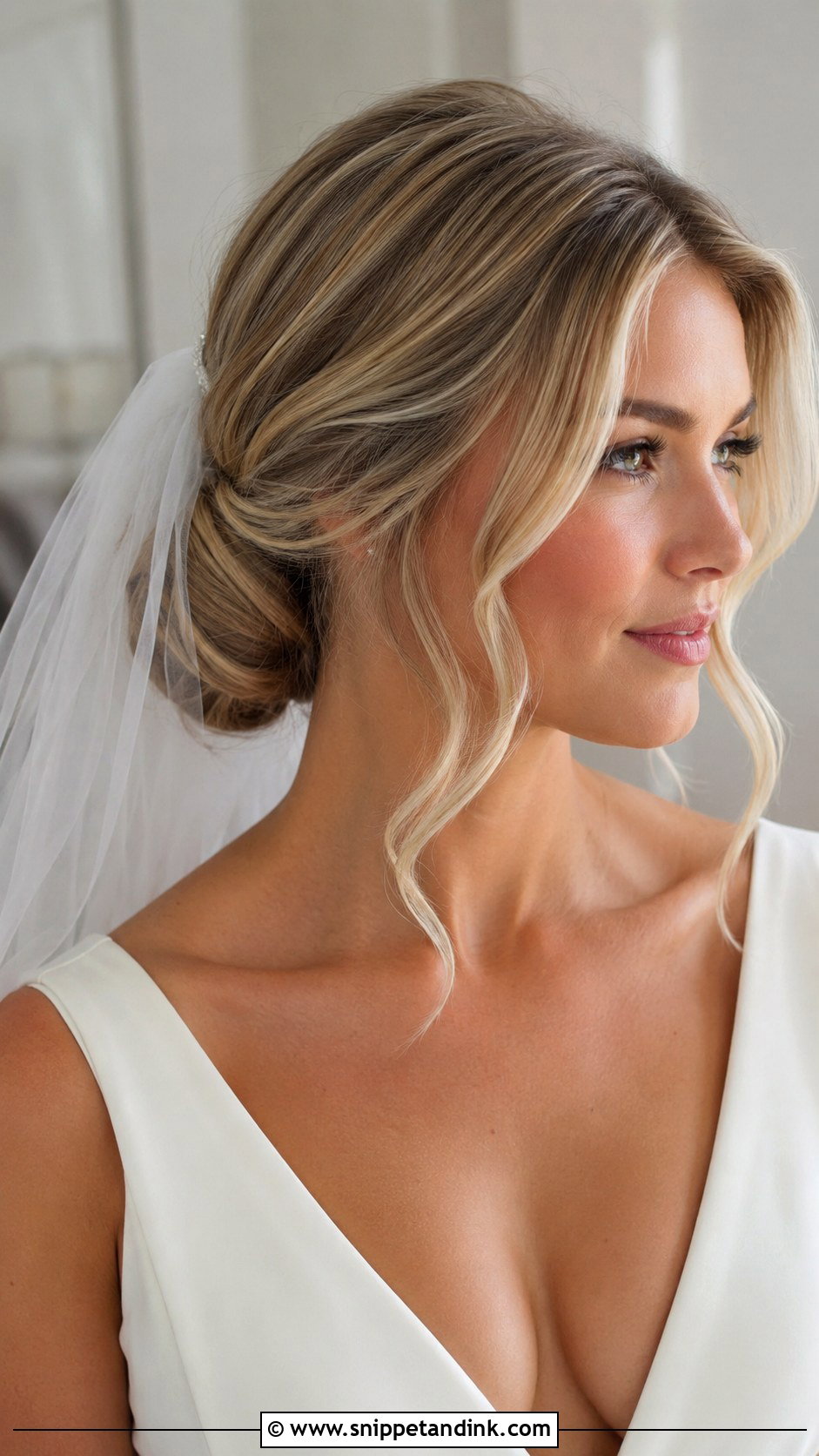
Planning the veil is half of this tutorial. A low or mid bun gives the comb a strong base. Build your chosen bun, then add extra pins under the top layer exactly where the veil will sit, creating a little shelf for the comb’s teeth. Slide the comb in above or below the bun, depending on the look, and back it up with a couple of hidden bobby pins. I always ask the bride to bring the actual veil to the trial, since veil weight varies a lot and a heavy one needs a firmer base.
12. Bun With Flowers Tutorial
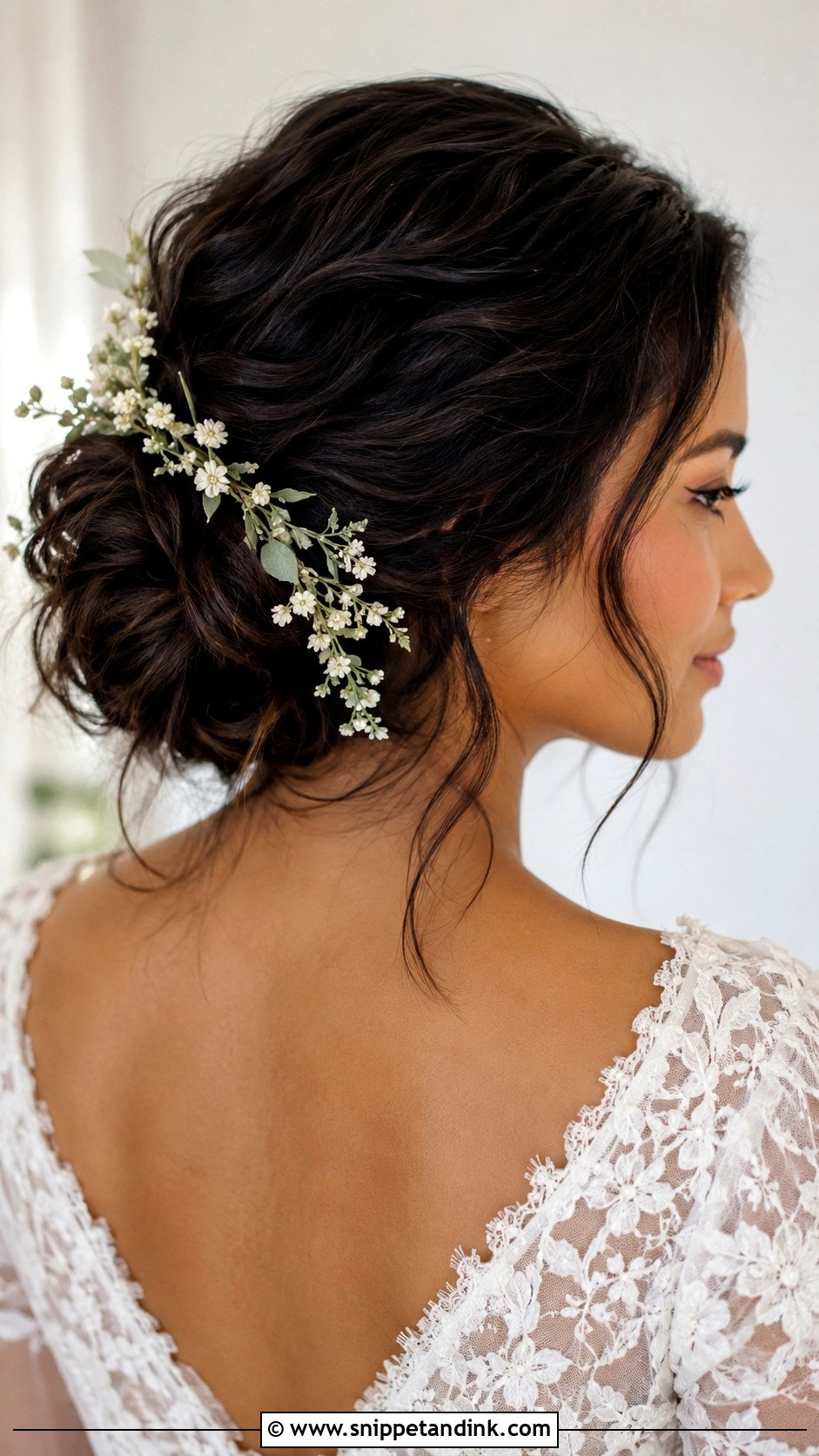
Flowers sit best in a slightly loose, textured bun, where stems can tuck between the twists. Curl the hair, build the bun and pin it securely before adding a single bloom. Keep the flowers small: tiny blooms, greenery or dried flowers rather than big heads that weigh the bun down and drop forward. Place them around one side or along the top curve. Fresh flowers should be wired or on picks so they don’t wilt straight onto your hair. The flowers frame the bun; they shouldn’t bury it.
13. Bun With Pearl Pins Tutorial
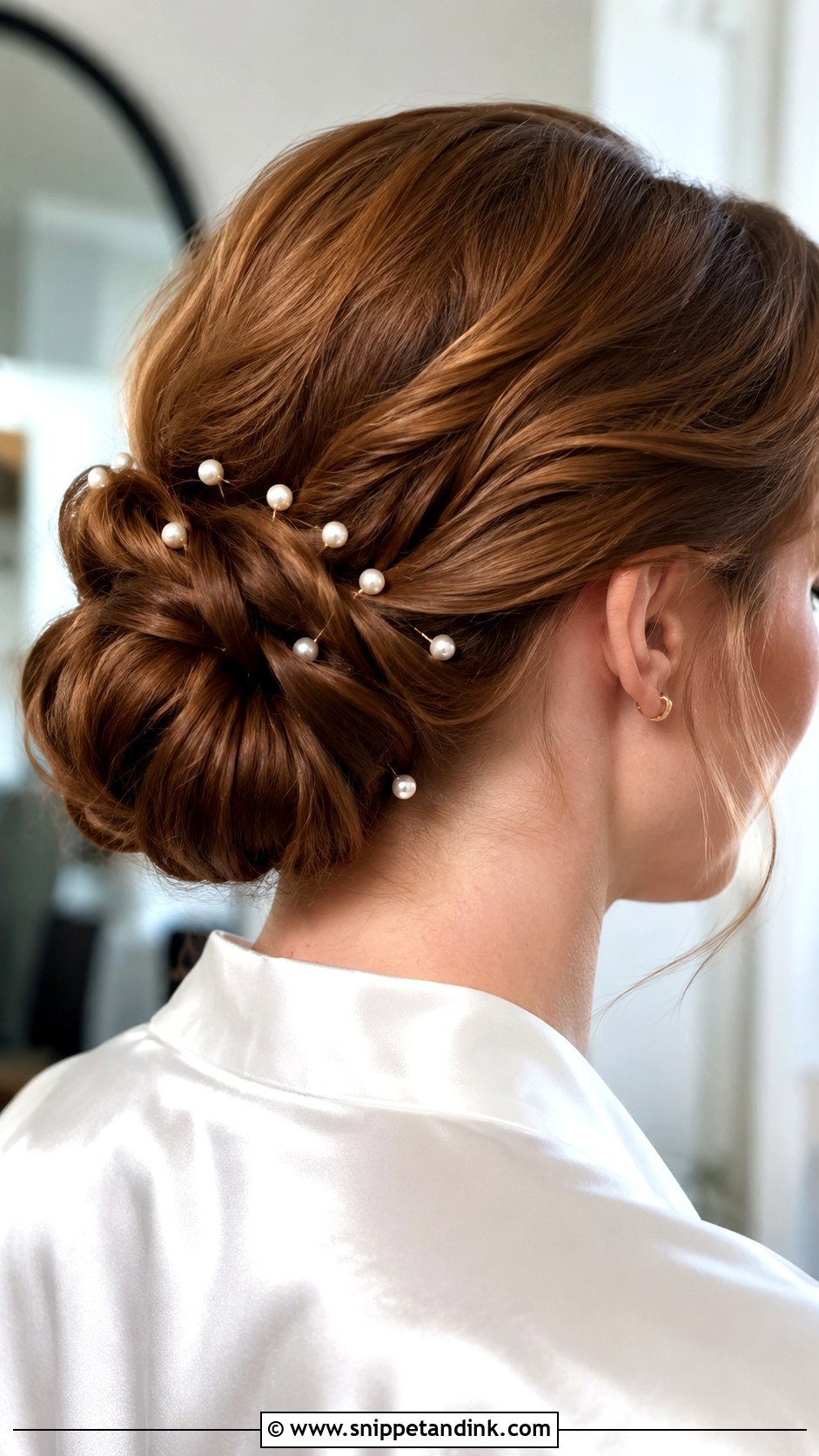
Finish the bun completely before a single pearl goes in. Then you can see the shape and place each pin with intention instead of scattering too many. Pearls can follow the outer curve, cross a braid or sit lightly through the bun. The style suits sleek, messy, chignon and braided buns alike. Push each pin in at an angle so it hooks under a twist, because a smooth shaft slides straight out of polished hair. It’s the obvious pairing for a dress with pearl beading or plain satin.
14. Bun For Short Hair Tutorial
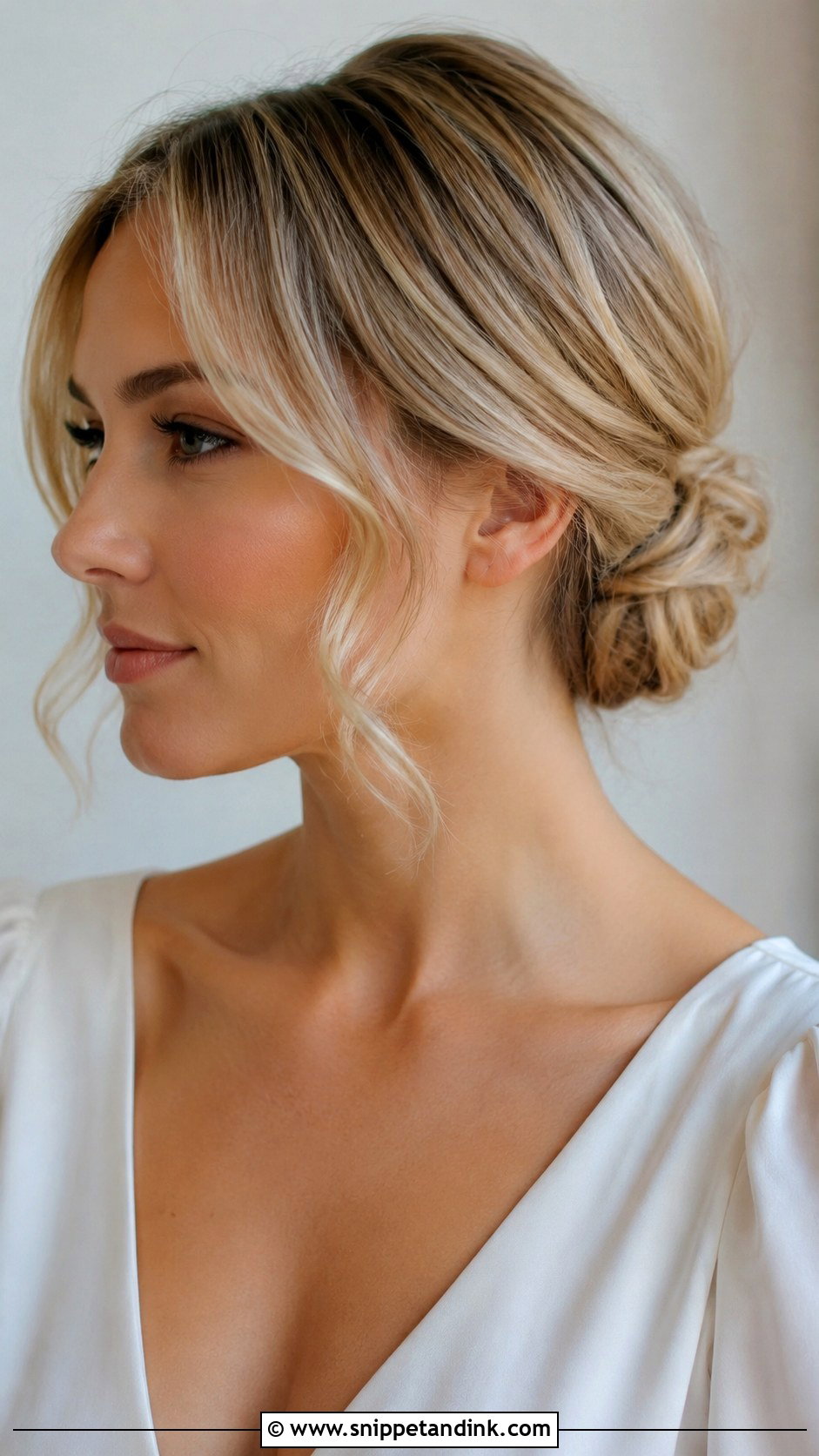
Short hair needs a different method: small sections, many pins. Curl first for texture and volume, gather as much as reaches into a low ponytail, then tuck and pin the ends underneath to form a small bun. Wrap side sections around the base to hide pins. A small matching padding or clip-in piece adds fullness if needed. The shortest layers will escape, so leave them out at the front on purpose. For bob or lob lengths, this is usually the only bun that holds through a full day.
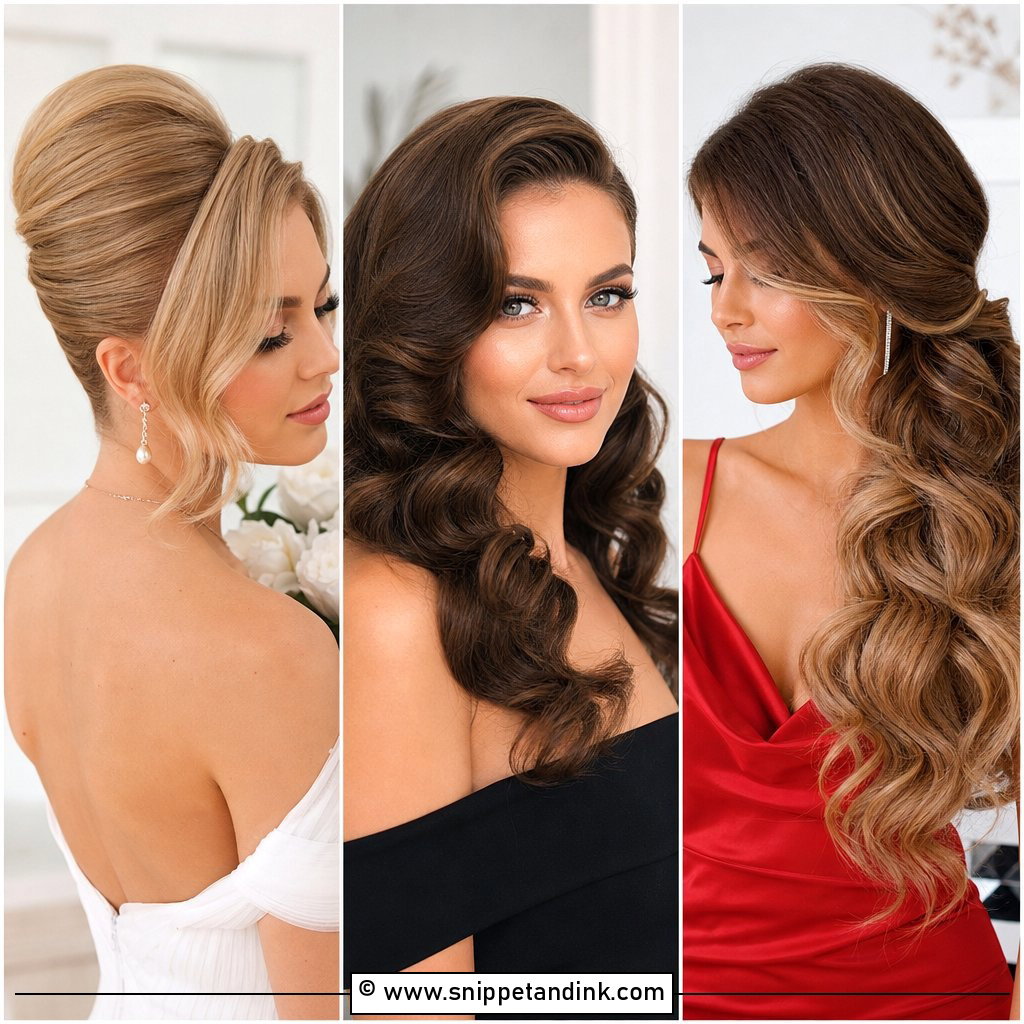
15. Bun For Long Hair Tutorial
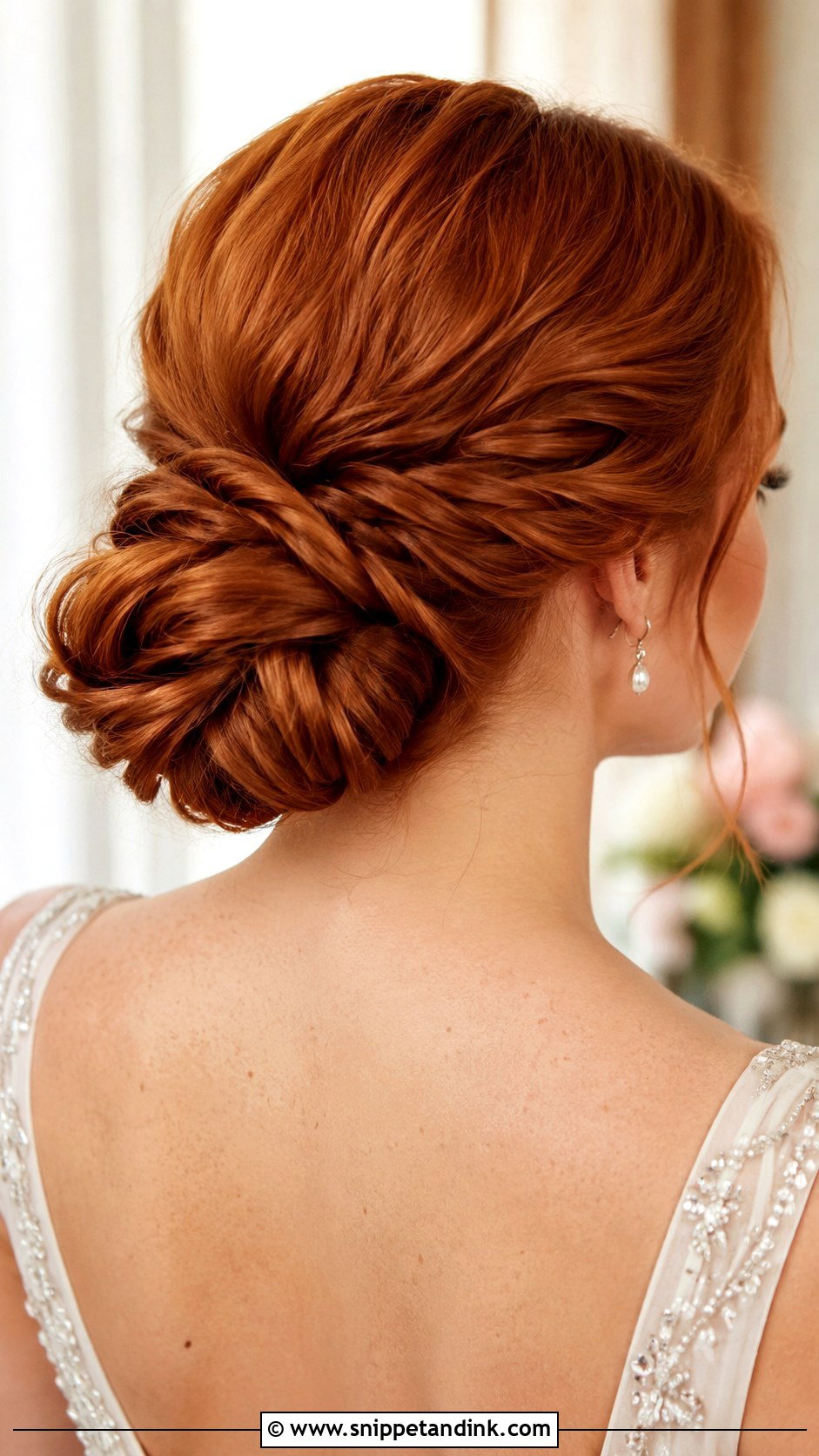
Long hair gives you room for a full bun but brings weight, and weight is what makes a bun sag or ache by evening. Curl or smooth the hair depending on the finish, make a low or mid ponytail, then split the length into two sections. Twist each loosely and wrap them around the base in opposite directions. Wrapping in opposite directions spreads the weight evenly so the bun doesn’t drag to one side. Use strong pins and a flexible spray. Very thick, waist-length hair may be better split into two smaller buns stacked together.
Three Rehearsals, Spaced Out
If you’re doing your own wedding hair, one practice isn’t enough, and ten is too many. Three spaced runs tend to work well.
- About six weeks out: try two or three buns from this list and pick a favourite. Wear it for an afternoon and notice where it pulls.
- Two weeks out: do the chosen bun with the veil, comb or pins you’ll actually wear. This is where most surprises show up, usually the veil sitting too high or the bun being too small to anchor it.
- A few days before: a full dress rehearsal with a timer running, so you know exactly how long it takes and can build that into the morning schedule.
If the bun misbehaves on the morning
A lopsided bun nearly always comes from a ponytail that was off-centre, so redo the base instead of adding pins to the bun. A bun that droops means the elastic is too loose; tighten that before anything else. A bump at the crown can be fixed by sliding a tail comb under it and gently lifting the hair back into place. And if your scalp starts aching, find the one pin pressing straight down and reangle it. Usually it’s just one.
Photograph Your Practice Bun From Behind
A bun changes the mood of the whole look. Sleek reads modern, a chignon classic, messy relaxed, and braids or twists add detail. Choose by your dress, veil, length, texture and how much softness you want at the face. If you’re practicing at home, take photos from the front, side and back every time. The back view is the one you can’t see in the mirror and the one guests stare at during the ceremony. Working with a stylist instead? Bring those photos and your veil to the trial.
You'll Like These Ideas:


Leave a Reply