
When a couple tells me they want one tier, the conversation shifts from structure to flavor, because there’s no stacking to plan around and every guest who gets a slice gets the good stuff. Intimate weddings, courthouse lunches, backyard receptions, elopements and bridal brunches all suit a beautiful cutting cake with a few other desserts beside it. Lately I’m asked for wider tiers, smooth buttercream, sculptural flowers, vintage piping, pressed petals and unusual shapes such as hearts, ovals and sheets. Below are twenty I’d happily make, with the flavor and finish notes I’d give you at a tasting.
Fillings That Can Sit Out, and the Ones That Can’t
With only one tier, the filling is half the cake, and it decides how long the cake can stay on display. This is the part of the tasting couples skip, and it’s the part that causes trouble on the day. As a rough guide from how these fillings behave in a normal room:
Comfortable at room temperature for a few hours
- Buttercreams, especially firmer American-style ones
- Chocolate ganache
- Cooked fruit jams and compotes
- Salted caramel made to a firm set
Needs to stay chilled until close to serving
- Cream cheese frosting and fillings
- Lemon or passion fruit curd
- Custard, pastry cream and mousse
- Fresh whipped cream and fresh cut fruit
If you love a chilled filling, you can still have it. Tell your baker how long the cake will be out, and ask whether they can keep it in the venue fridge until about an hour before the cutting. For a long outdoor display, I’d steer you toward a jam or ganache filling and save the curd for a cooler day.
1. Simple 1 Tier Wedding Cake
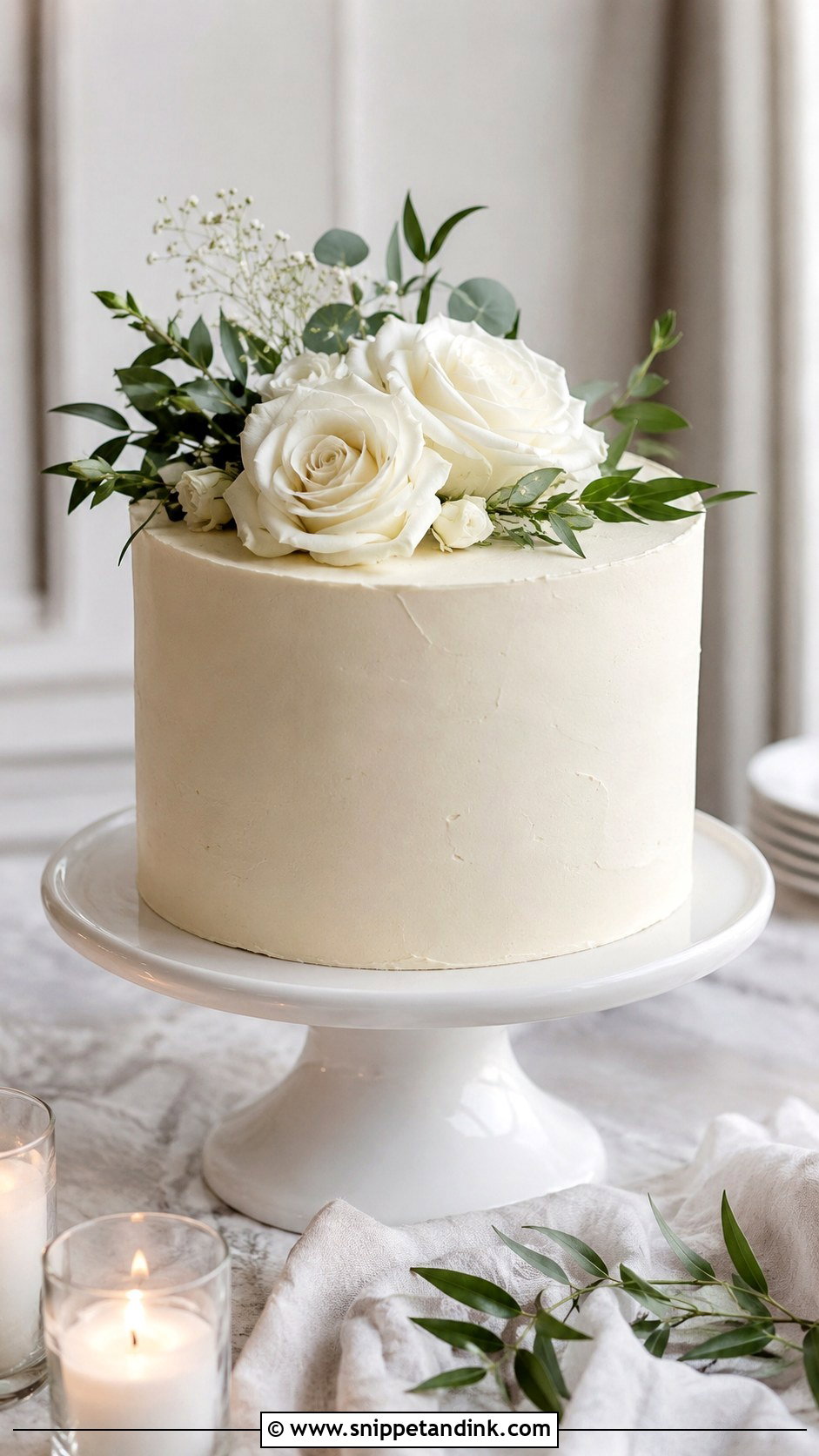
My starting point for a simple tier is usually vanilla or almond sponge in smooth ivory buttercream, because both flavors suit almost every guest and the pale crumb looks clean when cut. Ivory rather than stark white flatters a dress in photos. From there it needs only one personal touch: a gold topper, a pearl border, ribbon or a small cluster of roses. Set it on a tall stand with candles and linen, and it looks finished rather than bare.
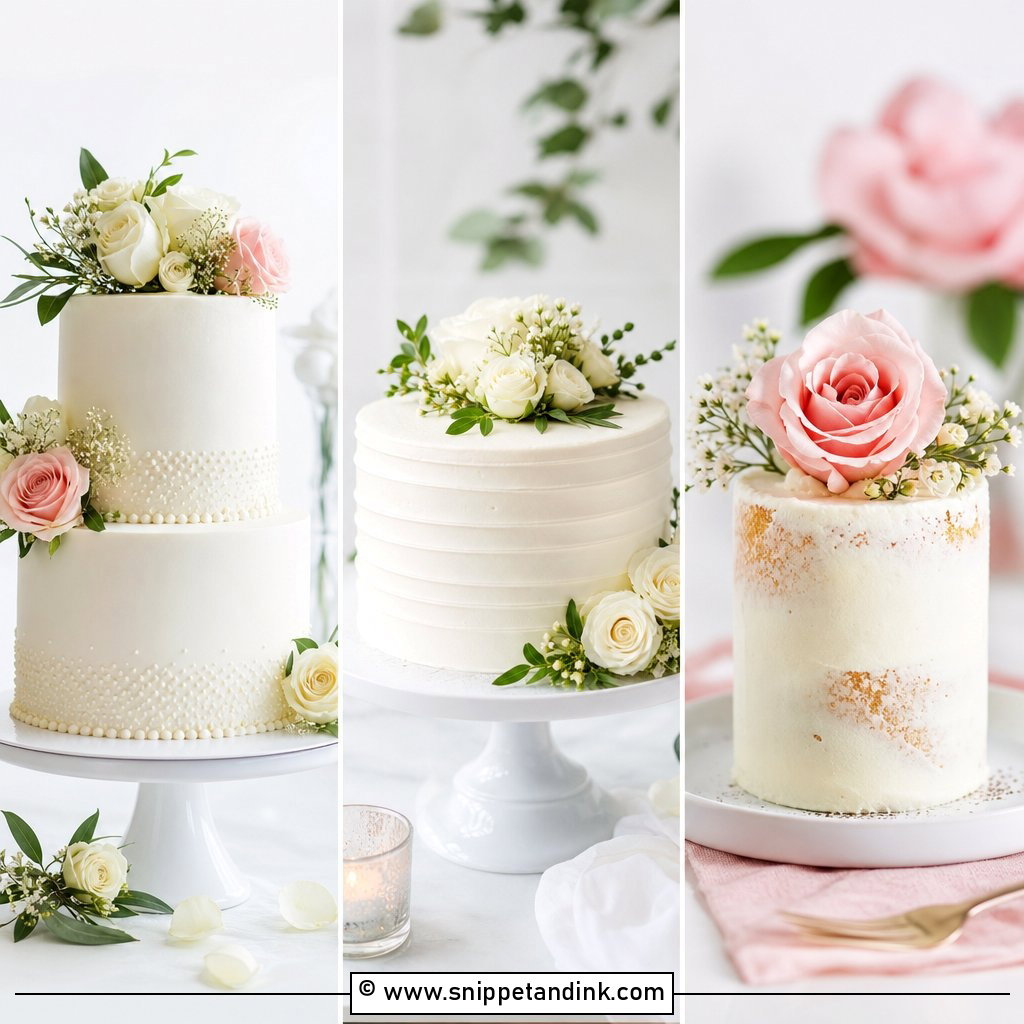
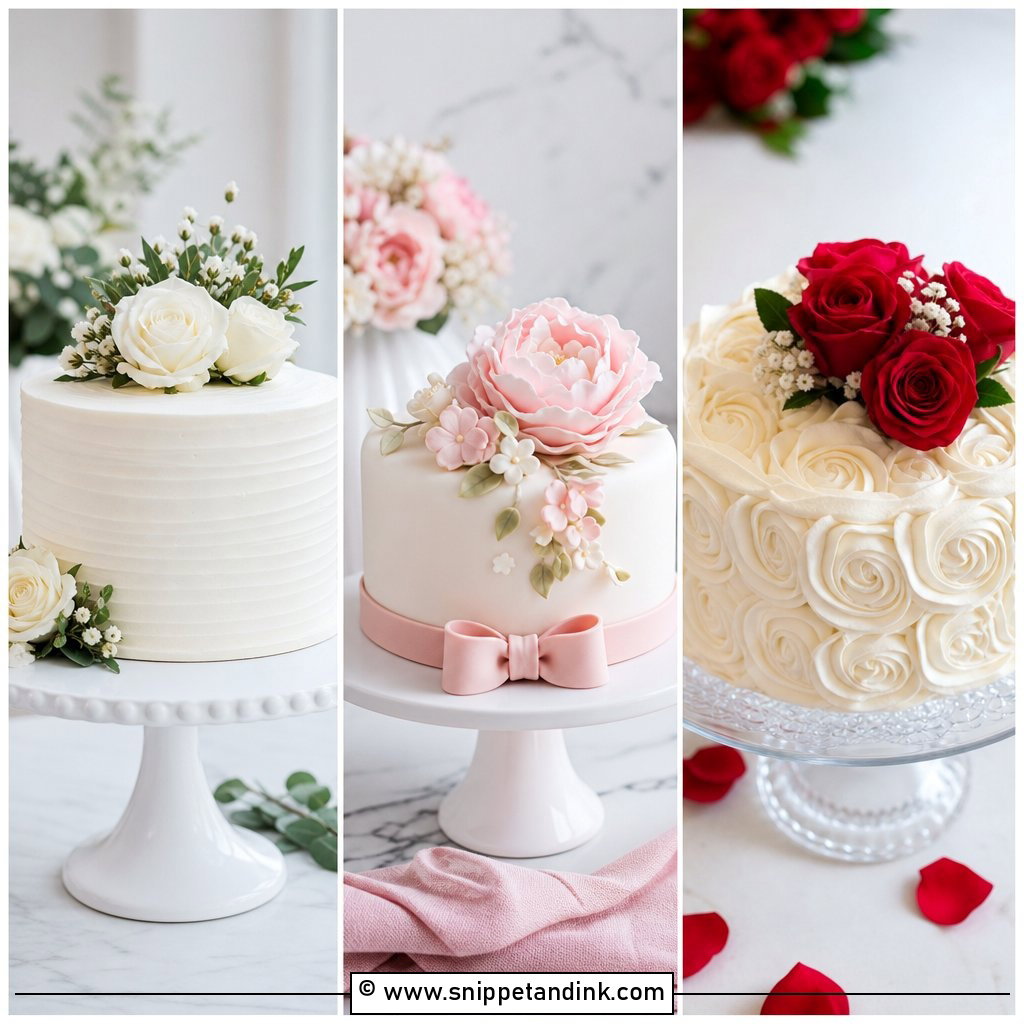
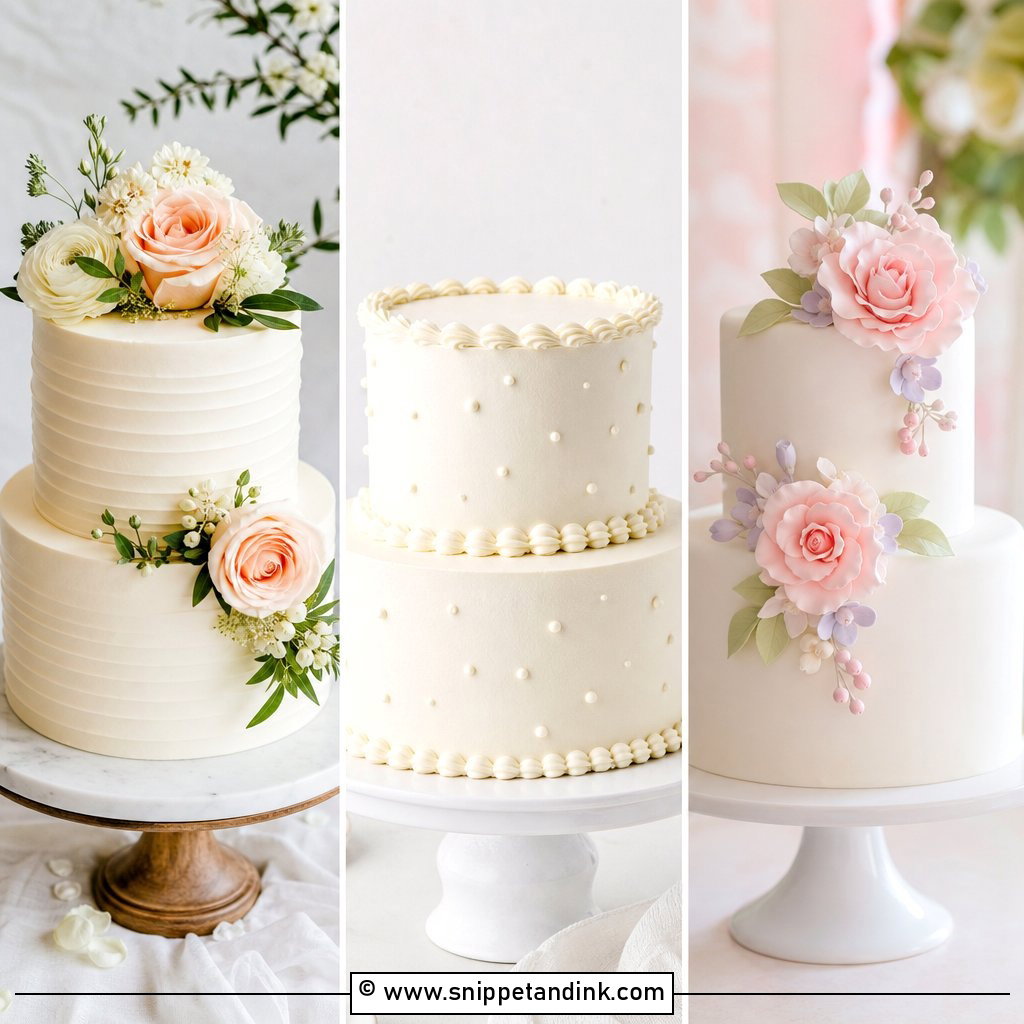
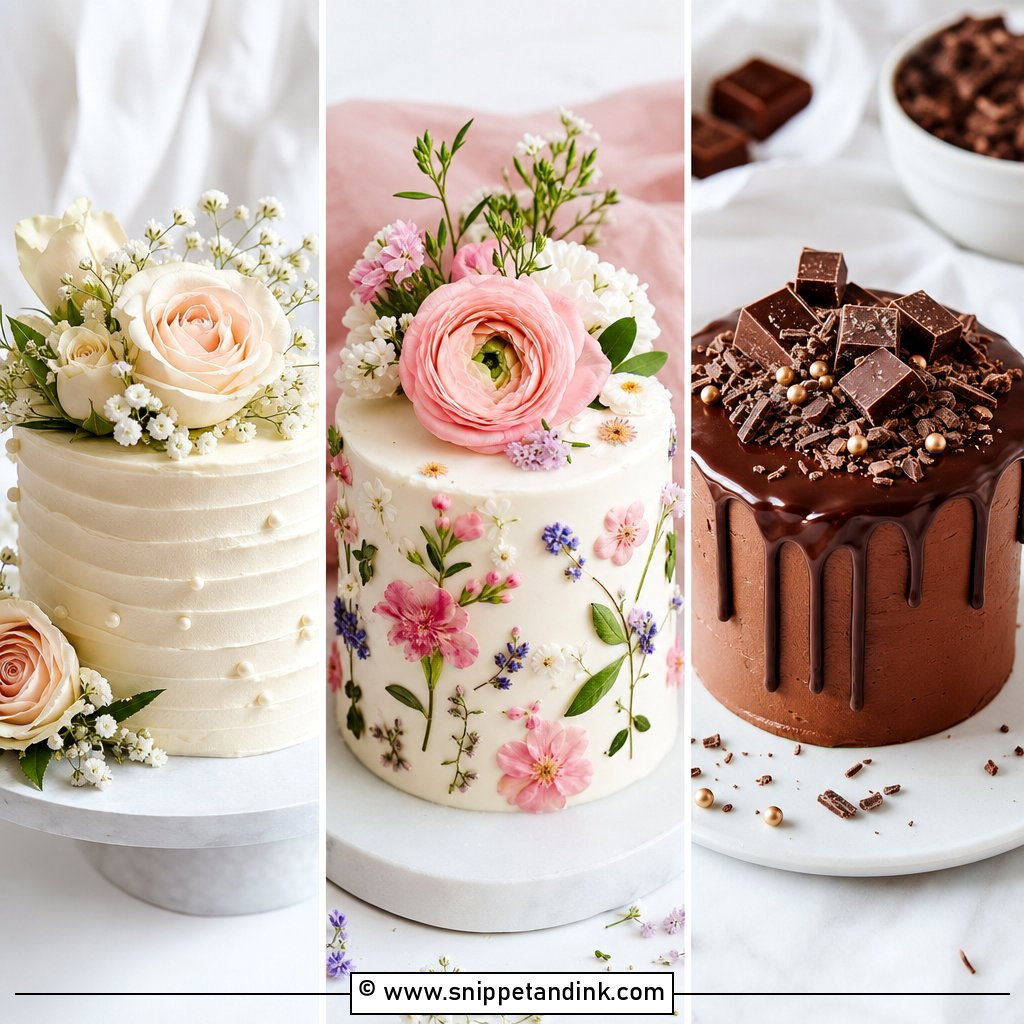
2. 1 Tier Wedding Cake With Flowers
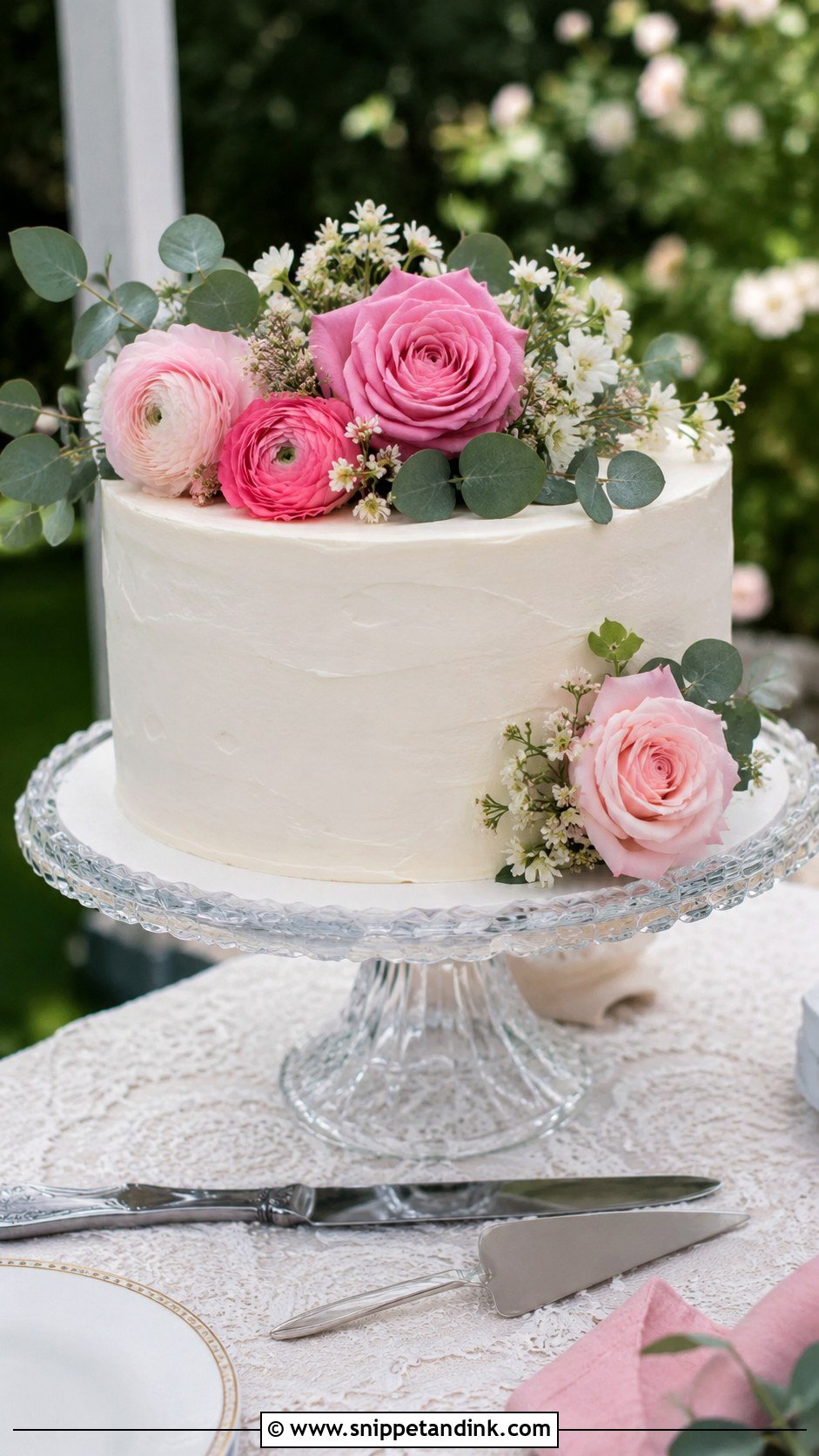
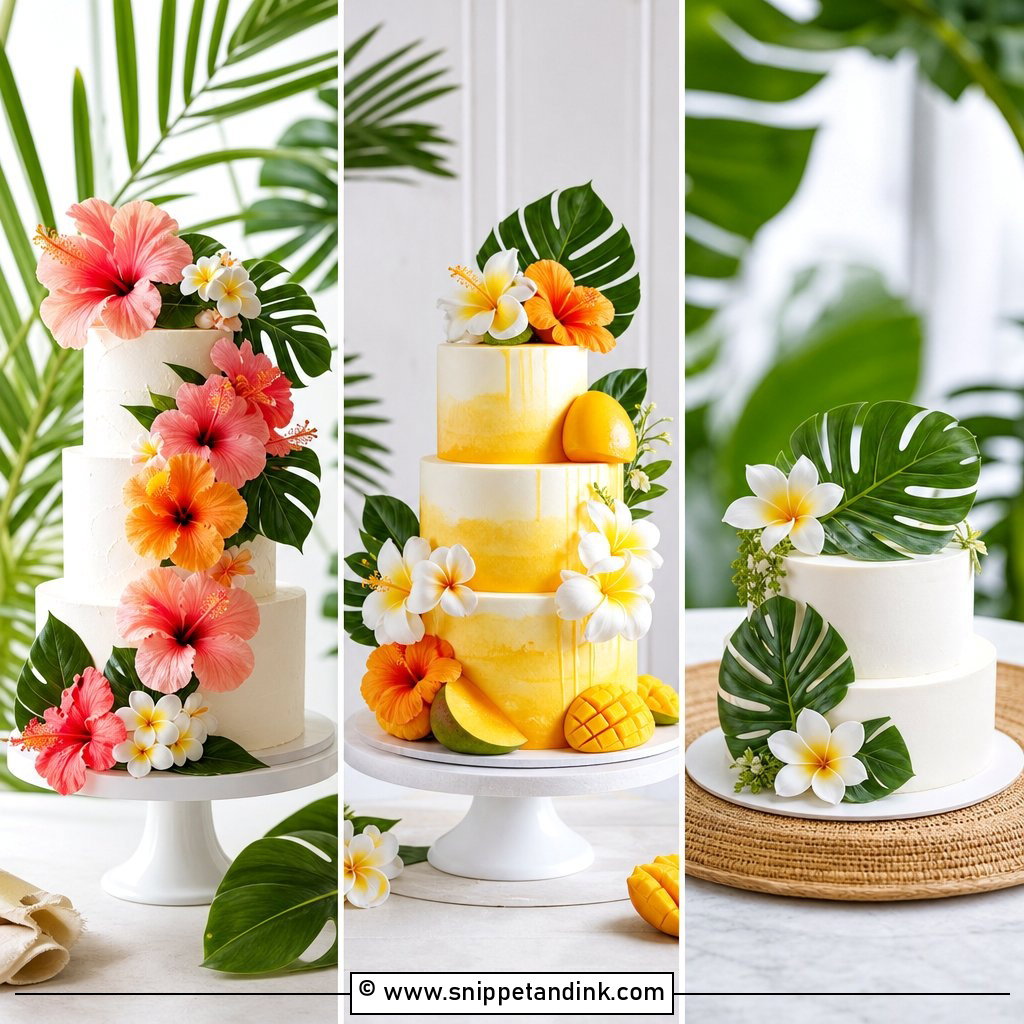
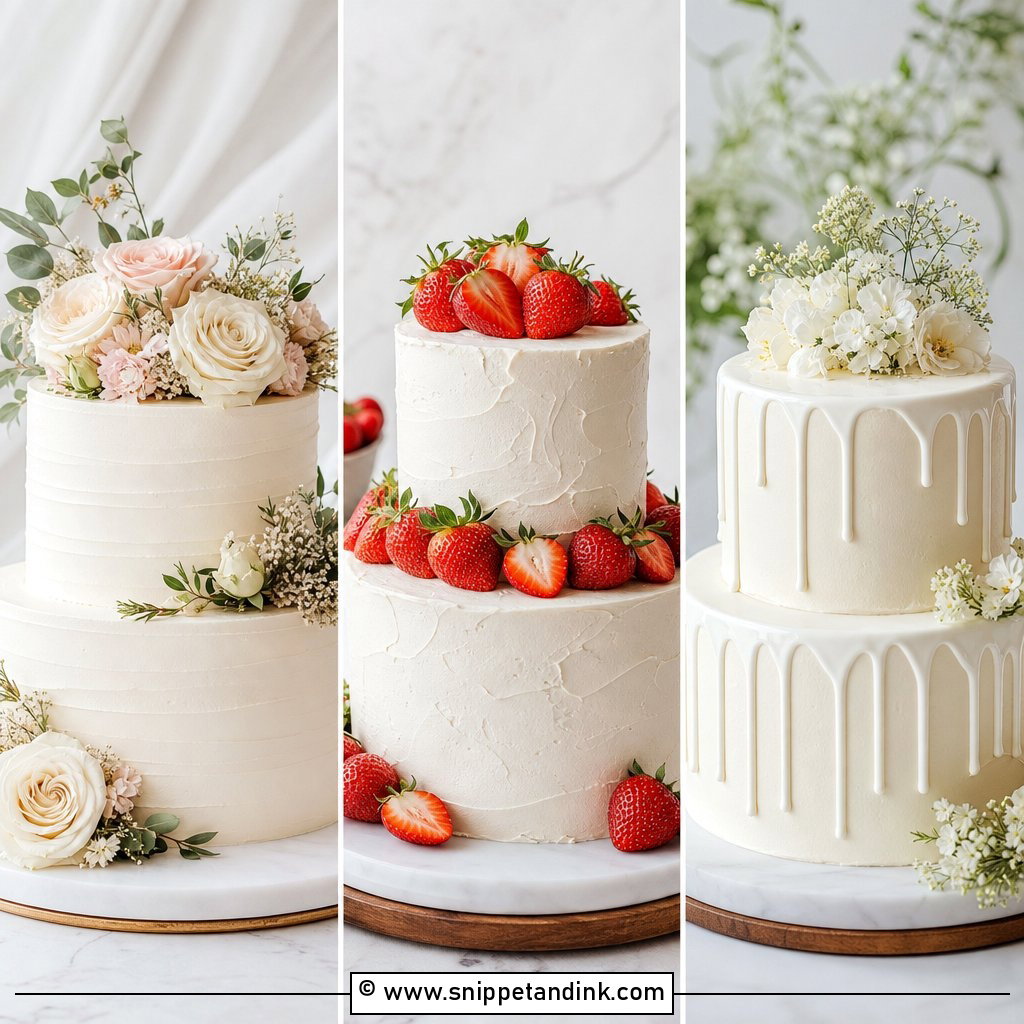
Flowers fill out a small cake faster than anything else I can add. I pull two or three varieties from the bouquet, roses, ranunculus, peonies or orchids, and decide between smooth frosting, which lets them pop, and soft texture, which makes the whole thing look looser. They can sit on top, trail down one side or ring the base. Your florist and baker must agree on safe varieties and wrapped stems ahead of time; flowers pushed straight into sponge are a hygiene problem, not a styling one.
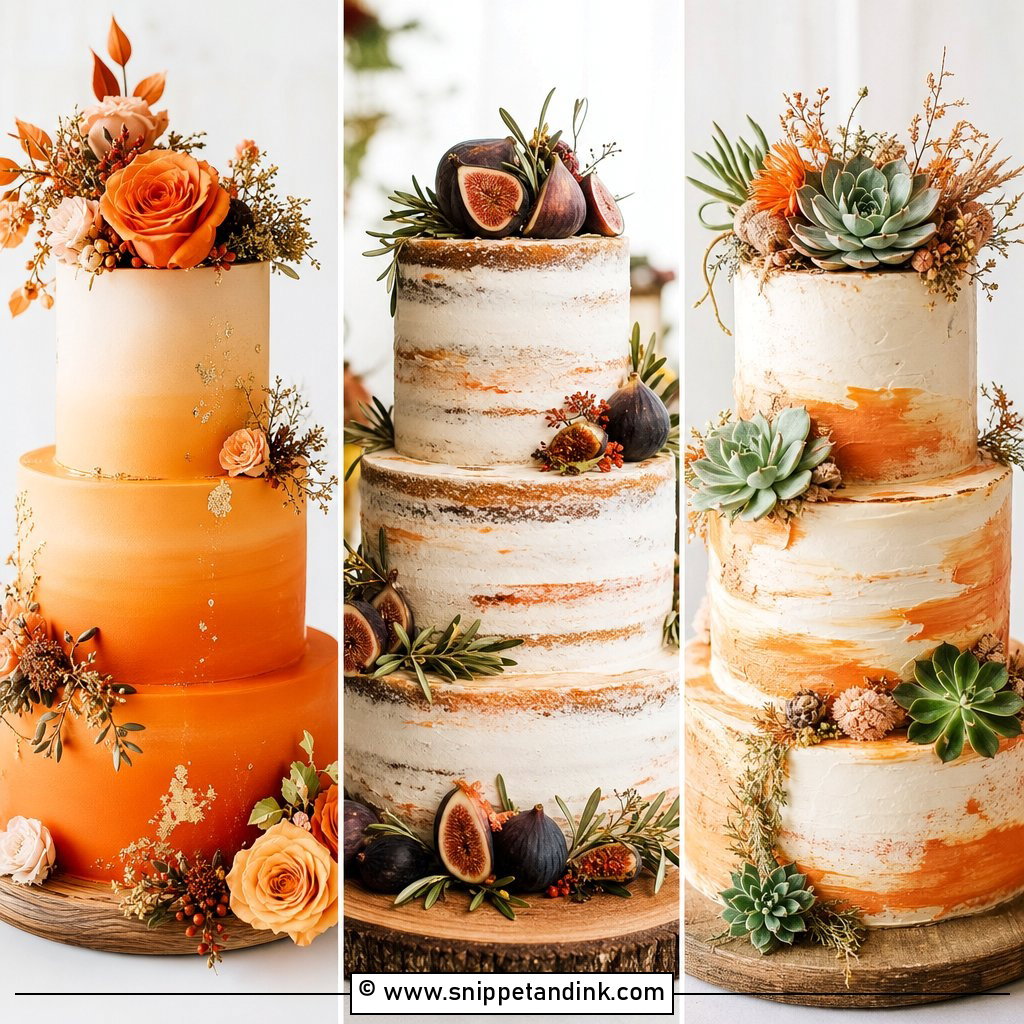
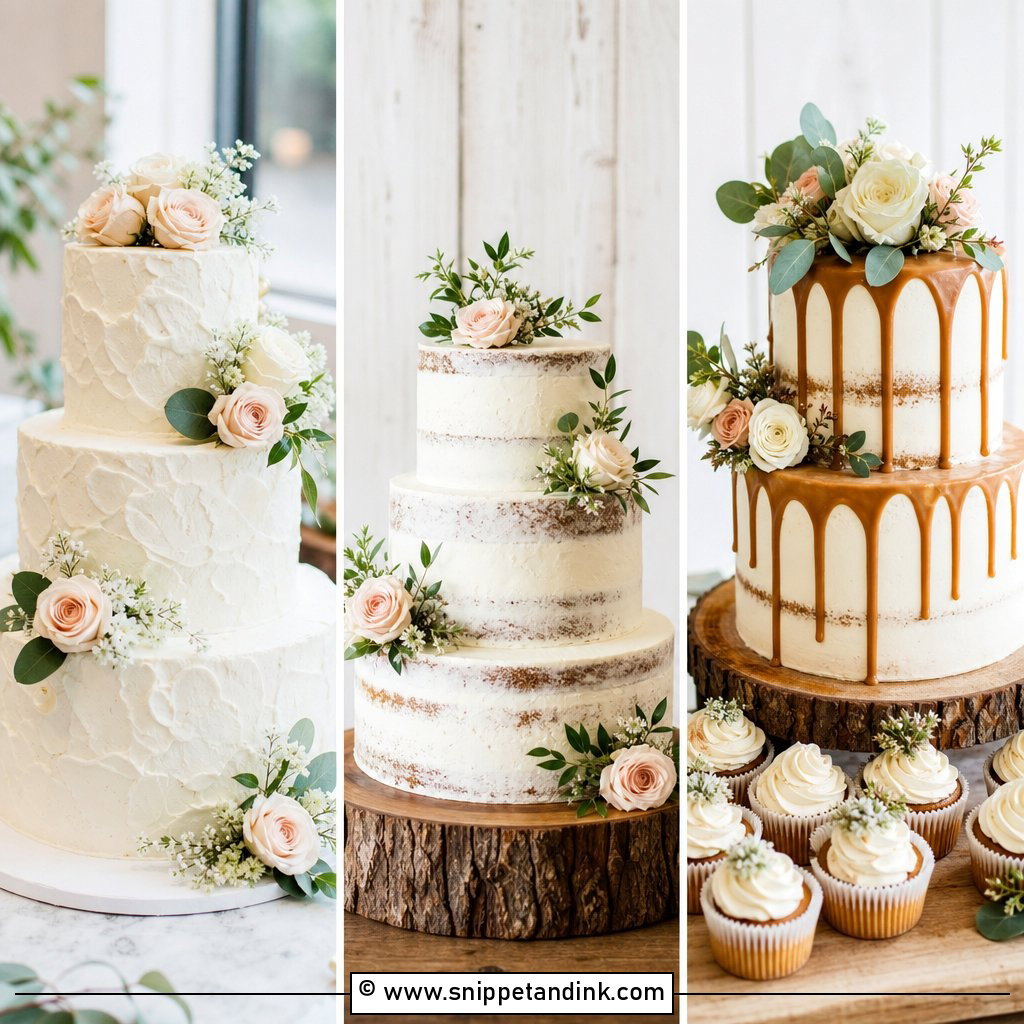
3. Rustic 1 Tier Wedding Cake
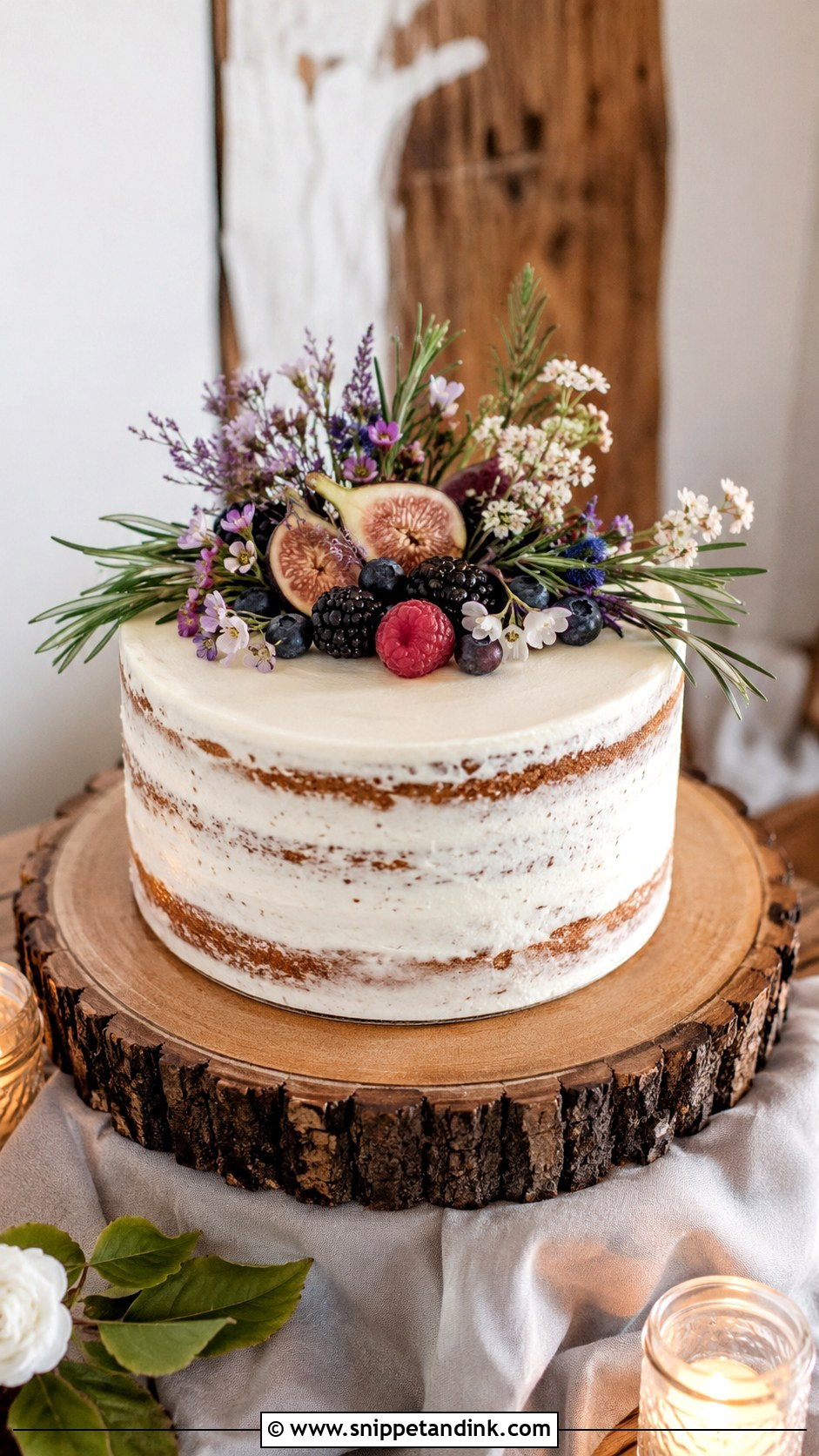
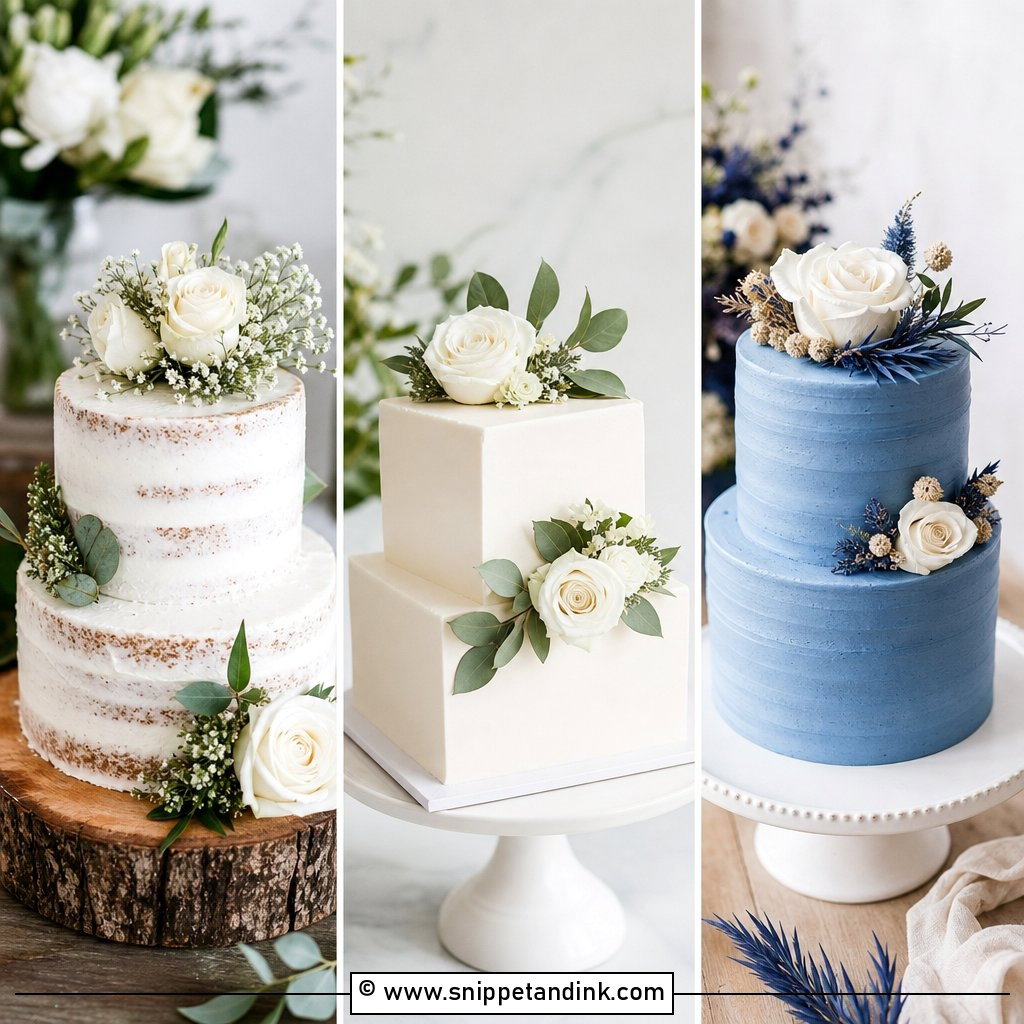
Rustic, for me, means semi naked buttercream scraped thin enough to show the layers, with berries, figs, herbs or a few wildflowers on top. It suits a barn, a backyard or a fall reception, especially on a wood slice stand with linen and candlelight. The flavors that fit the look are the warmer ones: vanilla bean, carrot, spice, honey or lemon with elderflower. Because the sponge is partly exposed, I brush it with syrup so it doesn’t dry out before the cutting.
4. Modern 1 Tier Wedding Cake
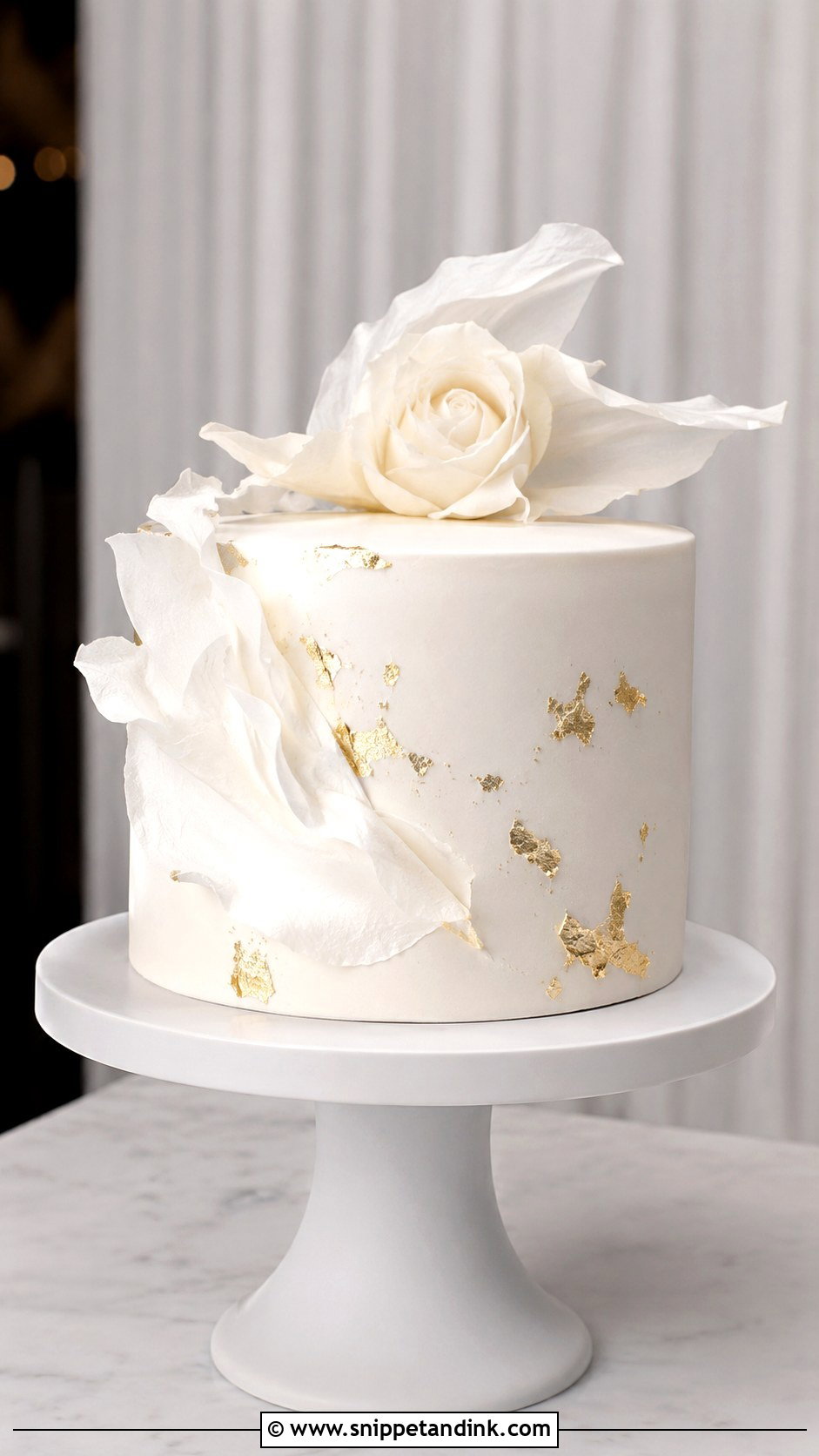
Modern single tiers depend on shape and edge rather than decoration. That could be a tall round with razor-sharp buttercream corners, an oval cake with sculptural flowers, or a wide tier in smooth fondant. White, ivory, taupe, blush, sage and soft grey all keep it calm. I pick one detail and stop: wafer paper sails, dried flowers, gold leaf or a single arched topper. Wafer paper is worth a warning, though, because it curls and wilts in humidity, so it’s a poor choice for an outdoor summer table.
5. 1 Tier Wedding Cake With Buttercream
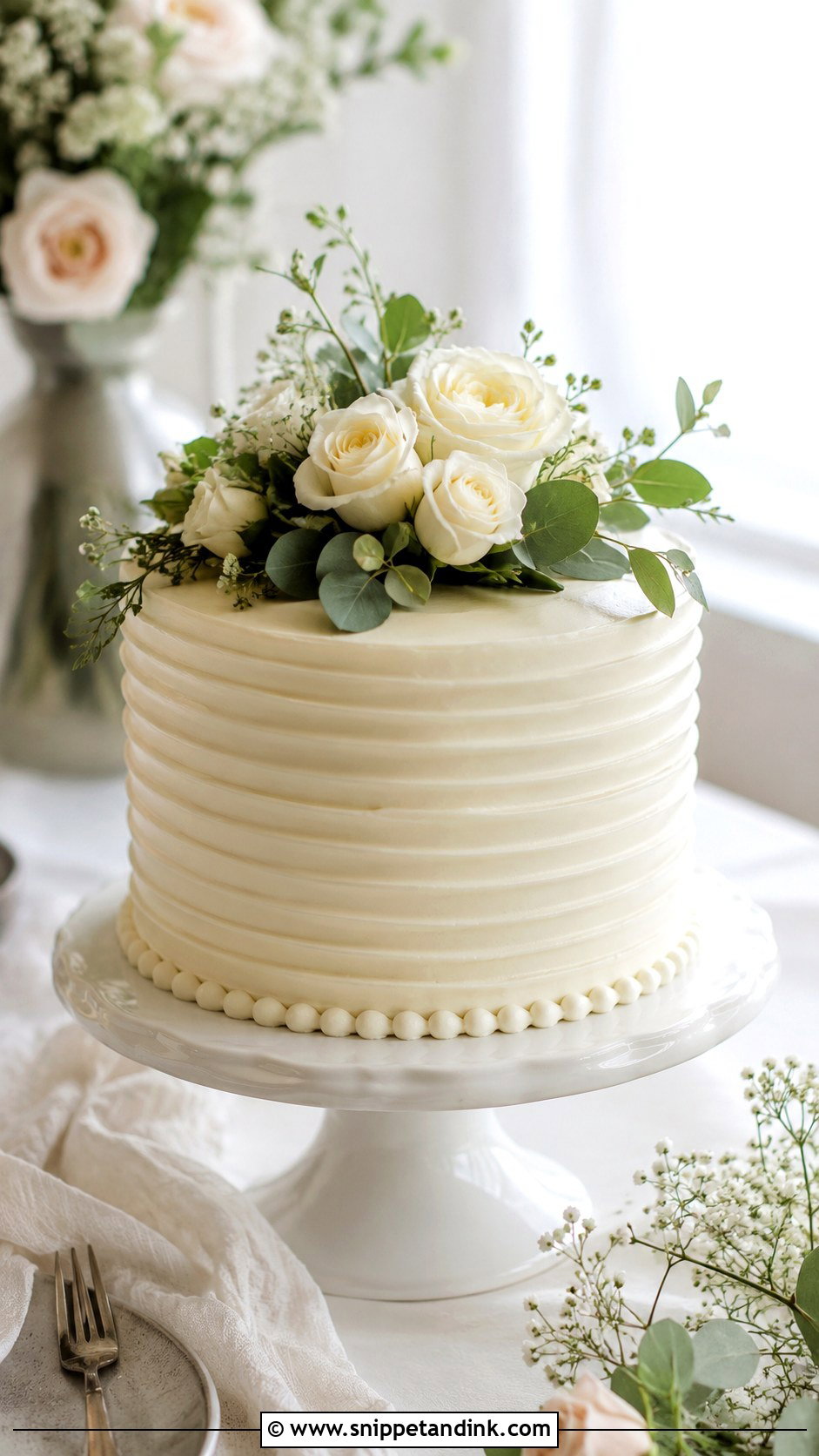
Buttercream gives the most choice of any finish, from glass-smooth to ruffled, combed or spatula-marked. It also carries flavor better than fondant, so it’s my pick for vanilla, chocolate, lemon, almond and red velvet sponges. Swiss meringue buttercream is silkier and less sweet; American buttercream is sweeter but stands firmer in heat. Add a pearl border, a few flowers, fruit or a simple topper. It reads romantic and approachable rather than formal.
6. 1 Tier Wedding Cake With Fondant
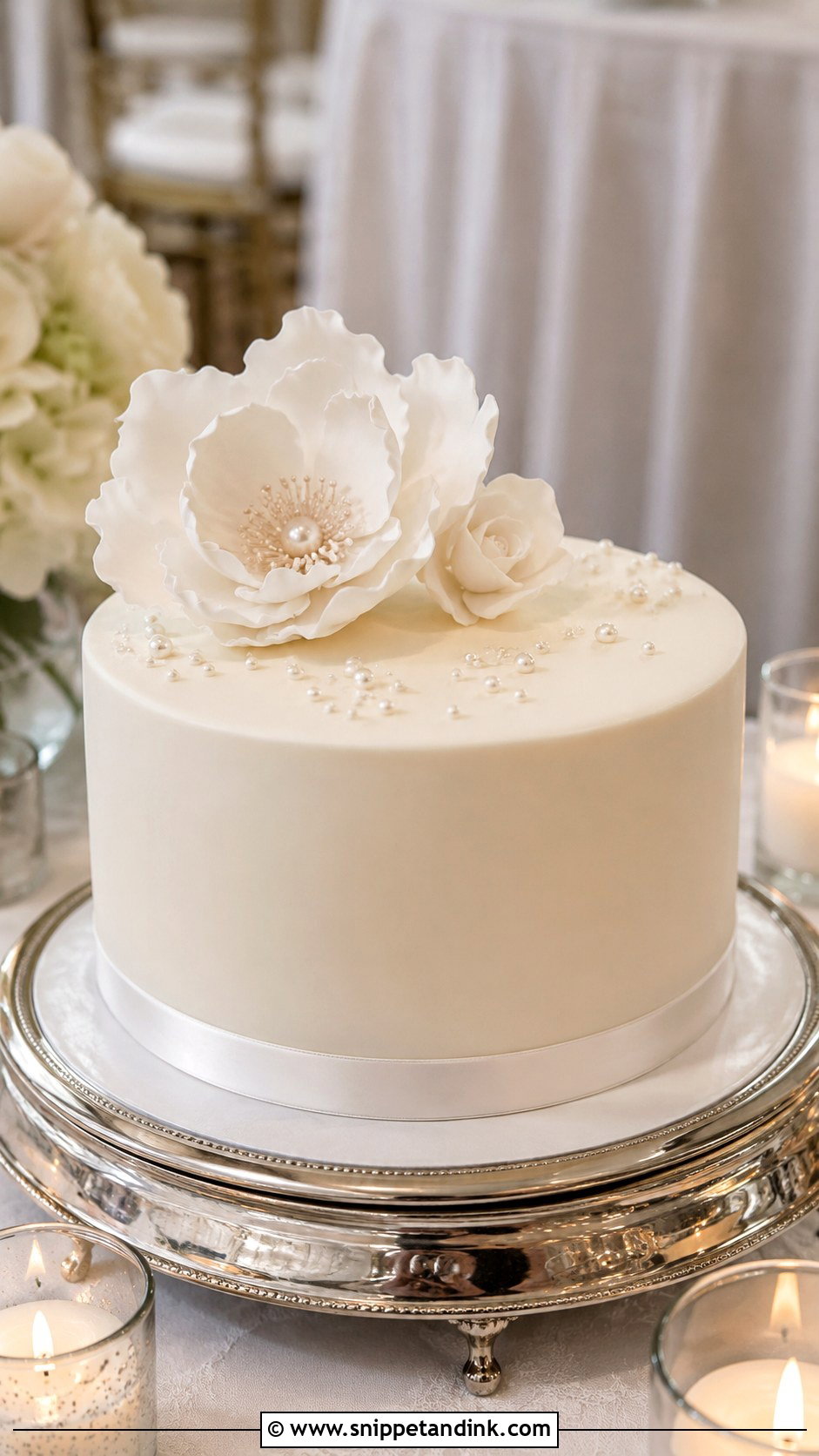
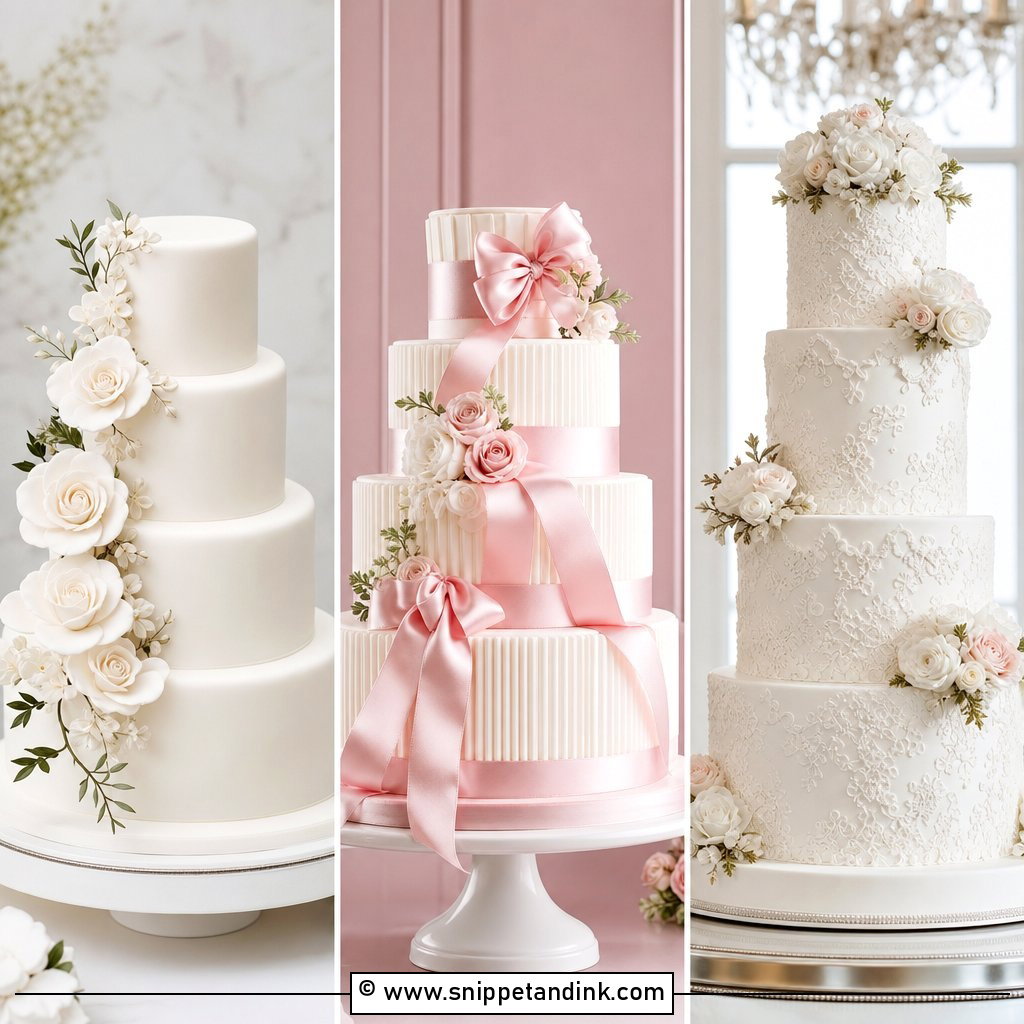
Fondant is what I reach for when the cake needs a flawless, formal surface or details buttercream can’t hold: embossed lace, crisp pleats, bows and clean modern panels. On one tier every one of those details is visible at once, so I keep to one technique per cake. Ivory reads classic; pale blush, champagne or soft blue adds a whisper of color. A layer of good buttercream underneath matters, because a fair number of guests will peel the fondant off and eat what’s beneath it.
7. 1 Tier Wedding Cake With Fresh Fruit
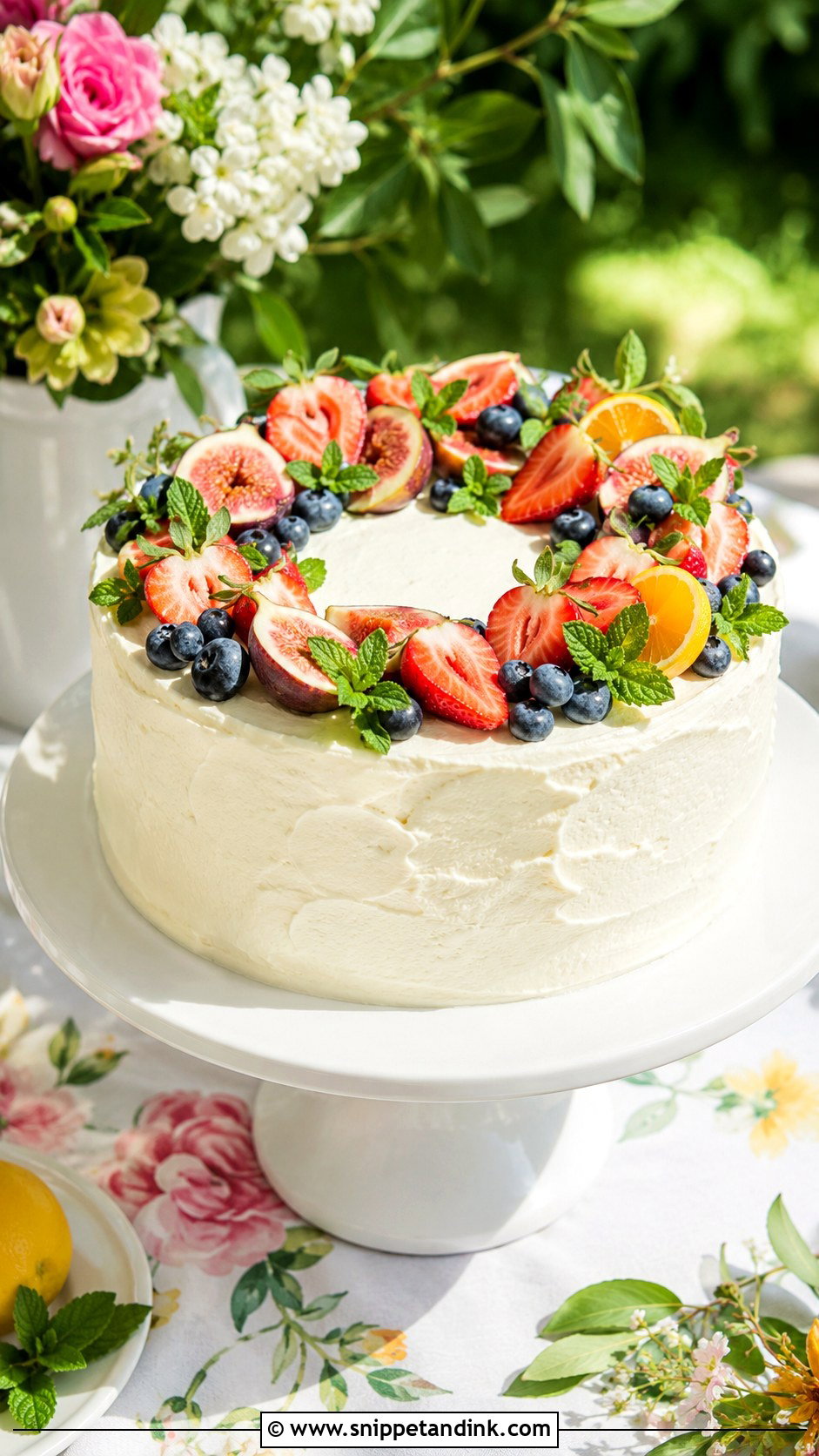
Fruit-topped cakes are at their best in spring and summer, when berries, figs, cherries and citrus actually taste of something. They need lighter frostings, whipped cream, cream cheese or a light vanilla buttercream, and every one of those has to be kept chilled until shortly before serving. I arrange the fruit as a crown on top, a ring at the base or a loose diagonal cascade, and add anything cut at the very last minute so it doesn’t bleed. Lemon, almond, coconut and berry sponges pair naturally with it.
8. 1 Tier Wedding Cake With Gold
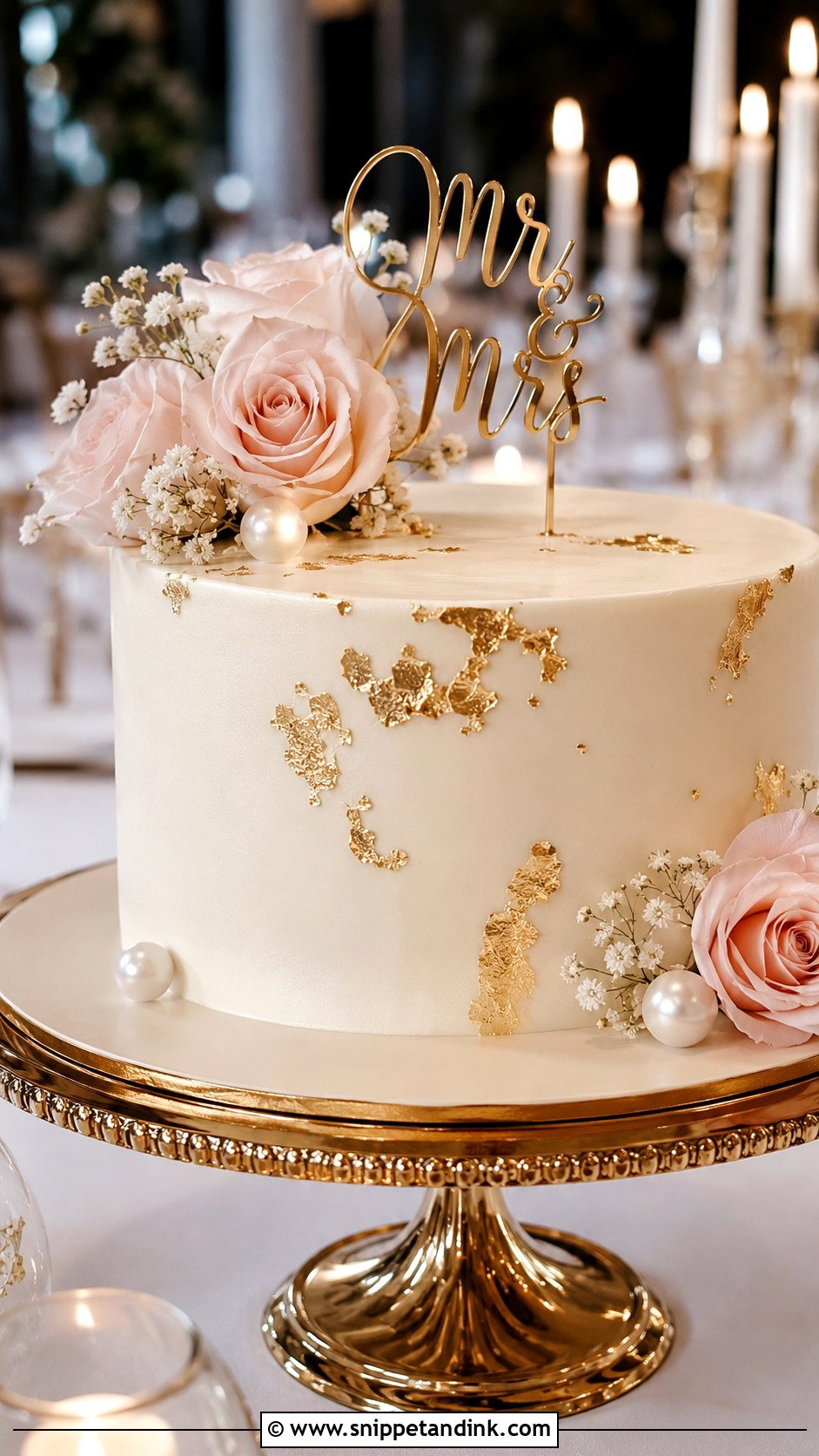
Gold works on one tier because a small surface makes even a little metallic look deliberate. I use leaf, painted edges, a fine splatter or a slim topper, over ivory buttercream or white fondant. Soft pairings are blush flowers, cream roses and champagne ribbon; bold ones are black, emerald, navy or burgundy. The gold needs to be edible-grade, and lustre dusts labelled non-toxic or for decoration only should be kept off anything guests will eat.
9. Heart 1 Tier Wedding Cake
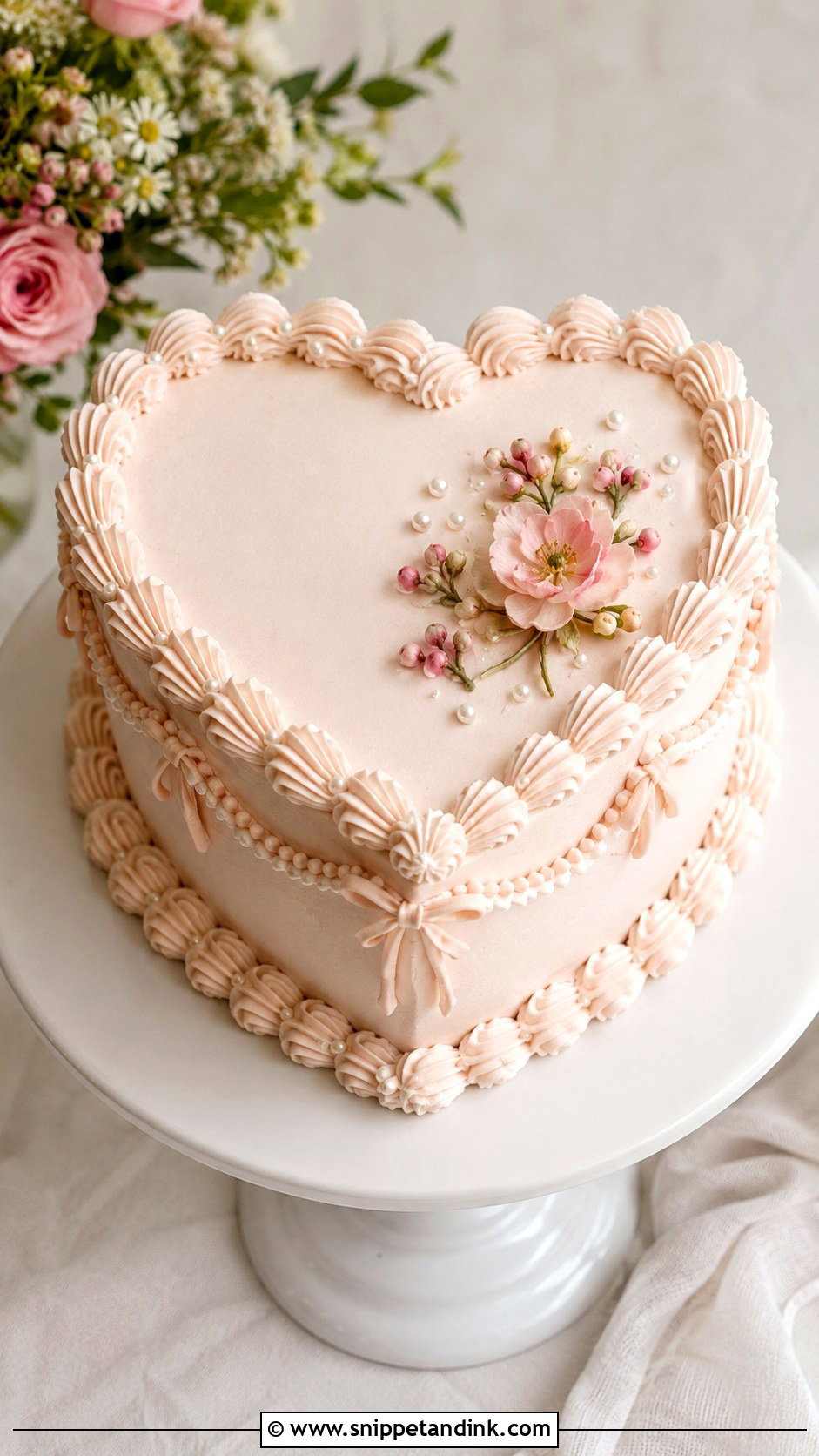
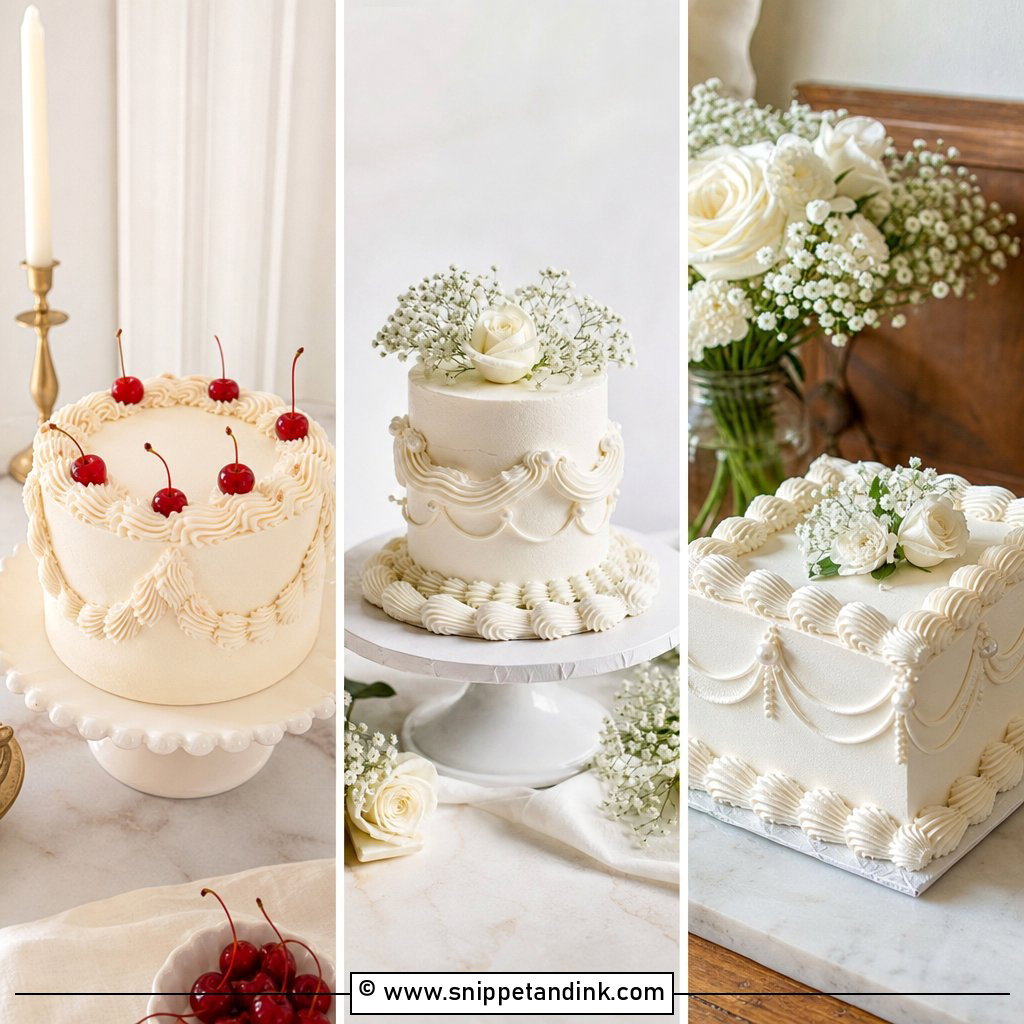
Heart-shaped cakes came back with the vintage piping trend, and the two belong together because shell borders follow the curves so neatly. White, ivory, blush or one pastel keeps it bridal, finished with shells, small pearls, piped bows, cherries or a few flowers. They suit courthouse weddings, elopements and small receptions well. I’d leave off the piped writing, or keep it to initials, so it doesn’t drift toward a birthday cake.
10. Vintage 1 Tier Wedding Cake
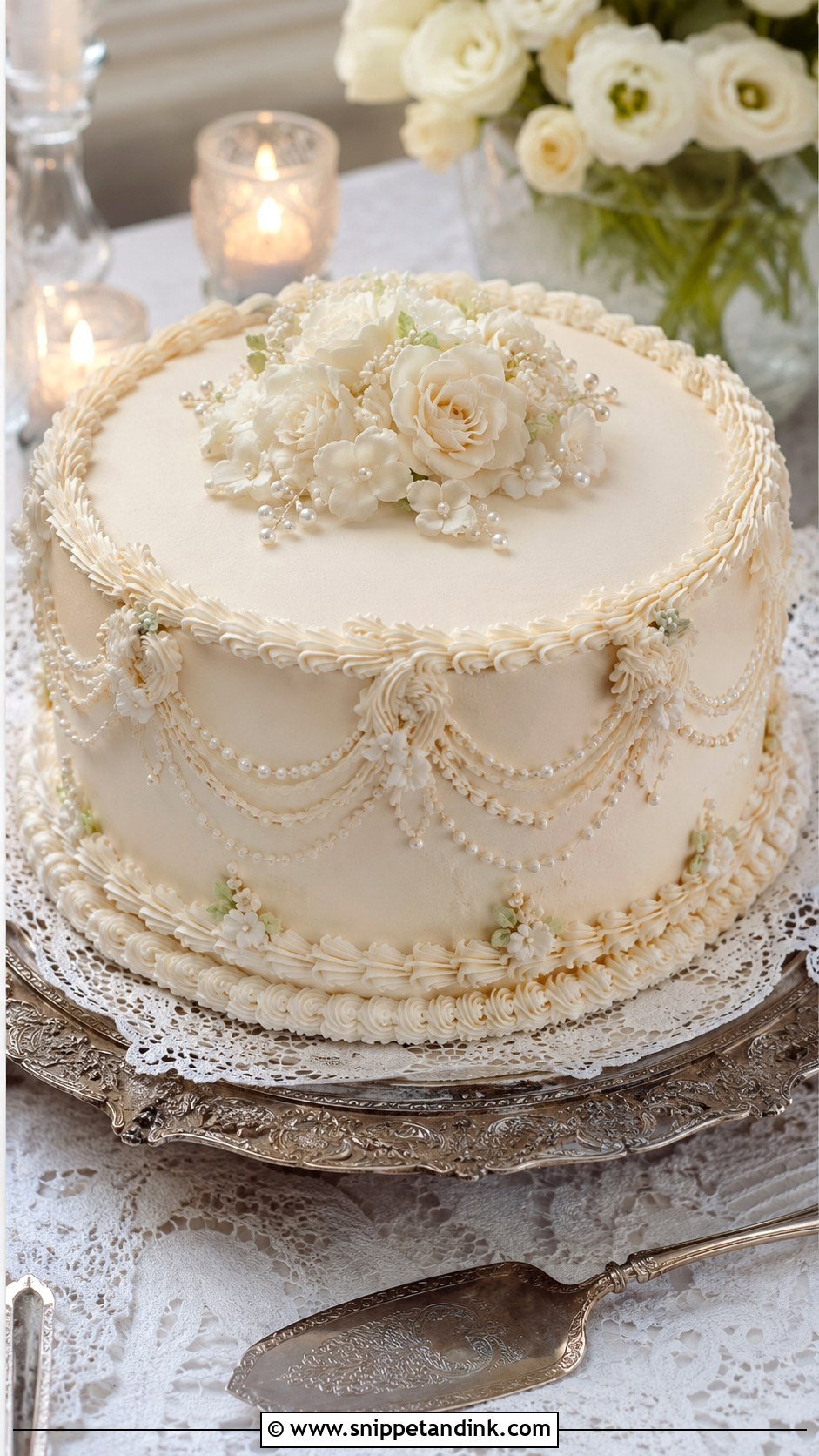
Vintage piping covers the whole tier in lambeth-style overpiping, shells, swags, rosettes and little dots. It’s slow work, built up in layers, and it needs a stiff buttercream that won’t slump in a warm room, so plan to keep this cake cool until it’s served. White on white is the classic version; blush, blue, lavender or pale yellow give it a sweeter retro tone. Cherries or a small topper add a playful note, and antique plates and lace linens suit it.
11. Minimalist 1 Tier Wedding Cake
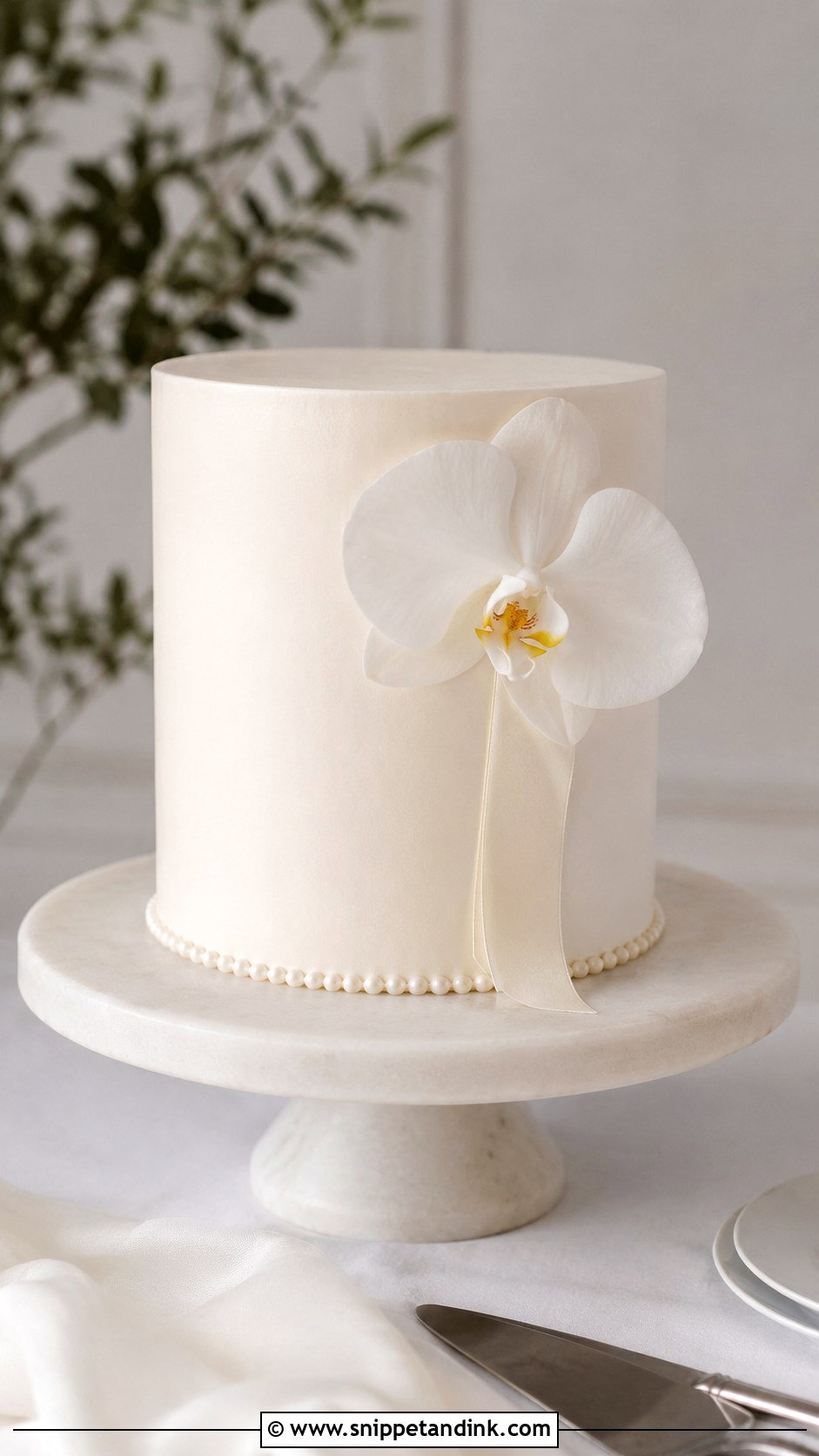
Minimalism leaves the baker nowhere to hide, so the finish has to be flawless. I’ll pair a smooth white or ivory tier with exactly one thing: a single flower stem, one ribbon, or one sculptural sugar piece. Tall and narrow gives height; wide and low is the more current shape. Inside, clean flavors like vanilla bean, almond, lemon or coconut suit the restraint. It belongs in a chapel, a small restaurant or on a beach.
12. 1 Tier Wedding Cake With Pearls
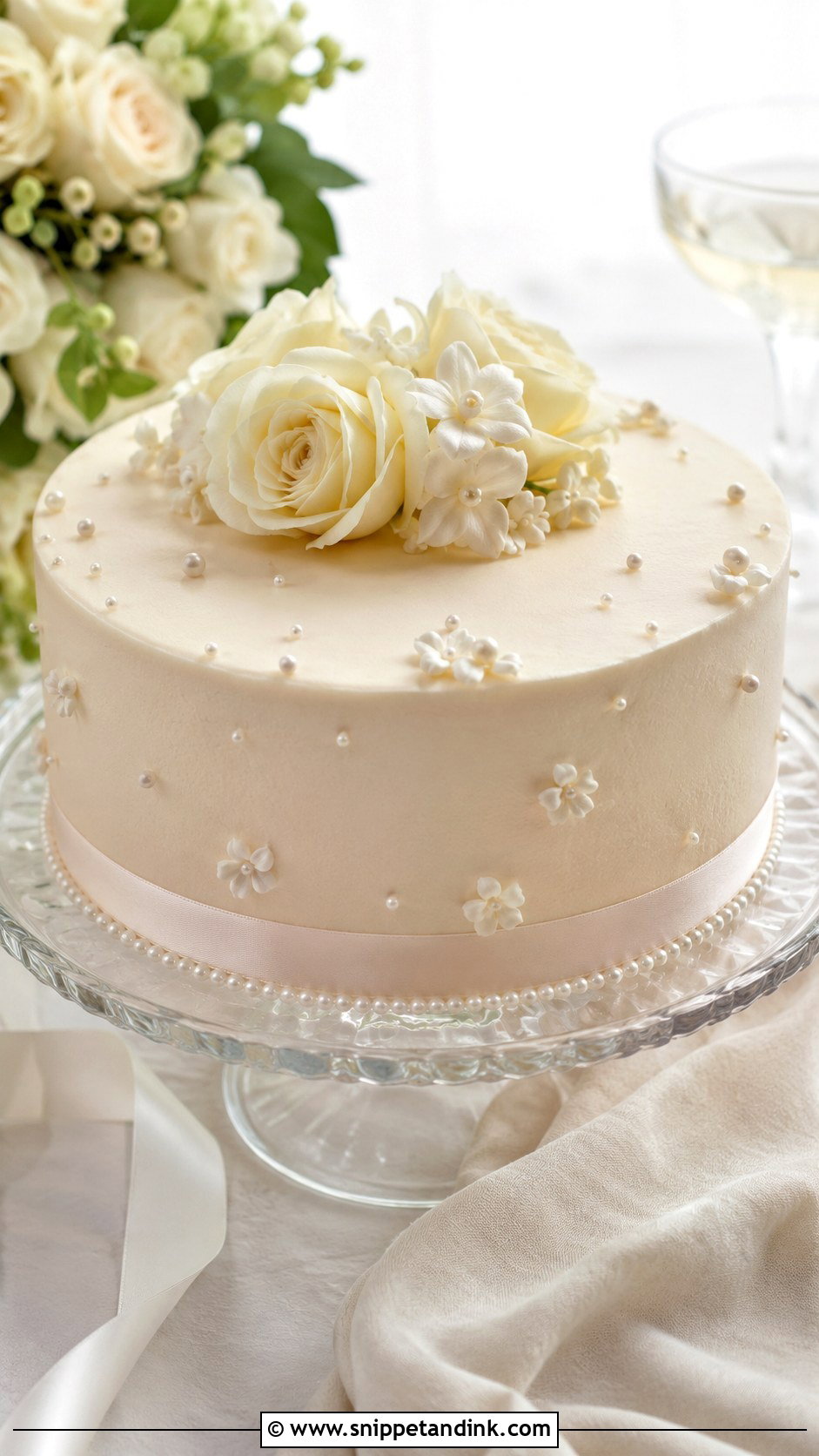
Pearls are an easy win on a single tier. Edible pearls can be scattered across smooth buttercream, laid in neat rows or set as a border at the base, over ivory, white, blush, champagne or pale blue. Hard sugar pearls can be tough on teeth, so I use soft sugar paste pearls on the parts people actually bite into and keep the crunchy dragees for the base border. Small sugar flowers or satin ribbon complete it.
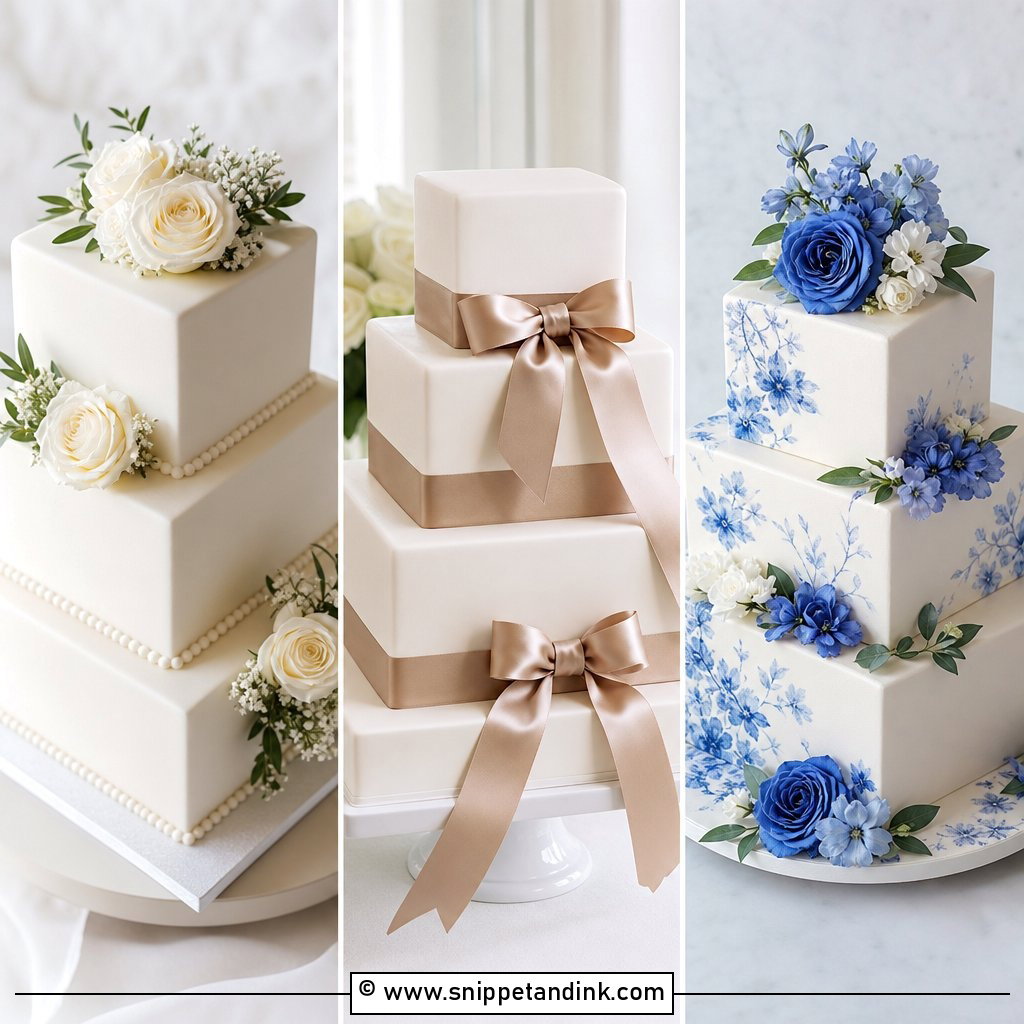
13. Square 1 Tier Wedding Cake
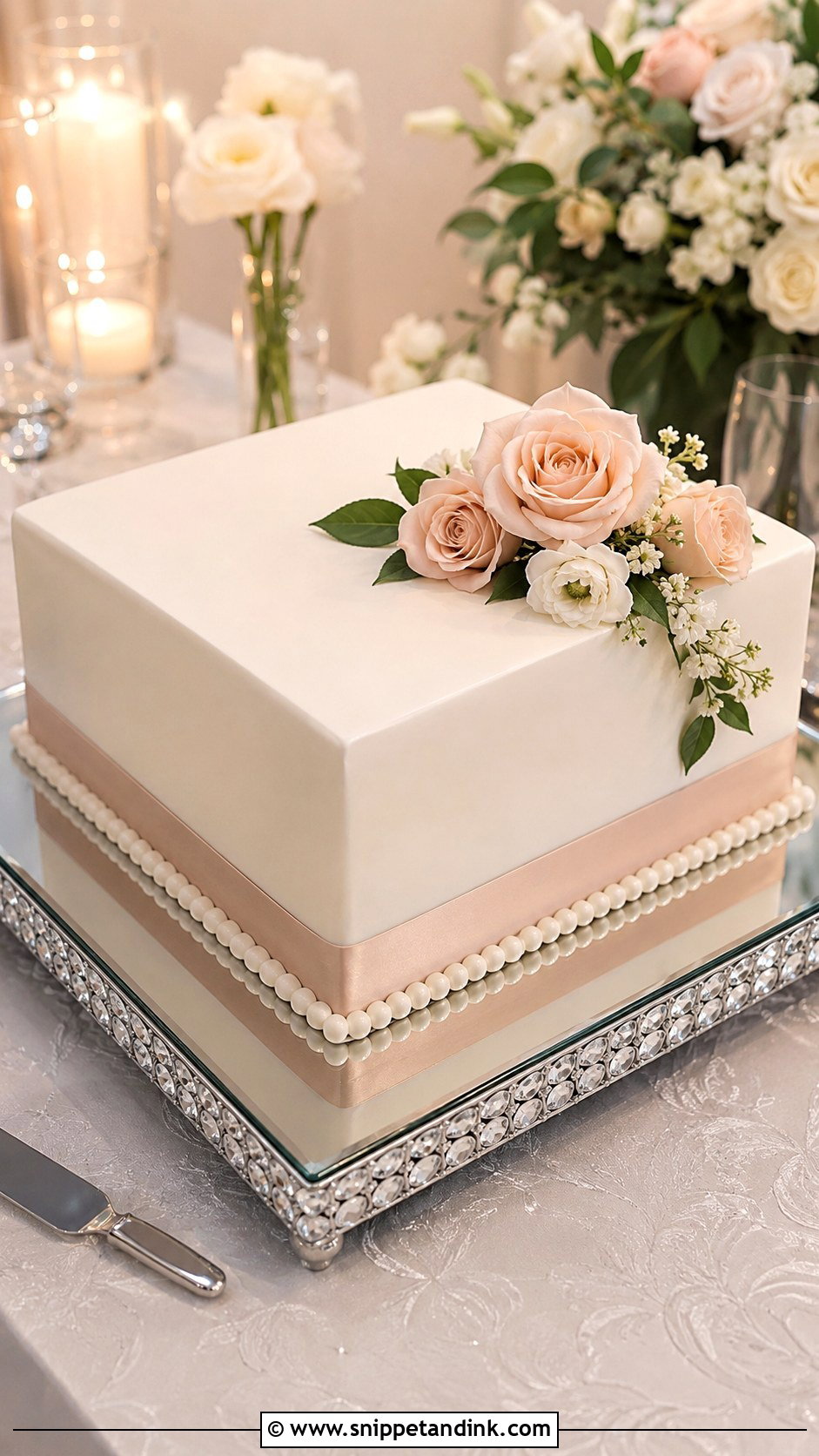
A square tier reads more structured than a round and gives clear surfaces for crisp fondant, ribbon bands or painted detail, plus a natural corner for a floral spray. It can go classic in white, bold in black and gold, or soft in blush with garden flowers. Squares are trickier to frost cleanly at the corners, so look at a baker’s previous square work before booking. A low ceramic stand or mirrored tray shows off the edges.
14. Oval 1 Tier Wedding Cake
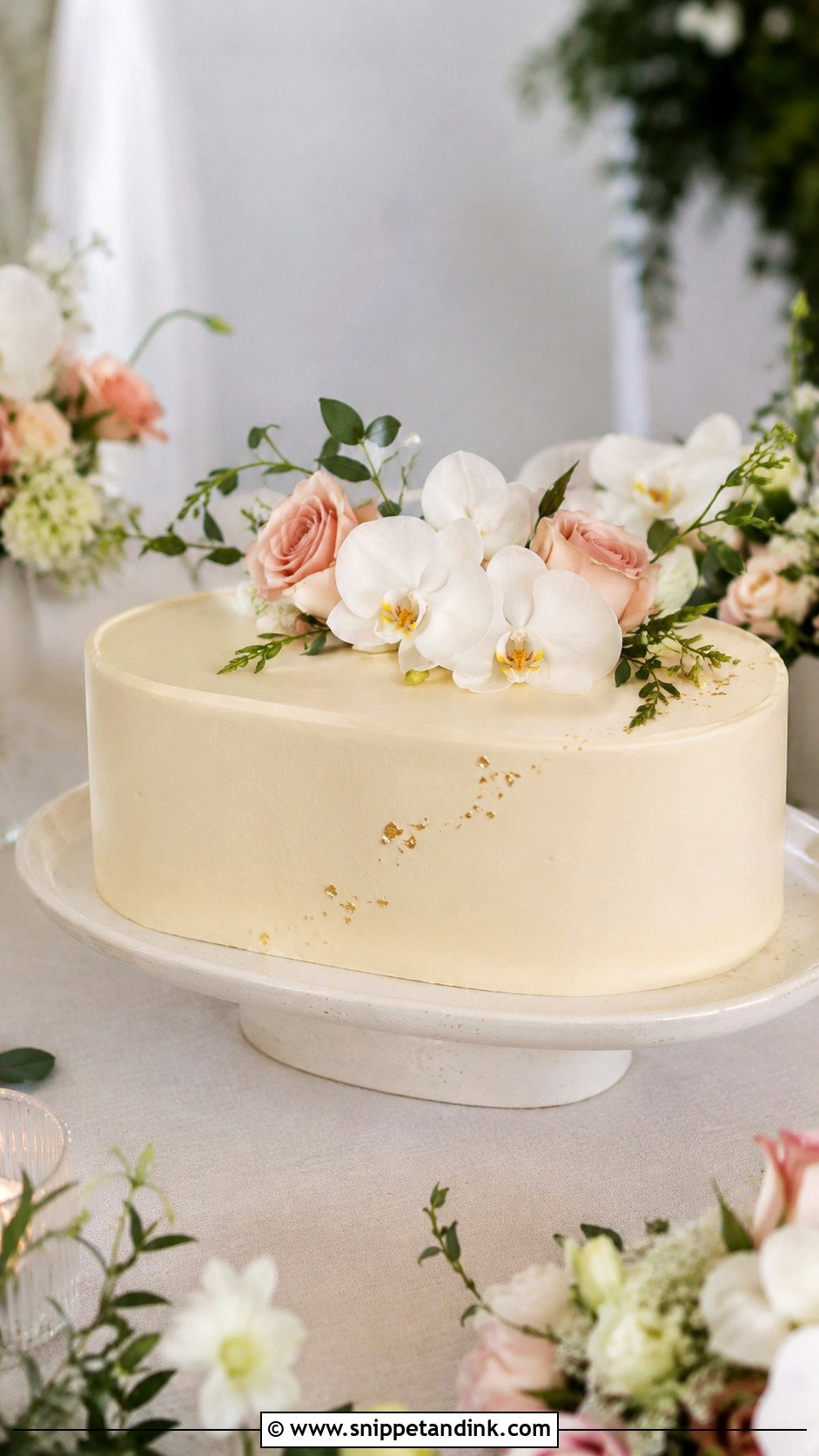
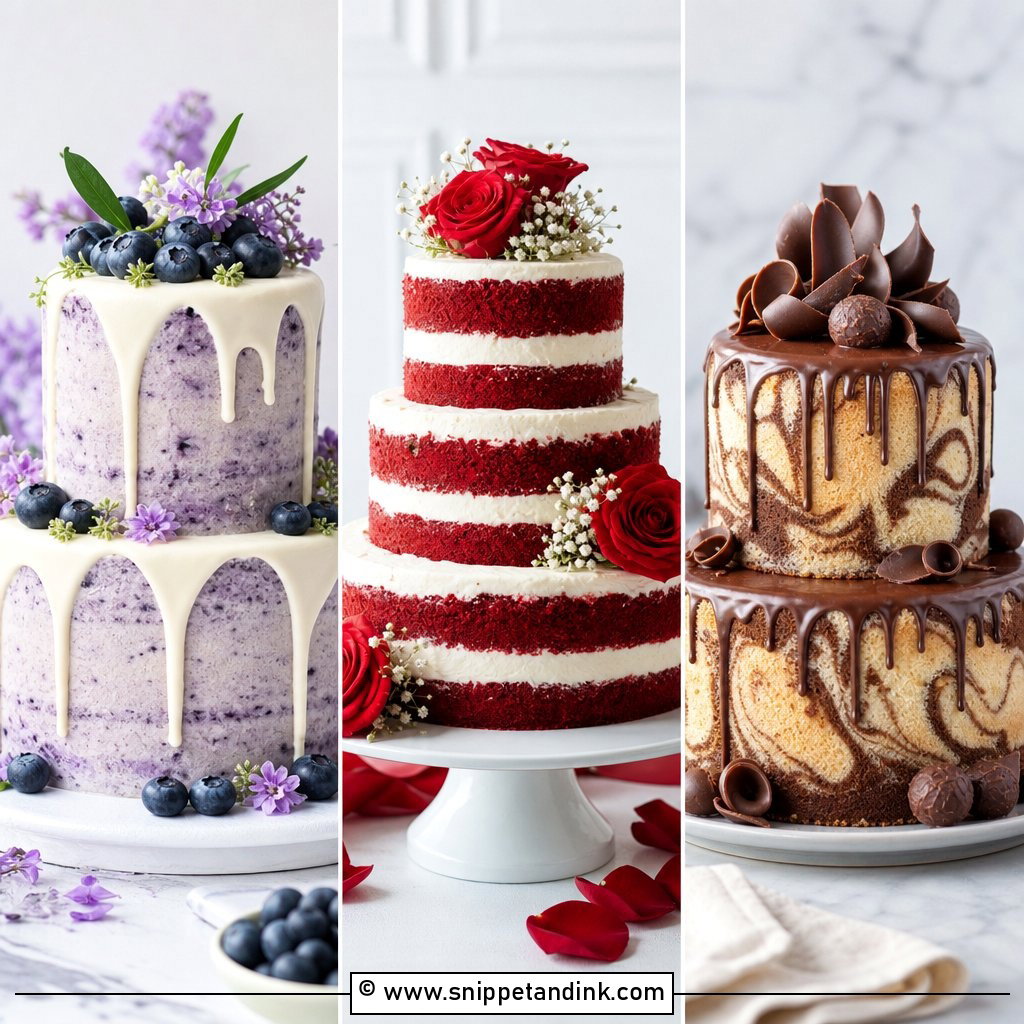
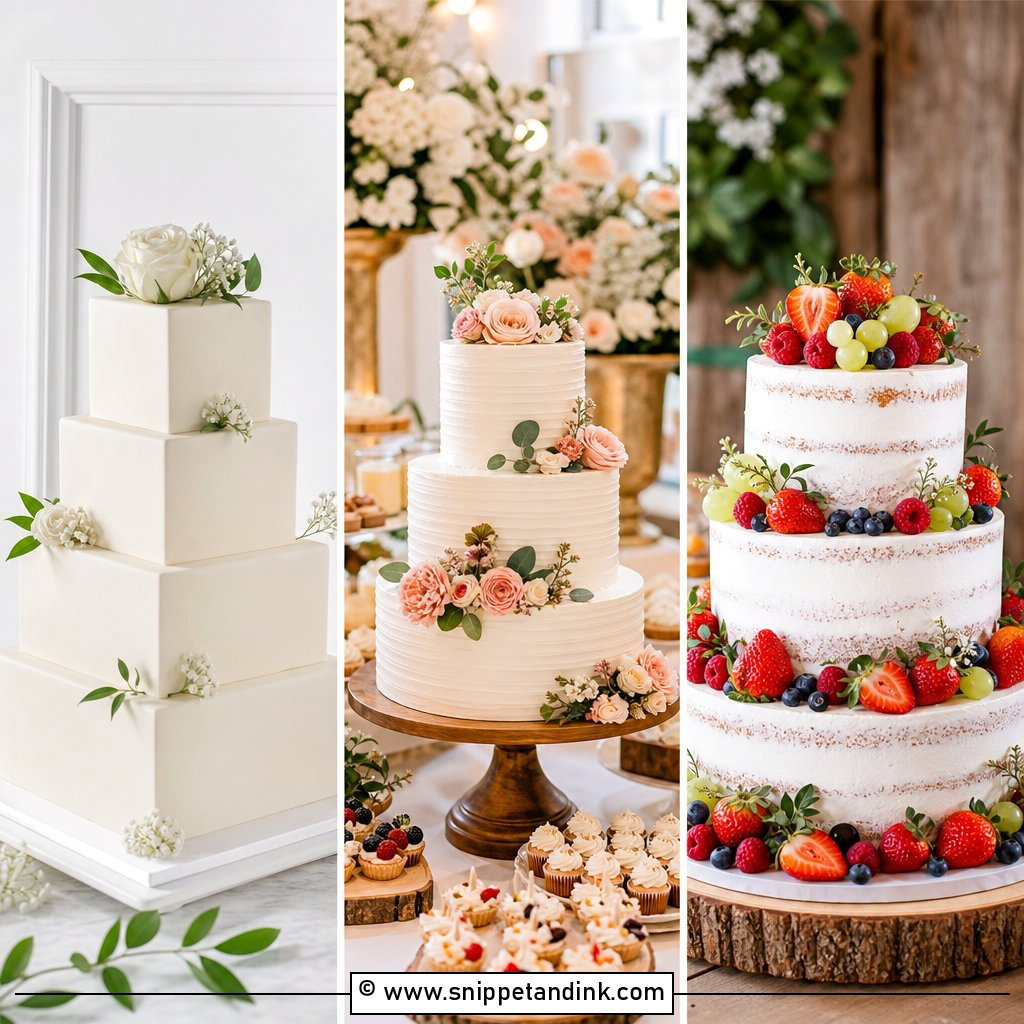
Ovals look wider from the front than a round of similar size, which is exactly why I suggest them when a small cake needs more presence. The long face gives space for a low floral arrangement, piped borders, fruit or painted buttercream. Smooth ivory with orchids is the elegant version; blush buttercream with roses is the romantic one. Keep the stand simple so the outline stays the feature.
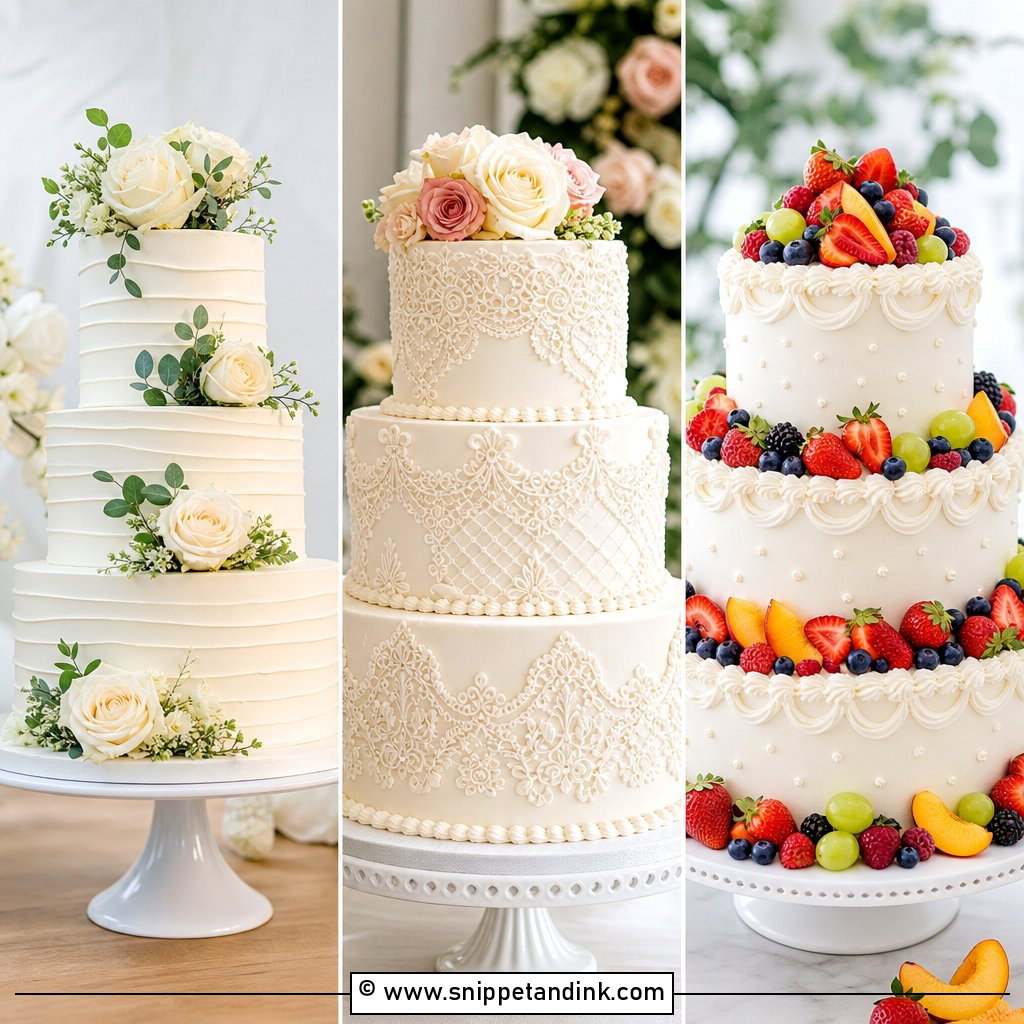
15. Wide 1 Tier Wedding Cake
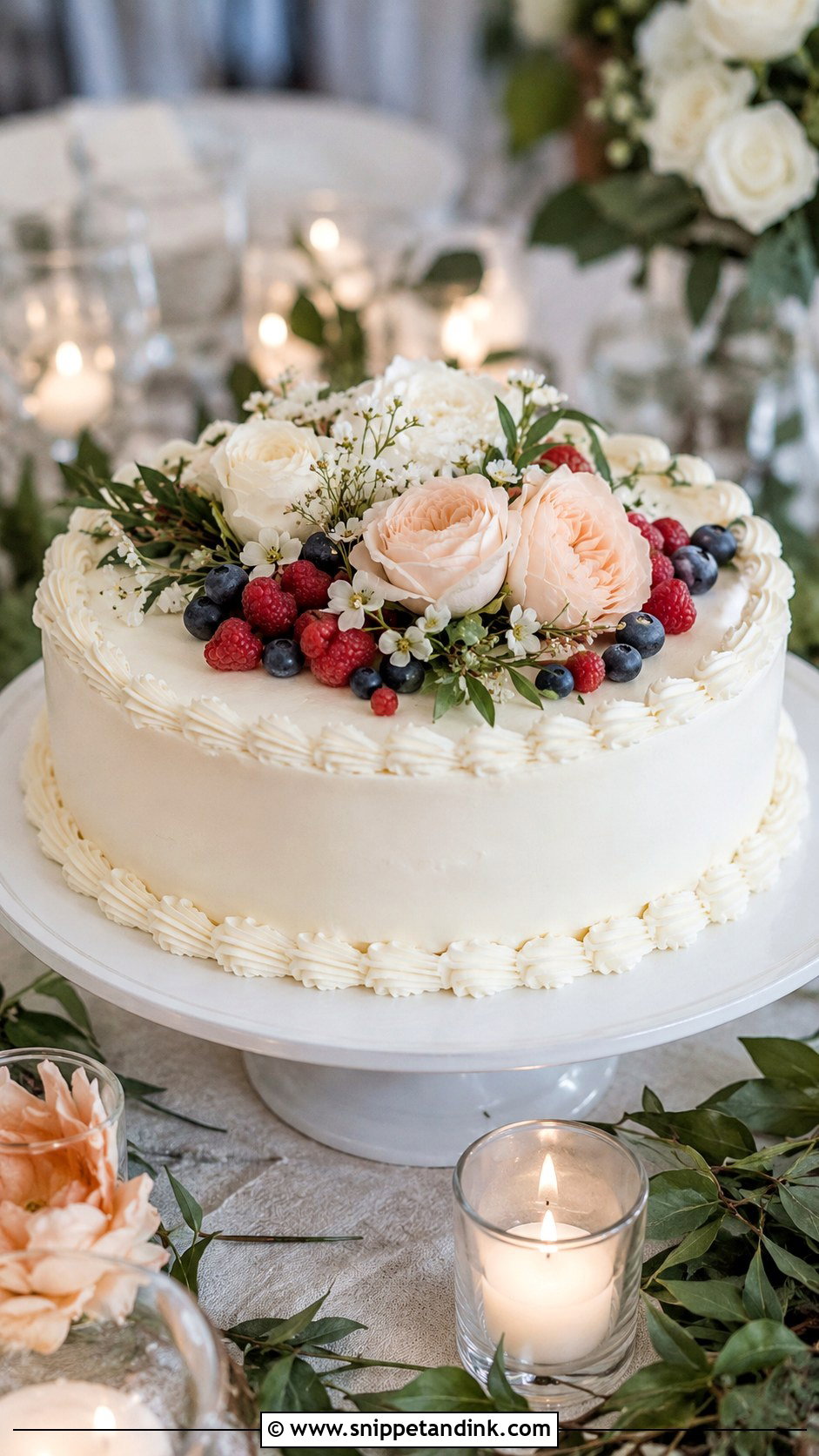
Wide single tiers are one of the strongest trends I’m seeing: generous, low and decorated across the top almost like a table setting. They can be round, oval or rectangular, with flowers, fruit, piped borders or candles laid across the surface. Because they’re wide rather than tall, they feed noticeably more guests than a small cutting cake. Keep the sides smooth or lightly textured so the top carries the design. Long family-style tables are where they look most at home.
16. Sheet 1 Tier Wedding Cake
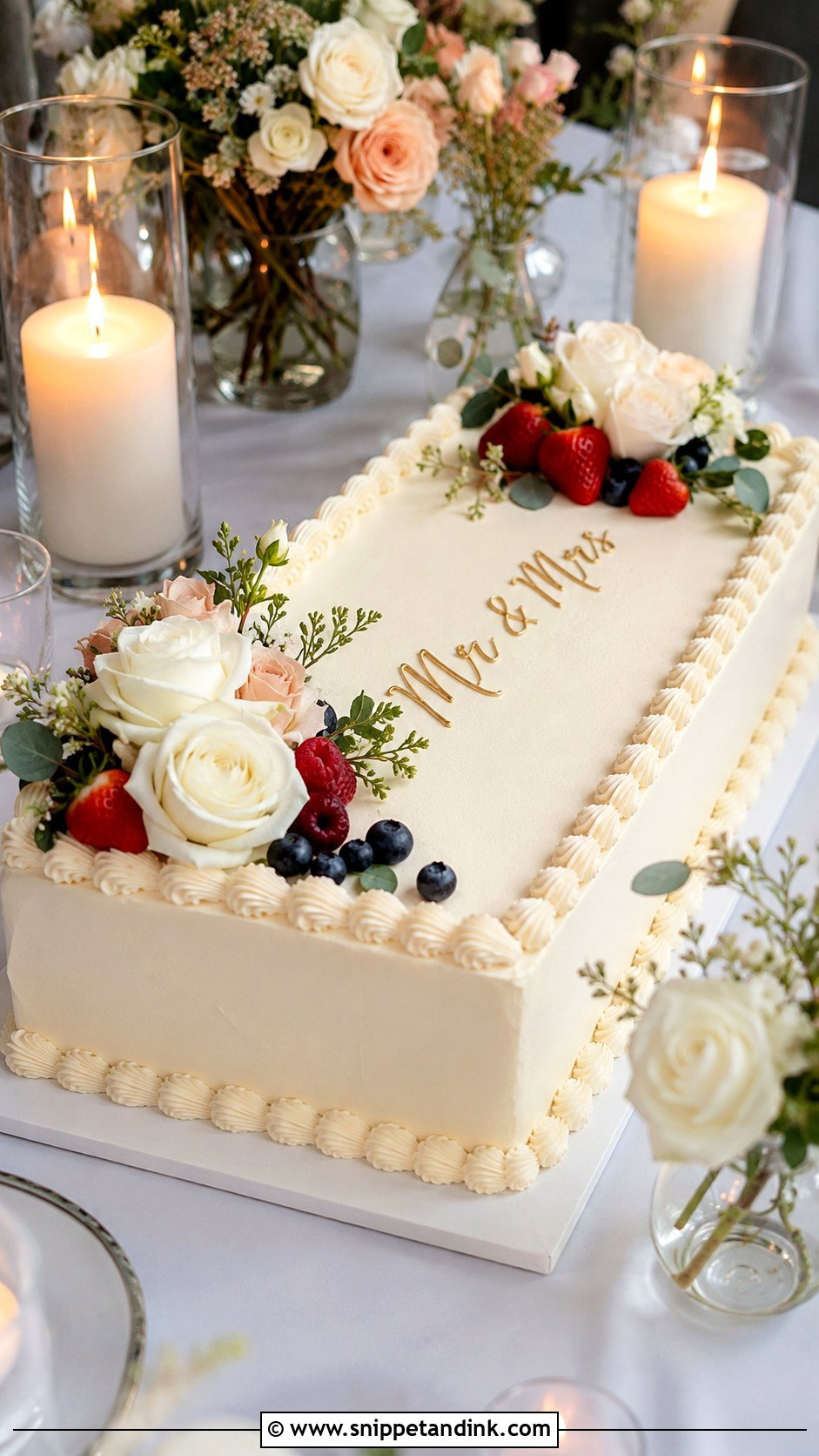
Sheet cakes used to hide in the kitchen; now I decorate them to sit out as the main cake. Smooth buttercream, piped borders, fresh flowers, berries or a short message in simple lettering all work, and a long rectangle looks good running down the center of a table with candles around it. Servings are easy and portions come out even, which caterers like. It’s the most practical way to feed more people without paying for stacked tiers.
17. Chocolate 1 Tier Wedding Cake
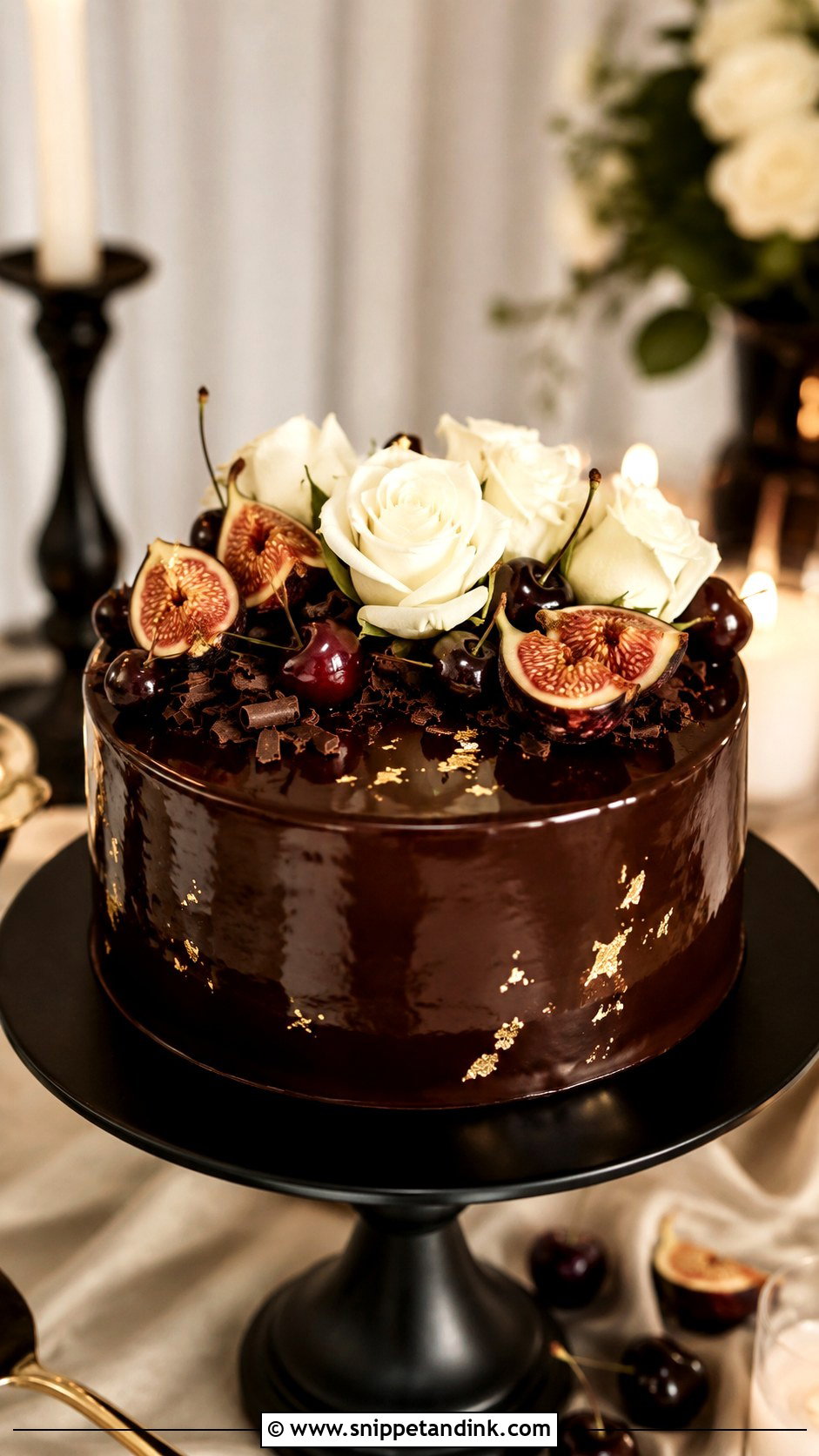
Chocolate is the flavor I’m most often asked to make look bridal. You can go two ways: chocolate sponge hidden under ivory buttercream, which surprises people when it’s cut, or the chocolate on show with ganache, a glossy drip, berries, figs, cherries or shavings. Dark ganache sets firm and handles a warm room better than most frostings. White flowers or gold accents and a tall stand stop it looking heavy at an evening or fall reception.
18. Lemon 1 Tier Wedding Cake
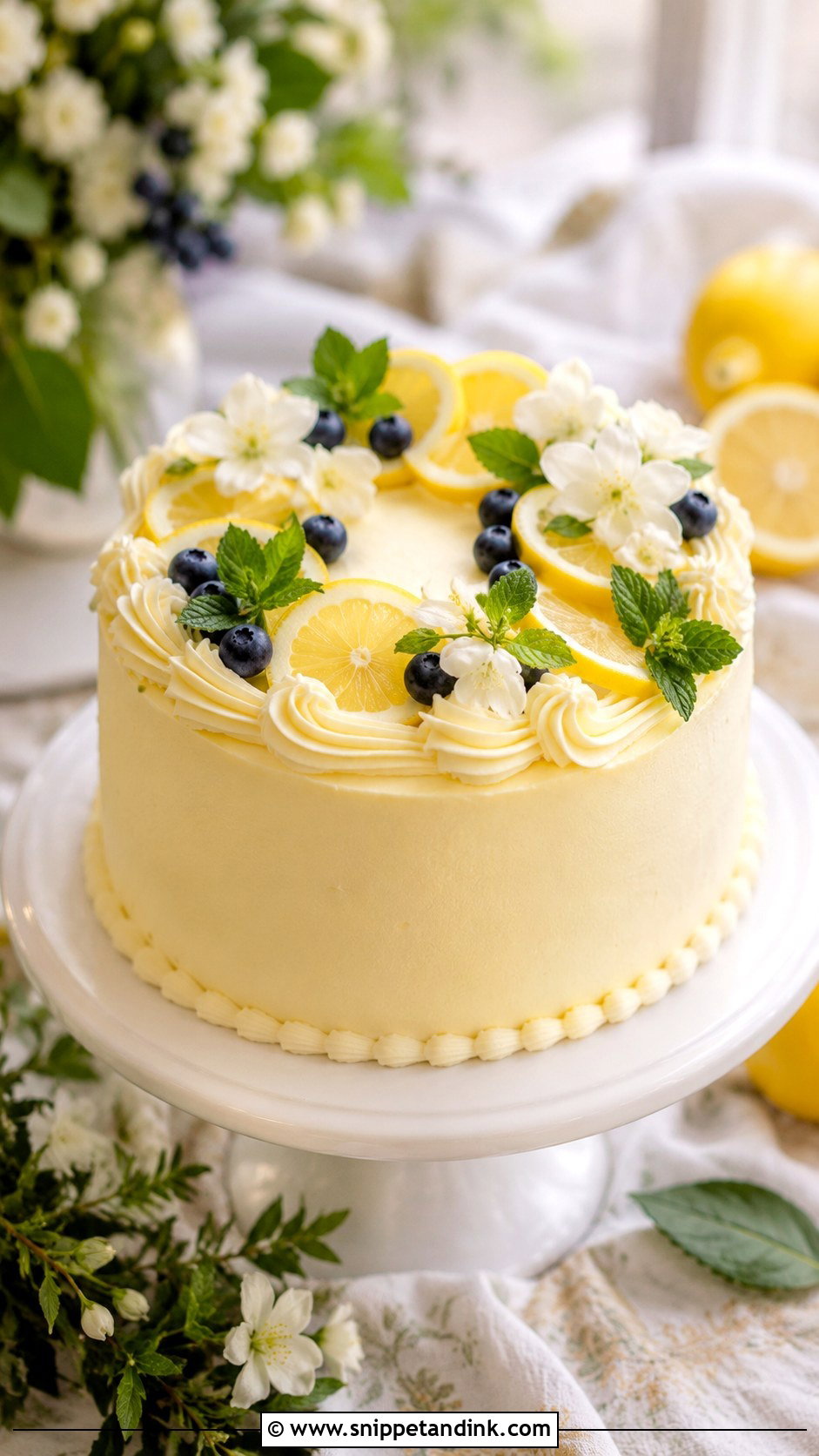
Lemon is the flavor I suggest most often for warm-weather weddings because it tastes fresh even after a heavy dinner. It pairs with vanilla buttercream, cream cheese frosting, lemon curd, blueberry filling or elderflower. Curd and cream cheese both need refrigeration, so a lemon cake for an outdoor reception should go out close to cutting time. Outside, pale ivory or light yellow frosting with lemon slices, small white flowers, herbs or berries keeps it sunny.
19. Red Velvet 1 Tier Wedding Cake
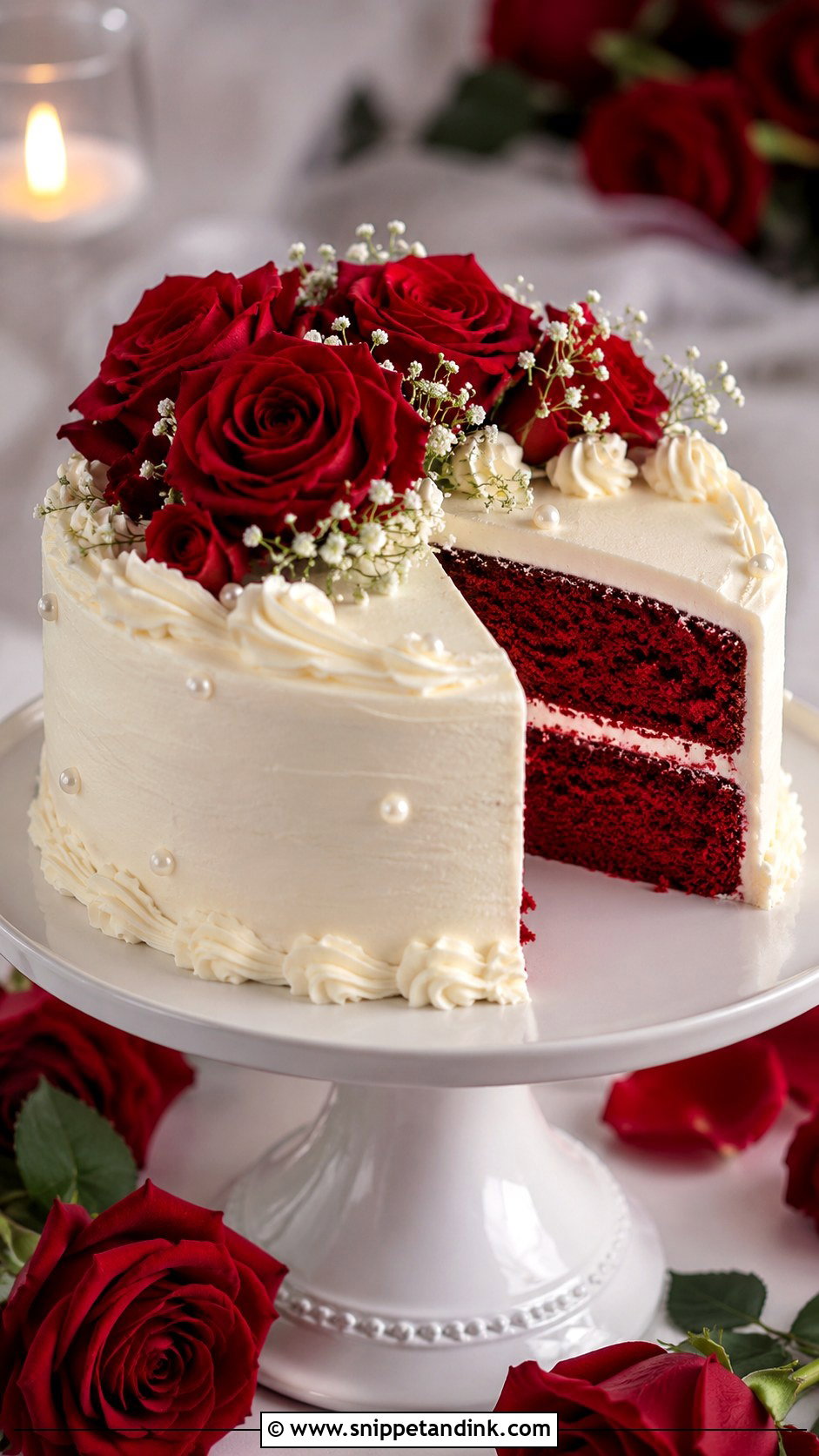
Red velvet saves its drama for the first cut, when the deep red crumb shows against white frosting. Cream cheese frosting is the traditional pairing and the right one for flavor, but it’s soft and has to stay chilled, so I often use a firmer cream cheese buttercream for the outside. Smooth white, soft piping, pearls or red and pink flowers all suit it. A semi naked finish lets a hint of red show before anyone cuts.
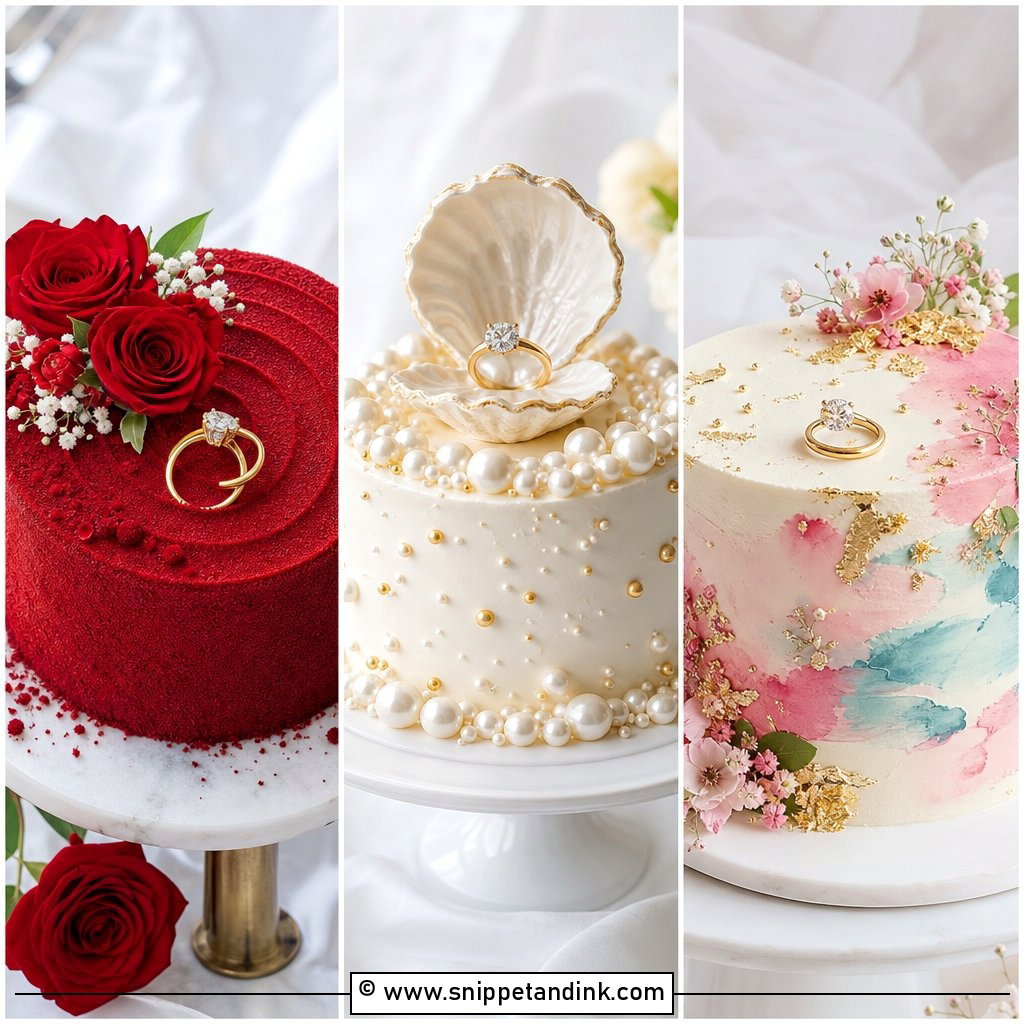

20. Black And White 1 Tier Wedding Cake
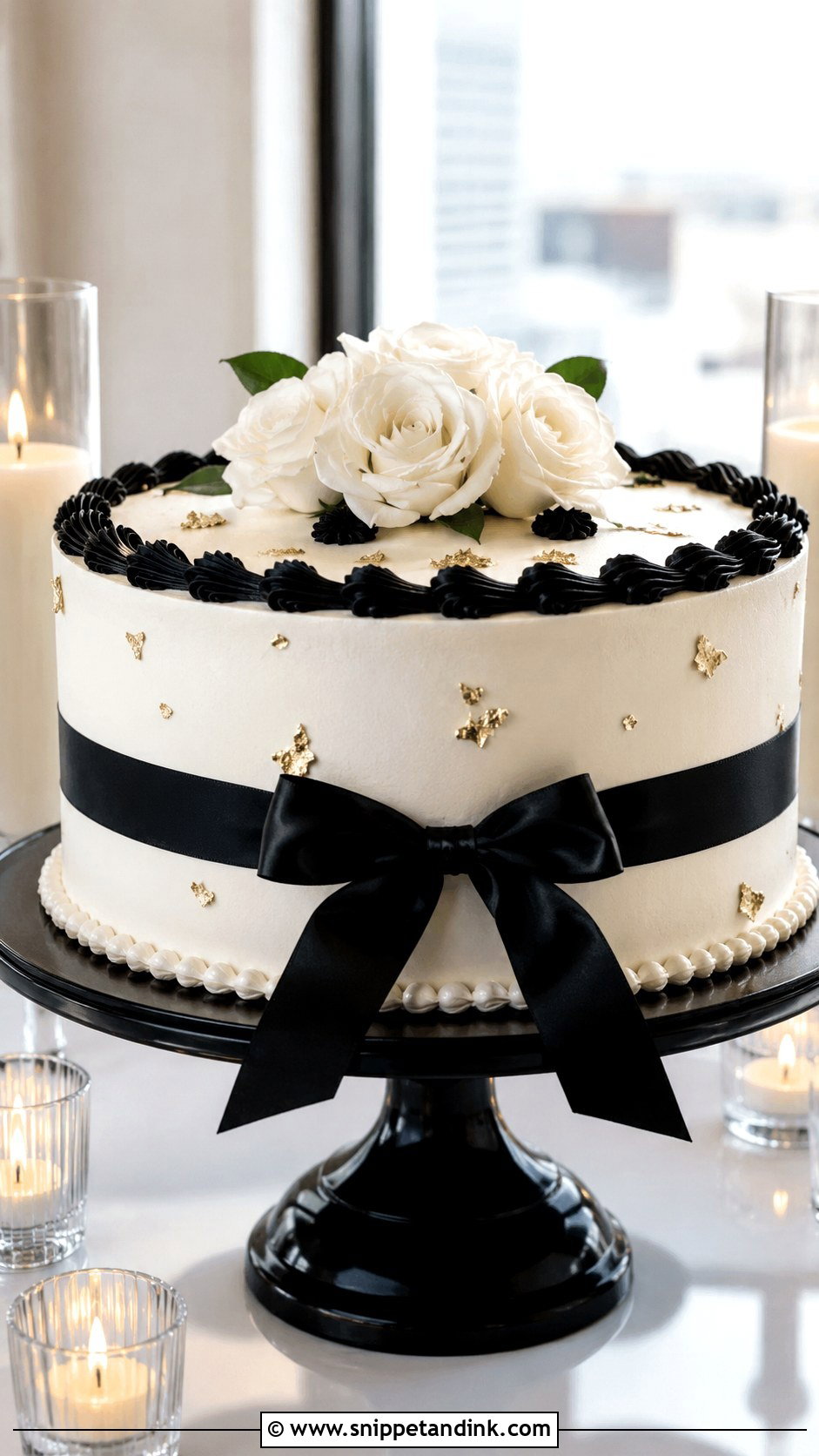
Black and white feels formal and graphic even on a small cake. I start with white or ivory and add black ribbon, painted details, piped accents, sugar flowers or a monogram. Used sparingly with white roses or pearls, it’s soft; a black buttercream base with white flowers or gold is the bold route. True black buttercream needs a lot of coloring and can stain mouths, which is worth knowing before you choose it for the whole cake.
When Half Your Guests Have Dietary Needs
Small weddings often mean everyone at the table matters, including the aunt who’s coeliac and the friend who’s vegan. A single tier is the easiest size to make fully gluten-free, dairy-free or nut-free, so nobody has to eat a separate slice from a separate box.
Honest trade-offs from the kitchen: gluten-free sponges tend to be more delicate and dry out faster, so they’re best baked close to the day and filled generously. Vegan buttercreams made with plant butter soften quicker in heat than dairy versions. Nut-free means almond flour and marzipan are off the table, which also rules out some sugar decorations.
For a serious allergy, ask the baker directly whether their kitchen handles the allergen at all. A cake made without nuts is not the same as a cake made in a nut-free kitchen, and only they can tell you which it is. Then make sure the caterer knows too, since the same knife can cut another dessert later in the evening.
Flavor First, Then the Finish
A single tier lets you spend your cake budget on flavor and workmanship instead of height. Decide on one main feature, whether that’s shape, texture, flowers, fruit, pearls, gold or piping, and let the stand and table styling follow the same mood. Choose fillings that suit the room temperature and how long the cake will sit out. Do that, and the one slice everyone gets will taste as good as it looks.
You'll Like These Ideas:



Leave a Reply