
Two tiers is the size I build most often for couples who want a real cake-cutting moment without a dessert table that looks overloaded. You still get height and a proper silhouette, and the cake stays small enough that every detail on it is visible. That’s also why simple finishes work so well at this size: smooth buttercream, a few flowers, a pearl border or one textured tier carry the whole design. Below are twenty ways I’d dress a two-tier cake, with notes on what each finish needs from the baker and where it tends to struggle.
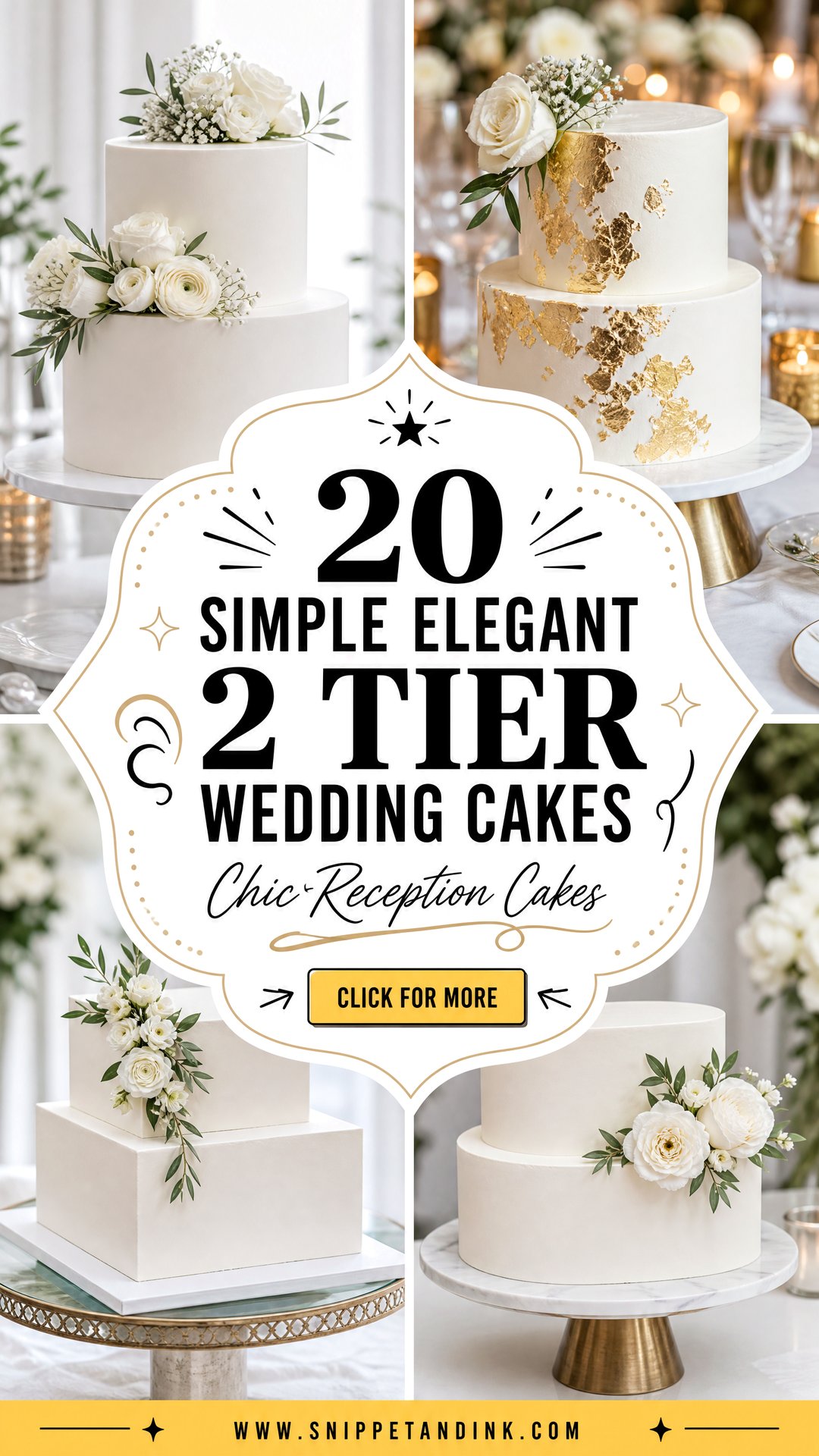
How Many Guests Do Two Tiers Really Serve?
This is the first question I ask, because it decides the tier sizes before we talk about flowers. Wedding servings are cut as narrow fingers rather than party wedges, so a cake goes further than people expect. Using standard four-inch-tall tiers, these are the rough numbers I plan from:
- 6-inch and 8-inch rounds: around 35 to 40 wedding slices.
- 6-inch and 10-inch rounds: around 50 slices, with a slightly wider, steadier base.
- 8-inch and 10-inch rounds: around 60 slices.
- Taller double-height tiers: roughly double the slices of that size, and they make two tiers look much grander.
If your guest list is bigger than the cake, I’d keep the two tiers for display and cutting and add a plain kitchen cake in the same flavour, which is sliced out of sight. It’s cheaper per slice than adding a third tier and nobody can tell on the plate. Every baker cuts a little differently, so ask for their own serving chart.
1. Simple White 2 Tier Wedding Cake
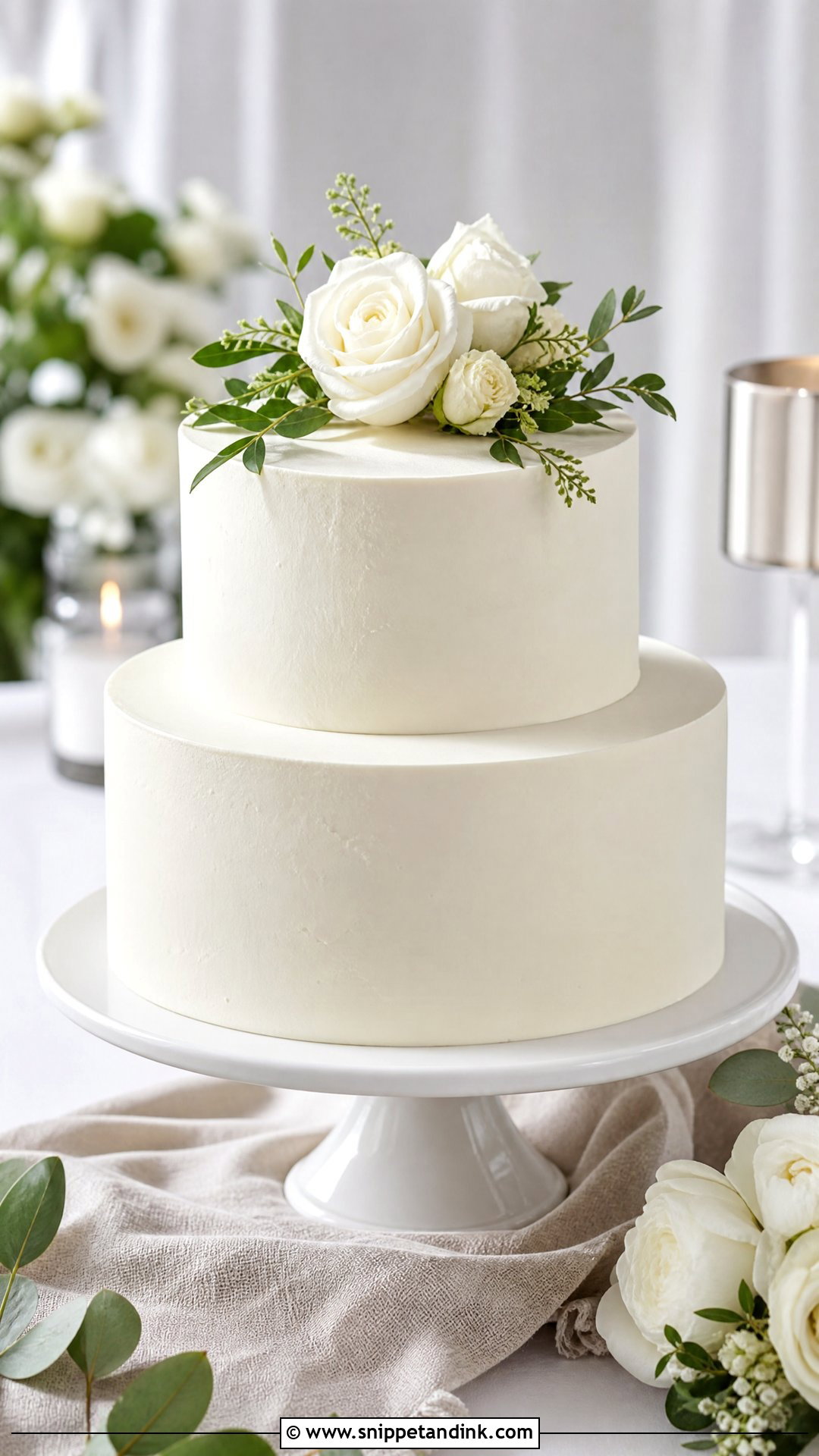
A plain white cake looks easy, but it’s the design that hides nothing. Every bump in the buttercream and every lean in the stack shows, so this is where you see a baker’s skill most clearly. I’d ask to see photos of their smooth-finish work before booking. Sharp edges read modern; slightly rounded edges read softer, and they’re also more forgiving in a warm room. A few white roses or ranunculus and a plain cake stand are all it needs.
2. 2 Tier Wedding Cake With Fresh Flowers
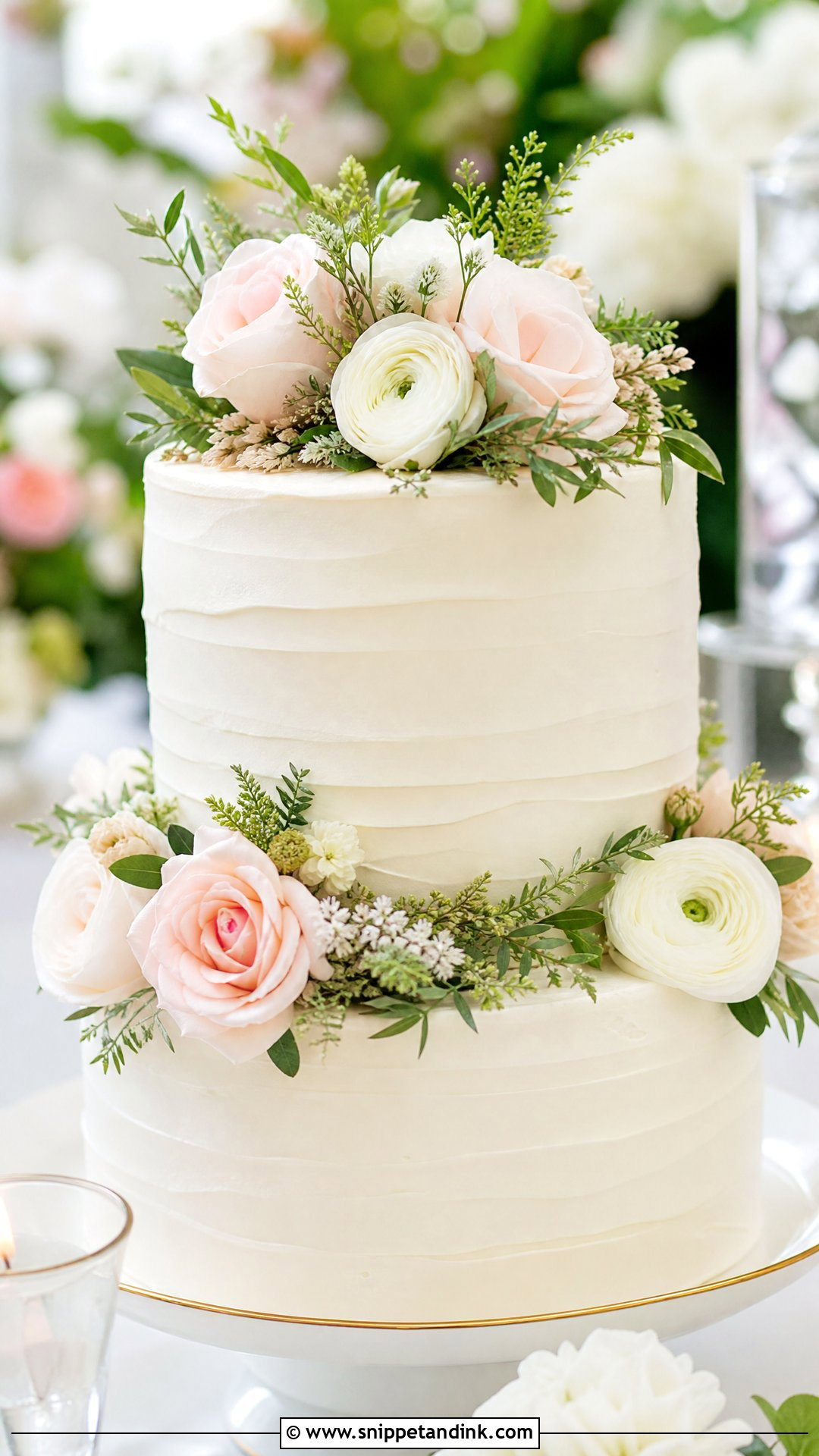
Fresh flowers suit two tiers best in two small clusters: one between the tiers and one on top, following the curve of the cake rather than sitting on it like a hat. White, blush, cream and pale peach sit easily with most palettes, and a little greenery adds movement. Many popular wedding flowers are not safe to eat or to touch food, so I never let a raw stem go into a cake. Stems get wrapped in floral tape and pushed into a straw or a flower pick first, and I’d want the florist and me to agree on who supplies which blooms well before the week of the wedding.
3. 2 Tier Buttercream Wedding Cake
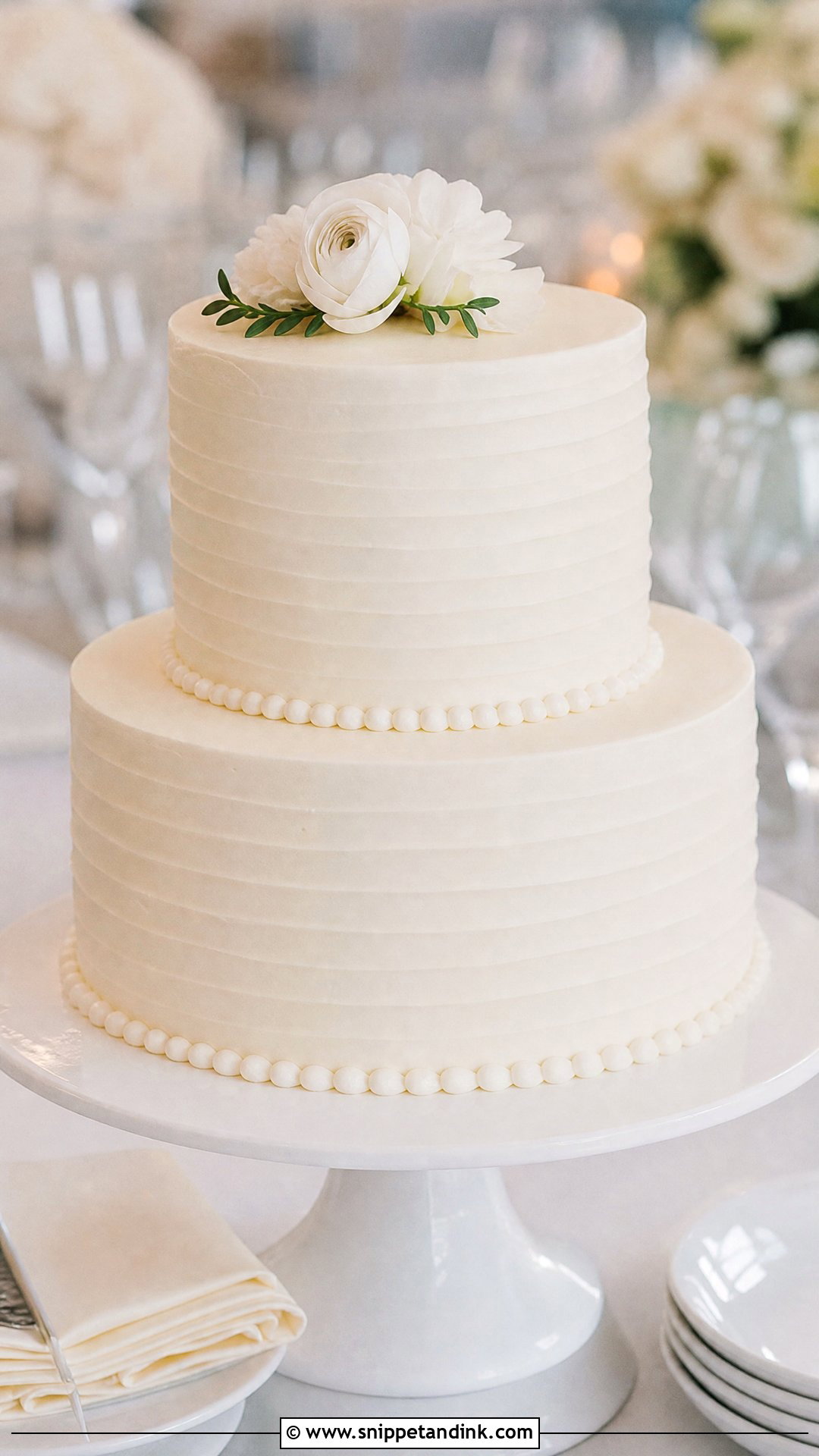
Buttercream is what I’d steer most couples toward on two tiers, simply because it tastes better than fondant and suits a smaller cake. Swiss meringue buttercream gives a silky surface and is less sweet than an American-style frosting, though it softens faster in heat, which I’ll come back to below. Keep it smooth, or ask for faint horizontal lines for a handmade feel. Vanilla, almond, lemon and champagne sponges all pair well with it. A few blooms, a ribbon at each base or tiny pearls finish it.
4. 2 Tier Wedding Cake With Pearls
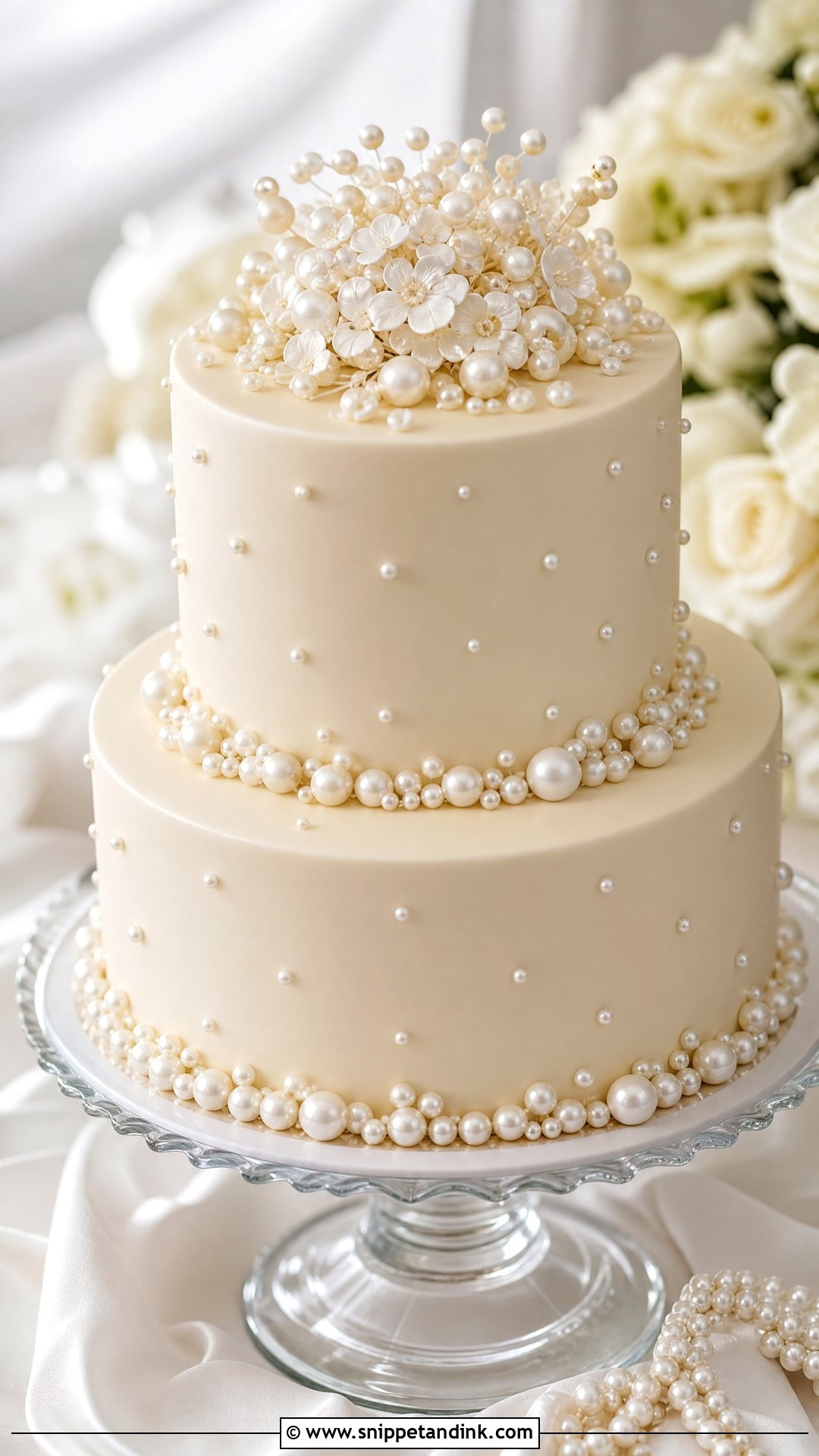
Pearls look dressier than their size suggests. I place small edible pearls around the base of each tier, scatter a few across the sides, or set them in short lines for a tailored effect. The cake underneath has to stay plain, otherwise pearls read as clutter. Ivory buttercream or pale blush fondant suit them. One practical note: dragées and sugar pearls are hard, and some guests will bite one, so I keep them mostly to the base borders and away from where the slices will be cut.
5. 2 Tier Wedding Cake With Gold Leaf
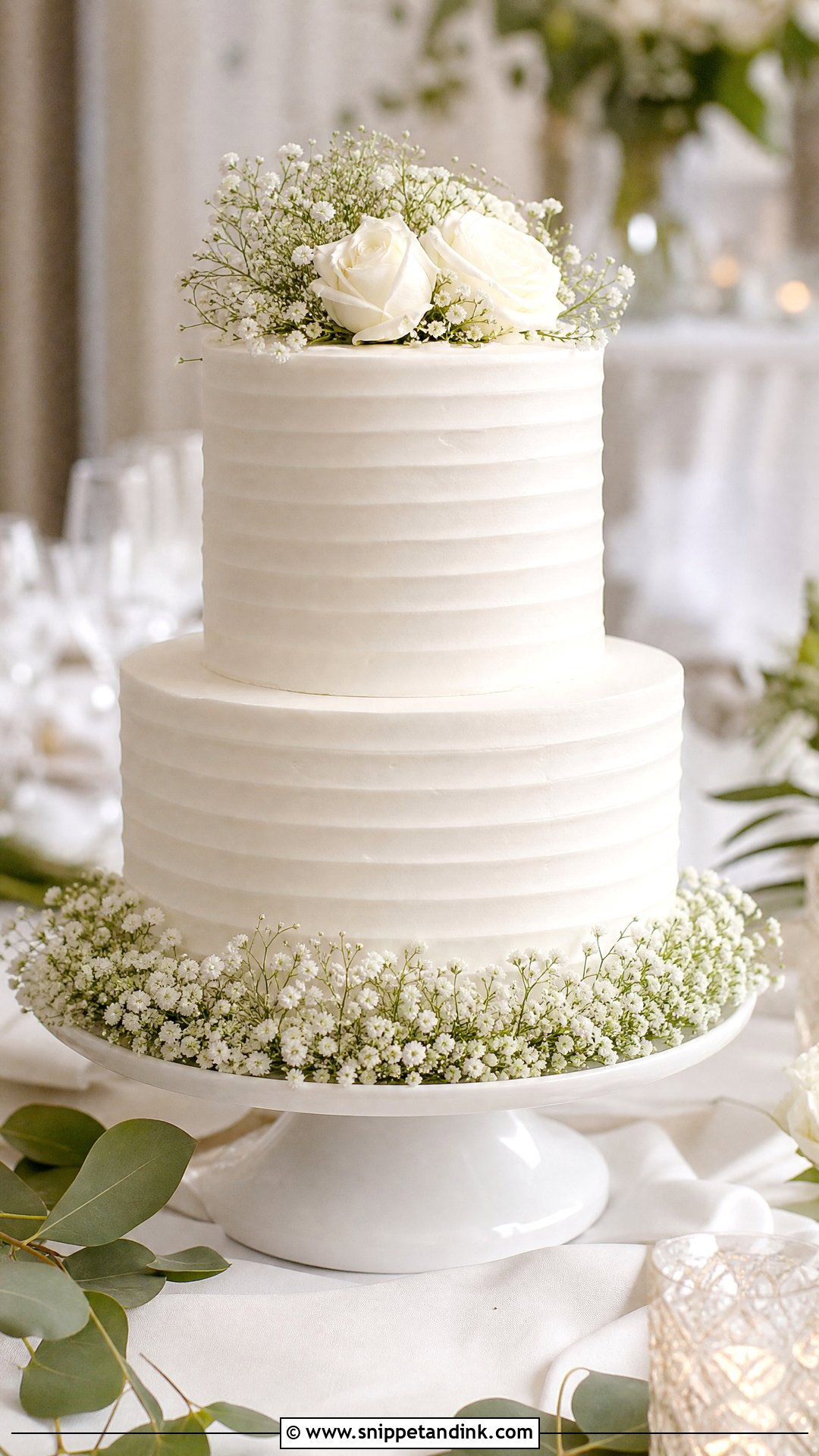
Edible gold leaf adds warmth without turning the cake flashy, as long as it stays sparse. I apply it with a dry brush to a chilled surface, because leaf grabs onto anything slightly tacky and tears into flakes on soft, warm frosting. A few scattered pieces on one side give an asymmetric look; a band around the lower tier is more formal. It sits well beside white flowers, beige roses or orchids. Honey, almond and vanilla bean sponges suit the colour story.
6. 2 Tier Naked Wedding Cake
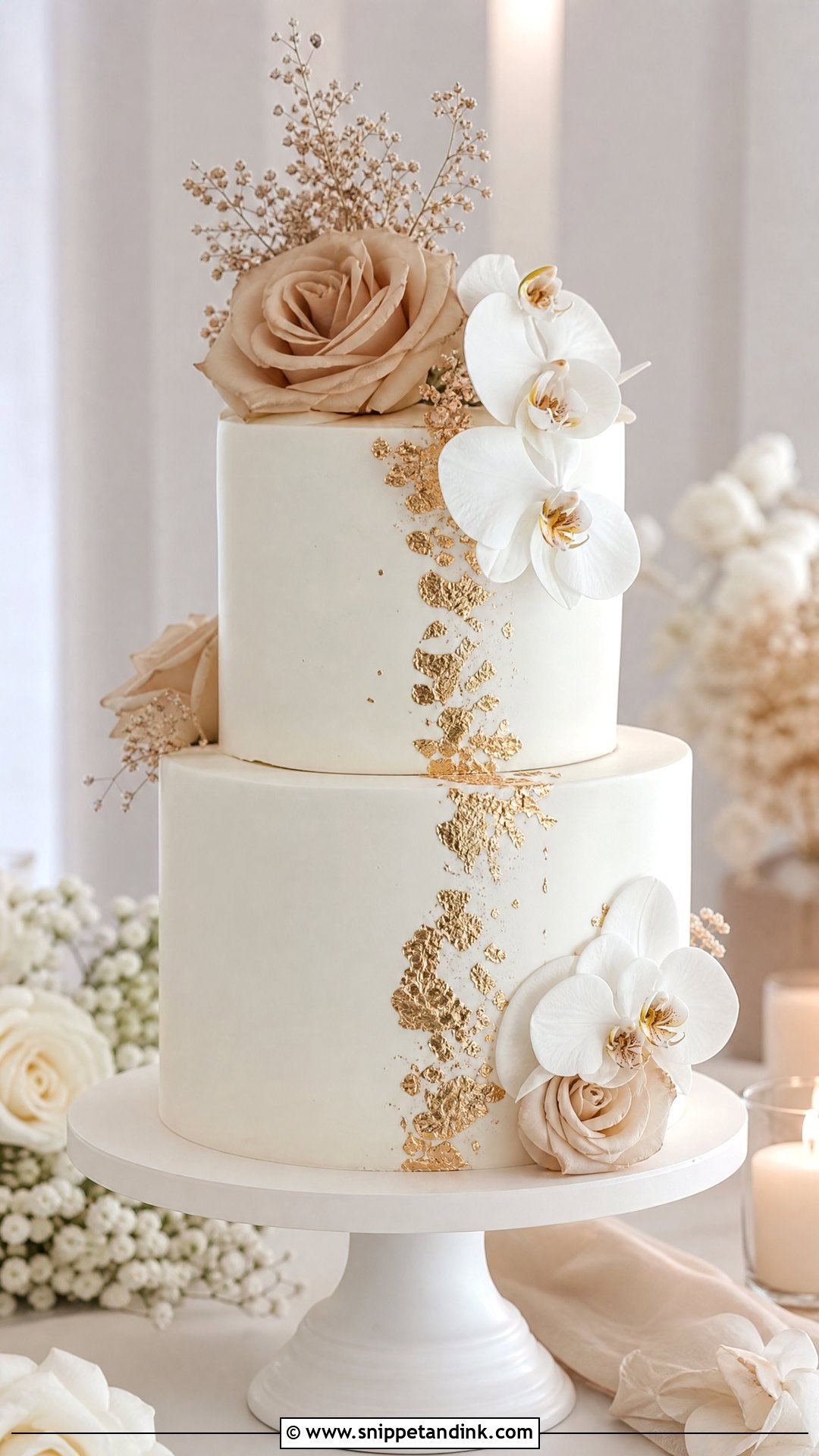
A naked cake shows every layer, so it lives or dies on even baking and neat filling. I like it for barn, garden and outdoor receptions, and I’d still put a thin layer of buttercream between the tiers so the stack looks finished. The catch is that exposed sponge dries out faster than a frosted cake, so it should be assembled close to the event and kept out of direct sun. Berries, figs, herbs and white flowers dress it well, and it looks most at home on a wooden stand or simple ceramic plate.
7. 2 Tier Semi Naked Wedding Cake
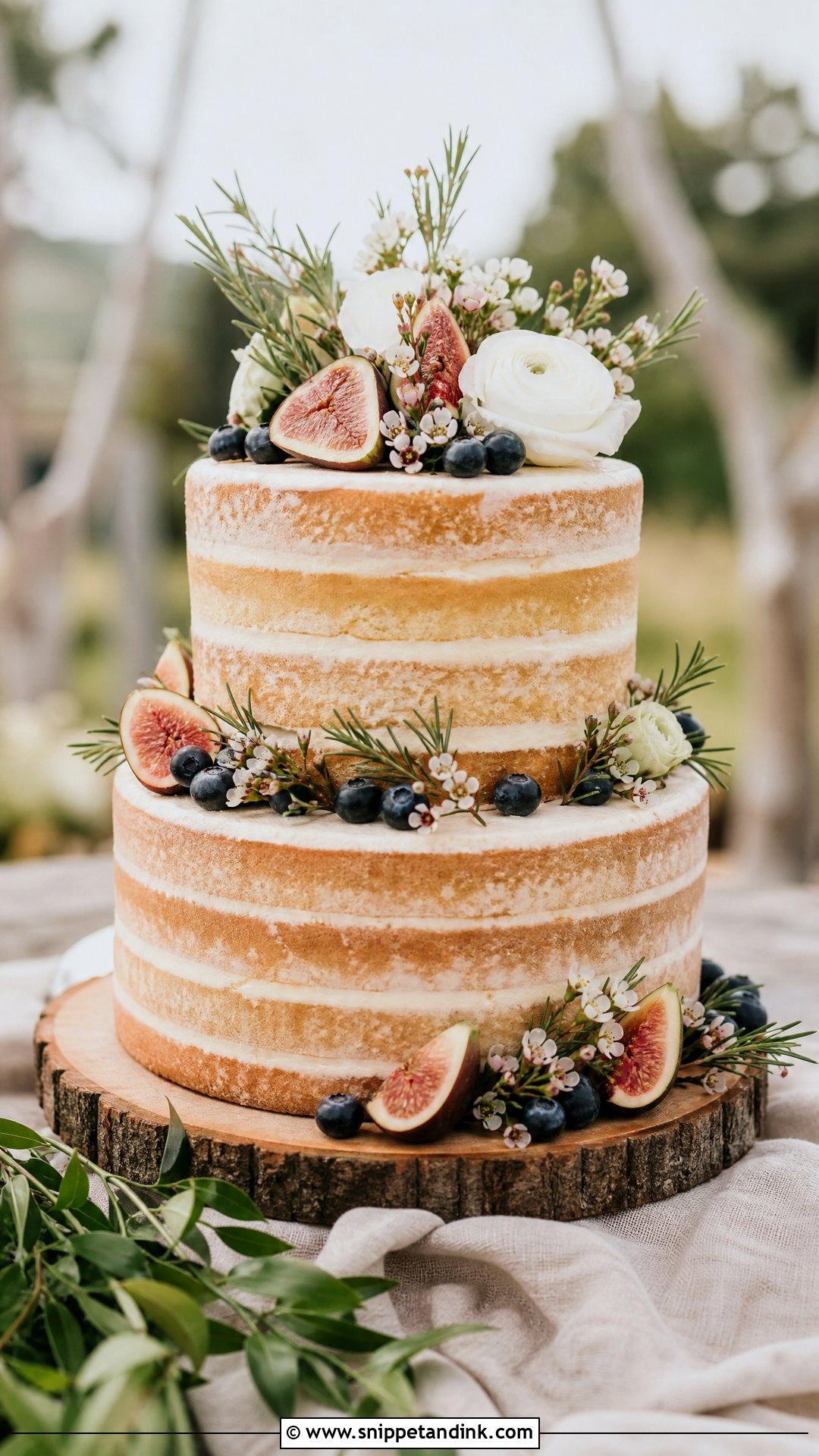
A semi naked finish is what I recommend when someone loves the rustic look but has a long reception ahead. The thin scraped coat of buttercream seals the sponge just enough to slow drying while letting the layers peek through. Vanilla, lemon, carrot and almond all look good under it. Add flowers, small berries or a few sprigs of greenery. Ask your baker to show you a semi naked cake they’ve made, because the line between scraped and unfinished is thin, and clean filling lines are what separate the two.
8. 2 Tier Wedding Cake With Roses
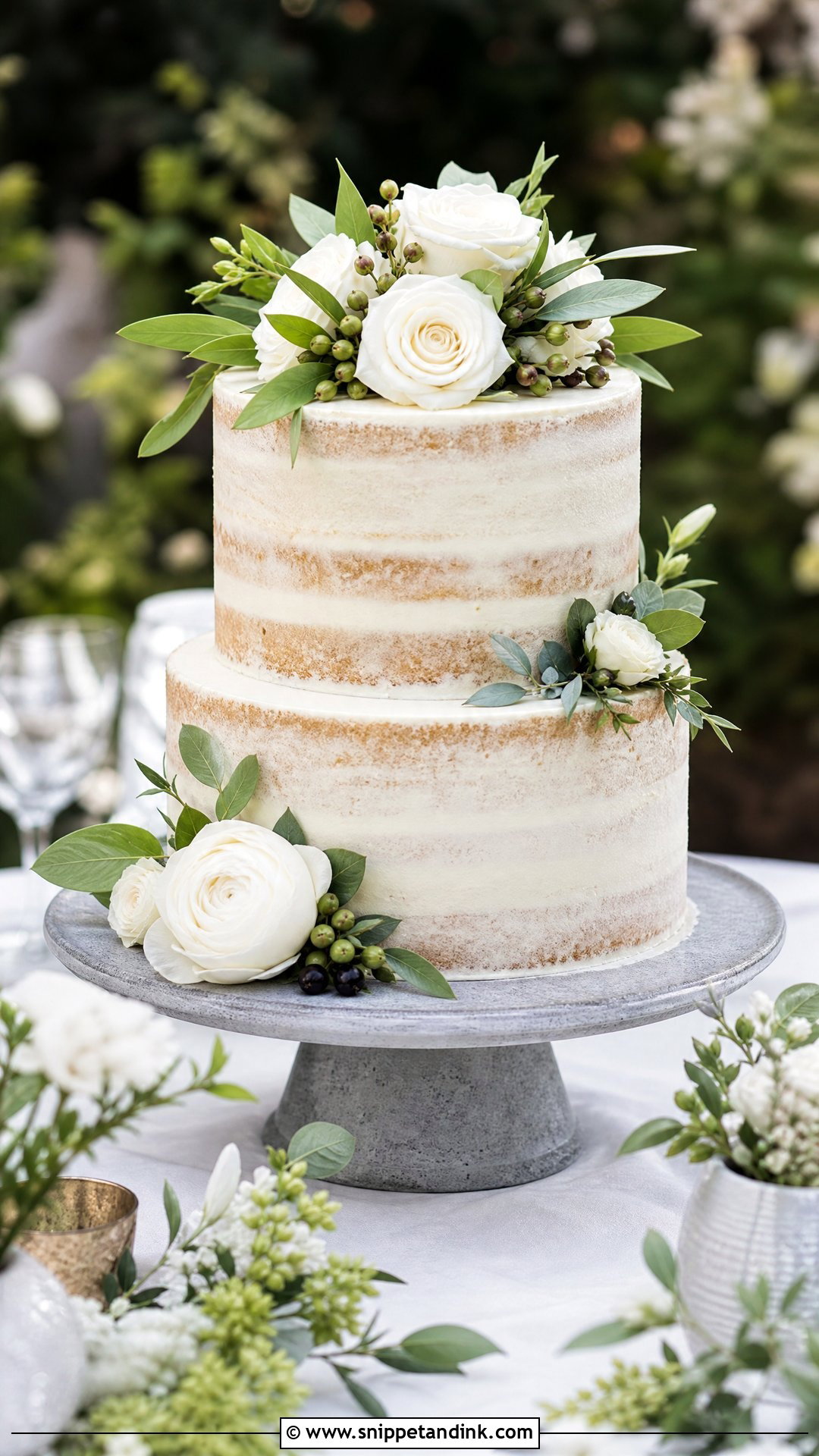
Roses work on two tiers when there are fewer of them than you’d think. A small spray on top and a matching cluster near the base is usually enough; any more and the frosting disappears. White roses feel traditional, blush ones softer, champagne warmer. I’d match the variety to the bouquet rather than the colour alone, since a garden rose and a standard rose look very different side by side in photos. Smooth buttercream or fondant gives them a clean base.
9. 2 Tier Wedding Cake With Baby’s Breath
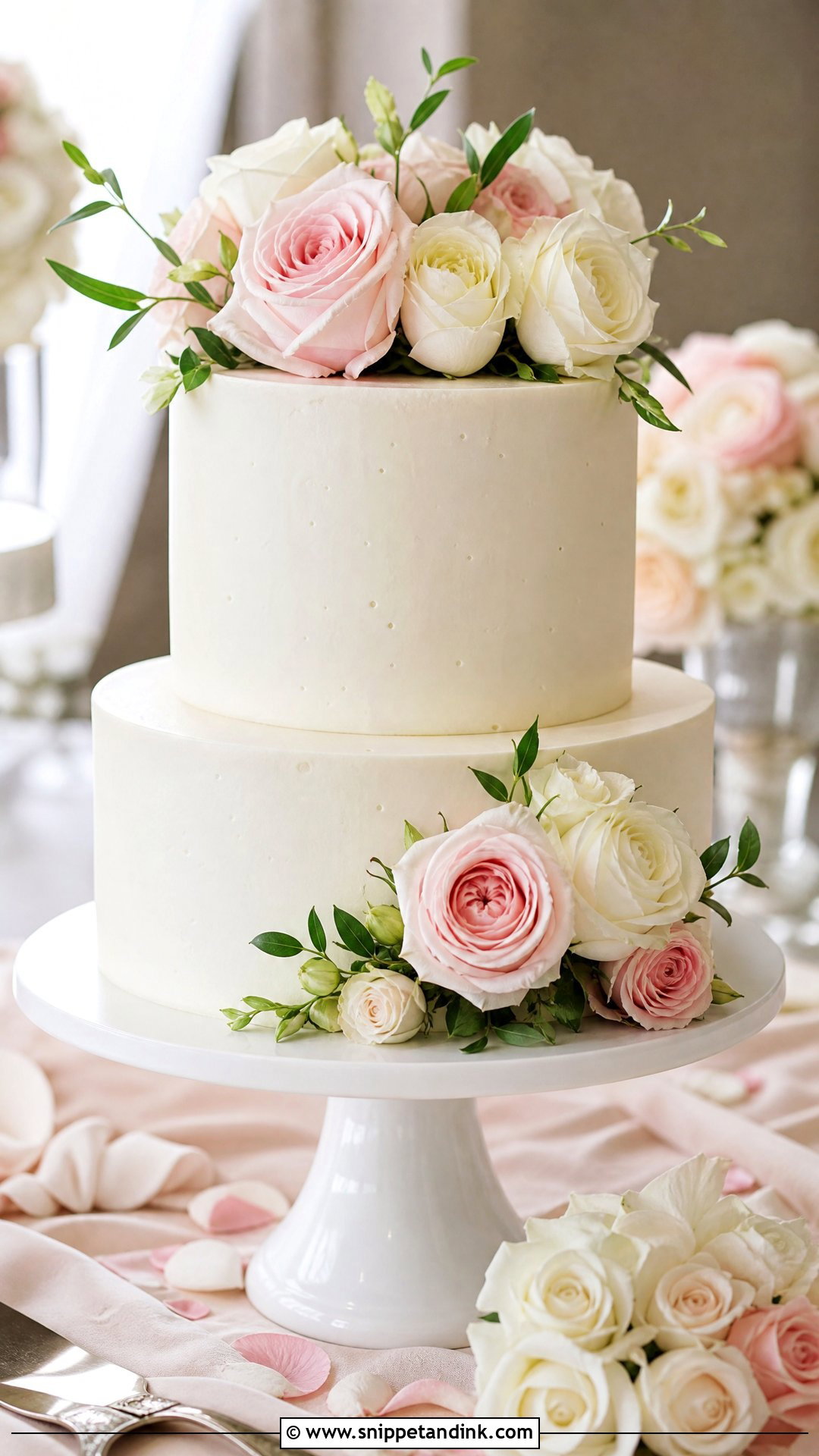
Baby’s breath is light and airy, and because the flowers are tiny, the cake stays the focus. I use it in small clusters at the base, between the tiers, or tucked in with white roses. Keep the frosting smooth so the texture of the flowers shows. It’s not a flower anyone should eat, though, so it goes on with wrapped stems or on a thin barrier, and I remove it before cutting. It fits spring receptions and soft neutral palettes especially well.
10. 2 Tier Wedding Cake With Greenery
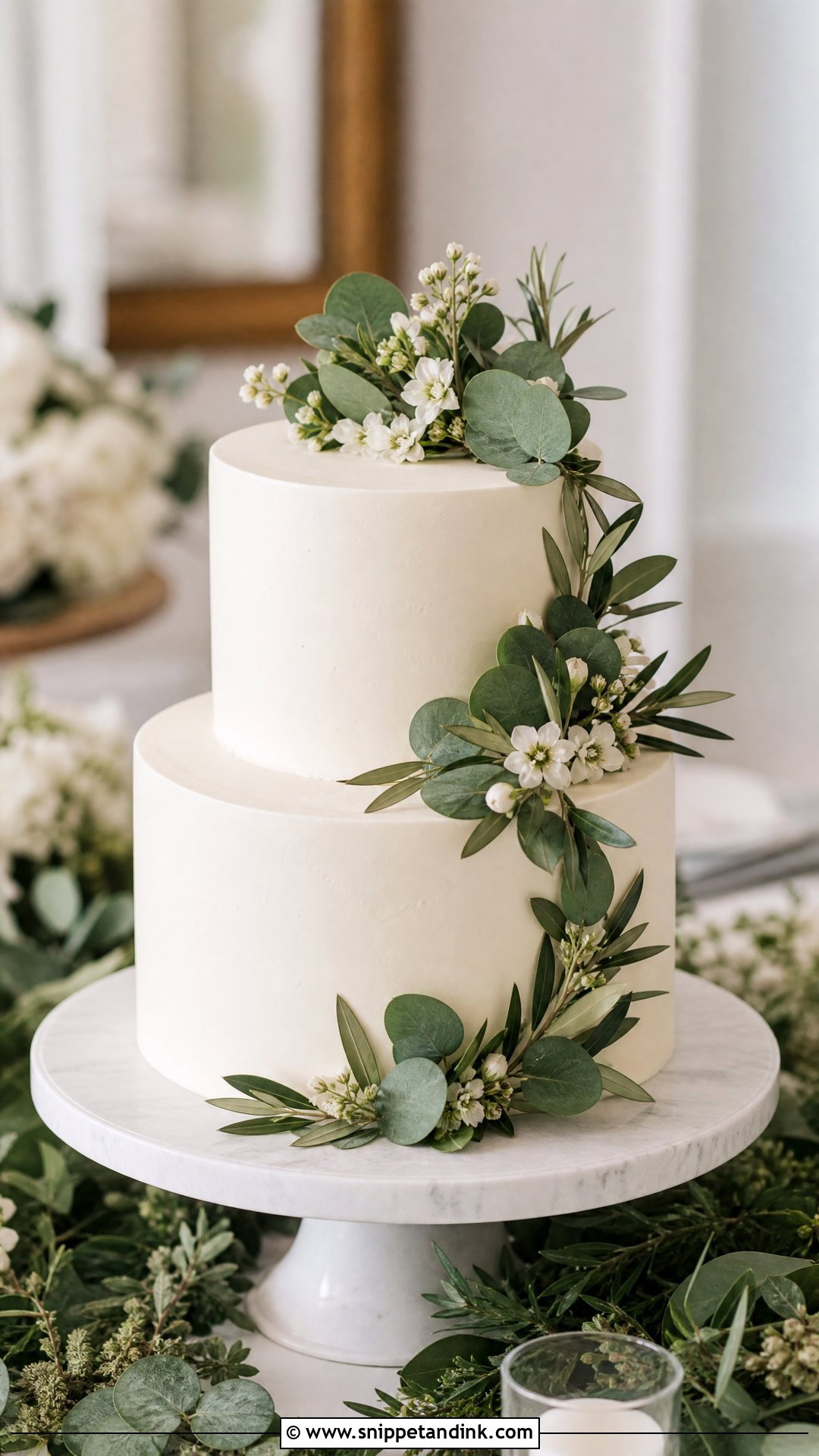
Greenery reads best as an accent, not a wreath. Eucalyptus, olive leaves, rosemary and small edible herbs can create a clean botanical line, and a soft curve of leaves up one side makes two tiers look taller. Eucalyptus is one of the ones I’d keep off direct contact with the frosting, since it isn’t edible; rosemary and herbs are the safer choice where leaves actually touch the cake. White, ivory and pale sage frostings suit this. Keep the placement neat, because a stray sprig looks like a mistake on such a small canvas.
11. 2 Tier Wedding Cake With Ribbon
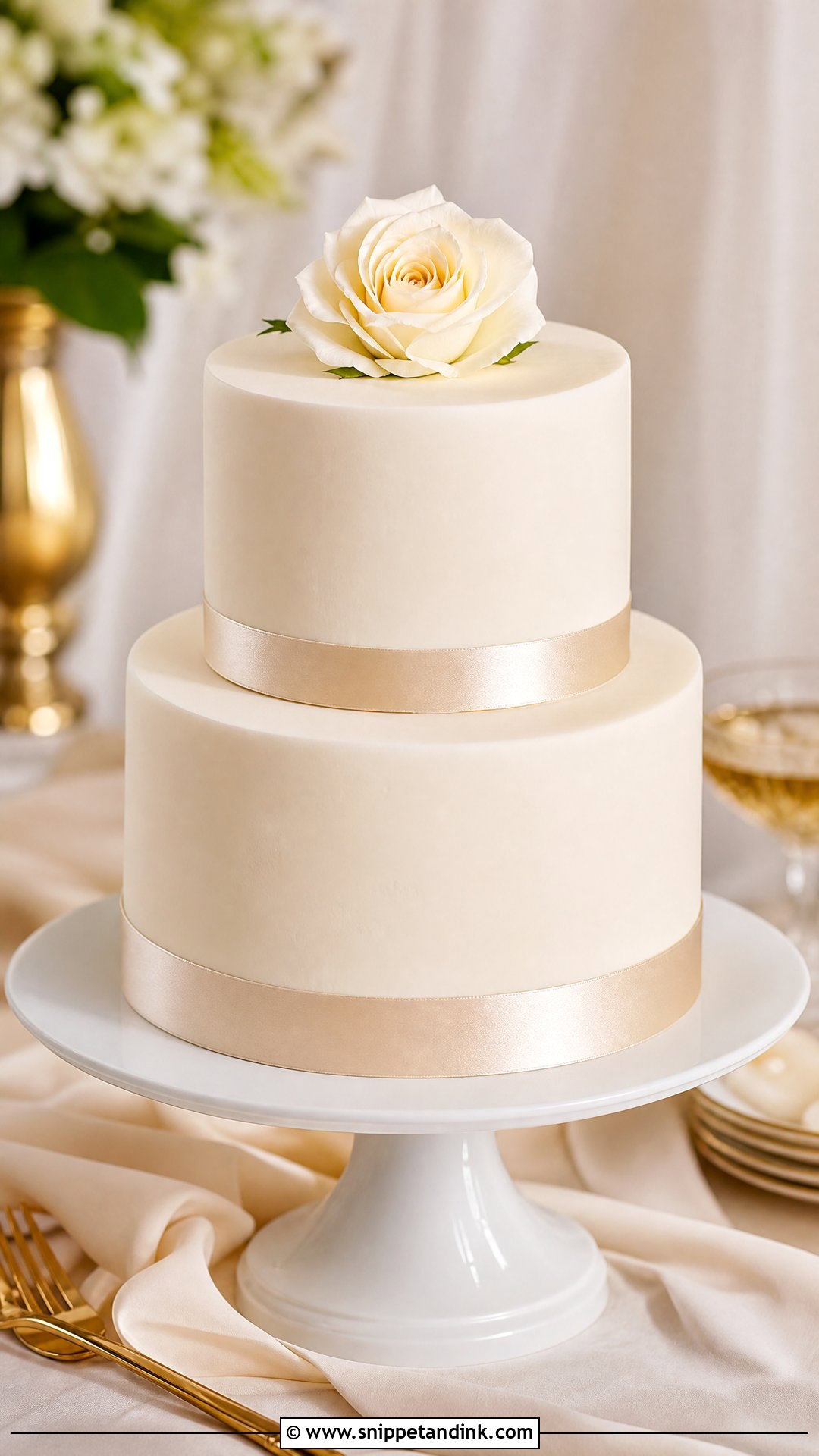
Ribbon finishes a cake with almost no work, which is why I suggest it for couples on a tight budget. Satin, silk or velvet around the base of each tier gives a clean line and a little colour: ivory, champagne, blush, dusty blue or sage. On buttercream, I back the ribbon with a strip of parchment or acetate first, otherwise the grease from the frosting seeps through and leaves dark patches within an hour. One small flower cluster is plenty beside it.
12. 2 Tier Wedding Cake With Lace
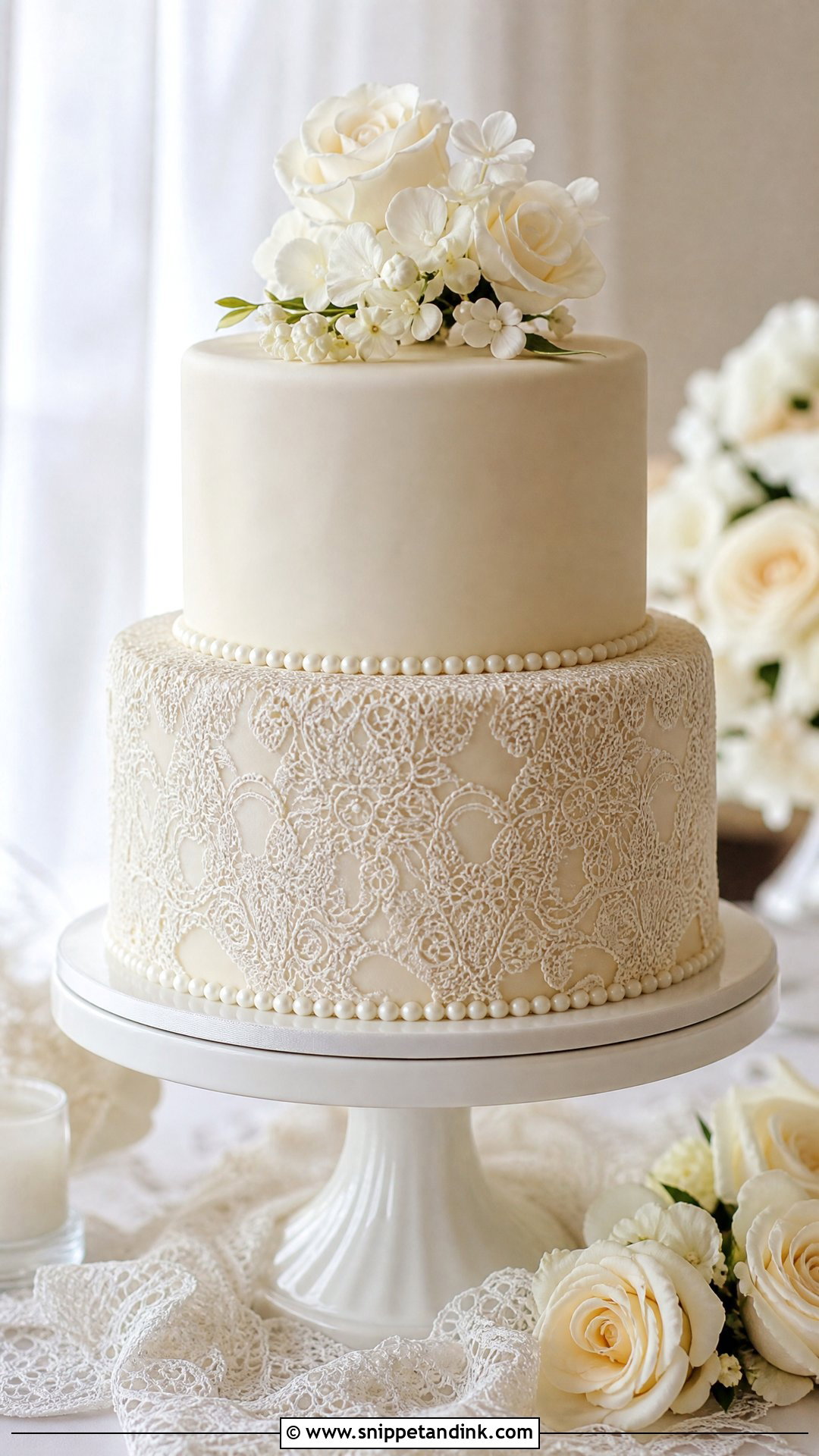
Lace is a nice way to echo the gown, provided it stays on one tier. I’d pipe it, cut it from fondant, or use edible lace panels, which are set sugar sheets pressed from a mould. Edible lace is sensitive to humidity and can go soft and stretchy in a damp room, so for a summer wedding I’d usually choose piping instead. White-on-white is the classic version; ivory on cream feels warmer. Bring a close photo of your dress lace to the tasting so the pattern can be matched.
13. 2 Tier Wedding Cake With Smooth Fondant
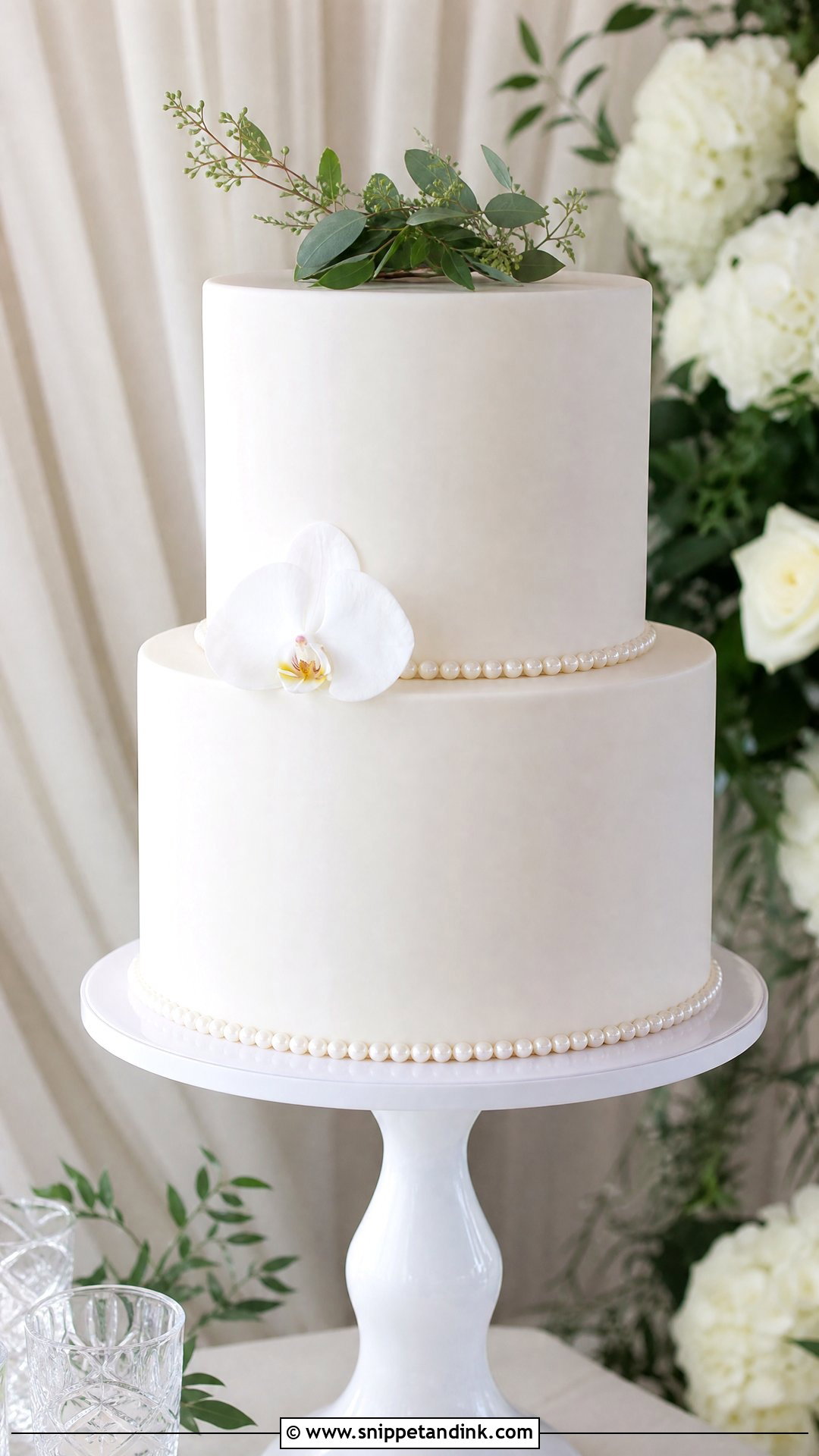
Fondant is for couples who want crisp edges and a flawless surface for a formal room. It holds structure better than buttercream in warm weather and stays smooth from every angle, which is why I lean on it for hotel, museum and black-tie receptions. The trade-off is taste: plenty of guests peel it off. A thin fondant over a full layer of buttercream is my compromise. Decoration can stay minimal, such as one floral accent, a thin ribbon or a pearl border. Know that fondant can sweat with condensation if a chilled cake goes straight into a hot room.
14. 2 Tier Wedding Cake With Textured Buttercream
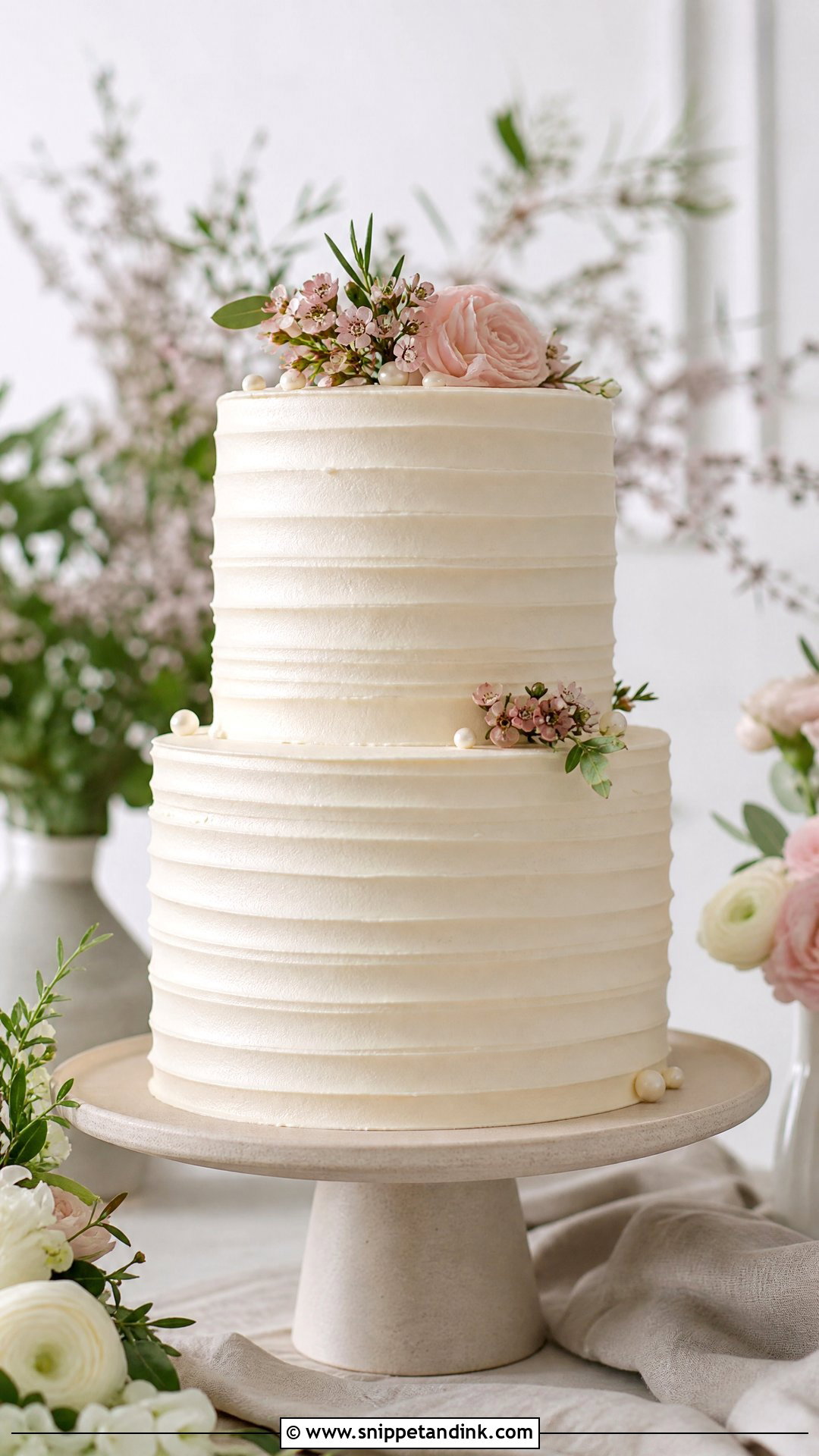
Textured buttercream is more forgiving than a perfectly smooth finish, which makes it a sensible choice if your venue is warm or the cake will travel. The surface can have soft horizontal ridges, gentle lines or a light stucco effect, made with a textured scraper or a palette knife. It catches light and shows the handwork. Keep the colour soft, such as ivory, cream or pale beige, and finish with a small floral cluster or a few pearls.


15. 2 Tier Wedding Cake With Sugar Flowers
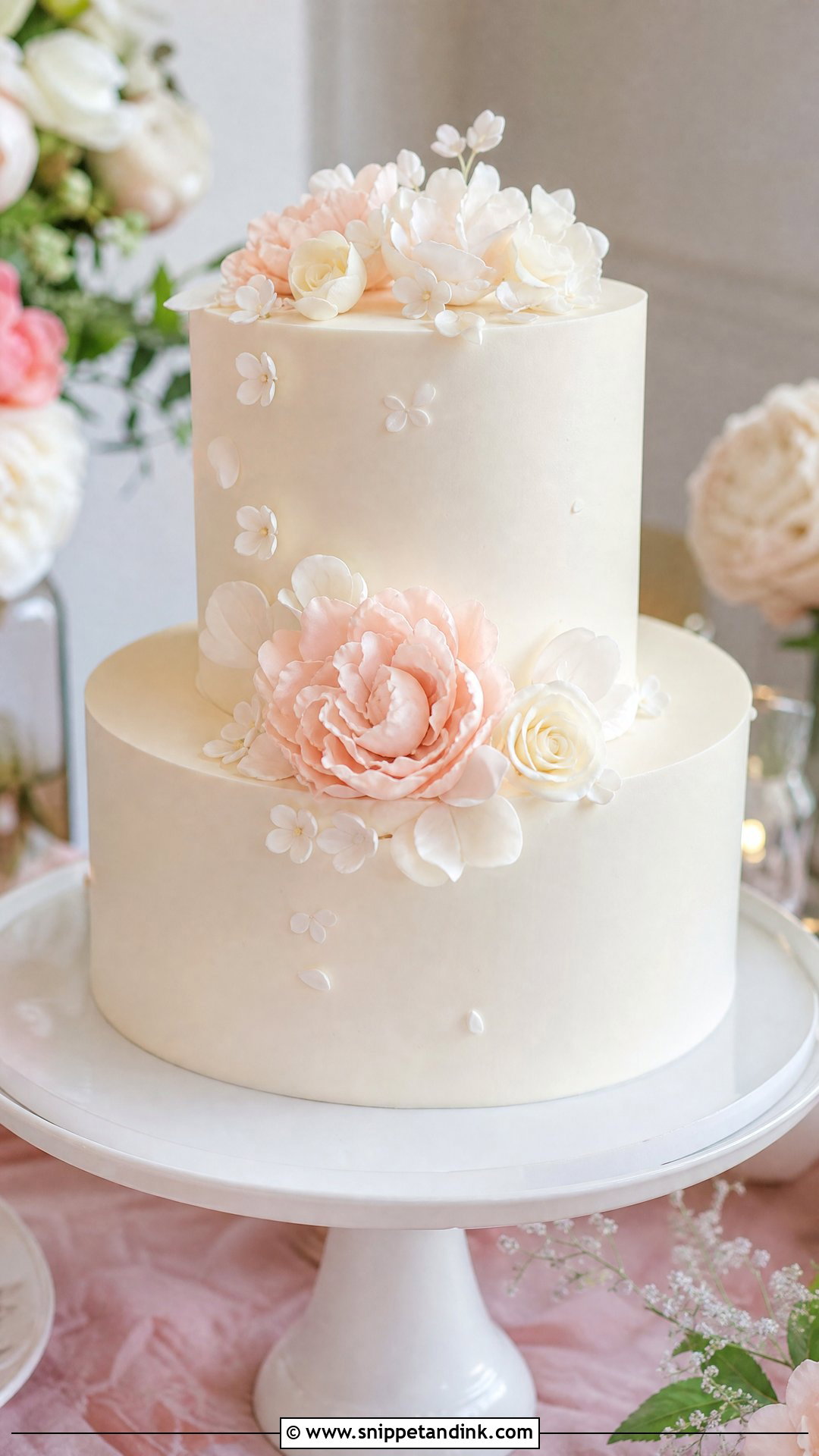
Sugar flowers are made petal by petal from gum paste and left to dry, so they need ordering early: a single large peony can take several days to build. They’re shaped to match roses, peonies, orchids or tiny blossoms, and they stay put in heat where fresh flowers wilt. On two tiers I’d use one statement flower on top and a smaller accent near the base. They’re technically edible but hard and not pleasant to eat, so many couples keep the top flower as a keepsake. Keep the frosting smooth so the sugarwork is the focus.
16. 2 Tier Wedding Cake With Minimal Flowers
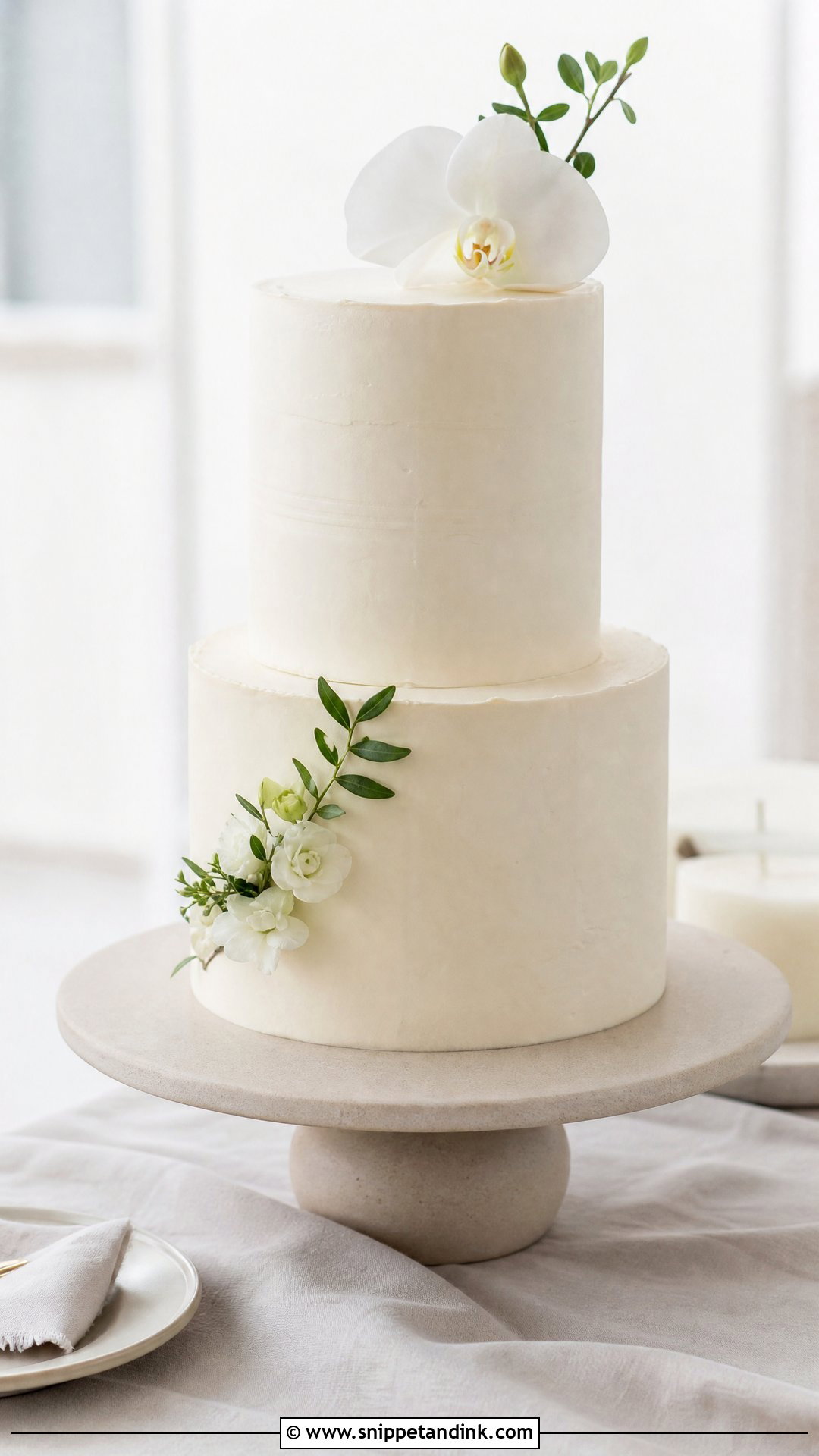
Restraint is the whole design here. Instead of a cascade, one or two blooms sit off-centre: a single orchid, rose, or peony on a smooth or lightly textured tier. The empty space is what makes the cake feel calm and upscale. I’d suggest it for small weddings and city venues where the cake sits close to the guests. Match the flower to your bouquet or keep it white. Every flaw shows when there’s so little on the cake, so choose a baker with clean finishing.
17. 2 Tier Wedding Cake With Drip
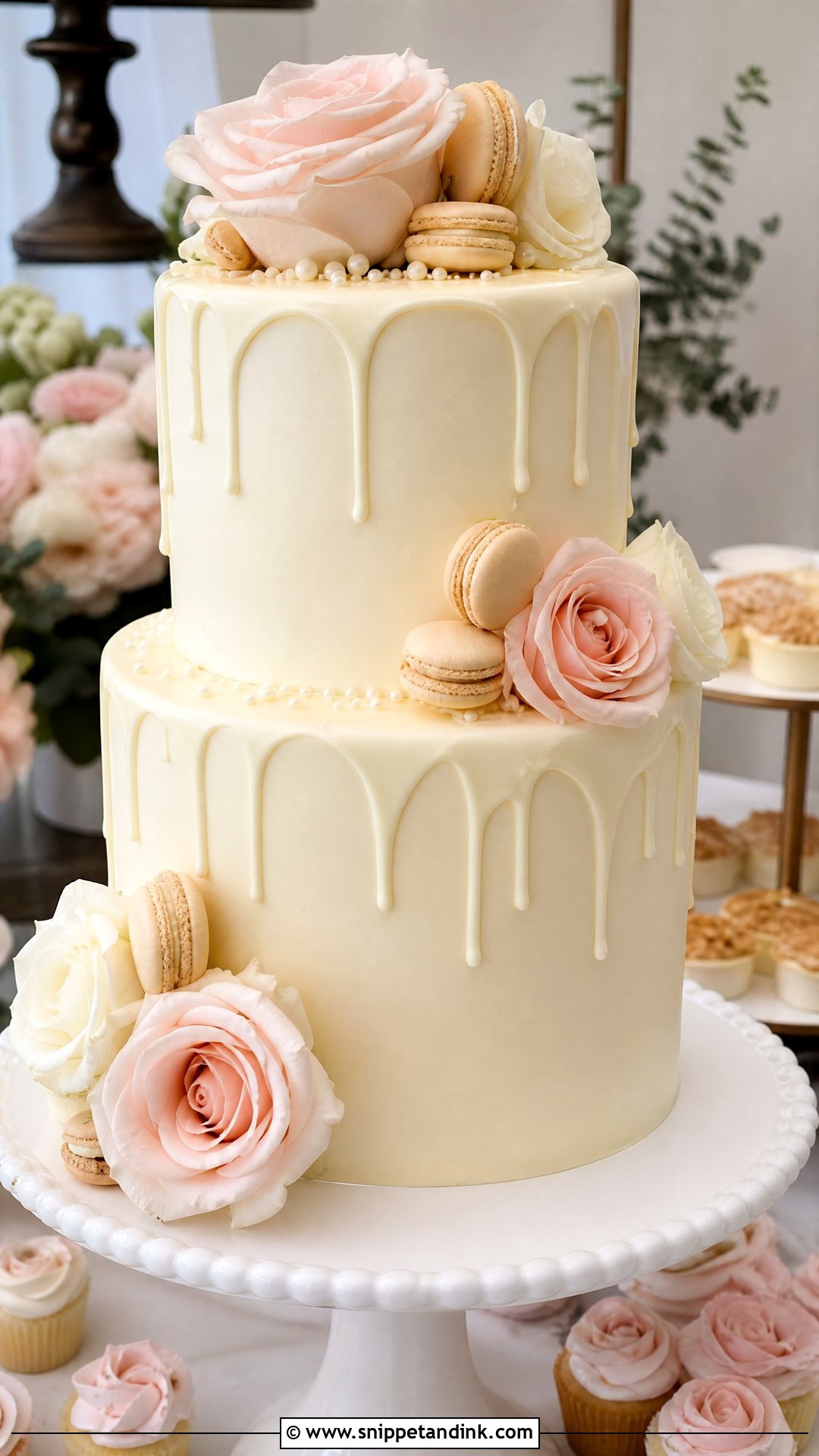
A drip still feels bridal when the colour is soft and the drip itself is controlled. For two tiers I’d choose a white chocolate drip, a champagne tone or a pale caramel rather than anything bold. The cake has to be cold when the ganache goes on, and the ganache only just warm, or the drips run all the way to the board. Thin, even drips that stop partway down look deliberate. A few flowers, macarons or berries on top finish it; it’s playful and modern rather than traditional.
18. 2 Tier Wedding Cake With Fruit
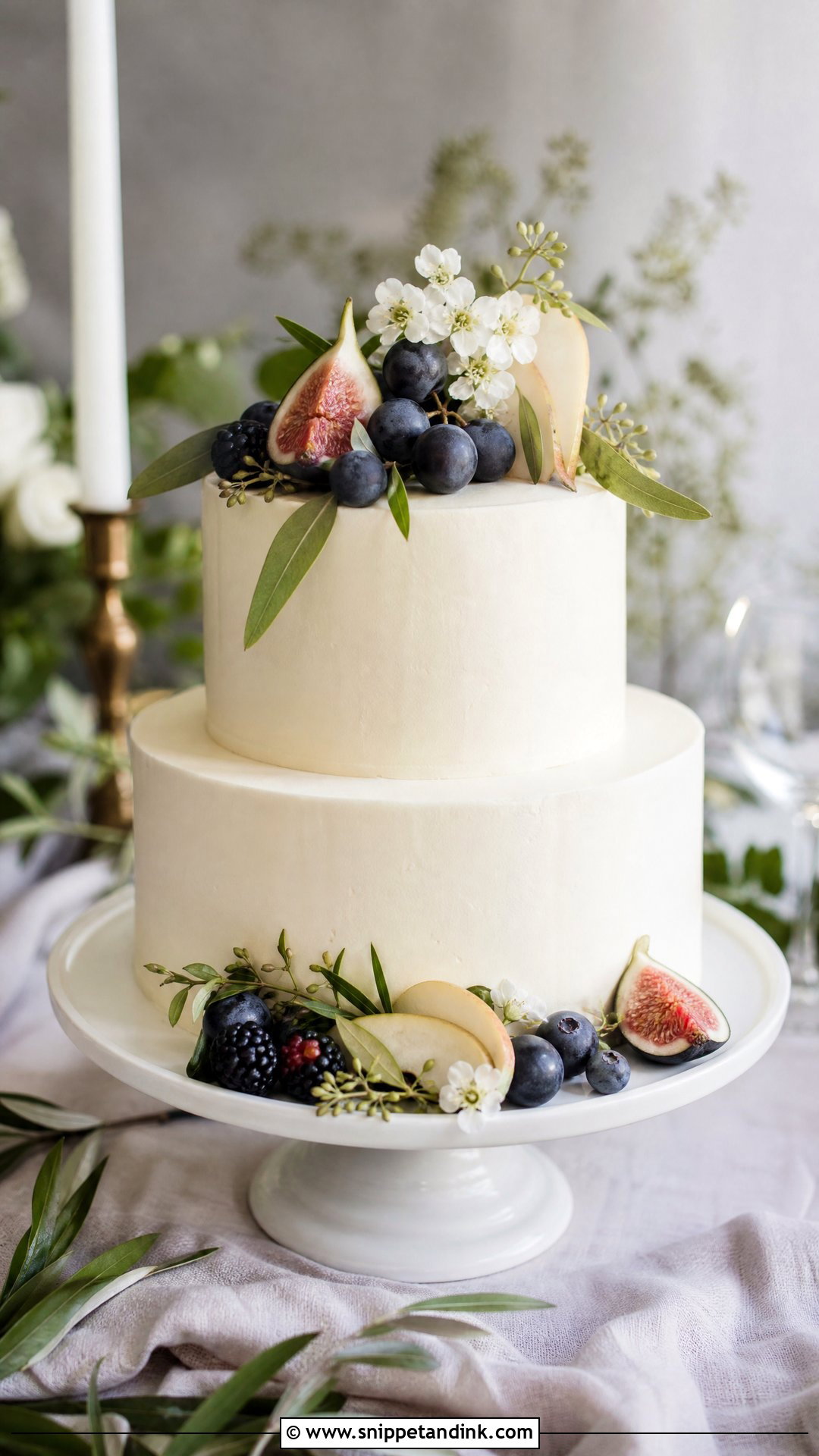
Fruit hints at the flavour inside, which guests notice. I keep to fruit that looks refined and holds its shape: figs, berries, grapes, citrus slices or pear. Cut fruit weeps juice onto the frosting, so I glaze it lightly and add it as close to serving as possible. Small clusters work better than covering every surface. A white or ivory buttercream base keeps it bright. Pair lemon sponge with berries, vanilla with figs or almond with pears.
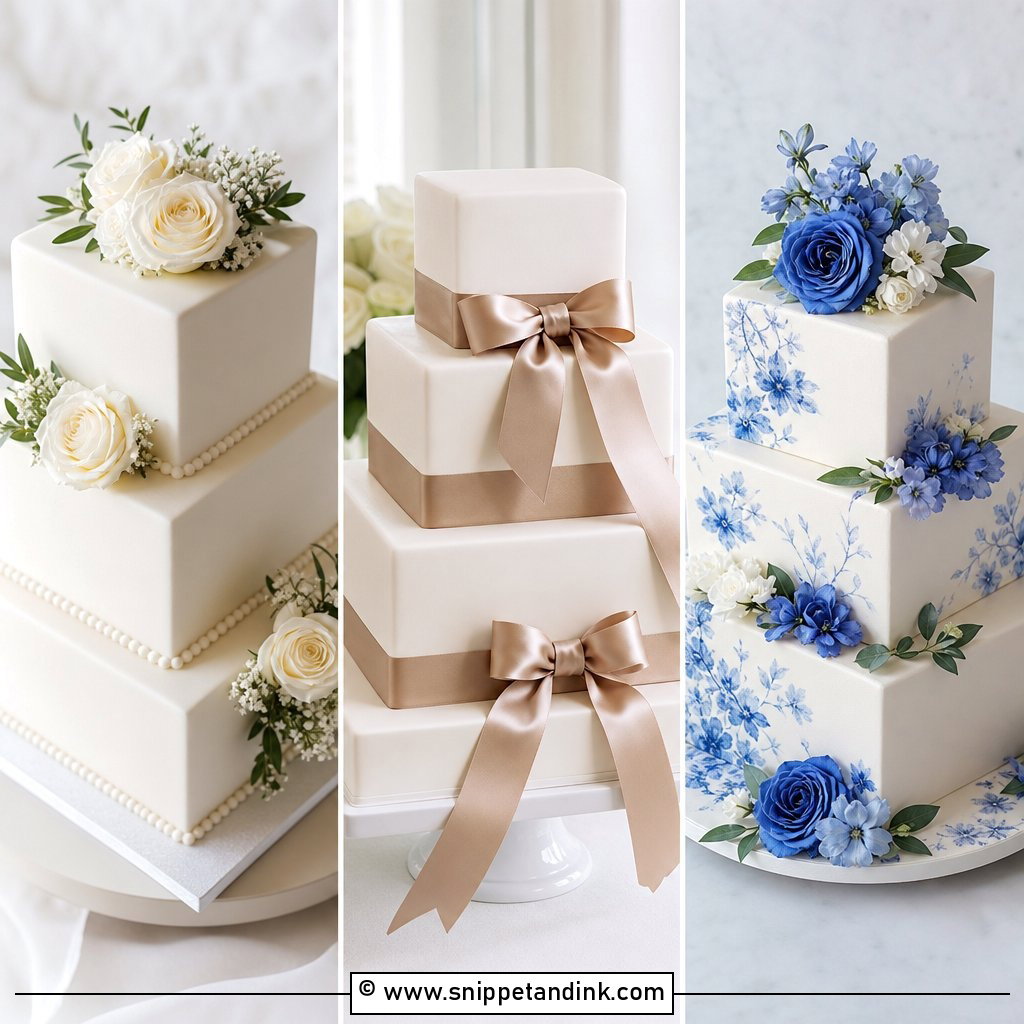
19. 2 Tier Square Wedding Cake
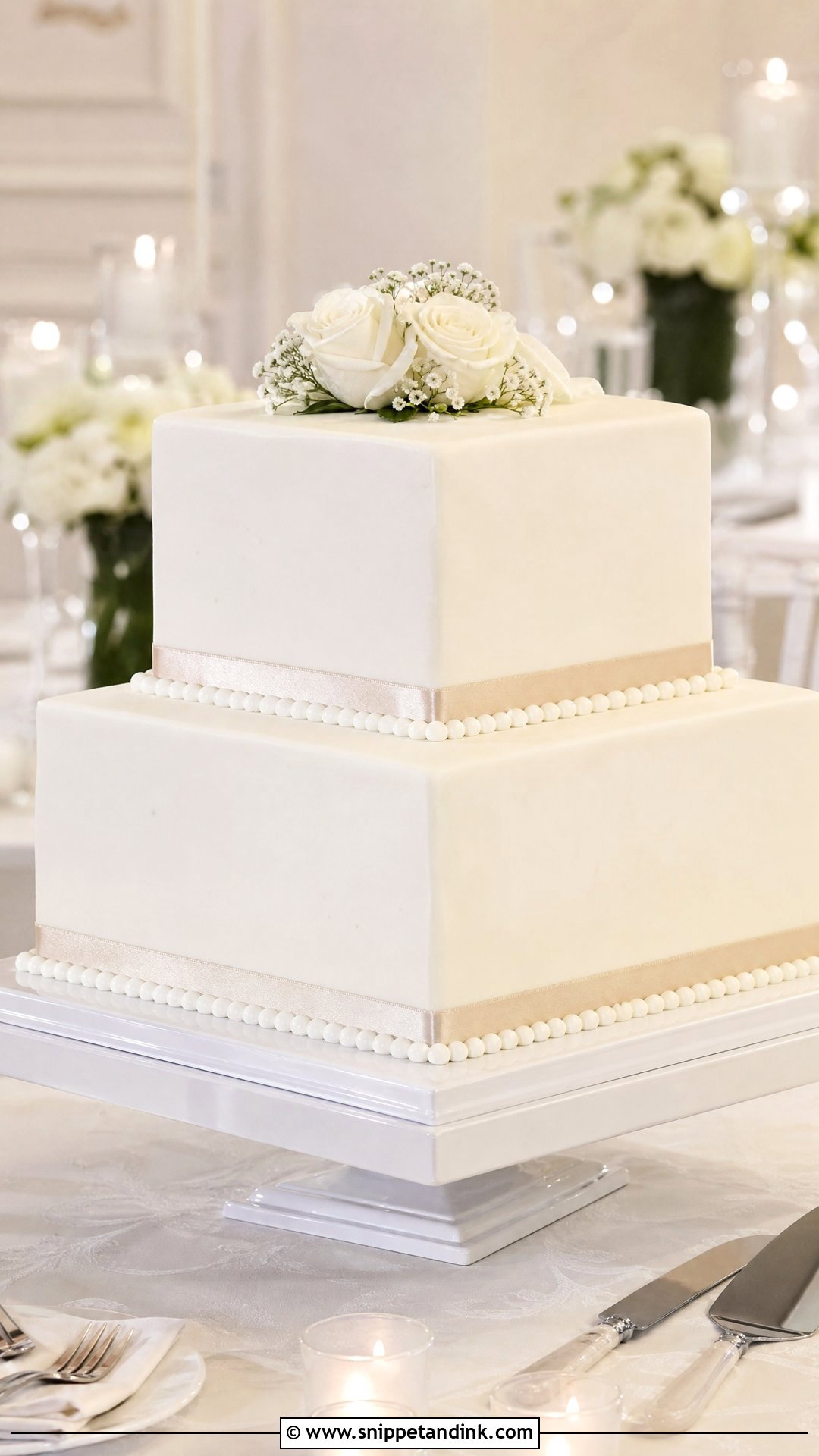
Square tiers look architectural and suit hotel and gallery receptions. They’re also harder to finish than rounds, because every corner shows an uneven edge, so smooth fondant or very neat buttercream is a must. Keep decoration to a thin ribbon, a small flower cluster or a delicate pearl border. White, ivory and soft beige are the classic colours; pale grey or blush can look modern. Square tiers also yield more servings than round tiers of the same width, which helps a little on guest counts.



20. 2 Tier Oval Wedding Cake
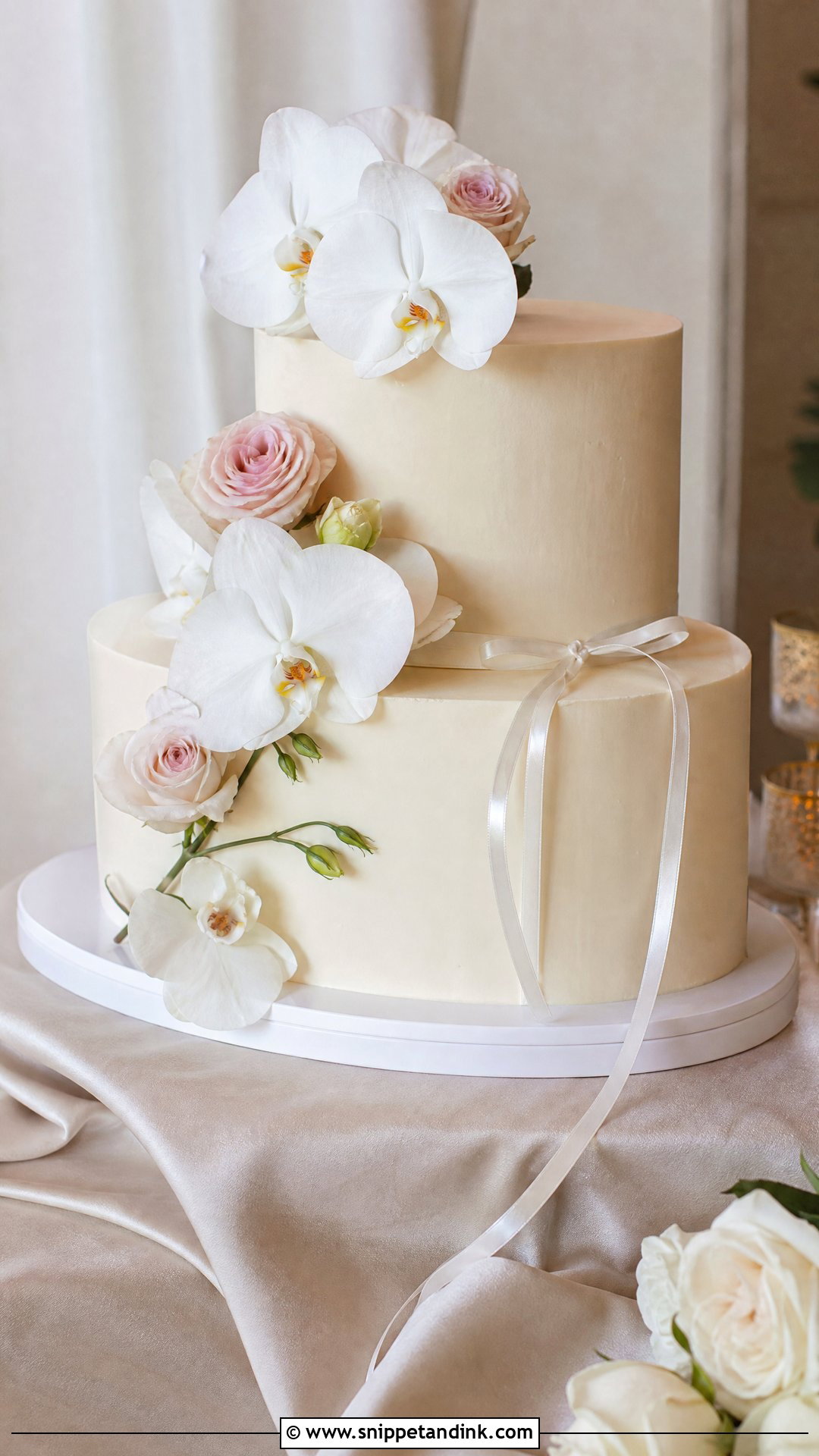
An oval cake is a quietly unusual choice: softer than square, more modern than round. Oval pans and boards are less common, so ask early whether your baker has the sizes, since some will need to order them in. The shape looks best with smooth buttercream, clean fondant or subtle piped borders, and light decoration so the outline stays visible. One flower arrangement along the side or a single ribbon per tier is enough. I’d suggest it for intimate receptions and editorial-style dessert tables.
Getting the Cake From My Kitchen to Your Cake Table
A simple cake is still a structural one. Each upper tier sits on its own board supported by dowels in the tier below, and I usually deliver two tiers already stacked in a chilled van, then set up on site. What can go wrong between the kitchen and your table is mostly temperature.
What I check about the venue
- Where the cake table sits. Never in direct sun or beside a window, a heater or the dance floor speakers.
- How warm the room gets. Buttercream starts to soften in a hot marquee within an hour or two; fondant over ganache copes better.
- A sturdy, level table. A wobbly trestle is the most common reason a cake leans.
- When the cake will be cut. If it’s late, I’ll suggest the table goes in a cooler corner until then.
On ordering, I’d book your baker several months out for a peak-season Saturday, and earlier still for sugar flowers. Tastings usually happen a few months before the wedding, with the final guest count and design confirmed a few weeks ahead. Ask who removes non-edible flowers before cutting, and whether the stand and boards need returning, because those small details are what get forgotten on the night.
Two Tiers, One Clear Idea, and a Plan for the Room
A two-tier cake doesn’t need to be large or heavily decorated to hold its own at a reception. The finish, the shape and one restrained decoration do most of the work: buttercream for softness, fondant for polish, flowers for romance, fruit or greenery for the season. Before you book, think about your venue’s temperature, your guest count, the bouquet and how the cake table will be set up. Bring those answers to the tasting, and your baker can design something that suits the whole day rather than just the photo.
You'll Like These Ideas:











Leave a Reply