
A fourth tier changes how a cake behaves in a room. It lifts the top of the cake to roughly eye level, so guests see it from their tables, and it turns even a plain finish into something formal. It also gives me four separate surfaces to work with, which is why tiered designs suit couples who can’t settle on one texture or one flavor. I’ve grouped the 20 4 Tiered Wedding Cakes below by finish and decoration, with notes on what each one asks of your baker and your venue.
Four Tiers, Four Flavors? Planning the Inside
One of the quiet advantages of a four-tier cake is that each tier can be a different flavor. Guests get a choice, and you don’t have to settle the vanilla versus chocolate argument. I do steer which flavor goes where, though, because the tiers are not equal.
- The bottom tier is the largest and feeds the most people, so put your crowd-pleaser there, usually vanilla, chocolate or lemon.
- Firm sponges and ganache or buttercream fillings belong in the lower tiers, where they carry weight.
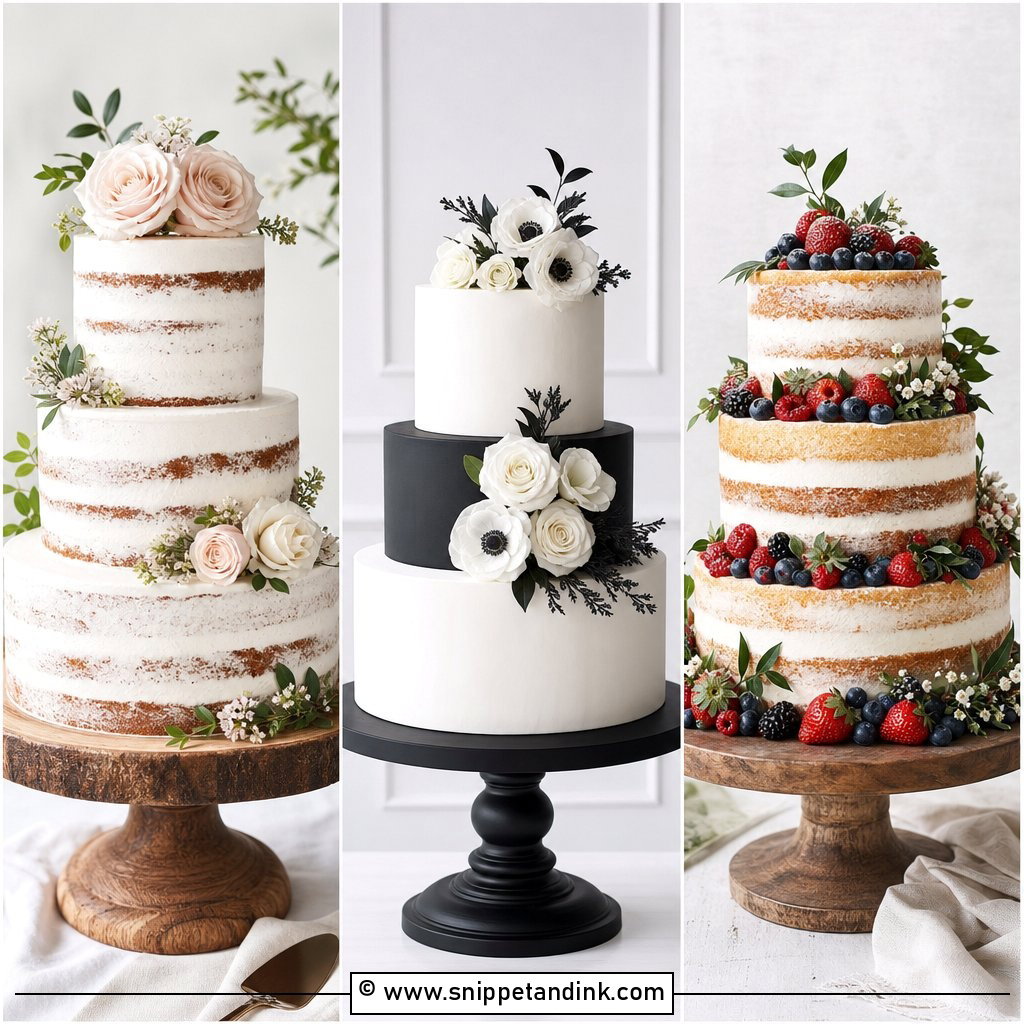
- Delicate fillings like fresh cream, mousse or fruit curd are better in the top two tiers.
- The top tier is often kept rather than served, so make it a flavor that freezes well if you plan to save it.
At the tasting, try each flavor with its filling, not just the plain sponge, and notice how sweet it feels after a few bites. A cake that tastes wonderful from a spoon can feel heavy after a three-course dinner. If two flavors compete for the bottom tier, a matching kitchen cake can give you more of the popular one without making the display bigger.
1. Classic White 4 Tier Wedding Cake
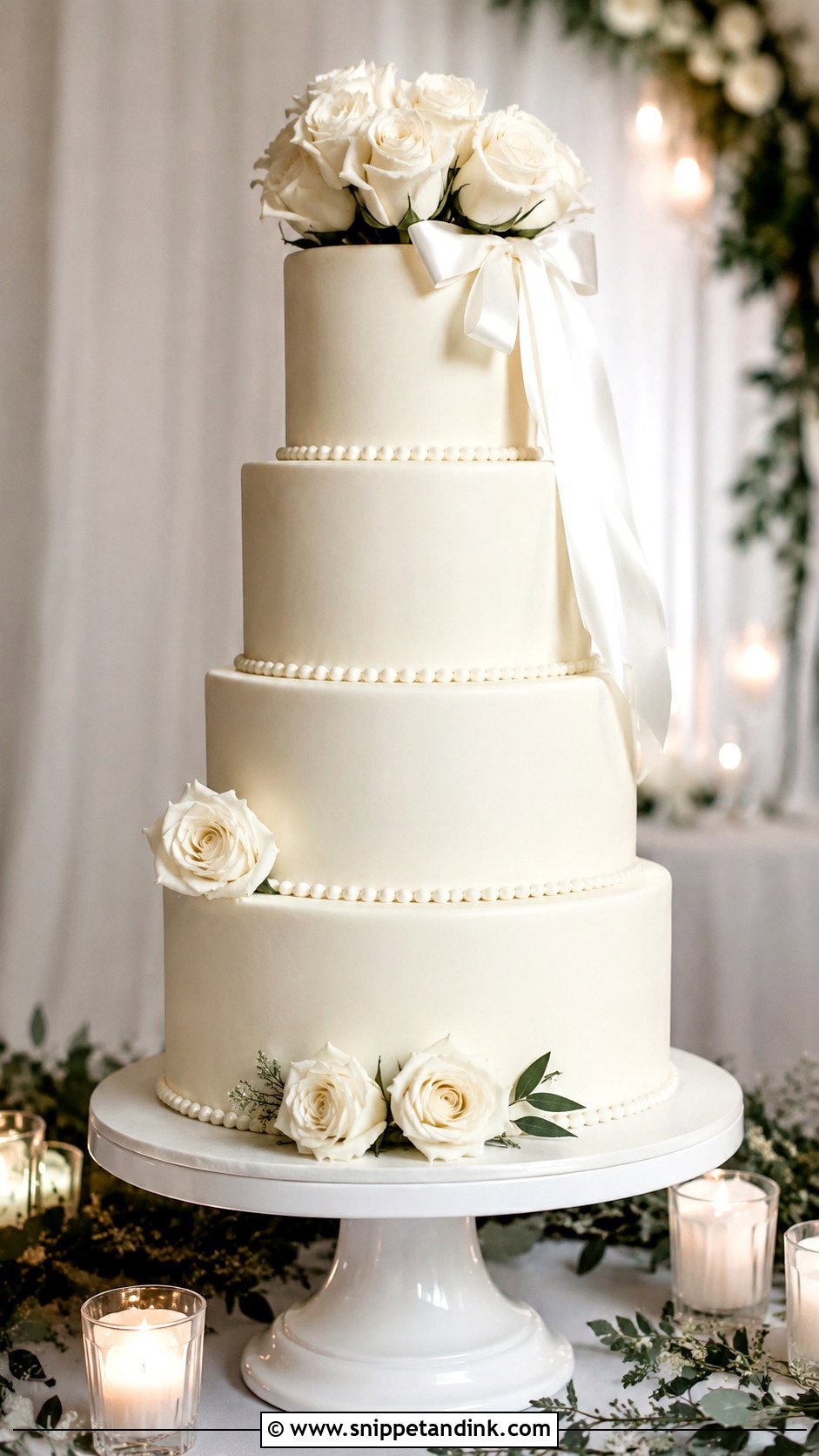
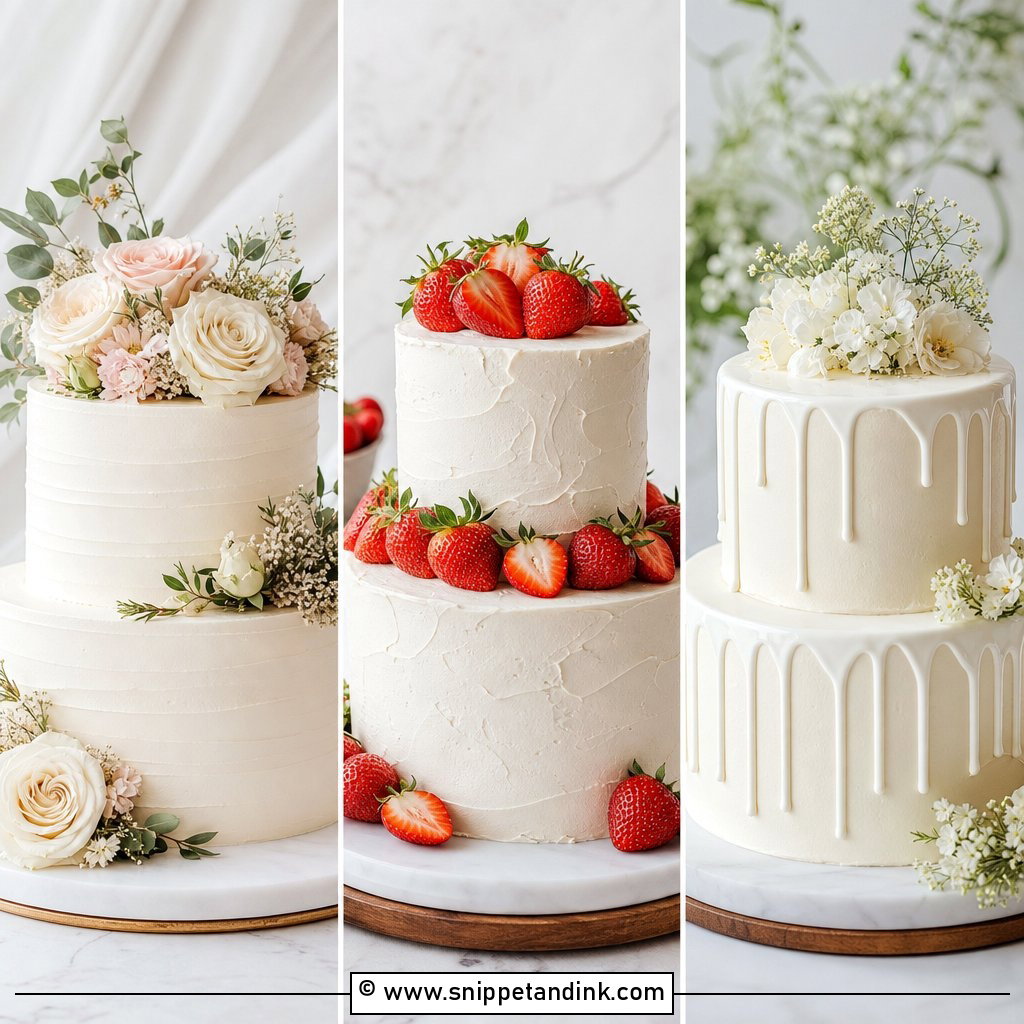
All-white is the design I’m asked for most, and it is far from the easiest. With no color to distract, the eye goes straight to the edges, so sharp, level tiers matter more here than any flower. A few white roses or orchids, a satin ribbon at each base and perhaps one quilted tier are all it needs. Stand it on a tall white pedestal with candles around the foot and it looks finished.
2. 4 Tier Wedding Cake With Fresh Flowers
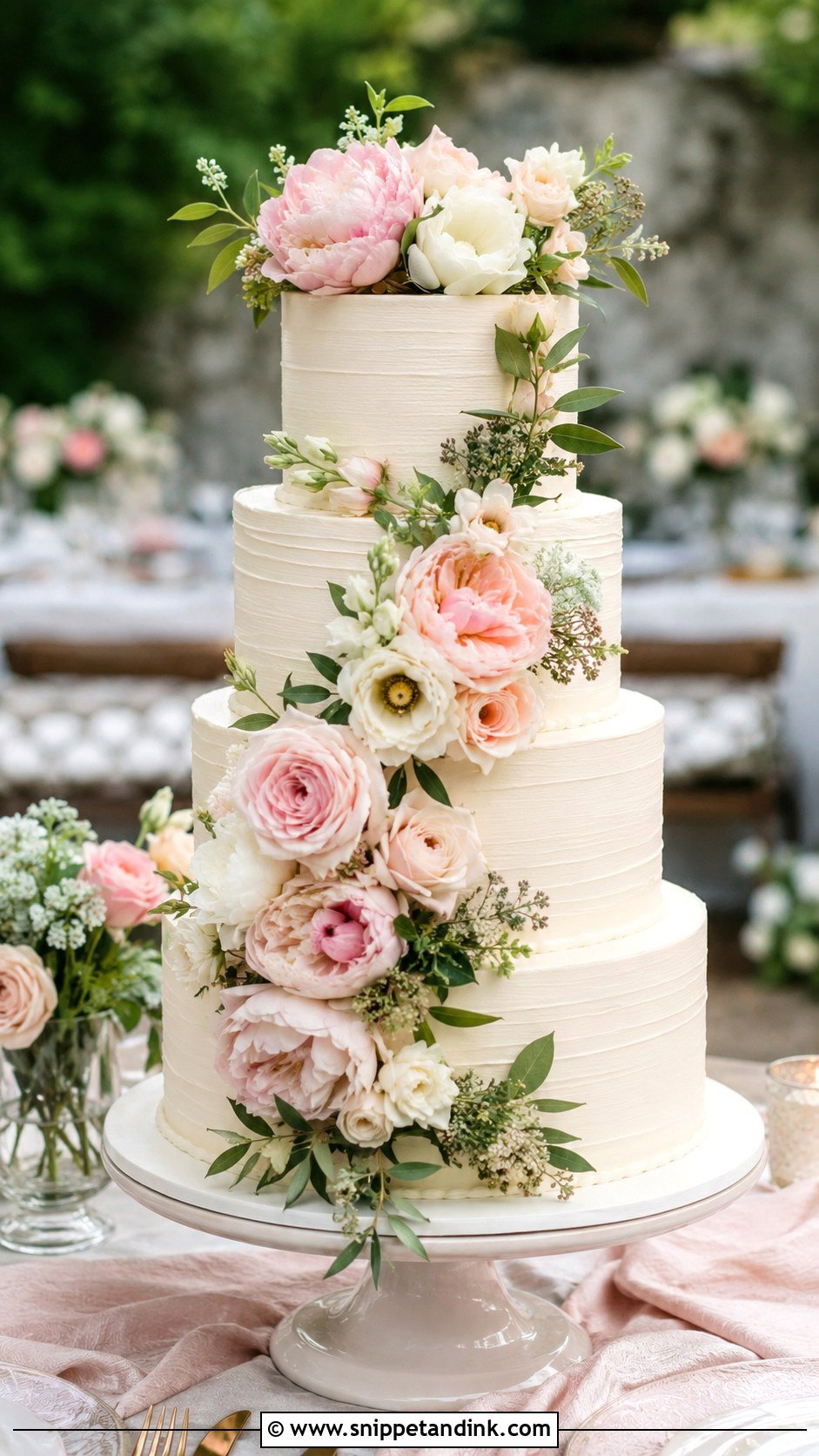
Soft petals instantly make a tall cake feel romantic, and matching them to the bouquet ties the whole room together. The work happens behind the scenes. Before a single rose goes on, I want the florist to supply unsprayed stems, and I wrap each one and set it into a food-safe pick so no sap or water touches the icing. Peonies and garden roses are lovely but heavy, so I place the biggest heads at tier joins where the cake can carry them. Lisianthus and ranunculus are lighter and easier to trail down a side.
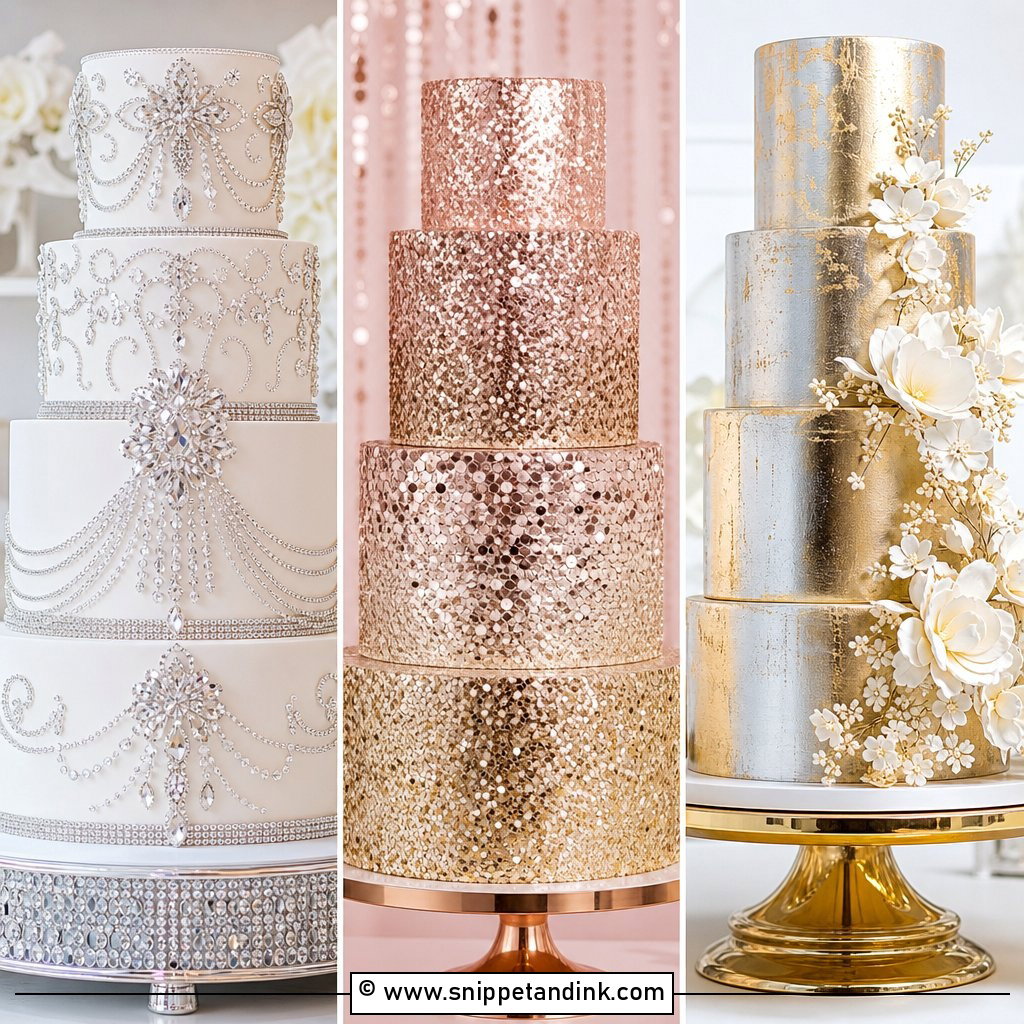
3. 4 Tier Wedding Cake With Gold Leaf
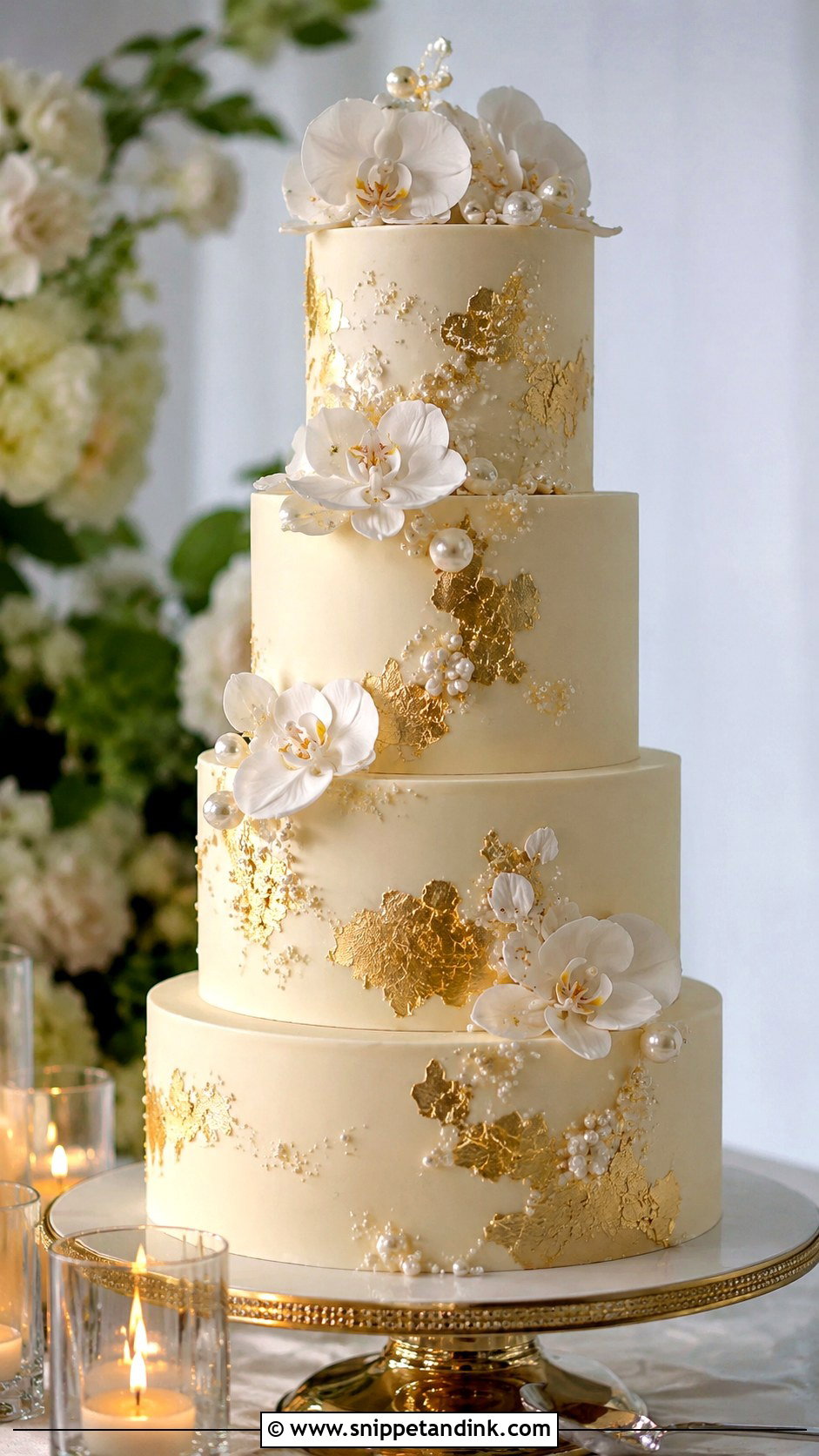
The key is restraint. Gold leaf looks richest in torn, uneven patches along one tier, or as a fine band at each base; a fully gilded cake tips into theatrical quickly. Leaf sticks to anything slightly tacky, including fingertips, so it goes on with a soft brush and a light touch, and it can’t be repaired neatly once torn. Ivory, champagne and soft gray frostings all show it well. Under warm reception lighting the leaf glows, which is the moment it earns its cost.
4. 4 Tier Wedding Cake With Buttercream Flowers
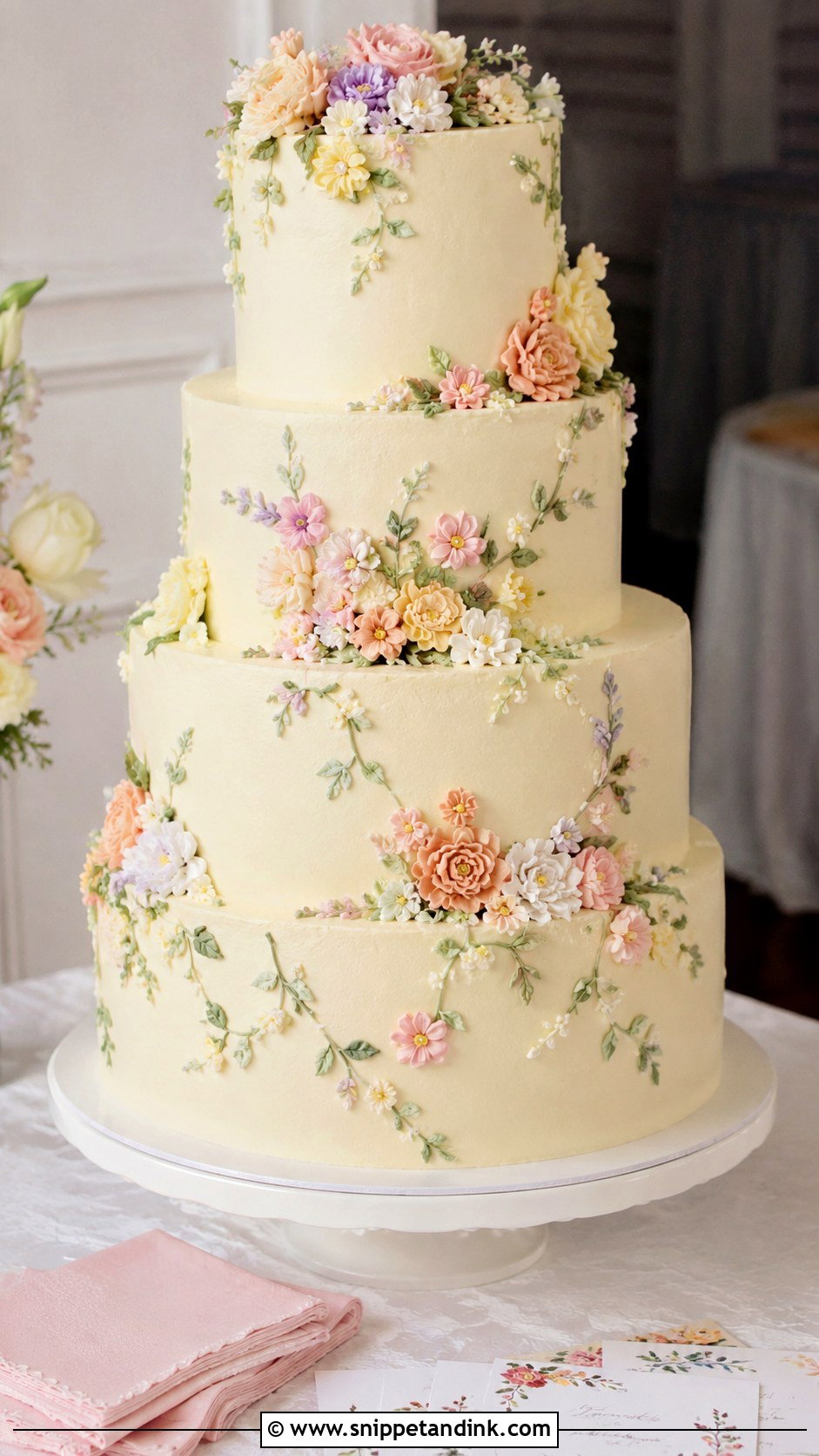
Piped buttercream flowers are edible from petal to stem, which guests love. I pipe the roses and peonies separately, chill them until firm and then set them onto the cake, so they keep crisp petal edges instead of smudging. Their weak point is heat: in a warm room the petals relax within a couple of hours. For spring color they’re hard to beat, and a semi-smooth frosting underneath keeps the overall look relaxed.
5. Rustic 4 Tier Wedding Cake
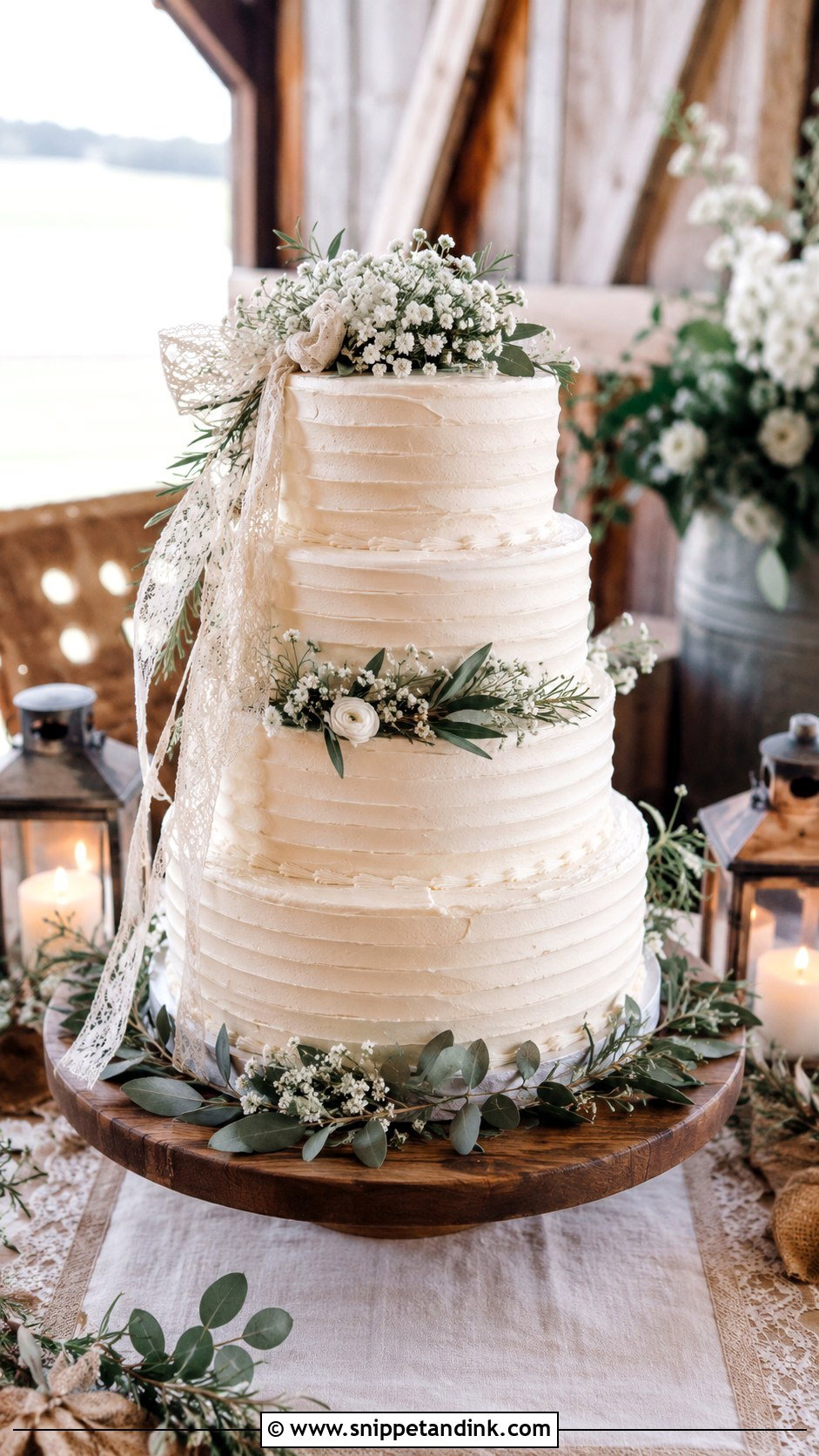
A rustic 4 tier wedding cake should look loose, never sloppy. I get there with a palette knife texture over a properly crumb-coated cake, so the finish is casual but the sides are still straight. Greenery, small white flowers and a wooden stand do most of the styling work. Lace trim or a burlap-look ribbon is fine, though real burlap sheds fibers, so I use fabric ribbon with a similar weave. Lanterns and linen runners around the table finish the barn mood.
6. Modern 4 Tier Wedding Cake
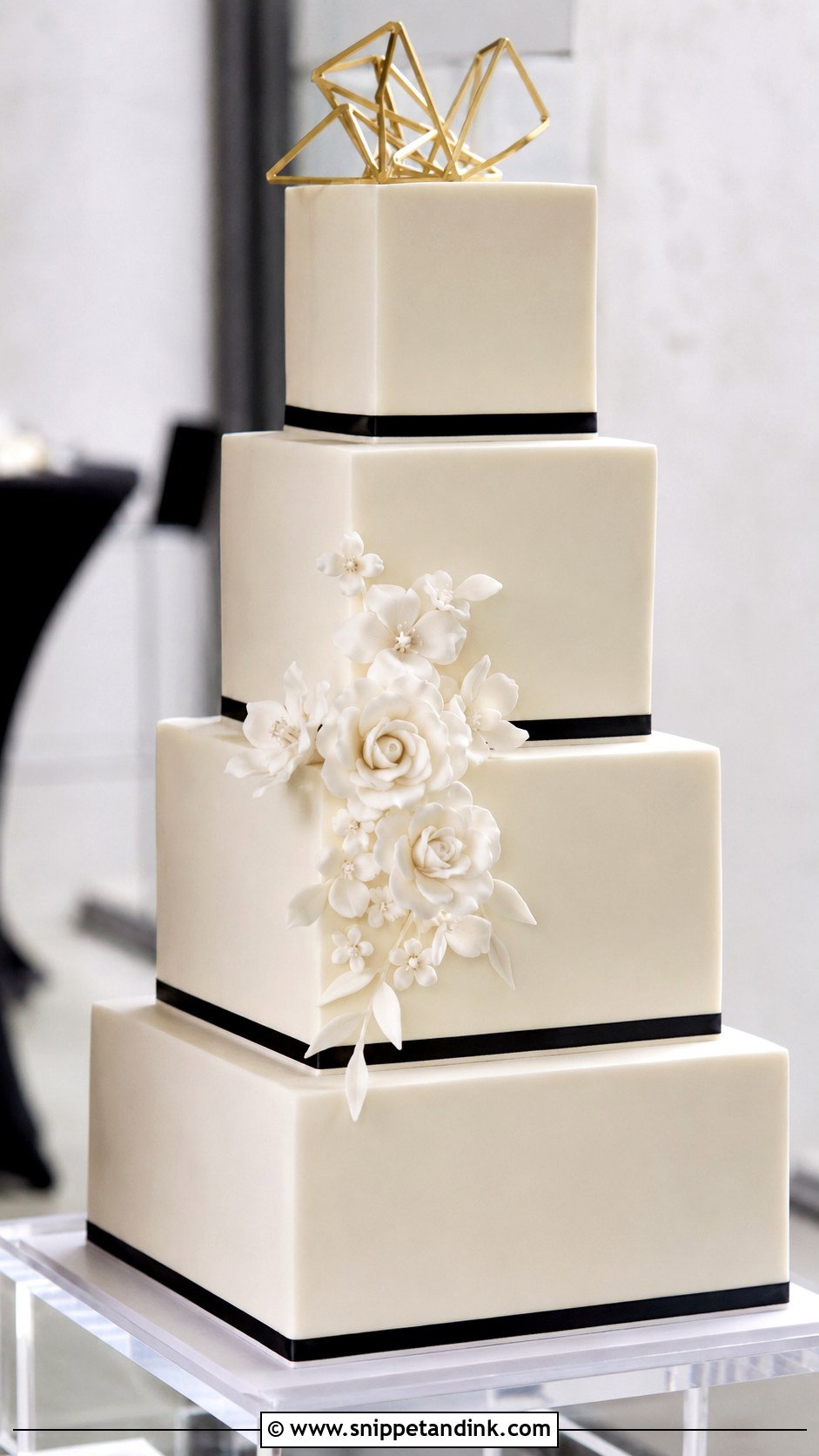
Modern cakes are mostly about what I leave off. Smooth fondant or sharp-edged buttercream, one graphic detail, and a shape that does the talking: square, offset or mixed-height tiers. Mixed heights are the trickiest, since a tall narrow tier needs extra internal support to stay upright through the evening. One black ribbon, a run of geometric gold or a few sculptural sugar flowers is plenty. An acrylic or ceramic stand and a plain backdrop keep the outline clear.
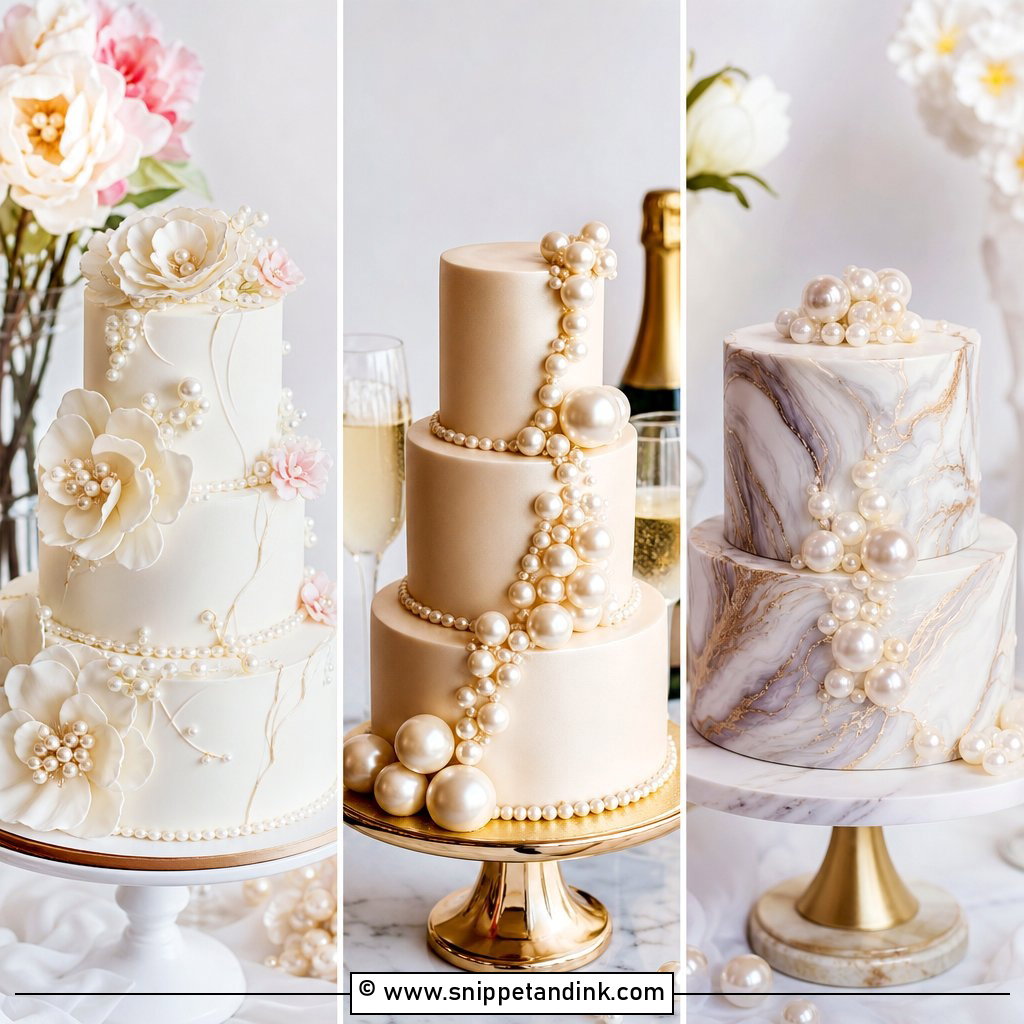
7. 4 Tier Wedding Cake With Pearls
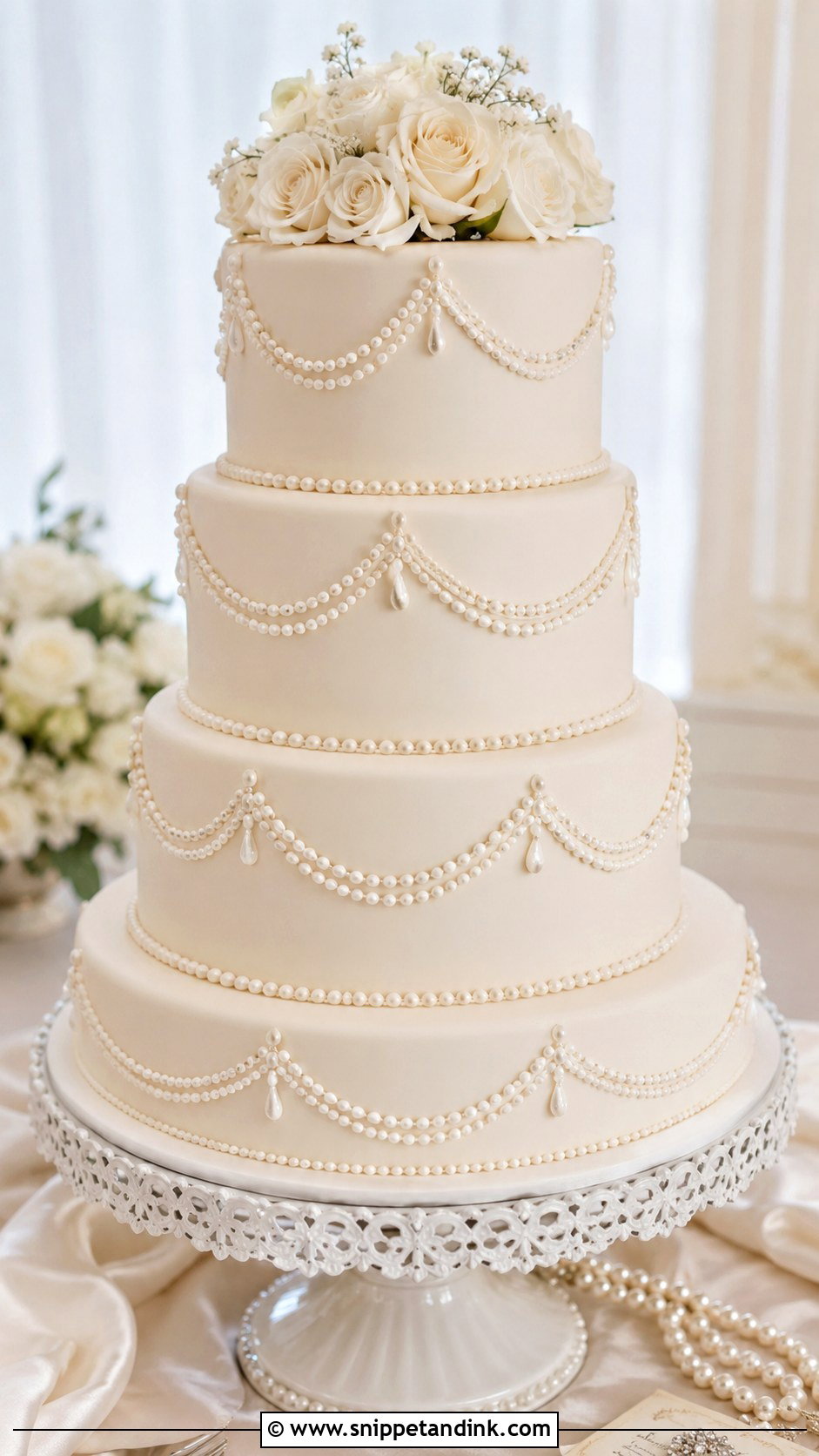
Edible pearls come in two kinds: hard sugar dragées and soft fondant pearls I roll by hand. The soft ones are kinder to eat, so on the tier that will be served I use those and save the shiny hard dragées for the top tier. Rows at the base of each tier look classic; vertical strands feel more modern. Ivory frosting and champagne tones suit them. If your gown and jewelry already lean on pearls, this is a quiet way to repeat the detail.
8. 4 Tier Wedding Cake With Lace
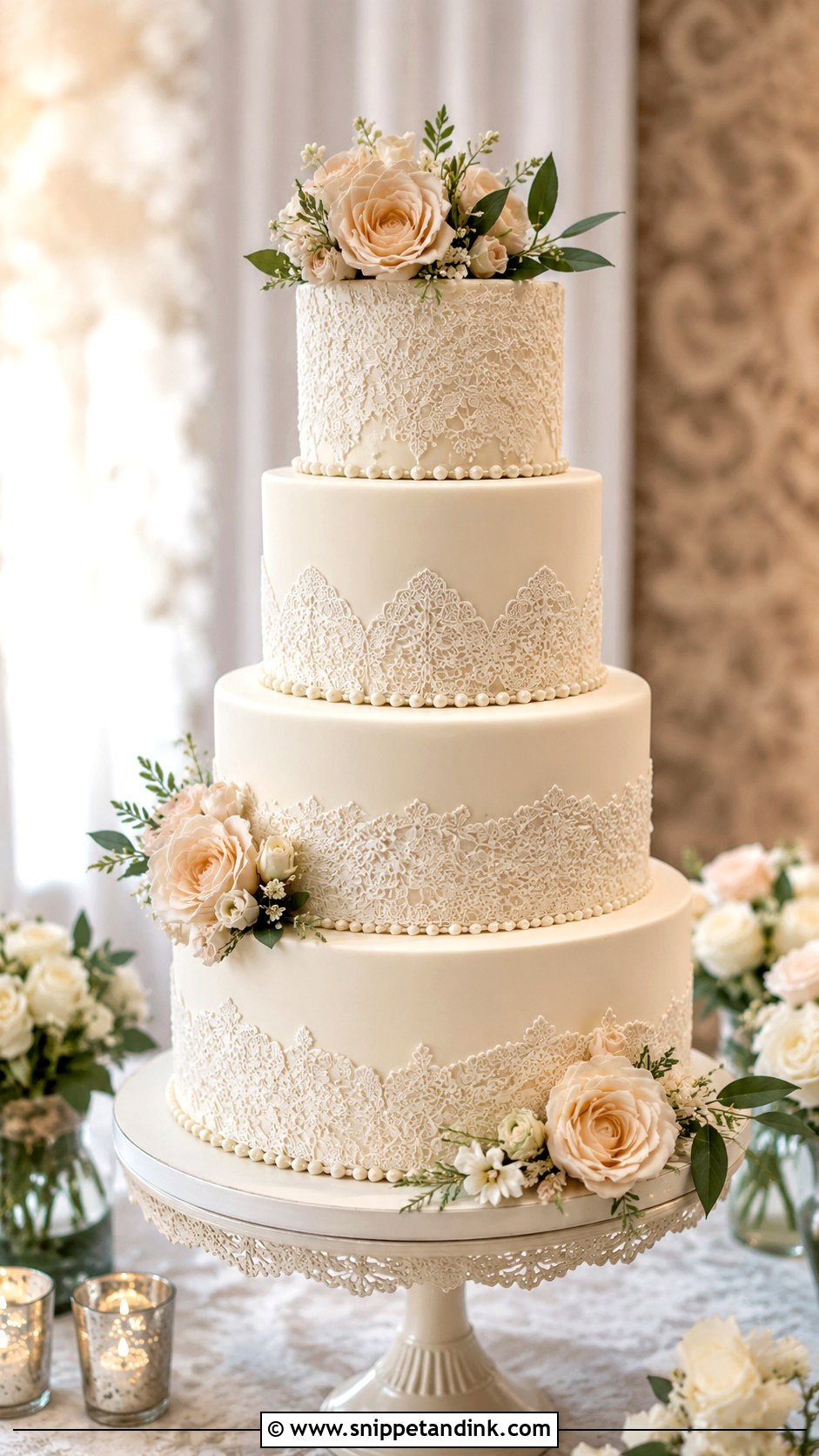
Matching a dress means matching the lace motif, not just adding lace. Bring a close photo of your gown’s pattern and I can choose between a silicone lace mat, stenciled royal icing or hand piping to get near it. Edible lace sheets can wrap all four tiers, but I find one or two lace tiers reads more like couture and less like a tablecloth. Ivory lace over blush or champagne frosting gives a gentle contrast. A few sugar roses is all the extra it needs.
9. Semi Naked 4 Tier Wedding Cake
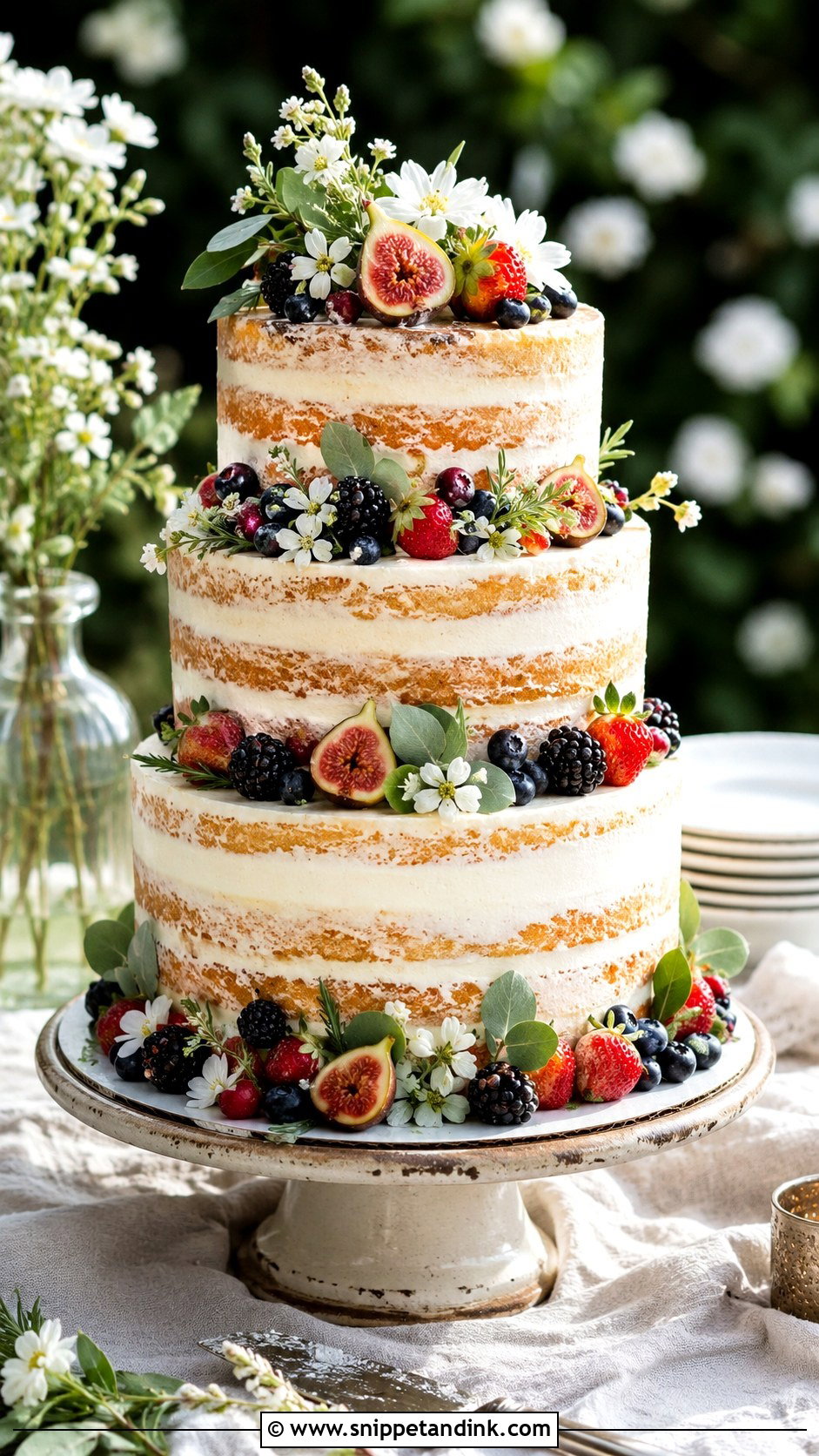
Semi-naked cakes are where I’m strictest about timing. The thin scraped coat that lets the layers show also lets the sponge dry out, so I bake and assemble as close to the wedding as I safely can, and I brush the layers with syrup to keep them moist. The exposed sponge becomes part of the color story, which is why vanilla, almond, spice and chocolate layers all show differently. Berries and figs between tiers look abundant. Four tiers of this still need full internal support, rustic or not.
10. 4 Tier Wedding Cake With Roses
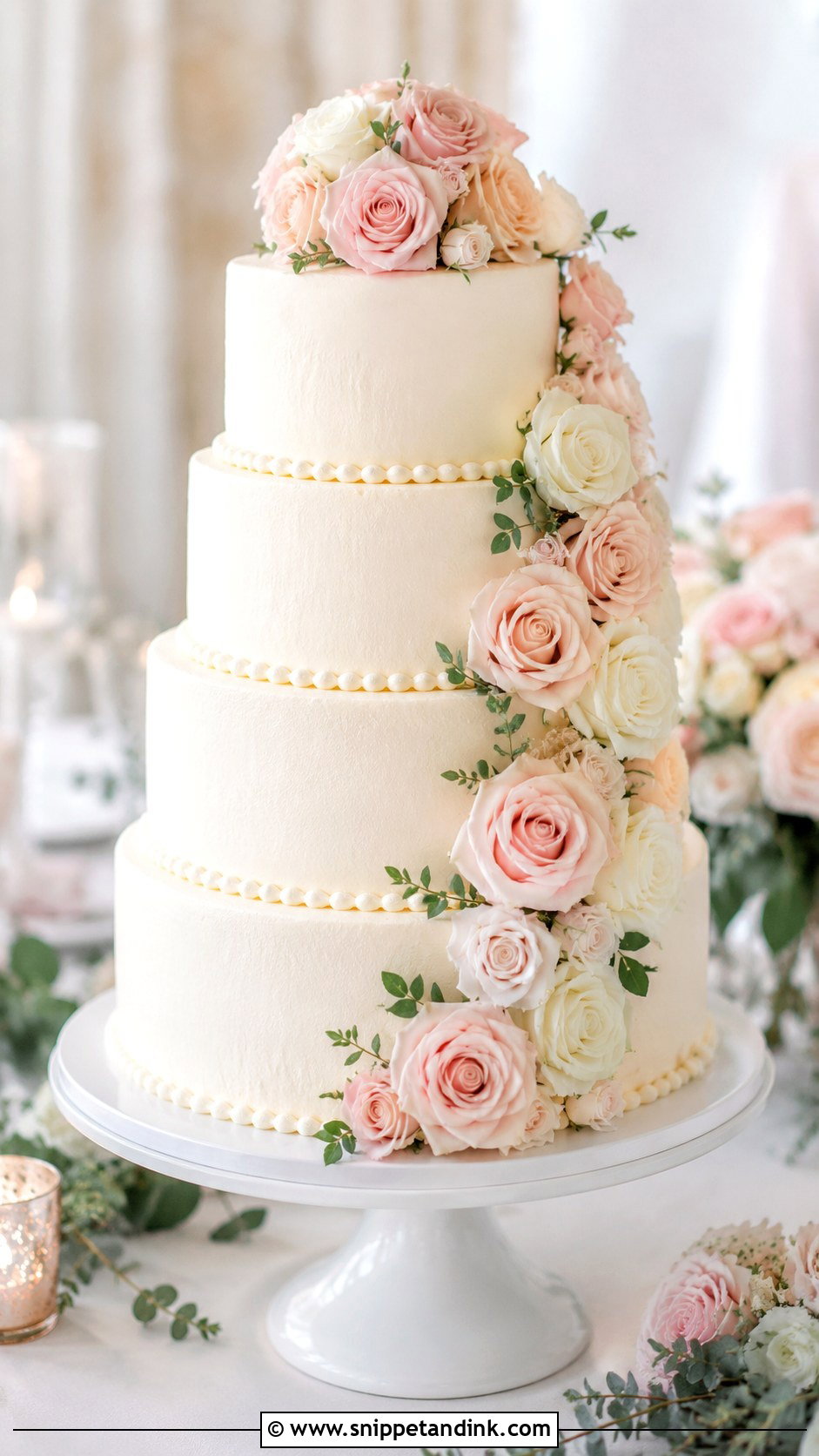
Roses suit nearly every wedding, and the real decision is which kind. Fresh roses are the cheapest per bloom but need careful handling and a florist on the timeline. Sugar roses cost more because each petal is shaped by hand, yet they never wilt and can be kept afterward. Buttercream roses sit somewhere between and taste the best. A cascade down one side gives height; clusters at each tier join feel fuller. White, blush and peach all sit well against smooth ivory frosting.
11. Square 4 Tier Wedding Cake
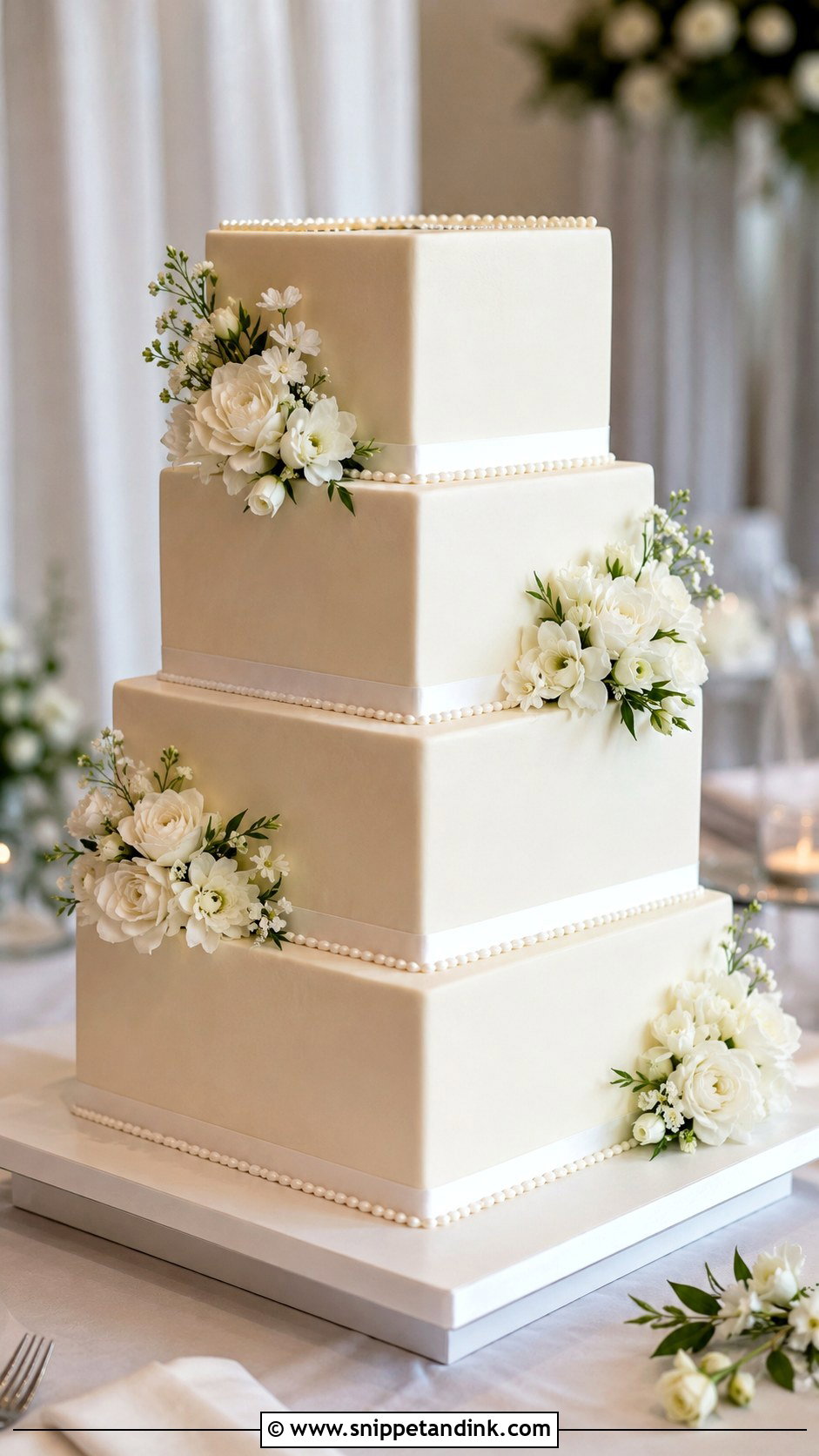
Square tiers are unforgiving. Every corner has to be sharp, and if one tier sits a few millimeters off-center, the straight lines show it immediately. That precision is also why they look so tailored in hotel ballrooms and gallery spaces. Fondant gives the cleanest corners; sharp buttercream can work in a cool room. A ribbon band or a single floral corner on each tier is enough. They also cut into neat, even slices, which caterers appreciate.
12. 4 Tier Wedding Cake With Orchids
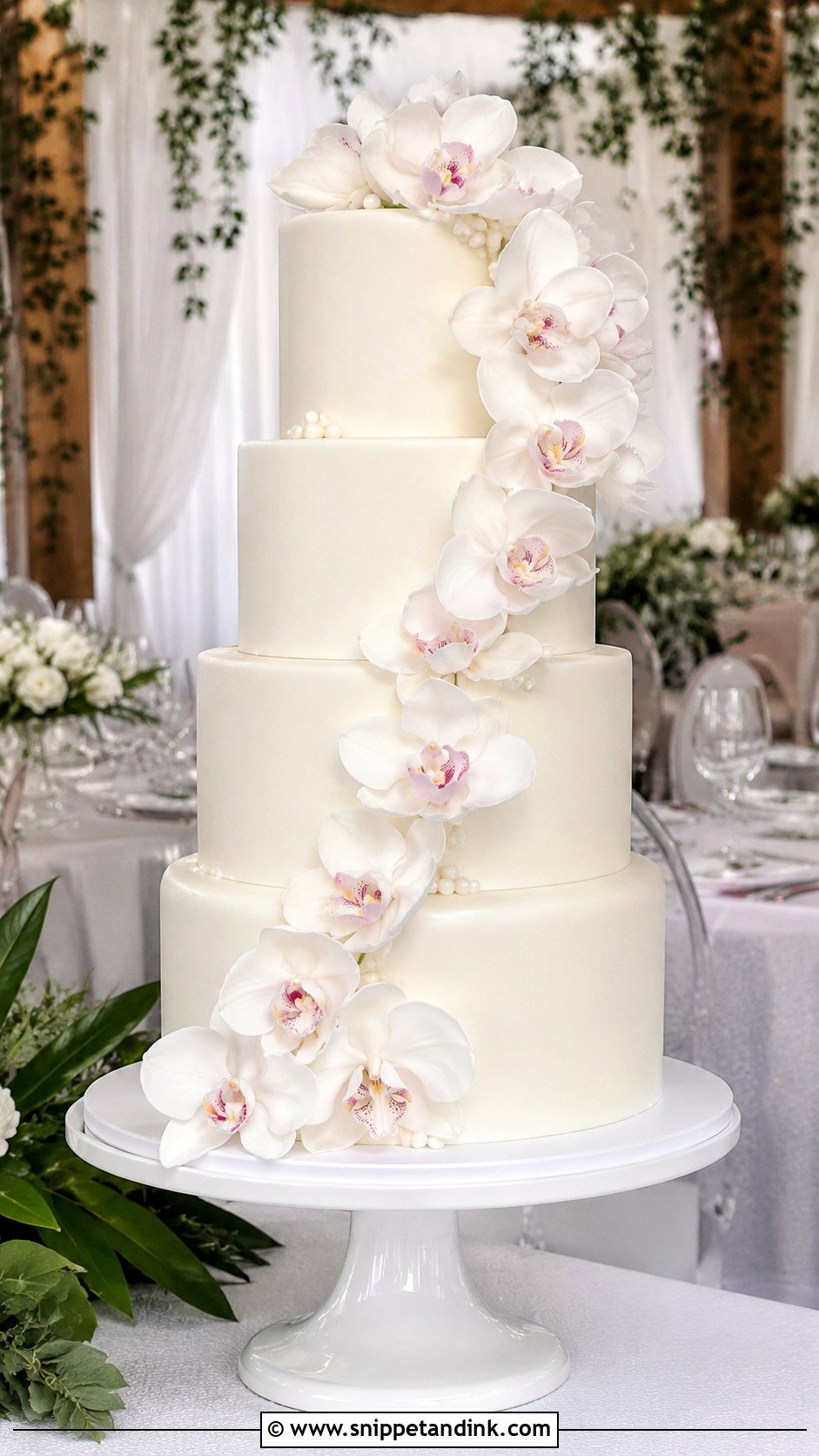
Orchids have a strong shape on their own, so I give them space. A single spray curving from the top tier to the base reads cleaner than orchids at every level. Phalaenopsis are the classic choice, and I often make them in sugar, since fresh orchid stems need wrapping and the petals bruise easily when handled. White orchids on ivory fondant look calm and expensive; pink or purple adds color without shouting. Keep everything else minimal.
13. 4 Tier Wedding Cake With Ruffles
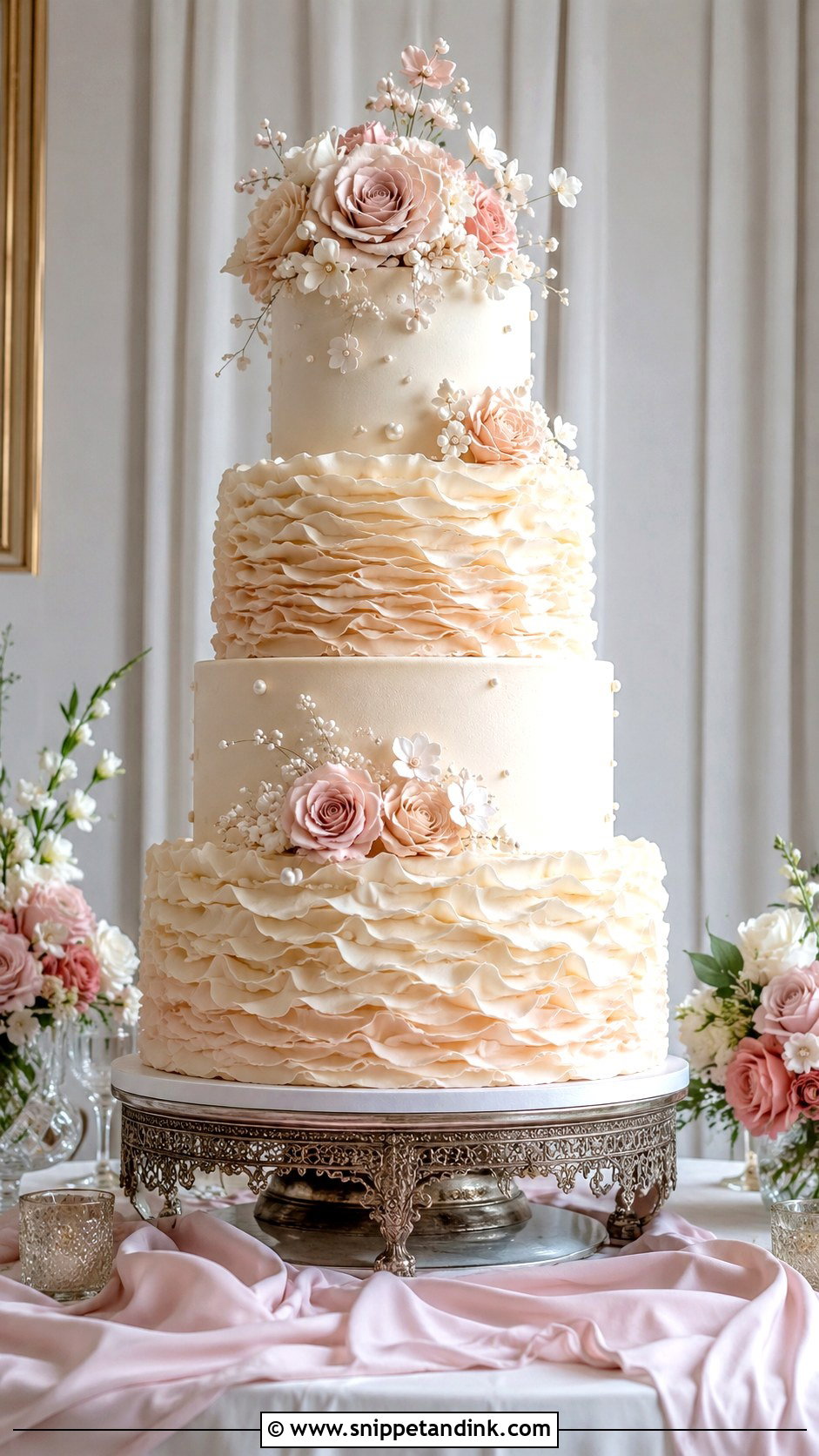
The material sets the mood. Buttercream ruffles are soft and slightly irregular, fondant ruffles hold sharp, sculpted folds, and wafer paper ruffles are feather-light with a translucent edge. Wafer paper does not like humidity, though, and can curl or soften in a damp marquee, so I’d keep it for indoor receptions. Ruffling all four tiers is dramatic; one or two ruffled tiers between smooth ones gives contrast. Ivory and blush show the shadows in each fold best.
14. 4 Tier Wedding Cake With Greenery
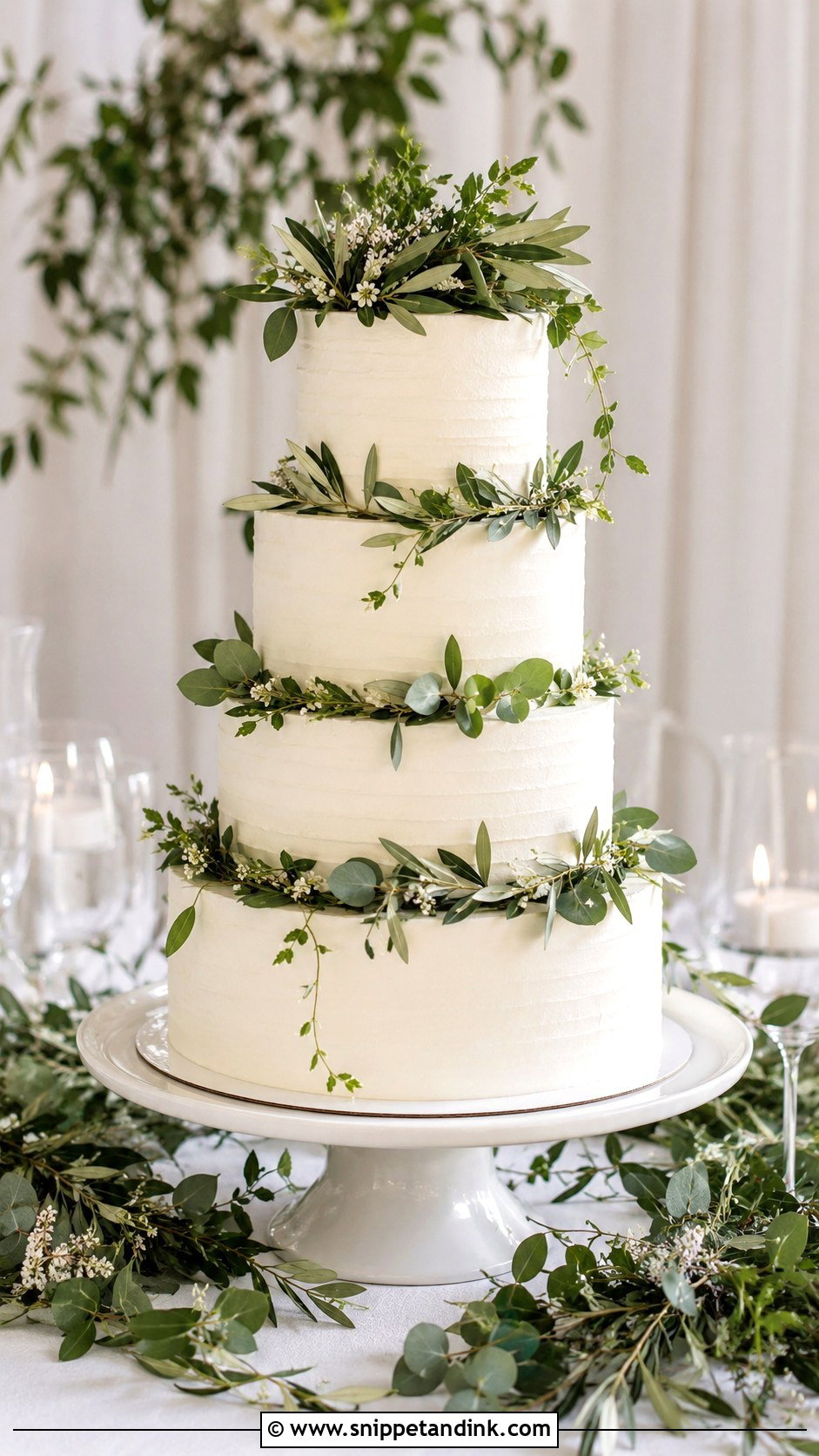
Greenery is a florist’s job as much as mine. Eucalyptus is popular, but some types are not considered food-safe, so I keep its stems wrapped and away from anything that will be served, and the same goes for any foliage the florist isn’t sure about. Olive leaves and ferns trail nicely along a tier edge. Setting the greenery with white buttercream or a semi-naked finish keeps the look calm. A few white flowers soften it if you want it more bridal.

15. Blue 4 Tier Wedding Cake
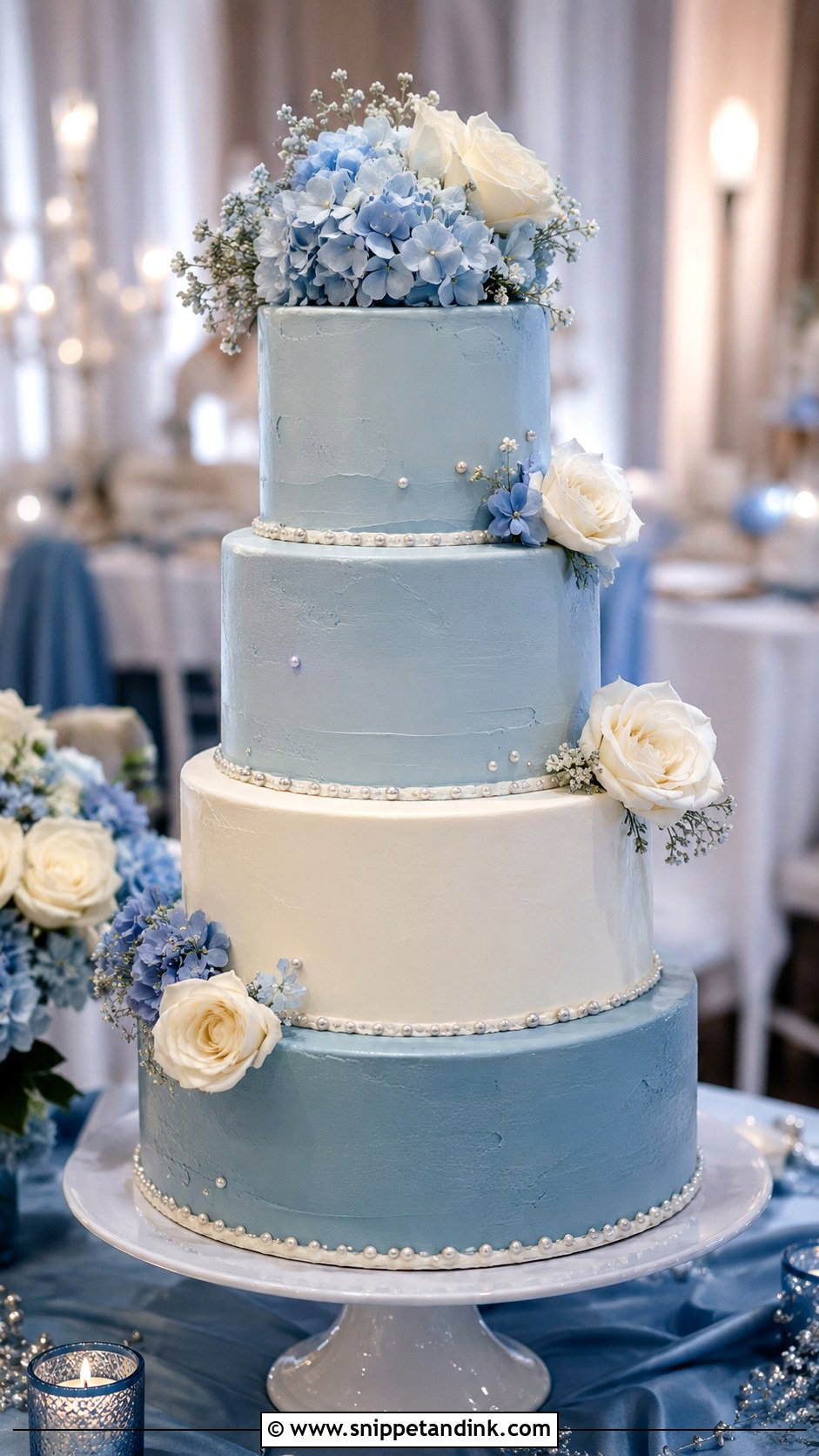
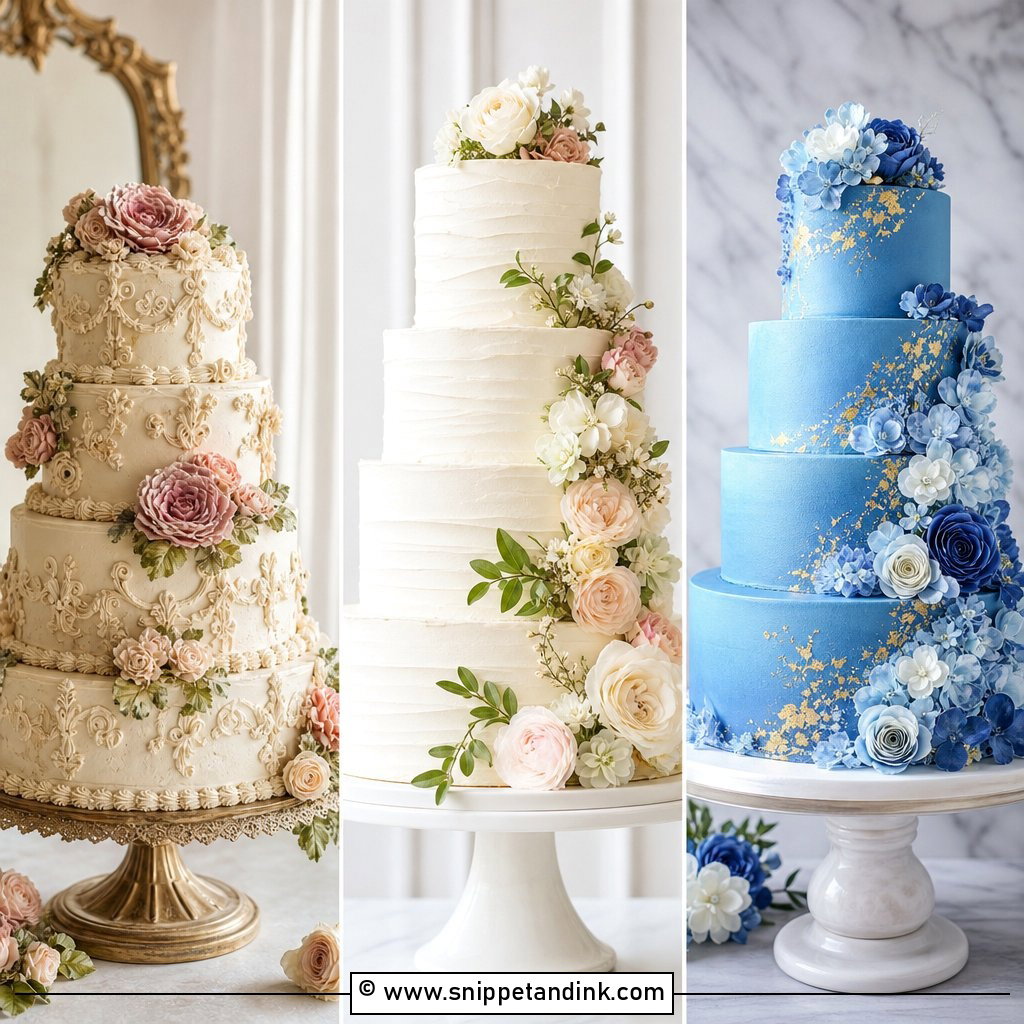
Shade decides everything with blue. Dusty blue is quiet and pairs with silver and white roses; pale blue feels light for spring; navy is formal and wants ivory tiers and gold beside it. I usually suggest blue on one or two tiers, or an ombré from white at the top to blue at the base, so the cake doesn’t look heavy. Deep blues take a lot of coloring, which can taste slightly bitter, another reason to use them sparingly. Blue linens and candlelight finish the picture.
16. Pink 4 Tier Wedding Cake
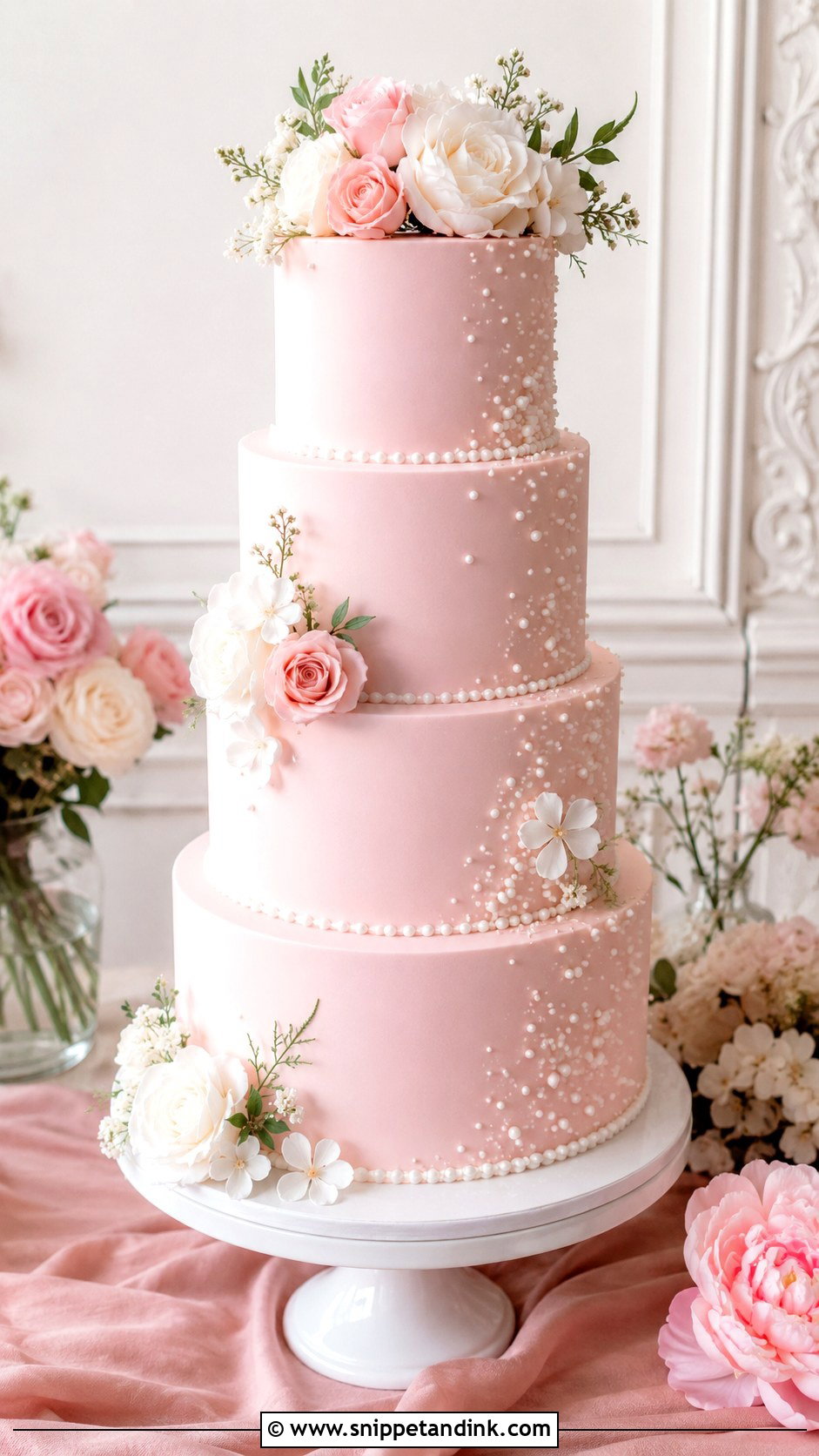
Blush is the easiest pink to style, sitting comfortably with ivory, champagne, gold and greenery. A smooth pale pink stack with white sugar flowers looks modern; ruffles, roses or a watercolor wash push it romantic. The thing I watch for is fading: some pink colorings soften under strong daylight, so a cake displayed by a bright window can look paler by cutting time than it did at setup. Keep the decoration simple and pink stays grown up rather than sugary.
17. 4 Tier Wedding Cake With Watercolor
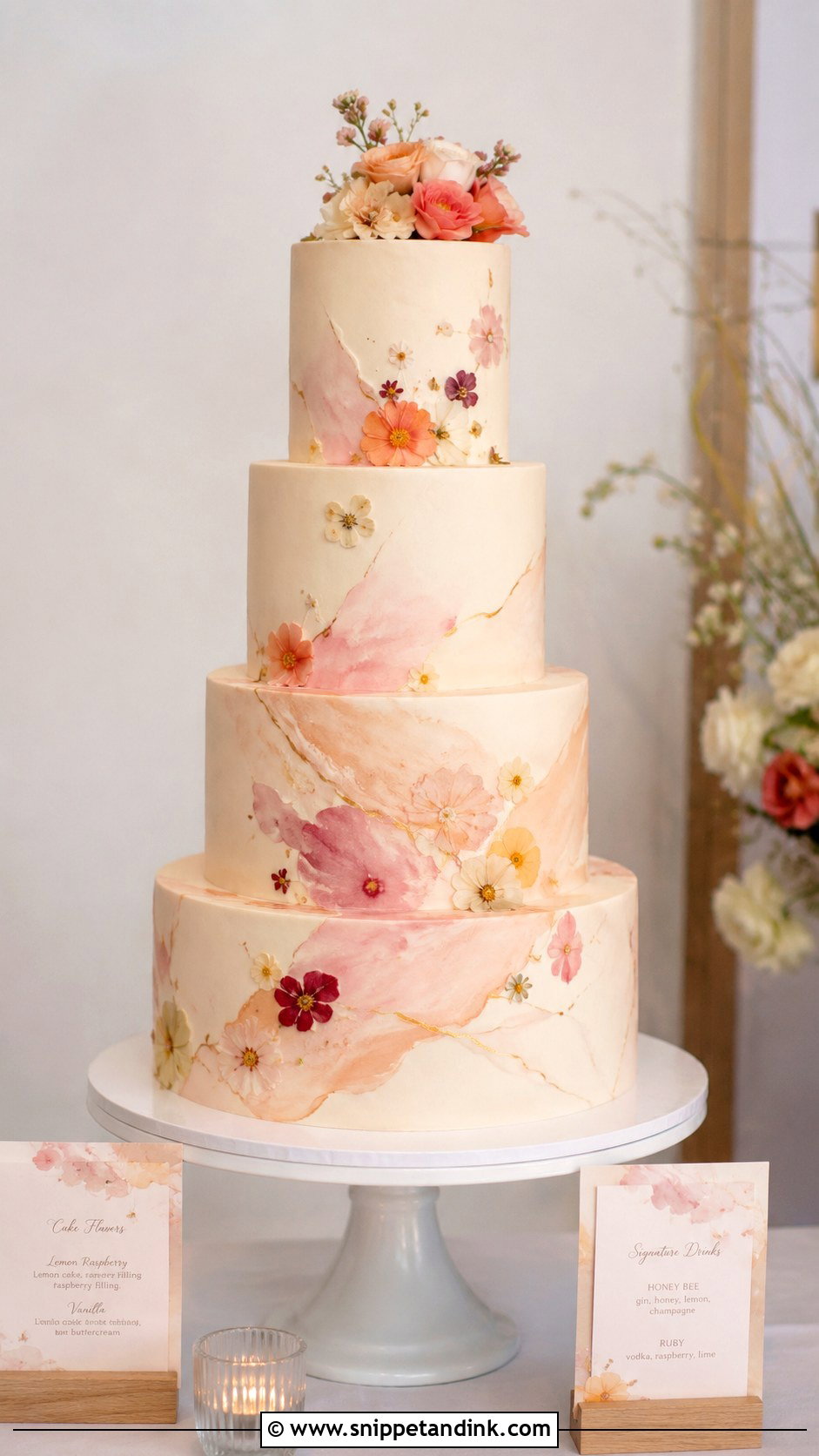
Watercolor is painted by hand onto chilled buttercream or fondant with diluted color, which means no two cakes come out the same. I keep the washes pale so the cake still reads as a wedding cake, and I match them to swatches from your flowers or bridesmaid dresses. Blush, peach, lavender and sage blend well together. A thin gold line or a small cluster of pressed flowers finishes it. If you want an exact match to a sample photo, this isn’t the style, because the spontaneity is the point.
18. Black And White 4 Tier Wedding Cake
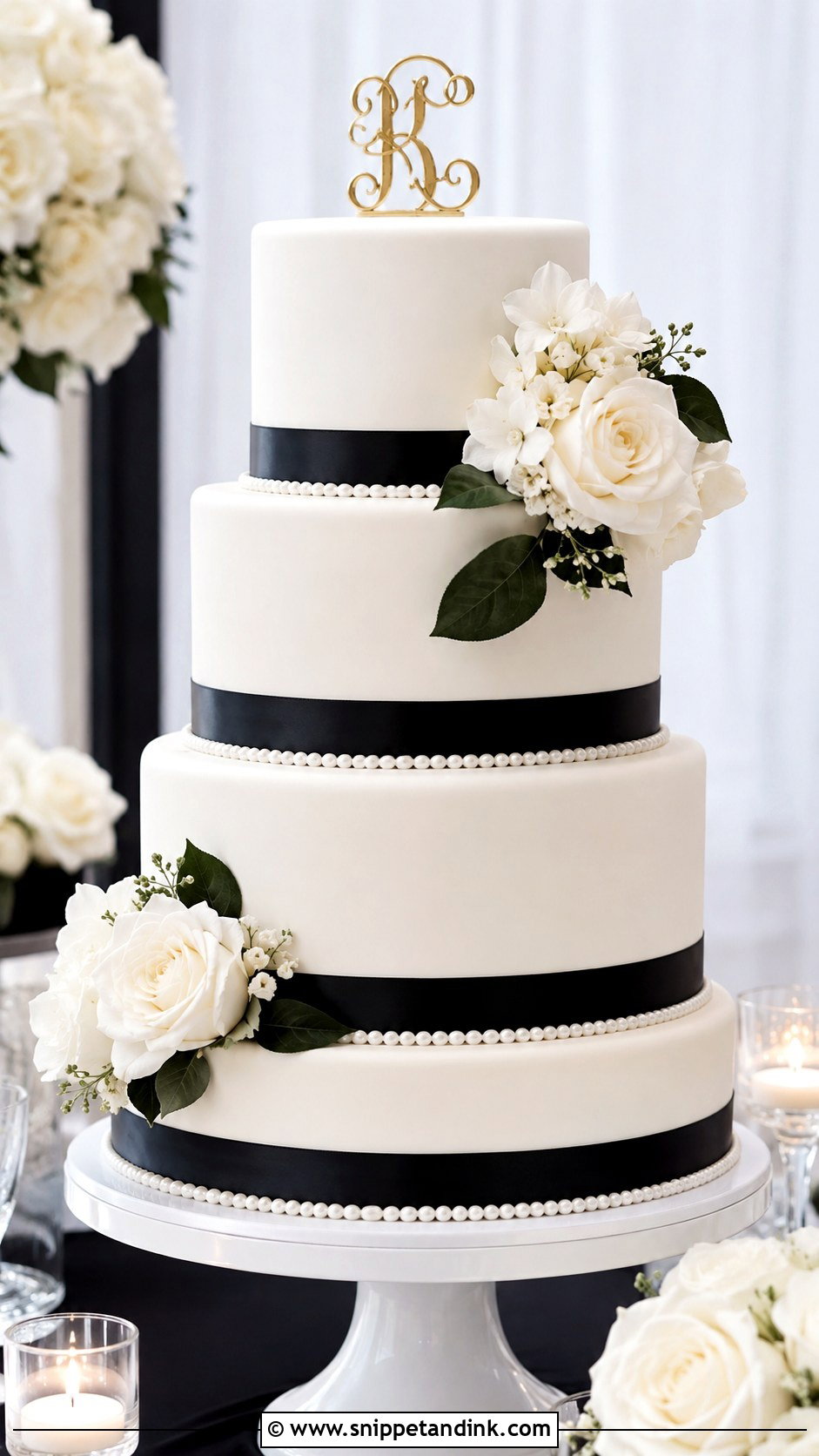
The safest approach is to keep most of the cake white and use black as an accent through ribbon bands, piping, a monogram or one statement tier. Black on white needs crisp fondant, since any smudge or crumb shows instantly against a dark band. I also avoid black icing on the slices that get eaten, because it can stain teeth for the photos that follow. White flowers or a touch of gold soften the contrast. Keep the table plain so the cake stays the focal point.
19. 4 Tier Wedding Cake With Fruit
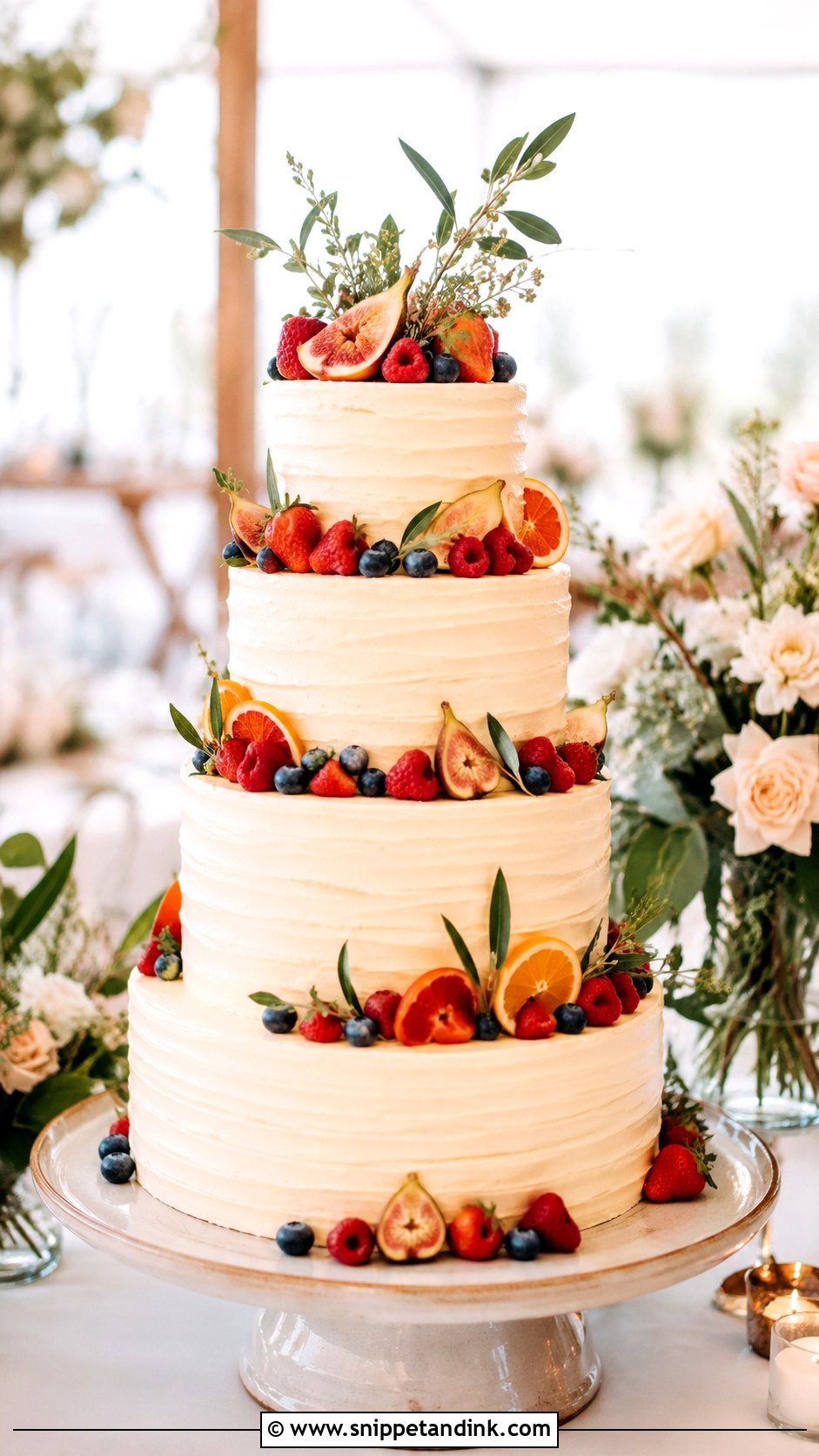
Fruit looks abundant, but it’s the decoration I time most carefully. Cut fruit leaks juice and stains icing, so I use whole berries, halved figs and small clusters of grapes, and I add them at the venue rather than before transport. A semi-naked or lightly textured finish suits fruit best. Strawberries, raspberries and lemon slices read as summer; figs, blackberries and pears read as autumn. Some fruit carries waxes or sprays, so everything is washed and dried first.



20. 4 Tier Wedding Cake With Sugar Flowers
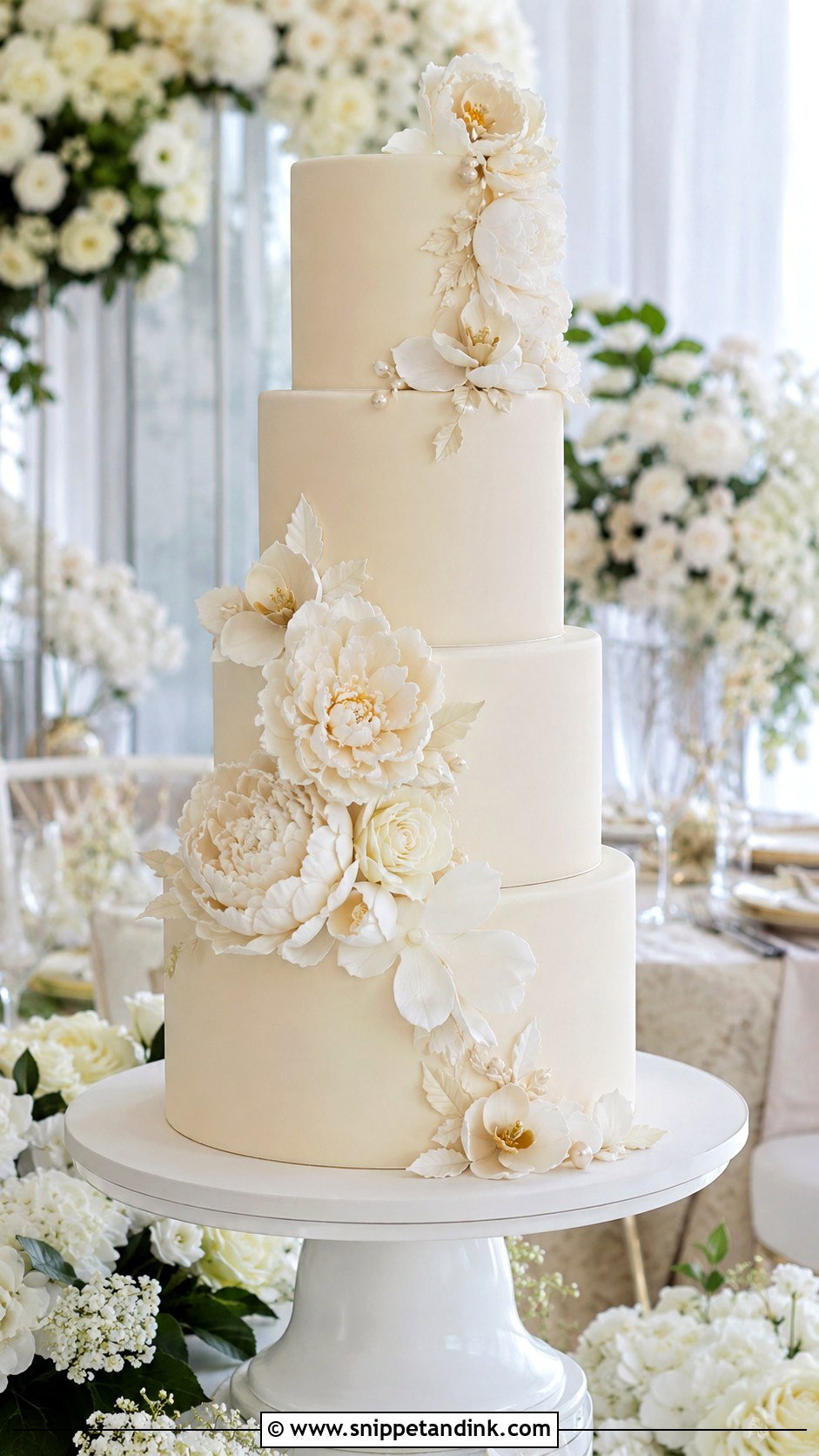
Sugar flowers are made petal by petal from gum paste, wired and dried for days before they go anywhere near a cake, so they need to be ordered well ahead. The reward is control: I can match an unusual bouquet color, shape a peony to open exactly as far as you like, and add cherry blossoms or magnolias in any season. They aren’t meant to be eaten, but they can be kept for years in a dry box. Smooth fondant or buttercream gives them a clean background.
Who Cuts a Cake This Tall, and How
After the cake cutting photo, someone has to turn a four-tier stack into neat slices, and it’s rarely the couple. Most venues or caterers handle it, sometimes with a per-guest cutting fee that varies a lot between venues, so ask early whether it’s included.
The right way is to lift the tiers apart, top first, then remove every board and dowel before slicing. I cut round tiers in rings: a circle about two inches in from the edge, sliced into portions, then the next ring, until only the center core remains. It gives far more even slices than cutting wedges from the middle. Square tiers are simpler, just straight rows.
Saving the top tier
If you want to eat the top tier on your first anniversary, it needs to go into the freezer the same night. Chill it uncovered for an hour so the icing firms, then wrap it tightly in several layers of plastic wrap and foil and box it. Remove sugar flowers and anything wired first. A year is a long time for any cake, so I’ll be honest: dense cakes and buttercream freeze far better than fresh cream or fruit fillings, and many couples now ask their baker for a small fresh replica instead.
Turning a Saved Photo Into Your Own Four Tiers
Pick the one or two cakes here that made you pause and work out why: was it the gold leaf, the ruffles, the fruit, the color? Bring that, plus your guest count and the time of year, to your tasting. A good baker will tell you what travels well, what survives your venue’s temperature and where the budget is going. Then the cake becomes yours, built on a design you already know you love.
You'll Like These Ideas:







Leave a Reply