
Pearls have stayed on wedding cakes for good reasons. They read as bridal, they suit almost any venue, and they bridge classic and modern without much effort. On ivory fondant they look traditional; pressed into buttercream they look softer; scattered across a plain tier they look like jewellery. I treat them the way a dressmaker treats beading, so they follow a plan tied to your dress, flowers and table rather than being sprinkled on at the end. The twenty designs below show how differently they can be used.
What Edible Pearls Are Actually Made Of
Before you pick a design, it helps to know that edible pearls aren’t one material. Each type looks, eats and behaves differently, and I choose between them for every cake.
- Sugar pearls are hard sugar balls with a pearlescent coating. They look the most realistic and come in many sizes, but they’re crunchy to bite, so I keep them to accents.
- Fondant or gum paste pearls are rolled by hand or pressed in a silicone mould, then dusted with pearl lustre. They’re soft to eat, and a mould can make a whole strand at once, which is how most neat borders are done.
- Isomalt pearls are poured from a sugar substitute. They’re glassy and catch light well, but they can turn tacky in a humid room.
- Chocolate pearls are small white chocolate shells, often lustred. They taste the best of the four and soften fastest in heat.
Many couples end up with a mix: moulded strands for the borders, where every slice gets some, and a few sugar pearls on the top tier, where nobody has to bite through a mouthful of them.
1. White Pearl Wedding Cake
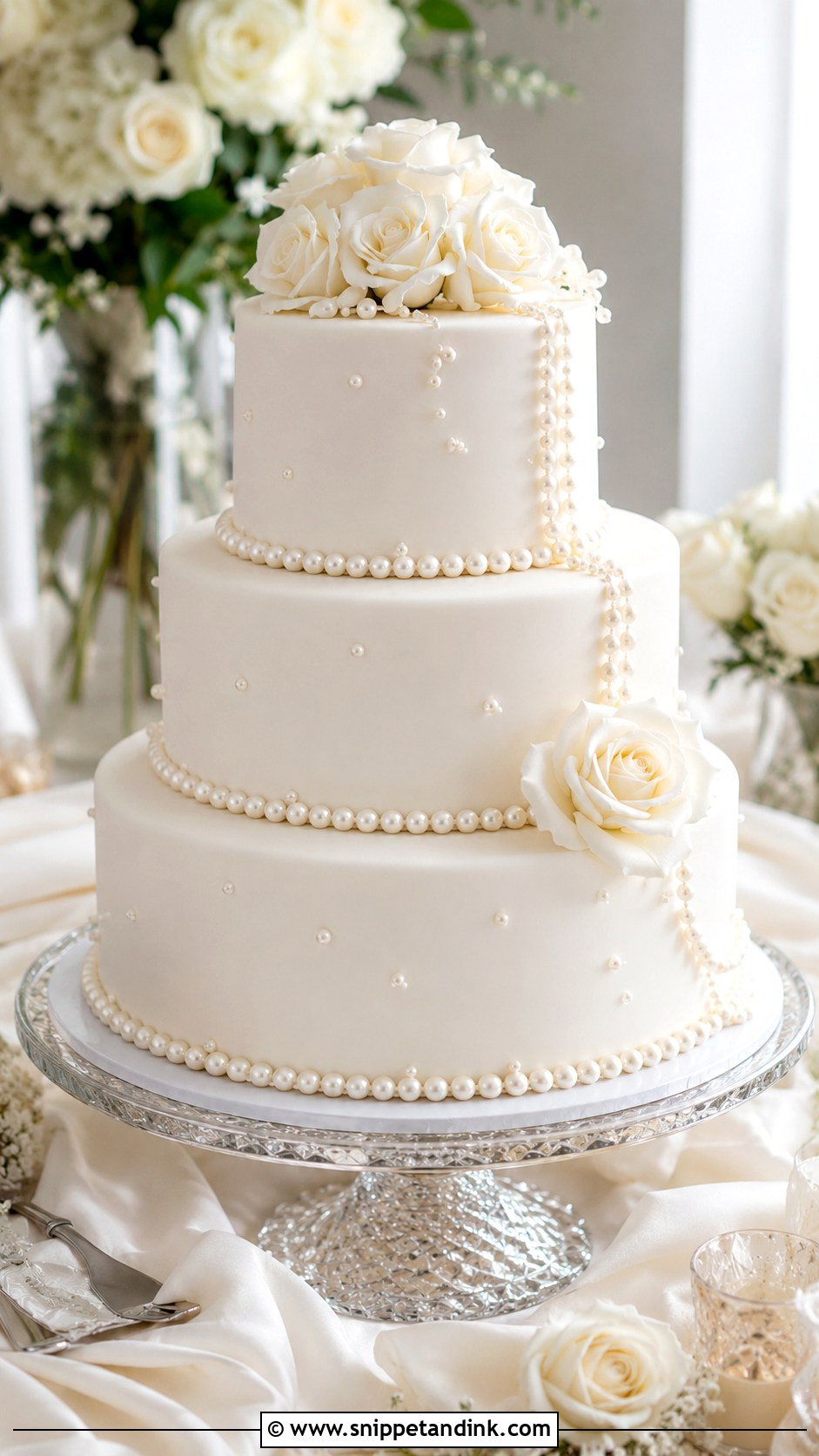
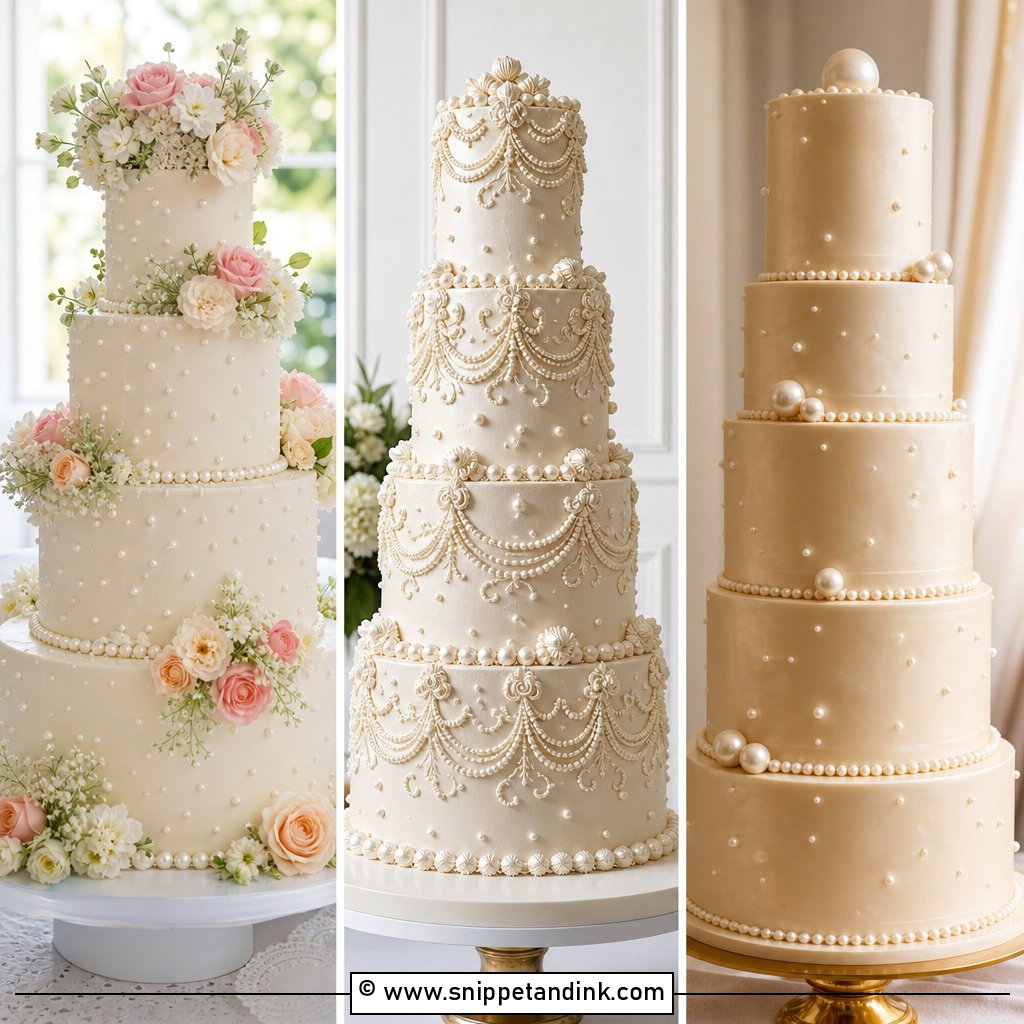
Start here if you want the classic version. Smooth white fondant or buttercream gives every bead a clear background, which also means placement has to be precise, because a crooked row shows instantly on plain white. I usually ring each tier base first, then either scatter pearls up the sides or set them in soft vertical lines. Keep the palette to white, ivory and cream, and pair it with roses, orchids or calla lilies. It fits ballrooms, chapels and plain modern rooms alike.
2. Ivory Pearl Wedding Cake
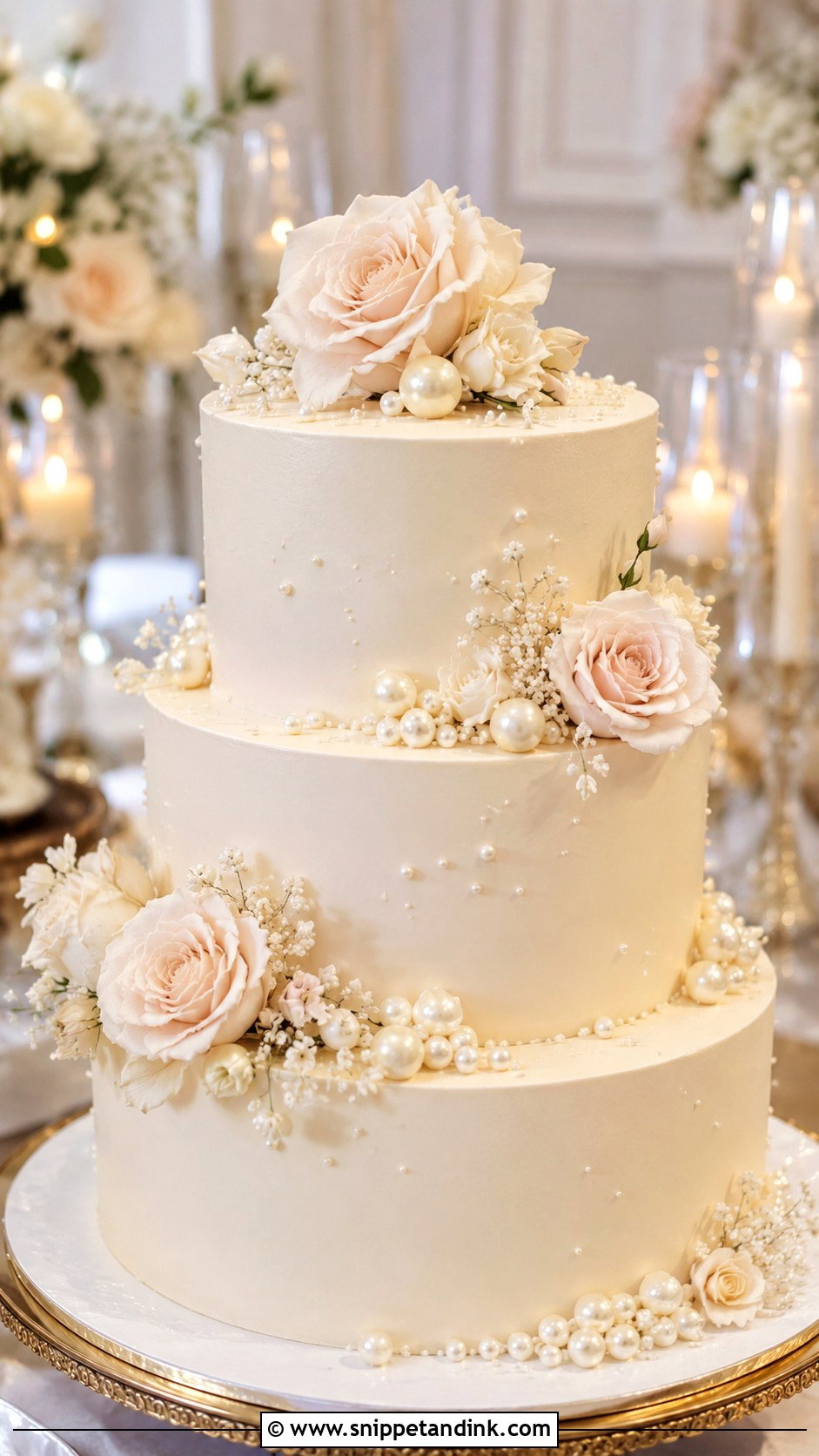
An ivory pearl wedding cake is warmer than pure white, and in candlelight that warmth matters. Bright white can look faintly blue under warm bulbs, while ivory gives the pearls a creamy glow. It sits naturally beside lace gowns, pearl earrings and vintage-style invitations. Fondant gives a refined finish; buttercream feels more relaxed. I wrap pearls around each tier base like a necklace or tuck small clusters near sugar flowers, then add blush roses if the palette needs a little colour.
3. Pearl And Lace Wedding Cake
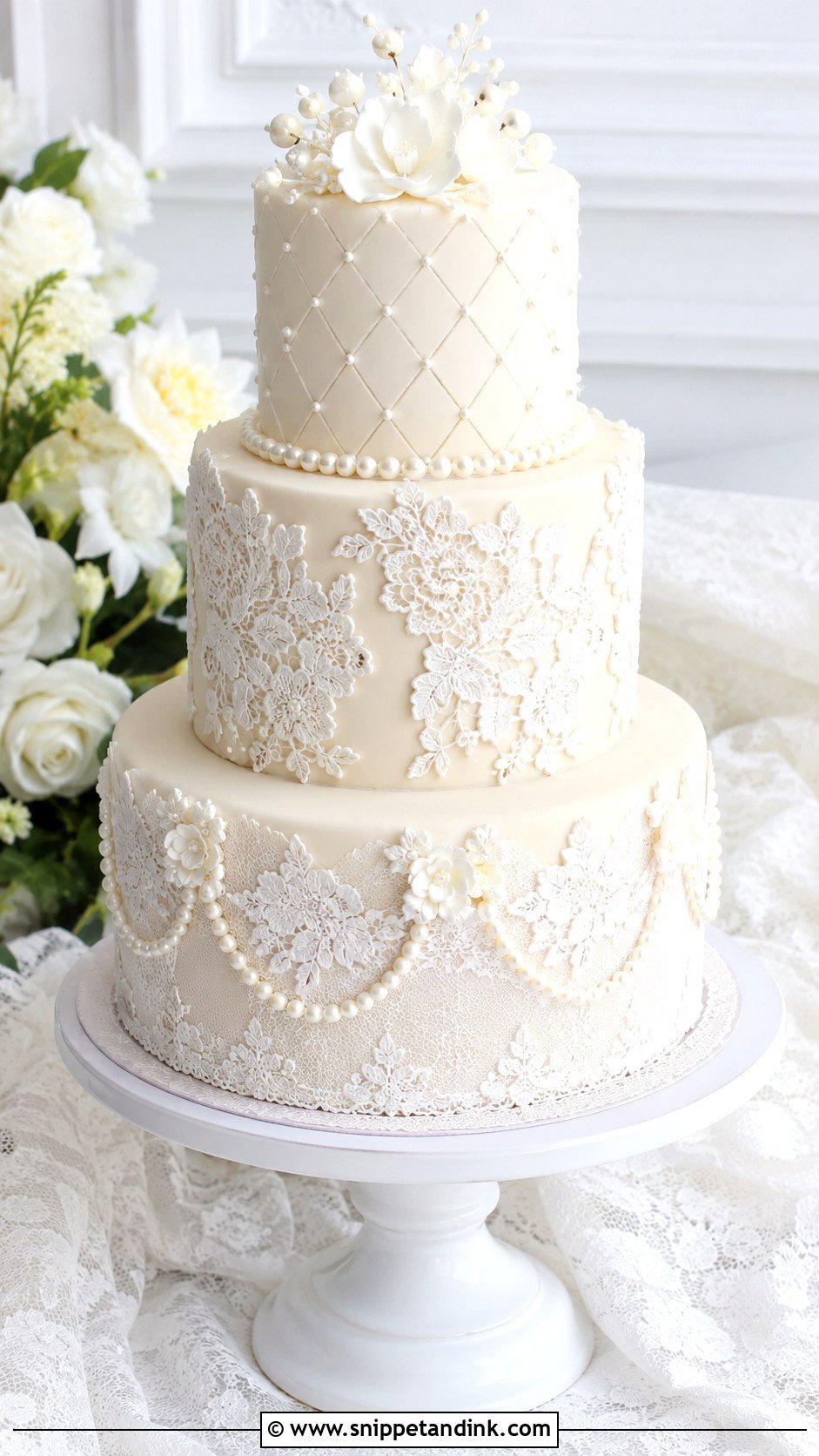
Lace and pearls echo a bridal gown more directly than any other pairing. The lace can be piped in royal icing, pressed into fondant or cut from edible lace panels, and pearls soften its edges. White, ivory or champagne keeps both details readable, whereas strong colours flatten them. My rule is to give each tier one job: lace on one, pearls on the next, or a light mix on every tier, never heavy on both. It suits churches and classic reception rooms.
4. Pearl And Rose Wedding Cake
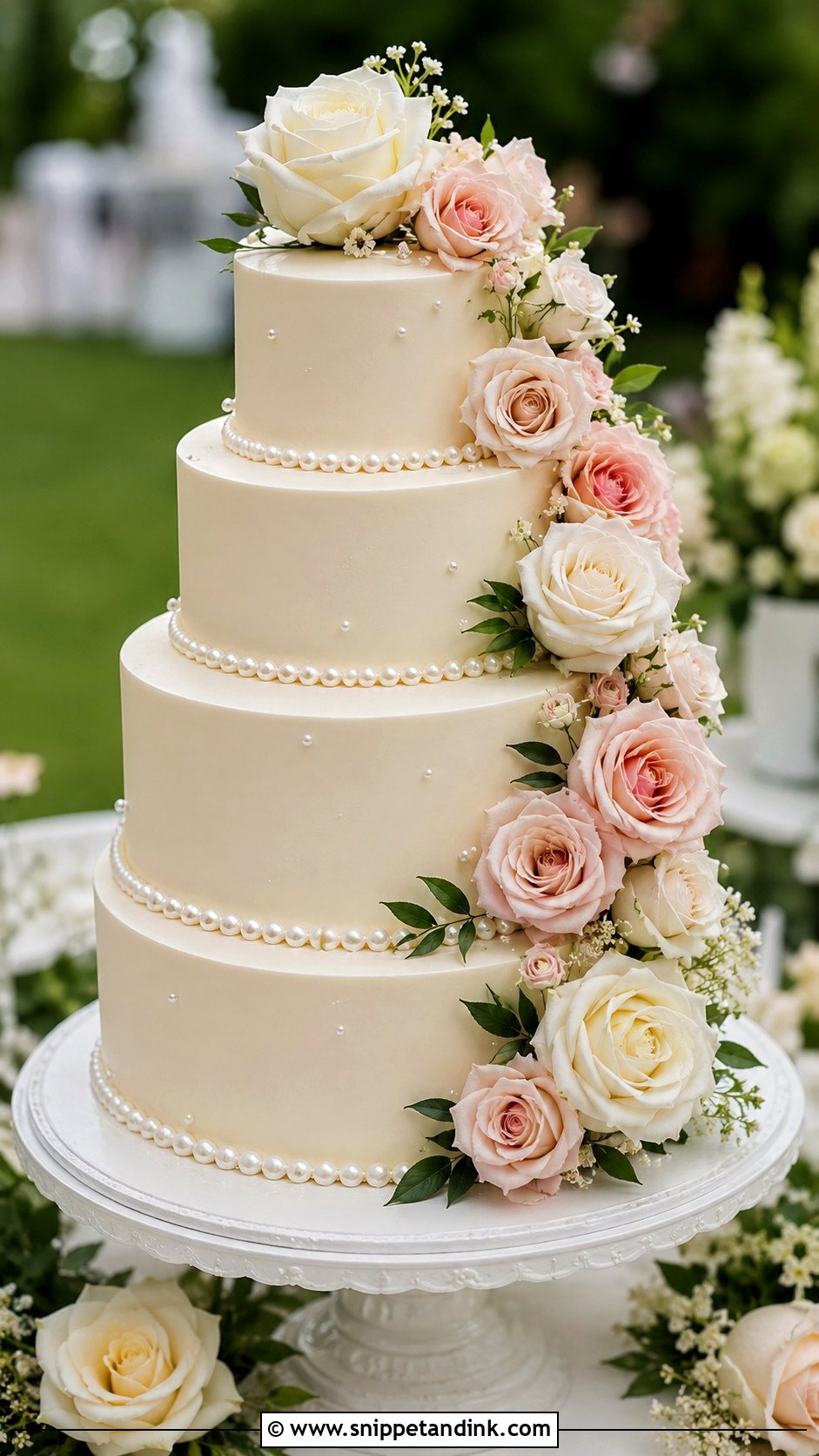
Roses and pearls rarely fight each other. Fresh roses, sugar roses or buttercream flowers all work, and the choice usually comes down to budget and the venue’s rules on fresh flowers. White roses stay classic; blush or dusty pink adds warmth. I set pearls around the flower clusters or trail them down one side, then add rosebuds and greenery last so nothing hides the beads. Fresh stems need wrapping or a food-safe pick before they go anywhere near the cake.
5. Pearl Drip Wedding Cake
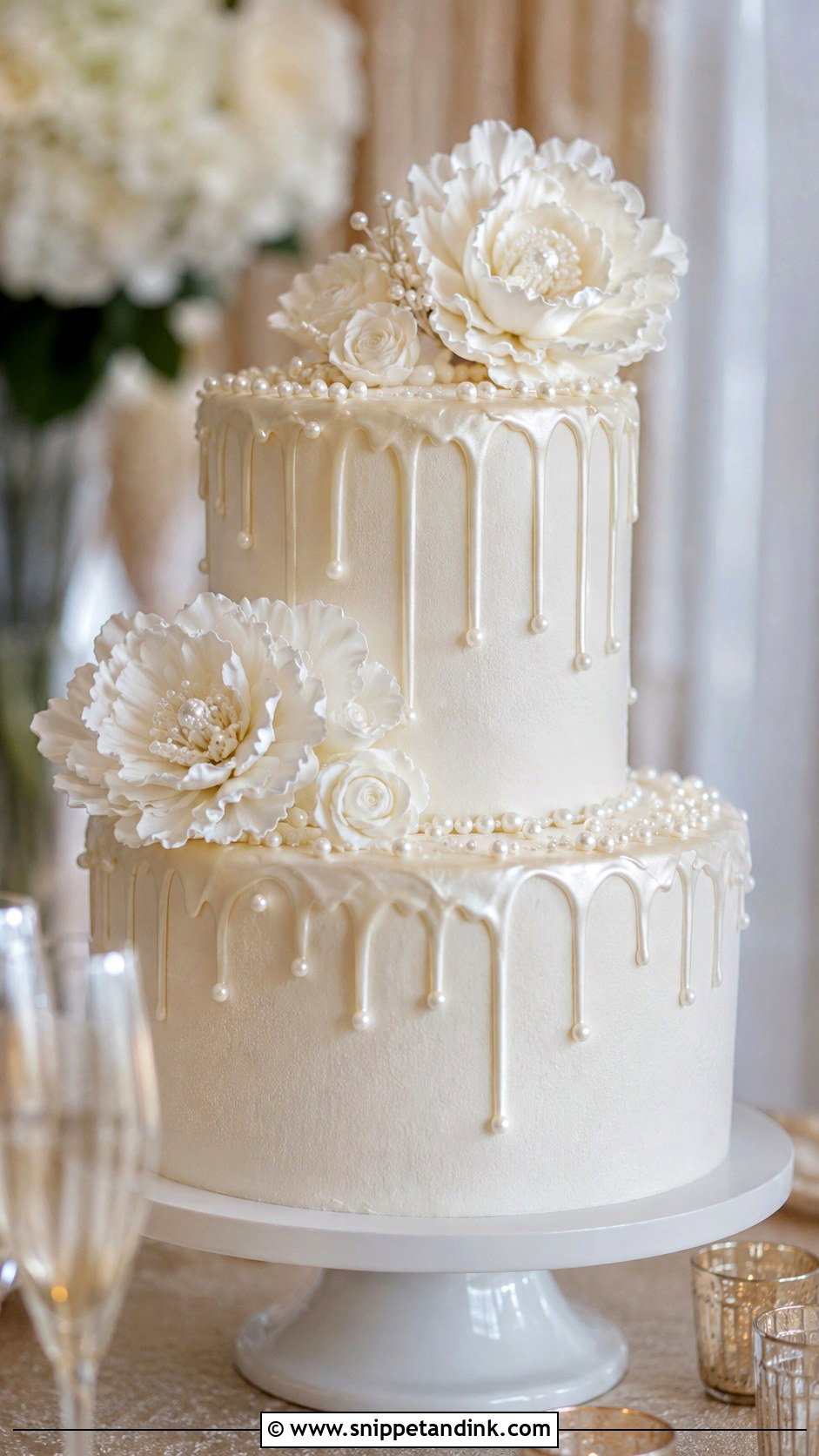
Refined drip cakes are trickier than they look. Swap the dark chocolate drip for white chocolate, champagne-tinted or pearlescent ganache that flows neatly over the top edge, then add pearls along the drip line, at the base or across the top tier. White chocolate sets softer than dark, so I chill the cake well before pouring and let every drip firm up before placing pearls on it. Skip that wait and the pearls slide straight down. Keep the frosting smooth and the colours soft so the drip stays the focus.
6. Pearl Cascade Wedding Cake
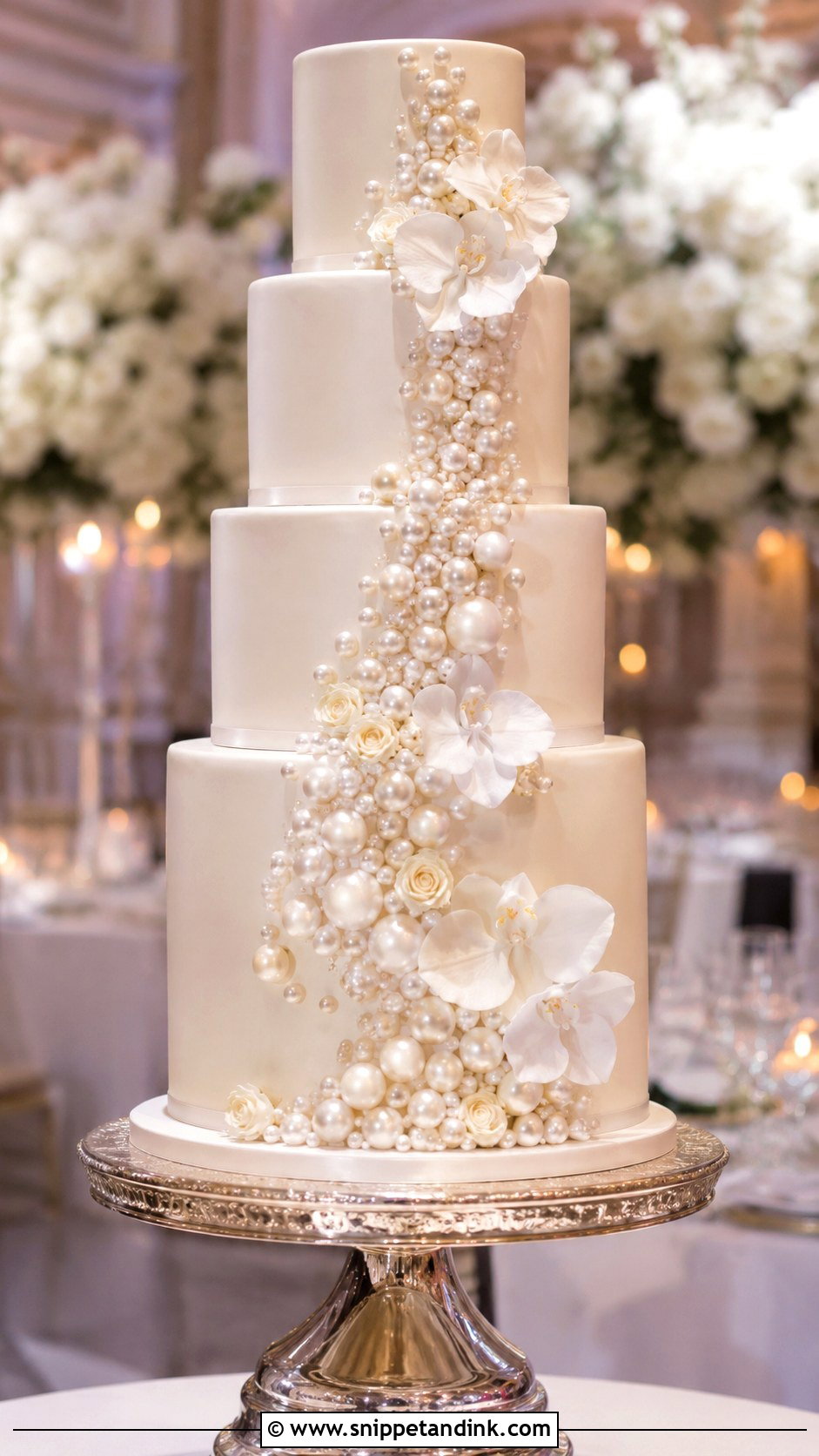
A cascade adds movement. Pearls start near the top tier and fall in a loose diagonal, a bit like a strand of jewellery slipping down the cake. Dense or sparse both work, though sparse beads need careful spacing or they look accidental. A smooth fondant or buttercream base lets the line read clearly, and a few sugar flowers at the top give the cascade a starting point. I draft the path lightly with a scribe tool before placing a single pearl. It belongs on tall cakes and statement cake tables.
7. Pearl Vintage Wedding Cake
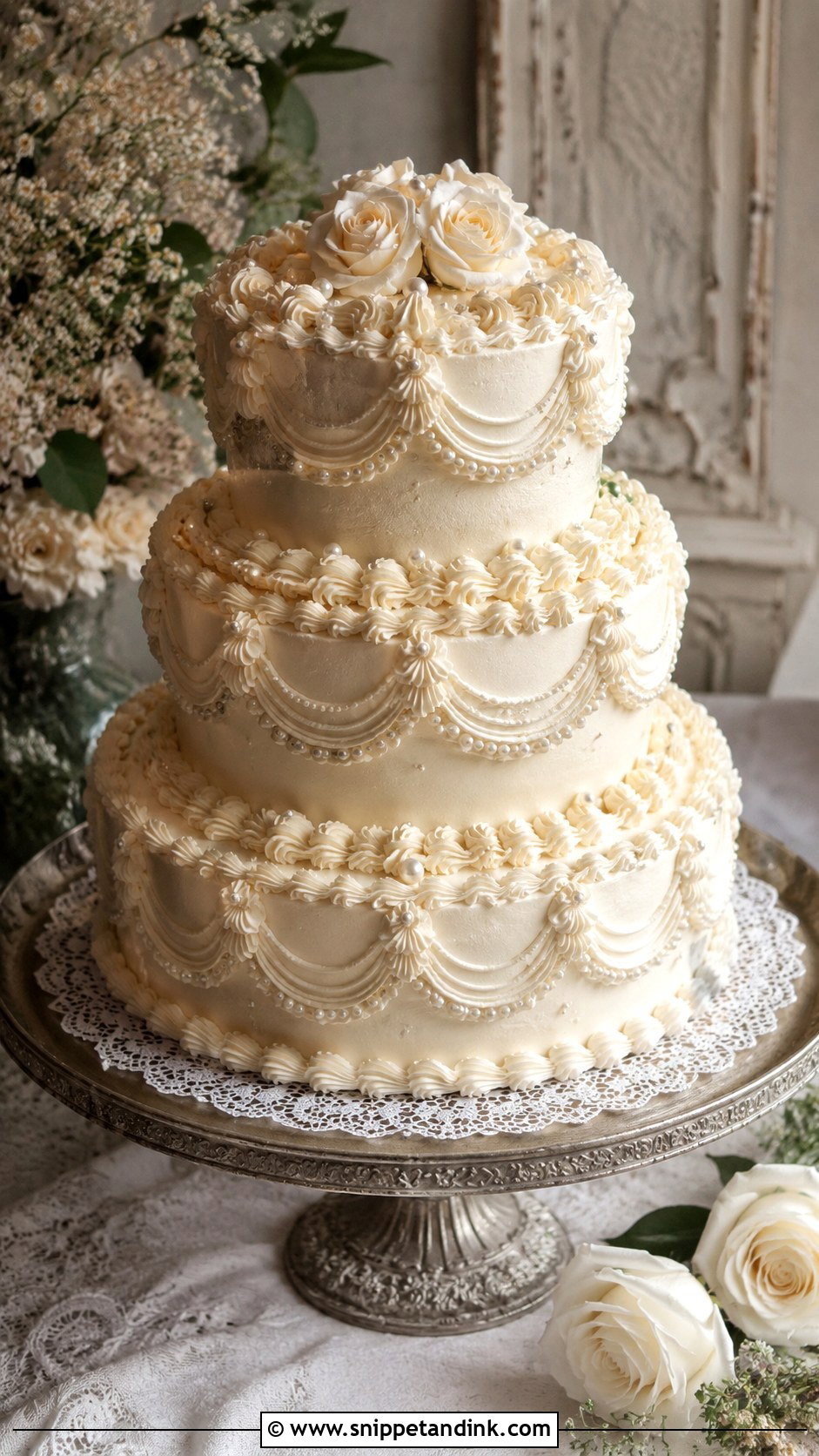
Vintage pearl cakes borrow from old piping traditions: shell borders, swags and Lambeth-style overpiping, with pearls set like jewellery at the points. Ivory, cream, pale blush and butter yellow all suit it, as do antique décor, heirloom jewellery and lace sleeves. The risk is clutter. Too much piping plus too many pearls crowds every tier, so I choose one strong feature per tier and use pearls only to finish it, at the centre of a swag or the tip of a border.
8. Pearl Buttercream Wedding Cake
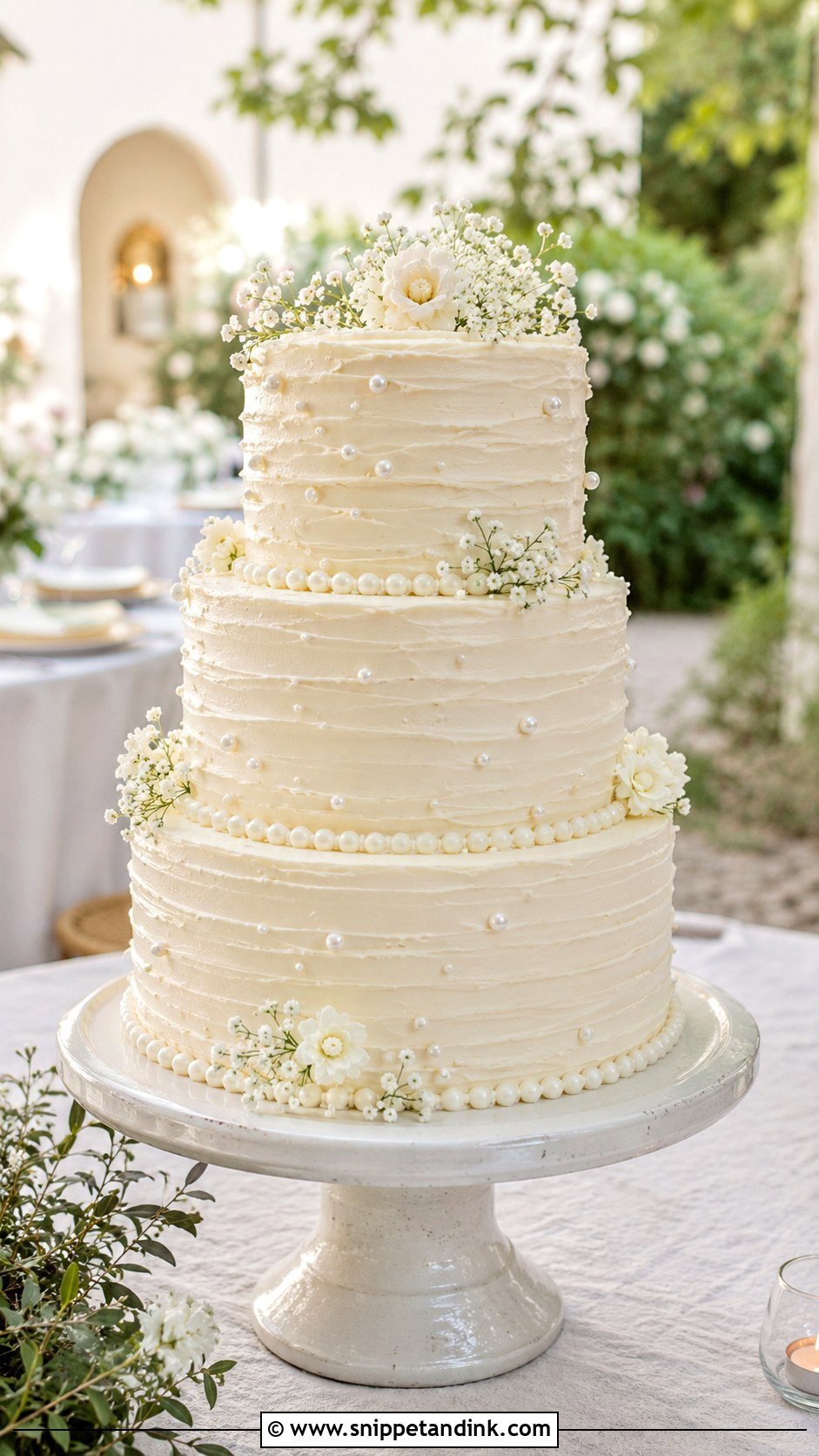
Buttercream with pearls feels relaxed without losing polish. Smooth sides, light texture or soft horizontal ridges all work. I press pearls in while the buttercream is fresh, before it crusts; once it sets, each one needs a dot of icing to hold. Vanilla, almond, lemon and white chocolate all pair well. Buttercream softens in heat, though, so for a hot barn or garden reception I’d keep the cake indoors until the last moment. Keep the pearls light so the texture still shows.
9. Pearl Fondant Wedding Cake
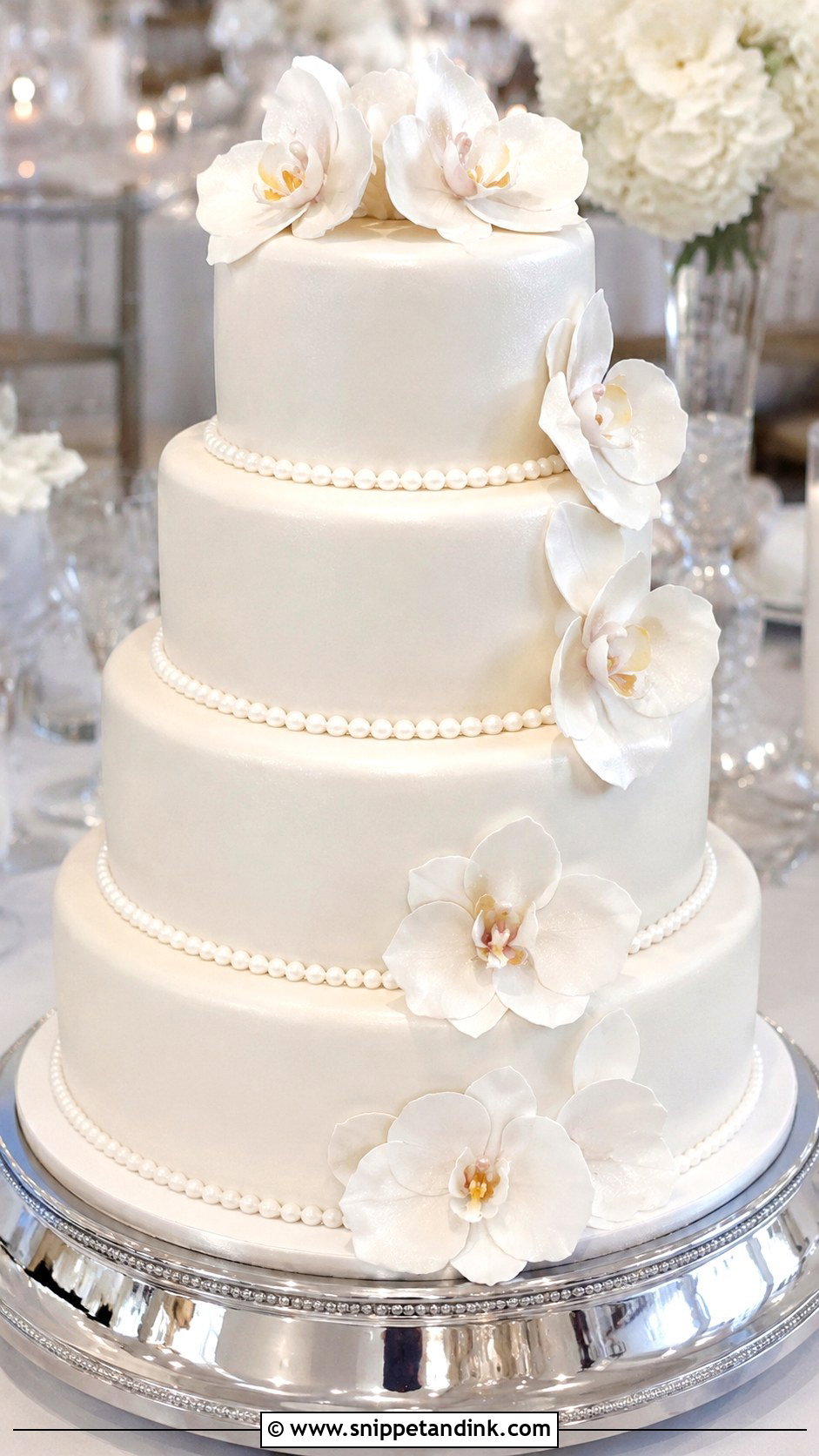
A pearl fondant wedding cake gives the crispest, most structured result, which helps at formal weddings and in clean photography. Fondant’s smooth surface lets pearls sit sharp and even, whether as borders, vertical strands, a monogram frame or an all-over dotted texture. For extra luxury, I brush a faint pearl sheen over the fondant itself before any beads go on. Keep the rest simple with white florals or sugar orchids. Hotel ballrooms and black-tie receptions are where it looks most at home.
10. Pearl Floral Wedding Cake
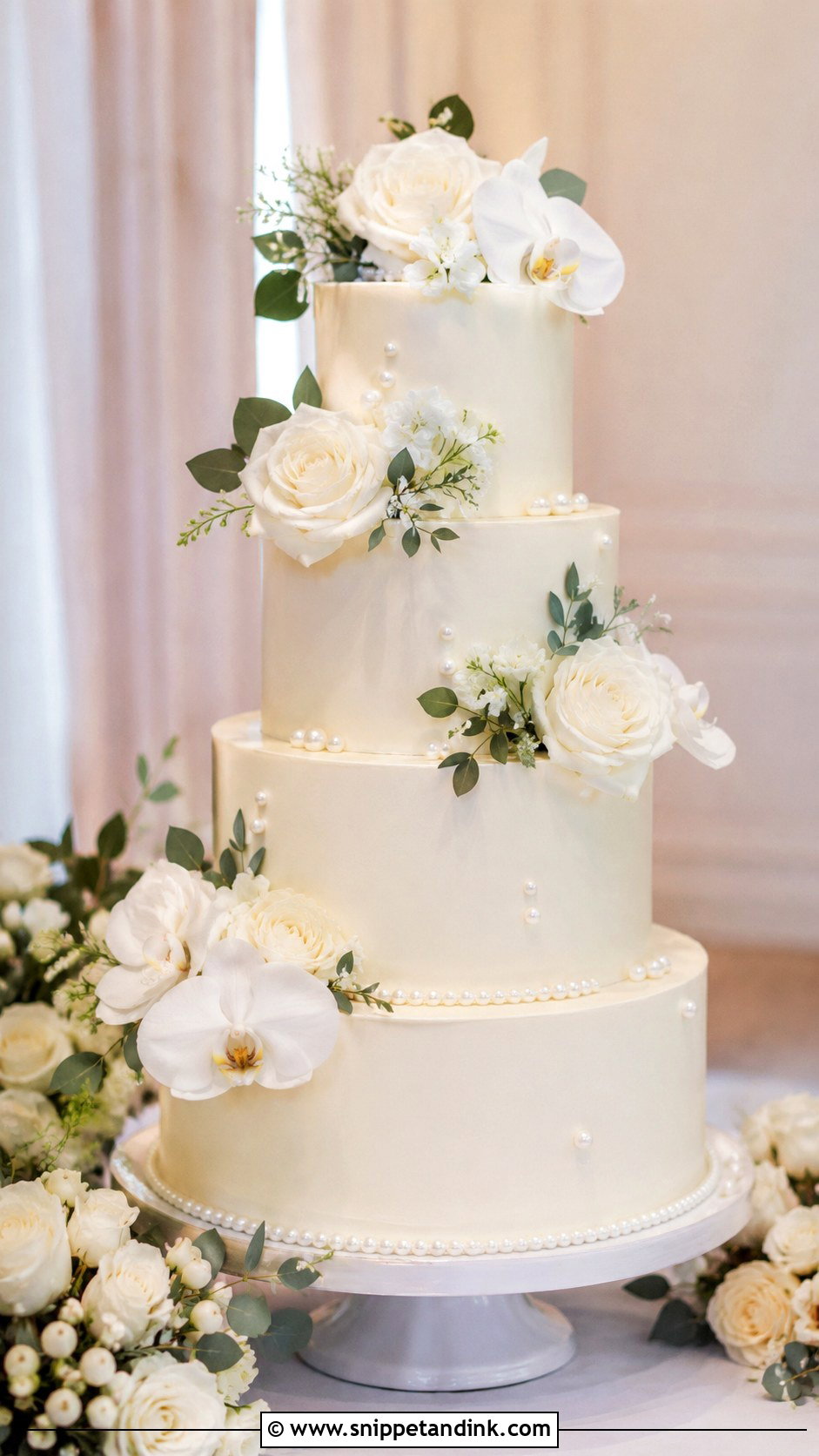
Flowers set the tone here more than the pearls do. Orchids look sleek, roses classic, small wildflowers soft and natural. Pearls fill the gaps between blooms, ring the tier bases or scatter across bare stretches of frosting. It’s the design I suggest when the cake has to echo a bouquet or centrepieces, and I’d ask your florist and baker to talk directly about which blooms are safe and who places them. Use pearls as accents so they never bury the flowers.
11. Pearl Bow Wedding Cake
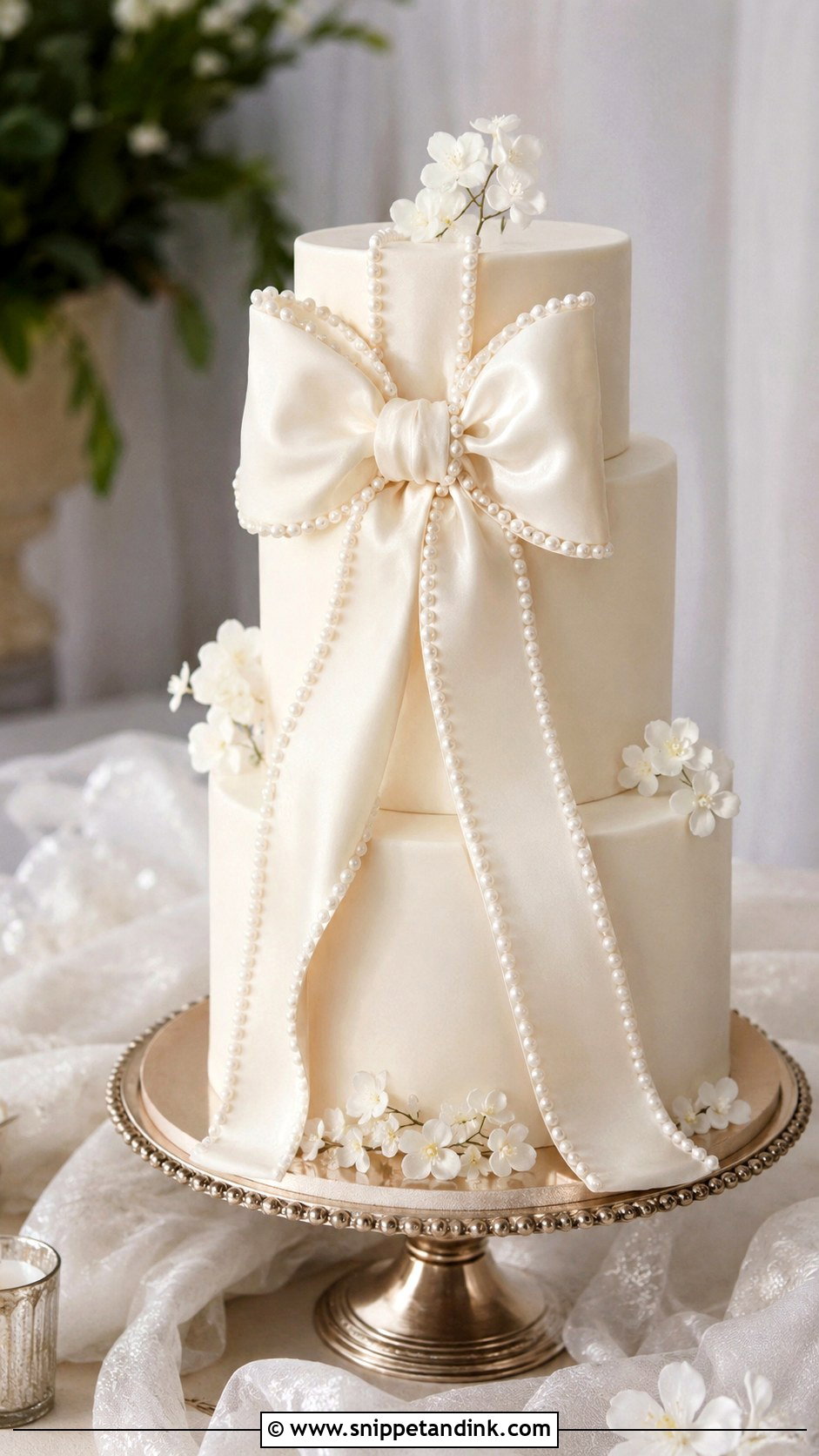
A pearl bow wedding cake has a fashion feel. The bow can be fondant, sugar paste, edible ribbon or real ribbon, though real ribbon needs a strip of food-safe film behind it, because the fat in buttercream soaks through satin and leaves dark marks. Pearls look neat at the bow’s centre, along its edges or around the tier base. It suits gowns with bows, pearl veils and satin details. One statement bow on the middle or lower tier looks better than one per tier, which quickly turns fussy.
12. Pearl Heart Wedding Cake
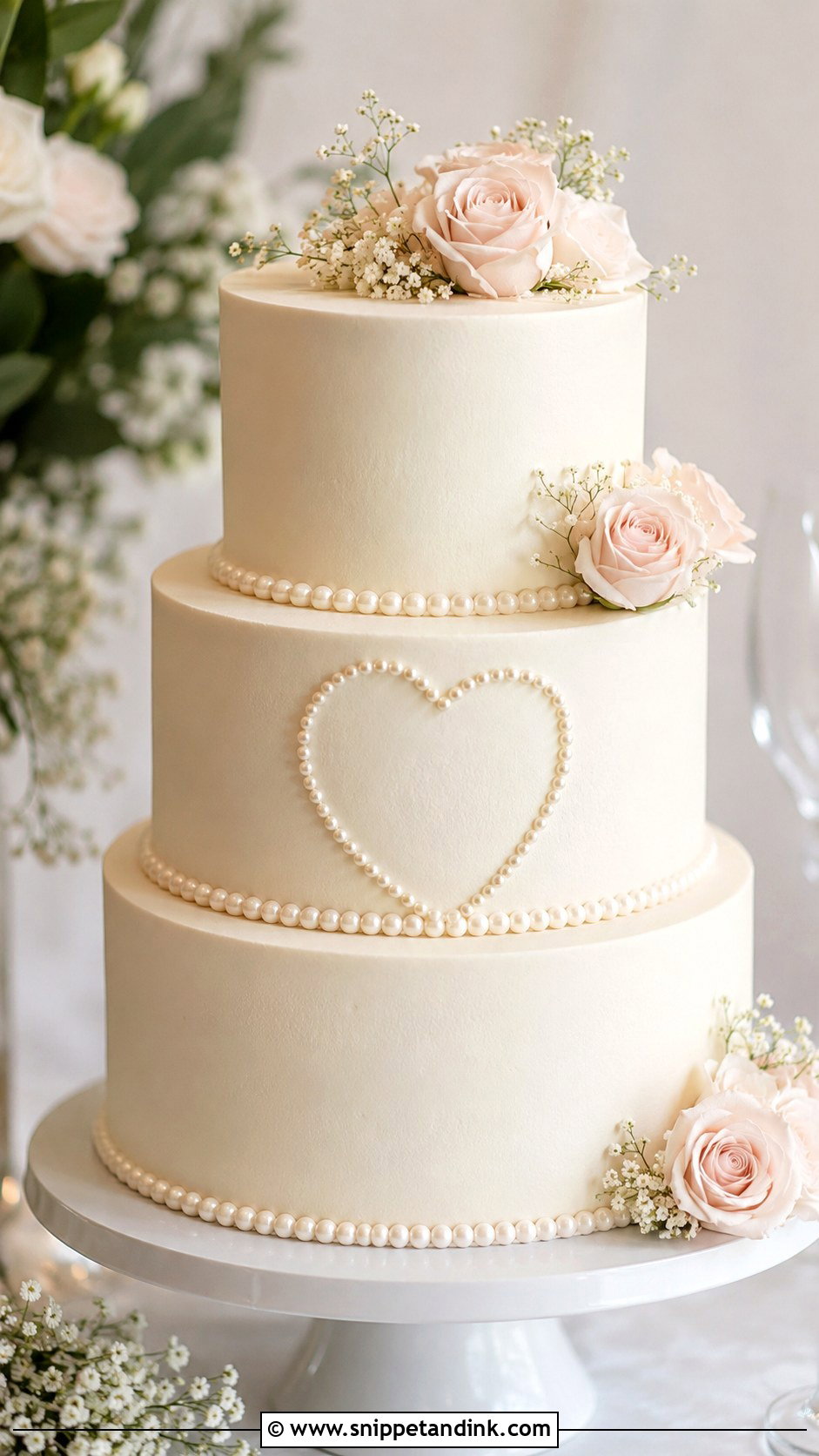
Hearts can easily look childish. A clean outline in small pearls avoids that. I form the heart on the front tier, or work a subtle raised heart pattern around the cake, and the frosting has to be smooth for the shape to read at all. Add a few white florals, blush roses or a small piped border, no more. It suits intimate weddings and vow renewals, where a quiet sentimental detail goes a long way.
13. Pearl Monogram Wedding Cake
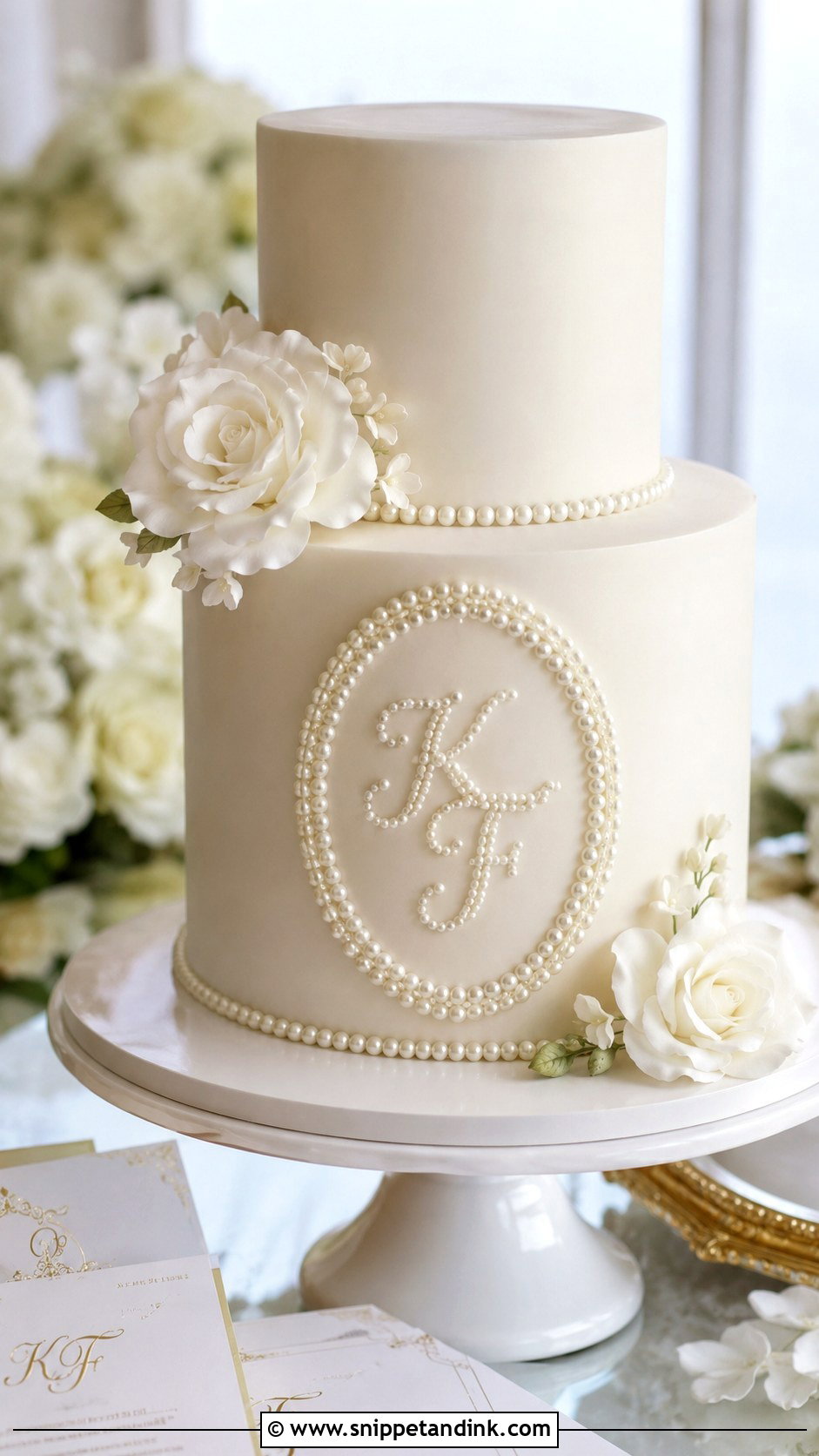
Initials personalise a cake without adding clutter. They can be piped, embossed or built from tiny edible pearls on the front of one tier, ideally against smooth white or ivory. Building letters bead by bead is slow work, and I mark the letter shapes first so the curves stay even. Frame them with a pearl oval, a few flowers or a thin metallic border, and keep the rest of the cake plain. A monogram cake ties in well with personalised stationery at a formal reception.
14. Pearl Champagne Wedding Cake
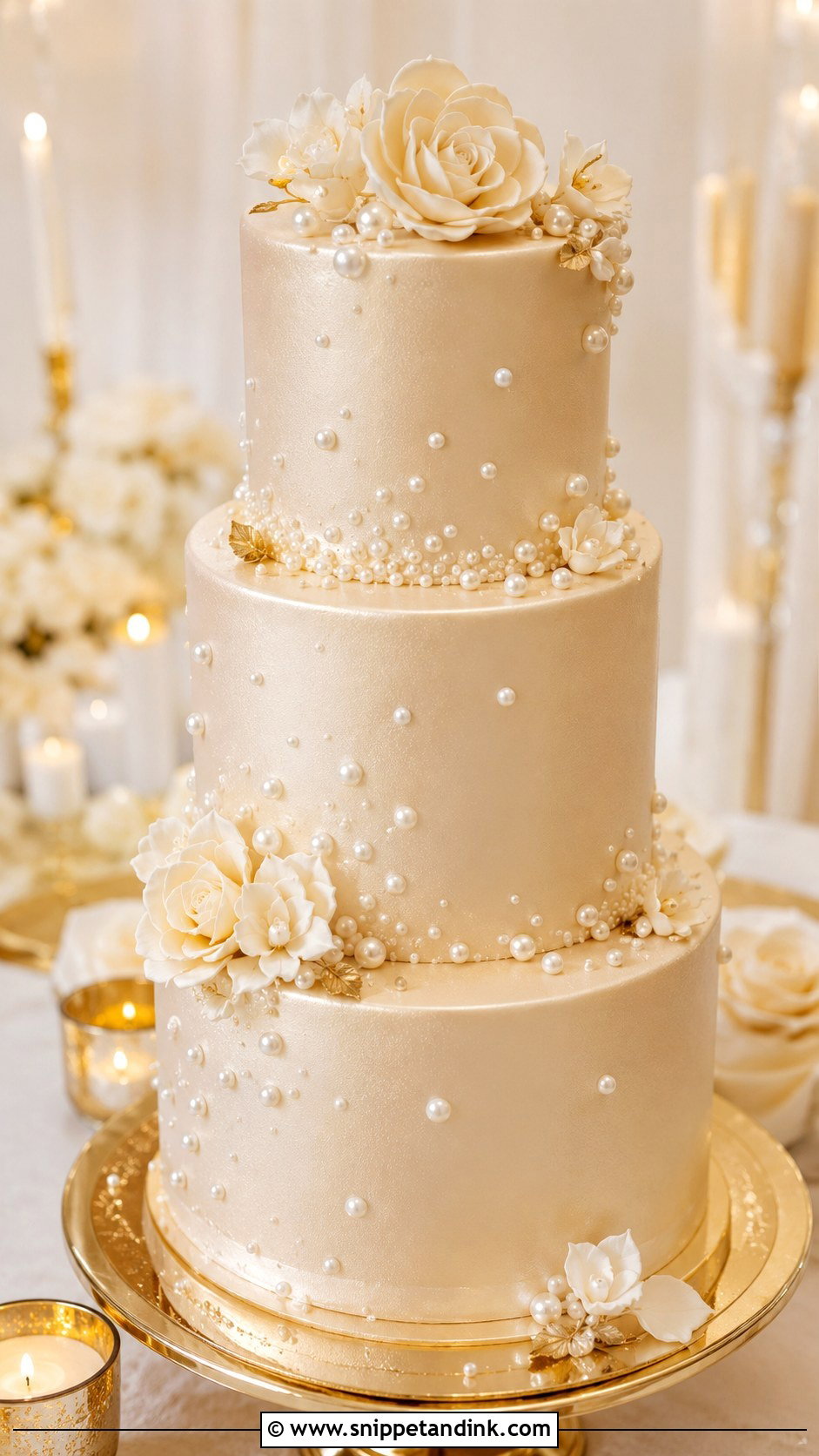
Champagne frosting warms pearls up. It pairs with ivory pearls, gold accents and cream flowers, and it suits candlelit rooms and evening receptions. Pearls can run in neat strands, scatter like bubbles or cluster around sugar flowers. A satin-smooth finish keeps the tone refined, while heavy texture can make it look muddy. If you want shimmer, I’d brush a gentle pearlescent dust over the tier instead of glitter, which looks cheap in close-up photos.
15. Pearl Blush Wedding Cake
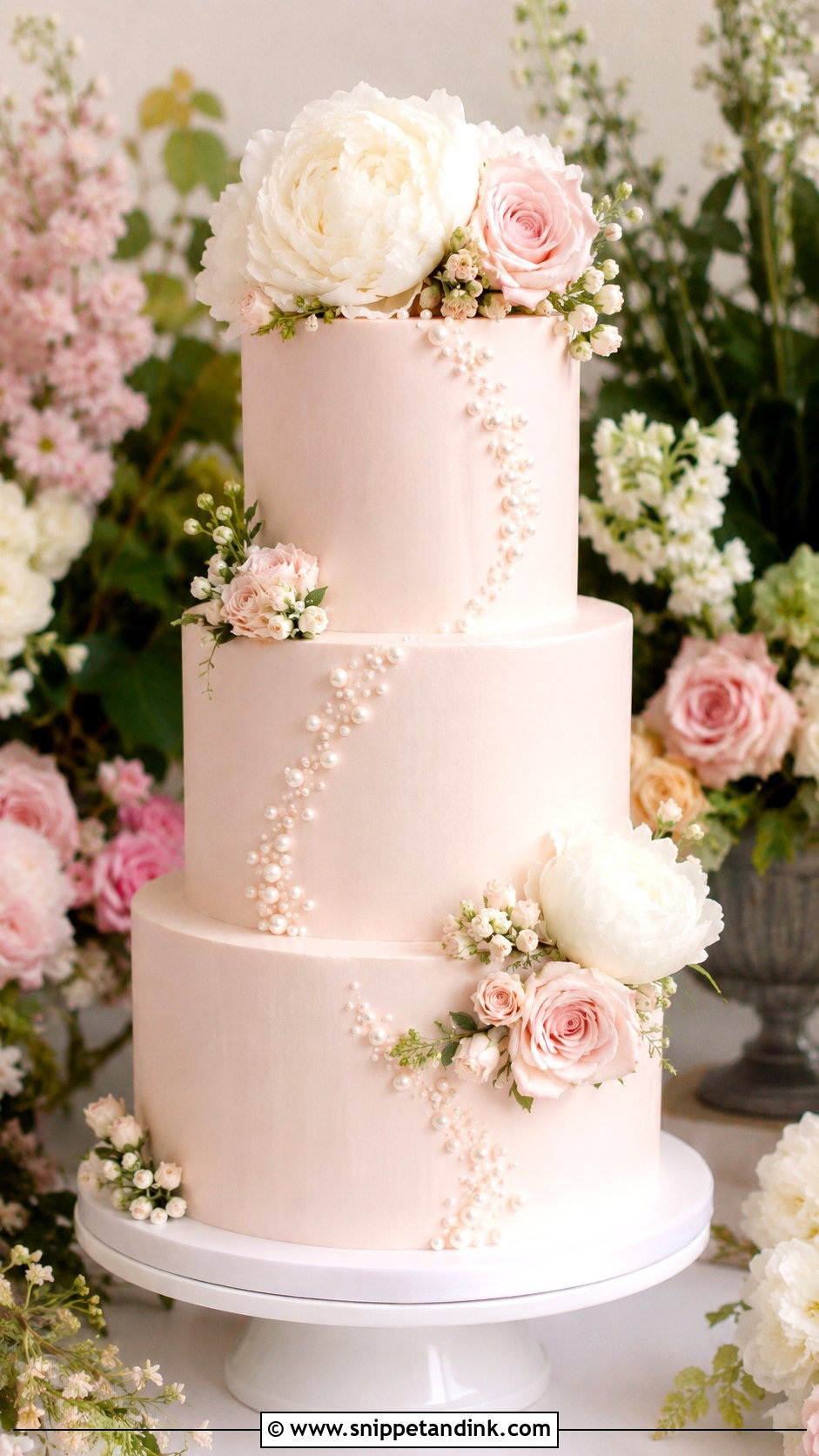
Blush is forgiving in photos, but the shade has to stay gentle, closer to rosewater than bright pink. Blush frosting or fondant gives pearls a warm background and sits well with roses, peonies, ranunculus and baby’s breath. Smooth tiers make it modern; piped borders make it vintage. Pink colouring can fade under strong daylight, so I keep a blush cake away from sunny windows until it’s served. Pearls can trail down one side, frame flower clusters or ring each tier.
16. Pearl Marble Wedding Cake
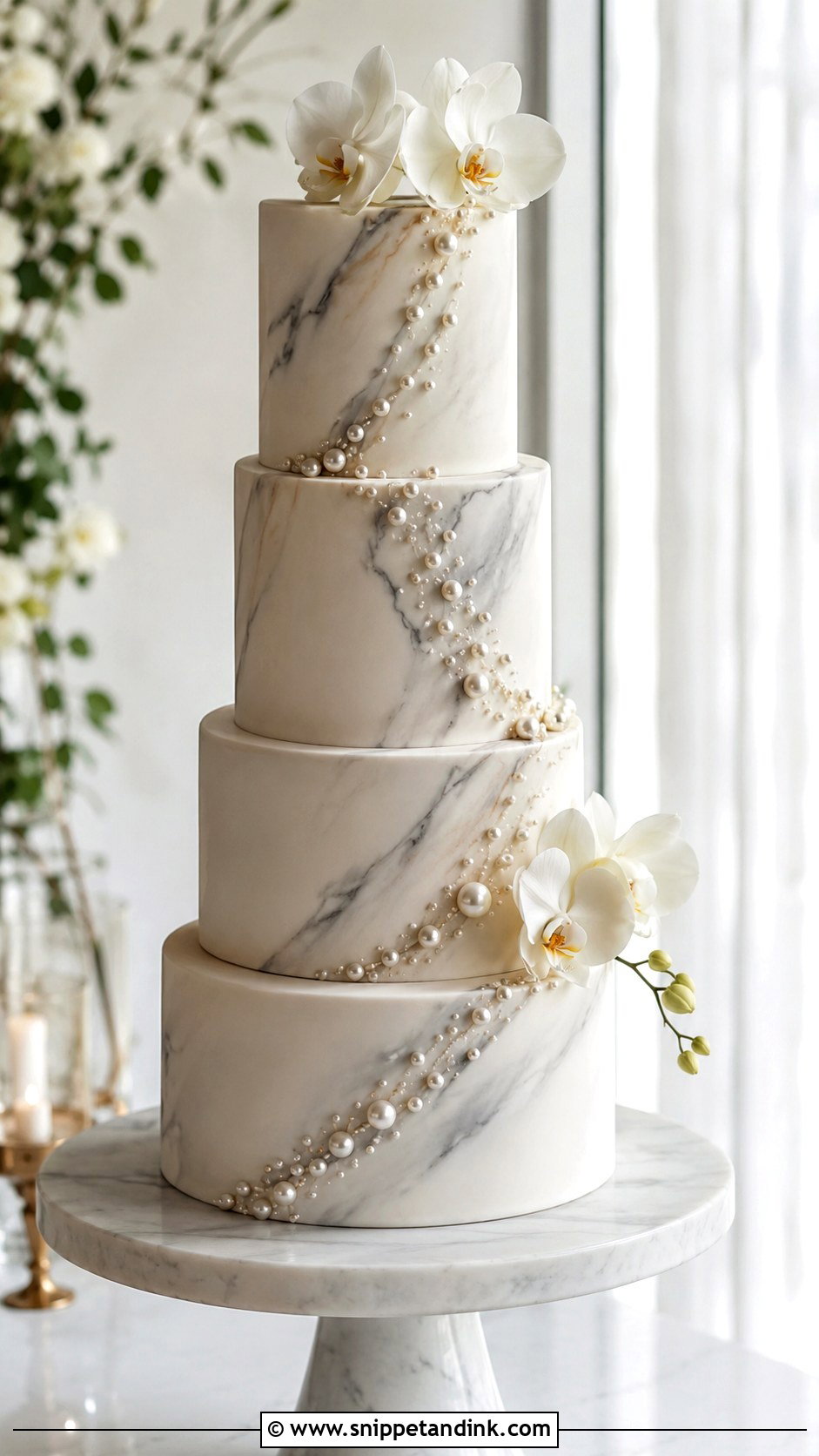
Marble gives classic pearls a modern edge. Grey, ivory, beige or champagne veining can follow the wedding palette, and the pearls warm up the stone effect so it doesn’t feel cold. I’d keep the tiers clean and the flowers minimal, with pearls along one line of veining or around each base. Marbled fondant is made by twisting coloured pastes together before rolling, so no two cakes come out identical, and I tell couples that up front. It fits city weddings and modern venues.
17. Pearl Ruffle Wedding Cake
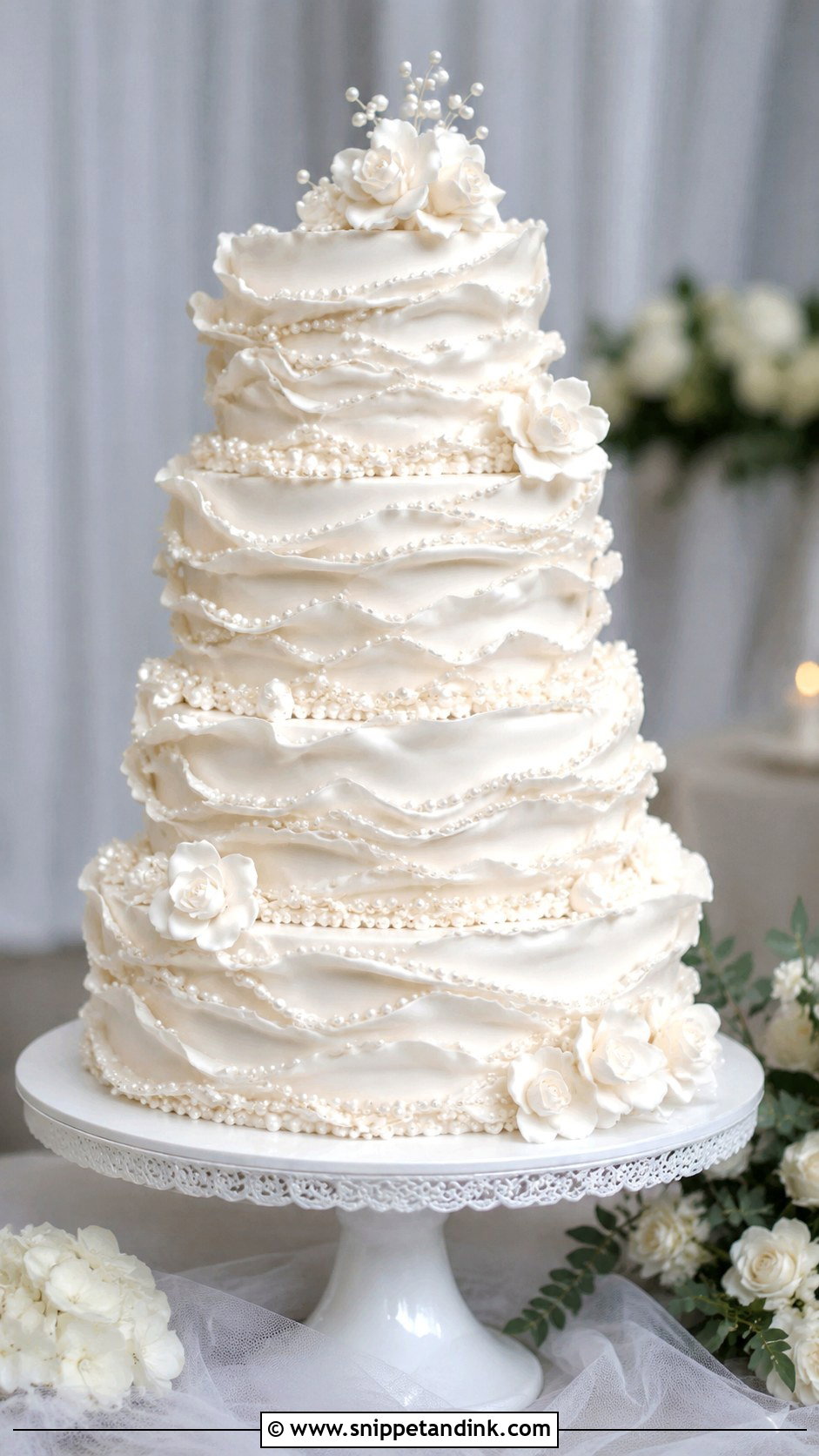
Ruffles already carry a lot of texture, so pearls should be used sparingly. The ruffles can be fondant, wafer paper or buttercream. Wafer paper is the lightest and holds a crisp edge, but it wilts if it touches moist buttercream or sits in humid air. I place pearls at a ruffle edge, in the centre of sugar flowers or around the base. White, ivory and soft blush work best, and the look sits naturally beside tulle or organza gowns.
18. Pearl Square Wedding Cake
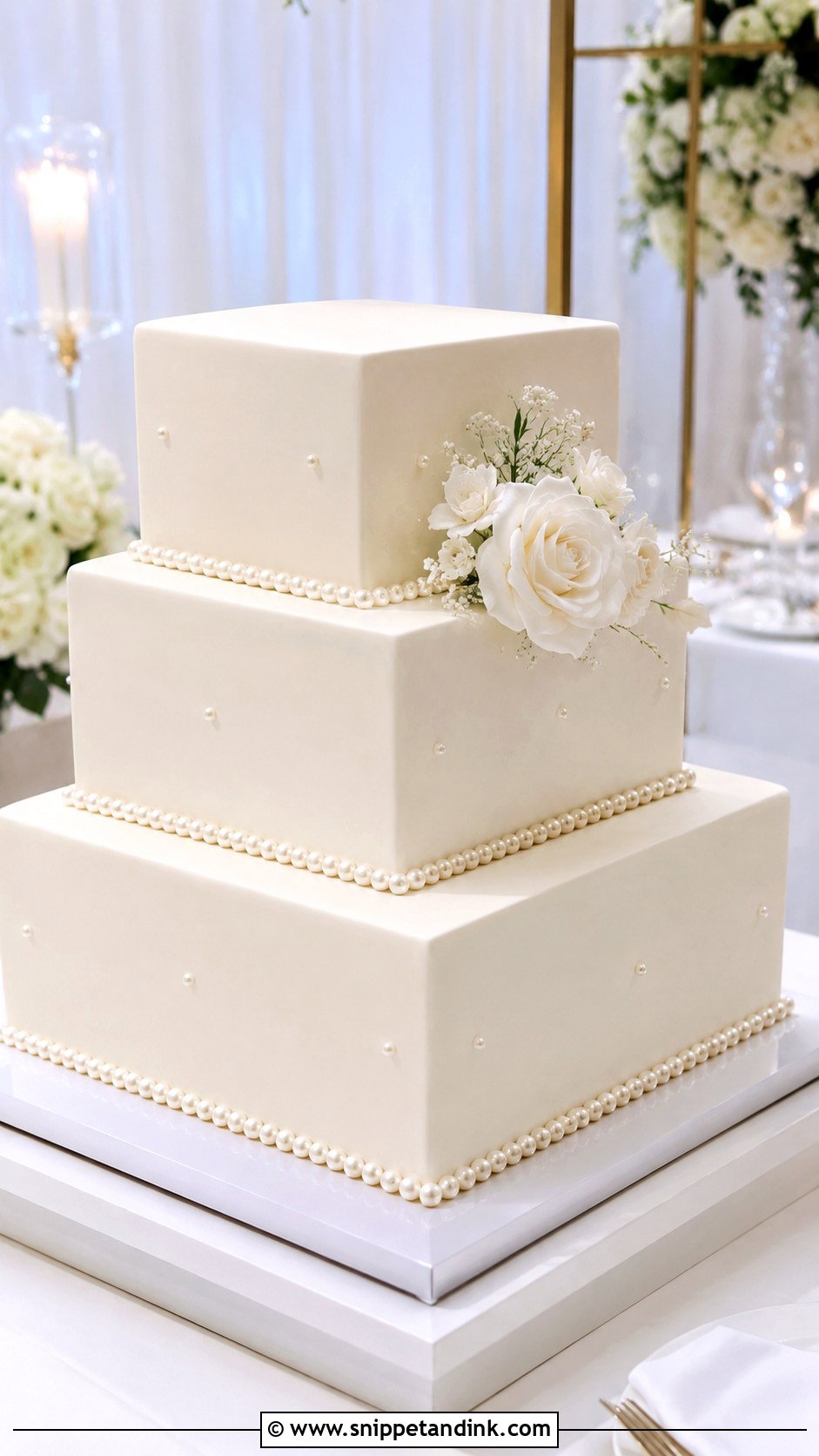
Square tiers make pearl borders look tailored, almost like trim on a gown. They feel crisp and a little unexpected next to round cakes. Fondant keeps the corners sharp, and those corners are the hardest part; a square tier takes noticeably longer to cover cleanly than a round one. Stack them evenly or rotate each slightly for more dimension. Keep the decoration to pearl borders, one floral cluster and a simple topper. Squares also serve a few more portions than rounds of the same width.
19. Pearl Tall Wedding Cake
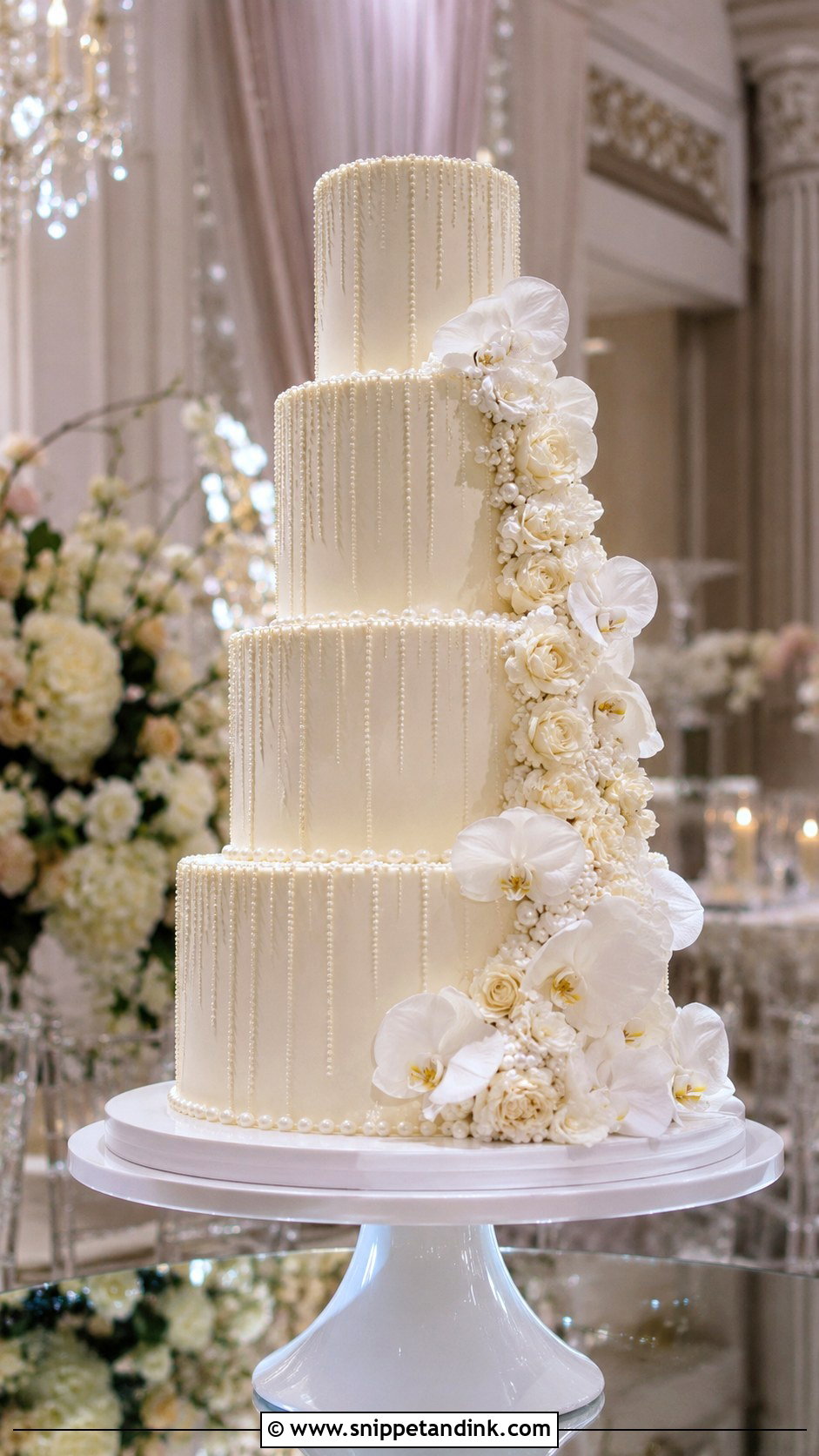
Height does the dramatic work, so the decoration can stay quiet. Tall tiers give pearls more room, whether in vertical lines, cascading trails or borders, and they suit large venues and formal receptions where the dessert table needs height. Extended tiers need extra internal support, since a single tier that tall can bulge without it. Add flowers only where they guide the eye, at the top or along one side. A tall pearl cake reads grand in photos without any help.





20. Pearl Mini Wedding Cake
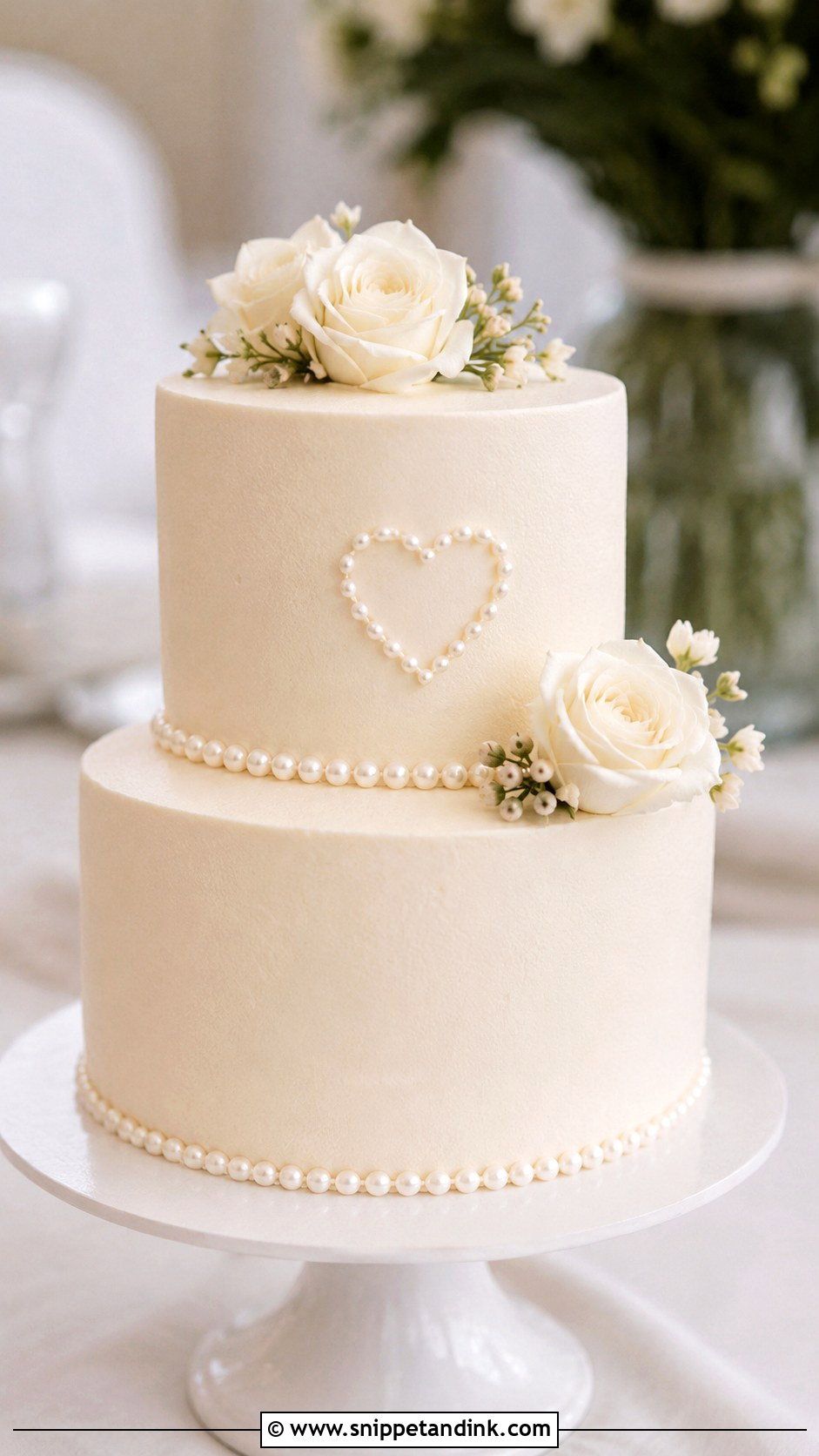
Small cakes suit elopements, sweetheart tables and couples serving other desserts. With one or two tiers, pearls still make the cake feel finished: smooth buttercream or fondant, then pearl borders, tiny floral clusters or a simple pearl heart. Scale matters more than people expect. I switch to smaller pearls on a mini cake, because large beads on a 6 inch tier look clumsy. Set it on a small pedestal with a few flowers and soft light.
Getting Hundreds of Pearls to Stay Where They Were Placed
Pearls come off cakes for predictable reasons, and most of them happen between the kitchen and the reception.
On the cake itself
Pressed into fresh buttercream, a pearl grips on its own. On fondant or chilled, crusted buttercream it needs a tiny dot of royal icing or edible glue, placed with tweezers. I fix borders section by section and let each one firm up before turning the cake.
From a cold fridge to a warm room
A chilled cake carried into a humid room gathers condensation. That moisture can make pearl lustre streak and coloured sugar pearls bleed into white frosting. I let the cake come up to room temperature inside its closed box, so the water forms on the box rather than on the cake.
Why the quote looks high
Hand-placing pearls one at a time takes hours on a tiered cake. If a quote seems steep for a plain white design, that labour is usually the reason, and a moulded border can bring it down without changing the look much from a few feet away.
Should the Cake Pearls Match Your Earrings?
Not exactly, but they should share a tone. Real pearls are rarely pure white; most carry a cream, rose or silver overtone, and cake pearls come in a similar range from bright white to deep ivory. I ask brides to bring their jewellery, or a daylight photo of it, and hold a few sample pearls against the frosting colour. A bright white pearl on ivory icing can look chalky, and a cream pearl on stark white can look dull. If the dress has pearl beading, match that before the jewellery, since the cake and the dress share the frame in every cutting photo.
Pearls as the Star or as the Supporting Detail
Pearls work because they move between classic, vintage and modern styles with very little effort. A handful can finish a plain buttercream cake, and a full cascade can turn a tall cake into the room’s centrepiece. Your venue, dress, flowers, palette and level of formality will point you in the right direction. Bring clear reference photos to your baker and decide early whether pearls lead or support. In my experience that single decision shapes every other detail on the cake.
You'll Like These Ideas:










Leave a Reply