
Old cakes were decorated by hand because there was no other way to do it. That’s what couples are responding to when they ask me for something vintage: the piping, the pearls, the swags and the scalloped borders that show a person spent hours with a bag in hand. These styles sit naturally in ballrooms and historic houses, but they adapt to gardens and small dinners too. Modern flavours and a cleaner table keep them from looking like a costume. Here are twenty of them, from the most ornate to the quietest, with what I’d tell you at a consultation about each one.
Bringing Your Baker a Vintage Brief They Can Work From
“Vintage” means something different to everyone who says it to me. For one couple it’s a 1950s heart cake with cherries, for another a towering Victorian cake with garlands. A clear brief saves a consultation and makes the quote accurate.
- Bring three to five photos and say what you like about each one, whether it’s the border, the colour or the shape. One perfect photo often hides details you don’t actually want.
- If there’s a family wedding photo with a cake you love, bring that too. Old piping patterns are surprisingly easy to recreate from a clear picture.
- Share a swatch of your colour palette in daylight, not a screenshot, since screens shift pastels badly.
- Tell your baker where the cake will stand and for how long. Indoors or outdoors changes which frosting I’d use.
- Give a realistic guest count for cake, not for the whole wedding.
Heavily piped cakes take far longer to decorate than smooth ones, so good decorators book up early, especially for peak summer weekends. Several months’ notice is sensible for Lambeth work or sugar flowers. Lead times vary by baker, so ask at the first enquiry.
1. Lambeth Wedding Cake
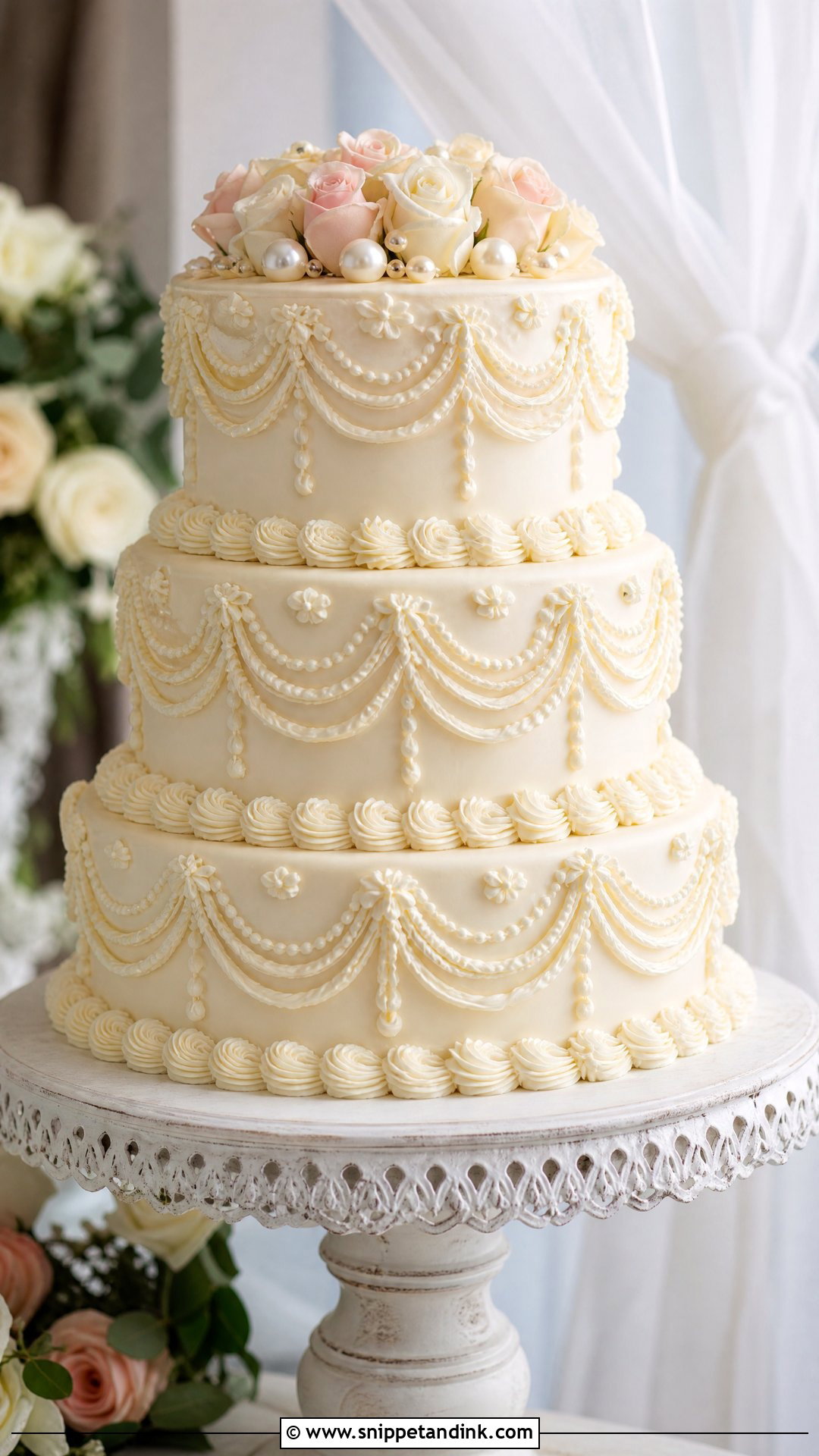
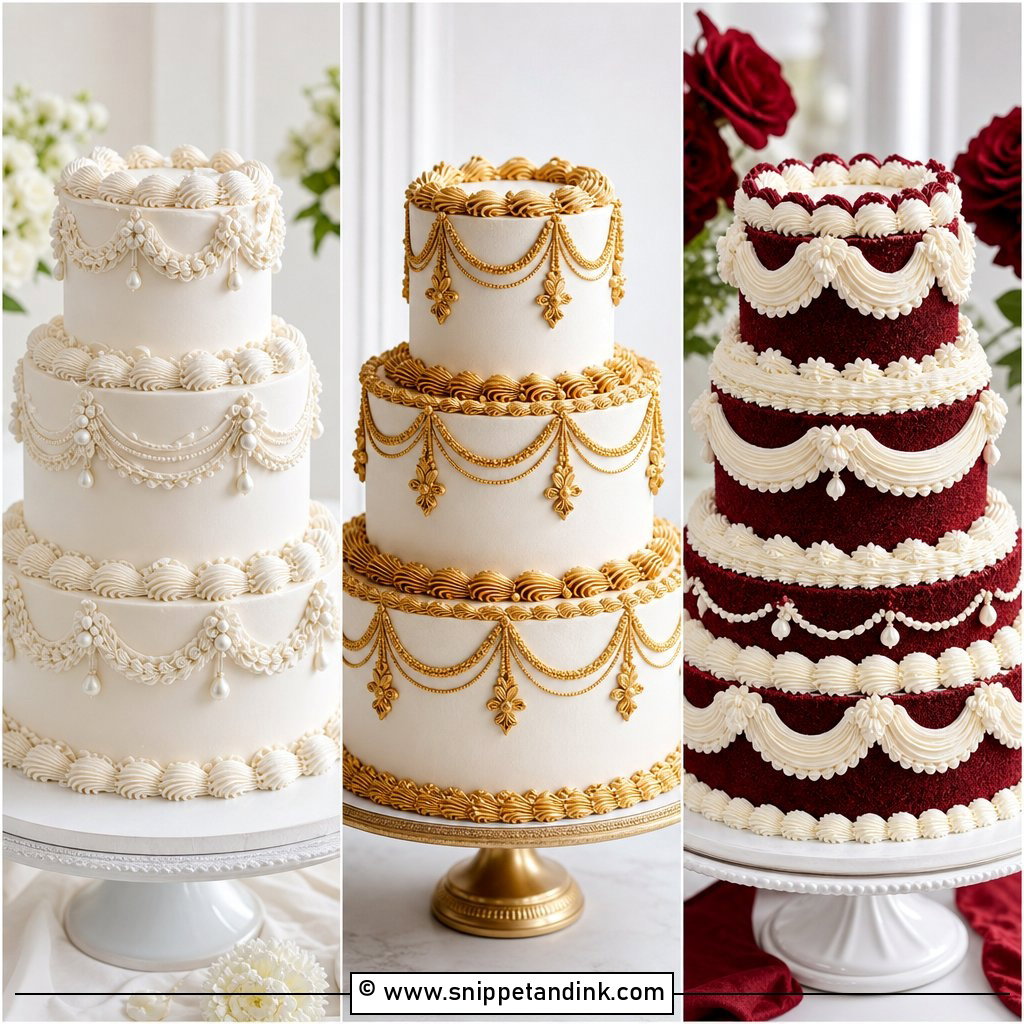
Lambeth is the overpiping method behind most of the cakes people now call vintage: stacked shell borders, drop strings, swags, rosettes and piped pearls built layer on layer until the decoration stands well out from the tier. It’s slow work. A three-tier Lambeth cake can take a full day of piping alone, and that time shows up in the quote. Ivory, white, blush and soft blue keep all that detail readable. Ask your baker to show you a finished piece in person if you can, because photos flatten the depth that makes the style worth paying for.
2. Vintage Heart Wedding Cake
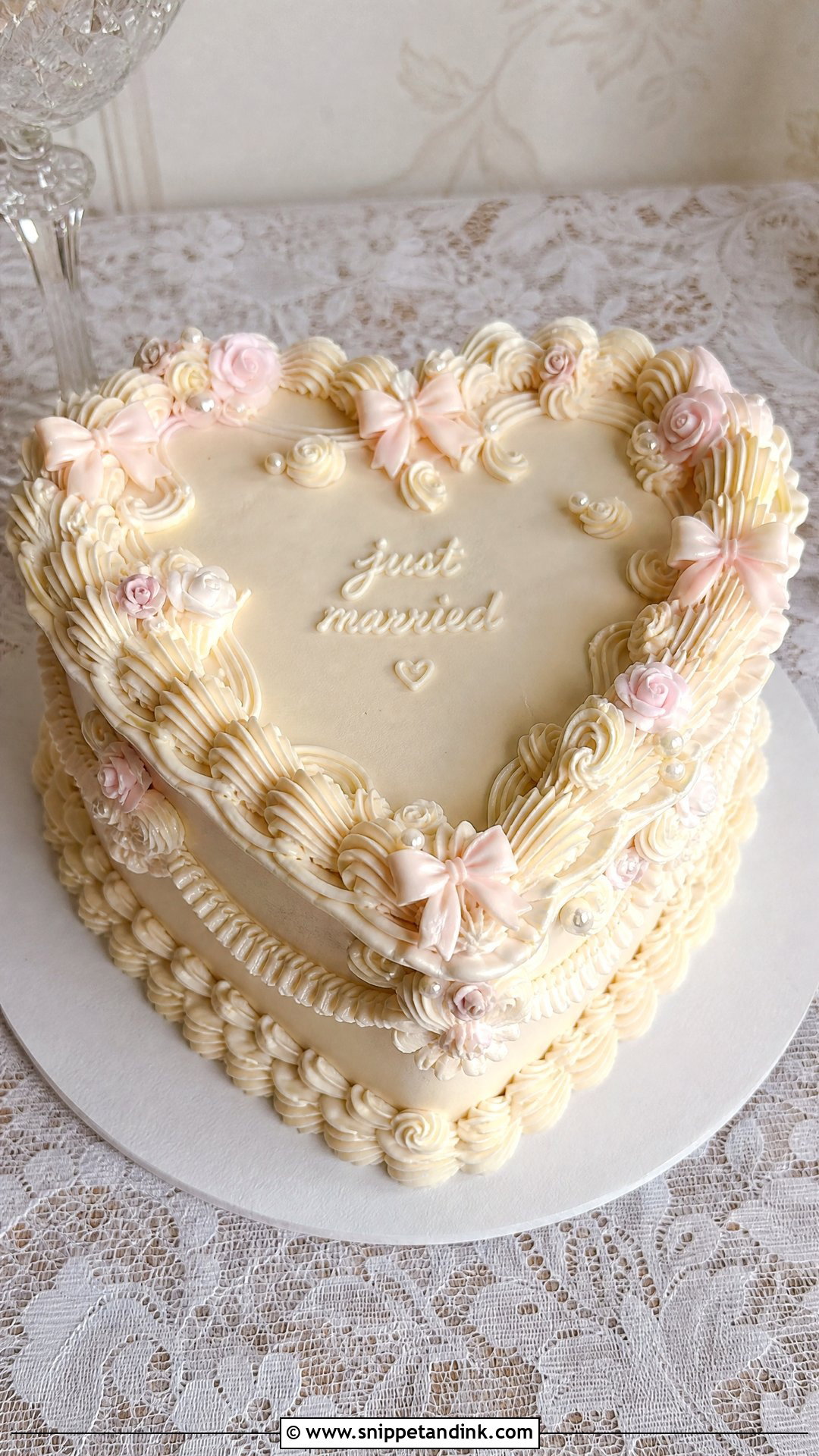
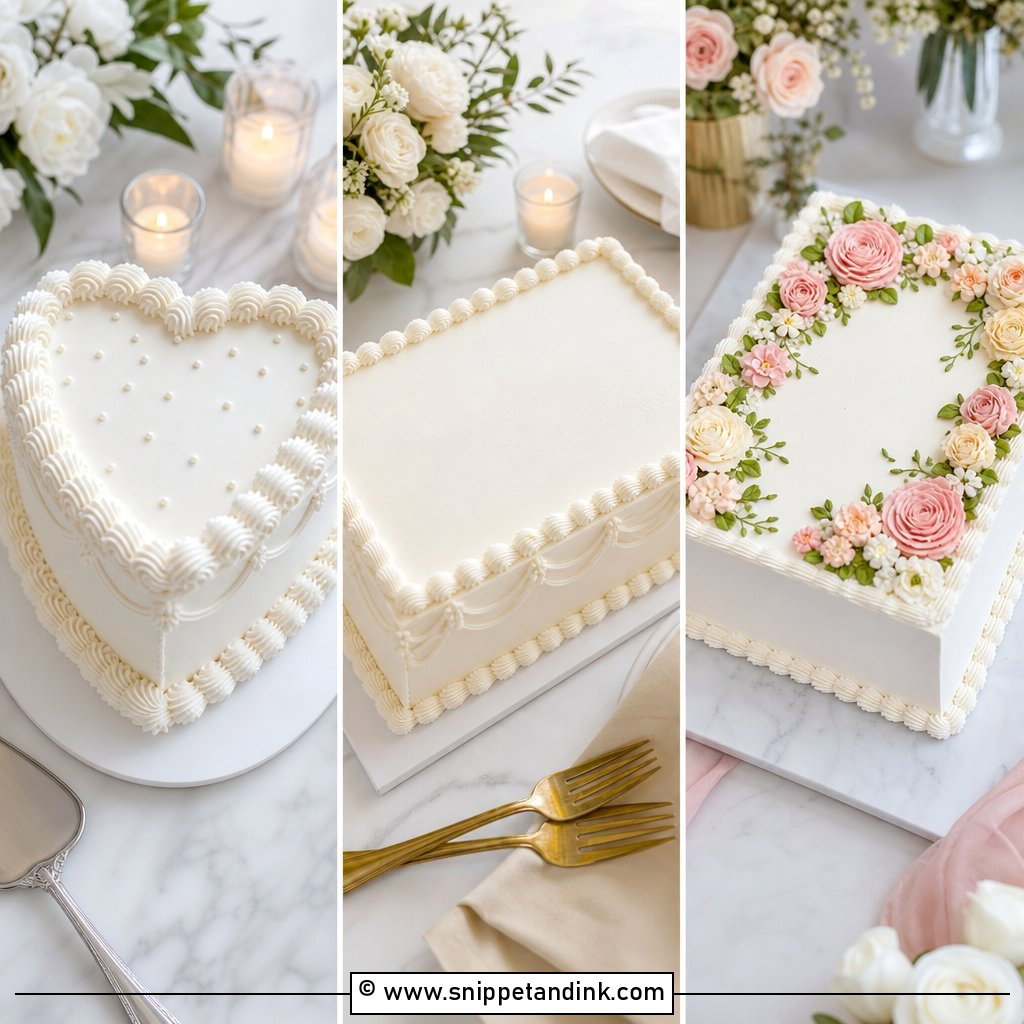
Heart cakes come straight out of mid-century bakery windows, which is why a vintage heart wedding cake reads as playful the moment it lands on a table. Shell borders, ruffles and a piped message in soft buttercream are the classic dressing. The shape limits you, though. Hearts don’t stack well beyond two tiers and they cut awkwardly into even slices, so I usually suggest them as a single cutting cake beside a kitchen cake, or for smaller guest counts. Pale yellow and powder blue are underrated alternatives to blush.
3. Pearl Wedding Cake
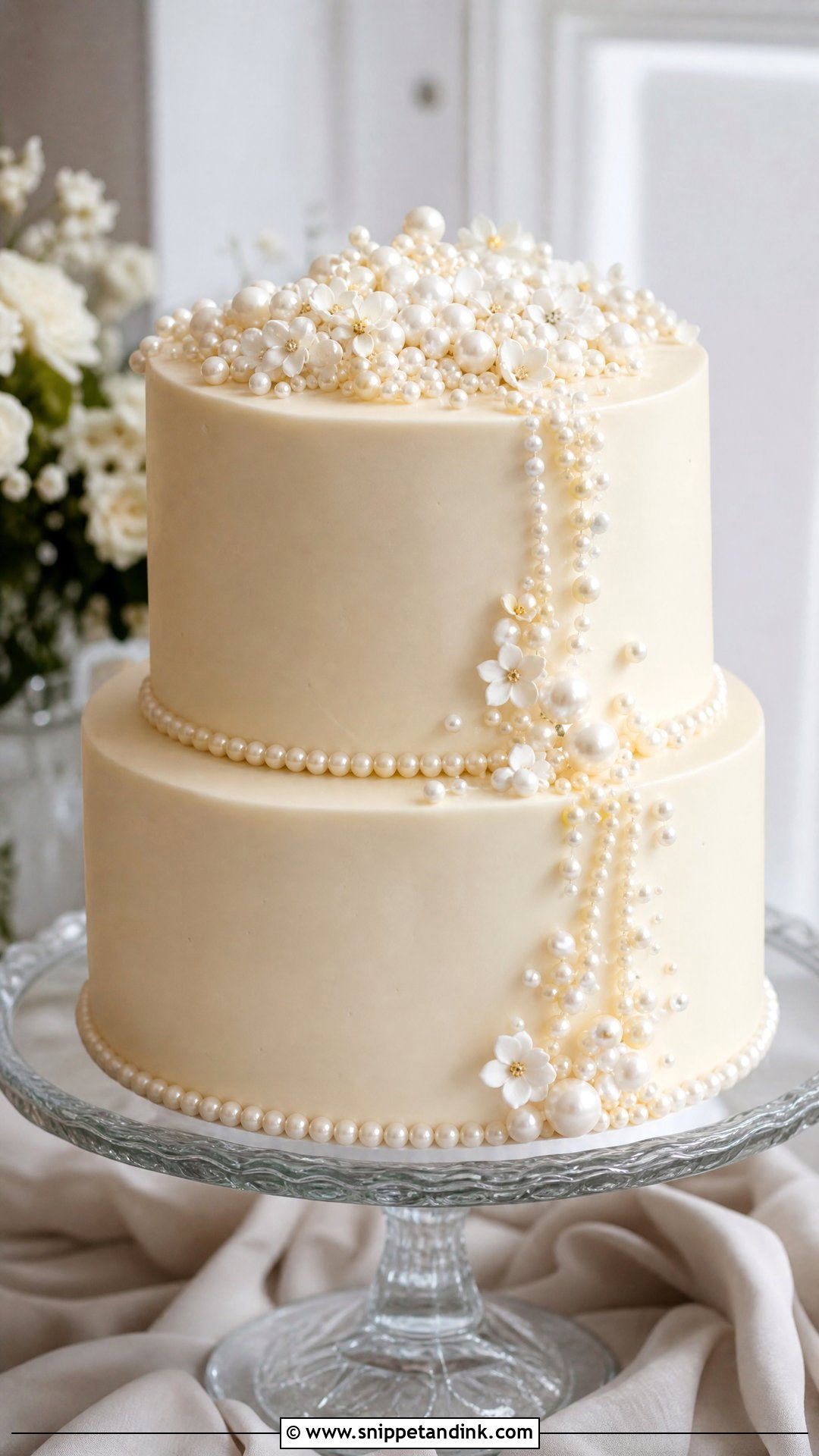
Choose one pearl size and one placement, and stick to it. A row round the base of each tier, a light scatter over smooth buttercream, or pearls tucked into the dips of piped swags all look polished. Mixing three sizes across three placements is what makes a pearl cake look messy. Champagne pearls on cream frosting feel warmer and older than white on ivory. And a practical word: hard dragées are crunchy enough to surprise a guest, so I either use soft piped pearls on the lower tiers or remove the hard ones before cutting.
4. Lace Wedding Cake
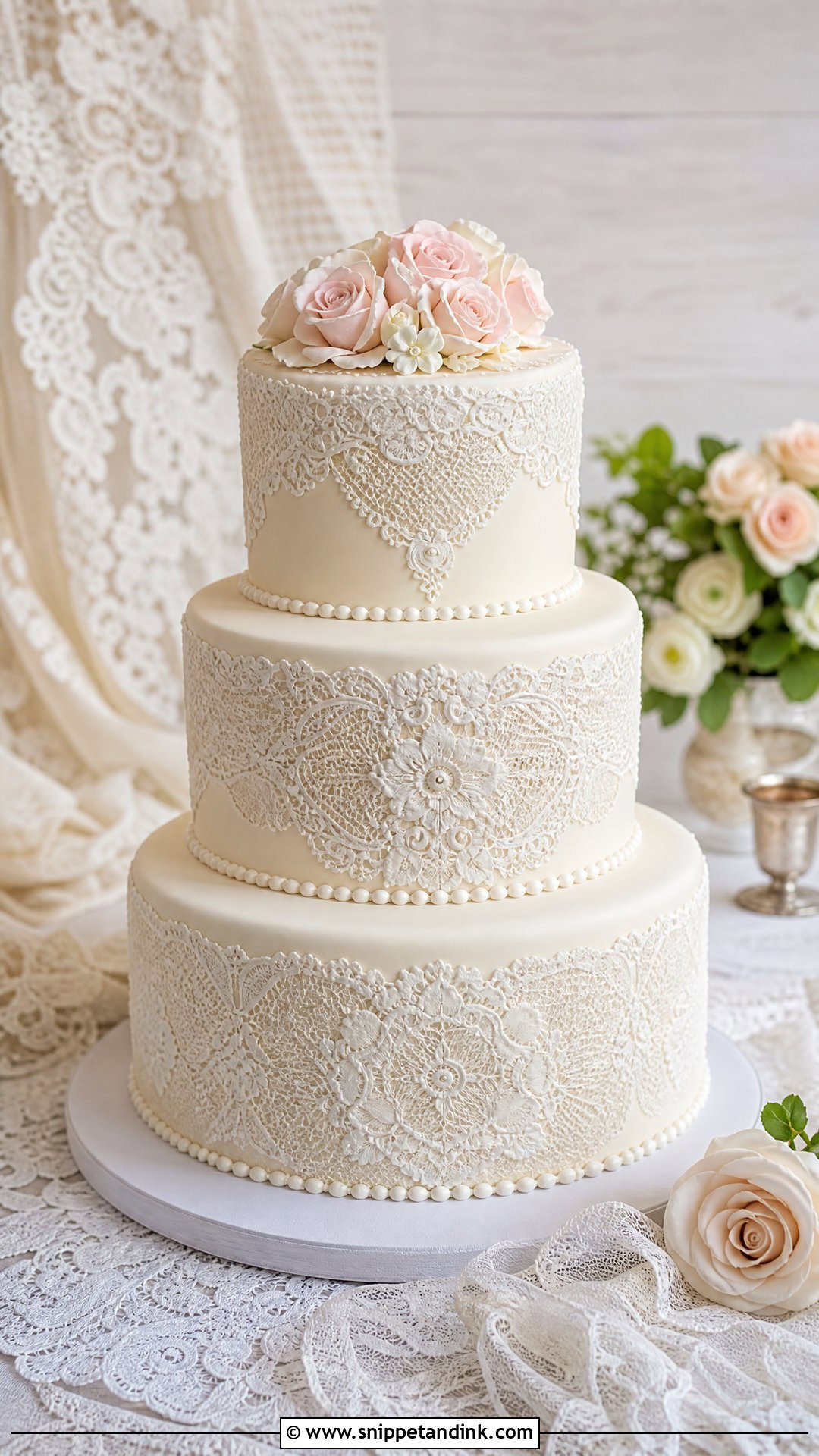
If the dress or veil has lace, I ask for a close-up photo of it at the first meeting. A good decorator can echo the motif in piping, in a fondant appliqué or in moulded sugar lace that wraps the tier like fabric. Ivory on ivory is the traditional look. Blush or dusty blue underneath lets the pattern show from further away, which matters in a large room. Round tiers suit lace best, since the pattern can wrap without the awkward corner seams a square creates.
5. Victorian Wedding Cake
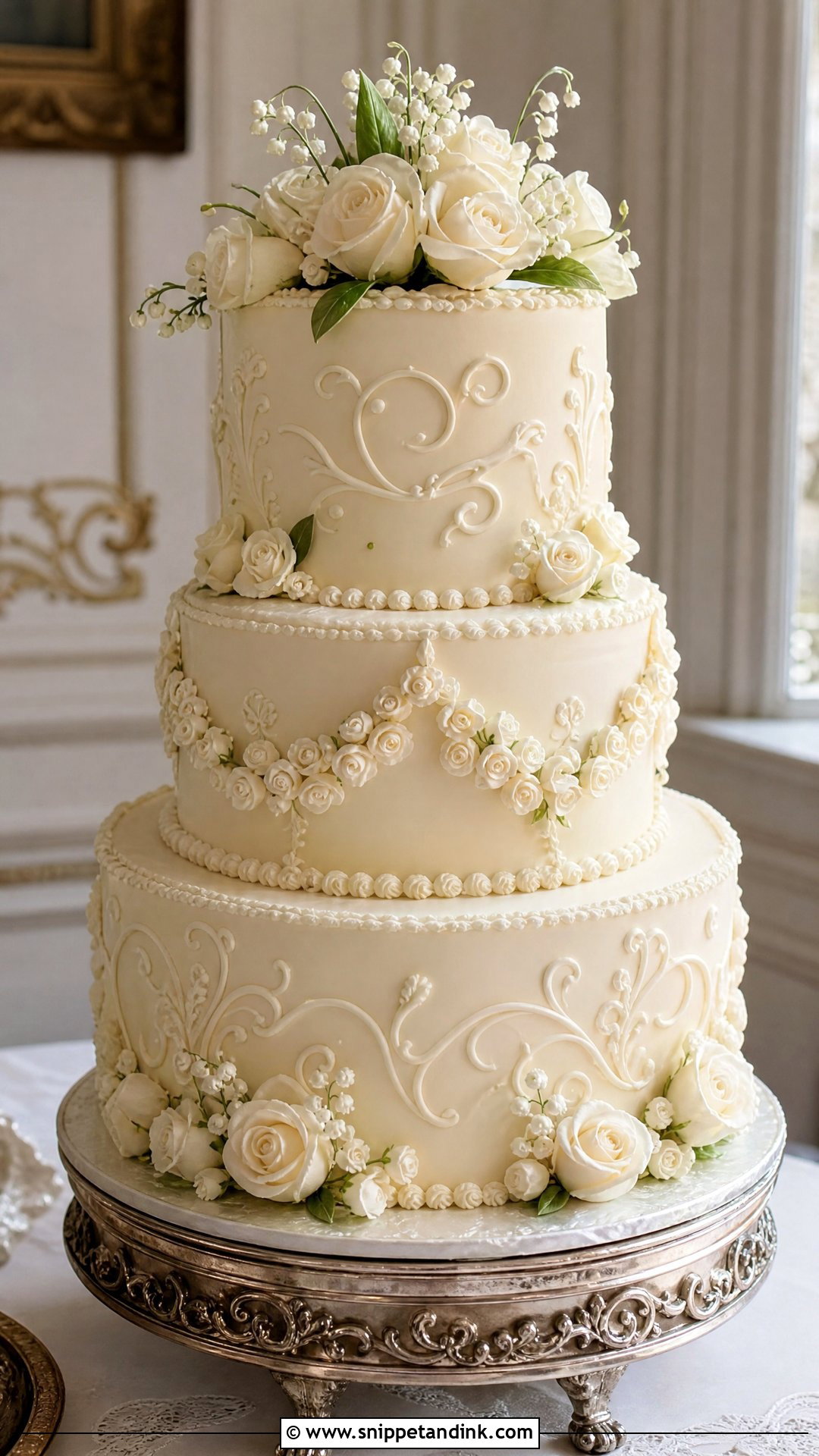
This is the most ornate cake on the list, and it needs a room that can carry it: a historic house, a formal hotel, a garden with some grandeur. Victorian cakes stack garlands, sugar roses and scrollwork across three tall tiers, usually in cream. I’d steer a couple away from it for a casual barn or a small restaurant room, where it can look like it took a wrong turn. Lily of the valley and small blossoms suit the period. Vanilla bean, almond, lemon and raspberry all sit comfortably under this much decoration.
6. Art Deco Wedding Cake
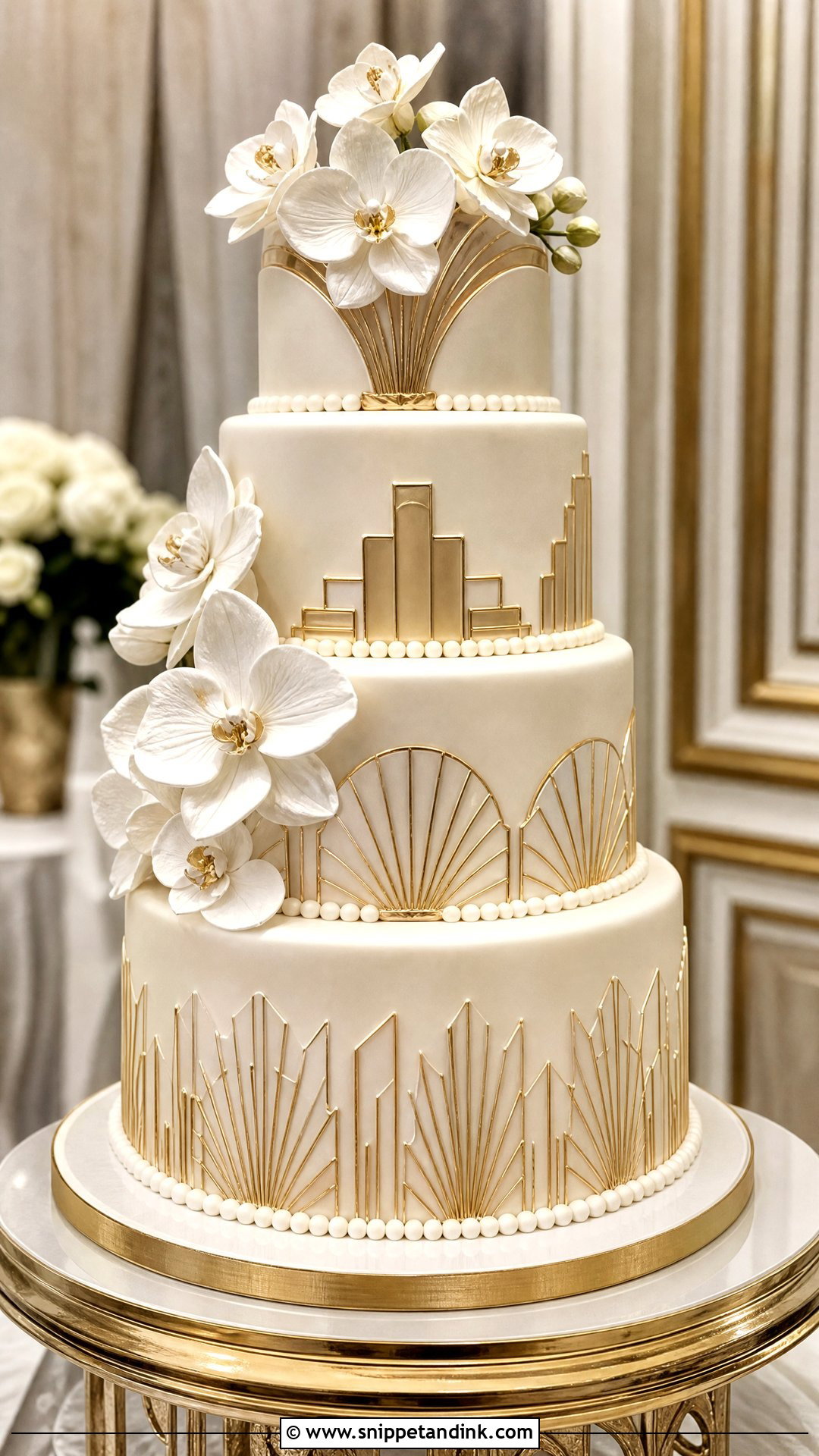
Art Deco swaps softness for geometry: fans, stepped lines, sunbursts, chevrons and gold edges. It’s harder to execute than it looks. Straight lines on a cake need sharp, cold edges and careful measuring, and any wobble is obvious. That’s why most Deco cakes are fondant rather than buttercream. Ivory with black or champagne with gold are the classic pairings. Keep the flowers minimal, perhaps a single sugar orchid, because a Deco cake buried in roses loses its whole point.
7. Buttercream Ruffle Wedding Cake
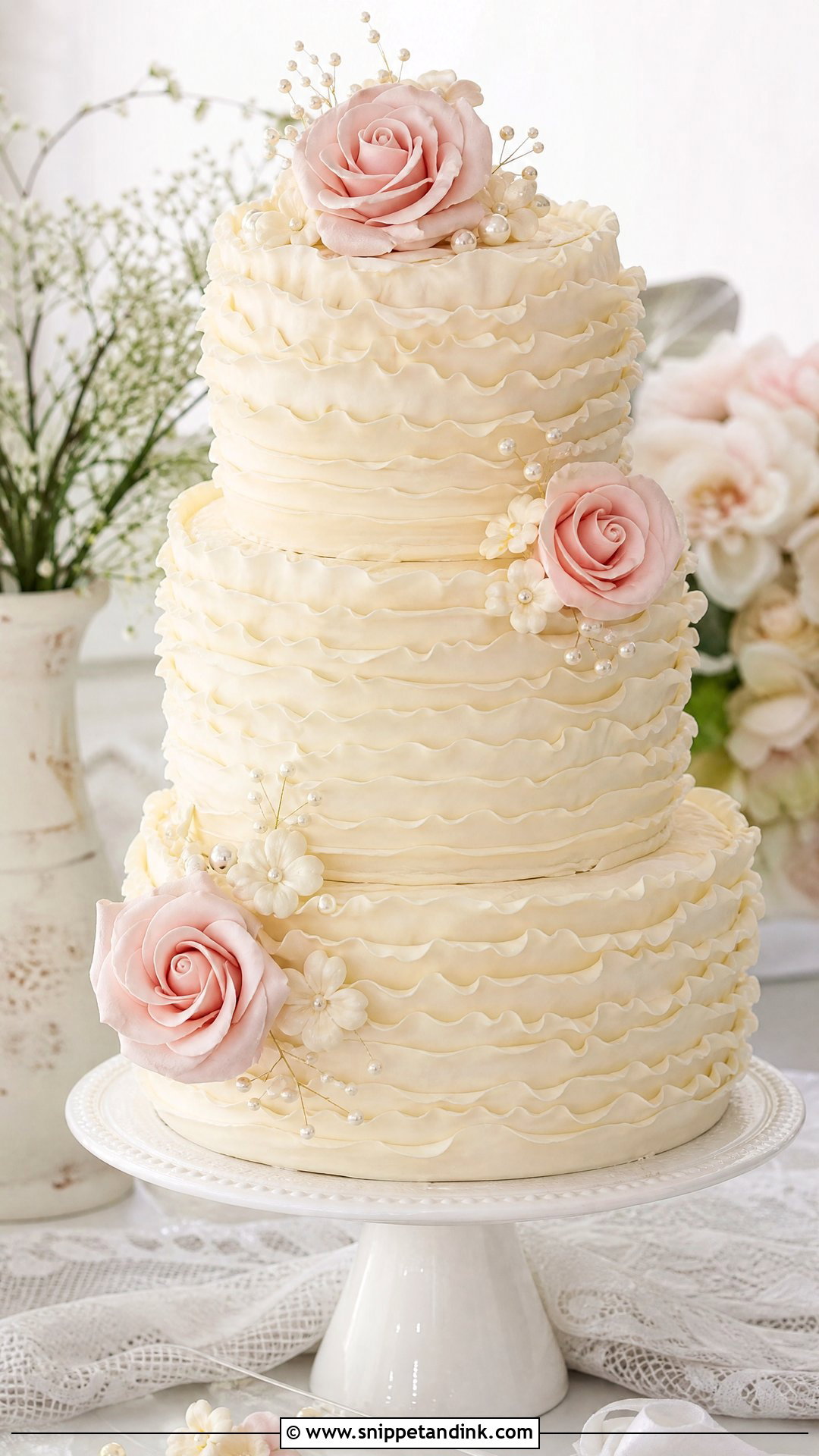
Ruffles are piped with a petal tip, wave after wave, and they hide small imperfections in the icing beneath, which makes them kinder to a warm room than a razor-smooth finish. The layered frosting catches light and shadow, giving each tier depth on camera. Blush, peach and champagne feel warmer and older than plain ivory. They’re heavy, though. A ruffled three-tier cake carries a lot of extra buttercream, so I make sure the tiers are well supported and the cake goes on a sturdy stand.
8. Vintage Rose Wedding Cake
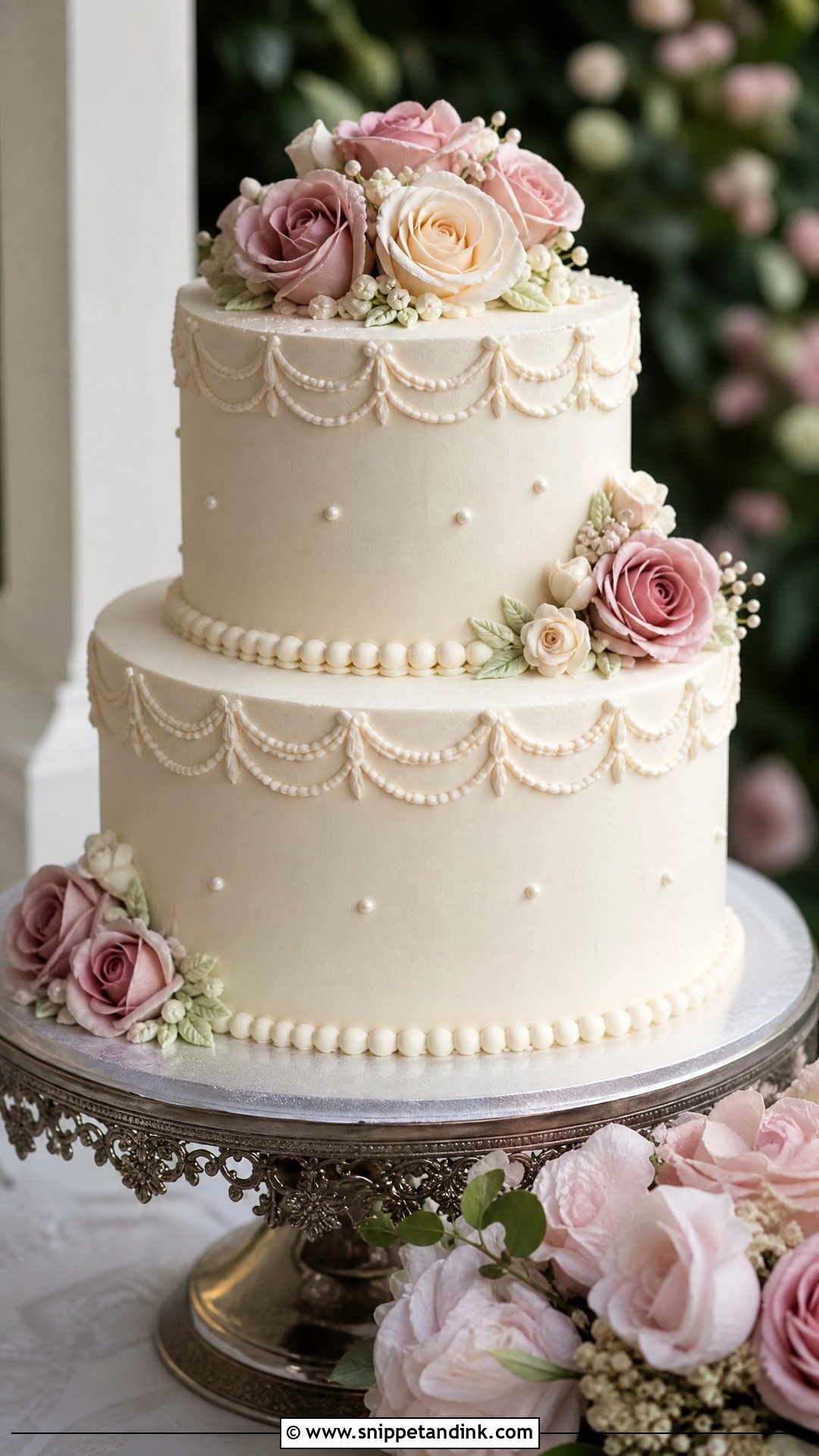
Roses can be sugar, buttercream, pressed petals or small clusters tucked between tiers, and the version you choose changes the whole feel. Sugar roses hold up for hours and can be kept afterwards. Buttercream roses are softer and better to eat but slump in heat. Blush, dusty rose and mauve on ivory look old-fashioned. Big, bold placement tips the cake modern, so I keep roses in tight clusters and tie them to the cake with piped borders and a little scrollwork.
9. Pressed Flower Wedding Cake
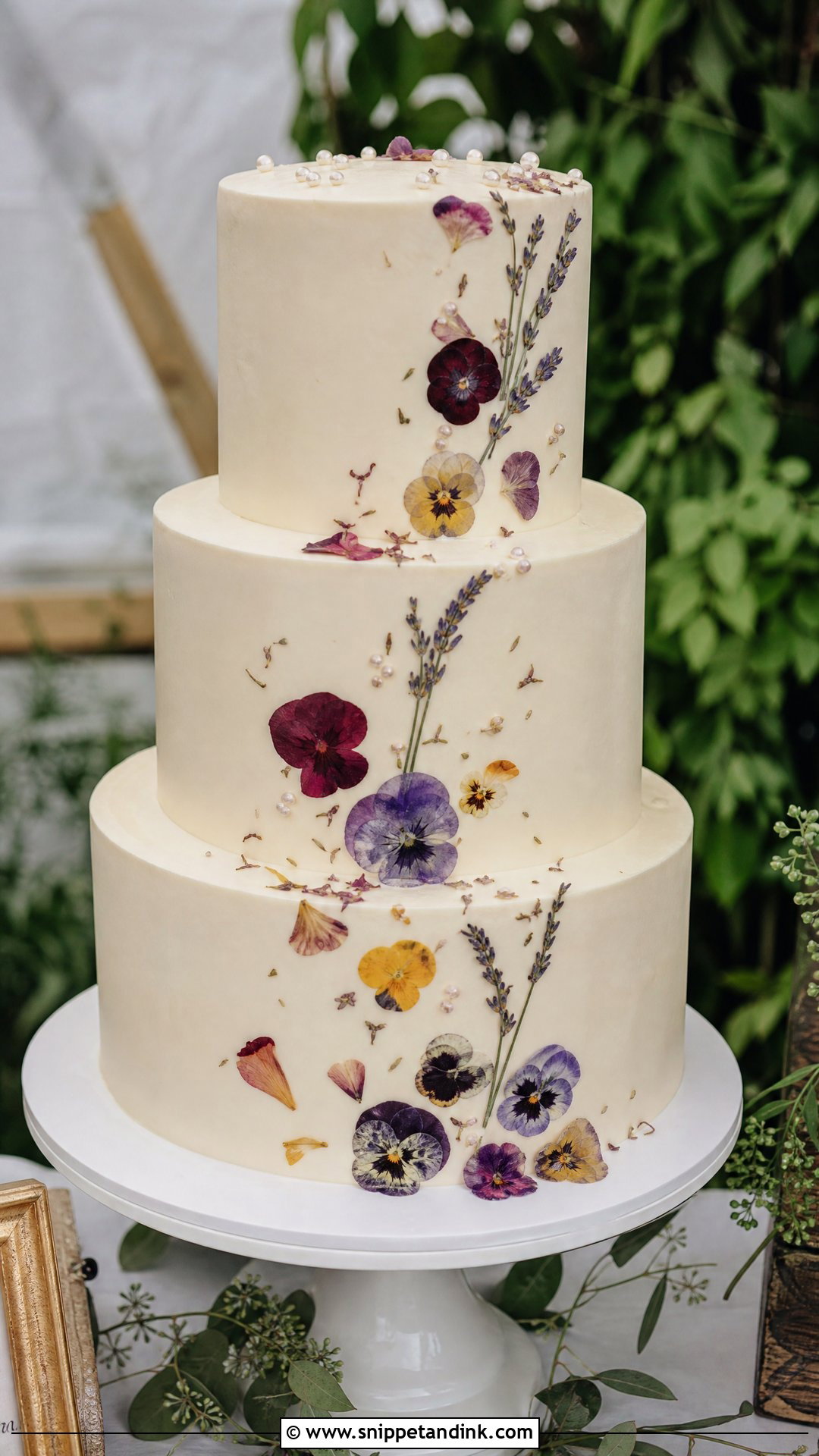
Pressed flower wedding cakes are the quietest vintage option and one of the hardest to rush. The blooms have to be edible, grown without sprays and pressed flat for days, so this isn’t something to add a week before. Pansies, violas, cornflowers and small fern leaves press best; thick flowers like roses don’t lie flat. I set them on chilled, very smooth buttercream so they bed in cleanly. Arranged as a cascade or a framed border, they give a storybook look without a single piped line.
10. Vintage Blue Wedding Cake
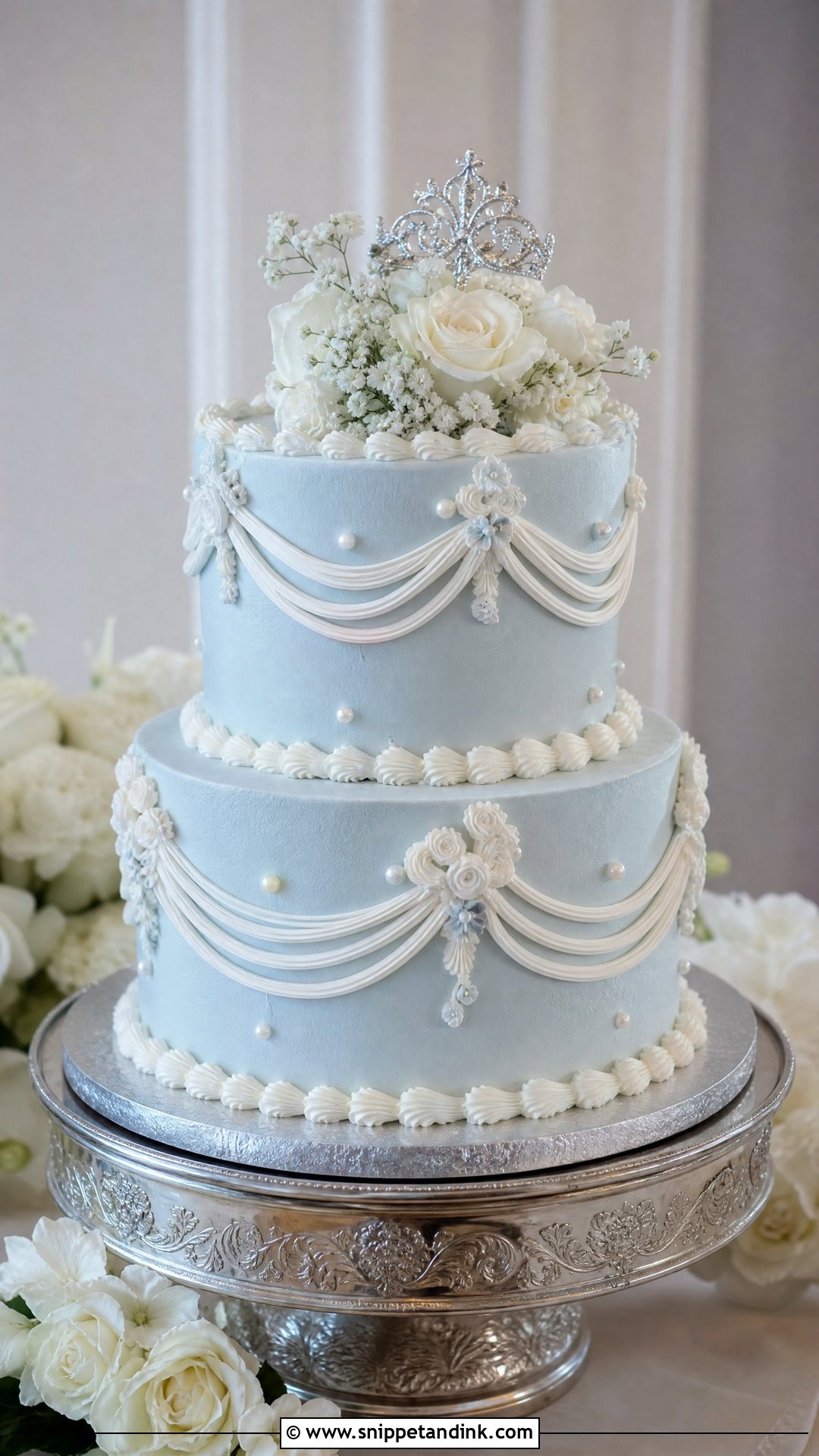
Blue shows off Lambeth piping better than any other base colour, because crisp white lines stand out against it from across a room. Powder blue, duck egg and dusty blue look antique; bright blue doesn’t. Tinting buttercream blue takes care, since the natural yellow of butter pushes it toward green. A good baker whitens the base first, and I’d always ask to see a swatch. Silver accents, lace and sugar bows sit well with it, especially in a historic hotel or a coastal venue.
11. Vintage Bow Wedding Cake
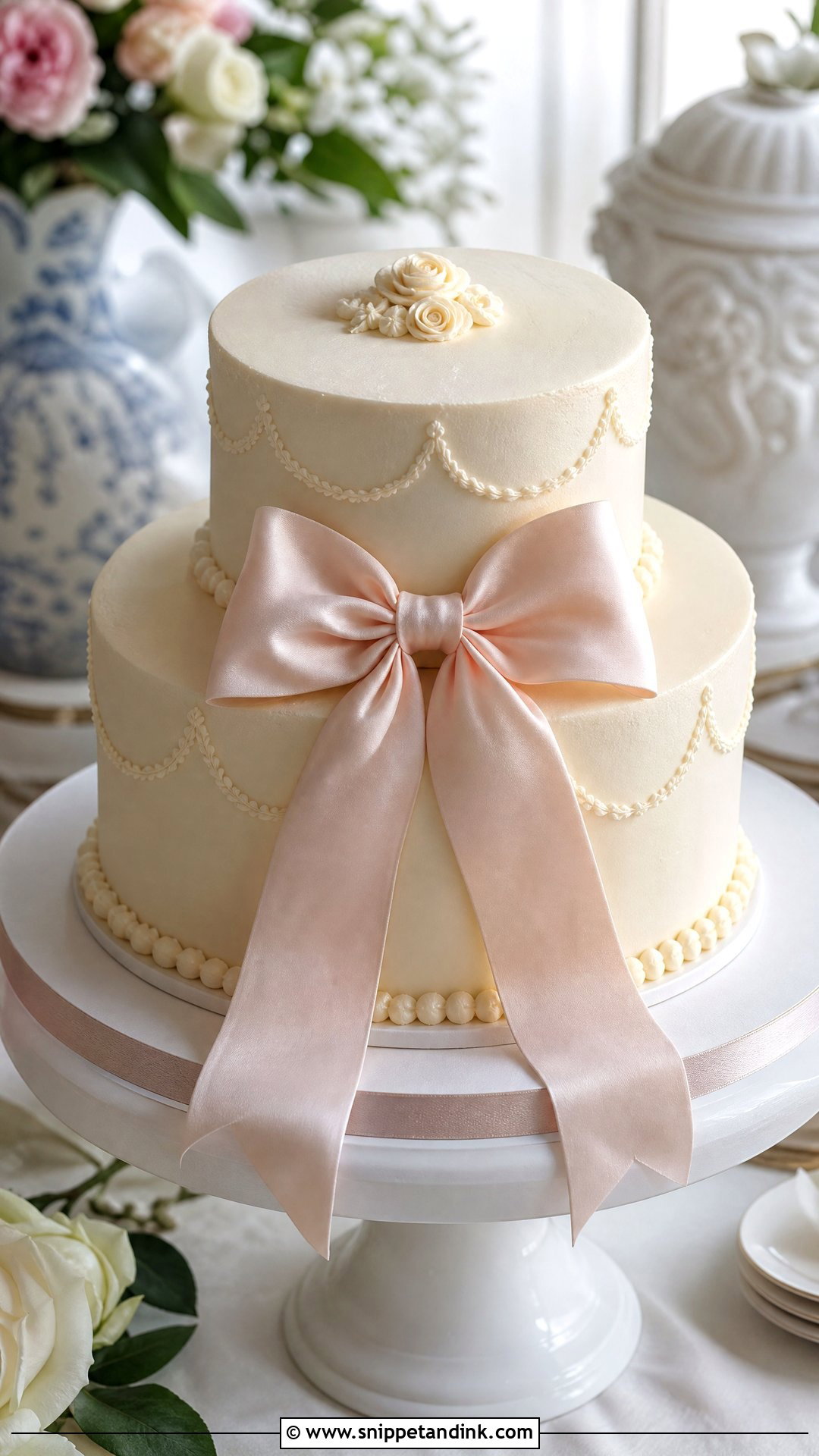
A bow is one of the easiest vintage details to get wrong by scale. Whether it’s satin ribbon, fondant, sugar paste or piped buttercream, it should look like it was tied for the cake, not borrowed from a gift. Placed at the front of a tier, between two tiers or on top within a ring of pearl piping, one bow is plenty. Real satin needs a barrier against the buttercream or grease seeps through by the evening. Champagne bows on ivory are my favourite pairing.
12. Vintage Monogram Wedding Cake
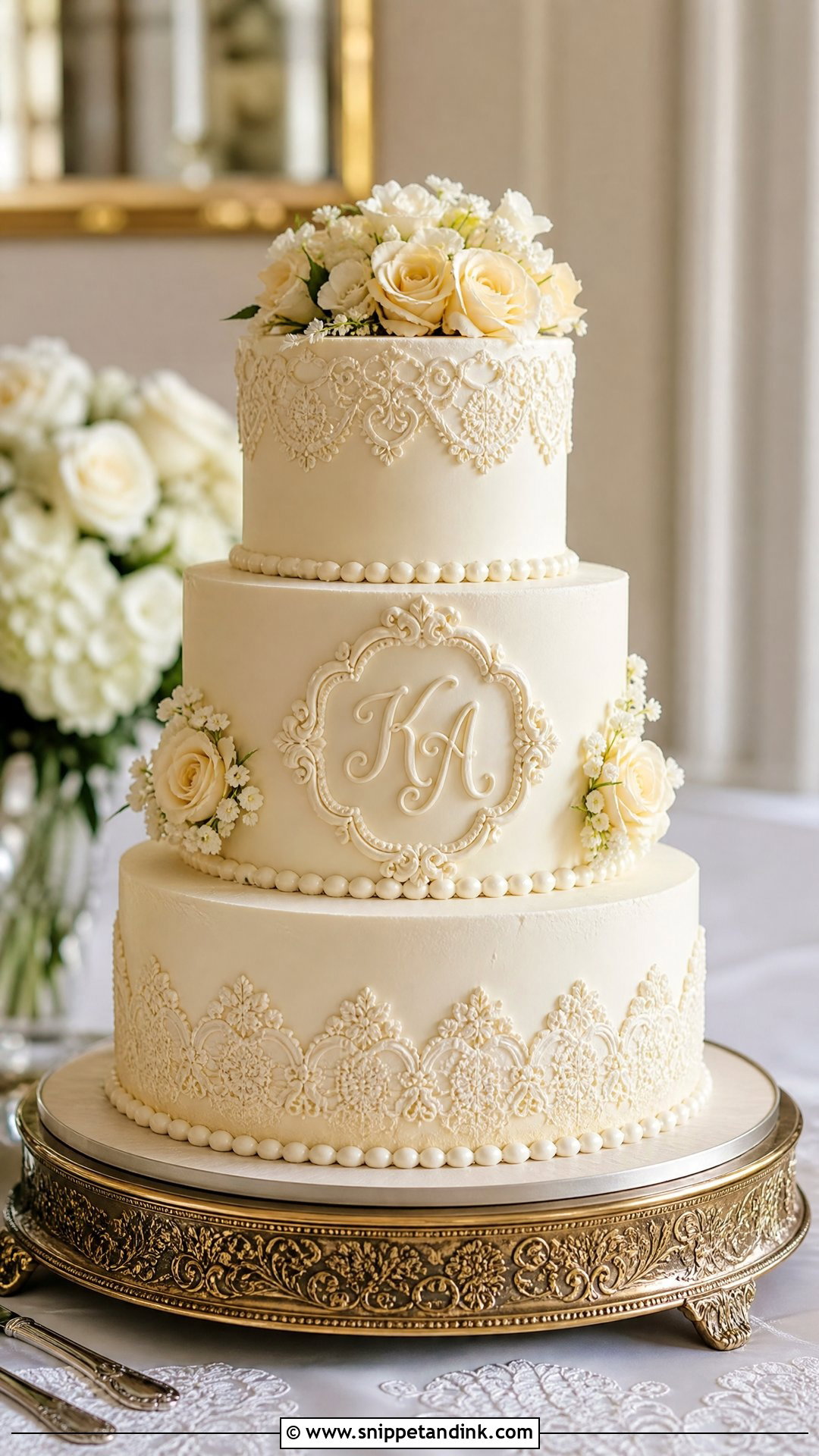
Initials piped, painted or set on a small sugar plaque turn a classic cake into one that could only belong to you. A vintage monogram wedding cake works best on a clean ivory surface with restrained borders, so the letters have room. I sketch the monogram on paper with the couple before it goes anywhere near the cake. Ornate script that looks lovely on stationery can be unreadable from three metres away. Pearls or a little lace piping can frame it, and that’s enough.
13. Vintage Floral Wedding Cake
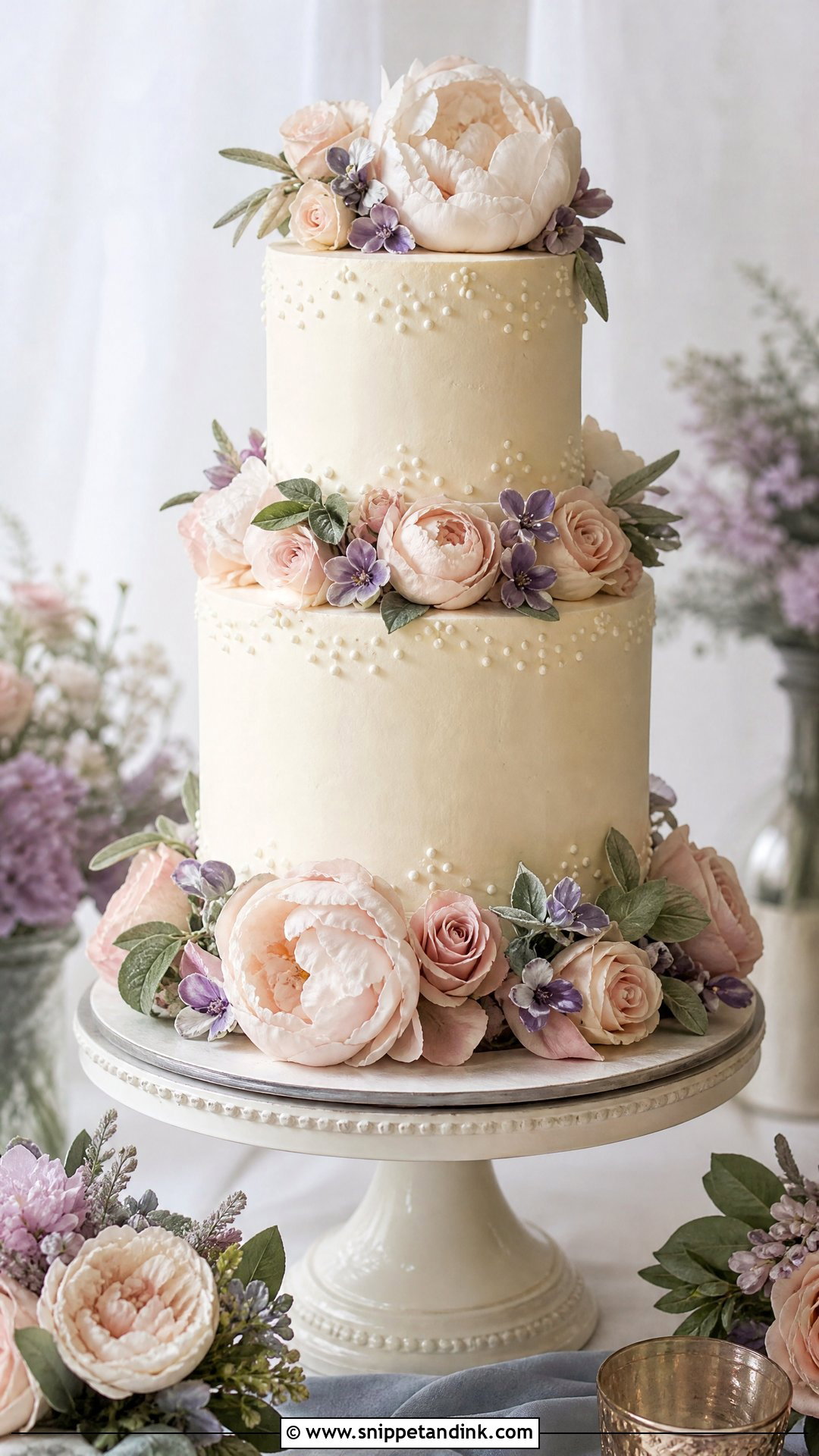
Flowers can lead a vintage cake, but the arrangement should look gathered rather than engineered. Sugar peonies, roses, ranunculus and violets in muted tones carry the period better than tight, glossy blooms. I keep the base simple, either ivory buttercream or smooth fondant, and add a piped border or a band of lace to anchor them. Sugar flowers take time to make and dry, so they need ordering well ahead. Dusty pink, sage, lavender and pale peach rarely date.
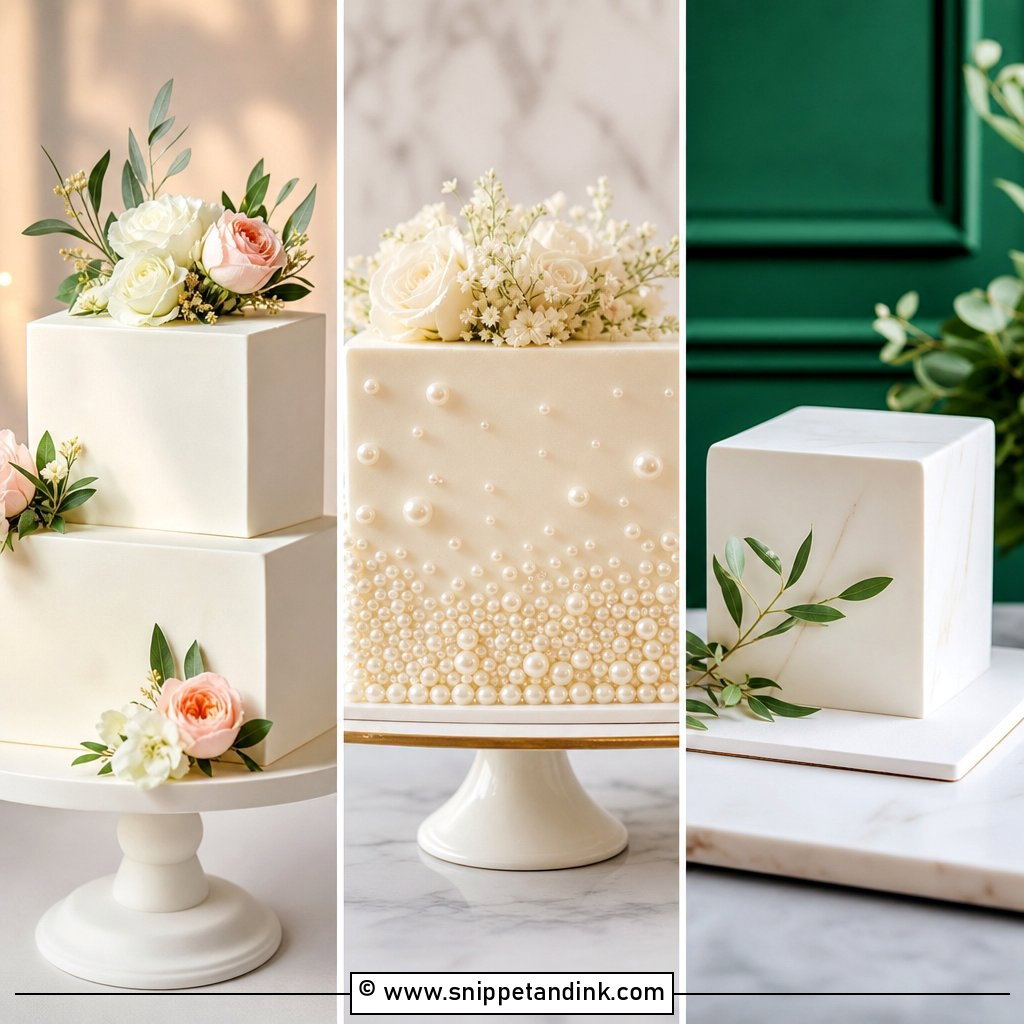
14. Vintage Square Wedding Cake
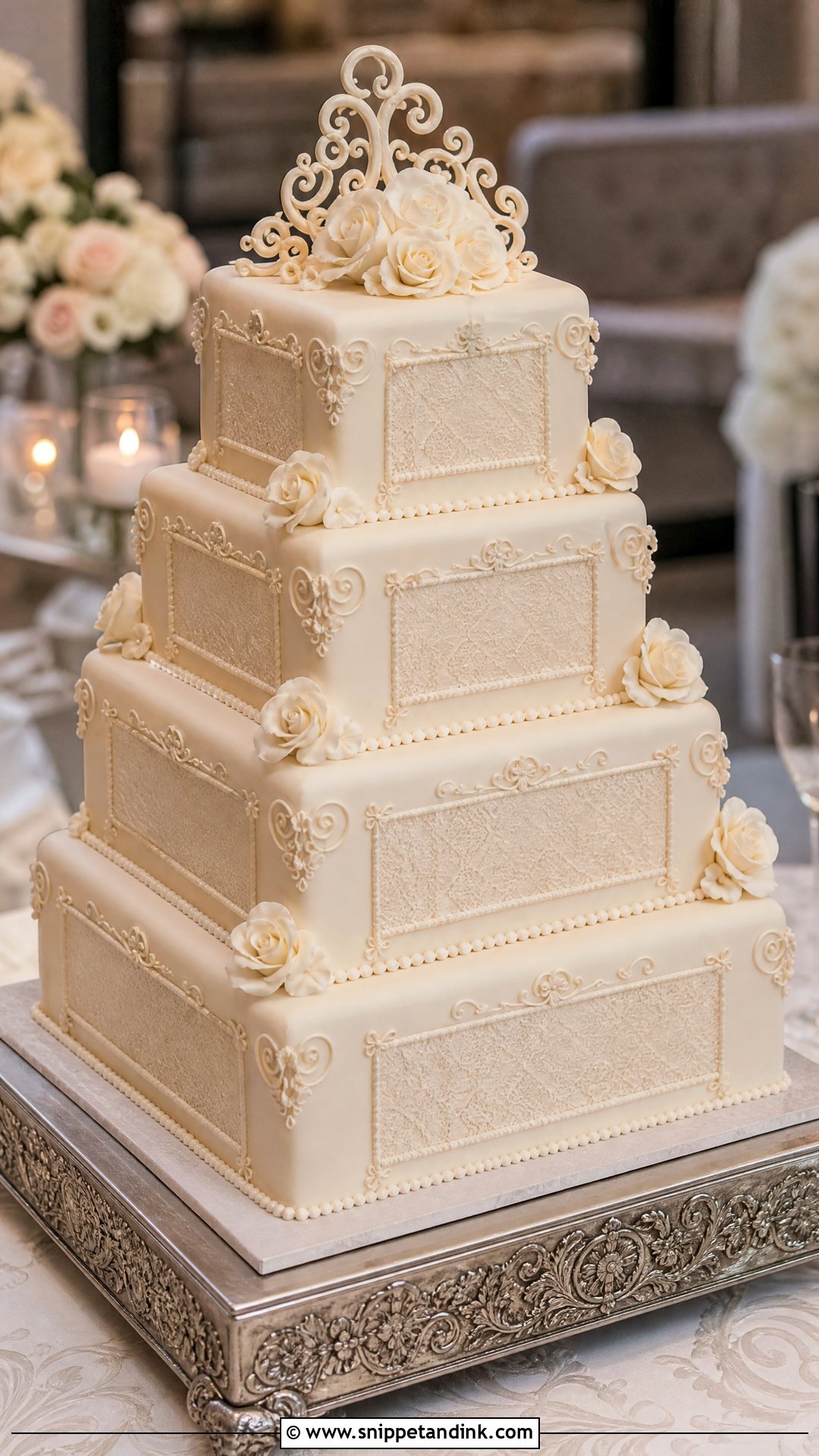
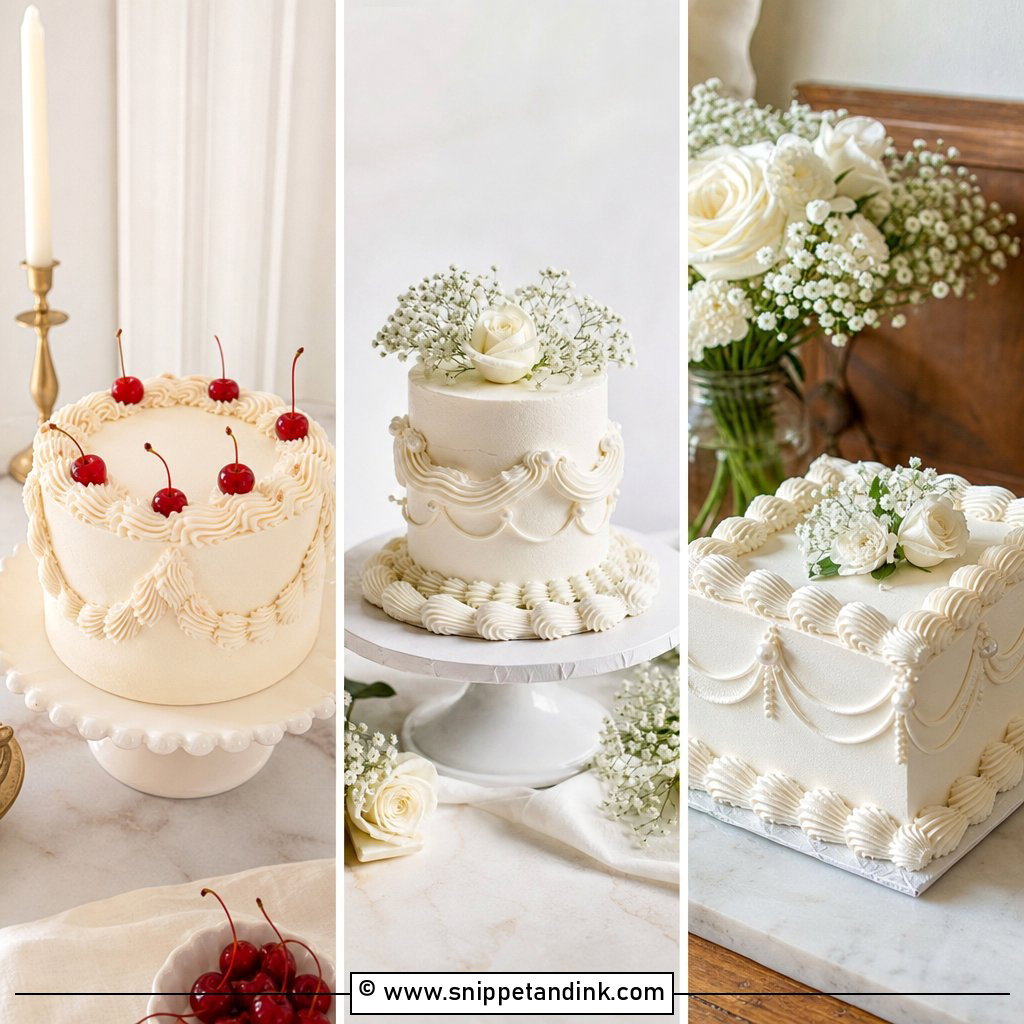
Square tiers were common in classic mid-century cakes, and they give piping, panels and monograms four flat frames to sit in. They’re less forgiving than rounds. Corners have to be sharp, sides vertical, and every piped line has to meet the corner exactly, or the eye catches it. Ivory is the safe choice; champagne or pale blue gives it more personality. A small sugar rose at each corner softens the structure nicely. Squares also cut into more portions than rounds of the same width.

15. Vintage Two Tier Wedding Cake
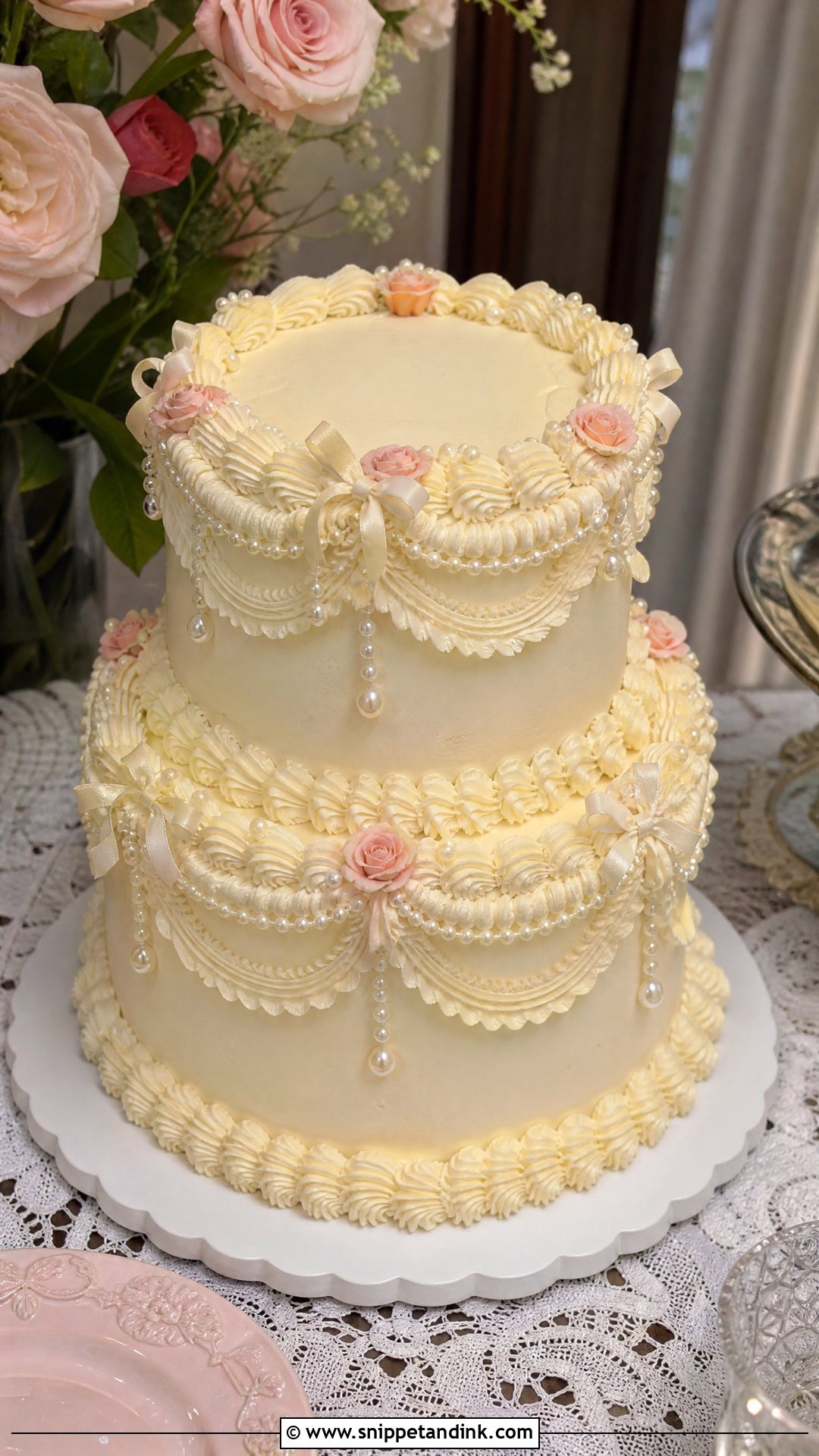
Two tiers suit smaller weddings because you get the shape of a wedding cake without paying for slices nobody eats. Scalloped borders, drop strings and rosettes in Lambeth style fit easily, and butter yellow or pale blue add personality. The common mistake is decorating the top tier fully and leaving the base plain, which makes the cake look unfinished. I repeat at least one detail, a border or a pearl line, on both tiers so they belong together.
16. Vintage Three Tier Wedding Cake
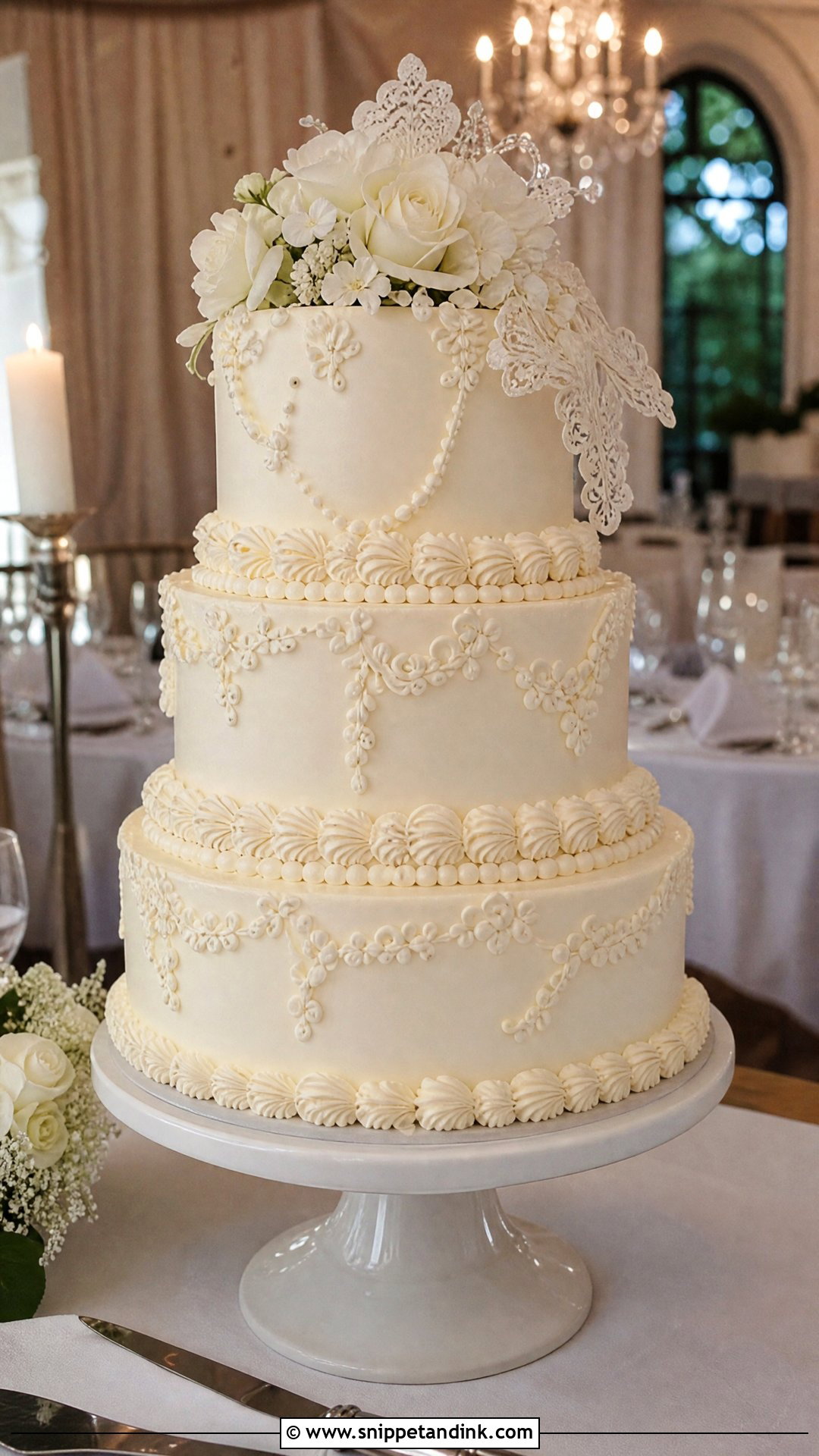
Three tiers is the classic silhouette, and a vintage three tier wedding cake can carry nearly any vintage technique: Lambeth piping, lace, pearls, sugar flowers, ruffles or painted detail. The secret is consistency. Choose one main technique and let it run through all three tiers, scaling the detail down slightly as the tiers get smaller. Structurally, each upper tier needs its own board and dowels, and the cake should be stacked at the venue or carried stacked only with a central dowel. Ivory with white piping is the most classic version.
17. Vintage Sheet Wedding Cake
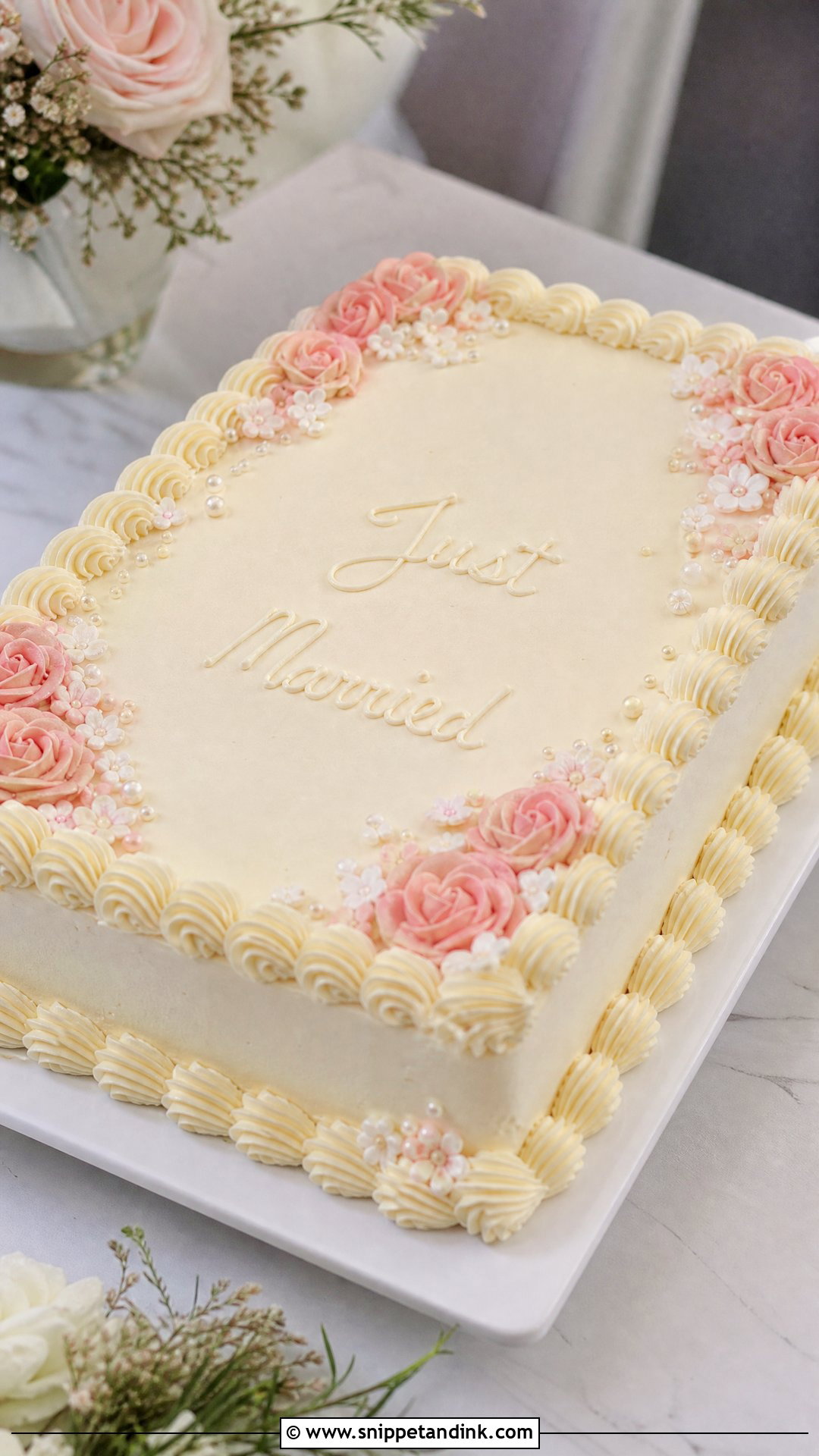
Sheet cakes are the unsung workhorse of vintage weddings. They can be the main dessert at a relaxed reception or a kitchen cake that sits behind a smaller display cake and quietly feeds everyone. Piped borders, corner rosettes, pearl dots and a short message give them that classic bakery look. They’re much easier to portion than tall tiers, which caterers appreciate. Raise it on a tray or stand and add a few flowers so it looks intended rather than pulled from the fridge.
18. Vintage Mini Wedding Cake
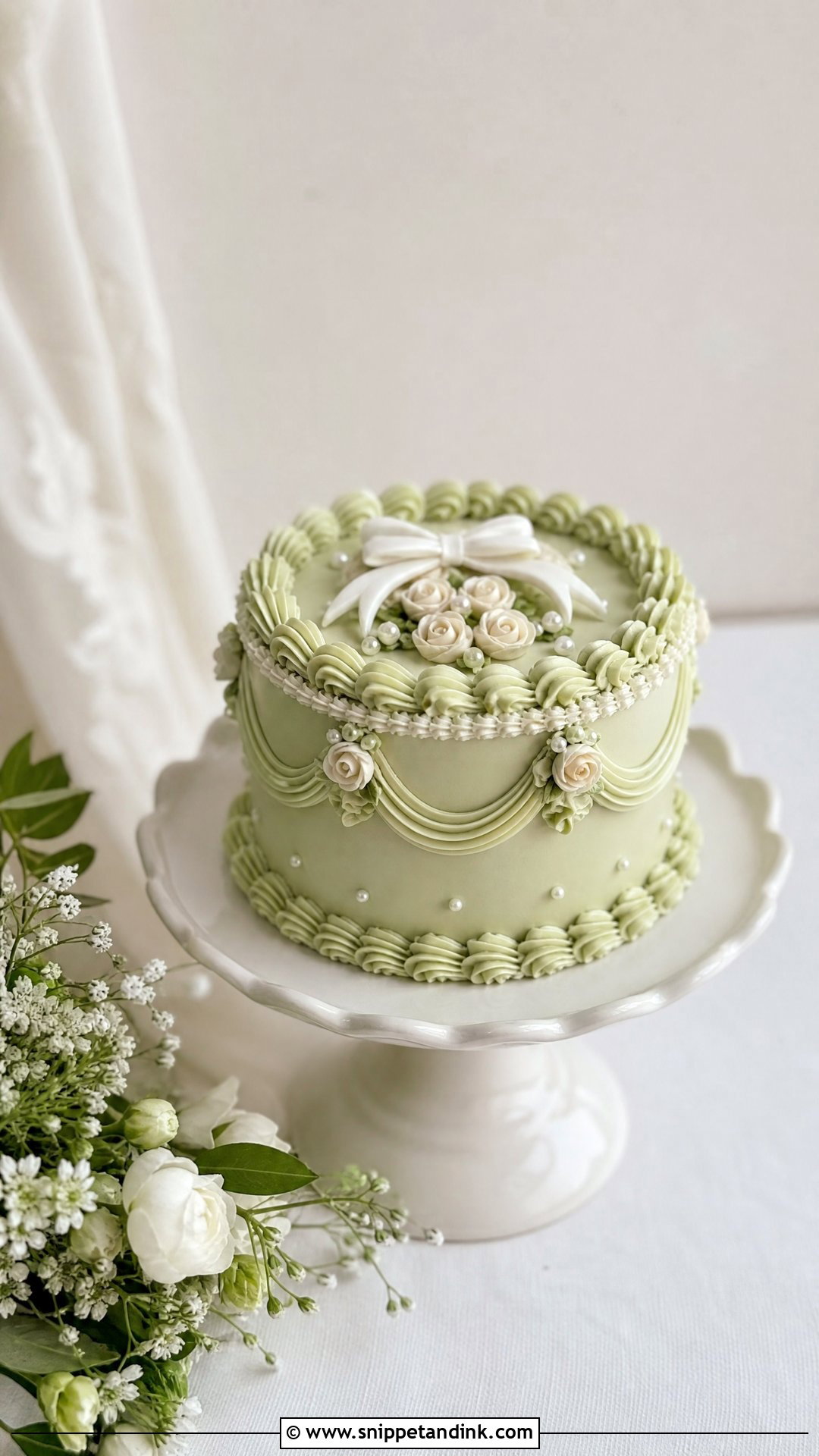
A mini cake has nowhere to hide, so every border has to be clean. That’s the main thing I tell couples ordering one for an elopement or as a personal cutting cake. A small round Lambeth cake or a mini heart can still carry fine piping, tiny pearls and a sugar flower or two, but the detail should be scaled down, not just the cake. Richer flavours suit a small cake well, such as vanilla almond, lemon raspberry or pistachio with rose.
19. Vintage Garden Wedding Cake
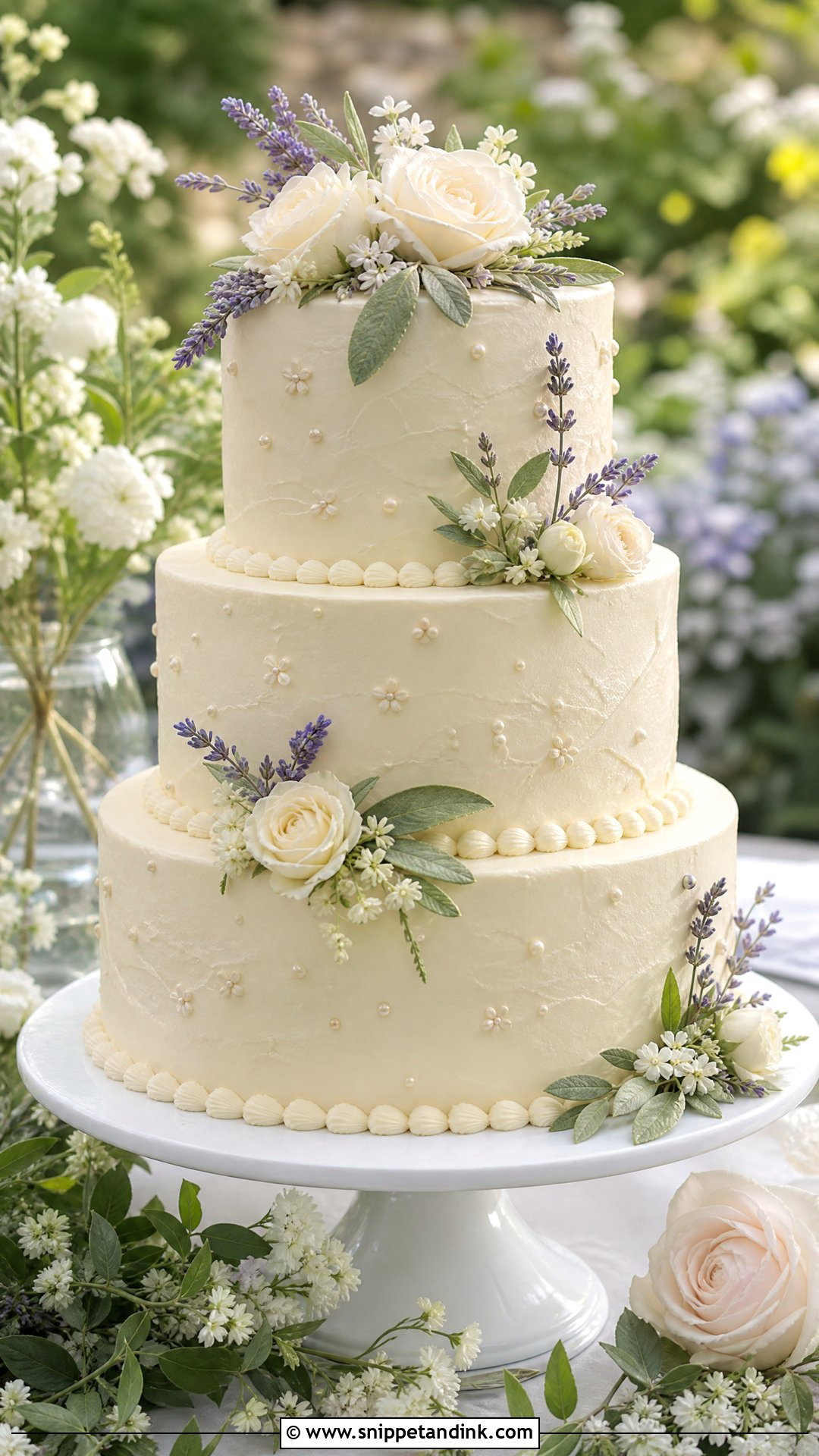
Garden-inspired vintage cakes walk a line between polished and rustic. Buttercream texture, small sugar flowers and botanical touches in ivory, sage, blush and lavender keep it soft, and pairing them with lace piping or scalloped edges stops it sliding into a naked-cake farmhouse look. If the cake will sit in a tent through a summer afternoon, I’d move the delicate buttercream work to fondant or sugar, since tents trap heat. Choose a lace-covered table and soft light to show it off.



20. Vintage Gold Wedding Cake
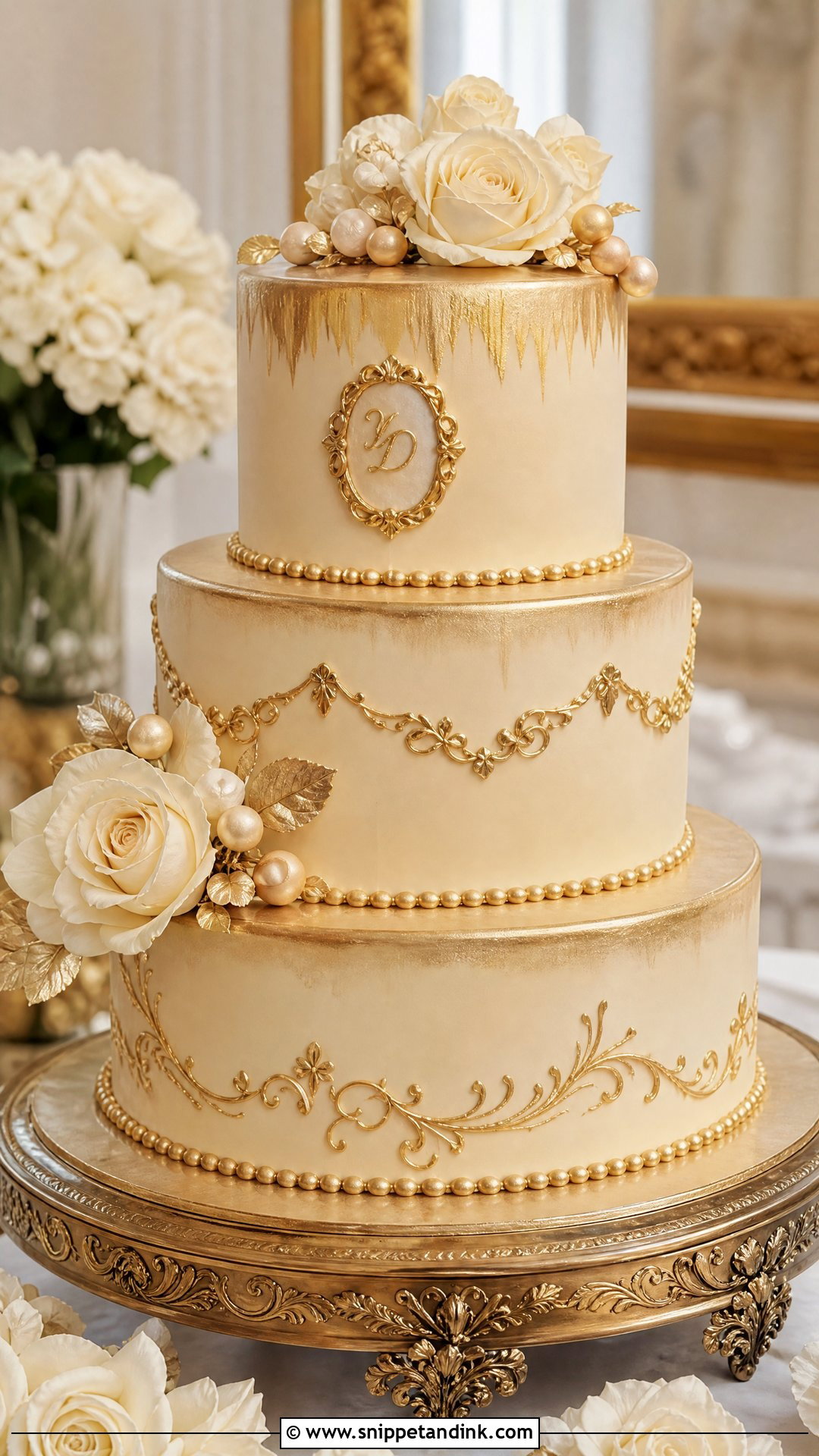
Gold is easy to overdo. On a vintage cake it belongs on the edges: brushed borders, gold pearls, a painted line along the piping, the centre of a sugar rose. It can lean Deco with geometric lines or romantic with gold-trimmed swags. Edible gold paint needs a dry, firm surface, so it sits best on fondant or well-crusted piping rather than soft buttercream. Used lightly on ivory or champagne frosting, it glows in evening light and looks rich in photos.
Why Hand-Piped Cakes Cost More Than They Look
Couples are often surprised when a two-tier Lambeth cake costs more than a taller smooth one. The difference is almost all labour. Each layer of overpiping has to set before the next goes on, every swag is spaced by hand, and a single slip means scraping a section and starting again. Sugar flowers are similar: each petal is rolled, shaped and dried separately. If budget is tight, I’d put the detailed piping on one tier and keep the others simpler. It keeps the vintage character without paying for a full day of piping on every tier.
Is the Top Tier Worth Freezing for Your Anniversary?
Many couples still save the top tier, and it can taste good a year later if it’s frozen properly. Chill it first so the frosting firms, remove any sugar flowers, wires or ribbon, then wrap it tightly in several layers of cling film, a layer of foil, and put it in an airtight box. Thaw it slowly in the fridge, still wrapped, so condensation forms on the wrapping rather than on the cake.
Not every cake freezes well. Buttercream, ganache and firm sponge do fine. Fresh fruit fillings, custards and whipped cream don’t, and they turn watery when thawed. If saving the tier matters to you, tell your baker at the start, and they can choose a filling for that tier that will survive. Plenty of bakers will also bake a fresh six-inch version of your flavour for the anniversary, which honestly tastes better.
One Technique, Done Well, Is What Ages Gracefully
What makes these cakes last isn’t the shape or the colour. It’s restraint. Lambeth piping, hearts, pearls, lace, pressed flowers, bows and gold can all work, but the cakes that look right in photographs decades later usually commit to one technique and repeat it with care. Pick the style that matches your room and guest count, keep the palette soft, and give your baker the time hand decoration needs. That’s the difference between a cake that looks old-fashioned and one that just looks dated.
You'll Like These Ideas:








Leave a Reply