
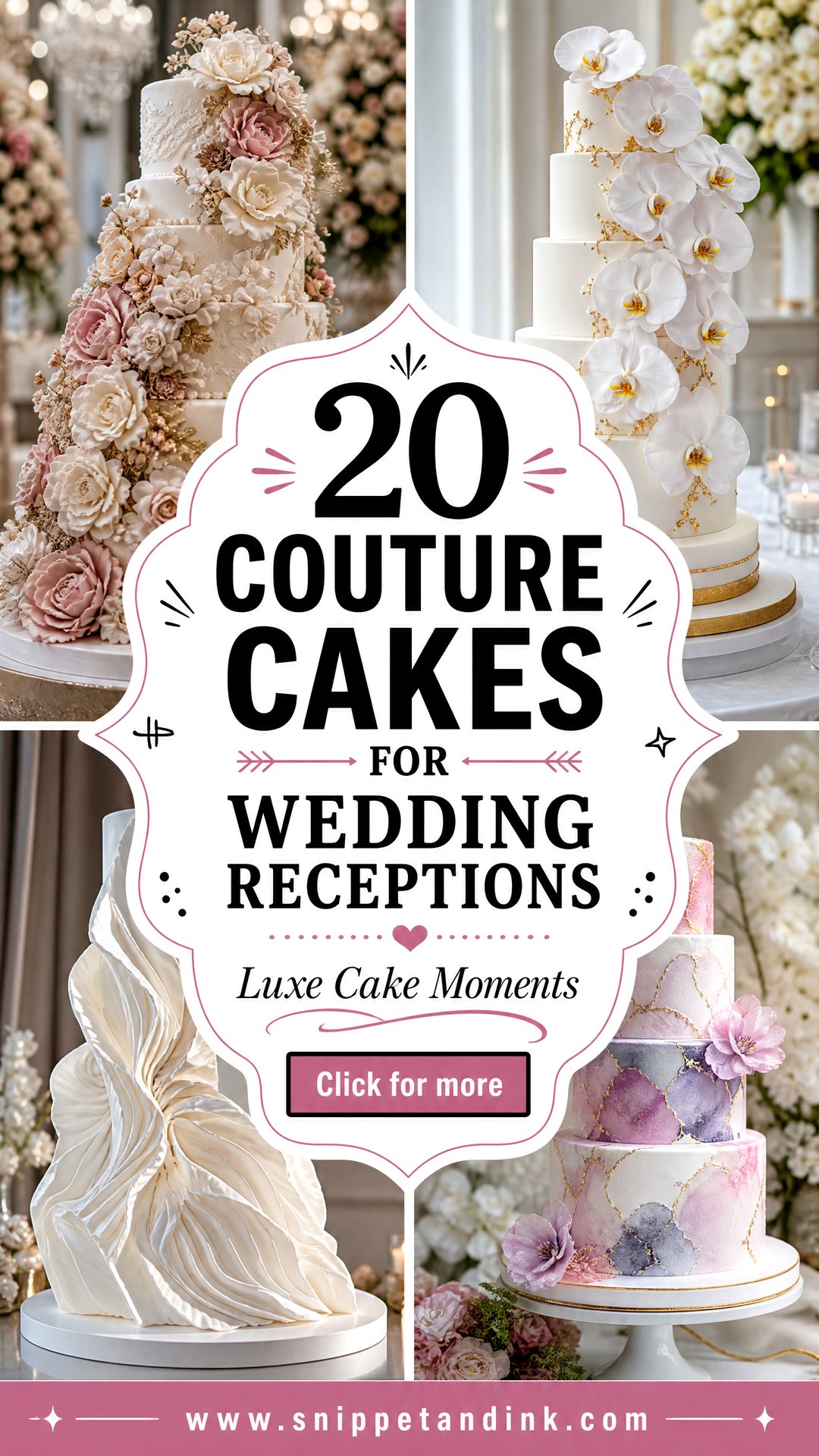
When a couple asks me for a couture cake, what they usually mean is a cake that looks like it was designed alongside the dress. Sugar lace copied from a sleeve, a pearl border that matches the earrings, tiers shaped with an architect’s eye, flowers that pick up the centerpieces. The difficult part isn’t the decoration. It’s restraint: a cake still has to stand up for hours, slice cleanly for a hundred plates and read clearly in a photo taken from across the room. The twenty designs below lean on texture, fabric details, careful color and old-fashioned piping, and for each one I’ve added what it takes to make it work in real conditions.
Bring the Gown to Your Cake Consultation
Couture cake design starts with the dress, not the cake portfolio. If I’m going to echo lace, pleating or a bow, I need close-up photos of the fabric, a swatch if the bridal shop can spare one, and pictures of the back of the gown as well as the front. Bring the invitation suite and the florist’s proposal too. The cake has to sit inside that whole visual story.
Then talk numbers early. Guest count decides tier sizes, and it’s common to make one or two display tiers from cake dummies with a cutting cake in the kitchen to keep costs and stacking weight down. Detailed sugar work is slow: hand-made sugar flowers and lace are often prepared over several weeks before the wedding, so designers who do this kind of work tend to book well in advance. Lead times vary a lot, so ask when your date needs confirming rather than assuming a couple of months is enough.
- Fabric photos and a swatch, if you can get one
- The invitation design, for fonts and monograms
- Your florist’s flower list and color palette
- The venue, room and where the cake table will stand
- Whether the reception is indoors, tented or outside
1. Couture Pearl Wedding Cake
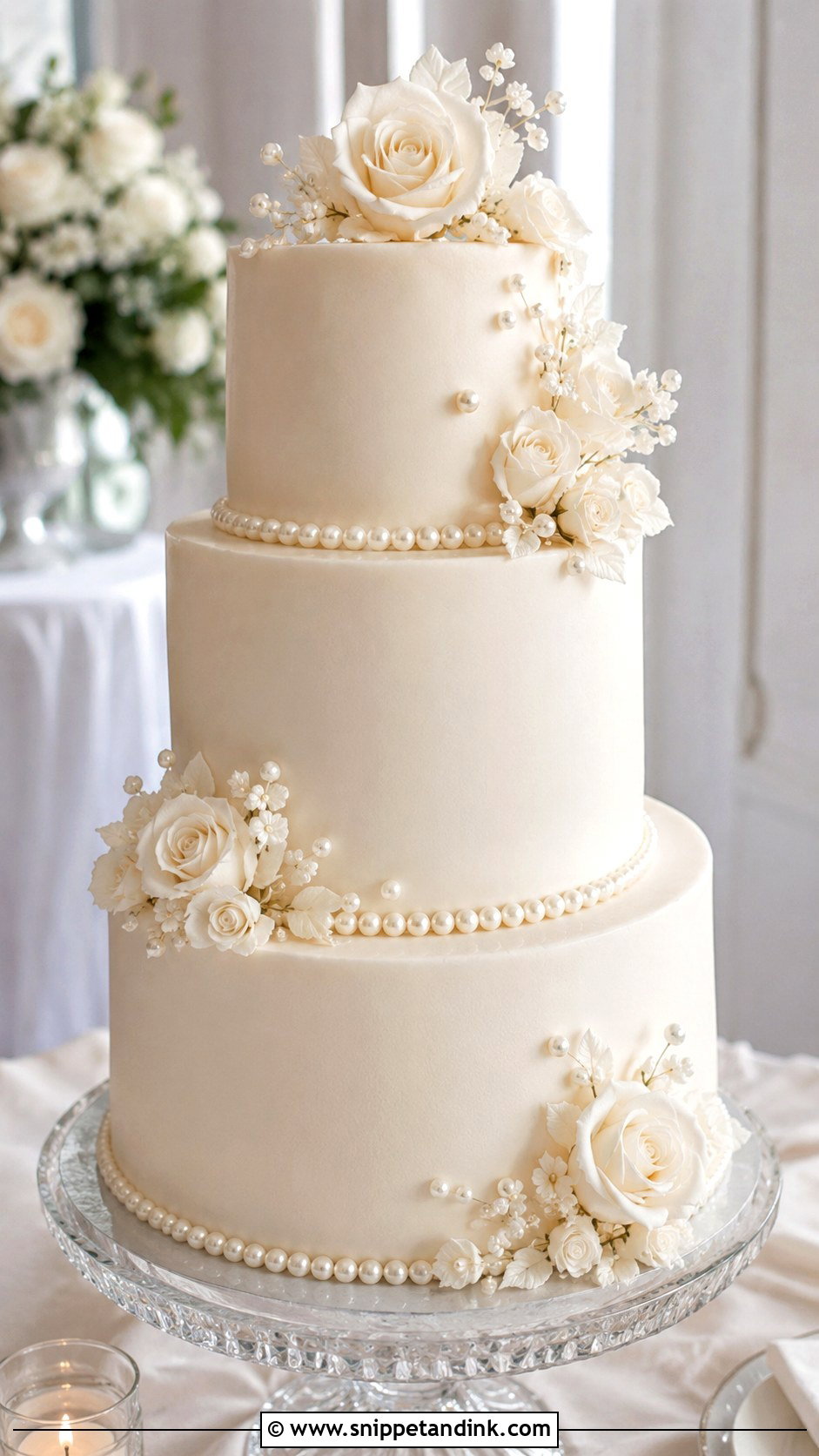
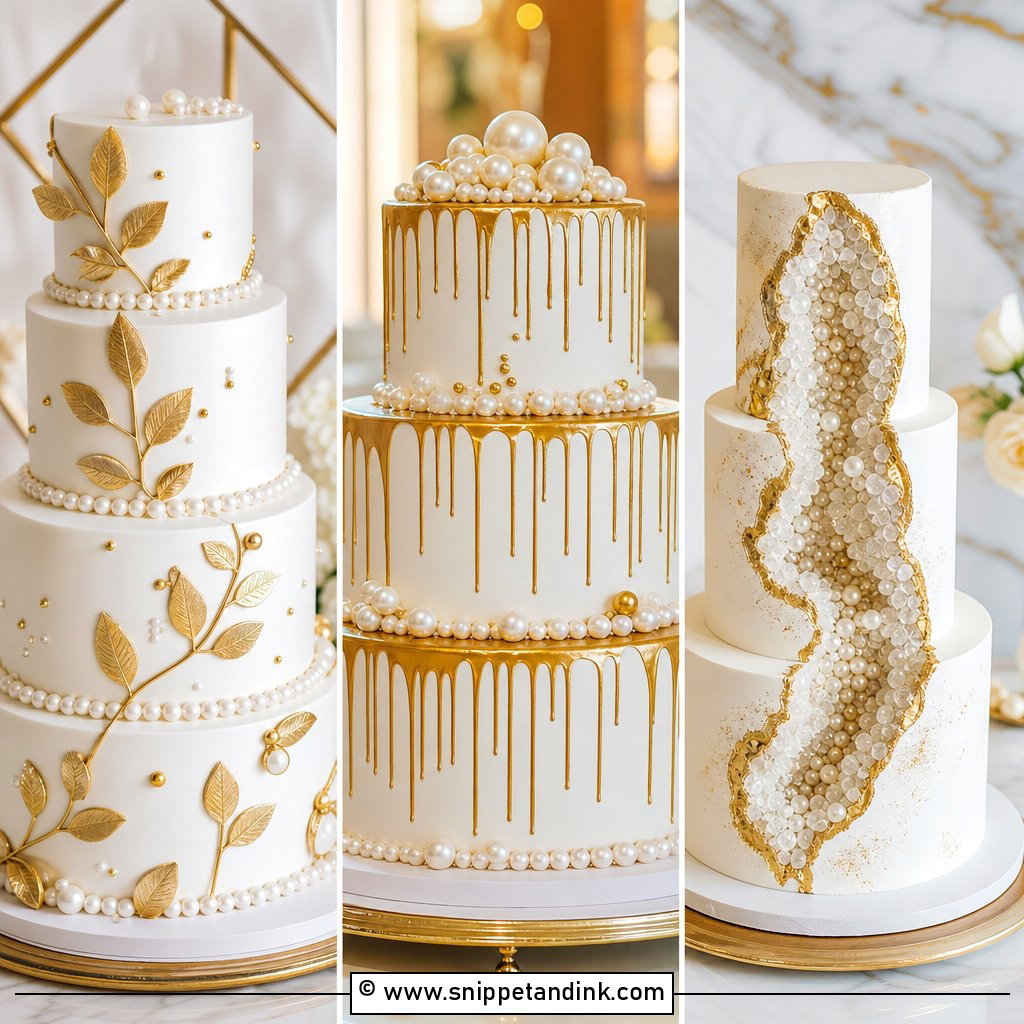
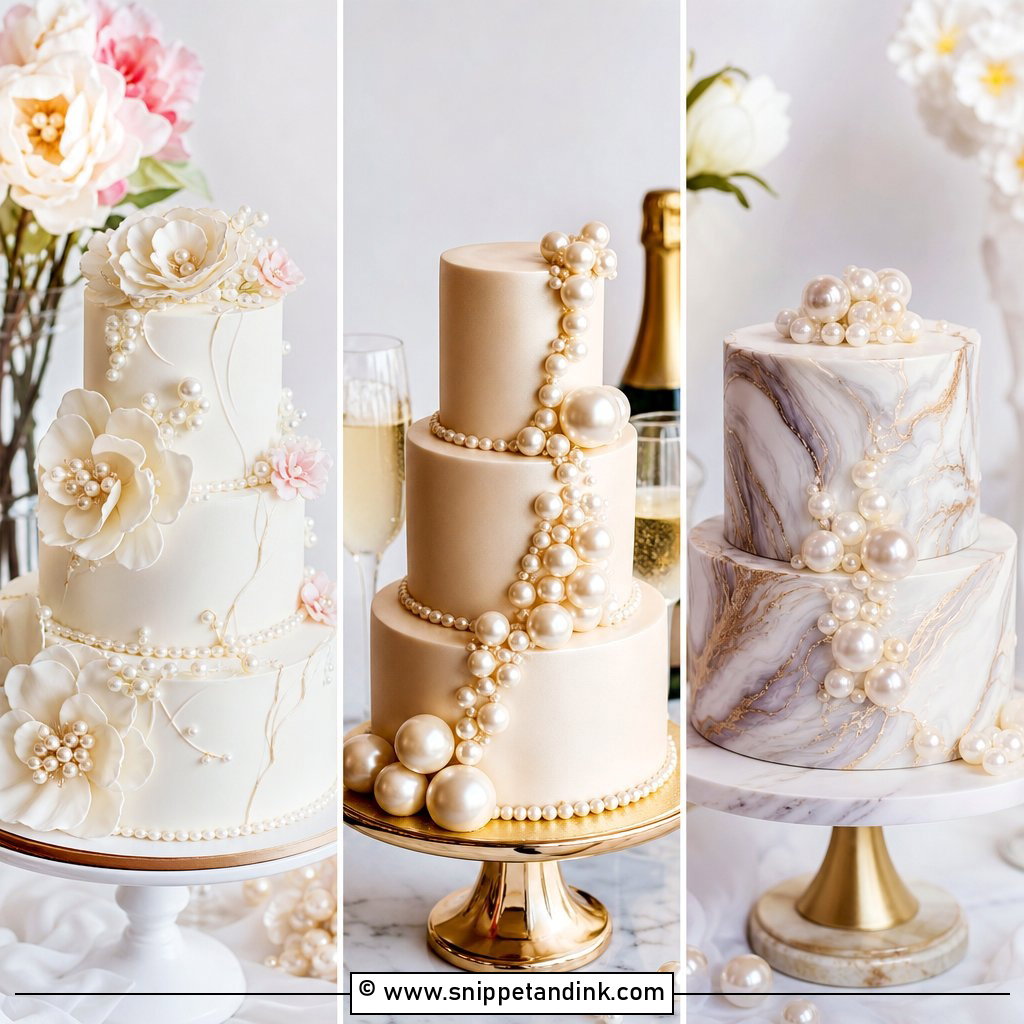
Pearls look expensive on ivory, champagne or pale blush, and slightly costume-like on stark white, so I nearly always warm the base a shade. They can run in tidy rows, outline each tier or scatter like loose jewelry. The ones that look most real are a mix of sizes. Hard sugar pearls are crunchy enough to crack a tooth, so I use softer fondant pearls on tiers that will be cut and tell the catering team where the hard ones are. Smooth fondant, satin buttercream or a faint shimmer glaze underneath, then very few flowers: a few white roses, orchids or small sugar blossoms, so the pearls remain the point.
2. Couture Lace Wedding Cake
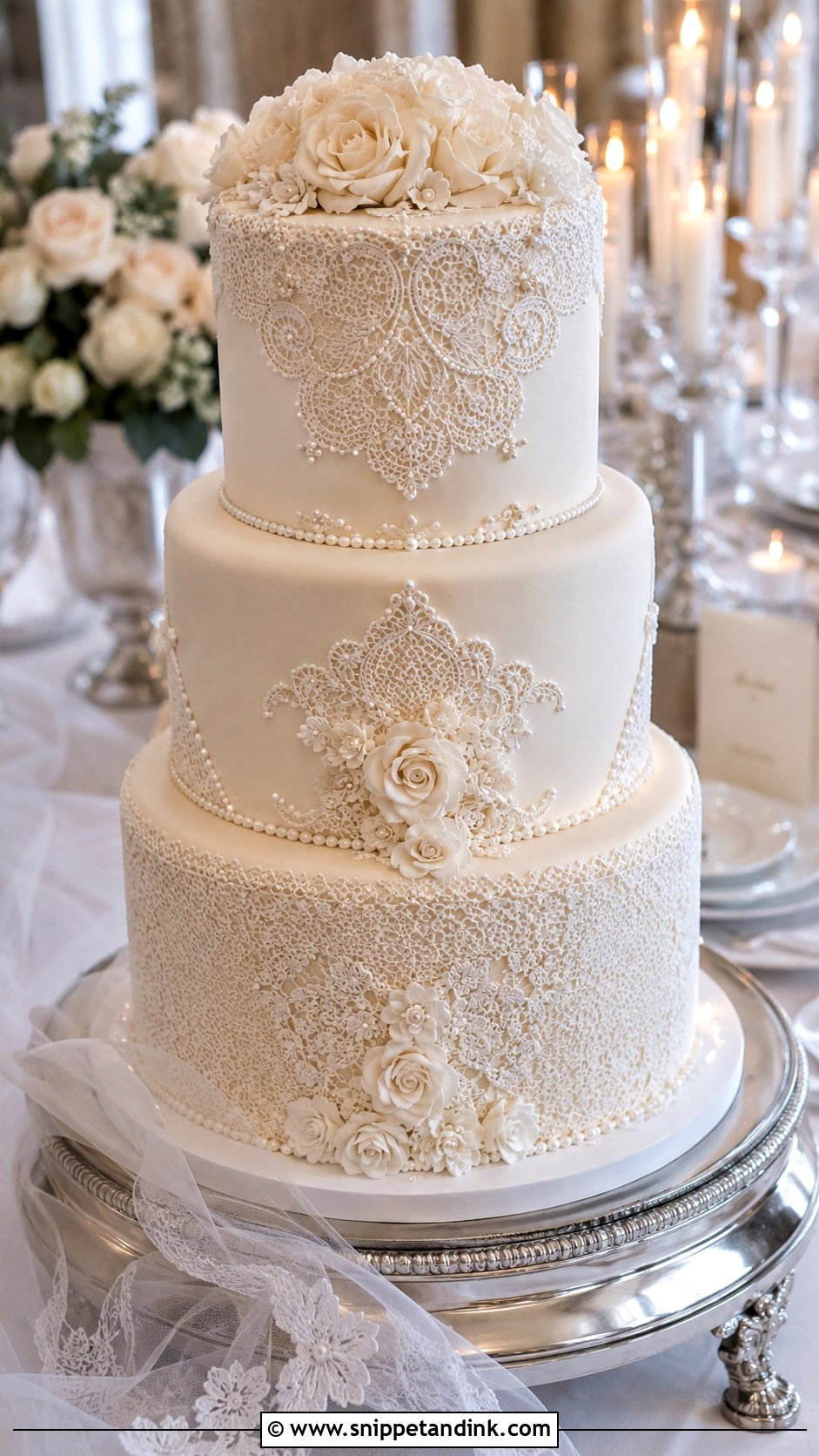
Lace is the most direct line between the cake and the gown. I ask for close-up photos of the actual lace, because Chantilly, Alençon and guipure all have different motifs, and copying the motif rather than a generic lace mould is what makes guests notice. White on white, ivory lace over a nude fondant, or lace panels on just one or two tiers keep it from looking like a doily. Sugar lace is flexible when fresh but turns brittle as it dries, so it goes on close to delivery. A few flowers near the base give it movement. Candlelit ballrooms and estate receptions suit it, where low light catches the raised pattern.
3. Couture Bow Wedding Cake
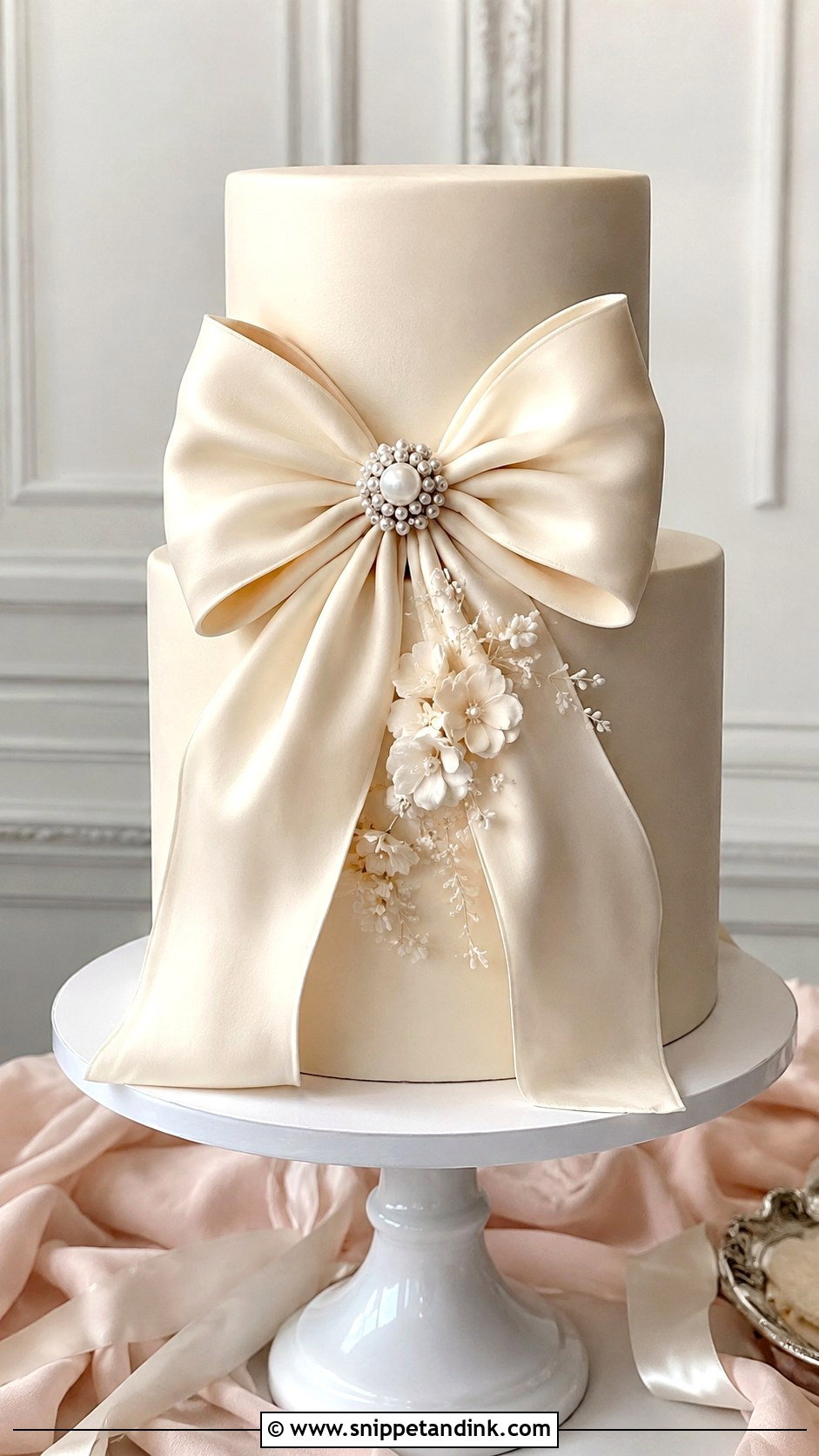
A bow reads as fashion the moment it’s oversized and sculptural, and as nostalgia when it’s small and neat. Satin-finish fondant is what sells the illusion of fabric, and I build big loops over tissue or let them dry propped on supports, so they hold their shape rather than sagging in a warm room. White with a blush, champagne or dove-gray bow is the safe version. For a modern reception I’d put one oversized bow on the front of a tall tier rather than tying bows around every layer. Smooth icing, a few pearls and a clean pedestal finish it.
4. Couture Ruffle Wedding Cake
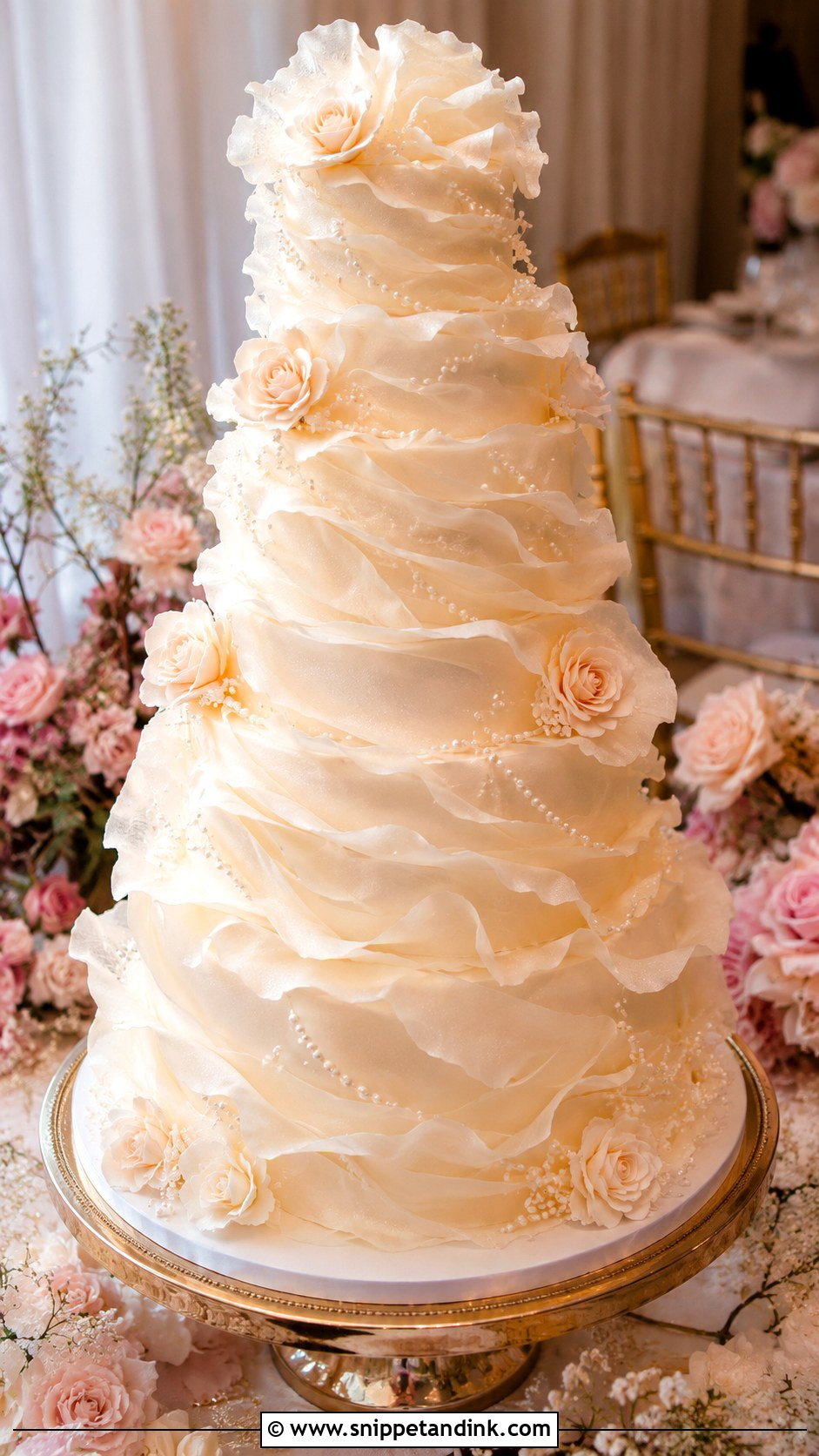
Ruffles give a cake the sway of a skirt without a single flower. I make most of mine from wafer paper or thin fondant, and here’s the honest trade-off: wafer paper is the lightest and most fabric-like, but it softens and droops in humidity, so for a summer marquee I’d switch to fondant or buttercream ruffles. Arrange them like a tiered gown, a swirling skirt or soft waves. Ivory and white are safest; blush, pale yellow or pale blue also work if the room supports it. Keep each ruffle airy, since thick ruffles look heavy and add weight the tiers have to carry. A few sugar flowers at the top or side are plenty.
5. Couture Draped Wedding Cake
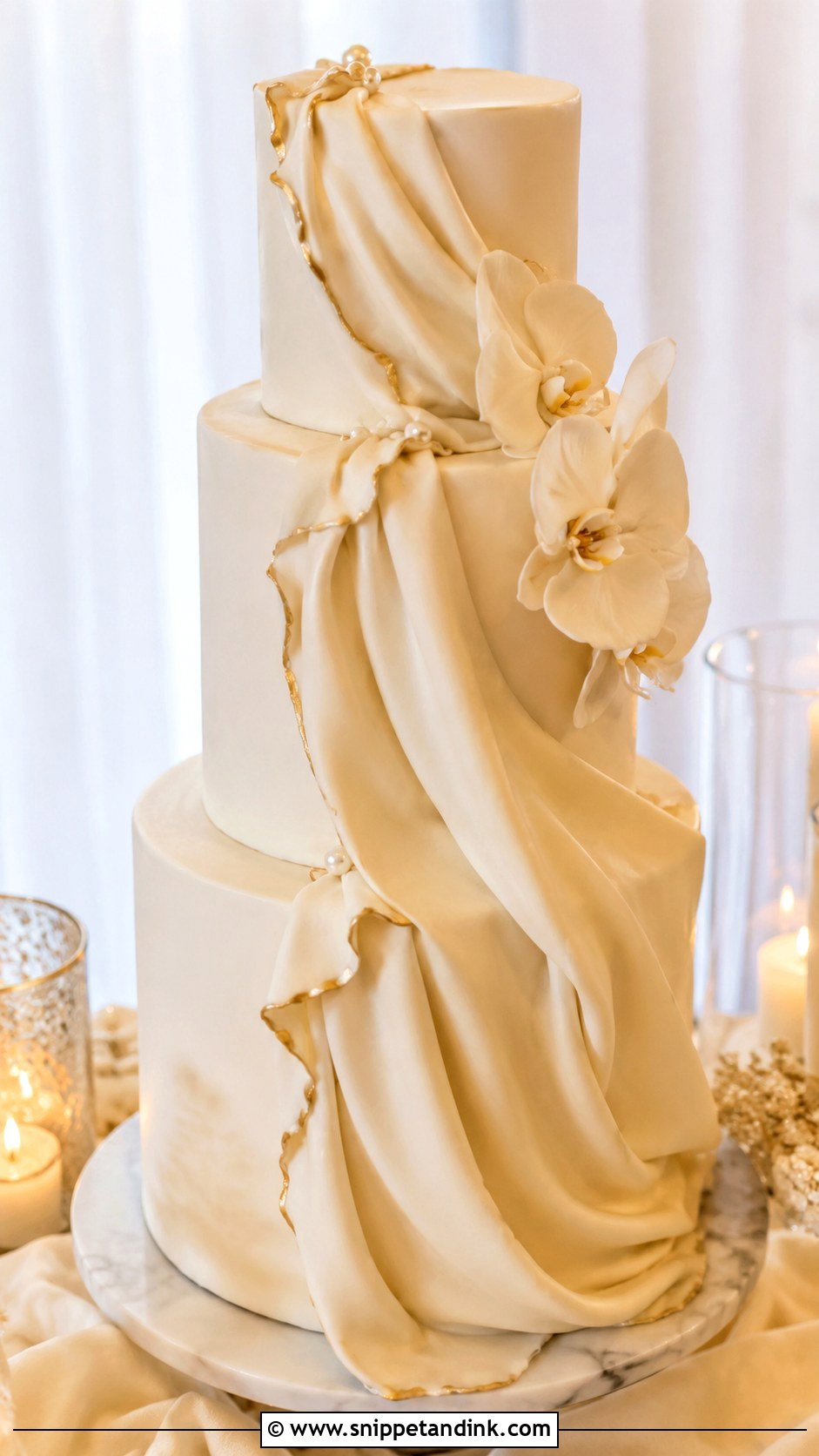
Draped cakes take their cue from silk and chiffon falling across a gown. I roll the fondant thin for these, because thick drapes look like towels, and I pleat them while the paste is still soft enough to fold without cracking. The folds can fall over a tier’s shoulder or sweep across two tiers at once. Ivory, cream, champagne and warm beige suit it; brighter colors make the folds harder to see. Pearl pins, a touch of edible gold or one floral cluster complete it. Put it under directional light, a pin spot or a candle cluster, and the folds cast real shadows, which is what gives it depth in photos.
6. Couture Floral Wedding Cake
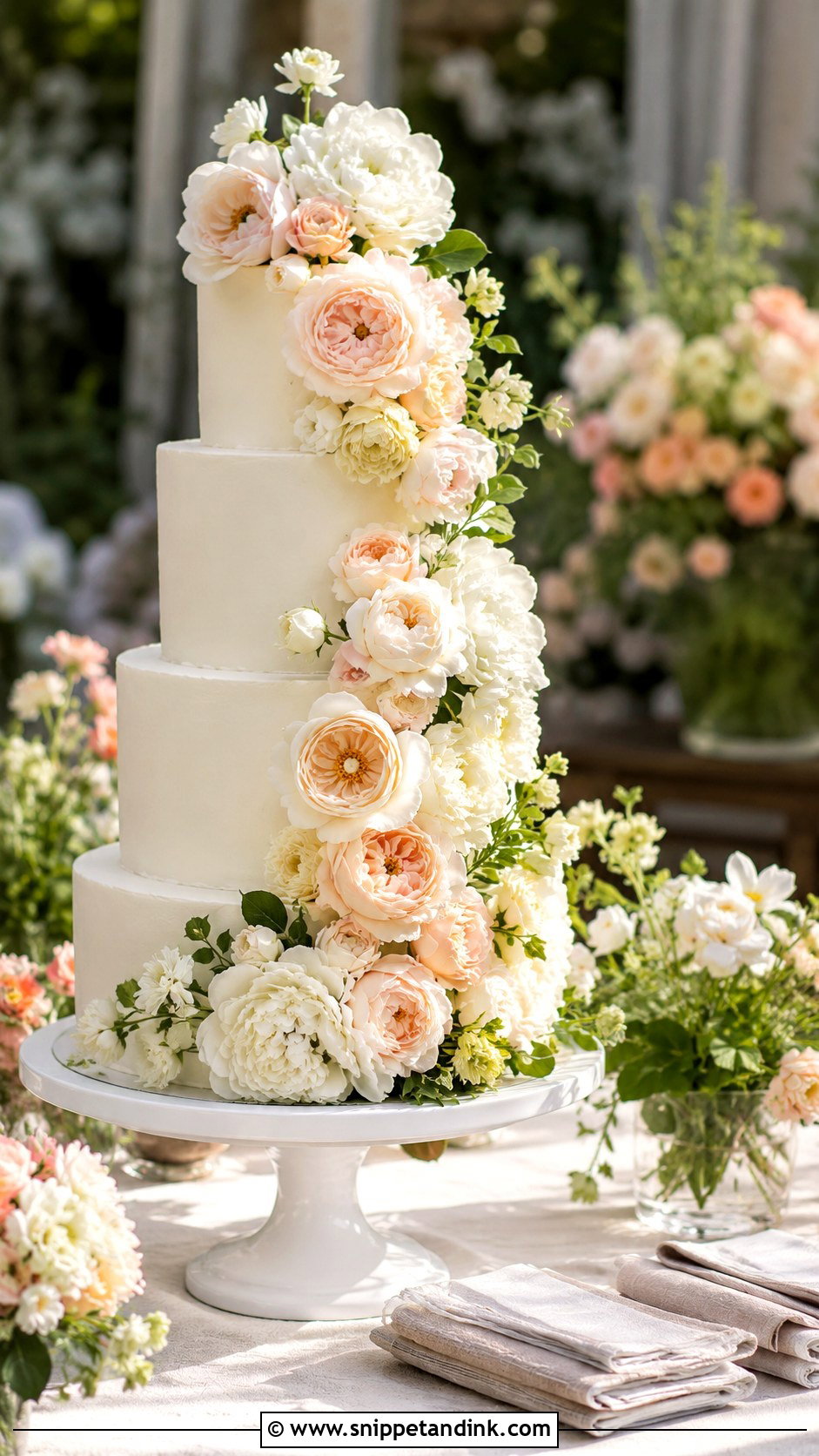
A floral cake should look arranged, as if a florist designed it with the tiers as the vase. I let blooms climb one side, frame the base or sit between tiers like a small installation. Sugar flowers are my first choice for couture work because they match the palette exactly and look the same at midnight as they did at noon. Fresh flowers can work if they’re grown without pesticides, wrapped at the stem and kept out of the cake itself in posy picks; several popular wedding flowers aren’t safe to eat. Roses, orchids, peonies, ranunculus and sweet peas with a little greenery are the classic mix. The icing underneath should be smooth, otherwise the flowers look like a cover-up.
7. Couture Orchid Wedding Cake
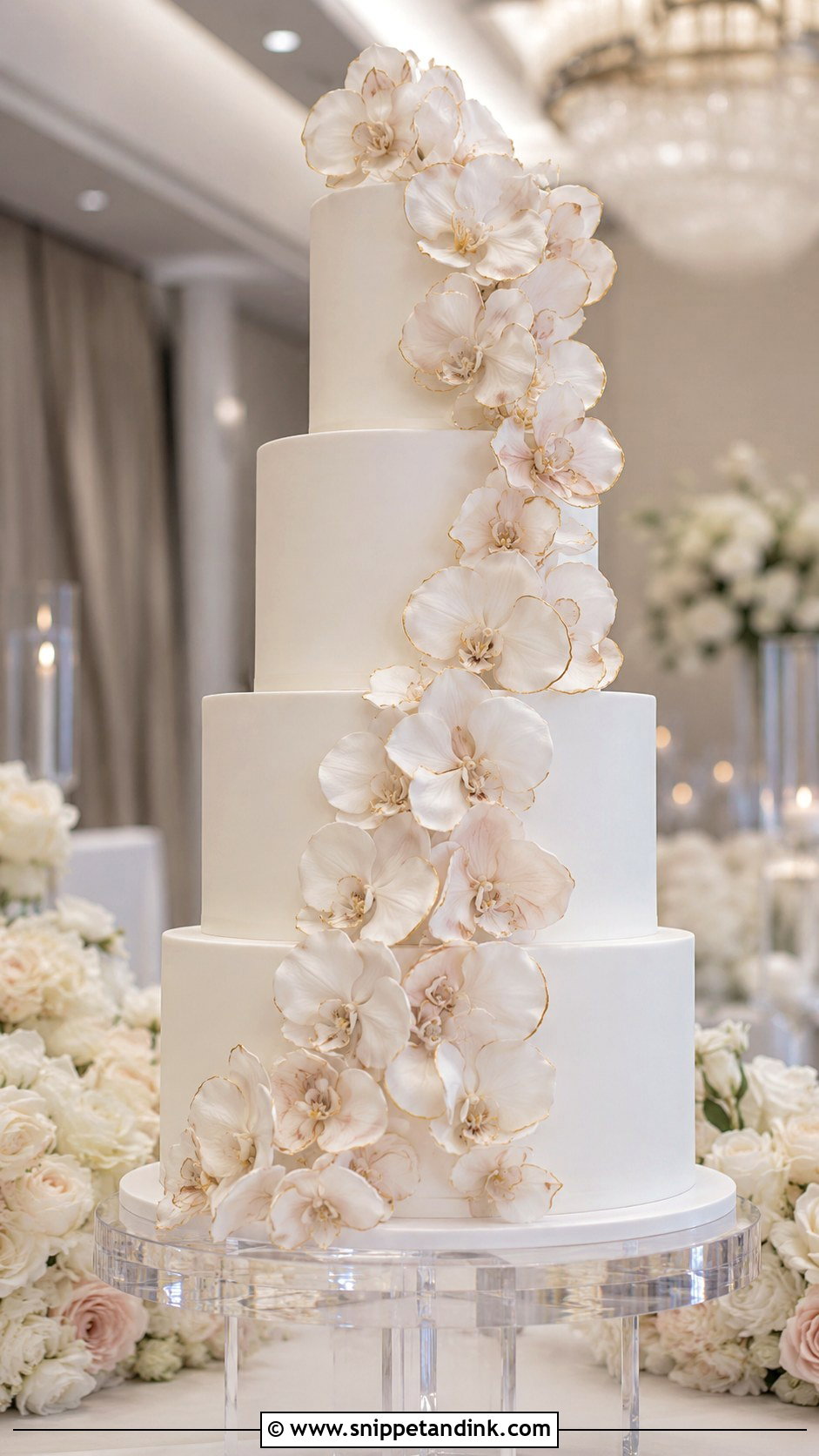
Orchids already look sculpted, so they give a modern cake drama with almost nothing else added. A tall white or ivory tiered cake with sugar orchids cascading down one side is about as clean as couture cake design gets. Champagne fondant or a gold edge warms it; pale pink, mauve or deep burgundy orchids against a neutral cake make it bolder. Sugar orchids are among the slower flowers to make, petal by petal with wiring and dusting, so they need to be in the plan early. I’d choose it for hotel ballrooms, galleries and spare, modern rooms where one strong floral line carries more weight than lots of small accents.
8. Couture Monogram Wedding Cake
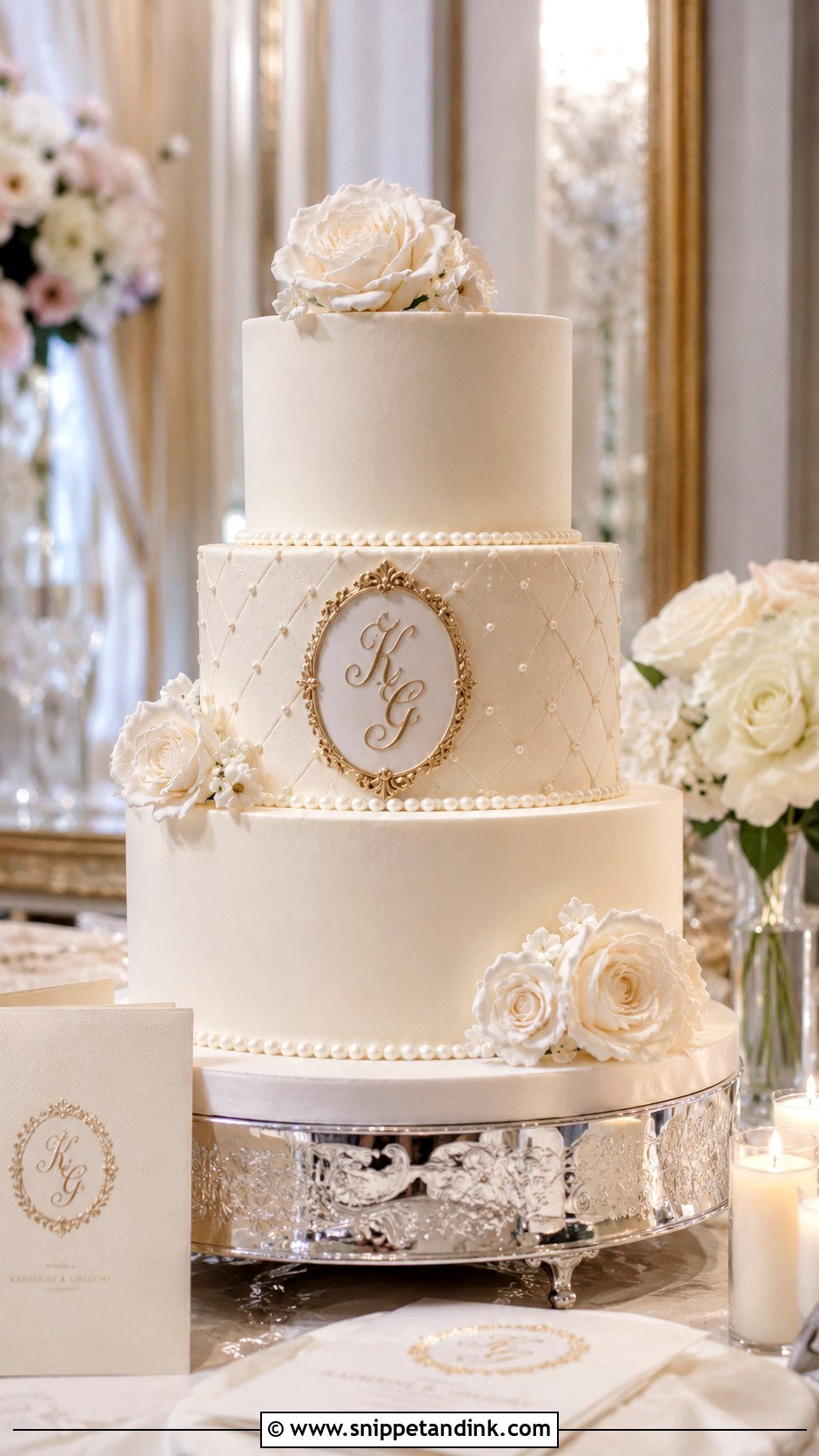
A monogram is where couture can tip into corporate logo, so I keep it small. Initials can be piped in royal icing, embossed into fondant, painted in edible gold or set on a little sugar plaque. I ask for the invitation file so I can match the typeface exactly, since a monogram in a slightly different font looks wrong even to people who can’t say why. Smooth tiers, fine piping and pearl dots are enough around it. Formal weddings suit it, and it gives the photographer a close-up detail that’s genuinely yours.
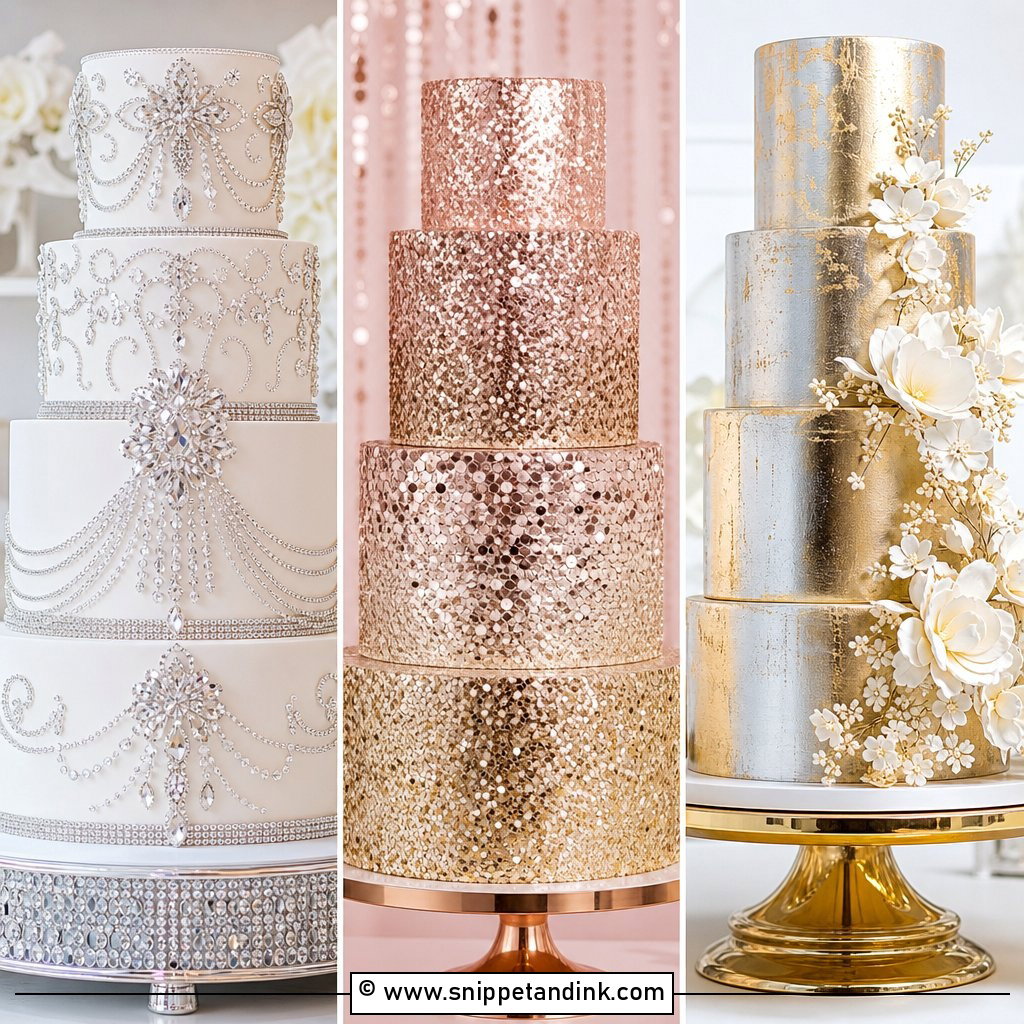
9. Couture Gold Wedding Cake
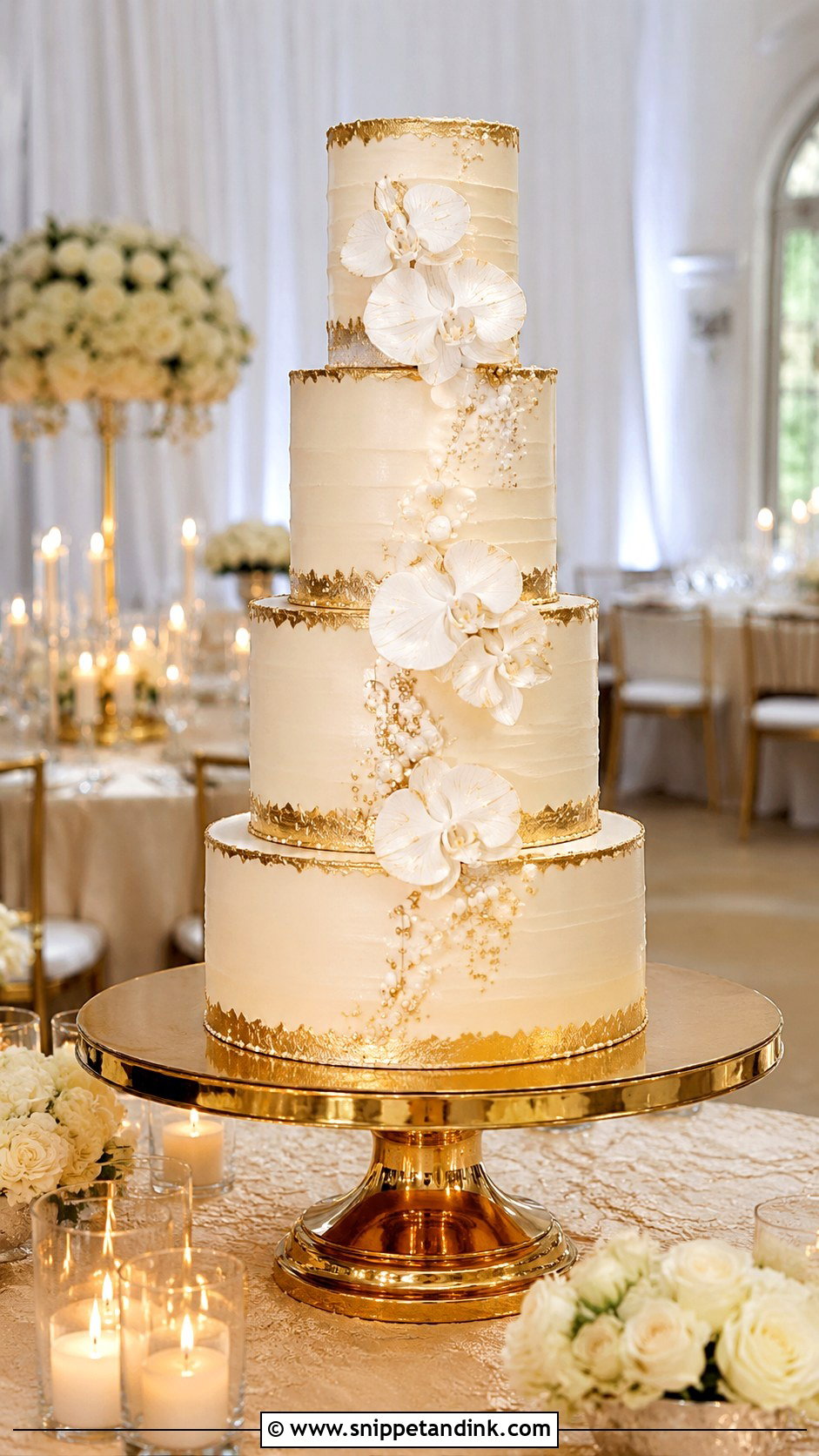
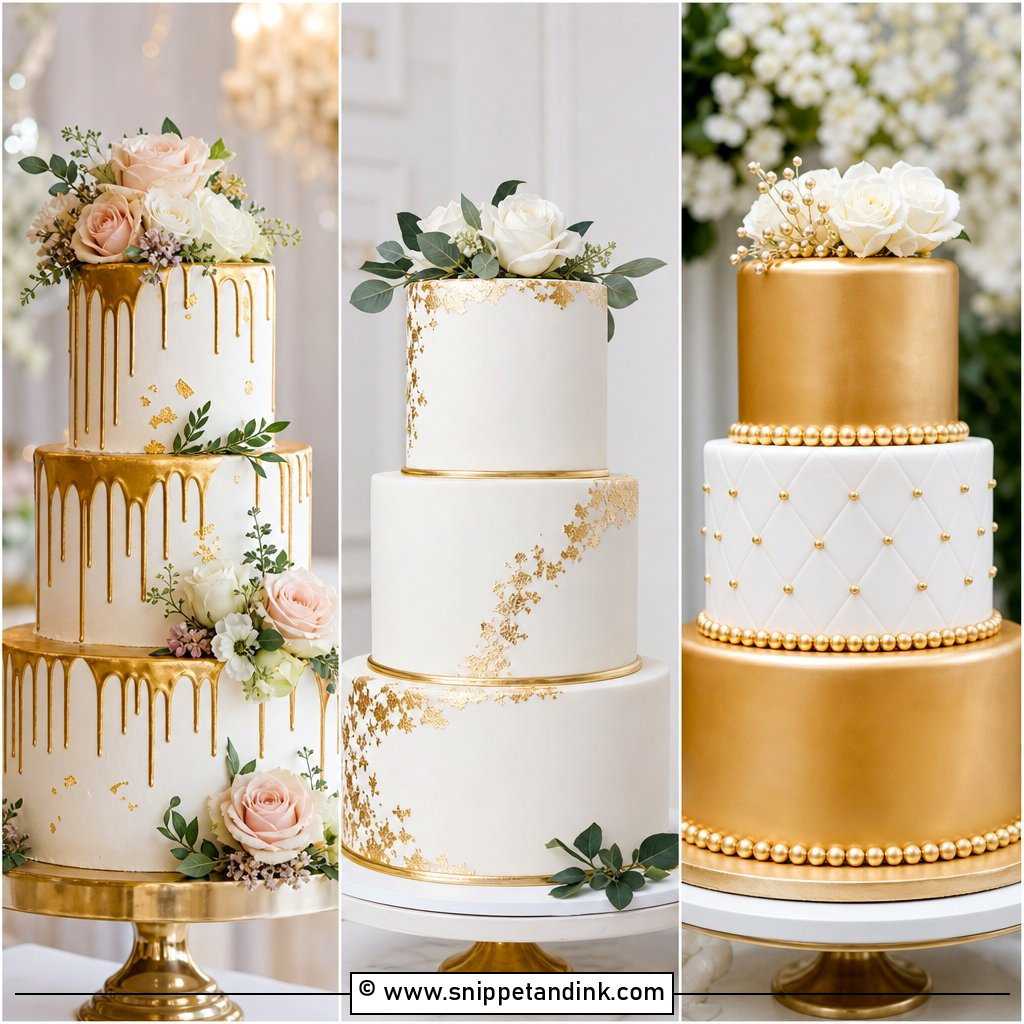
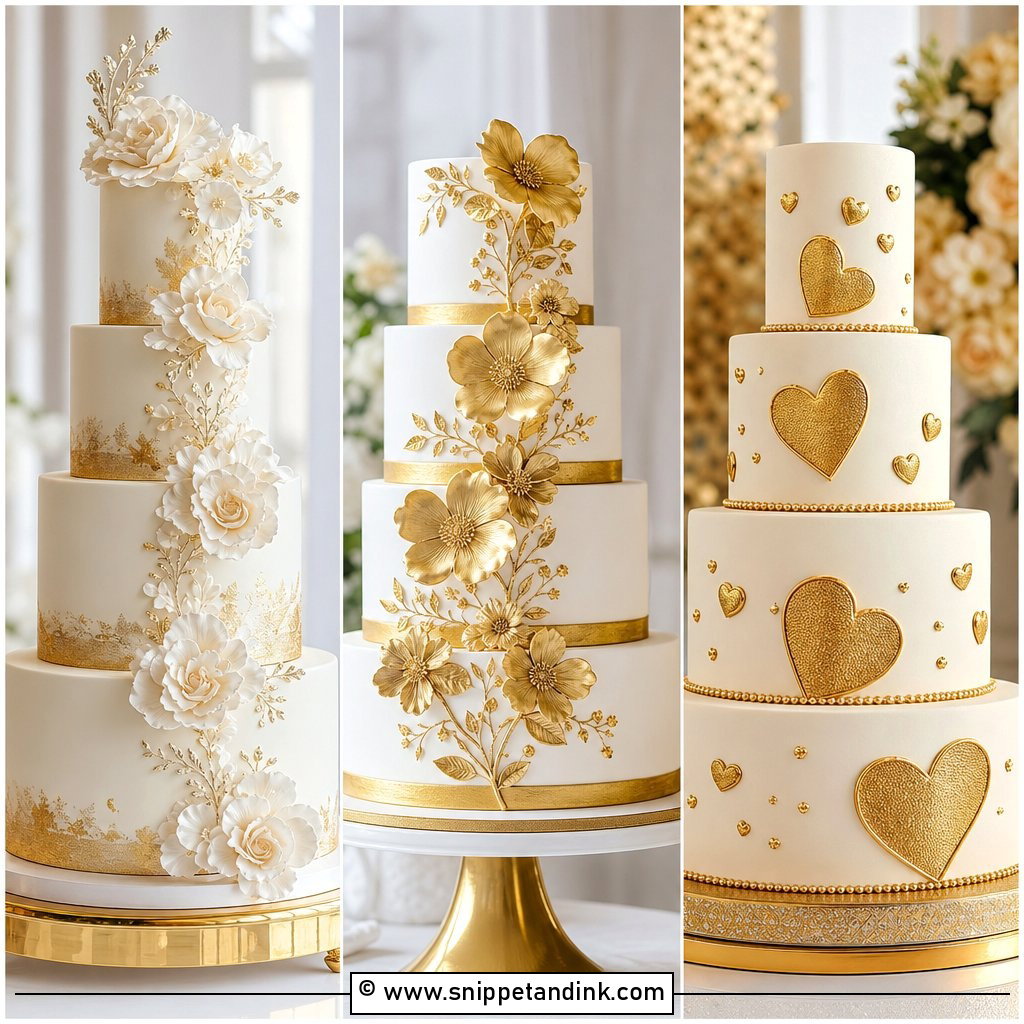
Gold looks luxurious in small amounts and costume-like when it covers everything. I use it on brushed edges, thin bands, painted flowers or patches of leaf. One thing couples rarely know: not every gold dust sold for cakes is meant to be eaten. Some are labelled only as non-toxic decoration, so for anything on a slice I use edible gold leaf or a properly edible luster. Ivory, white and champagne underneath keep it bridal, and soft icing, sugar flowers or clean architectural tiers balance the metal. Black-tie receptions, marble venues and candlelit rooms all suit it.
10. Couture Black And White Wedding Cake
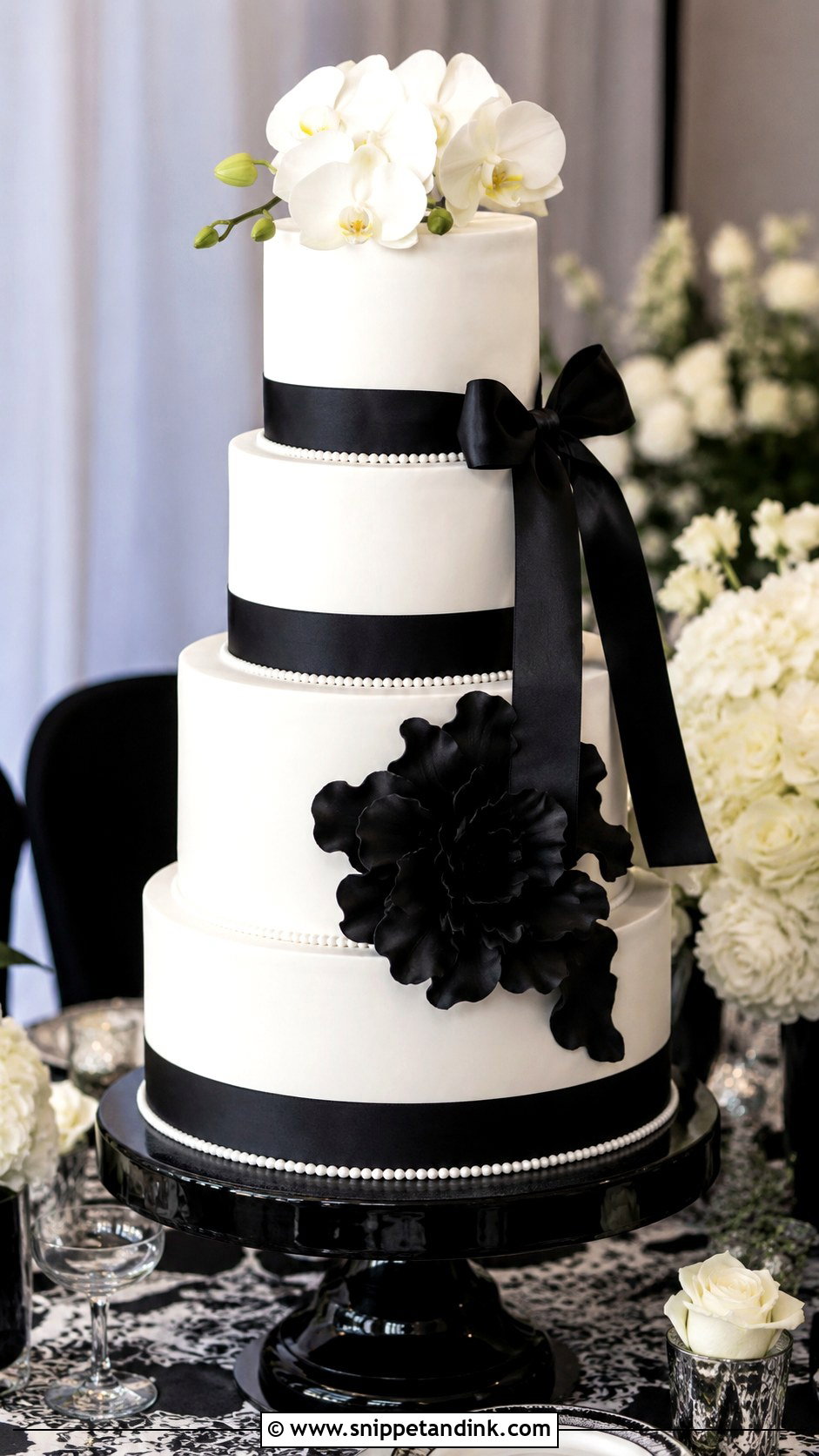
Black and white suits formal and black-tie weddings because the contrast holds up in photos. Keep the black to details: thin ribbons, lace-style piping, flower outlines or one dramatic tier. Large areas of black icing take a lot of coloring, which can taste bitter and stain teeth and lips, so I either use cocoa-based black fondant or keep black on the decoration, which nobody eats. White tiers do most of the work. Sugar orchids, pearls or a satin bow give it couture polish. It only looks right when black also shows up elsewhere, in stationery, linens or chairs, otherwise the cake looks borrowed from another wedding.
11. Couture Vintage Wedding Cake
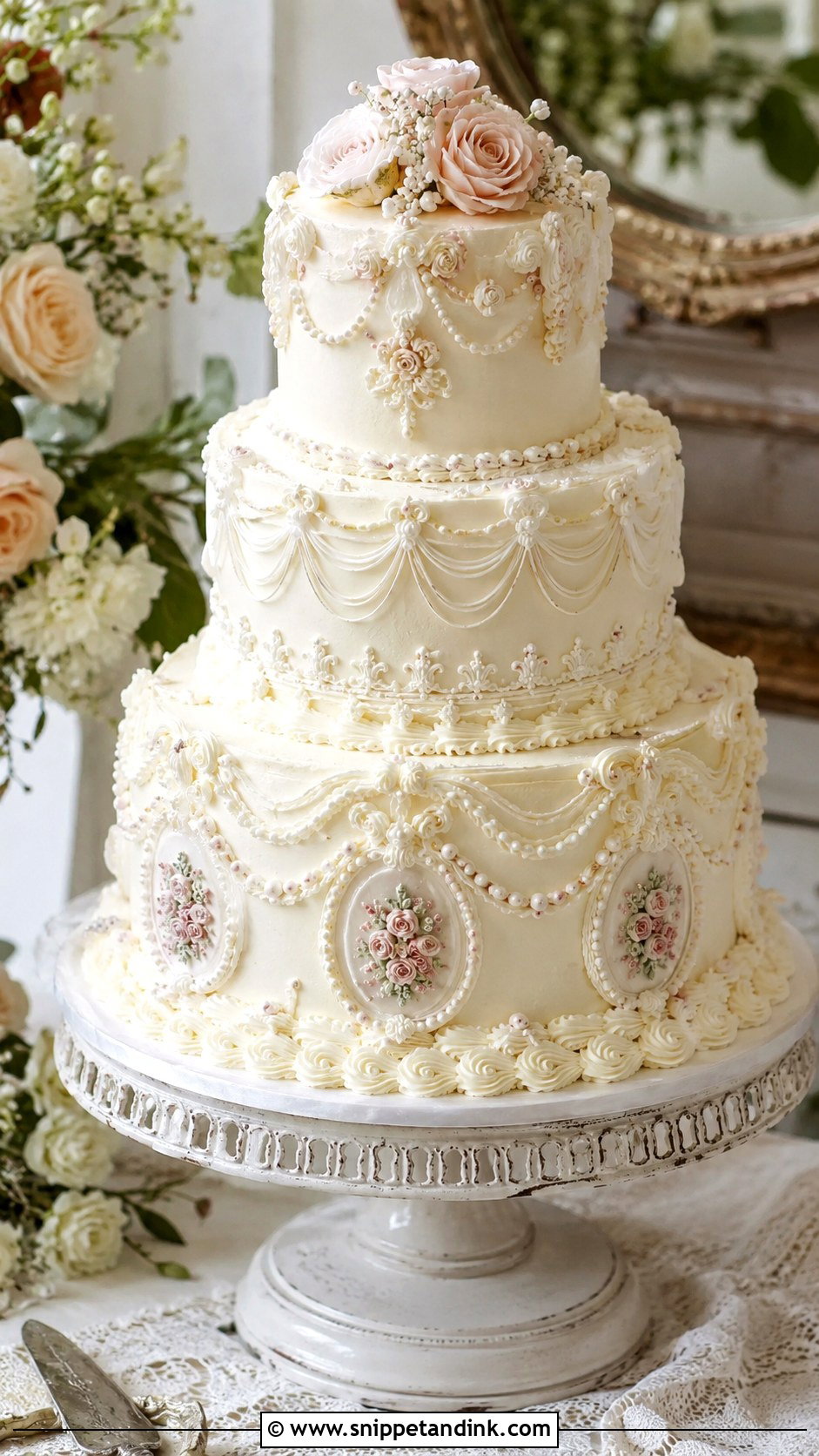
Lambeth piping, shell borders, pearl dots and swags are what make a vintage cake. Over-piping is slow, layered work, and it’s heavy, so I use a firm buttercream or royal icing and build up in stages with drying time between them, otherwise the swags slump. White, ivory, pale pink and butter yellow are the natural colors. Cherries suit a playful vintage mood; sugar roses and pearls keep it softer and more bridal. The piping must be both neat and abundant, which is why this style often costs more than it looks like it should. Nostalgic as it is, it photographs with real drama.
12. Couture Minimalist Wedding Cake
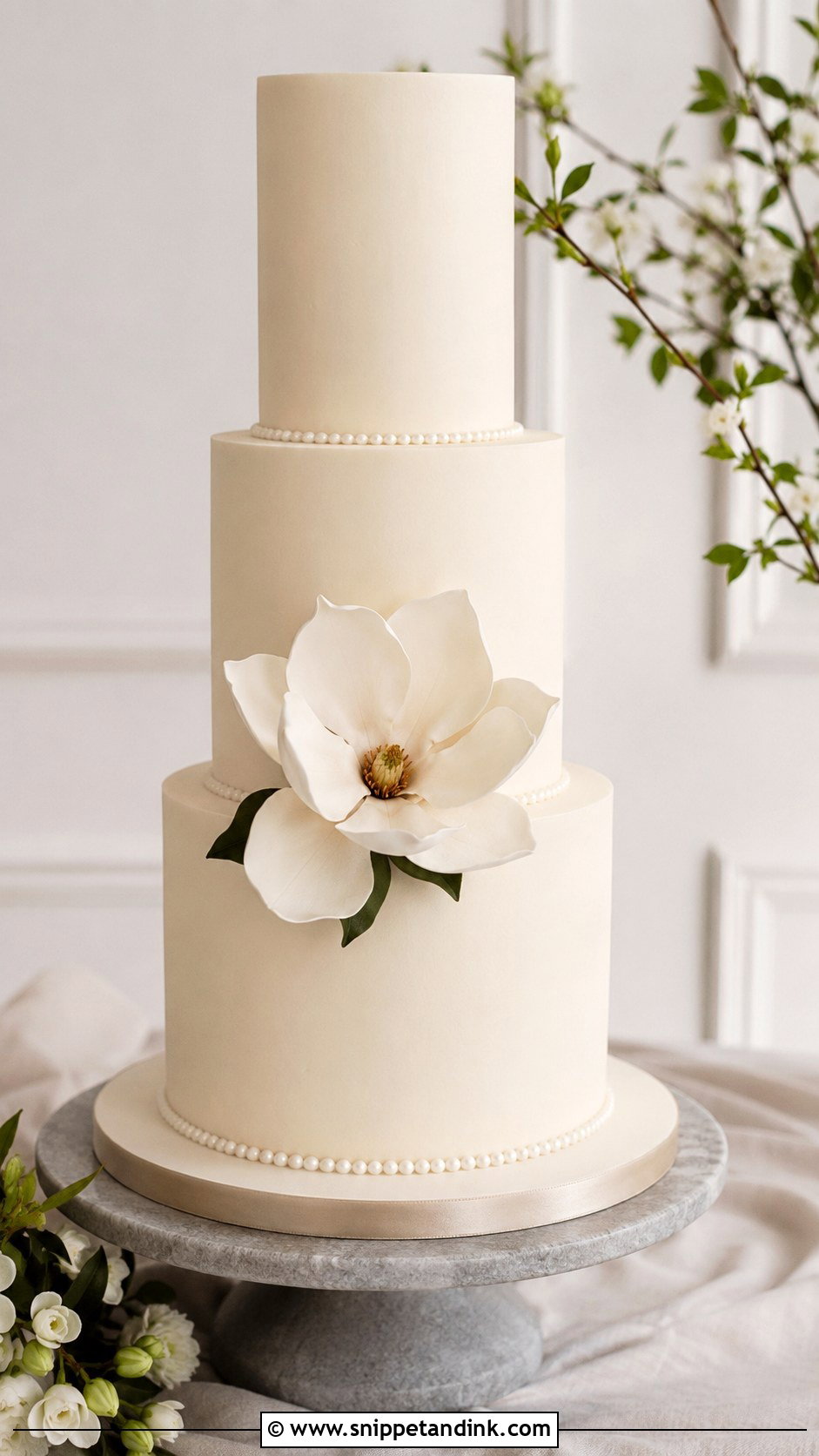
Minimal cakes are the ones that expose a cake designer, because there’s nothing to hide behind. Proportion, sharp edges, smooth icing and a single deliberate feature carry it: one sugar flower, a wide satin ribbon, a curved fondant panel or a tiny pearl border. Tall tiers help, since extra height turns the shape itself into the design. Ivory buttercream, white fondant or soft beige all suit it. Real fabric ribbon wicks butter from the icing and stains, so I back it with a strip of food-safe film or use a fondant ribbon instead. Couples who like quiet, uncluttered tables tend to choose it.
13. Couture Sculptural Wedding Cake
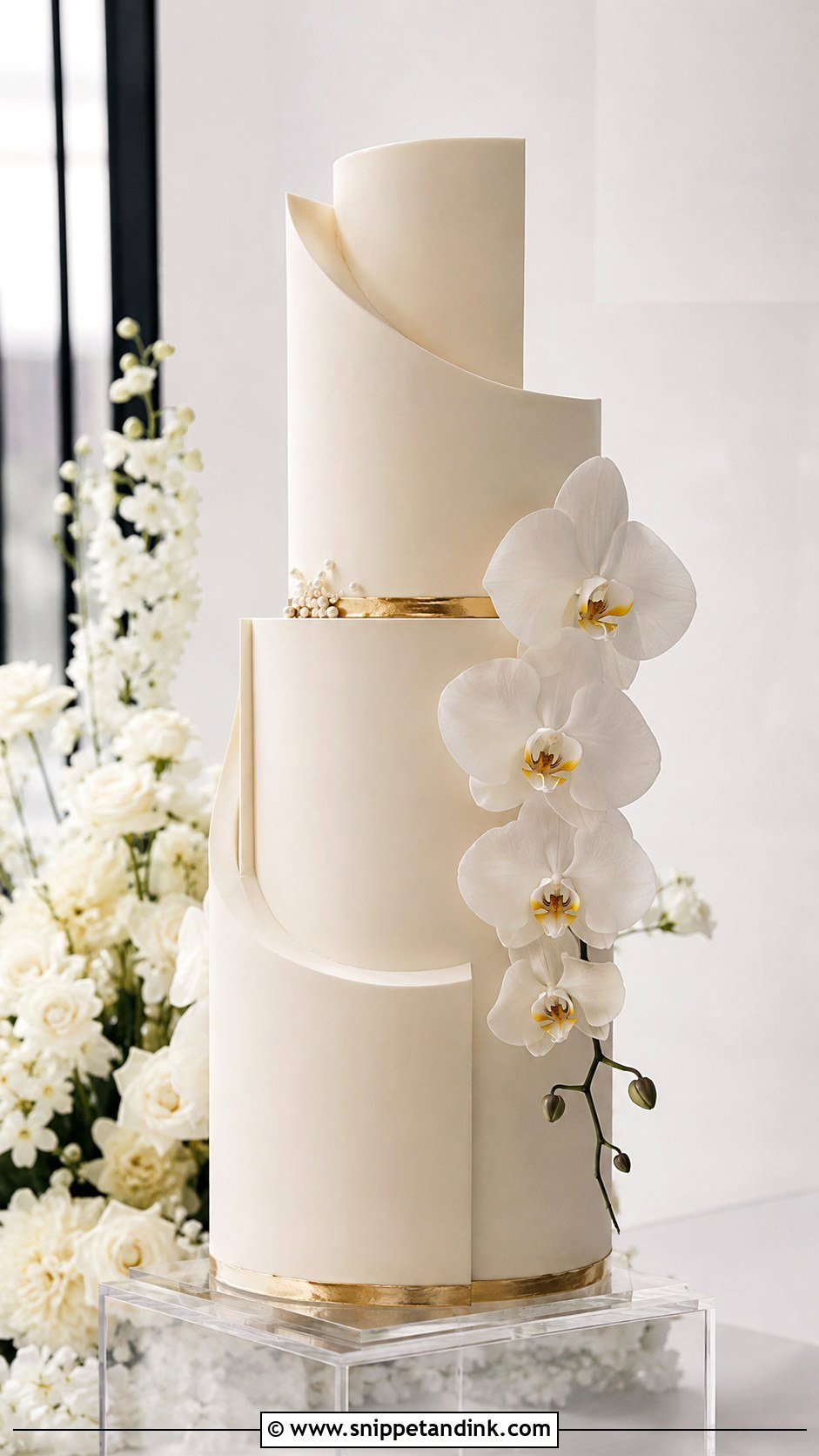
Sculptural cakes are edible architecture: offset layers, curves, sharp angles, separators that make tiers seem to float and textured panels. Those shapes need hidden structure, and an offset or floating tier usually means internal supports and a cake built partly on site. Neutral colors let the form lead, in white, stone, ivory or soft gray. Decoration stays minimal, one orchid stem, a brushed metal edge or a small pearl cluster. It belongs in modern venues with clean architecture. In a heavily ornamented ballroom, the room and the cake end up fighting.
14. Couture Pleated Wedding Cake
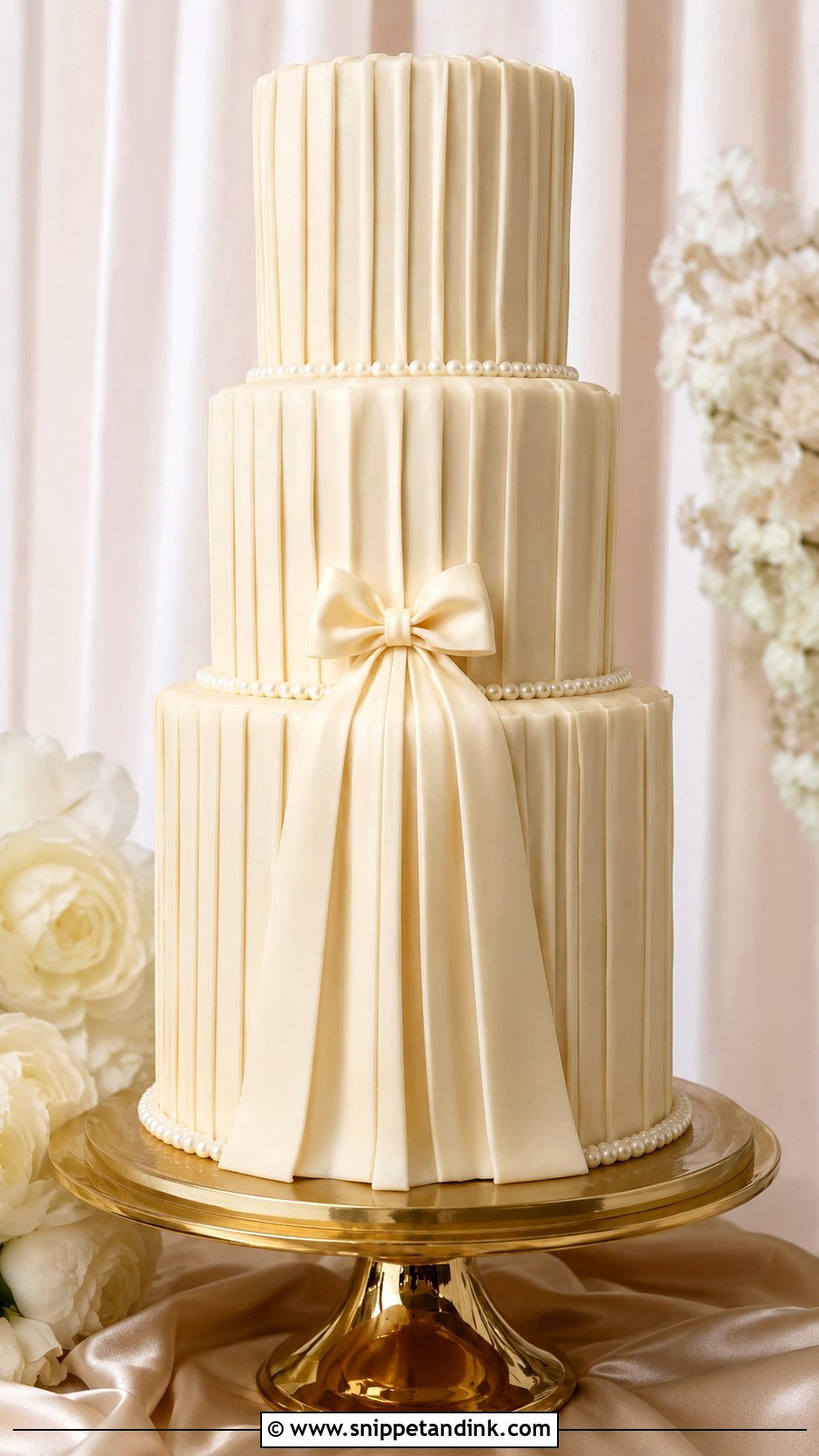
Pleats borrow from pleated chiffon gowns and folded fabric. I make them from fondant strips, wafer paper or carefully combed buttercream, and the direction changes the whole cake: vertical pleats make it look taller, angled pleats feel more modern. The strips have to be cut to the same width and laid without gaps, so it’s slower than it looks. Ivory, cream, blush and champagne show off the shadow lines best. A pearl border, small bow or one floral spray is the most I’d add, because the pleating is already the detail. It suits refined receptions where the dress has similar texture.

15. Couture Watercolor Wedding Cake
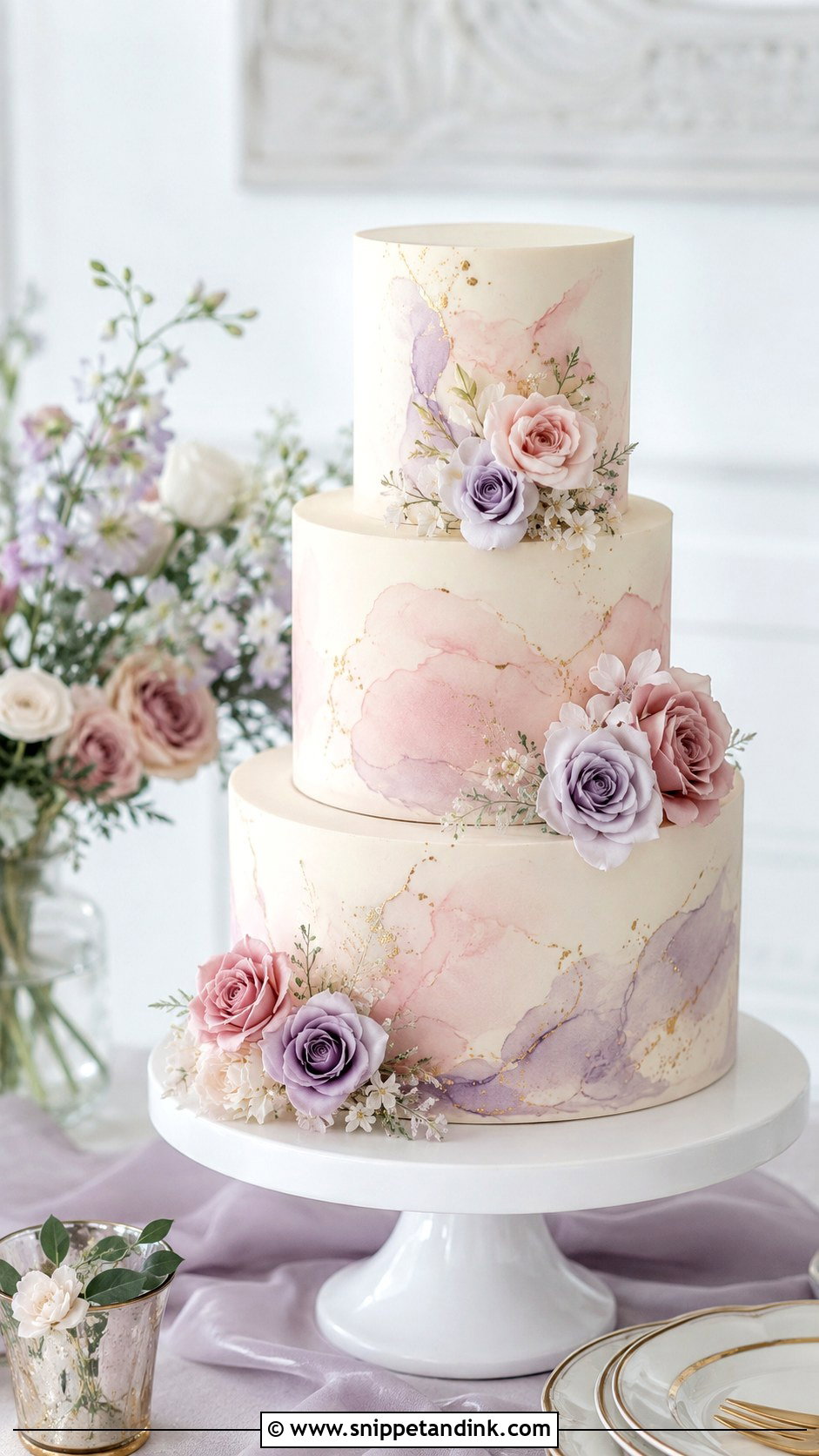
A watercolor finish should look like painted silk. I brush thinned color across fondant, or blend it into buttercream with a palette knife, building it up in washes. Blush, peach, lavender, dusty blue, sage all suit it. What keeps it couture is limiting the palette to two or three related shades; more than that and it reads as a kids’ party cake. Sugar flowers, a few flecks of edible gold or thin painted lines give it structure. Spring, garden, coastal and fine-art weddings suit it, provided the tiers stay crisp so the softness looks intentional.
16. Couture Bas Relief Wedding Cake
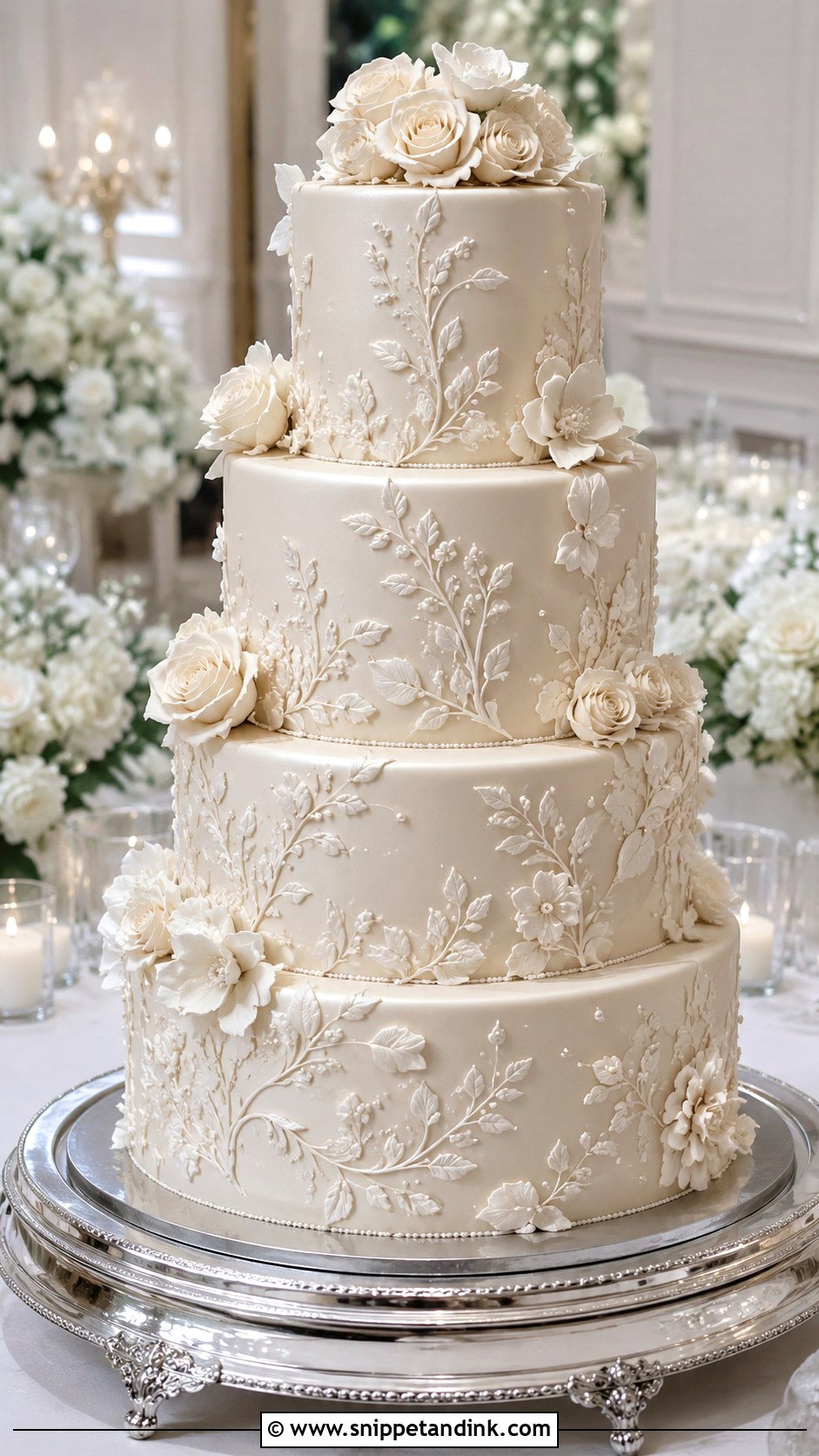
Bas relief means raised sugar detail sculpted onto the tier, so it looks like carved plaster or embroidery. Florals, vines, lace, leaves or scrollwork all work. White on white is the classic version; ivory over champagne feels warmer and older. Because it’s tonal, lighting decides whether anyone sees it: flat overhead light makes the relief vanish, while a light from one side throws every ridge into shadow. I always ask where the cake table sits and suggest moving it near a window or adding a pin spot. Add only a few flowers or pearls. It suits formal rooms and couples who prefer texture to color.
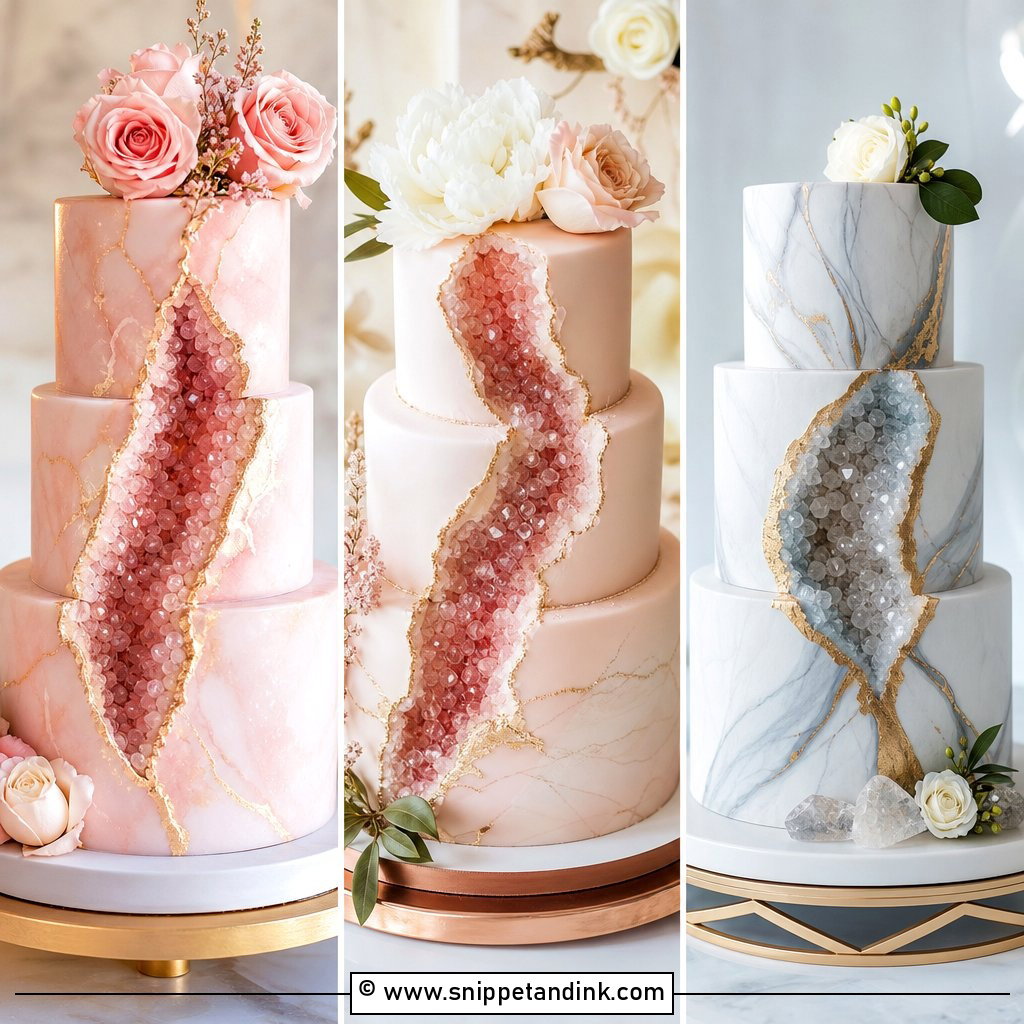
17. Couture Marble Wedding Cake
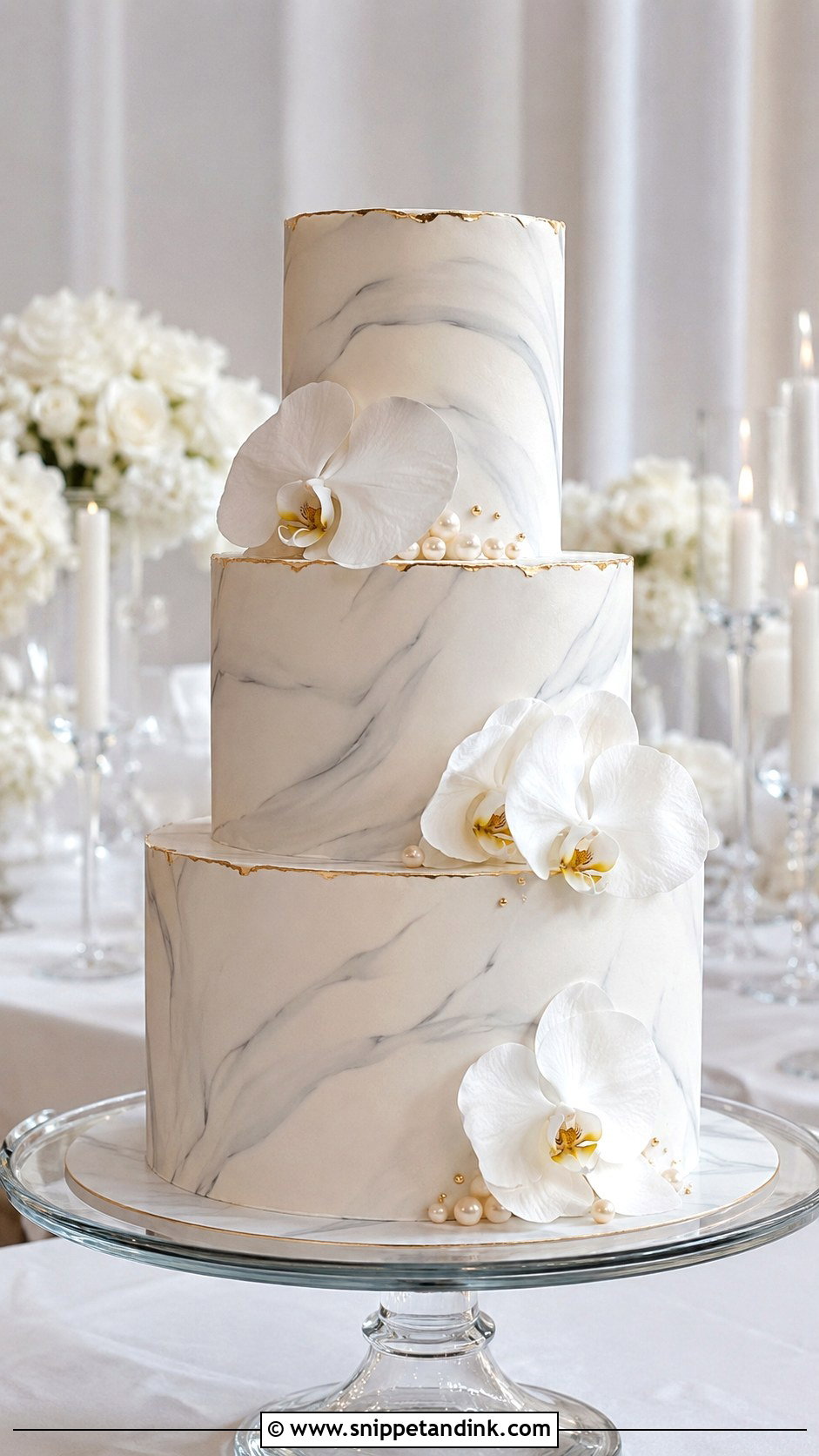
Marble cakes give a polished stone effect. Soft gray veining is the usual choice, but blush, beige or pale blue veins can feel more bridal. I marble the fondant by folding colored paste through white and rolling it, which means every tier comes out slightly different; if you want identical tiers, painted veining is the safer method. Either way, keep the veins delicate, because thick veining looks like a kitchen worktop. Metallic edging, sugar orchids or a simple floral cluster finish it. It sits naturally in hotels, museums, rooftop receptions and white venues, especially on acrylic or glass stands.
18. Couture Garden Wedding Cake
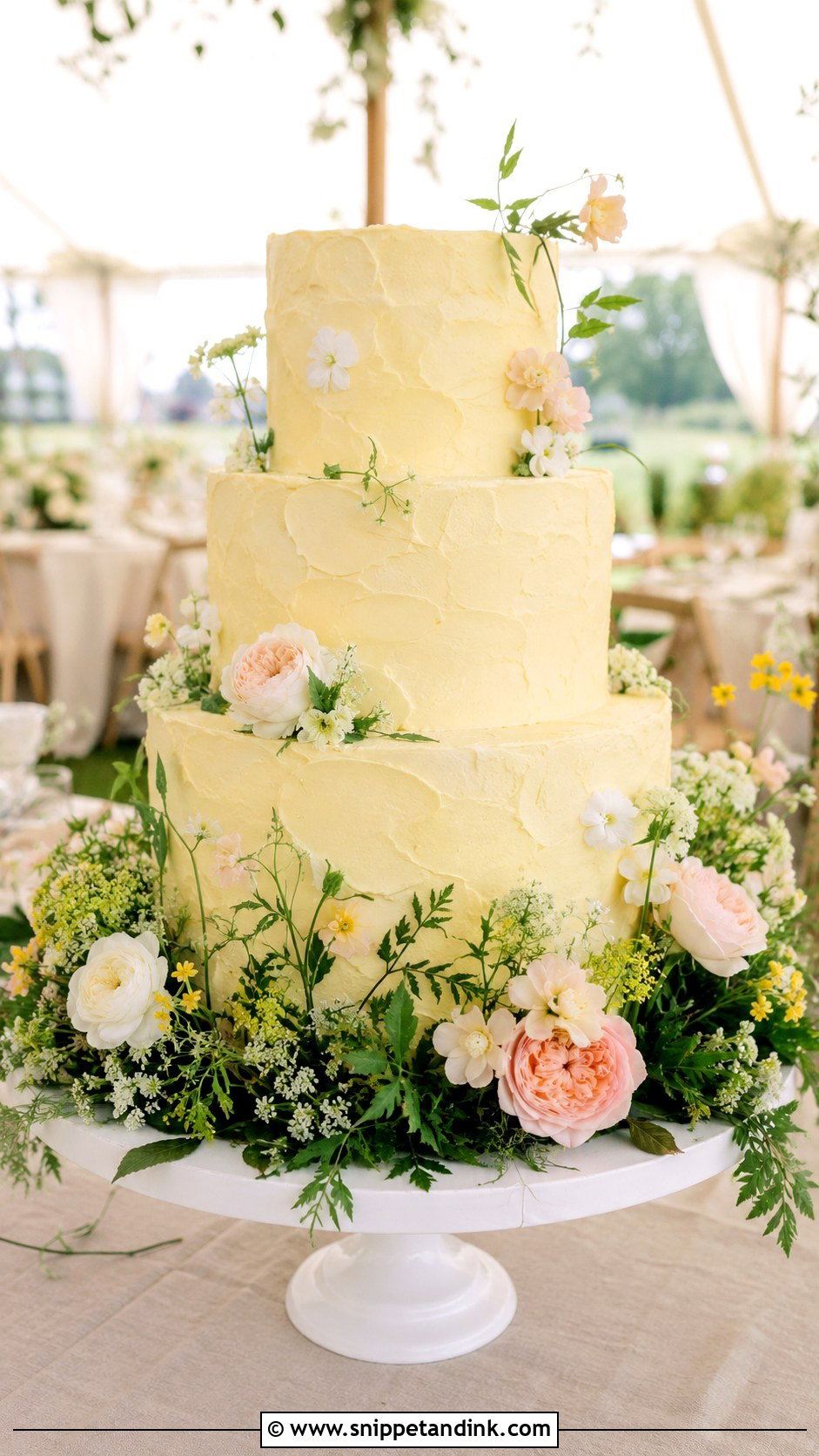
Garden cakes should look as though the flowers grew there. Instead of crowning the top tier, I move the blooms around the tiers, the base and the stand in one continuous drift. Soft buttercream, pale fondant or a textured finish make the background. Roses, sweet peas, ranunculus and greenery are good choices, and hydrangea makes a full-looking garden cake, though fresh hydrangea shouldn’t touch the icing directly, so I either make it in sugar or keep it on the stand. Outdoor, tented and estate weddings suit it. The cake still needs a visible shape under all that growth, or it turns into a hedge.
19. Couture Champagne Wedding Cake
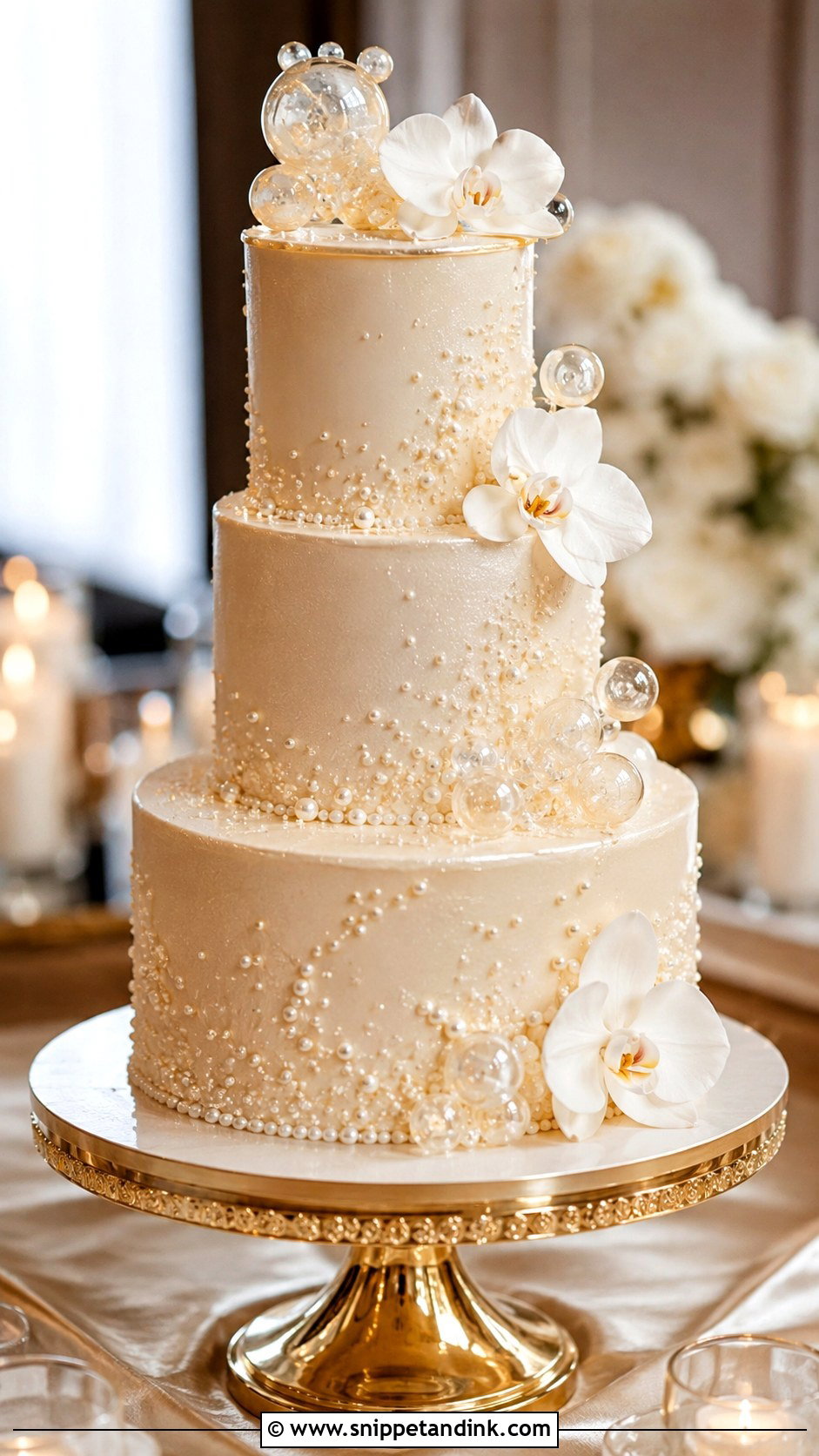
Champagne is a theme for the inside as much as the outside. Champagne sponge, vanilla bean, almond or a raspberry filling all work, and I’d note that most of the alcohol bakes out, so it suits a mixed crowd. The exterior can be soft ivory, champagne beige or pale gold, finished with satin buttercream, brushed shimmer, pearls or a thin gold rim. Sugar roses, white orchids or tiny sugar pearl bubbles climbing a tier make it feel celebratory. Ballrooms and evening receptions suit it, where the shimmer catches the light. Think of it as a toast you can slice.


20. Couture Blush Wedding Cake
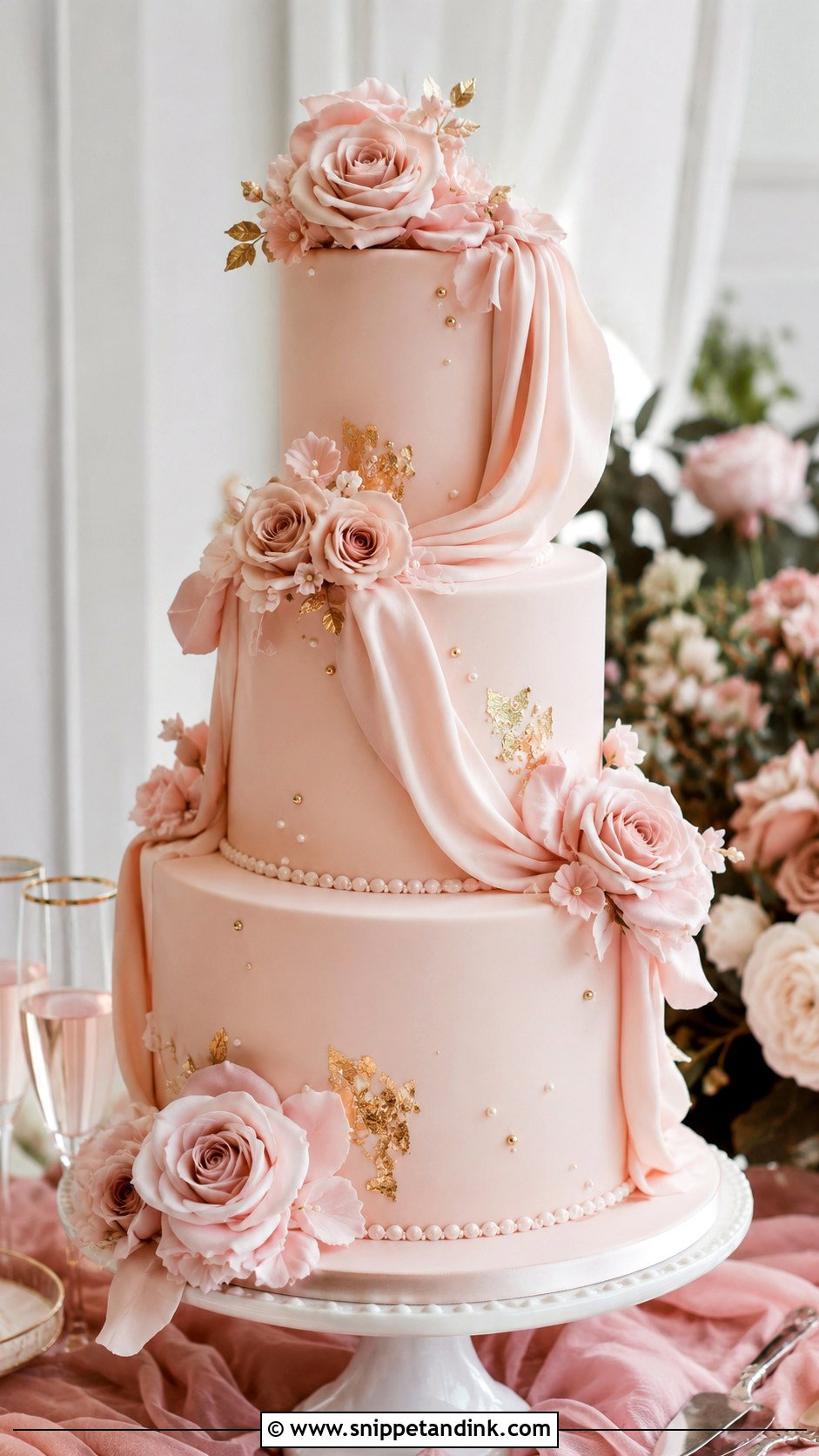
Blush fits more wedding palettes than any other color I’m asked for. It can lean pale pink, nude, rose, mauve or peach depending on the flowers and the season, and I always match it against a petal or swatch, because pink icing shifts as it dries and looks different under warm reception lighting. Smooth fondant, silky draping, fine piping or tonal sugar flowers give it couture polish. Gold warms it; pearls keep it softer. Layer the shades gently rather than going bright. Garden weddings, ballrooms and tented receptions all suit it.
Heat, Humidity and the Trip to the Reception
The fanciest detail on this page is only as good as the conditions it sits in. A few things I plan for with every couture order:
Warm rooms
Buttercream softens in a warm room and slides in direct sun. Fondant protects the cake better, but it sweats if it goes straight from a cold fridge into a humid marquee, and that condensation can spoil painted details. I prefer a cool, shaded spot for the cake table, away from the kitchen doors and the dance floor lights.
Delicate sugar work
Sugar flowers don’t wilt, but they hate damp air, and wafer paper ruffles can droop. For tall or detailed cakes I usually transport tiers separately and stack and finish on site, which means the venue needs to give me access an hour or two before guests arrive.
Cutting and keepsakes
Tell your caterer which pieces are inedible: wires, posy picks, dowels and any fresh flowers. Sugar flowers can be lifted off before cutting and kept for years in a dry box away from sunlight, which many couples love as a souvenir.
Let One Couture Detail Run the Whole Cake
Every couture cake I’m proudest of had one idea and committed to it. Each tier, texture, flower, bow and pearl should serve that idea and the couple’s style. A detailed gown points toward lace or pleats that echo it; a modern venue calls for minimal, marble or sculptural shapes; a romantic reception can carry florals, blush, ruffles and drapes. The most photographed cake isn’t always the biggest one. It’s the one that looks considered from across the room and still rewards a close-up. Pick the mood first, then give your designer the gown, the room and the lighting to work with.
You'll Like These Ideas:











Leave a Reply