
A large cake changes a reception room before anyone eats a crumb. Guests see it from the door, it anchors the photos of the cutting, and it gives the dessert table a height that flowers alone rarely manage. The catch is that every extra tier adds weight, support work and kitchen time, so the size should come from your room and your guest list, not only from a picture. Below are twenty big designs I’d happily build, with notes on how each one behaves once it leaves the bakery.
Servings, Dummy Tiers and the Height You Actually Need
The mismatch I see most is a couple wanting seven tiers for ninety guests. That cake would feed far more people than are coming, and you’d pay for every slice. Wedding portions are cut much narrower than party slices, roughly 1 inch by 2 inches through a 4 inch tall tier, so even modest tiers go a long way.
Rough figures for round tiers at that standard wedding portion (every baker’s chart differs a little):
- 6 inch tier: about 12 servings
- 8 inch tier: about 24
- 10 inch tier: about 38
- 12 inch tier: about 56
- 14 inch tier: about 78
Stack all five and you feed around 200. For the look of five tiers at a hundred guests, I’d make two of them dummy tiers: polystyrene rounds iced in exactly the same finish. They still cost something, because the decorating time is identical, but less than real cake. The other route is a smaller display cake plus plain kitchen cakes iced to match, which the caterers slice out of sight. That also spares the display cake from being dismantled in front of everyone.
Let the ceiling set the height
In a low room, a seven-tier cake looks cramped and can sit close enough to downlights to warm the top tier. In a big ballroom, three tiers simply disappears. Before I sketch anything, I ask for the ceiling height and where the cake table will stand.
1. Tall White Wedding Cake
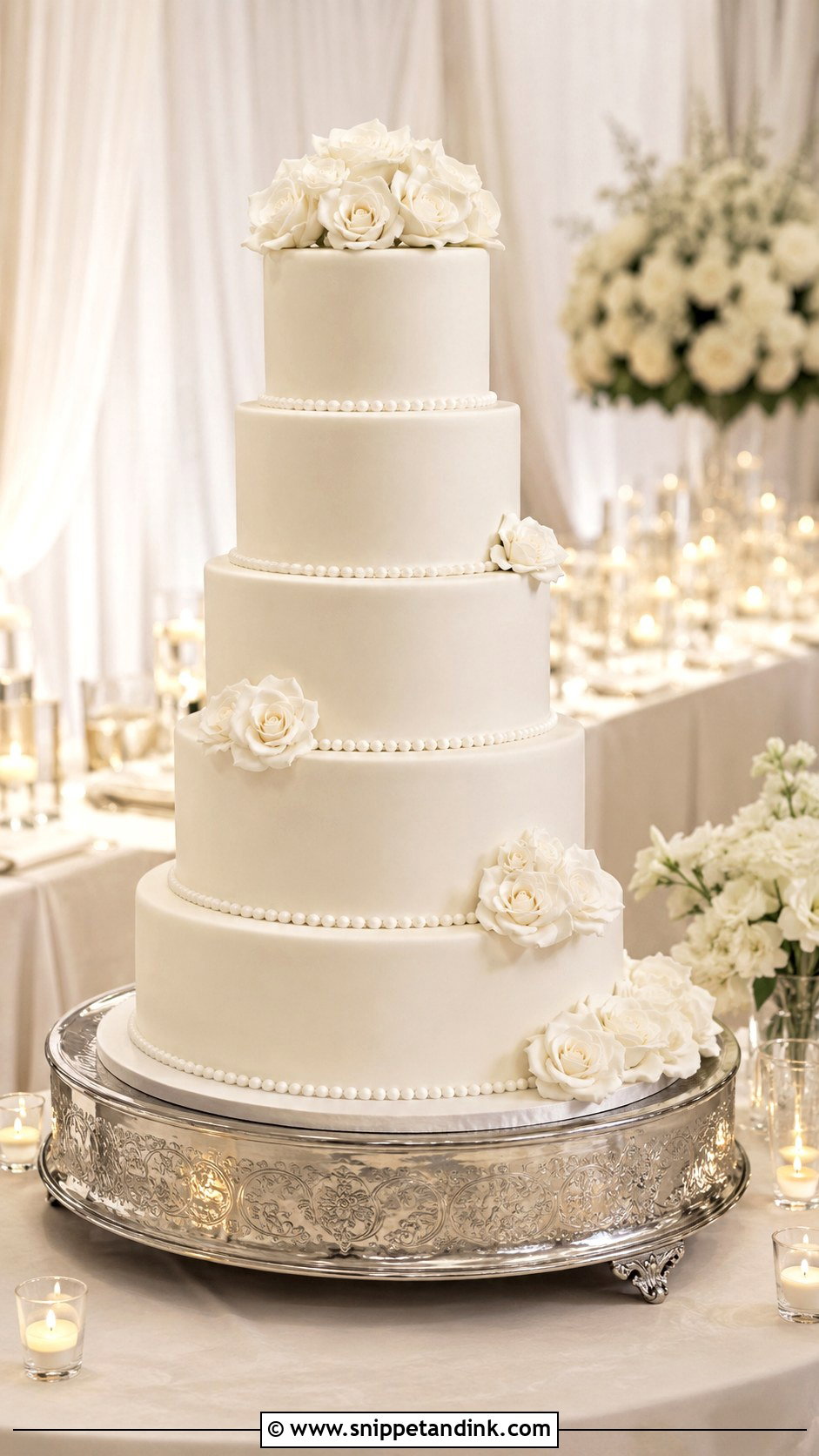
White is the hardest finish to hide a mistake in, which is exactly why a tall white cake reads as formal. On five or six stacked tiers, a slightly leaning layer or a bulging seam shows from across the room, so I chill every tier hard before stacking and run one long central dowel through the whole cake. Pearl borders or piped lace give the eye somewhere to rest. In a room already full of heavy centerpieces and patterned linens, this is the calm piece that balances them.
2. Big Floral Wedding Cake
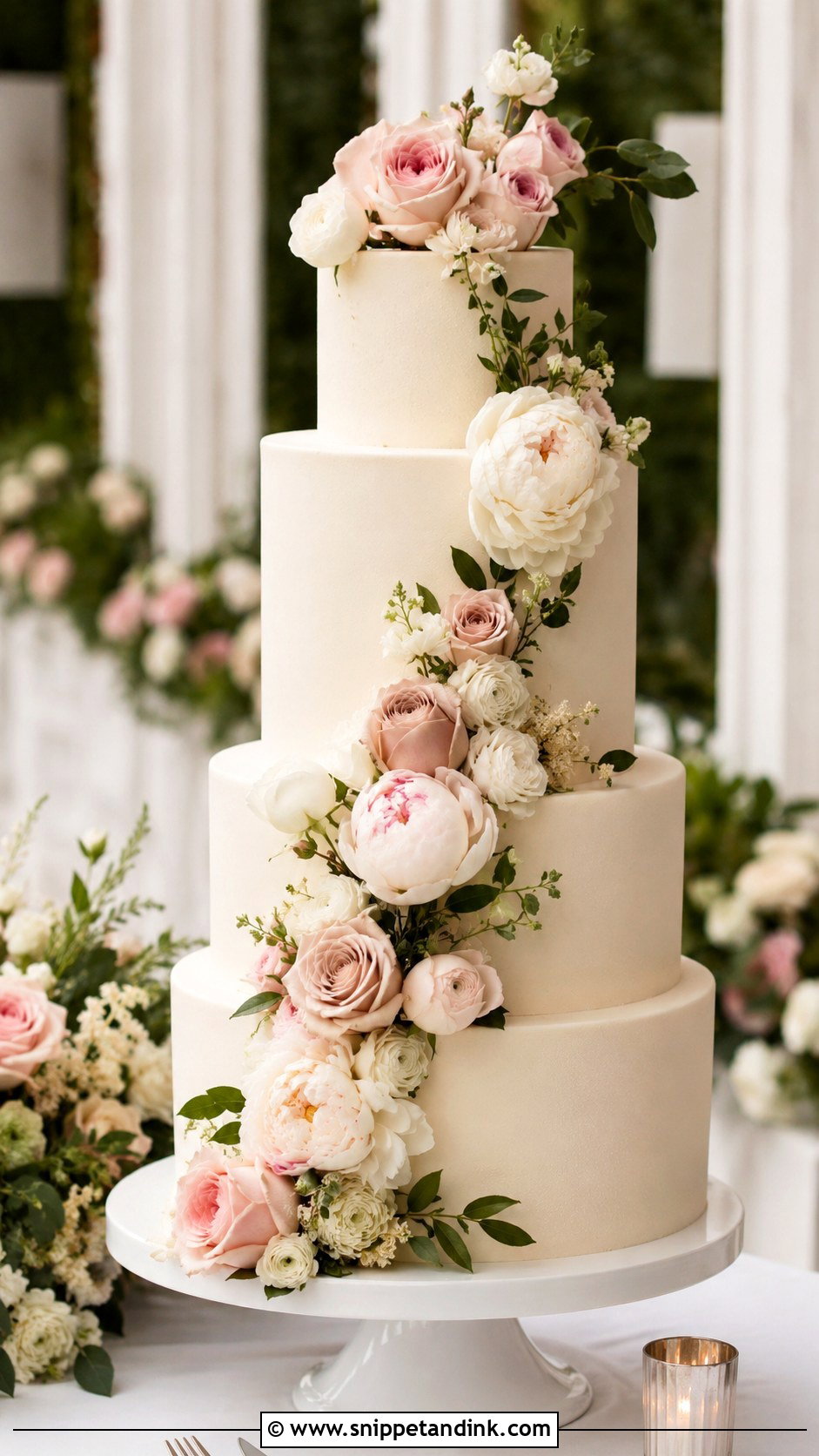
Fresh flowers make a big cake look generous, but not every bloom belongs against frosting. I only use stems grown or sourced for food contact, never anything sprayed, and I wrap or tape every cut stem so sap never touches the buttercream. Roses, peonies, ranunculus and orchids hold up well for hours. Hydrangeas wilt fast once they’re out of water, so I keep them to the base or swap them for sugar versions. Match the blooms to the bouquet and let them fall in one line from the top tier to the base rather than covering every inch; an ivory base keeps them in focus.
3. Five Tier Wedding Cake
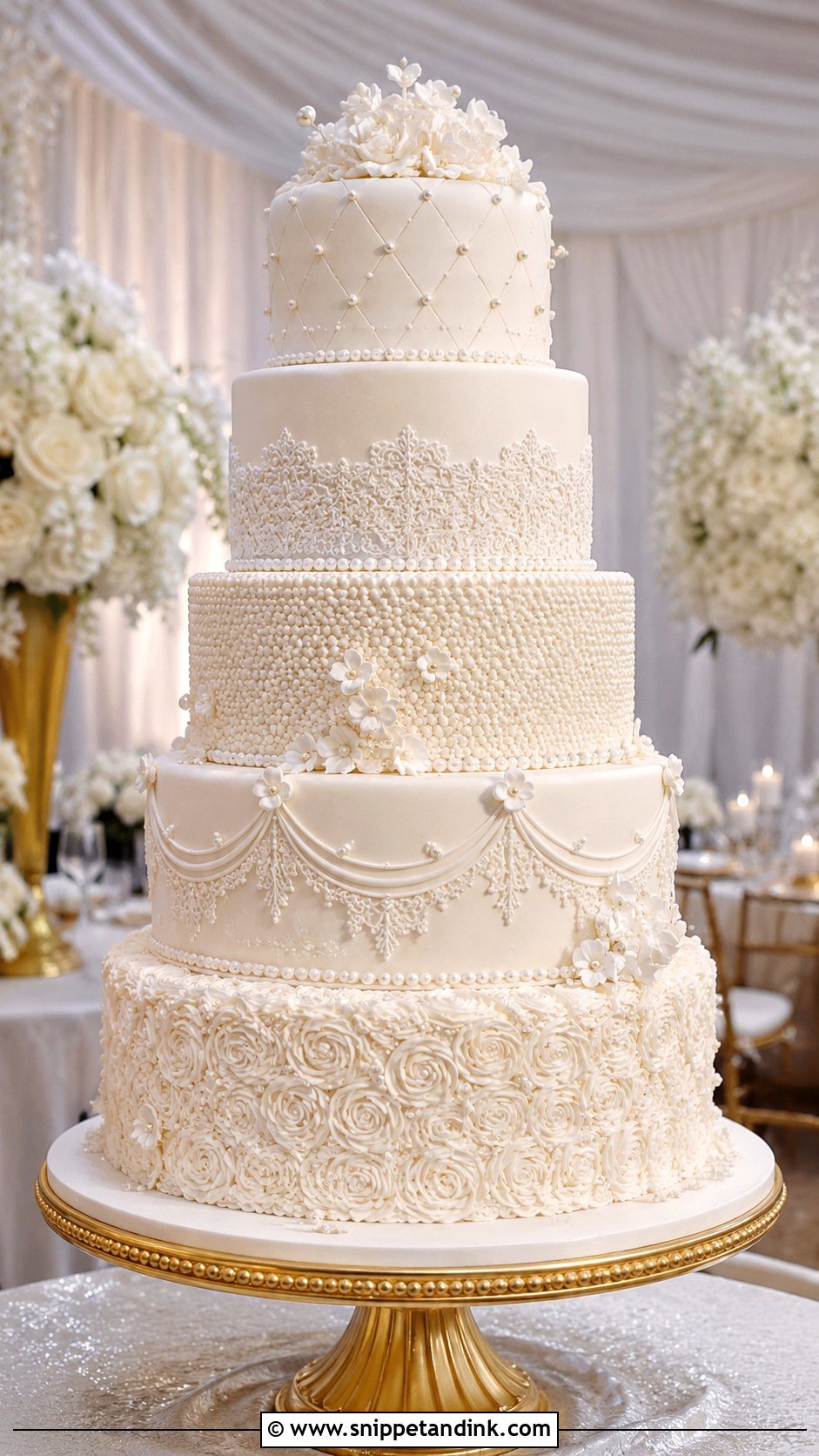
Five tiers is where height starts to read across a big room while the structure stays straightforward: a board and dowels in every tier, one central dowel, and usually the top two tiers stacked at the venue. Each tier can carry its own texture, smooth fondant on one, piped lace on another, a pearl band on a third, as long as the colour stays constant. A raised stand adds another hand’s width of height. Couples often ask for a different filling per tier, which I’m happy to do; I just mark the cutting diagram so the caterers know which tier is lemon and which is chocolate.
4. Big Vintage Wedding Cake
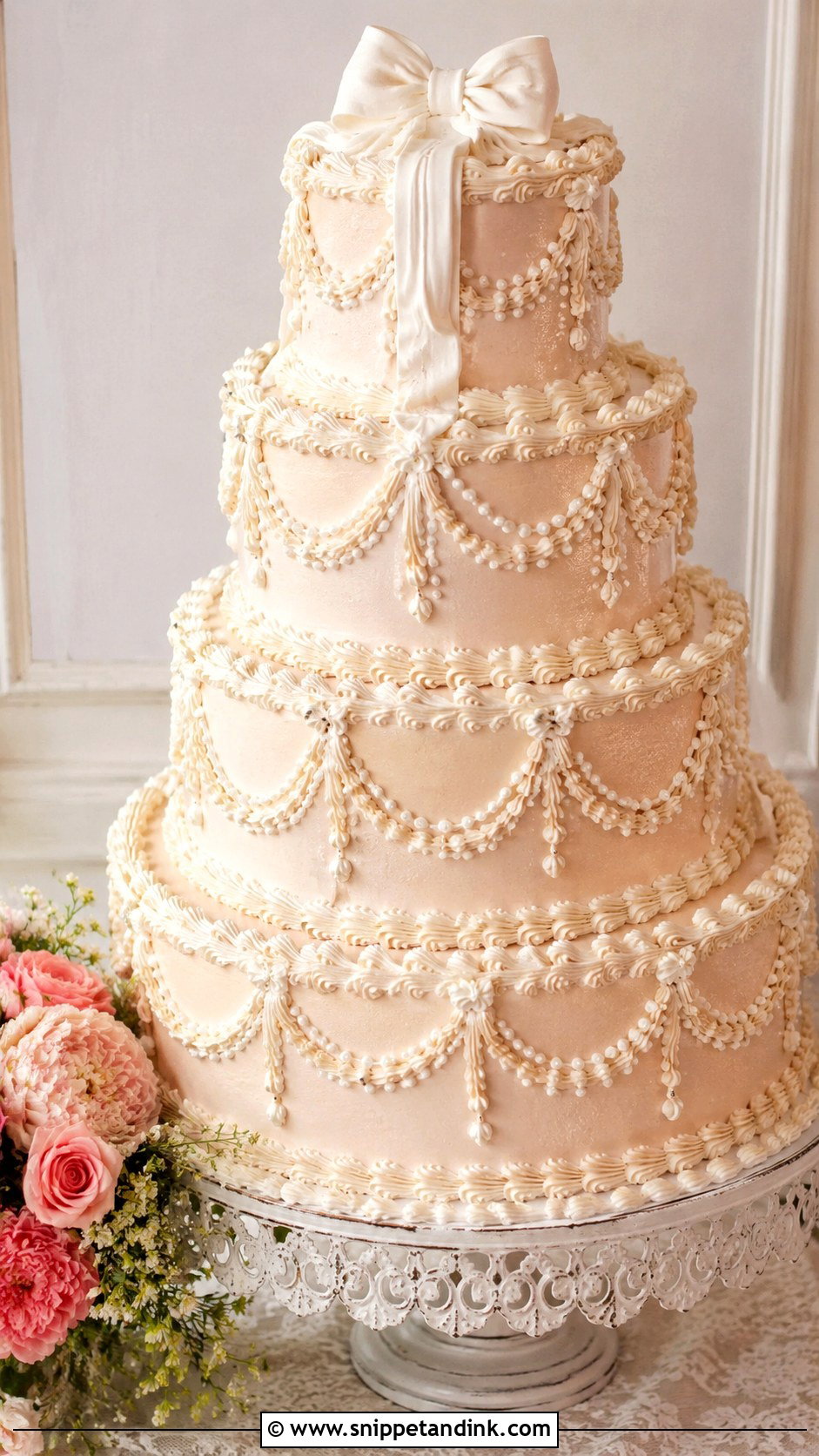
Overpiped swags, shell borders, pearl dots and layered scrolls are what most people mean by a vintage cake, and every bit of it is piped by hand. On a big cake that is many hours of work, so expect it to show in the quote. Pastel pink, pale blue, ivory and champagne all take piping well, and a piped monogram or a few sugar bows make it personal. I’d steer you away from this style for a hot outdoor reception: buttercream scrolls soften and slump long before plain sides do.
5. Big Pearl Wedding Cake
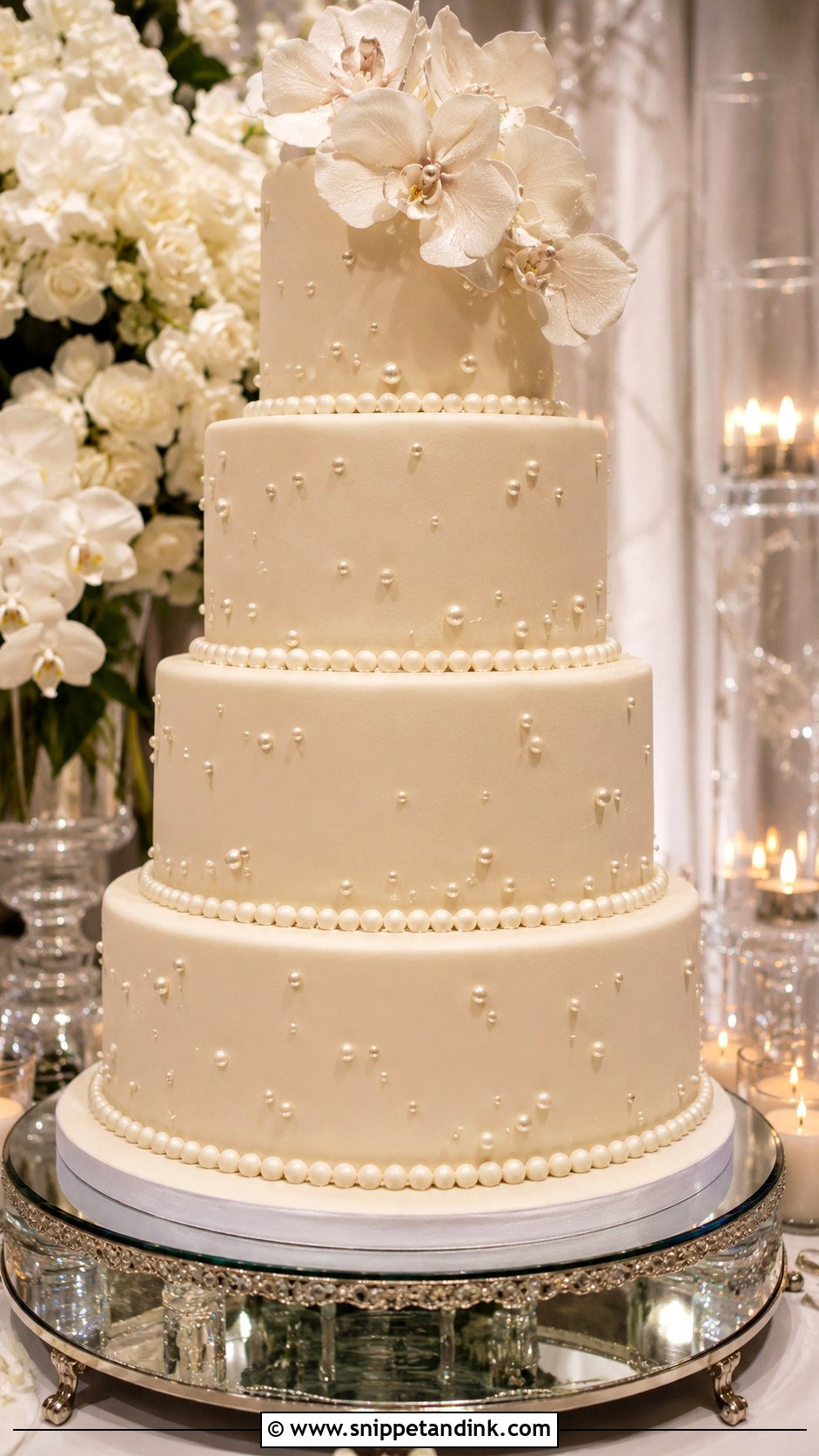
A big pearl wedding cake gets its glow from light rather than colour, so I place the pearls with the reception lighting in mind. Plain sugar pearls are fully edible; some metallic dragées are sold for decoration only, so I always check the label before they go on a cake people will eat. Scatter them lightly, set them in neat borders, or cover one tier completely for a single bold texture. White, ivory, blush and champagne frostings let the shine show, and a satin ribbon or a few sugar flowers stop it looking like a jewellery box.
6. Big Buttercream Wedding Cake
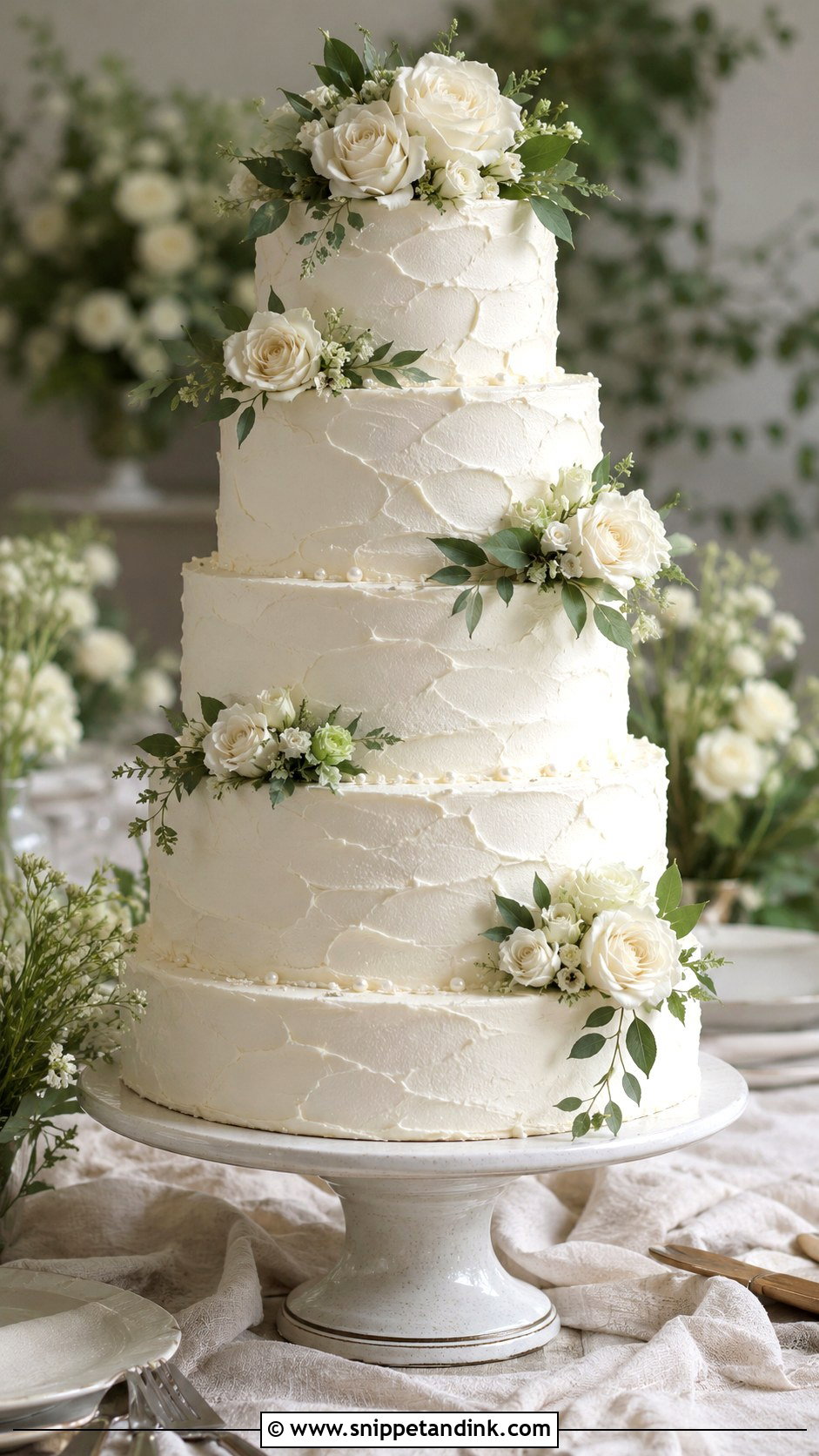
Buttercream is softer than fondant in every sense: warmer in colour, easier to cut, and more sensitive to the room. On a big cake each tier presses on the one below, so I dowel every level and keep the cake chilled until shortly before it goes out. Ridged, ruffled or palette-knife finishes hide the small marks that transport leaves. Barns and shaded garden venues suit it well, and guests eat it rather than peeling it off, which some do with fondant.
7. Big Fondant Wedding Cake
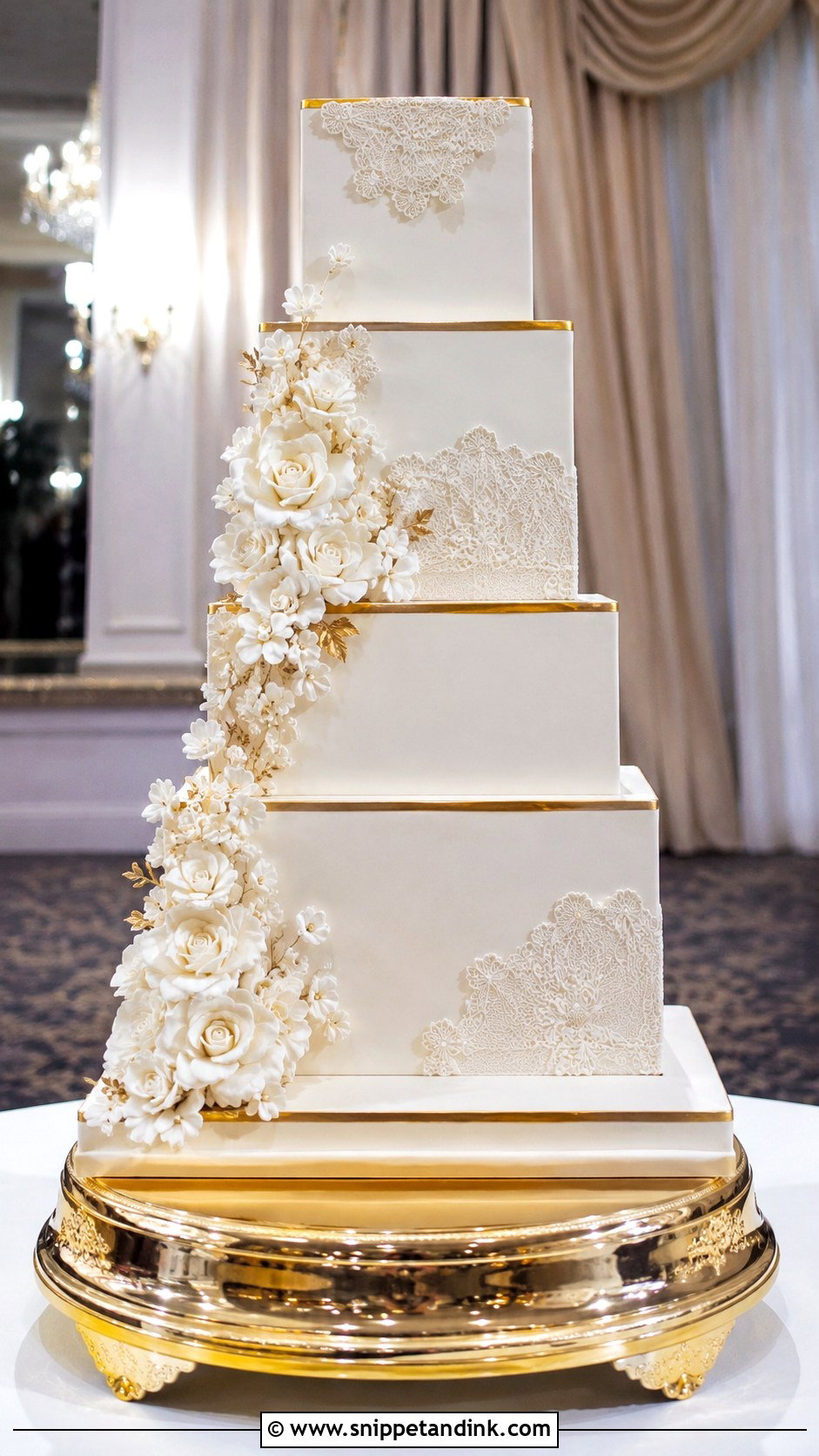
A big fondant wedding cake gives the sharpest edges and the best surface for painted florals, lace imprints, marbling and metallic accents. It also seals the cake, which helps a large display stay neat from every side of a centre-room table. Its weak point is condensation. Move a fondant cake straight from a cold fridge into a warm, humid room and it beads with moisture, so I let it come up to temperature slowly in its box. Keep the design to one or two strong details, such as gold trim or a cluster of sugar flowers.
8. Big Square Wedding Cake
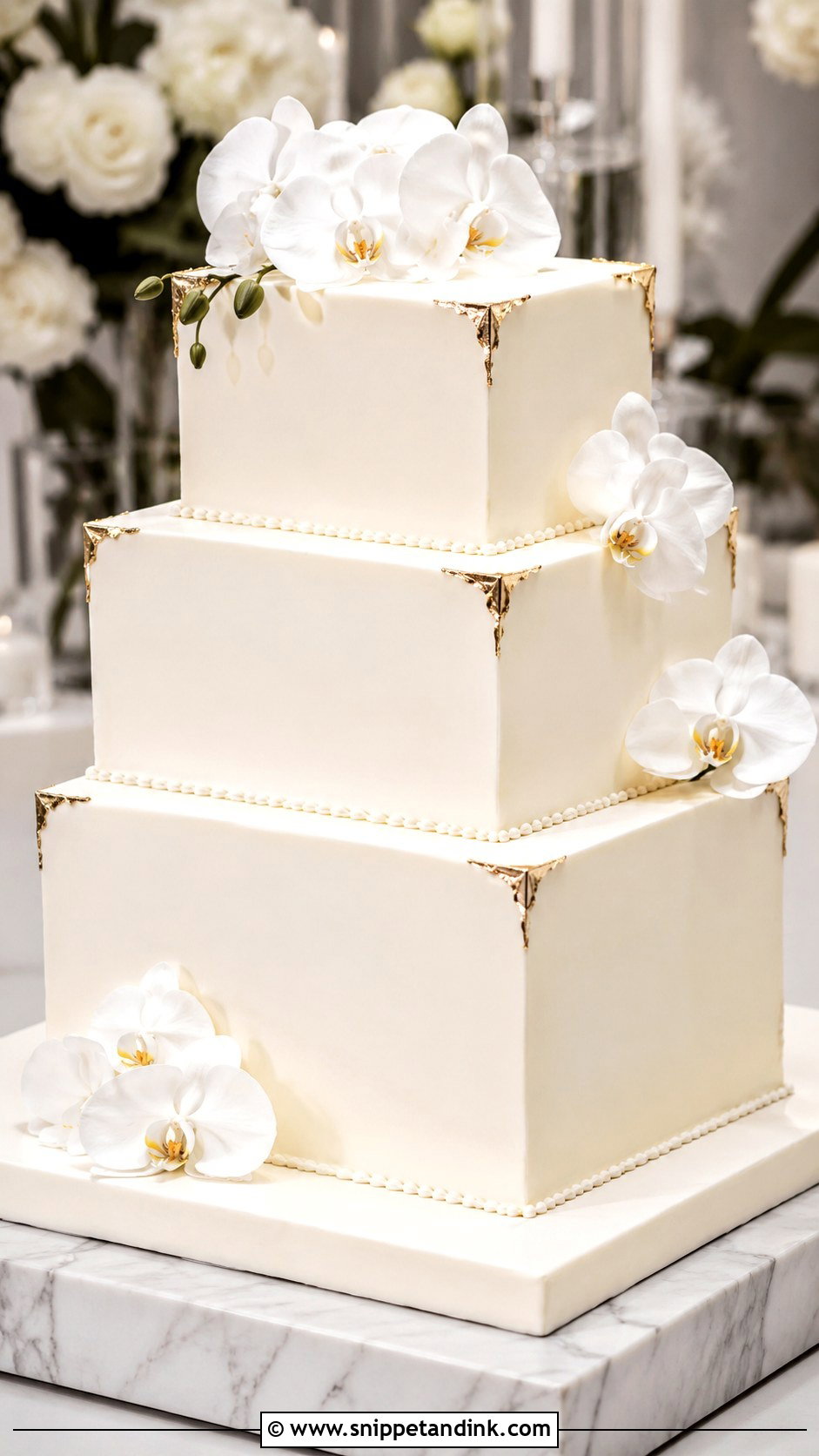
Square tiers look architectural, but they’re less forgiving than round ones. Every corner has to stay sharp, and a corner that dips even slightly is visible from the back of the room, so I set square cakes with a firm ganache layer under the fondant. The flat faces are useful for monograms, pressed flowers or a metallic band. City venues, galleries and ballrooms suit the shape. A square tier also gives more portions than a round tier of the same width, because no curved edge is cut away.
9. Big Round Wedding Cake
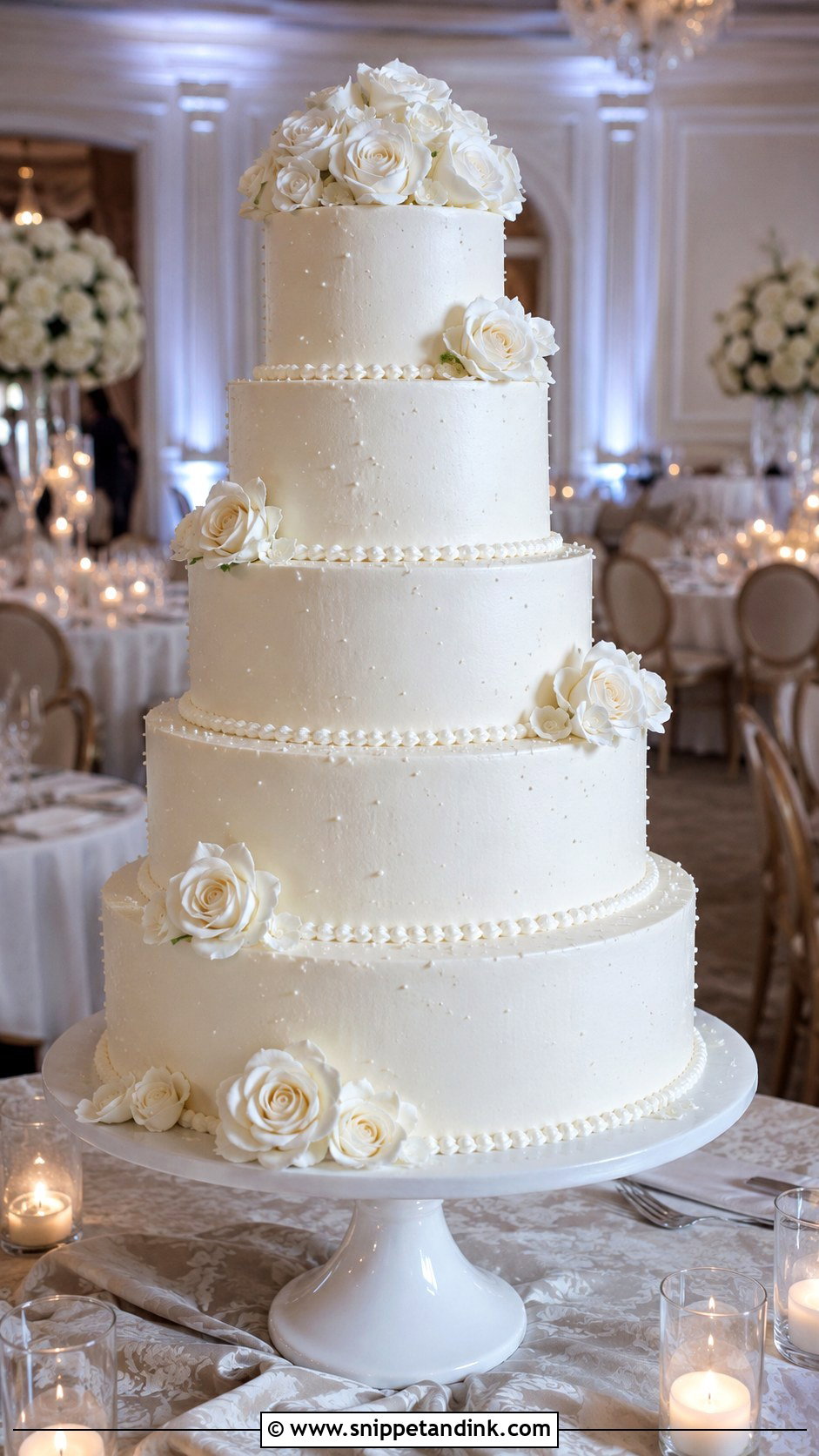
Round tiers are the safe default, and I mean that kindly. They stack evenly, cut into predictable portions and suit anything from fondant with sugar flowers to rough buttercream. For a big reception, four to seven tiers covers most rooms. I decide by ceiling height and how far the furthest table sits from the cake, not by headcount alone. A pedestal stand with candles or a ring of flowers at the base finishes it.
10. Big Gold Wedding Cake
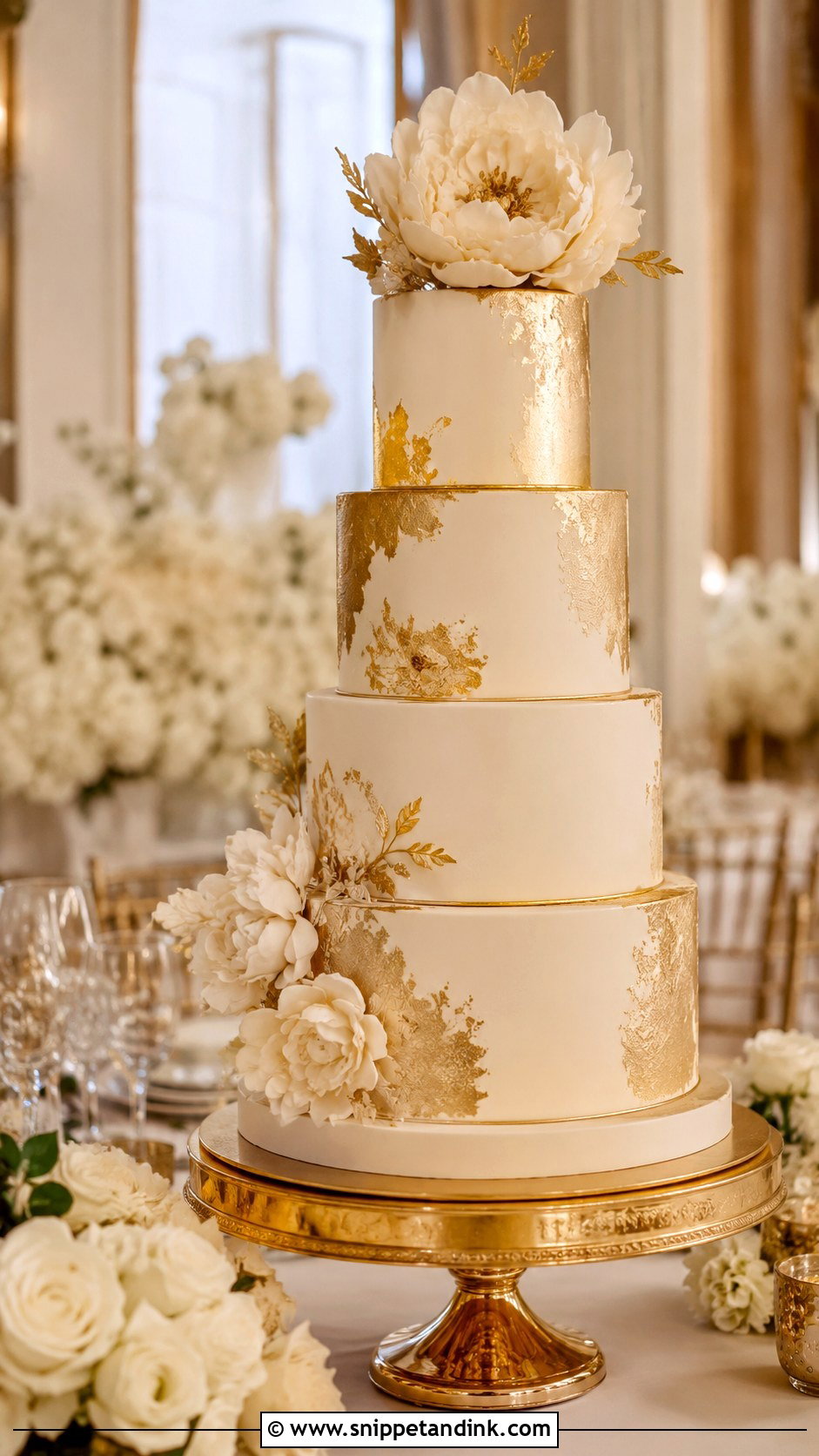
A big gold wedding cake is only as good as its gold. Edible leaf gives crumpled, mirror-bright patches, while painted lustre gives a softer sheen that reads more champagne under warm light. I use gold on edges, thin geometric lines or one brushed tier, and leave the rest white, ivory, black, blush or deep green so it never looks busy. Some metallic paints are labelled non-toxic but not edible, which isn’t the same thing, so ask your baker exactly what’s going on yours.
11. Big Modern Wedding Cake
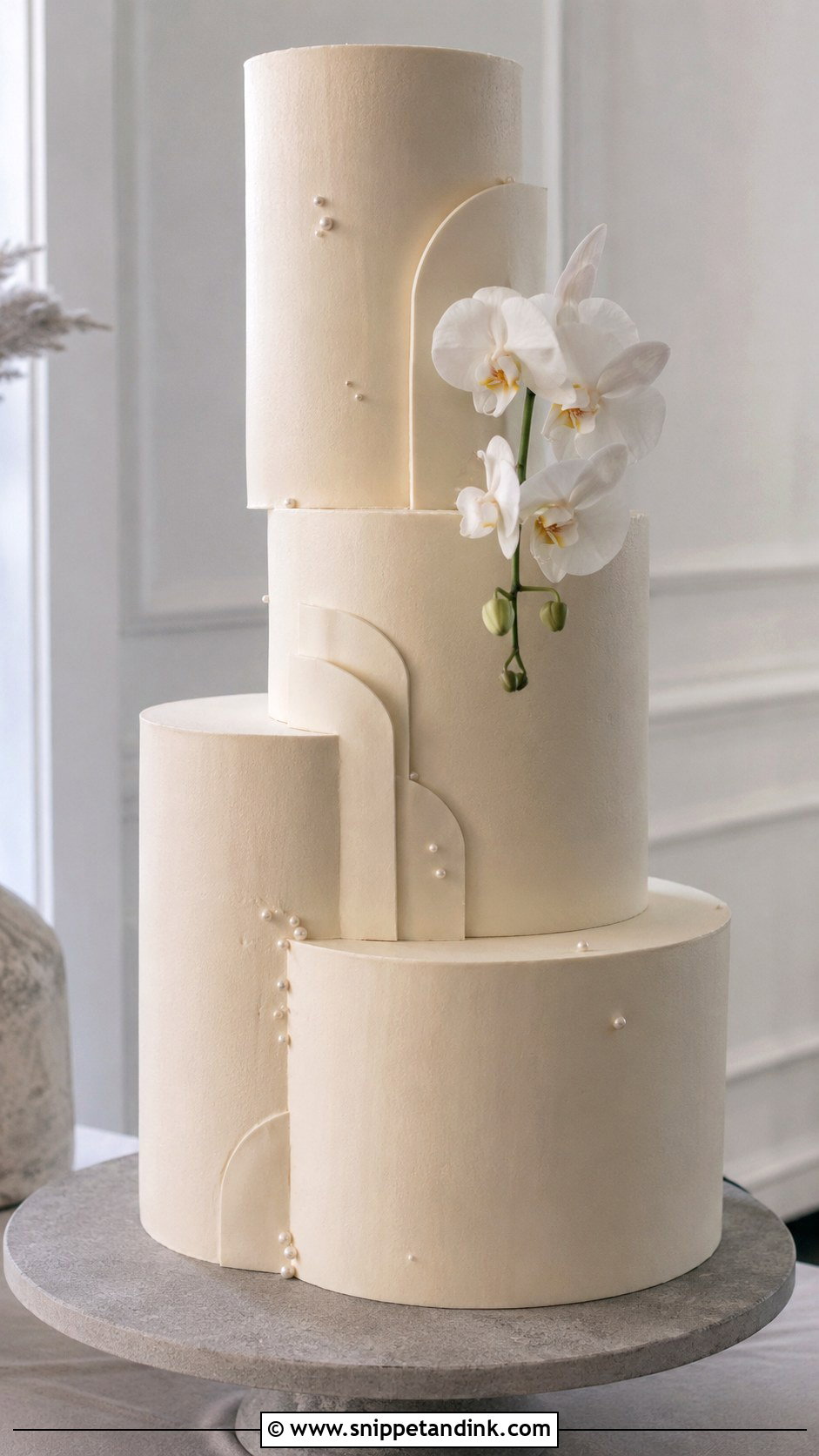
Modern cakes depend on structure more than decoration. Offset tiers, curved fondant panels and sculpted shapes all need hidden supports, and an offset tier still has to sit squarely over its dowels even when it looks off-balance. I keep the palette to white, ivory, beige, stone or black and let one orchid stem or a single textured tier carry the design. Galleries and rooftops suit it, though I wouldn’t put a tall sculptural cake on an exposed terrace on a windy evening.
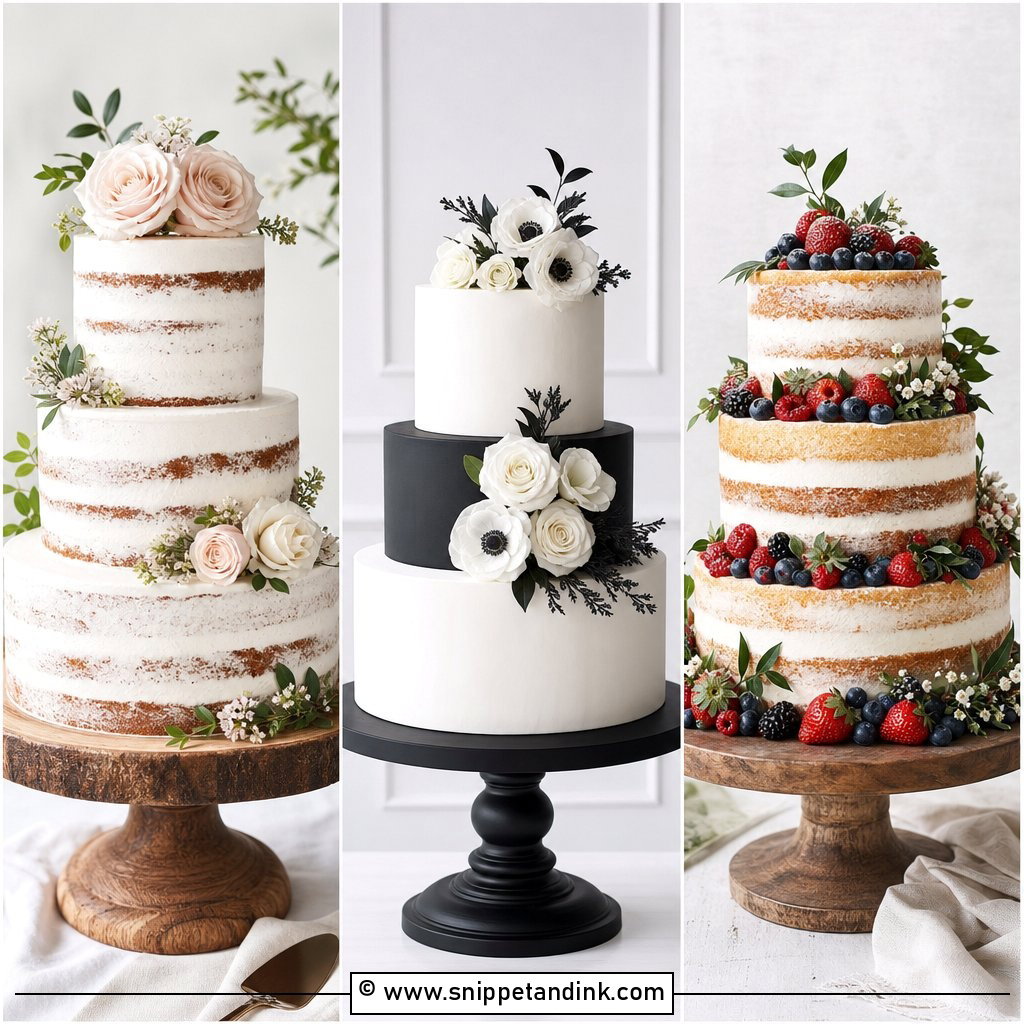
12. Big Rustic Wedding Cake
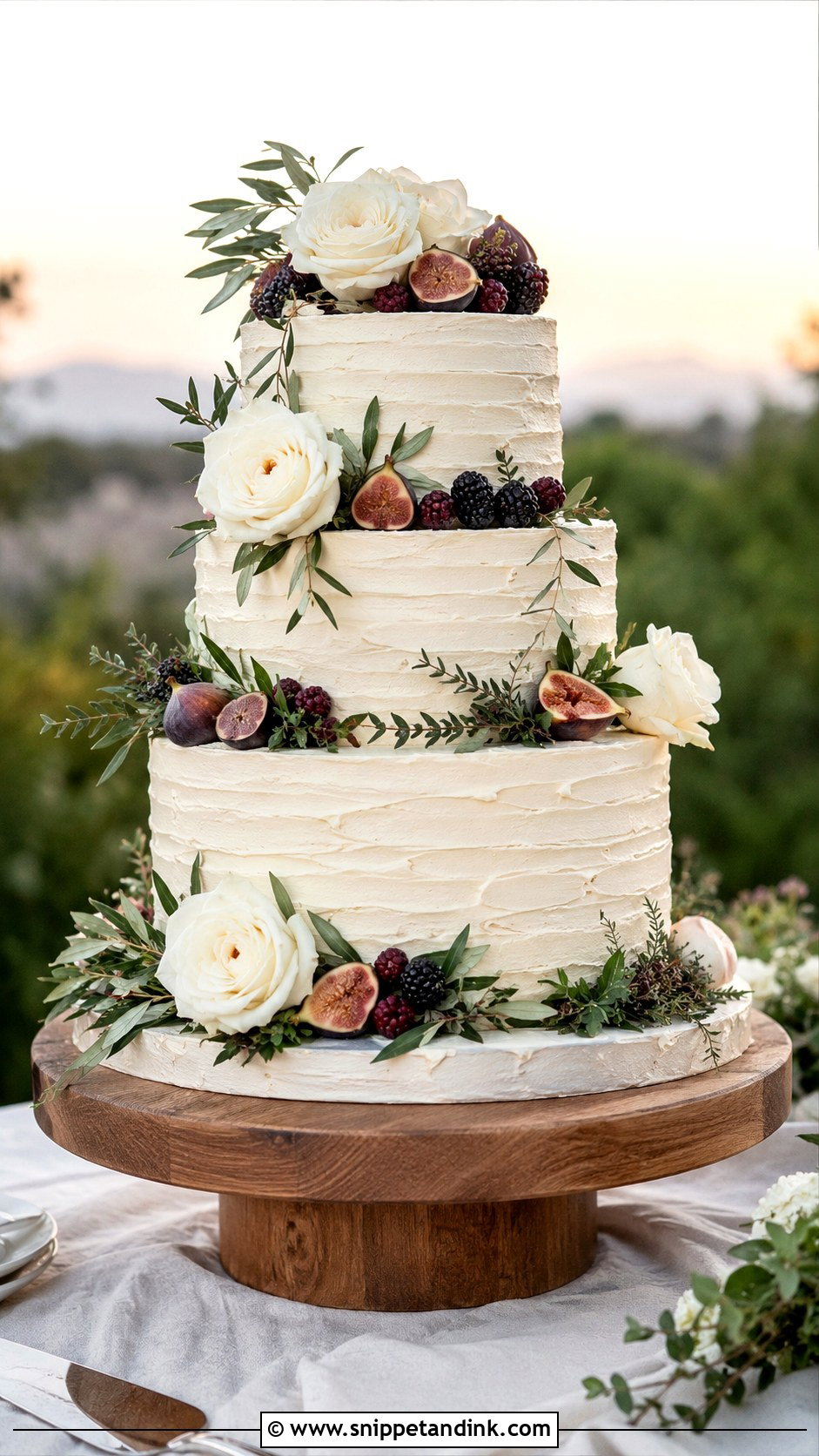
Rustic cakes forgive a lot, and that’s half their appeal. Uneven buttercream, loose greenery and simple borders are the point, so a small dent from a bumpy farm-track delivery is easy to smooth on site. I’d choose buttercream over fondant here, with figs, berries and small white flowers instead of heavy blooms. Barns, vineyard-style spaces and countryside venues suit it. Keep the colours to ivory, cream, sage and soft brown, and for a larger guest count add tiers rather than more decoration.
13. Big Garden Wedding Cake
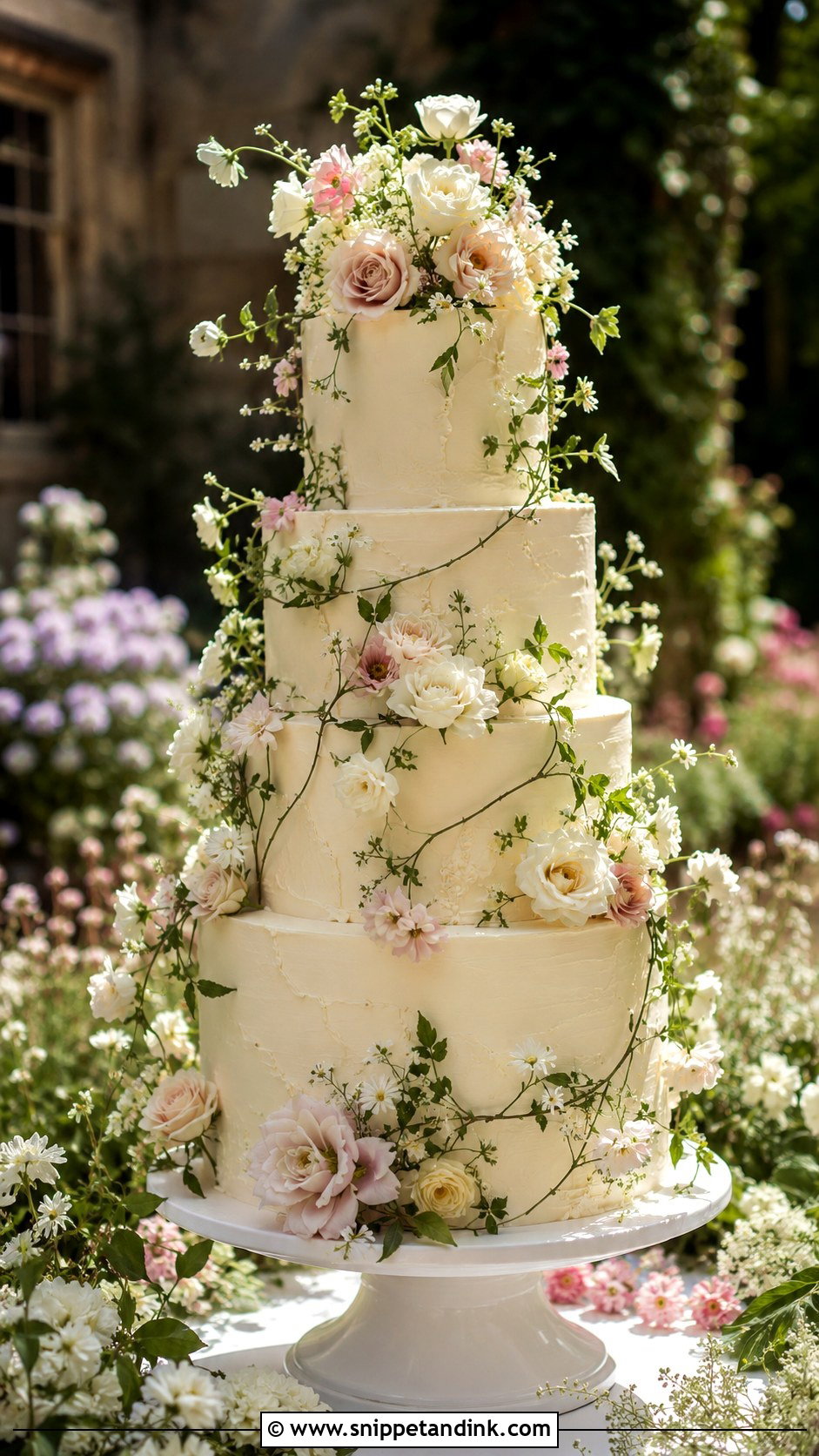
A garden cake should look as if the flowers wandered onto it, and that takes planning. I sketch where vines and blooms will climb so the cascade follows the tiers instead of clumping on one side. Start from a white or pale ivory base. Buttercream gives a softer finish; fondant gives a cleaner one and copes better in a warm greenhouse. One caution: real ivy is not safe against food, so ask whether trailing vines are fresh or sugar.
14. Big Beach Wedding Cake
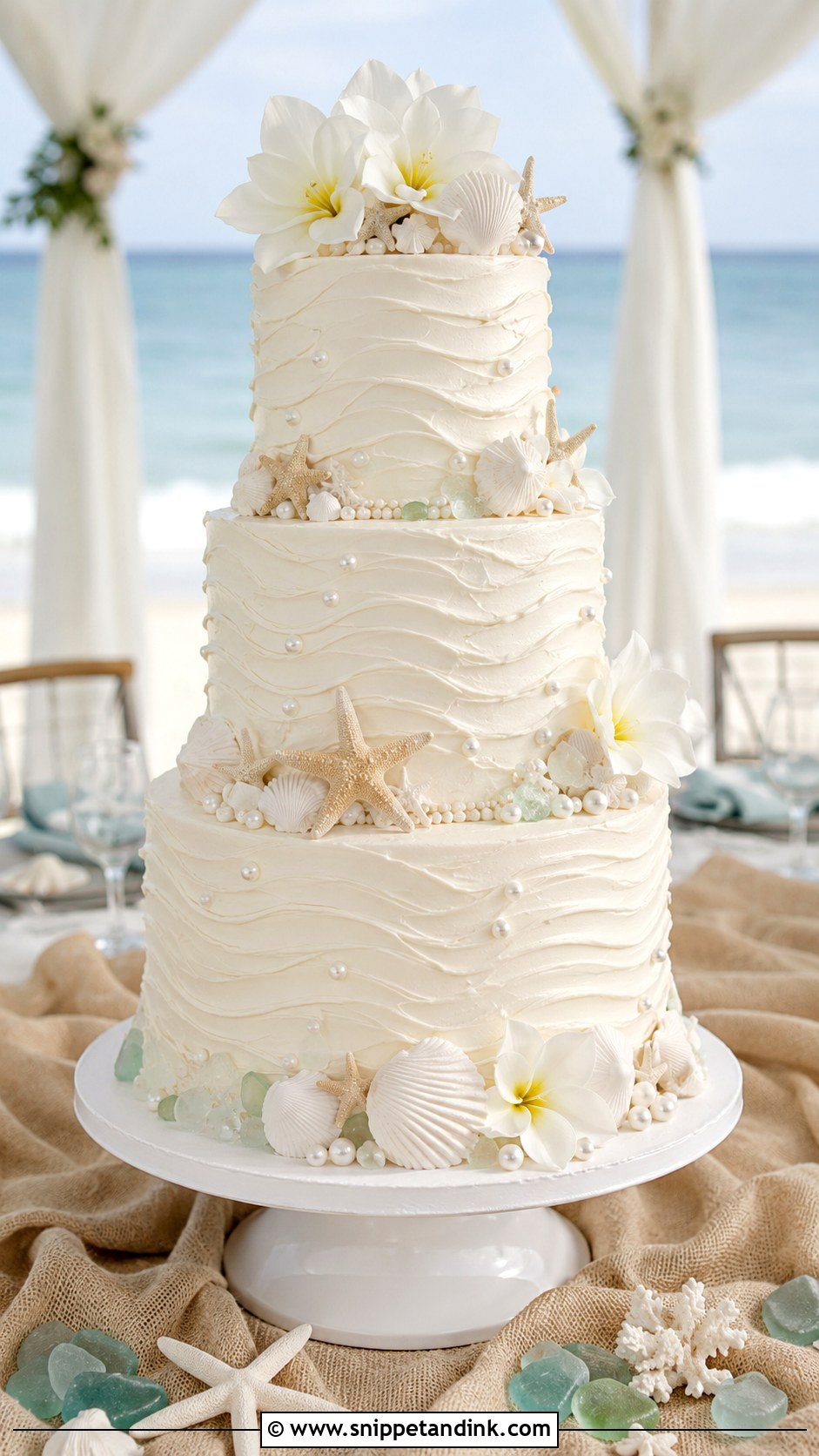
Heat and sea air are the real brief for a beach cake. Buttercream softens quickly in direct sun, so I’ll only send a big buttercream cake to a shoreline reception if it can wait in shade or indoors until it’s cut. Fondant over ganache holds up far better. Keep the coastal touches quiet: wave-textured sides, sugar pearls, a few fondant shells, or tropical flowers in sand, pale blue or sea-glass tones. Tall clean tiers still look formal by the water, provided the table stands on firm, level ground.



15. Big Black And White Wedding Cake
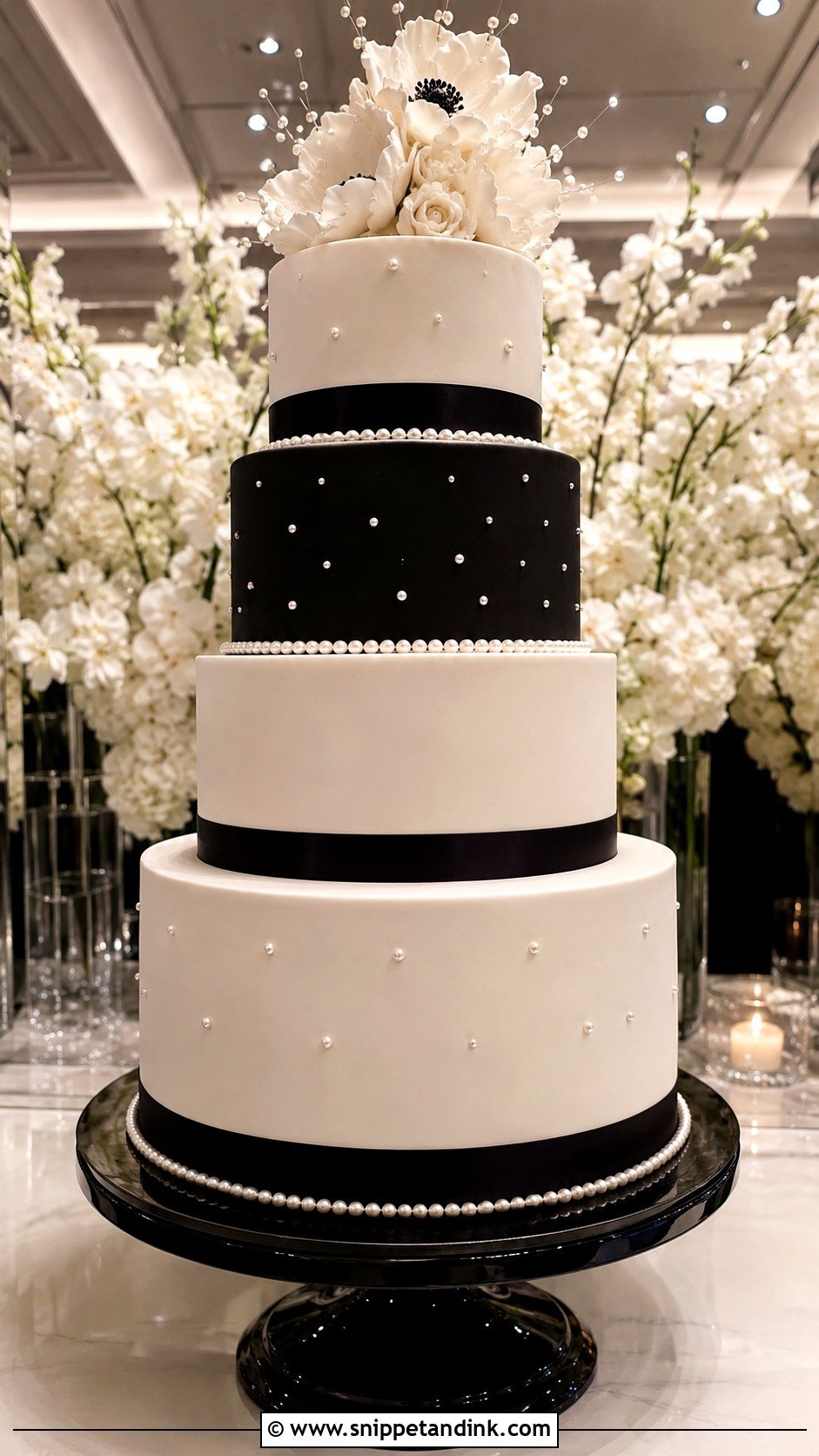
Black frosting is the tricky part of this cake. True black takes a lot of colouring, which can stain lips and teeth, so I usually keep the black to ribbon, piping, painted details or one fondant-covered tier rather than black buttercream. White sugar flowers or pearls soften the contrast. A large cake gives you room to use black sparingly, which is what keeps it bridal. Evening receptions and sleek city venues suit it, and the contrast stays crisp in photos even in low light.
16. Big Pink Wedding Cake
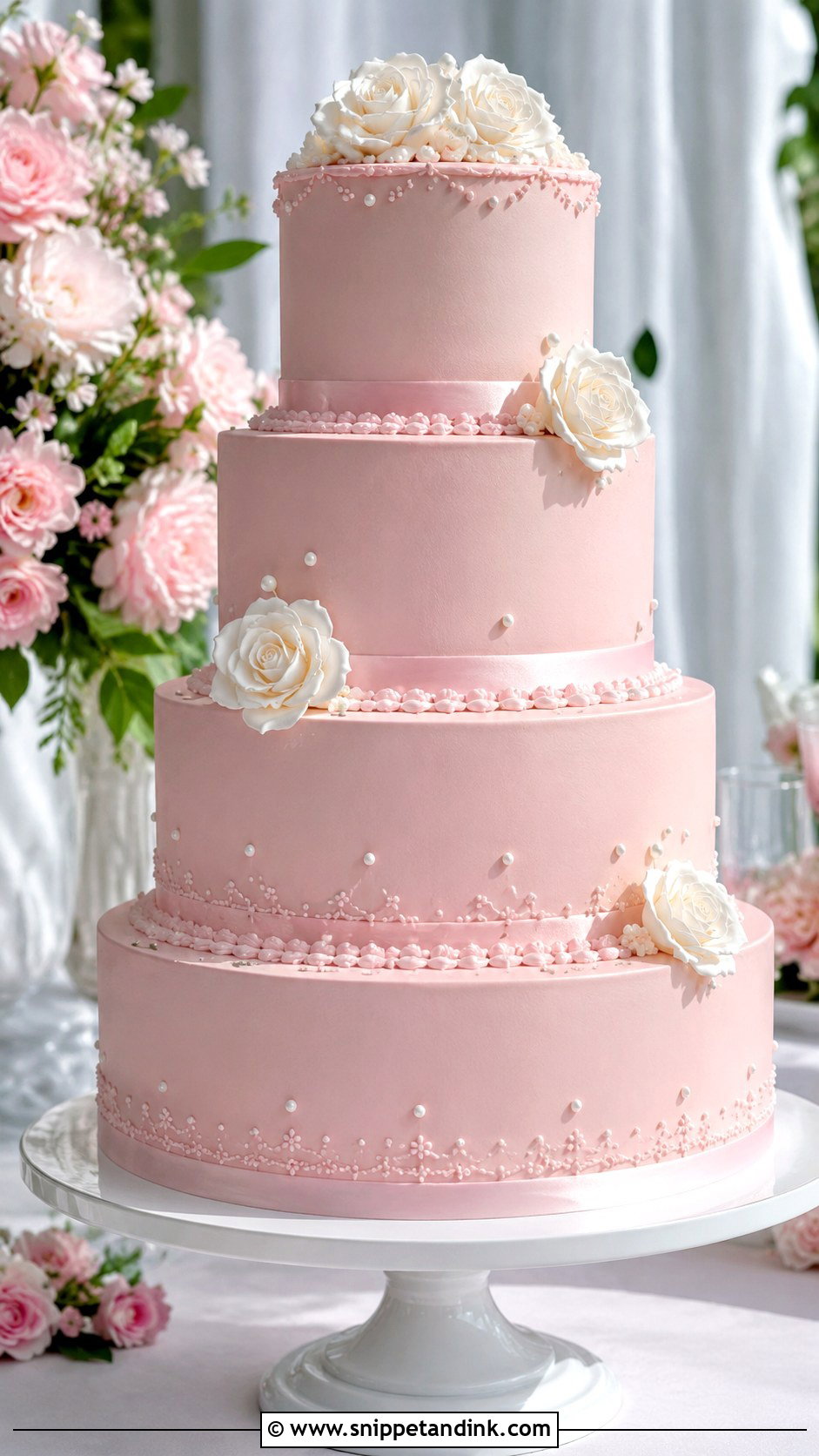
Pink changes character with its depth. Blush reads delicate and bridal, while dusty rose leans vintage. I check a pink frosting sample in daylight and again under warm bulbs before committing, because some pinks drift towards peach under yellow light. White flowers, pearls, satin ribbon and textured buttercream all pair with it. For a cleaner look keep the tiers smooth with one floral arrangement; for something sweeter, add ruffles and sugar bows. If your florals are already pink, this cake ties the room together.
17. Big Blue Wedding Cake
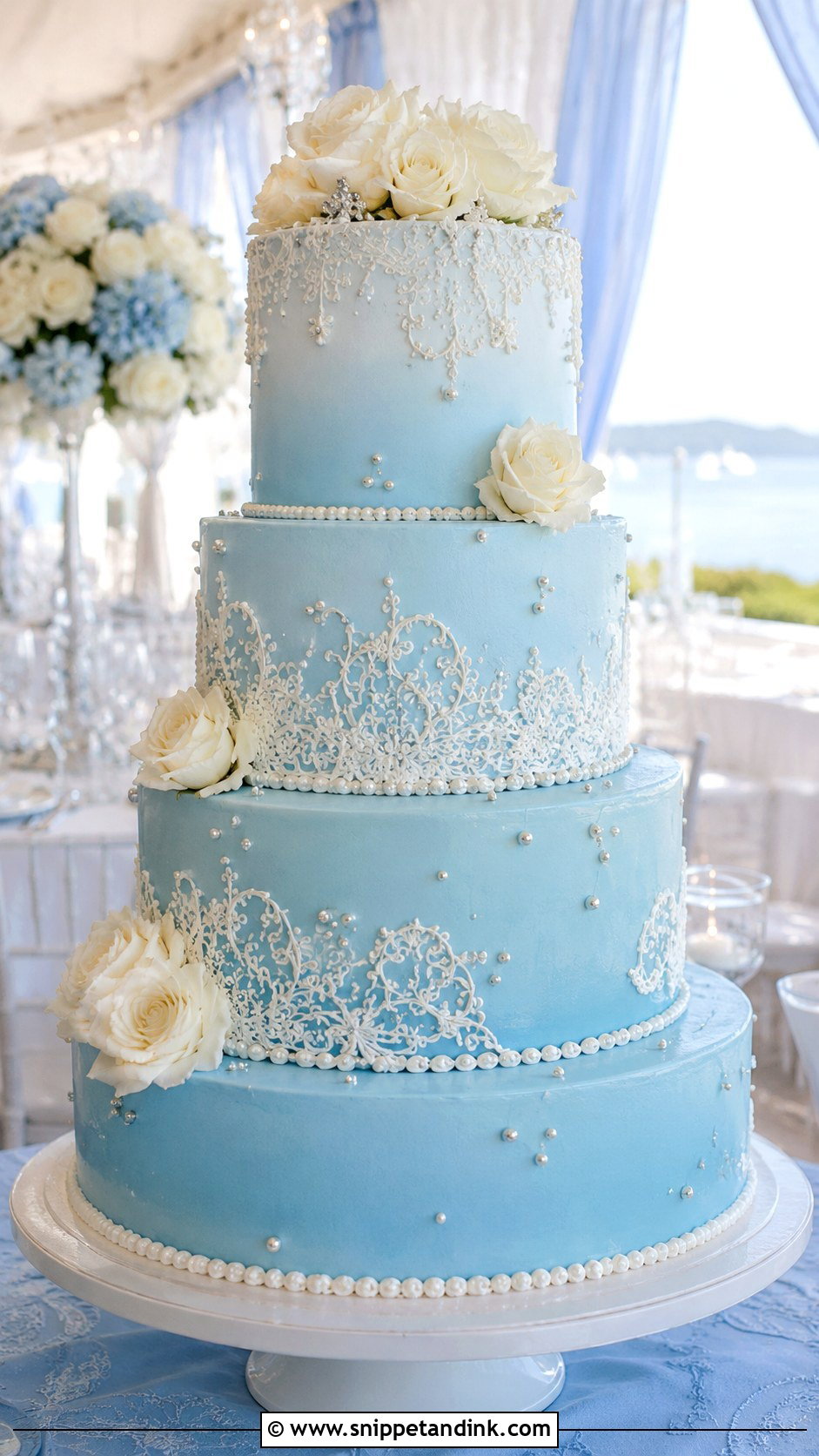
Blue is the colour I test most carefully. Buttercream made with butter is slightly yellow, so pale blue can drift towards green; for a true powder or dusty blue I work on a whiter base or use fondant. Slate and dusty blue look modern on a tall cake, while watercolour sides or an ombré from white to blue feel more artistic. Pair it with white flowers, silver accents or pearls. It sits well at coastal and garden weddings, and in winter without tipping into holiday décor. In a neutral room, a big blue cake becomes the main colour in the space.
18. Big Fruit Wedding Cake
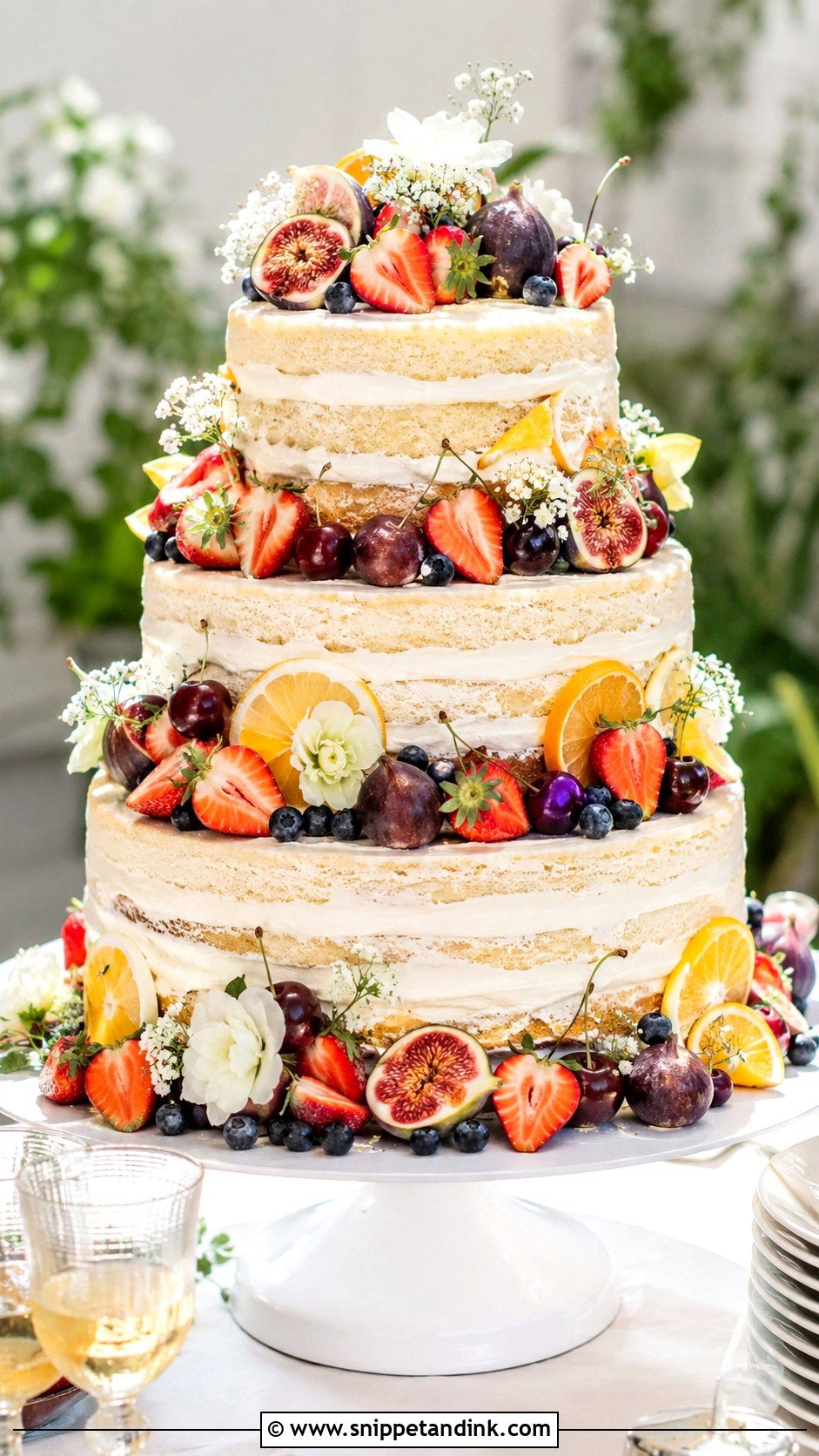
Fresh fruit is the most perishable decoration here, so timing decides how it looks. Berries, figs, grapes and cherries go on at the venue or just before delivery. Cut citrus and stone fruit weep juice into frosting within hours, so I keep them whole or glaze the cut faces. Simple frosting lets the fruit lead. Whipped frosting looks light but won’t survive a warm room, so for a big outdoor cake I’d choose a firm buttercream kept cool. Arrange the fruit in a balanced pattern so it looks abundant rather than tumbled.
19. Big Long Wedding Cake
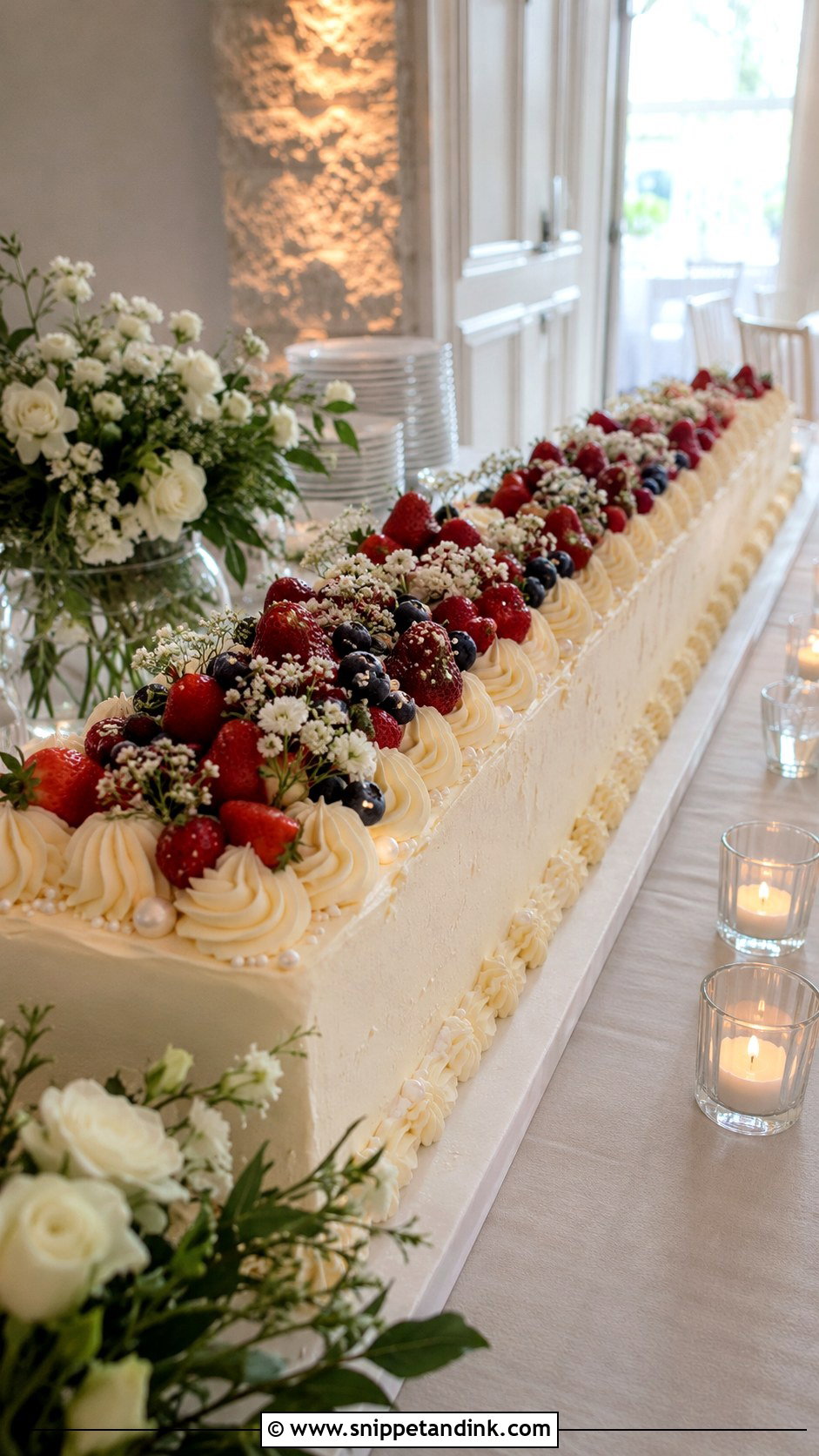
A long cake trades height for reach. Instead of stacking upward, it runs along the dessert table, which suits family-style receptions and is quicker for staff to portion because nothing needs unstacking. The top can carry buttercream swirls, berries, flowers or piped borders, and it reads well from above as well as from the side. Set it on a linen table with candles and flowers nearby. Measure the table before you order: a long cake on a heavy board needs a sturdy surface that won’t flex, and two people to carry it in.


20. Big Luxury Wedding Cake
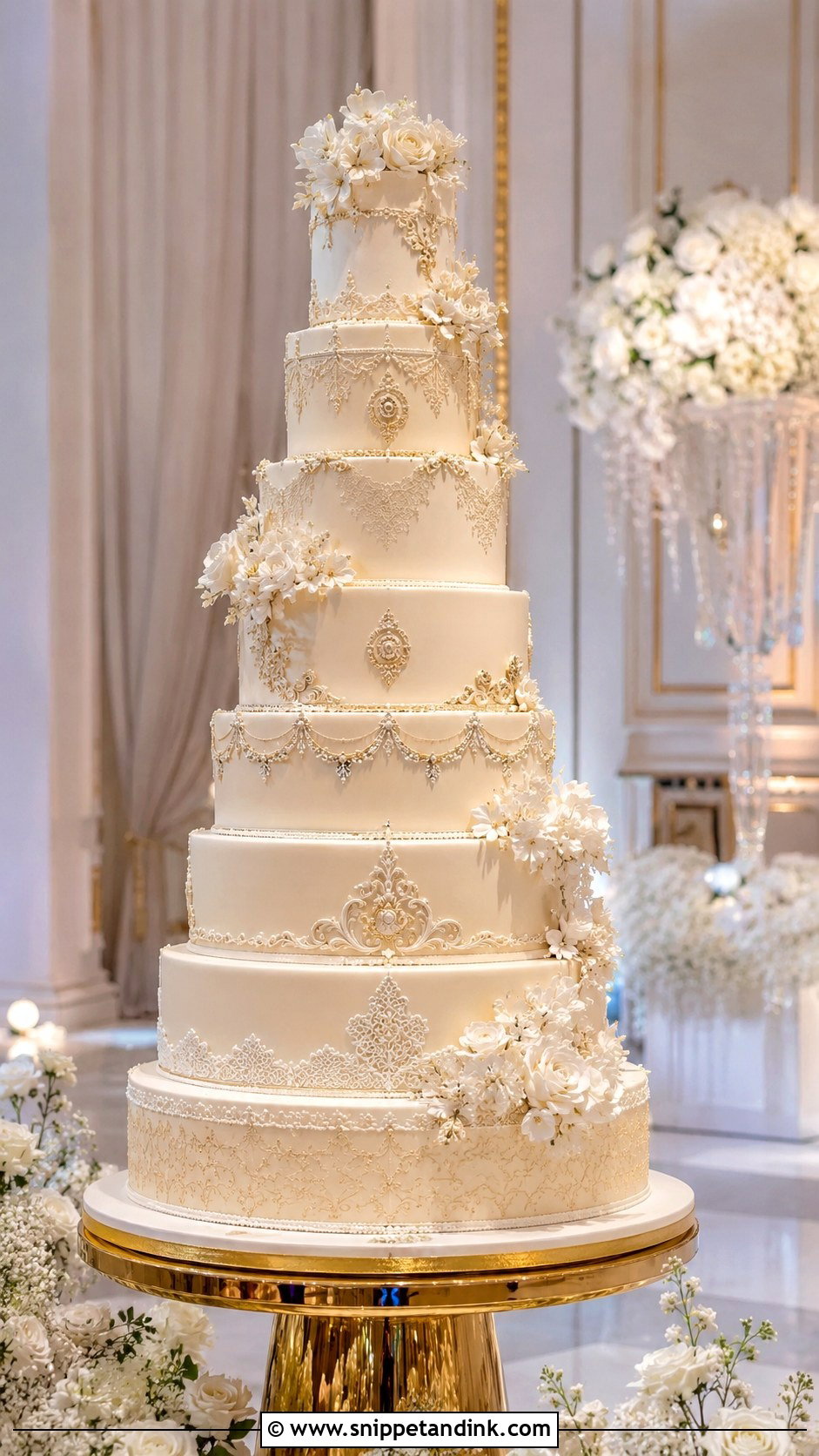
Luxury on a big cake comes from restraint and finish. Sugar flowers, edible pearls, metallic trim, lace piping and bas-relief work can share one cake when the palette stays tight, say ivory, champagne and gold. Handmade sugar flowers take days to shape and dry, so this design needs ordering early. Display matters as much as decoration: a raised stand, flowers around the table and a light aimed at the cake rather than above it will do more than another tier. I’d save this style for formal receptions where the rest of the room carries the same level of detail.
Getting a Tall Cake From My Van to Your Cake Table
Big cakes rarely travel fully stacked. I usually deliver the lower tiers stacked and the top one or two separately, then finish stacking, pipe the seams and add flowers at the venue. Each tier sits on its own board over dowels, with a central dowel through the lot so nothing slides. That last stage needs time and space, so this is what I ask a venue for:
- A cake table that is level and solid. A folding table with a wobble will rock a five-tier cake every time someone brushes past.
- A spot away from sunny windows, heaters, the DJ’s speakers and candles pushed right up against the tiers. Bass vibration and direct sun do real damage.
- Access at least an hour before guests arrive, along a route without stairs if at all possible.
- One named person who knows where the cake goes and who is cutting it.
Who Cuts a Five-Tier Cake, and When
The couple make the ceremonial cut, then the cake goes to the kitchen for portioning. Some venues charge a per-guest cutting fee when the cake comes from an outside baker, and the amount varies widely, so ask before you sign. Give the catering team my cutting diagram and tell them which tiers are dummies, where each flavour sits and whether the top tier is being saved. If you are keeping it, it should be boxed, wrapped tightly and frozen within a day. Honestly, most couples enjoy a freshly baked small cake on their anniversary far more than a year-old frozen tier.
A Big Cake Starts With a Cutting Plan
A big cake shapes the room as much as the flowers do. Tall and white, floral, pearl-covered or long and low, the design that works is the one that suits your venue, your colours and the number of people you’re actually feeding. Save the styles you keep returning to, set them beside your mood board, and bring them to your tasting with three facts: guest count, the room’s temperature and the size of the cake table. Those tell me more about the right cake than any photo.
You'll Like These Ideas:











Leave a Reply