
Pink is easy to overdo. A cake covered in it can look like a birthday order, while a single raspberry bloom or a narrow blush band reads as grown-up and deliberate. So when couples ask me for pink, my first question is how much, and where. A pale ribbon, a rose cascade, a drip or one painted tier each changes the mood in a different direction. The twenty cakes below range from barely-there blush to full magenta, and I’ve noted what each technique asks of the decorator.
Deciding Where the Pink Goes
Before we talk shades, I sketch the cake and shade in where the colour will sit. It’s the quickest way to see whether a design will feel balanced or sugary.
- Pink in the flowers only. The lightest touch. The colour can be changed late, and the cake stays bridal.
- Pink on one tier. A middle or bottom tier in blush with white above and below gives a clear accent without committing the whole cake.
- Pink as a detail. A drip, a bow, a piped border or a band of ribbon. Strong colour in a small area.
- Pink everywhere. Works when the shade is very pale or very confident. In between is where cakes start to look like a nursery.
As a rough guide, I keep deep pink to a small part of the cake’s surface and let pale shades cover more. Bring a photo of your bouquet and linens; if the room is already full of pink, the cake can afford to be quieter.
One more thing to settle early: whether the pink on the cake should match the bridesmaids exactly or simply sit in the same family. An exact match means sending your baker a fabric swatch weeks ahead, and accepting that icing under reception lighting will never look quite like satin in daylight. A related shade, a little paler than the dresses, is far easier to get right and usually looks better beside them in photos.
1. Blush Pink Wedding Cake
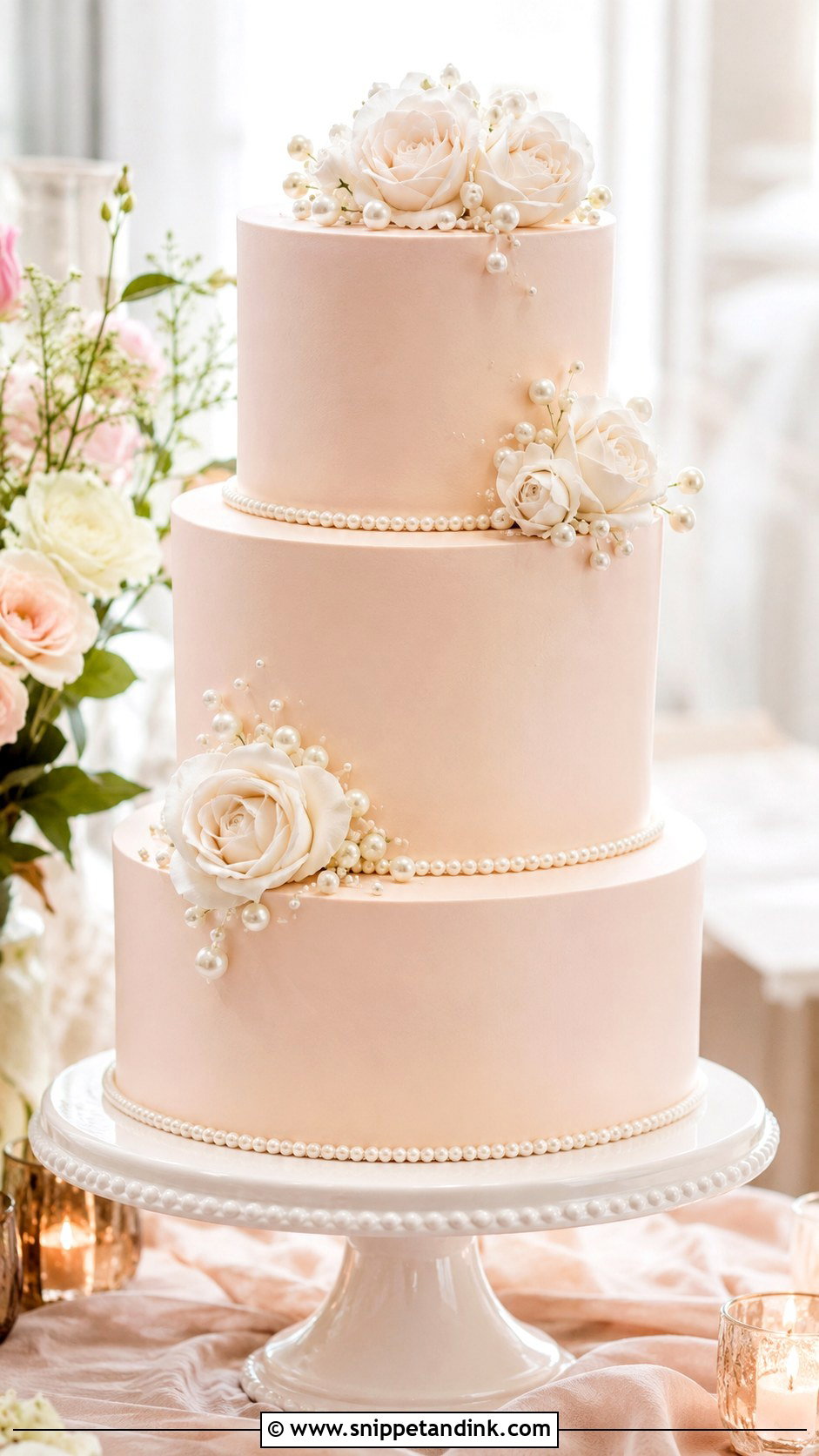
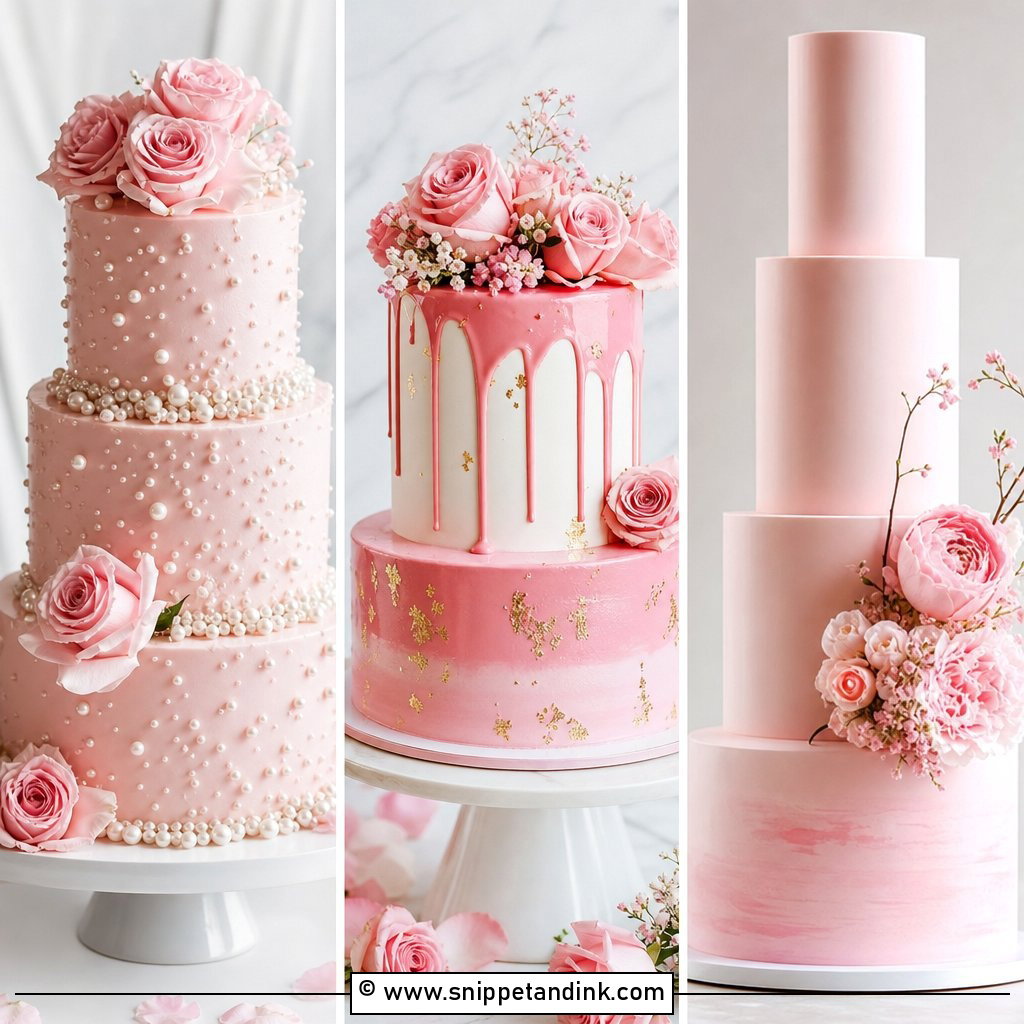
Blush on every tier is still subtle if the shade is pale and warm. I build it on two or three tiers of smooth buttercream or fondant and add white sugar flowers or a satin ribbon, which keeps the pink from looking flat. Cool pinks can read as lilac under warm lights, so I lean a touch towards peach. Sage and gold accents pair naturally.
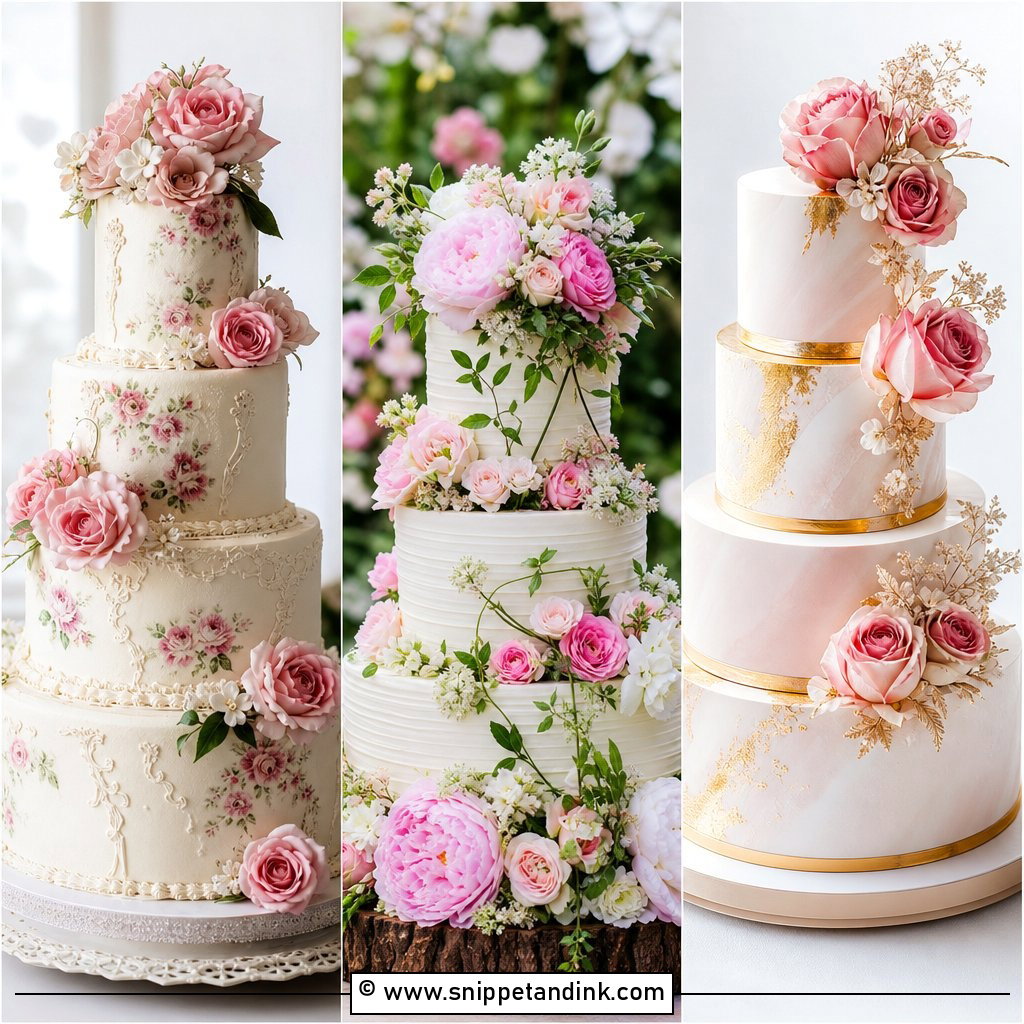
2. White Wedding Cake With Pink Flowers
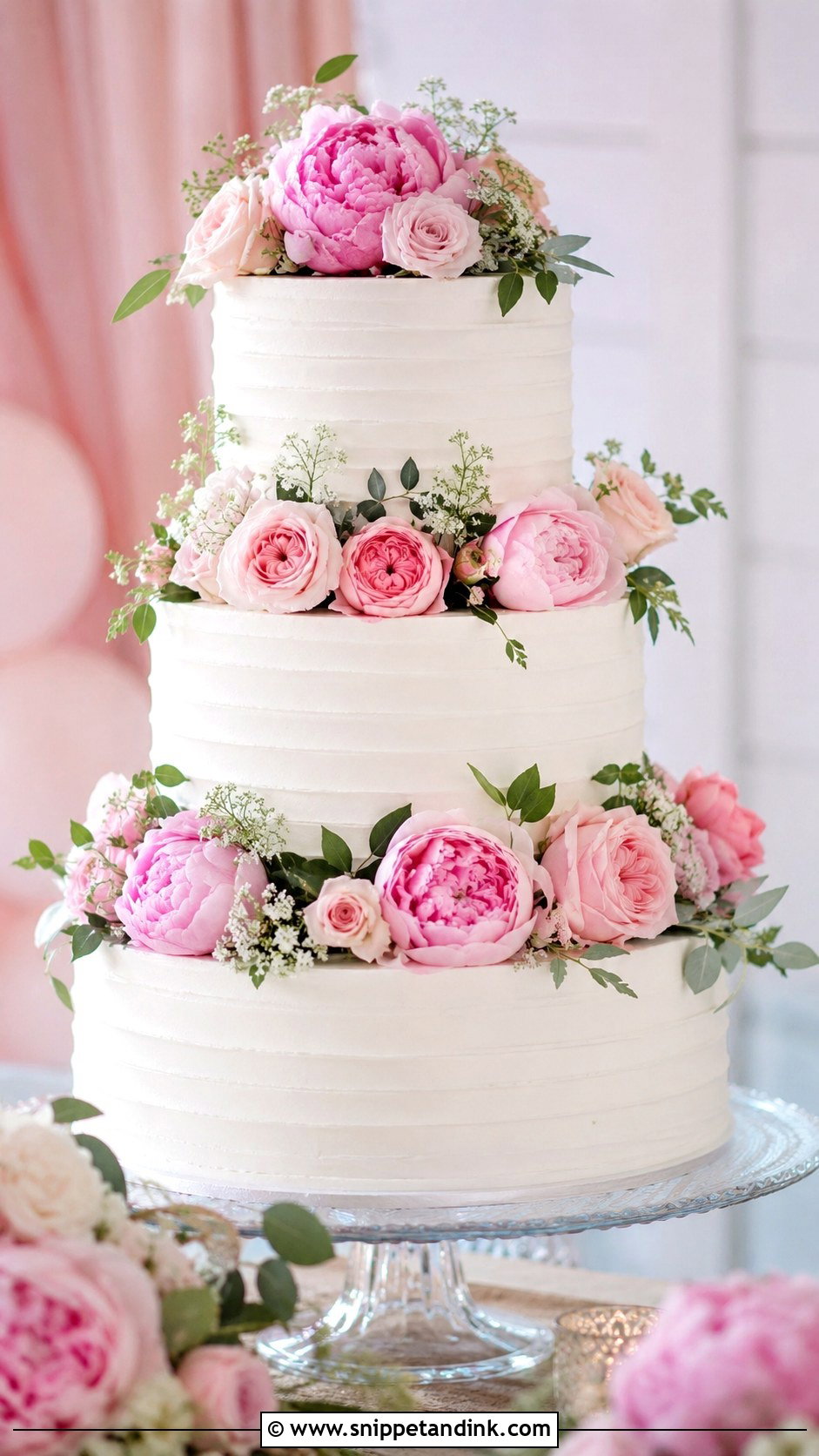
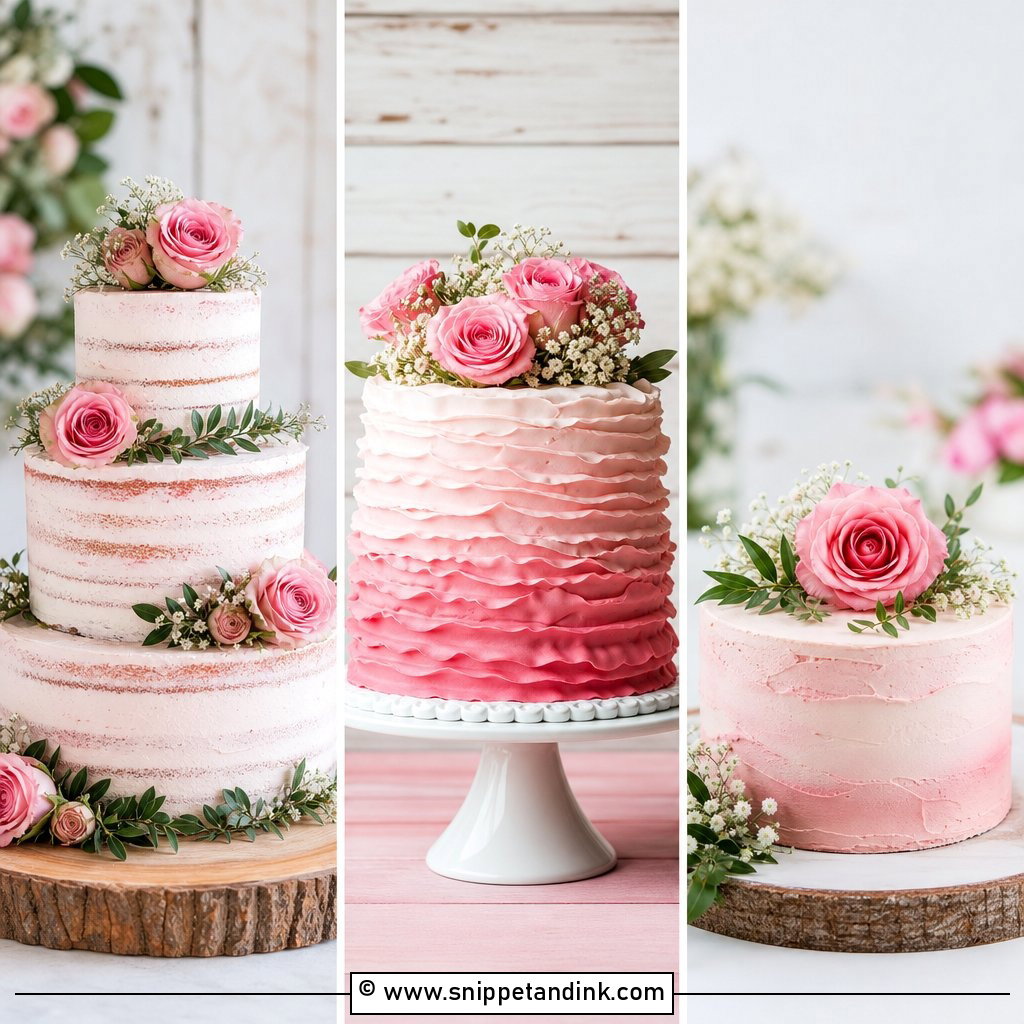
The most traditional route: white icing, pink flowers. Roses, peonies, ranunculus and sweet peas cluster at the base, trail down one side or sit between tiers. Sweet peas are toxic, so fresh ones belong only on wrapped stems in food-safe picks, or I make them in sugar instead. It’s the version I’d suggest to anyone worried about pink taking over, because you can tune the amount flower by flower.
3. Pink Ombre Wedding Cake
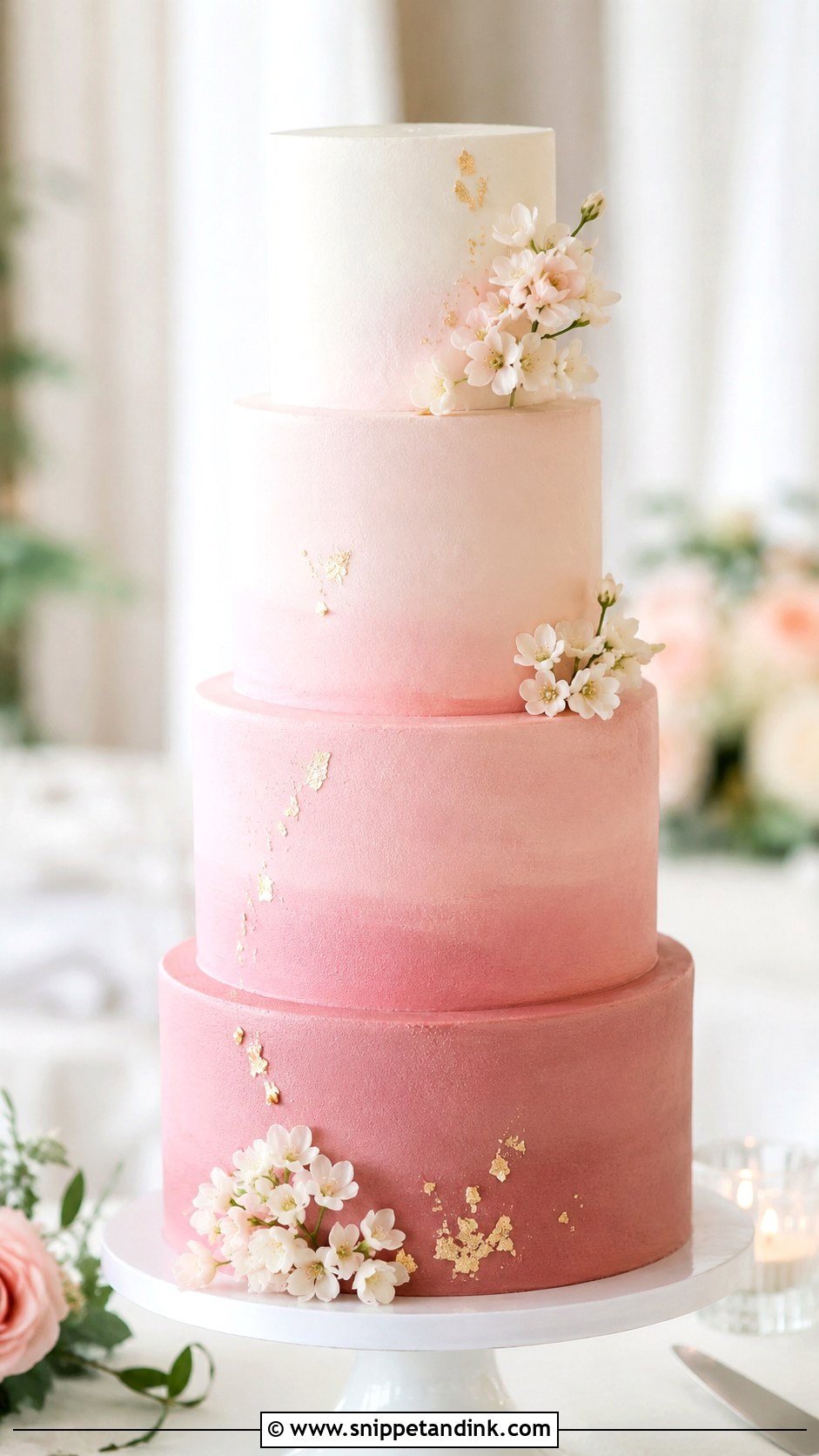
A pink ombre wedding cake needs height to work, since each tier is a step in the fade. I mix the deepest shade first and lighten from there with the same base, which keeps the steps related; mixing each tier separately almost always gives one that looks off. Buttercream blends softly, fondant gives clean bands. Pearls or a little gold leaf are enough decoration.
4. Pink Rose Wedding Cake
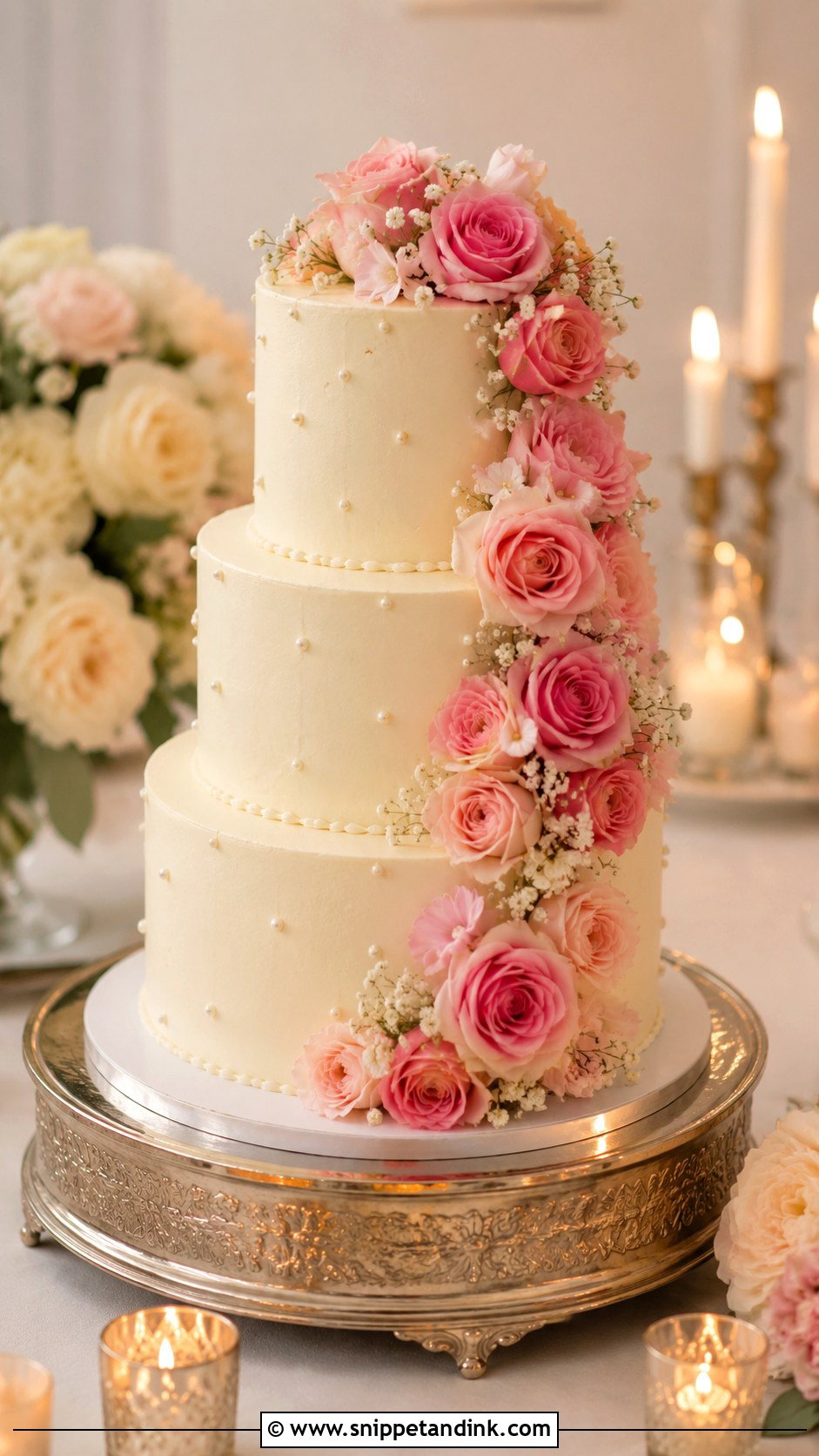
Roses can be fresh, sugar or piped, and they behave differently. Fresh roses bruise and need barriers. Sugar roses hold through a long reception but take weeks to make. Piped roses are fully edible and soften in a warm room. A rose cascade on white or ivory tiers suits most weddings; roses only at the base give a cleaner line. Deep pink against white has the strongest contrast in photos.
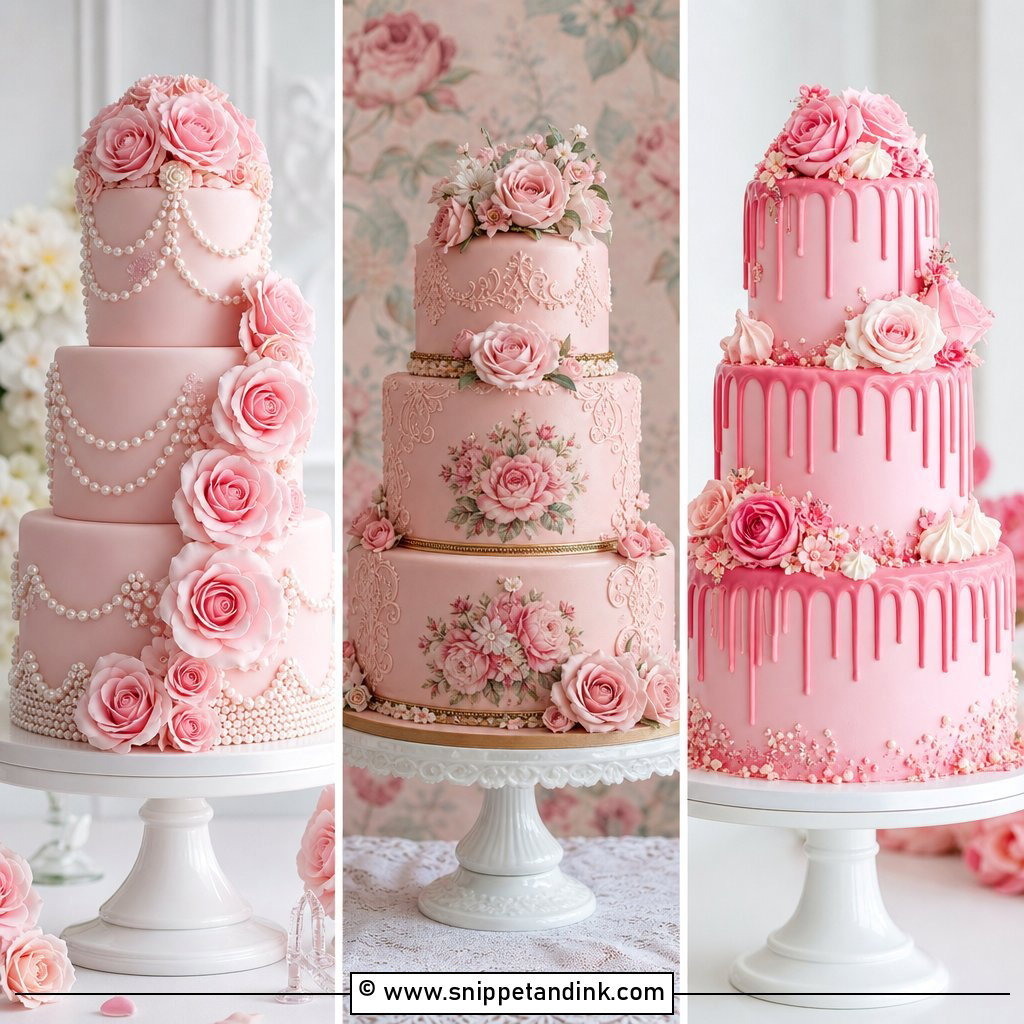
5. Pink Pearl Wedding Cake
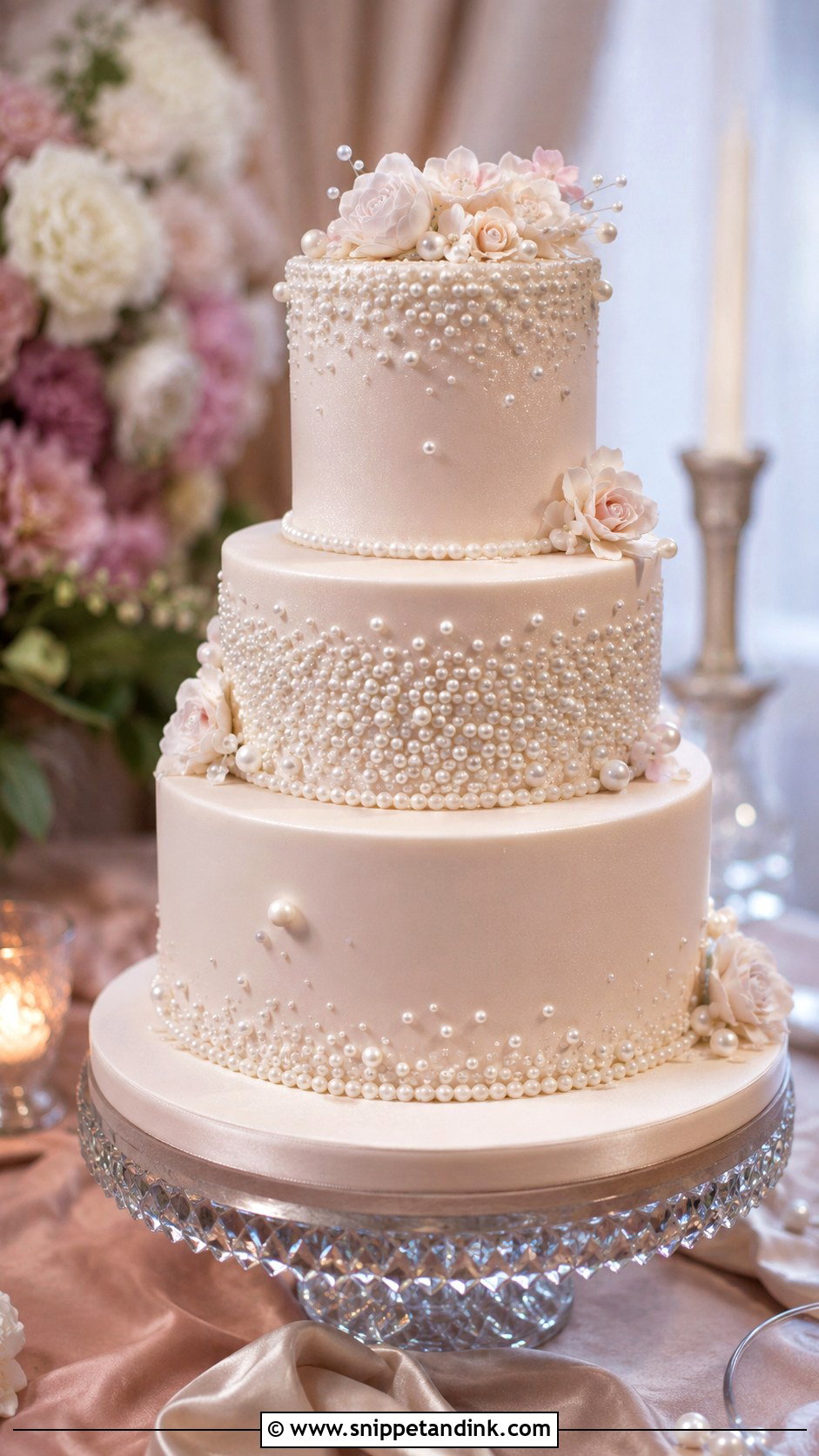
Pearls can be piped, pressed into fondant or laid as borders. On a pale pink base they need careful spacing, because irregular gaps show far more than you’d expect. I pipe pearls with a steady, even pressure and a template mark on the tier, which keeps the rows straight. Satin, candles and crystal on the table suit it. Add one small sugar flower and stop.
6. Pink Drip Wedding Cake
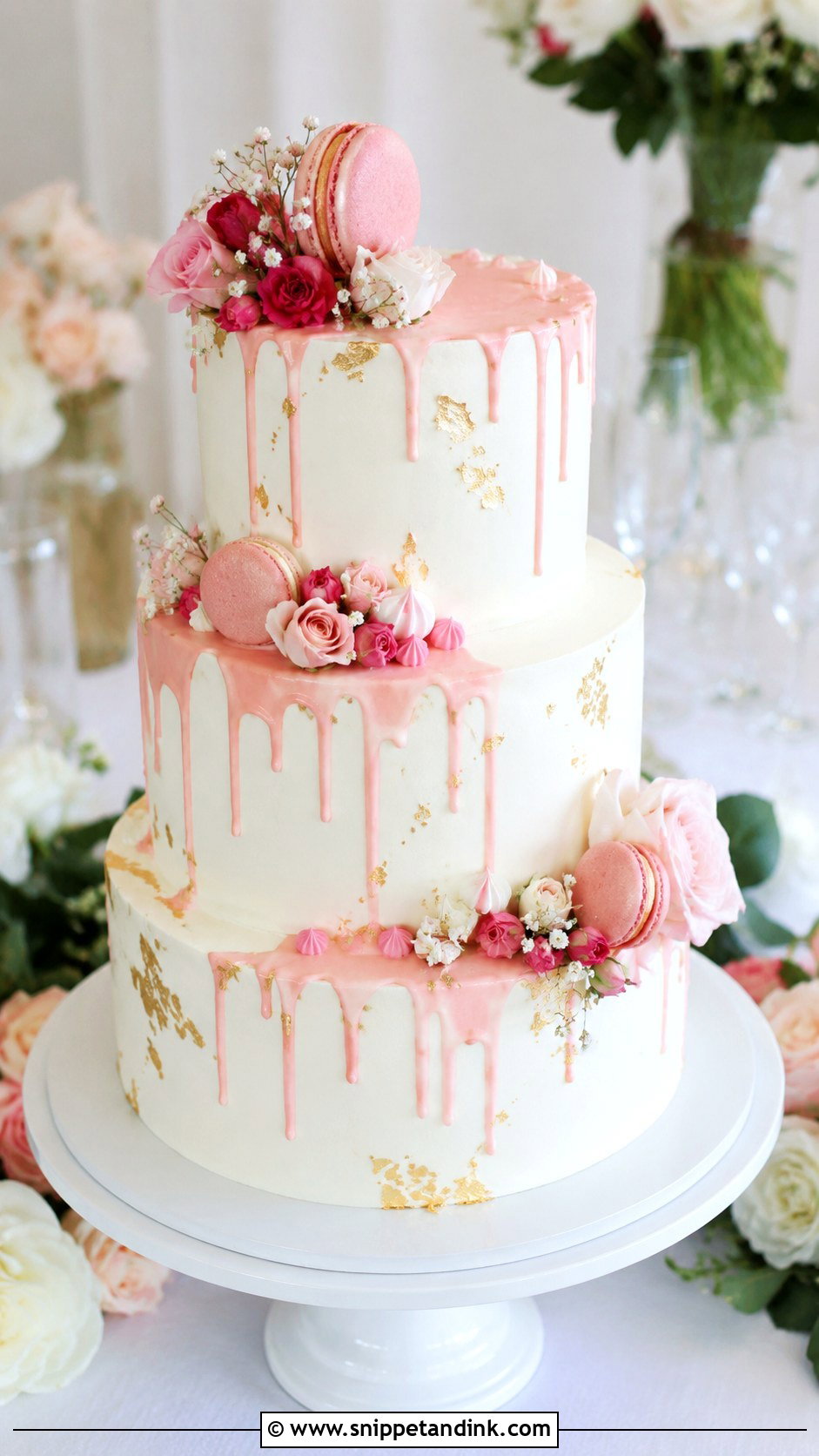
A drip is usually white chocolate ganache tinted pink, and temperature decides everything. Too warm and it runs to the board; too cool and it stops in thick blobs. I chill the cake, test one drip on the back, then work round. Macarons, meringues or flowers on top add finish. This one suits relaxed receptions more than black-tie, and I’d keep it out of hot sun, which softens ganache quickly.
7. Pink Floral Cascade Wedding Cake
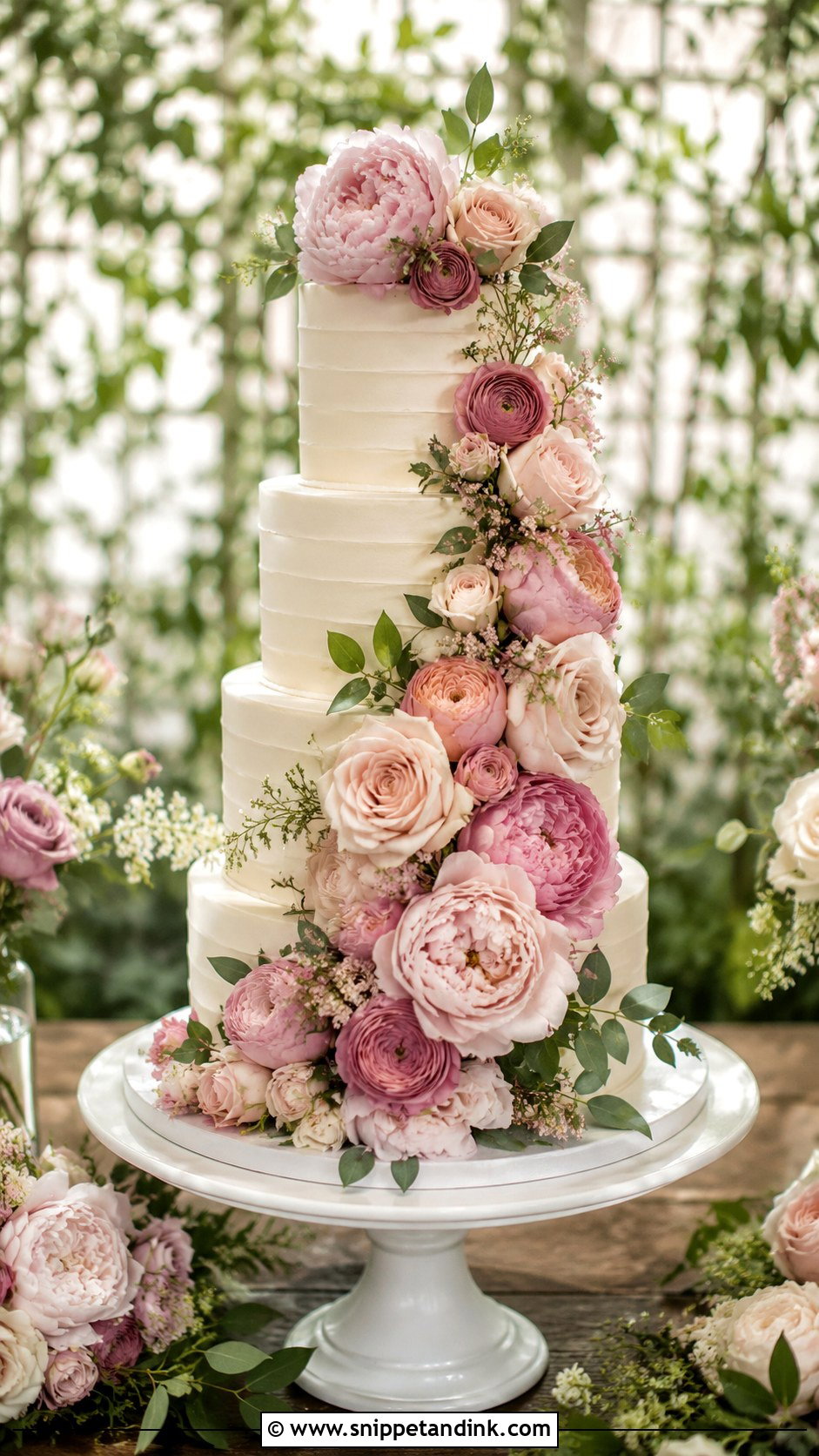
A cascade in several pinks, blush, dusty rose, mauve and raspberry, gives depth that one shade can’t. I keep greenery light; too many leaves pull the eye away from the pink. Start with the anchor blooms at the turning points of the cascade, then fill. A white or very pale blush base gives the flowers room.
8. Pink Buttercream Wedding Cake
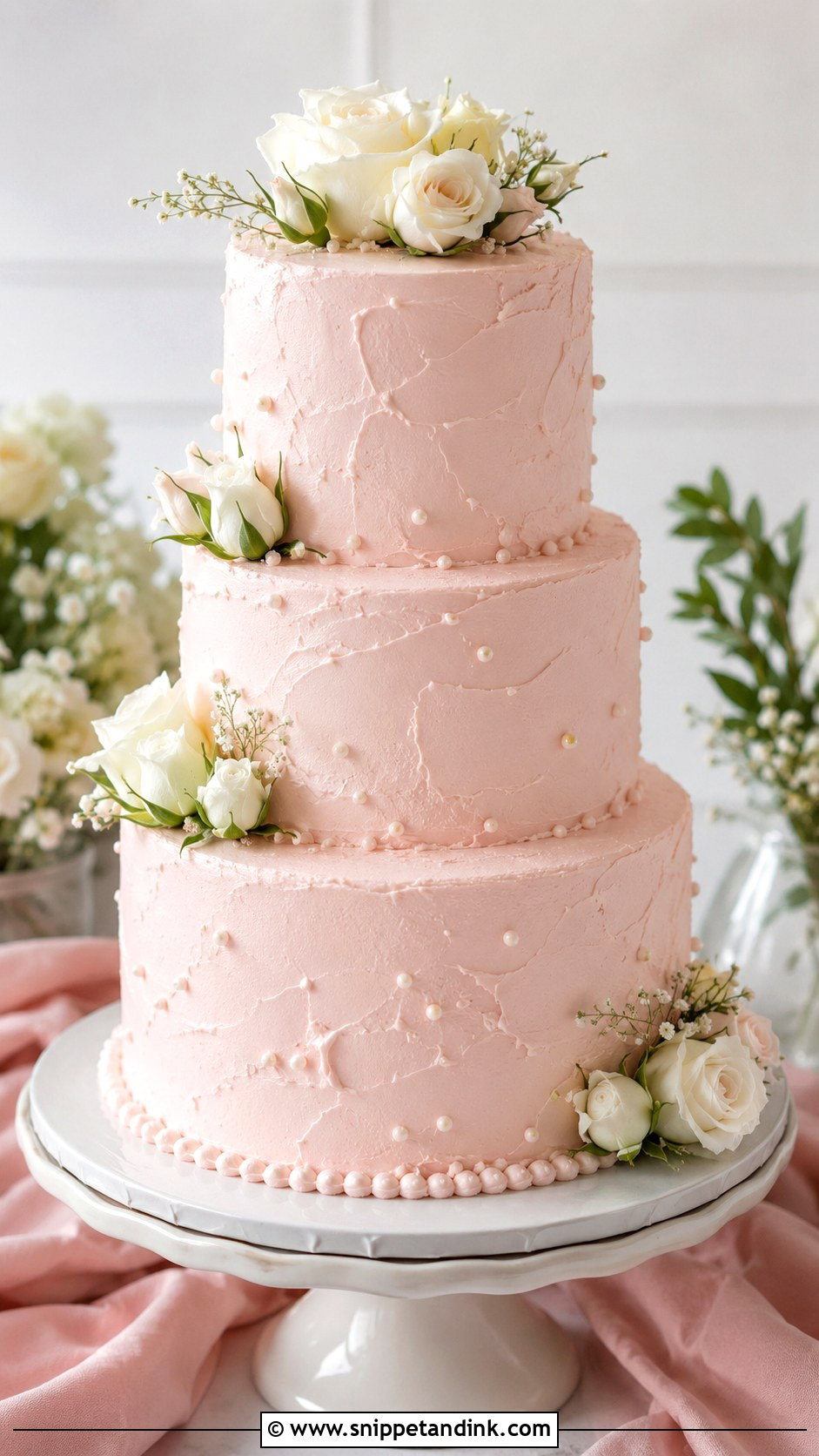
Buttercream takes pink beautifully, and it can be finished smooth, lightly ribbed or with palette-knife strokes. Pink buttercream does deepen slightly as it rests, so I tint a shade lighter than the target. Flavours can follow the colour: strawberry or raspberry buttercream brings natural pink inside the cake. Piped borders or white flowers keep it bridal.
9. Pink Fondant Wedding Cake
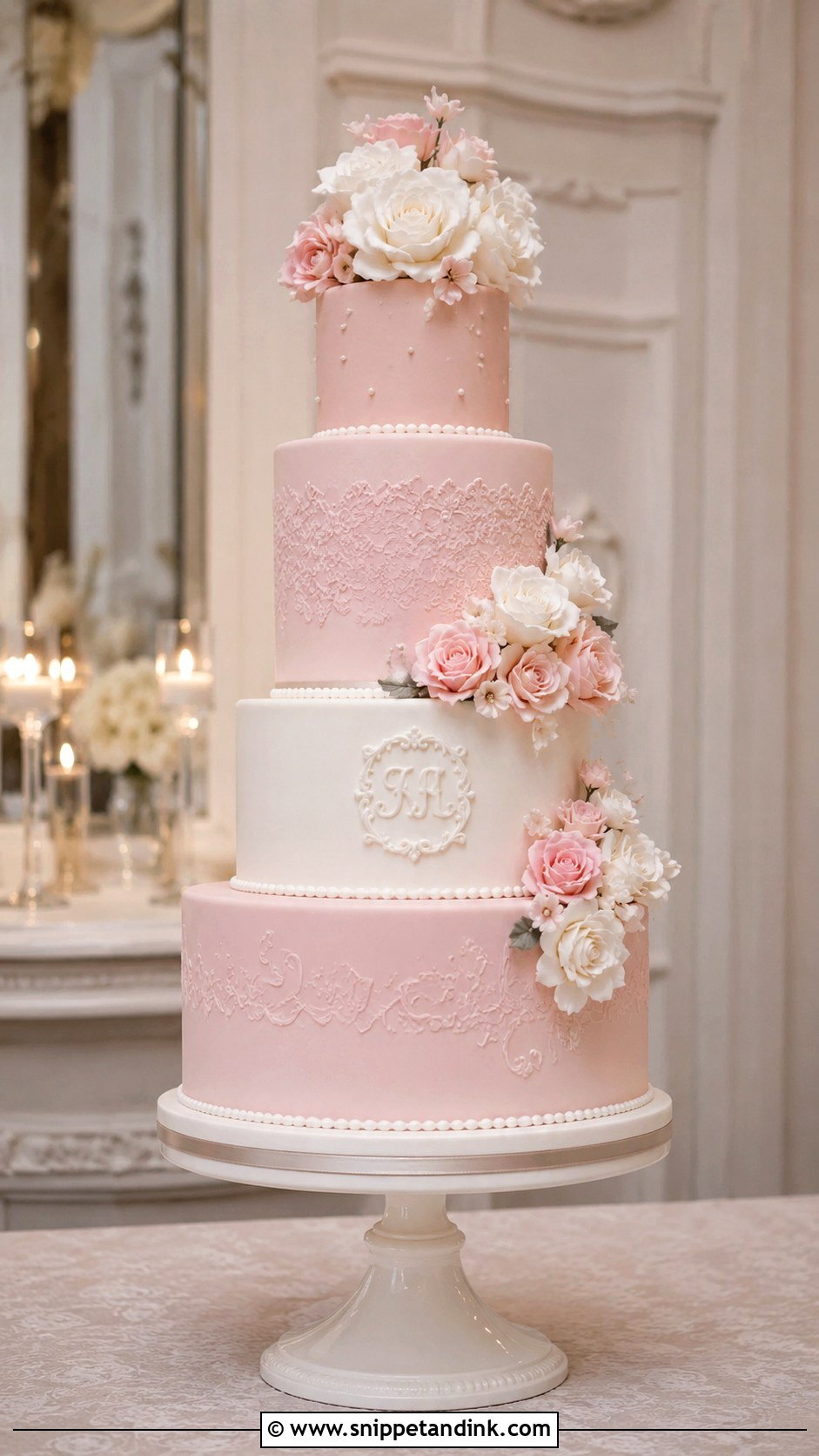
Fondant suits sharp edges, embossing, bows and painted detail. For warm weddings it’s the steadier finish, though it isn’t heat-proof: a fondant cake brought straight from a fridge into a humid room can sweat beads of moisture onto its surface. I let it come to room temperature in its box first. Muted pink, or pink on one tier only, looks most refined.
10. Pink Watercolor Wedding Cake
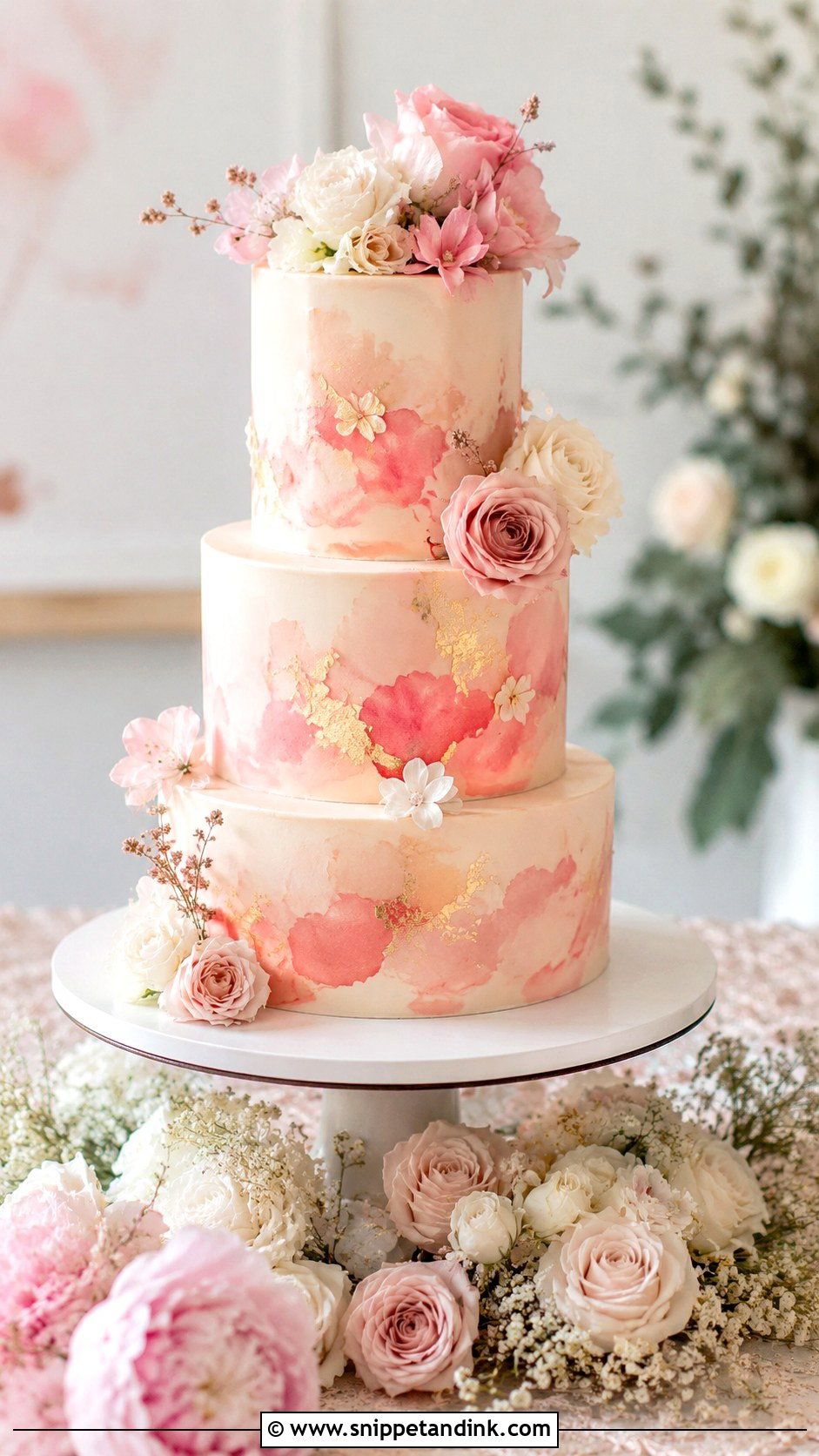
Watercolour layers several pinks, blush, rose and mauve, in soft washes across white tiers. On fondant I paint with thinned food colour; on buttercream I sweep colours together with a palette knife while the icing is still soft. The secret is restraint between layers. Gold flecks or a small off-centre flower finish it.
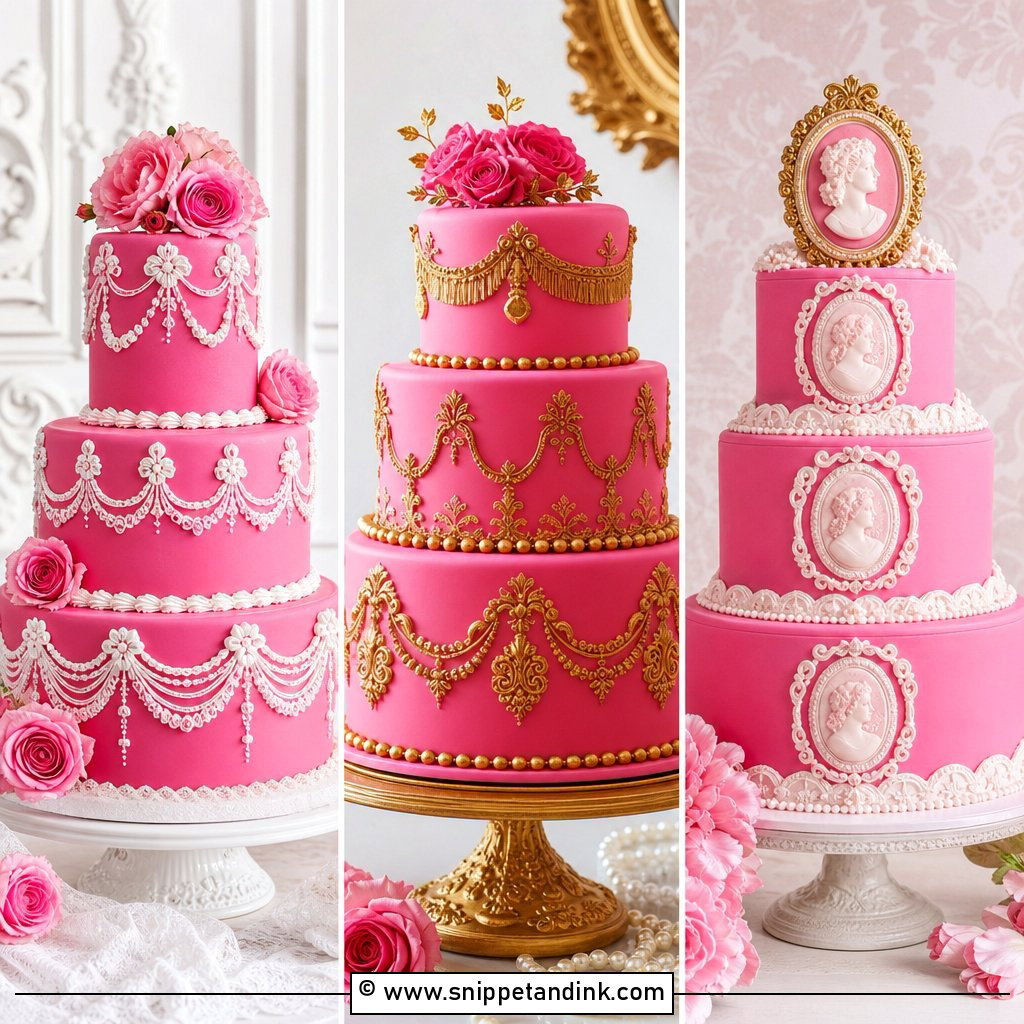
11. Pink Vintage Wedding Cake
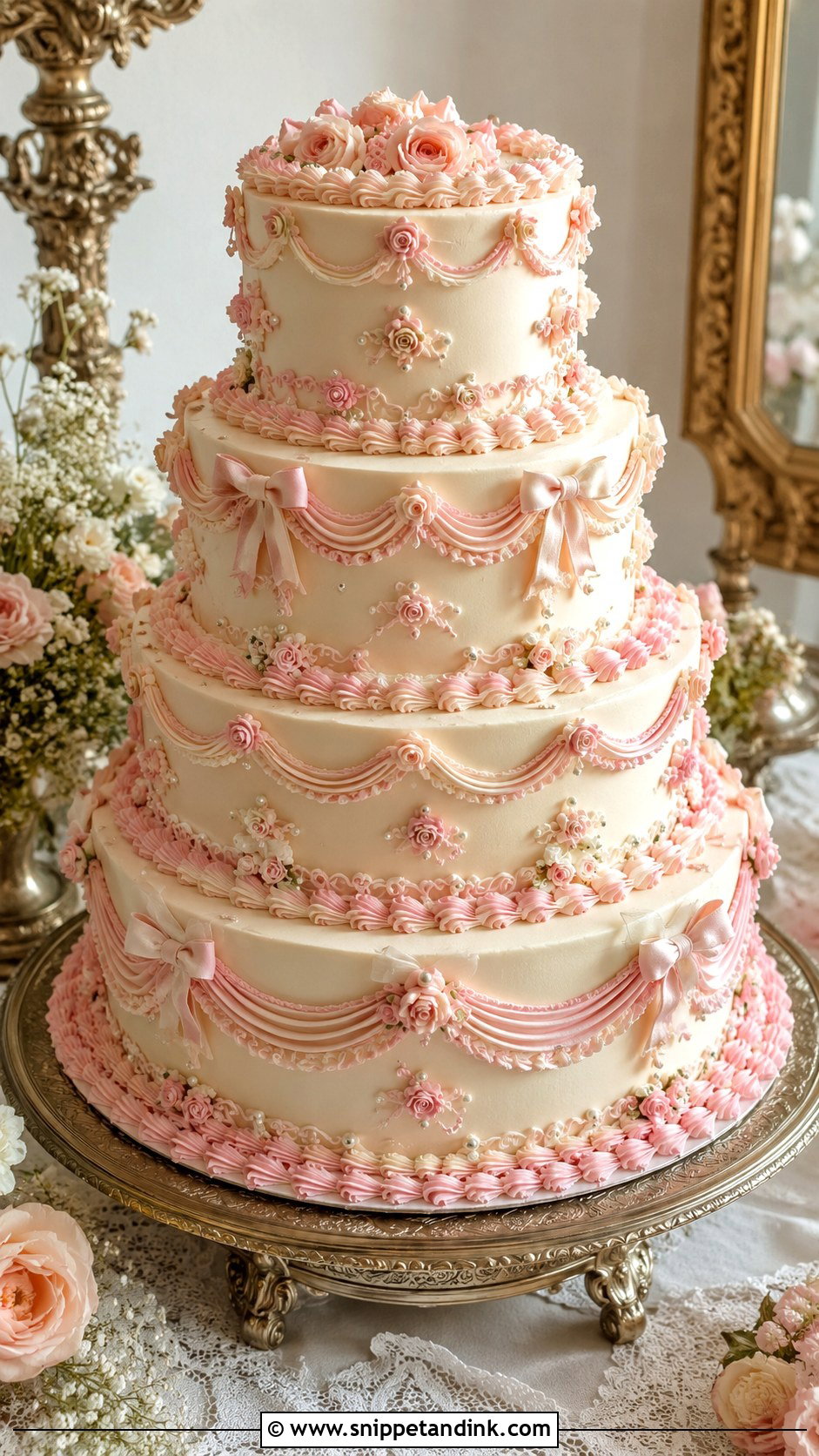
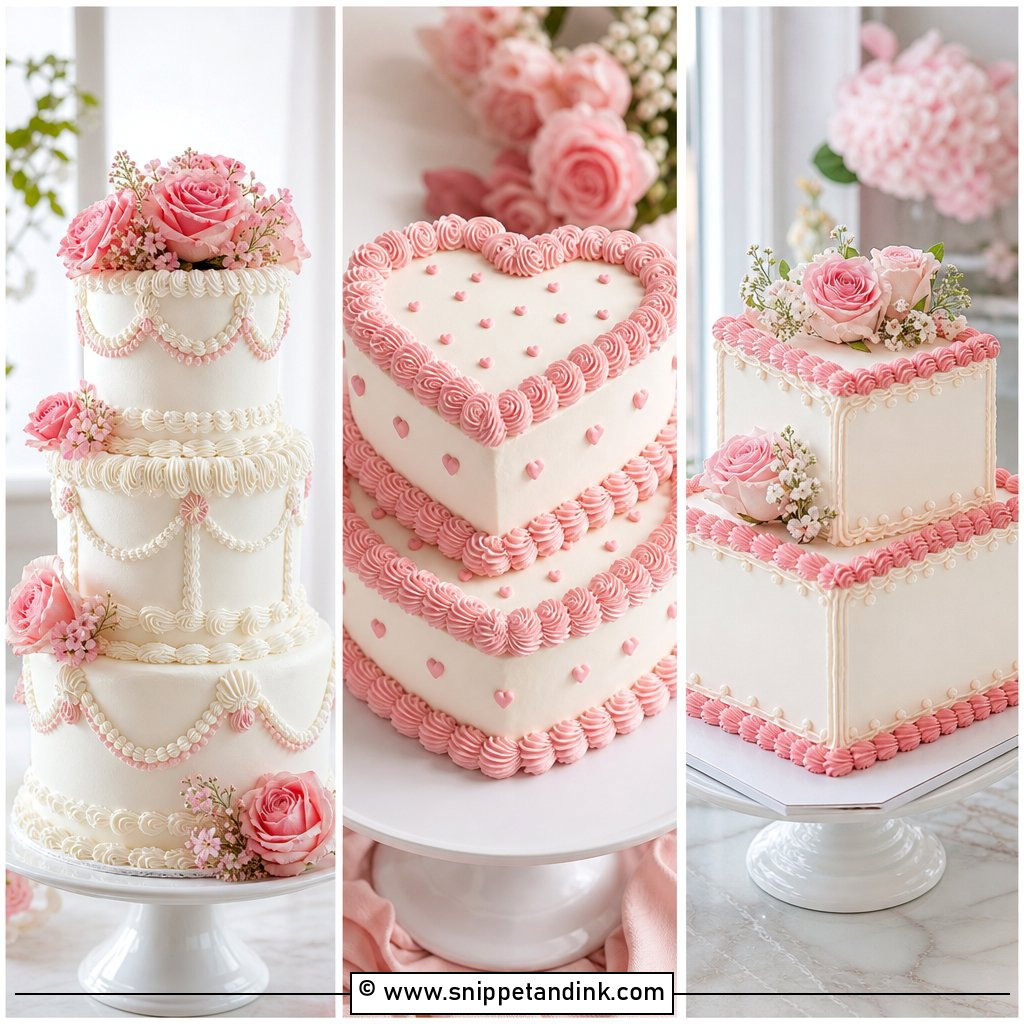
Lambeth-style borders, shells, swags and tiny rosettes are slow work, and pink makes every irregular line easier to spot than white would. Pastel pink keeps it sweet rather than loud. Heart-shaped tiers push it playful; round tiers stay classic. A vintage stand and lace linens suit it.
12. Pink Bow Wedding Cake
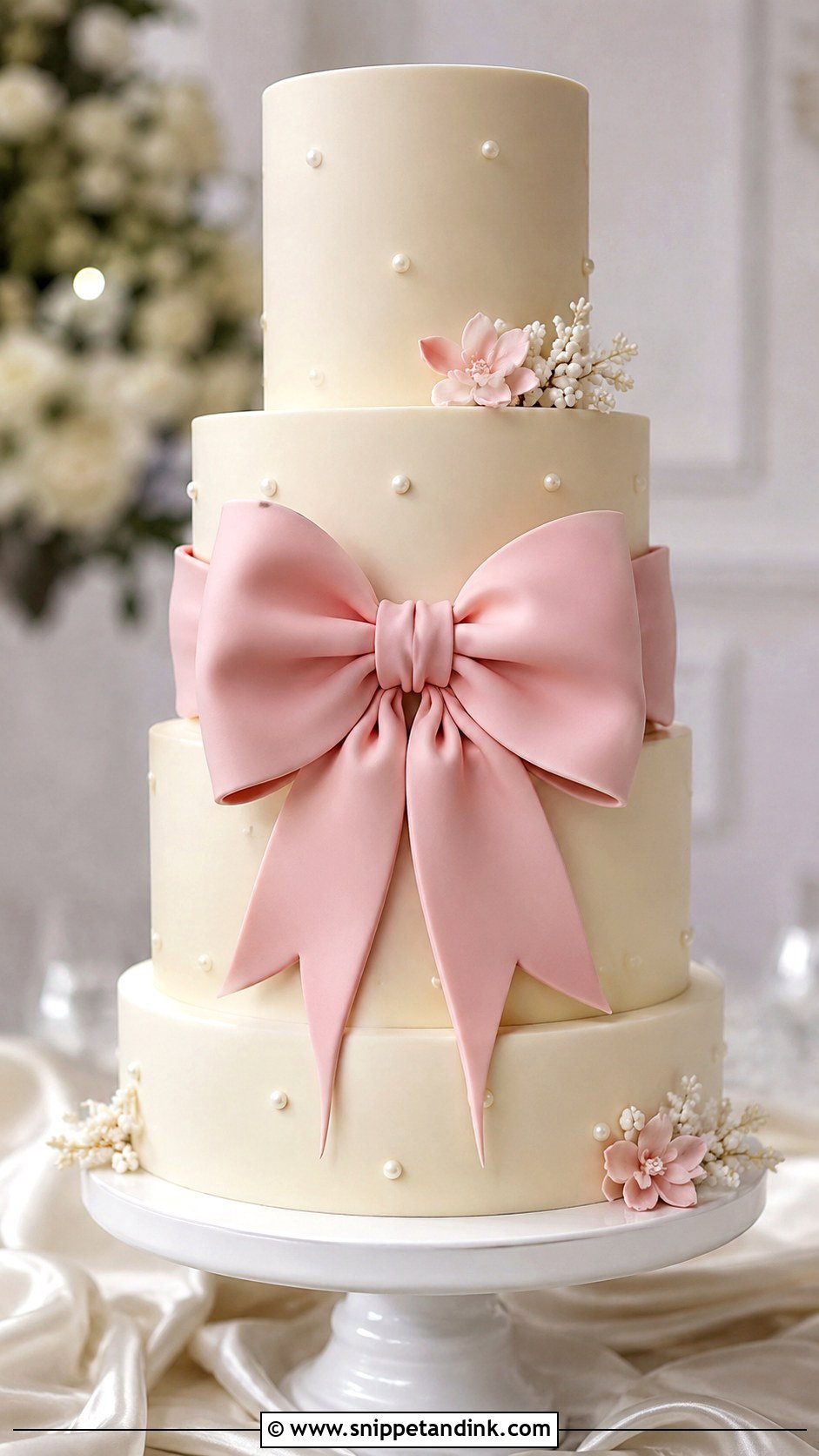
A bow needs structure, or it sags into a shapeless lump by evening. I make sugar-paste bows days ahead and let the loops dry propped with tissue, so they hold their shape. Silk ribbon is lighter but isn’t edible, so it needs a strip of parchment underneath. One blush bow on white looks modern; several small bows lean towards a coquette-inspired look, so decide which story you’re telling.
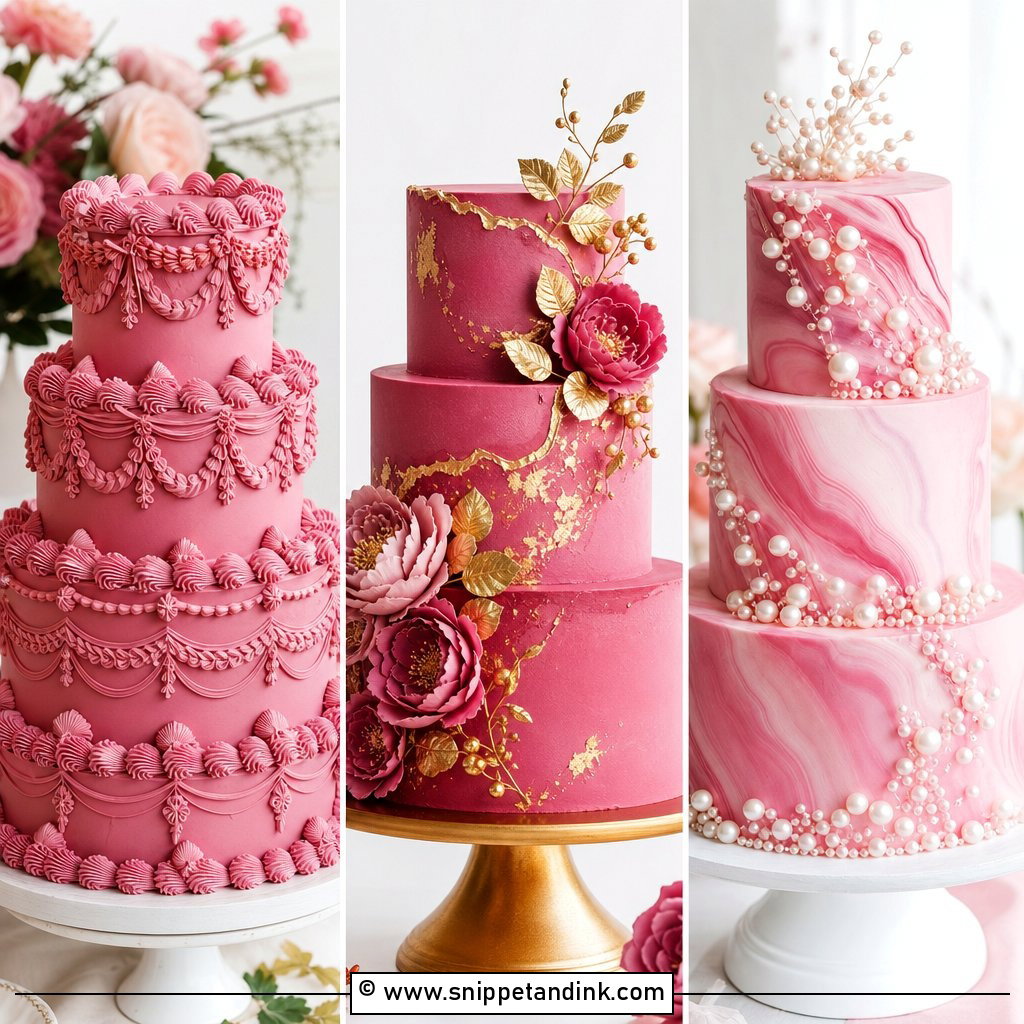
13. Pink And Gold Wedding Cake
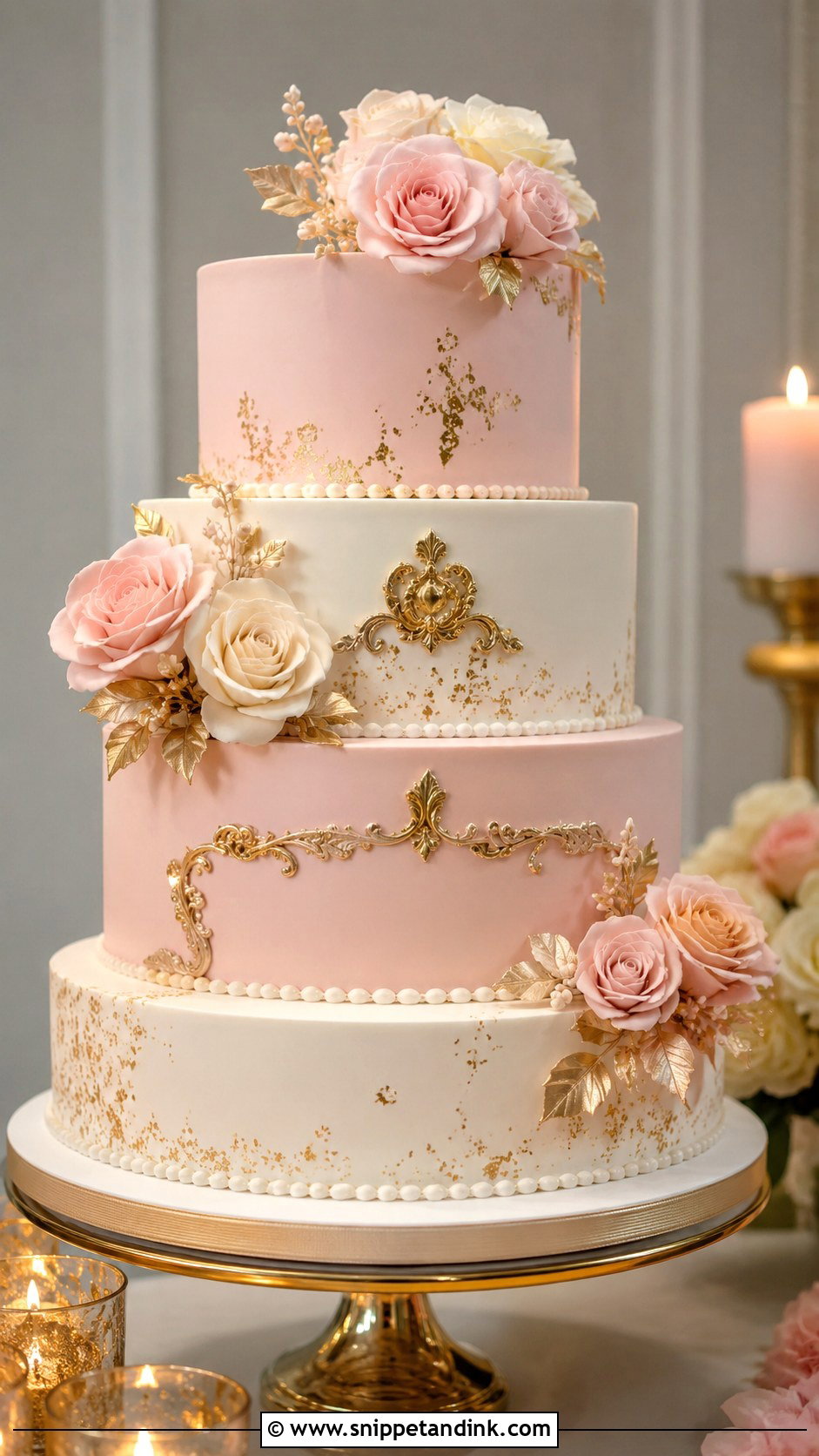
Gold makes pink look richer and more formal. I use leaf sparingly, on tier edges or around a few sugar flowers, and keep a full painted gold tier for very formal rooms. Pale blush with brushed gold reads soft; deeper rose with gold reads dramatic. Edible gold and decorative-only dust look identical in the tin, so ask which one your baker uses.
14. Pink Marble Wedding Cake
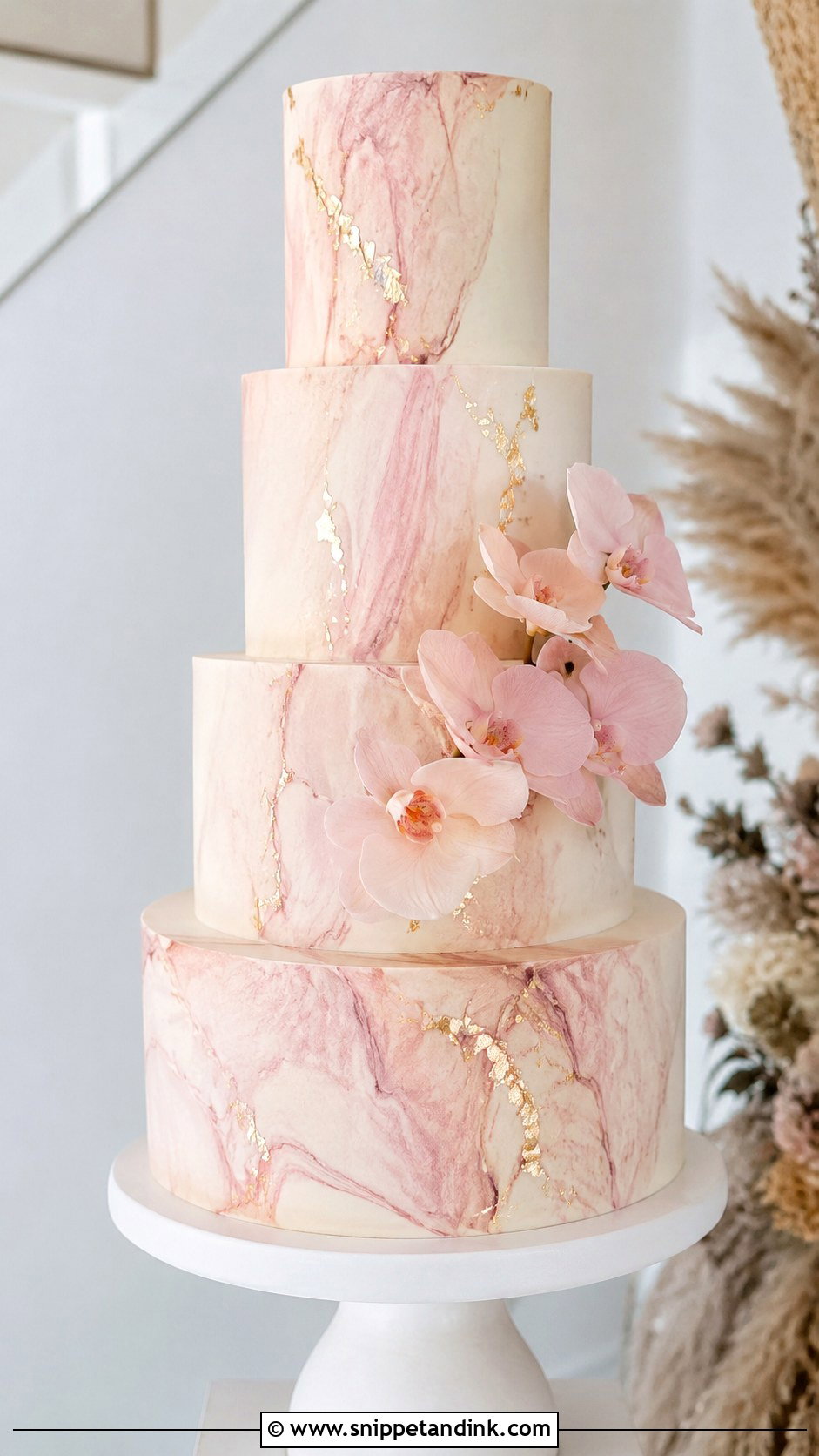
Marbling folds blush, rose and white fondant together, and each tier comes out unique. I roll all the marbled fondant for a cake at once so the veining stays consistent. Too much contrast looks busy, so I keep most of the colour pale with one thin vein of deeper rose. Sharp edges and a tall profile show it off.
15. Pink Sugar Flower Wedding Cake
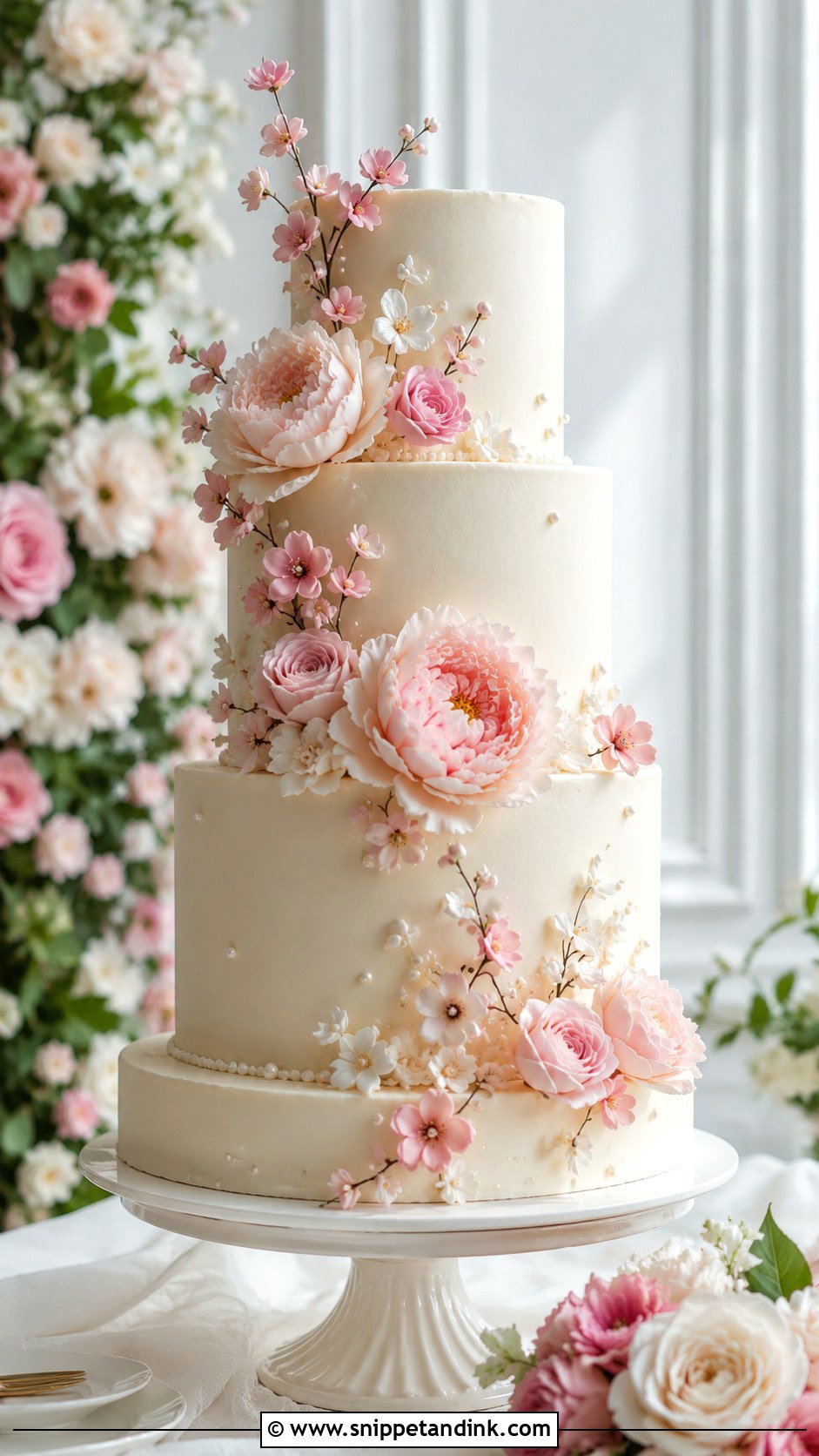
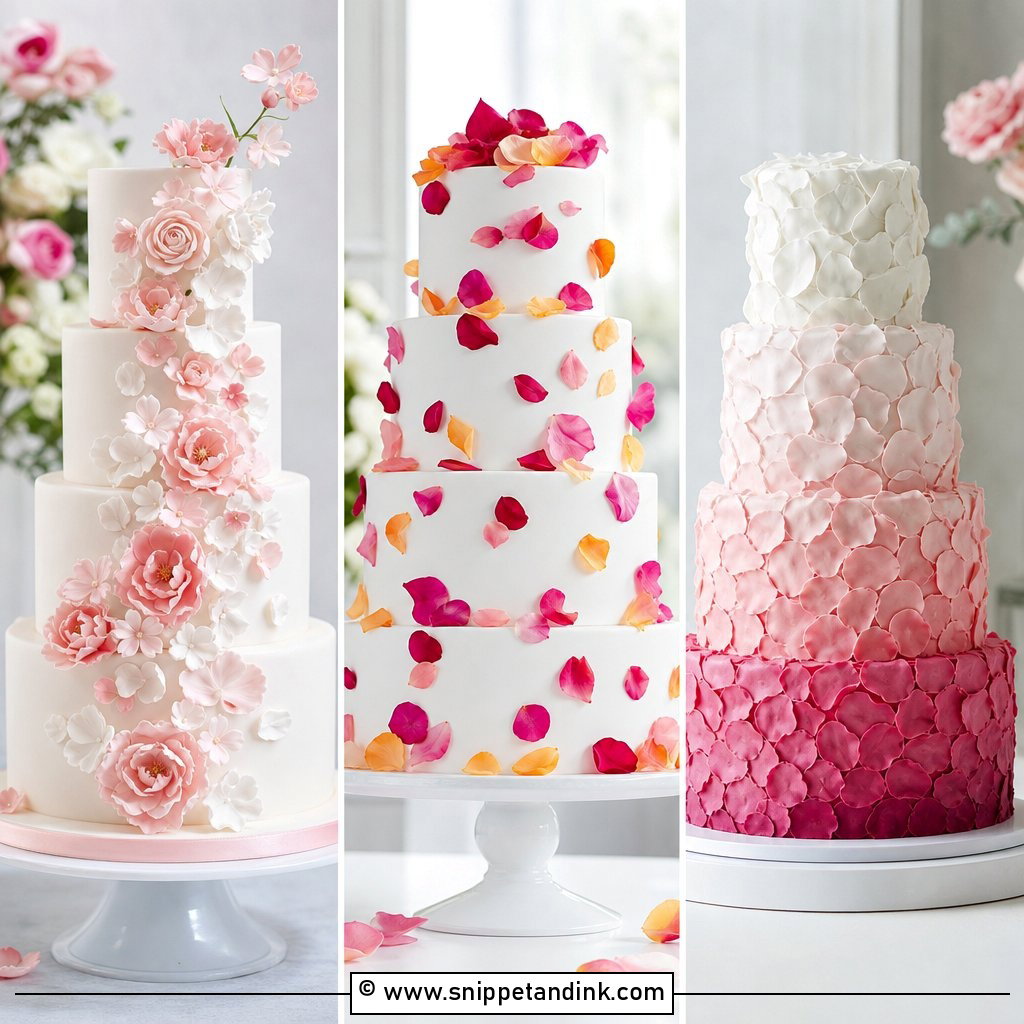
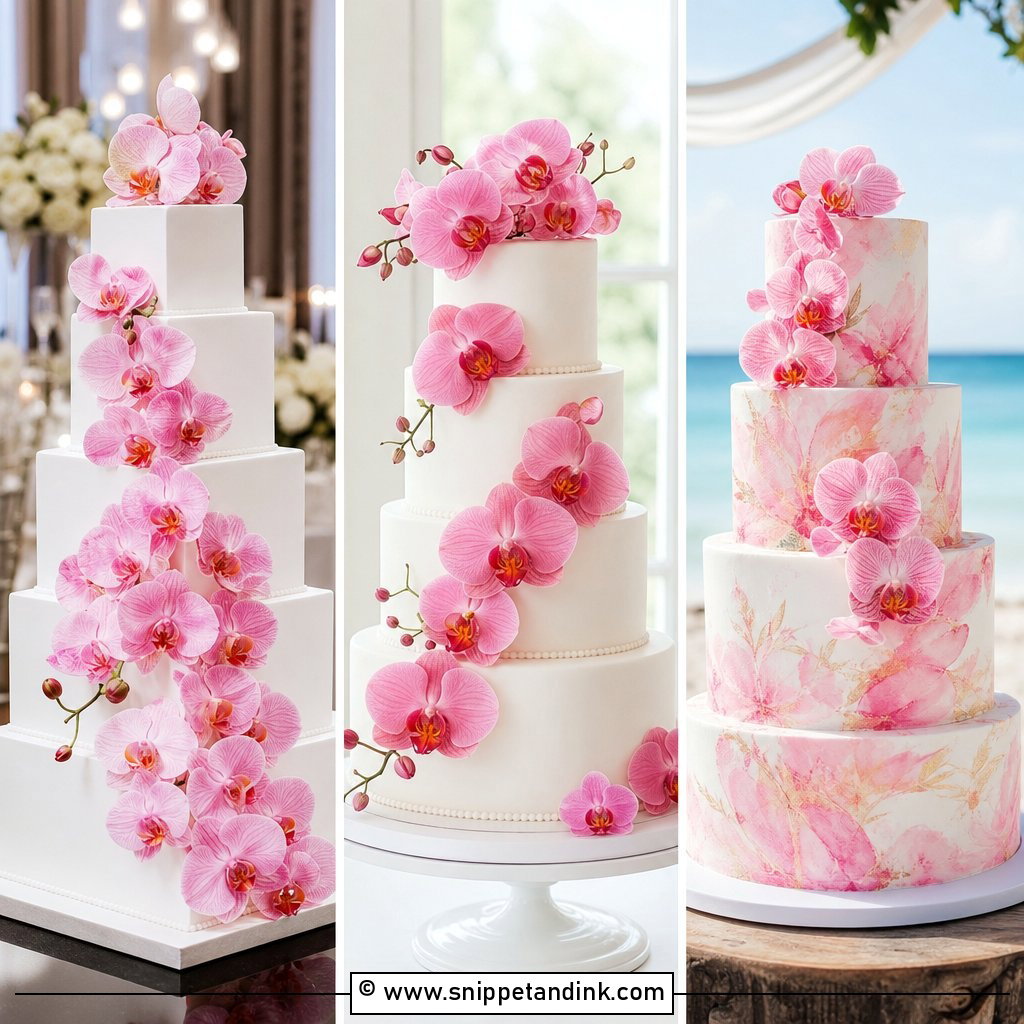
Sugar flowers let me match a bouquet or a bridesmaid dress shade exactly. Blush peonies, cherry blossoms and orchids sit well on white or ivory. They cope with warm rooms better than fresh blooms, though humidity softens the petals, so they travel separately and go on at the venue. Wires inside mean they’re kept, not eaten.
16. Pink Ruffle Wedding Cake
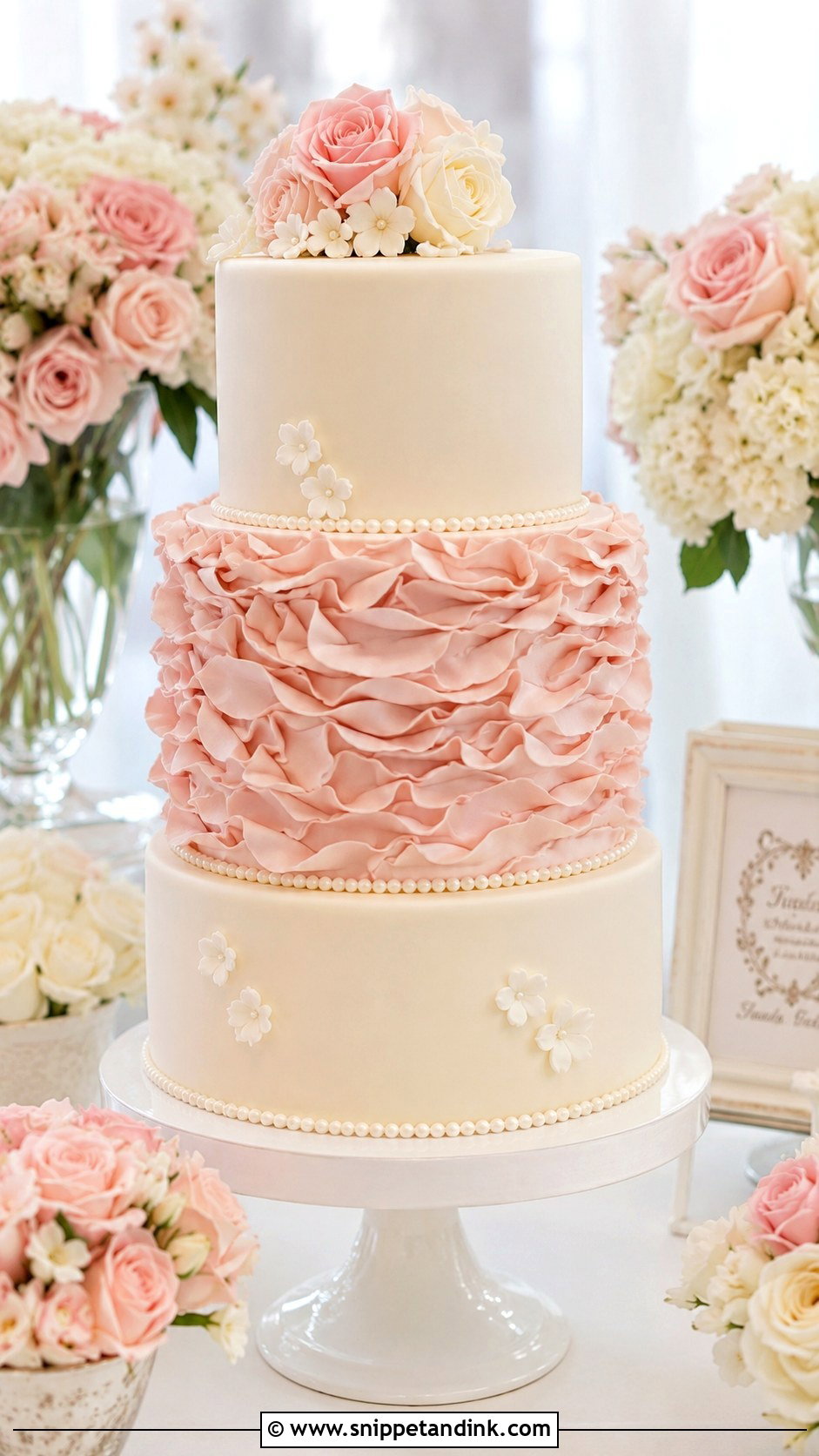
Fondant ruffles stay crisp; buttercream ruffles are softer and edible; wafer paper ruffles look the lightest but go limp in damp air. For an outdoor summer reception I’d avoid wafer paper altogether. One ruffled pink tier between smooth white ones is often stronger than a fully ruffled cake. Very little else is needed.
17. Pink Cherry Blossom Wedding Cake
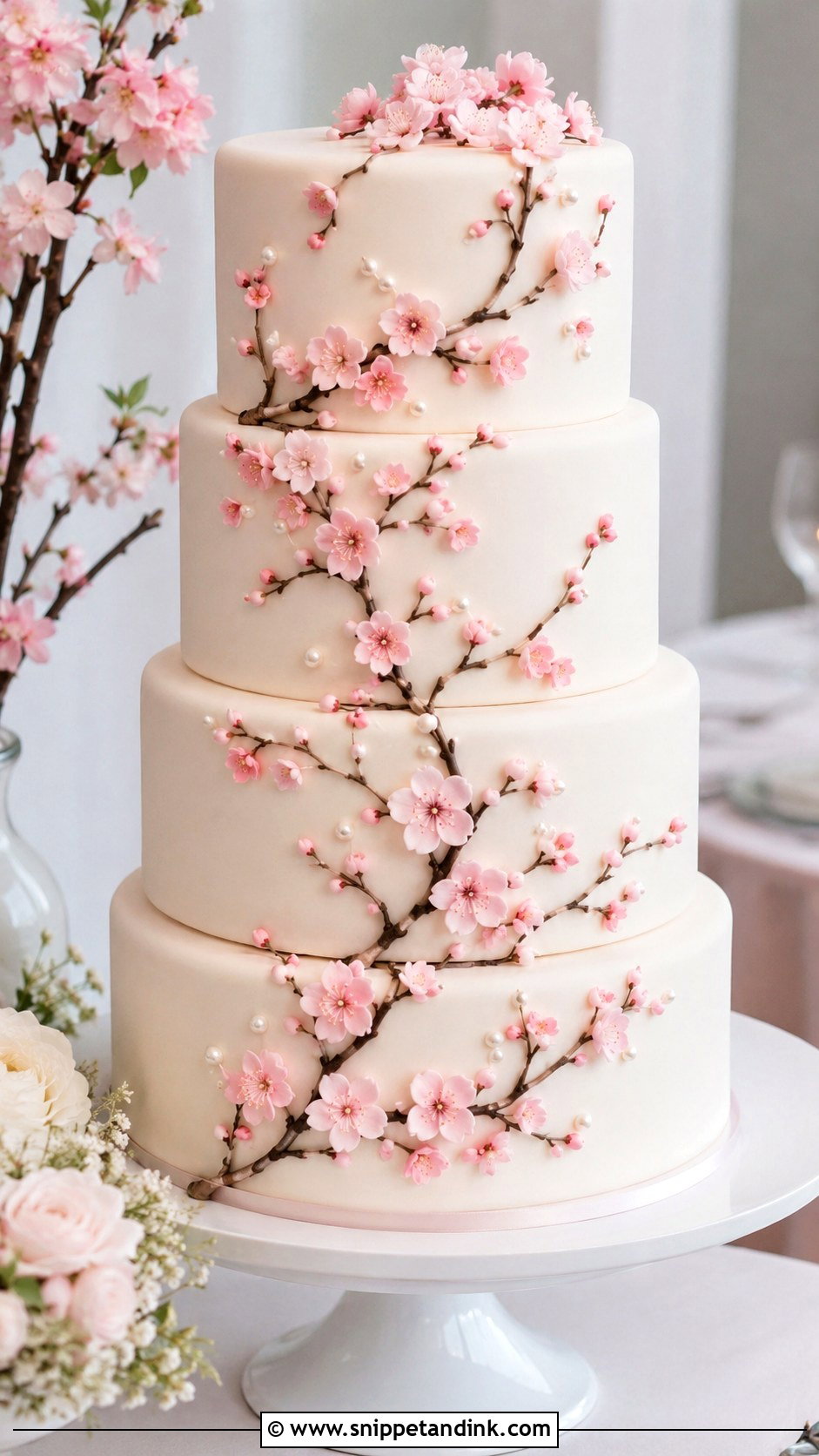
A pink cherry blossom wedding cake reads best with very few flowers. I paint thin branches in brown or gold, then add small sugar or piped blossoms in clusters, leaving bare branch between them as a real tree would. Overloading the branches loses the spring lightness. White or ivory tiers keep it fresh.
18. Pink Orchid Wedding Cake
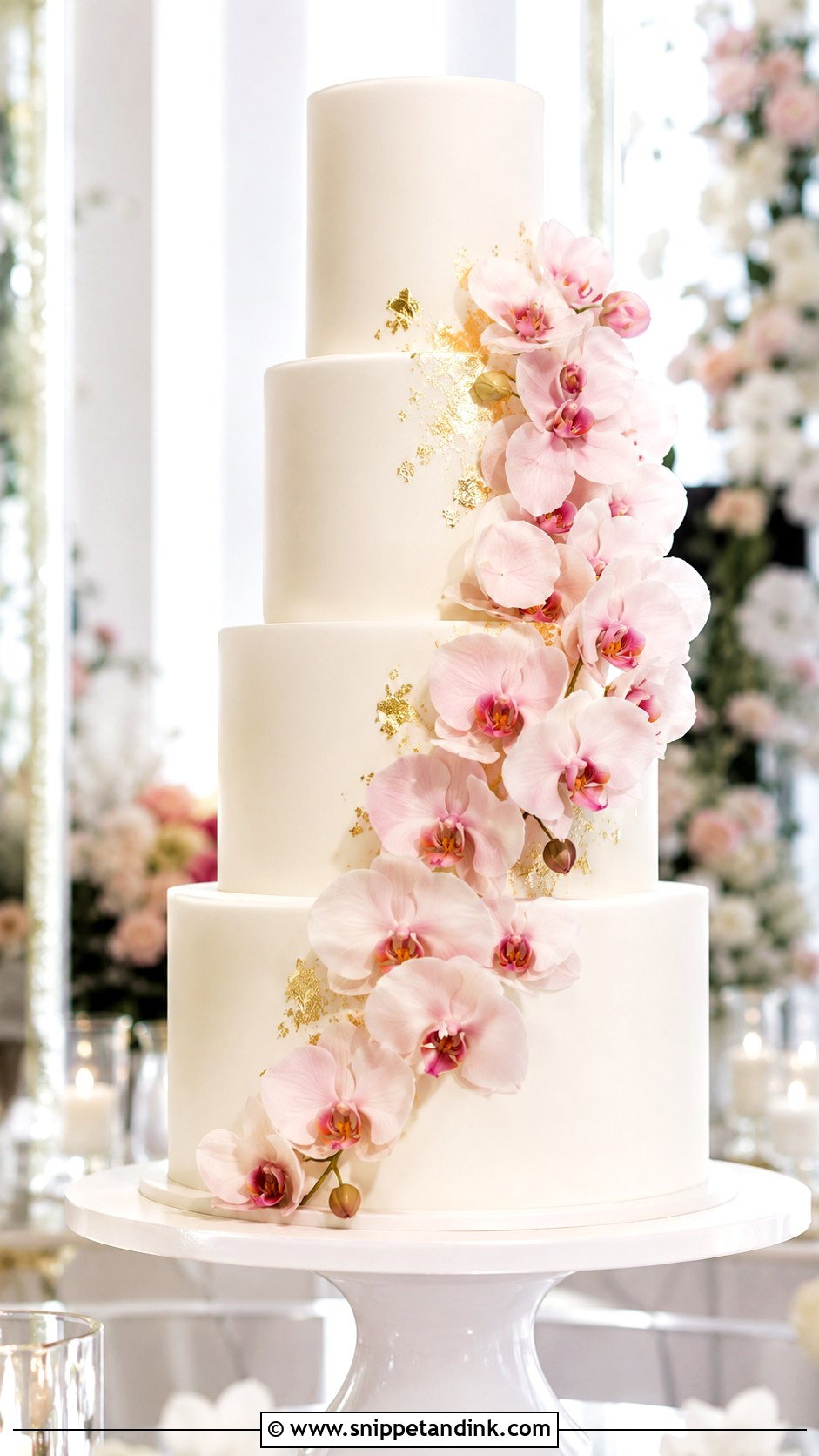
Orchids bring a sculptural shape that suits sharp fondant. Pale pink stays bridal; deeper magenta-pink blooms push contrast hard against white. A diagonal cluster or small cascade beats scattering. Fresh orchids bruise at the touch, so I handle them by the stem and place them last.
19. Pink Macaron Wedding Cake
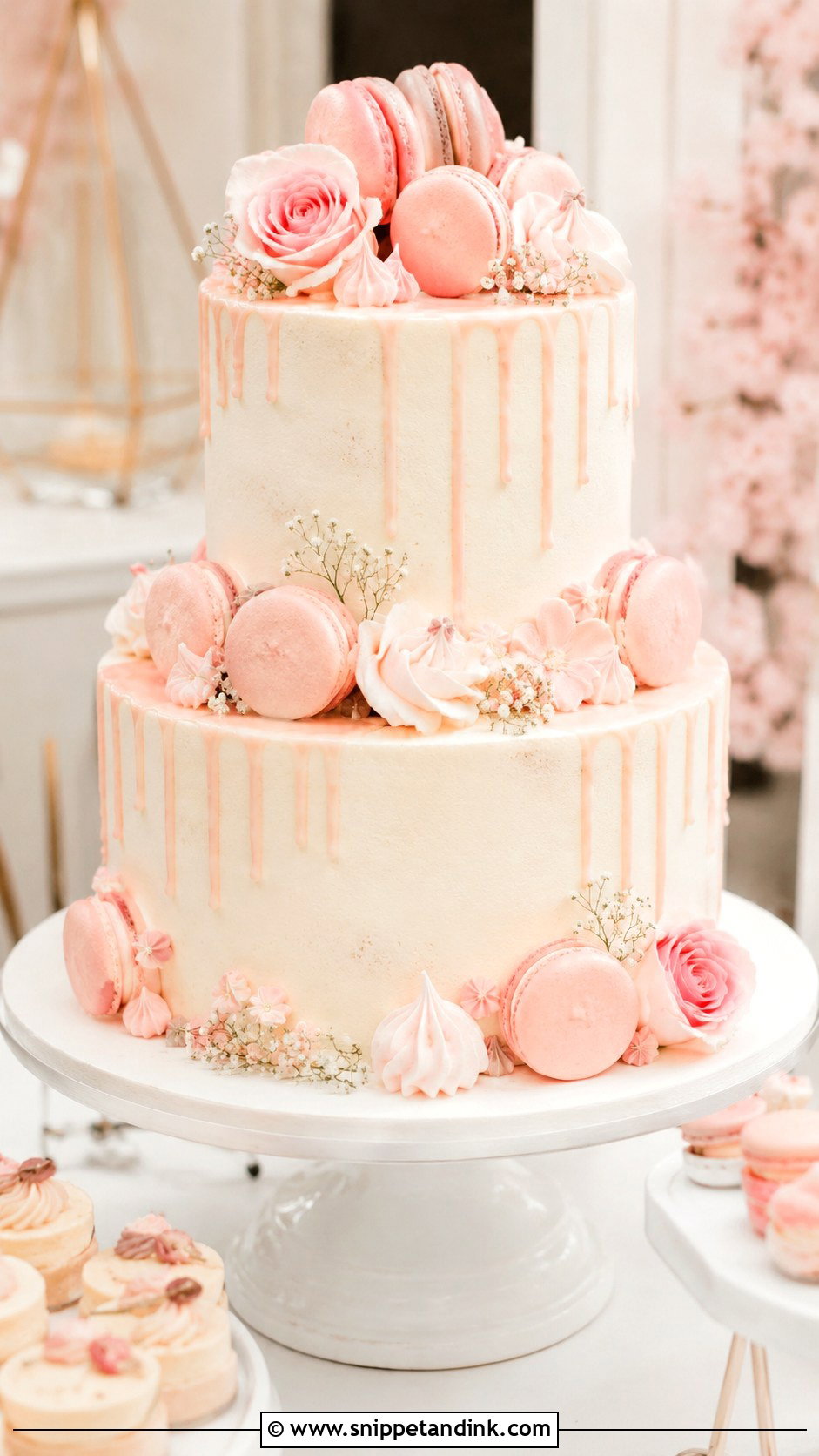
Macarons soak up moisture from buttercream and go soft, which is the one thing nobody warns you about. I attach them as close to display time as possible, using a dab of ganache rather than pressing them into the icing. Blush, rose and ivory shells keep the palette soft. They link the cake nicely to a dessert table.
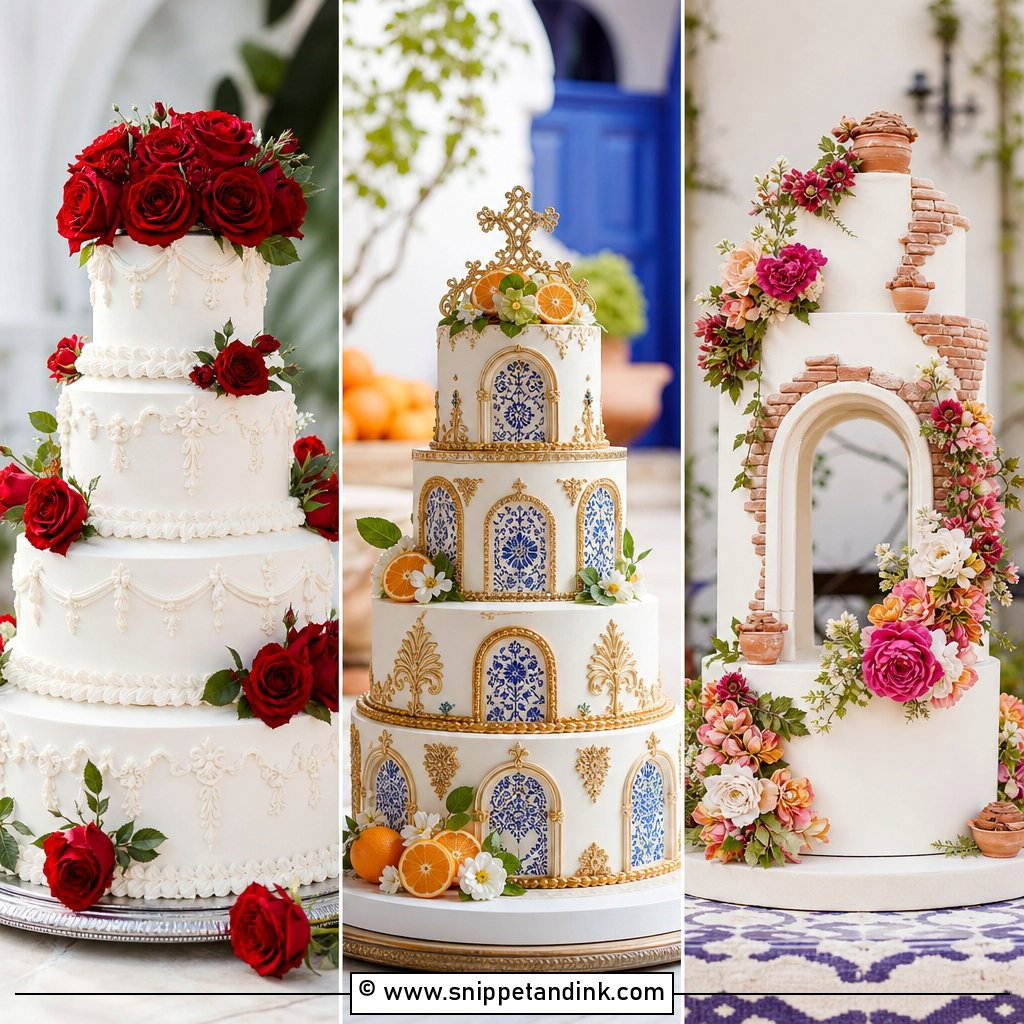



20. Pink Heart Wedding Cake
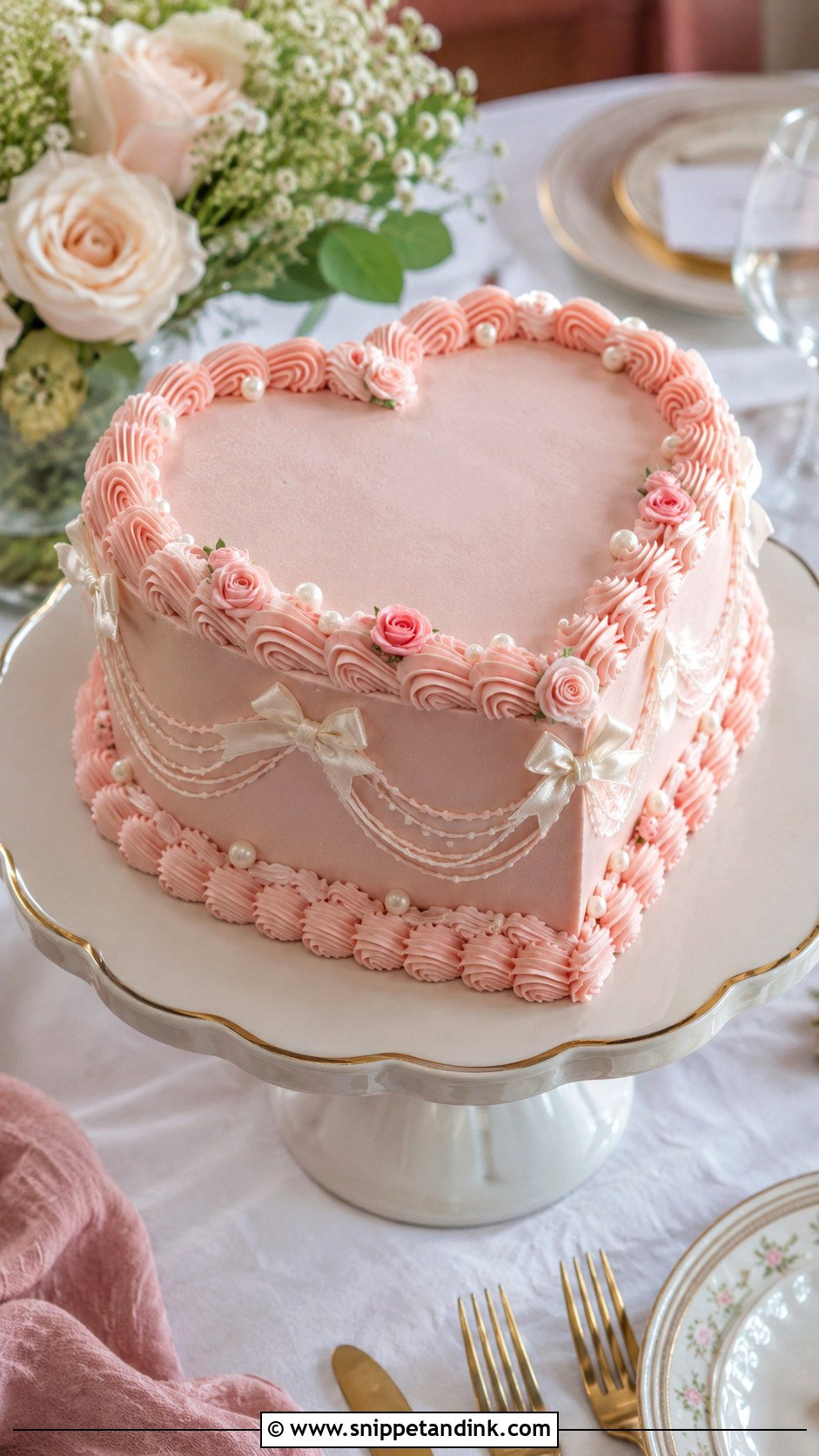
Heart-shaped tiers are charming and awkward to cut, since the point and the curves don’t portion evenly. I tell couples to expect fewer neat slices than a round tier of similar size. Keep the finish clean, with pink piping, bows or roses on white, so it feels romantic rather than childish. One tier for a small wedding; stacked hearts need careful support.
Can the Pink Be Inside the Cake Too?
Yes, and it’s one of my favourite surprises at the cutting. Raspberry or strawberry fillings, a strawberry sponge or a rose-scented buttercream carry the colour into every slice. Pink champagne cakes are popular, though the pink usually comes from colouring rather than the wine.
Some couples ask for natural colouring only. Freeze-dried raspberry or strawberry powder gives an honest, slightly dusty pink with real fruit flavour. Beetroot gives a deeper shade. Both are less stable than gel colours and fade faster in light, so they suit fillings and sponge better than the outside of a cake that will sit on display for hours.
A note on fruit fillings
Fresh fruit fillings need refrigeration and add moisture, which shortens how long the cake can sit out. For a long outdoor reception I’d suggest a cooked fruit compote or a fruit-flavoured buttercream, which hold up far better than fresh berries tucked between layers.
Pink Works Hardest in Small Doses
Pink works on almost any cake once you decide how much of it you want. A single bloom, a drip, a ruffled tier or a full ombré all suit different weddings. Classic tastes usually land on white tiers with pink flowers; modern ones on marble, watercolour or a neat drip; vintage on piping, bows and pearls. Pick the technique first and the shade second, and the cake will feel planned rather than just pink.
You'll Like These Ideas:





Leave a Reply