
A Vietnamese wedding outfit rarely belongs to the bride alone. It carries what her mother wore, what the elders expect at the tea ceremony and how the families will look standing together in the portraits, and it still has to feel like her. The áo dài is the center of it all, worn for the engagement, the tea ceremony and the family photos, and many brides now pair it with a cape, a veil or a separate reception gown. Color carries meaning too: red for luck and celebration, gold for prosperity, white and pastels for a softer, more Western bridal feel. Here are 25 looks, with notes on fabric, fit and how each one behaves across a long ceremony day.
Ordering an Áo Dài That Is Cut to Your Body
An áo dài is close-fitting from the collar to the waist, and the side slits start right at the waist, so there is nowhere for a poor fit to hide. That’s why I steer brides away from buying one off a rail for the main ceremony. A tailor will take many measurements, including neck, shoulder, bust, under-bust, waist, hip, arm length and the distance from shoulder to waist, then cut the tunic and pants to match.
- Plain silk can be made fairly quickly, but hand embroidery, hand painting and beading add weeks. Allow at least two to three months for a detailed bridal áo dài, and more if you are ordering from overseas.
- Bring the exact shoes you will wear. The pants are hemmed to brush the floor with heels on, and changing heel height later leaves them either dragging or short.
- Wear the bra you plan to wear. The bust line is shaped closely, and a different bra changes where the darts fall.
- If you are ordering remotely, ask for a sample of the fabric first and photograph it in daylight, because reds and golds look very different on a screen.
At the fitting, raise both arms as if pouring tea, then bow and sit. The raglan sleeve should let you move without the tunic riding up, and the slits should lie flat when you sit.
1. Red Vietnamese Wedding Ao Dai
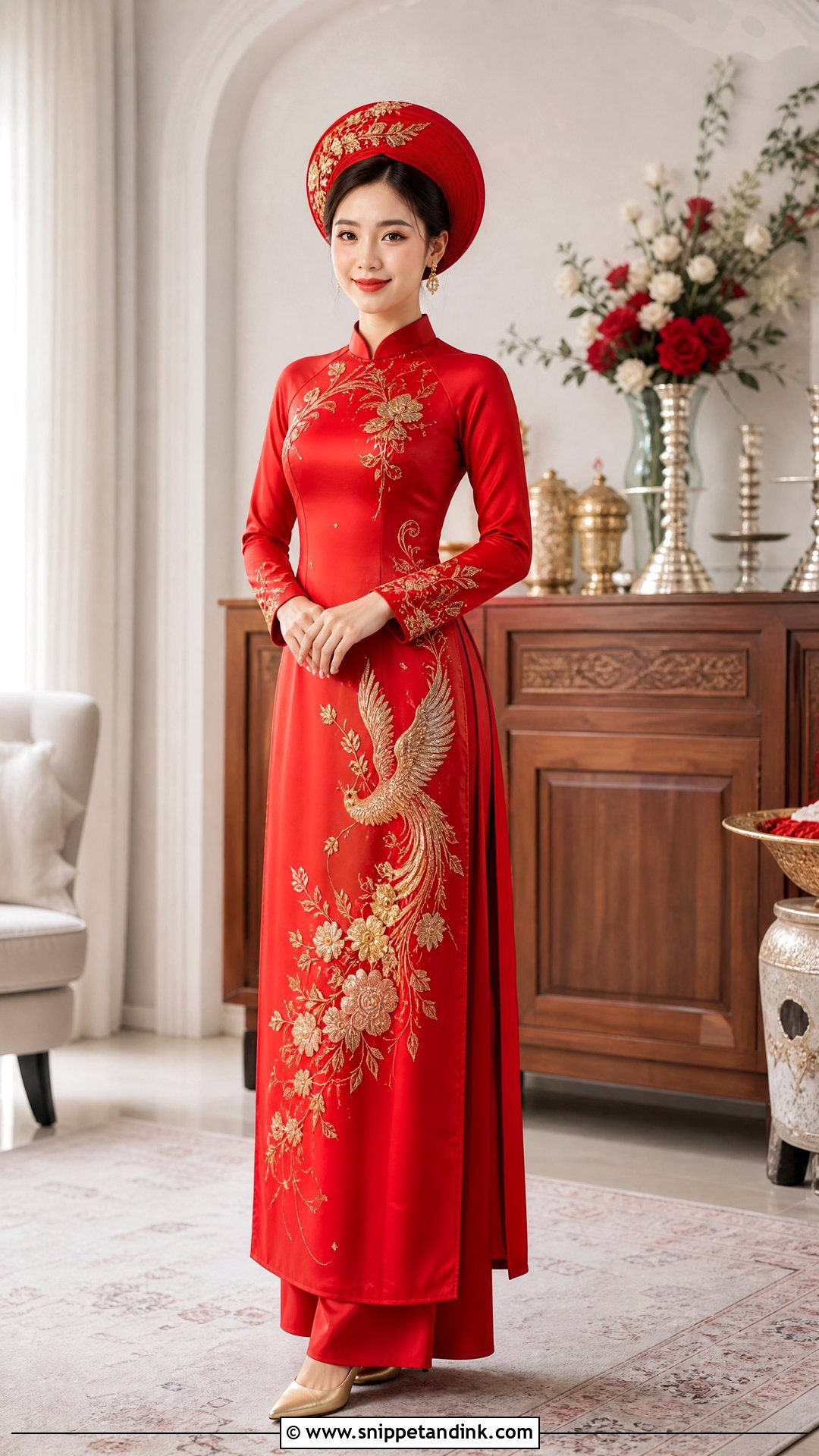
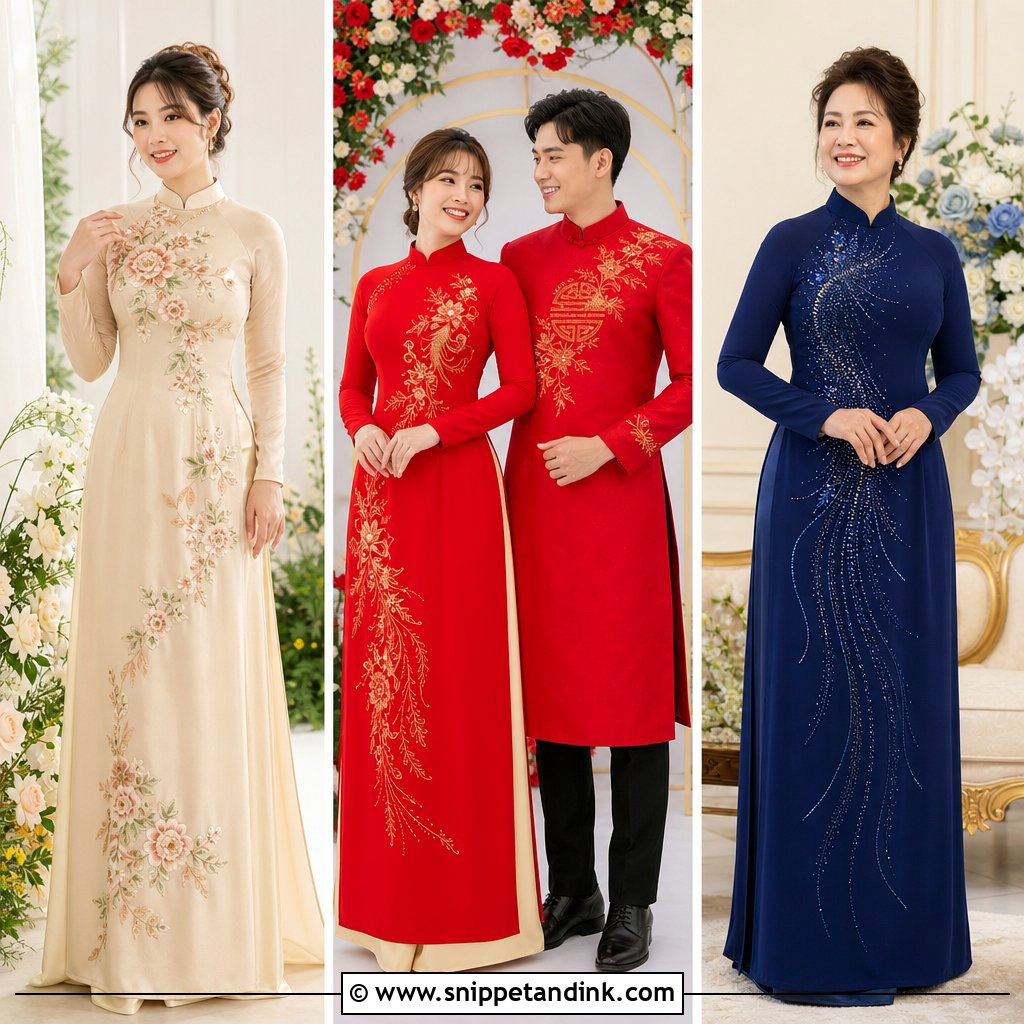
Red is the color most grandmothers hope to see, and it’s still my first suggestion for the tea ceremony. A red Vietnamese wedding ao dai in silk, satin or brocade, with a close tunic, side slits and matching silk pants, gives you a modest line that reads well from every angle. Gold embroidery, a phoenix or flowers add meaning without clutter. One thing I check with red silk is the dye: cheaper red can bleed onto light pants if you get caught in rain, so I prefer pants in the same fabric. A matching khăn đóng, soft gold jewelry, pointed heels and a small bouquet finish it, beside a groom in blue, black, cream or gold.
2. White Vietnamese Wedding Ao Dai
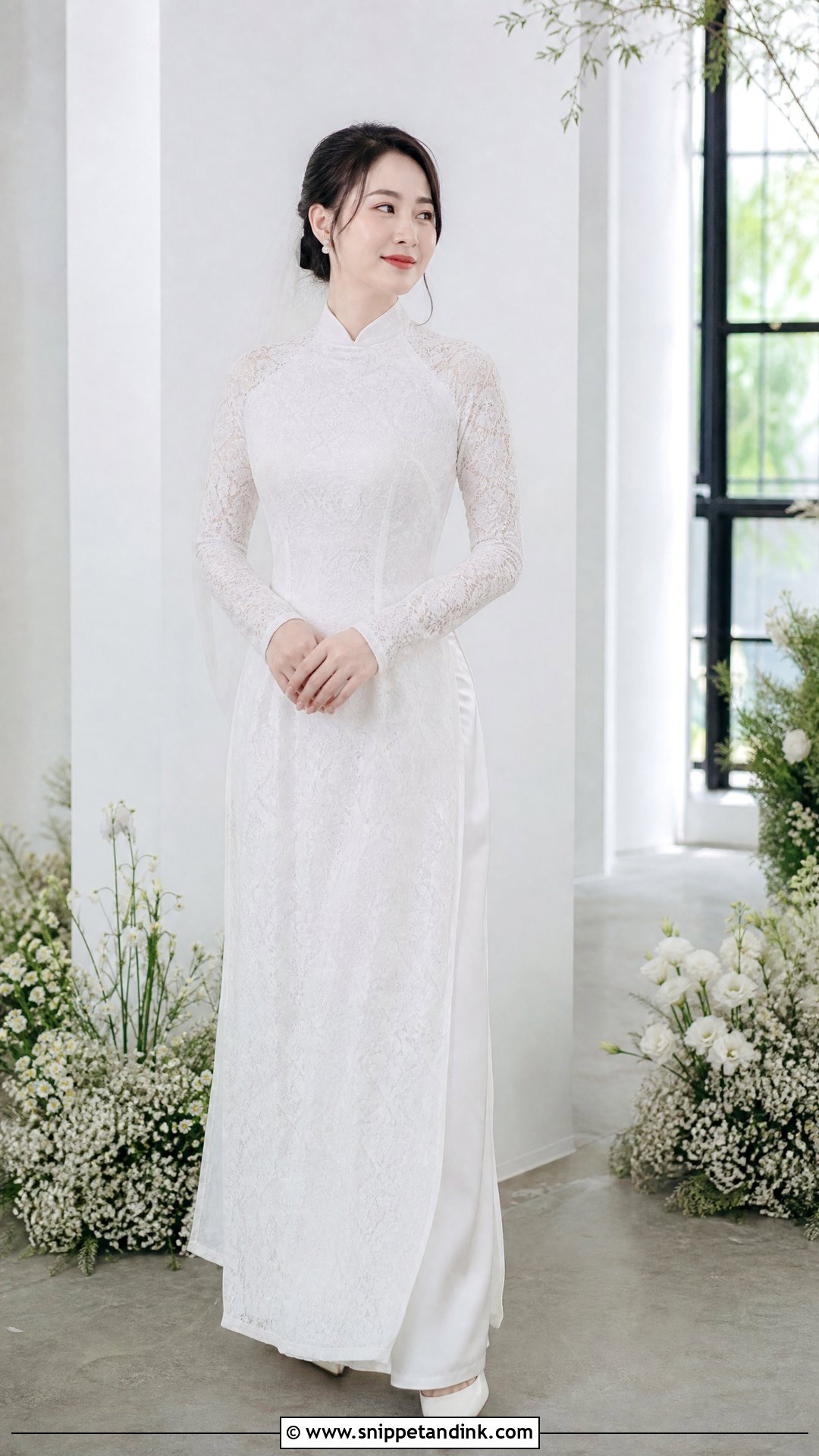
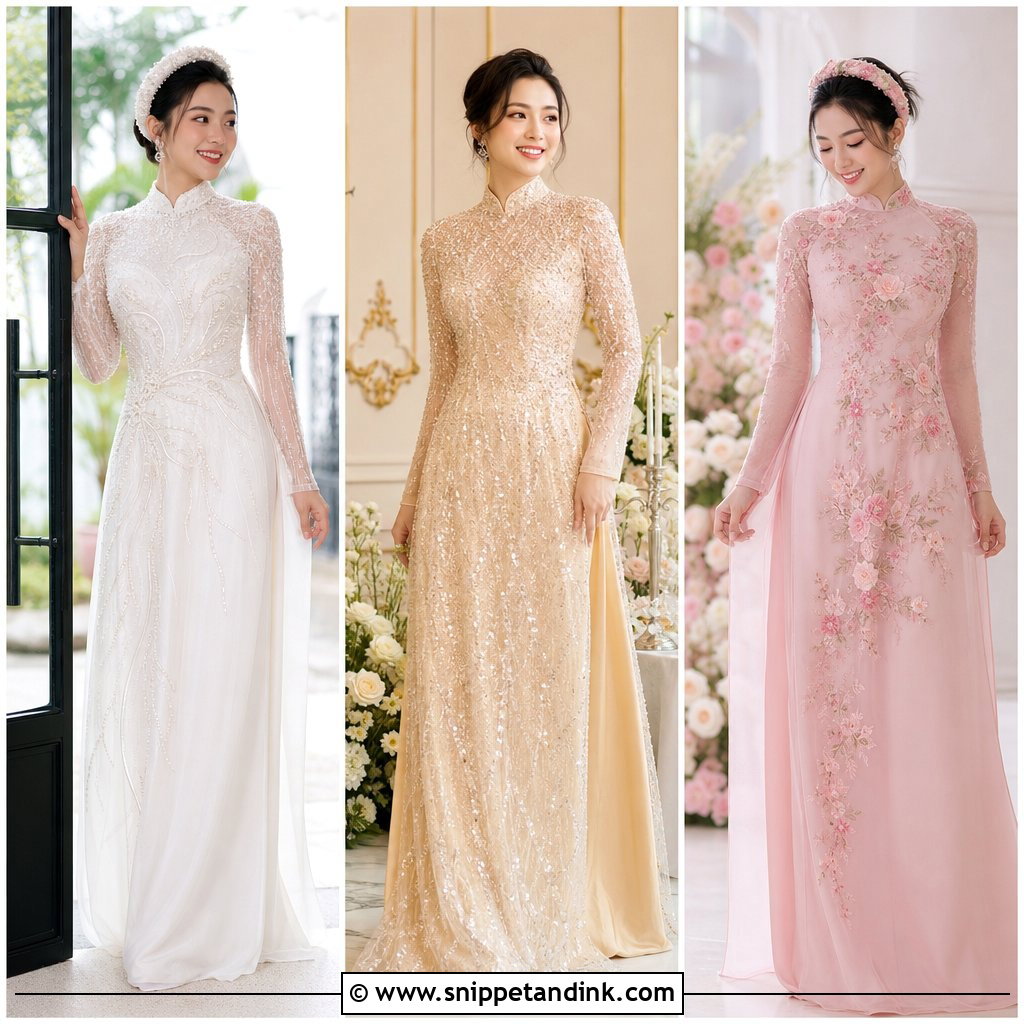
White feels clean and bridal while keeping the traditional cut. Pearl beading, lace appliqué or tone-on-tone embroidery stops it from looking flat in photos. The honest drawback is that thin white silk shows everything underneath, including bra lines and the pants waistband, so I always ask for a lining in the tunic. White pants lengthen the line, and nude, silver or ivory heels keep attention on the dress. A white khăn đóng, a low bun, pearl earrings and a sheer veil make it feel more ceremonial. Some older relatives still associate plain white with mourning, so it’s worth a quiet word with family first.
3. Gold Vietnamese Wedding Ao Dai
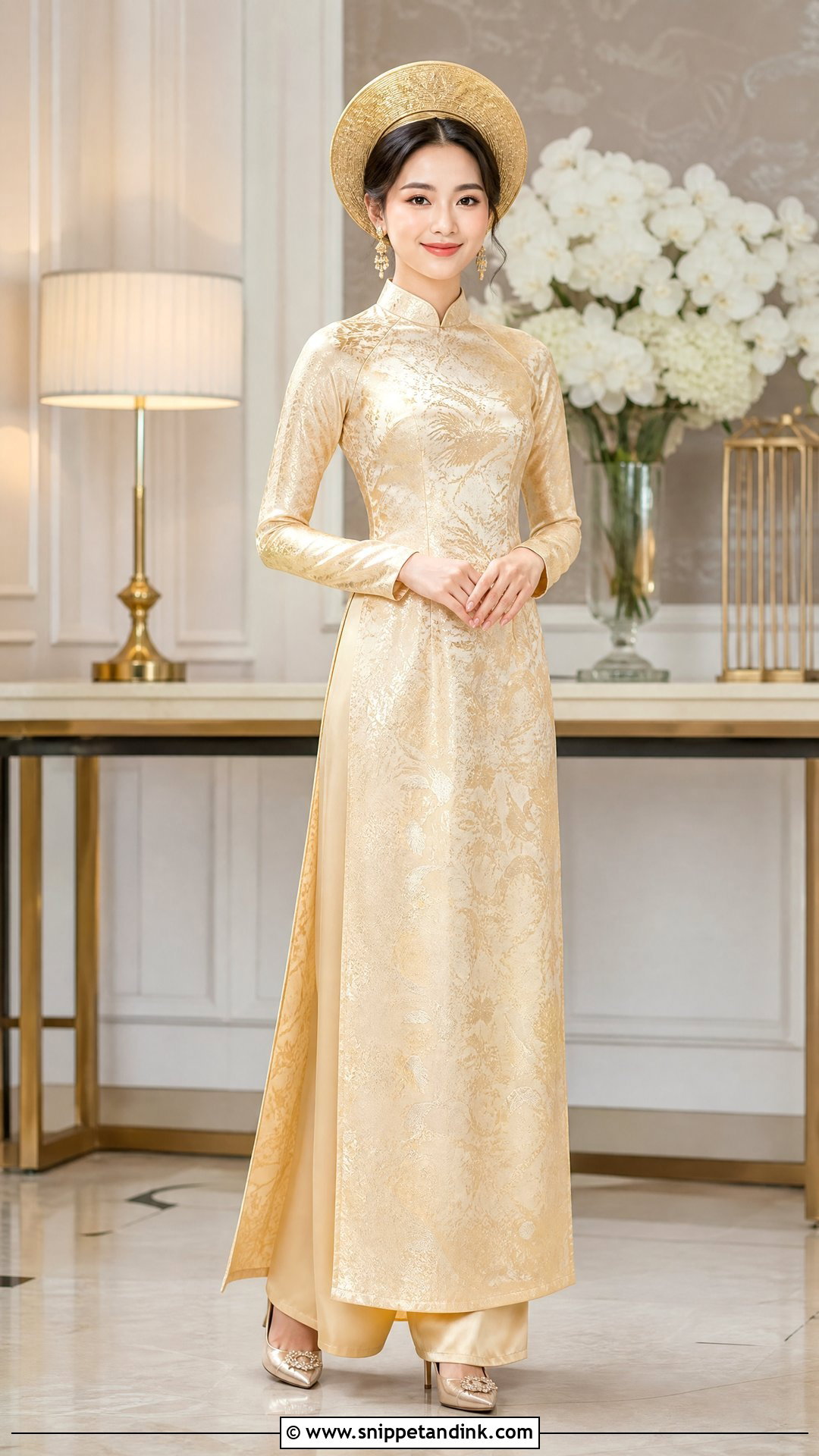
Gold looks regal under indoor light, which is why I suggest it most for hotel ceremonies and formal family portraits. Champagne gold is softer; antique gold feels more royal. Brocade adds texture and holds the fitted tunic’s shape well, though it is warmer and stiffer than silk, so it suits an air-conditioned room more than an outdoor summer garden. Wear matching gold pants, a structured khăn đóng, simple drop earrings and metallic heels. Glowing skin and a defined lip keep the face from disappearing against all that shine. A groom in cream or deep red completes the pair.
4. Red And Gold Vietnamese Wedding Ao Dai
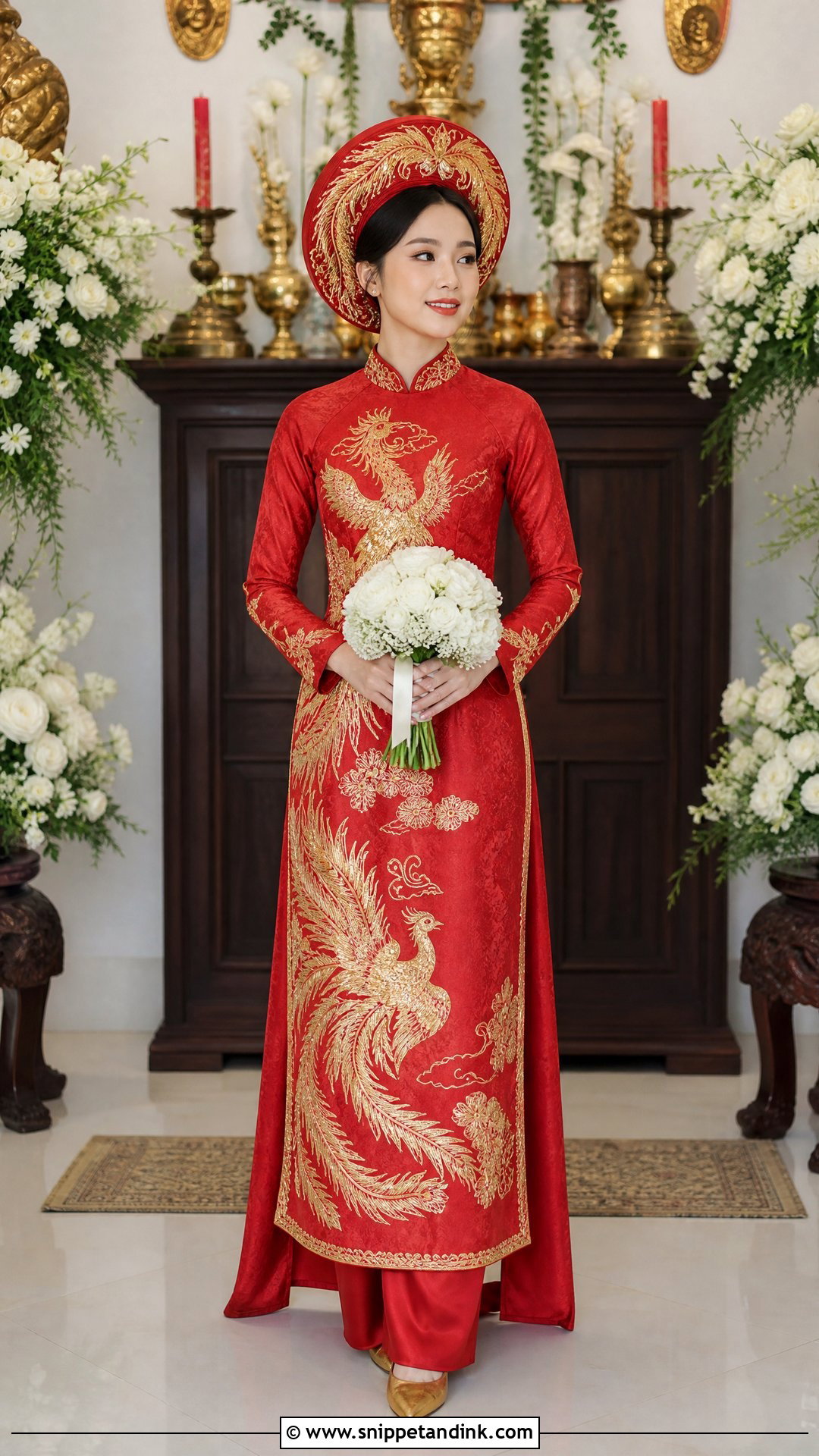
Red with gold embroidery is one of the most recognizable Vietnamese bridal looks, and it’s the combination elders tend to expect at the lễ ăn hỏi. I place the gold motifs around the chest, collar, sleeves or hem so they frame the face and body rather than covering the whole panel. Heavy metallic embroidery is stiff, so a fully worked front can buckle when you sit. Matching red pants, gold heels and jewelry, and a red khăn đóng with gold trim complete it. With colors this strong, keep the bouquet to white, blush or soft pink.
5. Pink Vietnamese Wedding Ao Dai
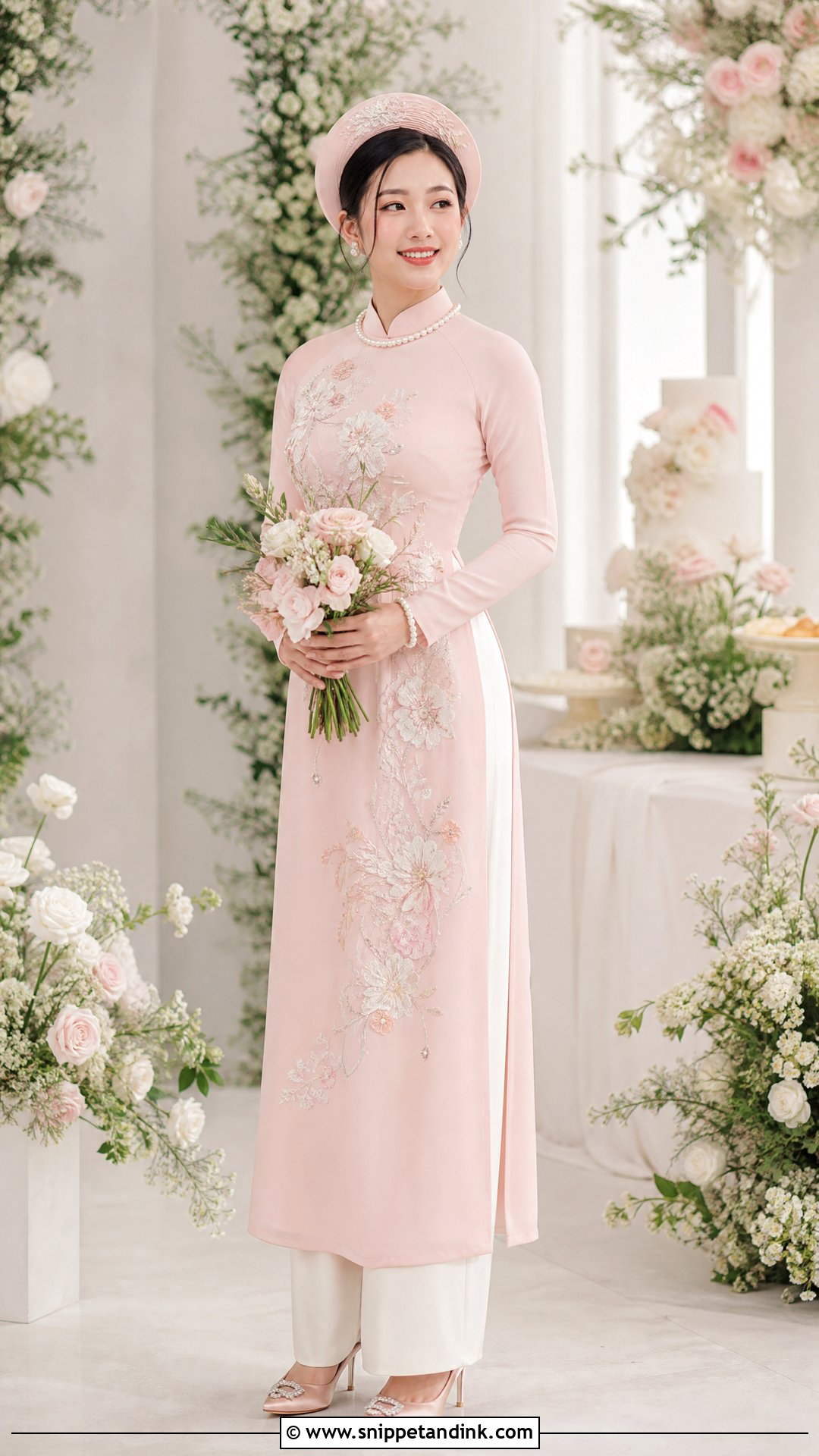
Pink is the gentle alternative to red. Blush, rose, dusty pink and lotus pink all suit a Vietnamese ceremony, and they pair well with floral embroidery, pearls and sheer sleeves. Pale pink can wash out lighter skin tones under bright daylight, so I hold the fabric against the bride’s face near a window before we order. Matching pink pants give one long line; ivory pants feel lighter. A delicate khăn đóng, soft curls, pearl studs and satin heels finish it. It sits nicely beside a groom in a neutral áo dài for a daytime ceremony or garden photos.
6. Blue Vietnamese Wedding Ao Dai
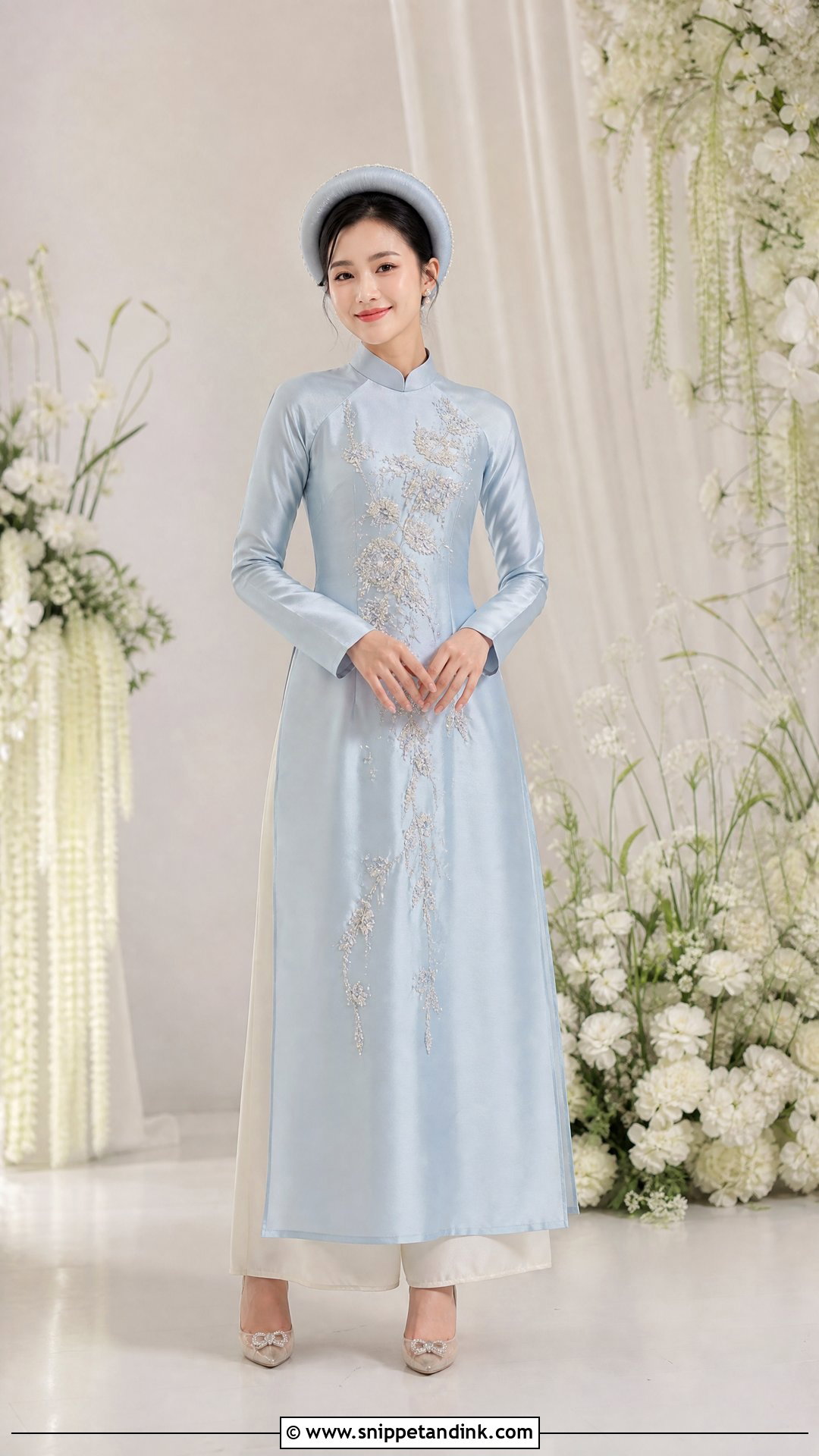
Blue moves away from red while keeping the traditional silhouette. Powder blue reads delicate and modern; royal blue or navy is more formal. Silver embroidery, white lace or crystal beading brightens it and keeps it bridal. Blue silk is unforgiving with perspiration marks under the arms, so if your ceremony is warm, ask for underarm shields sewn into the lining. Wear matching blue or ivory pants, silver heels and a neat khăn đóng. Soft pink makeup and pearls warm up the cool tone, and it stands out well against white or floral backdrops.
7. Ivory Vietnamese Wedding Ao Dai With Cape
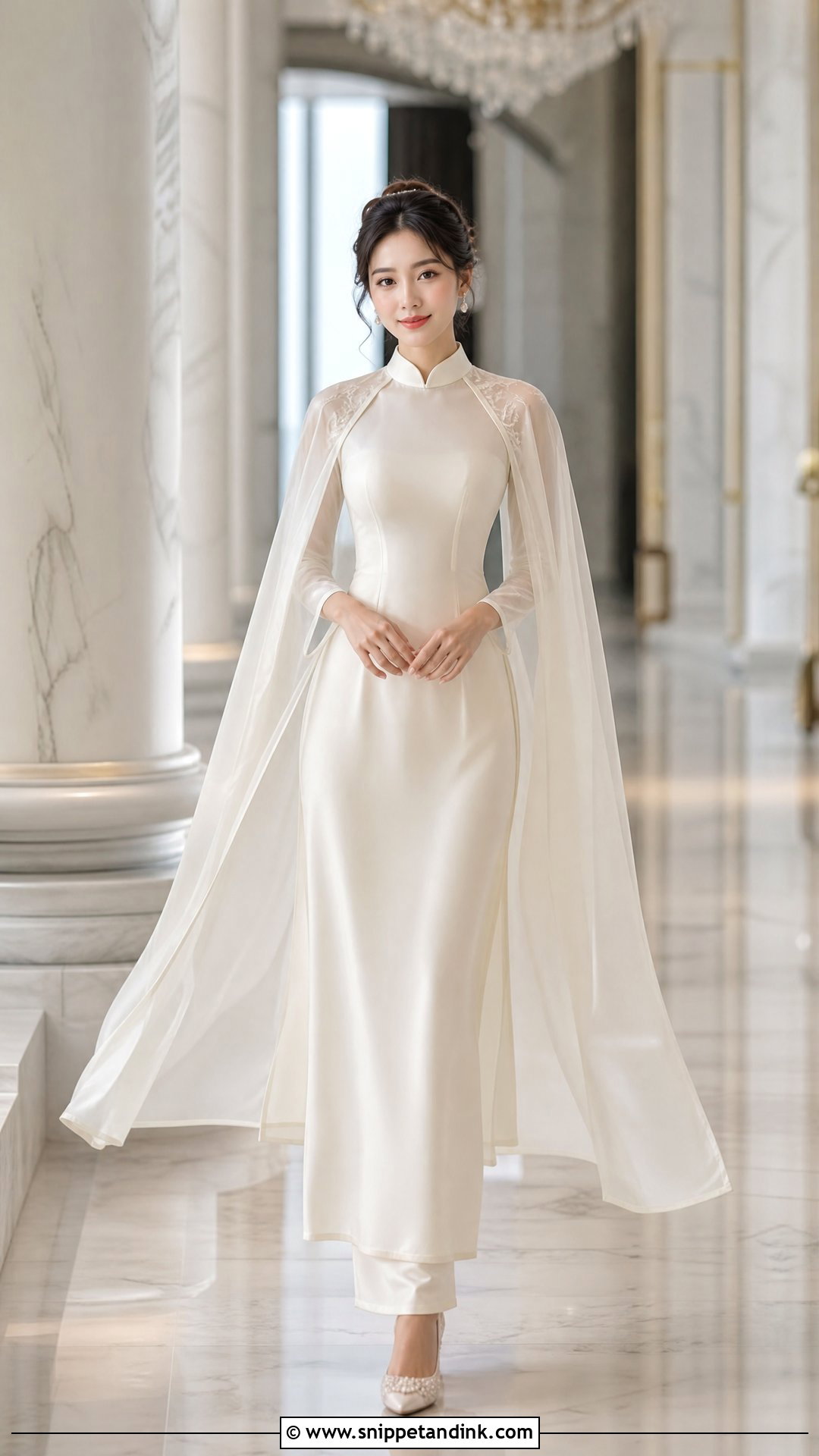
Adding a cape to an ivory áo dài is one way to blend traditional shape with modern bridal drama. The cape brings movement and a gown-like presence while the tunic stays visible underneath. Sheer tulle, organza or lace floats; anything heavier pulls on the collar and drags it backwards. Ask for the cape to fasten at the shoulders rather than the neck so it doesn’t choke the mandarin collar. Ivory pants, pointed heels, pearl earrings and a sleek bun complete it. Wear the khăn đóng for the tea ceremony and swap to a veil for the more Western portraits.
8. Lace Vietnamese Wedding Ao Dai
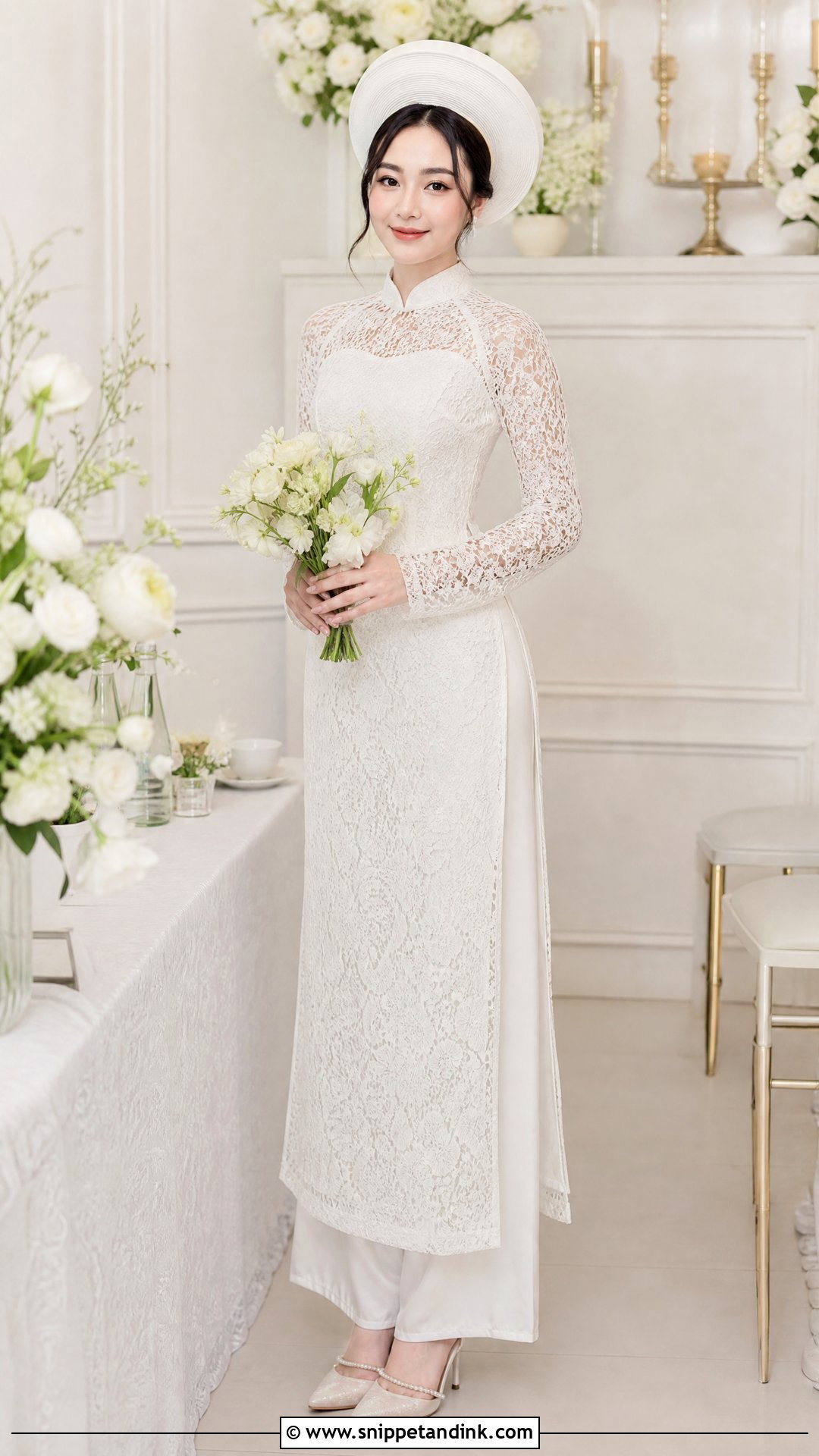
Lace gives texture without heavy beading. White, ivory, blush and champagne lace all work, ideally laid over a fitted lining so the tunic stays modest and smooth. Long lace sleeves frame the arms well, but lace has very little stretch, and the áo dài’s raglan sleeve still needs room when you raise your arms to serve tea; I always test that movement at fittings. Pair it with silk pants, pearl heels, a simple khăn đóng and a small bouquet. For a cleaner version, swap ornate jewelry for a low bun and plain earrings.
9. Brocade Vietnamese Wedding Ao Dai
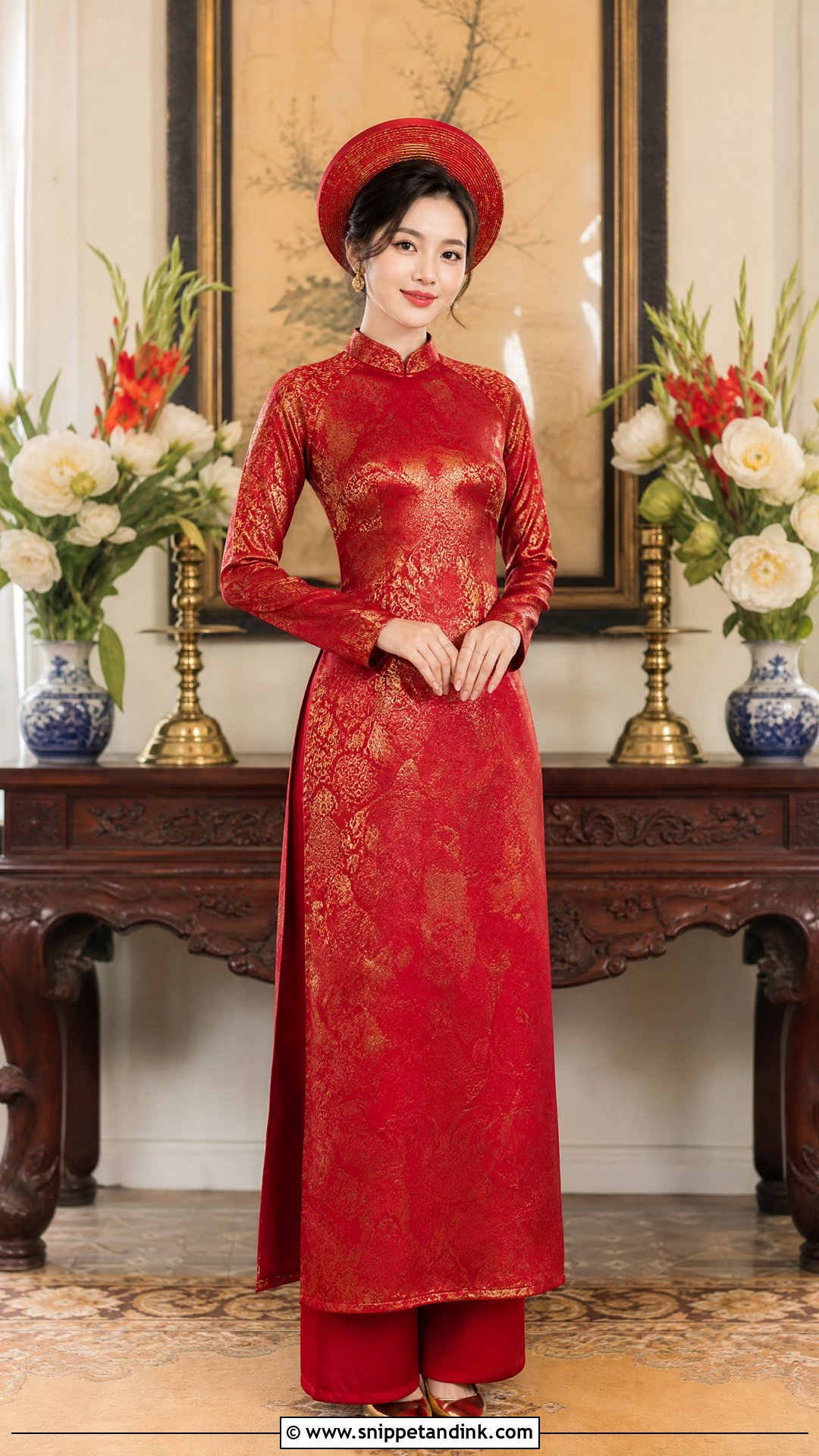
Brocade has a woven pattern built into the cloth, so even a simple cut looks ceremonial. Red, gold, ivory, emerald and burgundy brocade all suit a bride. Because the fabric already carries visual weight, I keep accessories to a matching khăn đóng, smooth pants, small earrings and elegant heels. Brocade is less fluid than silk, so the fit through the bodice must be close and the tunic panels cut to fall straight, or they will kick out at the slits when you walk. Tailored well, it looks rich and polished without extra embellishment.
10. Embroidered Vietnamese Wedding Ao Dai
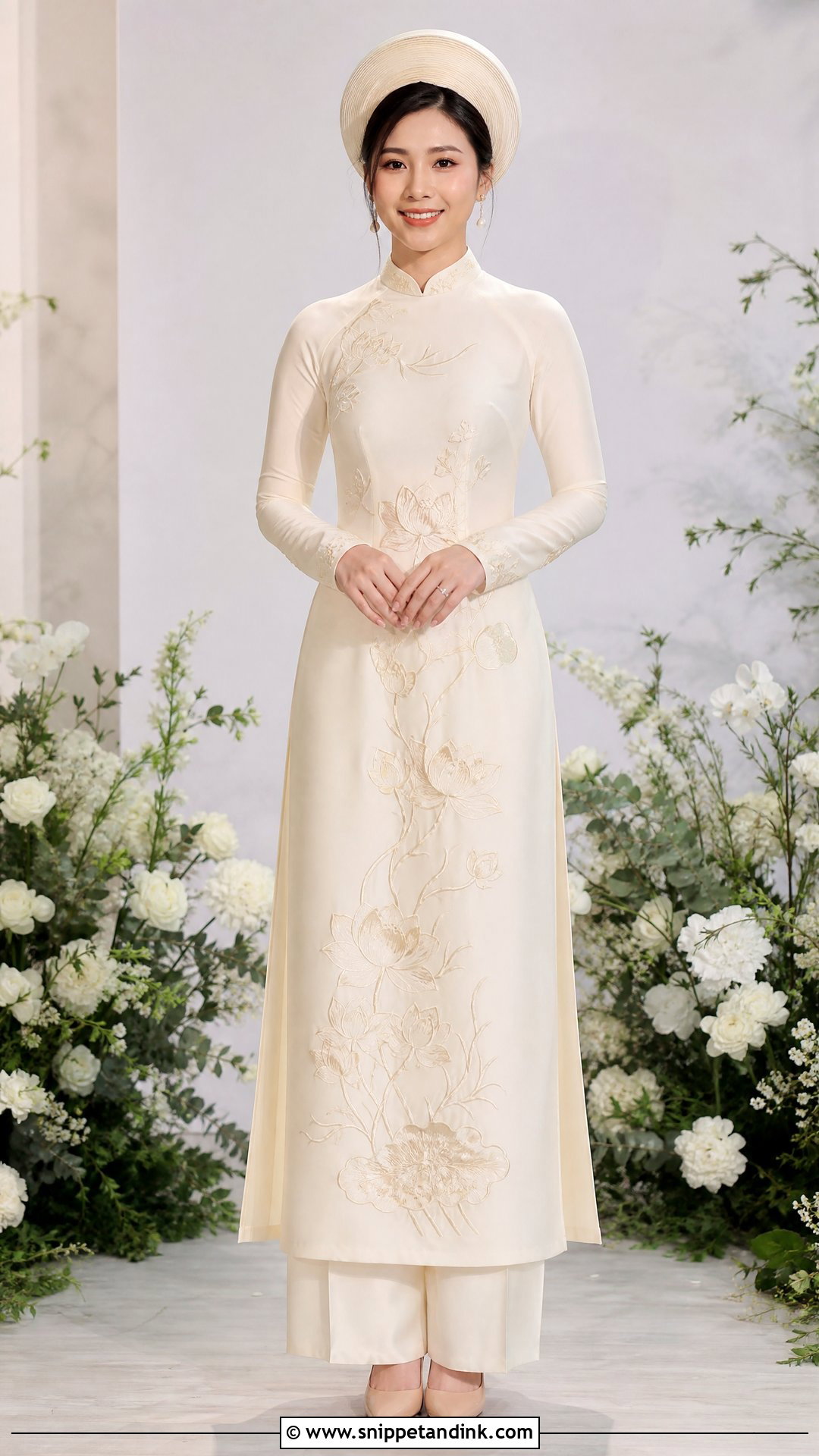
Embroidery is how many brides make the dress personal. On an embroidered Vietnamese wedding ao dai, lotus, peonies, cranes, phoenixes, vines and cloud patterns each carry their own symbolism, and it’s worth asking your family which ones matter to them. I place the larger motifs around the bodice or lower panels and keep the sleeves lighter, because embroidery on the sleeve adds stiffness where you need to bend. Red with gold reads traditional; ivory with white reads soft and modern. Match the pants and shoes to the base color, not the thread, and let close-up portraits show off the handwork.
11. Modern Vietnamese Wedding Ao Dai
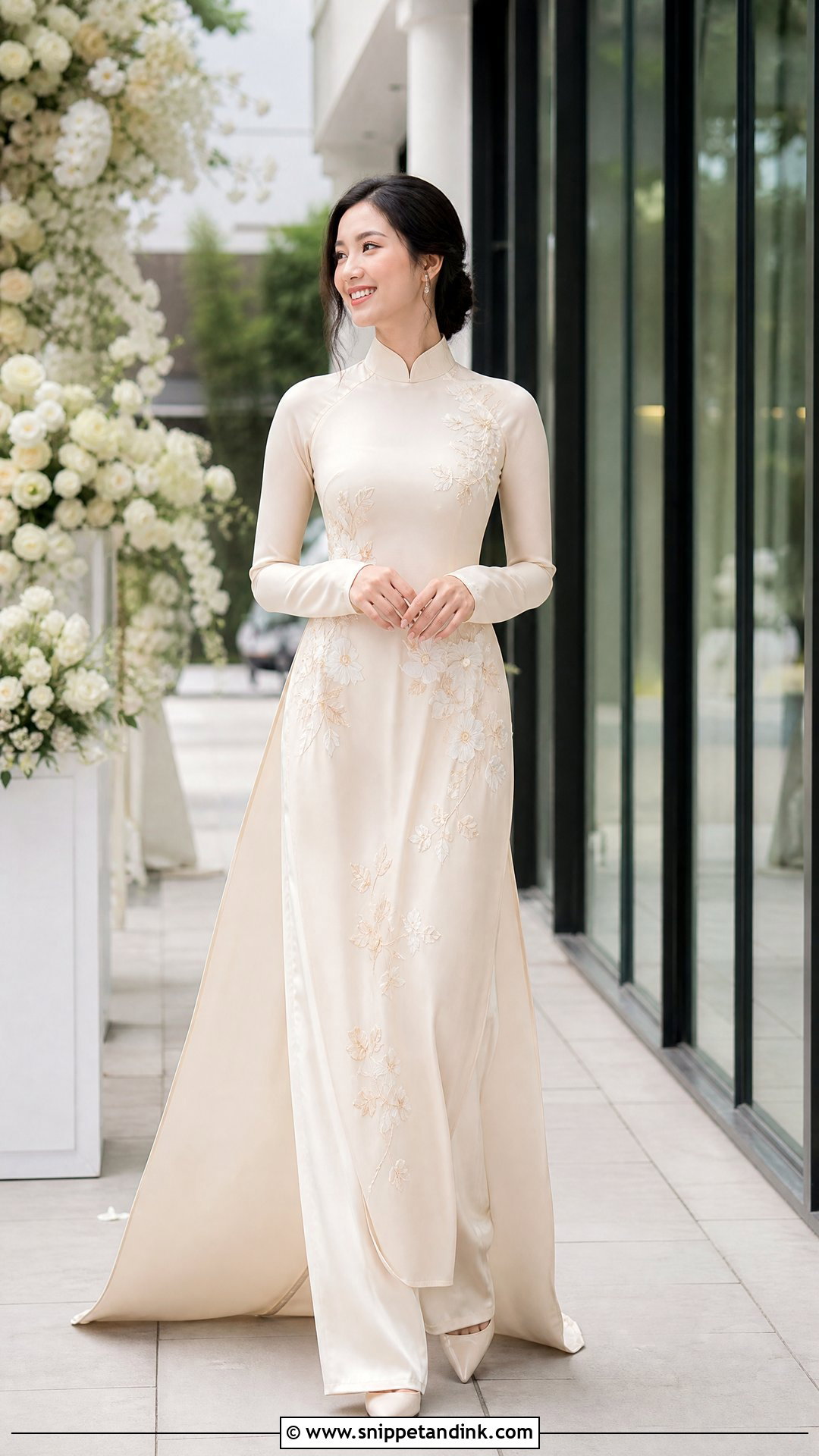
For a modern Vietnamese wedding ao dai, the update usually comes from fabric and color rather than the cut. Softer fabrics, lighter sleeves, a subtle train, a cape or cleaner embroidery all freshen it. Some brides ask for a slightly relaxed fit, and I’m happy to ease it a little, but loosen it too much and you lose the line that makes an áo dài recognizable. White, champagne, blush, sage and powder blue suit this approach. Sleek heels, minimal jewelry and polished hair finish it, and the khăn đóng is optional depending on the ceremony. It works well for Vietnamese American and destination weddings.
12. Minimal Vietnamese Wedding Ao Dai
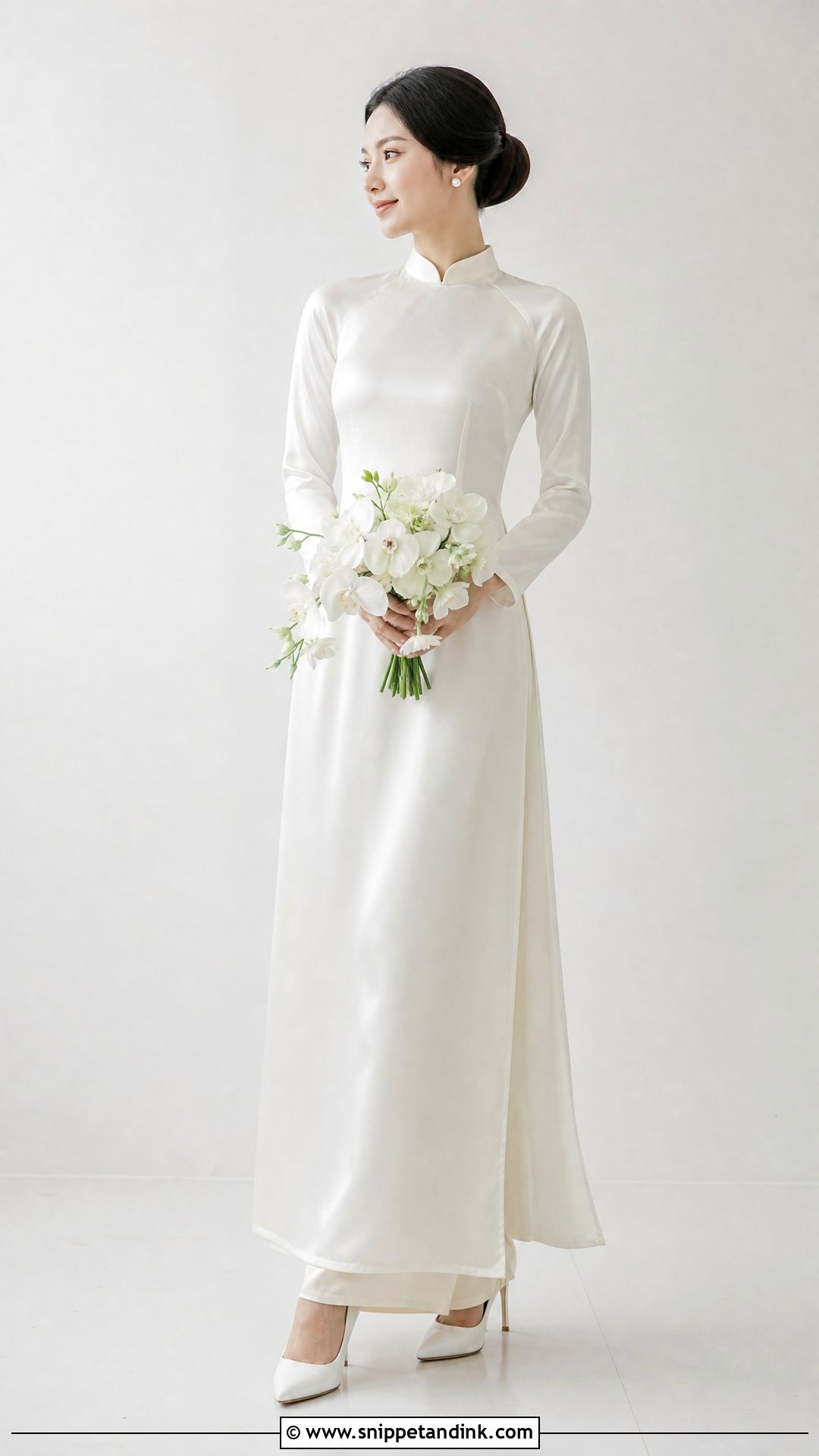
Minimal only works when the fabric and the fit are excellent, because there is nothing to distract from either. Ivory silk, white satin, champagne crepe or soft blush with little or no embroidery is the palette. I spend most of the fitting time on the shoulders, bust and waist; a few millimeters of pull across the bust is invisible on a beaded tunic and glaring on a plain one. Pair it with matching pants, pointed heels, pearl studs and a smooth low bun. A plain khăn đóng or sheer veil finishes it.
13. Vietnamese Wedding Ao Dai With Long Train
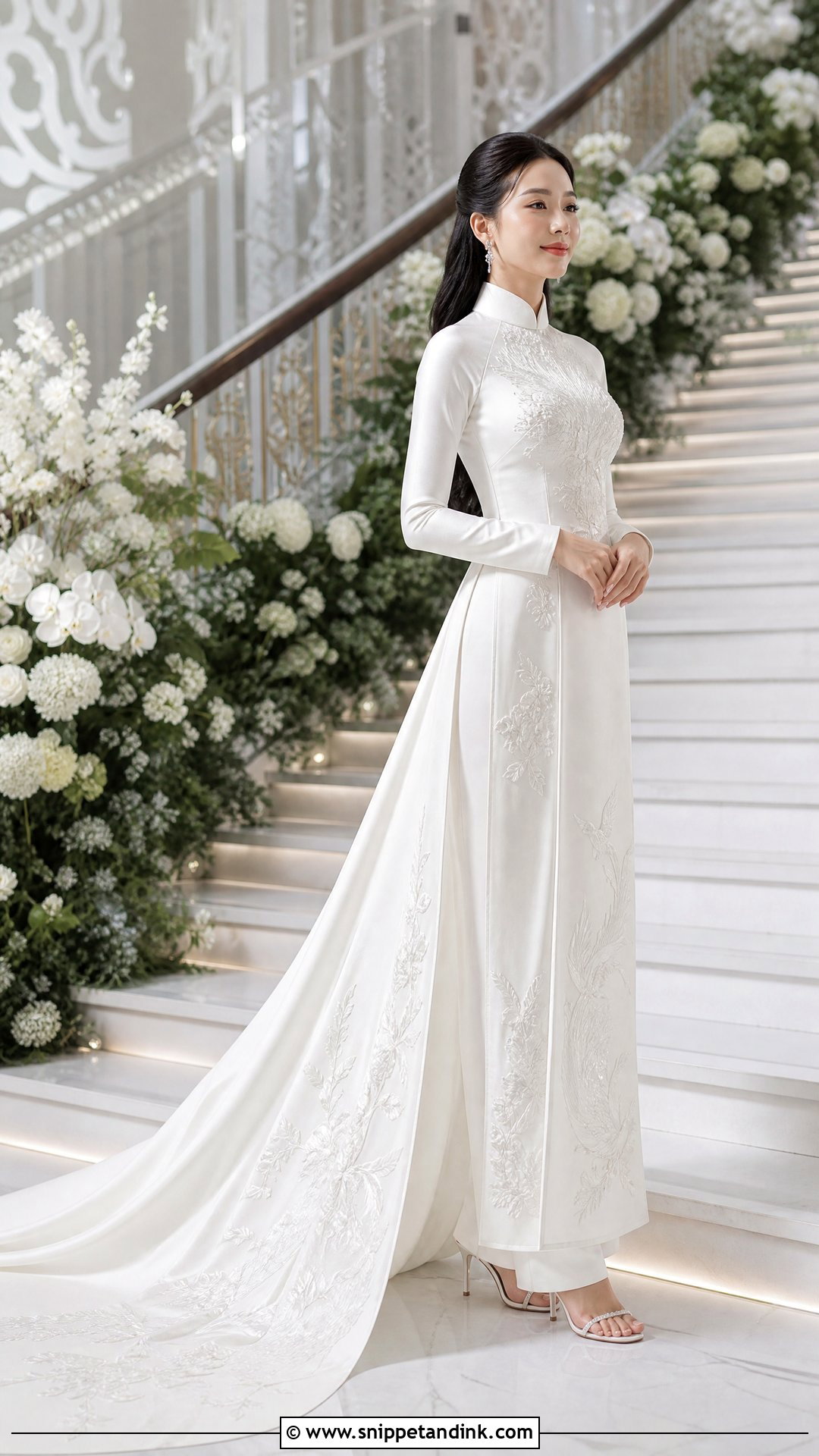
A train gives you gown-level drama in an áo dài. It can extend from the back panel, come from a detachable overskirt or fall from a cape-like layer. Silk, satin, organza and embroidered tulle all move well. If the train is detailed, keep the front clean so the outfit doesn’t feel top-heavy. My practical note: the back panel of an áo dài already sweeps near the floor, so a long train attached to it gets stepped on at the tea ceremony. A detachable overskirt you remove after the entrance solves that. Wear secure heels, a balanced headpiece and simple jewelry.
14. Vietnamese Wedding Ao Dai With Veil
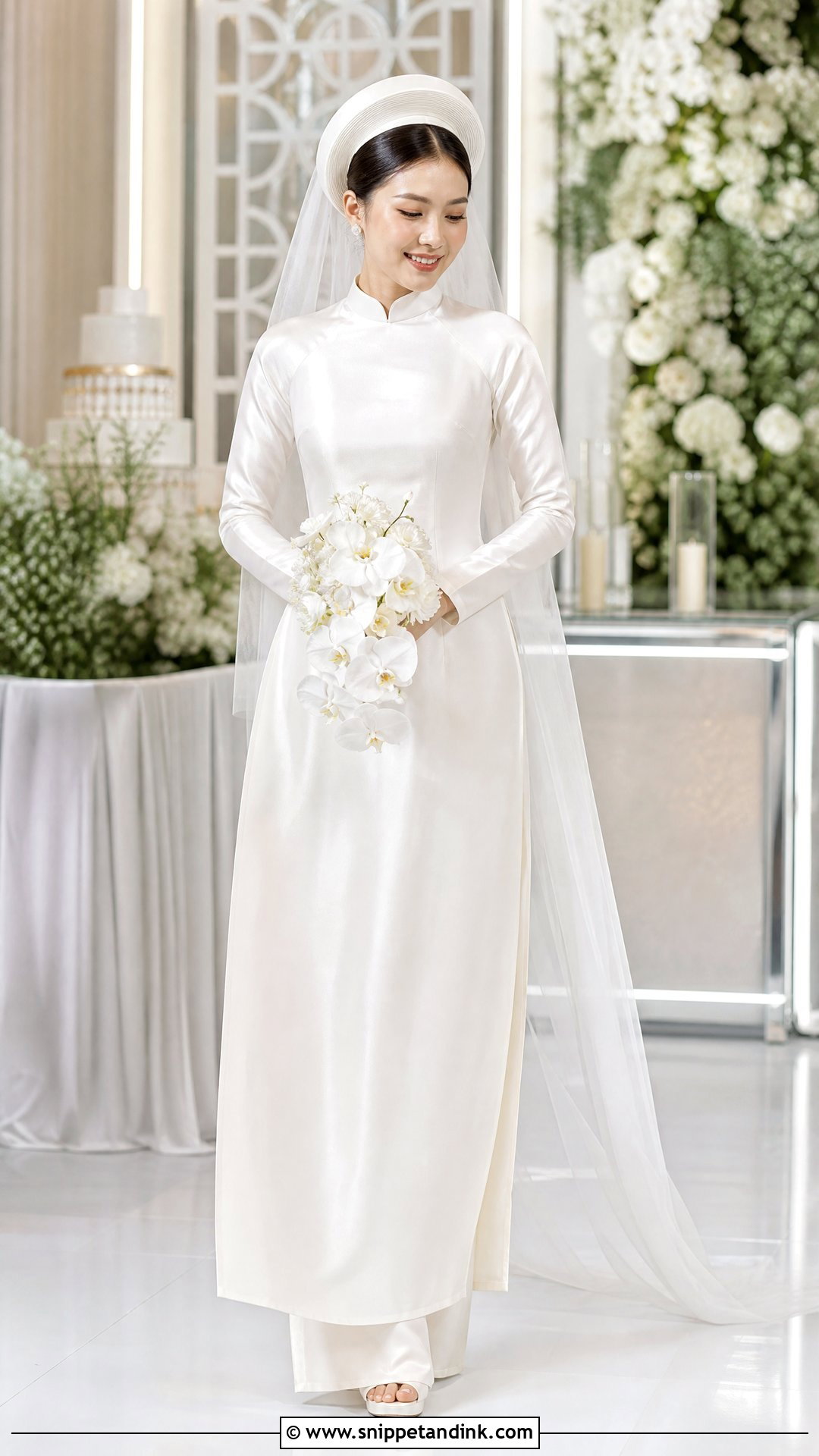
Pairing the áo dài with a veil creates a beautiful fusion bridal look, and white, ivory, blush and champagne suit it best. A fingertip veil is light and easy; a cathedral veil gives more drama for portraits. If you also wear a khăn đóng, the veil comb needs to sit behind and below it, anchored into the bun, or the headpiece tips forward. I test that combination at the hair trial, not on the morning. Keep earrings simple so the head doesn’t feel crowded, and finish with matching pants and elegant heels.
15. Vietnamese Wedding Ao Dai With Khan Dong
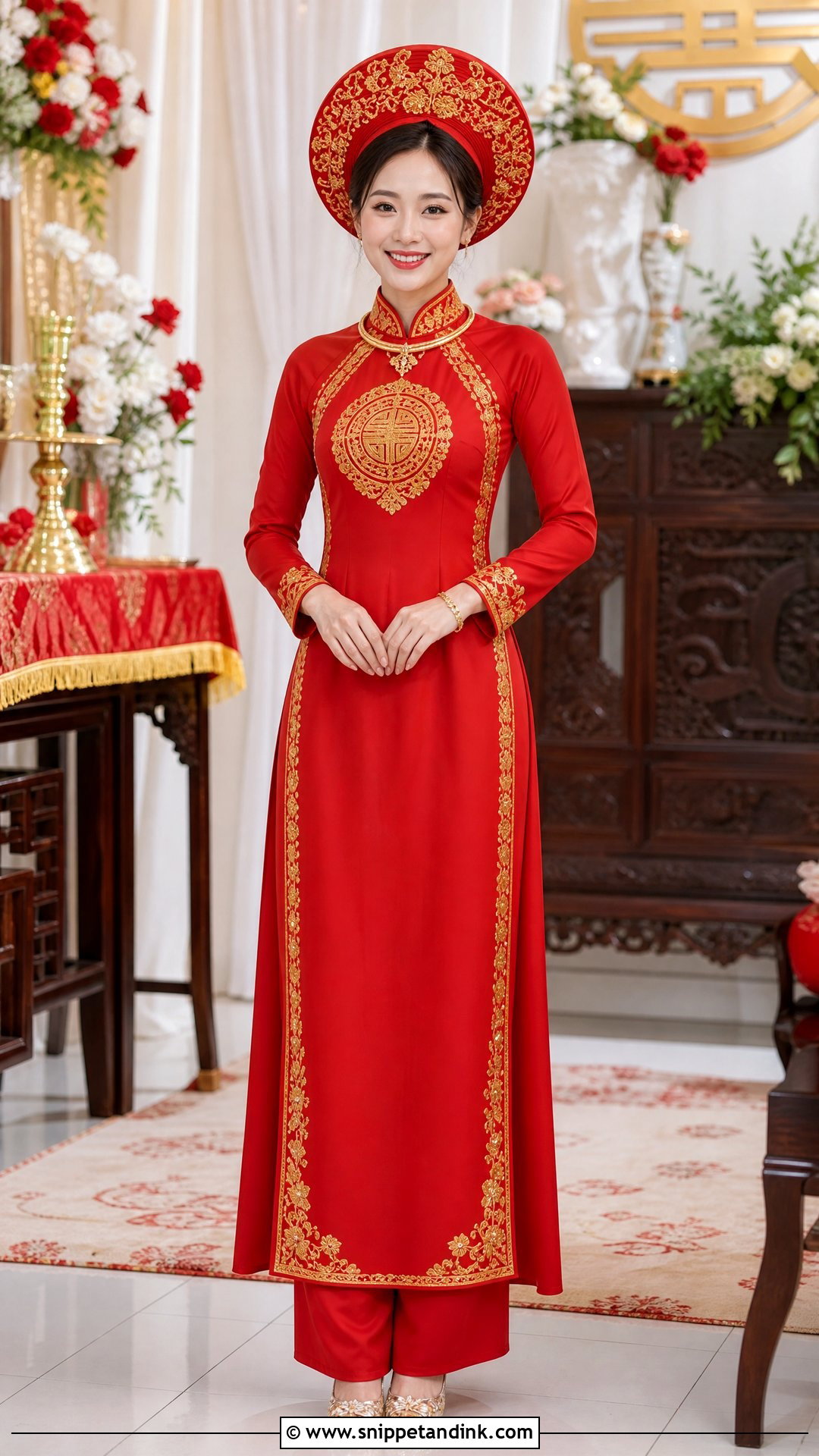
The khăn đóng completes the traditional bridal look. The rounded headpiece adds height and frames the face, which is why it helps so much in portraits. I match it to the dress fabric or repeat its embroidery, trim or color: red and gold reads classic, white with pearls reads soft. The headpiece sits on a smooth base, so the hair underneath should be a sleek low bun or tucked style, and it needs pins on both sides so it stays level while you bow. Silk pants, polished heels and jewelry that doesn’t compete with it complete the outfit for a tea ceremony or family introduction.
16. Vietnamese Wedding Ao Dai With Floral Embroidery
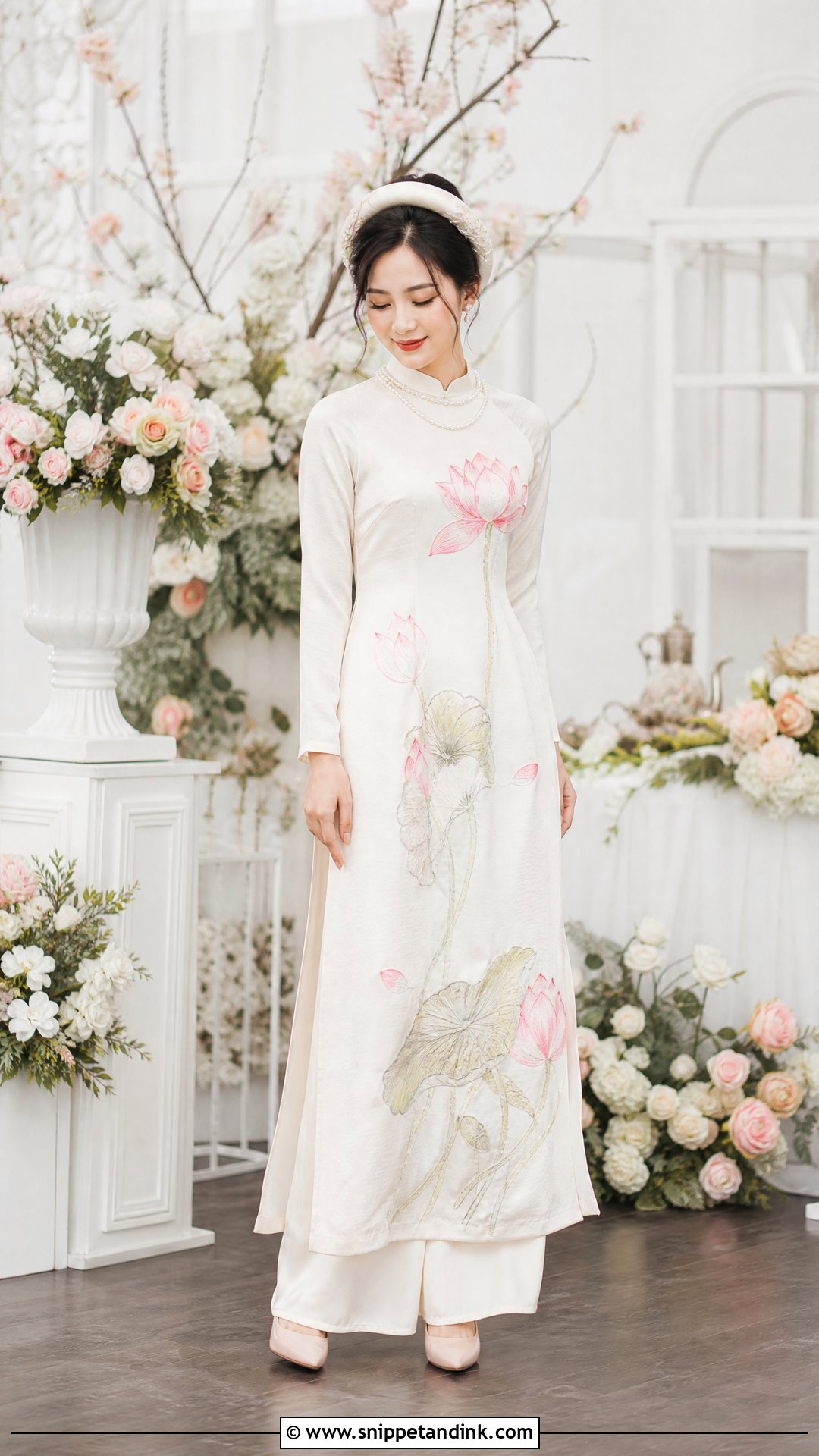
Lotus is the flower most brides ask for, given its place in Vietnamese culture, though roses, peonies, orchids and cherry blossoms also look bridal. The real decision is placement. Embroidery across the bodice, sleeves or lower panels shapes the outfit; scattered all over, it flattens it. Soft thread colors look delicate, while metallic thread looks formal and catches the flash in evening photos. Matching pants, simple heels and a neat headpiece keep it cohesive. It feels right for spring weddings and outdoor portraits.
17. Vietnamese Wedding Ao Dai With Pearl Details
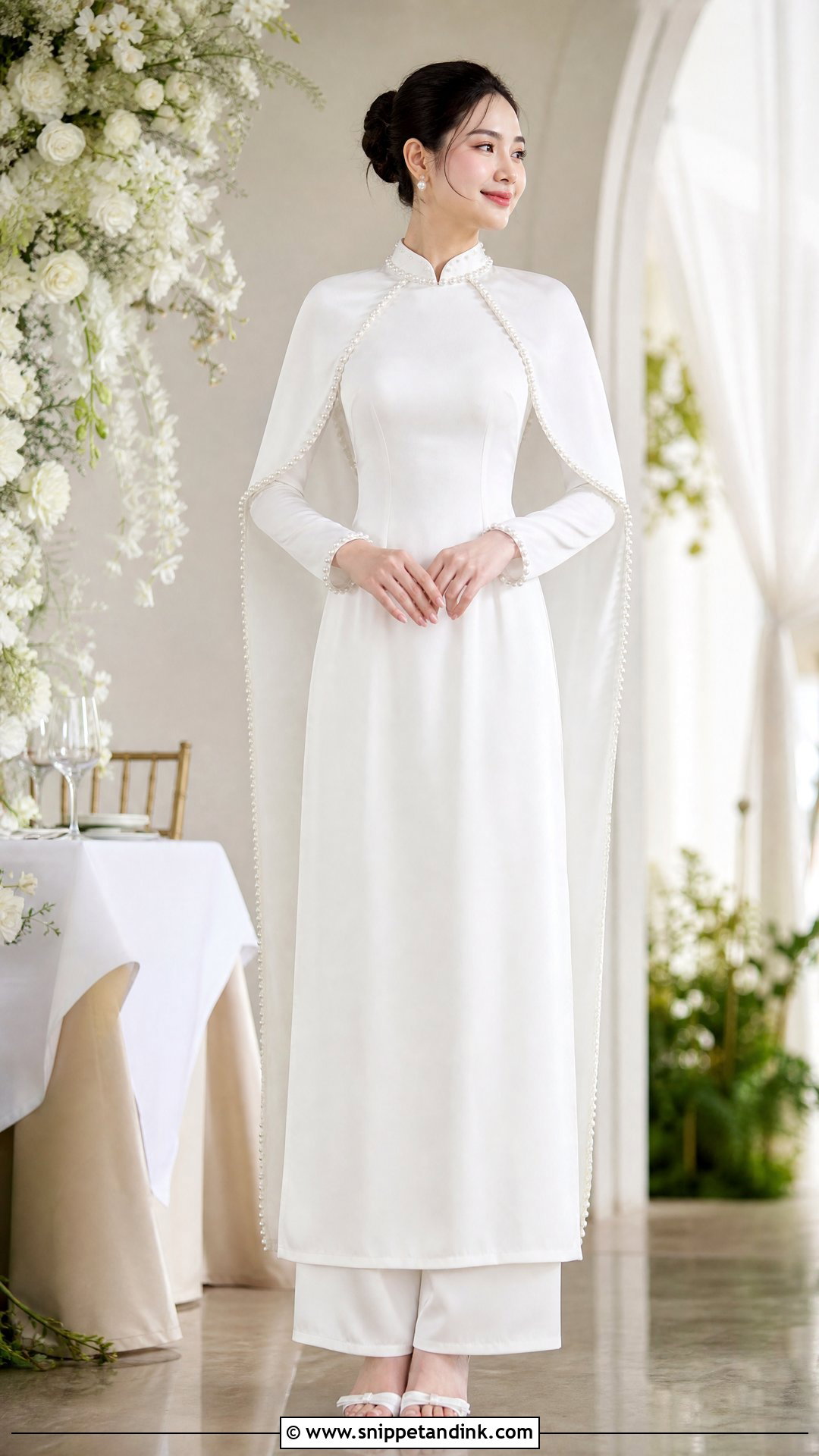
Pearls give a refined, quiet finish on collars, cuffs, sleeves, chest panels and cape edges. White, ivory, champagne and pale pink make the easiest bases. Sewn pearls are heavier than beads, so a pearl-heavy collar needs interfacing or it starts to sag forward by the reception. Pearl earrings, satin heels and a simple bouquet tie it together. A pearl-trimmed khăn đóng is lovely, but skip oversized accessories on top. It suits a family-focused ceremony that should look formal without feeling theatrical.
18. Vietnamese Wedding Ao Dai With Sheer Sleeves
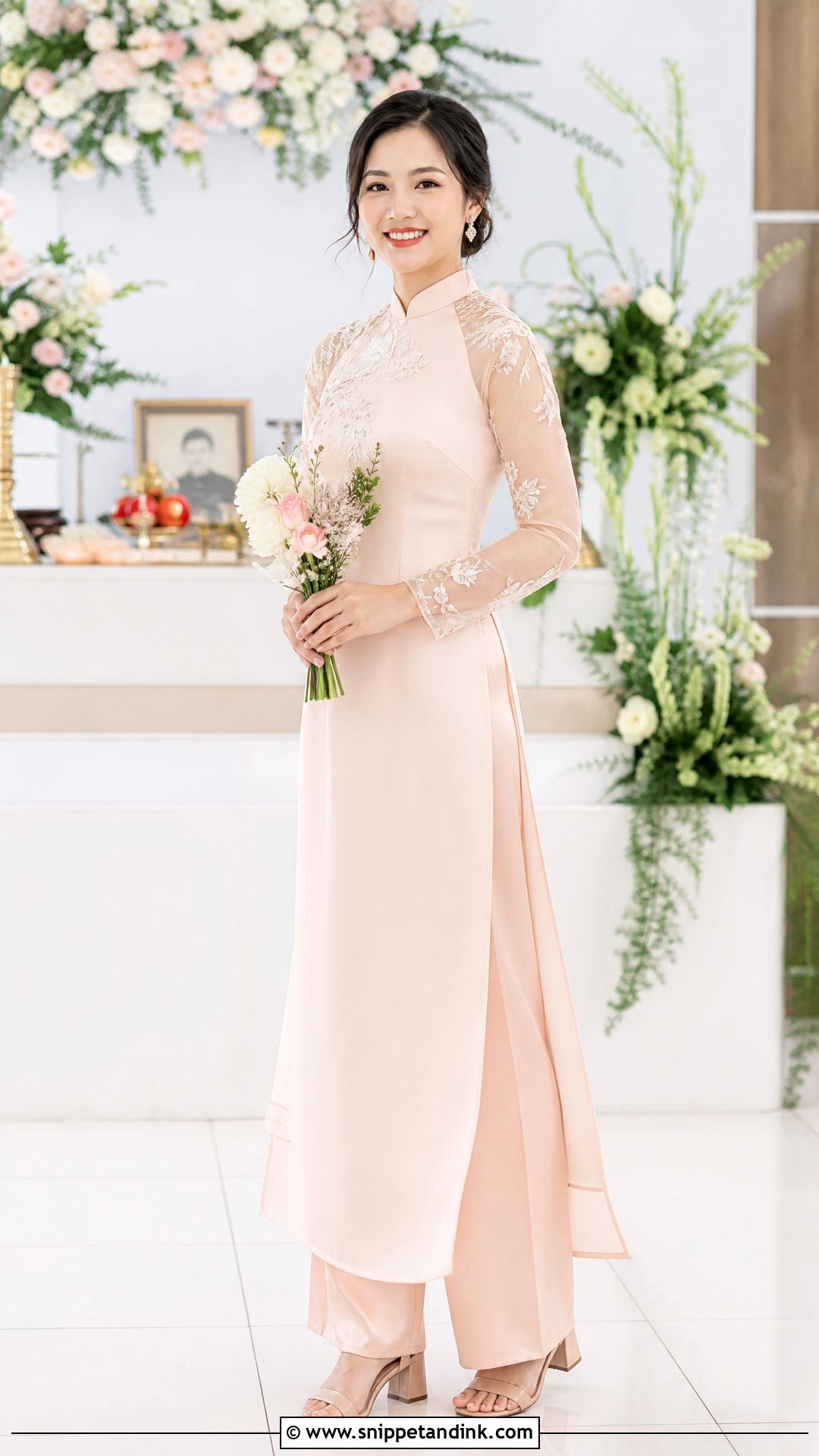
Sheer sleeves solve the summer problem: you keep the coverage elders expect without the heat of a lined sleeve. Organza, chiffon or tulle sleeves soften the fitted bodice and can carry lace appliqué, pearls, embroidery or a clean cuff. Chiffon is the coolest, while organza holds its shape but can feel scratchy along the inner arm, so try both before you choose. Keep the pants plain so the top stays the focus, and pair it with sleek heels, a small headpiece and soft makeup. White, blush, champagne and red all suit it.
19. Vietnamese Wedding Ao Dai With Matching Groom Ao Dai
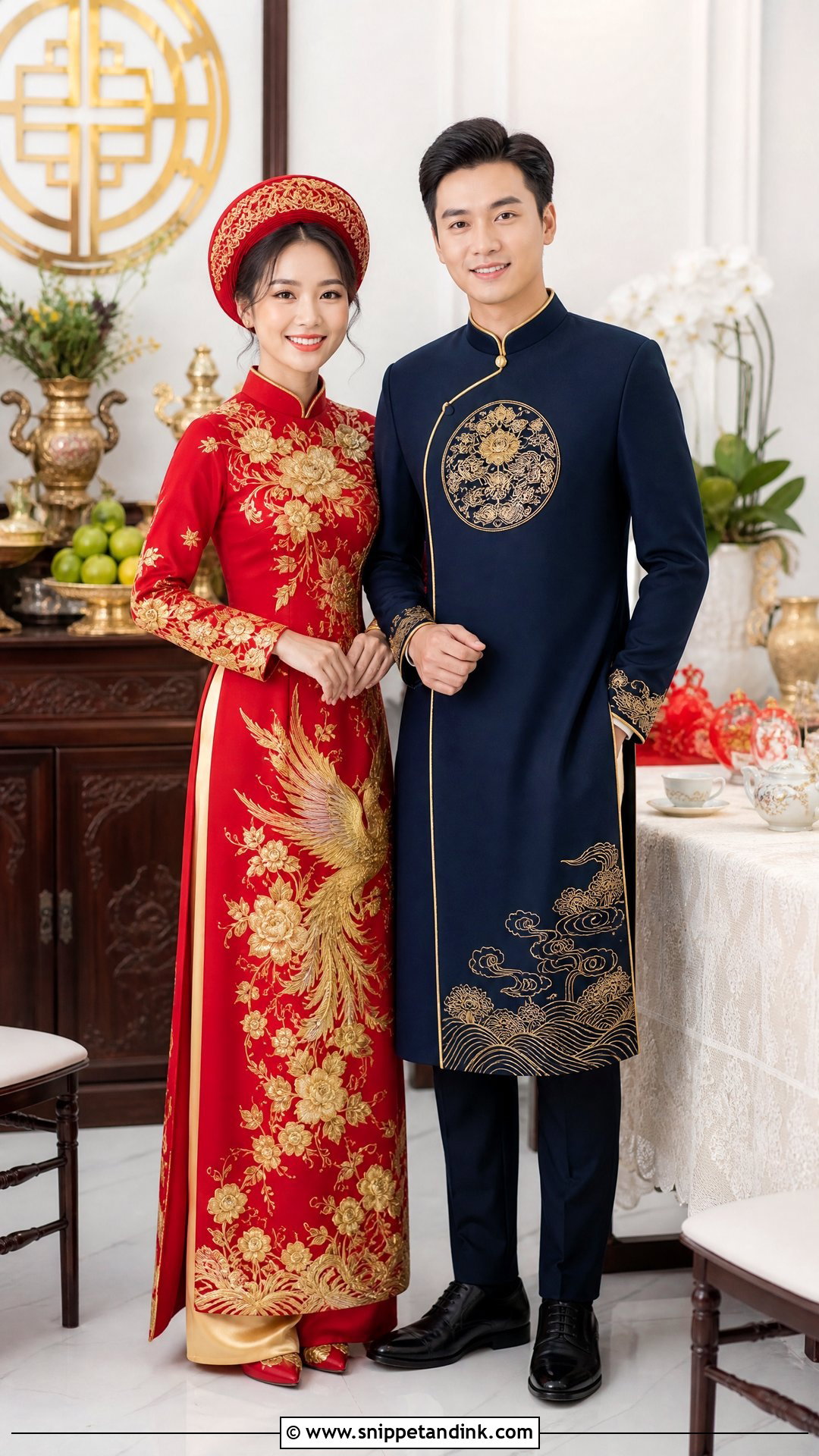
The couple’s outfits don’t need to be identical; they need to share something, whether that is color, fabric, embroidery or trim. A bride in red and gold looks right beside a groom in navy, black, cream or gold, and a bride in white pairs with ivory or soft beige. Matching khăn đóng pieces make the portraits feel unified. I order both outfits from the same tailor when I can, because two workshops rarely match a red exactly. Let the bride’s áo dài carry more detail and the groom’s support it.
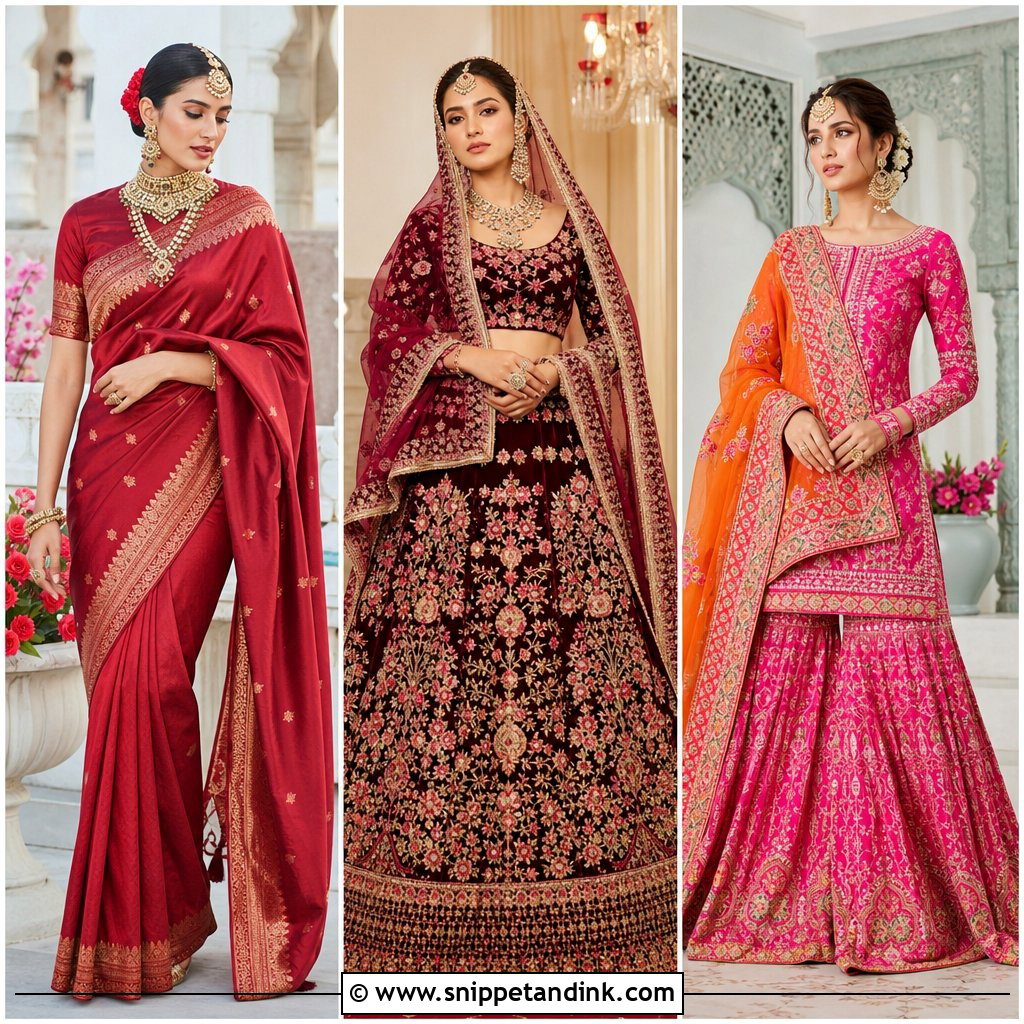

20. Vietnamese Wedding Reception Gown
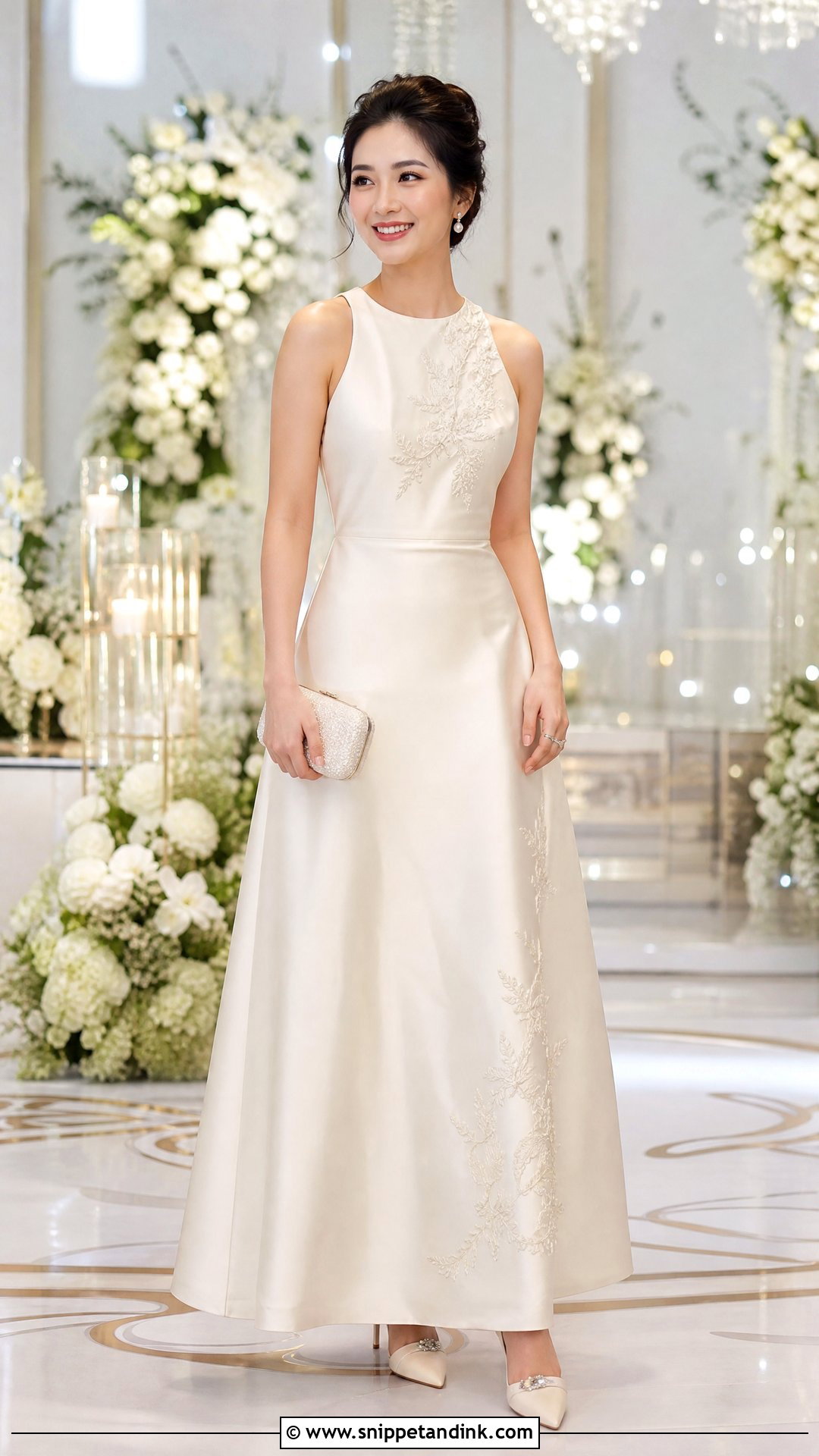
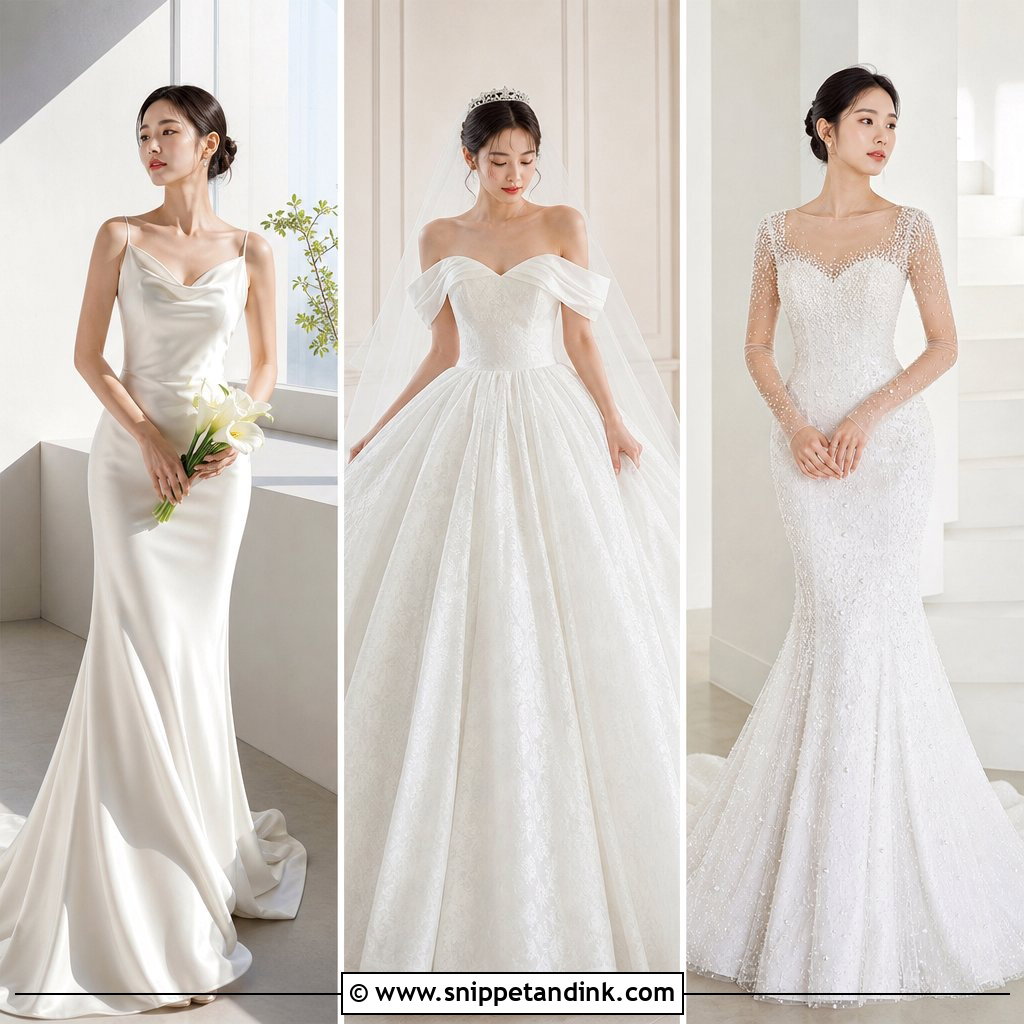
Many brides wear the áo dài for the ceremonies earlier in the day and change into a Western-style gown for dinner, dancing and table visits. A-line, fit-and-flare and sleek satin gowns are the easiest to move in. For a Vietnamese-inspired touch, add floral embroidery, a high neckline, pearl accents or a detachable cape. Plan the change properly: book a private room, allow thirty to forty minutes including hair, and have one person in charge of hanging the áo dài so it isn’t left crumpled on a chair. Comfortable heels, a small clutch and lighter jewelry finish the evening look.
21. Vietnamese Wedding Tea Ceremony Dress
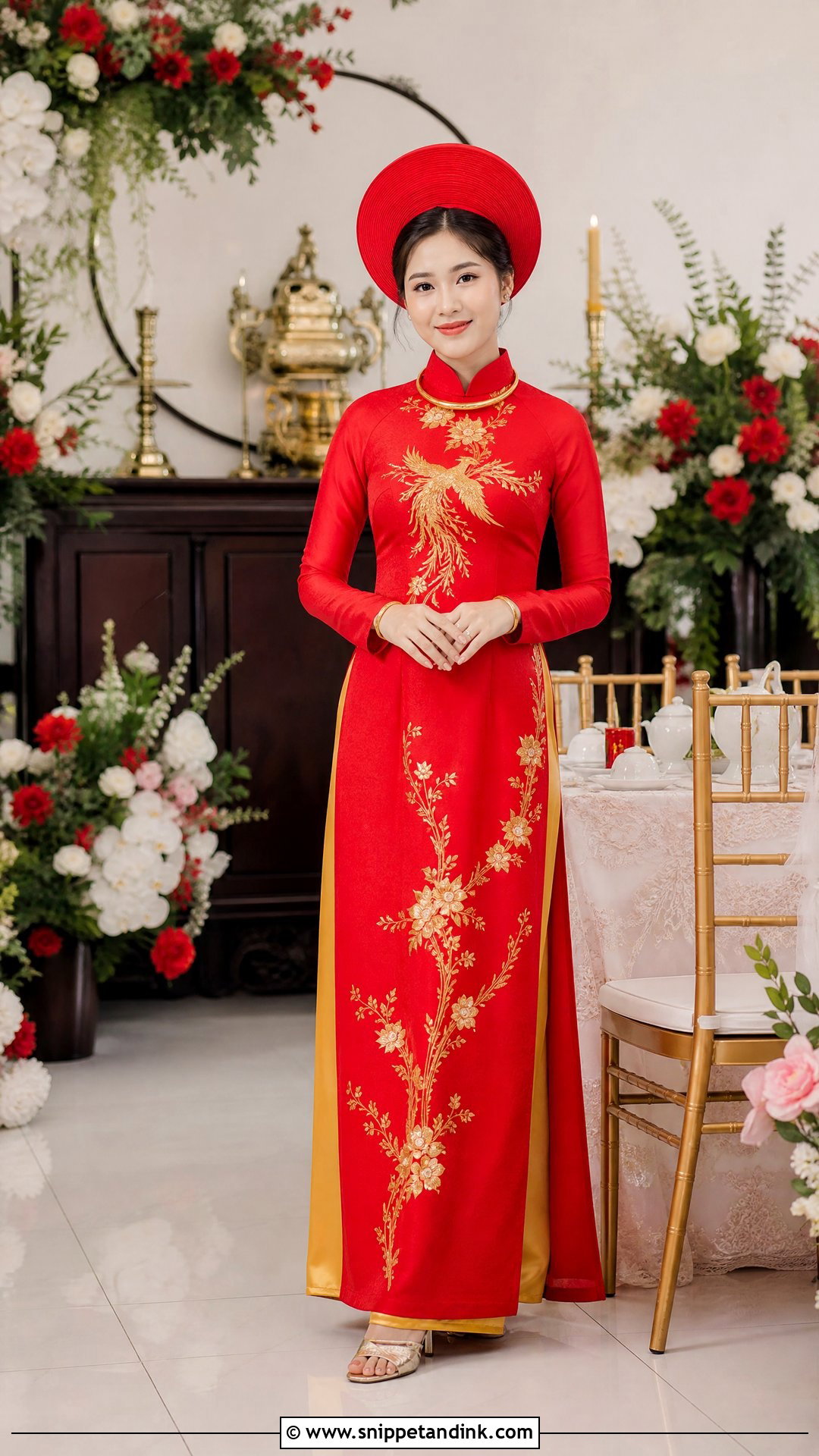
The tea ceremony asks a lot of an outfit. You will bow to the ancestral altar, serve elders, stand for group photos and sit in between, sometimes for hours. That’s why the áo dài is still the usual choice: it looks formal but moves well. Red, gold, ivory and blush are popular colors here. I fit it close but not restrictive, with smooth pants and heels you can stand in for a long time. A khăn đóng completes the look. Keep jewelry secure and quiet, since bangles clink loudly against porcelain cups, and expect photos from the front, side and seated.
22. Vietnamese Wedding Engagement Ao Dai
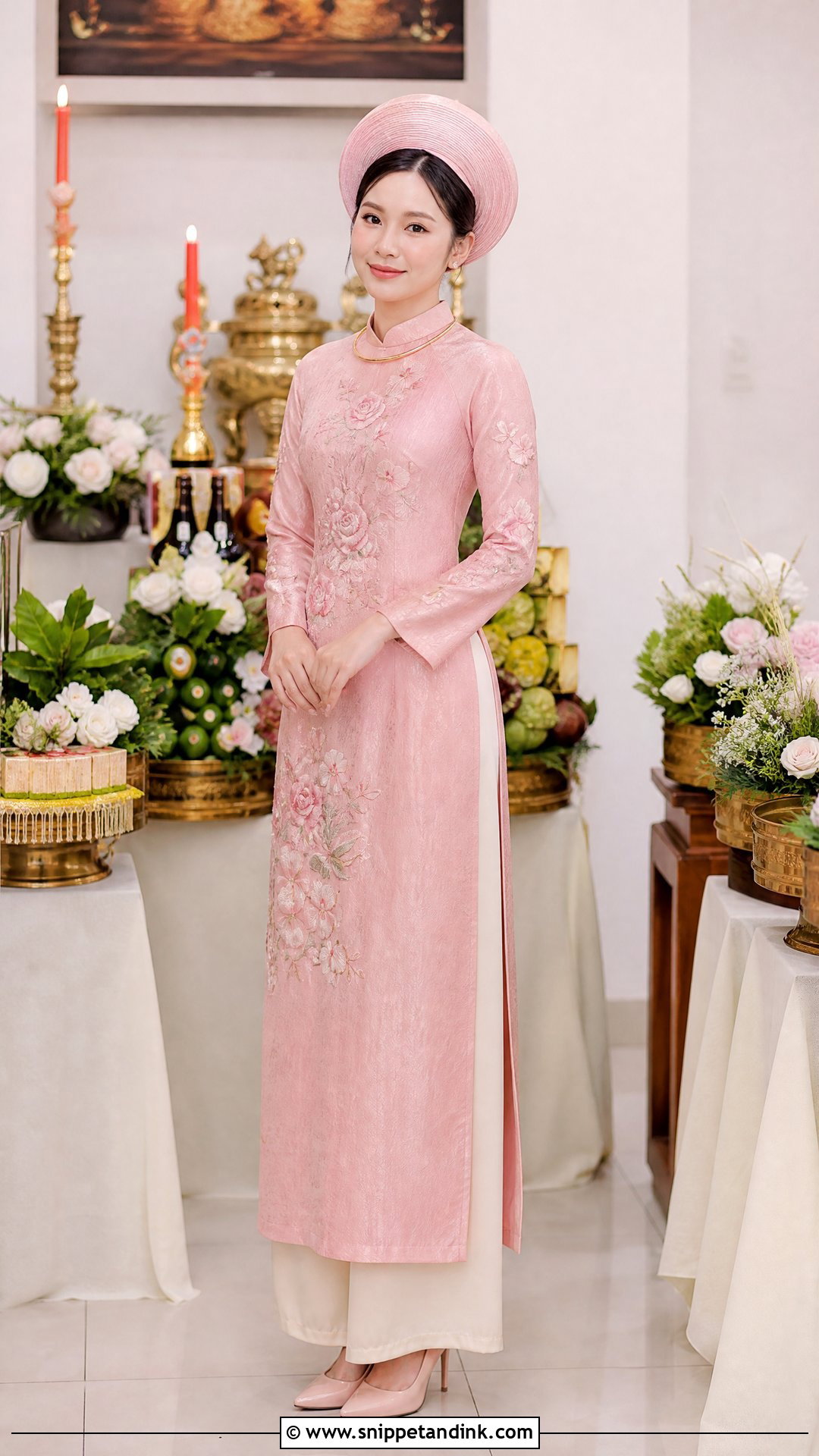
The lễ ăn hỏi is the engagement ceremony, where the groom’s family brings gift trays and the two families formally meet. Red and pink are usual, though gold, ivory and pastels also suit it. There will be greetings, family photos and a lot of standing, so the outfit has to be elegant but comfortable. Embroidery, brocade or floral appliqué makes it special. Many brides deliberately choose a different color from their wedding-day áo dài so the two events look distinct in the family album. Pair it with matching pants, a khăn đóng and simple heels.
23. Vietnamese Wedding Guest Ao Dai
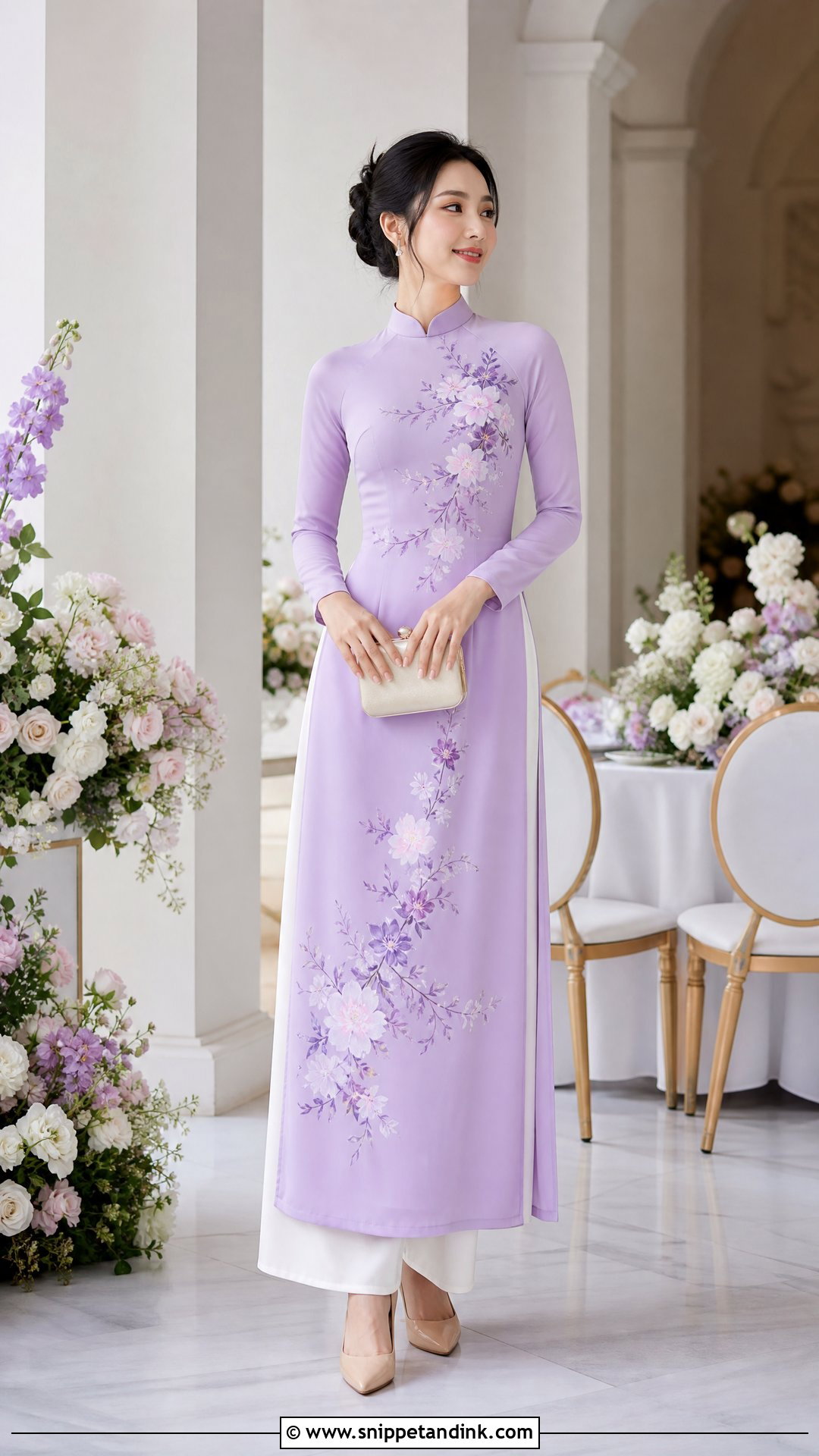
Guests should look respectful without competing with the bride. Soft pastels, jewel tones, navy, green, lavender and floral prints are safe choices. Most guests avoid all-white, which reads bridal, and bright red, which is usually reserved for the couple’s families, unless the couple says otherwise. A simpler áo dài with clean pants, comfortable heels and modest jewelry is ideal. Headpieces are usually unnecessary unless the family custom calls for one. If you don’t own an áo dài, borrowing from a Vietnamese friend is a common and welcome gesture.
24. Plus Size Vietnamese Wedding Ao Dai
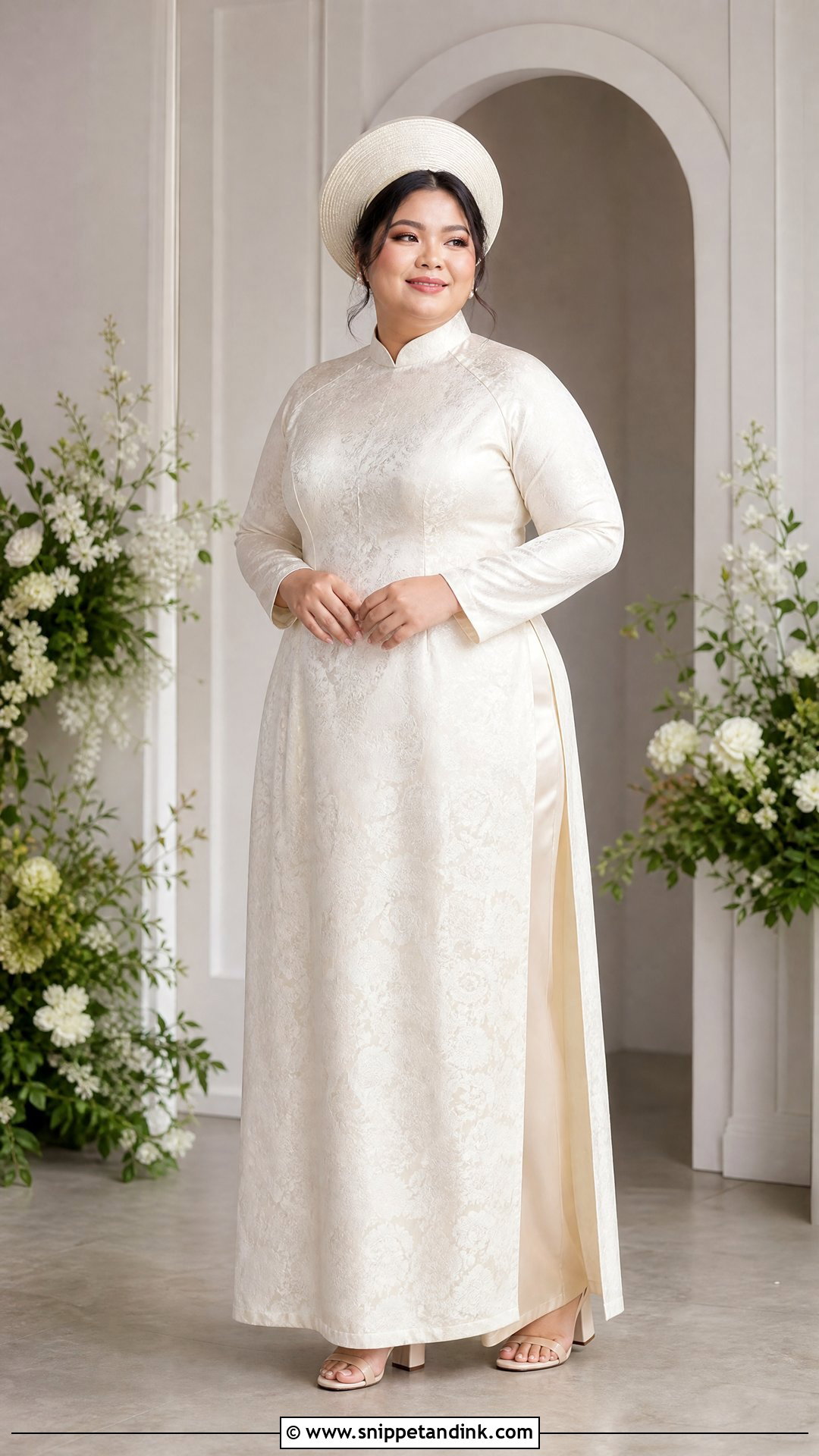
A plus size áo dài is a tailoring job, not a sizing chart. It starts with accurate measurements and fabric that glides rather than clings: slightly heavier silk, brocade, satin or lined lace gives the smoothest result. Princess seams and subtle structure define the shape without restriction. The area I adjust most is the side slit: starting it slightly lower and easing the hip stops it pulling open when you sit. Wide-leg pants make walking and sitting easier. A matching khăn đóng, stable heels and well-placed jewelry complete the look.
25. Maternity Vietnamese Wedding Ao Dai
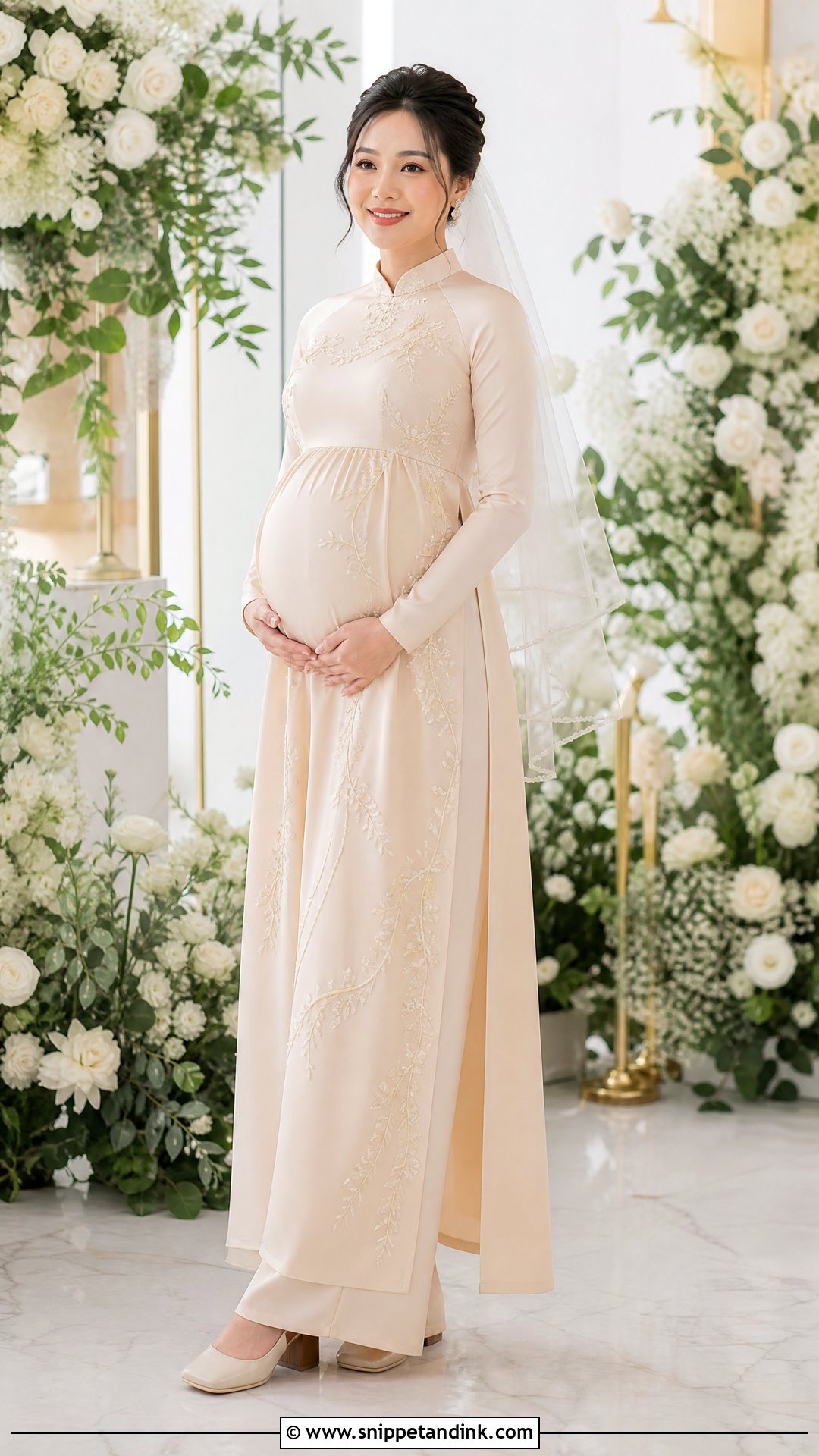
Pregnancy changes the fit week by week, so I schedule the final maternity fitting as close to the date as the tailor allows, usually a week or two out. Rather than a tight cut, choose a softer line through the waist and hips with the slits placed for comfort. Lightweight silk, stretch-lined lace, chiffon overlays or soft satin give a smooth line without pressure. Empire shaping or gentle tailoring under the bust follows the bump while keeping the áo dài recognizable. Comfortable pants, low block heels and delicate jewelry finish it, with a simple khăn đóng or veil.
How Many Outfits Can One Ceremony Day Hold?
A typical Vietnamese wedding day can include the procession to collect the bride, the tea ceremony at her family’s home, another at the groom’s, then a reception in the evening. Many brides wear two or three outfits across that span. More is possible, but every change costs time, and the morning schedule is usually tight because elders and ancestral rites set the pace.
A workable plan for changes
I usually suggest one áo dài for the tea ceremonies, worn with the khăn đóng, then a reception gown or a second, lighter áo dài in the evening. If you love two áo dài, choose different colors so the photos tell the story of the day. Keep the hair the same base style, usually a low bun, so a change of headpiece is all that’s needed.
Looking after silk between ceremonies
Silk áo dài crease at the lap and the back panel when you sit in the car. Hang the outfit the moment it comes off, keep a handheld steamer on low in the changing room, and never iron silk or embroidery directly. After the wedding, have it dry cleaned by someone experienced with silk and embroidery, then store it rolled or folded in acid-free tissue away from light, because red silk fades and white silk yellows if left on a hanger in a bright room.
Red for the Morning, Your Own Choice by Evening
The right Vietnamese bridal outfit depends on the ceremony, the family, the weather and you. A red and gold áo dài suits the tea ceremony; white lace, a cape or pearl detailing reads more modern. Reception gowns, coordinated couple outfits, plus size tailoring and maternity cuts all exist so you can dress for the actual day rather than only the photos. Put fit and fabric first, check the details your family cares about, and move around in the outfit before you sign off on it. When it works for both your family and you, it will feel like yours.
You'll Like These Ideas:


Leave a Reply