
Brides who arrive at an appointment with a folder of single details, a sleeve here, a neckline there, usually leave confused. I find it far easier to judge whole looks: the dress with its shoes, veil, hair and jewelry, seen together. That is how the twenty gowns below are laid out, from classic satin ball gowns to a city mini. Bridal collections right now lean on Basque and drop waists, visible corsetry, lace, raised florals and detachable pieces, alongside the classics. As you look, think about how each one moves and how it will feel at hour eight, not only how it looks in a still photo.
The Calendar Behind a Bridal Gown Order
Most of these dresses are made to order, and the timing surprises brides more than the prices do. A gown ordered from a bridal salon usually takes several months to be produced and shipped, and then it still needs alterations. I suggest starting appointments around nine to twelve months before the wedding, and ordering by about eight months out where you can.
- First appointments: try different silhouettes, even ones you think you’ll dislike. Ball gowns and mermaids often surprise people in both directions.
- Order: confirm the delivery date in writing, along with what happens if it’s late.
- First fitting: roughly two to three months before the wedding, with your shoes and the underwear you plan to wear.
- Further fittings: usually one or two more, spaced a few weeks apart. Corsets, drop waists and bias-cut slips tend to need the most.
- Final fitting and pick-up: about two weeks out, ideally with the person who’ll help you dress, so they can learn the bustle.
Shorter timelines are possible. Rush fees, buying a sample dress off the rack, or choosing a ready-to-wear designer can all work, but they narrow the options, so leave more room if your heart is set on a specific gown.
1. Classic Satin Ball Gown Wedding Dress
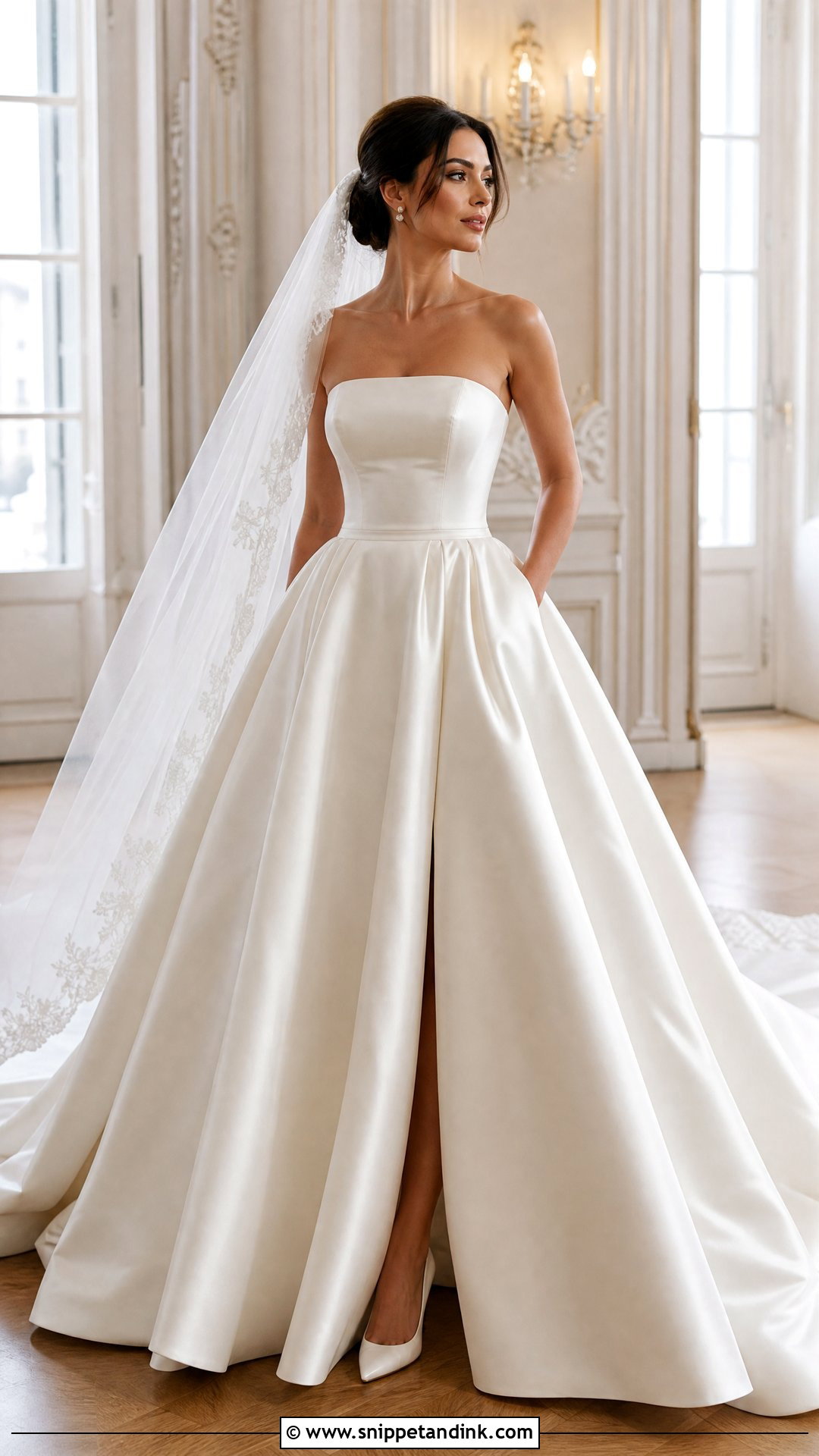
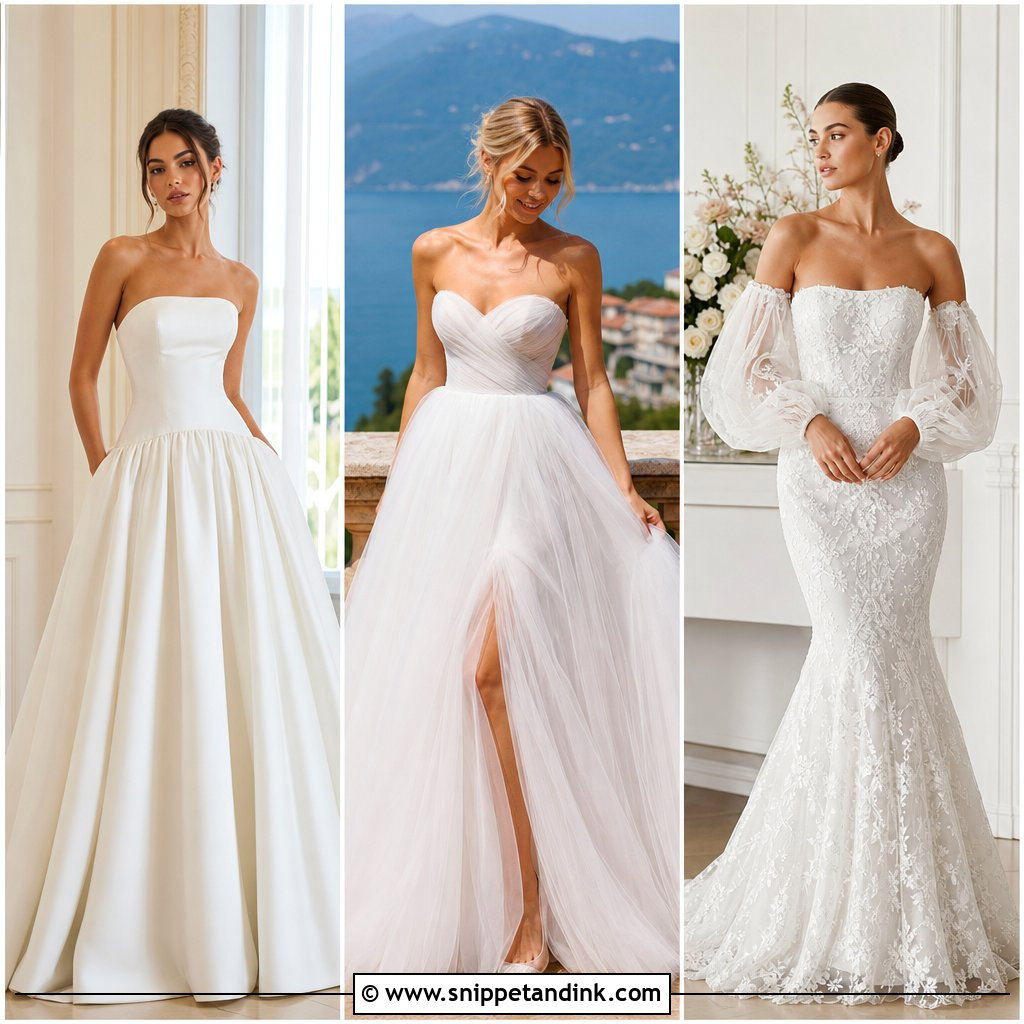
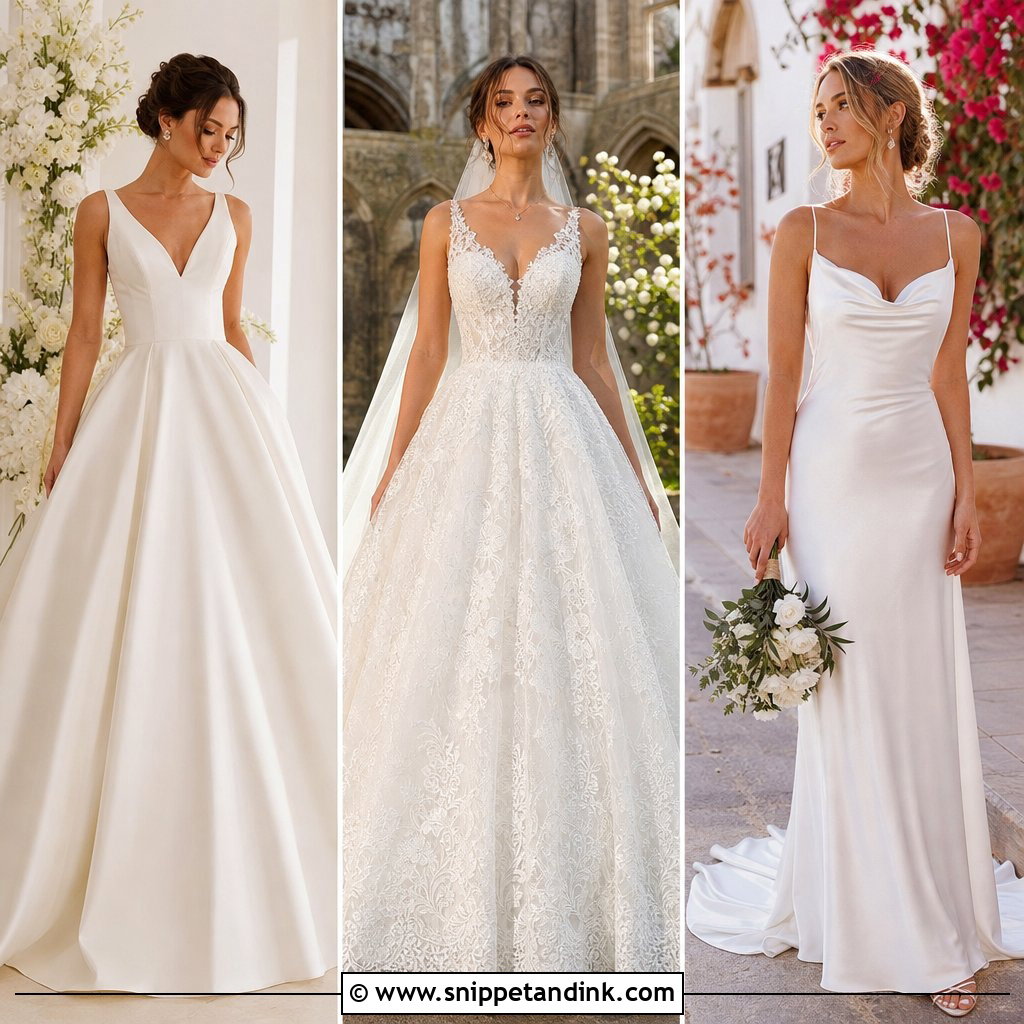
Satin is the fabric I’d choose for a ball gown if the bride wants it to read clearly from the back of a large room. It has a soft sheen that catches both window light and chandeliers, and it holds a full skirt without needing much petticoat. Keep the neckline plain, strapless or a scoop, and let covered buttons down the back do the detailing. Pointed pumps, pearl or diamond studs, a cathedral veil with a raw edge and a low bun complete it. On a petite frame I ask the maker to reduce the skirt volume, otherwise the dress wears the bride.
2. Basque Waist Wedding Dress
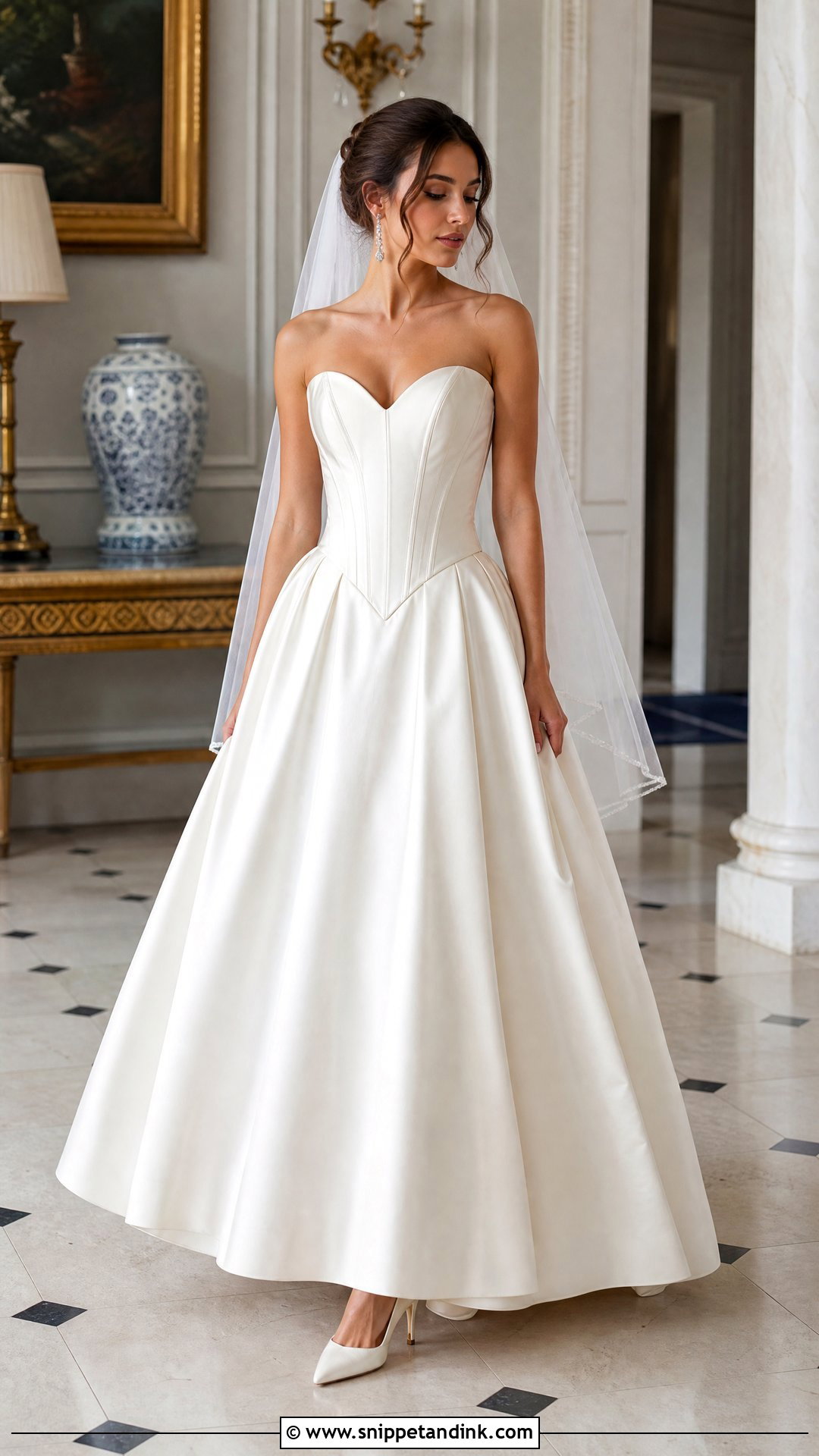
The Basque waist dips into a V below the natural waistline, and its whole effect depends on where that point lands. Too long and it shortens the legs; too short and it looks like an ordinary seam. Bodice length is the first thing I check at a fitting. Underneath, a supportive corset should sit smoothly before the skirt opens into satin, tulle or lace. A strapless sweetheart neckline plays up the vintage feel, though thin straps add security. Slingback heels, drop earrings and a fingertip veil that clears the waist suit a historic venue. Sit and walk in it before signing off.
3. Off Shoulder Lace Wedding Dress
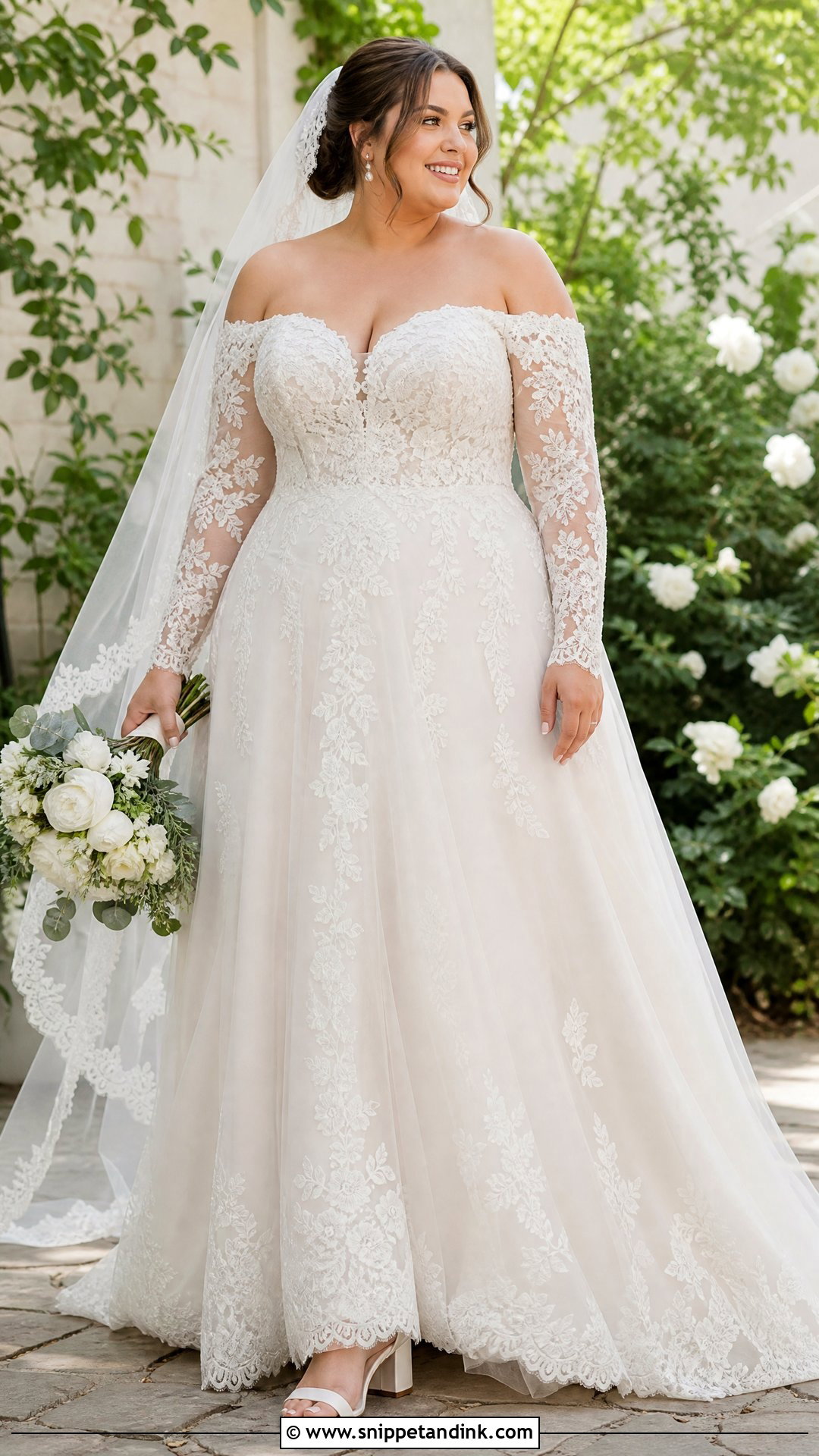
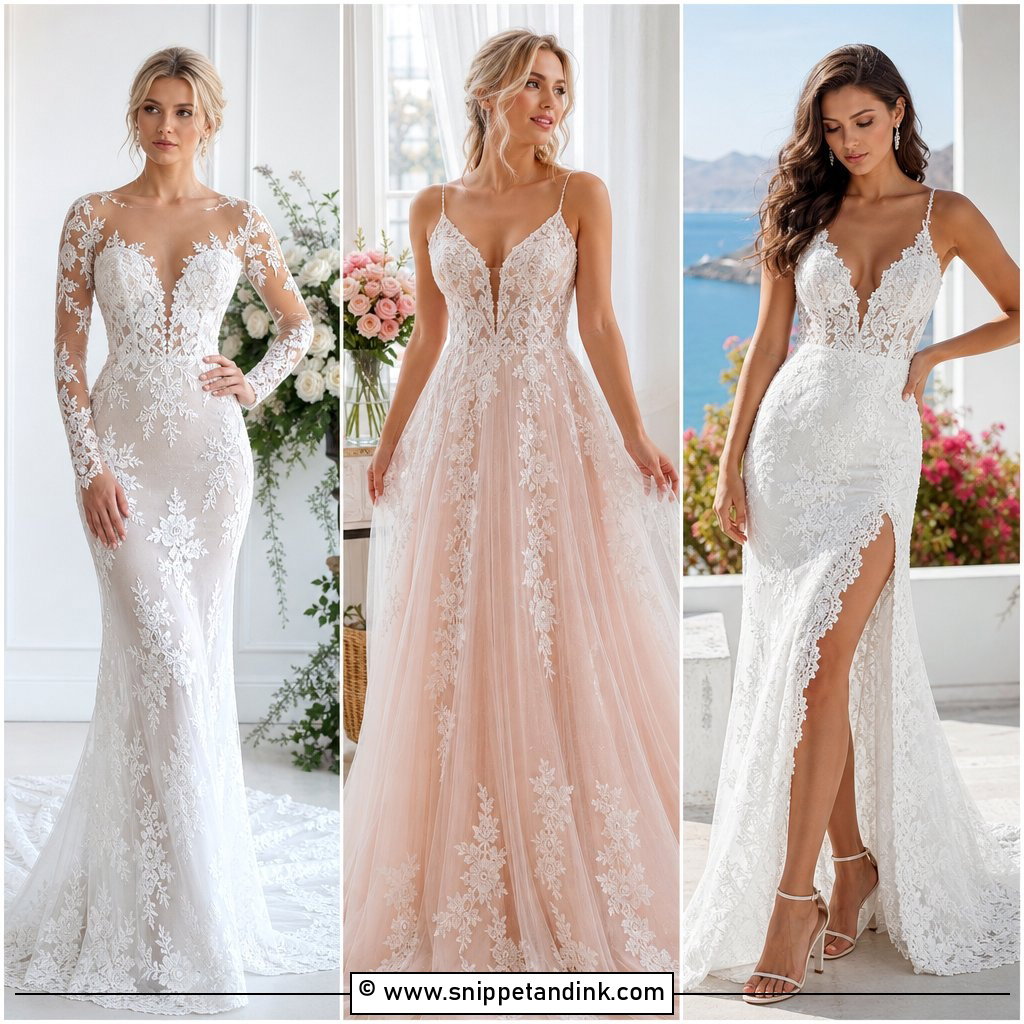
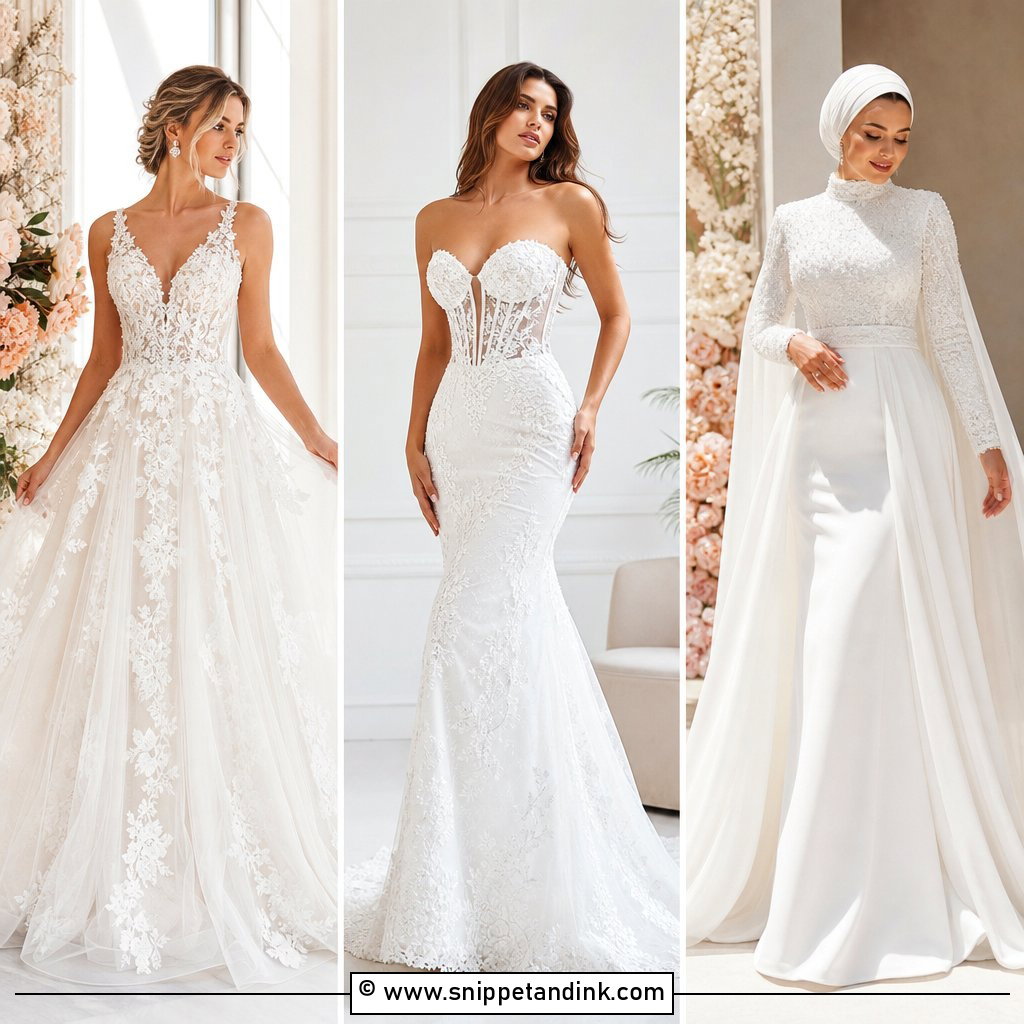
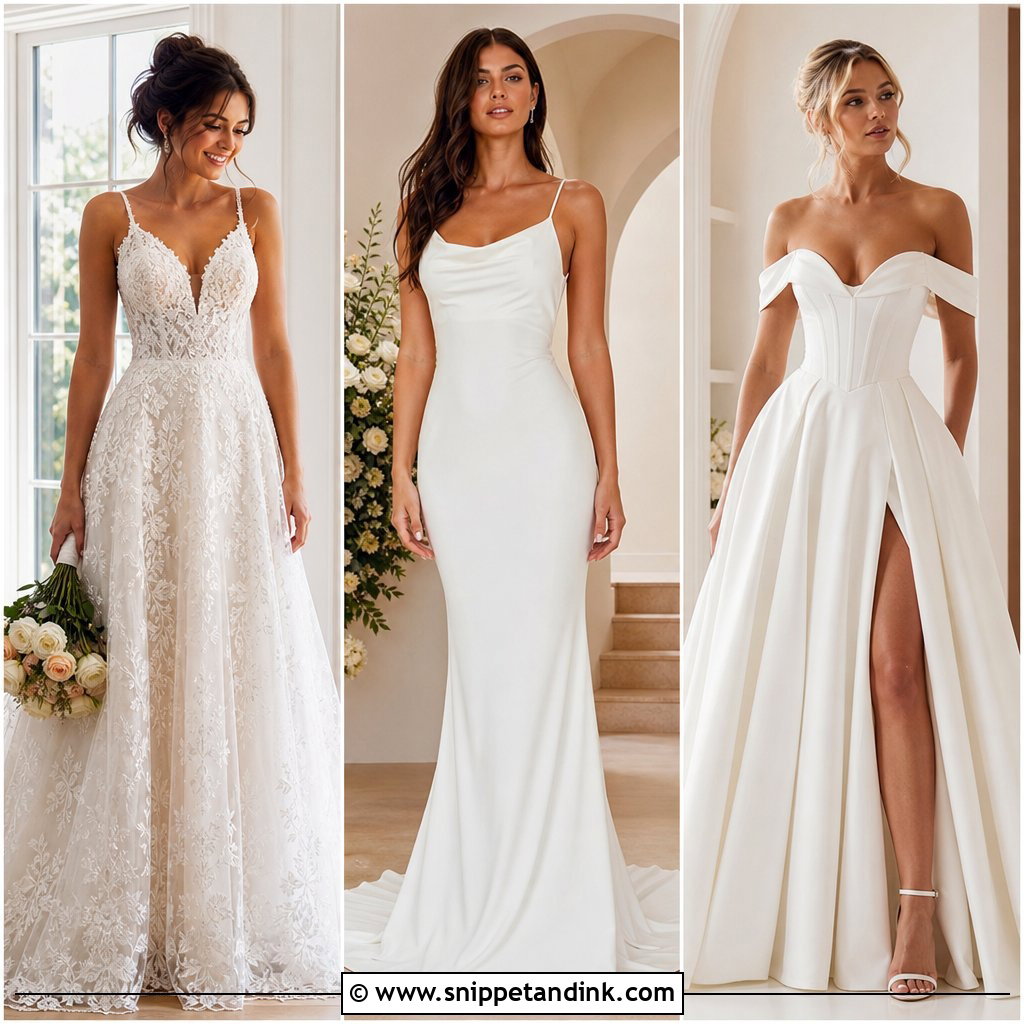
Off-the-shoulder lace tends to look best when the veil lace is related to the dress lace but not an exact copy, which can flatten the detail in photographs. Choose floral lace over a comfortable lining and sleeves that rest securely on the upper arm. An A-line skirt keeps it light; a mermaid gives more definition. Low block-heel sandals, small pearl drops and a loose updo keep the neckline clear, and stop hair snagging on the lace. It sits well at a garden, vineyard, coastal property or a traditional ballroom. My test: hug someone, hold the bouquet and dance a few steps without touching the neckline.
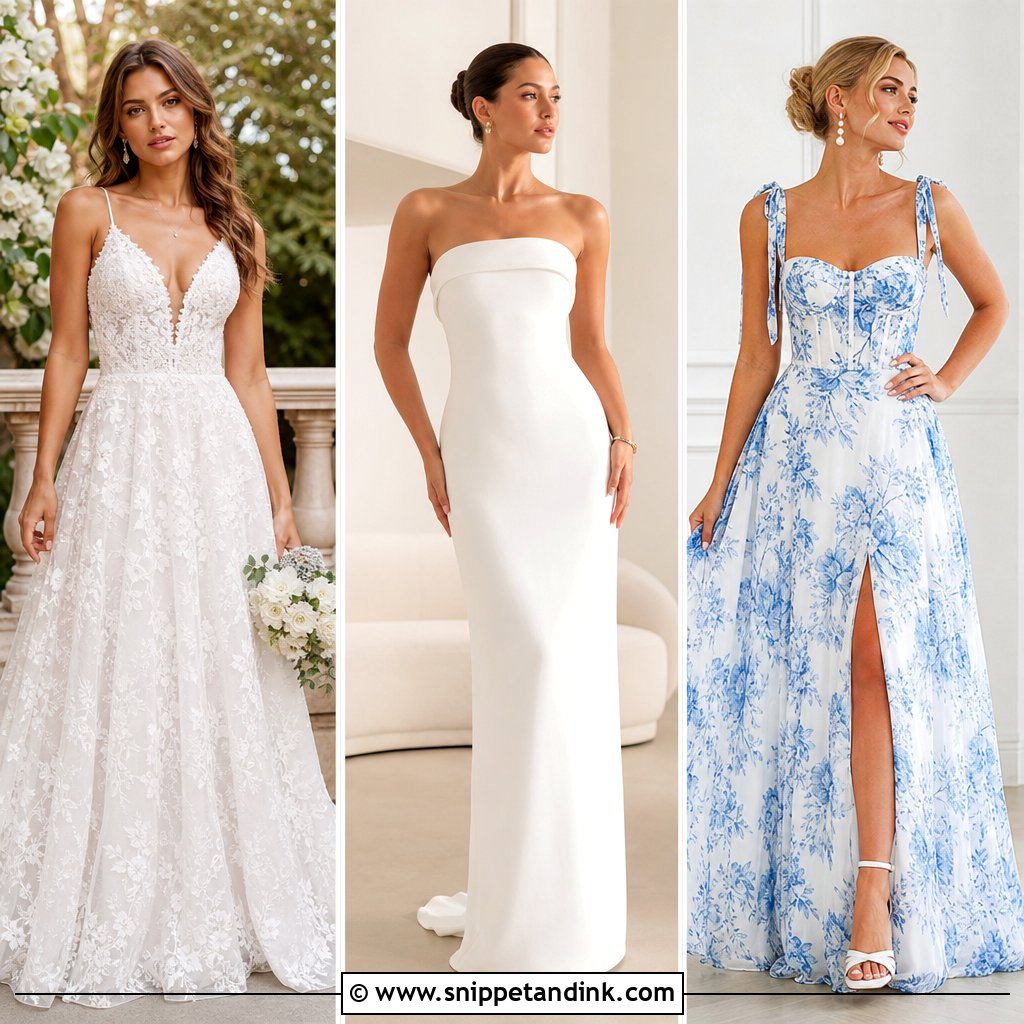
4. Strapless A Line Wedding Dress
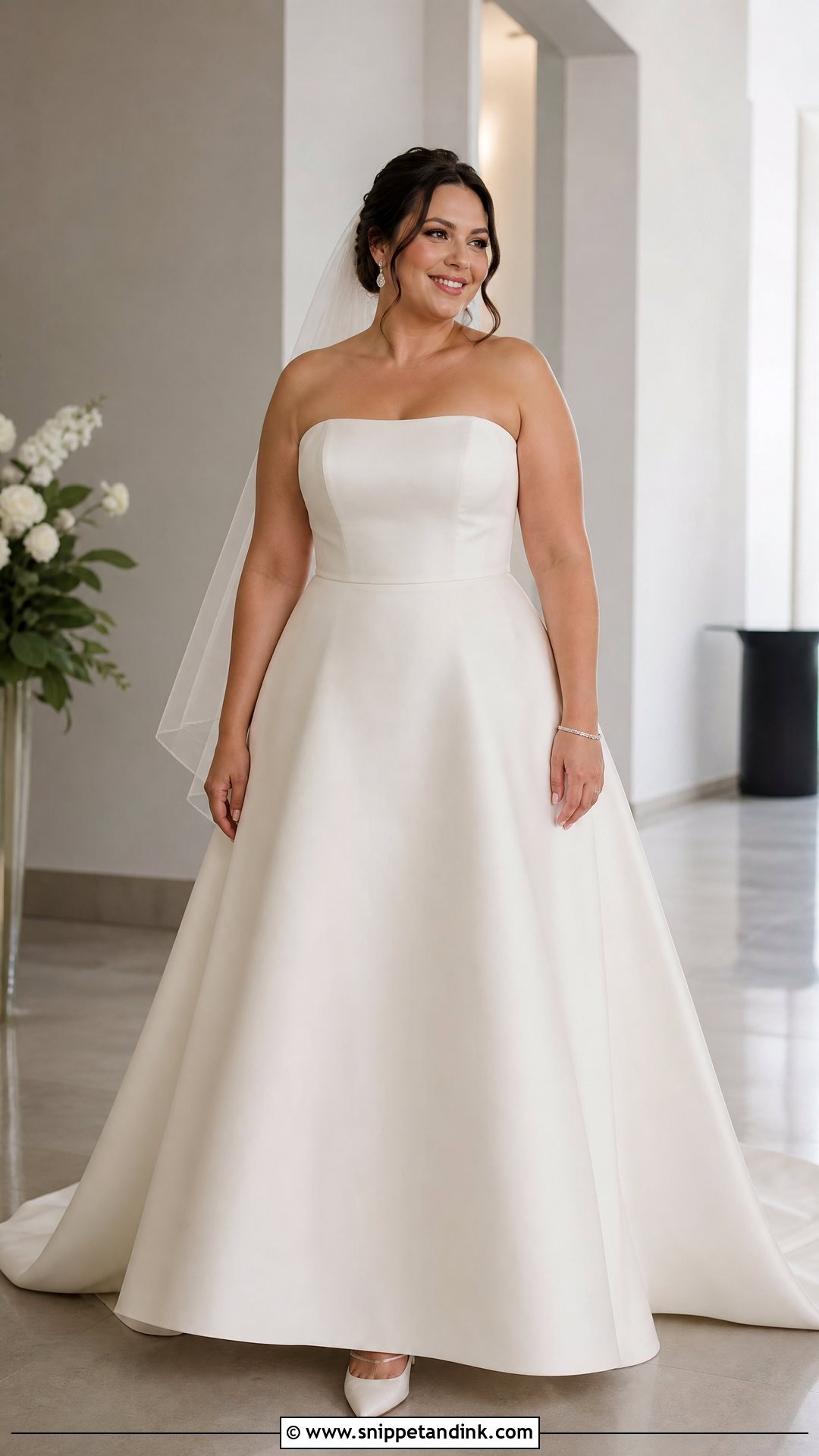
Strapless A-lines are dependable because they are easy to fit. The bodice defines the upper body, the skirt widens gradually, and there’s no ball-gown weight to carry. Fabric changes the mood completely: matte satin and mikado look crisp and formal, chiffon and organza lighter. Pointed pumps, a slim tennis bracelet and a drop veil keep it refined, with either a fine necklace or statement earrings, not both. What really matters is inside. Hidden boning, proper cups and a waist fitted to you hold a strapless dress up; the number on the label does not.
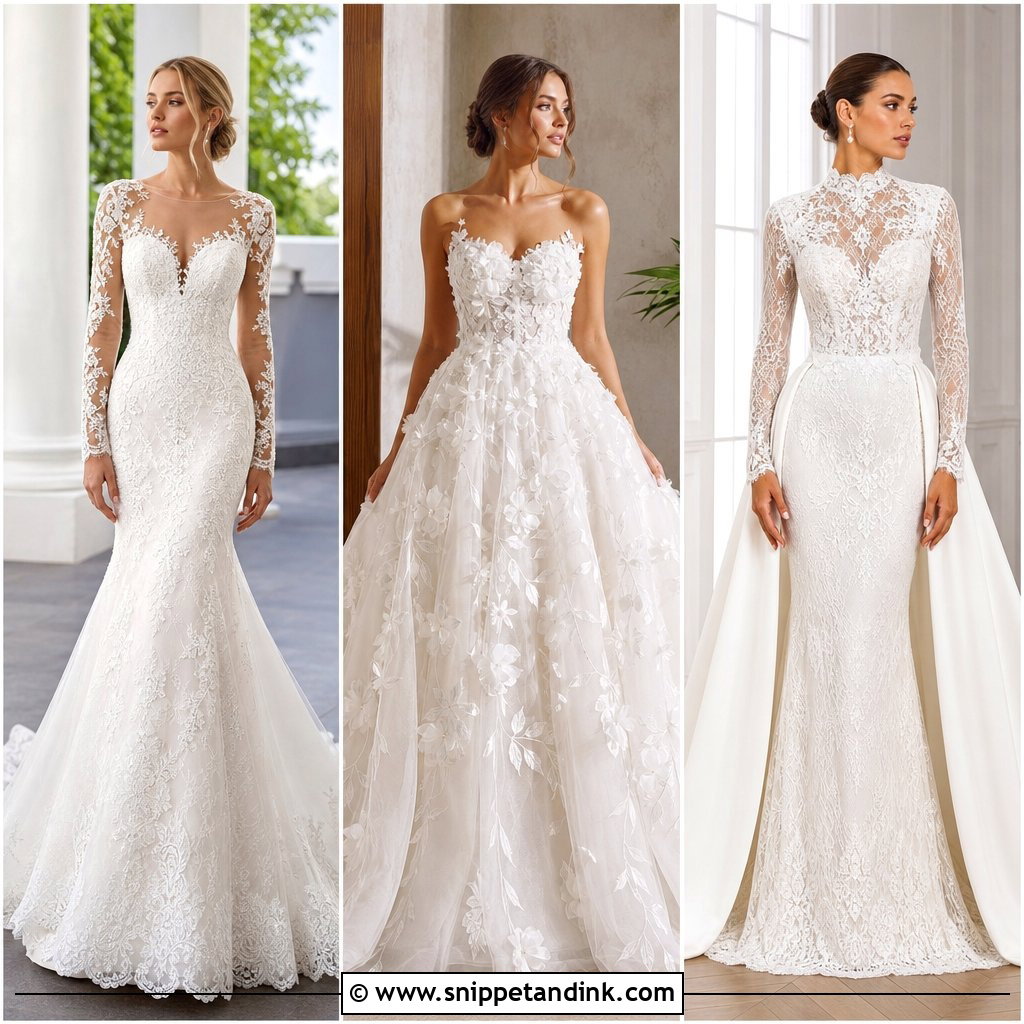
5. Long Sleeve Lace Wedding Dress
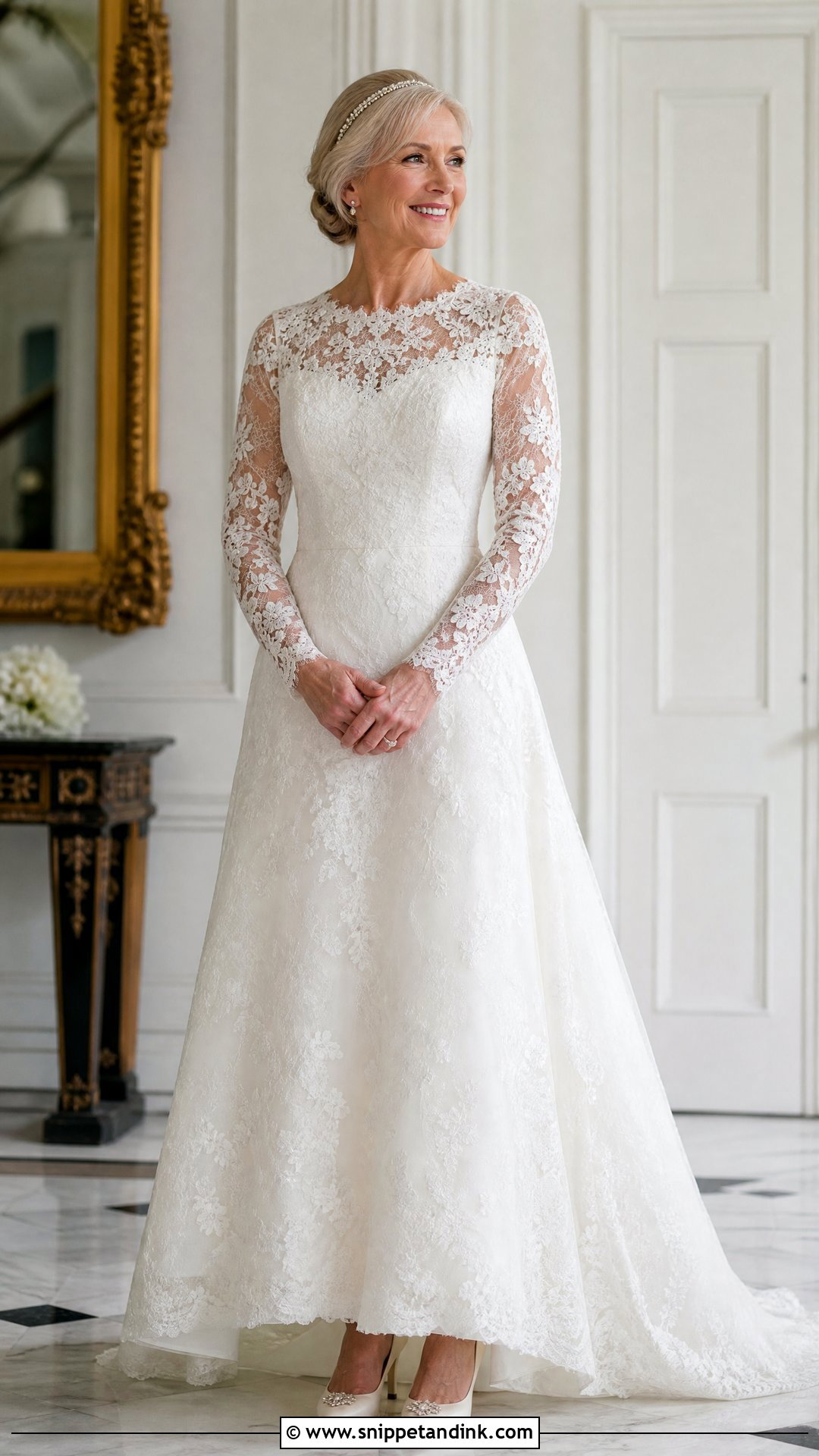
Long lace sleeves only feel light if the lace is. Sheer sleeves with appliqués placed along the arm look delicate, while fully lined lace gives a more modest finish and runs warmer. An A-line or column skirt lets the sleeves be the detail. I bend the bride’s elbows at every fitting, since a sleeve cut straight will pull across the joint when she eats or lifts a glass. Closed-toe ivory heels, a narrow headband, small crystal earrings and a sleek bun or low ponytail suit autumn, winter or a heavily air-conditioned room.
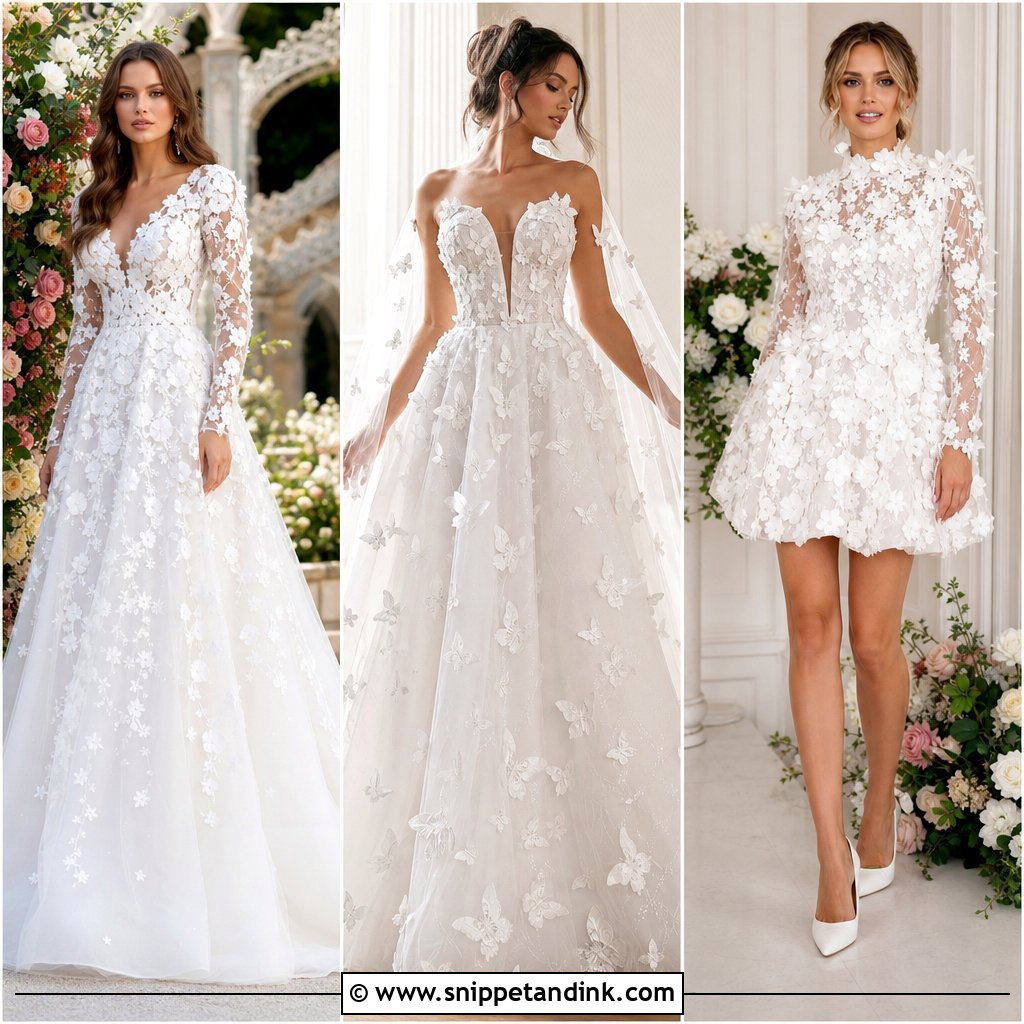
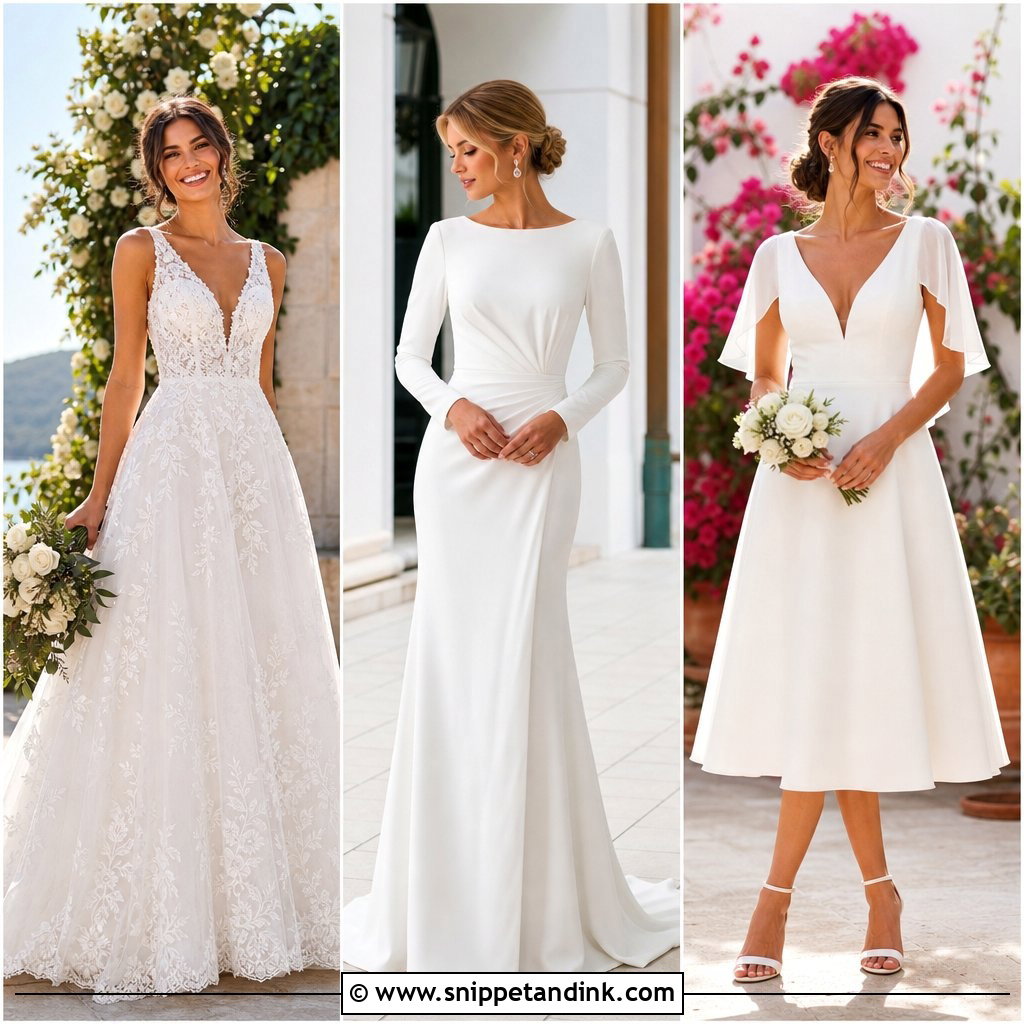
6. Square Neck Crepe Wedding Dress
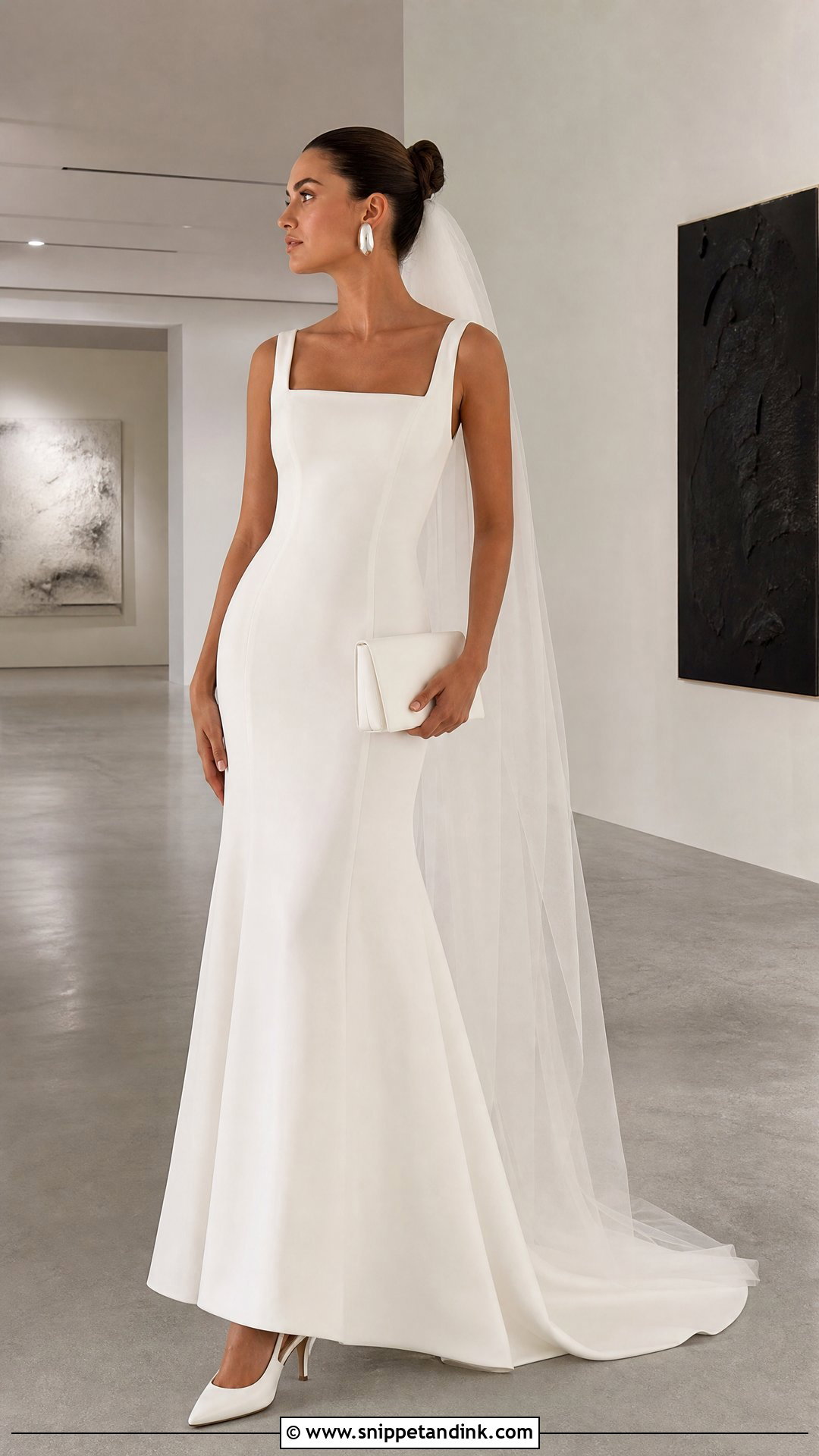
A square neck in crepe is pure tailoring. Nothing decorates it, so the fit has to be right: the neckline should frame the collarbones and lie flat, and the crepe should follow the body without pulling at the seams. A sheath, a gentle fit-and-flare or a tailored A-line all suit it. Sculptural earrings, pointed slingbacks, a sleek veil set under a polished bun and a structured clutch fit a gallery or a rooftop. Because plain crepe shows construction so clearly, I’d put more of the budget into alterations and smooth underwear than into accessories.
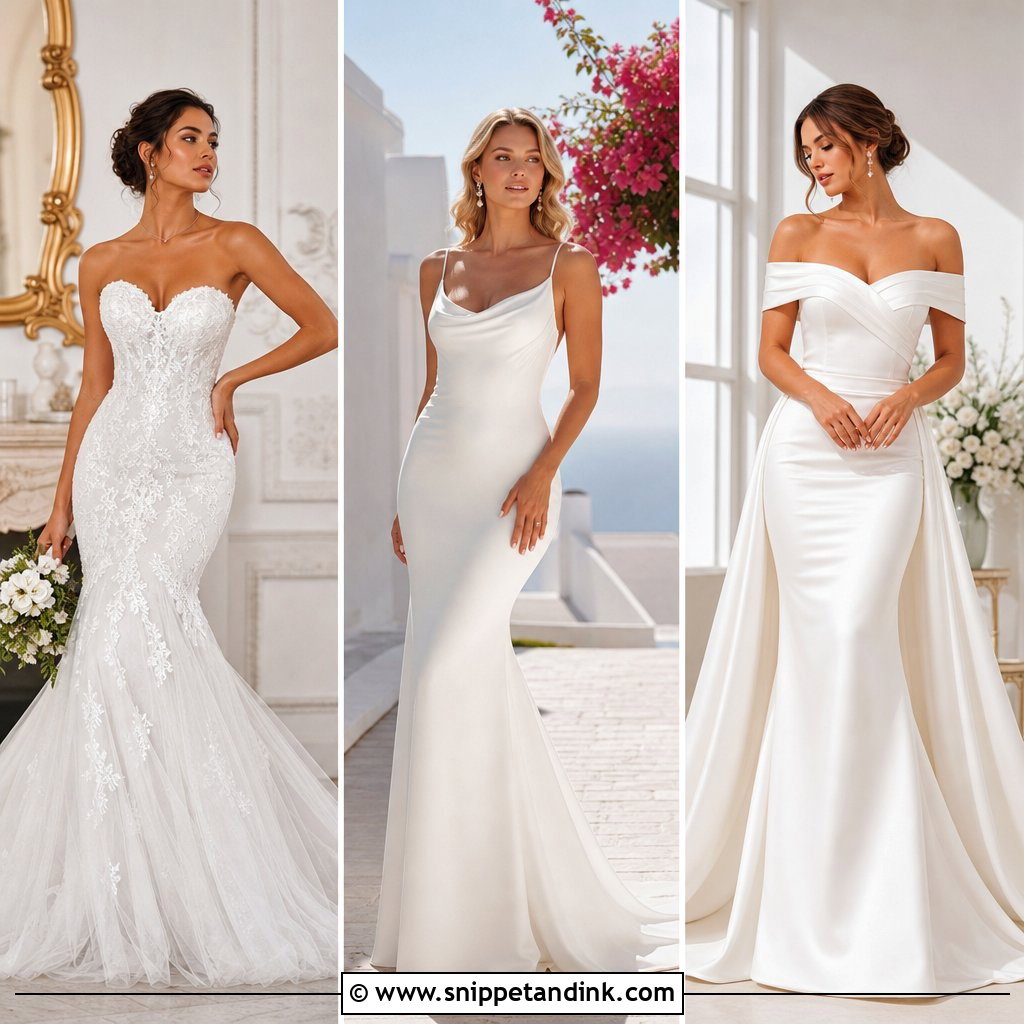
7. Mermaid Wedding Dress
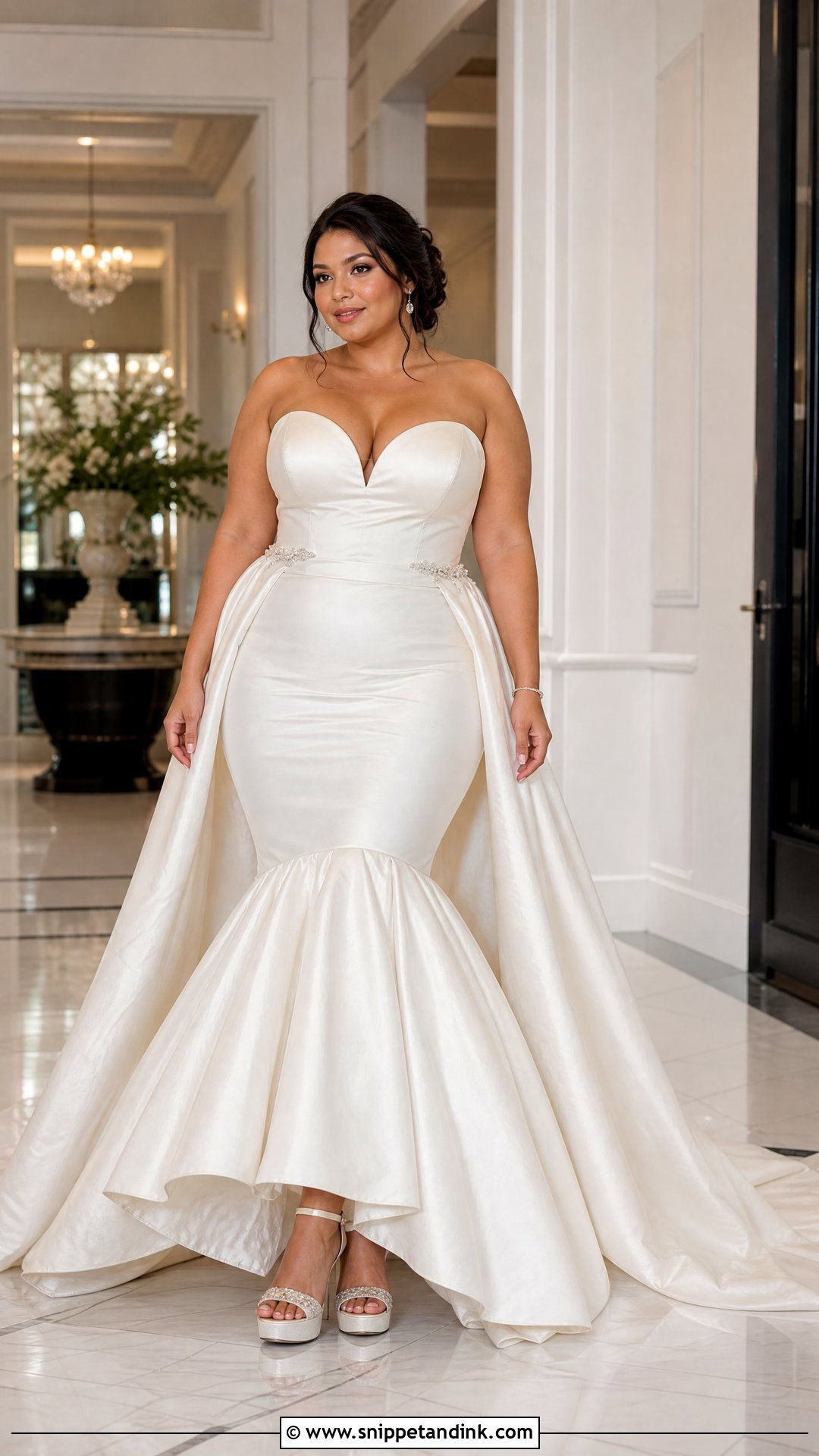
Mermaids fit through the bodice and hips and flare near the knee, and the height of that flare decides whether you can walk. If it starts too low, you shuffle. Satin gives a sharp, dramatic line; lace or beaded tulle feels softer. Keep accessories quiet, crystal studs and a slim bracelet, with platform sandals if the hem was cut long. A detachable overskirt adds drama for the aisle and comes off for dancing. At alterations, take full strides, sit down and climb a step. The flare should begin where your knees can still move freely.
8. Floral Applique Wedding Dress
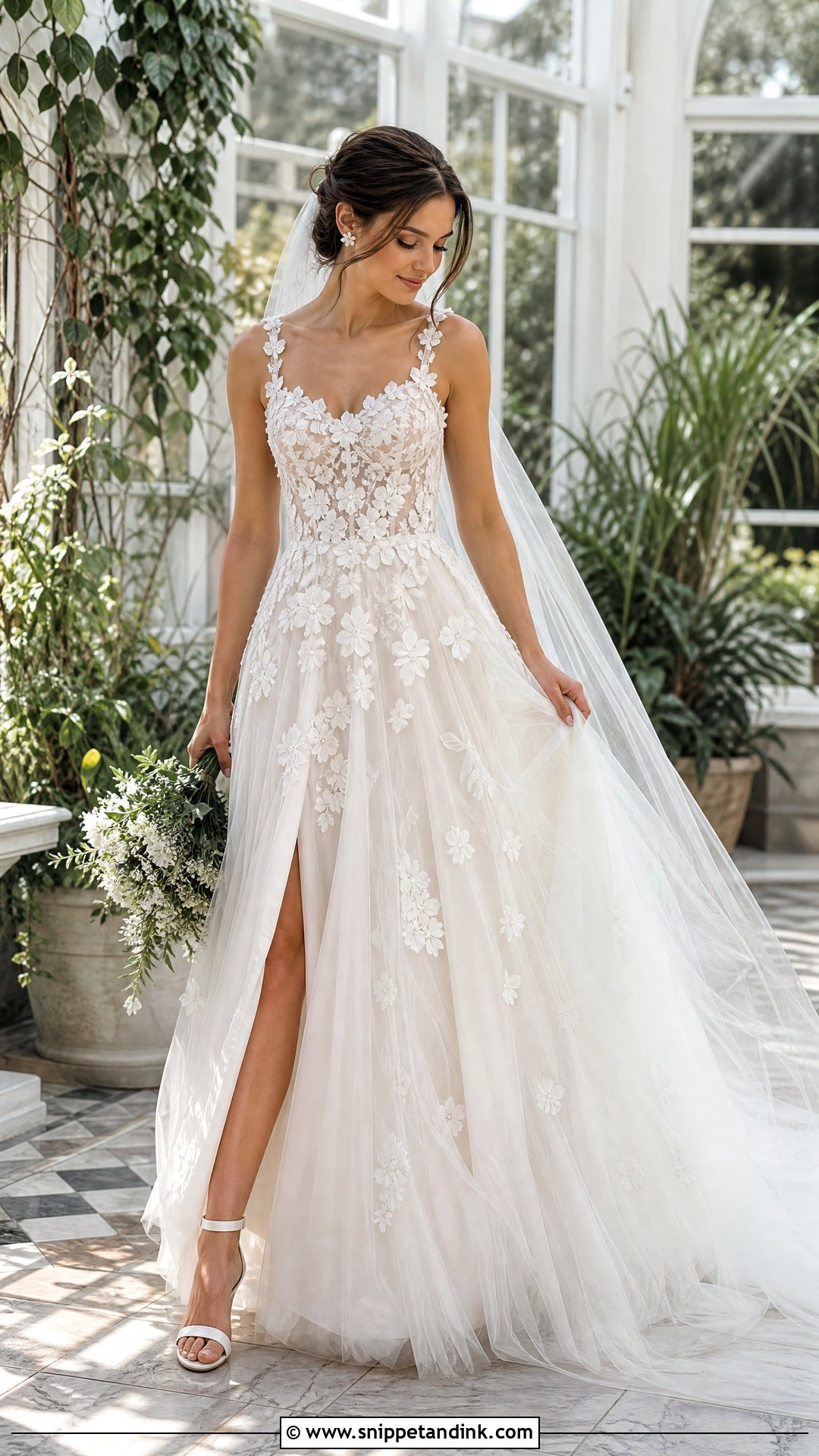
With floral appliqué, placement is everything. The prettiest versions cluster petals on the bodice and scatter them more thinly down a tulle or organza skirt, so the eye travels down the dress. Small flowers read as texture; large three-dimensional blooms read as a statement, so decide which you want before you shop. Slim ankle-strap heels, floral studs, a sheer veil with a plain edge and a twisted updo suit a conservatory or botanical garden. Check the stitching on raised petals. Loose ones catch the veil every time you turn.
9. Drop Waist Wedding Dress
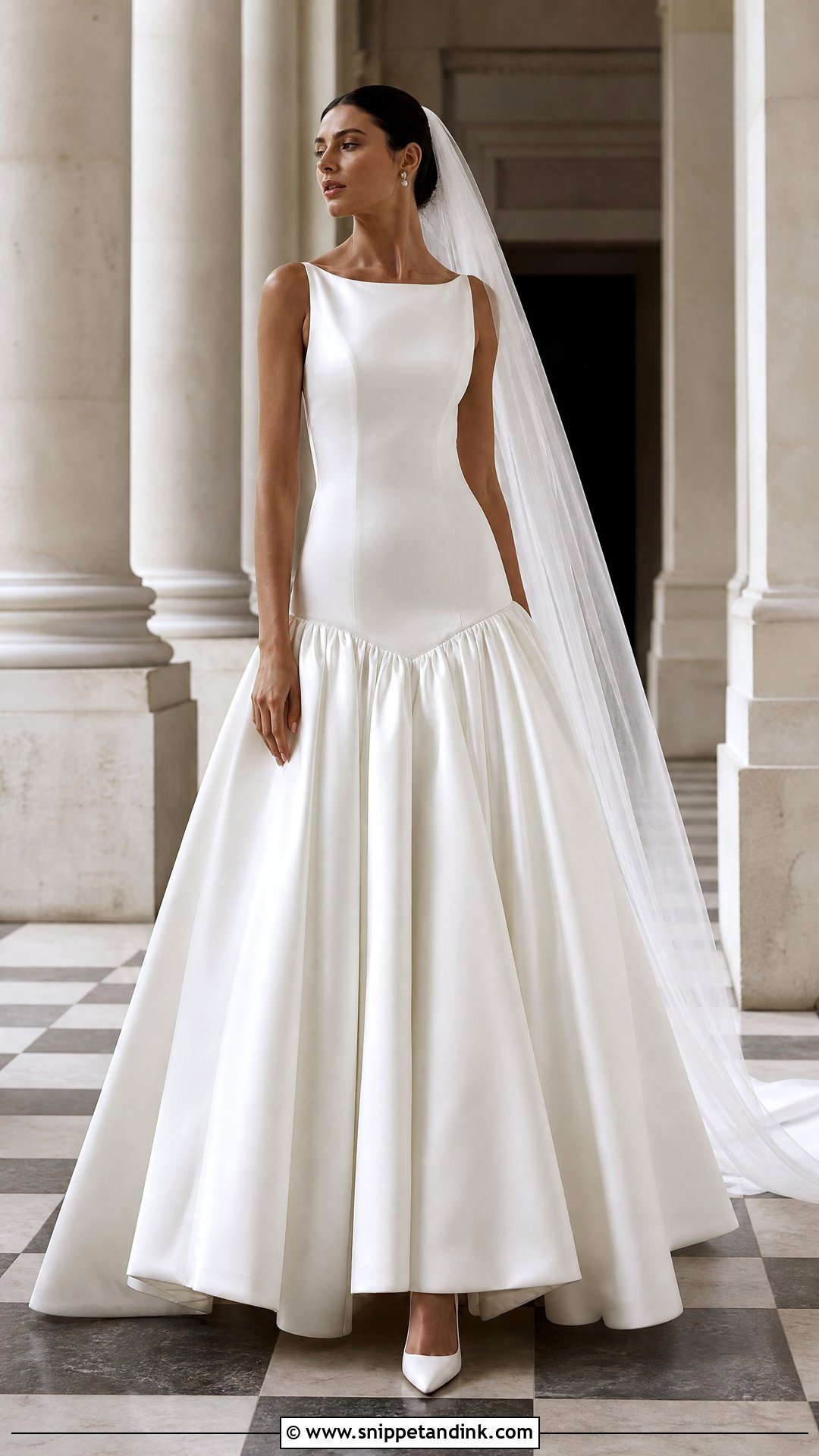
Drop waists extend the bodice below the natural waist, and they are the hardest silhouette on this list to fit off the rack. Every torso is a different length, and the skirt seam needs to land at a point that flatters you and doesn’t dig into the hips when you sit. That is a tailoring job, not a size choice. Crisp satin gives an architectural line, layered tulle softer movement. Pointed satin pumps, a narrow choker or simple earrings, a long plain veil and a smooth bun keep the look sharp for a formal city venue.
10. Minimalist Slip Wedding Dress
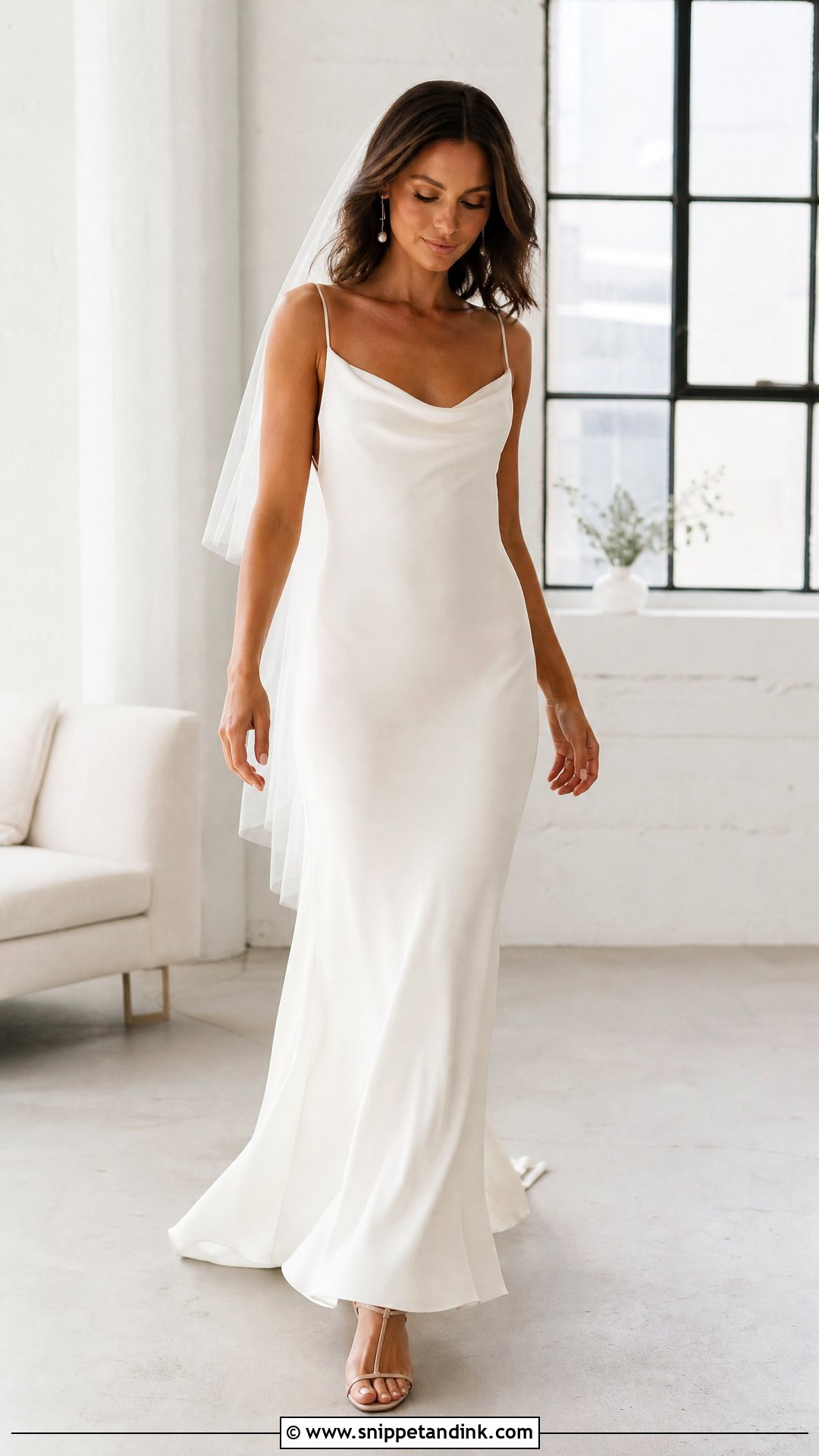
A slip dress has nowhere to hide, which is why the plainest gown here takes the most care to fit. Silk, satin or fluid crepe with a draped neckline and a bias-cut skirt moves with the body; a low back adds impact, wider straps more support. Bias-cut fabric stretches over time, so I let a slip hang for a day before marking the hem. Bring several smooth undergarment options to fittings, because thin satin shows every edge. Barely-there sandals, fine drop earrings, a sheer shoulder veil and a low bun or brushed waves suit a loft or a beach property.
11. High Neck Wedding Dress
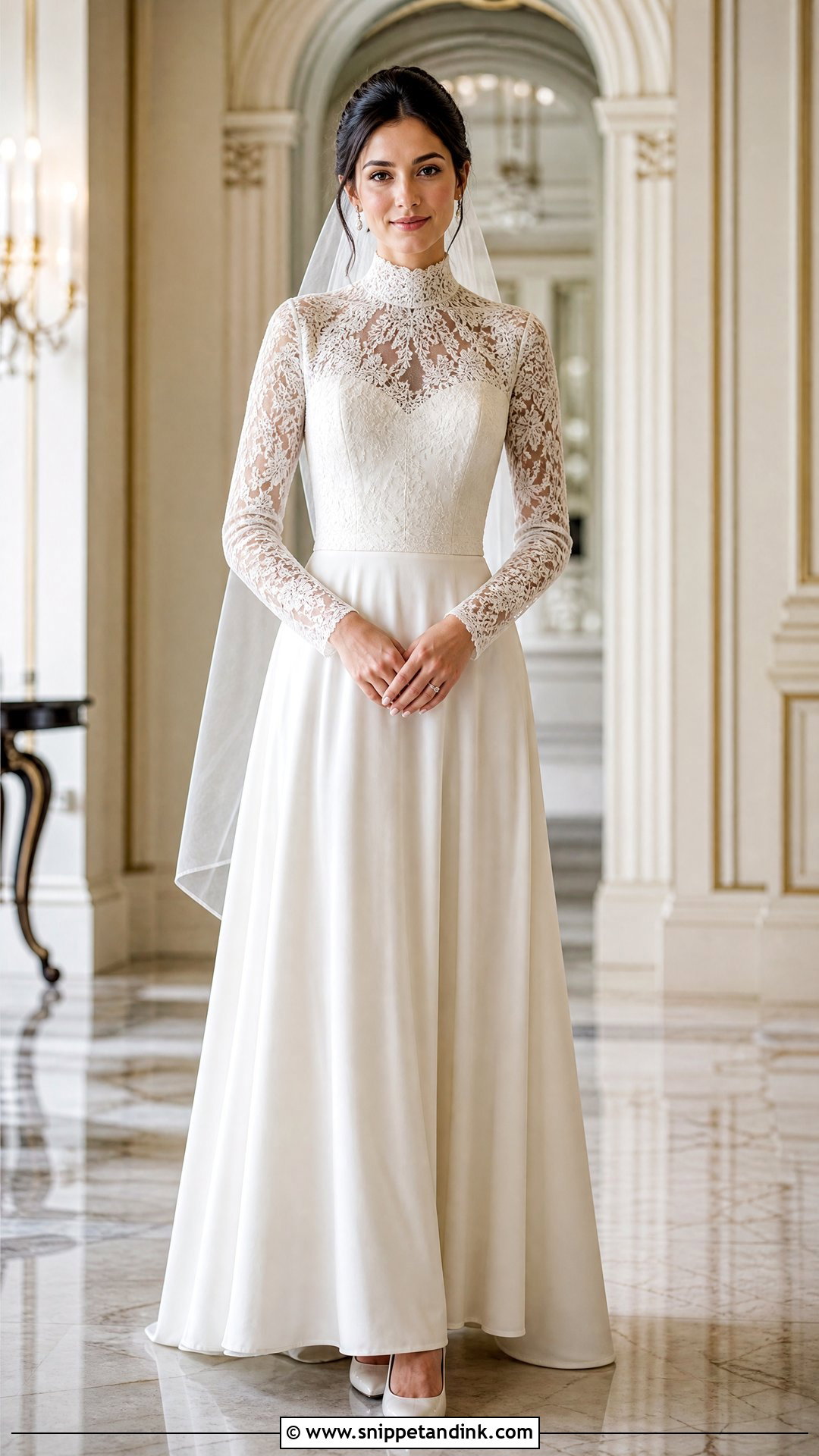
High necklines frame the face better than almost anything, but a collar that’s slightly too tight is miserable by the reception. Sheer lace looks soft; smooth crepe or satin looks cleaner and more structured. An A-line, column or gentle fit-and-flare skirt balances it. Skip the necklace entirely. Closed-toe pumps, small studs and a veil secured under an updo are enough. If you want more coverage, ask for lining across the chest and back. At the fitting I have the bride turn her head fully and sit down; the collar should stay flat without rubbing or folding.
12. Tea Length Wedding Dress
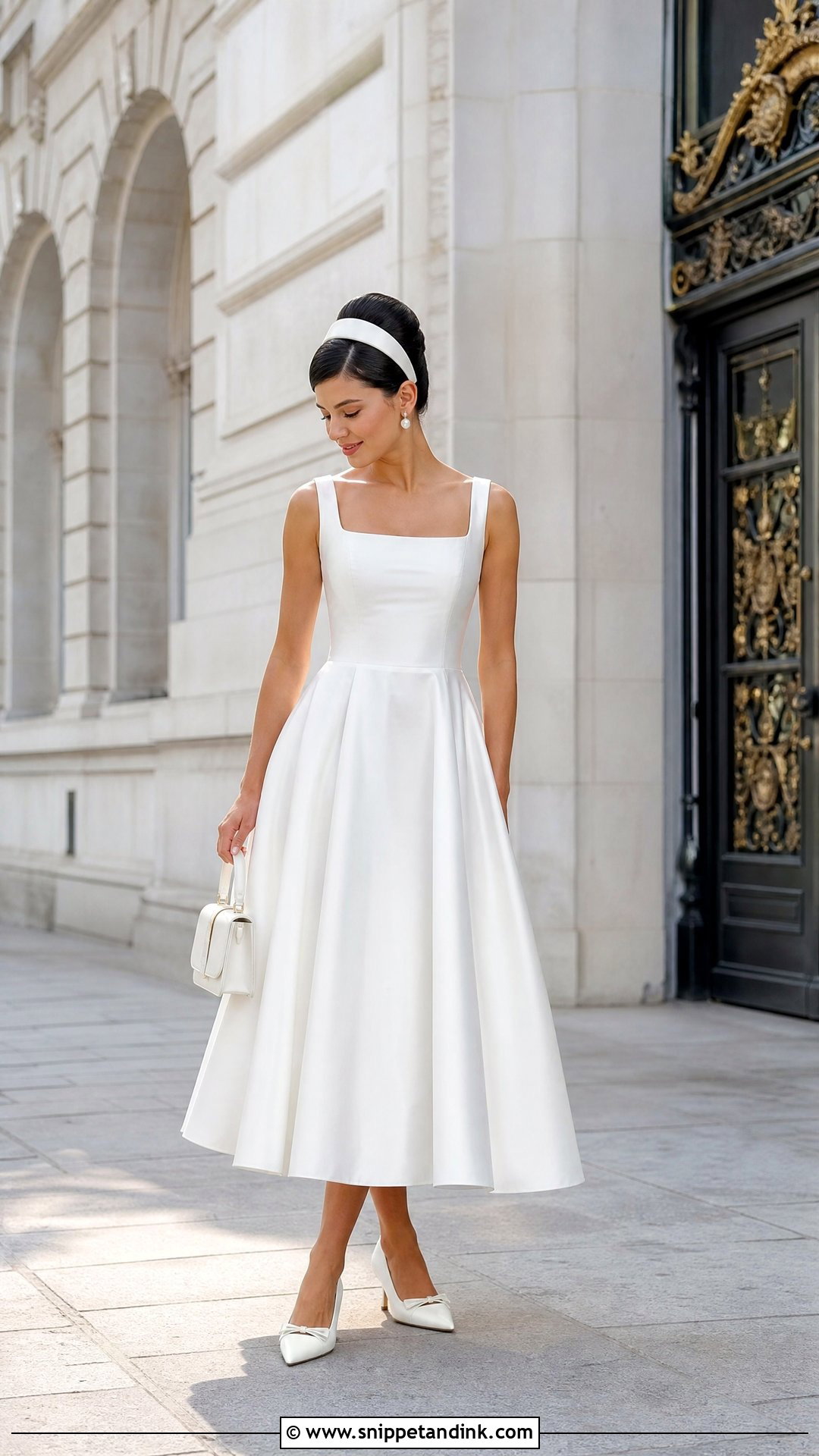
Tea length makes the shoes half the outfit. The skirt sits between knee and ankle in flared satin, lace or tulle from a fitted bodice, so pointed kitten heels, pearl earrings and a short veil or a structured headband carry the vintage feel, with a top-handle bag for the reception. It is practical for walking and dancing, and it suits brides of any age. The detail I care about is hem placement. I mark it at the narrowest part of the lower leg for that bride, rather than following a standard length from the floor.
13. Boho Chiffon Wedding Dress
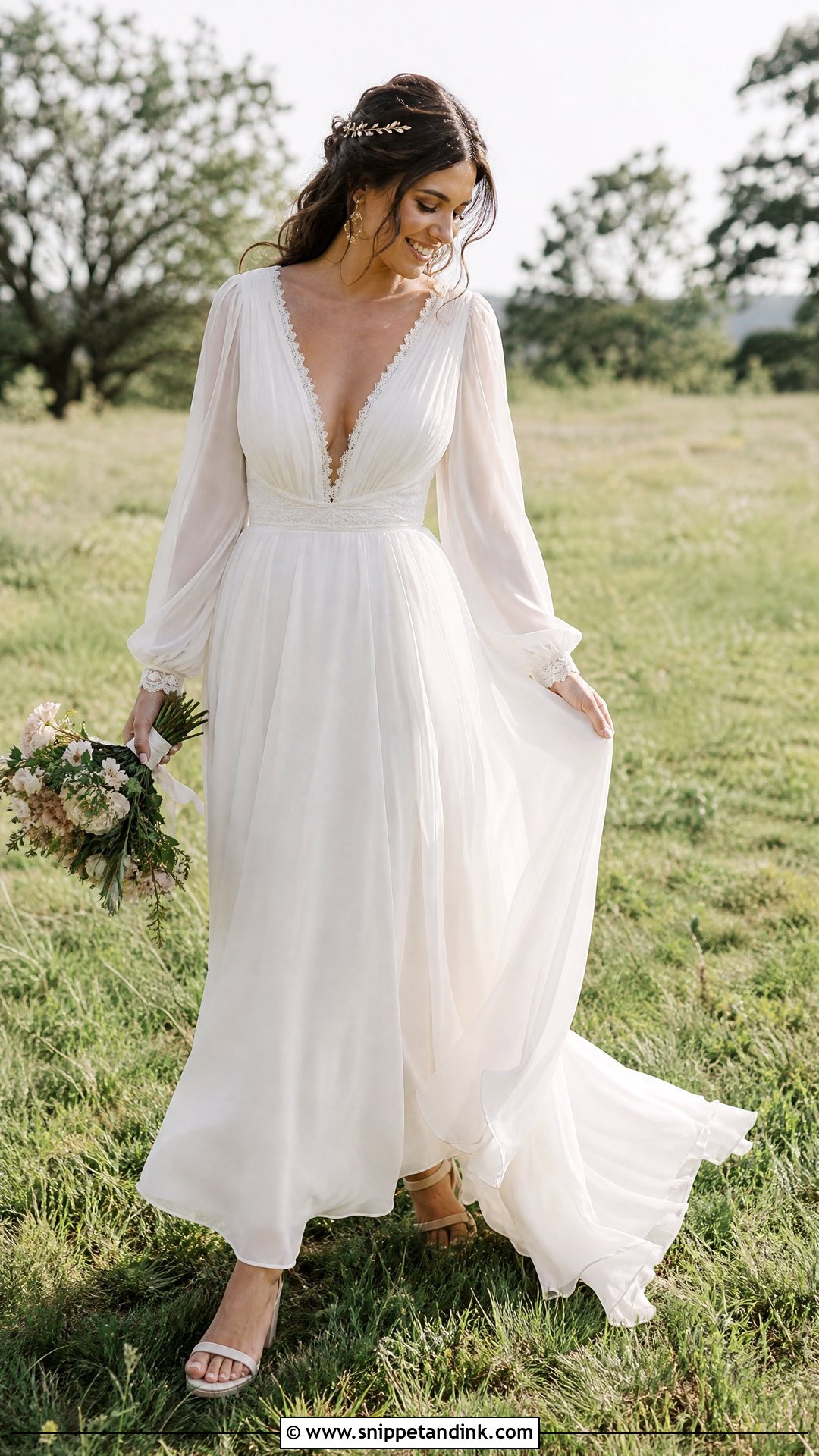
Chiffon is the right fabric for an outdoor boho dress because it moves in even a light breeze and breathes in heat. A softly defined waist, a flowing A-line skirt and a lace-trimmed V-neck or modest scoop neckline keep it relaxed but clearly bridal. Flutter or airy bishop sleeves add movement. Low block-heel sandals, fine gold earrings and a simple hair vine with loose waves or a braid suit meadows, desert and coast. On uneven ground, I’d keep the train short or removable, with a bustle for the reception.
14. Pearl Beaded Wedding Dress
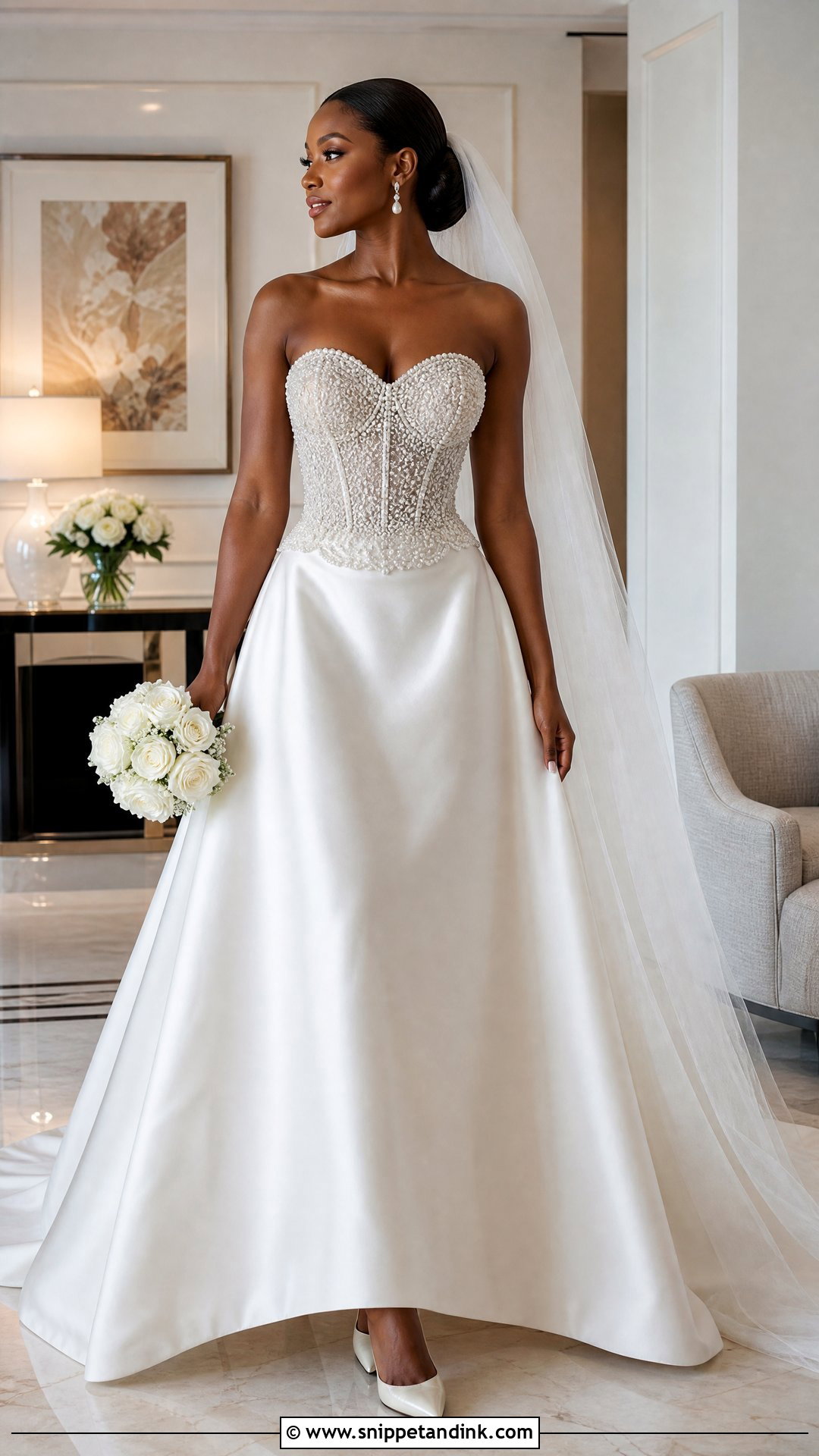
Pearl beading glows rather than sparkles, which is softer in close-up photos than crystal. I’d keep the pearls concentrated on one area, the bodice, the neckline or sheer sleeves, rather than covering the gown. A plain satin or layered tulle skirt balances it. Pearl-drop earrings, ivory pumps, an unbeaded veil and a polished chignon give the pearls a clean background. Inspect the beadwork at your first fitting and again the week before the wedding; loose pearls catch on fine veils. Heavily beaded sections should never hang for months on a hanger.
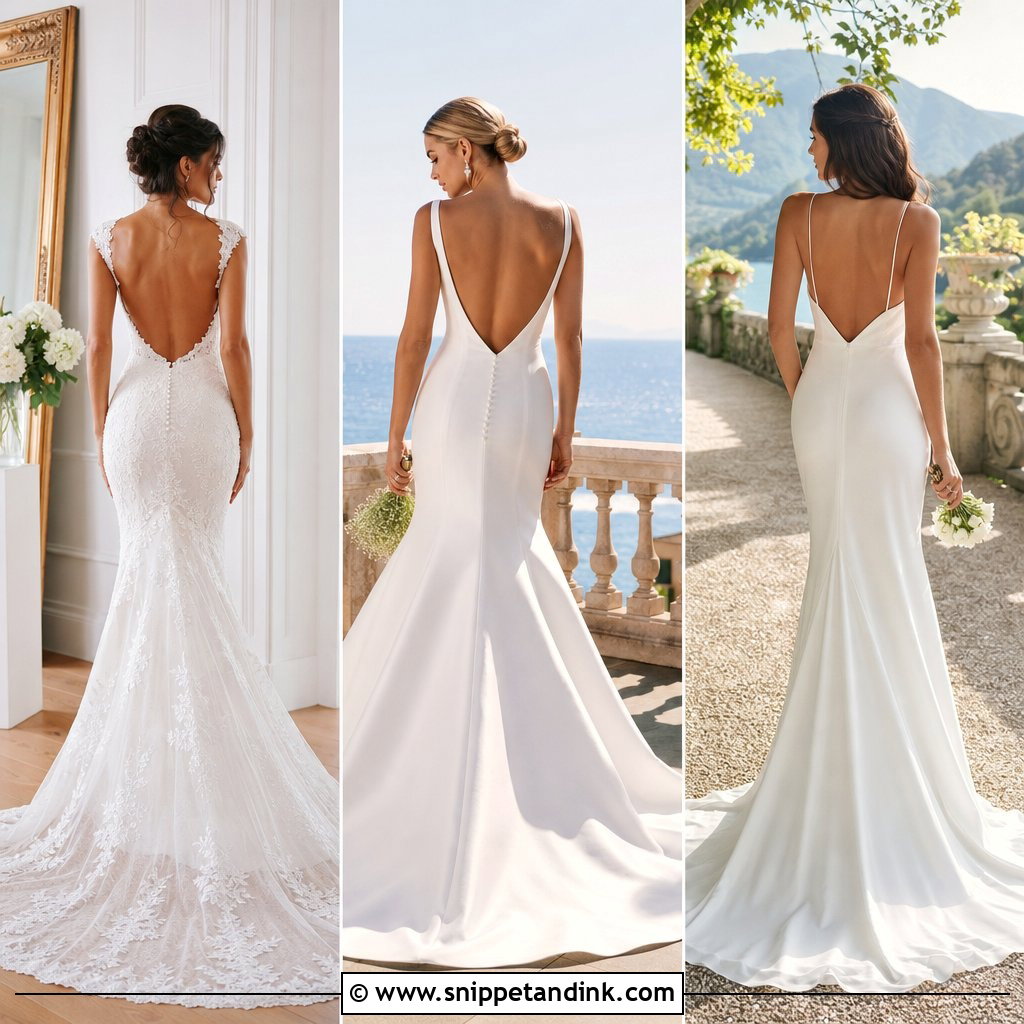

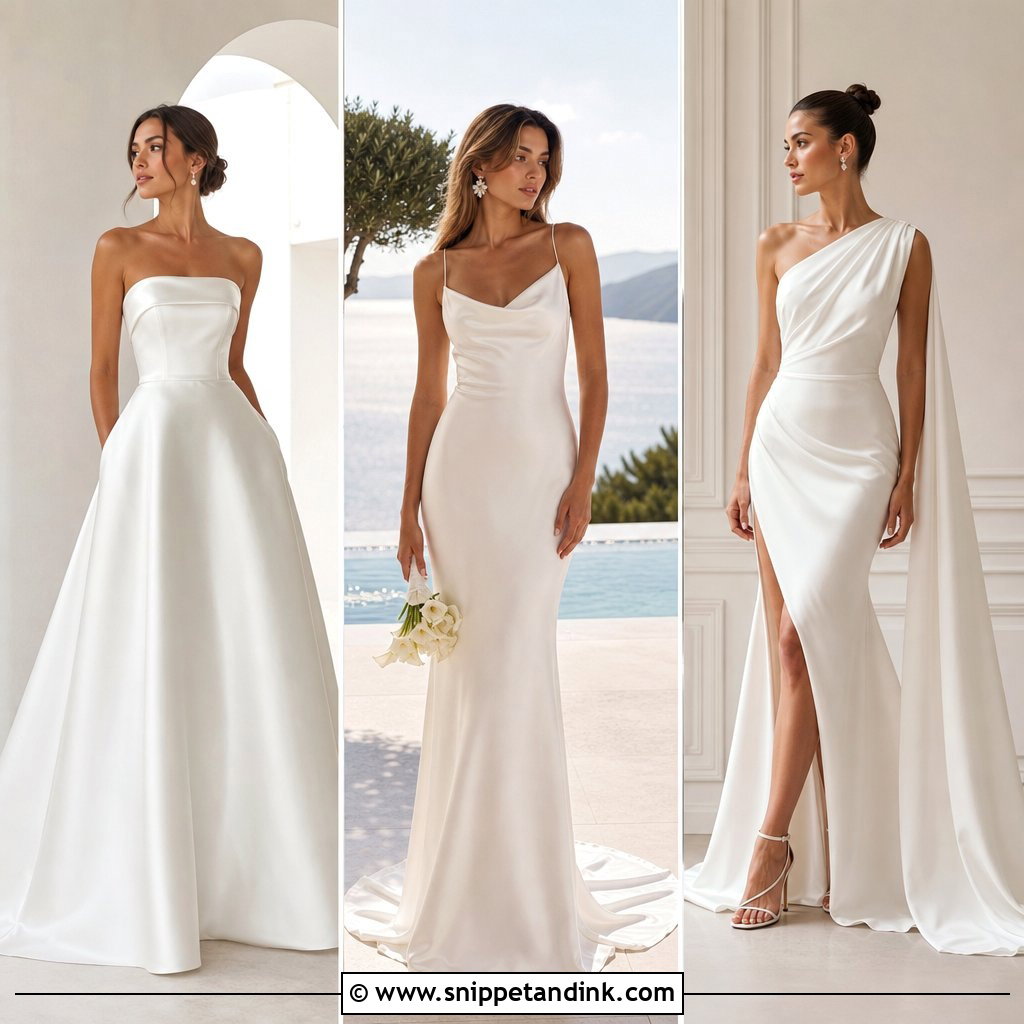
15. One Shoulder Wedding Dress
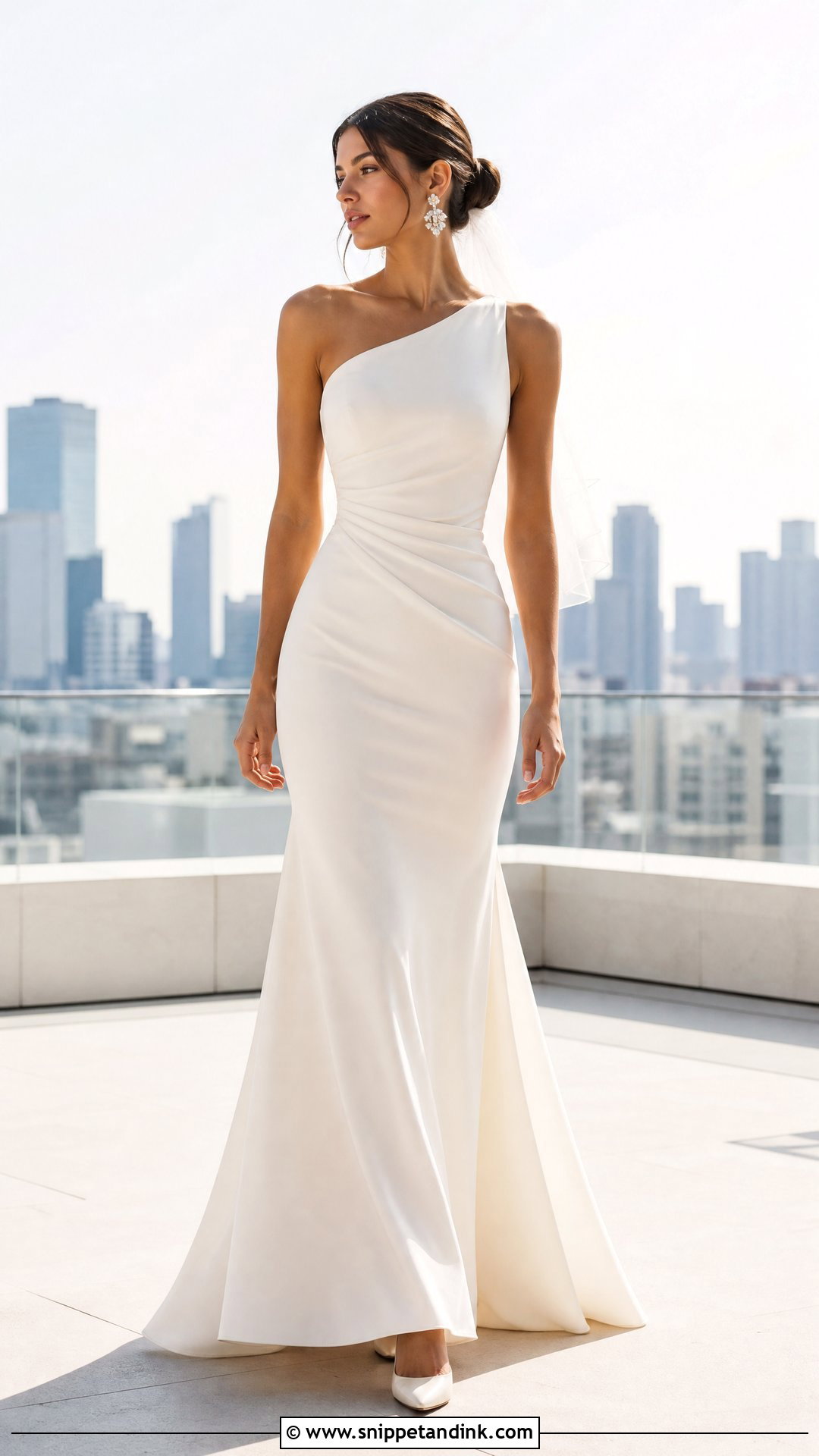
The one-shoulder cut is modern without needing decoration, but only if it sits level. A poorly balanced bodice pulls toward the strapped side and twists the whole dress. Fluid crepe looks understated, satin more structured, gathered chiffon softer. The skirt can be a column, a gentle flare or a side slit for walking. Statement earrings, sleek pointed heels and a short veil tucked behind a low bun suit a rooftop or a city hotel, and no necklace. At fittings I check the internal support first, before anyone looks in the mirror.
16. Cape Sleeve Wedding Dress
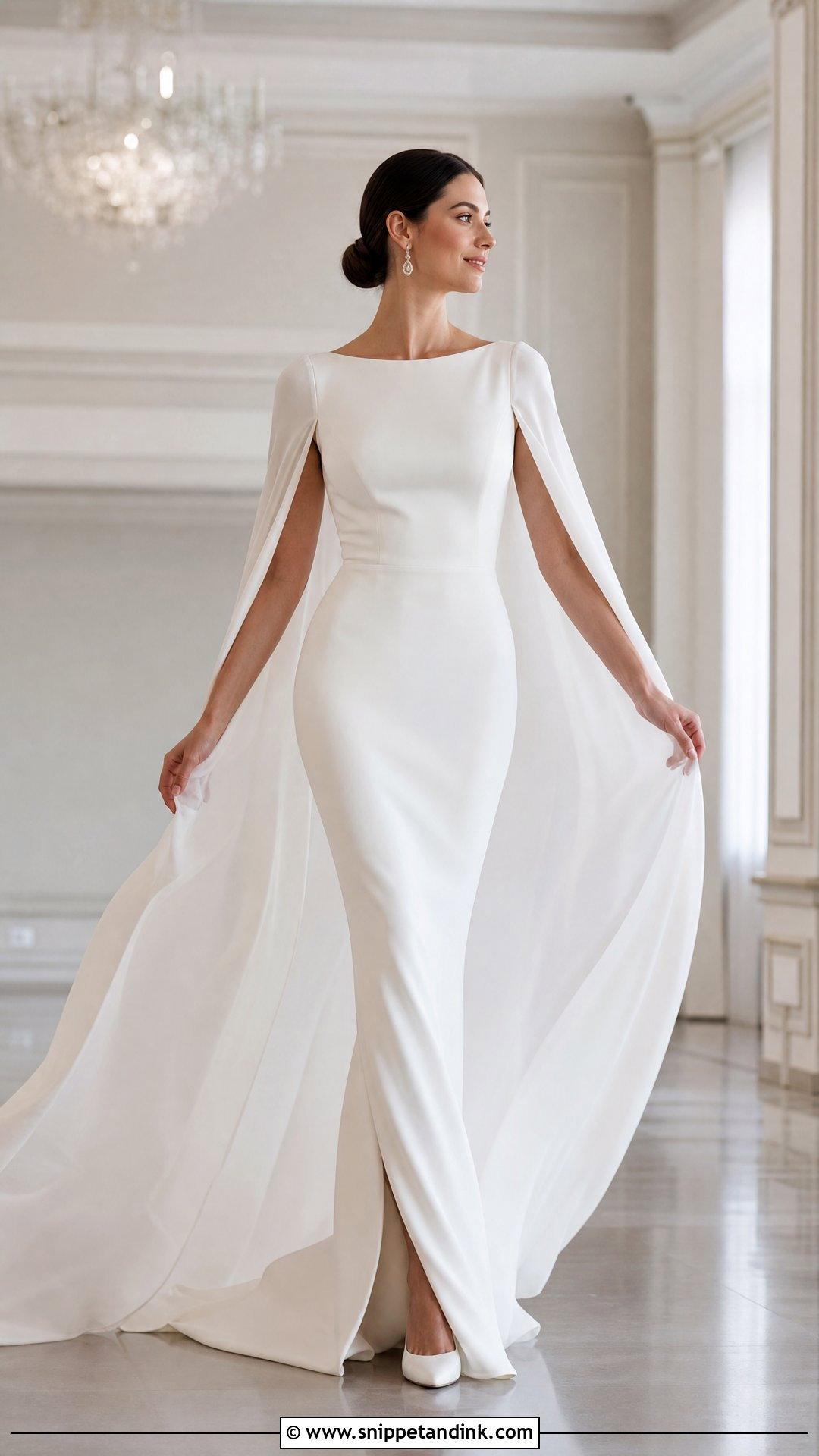
A cape does the work of a veil, drifting behind you as you walk, so I’d usually leave the veil off. The cape can hang from a plain crepe gown, a fitted satin dress or a lightly beaded bodice. Wrist-length panels are subtle; floor-length chiffon makes an entrance. Low pointed pumps, small earrings and a sleek bun keep the line clean. Walk, turn and sit in it before the final fitting, and ask about hidden wrist loops or detachable fastenings so the fabric isn’t trailing through dinner.
17. Corset Bodice Wedding Dress
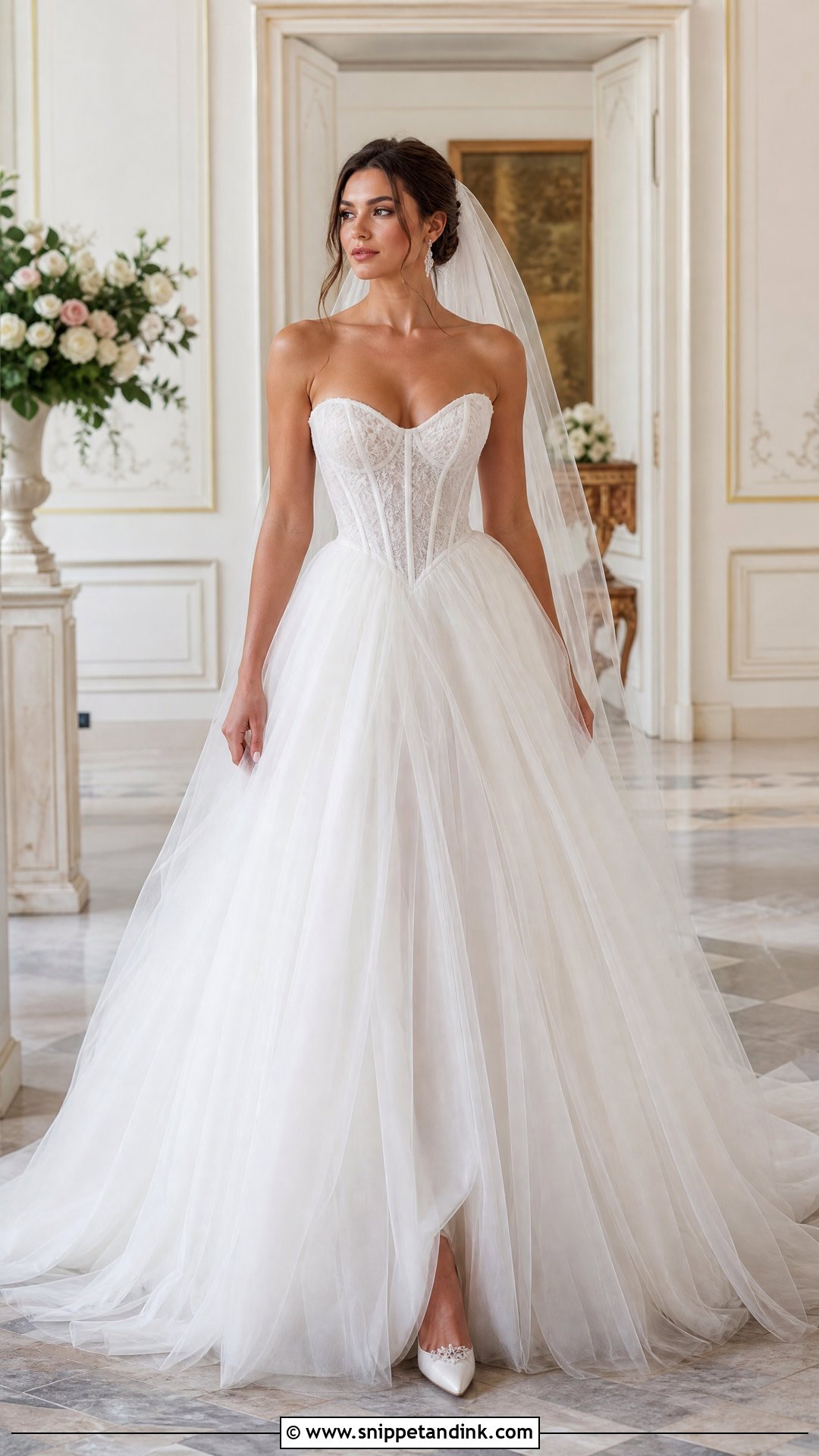
A good corset supports; a bad one squeezes. The difference is in the build: proper cups, flexible boning and a secure back closure, usually lacing so it can be adjusted on the day. Pair the bodice with a full tulle skirt for volume, a satin A-line for polish or a fitted crepe skirt for something modern. Pointed heels, a fine pendant or drop earrings and a plain veil let the seams show. At every fitting I ask the bride to sit, take a deep breath and raise her arms. If any of those hurts, the fit is wrong.
18. Vintage Inspired Wedding Dress
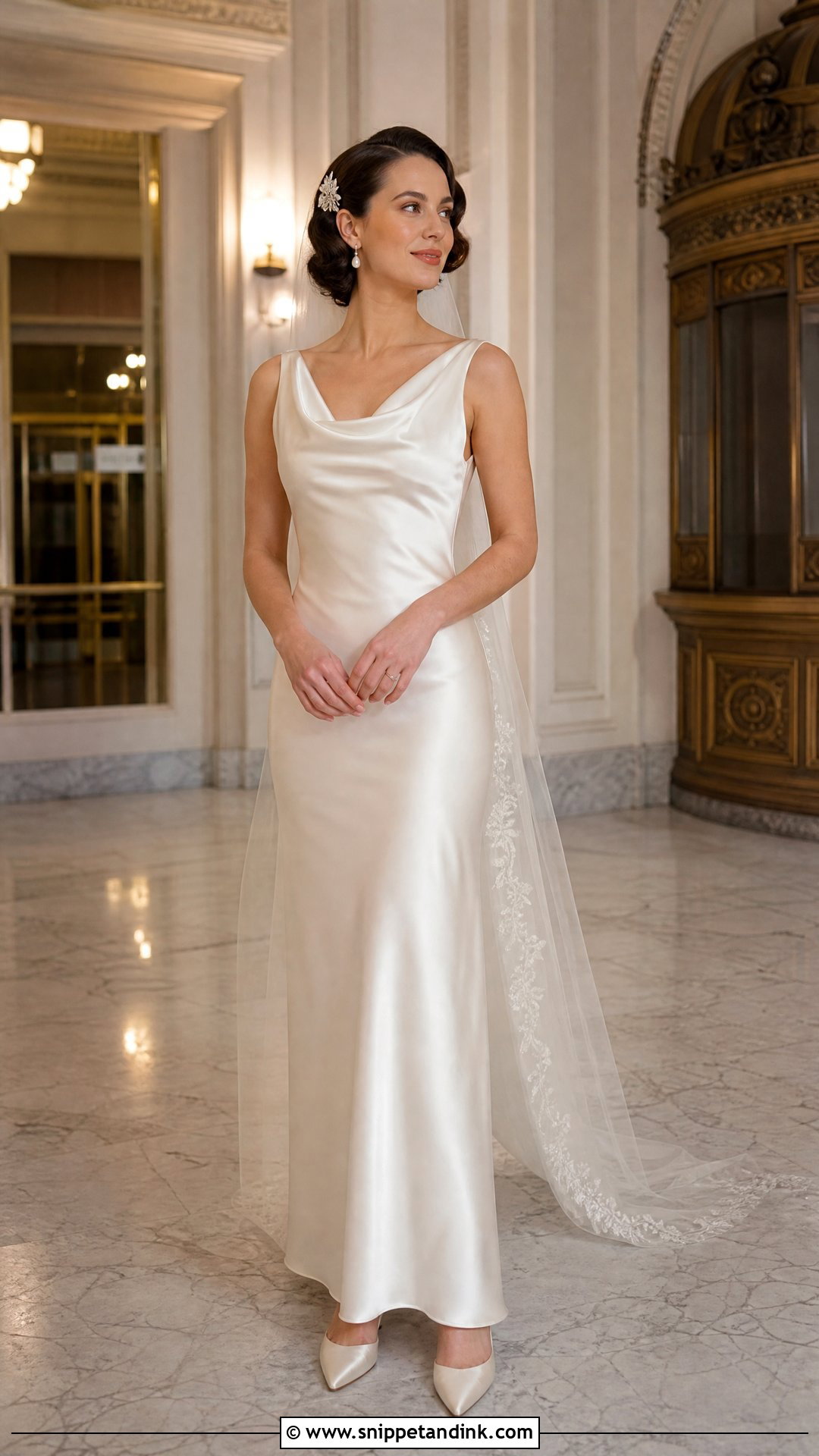
The vintage-inspired dresses that work pick one era and commit to it. A 1930s satin column, a 1950s tea length or a 1970s lace gown with flowing sleeves each have their own logic, and mixing them is where it starts to look like a costume. Keep accessories simple: satin pumps, pearl earrings, a birdcage veil or a fine comb. A soft waved bob suits a sleek column; a low chignon suits a fuller skirt. If the gown is genuinely old, have the fabric checked before any alterations. Aged seams and lace can split under the strain of a refit.
19. Short Wedding Dress
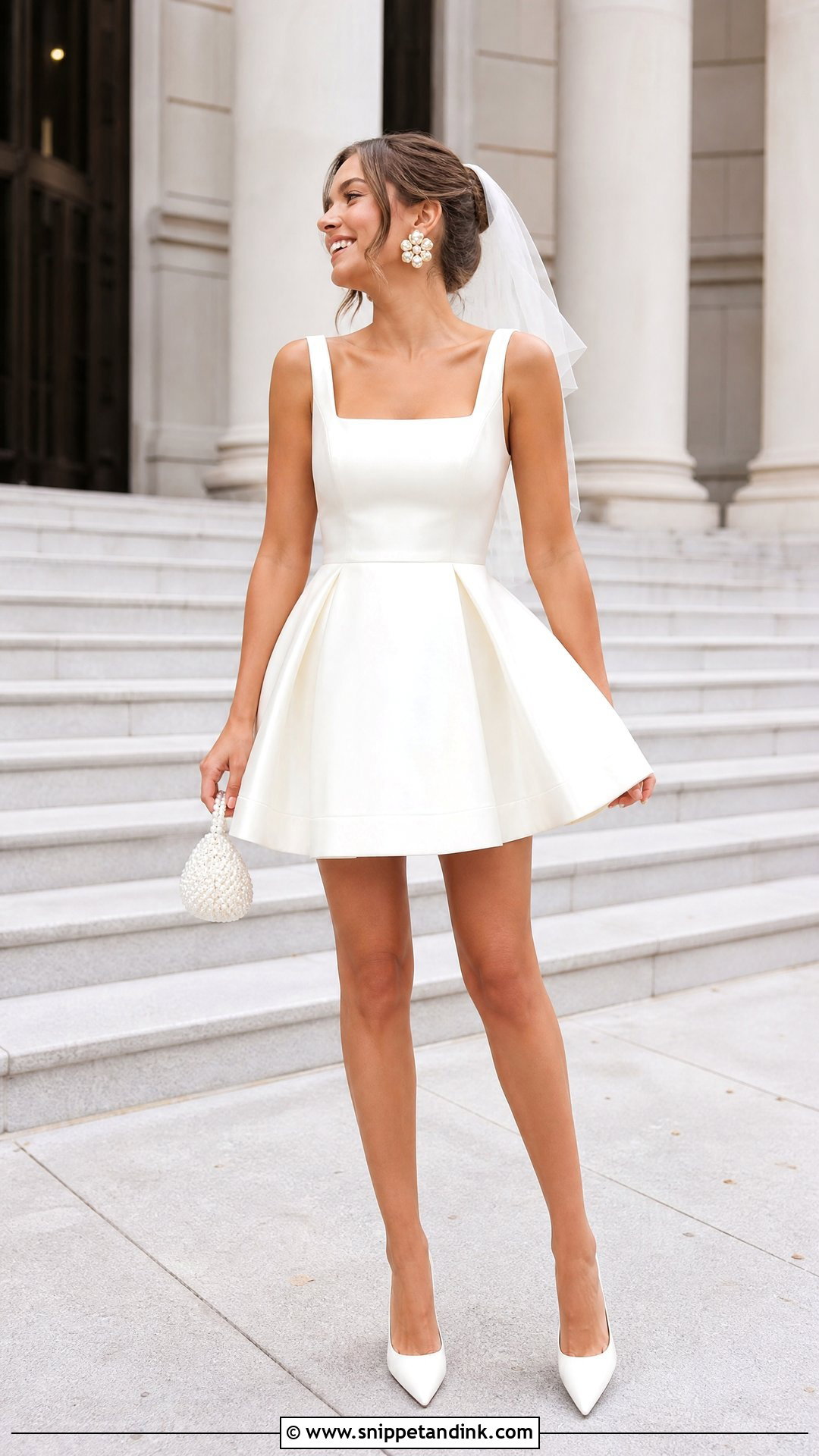
A short dress has to look deliberate, or it reads as a white party dress. Structure helps: a tailored mini with a clean neckline, a lace shift or a fit-and-flare skirt. Pointed pumps, embellished flats or low block heels suit different settings, with statement earrings, a small bridal bag and a short veil or bow to signal bride. Hem placement matters most here, so test it sitting and dancing. Built-in shorts or a smooth lining give confidence, and a detachable overskirt lets you have a formal entrance and a short reception look in one dress.
20. Convertible Wedding Dress
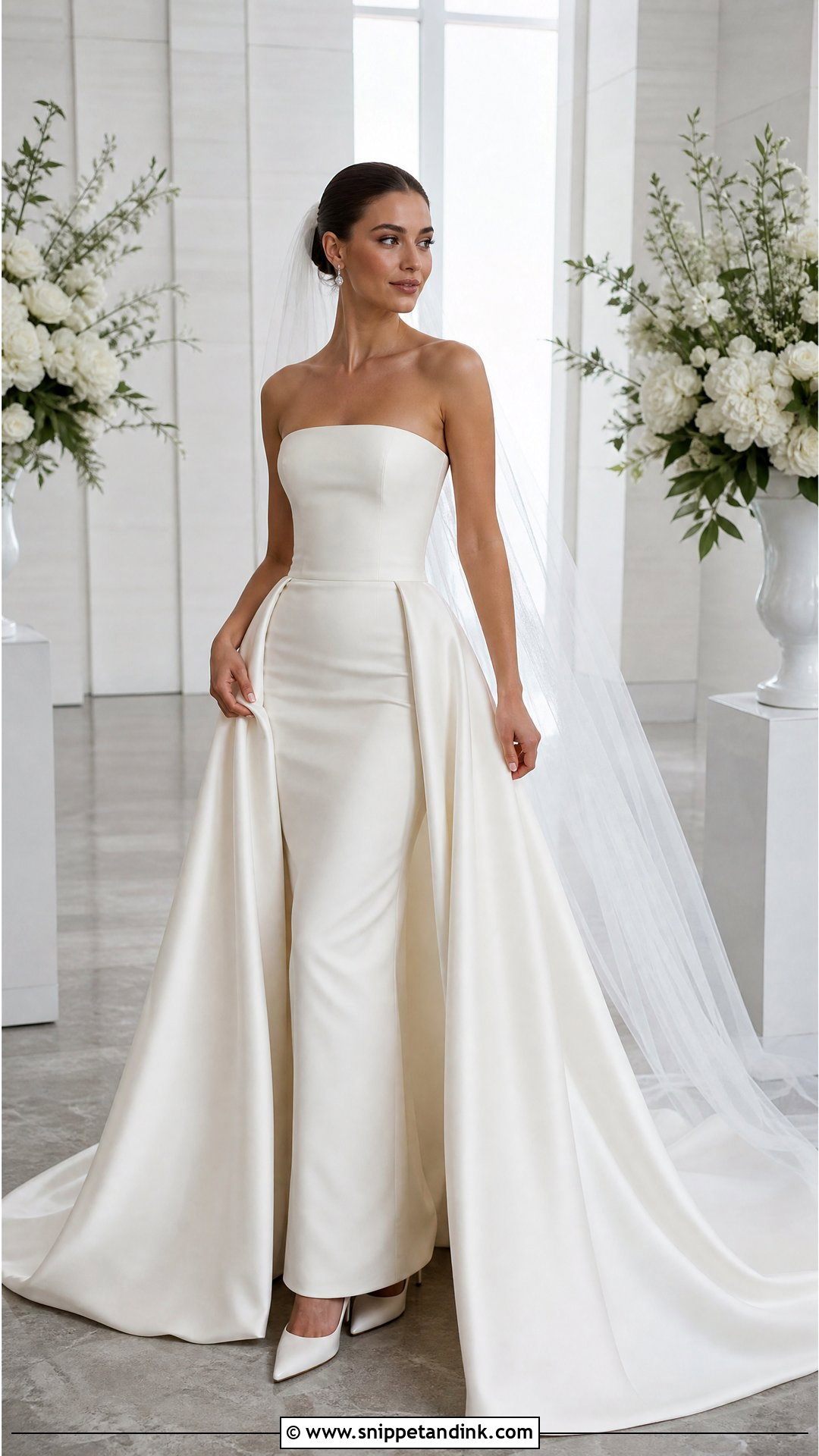
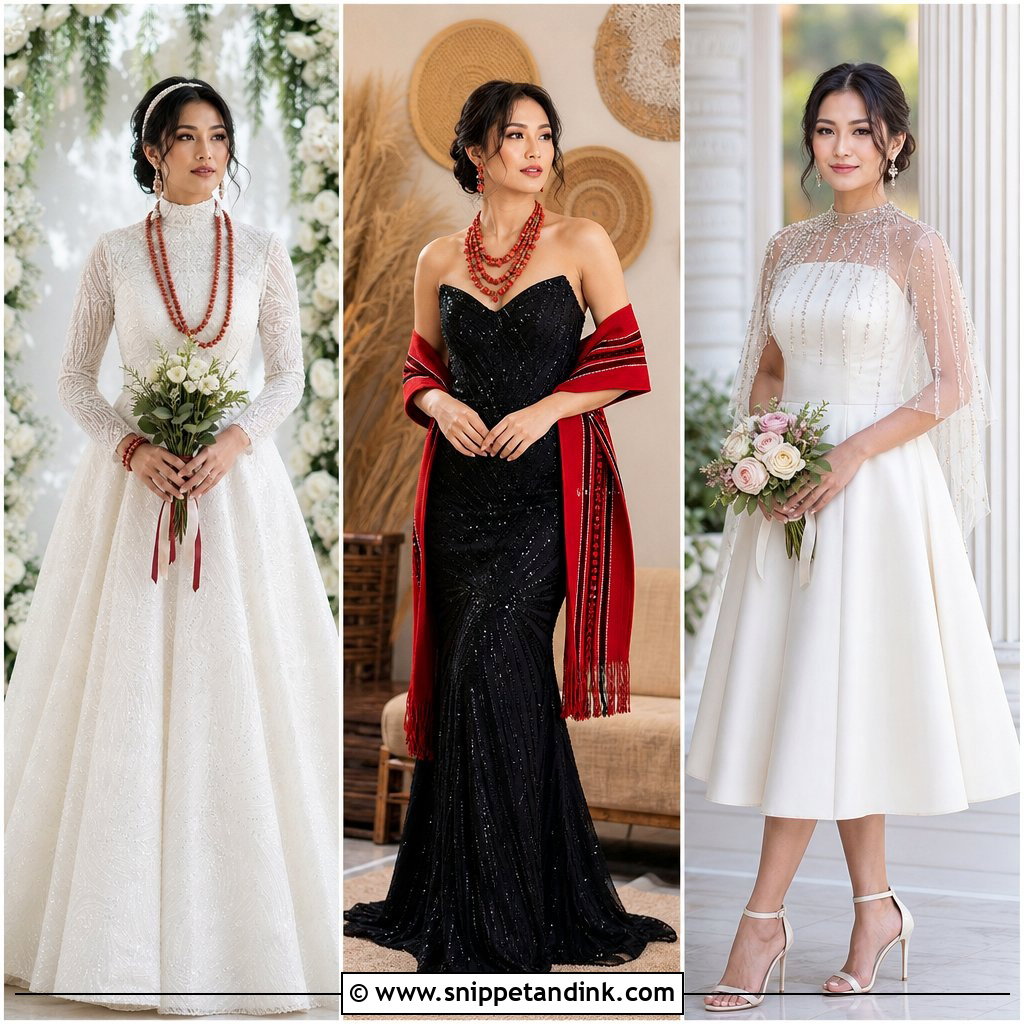
A convertible wedding dress gives you two looks from one base. Start with a fitted column, a mini or a plain A-line, then add a detachable overskirt, cape, sleeves or train for the ceremony and take it off for the reception. Pair the formal version with a long veil and pointed pumps, and the evening version with statement earrings, block heels and a smaller hair piece. Fastenings are where these fail. Test every hook, snap and zip at alterations, and give one person the job of removing each layer, with a labeled garment bag ready for the pieces that come off.
What Happens to the Gown After the Wedding
Brides spend months on the dress and often forget it the morning after, which is when it is most at risk. Champagne, sweat and cake leave marks that can be nearly invisible at first and turn yellow or brown over time. I’d have it professionally cleaned by a specialist in bridal gowns within a few weeks, and point out every spill you remember, even ones you can’t see.
Storing it so it survives
- Take it out of any plastic dry-cleaning bag. Plastic traps moisture and can cause yellowing.
- Fold it with acid-free tissue in an acid-free box, or use a breathable cotton bag if it must hang.
- Never hang a heavily beaded or full satin gown by its straps for long periods; the weight stretches the bodice.
- Keep it somewhere cool, dark and dry, so not the attic or a damp basement, and refold it along different lines every year or so.
The Dress That Feels Right at Hour Eight
Fashion matters less than fit by the end of the night. The gown worth choosing is the one that sits comfortably, suits the venue, lets you move, and feels like you, whether that is a satin ball gown, a chiffon boho dress, a mini or a convertible design. Save the silhouettes you love, but stay open at appointments: fabric and tailoring often make a dress look completely different in person. Bring proper underwear and shoes, sit and walk in every gown, and set money aside for alterations. Styling then pulls the dress, shoes, veil, jewelry and hair into one look.
You'll Like These Ideas:






Leave a Reply