
Some brides want a white cotton gown with a whisper of stitching at the collar. Others want flowers from neck to hem, a full skirt, lace or a modern corset. Mexican wedding dresses can be any of those, and the range is what makes styling them fun. Traditional garments such as the huipil carry woven or embroidered motifs, and many current designers rework regional textile ideas into familiar bridal shapes. My job at a fitting is to keep the meaning intact while matching the dress to the venue, the weather and how formal the day is, so nothing tips into costume. Below are twenty complete outfits, from traditional and minimal to beach, plus-size and a lighter dress for the party.
Spotting Real Hand Embroidery in a Shop or Online Listing
Plenty of dresses sold as hand embroidered are machine stitched, and machine work isn’t bad; it just shouldn’t be priced or described as handwork. In person, the inside of the garment tells you most of what you need to know.
- Turn a section inside out. Hand stitching shows small variations in stitch length and a few knotted or woven-in thread ends. Machine embroidery shows a uniform grid, often with a paper or mesh stabilizer backing.
- Look at repeated motifs side by side. Handmade flowers are recognizably the same design but never identical; machine flowers match exactly.
- Satin-stitched petals done by hand have a slightly uneven edge where the stitches meet the outline. Machine satin stitch is perfectly straight.
- Online, ask for a photo of the reverse side and the maker’s name. A seller who works with artisans can usually answer both straight away.
Hand embroidery also changes the timeline. A dense bodice can take weeks of stitching alone, so if you need the dress soon, a machine-embroidered gown or a ready-made artisan piece may be the realistic choice.
1. Traditional White Embroidered Mexican Wedding Dress
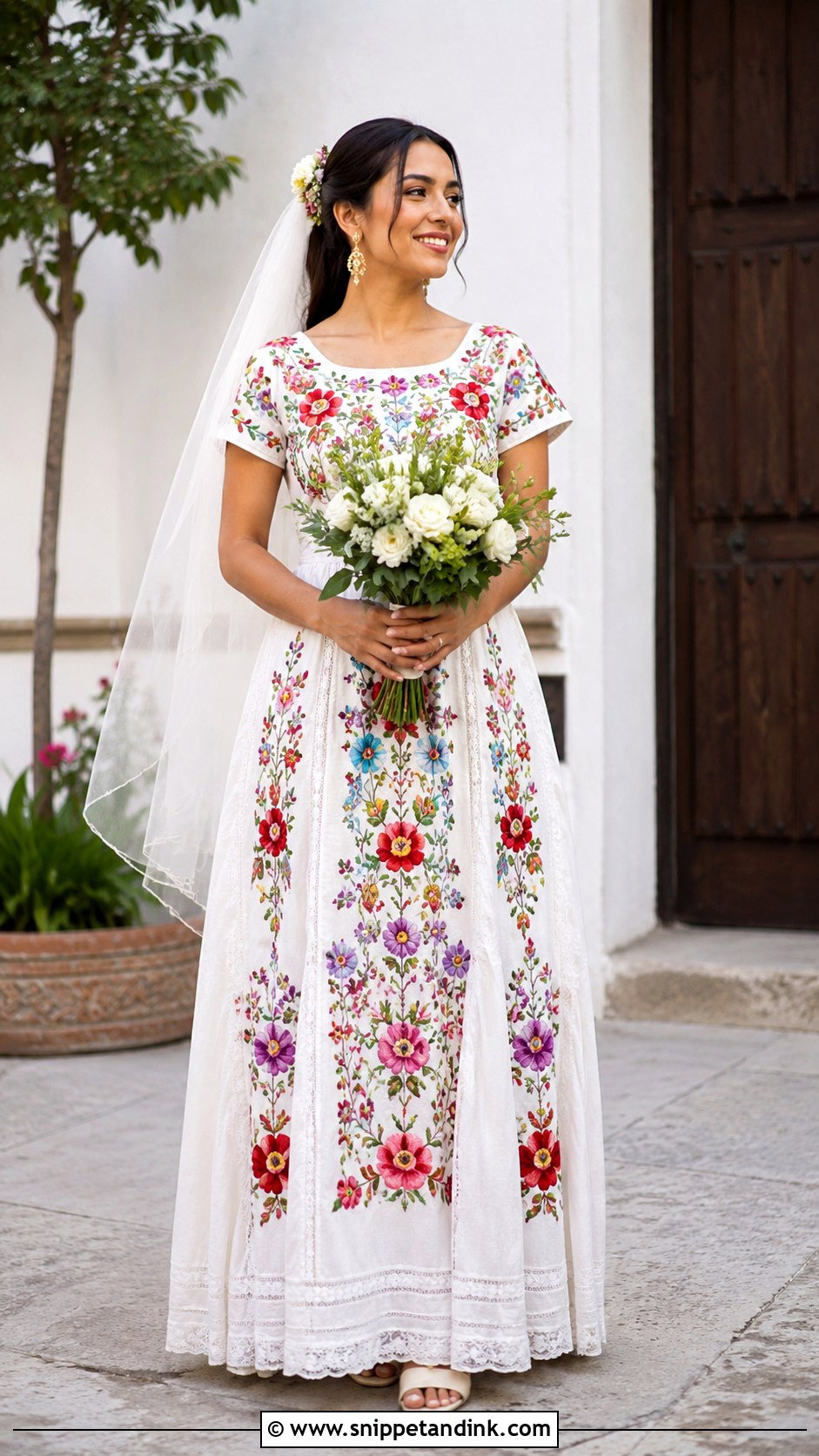
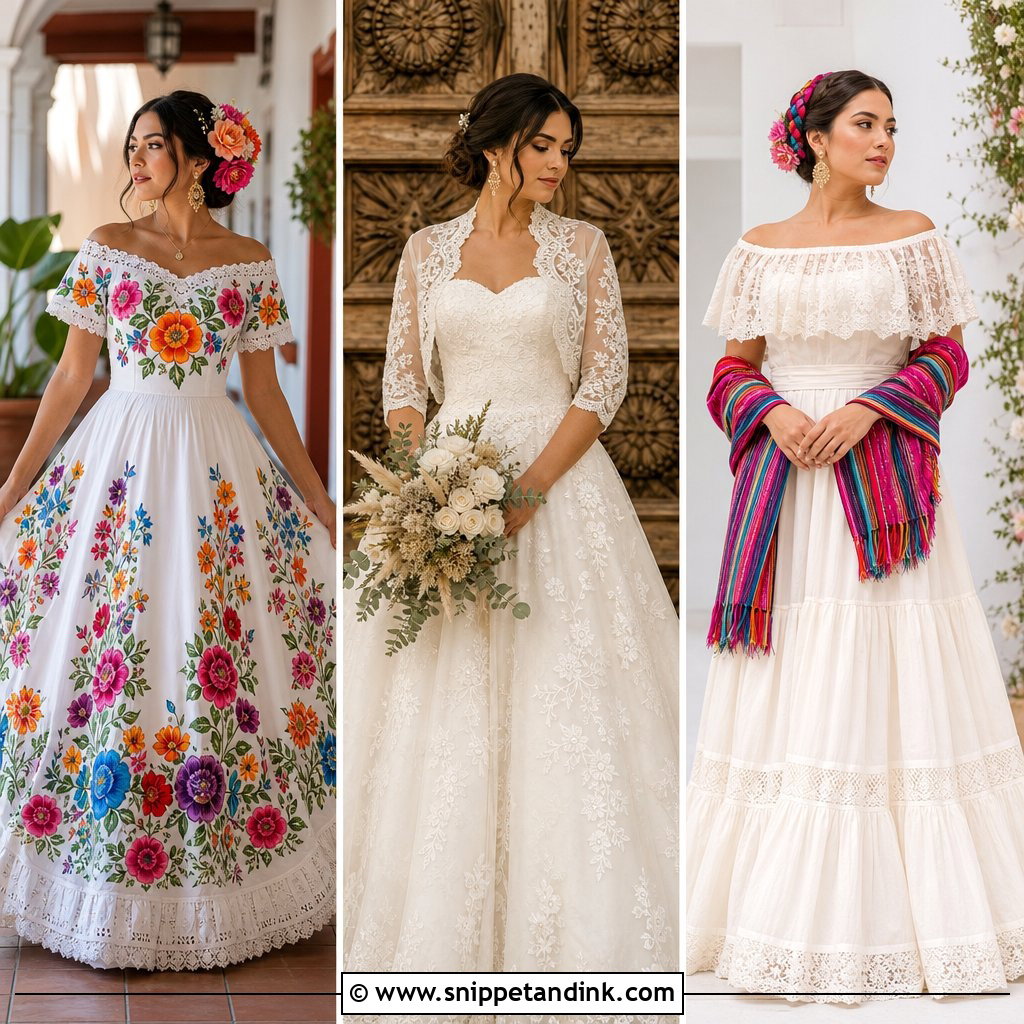
White cotton with colored flowers around the neckline, sleeves and hem is the classic, and it doesn’t need any sparkle. Choose a floor-length cotton or linen gown with a gathered skirt and a fitted waist. Manta, the plain-weave cotton used for many handmade embroidered dresses, breathes well and has a soft, slightly nubby texture. Its weight and opacity vary a lot between batches, so I always ask for a fabric swatch before ordering and hold it against skin in daylight. Ivory leather sandals, a fingertip veil, small gold earrings and white roses with a few flowers echoing the thread colors complete it. A smooth lining keeps the skirt from clinging in outdoor sun.
2. Colorful Floral Mexican Wedding Dress
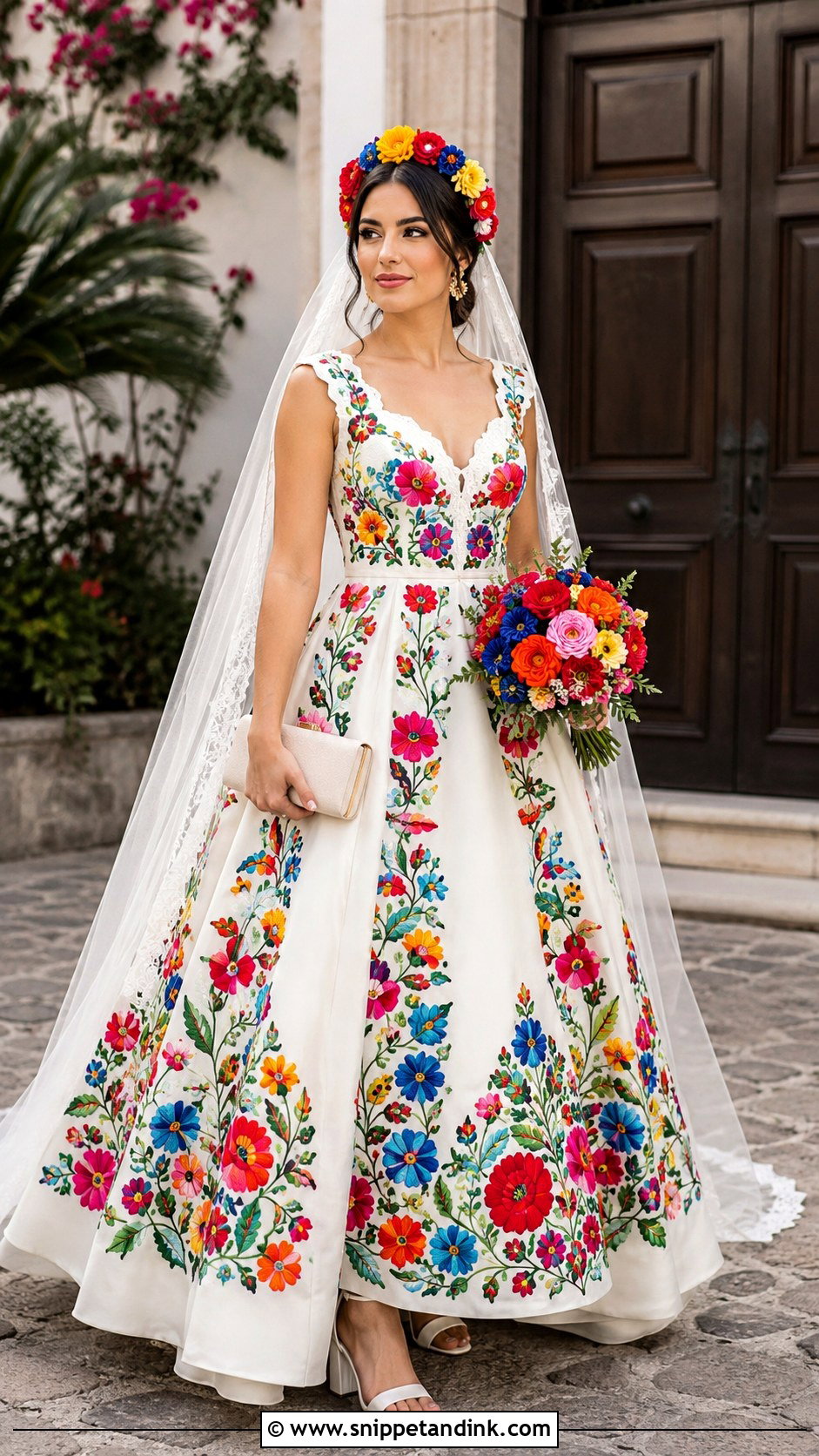
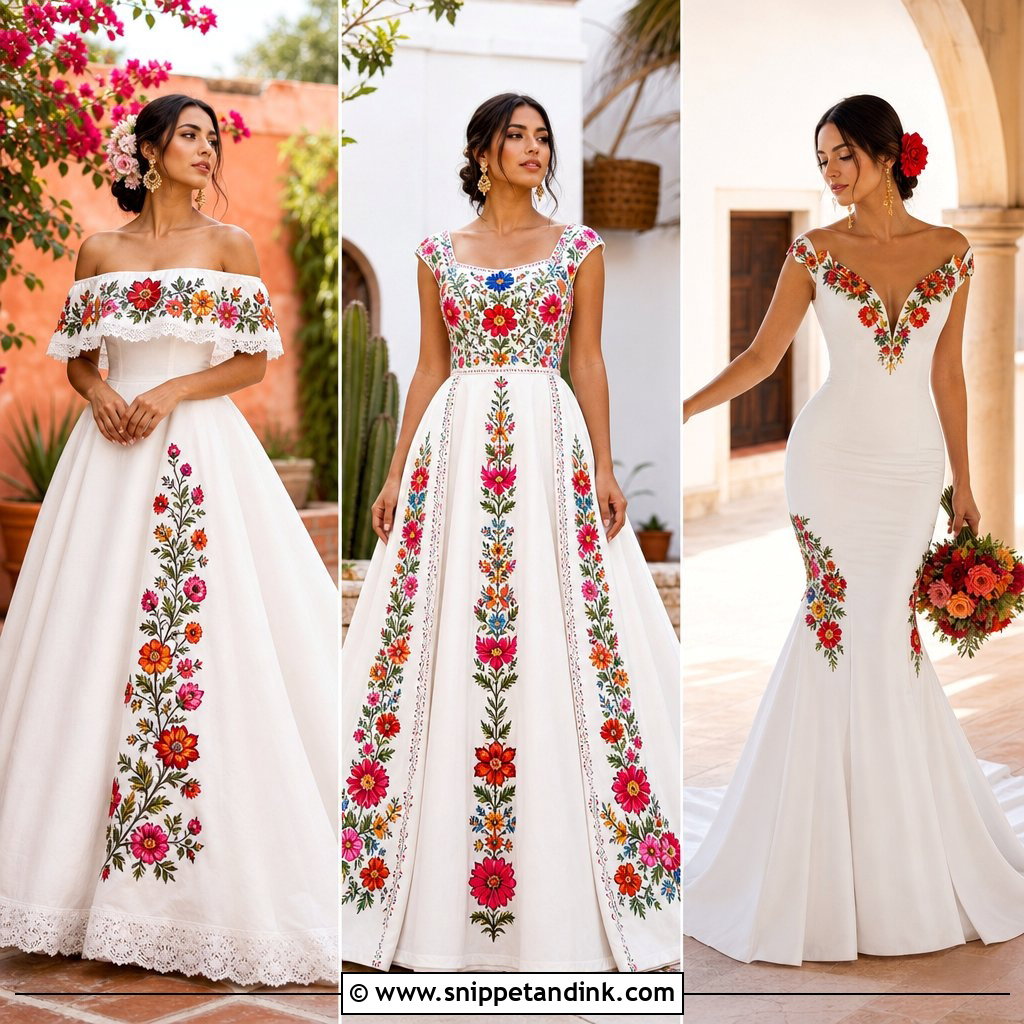
Colorful floral embroidery on a white gown is joyful, and the placement decides whether it looks bridal or busy. On a fitted bodice with a sweeping A-line skirt, I’d concentrate the red, pink, blue, yellow and green thread around the waist and lower skirt. Then let the bouquet borrow one or two of those shades, never all five. Block-heel sandals, a plain cathedral veil and a structured ivory clutch keep the rest calm. Dense stitching adds real weight to a skirt, so walk the length of the shop and sit down before you decide; heavy hem embroidery can swing and pull with every step.
3. Otomi Embroidered Mexican Wedding Dress
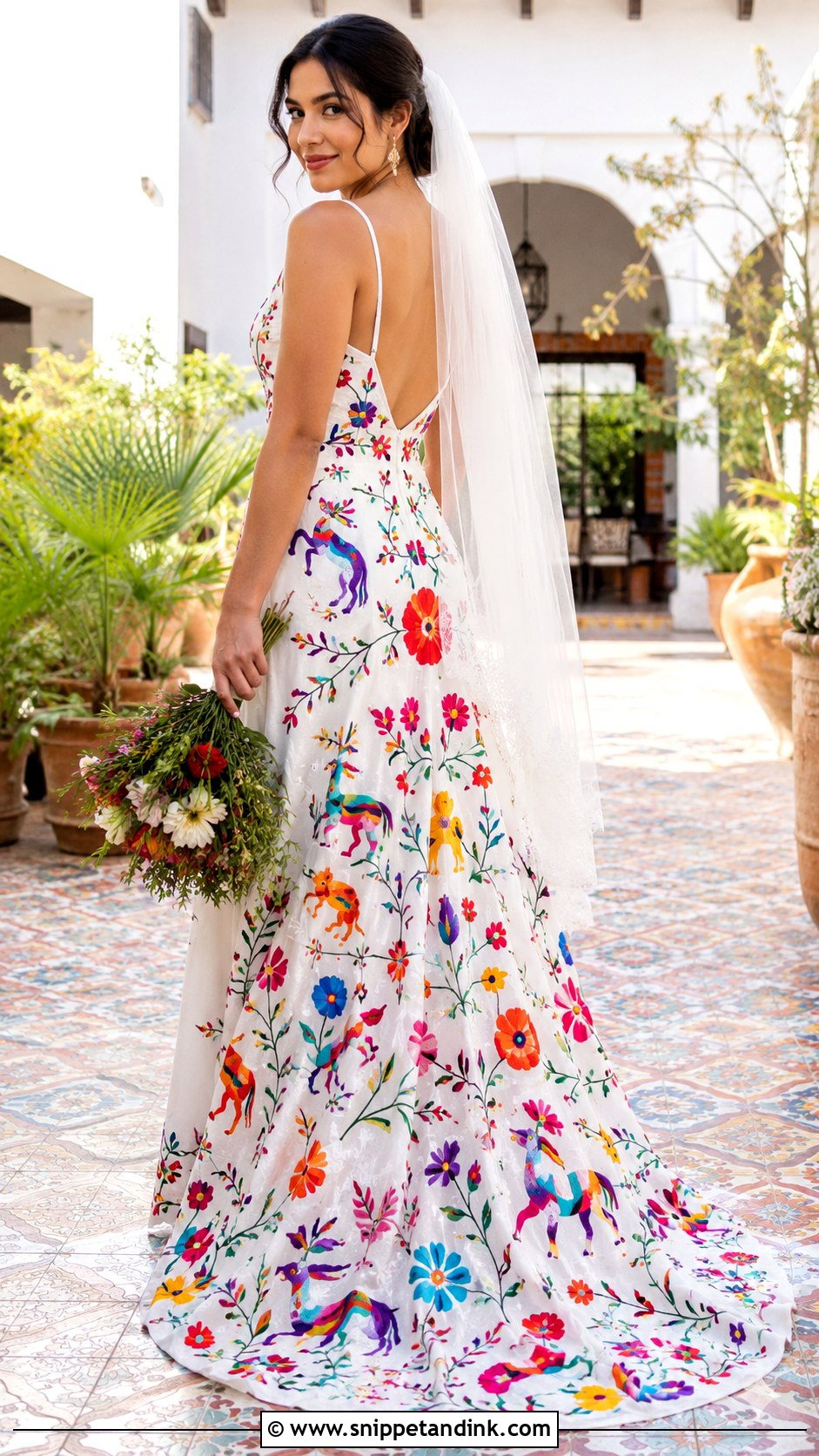
An Otomi embroidered Mexican wedding dress pairs folk artistry with a modern bridal cut. The motifs are animals, birds and flowers, laid across the bodice, waist or train of an A-line. White-on-white reads understated; multicolor is louder and happier. Newer Otomi-style bridal gowns sometimes add natural fibers, narrow straps and open backs. Because this is Indigenous work, labeling matters: ask who stitched it, how long it took and whether motif placement can be changed without breaking the design. Many Otomi motifs are first drawn by hand and then embroidered, so asking for changes early is easier than late. Low ivory heels, small drop earrings and a plain veil let the creatures be the story.
4. Tehuana Inspired Mexican Wedding Dress
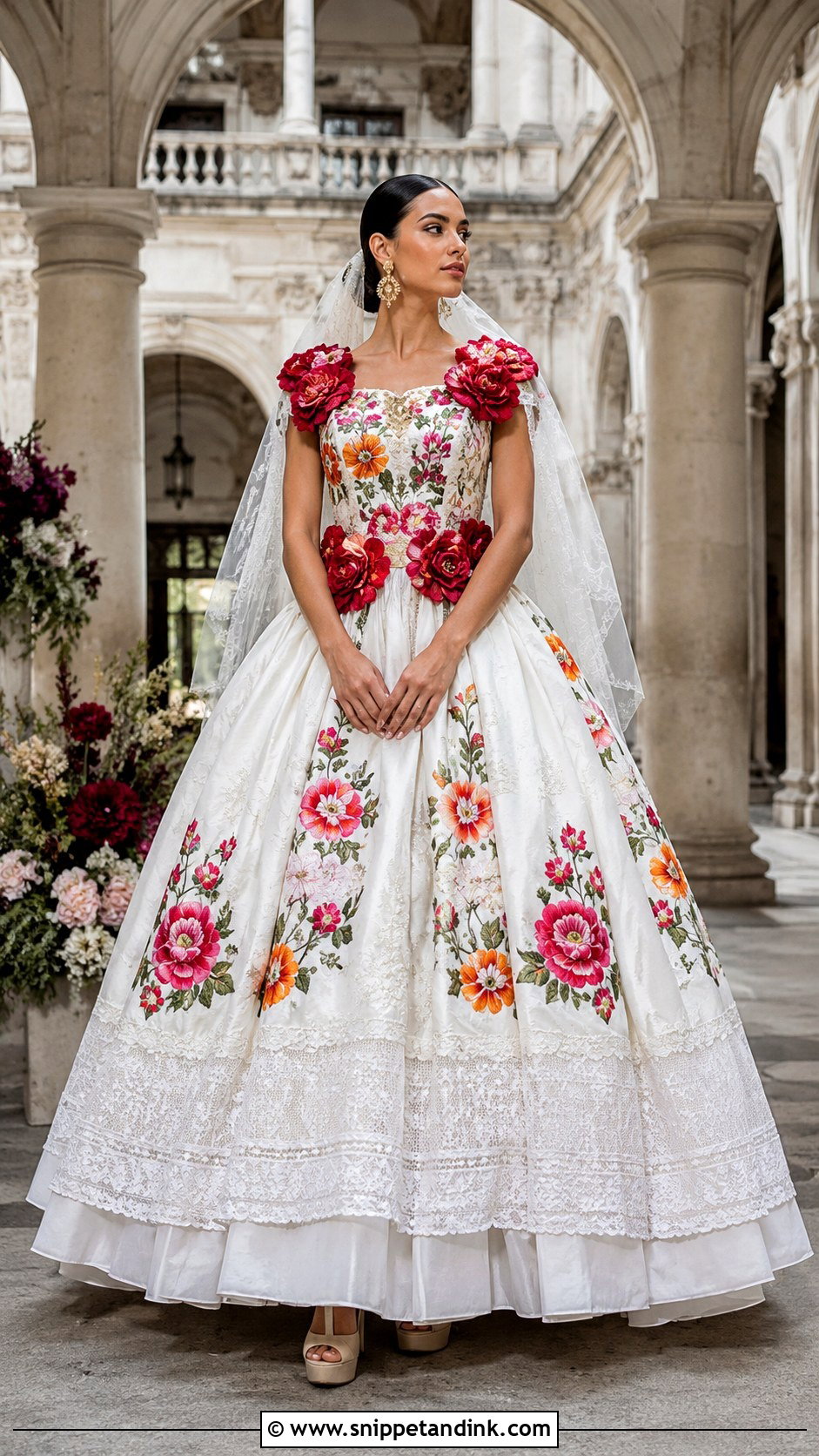
A Tehuana-inspired Mexican wedding dress has strong color and a commanding structure. A fitted embroidered bodice with a full floor-length skirt lets large flowers frame the neck, shoulders and waist. Bridal designers often reinterpret clothing from the Isthmus of Tehuantepec through floral embroidery, corsetry and layered tulle, and I’d urge you to know which elements come from the original and which are invention. Sleek hair, gold statement earrings and platform heels hidden under the skirt suit it, with a plain tulle veil. The skirt and bodice can be substantial, so book a seated fitting and walk in the shoes before the length is final. Ballrooms and big courtyards give it room.
5. Yucatan Terno Mexican Wedding Dress
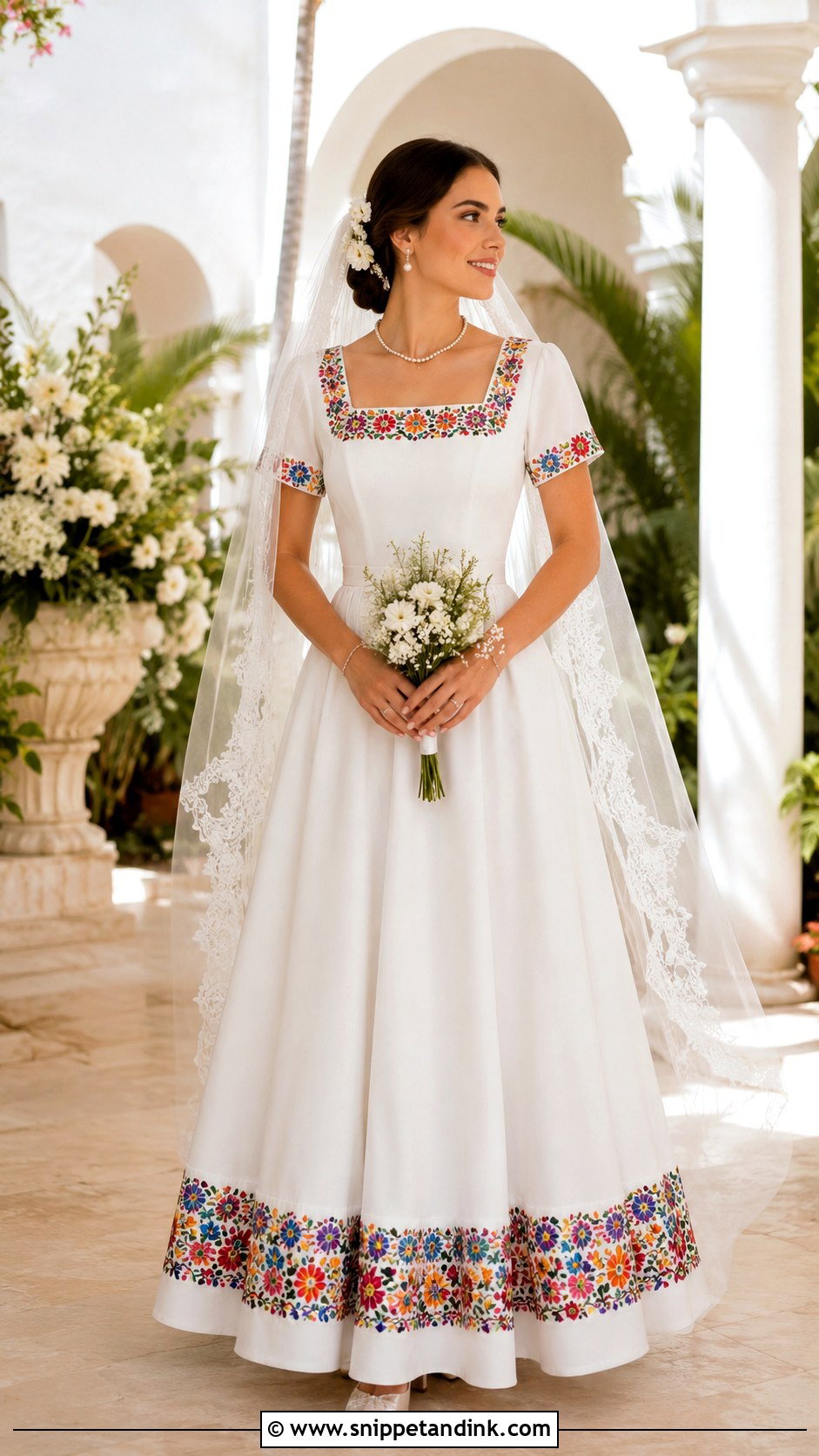
Crisp white, square proportions and careful bands of embroidery are what draw brides to the Yucatecan terno. A floor-length white gown with a squared neckline, short sleeves and embroidered bands at the collar and hem captures the idea; tonal stitching feels formal, bright flowers more festive. The Yucatán is hot and humid much of the year, which is exactly why the traditional garments are loose and white, so keep the lining breathable and resist extra underskirt layers. Pointed ivory shoes, pearl earrings and a lace-edged veil with a low bun keep that neckline visible. If you’re commissioning, check the regional details with the maker and buy directly from someone who knows the garment.
6. Manta Cotton Mexican Wedding Dress
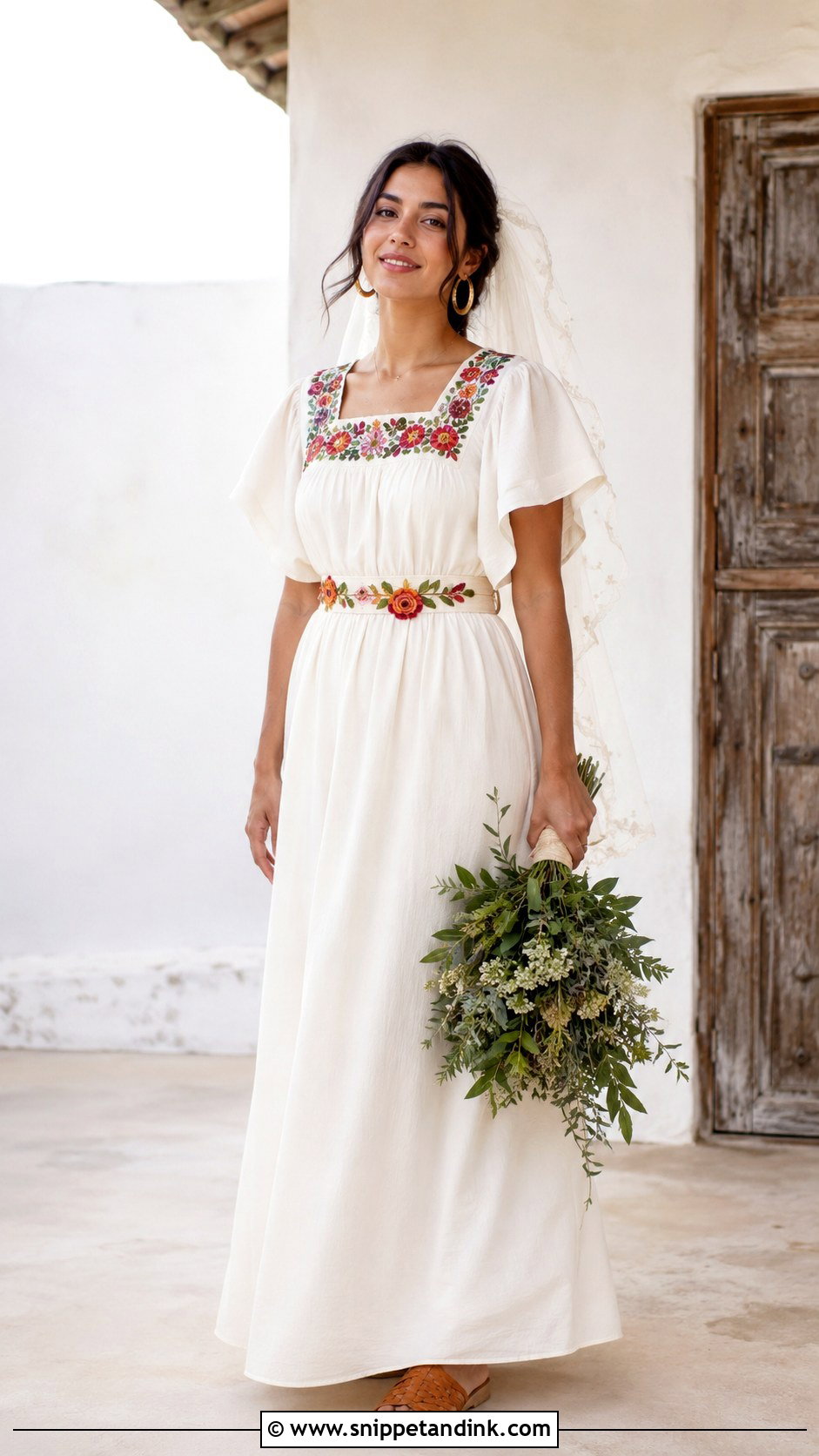
Manta cotton is the fabric I suggest for small outdoor weddings in warm weather. A loose floor-length gown with a gently defined waist, flutter sleeves and hand-embroidered flowers at the neck suits gardens, ranches and countryside venues. Its texture is matte, so it never looks shiny in flash photos. The trade-off: thin white cotton goes sheer in sun, so ask for lining through the bodice and skirt. Cotton also creases quickly. Steam it on a hanger rather than ironing hard folds, and expect soft wrinkles by the reception; they suit the fabric. Woven sandals, a light veil and pearl studs or hoops are enough, and a detachable embroidered belt can come off for dancing.
7. Lace Mexican Wedding Dress With Embroidery
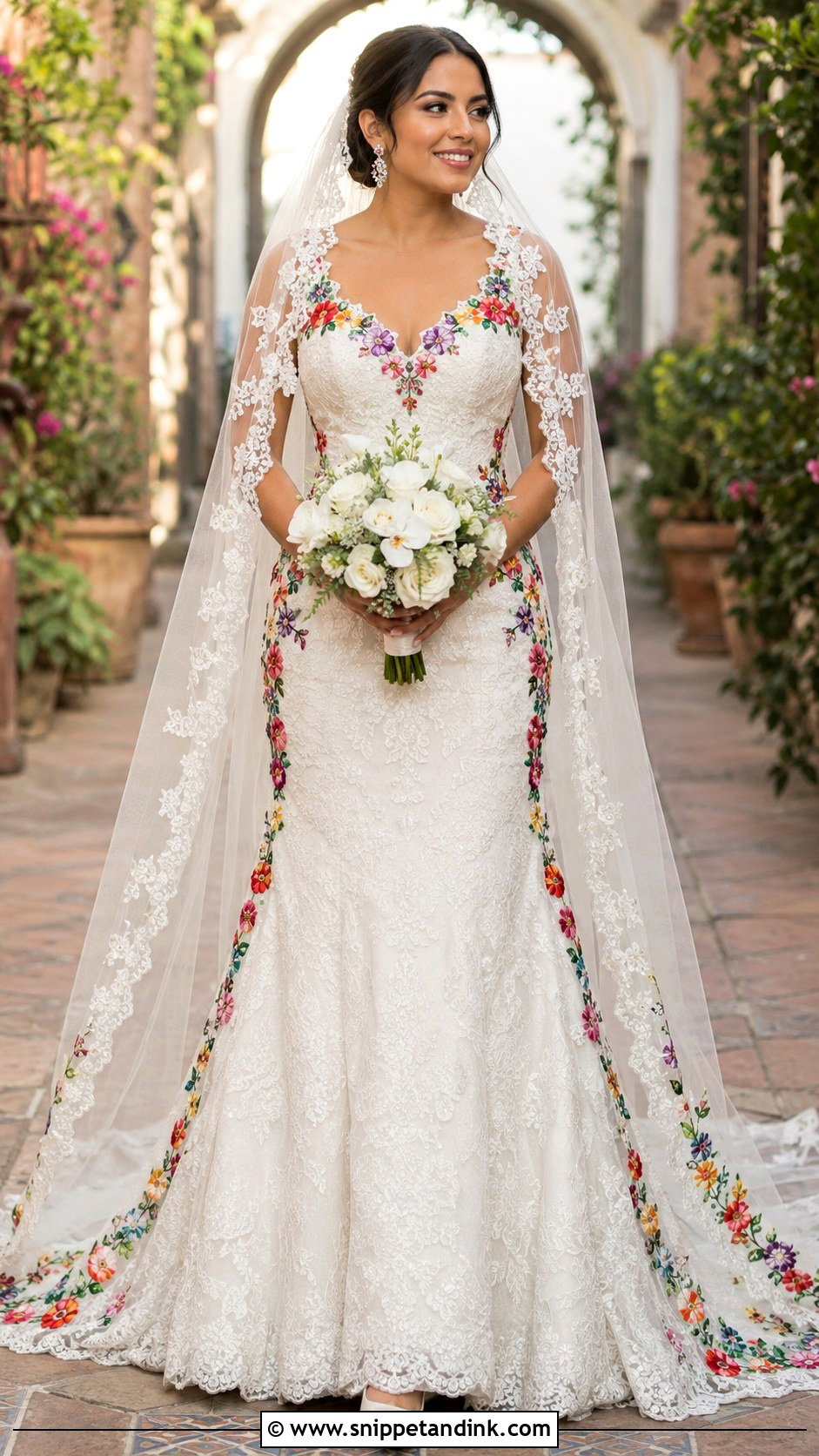
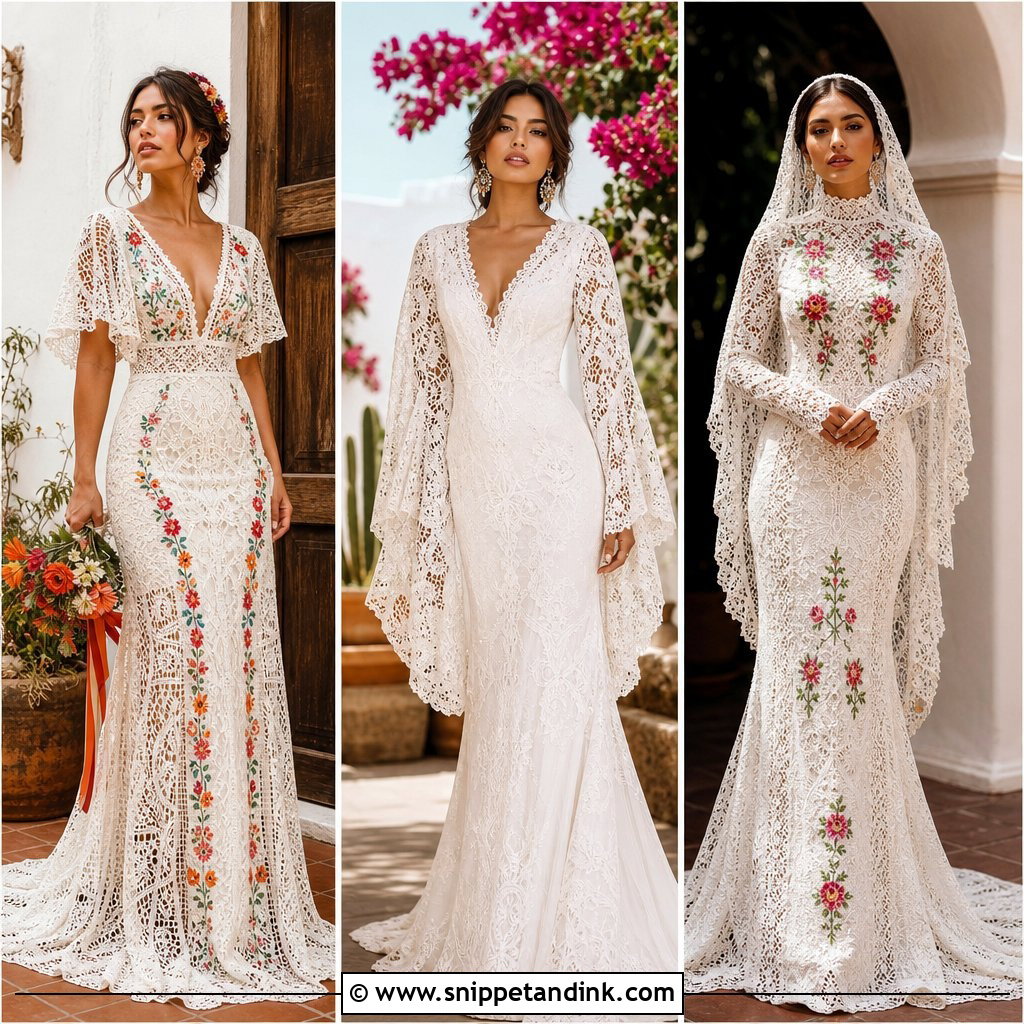
Can classic bridal lace and Mexican embroidery share one gown? Yes, if the embroidery looks built in rather than stuck on. Start with an ivory lace dress, fitted at the bodice with a softly flared skirt, then place colorful embroidered appliqués along the side seams, neckline or train. Some current designs layer tulle, lace and appliqué together. The practical concern is weight: a heavy appliqué on fine lace pulls and puckers, especially on curves at the bust and hip. Ask your seamstress to back the heavier pieces and hand-tack them so they move with the lace. Closed-toe heels, a plain chapel veil, small gemstone earrings and a mostly white bouquet finish it.
8. Off Shoulder Mexican Wedding Dress
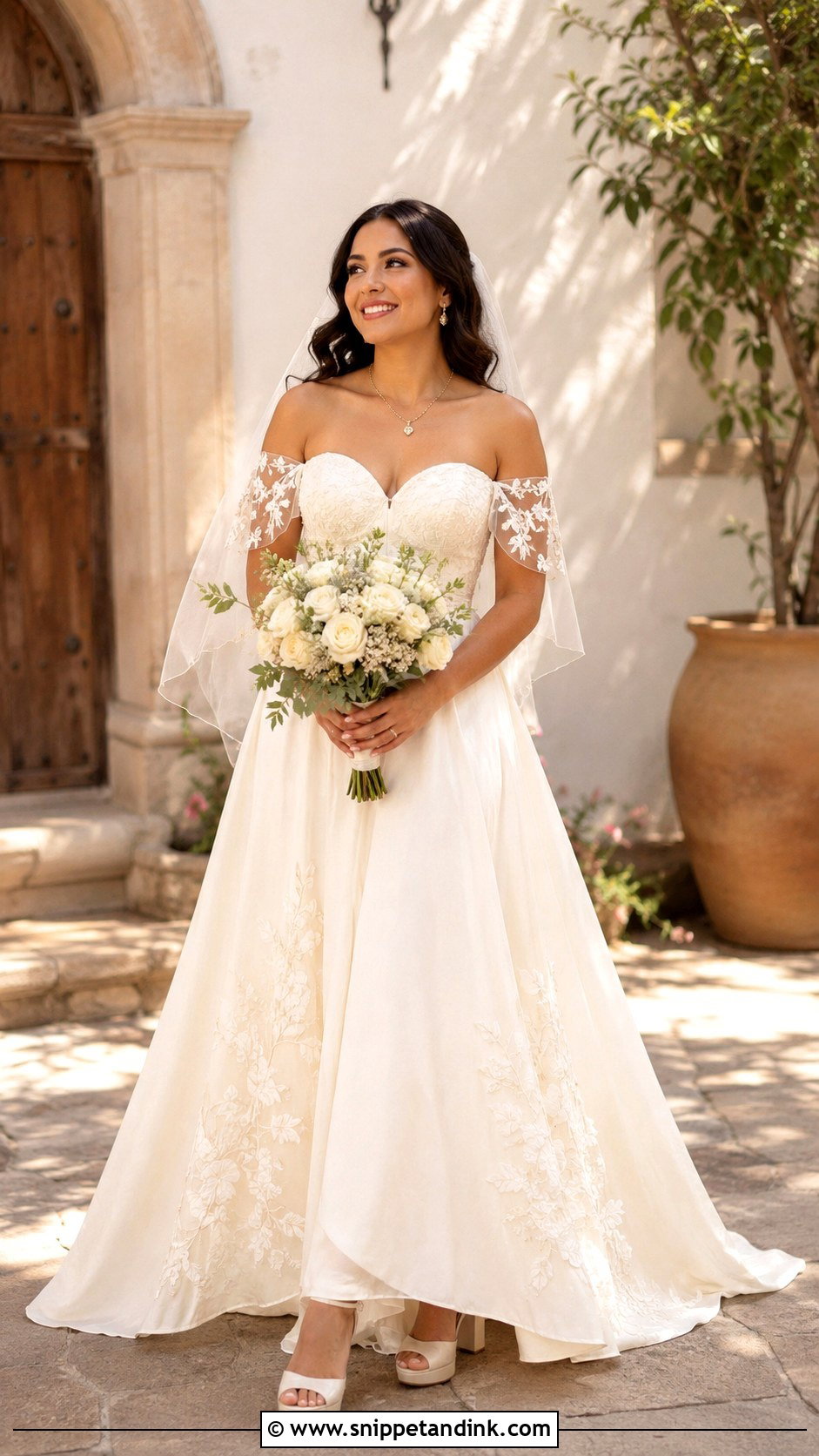
Off-shoulder necklines put embroidered sleeves on display, but they live or die on the inner structure. Choose a fitted bodice with real support, floral sleeves and a flowing A-line. A shallow sweetheart is easier to wear for ten hours than a deep cut. At alterations, I make brides lift their arms, hug me and sit down; the neckline should stay put without pinching the upper arm. A simple pendant, combed-back waves and block heels balance it. Shoulder-length veils keep the sleeves visible, while a cathedral veil adds ceremony drama. On a cool evening, a rebozo-style wrap from an artisan who explains their materials works better than a cardigan.
9. Long Sleeve Mexican Wedding Dress
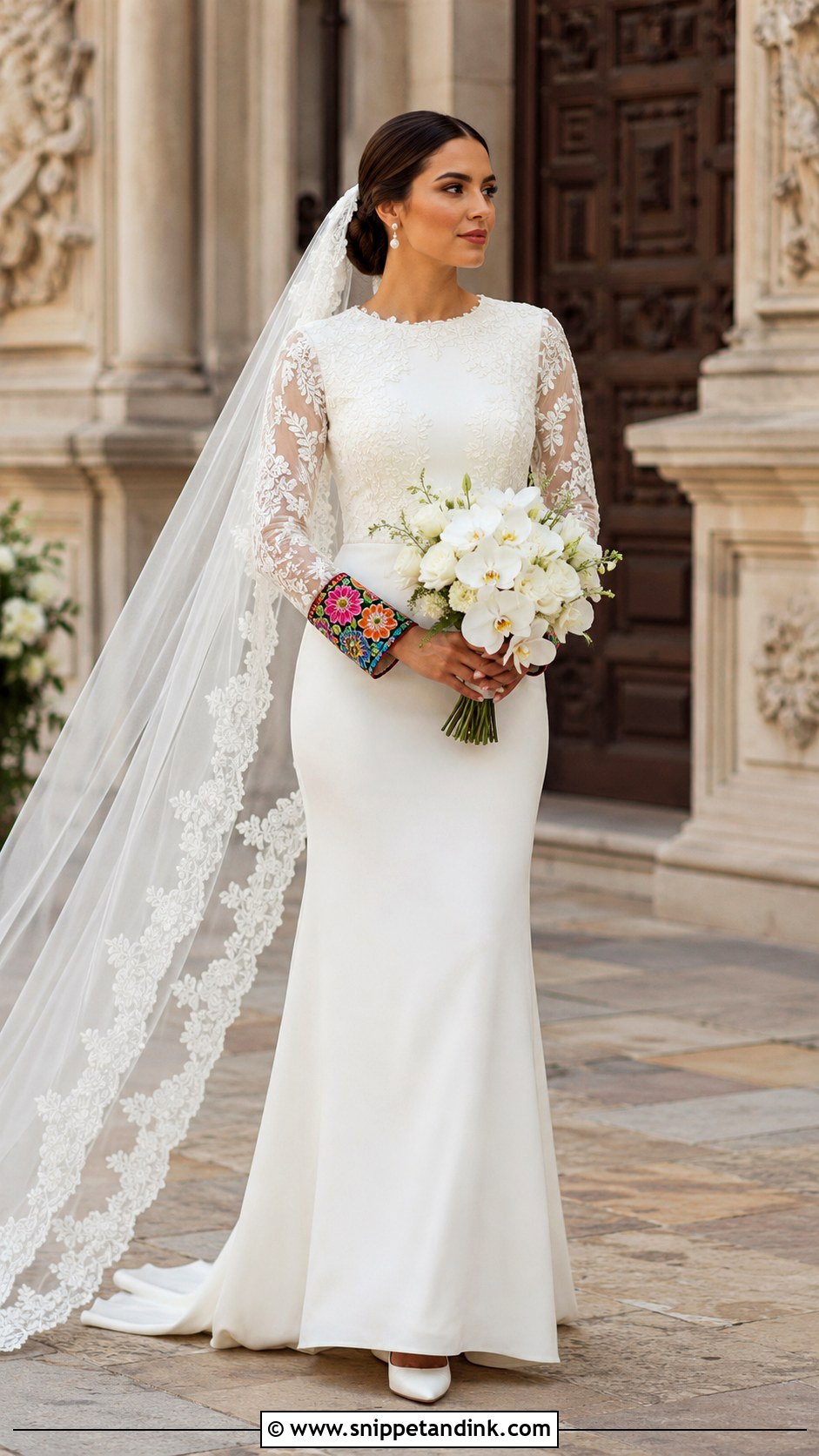
Sheer sleeves with embroidered cuffs and flowers running from the shoulders into the bodice give coverage without bulk. A gently flared skirt balances that weight at the top. Because the embroidery already frames the upper body, I’d skip lace gloves and ornate necklaces; pearl drops, pointed pumps, a low chignon and a smooth chapel veil are enough. If you’ll move between air-conditioned rooms and outdoor heat, soft mesh or cotton voile sleeves cope better than heavy lace. The underarm seam is where long sleeves fail. Raise both arms and mime a dance move at the fitting, and if the bodice lifts, the sleeve head needs more room.
10. Strapless Corset Mexican Wedding Dress
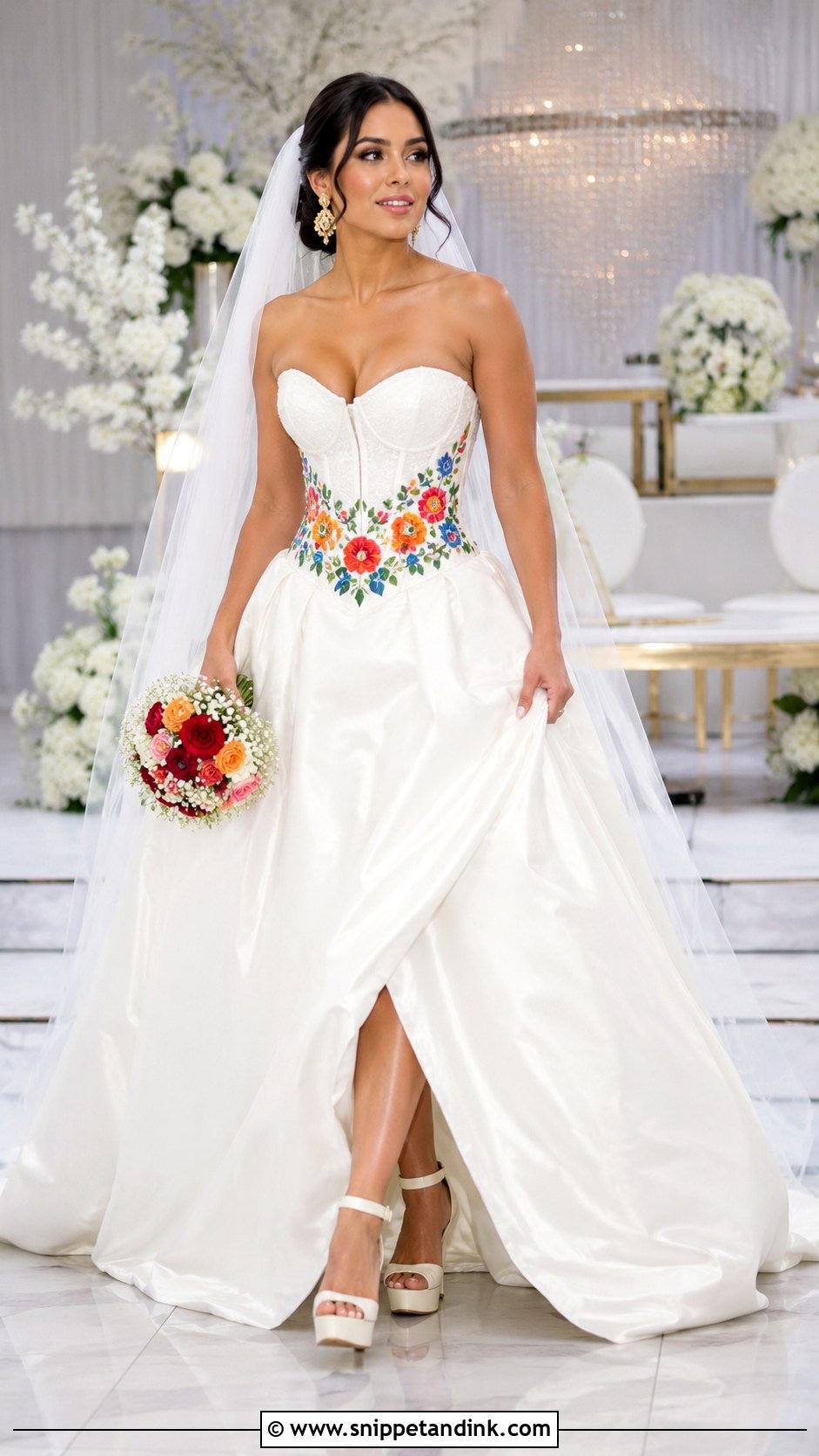
A strapless corset Mexican wedding dress gives you modern structure with vivid embroidered flowers. Look for a supportive bodice with visible shaping, a lace-up back and flowers set around the waist, over a full satin or tulle skirt. The embroidery should follow the bodice seams; stitching that cuts across boning channels tends to ripple when you sit. Made-to-order versions often combine bridal satin, boning and full lining. Have the corset fitted by someone experienced with them, since a strapless bodice that’s slightly loose at the top edge will slip all evening. Removable embroidered straps are a smart backup for dancing.
11. A Line Mexican Wedding Dress
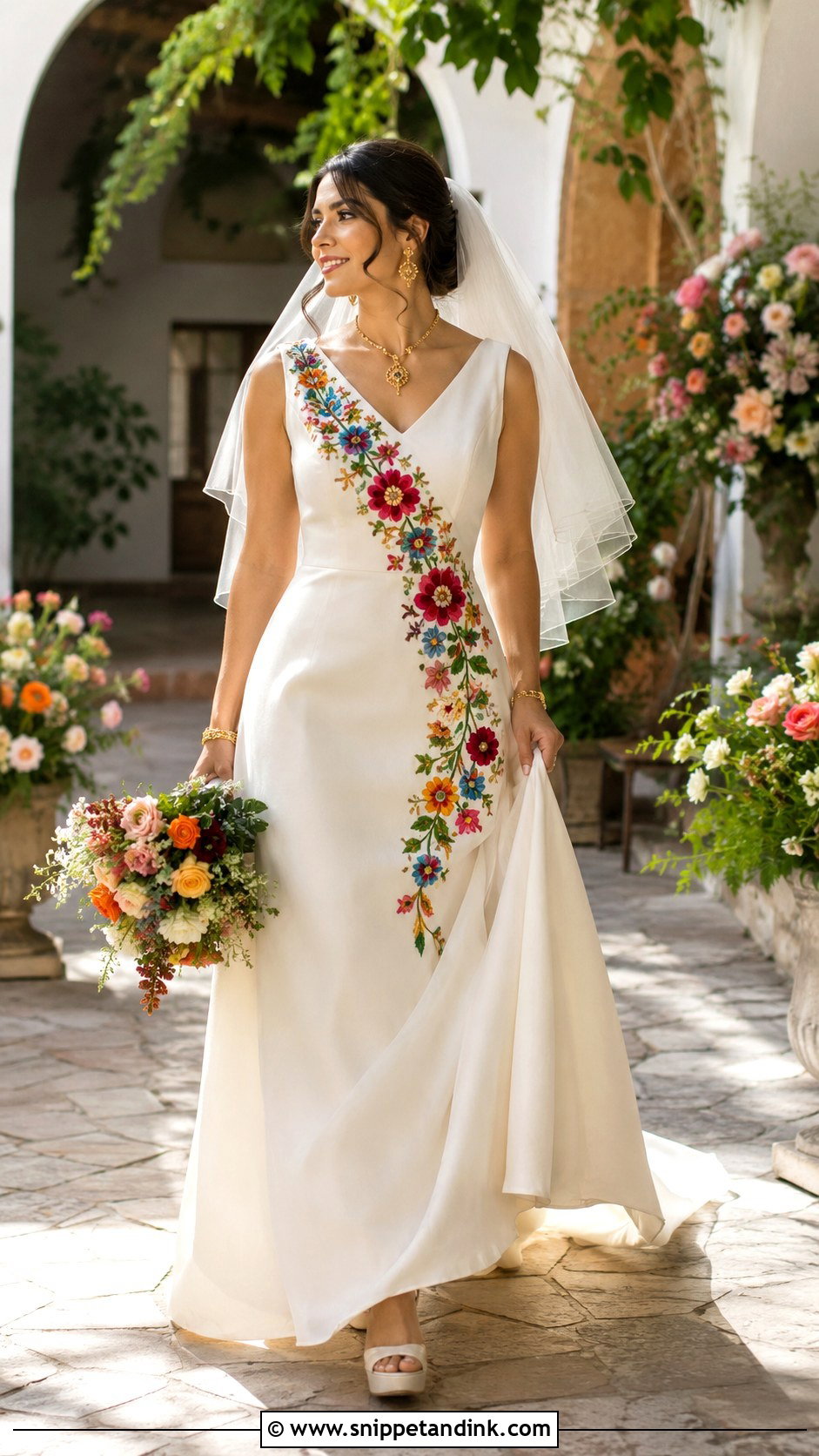
Few shapes forgive as much as the A-line. It defines the waist and widens gradually, without the weight of a full ball gown. In ivory cotton, satin or tulle, I like embroidery that travels diagonally from one shoulder toward the opposite hip, because the line pulls the eye downward and lengthens the body. Medium block heels, a waist-length veil, simple gold jewelry and a structured bouquet suit it. Hem it in your wedding shoes so it barely clears the floor; embroidered borders that drag get dirty and catch heels. Hidden pockets and a secure bustle make it practical for a courthouse, garden or hotel.
12. Ball Gown Mexican Wedding Dress
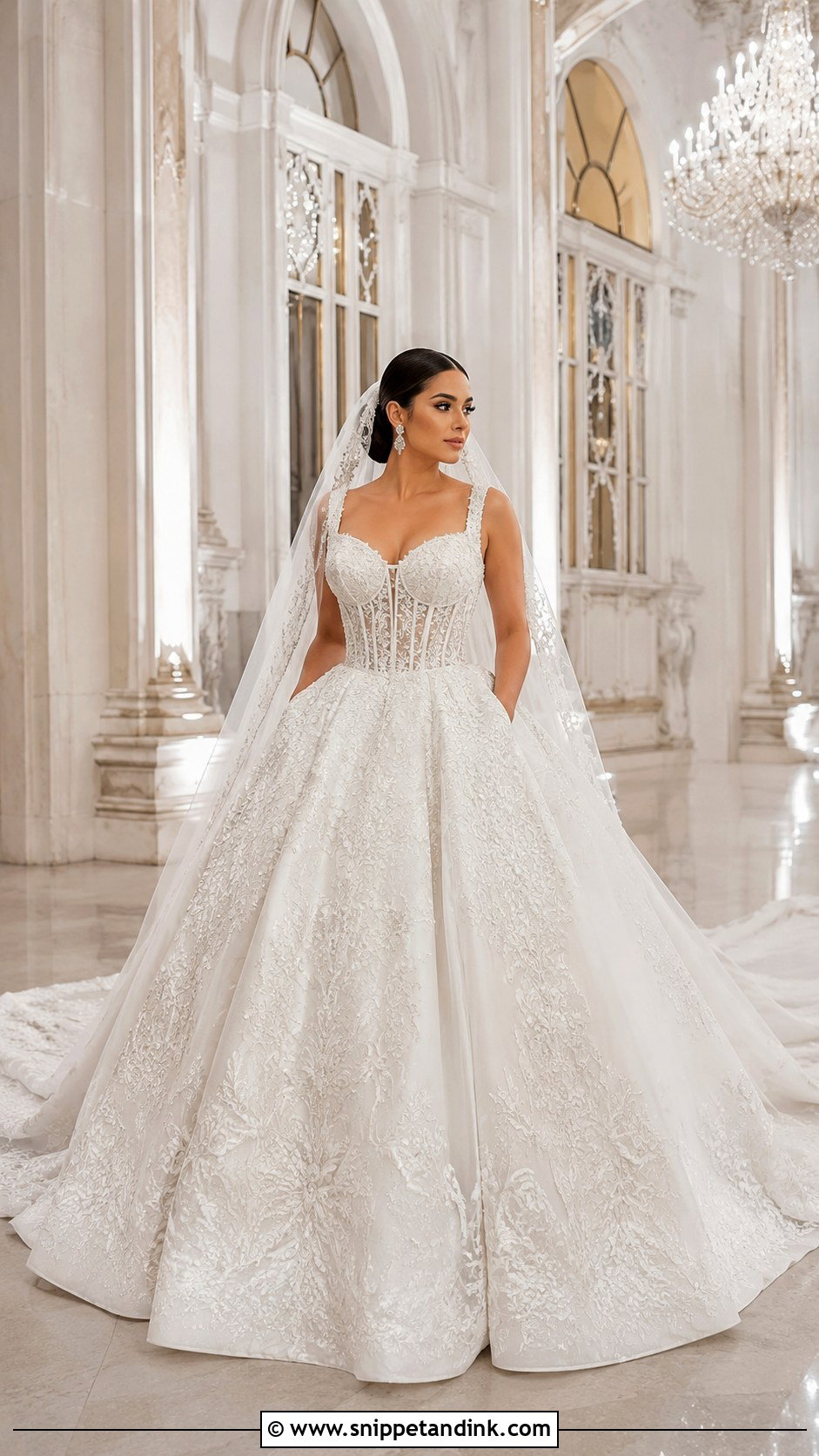
Big rooms suit big skirts. A ball gown with a structured corset bodice, wide supportive straps and embroidery near the waist and hem fills a grand venue properly. Some current designs add fill-stitch embroidery from hand-drawn motifs, hidden pockets and an internal crinoline. Embroidered trains are much heavier than plain tulle, so ask for a strong bustle with several attachment points; a single hook will tear out by the second song. Practice stairs and turning in a narrow space at fittings. A cathedral veil, stable platform heels, medium earrings and smooth hair balance the scale, and a fitted waist seam keeps a petite bride from disappearing in the skirt.
13. Mermaid Mexican Wedding Dress
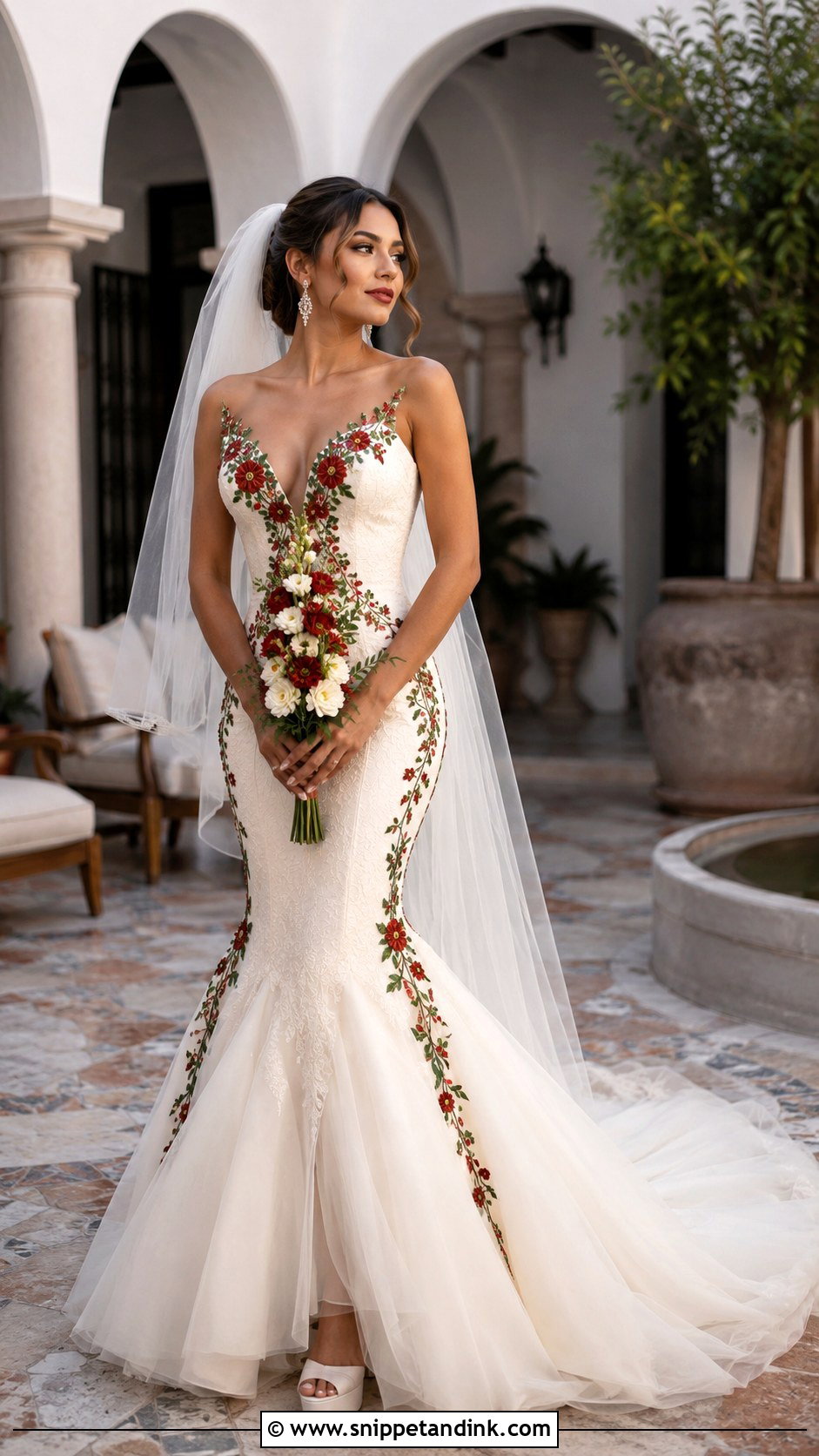
Mermaid gowns follow the torso and hips, then flare near the knee into tulle or lace. Embroidery along the neckline, side panels and the flare outlines the shape without covering every inch. Here’s my honest caution: a flare set at the knee restricts your stride more than most brides expect. At the fitting, take normal steps rather than tiny ones and check how high your foot can lift. If it feels tight, a modified mermaid that opens above the knee keeps the line with far more freedom. High block heels, a long plain veil, drop earrings and a narrow bouquet suit it, with tonal ivory thread for subtlety or red and green for celebration.
14. Boho Mexican Wedding Dress
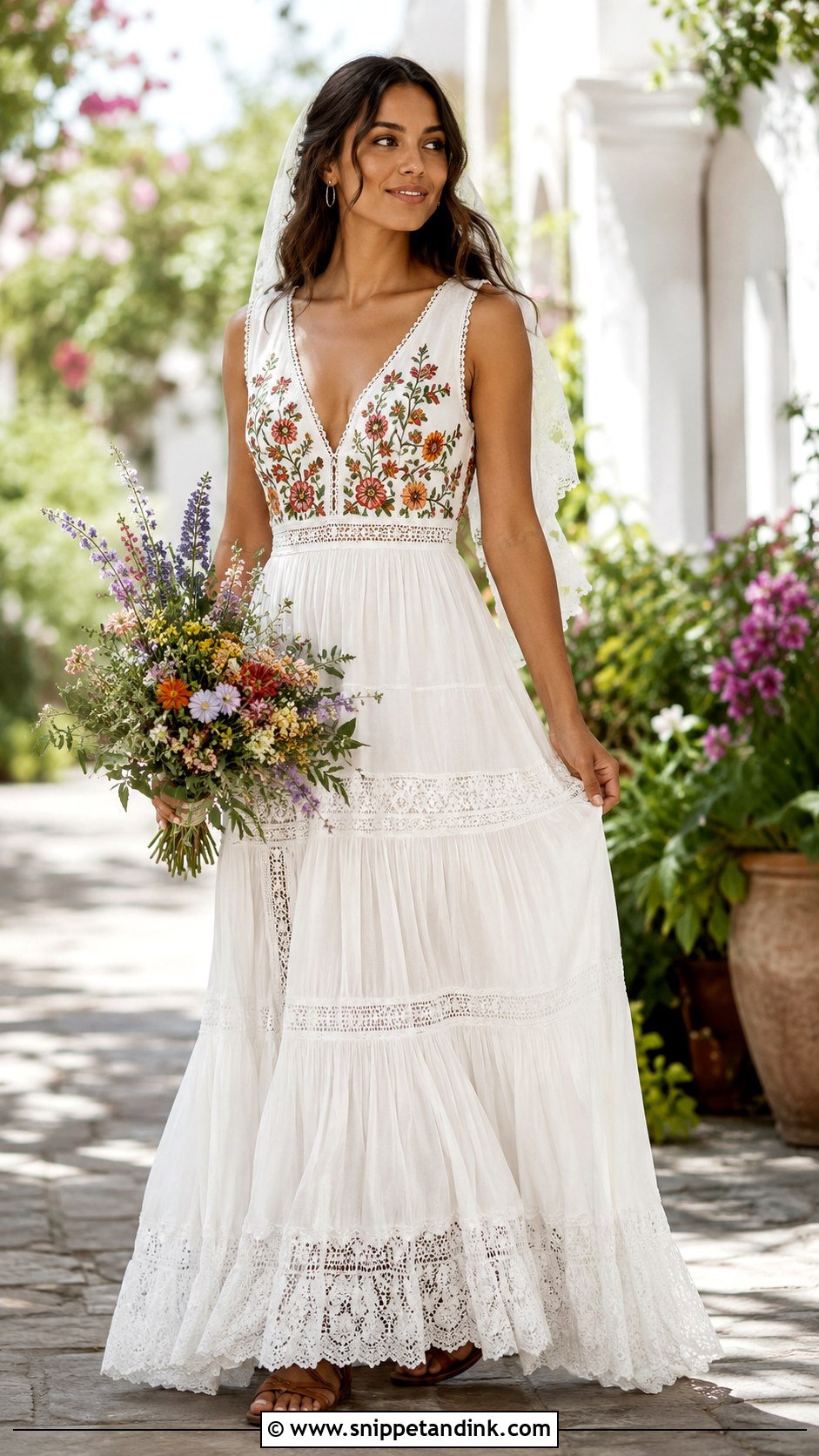
Boho can slip into casual quickly, so I keep it bridal with a softly fitted embroidered bodice, crochet insets, lace trim and a tiered maxi skirt. Strapless embroidered versions give a modern edge. Crochet is open work, so check which sections are lined before you fall for it under fitting-room lights. Delicate lace at the hem snags on grass and gravel, which matters at ranches and deserts. Flat leather sandals, small hoops, a light veil under loose waves and a wildflower bouquet held to a few colors keep it cohesive. After sunset, a plain shawl without fringe is warmer and won’t tangle in your hair.

15. Beach Mexican Wedding Dress
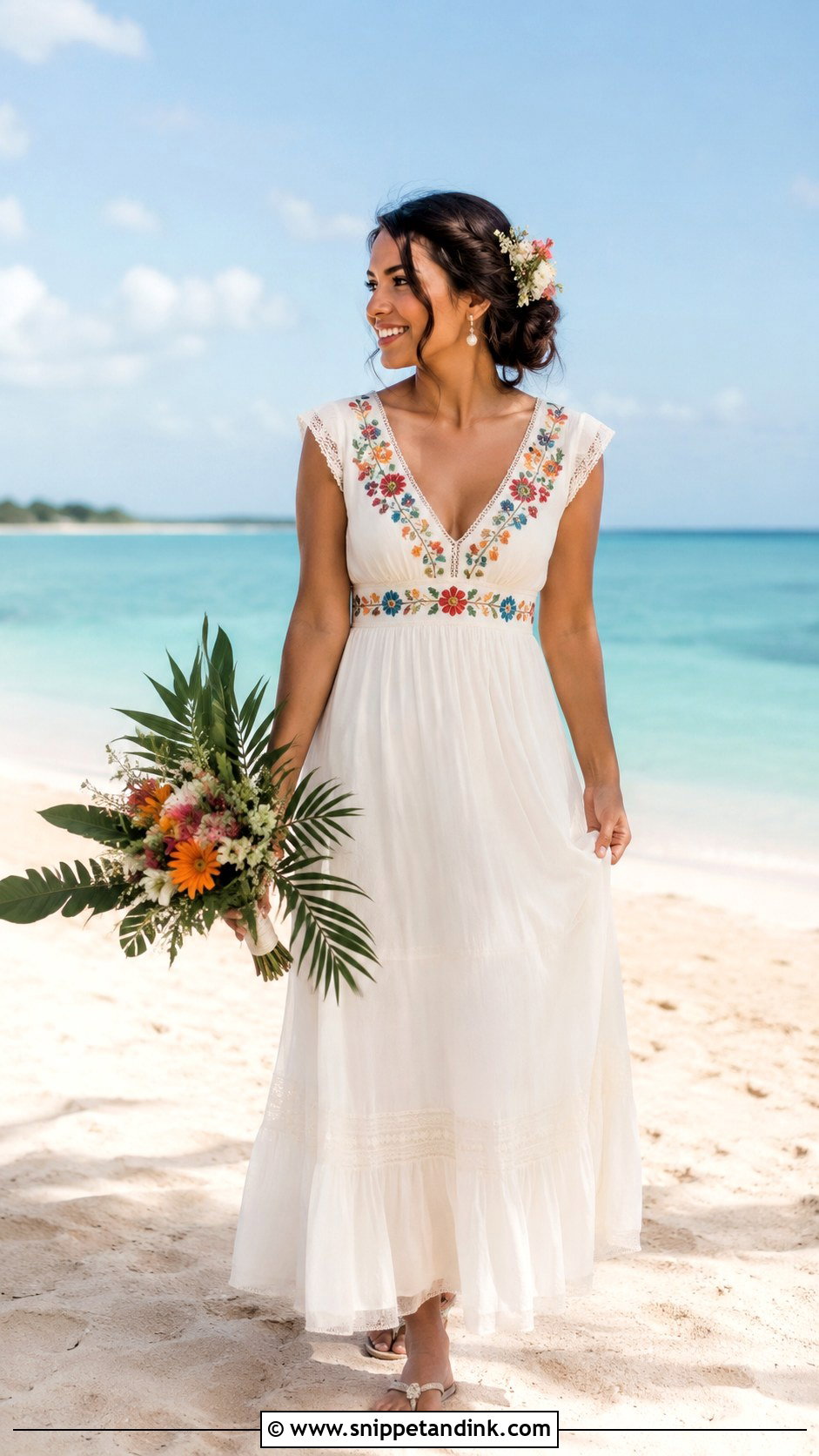
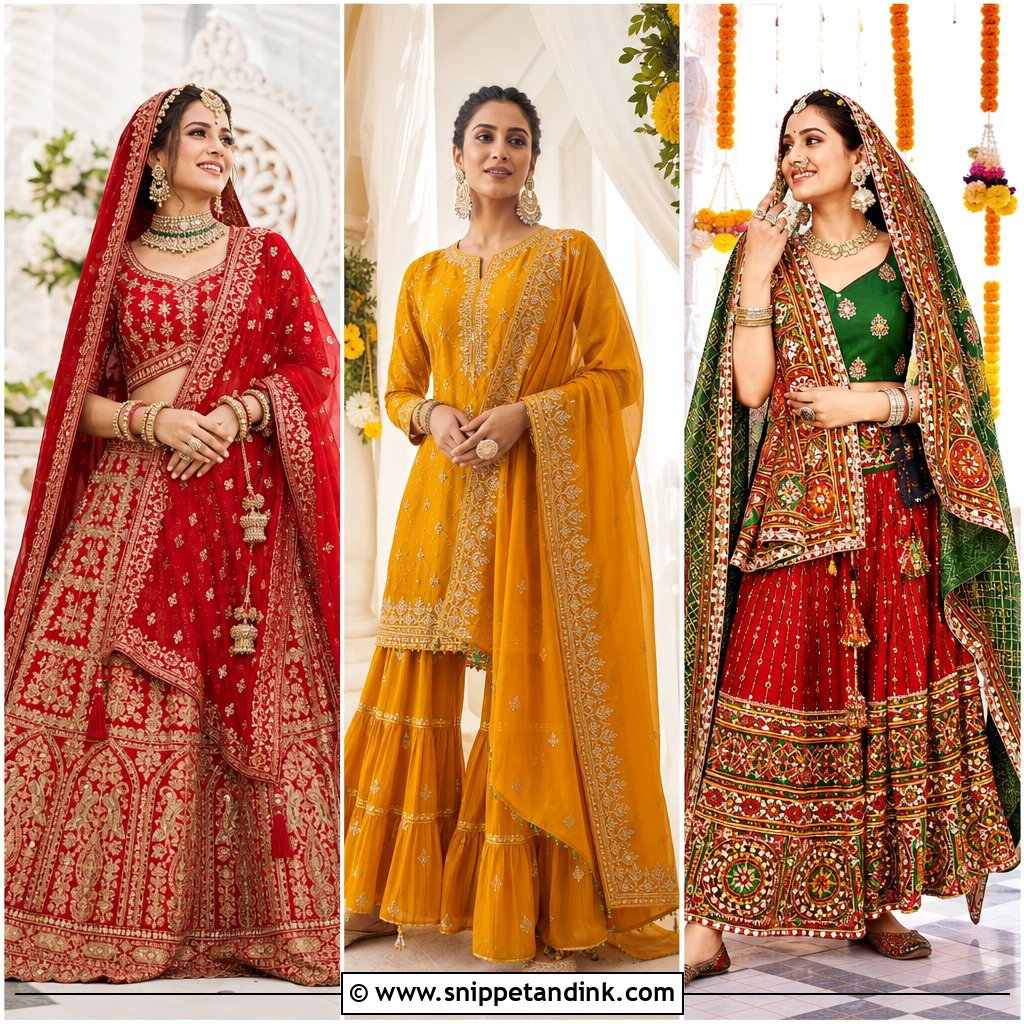
Sea air and sand change what a dress needs to do. A light ankle or floor-length cotton gown with narrow embroidery at the neckline and hem, a V-neck and an empire waist gives shape without heavy corsetry. Sand collects in embroidered fabric and any train, so keep the back short. If you’re standing on the beach itself, hem the dress a little higher than you would indoors, since your feet sink. A short veil or floral comb won’t pull in the wind the way a long veil does. Flat ivory sandals, pearl earrings and white flowers with tropical greenery suit the setting, and an opacity test in real sunlight is non-negotiable.
16. Minimalist Mexican Wedding Dress
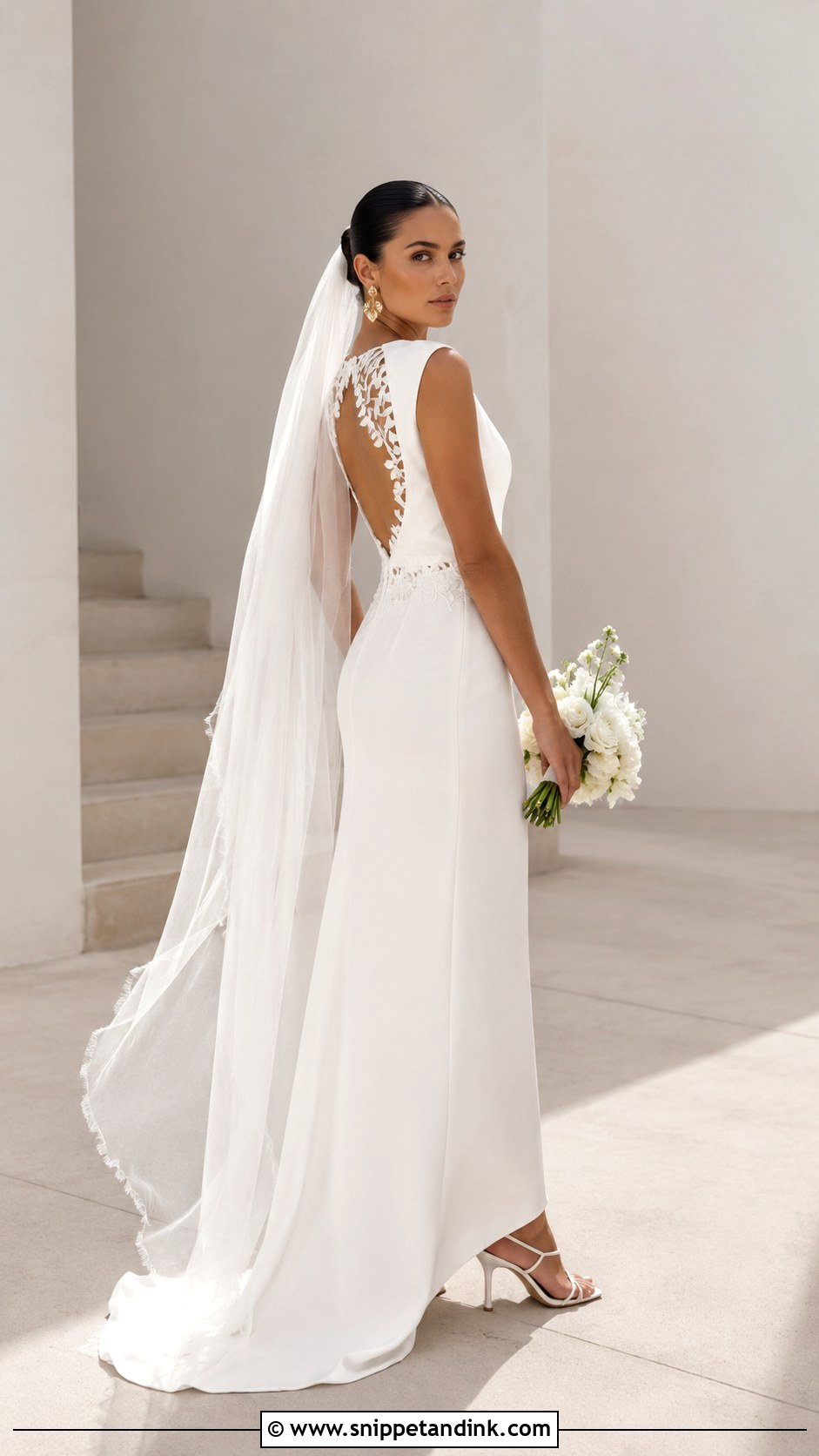
Minimal doesn’t mean leaving the craft out. A clean white column or A-line with tonal embroidery at the neckline, waist and open back is enough. White-on-white Otomi-inspired stitching gives texture while keeping the palette calm. Simple shapes are the least forgiving to fit, because there’s no volume to hide a gaping back or a pulling bust, so I look at them from every side and in motion. Matte natural fibers feel organic; silk or satin reads more formal. Slim ivory heels, sculptural gold earrings, a raw-edge veil and a one-flower bouquet keep everything quiet. A single embroidered panel can be the whole focal point.
17. Plus Size Mexican Wedding Dress
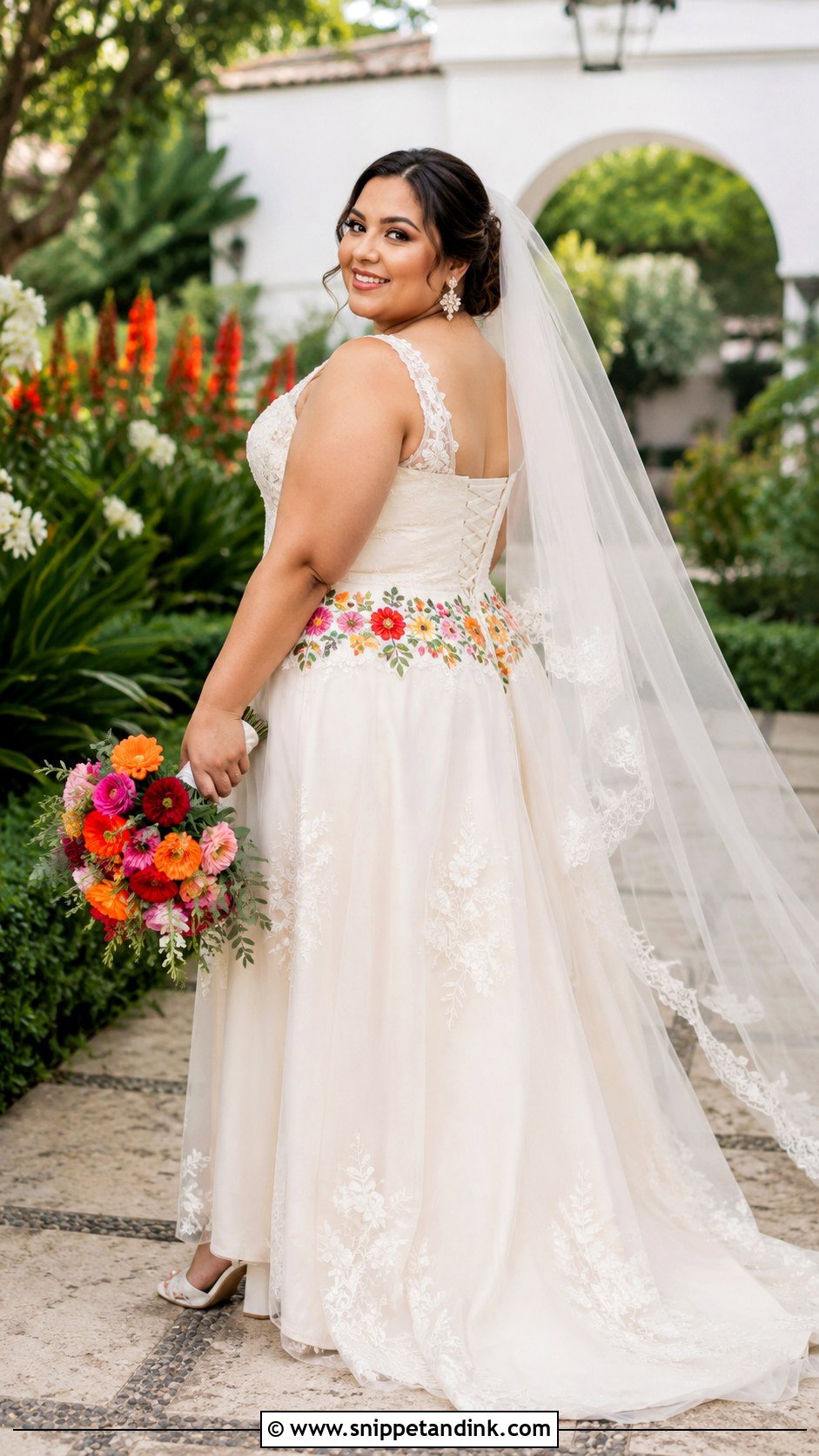
Support and proportion lead on plus-size gowns. I look for a structured A-line with wide straps, a lace-up back and embroidery around the neckline and waist, which draws attention upward and gives a clear waist. The skirt should skim rather than add stiff volume at the hips. Many custom makers cover a broad size range, but always ask for finished garment measurements, not just a size label, because embroidered panels don’t stretch. Supportive block heels, a fingertip veil and medium earrings work well. At fittings, sit, raise your arms and walk briskly; ask for smooth lining, secure cups and straps wide enough to hide your foundation garment.
18. Vintage Mexican Wedding Dress
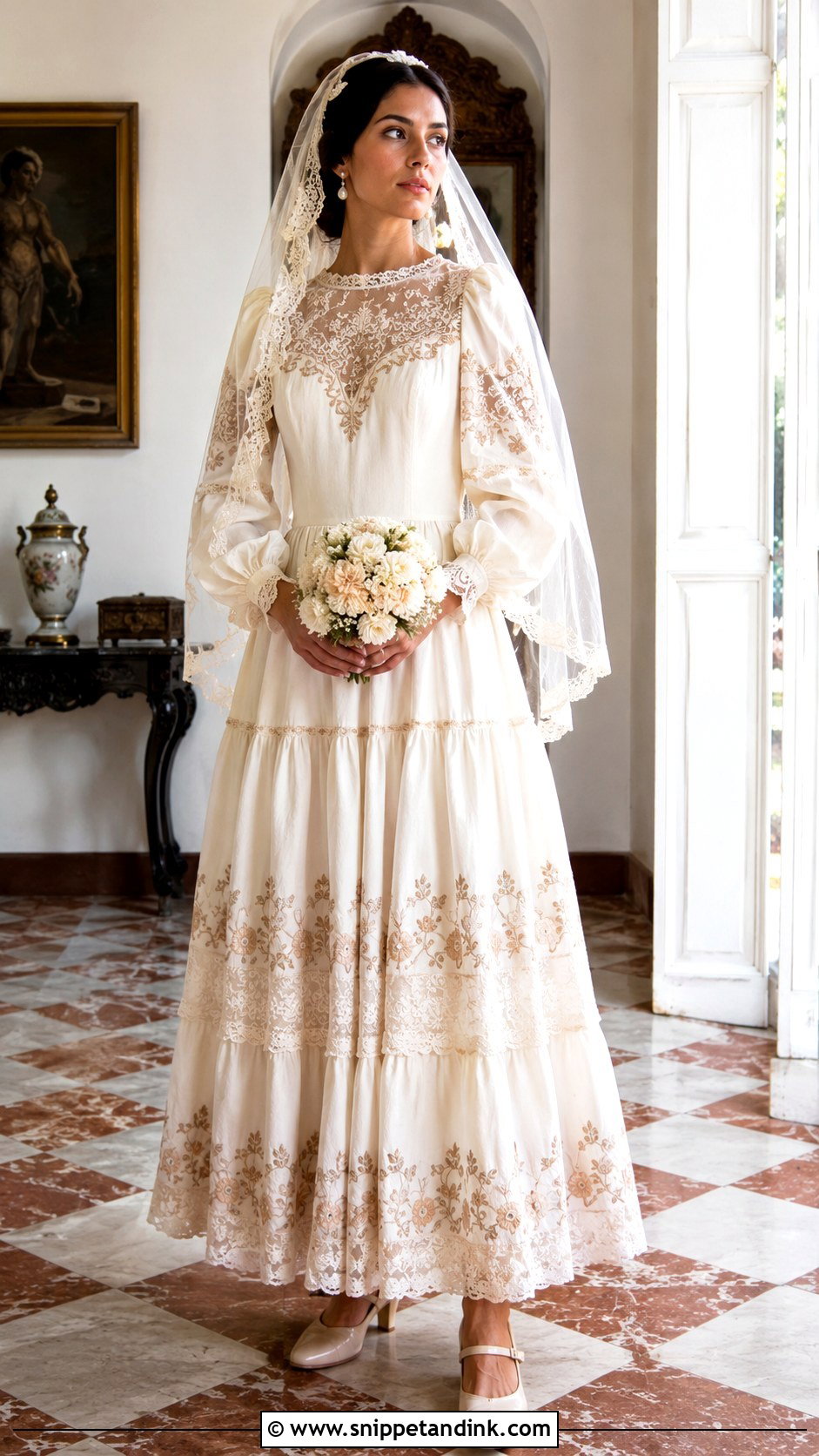
A vintage Mexican wedding dress brings cotton lace, high necks and embroidery with a softer, older feel. Think 1970s maxi with a fitted yoke, slightly puffed sleeves and a tiered skirt. Cream usually flatters vintage fabric more than bright white, since the cloth has often mellowed. Mary Janes, pearl earrings, a lace-edged veil and a small round bouquet keep it bridal rather than theatrical. On a real older piece, check underarms, neckline, zipper and hem for yellowing or weak thread; fragile embroidery belongs with a textile specialist, not a standard dry cleaner. If the original is too delicate, have a modern version made instead of cutting into a handmade heirloom.
19. Short Mexican Wedding Dress
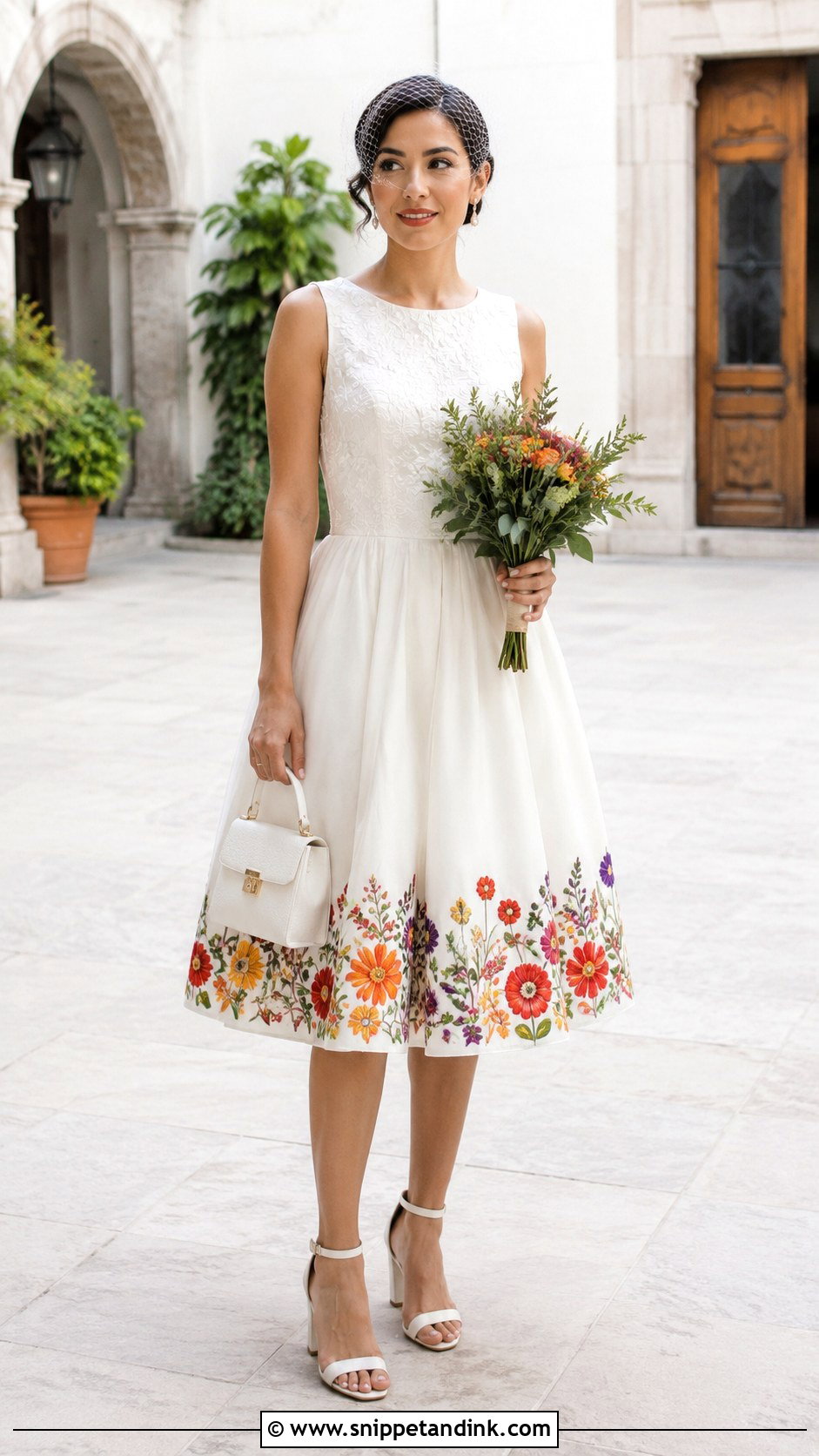
Tea length is a playful pick for a civil ceremony, a casual garden wedding or a second look. A white dress with a fitted embroidered bodice and a full skirt ending between knee and ankle gives the flowers at the neck and hem room to show. Your shoes are on display, so pick ankle-strap block heels that repeat one thread color. A birdcage veil or a hair bow suits the length. Gentle volume from a small petticoat is enough; a stiff one makes a short skirt look like a costume. Sit down at the fitting to check coverage. A cropped embroidered jacket for the ceremony can come off to reveal the neckline later.

20. Mexican Wedding Reception Dress
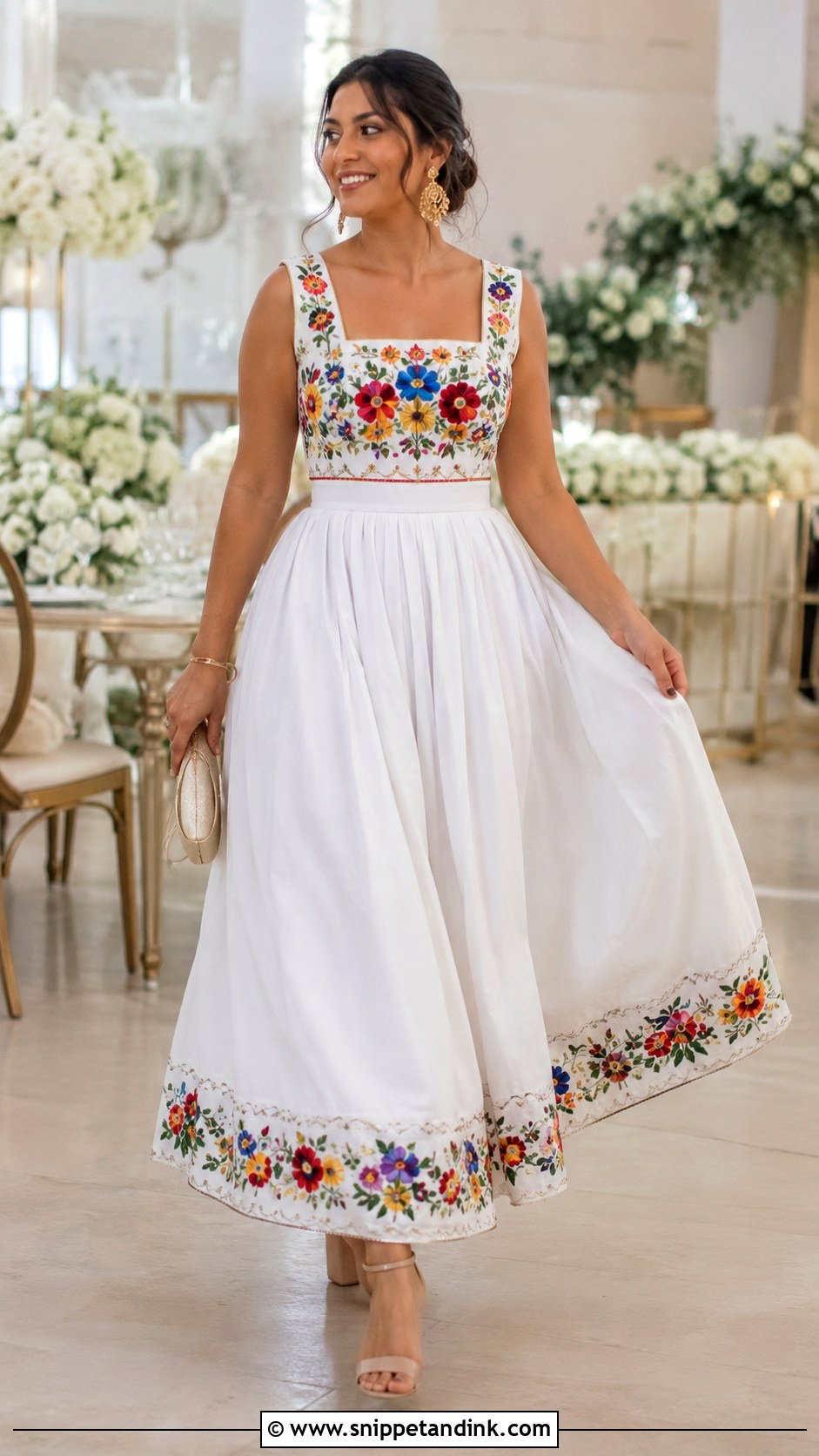
The reception dress should let you dance without fighting your clothes, yet still connect to the ceremony gown. A white midi or ankle-length dress with a supportive square neck, fitted waist and embroidery along the bodice and skirt border does both. Low block heels or polished flats, bold earrings and a small wristlet free your hands. A detachable overskirt can turn one full gown into a slimmer party look without a full change. If you buy a second dress, repeat one thread color or motif from the first. Outdoor receptions are hard on hems, so choose fabric that can be cleaned easily, and a skirt that swings.
Dressing for the Lazo, the Arras and La Víbora de la Mar
If your wedding includes Mexican Catholic traditions, a few ceremony moments affect the dress directly, and they’re easy to forget at a fitting.
The lazo across your shoulders
The lazo, a large rosary or cord, is draped over both of you during the ceremony and rests on your shoulders and the groom’s for a while. On an off-shoulder or strapless neckline it sits on bare skin and can drag a loose bodice down, so test with a heavy necklace draped across your shoulders. A long cathedral veil can also get caught under it; agree with your sponsors in advance whether it goes over or under the veil.
Coins, kneeling and standing on chairs
Receiving the arras means cupping your hands, and many ceremonies include kneeling, so make sure sleeves let your arms come forward and the skirt lets you kneel and rise without stepping on the hem. Later, during La Víbora de la Mar, the couple often stands on chairs while guests run underneath. A floor-length skirt hangs below the chair seat and gets grabbed, so bustle the train first or change into the reception dress before it starts, and wear flats or block heels you can balance in.
Craft, Comfort and a Dress You Can Dance In
The dresses I’m proudest to have styled balance respect for the craft with how the bride actually wants to feel. Vivid flowers, tonal Otomi motifs, breathable manta, lace or a structured modern shape can all be right. Let the venue and season set fabric weight, sleeve length, train and shoes. Fit matters as much as decoration, so test every gown walking, sitting and dancing. And when regional or Indigenous techniques inspire the design, ask plainly who made it and how. Those answers belong to the dress as much as the thread does.
You'll Like These Ideas:




Leave a Reply