
Hanfu isn’t one dress. It’s a whole family of garments, and the collar, skirt, sleeve and outer robe you pick decide how the day feels to wear as much as how it looks. The outfits below run from traditional dynasty-inspired ensembles to tea ceremony sets, reception changes and matched outfits for couples. Most modern wedding versions borrow a historical shape and then quietly fix it: lighter linings, hidden closures, a hem cut for real shoes. When I dress a bride in Hanfu, I start with the schedule rather than the colour, because a crown and a trailing robe that suit a formal entrance can be miserable by the banquet.
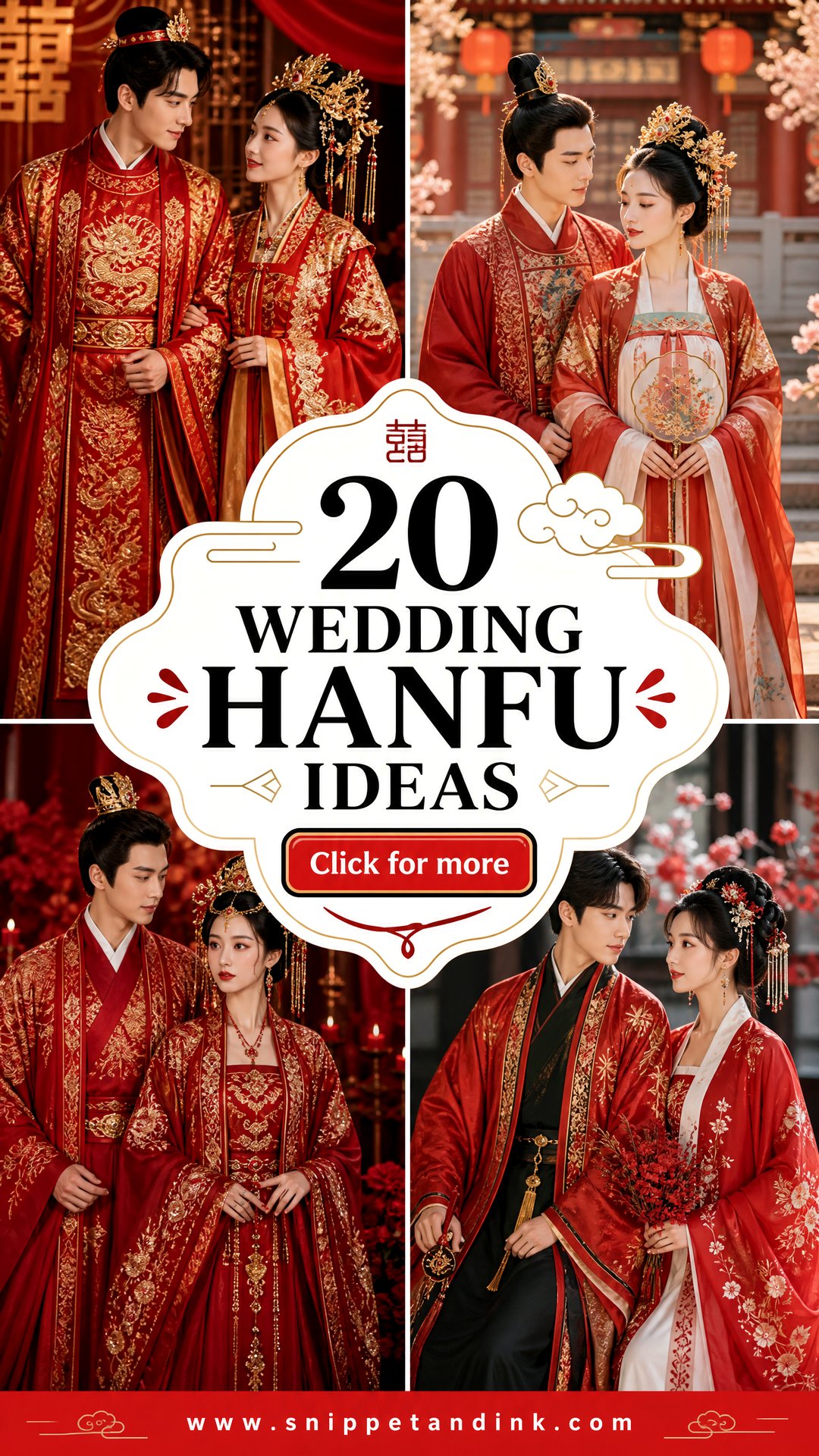
Ordering Custom Hanfu Months Ahead of the Wedding
Ready-made Hanfu is fine for a reception change, but a ceremony set with custom embroidery is a different timeline. Makers commonly quote a few months for embroidered pieces, and that’s before shipping and alterations. I tell brides to order around five to six months out and to treat anything under three months as a rush.
Before you order, gather the measurements most makers ask for and take them over the underwear you’ll actually wear:
- Bust, natural waist and the point just under the bust where a high-waisted skirt will tie
- Shoulder width and arm length from shoulder point to wrist, since sleeve proportions vary a lot between dynasties
- Skirt length measured from wherever the skirt sits to the floor while you wear your wedding shoes
- Head circumference, if a crown or hair frame is being made
Ask for photos of the actual fabric in daylight, not only the finished studio shots. Red is the colour that varies most between dye lots, and a bright orange-red next to a groom’s blue-red looks like a mistake in every family photo.
What the first try-on should tell you
When the parts arrive, sit, kneel, raise your arms and walk a flight of stairs. Check that the mamian front panel stays centred, that the collar doesn’t gape when you lean forward and that nothing pulls at the underarm. Most fixes are simple for a local tailor if you find them early.
1. Red Ming Dynasty Hanfu Wedding Outfit
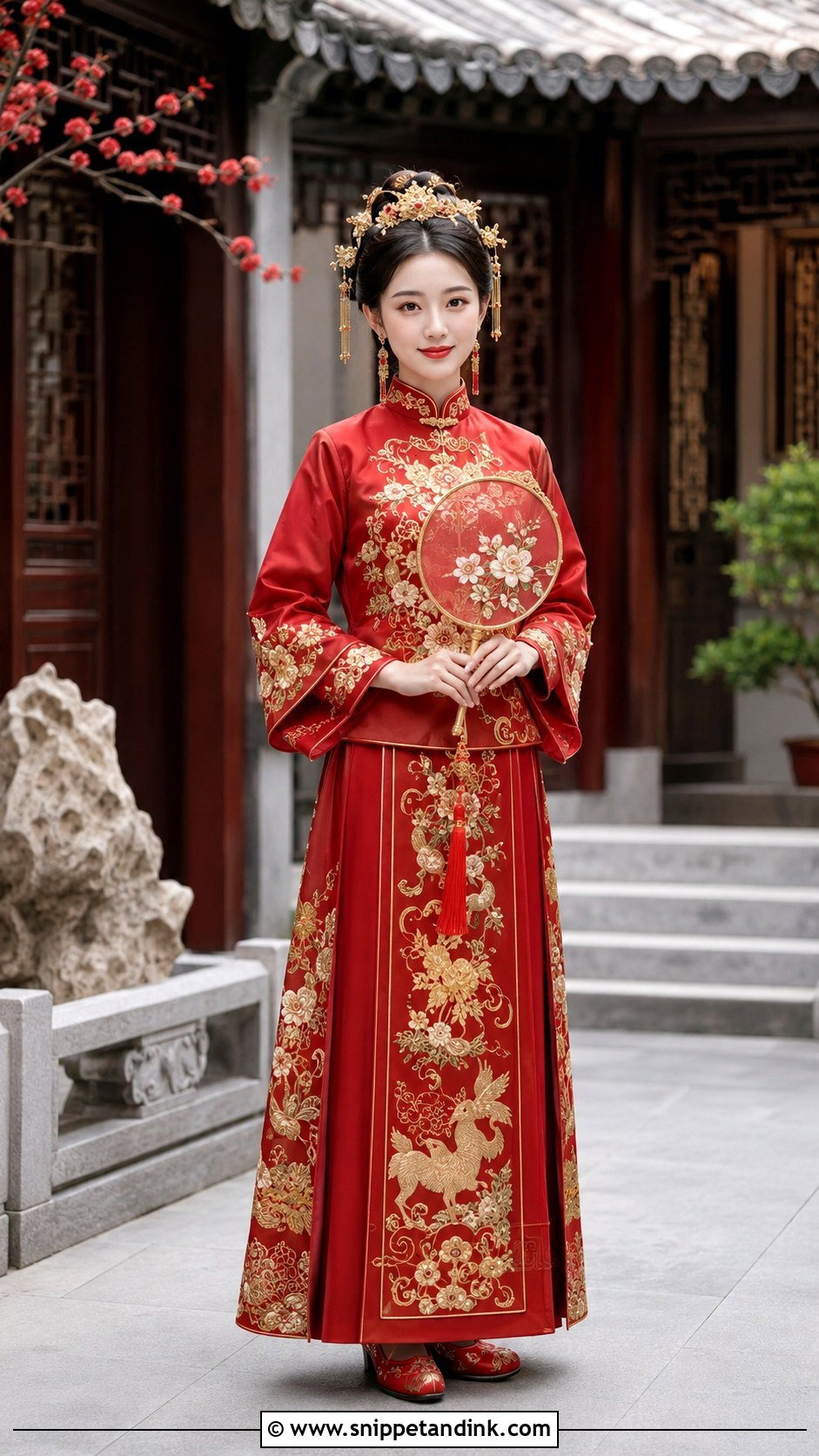
The Ming red set is the one most families picture first: a standing-collar embroidered jacket over a mamian skirt with its flat front panel and pressed side pleats. Phoenix, cloud or floral motifs in gold give the red its ceremonial weight. The pleats are where I spend my fitting time, because if the waistband sits even slightly off-centre the front panel drifts sideways and every photo shows it. I also ask for a breathable lining, since the standing collar holds heat against the neck. Keep the hair in a neat updo so the collar stays visible, and add gold hairpins, drop earrings, cloth shoes and a small silk fan.
2. Fengguan Xiapei Hanfu Wedding Outfit
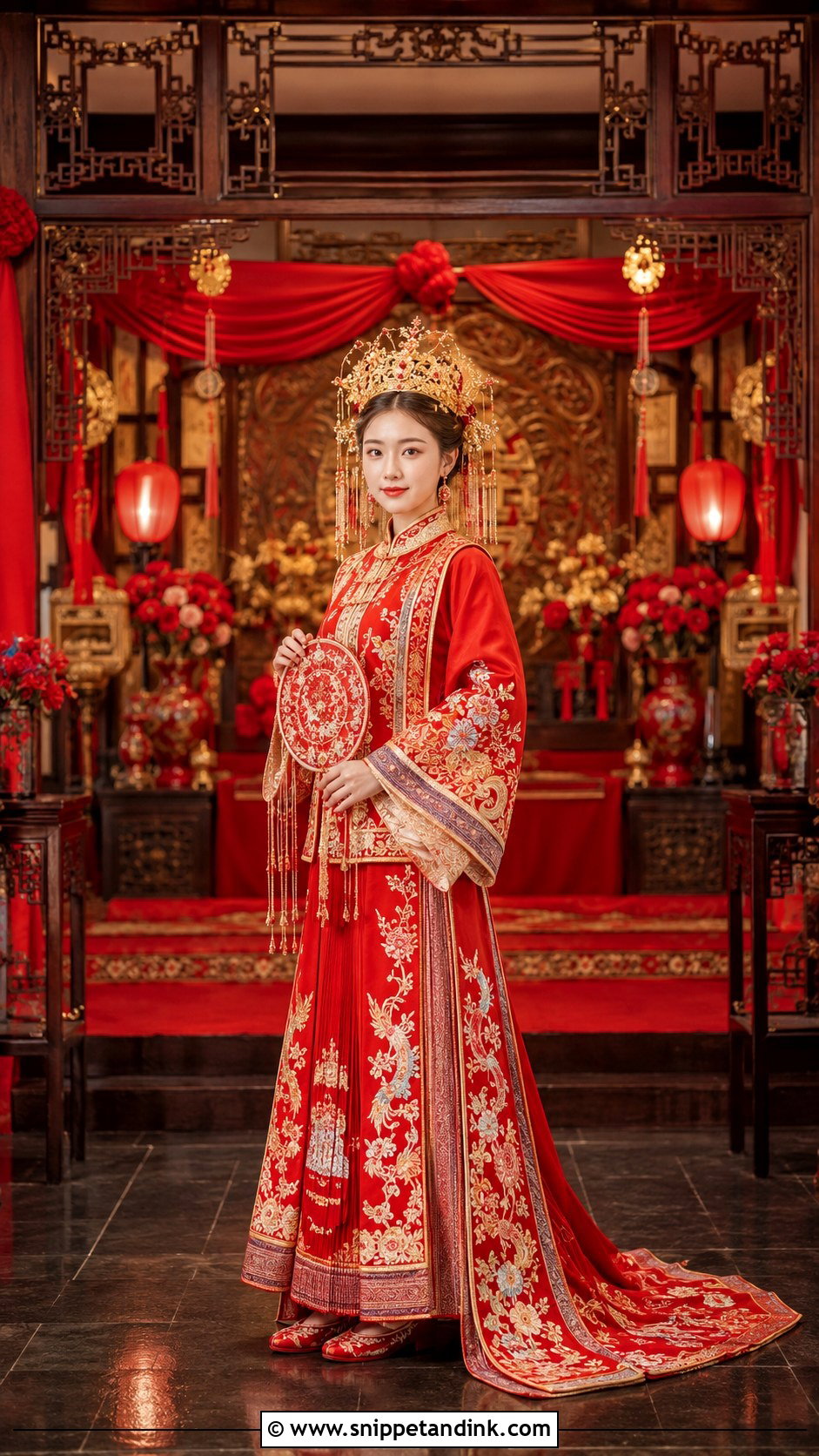
Fengguan Xiapei is the full ceremonial version: a red upper garment, a structured skirt, the embroidered xiapei stole over the shoulders and an ornate phoenix crown. It became the defining bridal form from the Ming period onward, and it still carries that weight with older relatives. The crown is my main concern. A traditional-weight piece pulls at the temples within an hour, so I ask makers for a lightweight modern construction and have the bride wear it for a full rehearsal, bowing included. With that much on the head, I keep jewellery to earrings only and let red shoes and a round fan finish it.
3. Red And Gold Mamian Skirt Hanfu Wedding Outfit
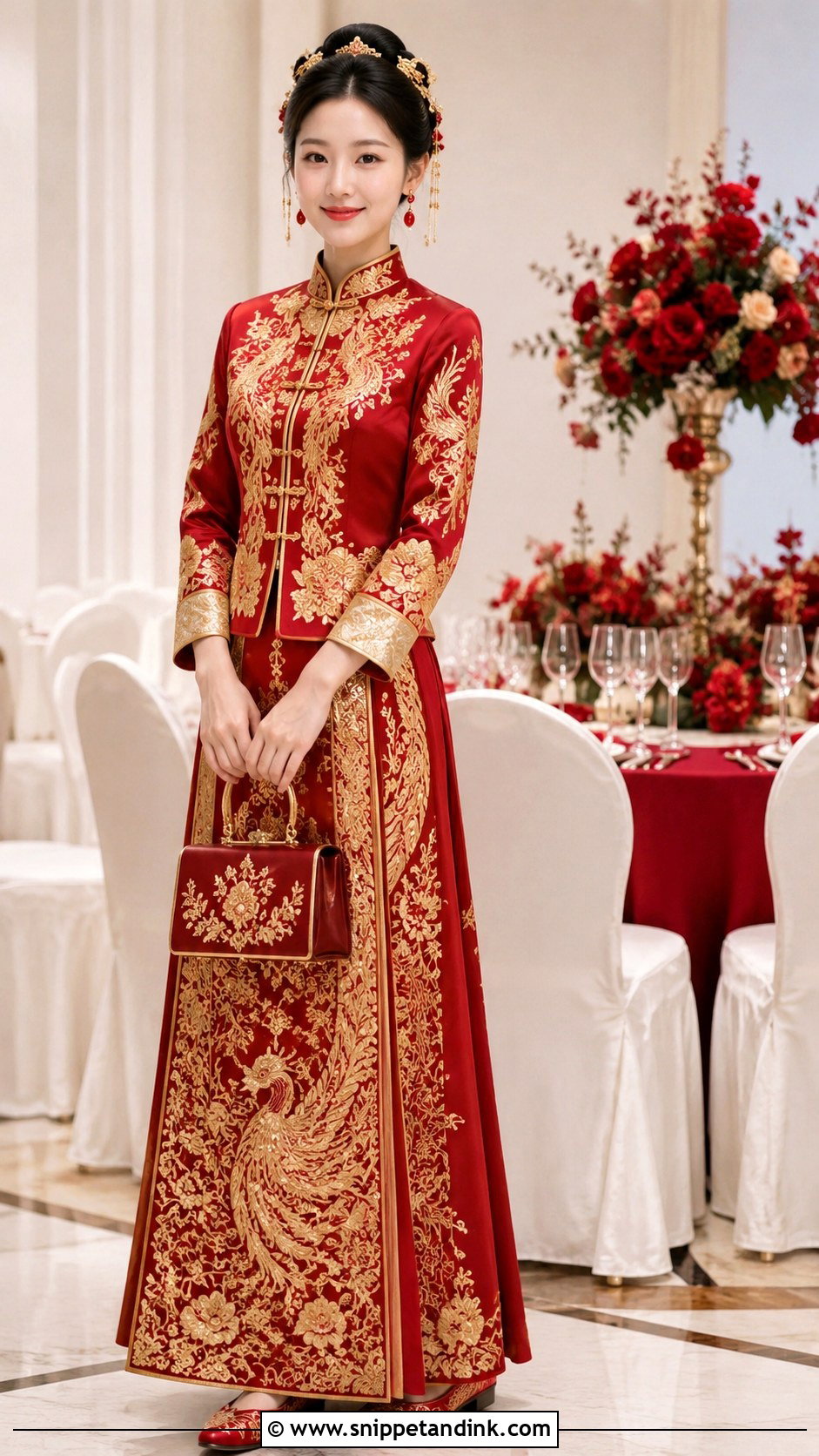
This is the set I suggest when a bride wants tradition but also wants to climb stairs without help. A red standing-collar jacket with a red-and-gold mamian is lighter than the full ceremonial outfit, and the fitted top against the wide skirt gives a clear shape. I keep embroidery to the front panel, cuffs and collar. Mamian panels are wrap-around, so ask your tailor to mark which panel sits at centre front, and have the hem set while you’re wearing your actual shoes. It suits a tea ceremony, a family banquet or a second outfit, with a low bun and gemstone earrings.
4. Tang Dynasty Hanfu Wedding Outfit
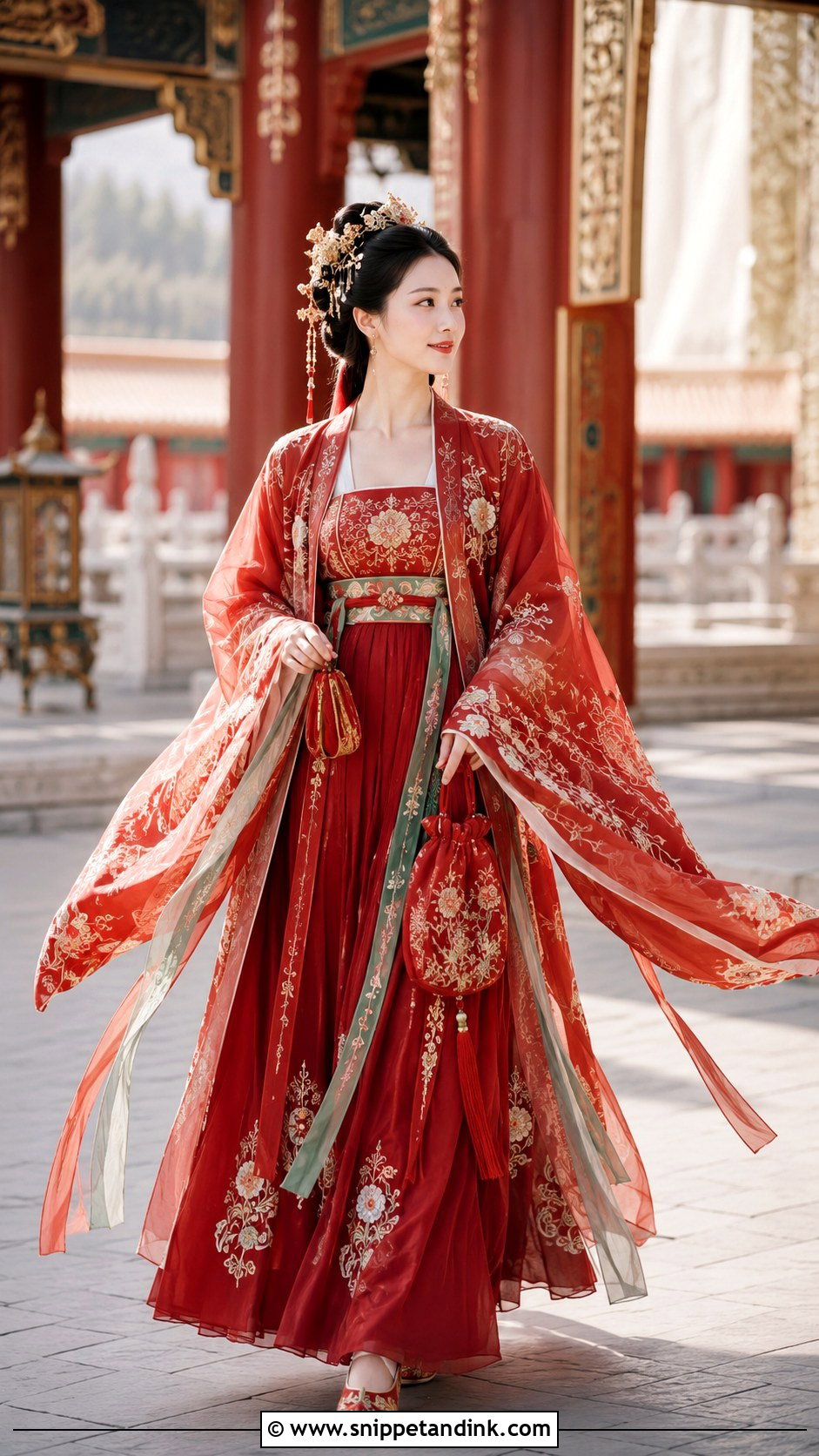
Tang shapes are about volume and colour: a high-waisted skirt tied above the bust, a fitted inner top and a long robe with wide sleeves. The daxiushan, the wide-sleeved outer layer, is what moves in walking shots. Red or deep green skirts take jewel-toned embroidery well, and crimson with emerald or amber is a pairing I trust. The risk is weight. Three layers of brocade get tiring by mid-afternoon, so I steer clients toward lighter silk for the robe and keep the heavy fabric to the skirt. Upturned shoes, a waist sash and gold floral hair ornaments complete it, and it needs a venue with room to swing a sleeve.
5. Song Dynasty Green Hanfu Wedding Outfit
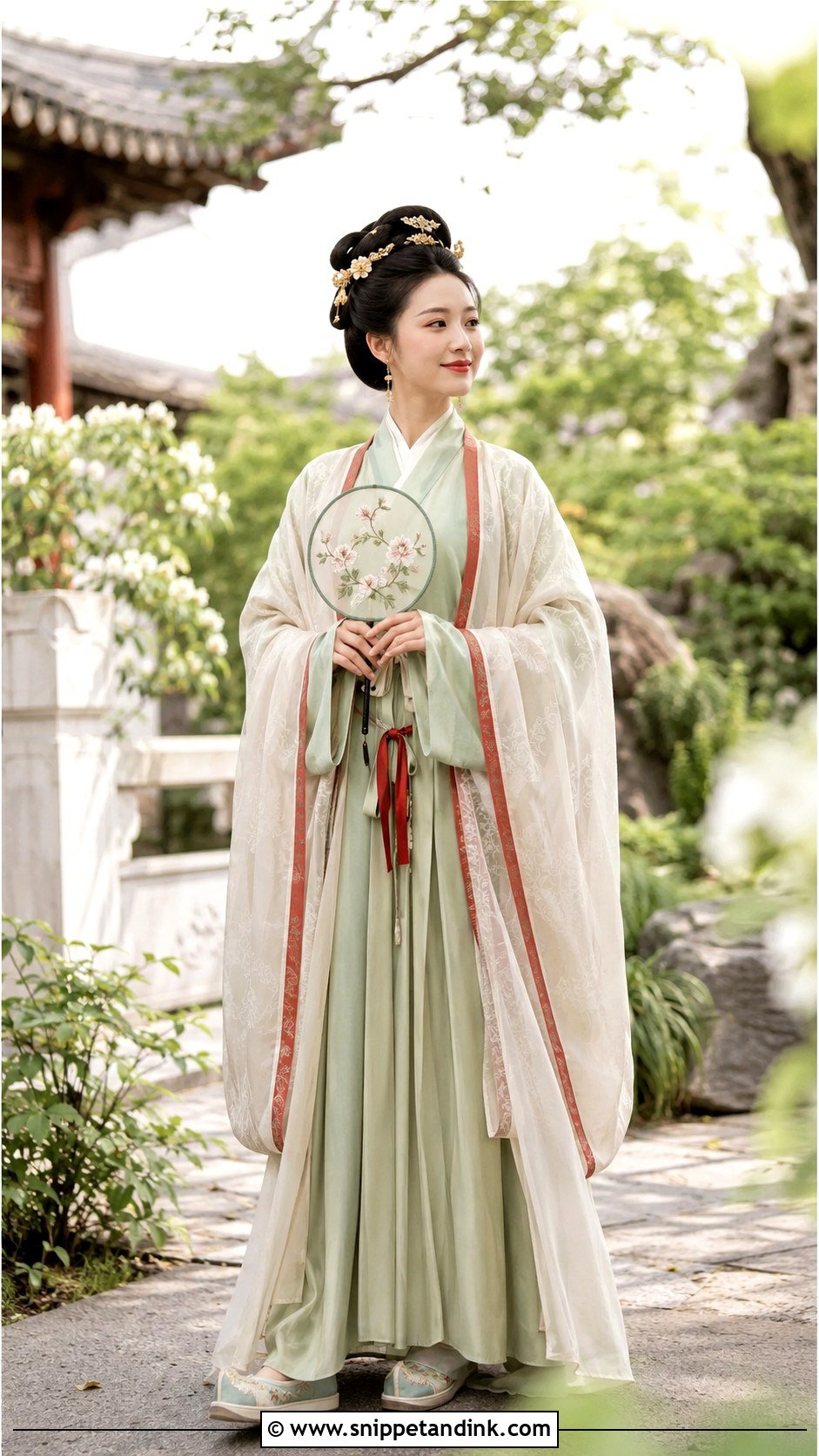
Green is a calm answer for brides who don’t want head-to-toe red. For a Song Dynasty-inspired Hanfu wedding outfit, I pair a sage or jade cross-collar top with a long green skirt and a sheer beizi, the straight open jacket, in red or ivory. Song silhouettes have narrower sleeves, so this is one of the easiest outfits on the list to move in. A red sash keeps the wedding signal. Matte silk or lightweight jacquard stays quiet in photos, while shiny satin in jade can look plasticky. It sits well in a morning or garden ceremony.
6. Black And Red Zhou Dynasty Hanfu Wedding Outfit
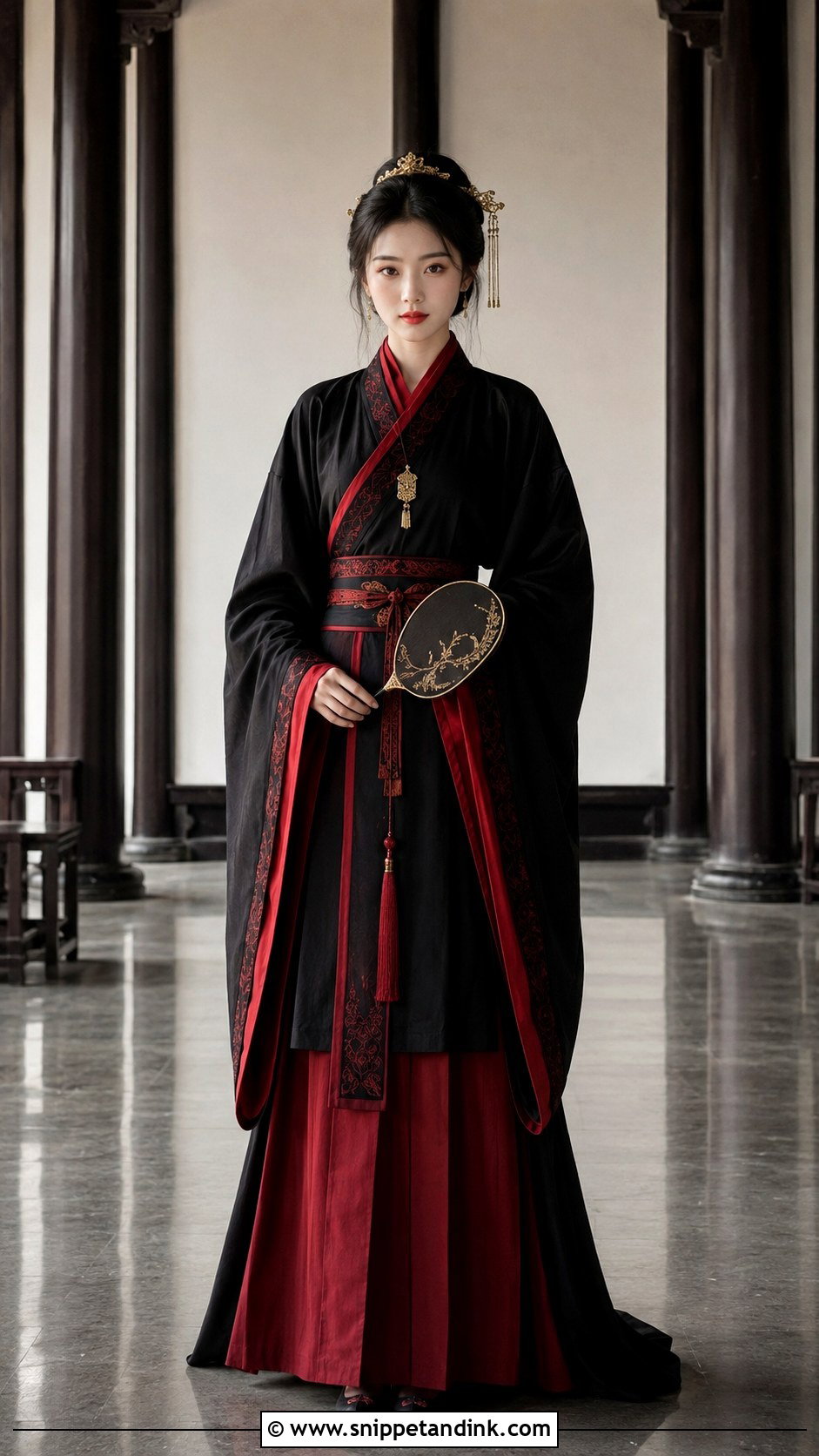
Black edged in crimson was a formal combination in early ceremonial dress, and it reads solemn rather than festive, which some couples want and some grandparents don’t. Talk to the family before you commit. The outfit is a black wrap robe with red borders, a long skirt with a clean drape and a wide woven belt. I keep embroidery minimal here because the colour blocking does the work, and I insist on matte fabric. Black satin throws hard highlights under flash and loses all its layers in photos. A jade-style pendant and a plain fan are enough.
7. White And Gold Hanfu Wedding Outfit
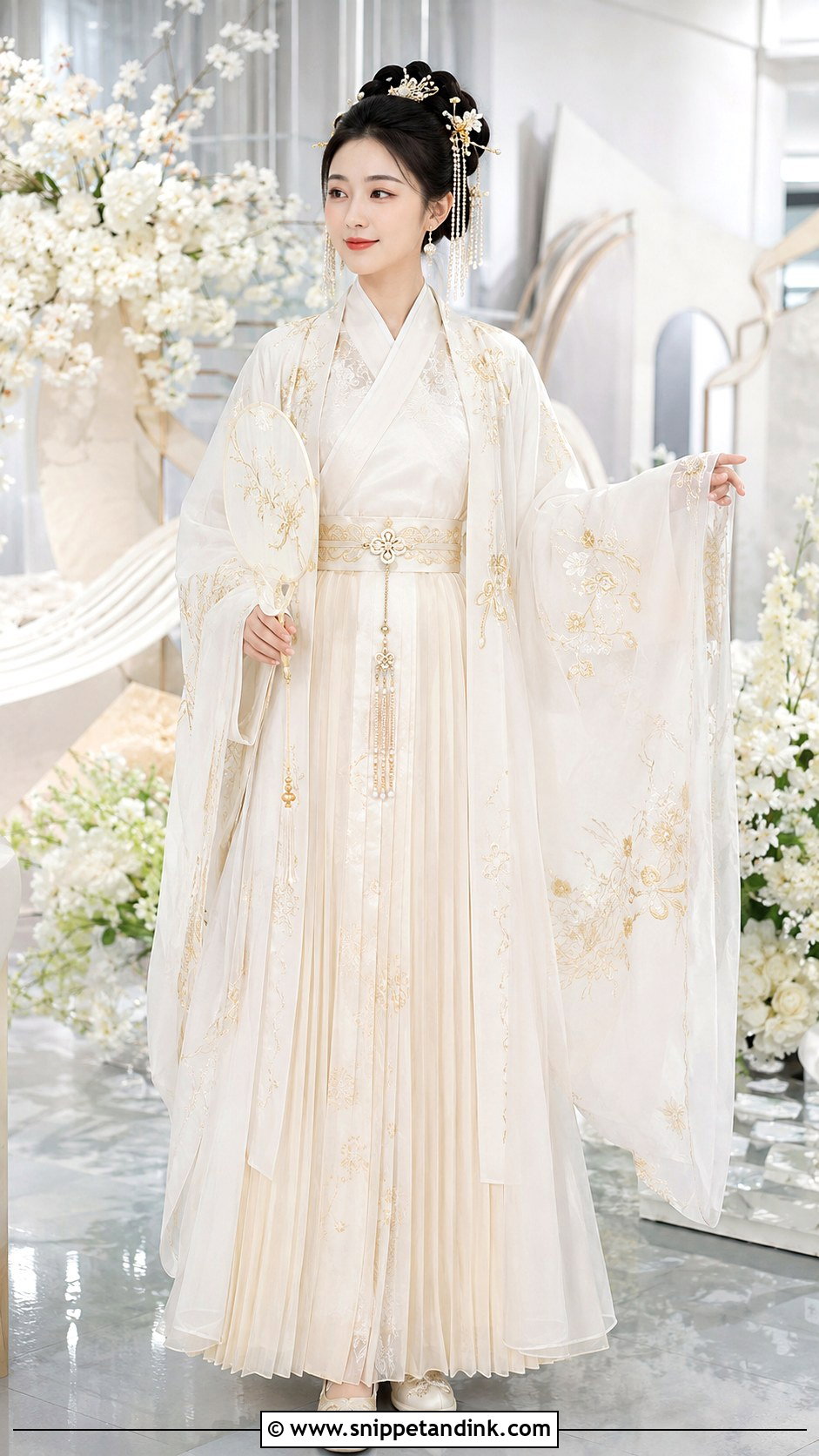
White and gold bridges Hanfu and a Western bridal palette, so it often comes up for multicultural weddings. The set is a white cross-collar top, a pleated skirt and a sheer outer robe with gold cloud or phoenix detail. My one rule: mix whites. Ivory, cream and pearl layered together show their edges in photos, while a single pure white turns into a flat block. A red lining or narrow red sash is worth adding if anyone in the family links white with mourning, which is still a real sensitivity for some. Pearl-and-gold hairpins and a smooth bun keep it fresh.
8. Pink Hanfu Wedding Outfit
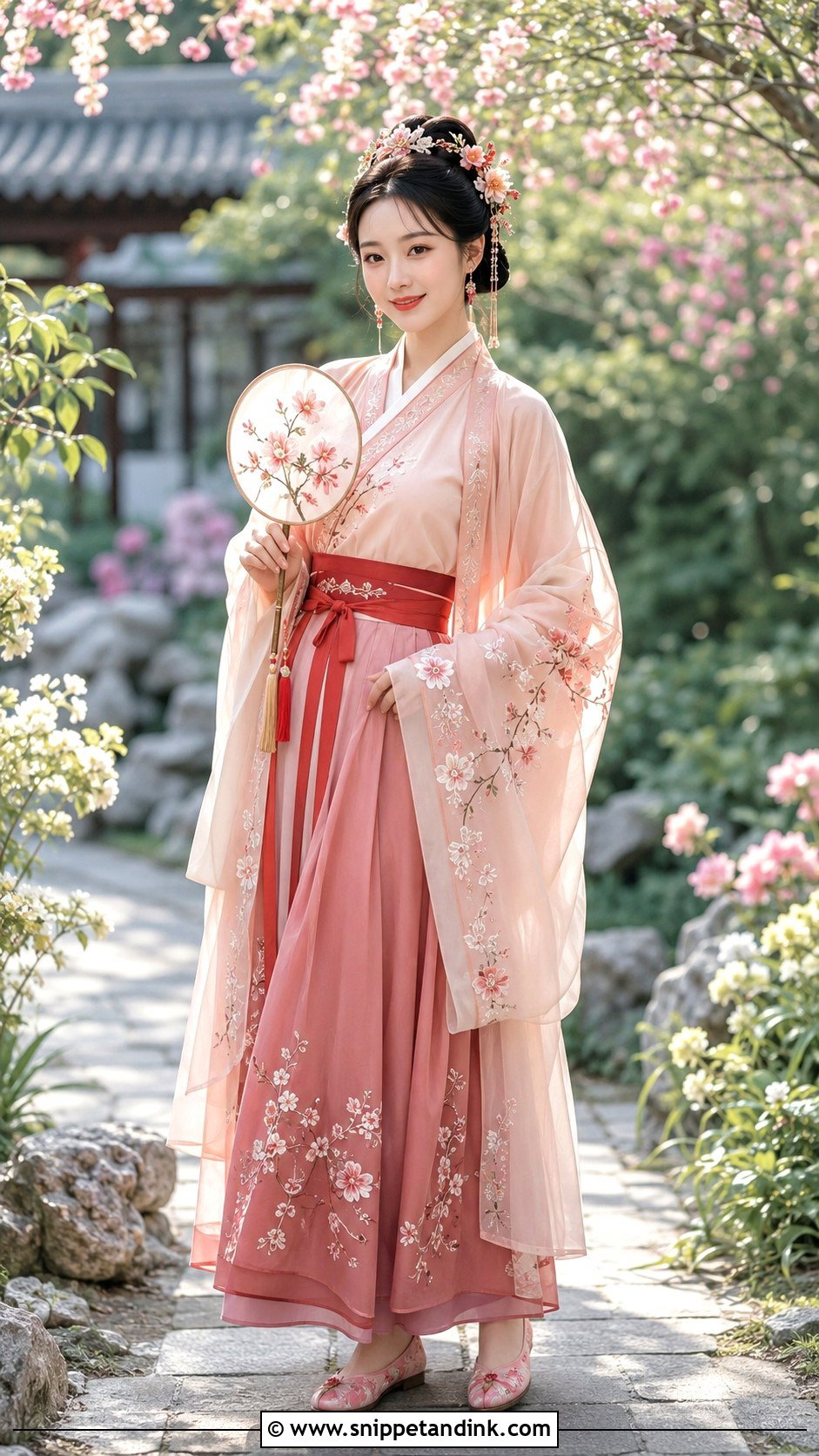
Pink works in Hanfu when you layer shades instead of repeating one. Blush on the jacket, a deeper rose on the skirt and a light robe embroidered with peonies or blossoms give depth, and a red sash ties it back to the wedding. Bright pink on bright pink looks costume-like very quickly, so I hold clients to the dusty end of the range. It’s a spring and garden outfit. If you’re moving between several locations, keep the sleeves moderate, because wide pastel sleeves pick up every mark from tables and door frames.
9. Blue Hanfu Wedding Outfit
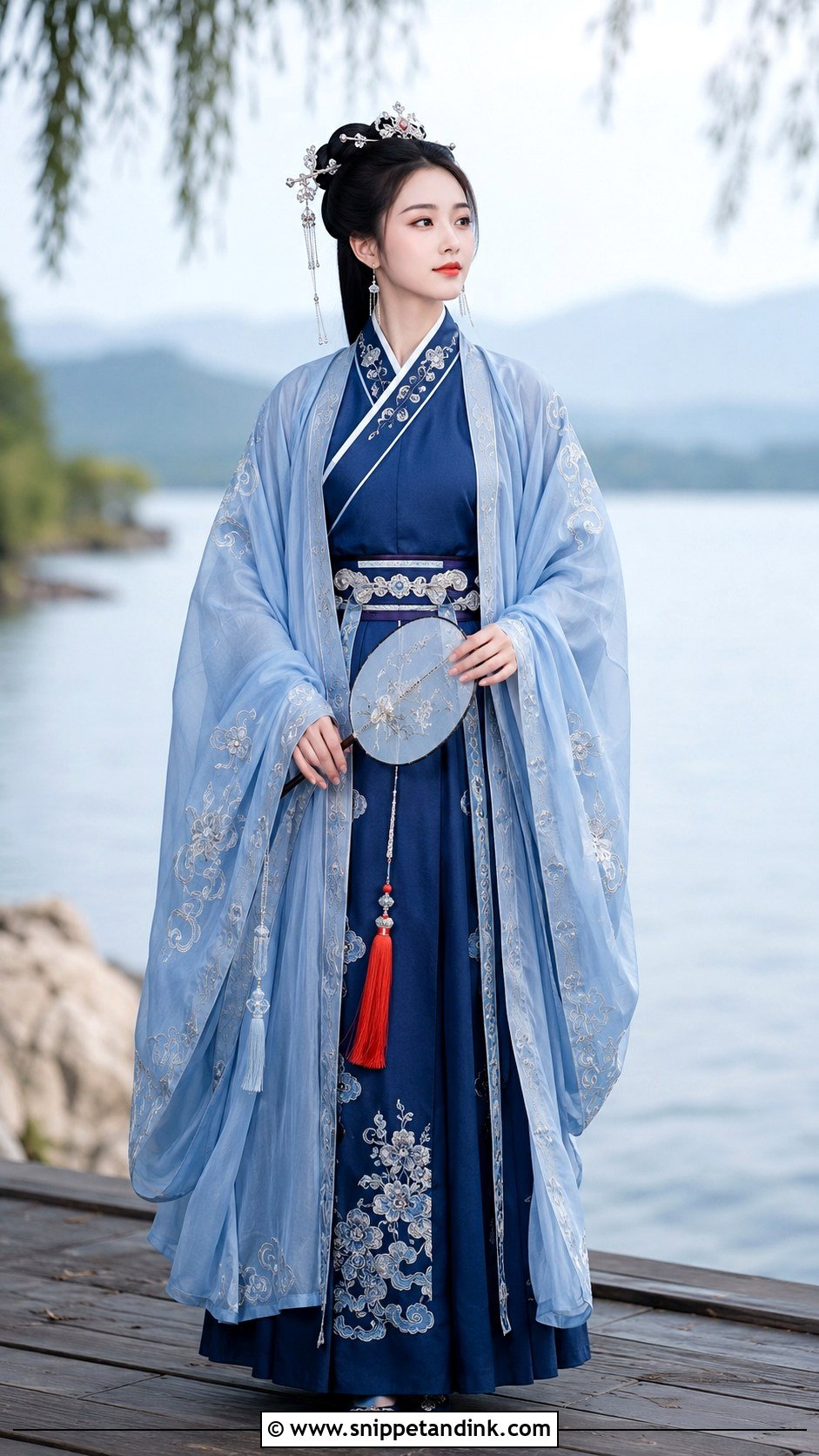
Blue reads cool and calm outdoors, and silver thread suits it better than gold. I’d pair a navy or sapphire cross-collar top with a flowing blue skirt and a pale embroidered robe, then finish with silver hairpins, drop earrings and a light silk fan. A red belt or tassel adds the wedding accent. Check every blue in both daylight and indoor lighting before you order. Navy can go almost black in a dim banquet hall, and pale blue chiffon becomes see-through when the sun is behind you, which is exactly where a lakeside photographer will stand you.
10. Red Qixiong Ruqun Hanfu Wedding Outfit
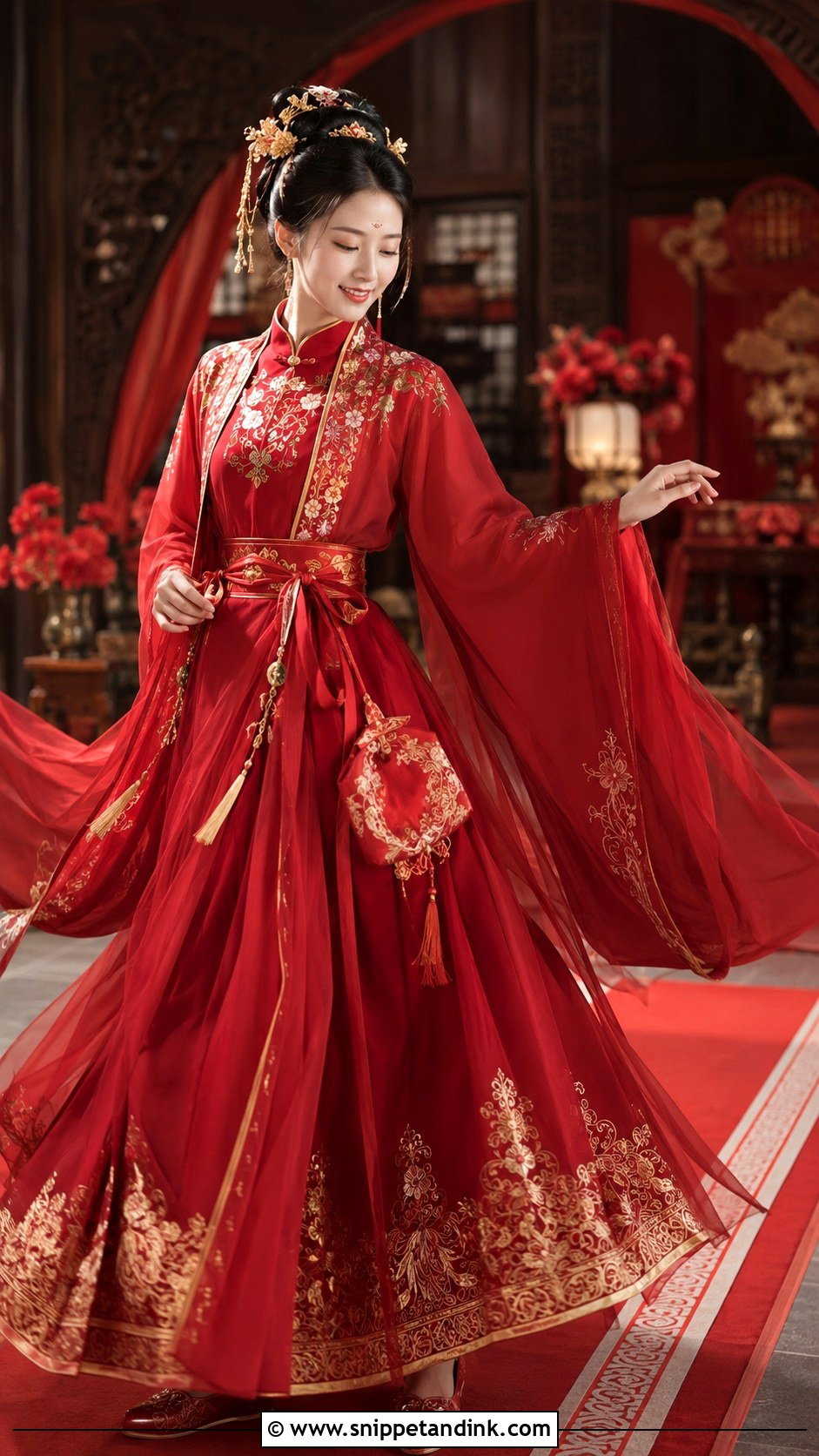
Qixiong ruqun ties the skirt above the bust, so the whole outfit hangs from that one band. That’s what gives it the flowing volume, and it’s also what makes it slip. A fitted blouse underneath, a long red skirt with a gold border and a wide-sleeved outer layer are the basic pieces. In fittings I add hidden snaps or a silicone strip inside the skirt band, because traditional ties loosen as you breathe, eat and hug people. Without them you spend the reception hitching it up. Embroidered shoes, a waist ribbon and floral gold ornaments finish it.
11. Red Daxiushan Hanfu Wedding Outfit
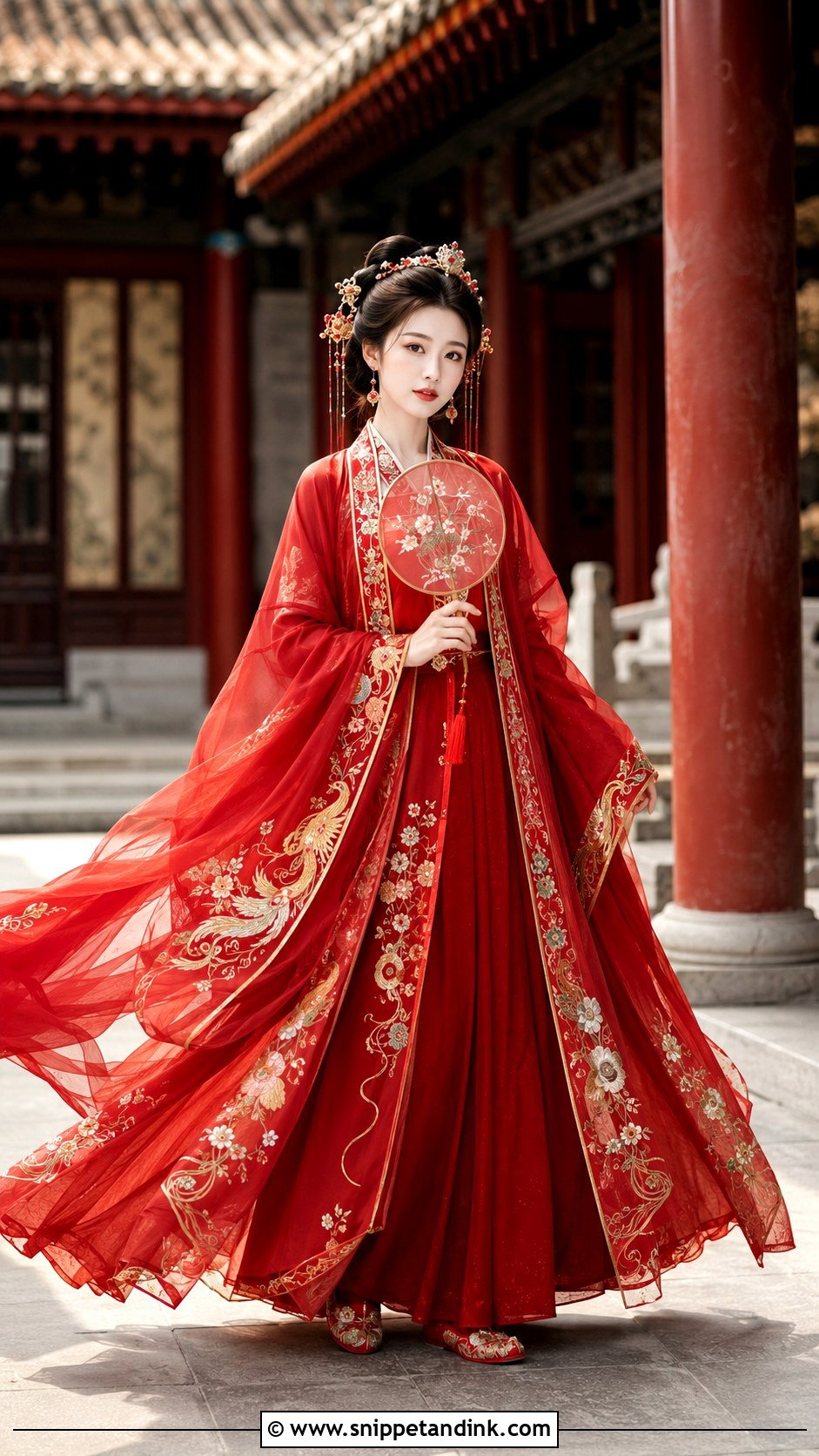
Daxiushan is all sleeve. The long open outer robe over a red blouse and skirt gives the sweep that looks dramatic on an aisle, so I keep the inner layers plain and let gold embroidery sit on the robe’s neckline, cuffs and hem. In every fitting I have the bride lift her arms, pick up a cup and walk past a table, since these sleeves knock over glasses and catch on chair backs. I always ask for the robe to be removable. Wear it for the ceremony and portraits, then take it off to eat.
12. Embroidered Aoqun Hanfu Wedding Outfit
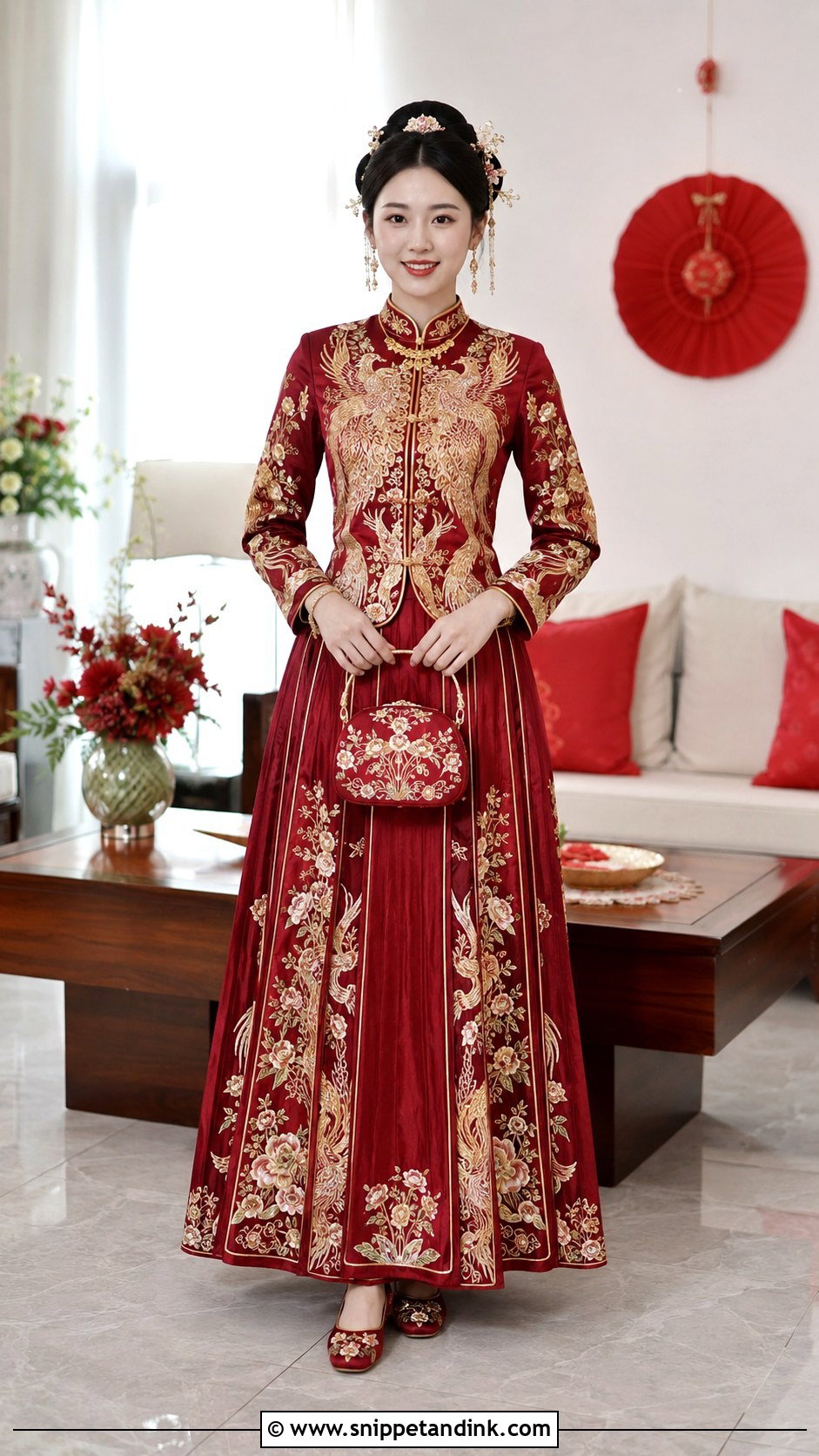
An aoqun is a jacket and skirt, which makes it more practical than robe-based outfits while still reading formal. A red or burgundy ao jacket over a pleated skirt with gold flowers or geometric borders is the classic set. The jacket must fit cleanly across the shoulders but leave room to reach forward. I check that by having the bride hug me during the fitting. When the skirt is heavily embroidered, I keep sleeves and jewellery simple. It’s a good choice for a courthouse wedding followed by a tea ceremony, with a custom hem and a firm waistband.
13. Minimalist Song Dynasty Hanfu Wedding Outfit
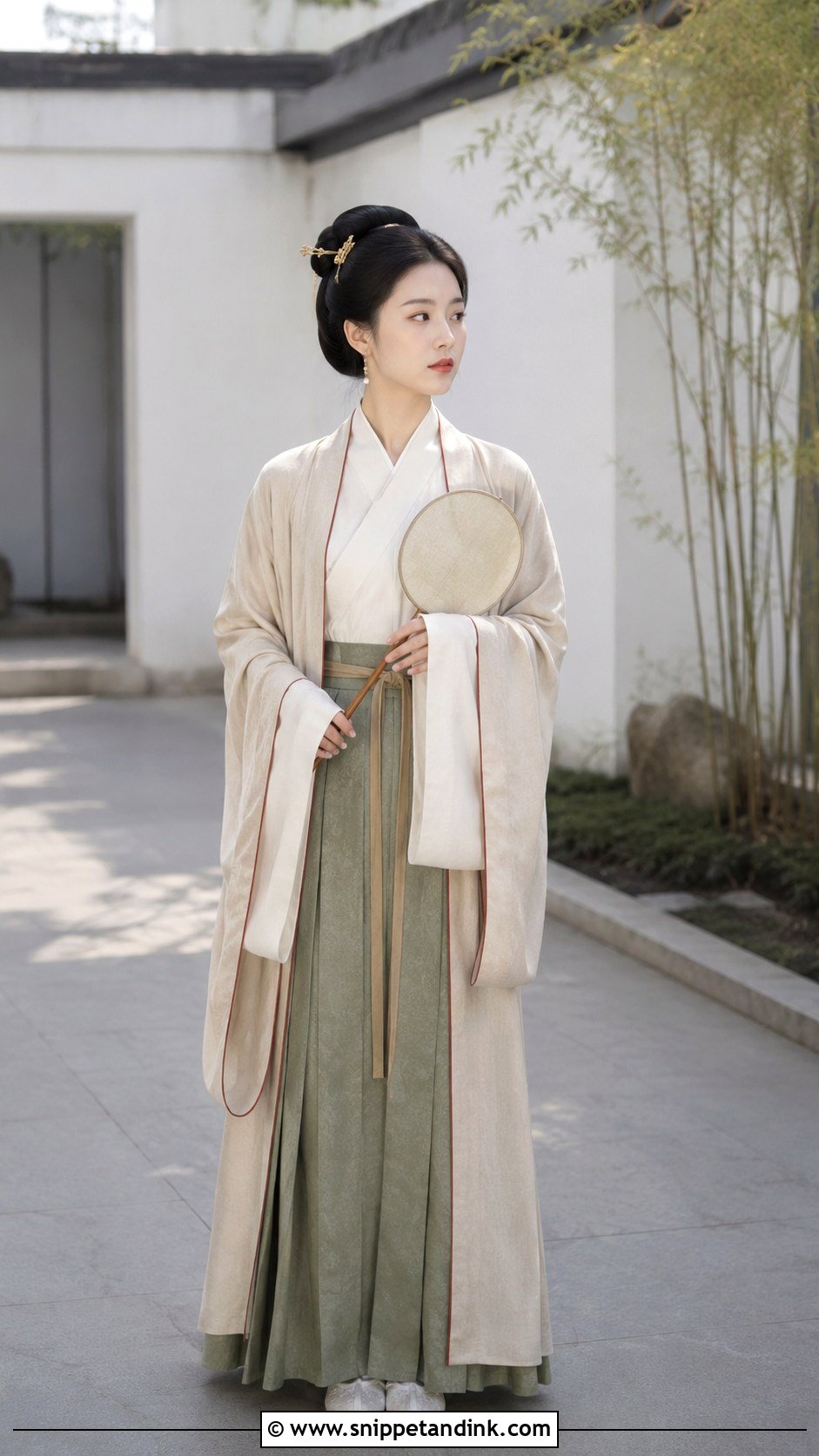
Restraint is harder to tailor than ornament. A minimalist Song-inspired outfit is an ivory cross-collar top, a muted red or sage skirt and a straight lightweight beizi, finished with fine piping or one embroidered border. Because there’s nothing to distract the eye, crooked seams and uneven collar edges show immediately, so I’d spend the budget on fabric and fitting instead of decoration. One or two gold hairpins, pearl earrings and a low bun are all it needs. It suits a small wedding or a modern venue.
14. Modern Hanfu Wedding Outfit
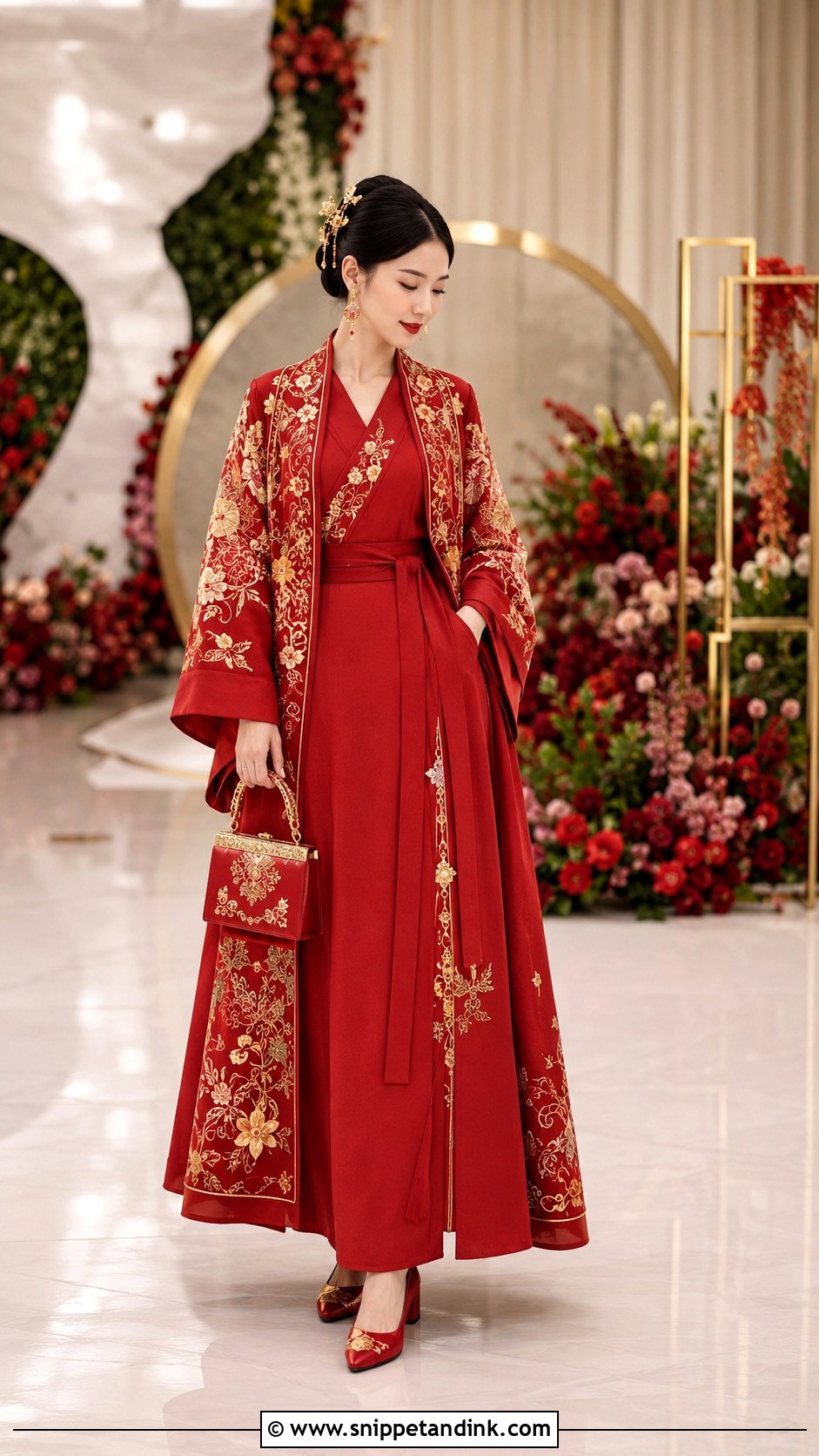
Modern Hanfu takes the layered character and adapts it for a long day: a fitted red wrap bodice, a full skirt with hidden pockets and a detachable embroidered robe. Shorter sleeves and a lighter lining help in a hotel ballroom where the heating runs high. I keep embroidery to two zones at most, usually cuffs and skirt panel. Block heels are fine with this one since the skirt is cut for them. Taking off the robe after portraits gives you a second look without packing a whole second outfit, which I find most brides appreciate by evening.
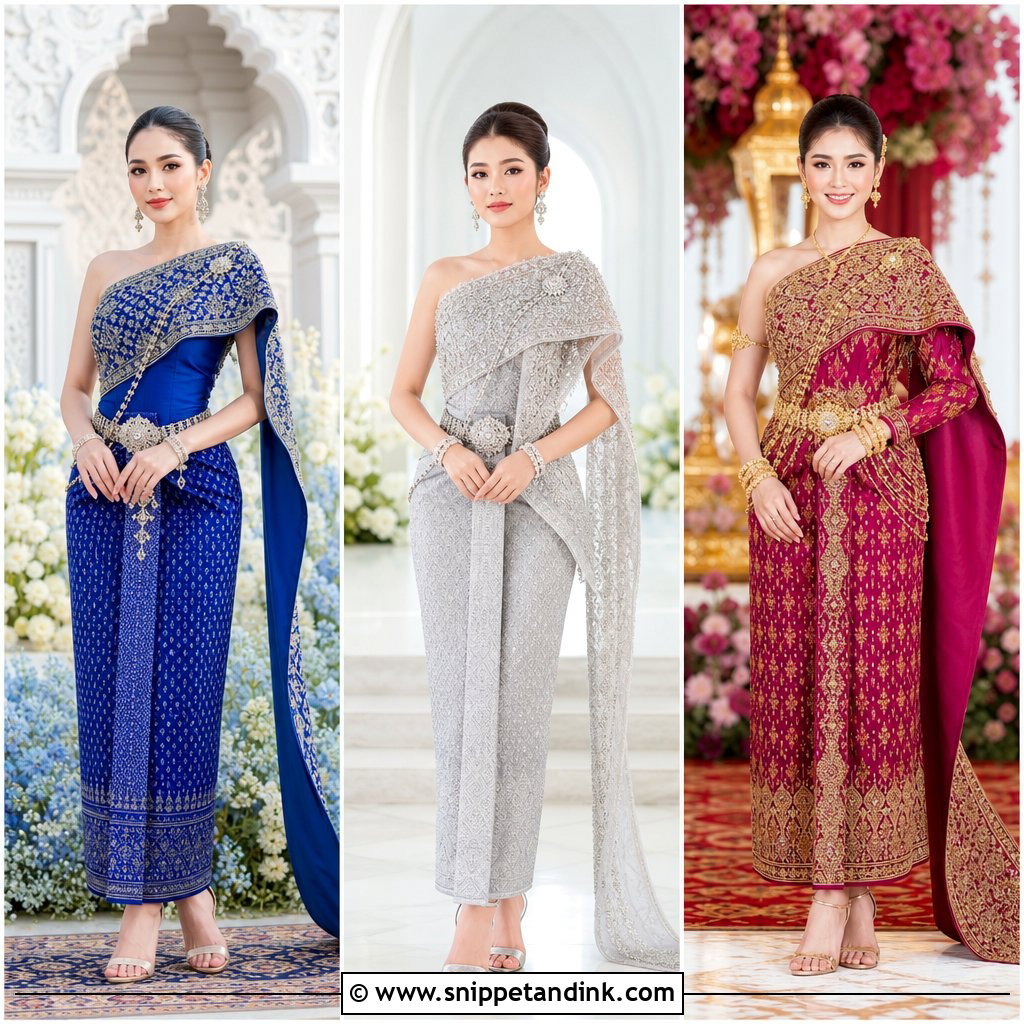
15. Hanfu Tea Ceremony Outfit
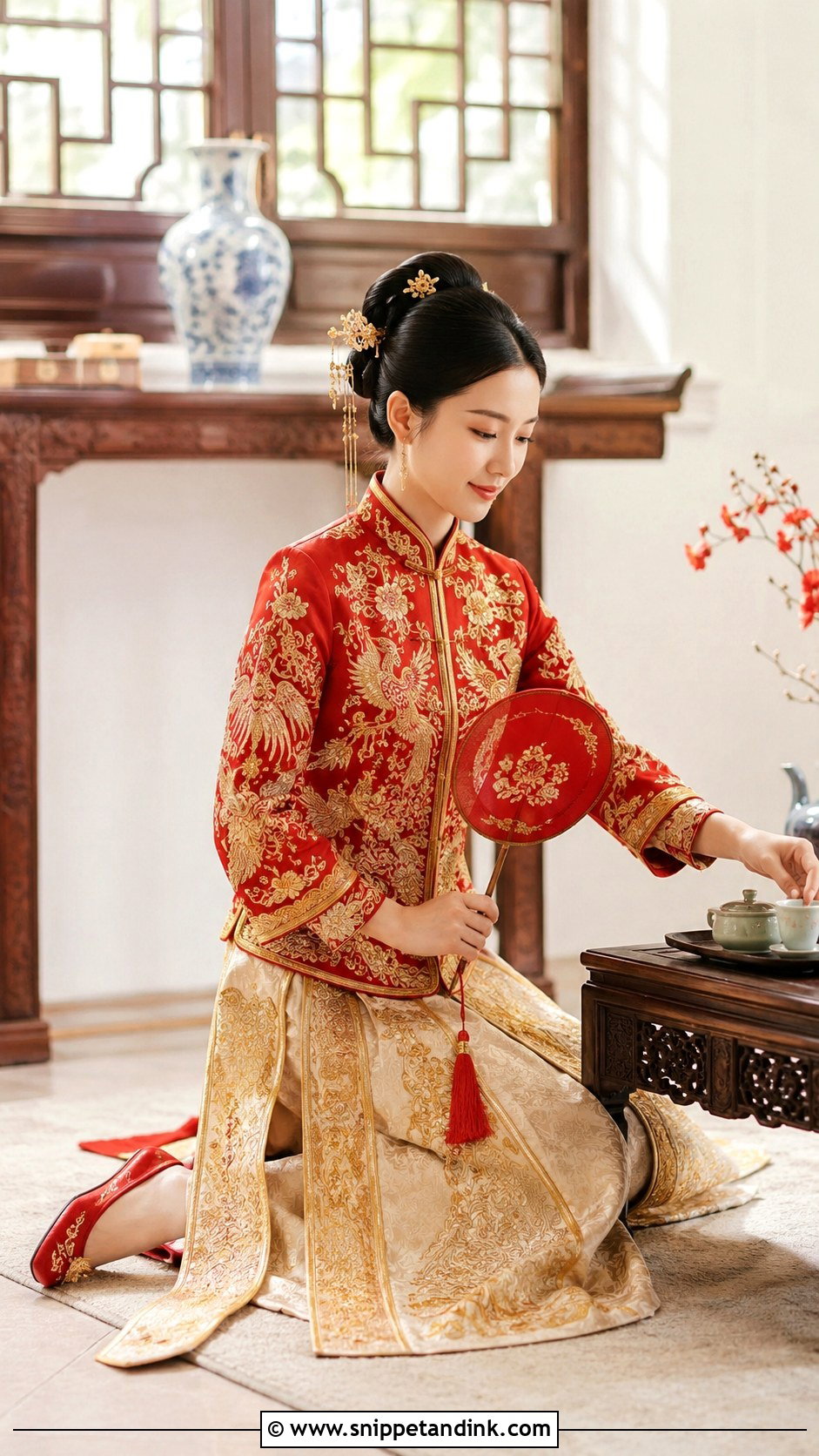
The tea ceremony is physical. You kneel, bow, stand, hold a full cup out at arm’s length and do it again for each relative. A fitted red ao jacket and an ankle-length mamian handle that well. Floor-length hems get knelt on, and very long sleeves dip into the tea. I ask brides to practise the full serving motion in the outfit at the final fitting, and to wear low shoes with non-slip soles. Leave the heavy crown for another part of the day. Secure hairpins, small gold earrings and a red fan for portraits are plenty.
16. Hanfu Wedding Reception Outfit
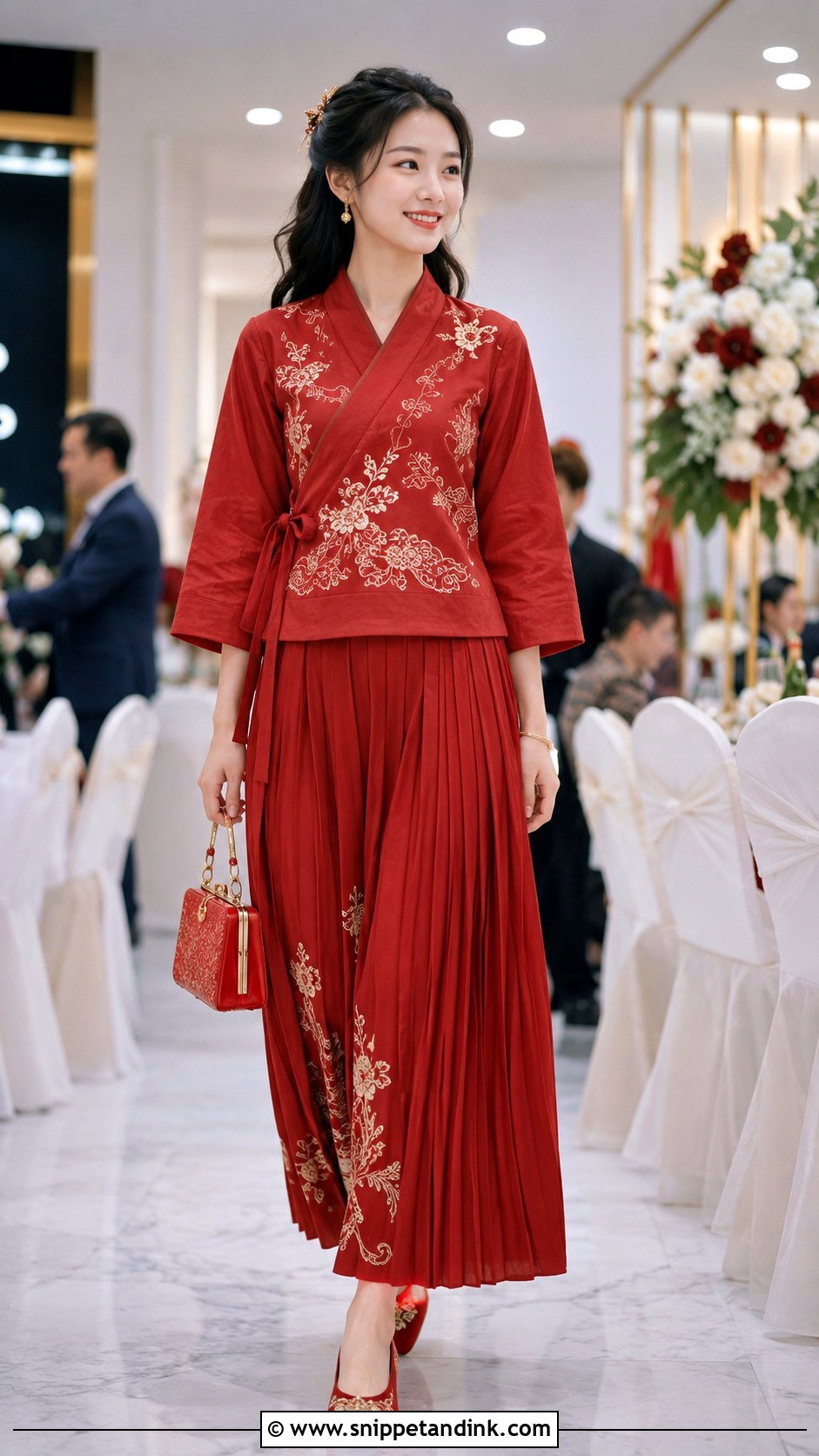
By the reception most brides want to sit, eat and hug people without thinking about their clothes. A red embroidered wrap top with a mid-weight pleated skirt that stops at the ankle does that. Choose a fabric that resists creasing, since a silk skirt shows every seated hour as a horizontal crumple across the lap, while a silk blend recovers better. A half-up style with decorative pins swaps out the headdress. If you plan to dance, a slimmer sleeve or a removable sleeve panel saves you from catching fabric on chairs.
17. Outdoor Garden Hanfu Wedding Outfit
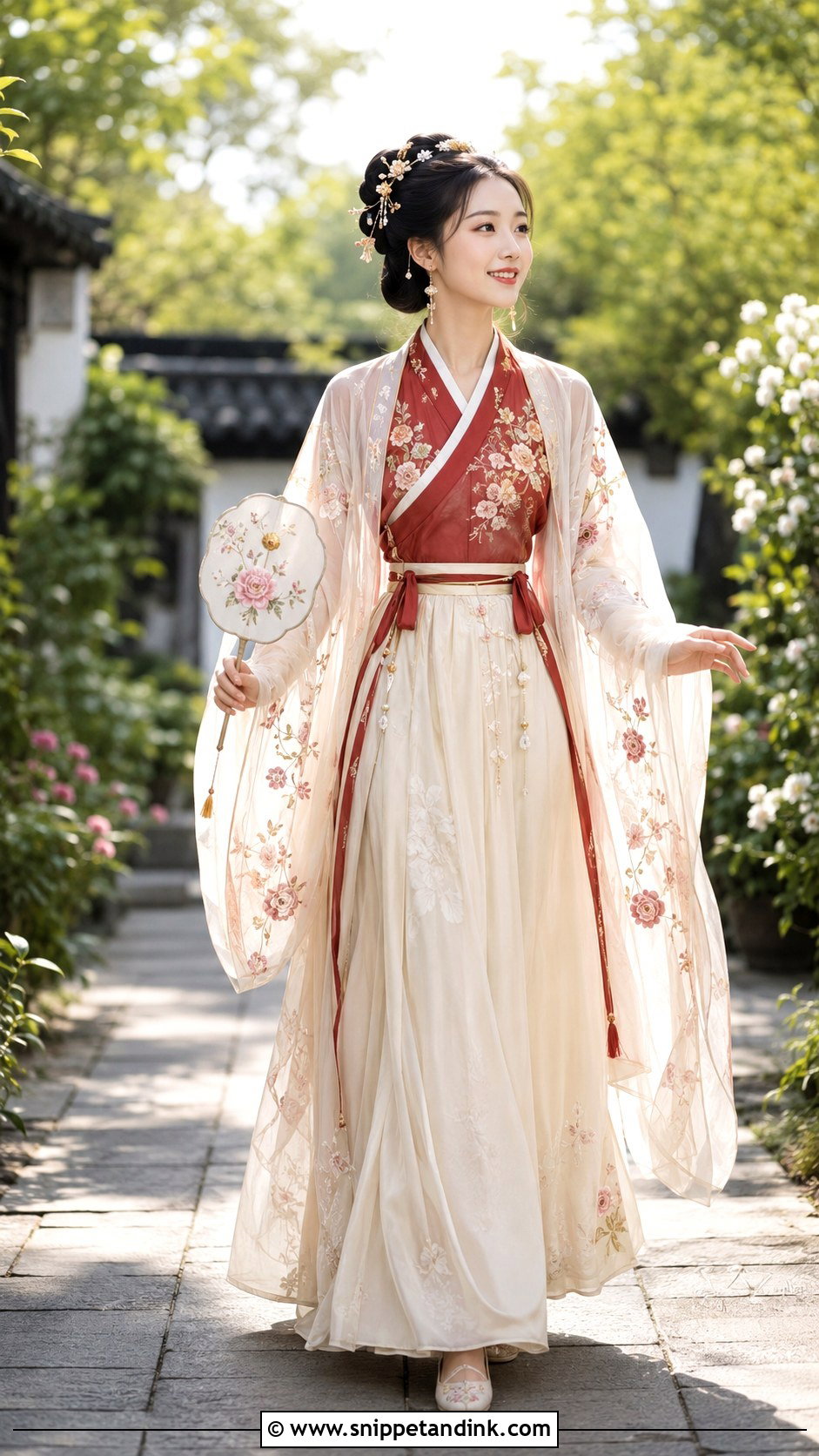
Gardens are hard on long hems. Grass, damp soil and gravel all mark silk, so I take outdoor Hanfu skirts a finger’s width above the ground. A rose-red cross-collar top, a flowing ivory skirt and a sheer embroidered robe give the light, moving look people want outside, and silk blends or fine jacquard handle the breeze better than stiff brocade. Brocade catches wind like a sail. A secure braided updo holds better than a loose bun outdoors. I’d echo the garden’s flowers in the embroidery loosely rather than match them, so you still stand out from the planting.
18. Winter Hanfu Wedding Outfit
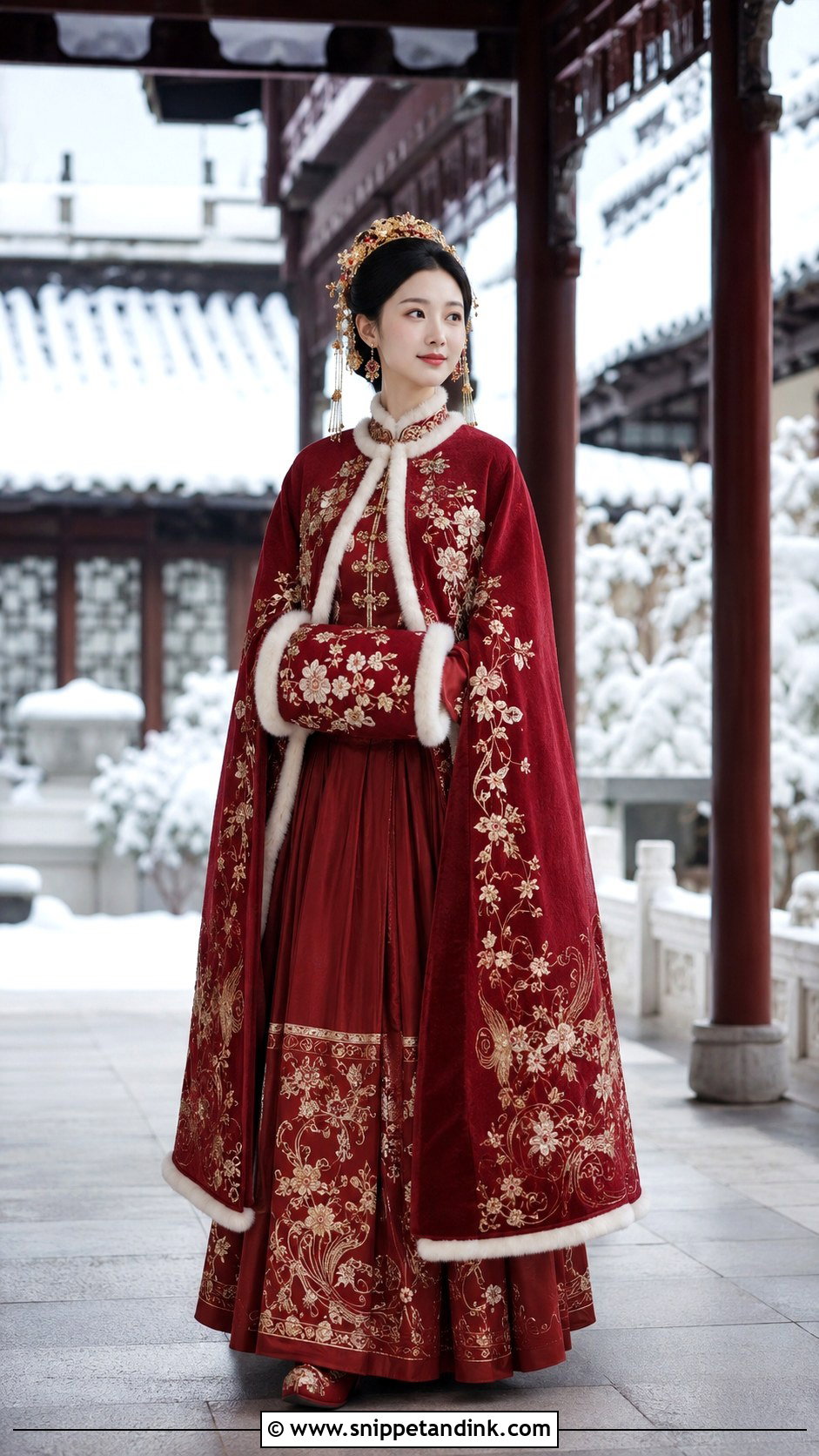
Winter Hanfu is about hiding warmth, not adding bulk where it shows. A burgundy standing-collar jacket, a heavy red mamian and a lined outer robe make the visible layers, with velvet trim, brocade panels or subtle faux-fur edging for texture. Underneath, thin thermal layers and warm leggings do the real work. I keep insulation away from the collar and shoulders, because padding there distorts the cross-collar line and the robe stops lying flat. Deep crimson, forest green and antique gold hold their colour against snow, and a removable cape covers the walks between buildings.
19. Plus-Size Hanfu Wedding Outfit
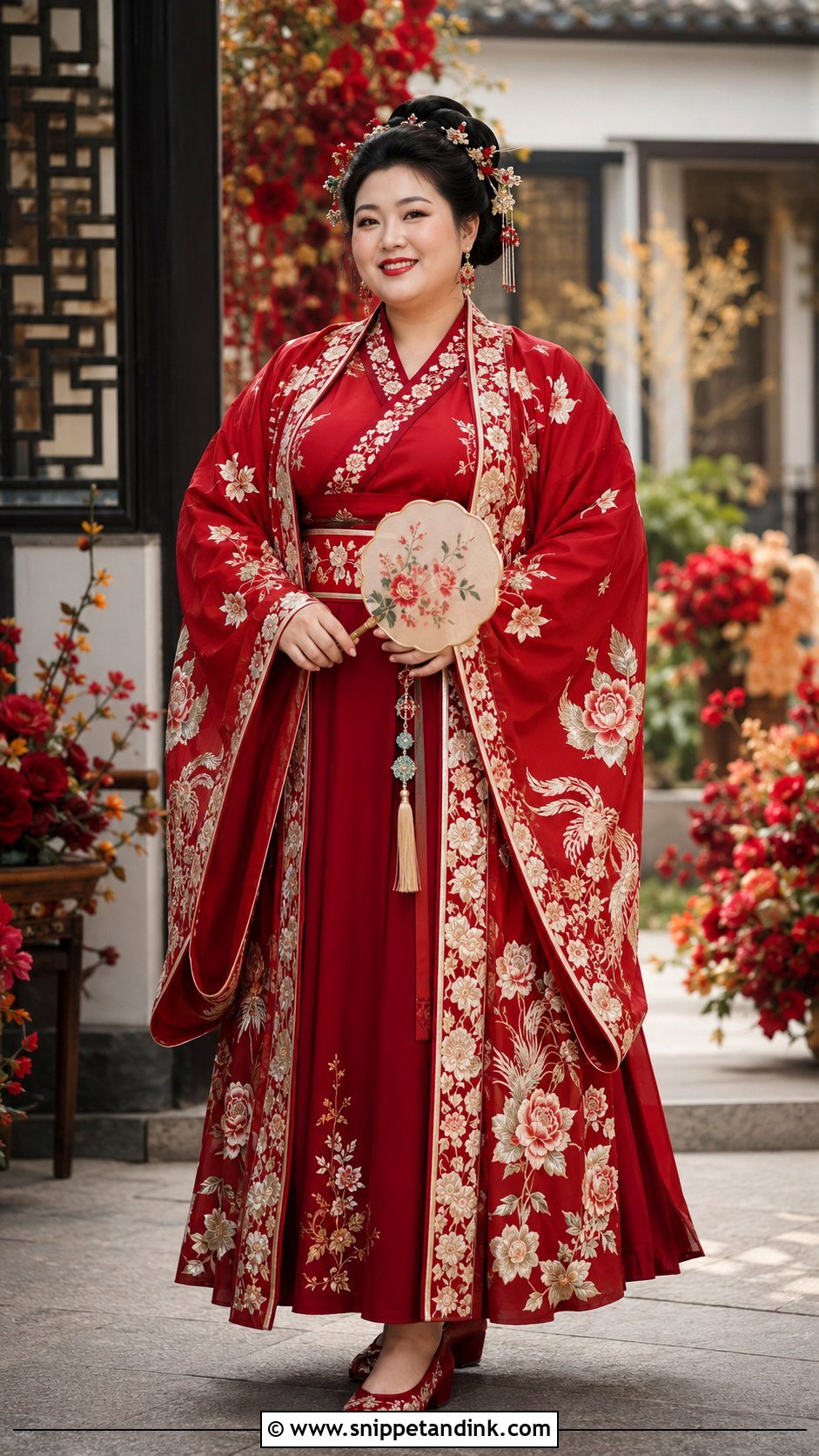
For plus-size brides, Hanfu has an advantage: the cross-collar and long open robe already draw a vertical line. What I avoid is extra fabric added to hide the body, which just makes the outfit look heavier. A fitted cross-collar jacket, an adjustable high-waisted skirt and a long robe work well, with medium-width sleeves and embroidery placed along the neckline, front panel and robe edges so detail is spread out. Insist on custom measurements for shoulder, sleeve, waist and hem. Standard Hanfu size charts often run small and assume a narrow shoulder. Internal ties let the skirt adjust through the day. Wear the colours you love.

20. Matching Bride And Groom Hanfu Wedding Outfit
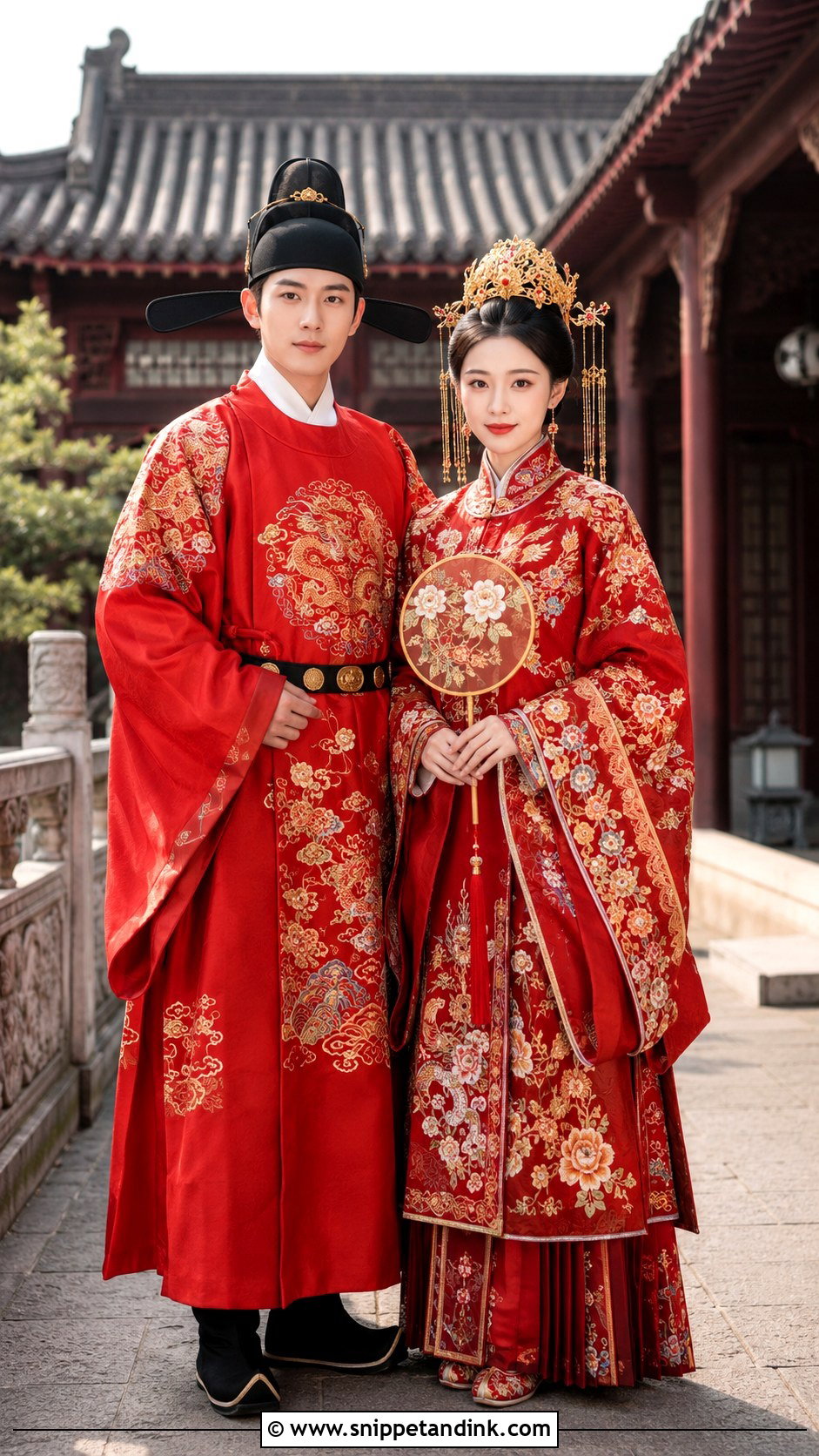
Coordinated Hanfu should connect a couple, not clone them. A common pairing is the bride in a red aoqun or Fengguan Xiapei-style set and the groom in a red yuanlingpao, the round-collar robe, with a structured belt, black boots and formal headwear. Repeat one element across both, such as a shared fabric, a gold border or a single cloud motif. The thing I watch is formality. If the bride is in a crown and the groom is in a plain robe, they look dressed for two different events. Book at least one fitting together so you can see colour and hem length side by side.
Kneeling, Eating and Bathroom Trips in Several Layers
Hanfu photographs as one flowing piece, but you’re wearing three or four, and most of the day’s small problems come from that. A few habits from fittings save a lot of tugging later.
To sit in a mamian, gather the back panels slightly to the sides before you lower down, so you don’t crush the pleats flat under you. For kneeling, smooth the front panel forward over your knees. Wide sleeves go in your lap or are held with the opposite hand when you reach for food or a teacup.
Bathroom trips need a helper and a plan. Outer robes come off first, and tie-on skirts are easier to lift than to untie. Choose one bridesmaid who has practised the ties with you at the final fitting. I also pack a small kit of safety pins, spare hairpins, a few snaps, double-sided fashion tape and a white thread spool, which covers most things that come loose.
Caring for Embroidered Silk Once the Celebration Is Over
Hang everything to air for a day before it goes anywhere. Spot marks from food or makeup should go to a cleaner who handles silk and metallic thread, and I’d point out every stain when you drop it off. Home washing tends to make red dye bleed into gold embroidery.
For pressing, steam from the reverse side and never put a hot iron straight on gold or silver thread, which can tarnish or flatten. Store embroidered pieces rolled or loosely folded with acid-free tissue in the creases, inside a breathable cotton bag. Plastic traps moisture and yellows silk over time. Refold along different lines every few months so no crease sets permanently, and keep a crown in its own padded box away from humidity.
Start From How Your Ceremony Moves, Then Pick the Colour
Every outfit here can work, but not for every part of the day. A Ming red set or full Fengguan Xiapei carries a formal entrance; Song layers and a modern wrap set are kinder for a tea ceremony and a long dinner. Sit down in everything before you commit, check the weight of any headdress over an hour, and get custom measurements for anything with structured pleats. If historical accuracy matters to your family, ask your maker which period each piece follows and whether the combination is correct. Then make the colour and embroidery yours.
You'll Like These Ideas:






Leave a Reply