
An áo dài looks simple on a hanger: a fitted tunic, two long panels, loose pants and a collar. On a bride it is anything but, because every centimetre of fit shows. Vietnamese bridal fashion builds on that silhouette with silk, brocade, lace, embroidery, capes and trains. Red and gold are still the colors families associate with happiness and prosperity, though I dress plenty of brides in white, pink, blue and green now. When I style one, I start from the ceremony and how much bowing, kneeling and walking it involves, then add the khăn đóng, the kiềng necklace, earrings and shoes. The twenty looks here run from strictly traditional to quite modern.
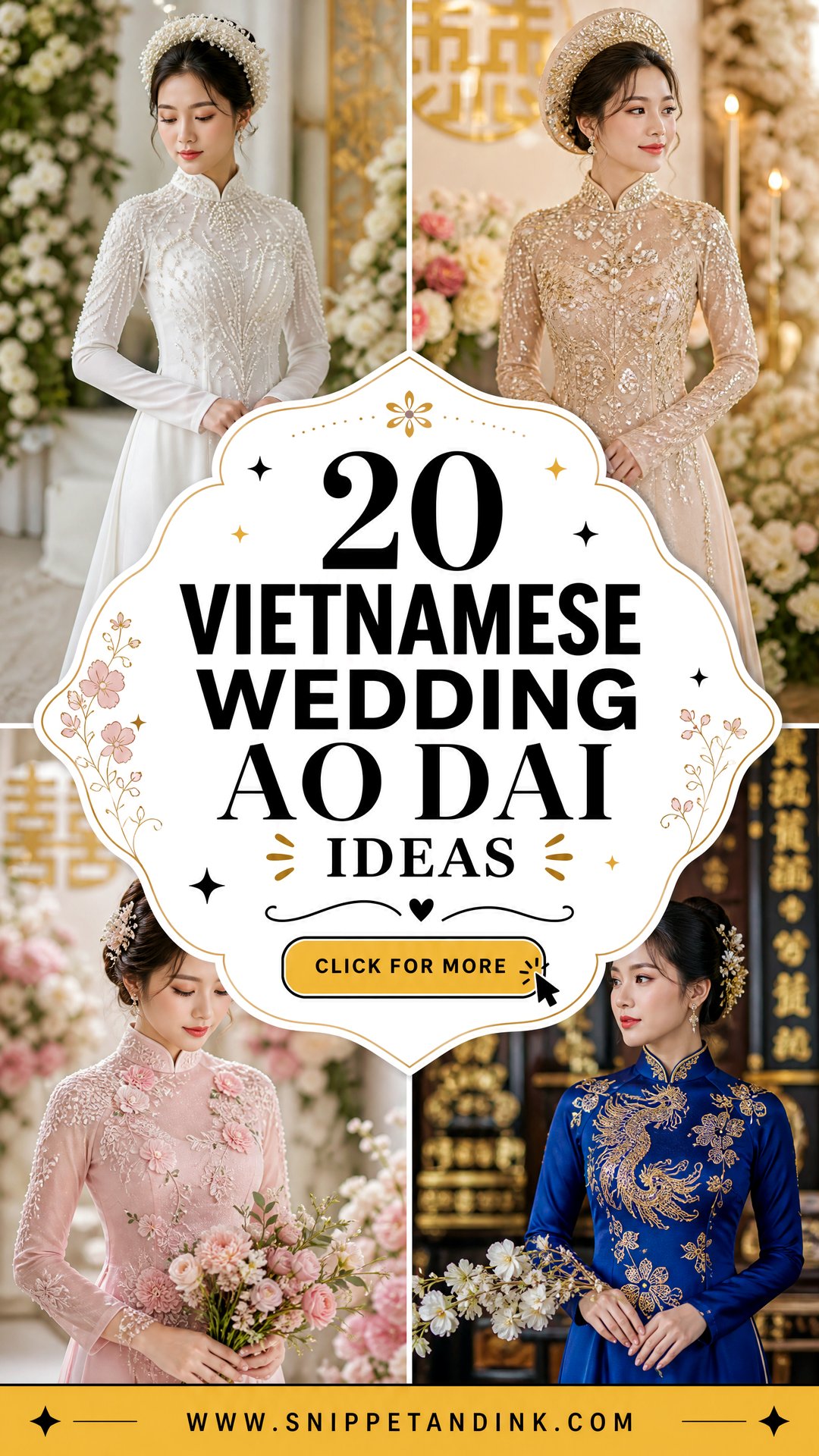
Sizing the Khăn Đóng and Kiềng Before You Buy the Tunic
Brides spend months on the tunic and order the headpiece last, which is backwards. Most bridal khăn đóng are sold pre-formed, sized by head circumference, so they don’t adjust much once made. I measure around the head where it will actually sit: across the mid-forehead, just above the ears and around the back over the bun you plan to wear. Measure with the bun in place, or the headpiece will sit too high.
- Have your hairstylist see the khăn đóng at the hair trial so the bun goes low at the nape and the crown stays flat.
- Two or three bobby pins crossed through each side of the headpiece into the hair keep it level when you bow.
- If it presses on the forehead after twenty minutes, it will hurt by the reception. Go up a size.
- Order the khăn đóng cut from the same fabric as the tunic if you want an exact color match.
The kiềng is a rigid neck ring, often gold, and it sits on top of the áo dài collar. A high collar adds a few millimetres, so try the kiềng on over the finished tunic, not your bare neck. It should rest on the collarbones without pushing the collar into your throat.
1. Traditional Red And Gold Bridal Ao Dai
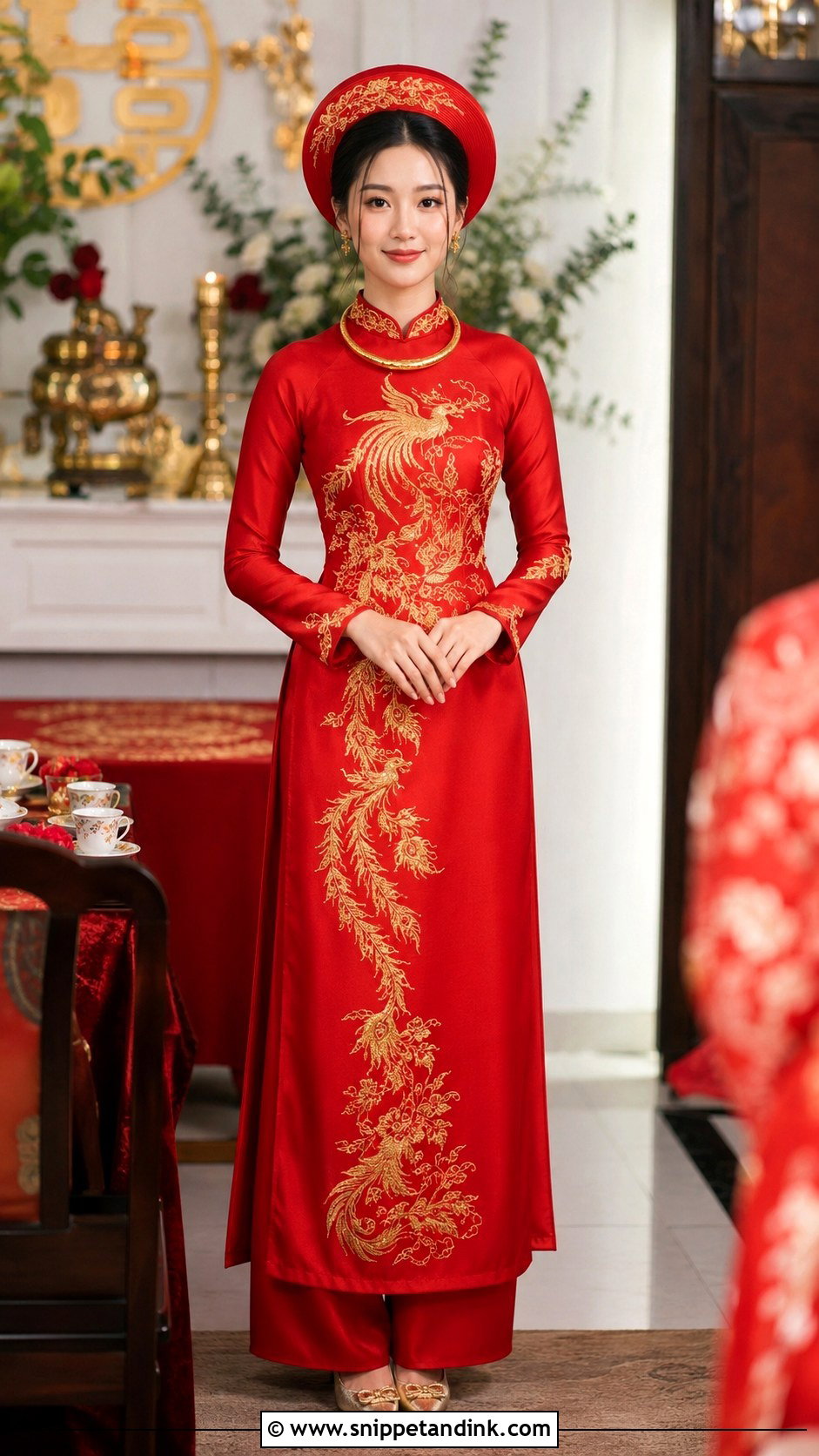
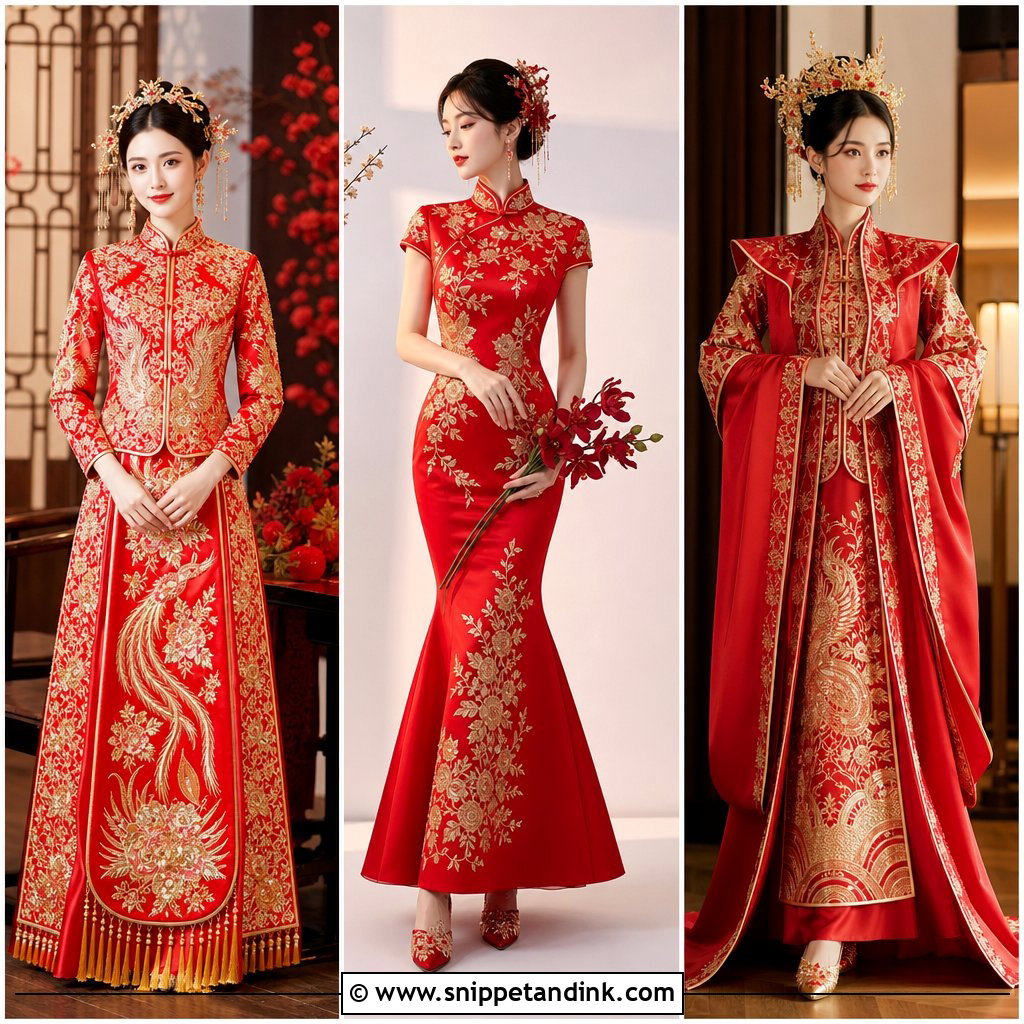
For a red and gold bridal áo dài, I want rich silk or brocade, a structured high collar, fitted sleeves and panels that reach the ankle. Gold embroidery belongs at the neckline, cuffs and bodice. Red or gold silk pants, pointed gold kitten heels and a matching khăn đóng finish the outfit, with a kiềng and small gold earrings. A polished low bun is the right hair choice, since it gives the headpiece something to rest against without pushing it forward. Makeup can stay classic: glowing skin, defined eyes and a red lip that matches the silk, not one shade off it.
2. Red Phoenix Embroidered Bridal Ao Dai
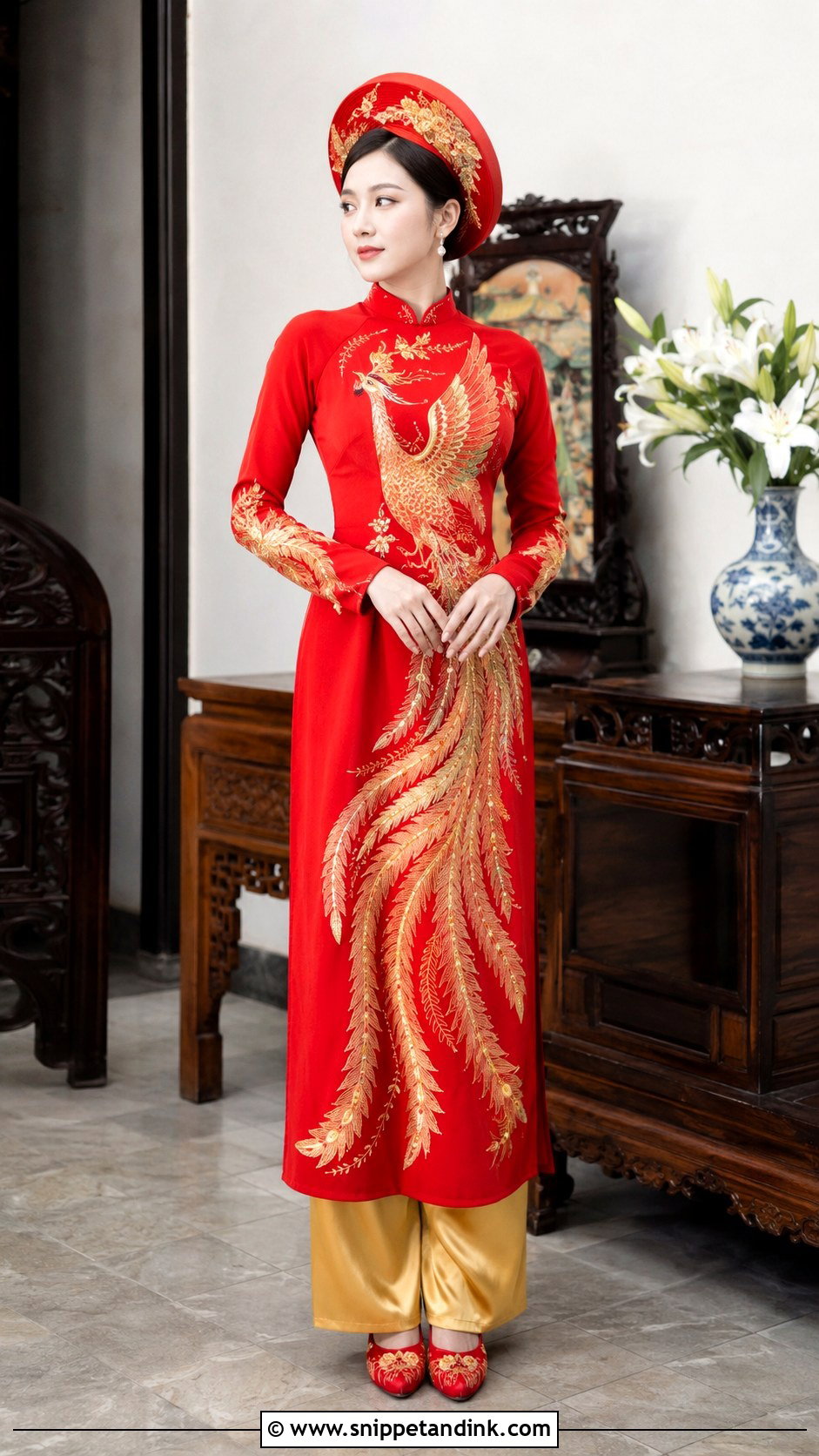
Phoenix embroidery is the bride’s symbol. The question I ask first is how heavy the tunic will feel after five hours, because a large, densely stitched phoenix on silk can make the bodice stiff and drag one panel lower than the other. I prefer motifs with long graceful lines placed across the bodice or climbing one lower panel. Gold silk pants, embroidered red heels and a red khăn đóng with a narrow gold border coordinate without competing. Pearl-and-gold drops soften the face. This is the outfit families expect for formal portraits and the tea ceremony, so plan it for those moments.
3. Red Brocade Ao Dai With Khan Dong
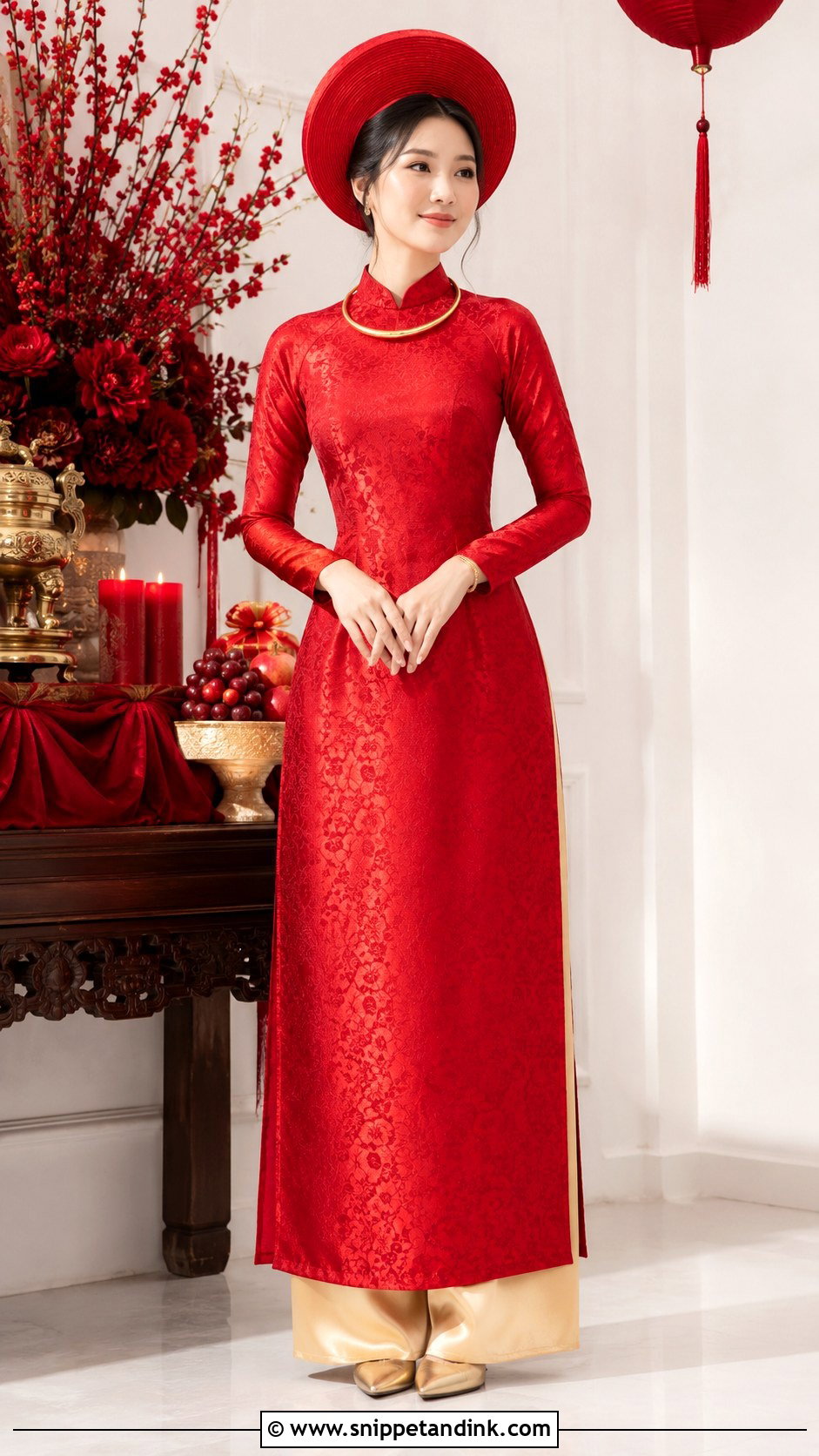
Brocade does a lot of work on its own. The woven flowers or medallions catch the light as you move, so a red brocade áo dài needs very little added decoration. I pair it with straight red or champagne pants and a substantial matching khăn đóng that emphasizes the formal line. If the weave is busy, the headpiece should be plain with only a slim gold edge. Gold closed-toe heels, a kiềng and one bracelet are enough. Brocade is stiffer than silk, so it holds its shape in cool weather, but it also creases sharply at the hip when you sit; a quick steam before portraits fixes that.
4. White Lace Bridal Ao Dai
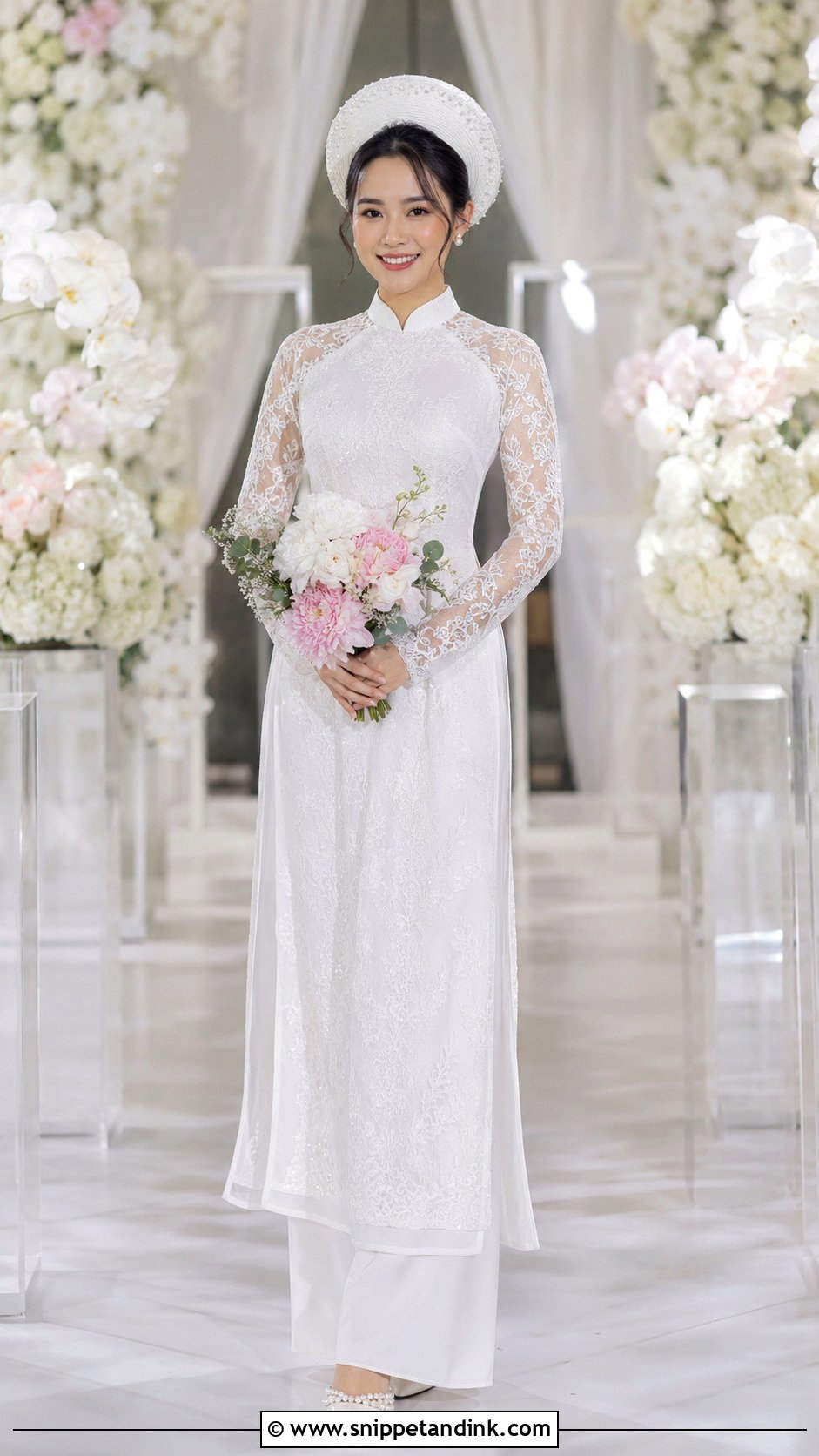
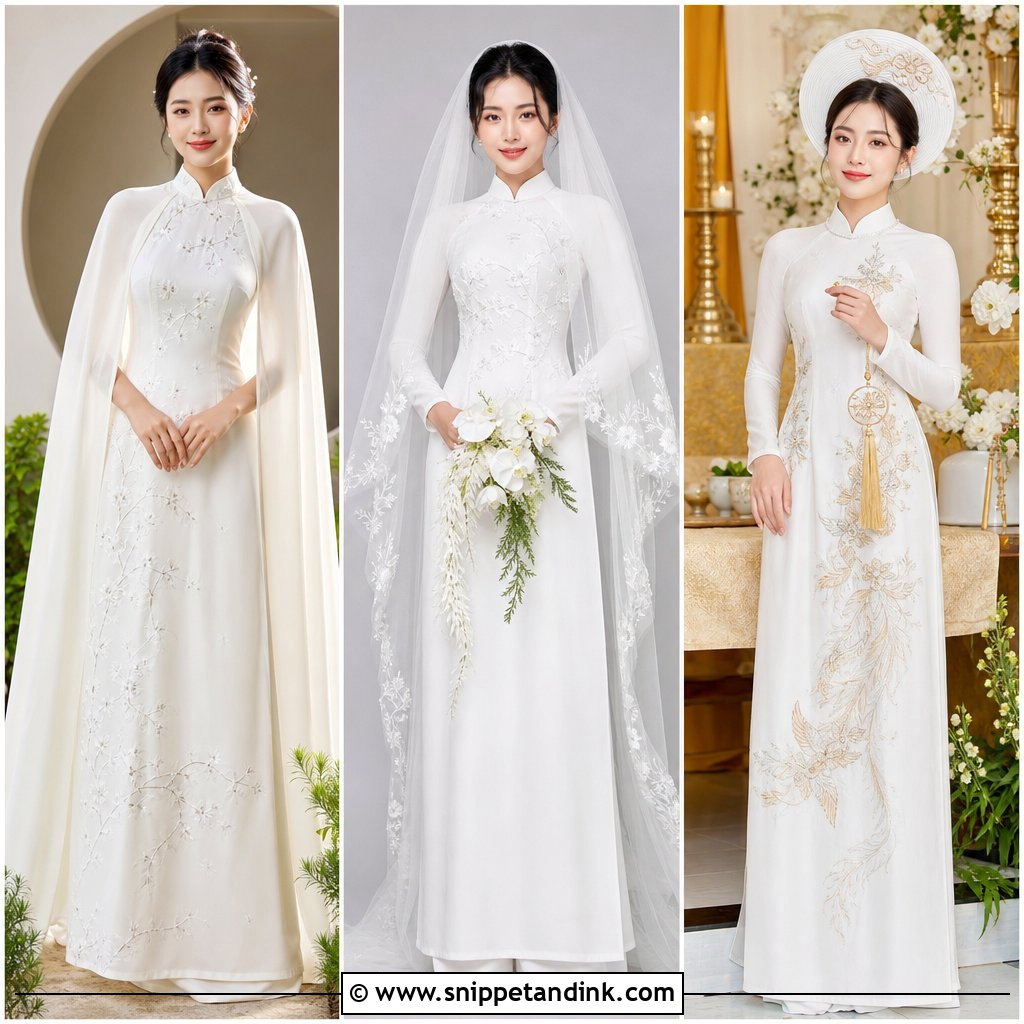
White lace is how many brides marrying across two cultures bring Western romance into the áo dài. The lining is what makes or breaks it. I insist on opaque lining through the bodice and the pants, because white lace photographs as see-through under flash even when it looks modest in the mirror. Lace at the sleeves and upper neck keeps things light. White silk pants, pearl-trimmed heels and a small white khăn đóng, a pearl headband or fresh flowers work depending on how formal the ceremony is. Keep makeup soft: rosy cheeks, neutral eyes and a pink lip.
5. White Pearl Beaded Bridal Ao Dai
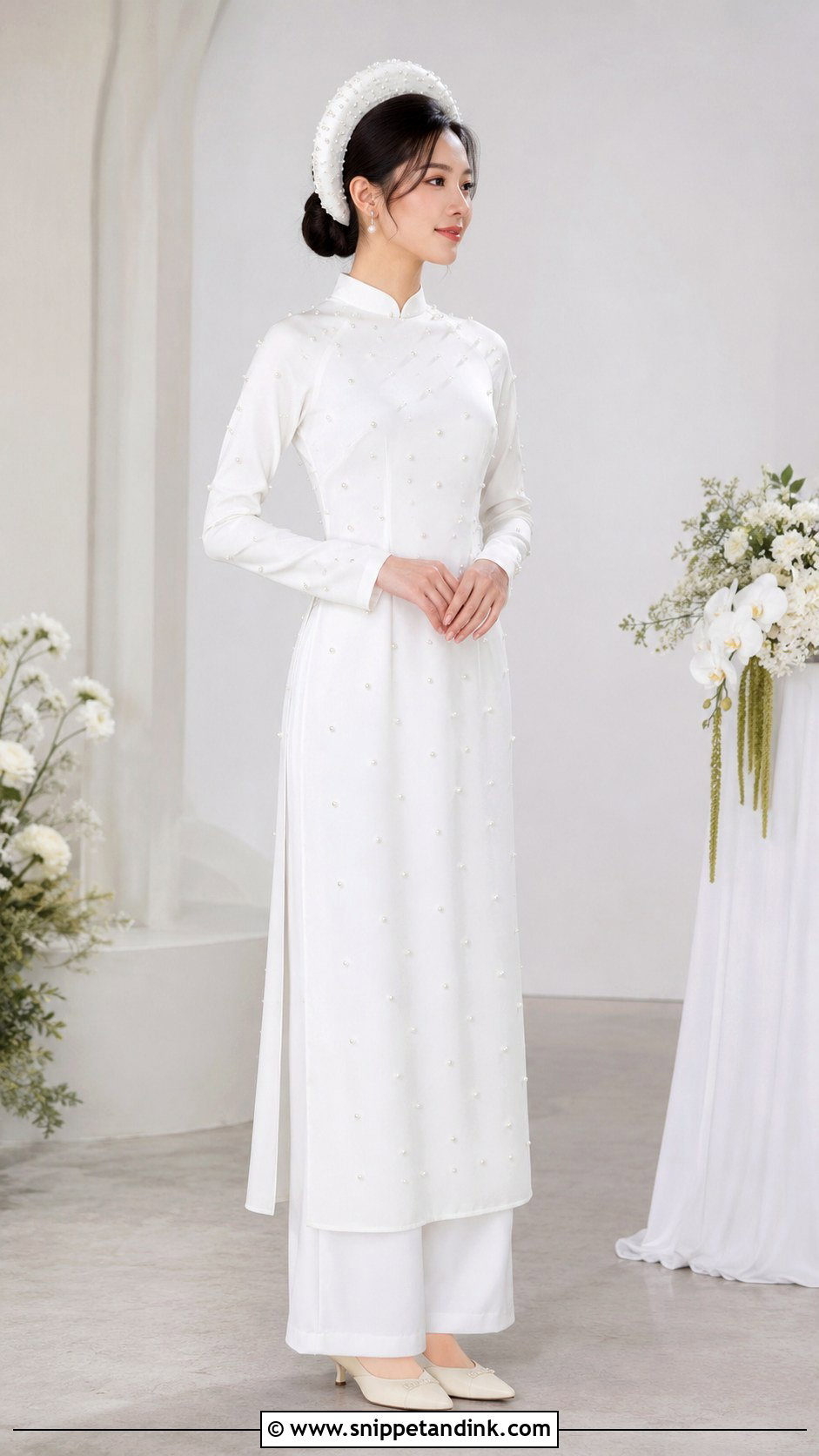
Pearls give a white áo dài a quiet shine that reads best up close. I’d keep the heaviest beading around the shoulders and collar to frame the face, then let it thin out below the waist so the panels can swing. Matte silk or crepe shows pearls better than shiny satin, which competes with them. Wide-leg white pants, low ivory heels and a pearl-edged khăn đóng make a single-color outfit. Then stop. A pearl-beaded tunic plus pearl headpiece plus pearl necklace plus pearl bracelet is where brides overdo it most often.
6. Ivory Silk Ao Dai With Long Train
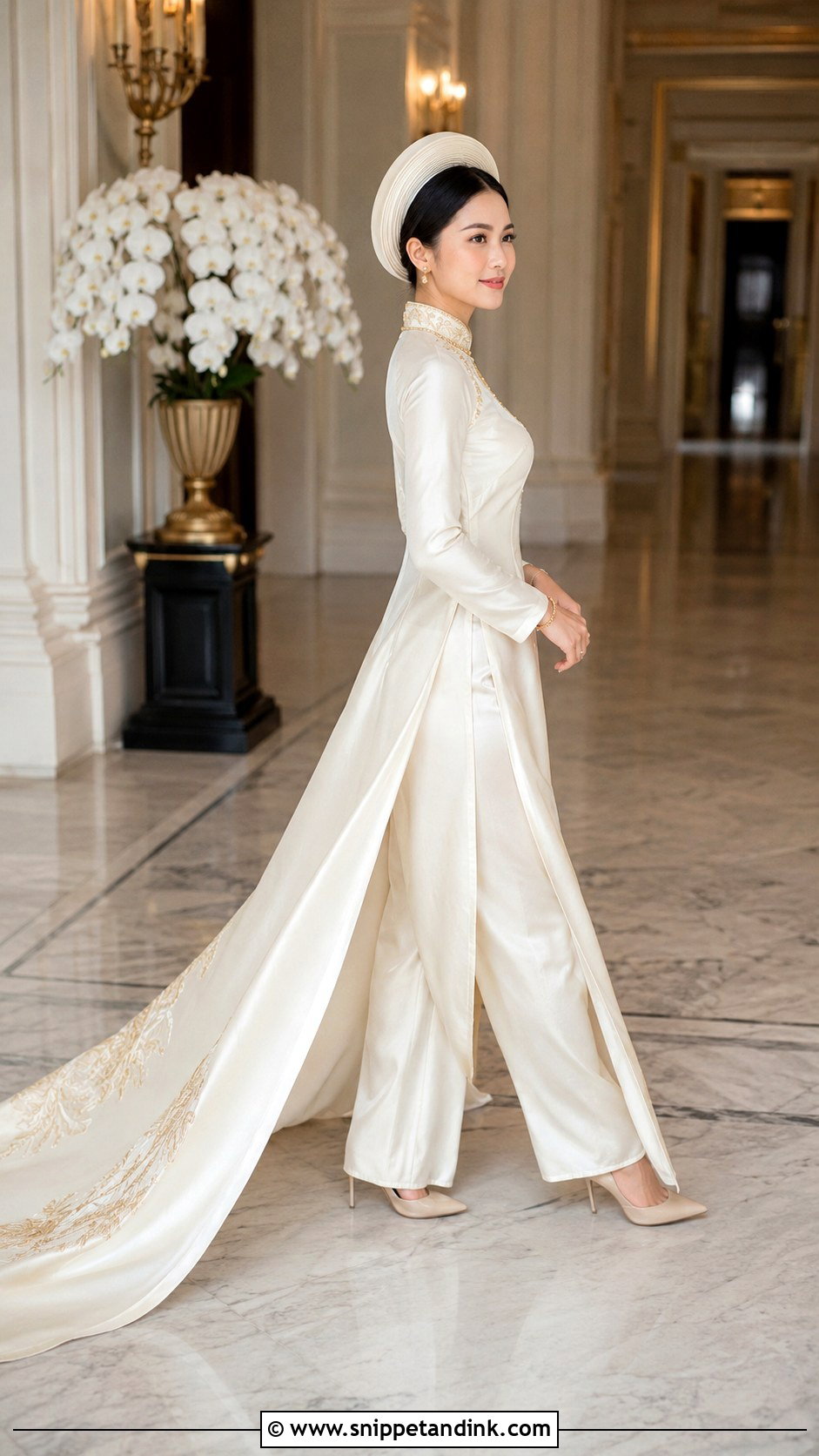
Ivory is easier on most complexions than bright white, and I find it photographs warmer. The train here comes from an extended back panel, while the front panel stays at a normal length so you can walk. Ivory silk pants and pointed champagne heels sit under it, with fine gold embroidery at the collar and cuffs and a slim ivory khăn đóng. Before the wedding, practice turning around in it. A long back panel tangles around the ankles on a quick turn, and a small wrist loop sewn to the hem, or a removable extension, makes the reception much easier.
7. Gold Brocade Wedding Ao Dai
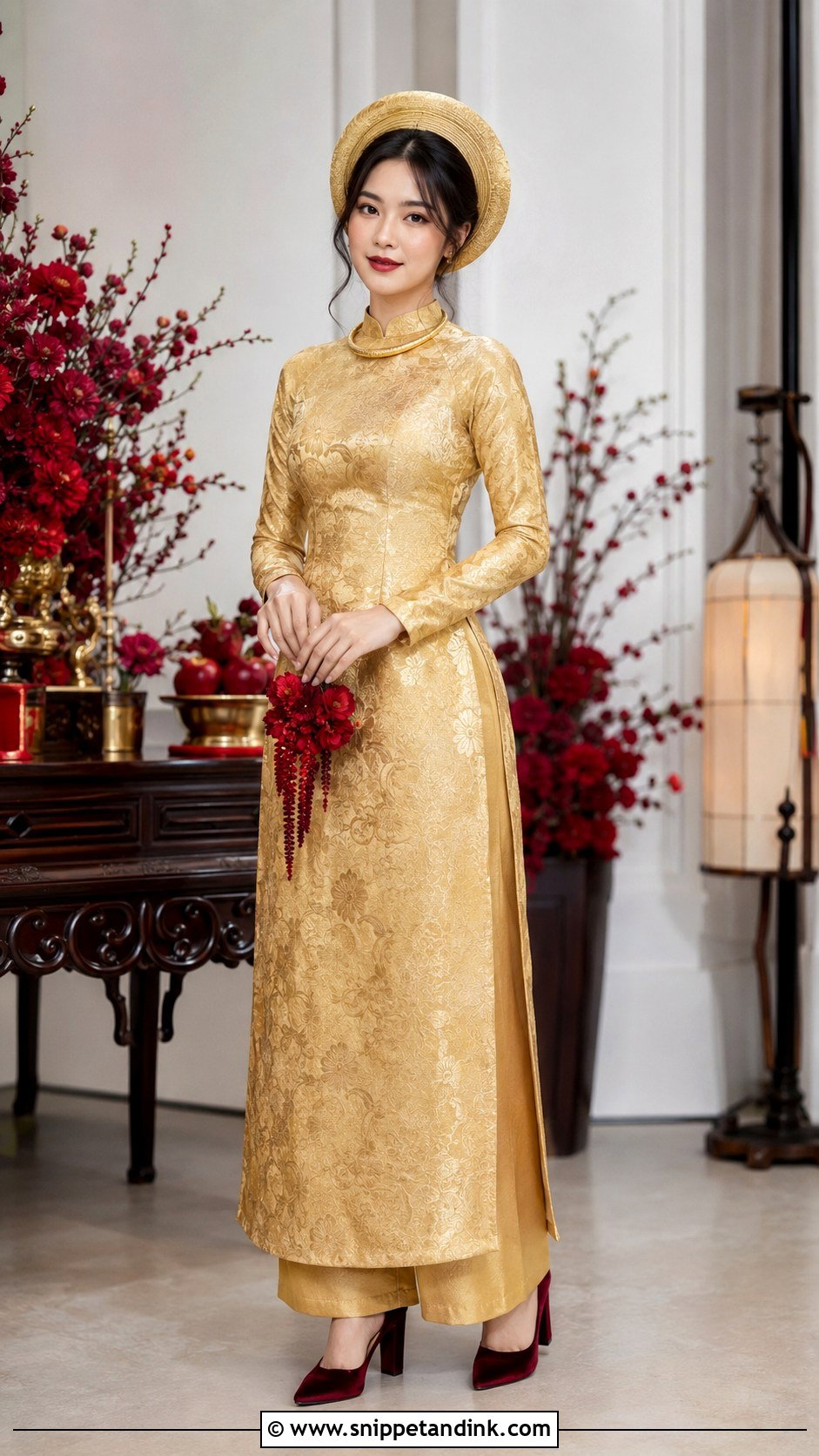
When a bride wants formality without red, a gold brocade áo dài is my first suggestion, since gold carries the same associations with prosperity in Vietnamese weddings. Choose a soft antique gold instead of a mirror-bright metallic, which turns yellow in phone photos and flares under flash. Tonal floral weaving or touches of red embroidery add depth. Matching pants give a long line; red pants create contrast. Red velvet heels, a structured gold khăn đóng and a kiềng complete it, with warm rose lips and softly defined eyes.
8. Champagne Sequin Bridal Ao Dai
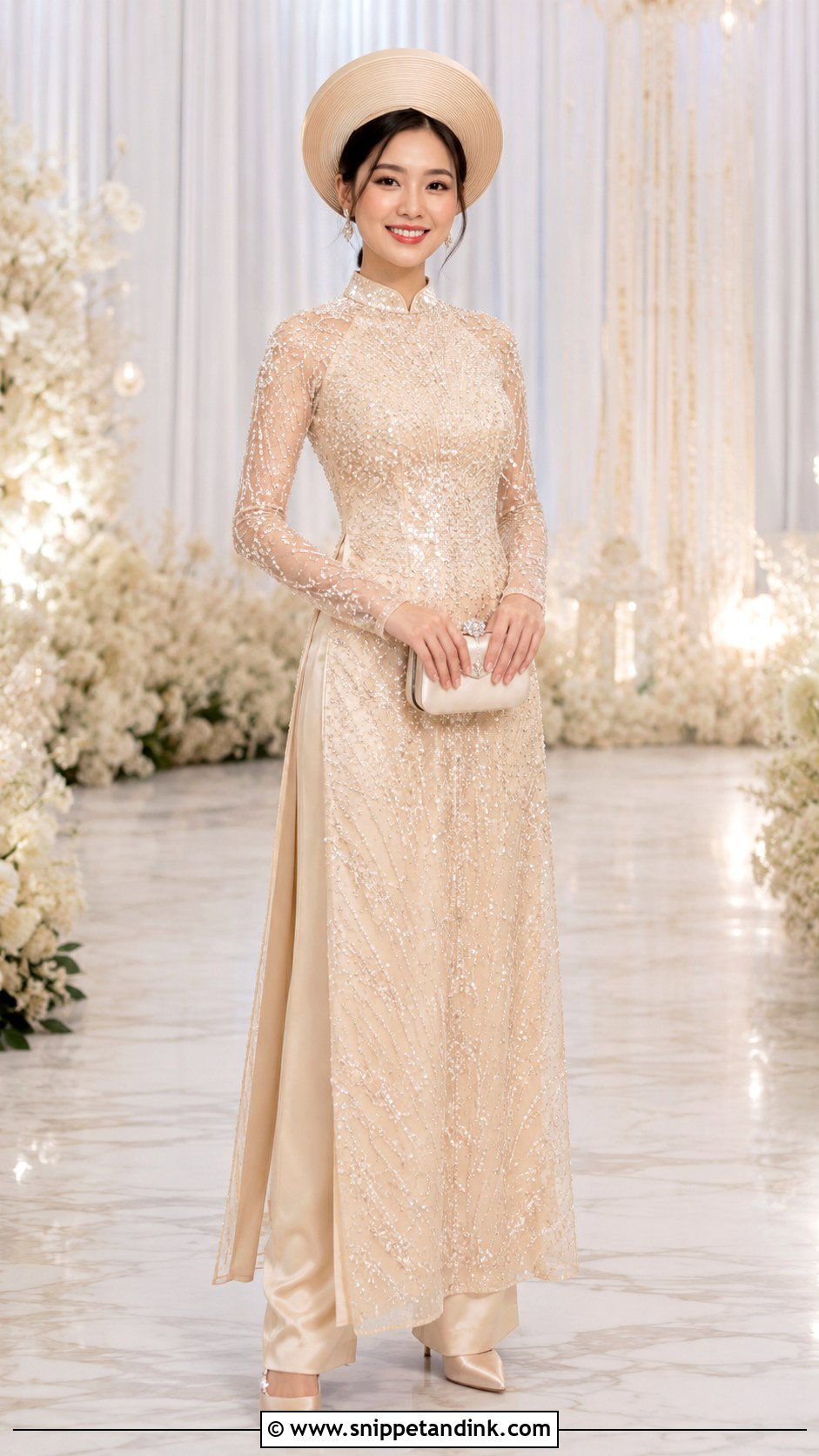
Sequins on mesh behave differently from beads on silk. They’re lighter, so I’m happy to see them dense on the bodice, but along the panels they should be sparse or the fabric stops flowing and starts to swing like a curtain. Champagne pants and satin heels with a supportive low or mid heel go underneath. A plain champagne khăn đóng or a sleek pearl comb is better than a decorated headpiece. Crystal drops and a satin clutch finish it. Indoor evening light makes this outfit glitter, and the neutral color still holds up in daylight photos.
9. Blush Pink Floral Bridal Ao Dai
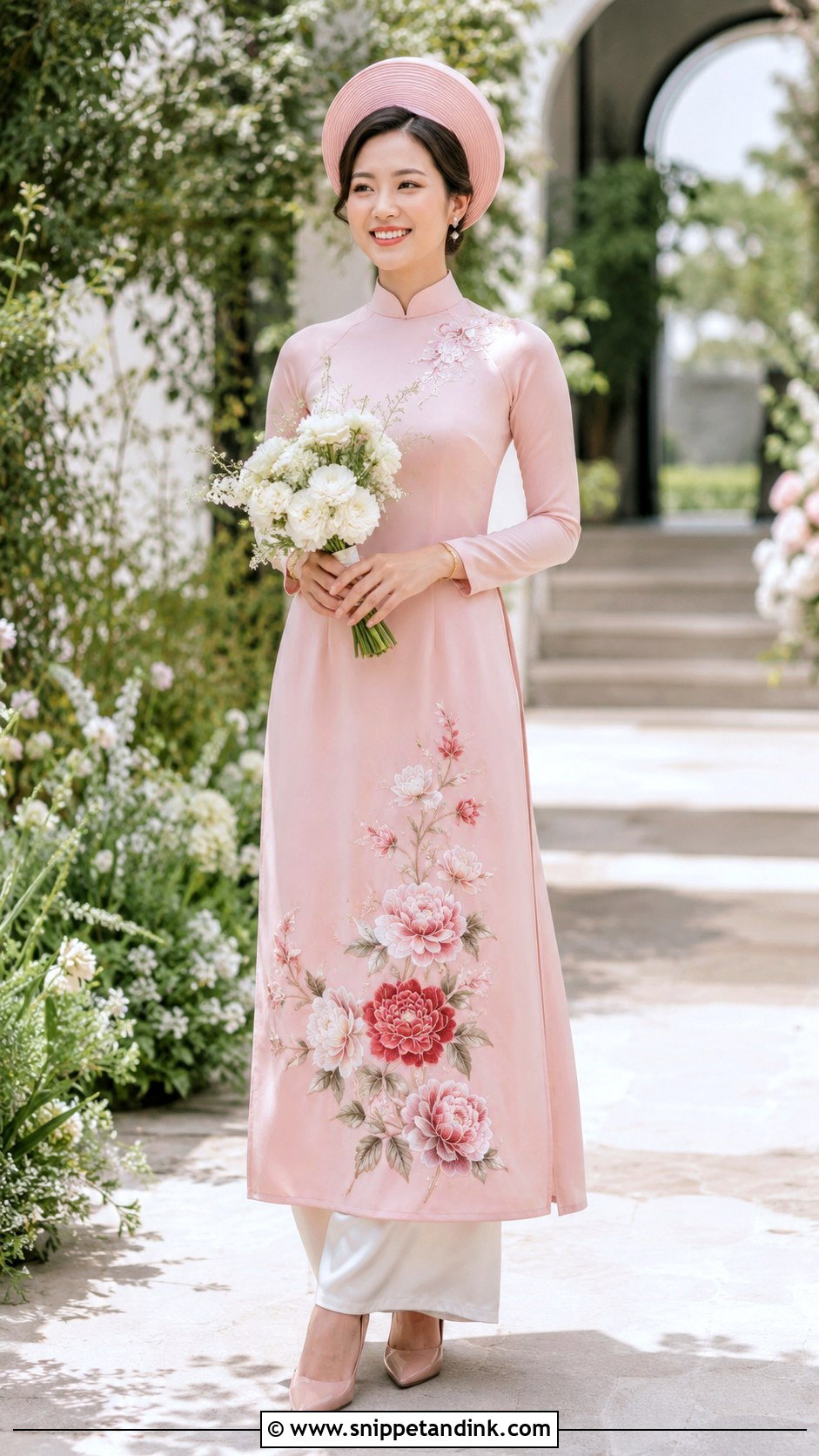
Blush pink is my pick for a daytime or garden ceremony. Embroidered peonies or cherry blossoms on soft pink silk look natural, and placement changes how the outfit reads: flowers climbing from the hem toward the waist lengthen you, while small motifs at the collar pull attention to your face. Ivory or matching pink pants, nude-pink heels and a slim blush khăn đóng keep it traditional. Carry a compact bouquet in white and pale pink. An oversized arrangement in pink hides most of the embroidery you paid for.
10. Dusty Rose Velvet Bridal Ao Dai
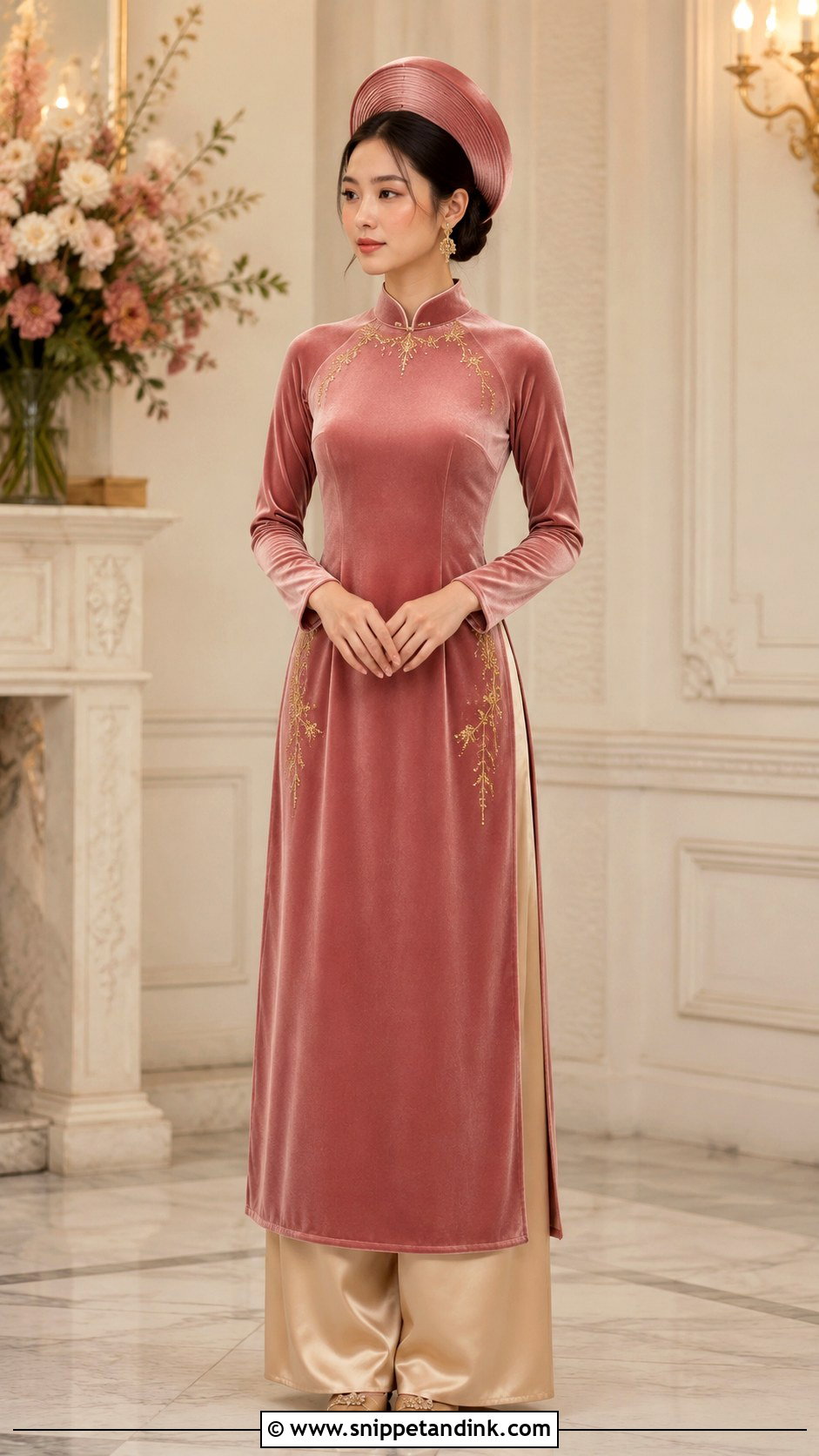
Dusty rose velvet is a winter outfit. Velvet already looks rich, so I keep decoration to small gold buttons, narrow piping or a little embroidery that traces the construction. Champagne silk pants lighten it. Gold closed-toe heels, a structured dusty rose khăn đóng and vintage-style drops suit the mood, with a low bun and a soft side part. The fitting matters more than usual: velvet has almost no stretch and feels warm, so I ask the tailor for a little extra ease through the arms, waist and hips. You need to be able to bow without the side seams straining.
11. Pastel Blue Embroidered Bridal Ao Dai
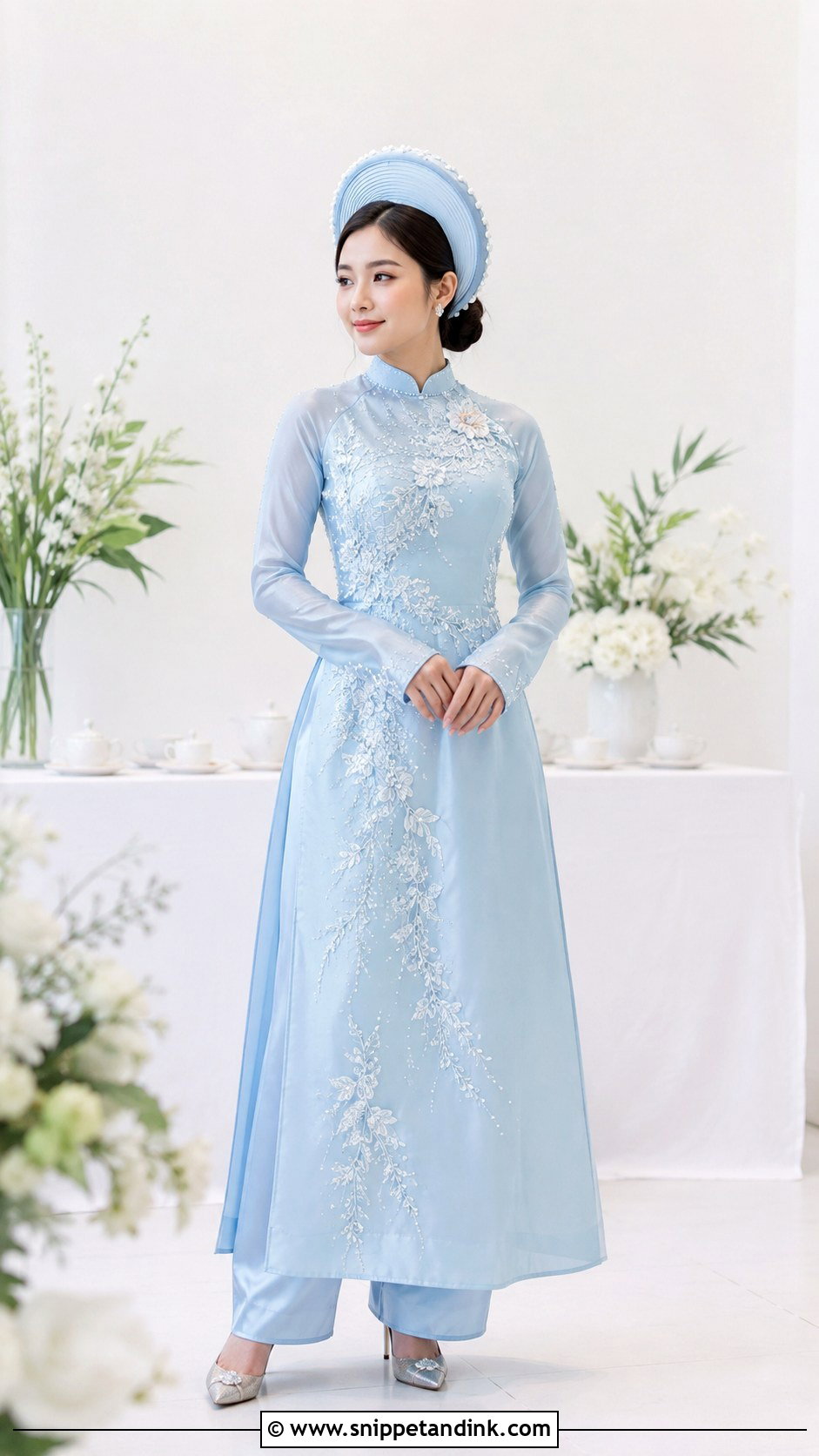
Powder-blue silk or crepe with white floral embroidery, pearls or fine silver thread looks fresh in bright natural light. Matching blue pants make one continuous line; white pants lighten it. Silver pointed heels and a small blue khăn đóng edged with pearls complete it, with crystal studs or drops. Cool pastels can make a bride look tired on camera, which is why I always pair this color with warm pink blush and a rosy lip. It suits a morning tea ceremony or a coastal setting. If you prefer less decoration, drop the embroidery and put that budget into fit.
12. Royal Blue Silk Wedding Ao Dai
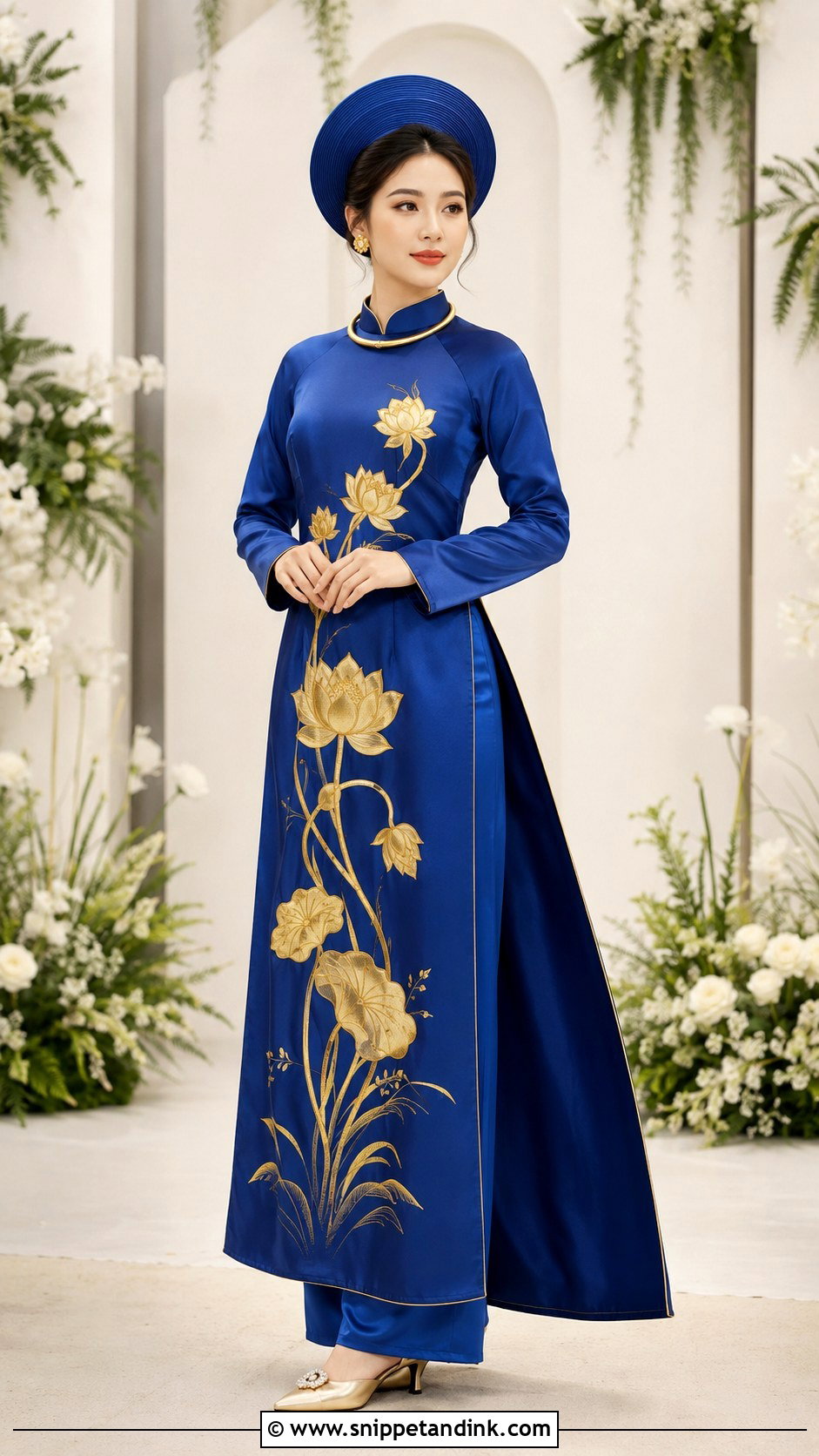
Royal blue silk is confident, and it needs gold to warm it. Gold lotus, vine or cloud embroidery ties it to the other gold details of a Vietnamese ceremony. I’d wear matching blue pants, gold kitten heels and a structured blue khăn đóng. A kiềng looks striking against deep blue, so skip any other necklace. Finish with gold earrings, a sleek bun and a berry lip. Saturated blues shift a lot between daylight and indoor bulbs, so hold a fabric swatch up in both before you commit to a bolt.
13. Jade Green Lotus Bridal Ao Dai
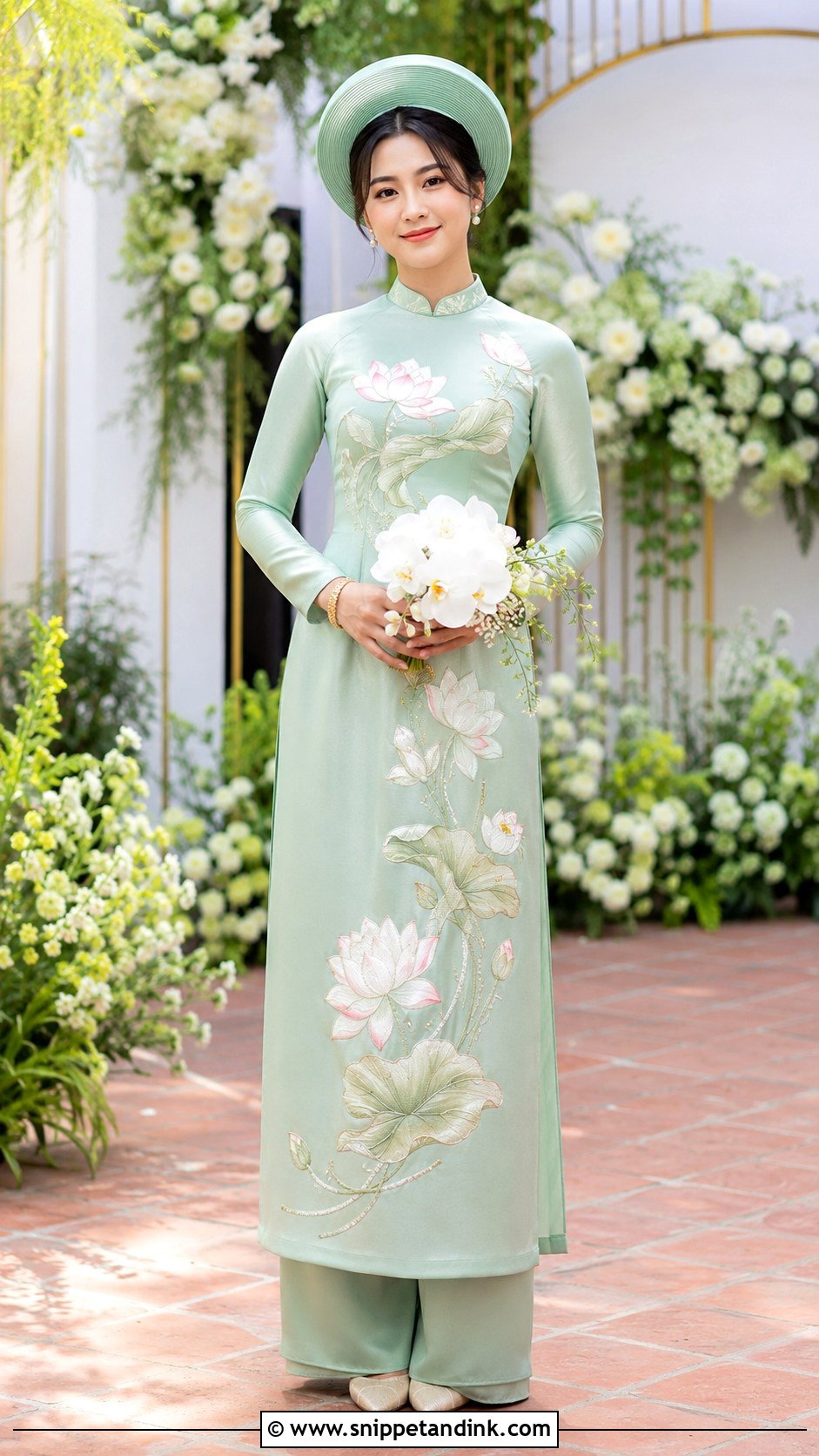
Pale jade with lotus embroidery is one of the calmest bridal looks I know. I like the lotus running asymmetrically down one side of the bodice and across the lower panel, which adds movement without breaking the symmetry of the áo dài. Matching jade pants and champagne heels keep the colors soft. A simple jade khăn đóng frames the face, with pearl drops, a thin gold bracelet and one small floral comb in a low bun. Keep the bouquet to white orchids or greenery. A mixed bouquet in pink, yellow and purple against jade quickly looks like too many colors.
14. Emerald Green Brocade Bridal Ao Dai
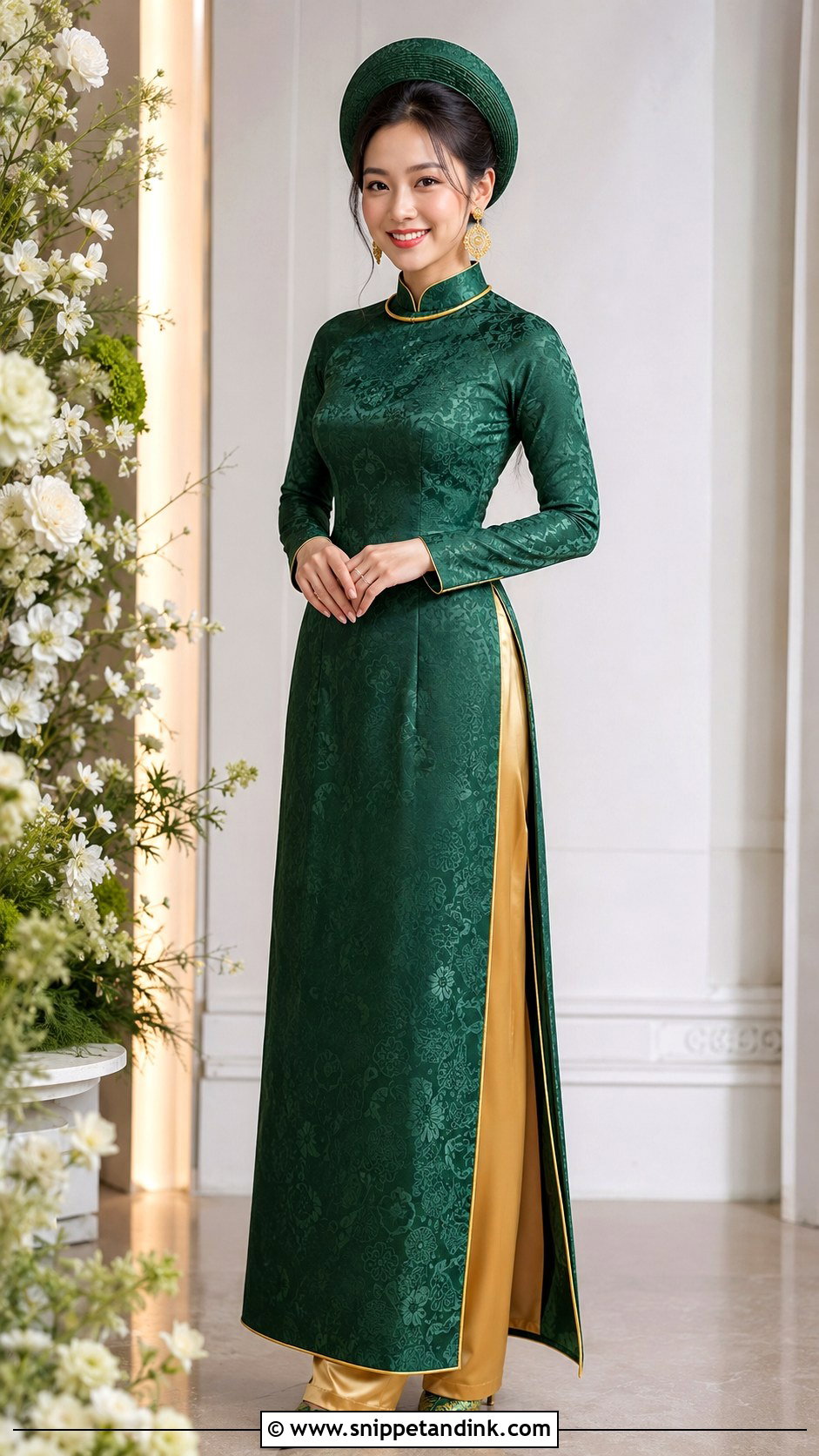
Emerald brocade brings depth to a formal Vietnamese wedding outfit, and tonal floral weaving means you hardly need added decoration. Narrow gold piping at the collar, sleeves and side slits defines the shape. Gold silk pants, matching heels and an emerald khăn đóng with a thin gold trim complete it. Choose the kiềng or sculptural earrings, not both, when the collar is detailed. The thing I check most closely on brocade is motif placement: a large flower cut in half at the side seam looks careless, so ask the tailor to align the pattern across every seam.
15. Lavender Chiffon Bridal Ao Dai
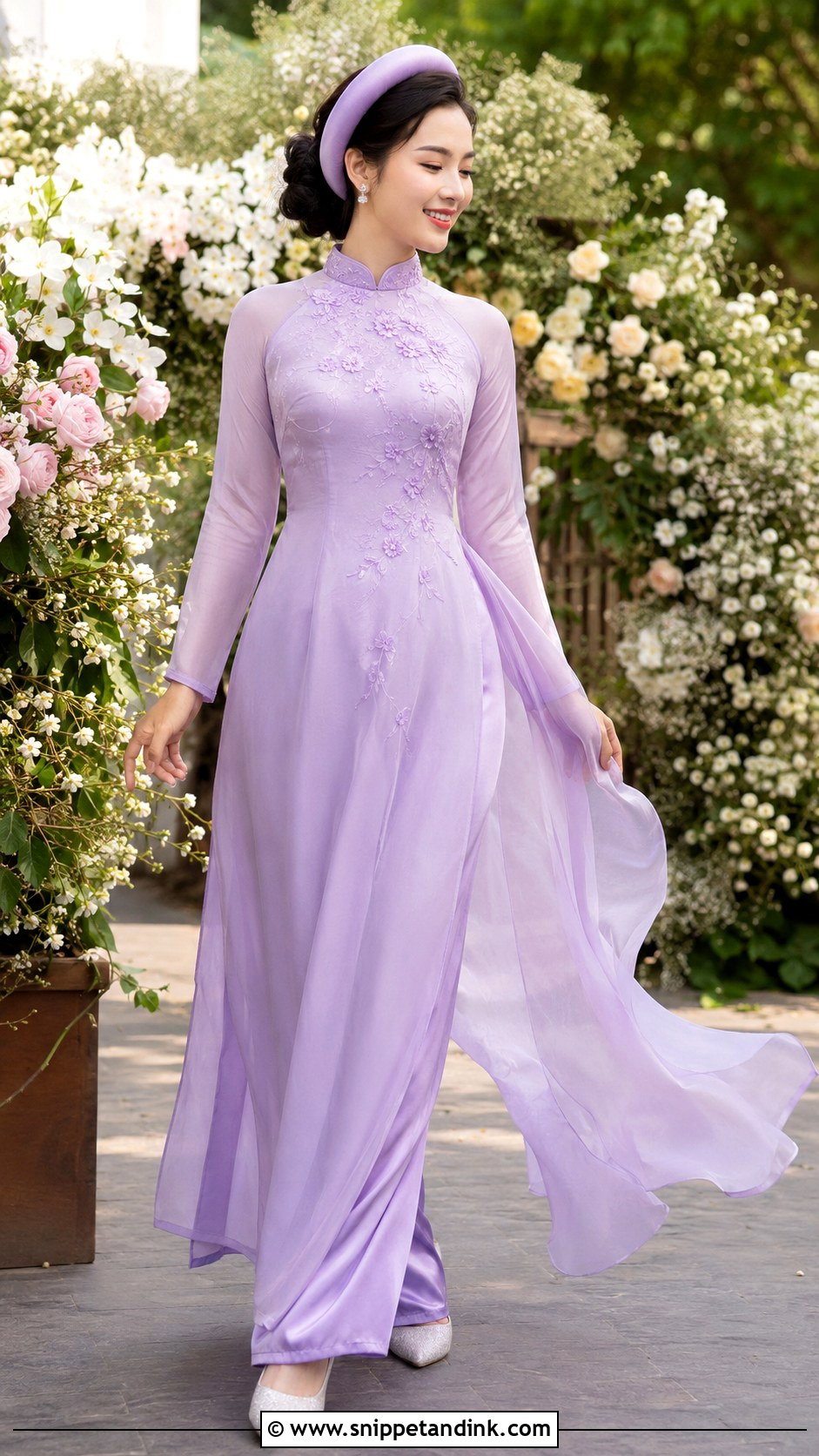
Chiffon floats, which is the appeal, but it is also sheer. Lavender chiffon needs a full lining and opaque silk pants in the same shade, or the light behind you at an outdoor ceremony shows your silhouette through the panels. A softly layered outer panel, silver floral embroidery or tiny crystals add definition. Pale silver heels and a narrow lavender khăn đóng go with it. I’d skip lavender eyeshadow; neutral eyes, pink cheeks and a mauve-rose lip look better. Check the panels outside in daylight during alterations, since chiffon also clings when it’s humid.
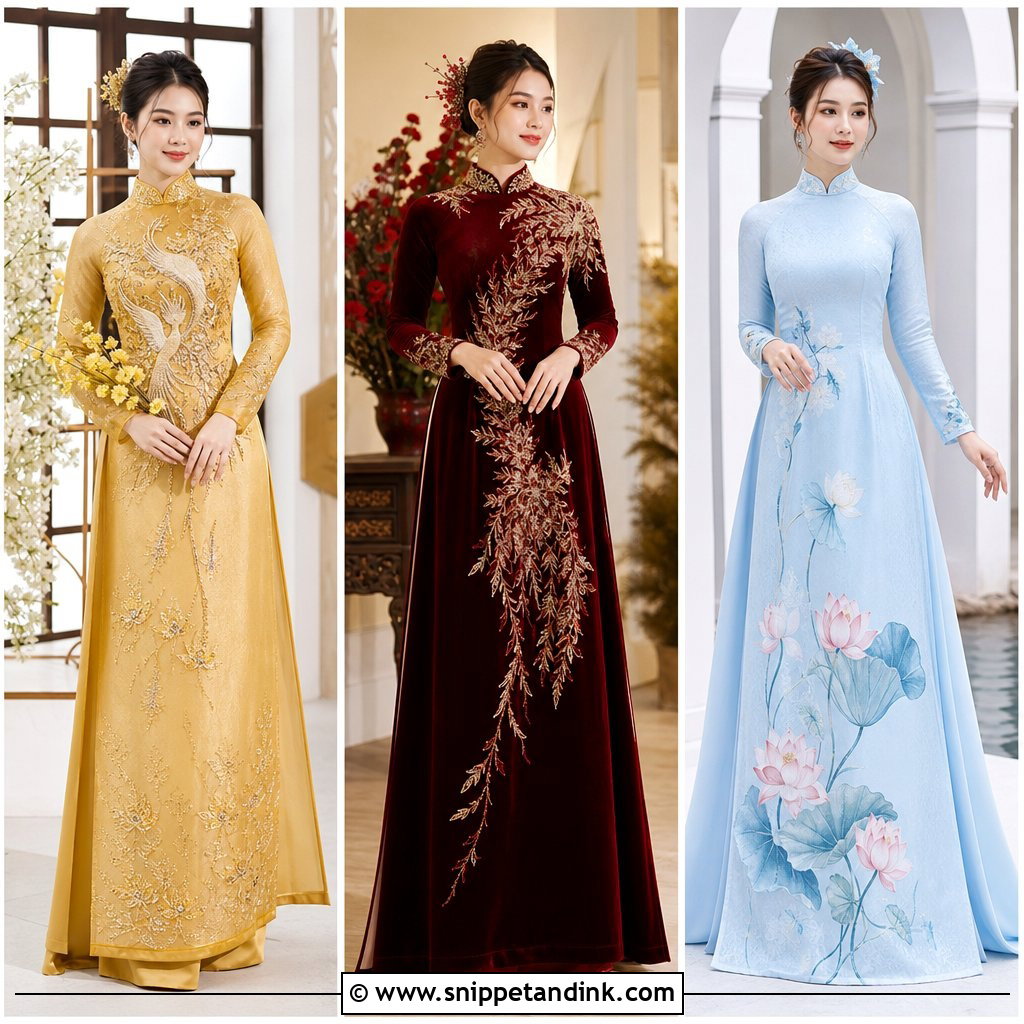
16. Burgundy Velvet Wedding Ao Dai
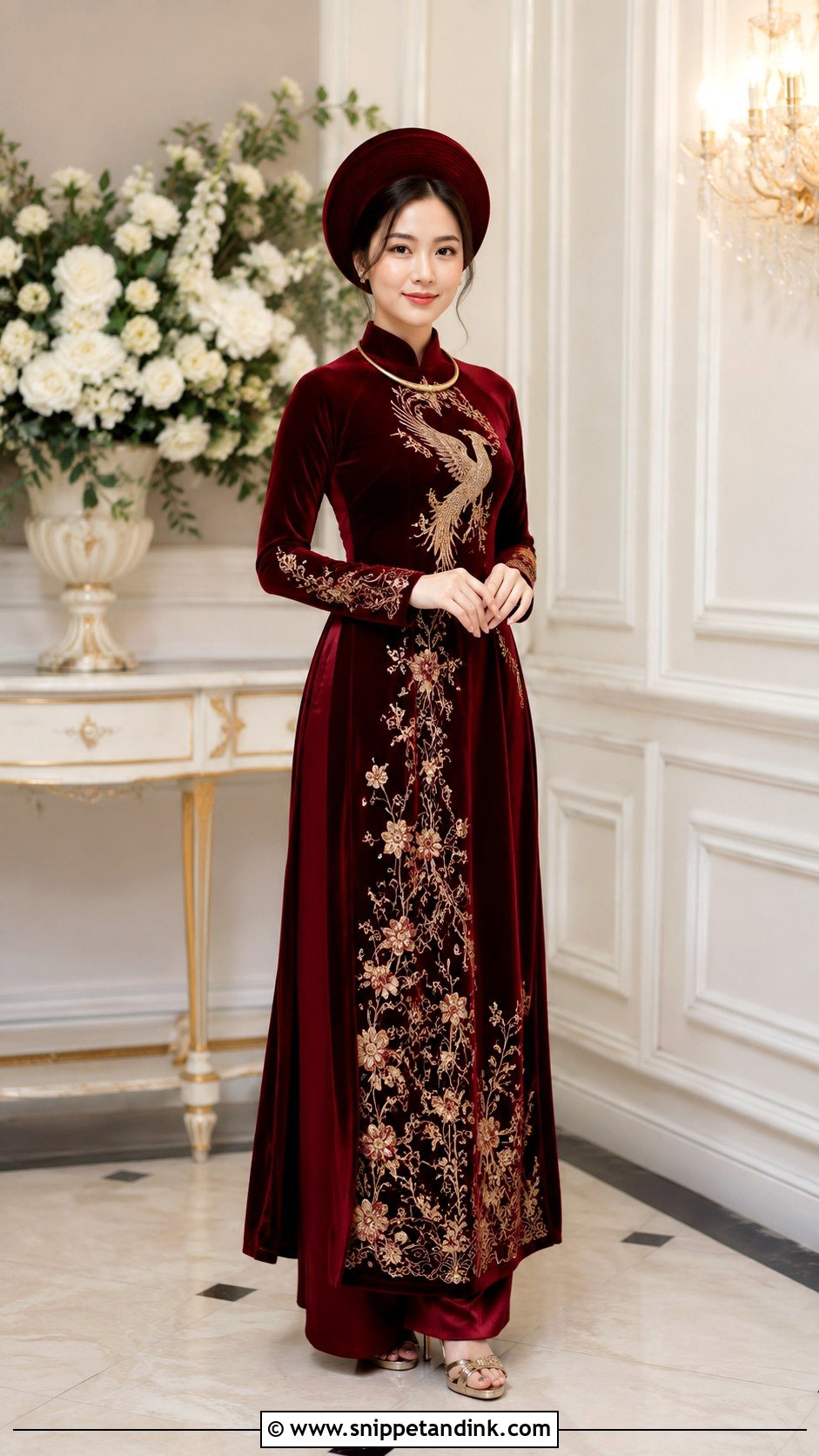
Burgundy velvet has the meaning of red in a darker shade, which suits evening receptions. A high collar, long sleeves and antique gold embroidery on the shoulders or lower panels look right. Matching burgundy pants make a strong column; champagne pants lighten it. Antique gold heels, a burgundy khăn đóng and a kiềng complete the formal side. One tailoring detail matters a lot here: velvet nap reflects light differently depending on direction, so every panel must be cut with the nap running the same way, or the front and back panels look like two shades. A smooth lining helps the tunic slide over the body.
17. Modern Cape Sleeve Bridal Ao Dai
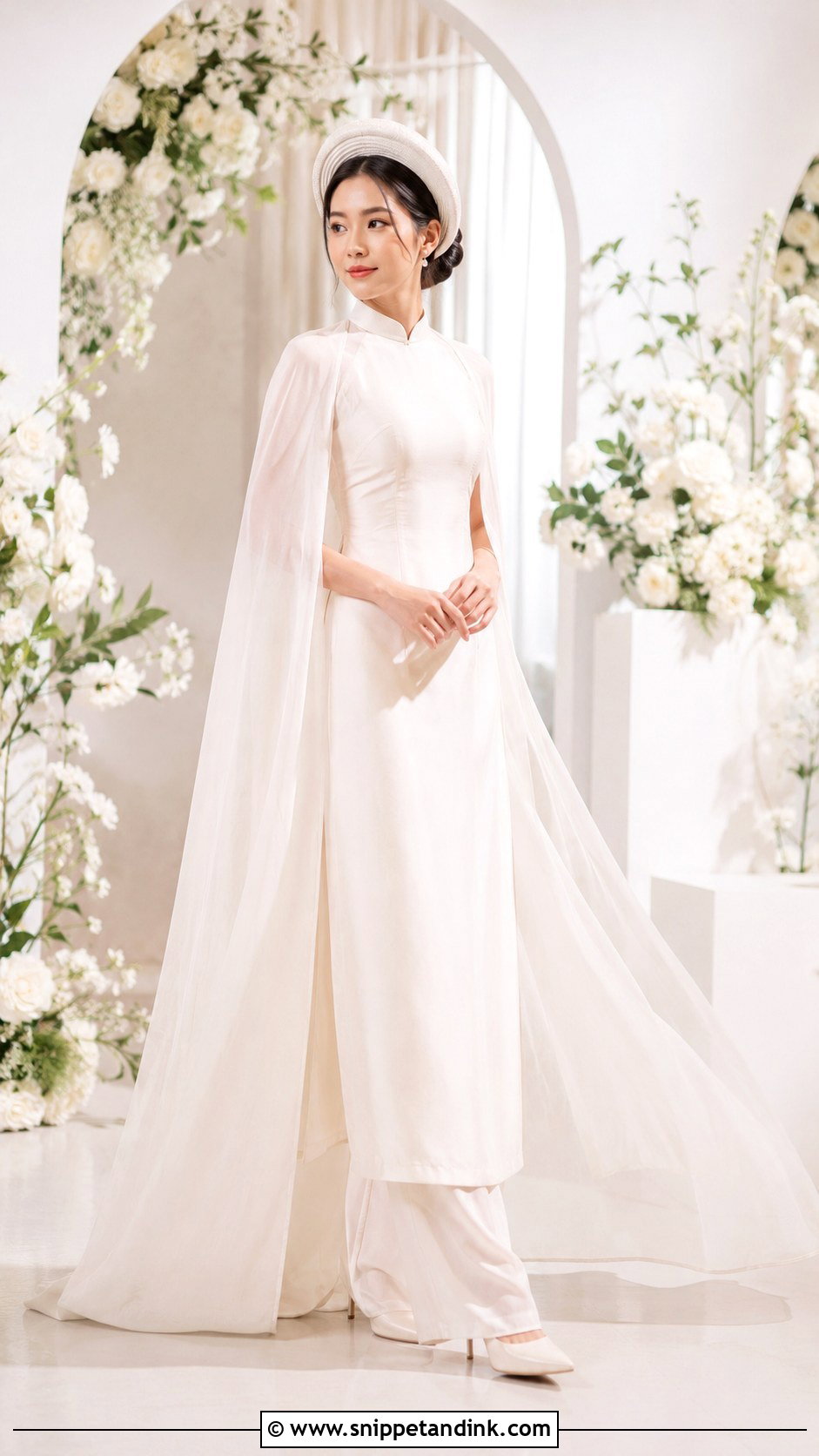
A cape changes the áo dài from traditional to dramatic, and I always make it detachable. Sheer organza gives an airy line from shoulder to floor; silk crepe holds more structure. A clean white, ivory or red fitted tunic sits underneath, with matching wide-leg pants and pointed heels. With a cape attached near the collar, skip a bulky necklace, since they rub. Keep the khăn đóng minimal. The cape should clear your heels by a couple of centimetres and still let the front and back panels show; otherwise you lose the áo dài shape under it.
18. Puff Sleeve Bridal Ao Dai
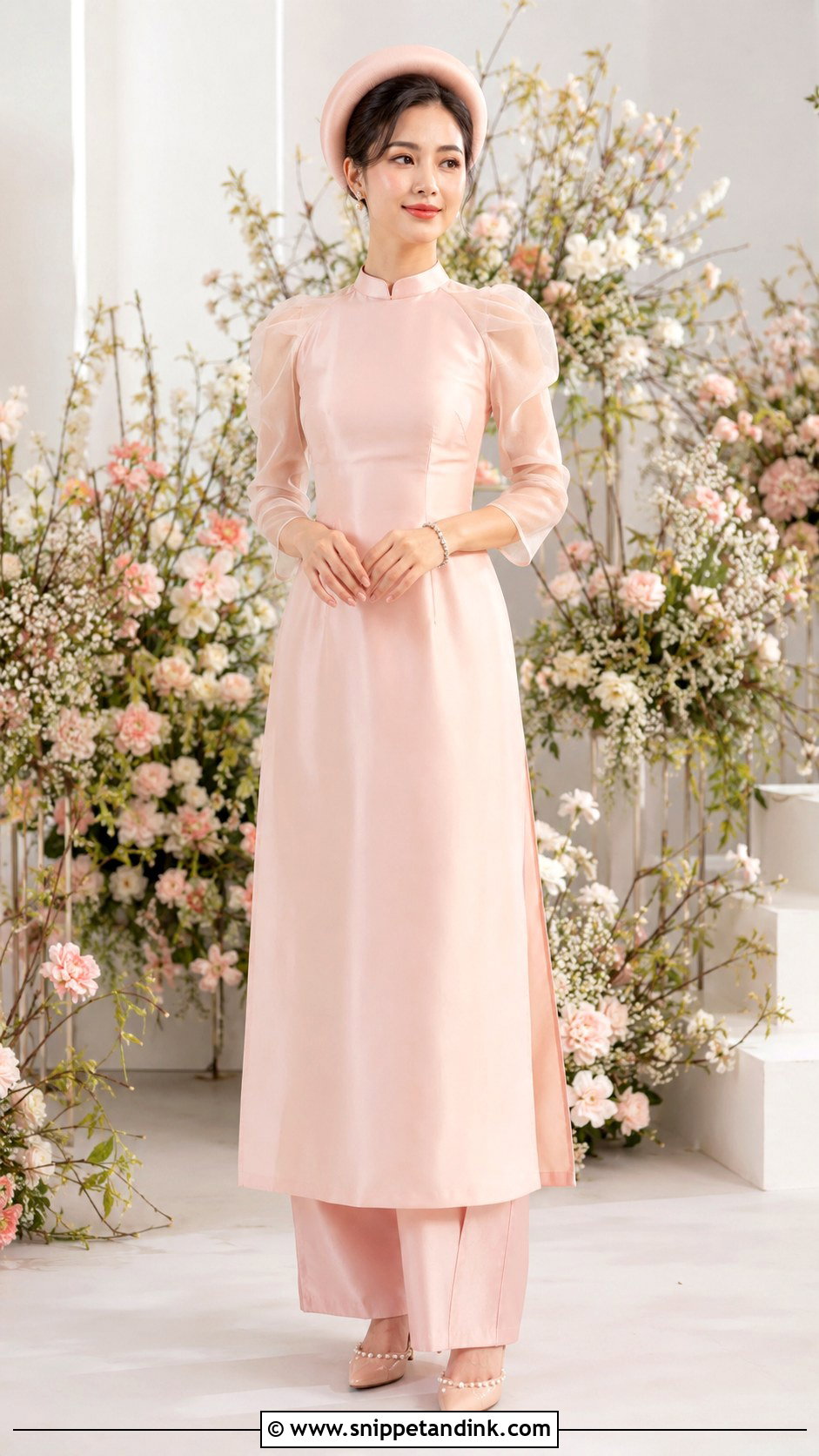
Puff sleeves add modern volume, and the risk is all in the armhole. Gathered organza at the shoulder narrowing to the wrist looks light, but if the armhole is cut high and tight for a sleek line, you won’t be able to lift your arms to hug relatives or hold flowers. Raise both arms at the fitting. White, blush or pastel blue silk works best, with coordinating pants and pearl-trimmed heels. A slim khăn đóng balances the sleeve volume better than a large headpiece. Keep embroidery on the bodice and panels so the sleeves stay soft.
19. Matching Bride And Groom Wedding Ao Dai
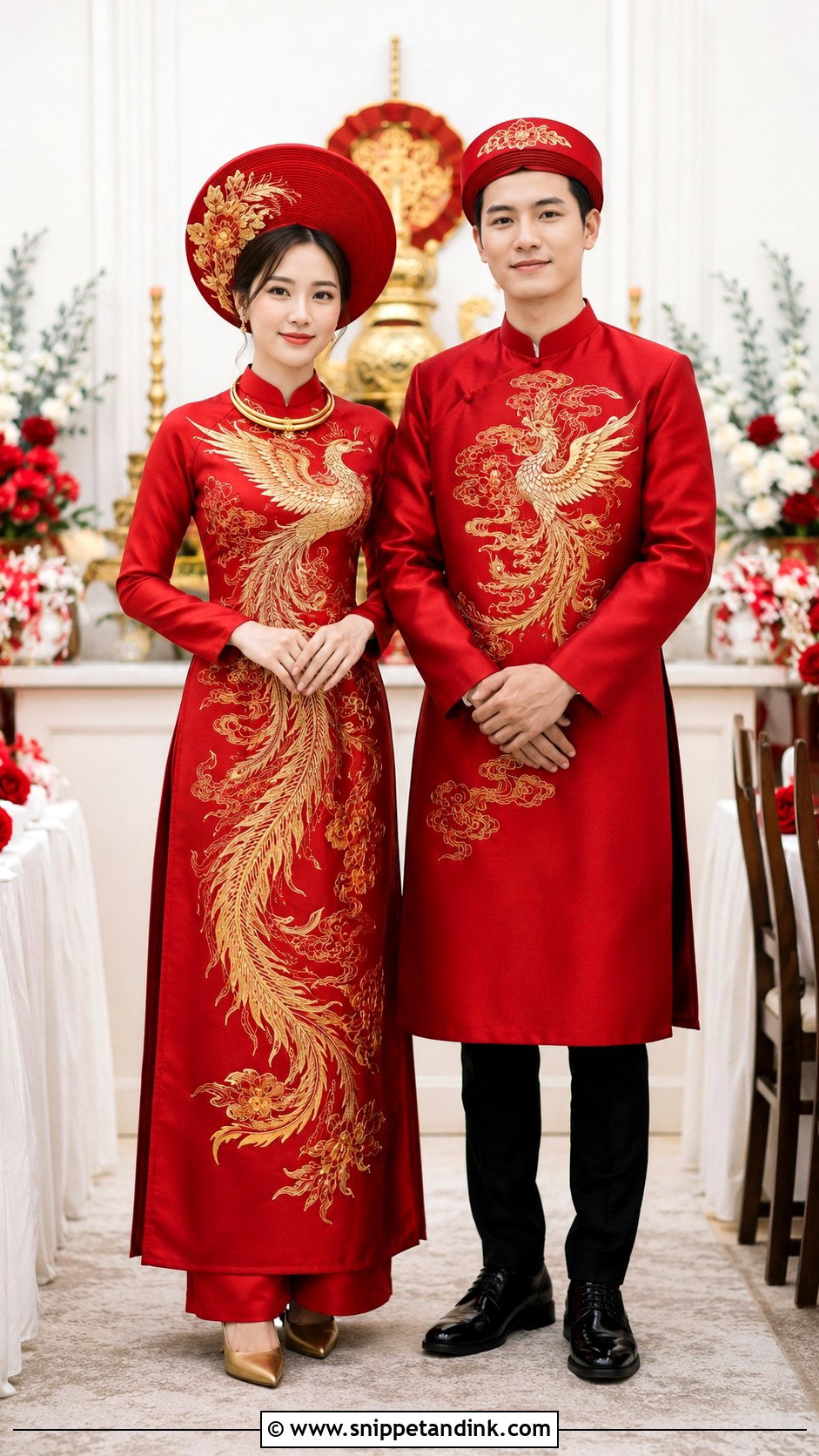
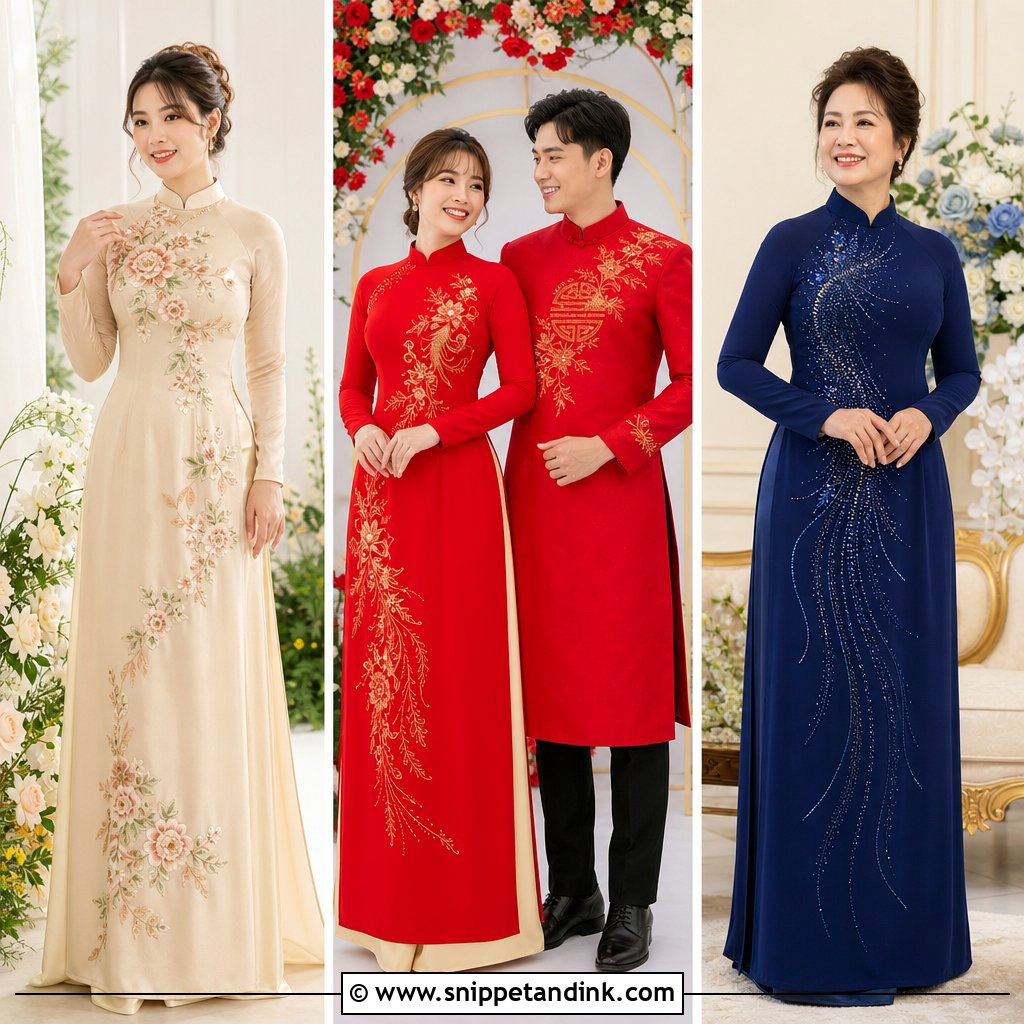
Coordinated áo dài for the couple are not supposed to match exactly. The bride might wear red silk with elaborate gold phoenix embroidery while the groom wears a simpler red or navy tunic with the same gold border. I pick one shared element and hold it: the fabric, the motif or the khăn đóng trim. The bride adds red silk pants, gold heels, a kiềng and an ornate headpiece; the groom wears straight pants, polished shoes and a smaller khăn đóng. Tailor both outfits together so the reds and the golds match under the same light.

20. Minimalist Silk Bridal Ao Dai
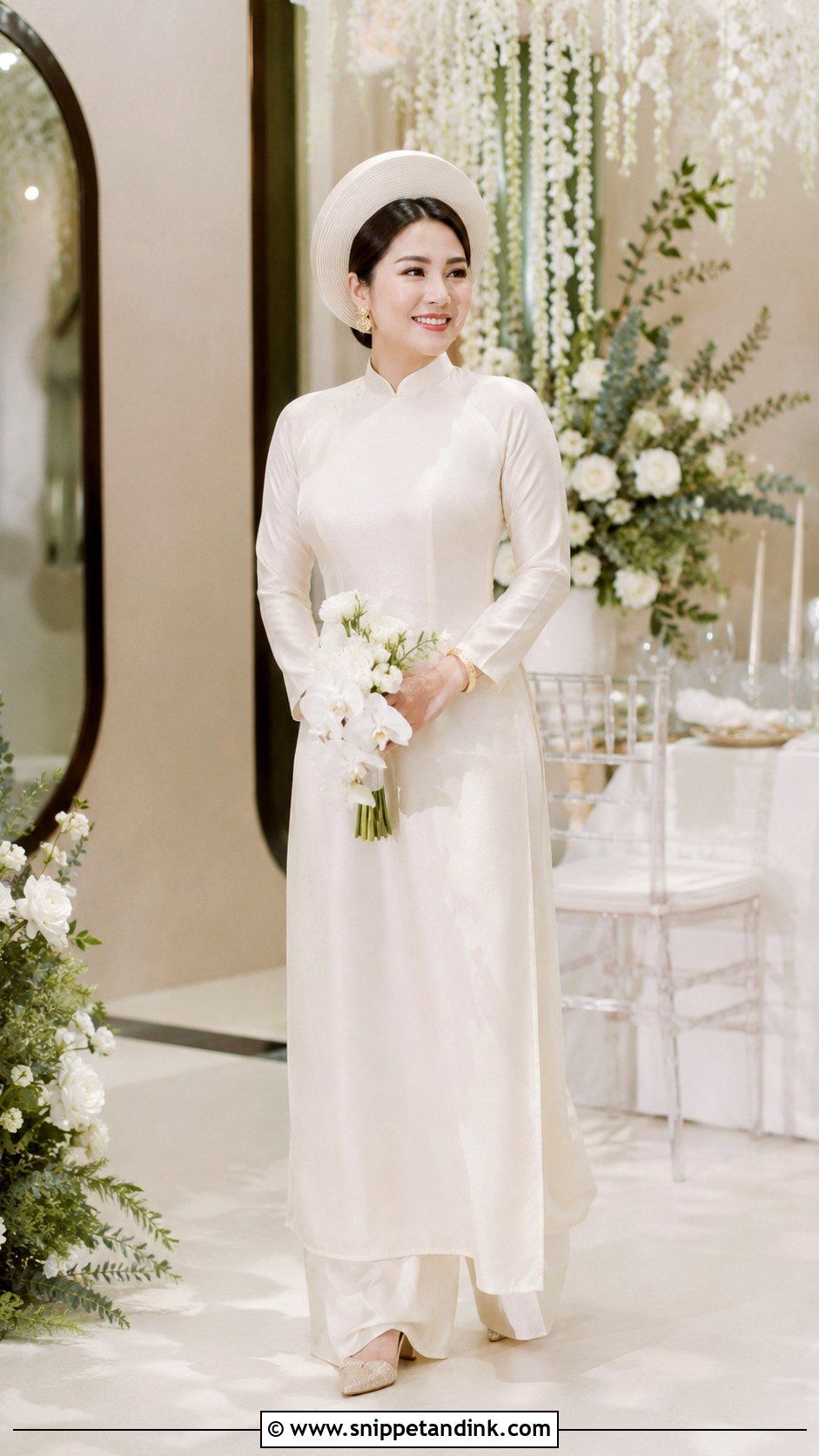
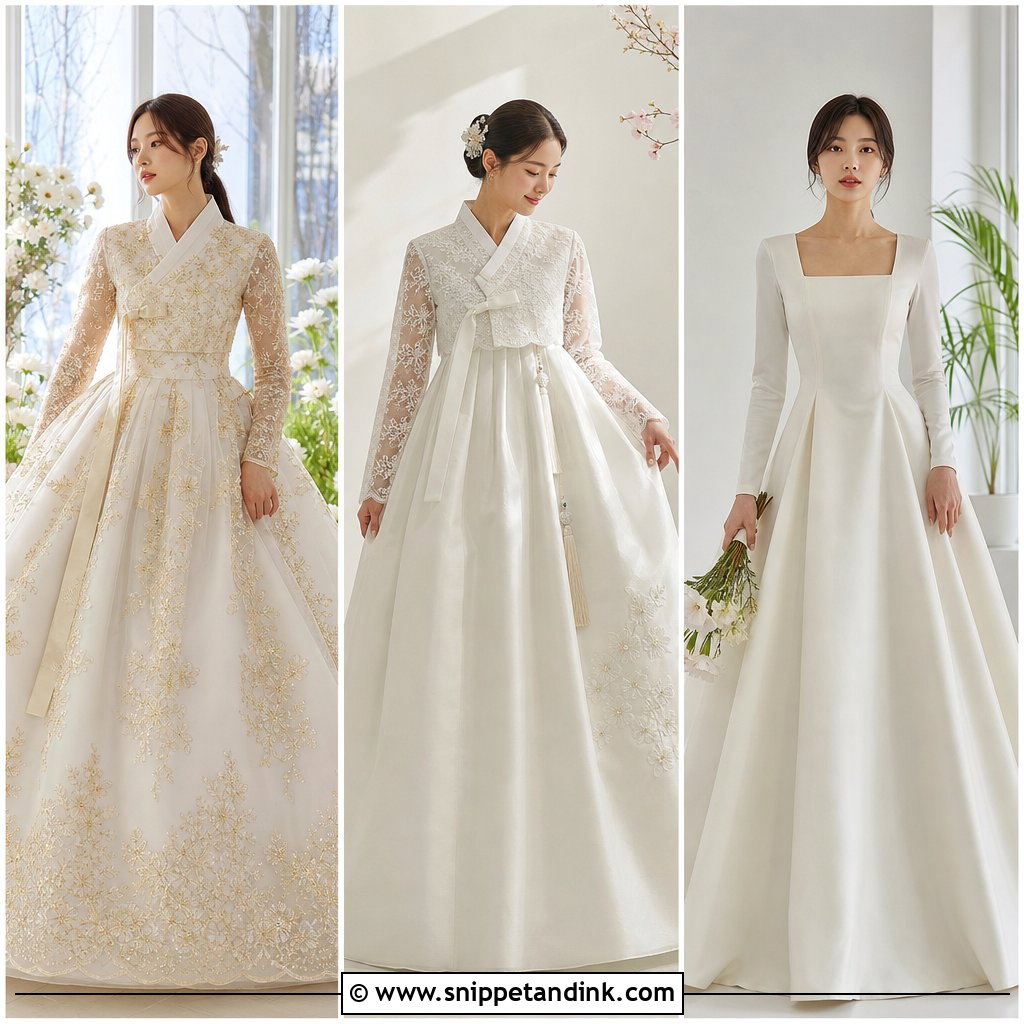
A minimalist áo dài is the hardest one to make well. With no embroidery to distract, a pull across the bust or a twist in the panel is the first thing anyone notices, so the measurements have to be precise for your body. Ivory, red, champagne or pale pink silk with a smooth high collar and sharply finished panels is enough. Add only covered buttons, narrow piping or a small motif at the cuff. A plain khăn đóng and one statement, either sculptural earrings or a kiềng, finish it. The pants should let you walk and sit freely.
Does Red, Gold or Pastel Suit Your Skin?
Color decides more than embroidery does. I always drape fabric swatches near the face in daylight before a bride commits, because the same red can make one person glow and turn another sallow. Warm undertones usually come alive in tomato red, antique gold, emerald and dusty rose. Cool undertones tend to suit crimson, royal blue, lavender and true white. Neutral undertones can wear most of the list.
- Hold each swatch under your chin, then under indoor lighting, and photograph both on your phone.
- If a pastel washes you out, keep it for the pants and put a stronger color in the tunic.
- Ivory or champagne is kinder than bright white for most skin tones, especially in flash photography.
- Show the final swatch to your makeup artist so the lip color is chosen against the actual fabric.
When the family expects red but you love blue, a common compromise is red for the tea ceremony and your chosen color for the reception. Ask your parents early. It is much easier to plan two outfits than to change one at the last fitting.
One Silhouette, Twenty Ways to Wear It
The áo dài shape stays the same through all twenty of these looks; what changes is fabric, color and how much decoration you add. Start with the ceremony, the venue, the season and the level of formality. Then think about fabric weight and how you’ll move: walking, sitting, bowing, pouring tea. I’d sooner see a bride in a perfectly fitted plain silk than an elaborate tunic that pulls at the waist. Whether you go for an ornate phoenix design or minimalist silk, keep the pants, shoes, jewelry, hair and headwear working with it rather than against it.
You'll Like These Ideas:





Leave a Reply