
Rose gold sits somewhere between blush, champagne and copper, and that in-between quality is why couples ask me for it so often: it warms up an ivory cake without shouting. On a cake it can be a full shimmer coat, a few torn pieces of metallic leaf, hand-painted detail or a satin ribbon between tiers, and each of those behaves differently in the kitchen and in photos. It reads sleek on fondant, softer on textured buttercream, and loud once it’s poured as a drip. Below are twenty ways I’d use the color, with notes on what each one asks of your baker and your venue.
What the Rose Gold on a Cake Is Really Made Of
Rose gold isn’t one product. A baker builds it from a few different materials, and the one she reaches for changes the finish, the labor involved and, in some cases, whether that part of the cake should be eaten at all. Knowing the difference makes your tasting conversation much shorter.
Lustre dust and metallic paint
Most painted rose gold starts as a fine powder mixed with a few drops of clear alcohol or extract into a paint. The alcohol evaporates and leaves the shine behind. Here’s the part couples rarely hear: some metallic dusts sold to decorators are labeled non-toxic or for decoration only, which is not the same thing as edible. Ask your baker directly whether every metallic surface is edible. If something isn’t, it belongs on a removable piece such as a topper or a sugar plaque, never on frosting that gets sliced and served.
Leaf, flakes and sprayed shimmer
Metal leaf is beaten paper-thin and pressed on in torn pieces, which gives that organic, slightly broken edge. Edible leaf is high-karat gold, and many rose gold sheets are alloys meant for crafts, so the packaging should say edible. Airbrushed shimmer covers a whole tier evenly but reads as a soft sheen rather than metal, which suits ombré and blush cakes better than geometric ones.
1. Rose Gold Drip Wedding Cake
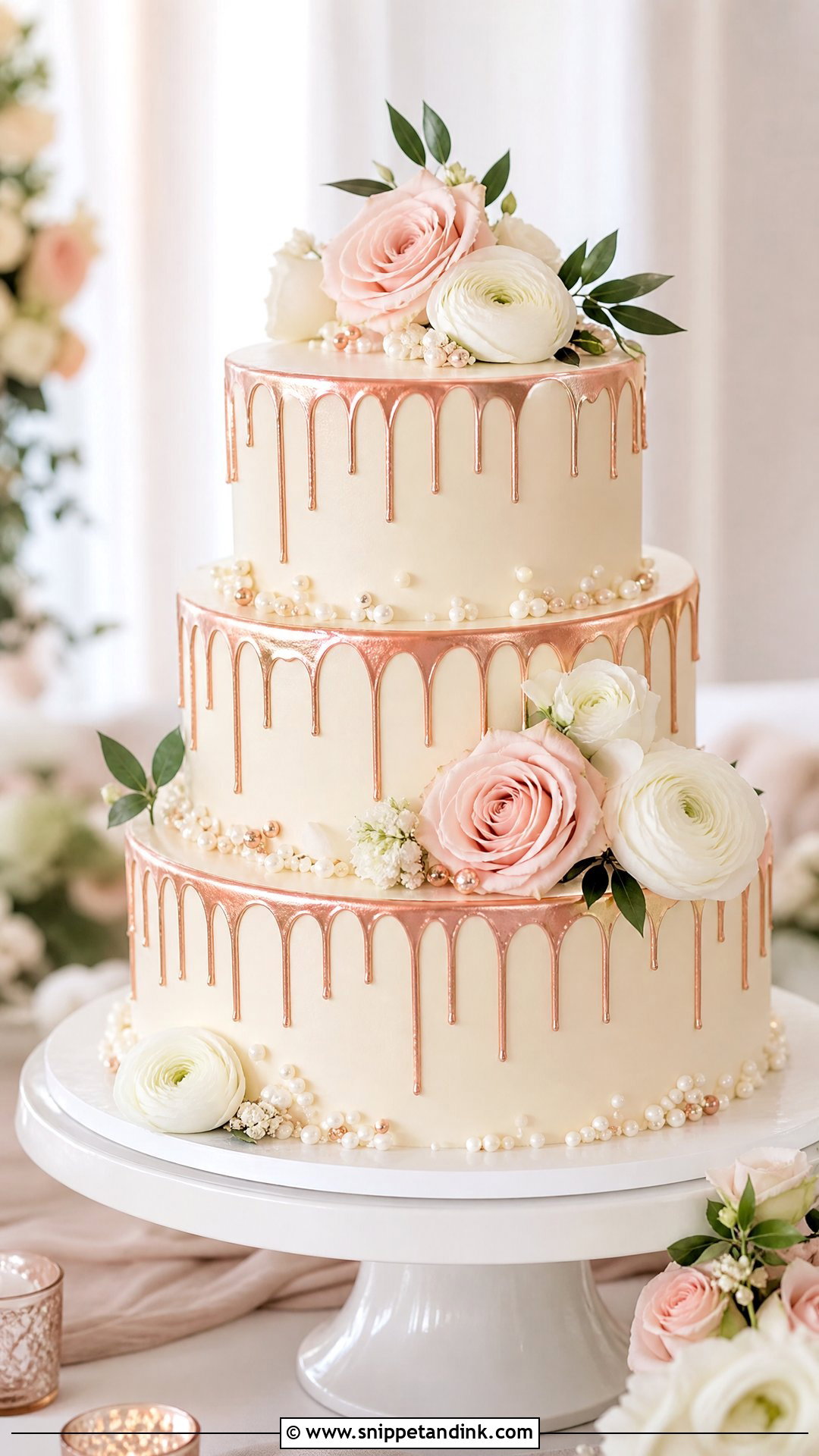
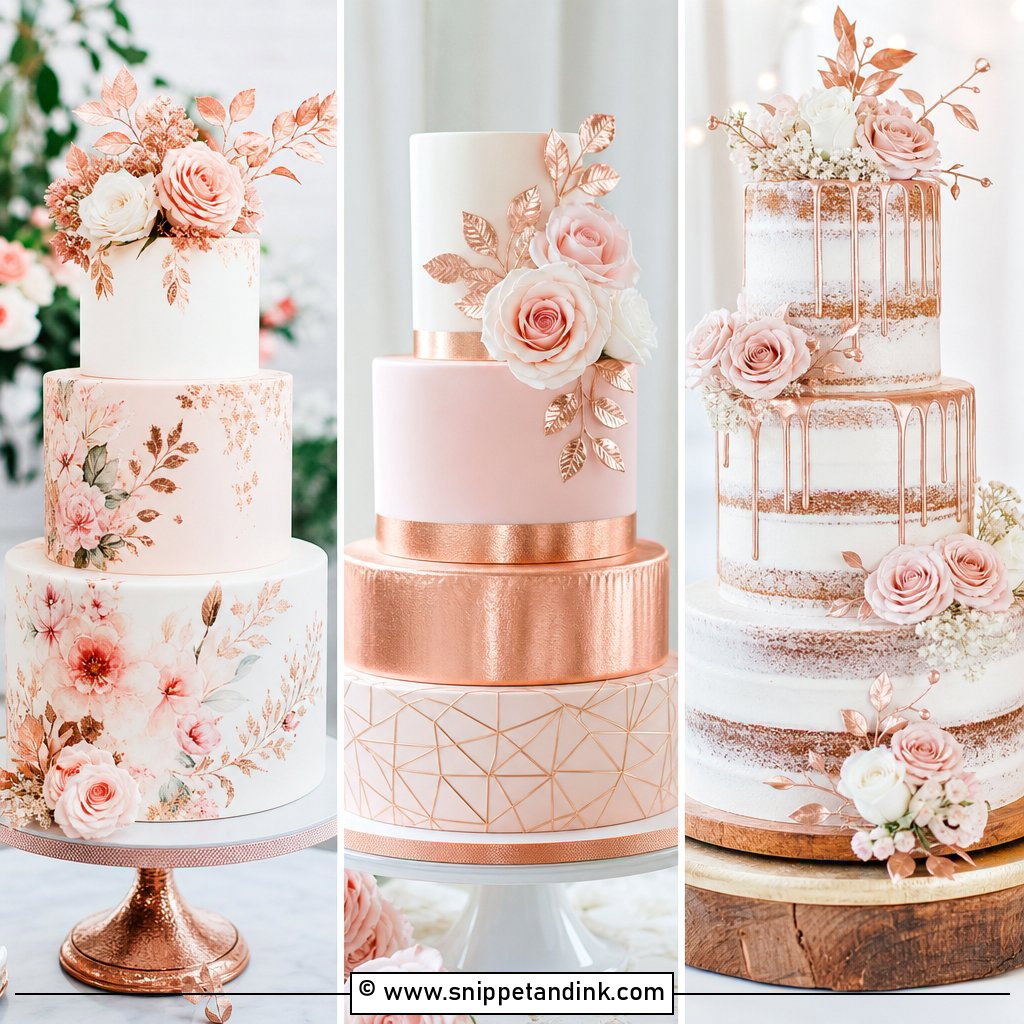
The drip is the quickest way to make a plain tiered cake feel current, and it’s also the one that depends most on temperature. Metallic drip is usually white chocolate ganache poured onto a chilled cake and painted once it sets. If the cake is too warm, the drips run straight to the board instead of stopping partway down. Keep the base ivory, white or blush buttercream, and decide early whether you want short, even drips or long uneven ones, because that’s controlled by the ganache, not by anything added afterward. Fresh roses, ranunculus or orchids soften the metal edge.
2. Rose Gold Marble Wedding Cake
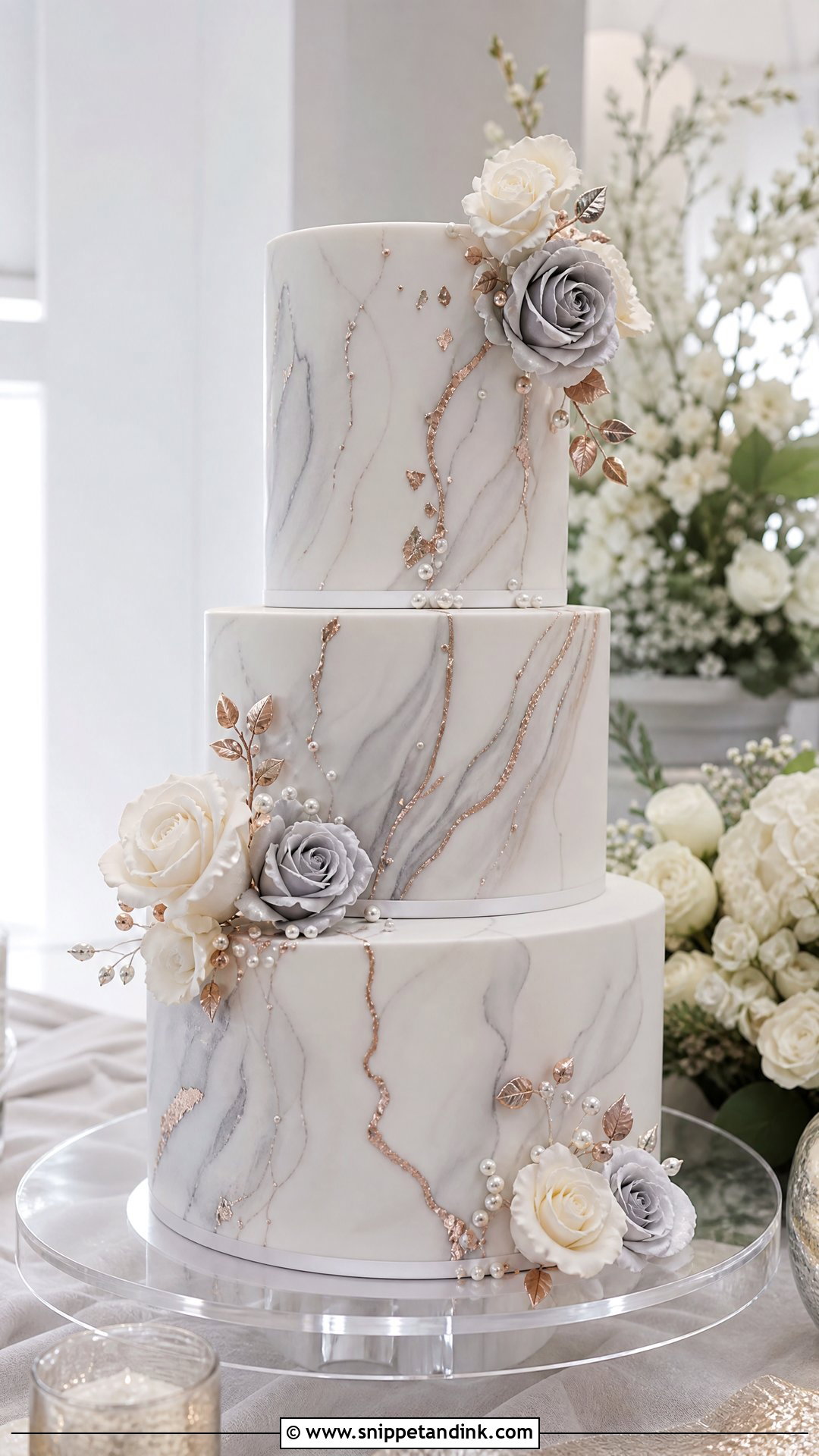
Marble fondant is made by twisting colored and white paste together before rolling, so no two tiers come out identical, and I tell couples that up front. White, grey, blush and ivory give a modern base; rose gold then goes on as painted veins or a gilded top edge. Keep the veining light for a garden or a ballroom with soft decor. Deeper grey lines and heavier metallic push it bolder but also colder, so I’d bring in a few sugar flowers, pearls or a sprig of greenery to warm it back up.
3. Rose Gold Buttercream Wedding Cake
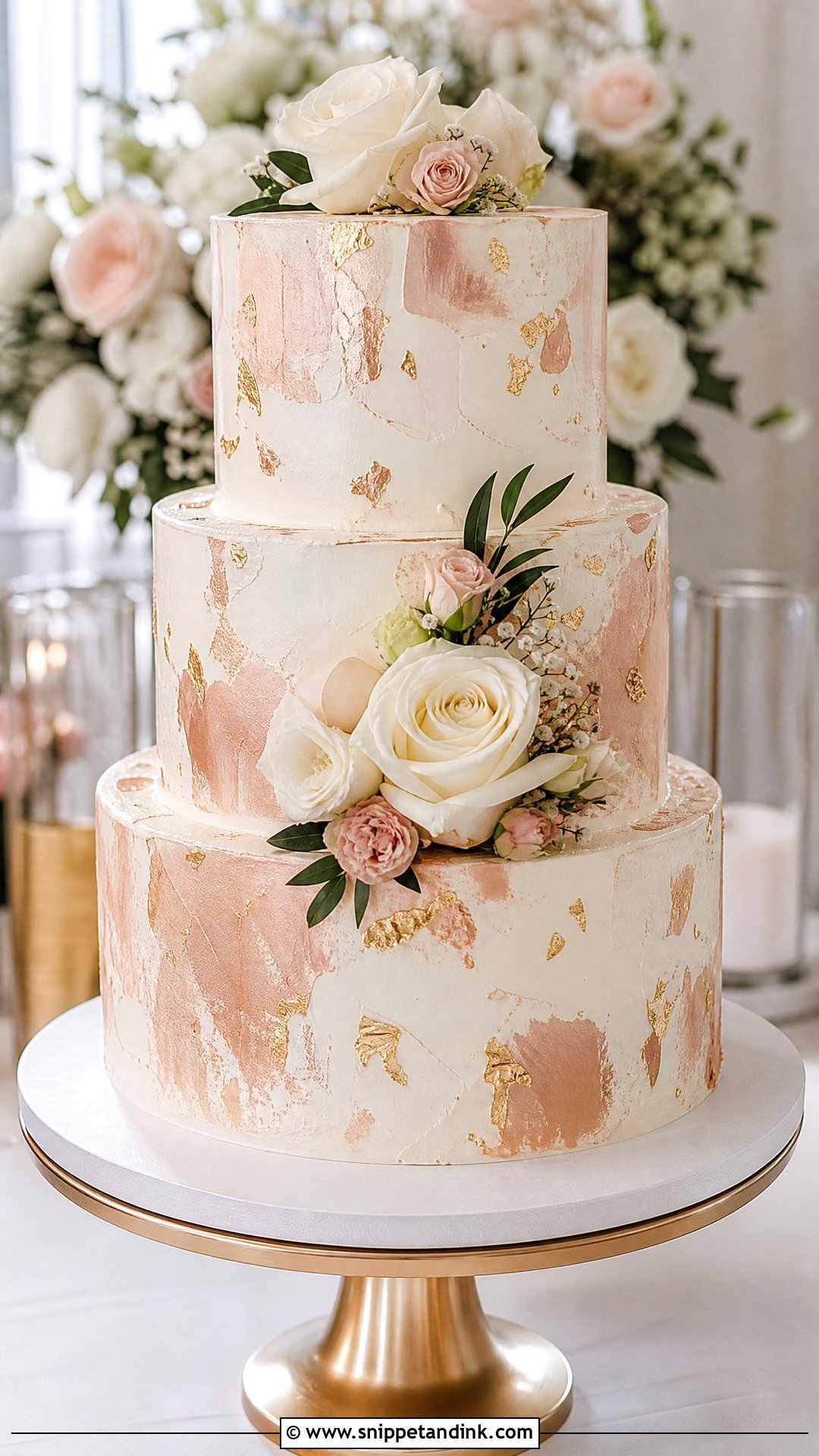
Buttercream is the best surface for flavor and the trickiest one for metallics. Lustre paint needs a crusting or well-chilled buttercream to grip; on a soft meringue buttercream it can streak, so I paint brushstrokes or press foil flakes on straight from the fridge. A smooth finish gives clean shine. Ridged or spatula-swiped frosting catches light unevenly, which actually flatters rose gold. Dusty pink roses or a few sugar pearls are all it needs beside that.
4. Rose Gold Fondant Wedding Cake
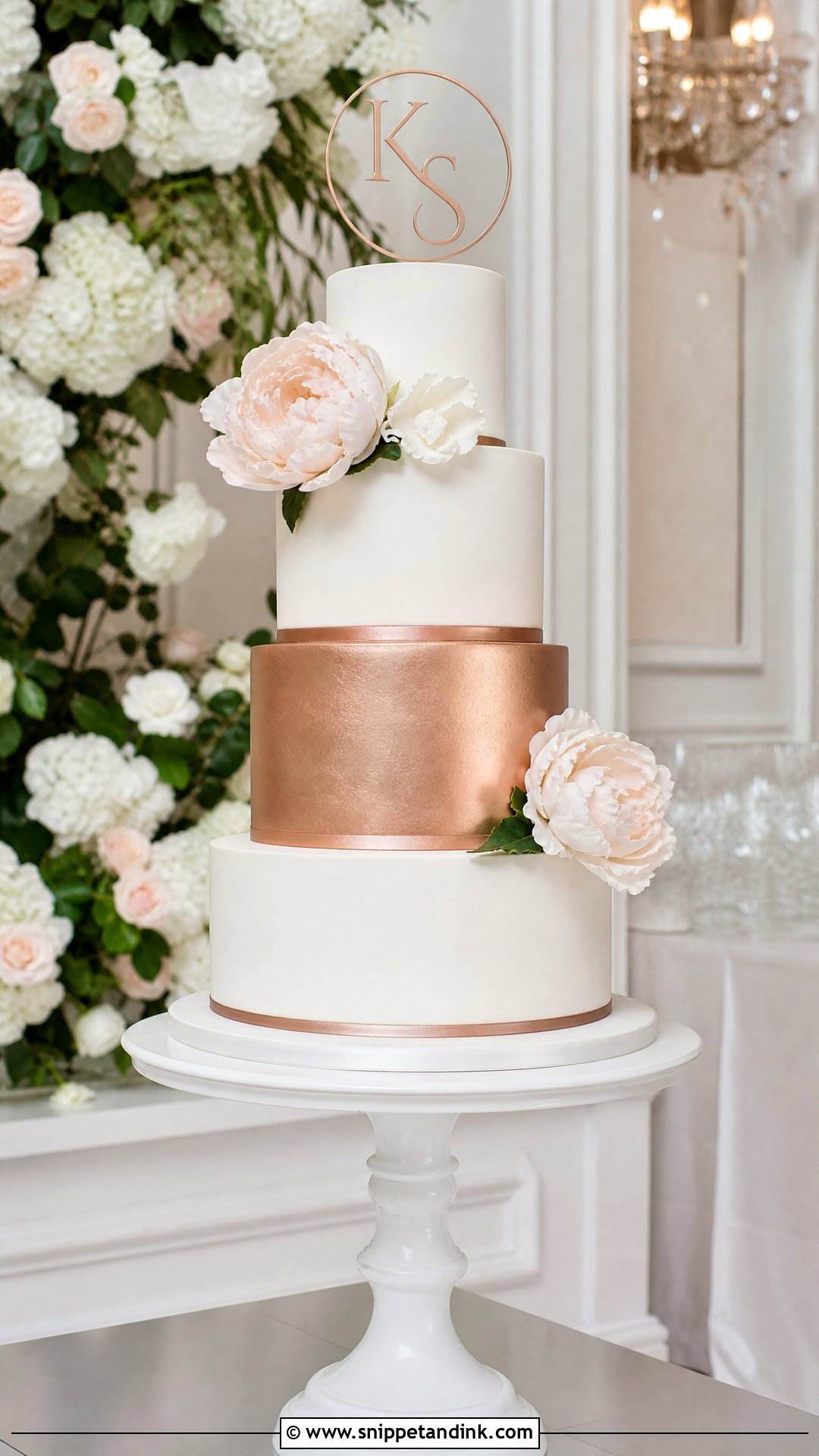
If you want knife-sharp edges, metallic bands or a pattern that stays crisp for hours, fondant is the honest answer. It’s also the surface that takes rose gold paint most evenly, so a fully wrapped rose gold tier is really a fondant job. Many couples settle on ivory tiers with one metallic band or painted florals, which suits hotel ballrooms and black-tie dinners. The trade-off is taste: plenty of guests peel fondant off, so I keep it thin and put the real effort into the sponge and filling. Sugar flowers keep it romantic; geometric pressed textures lean modern.
5. Rose Gold And White Wedding Cake
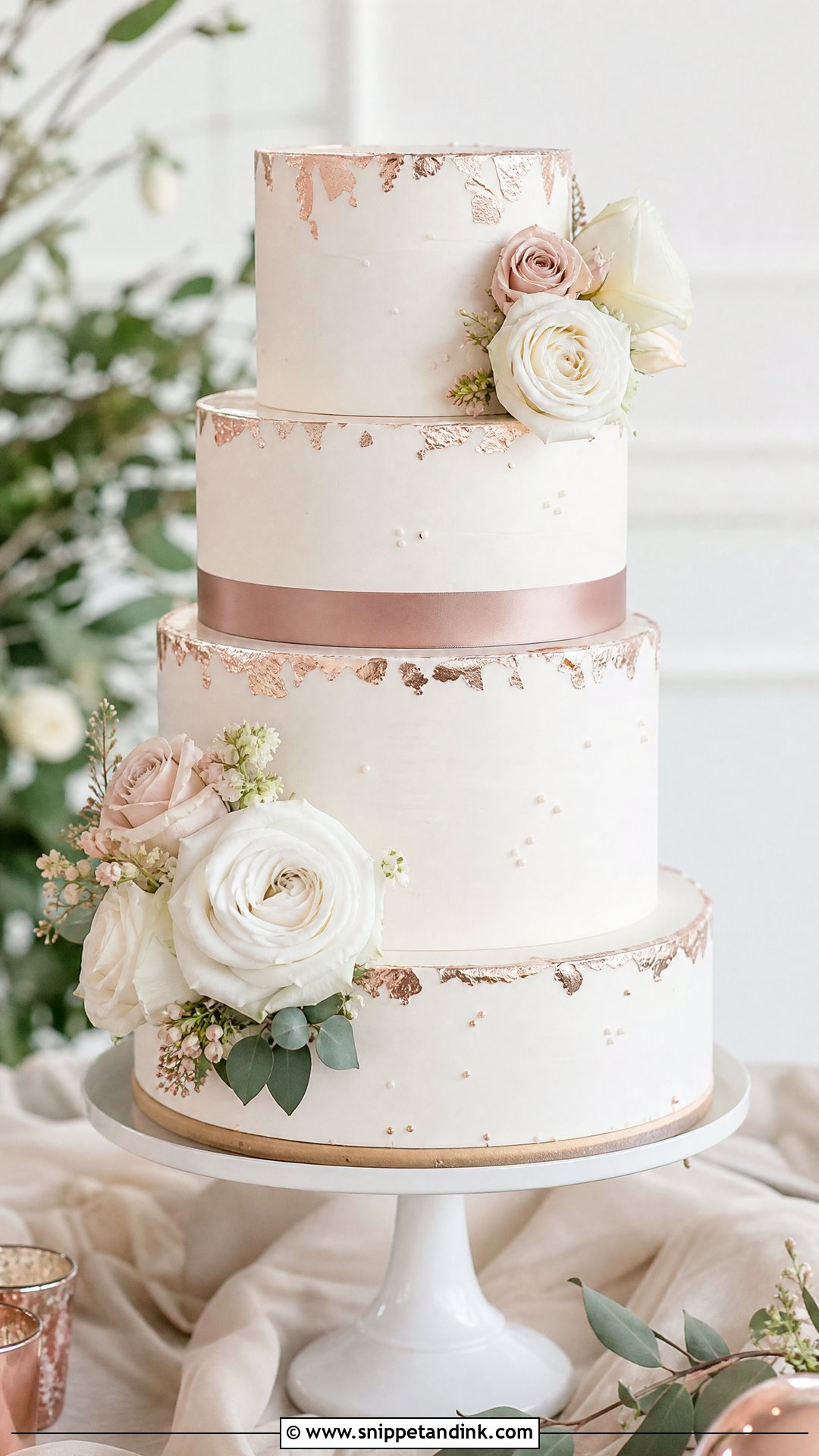
White does the bridal work here and rose gold supplies the warmth, which is why this pairing survives any season or venue. In practice that means white buttercream with leaf, white fondant with a metallic ribbon, or all-white tiers with a single rose gold accent tier. The contrast stays crisp in photos and leaves room for your flowers and topper. Blush, champagne, taupe and ivory palettes sit next to it without any fuss. Keep flowers sparse for a clean look, or let a cascade do the decorating.
6. Rose Gold And Blush Wedding Cake
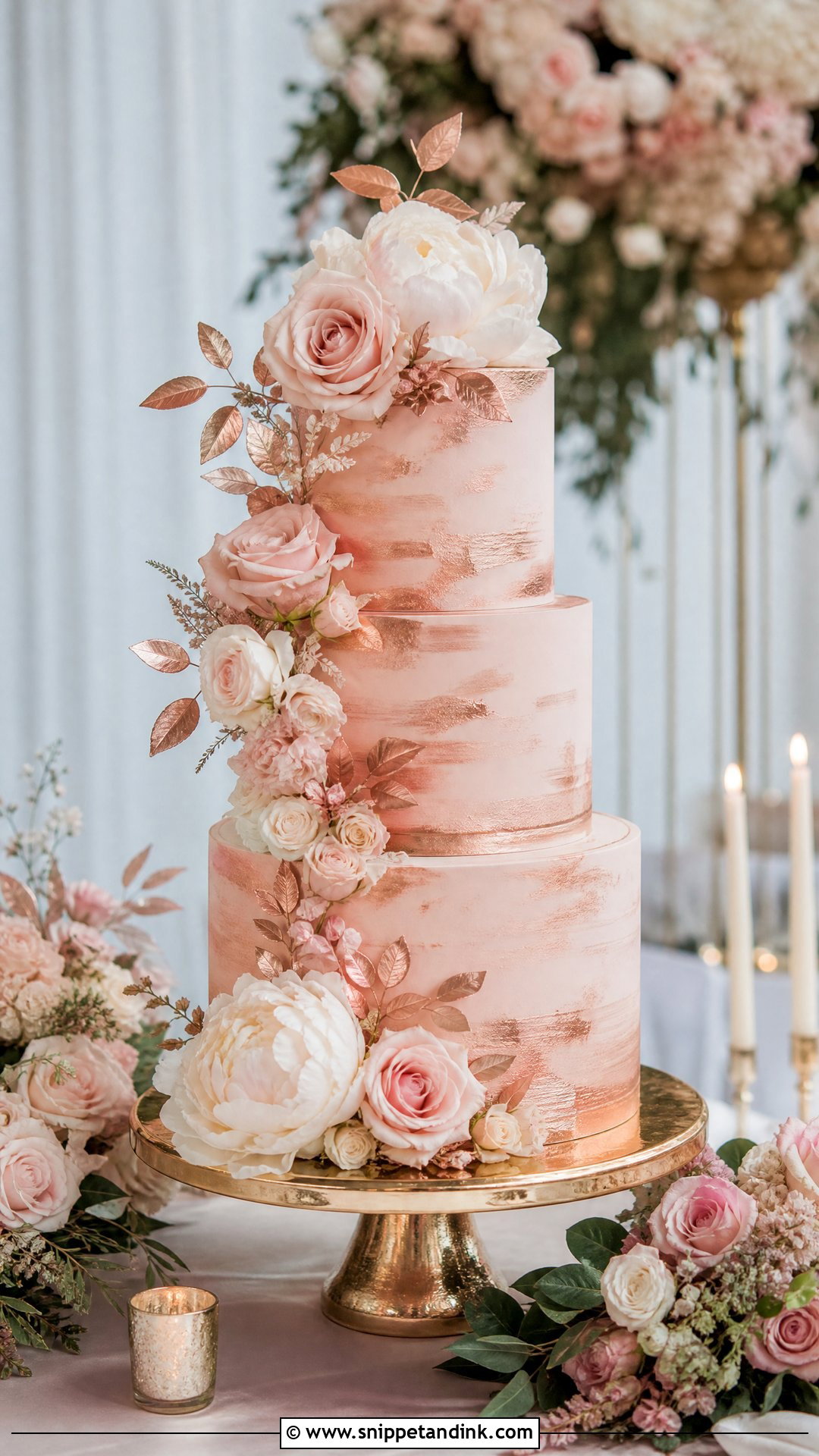
Blush and rose gold are close in tone, so this cake reads as one soft color with a sheen on top. Under warm reception lighting that sheen glows; in flat daylight it can almost disappear, which is why I usually suggest a slightly deeper blush than couples first picture. Foil-edged blush tiers with minimal flowers look modern, while peonies, garden roses and trailing greenery take it somewhere more romantic. It sits well beside bridesmaid dresses in dusty rose, mauve or champagne, and the metallic stops all that pink from tipping into sugary.
7. Rose Gold Geometric Wedding Cake
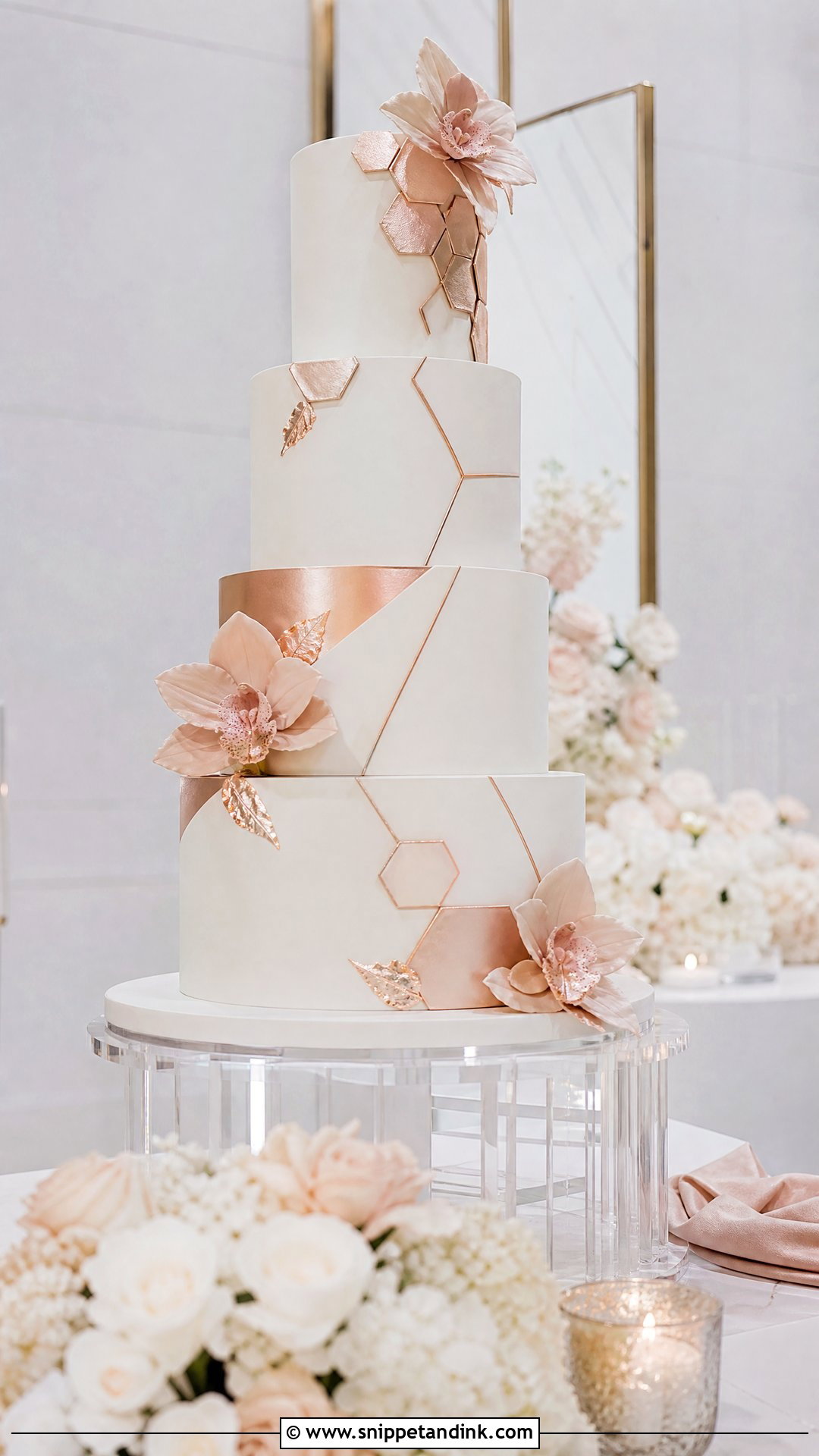
A rose gold geometric wedding cake leans on clean fondant panels, hexagons or faceted triangles, and those shapes only work when the tiers are dead level and every edge is sharp. Rose gold softens what could otherwise feel cold against white, ivory or grey. My usual advice is one geometric tier among plain ones, because a whole cake of facets gets busy quickly. Lofts, rooftops and contemporary rooms suit it, and an acrylic topper or clear stand carries the modern line through.
8. Rose Gold Floral Wedding Cake
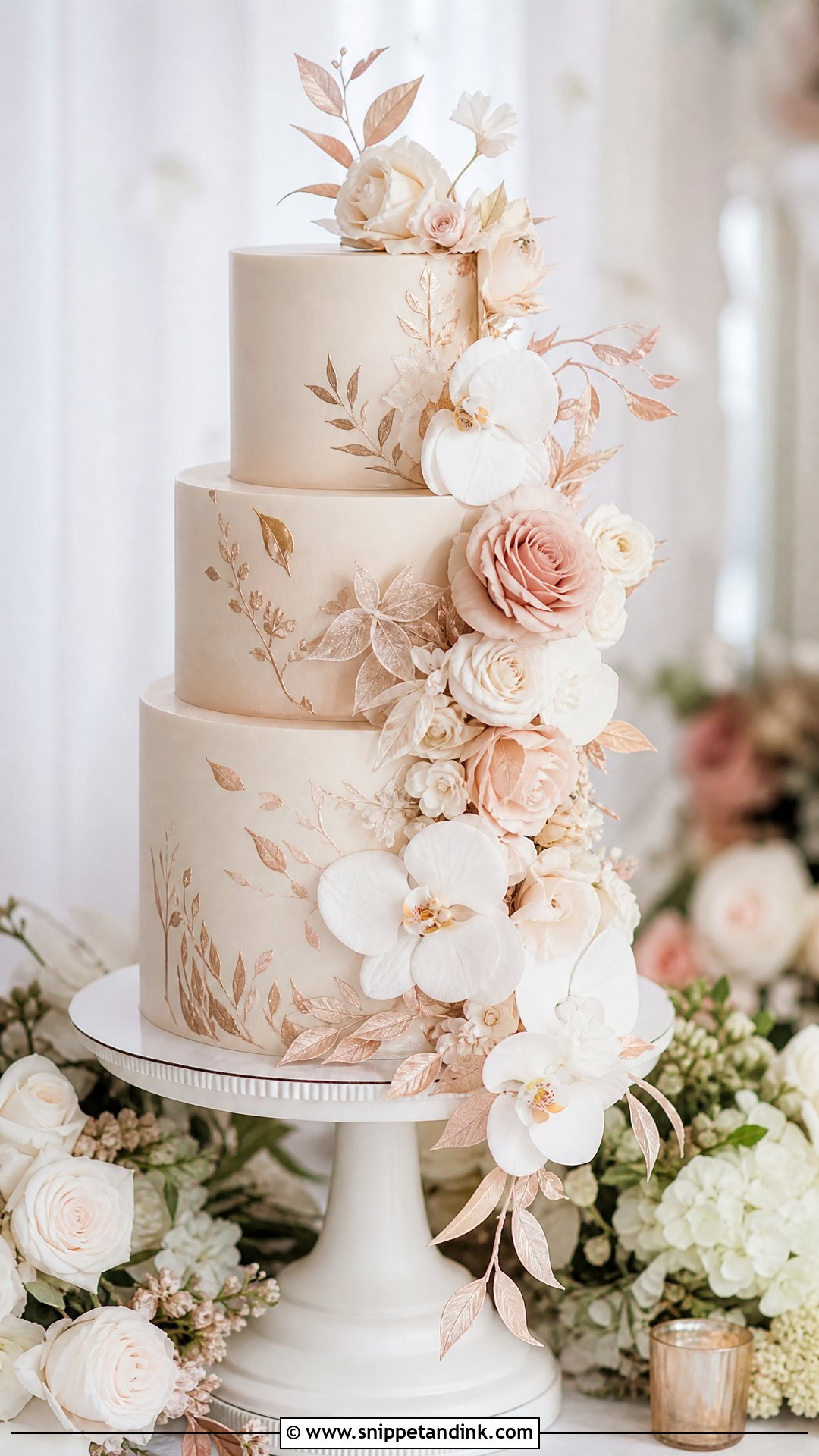
Cake flowers can be fresh, sugar or wafer paper, and the choice is mostly budget and timing. Sugar flowers take hours each and are made well ahead, so they need ordering early; fresh blooms cost less but must be pesticide-free and have their stems wrapped or sleeved before they go anywhere near the frosting. Rose gold then shows up as painted leaves, metallic flower centers, dusted petal edges or foil tucked behind a cluster. A few blooms per tier stays simple. A top-to-bottom cascade is the dramatic version, and blush roses, white orchids, ivory peonies and pale ranunculus all sit comfortably with the metal.
9. Rose Gold Ombré Wedding Cake
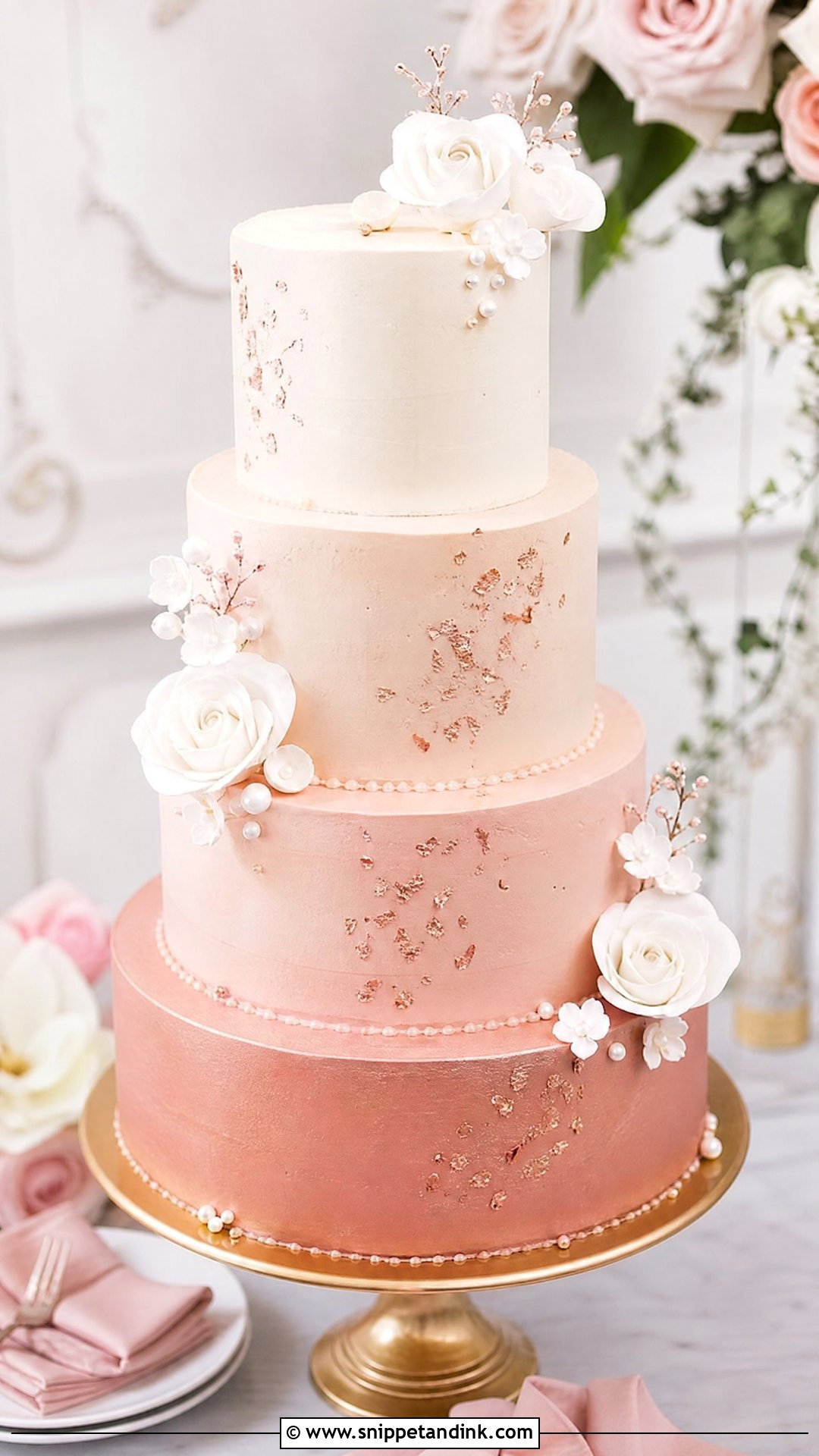
Ombré fades from ivory through blush to rose gold, or from champagne to a deeper metallic pink. The skill is in the steps between shades. If each tier is one flat color, it looks striped rather than faded, so I blend within each tier in buttercream or work several tones of fondant. Buttercream ombré reads soft and fondant reads sleek. Keep decoration to a small topper or a few pearls so the gradient stays the point, and ask to see the top and bottom colors side by side before anything is built: if the gap between them is too small, the fade disappears from across the room.
10. Rose Gold Naked Wedding Cake
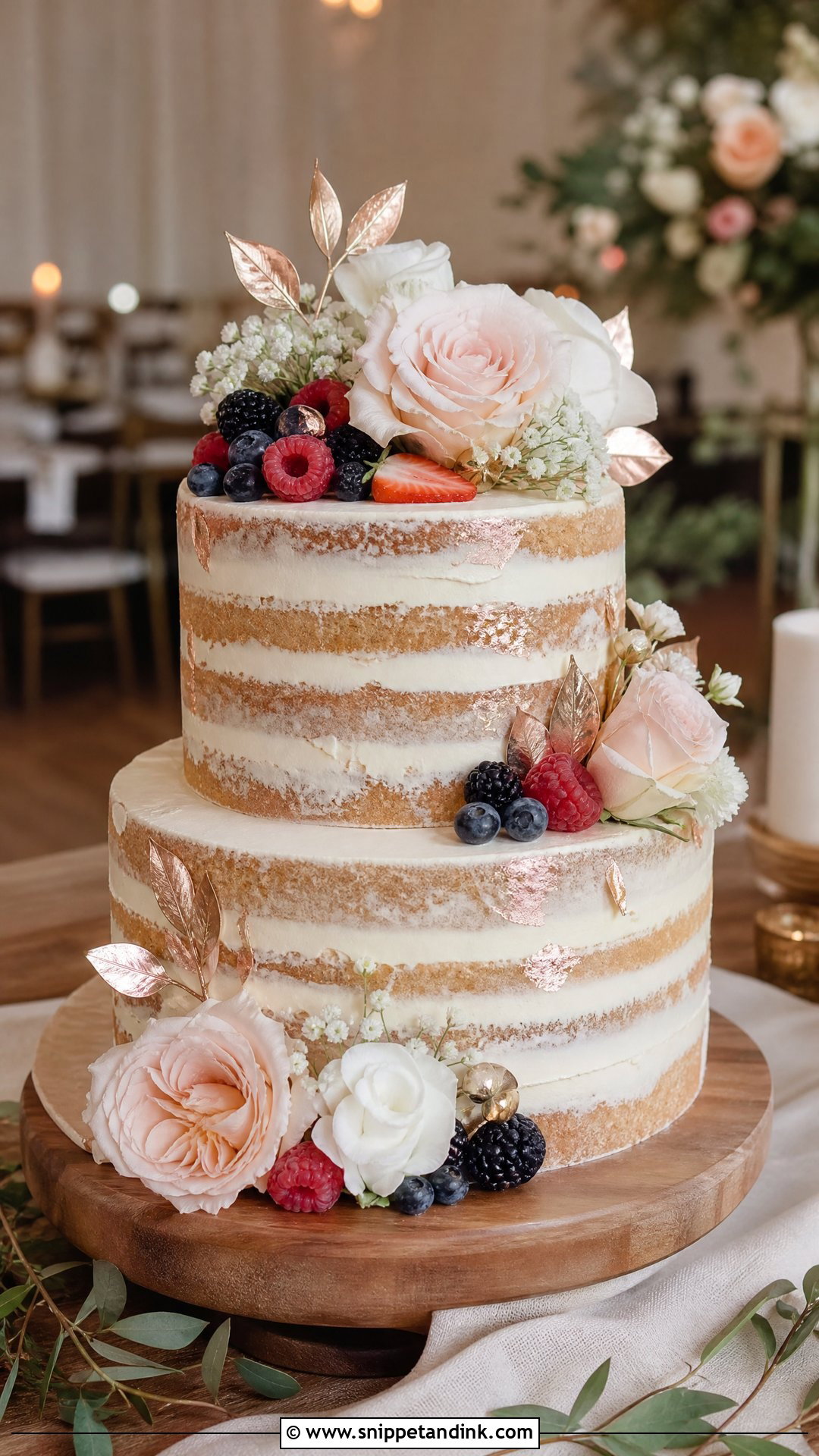
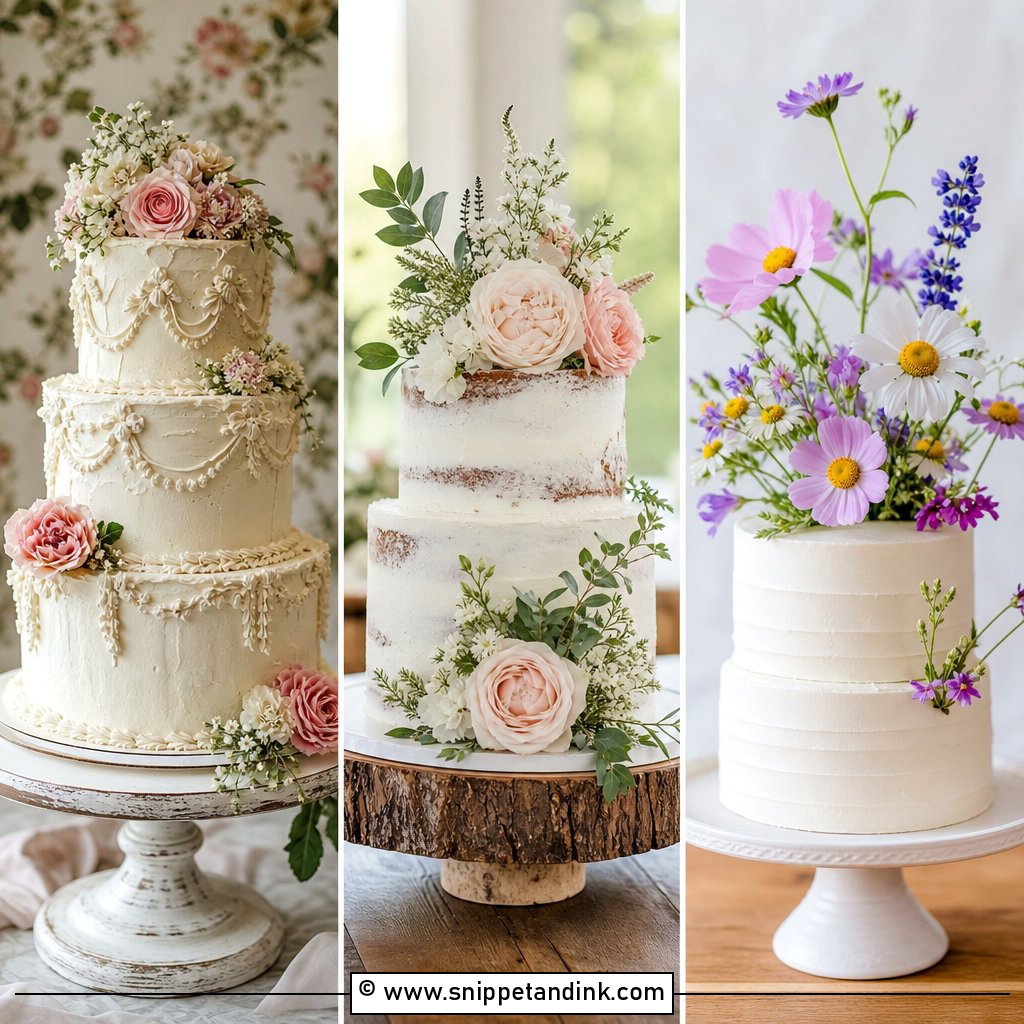
A naked cake shows its sponge, so the crumb becomes part of your palette. Vanilla, almond or a pale champagne sponge looks soft and pretty; a dark chocolate one changes the whole mood. A few metallic leaves, foil pieces or a rose gold topper give enough glamour against that rustic face, finished with fresh berries and pale flowers. The catch is drying. Exposed sponge goes stale faster than frosted cake, so it should be assembled as close to the reception as your baker can manage and kept out of direct sun at barn and garden venues.
11. Rose Gold Semi Naked Wedding Cake
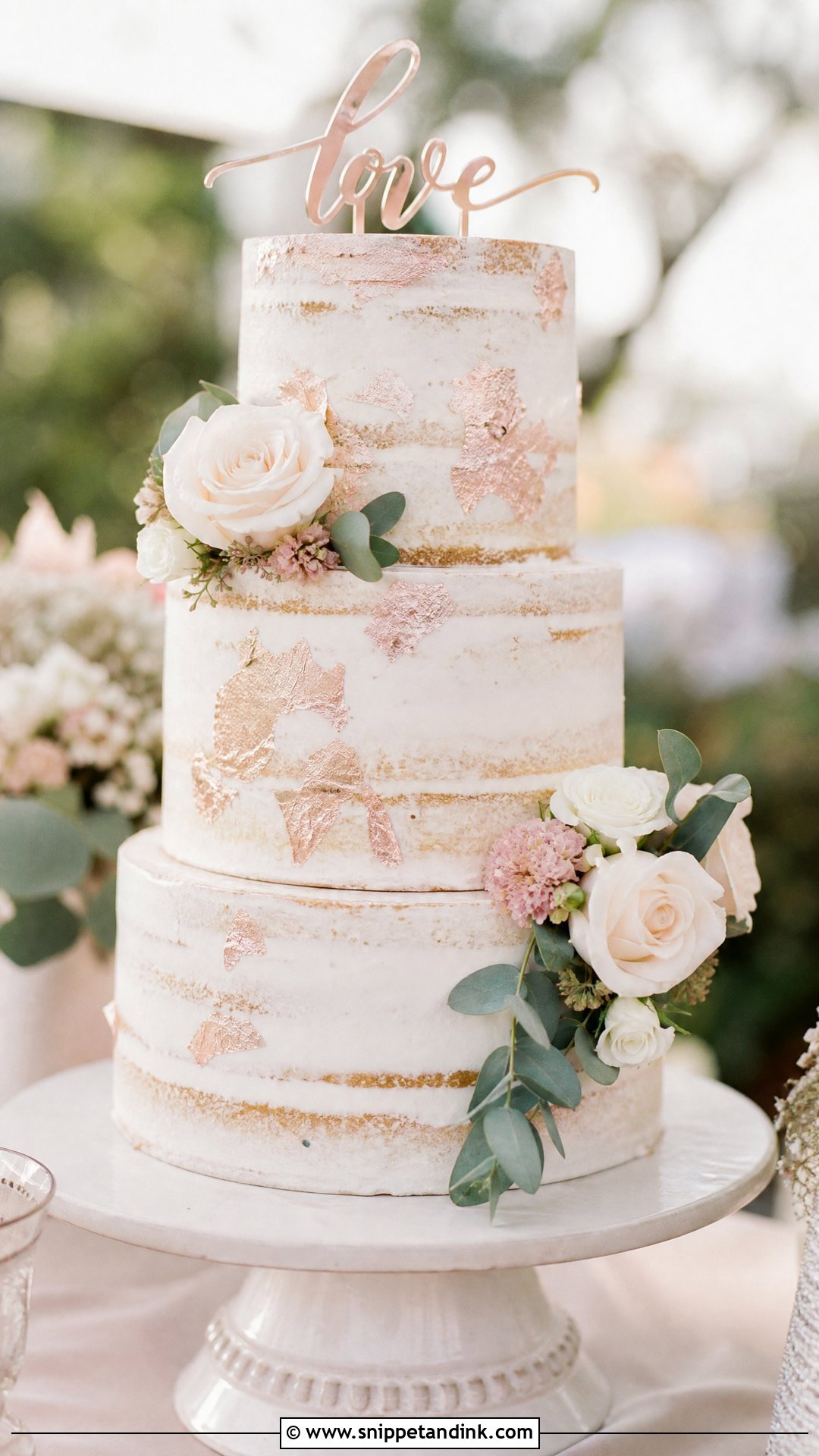
Semi naked means a thin, scraped coat of buttercream: enough to seal the sponge and look finished while the layers still show through. That seal is the practical advantage over a fully naked cake, since it holds moisture far better through a long outdoor afternoon. Rose gold comes in as foil flakes, a painted top edge, a drip or a topper. Blush roses and loose greenery pressed against the scraped sides look natural, and the cake stays relaxed without looking unfinished.
12. Rose Gold Pearl Wedding Cake
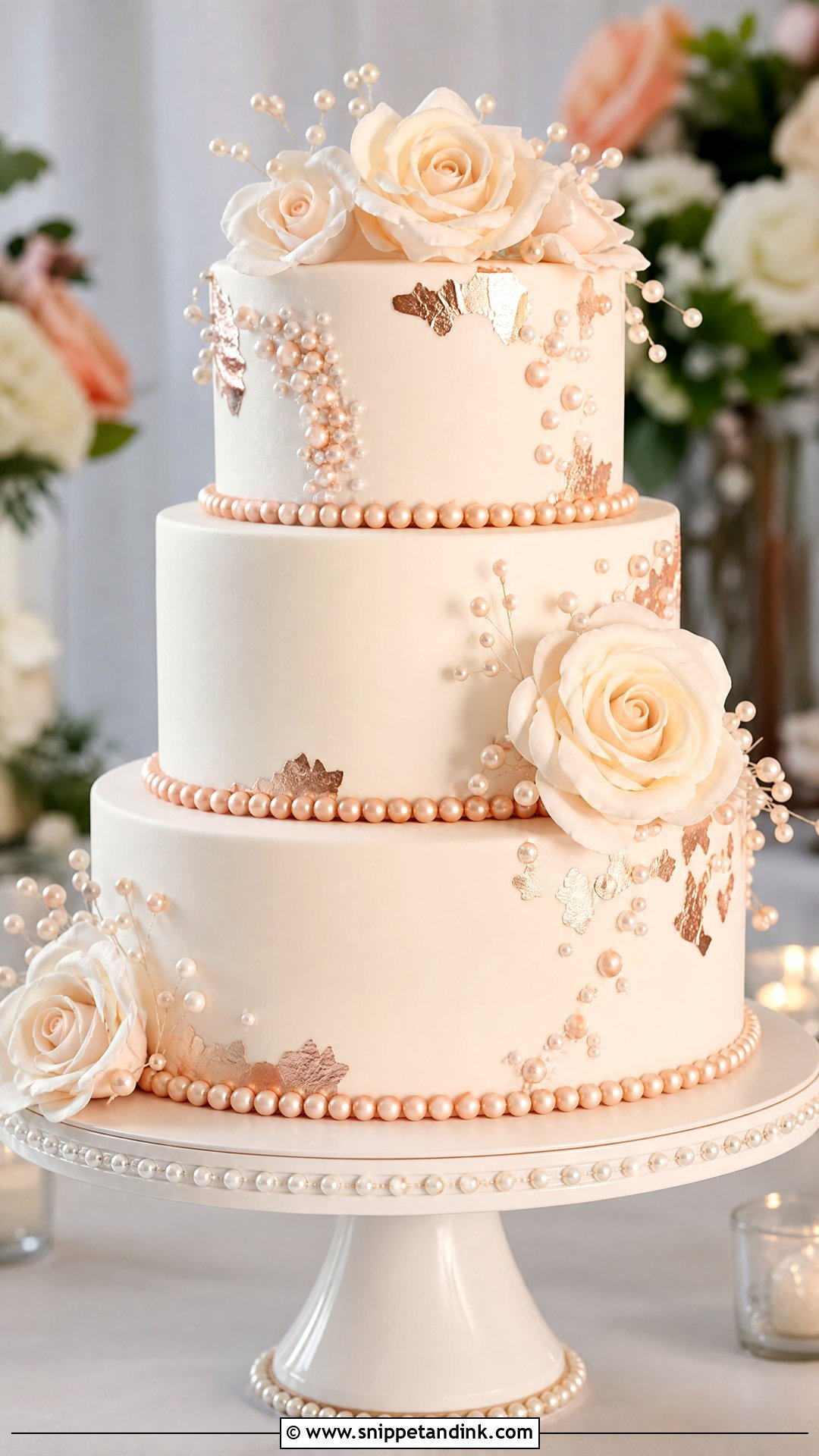
Pearls give a cake a vintage, slightly formal feel, and rose gold warms them so they don’t look clinical. They’re usually sugar pearls or rolled fondant balls dusted with lustre, placed as a border around each tier or grouped in small clusters with metallic leaf. I keep the base ivory or white so the pearls read clearly from a distance, which makes this a natural fit for formal receptions and classic venues. Add either a few sugar flowers or a monogram topper, rarely both, or the pearls get lost.
13. Rose Gold Ruffle Wedding Cake
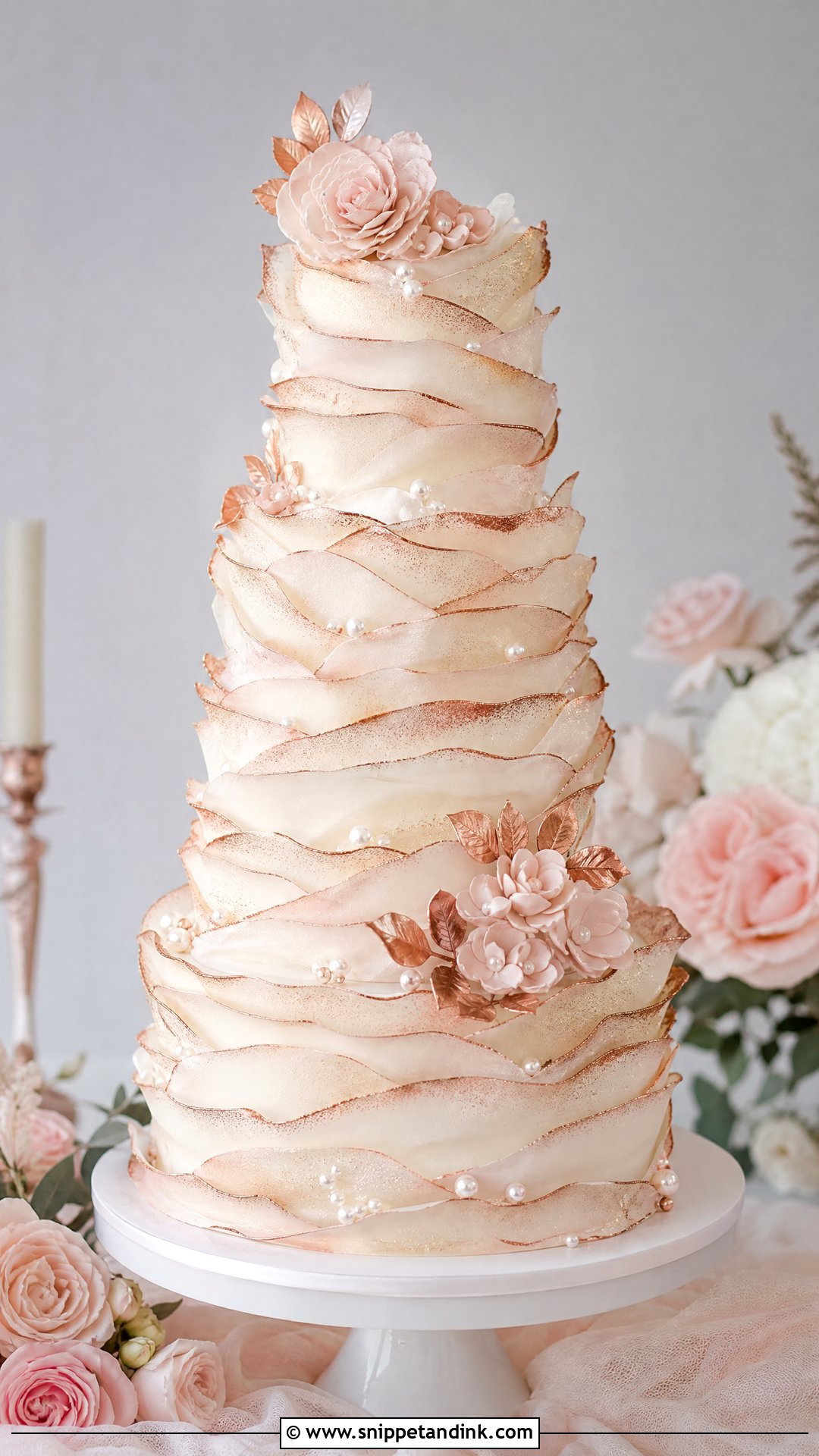
A rose gold ruffle wedding cake gets its movement from the ruffle material, and each one behaves differently. Fondant ruffles hold their shape and look polished. Wafer paper is feather-light and almost translucent at the edges, but it wilts in humidity, so I’d avoid it for a summer marquee. Buttercream ruffles are the softest and need a cool room. I like rose gold brushed only along the ruffle edges so the texture does the talking, with simple flowers and nothing more. If your dress has layered tulle or a tiered skirt, this one echoes it nicely.
14. Rose Gold Sequin Wedding Cake
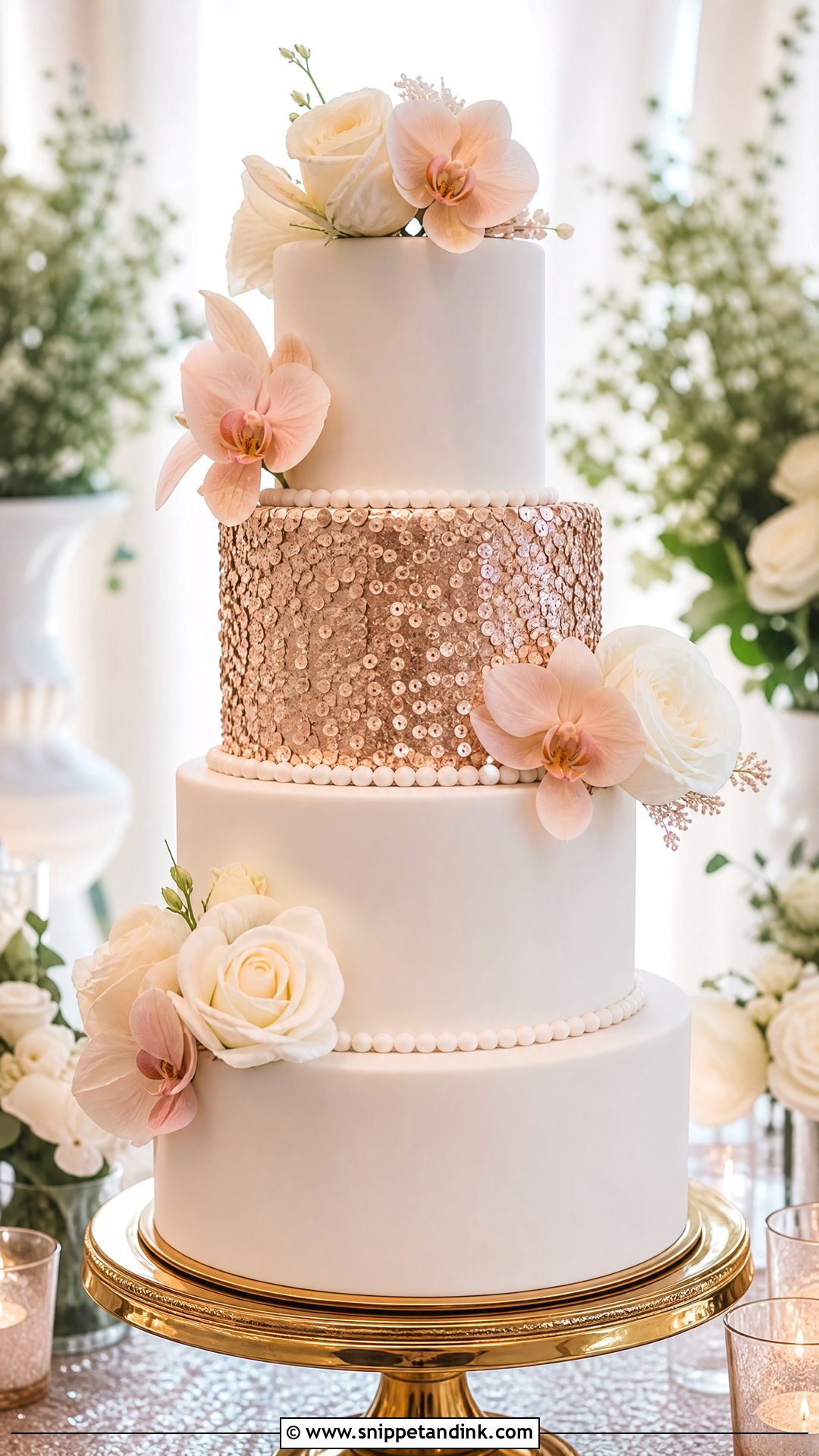
Sparkle is the whole point here. The sequin effect is built from hundreds of tiny edible discs pressed on one at a time, which is why a single sequin tier carries more labor than it appears to. One rose gold sequin tier between smooth white tiers stays balanced; a fully sequinned cake is pure glamour and can look like a disco ball under dance-floor lights. Because it throws light from every angle, keep everything else plain. White flowers, a few blush roses or a clear acrylic topper are enough.
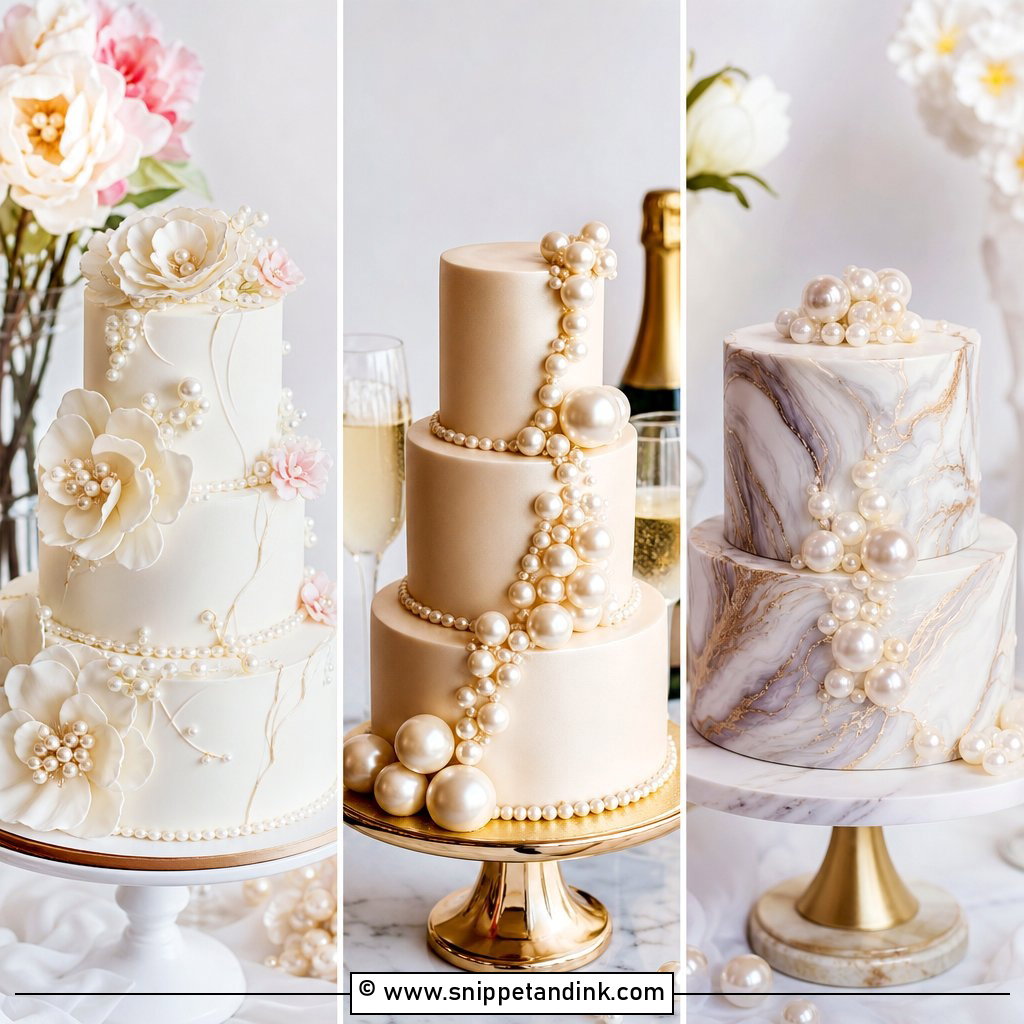


15. Rose Gold Leaf Wedding Cake
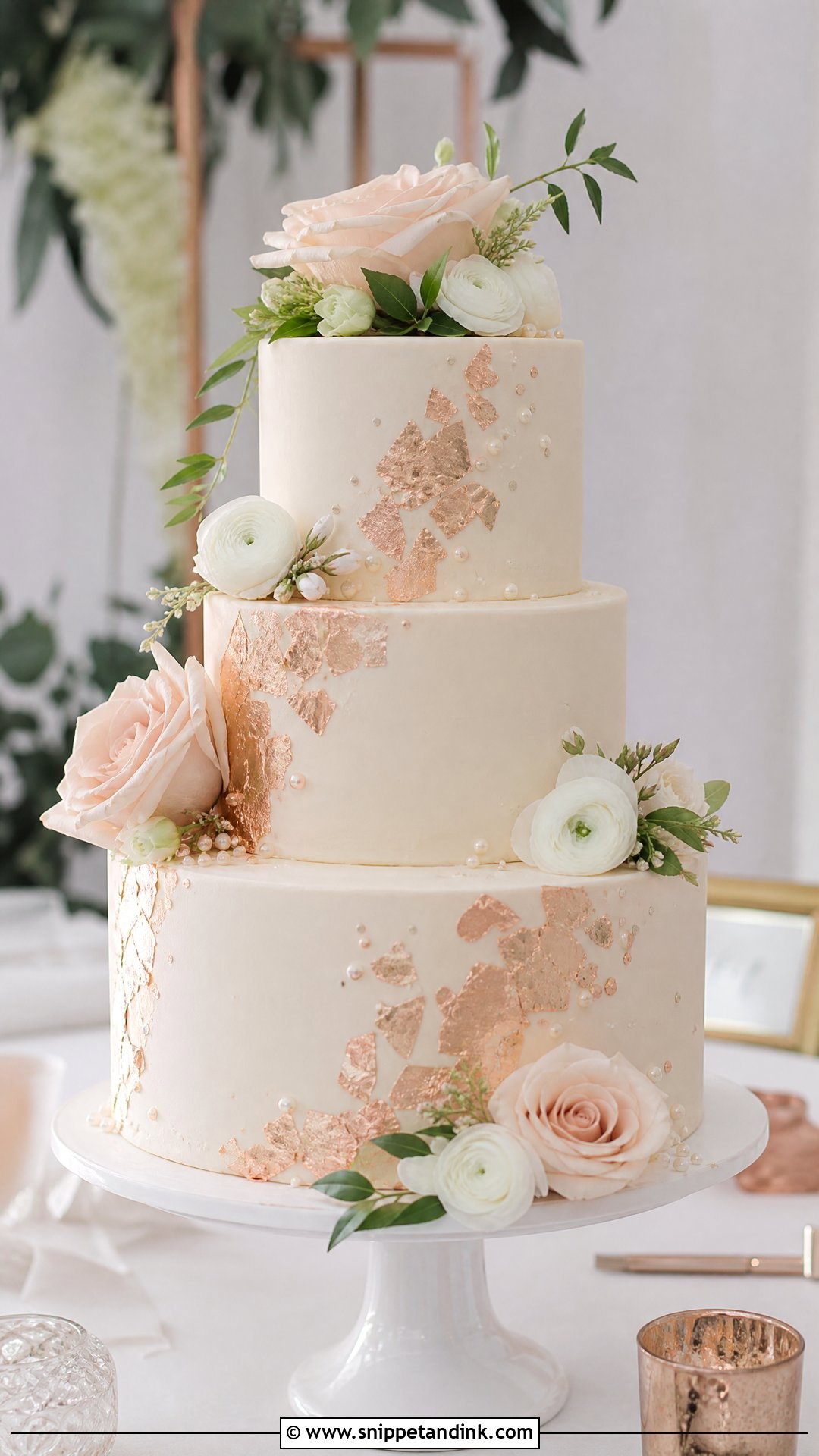
Metallic leaf is my favorite way to add rose gold without committing to a fully metallic cake. It tears into irregular pieces, so the finish looks organic, and it sits on buttercream, fondant, marble and semi naked surfaces alike. A rose gold leaf wedding cake can carry a light scattering or a heavy gilded band. Leaf is placed with a dry brush or tweezers, because it clings to warm fingers and tears, and it grabs the moment it touches a tacky surface, so the layout has to be decided before the first piece goes on. Ivory frosting and a few dried neutral stems keep it warm.
16. Rose Gold Lace Wedding Cake
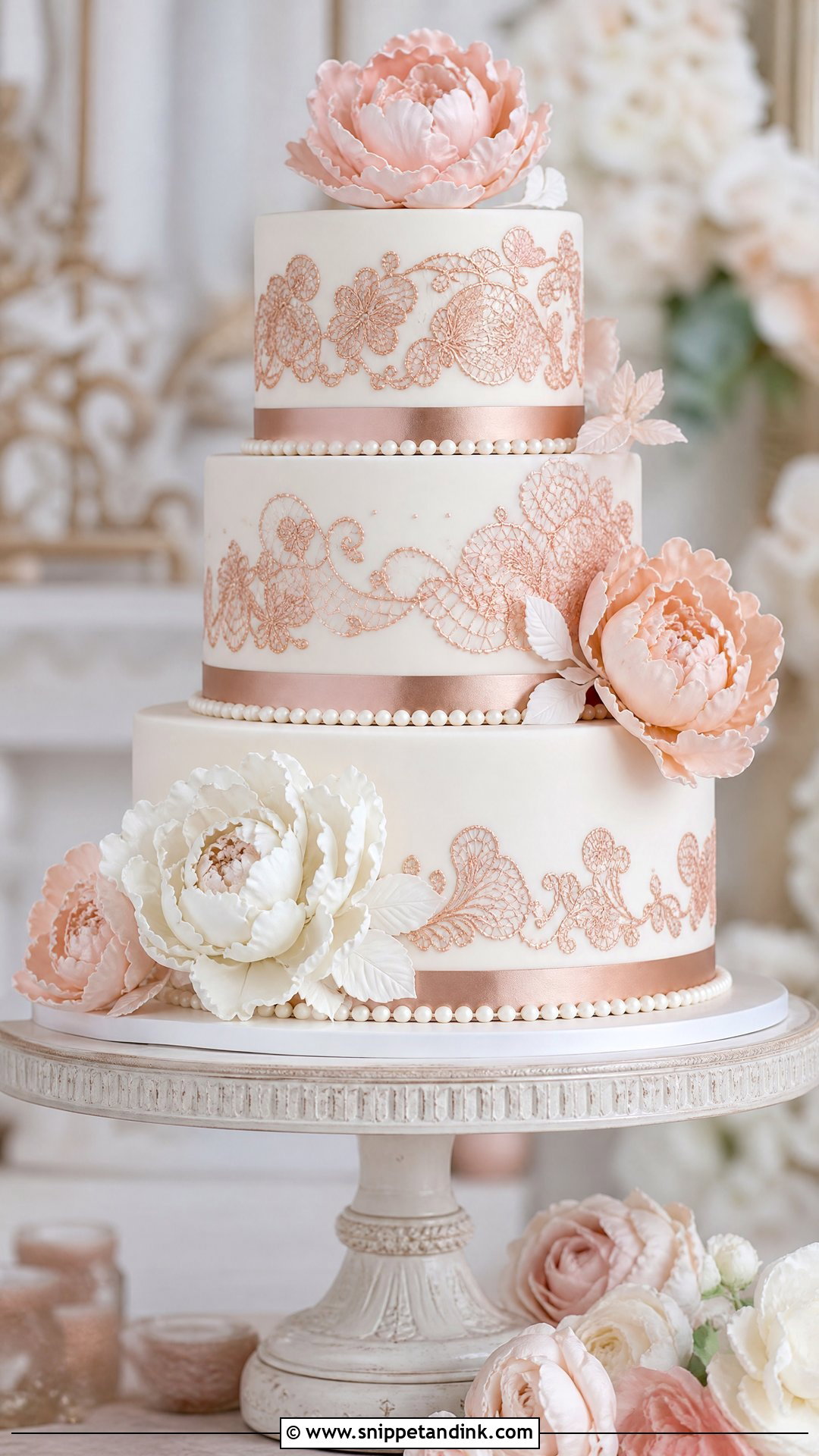
Lace can be piped by hand, stenciled in royal icing or set in an edible lace mat, and each gives a different depth: piped lace is raised, stenciled lace sits flat, and mat lace is fine and flexible enough to wrap a tier. Painted rose gold over the pattern warms it and makes it read less traditional than plain white. If your dress has lace, bring a close photo of the bodice so your baker can borrow the motif. I’d keep lace to one or two tiers, with smooth ivory fondant around it and a small floral cluster to finish.
17. Rose Gold Watercolor Wedding Cake
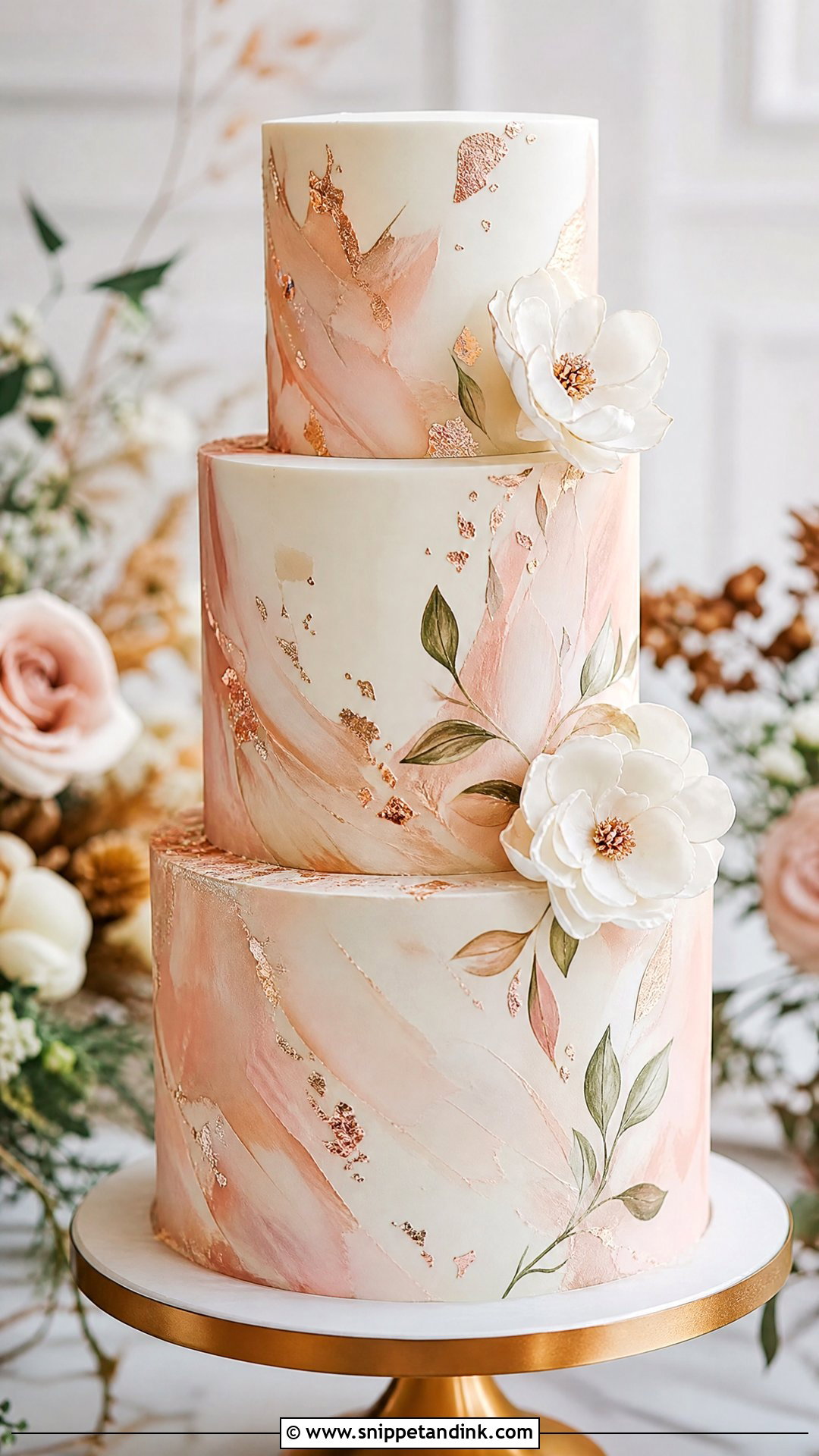
A rose gold watercolor wedding cake is painted with thinned food color on fondant, or built from soft buttercream washes, then finished with metallic brushstrokes or foil flecks. The blending is what matters. Hard lines between blush, champagne and ivory look patchy, while overlapping washes look like a cloudy sunset. Fresh flowers can pick up the painted tones, and a simple topper keeps the surface readable. Of all twenty, this is the most personal, since no two cake painters work quite alike.
18. Rose Gold Tall Wedding Cake
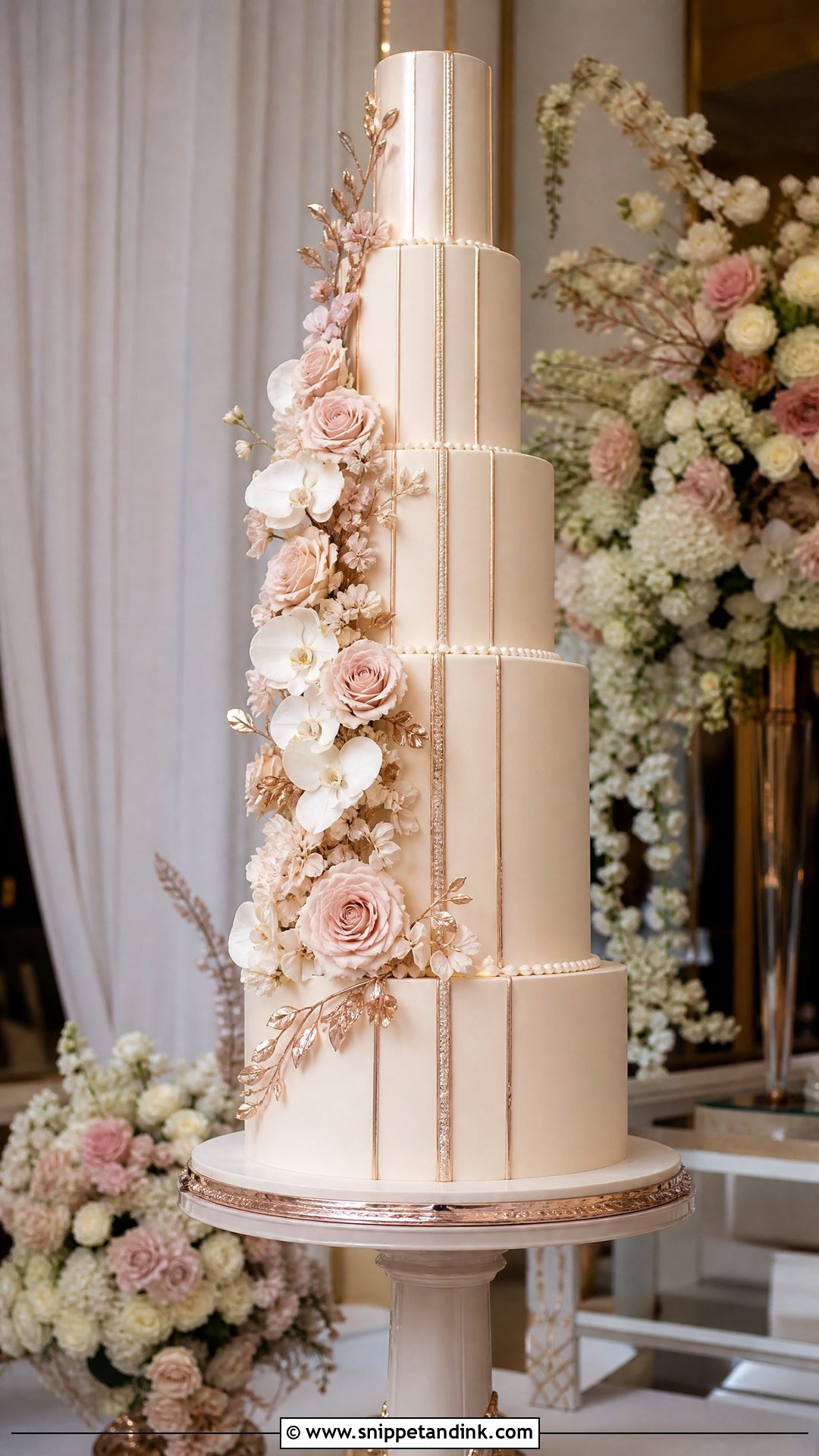
Extra-height tiers give drama without stacking more layers, and in a large room that matters: a short cake vanishes behind tall centerpieces. A double-barrel tier is roughly twice the usual height and needs its own internal board and dowels halfway up, so mention it early if that’s what you’re picturing. Keep metallic to selected areas, such as one tall tier, the top edges or a vertical floral cascade. Against white linen it becomes the focal point for your cake-cutting photos.
19. Rose Gold Square Wedding Cake
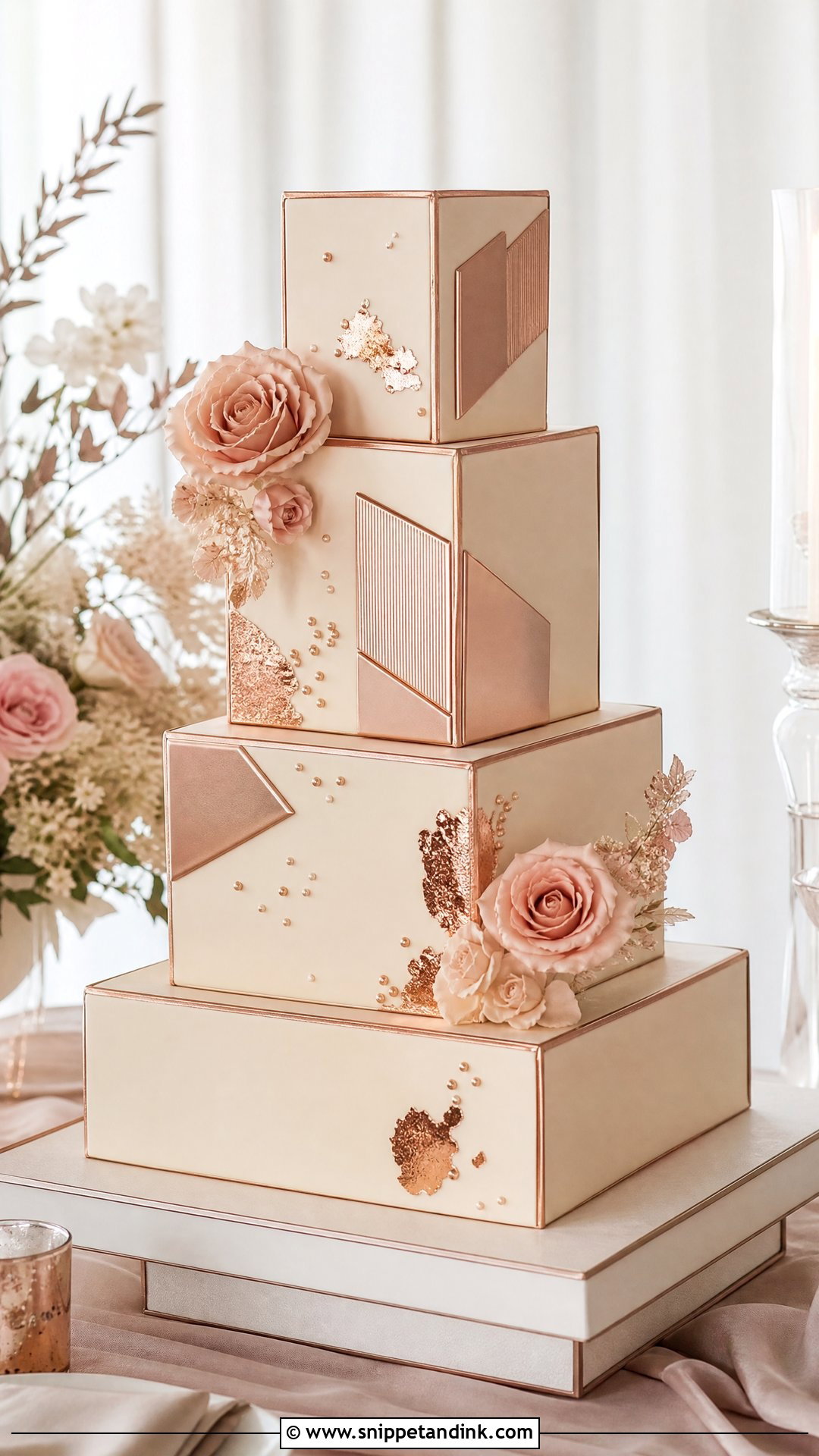
Square tiers give the cleanest lines in this list, and they’re harder to cover than round ones because fondant has to turn four corners without tearing or bunching. That flat surface is a gift for painted edges, geometric panels, thin metallic bands or a monogram. Modern rooms with glass details and neutral flowers suit it best. If it starts to look severe, a blush base or a few soft blooms on one corner fixes that. Worth knowing: a square tier serves more portions than a round one of the same width, which can sometimes let you drop a tier.



20. Rose Gold Cupcake Wedding Cake
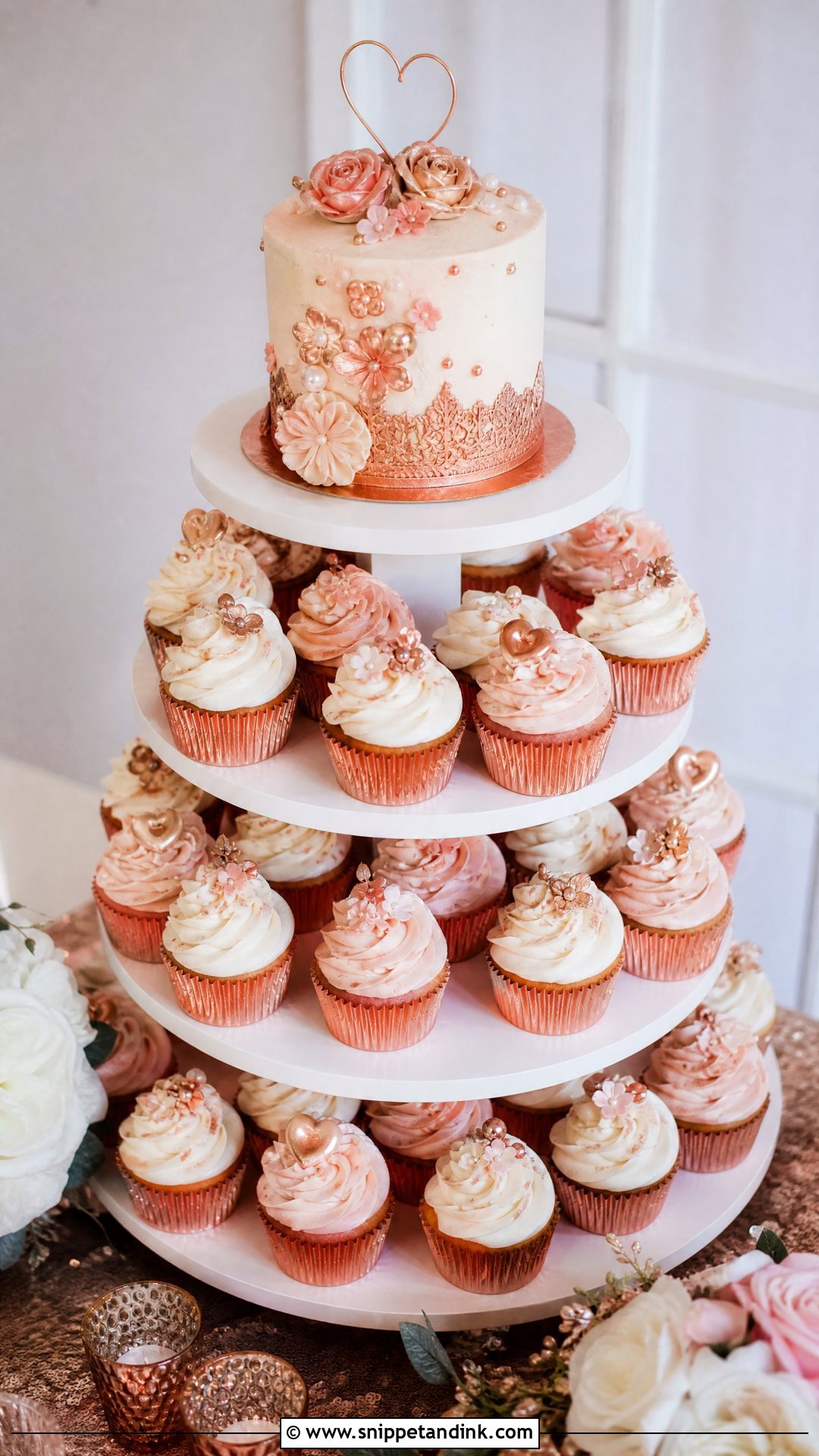
A rose gold cupcake wedding cake puts a small cutting cake on top and tiers of cupcakes below, so you keep the cutting moment without a large cake to slice and plate. Rose gold foil wrappers, metallic toppers and dusted buttercream keep the stand consistent while flavors change underneath: vanilla, chocolate, almond, lemon, strawberry. Guests help themselves, which suits casual receptions and dessert tables. Ask for a few spares, because a cupcake that tips off the stand can’t be patched.
Why Rose Gold Turns Copper, Pink or Muddy Depending on the Room
Metallic finishes don’t have a fixed color. They reflect whatever light hits them, and rose gold is more sensitive to that than gold or silver. Under candles and warm bulbs it leans copper. In daylight it looks pinker. Under cool white LEDs it can go flat and slightly grey, which is the version couples are disappointed by in their photos.
So I paint a sample on a scrap of fondant and ask couples to look at it in the light their reception will actually have, then photograph it with and without flash. Ten minutes of that saves a lot of surprise.
Placing the table and handling the move
- Keep the cake table away from a bright window behind it. Backlit, a metallic cake turns into a dark silhouette in every photo.
- A spotlight or pin light angled from the front makes painted rose gold glow; overhead light alone flattens it.
- A cold cake carried into a warm, humid room will bead with condensation, and that moisture can streak lustre on fondant. Let it sit and dry rather than wiping it.
- Painted buttercream marks the moment it’s touched, so the venue team should move it by the board only, and nobody should adjust flowers on it after setup.
- In summer heat, ask where the cake will wait between delivery and cutting. A shaded corner matters more than any decoration choice.
None of this is complicated, but it’s the part that decides whether the shine you paid for survives until the cake is cut.
How Much of the Cake Should Actually Shine?
Every cake here comes down to one decision: how much of the surface turns metallic. A drip, foil edge, topper or painted accent gives a hint of shine. A sequin tier, metallic fondant panel or fully gilded tier makes the color the main event. Bring a swatch of your flowers or linens to the tasting, tell your baker what the reception lighting will be, and settle that ratio before you start on flavors. Get it right and the cake earns its place in the photos.
You'll Like These Ideas:











Leave a Reply