
Flowers are the decoration I’m asked for more than any other, and for good reason: they tie the cake to the bouquet, the centerpieces and the season in a way piping alone never quite does. What changes from cake to cake is the kind of flower. Fresh roses and orchids, sugar blooms made weeks ahead, petals pressed flat into buttercream and florals painted straight onto the icing all behave differently on the day, and each suits a different venue and budget. The twenty cakes below run from classic white tiers to a matte black evening design, and I’ve added what I’d tell you at a consultation about each one.
Real Blooms on Icing: What I Check Before a Stem Goes Near the Cake
Most flowers sold for weddings are grown to sit in a vase, not on food. Many are treated with sprays during growing, and some are toxic outright. So before I agree a fresh-flower design, I go through the stem list with the florist.
- Keep off the cake entirely: hydrangea, lily of the valley, foxglove, sweet pea, daffodil and oleander. If you love the look, I make them in sugar.
- Generally fine with a barrier: roses, ranunculus, orchids, lisianthus, spray roses and most greenery that isn’t eucalyptus.
- Edible when grown for eating: unsprayed roses, violas, pansies, calendula, chamomile, lavender and borage. These are the ones I press into buttercream.
- Barriers every time: stems wrapped in floral tape and pushed into a drinking straw or flower pick, never straight into the sponge, with small discs of parchment under heads that sit on the icing.
I also ask for blooms that have been conditioned in water overnight. A thirsty flower wilts on the cake within an hour, and there’s no way to give it a drink once it’s placed.
1. Fresh Flower Wedding Cake
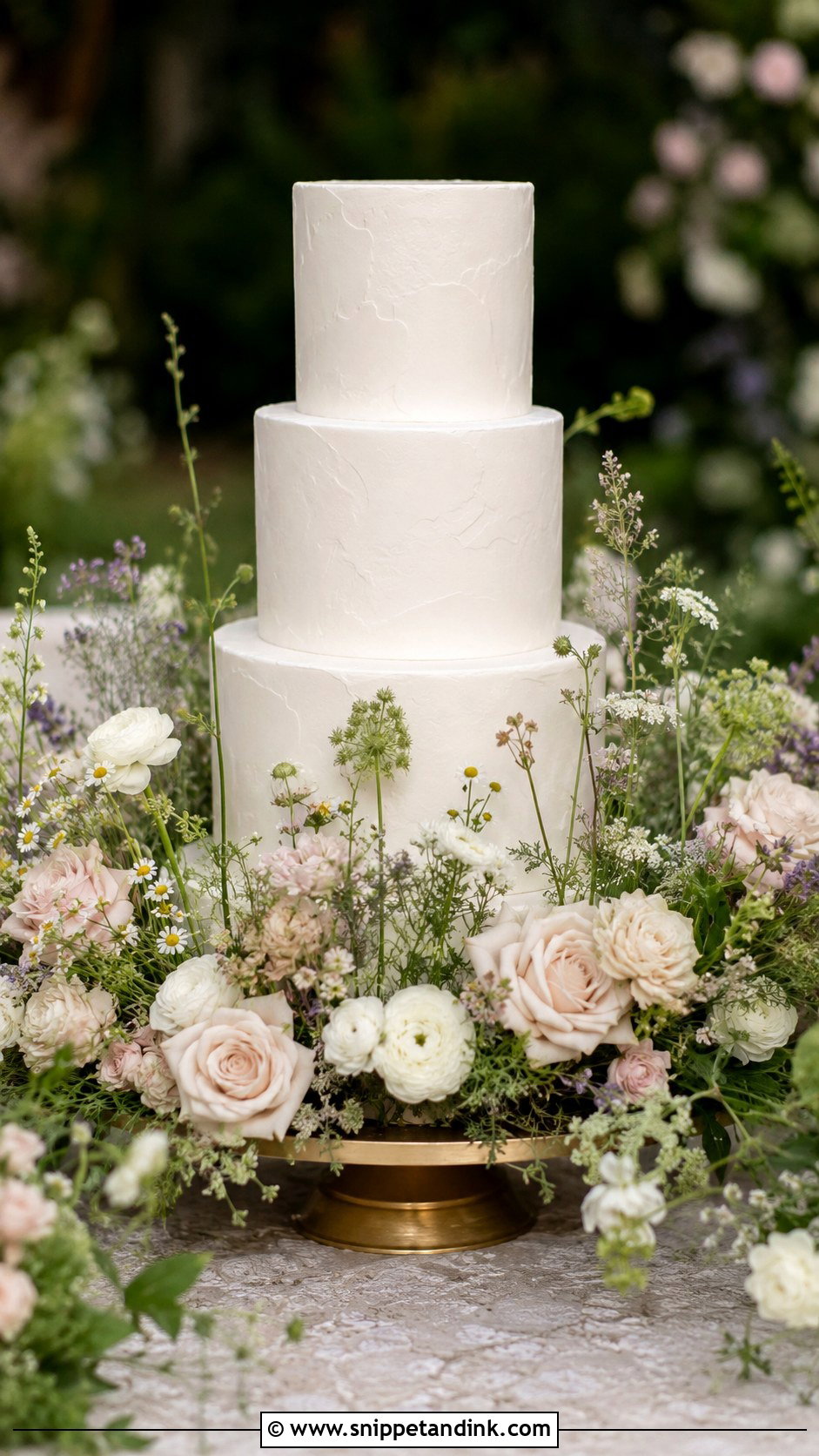
Repeating the bouquet flowers on the cake is the simplest way to make the dessert table look planned rather than added on. Roses, ranunculus, peonies and orchids all sit well in small clusters against smooth white buttercream, with a few sprigs of greenery to break up the edges. The part couples forget is logistics: someone has to decide whether the florist hands over stems or places them, and every stem needs a barrier before it goes near the cake. Settle that early and real flowers are one of the easiest finishes to get right.
2. Buttercream Floral Wedding Cake
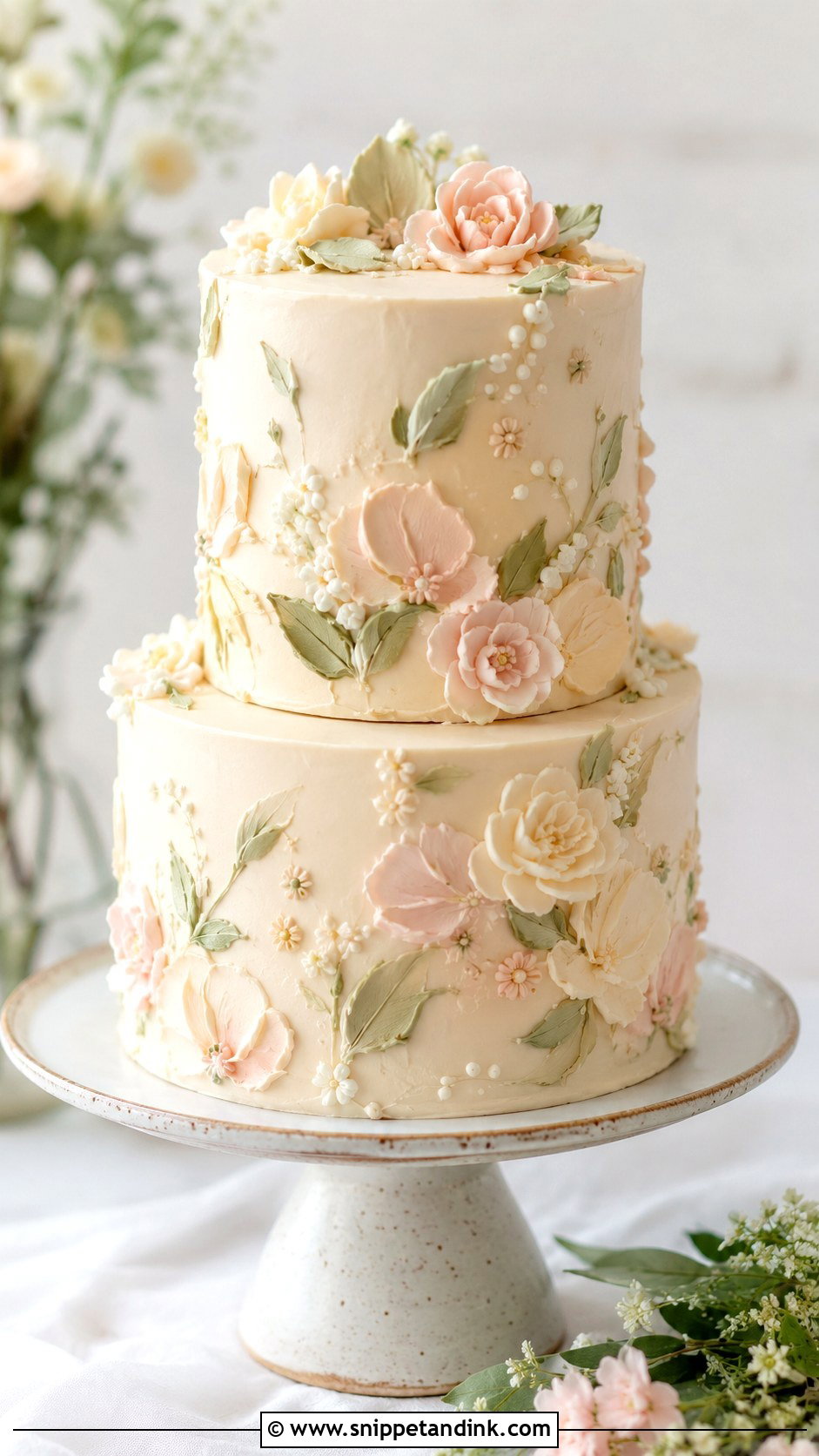
Buttercream flowers are the answer when you want every part of the decoration to be edible. I pipe them with petal tips or shape them with a palette knife, and the slightly imperfect edges are what make them read as handmade. Blush, ivory, sage and champagne hold their color well in buttercream. The trade-off is heat. A buttercream rose starts to slump in a warm marquee long before a sugar one would, so I’d keep this style for air-conditioned rooms or cooler months.
3. Pressed Flower Wedding Cake
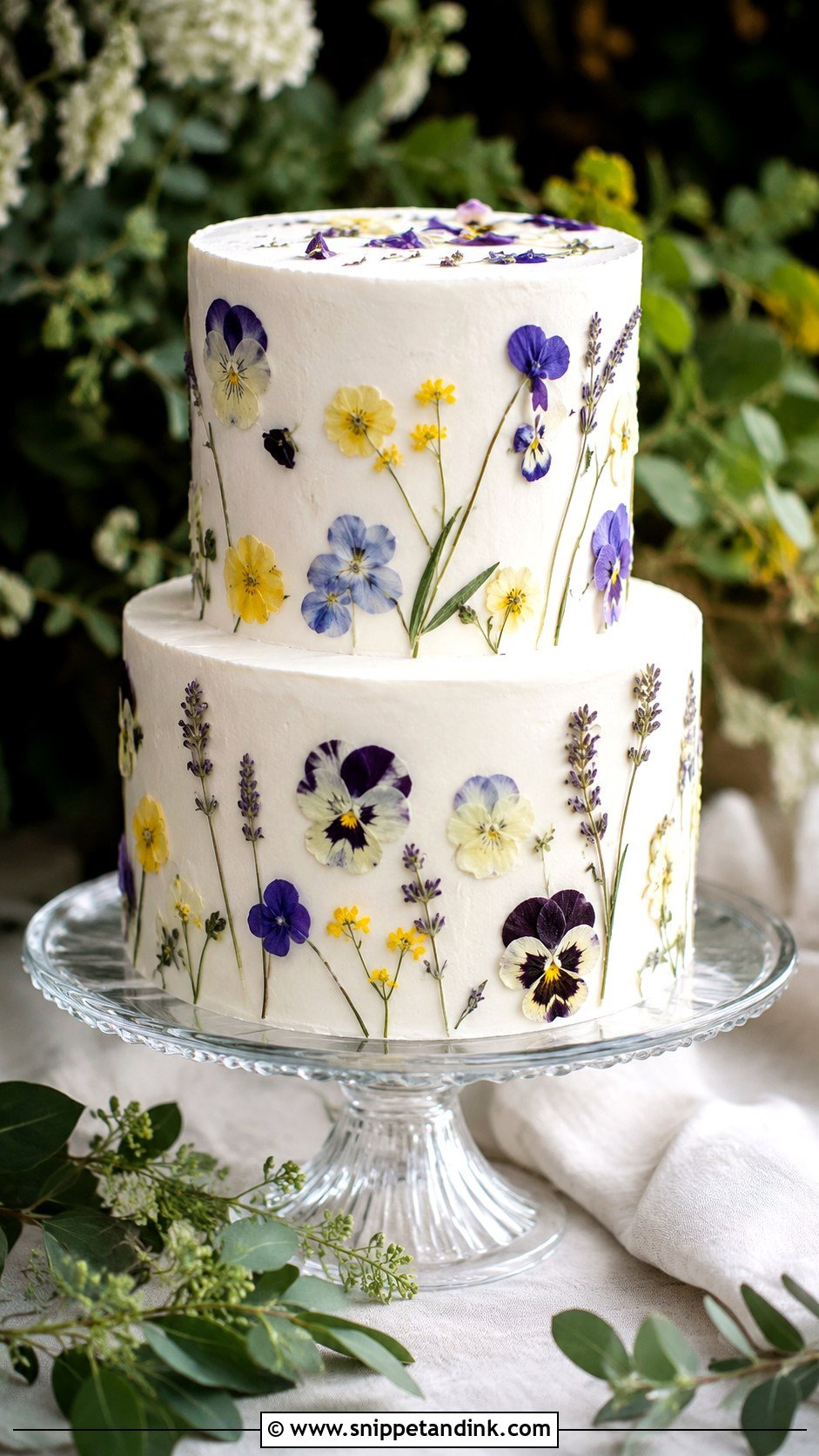
Pressed petals give a flat, botanical-print effect that suits garden weddings and smaller tables, where guests actually get close enough to see the detail. They need to be edible flowers, grown without sprays and dried properly, and they’re pressed into a firm, chilled coat of white or ivory buttercream so they lie flat. Yellow violas, lavender, pink cornflowers and blue borage all keep their color reasonably well. I space them out deliberately. Crowd the petals and the cake looks like a scrapbook page instead of a garden.
4. Sugar Flower Wedding Cake
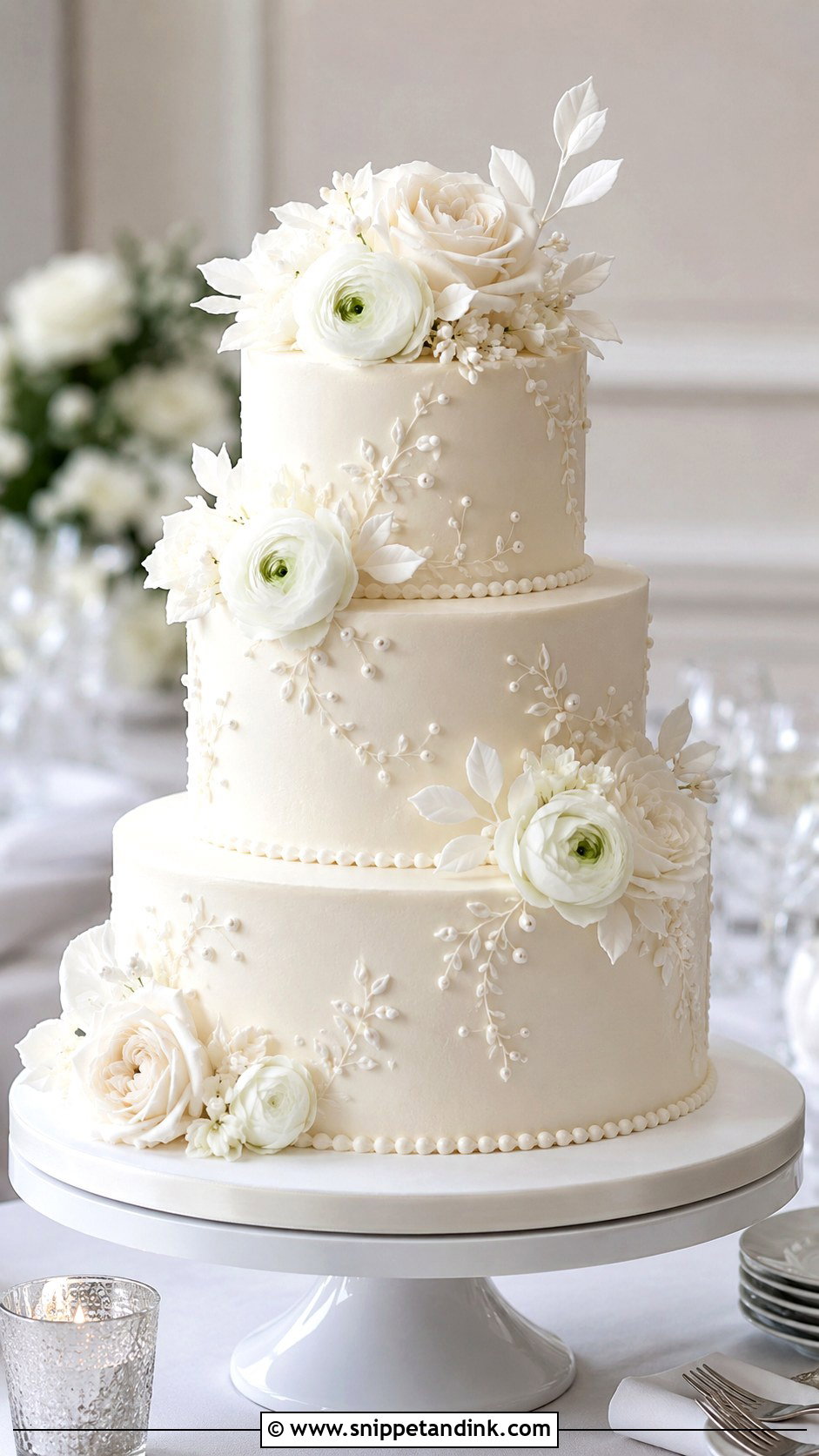
Sugar flowers are what I recommend when the bloom you love is out of season, unsafe for food contact or simply too fragile for a long reception. Roses, orchids, peonies, anemones and tiny fillers are shaped petal by petal from gum paste, wired and dusted to match your exact palette, which takes many hours of work and is reflected in the quote. On a tall tiered cake, a cascade down one side carries the height without hiding the tiers. The bonus is that the top spray can be boxed and kept for years, as long as it stays dry.
5. Floral Cascade Wedding Cake
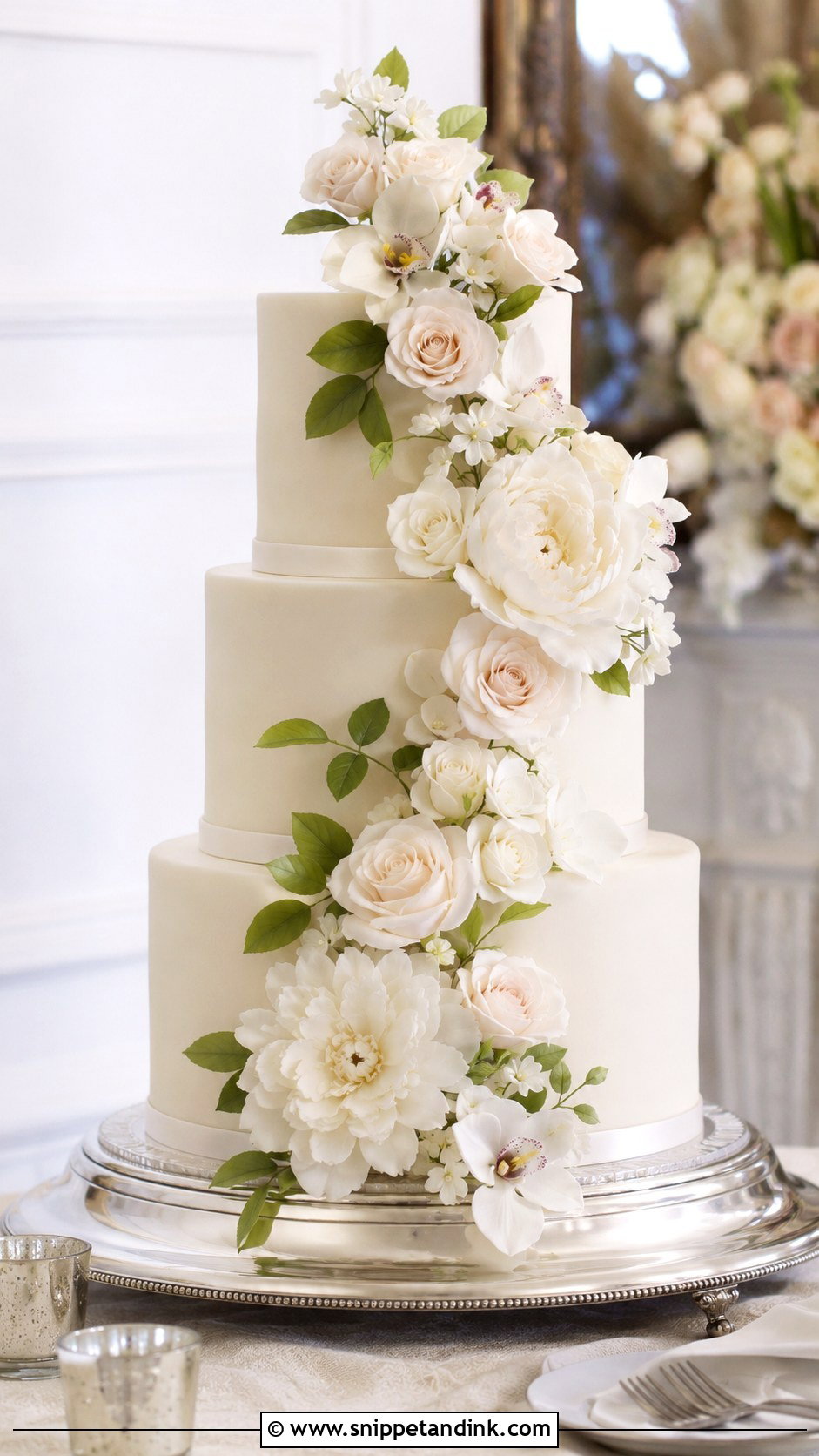
A cascade only works when the flowers follow a clear line from the top tier down, so I sketch that curve before anyone touches a stem. Roses, orchids, lisianthus and trailing greenery bend naturally around tiers, which is why they show up in so many cascades. Keep the icing plain, smooth buttercream or fondant, and let the flowers carry the design. In a ballroom with a large guest count this kind of cake can hold its own from across the room, but it needs a tight color palette, or the cascade looks like an overflowing vase.
6. White Floral Wedding Cake
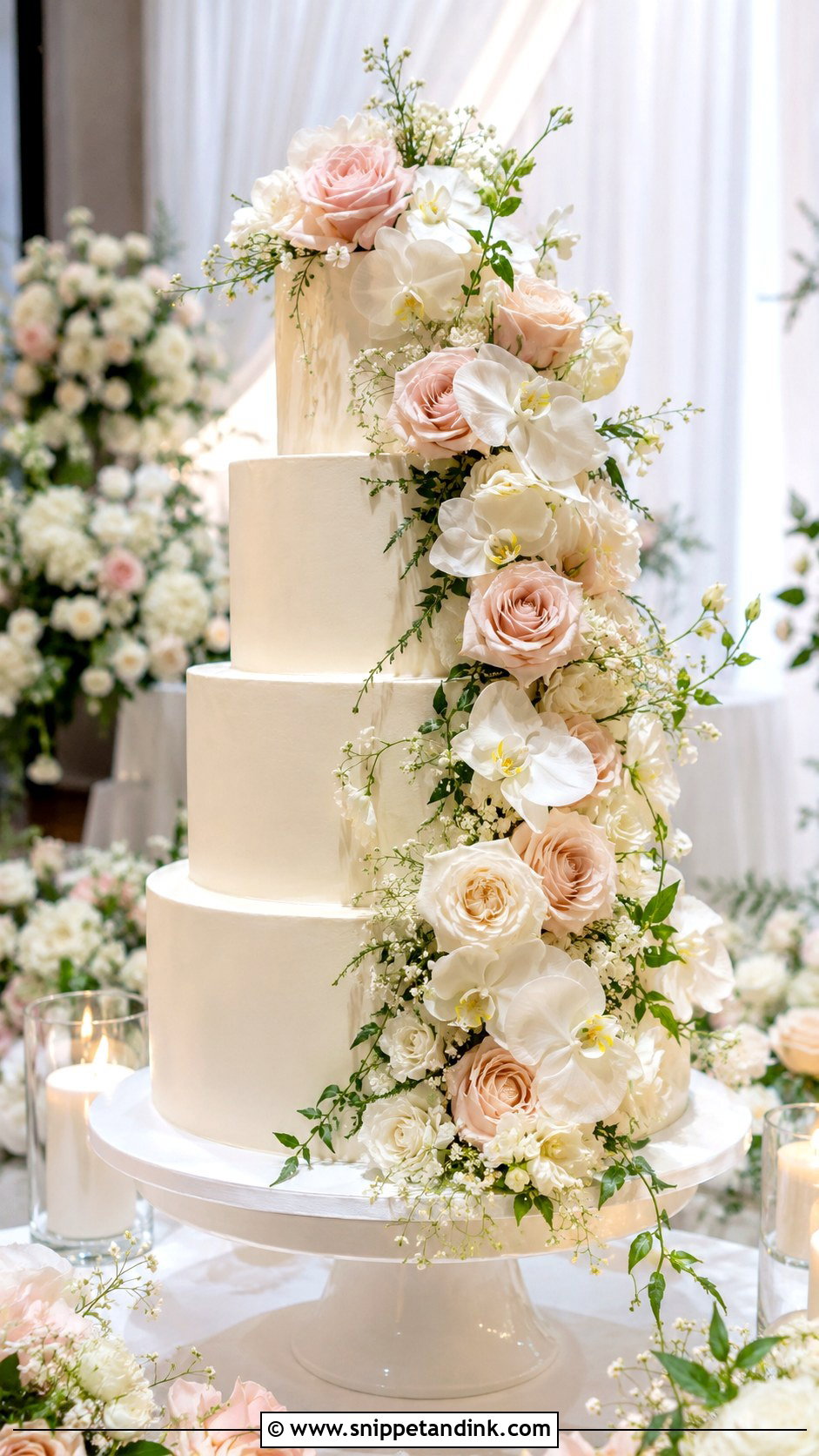
An all-white cake lives or dies on texture. White roses on ivory buttercream, pearl dots, fine piping or a subtle fondant pattern give the eye something to read when there’s no color doing the work. Without that, white tiers can photograph as a flat block under strong reception lighting. My fix is to mix flower sizes, a couple of open roses with smaller buds, and add one textured tier. Done that way it suits a chapel reception or a modern hall equally well.
7. Blush Floral Wedding Cake
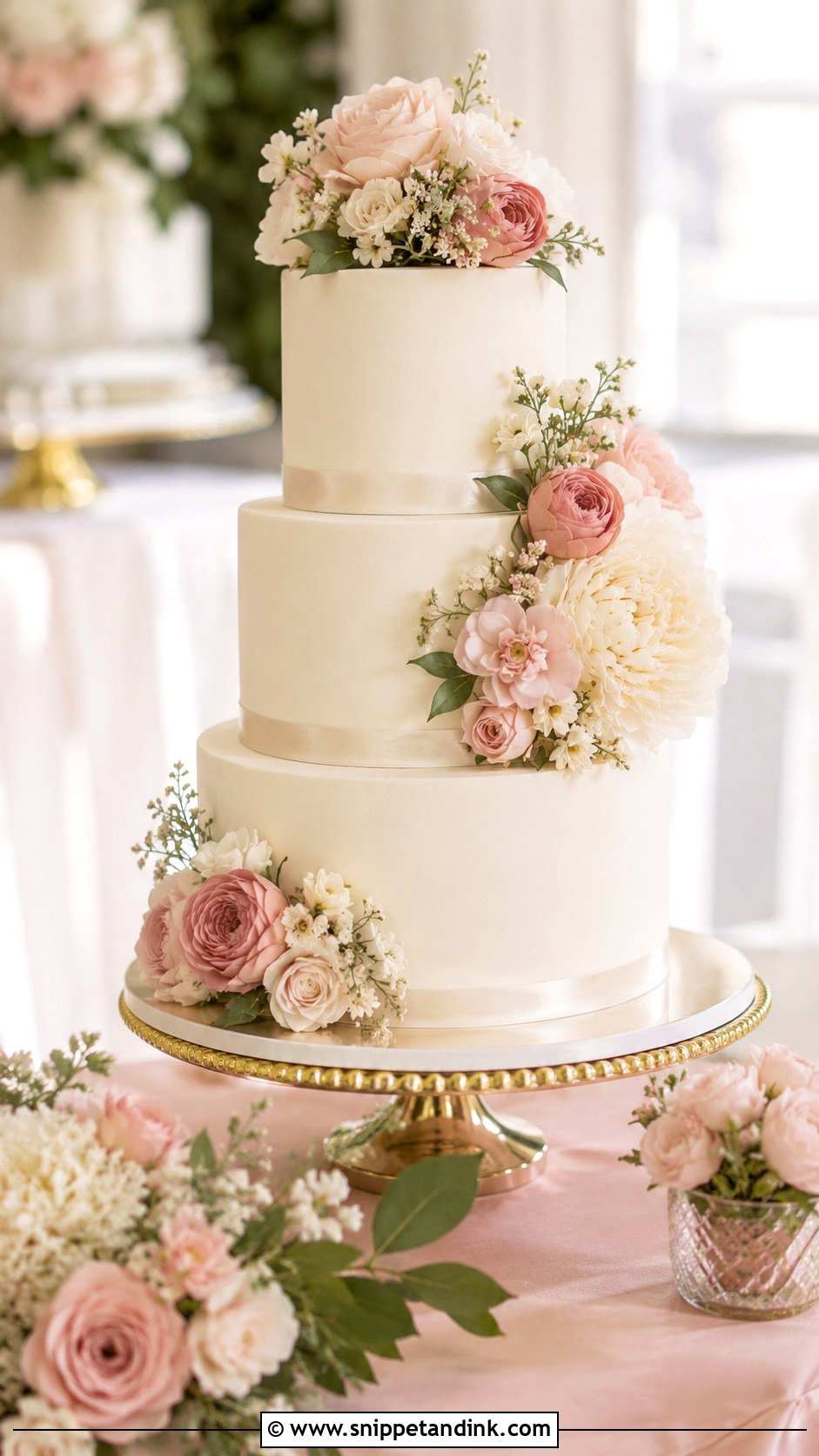
Blush is forgiving. Pale pink garden roses, peonies or ranunculus sit softly on ivory buttercream or champagne fondant and work with gold accents, clear stands, silk ribbon and candlelight. Symmetrical clusters keep it classic, while one off-center group reads more modern. My advice is to layer three tones rather than one: light pink, dusty rose and cream together look like real flowers, while a single flat pink can look dyed. Spring weddings and garden venues suit it especially well.
8. Wildflower Wedding Cake
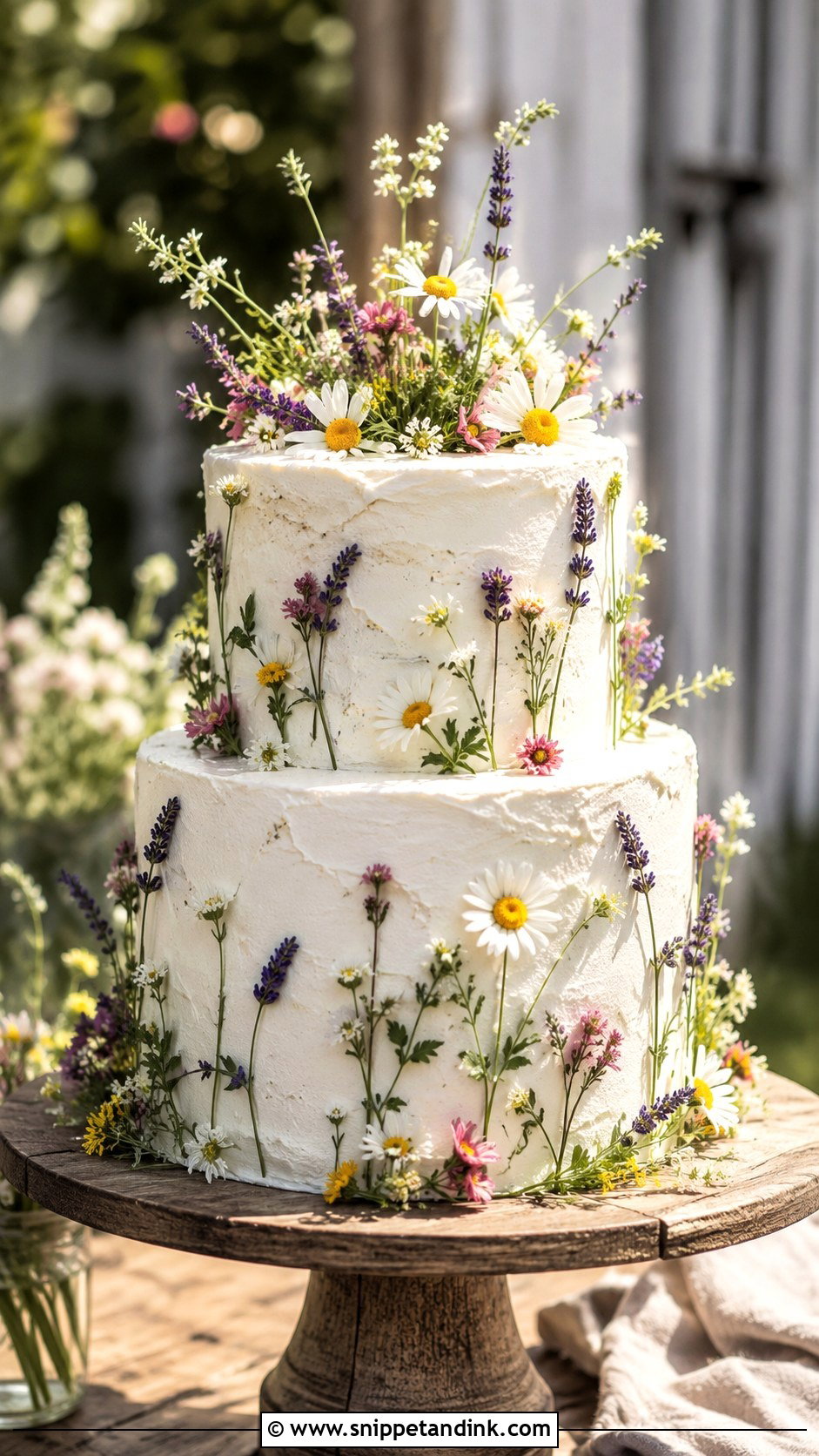
Meadow flowers are small and light, which means they also wilt quickly once they’re out of water. Daisies, chamomile, lavender and spray roses tucked loosely around textured buttercream give that gathered-from-a-field look, and it sits naturally in a barn or a backyard. I add them as close to the reception as possible and keep a few spare stems in water to swap in. The skill is in looking scattered without looking messy, so I place them in loose diagonal drifts rather than dotting them everywhere.
9. Floral Meadow Wedding Cake
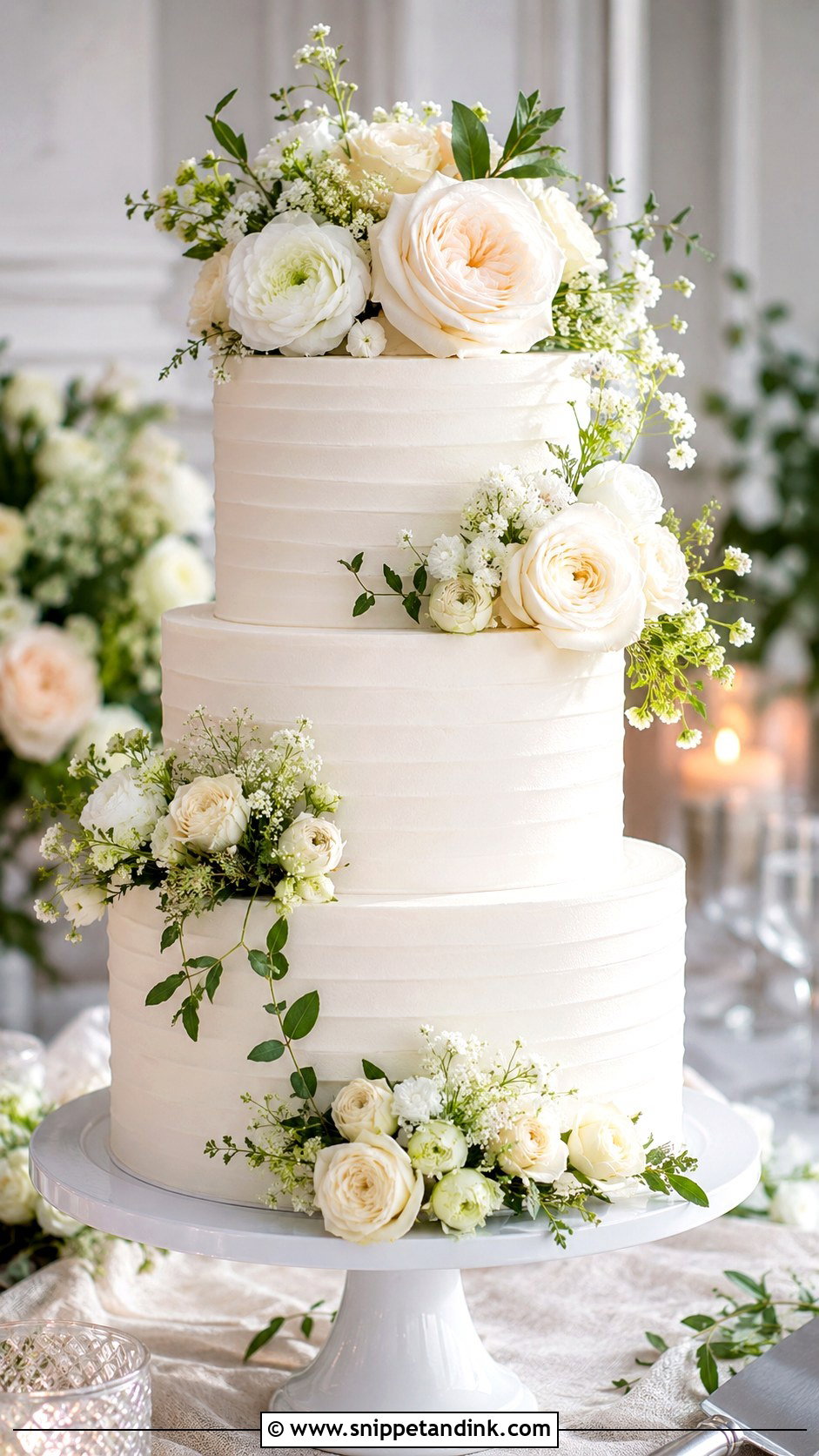
Here the flowers sit around the base of the cake rather than on it: grasses, low garden blooms and greenery arranged so the tiers seem to rise out of a small meadow. It’s a smart approach when you’re worried about flowers touching icing at all, because most of the stems never come near the cake. The florist usually builds this on the table, so book their time at the venue alongside the cake delivery. Keep the frosting clean so the tiers don’t compete with the planting around them.
10. Orchid Wedding Cake
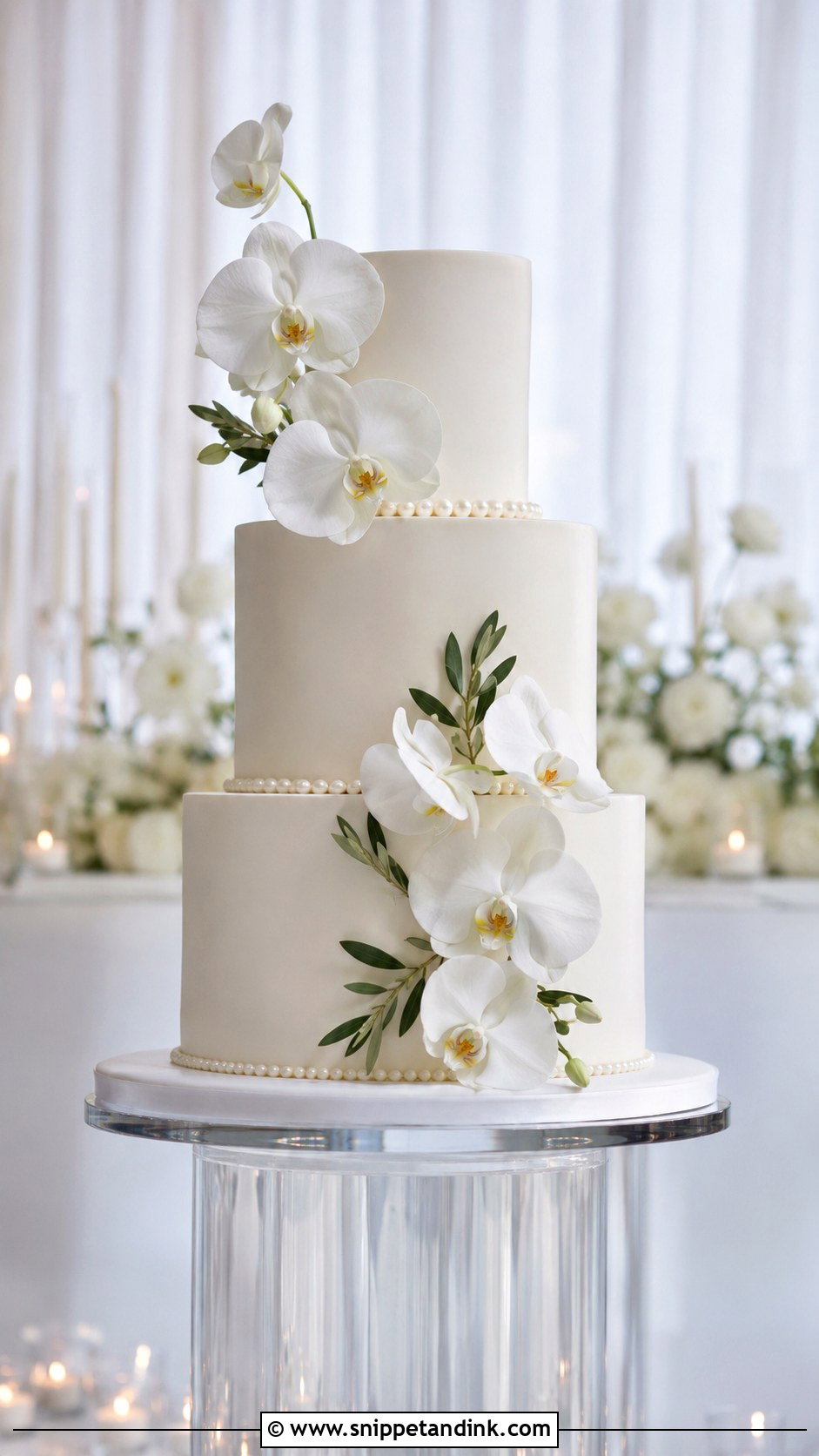
Orchids have such a defined shape that a few stems do more than a full covering. White phalaenopsis on smooth fondant gives a clean hotel-reception look, while pink, coral, or purple orchids bring more personality. They’re also one of the hardier fresh flowers I work with; they hold their shape for hours where a peony might droop. I pair them with a tall stand and very little else on the table. Heavy piping underneath only fights the line of the petals.
11. Rose Floral Wedding Cake
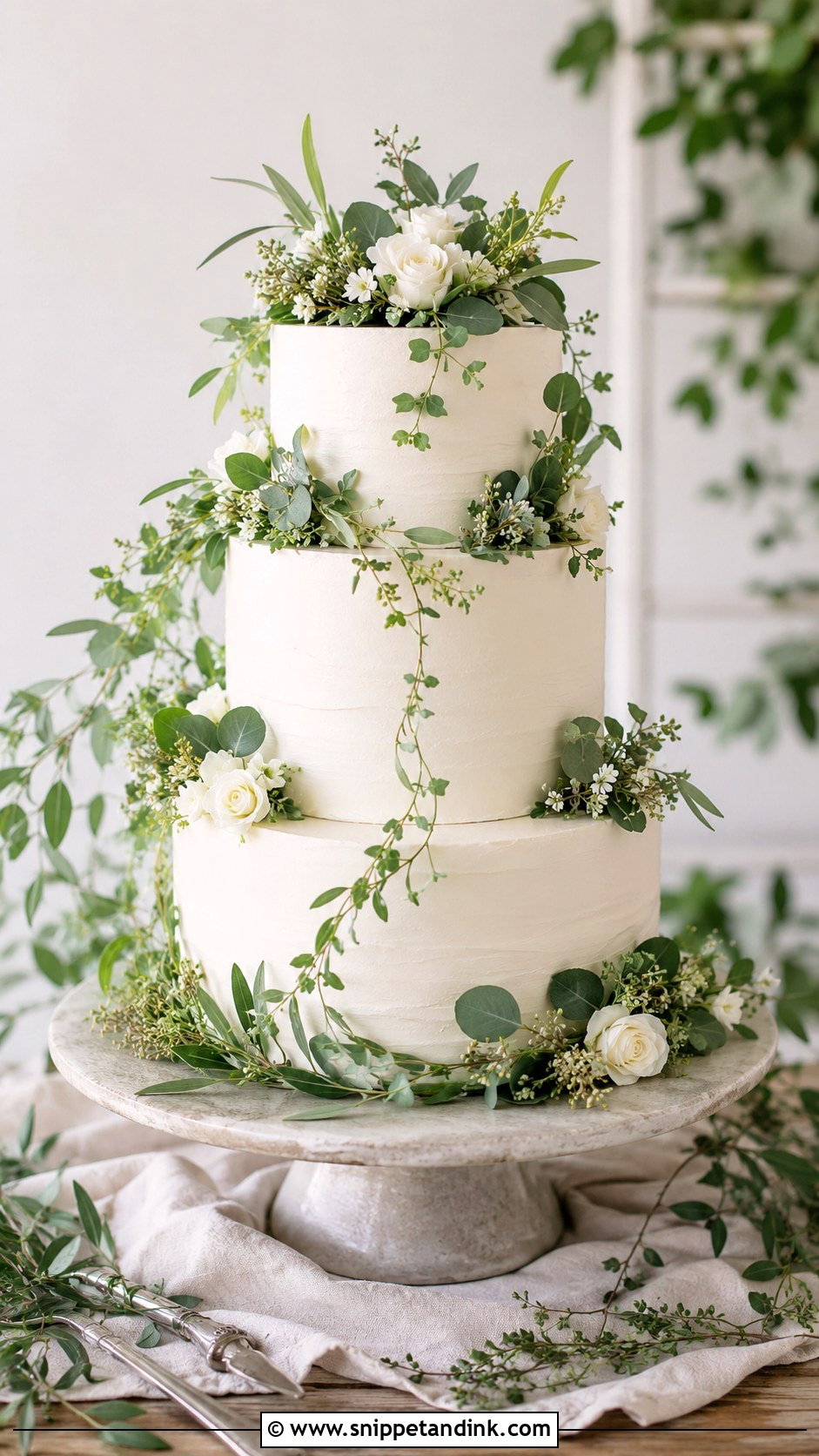
Roses suit almost any palette: white reads formal, blush romantic, and dusty rose or mauve warmer and more current. They can sit as a topper, in clusters, or in a diagonal line across the tiers on smooth buttercream or fondant. For fresh roses, I ask the florist for blooms that haven’t been sprayed, or I wrap the stems, since most cut roses are grown for vases, not food. Mixing large garden roses with smaller spray roses gives the fullness people expect from photos.
12. Peony Wedding Cake
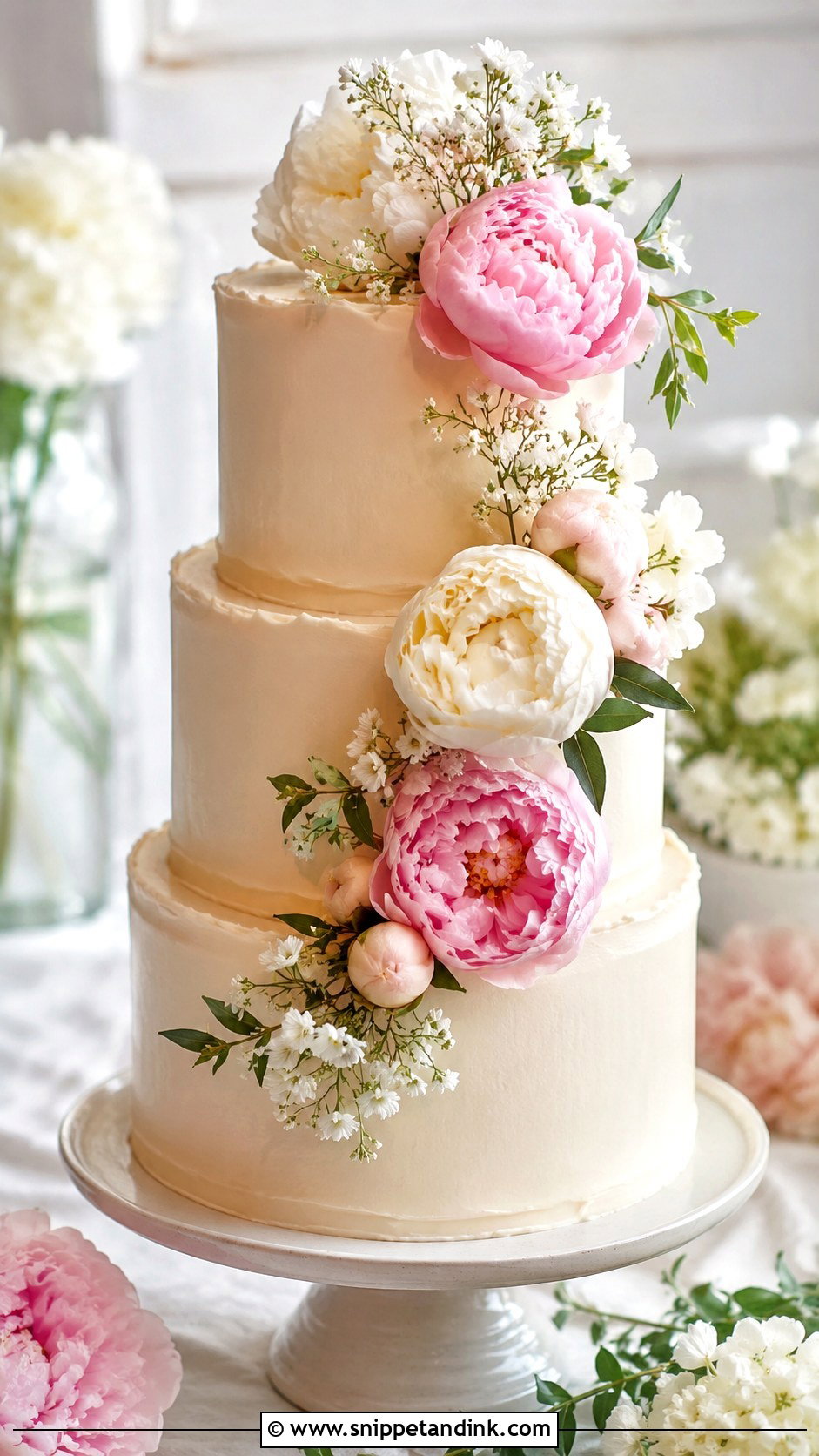
Peonies are big, so three or four can carry a whole tier. Their season is short, roughly late spring into early summer, and outside that window they’re expensive or unavailable, which is when I suggest sugar peonies instead. A three-tier cake with ivory frosting and blush peonies needs very little else. One caution from experience: open peonies are heavy and they drop petals as the evening goes on, so I balance them with smaller flowers and leaves that hide any gaps.
13. Floral Drip Wedding Cake
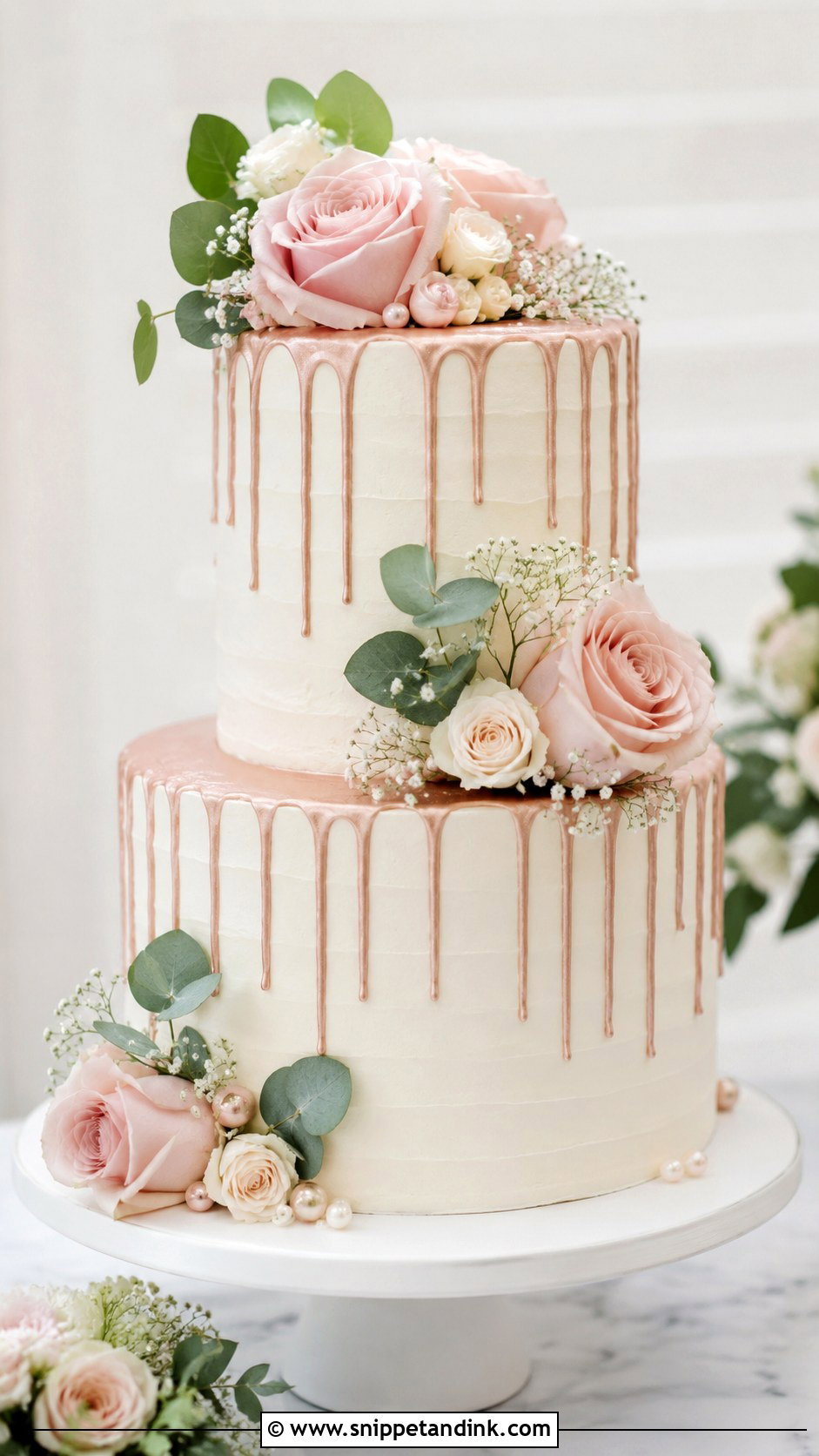
A drip changes the mood from formal to playful, and the flowers pull it back toward wedding. The floral drip wedding cake looks best with a thin, even drip in white chocolate, caramel or a pastel ganache, applied to a well-chilled cake so it stops partway down instead of pooling at the board. I group the flowers in two or three small clusters at the top edge. Semi-naked or smooth buttercream both work underneath.
14. Naked Floral Wedding Cake
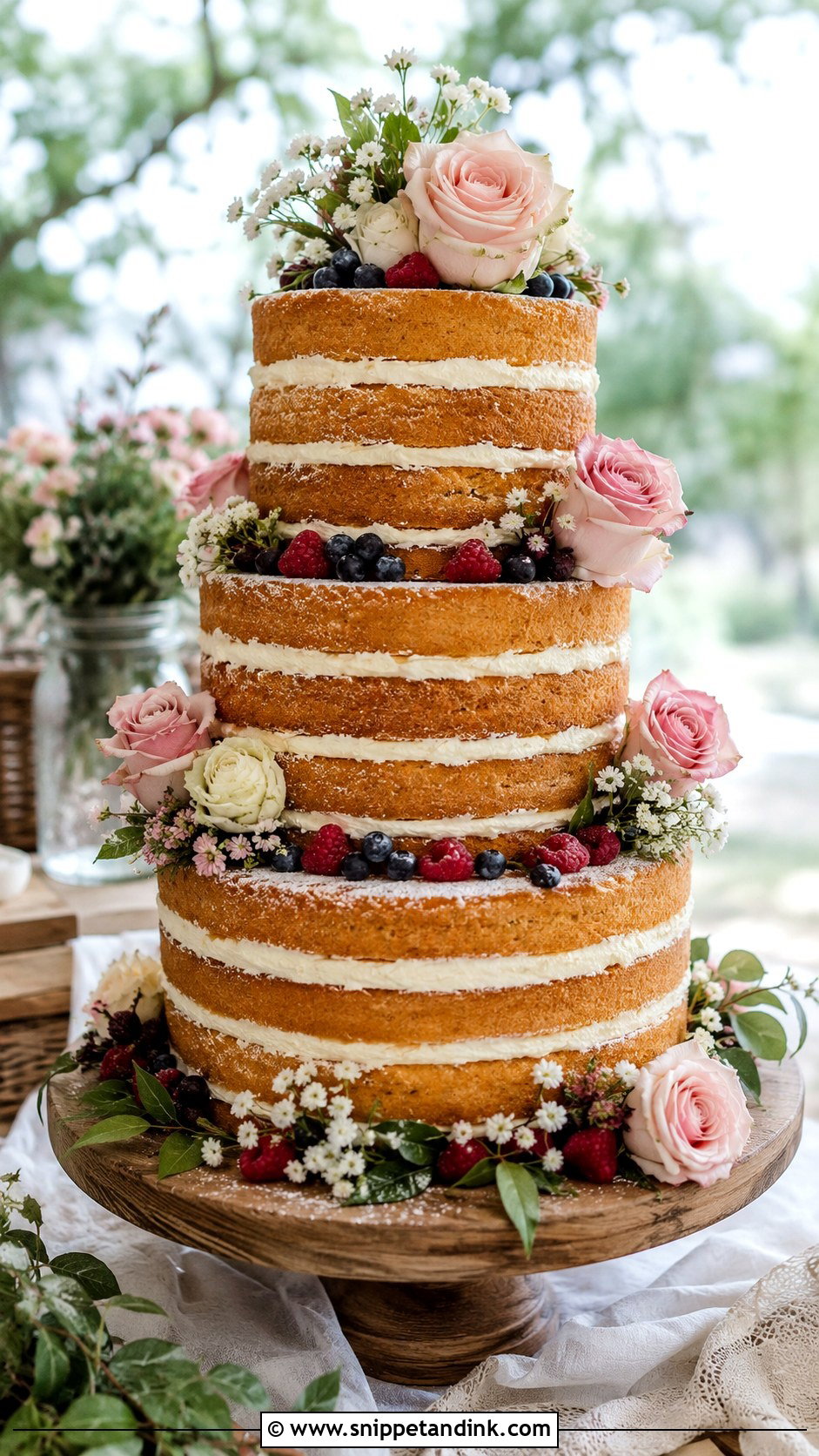
With almost no frosting on the outside, a naked cake shows every layer, which is the charm and the risk. Less icing means the sponge is exposed to air, so I assemble it as late as I can and brush the layers with syrup to keep them moist. Fresh flowers, berries and greenery suit it, as do lighter flavors like vanilla, lemon, almond or berry. I wouldn’t put it outdoors in afternoon sun for hours; the edges dry out and the cream between layers softens. A wooden stand or a plain white pedestal finishes it.



15. Semi Naked Floral Wedding Cake
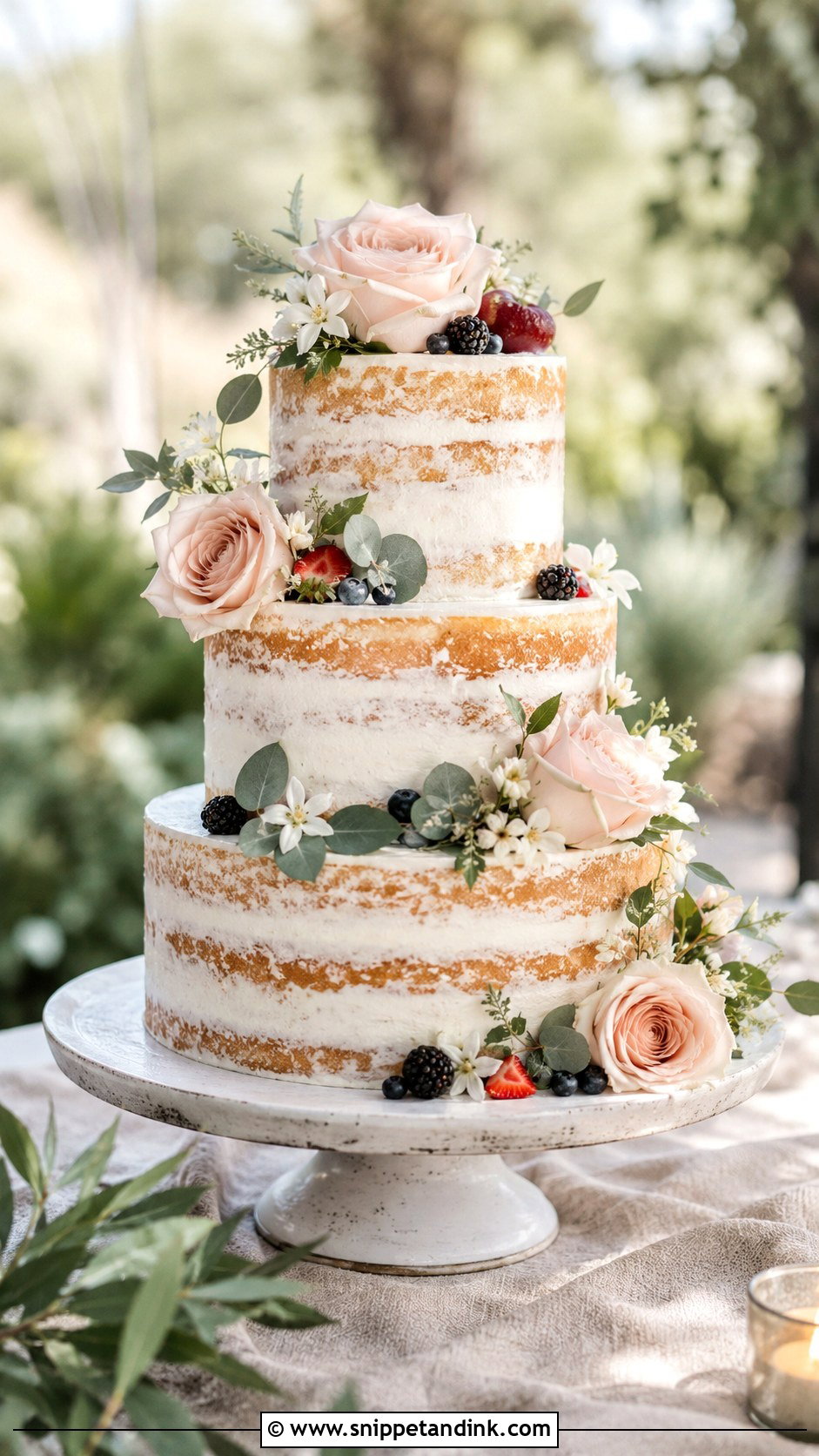
A semi-naked finish is a thin scrape of buttercream with the layers just showing through, so it looks finished but still relaxed. Because there’s a little more icing than a naked cake, it holds up better on a long day and gives the flowers something to sit against. Roses, small seasonal blooms, berries and greenery around each tier give the garden effect. Barns, vineyard settings and outdoor receptions suit it, especially with linen, warm neutrals and candlelight.
16. Floral Fondant Wedding Cake
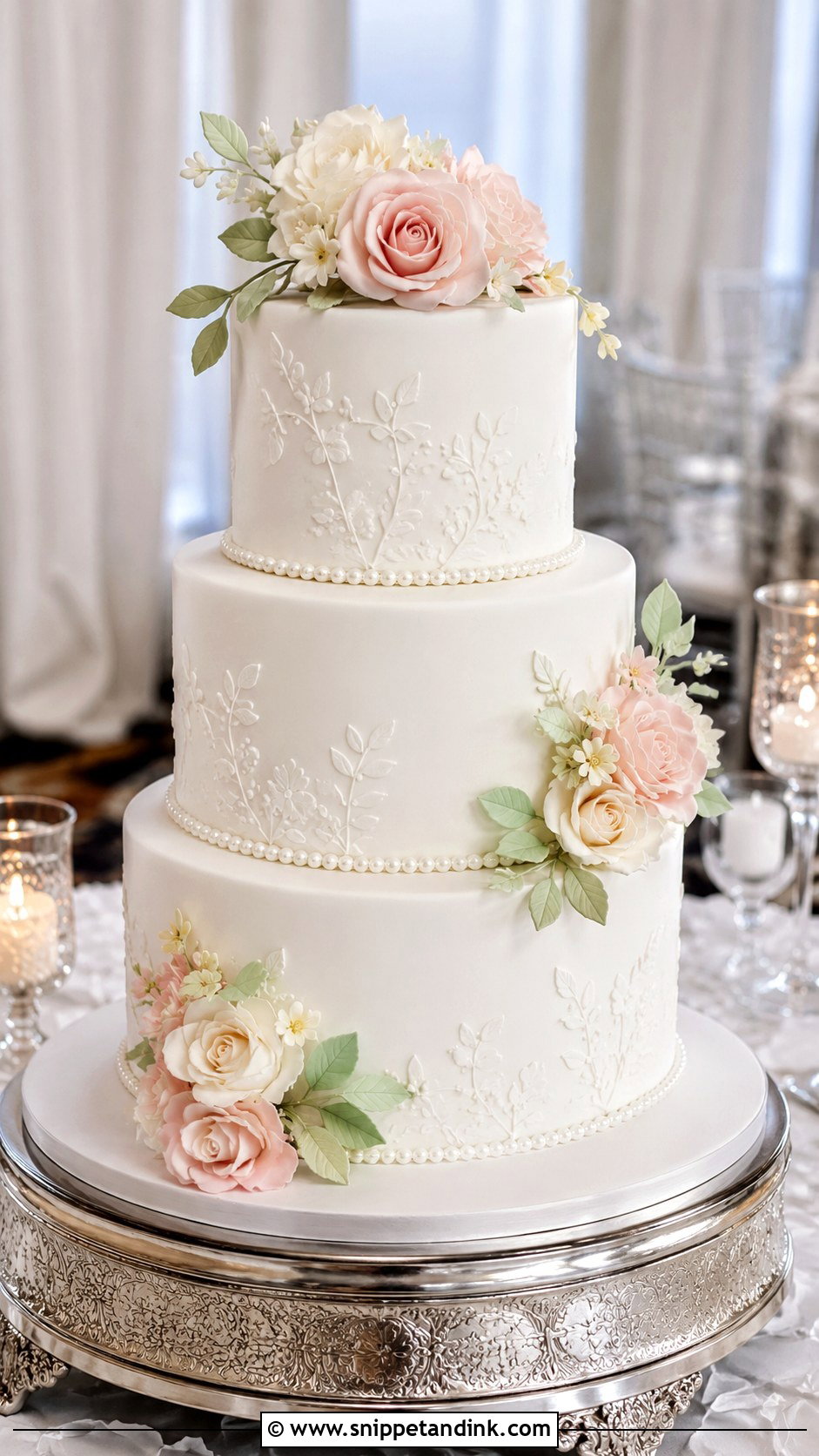
Fondant is what I reach for when a couple wants sharp edges and fine detail: molded flowers, painted florals, embossed patterns or lace-like texture. It reads more formal than buttercream and it protects the cake underneath, which helps in a long indoor reception. The florals can stay minimal or go bold and sculptural. One thing to know: fondant sweats if a chilled cake goes into a warm, humid room, so I let it come up to room temperature before decorating. White with pastel sugar flowers is classic, a tinted base more modern.
17. Hand Painted Floral Wedding Cake
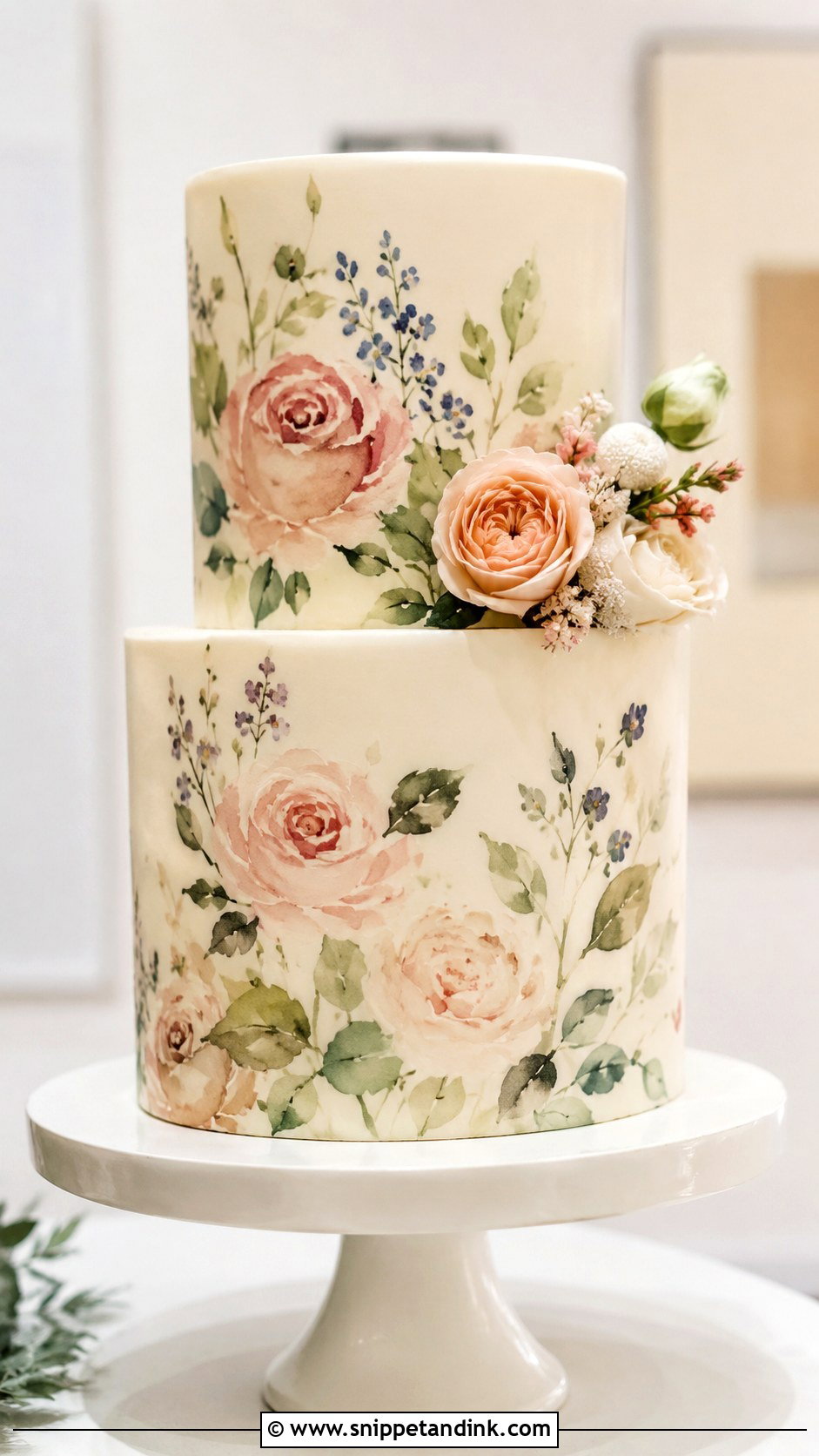
Painted florals are done by hand with food coloring, usually on a firm fondant surface or very well chilled buttercream so the brush doesn’t drag. The style can look like watercolor, vintage china, a botanical sketch or a loose modern illustration. Pale ivory, blush, sage and dusty blue grounds show the brushwork best. Because it’s flat, it’s the safest floral style for a hot venue. If you add a small spray of sugar flowers for depth, keep it off the painted panels so the artwork stays visible.
18. Blue Floral Wedding Cake
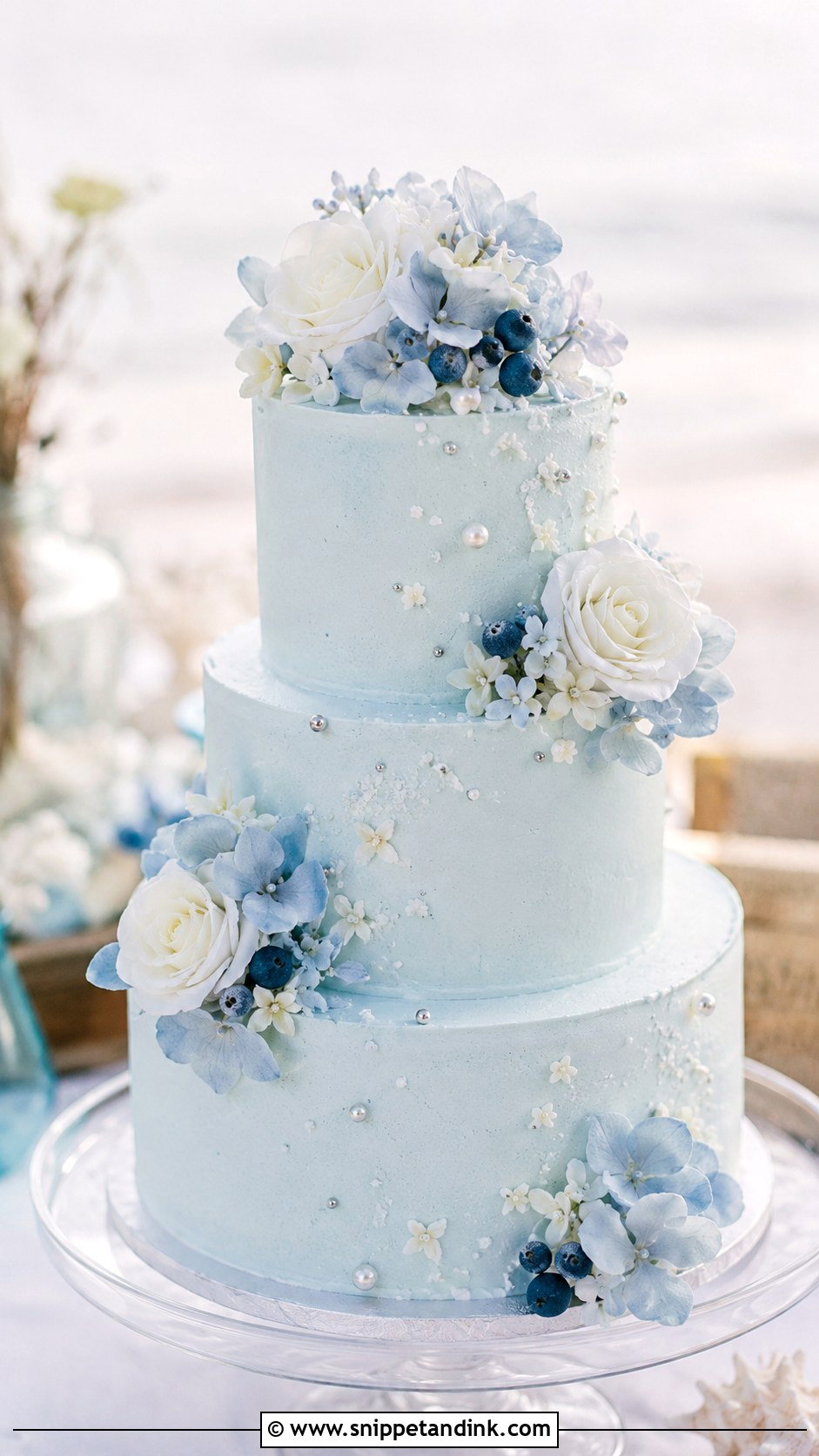
True blue is rare in nature and tricky in icing, so I mix it carefully: too much coloring turns buttercream grey or slightly bitter. Pale blue fondant, soft blue buttercream or white tiers with blue flowers all work, paired with ivory, blush or silver. Hydrangeas look right for this palette, but I make them in sugar or keep any fresh ones well away from the icing, because hydrangea isn’t safe for food contact. Delphinium-style sugar flowers or painted florals are the other options. Keep the shade soft; coastal and spring weddings suit it well.
19. Greenery Floral Wedding Cake
Greenery-led cakes are easy to underestimate. Eucalyptus, olive leaves, ferns and fine vines around white buttercream give a natural look that works in almost any season. Eucalyptus is one I always put on a barrier or replace with sugar leaves, since it isn’t something you want resting on frosting. A few white roses, small orchids or tiny blossoms add softness if the green feels too plain. Wood, stone and linen on the table finish the look.
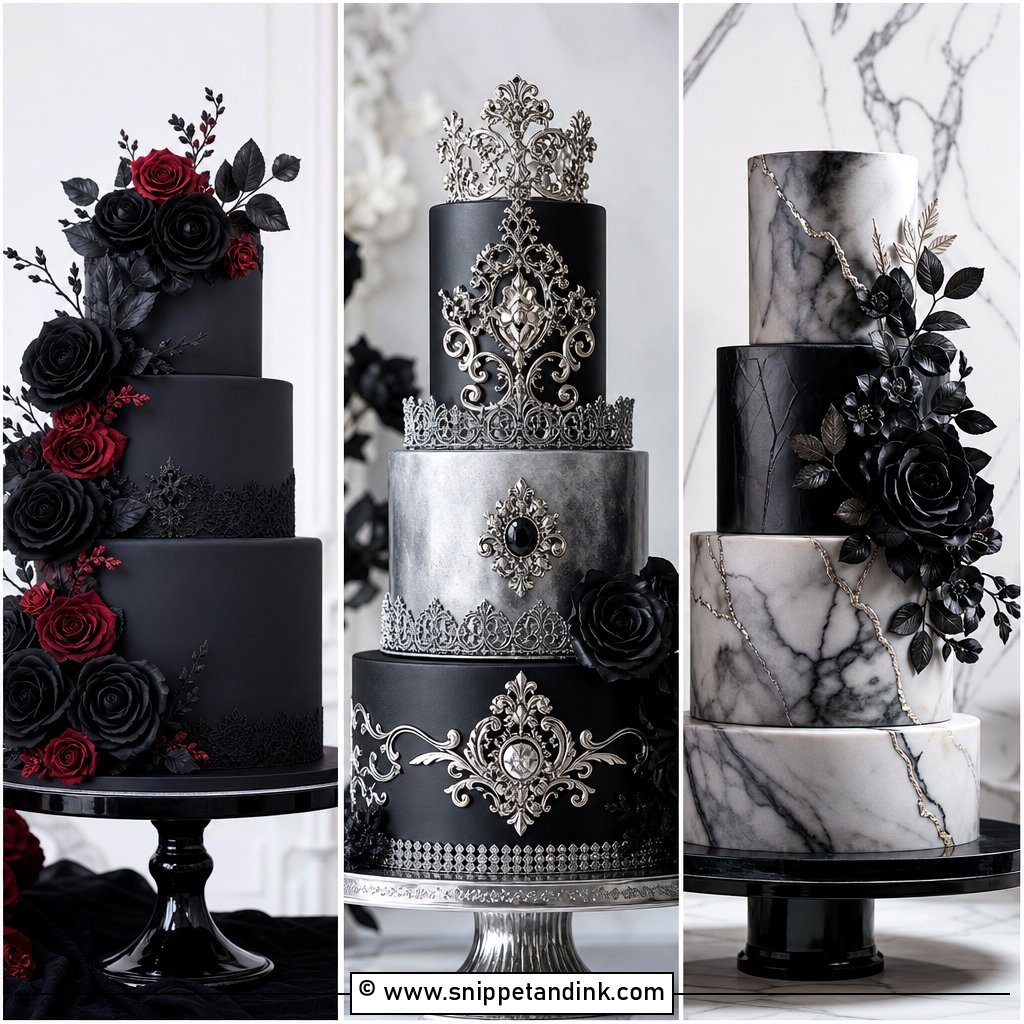

20. Black And White Floral Wedding Cake
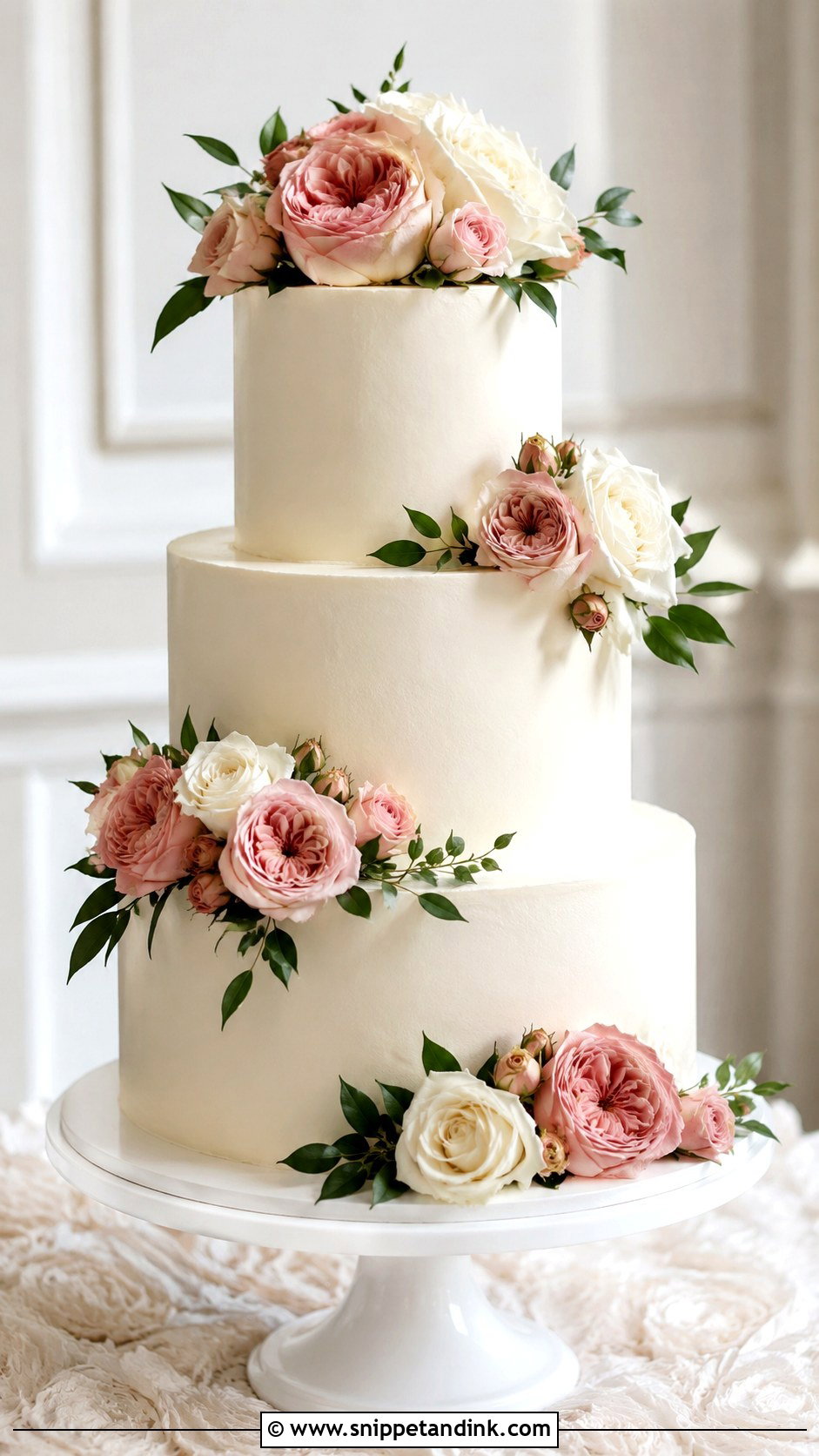
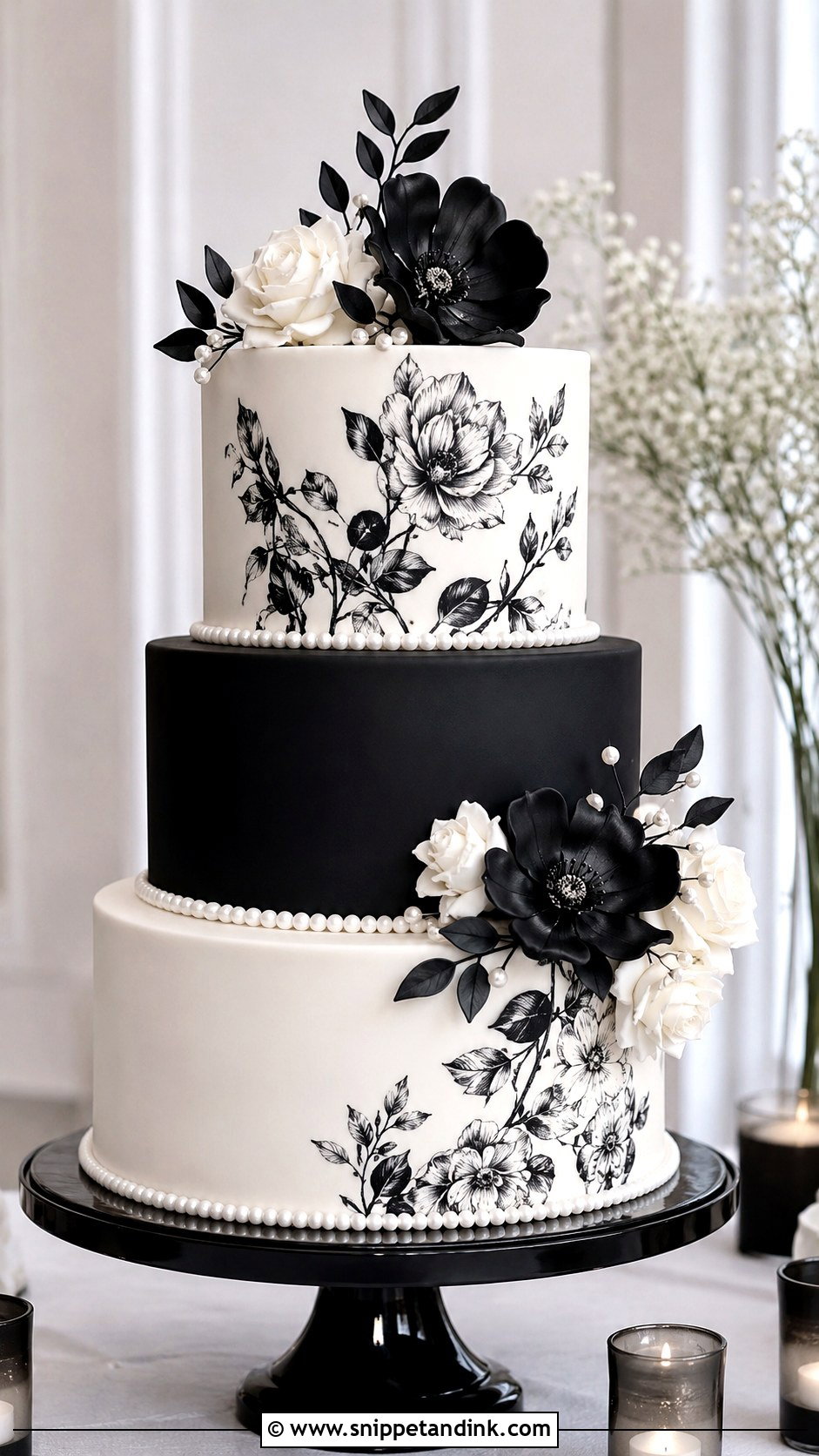
Black and white is the floral cake for an evening reception and a modern room. It might be white fondant with black painted flowers, black ribbon bands, or dark sugar blooms on ivory. A matte black lower tier with white florals is especially striking. Black icing needs a lot of coloring and can stain lips and teeth, so I keep it to fondant panels or details rather than a whole buttercream tier. Balance the dark accents with white roses and clean tiers so it still reads as a wedding cake at black-tie events.
How Long a Flowered Cake Holds Up on the Table
A cake is usually set up a couple of hours before guests arrive and cut well into the reception, so it can stand for four or five hours. That’s where the choice of flowers and icing really shows.
- Buttercream starts to soften once a room gets warm, and direct sun speeds that up badly. Ask the venue where the cake table sits and keep it out of windows and away from the dance floor lights.
- Fresh flowers have no water source on a cake. Orchids, spray roses and greenery hold well; peonies, sweet garden roses and meadow flowers droop sooner.
- Sugar flowers hate humidity. Gum paste absorbs moisture and the thin petals can sag or crack, so a steamy tent in summer is harder on them than a dry ballroom.
- Fondant sweats when a cold cake meets a warm, humid room. I let it settle before the flowers go on, then leave it alone.
Who Places the Flowers, the Florist or the Baker?
This is the question that causes the most last-minute scrambling, so I settle it in writing. Either the florist delivers wrapped, conditioned stems to me and I place them, or the florist dresses the cake on site after I’ve set it up. Both work. What doesn’t work is assuming the other person has it covered.
Agree on a flower count, ask for a few spare stems, and make sure the florist’s arrival time at the venue is after the cake delivery. If you’re choosing sugar flowers, order early. Each bloom is shaped by hand and needs days to dry, so a full cascade has to be planned well ahead of the wedding week.
Flowers Work Best When the Cake Table Is Planned Too
Every one of these cakes starts with the same question I ask at a first meeting: what will the room be like at the moment the cake is cut? Heat, light, how long the cake stands and who is handling the flowers matter as much as the flower itself. Fresh blooms feel natural, sugar flowers give control, pressed petals look delicate and painted designs feel personal, while buttercream reads softer and fondant crisper. Bring photos of your bouquet and table plan to your consultation, and plan the stand, linens and lighting with the tiers in mind.
You'll Like These Ideas:










Leave a Reply