
Most couples arrive at a cake tasting with a folder of saved photos and no idea which of those cakes will survive their actual venue. That’s the gap I want to close here. Some of these designs are clean and simple, smooth buttercream with one floral detail; others lean on pearls, pressed flowers, ruffles, vintage piping, tall tiers or an unusual shape. For each one I’ve added what I’d tell you across the tasting table: how the finish behaves, what it asks of the room, and which flavors sit well under it. The cake is a centerpiece only until the knife goes in. After that, flavor is what guests remember.
Guest Count, Venue and Date Come Before Pearls
Before we talk about ruffles or gold leaf, I need the plain facts, because they decide which of the cakes below will actually work for you. A design that’s fine in an air-conditioned ballroom can fail on a lawn in August, and a cake built to feed eighty won’t stretch to a hundred and forty.
- Your guest count, or your best estimate. Tier sizes are worked out from servings, and many couples add a plain sheet cake kept in the kitchen to cover extra guests for less.
- The venue, indoors or out, and roughly how long the cake will be on display before it’s cut.
- Your date. Popular bakers fill up months ahead in peak season, so get in touch as soon as the venue is confirmed.
- Your florist’s name and flower list, if you want fresh blooms on the tiers.
- Three or four photos you love, plus one you don’t. The one you dislike tells me as much as the others.
- Any allergies or dietary needs at the top table, so they can be planned into a tier rather than patched in later.
Taste first, decorate second. The tasting is the only moment you can judge sponge texture and how sweet the filling is, and those details last long after the photos are taken.
1. Classic White Wedding Cake
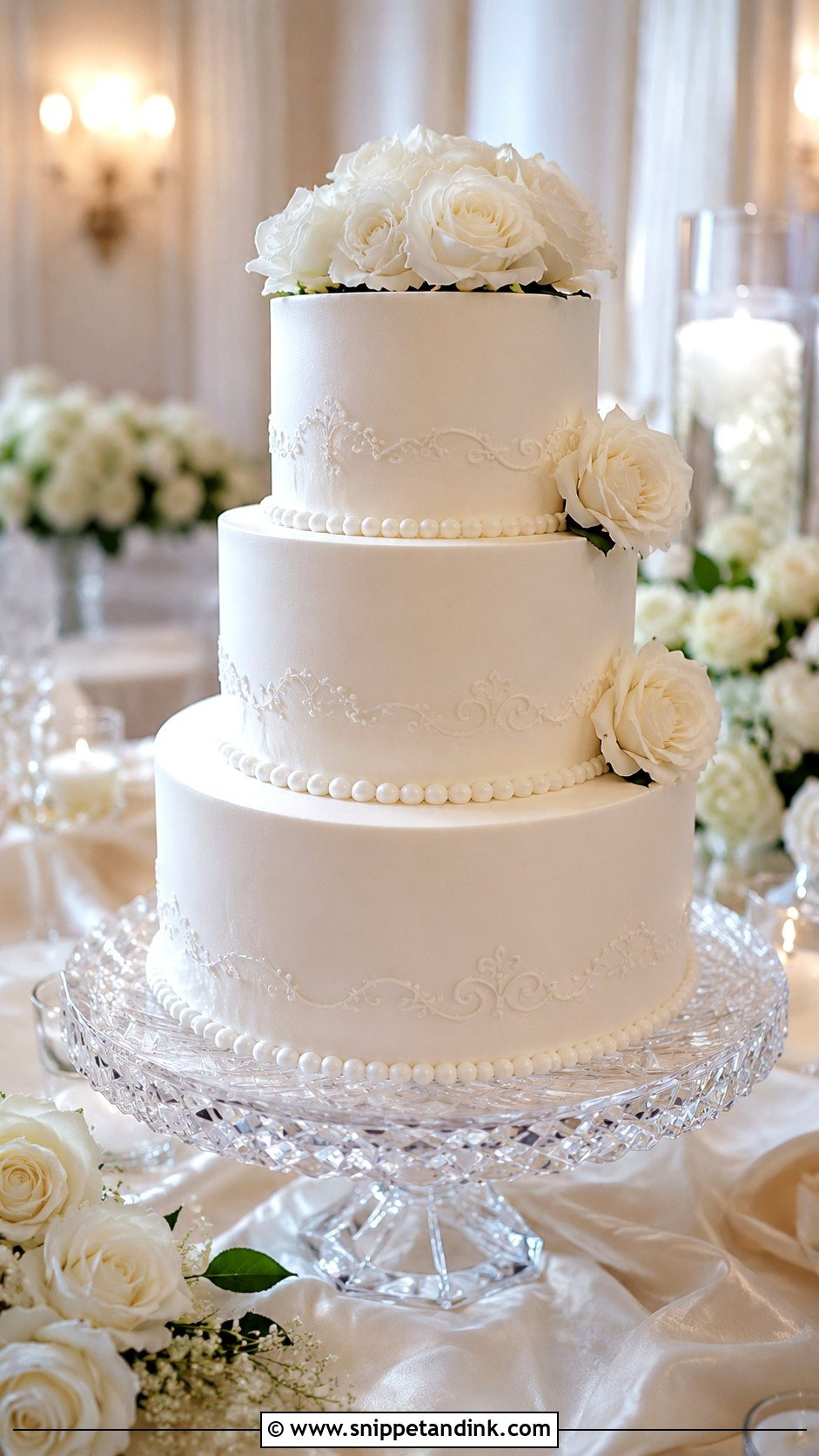
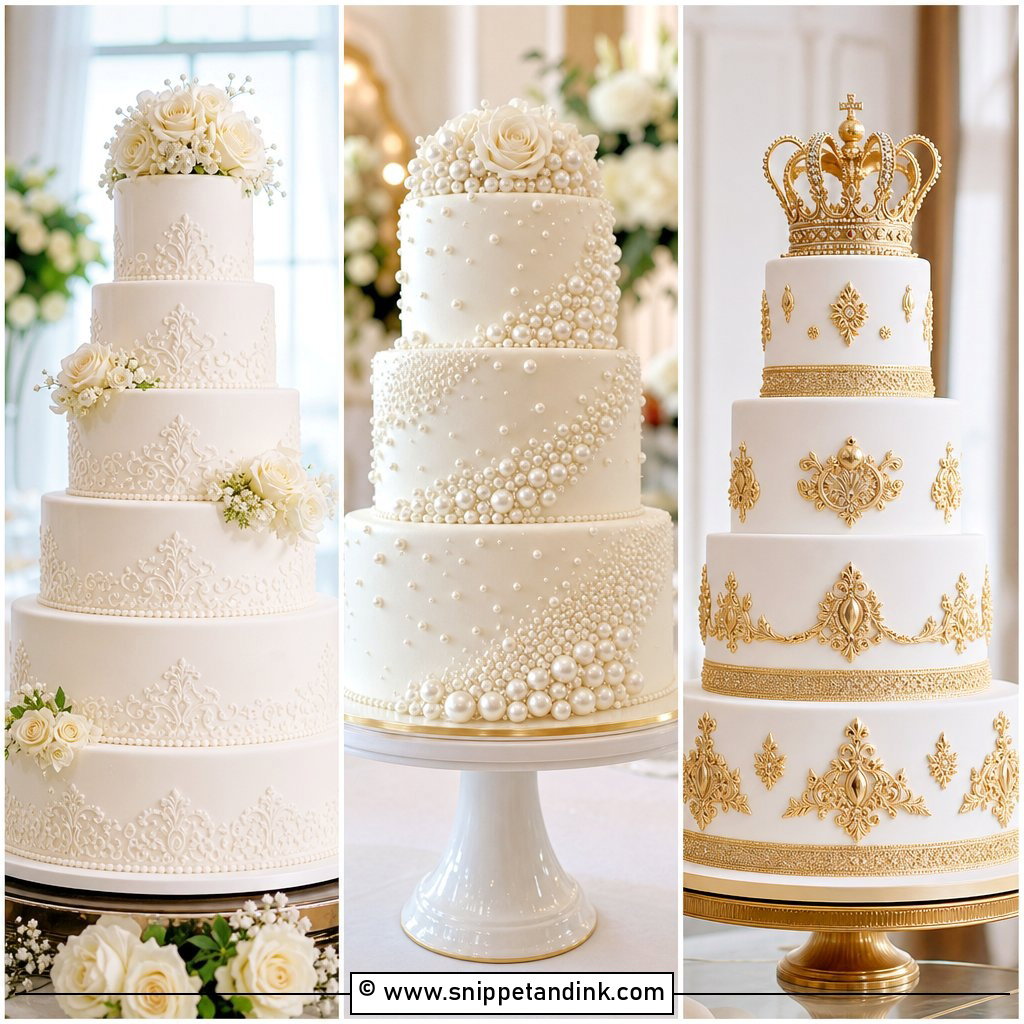
Plain white is the hardest cake to fake. Every bulge, air bubble and soft corner shows, so I spend longer chilling and scraping a white tier than almost anything else here. Smooth buttercream or fondant gives the traditional finish, and one detail stops it reading as plain: sugar roses, a pearl border, fine piping or a satin ribbon at the base of each tier. If you choose ribbon, ask for a thin strip of fondant or acetate underneath it, because butter seeps into fabric and leaves grease spots within an hour. Vanilla, almond, champagne and white chocolate all suit it. It belongs equally in a ballroom, a garden or a modern loft, which is exactly why it never looks dated in photos.
2. Floral Wedding Cake
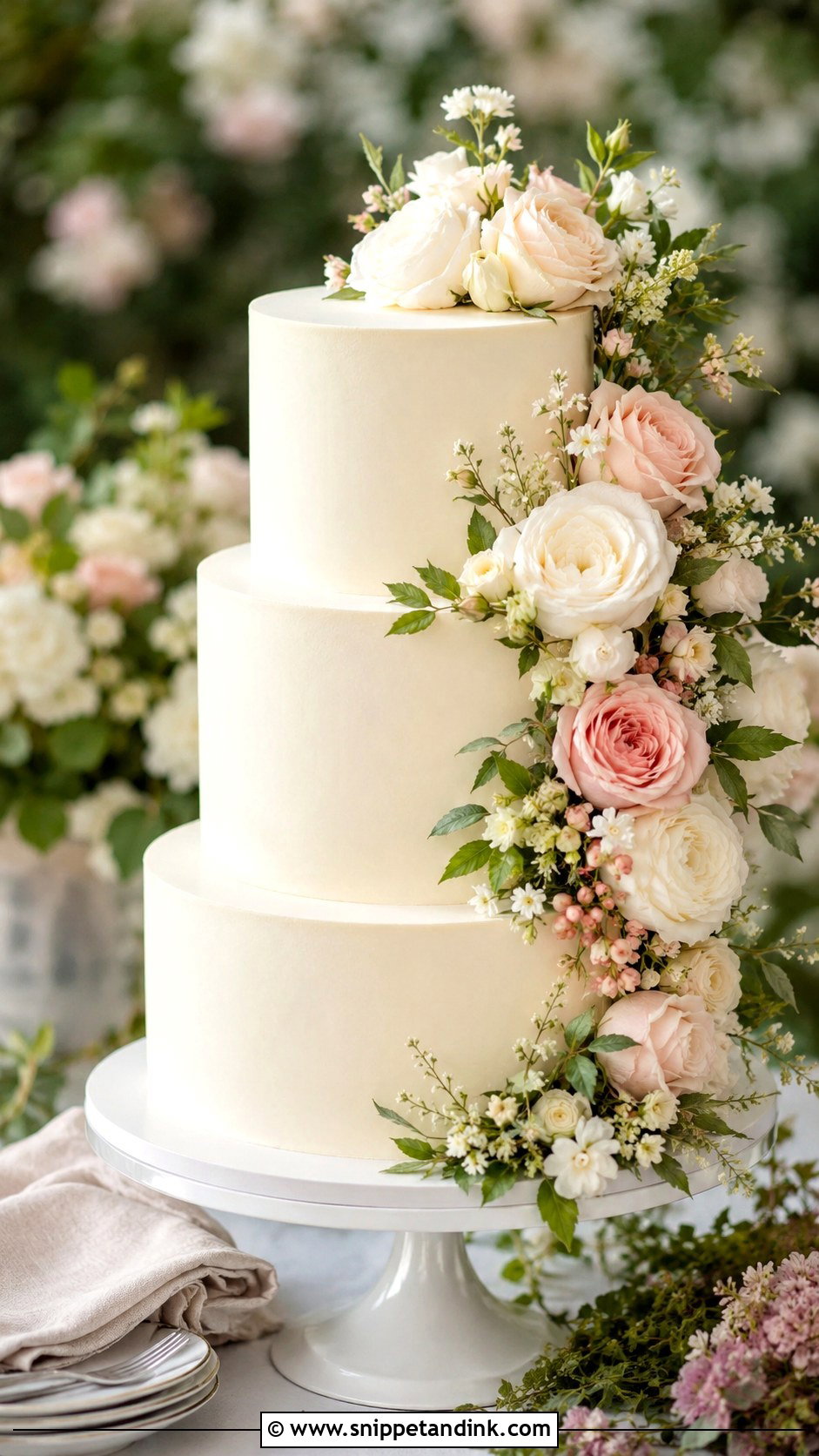
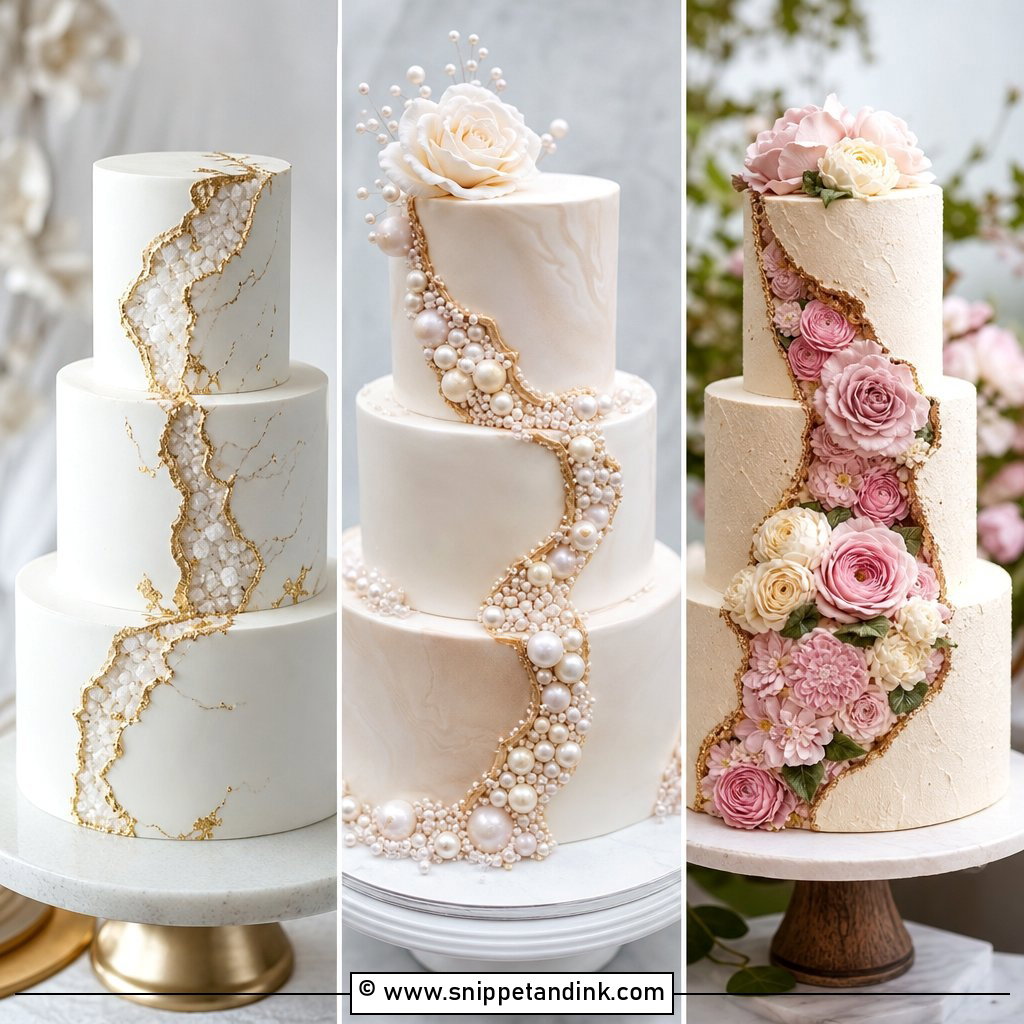
Fresh flowers tie the cake to the bouquet and centerpieces better than anything I can pipe, but they need more planning than most couples expect. Plenty of popular wedding flowers are sprayed, and some are mildly toxic, so nothing should touch the sponge directly. I wrap each stem in floral tape, push it into a straw or flower pick, and set the heads on a small barrier of fondant or parchment where they meet the frosting. Blush roses, white ranunculus, lisianthus and small greenery hold up well, and a one-sided cascade suits a garden wedding. Keep the base ivory buttercream so the flowers carry the color. Then put your florist and baker in touch early, so the stems arrive conditioned and dry rather than dripping onto the tiers.
3. Pearl Wedding Cake
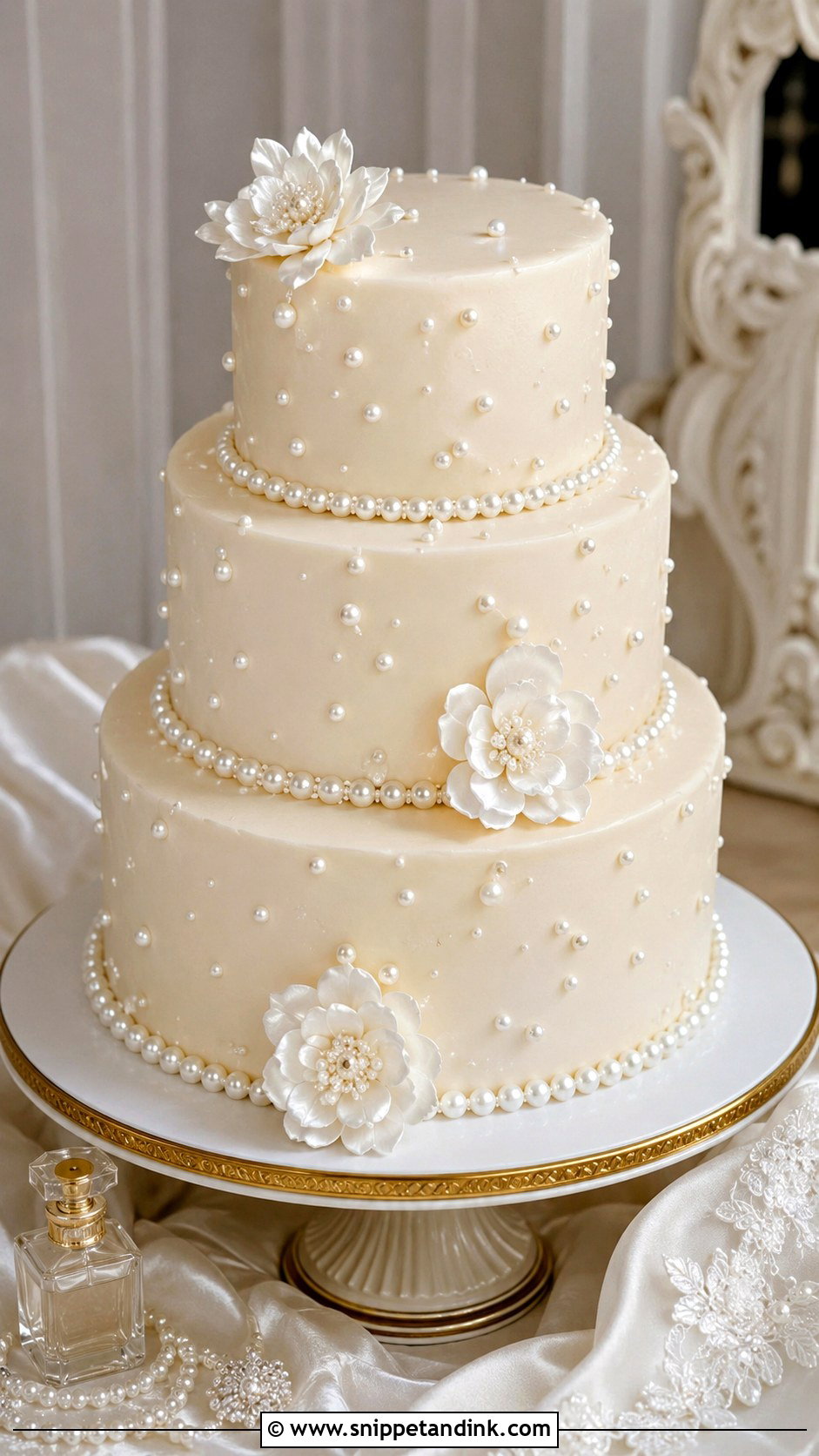
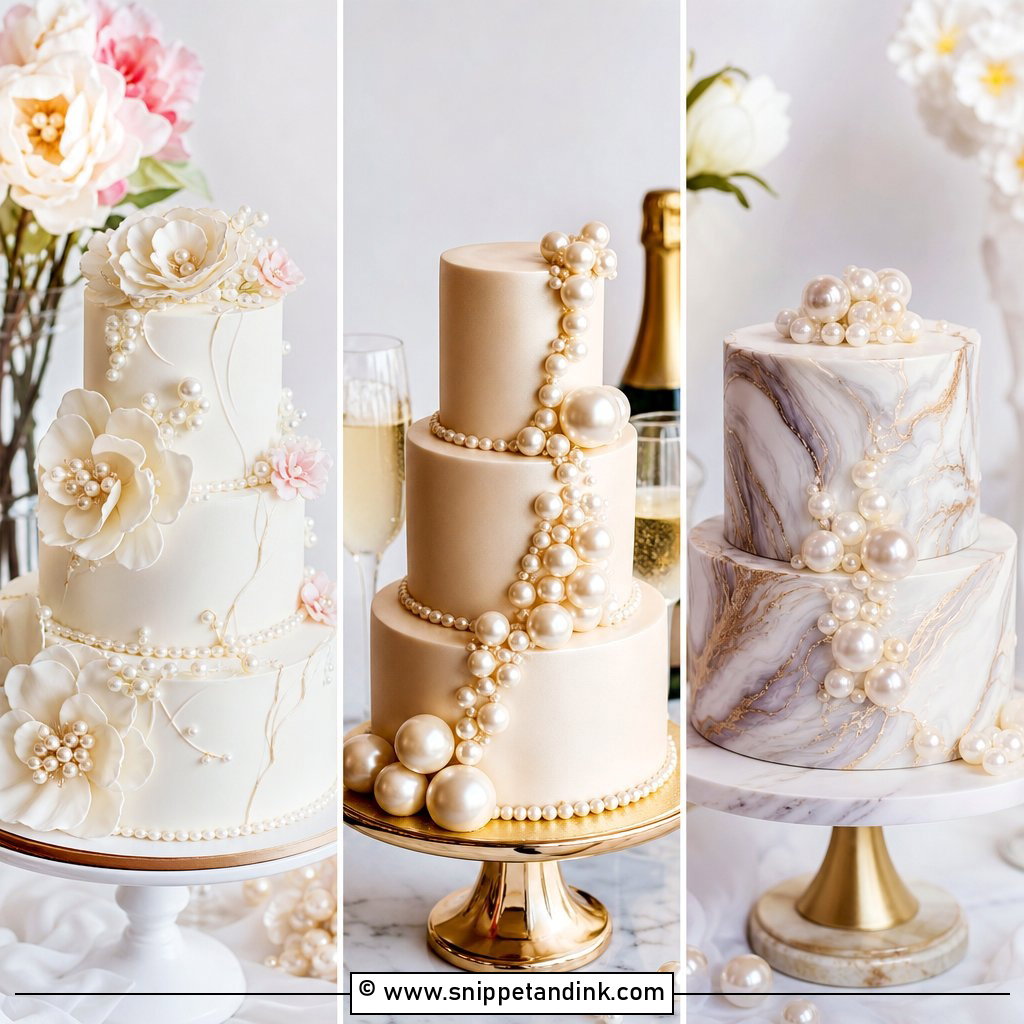
Pearls scale well, which is why I like them. Scattered sugar pearls on smooth buttercream read soft and delicate, a single strand around each tier reads classic, and larger clusters mixed with piping start to echo a beaded bodice. The practical catch is hardness: big dragées can be tough enough to hurt a tooth, so I keep the large ones on tiers that get removed or served last and use small, soft pearls where guests will bite. If your gown is beaded or you’re wearing pearl earrings, bring a photo so the size and sheen can be matched. Ivory, champagne, blush and soft blue palettes suit them, and vanilla bean, lemon or champagne keeps the slice as light as the look.
4. Vintage Wedding Cake
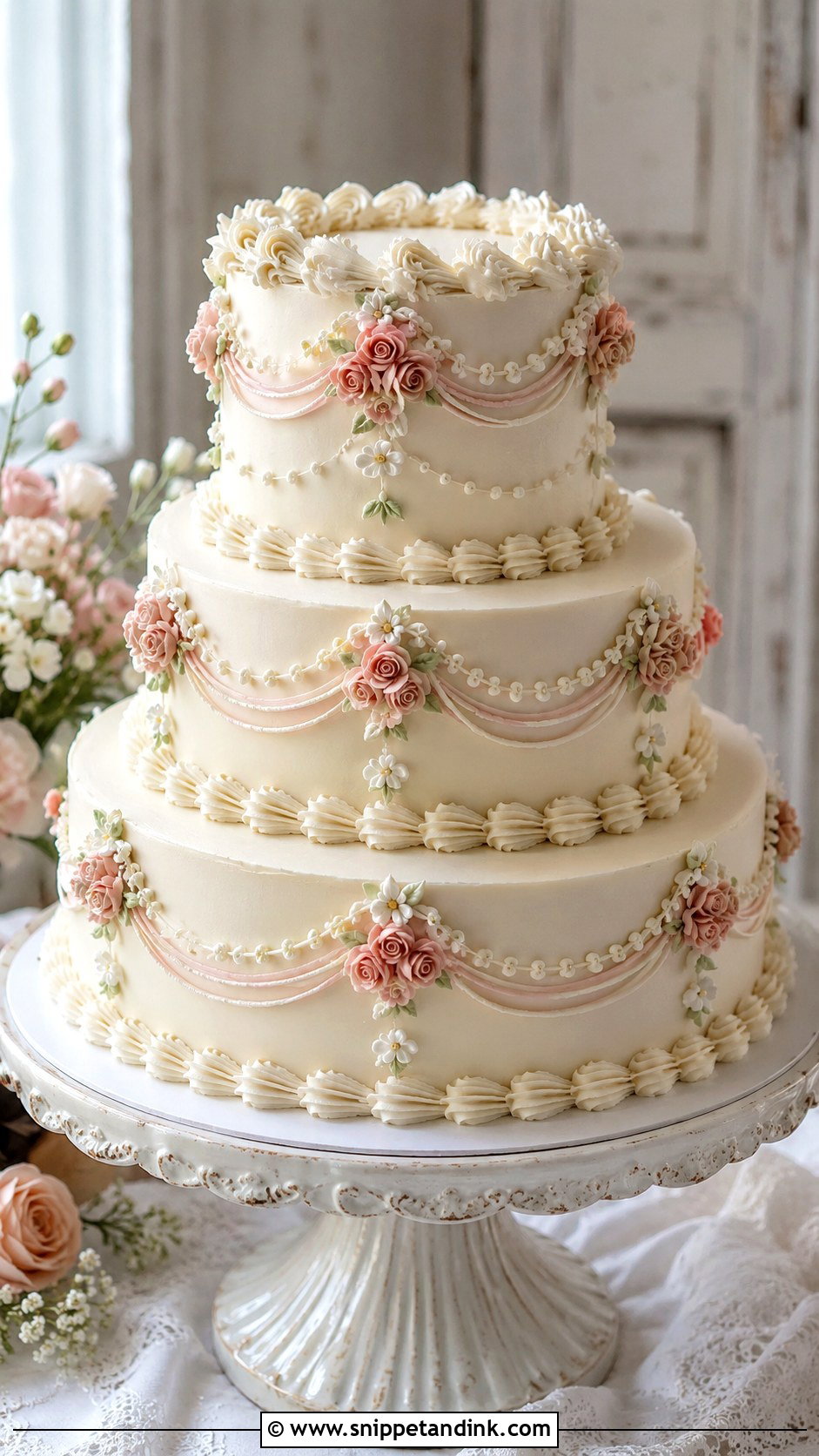
Vintage cakes are where piping skill shows, or doesn’t. The style leans on piped borders, shells, swags, ruffles and small sugar flowers, often layered Lambeth-style so the sides look almost carved. That depth needs a stiff, crusting buttercream; a soft meringue buttercream slumps in the overpiped layers after a few hours in a warm room. Soft color keeps it current: ivory with blush piping, pale blue accents, or white on white. A heart-shaped version suits a courthouse wedding or a small dinner, while stacked tiers make it more dramatic. Vanilla, raspberry or almond fits the old-fashioned mood.
5. Minimalist Wedding Cake
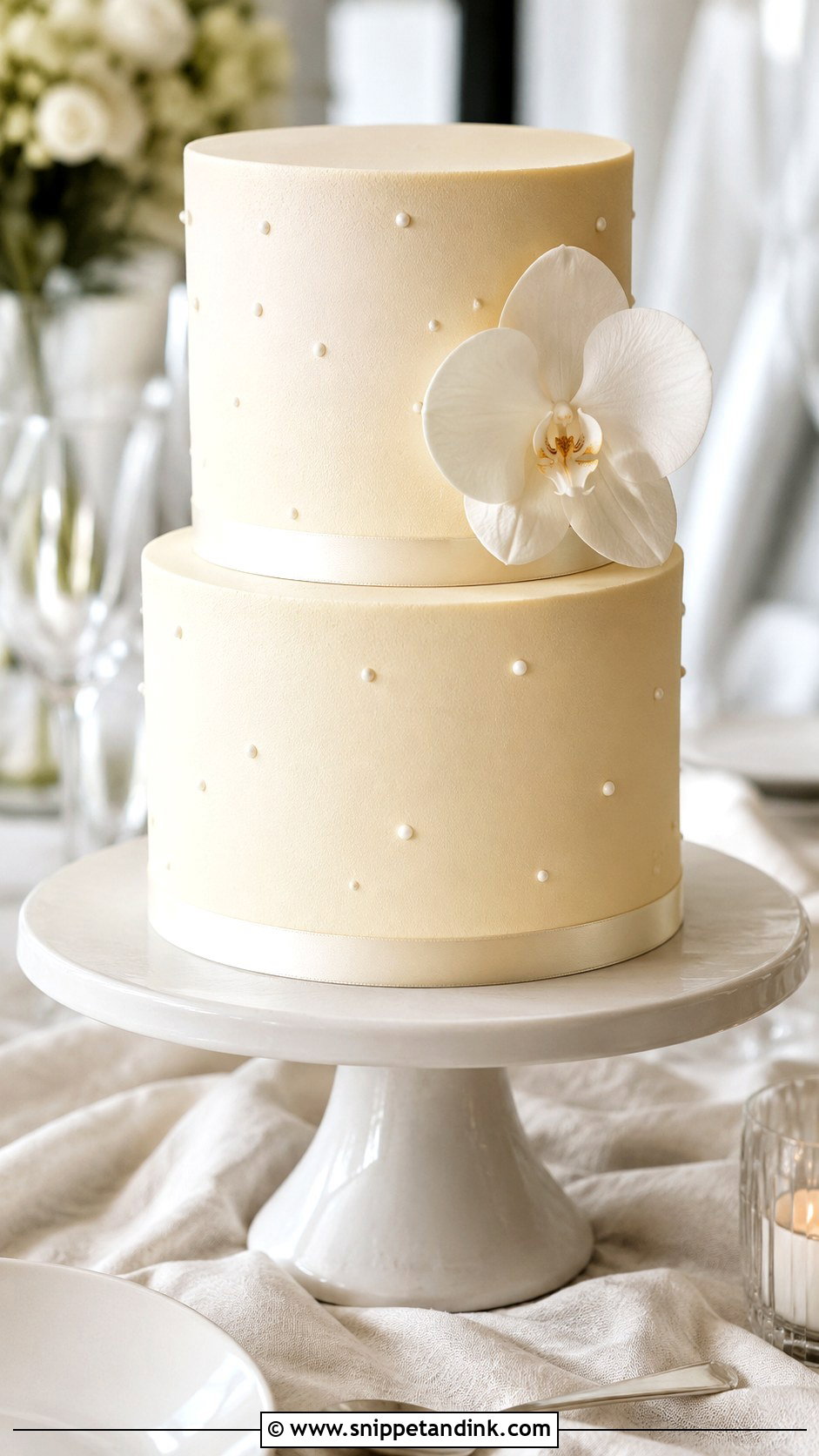
Minimal is not the easy option. With nothing to hide behind, edges need to be sharp and tiers dead level, so I’d only order this from a baker whose portfolio shows clean close-ups, not just styled wide shots. One detail is enough: a single sugar flower, a slim ribbon, a fine pearl border or a small cluster of fresh stems. White, ivory, beige and pale blush are the usual colors. Vanilla bean, lemon elderflower or almond cream suit it, and it sits naturally at a rooftop reception or a small dinner.
6. Buttercream Wedding Cake
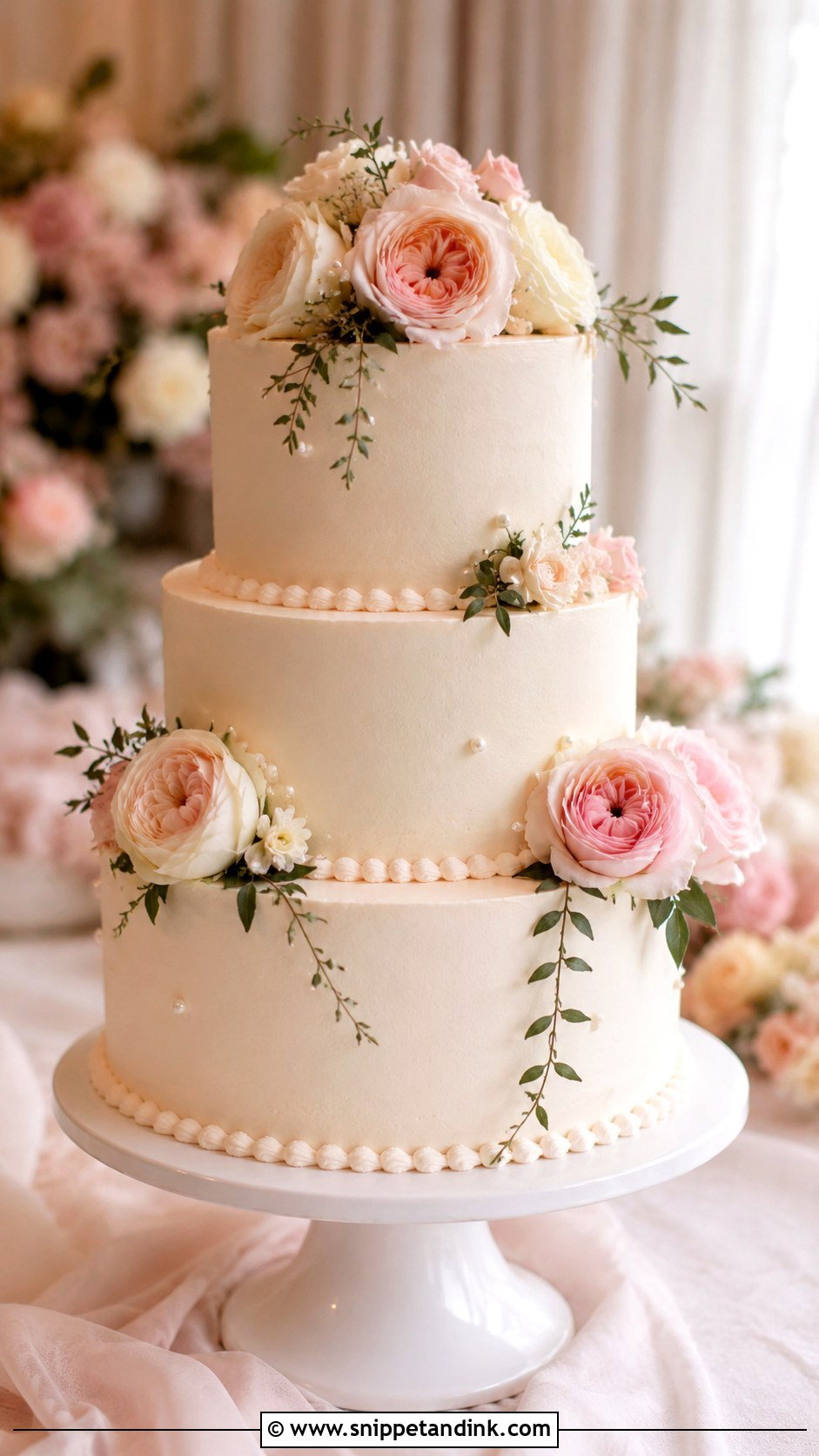
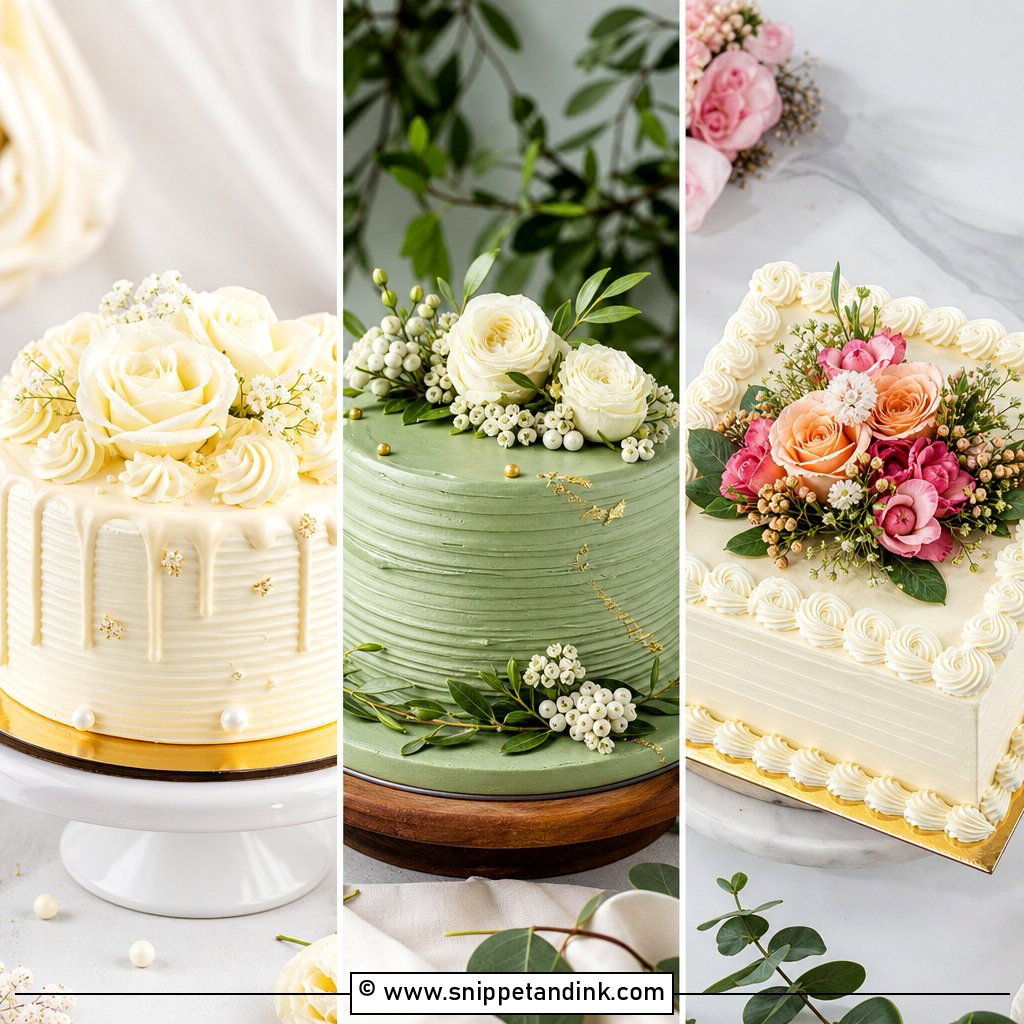
Buttercream is what most couples actually want to eat, and the type matters more than people think. Swiss and Italian meringue buttercreams are silky and less sweet, but they soften quickly once a room warms up. American buttercream is sweeter and forms a light crust, which makes it more forgiving outdoors. You can have a glass-smooth finish or a lightly textured one, and both take fresh flowers, piping, fruit, greenery or pearls. Vanilla, strawberry, lemon and chocolate layers all work underneath. If your reception is in a tent in July, say so at the very first conversation so the recipe can be adjusted properly, not swapped in the final week.
7. Textured Wedding Cake
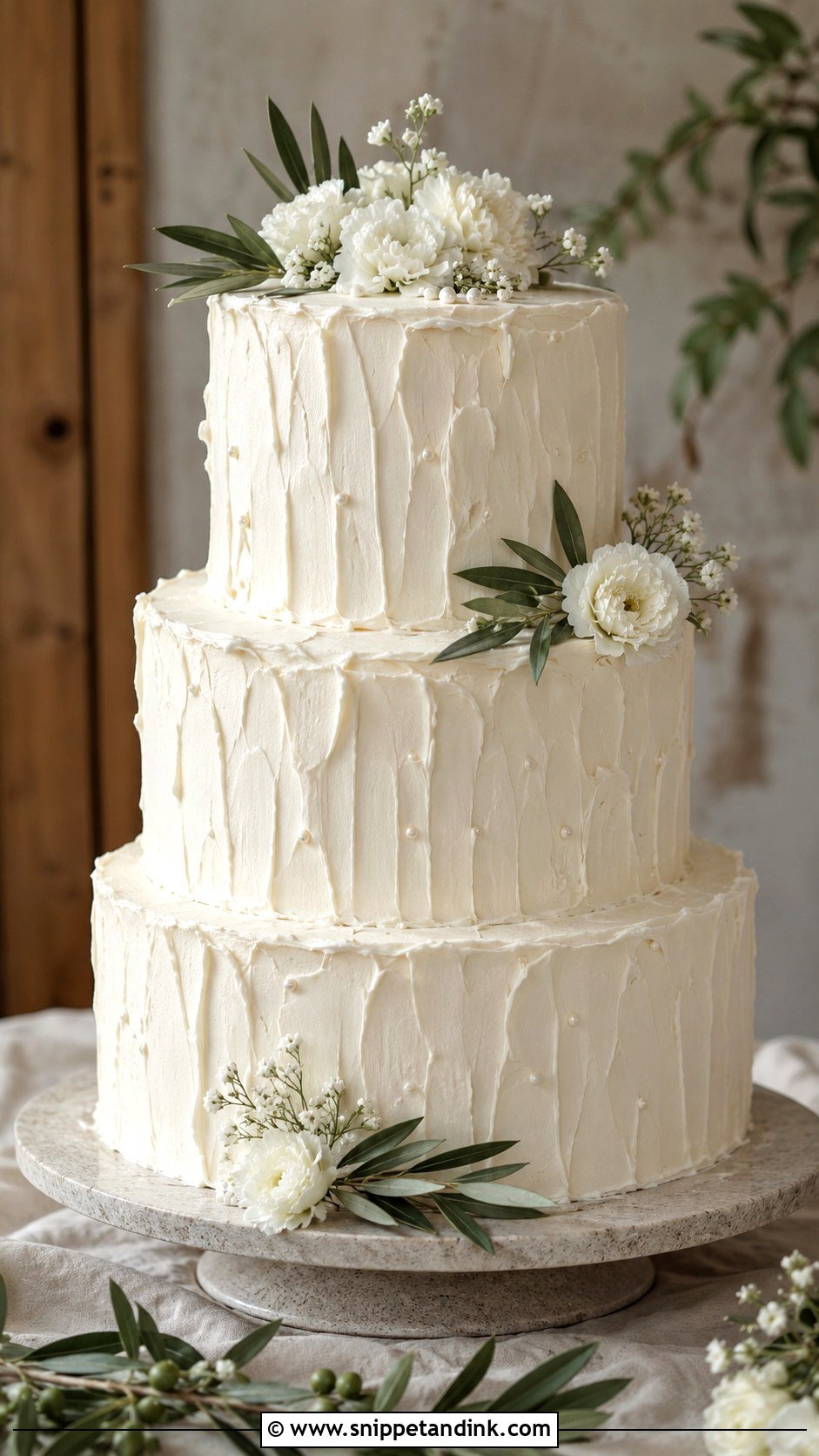
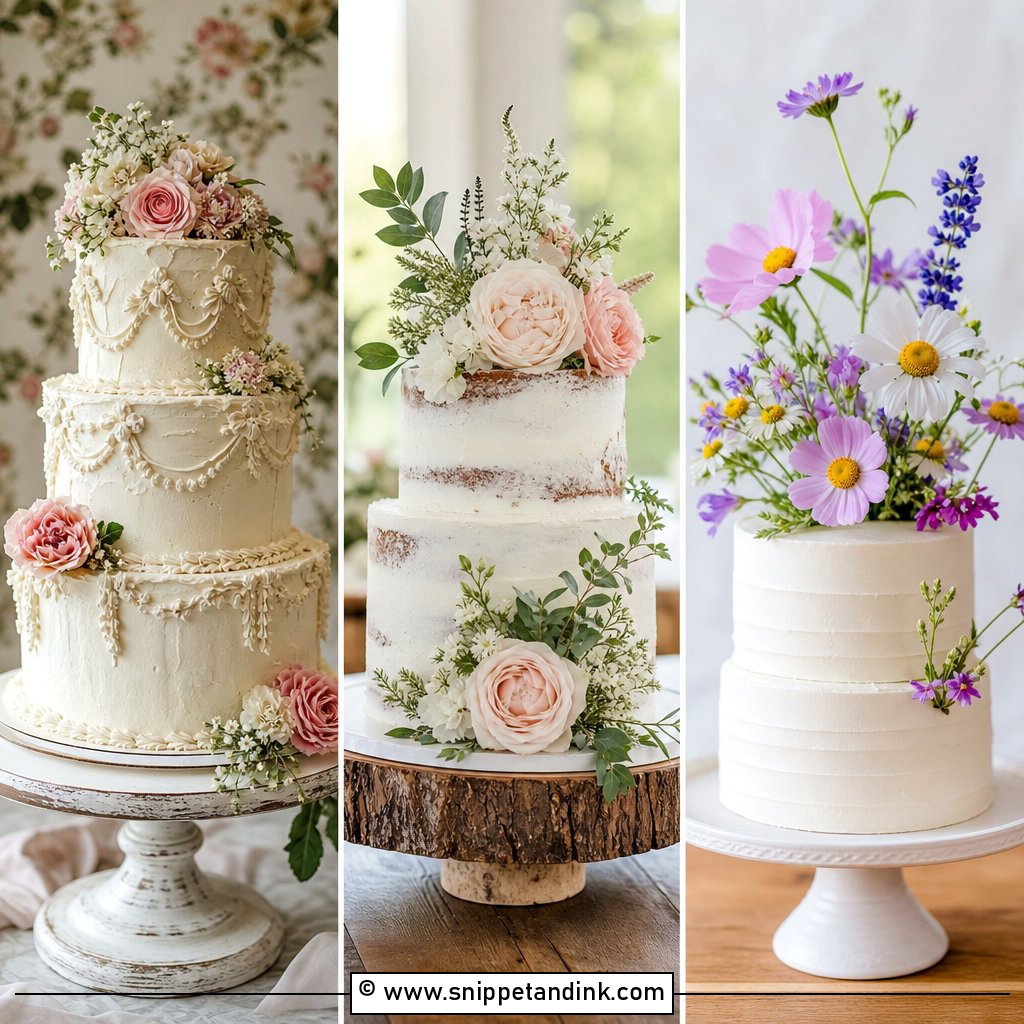
I suggest texture to couples who want buttercream outdoors. Ridges, vertical combing, palette knife strokes and soft waves hide the small movement and marks that a smooth finish would show the moment the cake warms. It suits natural and modern styling equally. Keep it all white, or tint it cream, sand, blush or sage. A few flowers are plenty, and some textured cakes look best completely bare, almost like sculpture. Palette knife work is done by hand, so expect each tier to look slightly different; that variation is the charm of it.
8. Ruffle Wedding Cake
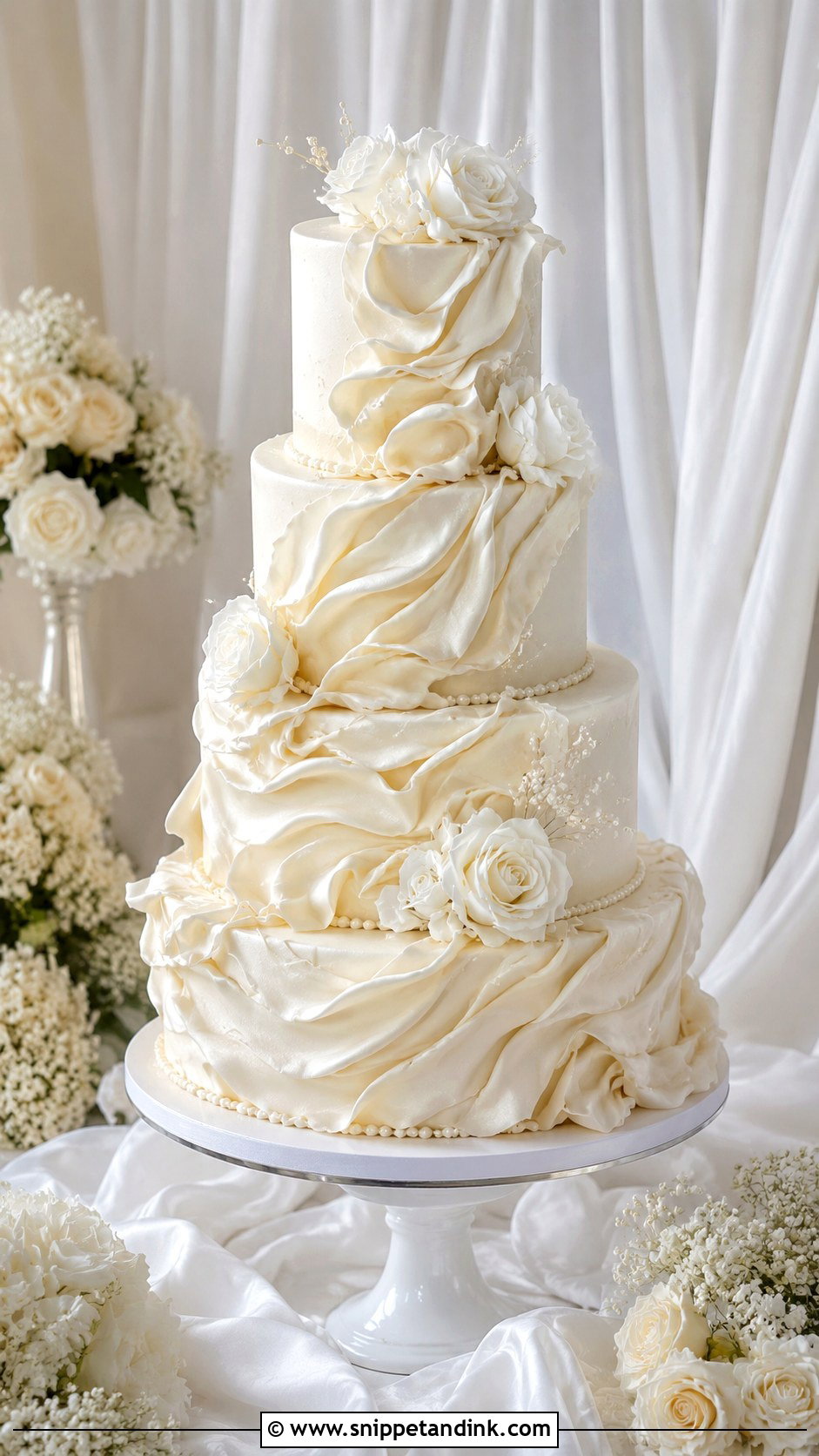
Ruffles take longer than anything else on this list, which is worth knowing before you fall for a fully covered cake. Fondant ruffles are cut, thinned and attached one strip at a time; they give a crisp couture edge and keep their shape in a warm room. Buttercream ruffles are piped with a petal tip, look softer and handmade, and need a cool space to stay defined. You can cover every tier, wrap just one, or let them fall down one side like the train of a gown. Ivory, white, blush and champagne suit it. Add only a few sugar flowers or pearls, because the texture is already doing the work.
9. Gold Wedding Cake
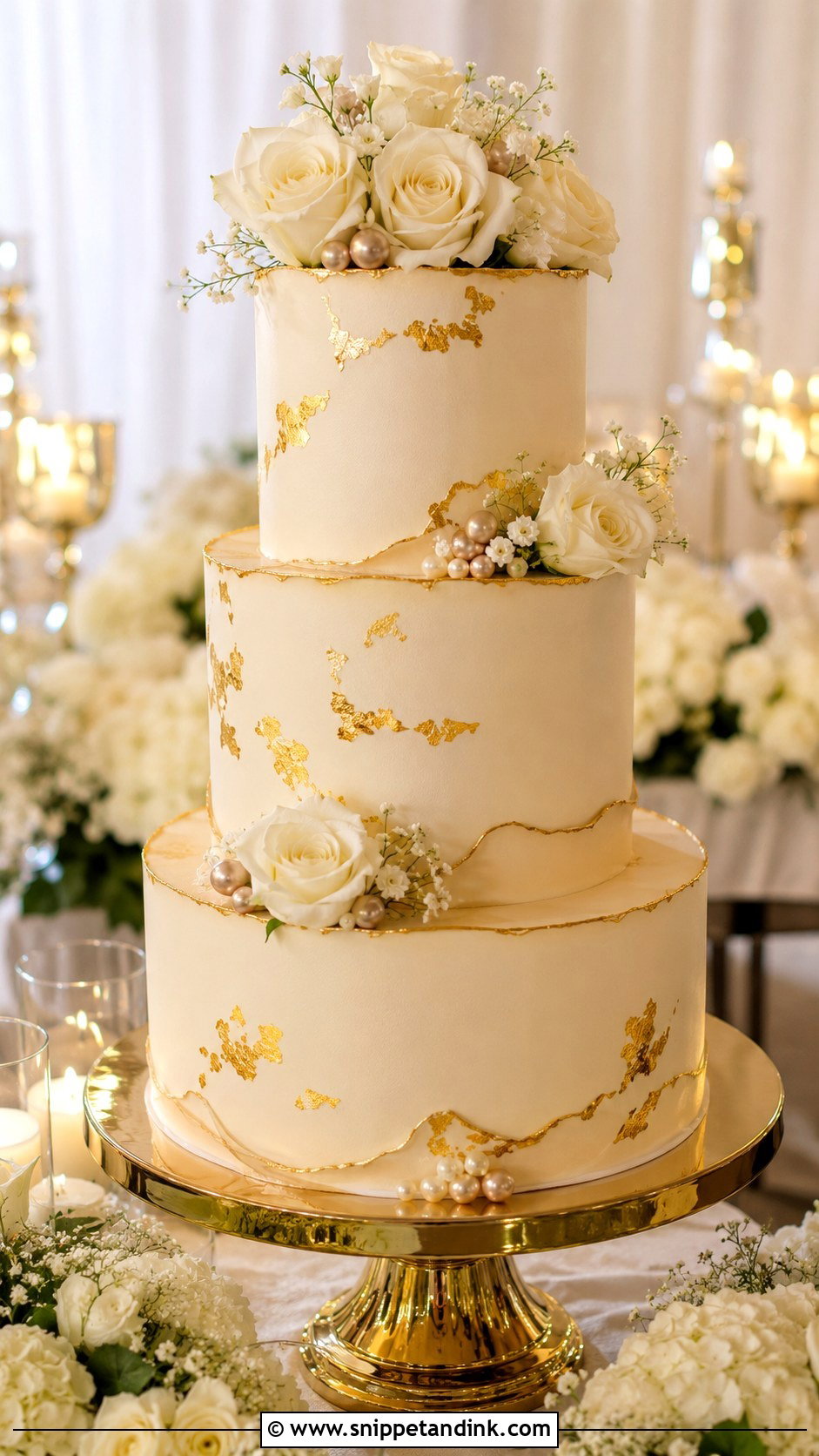
Gold looks completely different under candlelight than in daylight, so I always ask what time the cake will be cut. Thin leaf flakes, a painted edge, a metallic drip or one gilded tier can all look refined; gilding three tiers rarely does. Edible gold leaf is safe to eat, but many metallic dusts and paints are only labeled non-toxic, which means decoration, not food, so ask your baker which one goes on anything guests will eat. Gold pairs well with ivory, white, blush, mocha or sage, and caramel, almond, vanilla or chocolate layers match the richer styling. It suits evening receptions and rooms with chandeliers. Keep the flowers soft and fresh so the shine stays an accent.
10. Blush Wedding Cake
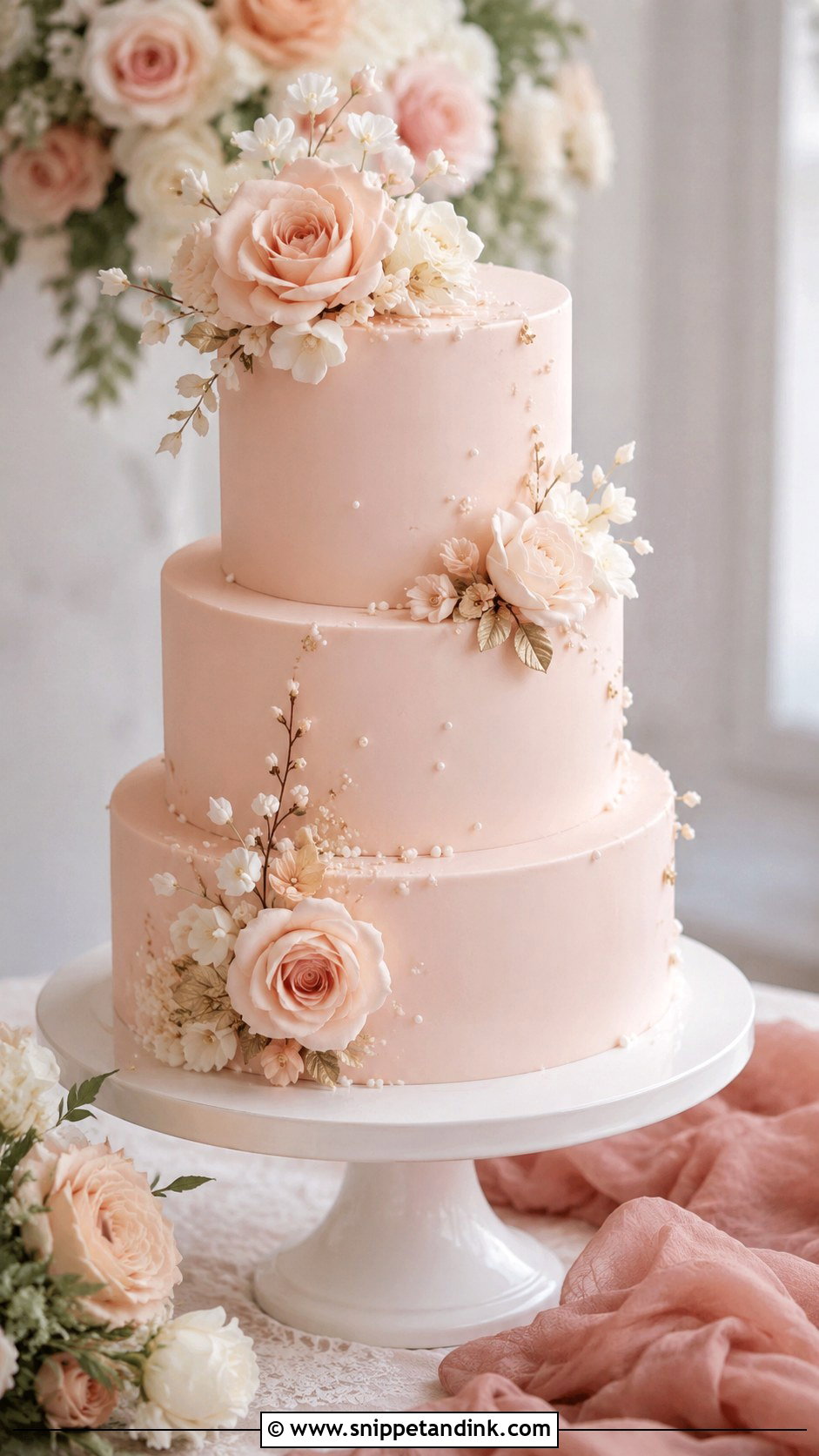
Blush is trickier to mix than it looks. A drop too much red gel and it tips into bubblegum, while a very pale blush can read almost white under warm reception lighting. I tint a test swatch and hold it against a bridesmaid fabric sample or a flower before committing. It sits easily with ivory flowers, champagne accents, dusty rose blooms and gold. Smooth buttercream feels modern; ruffles or piping push it vintage. Strawberry cream, vanilla raspberry, almond or rosewater buttercream all suit the color, and a few fresh roses or pearls finish it for a spring or garden reception.
11. Sage Green Wedding Cake
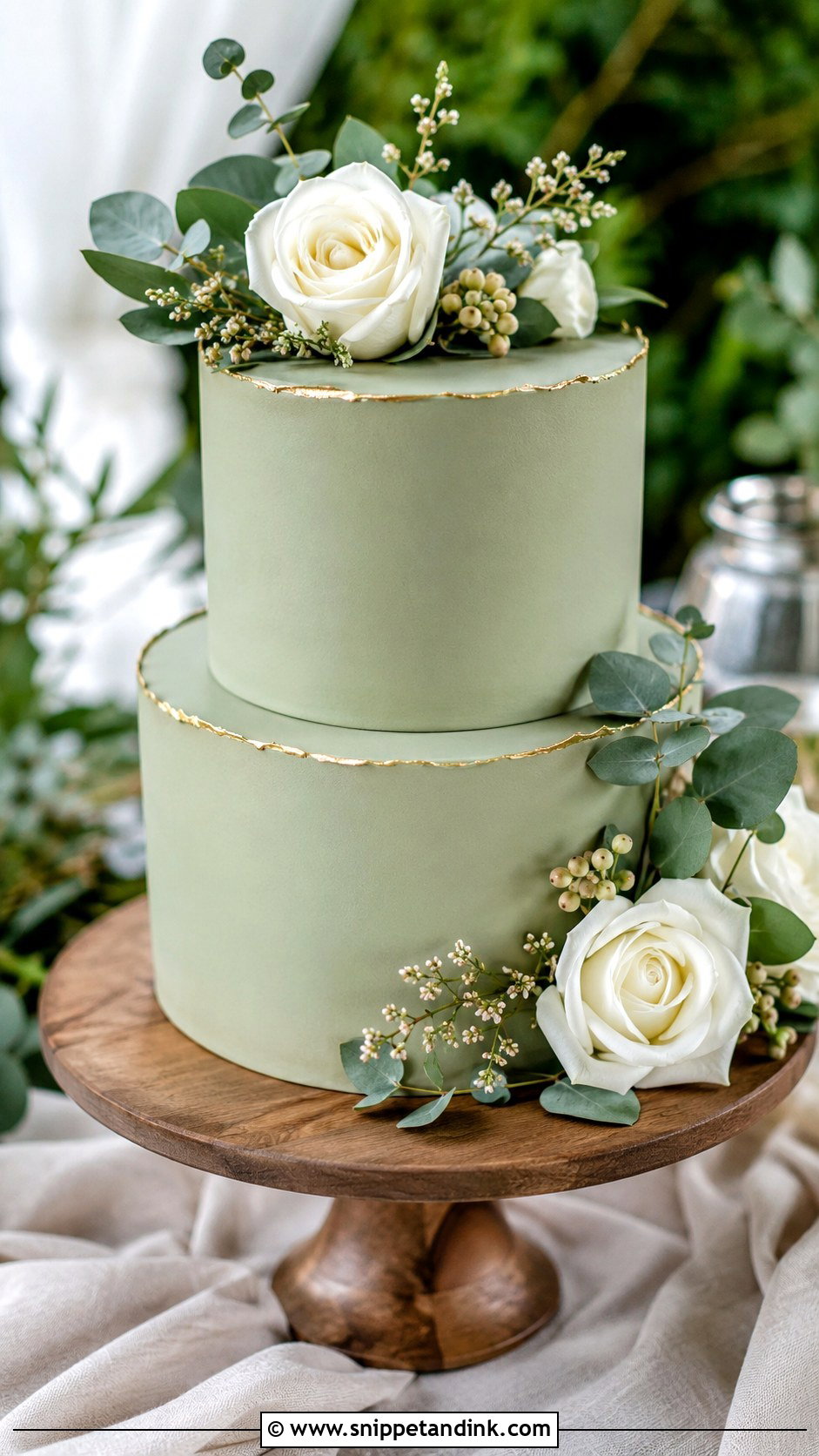
Sage is a color I mix in small batches, because green buttercream drifts toward mint or olive depending on how yellow the butter is. Starting from a whitened buttercream, often with the tiniest touch of violet to cancel the yellow, keeps the shade true. It suits outdoor and garden weddings and sits well with white flowers, eucalyptus, cream roses and gold. Smooth sage reads modern; a textured finish feels more organic. If a whole green cake feels like too much, one sage tier between ivory tiers balances it. Lemon, pistachio, vanilla or almond fit the palette, and a wooden stand or a linen-covered table shows it off.
12. Blue Wedding Cake
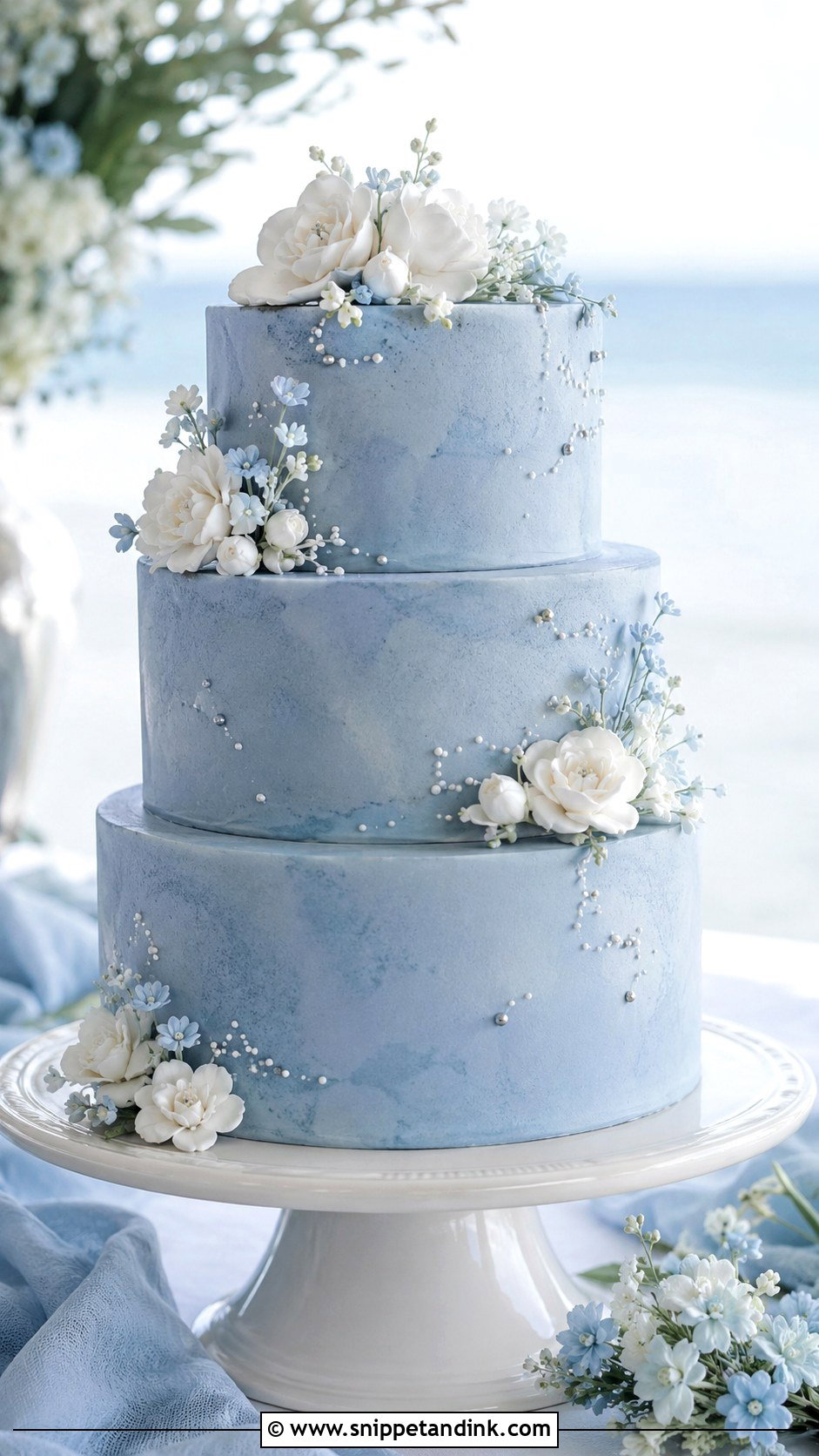
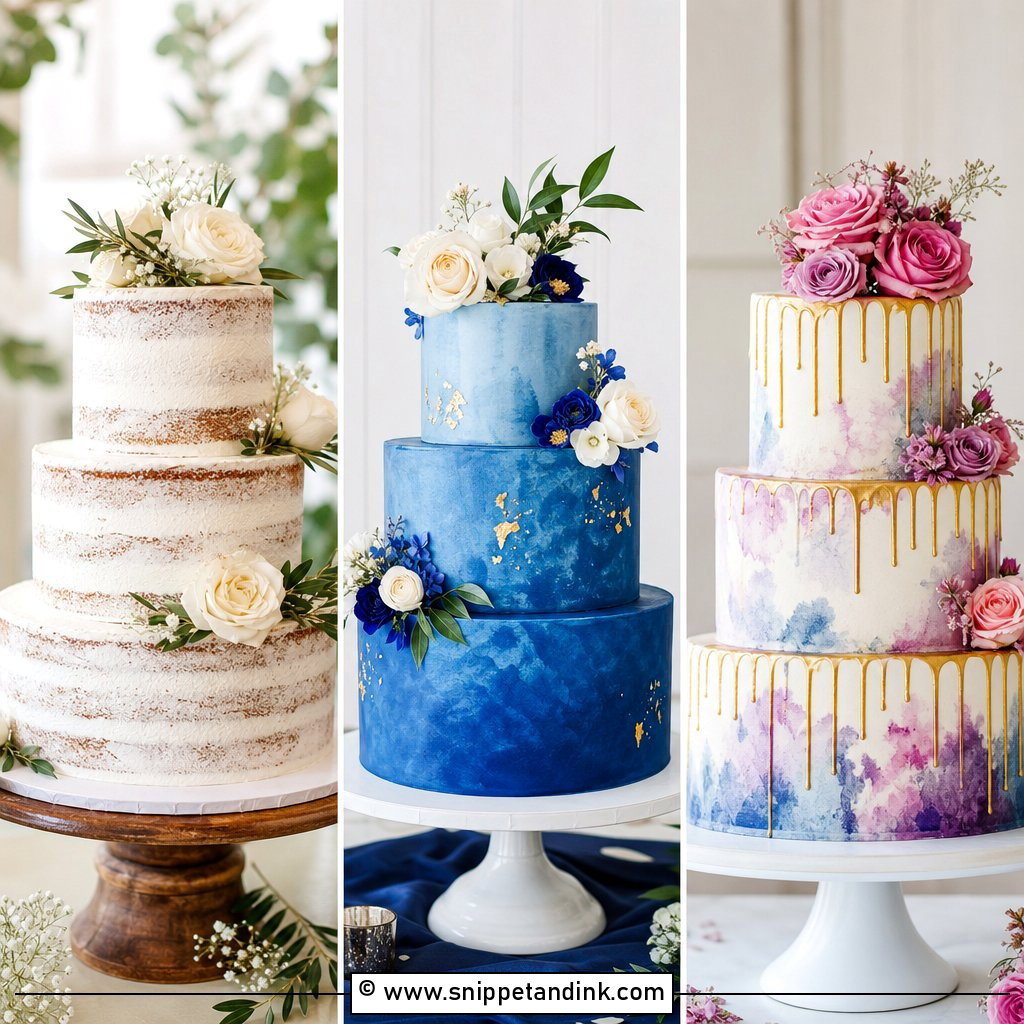
Blue is the shade where I insist on seeing a swatch before the day. Pale blue looks delicate, dusty blue feels refined, and a watercolor wash has a painted, artistic effect, but blue gel colors can fade under strong light and darken as the buttercream sits overnight. White flowers, silver accents, pearls and small sugar blossoms suit it. When color is the focus, keep the shape classic: three smooth tiers and a few white blooms. Vanilla, lemon, coconut or a blueberry filling work inside, and it fits seaside venues and cool-toned spring receptions.
13. Tall Wedding Cake
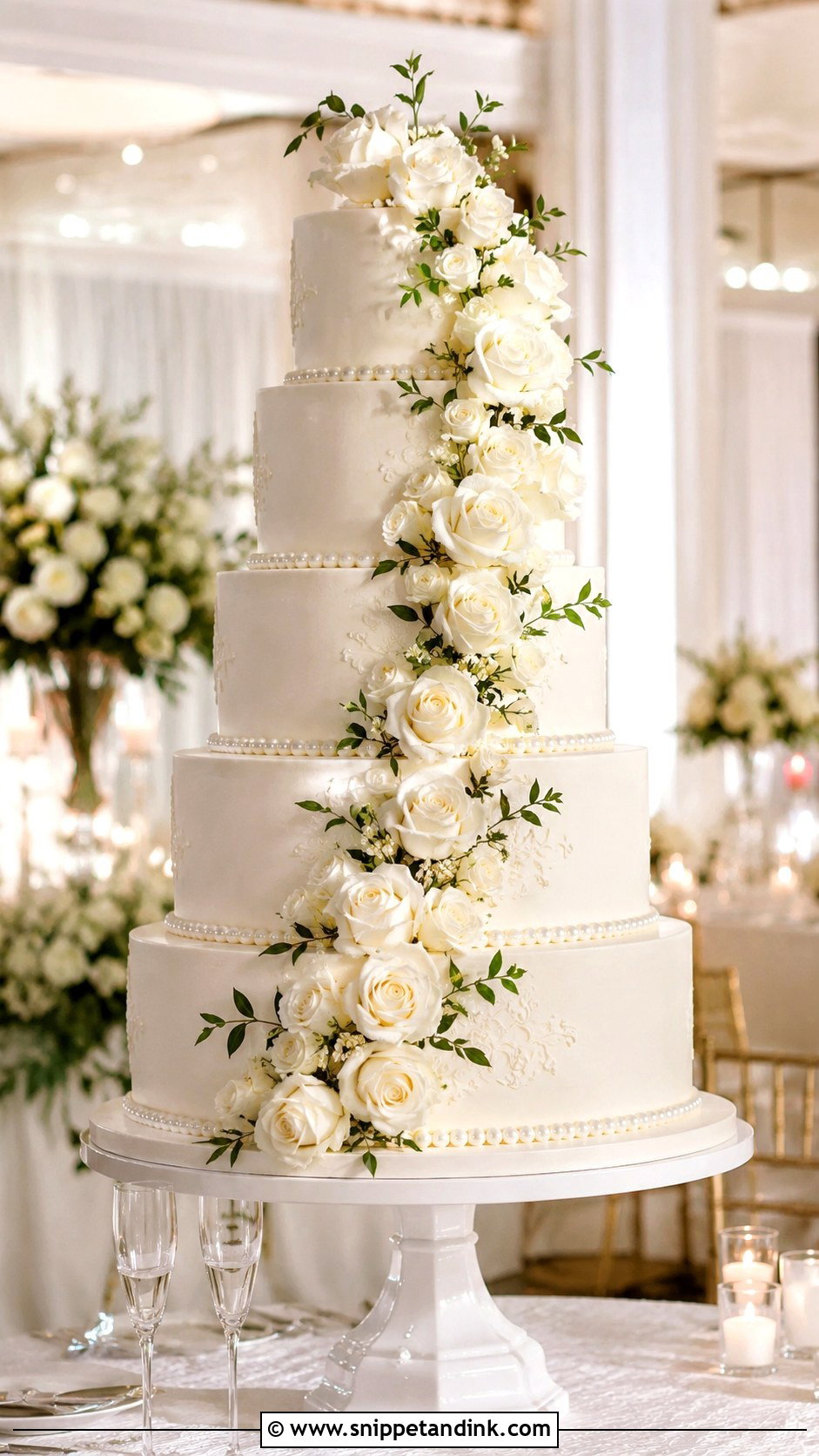
A tall wedding cake earns its place in a large room with high ceilings, where a shorter cake would disappear. Height is engineering, though. Every tier sits on its own board supported by dowels, very tall stacks usually need a central dowel running through them, and some of the height is often foam dummy tiers to keep the weight manageable. I deliver tall cakes in sections and stack them on site. They can be classic white, sharp-edged and modern, or romantic with cascading flowers, and mixing flavors by tier is common: vanilla raspberry, chocolate ganache, lemon cream, almond. Balance the decoration from top to bottom so the stack reads as one piece.
14. Single Tier Wedding Cake
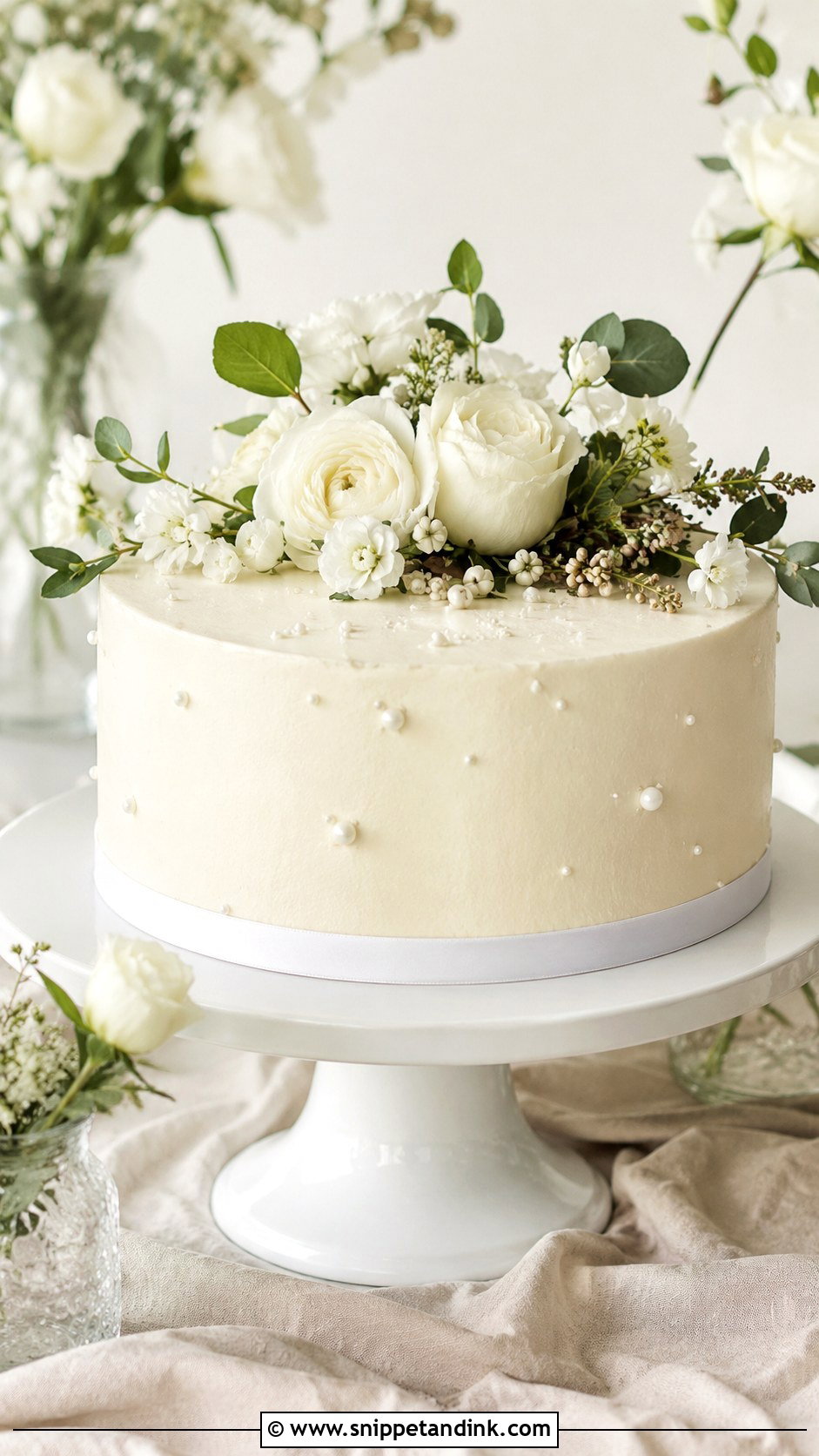
A single tier wedding cake is what I recommend most often for elopements, courthouse ceremonies and micro weddings. A wide tier looks modern, and a double-height one (bakers call it a double barrel) gives real presence on a stand. With a small cake every surface gets seen up close, so finish quality matters more, not less. Smooth buttercream with fresh flowers, pearls or vintage piping all suit it. Pick a flavor you truly love, since there’s no second tier to please anyone else: lemon blueberry, chocolate, vanilla bean or almond raspberry. Candles, bud vases or fabric around the stand finish the display.


15. Square Wedding Cake
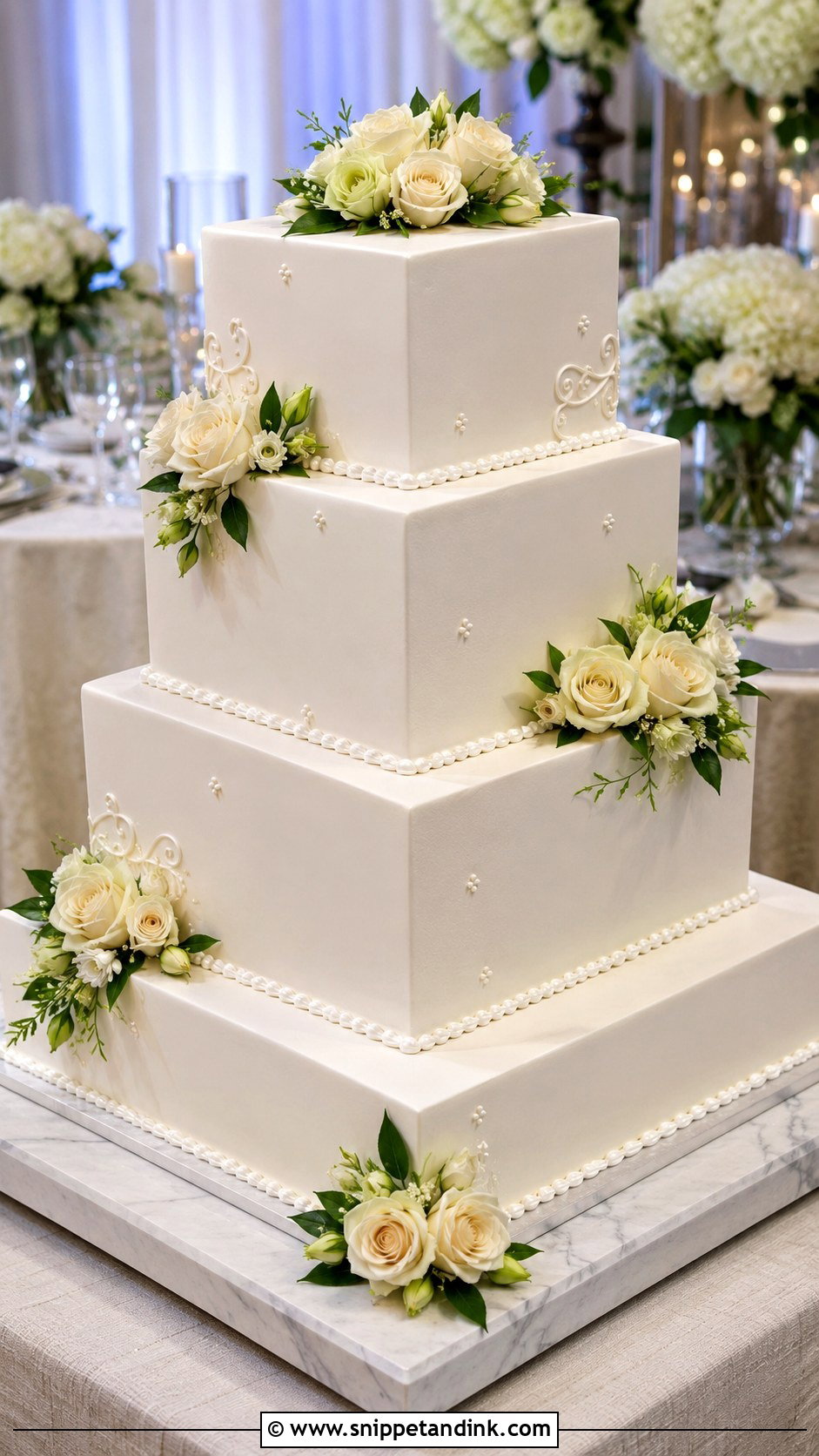
Square tiers take noticeably longer to finish than round ones. Each corner is built up and sharpened by hand, and corners are the first place fondant tears or buttercream rounds off in heat, which is why I keep the decoration simple here. In smooth white fondant the shape looks sleek in a hotel ballroom or modern venue; buttercream with flowers at the corners feels softer. A useful serving note: a square tier yields more slices than a round tier of the same width, which helps with a long guest list. Vanilla almond, chocolate raspberry or champagne cake work inside.
16. Rectangular Wedding Cake
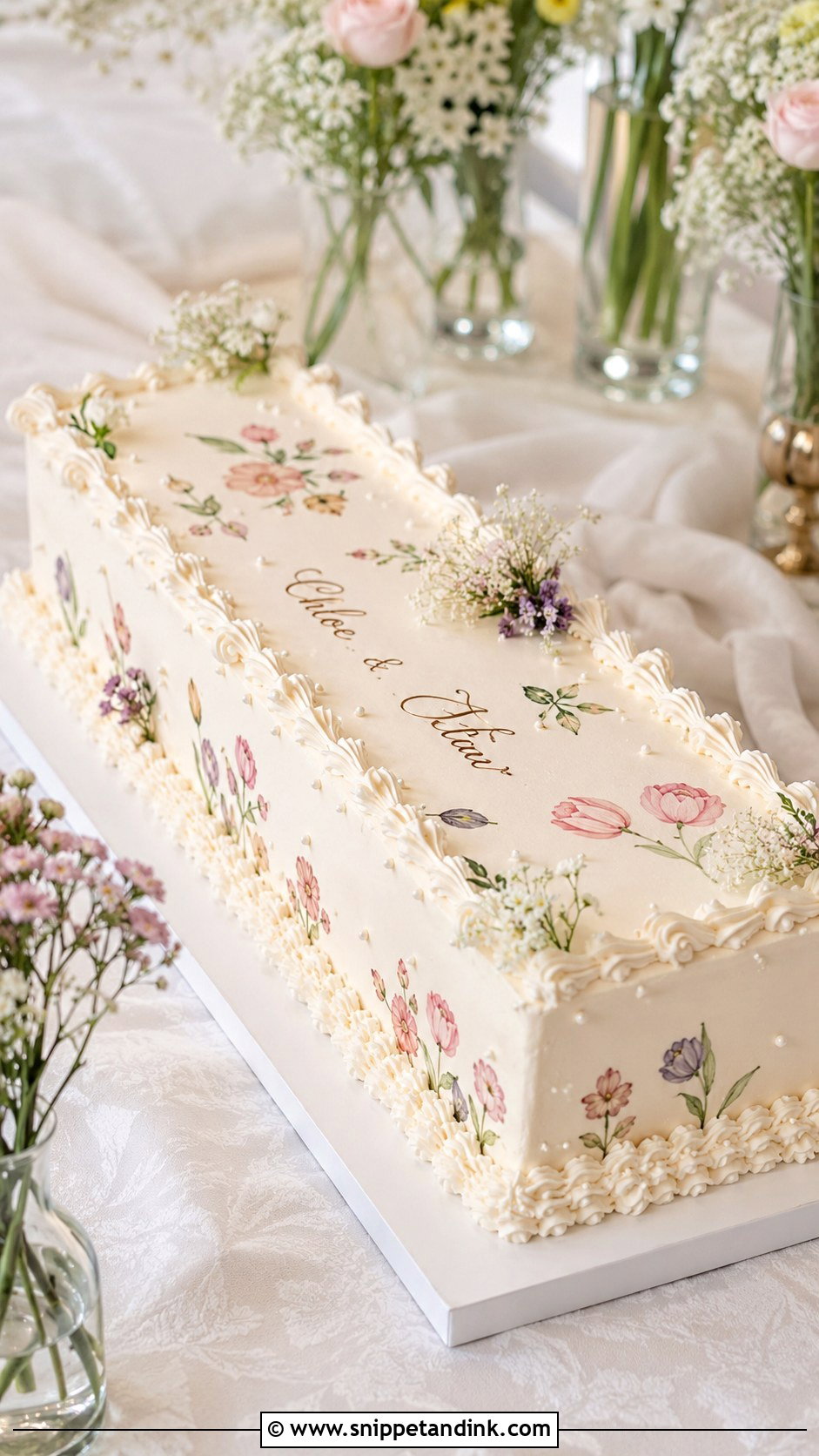
A long, low rectangular wedding cake can run down a banquet table almost like a centerpiece, or be stacked for a modern tiered effect. It suits family-style receptions and long tables. I like it for practical reasons: it cuts into tidy, even rows, and serving staff get through it faster than a round tier. The wide top takes buttercream, hand-painted flowers, piped borders or fresh blooms well. Before you order, measure the table. A large flat cake is heavy and needs a rigid board and a level, sturdy surface. Vanilla cream, lemon, chocolate or berries and cream keep the menu crowd-friendly.
17. Hand Painted Wedding Cake
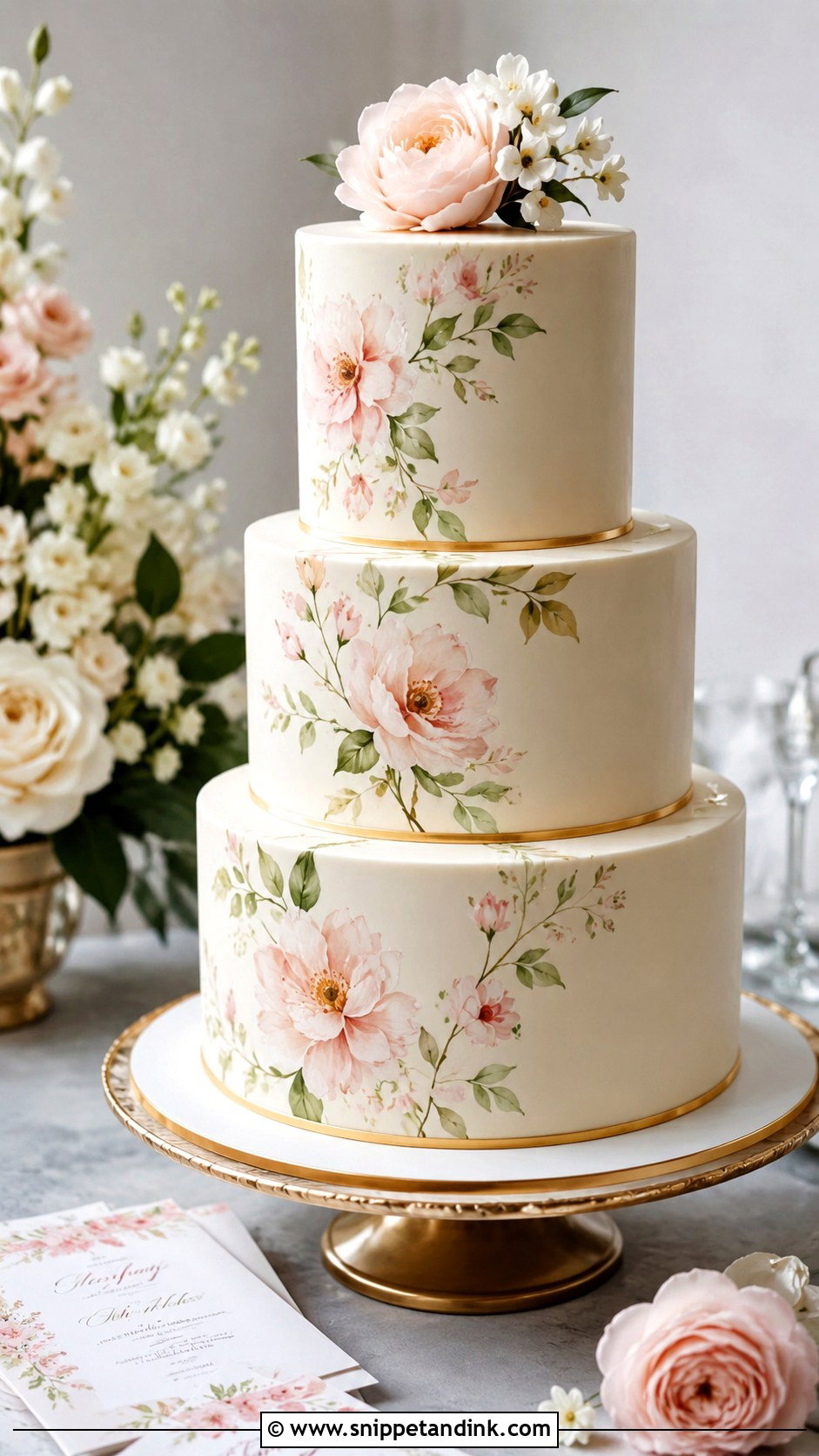
Cake painting is done with gel colors thinned in alcohol or clear extract, usually on fondant, because the brush needs a firm, dry surface. Buttercream can be painted once it’s chilled hard, but the result is looser and more impressionist. Watercolor flowers on white or ivory fondant are the classic version; vines, small leaves, abstract brushwork or a motif lifted from your invitation all work. Keep everything else plain so the painting stays the focus, with perhaps a small floral topper or a thin gold edge. Vanilla, almond, lemon or champagne layers suit it. Send your invitation design early, because painting is slow and can’t be rushed the night before.
18. Pressed Flower Wedding Cake
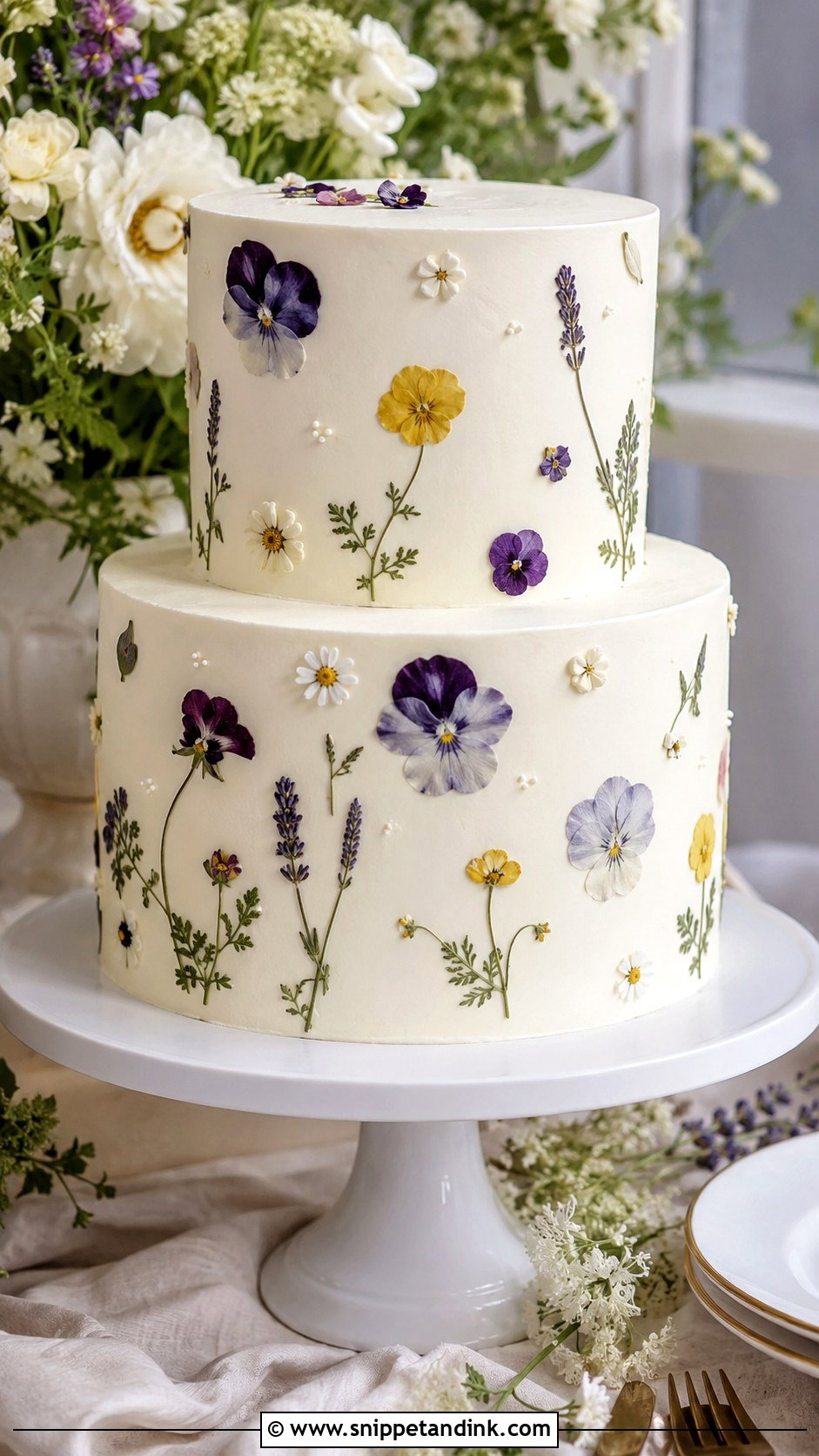
A pressed flower wedding cake needs flowers that are genuinely edible and grown to be eaten: violas, pansies, cornflowers, calendula petals and lavender are the usual choices, pressed flat and dried before they go on. Sugar versions are the alternative if you want a specific bloom. They’re laid onto smooth buttercream or fondant like a pattern and pressed lightly so they bond. Match the colors to your bouquet and keep the shape simple. One warning I always give: pressed petals soften and darken if the cake sweats, so this isn’t the design for a humid tent. Lemon, vanilla, honey, lavender or elderflower layers suit it, especially in spring.
19. Cascading Flower Wedding Cake
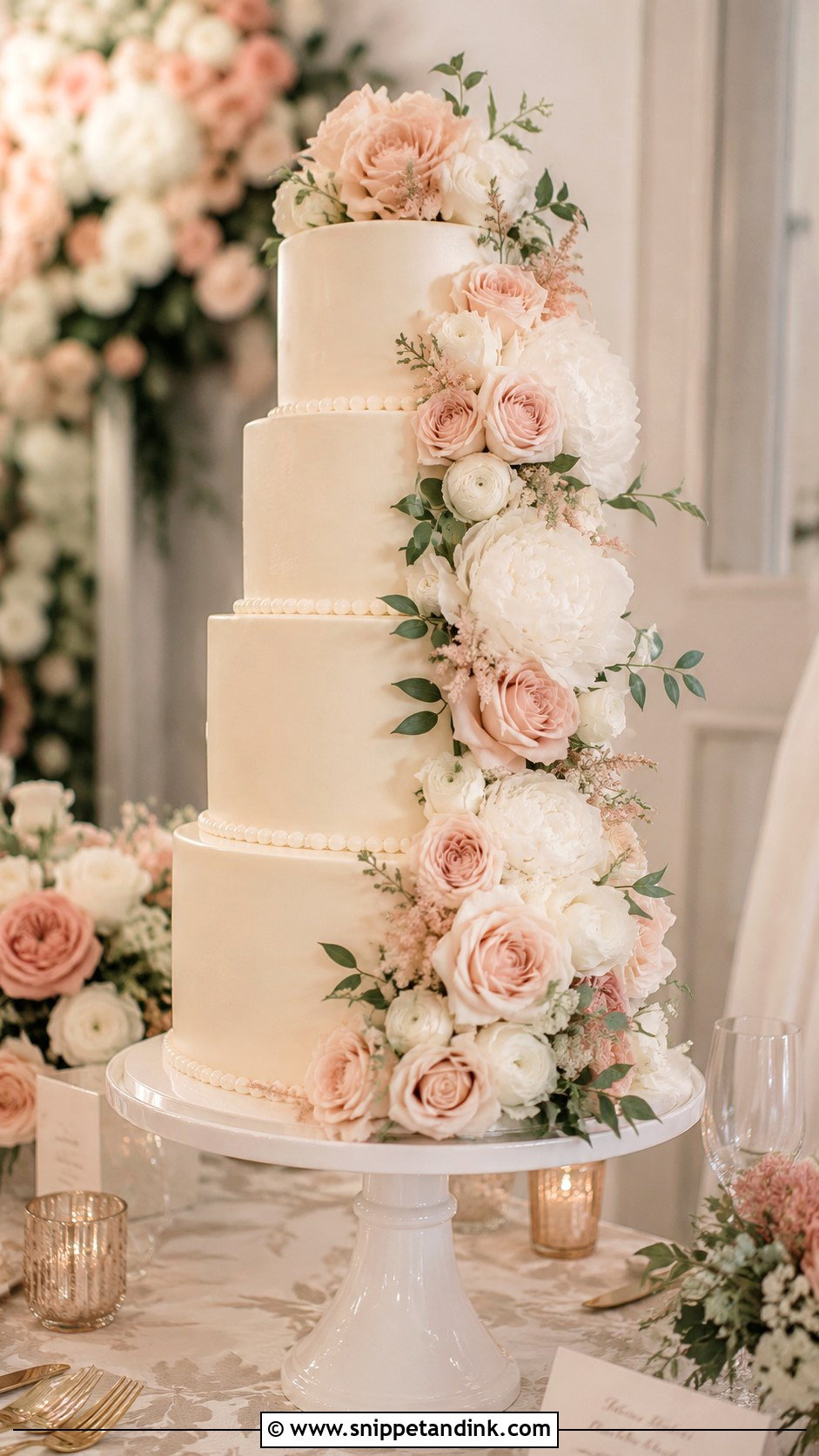
A cascade needs a plan for the stems before it needs a color plan. Flowers running from the top tier down the side are wired or picked into the cake, or fixed to a removable support, and they cover much of the frosting, so I keep the base plain: white, ivory, blush or champagne. Large roses and orchids make it bold; peonies, ranunculus and greenery keep it soft. It suits garden weddings and venues with floral installations, and the movement shows well in cake-cutting photos. Agree in advance who places the flowers on the day, florist or baker, and how long before guests arrive. Vanilla raspberry, lemon cream or almond suit it.



20. Naked Wedding Cake
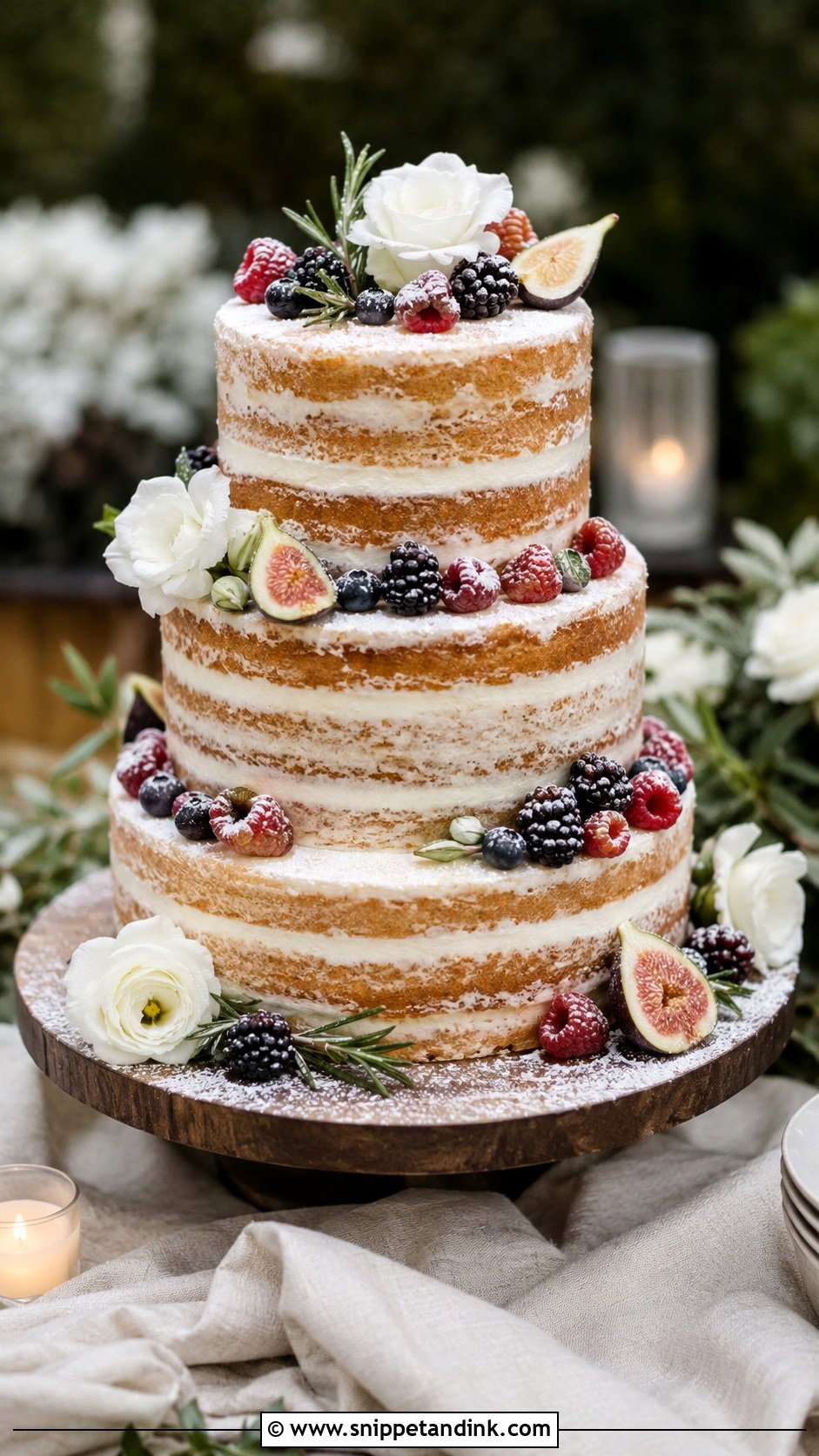
A naked cake is the least forgiving of heat and time. With only a thin scraped coat, the sponge is open to the air and starts drying at the edges within a few hours, so I assemble these as close to the event as I can and ask venues not to set one out at noon for an evening cutting. Handled that way, it suits barn, garden, brunch and outdoor weddings. Fresh berries, figs, flowers, greenery or a dusting of powdered sugar decorate it without hiding the layers. Because the inside shows, the filling lines need to be level. Vanilla, carrot, lemon, chocolate and spice cakes all look good this way.
How Each Finish Copes With Heat and a Long Display
Buttercream
Meringue buttercreams soften as soon as a room warms up, and in direct sun they can start to slide within an hour. Crusting American buttercream holds on a little longer. Either way, I want the cake indoors or in full shade, away from heaters, candles and the band’s lights.
Fondant
Fondant seals the cake from the air and keeps sharp edges, but carrying a chilled fondant cake straight into a warm, humid room makes it sweat. Beads of condensation form on the surface and can streak painted color or lift gold. Let it come up to temperature gradually in a cool space instead.
Naked cakes and flowers
Exposed sponge dries out and fresh flowers wilt. Both are good reasons to set the cake out as late as your timeline allows, ideally an hour or two before cutting rather than first thing.
Delivery Day and the Top Tier You Take Home
Most tiered cakes travel chilled, unstacked or partly stacked, in boxes on a flat, level surface, and I assemble them on the cake table. Make sure that table is sturdy, level and already in its final position; moving a finished three-tier cake across a room is how cakes get damaged. Agree who will cut and serve it too, since many venues charge a cutting fee for cakes from outside suppliers.
If you’re saving the top tier, take off the flowers and decorations, chill it until the frosting is firm, then wrap it tightly in several layers of plastic wrap and foil before freezing. It’s safe to eat a year later, though honestly the texture is best within a few months, which is why some couples order a small fresh cake in their wedding flavor for the anniversary instead.
The Cake Has to Suit the Room as Well as the Photos
The right cake depends on the room it will stand in as much as on the photos you’ve saved. A classic white cake belongs at a formal reception; a pressed flower cake suits a garden ceremony, as long as it isn’t sitting in a humid tent. If you like clean styling, look at minimalist buttercream, pearls or a single tier. If you want drama, go tall, floral, ruffled or touched with gold. Bring your shortlist, your flower plan and your venue details to the tasting, and let flavor settle any tie.
You'll Like These Ideas:











Leave a Reply