
A three-tier vintage cake is the one I most enjoy piping, and the one that most needs a plan. The style borrows from older wedding cakes: over-piped borders, swags, drop strings, pearls, bows and the odd cherry, usually in ivory or soft pastels. Three tiers give enough height to look formal without lifting all that detail far above eye level. Below are twenty versions, from full Lambeth to a quiet monogram, with notes on how each one is actually piped and what to ask before you book.
Royal Icing or Buttercream Under All That Piping
Vintage piping can be done in either, and the choice affects taste, heat tolerance and cost more than most couples realise. Royal icing is egg white and icing sugar. It sets hard, holds sharp detail for days and won’t melt, which is why older formal cakes were piped with it. The downside is that it’s crunchy and very sweet, and plenty of guests leave it on the plate.
Buttercream piping tastes better and gives the soft, puffy look you see in most modern Lambeth photos. It is also far more sensitive to warmth. In a hot room, fine strings and tall scrolls start to sag, so I either pipe the most delicate parts in royal icing and the bulk in buttercream, or keep the cake somewhere cool until the last moment. Show your baker the look you love and let them suggest the mix.
Bringing an old family photo to your baker
If your parents or grandparents had a tiered cake, an old photo is often a better brief than any mood board. From a decent print I can usually read the border style, the tier shapes and the topper, then adapt the flavours to modern taste. Bring the photo, the year of the wedding if you know it, and any original topper you might like to reuse.
1. 3 Tier Vintage Lambeth Wedding Cake
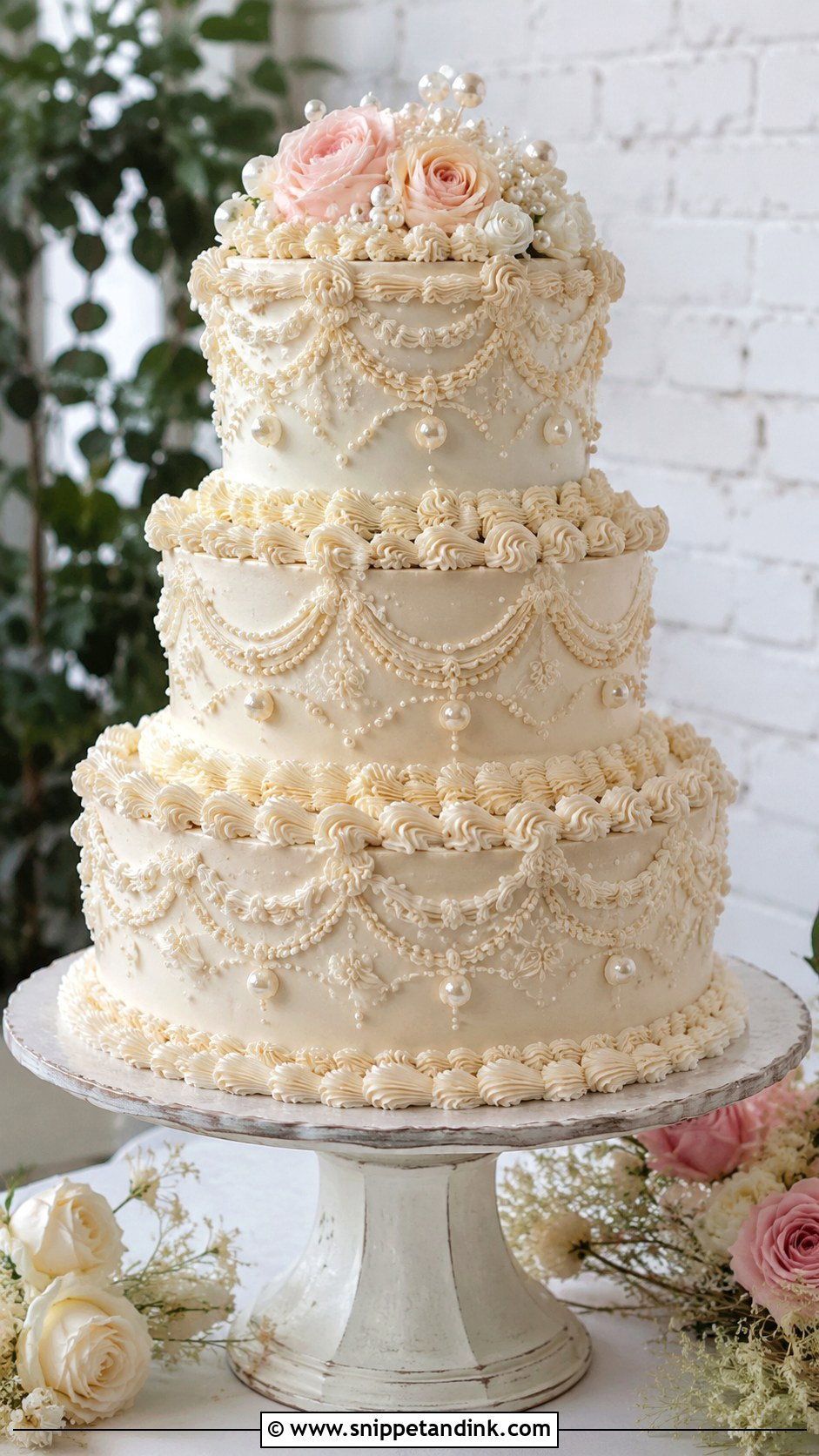
Lambeth piping builds borders in layers, one line on top of another, until the scrolls, swags and shells stand proud of the cake. It takes its name from the decorator who popularised the method in the 1930s, and it is slow work; three fully piped tiers can take many hours, which will show in the quote. I keep the colour gentle, ivory, soft pink, butter yellow or pale blue, because strong colour flattens the shadows that make the piping readable. Swiss meringue buttercream over a vanilla almond sponge is my usual base, with a small floral topper rather than a big arrangement.
2. 3 Tier Vintage Pearl Wedding Cake
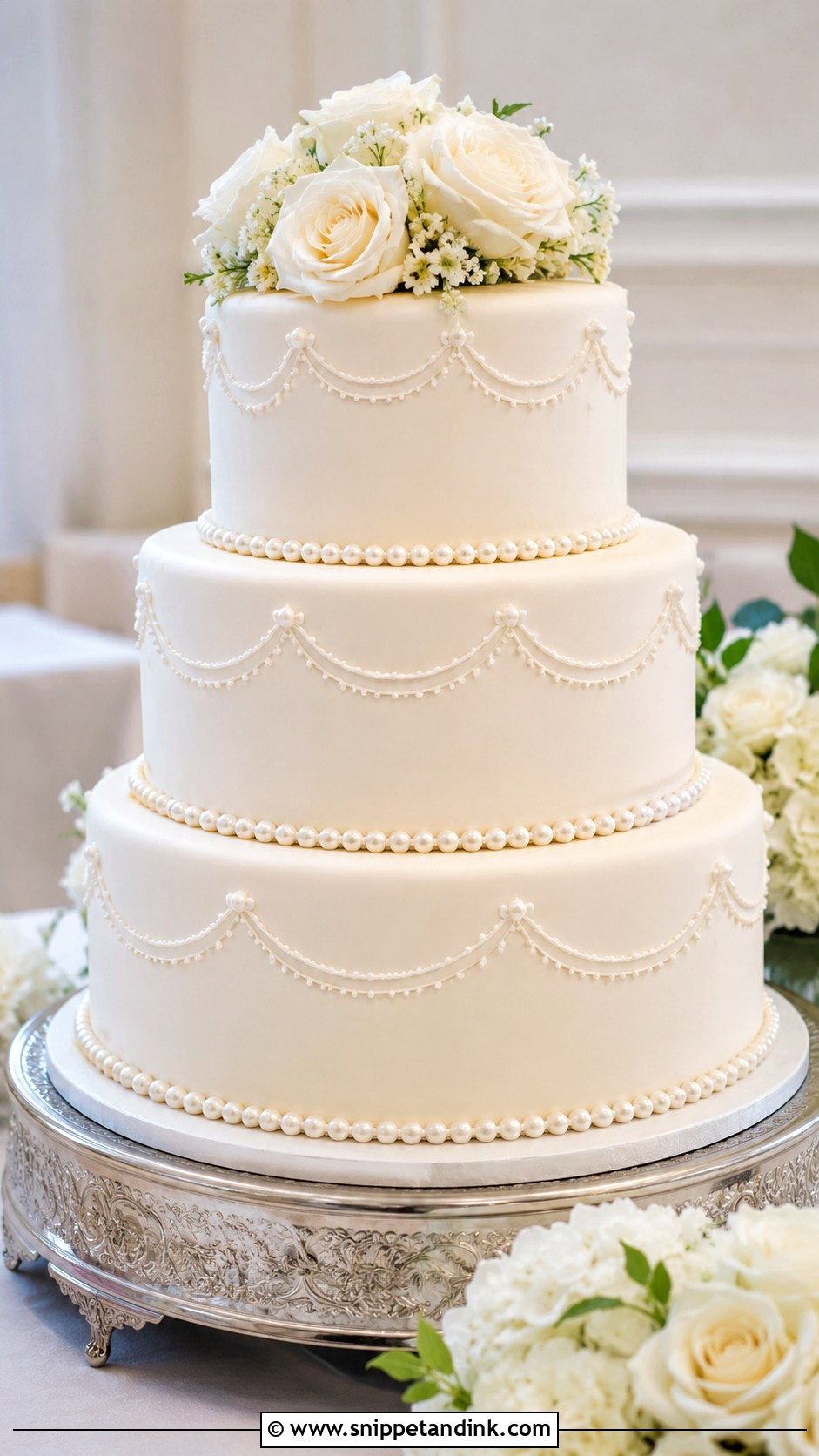
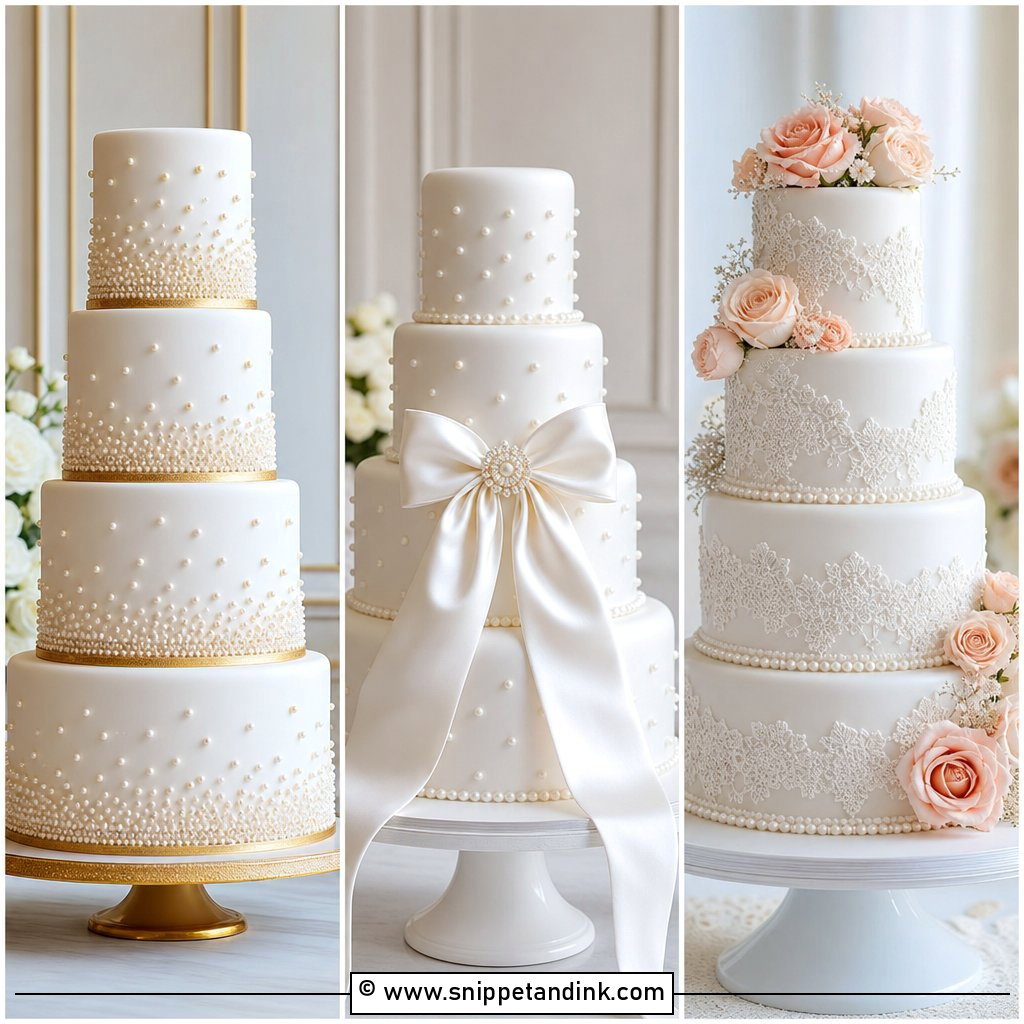
Pearls were part of vintage piping long before sugar pearls came in jars; older cakes used tiny piped dots instead. A pearl wedding cake in this style sets rows of small edible pearls along scalloped piping or around lace, a much lighter touch than full Lambeth. I’d suggest it if you like the vintage outline but find heavy piping too much. Vanilla bean, almond, white chocolate raspberry or a champagne-style flavour without alcohol all fit, and a few small white roses or cream ranunculus on top are enough.
3. 3 Tier Vintage Lace Wedding Cake
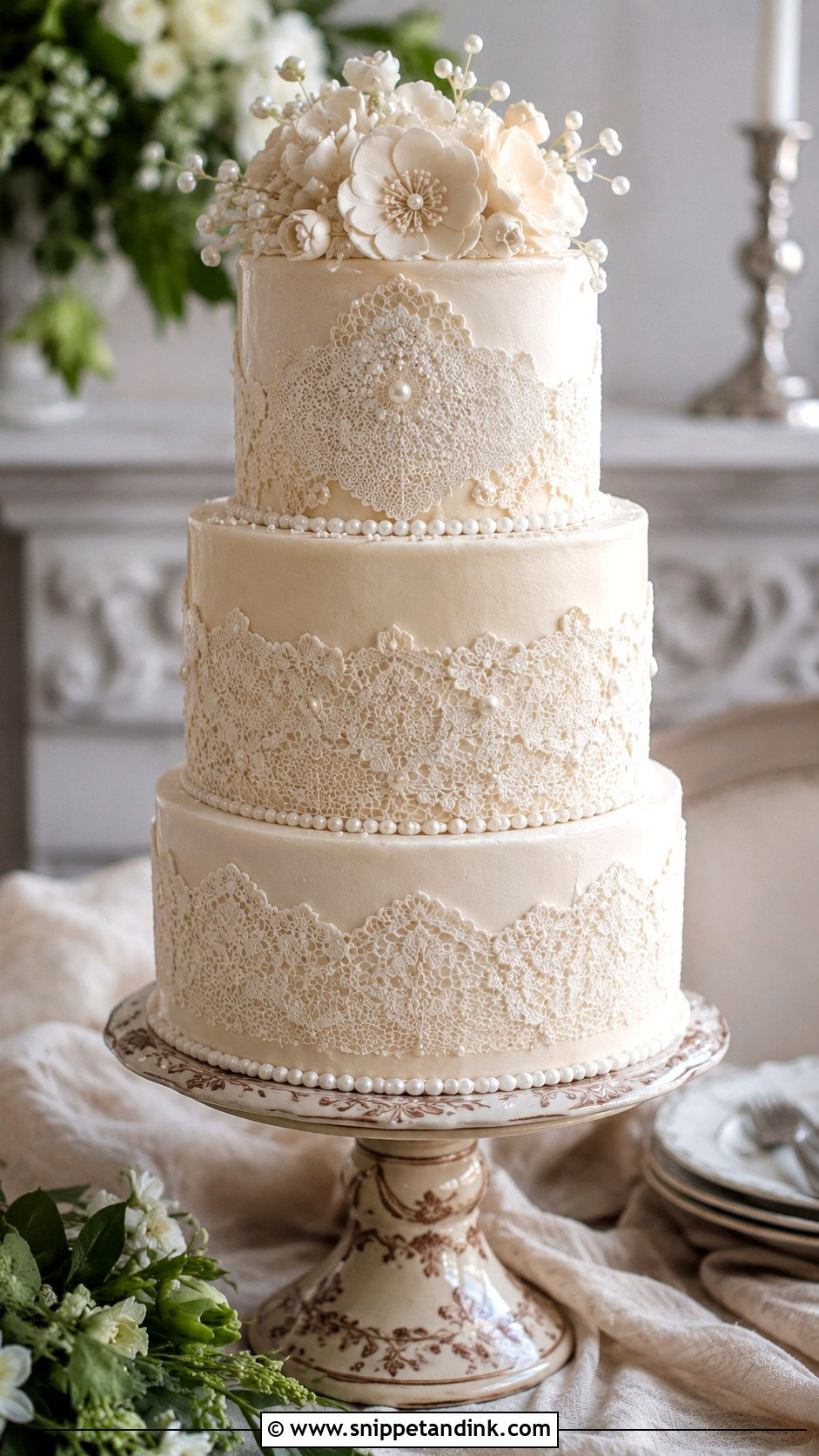
Lace on a cake is made in three ways: piped freehand in royal icing, pressed from silicone lace mats in sugar paste, or cut from fondant. Piped lace looks the most vintage because it’s a little irregular, like the real thing. Ivory on ivory is safest, though blush or dusty blue can work if your dress lace has that tint. If you’re wearing a lace gown, I’ll ask for a close-up photo of the pattern, since echoing one motif from the bodice is a detail guests notice at the cake table. Lemon vanilla keeps the flavour fresh.
4. 3 Tier Vintage Rose Wedding Cake
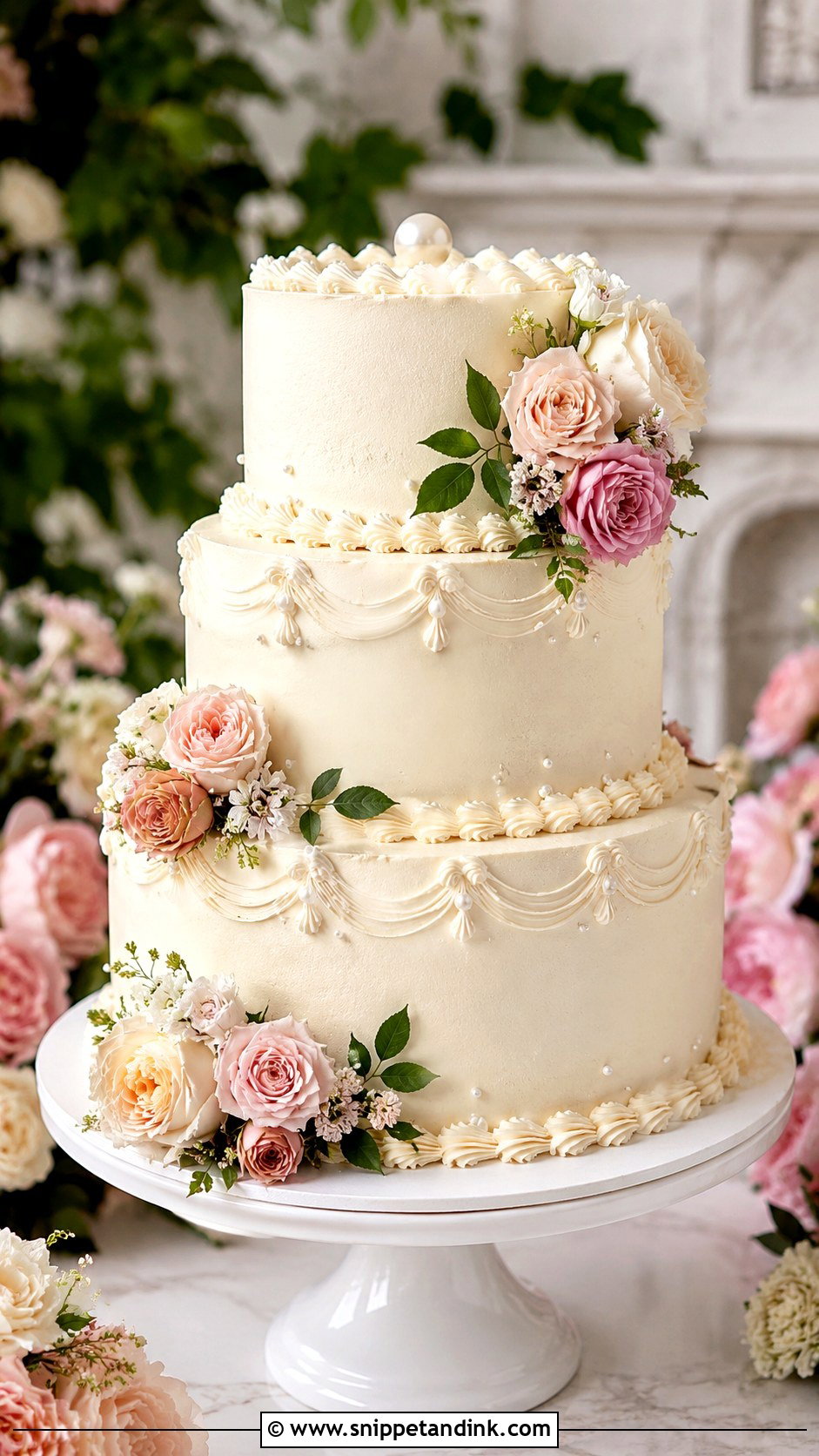
Sugar, fresh and dried roses all turn up on vintage cakes, and they behave very differently. Sugar ones hold indefinitely. Fresh ones need wrapped stems and go on at the venue. Dried ones look antique but shed and are often treated, so they shouldn’t touch the icing at all. For a soft version I tuck blush and cream roses between ivory buttercream tiers; for more drama, mauve or antique peach. Keep the arrangement off-centre so it looks gathered, and pair it with vanilla, almond, red velvet or raspberry cream.
5. 3 Tier Vintage Buttercream Wedding Cake
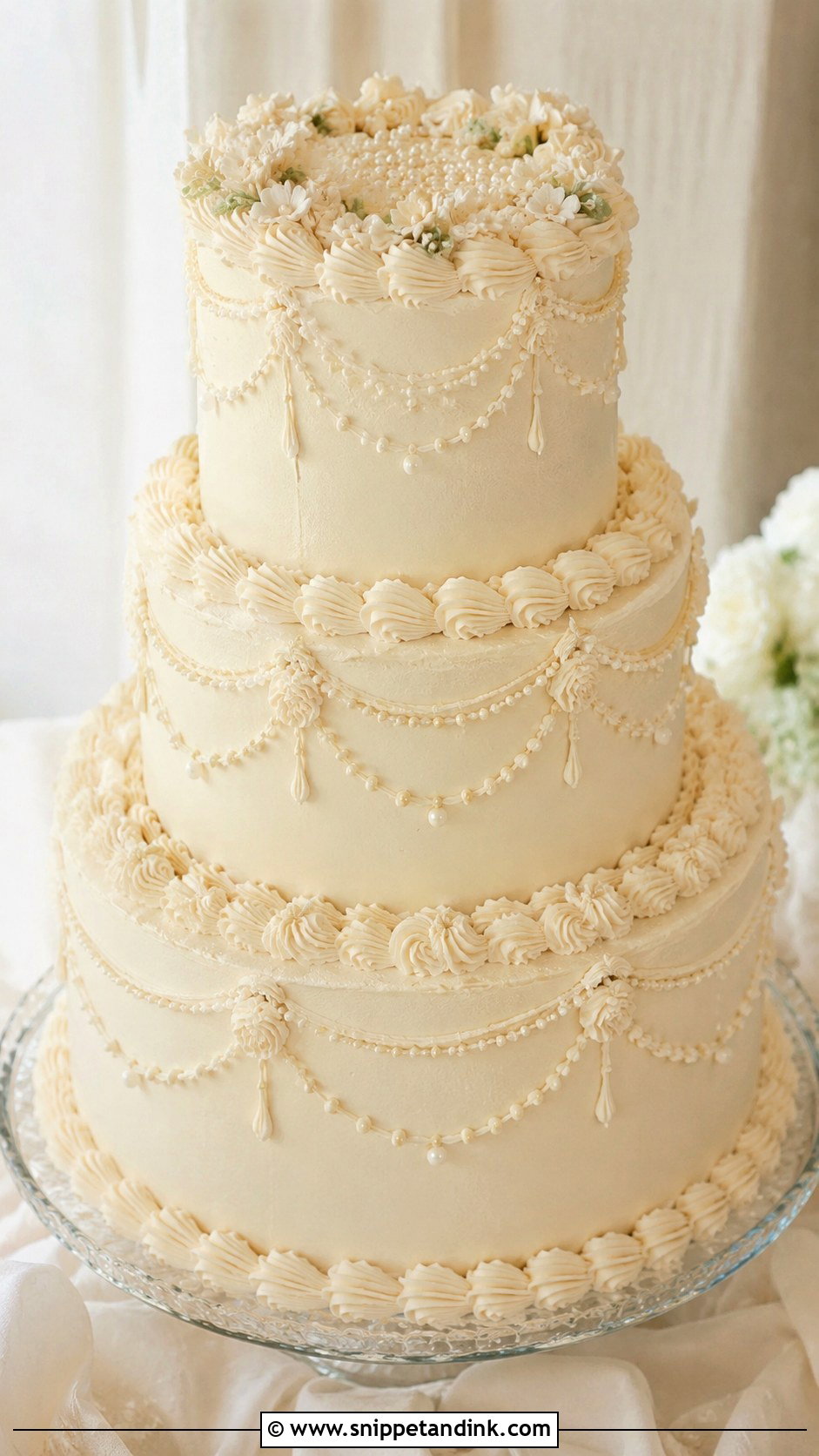
Buttercream is the most honest vintage finish, since this is how cakes were dressed before fondant became common. Shell borders, drop strings and piped rosettes in ivory or cream are enough on their own. One warning from experience at the bench: drop strings, the little hanging loops, are fragile in soft buttercream and sag in a warm room, so I pipe them in a stiffer mix or switch to royal icing for those alone. A slightly wider base tier gives that heirloom profile. Vanilla, almond or lemon sponge sits underneath.
6. 3 Tier Vintage Blue Wedding Cake
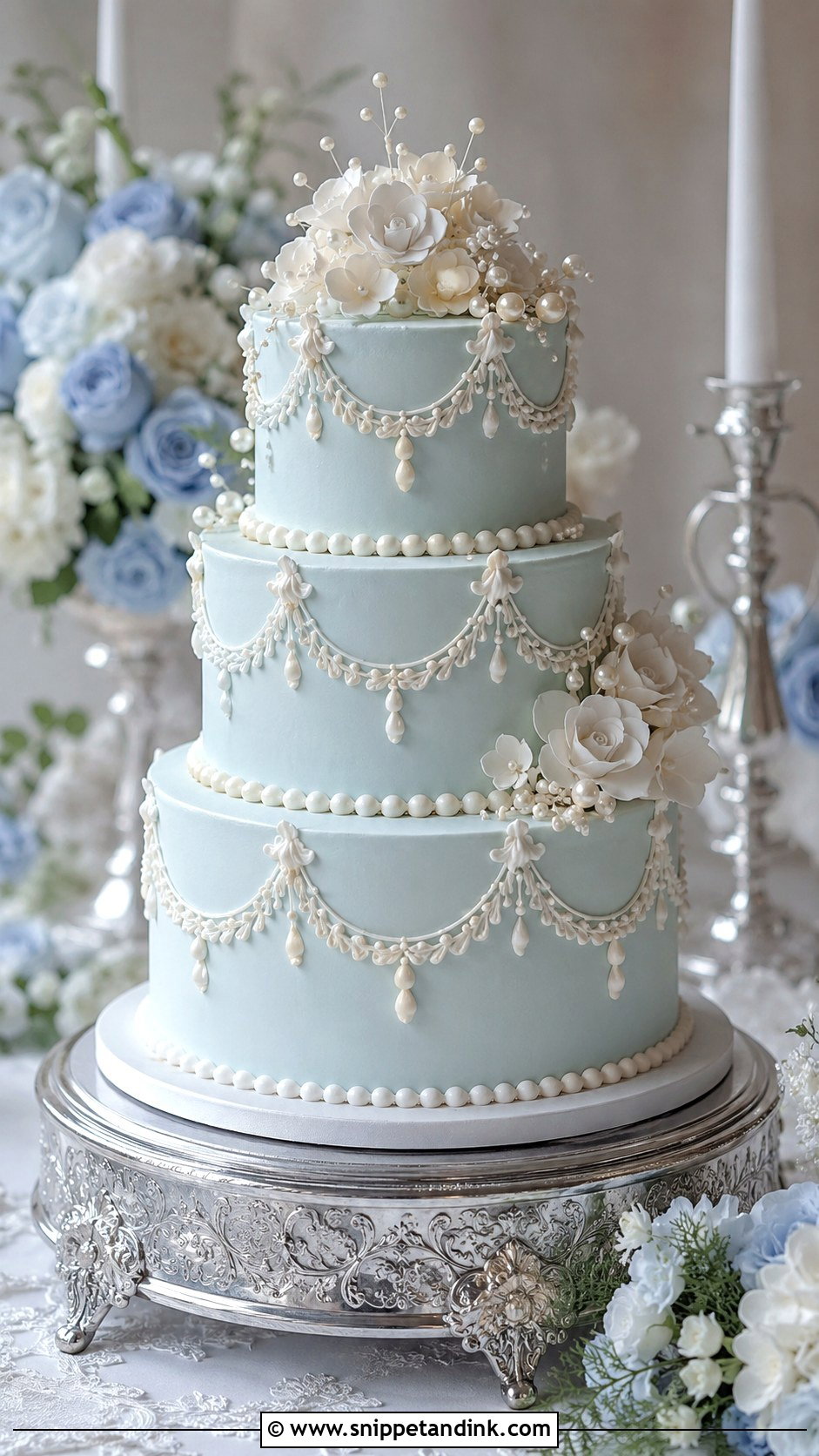
Pale blue with white piping is a classic vintage pairing, and the shade is the whole decision. Powder blue reads fresh, dusty blue reads antique, and anything bright looks like a birthday cake. There’s a technical catch too: butter-rich buttercream is naturally yellow, and blue over yellow drifts green, so I whiten the icing before tinting. Blueberry filling suits the colour, as do almond and white chocolate. Lambeth swags or lace piping complete it, and a white or silver stand keeps it calm.
7. 3 Tier Vintage Pink Wedding Cake
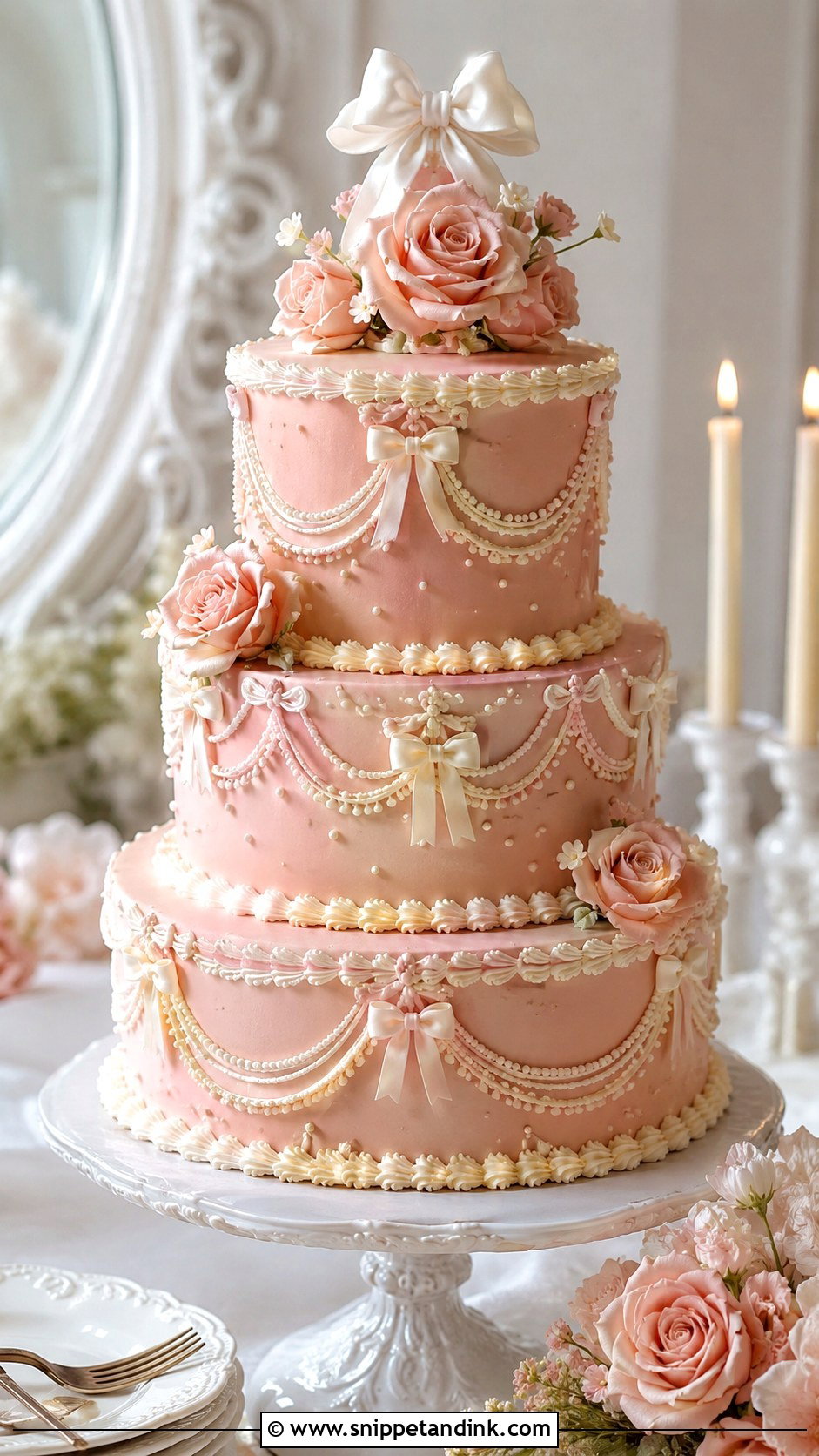
Get the pink right and everything else follows. Soft blush, rose and dusty mauve read as wedding; bright candy pink reads as a child’s party. On three tiers, pink buttercream with ivory piping, pearl accents and small bows looks nostalgic without turning sugary. Pink colouring fades in strong light over a long day, so I tint a touch deeper than the target and keep the cake out of direct sun. Strawberry vanilla, raspberry buttercream or almond with a fruit filling suit it.
8. 3 Tier Vintage Heart Wedding Cake
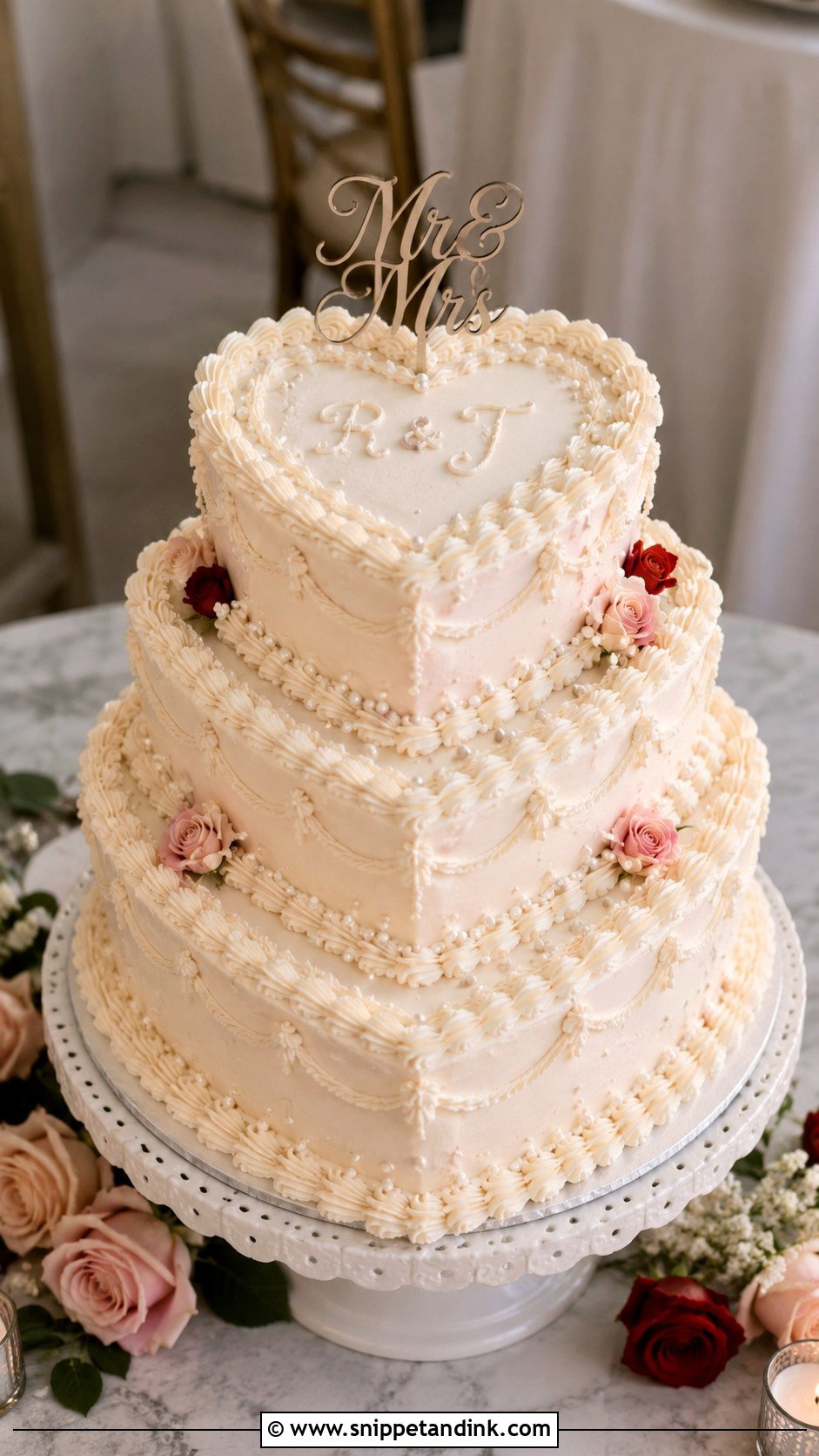
Stacked heart tiers are harder than they look. The point and both curves have to line up exactly on all three tiers, and a heart cuts into fewer neat slices than a round of the same width, so ask your baker to recheck the serving count. Done well, it’s personal and a little cheeky. Piped borders, scalloped edges and pearls in ivory, blush or cream give it the vintage feel, red velvet or vanilla raspberry suits the shape, and a small script topper or piped initials can make it yours. Keep the decoration tidy so the outline stays clear.
9. 3 Tier Vintage Cherry Wedding Cake
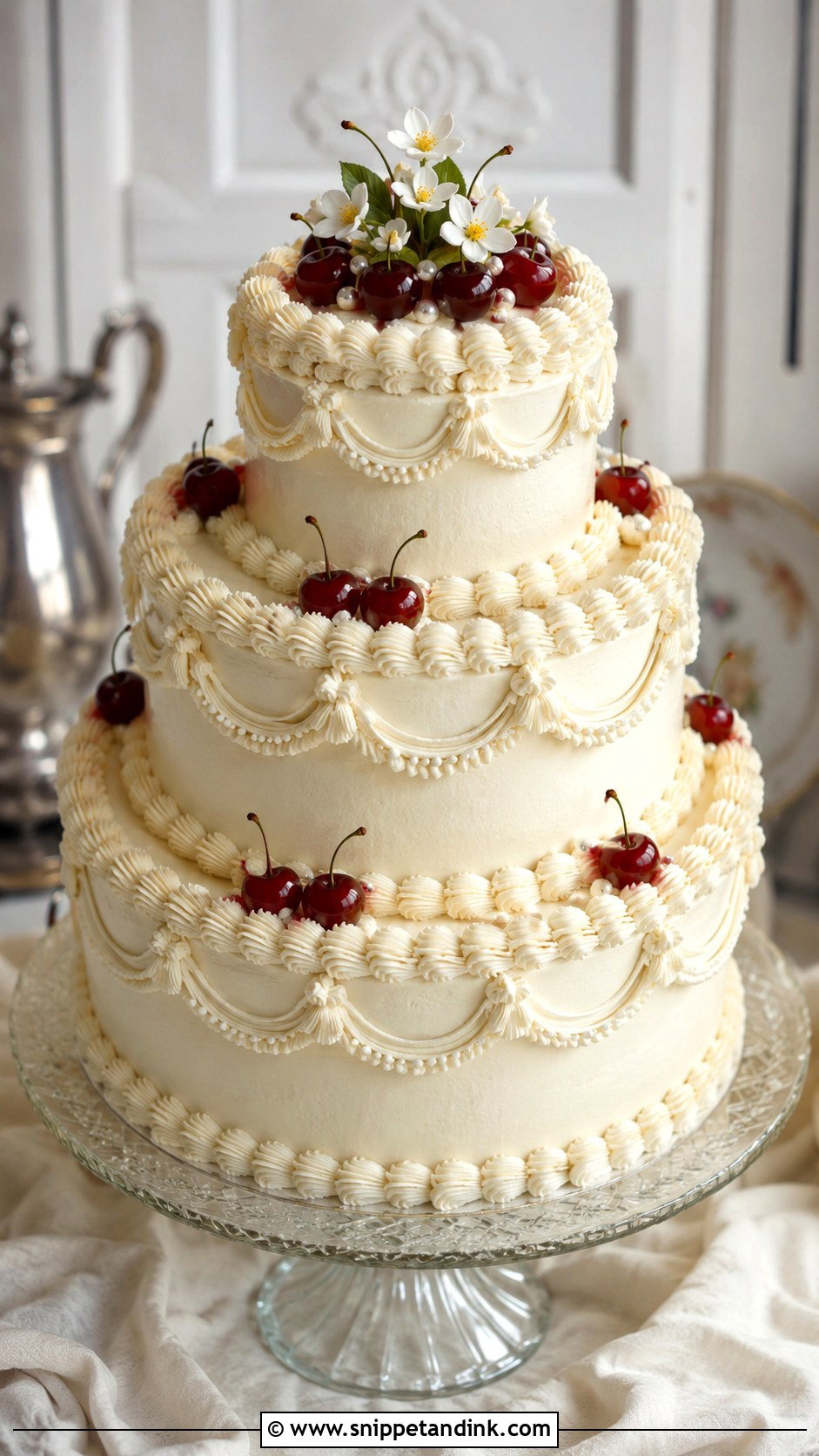
Cherries are the playful option, and they need restraint. A cherry-topped vintage wedding cake works when the cherries are accents along the edges of ivory Lambeth piping, not piled over every tier. I use glacé cherries, or fresh ones on stems added at the venue, because cut or bruised fresh cherries weep juice into buttercream within hours. Vanilla cake, cherry almond filling or dark chocolate sponge all fit, and a vintage glass stand finishes the retro note.
10. 3 Tier Vintage Bow Wedding Cake
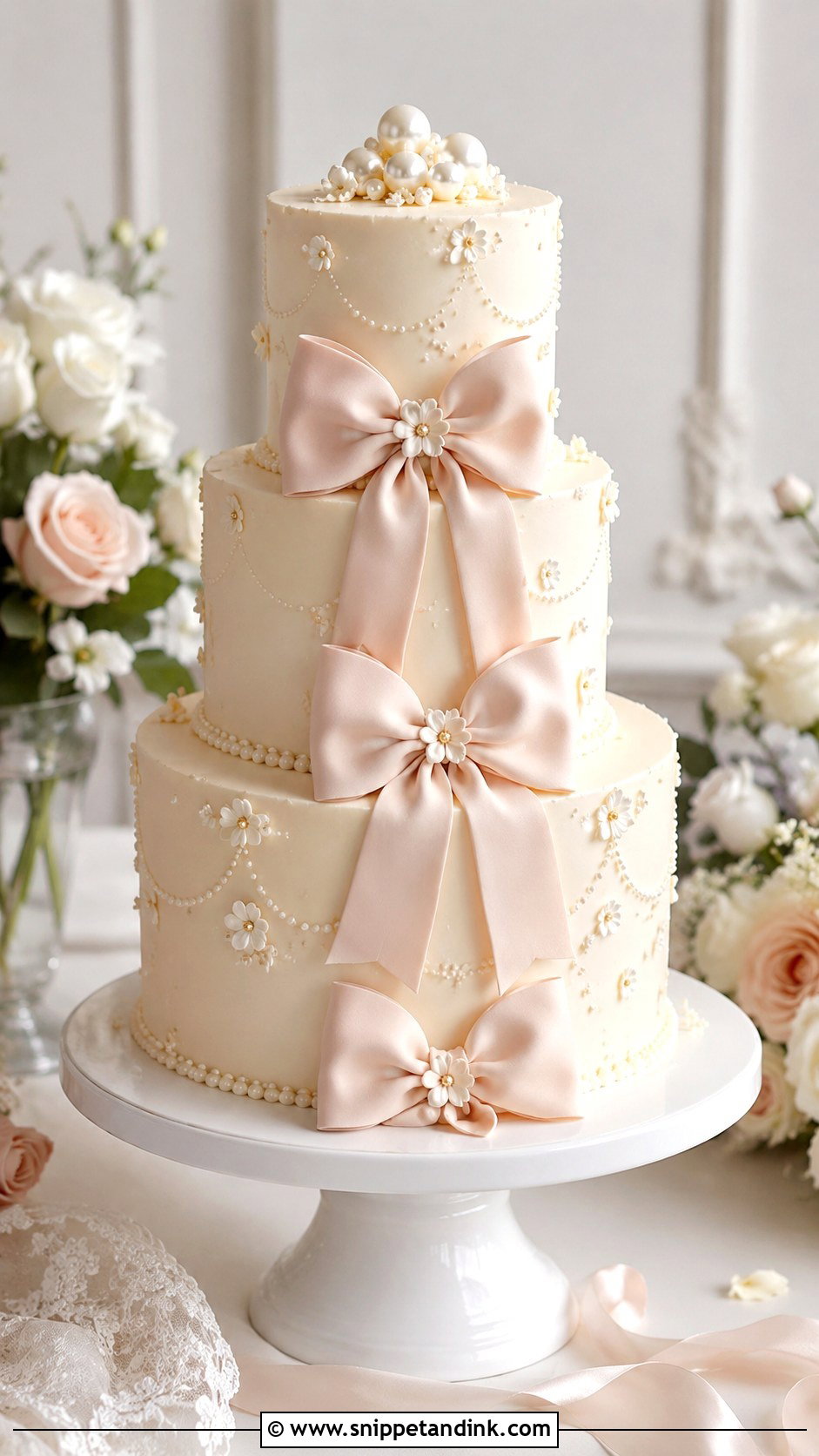
Bows were on wedding cakes decades ago, which is why they sit so naturally on a vintage design. You can use real satin ribbon with a strip of fondant behind it so the butter doesn’t stain it, fondant bows, or piped loops. Fondant bows need a few days to dry and hold their shape, so they’re made early. Ivory icing with blush or champagne bows is the soft version; place one at the front of each tier, or one larger bow on top. Vanilla bean with cream cheese buttercream is a nice pairing, though cream cheese icing is softer and needs a cool room.
11. 3 Tier Vintage Ruffle Wedding Cake
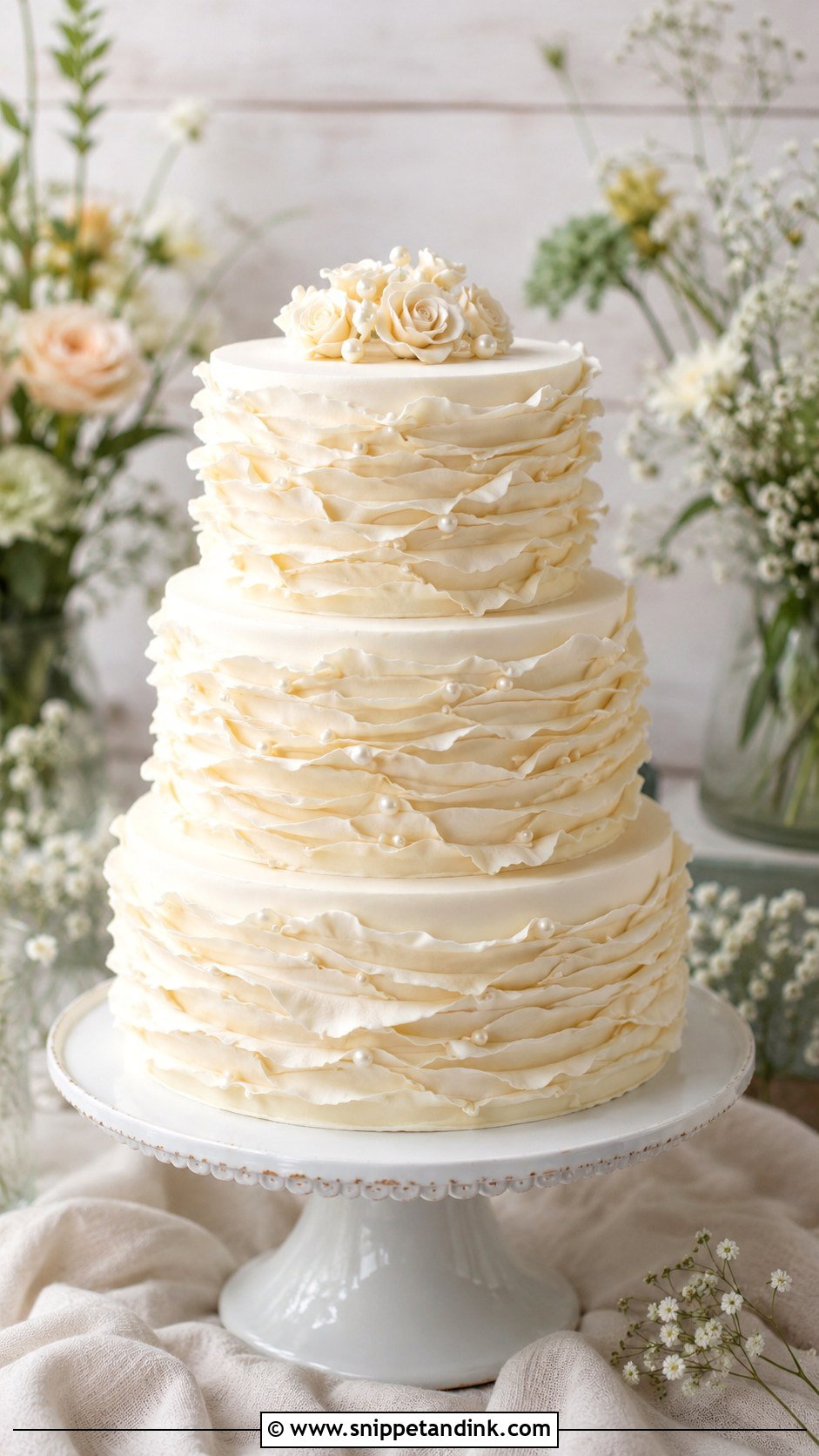
A ruffle wedding cake trades sharp lines for movement. Buttercream ruffles are piped with a petal tip, fondant ones are folded strips; buttercream looks softer, fondant copes better with heat. Ivory, cream or blush keep it vintage. I often suggest one ruffled tier between two piped ones, since three fully ruffled tiers can start to look like a dress rather than a cake. Vanilla, lemon, coconut or almond keep the flavour light.
12. 3 Tier Vintage Floral Wedding Cake
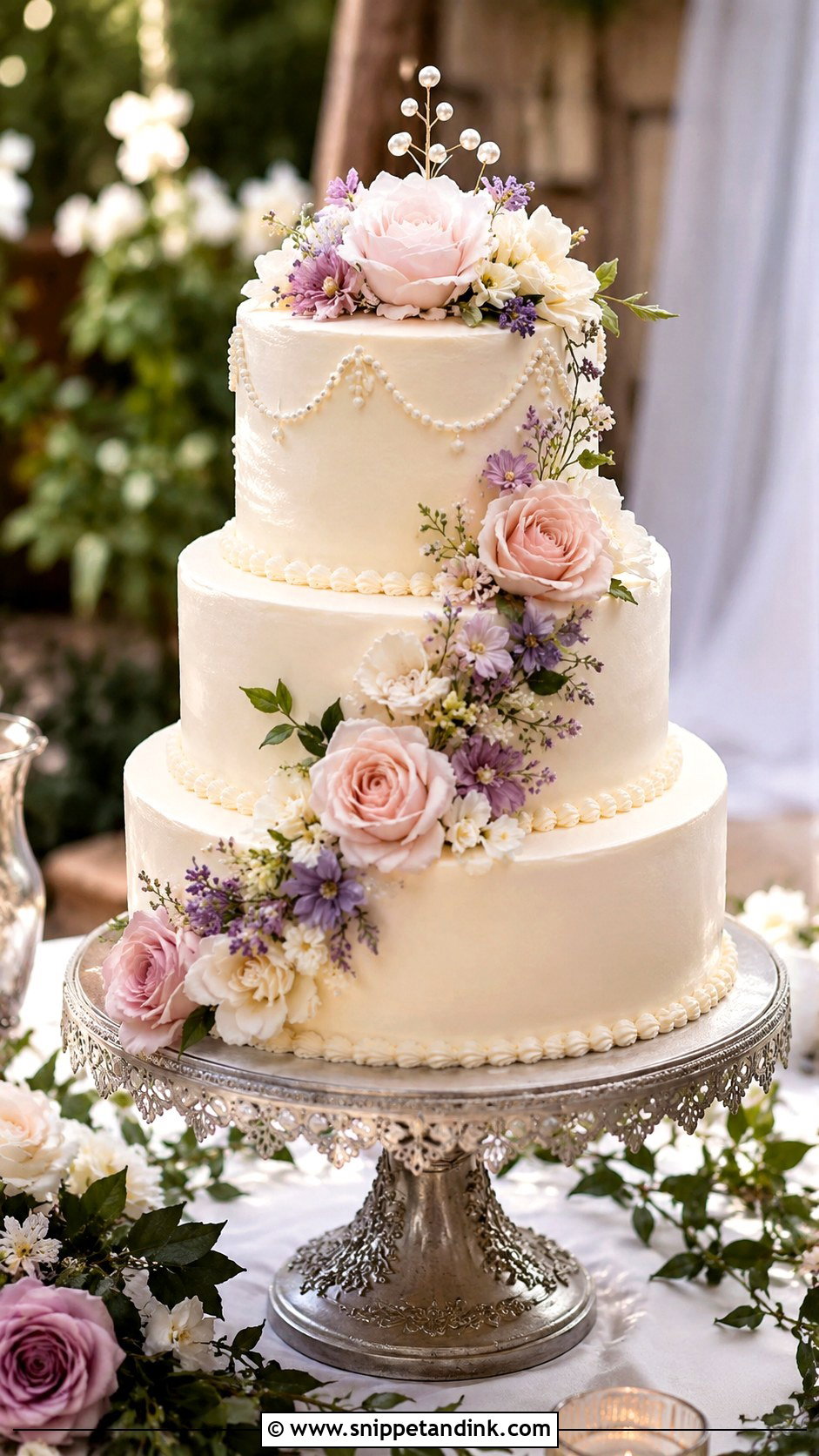
Florals on a vintage cake should look gathered from an old garden, not placed in the last ten minutes. Cream, blush, dusty rose, lavender and antique peach in loose garden shapes give that feel over smooth buttercream with piped borders, lace or pearls. Three tiers leave room for the flowers to drift from one level to the next. Your baker and florist need to agree on the blooms, since not every garden flower is safe near food. Vanilla with raspberry or lemon with a cream frosting keeps the slice light.
13. 3 Tier Vintage Gold Wedding Cake
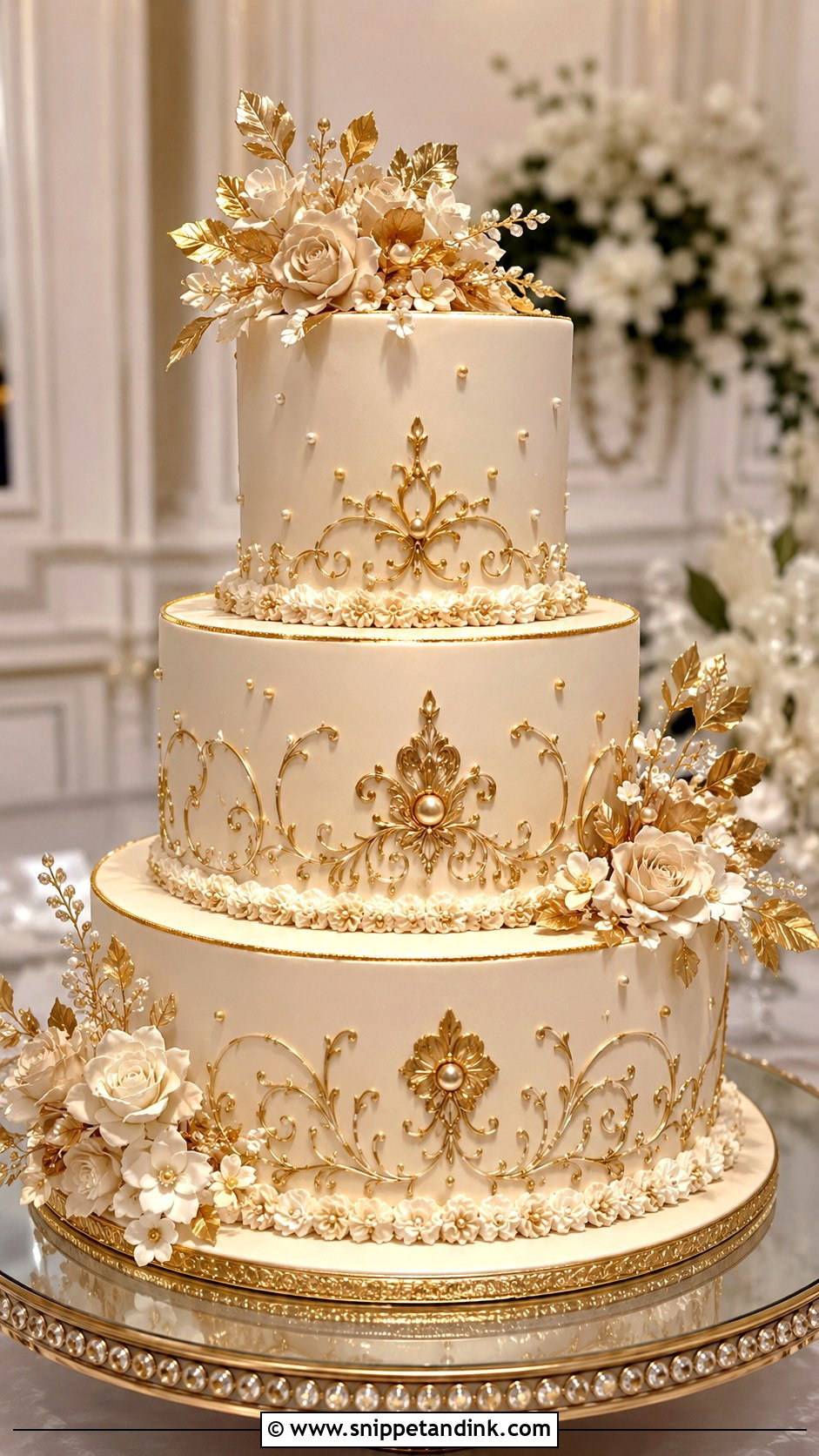
Gold belongs on a vintage cake as trim, not as a coat. I paint thin lines along the scallops, gild a few sugar flowers or edge a vintage frame topper, and leave everything else ivory. Buttercream has to be chilled and crusted before gold paint touches it, or the brush drags. It looks right in historic venues and at evening receptions, with almond, vanilla bean or caramel buttercream to match the warmth.
14. 3 Tier Vintage Victorian Wedding Cake
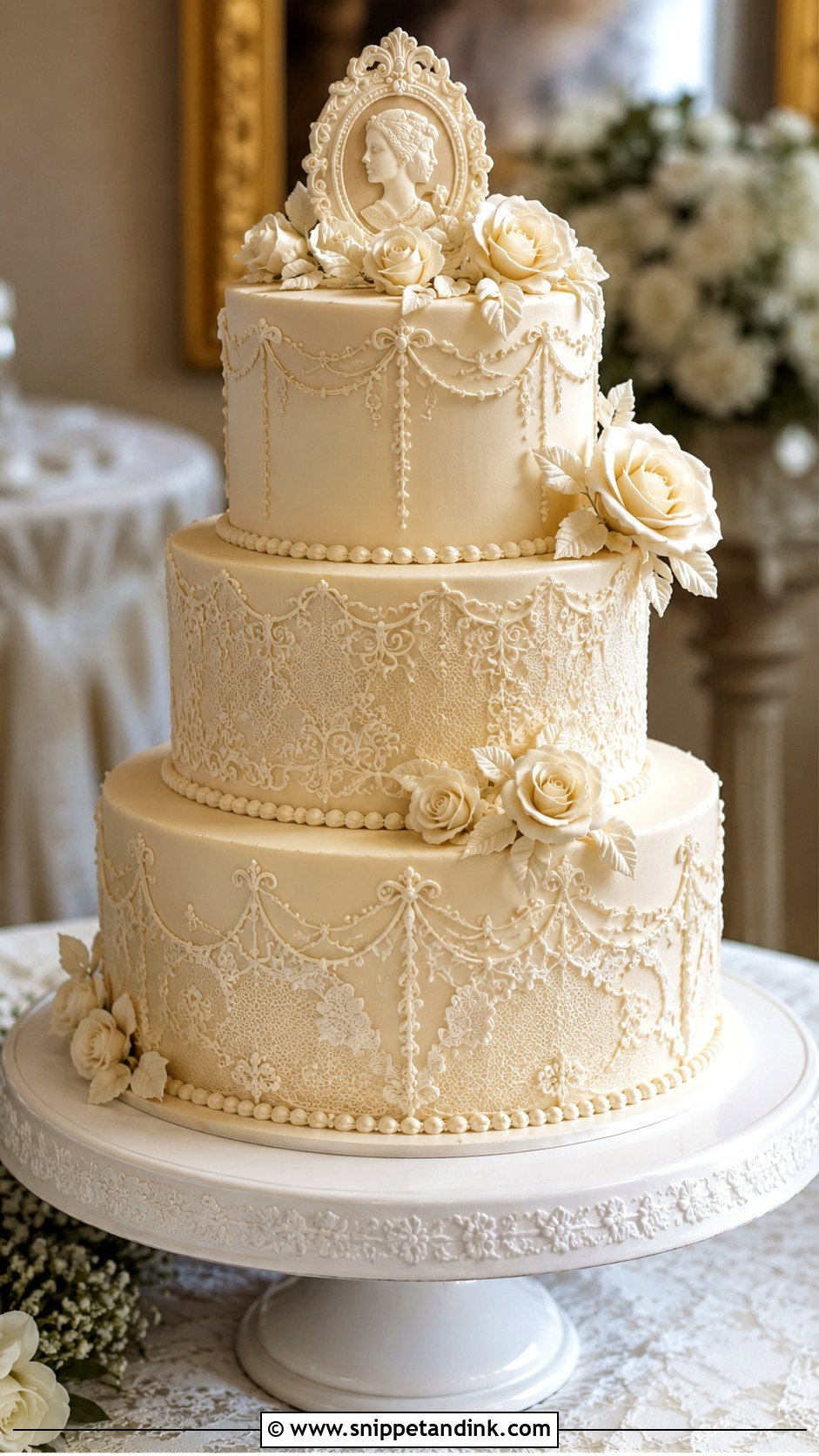
Victorian cakes existed to show off a decorator’s skill, so this one is detail work from top to bottom: piping, lace panels, pearl trim and scrollwork on ivory. Taller tiers add drama, while shorter, wider ones look more old-world. Sugar roses or small cameos push the antique mood further. Stay with one or two colours. The effect comes from texture, and extra colours flatten it. Almond, vanilla, spice or lemon cream fit, on a pedestal stand with simple flowers.


15. 3 Tier Vintage Garden Wedding Cake
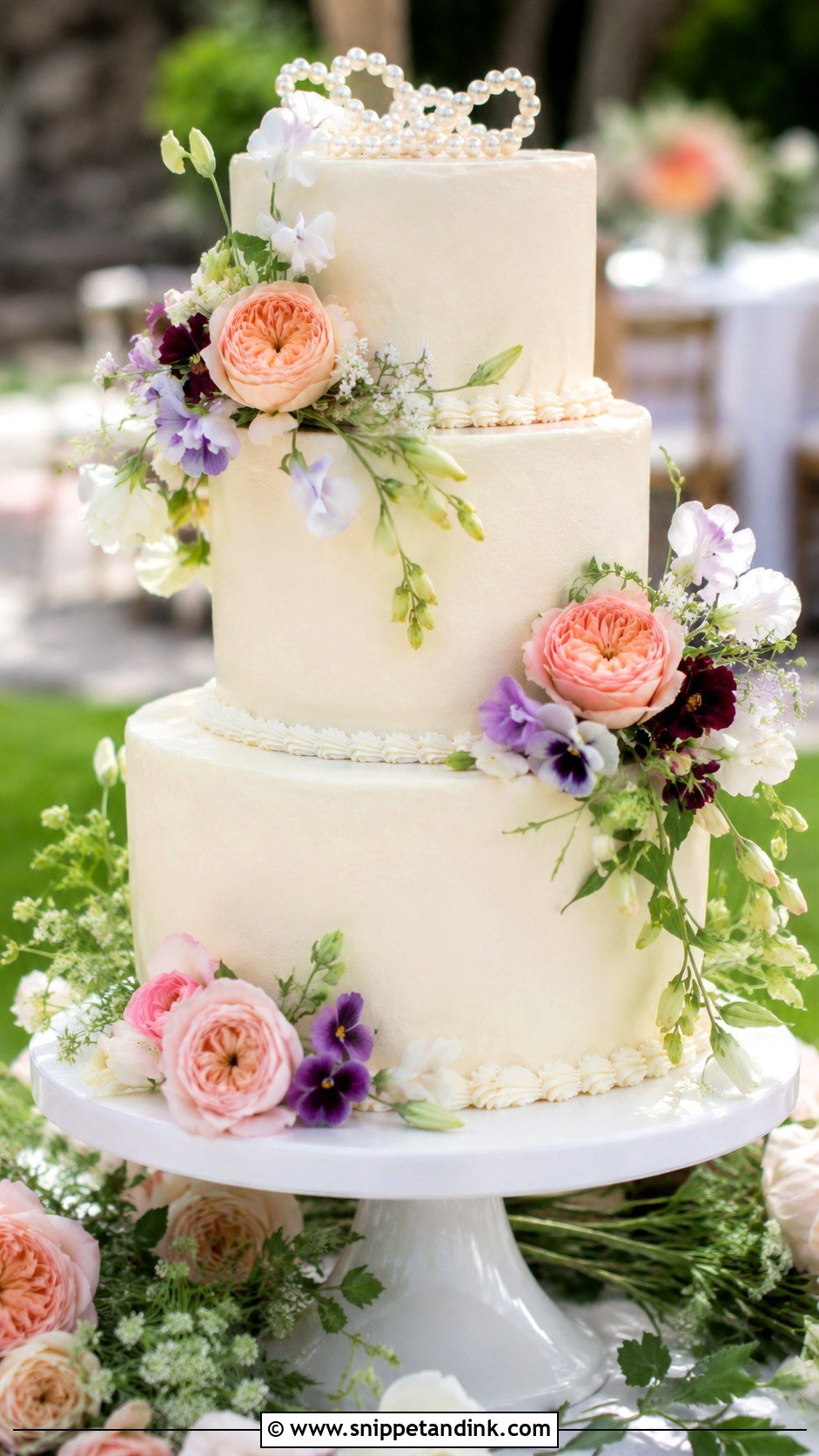
The trick to a vintage garden cake is clustering. Flowers spaced evenly around every tier look like a pattern; three or four clusters look gathered. Start with ivory buttercream, piped borders and tiny pearls, then add roses, pansies and a little greenery. Pansies and violas are edible and suit this style well, while sweet peas look right but shouldn’t touch food, so I’d make those in sugar. Lemon, vanilla, honey or berry cake fit the setting, and the cake should stay in shade at an outdoor or tented wedding.
16. 3 Tier Vintage Scallop Wedding Cake
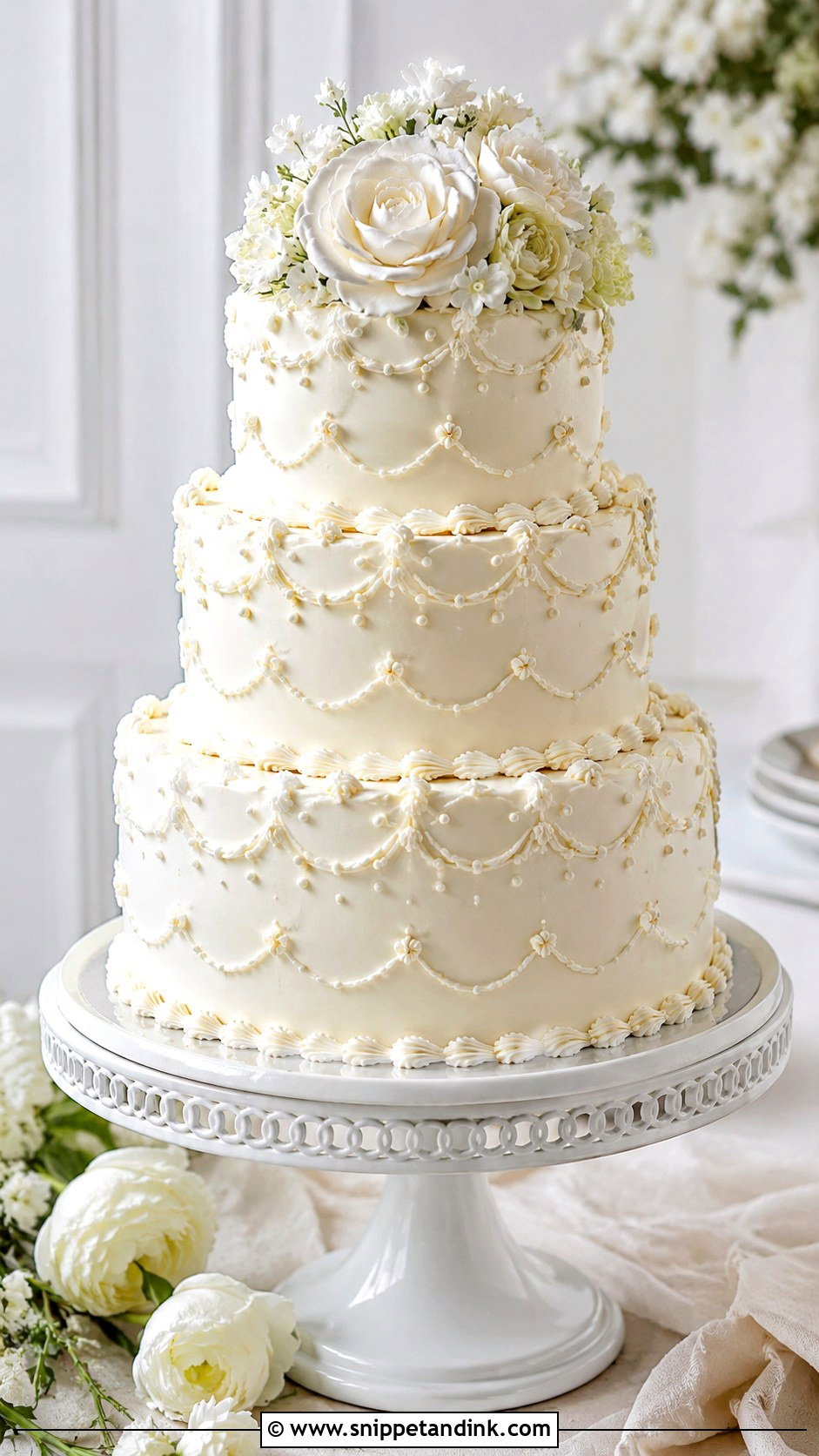
Scallops are the simplest way to make a cake look vintage, and the most exacting. Every curve has to be the same width all round the tier, so I mark the spacing with a paper template before I pipe. Keep them plain on smooth ivory buttercream, or layer pearls, drop strings and tiny rosettes over them. Piping in the icing colour keeps it subtle; a shade lighter adds contrast. It suits couples who want vintage without many flowers, with vanilla, almond or white chocolate inside.
17. 3 Tier Vintage Cameo Wedding Cake
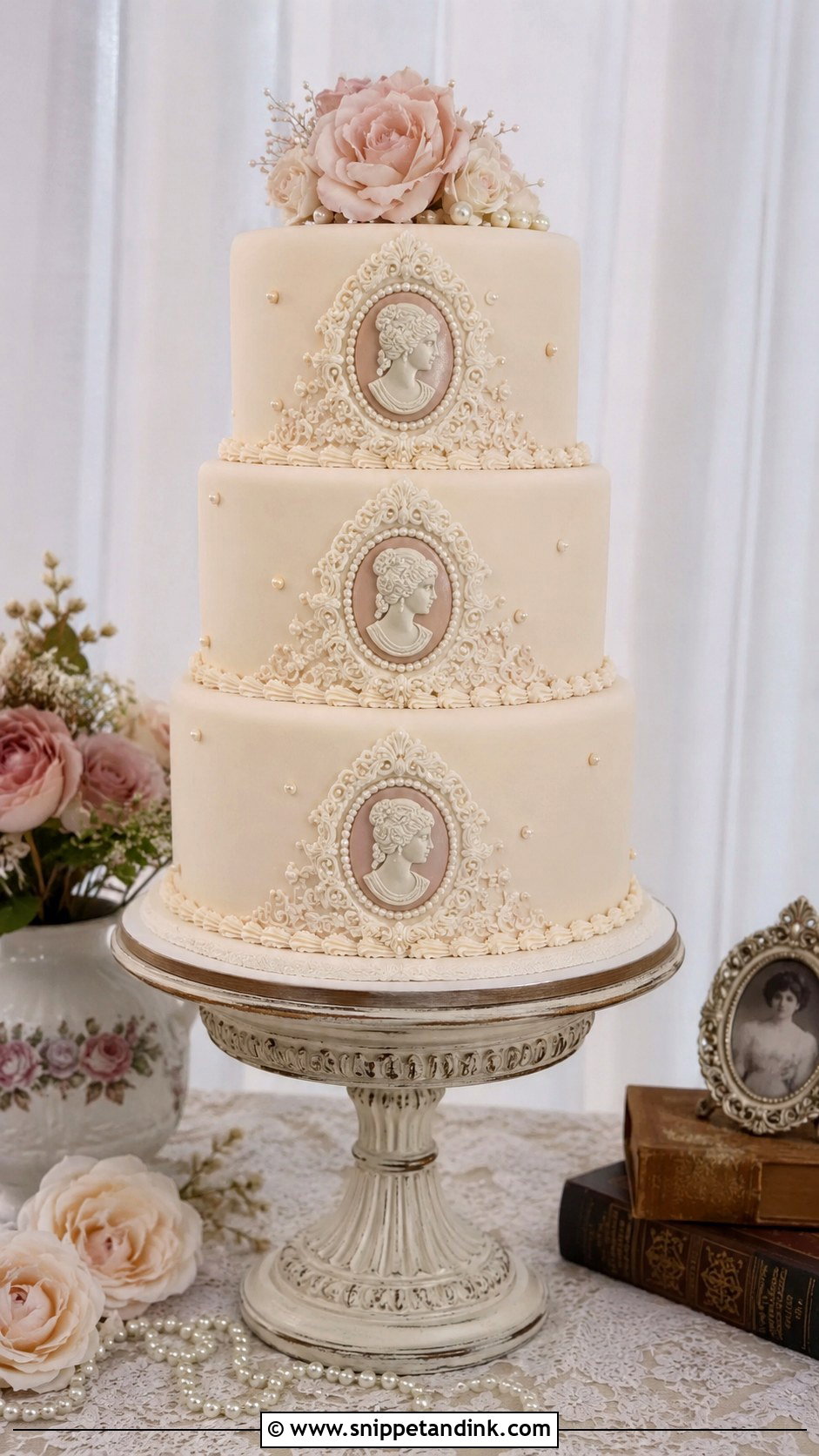
Cameos are pressed in a silicone mould from sugar paste or modelling chocolate, then painted in two tones so they look carved. I’d keep it to one per tier, centred at the front, because several cameos crowd the piping. Pair them with ivory icing, lace piping, pearl borders and a blush accent. If someone in the family owns a cameo brooch, its profile can often be copied, which turns a decoration into a keepsake. Vanilla almond with raspberry filling suits the palette.
18. 3 Tier Vintage Monogram Wedding Cake
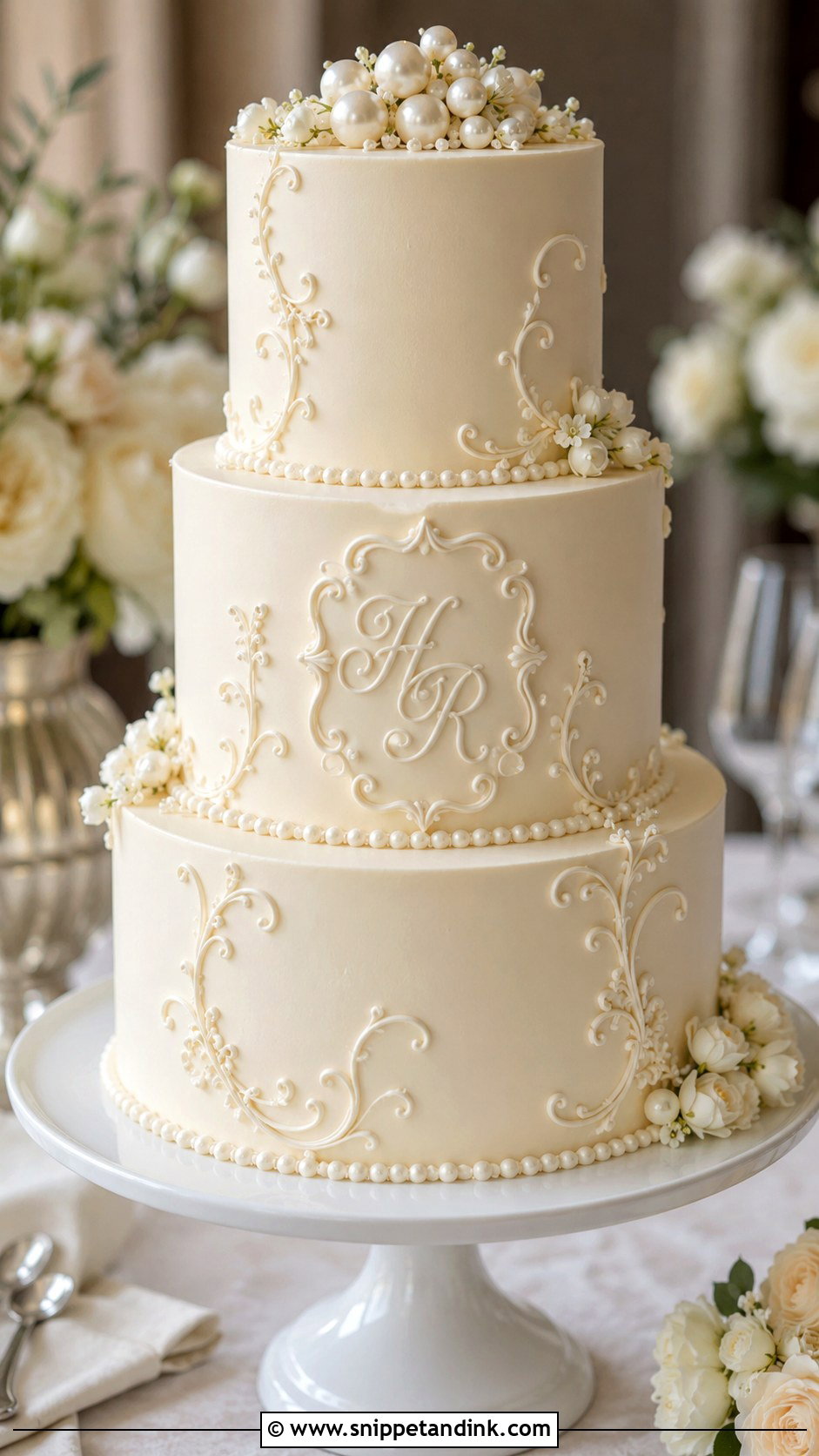
Initials are one of the oldest ways to personalise a cake. A monogram wedding cake can carry them piped in buttercream, on a sugar plaque or as a small topper. I put the monogram on the middle tier, which sits closest to eye level, and frame it with lace, pearls and scroll piping. Ivory, cream and soft gold keep it formal. Freehand lettering needs a confident hand, so ask to see examples of your baker’s piped script before you commit.
19. 3 Tier Vintage Black And White Wedding Cake
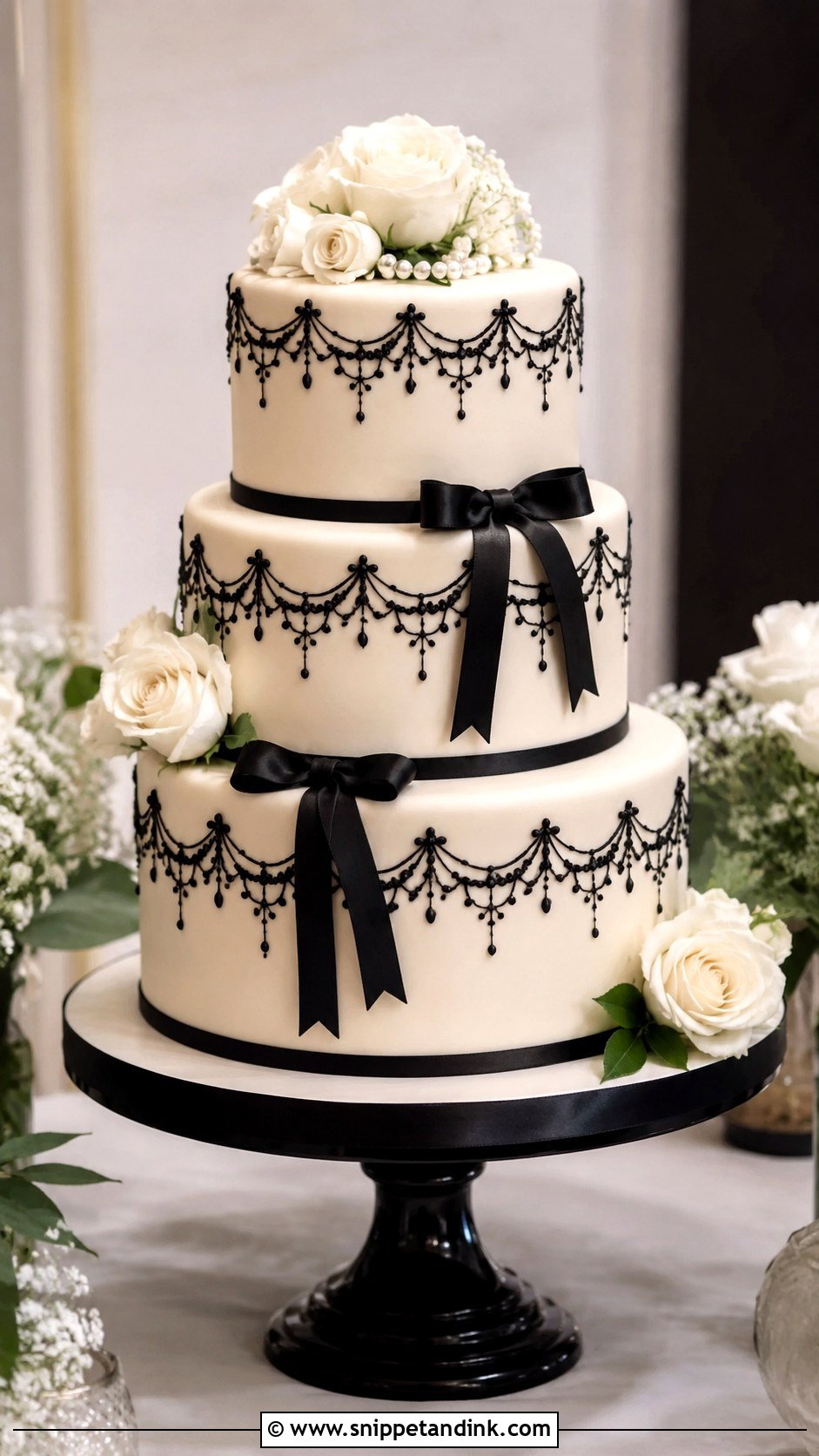
Every piped line shows in black and white, which is why these cakes photograph so sharply. White or ivory tiers with thin black piping, ribbon or bows is the classic approach. Black buttercream takes a lot of colouring, can taste bitter and stains teeth, so I keep black to fine lines or fondant details. Piped scallops over smooth buttercream keep it vintage instead of modern, and white roses or pearls soften it. Chocolate, vanilla or cookies and cream suit an evening reception.


20. 3 Tier Vintage Pastel Wedding Cake
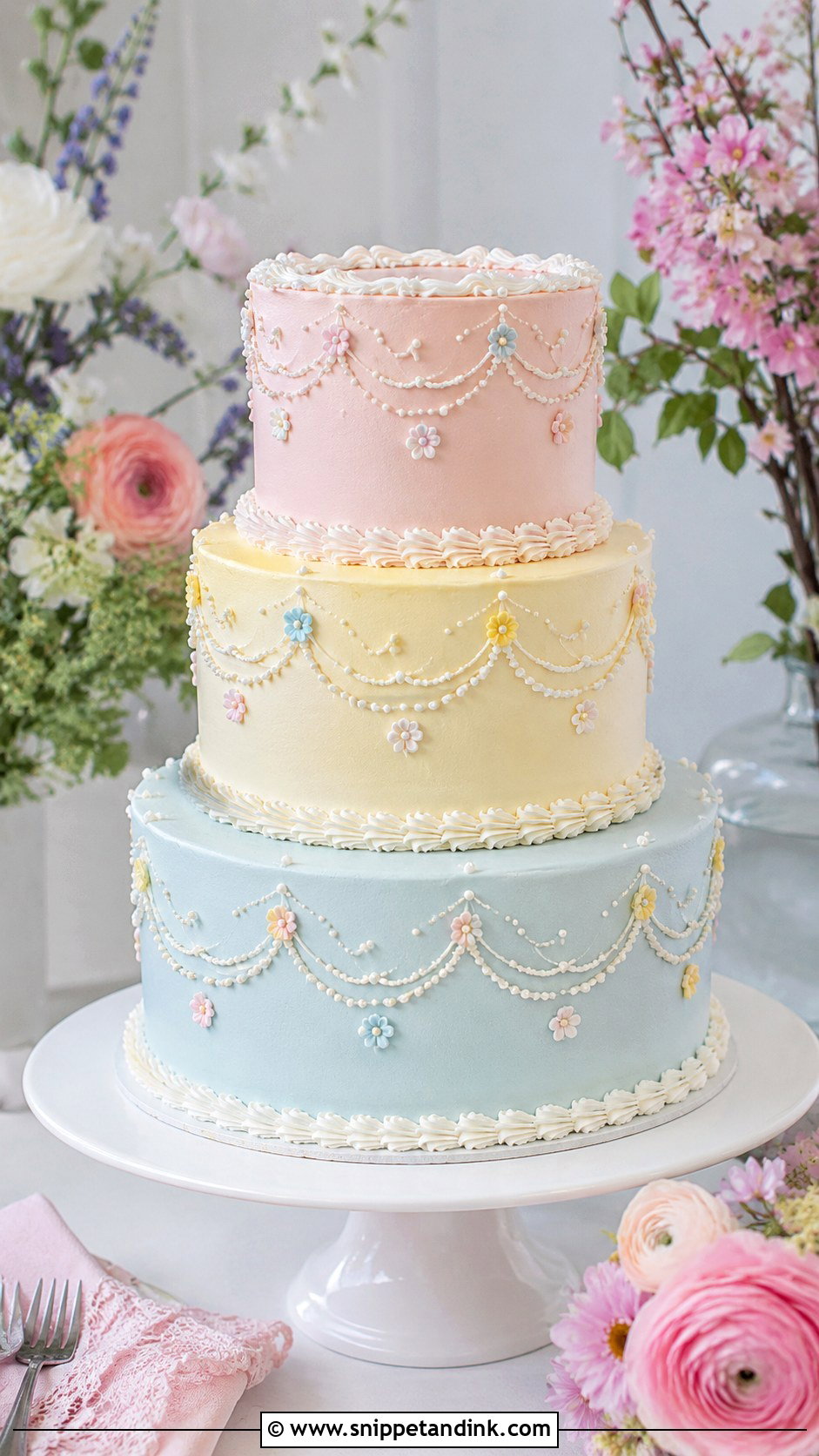
Mixing pastels across tiers is the cheerful end of vintage. Each tier can wear its own shade, blush, butter yellow, powder blue or lavender, with white piping running through all three to hold them together. Lambeth borders, scalloped edges, pearl dots and small sugar flowers all suit it. I test the shades side by side before colouring whole batches, since pastels that look fine in a bowl can clash once stacked. Vanilla, lemon, strawberry or almond, with a simple topper.
Heavy Piping Changes the Delivery Day
A fully piped three-tier cake is heavy, and its borders are fragile in a way smooth icing isn’t. Each tier needs a firm sponge and proper dowels so the weight above doesn’t crush the piping below. I deliver the tiers boxed separately, stack them at the venue and pipe the final border around each join on site, which is why a vintage cake needs more setup time than a plain one. Ask your venue for a cool, level table and access well before guests arrive.
Saving the Top Tier for Your First Anniversary
Freezing the top tier is an old custom that suits a vintage cake especially well. If you’d like to try it, ask your caterer to box the top tier as soon as the cutting is over. Remove sugar flowers, ribbon and anything non-edible, chill it until the icing firms, then wrap it tightly in several layers of cling film and foil before it goes in the freezer.
I’ll be honest, though: a year is a long time in a freezer, and even a well-wrapped sponge loses texture and picks up stray flavours. Fruit cake keeps far better, which is how the custom began. Many bakers, me included, are happy to make a small fresh copy of the top tier for the anniversary instead, and it tastes the way you remember.
Old-Fashioned Piping, Modern Planning
Vintage cakes run from playful cherries to formal Victorian lace, and three tiers give enough height to carry either. The details set the mood: a ballroom might call for pearls and gold trim, a garden for roses and soft buttercream. Before you settle on a design, decide how much piping you really want, because it shapes the price, the delivery and how well the cake copes with a warm room. Ask about servings, stability and setup as well, and the cake will look as cared for at the end of the night as it did at the start.
You'll Like These Ideas:










Leave a Reply