
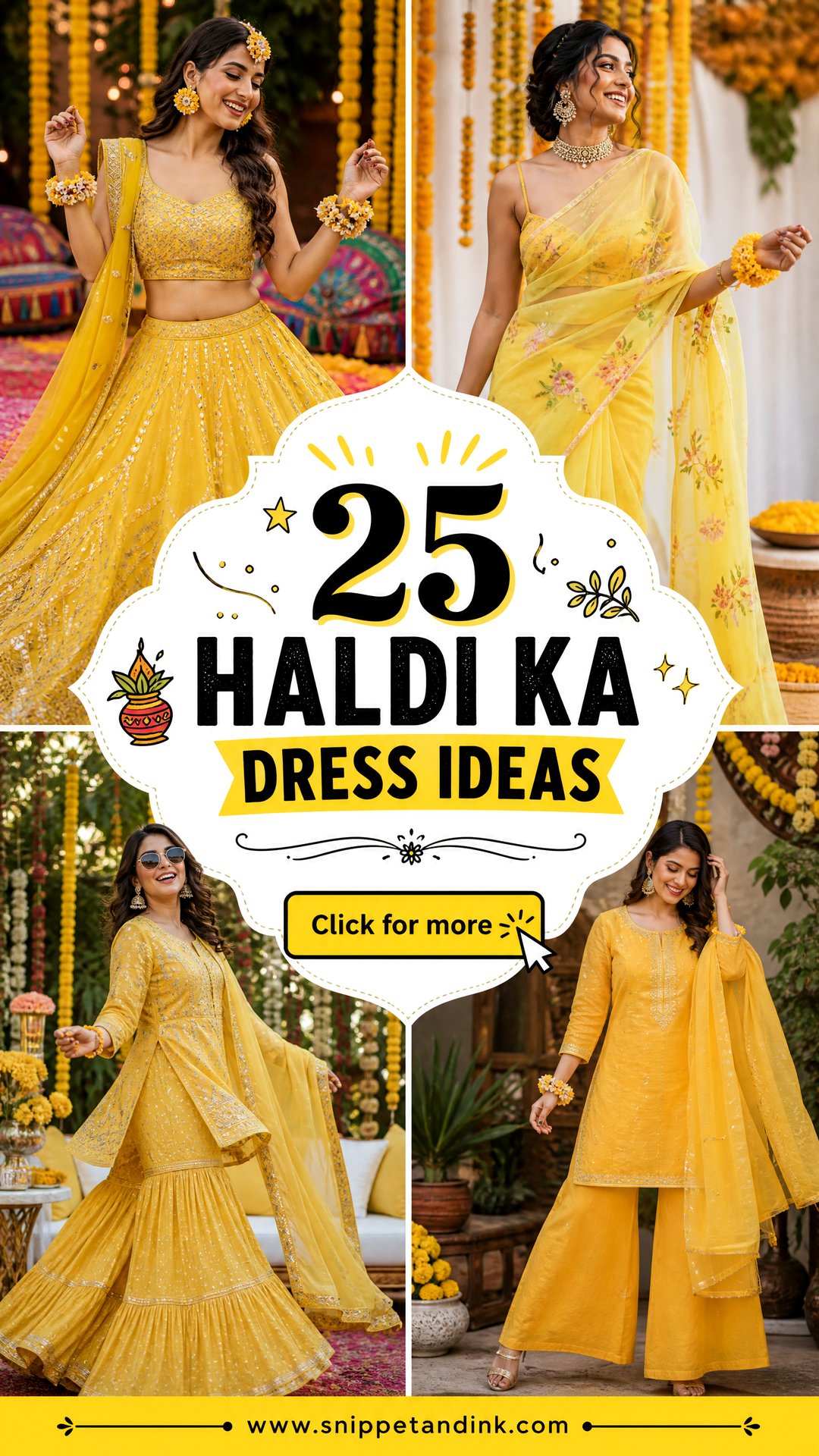
What a Haldi Outfit Has to Survive Before It Has to Look Good
A haldi isn’t an event you watch from a chair. Relatives smear turmeric paste on the bride or groom, often on each other too, and most of it happens seated on low stools, cushions or a floor sheet, usually in morning or afternoon heat. When I dress a family for one, I work through these checks before we even talk about shade:
- The floor test. At the fitting, sit cross-legged for a full minute. If the waistband digs in or the skirt bunches under you, it will be miserable by the second hour.
- Breathable over shiny. Cotton, chanderi, georgette and muslin cope with daytime heat. Satin and heavy silk show sweat patches and turmeric marks first.
- Prints forgive. A busy print or dense embroidery hides a stray fingerprint of paste; a pale solid shows every one.
- Nothing swinging. Pin the dupatta at the shoulder and the waist, or choose a cape or jacket so no fabric dips into the bowl.
- Shoes that come off. Many families ask people to remove footwear near the ritual area, so buckled sandals get annoying fast.
How dressed up should a guest be?
Less than you would be for the sangeet or the wedding itself. I tell guests to aim for festive daywear: a print or some gota, light jewelry, no heavy lehenga. Wearing yellow is welcome at most haldis because nearly everyone does, but it’s worth asking the family first whether the bridal party has been given a color. Some families assign a shade to sisters and close cousins, and turning up in it as a friend can confuse the photos.
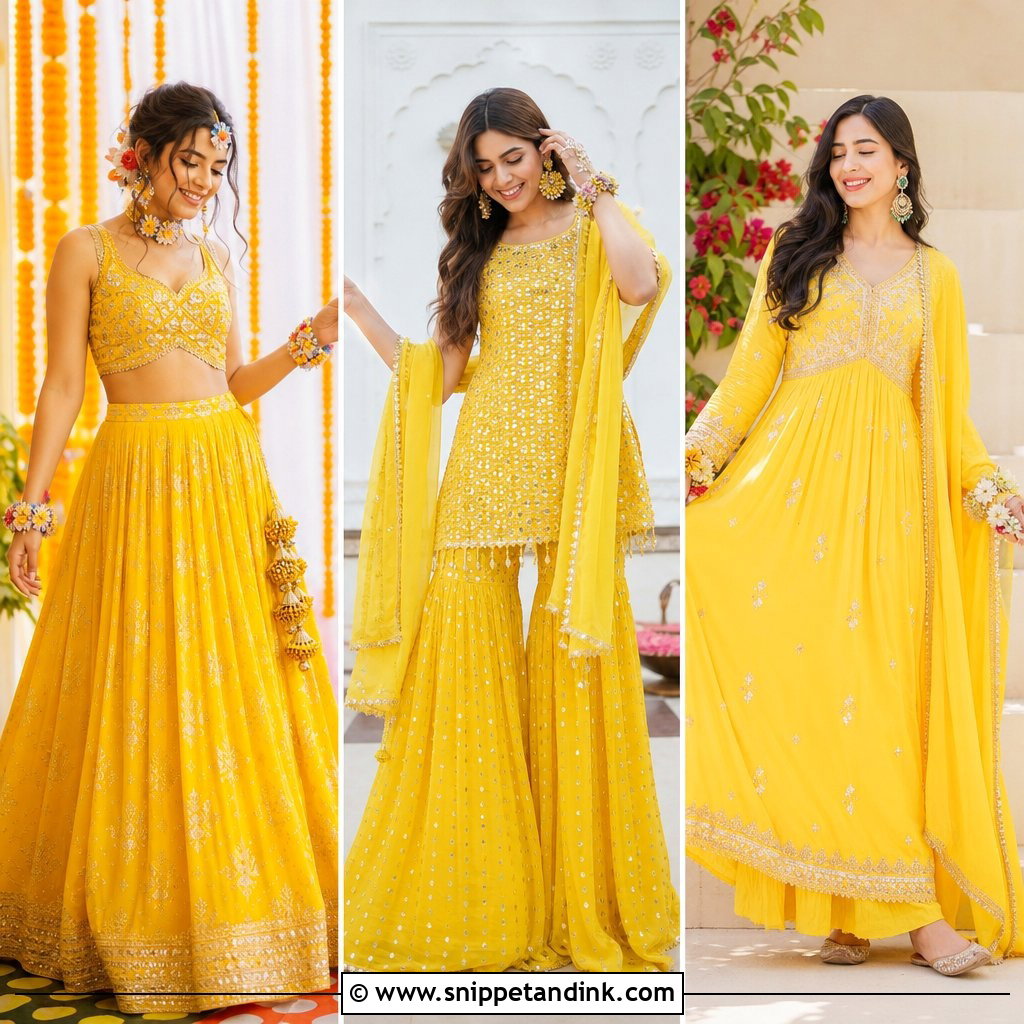
1. Yellow Lehenga For Haldi
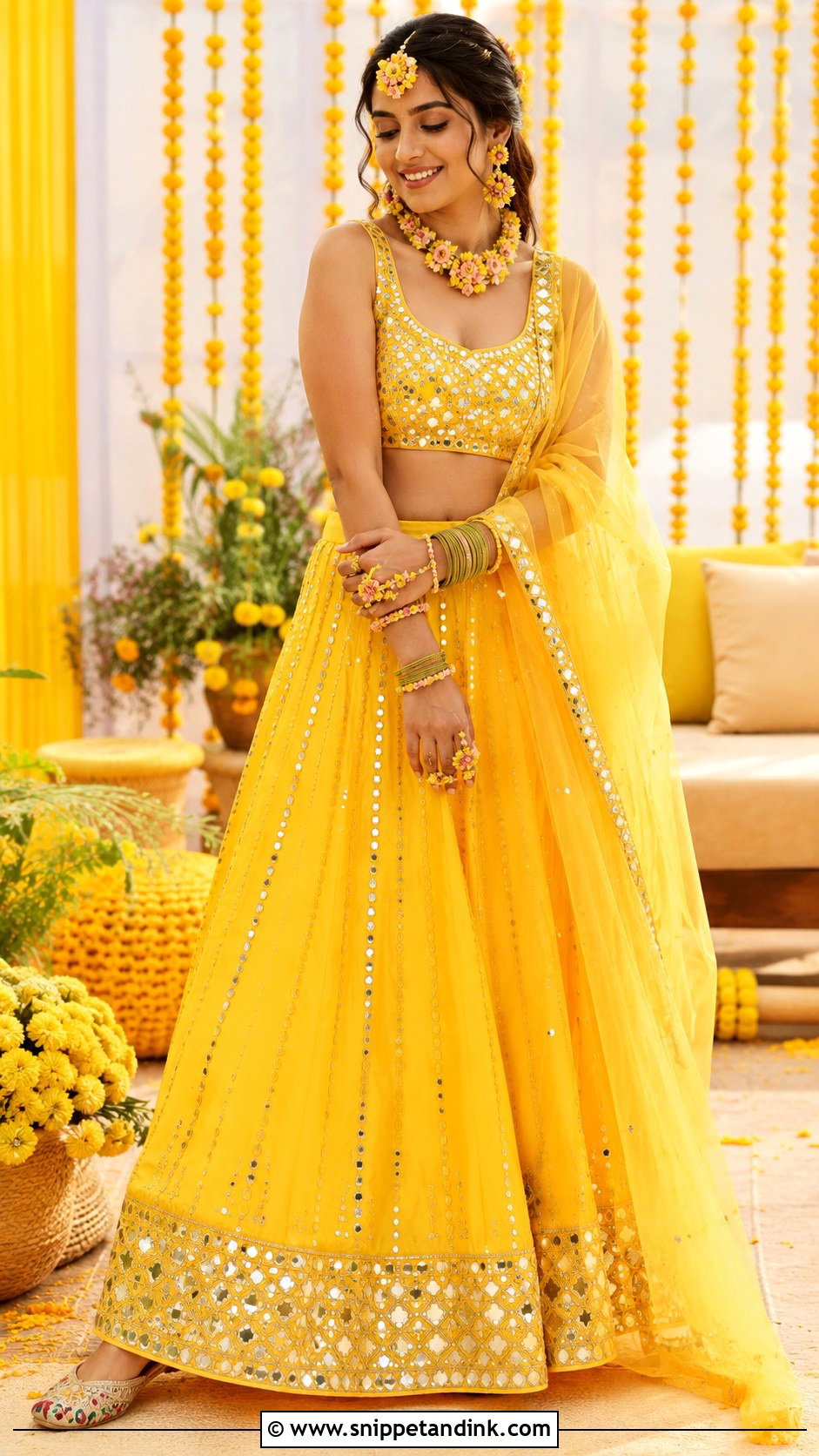
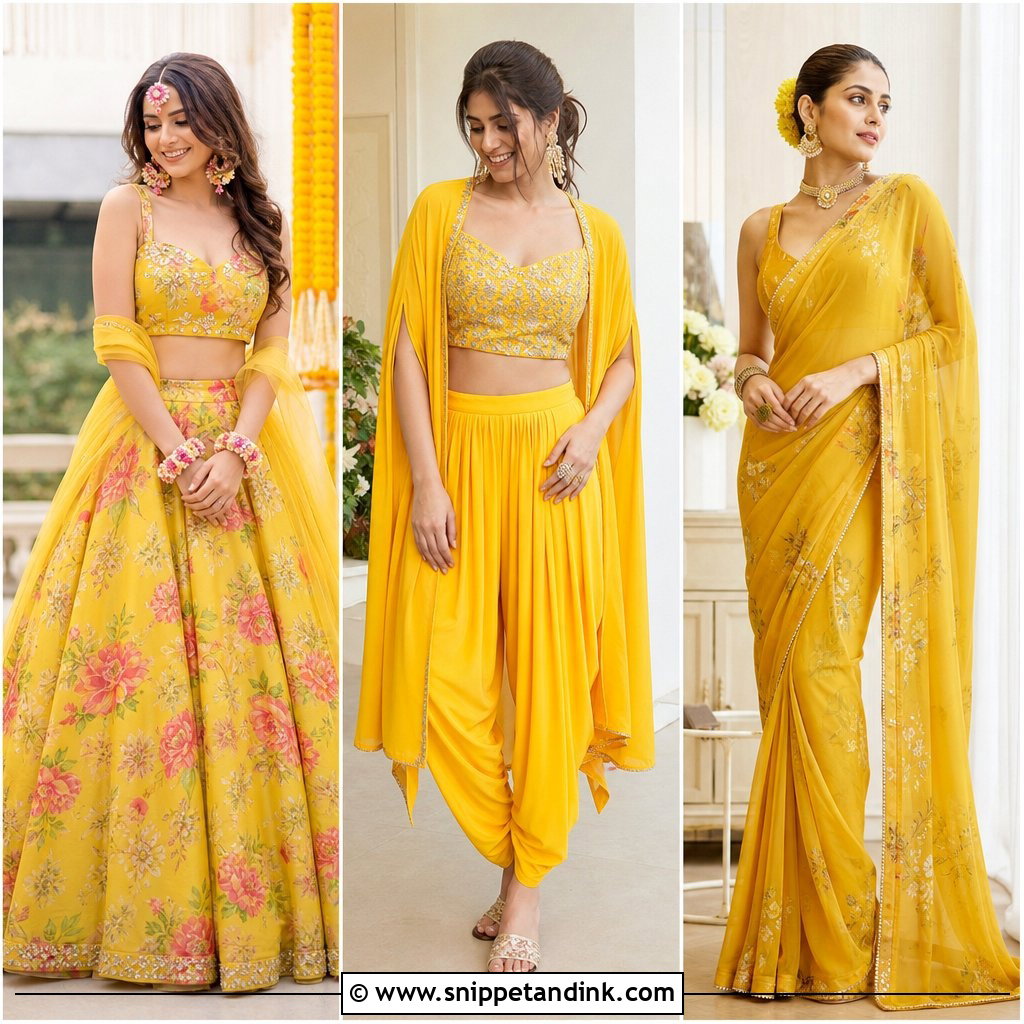
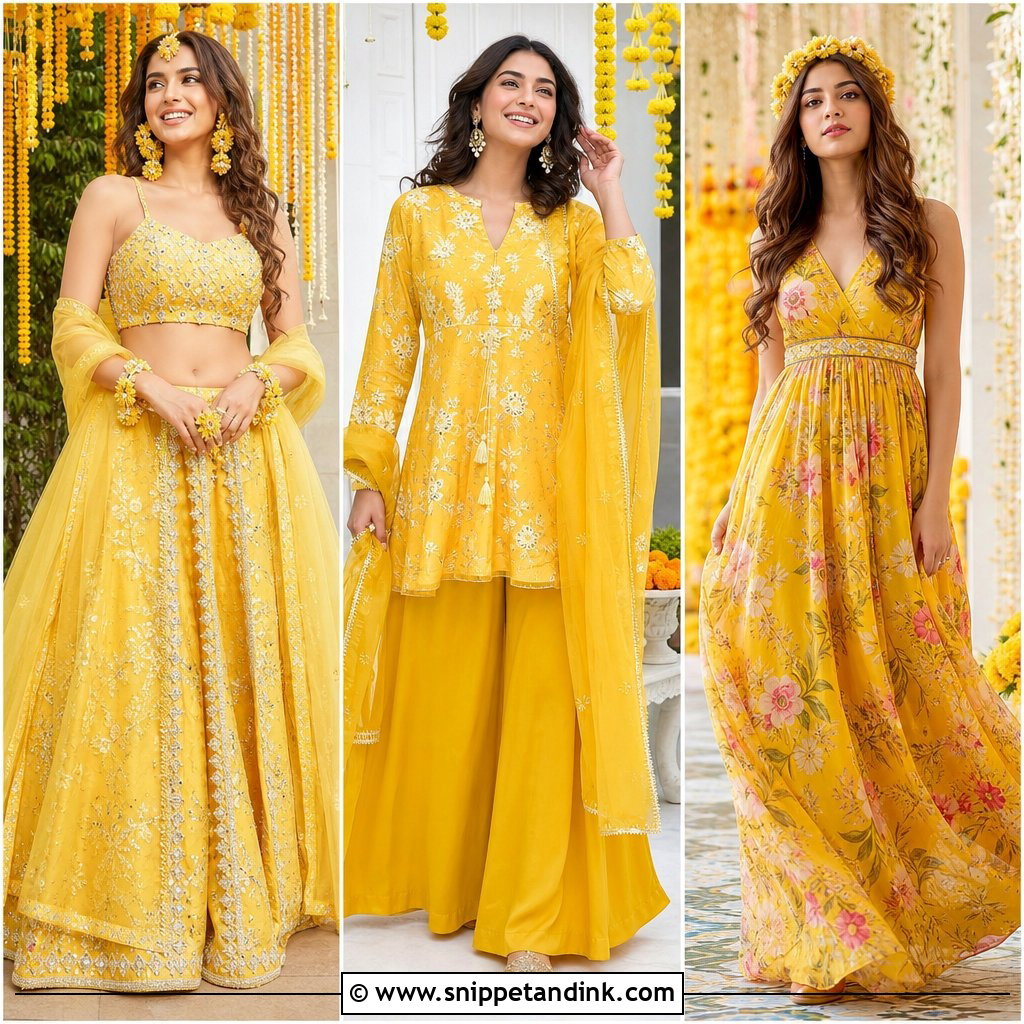
A yellow lehenga for haldi is the outfit most families picture first, and it earns that place because it matches the marigolds and the paste itself. At the fitting I ask clients to sit cross-legged in it for a minute, since haldi usually happens on a low chowki or floor cushions and a stiff can-can skirt fights you there. Georgette and cotton silk fold softly when you sit; layered organza puffs up around you. Keep the blouse detail to mirror work or gota patti, which shrug off a turmeric smear better than fine sequins. Brides can add a maang tikka and fresh flowers in the hair, while guests do better with smaller jhumkas and the yellow doing the talking.
2. Floral Lehenga For Haldi
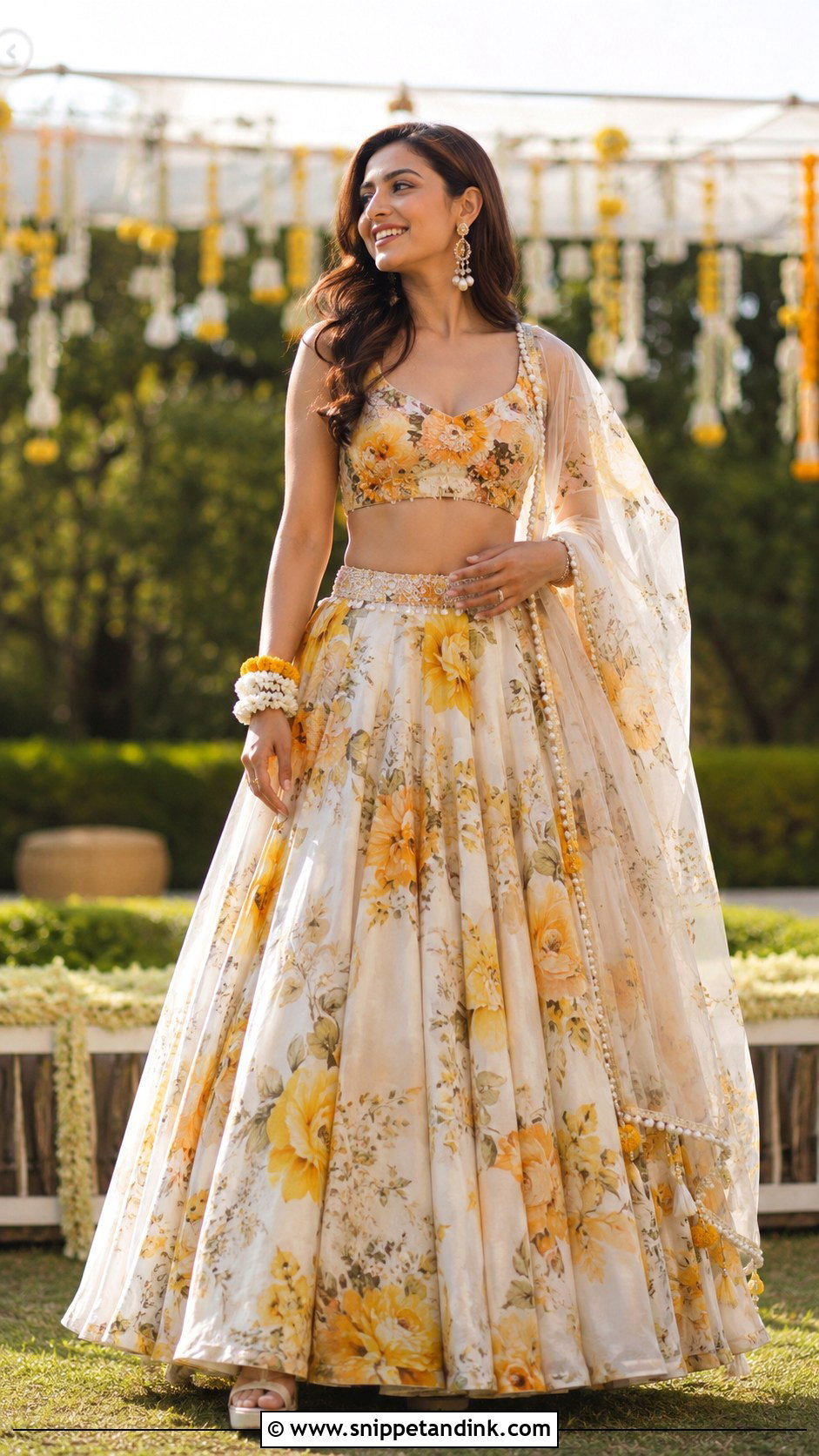
Printed florals are forgiving at a haldi, and that is my main reason for suggesting them. A yellow, peach or green print hides the odd fingerprint of paste far better than a flat solid. Balance it with a plain blouse under a printed skirt, or the reverse; print on both only works when the motifs are tiny. In a garden setup the print sits naturally against the greenery. I’d pair it with pearl earrings and wedges rather than thin heels, because a stiletto sinks into a lawn within minutes.
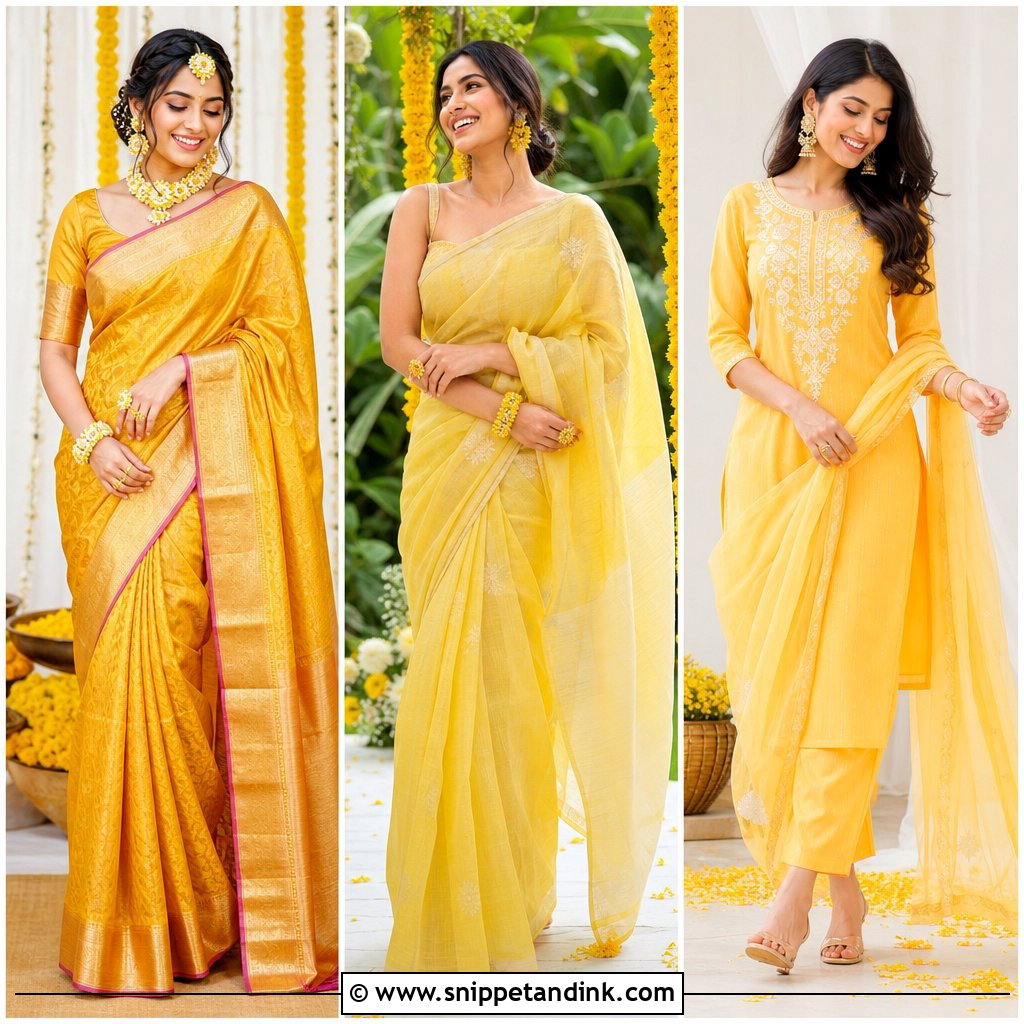
3. Yellow Saree For Haldi
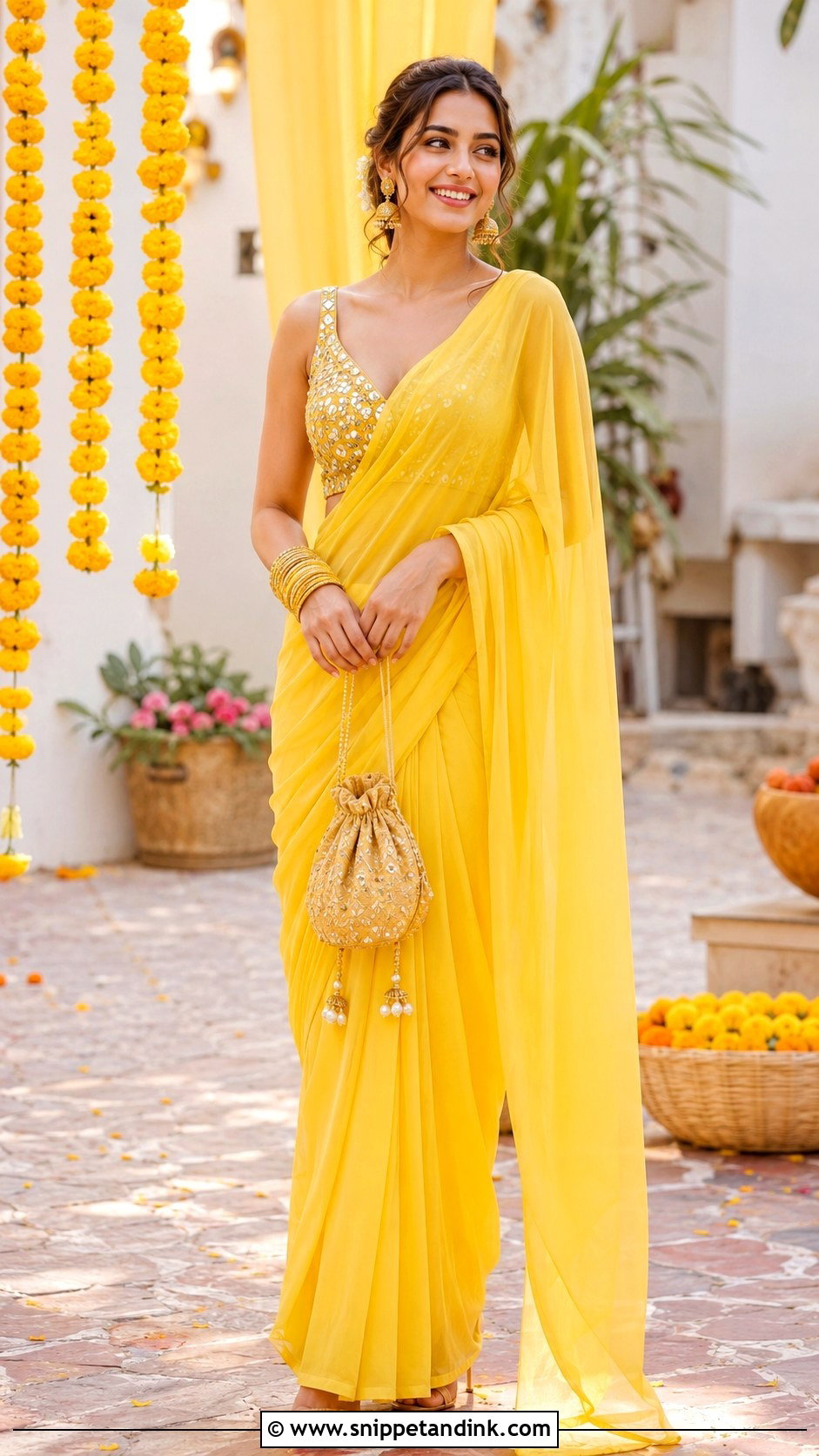
A yellow saree for haldi works across every age in the family, from a teenage cousin to a grandmother. The fabric decides how your day goes. Chiffon and georgette pleats stay put when you sit, while crisp cotton silk needs an extra pin at the waist. If drape makes you nervous, a pre-stitched saree removes the worry completely, and I recommend one to anyone who will be serving food or carrying the haldi bowl around. Brides can go bolder with the blouse and a flower bun. Guests look right in a simpler blouse, small jhumkas and low heels.
4. Organza Saree For Haldi
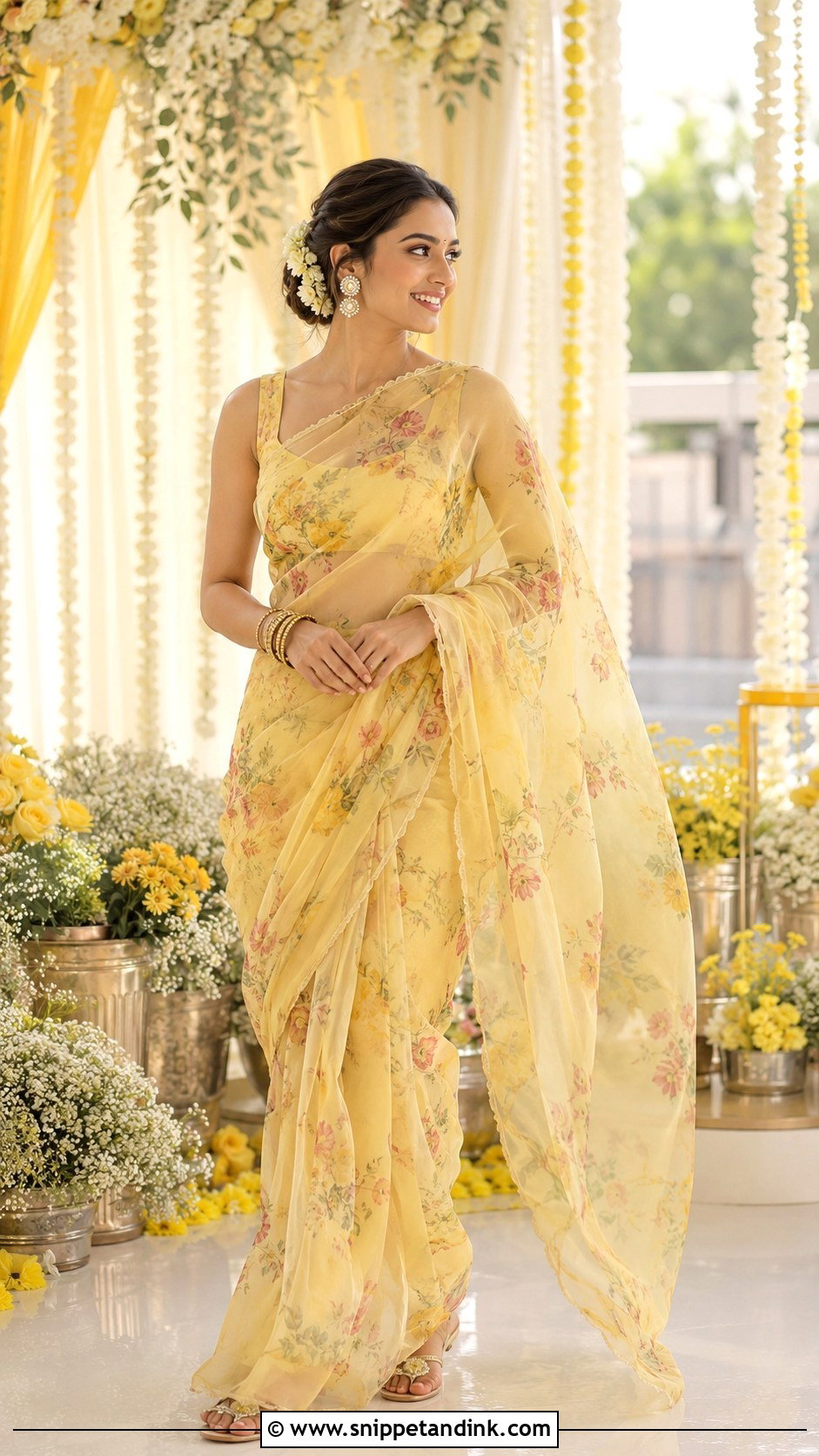
Organza holds its shape without embroidery, so even a plain organza saree looks finished. The catch is that it is slippery and springy. I pin the pallu at the shoulder and hide one more safety pin in the pleats, otherwise they fan open by the second hour. Organza also keeps a water ring if a splash dries on it, so blot with a dry tissue instead of dabbing with water. A sleeveless or elbow-sleeve blouse, a low bun with gajra and small pearls are all it needs, which is why mothers and sisters often ask me for it.
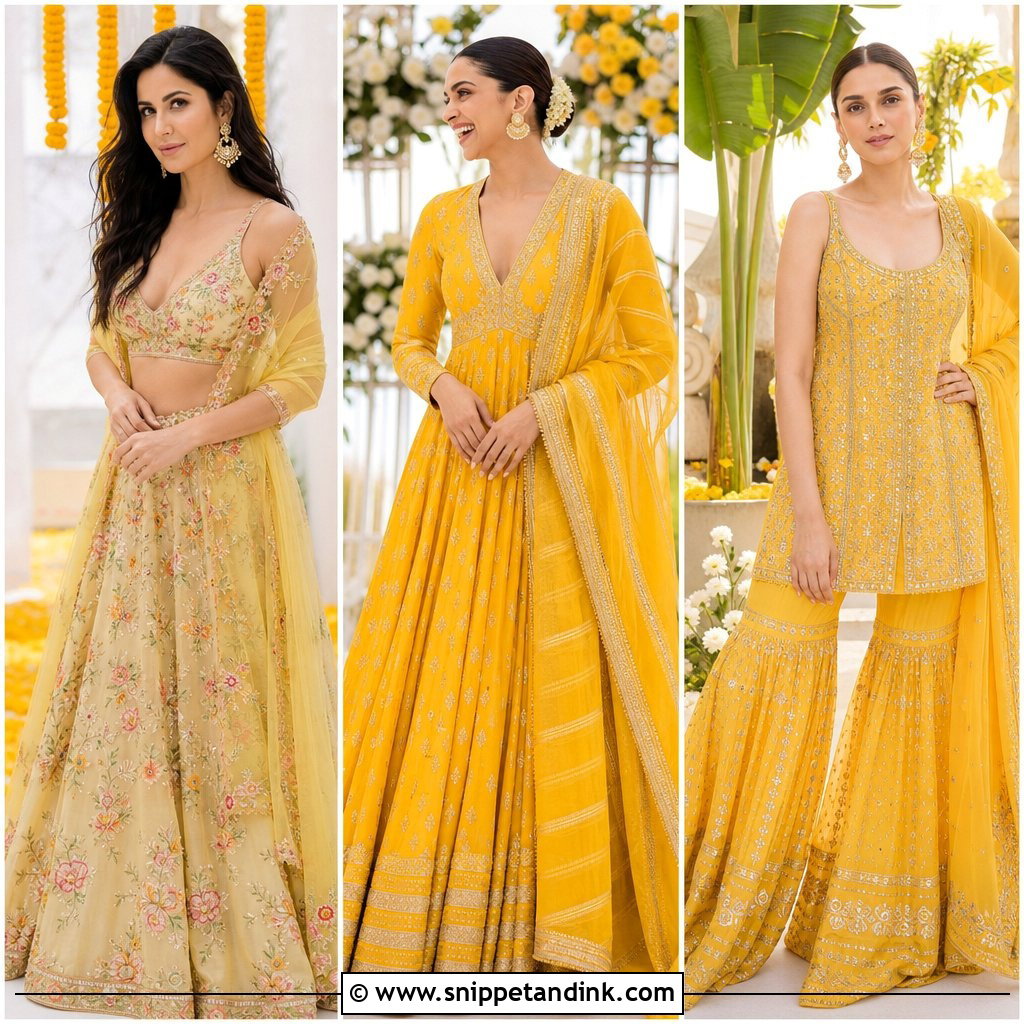
5. Yellow Sharara For Haldi
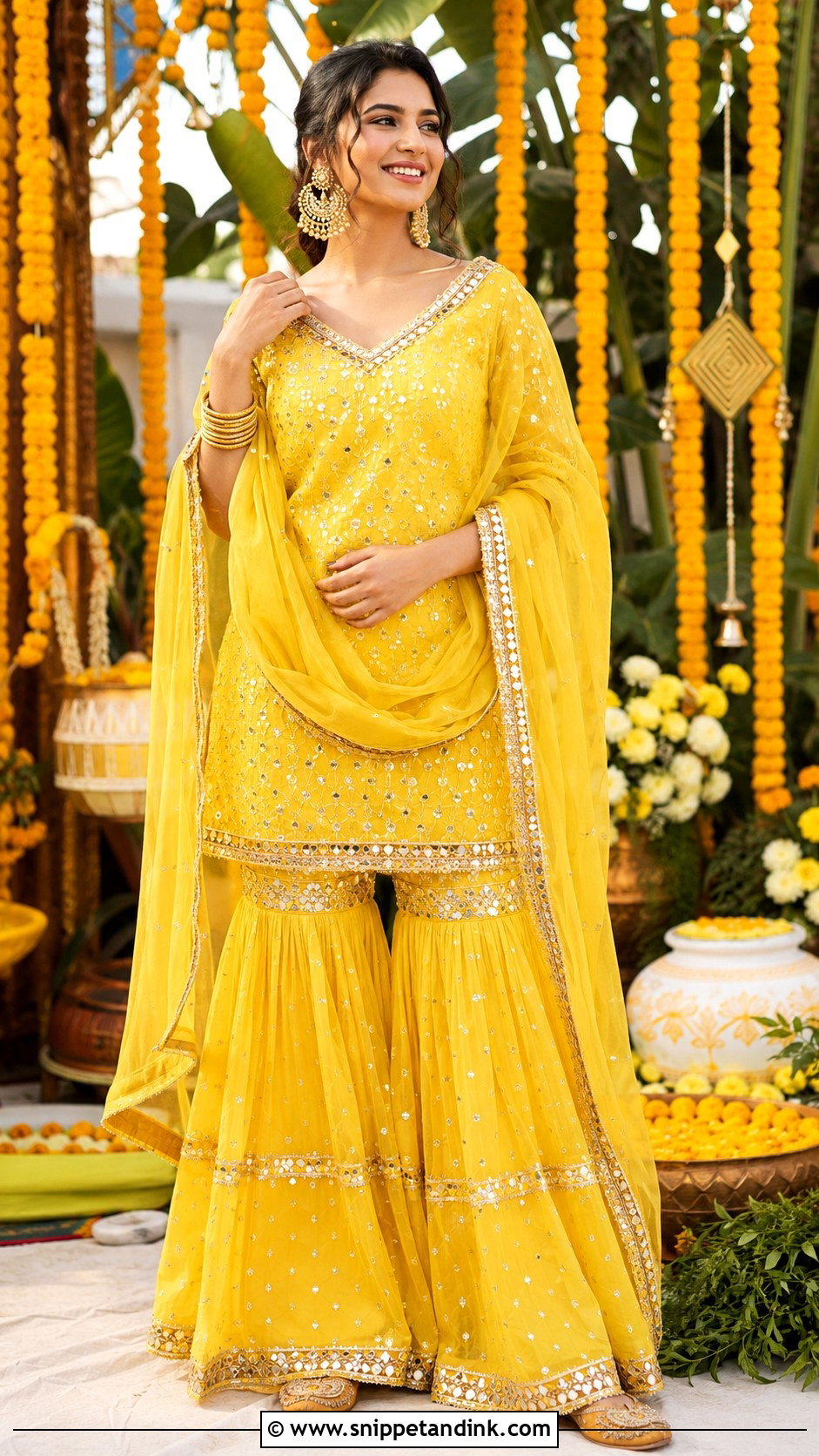
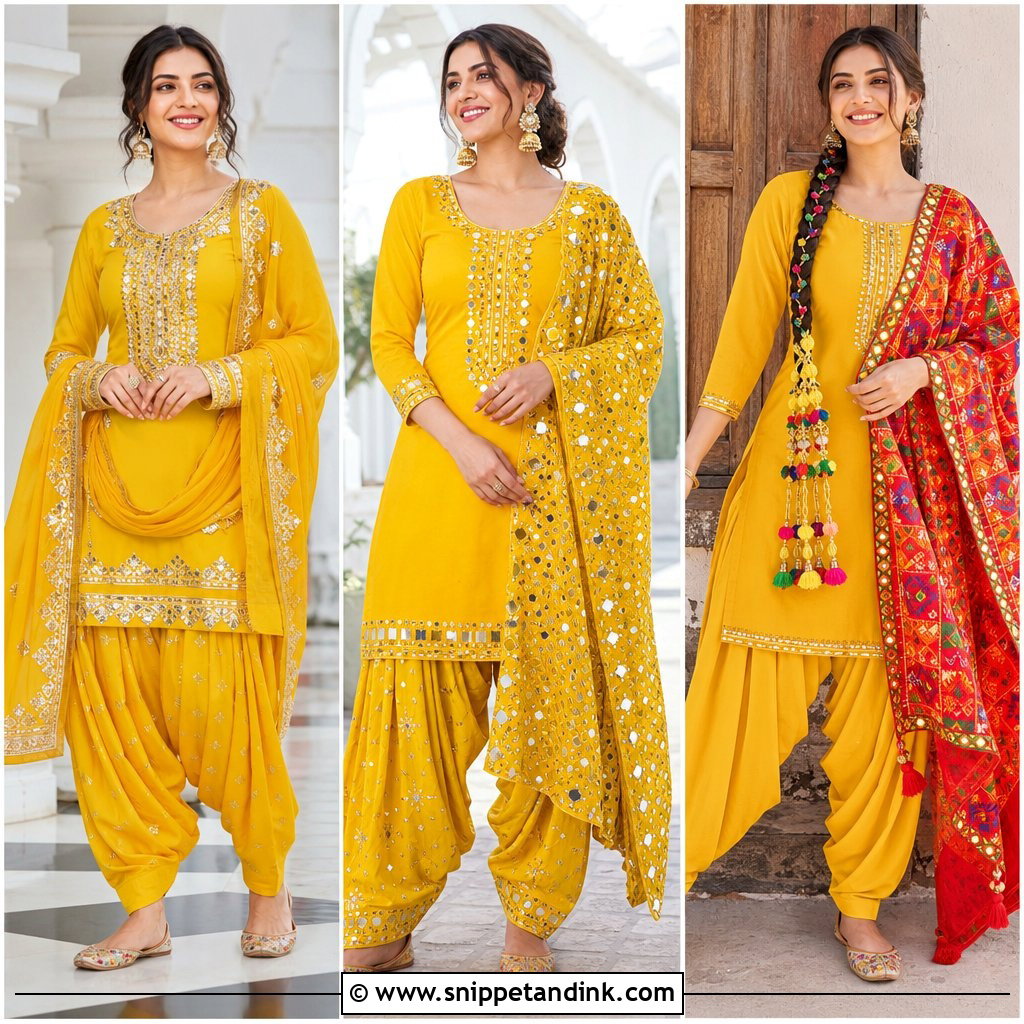
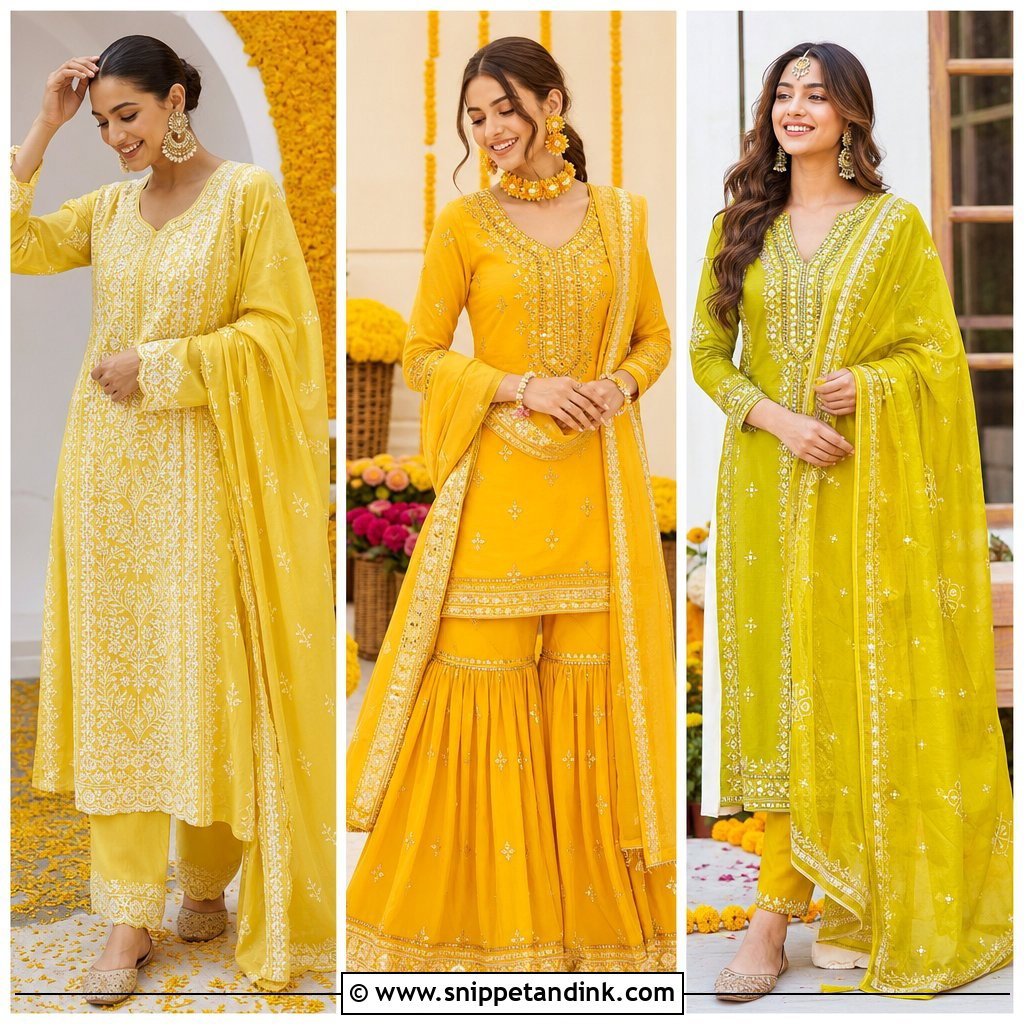
Shararas are what I put most bridesmaids in when a haldi turns into a dance party. The flare from the knee moves well and nobody worries about stepping on a skirt hem. A short kurti with gota borders keeps that flare visible. The one thing to check is the dupatta: a very full sharara plus a long dupatta can tangle the moment you sit, so pin it across the body or drape it over one shoulder only. Juttis are the easy shoe here, since you can slip them off in seconds when the rituals move to floor seating.
6. Gharara Set For Haldi
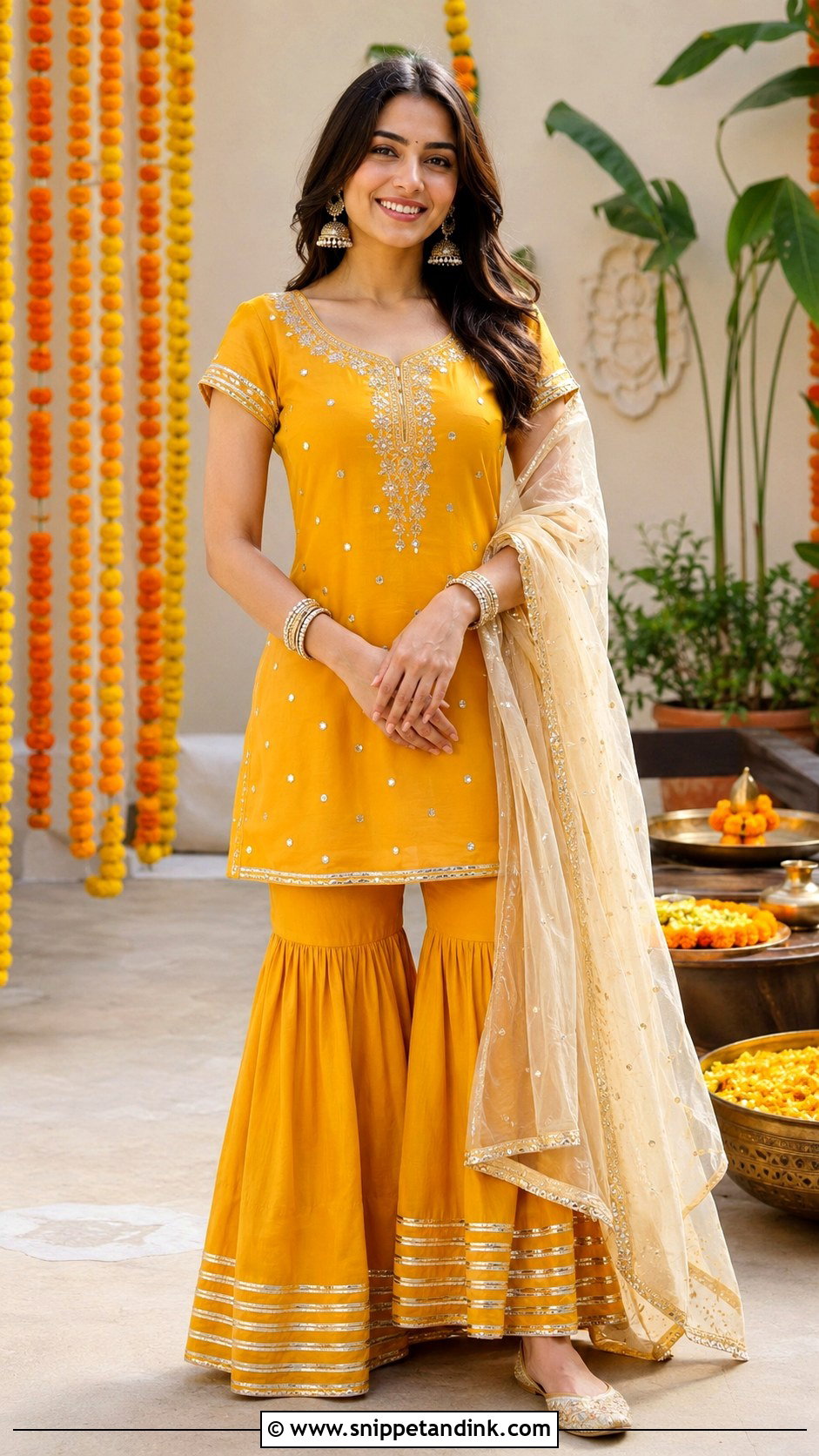
A gharara looks dressier than a sharara because the fitted section runs to the knee and the gathers start at a joint that is usually covered with a gota band. That joint is where fit matters most. If the fitted part is too snug, it creases into horizontal lines as soon as you sit, so I have clients sit down during the fitting and ask the tailor for a little ease at the thigh. Mustard or lemon yellow with ivory embroidery suits a haldi palette. Finish with a short kurti, a scalloped dupatta, jhumkas and low heels.
7. Yellow Anarkali For Haldi
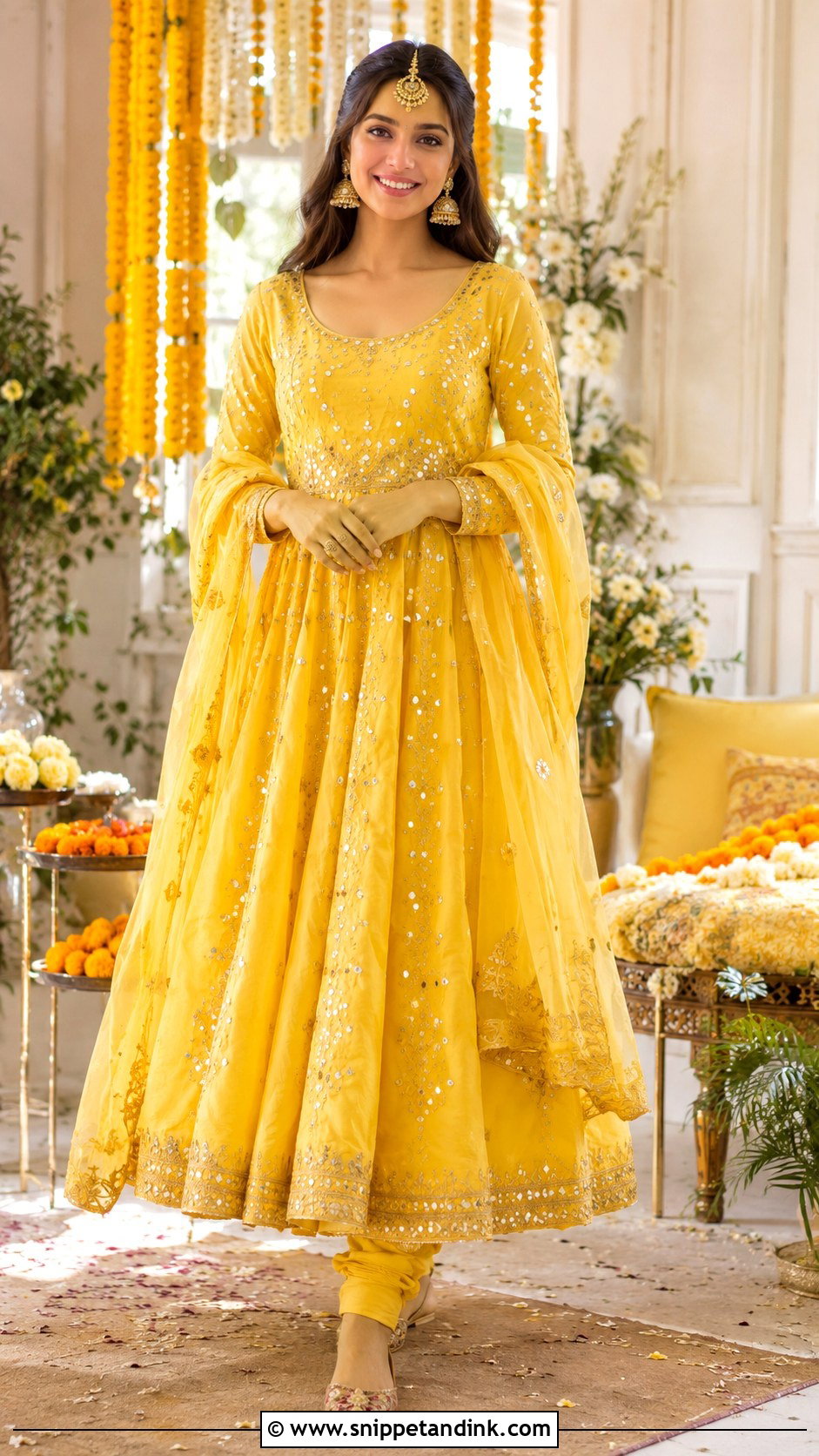
An Anarkali skims the body from the bust down, which is why clients with very different shapes feel at ease in one. Weight is the real question. A floor-length Anarkali with many kalis uses a lot of fabric, so for a daytime haldi I’d choose cotton silk, georgette or chanderi over heavy silk. Light mirror work or thread embroidery is plenty. Wear it with a churidar and juttis. A maang tikka turns it bridal; small earrings keep it guest-appropriate.
8. Kurta Palazzo Set For Haldi
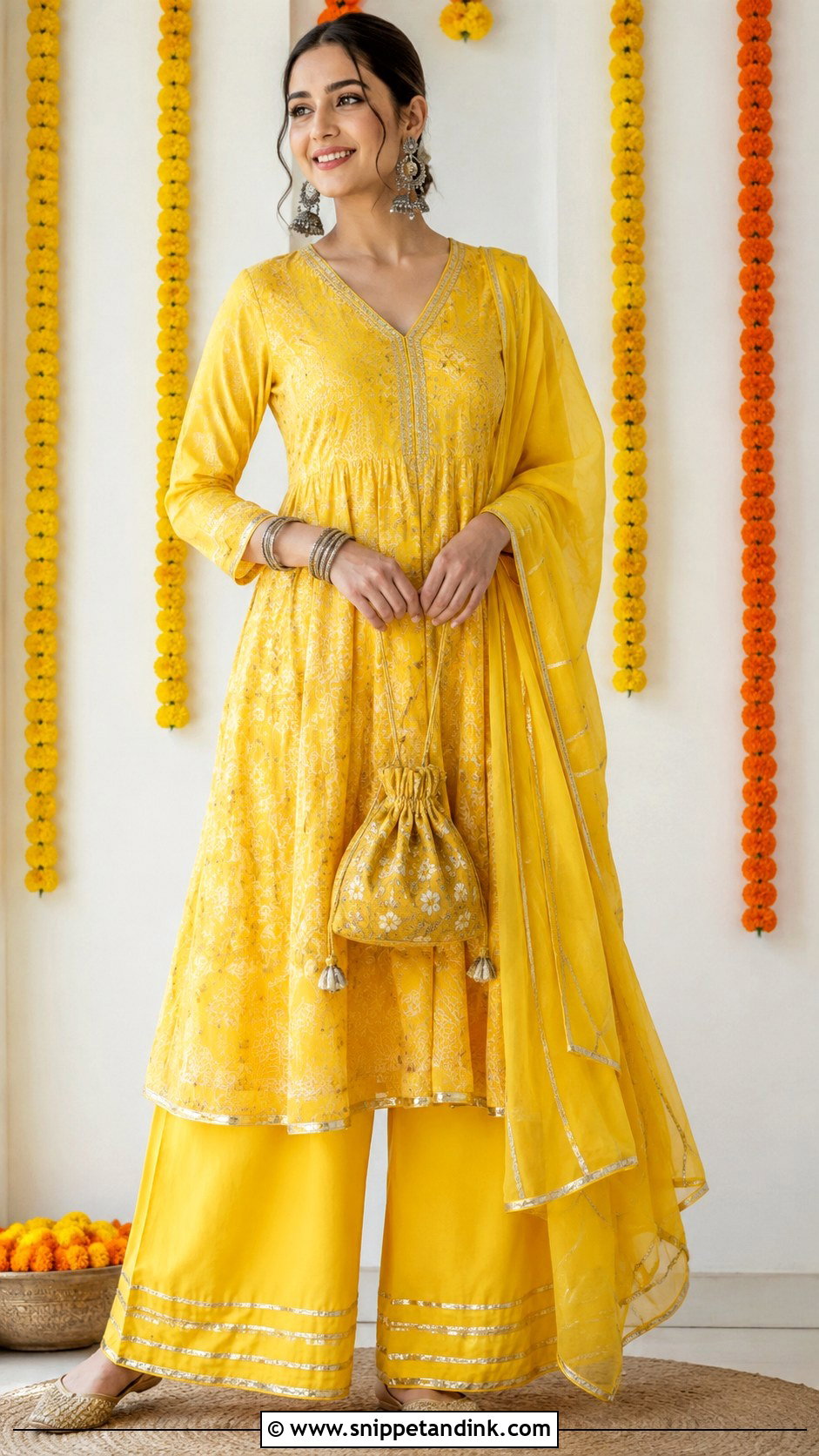
For a guest who wants to sit through the rituals and still dance later, a kurta and palazzo set is my first suggestion. Cotton, rayon, chanderi and muslin all breathe in daytime heat, and block prints or a gota-edged dupatta stop the set looking like office wear. One fit note: palazzos cut too long collect turmeric and marigold petals at the hem, so have them finished just above the shoe. Oxidized earrings, a potli bag and a soft braid complete it.
9. Chikankari Kurta For Haldi
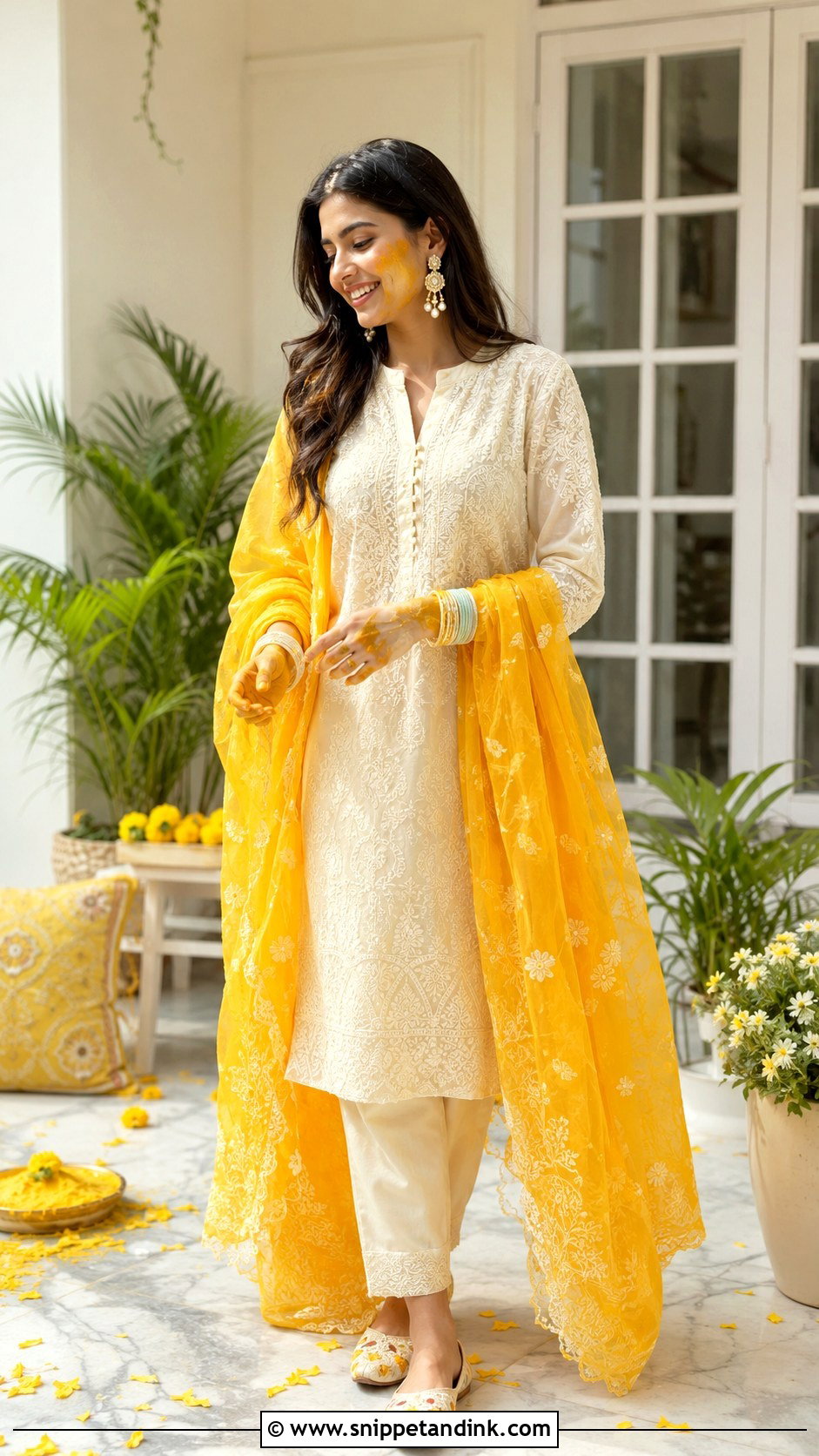
Chikankari is the fine hand embroidery associated with Lucknow, worked on light cotton or georgette, and a white or lemon chikankari kurta reads calm next to all that yellow. The trade-off is that pale cotton takes turmeric quickly. If you will be close to the bride while the paste goes on, wear a bright yellow dupatta you can throw over both shoulders as a shield. Straight pants look neater than palazzos here. Pearl earrings and glass bangles keep it gentle, and the kurta goes straight into your everyday wardrobe afterward.
10. Yellow Co Ord Set For Haldi
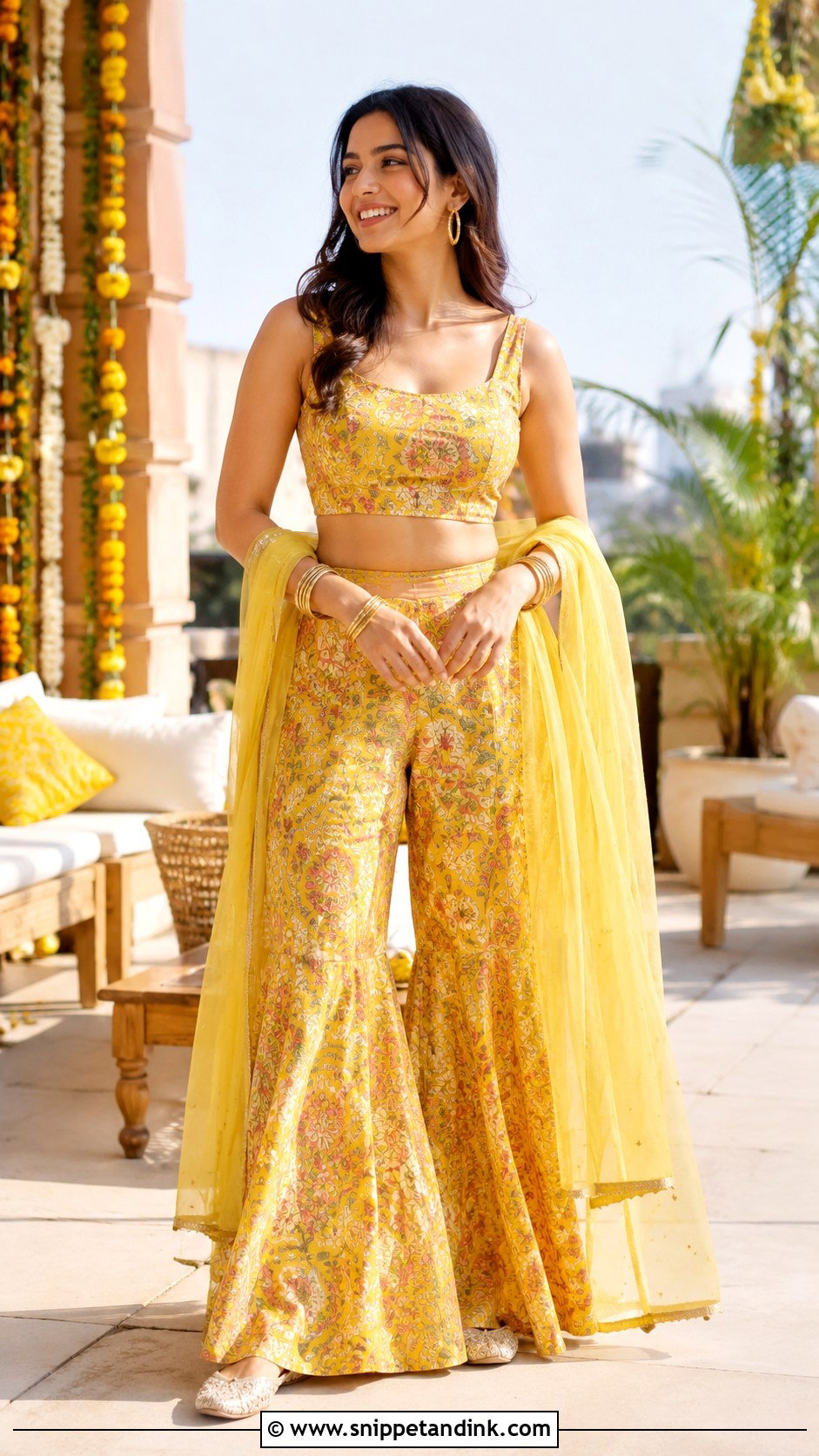
A yellow co ord set for haldi appeals to anyone who wants an outfit they will actually wear again. Crop top and skirt, tunic and pants, or a short kurta with flared trousers all count. I like bandhani and block prints on co ords because they make a casual shape feel ceremonial. Add a dupatta only if the family leans traditional. Before the day, check the crop length while seated: when you lean forward to reach the bowl, a short top rides up more than you’d expect in the mirror. Hoops, juttis and a small sling bag suit it.
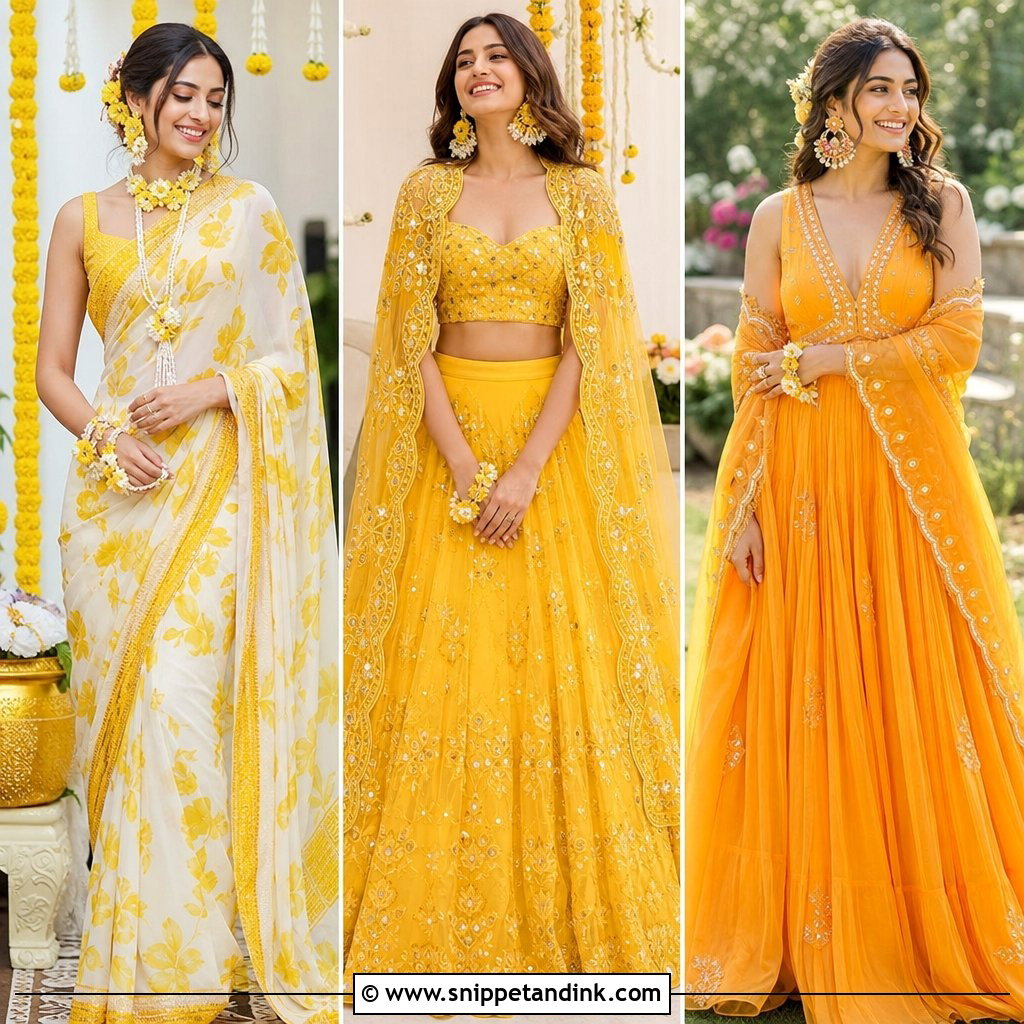
11. White And Yellow Lehenga For Haldi
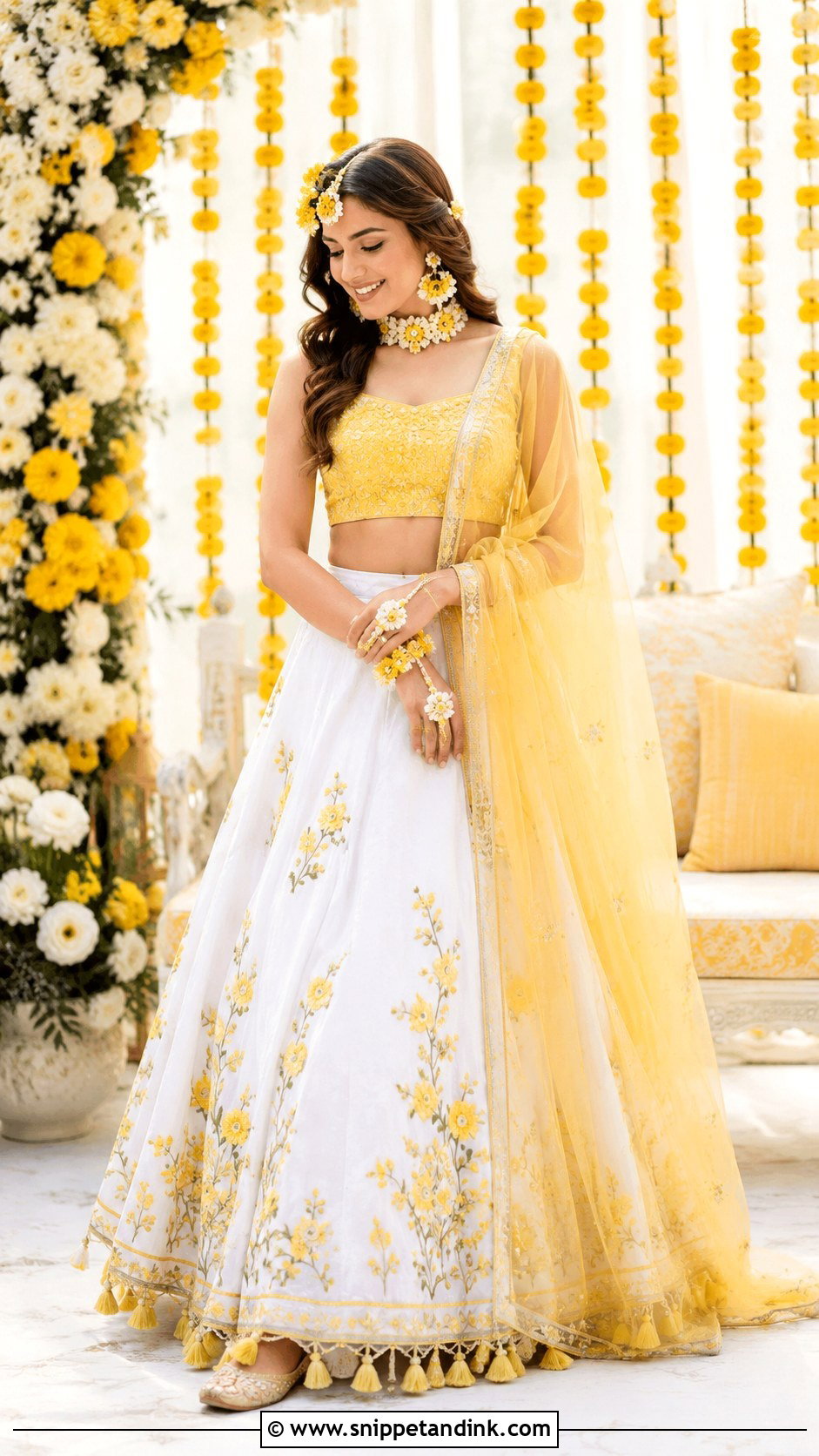
White and yellow is fresh in daylight, and brides who want to step away from all-yellow often settle here. Look for a white lehenga with marigold embroidery, yellow florals or gota, worn with a yellow blouse and dupatta. Be honest with yourself about the white, though. At a haldi the paste travels, and turmeric on white cotton is the hardest stain I deal with after the event. If you want to wear the outfit again, pick a white with dense embroidery that hides marks, or accept that it may be a one-day piece. Fresh flower jewelry and loose curls suit it.
12. Mustard Dress For Haldi
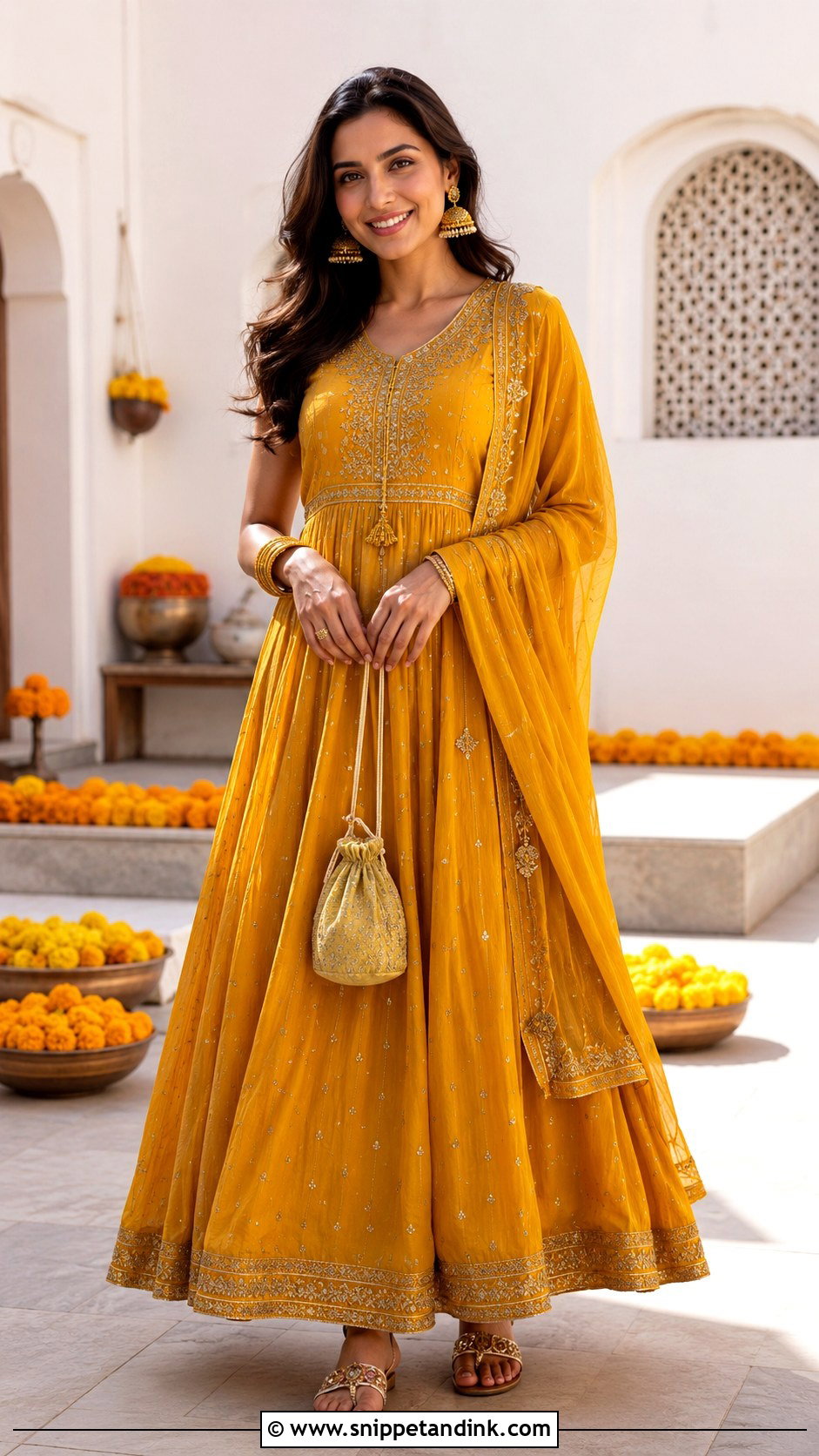
Mustard is the yellow I suggest to anyone who feels washed out in lemon. The deeper, warmer tone sits well on olive and deeper skin, and it holds its richness in shaded indoor rooms where bright yellow can look flat. An angrakha dress, a flared ethnic maxi or a dress with subtle embroidery all work. Gold earrings and bangles pick up the warmth. Add a dupatta for a traditional family and skip it for a casual one.
13. Lime Green Outfit For Haldi
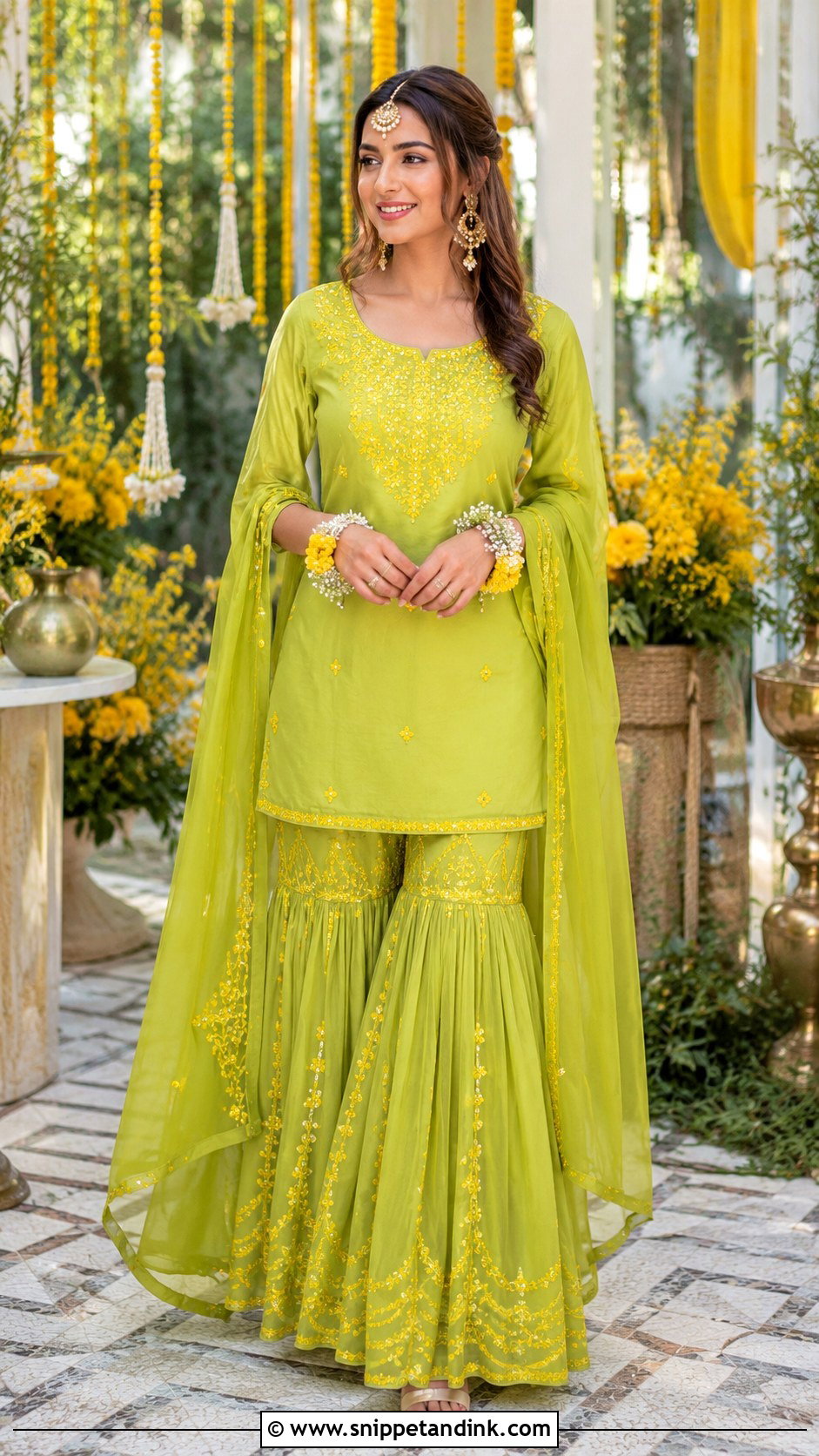
Lime green is my answer when bridesmaids want to coordinate without copying the bride’s yellow. It still feels festive against marigold decor and looks fresh outdoors. Be careful with shade: a bright neon lime can bounce a greenish cast onto the face in close photos, so I lean toward a softer pastel lime, or lime with white embroidery around the neckline. A kurta set, sharara or saree all work in it. Gold jewelry and nude sandals keep it grounded.
14. Orange Lehenga For Haldi
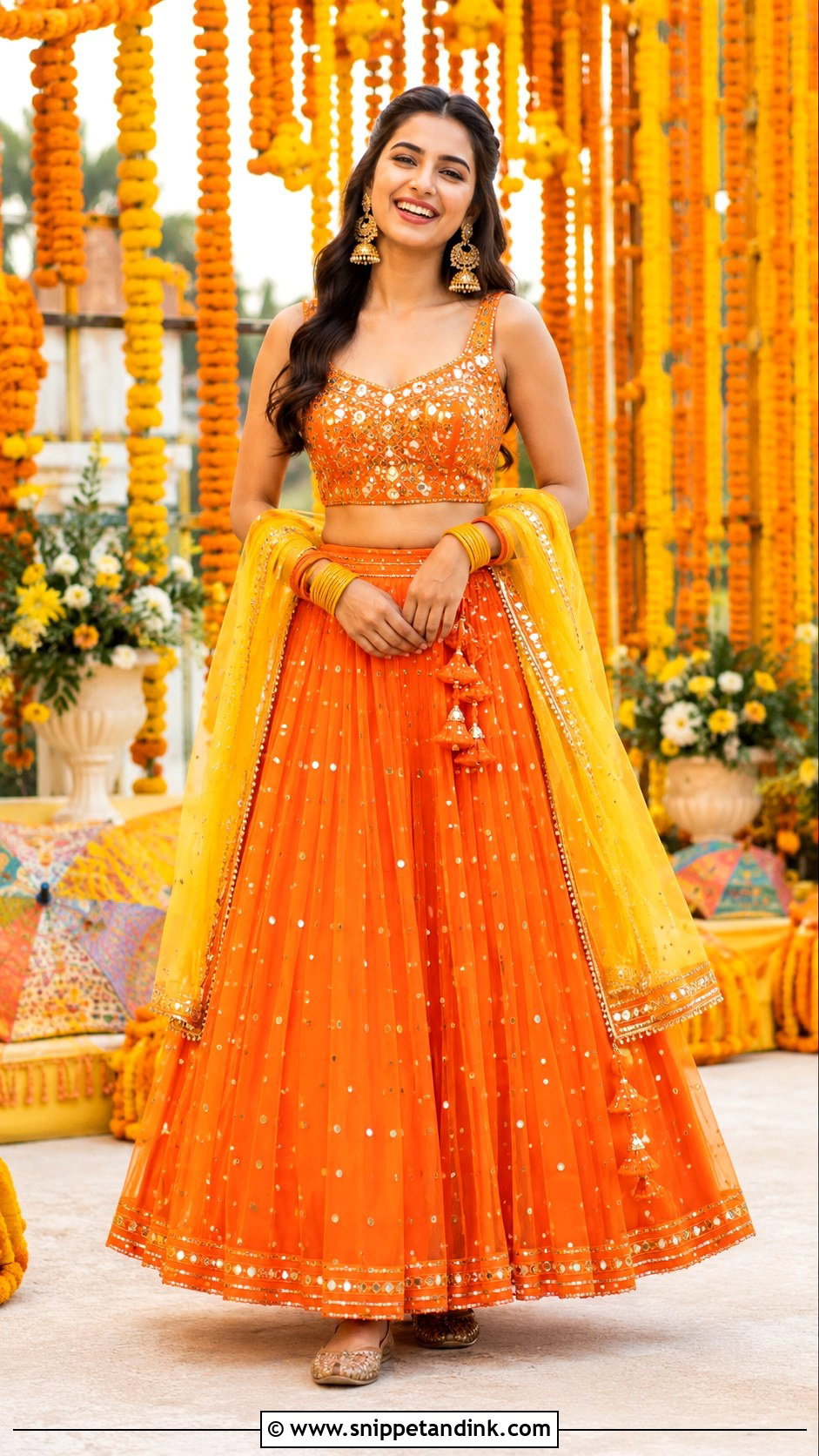
Orange sits right beside yellow on the color wheel, so it belongs at a haldi while giving the wearer a stronger presence. Choose a light lehenga with mirror work or gota patti, because heavy orange silk in midday heat is hard work. A yellow dupatta ties it back to the ceremony palette. Since the color already does so much, I keep everything else simple: gold jhumkas, a few bangles, a small maang tikka and a neat bun that won’t snag on the dupatta.
15. Pink And Yellow Outfit For Haldi
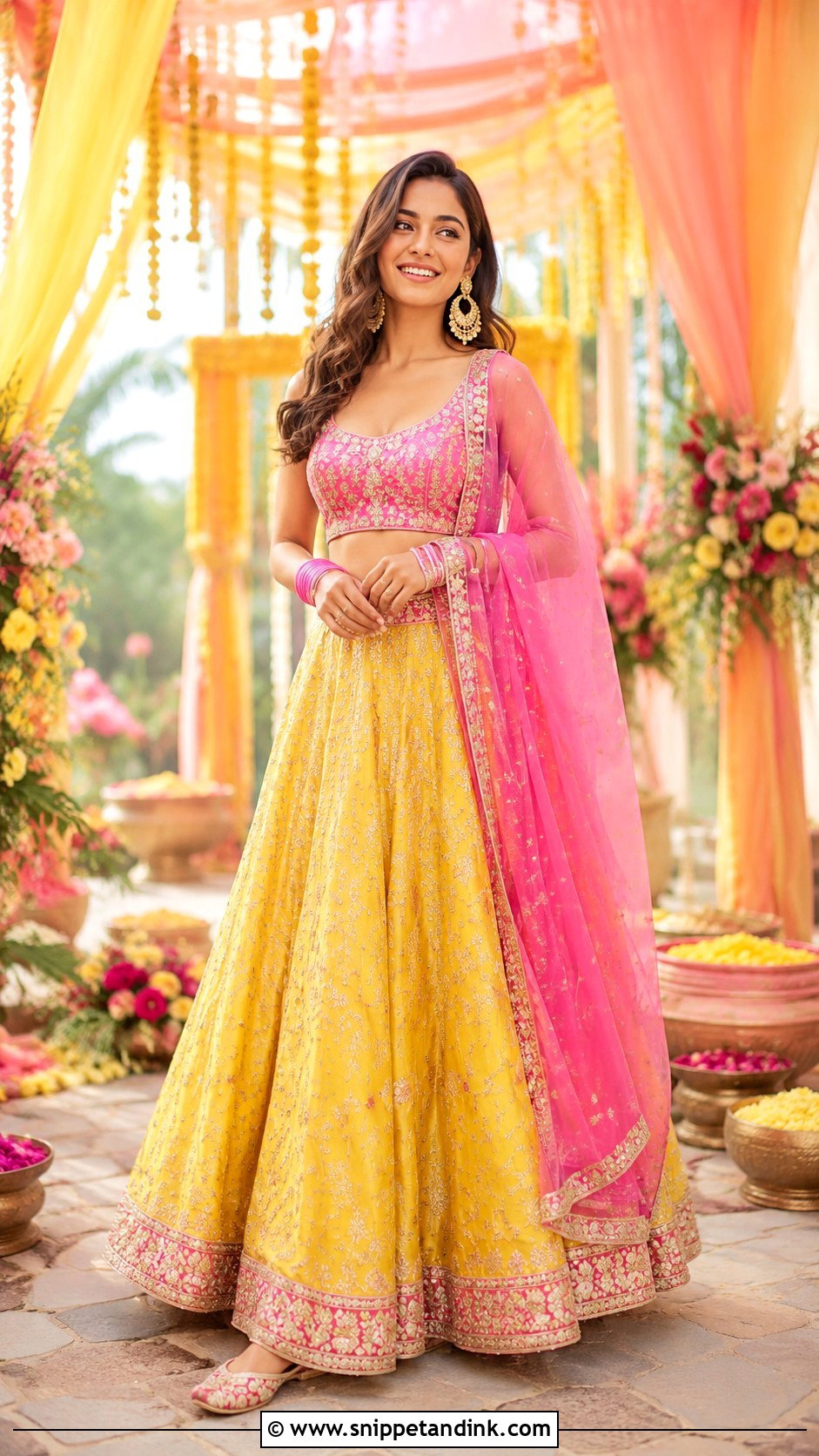
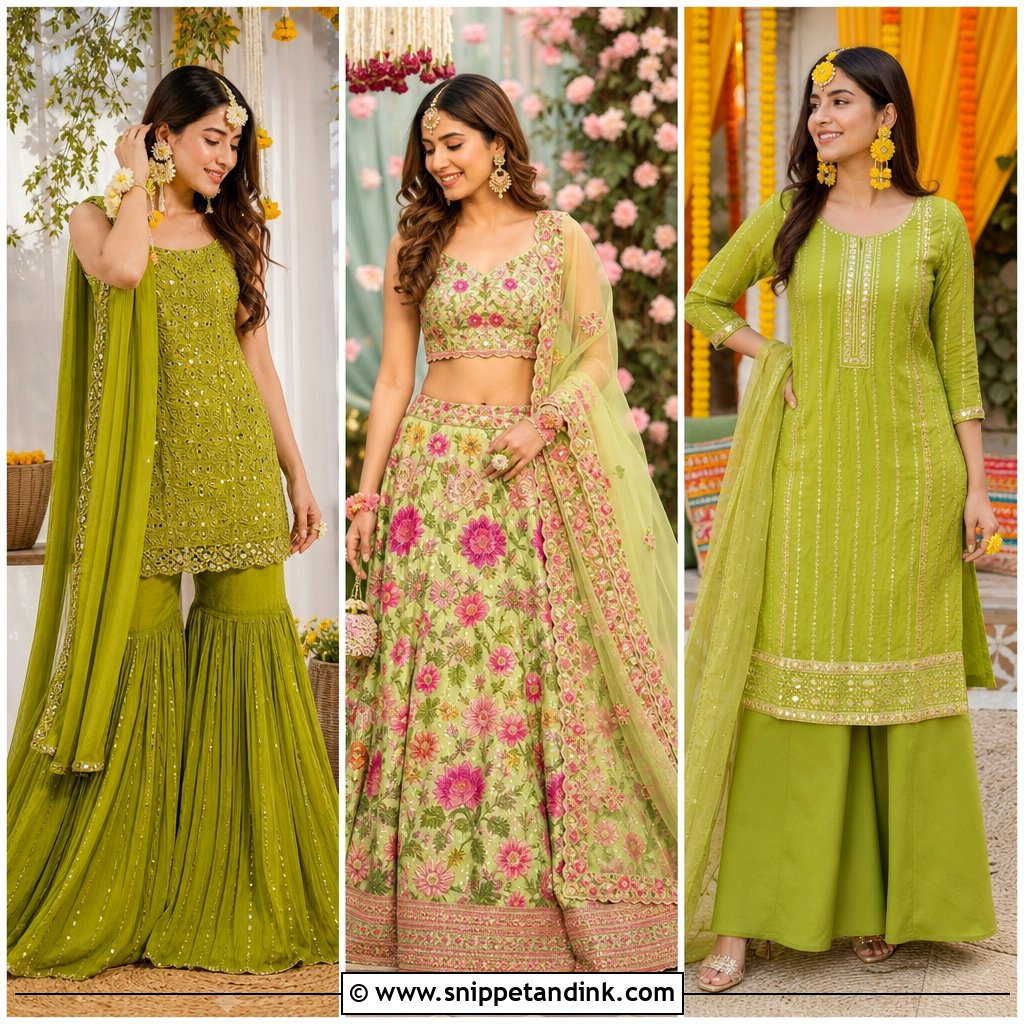
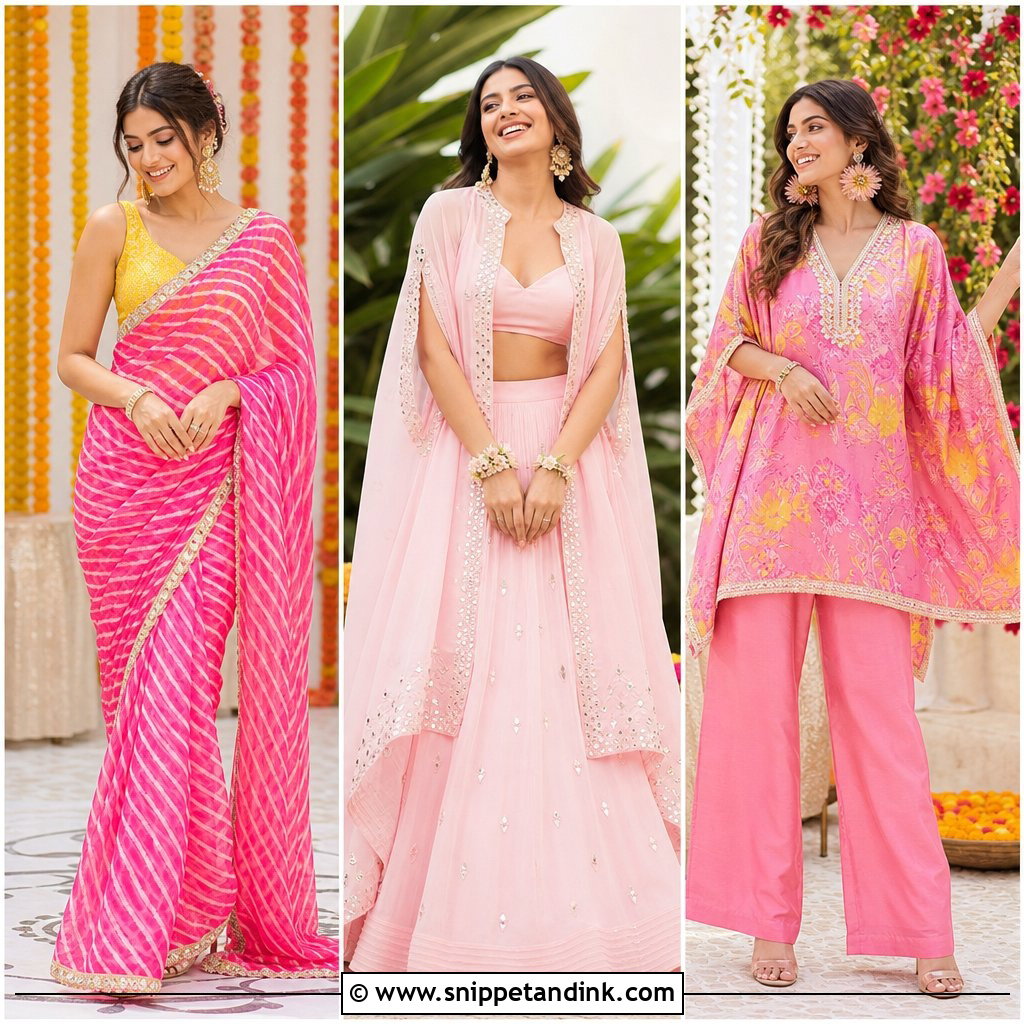
Pink and yellow is cheerful, but it needs a ratio. Let one color take most of the outfit and use the other as an accent; split it evenly and the look breaks in half in photos. A yellow lehenga with a pink dupatta is the simplest version, and a printed kurta set mixing both is the most relaxed. I often suggest this pairing to a group of friends who want to look coordinated without matching exactly. Gold jewelry, pink glass bangles and a floral braid suit it.
16. Peplum Sharara For Haldi
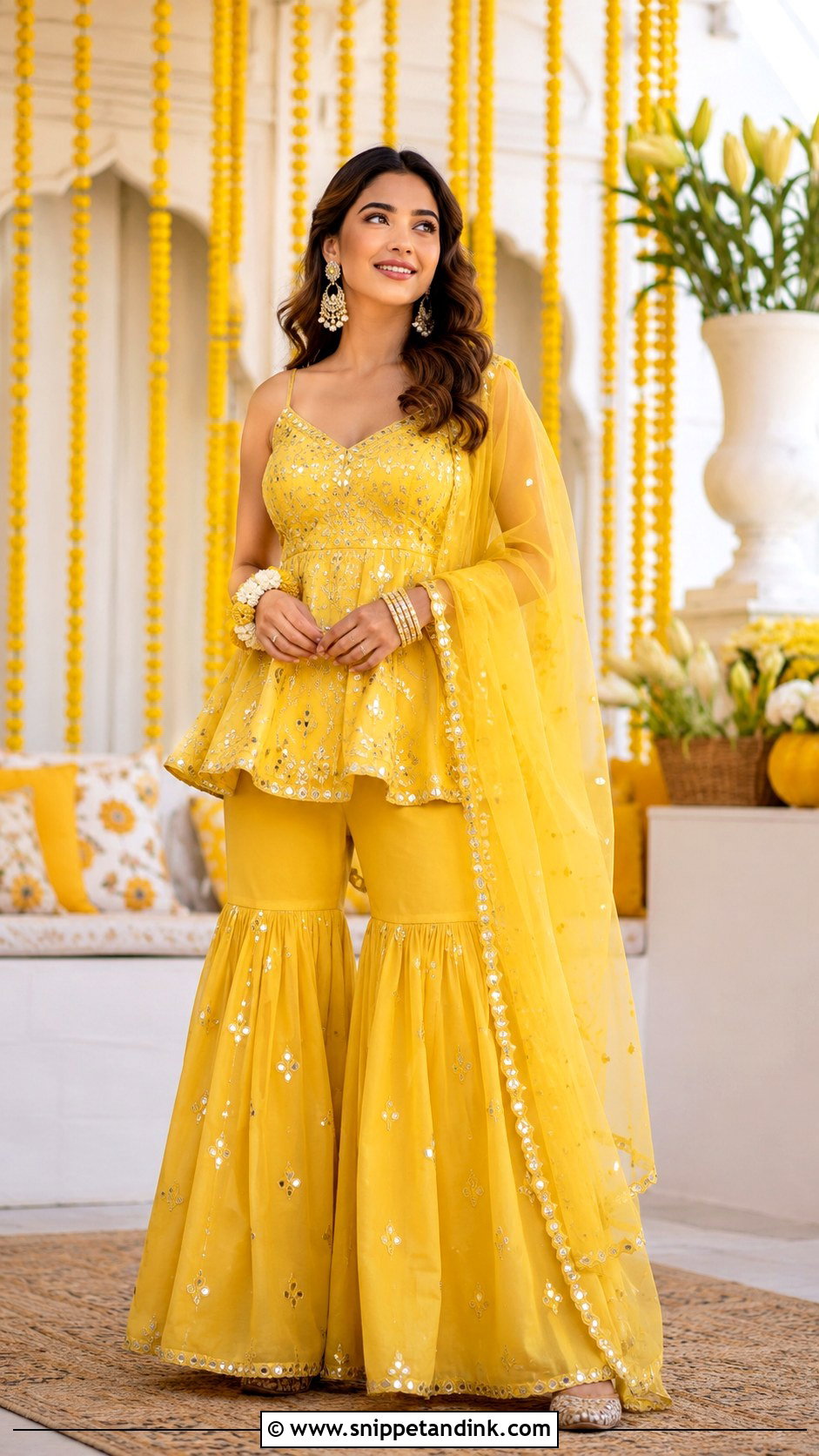
A peplum sharara for haldi gives the waist definition a straight kurti doesn’t, while the flared pants still let you dance. When I fit a peplum top, I check where the flare begins. It should start at your natural waist; if it starts lower, the top adds width at the hips. Yellow, ivory, lime or florals with mirror work all suit the cut. A sheer dupatta makes it more traditional, and leaving it off gives a cleaner party look. It moves well in candid shots of the dancing.
17. Cape Set For Haldi
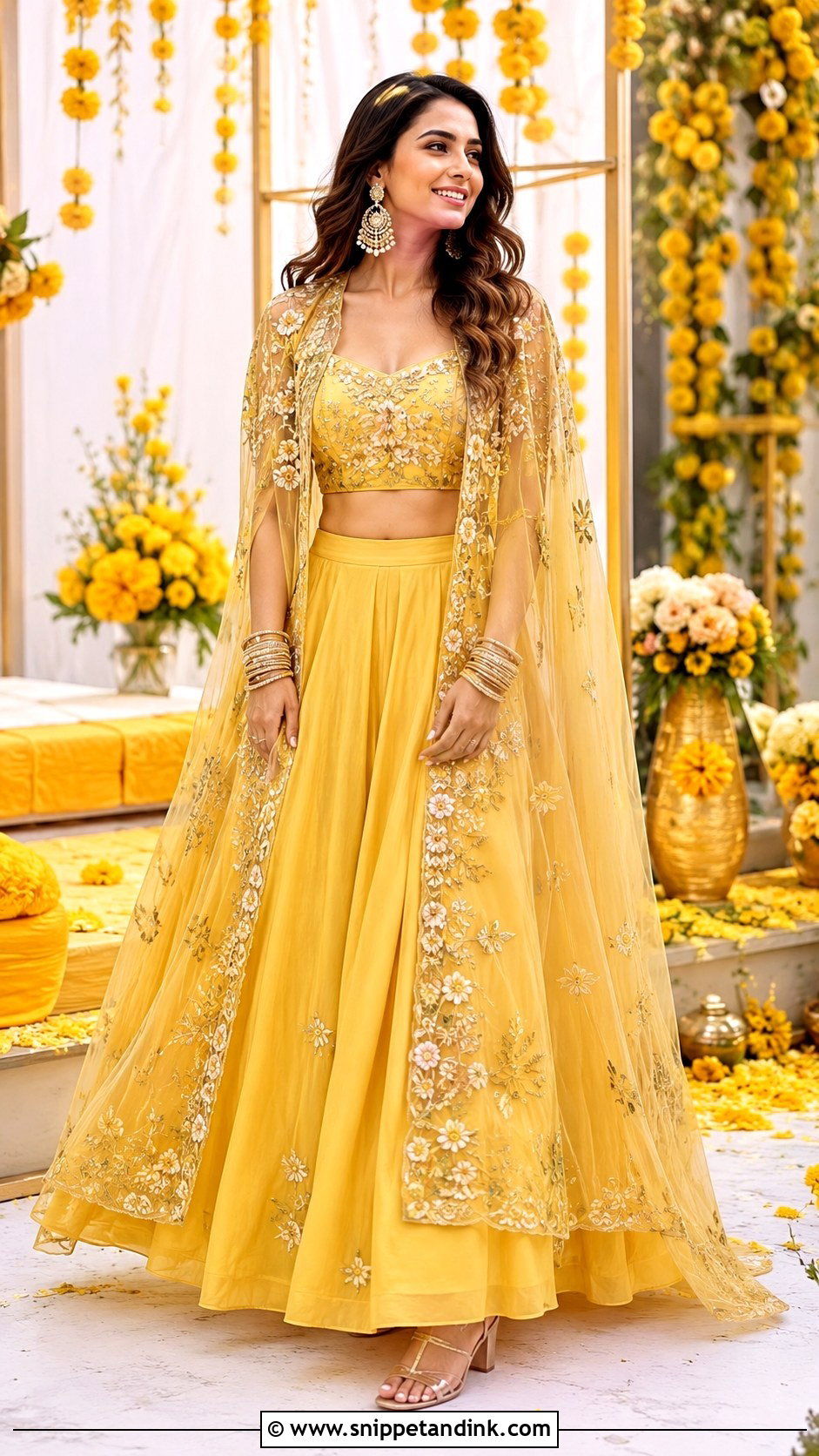
Capes solve the dupatta problem. Nothing slides off your shoulder, nothing needs pinning, and both hands stay free for the rituals. A sheer cape over a crop top and skirt works, and so does an embroidered cape over a kurta and palazzo. Watch the sleeve width. A cape cut wide at the arm drags through the haldi bowl when you lean in to apply paste, so for anyone doing the applying I suggest one that ends around the elbow. Statement earrings and soft waves are enough with it.
18. Dhoti Kurta For Haldi
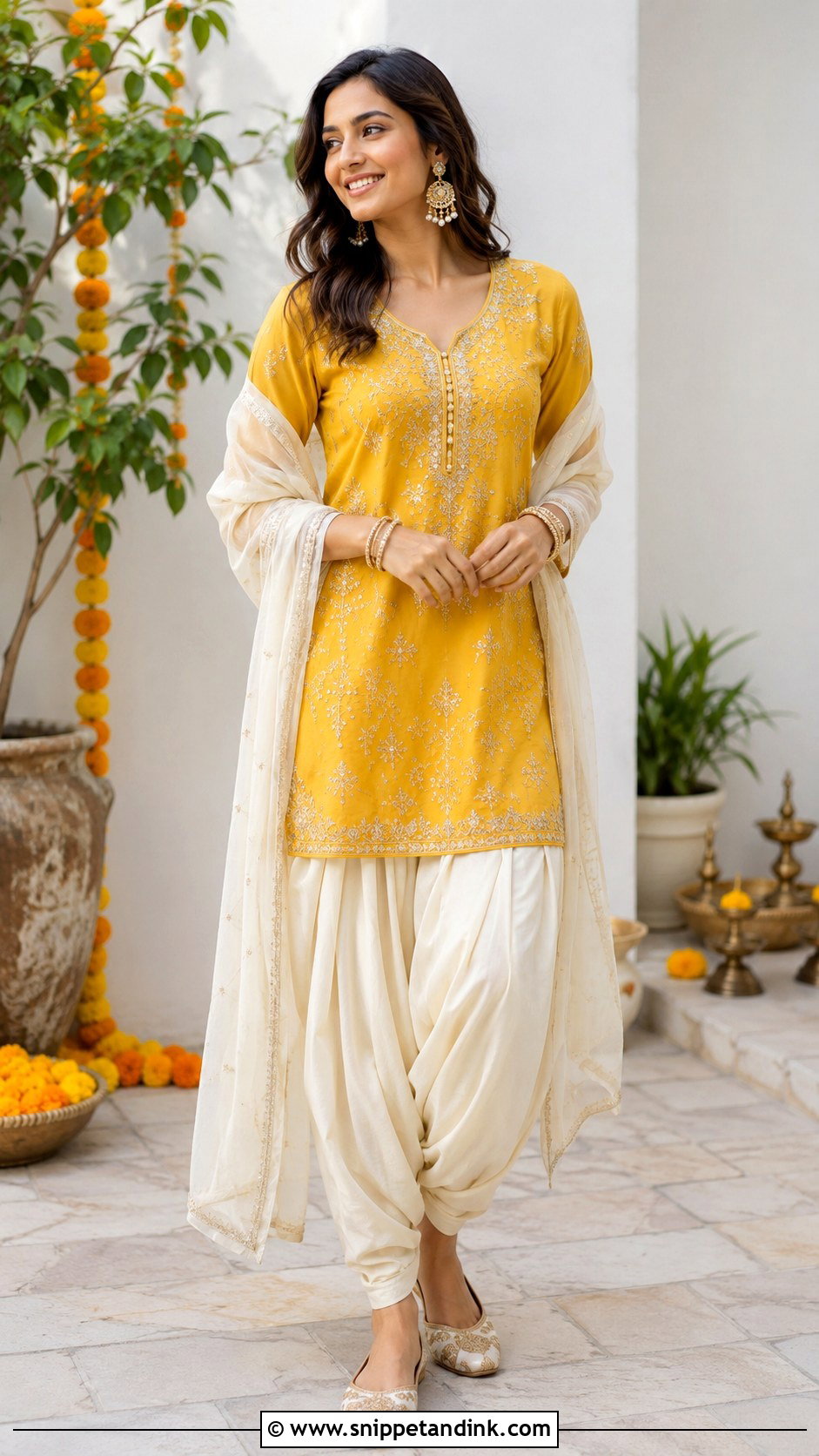
A dhoti kurta suits the cousin who will be on the floor for the rituals, then on the dance floor, then helping clear up. The draped dhoti pants give you room to sit cross-legged with no skirt to manage. Pair a short yellow kurta with dhoti pants, or ivory with mustard for contrast. Keep the detail in one place: heavy embroidery on the kurta means plain bottoms, and a simple set wants a printed dupatta or bright jewelry. Add a light jacket if the event runs into the evening.
19. Ruffle Saree For Haldi
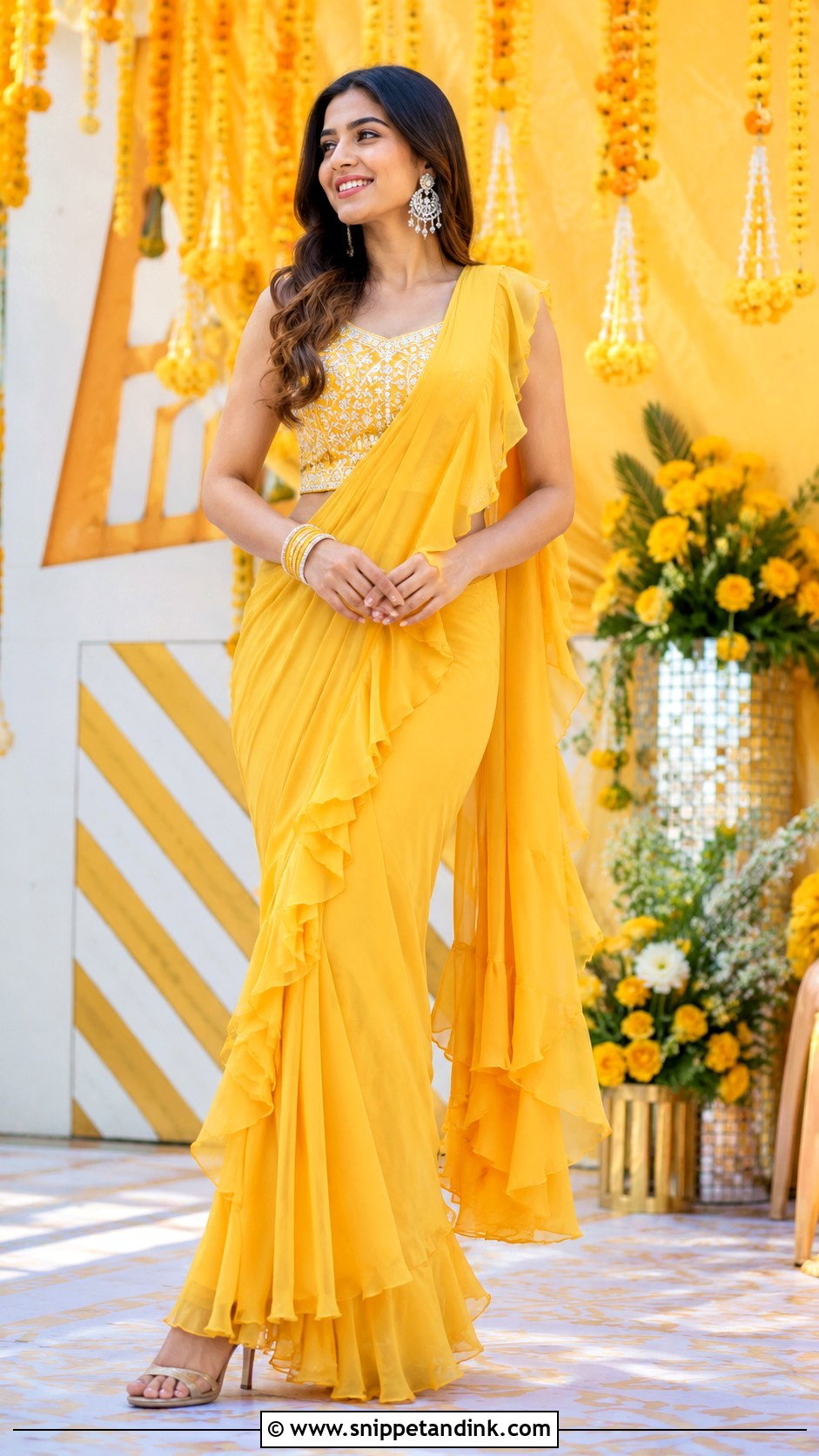
A ruffle saree for haldi adds movement at the hem and feels younger than a classic drape. Choose lightweight georgette or organza, because ruffles in heavy fabric stand out stiffly and add bulk at the pleats. The practical issue is the floor. Ruffles sweep it, and at a haldi the floor is where spilled paste ends up, so I drape these a touch higher than usual, around the ankle bone. A pre-draped version is the easiest to wear. Sleek earrings and heels you can actually walk in are all it needs.

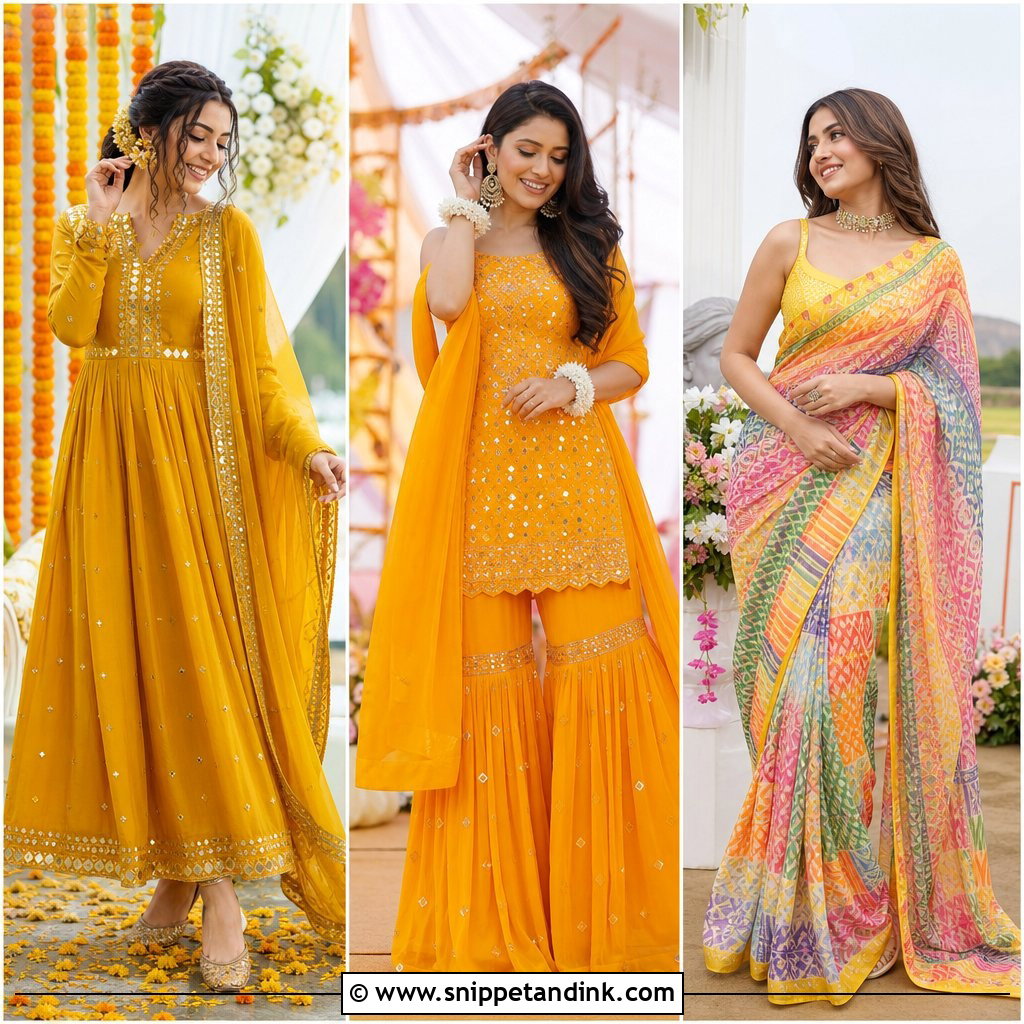

20. Jacket Lehenga For Haldi
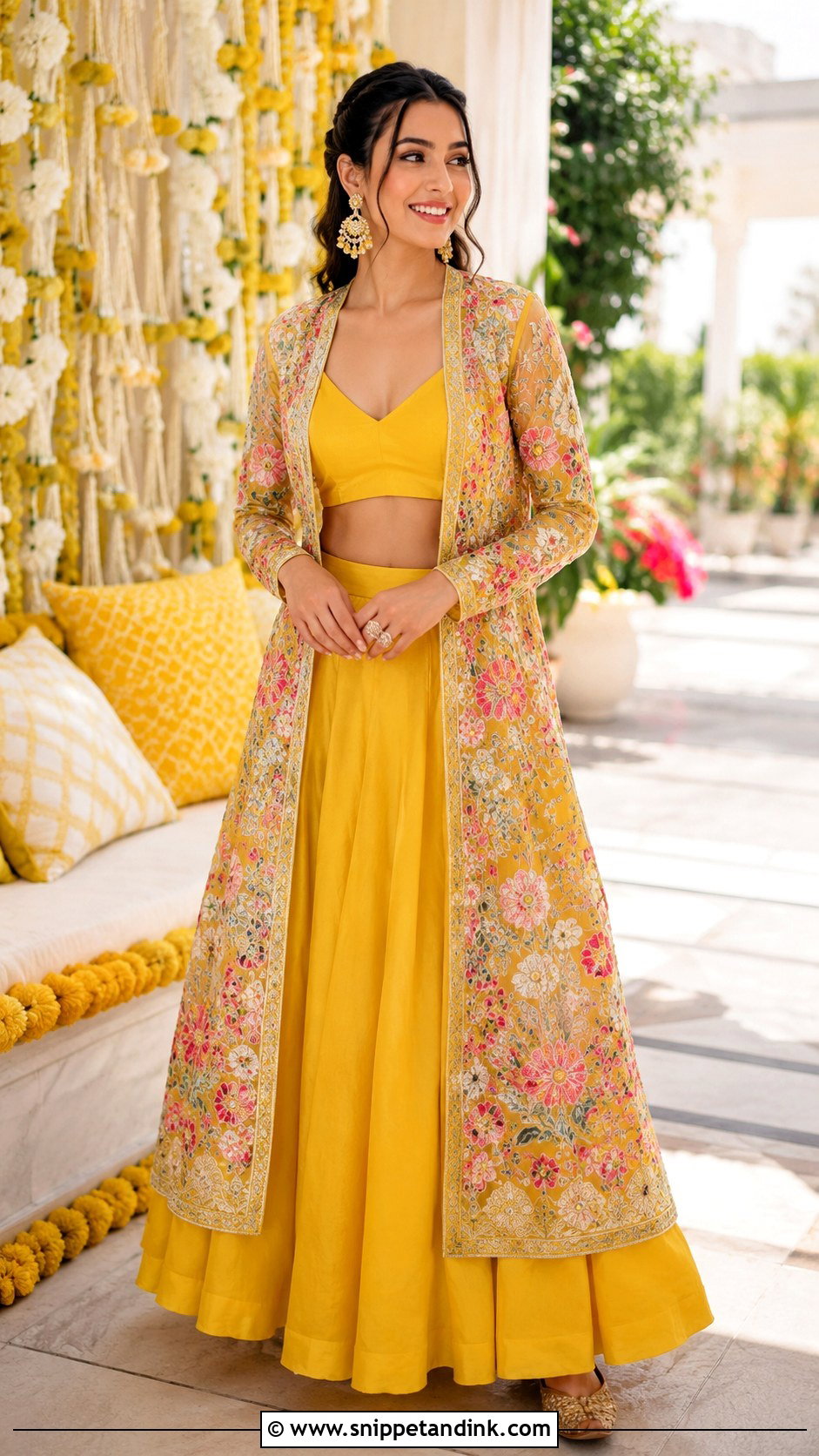
A jacket lehenga swaps the dupatta for a structured layer, which means more coverage and less to manage. Jackets come short, long, sheer or embroidered. For a hot afternoon haldi I steer clients toward a sheer or cotton jacket, since a fully lined, embroidered long jacket traps heat quickly. A yellow skirt with a floral jacket feels light, while mustard with a mirror work jacket is more formal. Keep the blouse plain under a busy jacket, and wear your hair up so the neckline shows.
21. Bandhani Suit For Haldi
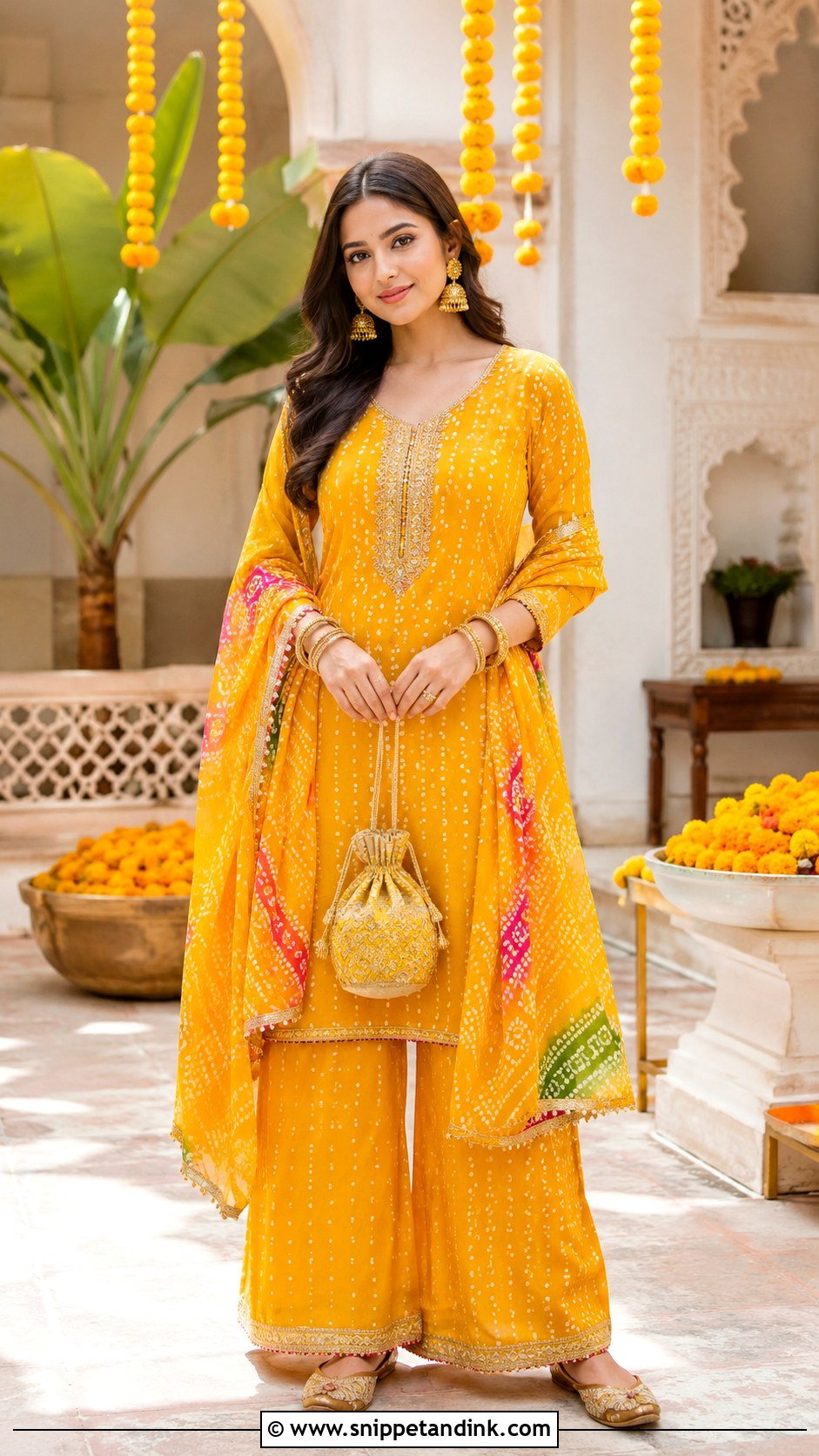
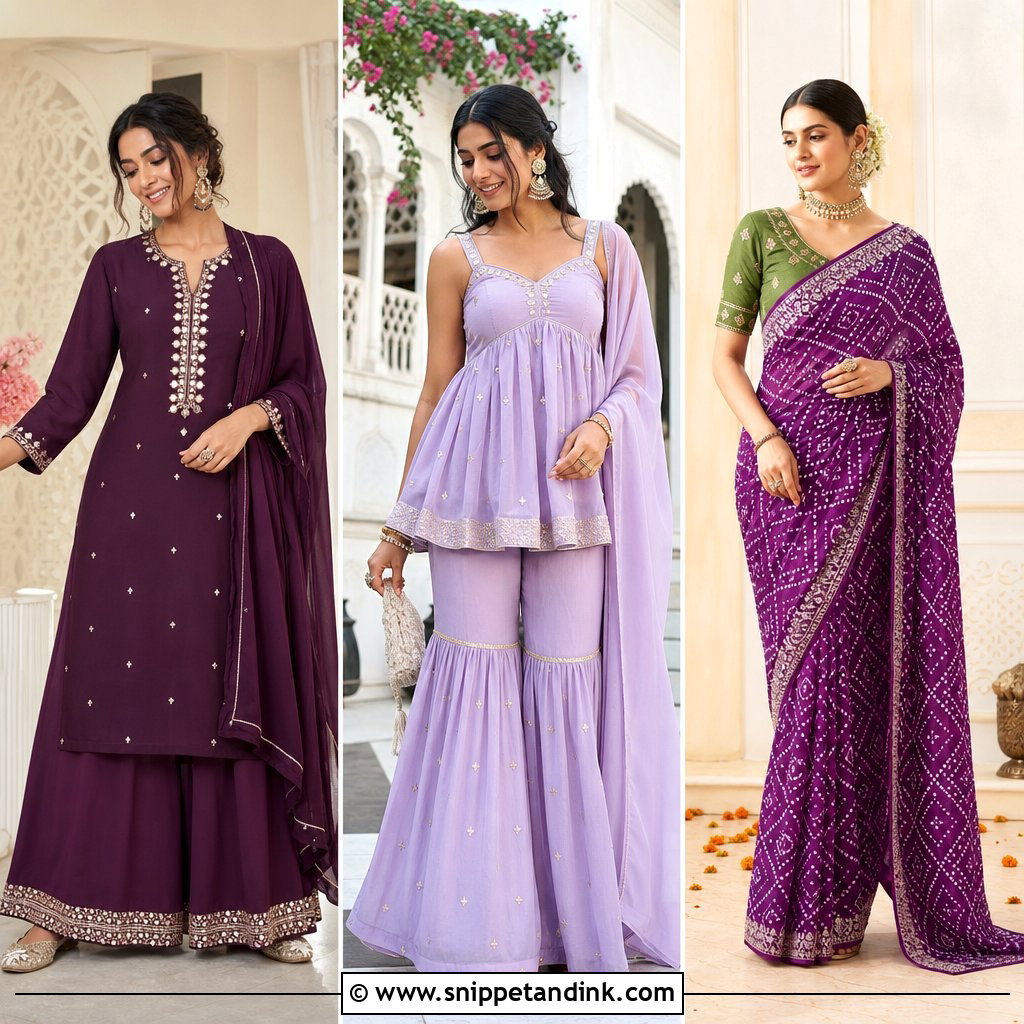
Bandhani is made by pinching and binding tiny points of cloth before dyeing, and that dotted pattern already looks festive without any embroidery. A yellow bandhani kurta with straight pants, a sharara or palazzos is easy to wear. For a softer take, try a white kurta with a yellow bandhani dupatta. One care note I always pass on: handmade bandhani can bleed color in its first washes, so wash it alone in cold water. Pick oxidized or gold jewelry to suit the print, add juttis, and keep the hair simple.
22. Leheriya Saree For Haldi
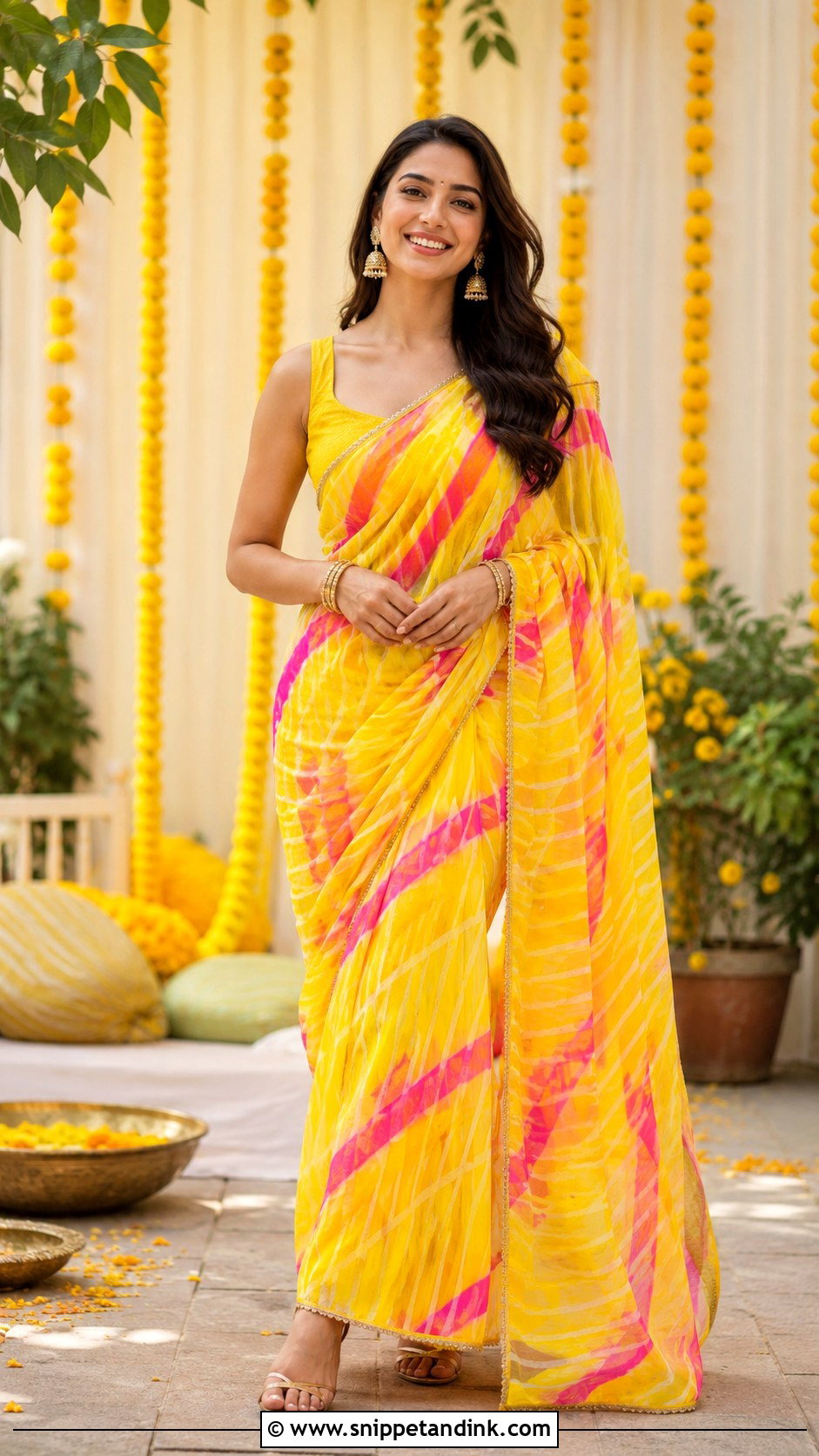
Leheriya is the Rajasthani wave pattern, made by rolling the cloth diagonally and resist-dyeing it, which is why the stripes run on a slant. Yellow leheriya with pink, orange or green accents suits a daytime haldi. Match the blouse to how busy the saree is: plain under a colorful leheriya, embroidered under a quiet one. Mothers and aunts often prefer it because it feels traditional yet weighs very little. Jhumkas, bangles, a small bindi and a braided low bun finish the look.
23. Yellow Maxi Dress For Haldi
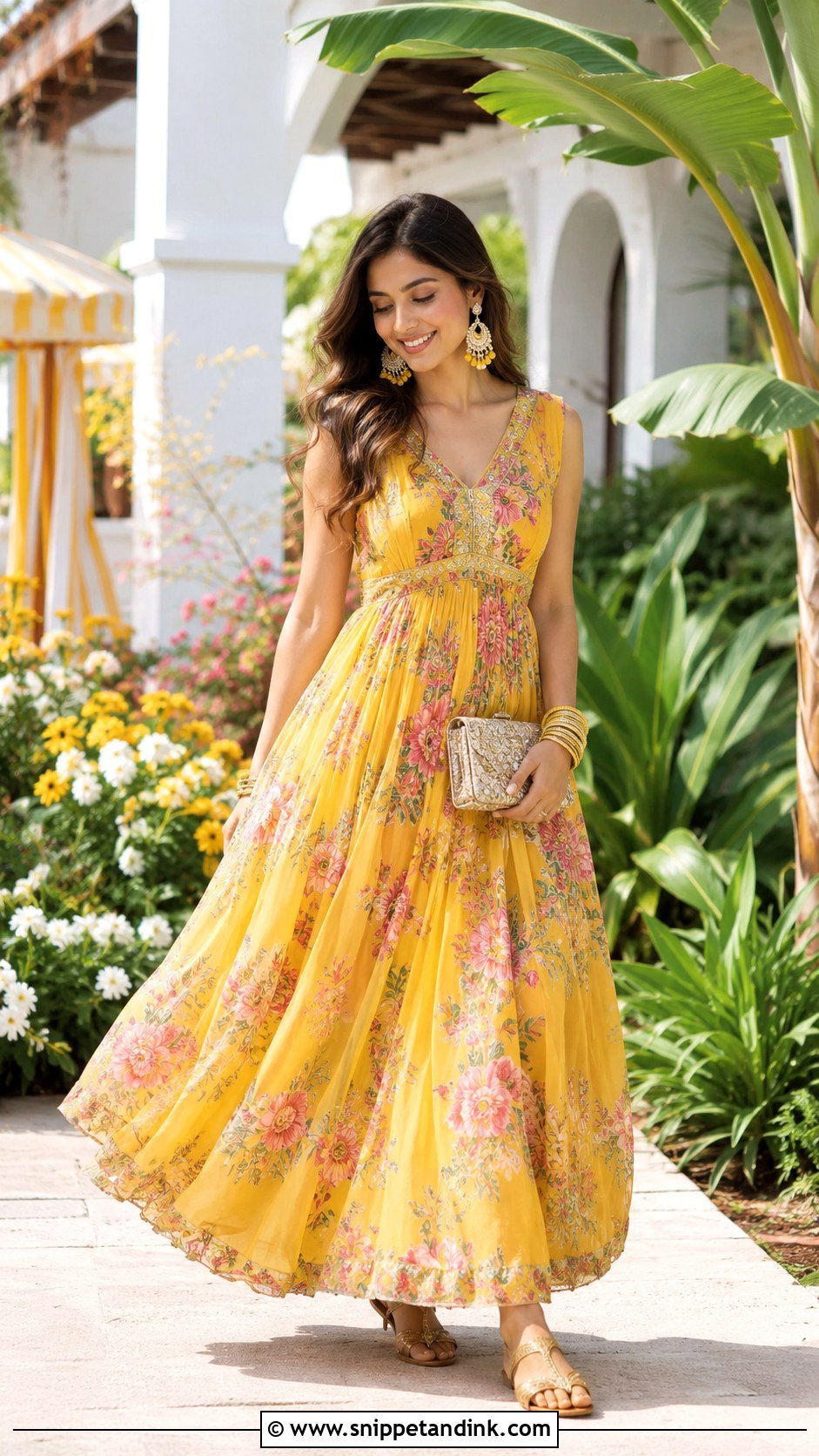
A yellow maxi dress is what I suggest for destination haldis and for guests who don’t own Indian wear. It keeps the color without the yardage. Tiered or floral maxis with a little embroidery look most at home at the ceremony, and a dupatta draped over one shoulder makes it read more traditional. I’d avoid clingy single-layer jersey, which shows both sweat and turmeric. Flat sandals or juttis, fresh makeup and soft hair keep it relaxed.
24. Simple Cotton Suit For Haldi
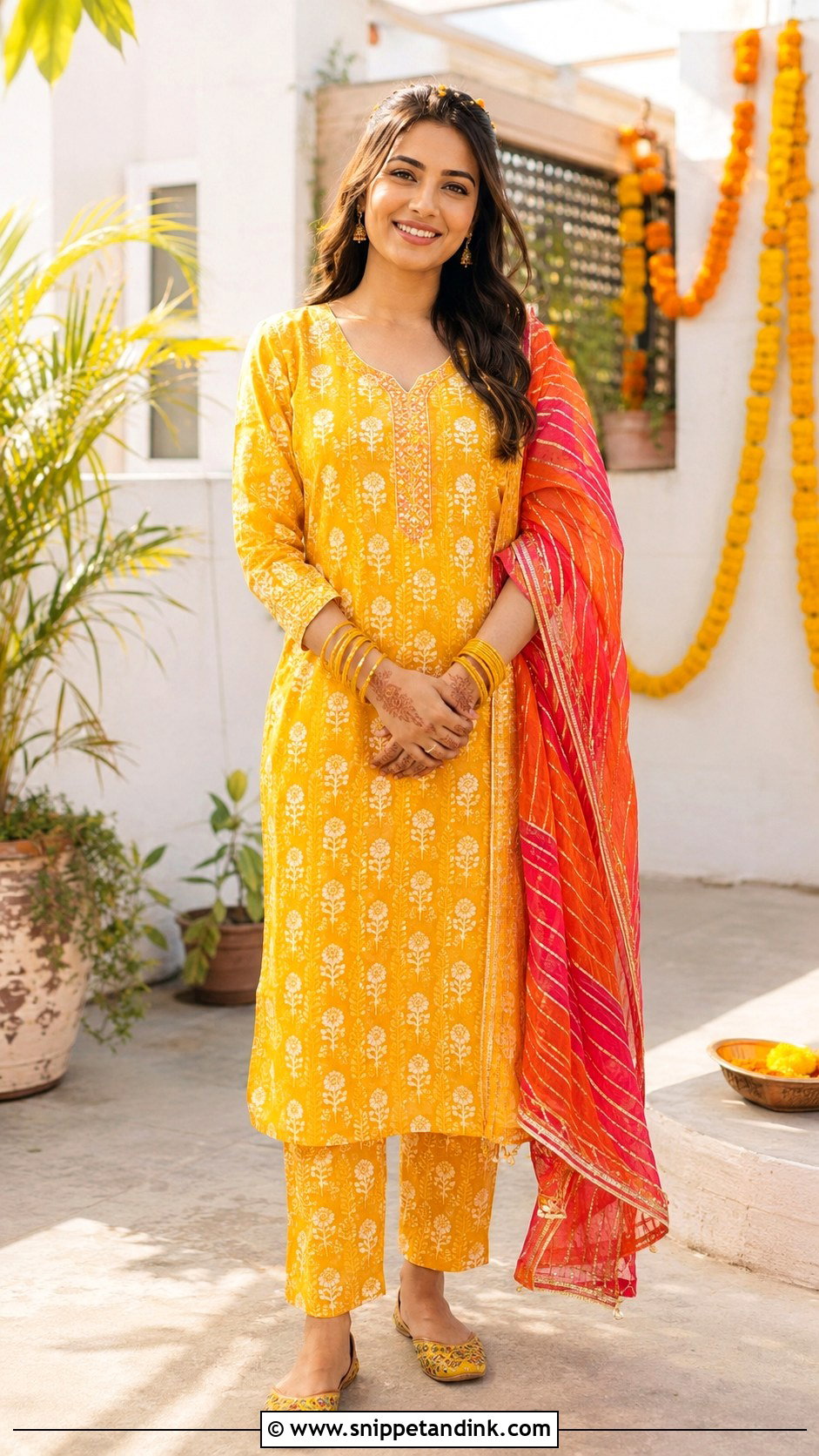
For a home haldi in a crowded living room, a cotton suit is often the most sensible outfit present. Cotton breathes, survives a splash of paste and can go into the wash afterward. Yellow, ivory or block-printed kurtas with matching pants and a bright dupatta stay festive, and lace borders or small mirrors add enough occasion. Older relatives and anyone helping serve food usually appreciate it most. Juttis, glass bangles and a neat braid finish it.

25. Mirror Work Lehenga For Haldi
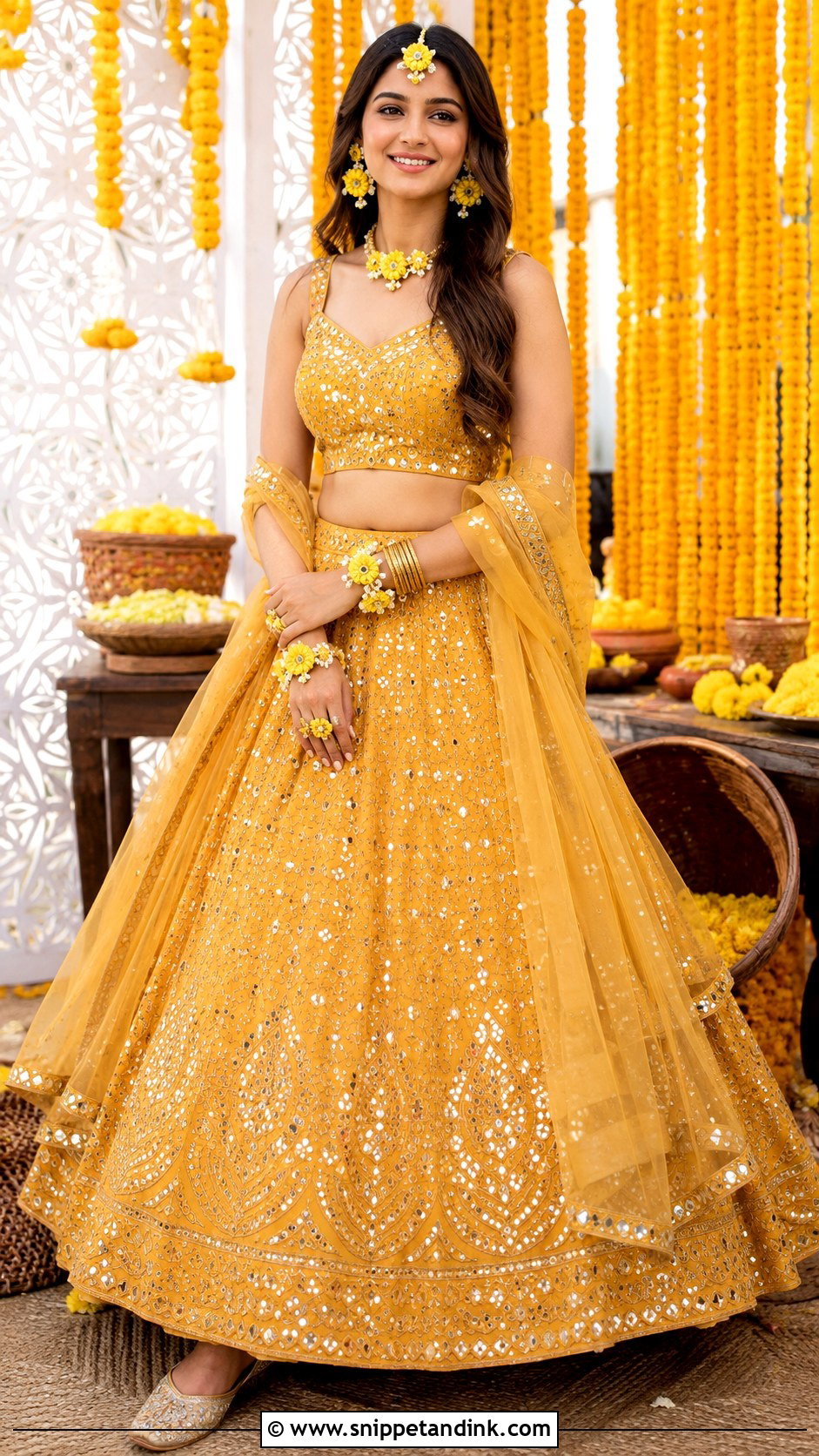
Mirror work catches daylight in a way flat embroidery can’t, so a little goes a long way. For a casual haldi I’d pick a yellow or mustard lehenga with small mirror accents rather than all-over work, which gets heavy and scratches the inner arms. Brides can wear a mirror blouse with a simpler skirt. Keep makeup fresh and jewelry light, because the mirrors already sparkle. Since each mirror is a small glass disc held in place by stitching, spot-clean turmeric instead of machine washing, which can loosen or crack them.
When the Paste Lands on Your Outfit
It will, at least once. Turmeric dyes fabric fast, and heat sets it, so what you do in the first hour matters more than any product. This is the order I follow with clients’ outfits:
- Lift off wet paste with the edge of a spoon or a card. Rubbing pushes the color deeper into the weave.
- Rinse with cold water from the back of the fabric, so the stain is pushed out the way it came in. Hot water sets it.
- Work a little liquid detergent or dish soap into the spot with your fingertips. If the patch turns reddish, don’t panic; turmeric changes color with alkaline soap and drifts back toward yellow once rinsed.
- Dry white cotton in direct sun, which fades turmeric well. Keep colored fabric out of strong sun so the dye doesn’t fade along with the stain.
- Leave silk, zari, organza and mirror work dry. Blot only, then take it to a dry cleaner within a day or two and tell them it is turmeric.
Never iron over a spot you haven’t fully cleaned. I also suggest bringing a small pouch to the ceremony with tissues, a few safety pins and a stain pen. It won’t fix everything, but it stops a small smudge from spreading while you’re still celebrating.
Dress for the Paste First, the Photos Second
Whatever you choose, dress for the ritual before anything else: fabric you can sit on the floor in, a dupatta you can secure, shoes you can slip off, and a color you won’t mourn if turmeric lands on it. Brides can lean into lehengas, cape sets and mirror work, while guests and bridesmaids are usually happier in shararas, kurta sets, co ords and prints. Yellow is the tradition, but mustard, lime, orange, pink and ivory all belong. For the bride’s side of the wardrobe, these 25 Haldi Ka Dress Ideas go deeper into bridal looks.
You'll Like These Ideas:








Leave a Reply