
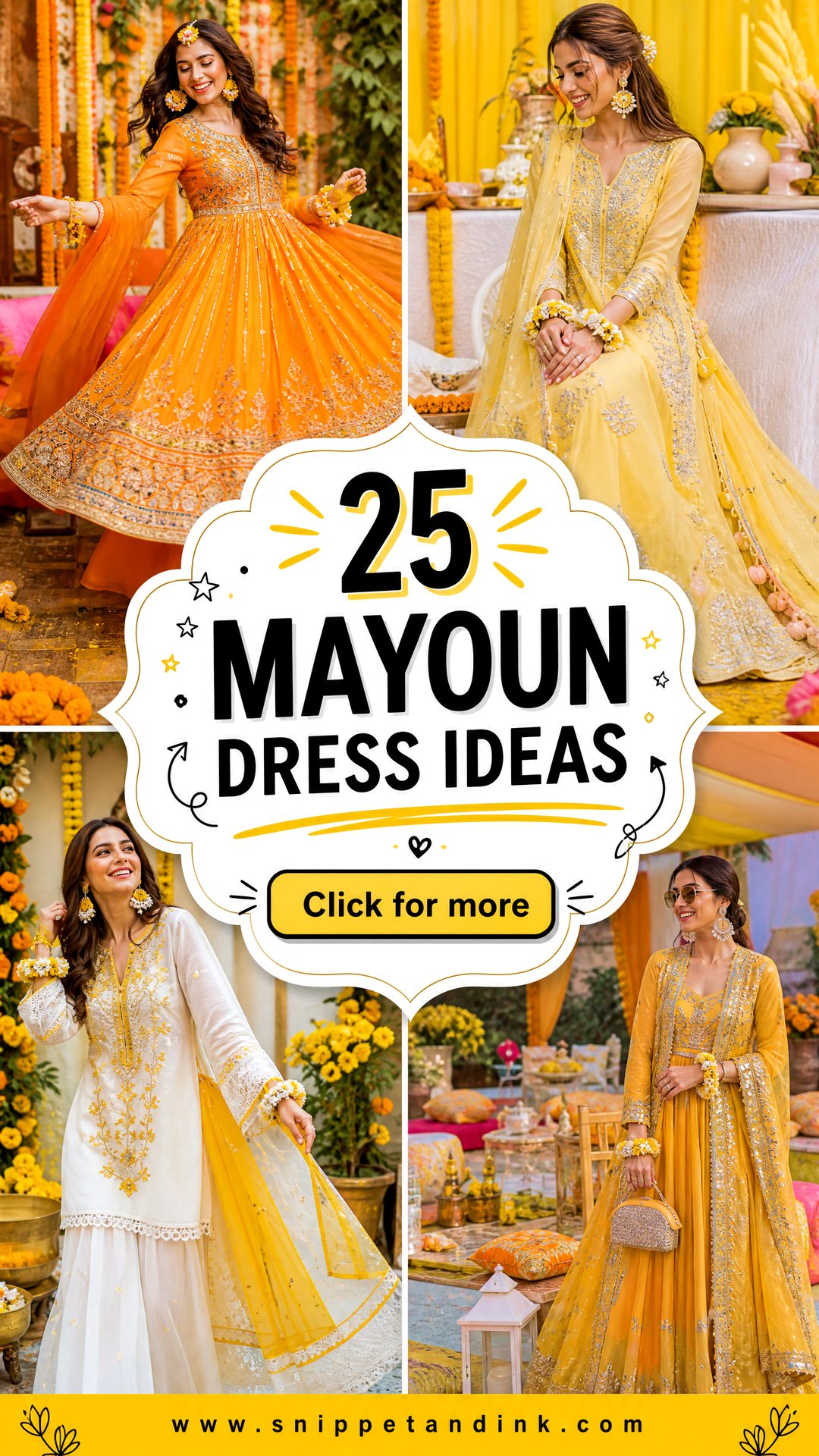
Mayoun is one of the most joyful pre-wedding moments, and it’s also the messiest. There’s ubtan on hands and faces, low seating, dancing, and family photos all in one afternoon, so I dress brides for it differently from any other function. Yellow is still the heart of the day, though mustard, lime, orange, peach, ivory and soft pastel mixes are just as common now among brides, sisters, cousins and guests. Lawn, cotton net, organza, chiffon, silk and light jamawar hold color well without much weight. Below are the silhouettes I recommend, from lehengas and ghararas to frocks, kaftans and shararas, with a note on how each one copes with the realities of the ceremony.
Dressing Around Turmeric Paste That Stains Everything
The ubtan used at Mayoun is usually turmeric mixed with gram flour, oil or rosewater, and turmeric is one of the most stubborn stains in fabric. I plan the bride’s outfit around the moment the bowl comes out, not around the photos.
- Choose yellow, mustard or orange near the hands and face, where stains won’t show. Keep white and pastels for the lower half or for an outfit change afterward.
- Prefer sleeves that end at or above the elbow, or ones that roll up easily.
- Pin the dupatta back over one shoulder before relatives start applying the paste, so the ends don’t trail through it.
- Leave delicate embellished pieces and heirloom silks for the mehndi or nikah.
If paste does land on fabric, scrape off what you can and rinse from the back with cold water. Hot water tends to set the stain. Turmeric marks on washable cotton often fade further if the garment is dried in direct sunlight. Silk, zari and gota should go to a dry cleaner, with the stain pointed out.
1. Yellow Mayoun Lehenga Choli
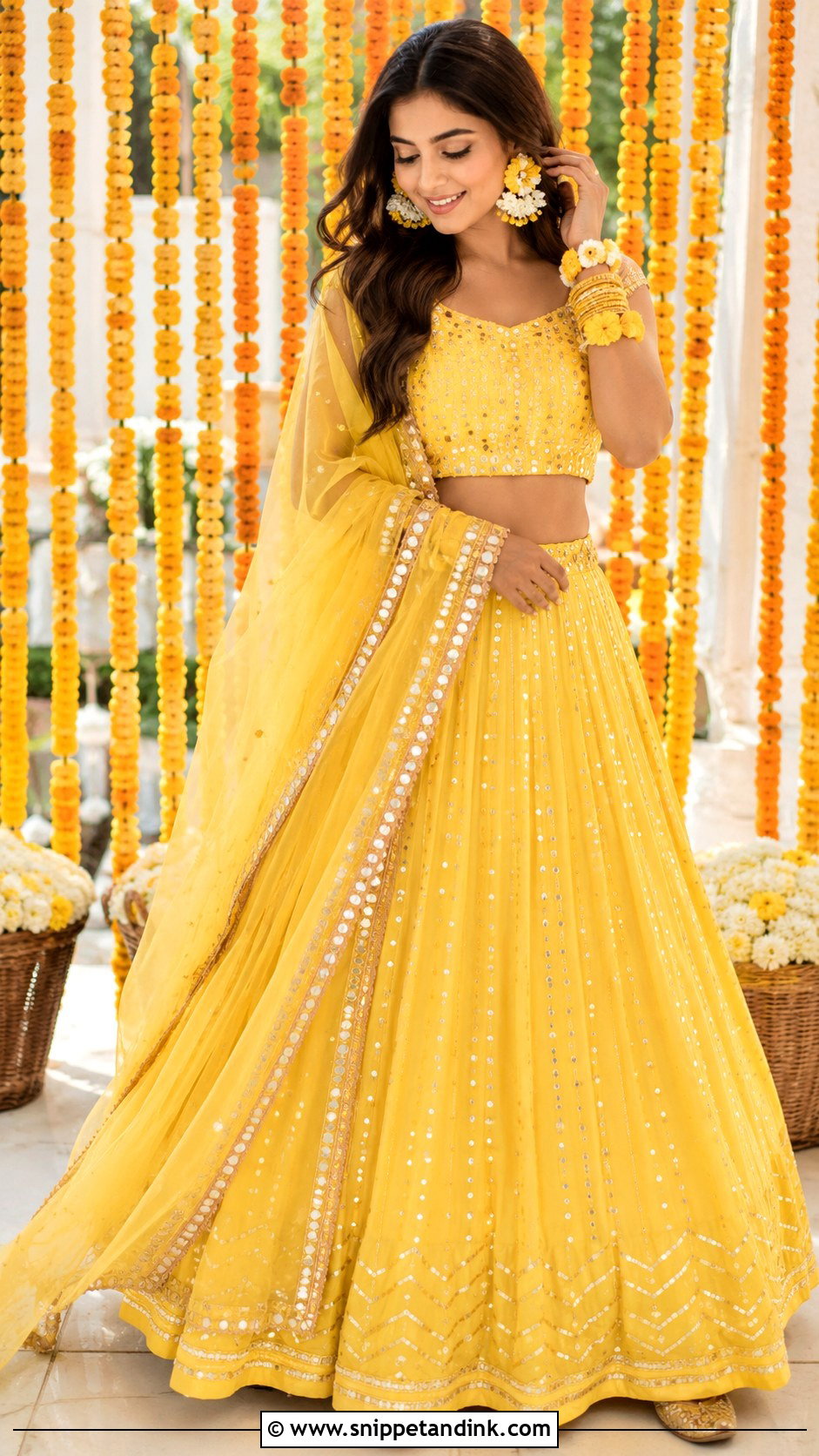
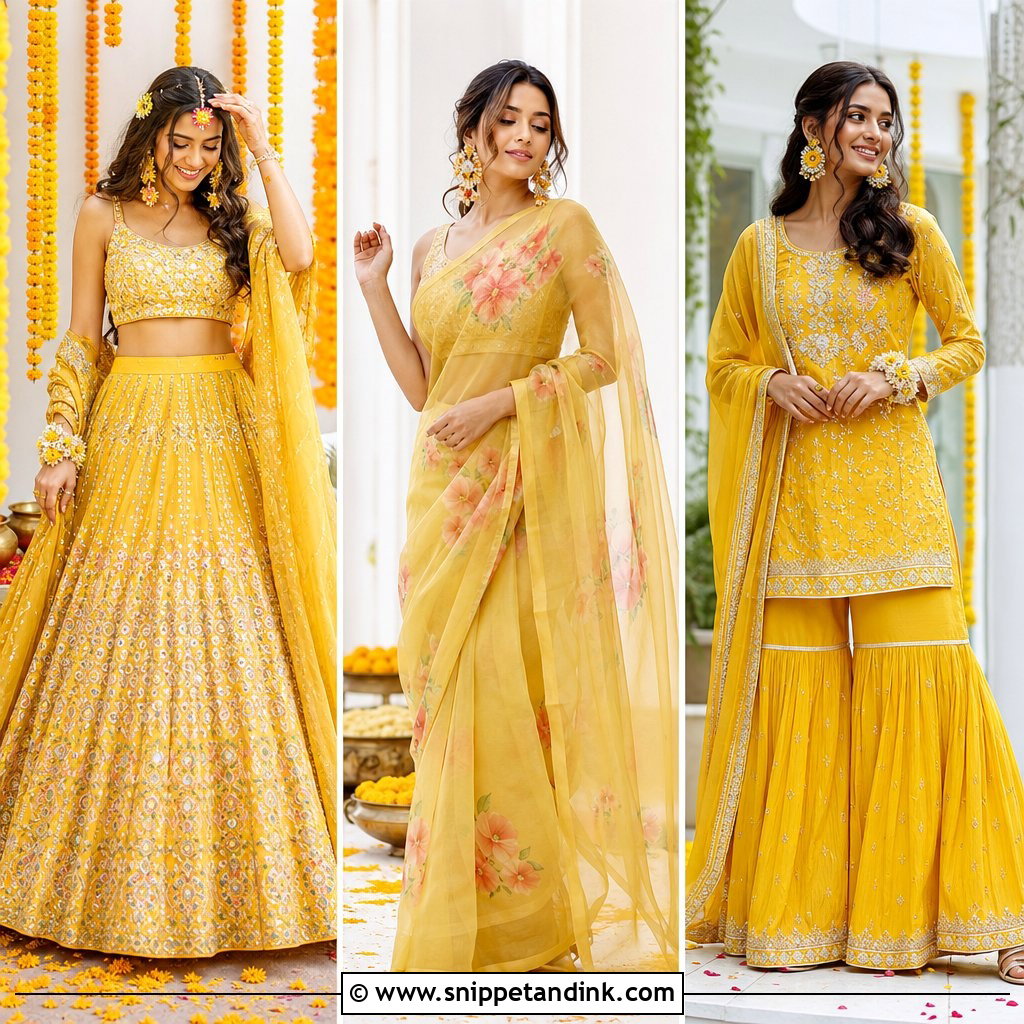
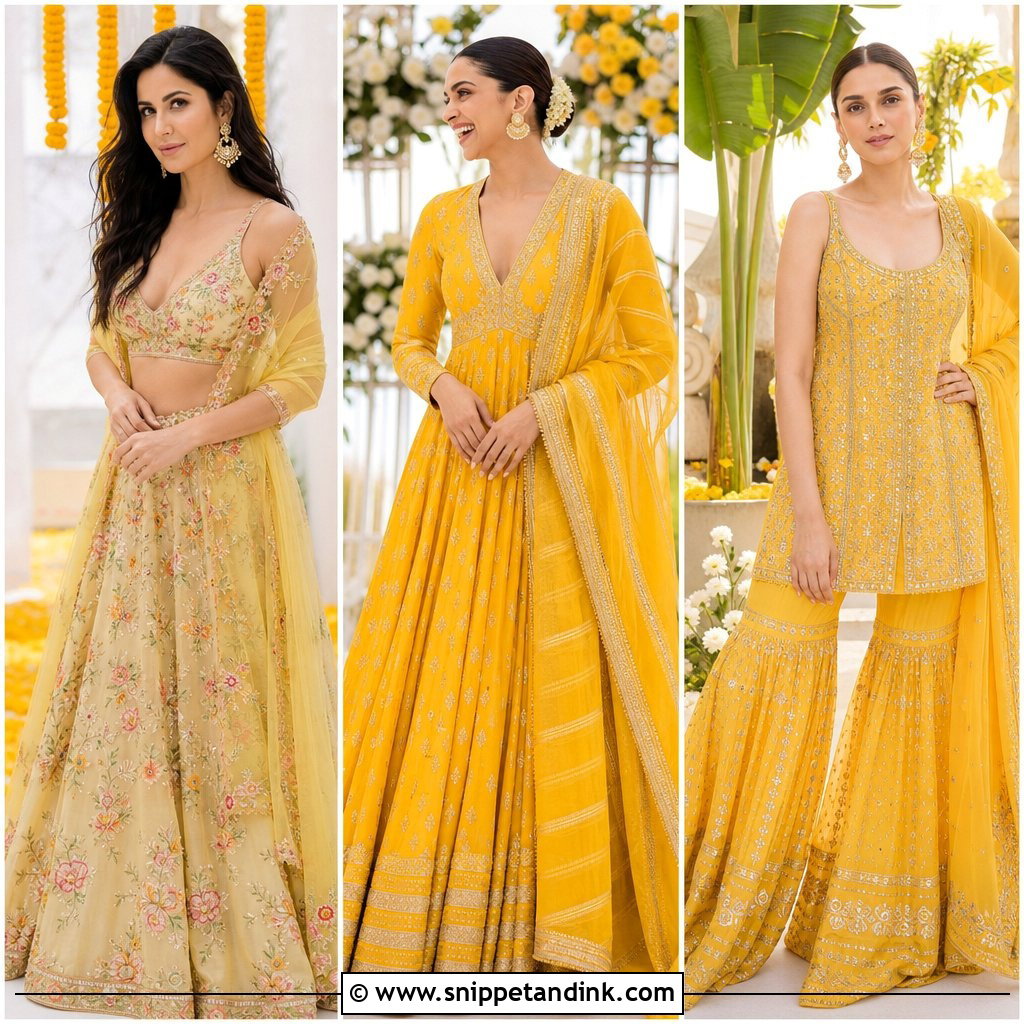
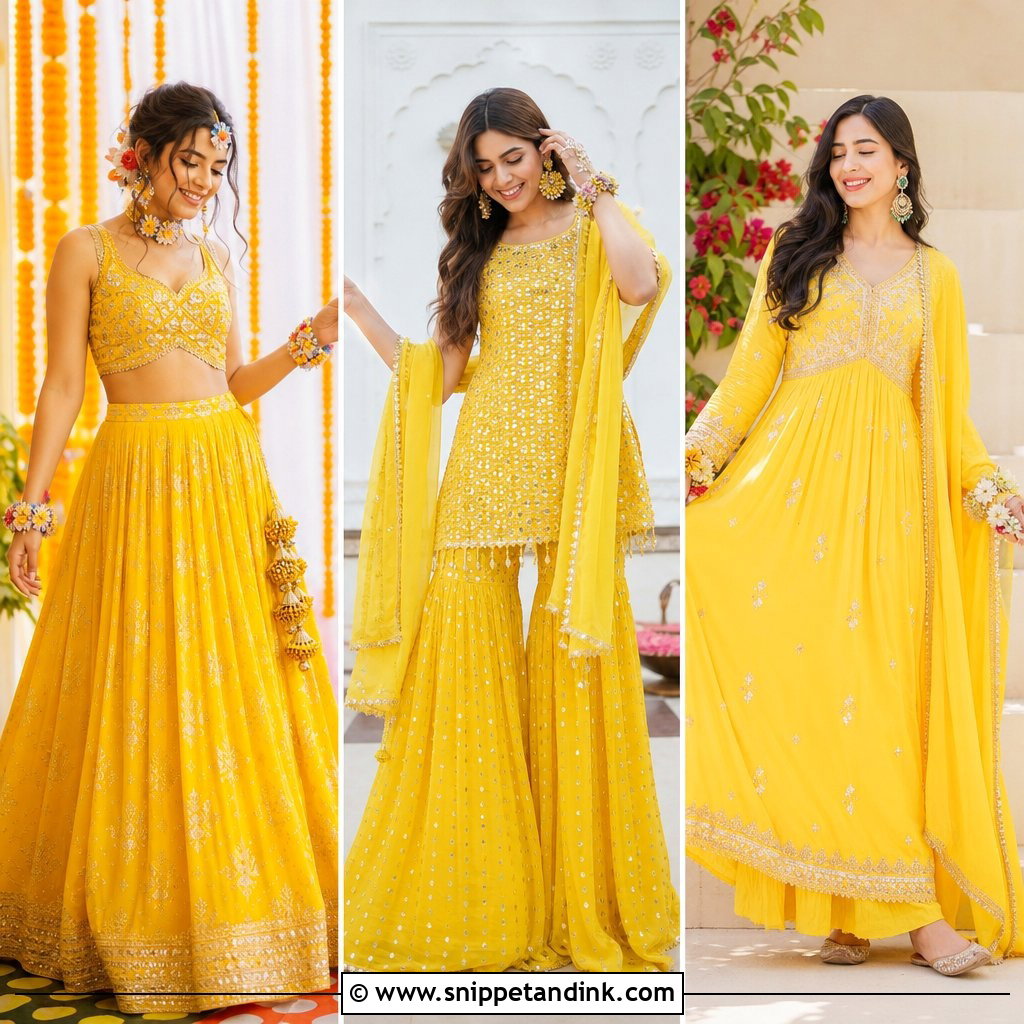
The yellow lehenga choli is the classic Mayoun look, and it earns that place. A flowing chiffon, organza or silk skirt with gota, mirror work or light threadwork, a fitted choli and a matching dupatta with a fine border is all it takes. Floral earrings, bangles and a maang tikka keep it festive without tipping into formal. Gold khussas or embellished flats beat heels every time, because you’ll sit on a low seat for the rituals and be on your feet for the dancing. I’d keep the choli sleeves short or elbow-length so they stay clear of the ubtan bowl.
2. Mustard Mayoun Gharara
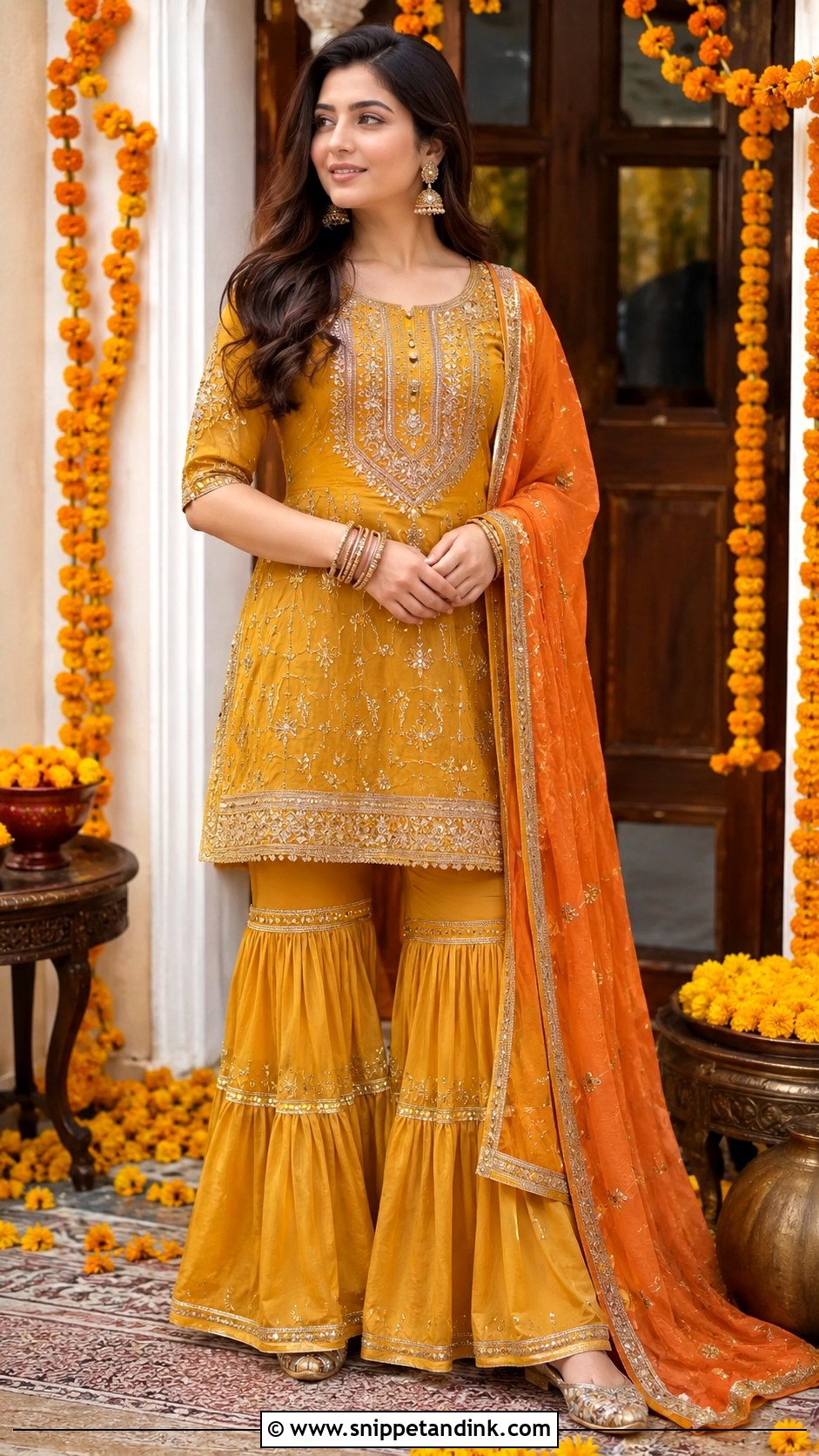
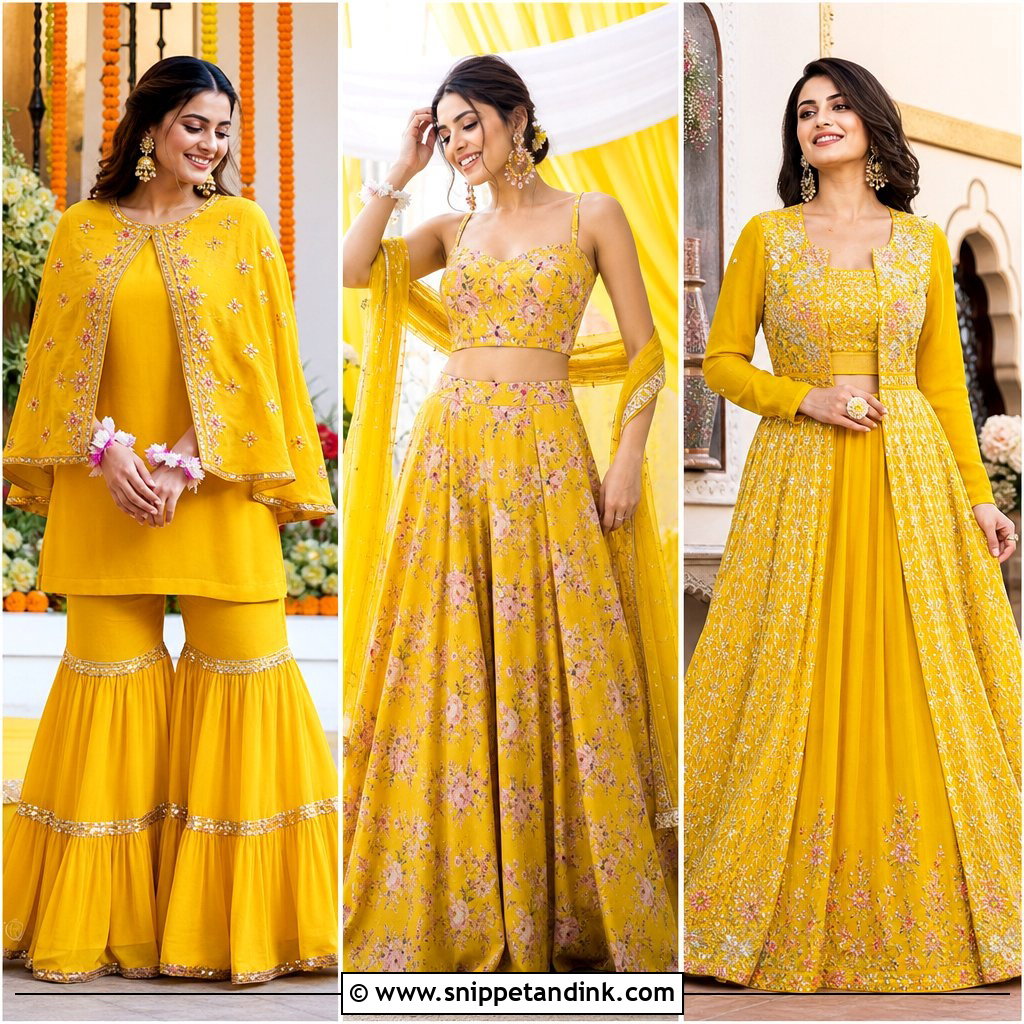
Mustard is warmer and more forgiving than bright yellow, and it flatters a wider range of skin tones. A mustard Mayoun gharara with a short kameez and a wide gharara edged in gota lace, zari or small mirrors looks rich in photos, especially with antique gold. Orange, green or rust dupattas add depth. Jhumkas, glass bangles and a light passa give a bridal touch if you want one. A full gharara pools around you when you sit cross-legged, so I check the length in that position, not standing, before the hem is finished.
3. Lime Green Mayoun Sharara
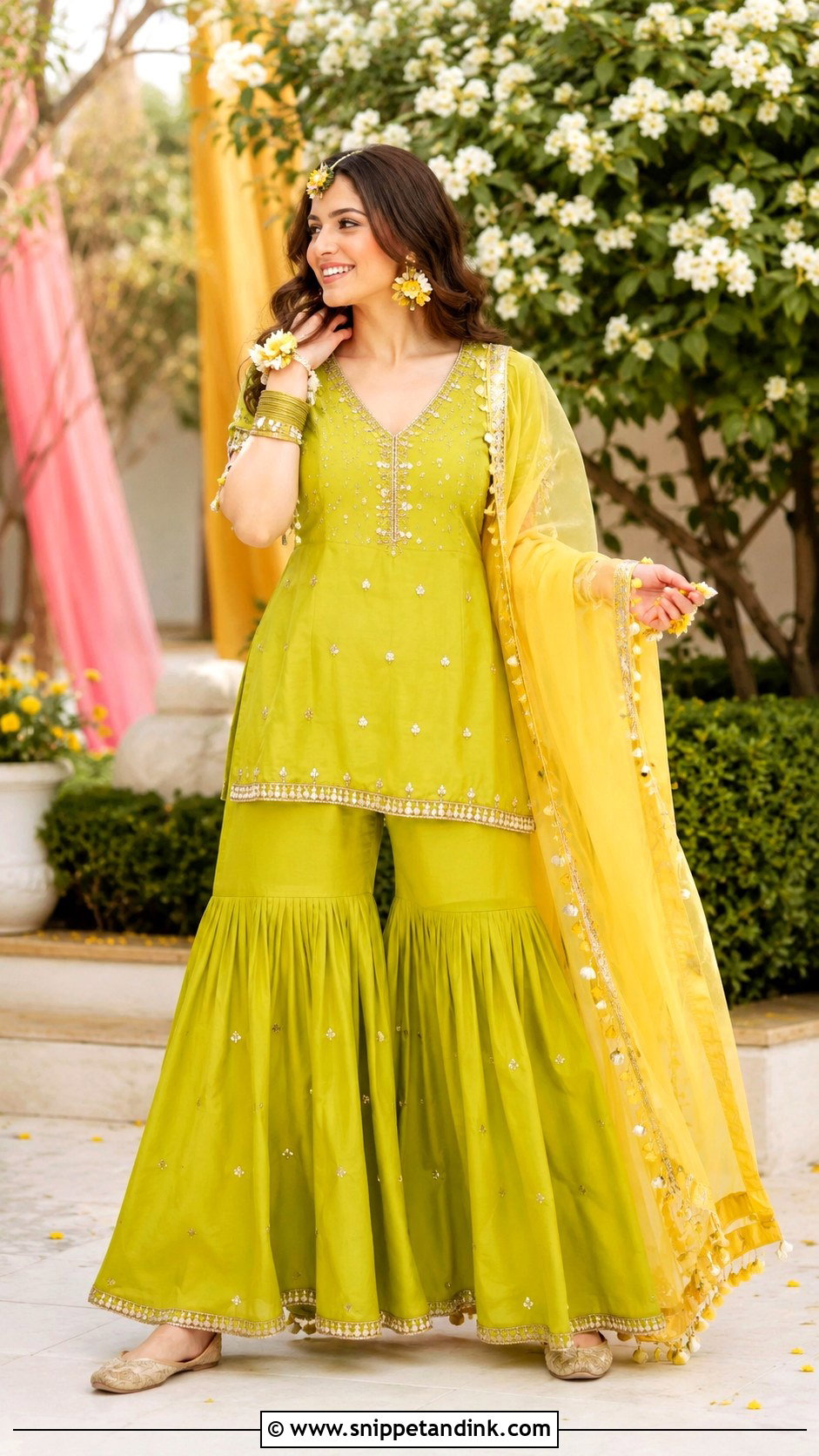
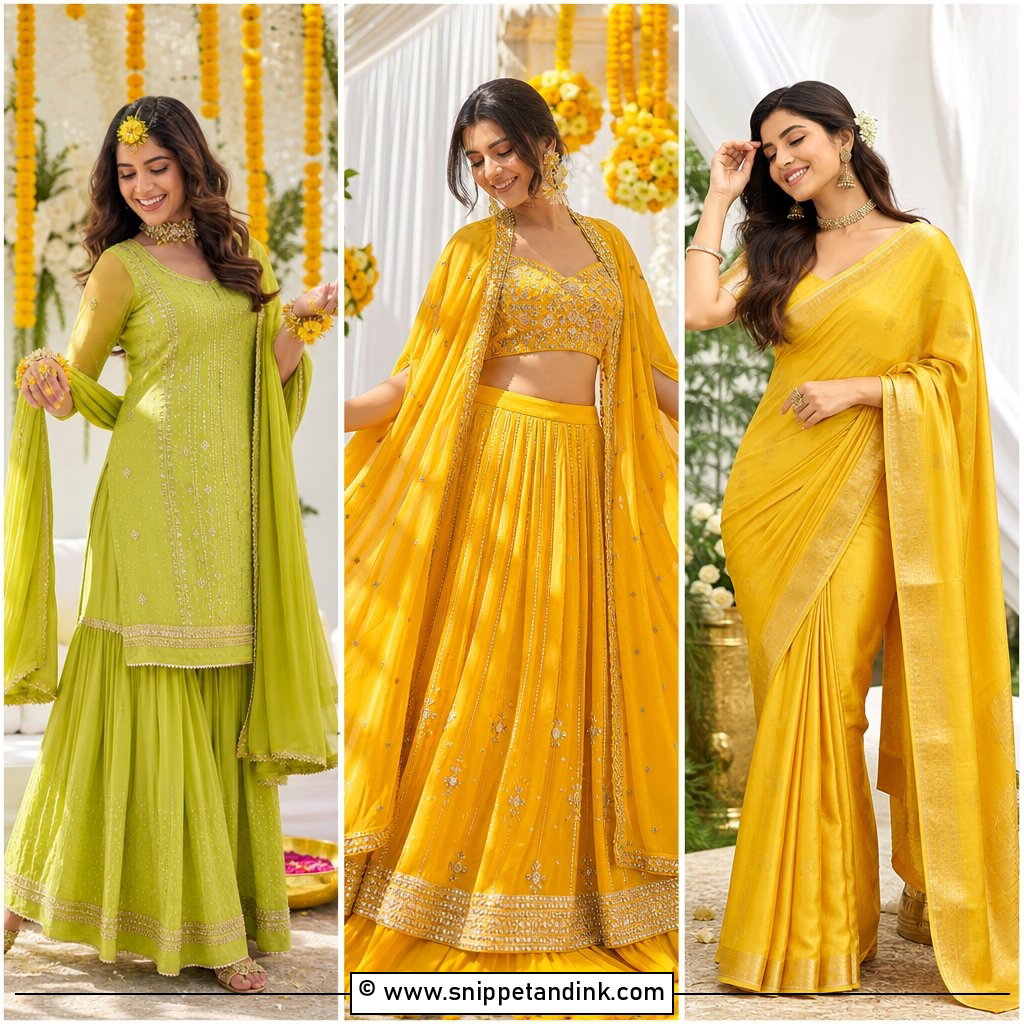
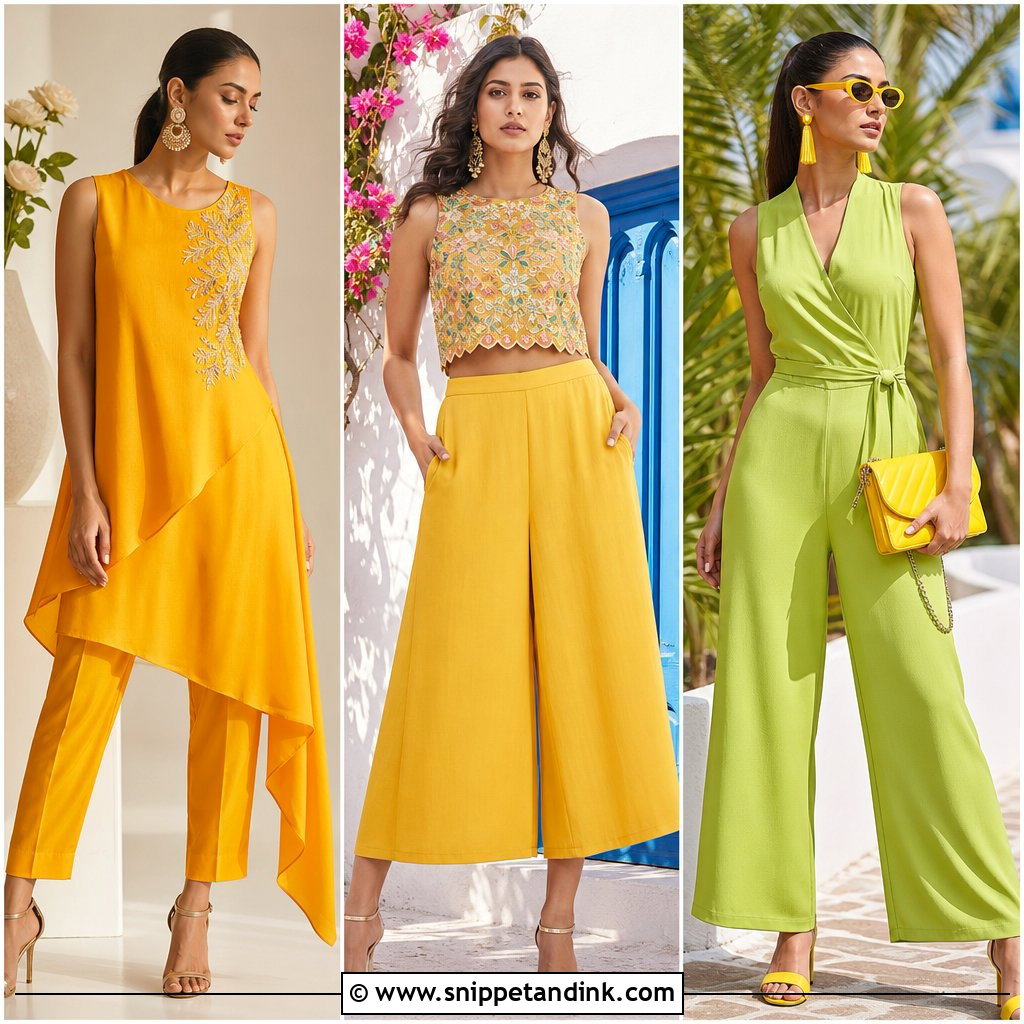
Lime green is my suggestion for anyone who wants to stand apart from a room full of yellow while staying in the tradition. It’s vivid in daylight and pairs well with yellow, pink and orange accents. A short embroidered kurti, a flared sharara and a dupatta finished with tassels or gota edging make the outfit. Floral jewelry softens the color. Nude makeup, a glossy lip and loose waves or a braid keep it youthful. Lime is unforgiving on some warmer undertones, though, so hold the fabric to your face in daylight before you commit.
4. Orange Mayoun Anarkali Frock
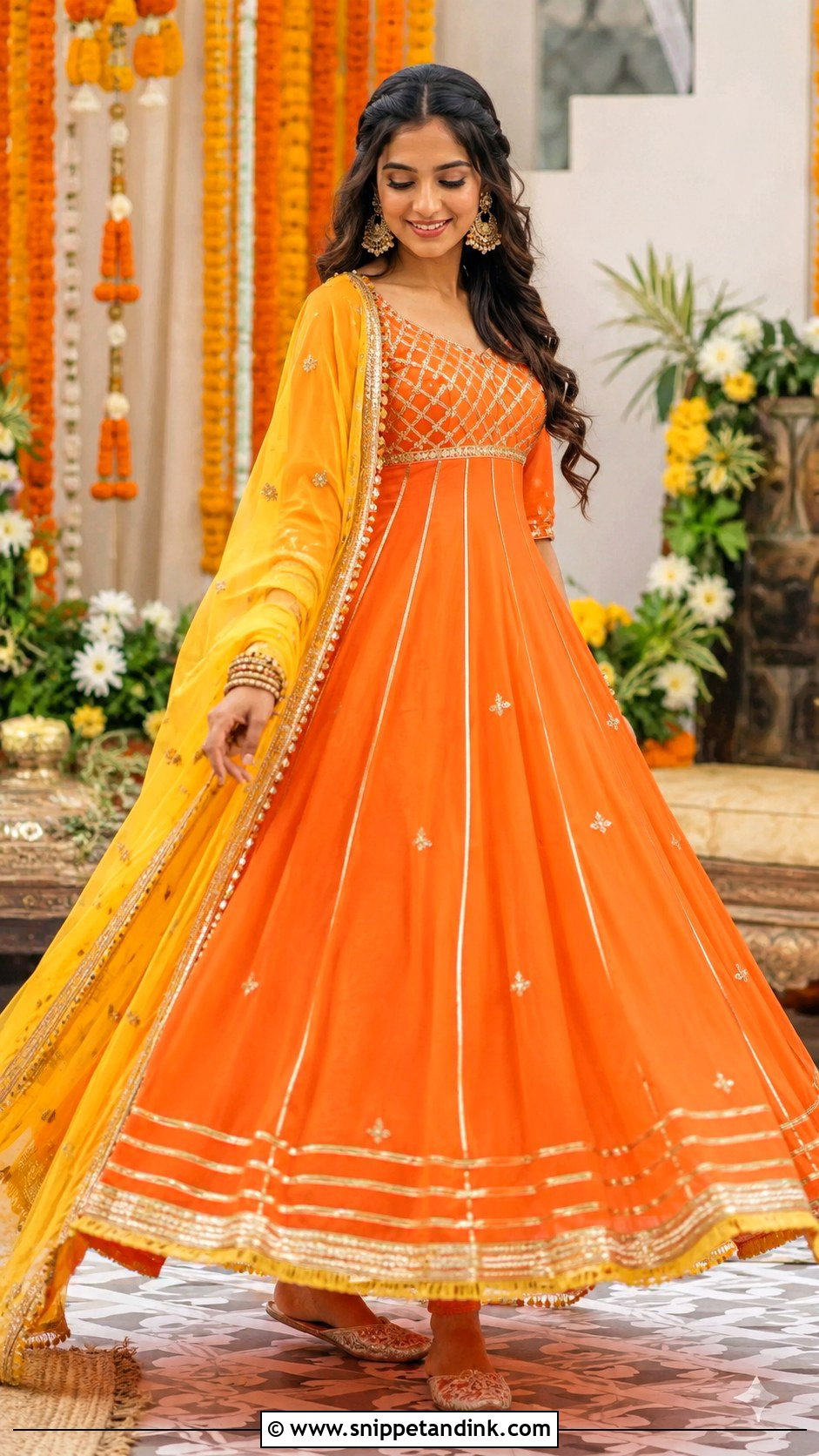
An orange Mayoun Anarkali frock glows against marigold decor, and the long flared shape is comfortable for hours. Choose lightweight chiffon, cotton net or georgette with gold gota, mirror work or small floral motifs, then add a yellow or pink dupatta and gold khussas. Statement earrings, stacked bangles and soft curls finish it. When a bride asks for coverage and movement instead of a fitted cut, this is the first silhouette I pull. Ask for a lining in breathable cotton, since a polyester lining under net gets hot quickly.
5. Yellow Mayoun Pishwas
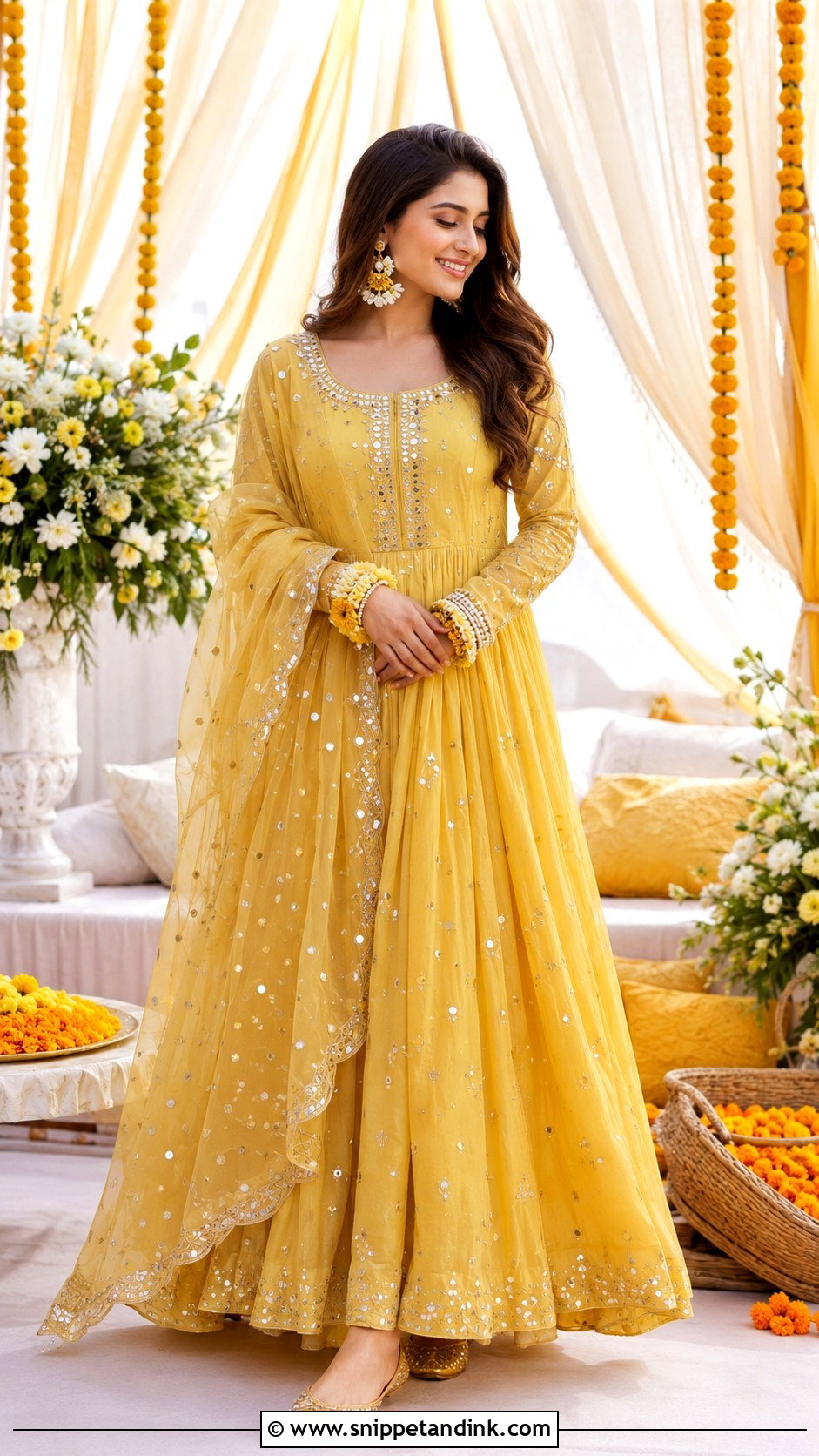
A pishwas gives a fitted bodice and a long flare, so it reads royal without heavy styling. For Mayoun, keep the embellishment to light gota, thread, sequins or tiny mirrors, and pair it with a sheer organza dupatta with a scalloped border. Khussas, pearl bangles and floral earrings suit it. The thing I check is the armhole: pishwas bodices are often cut close, and you need to lift your arms freely when relatives apply ubtan and when the dancing starts. Sisters of the bride wear this shape well too.
6. Yellow And Green Mayoun Lehenga
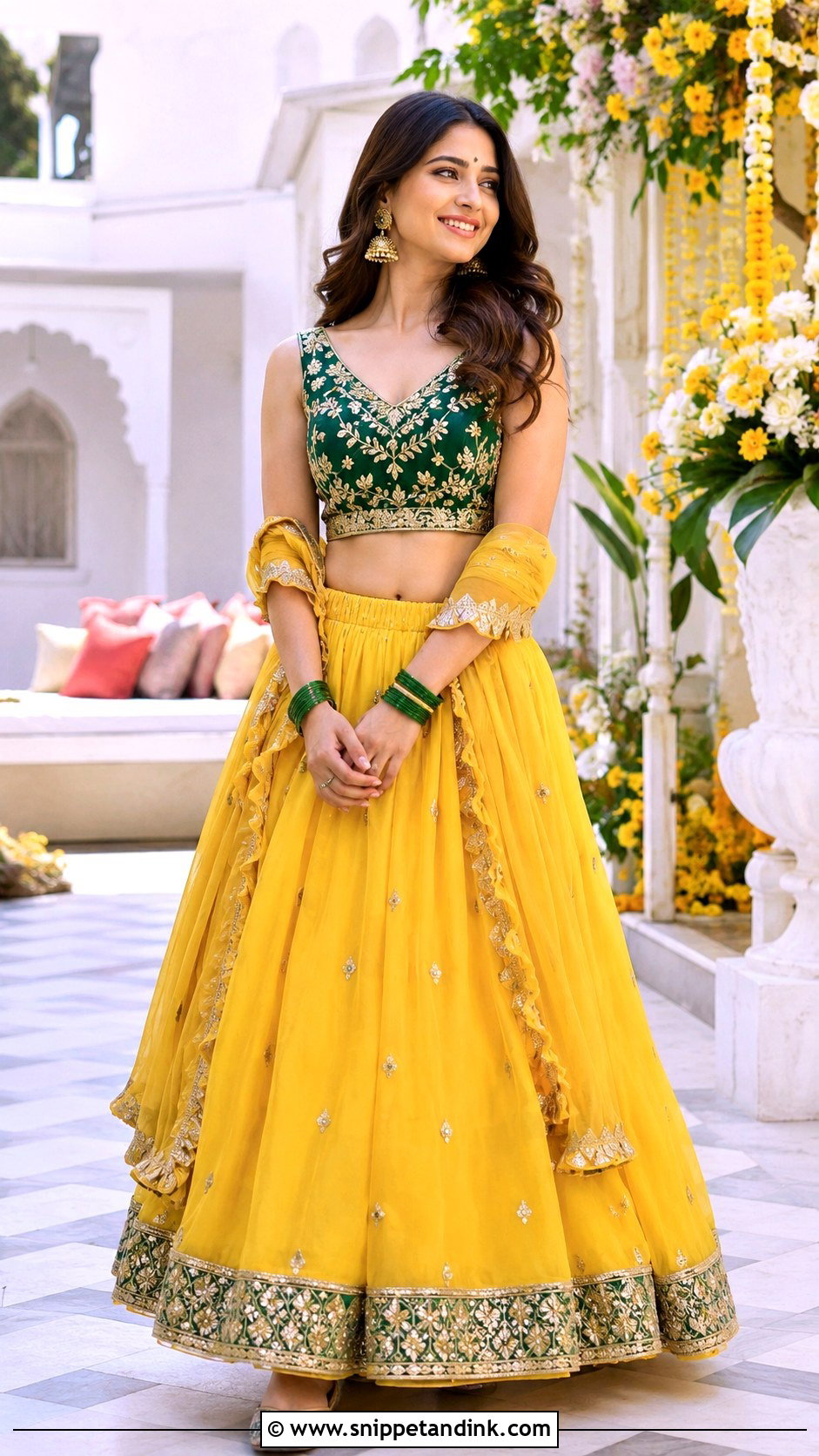
Yellow with green feels festive and mehndi-like while staying right for Mayoun. Go yellow skirt with green blouse, or reverse it with a green skirt and yellow dupatta. Gota patti, mirror work or colorful thread embroidery adds play. Gold jewelry, green glass bangles and embellished khussas complete it. Because it celebrates without competing, I often suggest it for bridesmaids and close family. In group photos against floral decor it gives an instantly coordinated feel.
7. Pastel Yellow Mayoun Dress
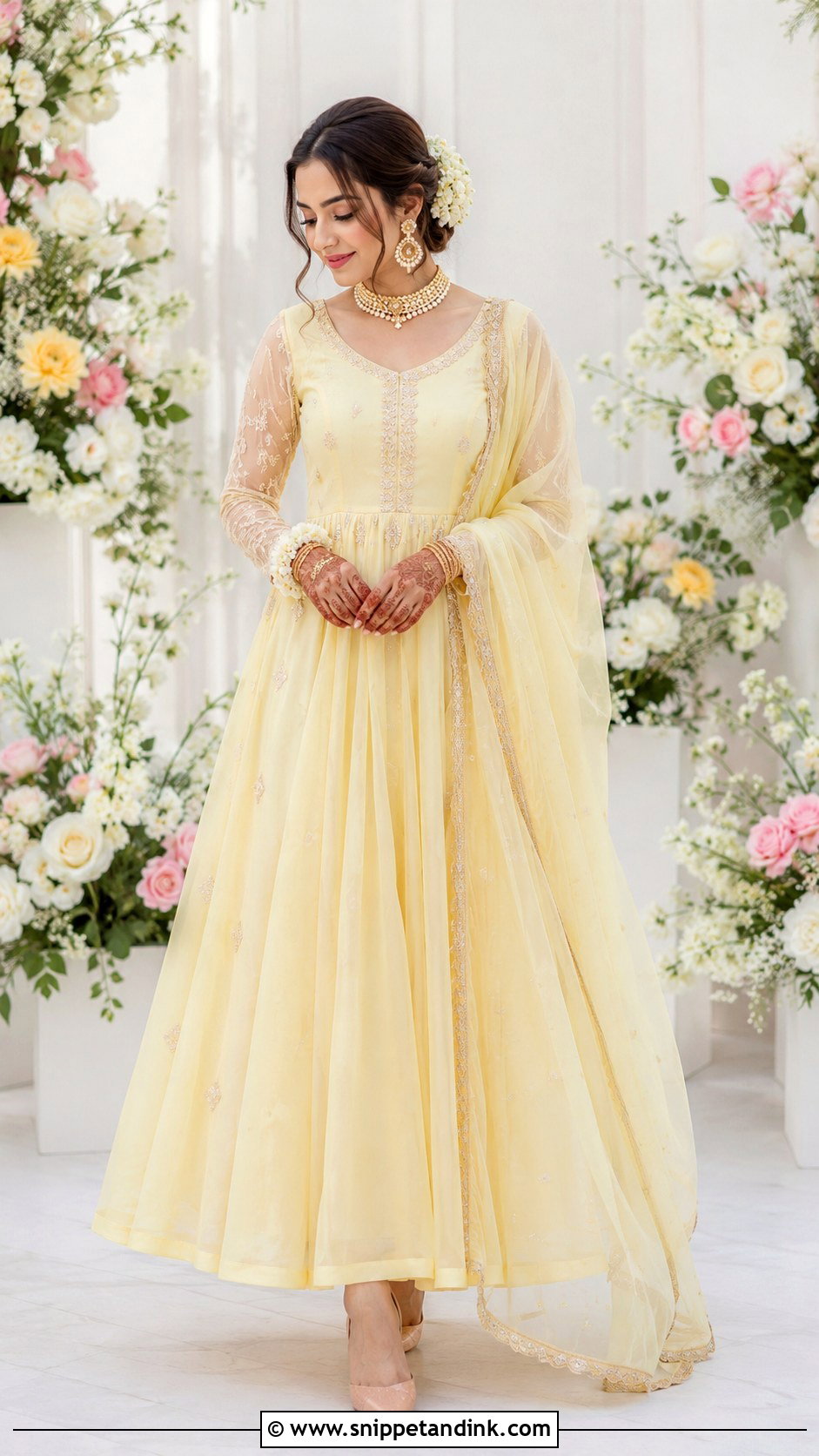
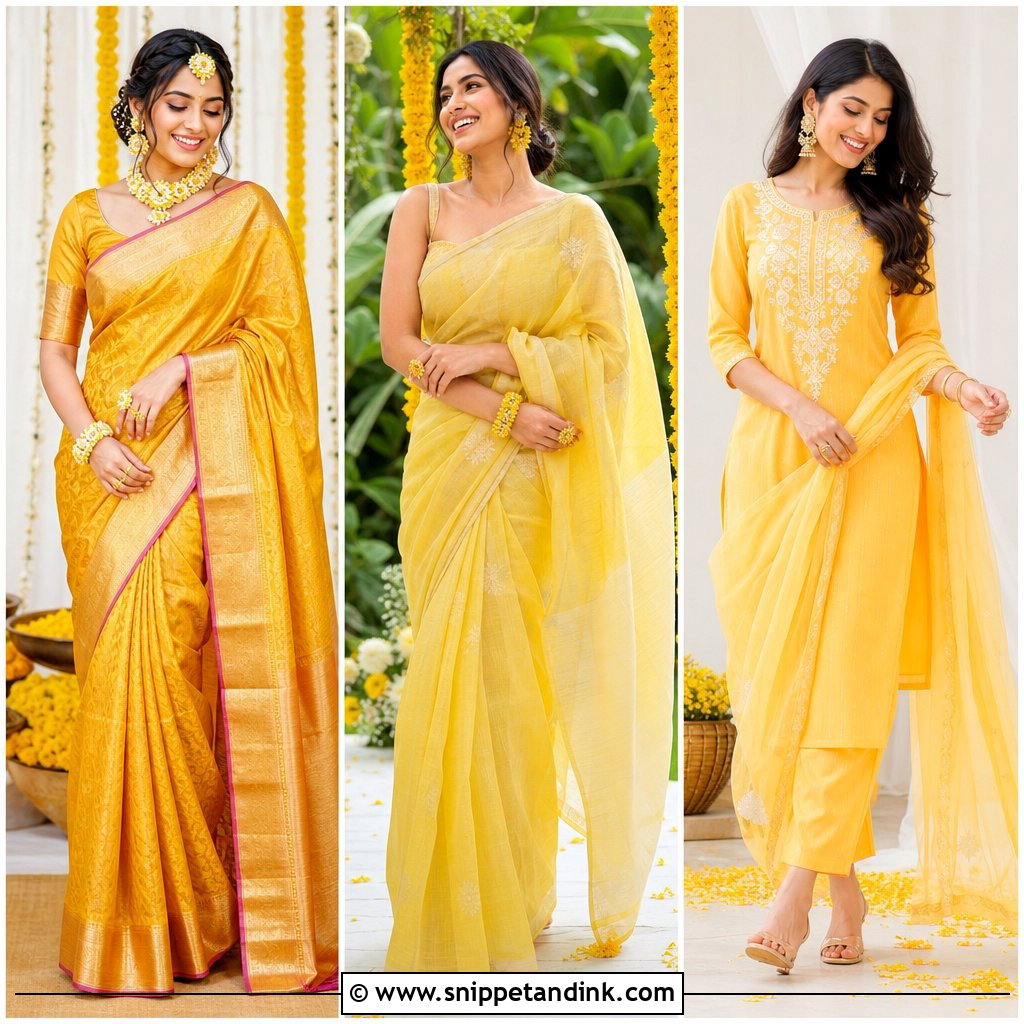
Pastel yellow suits brides who find turmeric shades too loud. Butter yellow, lemon or pale marigold in organza, chiffon or silk can be cut as a long shirt with straight pants, a pishwas or a light lehenga. Pearls, white floral accessories and nude shoes keep it clean, with dewy makeup, peach blush and soft eyes. One practical point: pastel fabric shows ubtan marks more than mustard does, so this is a better choice if your family keeps the paste application gentle and brief.
8. White And Yellow Mayoun Dress
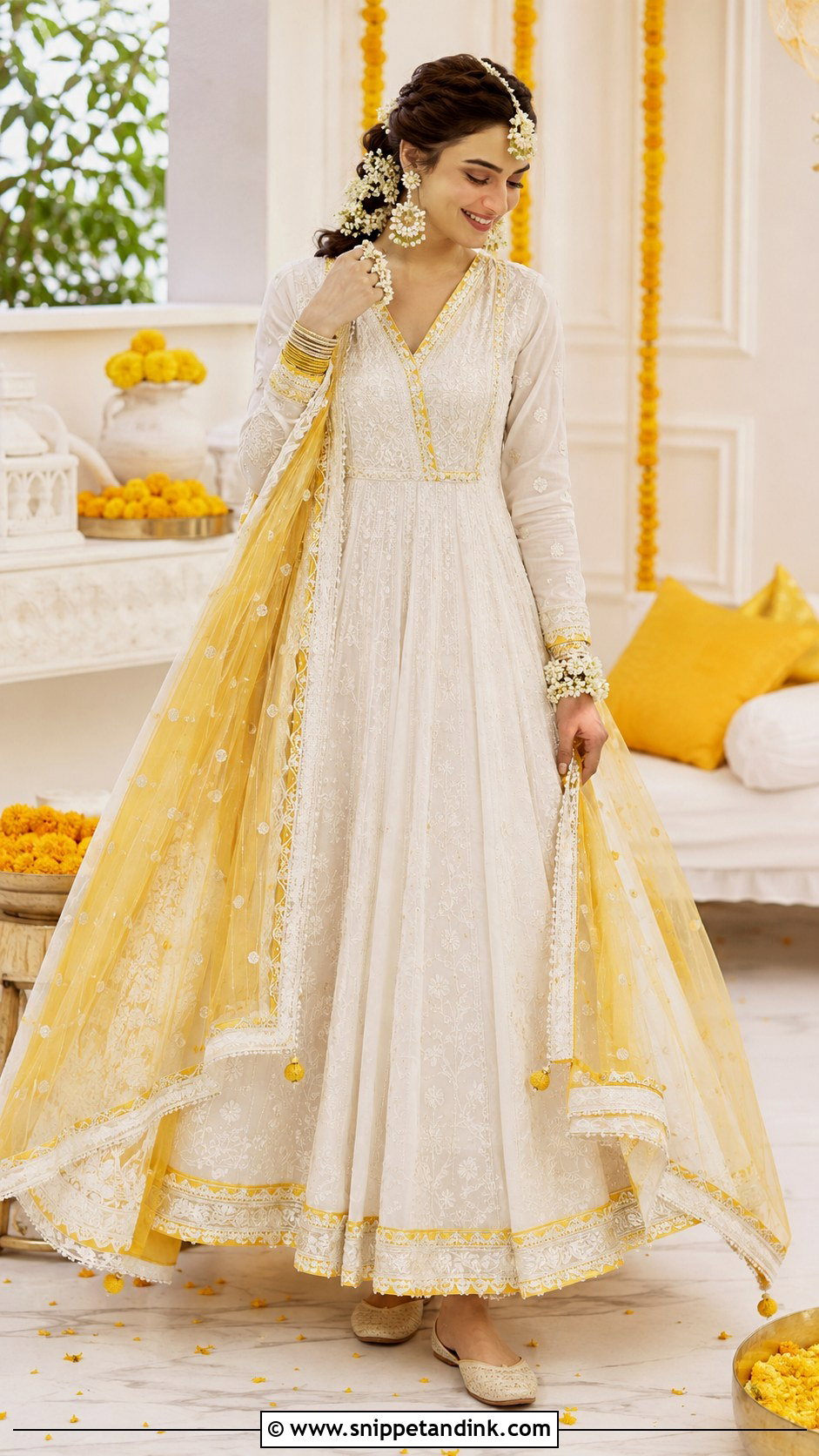
White with yellow is fresh and very photogenic, since the white base calms the brightness of the yellow. A white kurta with yellow sharara pants, a yellow dupatta and gold khussas works, as does a white pishwas with yellow gota. Jasmine or yellow flower jewelry, light gold bangles and natural makeup suit it. I’ll be honest about the trade-off: white and ubtan don’t mix. If you love this look, keep the white on the lower half and the yellow up near the hands and face, or change after the ritual.
9. Peach Mayoun Sharara
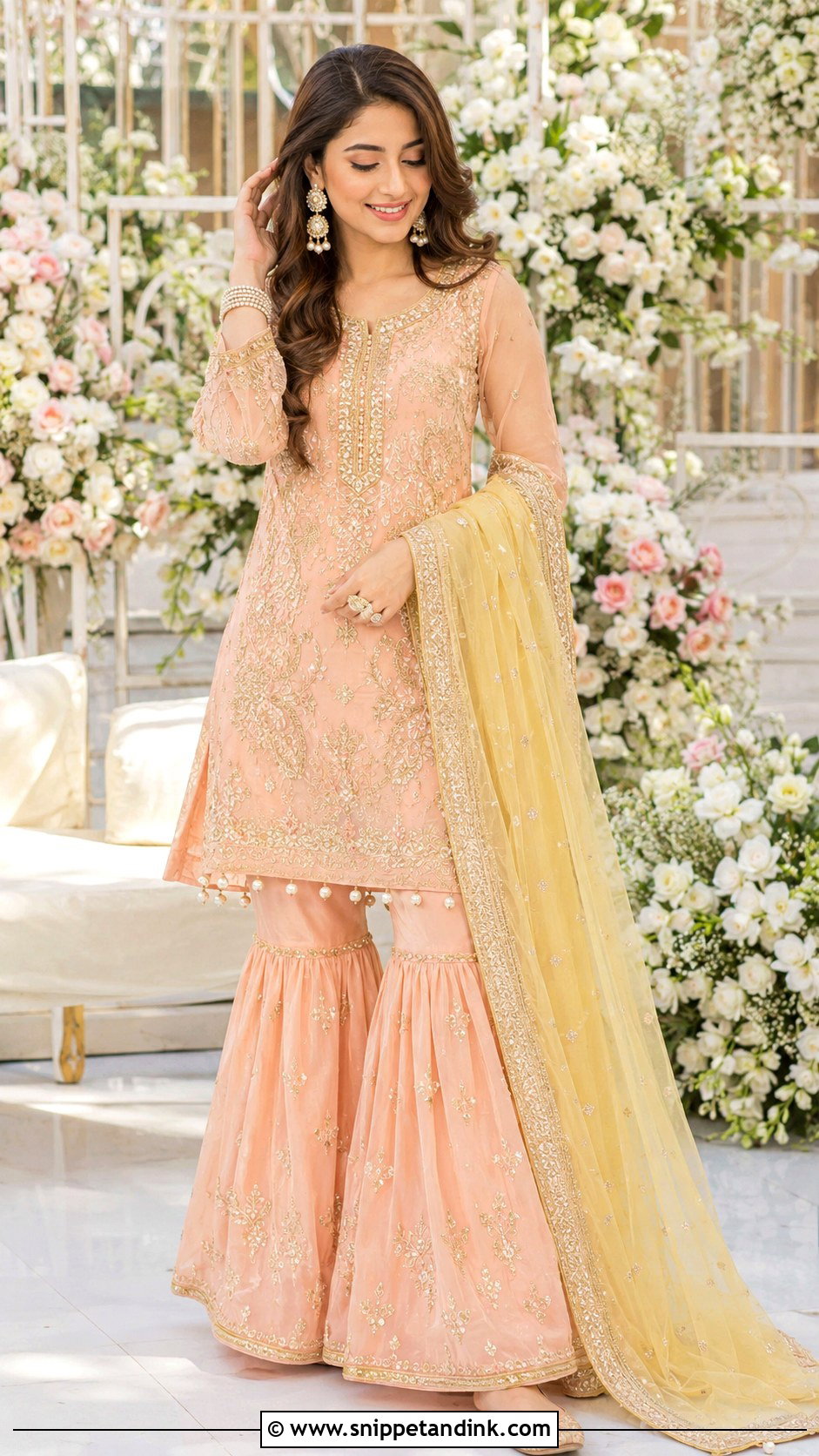
Peach is the soft alternative for someone who doesn’t want bold yellow at all. It takes gold embroidery, mirror details and pastel floral jewelry well, and it’s flattering in close portraits. A short kameez with a flared sharara, plus a yellow dupatta, keeps the Mayoun connection clear. Nude khussas, pearl earrings and peach-toned makeup finish it. Sisters, bridesmaids and guests can rewear it easily at a later dholki or dinner.
10. Mirror Work Mayoun Lehenga
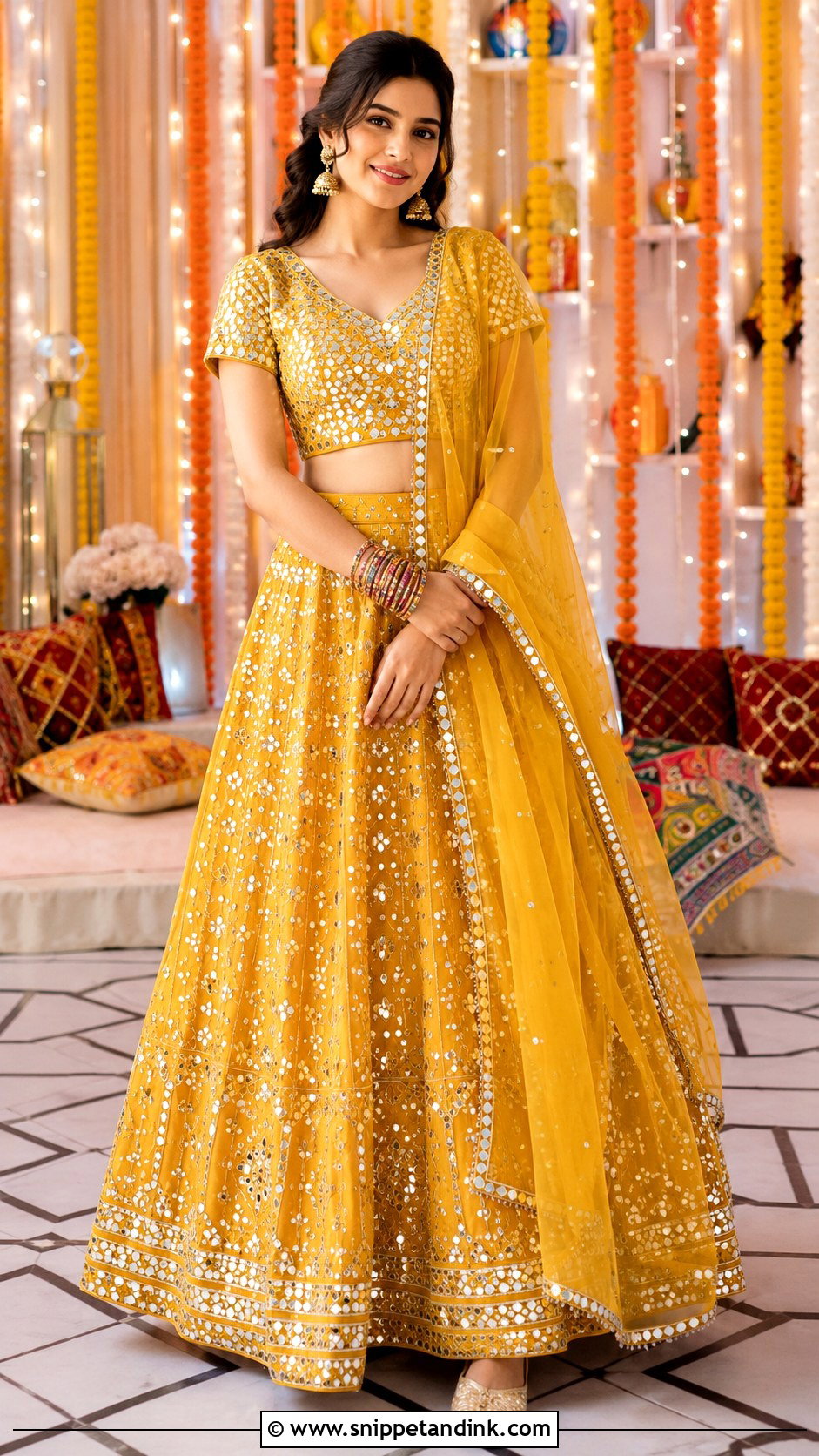
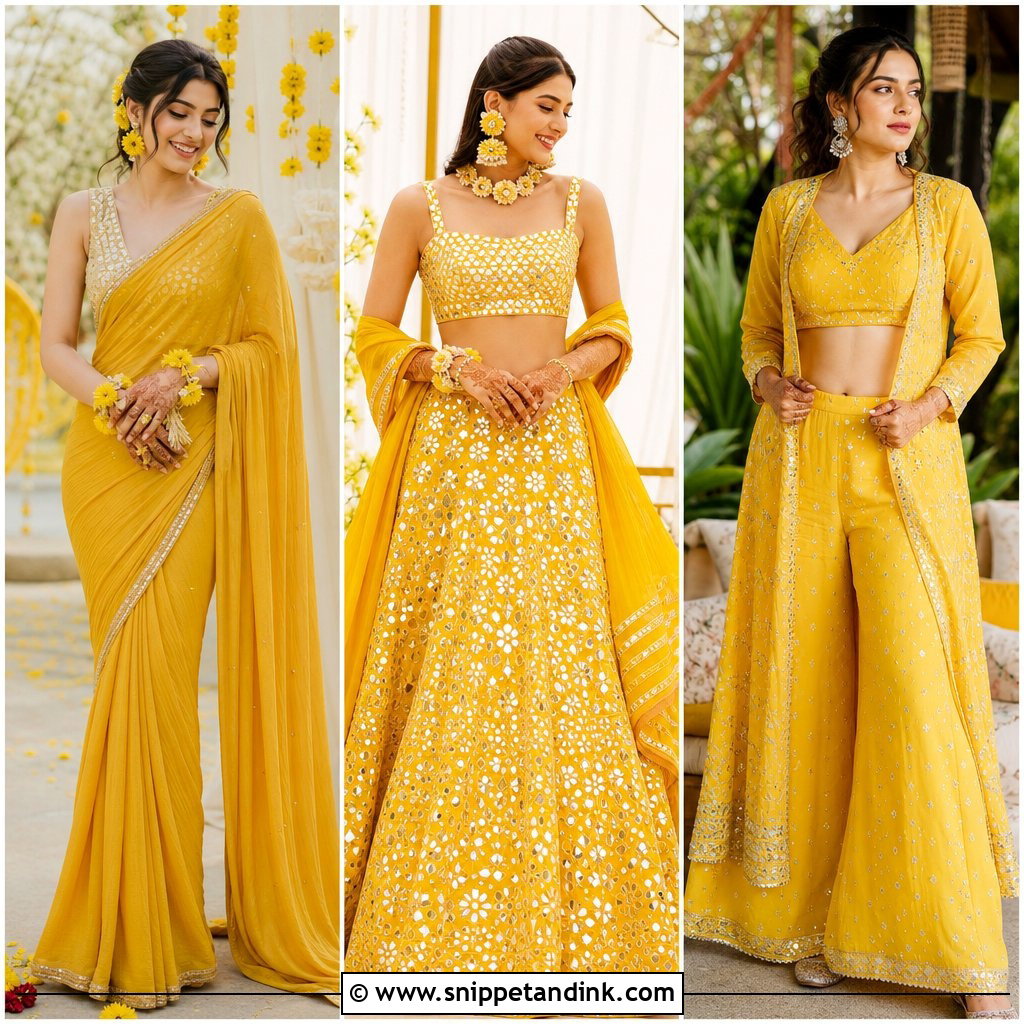
Mirror work catches light without making an outfit feel formal, which is exactly the balance Mayoun needs. Put small mirrors on the blouse, the border or the dupatta of a yellow, lime, orange or mustard lehenga. Balance is everything here. A mirror-work blouse with a plain flowing skirt often looks more stylish than mirrors everywhere. Keep the fabric light and the earrings, bangles and flats simple. I turn mirror-work blouses inside out to check the backing; poorly finished mirror edges scratch the underarm during dancing.
11. Gota Patti Mayoun Dress
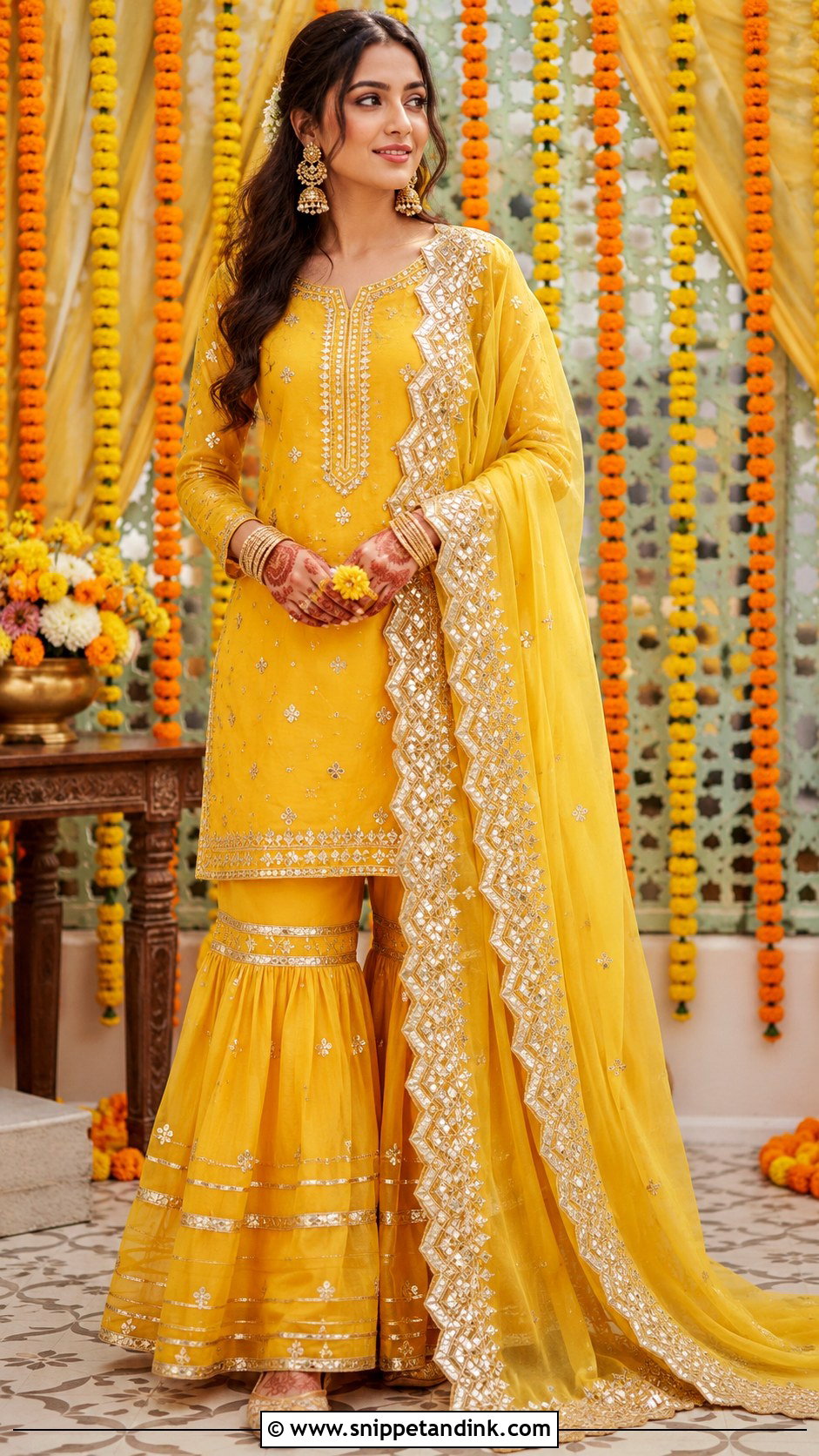
Gota patti is the most traditional finish for Mayoun, and it shines on yellow, orange, green and ivory. Use it on a straight shirt with gharara pants, a long frock or a lehenga border, and let a gota-edged dupatta frame the face. Gold jhumkas, bangles and khussas complete the classic look. The useful thing about gota is how adjustable it is. A single border reads casual; dense panels read bridal. That makes it easy for a bride, her mother, sisters and guests to all wear it at different levels.
12. Floral Mayoun Lehenga
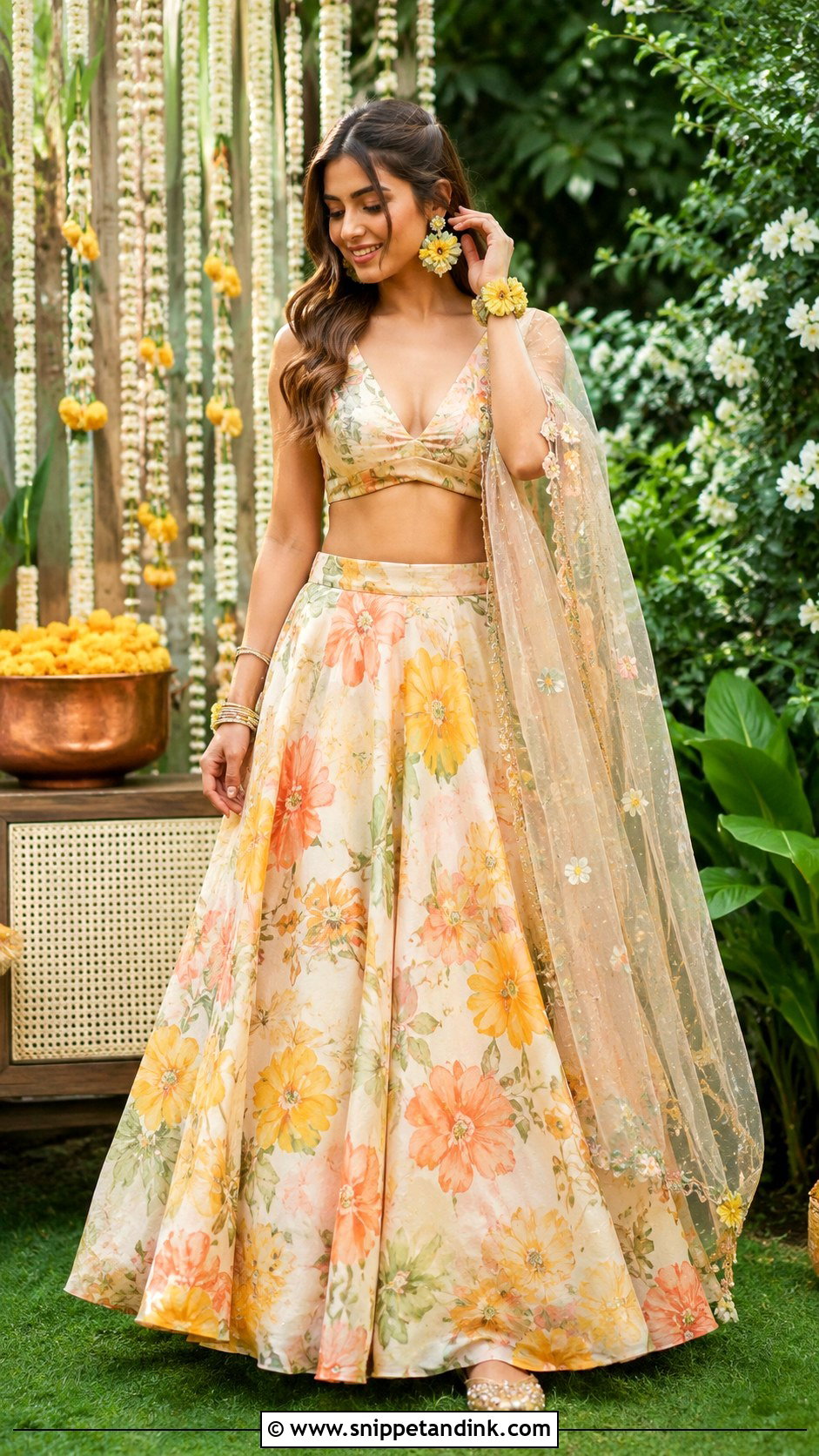
A floral lehenga suits daytime Mayouns, outdoor setups and small home functions. Choose printed or embroidered flowers in yellow, peach, pink, orange or green, and keep the blouse plain with a sheer dupatta so the pattern leads. Floral jewelry, fresh bangles and soft waves make it feel natural. For the bride I’d add a slightly heavier dupatta or a statement maang tikka; for a guest, lighter accessories. Printed lehengas are also the easiest to wash after ubtan, which is a real advantage.
13. Mayoun Kurta With Gharara
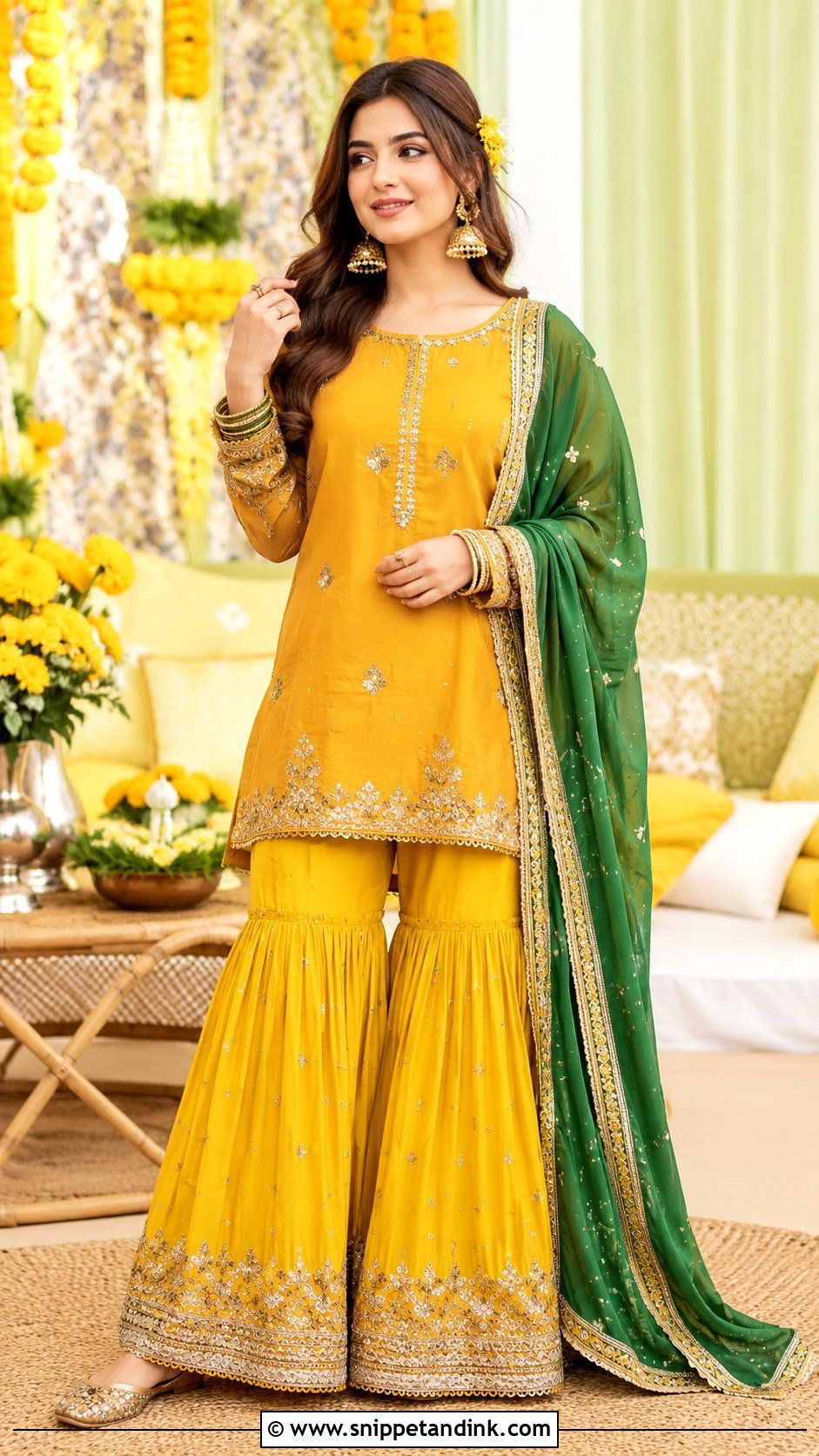
A Mayoun kurta with gharara is the outfit I trust most for mixed ages and body types. A short or mid-length kurta in yellow, mustard, lime or orange with a wide gharara finished in lace or gota moves freely for dancing and sits comfortably on floor cushions. A matching dupatta looks neat; a contrasting one adds color. Khussas, jhumkas and stacked bangles complete it. It is polished without being heavy, and grandmothers wear it as comfortably as teenage cousins.
14. Mayoun Long Shirt With Pants
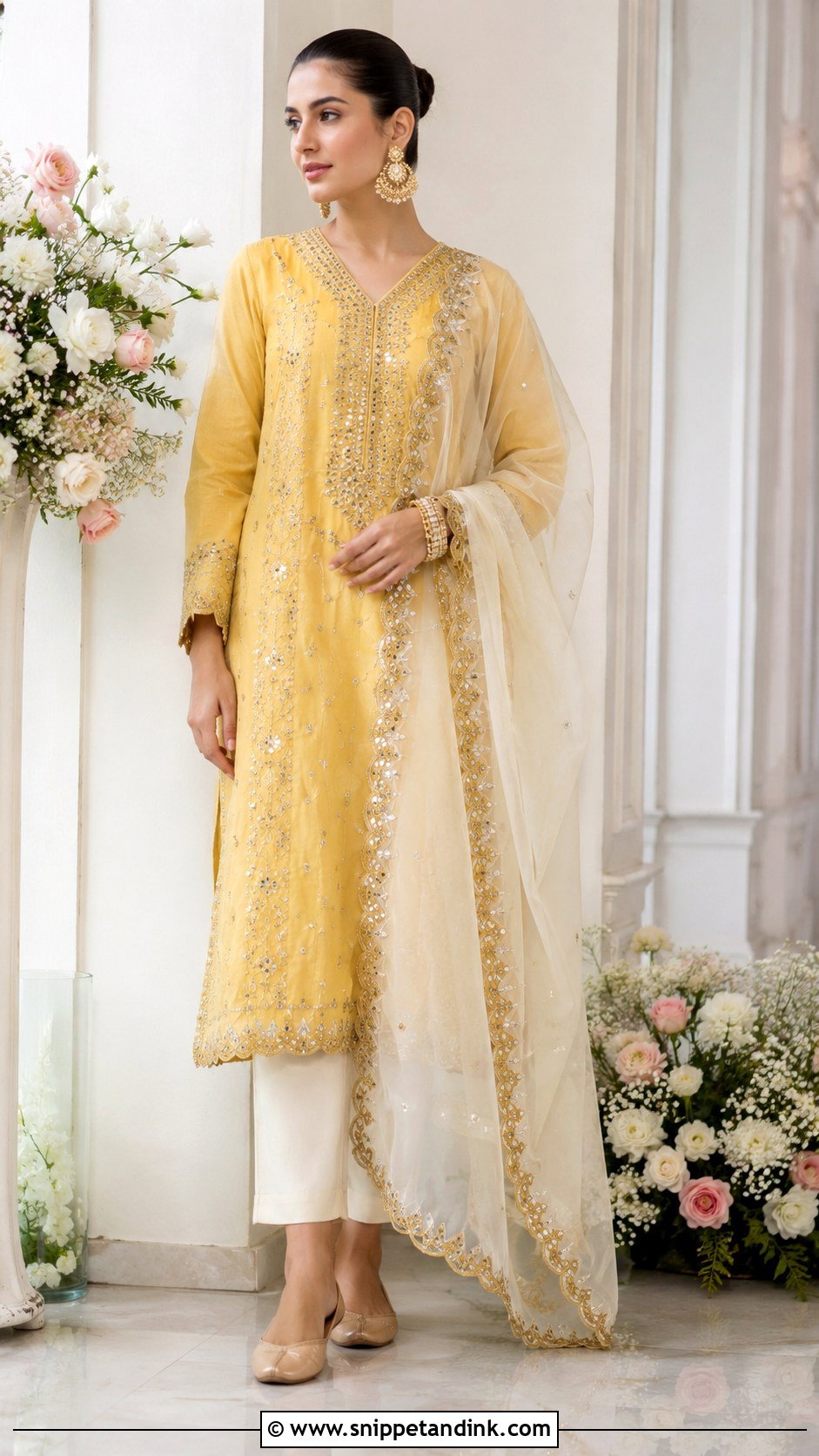
For a cleaner silhouette, a long embroidered shirt with straight pants or cigarette trousers works in yellow, ivory, peach or green. A dupatta with a gota or embroidered border adds the festive touch. It’s easy to walk, sit and move in, and suits a modest or minimal style. Gold earrings, a sleek bun and soft makeup dress it up. Slim cigarette pants get tight when sitting cross-legged on the floor, so I’d ask for a little stretch in the fabric or choose straight pants instead.

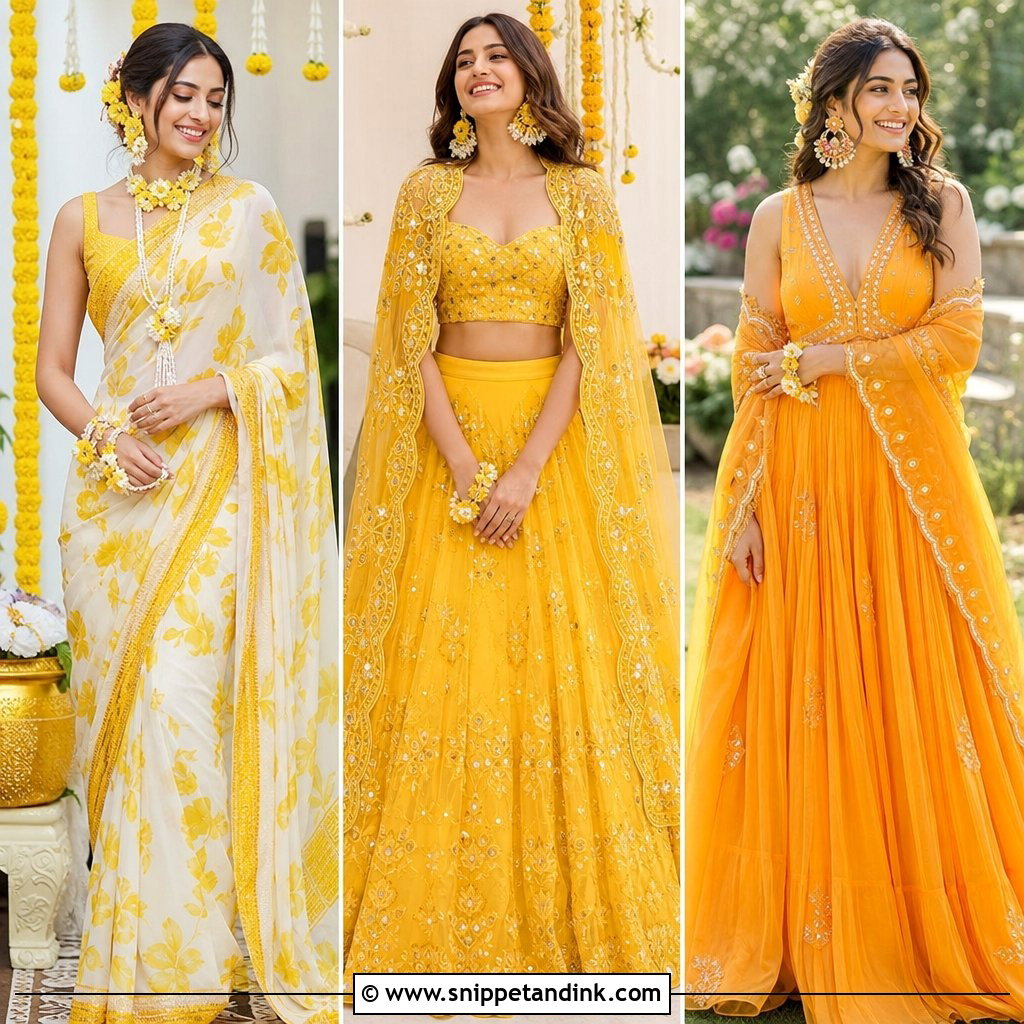
15. Mayoun Angrakha Dress
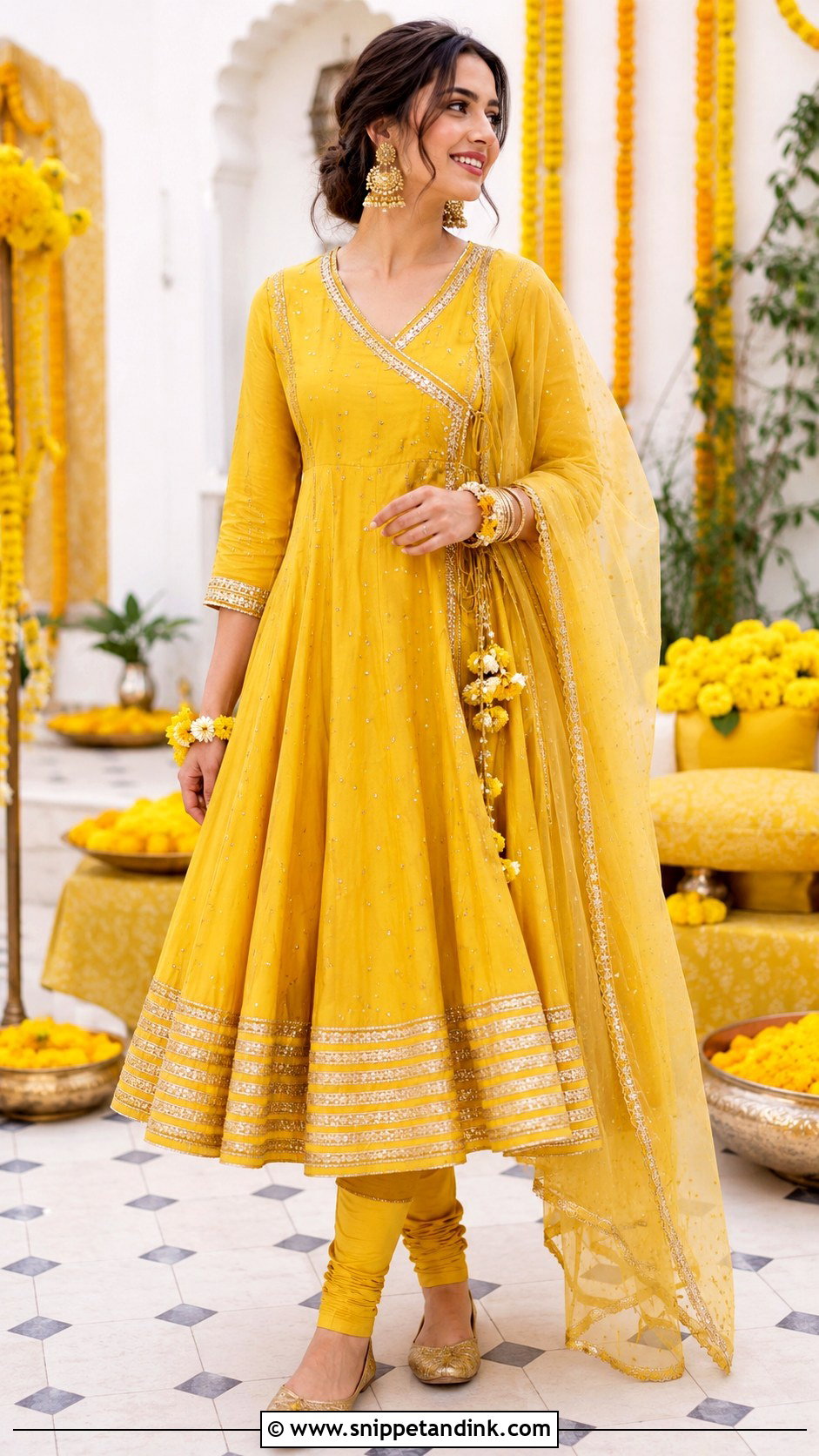
The angrakha’s diagonal wrap front is flattering and traditional, especially finished with tassels, dori ties or gota borders. In yellow, mustard, orange or green, a flared angrakha frock over churidar or sharara makes a full outfit; add a light dupatta, khussas and jhumkas. It moves well for brides and suits bridesmaids and close relatives too. Check the inner tie before the event. If the wrap only fastens with dori, a hidden hook or snap stops it shifting open during the dancing.
16. Mayoun Kaftan Dress
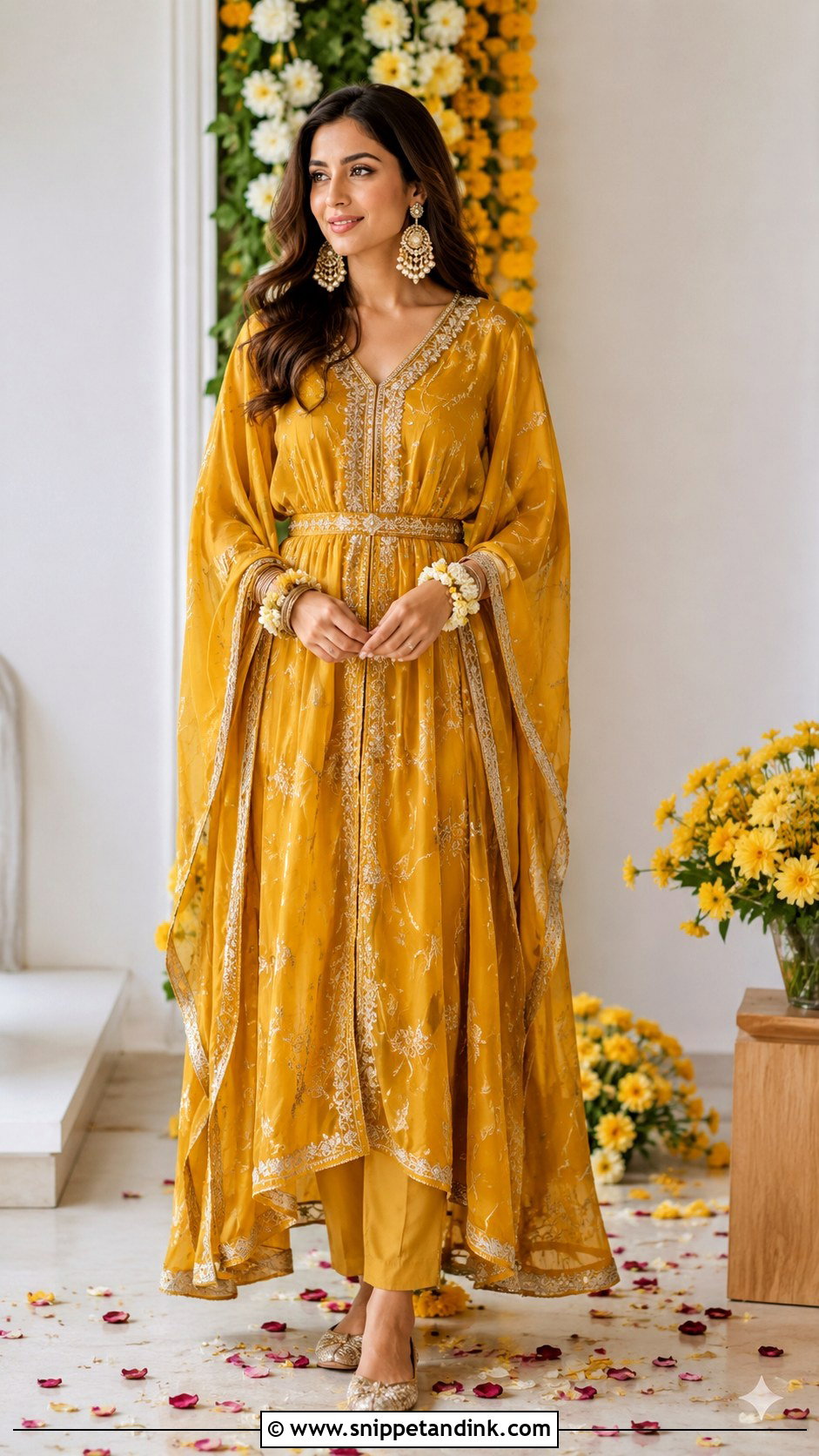
A kaftan is the relaxed, modern option for a home function or intimate daytime Mayoun. Choose yellow or mustard with embroidery at the neckline, sleeves and hem, and a belt or lightly defined waist for shape. Straight pants, embellished flats and statement earrings complete it. It gives coverage and easy movement and suits many body types because it doesn’t cling. Wide kaftan sleeves do tend to dip into the ubtan bowl, so I pin or tie them back during the ritual. Soft makeup and a low bun keep it polished.
17. Mayoun Dhoti Pants Outfit
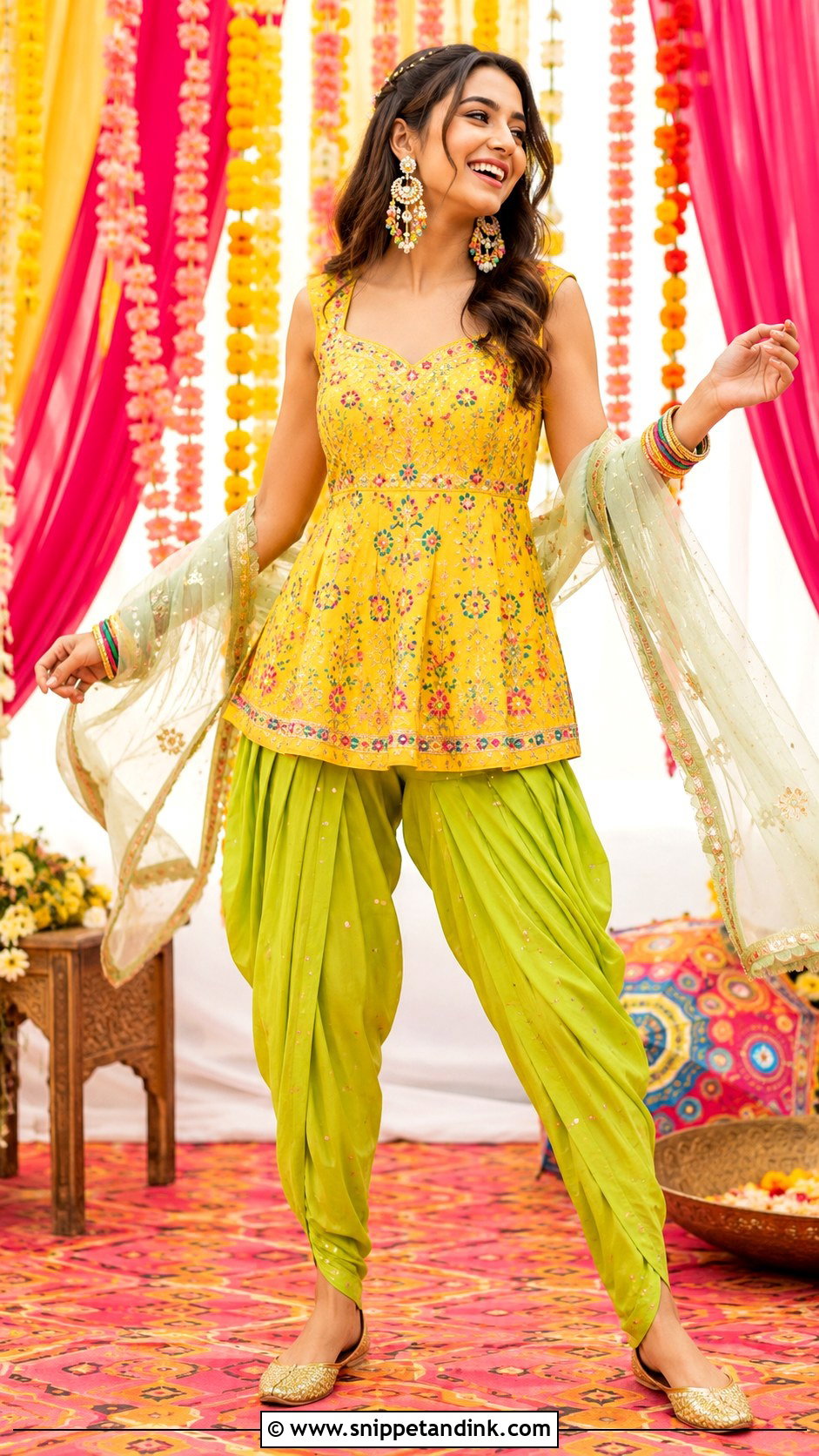
A Mayoun dhoti pants outfit is playful and practical. Yellow or lime dhoti pants with a short embroidered kurti, peplum or cape blouse leave the legs free for dancing. Silk, crepe or georgette drape smoothly. Add a light dupatta for tradition, or skip it for a modern look, then finish with statement earrings, bangles and khussas. It’s a strong pick for cousins, friends and bridesmaids who want a break from lehengas and shararas. On very curvy hips, I’d choose a softer drape so the folds don’t add bulk.
18. Mayoun Peplum With Sharara
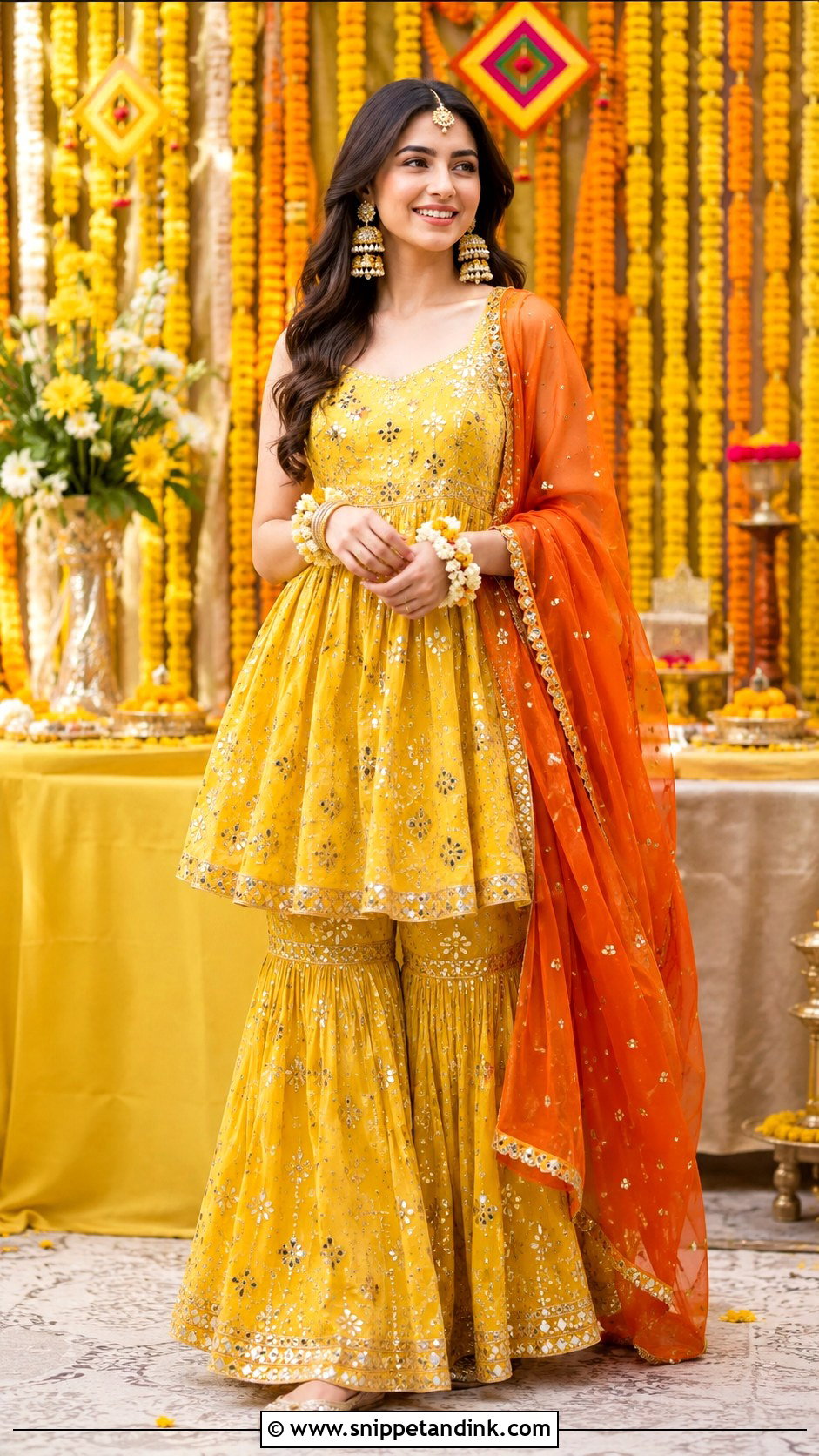
A peplum with sharara gives waist definition on top and volume below. A yellow peplum with mirror work, gota or floral embroidery pairs with a matching or contrasting sharara, and orange, green or pink accents make it more playful. A sheer dupatta softens it. Khussas, jhumkas and a stack of bangles finish it. Bridesmaids and sisters suit it naturally; for a bride, I’d raise the embroidery a level. A peplum that ends right at the widest part of the hip widens it, so I adjust the length at the fitting.
19. Mayoun Jacket Lehenga
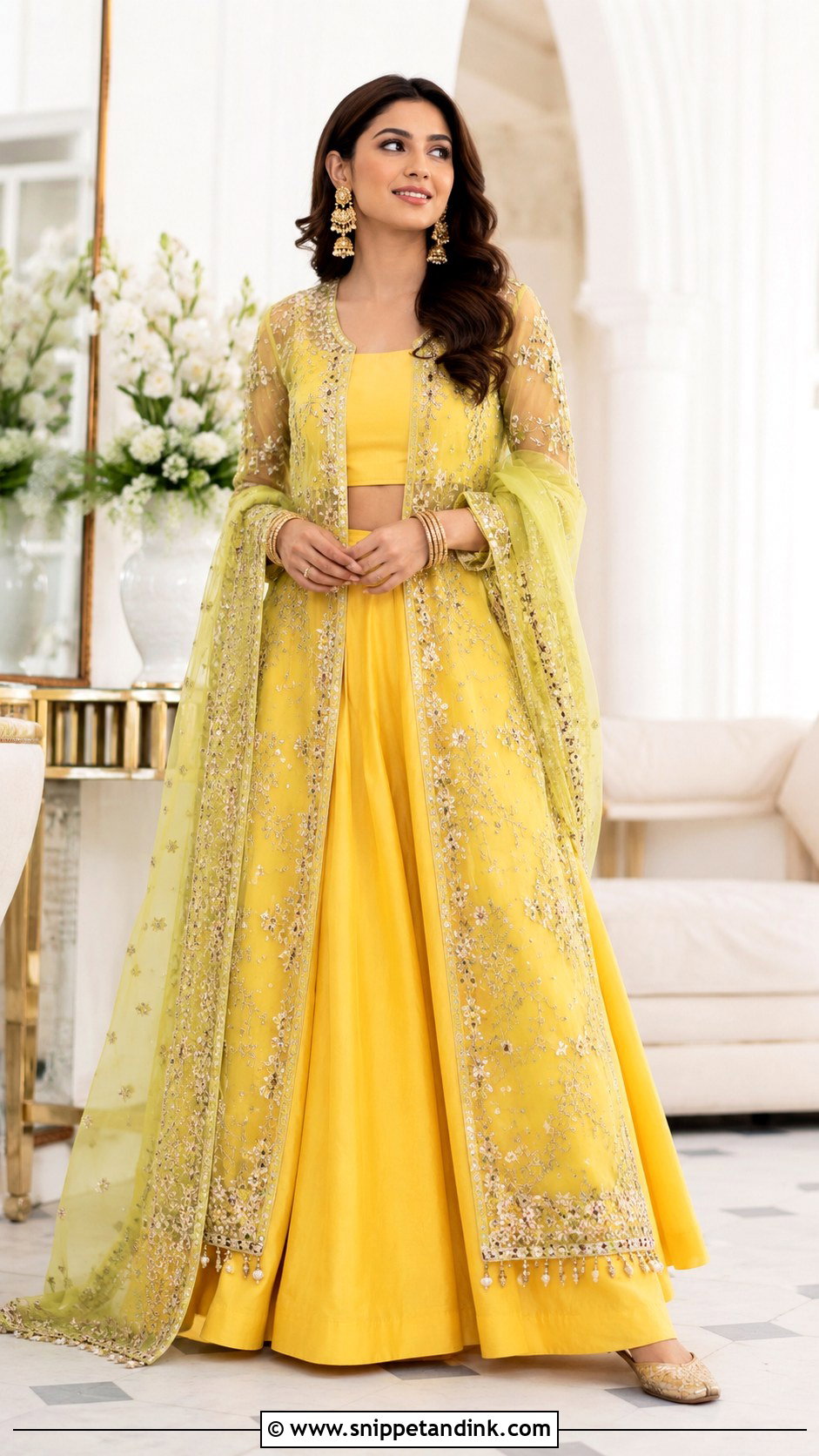
A jacket lehenga adds layering and looks styled with very few accessories. Over a simple lehenga and blouse, wear a long embroidered jacket in yellow, mustard or lime: sheer organza for a lighter look, cotton net with gota for a traditional one. If the jacket gives enough coverage, the dupatta can be minimal or skipped. Earrings, bangles and embellished flats finish it. In summer heat a full jacket gets warm quickly, so I’d keep this for evening Mayouns or air-conditioned halls.

20. Mayoun Maxi Dress
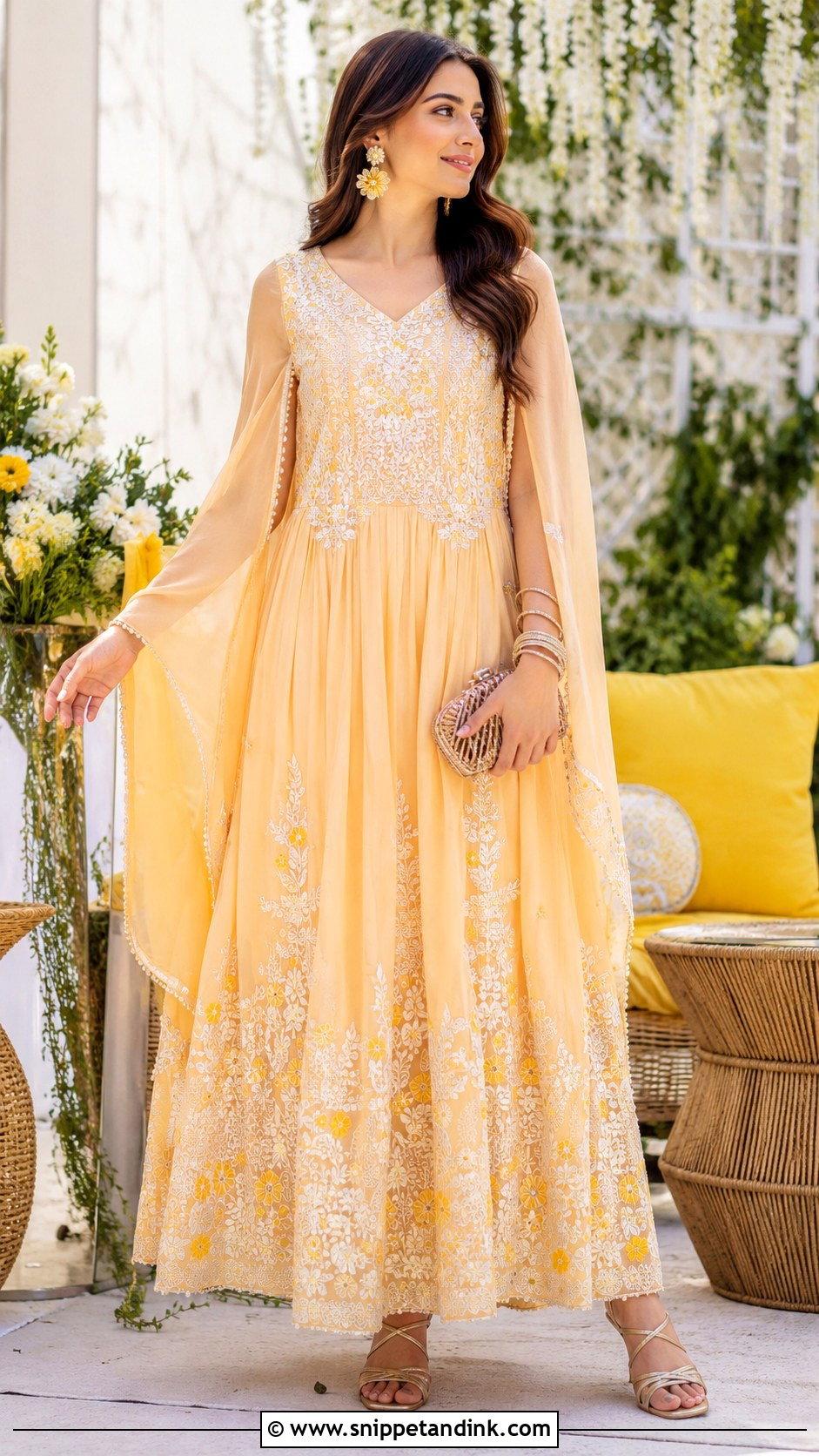
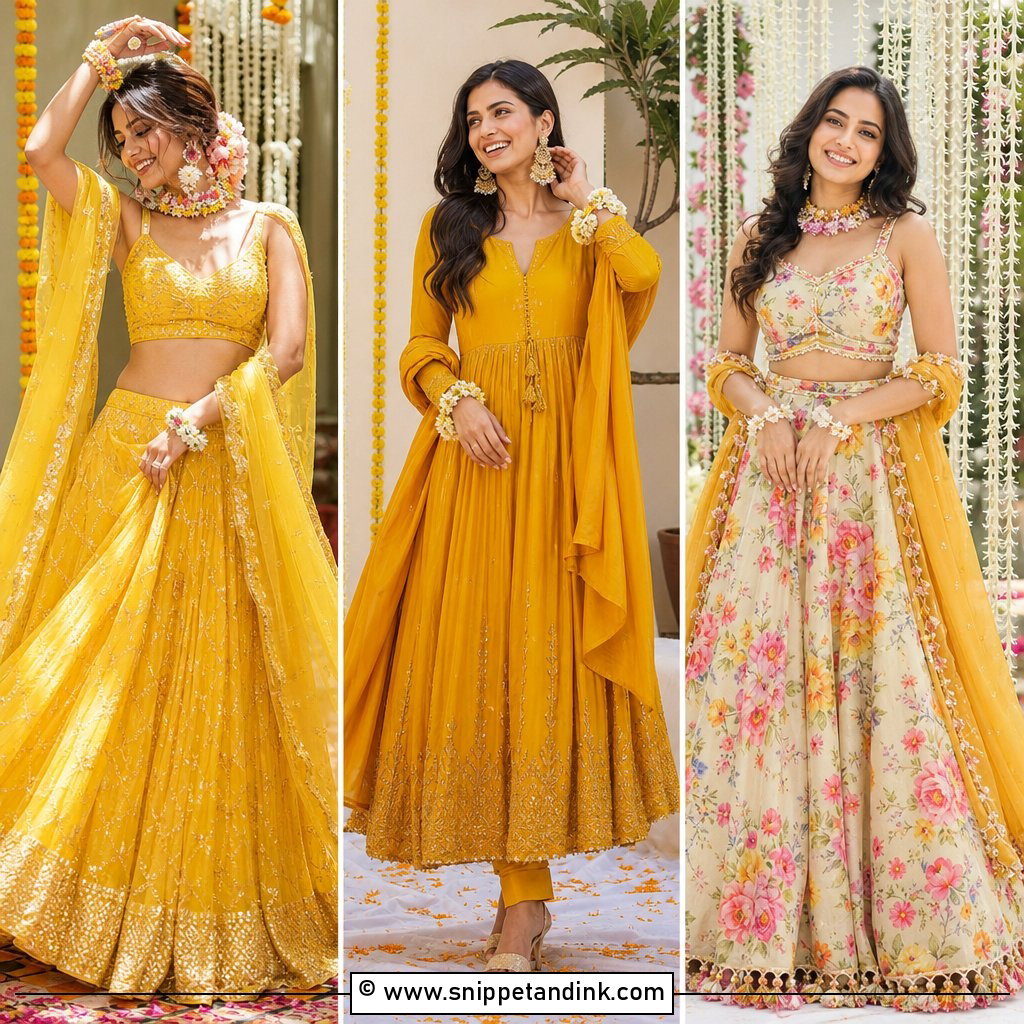
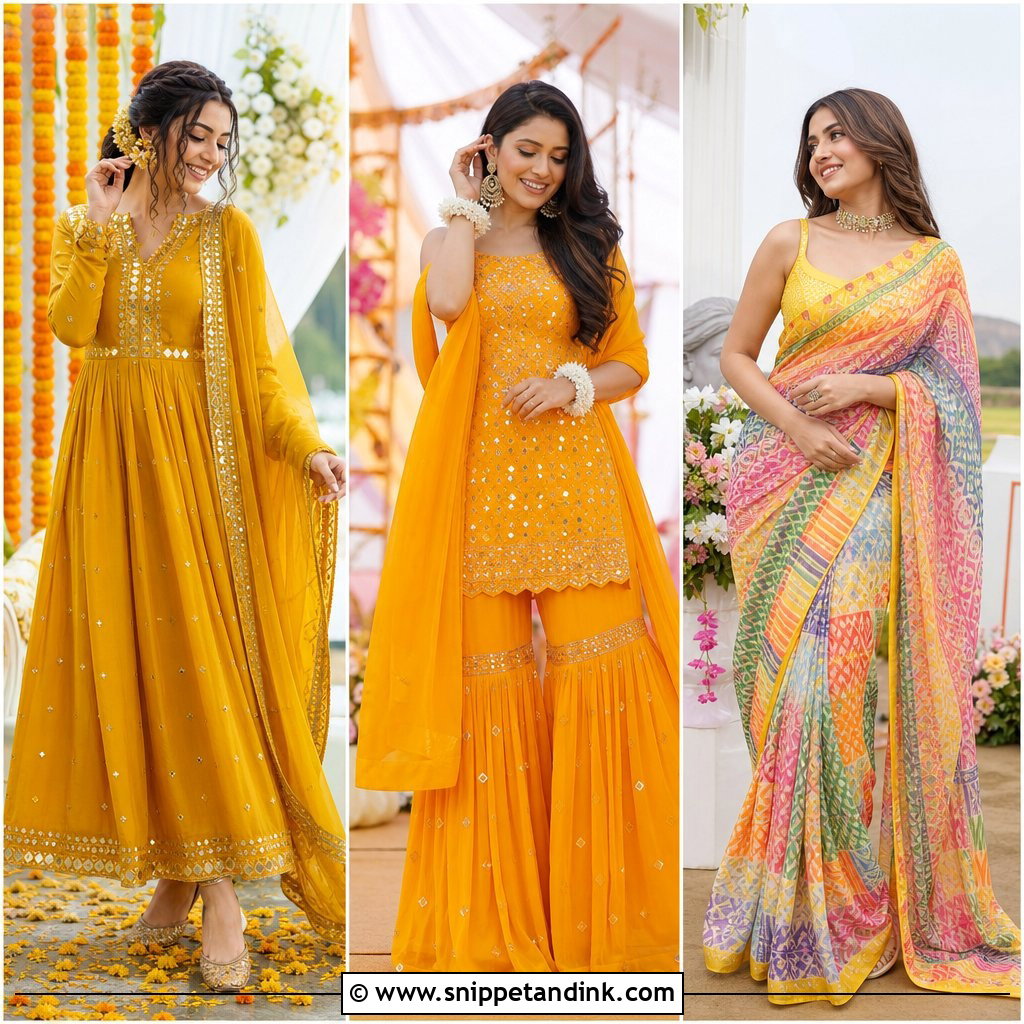
A maxi is the softest, least structured option. Choose yellow, peach or green with light embroidery, lace or mirror accents, and add a dupatta for a traditional finish or cape sleeves for a modern one. Gold sandals, floral earrings and a small clutch complete it. When non-Desi friends ask me what to wear to a Mayoun, this is my answer: it’s festive, respectful and easy to move in. Keep it bright, modest and cheerful.
21. Mayoun Saree Look
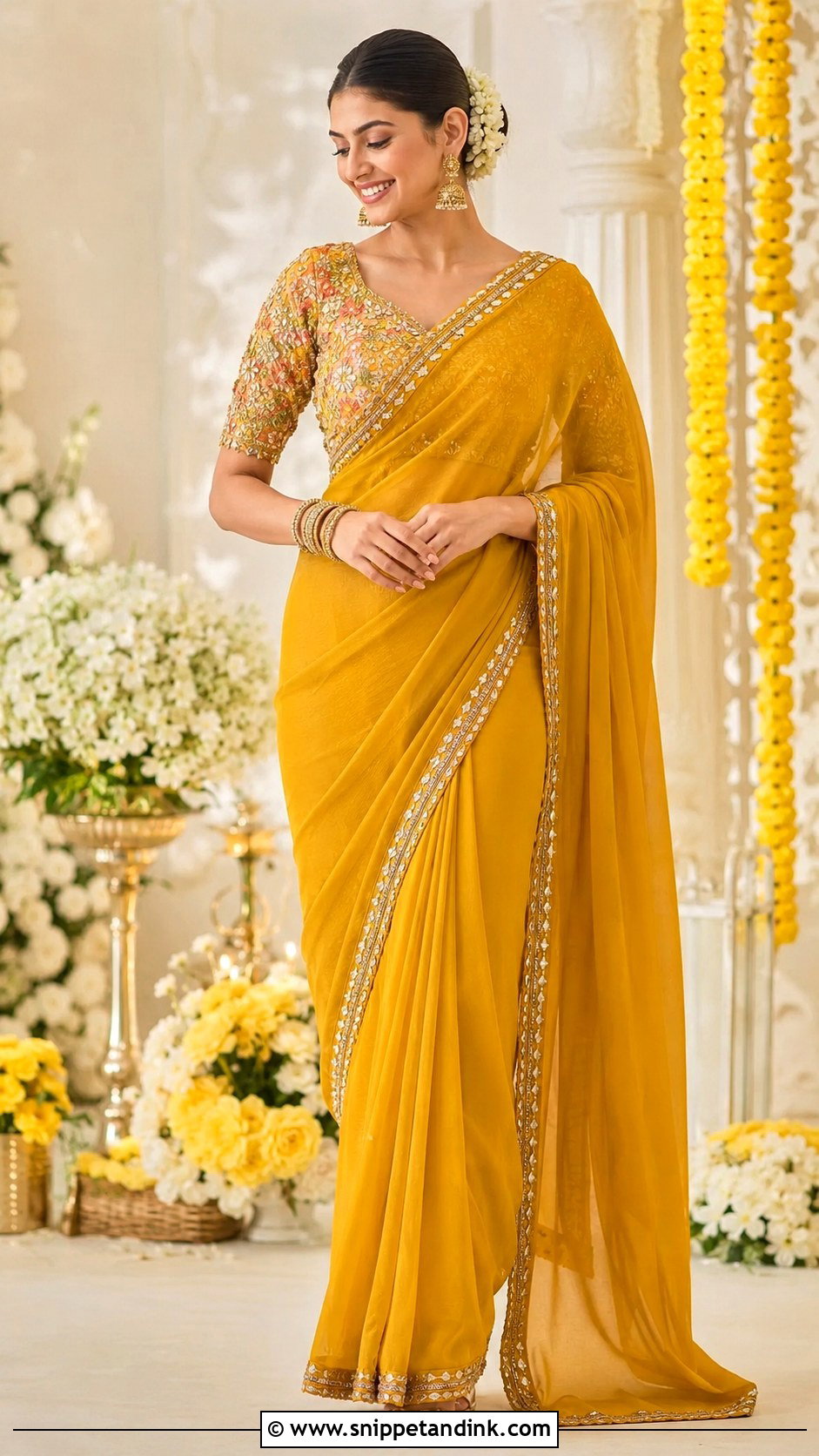
Sarees suit mothers, sisters and brides who prefer drape to structure. Yellow, mustard, lime or orange in chiffon, organza or silk, with a lightly embroidered blouse, keeps it festive. Gota borders, mirrors or floral threadwork link it to Mayoun. Bangles, jhumkas and comfortable heels or flats finish it, and a sleek bun with fresh flowers looks right. Chiffon and georgette sarees are much easier to manage while sitting on the floor than stiff silks, and I’d pin the pallu firmly at the shoulder before the ubtan begins.
22. Mayoun Dupatta With Simple Suit
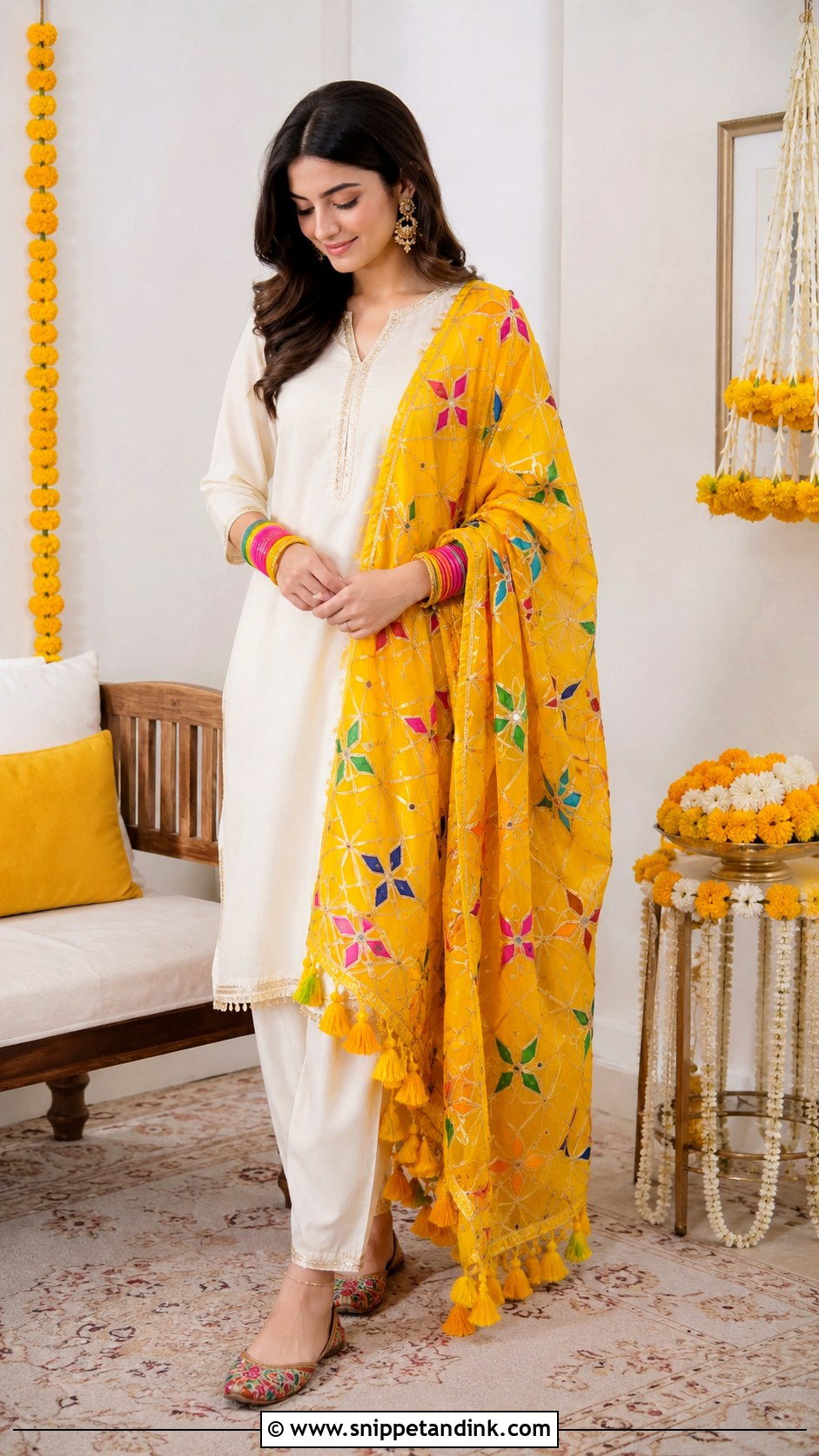
A plain suit with a statement dupatta is the budget-friendly route, and it still looks event-ready. Start with a yellow, ivory, green or peach shalwar kameez and add a dupatta with gota, phulkari, bandhani, mirror work or tassels. Khussas, bangles and gold or floral earrings complete it. Guests, younger girls and anyone at a small home Mayoun will find it practical, and every piece rewears separately afterward. If ubtan stains the kameez, you’ve lost a plain suit rather than a statement piece.
23. Mayoun Bandhani Dress
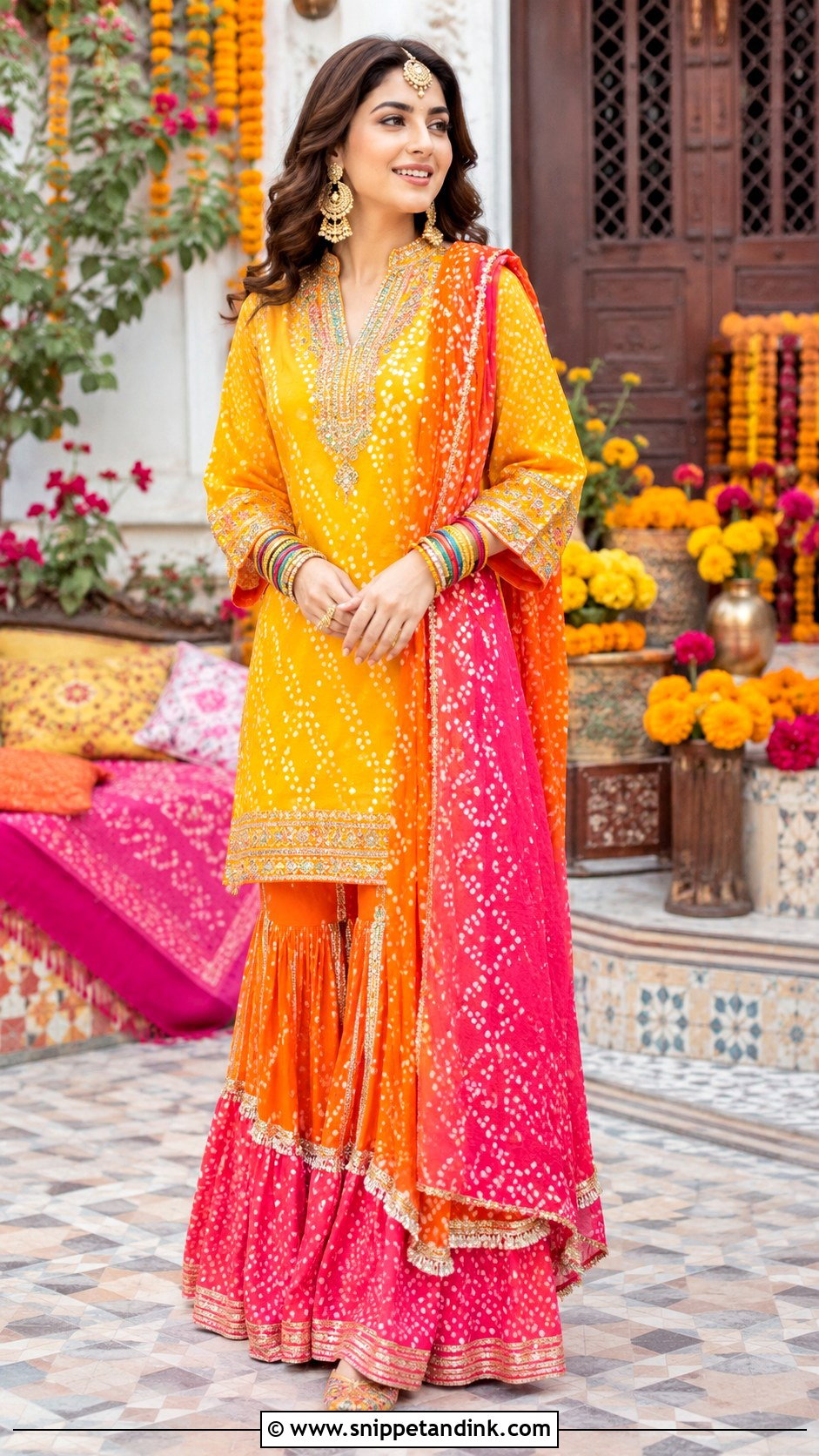
Bandhani brings color and texture without heavy embroidery, so it stays comfortable in daytime heat. Use it on a dupatta, lehenga, gharara or full suit in yellow, orange, pink or green. A yellow kurta with a multicolor bandhani dupatta is the easiest version; a bandhani lehenga with a plain blouse is the balanced one. Oxidized or gold jewelry, khussas and colorful bangles finish it. Hand-tied bandhani dyes can bleed when wet, so dry-clean the first time and keep it away from damp ubtan.
24. Mayoun Bridesmaid Outfit
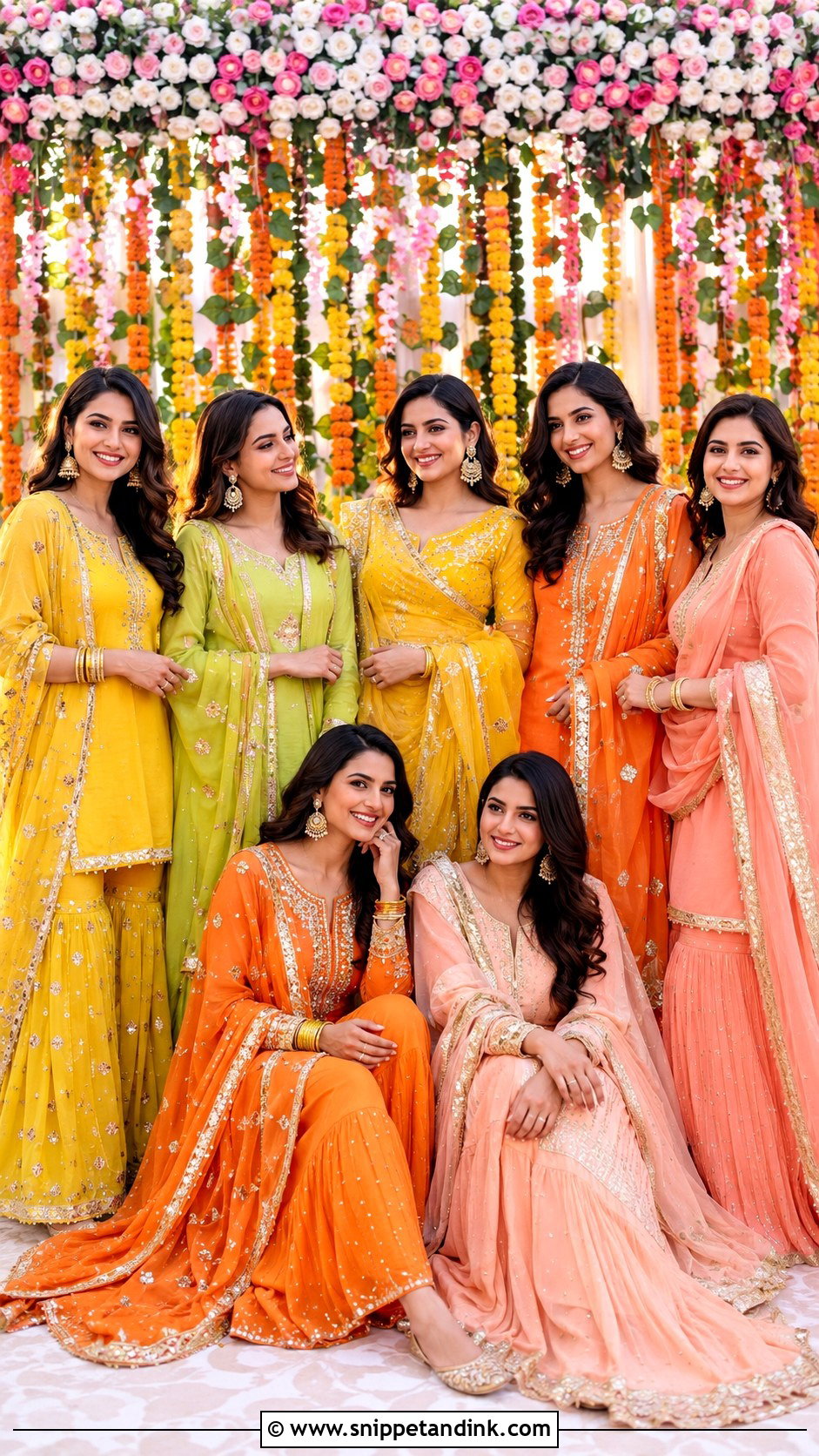
A Mayoun bridesmaid outfit works best when the palette is shared and the silhouette is personal. Pick yellow, lime, orange, peach or mustard, then let each bridesmaid wear what suits her: a sharara for one, a lehenga for another, a long kurta and pants for a third. Matching dupattas or a shared gota border tie them together. Keep jewelry to bangles, earrings and khussas. I find the group looks more planned this way than in identical outfits, and nobody spends the afternoon uncomfortable.



25. Mayoun Guest Dress
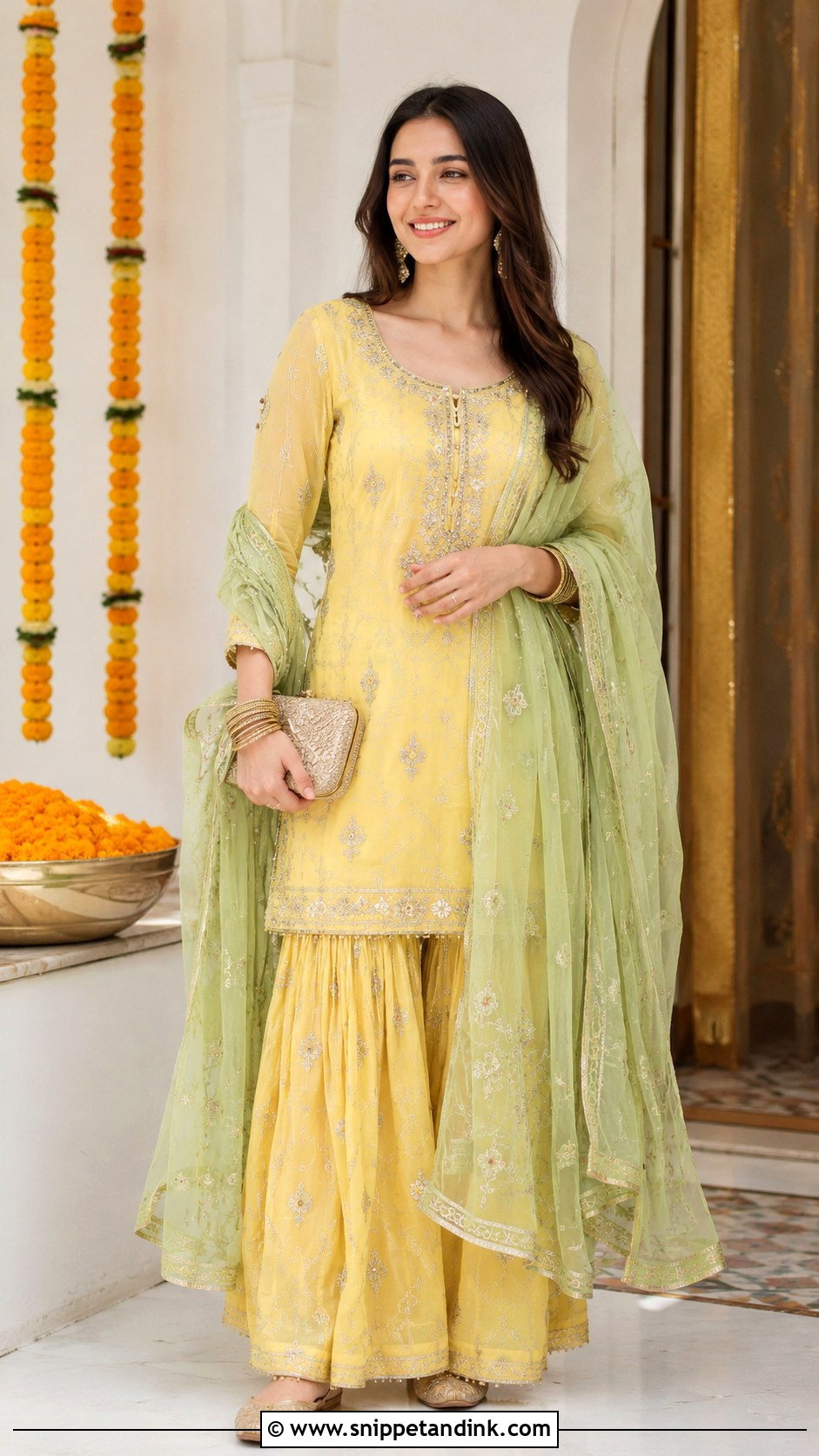
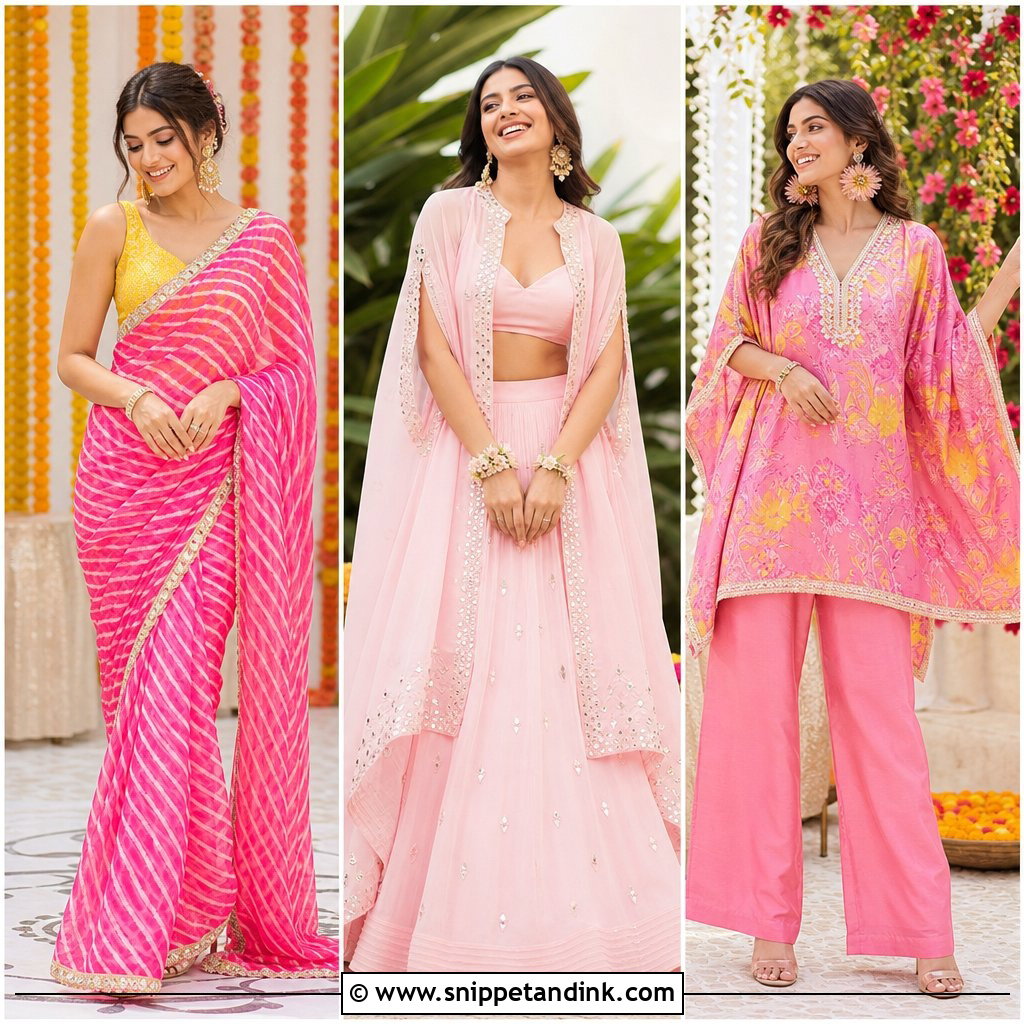
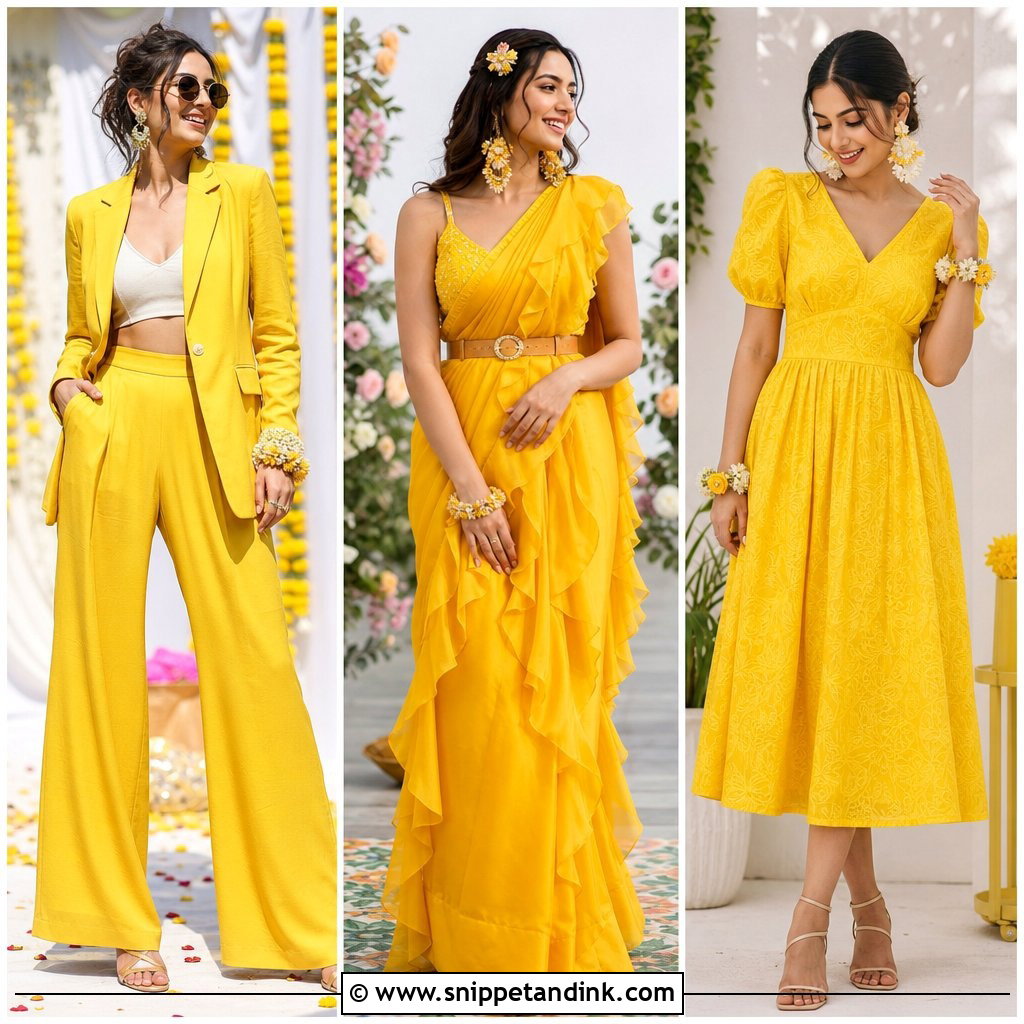
Guests should look festive and respectful, never bridal. Yellow, green, orange, peach and pink are safe unless the family sets a dress code. A light sharara suit, printed lehenga, Anarkali frock or embroidered kurta with pants all work. Never wear more embellishment than the bride, especially at an intimate function. Comfortable shoes matter, because you’ll stand, dance and sit for the rituals. Simple jewelry, a small bag and natural makeup are plenty. If you’re asked to apply ubtan, roll your own sleeves back first.
How the Mayoun Outfit Should Differ From the Mehndi and Baraat
Most brides wear three or more outfits across the wedding, and the Mayoun look works best as the lightest of them. I keep it simple in embellishment, comfortable for sitting on the floor, and washable where possible. The mehndi then takes the brighter colors and the dancing, and the baraat carries the heaviest work.
Spacing out color and weight
If the Mayoun is yellow and the mehndi is green or multicolor, the photos from each event look distinct. Repeating yellow at the mehndi makes the albums blur together. I also keep jewelry escalating: floral or light gold at Mayoun, more at mehndi, the full set at the baraat.
Tailoring timeline
Tailors are busiest in wedding season, and the bridal outfits take priority in their queue. Order the Mayoun outfit alongside the others rather than leaving it until last, and try it on sitting cross-legged. That’s the position you’ll hold for the ritual, and it shows straight away whether the kameez rides up or the gharara is too long.
Yellow Is the Tradition, Comfort Is the Rule
A good Mayoun outfit feels festive from the first photo and still comfortable at the last dance. Yellow remains at the center, with mustard, lime, orange, peach, ivory and pastels all welcome around it. A traditional gharara, a flowing pishwas, a modern kaftan or a plain suit with a statement dupatta can all work when the styling fits the mood. Prioritize breathable fabric, easy shoes and joyful color, and dress knowing that ubtan will be part of the afternoon.
You'll Like These Ideas:







Leave a Reply