
Flowers have been on wedding cakes for as long as I’ve been decorating them, and they still go on almost every cake I make. What has changed is how they’re used. Pressed edible petals, garden-style cascades, handmade sugar flowers, piped buttercream blossoms, loose wildflowers, a single orchid on a plain white tier: each one asks something different of the baker, the florist and the budget. Flowers fit any wedding, from a barn supper to a black-tie garden party, but they are also the part of a cake most likely to cause a food safety problem if nobody plans it. Below are 35 floral cakes, with notes on how each is made and what I’d want you to ask before you book.
Four Ways to Put Flowers on a Cake, and What Each One Costs You
Every floral cake on this list uses one of four methods, or a mix. They differ in price, in lead time and in how much risk they bring onto something people will eat.
Fresh flowers
The most natural look, but the one with the most rules. Many popular wedding flowers are toxic, including hydrangea, sweet pea, lily of the valley, calla lily and ranunculus, and most commercial flowers are grown with pesticides. Safe-looking stems still need wrapping in floral tape and setting into food-safe picks so no sap or cut end touches the frosting. They go on at the venue, last of all.
Sugar flowers
Handmade from gum paste over wire, so they’re technically edible but not something anyone eats. Any bloom, any colour, any season. They take hours each, so they’re usually the most expensive option, and I need several weeks’ notice. Humidity is their enemy: they soften and droop in damp air.
Piped buttercream flowers
Fully edible and charming up close, but softer and less realistic. They hold their shape in a cool room and sag in a hot one.
Pressed and crystallised edible flowers
Violas, pansies, cornflowers, borage, chamomile and rose petals grown for eating. Affordable and safe, though delicate, and their colours can darken on moist frosting over a day.
1. Pressed Flower Wedding Cake
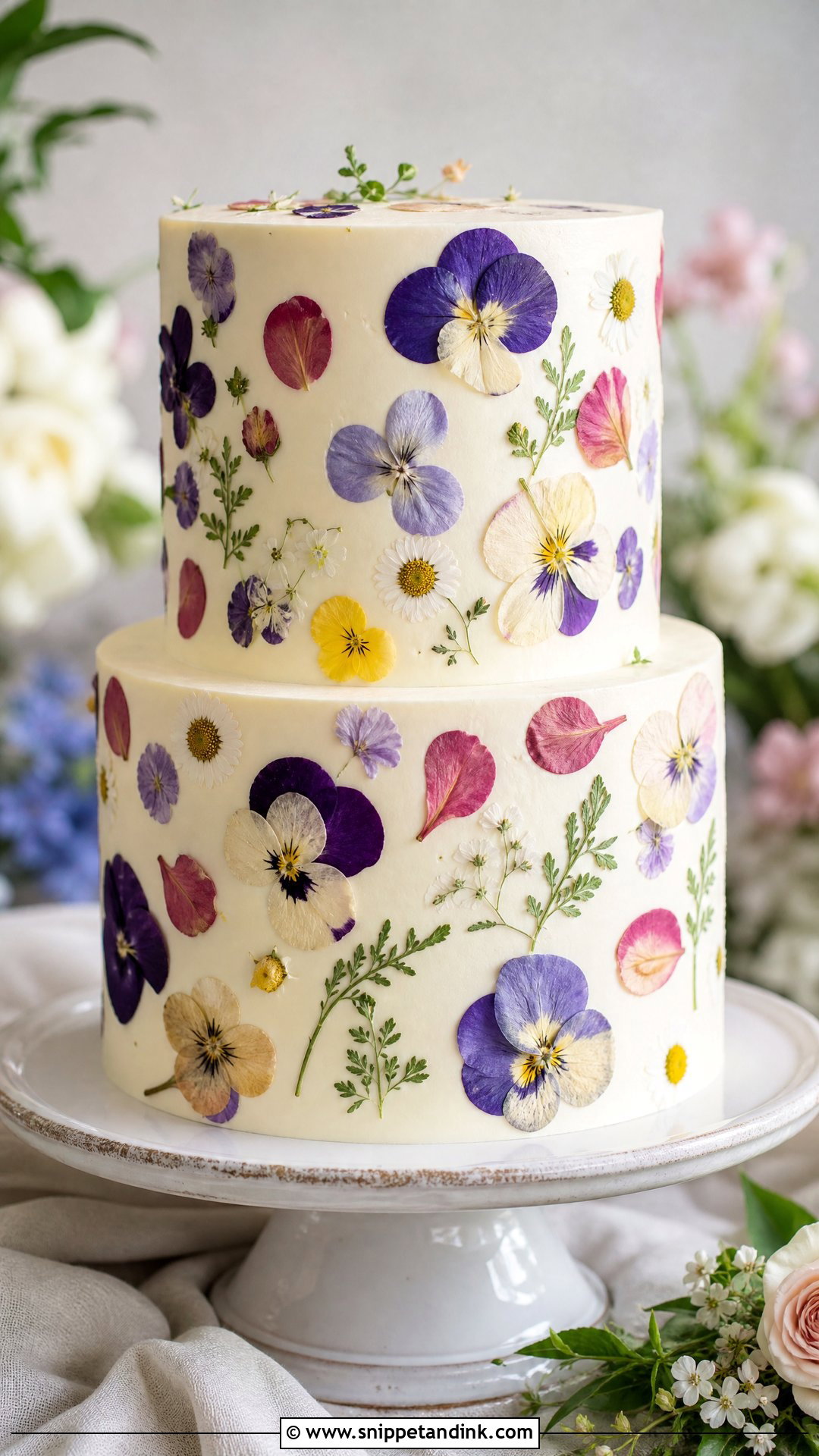
Pressed flowers lie flat against smooth buttercream or fondant, like a botanical print on fabric. Edible pansies, violas, chamomile, lavender and small rose petals are the usual choices, set over ivory, soft white, pale sage or blush. I place them unevenly rather than in a repeat, which looks more natural. Pressed petals sitting on moist buttercream can darken and go slightly translucent over many hours, so I apply them as close to the event as I can. Spring garden weddings and outdoor receptions suit them best.
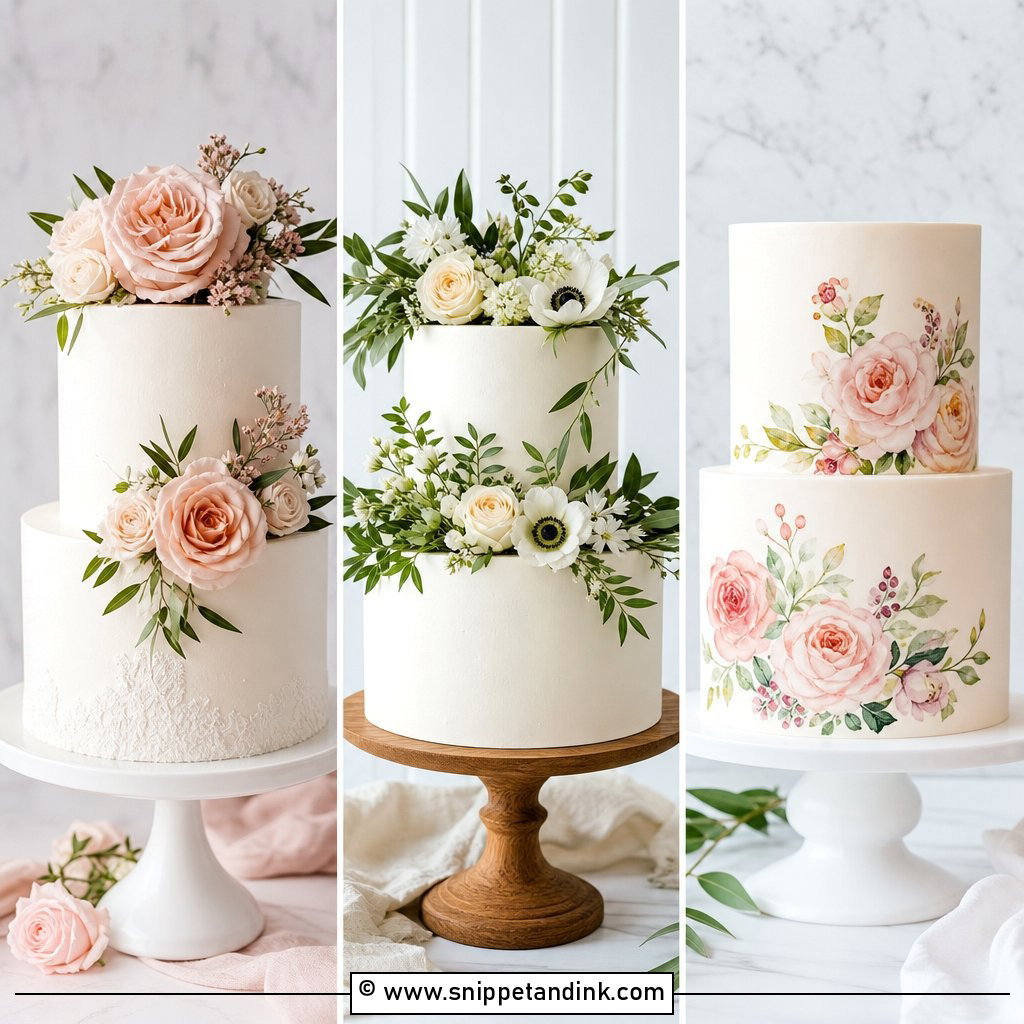
2. Fresh Flower Wedding Cake
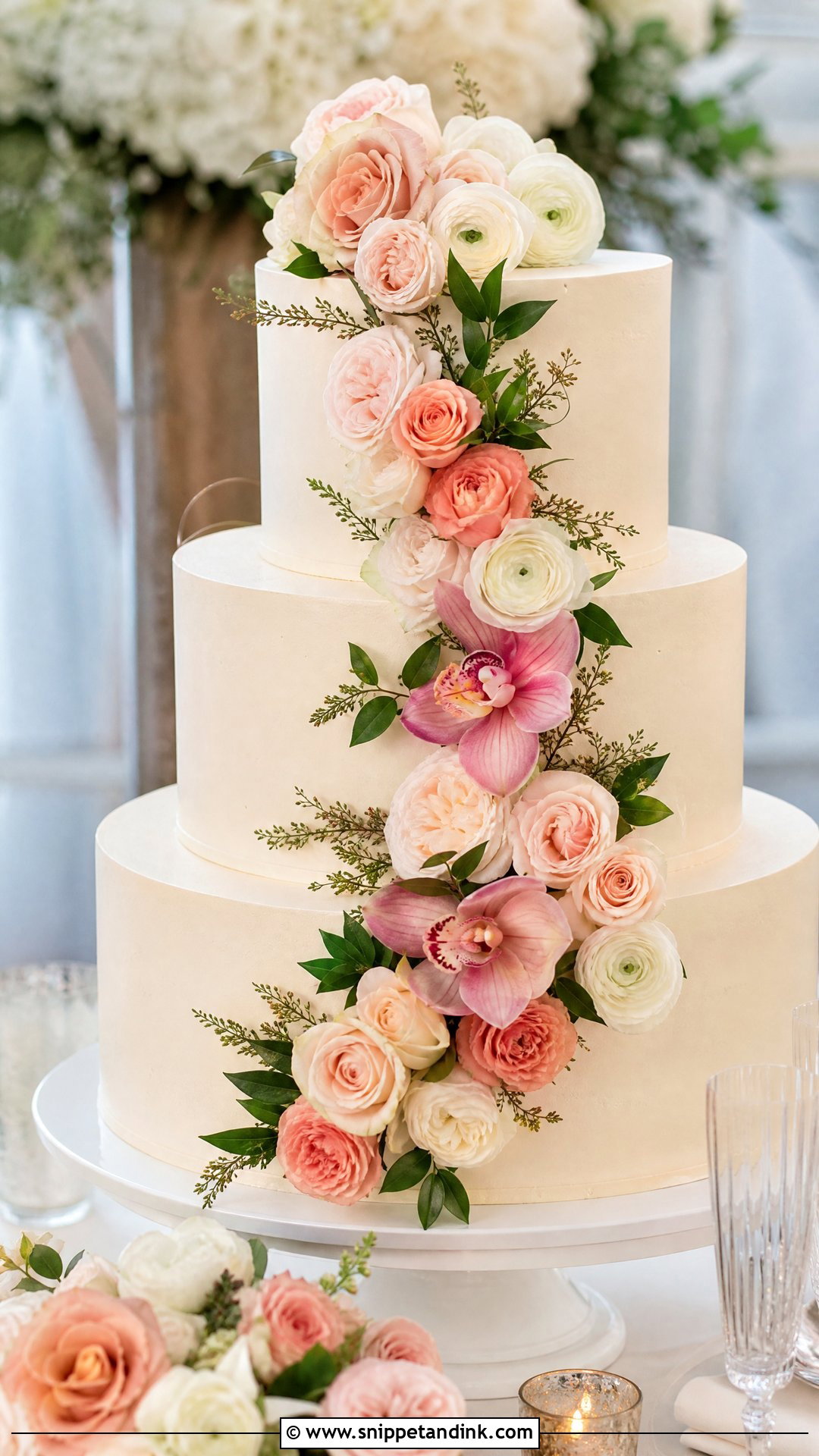
Fresh flowers can be matched to the bouquet, the arch and the centrepieces, which ties the whole day together. Roses, ranunculus, orchids, dahlias and small fillers are common, but safety comes first. Many florist flowers are grown with pesticides and never meant for food, and some are toxic. I want every stem confirmed as safe and pesticide-free by the florist, wrapped in floral tape and set into food-safe picks so no cut stem touches the cake. Smooth buttercream keeps the arrangement clean. Small clusters, a diagonal cascade or a loose crown on the top tier look the most natural.
3. Sugar Flower Wedding Cake
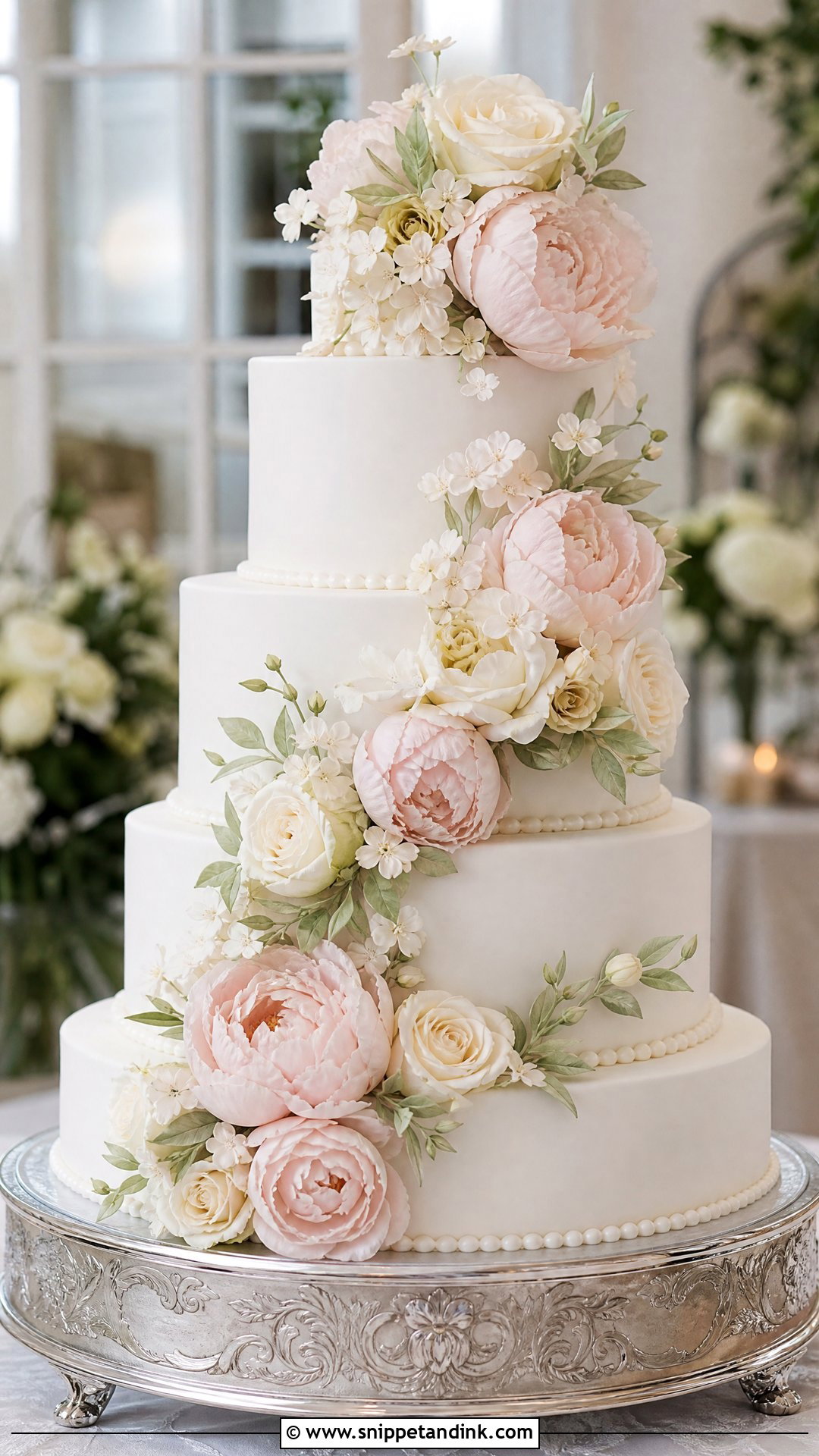
Sugar flowers are made petal by petal from gum paste, wired, dried and dusted with colour, so they can be any flower in any season and any shade. Winter peonies, rare orchids or a bloom matched to a very specific palette all become possible. They’re slow to make, which is reflected in the price, and I need several weeks’ notice for a full set. In return there are no food safety worries and nothing wilts. Many couples keep them afterwards in a dry box as a keepsake. Smooth fondant, pearl details or clean buttercream suit them.
4. Buttercream Flower Wedding Cake
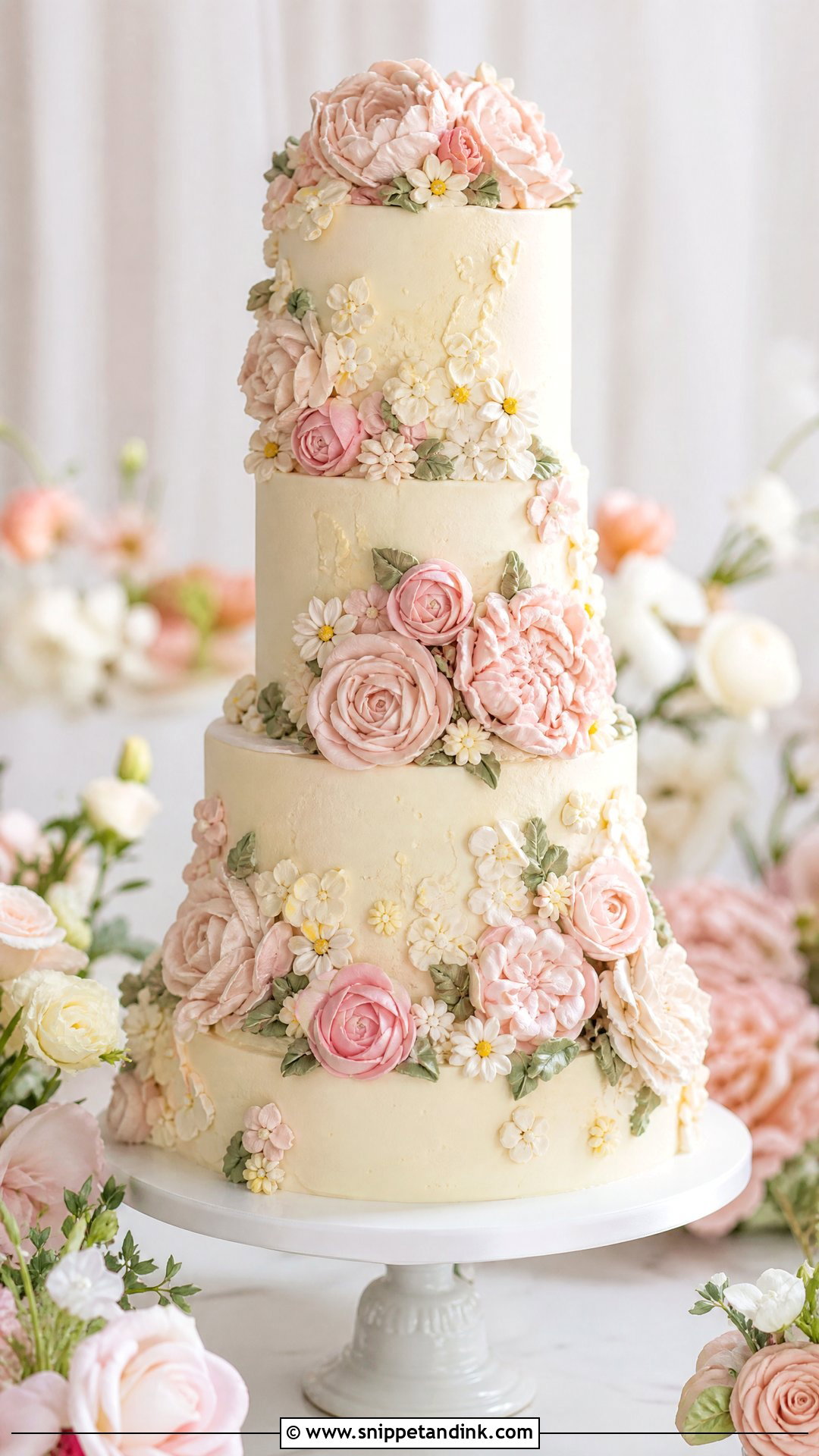
Piped buttercream flowers make the whole decoration edible. Roses, peonies, daisies and small blossoms are piped straight onto the cake with petal tips, in pastels or bolder shades, and they stand out best against white or ivory. The frosting has to be stiffer than the coating buttercream, otherwise the petals lose their edges, and in a hot marquee they’ll soften within a couple of hours. I’d keep a piped cake indoors or in shade until it’s cut. A light vanilla, almond or lemon sponge suits it.
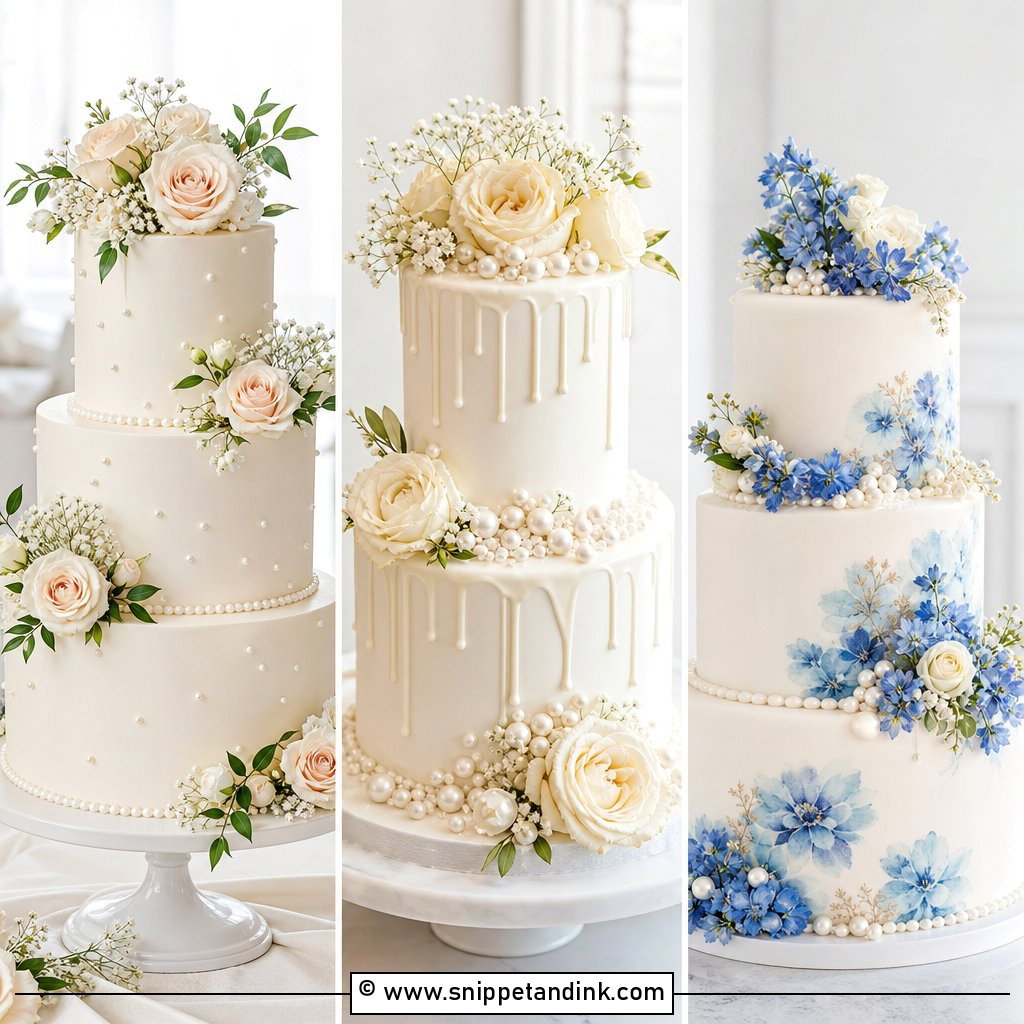
5. White Wedding Cake With Flowers
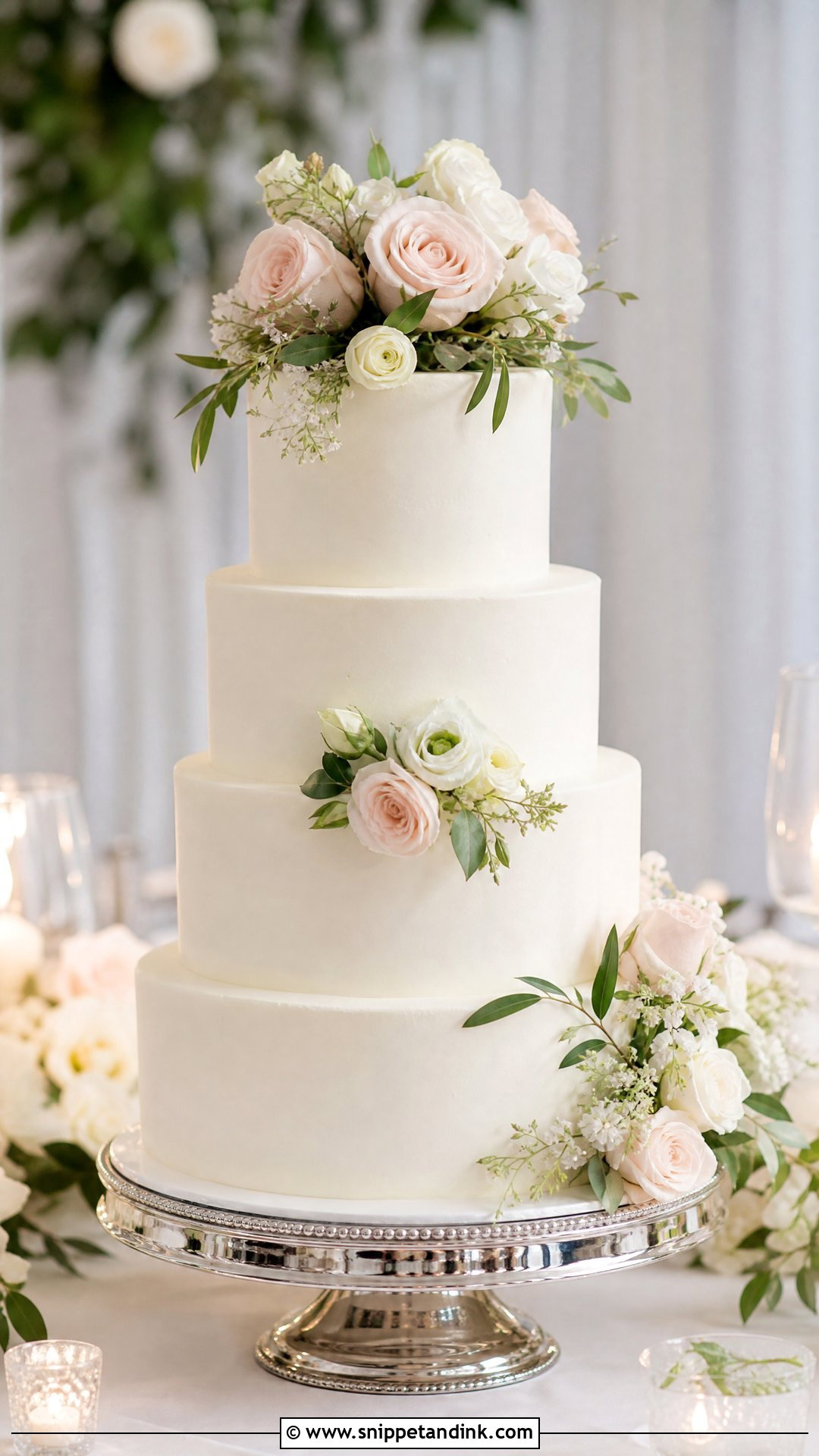
White lets every flower read clearly, which is why a white cake with blooms keeps coming back. It suits almost any venue: formal with white sugar flowers and pearl piping, relaxed with garden flowers and greenery. Smooth buttercream looks polished but still soft. I’d limit the flowers to two or three shades; white, blush and green never look overdone in photos. One honest note: white buttercream made with real butter is naturally ivory, so a bright white finish needs shortening or a whitening step.
6. Two Tier Wedding Cake With Flowers
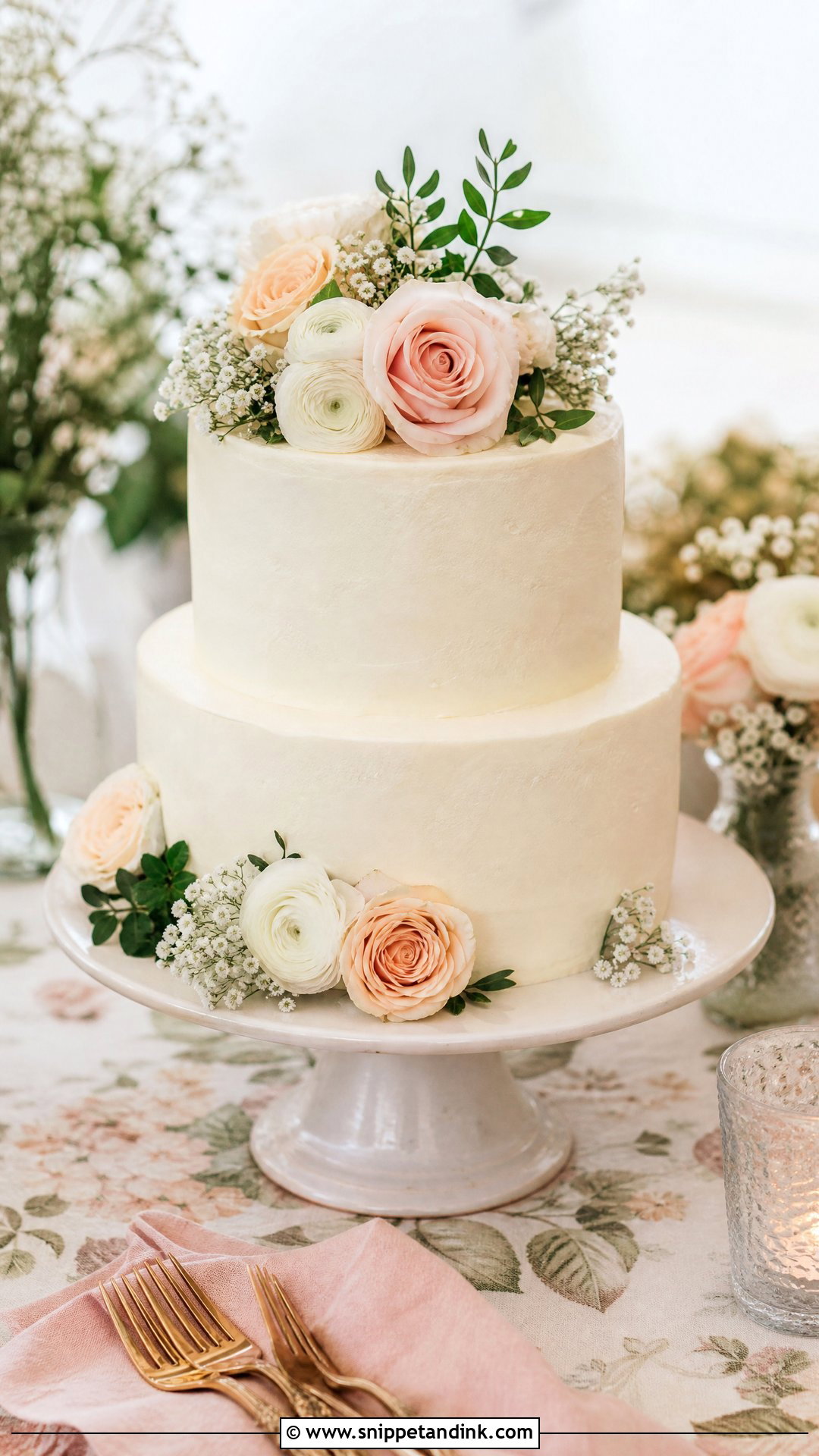
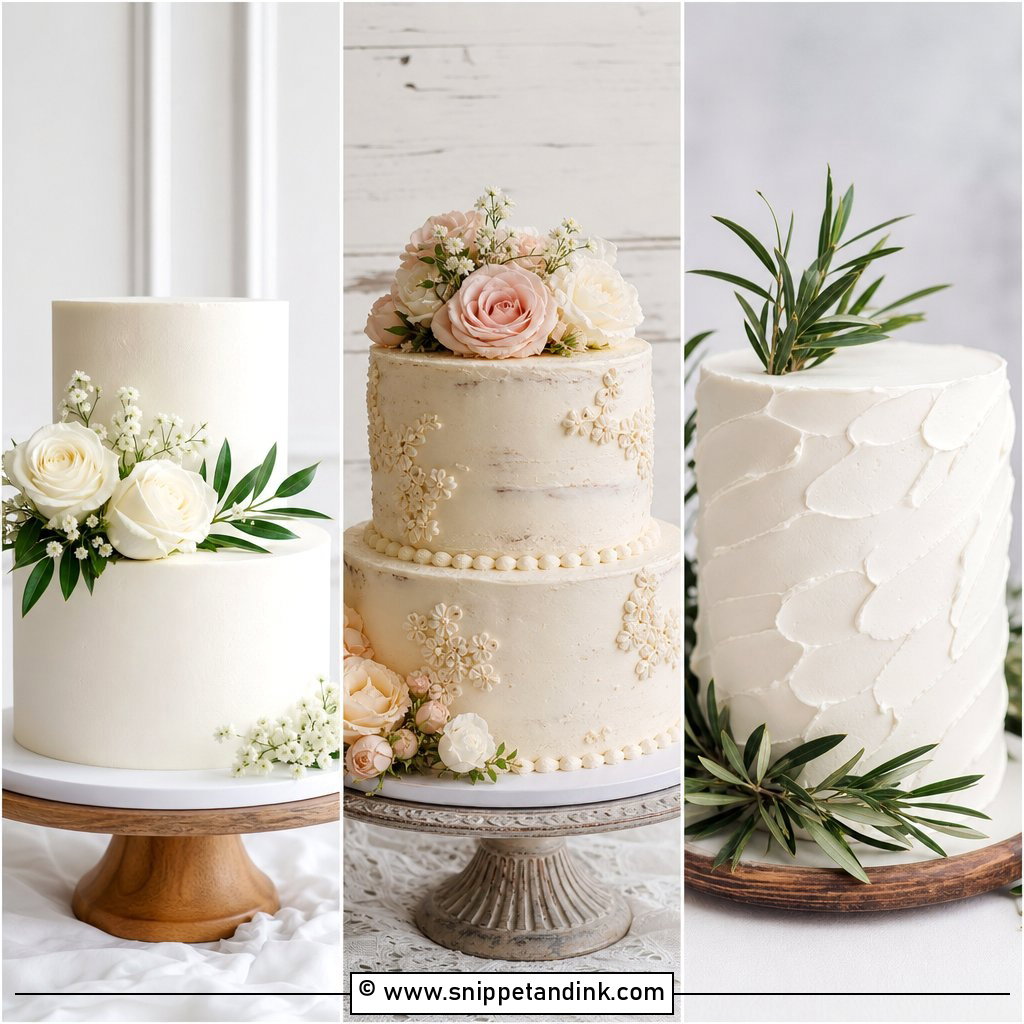
Two tiers suit smaller weddings, elopements and couples serving other desserts alongside a cutting cake. With less cake, flower placement matters more. A cluster on top, a cascade down one side or a ring of blooms at the base each look complete. Smooth, semi-naked or lightly textured frosting all work. I balance the tiers with mixed flower sizes, a few large roses with small filler, so the arrangement doesn’t look stuck on. Two tiers usually serve a modest guest list, so ask your baker for actual portion counts.
7. Three Tier Wedding Cake With Flowers
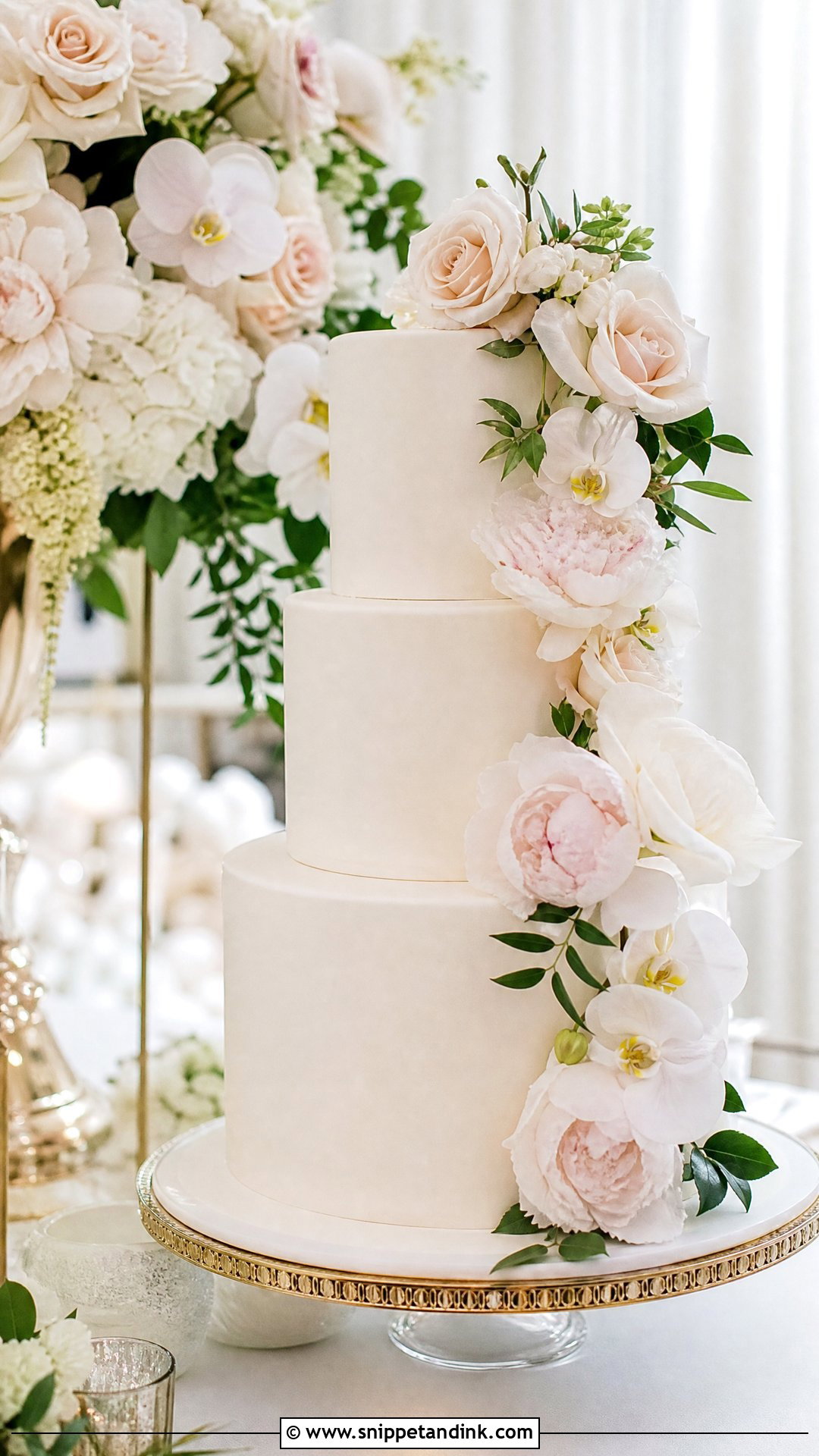
Three tiers give height and presence while still being easy to transport and set up. It’s the size I’m asked for most, and it makes a clear focal point on the dessert table. Flowers can trail from the top down one side, wrap each tier or gather between them. White and ivory are easy, but pale blue, blush, champagne and sage work too. Repeating the same bloom in different sizes creates movement. Three tiers need internal dowels and boards in each tier to carry the weight, so the flowers should be planned around where the supports go.
8. Simple Wedding Cake With Flowers
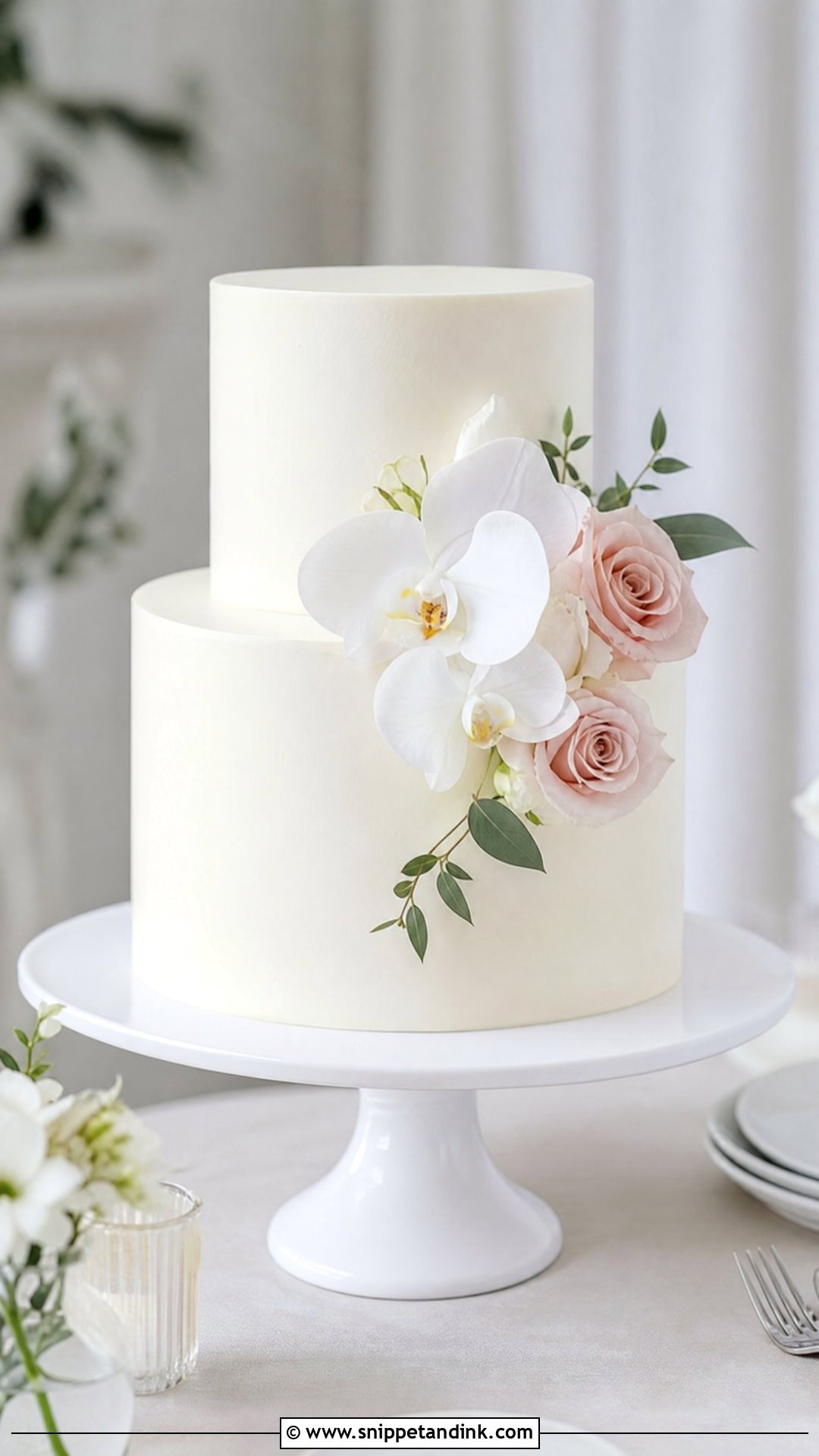
A plain cake with a few blooms relies on space more than anything. Smooth white buttercream, plain fondant or a light texture, then one oversized peony, three garden roses or a small spray of orchids. Let the shape, the frosting and the flowers breathe. With so little decoration, every flaw on the surface shows, so the finish has to be flawless and the flowers have to be perfect specimens. Modern venues, backyards and minimalist receptions suit it. A neat stand finishes the look.
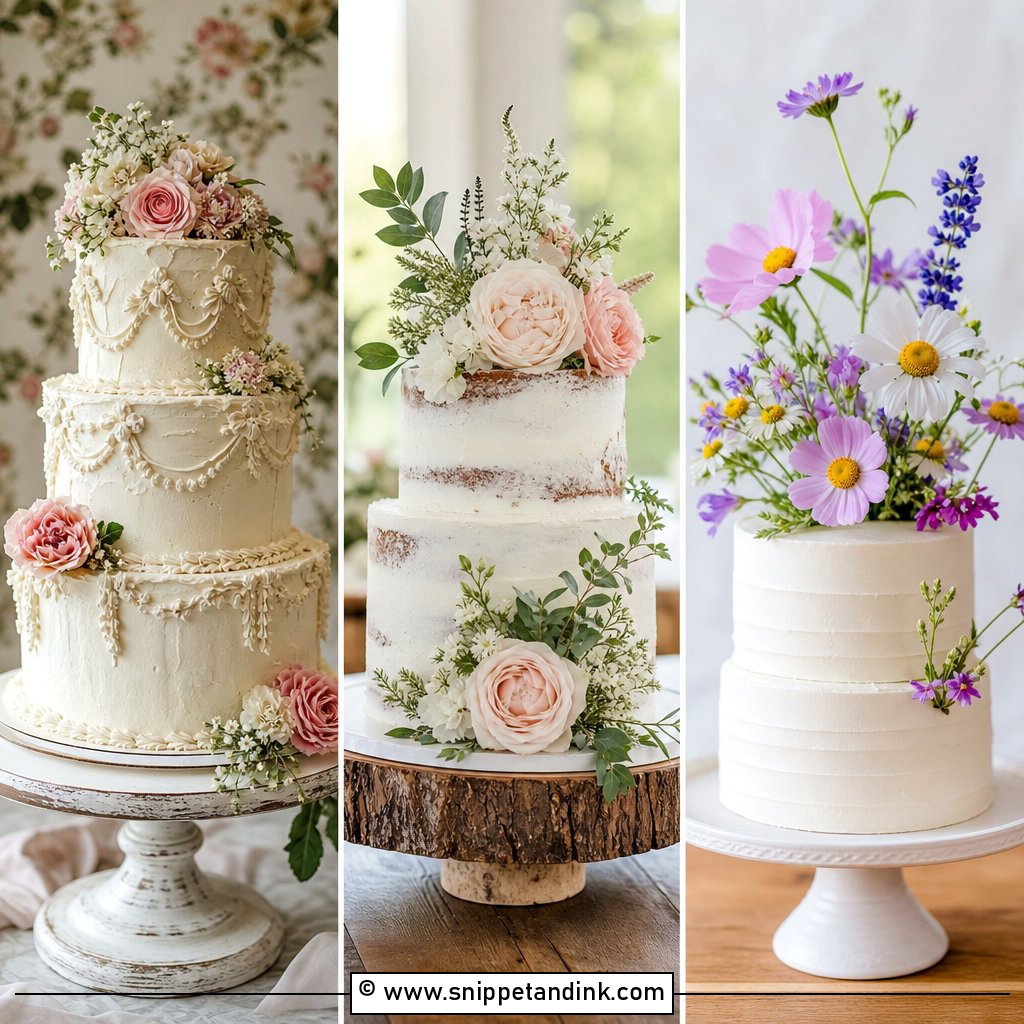
9. Rustic Wedding Cake With Flowers
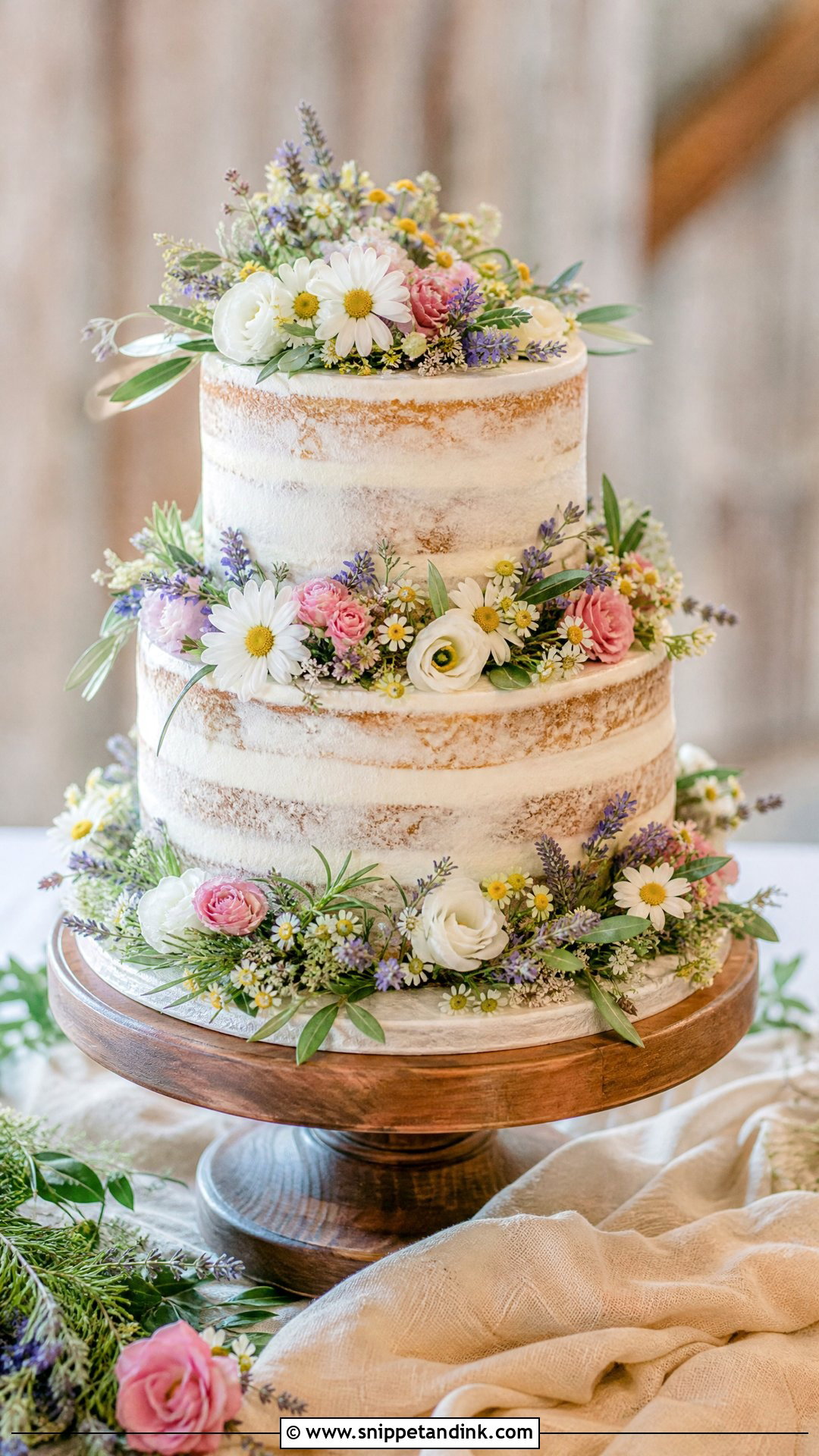
Rustic floral cakes should look relaxed, never messy. Semi-naked frosting, textured buttercream or simple white tiers, with garden roses, daisies, lavender, chamomile or small wildflowers. Greenery connects the cake to a barn or countryside setting, though not all foliage is safe to touch food, so I’d check each type. A wooden stand needs a sealed board between the wood and the cake. Linen runners and loose petals around the base finish the display.
10. Boho Wedding Cake With Flowers
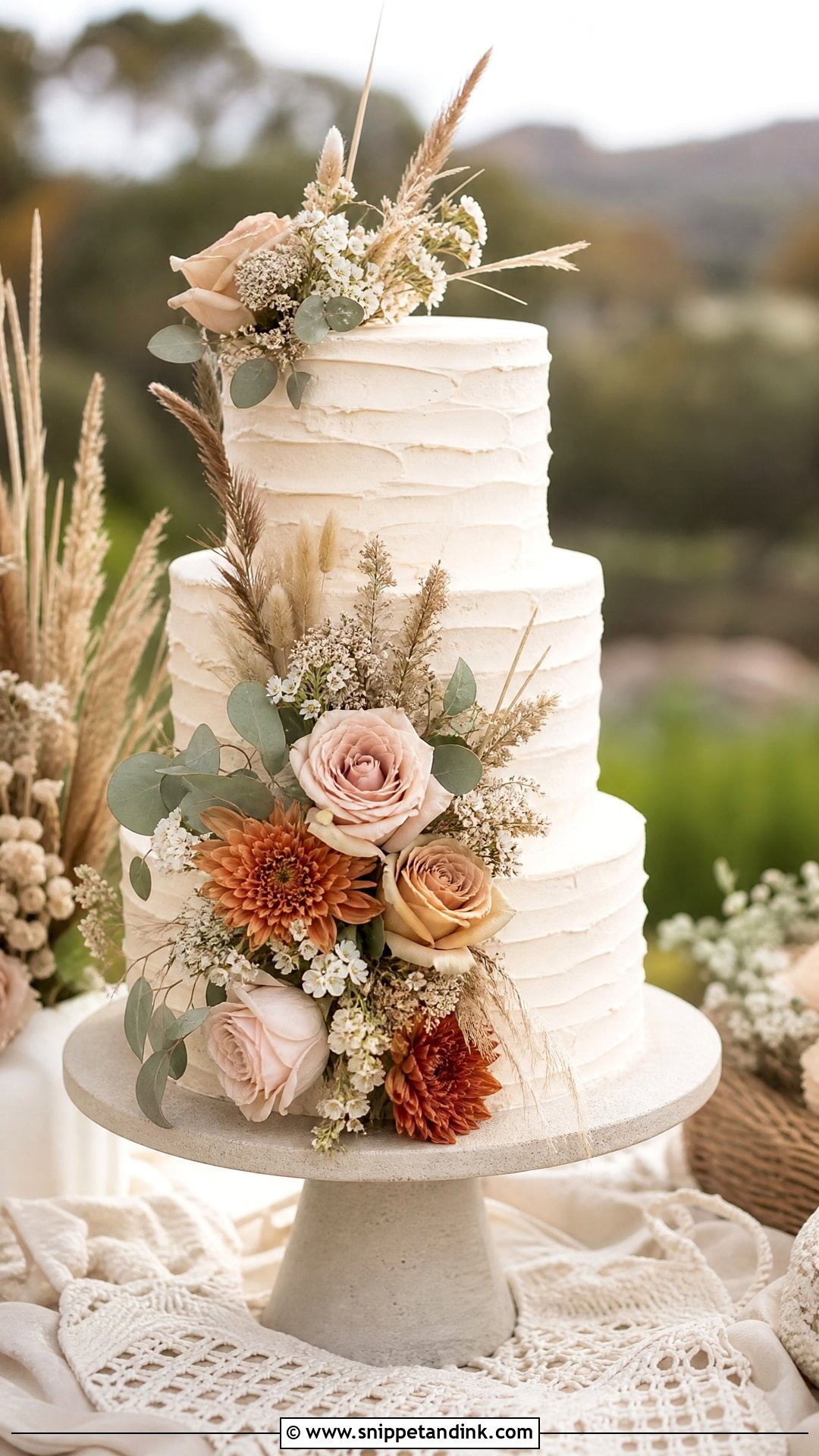
A boho cake mixes dried flowers, fresh blooms, soft grasses, muted colours and textured frosting. Ivory, terracotta, dusty rose, beige, mauve and sage are the usual palette. Semi-naked or smooth buttercream keeps it relaxed, with pressed flowers for a flat effect or a loose cascade for movement. Dried flowers and grasses shed, and some are sprayed with dyes or preservatives, so I set them on a small barrier rather than straight onto frosting. Choose one main flower and let smaller accents support it. Outdoor, desert and tented weddings suit it.
11. Garden Wedding Cake With Flowers
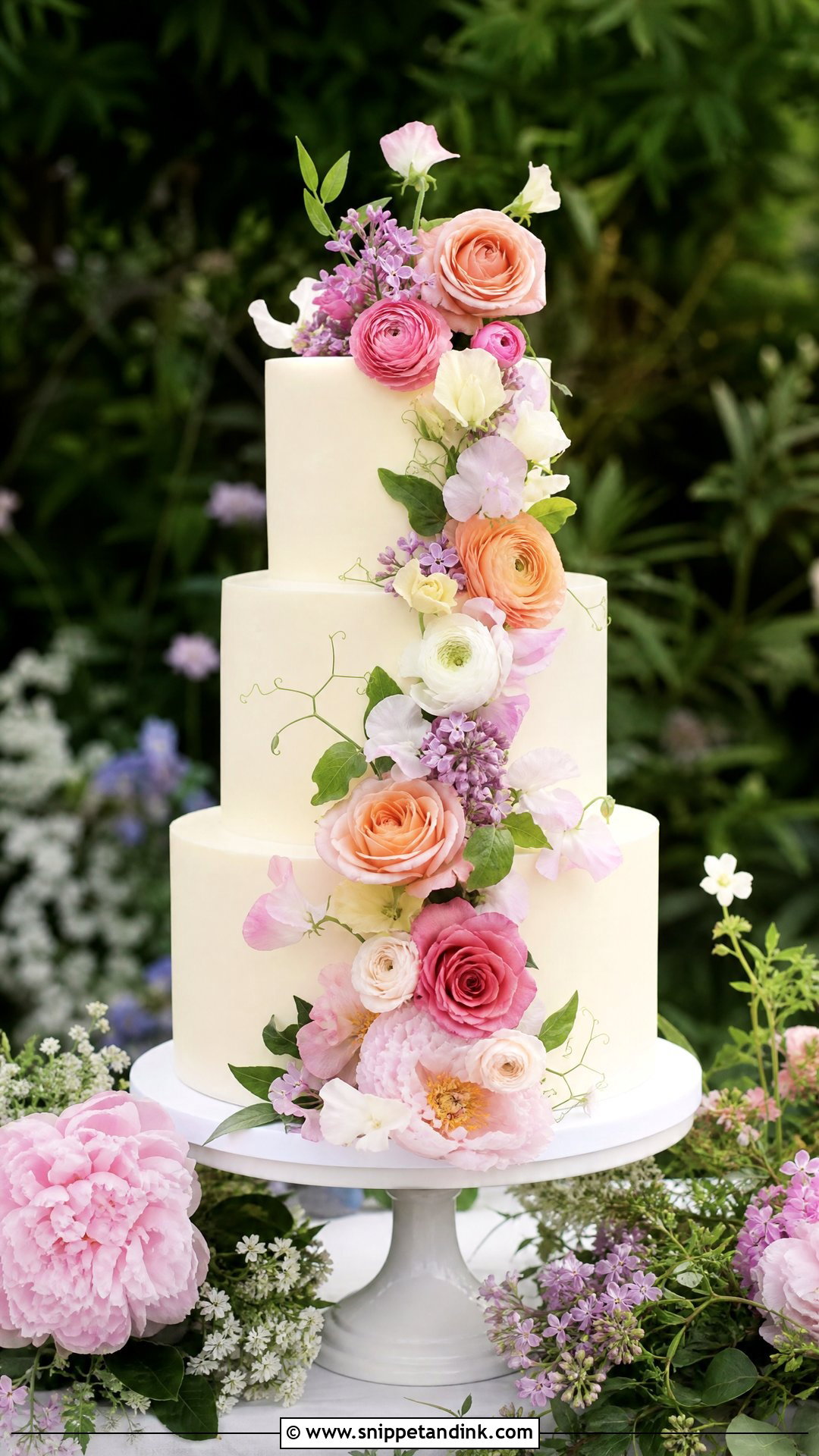
A garden cake should look as if it grew in the room. Roses, ranunculus, peonies or edible flowers are arranged loosely, spilling between tiers, gathering at the base or climbing one side like a vine. Soft buttercream, pale green frosting or ivory fondant all work. Sweet peas show up in a lot of garden designs, but they’re toxic, so I’d only use them as sugar flowers or set well away from anything eaten. Keep other decoration light and let the blooms give the cake its shape. Spring weddings and receptions under string lights suit it.
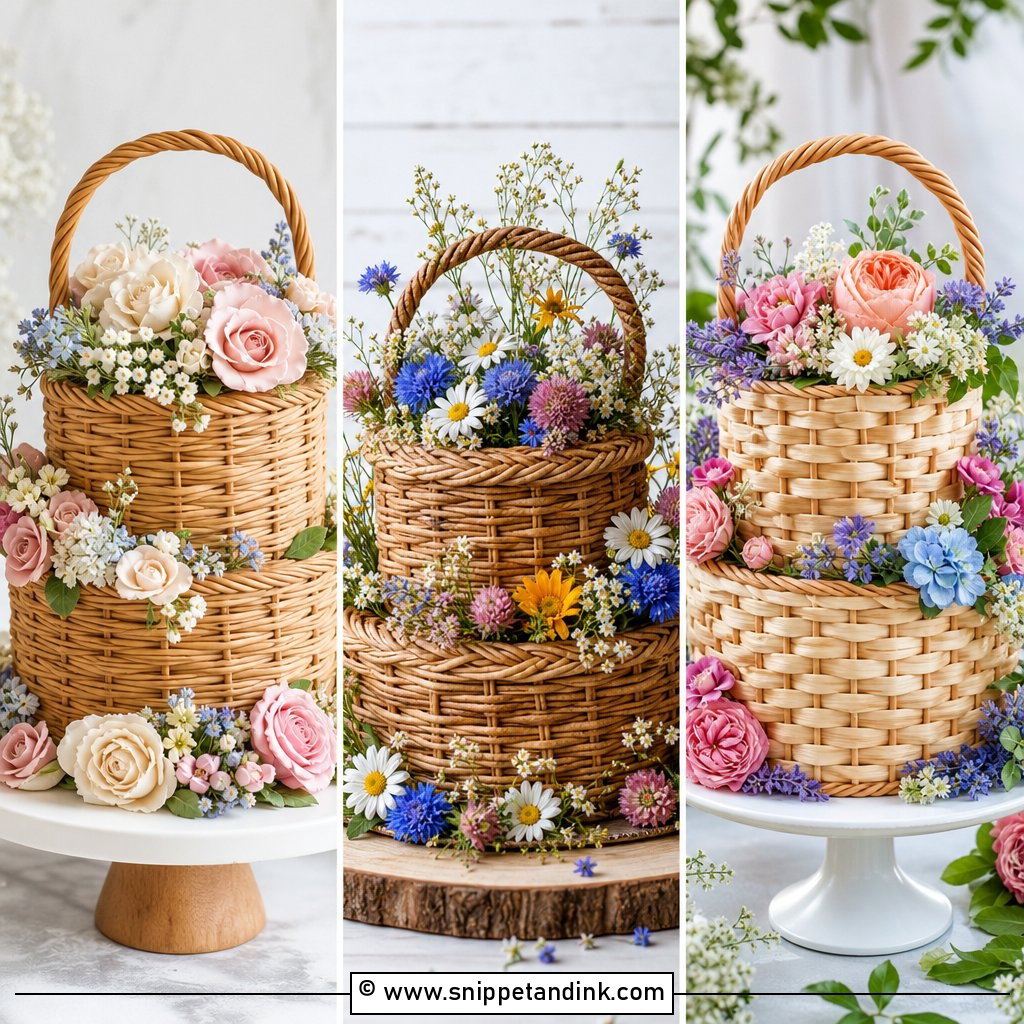
12. Wildflower Wedding Cake
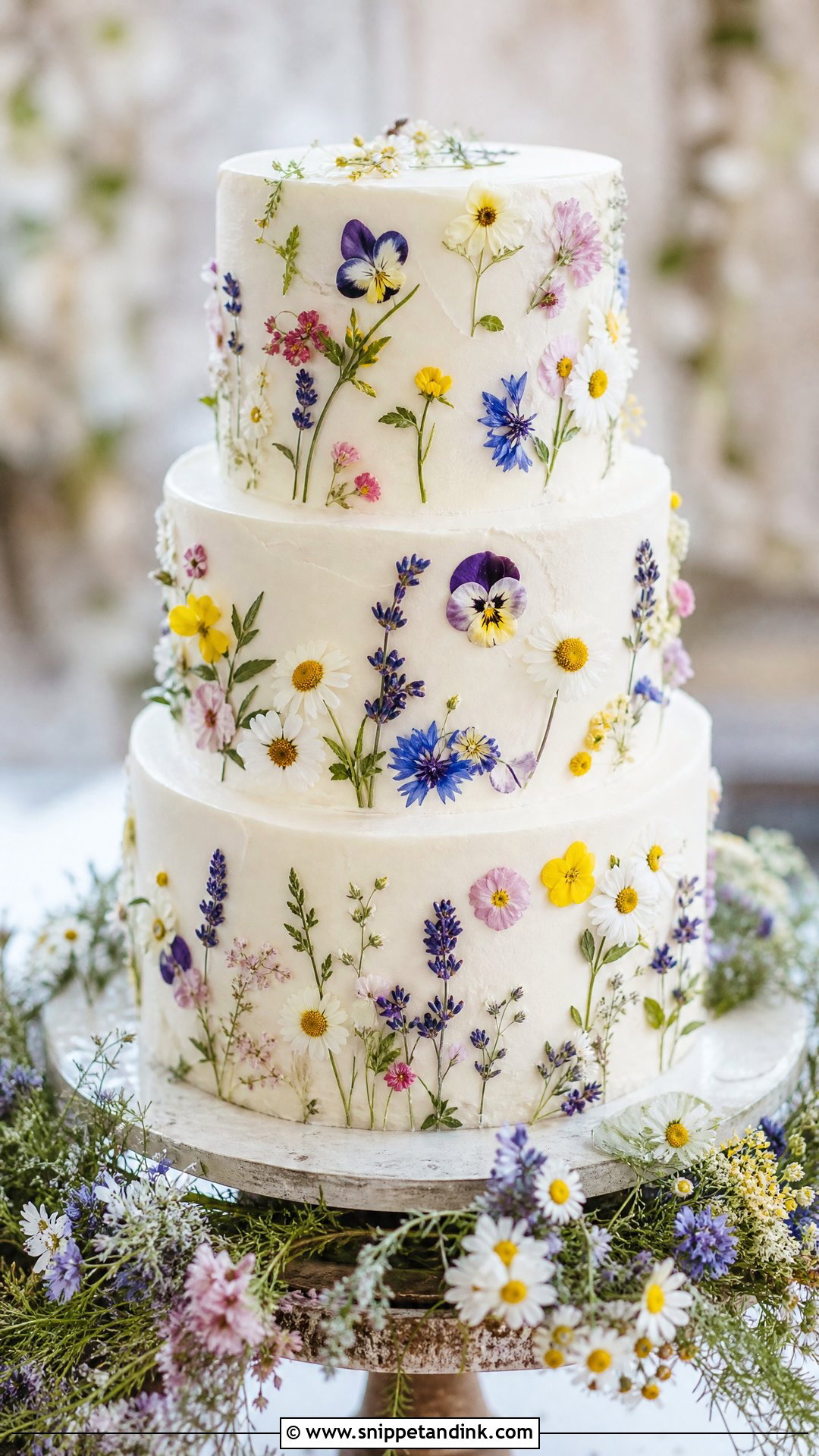
A wildflower wedding cake is cheerful and relaxed. Tiny daisies, edible pansies, chamomile, cornflowers, lavender and small pressed petals create a meadow finish. White buttercream keeps it bright; a semi-naked finish makes it rustic. Scatter the flowers across the tiers or keep them in small clusters for a tidier look. Most of these can be grown or bought as edible flowers, which is the safest route for anything that touches frosting. Outdoor and cottage-style weddings suit it.
13. Rose Wedding Cake
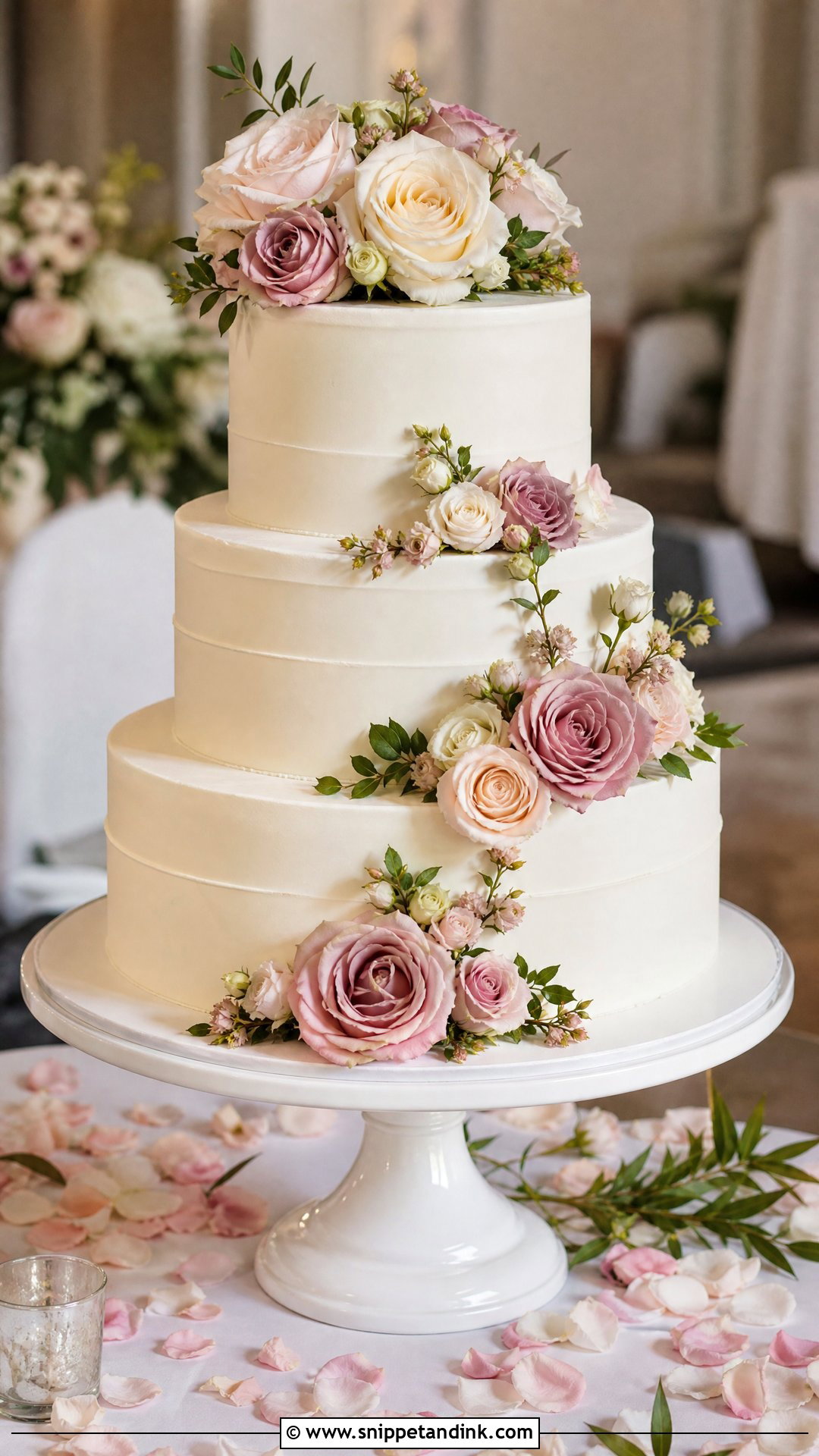
Roses change character with colour. White on ivory buttercream is traditional, blush is soft, deep red or mauve turns the cake moody without needing anything else. They can be fresh, sugar or piped, depending on budget and how much you care about everything being edible. Fresh roses are one of the safer cut flowers if they’re grown without pesticides, though I still wrap the stems. Keep the rest simple: smooth tiers, delicate piping and a few leaves let them lead.
14. Peony Wedding Cake
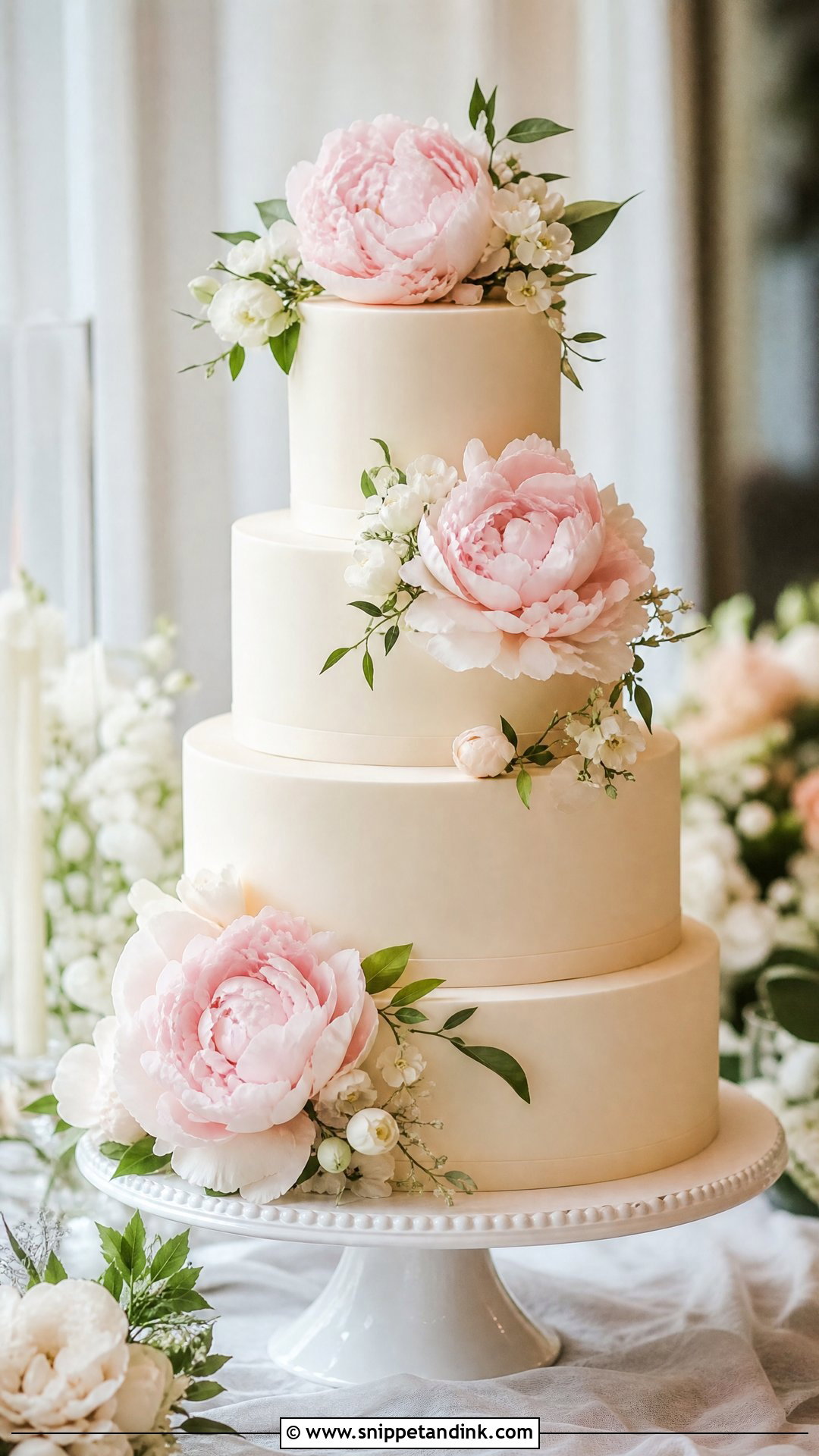
Peonies are big and soft, so a handful can decorate a whole cake. Fresh peonies are only around for a few weeks in late spring, which is why I make sugar peonies for weddings outside that window. White, blush, coral and pale pink all suit them. One on the top tier, one between tiers and one near the base gives a natural flow. Fresh peonies also open quickly in a warm room, so a tight bud at set-up can be fully blown by the cutting. Fondant reads formal, buttercream softer.
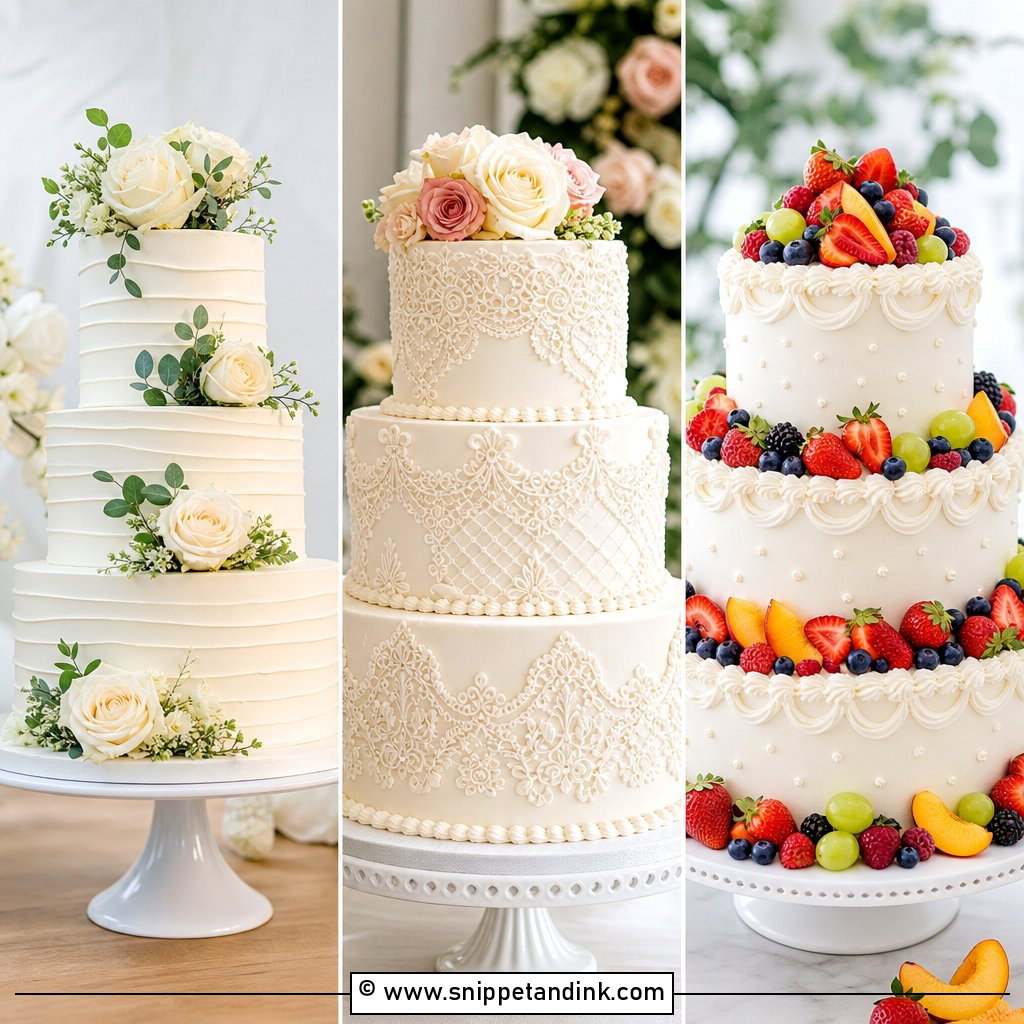

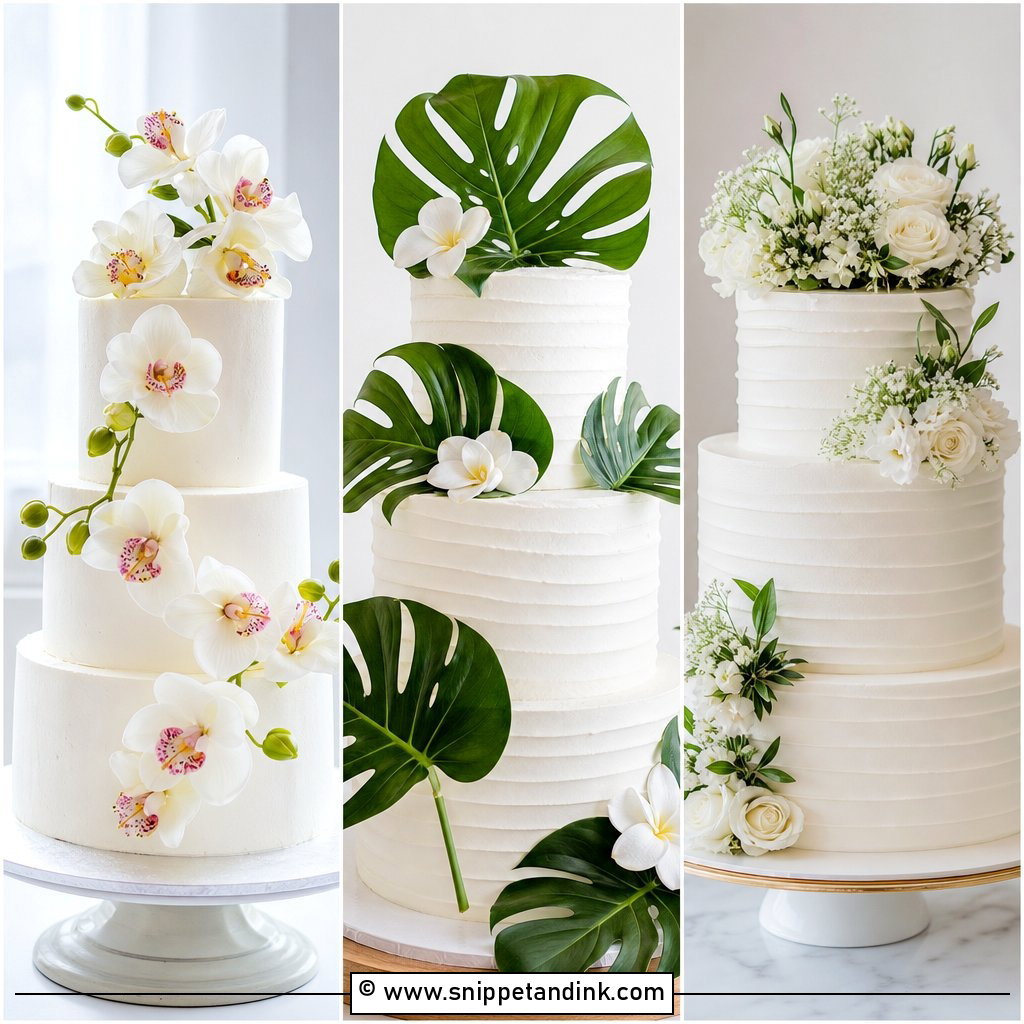
15. Orchid Wedding Cake
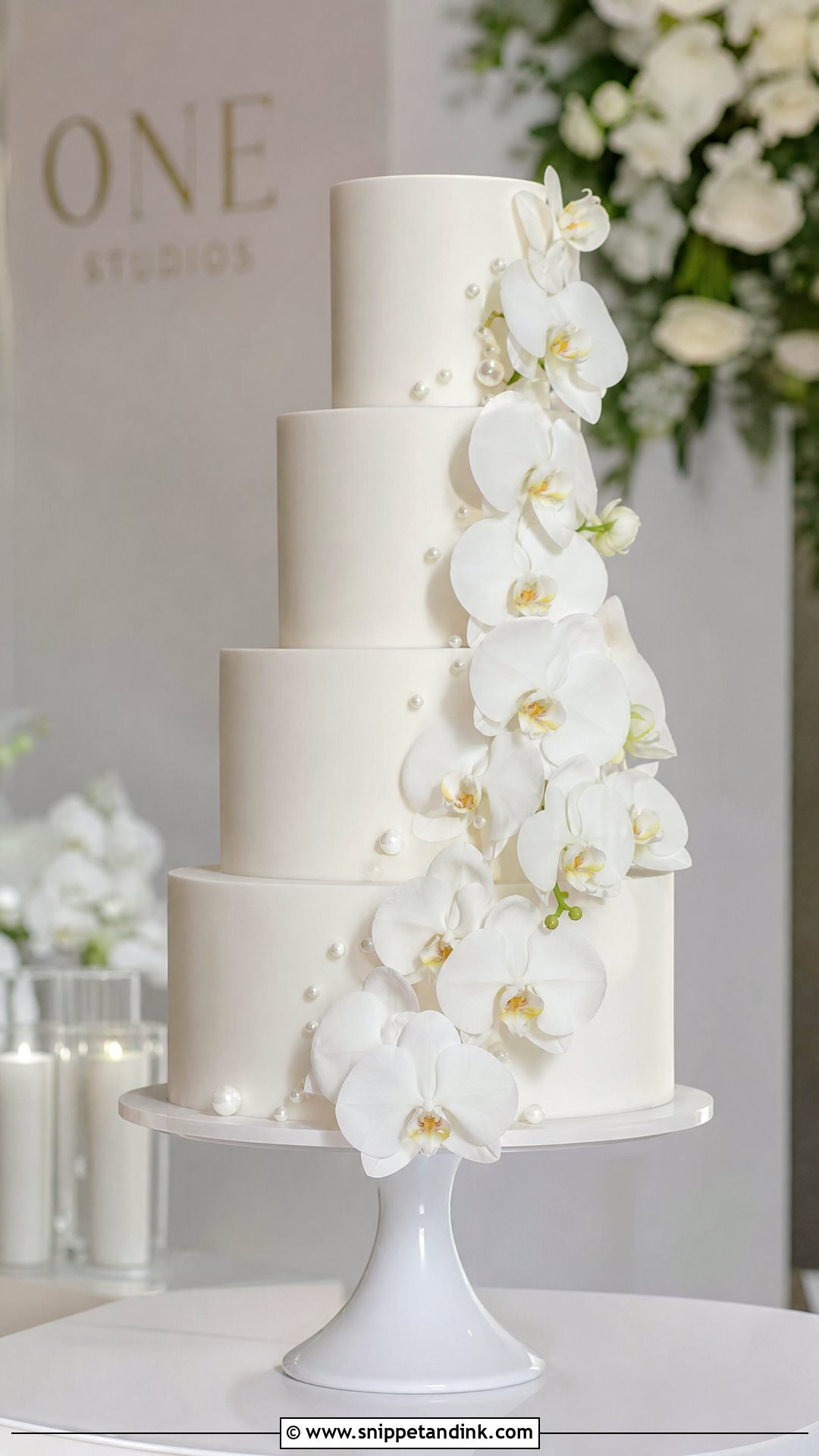
Orchids have strong, graceful lines, so they suit cascades down tall tiers or a single spray on a minimal cake. White orchids on ivory or pearl look elegant, while purple, pink or yellow ones add colour. Hotel ballrooms, beach weddings and modern spaces suit them. Fresh orchids are fairly sturdy out of water, which helps on a long day, and sugar orchids are among the most realistic sugar flowers. Smooth buttercream, fondant or a subtle metallic finish keep the focus on the blooms.
16. Daisy Wedding Cake
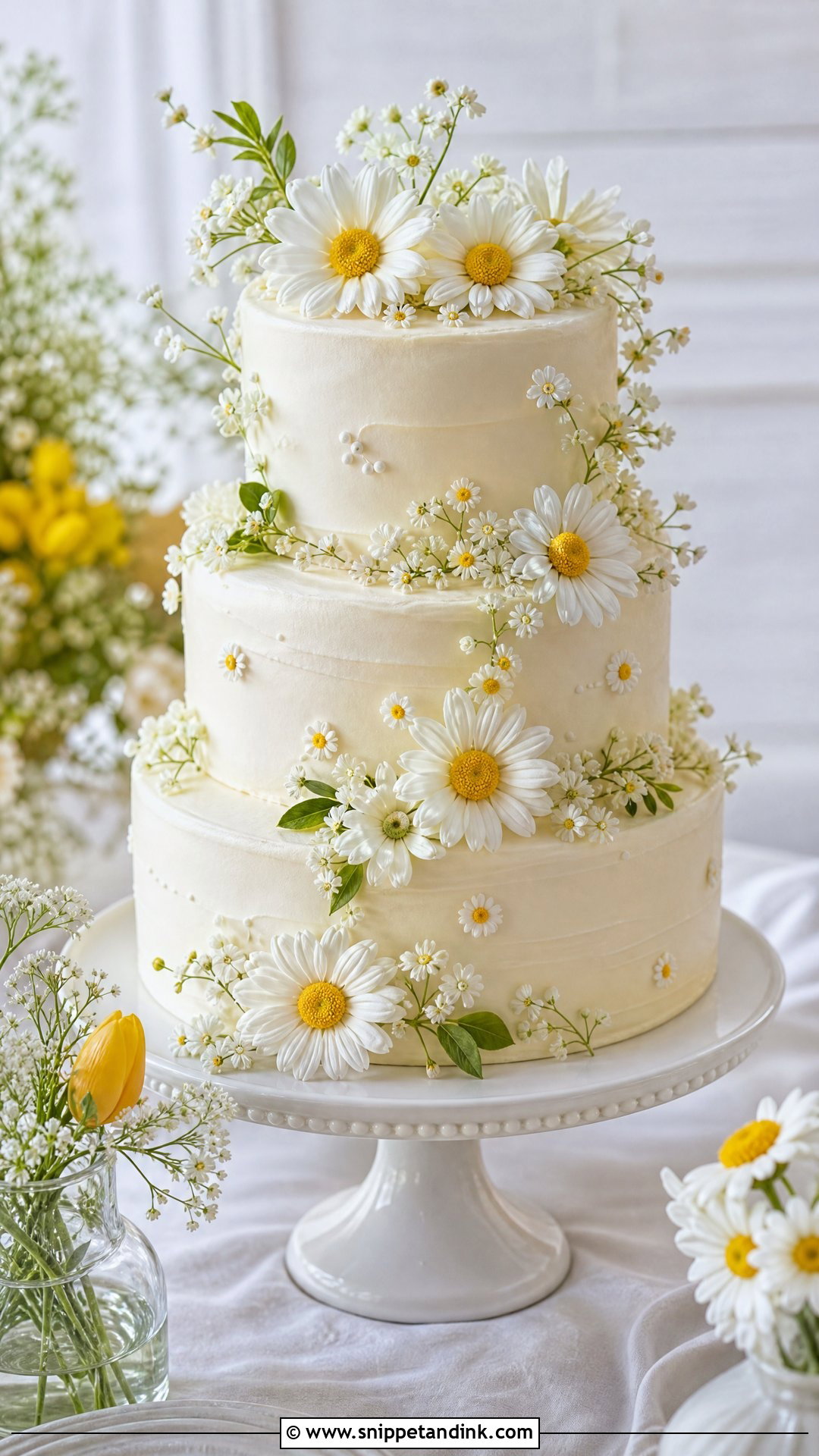
Daisies are cheerful without being childish if the cake around them is neat. Small white daisies on smooth buttercream look clean and modern; larger sugar daisies feel more playful. Yellow centres, soft greenery and a pale ivory base give a sunny finish. Keep the colours limited. Edible varieties like ox-eye daisy exist, but many florist daisies are chrysanthemum relatives that shouldn’t touch food, so check before they go near the frosting. Spring, summer and backyard weddings suit it.
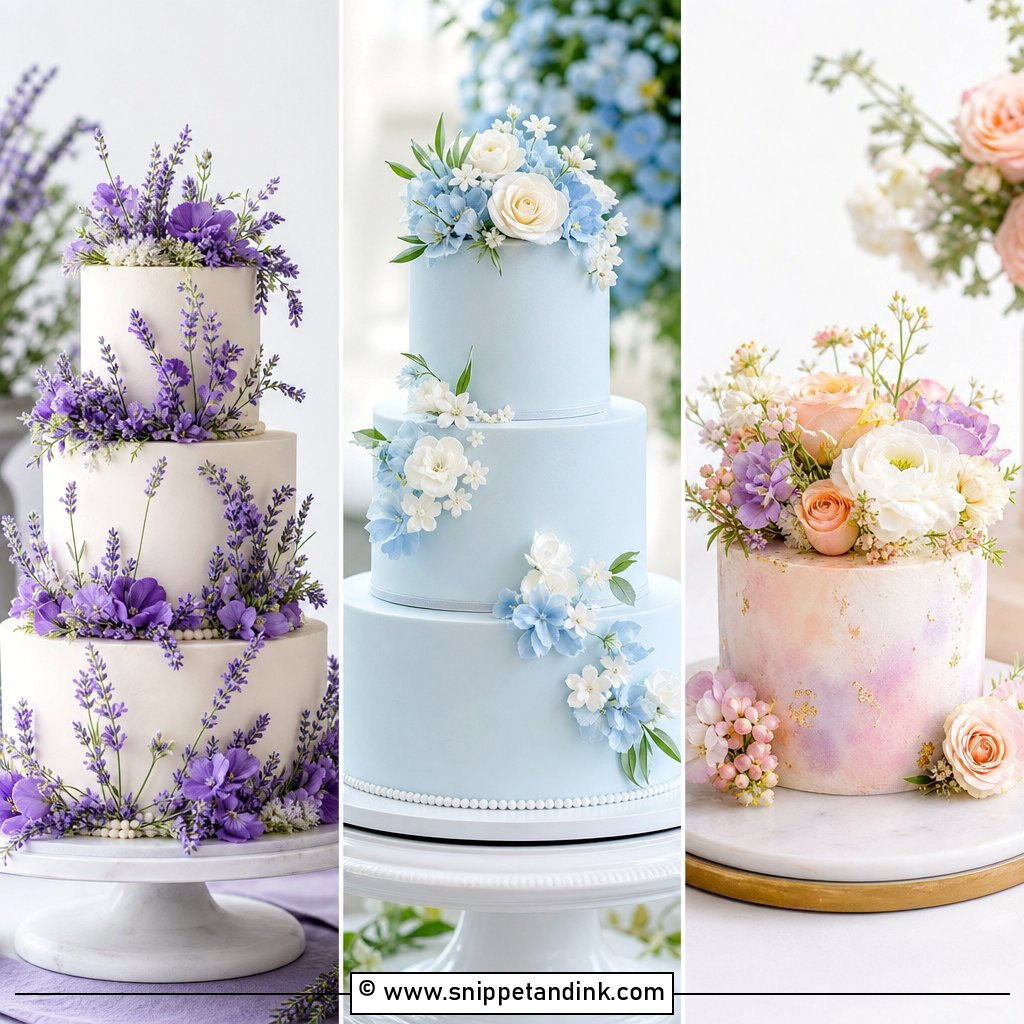
17. Lavender Wedding Cake
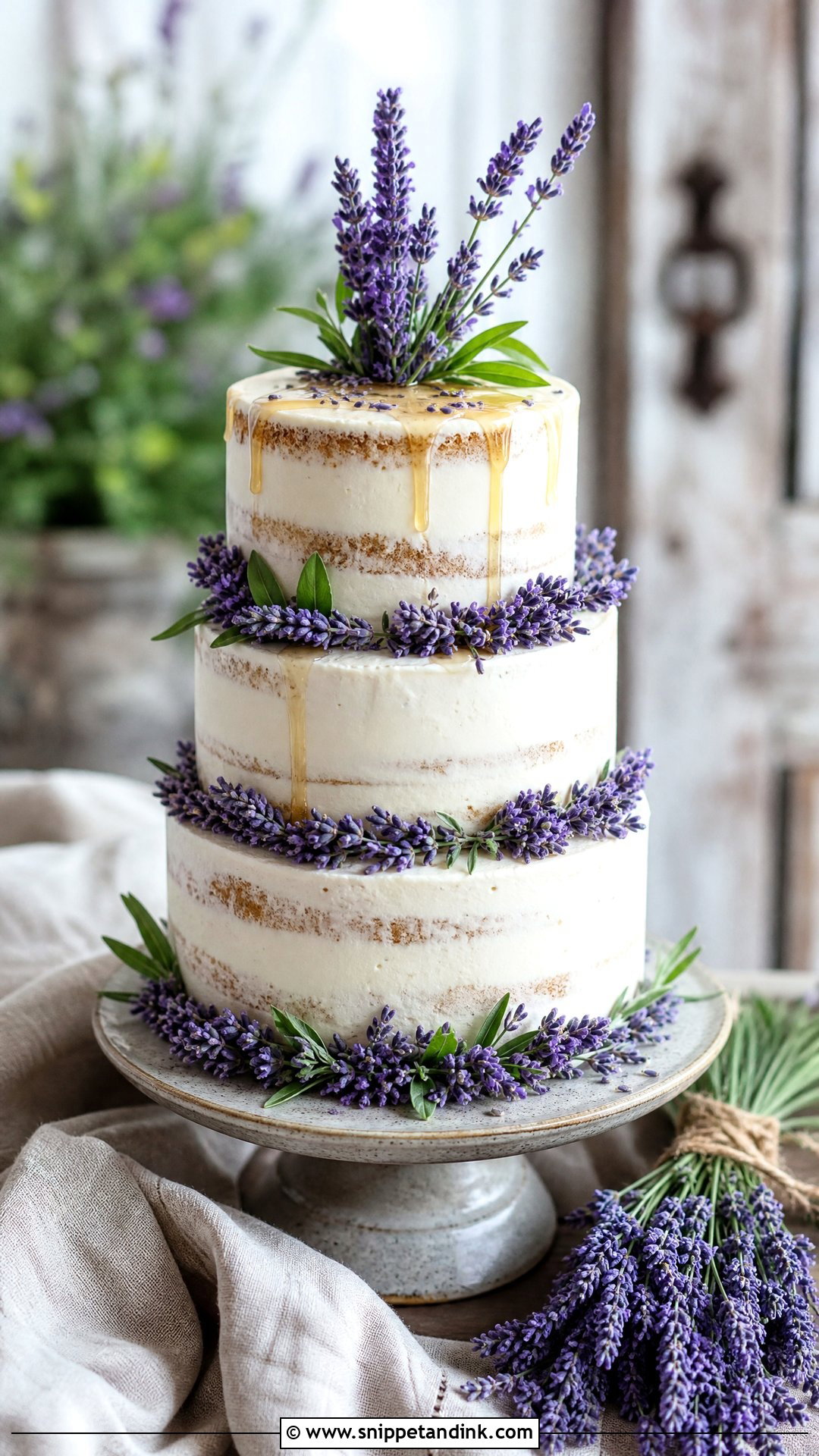
Lavender suits a romantic countryside wedding, and its flavour pairs naturally with lemon, vanilla, honey or almond sponge. Culinary lavender is edible, but florist bunches may have been treated, so any stems on the cake must be confirmed food-safe. Sugar or piped lavender is the fully edible route. A light hand matters if you flavour the sponge with it too; too much tastes soapy. Semi-naked or smooth white buttercream keeps it light, with a few small purple flowers and pale greenery.
18. Sunflower Wedding Cake
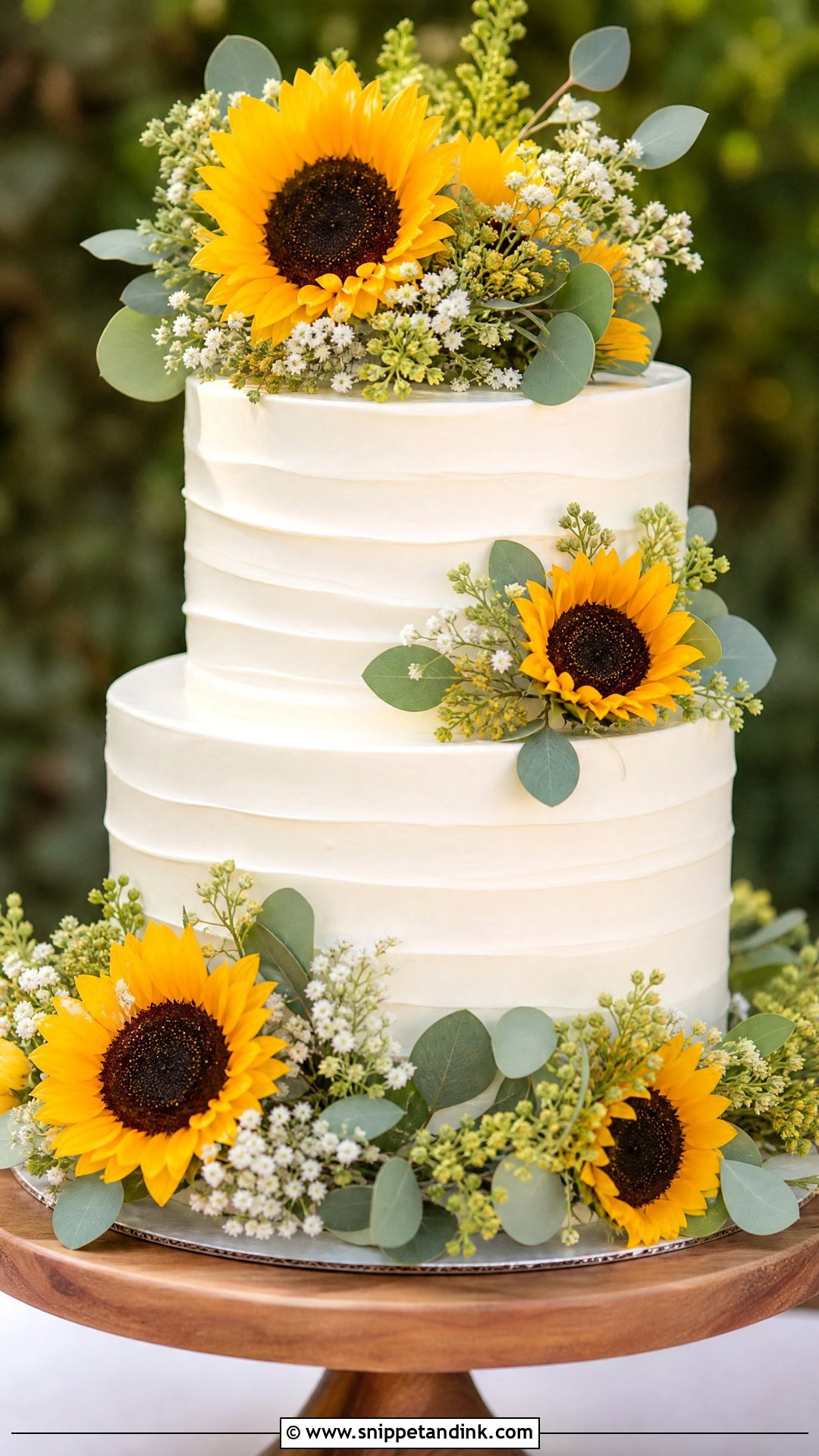
Sunflowers are bold, so the cake around them should be simple. White buttercream or a semi-naked finish, a few sunflowers, soft greenery and some small filler is enough. Late summer, early autumn and rustic venues suit them. Oversized fresh sunflowers are heavy and can drop pollen onto the frosting, so I prefer smaller varieties or sugar sunflowers on the cake itself. Vanilla, honey or lemon sponge matches the bright feel.
19. Baby Breath Wedding Cake
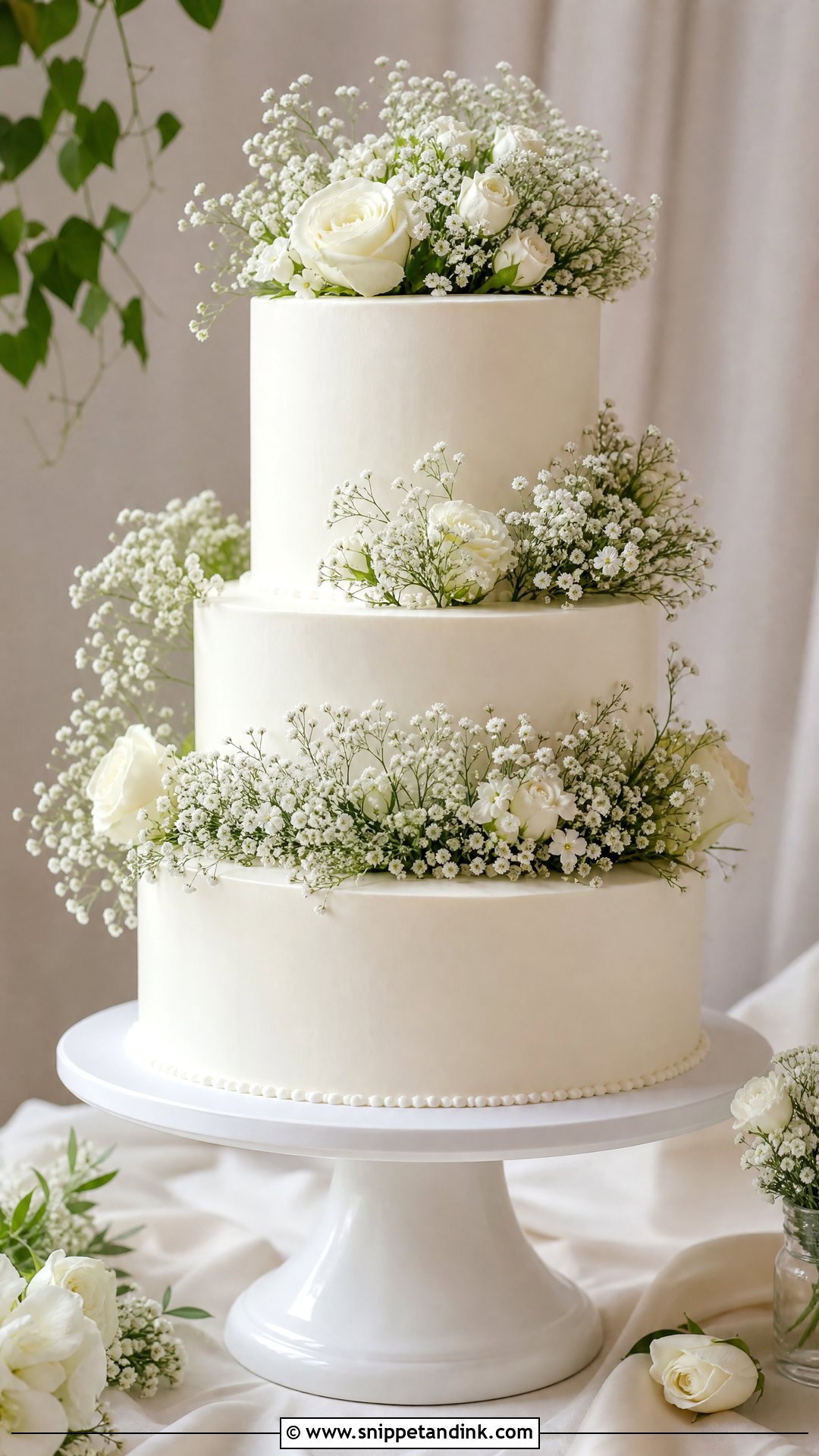
Baby’s breath is airy and inexpensive, and it can soften tier bases, fill clusters or form a cloud around the top tier. It pairs well with roses, orchids, peonies and plain white buttercream. Don’t overpack it, or it hides the cake shape and looks messy. Gypsophila is considered mildly toxic, so I never let it touch the frosting directly; it sits on a barrier or in wrapped bunches. For a clean look, keep to white blooms, pale greenery and a smooth ivory cake.


20. Cascading Flower Wedding Cake
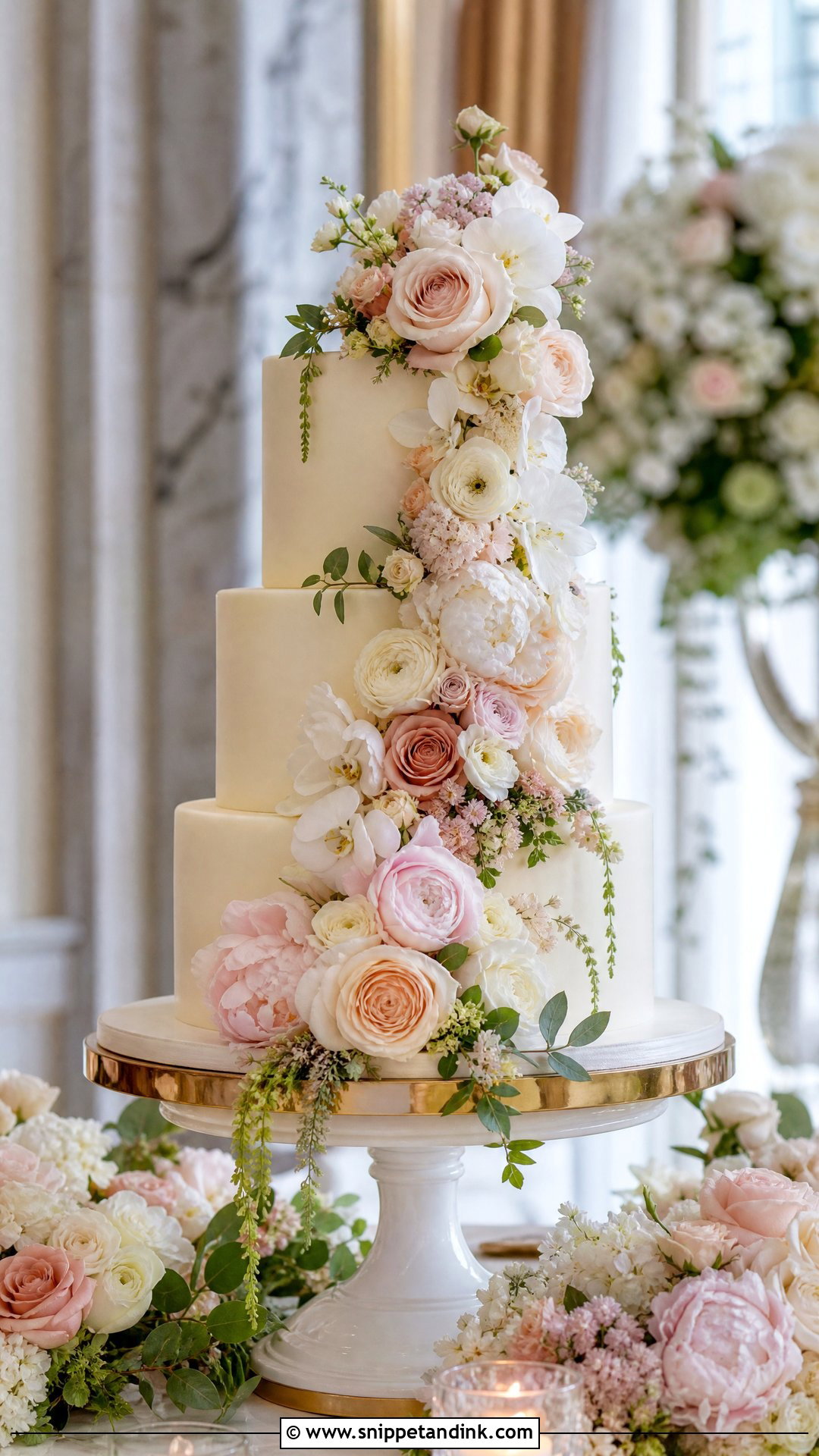
A cascading flower wedding cake runs blooms from the top tier down one side, adding height and movement. It needs at least two tiers, and three or four give the cascade room to travel. Roses, orchids, peonies, ranunculus and greenery all work. A diagonal line guides the eye most naturally. Vary the flower sizes and leave small gaps so it doesn’t look heavy. A full cascade can be surprisingly heavy, so I anchor it into the cake with food-safe picks pushed into the dowelled areas, not just the soft sponge.
21. Flower Meadow Wedding Cake
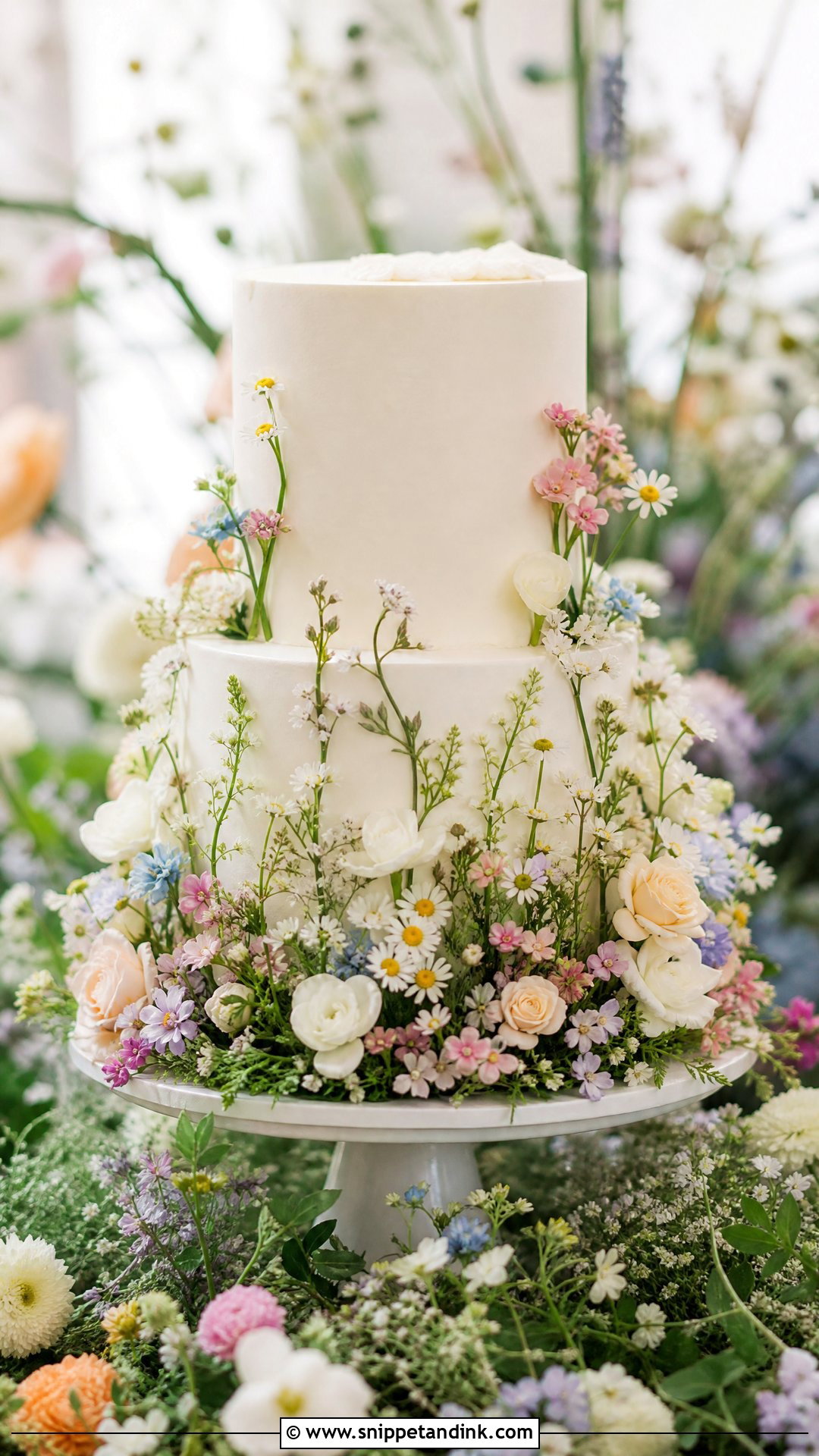
A meadow cake has blooms gathered around the base, sometimes rising a little way up the tiers, so the cake looks like it’s growing out of a garden. It’s at its best on a low stand surrounded by matching flowers. The cake can stay simple, smooth buttercream or fondant, with edible, sugar or carefully prepared fresh flowers. The flowers around the base never touch the cake, so they can be ordinary florist stems, which keeps costs sensible. Garden venues and outdoor receptions suit it.
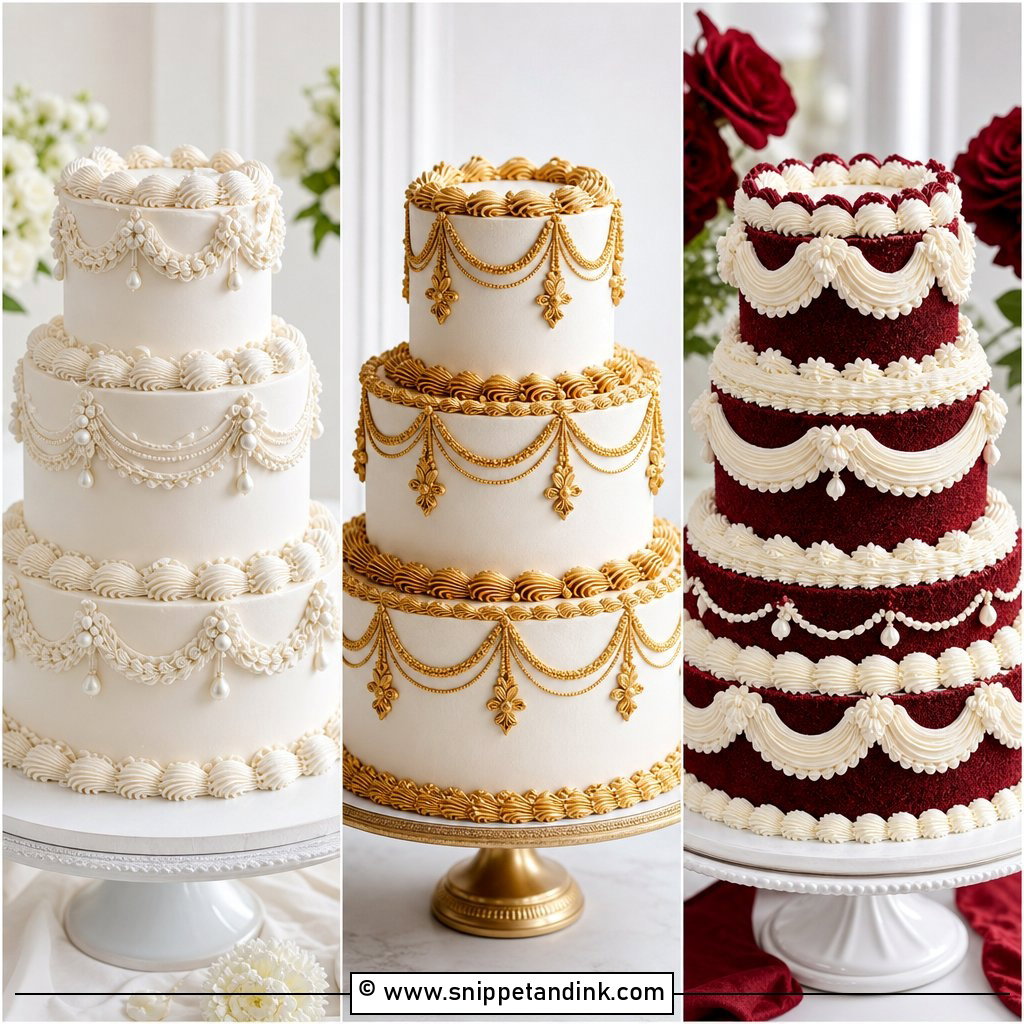
22. Vintage Wedding Cake With Flowers
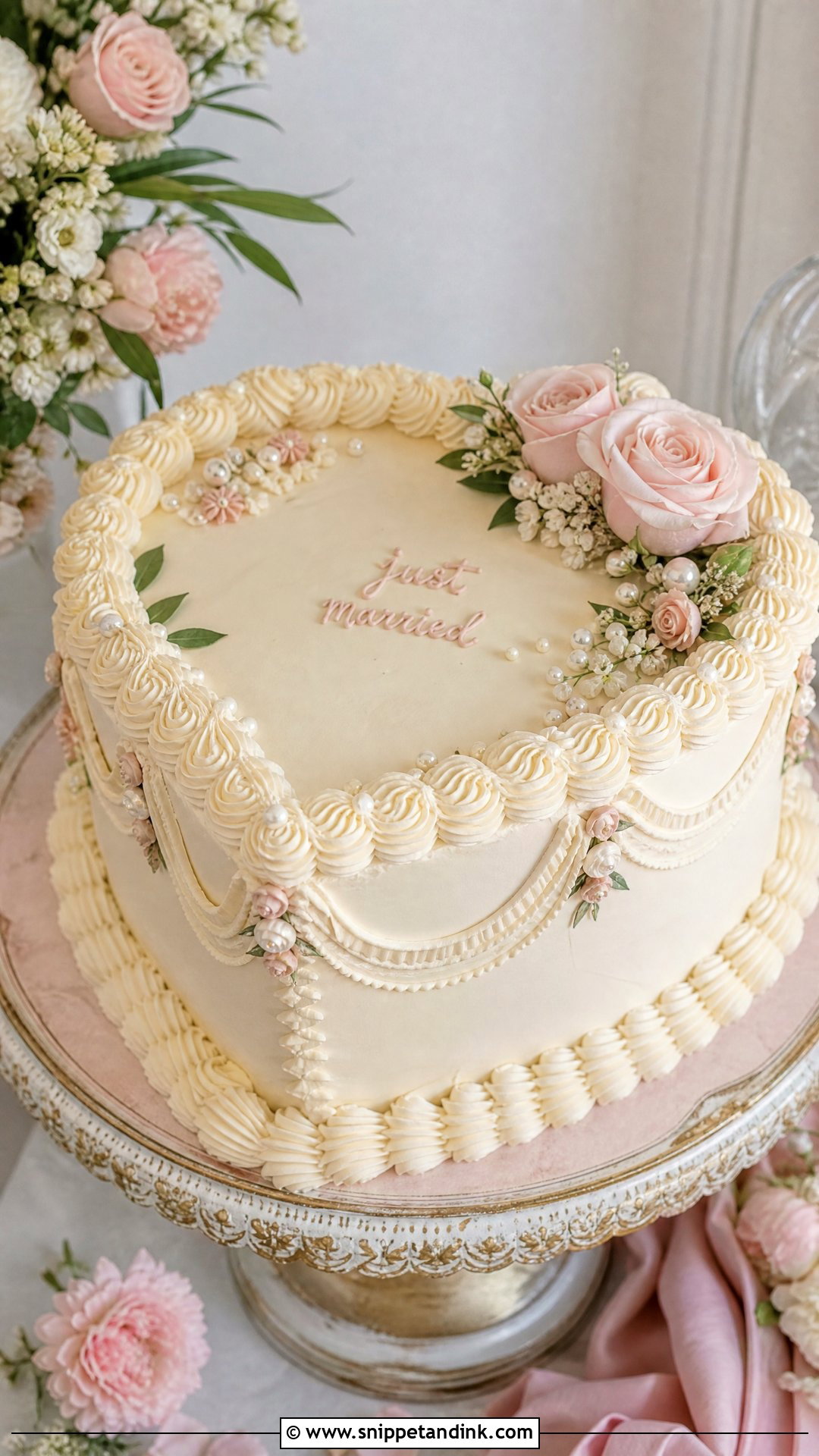
Vintage cakes combine old-fashioned piping with soft colours and small flowers: shell borders, Lambeth-style swags, delicate pearls, small roses or sugar blossoms. One tier makes a pretty cutting cake; several make a grand display. Buttercream is the natural medium, and soft pink, ivory, pale blue and cream all suit it. Place flowers so they don’t cover the piping, which takes far longer to make than the flowers do. A few roses on top, tiny blossoms between borders or a floral ring at the base are enough.
23. Modern Wedding Cake With Flowers
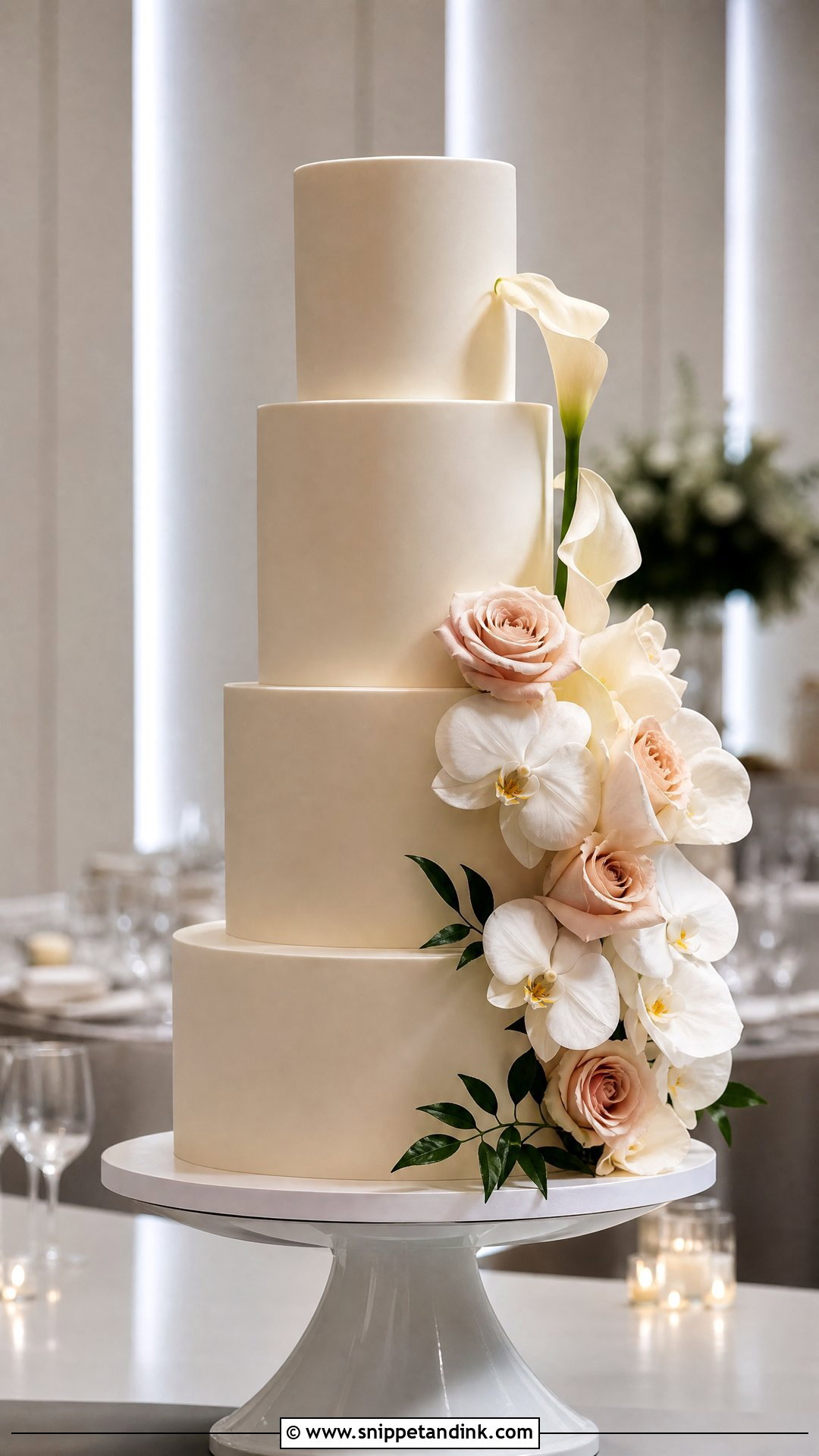
Modern floral cakes have a clean shape, sharp edges and one considered flower moment: a sculptural cluster, a vertical line or a bold topper. Smooth fondant, buttercream or a subtle texture all work, often in white, beige, blush, sage or champagne with black accents. Orchids, anthuriums, calla lilies, roses and minimal sugar flowers suit it. Anthuriums and calla lilies are toxic, so on a cake I’d make them in sugar. It’s the right style for city weddings and gallery receptions.
24. Minimalist Wedding Cake With Flowers
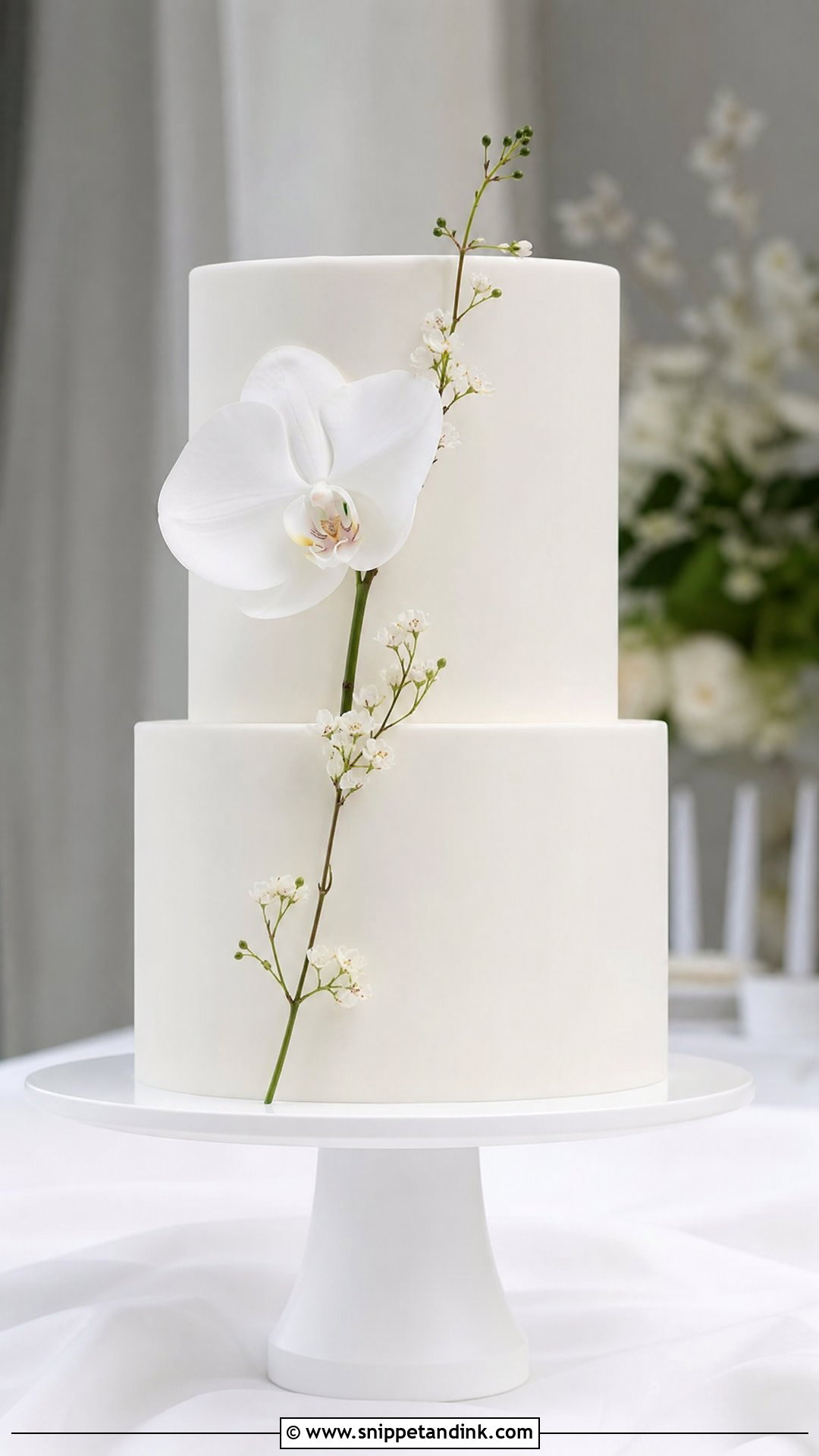
Minimal decoration puts all the pressure on the finish. A smooth white tiered cake with one stem, one small cluster or a few pressed petals can look elegant, but only if the surface is flawless and the edges sharp, which takes more time than a cake covered in flowers. Use a simple stand and flowers with clean lines: white orchids, small roses or tiny edible blossoms. Keep the palette tight, white, cream and green or one soft accent. Sweet peas fit the look but should only appear in sugar.
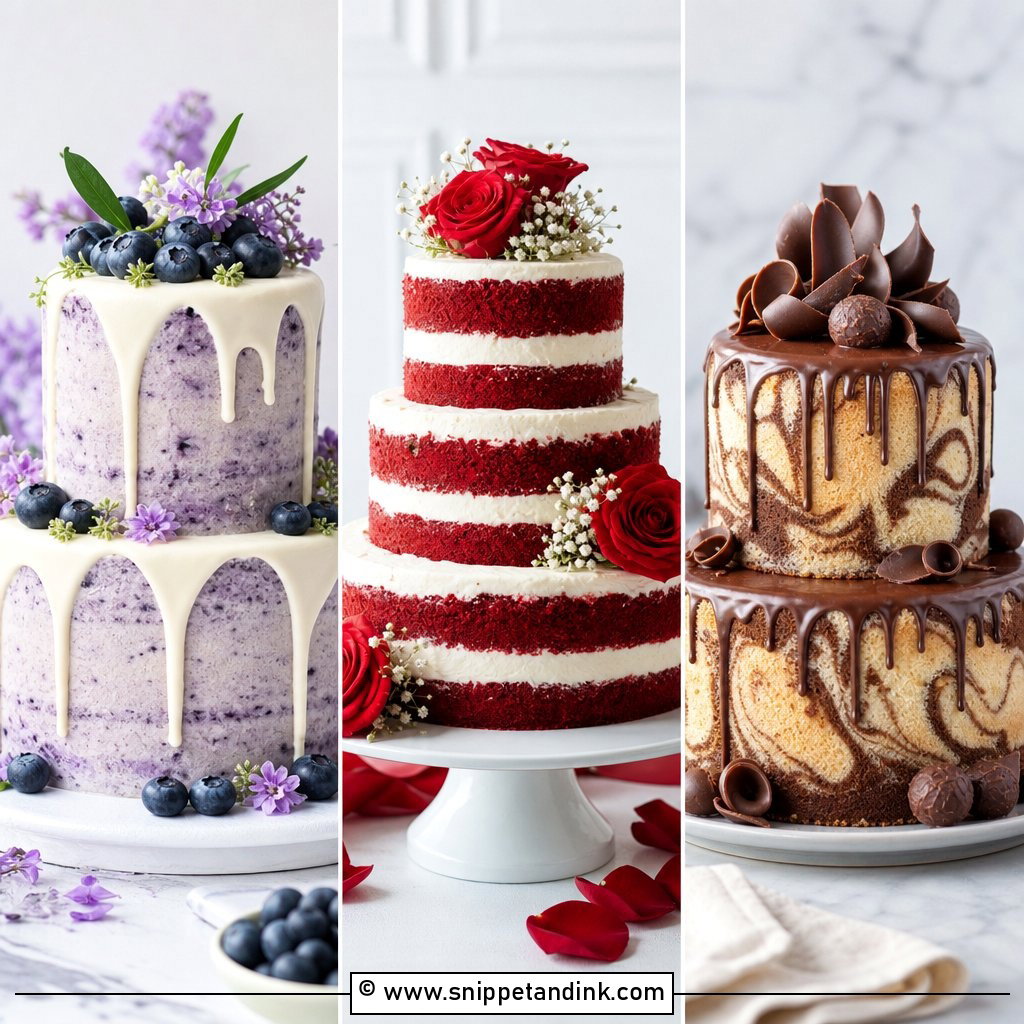
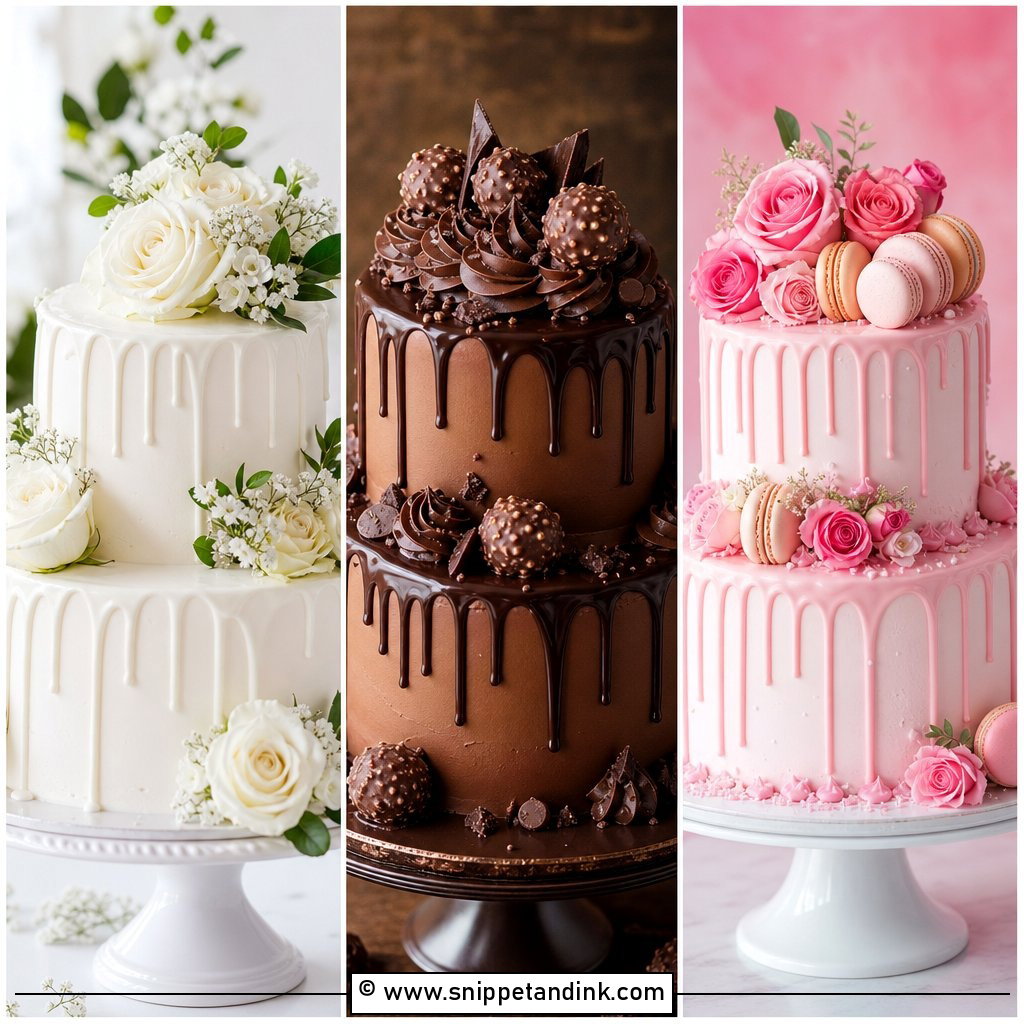
25. Blue Flower Wedding Cake
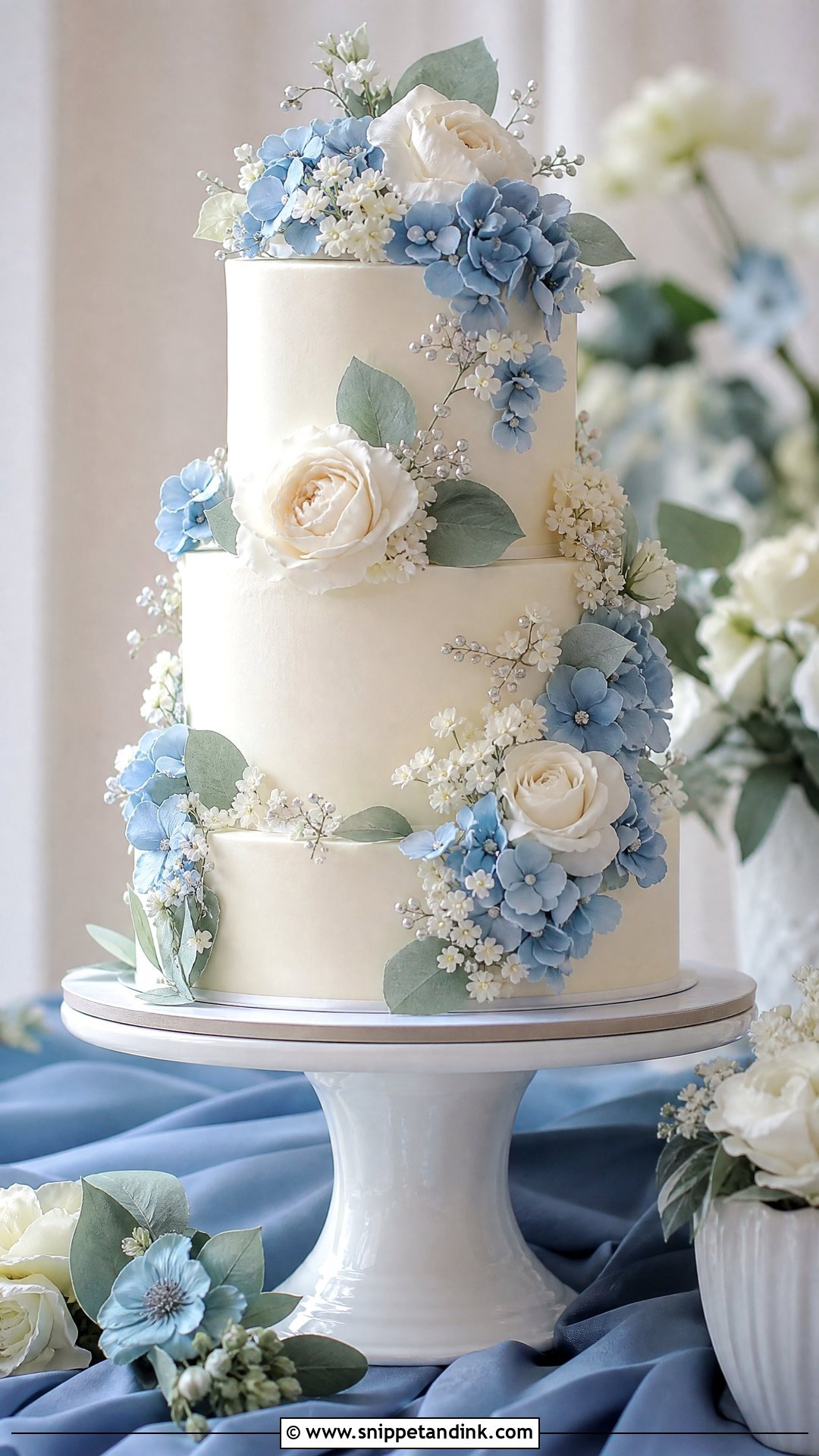
Blue is rare in real flowers, which makes it tricky. Sugar flowers, edible pressed petals like cornflowers or borage, or carefully chosen fresh blooms are the easiest way to get the right shade. Pale blue hydrangea-style sugar flowers look soft; navy or dusty blue accents feel more formal. Real hydrangea is toxic, so it’s sugar only on my cakes. A white or ivory base keeps the colour from overpowering, with touches of white, sage or silver. Coastal and spring weddings suit it.
26. Pink Flower Wedding Cake
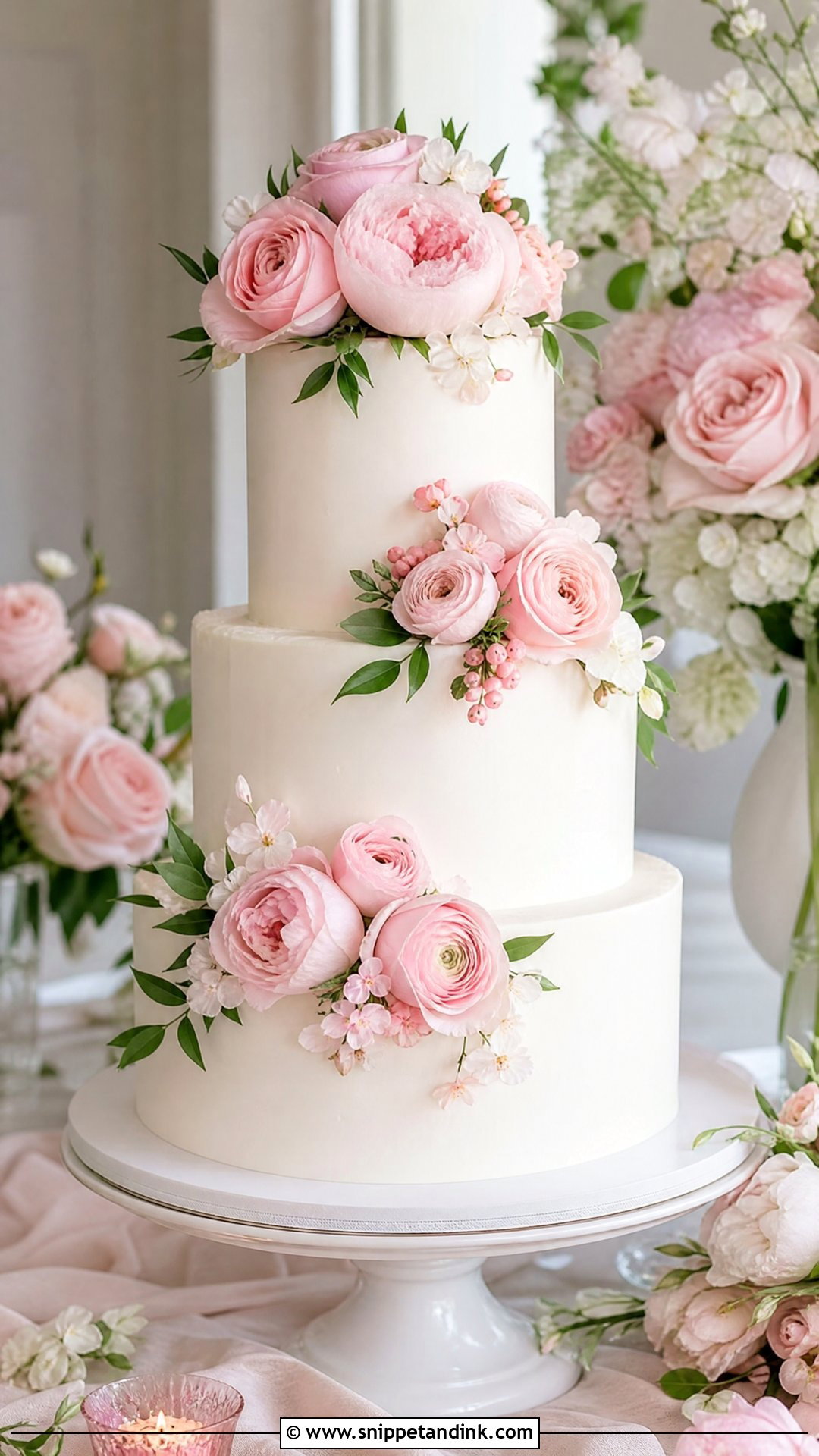
Pink flowers suit almost every season. Blush roses, pale pink peonies, ranunculus and sugar blossoms all sit well on white or ivory tiers. Light pinks with greenery look soft; blush mixed with mauve, berry or coral adds drama. They work on buttercream, fondant, semi-naked and vintage piped cakes. Ranunculus is toxic, so fresh ones should sit on wrapped stems and picks, never pressed into frosting. A few blooms read elegant; a full cascade reads lush.
27. Purple Flower Wedding Cake
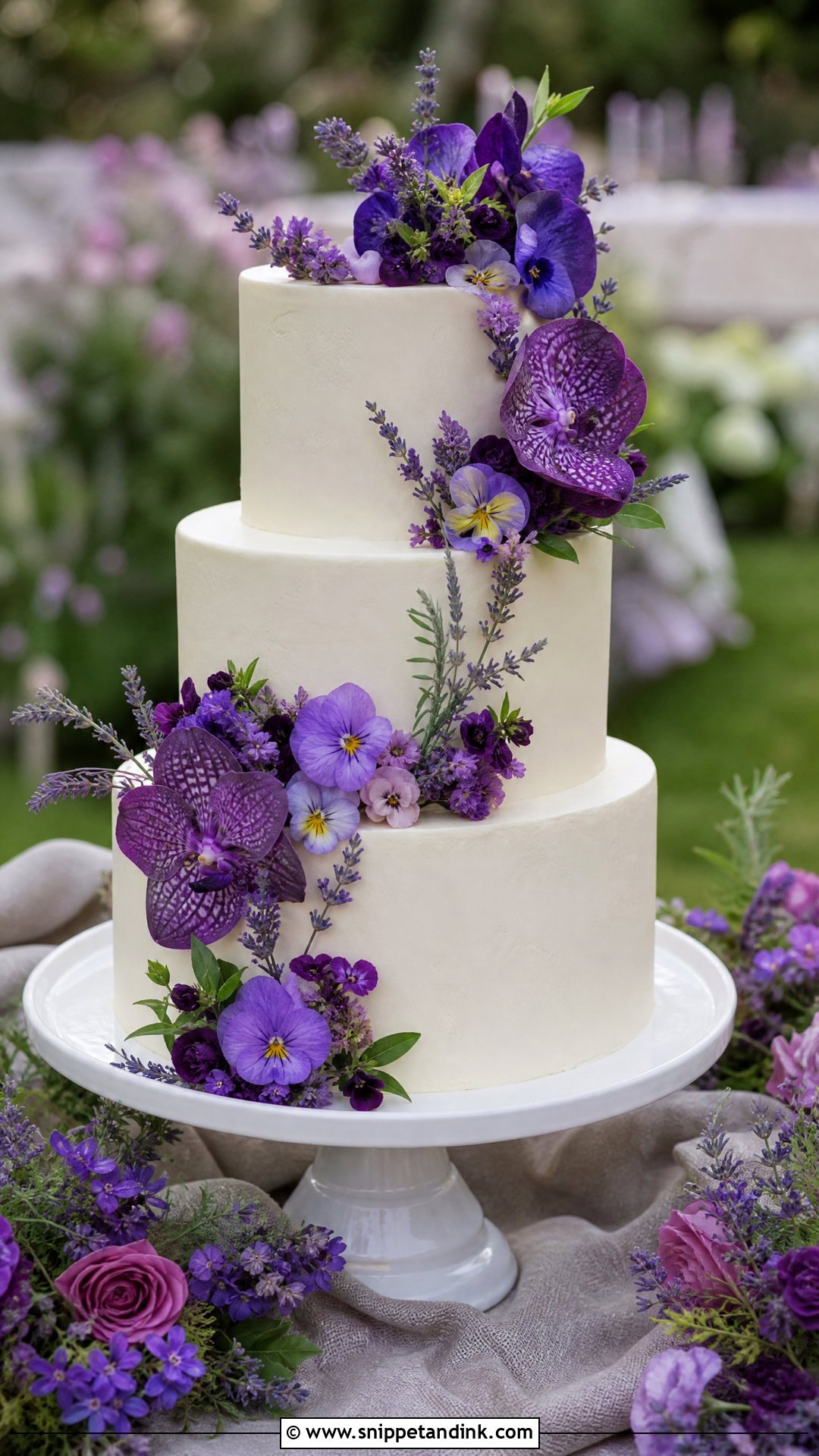
Purple ranges from soft to moody. Lavender and lilac flowers look like spring; plum and deep violet look richer and more formal. Edible violets, pansies and lavender, along with orchids and sugar flowers, all work. A white base keeps purple fresh, while a pale lavender frosting is softer still. Purple food colouring can turn grey or blue if the mix is off, so if the frosting itself is purple, I’d ask your baker for a sample. Use greenery sparingly so the colour stays the focus.
28. Greenery And Flower Wedding Cake
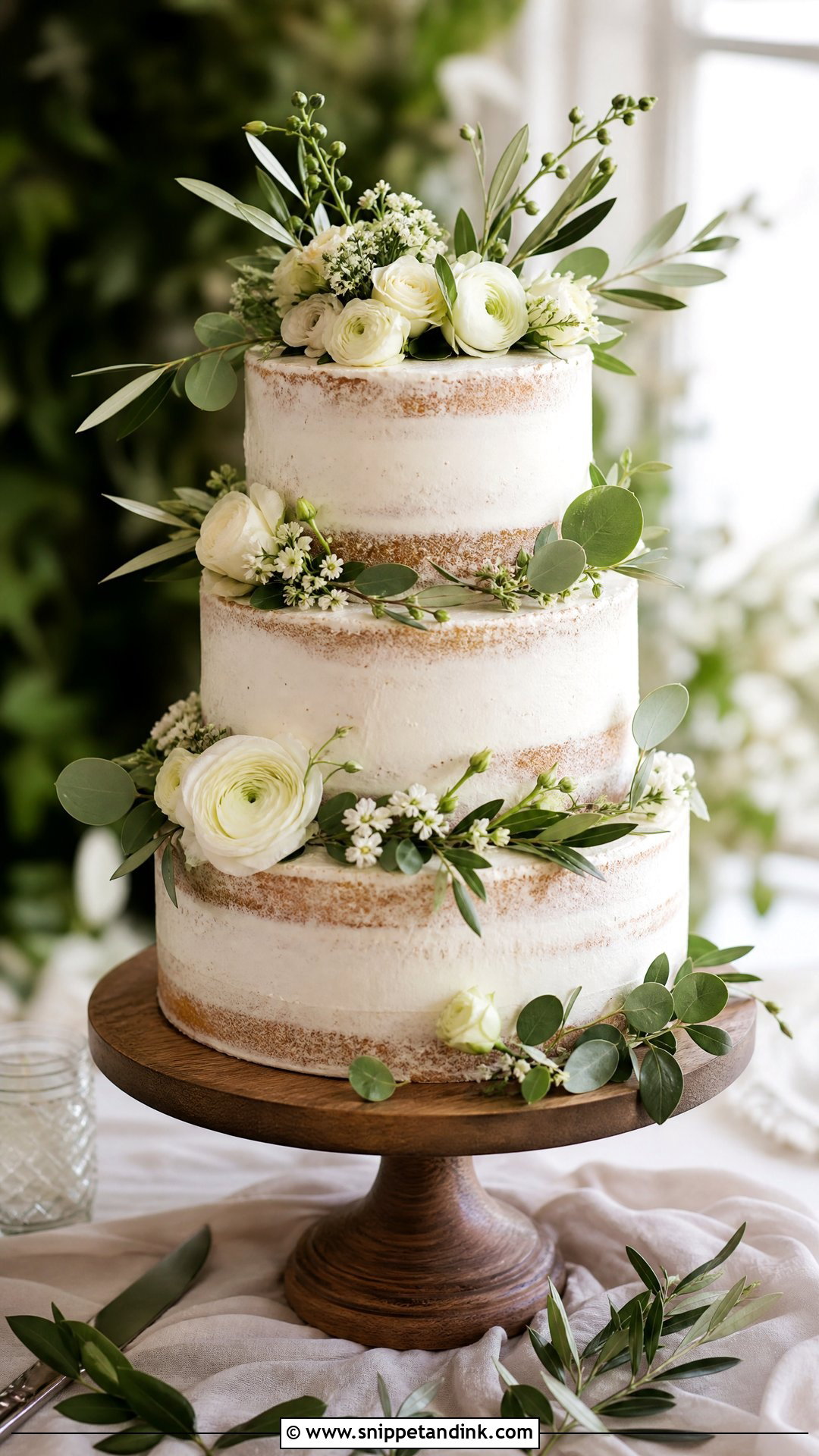
Greenery adds shape and movement, while flowers add softness and colour. Eucalyptus, olive leaves, herbs and delicate vines are popular, but eucalyptus is toxic and many foliages are treated, so I always use barriers and approved materials. Rosemary, bay and other culinary herbs are the easiest edible option. White buttercream, semi-naked or textured frosting suit it, with roses, ranunculus, orchids or small wildflowers. Keep it airy, letting white frosting show between the leaves.
29. Naked Wedding Cake With Flowers
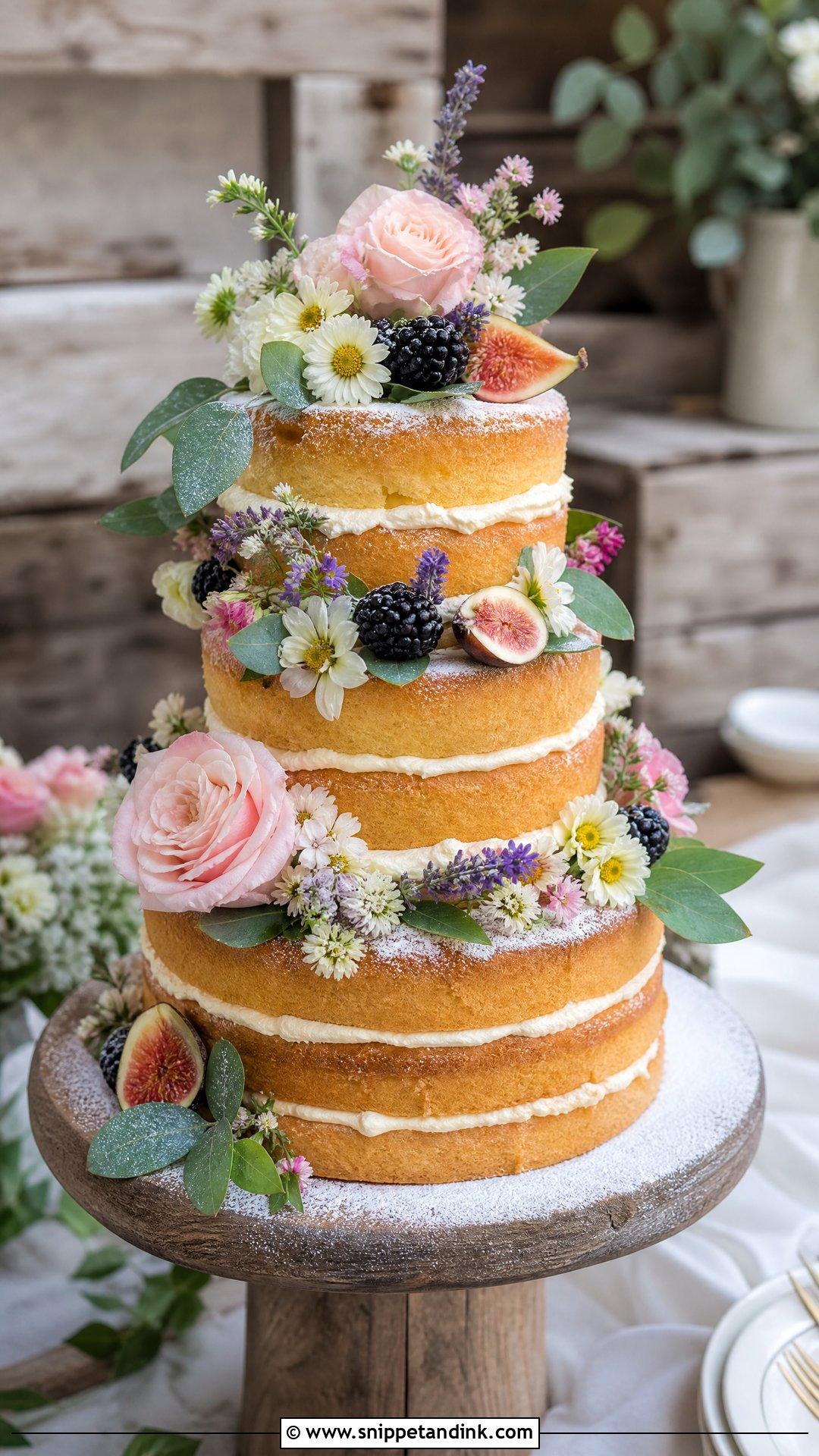
Naked cakes show the sponge with only a thin scrape of frosting, so the layers become the decoration. Choose sponges with good colour, such as vanilla, almond, lemon, carrot or chocolate, and keep the layers level and evenly filled. Flowers can sit on top, between tiers or around the base, with berries, figs or tiny edible flowers for texture. Exposed sponge dries out faster than a frosted cake, so I assemble naked cakes as late as possible and brush the layers with syrup. Barn, garden and outdoor receptions suit it.
30. Semi Naked Wedding Cake With Flowers
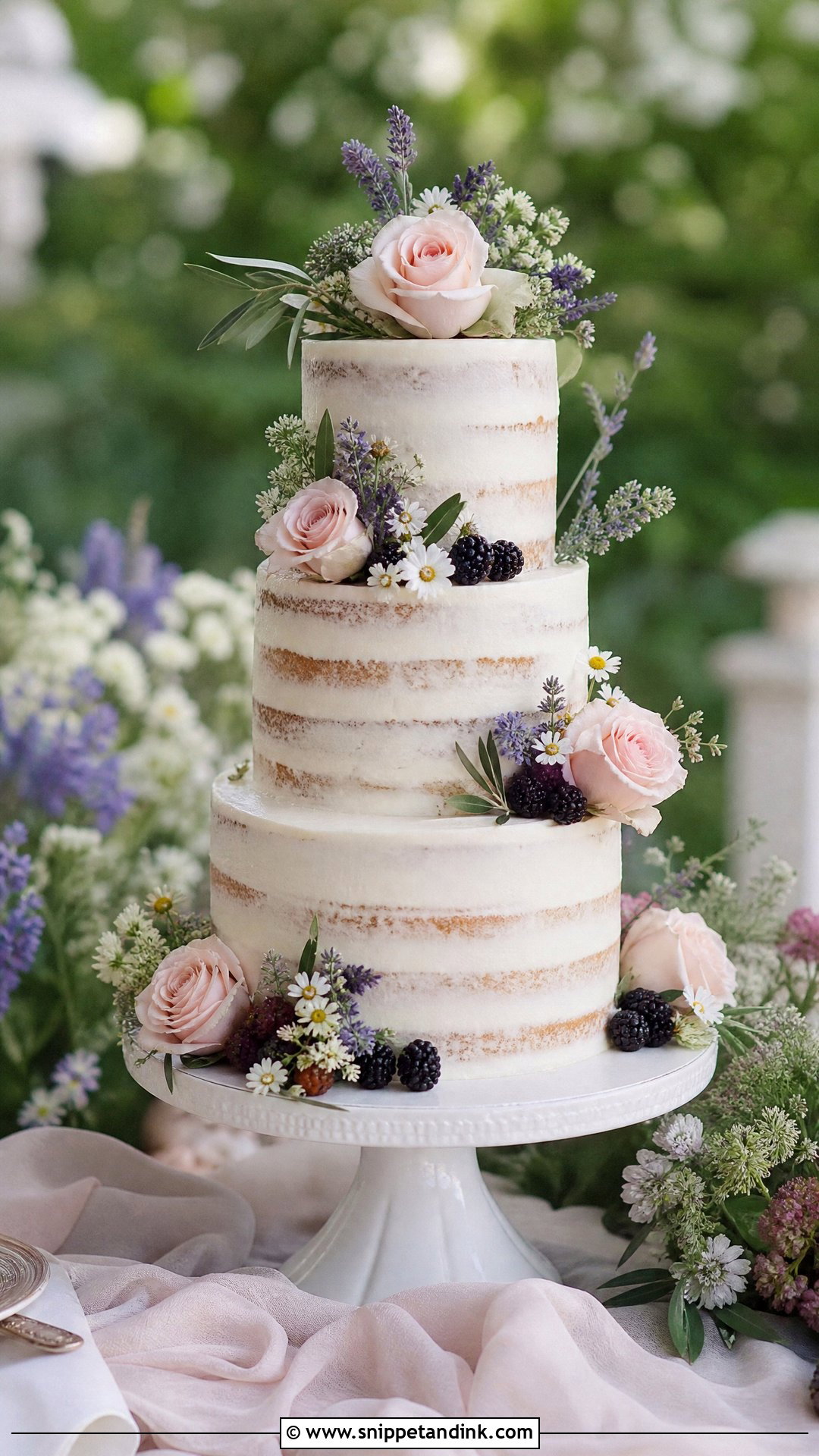
Semi-naked cakes have a thin layer of buttercream that softens the layers while still letting some sponge show. It’s slightly more polished than a fully naked cake. Fresh flowers, greenery and a simple stand suit it, with white roses, blush blooms, lavender, daisies or small wildflowers. Seasonal fruit adds colour. Keep the frosting smooth but not perfect; the texture is part of the look. A thin coat protects the sponge a little better than a naked cake, which helps at an outdoor wedding.
31. Floral Sheet Wedding Cake
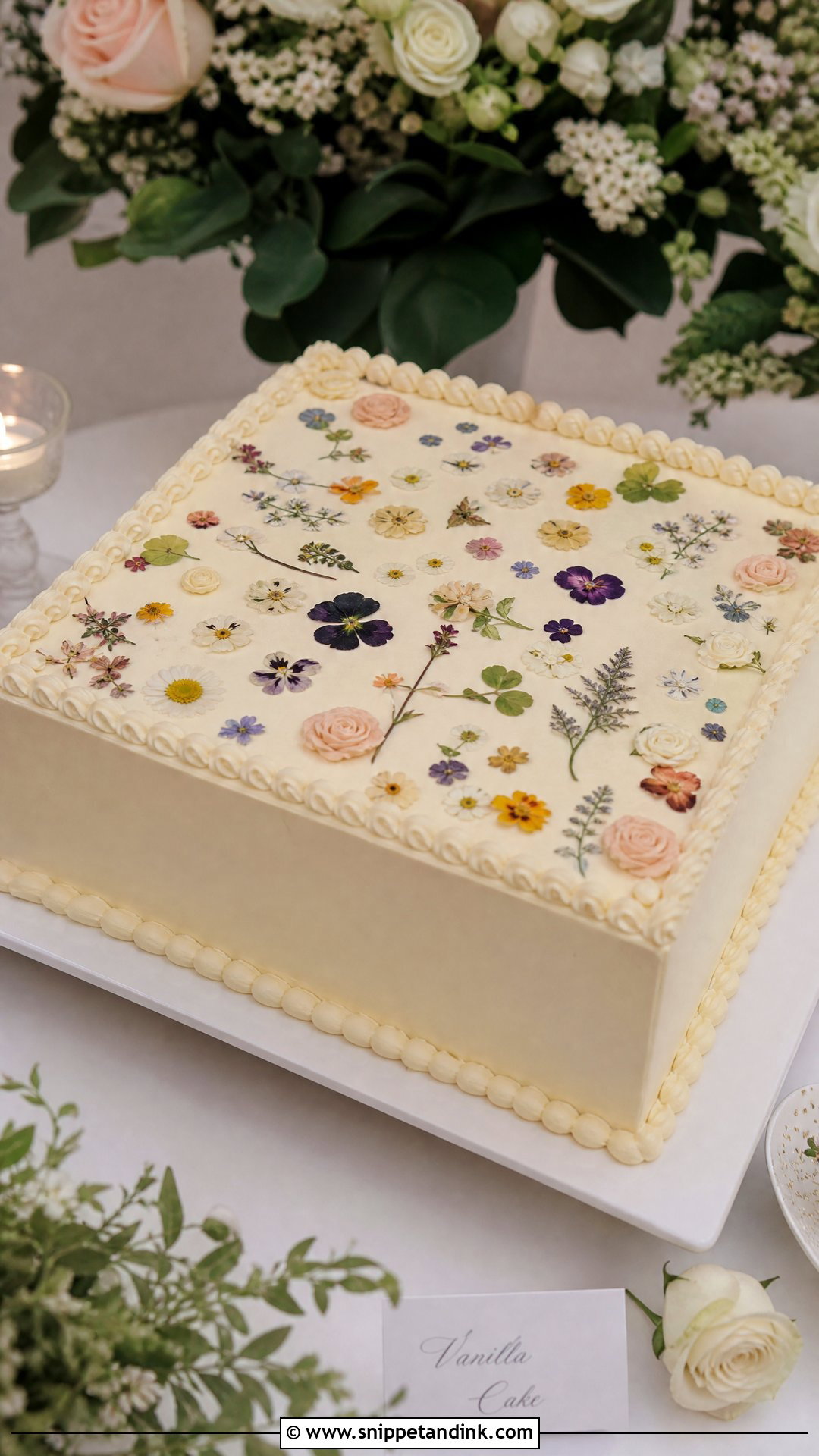
A floral sheet cake is a practical, modern choice. Instead of tiers, it has a lower rectangular shape with plenty of surface for flowers: pressed edible petals, piped buttercream flowers, fresh blooms or sugar blossoms arranged like a garden bed. It needs no internal structure and is quick to portion, which suits intimate weddings and dessert tables where flavour matters more than height. Leave some open space so it doesn’t look crowded, and finish the edges with a clean border.
32. Floral Heart Wedding Cake
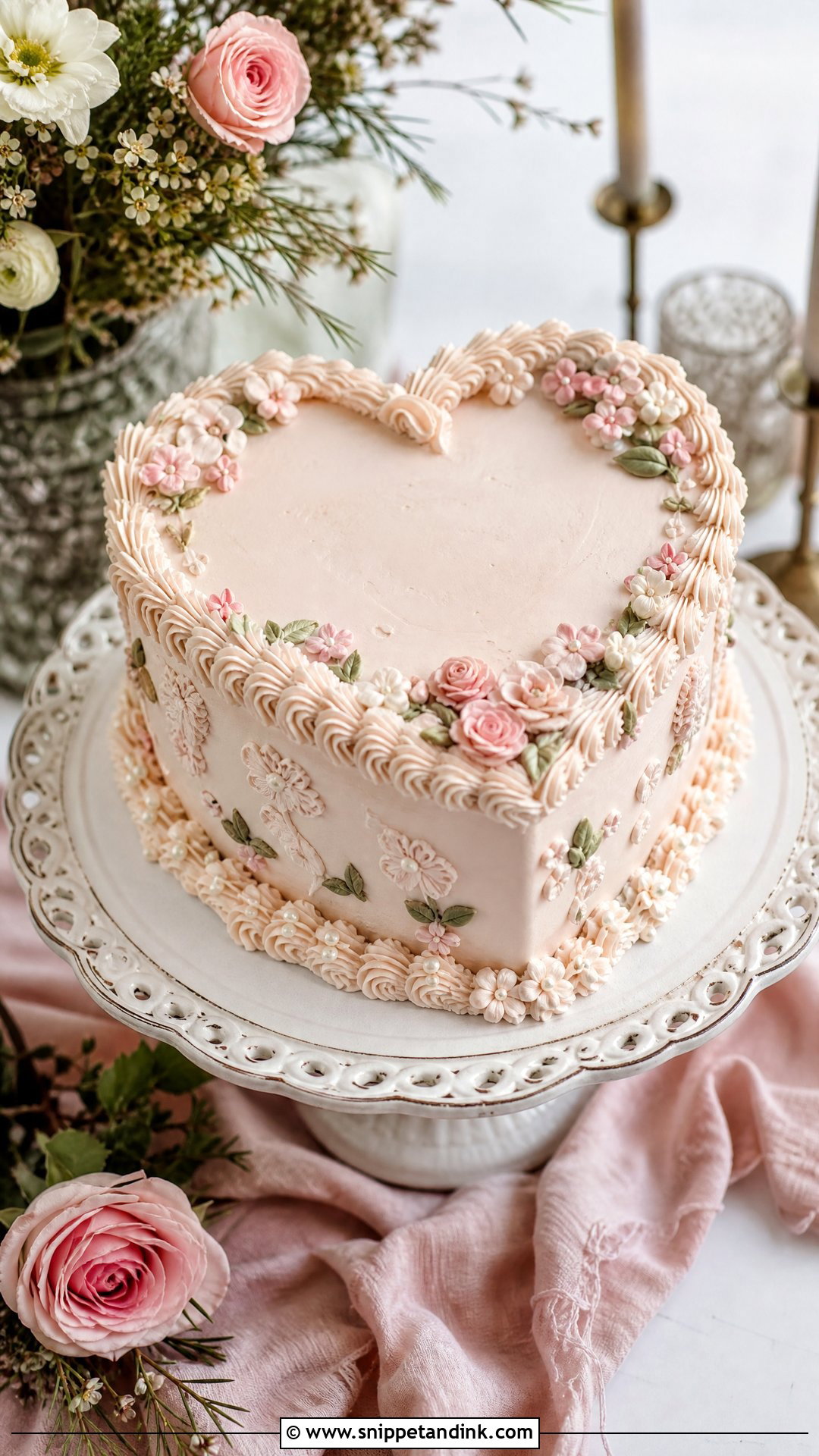
Heart cakes are sweet already, so the flowers should play a supporting role. Vintage piping, small roses, cherries, edible petals or delicate sugar blossoms all work, in white, blush, pale pink or soft red. They suit courthouse weddings, elopements and bridal lunches. Hearts cut into awkward portions, so for larger groups I’d use one as a cutting cake alongside a sheet cake. If you add writing, keep it short and let the shape and flowers do the work.
33. Floral Cupcake Wedding Cake
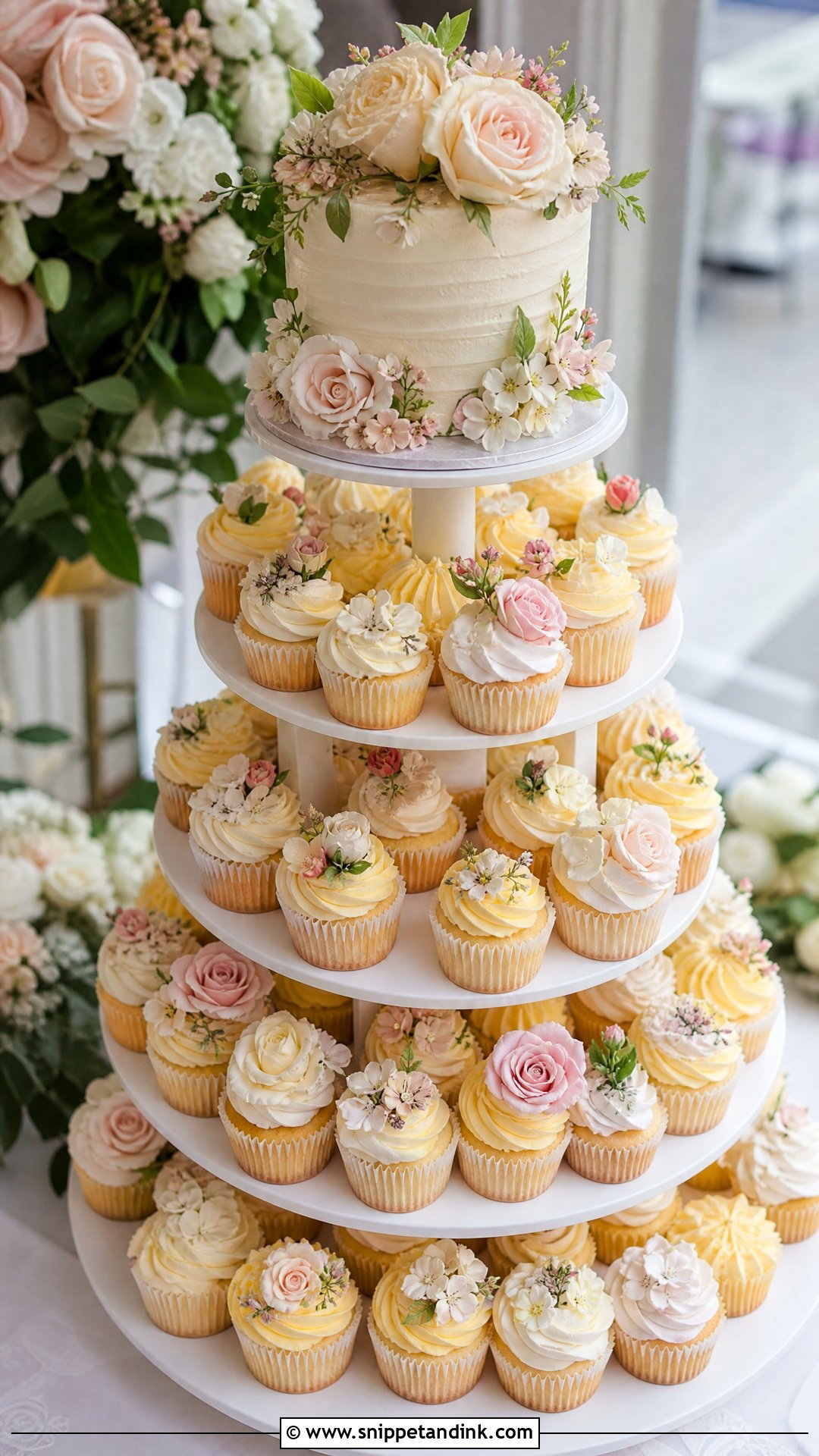
A floral cupcake wedding cake gives individual servings with the look of a cake display. Cupcakes can sit on a tiered stand under a small cutting cake or form a full floral tower. Each one can carry a piped rose, a tiny edible flower or a sugar blossom. Keep one colour palette, such as ivory, blush, lavender and sage. Cupcakes in a warm room soften faster than a large cake, because there’s less mass to hold the cold, so I deliver them as late as possible. Fresh flowers around the stand finish it.
34. Floral Dessert Table Wedding Cake
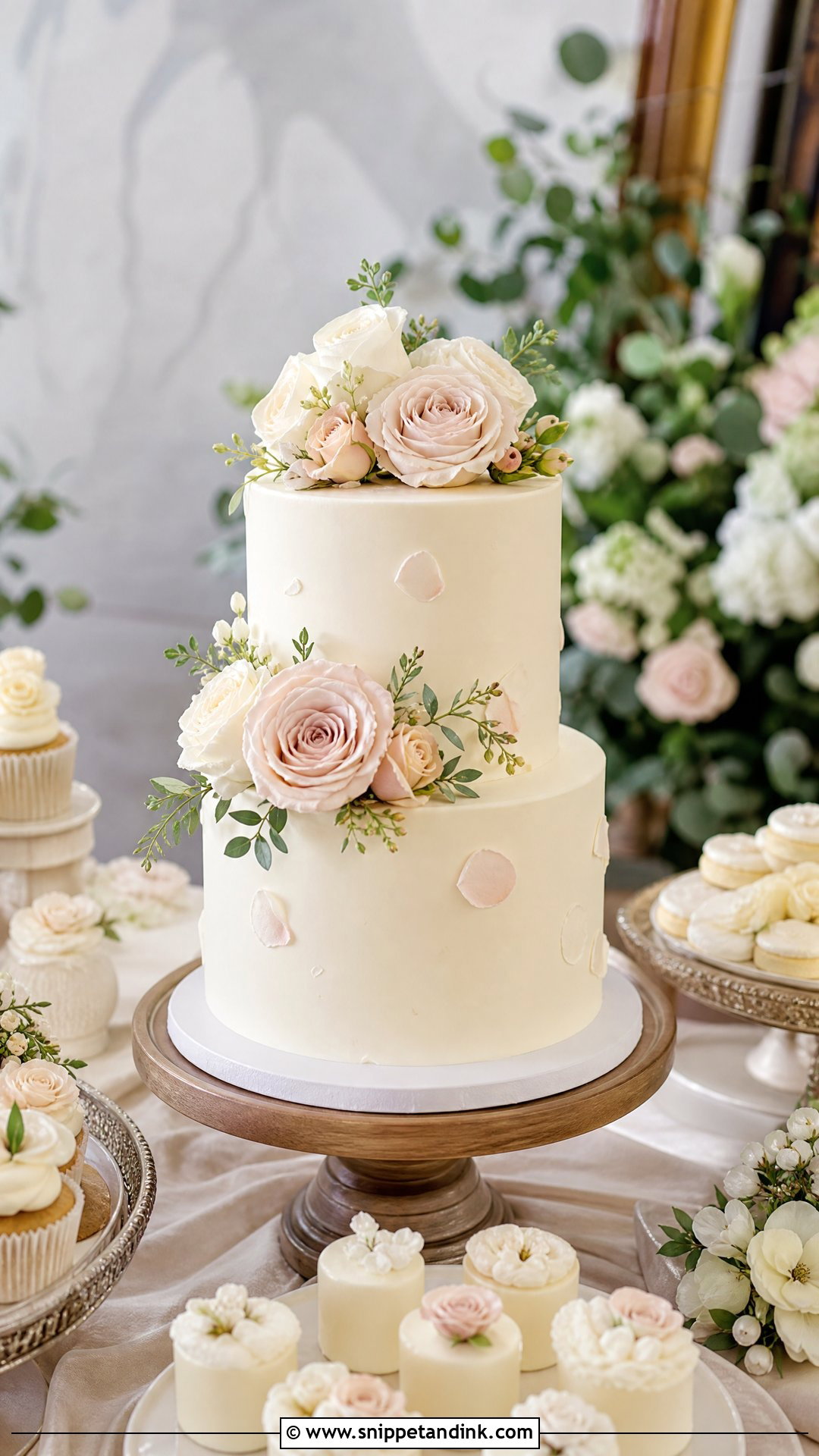
Here the cake becomes part of a larger sweet table: a simple main cake surrounded by floral cupcakes, mini cakes, cookies, macarons and small desserts. Repeat the same blooms or colours across the table so it looks planned. A two tier cake with fresh or sugar flowers makes a strong centrepiece without needing a huge tiered cake. Use different heights and leave room around the cake for the cutting photo. I’d ask whoever styles the table to keep fresh flowers away from uncovered desserts.
35. Small Wedding Cake With Flowers
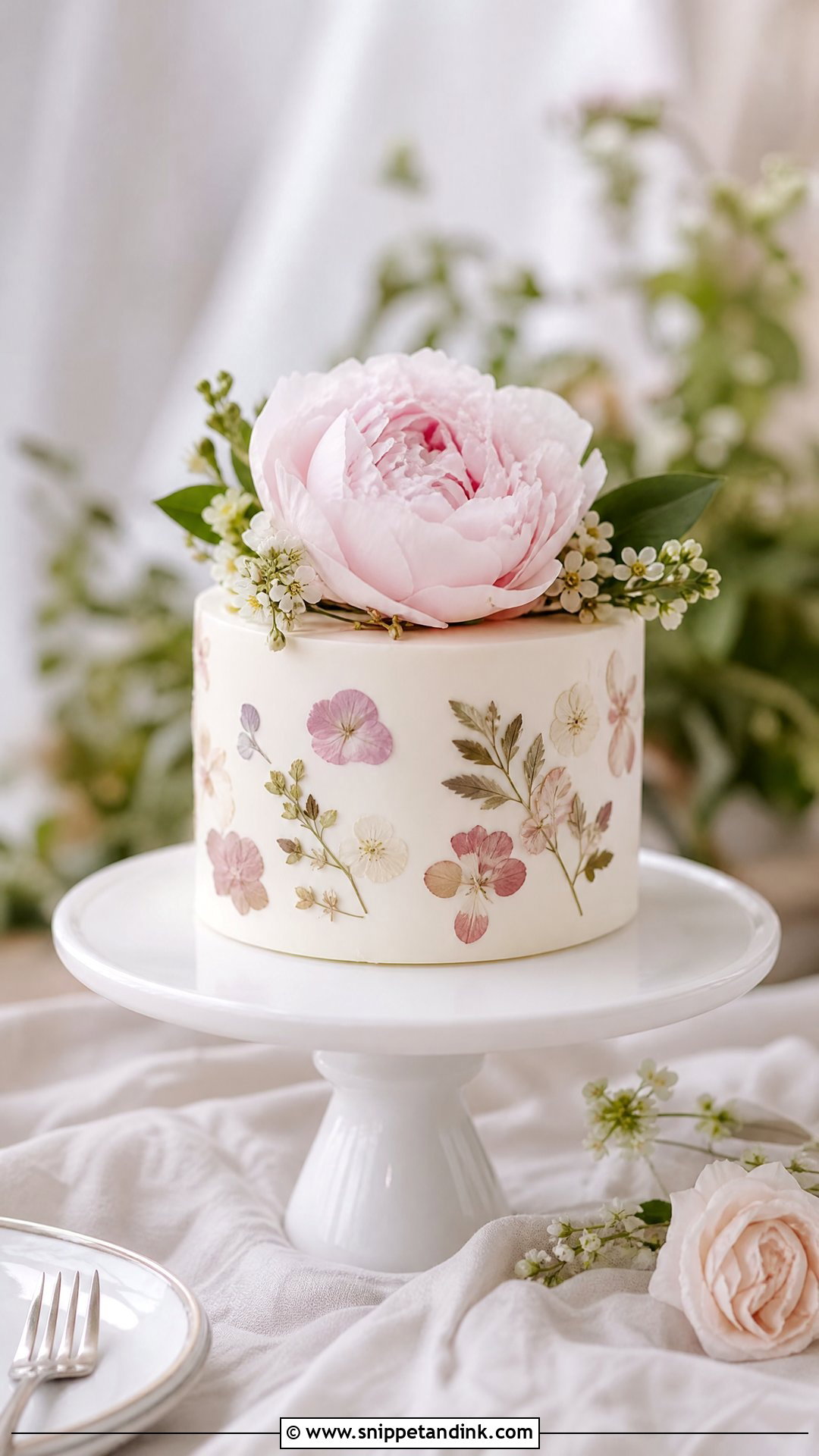
Small cakes often look more intentional, since every detail is seen. A one or two tier cake with one statement bloom, a pressed pattern, a mini cascade or delicate piped flowers suits elopements, micro weddings and courthouse ceremonies, especially when other desserts are served. A tall cake stand gives a small cake importance on the table. Soft white frosting, blush flowers and a little green keep it simple. It’s also the easiest cake to make entirely edible, using piped or pressed flowers only.
Who Puts the Flowers On, and When
This is the question couples forget to ask, and it causes more trouble on the day than any design choice. Some bakers supply and place their own flowers. Others expect the florist to deliver stems for the cake, and some florists dress the cake themselves. If nobody is named, flowers arrive in a bucket at the venue and a caterer pushes them straight into the frosting.
- Decide in writing who supplies the cake flowers and who places them.
- Ask the florist for a list of the varieties going on the cake, and confirm they’re pesticide-free and non-toxic.
- Agree on timing. I put fresh flowers on at set-up, as close to the reception as the schedule allows, because cut stems out of water wilt within hours in a warm room.
- Ask for a few spare stems from the same order, in case one bruises in transport.
- Make sure the person cutting the cake knows to remove all flowers, picks and wires first.
Sugar flowers are simpler. I usually attach them myself on site, and they can come off in one piece before cutting to be boxed up and taken home.
One Conversation Between Your Baker and Florist
Floral cakes can be simple, dramatic, rustic, modern or colourful. Your venue, the season, your flower budget and your flavour choices narrow it down. Pressed flowers look natural, sugar flowers give perfect blooms in any season, fresh flowers look romantic if handled safely, and buttercream flowers are fully edible. Before you finalise anything, put your baker and florist in touch with each other so the flowers, food safety, colours and set-up are agreed by both. Done that way, even a small cake can be one of the details guests remember.
You'll Like These Ideas:







Leave a Reply