
Buns are the updo I trust most for a long wedding day. Hair gathered into one secure base survives hugs, a veil being pulled off and hours on the dance floor better than almost anything loose, and it keeps your face and earrings clear. The real choices are where the bun sits, how smooth or textured it is, and what’s built around it. Below are 35 buns I’m regularly asked for, from sleek chignons to braided, boho and floral versions, with what I’d check before recommending each one for your hair and your dress.
Low, Middle or High Depends on the Back of Your Dress
Before I look at inspiration photos, I ask to see the back of the gown. Height is the single biggest decision with a bun, and it should come from the dress and veil rather than from a picture of someone else’s head.
- Low back or button detail: a low bun at the nape frames it. A high bun leaves a long empty stretch of neck that can look unfinished from behind.
- High neck or illusion lace: a mid or high bun keeps hair from crushing against the fabric and catching on lace.
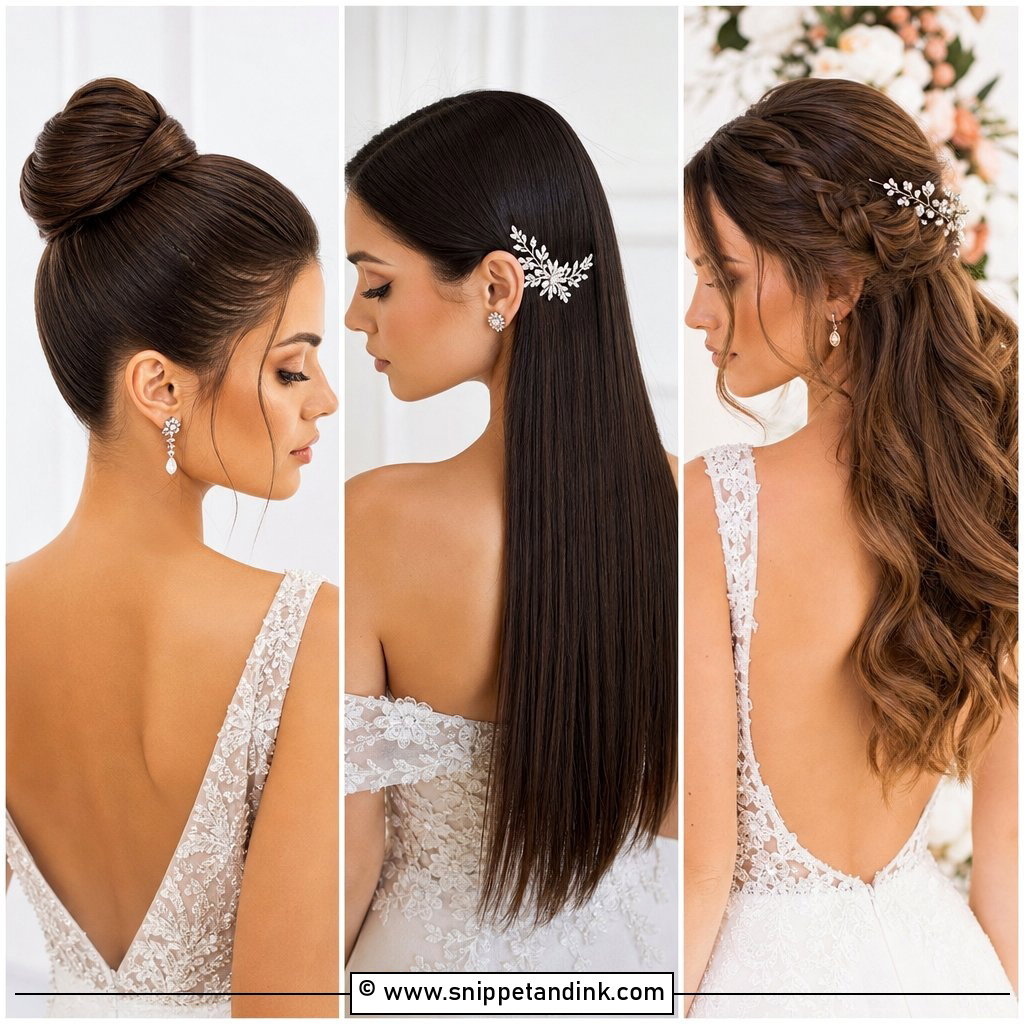
- Off-shoulder or strapless: almost any height works; a high bun lengthens the neck most.
- Long veil: comb placement decides it. A comb above a low bun lets the veil fall straight; a high bun with a comb underneath gives the veil lift.
Then I look at your profile in the mirror. A bun sitting directly behind the ears often looks lumpy side-on; moving it a little higher or lower usually fixes the silhouette. That’s why I ask you to check the side view at the trial, not just the front.
1. Sleek Low Bun
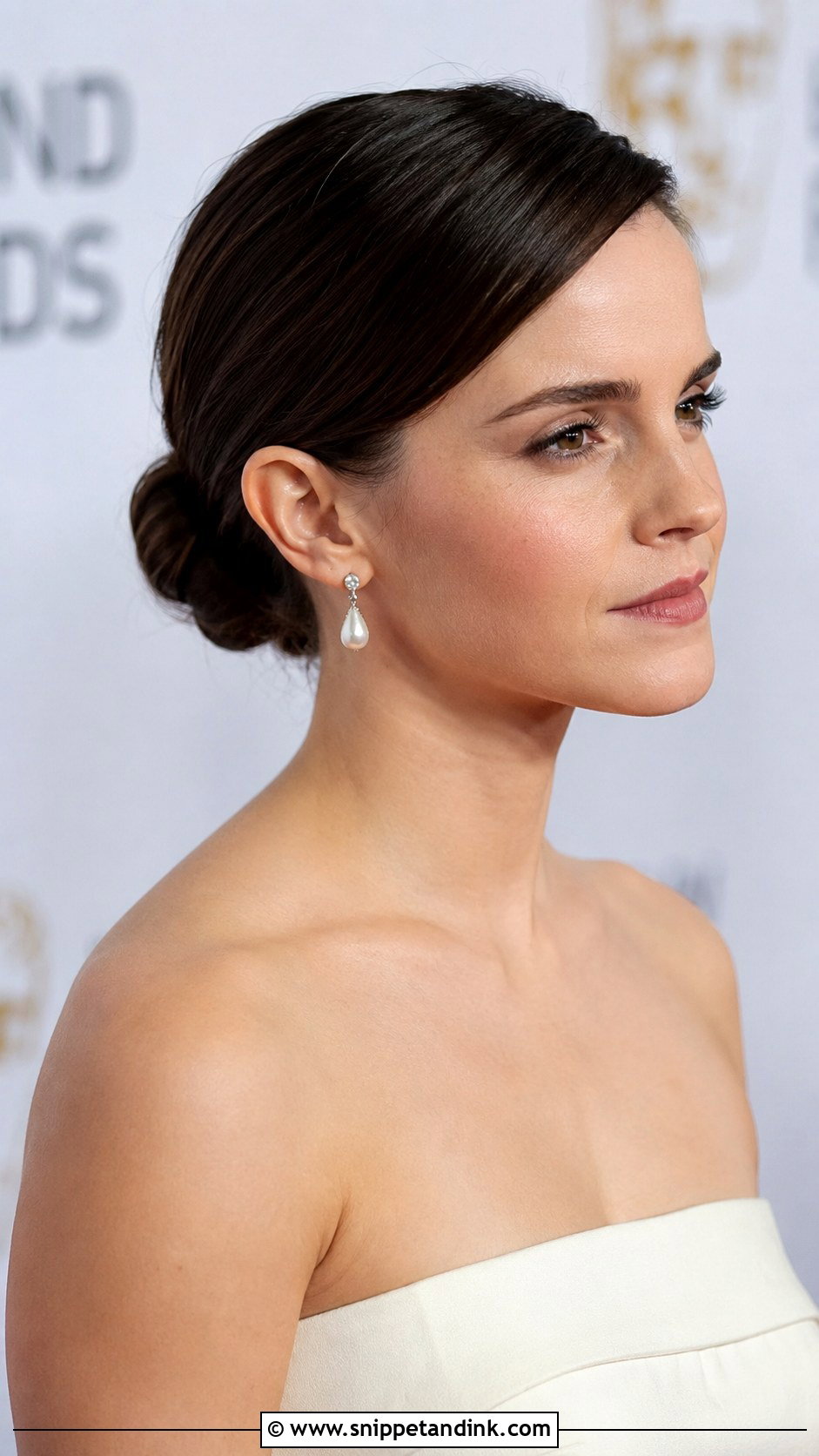
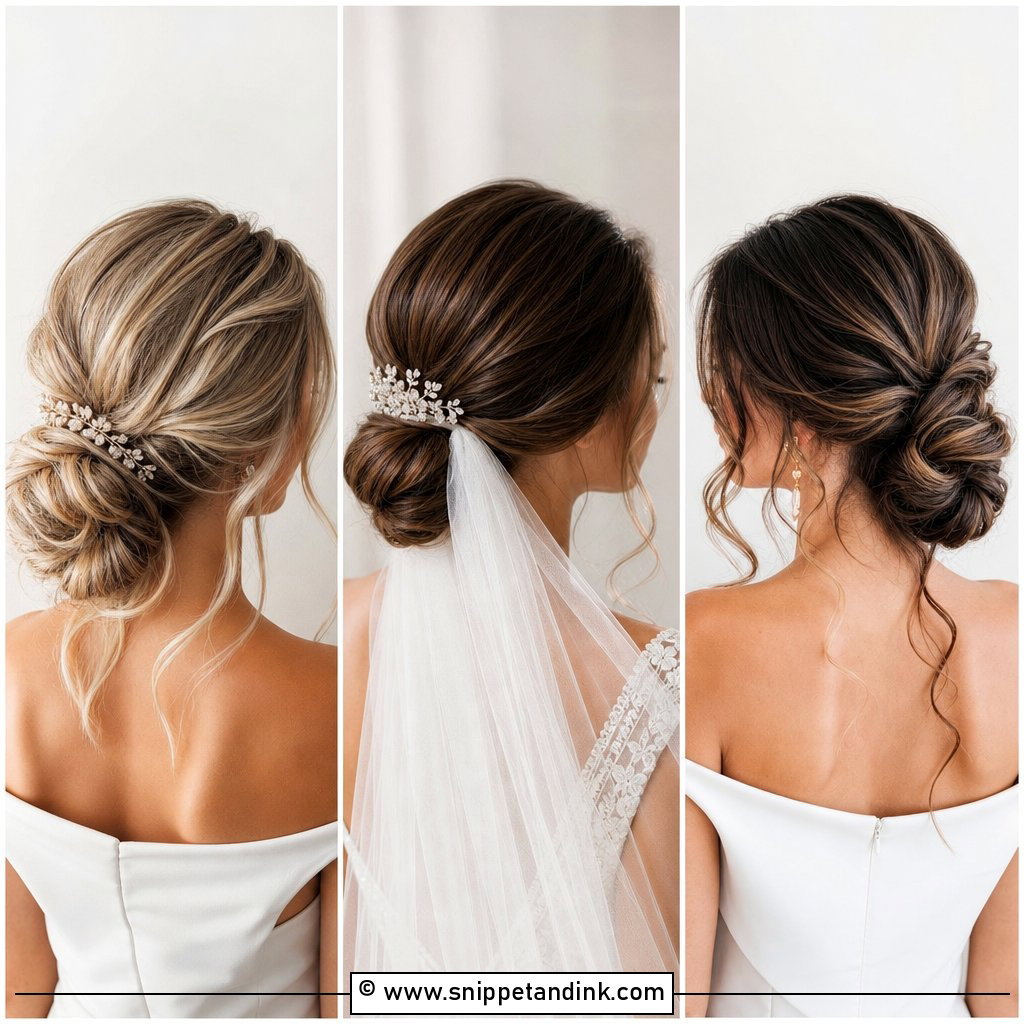
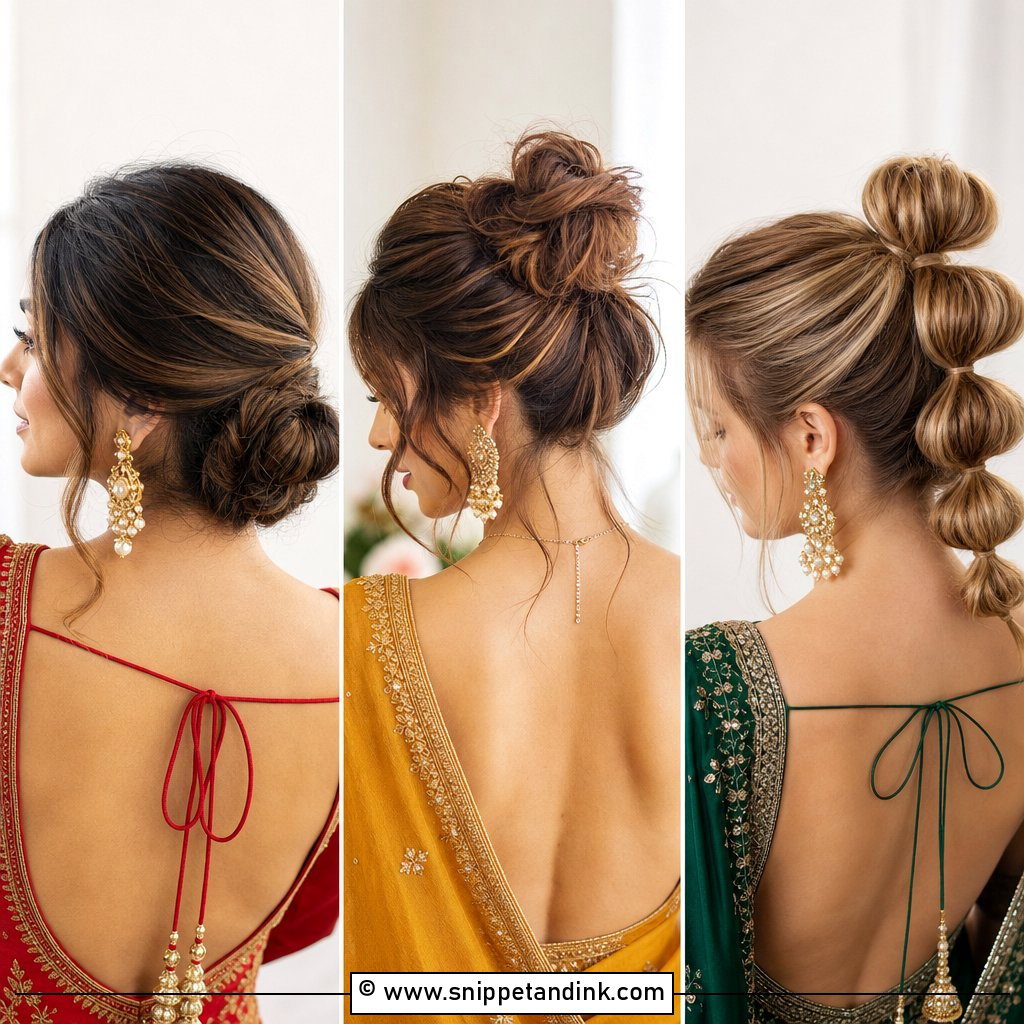
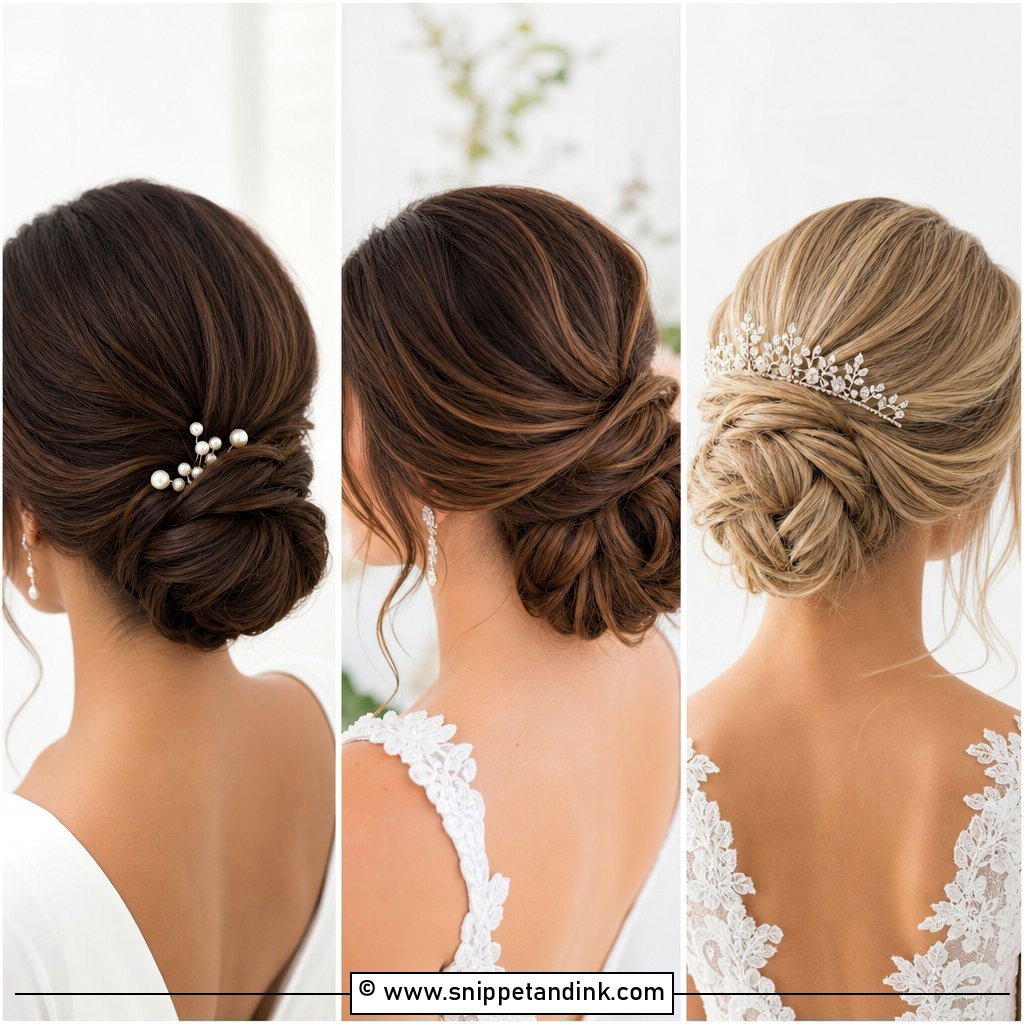
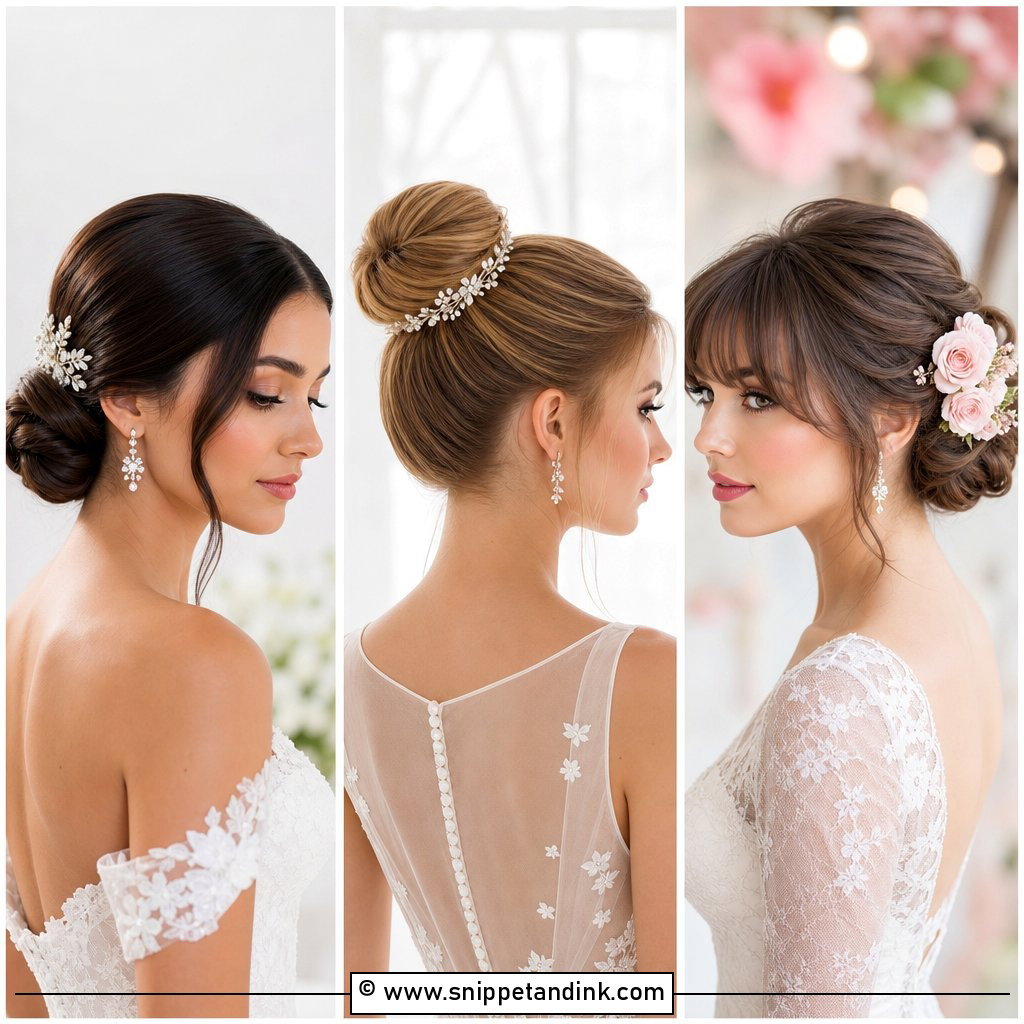
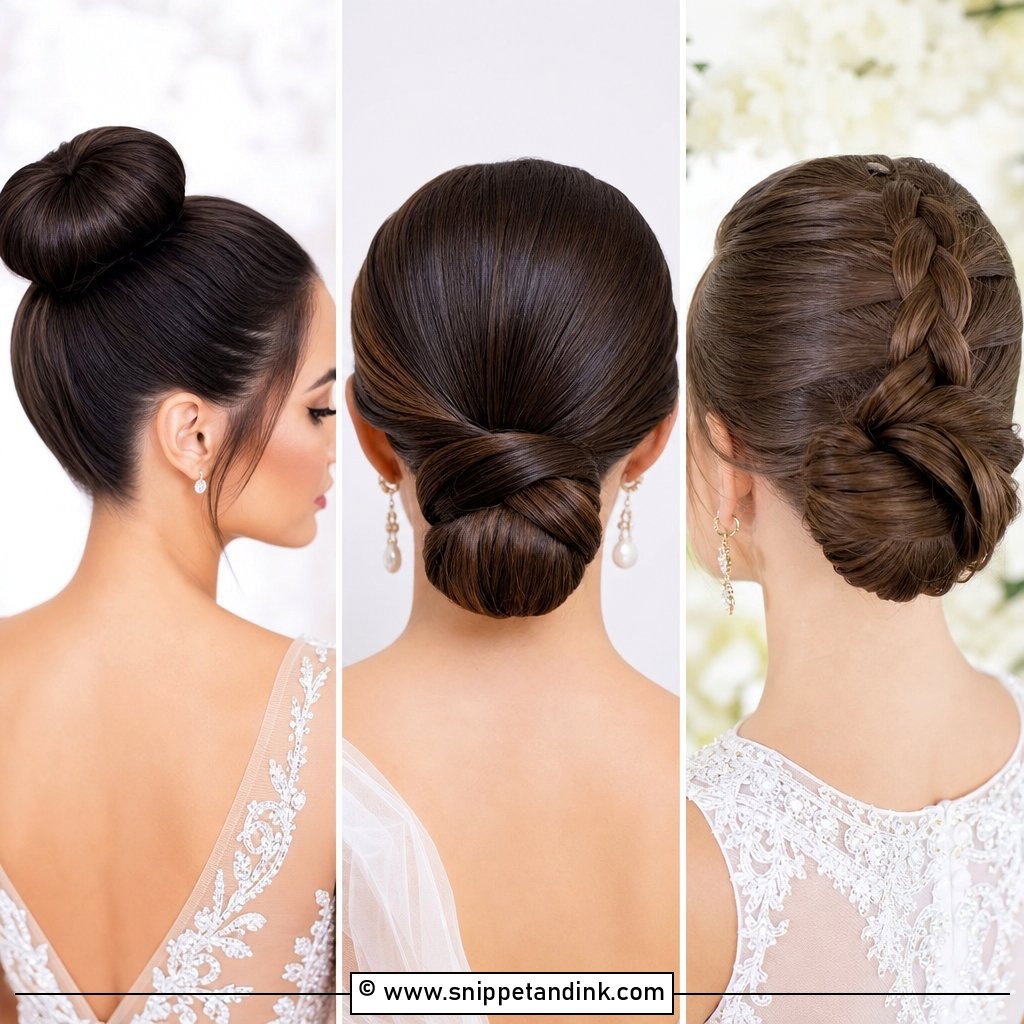
The sleek low bun lives or dies on prep. I smooth the hair back with a light cream and a boar bristle brush, secure it in a tight elastic at the nape and wrap the length around it. A centre part suits symmetrical faces; a deep side part softens a strong jaw. Fine flyaways along the hairline are the giveaway in close-ups, so I set them with a little gel on a spoolie rather than drowning the whole head in spray. It’s the bun I’d pick for black-tie and minimalist gowns.
2. Messy Bun With Loose Strands
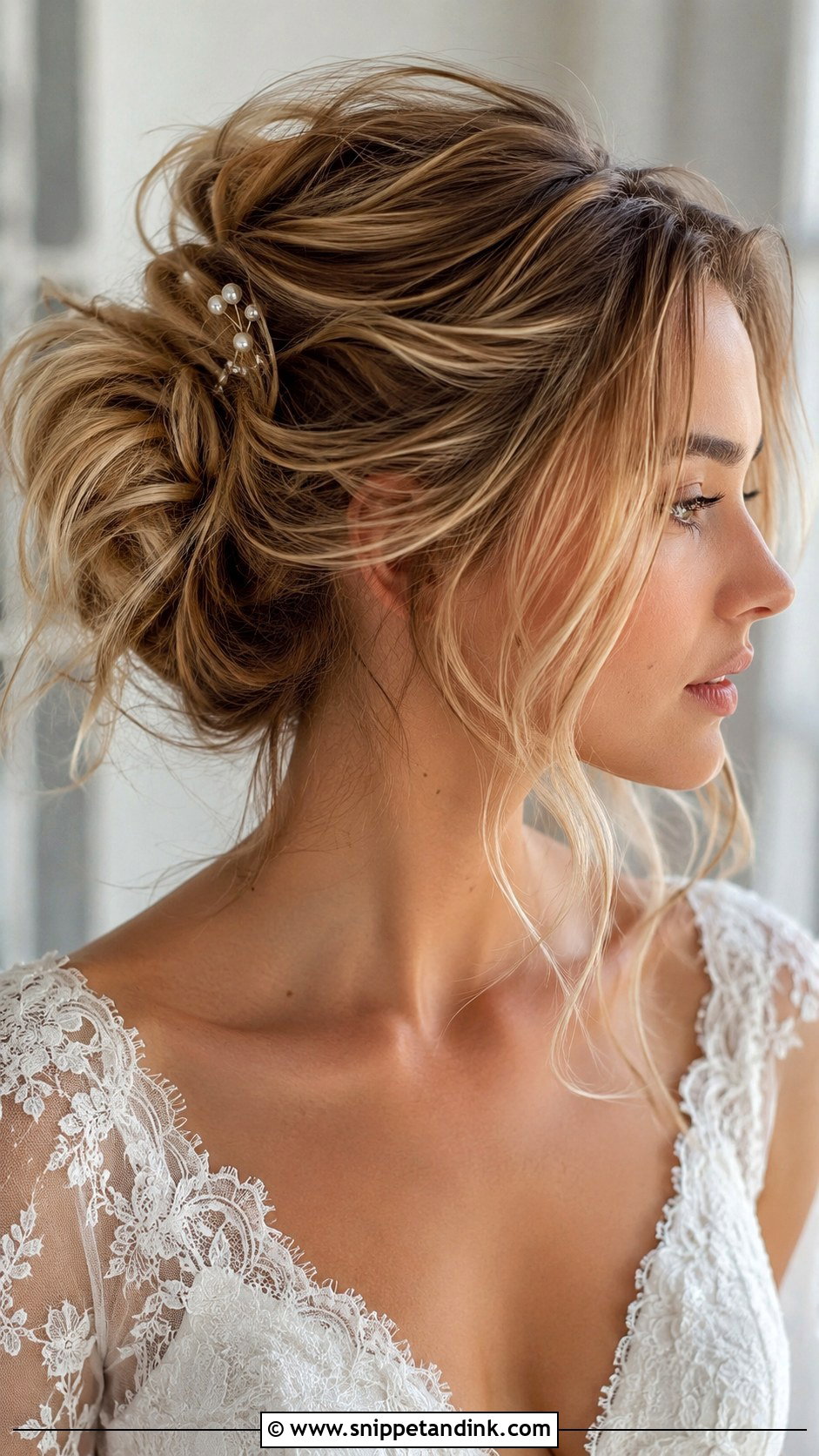
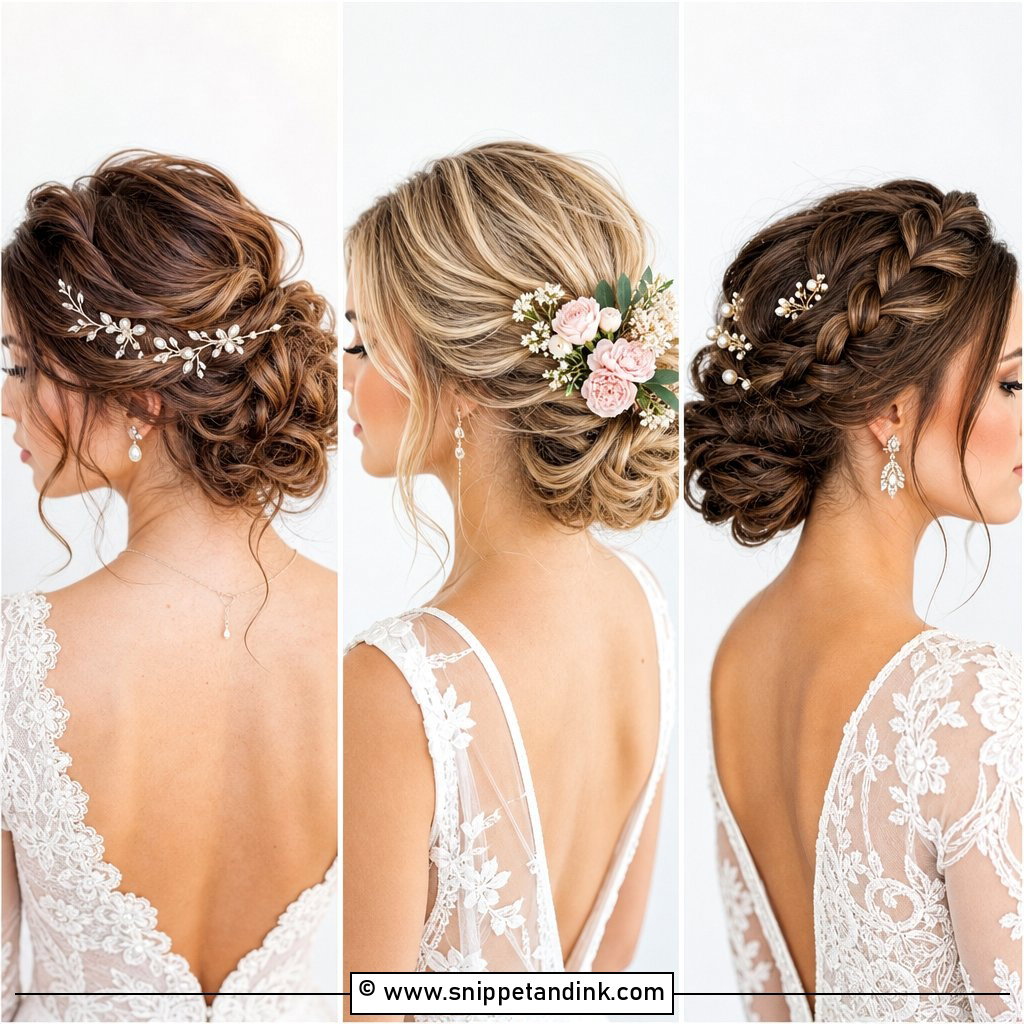
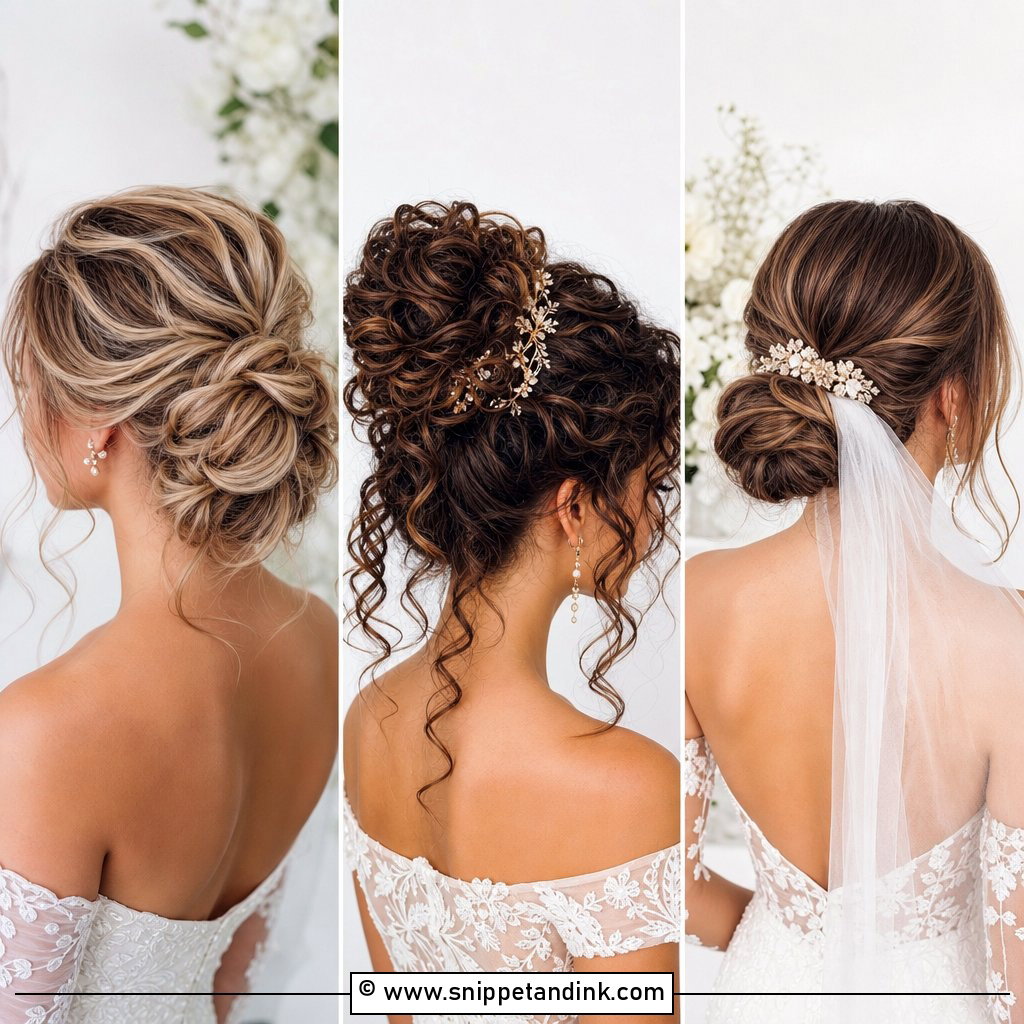
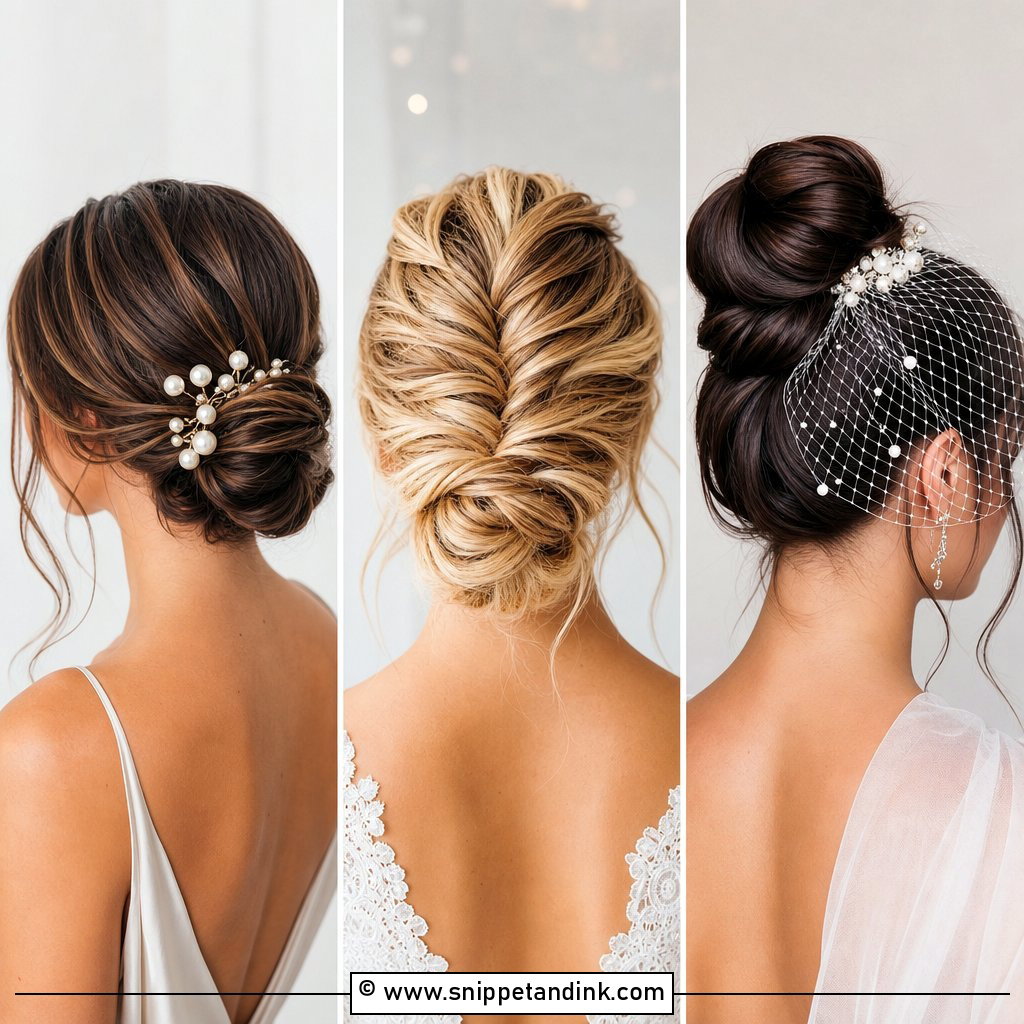
A messy bun takes more pins than a sleek one, not fewer. I curl the hair first, loosen it with my fingers, then build the bun in sections so the softness is placed rather than accidental. A few pieces come loose around the face. Wavy and naturally textured hair suits it best, since there’s built-in grip. A couple of pearl pins or tiny flowers finish it for a garden ceremony.
3. Classic Chignon
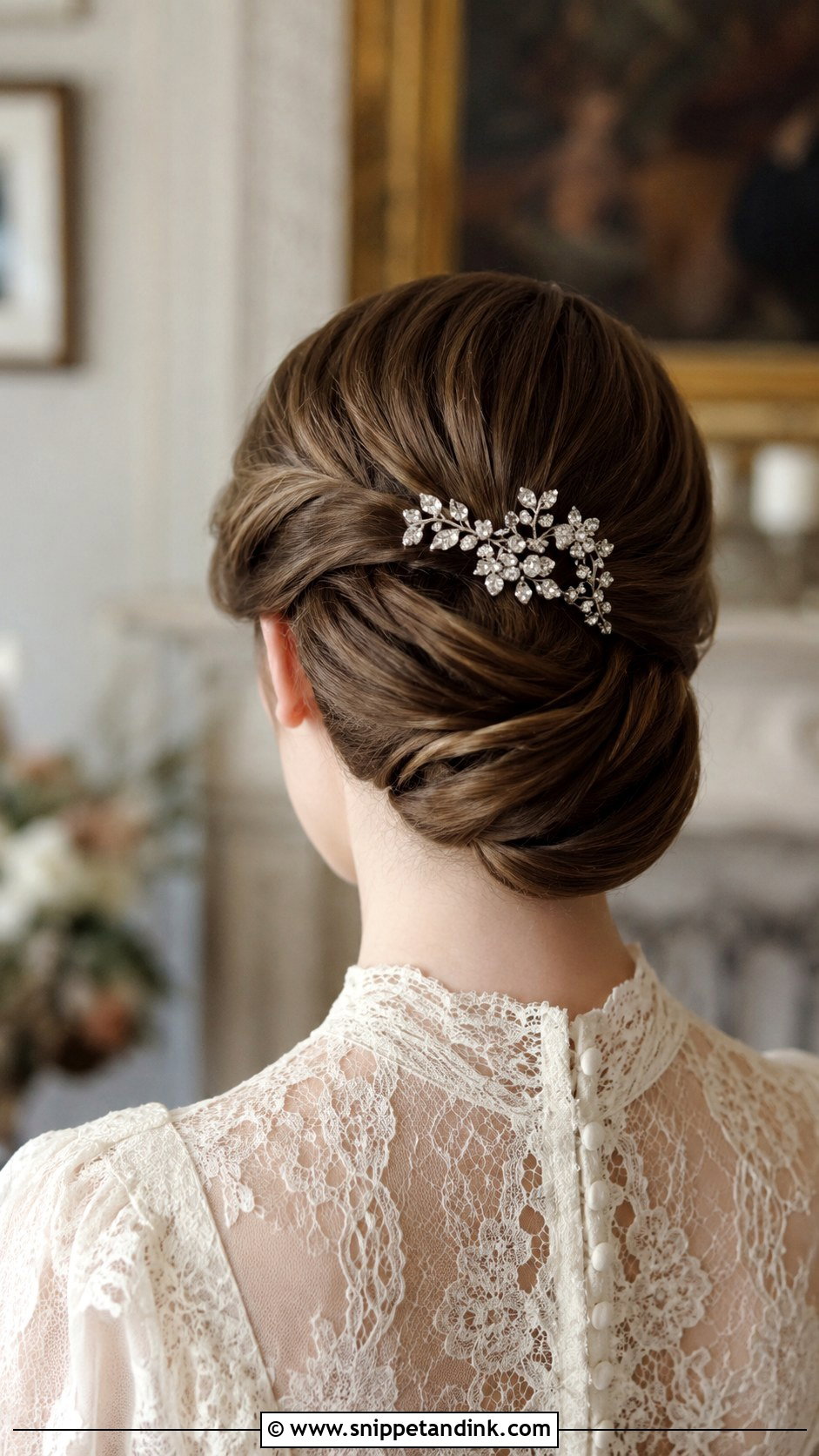
A chignon is twisted and tucked into a smooth rounded shape at the nape, and it’s been the bridal standard for decades for good reason: it suits almost every face and sits neatly under a cathedral veil or a delicate comb. Shoulder-length hair can manage one with a little padding. I keep it tighter for formal ceremonies and slightly loosened for softer gowns. One jewelled pin on the side is enough decoration.
4. Braided Low Bun
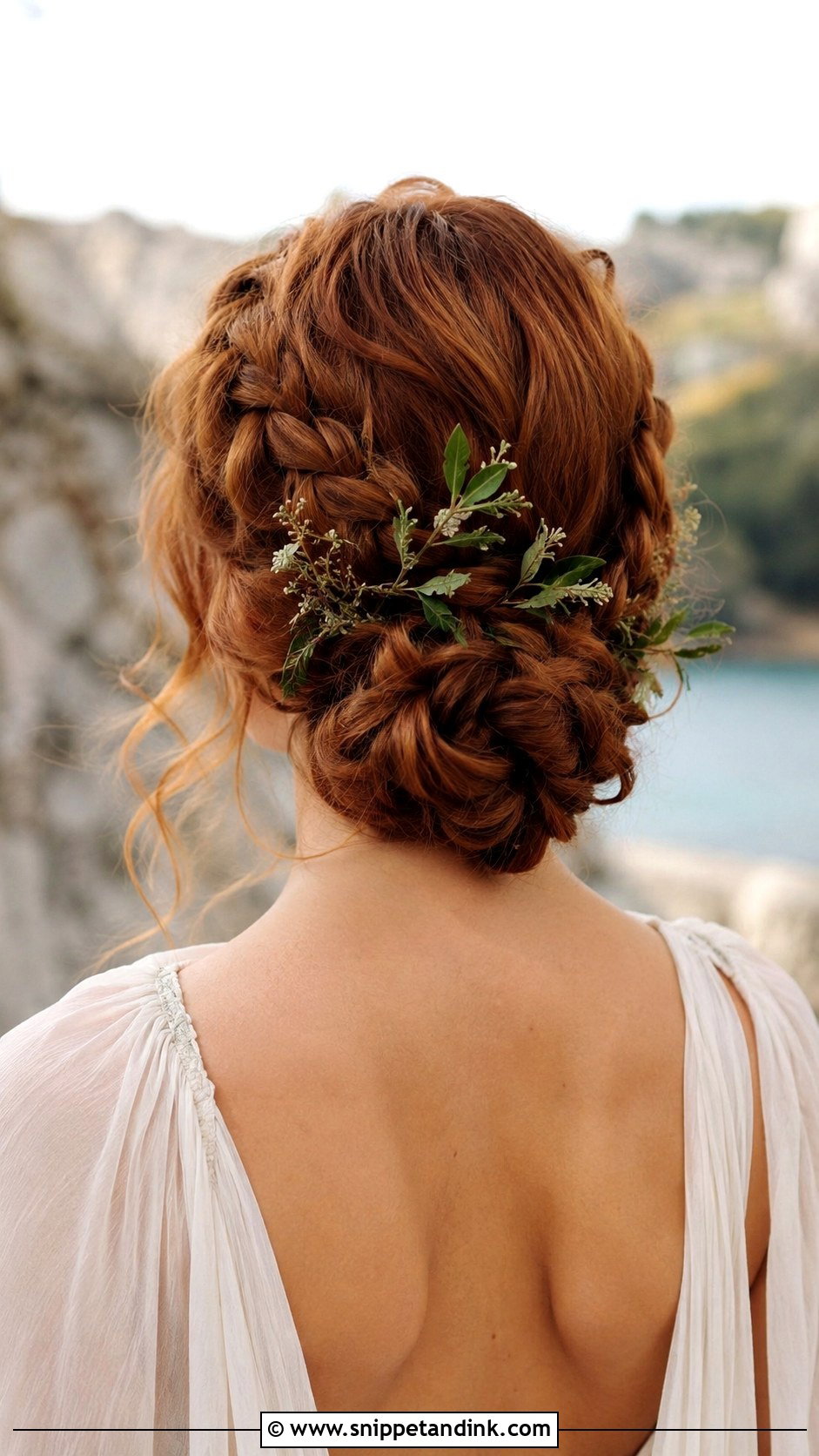
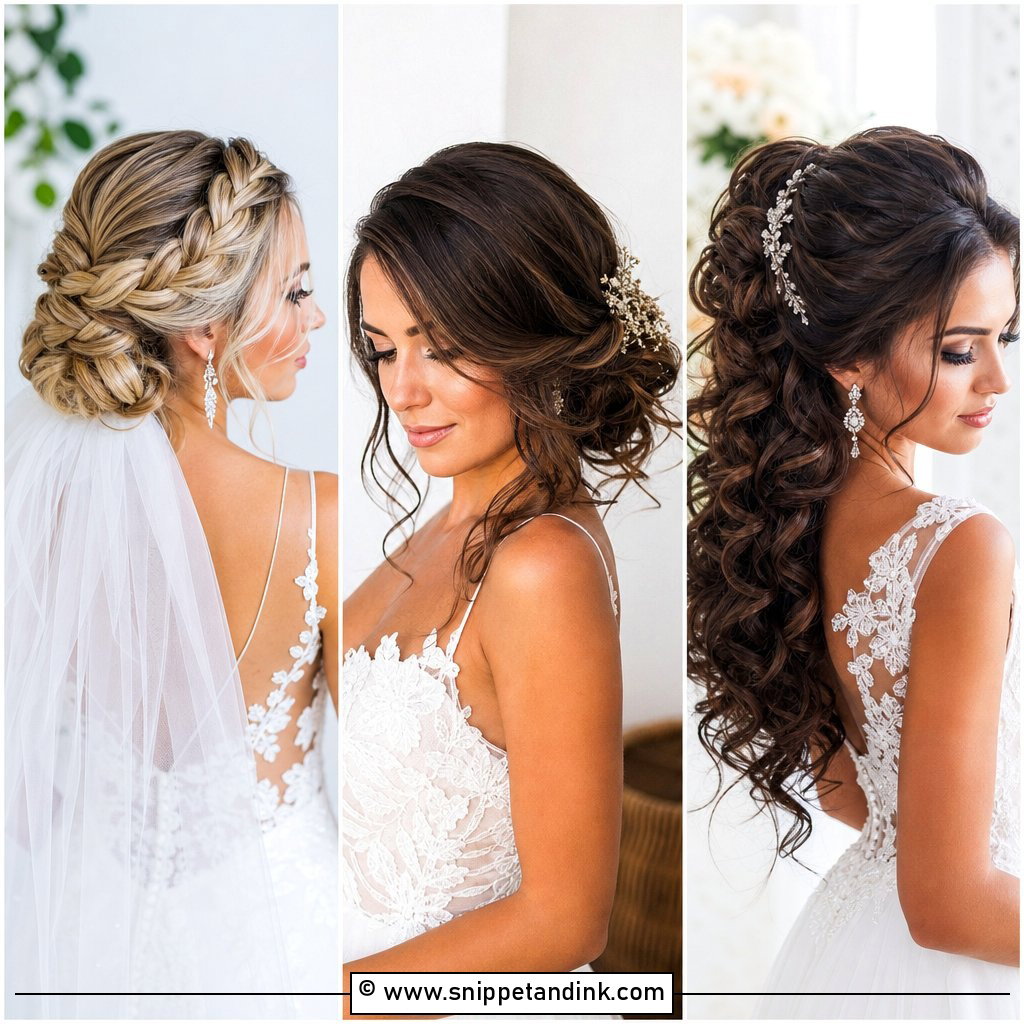
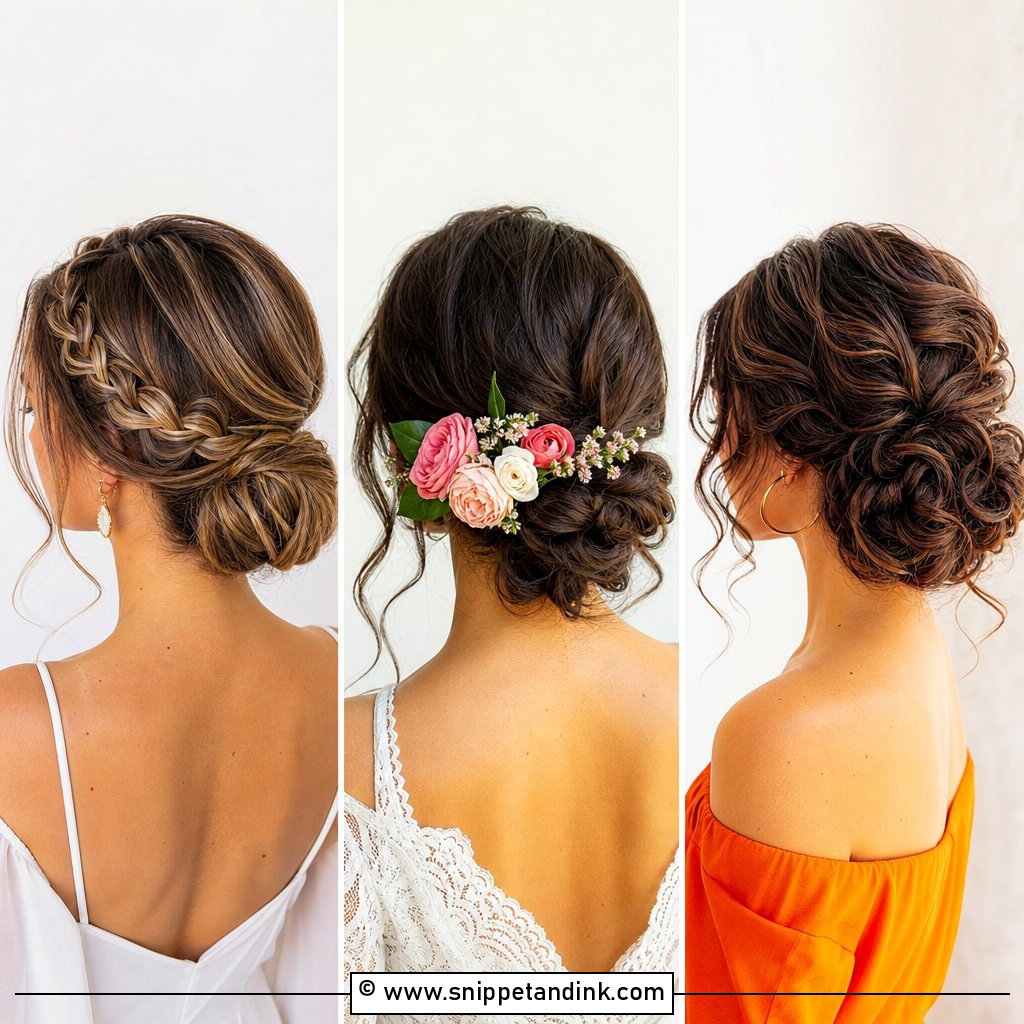
Braids give a plain low bun texture and, just as useful, extra anchor points for pins. I’ll weave one or two plaits into the gathered hair, or frame the bun with a halo braid. Thick, long hair takes it best; fine hair can work if I pancake the braids gently to make them look fuller. Greenery or small blooms tucked along the braid suit a barn or garden setting.
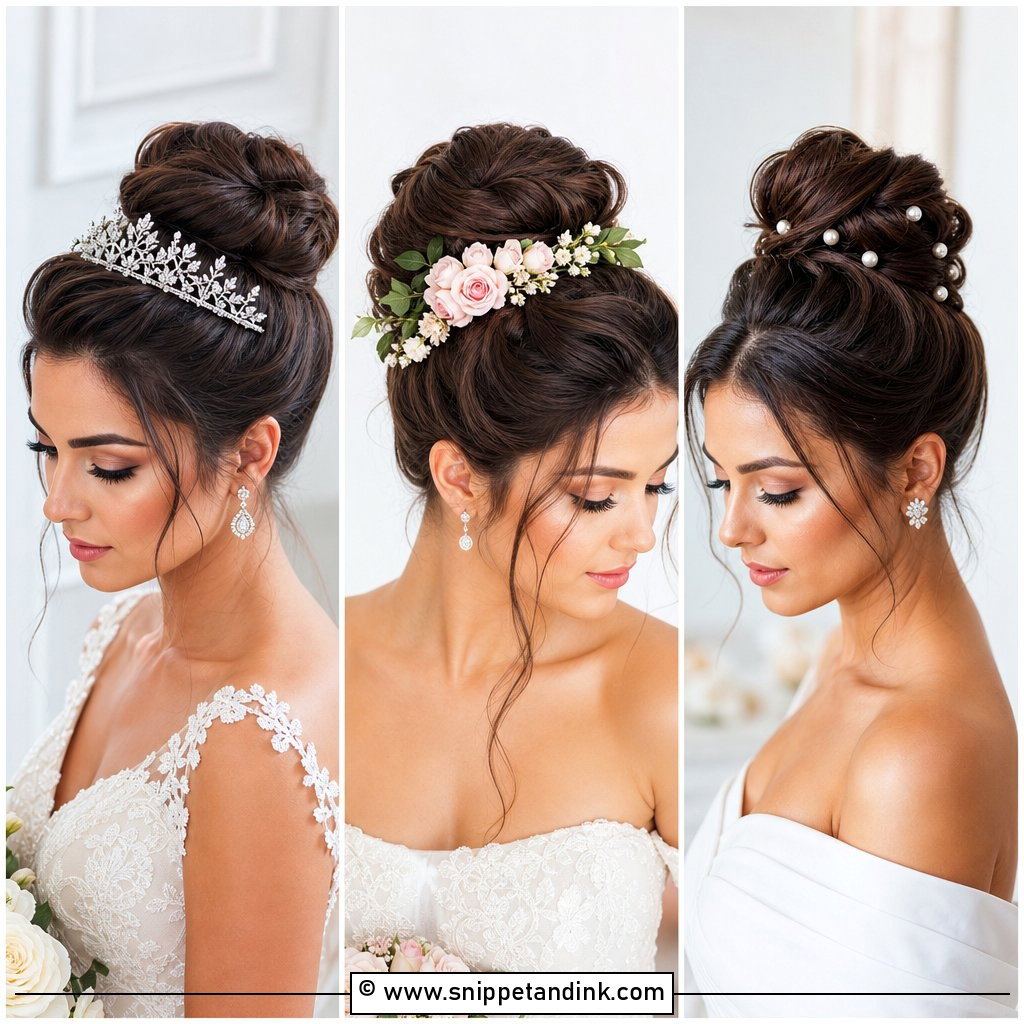
5. High Bun With Pearls
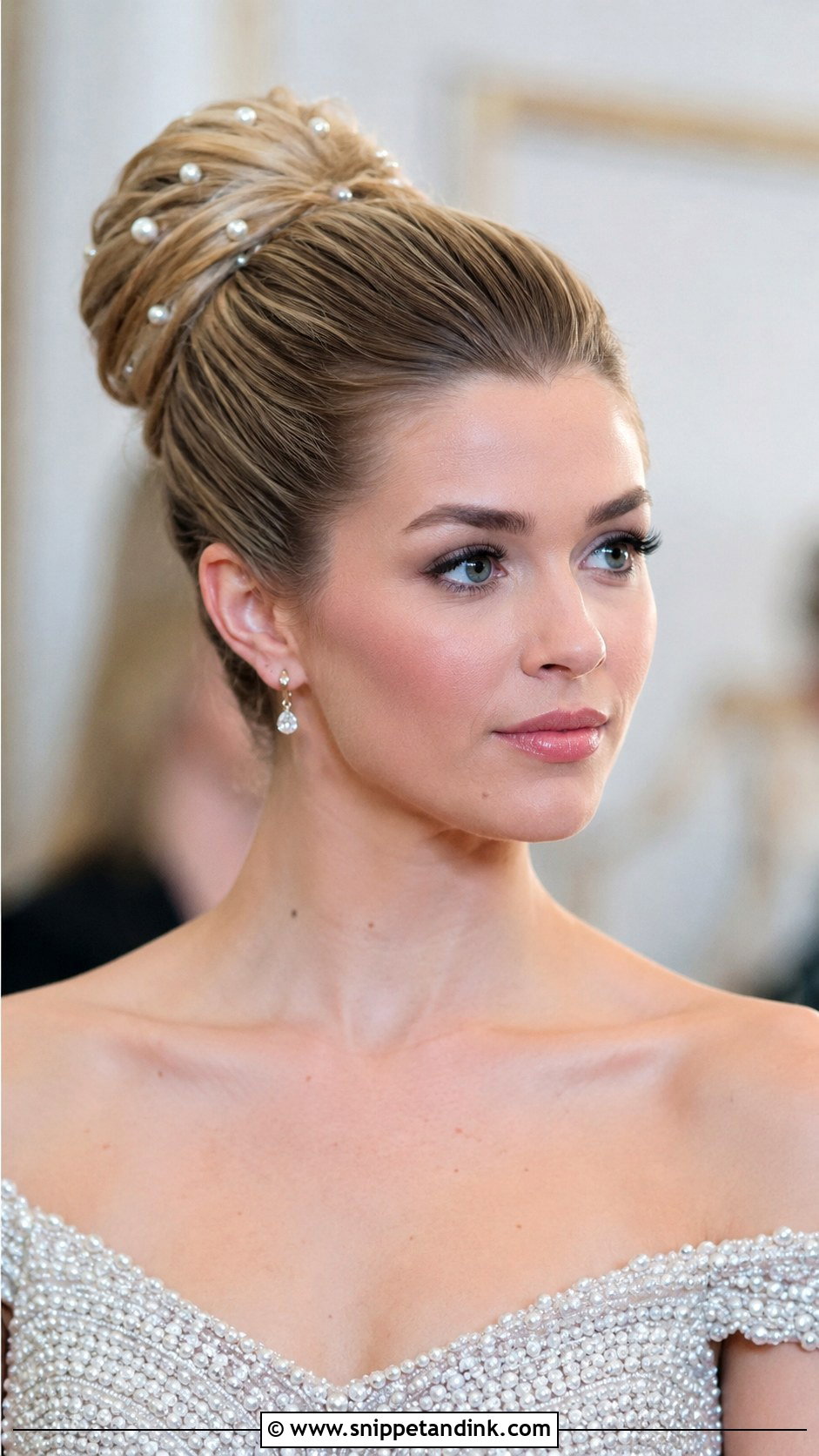
A bun at the crown lengthens the neck and clears the way for earrings and a bare neckline. With strapless and off-the-shoulder gowns it creates a lovely long line from head to shoulder. Pearl pins scattered through it pick up pearl jewelry or beading. The thing I check at the trial is weight: a high bun on very long, heavy hair can pull and cause a headache by evening, so I sometimes thin the bun with a padded base instead of using all the length.
6. Low Bun With Veil
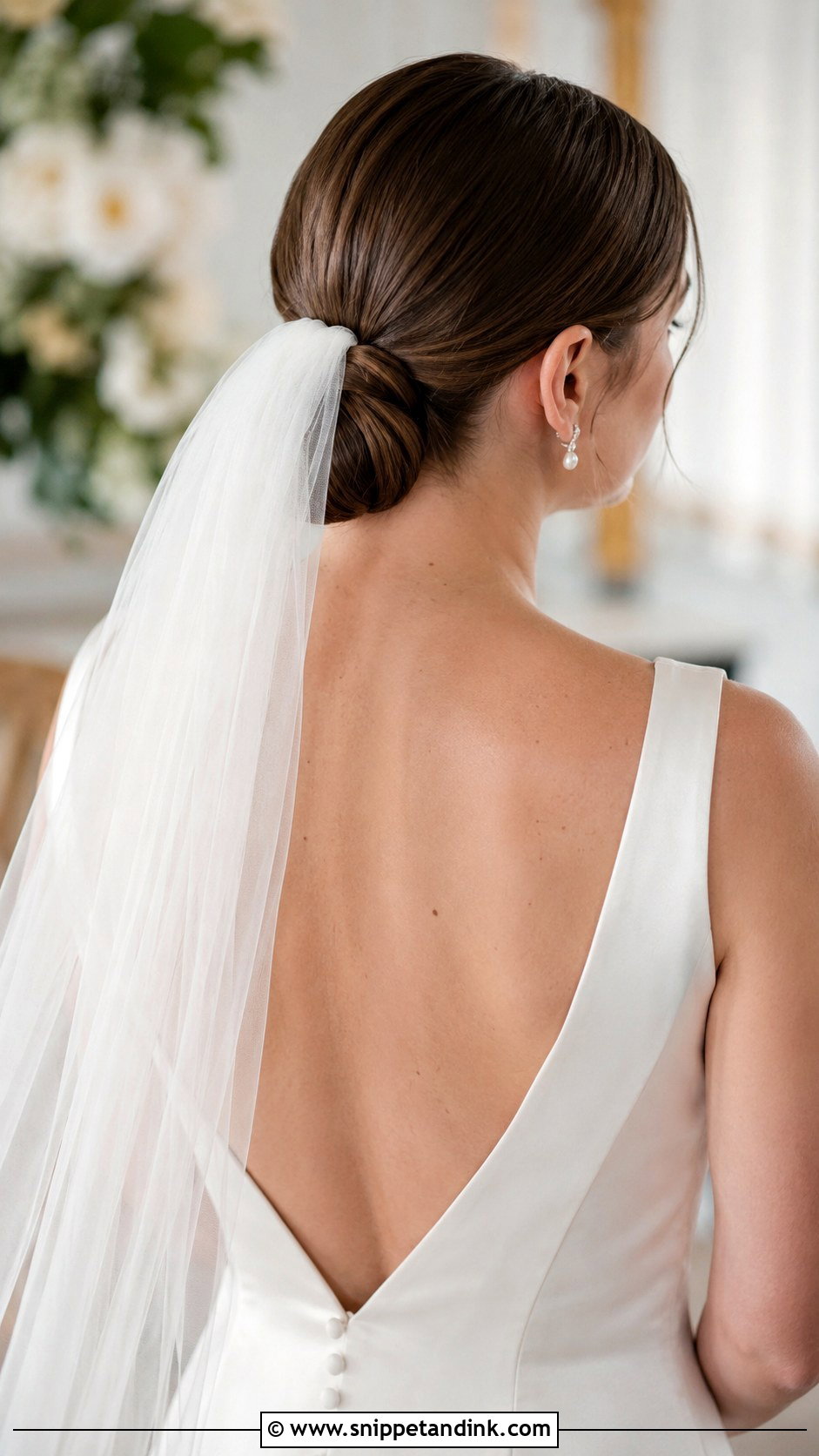
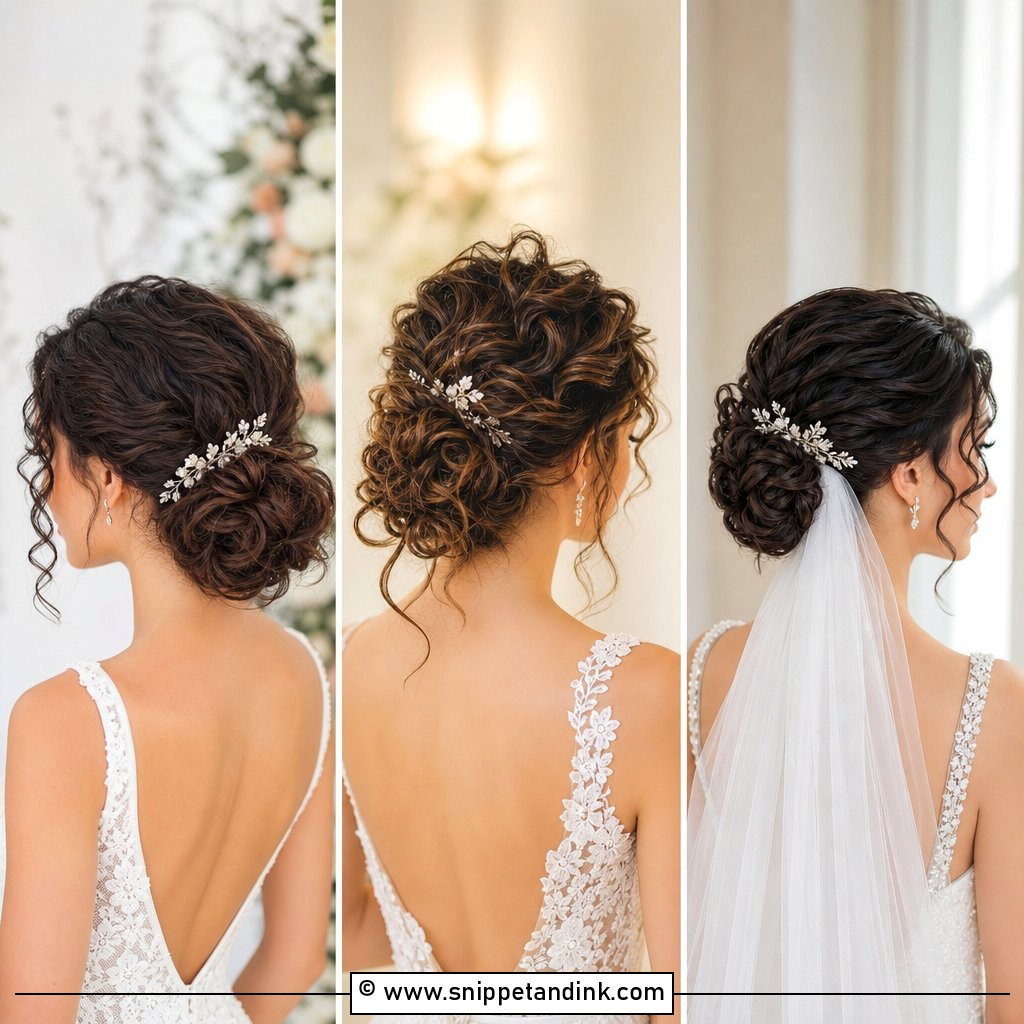
The low bun is my default for veils because it gives the comb something solid to grip. Comb above the bun lets the veil flow over it; comb tucked underneath shows off the bun and is easier to remove at the reception. I anchor the comb into a crossed pair of pins, never just hair, so it doesn’t drag the bun down. Once the veil comes off, the bun still looks finished on its own.
7. Side Bun
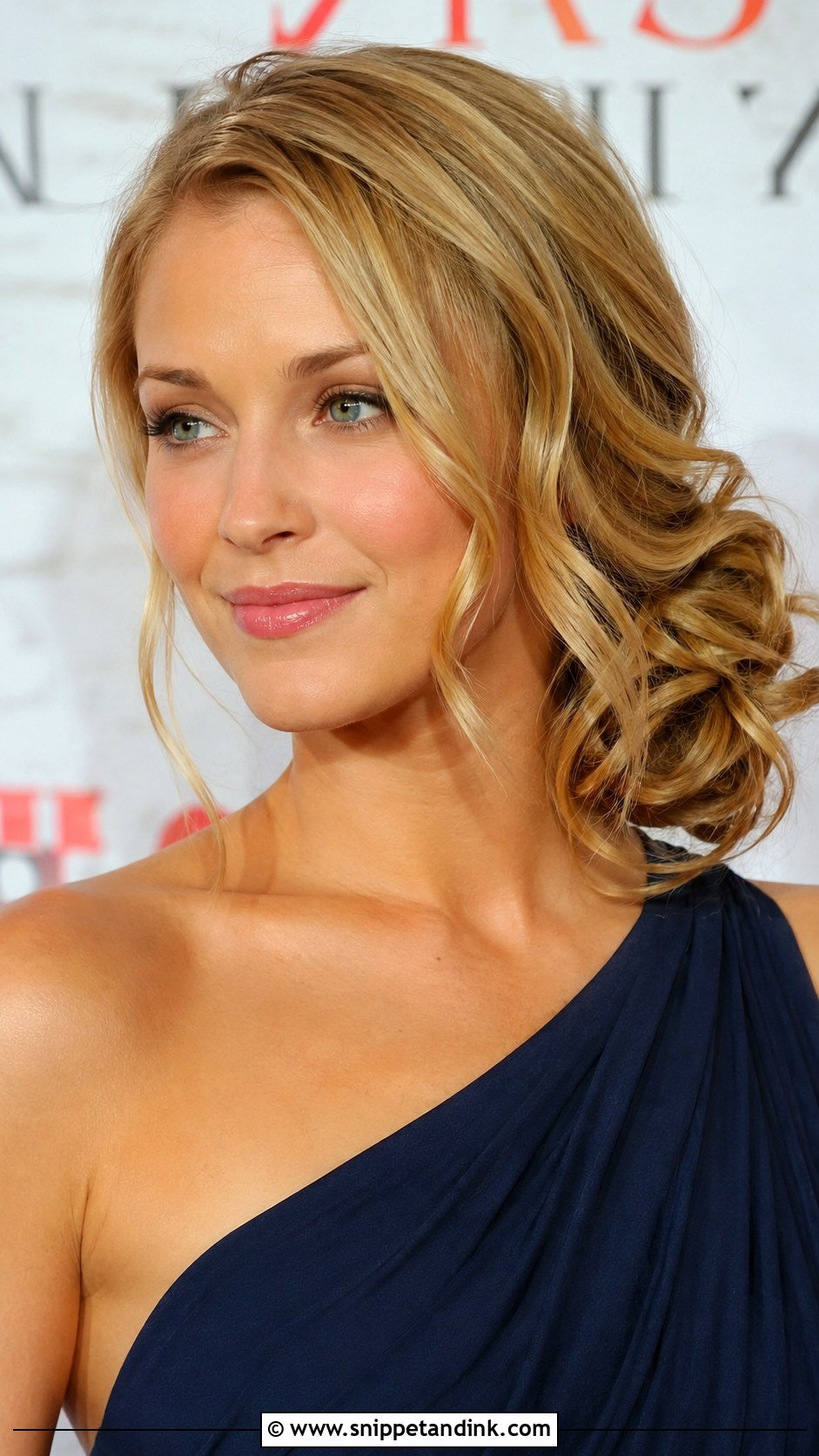
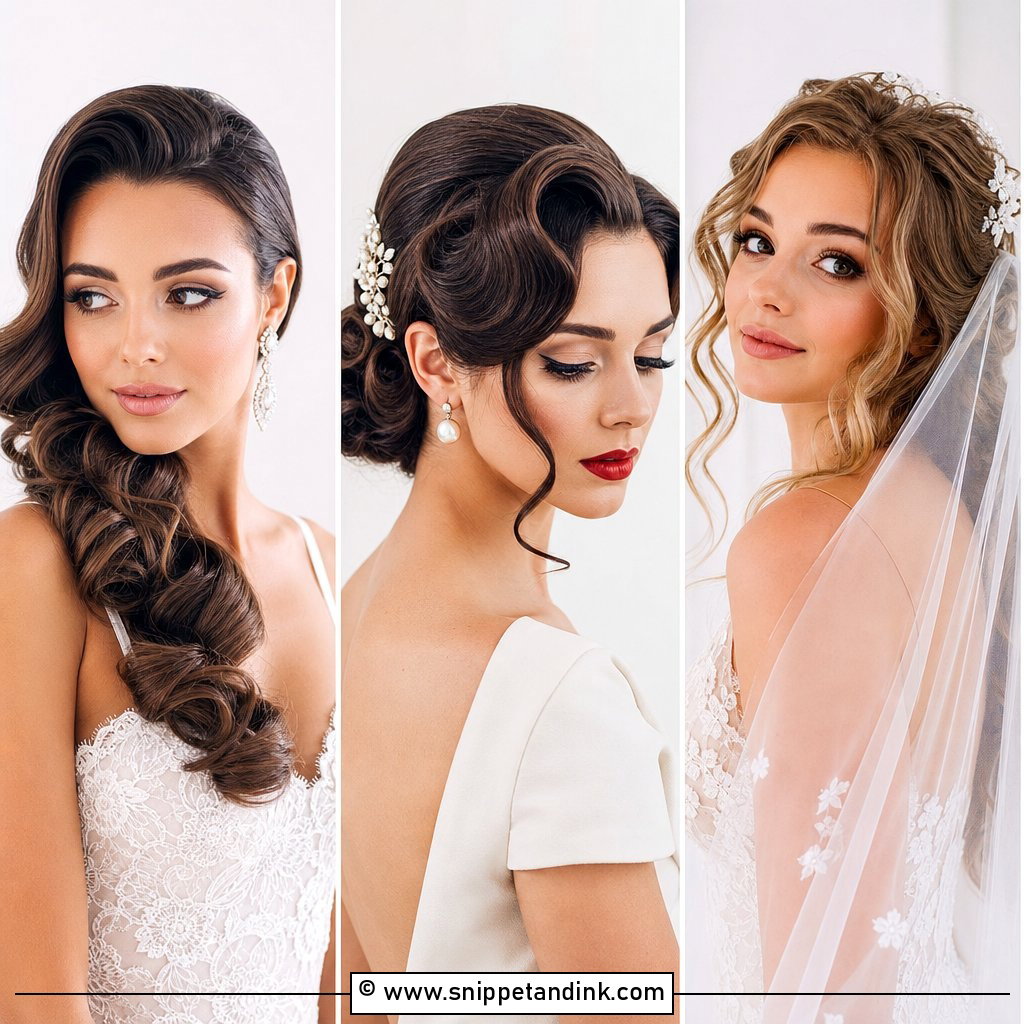
Pulling everything to one shoulder gives an old Hollywood shape and shows off the earring on the open side. I set the hair in soft waves first and pin the bun just behind the ear so it doesn’t sit on the shoulder strap. It pairs naturally with one-shoulder and asymmetric gowns. Do think about which side faces your partner at the altar and in most photos; I usually place the bun on the side the camera won’t see during the vows.
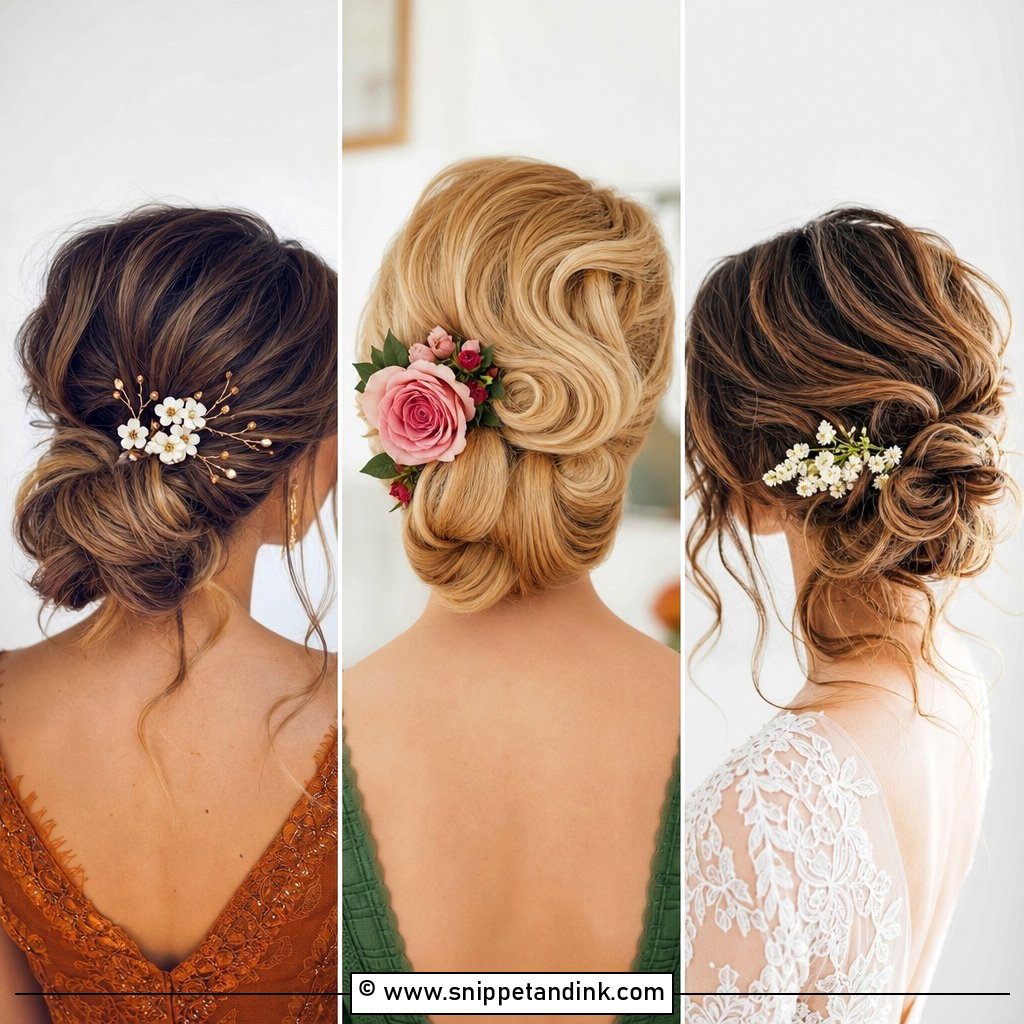
8. Floral Low Bun
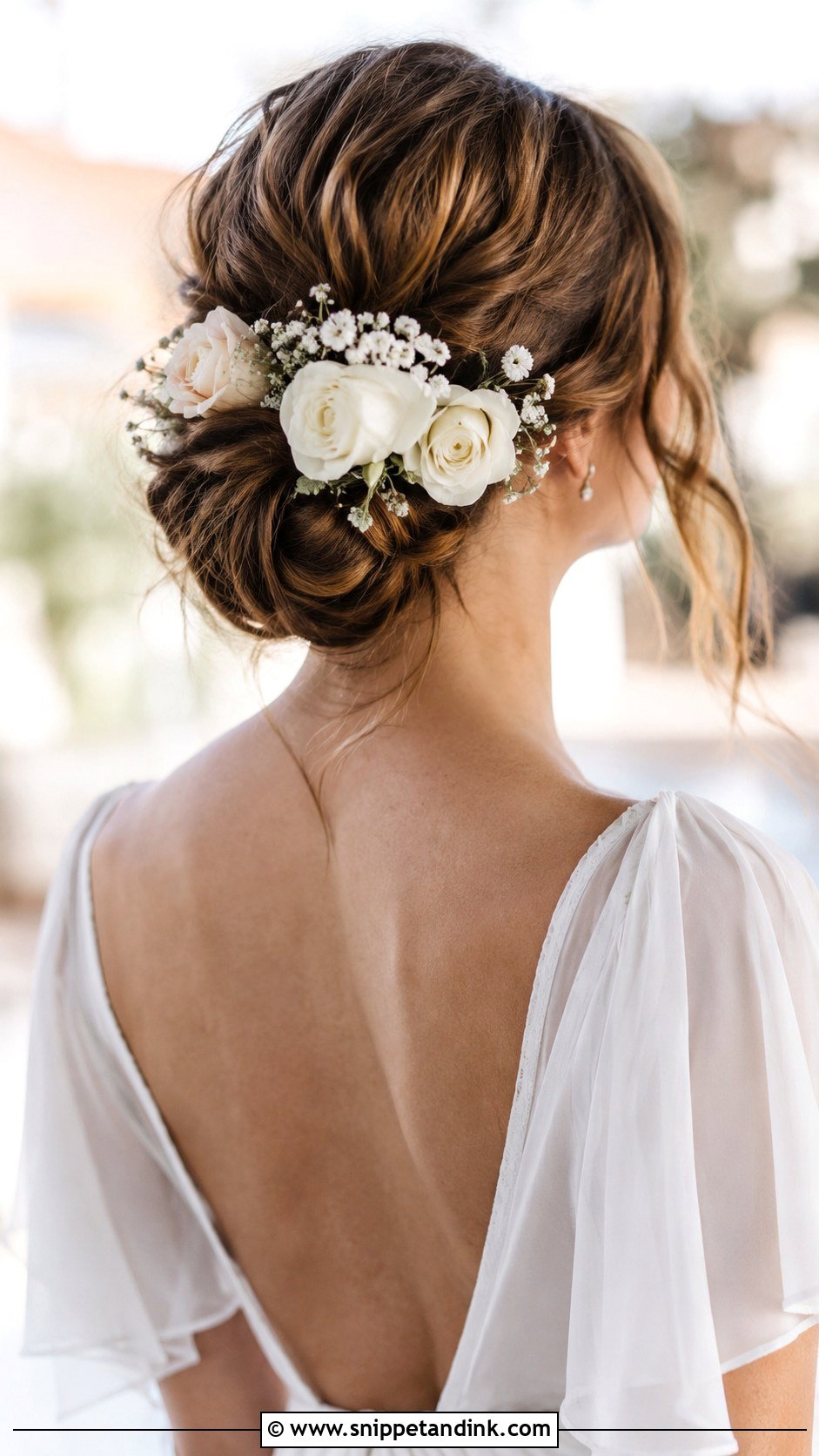
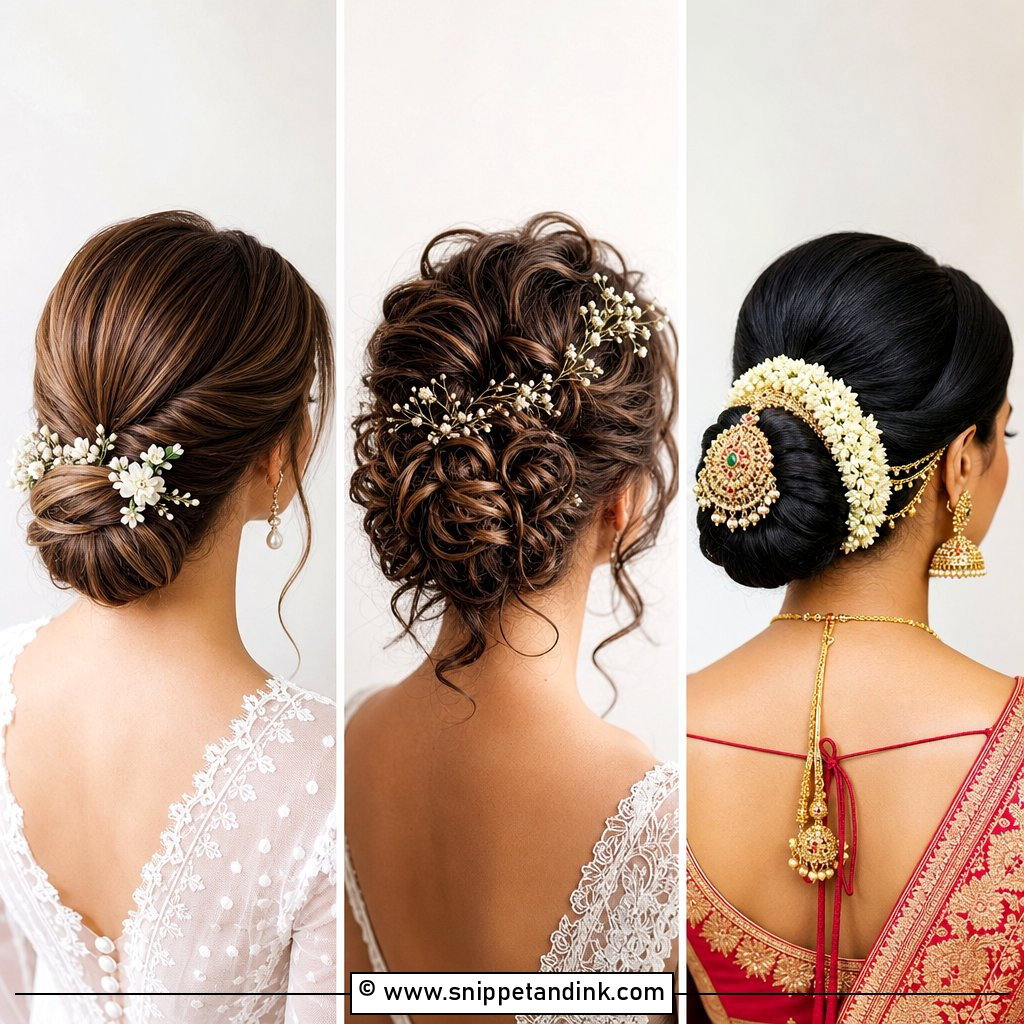
Flowers around a low bun tie your hair to the bouquet. I prefer sturdy blooms like spray roses, waxflower or baby’s breath, wired by the florist into small picks, because soft petals bruise and wilt against warm hair. Cluster them on one side or scatter a few around the bun. Ask the florist for the hair pieces in a box, kept cool until the last moment.
9. Twisted Bun
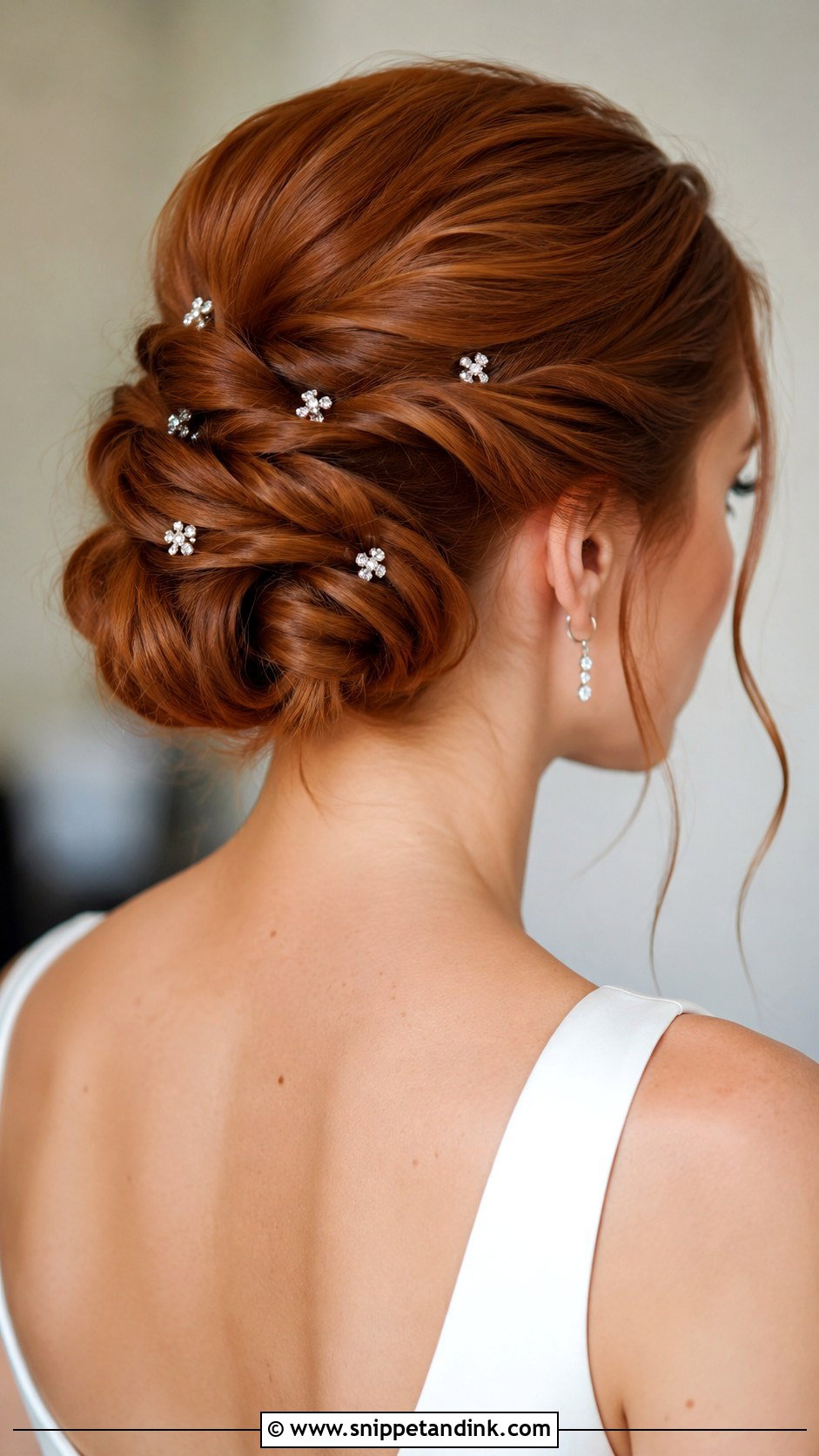
Twisted sections wrapped around each other give depth without any accessories. Twists hold better than plain wrapped hair because each one locks in its own pins. Medium to long hair works; I loosen the twists slightly for softness or keep them tight for polish. The back view is the point here, so make sure your photographer gets a shot of it.
10. Boho Low Bun
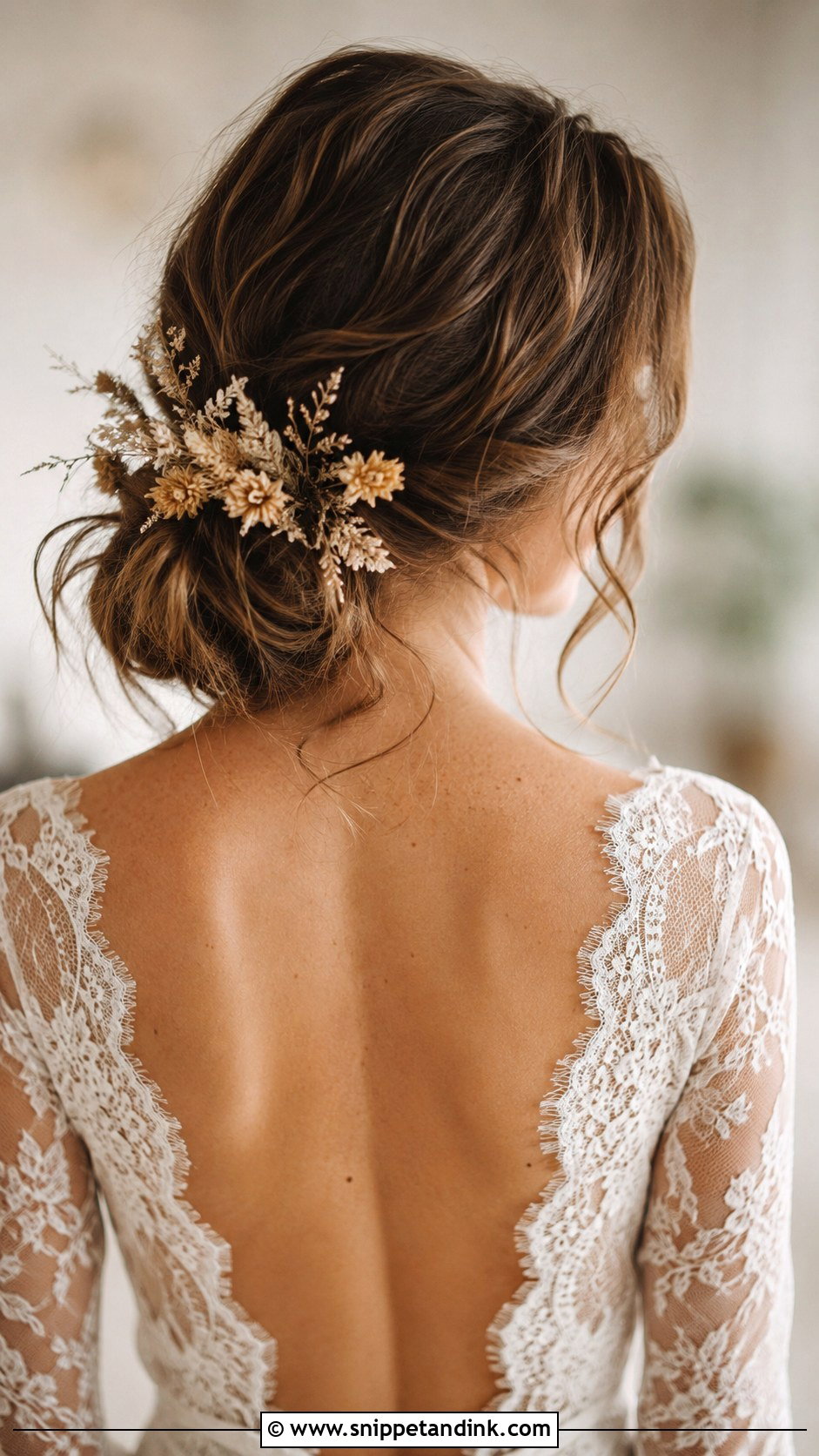
Loose waves, tendrils at the face and a loosely gathered shape are the boho bun’s whole recipe. Natural waves and curls make my job easier because they hold texture without stiff product. Beach and woodland ceremonies suit it, though wind will pull out more pieces than you planned, so I leave fewer loose strands for exposed outdoor venues. Braids, greenery or dried florals add character.
11. Bun With Fresh Greenery
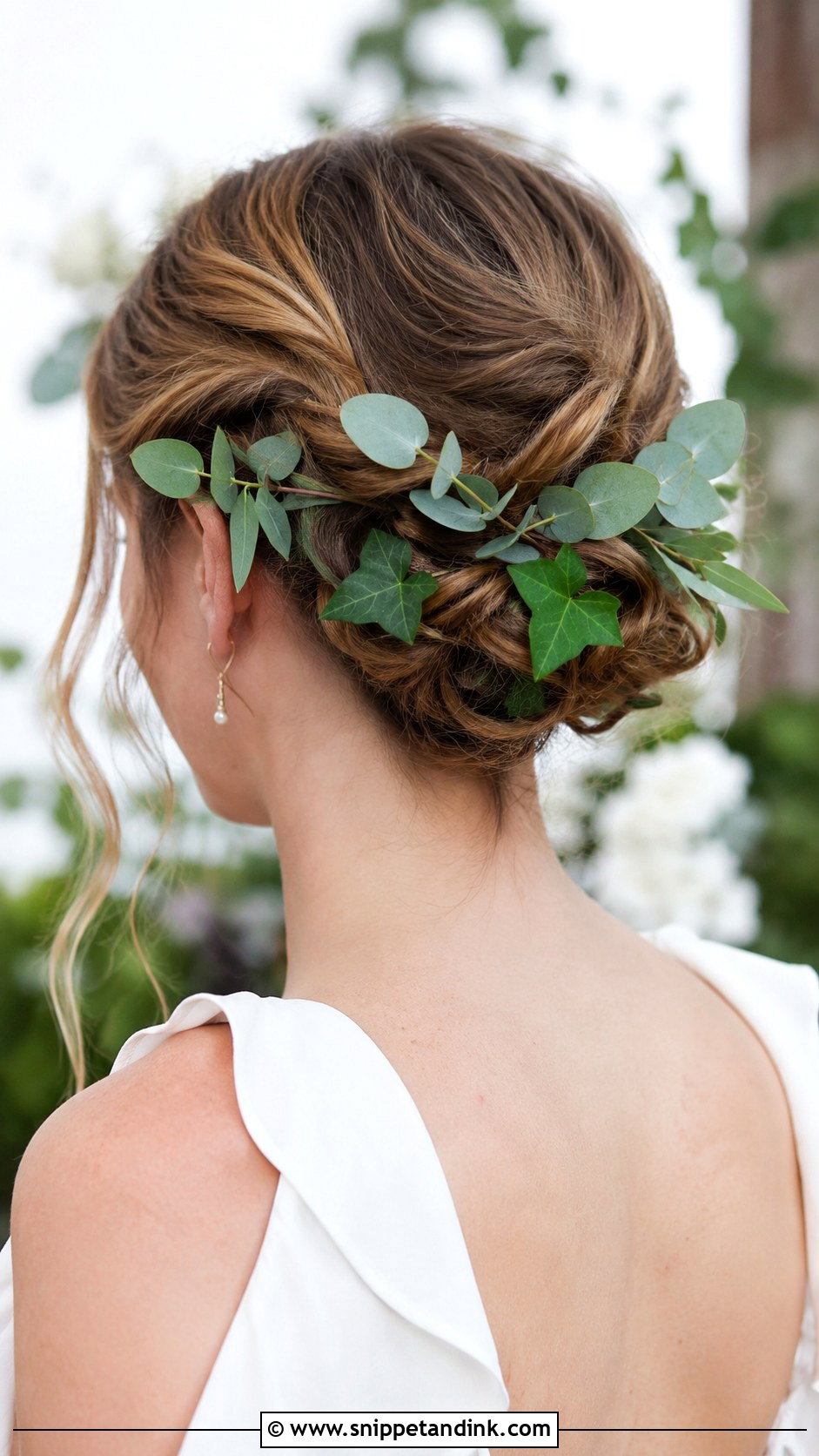
Eucalyptus, ferns or ivy woven around a bun feel organic and look good against every hair colour. Greenery holds up longer than delicate petals over a long day, which makes it a practical swap for flowers. I keep sprigs short and pin them along the base so they don’t scratch or catch on the veil. A few small blooms can sit among the leaves.
12. Sleek High Bun
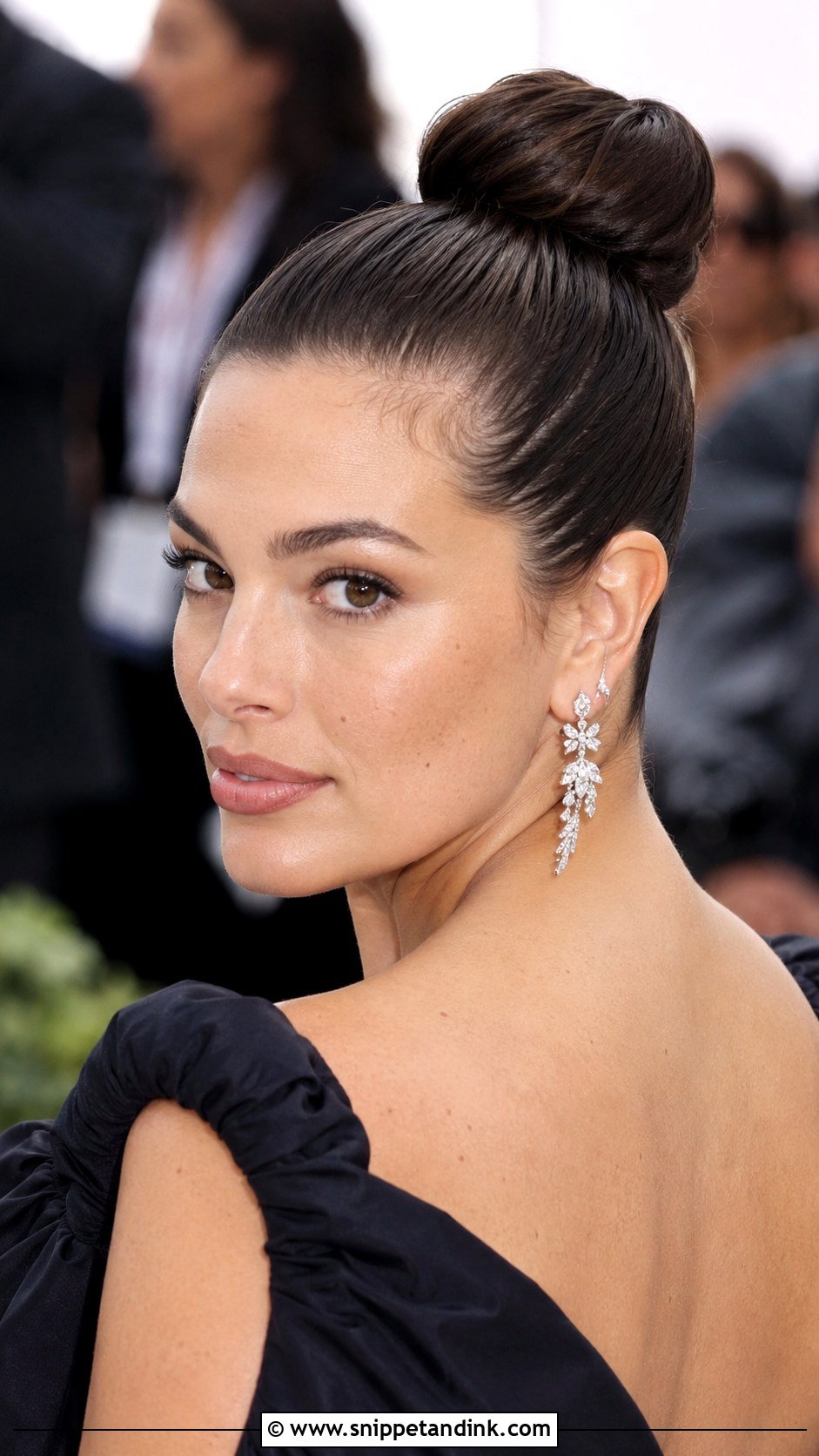
A ballerina-tight high bun is pure drama and pairs with bold earrings and structured gowns. It’s very revealing: any bump in the smoothed sides shows. I brush it up in sections and secure it with two elastics, one tight and one to tidy. If you have a sensitive scalp or tend to get tension headaches, I’d lower it slightly; even a couple of centimetres makes a difference by the end of the night.
13. Curly Bun
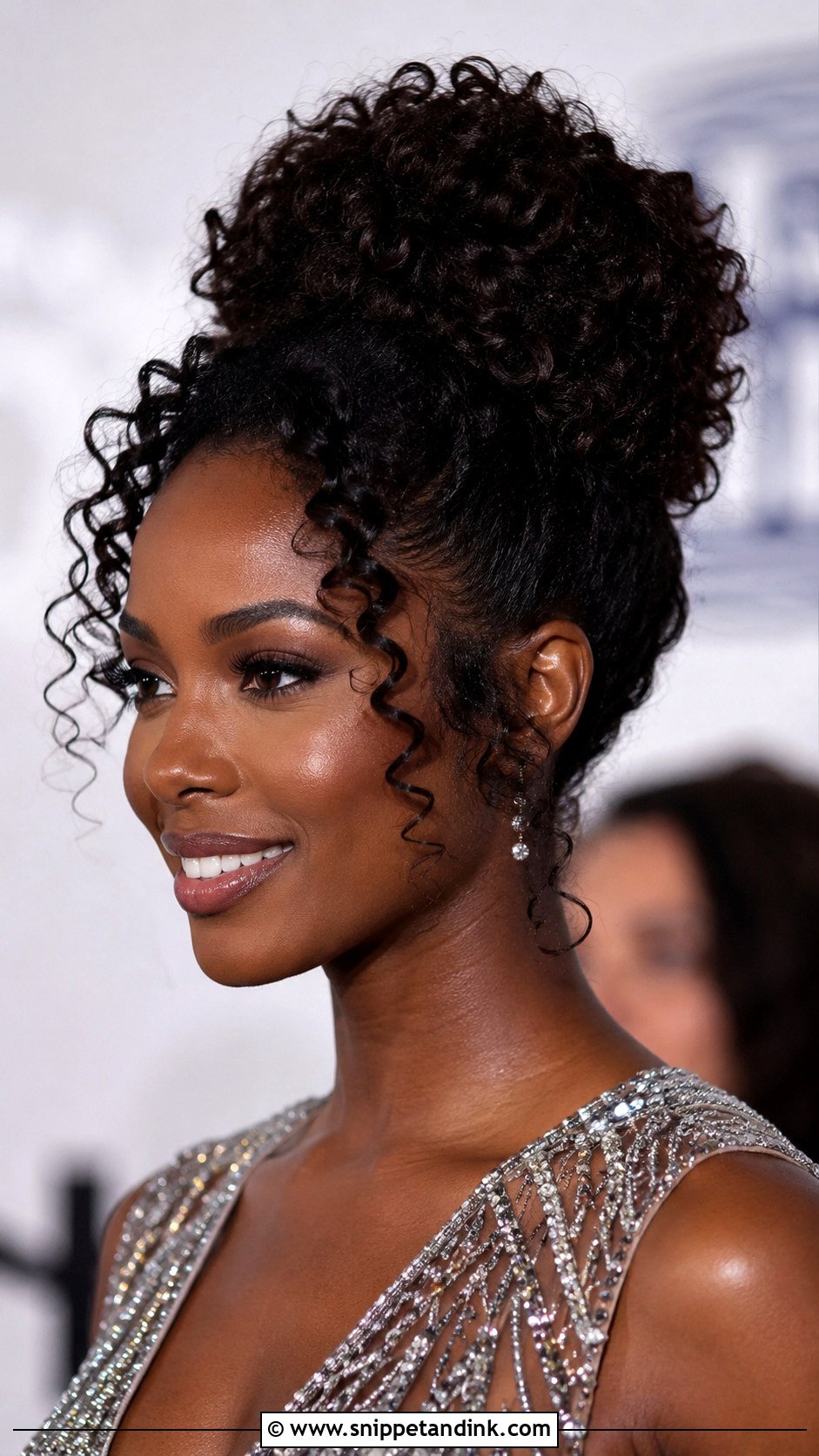
Curly hair makes an excellent bun because the texture grips pins and gives volume for free. I work with the curl pattern rather than brushing it out, gathering with my hands and a wide-tooth comb, and I use a moisturising styler so the curls stay defined. A few curls loose at the front keep it soft. A decorative comb sits well in coils, and the whole shape holds through a humid day better than straightened hair does.
14. Braided Crown Bun
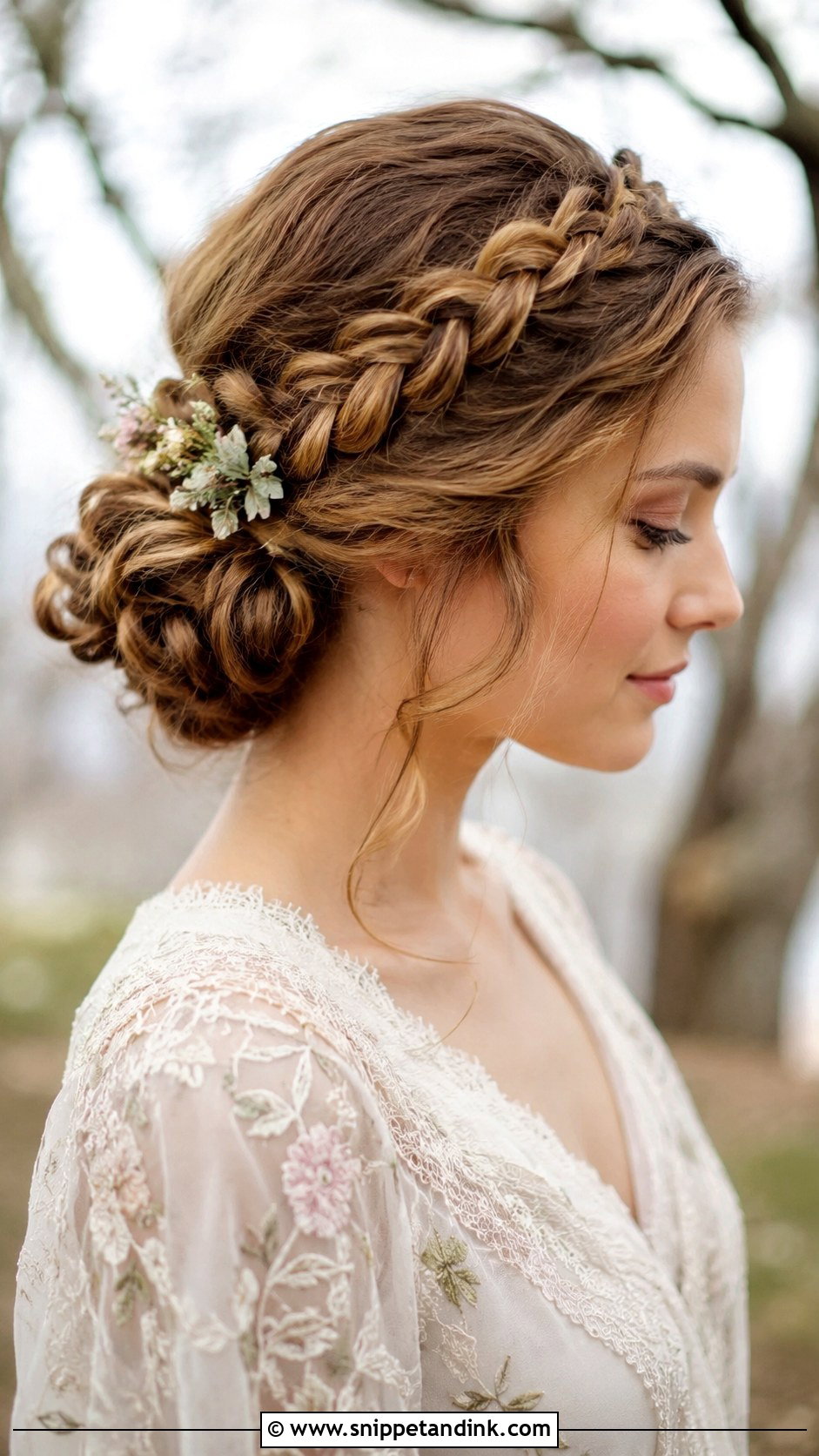
A braided halo wrapped around the head above a low bun looks regal, and it’s very secure because the braid itself is pinned flat all the way round. Long, thick hair suits it; shorter layers tend to poke out of the braid, so I’d add a few clip-in pieces for those. Small flowers or pearls tucked into the braid are plenty.
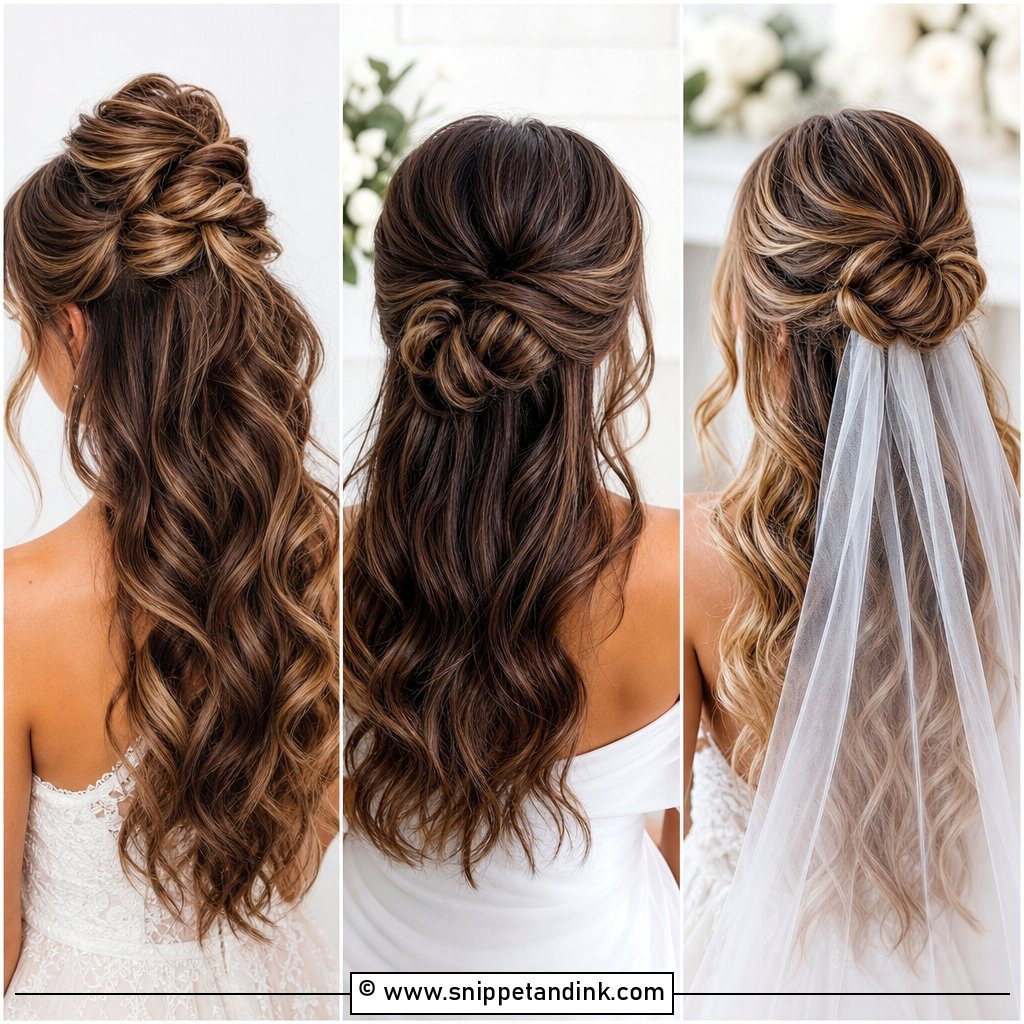
15. Low Bun With Face-Framing Pieces
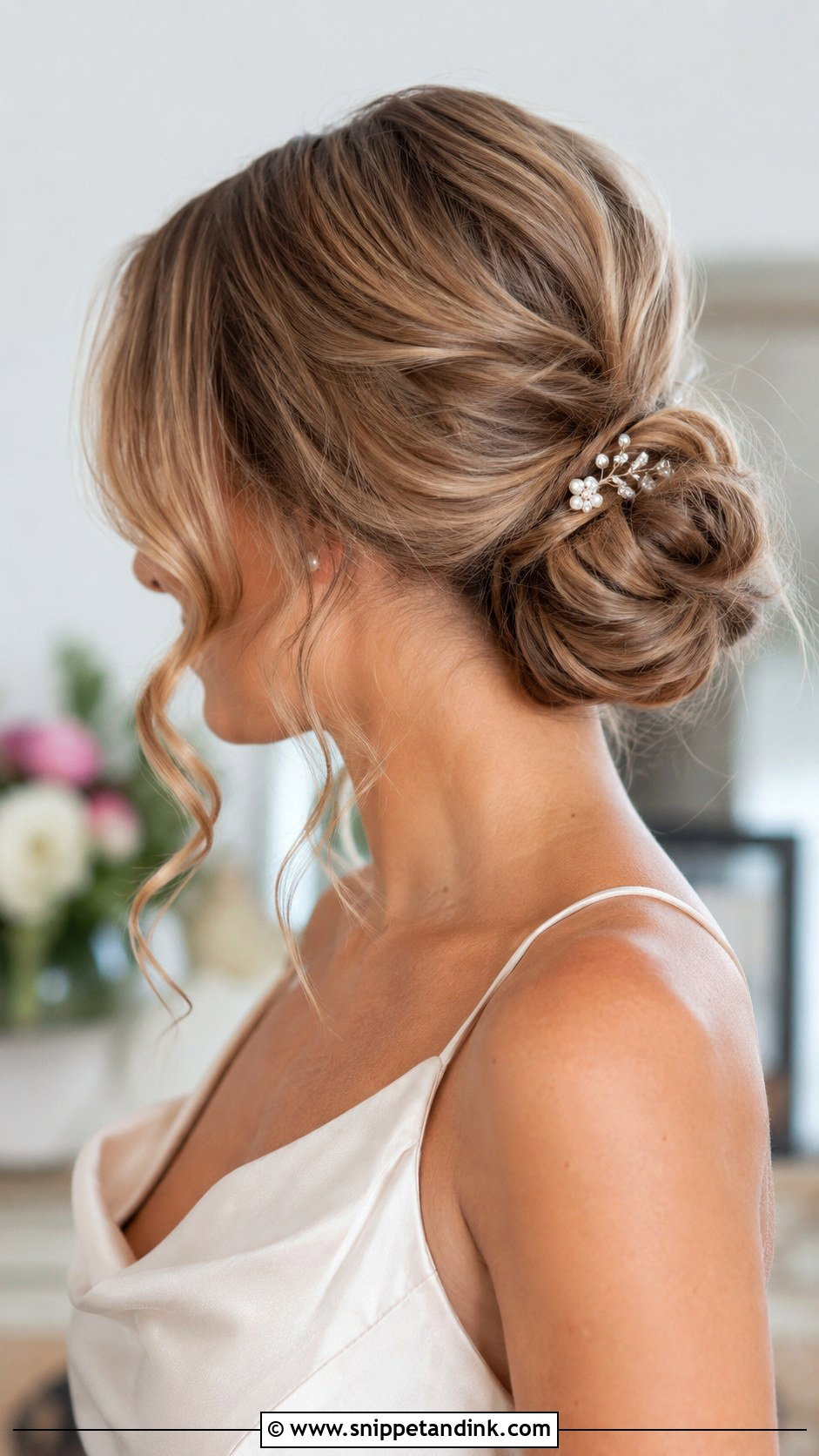
Face-framing pieces soften any low bun. I choose them deliberately: two thin sections in front of the ears, curled away from the face, rather than whatever falls out. Too many and they look like the style is coming down. Curl them with a smaller iron than the rest, because loose pieces relax faster than pinned hair.
16. Vintage Roll Bun
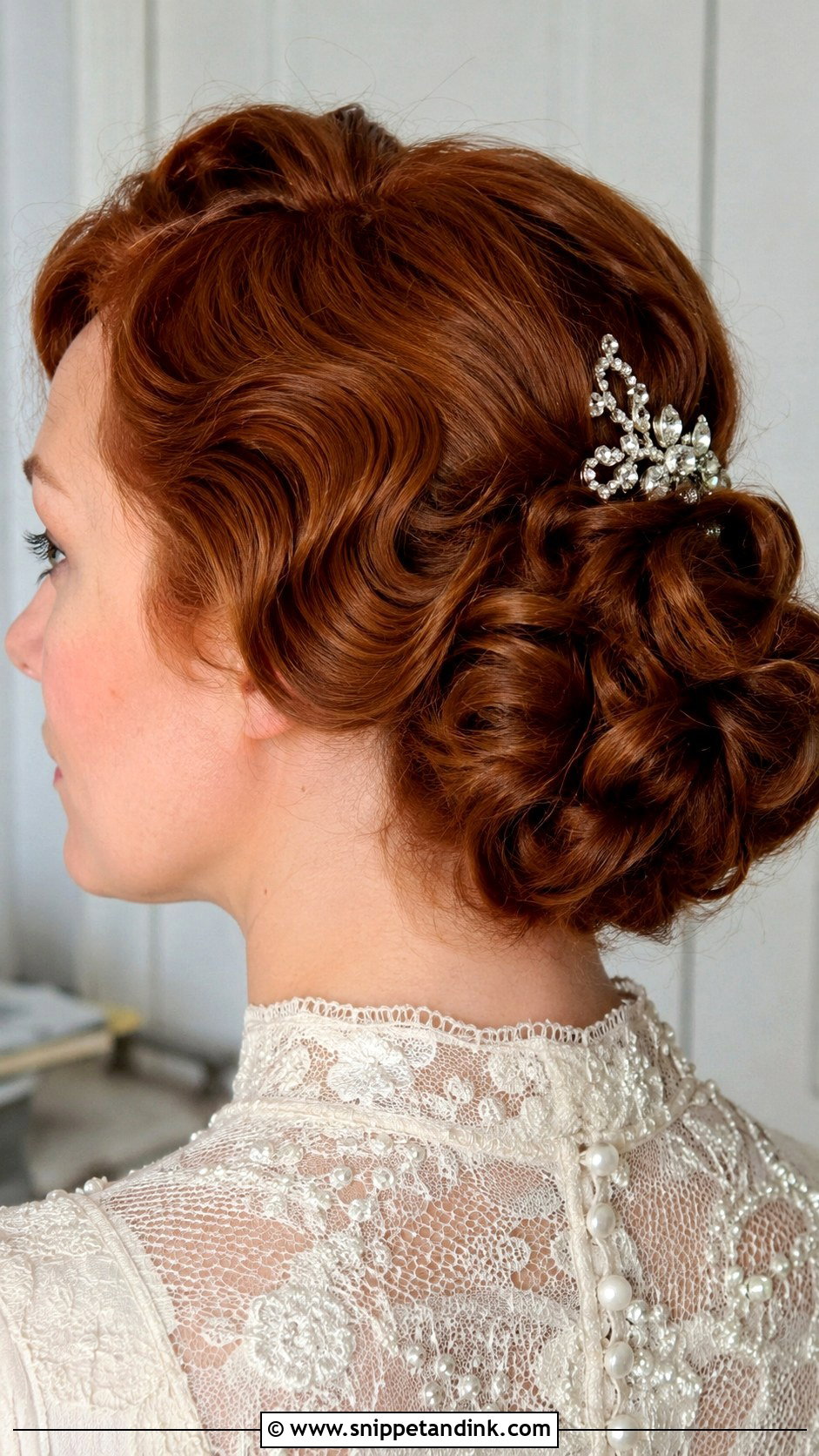
Soft victory rolls or pinned waves at the front lead back into a structured bun for a retro feel. The rolls need setting, either with a hot roller set or pin curls, and plenty of patience. They suit lace gowns and vintage themes, and a jewelled comb or birdcage veil completes them. Very fine, slippery hair struggles to hold the rolls without a good texturising spray first.
17. Half-Up Bun
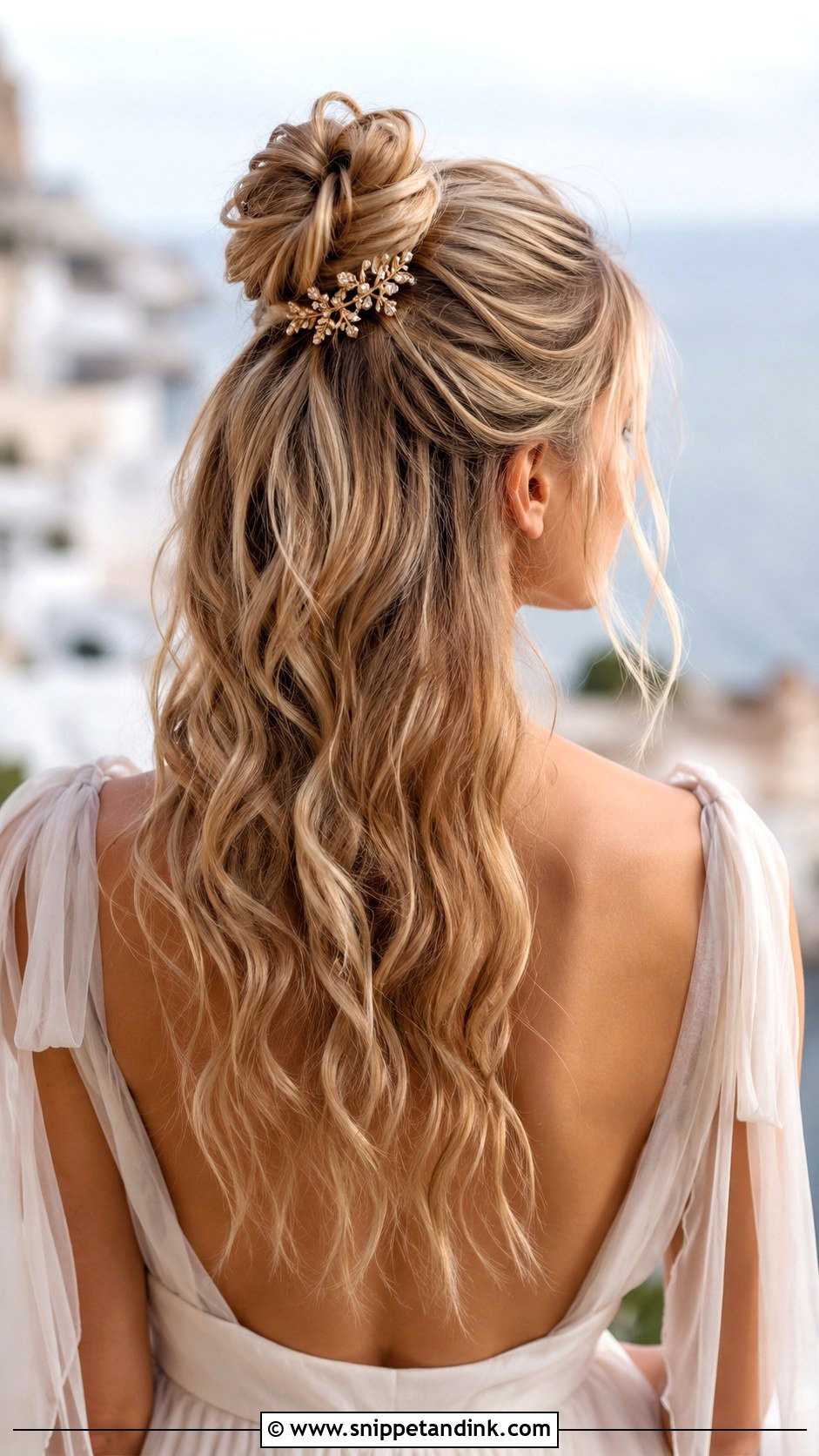
Half-up is half updo, half hair down, and the loose half is the part that needs looking after. I curl it with a strong hold and let it set completely cold before touching it, or it’ll fall flat by the speeches. The bun on top can be small and neat or full with crown volume. Flowers or a clip at the base finish it. Humid outdoor days are hard on the loose lengths, so plan for a touch-up.
18. Bun With Hair Vine
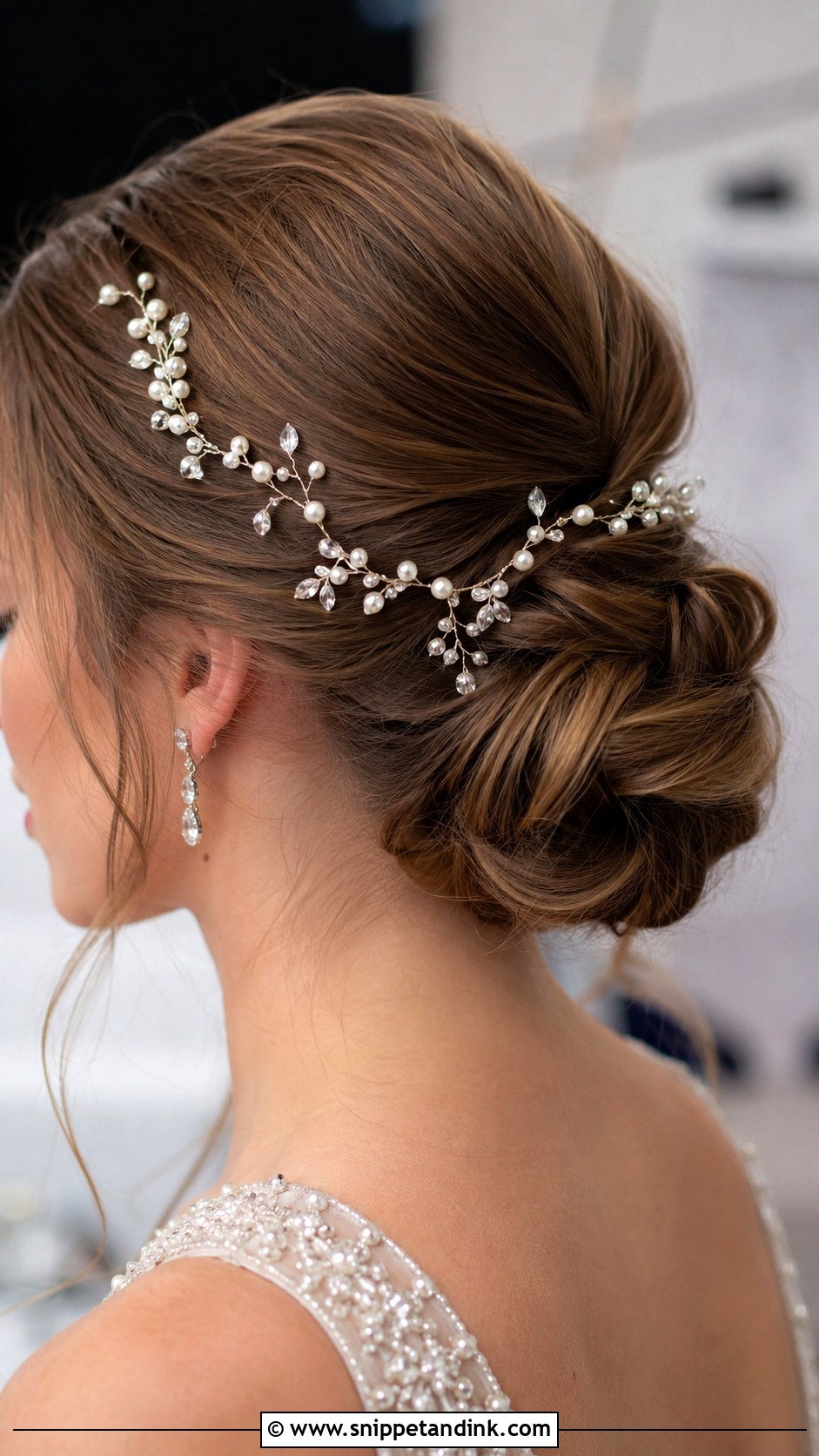
Hair vines are flexible wire with crystals, pearls or leaves that I weave around the bun and pin at several points. They work on sleek and messy buns alike. The trick is to secure the vine into pins rather than hair, so it can’t slide or pull. Place it along the bun or across the crown, and bring it to the trial so I can plan where the ends hide.
19. Low Bun With Center Part
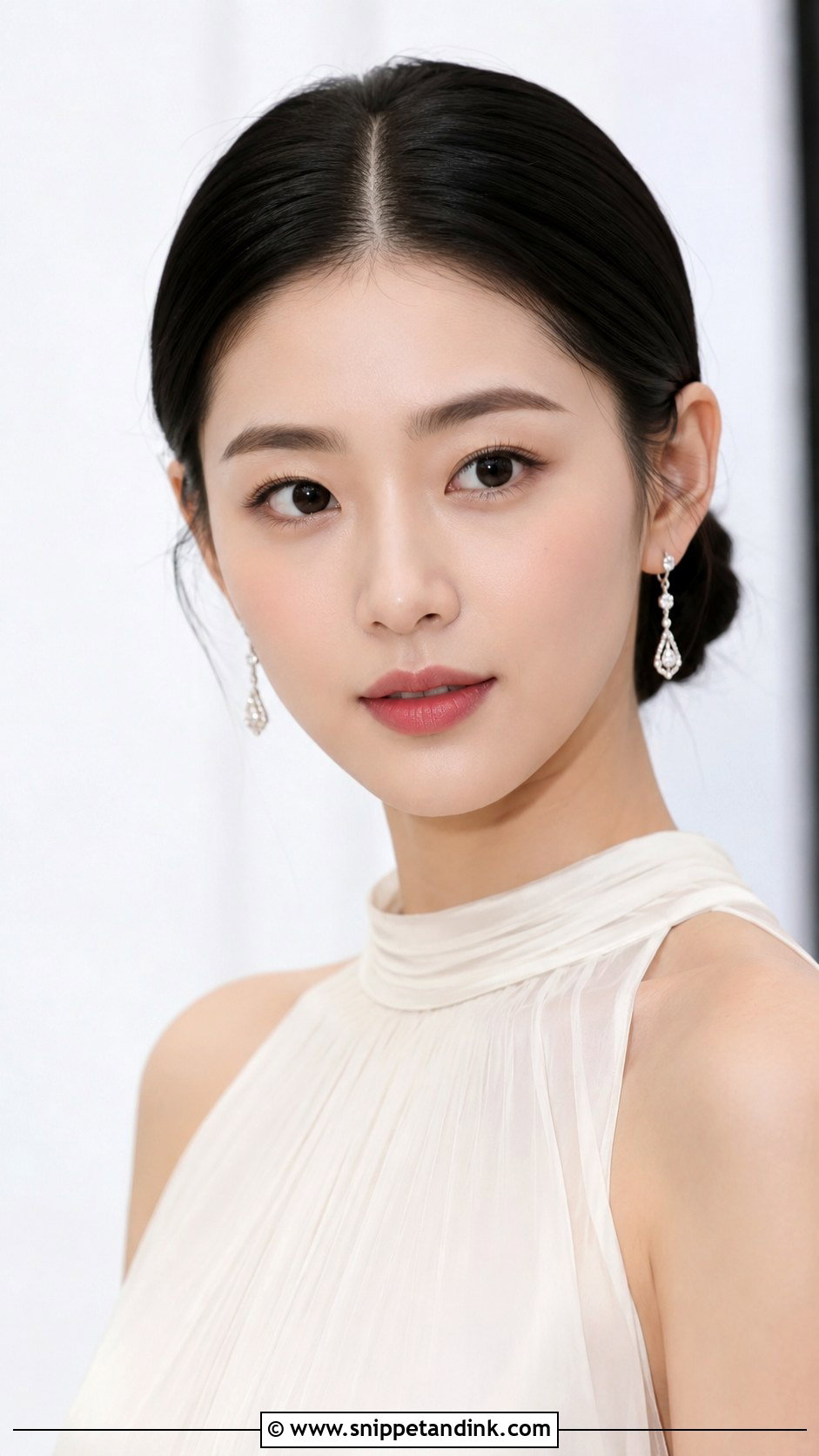
A centre part splits the face evenly, so it rewards symmetrical features and a confident brow line. I check it from the front in a mirror before committing, because a centre part shows any natural asymmetry in the hairline. Sleek strands read modern; soft waves along the sides read romantic. It sits well with minimalist and contemporary gowns.
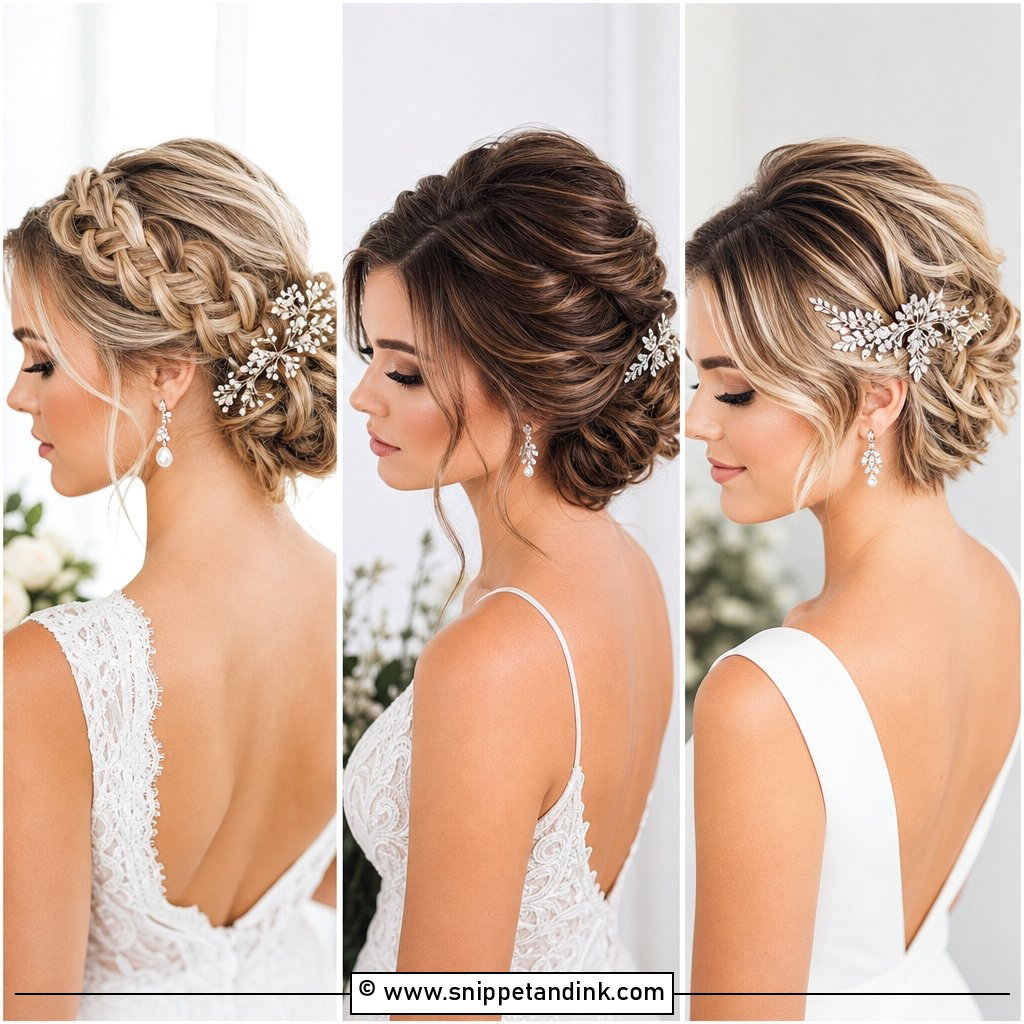
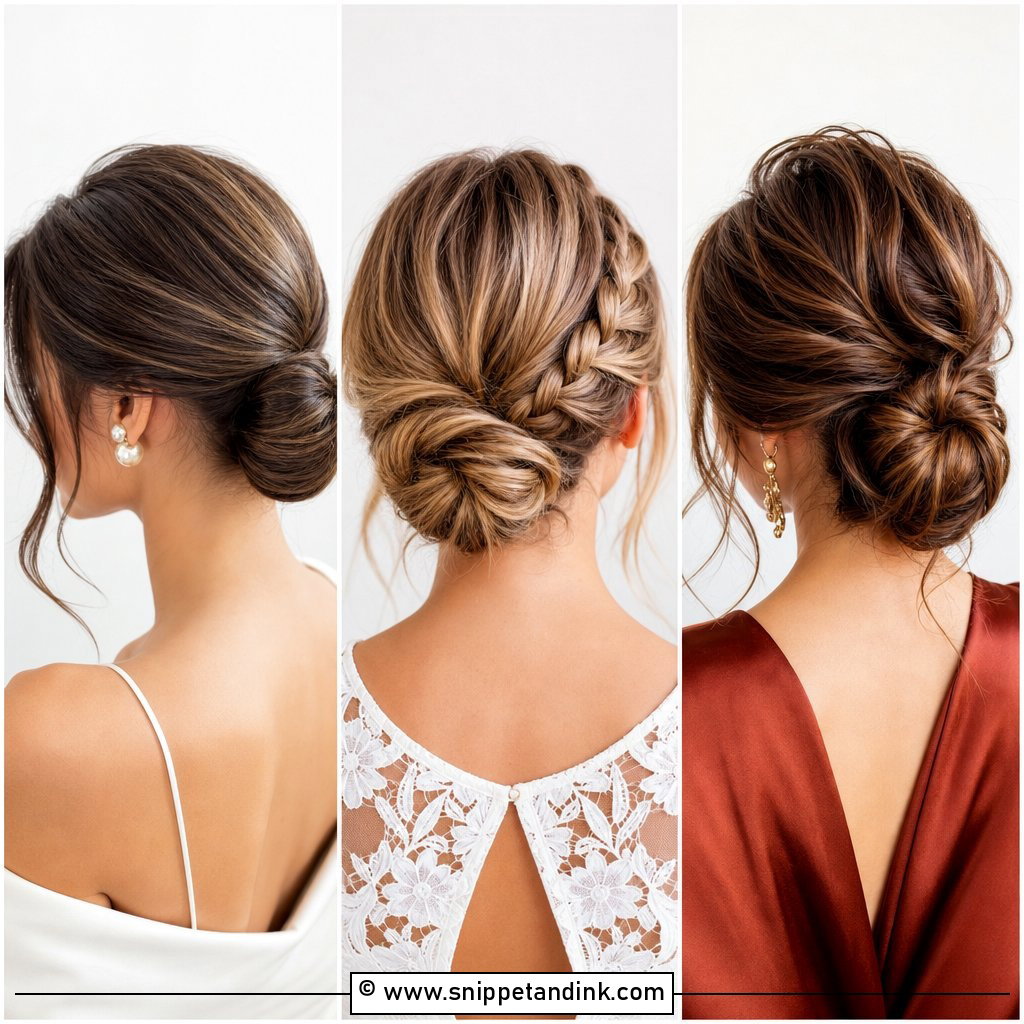
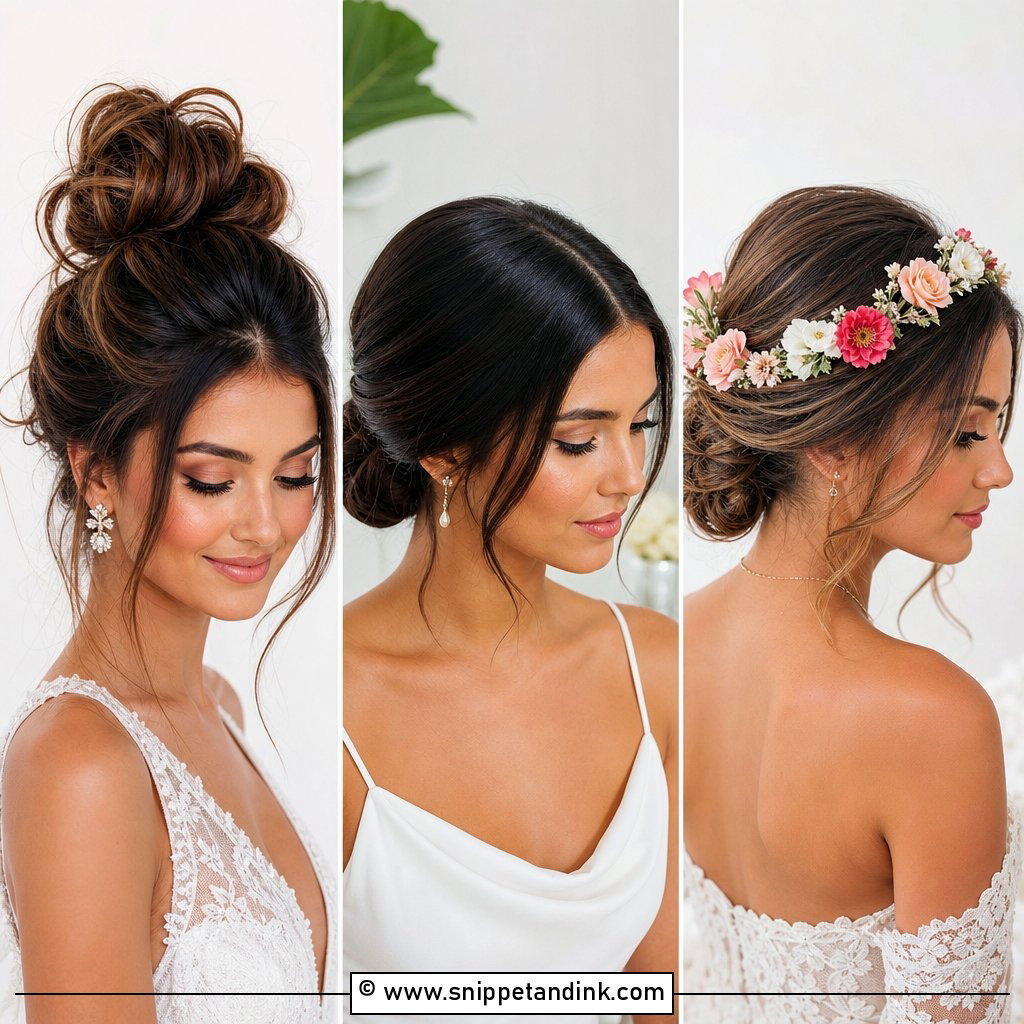
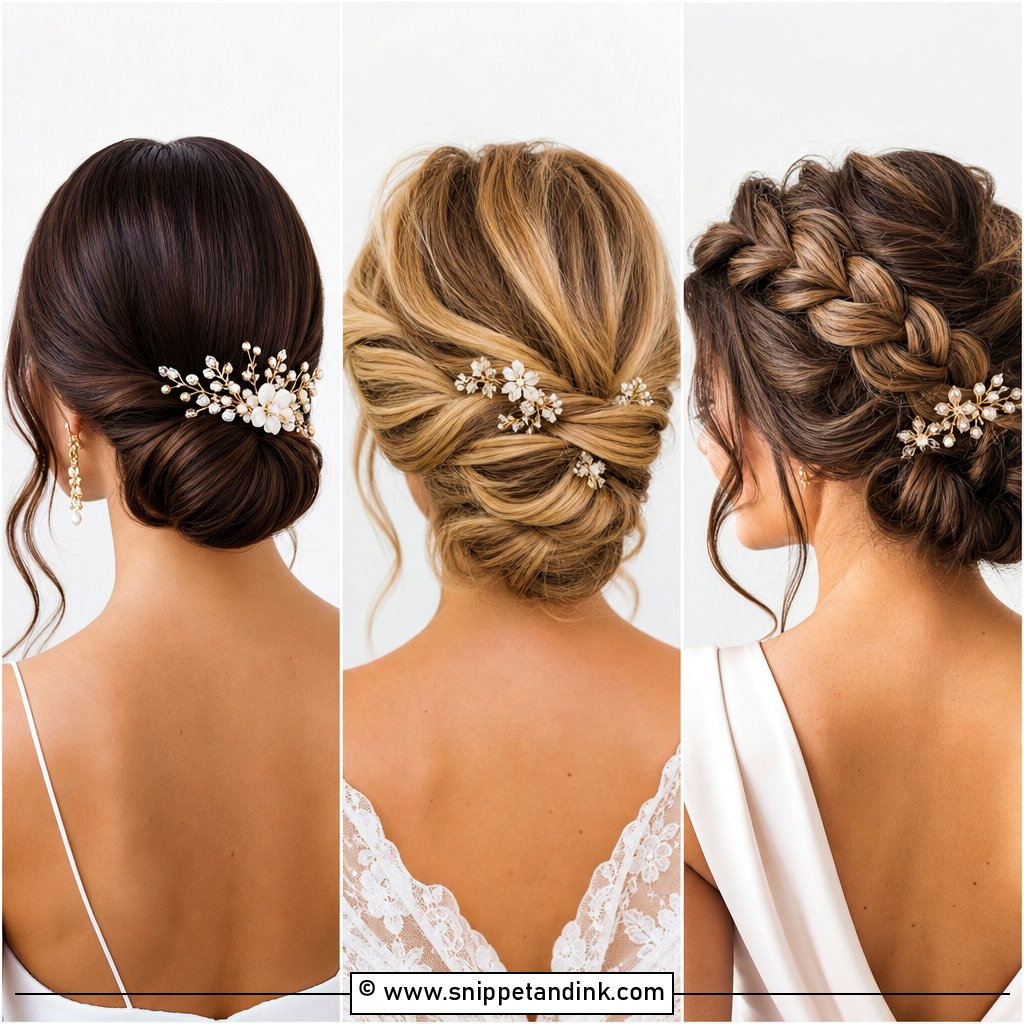
20. Textured Bun
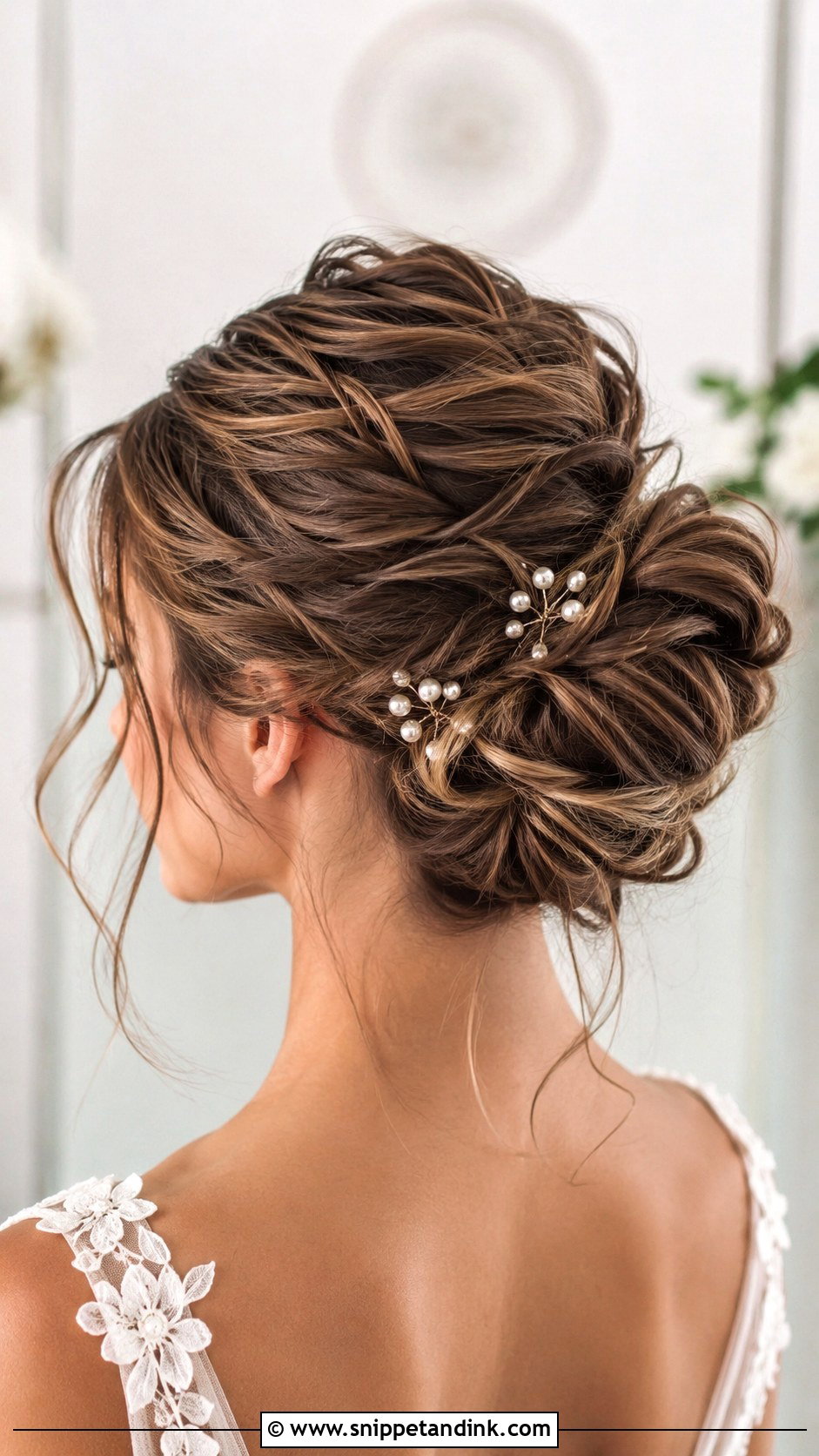
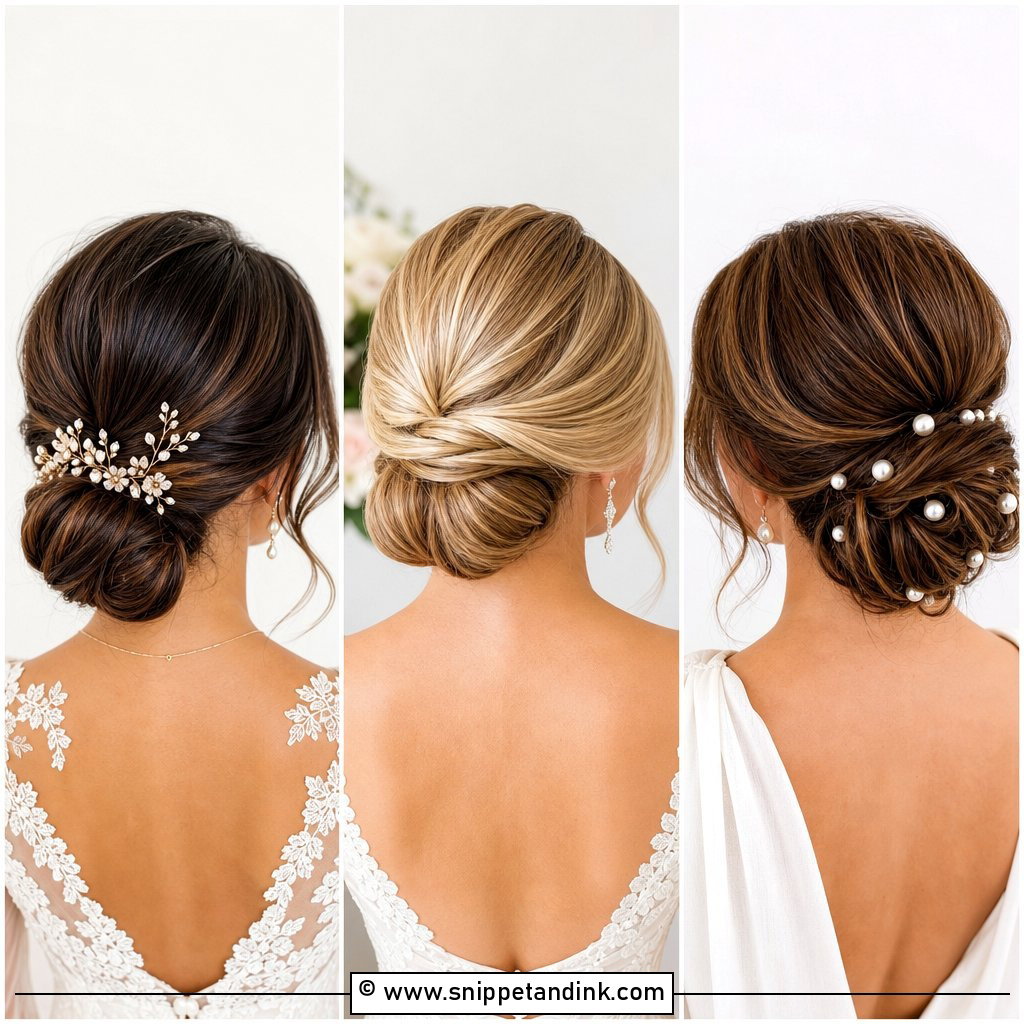
Backcombing at the roots and loose waves through the lengths give a full, tousled bun. Fine hair benefits most, since texture adds body that fine hair doesn’t have on its own. The trap is product build-up: too much texturising spray can make the hair feel crunchy in photos and touch. A few pearl or crystal pins add light. I keep it low for most gowns.
21. Donut Bun
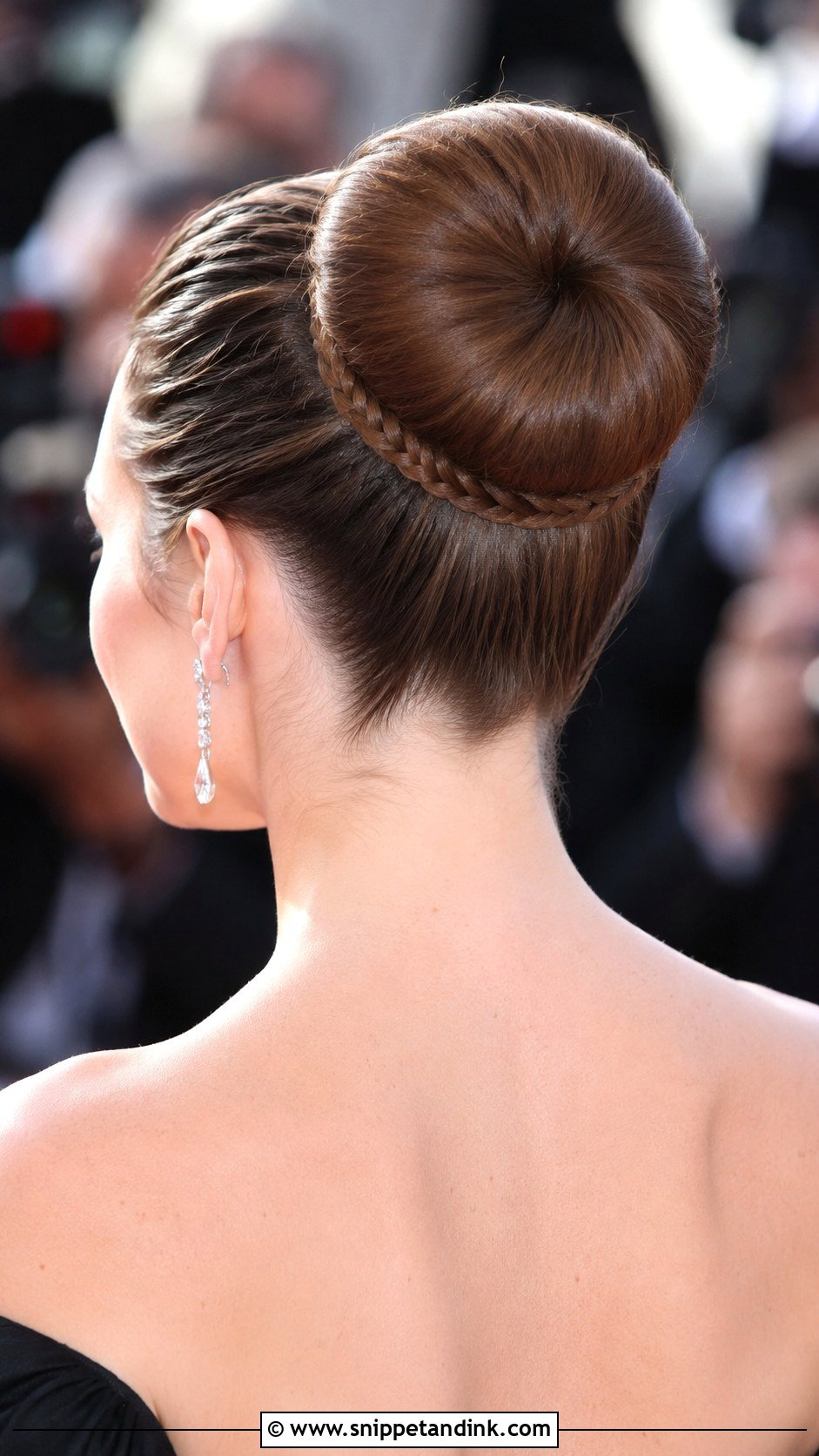
A hair donut, a foam ring, gives a perfectly round ballerina shape even when the hair is thinner than the look demands. I match the donut colour to your hair, because a pale foam ring peeking through dark hair is impossible to hide in flash photos. High is dramatic, low is softer. A braid wrapped around the base hides the edge neatly. Medium to long hair is needed to cover the ring fully.
22. Braided Bun With Veil
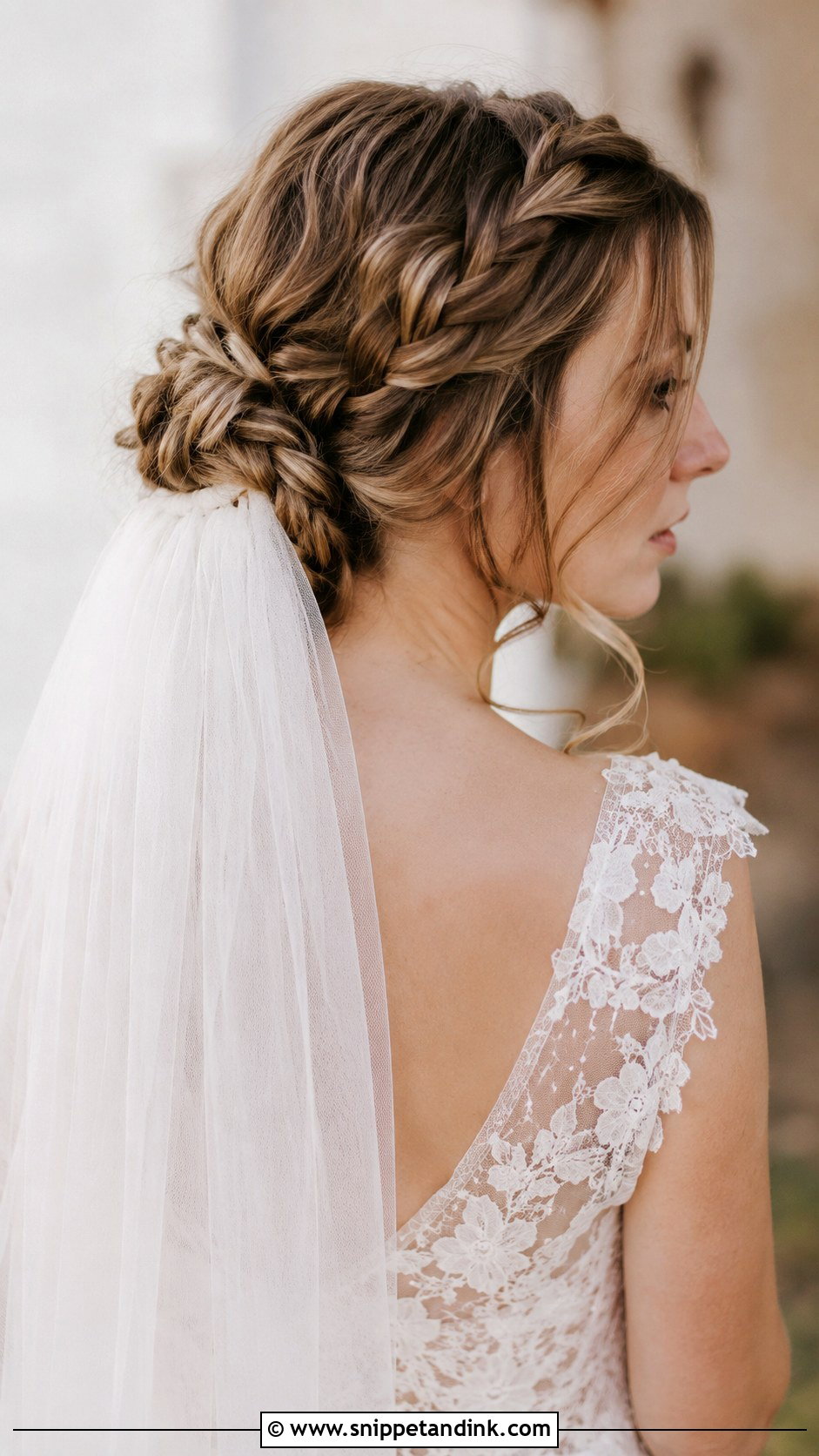
Braids add texture and, conveniently, a firm surface to slide a veil comb into. I build the comb’s anchor into the braid itself. When the veil comes off later, the braided bun is still neat. Long, thick hair suits it best. A few small flowers or pearls along the braid add detail without competing with the veil.
23. Knotted Bun
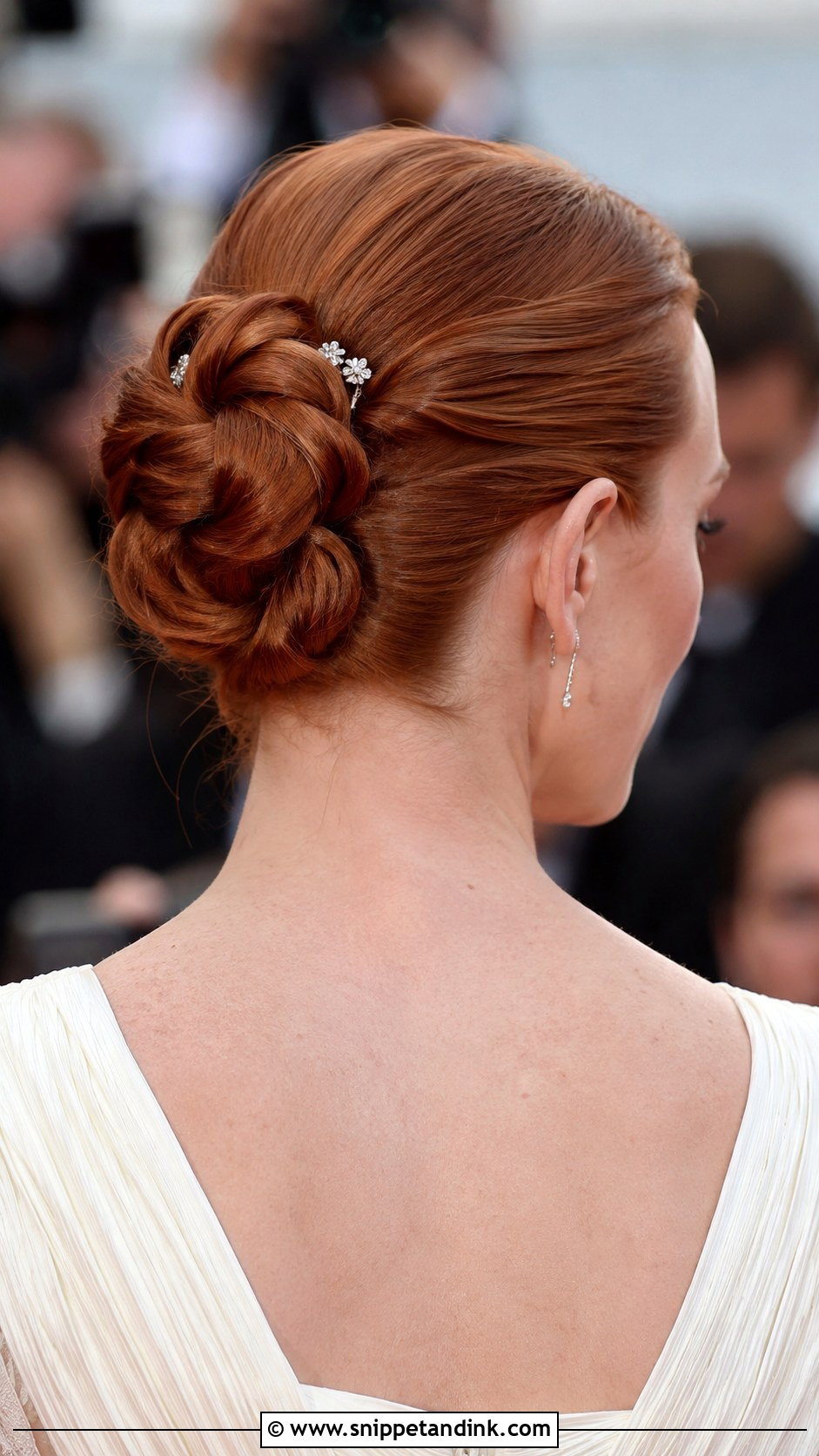
Sections looped and knotted into each other give an artful, sculptural bun. Each knot is a little anchor, so it holds well. Medium to long hair works; layered hair needs pins at every knot to keep ends from springing out. I keep it sleek for modern weddings and pull it slightly loose for classic ones. One delicate pin is all it needs.
24. Low Bun With Tiara
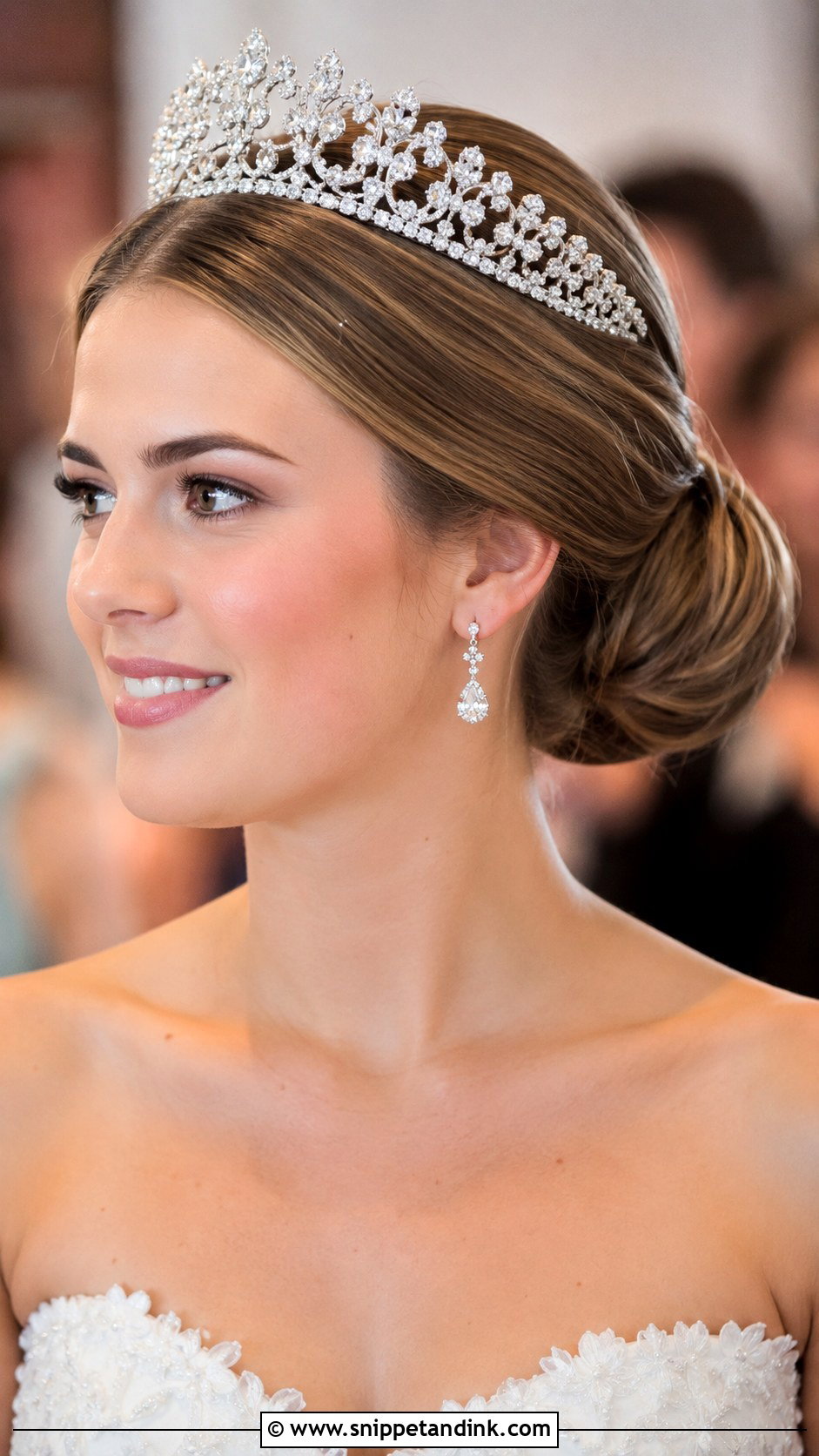
A tiara needs a firm base, which a sleek low bun provides. I backcomb a small section where the tiara band sits and pin it through the hair in a crisscross so it doesn’t slip forward during the ceremony. A veil can sit beneath it. Keep the bun smooth so the tiara is clearly the focus, and wear the tiara for a full hour at the trial to check it doesn’t press behind the ears.
25. Wavy Low Bun
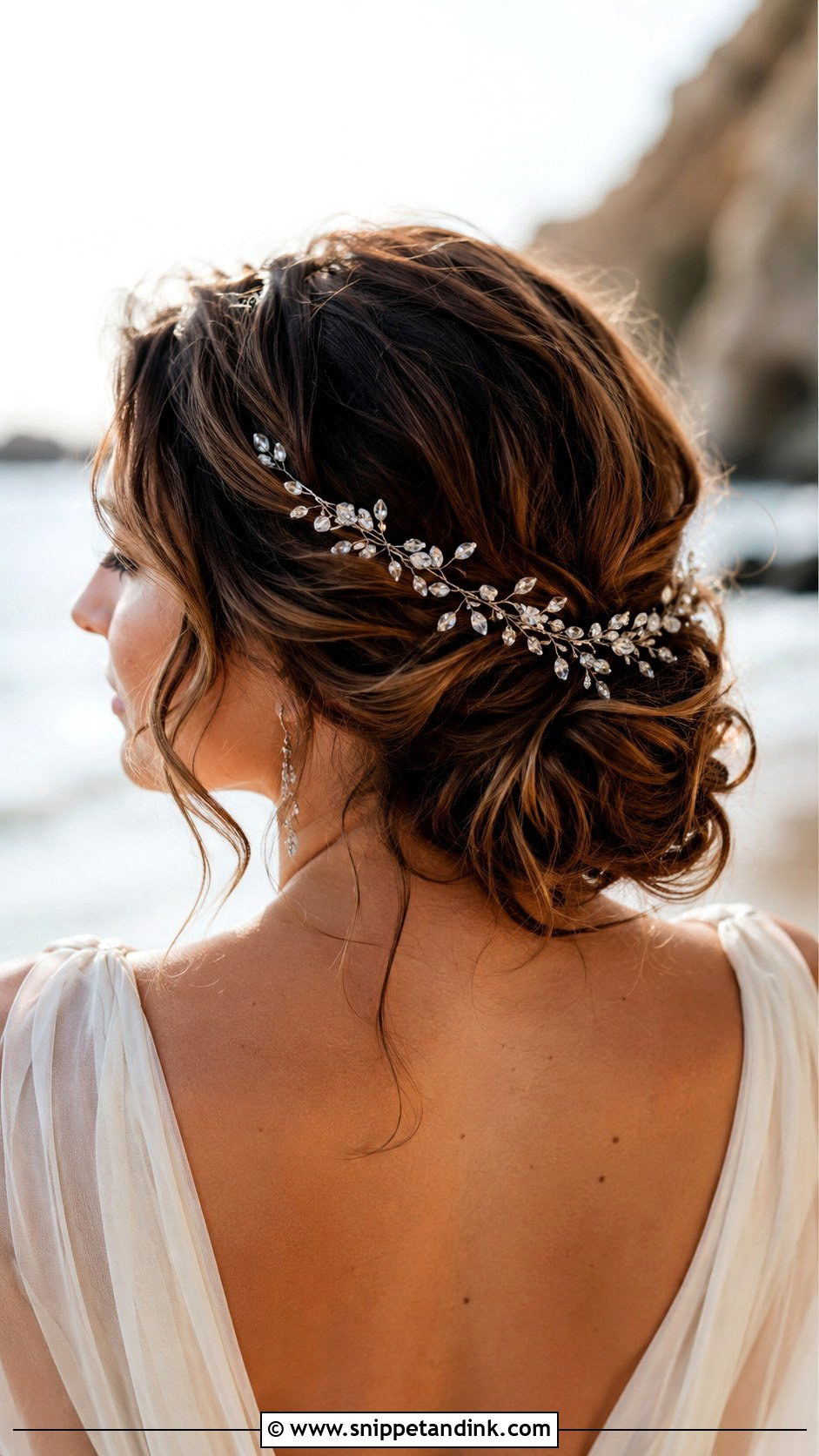
Curled waves gathered into a relaxed low bun keep movement in the shape. Naturally wavy hair needs only a little help; straight hair needs a proper curl set first, cooled before I touch it. A few waves loose at the front soften it. Small flowers or a hair vine suit garden and beach weddings.
26. Bun With Hairpins
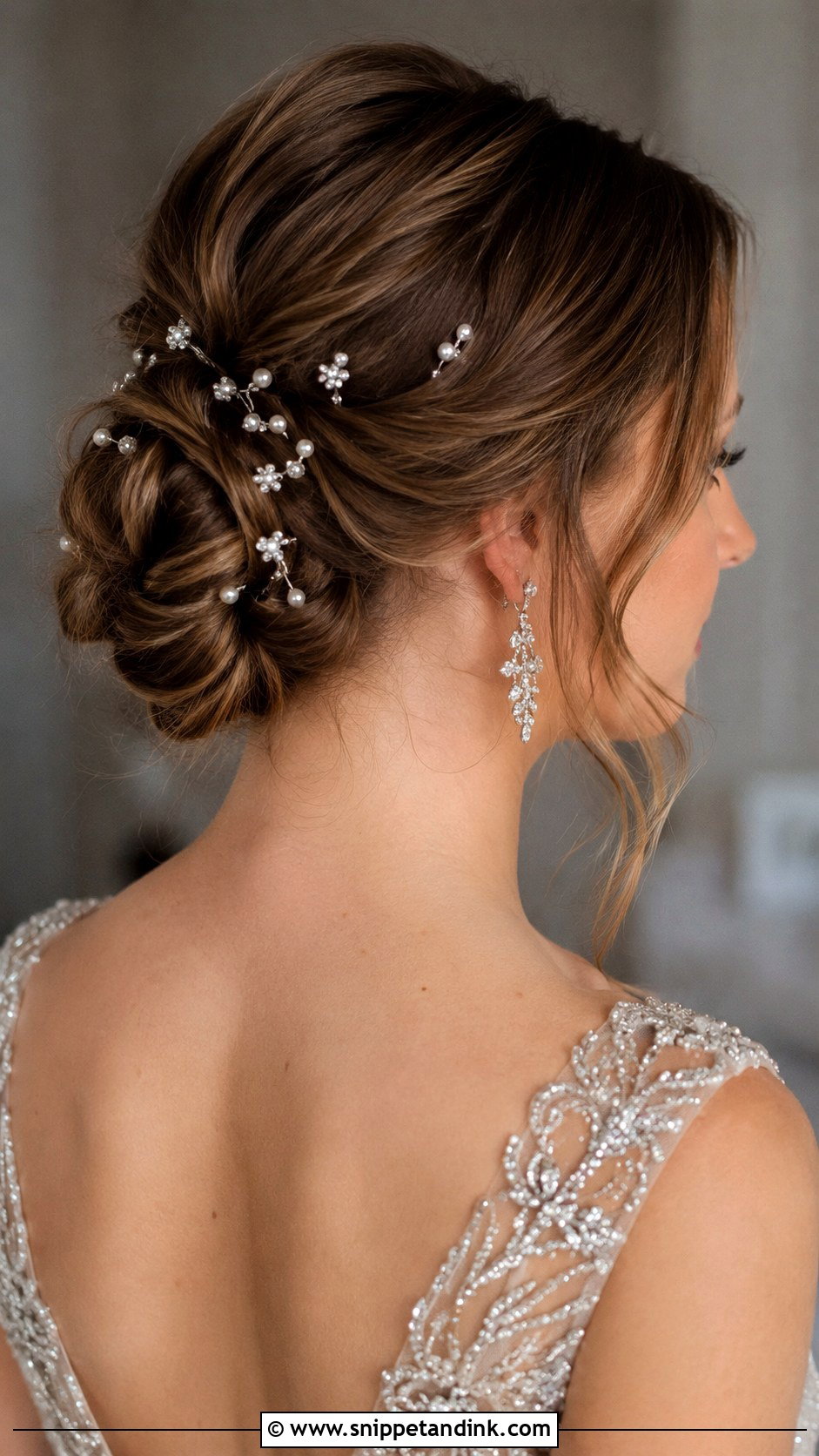
Decorative hairpins turn a plain bun into something personal for very little money. Pearls, crystals or floral pins can be clustered on one side or spaced around the bun. I insert them last, after the structural pins, so they’re purely decorative and easy to rearrange. Mixing metallic and pearl pins picks up both your jewelry and any beading on the dress.
27. Fishtail Bun
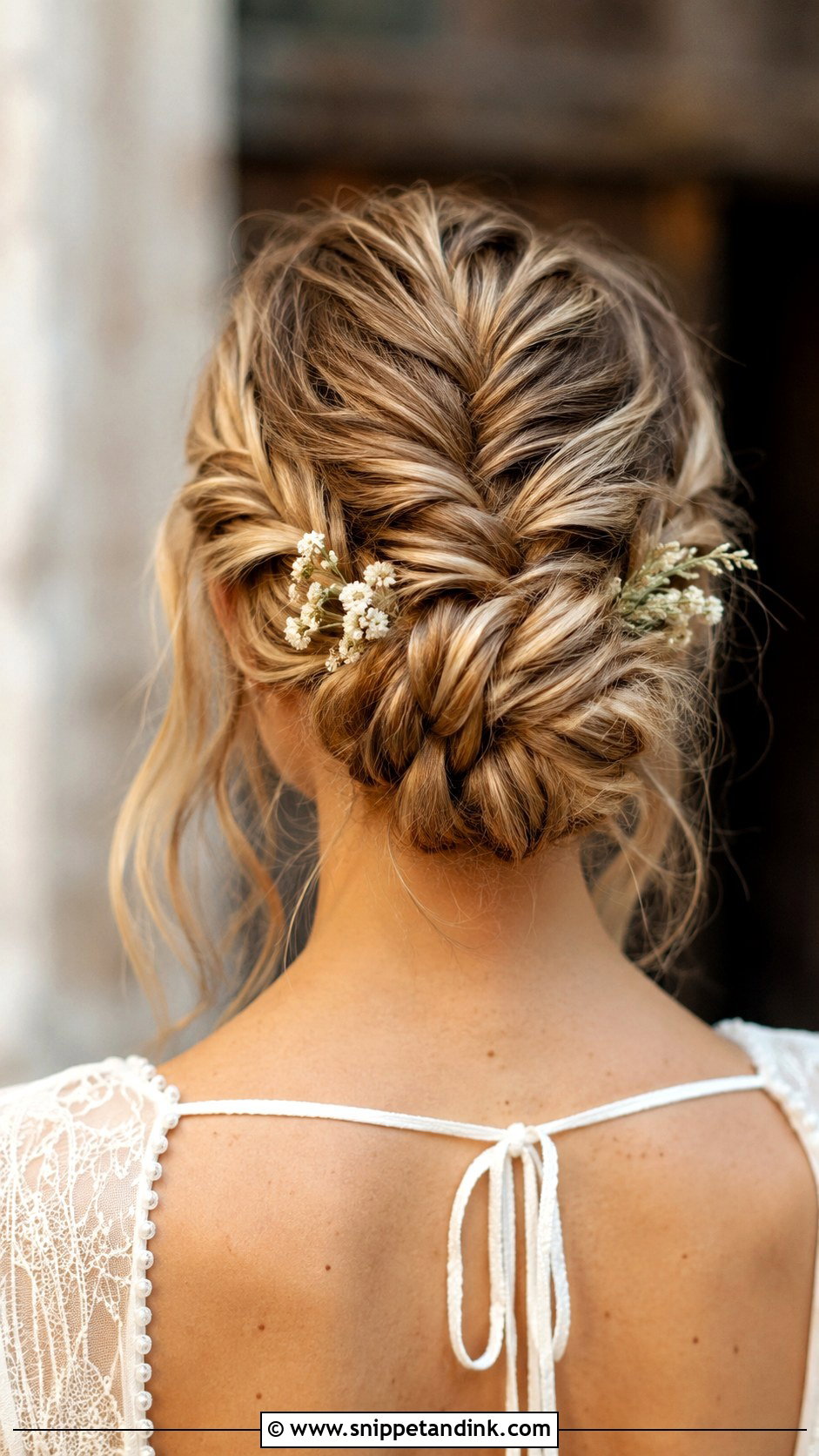
A fishtail braid is made with two sections instead of three, which gives a tighter, herringbone texture. Gathered into a bun, it reads detailed but still soft. Long, thick hair suits it best. I loosen the edges gently for a boho look. It takes a little longer to braid than a regular plait, so I factor that into the morning schedule for the bride’s hair.
28. Sleek Bun With Statement Earrings
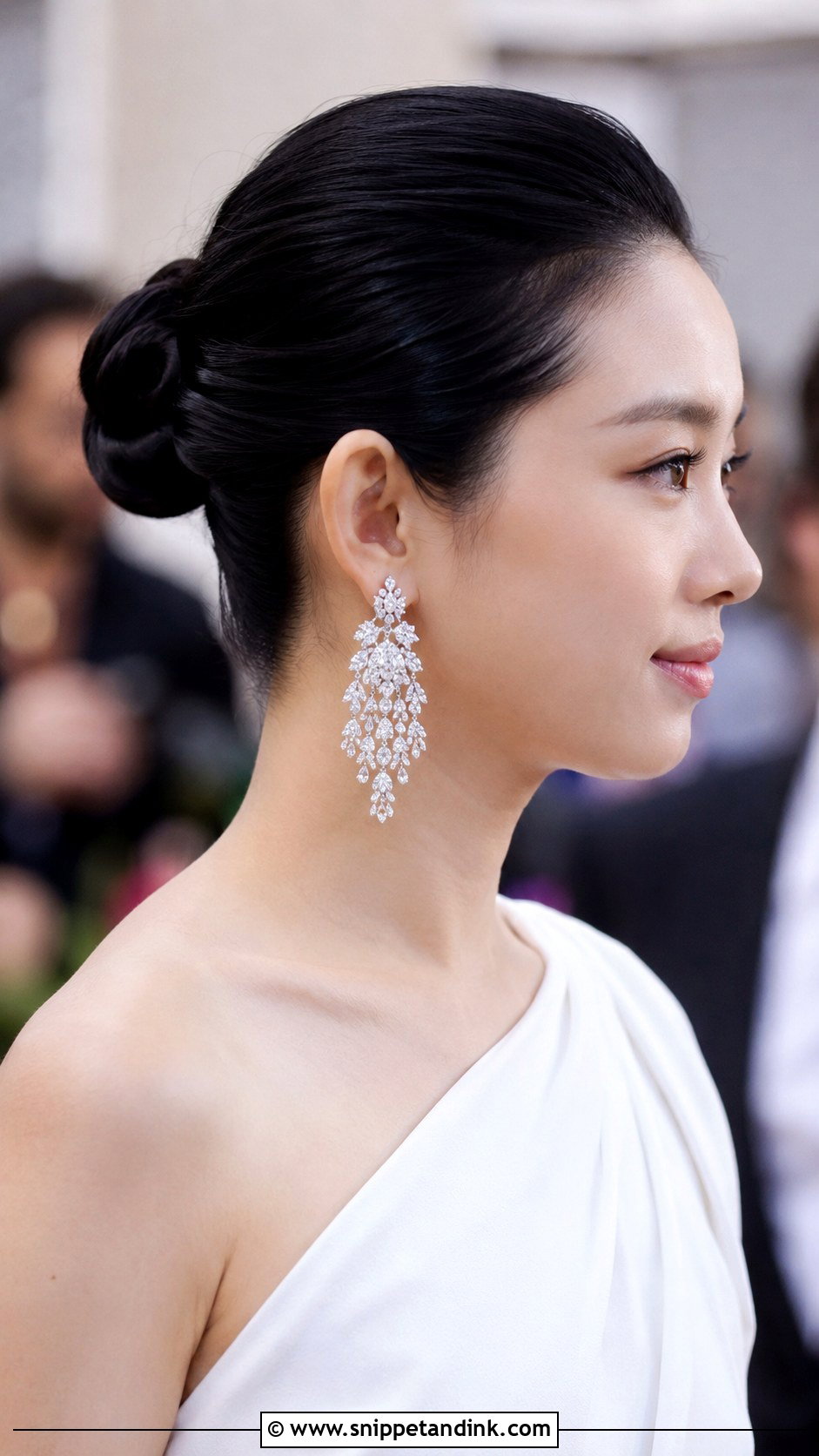
If your earrings are the main event, take everything else away. I pull the hair fully back, clear of the ears and neck, and position the bun to balance the earring length: long chandeliers want a low bun so they don’t collide with it, short studs work high. It sits naturally with formal and contemporary gowns.
29. Romantic Loose Bun
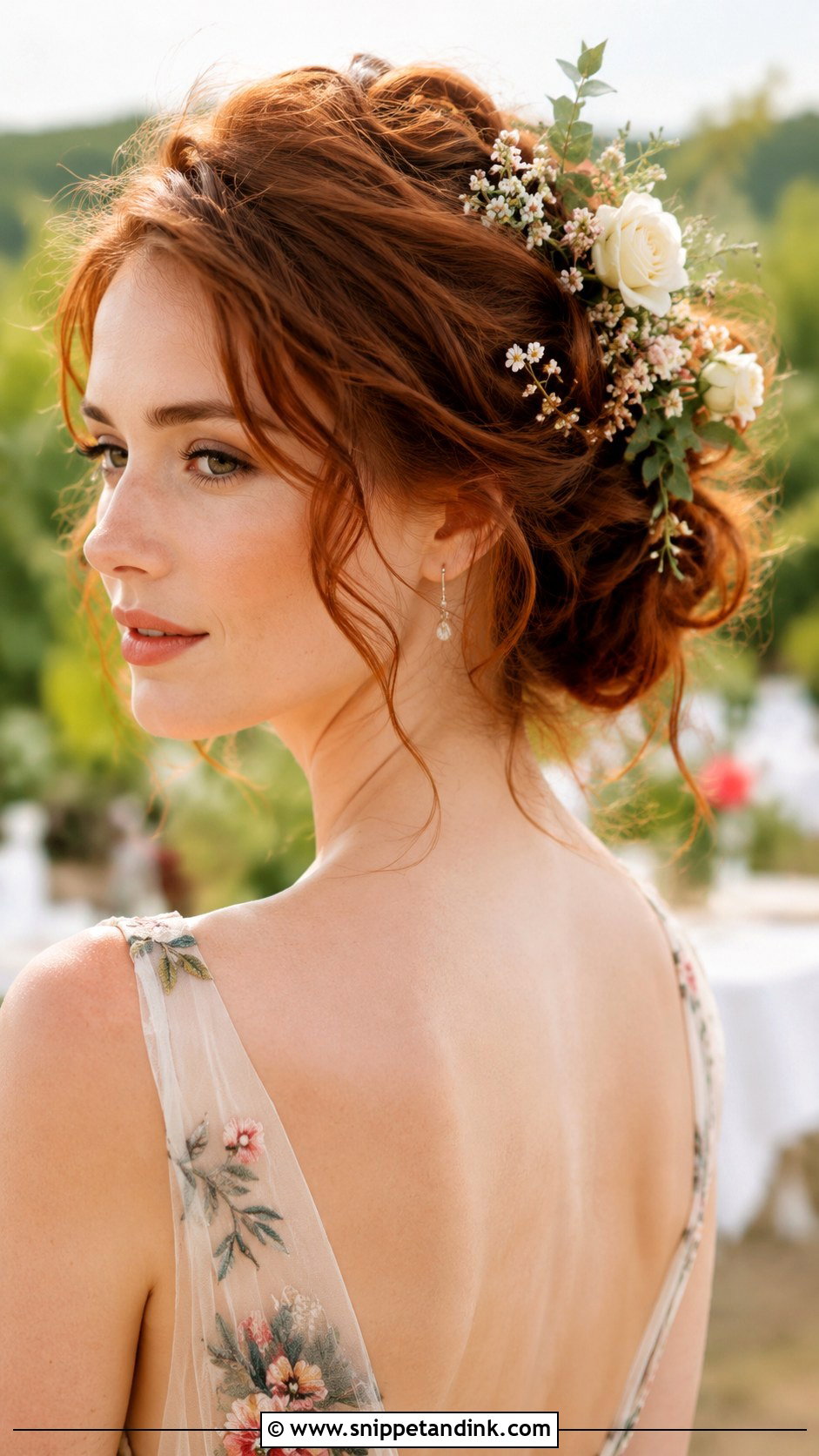
A loose, airy bun with tendrils is the softest look on this list, and the least forgiving to wear. Loose styles rely on curl and texture that humidity will relax over the day, so I’d set the hair firmly and pack a few extra pins. Wavy, textured hair suits it best. Fresh flowers or a vine add whimsy, and it suits garden, vineyard and outdoor weddings.
30. Bun With Babys Breath
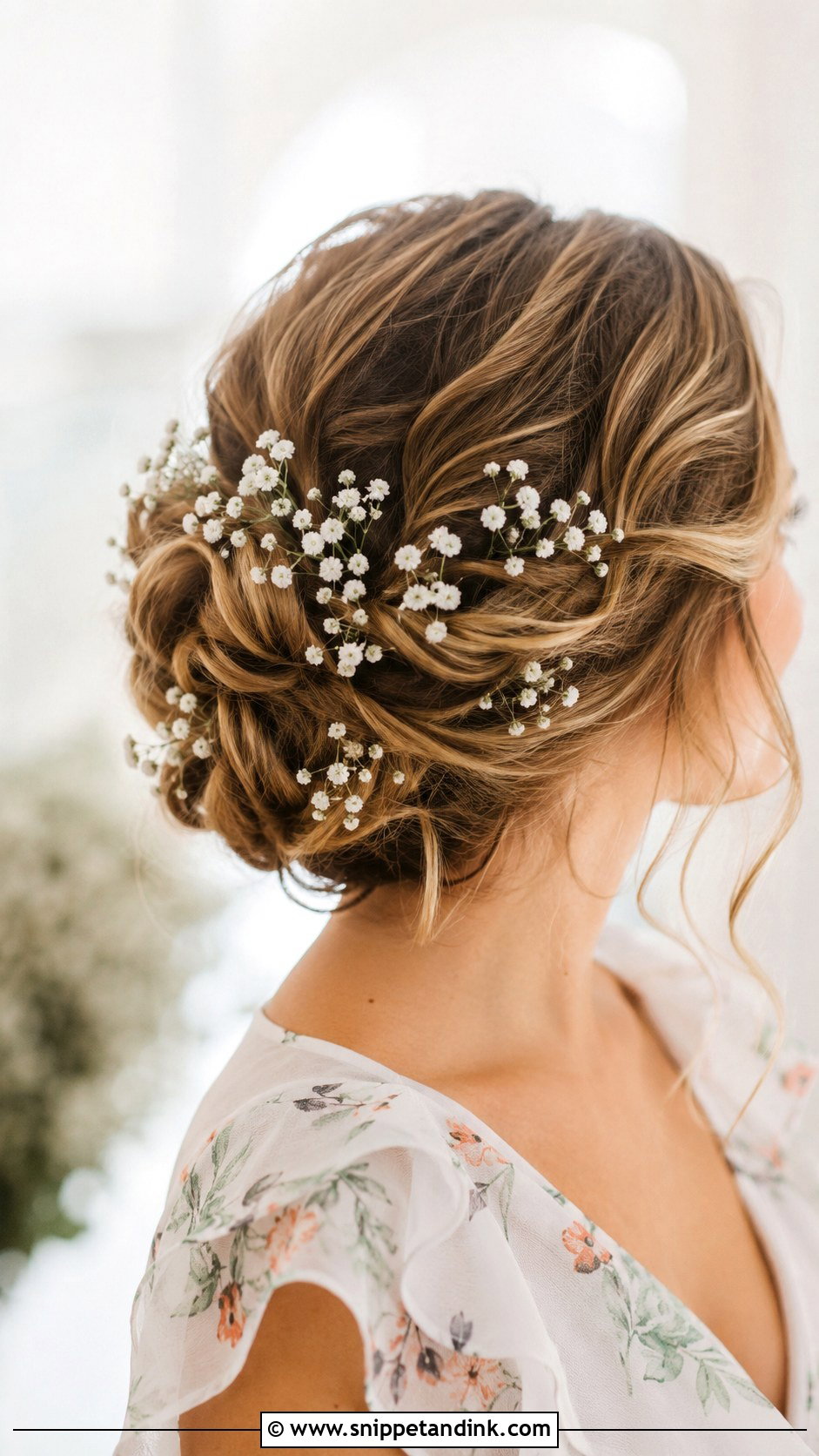
Baby’s breath is ideal hair material: tiny, sturdy, cheap and slow to wilt. White clusters look fresh against any hair colour. I trim the sprigs short and push them in after the bun is built so the stems lock against the pins. Scatter them around or cluster them on one side. Some people find its scent strong up close, so sniff a stem before committing.
31. Modern Sculpted Bun
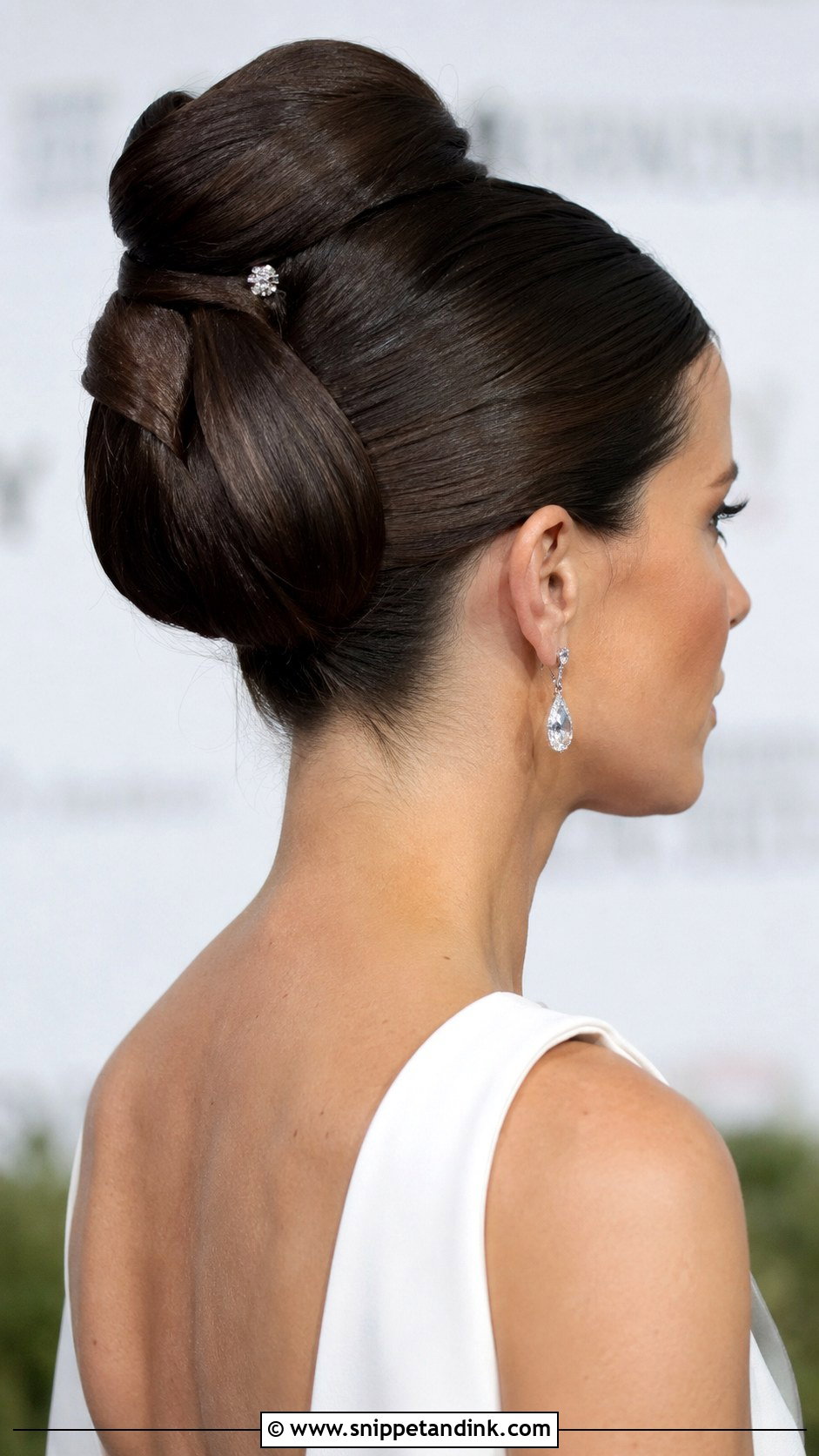
A sculpted bun is architectural: smooth, shaped and deliberate. It needs very clean, smooth hair and a fair bit of padding underneath to create the shape. It suits sleek minimalist gowns and city weddings, and works bare or with one sparkly pin. It’s a fashion choice, so I’d make sure you love it at the trial rather than deciding on the morning.
32. Low Bun With Side Braid
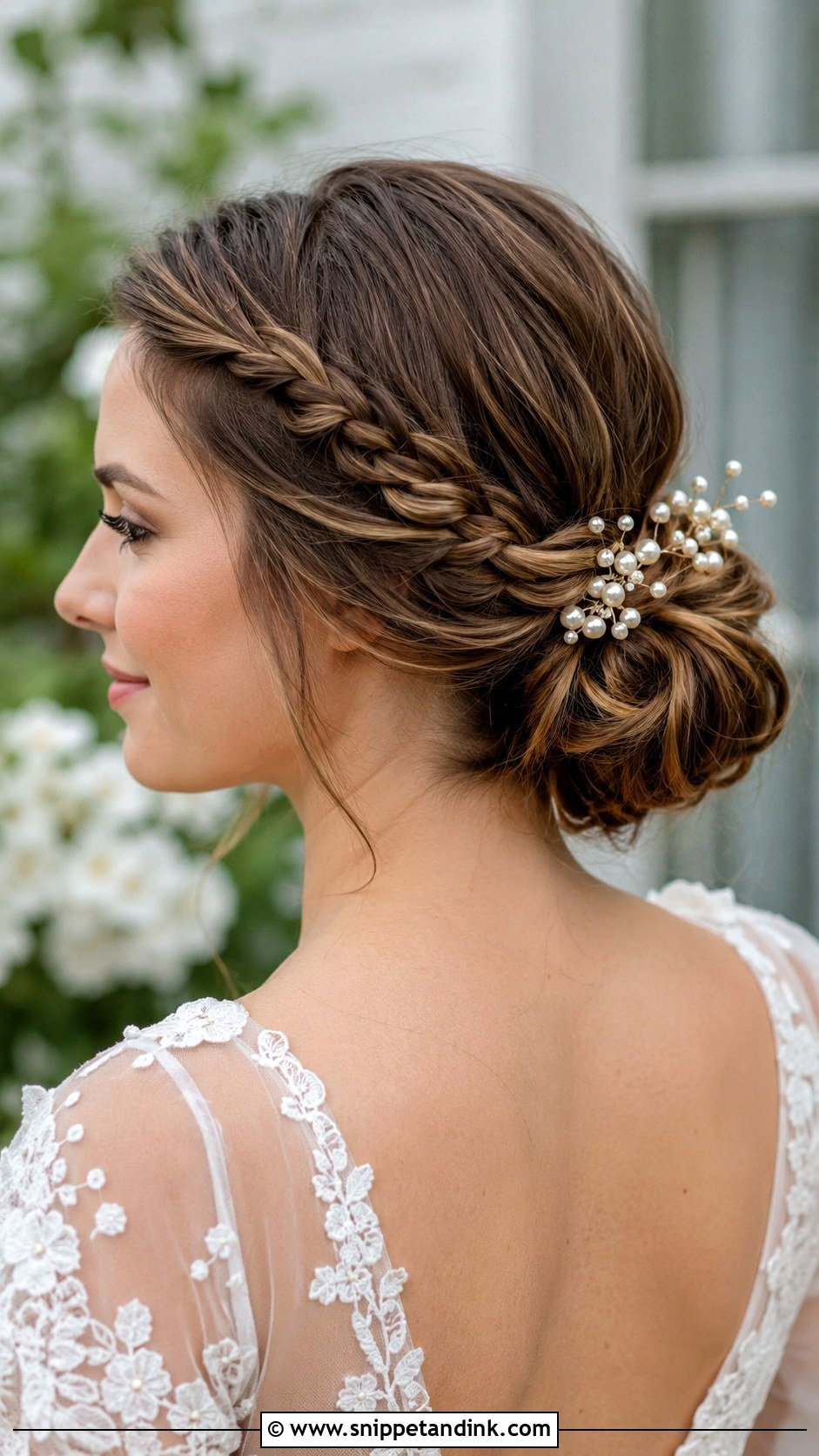
A side braid sweeping along one side into a low bun gives an asymmetrical line that flatters many face shapes. I usually braid on the side with the most hair or the natural part so it looks full. Medium to long hair works. Loosen the braid for a boho feel, or keep it tight for structure, and add flowers or pearls along the plait if you like.
33. Glam Bun With Crystal Accents
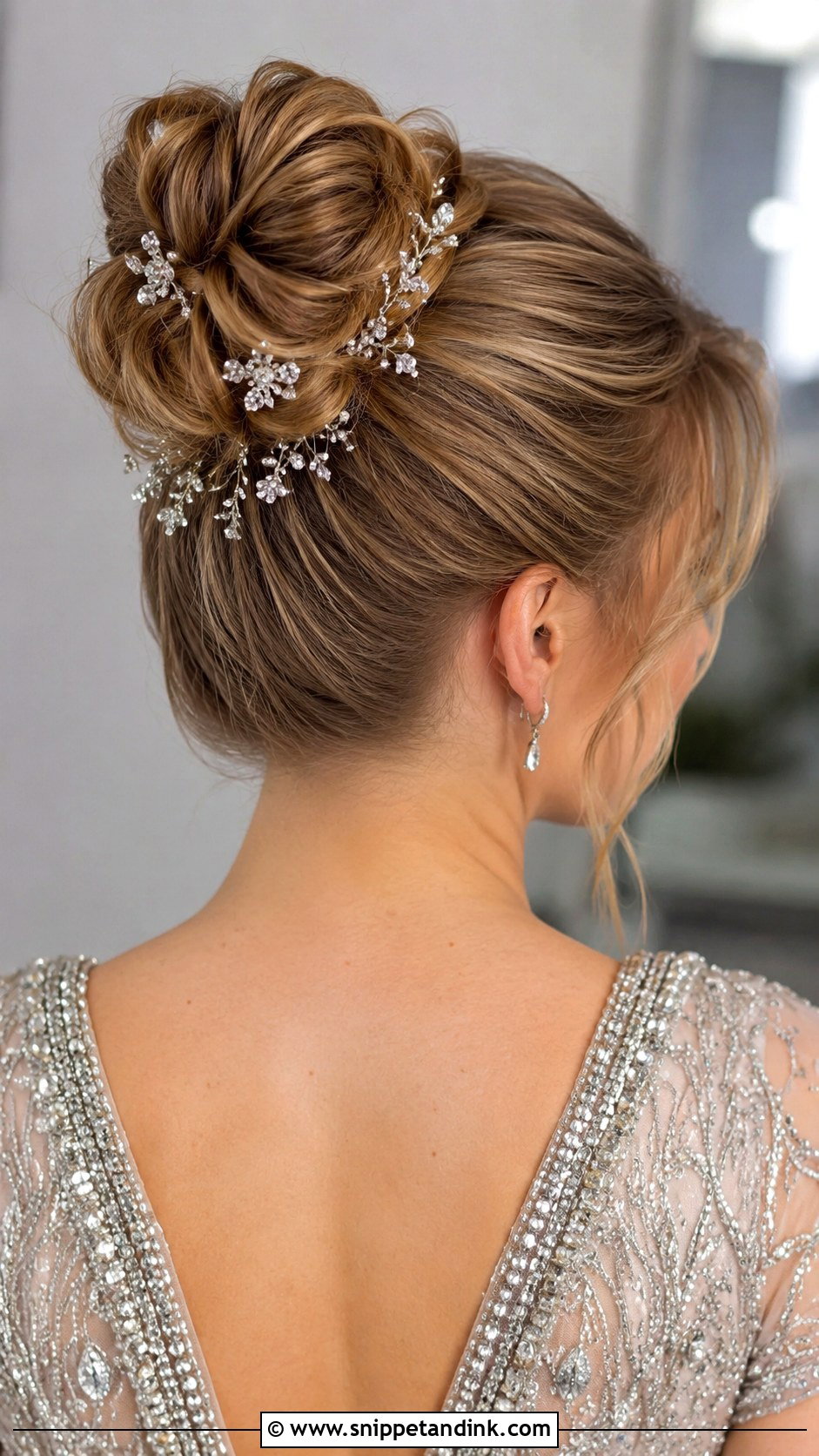
Crystal pins, combs or vines catch light under evening and flash photography. I place them to balance your jewelry rather than repeating it: if your earrings are large, I keep the crystals toward the back of the bun. Sleek or slightly voluminous both work. It’s suited to formal and evening weddings with beaded gowns.
34. Bun With Twisted Sides
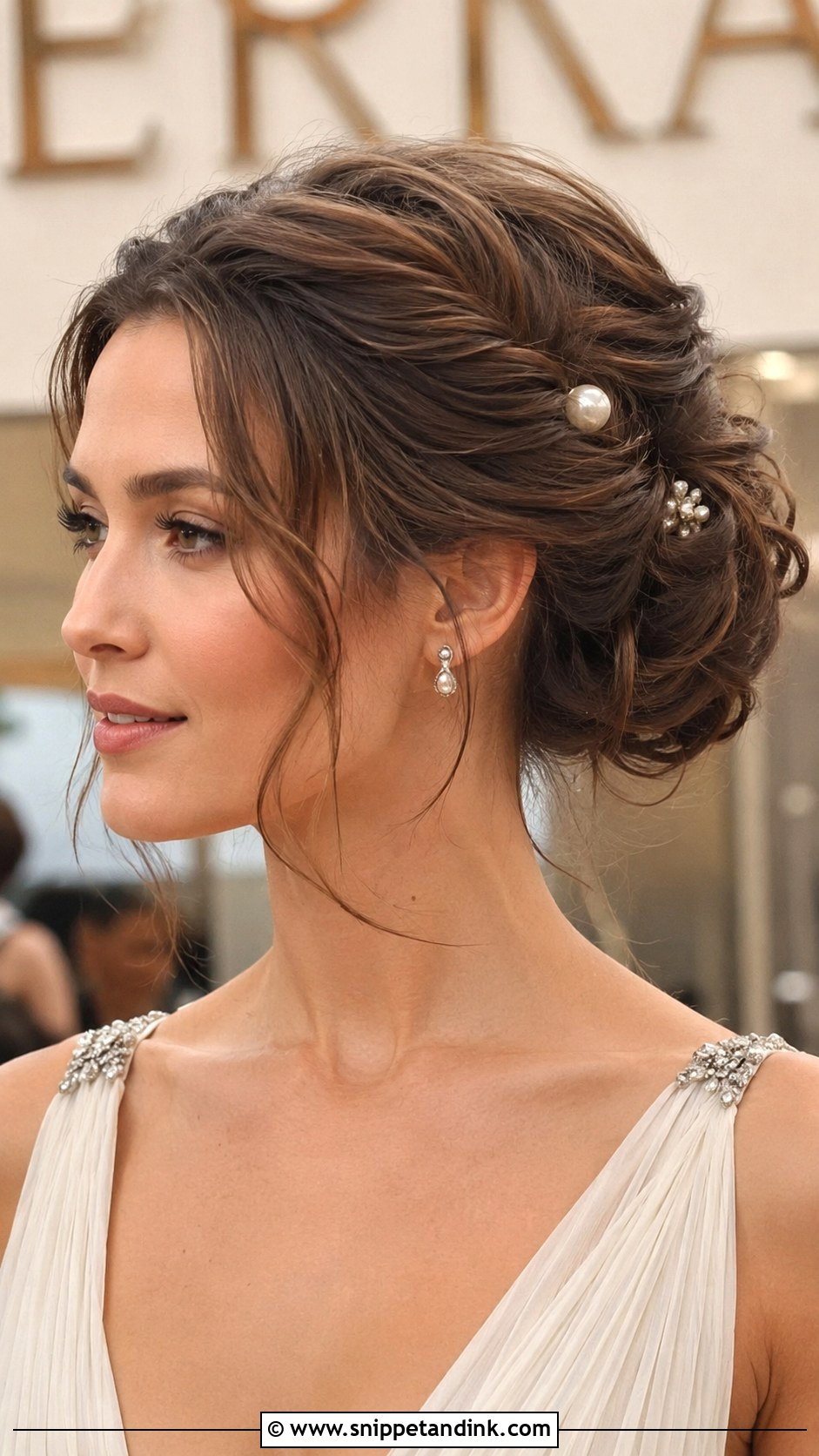
Twisting the side sections back into the bun gives detail without a full braid and frames the face neatly. Twists also hold shorter layers better than a plain smoothed side. Medium to long hair works. Tight twists look refined; loose ones look soft. Pearls or crystals along the twists add a little sparkle.
35. Bun With Birdcage Veil
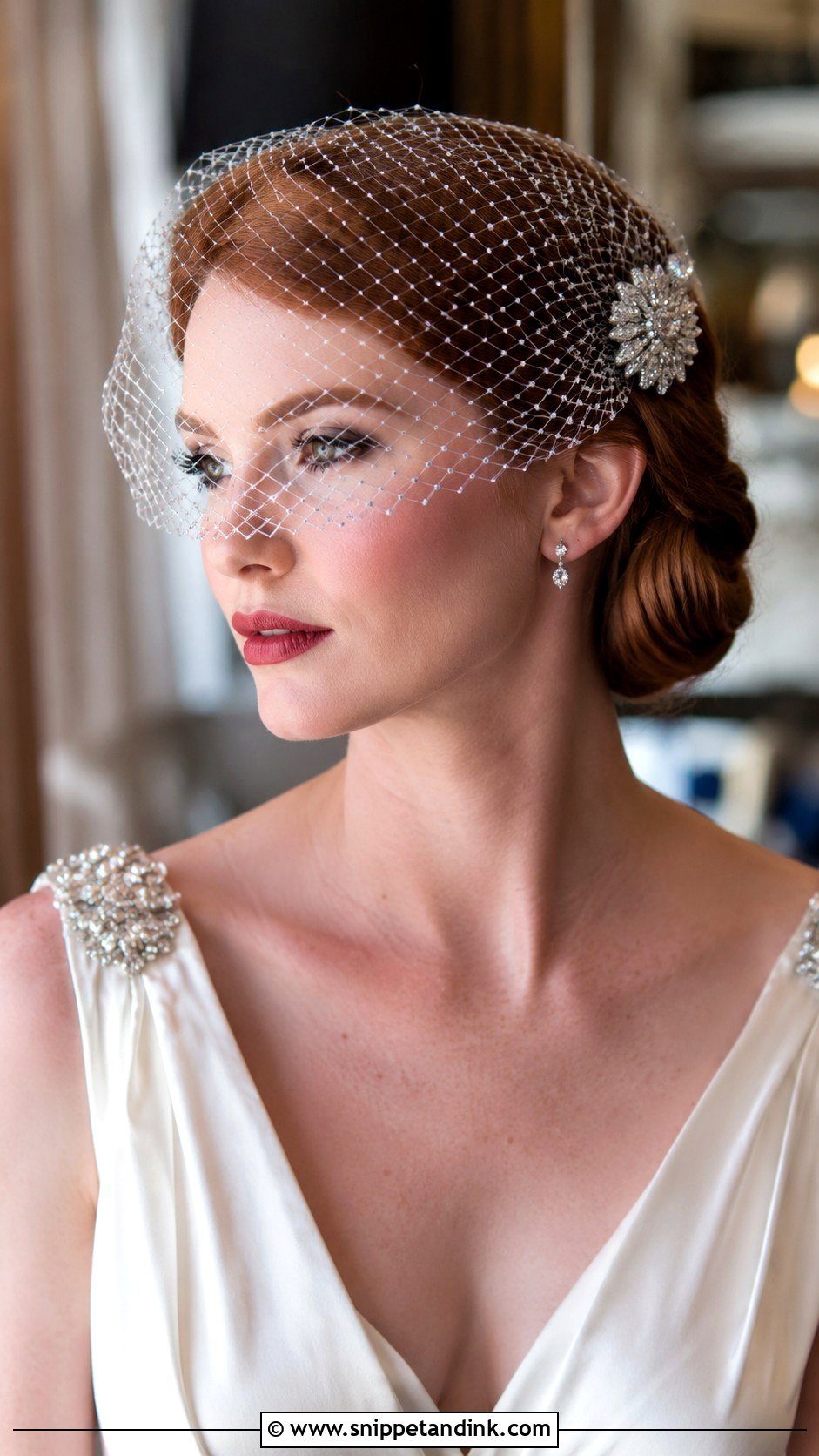
A birdcage veil is a short net that covers part of the face, a strong retro charm statement. It sits on a comb or clip at the side, so I keep the bun sleek or a vintage roll and place the anchor where the veil drapes evenly over one eye. A jewelled brooch or feather clip covers the attachment point. It suits retro and intimate weddings and leaves the rest of the hair clean.
Arrive With Hair That Will Grip a Pin
Freshly washed, conditioned hair is silky, and silky hair lets pins slide straight out. For most buns I’d rather you wash the night before, dry it fully and skip heavy conditioner on the lengths. If your hair gets oily quickly, wash in the morning but leave out conditioner near the roots, and I’ll add texture spray or dry shampoo to give it grip.
On the day, the structure comes from how the pins are placed, not how many there are. I anchor the base with an elastic, then cross pins in pairs so they lock against each other, and I use pins that match your hair colour. Heavy buns on long hair get a hidden padding or a smaller donut so the weight sits closer to the head.
If it starts slipping at the reception
Put a small comb, six to eight matching pins and a travel hairspray in a bridesmaid’s bag. A slipping bun almost always means one anchor pin has worked loose. Don’t pull the bun out to fix it; push it back into place and slide two pins in an X through the base and into the elastic underneath. Loose face-framing pieces can be twisted back with a finger and a light mist.
Start the Shortlist With Your Neckline
Most brides end up somewhere between sleek and soft, so start with the dress: high necklines and backs suit higher buns, open necks and low backs suit low ones, and the veil decides how much structure you need. Then think about your own hair, how fine or thick, straight or curly it is, and how warm the venue will be. Bring two or three photos and your accessories to the trial, and let your stylist tell you honestly which one will last the day on your hair.
You'll Like These Ideas:


Leave a Reply