
The cake Marie Antoinette never actually offered has become a whole wedding mood: vintage piping, pearls, pastel buttercream, bows and flowers, with the cake treated as part of the table setting rather than something wheeled out at the end. I love building in this style because it rewards handwork. It suits a garden party, a ballroom, a brunch or a styled dessert table, and it can lean French, playful or softly coquette depending on color and finish. What separates a good one from a cluttered one is restraint, and I’ll point out where that line sits as we go through these twenty ideas.
What Ornate Piping Asks of Buttercream
Vintage piping looks soft, but the frosting behind it has to be firm. Silky Swiss meringue buttercream is lovely to eat, yet in a warm room fine shells and swags start to lose their edges. For heavy overpiping I use a stiffer buttercream for the decoration and keep the silkier one inside the cake, where texture matters more than shape.
Hand piping also isn’t perfectly uniform. Small variations in each scallop are what make it look handmade, and that’s a feature, not a flaw. If you want machine-perfect repetition, fondant cut-outs or molded details will get closer.
Sending inspiration a baker can actually quote
- Your guest count, so the baker can work out tier sizes before any design talk.
- Two or three photos, with a note on what you like in each: the borders, the color, the shape.
- Your venue’s indoor or outdoor setup and the season.
- Which details are must-haves. Piped work is priced on time, so trimming a layer of overpiping often matters more to the quote than the flavor.
1. Vintage Lambeth Wedding Cake
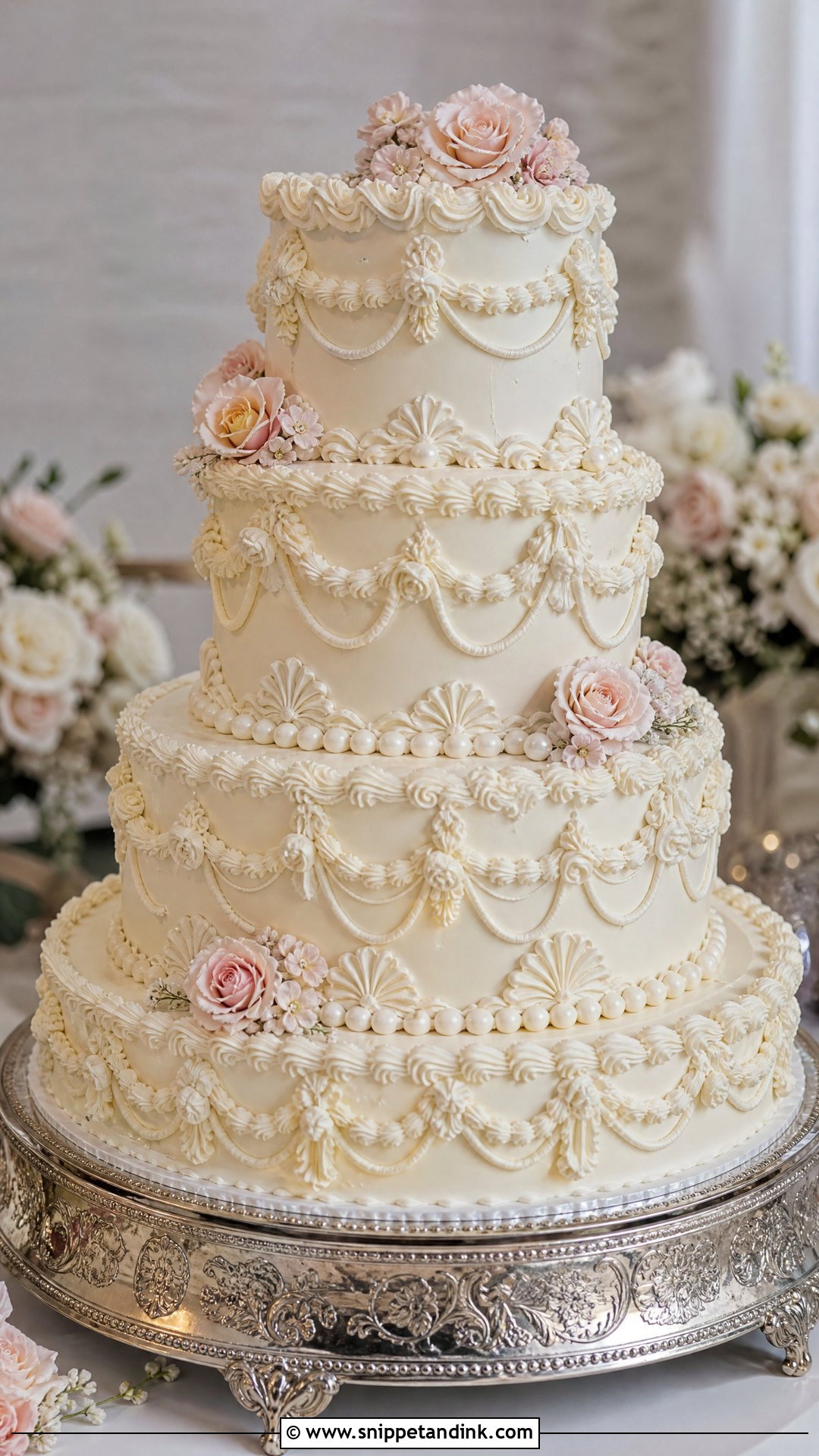
Overpiping is the signature here: layer upon layer of buttercream scallops, shells, swags and rosettes built out from the tier until the cake looks carved. A vintage Lambeth wedding cake takes hours of piping per tier, so I keep the shape simple, usually one tall round tier or two, and let the borders do the talking. Ivory or a pale pastel shows the shadows of each layer best. Pearl accents and a few tiny sugar flowers are plenty on top.
2. Heart Shaped Wedding Cake
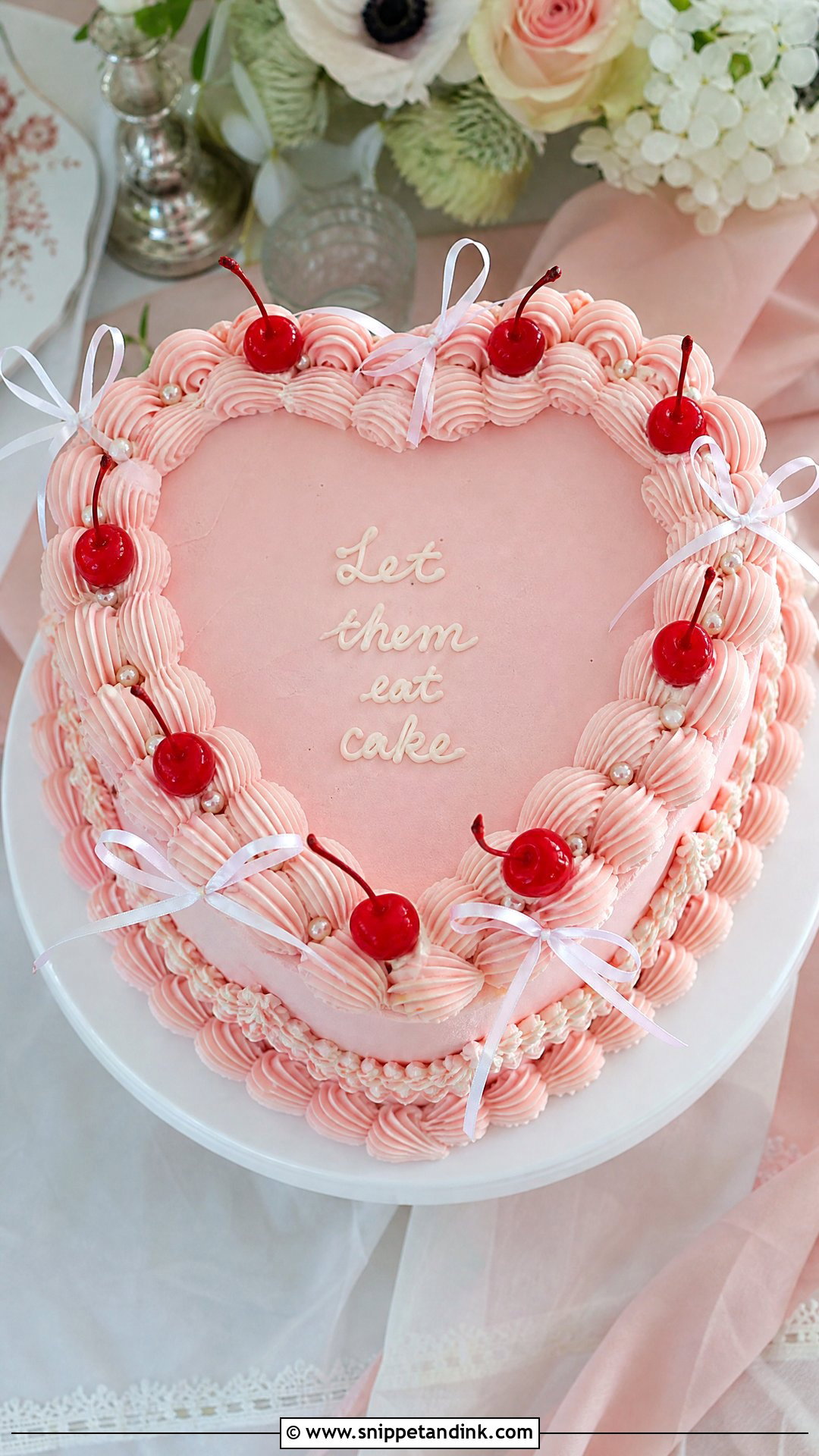
Hearts are the most photographed shape in this style, mostly from above, so I make sure the top surface is perfectly smooth before any piping goes on. Vintage borders, soft pink frosting, red cherries, pearls or tiny bows all suit it. A heart tier is awkward to stack, which is why I usually make it a single cutting cake and send kitchen sheet cakes out for the guests. Vanilla, almond, raspberry and champagne sponges keep the flavor as gentle as the look.
3. Pink Coquette Wedding Cake
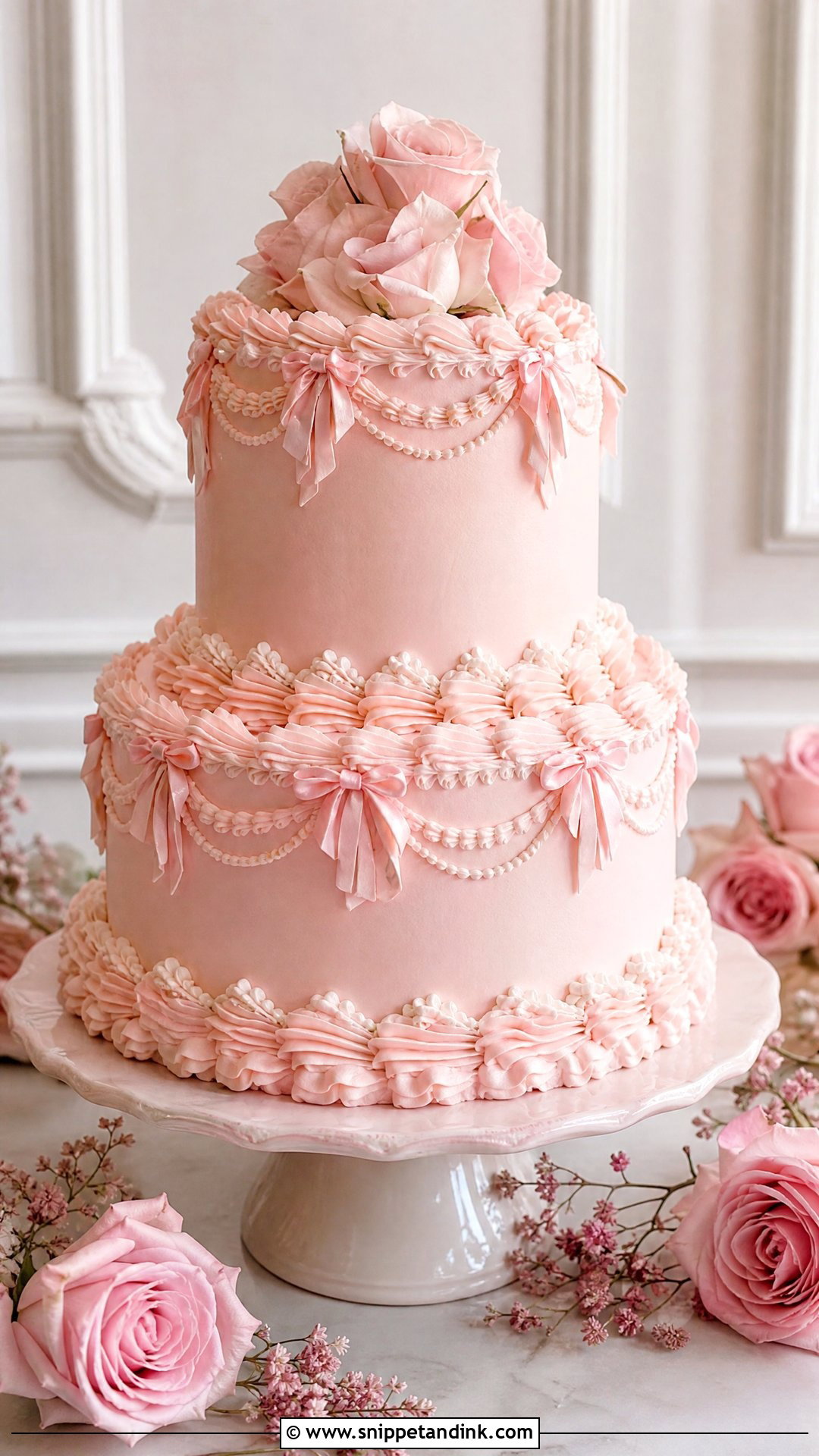
Coquette cakes fail when every surface gets a decoration. Pale blush buttercream, tiny piped bows, pearl borders, ruffles and a few sugar roses can all appear, but I group them, bows on one border, ruffles on another, so the eye has somewhere to rest. Blush buttercream fades to beige under warm yellow light, so I mix it a shade stronger than the sample photo. A vintage stand, pink tapers nearby and a floral tablecloth finish the scene for garden brunches or a pastel ballroom.
4. Pearl Wedding Cake
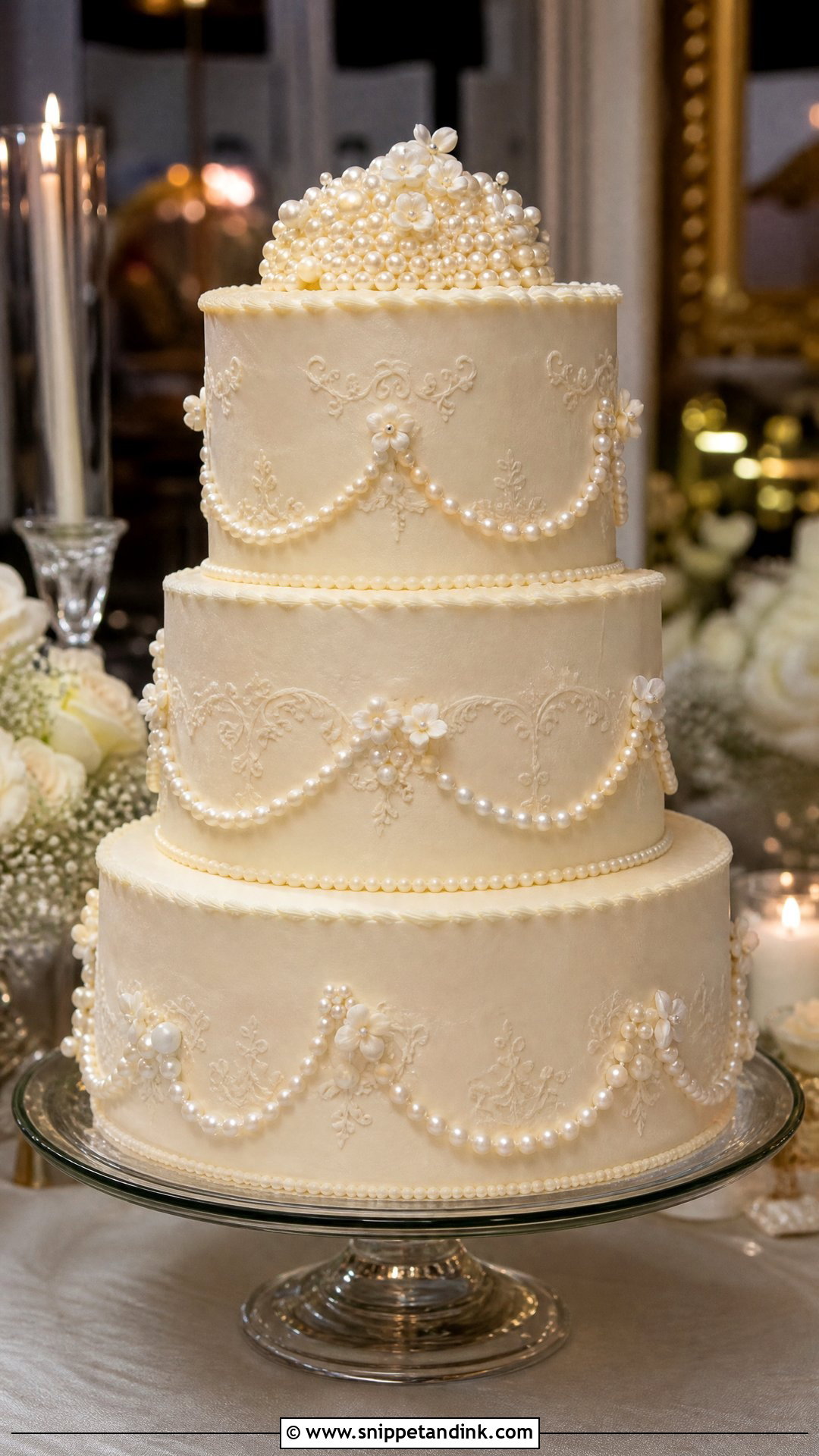
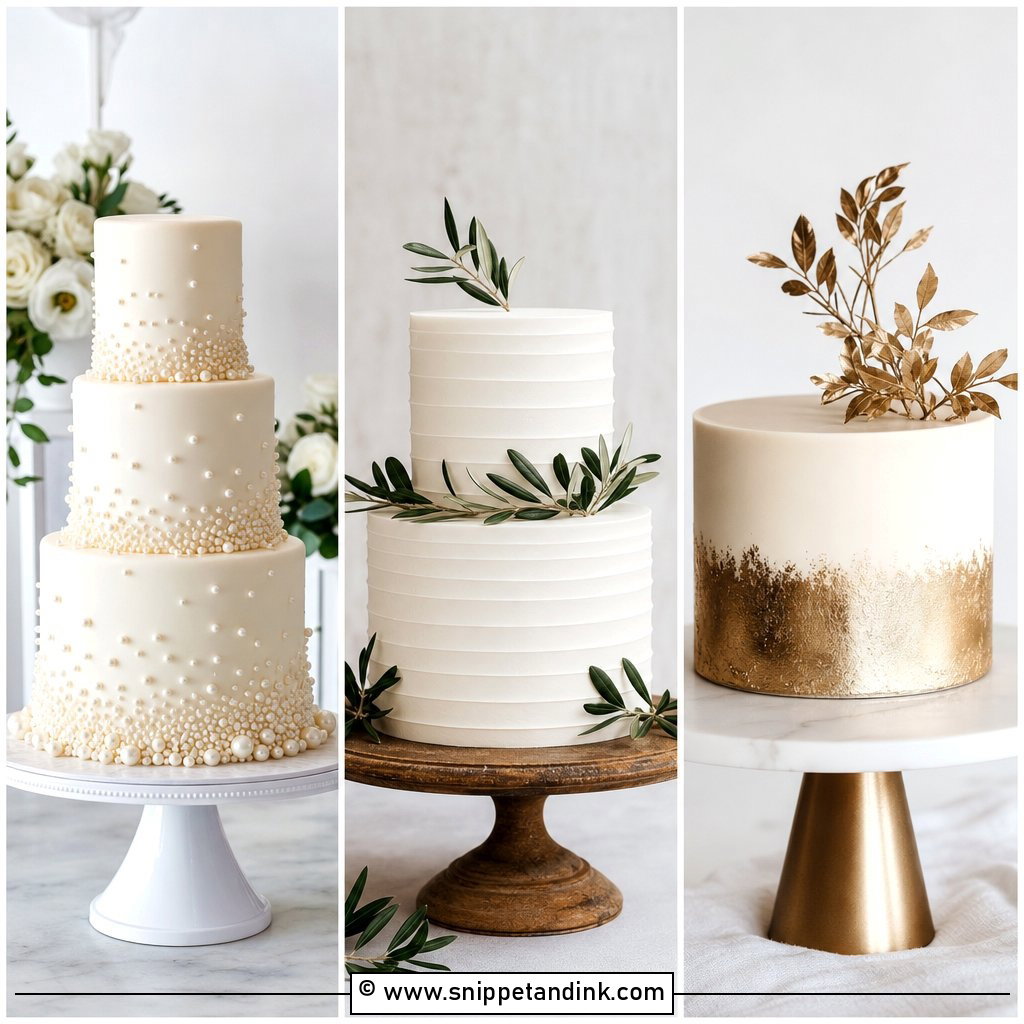
Here texture and shine replace color. Edible pearls can follow piping borders, scatter over smooth buttercream or form a pattern across each tier, on an ivory, white, champagne or soft blush base. Placing them is slow, fiddly work with tweezers, and they only stay put on fresh buttercream, so pearls go on as each tier is finished. To keep it modern, I pick one or two ornate details and leave the rest smooth. Formal and black-and-white weddings suit it well.
5. Bow Wedding Cake
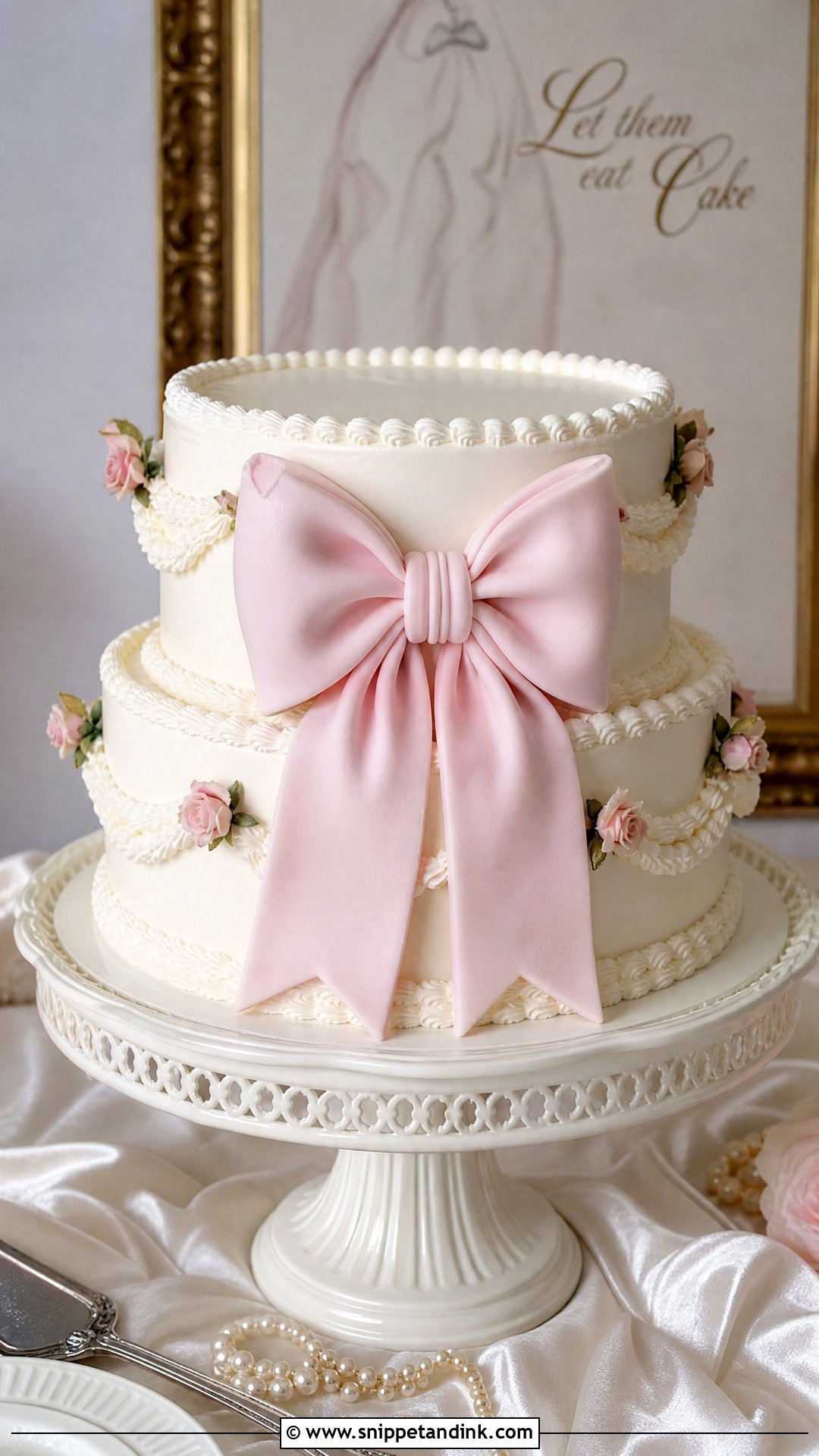
Sugar bows, fondant bows, piped bows and real ribbon all behave differently. Fondant and sugar paste hold a crisp loop but need a day or two to dry before they’re attached; piped bows are softer and faster; real satin ribbon looks wonderful but must sit on a barrier so it doesn’t soak up grease and stain. Keep the cake itself simple. White buttercream with pale pink bows reads sweet, ivory tiers with satin-style sugar bows read more grown-up. One big bow on the front or a row of tiny ones on the borders, not both.
6. Cherry Wedding Cake
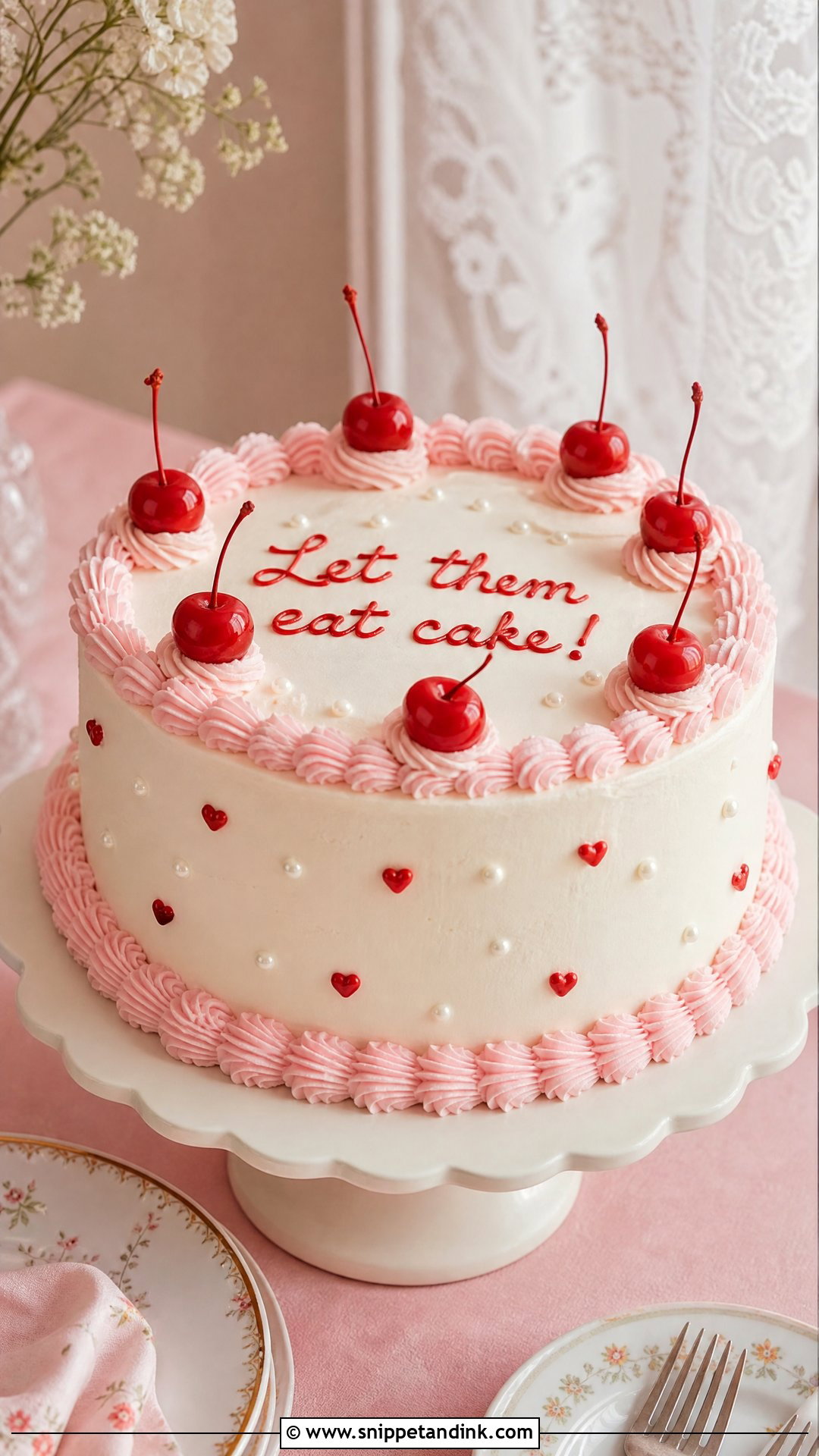
Glossy red cherries on white or pale pink shell borders bring the retro bakery feel into wedding territory. A cherry wedding cake needs pitted or stemmed fruit placed close to service, because cherries leak red juice into pale buttercream as they sit. Glazed or candied cherries hold up longer. Keep everything else clean so the red reads as a choice. Inside, vanilla with cherry filling, almond with cherry compote or chocolate cherry layers all suit it.
7. Rococo Wedding Cake
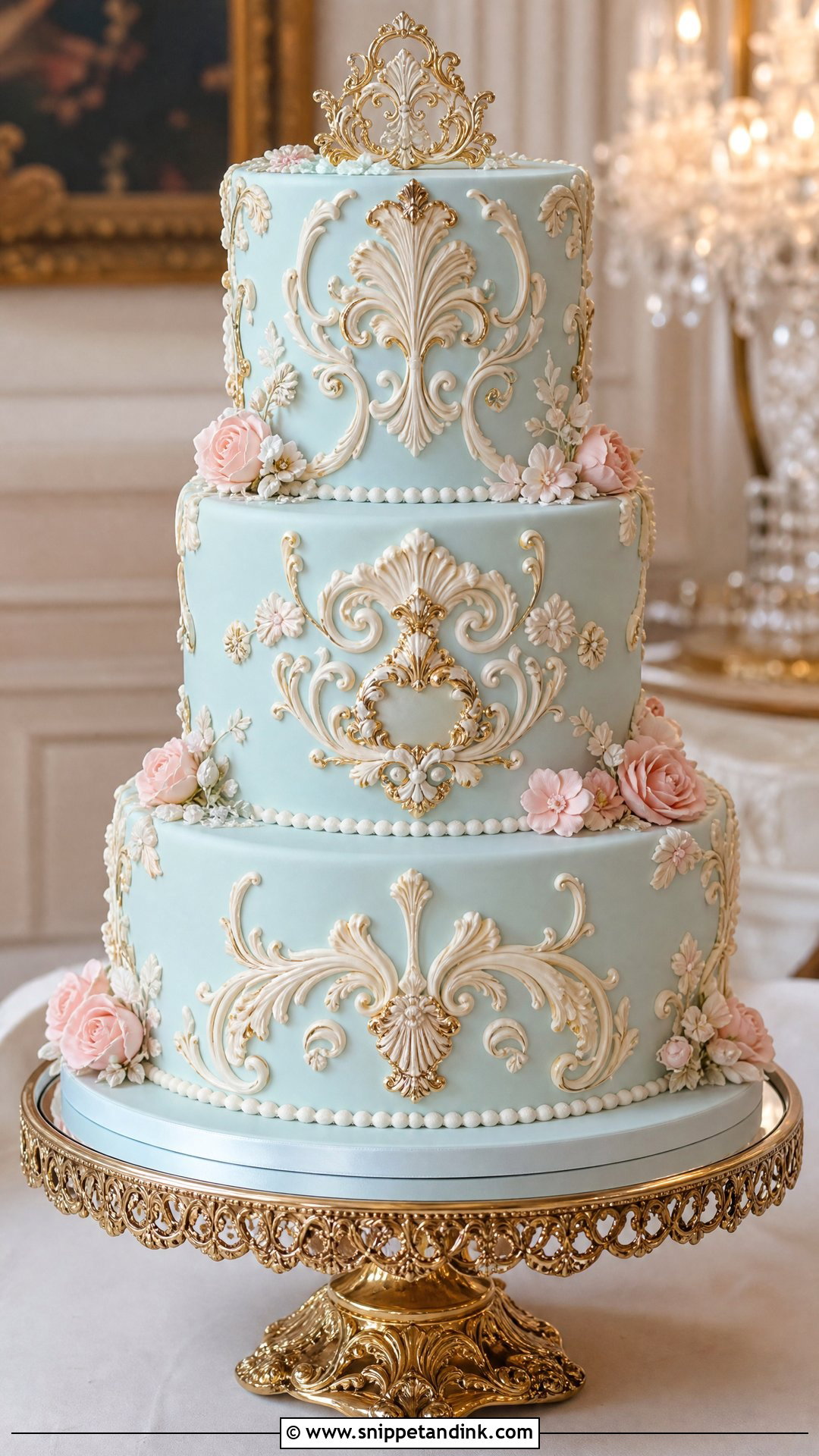
Rococo is the most ornate version of this look, with curved piping, scrollwork, pastels, gold, pearls and sugar flowers. Soft blue, ivory, blush and butter yellow are the bases I reach for. The danger is chaos, so I choose two or three elements, say scrolls, pearls and gold edging, and repeat them in the same rhythm on every tier. Ballrooms, estate venues and rooms with antique mirrors or chandeliers give it the right backdrop.
8. Blue Vintage Wedding Cake
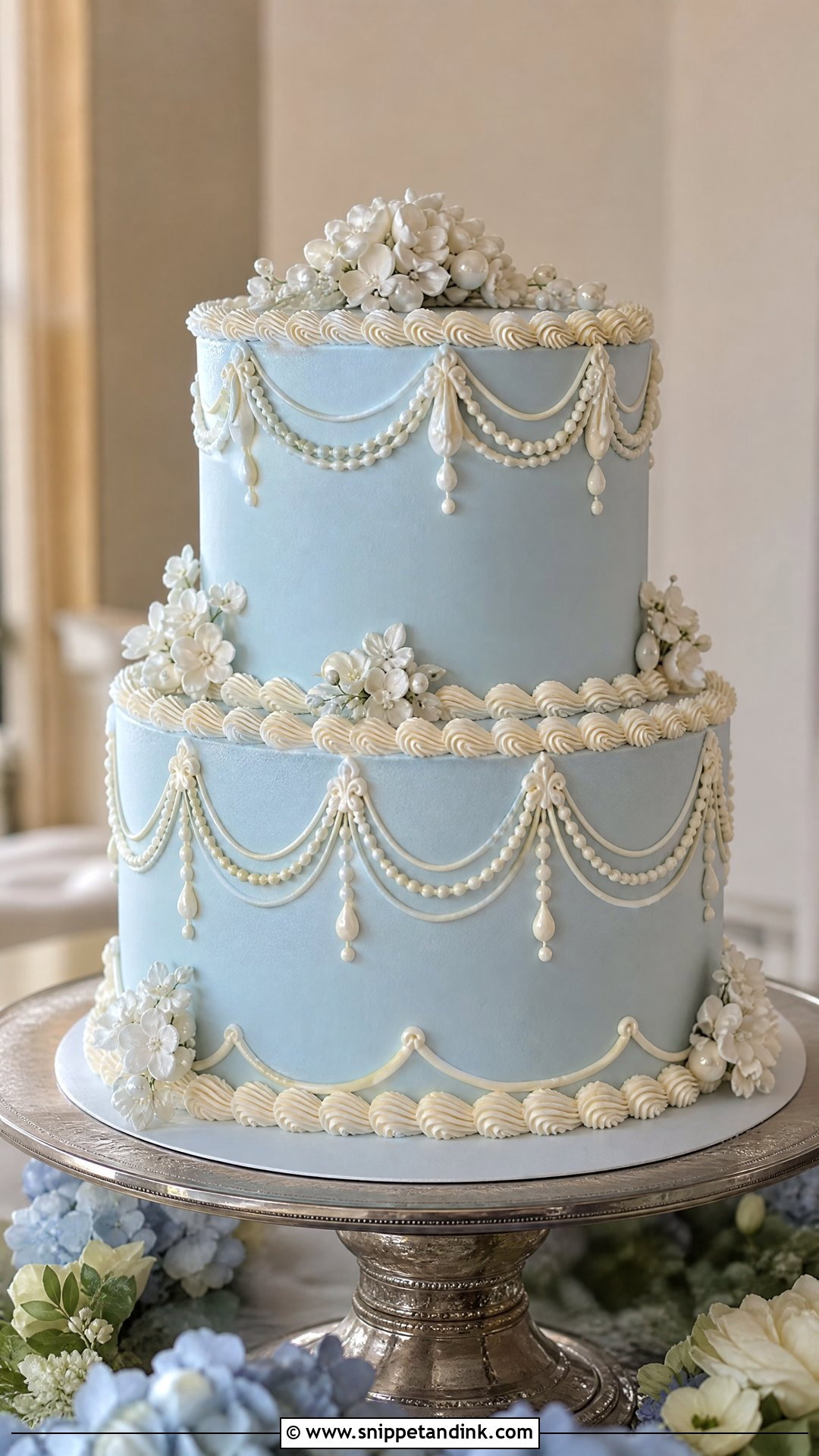
Blue buttercream is harder to get right than it looks. Butter is yellow, so blue coloring added to an ordinary buttercream can drift toward green; I whiten the base first, then tint. A blue vintage wedding cake in powder or dusty blue, with ivory piping, pearls and tiny white flowers, makes a quiet something-blue moment for spring or French-inspired receptions. Scalloped borders and swags give the vintage shape, and a silver stand or floral linens complete it.
9. Toile Wedding Cake
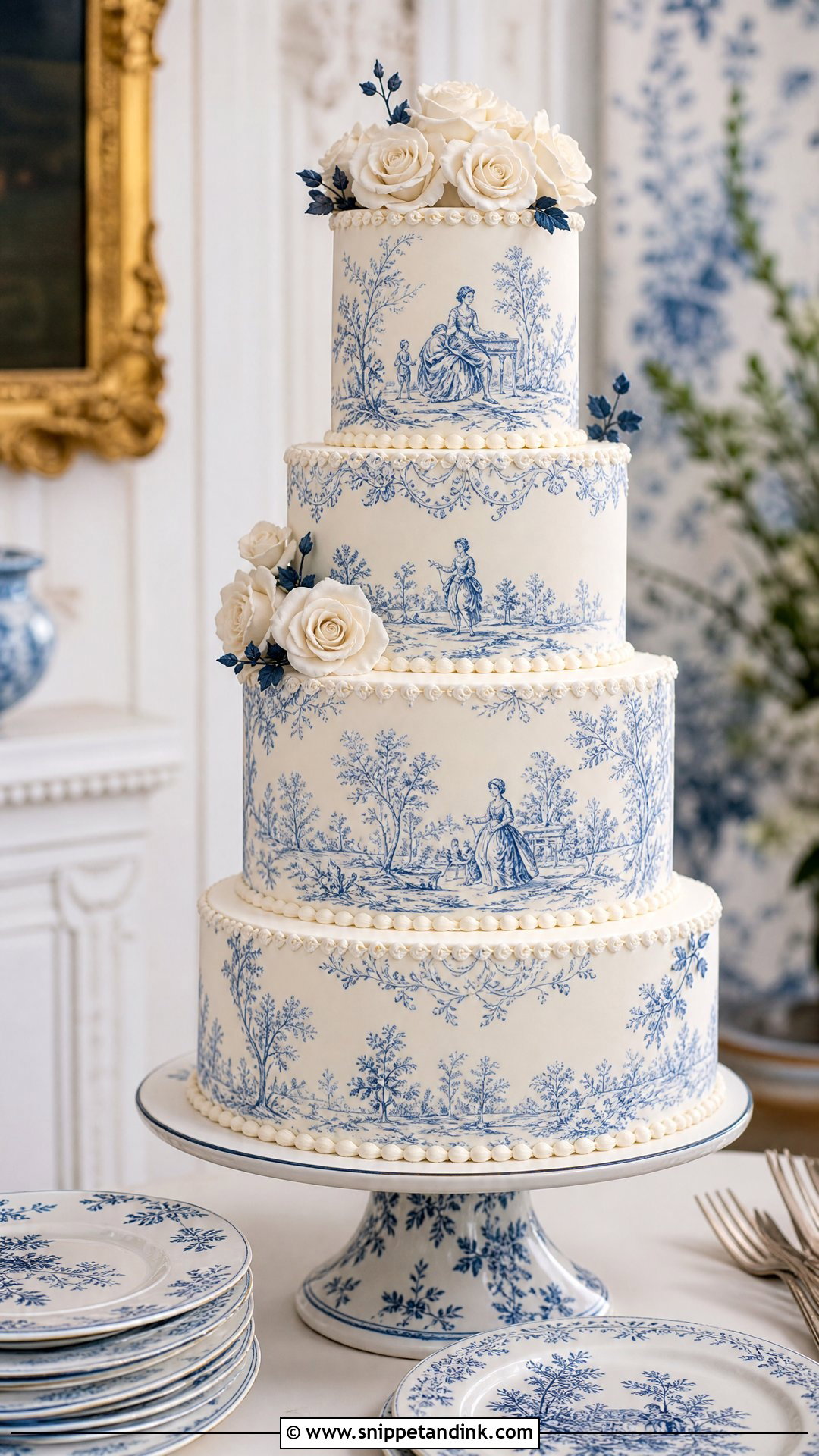
Toile on a cake is usually hand-painted with thinned food color or printed onto icing sheets, and the two look quite different up close: painting has soft, slightly uneven lines, while printing is sharp but flat. Blue, blush, green or grey on ivory are the classic pairings. I often copy a motif from the invitation or a wedding crest so the cake ties to the stationery. Simple piping or small flowers finish the edges, and since the pattern is busy, the shape stays plain.
10. Floral Meadow Wedding Cake
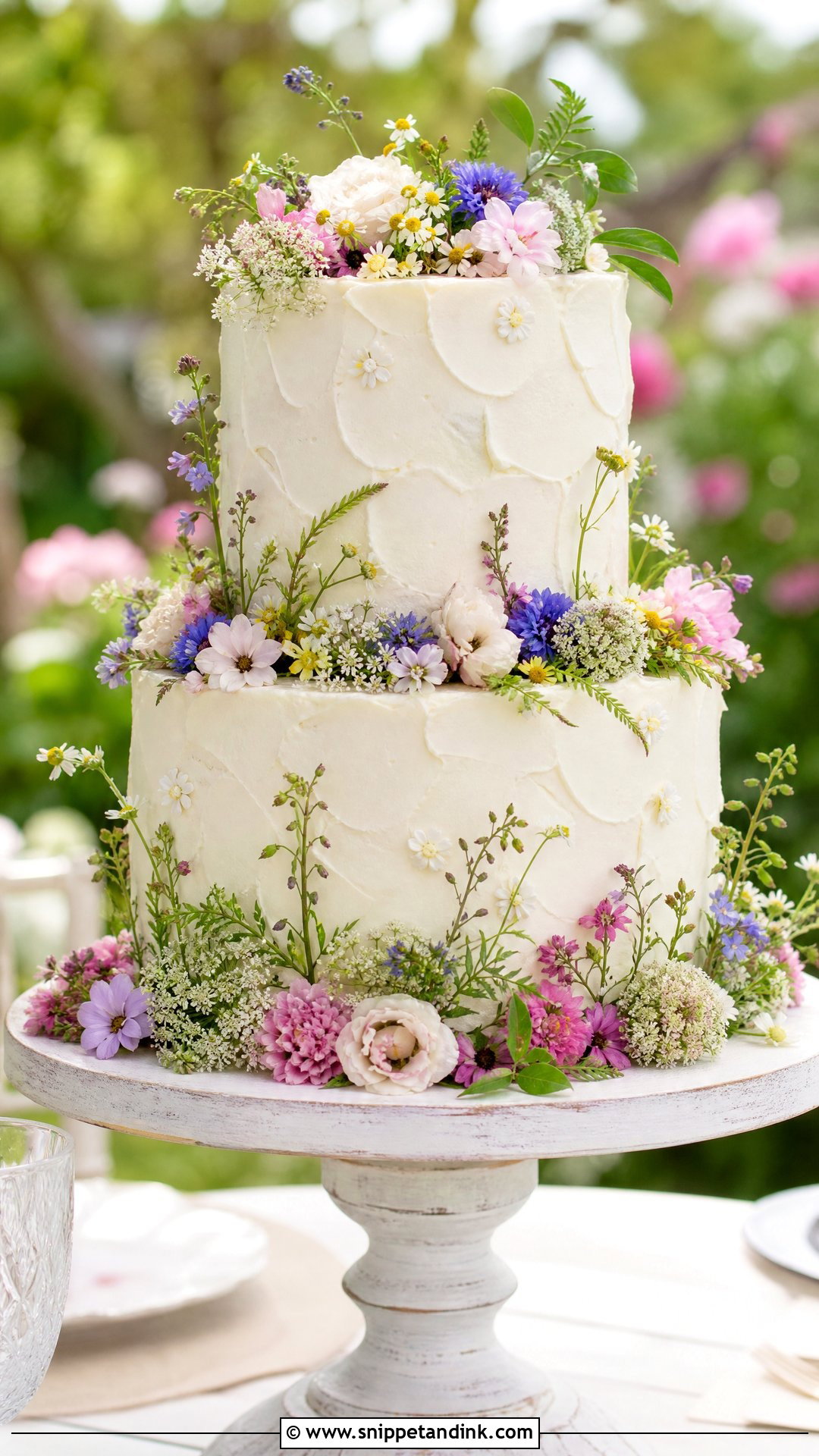
Rather than one big cluster on top, a meadow cake scatters small blooms and greenery around and up the tiers so it looks as if it grew from the table. The flowers can be fresh, pressed, piped or sugar; fresh and pressed flowers must be pesticide-free and edible or separated from the cake by wrapped stems. Smooth, lightly textured or gently ruffled buttercream all work. Ivory, blush, pale yellow, lavender and sage keep it natural for outdoor and greenhouse weddings.
11. Ruffle Wedding Cake
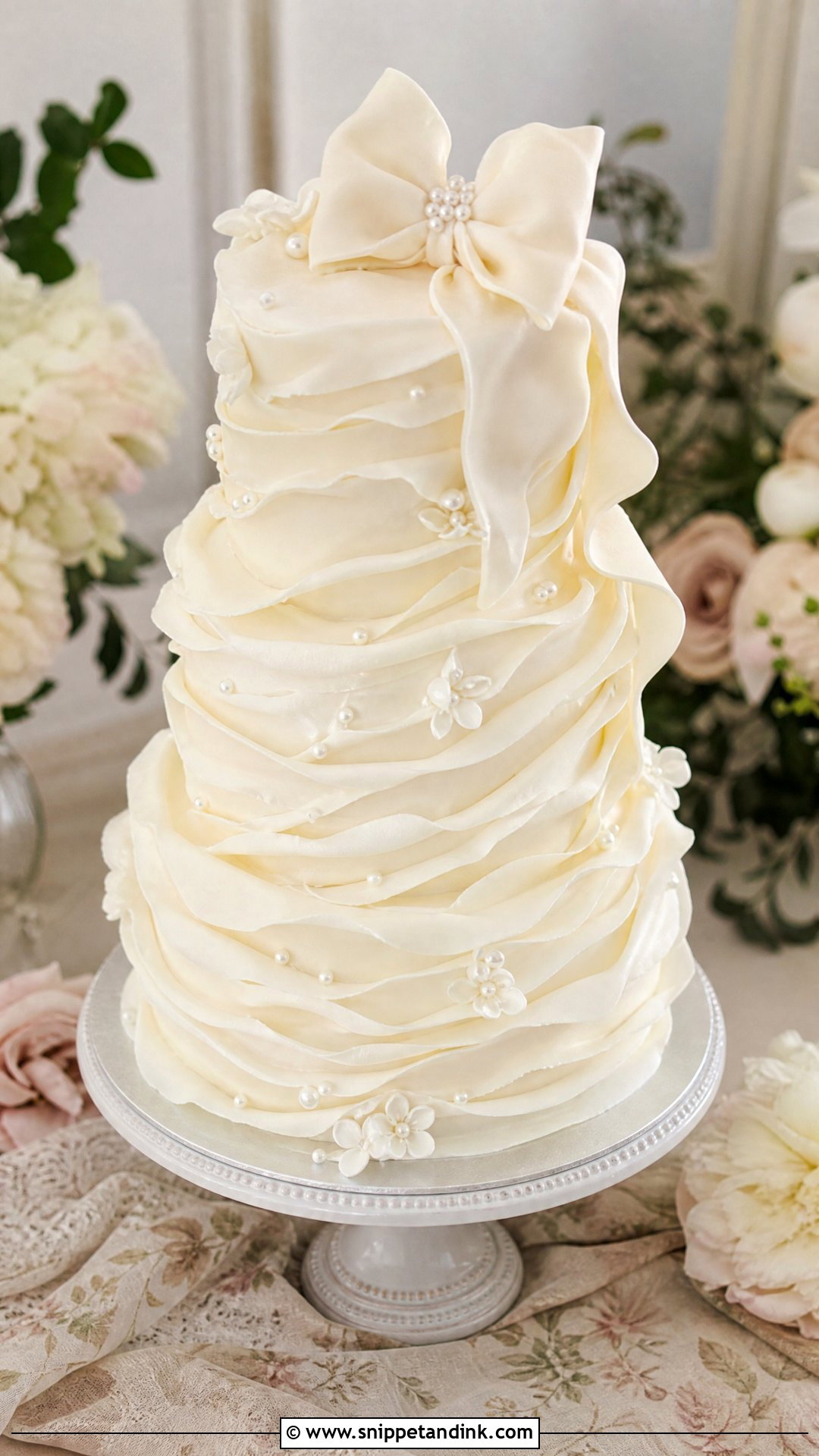
Ruffles are piped with a petal tip, angled so each layer of frosting folds like fabric. They need buttercream that holds a sharp edge; very soft frosting slumps into ridges in a warm room. White and ivory are classic, while blush, champagne, pale blue or butter yellow feel more styled. Tall tiers suit ruffles because the vertical movement adds height in photos. A few sugar flowers, pearls or a small bow are all the extras it needs.
12. Sheet Wedding Cake
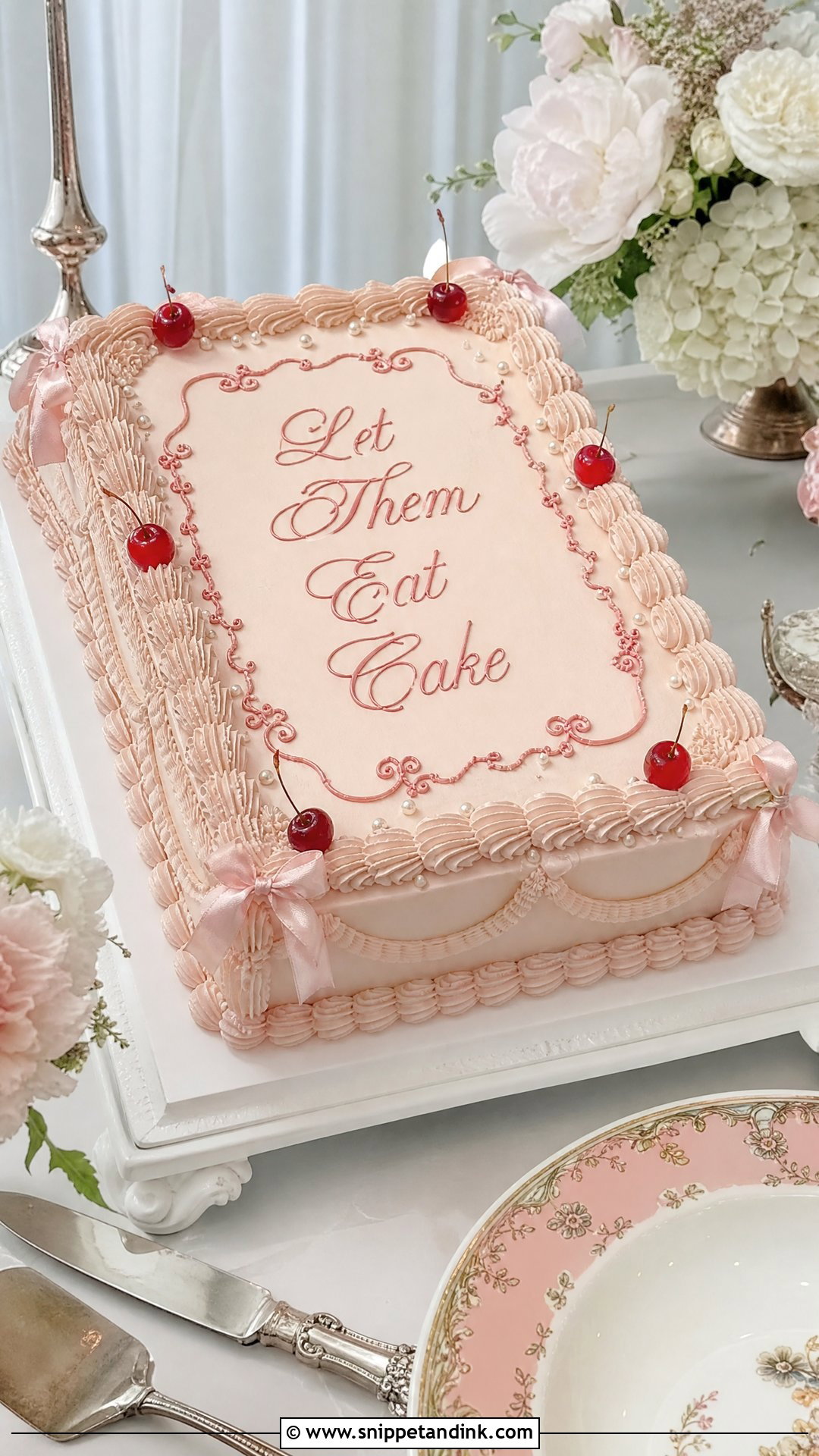
Sheet cakes hide nothing on top, which makes them a good canvas for vintage piping. A sheet wedding cake with piped borders, handwritten-style lettering, pearls, bows, cherries or small florals gets you a decorative cake moment for far less than a large tiered build. I’d pair it with a small display cake for the cutting. Set on a raised tray with flowers and candles, it holds its own on the dessert table.
13. Mini Wedding Cakes
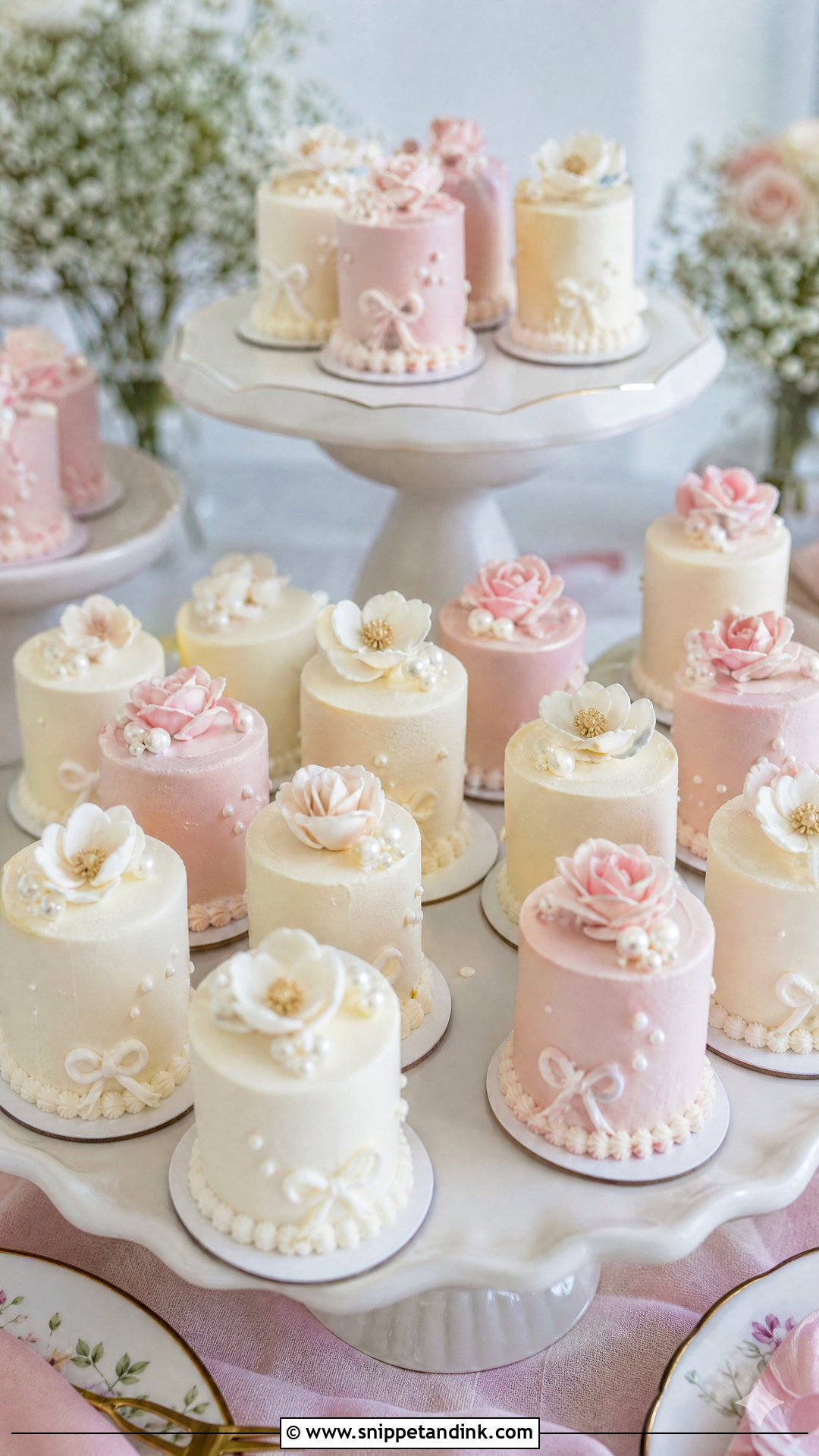
Mini wedding cakes give each guest a tiny copy of the main cake, which feels luxurious and suits intimate receptions and brunches. They’re the most labor-intensive option on this list: every mini needs its own filling, crumb coat, finish and decoration, so expect a higher per-guest cost than slices from a large cake. Smooth buttercream, tiny pearls, a small bow or one flower is enough at that size. You can vary flavors, but keep one color palette so they read as a collection.
14. Tiered Buttercream Wedding Cake
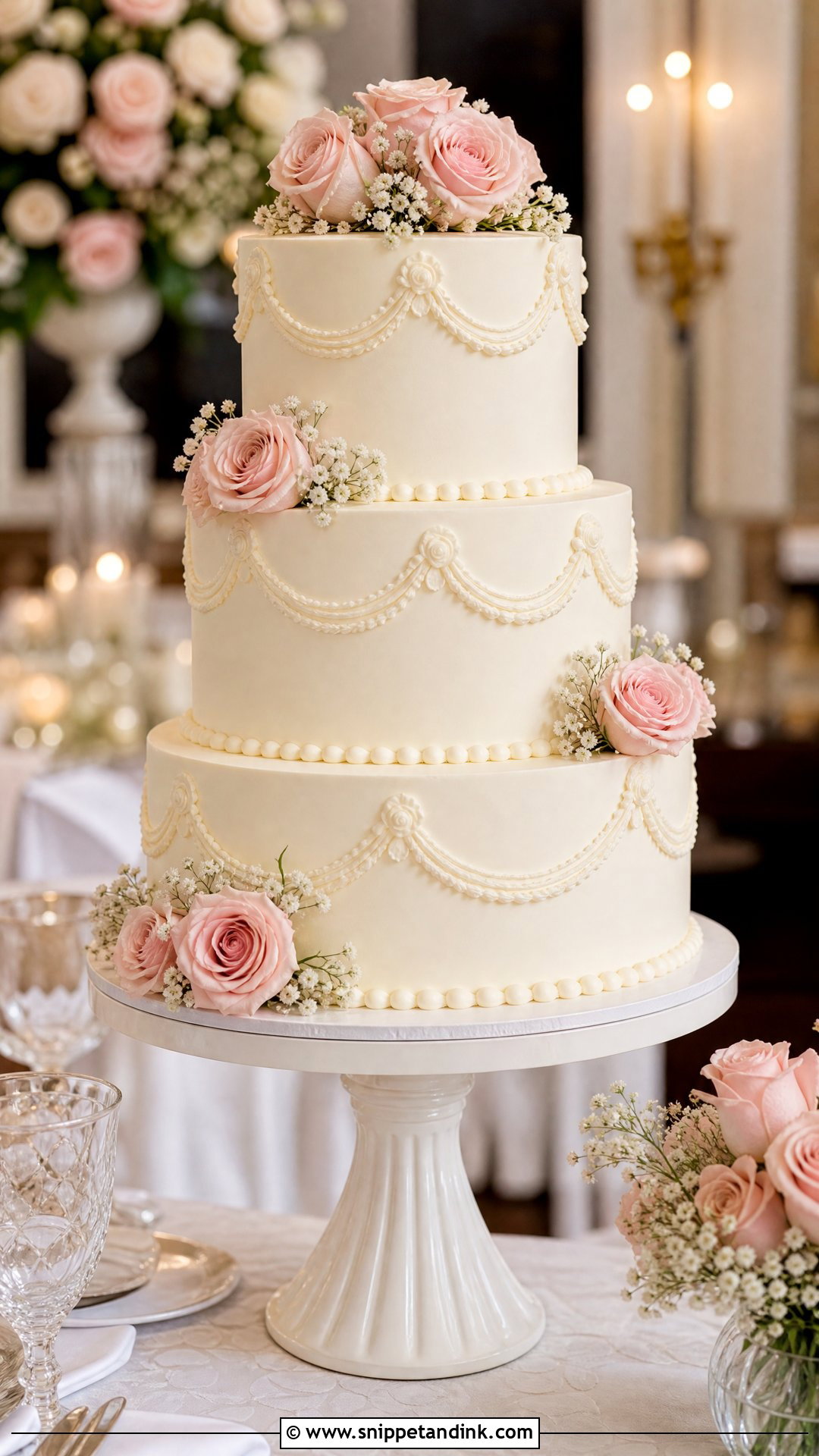
Smooth buttercream is the blank canvas for most of the decoration in this post. It suits almost any venue and feels softer and more inviting than fondant, though it marks easily if anything leans on it during transport. For this style I build taller tiers, use a romantic stand and keep to ivory, blush, champagne or pale blue. Piped texture around the edges adds dimension without needing more toppers.


15. Gold Accent Wedding Cake
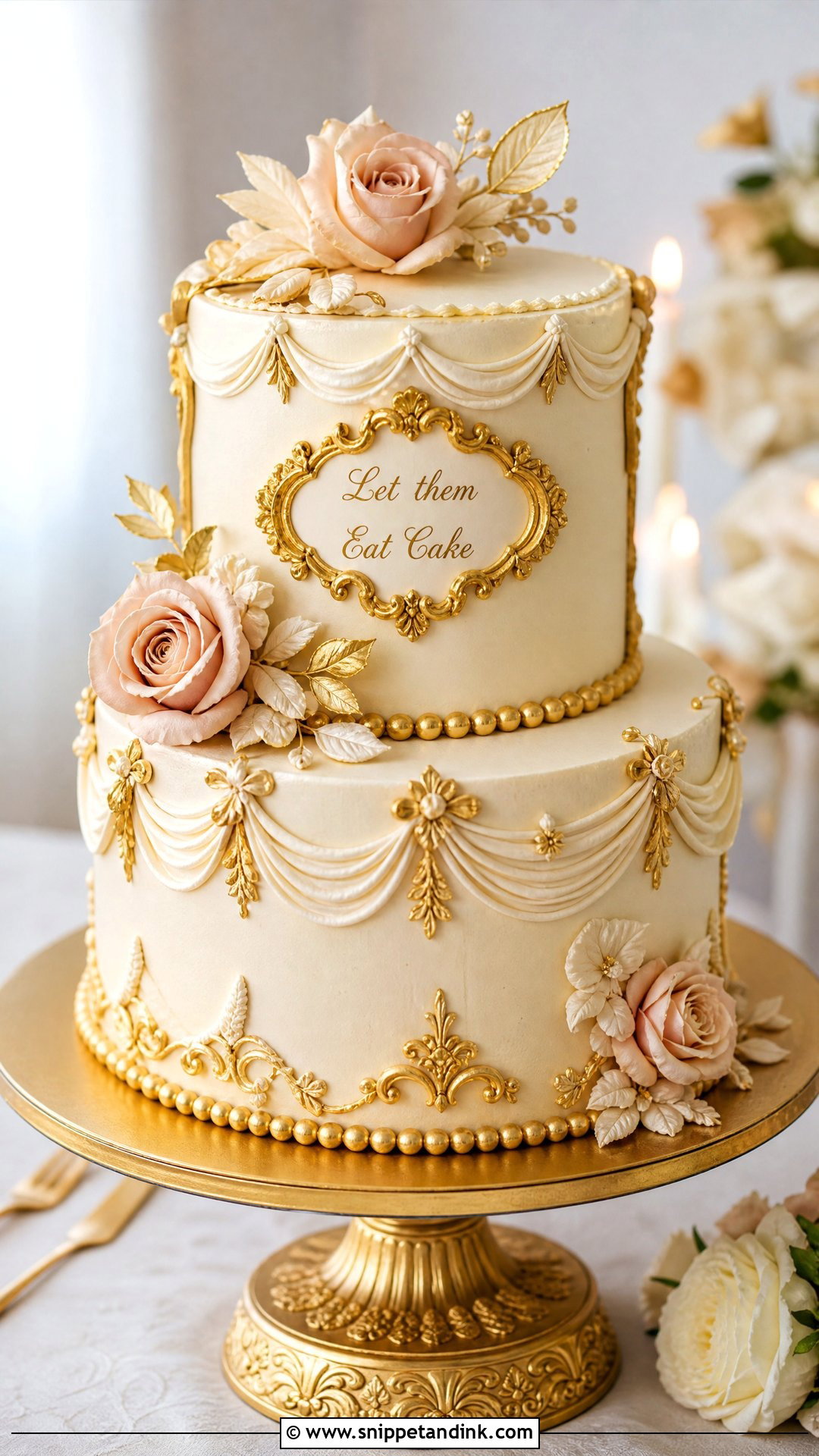
Gold works in thin lines: painted edges, small baroque details, gilded pearls or delicate scrollwork. I paint with edible gold dust mixed with a little alcohol, which dries fast; too much metallic and the cake looks like a trophy. Ivory buttercream, blush flowers, champagne tones and an ornate stand suit it, especially in candlelit ballrooms and historic venues. For the softer version of the aesthetic, put the gold on vintage piping rather than on sharp modern lines.
16. Lace Wedding Cake
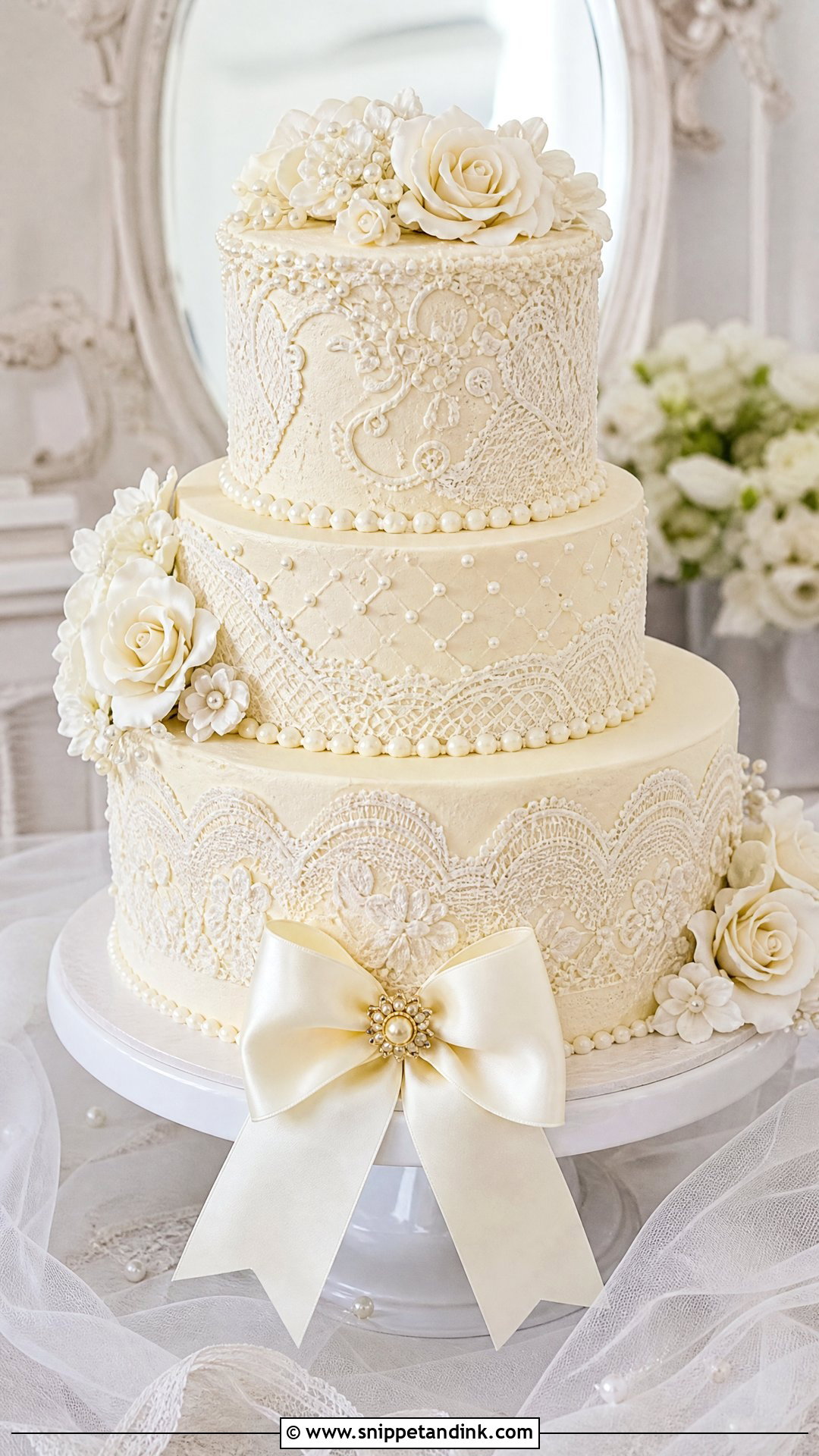
Lace can be piped, cut from sugar lace mats or applied as fondant appliqué, and I often copy a pattern from the bride’s dress, veil or invitation. Piped lace is the most delicate but takes the longest; sugar lace is quicker and very fine, though it softens and sticks to itself in humid air. Ivory and white are classic; blush or champagne feel warmer. Keep other decoration sparse so the texture stays the focus.
17. Pastel Wedding Cake
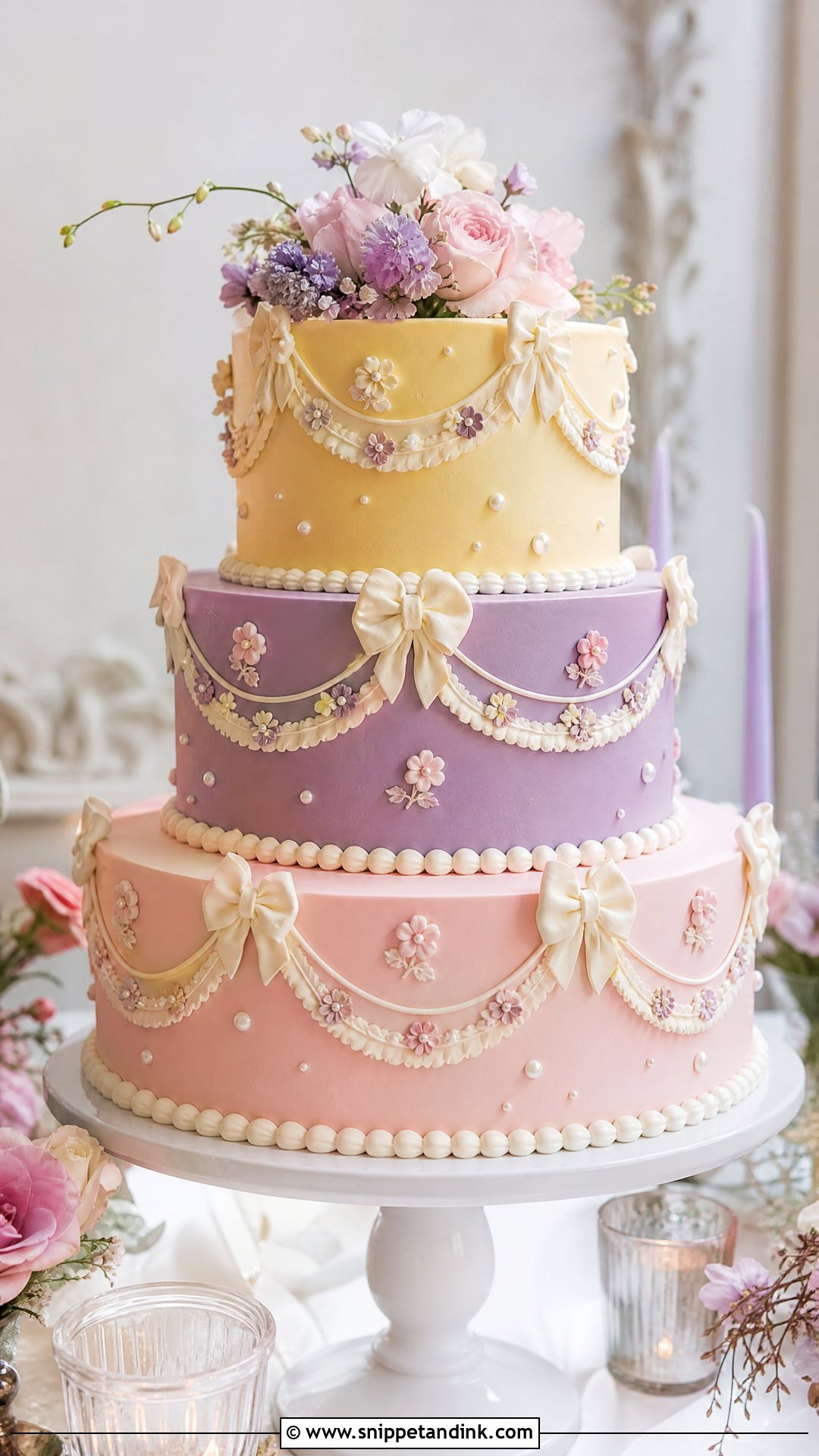
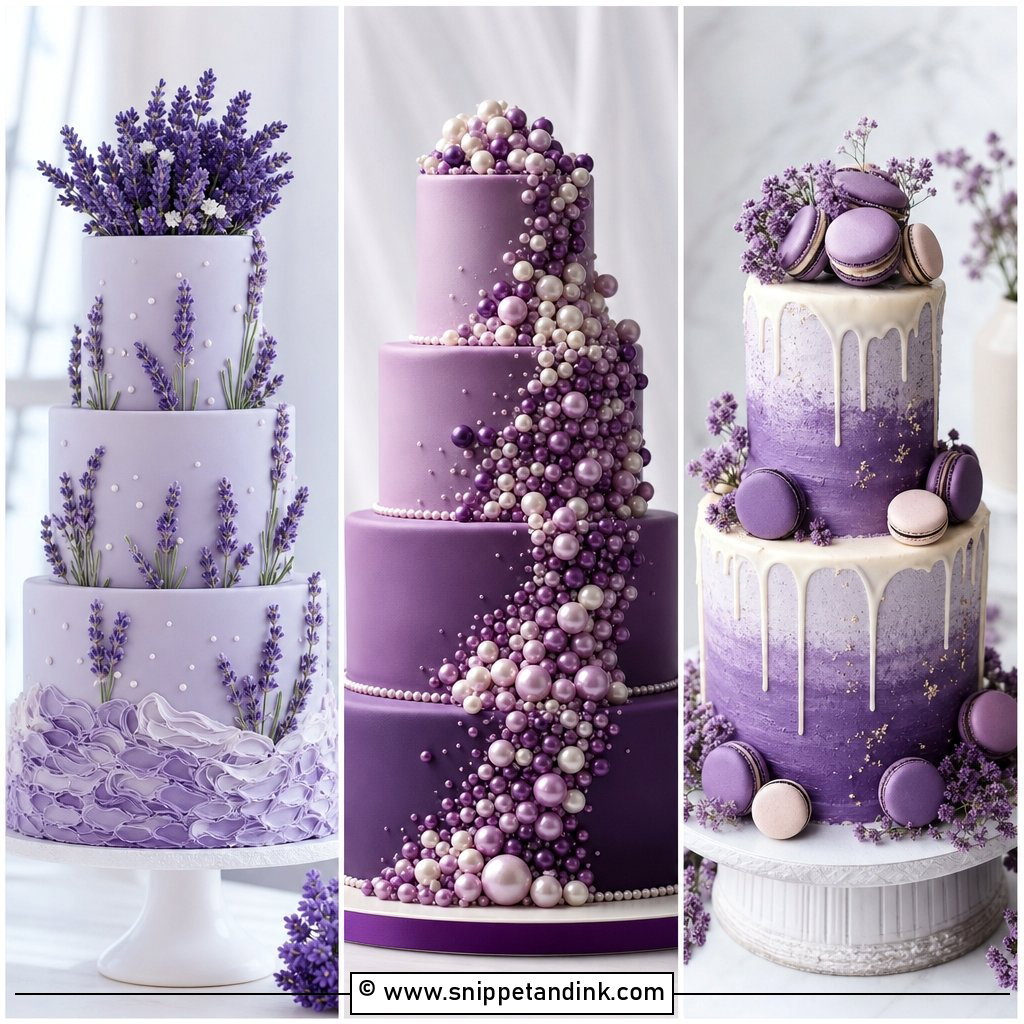
Pastels make it easy to match a season: soft pink, butter yellow, powder blue, mint, lavender or peach. They look best layered, one color per tier or a gentle ombré, with ivory piping, pearl borders, sugar flowers or subtle bows tying it back to a wedding. Pastel buttercream also fades in strong sunlight, so I keep the cake shaded until it’s time for photos. Spring weddings and garden receptions suit it.
18. Monogram Wedding Cake
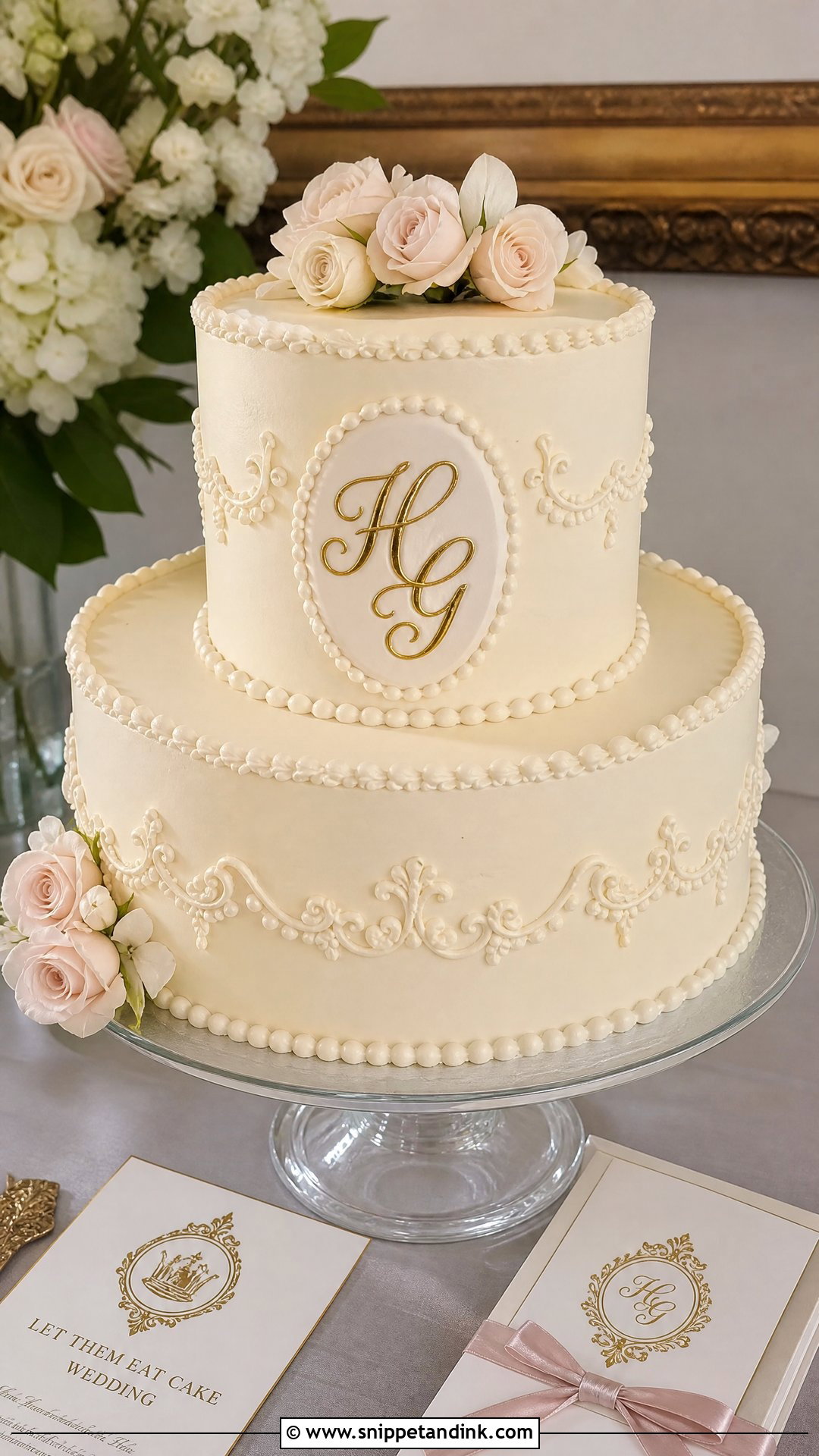
Initials make the cake personal without making it complicated. I pipe, paint, emboss or set them on a small edible plaque, choosing a classic script rather than a modern sans-serif. Piped lettering is the hardest skill on this list, so ask to see your baker’s lettering work before committing. The monogram can sit centered on the front tier or repeat softly around the cake as a pattern, over ivory, blush, blue or champagne with vintage borders and pearls.
19. Garden Rose Wedding Cake
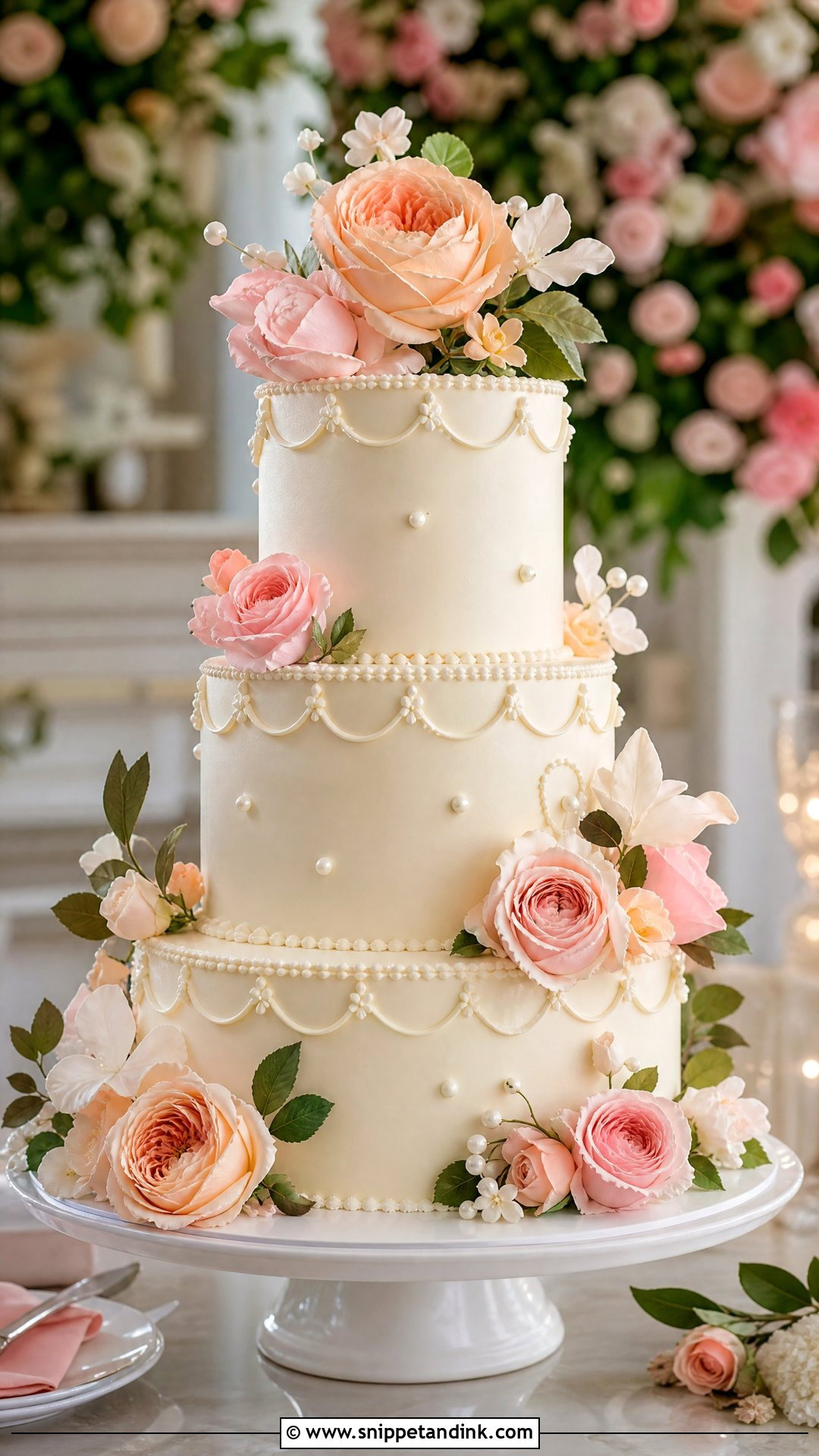
Garden roses are full and soft, which pairs naturally with vintage piping and smooth buttercream. One cluster keeps it simple; roses cascading between tiers makes it dramatic. I match colors to the bouquet. Fresh roses must be grown without pesticides and have their stems wrapped and taped before they go anywhere near the cake, and I agree with the florist in advance who supplies and places them. Sugar roses avoid all of that and survive heat better, though they cost more in time.

20. Dessert Table Wedding Cake
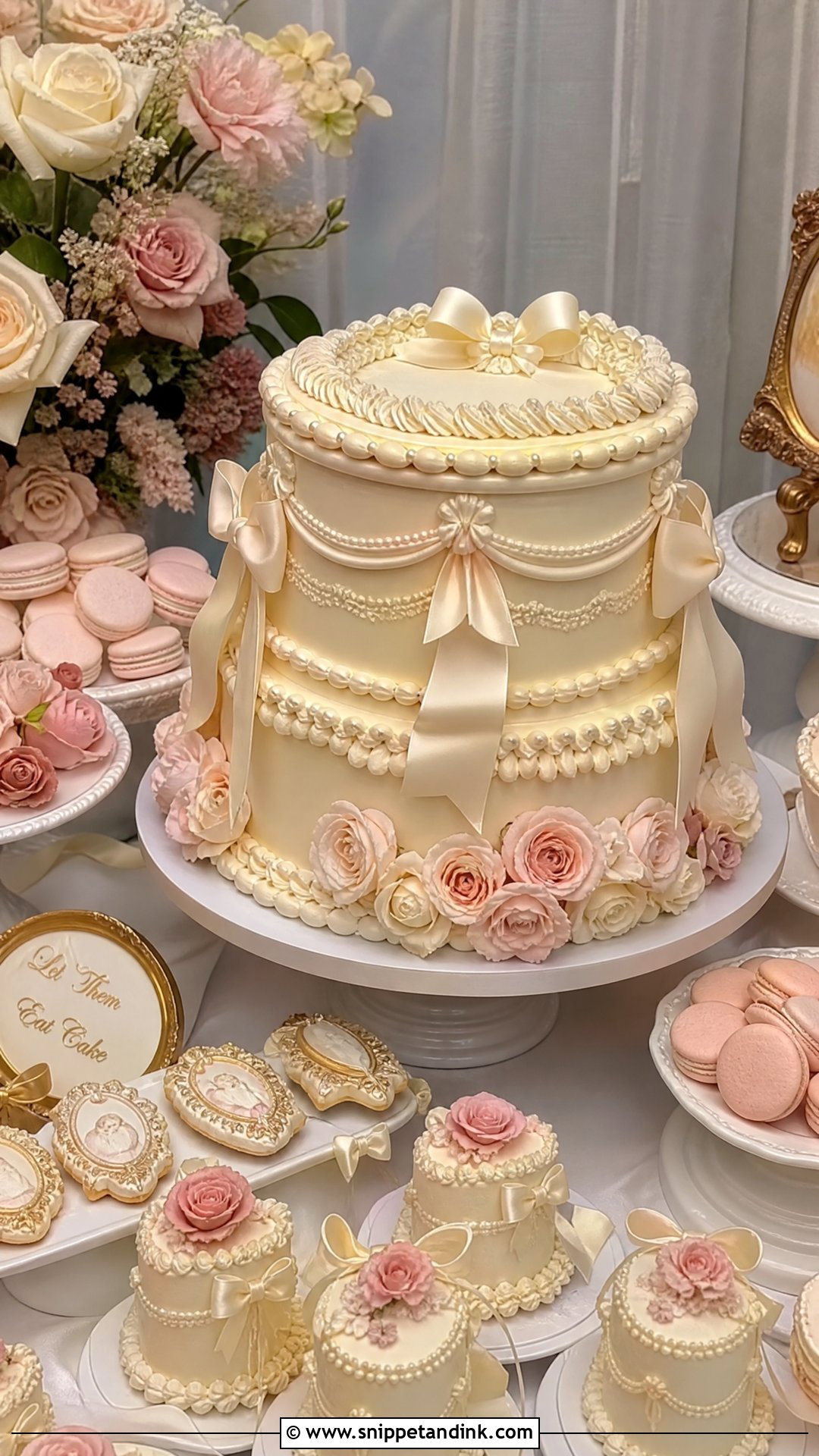
A dessert table wedding cake turns the whole spread into the moment. The main cake can be smaller and more decorated, surrounded by mini cakes, cupcakes, macarons, cookies and fruit tarts. Tie it together with one palette, matching linens, flowers and stands at different heights, and put the main cake on the tallest stand or dead center. Guests graze for longer, so anything with cream filling needs to come out in rounds rather than all at once.
Getting a Piped Cake to the Table in One Piece
Decorated borders chip easily, so a vintage cake travels cold. I chill it until the buttercream is firm, drive it on a flat, non-slip base, and often carry delicate toppers, bows and fresh flowers separately to add at the venue. Taller cakes may be stacked on site rather than in the kitchen.
Once it’s set up, position matters. A cake pushed against a busy wall or under a hot spotlight loses both its photos and its edges. A plain backdrop, soft side light and a spot away from heaters or direct sun keep the piping crisp. Ask your photographer to shoot it before the cutting, while every pearl is still in place.
Not every sparkle is meant to be eaten
Some metallic dragées, glitters and gold accents sold for cake work are labeled decorative only, and very hard sugar pearls can be tough on teeth. Ask your baker which pieces are edible and let the catering team know, so anything decorative is lifted off before slices go out.
Less Cake, More Theatre
This look works when the cake feels like part of the whole room: the stand, linens, flowers and small details matter as much as the piping. Lambeth borders, hearts, pearls, bows, cherries or toile can all carry it. Size doesn’t. A small cutting cake, a decorated sheet cake or a full dessert table can each create the drama, so start with your venue and budget and let the handwork go where guests will actually see it.
You'll Like These Ideas:



Leave a Reply