
Black, white and gold is the palette I’m asked for most often for evening and black-tie weddings, and it’s more versatile than it sounds. White keeps a cake bridal, gold brings warmth, and black gives the contrast that makes everything else sharper, from the flowers on the cake to the tuxedos beside it. The same three colors can go Art Deco, vintage lace, painterly or stark and modern, depending on how much of each you use and where. Below are twenty designs I’d build in this palette, with notes on the technique behind each and the mistakes to avoid.
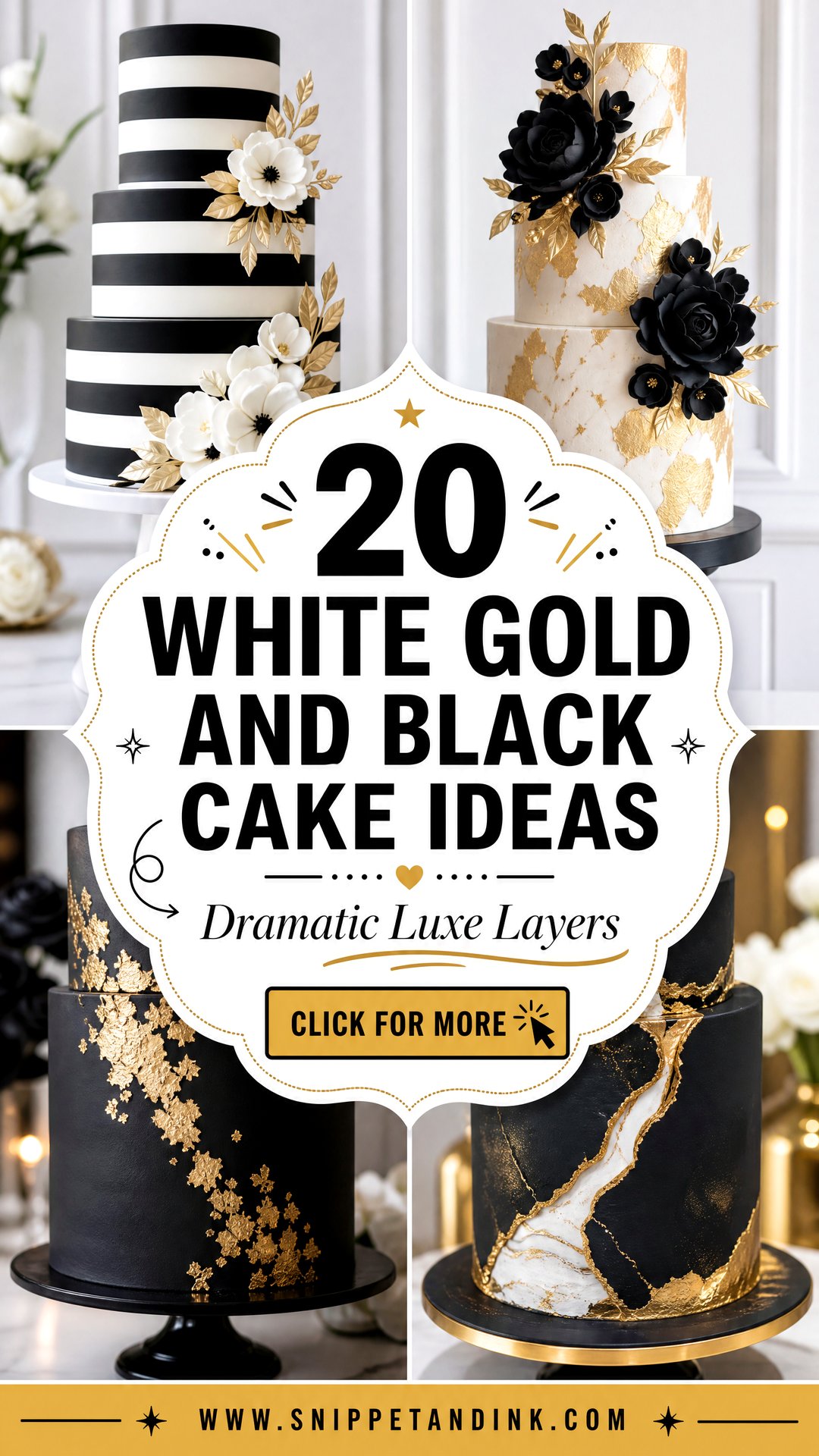
The Trouble With Black Frosting, and How Bakers Avoid It
Black is the hardest color in cake work. Tinting white buttercream all the way to black takes a large amount of gel coloring, and that much coloring can taste bitter and stain teeth, lips and tablecloths. It’s the first thing I talk through with any couple who wants a lot of black.
There are better routes. Black fondant comes pre-colored and is the most reliable for big areas. For buttercream or ganache, I start from dark chocolate or black cocoa, so the base is already nearly black and needs far less dye. Black color also deepens as it rests, which is why I mix it a day ahead rather than adding more and more on the spot.
A few other habits of black on a cake are worth knowing:
- It bleeds. Black buttercream next to white buttercream can leave a gray halo, so sharp black-and-white borders are usually done in fondant.
- It shows everything. Fingerprints, crumbs, condensation and stray sugar all stand out on black, so finishing takes longer.
- It needs light. In a dim room, black detail turns into a flat shape. Put the cake table where it gets soft, steady light.
If you love the drama but worry about taste, keep black on the fondant and decorations and let the frosting inside stay pale.
1. White Gold And Black Marble Wedding Cake
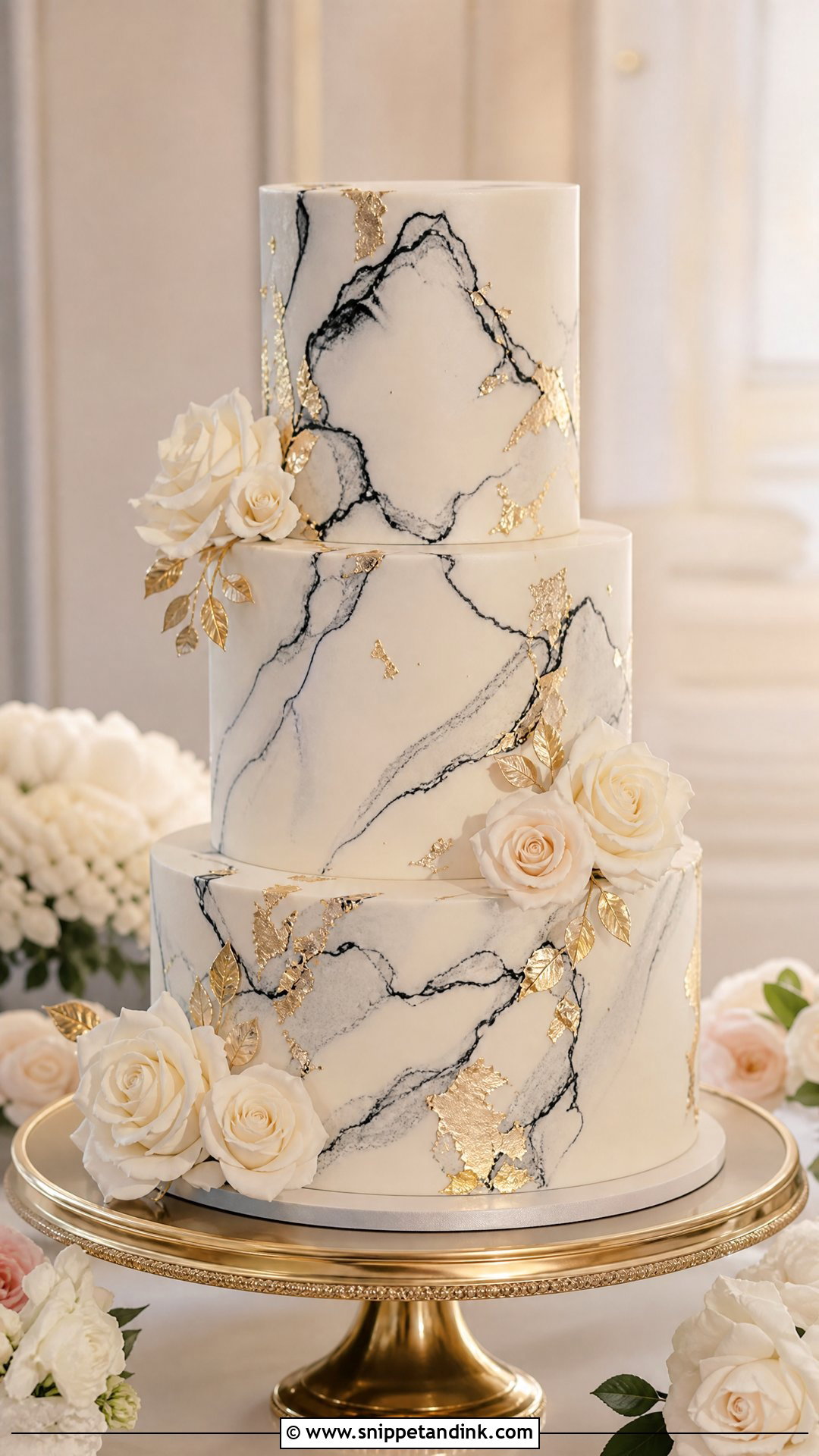
Marble is the gentlest way into this palette, because the cake stays mostly white with black veining wandering across each tier. I fold a little black-colored fondant into white before rolling it, which gives soft, natural veins; painted veins look harsher. Ask for the pattern to be uneven, since regular stripes look printed. Thin touches of gold leaf along a vein warm it up, and a few white sugar roses or orchids soften the contrast. Ballrooms, galleries and modern black-tie receptions suit it.
2. Black And Gold Drip Wedding Cake
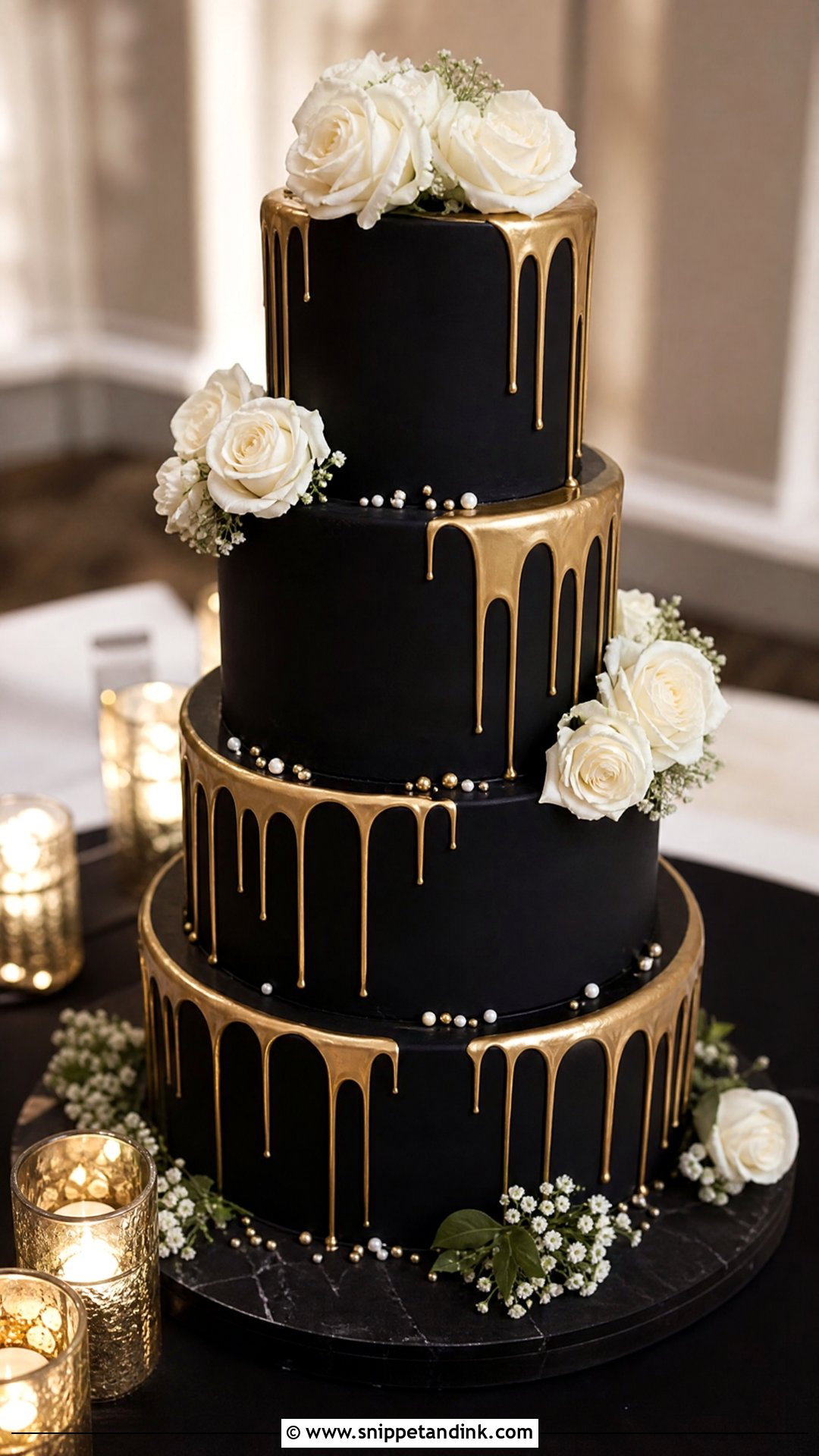
A black and gold drip wedding cake is bold but surprisingly easy to keep refined. The gold drip is usually white chocolate ganache run over a chilled black tier, then painted gold once it sets; pouring a ready-gold liquid rarely gives a clean metallic finish. Keep the drip thin and the tiers simple. White flowers on top or at the base bring the bridal feel back, and under candlelight the gold glows in a way flat color never does.
3. White Wedding Cake With Black Bow
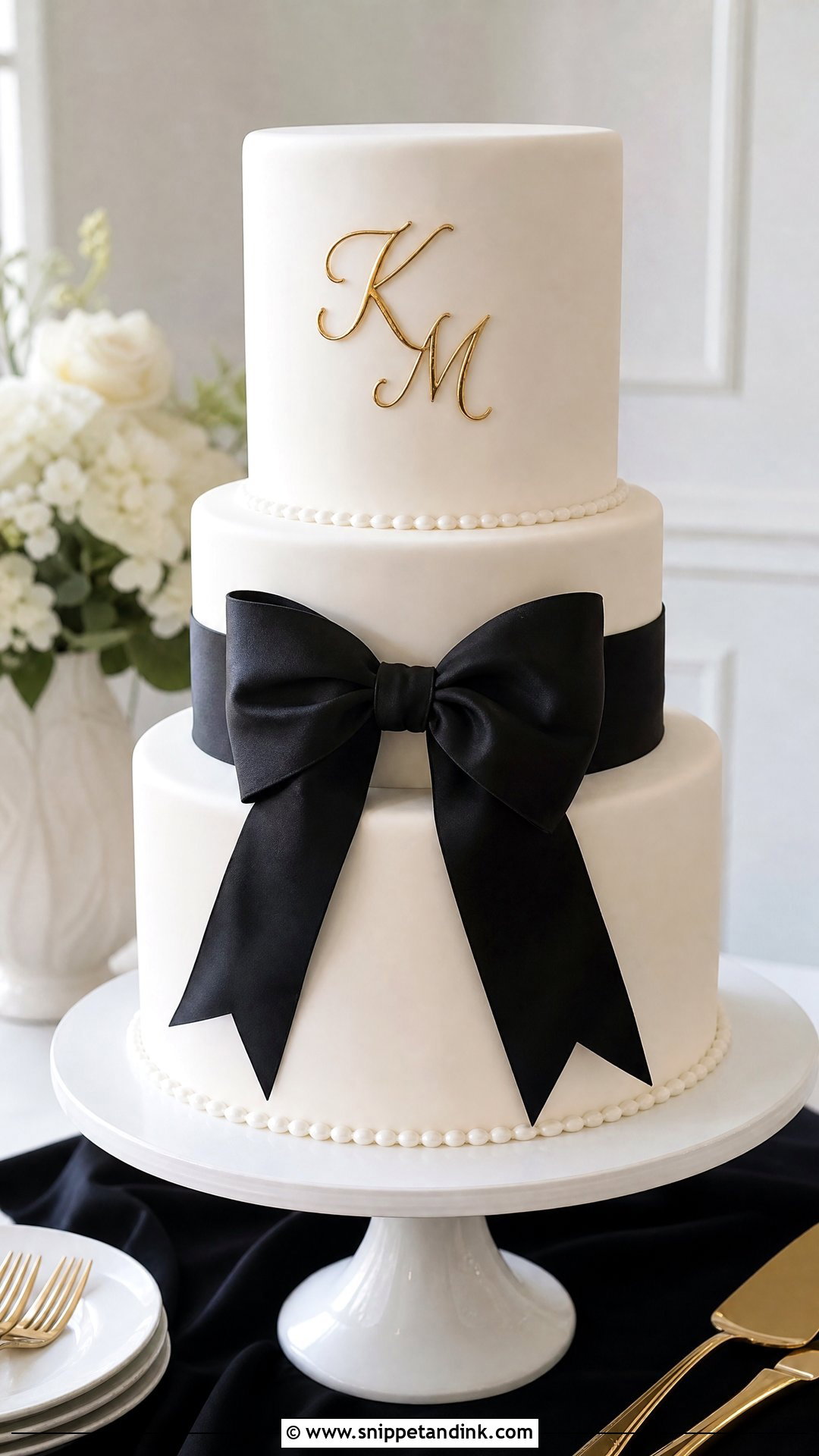
One large bow can carry an entire cake. I finish the tiers in smooth white fondant or buttercream, then wrap a center tier with a black fondant bow or a clean black band. Fondant bows need a day or two to dry over supports before they’re attached, or the loops collapse. A gold monogram or thin gold trim makes it formal. It’s a fashion-led look that sits well beside black bridesmaid dresses, white roses and gold table settings.
4. Black Wedding Cake With White Flowers
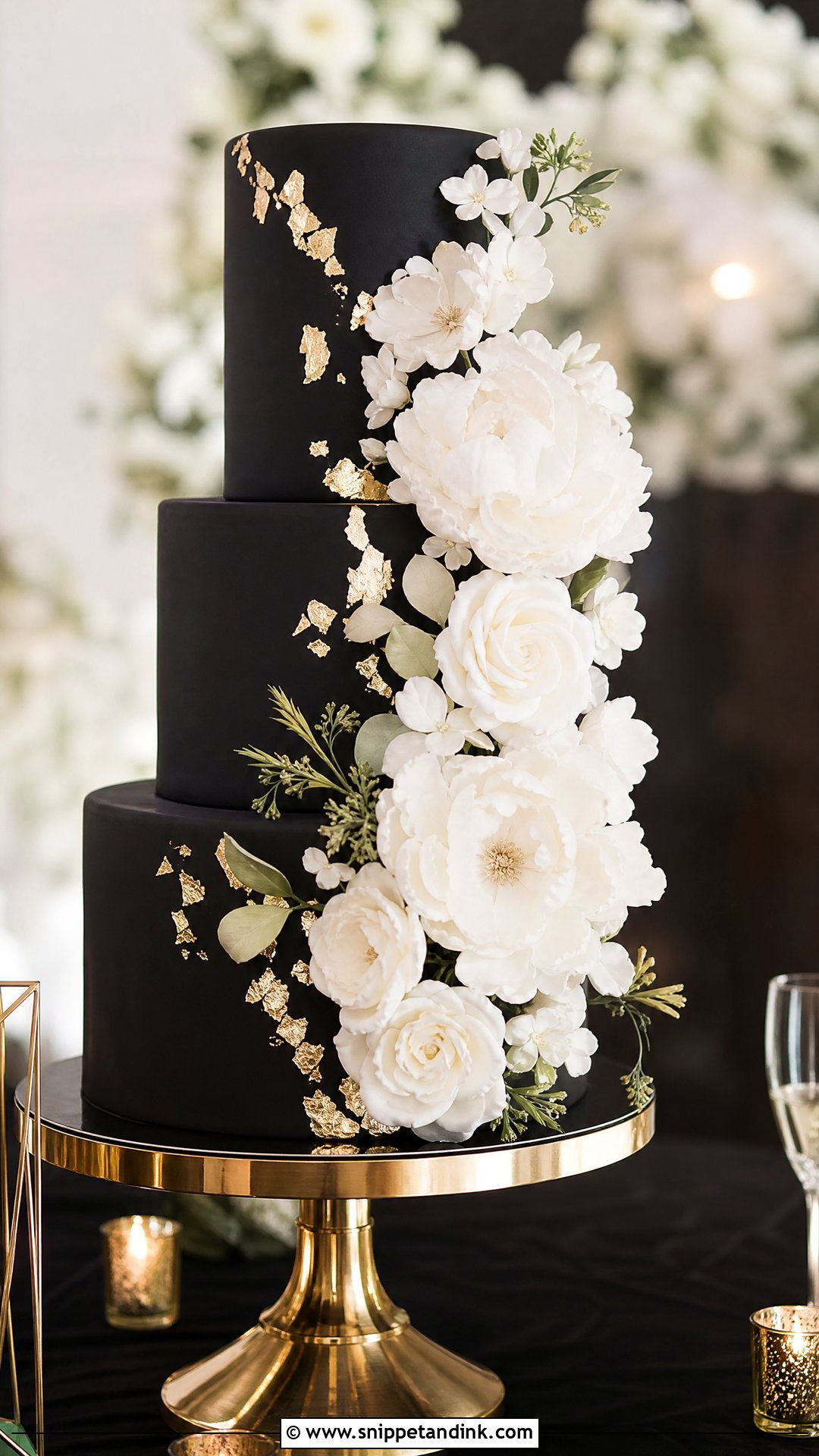
The darker the cake, the brighter the flowers look, which is the whole point of this design. White sugar flowers or fresh blooms against a black base read almost luminous by candlelight. I’d choose one main flower, such as roses or peonies, rather than mixing several, because variety gets lost against black. A little gold leaf around the clusters adds glow. Be aware that black fondant shows every fingerprint, crumb and speck of icing sugar, so this cake gets handled with gloves and placed on the table with extra care.
5. White Gold And Black Art Deco Cake
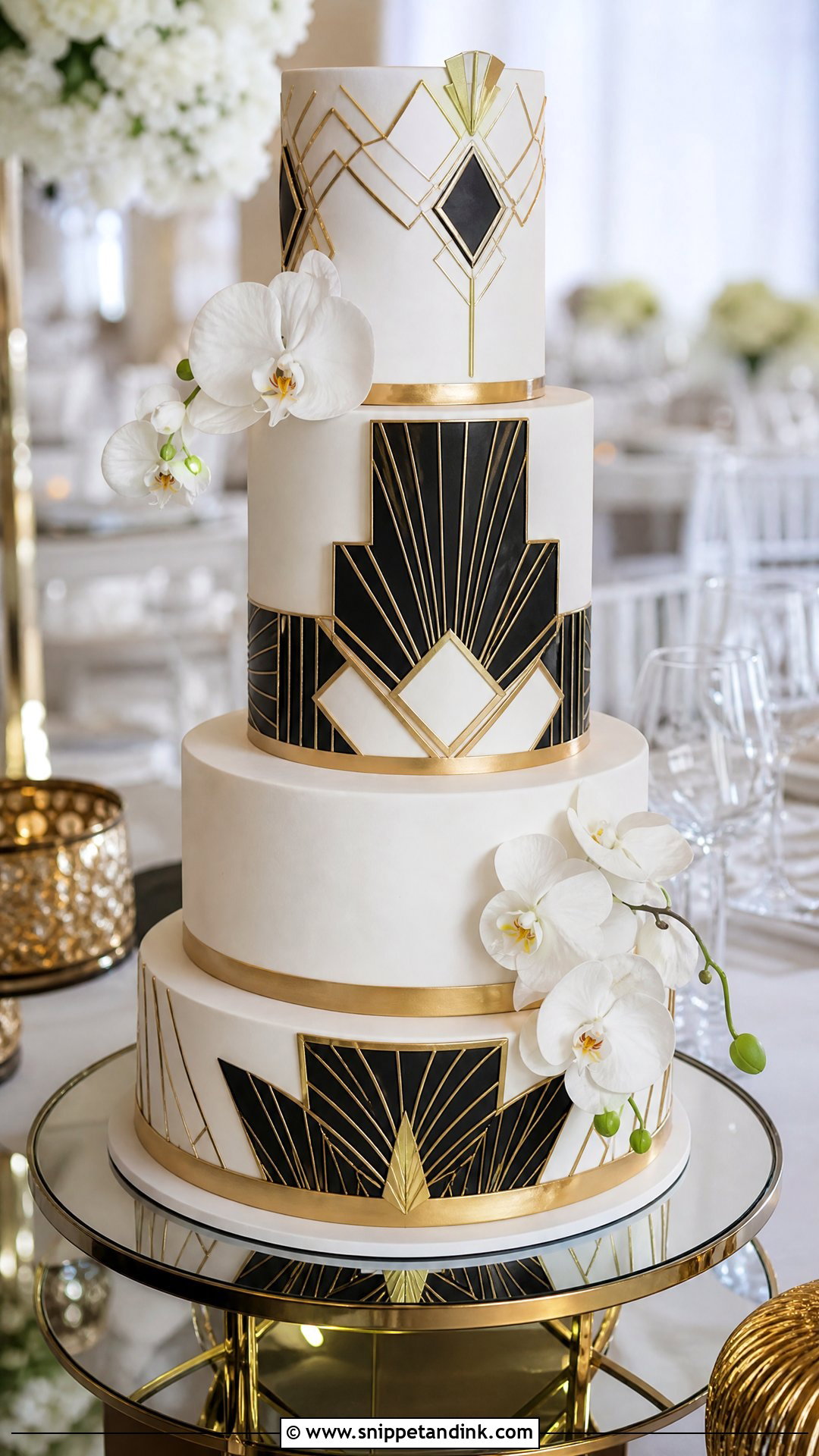
Art Deco is all about symmetry. A white, gold and black Art Deco cake usually has white tiers with black geometric panels and gold lines, built from fans, arches, stepped borders and thin bands. I cut these shapes from fondant with templates and measure each tier, because a pattern that’s slightly off-center is obvious from across the room. Sharp, smooth tiers matter more here than anywhere. City weddings and vintage venues are a natural match, finished with a gold topper.
6. White Cake With Black Lace And Gold Trim
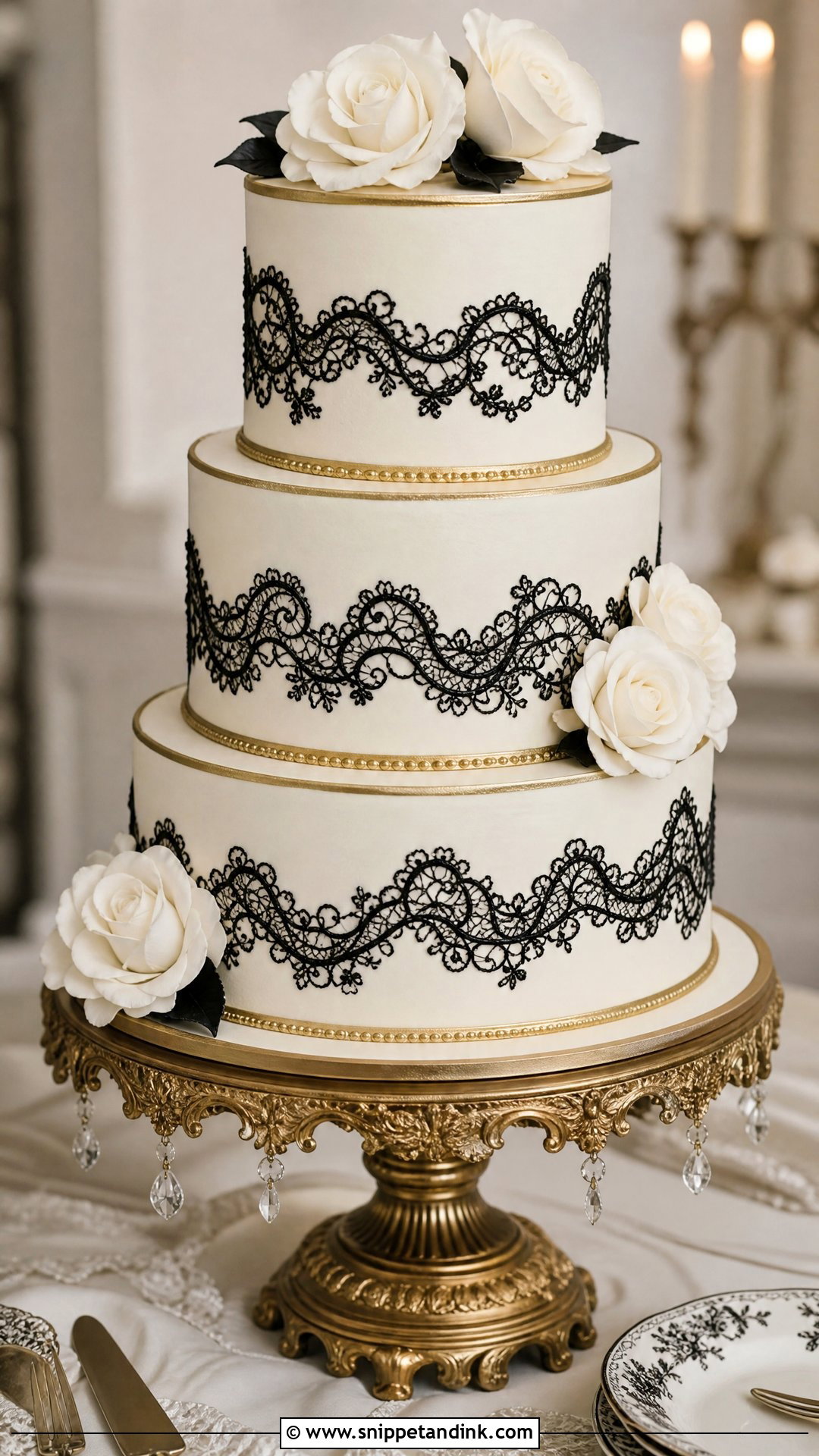
Black lace on white is romantic with a formal edge. The lace can be piped in black royal icing, cut from black fondant with a lace mat, or pressed from black sugar lace, and the sugar lace version gives the finest detail. I keep it to one or two tiers, then add gold trim round each tier base. Vintage weddings, banquet halls and brides in lace gowns suit it. Covering the whole cake in black lace tips it from delicate into heavy.
7. Black And White Striped Wedding Cake
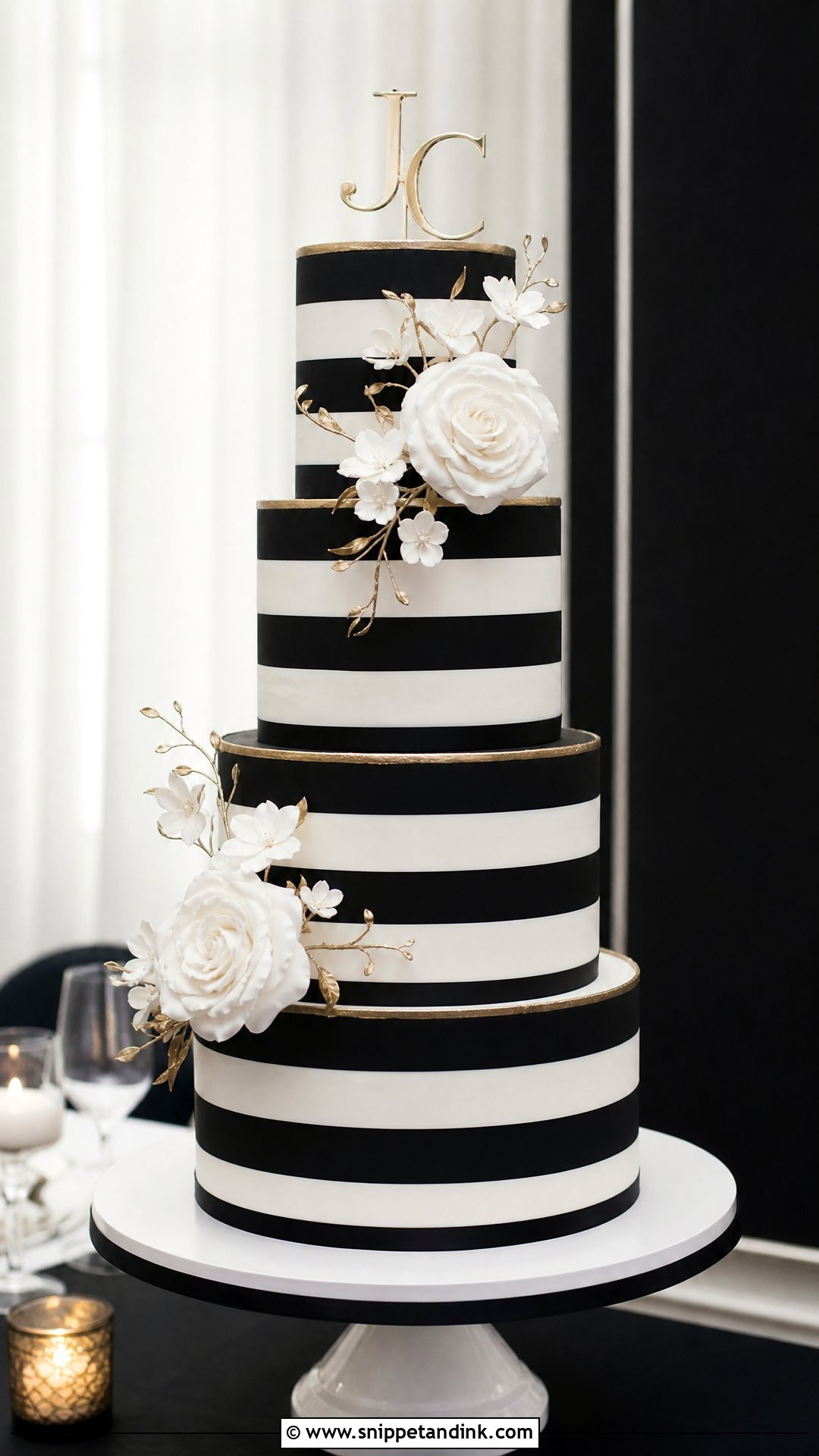
A black and white striped wedding cake reads clearly from across the room. Wide stripes feel modern; thin ones feel tailored. I make stripes in fondant because black buttercream tends to bleed into white buttercream along the edge over a few hours, leaving a gray line. A gold-painted edge or a small metallic topper softens the contrast. City weddings and tented black-tie receptions suit it, and a small cascade of white sugar flowers makes it feel more romantic.
8. White Gold Leaf Wedding Cake With Black Flowers
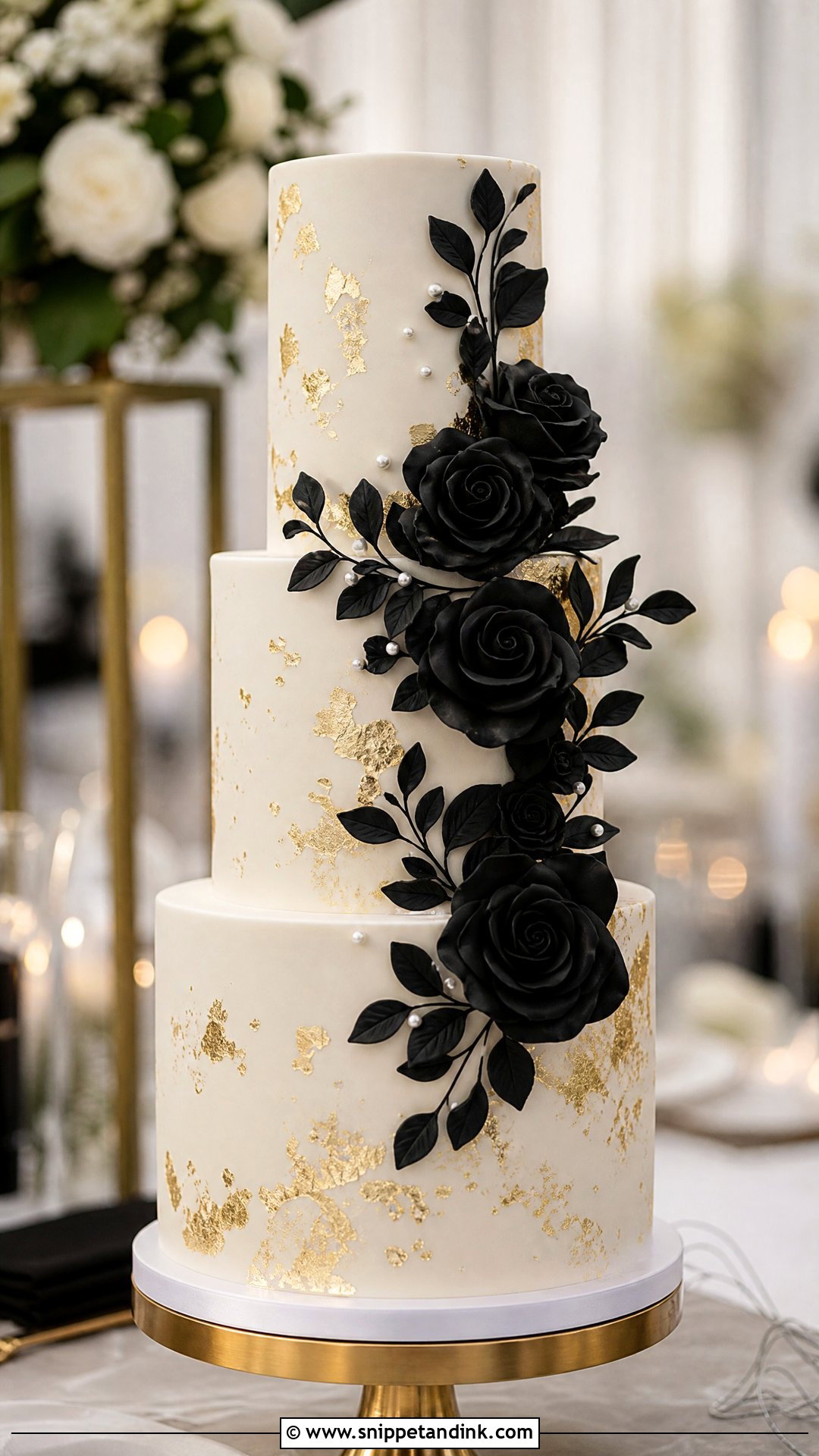
This flips the usual arrangement: a white cake with gold leaf, and black flowers as the focal point. True black flowers don’t exist in nature, which is why I make these in sugar, as roses, anemones or invented blossoms colored a deep, even black. Cluster them in one or two places so the white stays dominant. Gold flatware, black stationery and candlelit tables all tie in.
9. Black Wedding Cake With Gold Leaf
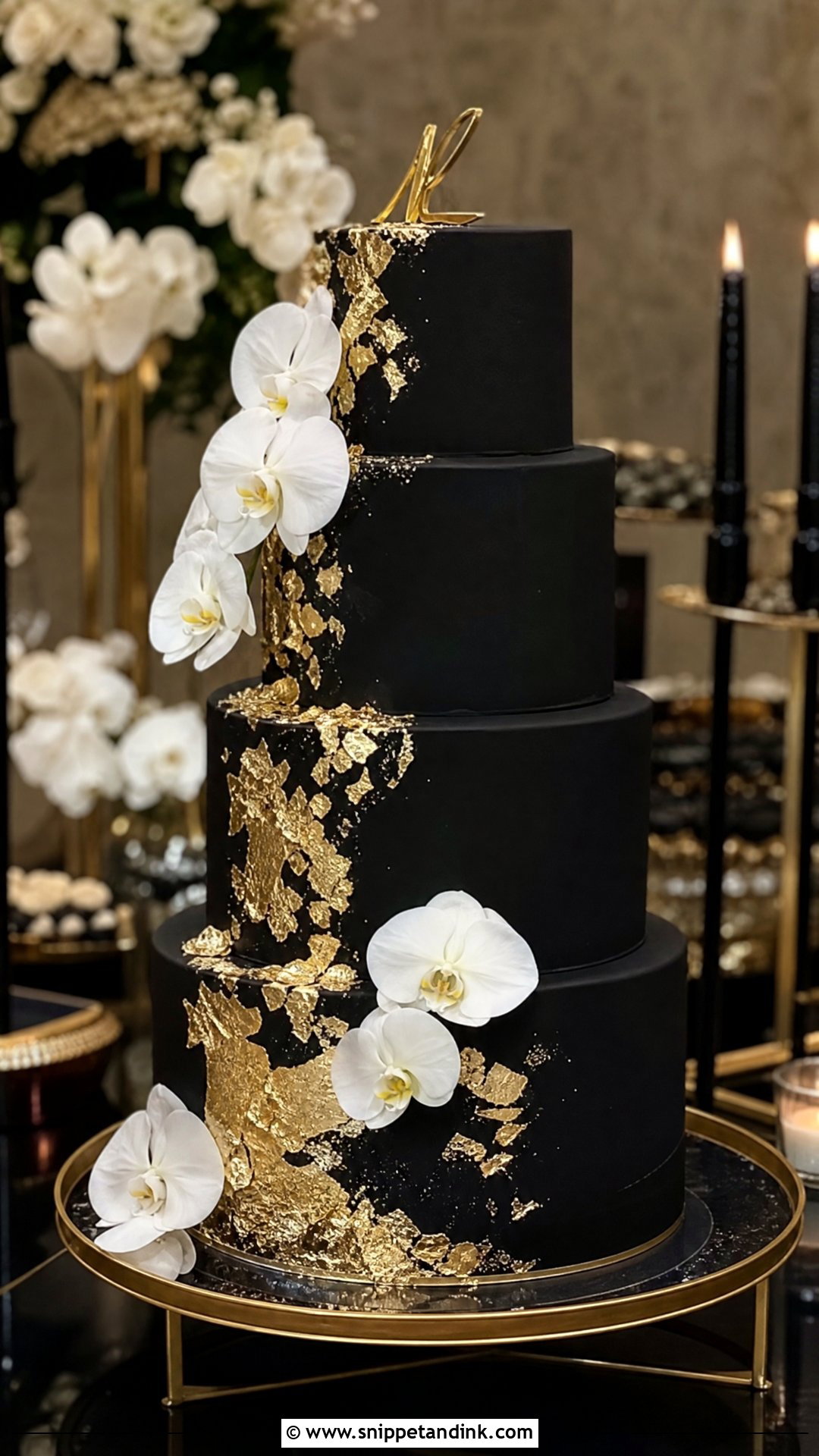
Black with torn gold leaf is one of the most elegant uses of this palette, and it needs very little else. The black finish gives depth and the gold adds organic flashes of light. Getting black that deep takes a lot of coloring, so I start from a dark chocolate or black cocoa base rather than tinting white frosting, which keeps the flavor right and the color rich. Apply leaf with a dry brush and tweezers, in scattered pieces rather than a solid sheet. Evening receptions are where it belongs.
10. White Gold And Black Floral Wedding Cake
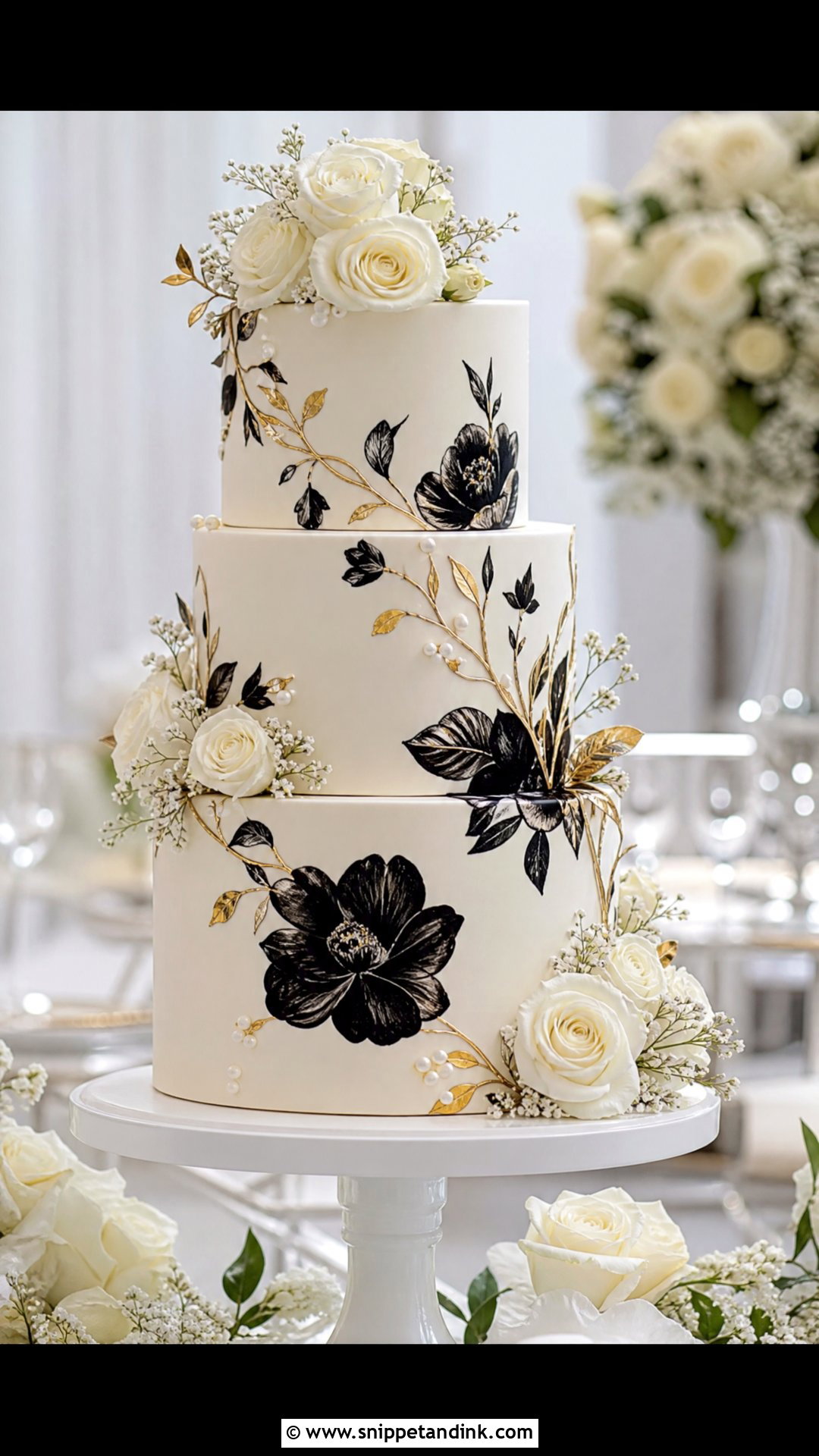
Flowers keep this palette romantic rather than severe. Start with white tiers, then add black floral illustrations, black sugar flowers or dark floral accents, with gold appearing as painted stems or thin borders. I hand-paint illustrations with food coloring on fondant, which needs a confident hand because black can’t be corrected once it’s down. Arrange the florals so they lead the eye upward, and mix in a few white blooms to keep it from feeling dark. It fits classic ballrooms and modern gardens alike.
11. White Buttercream Cake With Black And Gold Texture
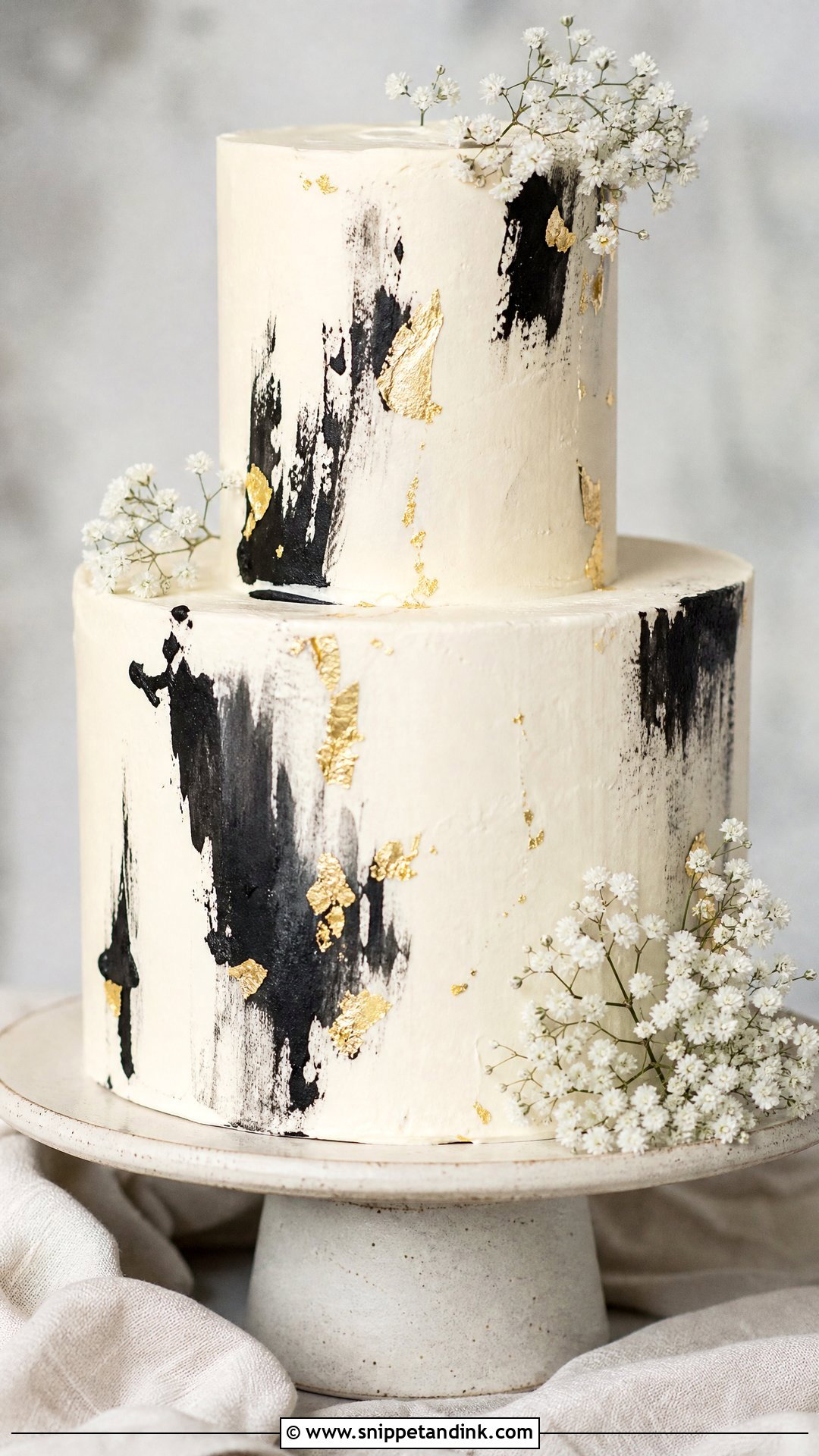
Textured white buttercream with black and gold is the relaxed version of this palette. The frosting gets palette-knife strokes or a gentle stucco, black is dry-brushed lightly across the raised ridges, and gold leaf goes on in small patches. It looks handmade and warm, which suits lofts, modern rustic venues and outdoor receptions with smart styling. Couples who want something artistic without committing to a full fondant design tend to like it.
12. Black And White Geode Wedding Cake
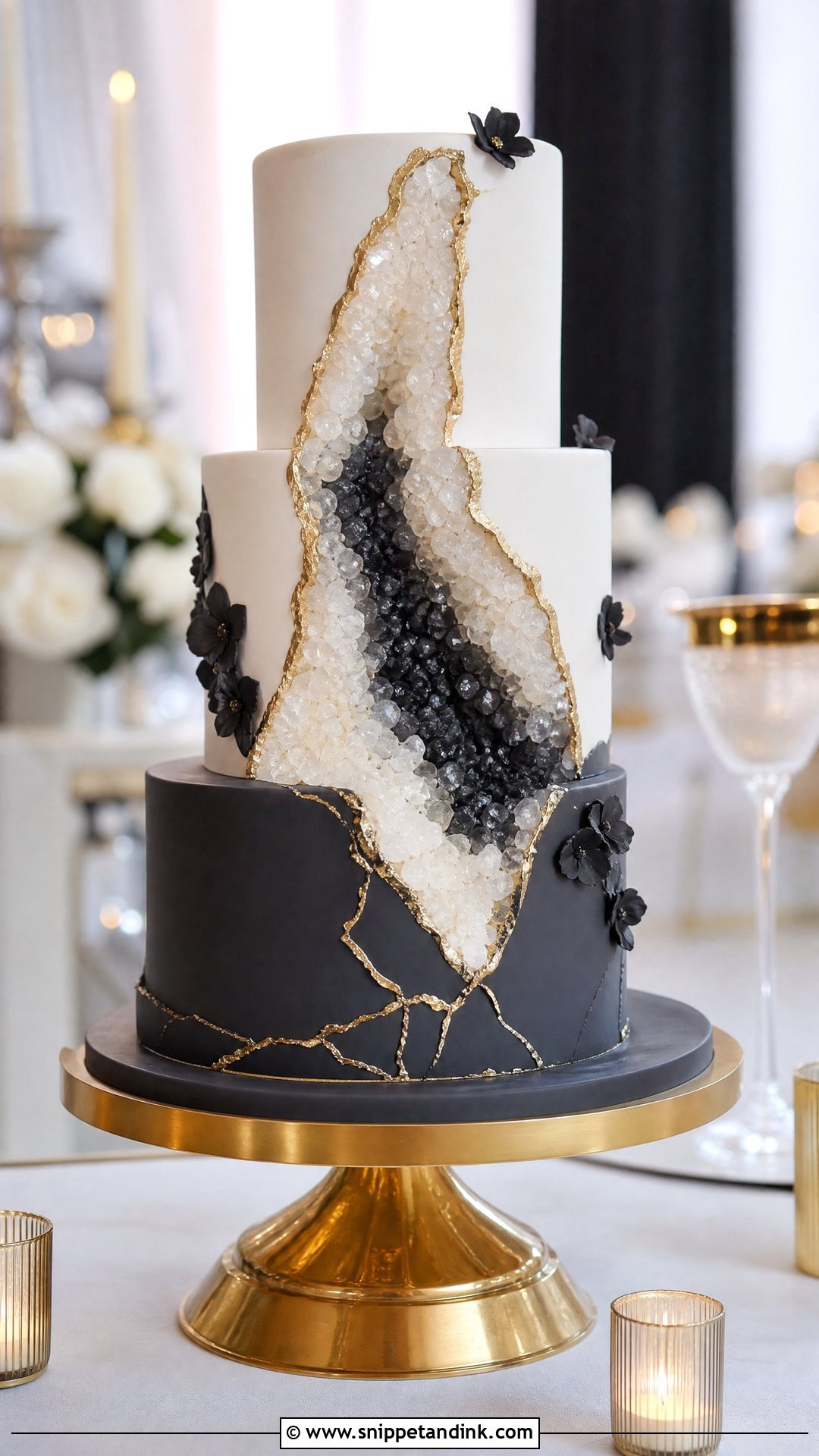
A geode cake has a section carved out of the tier and filled with sugar crystals, usually rock candy or poured isomalt. It’s striking, but crystals hate humidity: they turn sticky and cloudy in a damp room, so this design suits an indoor, air-conditioned reception best. Gold painted around the cut edge makes the opening look polished. Keep the rest of the cake plain. Any extra decoration competes with the crystals.
13. White Wedding Cake With Black Monogram
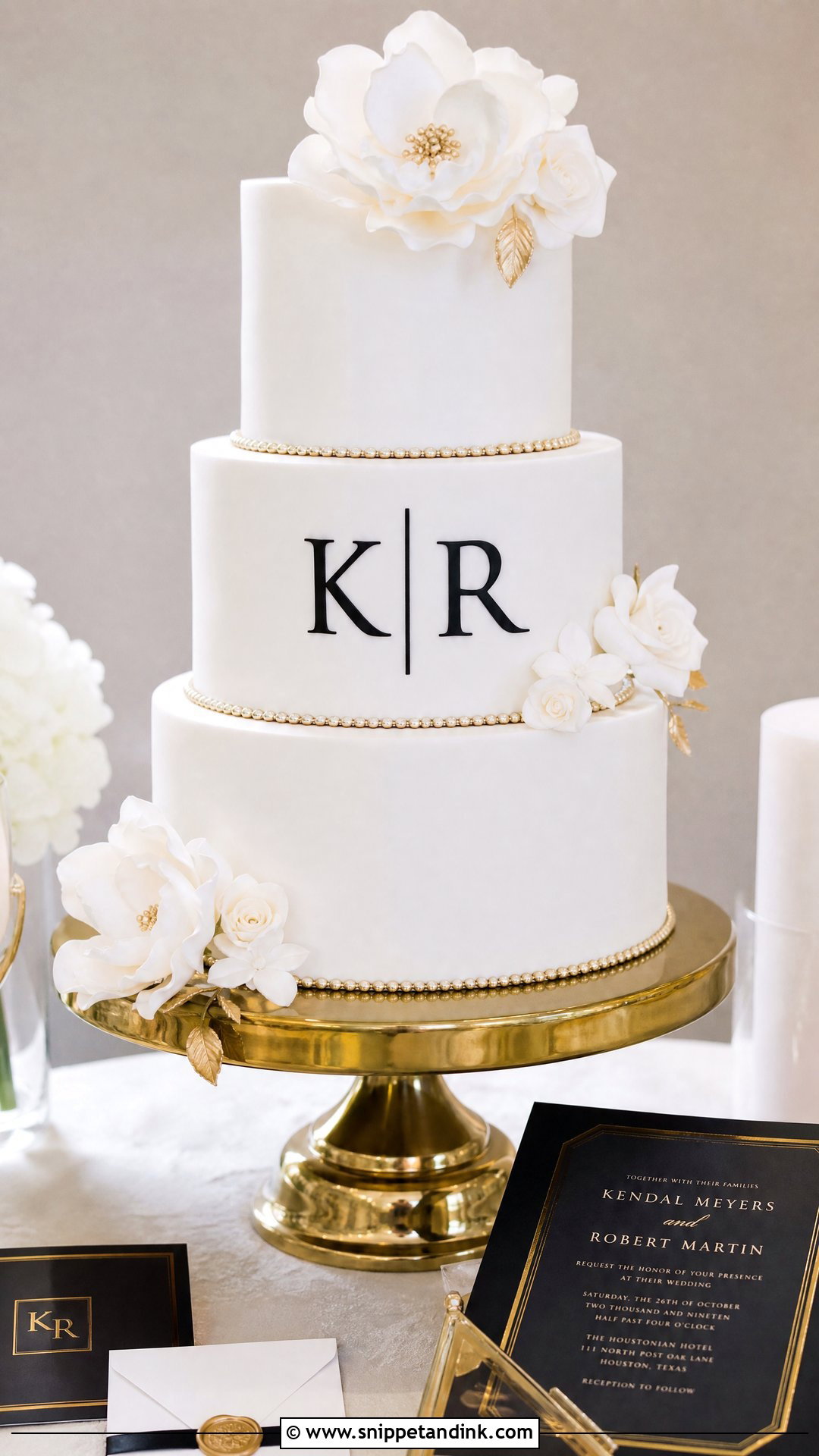
A black monogram on smooth white fondant is personal and clean, with fine gold details around the tiers. I cut the letters from fondant or pipe them, and I’ll ask for your invitation so the lettering matches what guests already saw on paper, napkins and signage. Readability matters: very ornate script can blur from a few steps away. White flowers or small gold pearls add texture. It suits formal weddings that want one custom touch rather than heavy decoration.
14. Black Ruffle Wedding Cake With Gold Accents
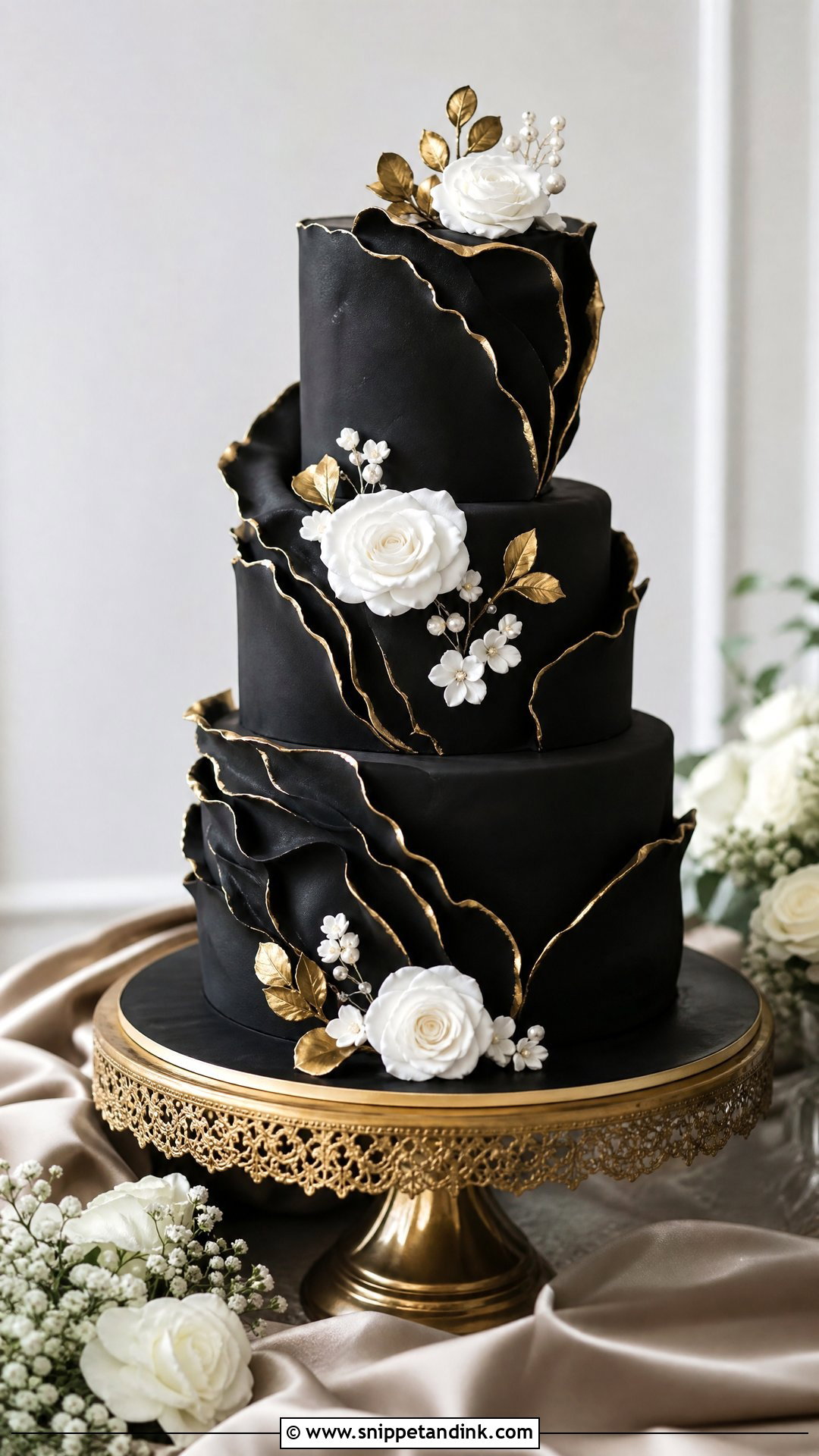
A black ruffle wedding cake with gold accents looks like couture. The ruffles are fondant or modeling chocolate, cut thin and layered one row at a time, and they can cover a single tier or the whole cake. Gold works best as a painted edge on a few ruffles, not all of them. White flowers soften the dark color. In candlelight the folds create real shadow, so the cake never looks flat.


15. White Gold And Black Two Tier Wedding Cake
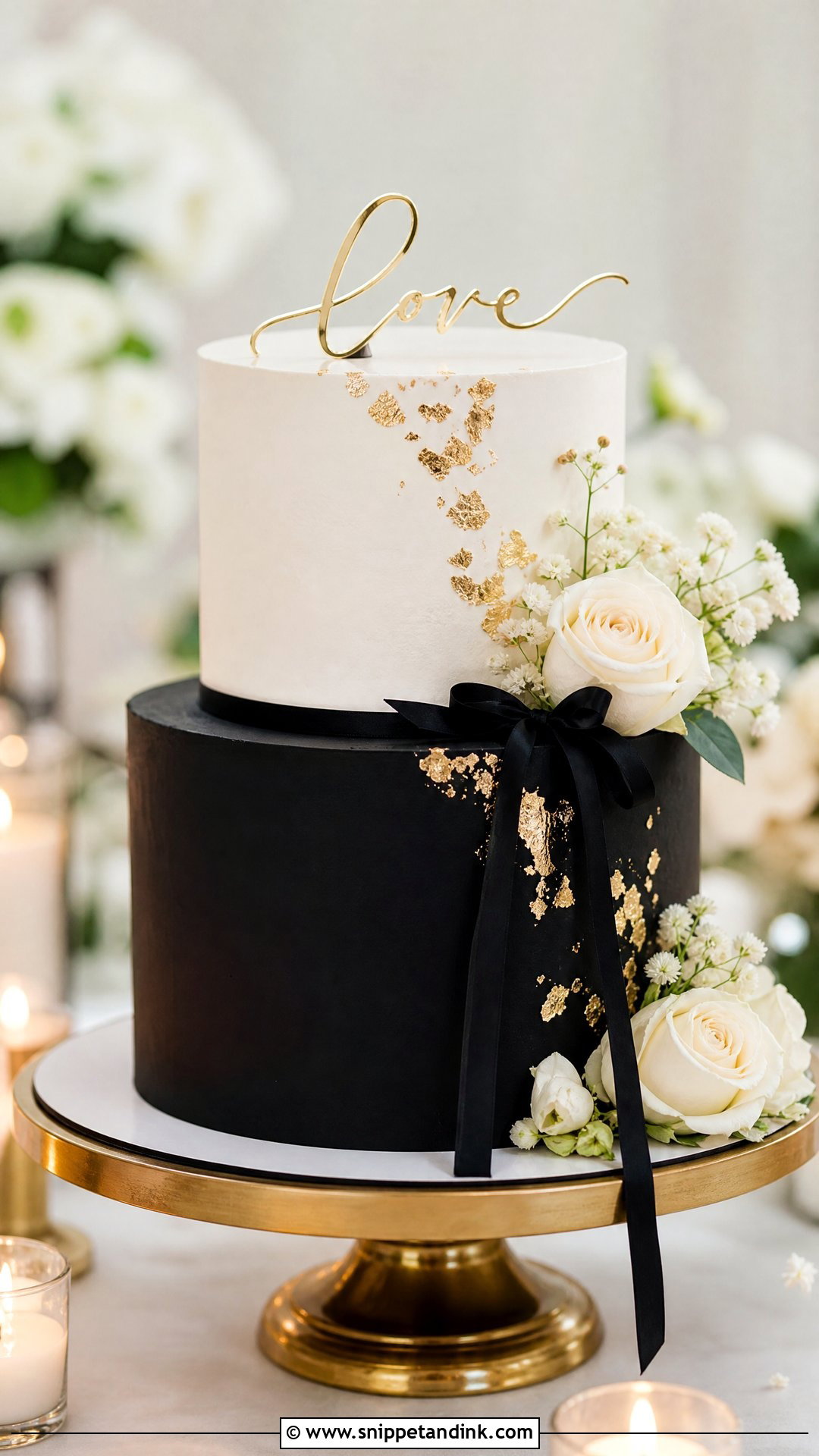
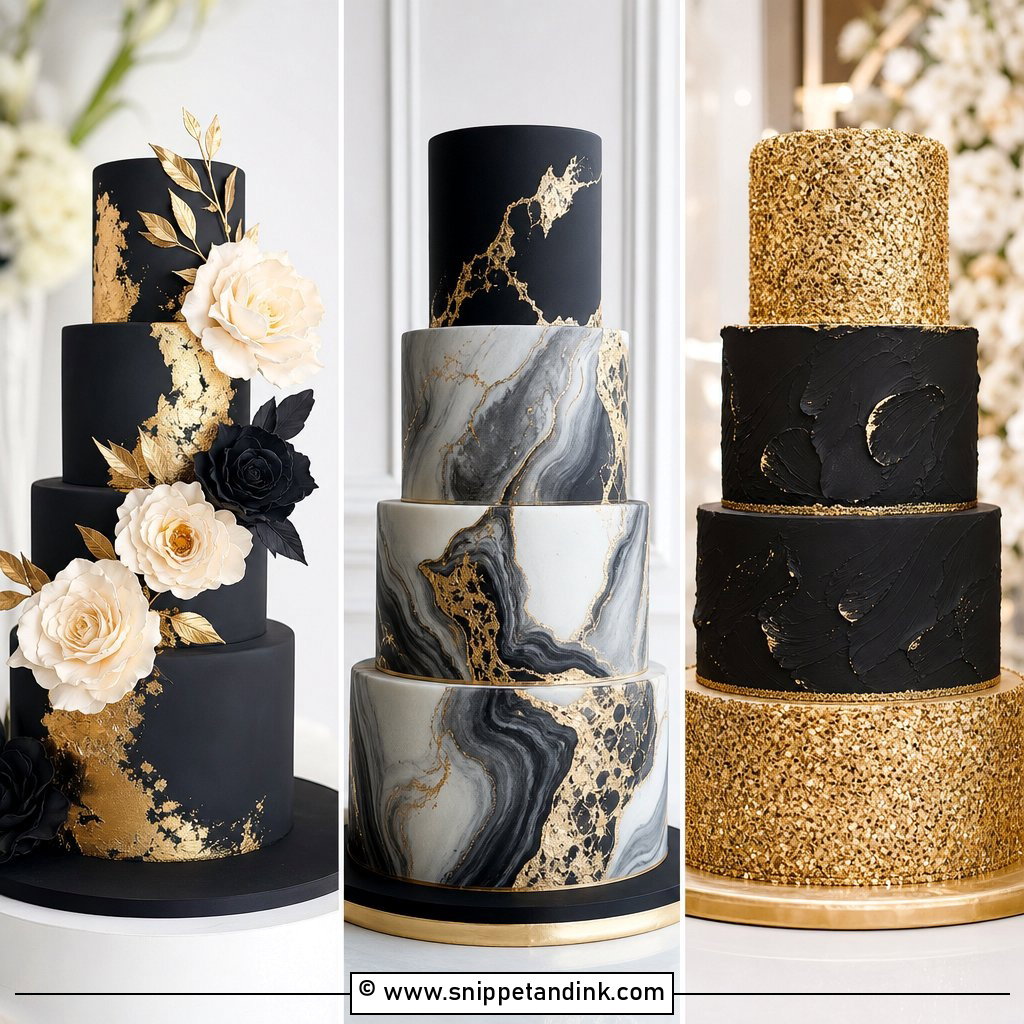
Small cakes leave nowhere to hide, so every detail on a two-tier version has to earn its place. One approach is a white bottom tier with black detailing under a black top tier with gold leaf; another is a smooth white cake with a black ribbon and gold trim. Fresh white flowers, a gold topper or a few black sugar blooms finish it. For elopements and intimate receptions, it carries the palette without feeling underdressed.
16. Black Wedding Cake With White Pearls
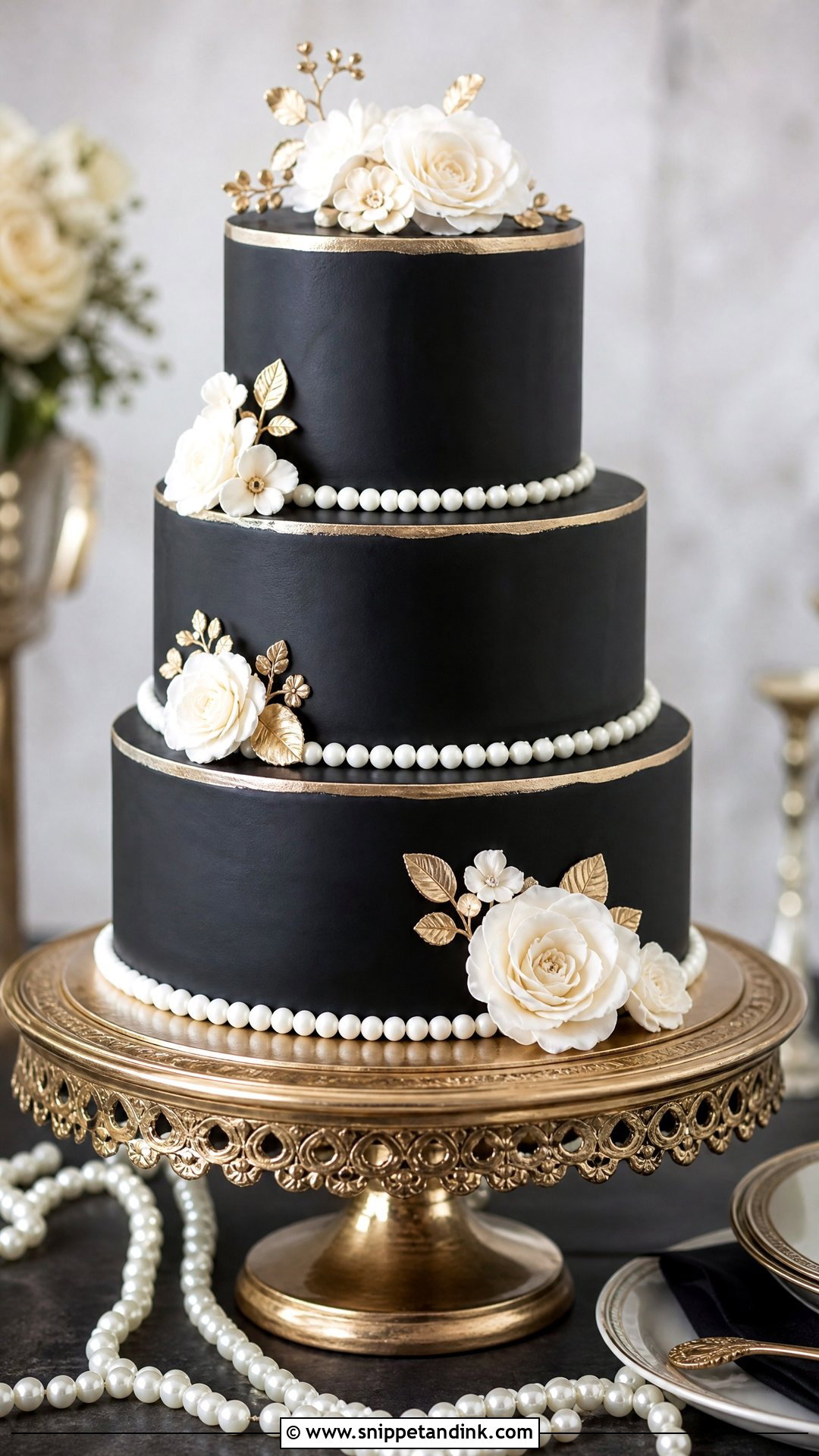
White pearls on black fondant look glamorous and a little vintage, and the dark base makes each pearl pop. Neat borders, a scattered pattern or draped garlands all work, but choose one pattern rather than all three. Sugar pearls leave white dust on black fondant if they’re handled roughly, so I place them with tweezers and brush away any residue. A touch of gold trim or a small topper completes it, alongside pearl jewelry and satin gowns.
17. White Cake With Black Brushstrokes And Gold Leaf
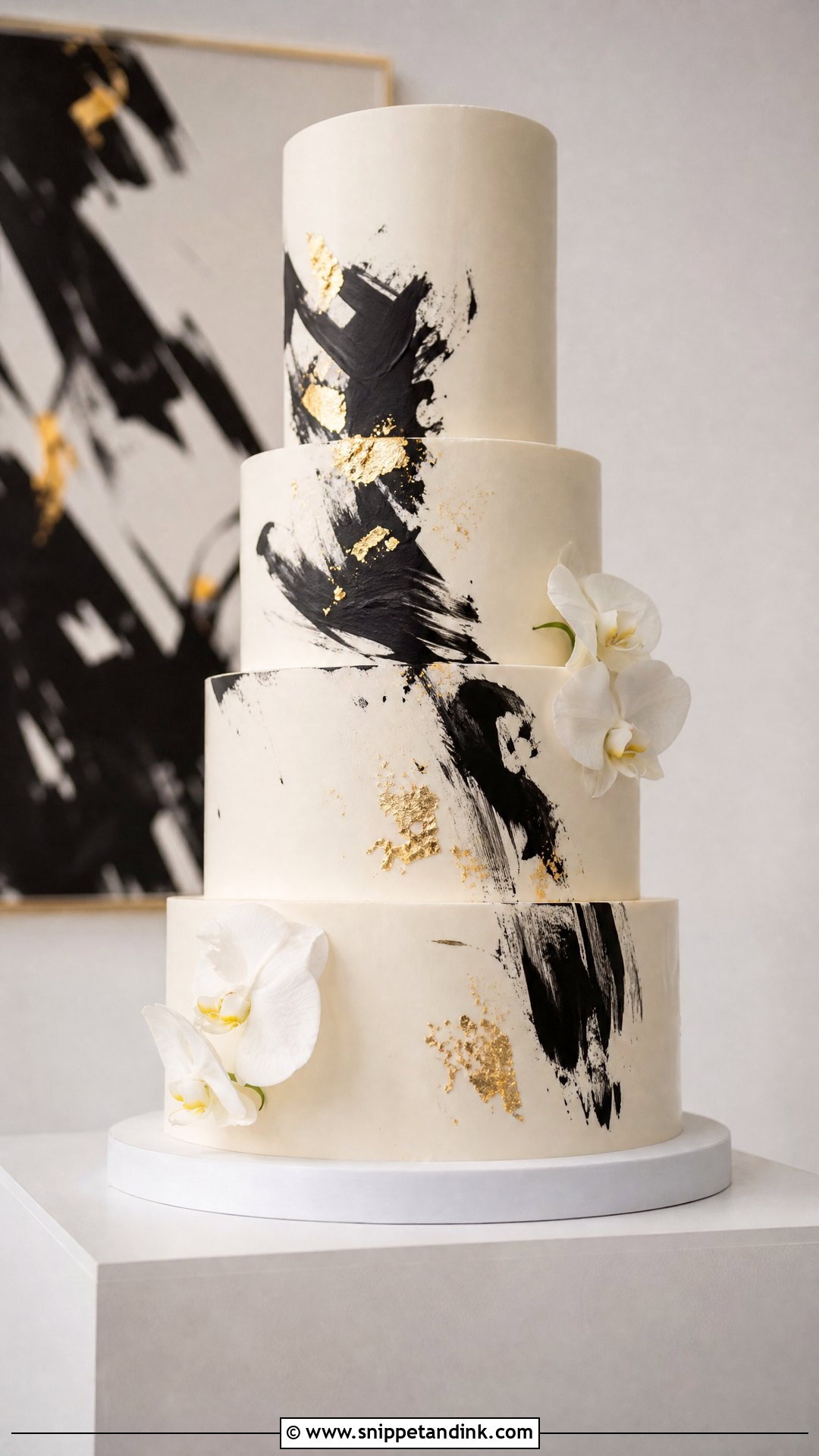
Brushstrokes are the most painterly design in this collection. On a clean white base, black is applied in loose sweeps, either painted with food coloring or swiped on in buttercream with a palette knife, then gold leaf is laid over or near the strokes. Tall tiers suit it best because the brushwork needs space. I keep florals minimal. Gallery venues and couples who want a less traditional cake are the natural audience.
18. Black And Gold Fault Line Wedding Cake
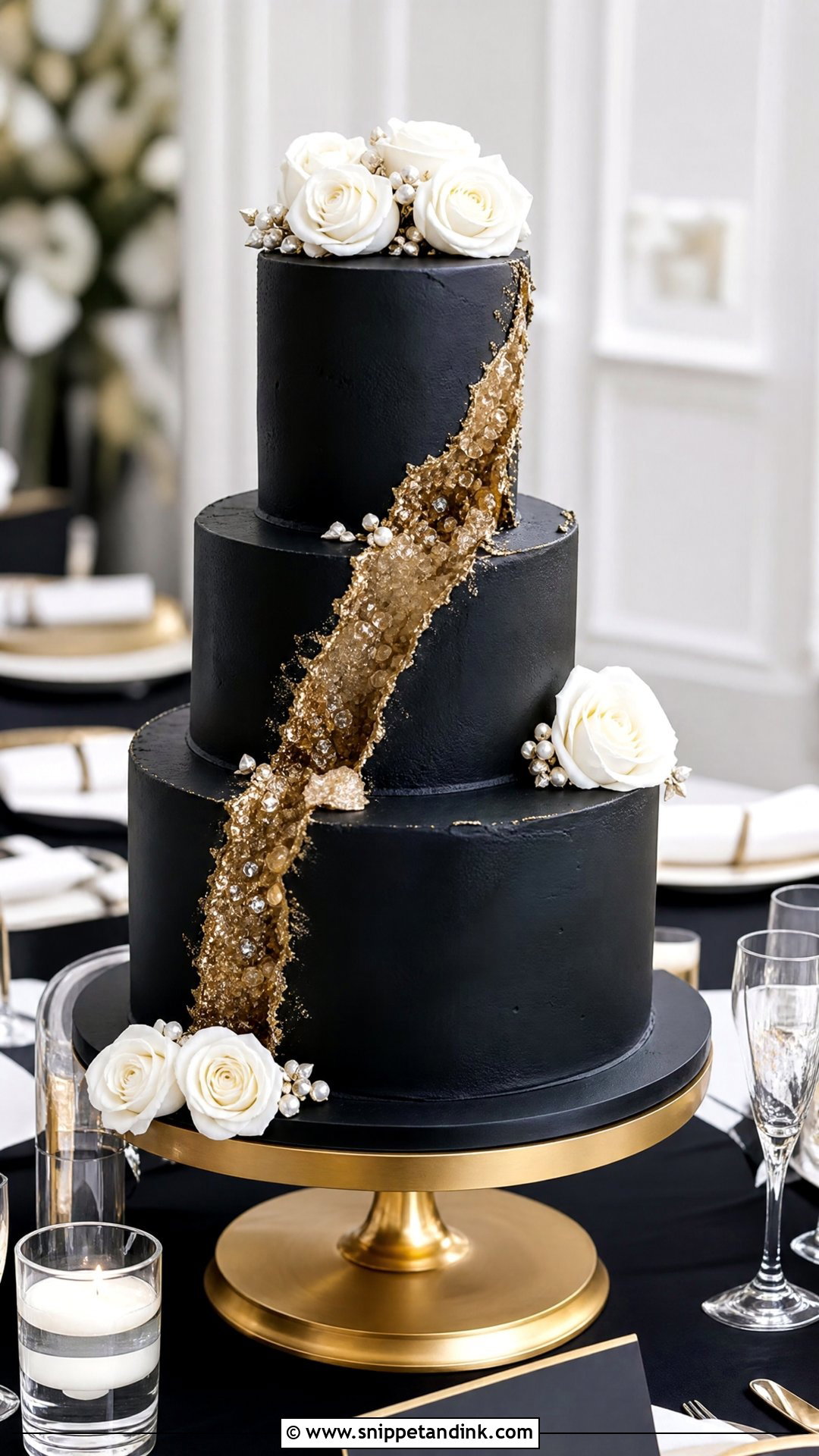
A fault line cake looks like the frosting has split open around the middle. I build it by pressing gold sprinkles, sugar crystals or pearls around the center of the crumb-coated cake, then piping thicker buttercream above and below and scraping it back to reveal the band. Black outer frosting with a gold center is dramatic; a white top tier or white flowers stop it feeling too dark. Neat edges on the break are what separate it from a mess.
19. White Gold And Black Square Wedding Cake
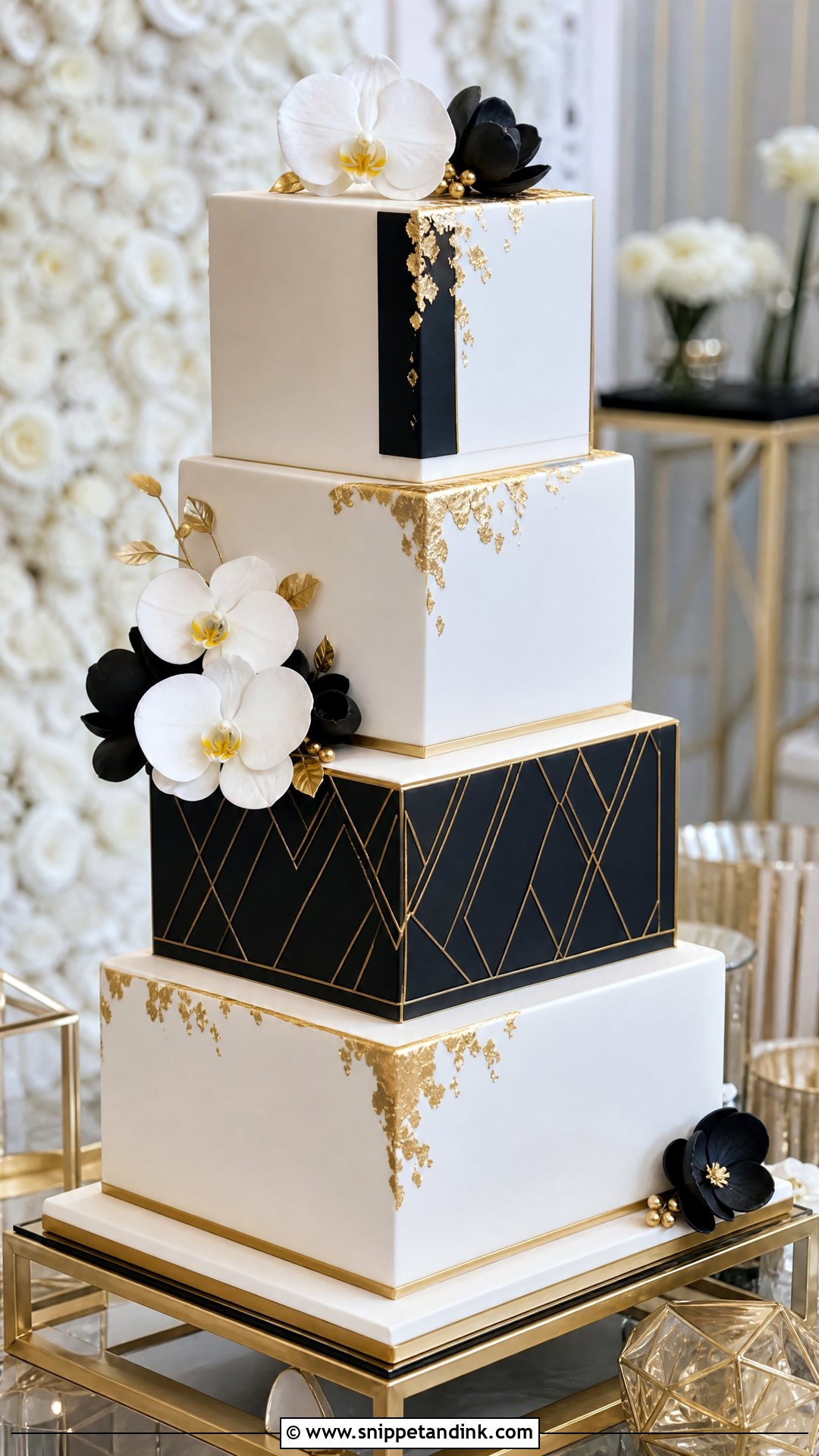
Square tiers sharpen this palette further. Try white fondant with black paneling, gold trim, or square tiers stacked in alternating colors. Corners are where square cakes fail, so I keep them under firm ganache before the fondant goes on. Place flowers carefully, since a large spray can hide the shape you’re paying for. White orchids, black sugar flowers or gold leaves add detail without softening the lines. Contemporary venues and hotels with geometric decor suit it.



20. White Wedding Cake With Black Ribbon And Gold Topper
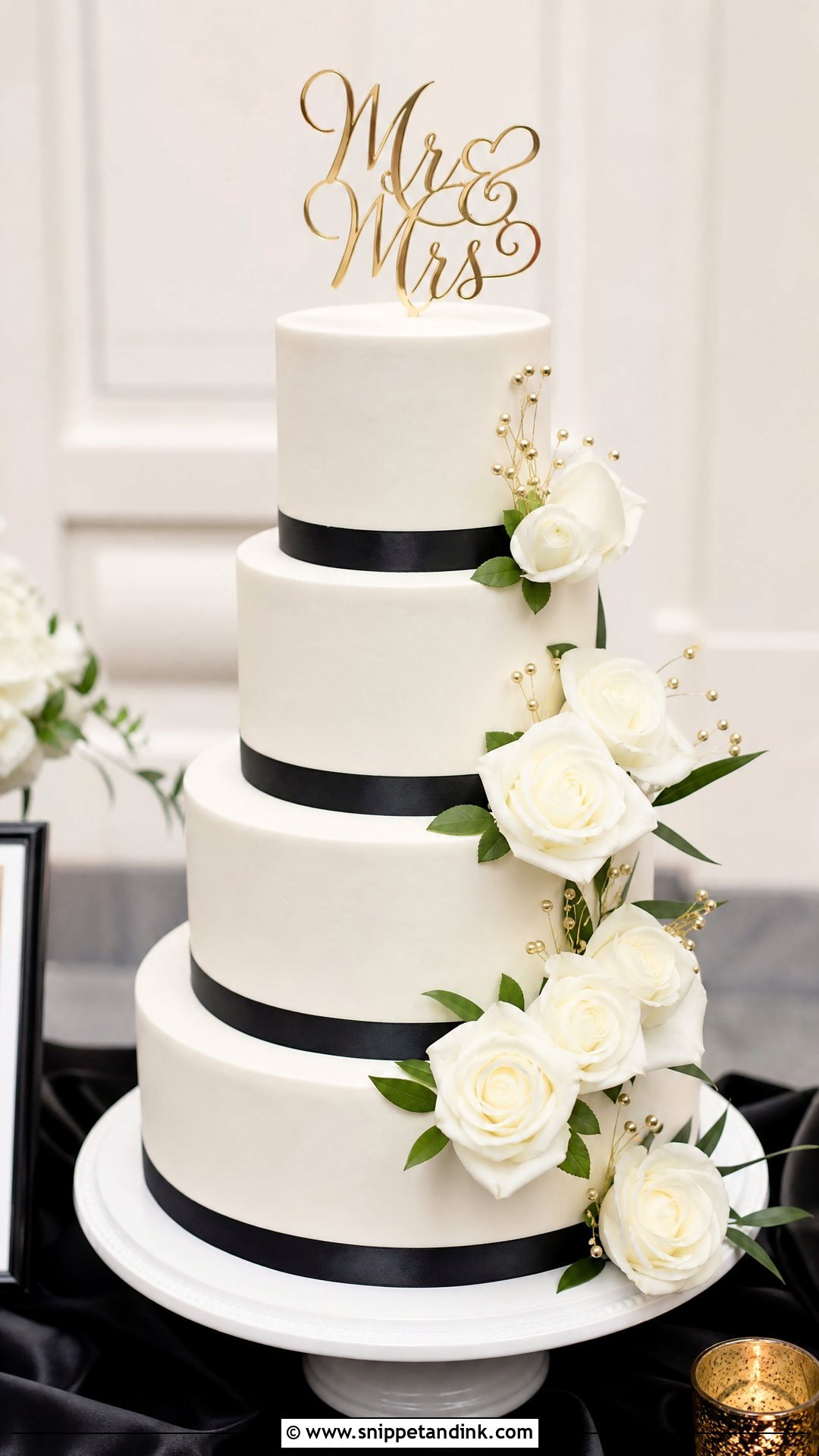
Black ribbon and a gold topper is the most adaptable design here, and the easiest to budget for. The white tiers can be buttercream or fondant, with black bands around one or more layers. I use fondant bands rather than real ribbon on buttercream, because fabric soaks up butter and leaves greasy marks. The gold topper finishes it. It works for large weddings and small receptions, with white flowers or small gold pearls if you want more.
Gold That’s Safe to Eat, and Gold That Isn’t
Gold carries this palette, so it’s worth knowing what’s actually on the cake. Edible gold leaf is real gold beaten extremely thin and sold for food use. It has no taste, sticks to fondant or ganache with almost no help, and is fine to eat in the small amounts used on a cake.
Painted gold is different. Bakers mix a metallic powder with a little clear alcohol or extract and paint it on, and the alcohol evaporates within minutes. The powder is what matters. Some shimmer dusts are labelled edible, while others are only labelled non-toxic, meaning they’re for decorations that get removed before serving. Ask your baker which kind they use on anything that will end up on a plate.
Toppers, wired sugar flowers and anything with a pick or wire inside come off before cutting. Make sure whoever is cutting the cake knows where those are, especially on a busy evening when the cake team may not be the ones serving it.
How Much Black Is Enough?
This palette can be pushed bold with black tiers and gold leaf, kept soft with white buttercream and a black ribbon, or made modern with marble, brushstrokes and geometric details. The right balance depends on your venue, flowers and dress code. For a formal evening reception, I’d lean into sharp edges, metallic accents and more black. For a romantic or daytime wedding, let white lead and use black as an accent through lace, pearls or a single bow. Either way, the three colors leave plenty of room to make the cake feel like yours.
You'll Like These Ideas:



Leave a Reply