
A baroque cake turns the cake table into one of the main events of the reception. Gold detail, tall tiers, ornate piping, pearl borders, sugar flowers, lace texture and old-world finishes all belong to the style, and it works in ivory, gold, blush, black, blue and soft pastels. What separates a refined baroque cake from a cluttered one is restraint: a clear plan for where the detail goes and where the eye rests. The twenty-five designs below each come with notes from my side of the work table on how they’re built, what they need and where they can go wrong.
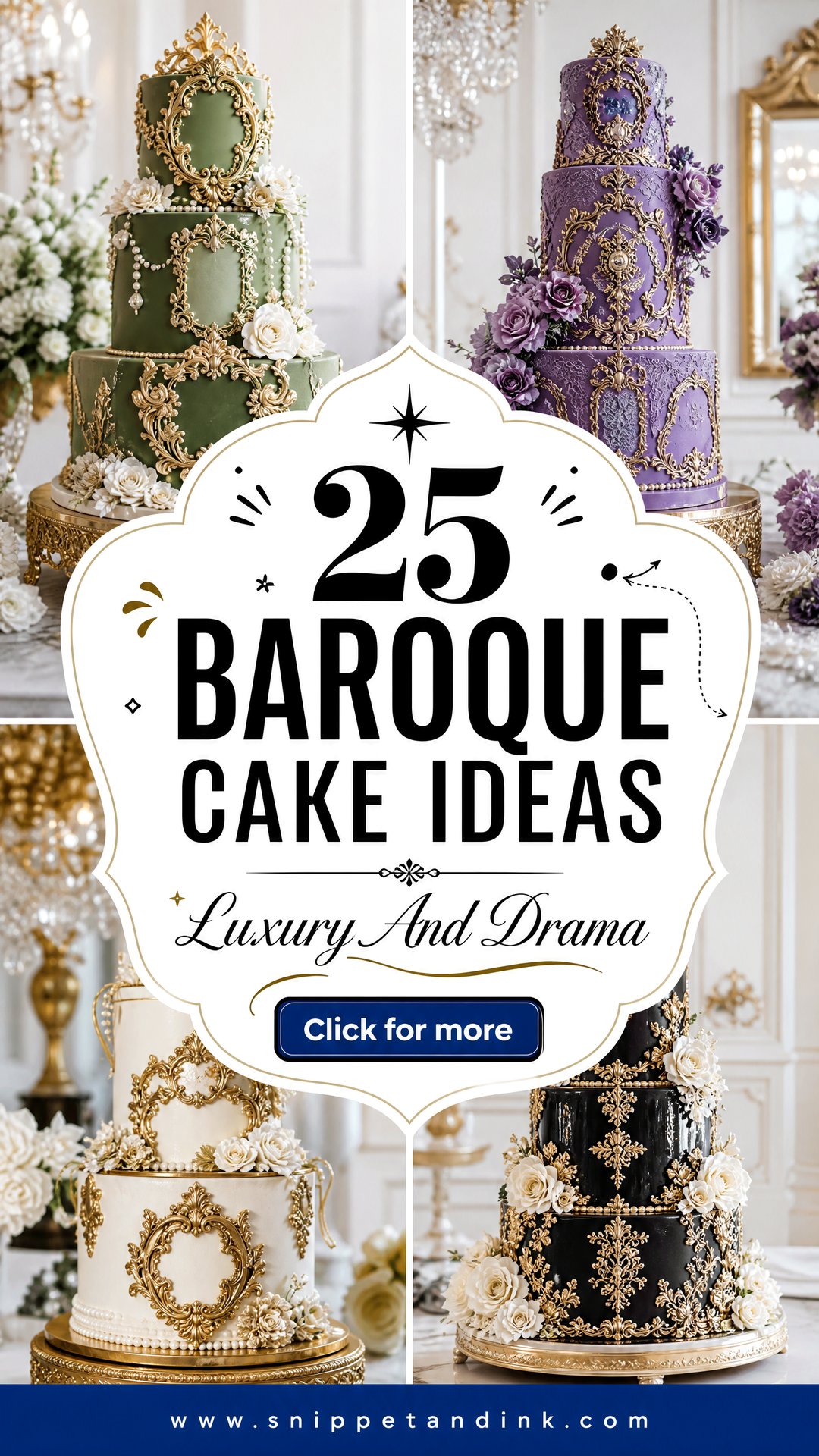
Scrolls, Symmetry and One Tier That Does the Talking
Baroque ornament comes from a short list of shapes: C and S scrolls, acanthus leaves, shells, swags and oval frames, nearly always arranged symmetrically around a center line. When I sketch one of these cakes, I decide first which tier carries the most ornament and let the others support it. A cake where every tier competes looks crowded even when each tier on its own is well made.
The other rule I hold to is that gold follows relief. Metallic paint on raised piping catches light and shows the carving; gold painted flat across a whole tier just looks like a gold cake. Leave some plain surface between the ornaments and the detail will look richer, not poorer.
Bring the room to your consultation
- Photos of the venue, especially ceilings, mirrors, mouldings and light fixtures. I often borrow a scroll shape straight from the plasterwork.
- A swatch of linen or bridesmaid fabric for any coloured tier.
- Your invitation, if you’d like a monogram to match its lettering.
- Where the cake will stand, and whether it’s near a window, heaters or stage lights.
1. Baroque Gold Wedding Cake
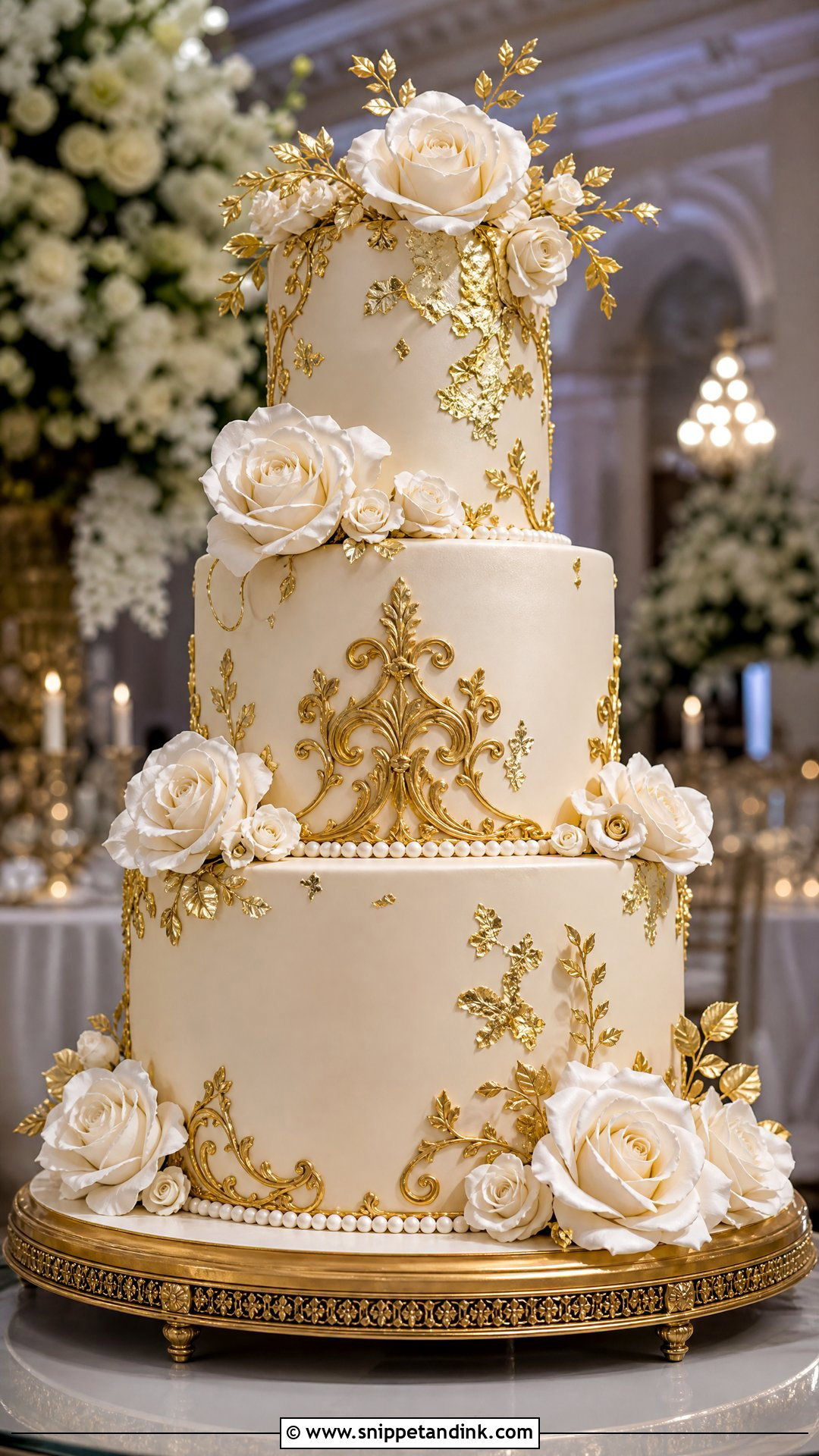
Gold is the classic route to luxury here, and the softest way to use it is as a frame. I start with ivory or warm white tiers and add gold scroll piping, gilded fondant panels and small pearl borders at each tier’s edge, leaving plenty of ivory showing between them. Covering every inch in gold makes a cake look like a trophy. It suits ballrooms, candlelit receptions and rooms with chandeliers or old mirrors. Vanilla almond with raspberry, or a champagne buttercream, sits well inside, and a few white or blush sugar roses give the eye a soft break.
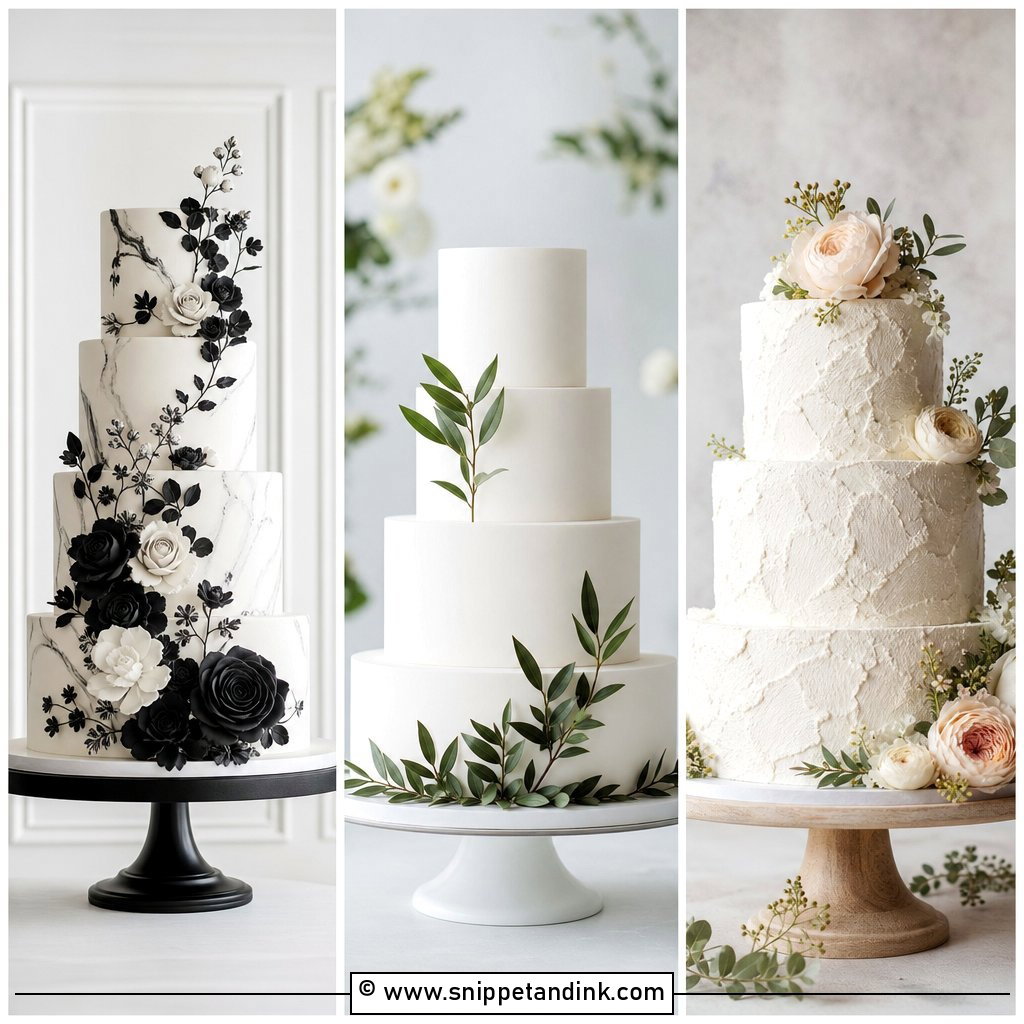
2. Baroque White Wedding Cake
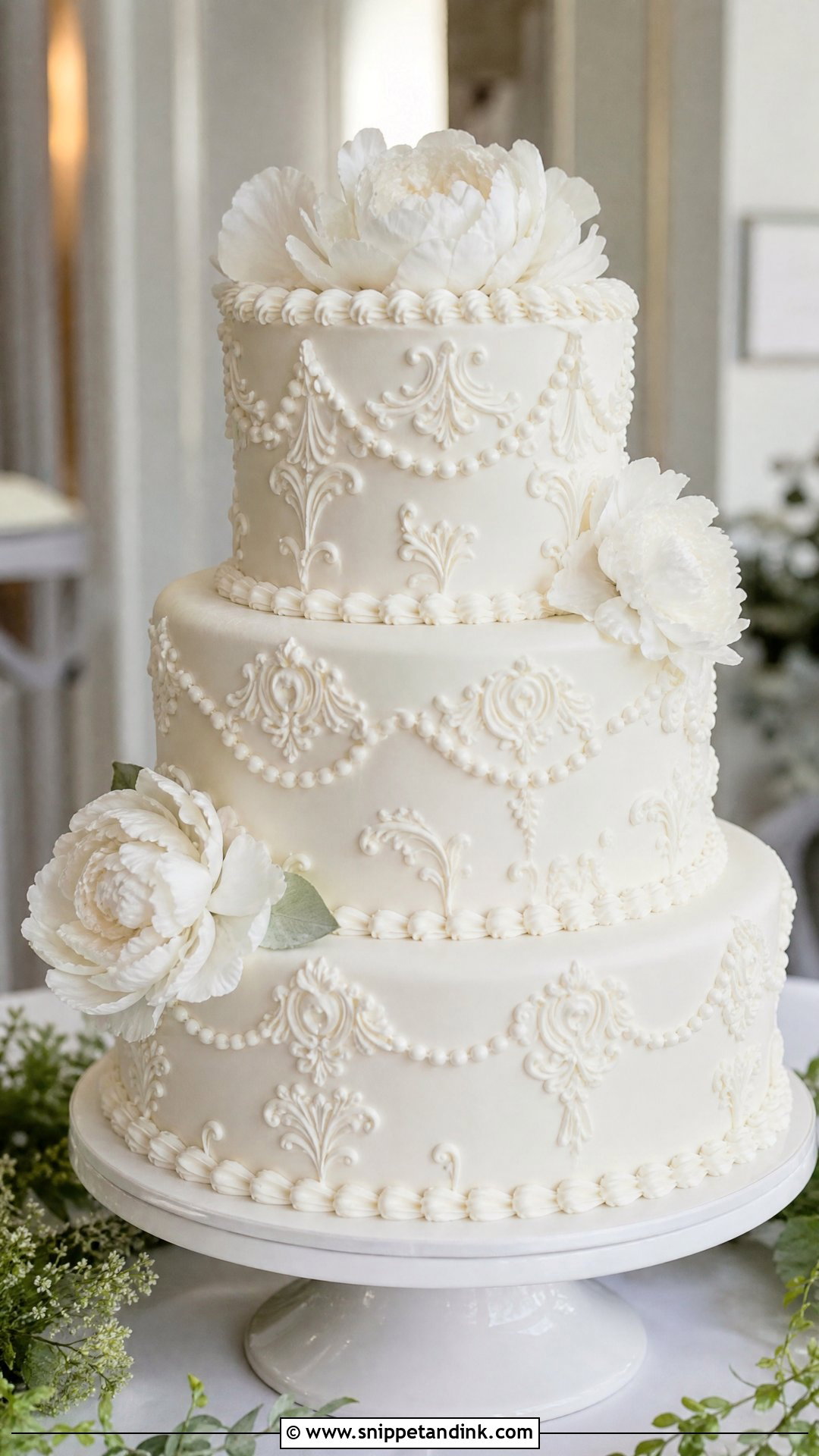
An all-white baroque cake lets texture do the work. White fondant or smooth white buttercream carries raised scrollwork, lace piping, pearl dots and fine shell borders, and the shadows between them give it richness without colour. That only works if the lighting creates shadow, so I ask about the room. Under flat, bright overhead light a white-on-white cake can look plain in photos, while candlelight and side light bring every scroll out. Vanilla bean, white chocolate or coconut cream suit it, finished with white sugar peonies or a pearl monogram.
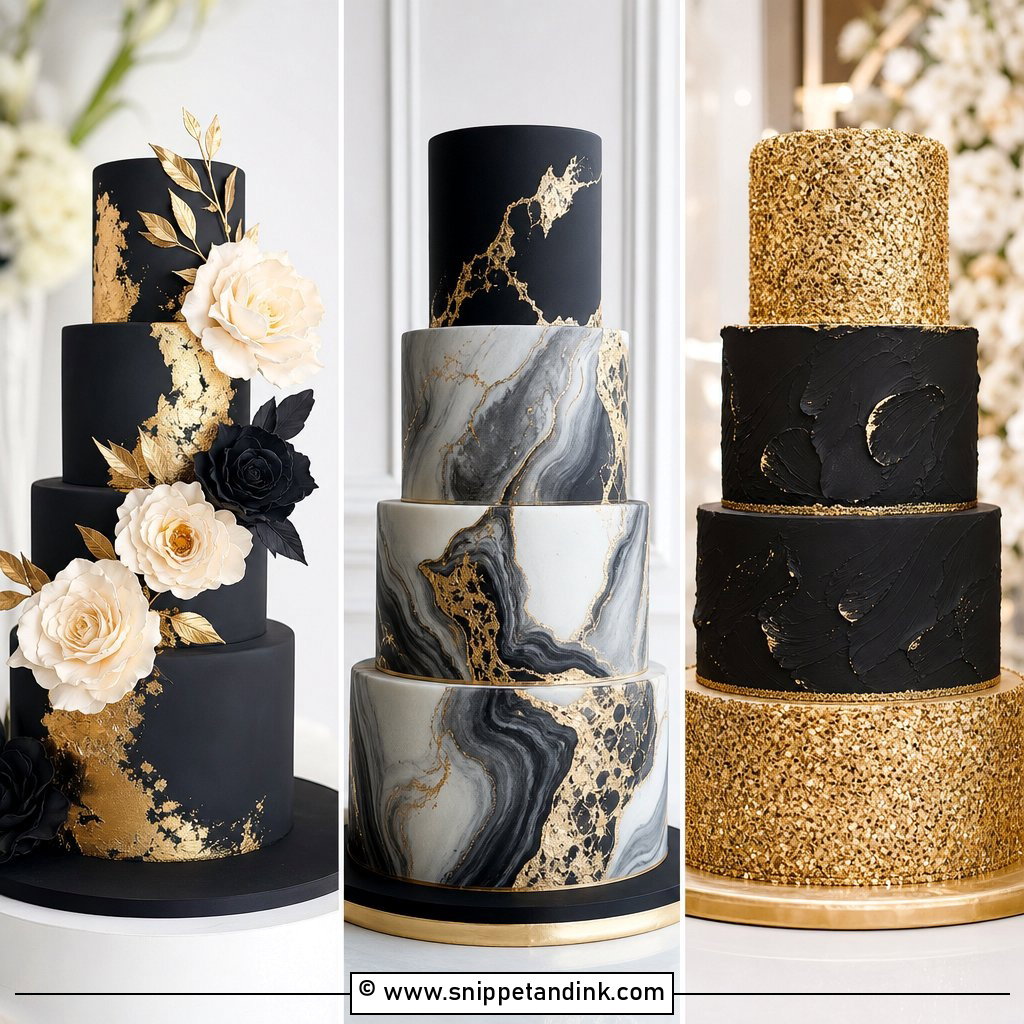
3. Baroque Black And Gold Wedding Cake
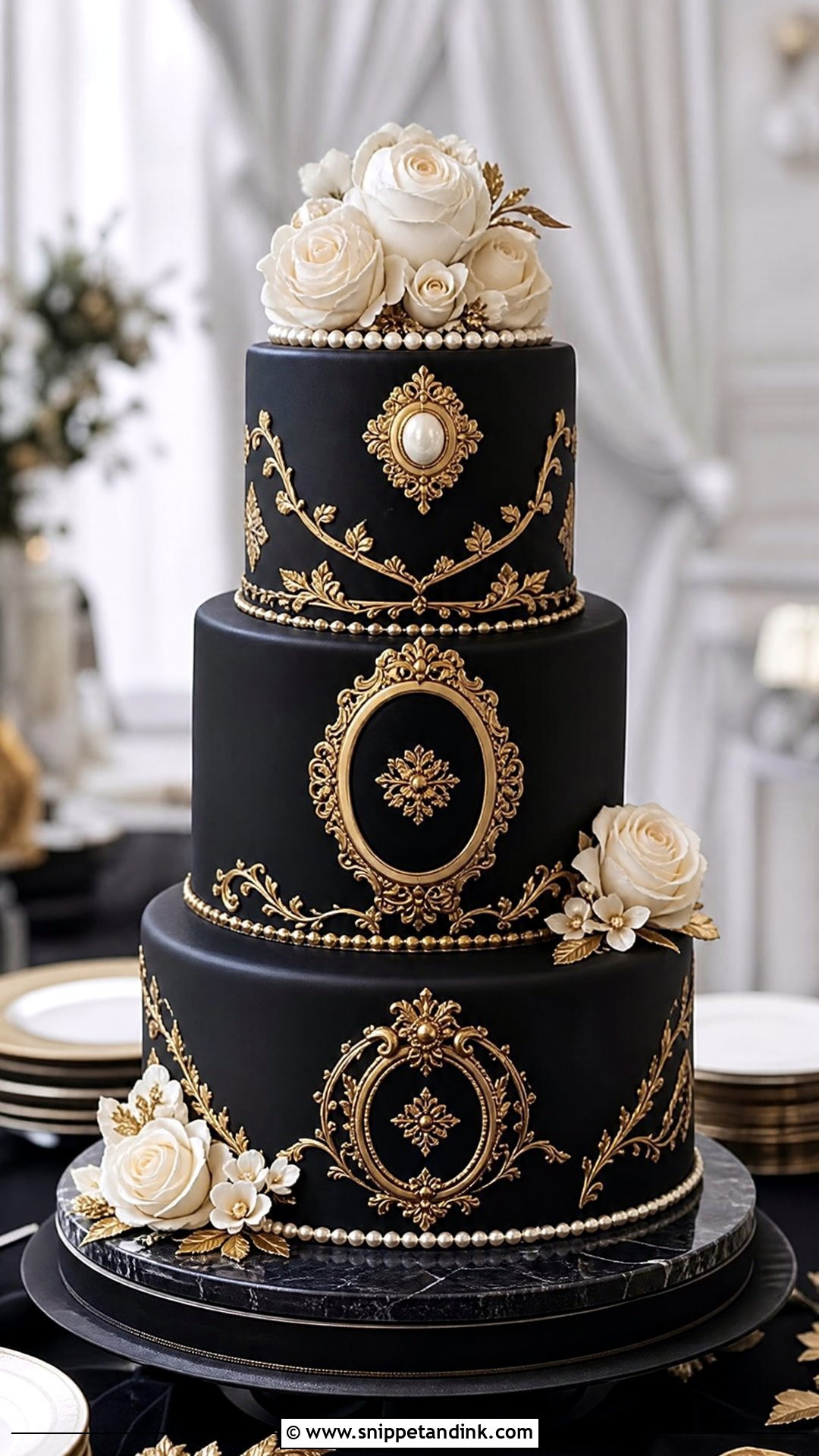
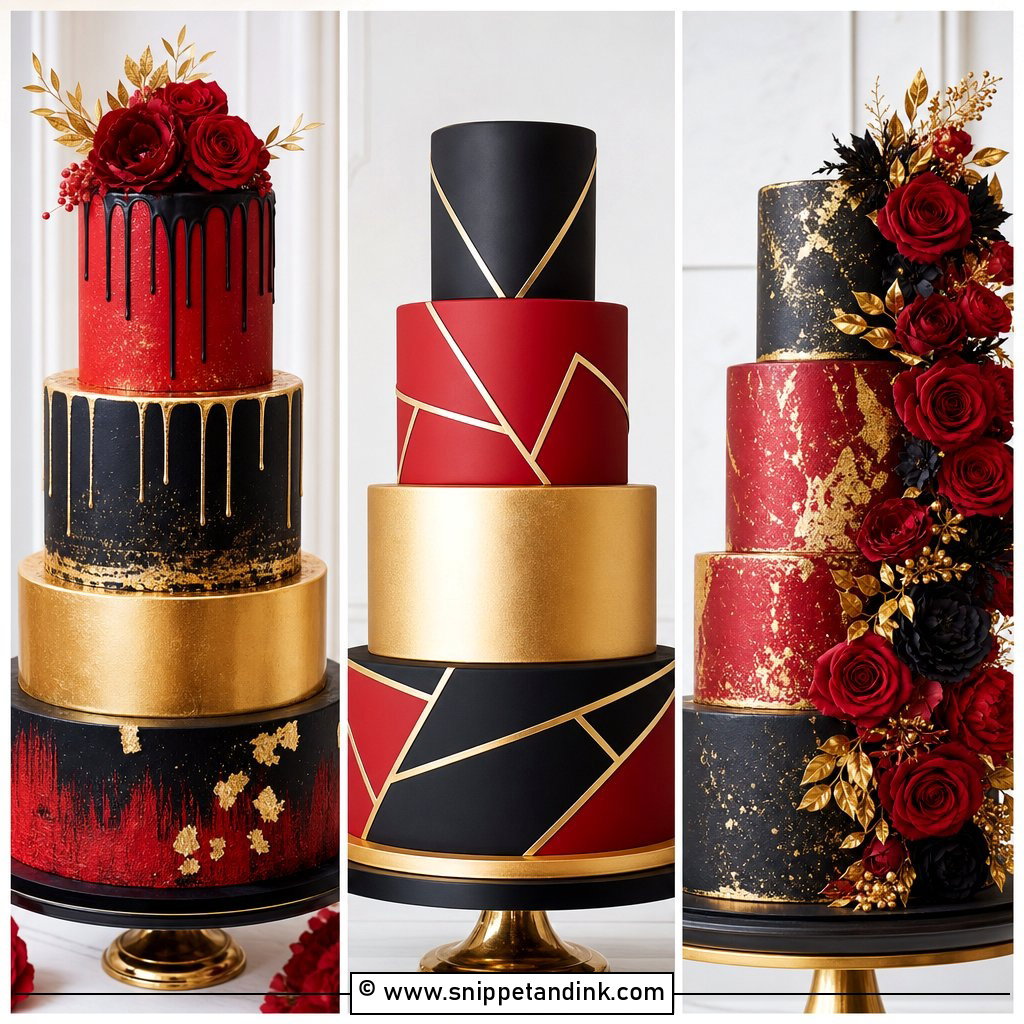
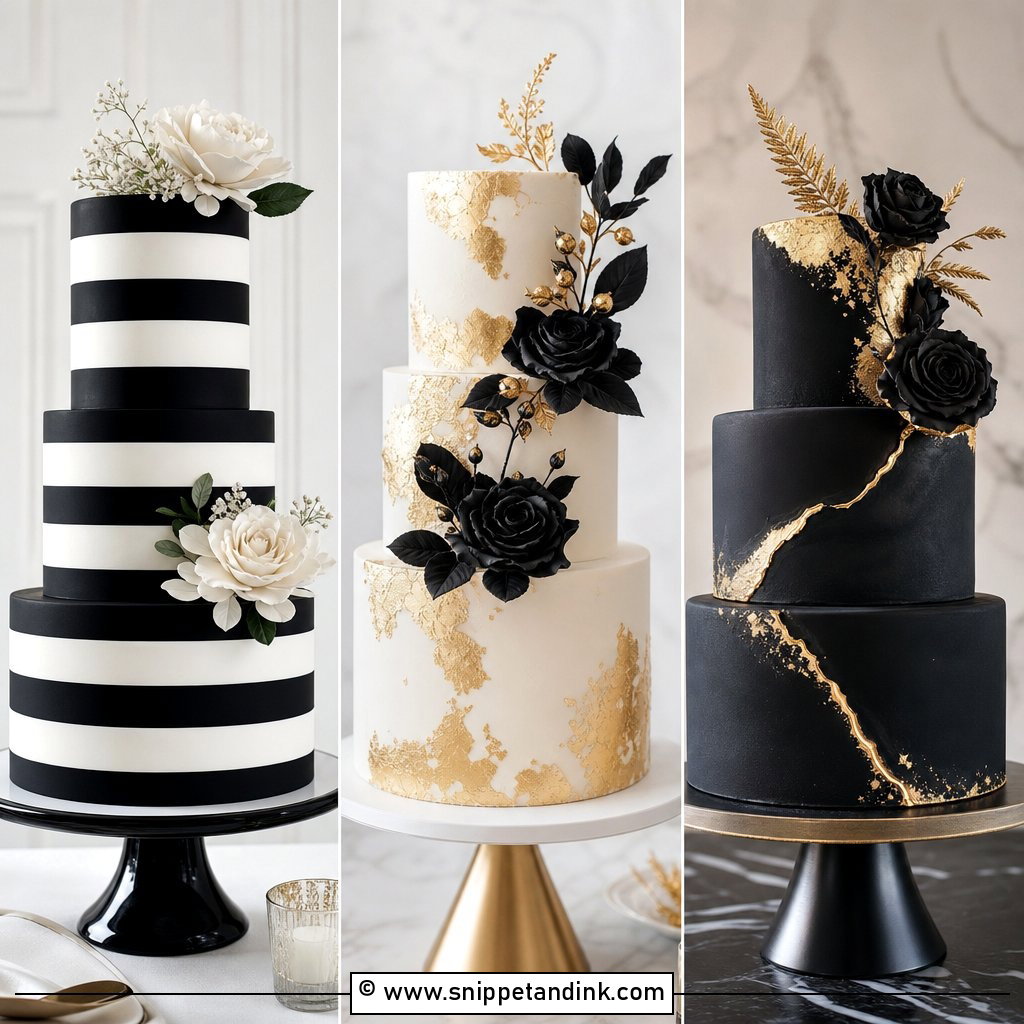
Black and gold is pure evening drama. The black base sets off gold piping, edible leaf and ornate medallions, and mixed textures across two to five tiers, such as quilted fondant, smooth panels and raised scrolls, stop it from looking heavy. Something couples rarely expect: deep black fondant takes a lot of colouring and can stain teeth and lips, so I usually peel it off before serving or build the black from chocolate fondant. Dark chocolate with salted caramel inside matches the mood, with ivory roses or burgundy sugar blooms on top.
4. Baroque Blue Wedding Cake
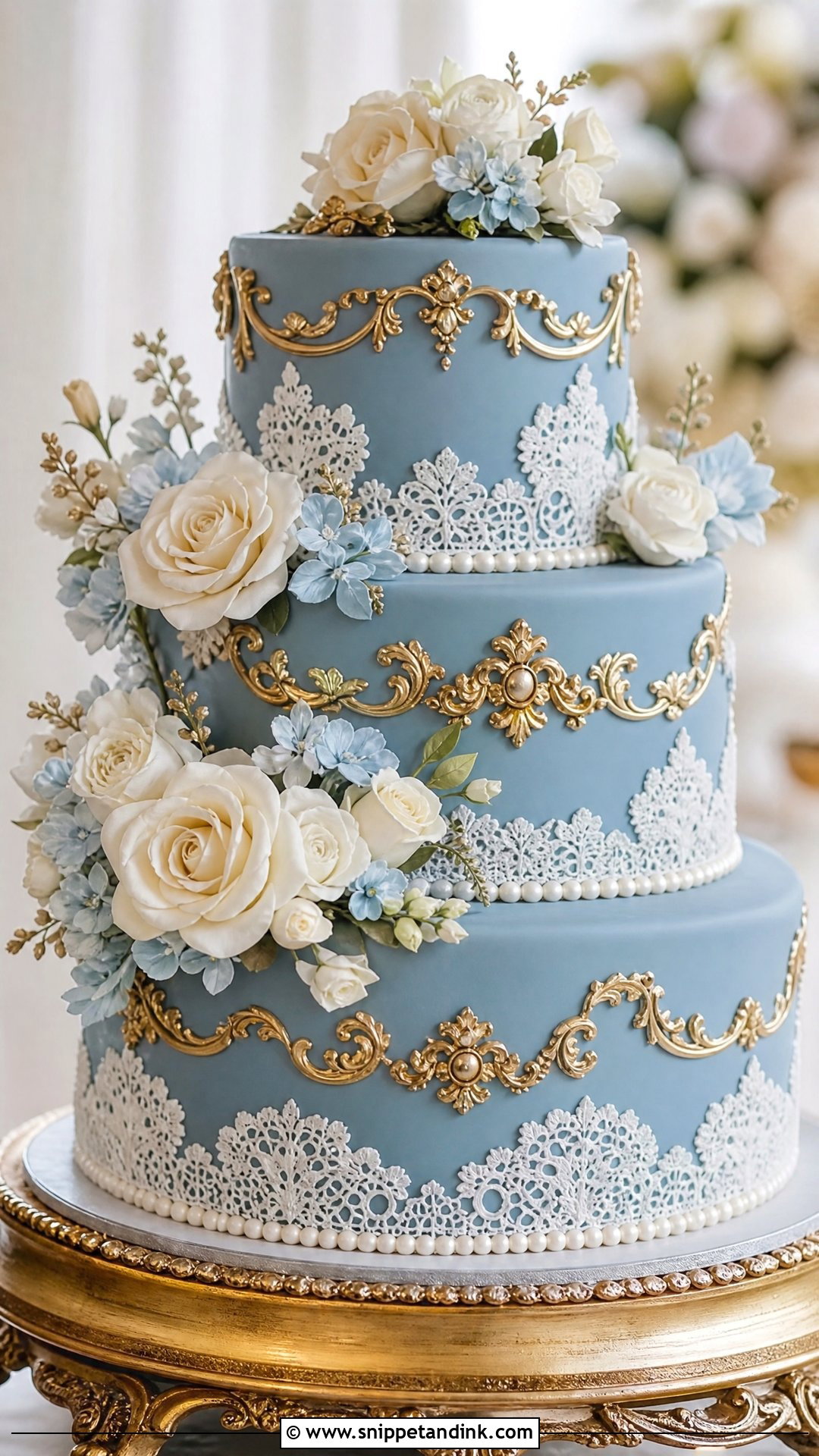
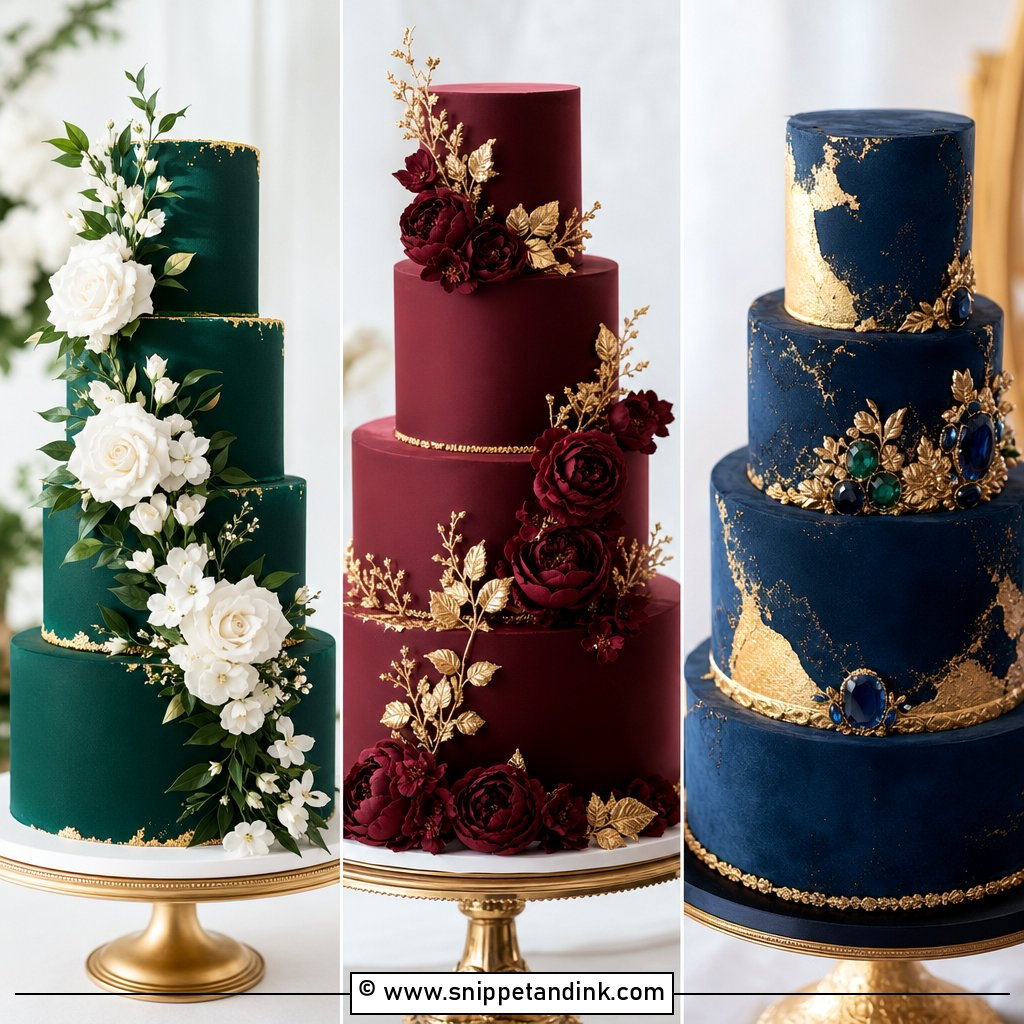
Blue feels regal without being the obvious choice. Dusty, powder and deep royal blue all work with gold, and the effect recalls antique porcelain and palace interiors. I use blue fondant on one or more tiers with gold scroll borders, white lace piping and pearls. Lemon blueberry, vanilla bean or almond with berry filling fits the colour story. Blue is easy to get wrong between screen and sugar, so I mix a test swatch and match it against a napkin or bridesmaid fabric before covering any tiers. It suits garden venues, historic estates and formal indoor rooms.
5. Baroque Blush Wedding Cake
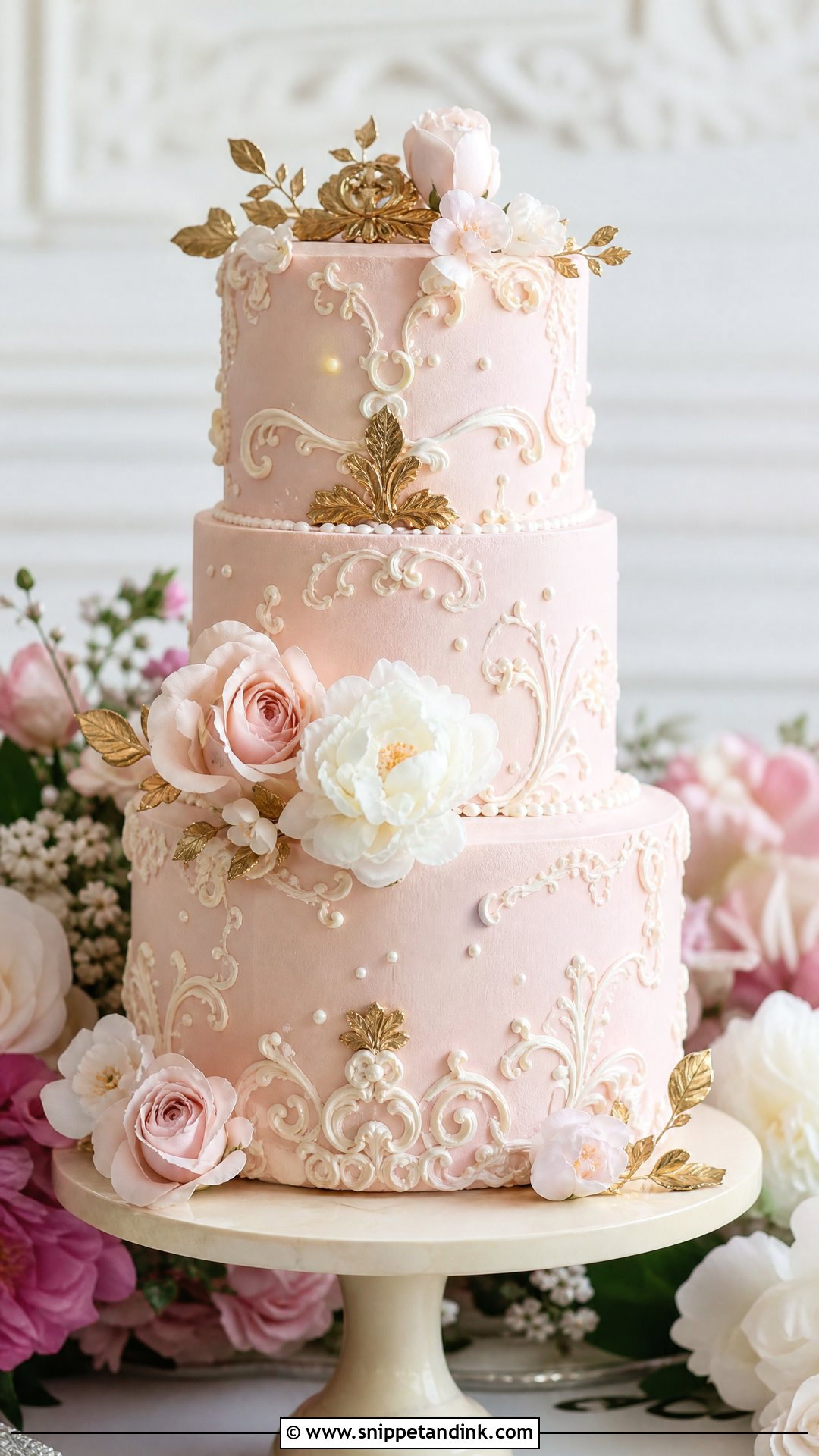
Blush keeps ornate detail from feeling heavy. A three-tier cake in blush fondant with raised white scrollwork, pearl borders and a few gilded floral appliqués is about as romantic as baroque gets. Strawberry champagne, vanilla rose or almond with raspberry cream suit it. With pale pink, I keep the gold sparing, because too much warm metal against blush makes the whole cake read peach. Blush sugar roses, ivory peonies and small gold leaves finish it for a spring wedding.
6. Baroque Pearl Wedding Cake
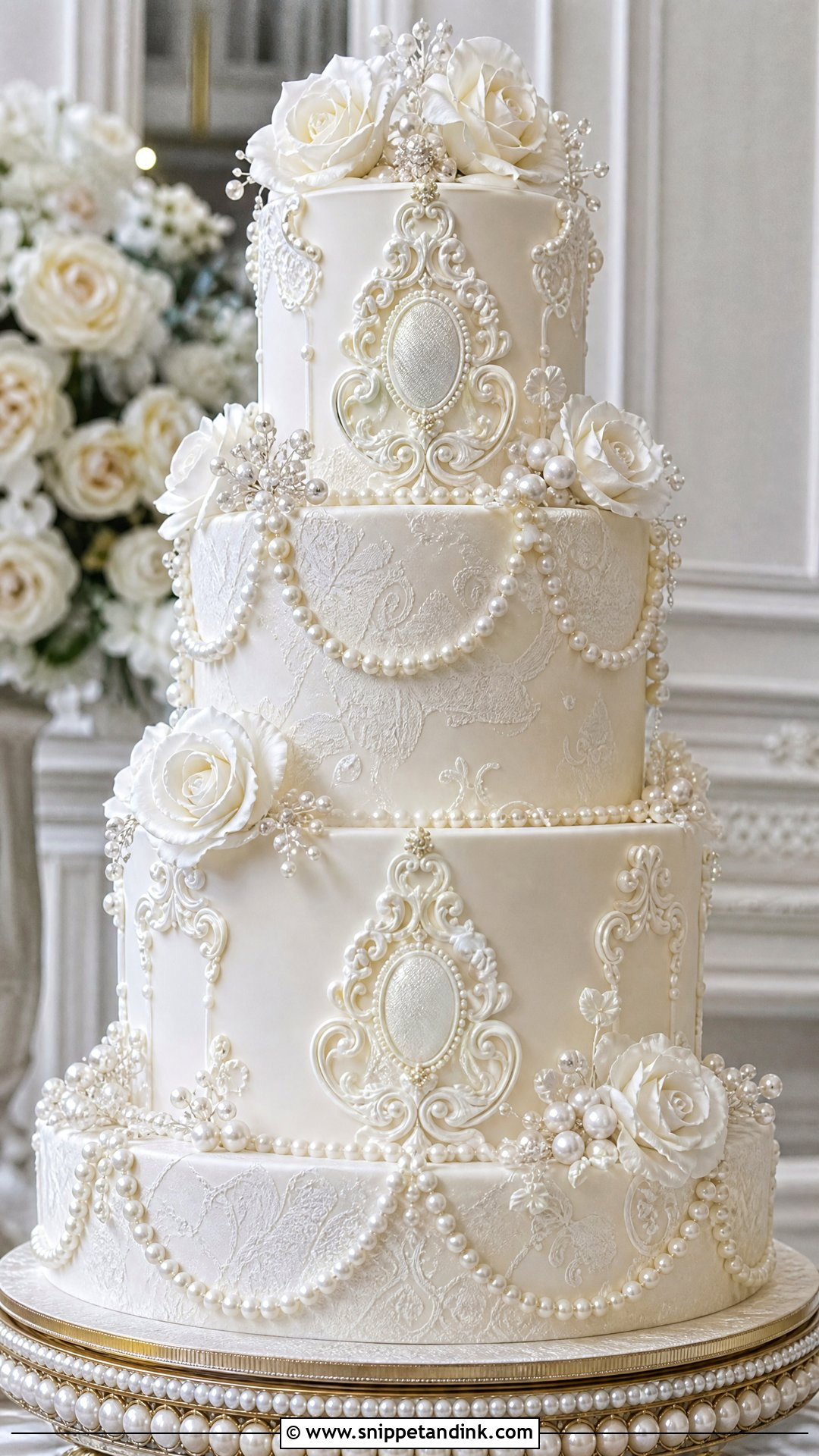
Pearls give the quietest kind of glamour. Borders, strands, clusters and raised icing details create dimension on an ivory fondant or smooth buttercream base, with pearls running along tier edges and around ornate frames. The pearls themselves are usually moulded sugar, then brushed with a pearl lustre. Strands draped between points are heavier than they look and need support at each anchor or they sag overnight. Vanilla bean, white chocolate or champagne cake work well inside, with white roses or cream orchids kept to a minimum.
7. Baroque Lace Wedding Cake
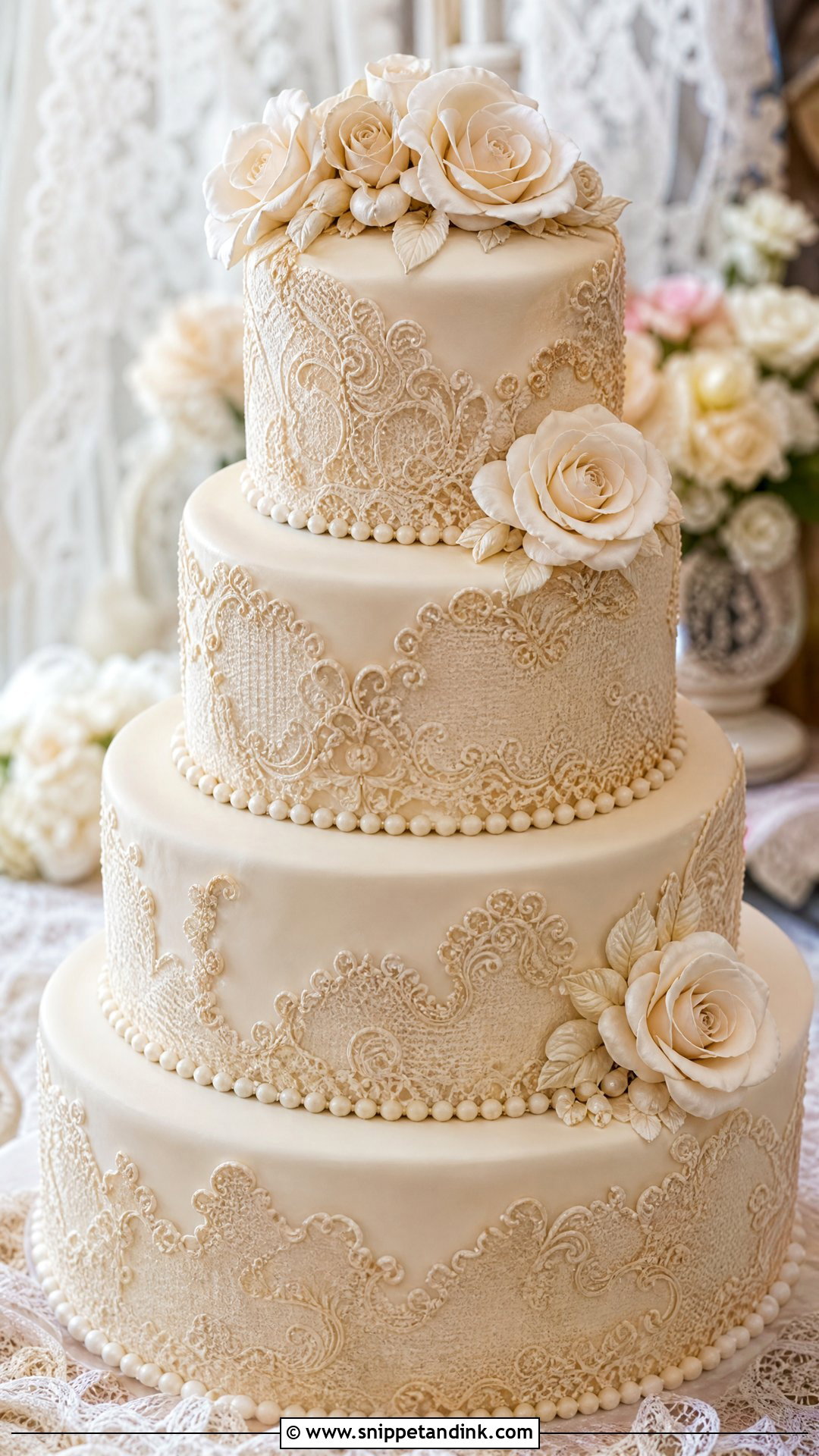
Baroque lace is built from royal icing, fondant appliqués or piped patterns that wrap around the tiers like fabric. Ivory, cream or soft champagne keep the texture visible. I add gold only on the raised parts so the lace gets depth without turning metallic. Royal icing lace dries hard and crisp, but it softens in damp air, so in a humid venue I lean toward fondant lace instead. Almond, vanilla or lemon elderflower suit it, and it sits naturally beside a lace gown and cathedral veil.
8. Baroque Floral Wedding Cake
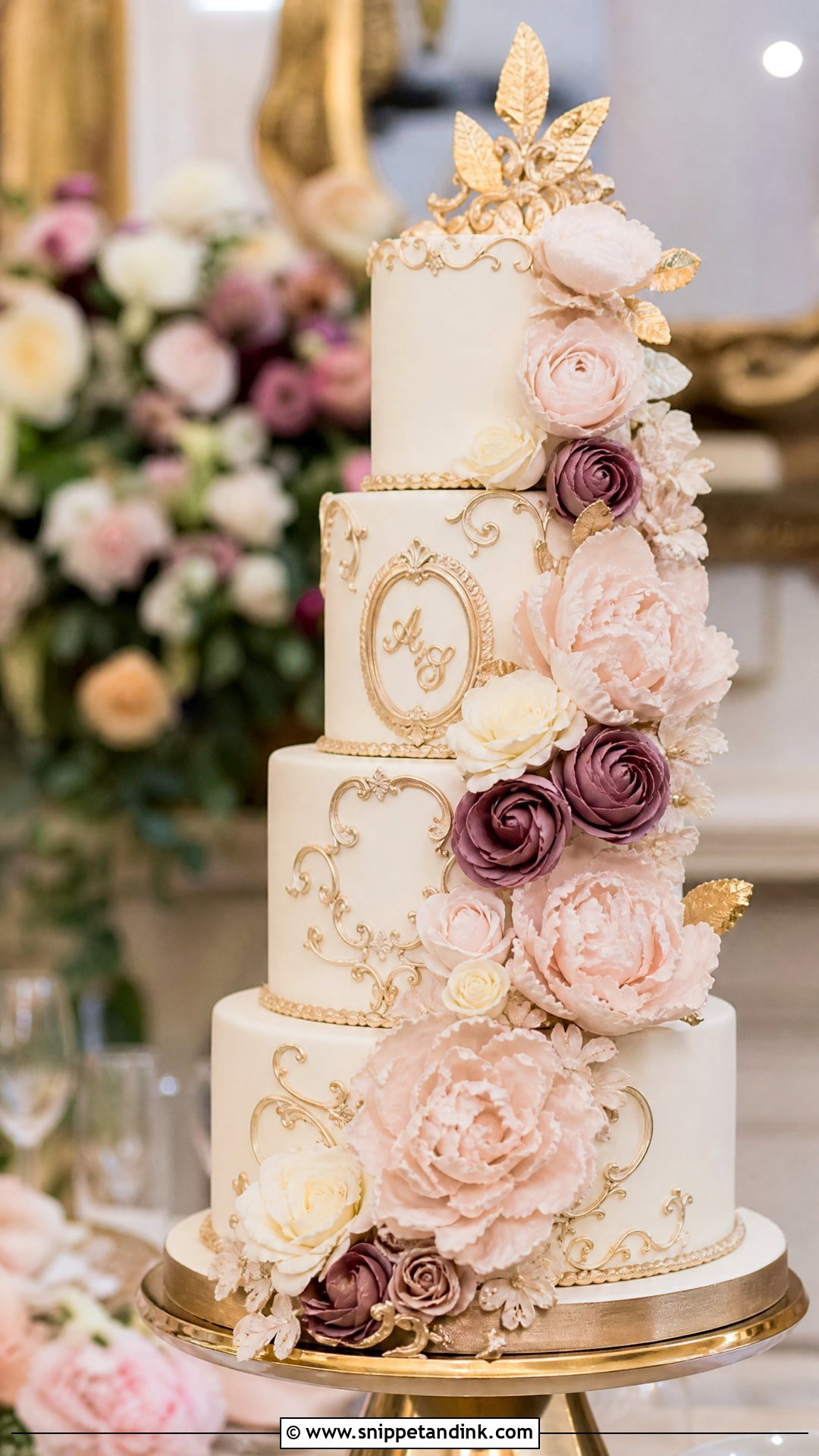
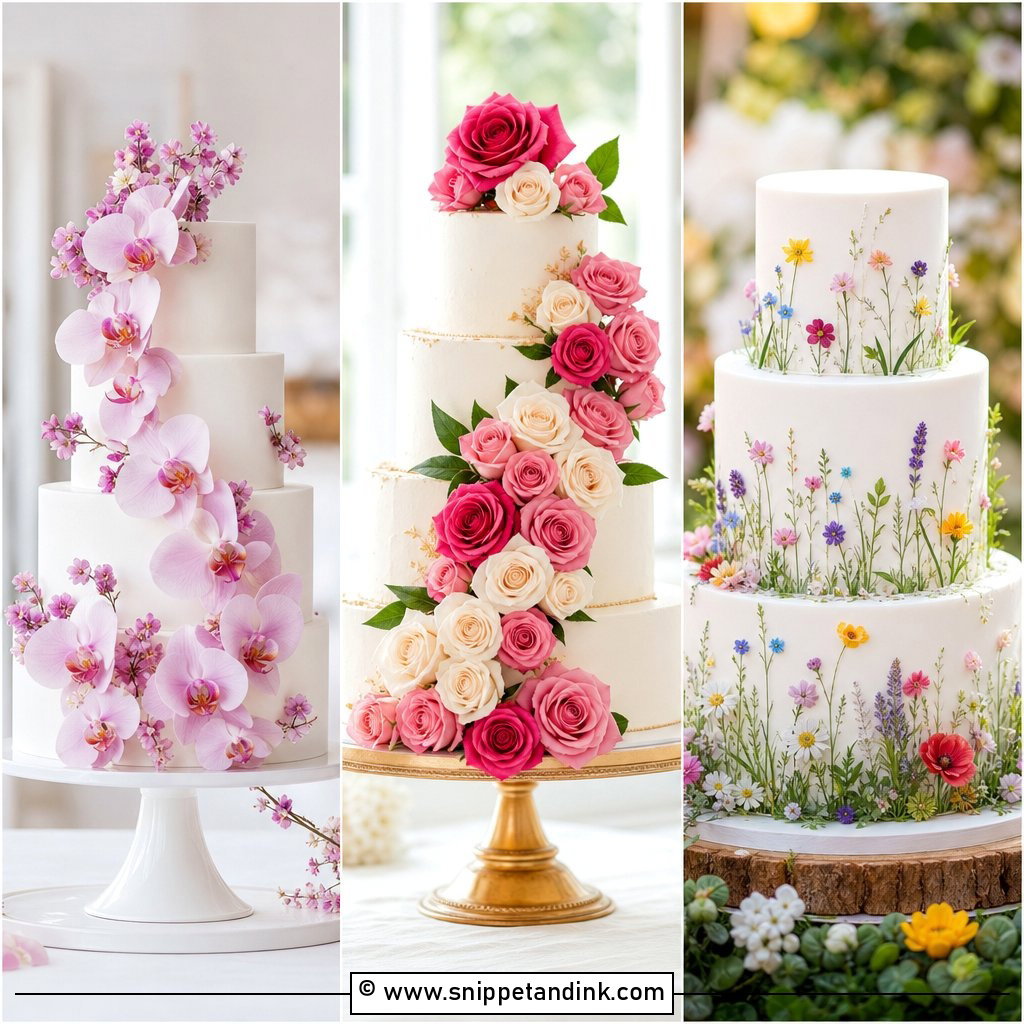
A floral baroque cake can have a simple structure as long as the flowers look abundant and deliberately placed. I put ivory tiers with gold scrollwork underneath a cascade of sugar flowers in blush, cream, mauve or soft peach: roses, peonies, ranunculus and orchids. Sugar flowers are made petal by petal and need drying time, so for a big cascade I start them weeks ahead. Running the cascade slightly off-center reads more current than a straight drop. Vanilla with strawberry or lemon with raspberry curd keeps the flavour fresh behind all that drama.
9. Baroque Red Wedding Cake
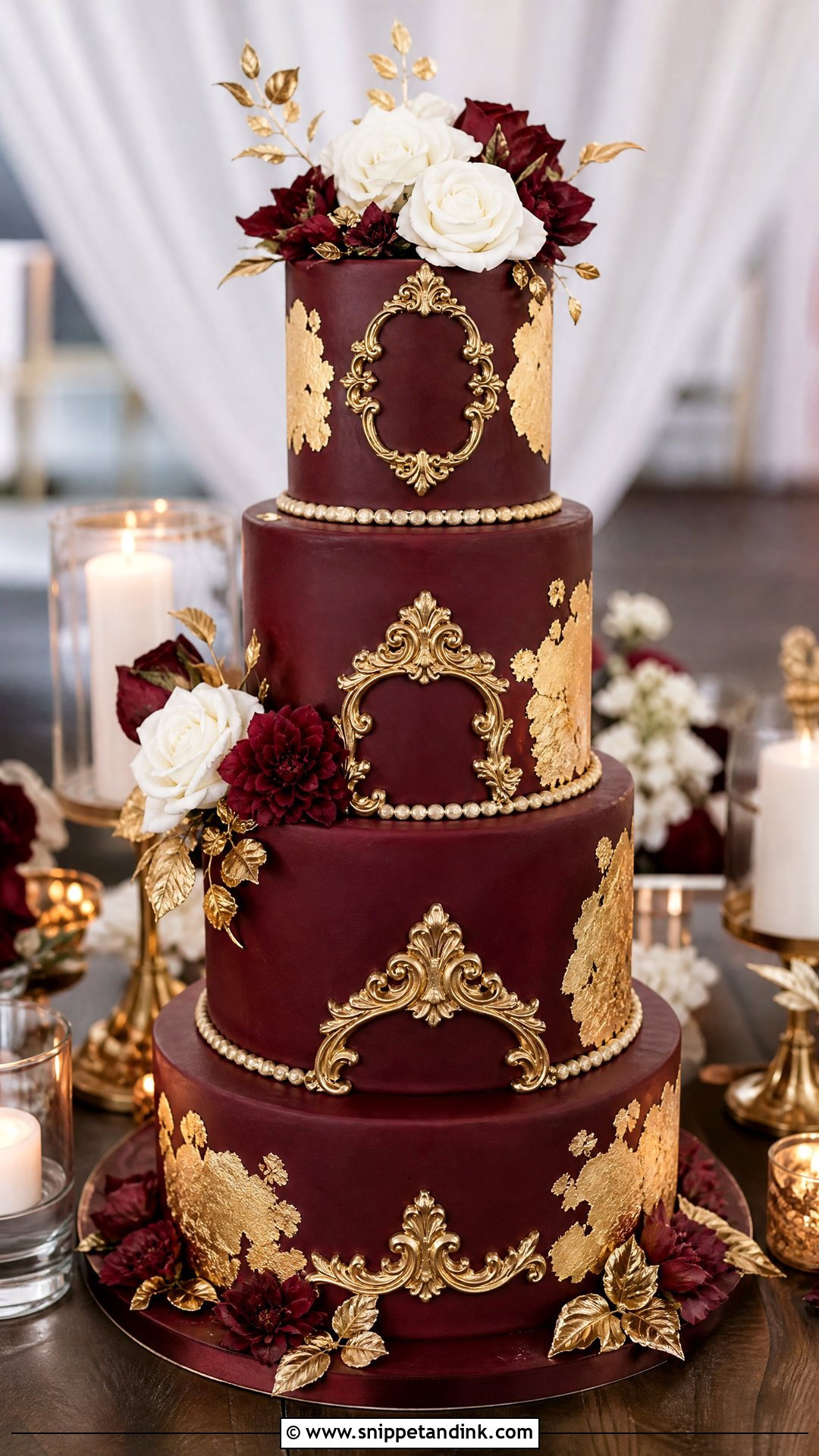
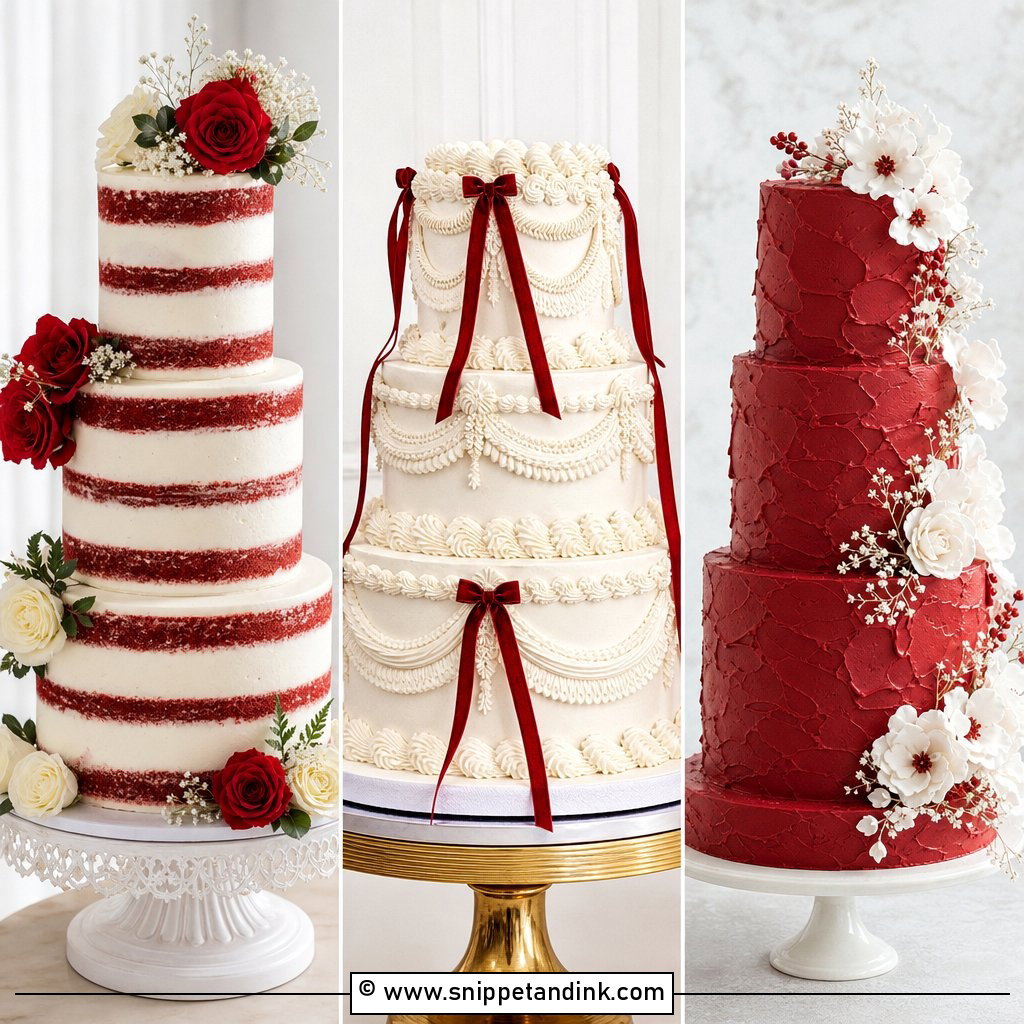
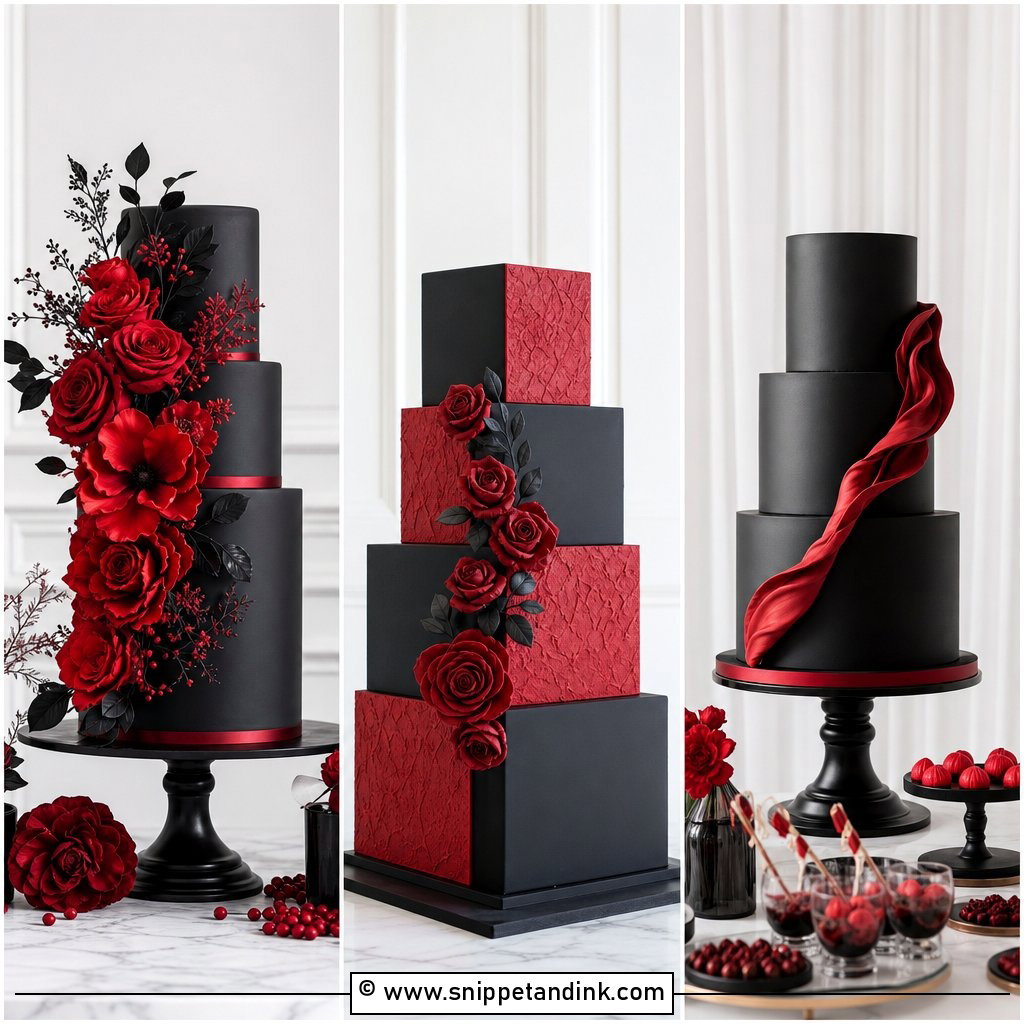
Red is the richest colour a baroque cake can carry, in deep red fondant or burgundy buttercream with gold details, pearl borders and ornate piping. It suits autumn and winter weddings, as long as the styling stays clear of anything that looks like holiday decor. Red velvet, dark chocolate or spice cake with cream cheese frosting fit the colour. Keep in mind that cream cheese fillings need refrigeration, so tell your designer how long the cake will be on display. I keep a red cake tall and structured so the colour feels formal rather than overwhelming.
10. Baroque Ivory Wedding Cake
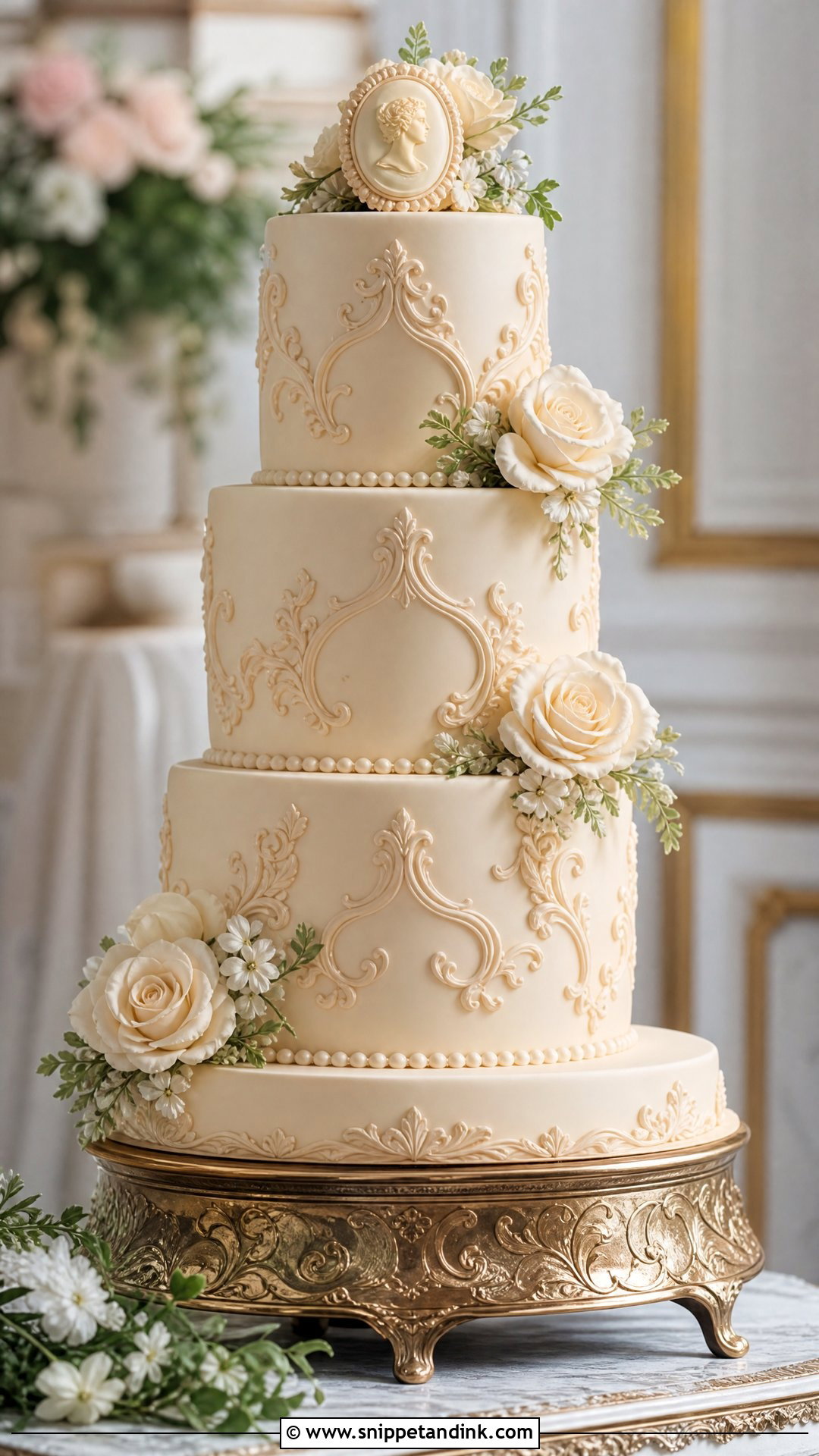
Ivory sits between bright white and gold, and it’s the easiest base to match to almost any palette. I use ivory fondant with raised scroll piping, pearl borders and hand-painted champagne accents. Taller tiers give the detail room to breathe, which is why this works so well on a high cake. Almond, vanilla bean, champagne or white chocolate suit it, with cream sugar roses, pale greenery or small fondant cameos for an antique touch. It’s a natural fit for couples who want luxury without a loud colour scheme.
11. Baroque Green Wedding Cake
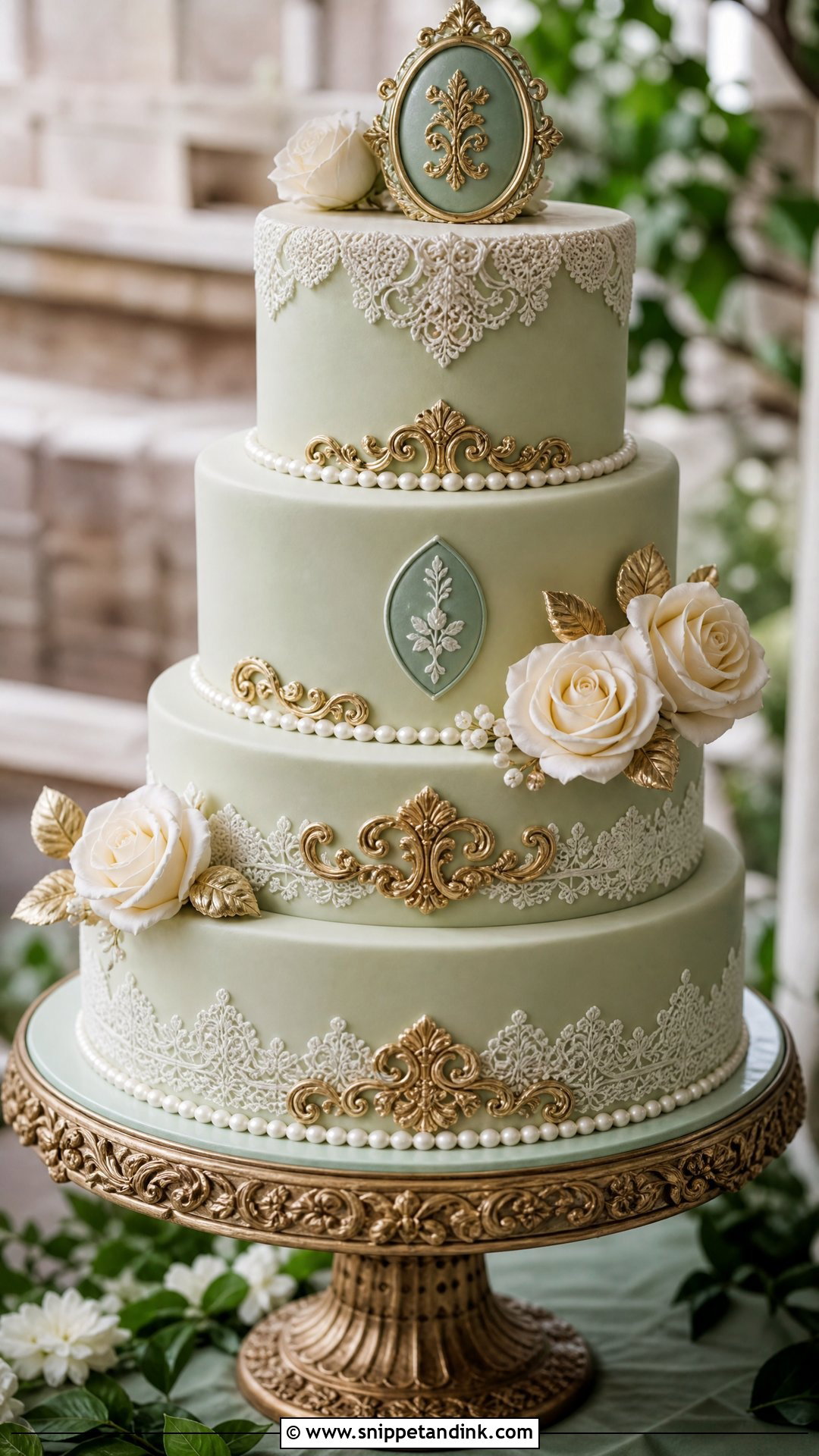
Green surprises people, and the shade sets the mood: sage is soft, olive feels antique and emerald feels royal. Smooth fondant takes raised gold scrolls, pearl borders and floral accents well. Pistachio, matcha vanilla or lemon with a herbal buttercream support the colour. I’d hold a fabric swatch against the green before committing, because sage and olive both read greyer under warm evening light than they do in daylight. Ivory sugar roses and small green fondant panels finish it for a garden or estate wedding.
12. Baroque Pink Wedding Cake
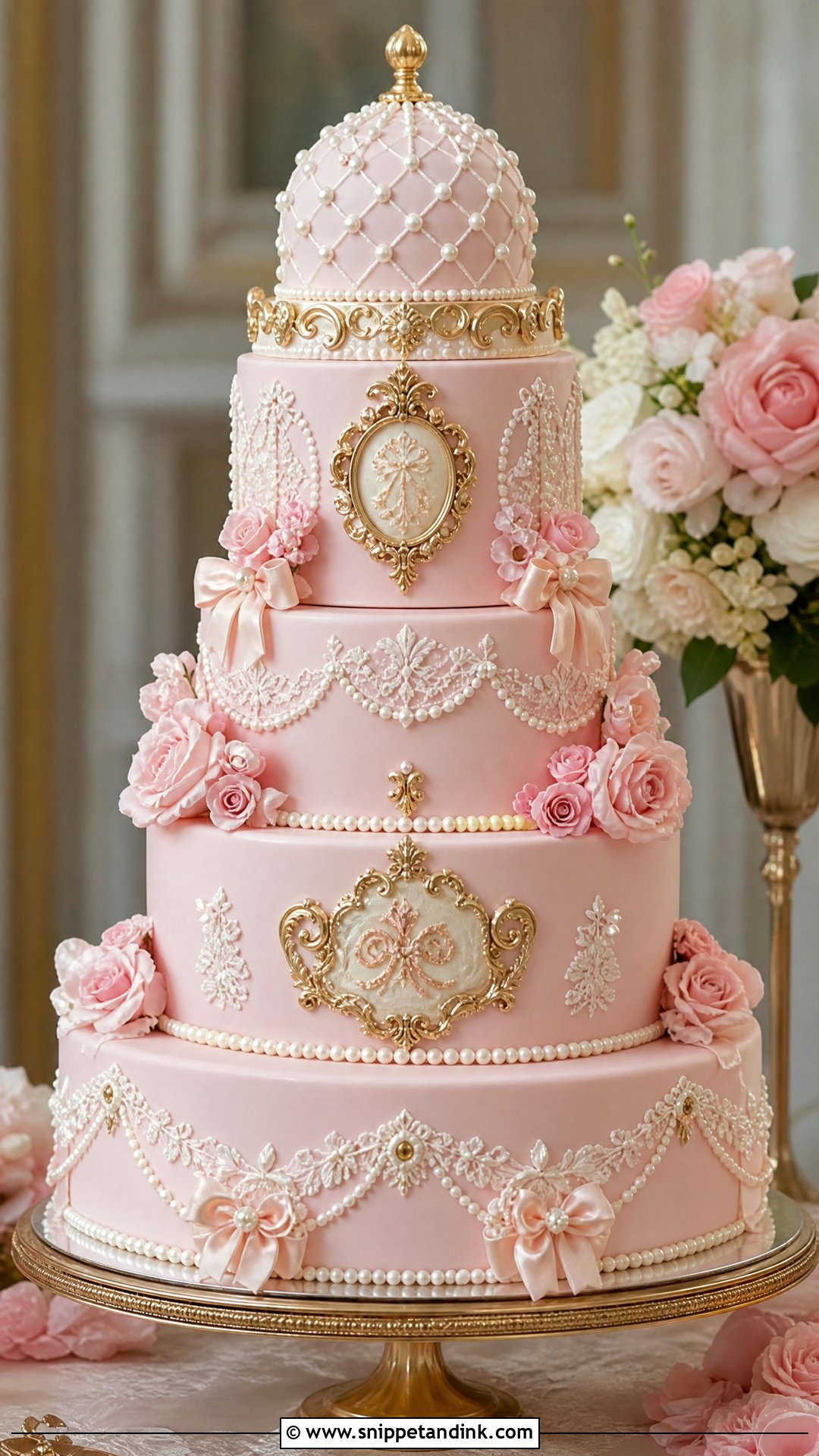
Pink shifts in mood with the shade: soft pink stays bridal, while a deeper rose looks more editorial. Pink fondant or buttercream with ivory lace piping, pearl borders and gold scroll accents is the base. Strawberry, raspberry vanilla or pink champagne cake fits naturally, with sugar roses, small bows and gold-framed plaques on top. Strong pinks can fade under bright light over a long reception, so I keep a pink cake out of direct sun and spotlights until it’s time to show it off.
13. Baroque Purple Wedding Cake
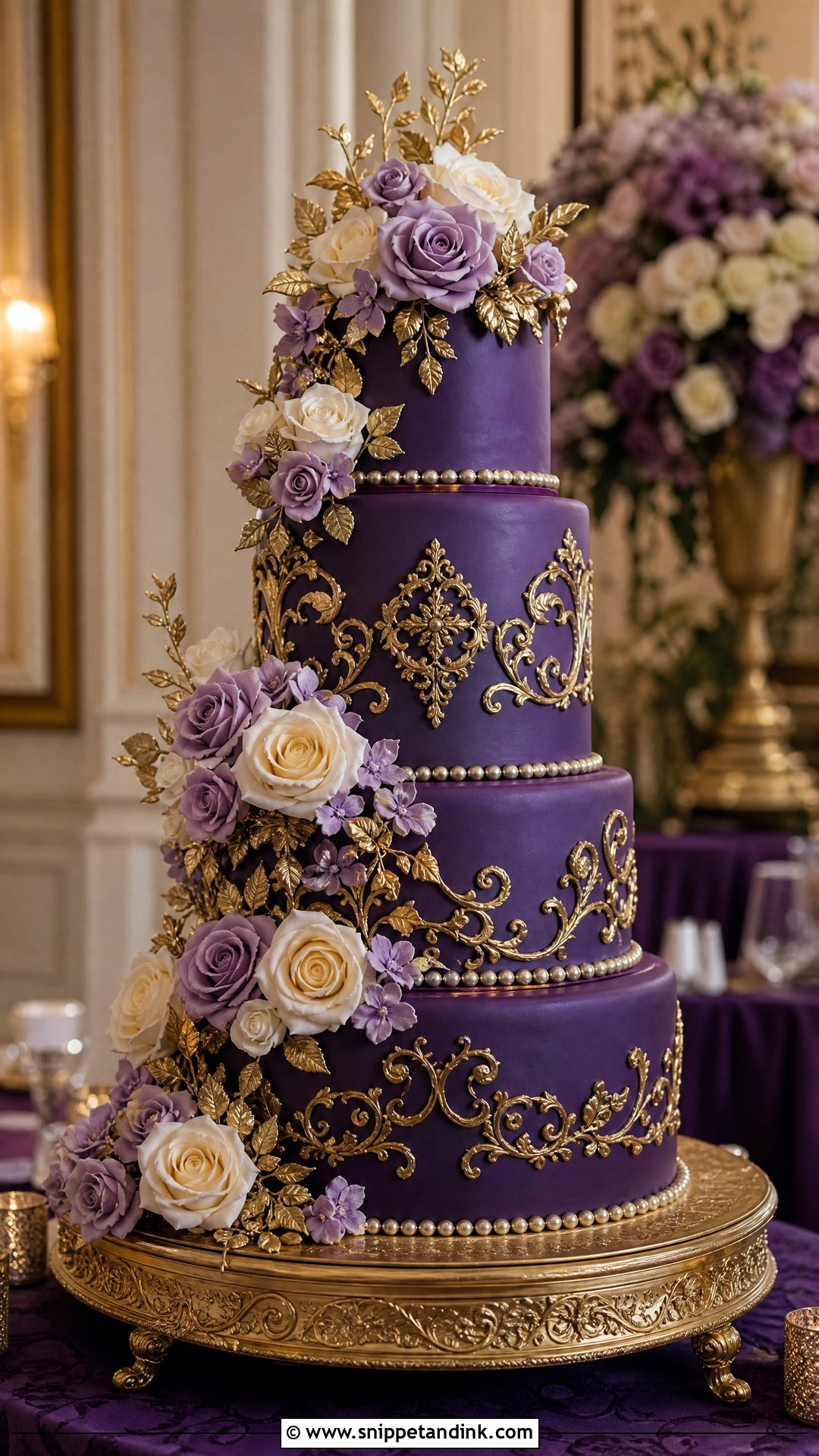
Purple reads royal with gold. Lavender gives a soft vintage mood, while plum or deep violet turns dramatic. I cover in smooth fondant, then add gold scroll piping, pearl borders and ornate frames. Vanilla blackberry, lavender honey or chocolate raspberry suit the colour. Purple is the colour I’m most careful with, since some purple food colours drift toward blue or grey when exposed to light for hours. I mix it a little warmer than the target and keep the finished cake shaded. Ivory flowers soften the darker shades for an evening wedding.
14. Baroque Silver Wedding Cake
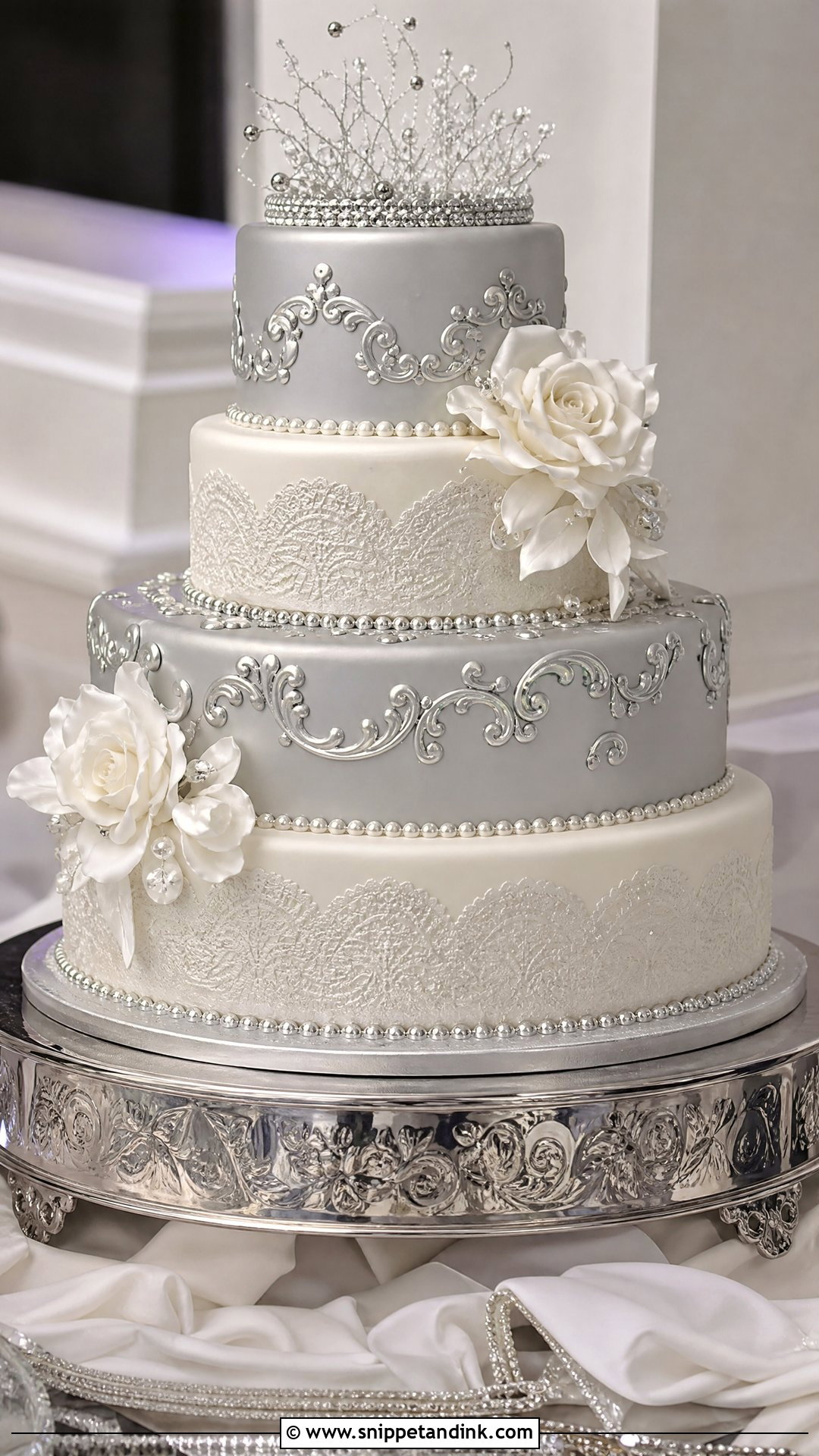
Silver is the cooler alternative for couples who want metallic detail but not gold. Ivory or pale grey fondant carries silver scrollwork, pearl borders and lace texture. I keep silver brushed and subtle; a high shine on silver tends to look more like a party cake than a wedding cake. As with any metallic, check that the silver is labelled edible and not just for decoration. Vanilla bean, coconut or white chocolate cake pairs well, finished with white sugar flowers, clear sugar beads and a silver monogram for a black-tie room.
15. Baroque Vintage Wedding Cake
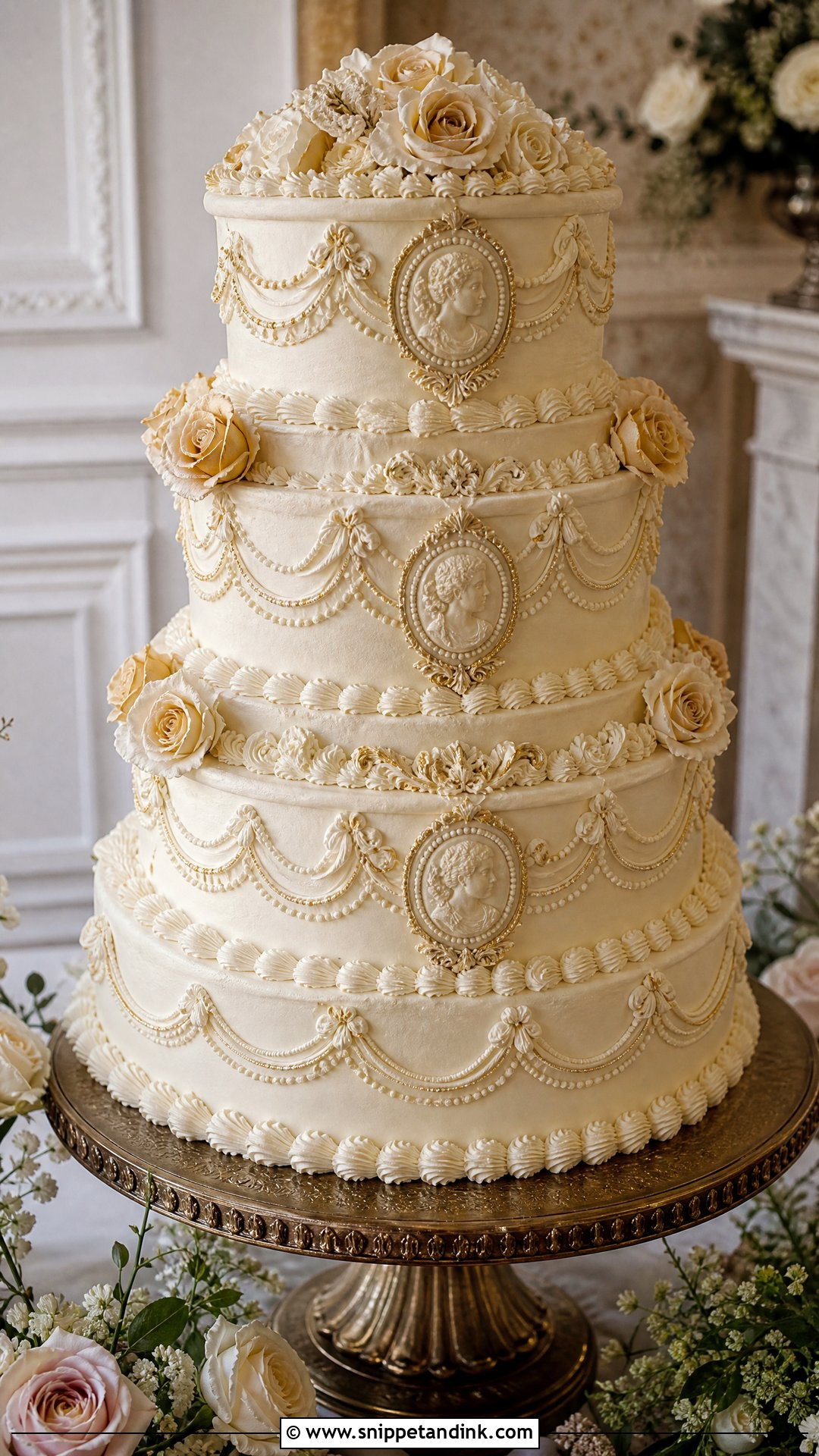
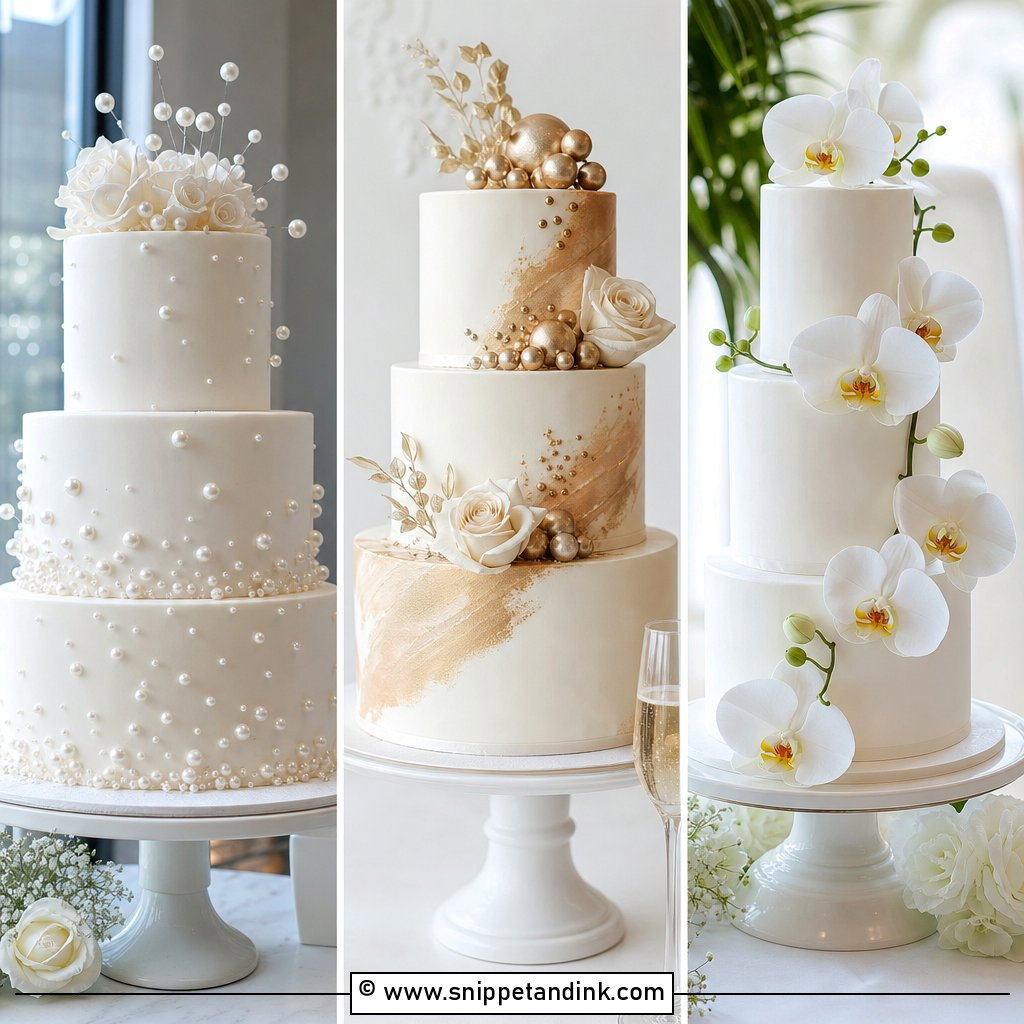
Vintage baroque leans nostalgic: stacked tiers, piped swags, shell borders, small rosettes, pearls and antique gold in ivory, cream, blush or pale blue. Buttercream gives it a soft, handmade feel, while fondant makes the details sharper. I’ll often pipe the swags in buttercream over a fondant base to get some of both. Vanilla, almond, lemon or chocolate keep it crowd-friendly, and sugar roses, fondant cameos or a small oval monogram suit historic venues.
16. Baroque Tall Wedding Cake
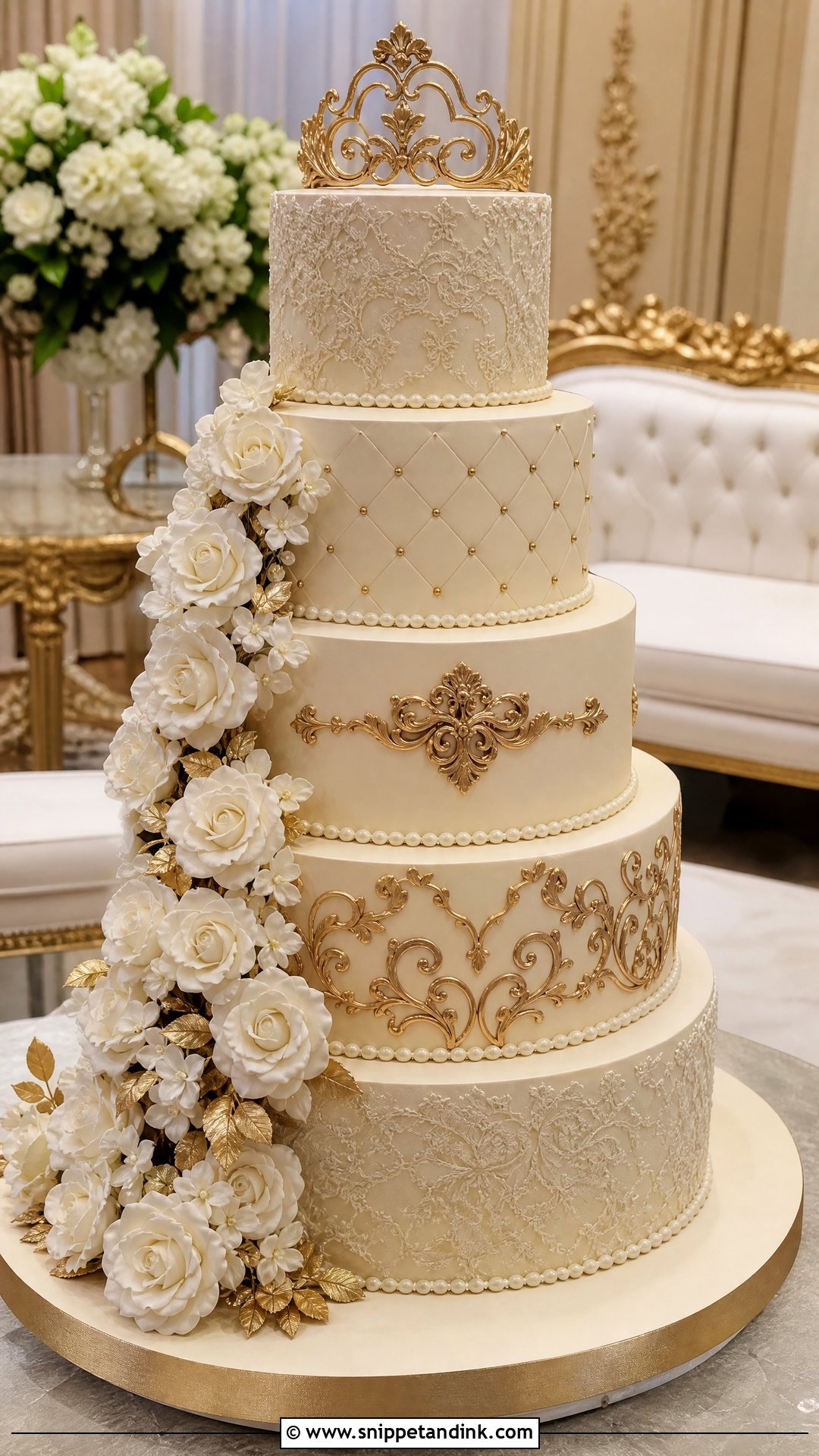
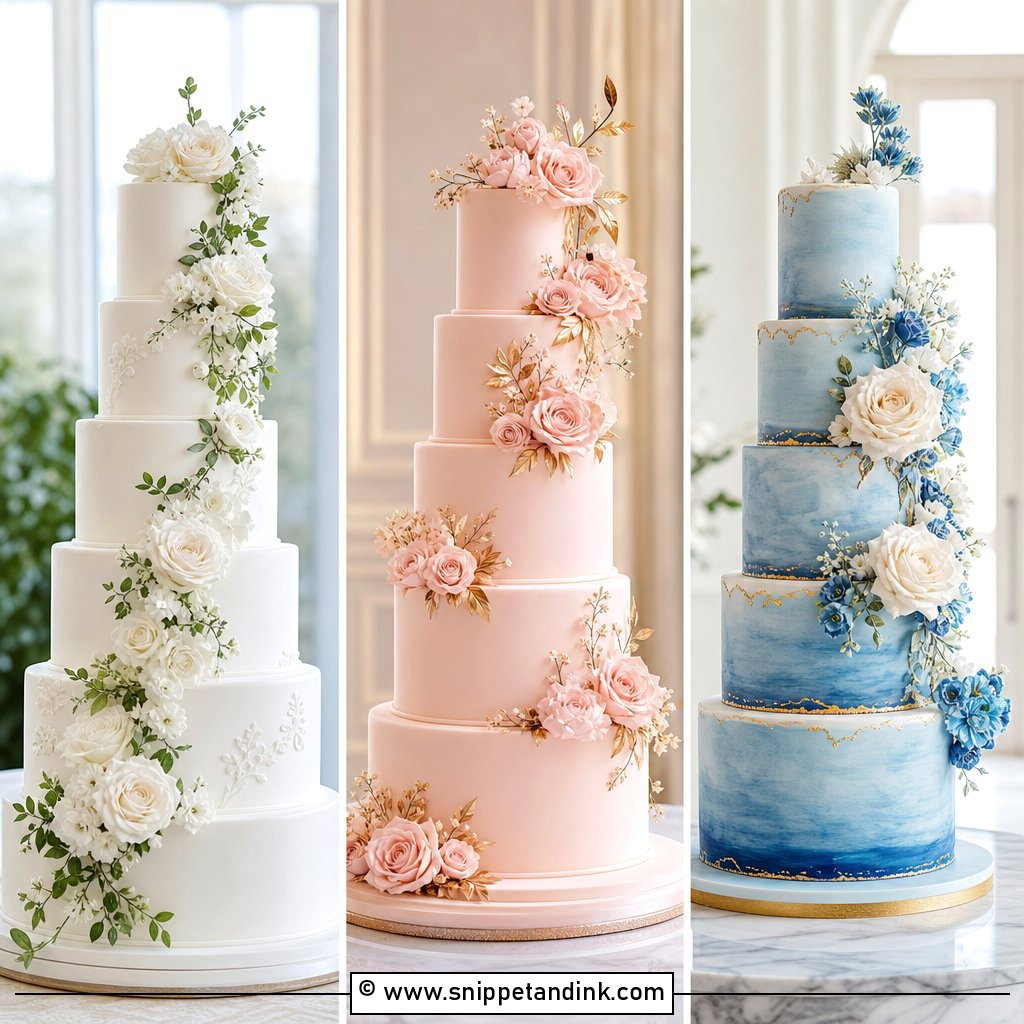
Five or more tiers give room for scrollwork, columns, lace panels, monograms, florals and metallic accents, and they need it. I vary the treatment tier by tier, one smooth, one quilted, one piped and one framed with gold appliqués, so the eye travels instead of drowning. A cake this tall needs internal supports in every tier and a central dowel, and I assemble it at the venue rather than transporting it stacked. Vanilla almond, champagne or chocolate ganache can go inside. It belongs in a large room where it can be seen from across the floor.
17. Baroque Two Tier Wedding Cake
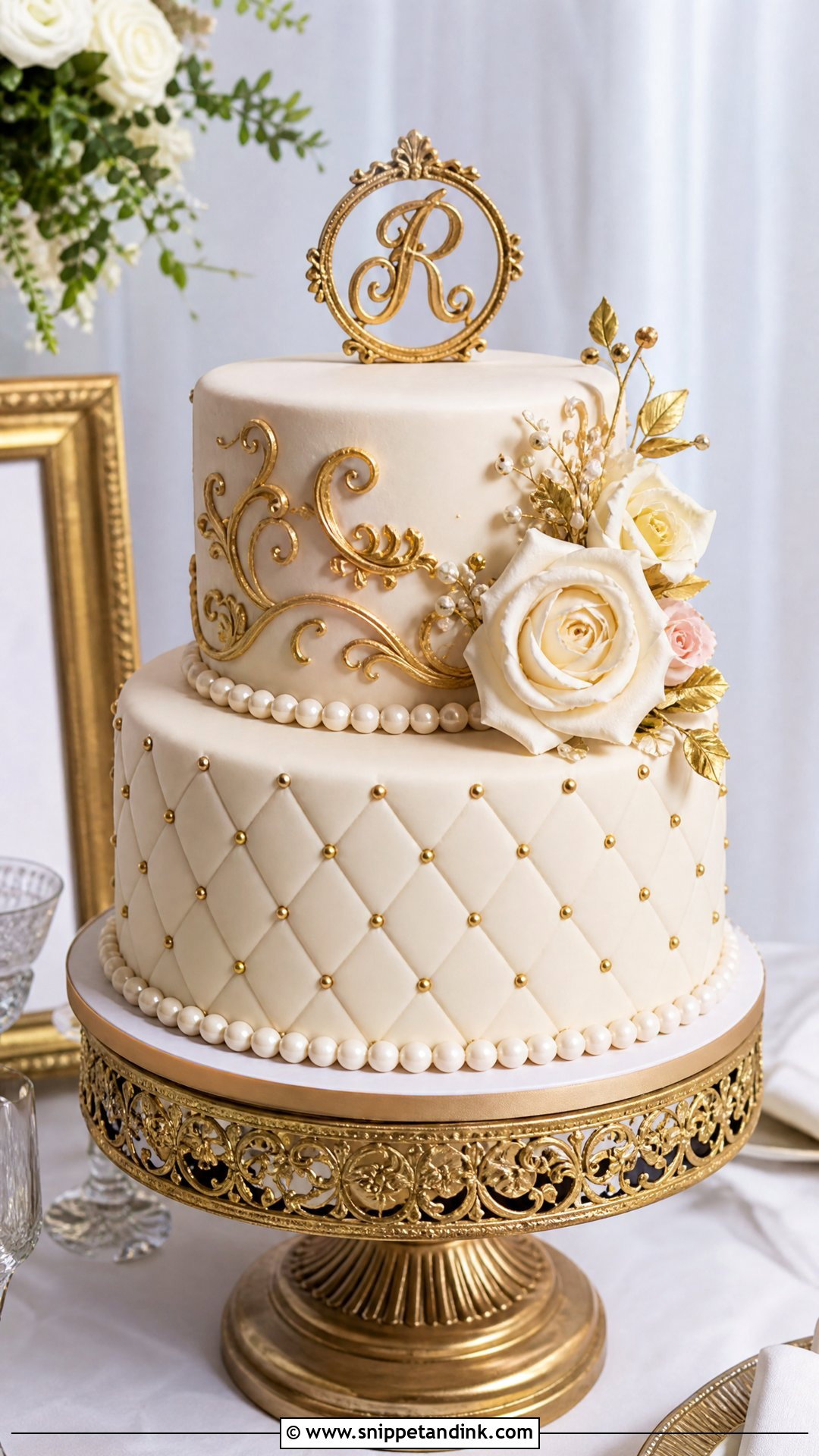
A two tier baroque wedding cake gives a smaller wedding a luxury look without the height. Detail needs focus at this size. I keep a smooth ivory base, put the gold scroll piping on the top tier and pearl borders on both, and give the lower tier quilted fondant or lace texture for presence. Vanilla raspberry, lemon cream or chocolate hazelnut suit it, with a cluster of sugar roses, a small monogram and edible gold. A tall, ornate stand adds the height the tiers don’t.
18. Baroque Three Tier Wedding Cake
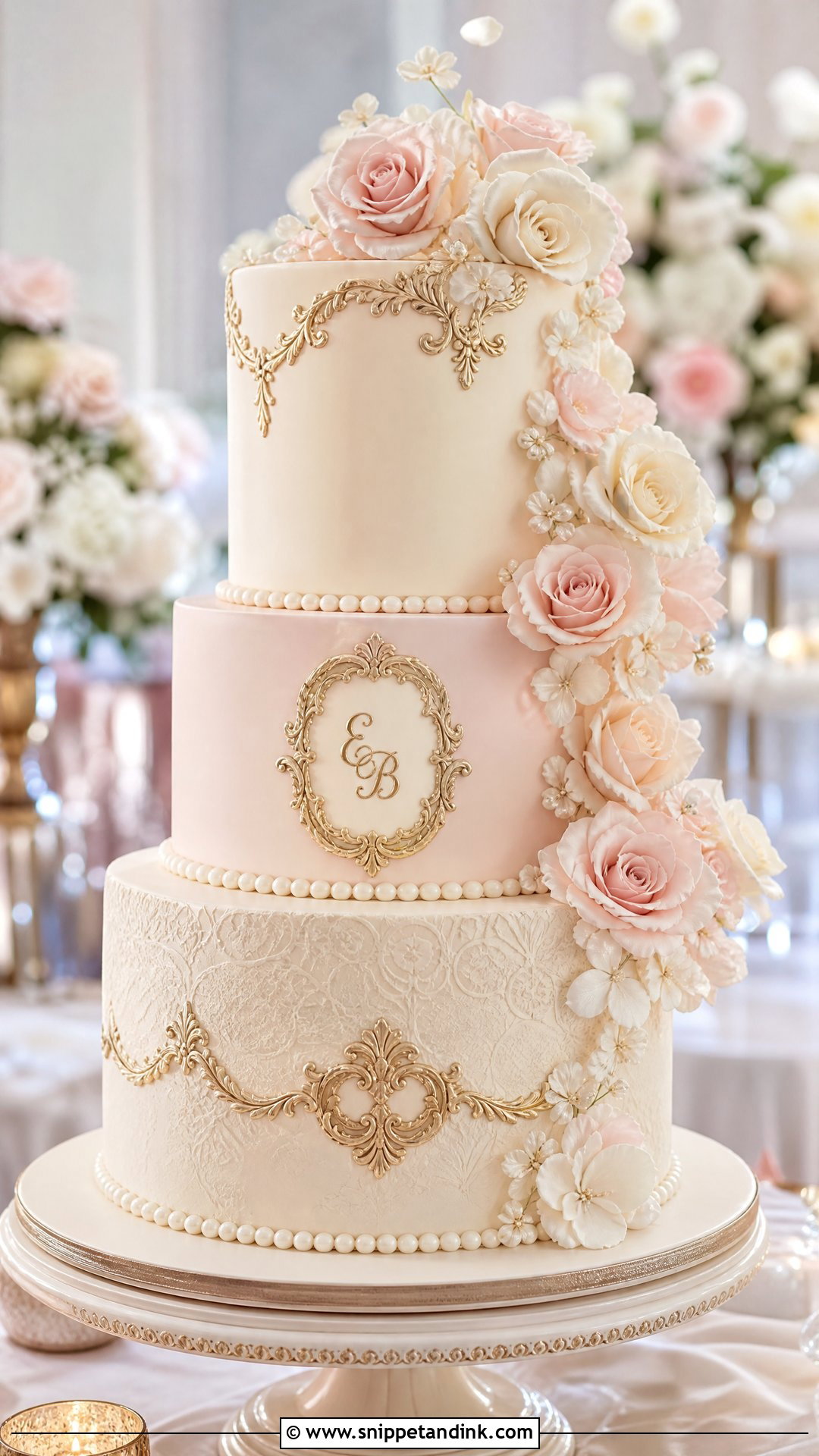
Three tiers balance height and detail without needing a huge guest list; a six, eight and ten-inch round gives roughly seventy to eighty wedding-size slices. I make each tier distinct but related, such as lace texture at the bottom, smooth fondant in the middle and ornate scrollwork on top, in ivory, gold, blush or pale blue. Almond with raspberry or vanilla bean cake with champagne buttercream fits the mood. Sugar roses can sit between the tiers or fall in a soft cascade. It adapts to a ballroom, a garden or an estate.
19. Baroque Buttercream Wedding Cake
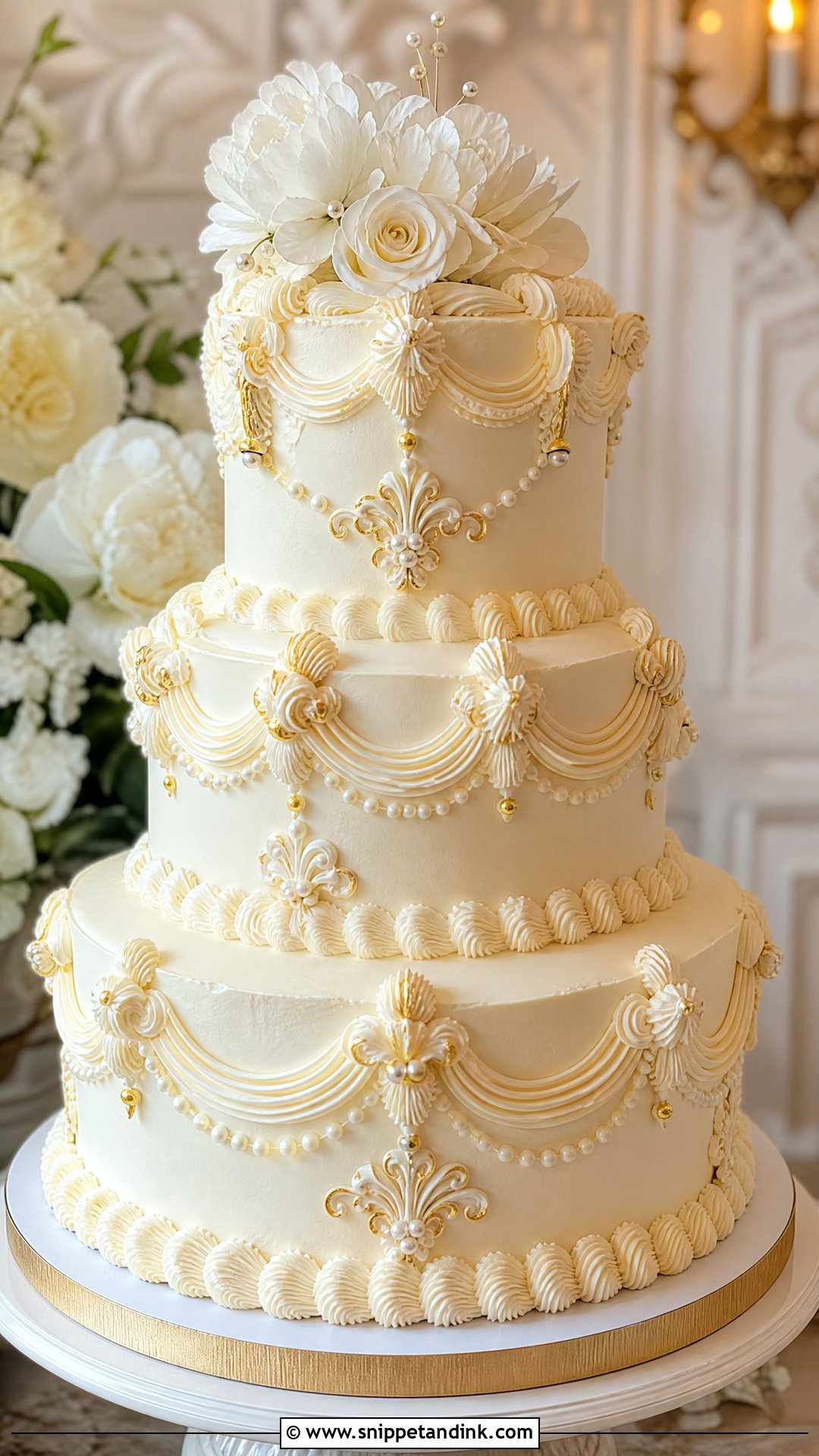
Buttercream softens baroque scrolls, shells, swags and rosettes, so they look romantic rather than rigid, and many guests simply prefer eating it. I use ivory or champagne buttercream and brush gold onto selected raised details only. Vanilla bean, lemon, strawberry and almond work well inside. The trade-off is heat. Fine buttercream piping can droop in a warm marquee, so I ask about the room temperature before agreeing to the design and suggest a cool, shaded spot for display.
20. Baroque Fondant Wedding Cake
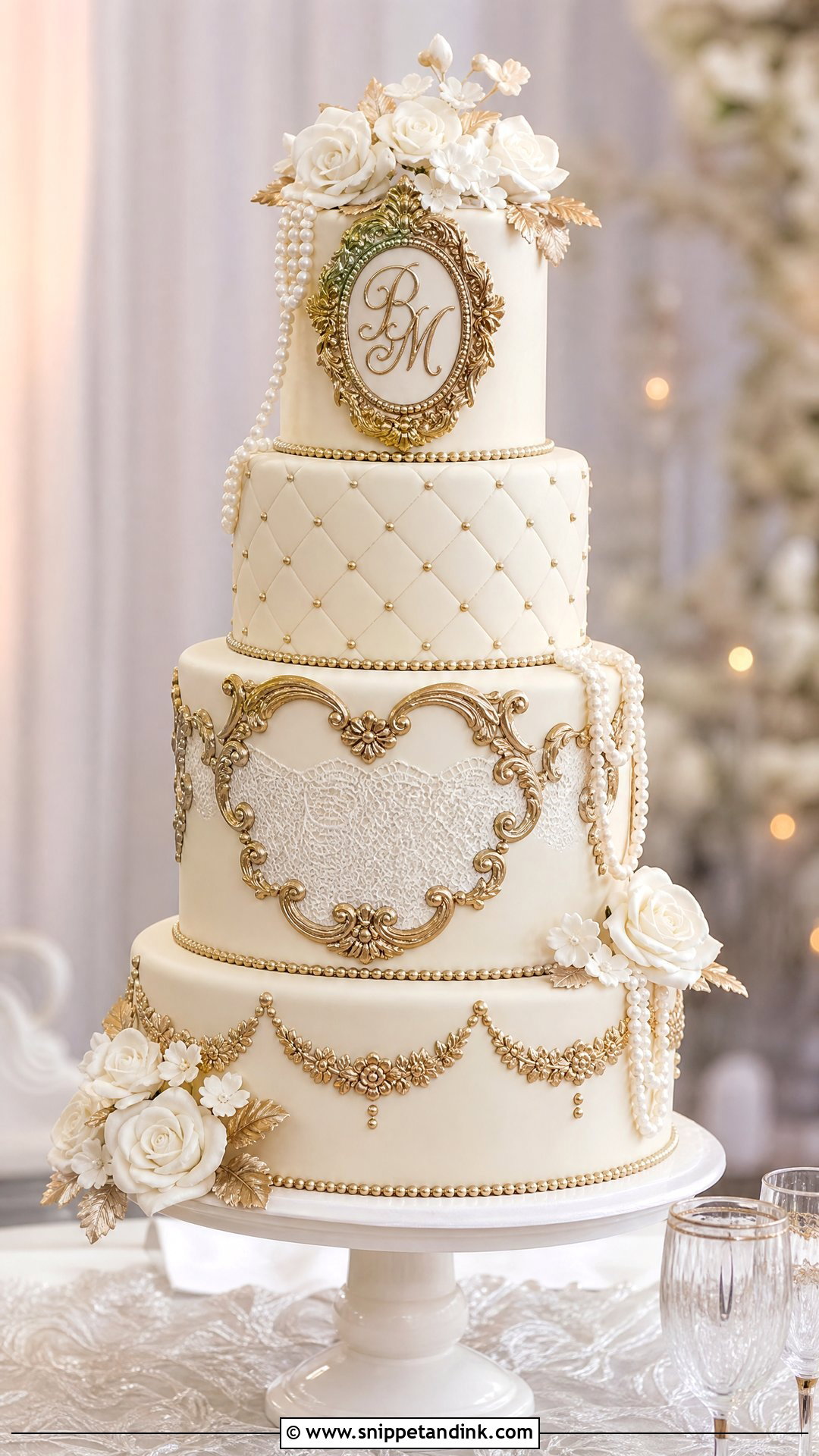
Fondant gives the cleanest canvas for sharp ornament: smooth tiers, crisp edges, raised appliqués, quilting and hand-painted metallics. For a very formal cake with gold frames, lace panels and sculpted accents, it’s the most reliable surface. The cake inside can still be soft, such as vanilla almond, chocolate raspberry or lemon cream. One thing to plan for: a fondant cake taken from a cold fridge into a warm room can sweat beads of moisture, which spoil painted gold, so I let it come up to temperature in its box first.
21. Baroque Monogram Wedding Cake
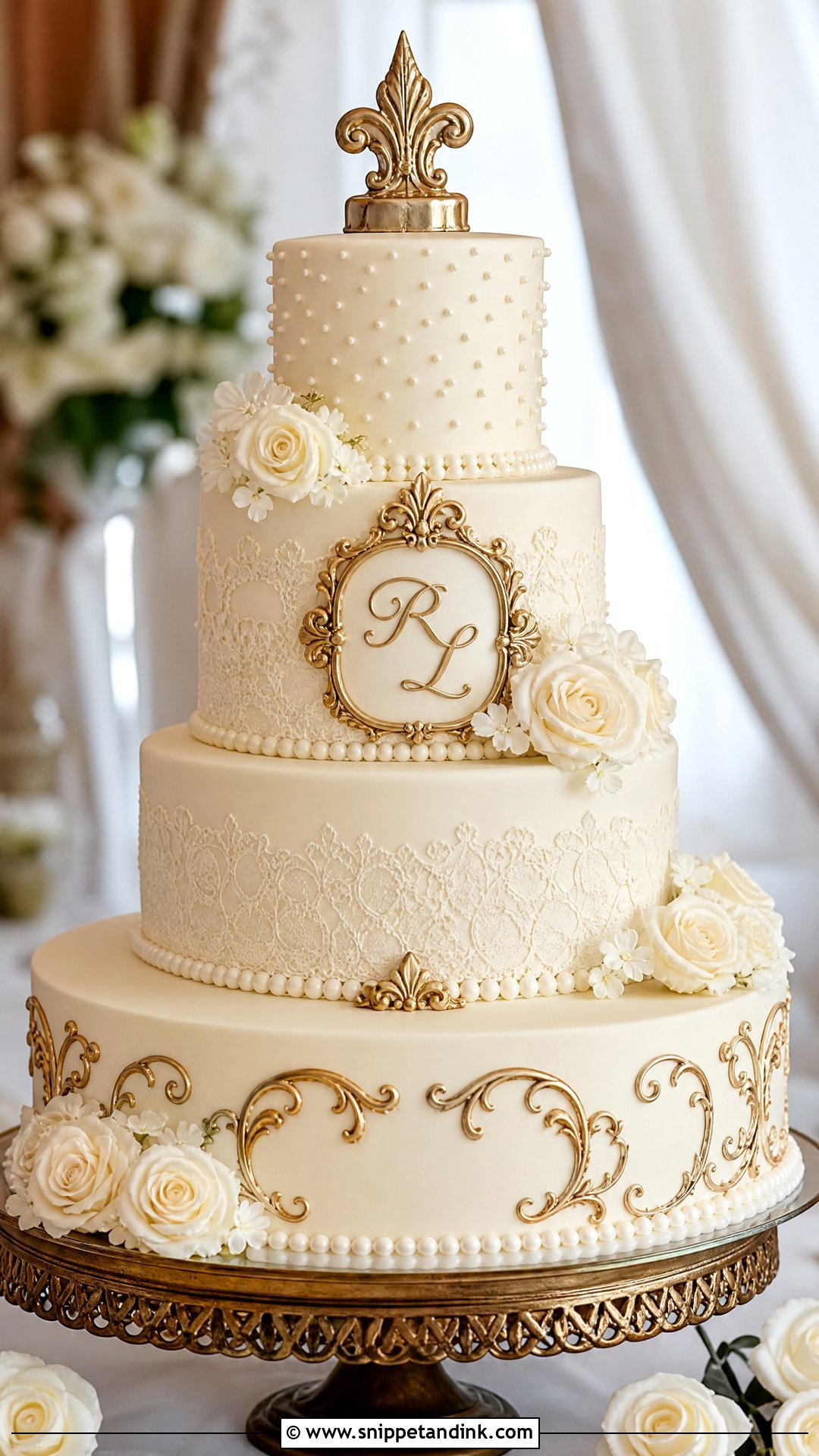
A monogram makes the cake personal without extra props. I frame the initials in gold fondant, a piped oval or a raised scroll plaque on the center tier, on an ivory, champagne, blush or black base, with pearl borders and lace around them. Vanilla bean, almond or chocolate caramel all suit it. The lettering style should match your stationery, so I ask for the invitation suite before drawing the monogram. Small sugar roses near the initials soften the frame.
22. Baroque Chandelier Wedding Cake
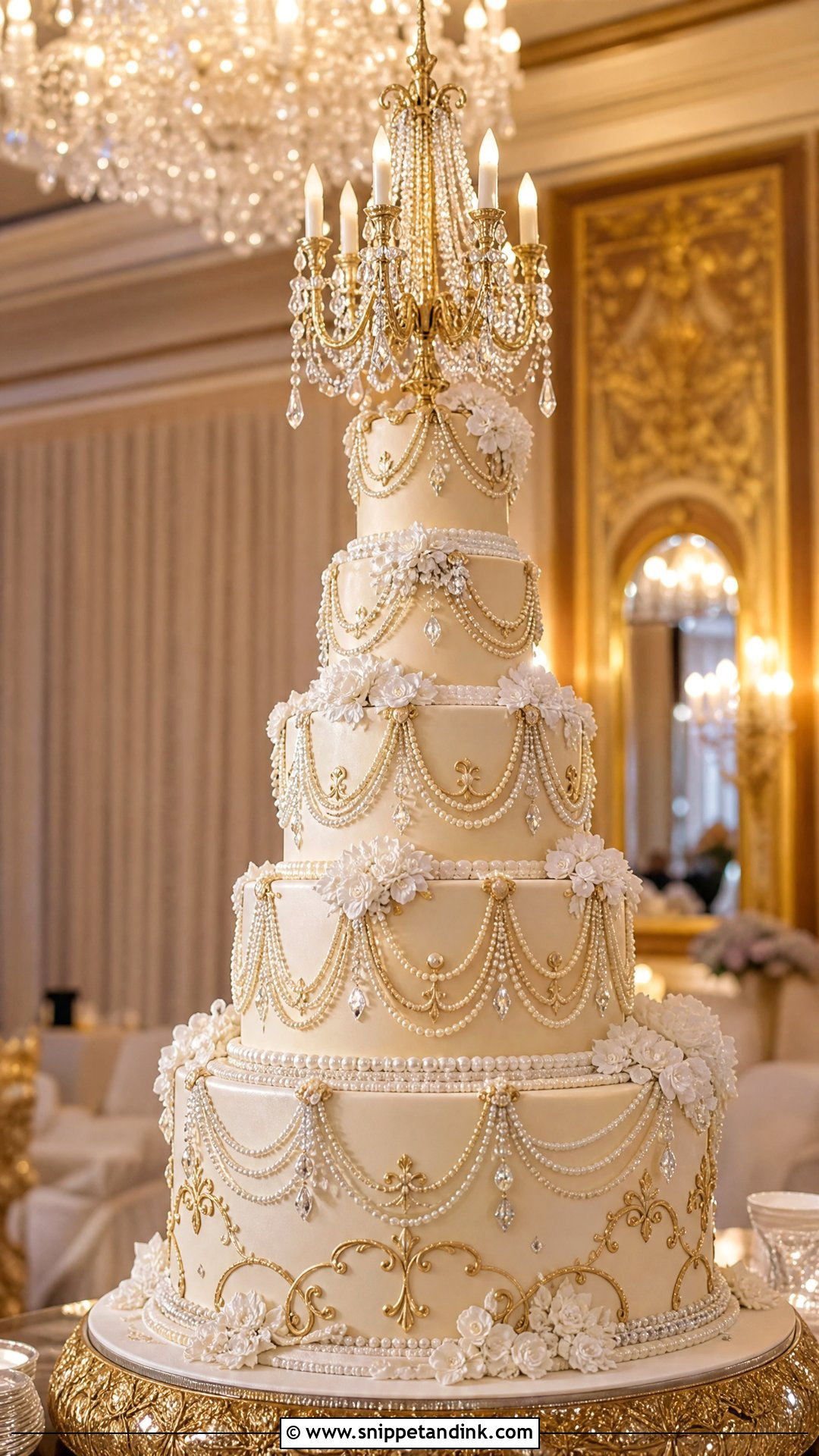
The chandelier cake borrows from ballrooms and crystal lighting: draped pearl strands, gold scroll piping and clear sugar beads that hang like crystals. A base of ivory or champagne fondant works best so the decoration stands out, and a tall three or five-tier structure gives the drapes room. The clear crystals are usually made from isomalt, which stays glass-like but can go cloudy and sticky in humid air, so they go on close to set-up. Champagne, vanilla bean or white chocolate raspberry suit it, with sugar flowers kept sparse.
23. Baroque Castle Wedding Cake
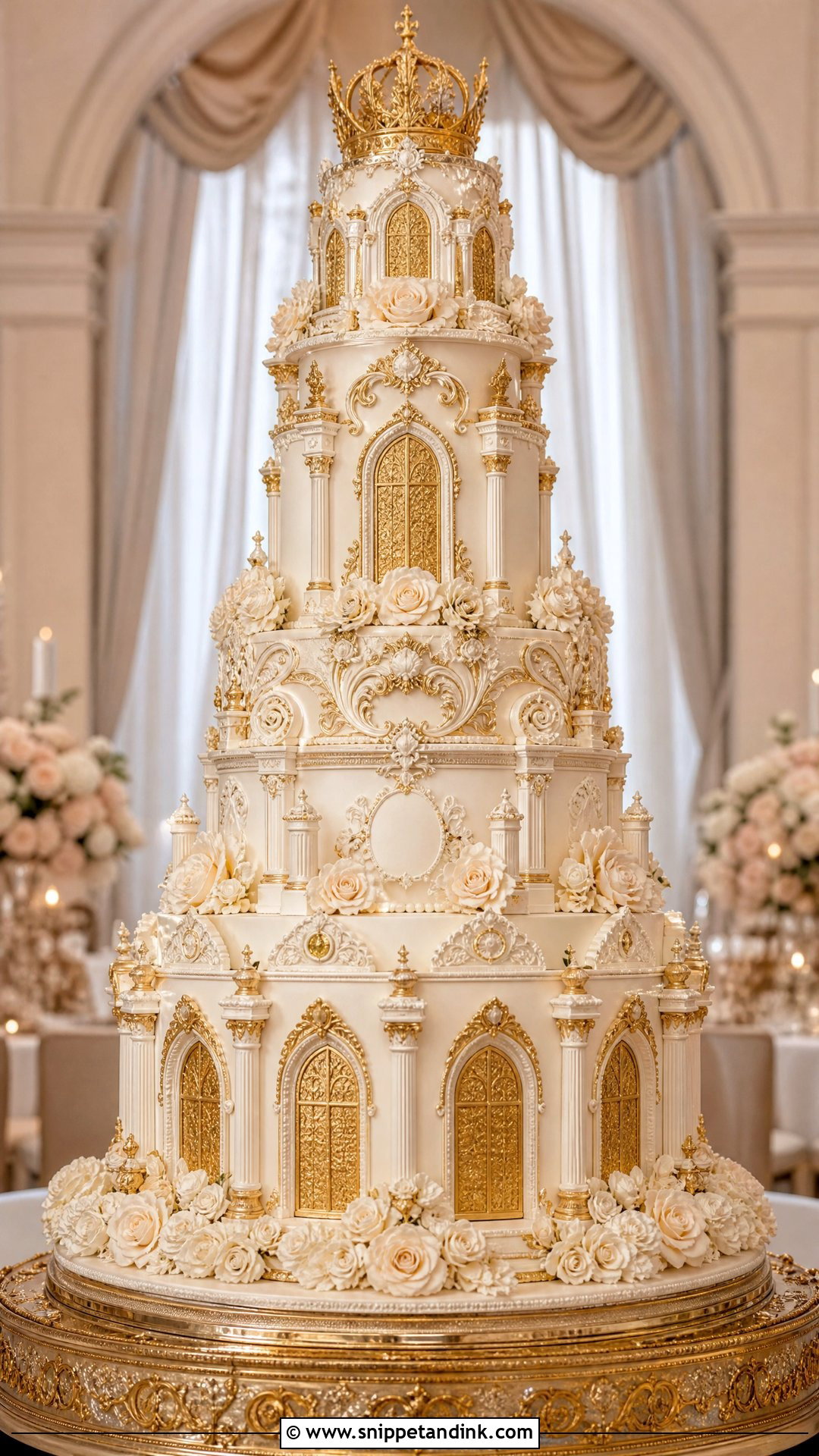
A castle cake has to stay architectural, not cartoonish. Tall tiers, fondant columns, arched panels, gold scrollwork and crown-like accents in ivory, pale blue, champagne or soft grey keep it refined. Columns and arches are made from dried gum paste and need several days to harden before they can bear weight. Vanilla almond, lemon cream or chocolate ganache suit a rich reception dessert, with sugar roses around the base. It’s made for couples drawn to royal wedding inspiration and venues with real height.
24. Baroque Oval Wedding Cake
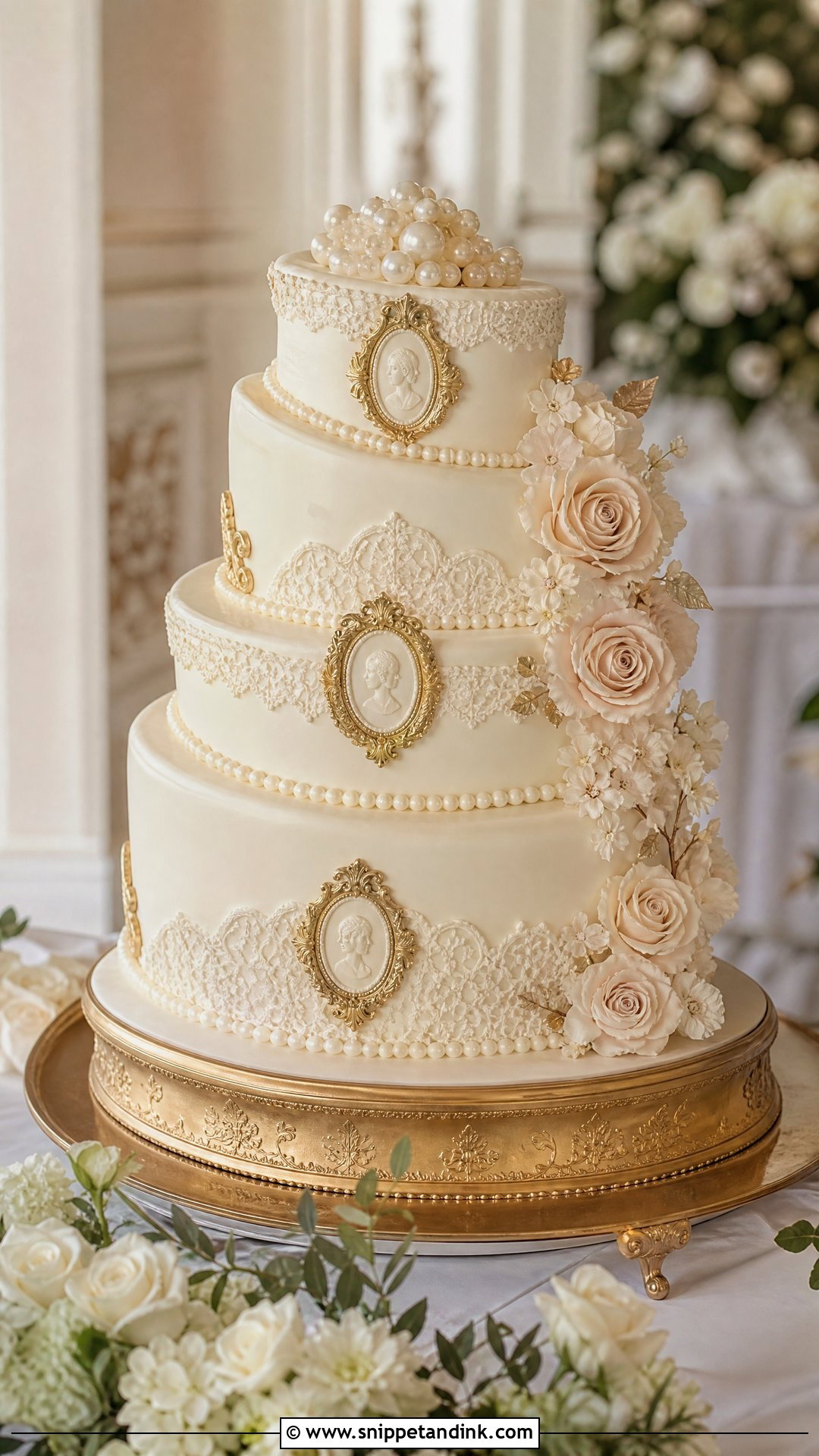
Ovals stand out simply because most wedding cakes are round or square, and the shape instantly suggests an antique portrait frame. Smooth ivory fondant takes gold oval frames, lace piping, pearl borders and small florals well, over two or three tiers. Vanilla bean, almond or lemon raspberry keep the flavour light. Oval tiers are slower to cover neatly and slice differently from rounds, so I give the venue a cutting guide. A sugar rose cluster placed to one side follows the curve.





25. Baroque Sheet Wedding Cake
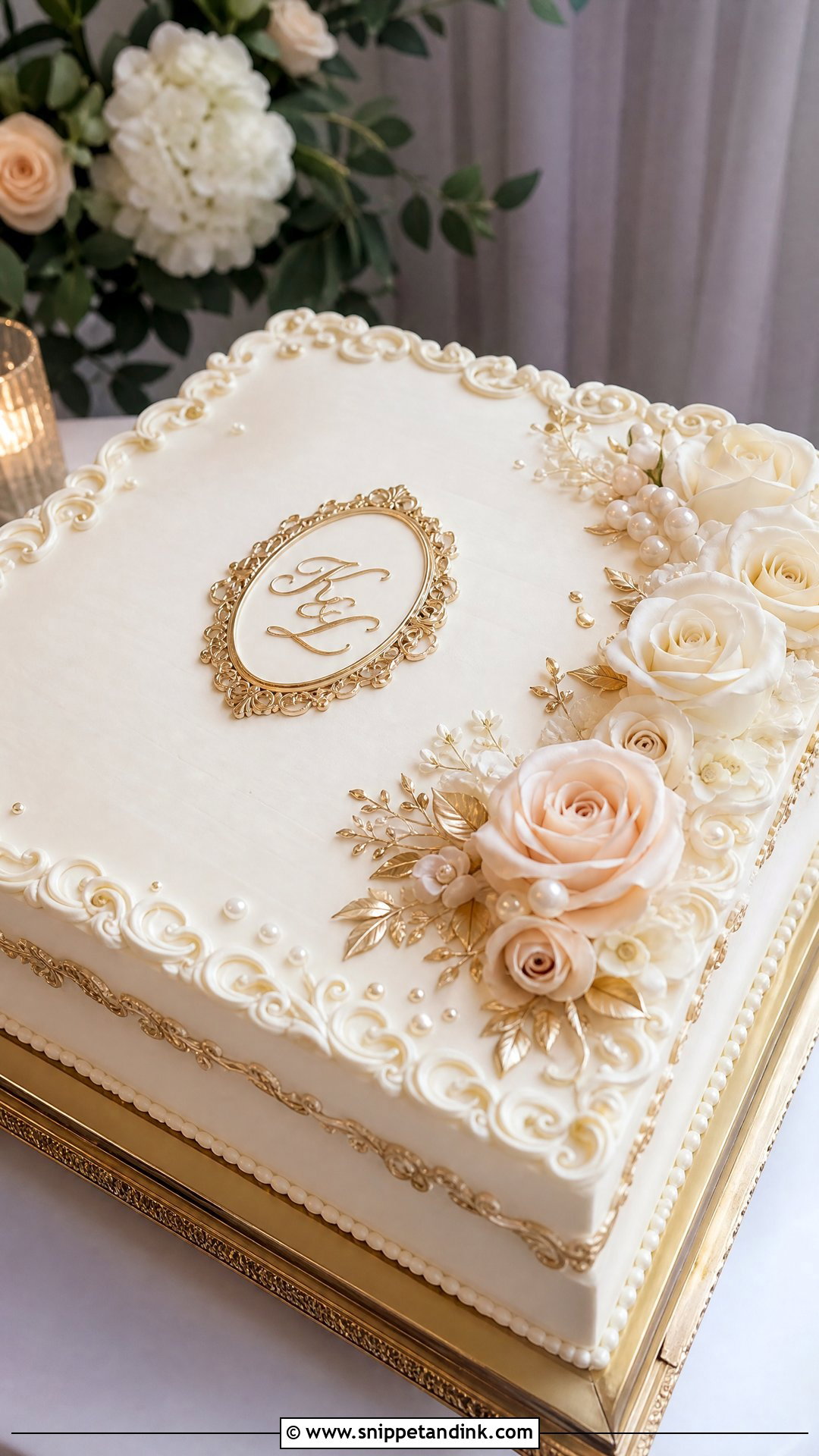
Sheet cakes make serving a big guest list practical, and they don’t have to look plain. A long rectangle with piped scroll borders, pearl edges, gold accents and floral corners, with a monogram, lace pattern or vintage frame in the center, can stand on the cake table in its own right. Many of my couples pair a smaller decorated display cake with an undecorated kitchen sheet cake of the same flavour that’s sliced out of sight. Vanilla, chocolate, almond or lemon all cut cleanly. Set it on a raised tray or long pedestal.
Where the Hours Go in a Hand-Piped Baroque Cake
Baroque is one of the most labour-heavy styles I make. Scrollwork is piped by hand, gum paste columns and sugar flowers dry for days, and every gilded detail is painted with a fine brush. That affects how early you should order and where the budget goes. I’d reach out at least a few months ahead for a tall design, since sugar flowers alone are often started weeks before the wedding.
Faux tiers for height
If you want five tiers of drama but only need to feed eighty people, ask about dummy tiers. These are decorated foam layers that look identical to cake, so the display gets its height while a kitchen cake makes up the servings. They cost less in ingredients, though the decorating time is the same, so don’t expect the price to halve.
Metallics that are safe to eat
Edible gold and silver leaf and lustre dusts labelled as edible are fine to eat. Some craft metallics on the market are marked only as non-toxic, which means decorative and not for eating. Ask your designer what she uses, and if any part of the cake is decoration only, make sure the venue removes it before cutting.
On the day
- Tall cakes are delivered in sections and stacked on site, so allow set-up time in the venue schedule.
- Keep the cake table away from direct sun, radiators and stage lights.
- Make sure the catering team knows about internal dowels and any non-edible pieces before they cut.
Letting the Cake Answer the Room It Stands In
Baroque works when the cake feels like part of the celebration rather than something served at the end. The strongest designs pair bold detail with a clear plan for gold scrollwork, pearls, lace piping, sculpted flowers and the shape of each tier. Go soft with ivory and blush, dramatic with black and gold, or regal with blue, purple and emerald. Keep the flavours guest-friendly, and let the decoration answer the room, the flowers and the table styling. Get that balance right and the cake becomes the centerpiece guests remember.
You'll Like These Ideas:



Leave a Reply