
Black and red is a palette I love designing in because it forces a decision early: is the cake moody, romantic or retro? Current wedding cake trends lean into sculptural tiers, textured buttercream, fruit, nostalgic piping and gothic styling, and every one of those survives the switch to a dark base. More couples are asking for a cake with personality rather than a white tier that matches every other wedding. The balance I aim for is simple: black carries the depth, red carries the warmth, and the finish stays clean enough that it still reads as a wedding cake. Below are thirty ways I’d build it.
Getting True Black Icing Without Grey Teeth or a Bitter Taste
The first question I ask anyone wanting a black cake is how they feel about dyed mouths. Black buttercream made by pouring gel color into vanilla icing needs a lot of dye, tastes faintly bitter and leaves guests with grey teeth in every speech photo. There are better routes, and they’re worth discussing at your tasting rather than on the day.
- Start from chocolate. Black cocoa powder in a chocolate buttercream gets most of the way to black, so only a little gel is needed to finish it.
- Color a day early. Black and deep red both darken for several hours after mixing, so I make them the day before and judge the shade the next morning.
- Use a no-taste red. Ordinary red gel can turn bitter at high concentration; the no-taste reds are made for exactly this job.
- Keep the dye on the outside. A thin black coat over a pale crumb coat means far less coloring per slice than black icing all the way through the filling.
Ask to taste the black icing itself, not just the sponge. If it tastes of dye in a small bite, it will on the day too.
1. Black And Red Wedding Cake With Roses
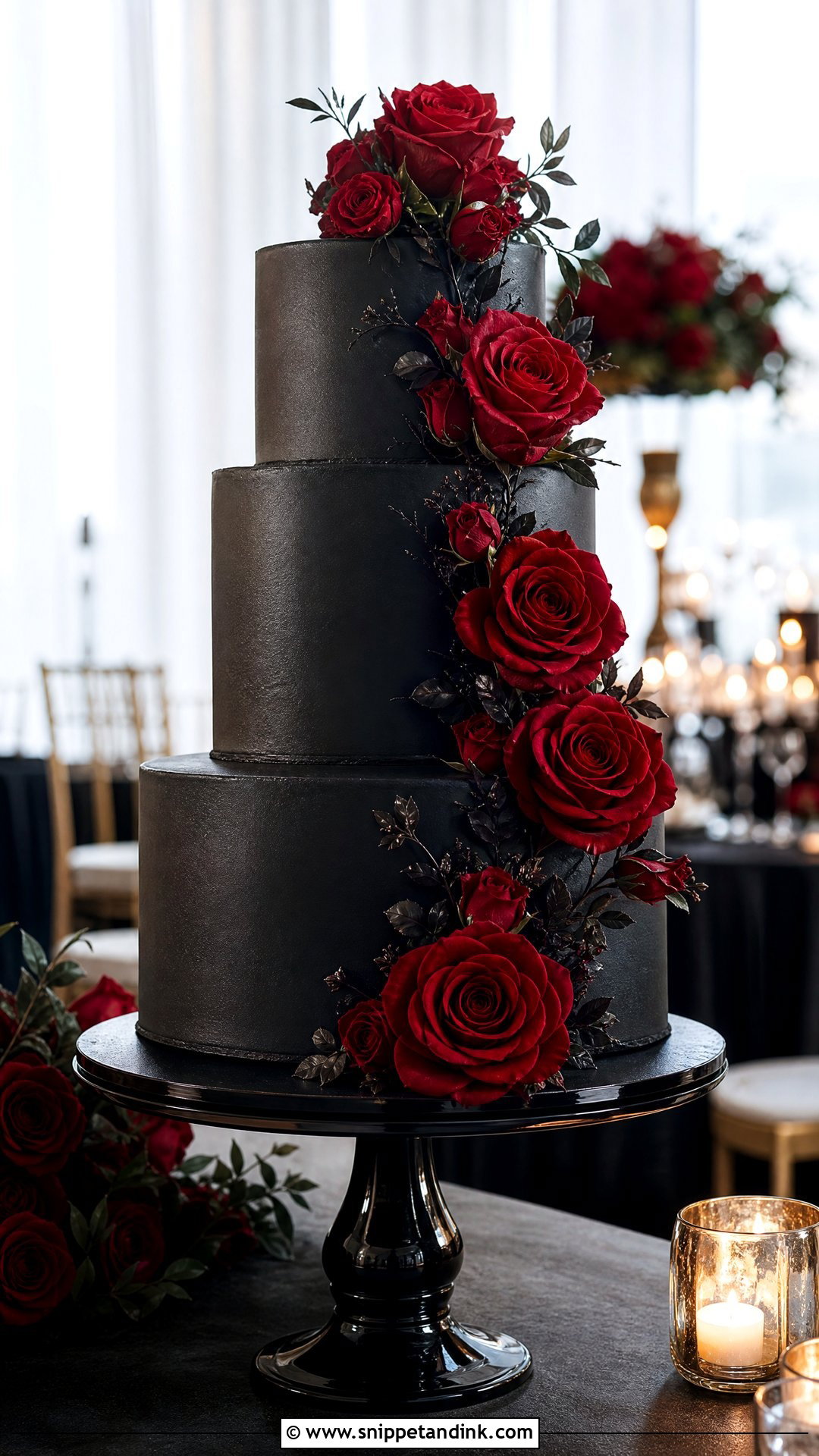
Roses are where most black and red conversations start, and for good reason. I cover the tiers in smooth black first, then run a cascade of deep red roses from the top tier down one side so the eye travels the full height. Fresh roses give softer edges; sugar roses look crisper and won’t droop if the cake sits out for three hours before cutting. Keep the piping minimal. A rose cascade and a heavy border fight each other, and the roses should win.
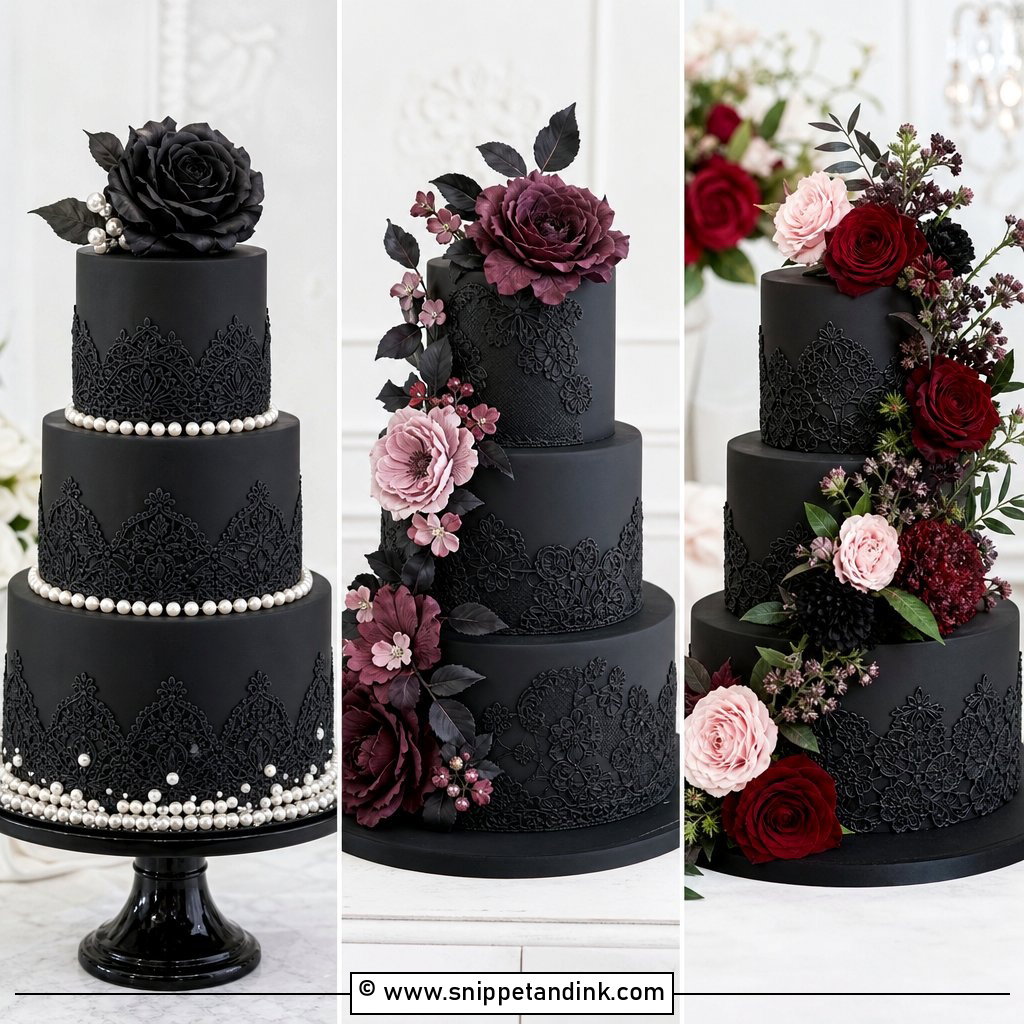
2. Black And Red Gothic Wedding Cake
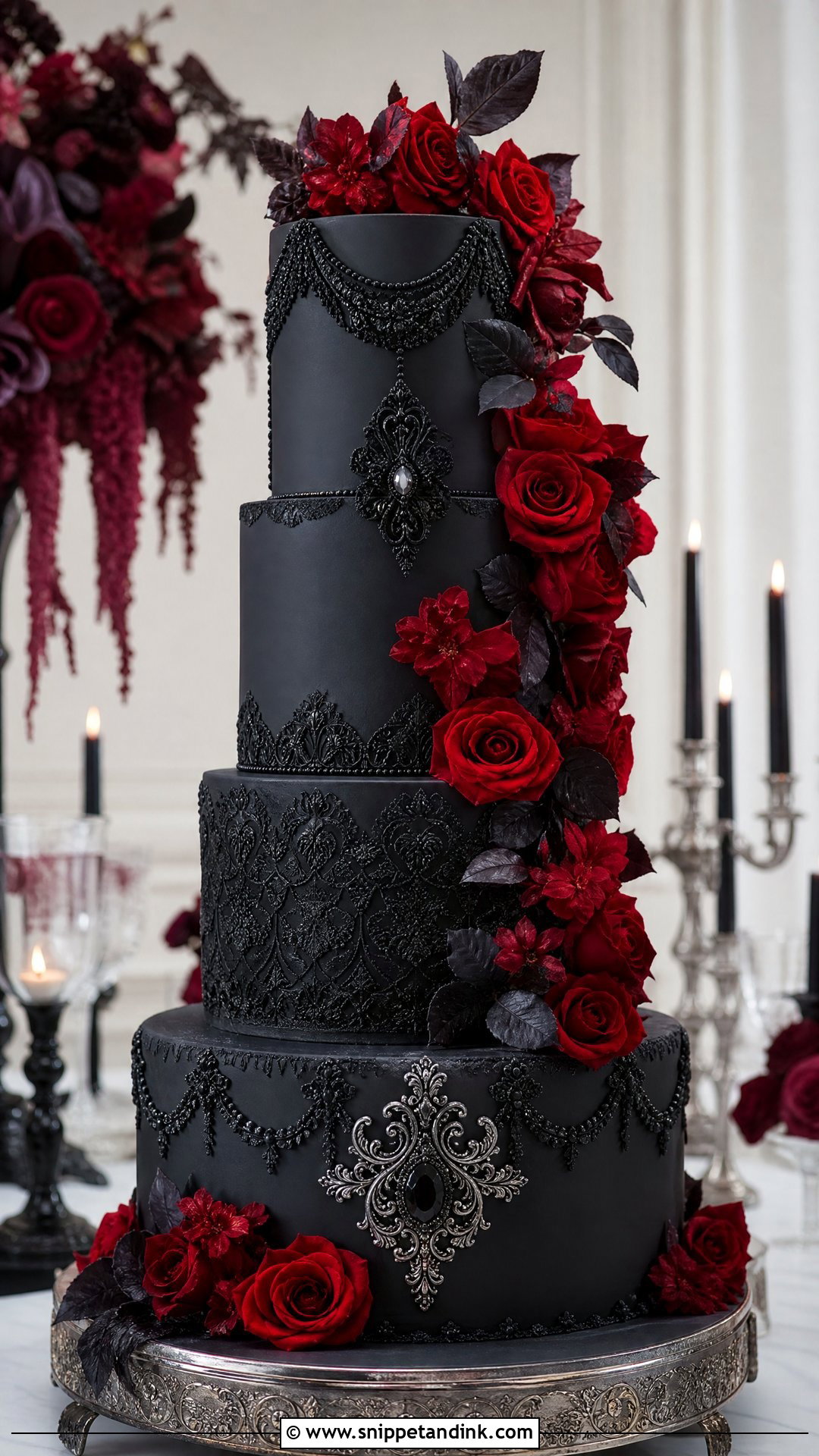
A black and red gothic wedding cake only works when it’s controlled. Tall tiers, black frosting, red florals, lace piping and maybe a touch of antique silver: that’s plenty. The gothic cakes that fail are the ones where every surface gets a texture, because black hides detail and the whole thing turns into a dark lump in photos. I keep the lines clean and let one or two details carry the mood. Flavor-wise, black cocoa, dark chocolate, red velvet and black cherry all suit it. Set it on a black pedestal with red flowers at the base.
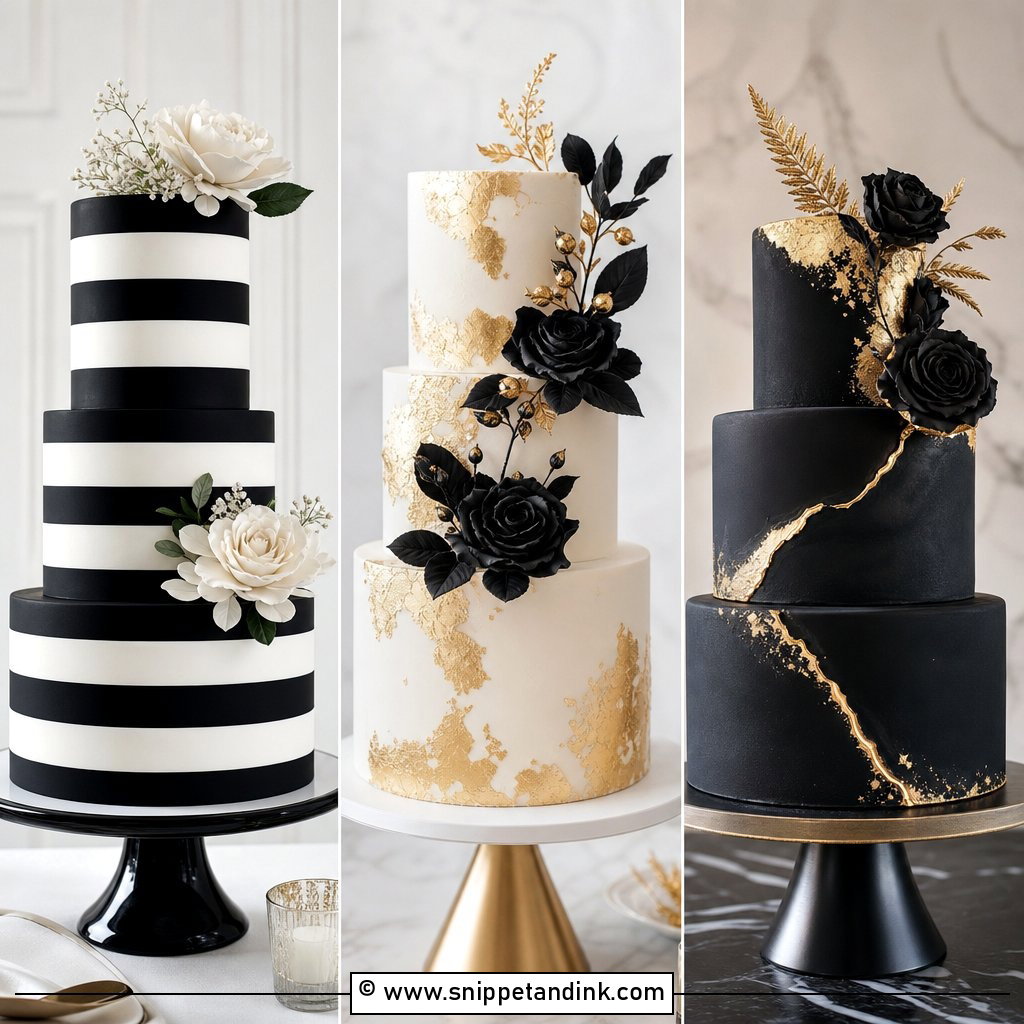
3. Black And Red Wedding Cake With Gold
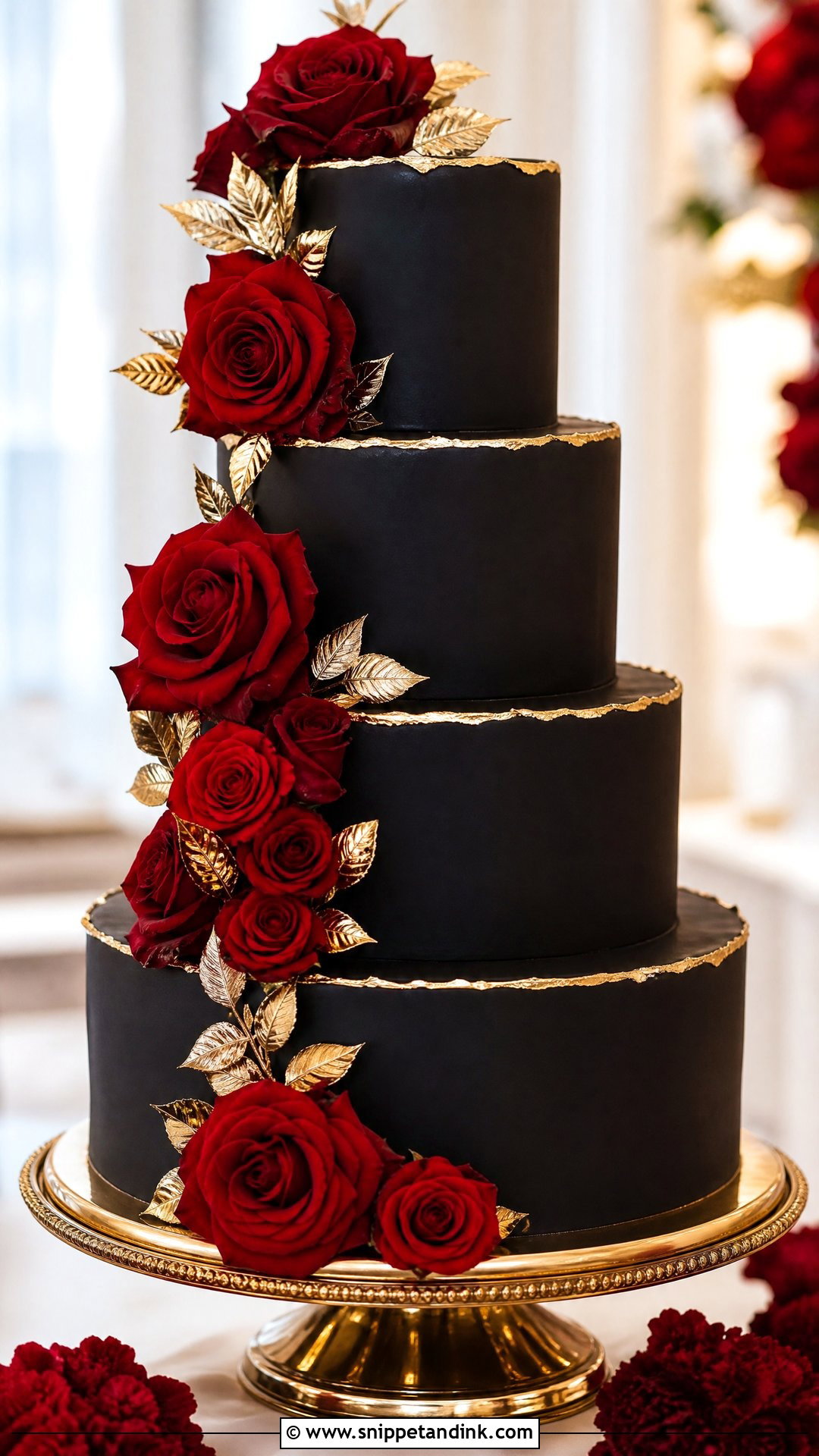
Gold is the accent that turns black and red formal, but it’s also the one I most often have to talk couples down from. A black fondant base with red sugar roses needs only a thin painted edge, a little leaf or a monogram in gold. Cover more than about a fifth of the surface and the cake starts to look busy rather than rich. Use edible gold leaf or edible lustre, not the craft dusts labelled for decoration only. Dark chocolate with raspberry, or red velvet, keeps the inside as considered as the outside.
4. Black And Red Wedding Cake With Drip
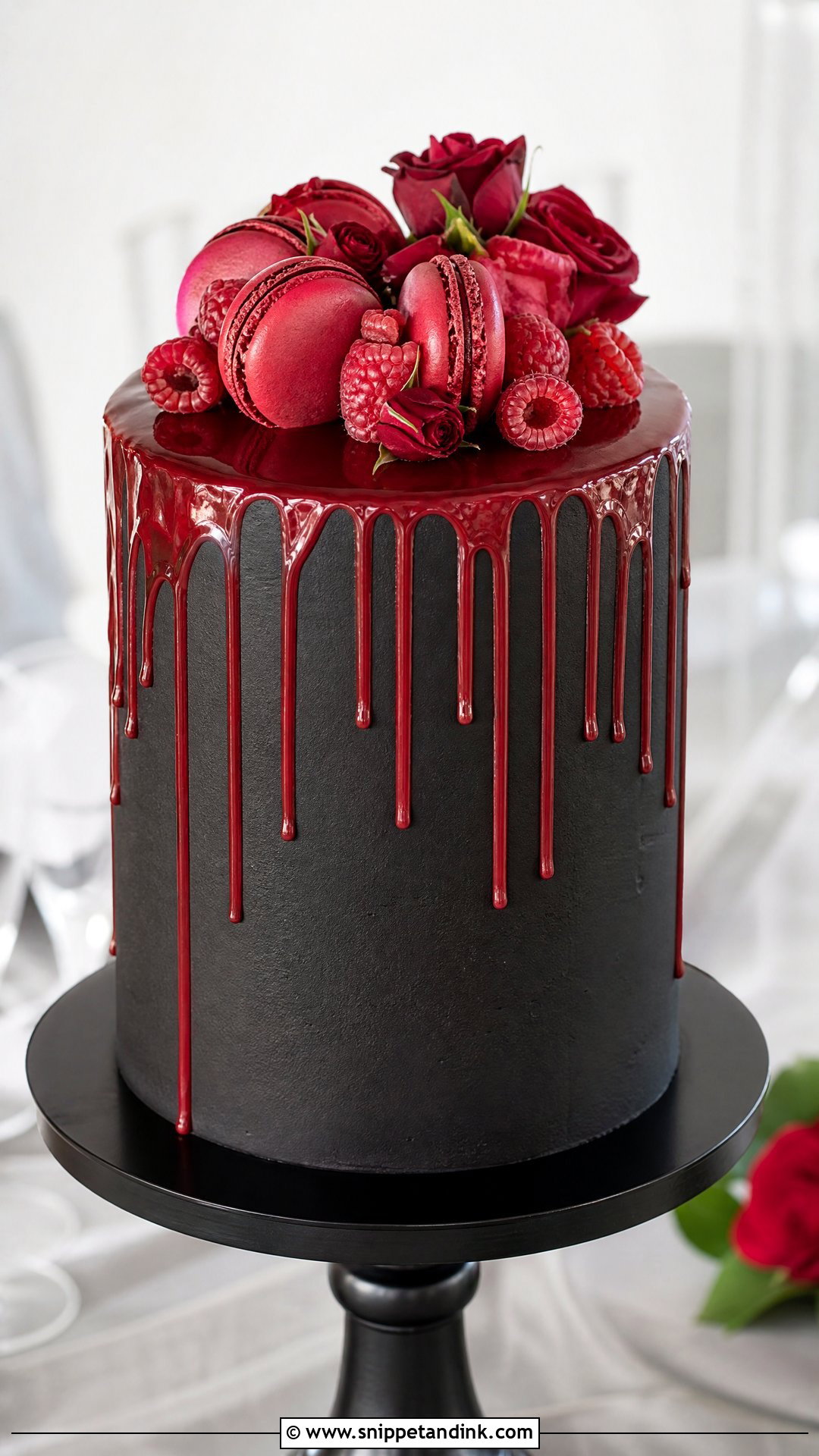
Drips look easy and aren’t. On a black buttercream cake, the red ganache has to be poured at the right temperature, warm enough to flow but cool enough to stop a third of the way down, or it pools at the base. I chill the iced tier hard first so the drip sets on contact. Top it with red macarons, berries or a few roses for height. A neat, evenly spaced drip reads polished; an uneven one looks like a birthday cake, so this is worth seeing in your baker’s portfolio before you commit. It also suits a smaller cutting cake beside a dessert table.
5. Black And Red Wedding Cake With Fresh Flowers
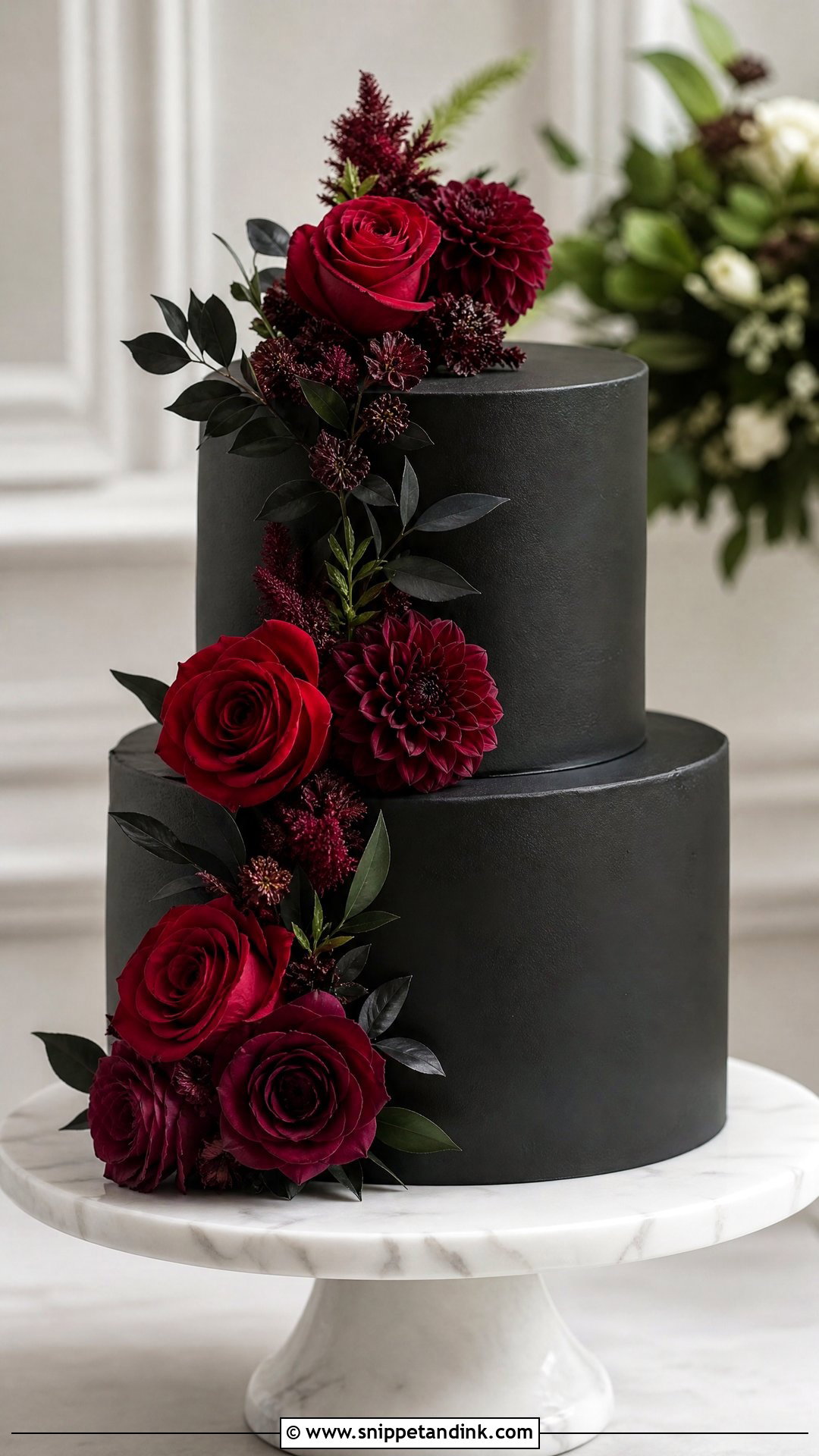
Fresh flowers soften the palette and make the cake feel less constructed. Against black frosting even modest red blooms stand out, so you don’t need oversized heads; a diagonal sweep of red flowers with dark greenery gives movement. The practical part matters more than the look here. Many florist roses are sprayed, and some popular blooms are toxic, so I need your florist to supply pesticide-free stems, and every stem gets wrapped or sealed in a pick before it touches the cake. It suits garden weddings and candlelit indoor receptions that want drama without going fully gothic.
6. Black And Red Wedding Cake With Sugar Flowers
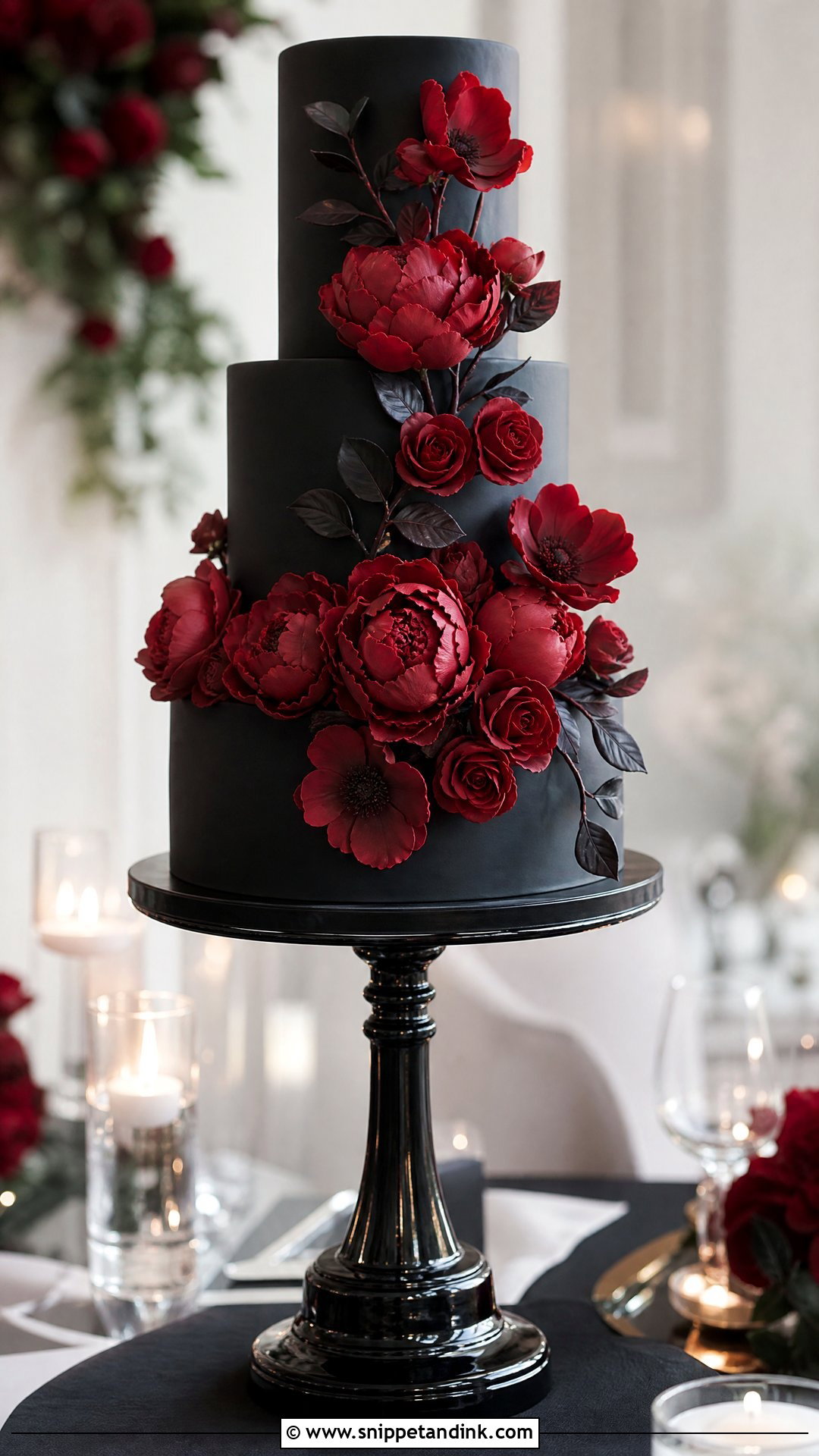
Sugar flowers are my answer for a warm venue or a long display. Roses, poppies, anemones and peonies keep their shape all day against black fondant or buttercream, and I can tint each petal. I usually mix three reds, say burgundy, crimson and ruby, so the arrangement has shadow instead of looking flat. The trade-off is time and cost: good sugar flowers take hours each and are usually made weeks ahead, so they belong on a plain cake where the work can be seen.
7. Black And Red Wedding Cake With Lace
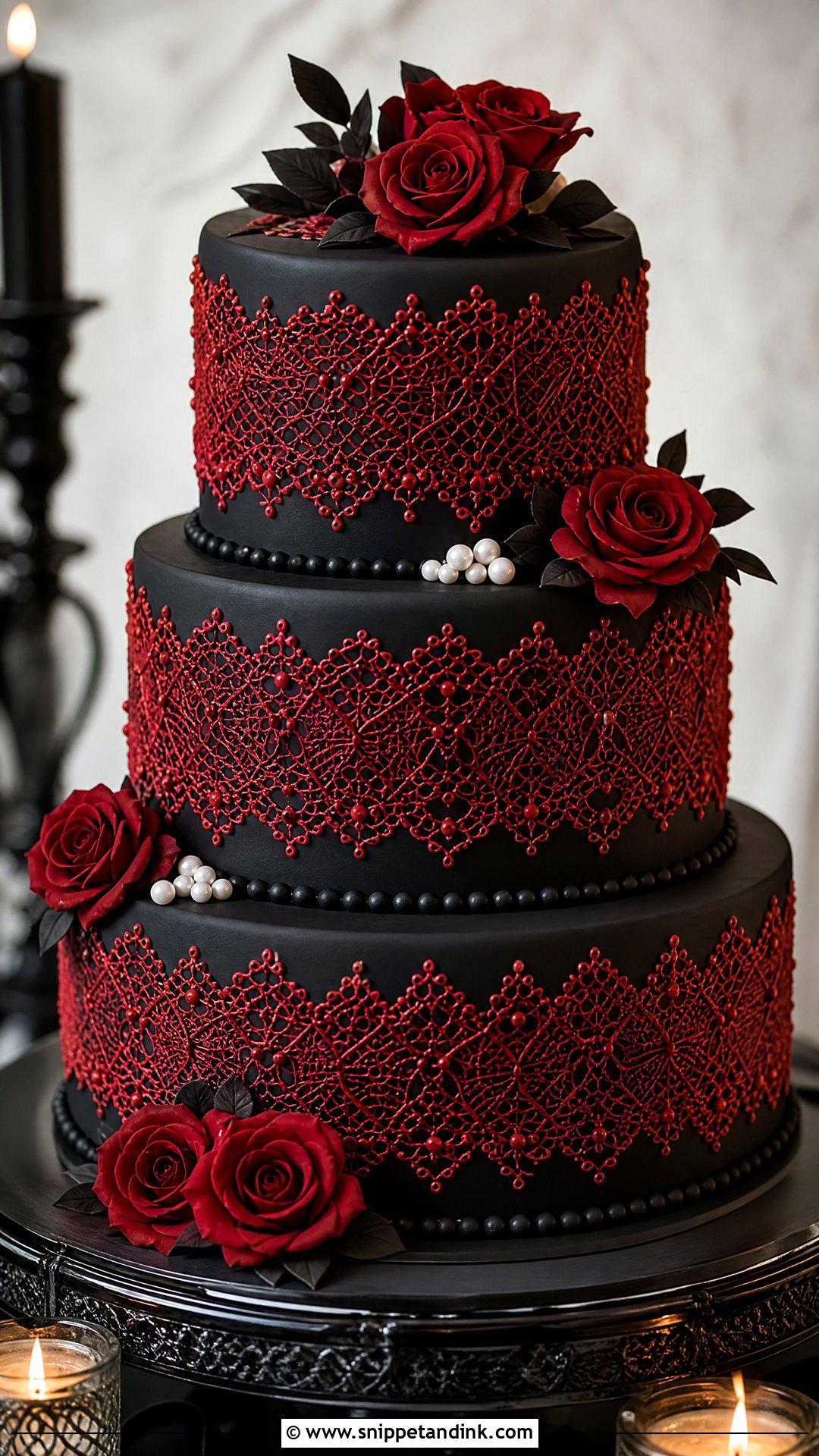
Lace on black can be done two ways. Black-on-black piping gives a subtle texture you mostly notice up close, while red lace painted over a dark base is high contrast and visible from across the room. Edible lace panels are faster and very even, though they can soften and stick in humidity. Keep the tiers round and plain so the pattern has space, and pair it with a few red roses or pearls. Historic venues and vintage styling suit it best.
8. Black And Red Wedding Cake With Buttercream
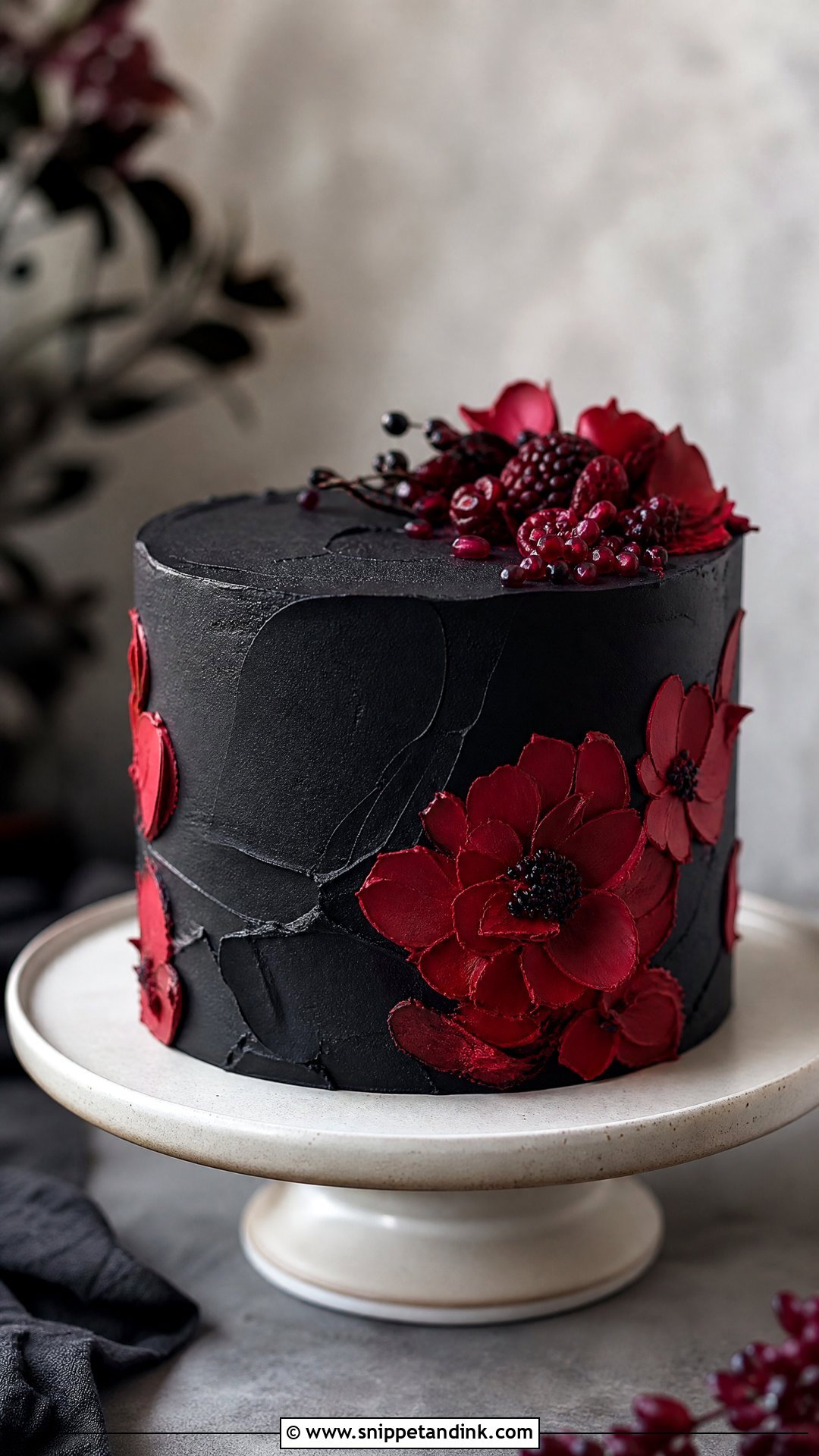
Buttercream is softer to cut and, to most guests, nicer to eat than fondant. For black, I start from a chocolate base with black cocoa powder, so I need far less gel coloring than I would to darken a vanilla buttercream; less gel means less bitterness and fewer grey lips. The red goes into florals, borders or a few palette-knife strokes. Expect a slightly handmade finish compared with fondant, which is part of the charm. In a hot room, though, a soft buttercream can bulge and slide, so I’d keep this one for cooler or air-conditioned spaces.
9. Black And Red Wedding Cake With Fondant
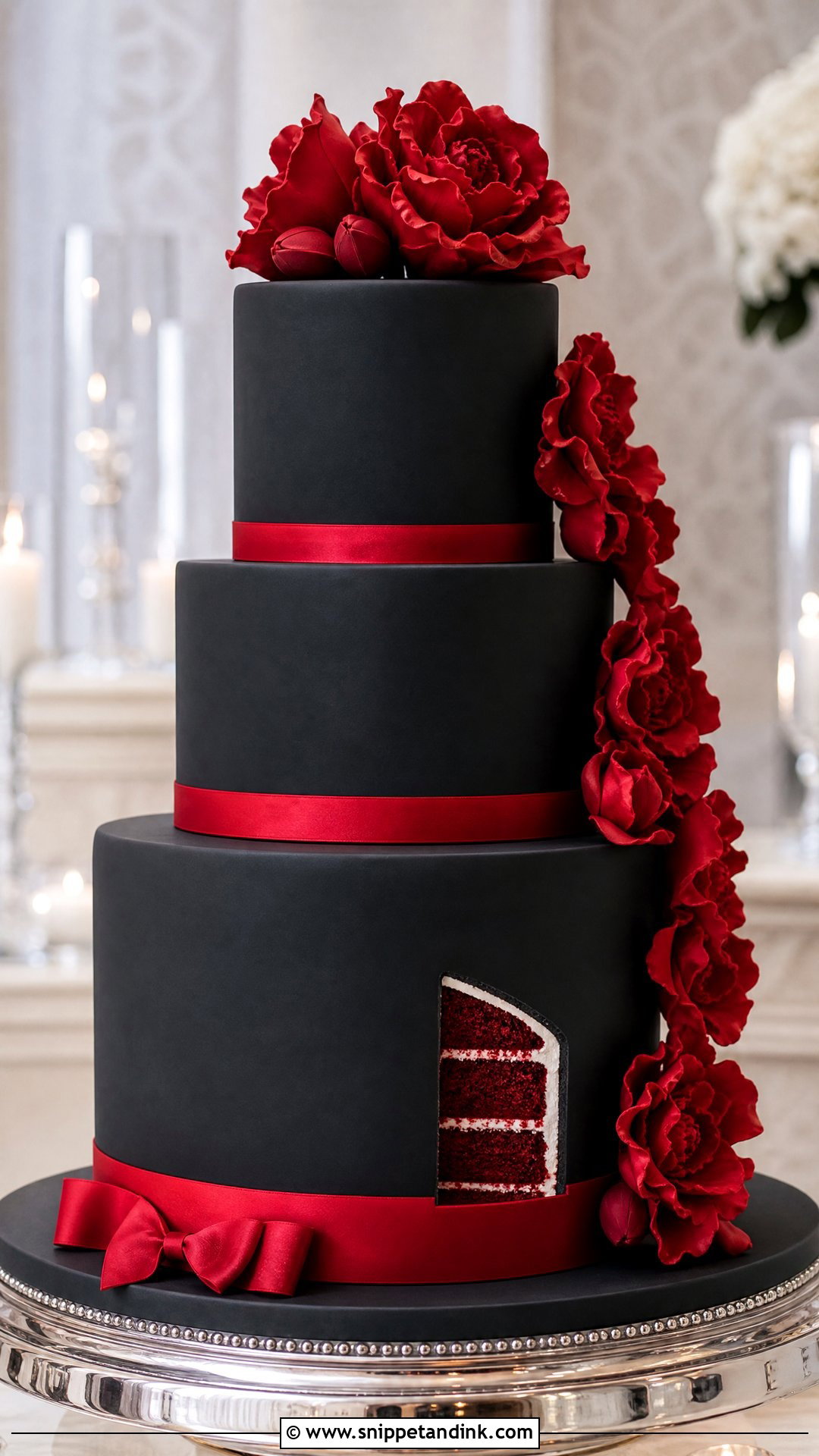
Fondant gives the sharpest finish of anything here: crisp corners, color blocking, sculptural shapes, bows that hold. Black fondant is the one thing I’d always buy pre-colored rather than knead dye into, because hand-tinted black stays sticky and uneven. It also shows every fingerprint and dusting of cornflour, so it needs careful handling. Underneath, choose a cake people actually want to eat, like red velvet with cream cheese filling or chocolate with raspberry buttercream, since plenty of guests peel the fondant off.
10. Black And Red Wedding Cake With Ombre
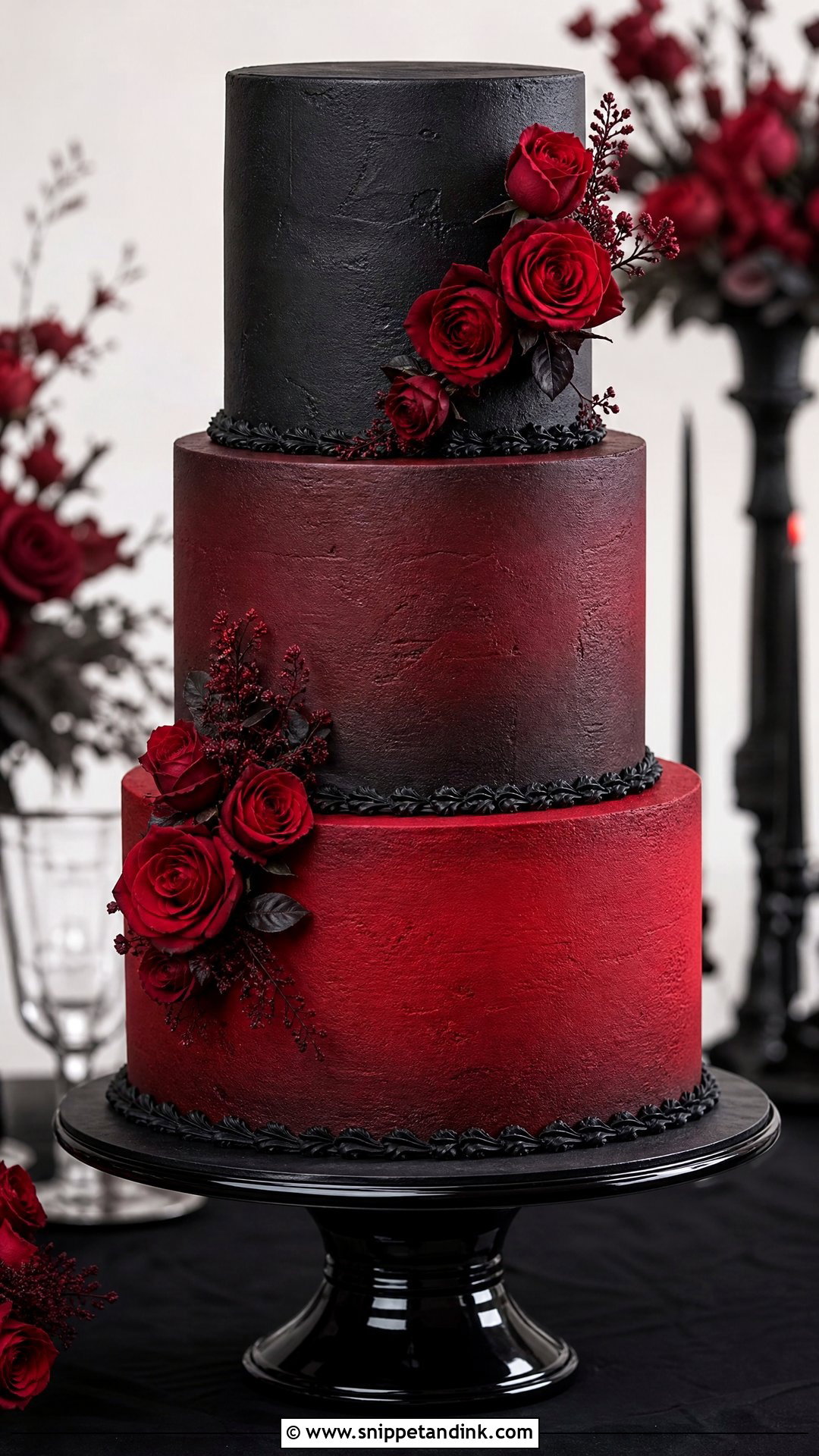
An ombre lets the two colors meet without a hard line. I usually fade from black at the base through burgundy to red at the top, which keeps the visual weight low; reversing it, red at the bottom into black, makes the cake feel top-heavy and moodier. Buttercream gives the softest blend, fondant a sleeker one. The color gradient is the design, so I keep decoration to a single cluster of flowers or a small topper. Under warm evening lighting the burgundy band does the most work.
11. Black And Red Wedding Cake With Marble
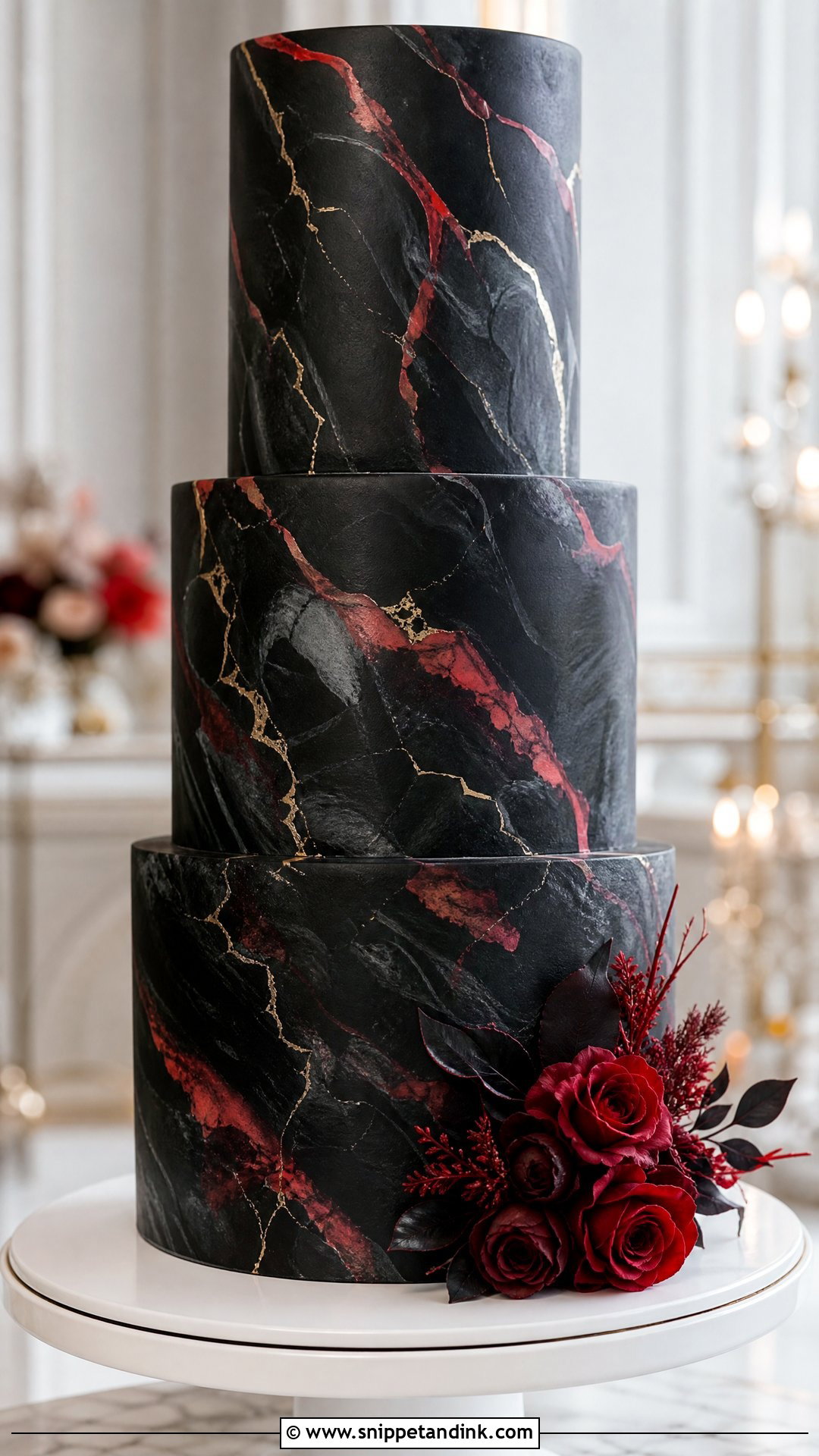
Marbling black with red streaks makes a finish that changes as you walk around the cake, which is why I like it for flowerless designs. You can marble every tier or put one marbled tier between two plain black ones, which I think is the stronger look. A little gold veining refines it, but it has to stay hairline thin. Each marble is one of a kind, so you won’t get an exact copy of an inspiration photo; go in expecting the same feel, not the same pattern. Loft and modern venues suit it, on a plain stand.
12. Black And Red Wedding Cake With Pearls
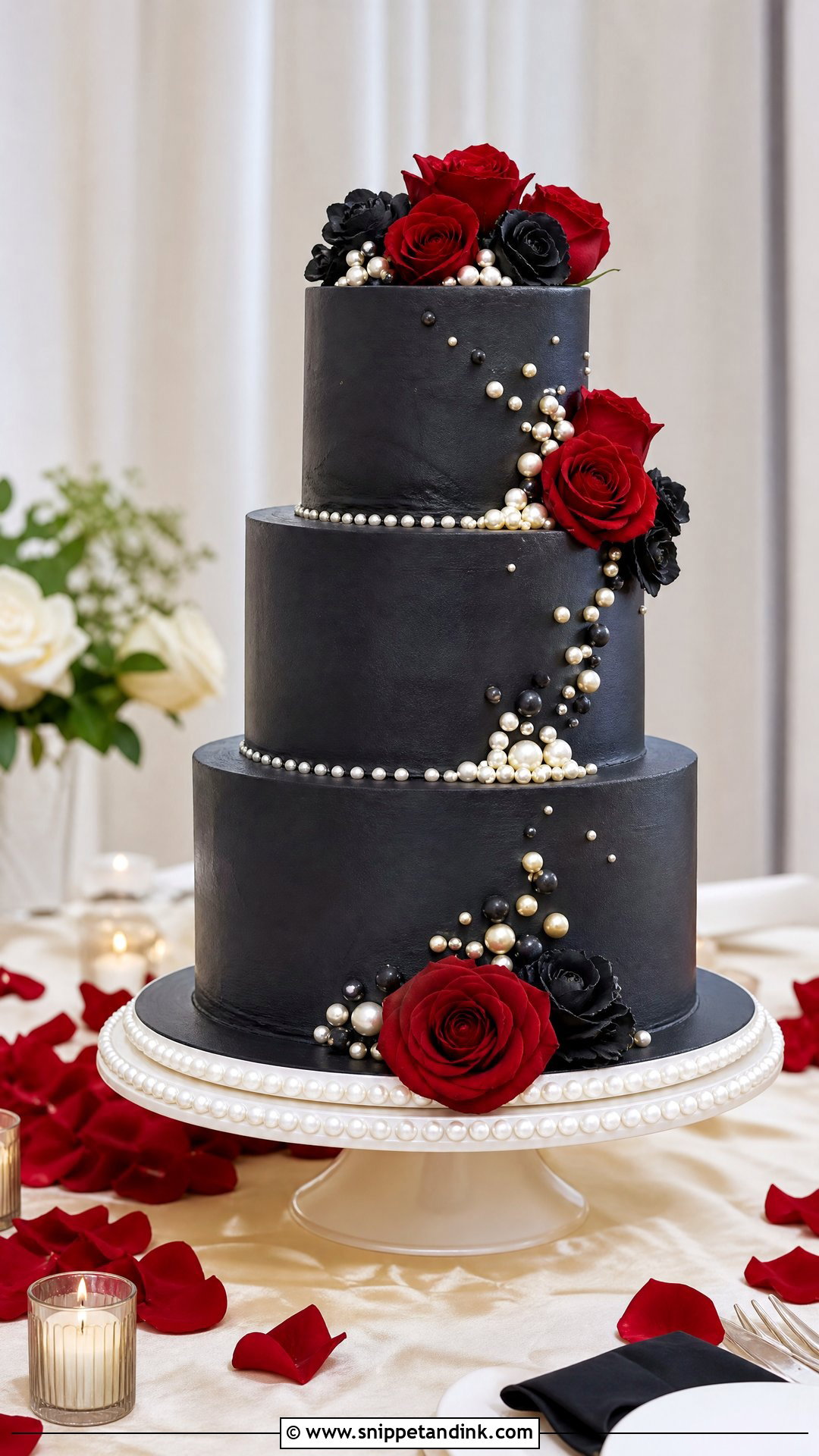
Pearls are the softener when black and red starts to feel heavy. I place small edible pearls around tier bases, in neat rows, or scattered over black buttercream. Stick to ivory, champagne or black pearls; silver dragees in bright white look like a children’s cake against this palette. A few red bows or a little red piping keeps the warmth. It pairs naturally with satin gowns and pearl jewelry. One honest warning: hard sugar pearls are crunchy, so mention it if you have guests who’d rather not bite into them.
13. Black And Red Wedding Cake With Bows
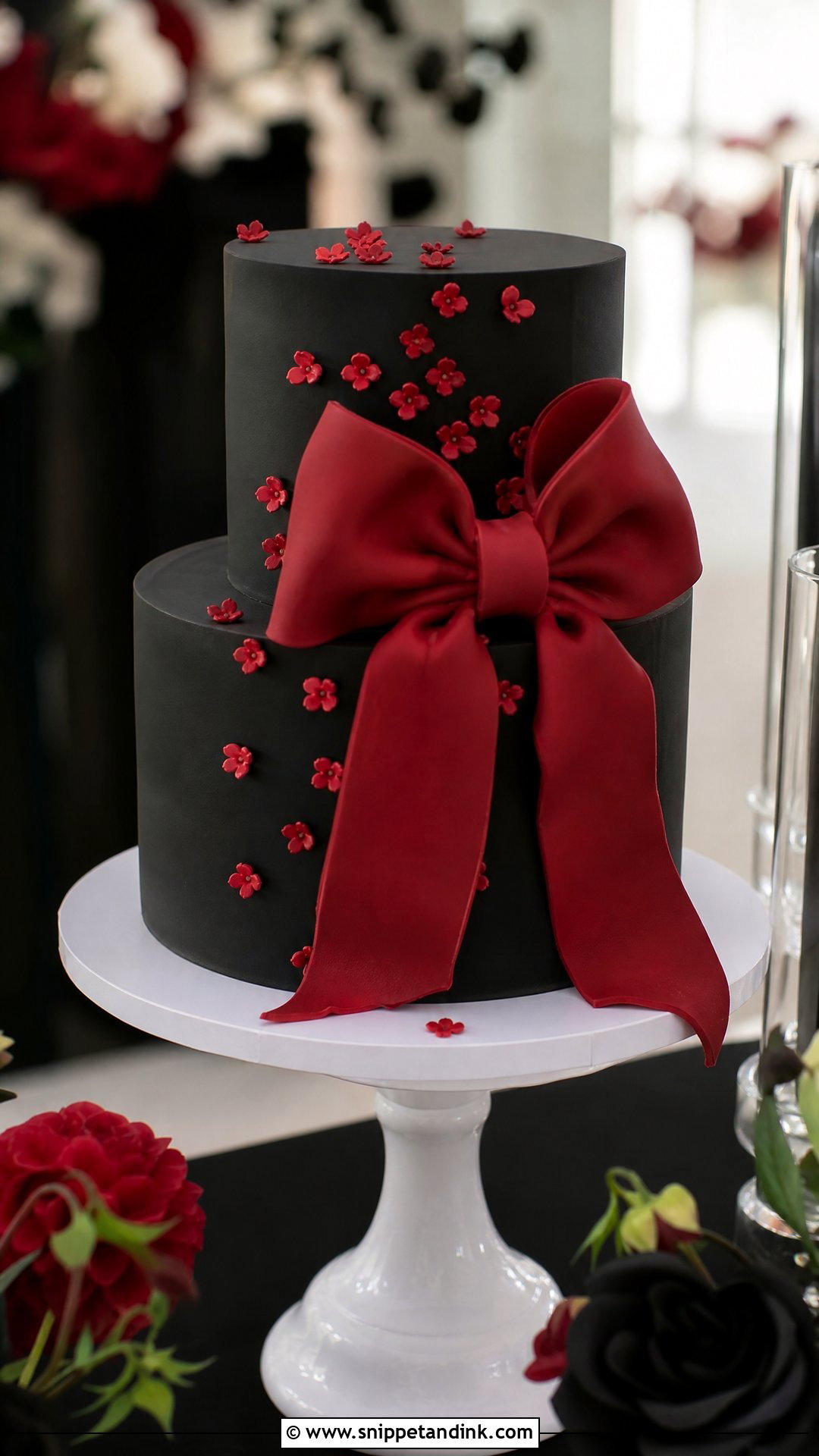
Bows are everywhere in wedding design at the moment, and black and red gives them real weight. Deep red fondant bows on a black cake read romantic; black ribbon bows on a red cake are sharper. I make the loops a day ahead and dry them over supports so they keep their volume, because a freshly made bow sags by the reception. One oversized bow on the front of a two- or three-tier cake is the editorial version. Several small ones around each tier is sweeter. Either way, the bow is the focal point, so the rest stays plain.
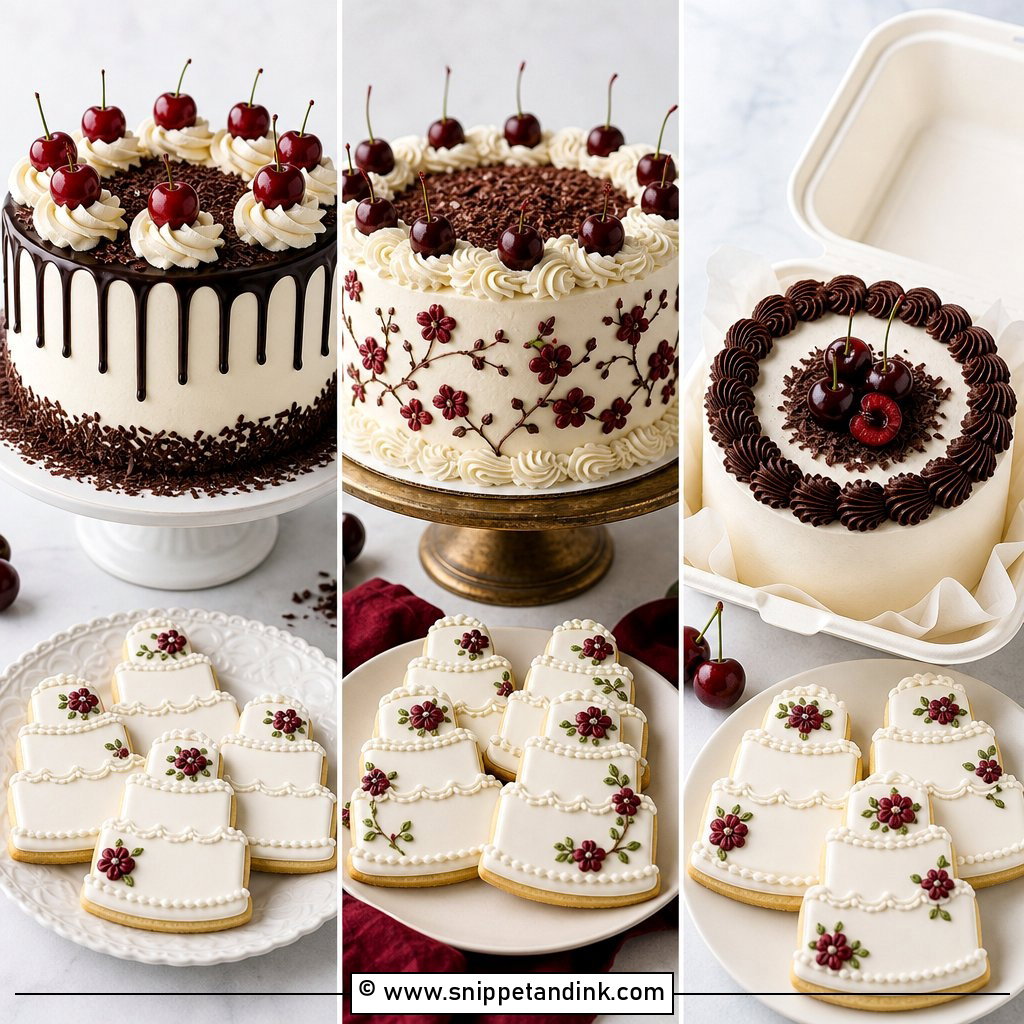
14. Black And Red Wedding Cake With Cherries
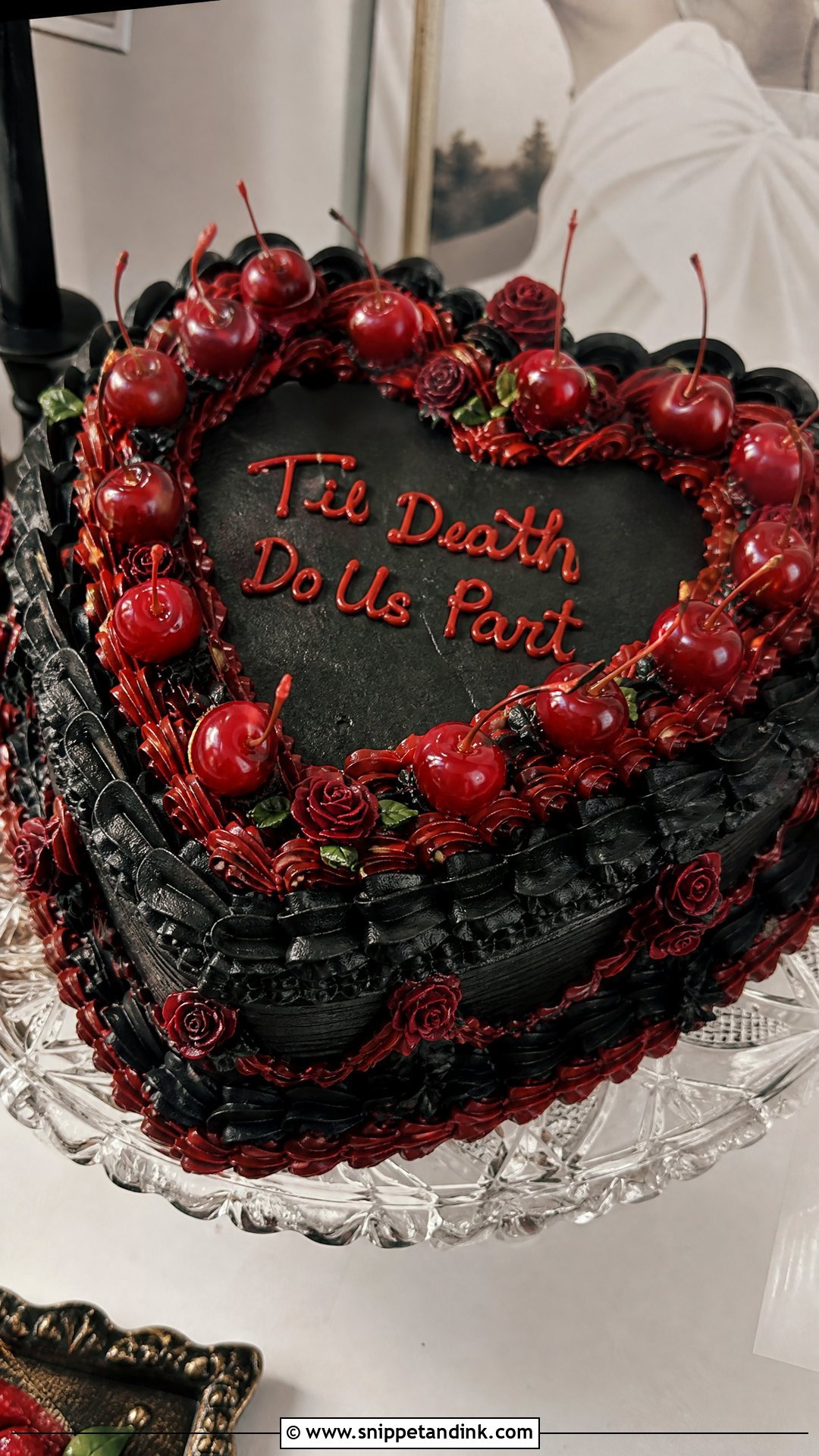
Cherries bring a retro wink to an otherwise serious palette. Black frosting is the stage and glossy red cherries add shine, especially with vintage piping, heart-shaped tiers or ruffled borders. I use stemmed cherries, dried well, and add them close to delivery, since cut or wet fruit bleeds red into the frosting within hours. Black forest, chocolate cherry, or red velvet with cherry filling all suit the outside. It’s a natural fit for smaller weddings and dessert tables.
15. Black And Red Wedding Cake With Berries
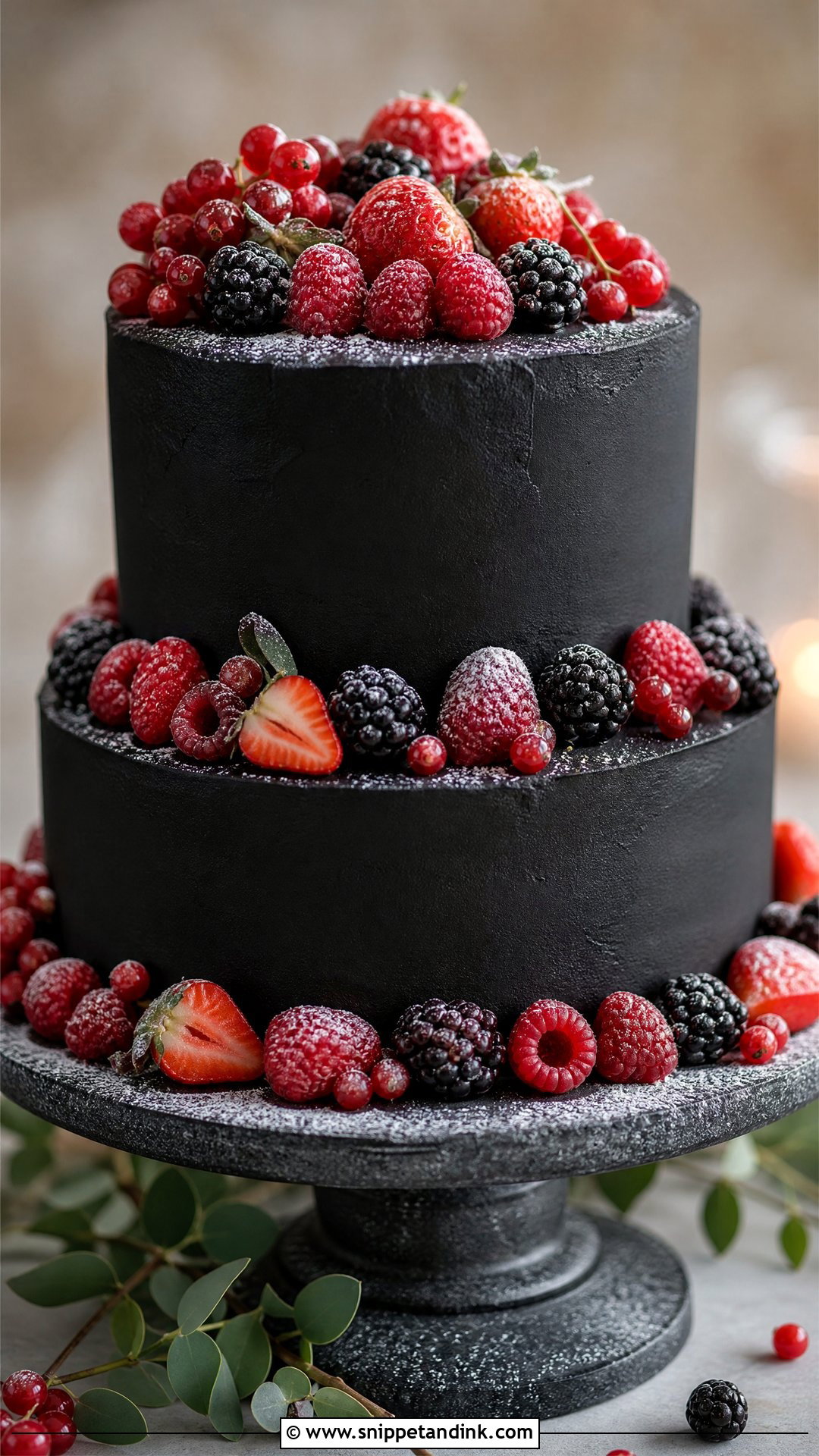
Fresh berries give red without any piping at all. Strawberries, raspberries, blackberries and red currants arranged across the top and between tiers glow against black cocoa buttercream. Fruit weeps once it’s cut, so I keep berries whole where I can and place them on the day, not the night before. A dusting of powdered sugar softens the darkness, though it melts into damp fruit within an hour or so; a thin berry glaze lasts longer and looks richer. Ask for deliberate placement, not a random scatter.
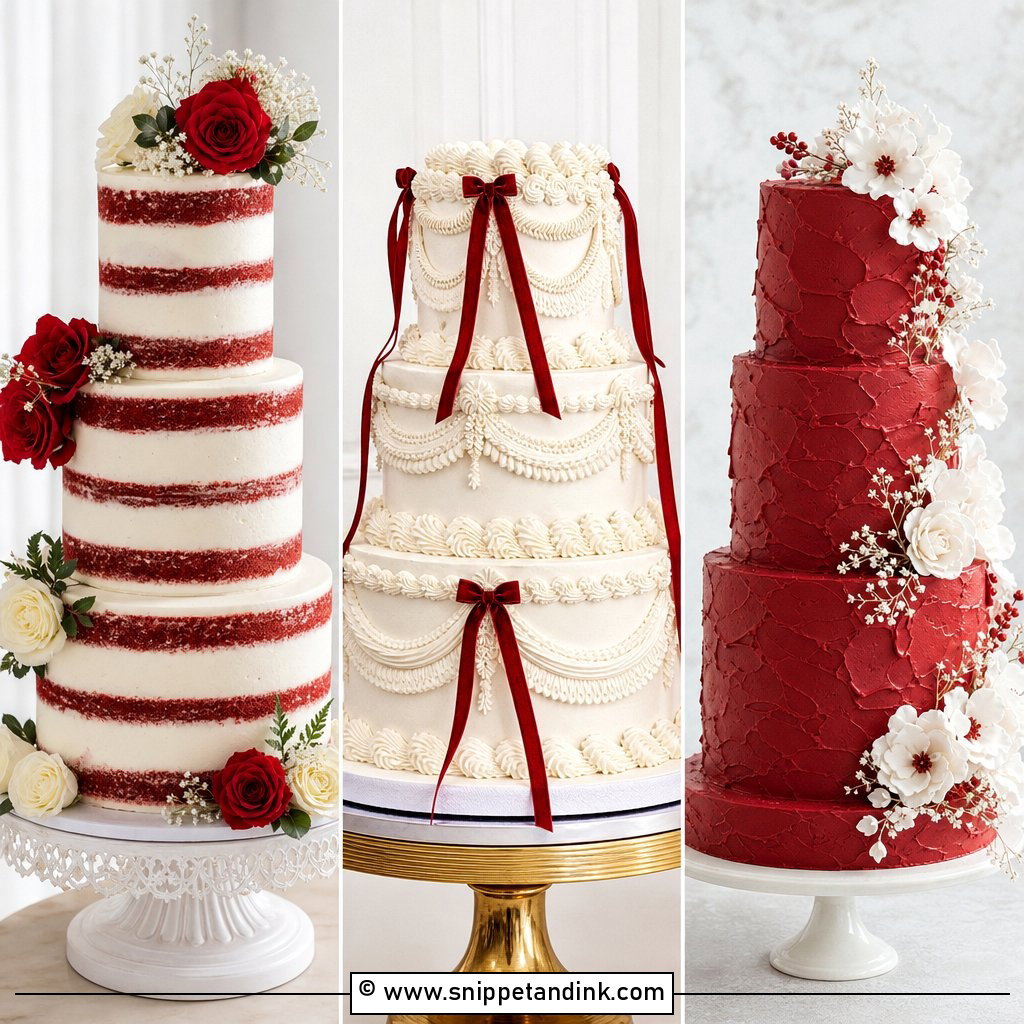
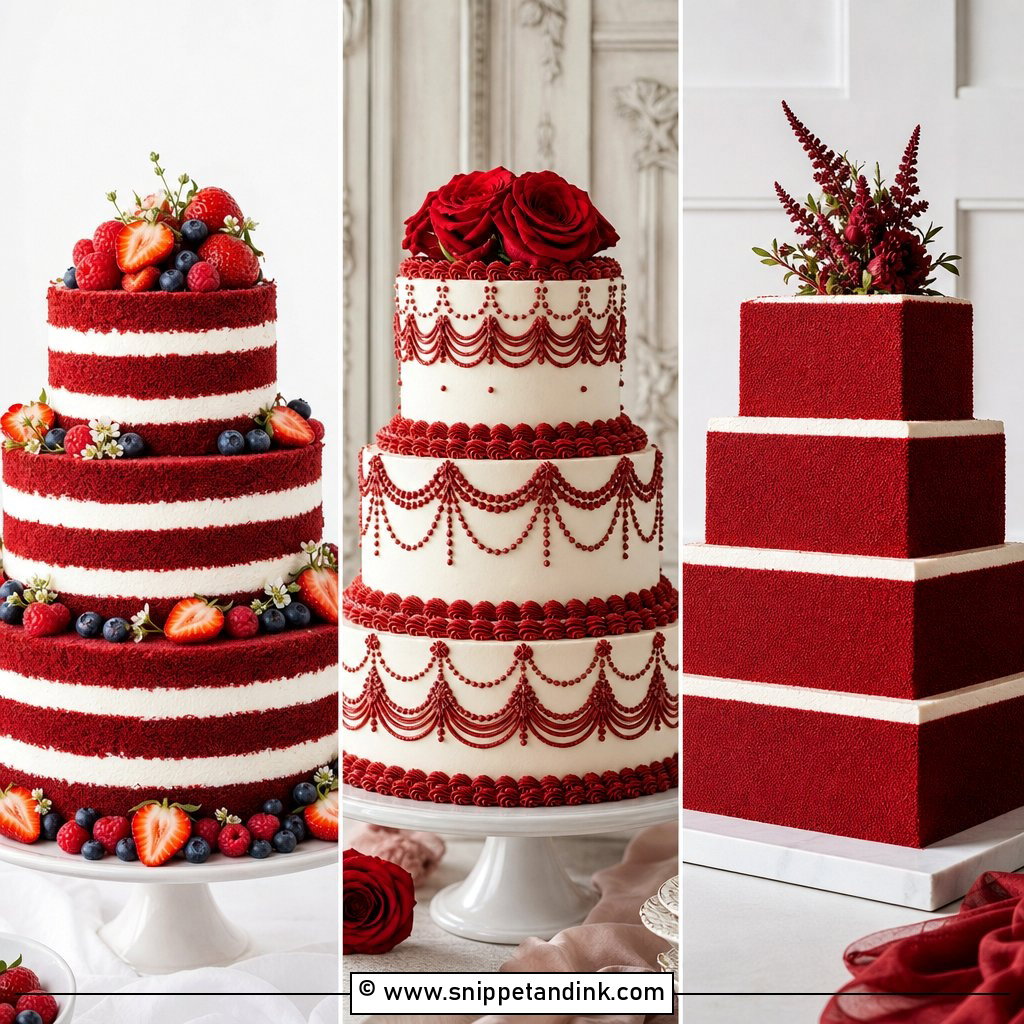
16. Black And Red Wedding Cake With Red Velvet
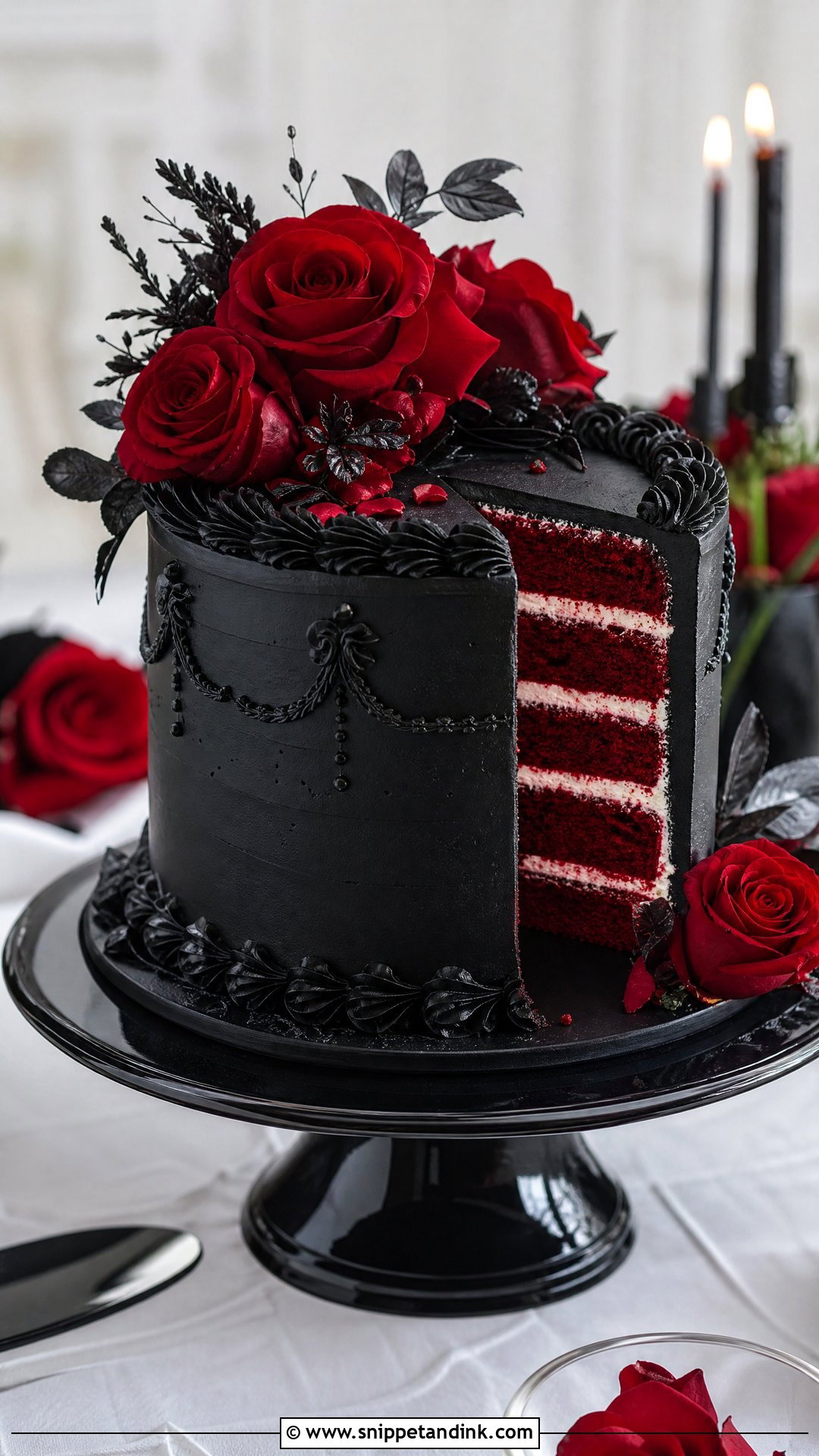
With red velvet inside, the red shows up again the moment the cake is sliced. Outside, I’d use smooth black buttercream, black fondant or a dark chocolate ganache; inside, a deep red crumb layered with cream cheese or vanilla buttercream. Red velvet is a flavor most guests already like, which takes the risk out of a dramatic exterior. I tie the two together with a red drip, a few roses or simple black piping. Ask to see a cut slice at your tasting; the depth of red in the crumb varies a lot between bakers.
17. Black And Red Wedding Cake With Chocolate
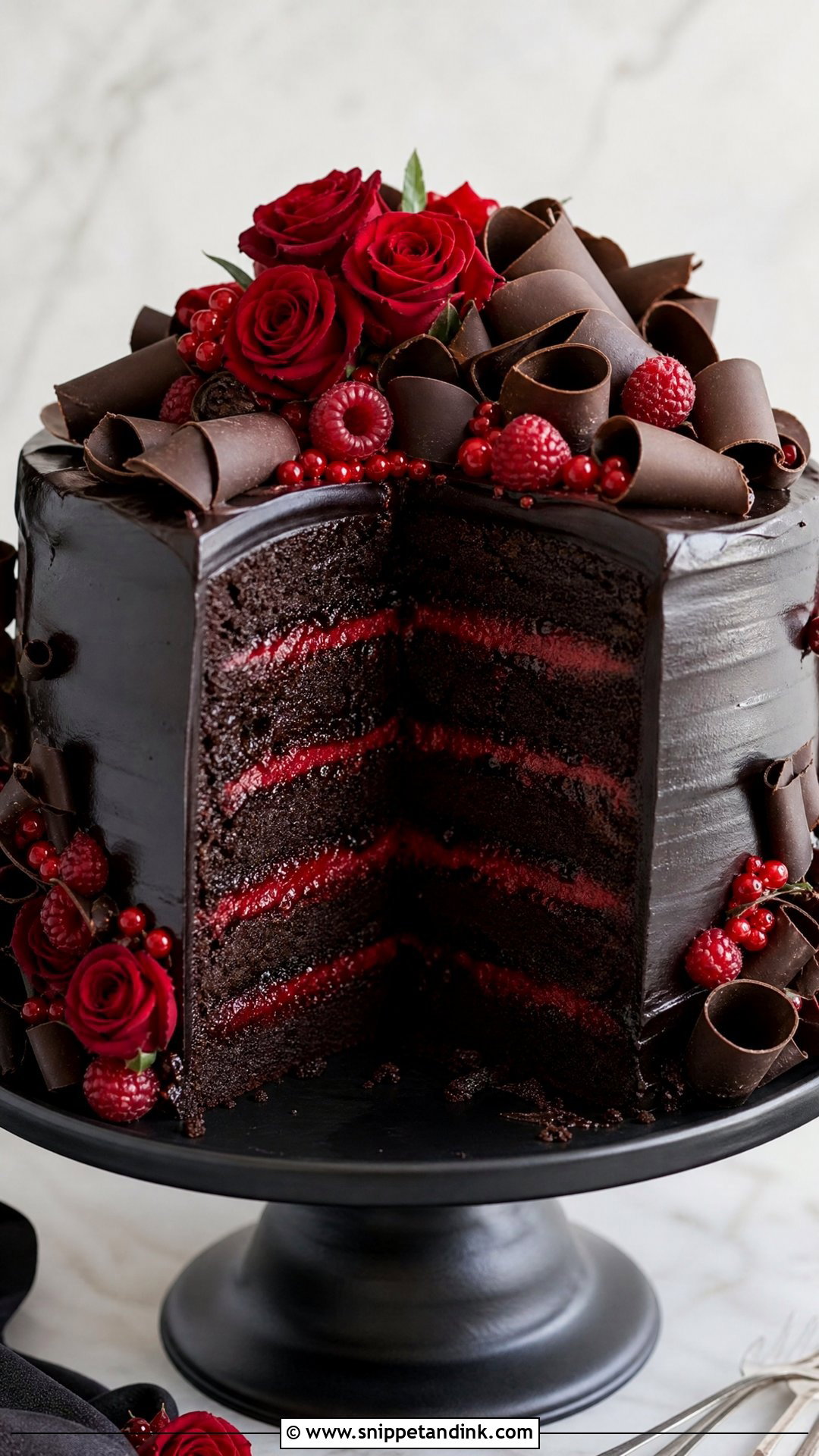
Chocolate makes black frosting taste the way it looks. Dark chocolate sponge, black cocoa frosting and ganache with raspberry or cherry filling is the combination I’d recommend to anyone who cares about flavor first. The black reads natural on a chocolate cake rather than dyed. Outside, keep the sides smooth and pick one red accent, like flowers, fruit or a red ganache drip. Dark ganache also sets firmer than buttercream, which helps in a warm room.
18. Black And Red Wedding Cake With Macarons
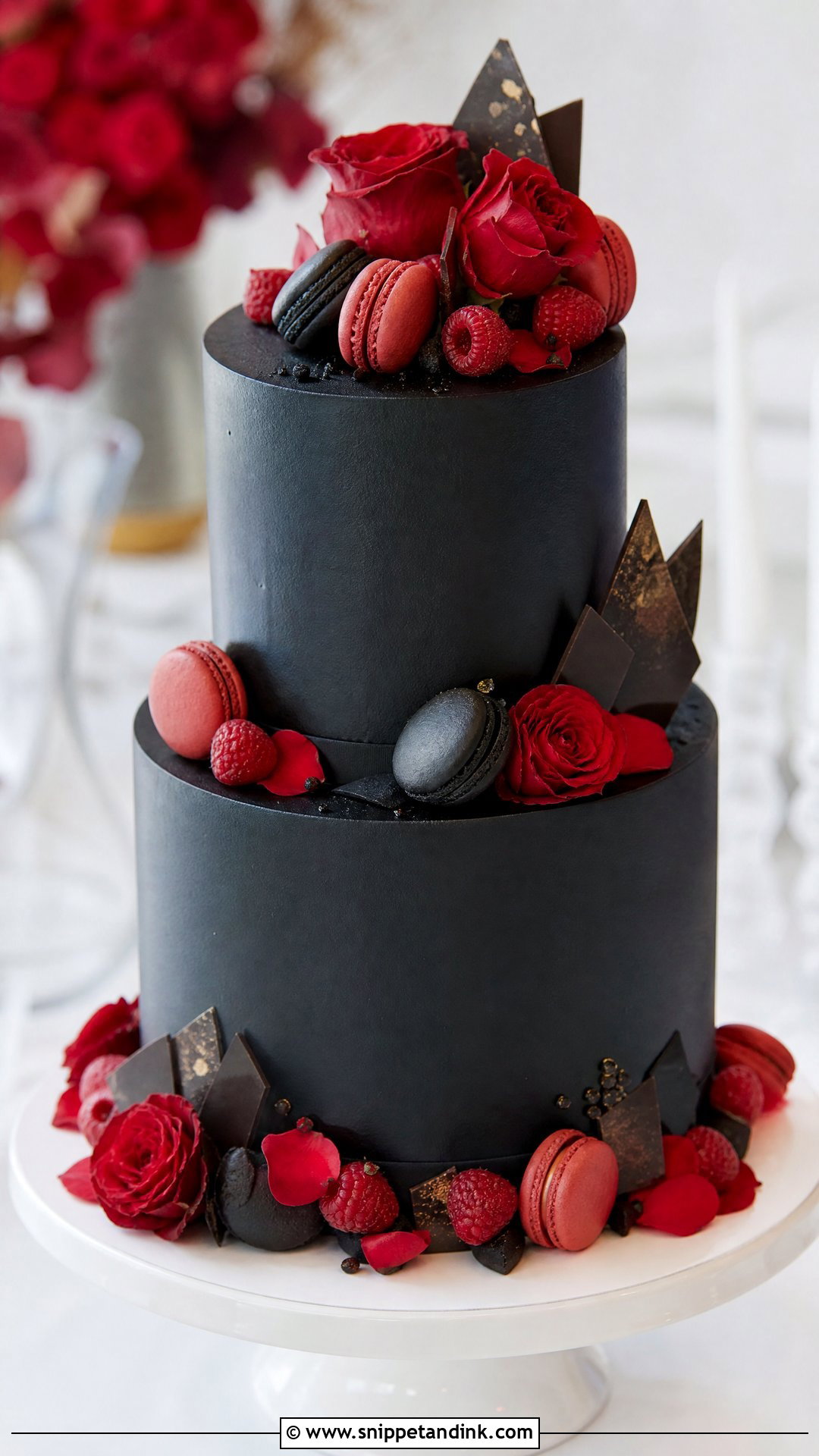
Macarons add height and a bakery polish, and they let the cake talk to the dessert table. Red and black shells, or a mix, sit well beside a few flowers, berries or chocolate shards on top of a black buttercream or fondant cake. Macarons soften as they absorb moisture from frosting, so I attach them with a dab of ganache shortly before delivery rather than days ahead. Place them in a deliberate cluster, never a pile, and choose flavors that make sense when served, like raspberry, chocolate or black cherry.
19. Black And Red Wedding Cake With Geometric Tiers
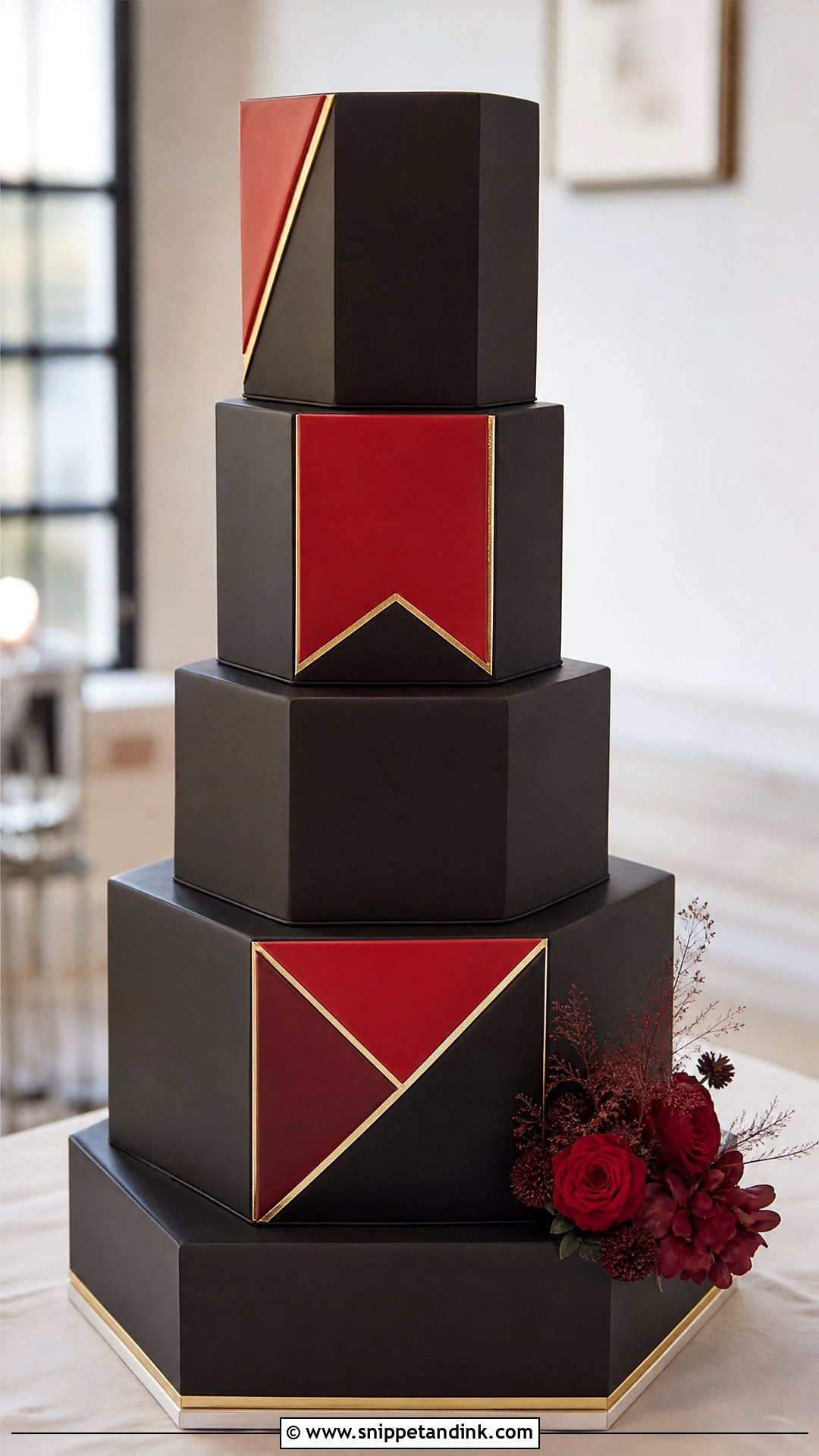
Square, hexagonal and offset tiers turn the cake into architecture. I keep black as the main color and use red only as sharp lines, panels or a single floral accent, because the shape already does the talking. Geometric tiers need fondant and very accurate stacking with proper internal supports; a few millimetres off true shows immediately on a straight edge. A little gold on the edges is fine. A plain stand keeps the attention on the silhouette, and modern city venues suit it best.



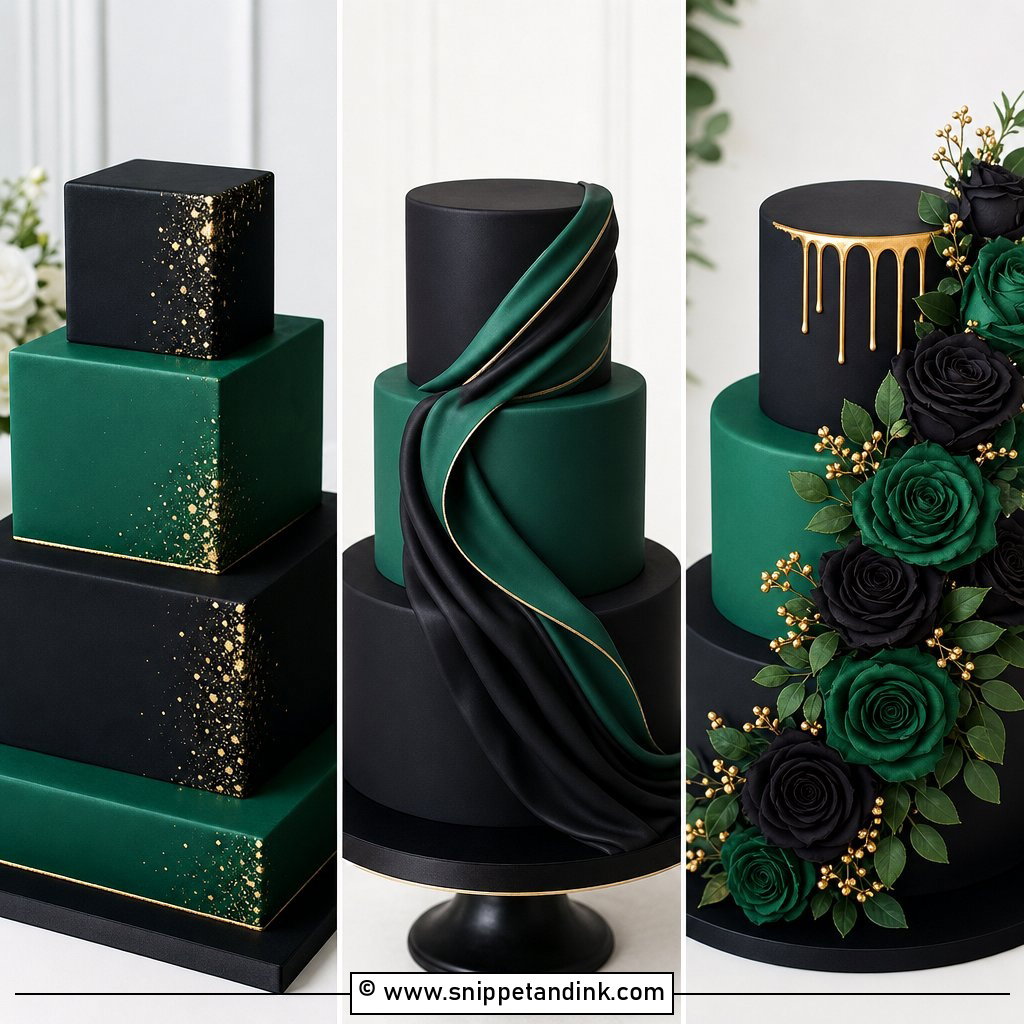
20. Black And Red Wedding Cake With Ruffles
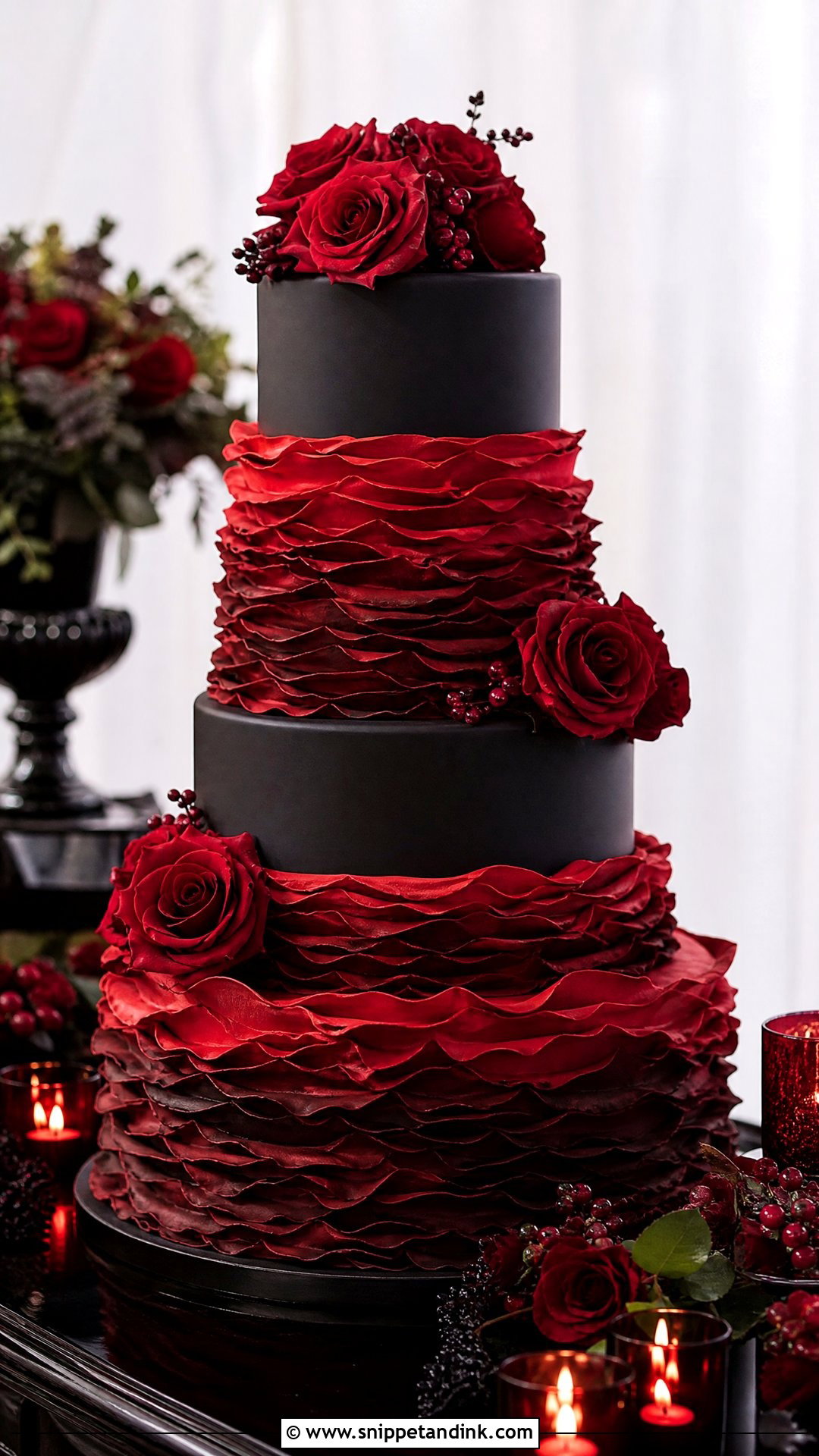
Ruffles add movement that dark colors otherwise lack. I like ruffled black buttercream on the bottom tier with smooth tiers above, or a single red ruffled tier as the feature; contrast between texture and smoothness is what keeps it from looking fussy. Fondant ruffles can be made to drape like fabric, which suits ballrooms. Each ruffle catches light on its edge, so they read better under candles than a flat finish does. Ask for even spacing; uneven ruffles look rushed.
21. Black And Red Wedding Cake With Vintage Piping
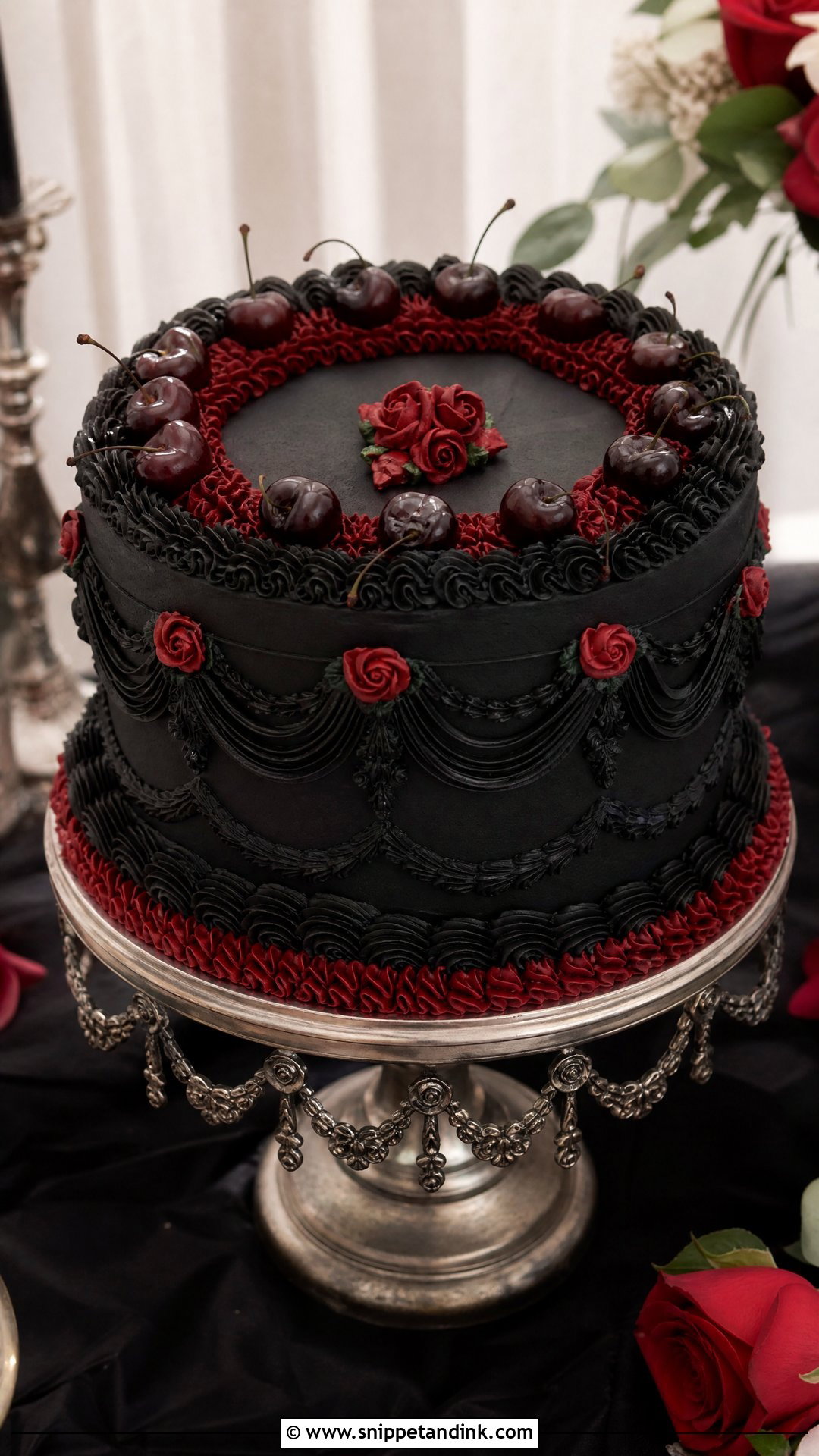
Vintage piping in black is a fun twist on a pastel trend. Think shell borders, swags, rosettes and heart shapes, all in black buttercream with red accents. This is where black buttercream behaves differently: it deepens over a few hours after mixing, so I color it the day before and pipe once it has reached its final shade, otherwise the borders darken unevenly. Layered and neat, it’s romantic and retro at once. Red velvet or chocolate inside suits it, and a simple topper of cherries, roses or initials is enough.
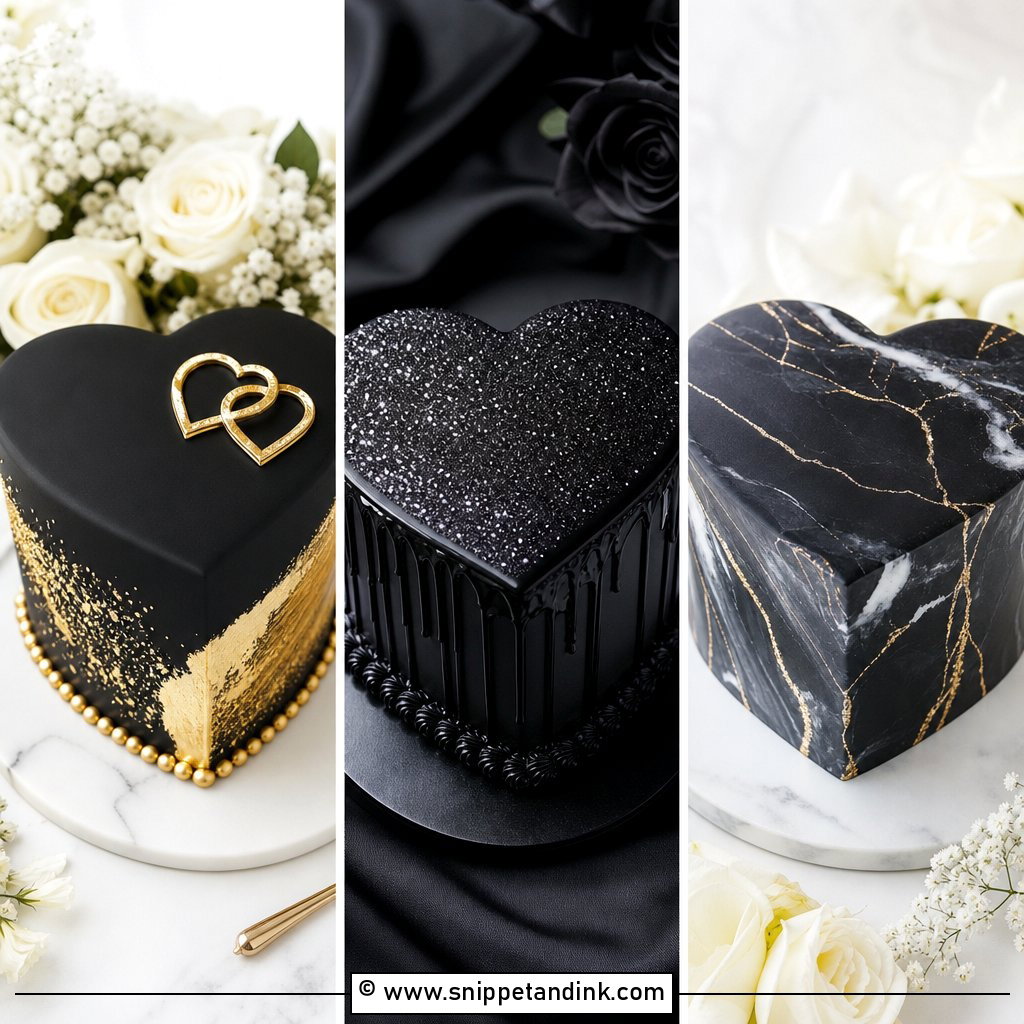
22. Black And Red Wedding Cake With Heart Shape
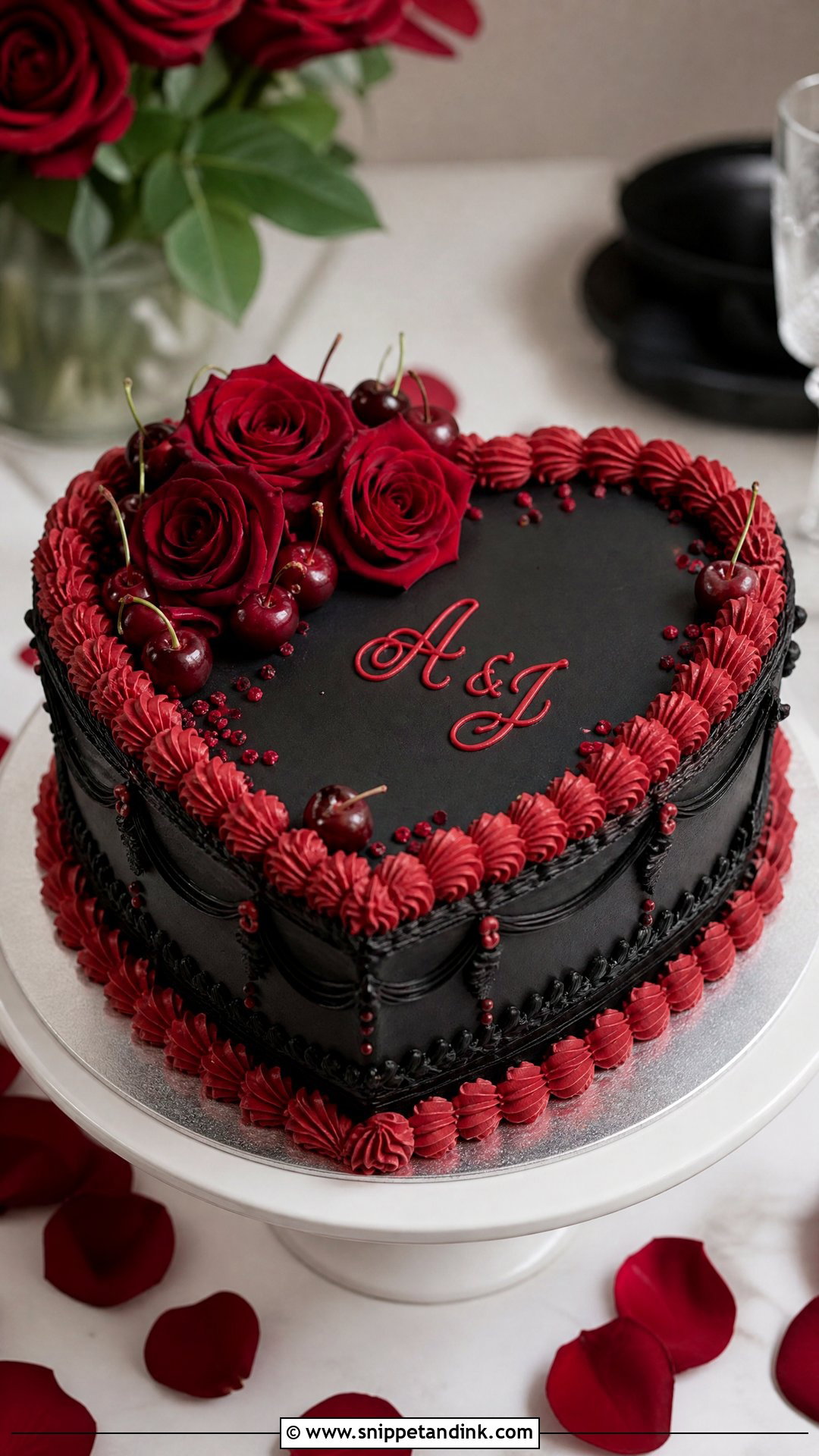
A heart-shaped cake in black and red is sweet and dramatic at the same scale, which makes it a good cutting cake for a smaller reception. Vintage piping, red roses, cherries or a short message all suit the shape. I keep the wording to initials or two or three words; long script gets cramped on a heart. Black buttercream gives it edge, red borders bring the romance. Shoot it from directly above for the detail photos, where the heart outline is clearest.
23. Black And Red Wedding Cake With One Tier
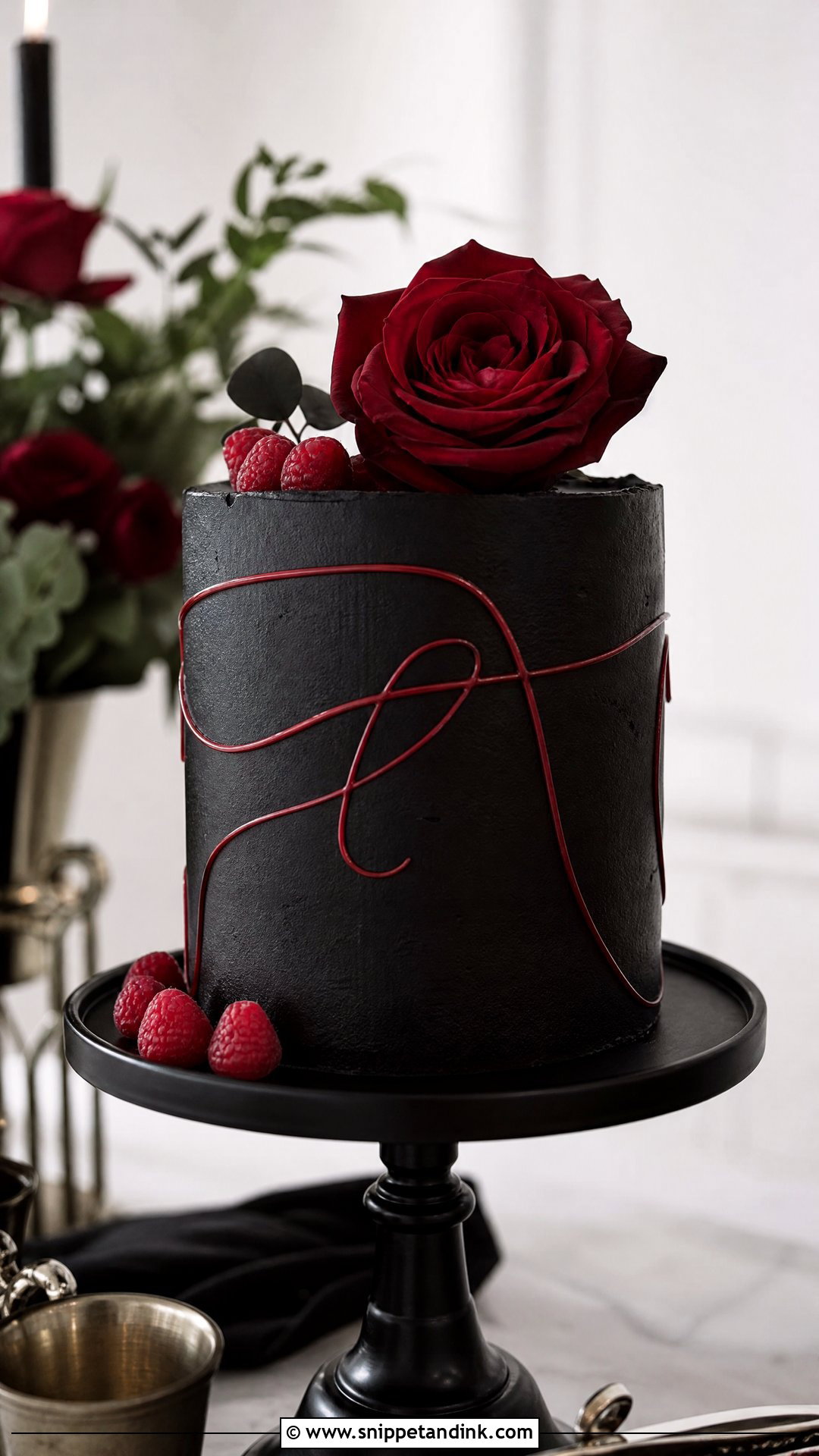
One tier can carry the whole palette if the design is disciplined. I’d choose a tall round cake, around six inches high, in smooth black with one red feature: roses, a drip, berries or a bow. With less surface, any clutter shows, so every element earns its place. It’s a sensible choice for elopements, intimate weddings or alongside a dessert table, and it usually costs less. Raise it on a stand and ring the base with flowers or candles so it doesn’t look lost on the table.
24. Black And Red Wedding Cake With Two Tiers
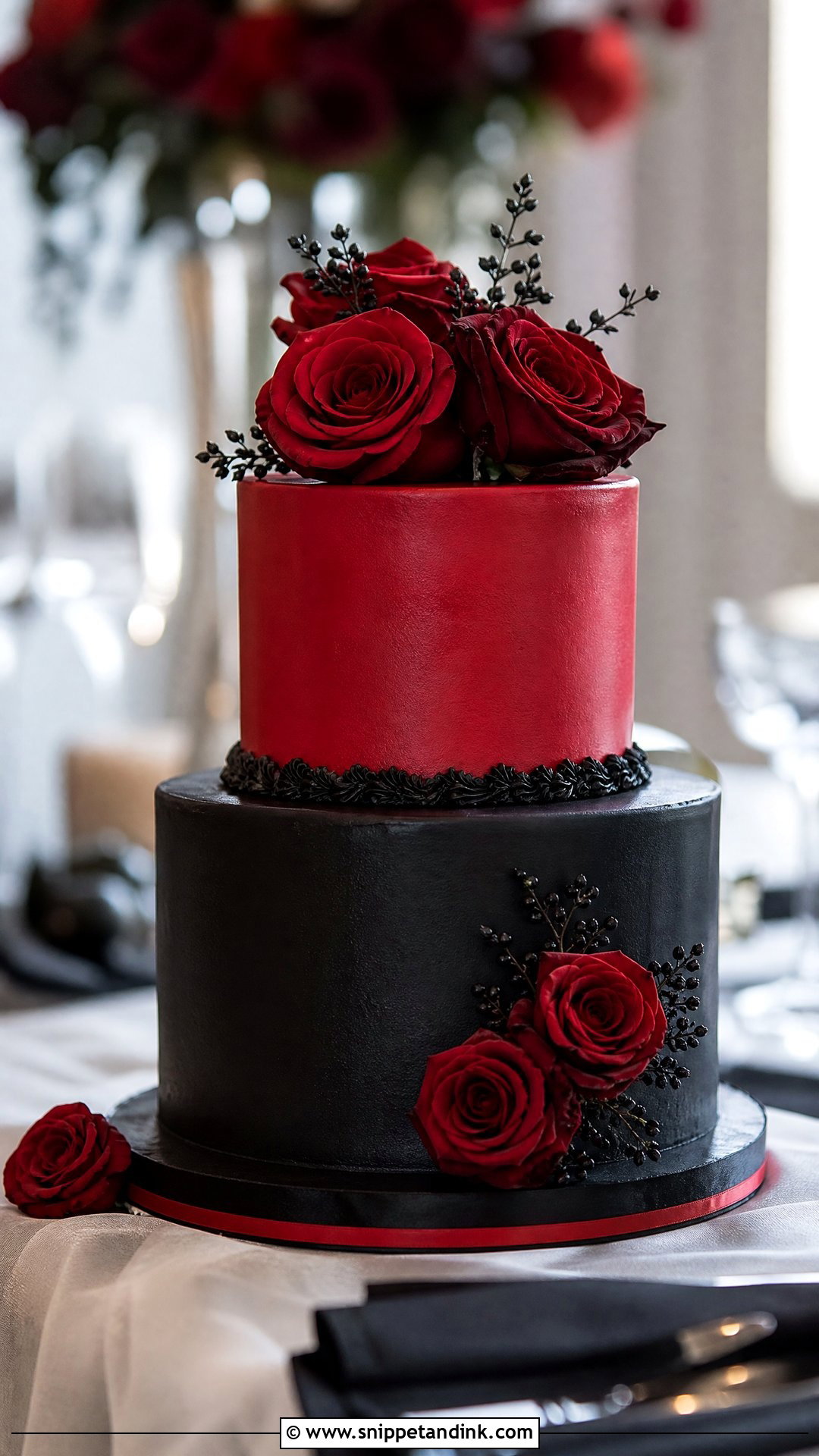
Two tiers give real centerpiece height without a huge cake. They serve a medium guest count, or act as the cutting cake with sheet cake waiting in the kitchen. My favorite split is a black bottom tier and a red top tier; if that feels too blocky, keep both black and let red flowers bridge them. Two tiers also let you mix finishes, with smooth buttercream on one and texture on the other. It’s the most flexible size I make.
25. Black And Red Wedding Cake With Three Tiers
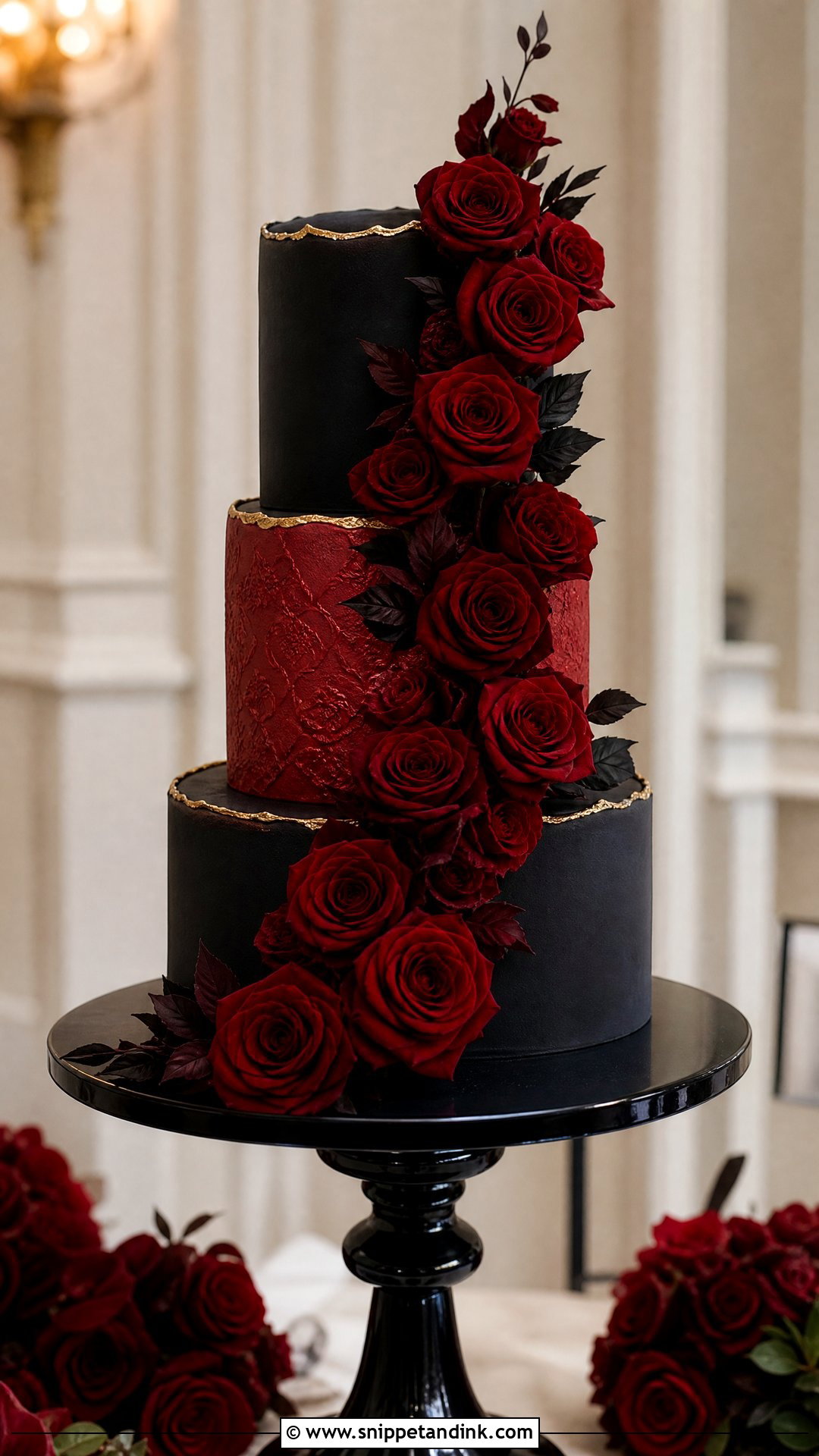
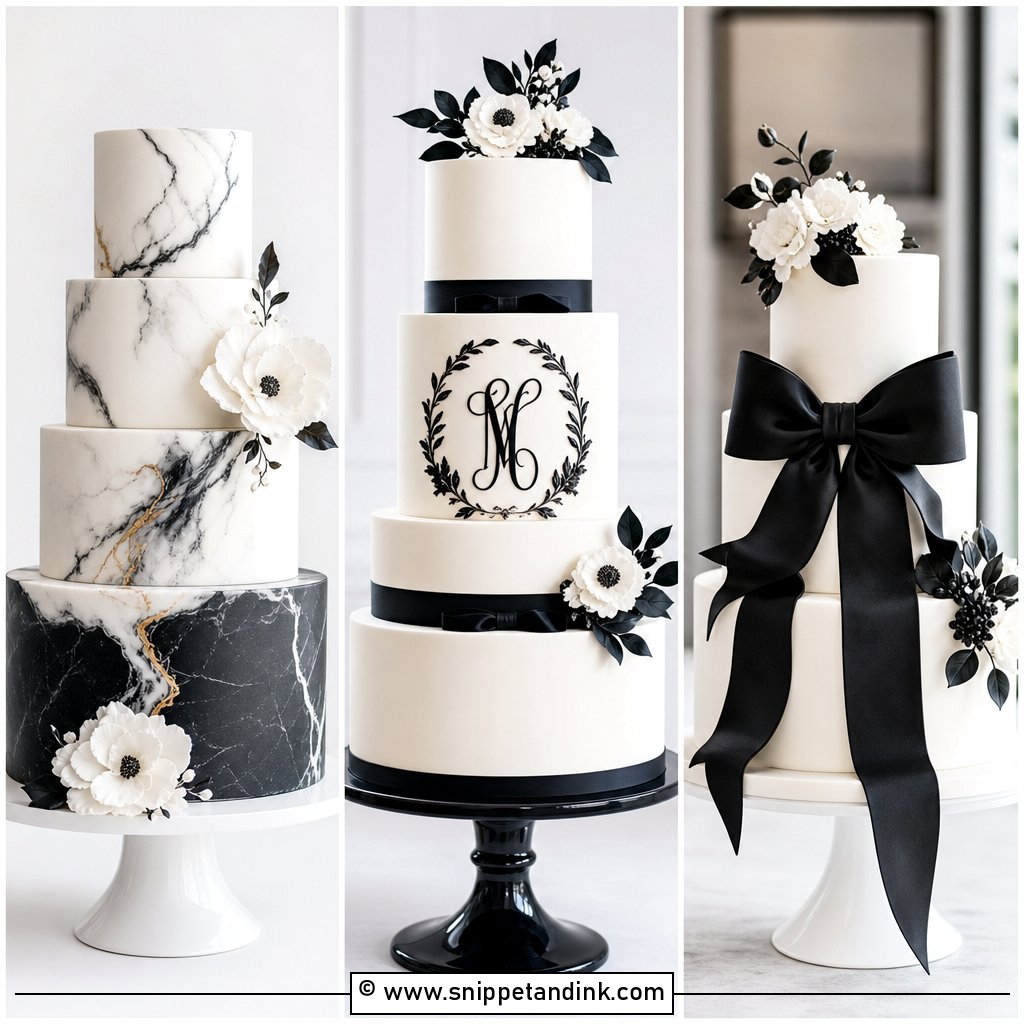
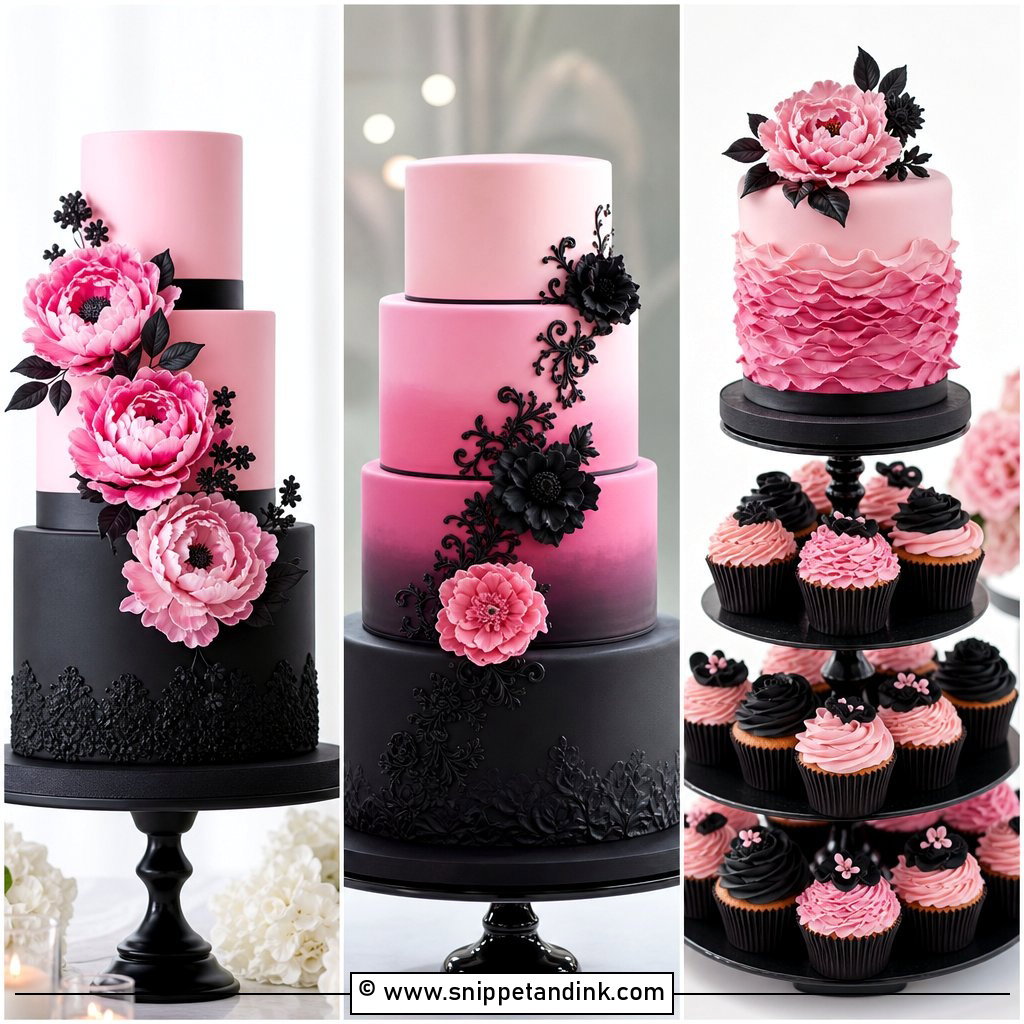
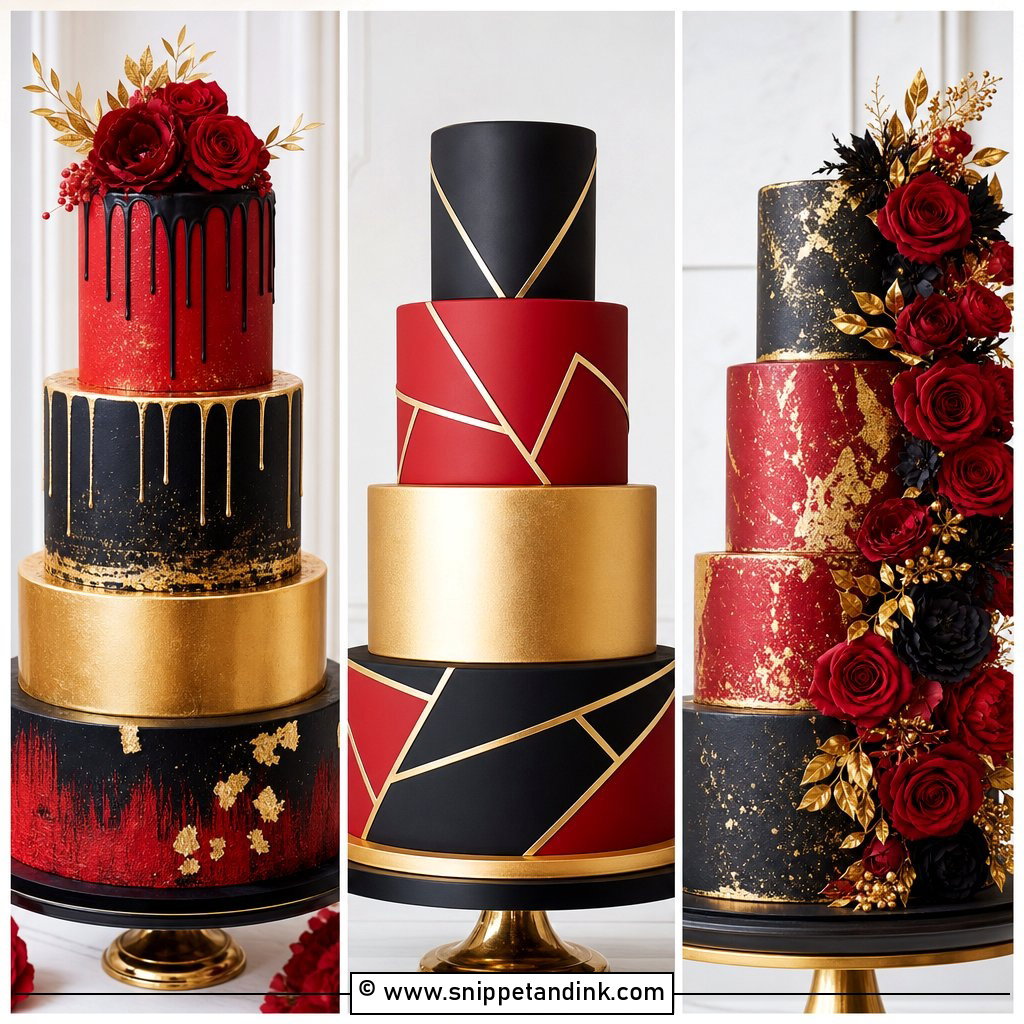
Three tiers bring the traditional silhouette, and the palette keeps it from feeling old-fashioned. I plan them as a set: one smooth black tier, one textured red tier, one decorated with flowers, lace or piping. Or keep all three black and let a red floral cascade carry the drama. The rule I hold to is one clear focal point. When the roses, the gold and the lace all compete across three tiers, the cake looks busy from the dance floor, which is where most guests see it.
26. Black And Red Wedding Cake With Square Tiers
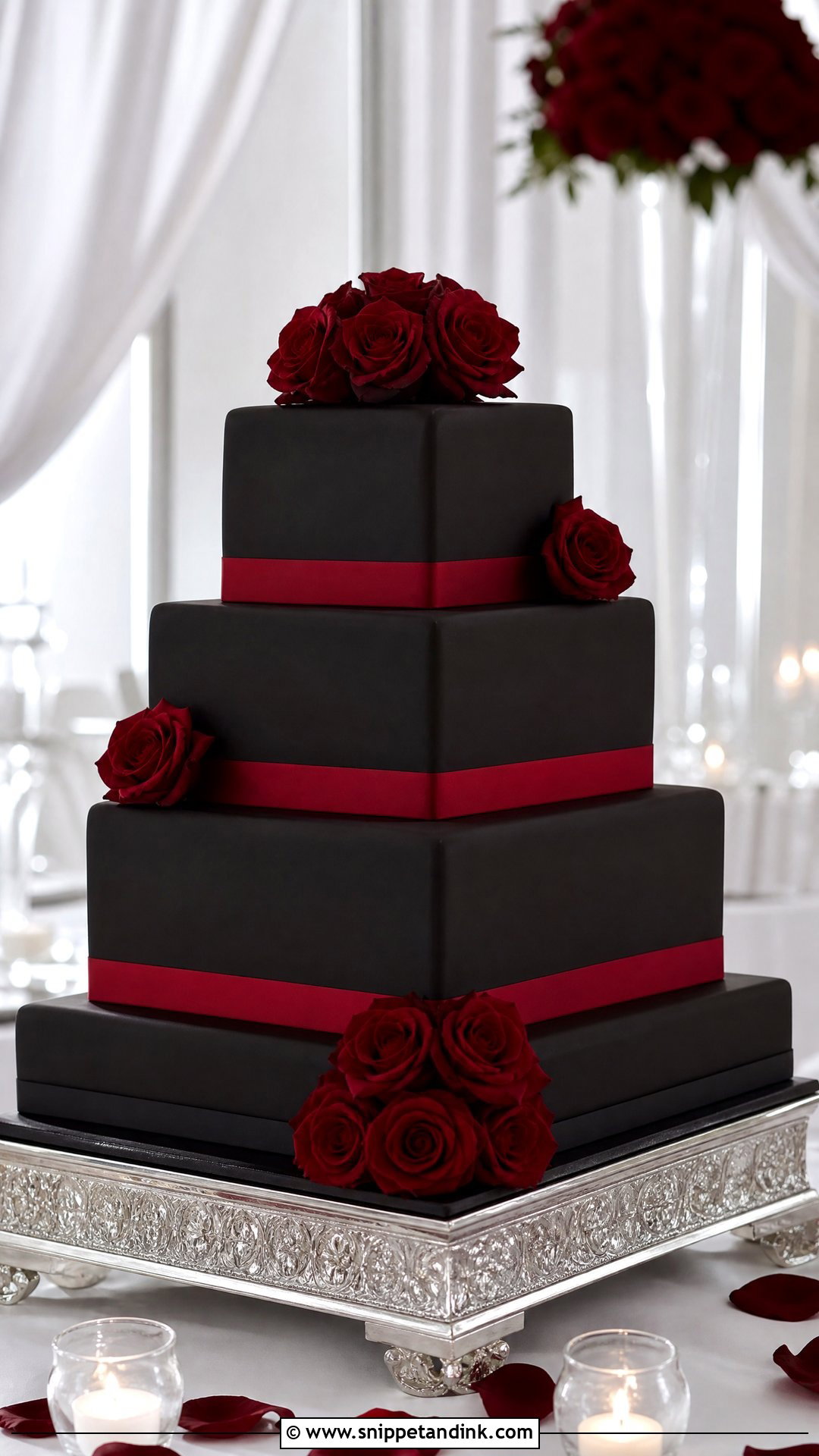
Square tiers look bold and a little unexpected. The corners are sharper than any round cake, so smooth black fondant suits them best and shows off the shape. I add red roses at the corners, a red ribbon band, or one painted red panel. Square tiers are harder to cover cleanly; fondant tends to tear at the corners, so check that your baker has square cakes in their portfolio. They suit formal venues and couples who prefer clean lines to romantic softness.
27. Black And Red Wedding Cake With Watercolor
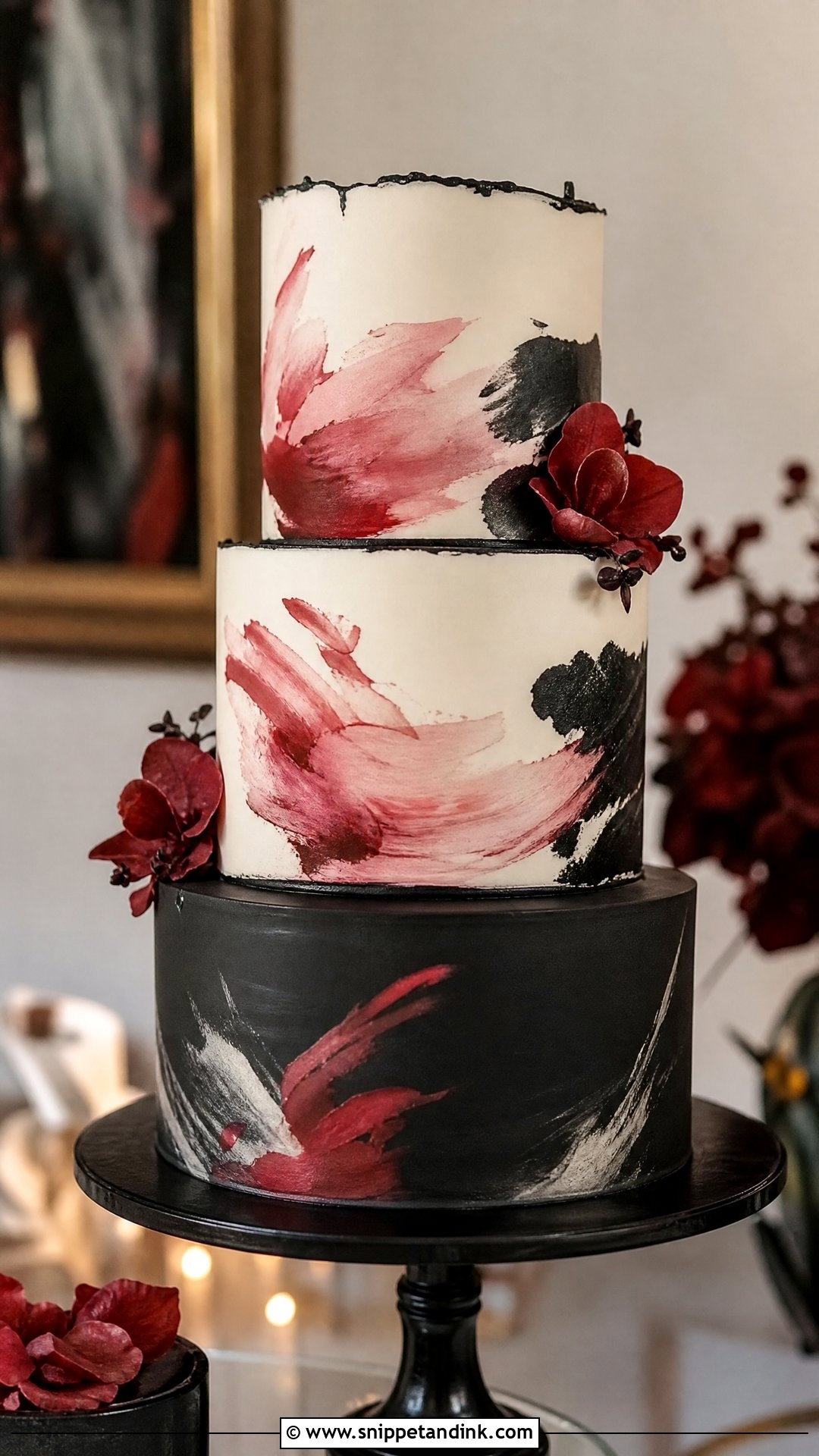
Watercolor is the gentlest way to use this palette. Rather than solid blocks, red goes on as painted washes over white, ivory or black buttercream, with black framing it through piping, flowers or a painted edge. On a white base it reads airy and artistic; on black it turns moody. I paint with color thinned in clear alcohol on chilled buttercream so the strokes don’t drag. Leave plenty of unpainted space or the washes muddy together. Gallery and garden weddings with soft lighting suit it.
28. Black And Red Wedding Cake With Metallic Accents
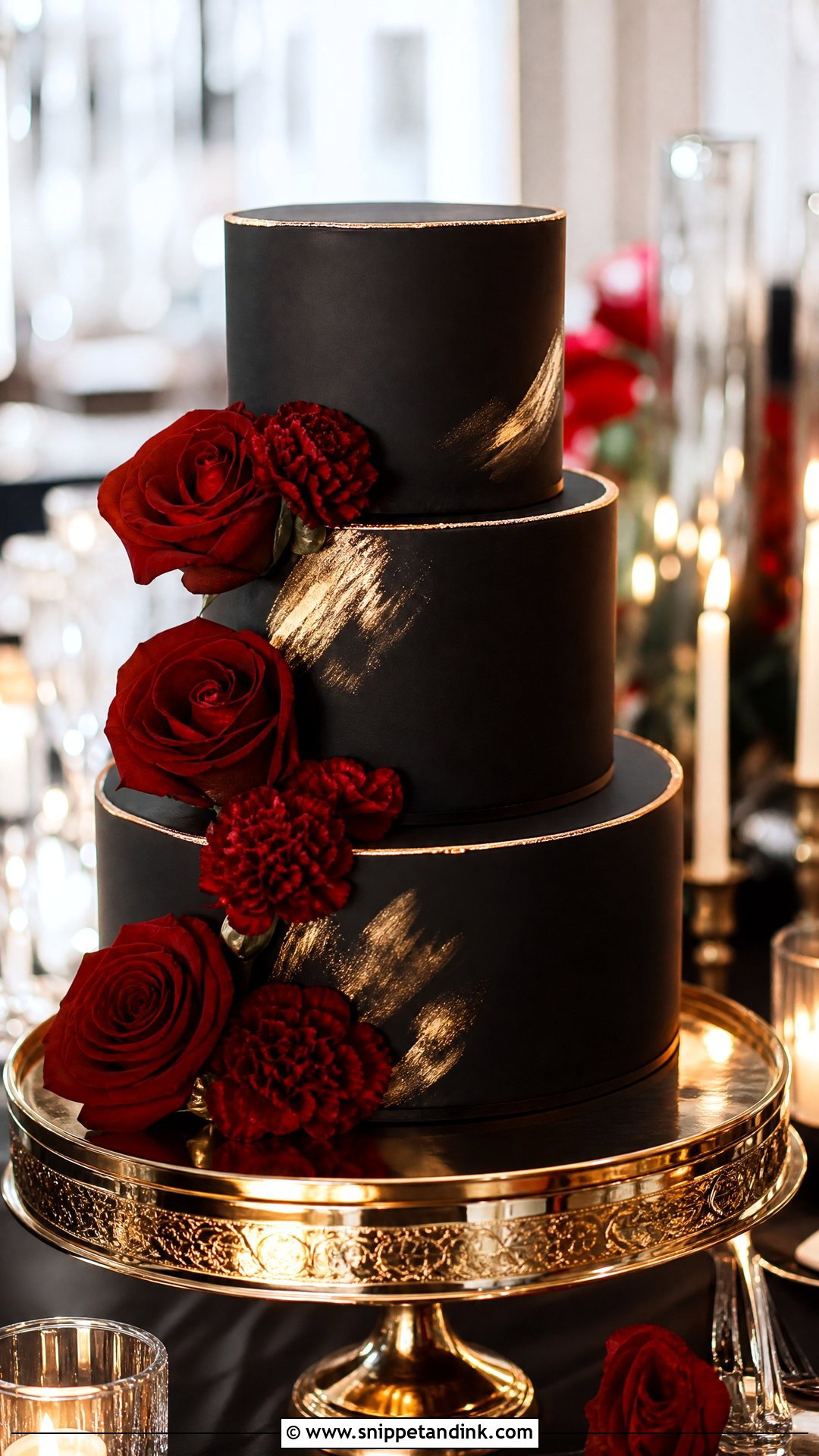
Metallics need restraint here. Silver, champagne gold, rose gold or dark bronze can trace edges, monograms or brushstrokes, and black gives them depth that pale icing never could. Evening receptions are where they pay off, because candlelight catches metal. Shimmer across the whole cake swamps the red and turns it costume-like, so I’d keep it to a few deliberate touches. As with gold, make sure every metallic is edible rather than decorative only.
29. Black And Red Wedding Cake With Minimalist Style
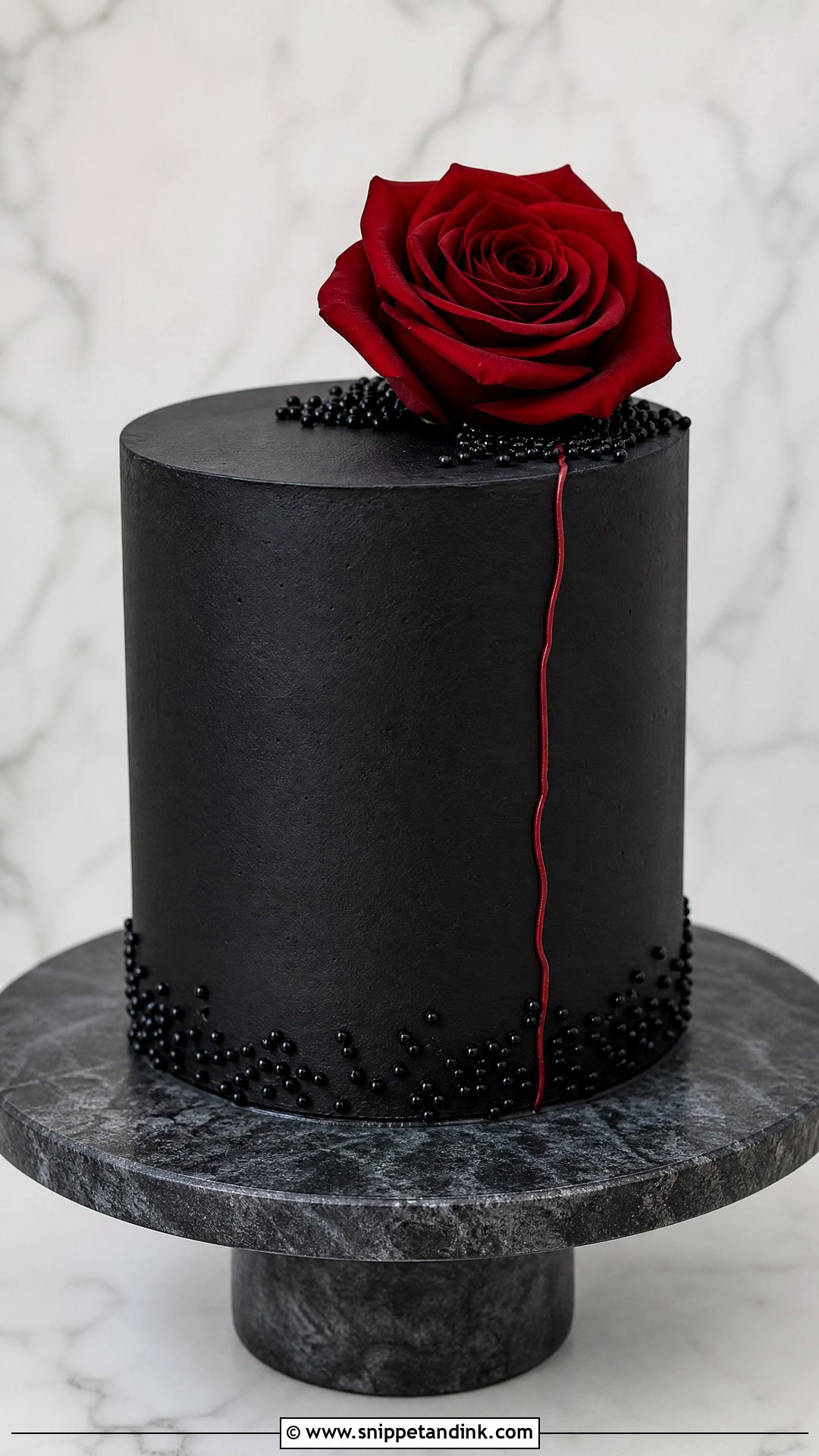
Minimalism proves the palette doesn’t need much. Smooth black buttercream or fondant, then one red detail: a single rose, a thin red line, a small cluster of berries. The shape has to be clean and the finish flawless, because there’s nothing to hide behind; minimalist cakes actually show mistakes more than busy ones. I suggest it when the rest of the wedding already has big florals or dramatic tablescapes. The eye knows exactly where to land.
30. Black And Red Wedding Cake With Dessert Table
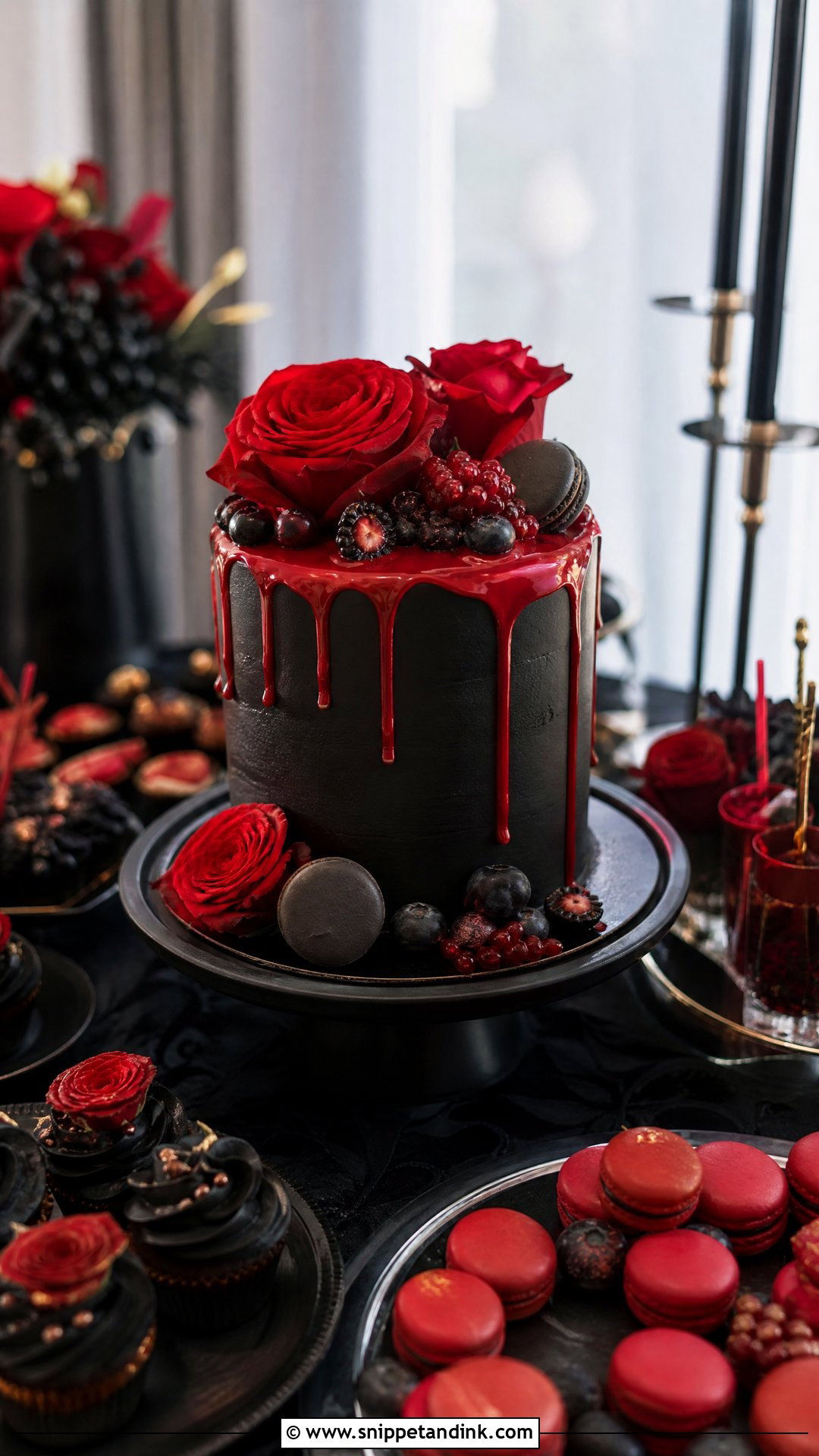
With dessert table styling, a smaller black and red cake becomes the centerpiece of a wider spread: cupcakes, macarons, cake slices, mini cheesecakes and chocolate-dipped strawberries in the same colors. Consistency is what makes it look planned, so I limit the table to the two colors plus one metallic. The main cake can carry red roses, black buttercream or a glossy drip. It’s practical for larger guest counts because people choose what they like. Vary heights with stands so the table has shape, not a flat row.
Why a Dark Cake Needs Its Own Lighting and Table
Black absorbs light. A white cake in a dim corner still reads as a cake; a black one becomes a silhouette, and all that piping and lace disappears in photos. I talk to the planner about placement before I talk about decoration.
Put the cake where it gets a small dedicated light, a pin spot or a cluster of candles at the front, not behind it. A lighter backdrop, an ivory linen or a pale wall, helps the outline separate. Red reads darker under warm candlelight than in daylight, so if your crimson must stay crimson, look at your sample in the same lighting as the room.
Heat, fridges and fingerprints
Dark fondant shows everything. If a cold cake comes out of a fridge into a warm, humid room, condensation forms and dries as pale spots that are obvious on black but invisible on white. I let black fondant cakes come up to room temperature in their box, then set them up away from windows, heaters and direct sun, which also softens dark buttercream faster than pale. Ask the venue not to move the cake once it’s placed; every lift leaves fingerprints on a matte black surface.
Fresh fruit and fresh flowers go on last, at the venue. Red juice and wet petals are the two things most likely to mark a black finish in the hours before cutting.
Black for Depth, Red for Warmth, and One Clear Focal Point
This palette can go gothic, vintage, modern or minimal, and the cakes that work all treat contrast deliberately. Black brings structure; red brings warmth and movement. Roses, smooth tiers, lace and pearls give a classic result, while piping, cherries, fruit and dessert tables feel more current. Taste matters as much as color, and red velvet, dark chocolate, raspberry, cherry and black cocoa all support the look honestly. Get the balance right and it’s a cake people talk about after the wedding.
You'll Like These Ideas:



Leave a Reply