
Red velvet earns its place at a wedding for one simple reason: the moment the knife goes in, everyone sees that red crumb against white frosting. The flavor sits between mild cocoa and buttermilk tang, and cream cheese frosting finishes it off. When couples ask me for a “wet” red velvet, what they mean is moist and tender, and I take that seriously, because the line between moist and underbaked is thin with this batter. Below are twenty full wedding cakes I’d happily build, each with a note on what it asks of the baker and of the room it will sit in.
What Actually Keeps Red Velvet Moist
Red velvet is a buttermilk cake with a little cocoa, and the moisture comes from the recipe, not from tricks afterward. Oil keeps the crumb soft even when the cake is cold, which matters because a cream cheese filled cake lives in the fridge until the reception. Butter alone tastes richer but firms up when chilled, so I often use both. Buttermilk and a splash of vinegar react with the baking soda, which gives the crumb its fine, velvety lift.
Gummy red velvet is almost always underbaked or overmixed. Once the flour goes in, I mix just until it disappears, and I pull the layers when a skewer comes out with a few moist crumbs, never wet batter. A light brush of syrup is fine for a cake that will sit out a while, but if a baker needs to soak the layers heavily to make them taste moist, the recipe is doing too little.
Most wedding bakers bake layers a day or two ahead, and some freeze them well wrapped, which keeps moisture locked in. Ask how yours handles it. Either answer is normal; what you want is a clear plan.
1. Red Velvet Wedding Cake With Cream Cheese Frosting
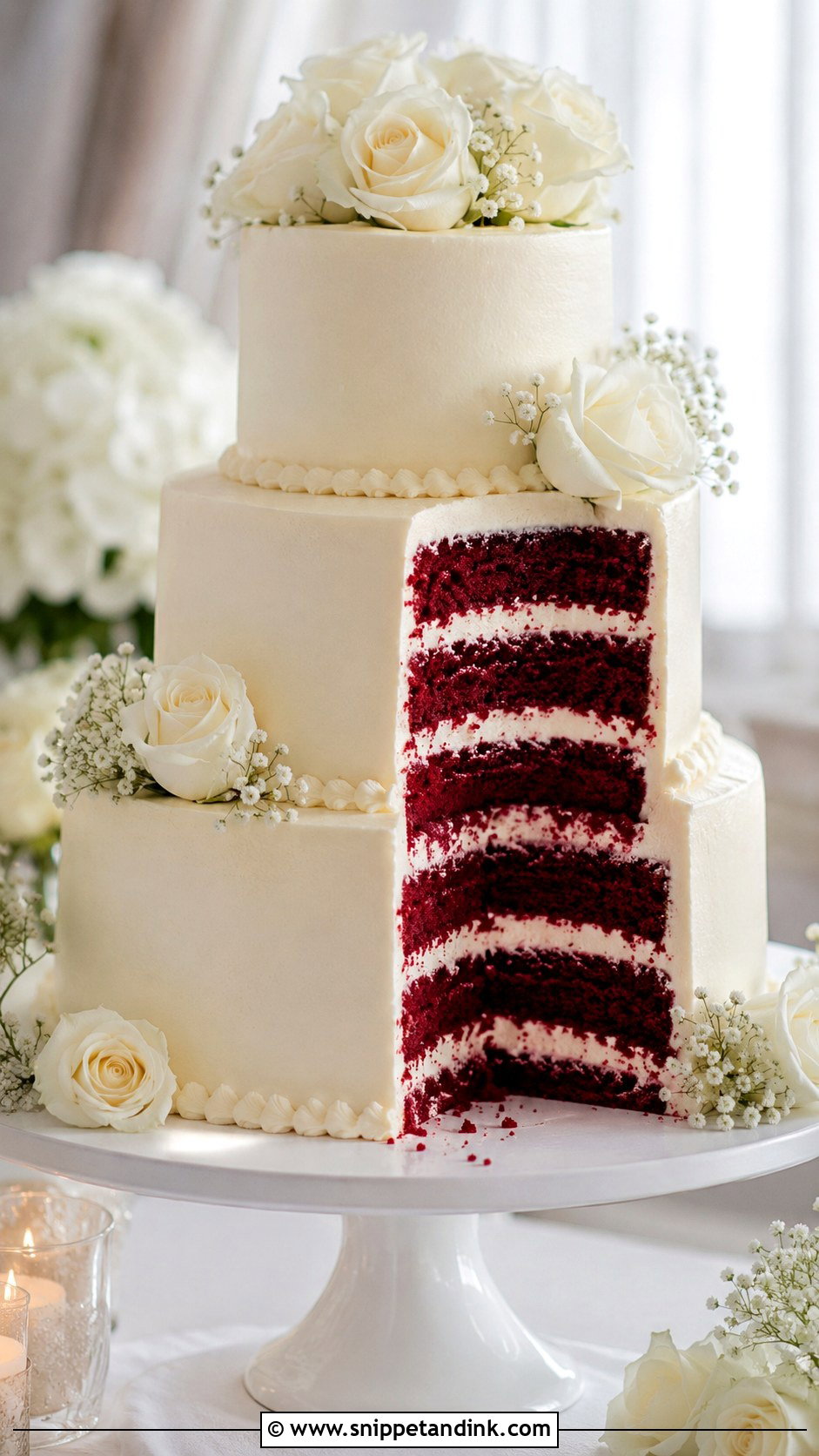
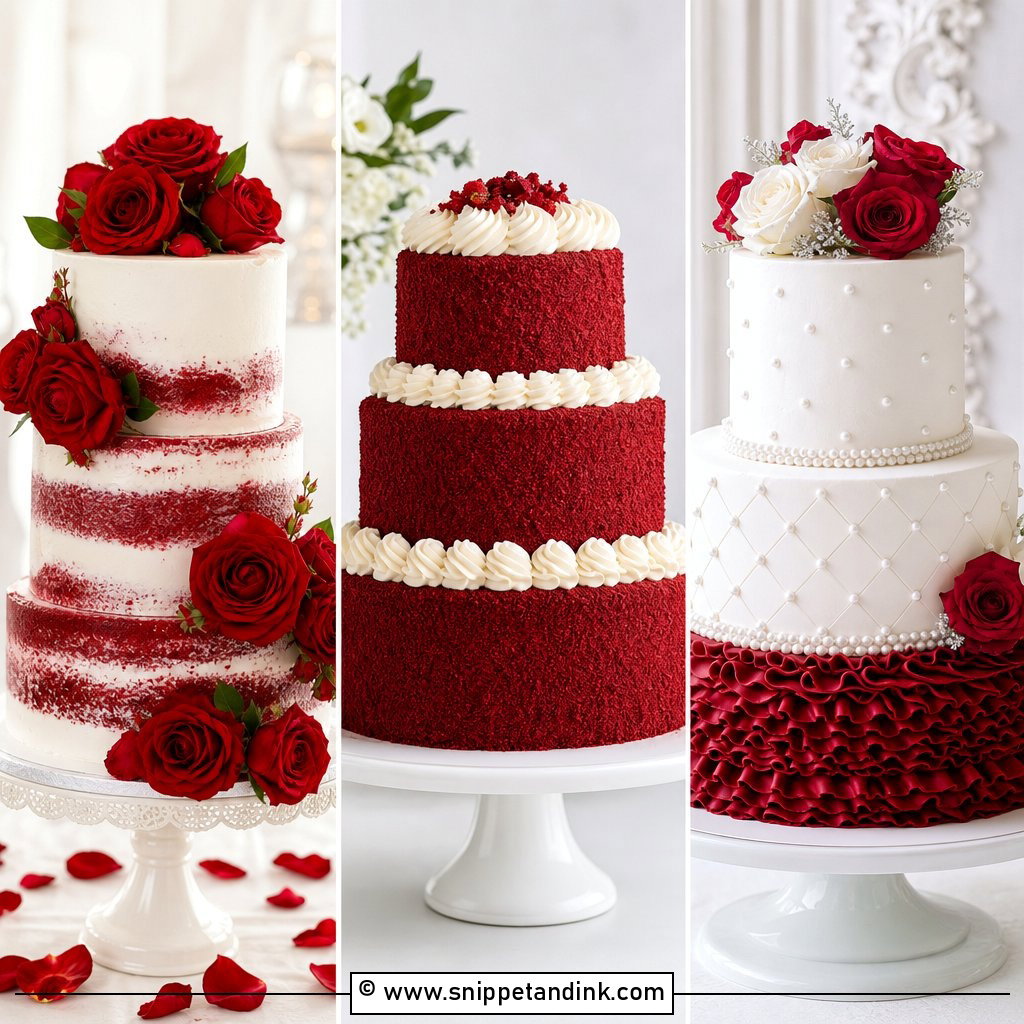
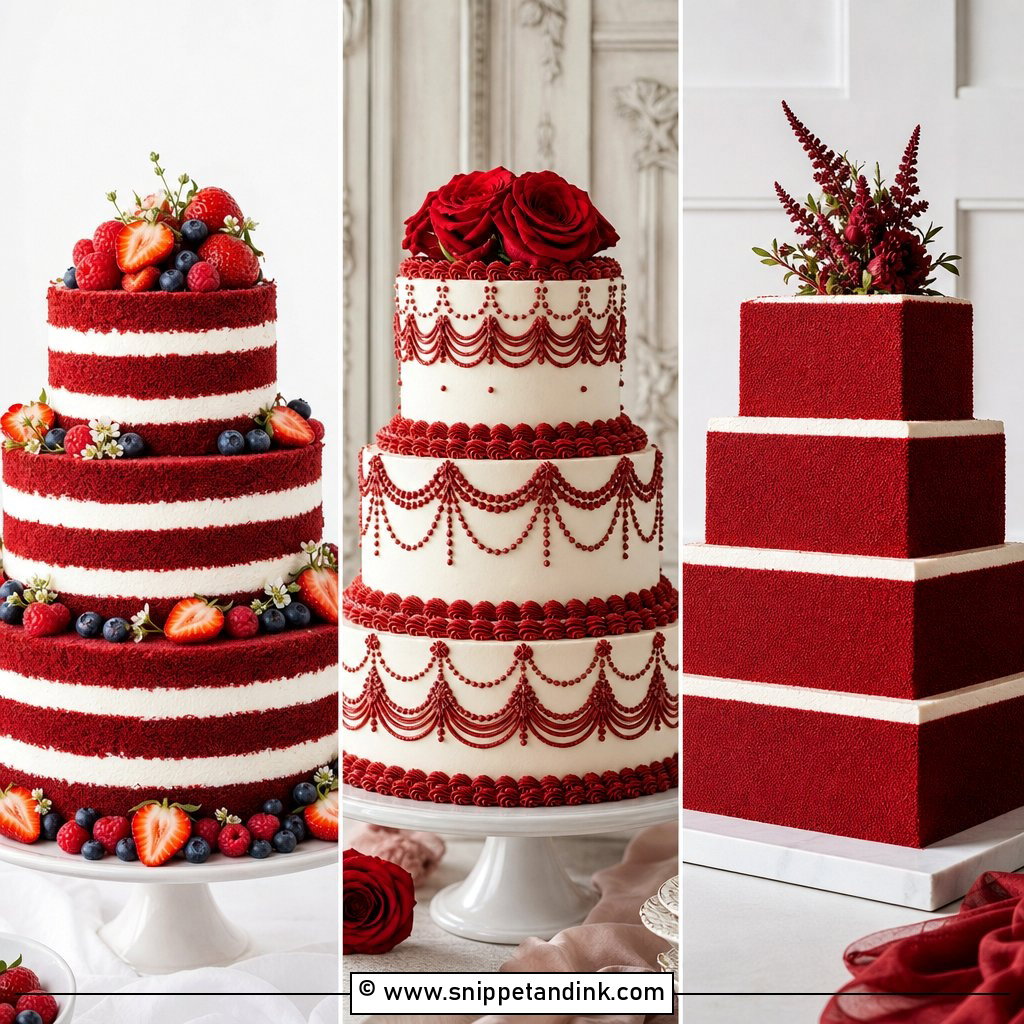
This is the version I bake most often. Tangy frosting cuts the sweetness of the crumb, and an ivory outside keeps the red hidden until the first slice. The catch is that true cream cheese frosting is soft. It won’t give you razor sharp edges, so I tell couples to expect a slightly rounded finish, or I use a firmer cream cheese buttercream on the outside and keep the softer frosting for the filling. The moisture comes from buttermilk, oil and pulling the layers out the minute a skewer shows a few moist crumbs, not from drowning them in syrup.
2. Red Velvet Semi Naked Wedding Cake
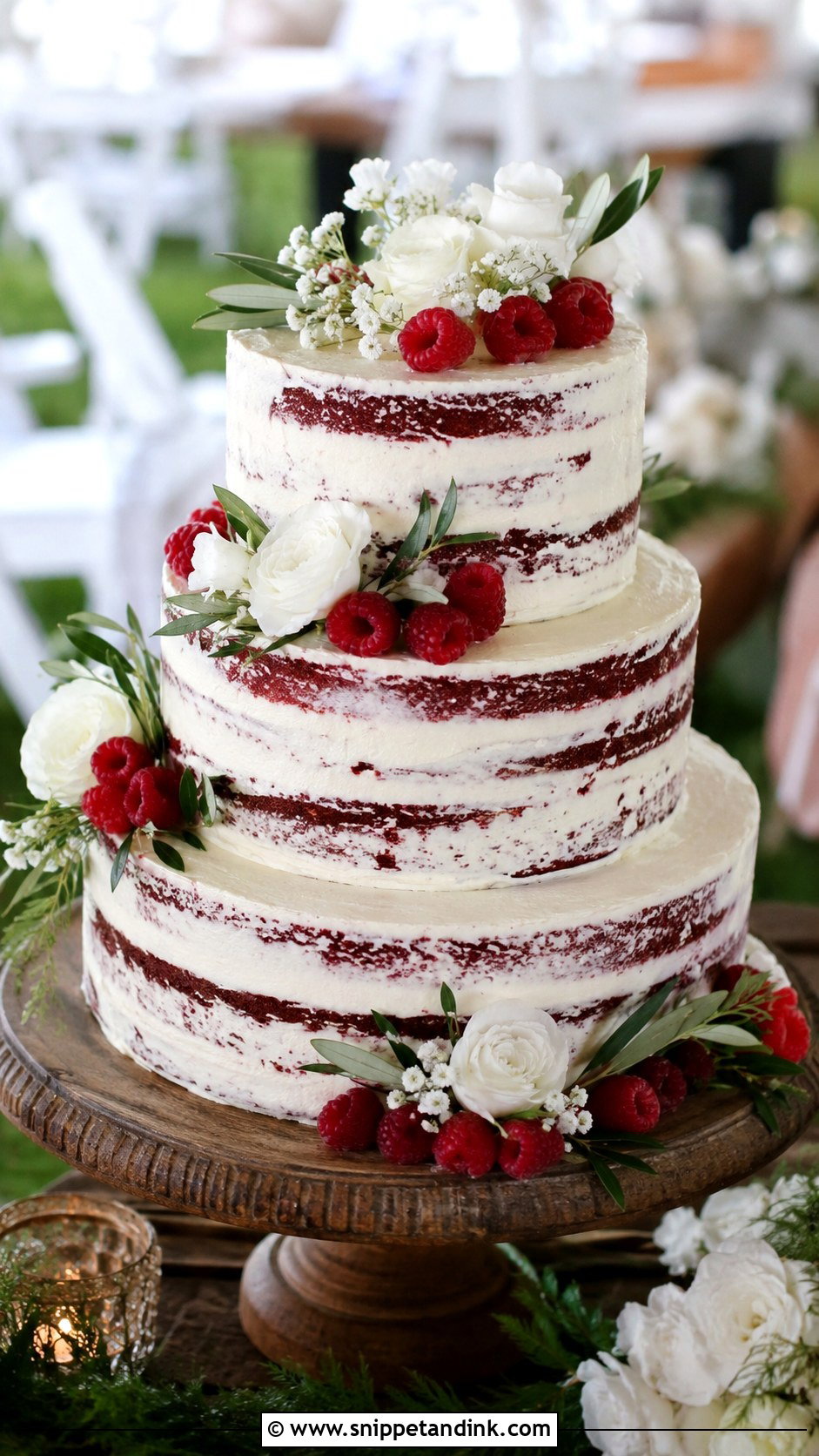
A red velvet semi naked wedding cake shows the crumb through a thin scrape of frosting, so the cake itself has to be flawless. I level every layer and keep the filling the same thickness all the way up, because uneven stripes look sloppy once the sides are exposed. Know this too: bare sponge dries faster than frosted sponge. I wrap the layers well, assemble close to the day, and I’d talk you out of this finish if the cake will sit in dry heat for hours. Fresh berries and a few roses suit it; heavy decoration fights the whole idea.
3. Red Velvet Drip Wedding Cake
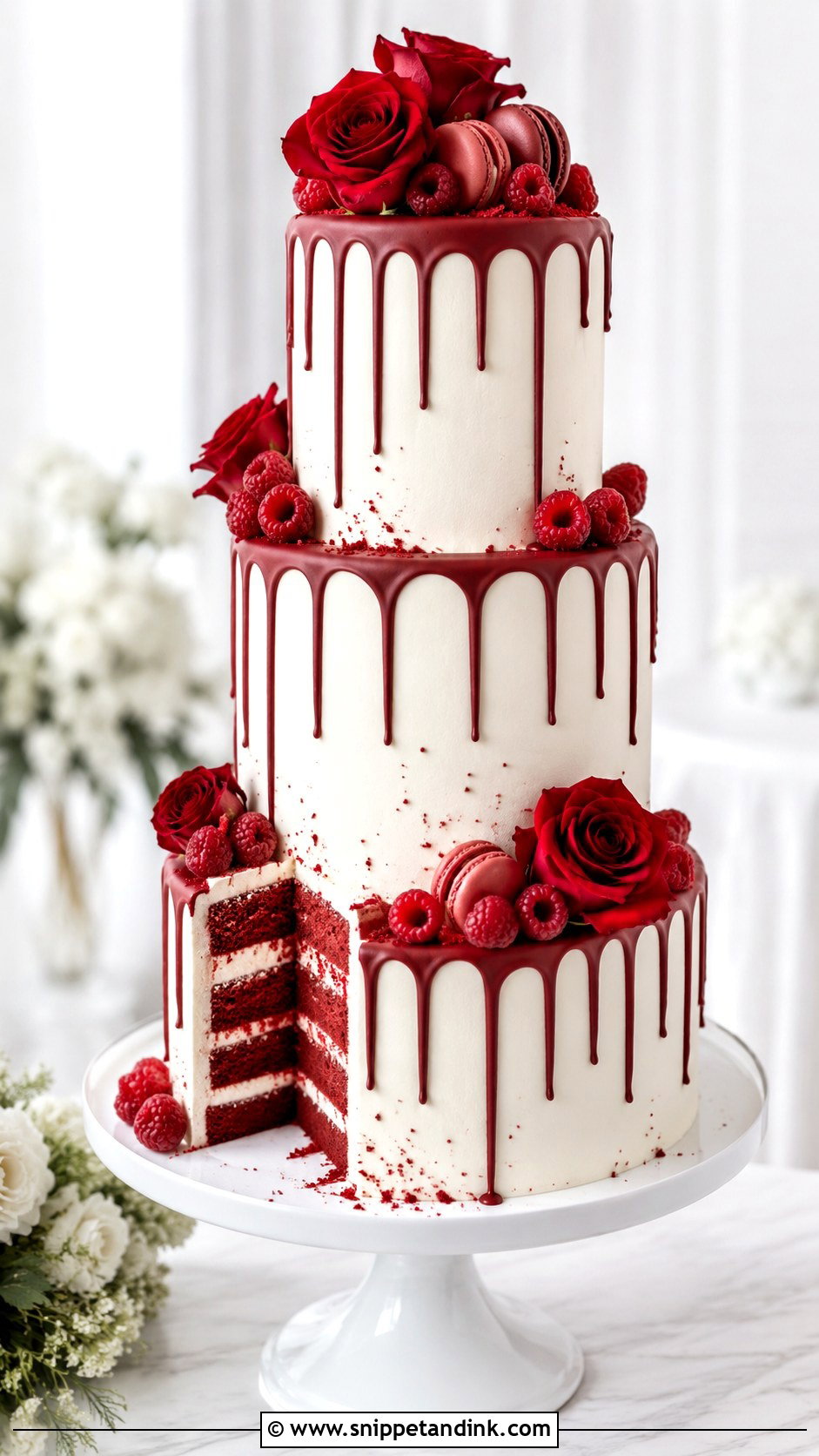
Drips look casual, but they’re temperature work. Ganache that’s too warm runs straight down to the board, and ganache that’s too cool stops in stubby blobs. I test a single drip on a chilled cake before going around the tier, and for a wedding I keep the drip to the top tier or two so it reads controlled. A red drip made from tinted white chocolate is the fussiest, since white chocolate seizes easily. Roses, raspberries or a few macarons on top give height, and this is a design meant to be seen from the front.
4. Red Velvet Wedding Cake With Red Roses
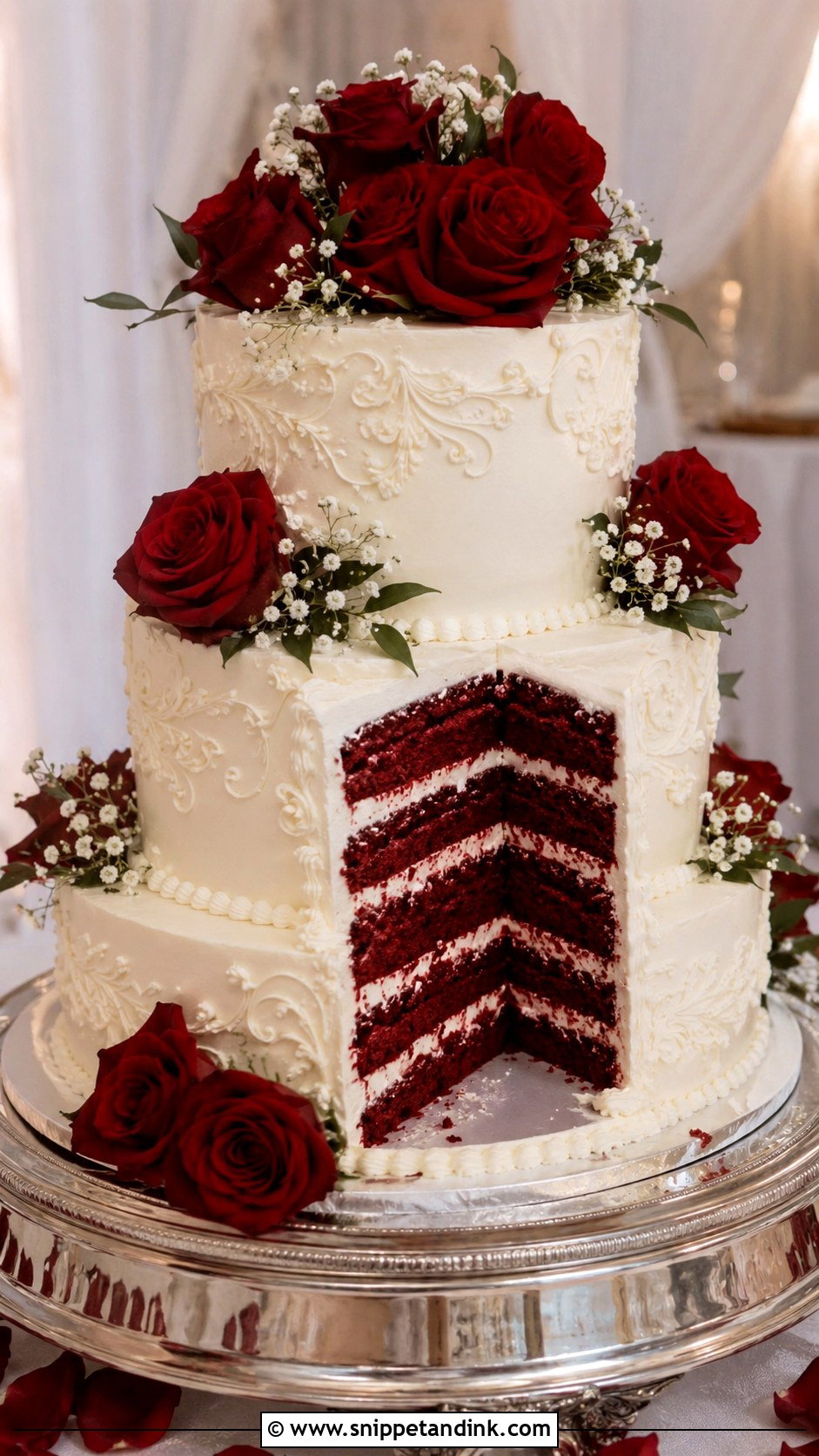
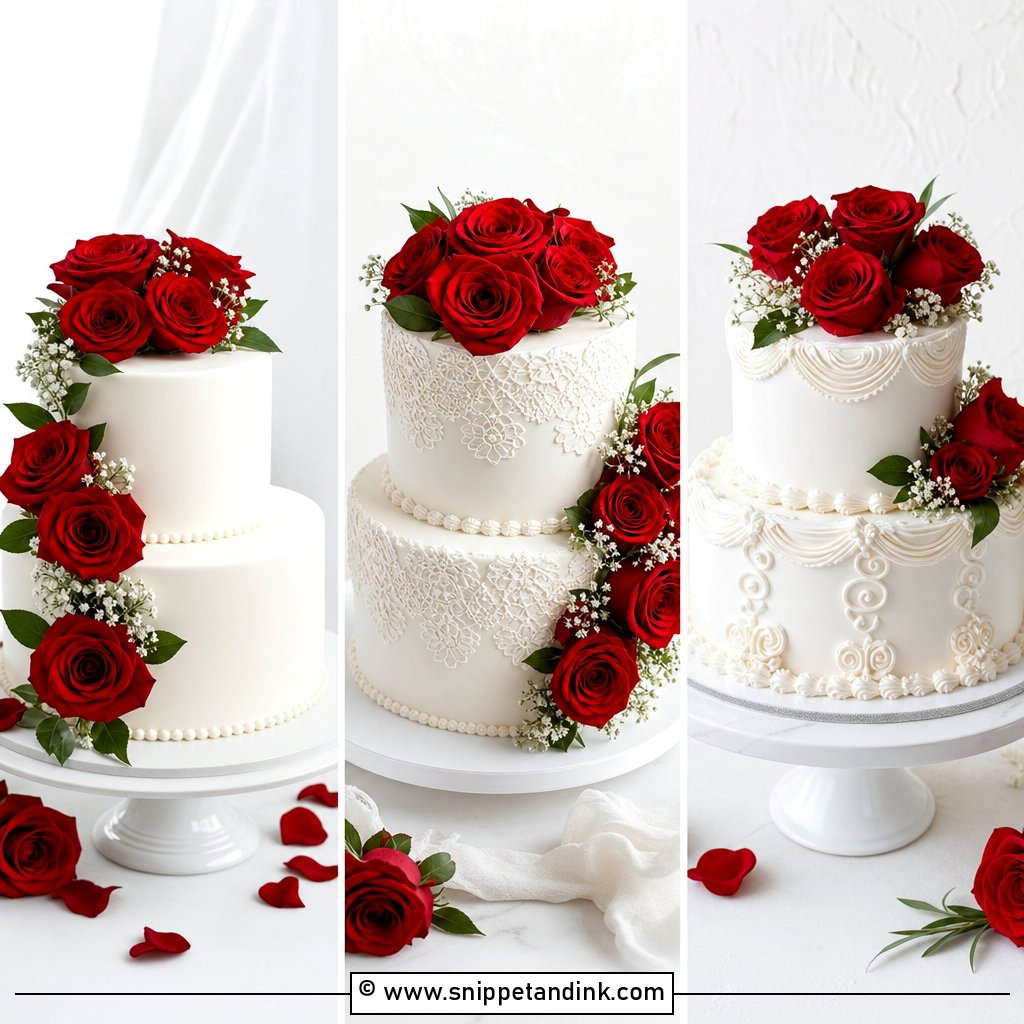
Red roses on red velvet barely needs anything else. I keep the frosting ivory so the roses carry the color outside and the crumb answers it inside. The part couples overlook is food safety. Florist roses are often sprayed, so stems get wrapped in floral tape or set into picks, and I only want pesticide free blooms touching frosting. Decide early who supplies and places the flowers, your florist or me. Tight clusters suit a formal room; a cascade needs a tall enough cake to carry it.
5. Red Velvet Wedding Cake With White Flowers
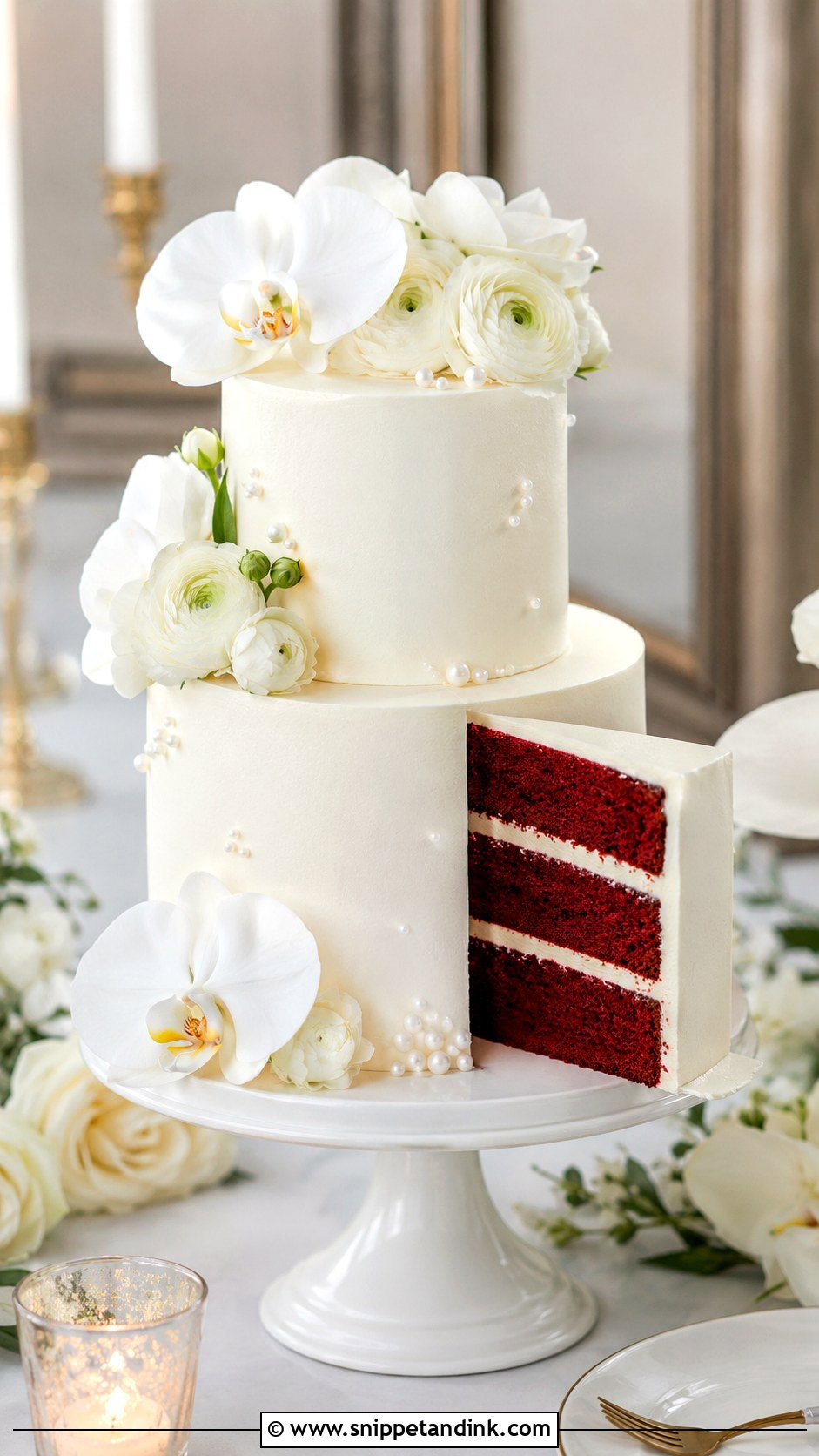
White blooms give a red velvet wedding cake a calm outside, which makes the cut slice more of a surprise. Garden roses, ranunculus, lisianthus and small filler flowers all sit well on ivory frosting. One honest warning: white petals brown at the edges quickly and show every bruise, far more than a red rose does, so I place them as late as I can. A tall two or three tier carries them well, and I’d keep the frosting smooth when the flowers are already busy.
6. Red Velvet Wedding Cake With Gold Accents
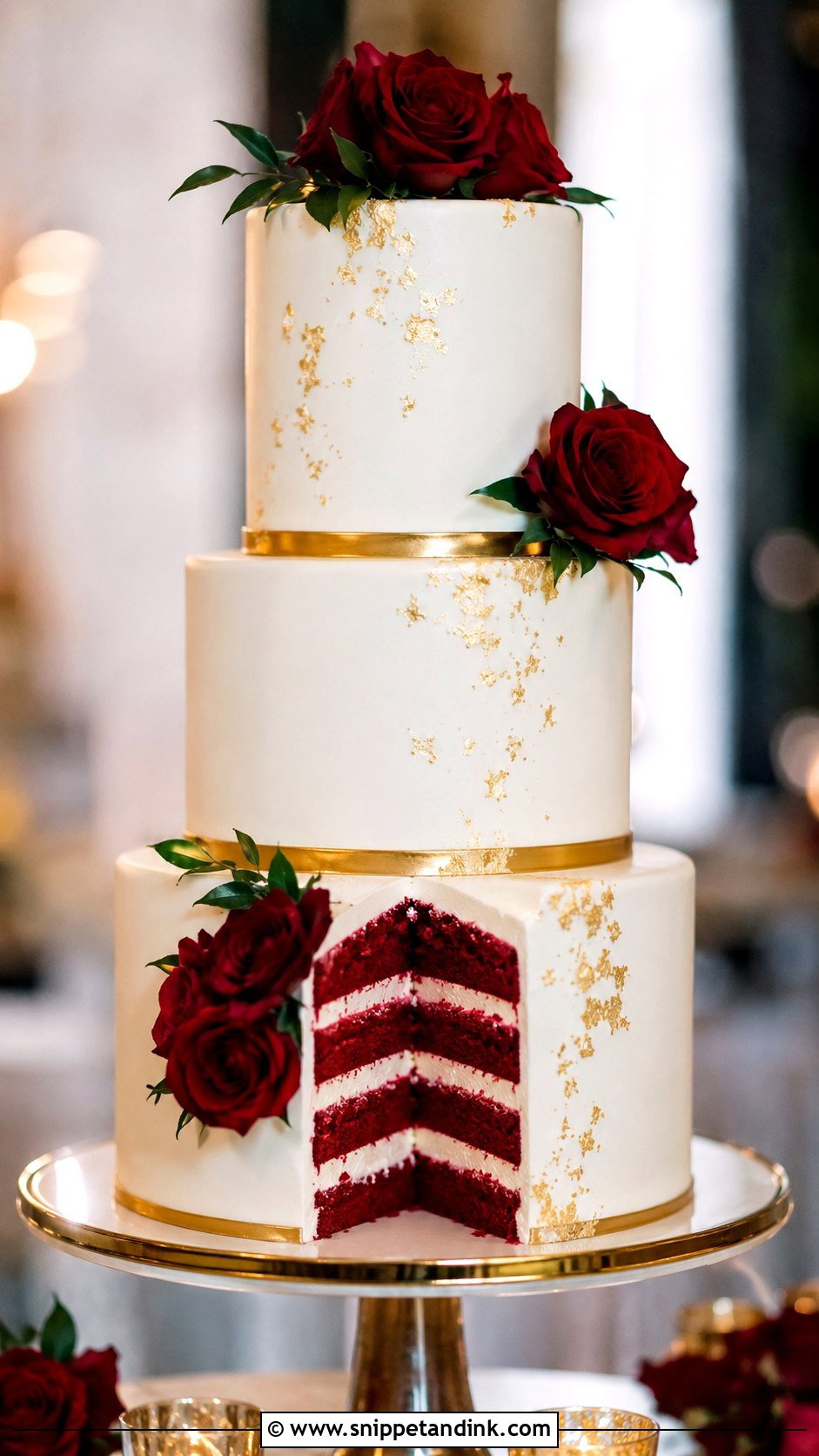
Gold works on this cake when it’s rationed. A painted edge on one tier, a band of leaf or a thin metallic separator is plenty against white frosting, since the red inside already supplies the drama. Edible gold leaf tears if you so much as breathe on it, and it won’t grip cold, damp frosting, so I apply it once the surface has dried a little. I steer couples away from gold on every tier; it turns busy in photos. Warm evening lighting in a ballroom is where it shines most.
7. Red Velvet Two Tier Wedding Cake
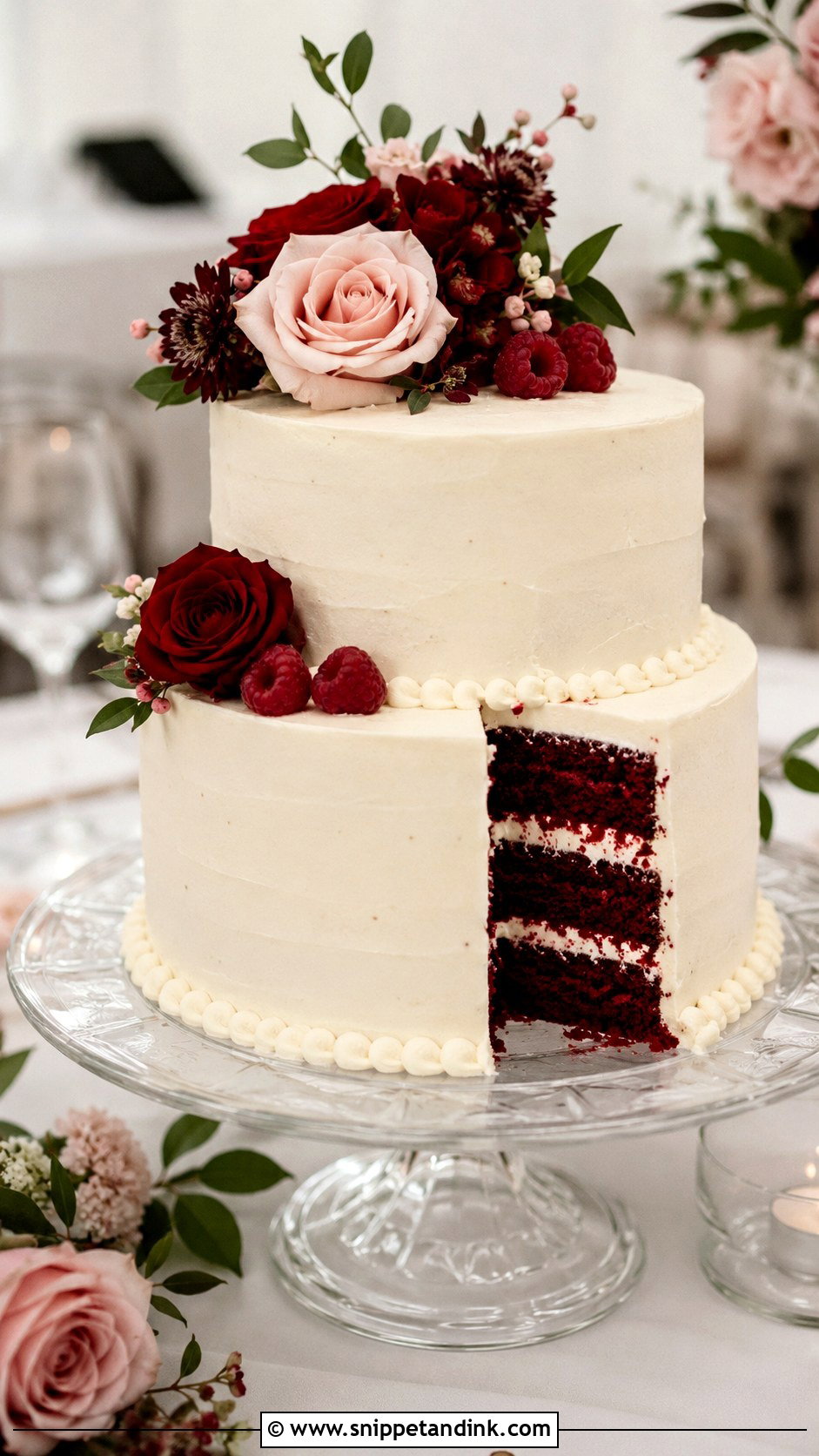
A red velvet two tier wedding cake suits smaller guest counts and elopements, and it has more presence than people expect once it’s raised on a stand. If you need more slices than two tiers give, I suggest a kitchen cake in the same flavor, cut out of sight. Nobody can tell the difference on the plate. Smooth, semi naked or a few flowers all work at this size, and the display cake stays neat.
8. Red Velvet Three Tier Wedding Cake
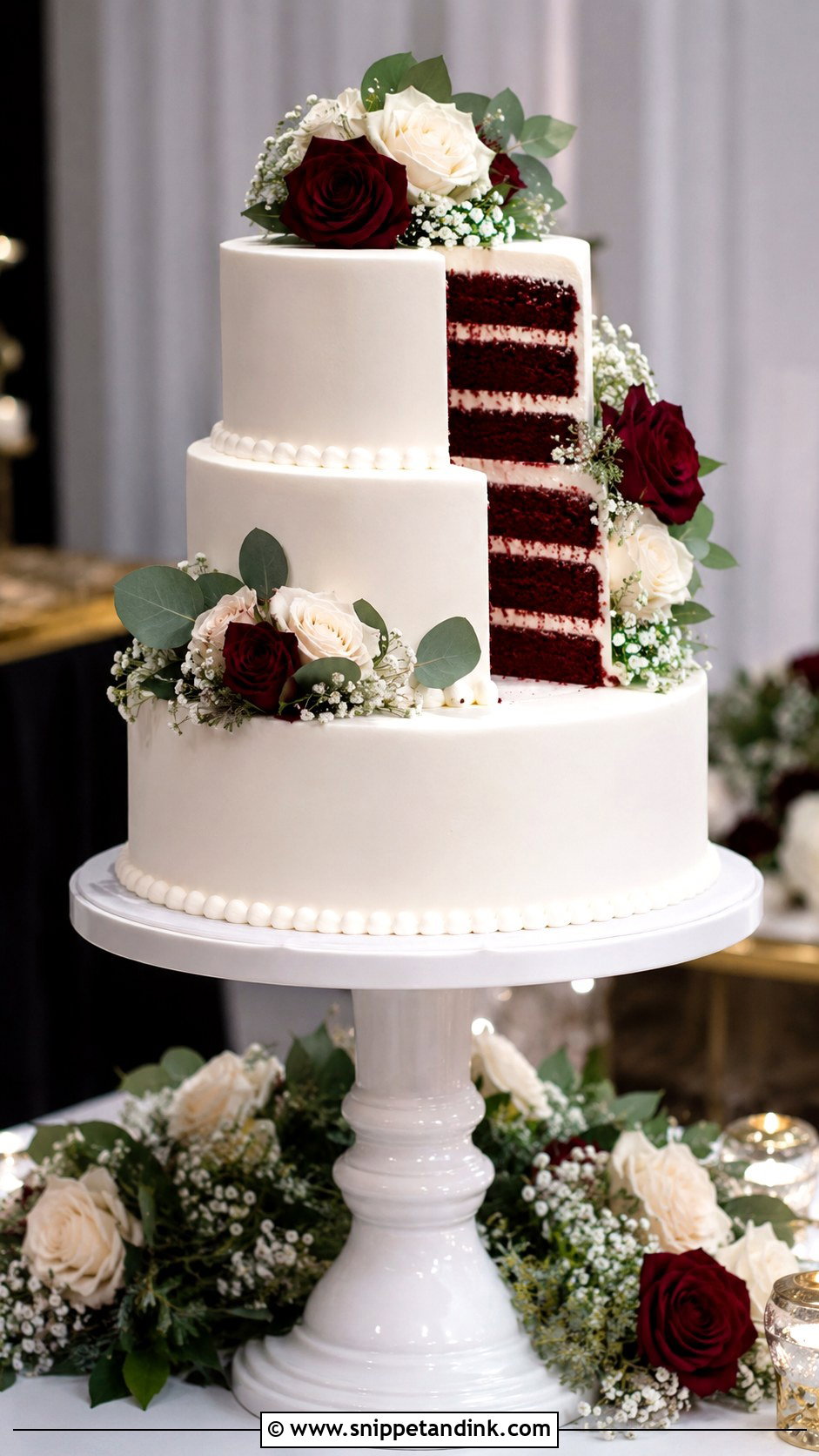
Three tiers is the shape most people picture when they hear wedding cake. Red velvet is a tender crumb, so every tier sits on its own board with dowels underneath; without them the bottom tier slowly compresses and the cake starts to lean by dessert. Fondant gives the most formal finish and buttercream feels softer. For decoration, think flowers between tiers, simple piping, pearls or a gentle drip. You can also change the filling by tier, cream cheese in one and raspberry in another, while the red velvet stays the same.
9. Red Velvet Wedding Cake With Raspberry Filling
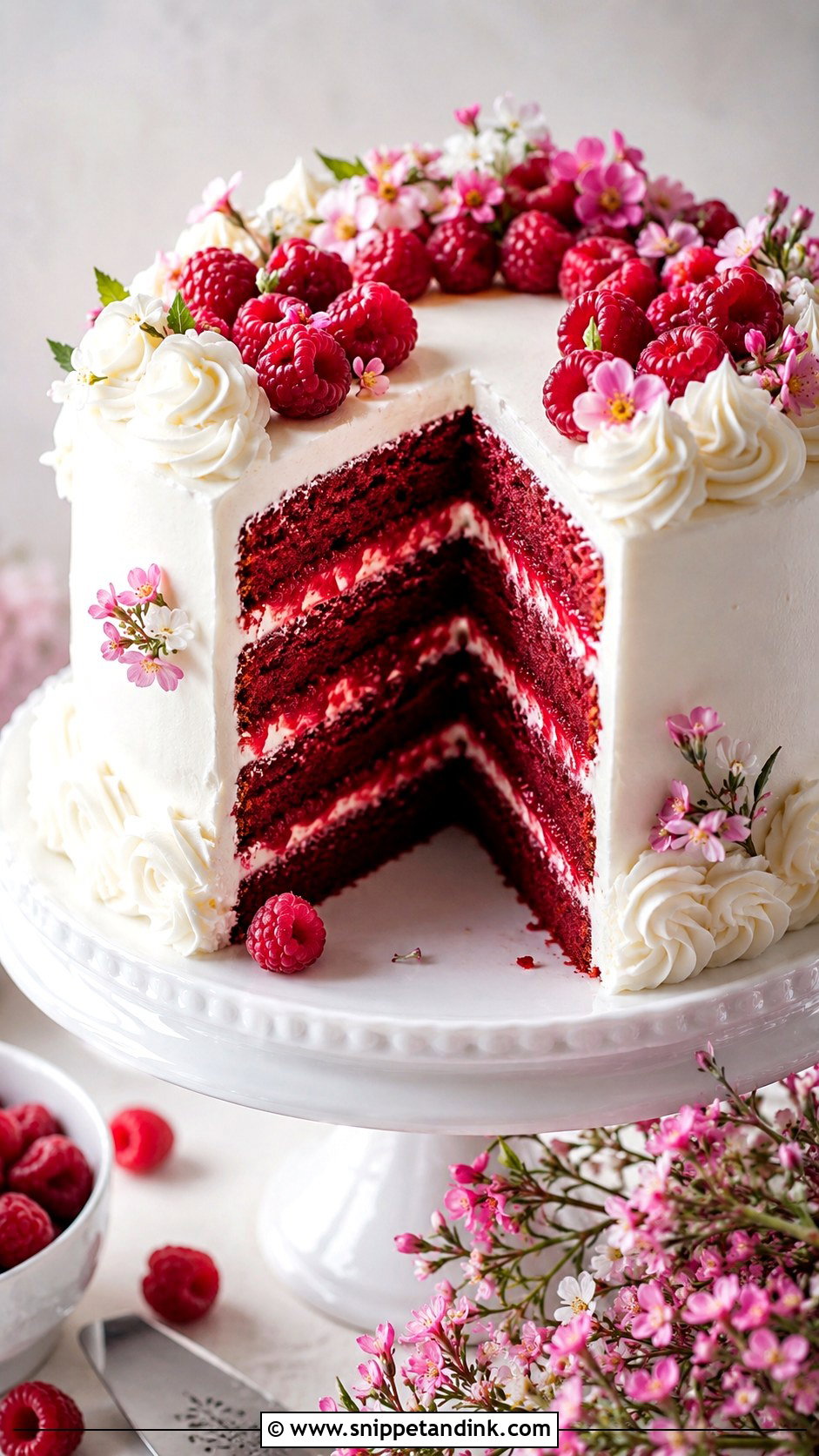
Raspberry wakes up the mild cocoa in red velvet, and the cut slice shows red cake, white frosting and a darker berry line. The filling has to be thick. Loose jam slides under the weight of upper tiers, so I pipe a dam of stiff frosting around the edge of each layer before the raspberry goes in. That one step is the difference between a clean slice and a tier that bulges at the sides. Outside, white buttercream with a few berries or fine piping is enough, and it reads fresh for spring and summer.
10. Red Velvet Wedding Cake With Chocolate Ganache
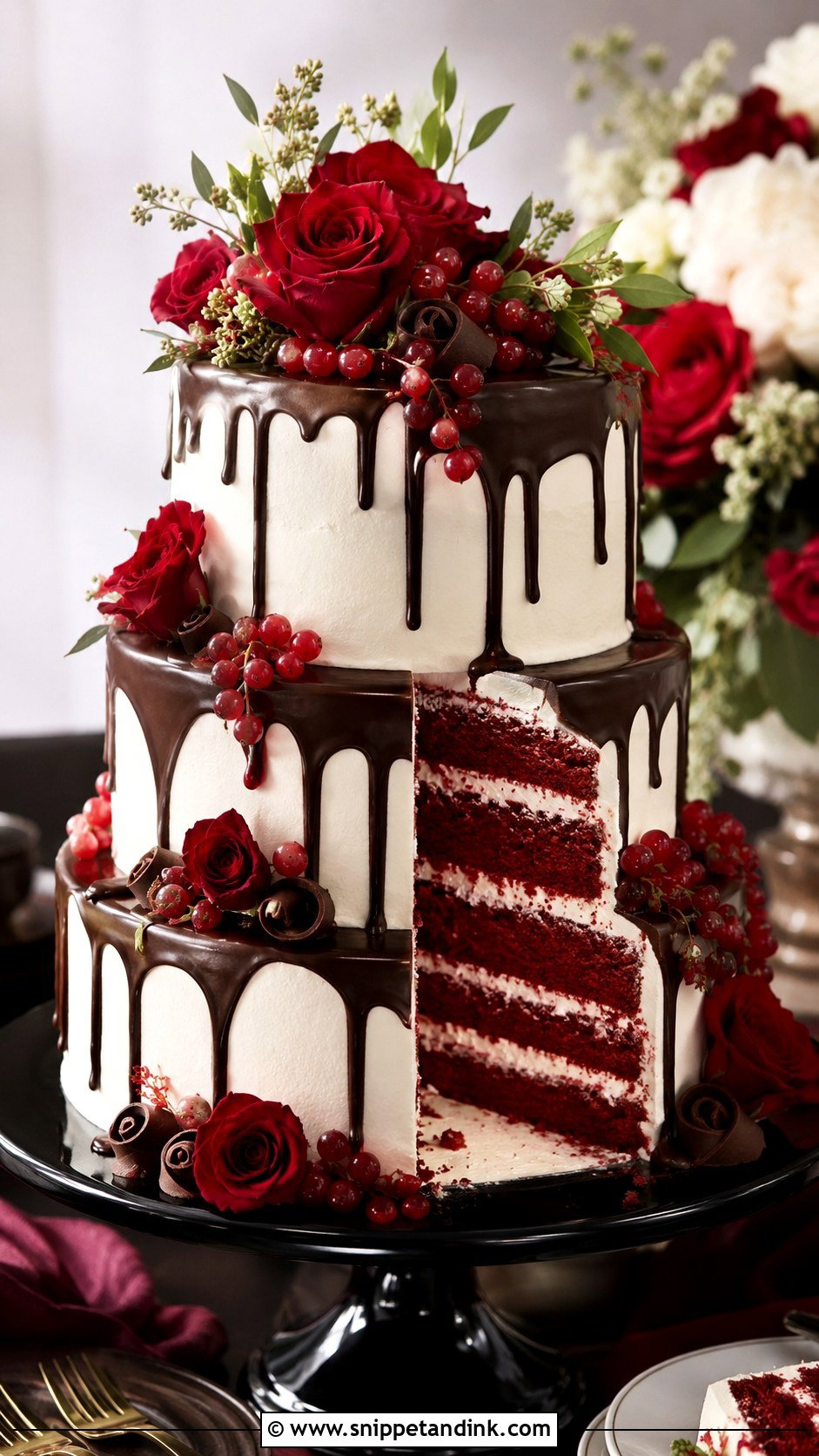
Ganache makes red velvet deeper and a little moodier. I use it as a filling or as a glossy chocolate drip, and either way it adds structure, because set ganache is far firmer than cream cheese frosting. That firmness helps under fondant or in a warm room. The risk is heaviness after a big dinner, so I balance dark chocolate with ivory buttercream or fresh berries. Evening receptions and dark palettes suit it best.
11. Red Velvet Wedding Cake With Fresh Berries
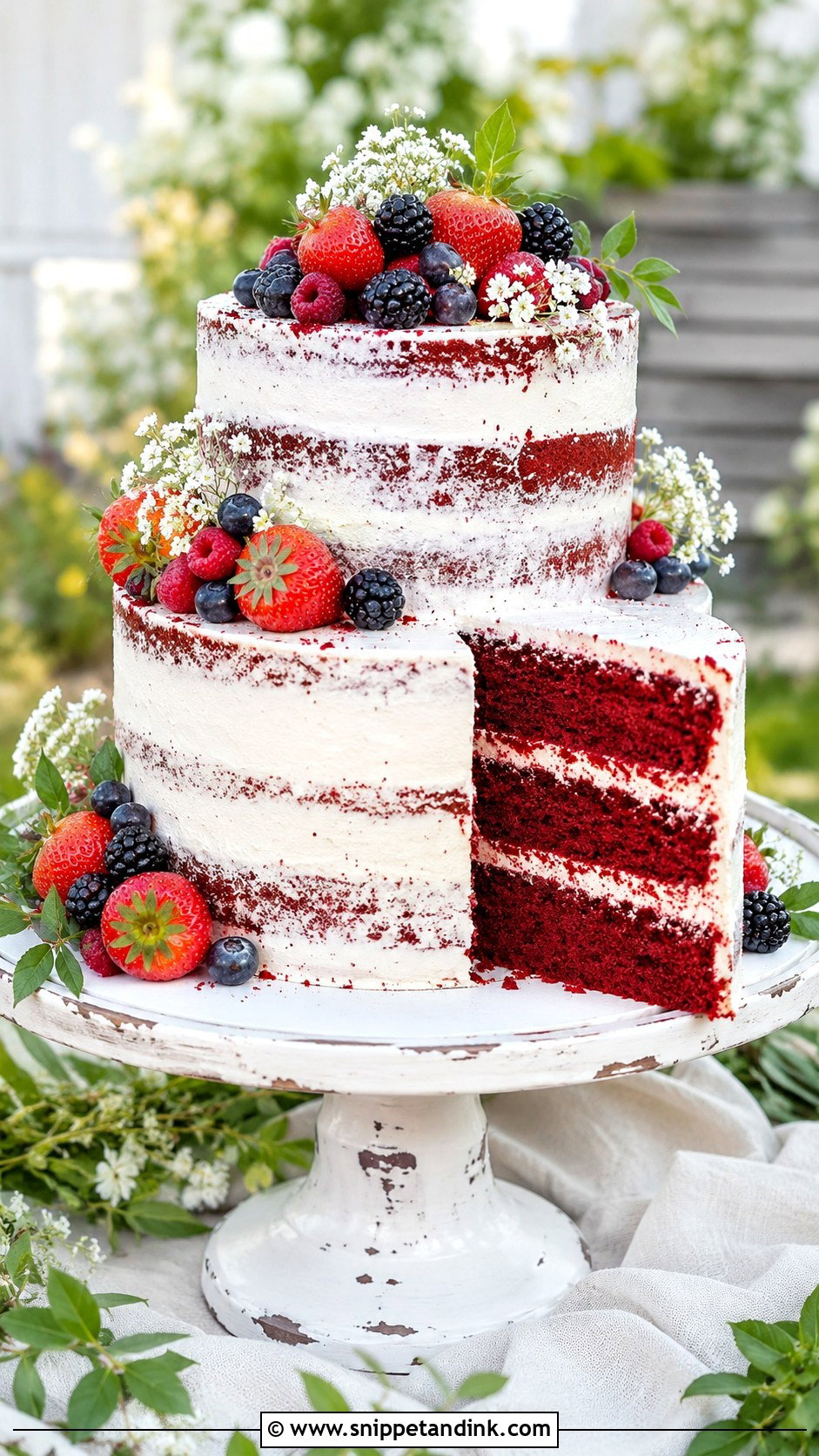
Berries give a just picked look, but they’re the least predictable decoration I use. Cut strawberries weep juice into frosting within a few hours, so I stick to whole berries, place them close to service and keep a small tray back for touch ups. Neat clusters on top, between tiers or around the base look intentional. Scattered everywhere, they look like an accident. Their tartness also keeps a sweet crumb and cream cheese frosting in check.
12. Red Velvet Wedding Cake With Pearl Details
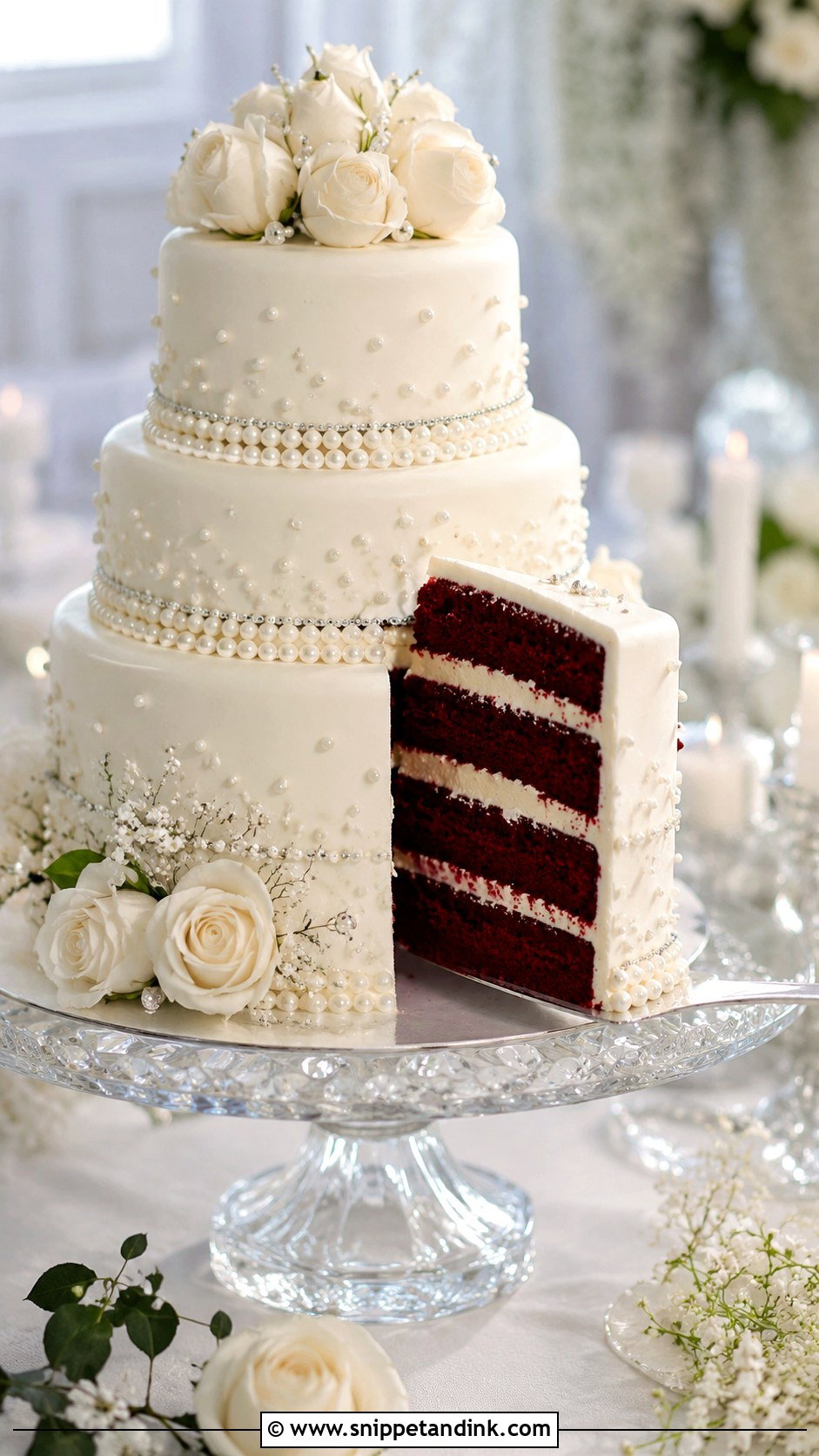
Sugar pearls are an easy, old fashioned finish, set around the base of each tier or worked into a piped border. They’re also one of the few decorations light enough to sit happily on cream cheese frosting. Placed one at a time with tweezers, they eat up hours, which is why pearl heavy designs often cost more than they look. Keep them small; big dragées are hard on teeth and take over a white cake. Church receptions and formal indoor rooms suit this one.
13. Red Velvet Wedding Cake With Vintage Piping
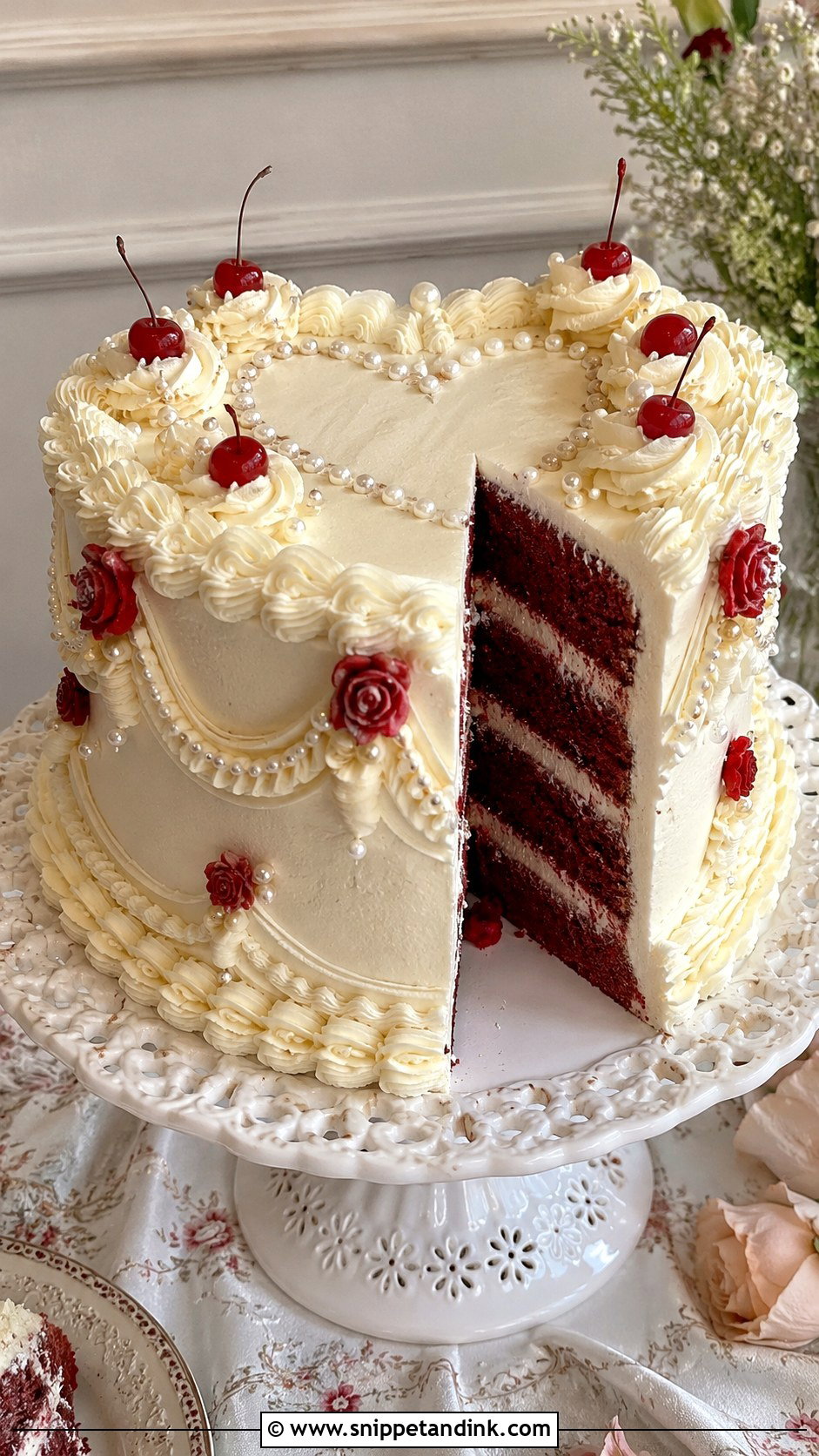
Vintage piping, the shell borders, swags and rosettes of older cakes, is back, and red velvet suits it because the plain red slice contrasts with all that fuss outside. Frosting choice matters more here than anywhere else in this list. Pure cream cheese frosting is too soft to hold crisp shells, so I pipe the outside with a firmer buttercream and save the cream cheese for the filling. Cherries, pearls or a small topper finish it. Expect it to take longer to decorate than a smooth cake, and to be priced that way.
14. Red Velvet Heart Wedding Cake
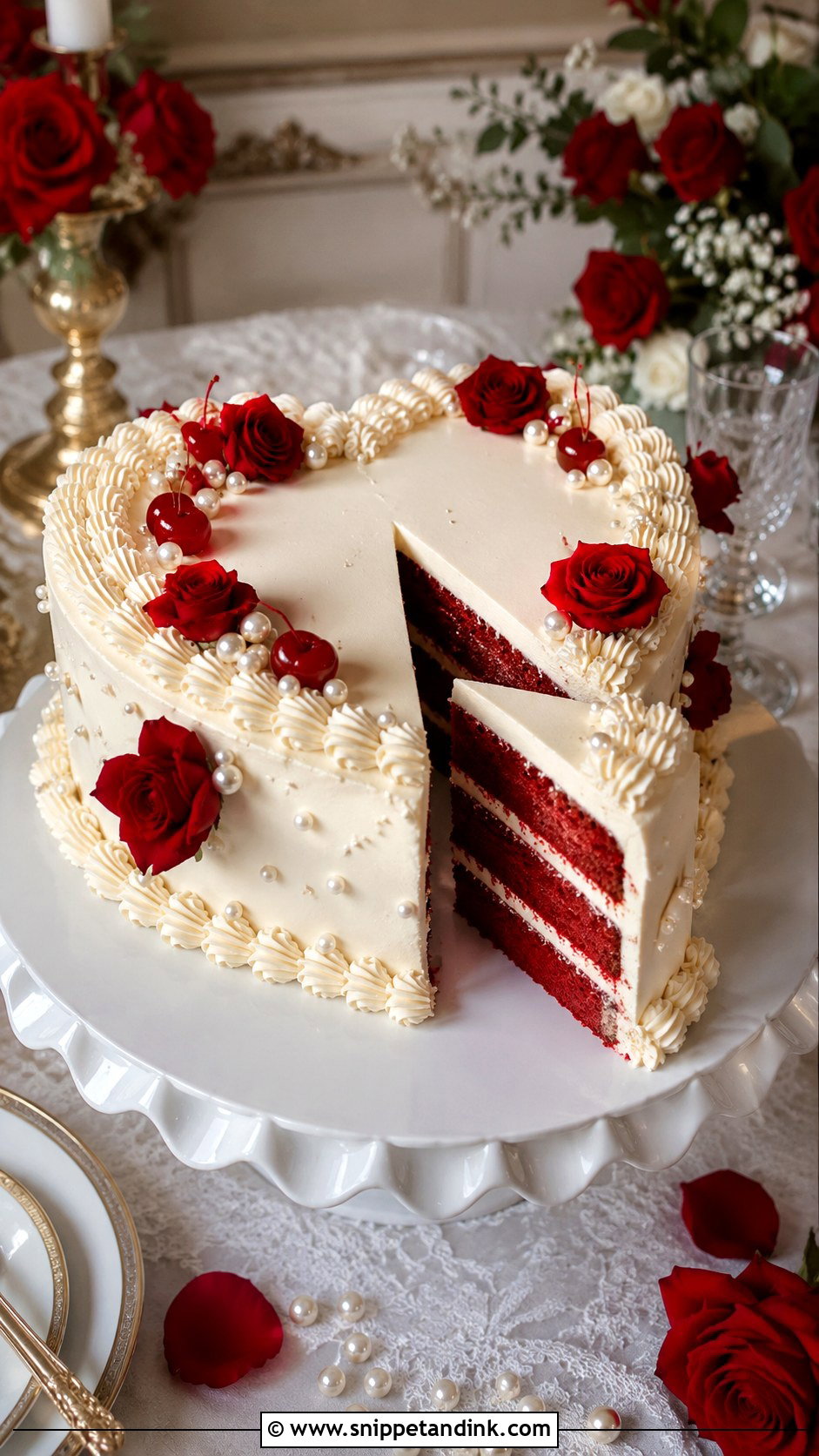
A heart breaks the round tier routine. It can be a single heart for a small wedding or a heart shaped top tier on a larger round display. The shape is harder to frost cleanly than it looks: the point and the dip at the top are where frosting either thins out or piles up, so I chill between coats to sharpen them. White vintage piping, cherries or a few pearls finish it. It feels right at a courthouse wedding or an intimate dinner, less so in a grand ballroom.
15. Red Velvet Wedding Cake With Sugar Flowers
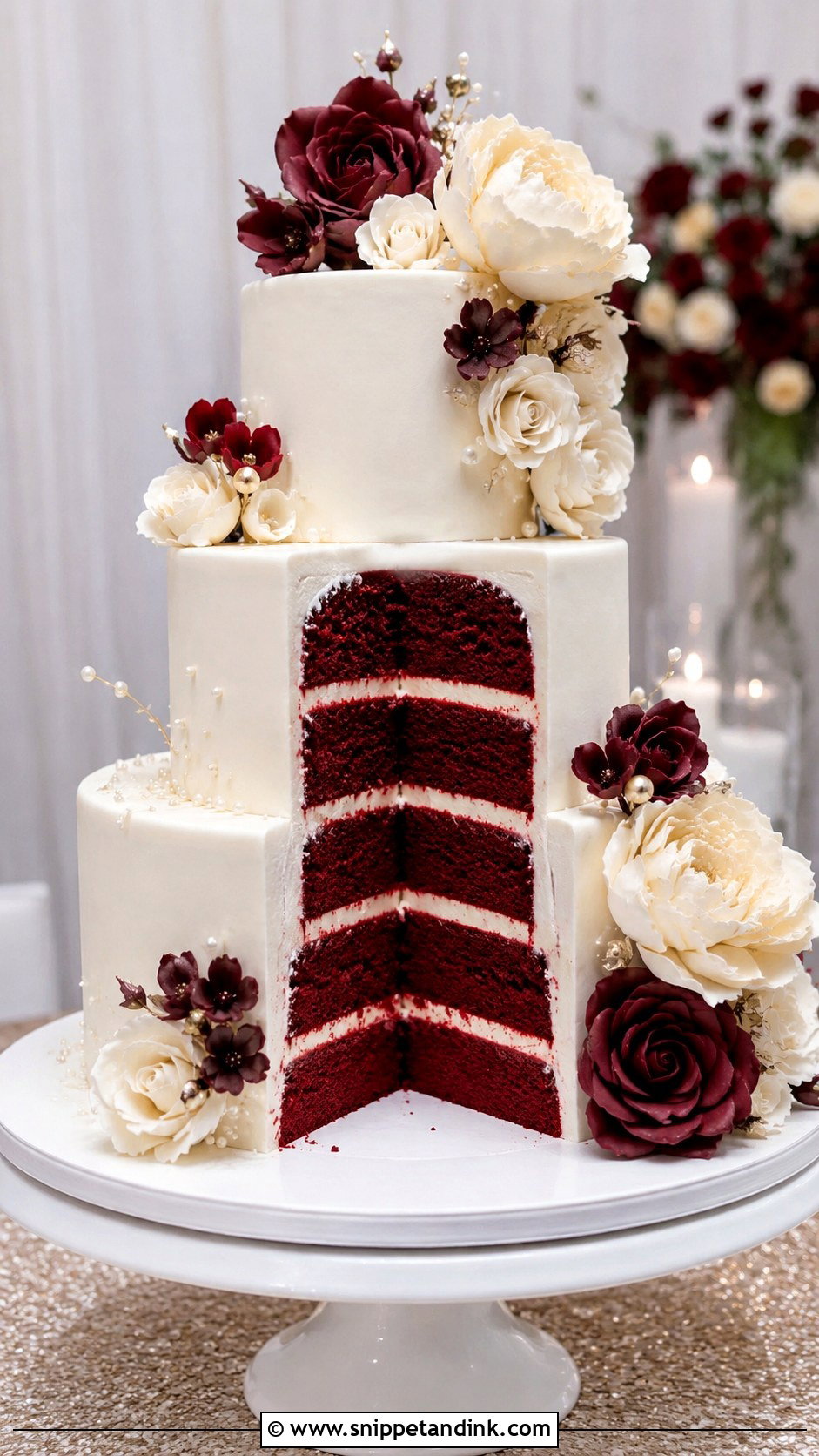
When fresh flowers won’t survive the room, sugar flowers are my answer. They’re shaped from gum paste in exact colors, red roses, ivory peonies, burgundy blooms, and they don’t wilt in summer heat. Two things to know. They’re made petal by petal, so order early; good sugar work isn’t a rush job. And humidity softens them, so I keep them dry and place them at the venue. On smooth white fondant or buttercream they look sculpted, and many couples keep the top flower afterward.
16. Red Velvet Wedding Cake With Buttercream Texture
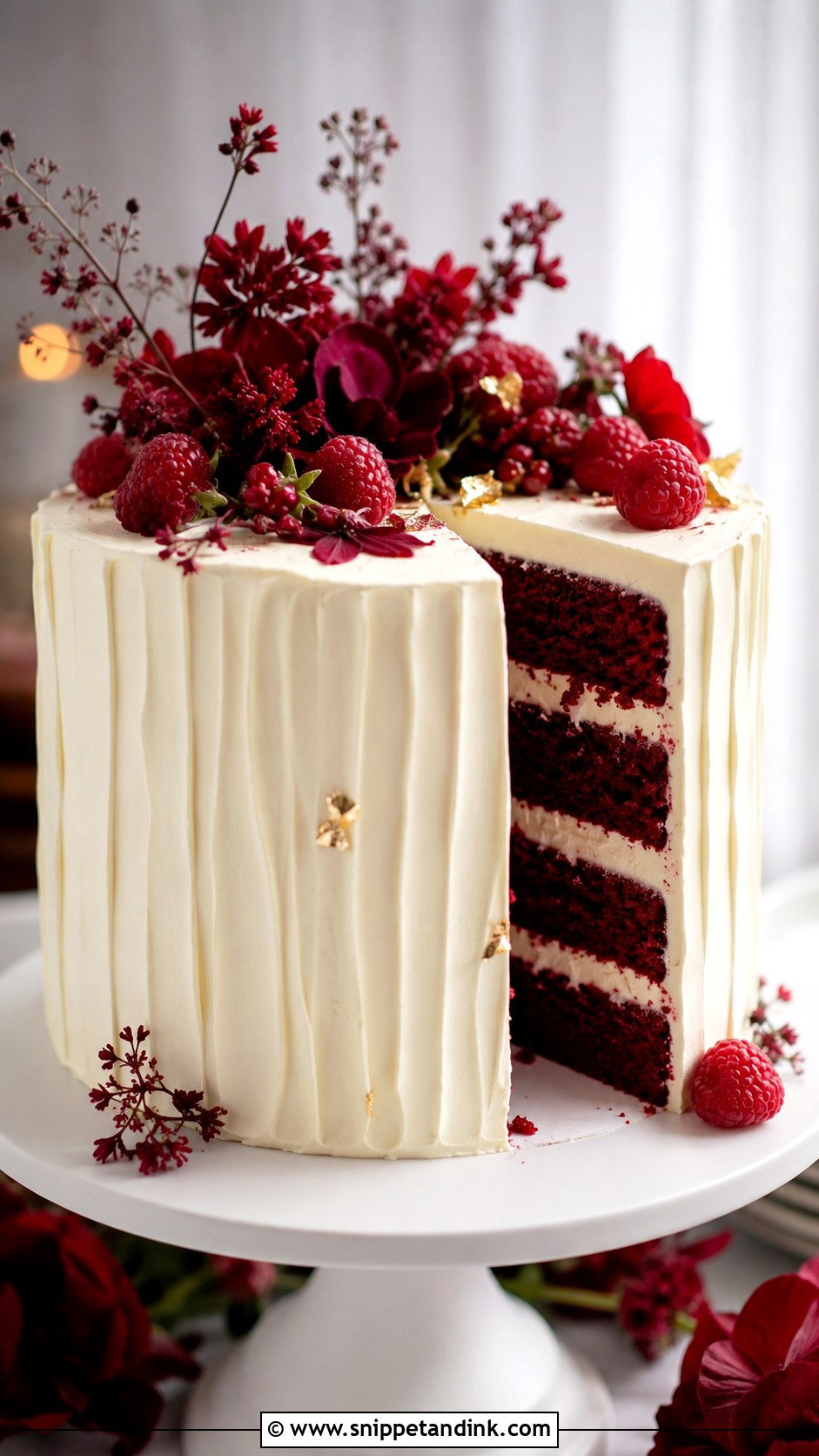
Combed ridges, palette knife strokes or soft waves give a plain cake movement without any decoration. Texture also forgives: a small bump disappears into the pattern, which helps when a cake has to travel to an outdoor venue. With red velvet I always do a thorough crumb coat first, because red crumbs caught in white texture show up like freckles. A few flowers or berries on top are plenty.
17. Red Velvet Wedding Cake With Burgundy Flowers
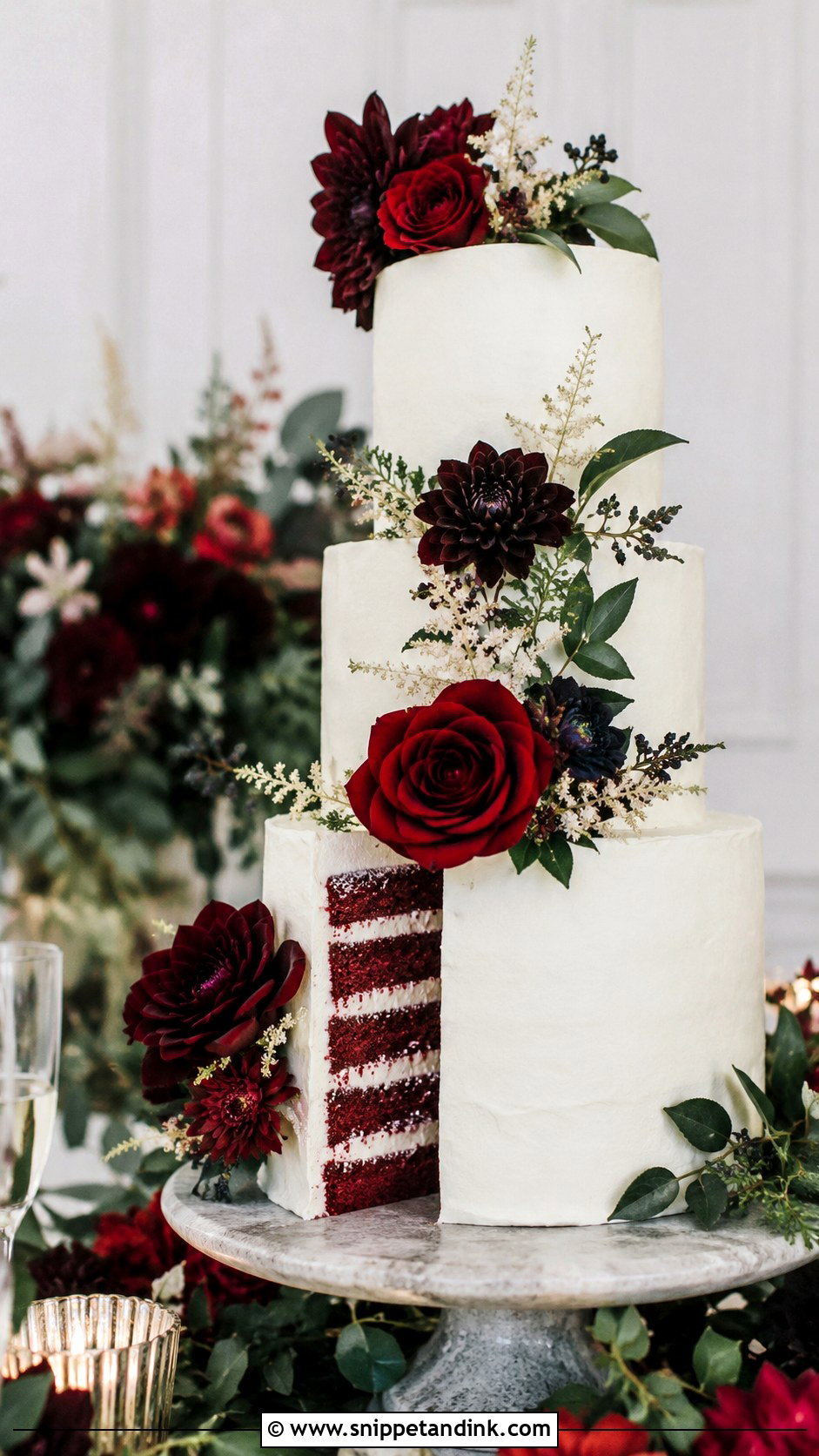
Burgundy flowers suit fall weddings and evening receptions, and they let the outside of the cake hint at the color inside. Dahlias, ranunculus and dark roses all work over ivory frosting with a little greenery. Don’t crowd it; one placement across the top two tiers is often enough because the color is already strong. Dark petals can bleed onto damp frosting, so I put a small barrier under them wherever they touch.
18. Red Velvet Wedding Sheet Cake
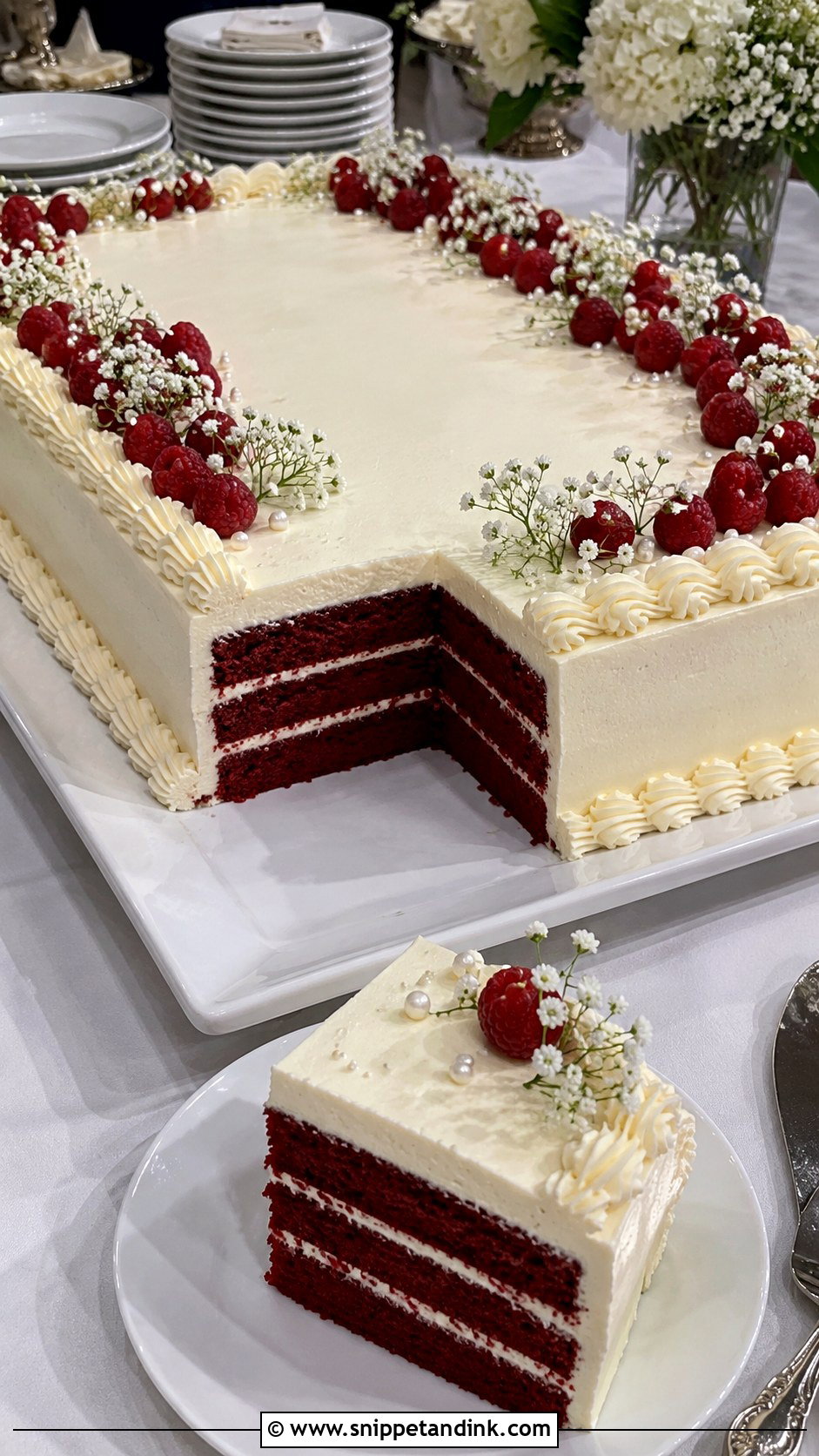
A sheet cake is the quiet workhorse of a lot of weddings. A small tiered cake handles the cutting and the photos, and sheet cakes in the same red velvet get sliced in the kitchen, which usually brings the cost per slice down. Sheet layers bake evenly and stay moist, with cream cheese filling between them. If the sheet is going on display, pipe a border and add berries or edible flowers. If it never leaves the kitchen, keep it plain and save the money.
19. Red Velvet Wedding Cake With Ombre Frosting
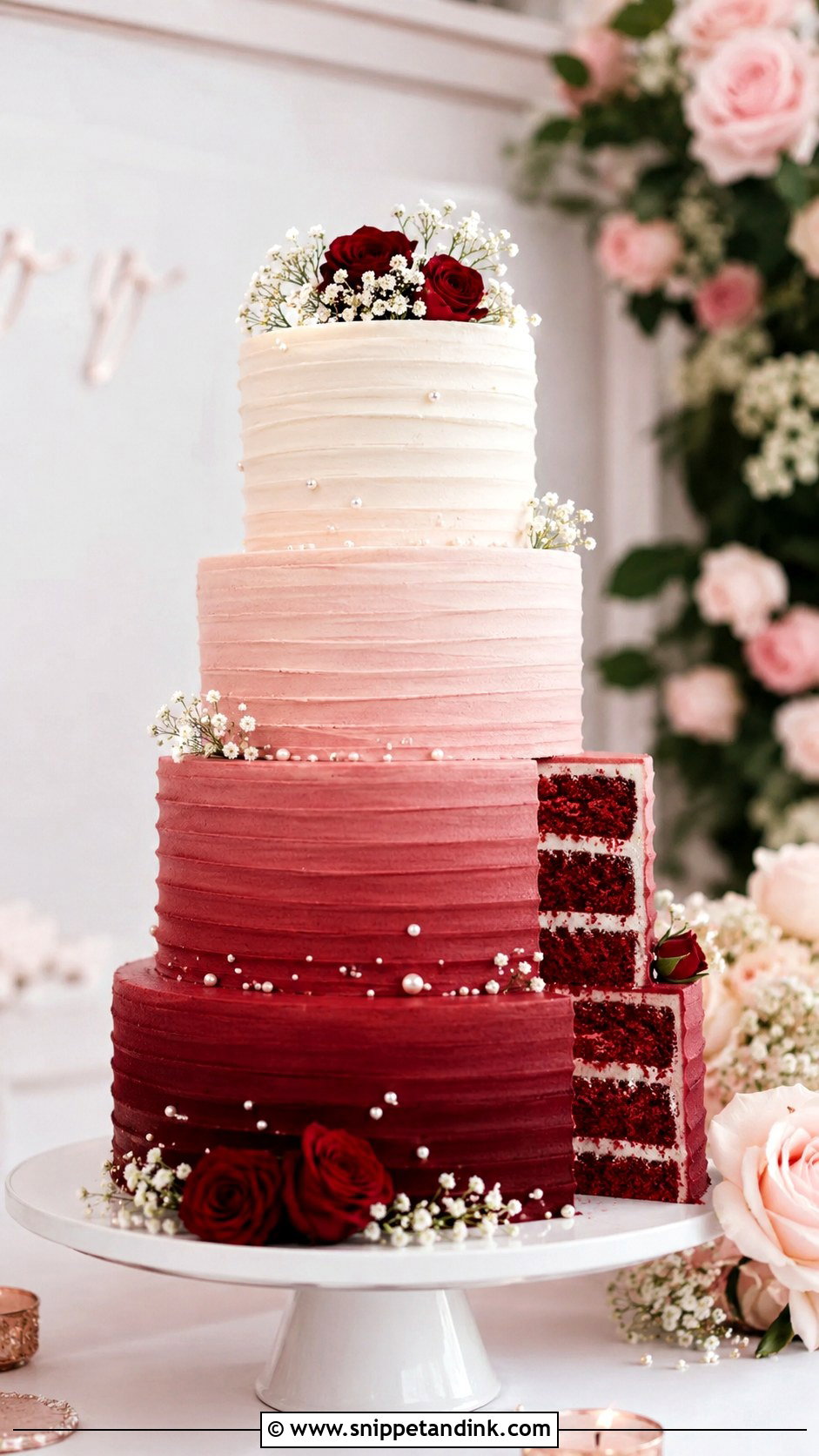
Ombre runs from deep red at the base to blush or ivory at the top, so red joins the palette without a fully red cake. A true deep red frosting takes a lot of gel color, which can taste bitter and stain lips, so I mix the darkest shade in small amounts and let it rest, since red deepens over a few hours. Smooth buttercream shows the fade best. Keep decoration light, a few flowers or a simple topper, because the color is doing the work.





20. Red Velvet Mini Wedding Cakes
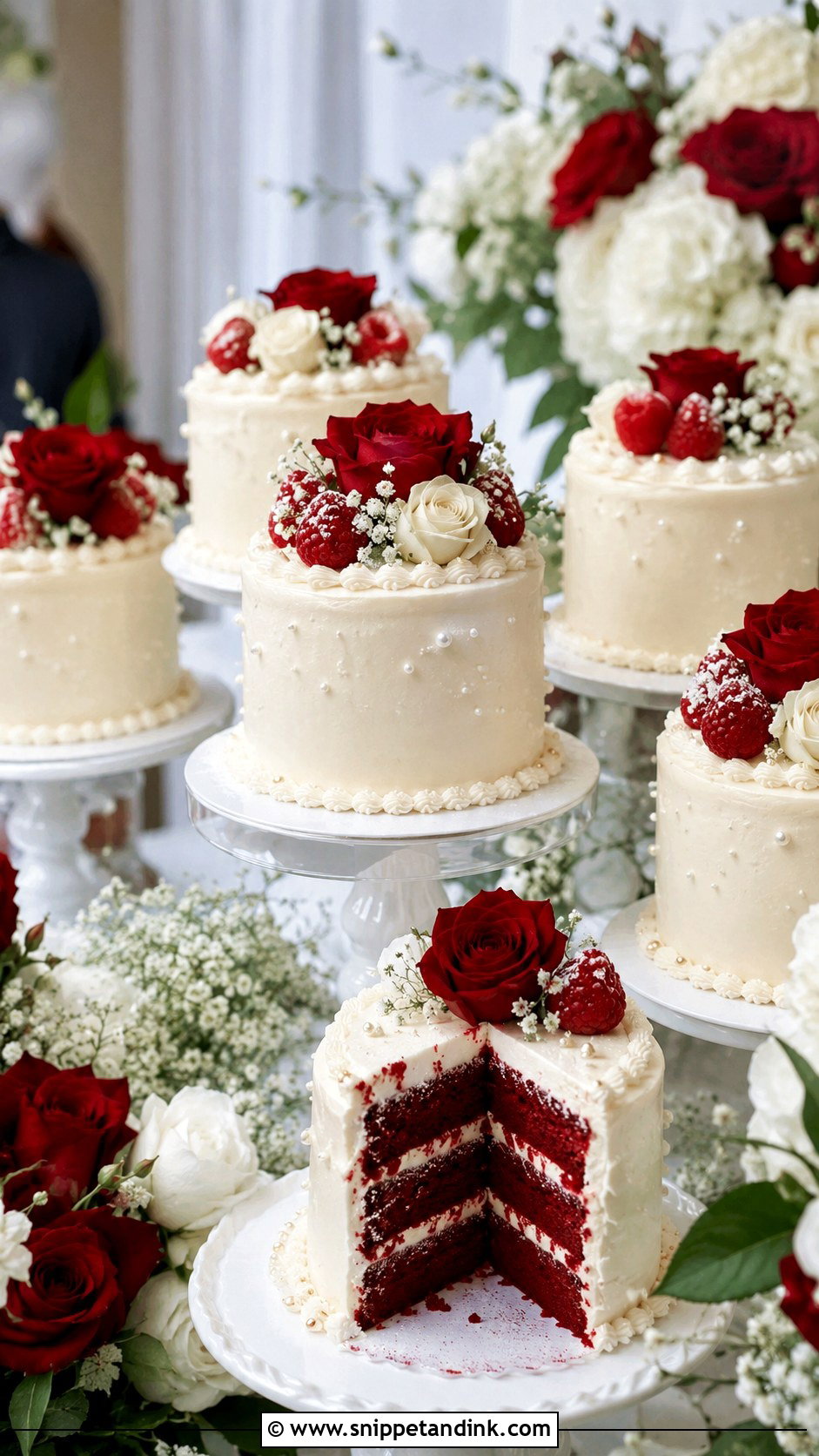
Red velvet mini wedding cakes can sit at every place setting or fill a dessert table. Each gets its own layers, cream cheese frosting and a small decoration that matches the main cake. They’re slow work: every tiny cake needs leveling, filling and frosting, so the labor runs well above a tiered cake feeding the same crowd. More exposed surface also means they dry out faster, so I assemble them close to the day and keep them covered. If you’d rather skip a big cutting with everyone watching, they solve that neatly.
Cream Cheese Frosting in a Warm Room
Cream cheese frosting is the reason people love red velvet, and also the reason I plan this cake differently from a vanilla sponge. It’s perishable, so the cake stays refrigerated until it’s needed and comes out as late as the timeline allows. Outdoors in summer, I want it cut and served within a couple of hours of going on display.
It’s also soft. In a warm room, tall tiers frosted only in cream cheese can bulge and slip, which is why I often coat the outside in a sturdier buttercream or ganache and keep the tangy frosting inside. A fondant covered cake brings a different issue: carried from a cold fridge into a warm, humid room, it beads with condensation. That moisture dries off if nobody touches it, so the cake goes out early enough to settle.
Questions worth asking at your tasting
- Is the outside frosting the same as the filling, or something firmer?
- How long can the cake sit out at my venue, given the season and the room?
- Will it arrive chilled, and who sets it up and adds flowers?
- Is the red from gel color, and will it taste of it?
- If I need extra servings, can you make a kitchen cake in the same flavor?
Which Red Velvet Cake Suits Your Reception?
The slice does the talking with red velvet, so the job is getting the crumb moist rather than gummy, picking a frosting that can cope with your room and decorating with restraint. A tall three tier, a semi naked cake for a barn, a vintage heart for a courthouse or minis at every place can all work. The right one is whichever has frosting, flowers and a size that suit your venue and season. Bring those details to your tasting and the design usually settles itself.
You'll Like These Ideas:



Leave a Reply