
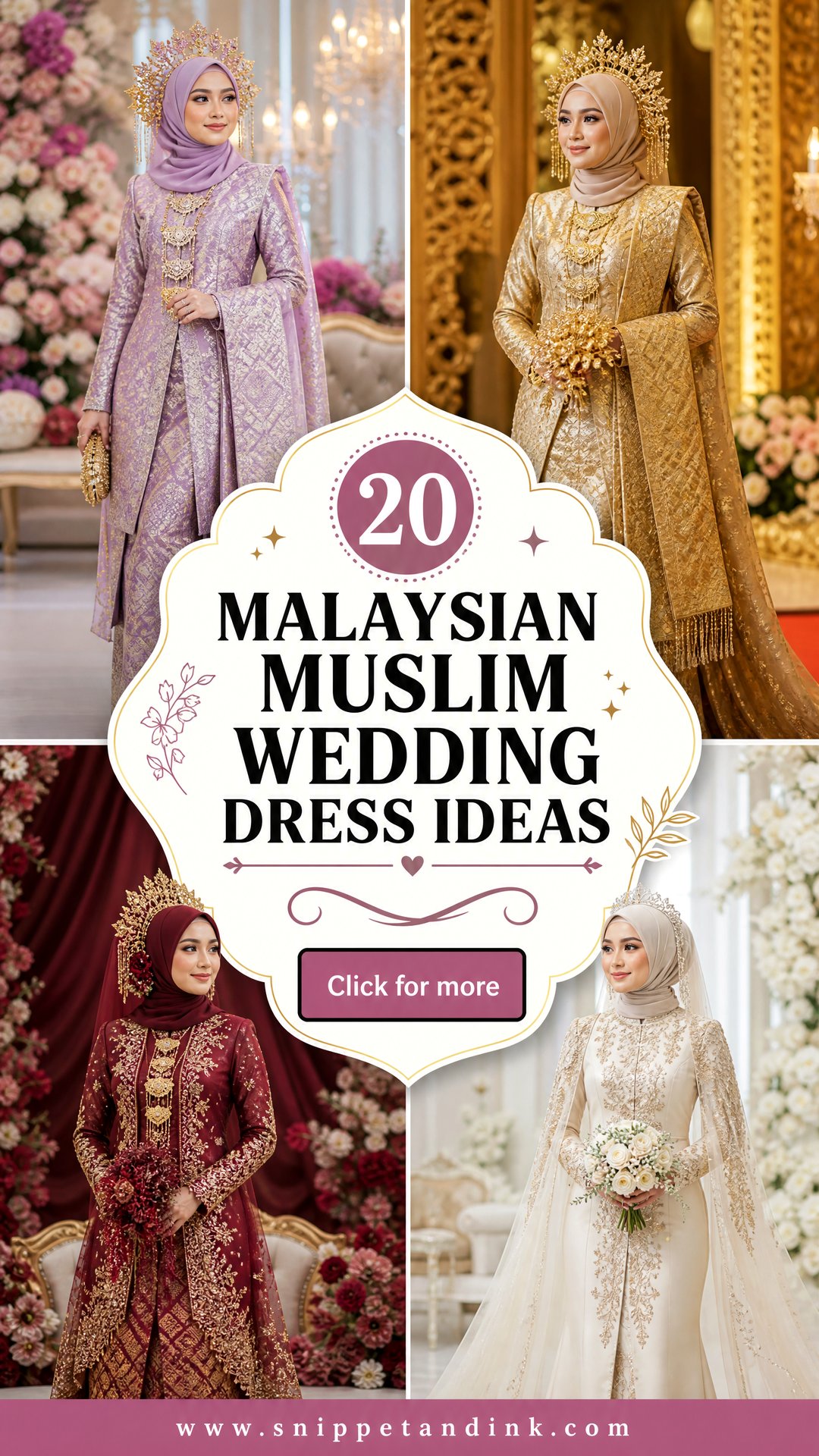
Malay bridal dressing balances three things: full coverage, good tailoring and cultural details that families recognize instantly. The twenty looks here range from traditional baju kurung sets and kebaya to flowing gowns and modern separates, each with the hijab, shoes and jewelry already paired. You can shift the colors and fabrics for the akad nikah, the bersanding, a reception or a small family event. Songket, lace, satin, brocade and chiffon each behave differently on the body, and in a warm country the lining matters as much as the outer fabric. I always start with how a bride will spend her day, then choose the cloth.
Ordering a Custom Baju Kurung Without a Last-Minute Rush
Most Malay brides have at least one outfit made to measure, and tailors book up faster than people expect. The weeks before Hari Raya are the worst: many tailors stop taking orders well before the festival, so a wedding soon after Raya needs an order placed months in advance.
- Start three to six months out for a custom outfit, longer if the fabric is handwoven songket, which can take weeks to weave.
- Bring the actual fabric, the hijab you’ll wear and photos of the shape you want to the first appointment.
- Plan two fittings at least: one for shape, one with shoes and underlayers a few weeks before the day.
- Ask whether the price includes lining, beading and alterations. Quotes vary widely, and these extras are often separate.
Handwoven songket and machine-made songket look similar in photos but feel different: the handwoven kind is softer and more costly. If the budget is tight, I’d spend on the piece people see most closely, usually the skirt, and keep the top in plain silk.
1. White Baju Kurung Wedding Dress
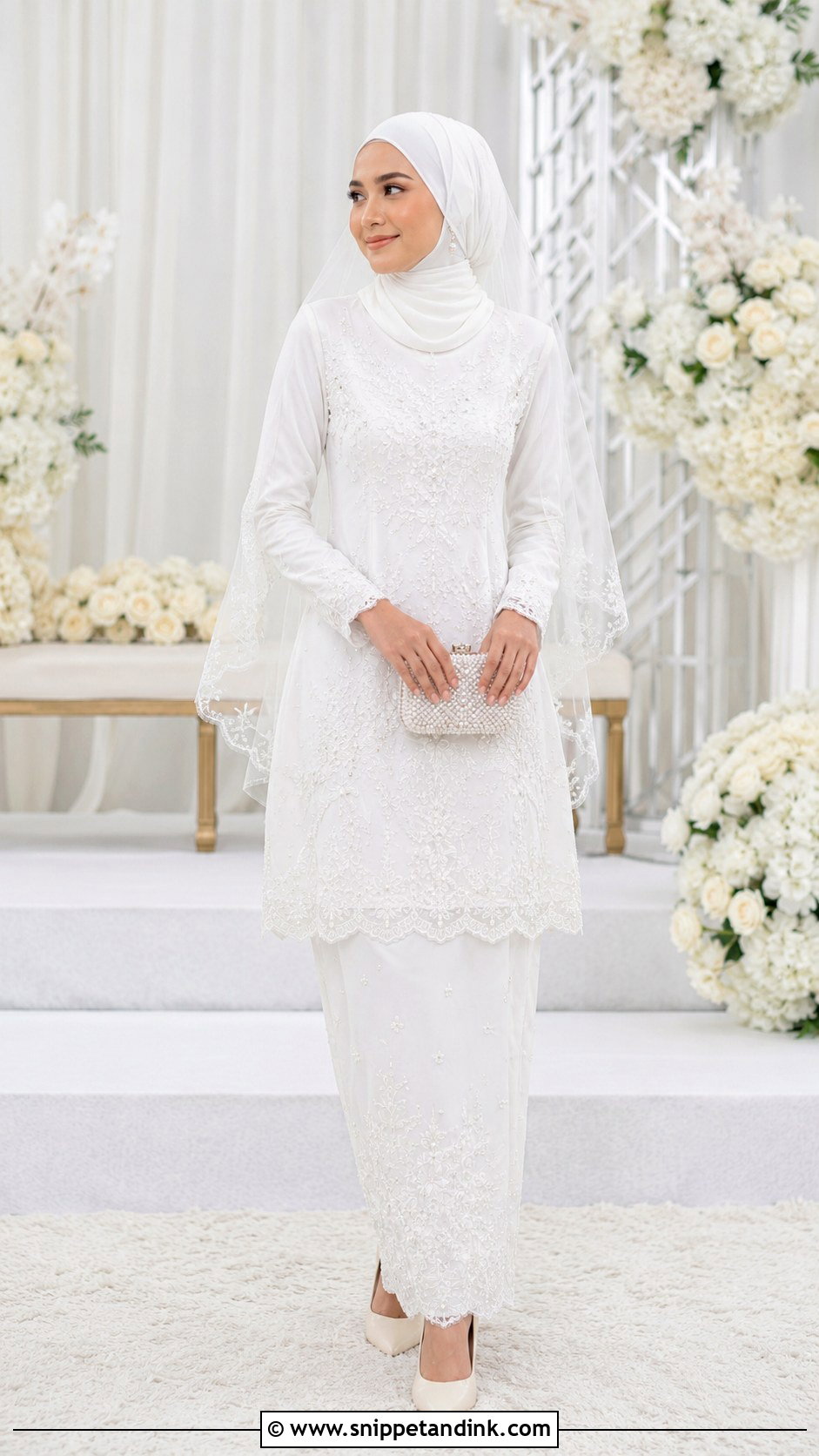
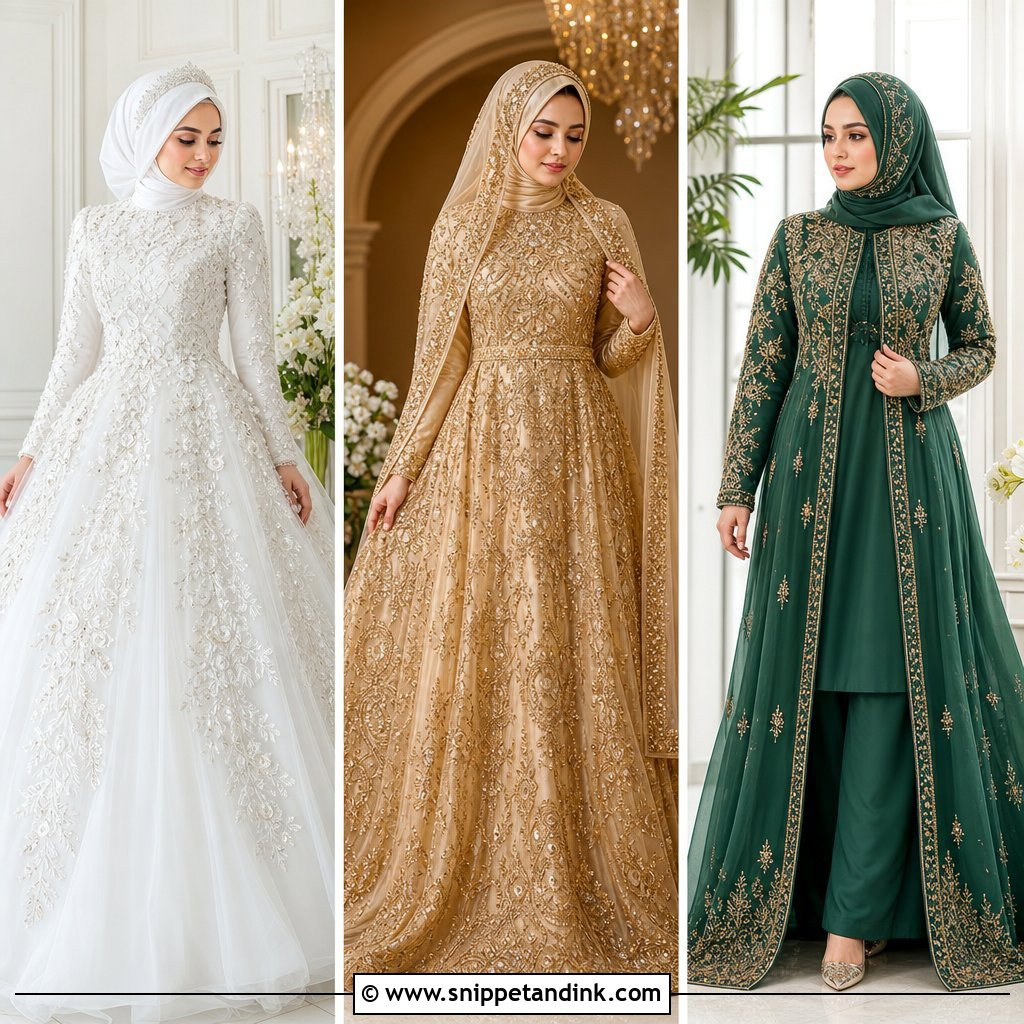
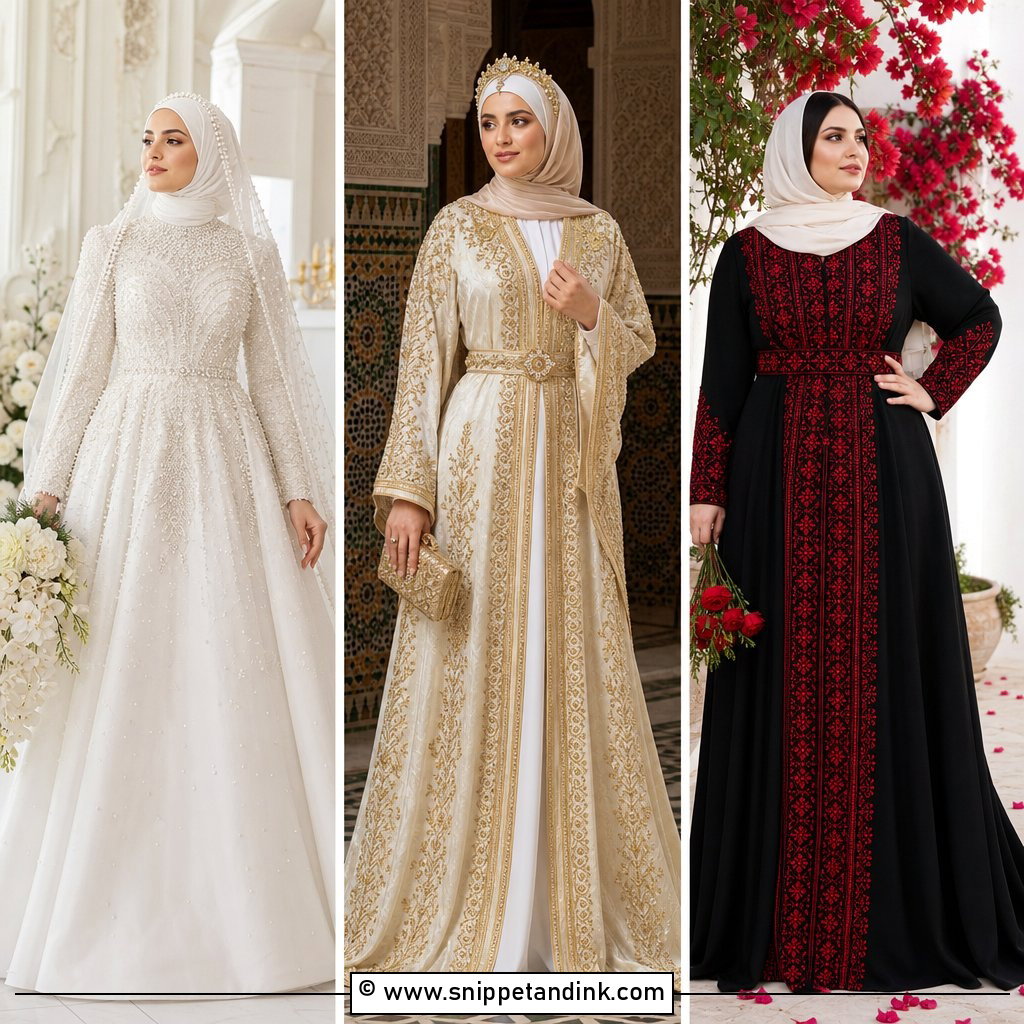
For the akad nikah, a white baju kurung is still the outfit I’m asked for most. Look for a softly structured tunic with long sleeves, a high neck and gentle waist shaping, over an ankle-length skirt. Fine lace, pearls or tonal embroidery add depth; keep them to one technique so the white stays clean. An opaque chiffon hijab, a short veil, ivory pumps, a pearl clutch and a silver brooch at the shoulder finish it. Hold the fabric up to a window before you buy. White goes see-through under strong light, and only a full lining stops it. Mosque ceremonies, home solemnizations and minimal themes all suit it.
2. Ivory Songket Baju Kurung Wedding Dress
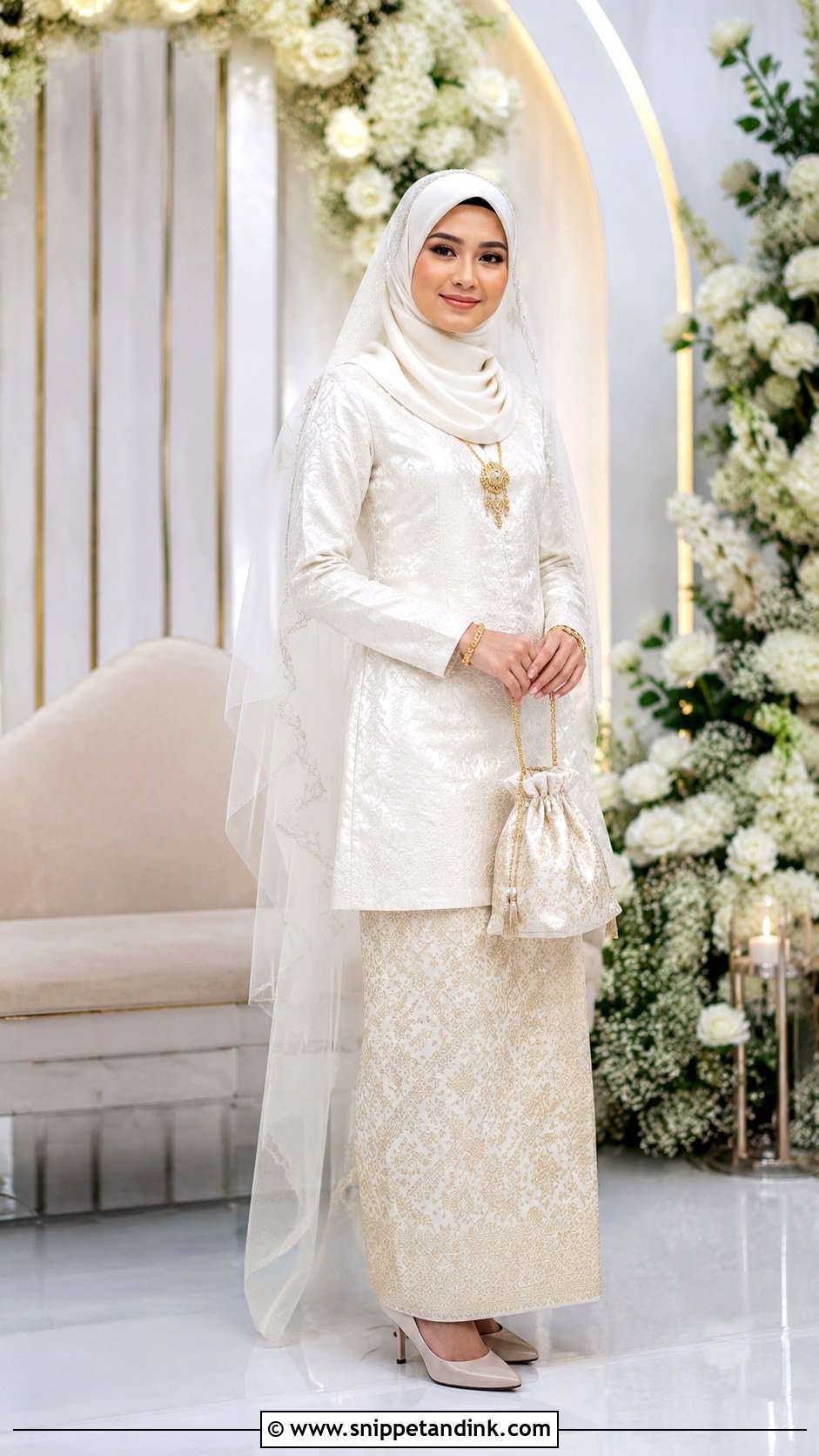
Ivory songket on the skirt and plain silk or satin on the top is the balance I like best: the ivory songket skirt with subtle gold motifs shows the weave clearly, and the outfit doesn’t turn rigid. A smooth ivory hijab with a veil falling behind the shoulders, gold earrings, a kerongsang-style brooch and champagne heels pick up the metallic thread. Swap the clutch for a structured potli if you want something more ceremonial. Songket has almost no give, so ask your tailor for side openings lined with a matching fabric; you can walk freely and nothing shows. It sits right at a traditional bersanding.
3. Lace Baju Kurung Wedding Dress
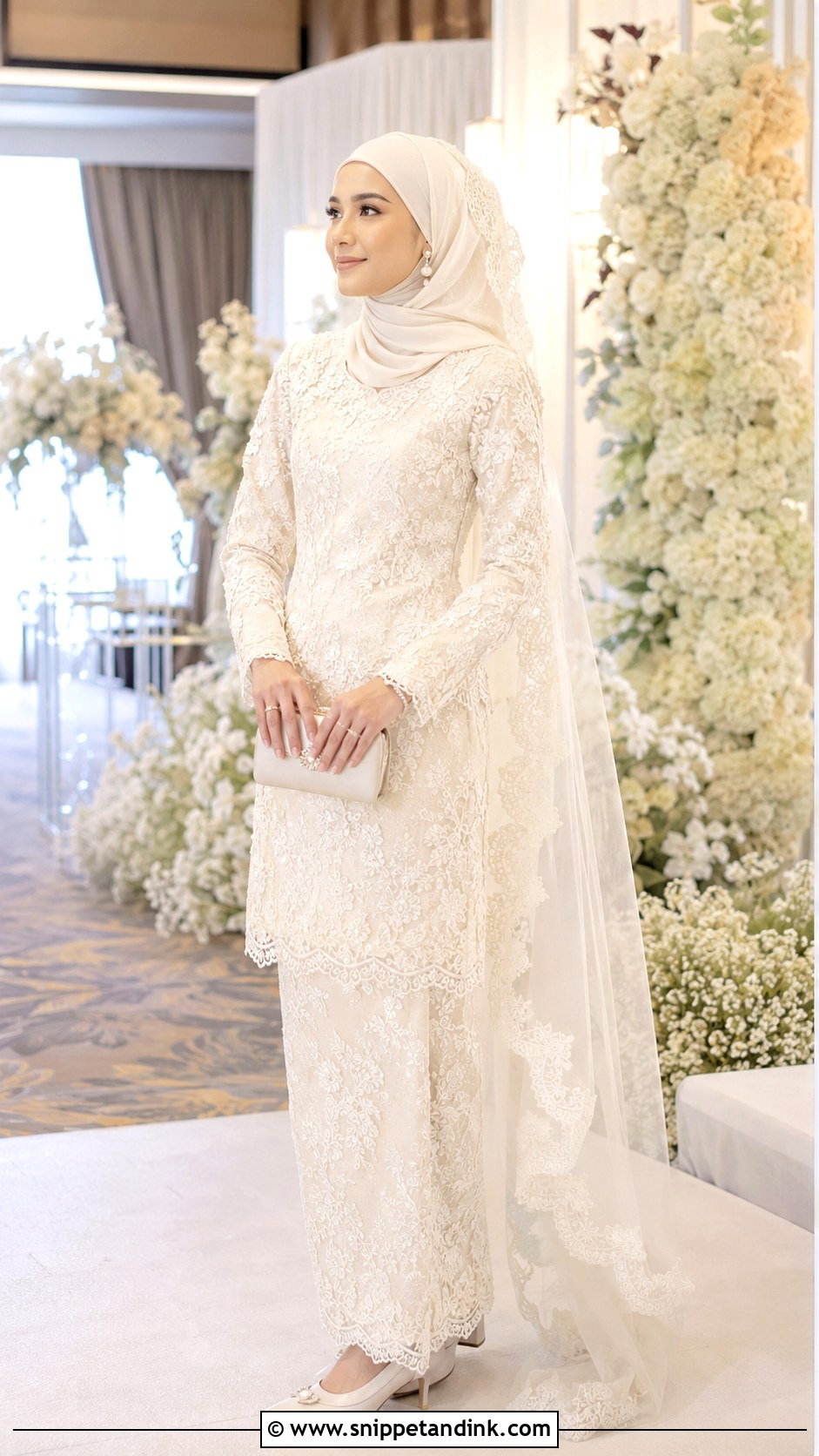
Lace over opaque satin gives a classic baju kurung its bridal finish. Floral lace in off-white, cream or pale champagne photographs more kindly than bright white, which can glare. Keep the heavier lace at the cuffs, neckline and hem. The lining is where cheap versions fail: check that it runs through the sleeves, not just the body, because unlined lace sleeves show the arm under flash. A plain chiffon hijab, a lace-edged veil, closed-toe ivory heels, pearl drops and a small satin bag complete it for an indoor nikah, a garden reception or a hotel.
4. Modern Baju Kurung Wedding Dress
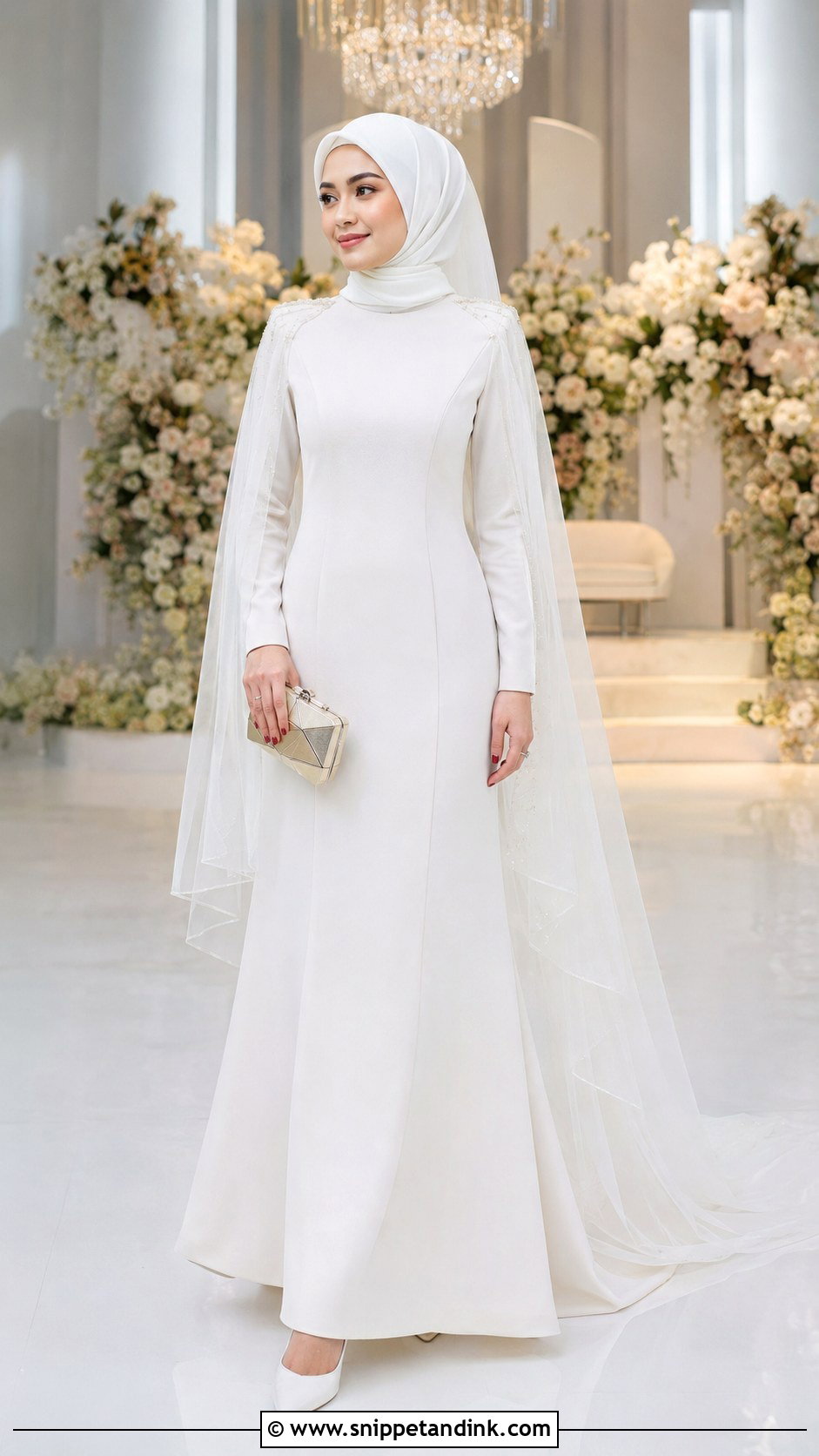
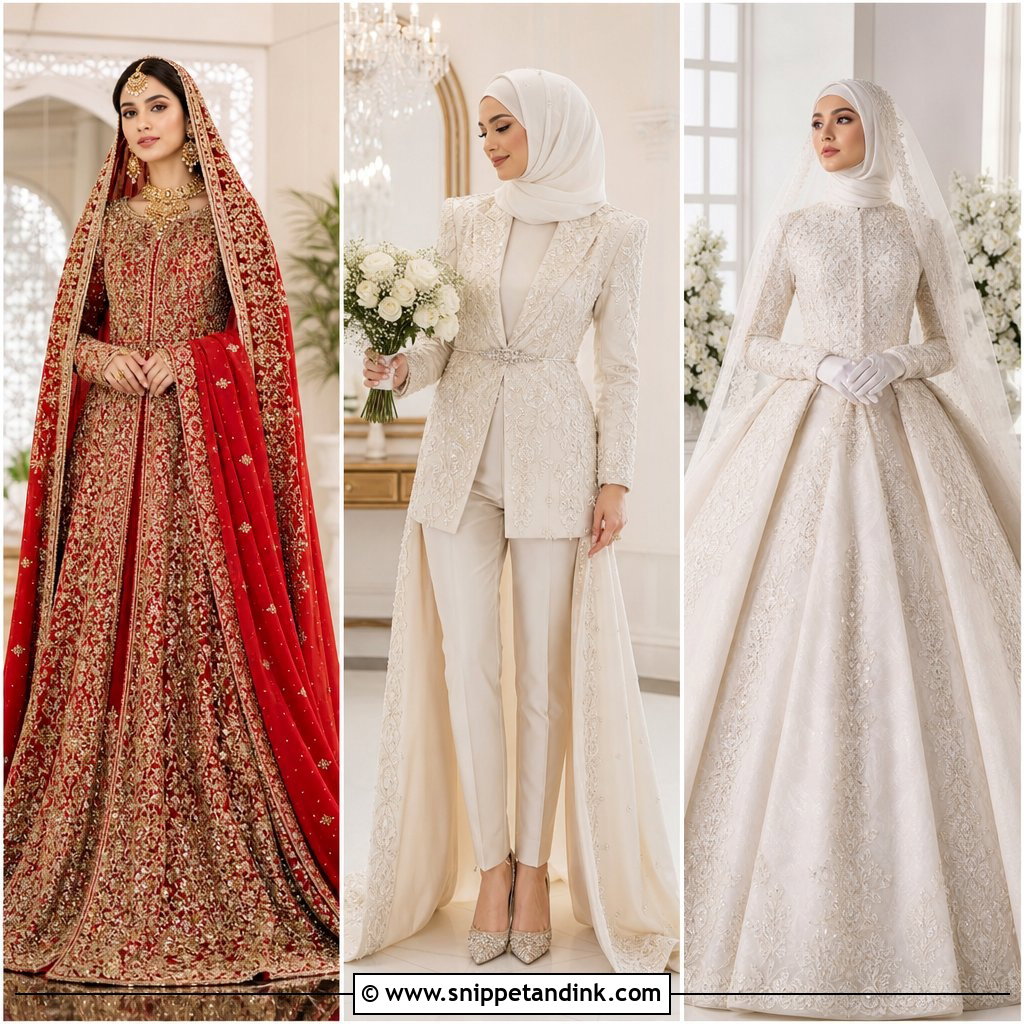
Modern baju kurung relies on cut more than decoration. Ask for a fitted but not tight tunic with princess seams, a raised neckline and a skirt that drops cleanly from the waist, in matte satin, crepe or light brocade. Soft white, oyster or pale beige keep the palette contemporary. A neatly wrapped hijab, a detachable shoulder veil, pointed pumps and a geometric clutch finish it, with a little crystal along the cuffs and side seams. Stiff brocade creases into deep lines across the lap after a long sitting, so choose something with a little drape if your ceremony involves sitting on the floor.
5. Baju Kurung Pahang Wedding Dress
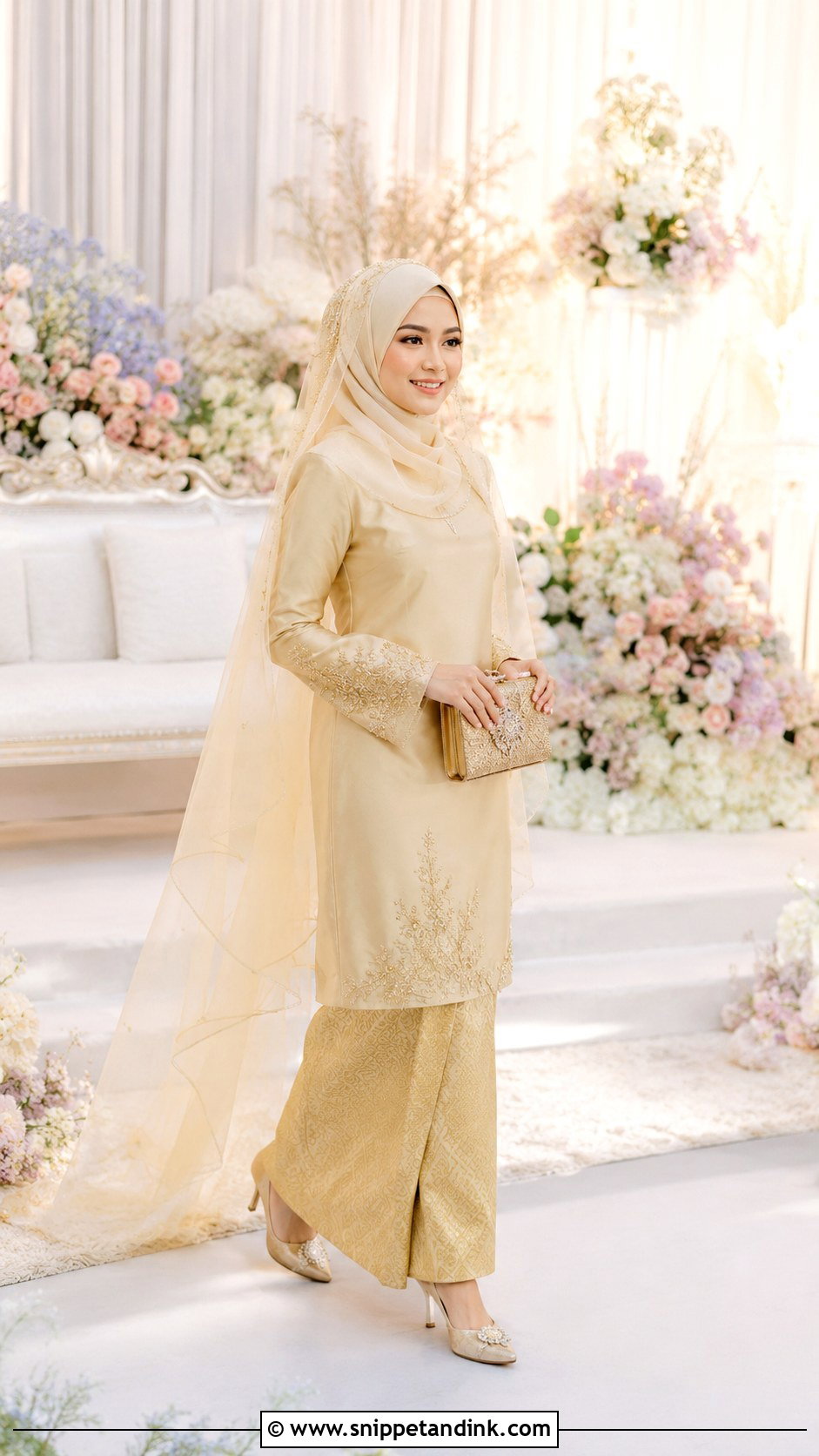
A baju kurung Pahang has a longer top and a gentle flare that moves when you walk, and it is one of the most comfortable shapes for a full day. Silk crepe or light satin in ivory, soft gold or blush works well, with embroidery at the neckline, sleeves and lower edge only. A songket skirt underneath brings in the ceremonial note. Pair a long chiffon hijab, a simple veil, low embellished heels and a gold clutch. Keep the hijab drape smooth; a busy hijab over a flowing tunic blurs the outline. The relaxed cut suits most body shapes.
6. Baju Kurung Riau Wedding Dress
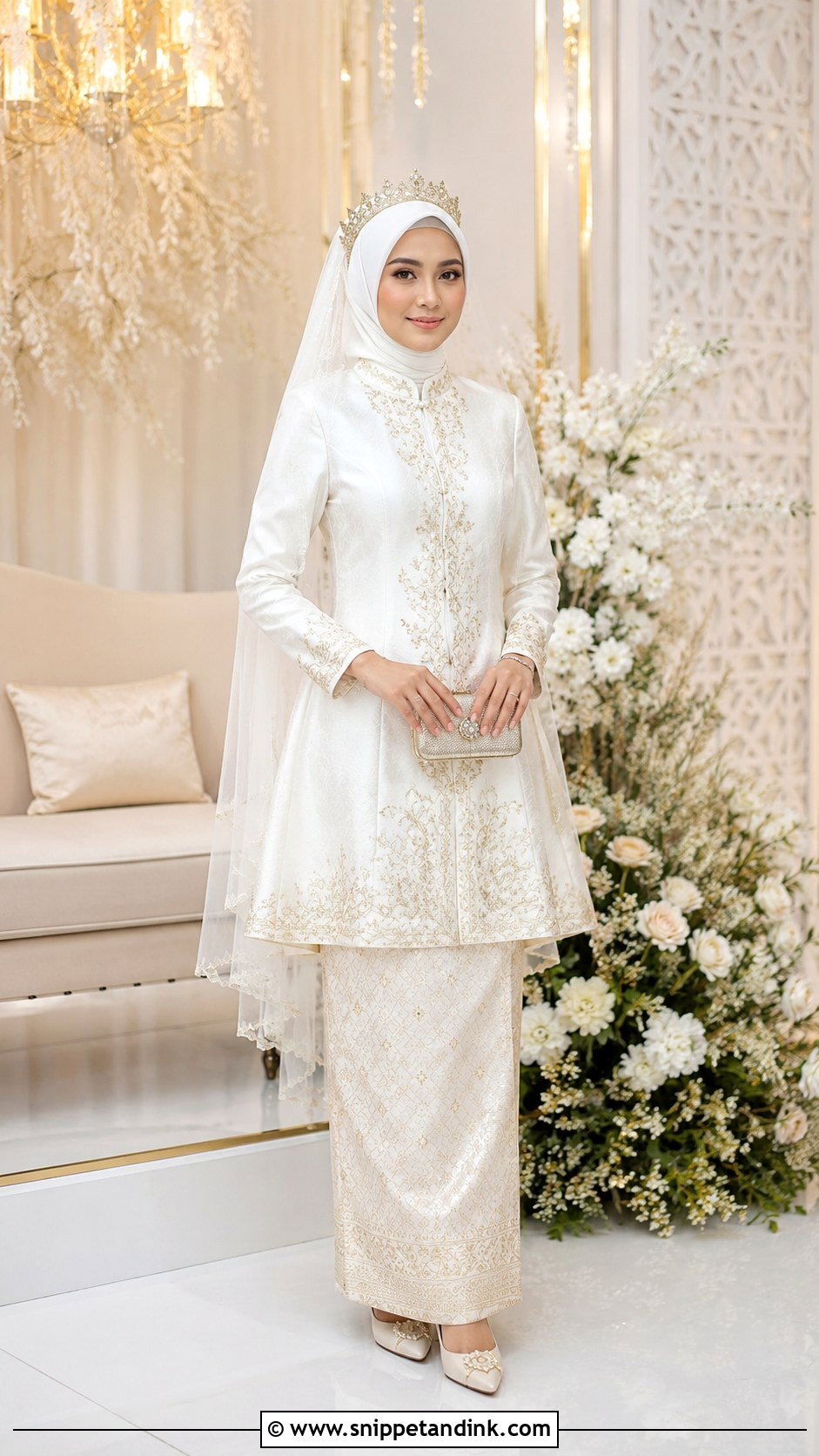
The standing collar on a baju kurung Riau frames the face, and it works with a carefully pinned hijab tucked neatly into it. Choose a cream or pearl-white tunic with long sleeves and a soft flare, over a songket or satin skirt depending on formality. Fine gold embroidery on the collar and cuffs draws the eye up. A light chiffon hijab, a veil attached behind the crown, closed-toe heels and a metallic clutch finish it. Sit down in it at the fitting. A collar that feels fine standing can press into the throat when you sit and look down to sign the marriage register.
7. Kebarung Songket Wedding Dress
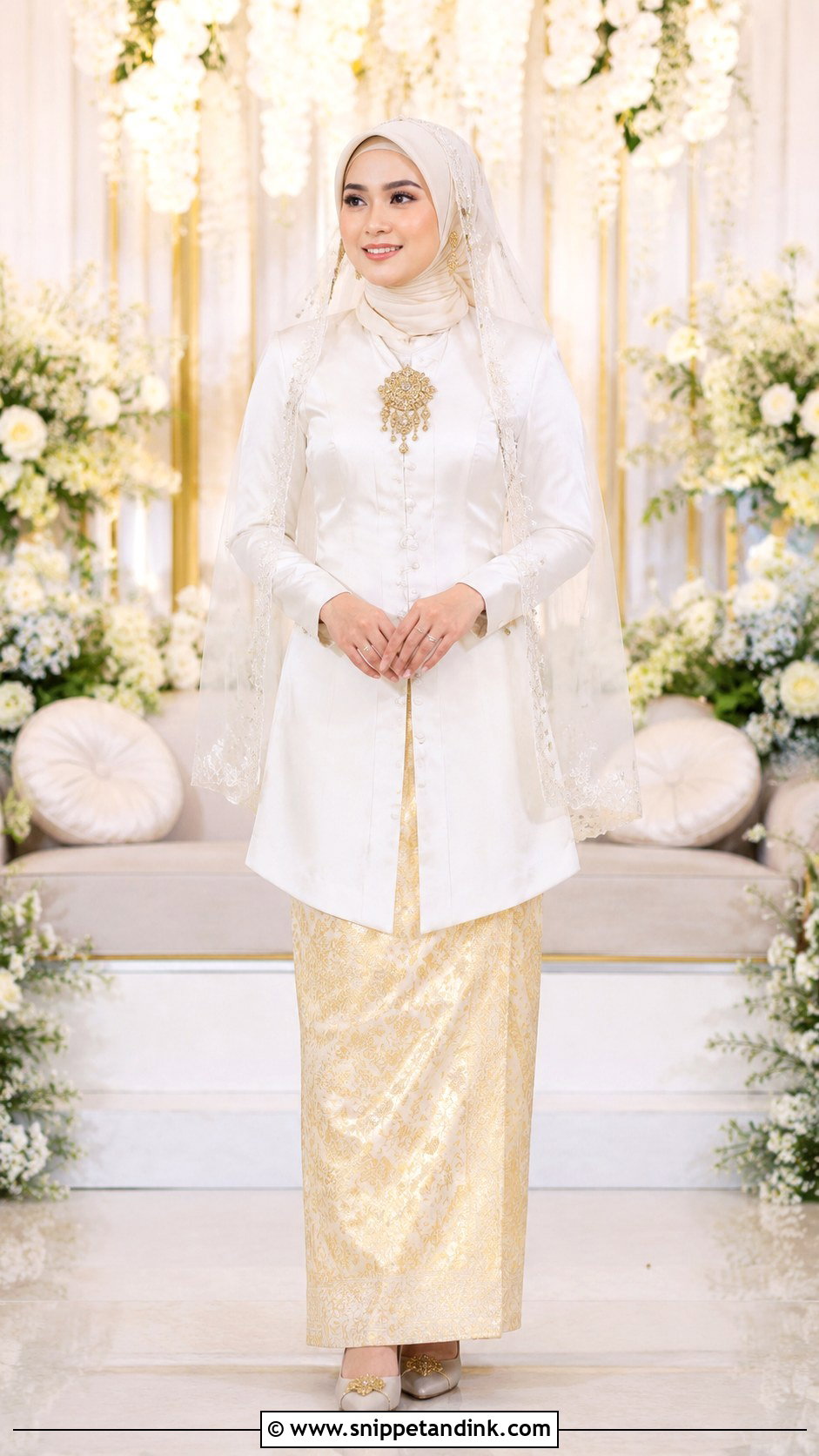
A kebarung sits between the baju kurung and the kebaya: the length and modesty of one, the shaping of the other. Choose a knee or calf-length top with covered buttons, long sleeves and light waist definition, then pair a songket skirt in ivory and gold, dusty pink and silver, or emerald and antique gold. A plain top lets the woven skirt lead. Add a matching hijab, a shoulder-length veil, traditional gold jewelry and low pointed heels, with a brooch at the neck echoing the songket thread. Covered buttons pop under strain, so have the tailor check the fit across the bust while your arms are raised.
8. Kebaya Labuh Wedding Dress
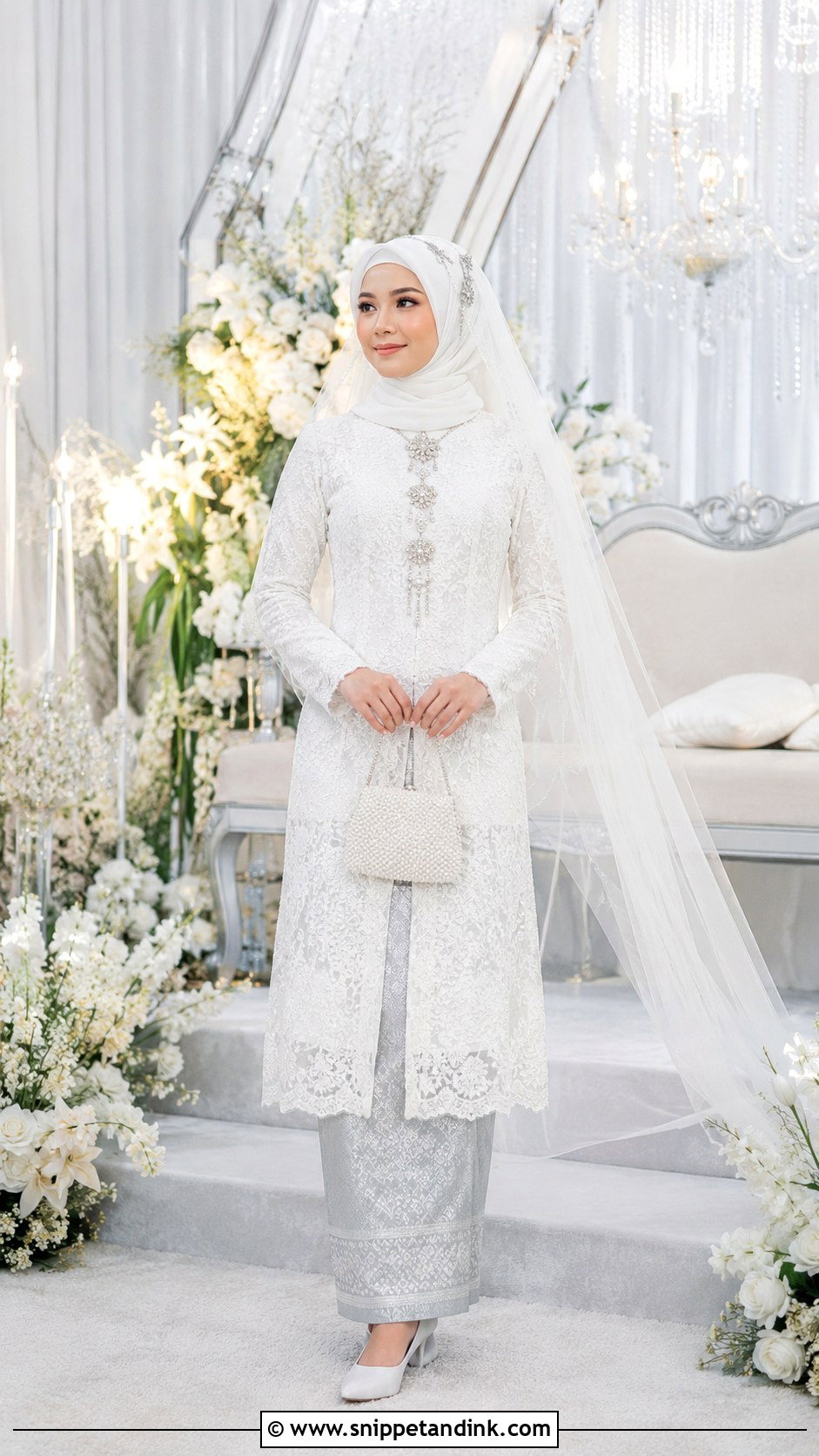
Kebaya labuh gives you the long, lean line of the kebaya with proper coverage. Choose a full-length top with long sleeves and a secure front closure, over an opaque inner layer. Embroidered fabric goes sheer between the motifs, and you won’t see it until a photo is lit from behind. A straight songket skirt adds structure, and a matching hijab keeps the color story clean: pearl white with silver songket, or burgundy with gold for a reception. Closed-toe pumps, a traditional brooch set and a small beaded bag finish it. Shape the waist gently; a tight kebaya labuh rides up when you sit.
9. Gold Songket Wedding Dress
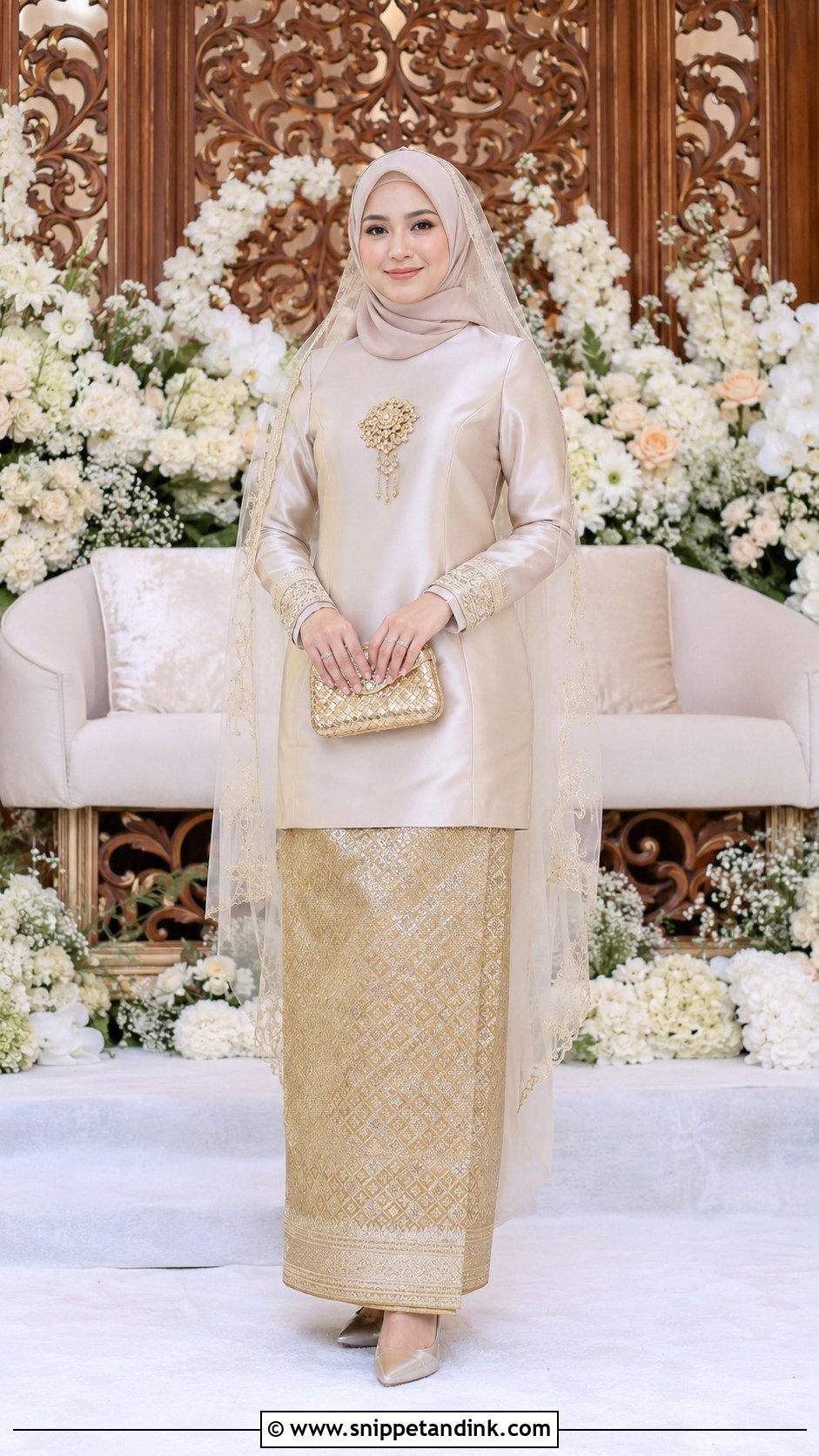
Gold songket is the bersanding outfit at its most majestic. Build it from a long tunic or structured baju kurung top in champagne satin and a full gold songket skirt with floral or geometric motifs. Repeat the songket only on the cuffs, collar or a peplum panel if you want them to match. A champagne hijab, a sheer-edged veil, metallic pumps and a gold minaudiere complete the look. The fabric is already shining, so one statement brooch and refined earrings are enough. Gold songket is also heavy and warm; a light lining and a comfortable skirt opening matter in Malaysian heat. It glows against carved wood, greenery and ivory flowers on the dais.
10. Blush Pink Muslim Wedding Gown
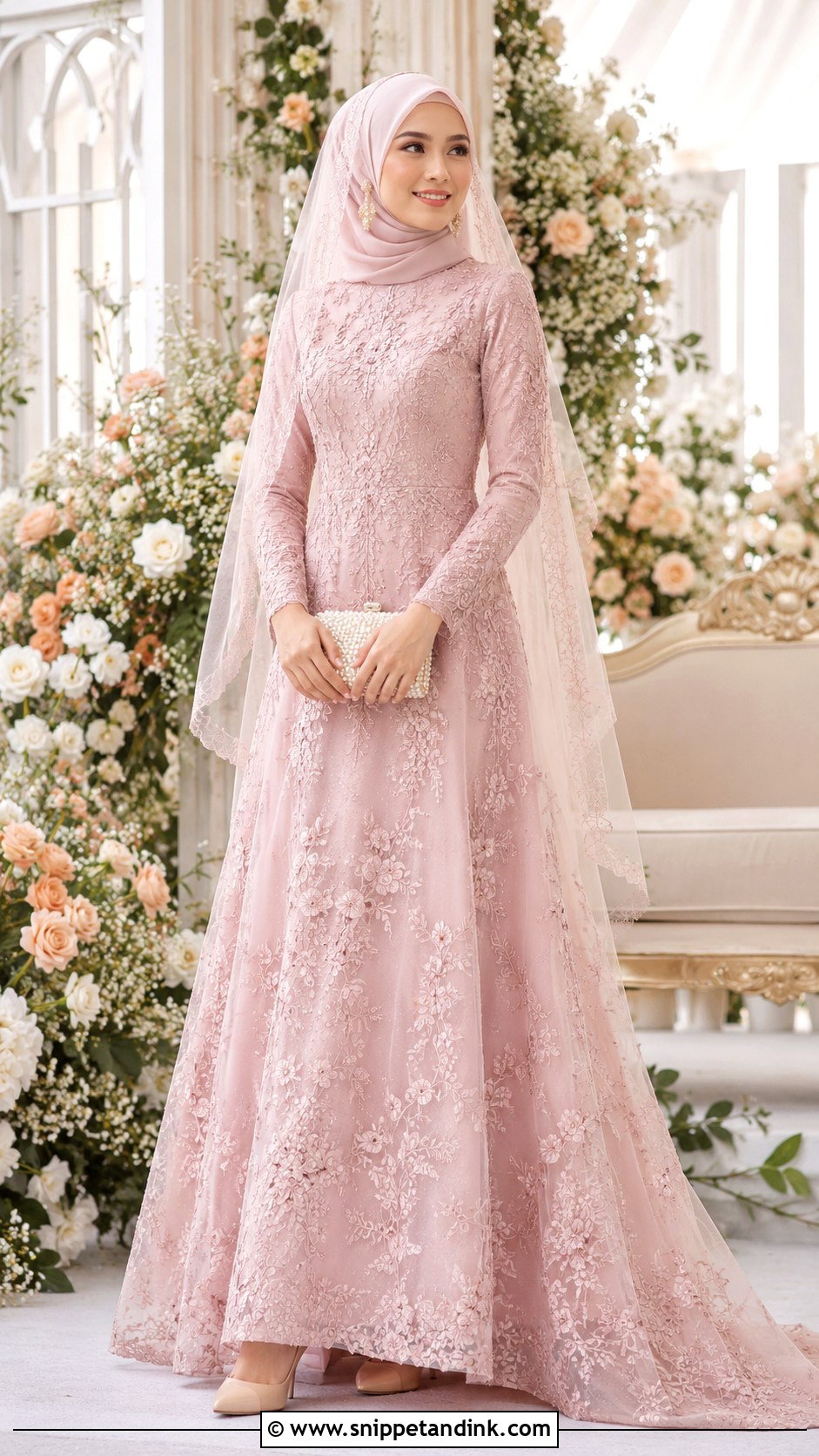
Blush pink feels romantic and is easier on many skin tones than stark white. A full-length A-line with long sleeves, an opaque bodice and a high neck is the base; tonal embroidery or a scatter of pearls adds texture. A matching blush hijab and a light ivory veil give a soft contrast. Nude closed-toe pumps, rose-gold jewelry and a pearl clutch suit it. Thin pastel fabric shows every line underneath, so don’t accept one without a full lining. A defined waist and flowing skirt keep it from clinging. It suits an akad nikah, a garden wedding or a reception with white, peach and dusty rose flowers.
11. Dusty Blue Muslim Wedding Dress
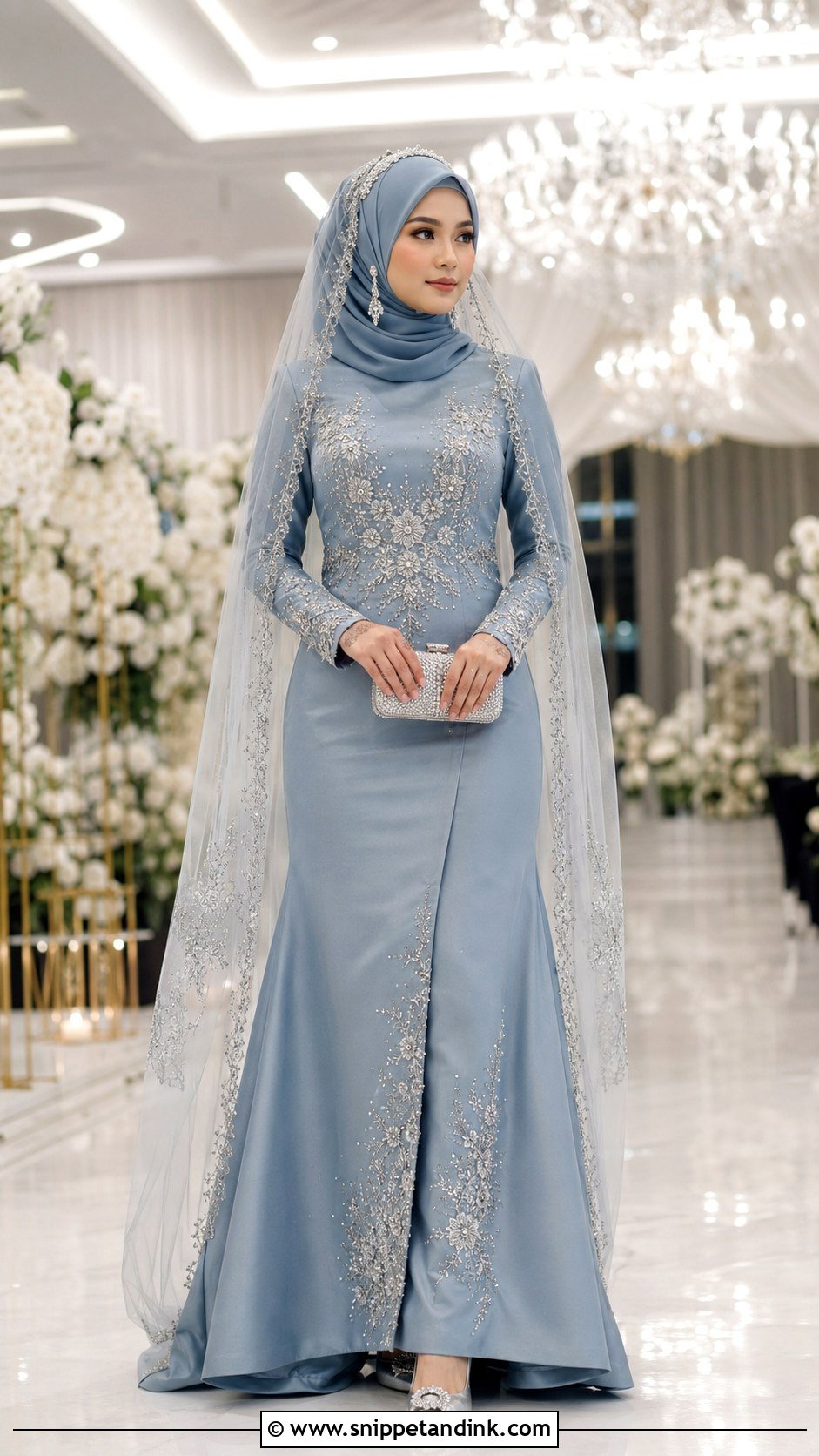
Dusty blue suits both daytime and evening at a Muslim wedding. A long-sleeved baju kurung gown in satin crepe with silver embroidery at the bodice and cuffs gives a bridal finish, and an A-line skirt leaves room to walk and sit. A blue-gray hijab, a silver-edged veil, crystal earrings, metallic closed-toe heels and a small silver clutch keep everything cool-toned. If the fabric is shiny, limit embellishment to a few places; shine plus sparkle reads as costume under ballroom lights. It looks right with white flowers, silver decor and modern ballrooms, and gives color without boldness.
12. Emerald Green Songket Wedding Dress
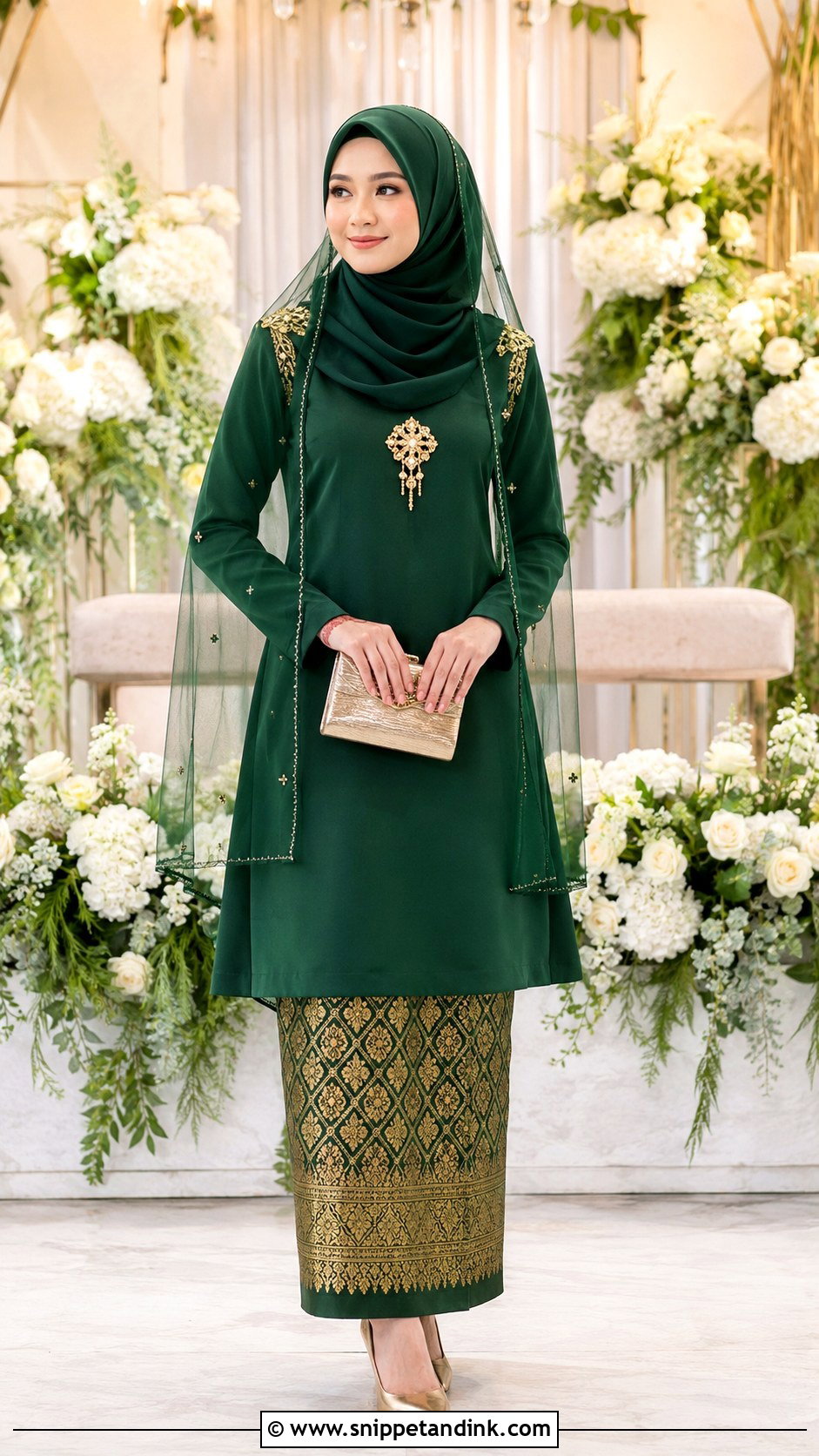
Emerald with gold songket is formal and regal, and it shines on stage under strong lights. Pair a long velvet, satin or crepe tunic with a gold-patterned songket skirt, keep the neck high and the sleeves comfortably fitted, and use a matte hijab to calm the shine. Gold pumps, a structured metallic clutch and a decorative brooch finish it. A plain light veil is better than an embellished one competing with the weave. I’d only put a bride in velvet for an air-conditioned venue; in an outdoor tent at midday it is genuinely hard to wear. It suits gold decor, greenery and traditional flowers.
13. Maroon Kebaya Wedding Dress
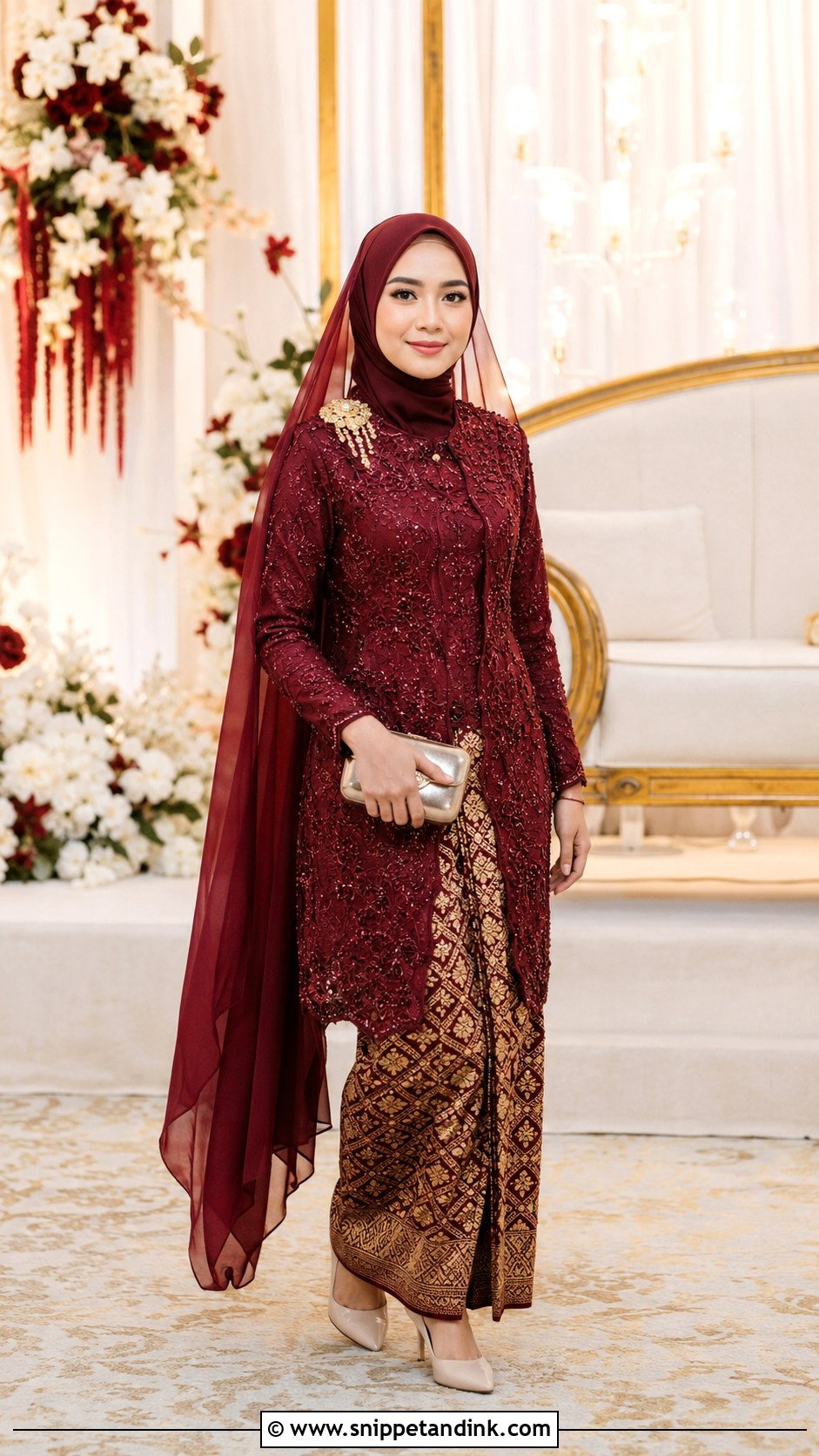
Maroon gives a long kebaya warmth and weight. Choose an opaque kebaya labuh in embroidered crepe, or lace layered over satin, with a maroon-and-gold songket skirt. Shape the waist gently and keep the hem long for coverage. A matching matte hijab and a gold brooch near the shoulder or neck look traditional, with champagne pumps, a metallic clutch and fine gold earrings. With dense embroidery, keep the veil plain so it falls cleanly behind you. Deep red dyes can transfer onto a light inner cap in heat, so wear a matching maroon inner. It suits an evening reception against cream, gold and green.
14. Pastel Embroidered Baju Kurung Wedding Dress
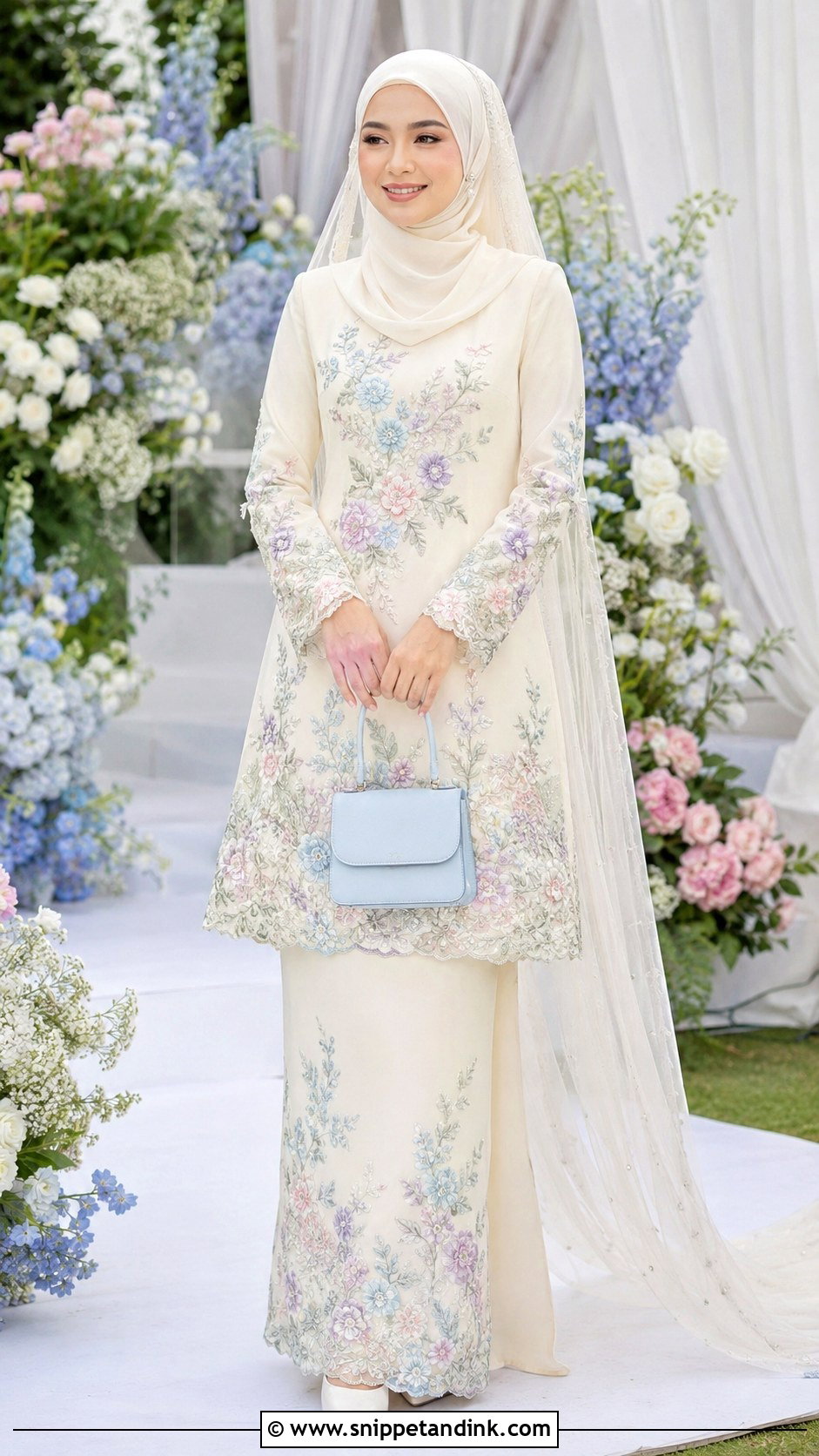
Pastel embroidery turns a plain white baju kurung into something garden-like. Start with an ivory crepe tunic and a flowing skirt, then add pale blue, blush, lavender or sage flowers on the cuffs, shoulders and lower hem, leaving the center plain. An ivory hijab, a light veil, pearl earrings and nude or white pumps keep white in charge; a small bag in one of the thread colors ties it in. Thread embroidery is lighter and softer than beading and won’t snag the veil, which is why I prefer it for outdoor ceremonies and small receptions.



15. Cape Sleeve Muslim Wedding Gown
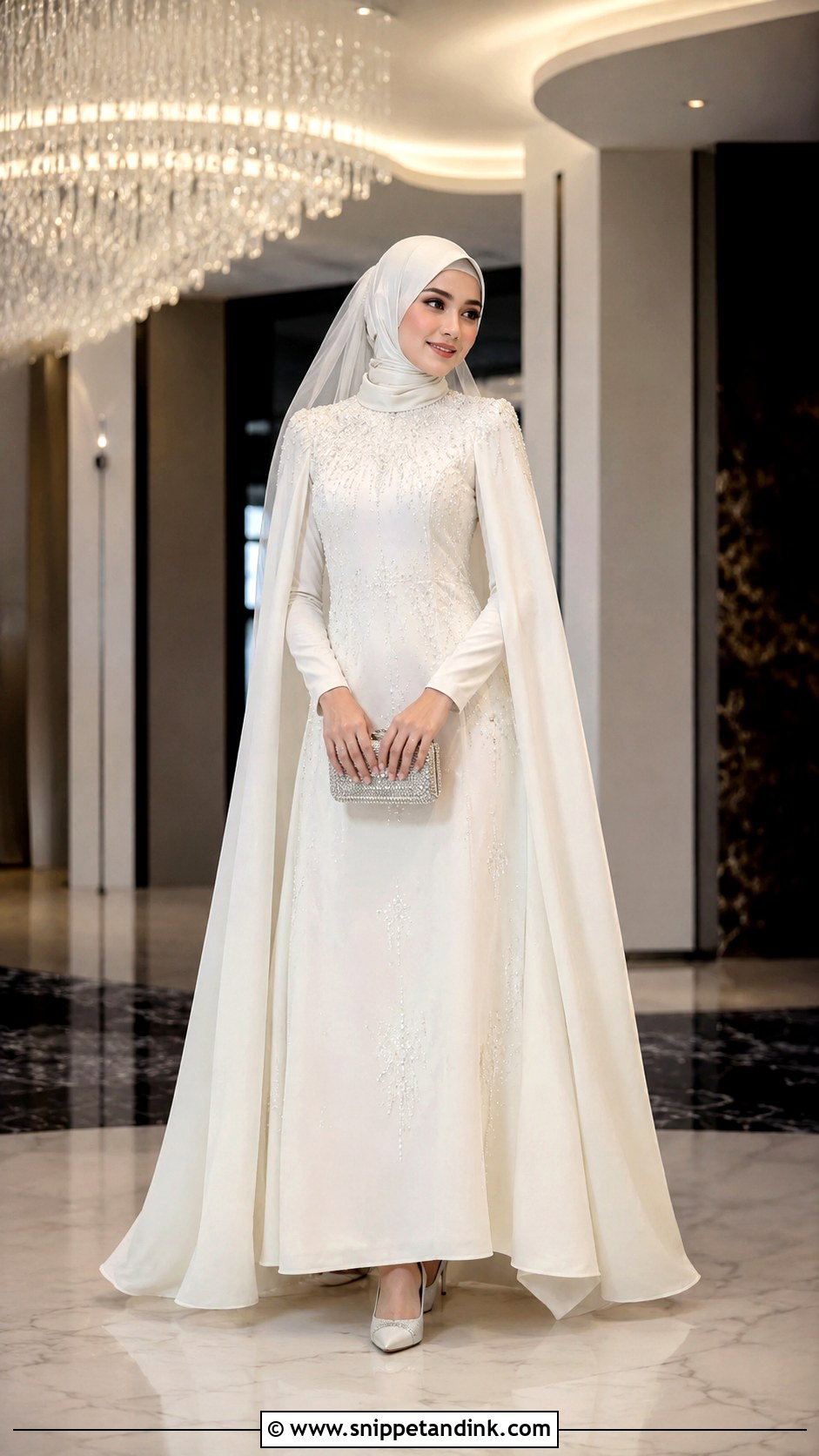
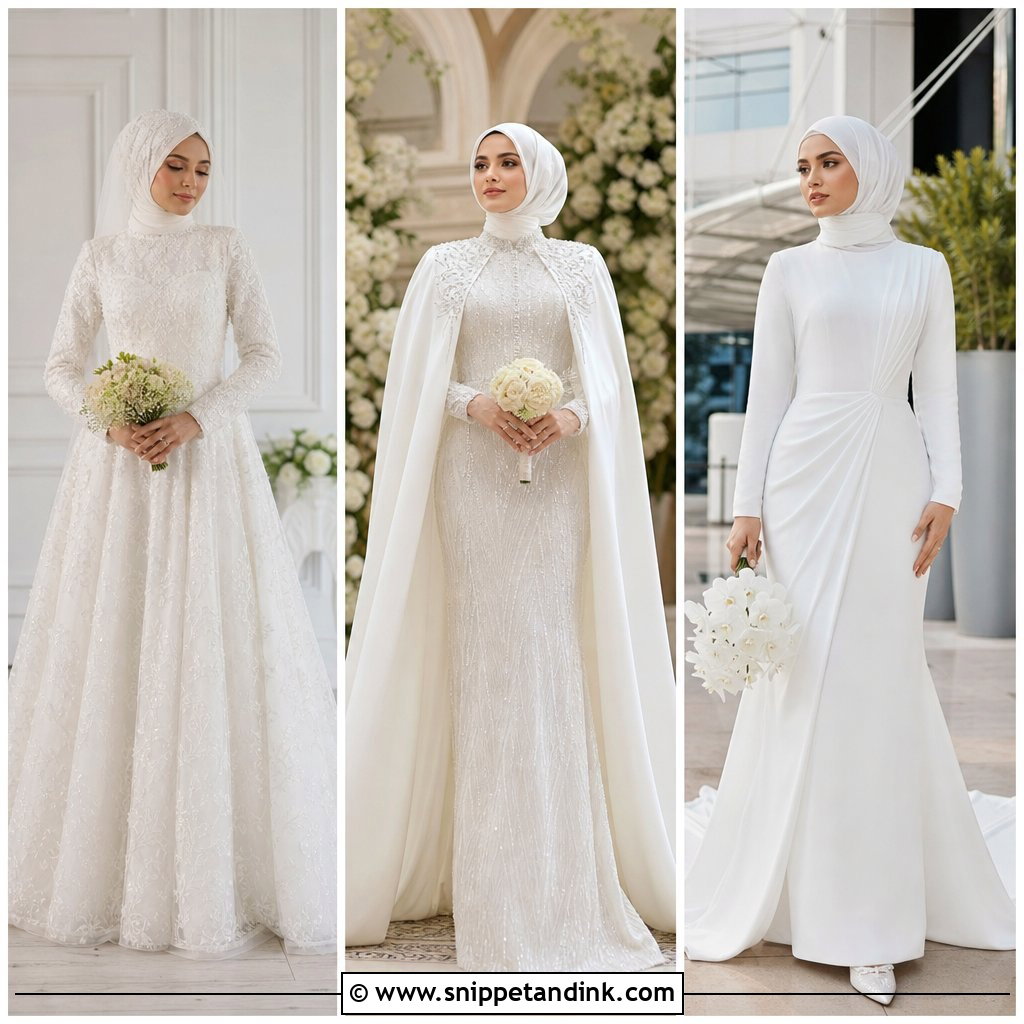
Cape sleeves add drama and an extra layer of coverage over the upper body. Choose a full-length A-line with a high neck and long fitted sleeves beneath a light chiffon or crepe cape that starts at the shoulder and stops short of the floor. Ivory, white, champagne or pale gray all work. Pair it with a matching hijab, a short veil, pointed pumps and a crystal clutch, and keep jewelry to a minimum. Raise your arms and shake hands with someone at the fitting: a cape cut too full flops forward over the hands during salam. It suits a ballroom or an evening reception.
16. Peplum Songket Wedding Dress
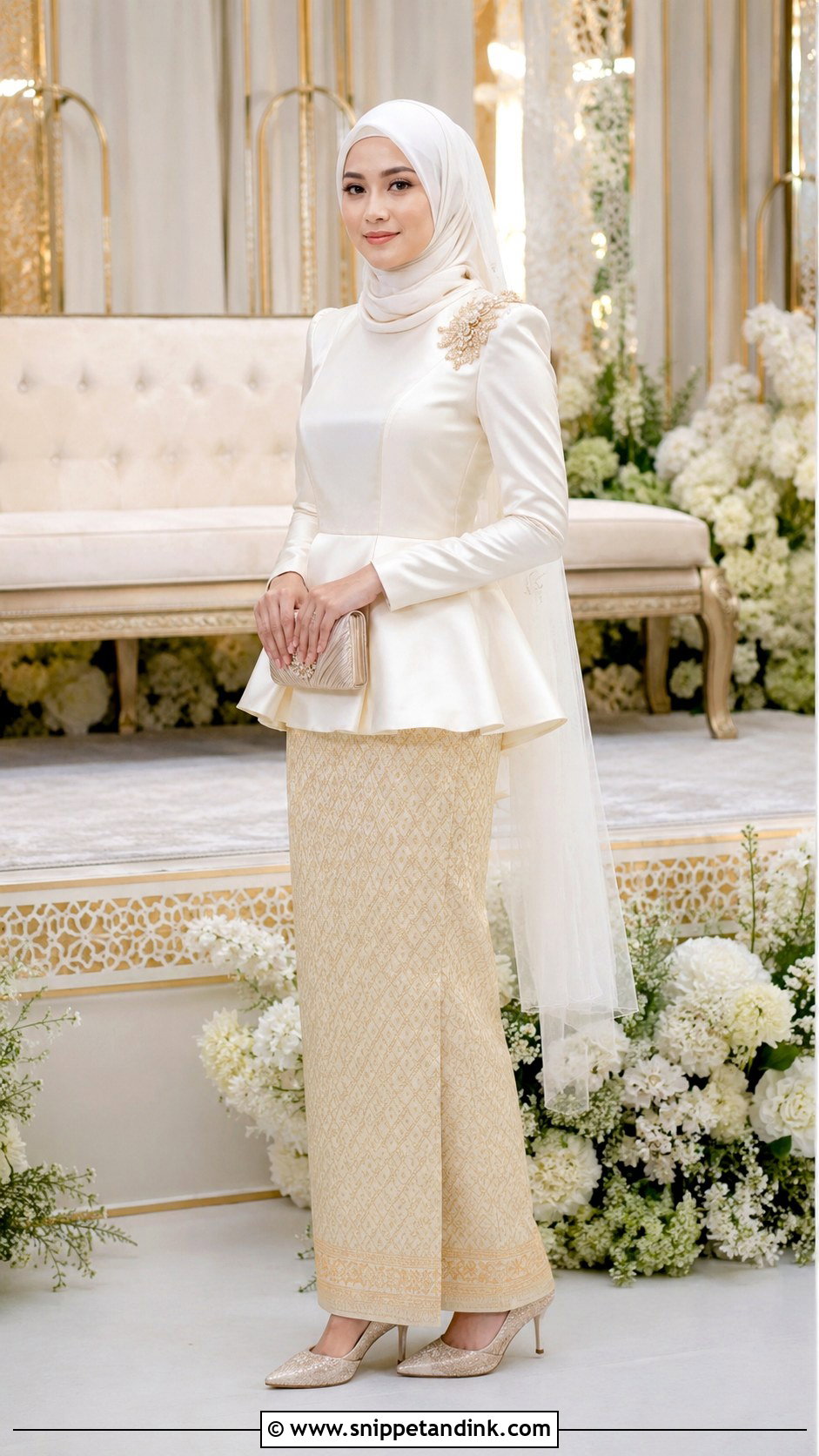
A peplum top over songket gives definition while keeping the hips covered. Choose a long-sleeved satin or brocade top with a peplum starting at the natural waist and falling smoothly, not jutting out. A straight songket skirt underneath can match or contrast: ivory and gold is classic, navy and silver feels current. Add a coordinating hijab, closed-toe heels, a structured clutch and a brooch at the shoulder. Keep the veil short or simple so the peplum shows. This shape depends entirely on the tailoring; a peplum that sits even an inch too low makes the legs look short. It fits a bersanding, a dinner reception or a family event.
17. Minimalist Satin Muslim Wedding Dress
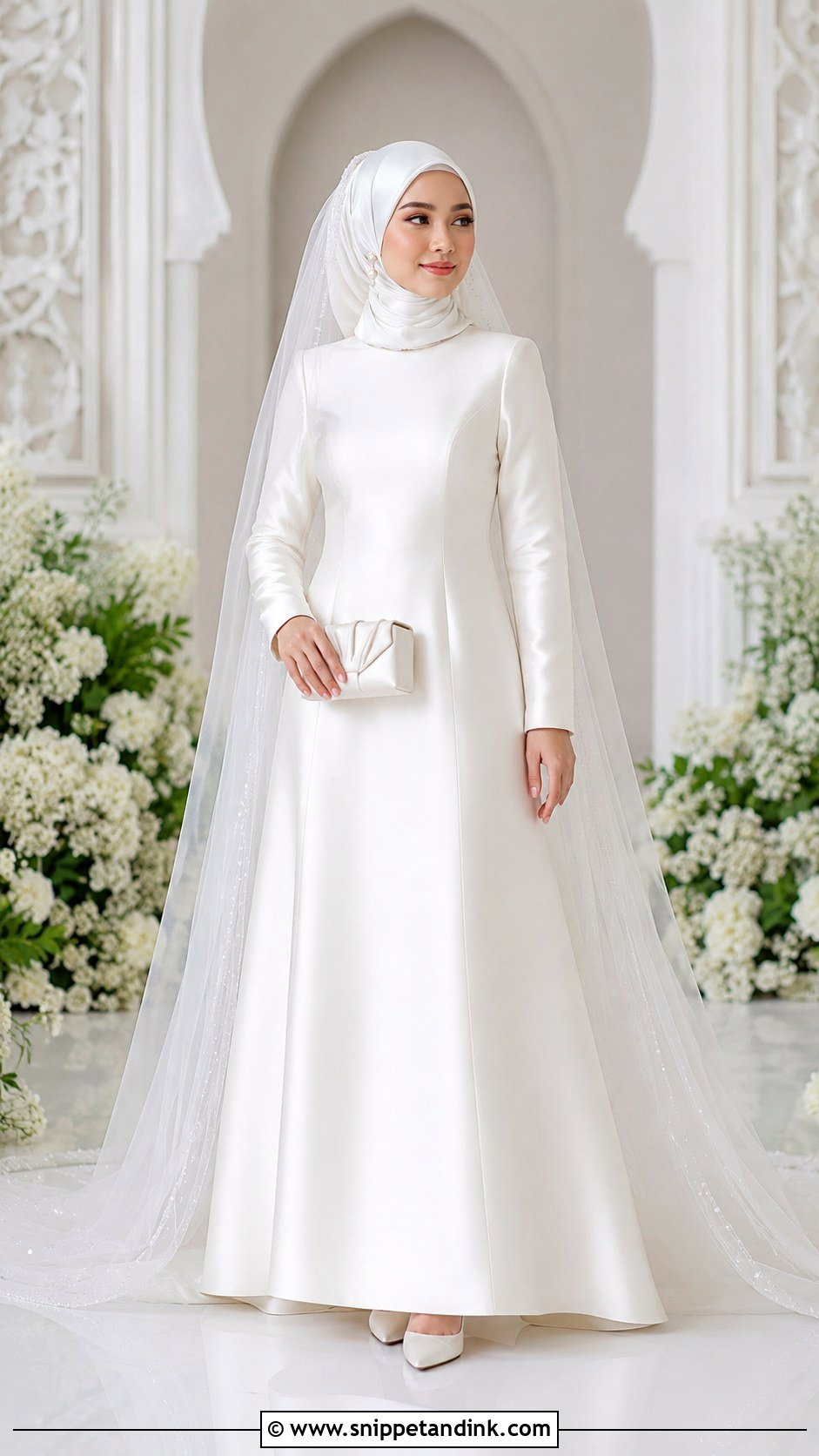
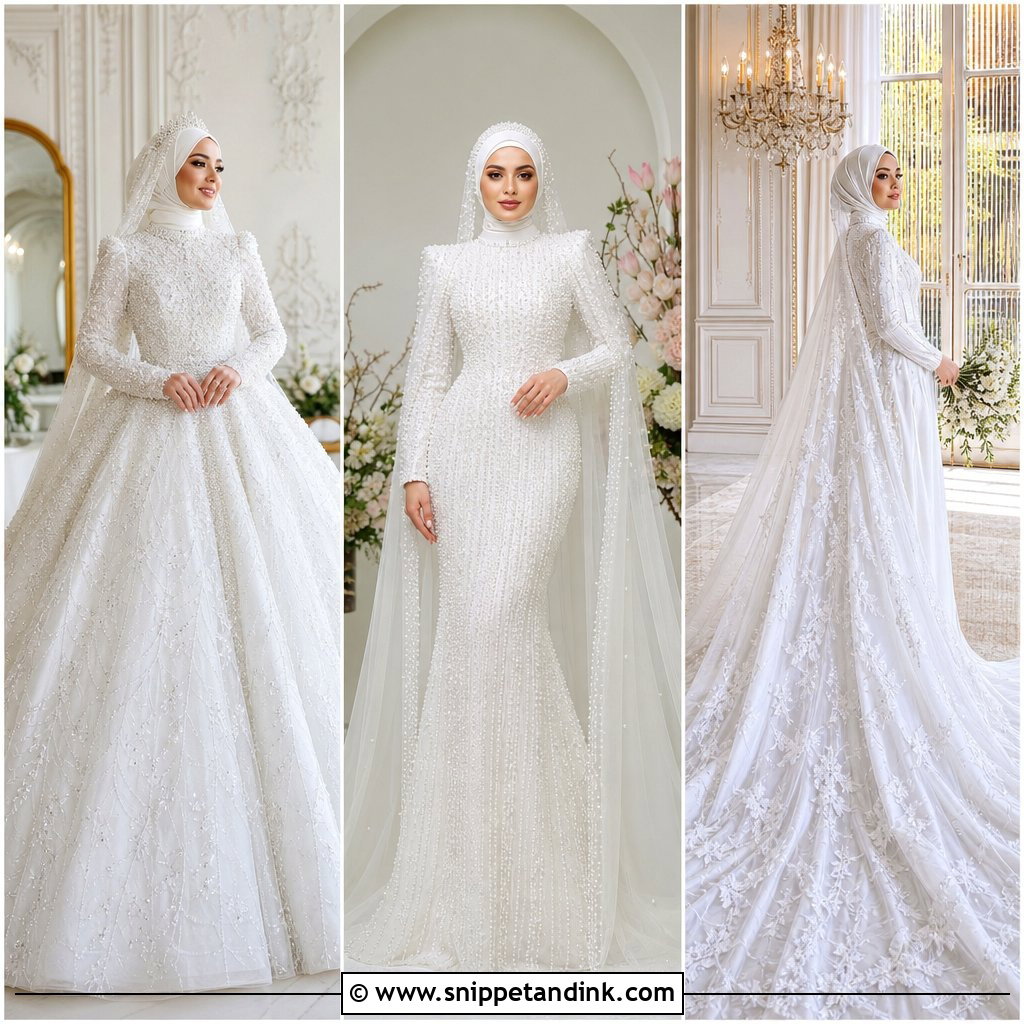
Plain satin looks expensive when the seams are placed well and the fabric is good. A full-length column or soft A-line with long sleeves and a high neck is the shape; matte or satin-backed crepe photographs more evenly than glossy satin. A hijab in the same shade, a sheer cathedral veil, pearl earrings and pointed ivory shoes finish it, with a small satin clutch. Simple gowns show every flaw, so pay for a good fitter. Make sure the column skirt lets you take a full step and climb onto the dais. It suits a modern akad nikah, a gallery space or a small ceremony where the room does the decorating.
18. Floral Appliqué Muslim Wedding Gown
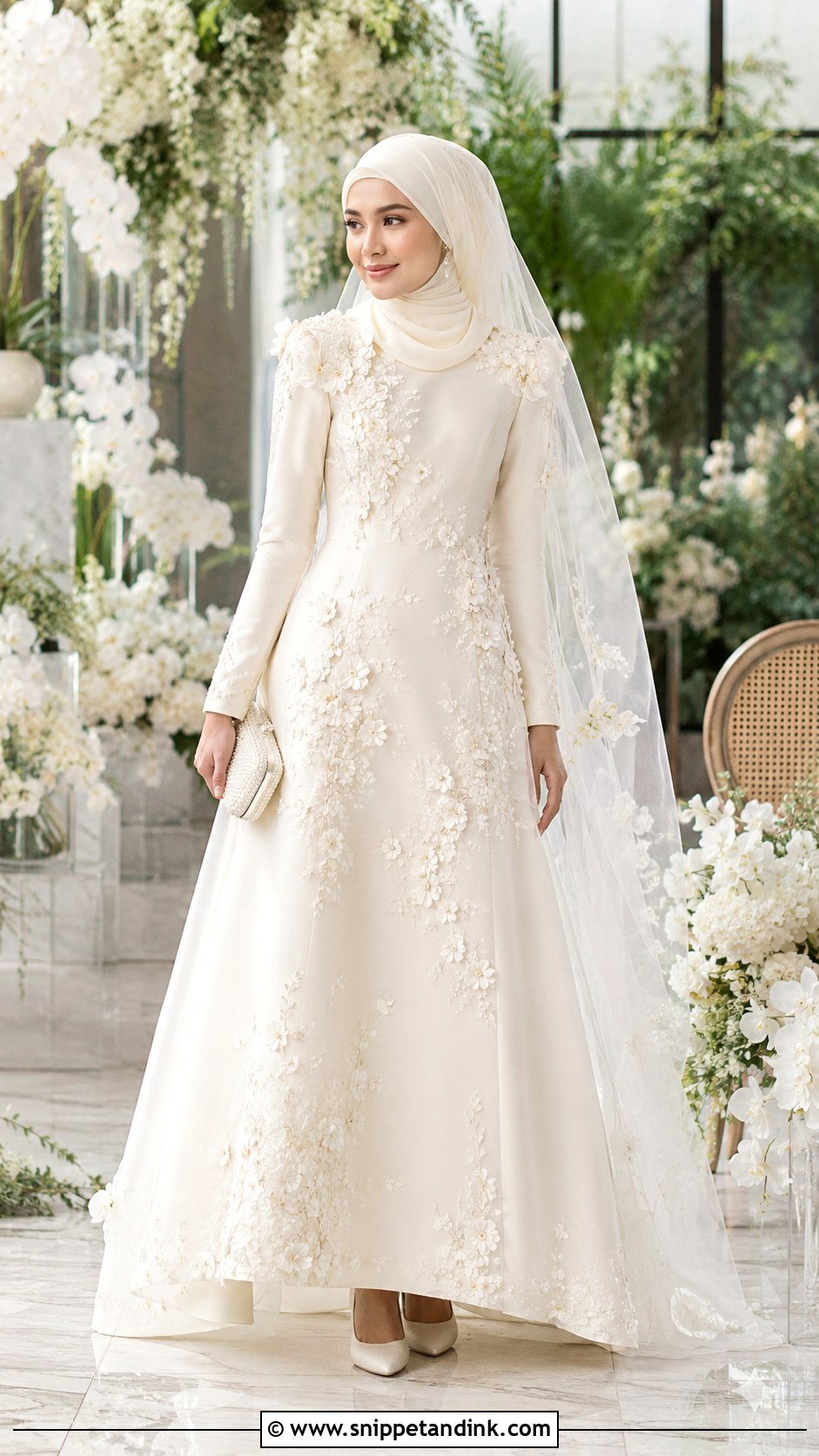
Raised floral appliques give a modest gown softness and depth. Choose an A-line or ball gown with long lined sleeves and a fully covered bodice, and place the flowers at the shoulders, waist and lower skirt with space between them. White on white is classic; pale blush or sage adds a little color. A plain hijab in the base shade and a veil with only a few appliques along the edge keep it light, with closed-toe pumps, pearl earrings and a simple clutch. Three-dimensional flowers catch on tulle, so try the veil on over the gown before the final fitting. It suits gardens and floral ballrooms.
19. Layered Chiffon Muslim Wedding Dress
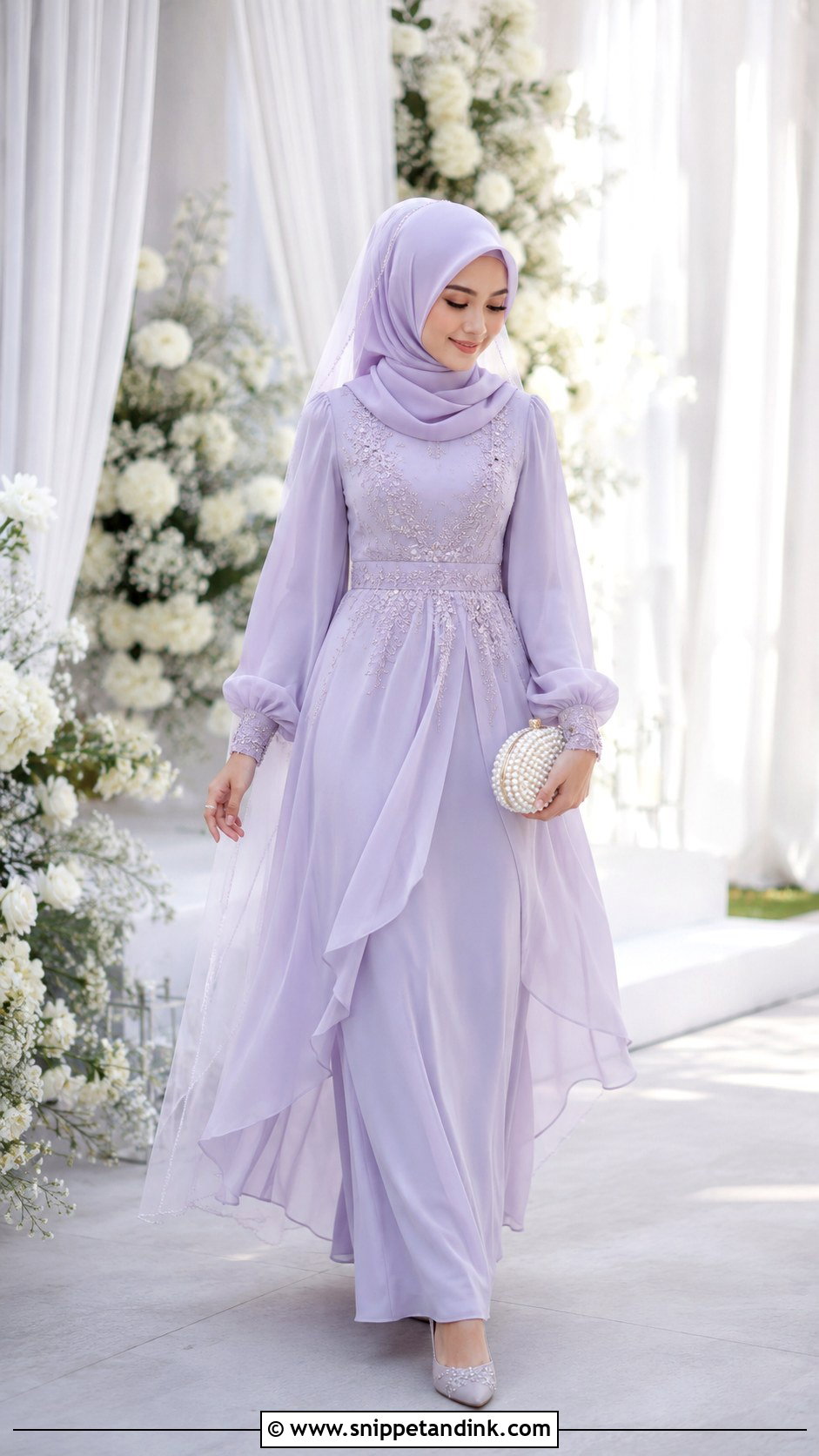
Chiffon moves with you and breathes, which counts on a long, warm day. Choose a fully lined dress with a fitted inner layer and a loose chiffon overlay, long bishop sleeves with secure cuffs, and an empire or natural waist. A light chiffon hijab, a narrow veil, low embellished pumps and a pearl clutch suit it; ivory, soft gray, pale lilac and powder blue all look right. Too many gathered layers add bulk rather than float, so two layers over the lining is usually enough. Chiffon frays and snags, so keep jewelry with prongs away from it. It suits an outdoor solemnization or a daytime reception.


20. Modest Ball Gown Wedding Dress
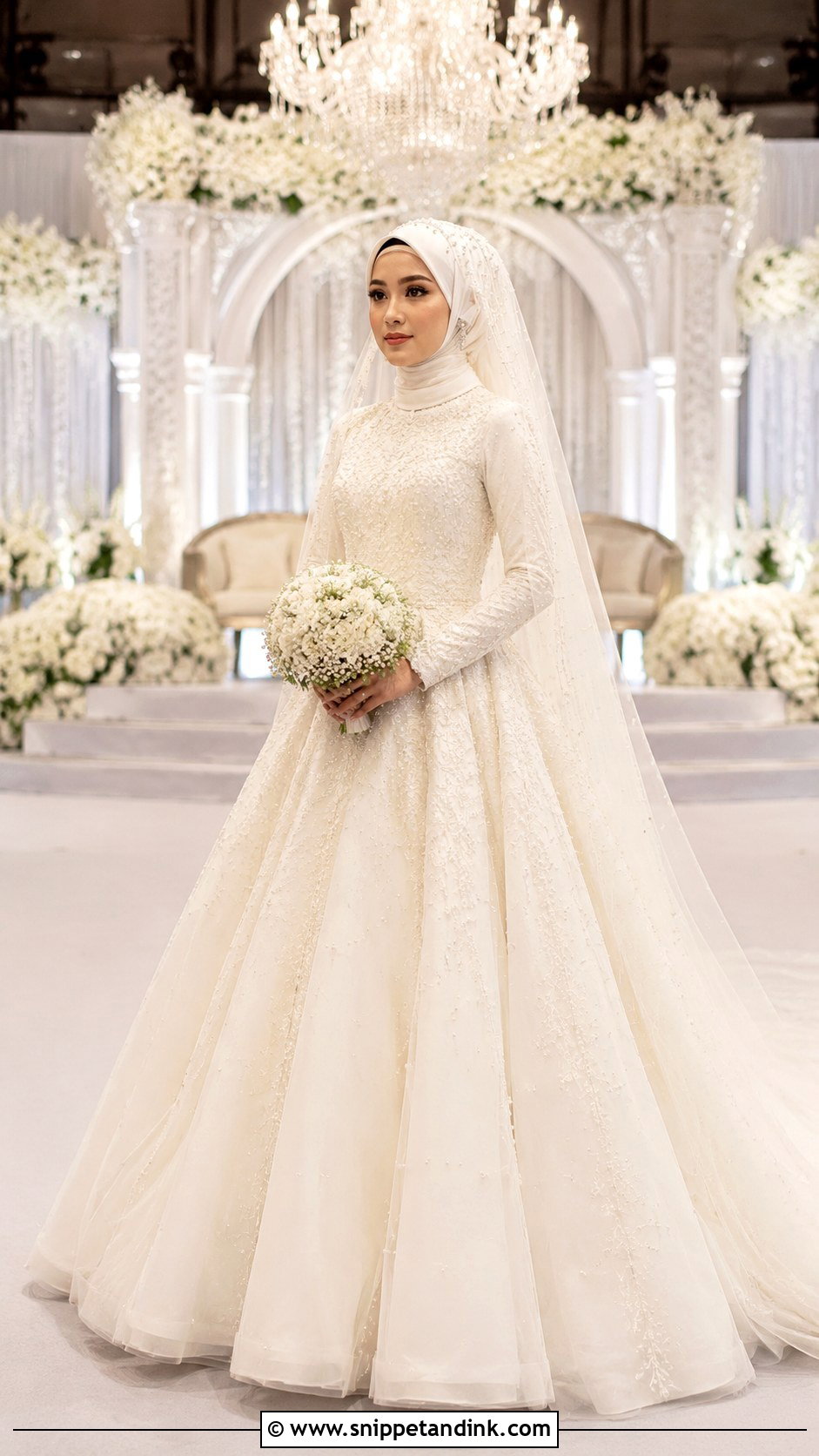
A modest ball gown gives the full fairy-tale shape with complete coverage. Choose a structured bodice, high neck, long lined sleeves and a full skirt from the natural waist, in light tulle over satin so the volume doesn’t come with weight. Embroidery, pearls or crystals should frame the bodice and fade into the skirt. Pair a matching hijab and a long veil anchored behind the head, platform pumps and small earrings. Ask for a bustle or a wrist loop for the train, or someone will step on it at the buffet. It suits a ballroom reception or a grand bersanding entrance.
Dressing Sedondon With His Baju Melayu
Couples at Malay weddings usually wear matching colors, called sedondon. The groom wears a baju Melayu, often with a songket samping at the waist and a tengkolok or songkok. Getting the two outfits to match takes more planning than people think.
- Buy both fabrics from the same bolt or the same dye batch. Two “ivory” fabrics from different shops rarely match on camera.
- Let one outfit carry the pattern. If your skirt is heavy songket, his samping can be lighter, and the other way round.
- Match the metal. Gold thread on your songket and silver on his samping looks accidental.
Cold Ballroom, Hot Car Park
A Malaysian wedding day moves between heat outside and strong air-conditioning inside, and a covered outfit has to cope with both. A thin cotton slip under satin absorbs sweat and stops the fabric sticking. Handsocks under sheer sleeves give warmth in a cold hall and coverage if a cuff slides. Keep a small towel and blotting papers with your bridesmaid for the walk from the car. Sweat lines show first on the back of satin and on light chiffon at the underarm, so dress shields are worth sewing in at the final fitting.
Does It Still Feel Right After the Last Photo?
The right bridal outfit fits your taste, your modesty, your comfort and the mood of the celebration, whether that is a quiet solemnization or a grand ballroom. Baju kurung, kebaya labuh, kebarung, songket sets and covered gowns all look bridal when the fit and accessories agree with each other. Wear your choice for an hour with the full hijab and veil, walk, sit and raise your arms, and look at it under daylight and camera flash. Good tailoring, breathable lining, secure pins and comfortable shoes carry you through the whole day.
You'll Like These Ideas:









Leave a Reply