
Old-fashioned bridal fashion covers far more ground than one traditional lace gown. Victorian high necks, 1920s beaded columns, 1950s tea lengths and loose 1970s prairie dresses all count, and each asks something different of your body and your venue. When a bride brings me a vintage reference, I ask her to name the single detail she loves most, because one clear period feature looks nostalgic while five of them look like fancy dress. Balance that one feature with comfortable tailoring and modern beauty. A new dress made in a vintage style is often easier than an original: the sizing is broader, the fabric sturdier, and it can be altered freely. The looks below run decade by decade, head to toe.
Buying an Original Gown Instead of a Reproduction
A true vintage dress has a history no new gown can match, but it comes with checks I’d never skip. Take it to a window and go over it slowly before you pay.
- Underarms and waist. Yellow or brown marks there are old perspiration and rarely come out completely.
- Shattered silk. Fine splits running along the grain mean the fiber itself has broken down. It can be backed or patched, never truly repaired.
- Seam allowances. Turn the dress inside out. Wide allowances mean a seamstress can let it out; narrow ones mean the size you see is the size you get.
- Zips and hooks. Replacing old fastenings is routine work, so don’t let a stuck metal zip alone put you off a dress you love.
Vintage sizes run much smaller than modern labels, so ignore the number and compare bust, waist and hip measurements with your own. Talk to a specialist cleaner before any alteration, since some old fabrics shrink or weaken in cleaning. And allow extra time: restoring and altering an original usually takes far longer than altering a new dress.
1. Victorian High Neck Lace Wedding Dress
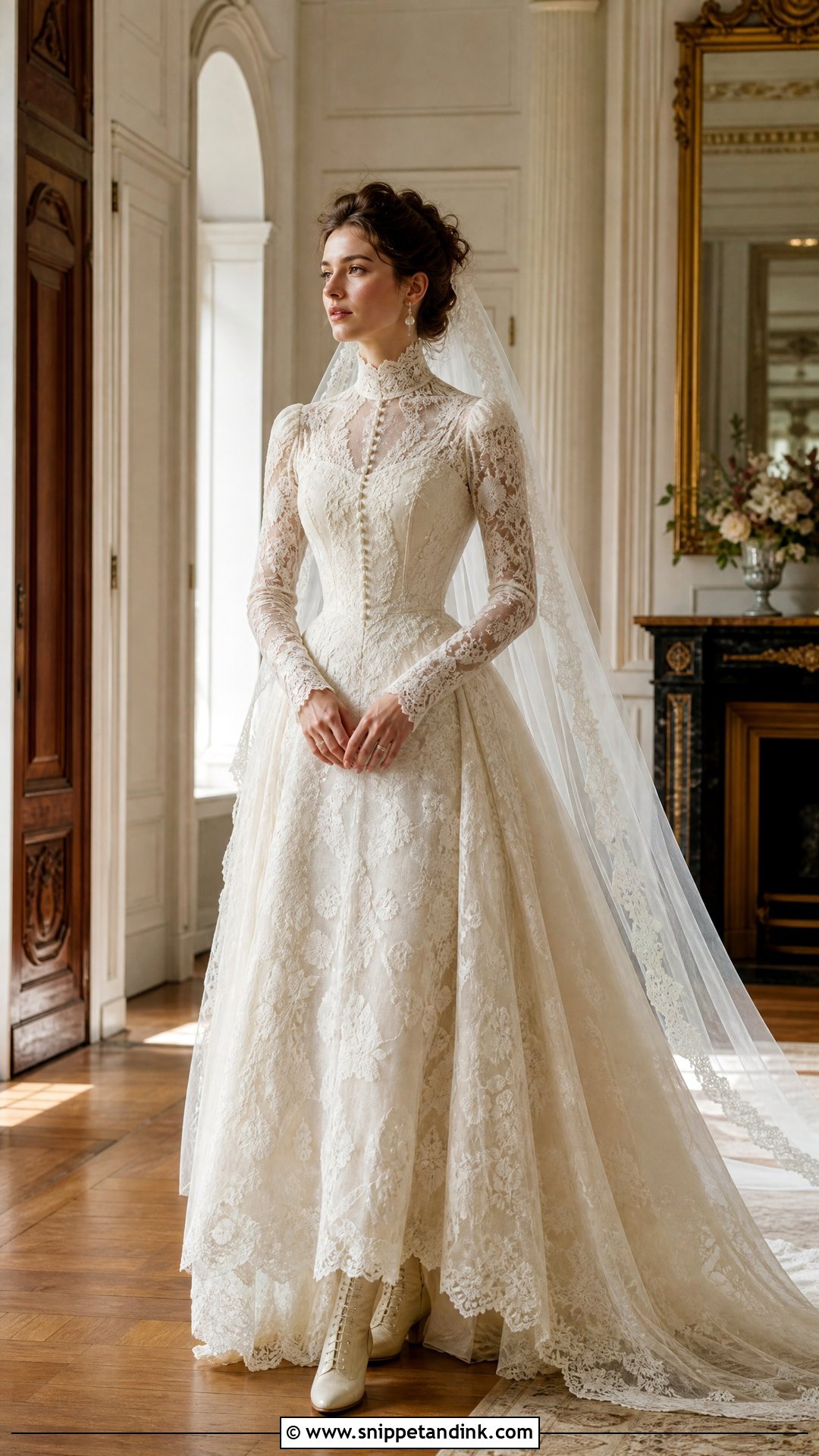
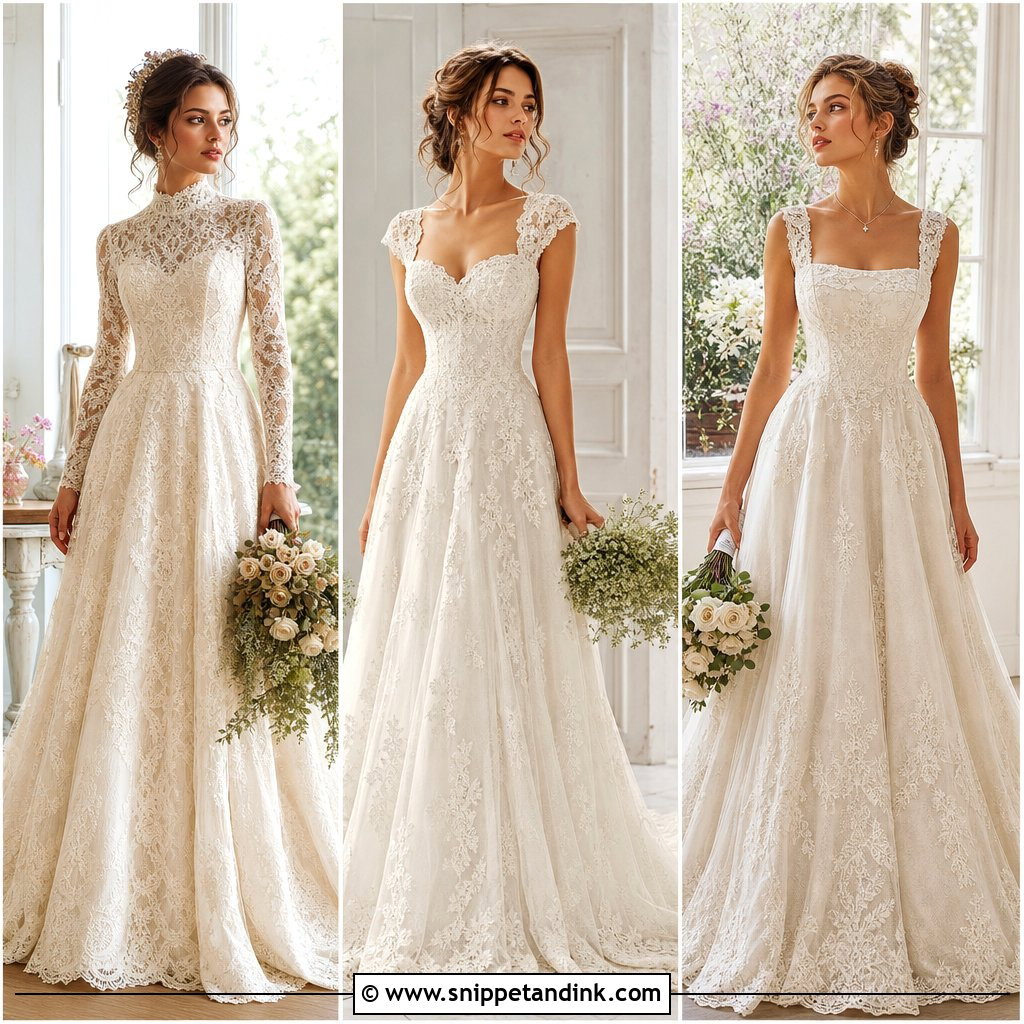
Victorian high-neck lace is the most formal of the old-school looks, and the one where fit at the throat matters most. I check that a high collar sits a finger’s width from the neck; any tighter and you’ll be tugging at it through the vows. The classic version has a fitted lace bodice, covered buttons, long sleeves and a softly flared floor-length skirt, with a defined natural waist rather than a punishing corset. Pearl drops, ivory button boots and a cathedral veil secured beneath a smooth low bun complete it, along with a structured bouquet of white garden roses and trailing greenery. All that coverage makes it a natural fit for fall or winter. Stretch lace, modern lining and hidden support let you wear it for a full day.
2. Edwardian Lace Tea Gown Wedding Dress
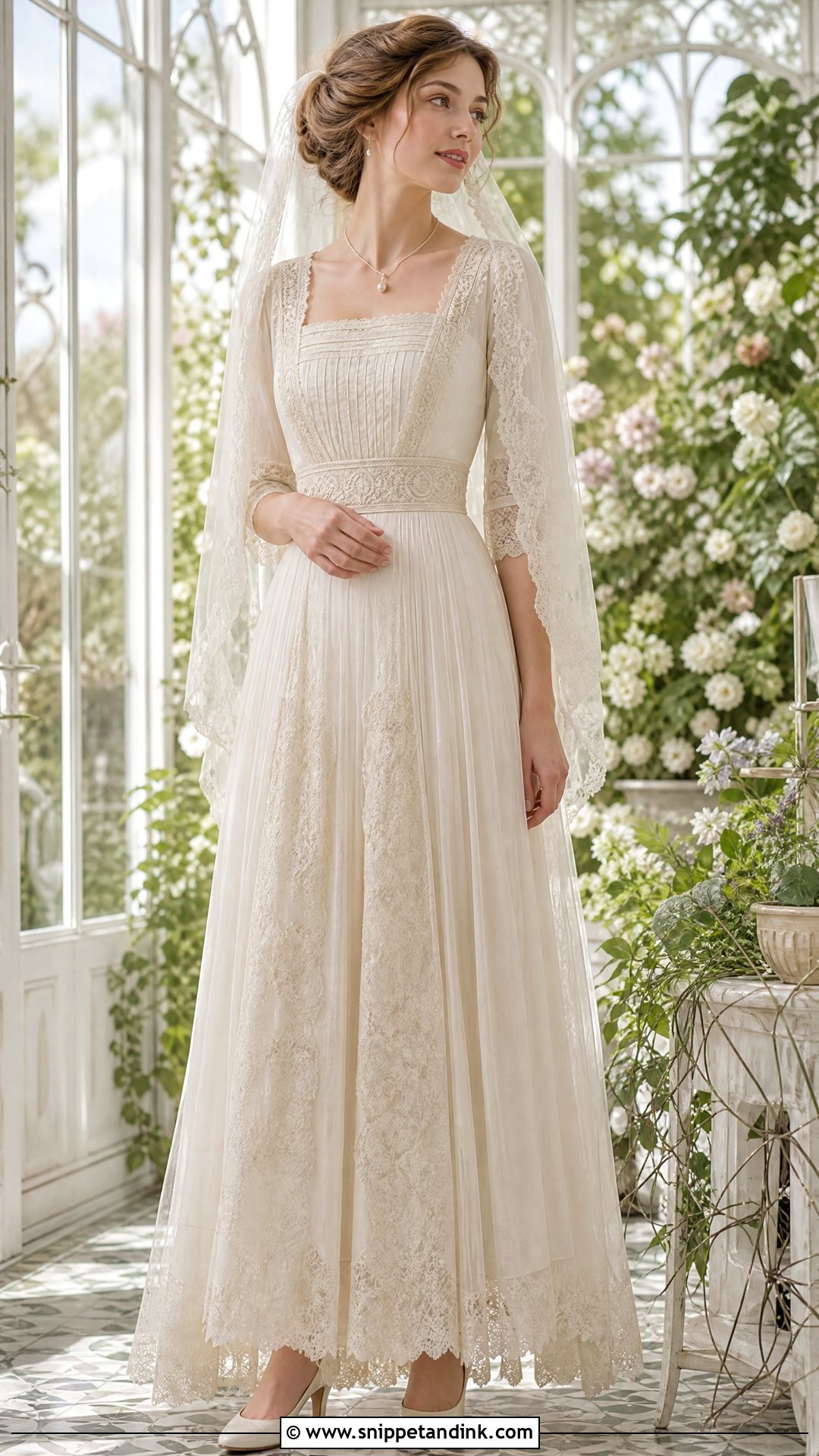
Edwardian dresses were softer in construction than the Victorian gowns before them, which is why they adapt so easily to a modern wedding. Look for a lightly structured ivory gown with a high or softly squared neckline, pintucks, lace inserts and a flowing skirt; slightly puffed shoulders and a ribbon at the waist give the period shape without swamping you. Cream leather pumps, a small pearl pendant and a fingertip veil trimmed in narrow lace suit it. A loose Gibson-style updo adds history, and fresh makeup keeps it current. If the yoke is sheer lace, I’d ask for a skin-tone or ivory lining behind it, since sheer lace reads very differently under a photographer’s flash. Gardens, historic homes and small daytime weddings are its setting.
3. 1910s Empire Waist Wedding Dress
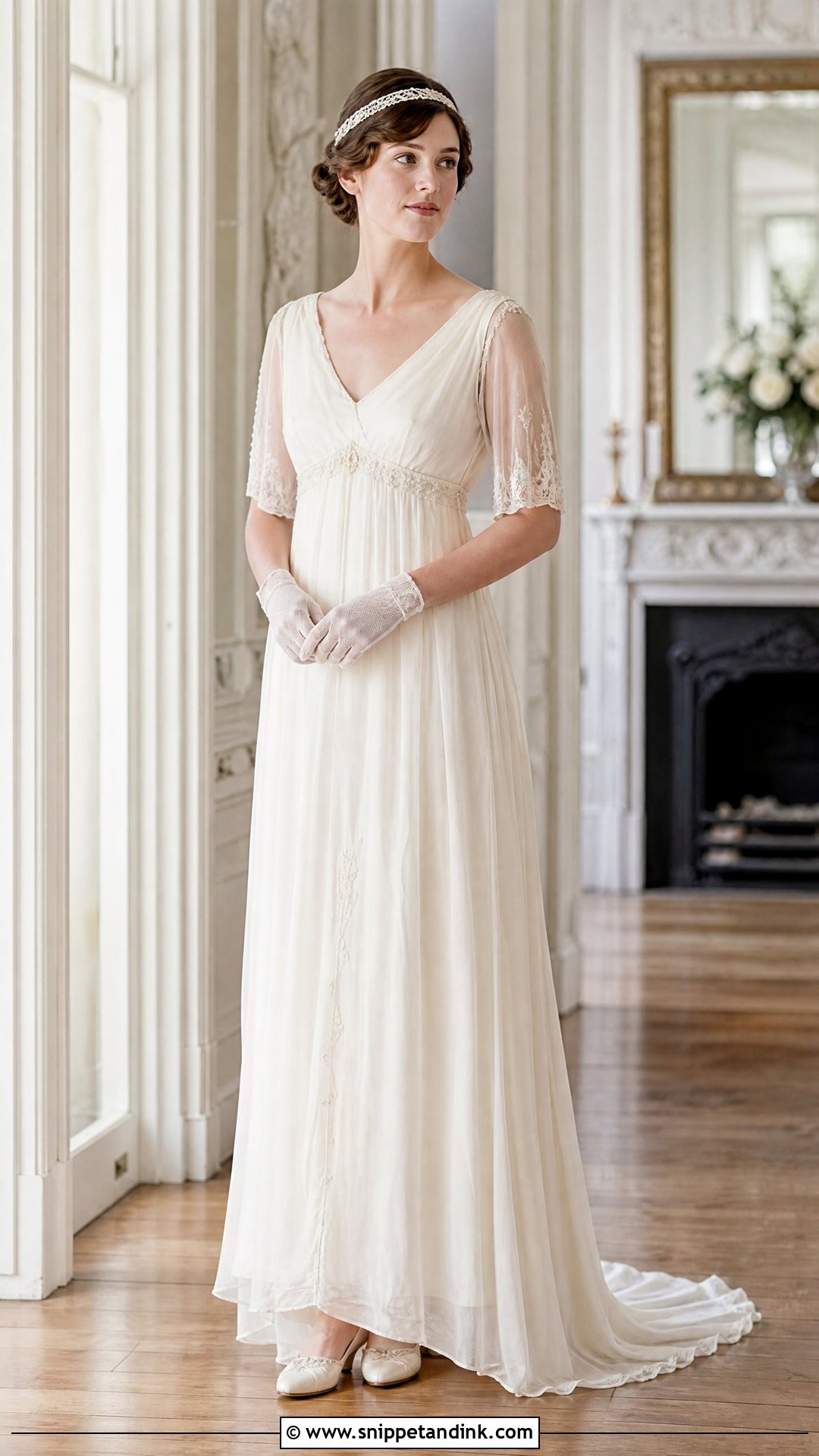
A 1910s empire-waist wedding dress gives you elegance with nothing tight around the middle. Think silk, chiffon or satin, with a raised waistline, a modest V-neck, a lightly gathered skirt and a short train; sheer elbow-length sleeves add period detail and keep it airy. Low ivory heels, delicate gloves and a narrow headband over swept-back hair go with it, plus a small posy of sweet peas or roses. Because the skirt starts high, it reads longer and leaves you room to breathe through a seated dinner and dancing. An embroidered sash under the bust adds definition if you want it. Go easy on ornament, though. Beading weighs chiffon down and spoils the way it falls from a high waist.
4. 1920s Beaded Drop Waist Wedding Dress
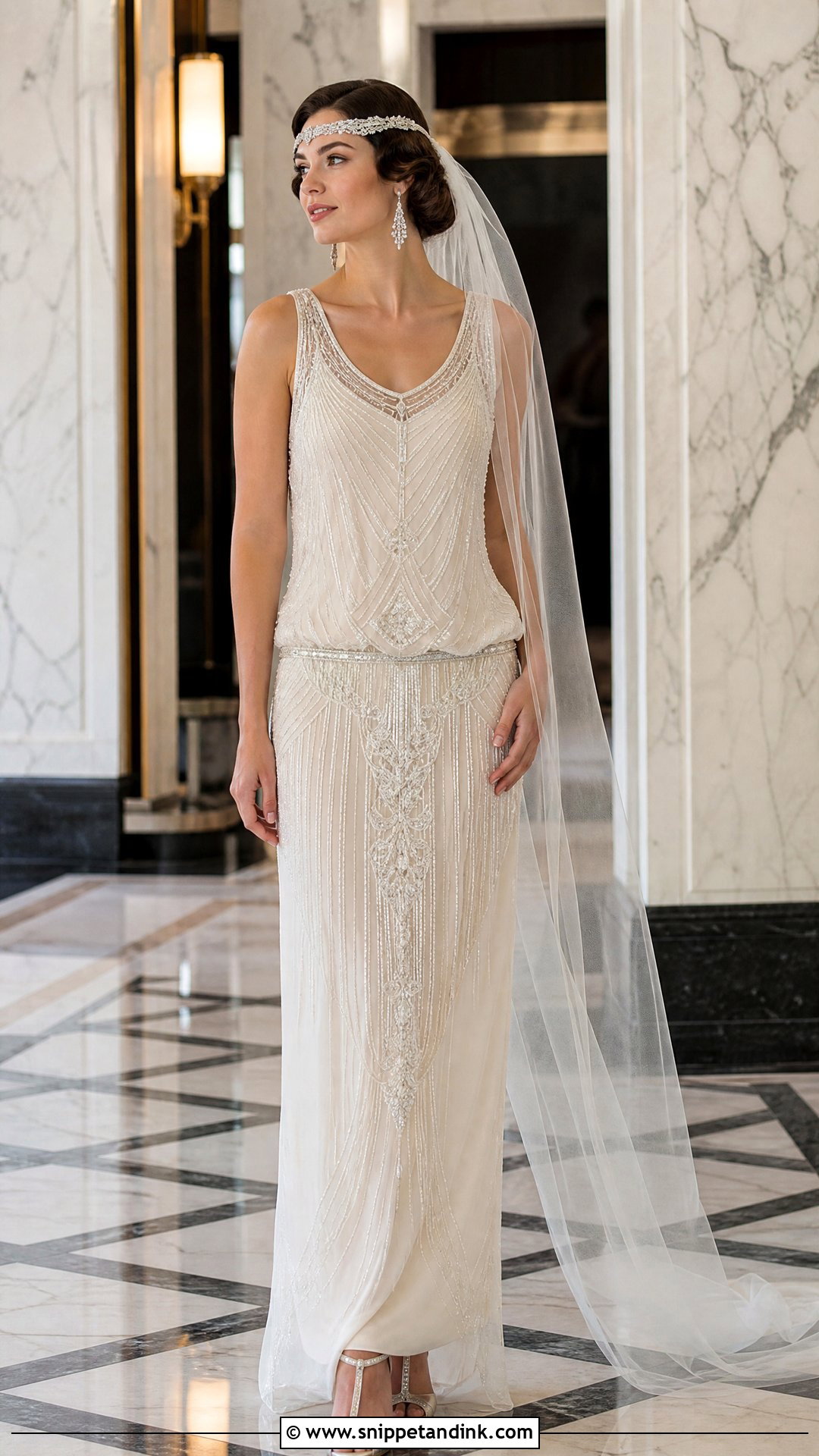
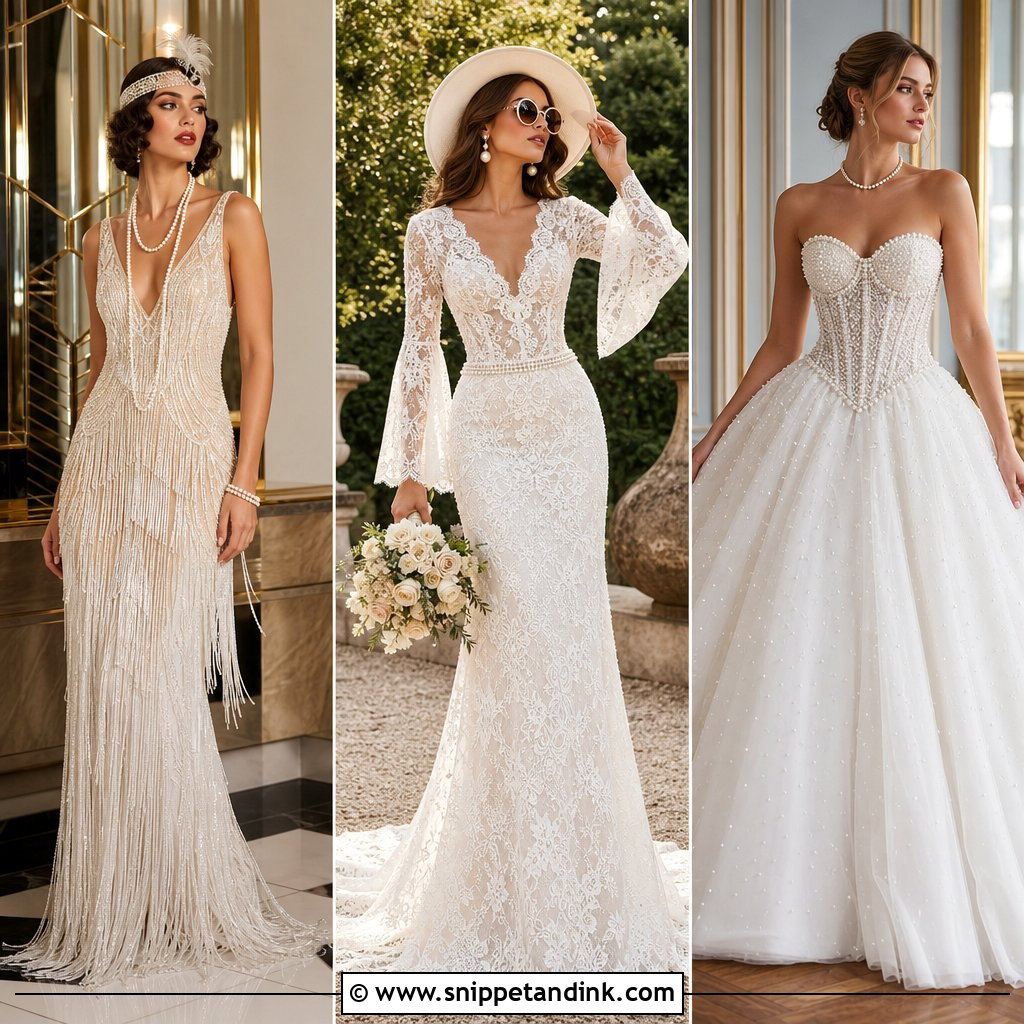
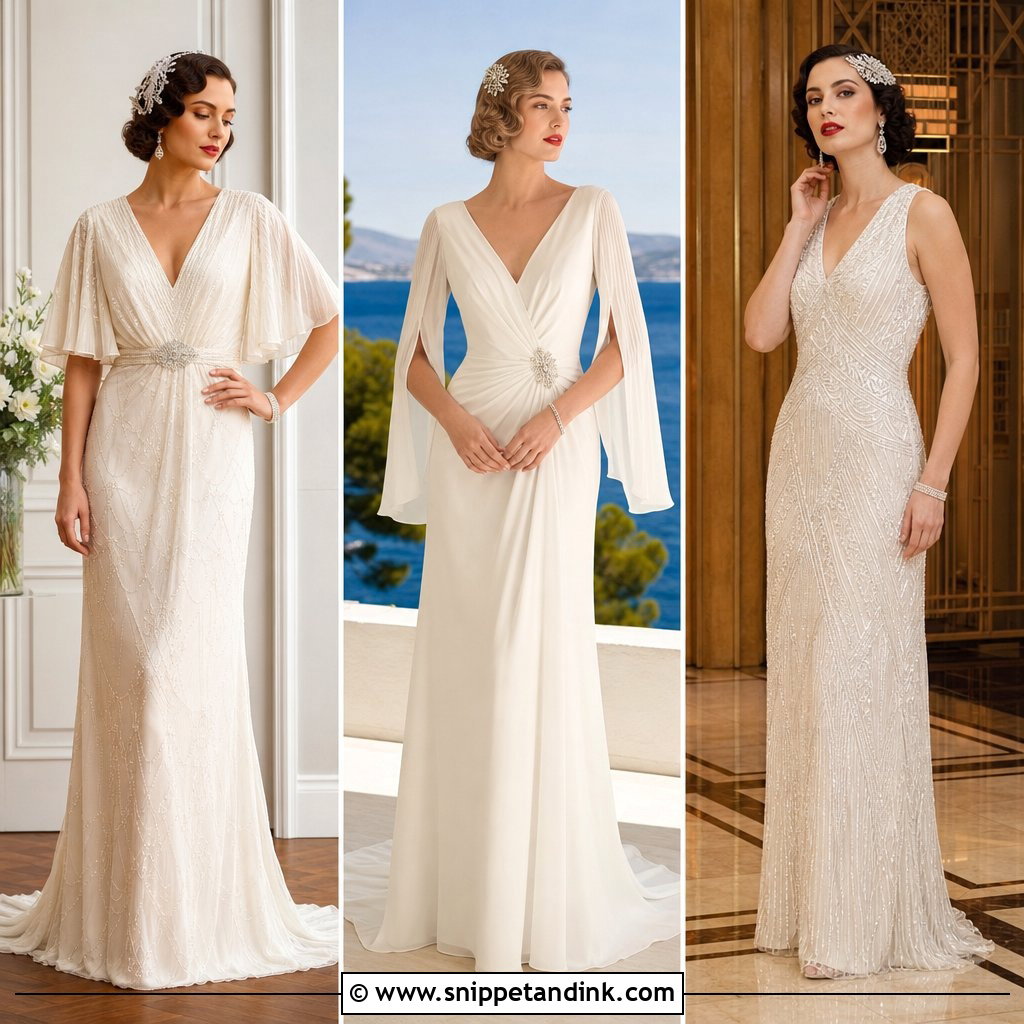
Beaded 1920s dresses are heavier than they look, and all that weight hangs from the shoulders. With a drop-waist gown, I always have the bride sit down at the fitting, because beaded panels fold and stiffen when you sit and some designs dig in at the hip. Choose an ivory column with geometric beadwork, a lowered waist seam and a skirt that moves rather than clings. Metallic T-strap heels, crystal earrings and a slim embellished headband over polished finger waves suit it, with a long, plain veil so the beading isn’t fighting anything. Want more shape? Many modern versions hide gentle waist definition under the pattern. Tiers, a dropped waist and streamlined beading are what make it read as Art Deco.
5. 1920s Art Deco Column Wedding Dress
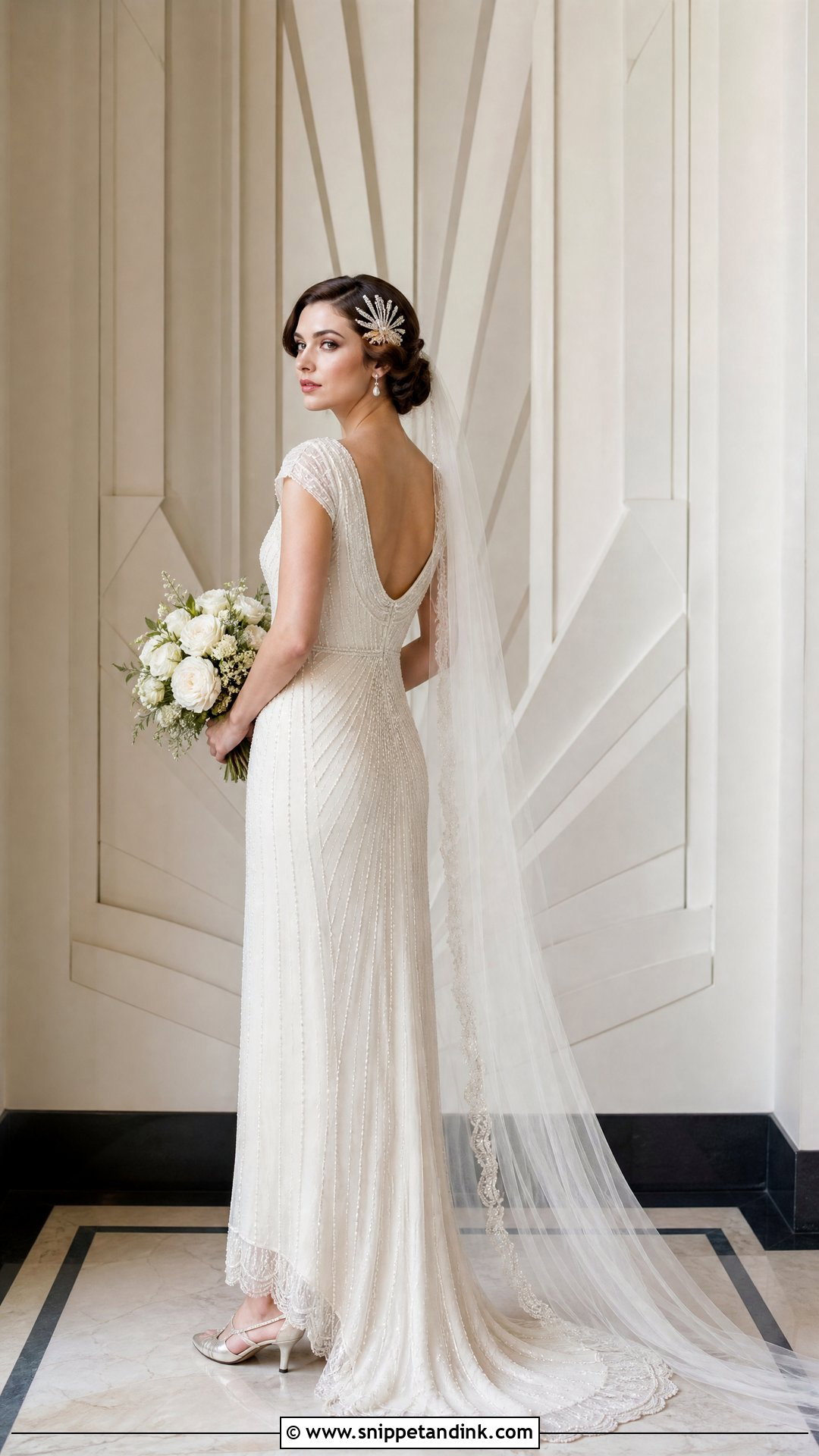
This is the quieter Jazz Age option. A straight ivory crepe column with a bateau neckline, vertical pearl embroidery and a low back gives a long, lean line with restrained sparkle. Silver low-heeled sandals, a geometric hair comb and a chapel-length veil go with it, and I’d swap a big arrangement for a compact bunch of calla lilies that repeats those straight lines. On a petite bride, unbroken vertical beading adds height; taller brides can take a longer train. A low back is unforgiving underneath, so plan for a backless bra or cups sewn into the dress. Hotels, ballrooms and restored Art Deco buildings show it off best. Keep every accessory geometric so nothing drifts into a different theme.
6. 1930s Bias Cut Satin Wedding Dress
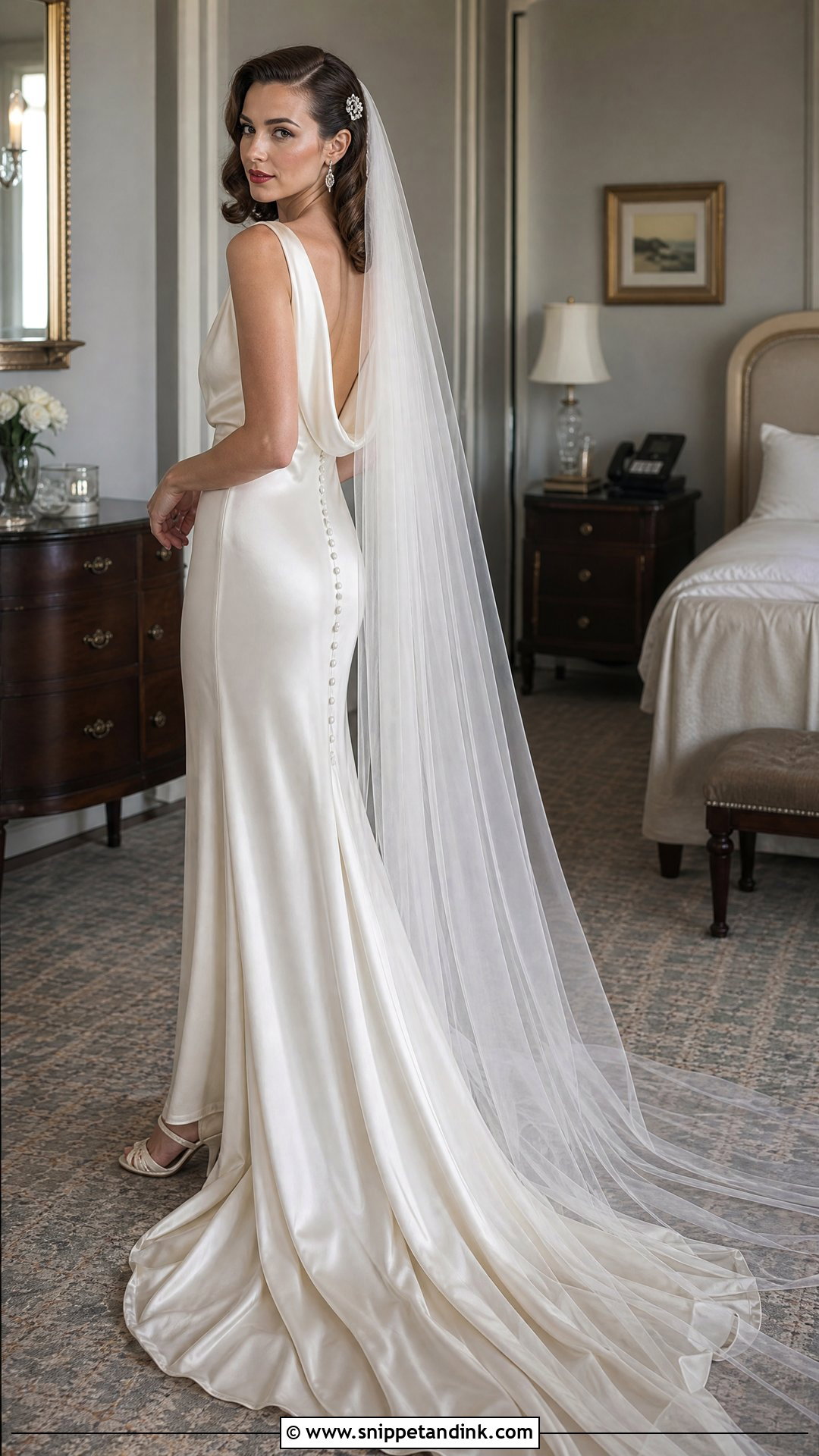
Bias cut means the fabric runs diagonally across the body, which is why it stretches, clings and moves the way it does. It is also why these gowns are hard to alter: a bias seam can twist if it’s taken in carelessly, so I only send them to a seamstress who has handled bias before. The gown should skim the waist and hips and pour into a fluid floor-length skirt, with a draped neckline, covered back buttons and a subtle train. Ivory peep-toe heels, a crystal side comb, glossy side-parted waves and a long veil finish it, with a satin clutch for small things. Heavier silk or good satin hangs far better than thin, shiny fabric, and when it hangs correctly the silhouette works across many sizes. Keep jewelry minimal.
7. 1930s Cape Sleeve Wedding Dress
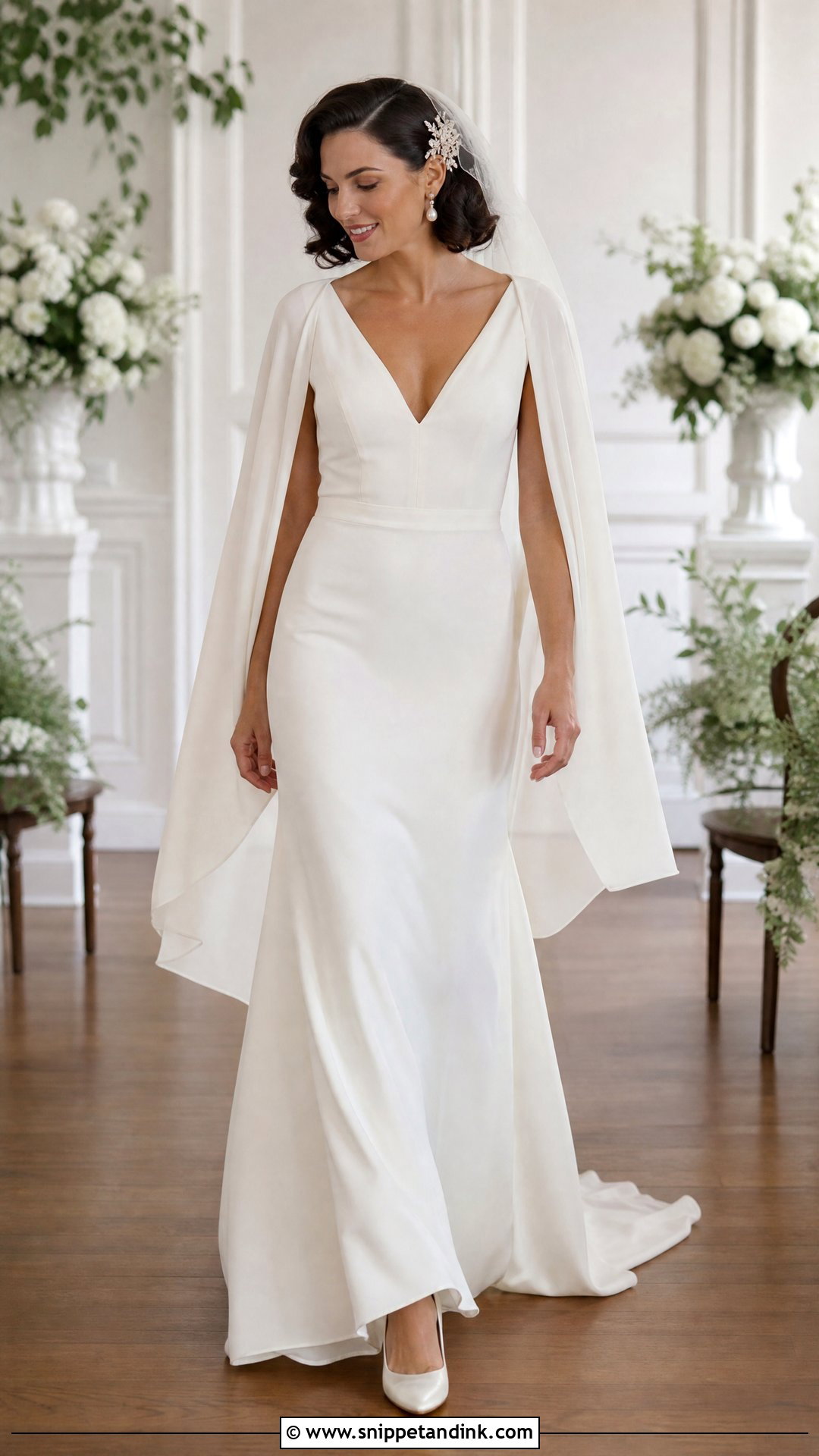
Could a vintage gown give you arm coverage without feeling heavy? A 1930s cape-sleeve dress does exactly that. Start with a softly fitted ivory crepe gown with a V-neck, defined waist and flowing cape panels falling from the shoulders. Closed-toe satin pumps, pearl earrings and a slim metallic hairpiece suit it, with a short veil tucked beneath a waved updo so the cape stays visible. The panels must be light enough to drape. I lift each one at a fitting and let it fall, and if it stands out stiffly, the fabric is wrong. A narrow train and a simple bouquet keep it sleek for a spring ceremony or an evening wedding indoors.
8. 1940s Long Sleeve Crepe Wedding Dress
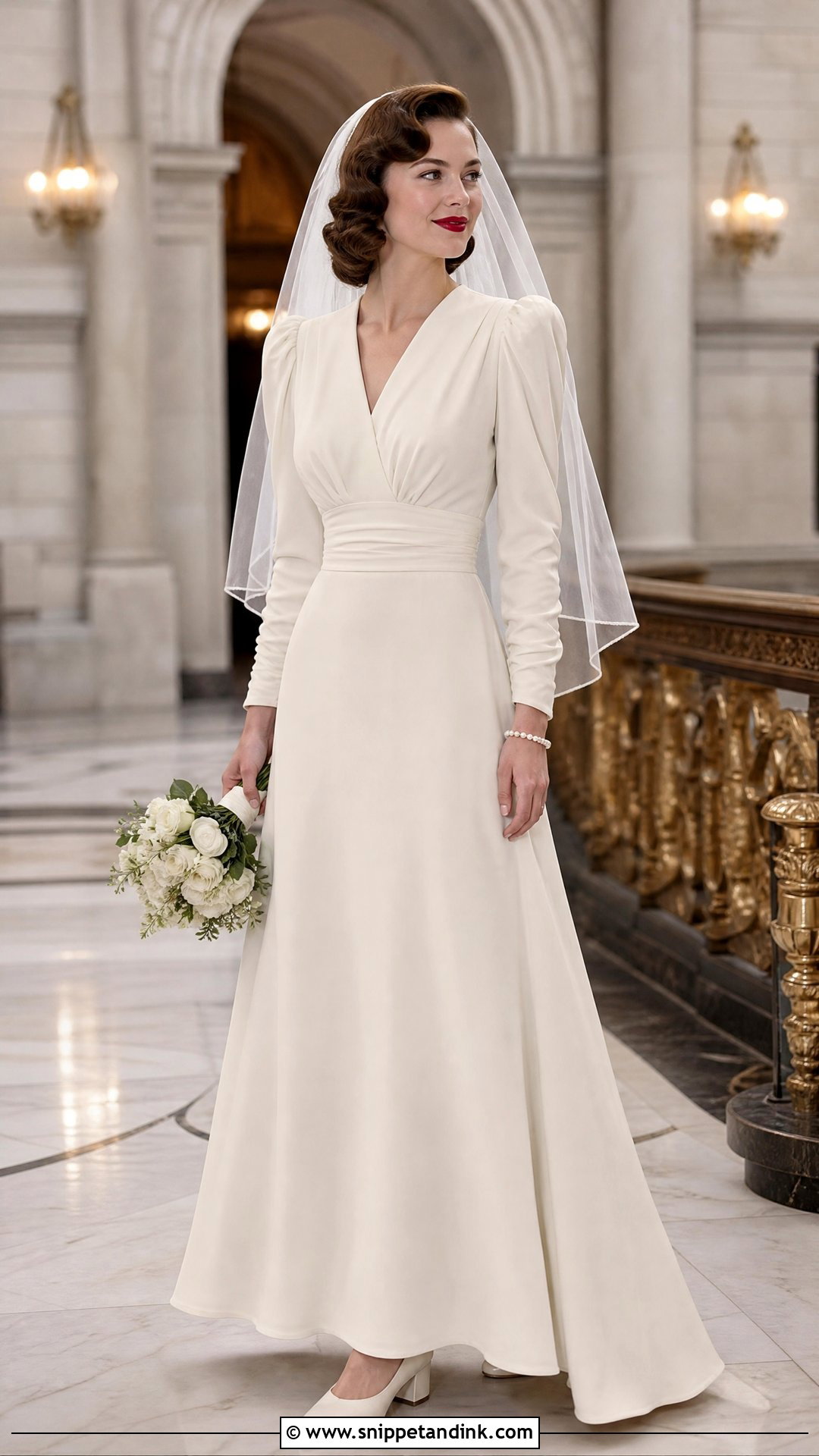
Wartime brides wore both dresses and suits, and the 1940s look always comes back to strong shoulders, a shaped waist and a practical line. For a gown, choose ivory crepe with lightly padded shoulders, a sweetheart or shallow V-neck, gathered sleeves and a defined waist, falling straight or into a restrained A-line. Low block heels, a pearl bracelet and a fingertip veil with side rolls or soft waves; white roses tied with satin ribbon. Crepe is my favorite fabric for this era because its matte surface doesn’t glare in photos and needs no decoration. That shoulder structure has a practical bonus, too: it balances fuller hips and makes the waist look smaller.
9. 1940s Wedding Suit With Veil
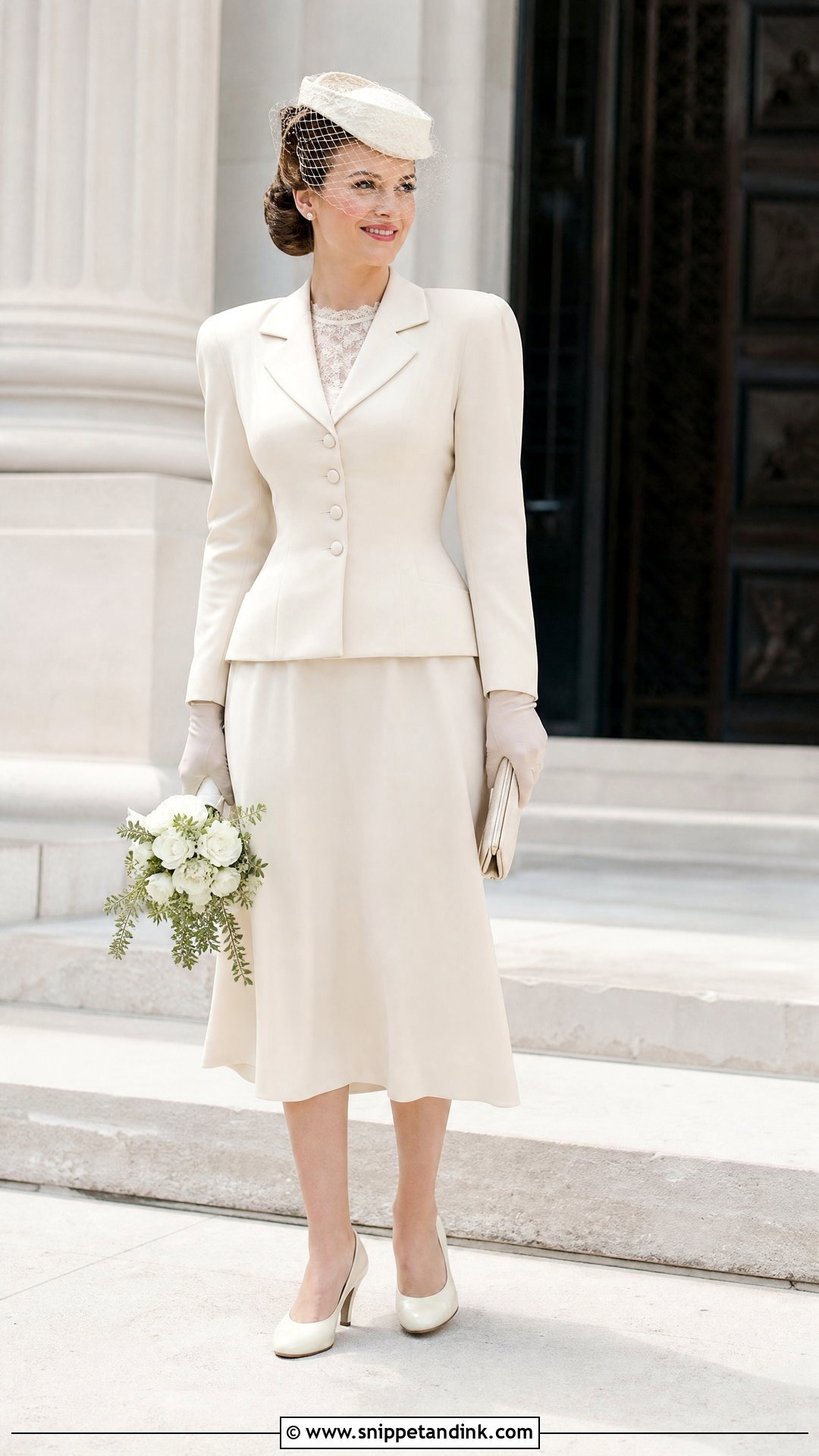
A 1940s wedding suit with a veil is the old-school answer for a courthouse ceremony, a daytime wedding or a second celebration. Picture an ivory skirt suit with a fitted jacket, defined shoulders, covered buttons and a calf-length pencil or softly flared skirt, over a silk camisole or a modest lace blouse. Closed-toe pumps, short gloves, pearl studs and a birdcage veil on a small structured hat complete it. When I fit one, I check that the jacket closes without pulling at the buttons and that the skirt lets you climb steps; with no full skirt to hide behind, tailoring is everything. If bright white feels severe against your skin, cream, oyster or pale champagne all still read as bridal.
10. 1950s Tea Length Wedding Dress
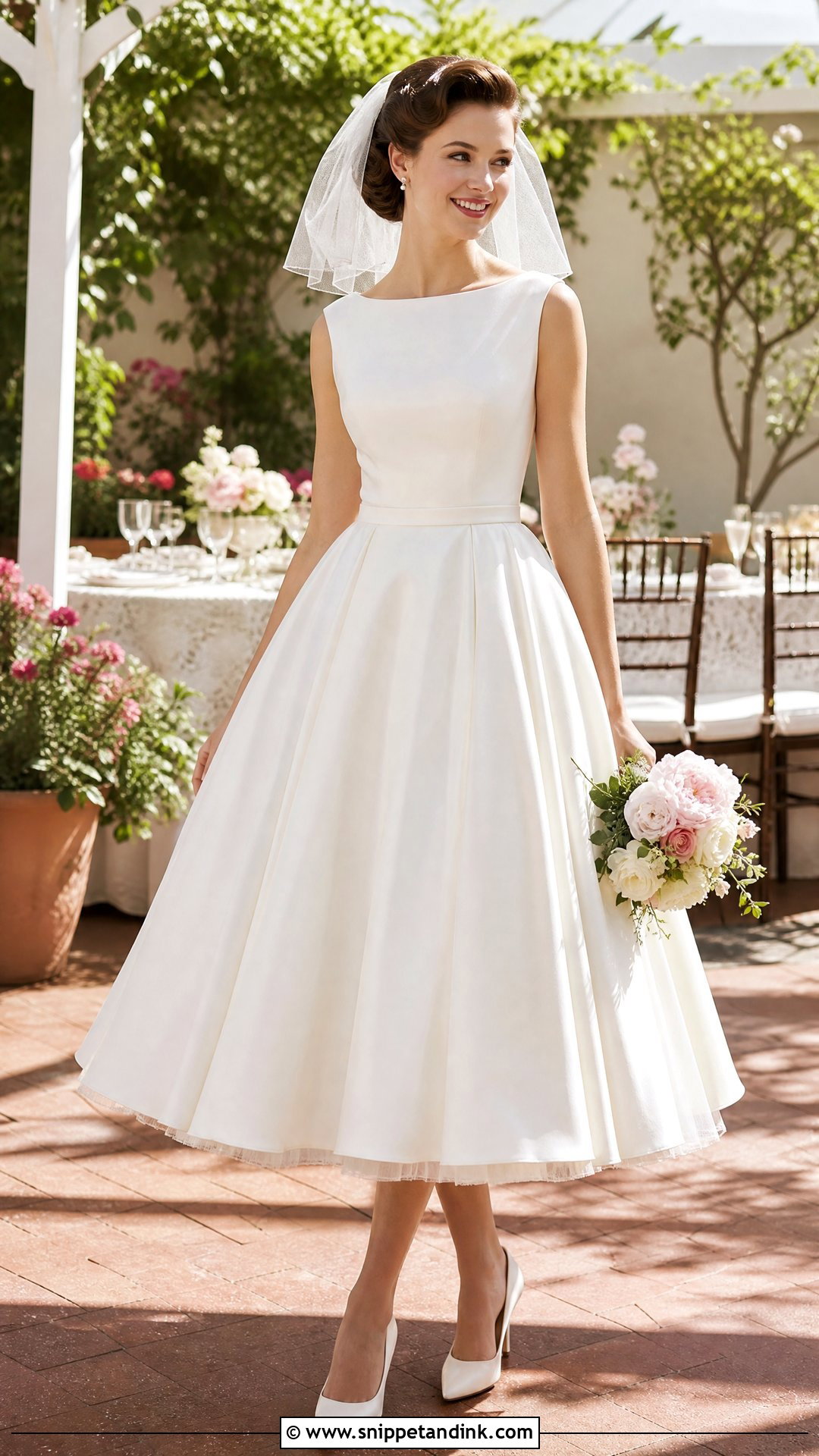
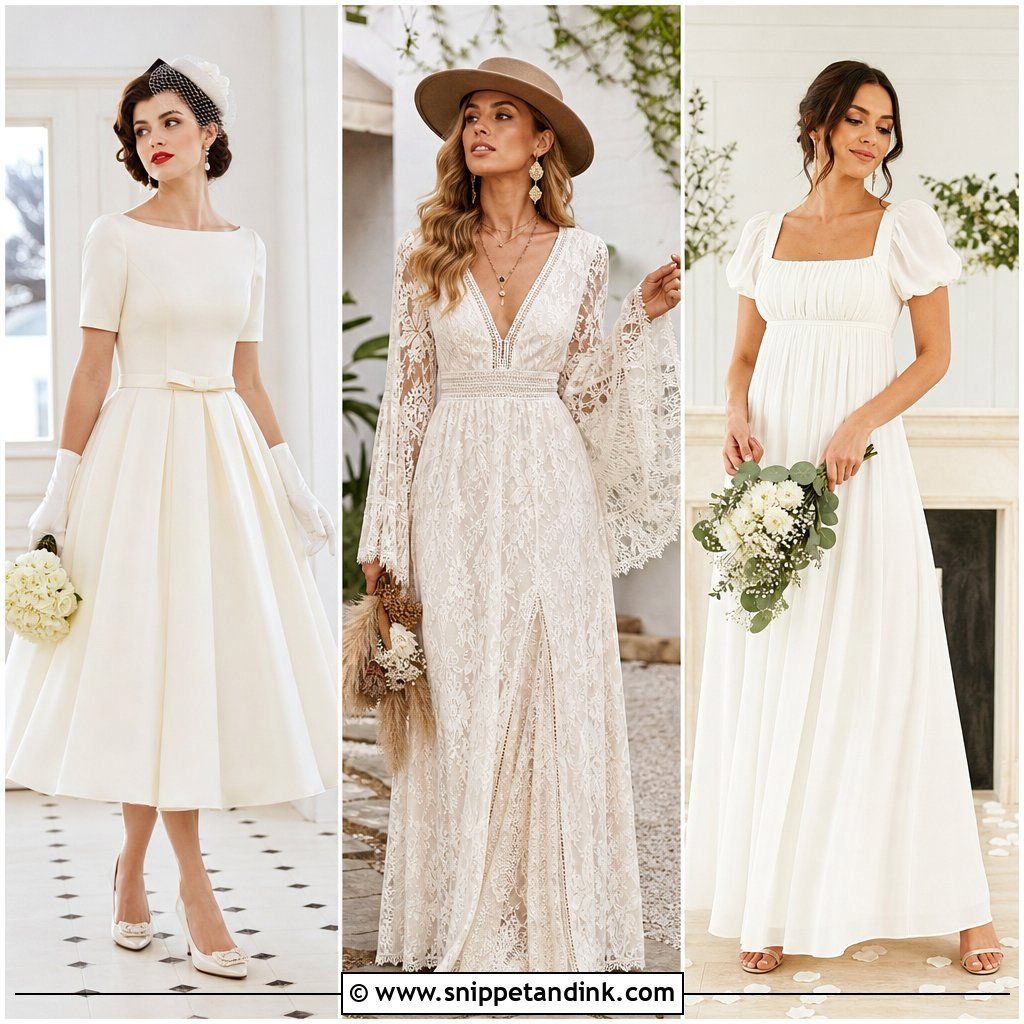
Fitted waists, full skirts and petticoat-supported shapes are the heart of 1950s bridal, and tea length is the most dance-friendly version. Look for a fitted bodice with a bateau or sweetheart neckline, a defined waist and a full skirt ending between knee and ankle. A light petticoat adds volume; if it makes the skirt rigid, ask for a softer tulle layer instead. Pointed ivory pumps, pearl earrings, a short veil or small pillbox hat, and a rounded bouquet. The hem stays clear of wet grass, which makes it practical outdoors, and your shoes are on show all day. Because of that, I’d break them in at home rather than buying them the week before.
11. 1950s Lace Ball Gown Wedding Dress
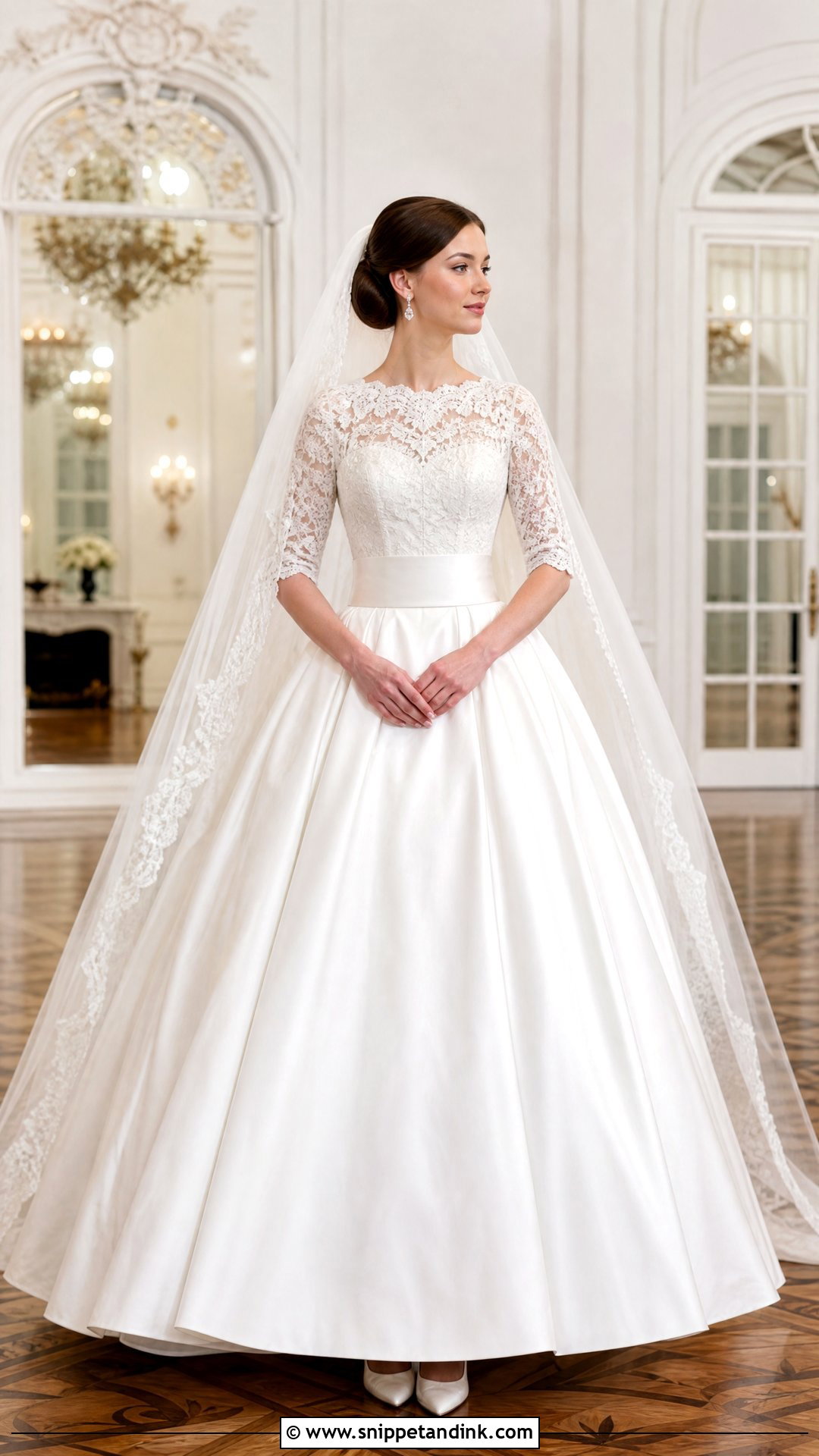
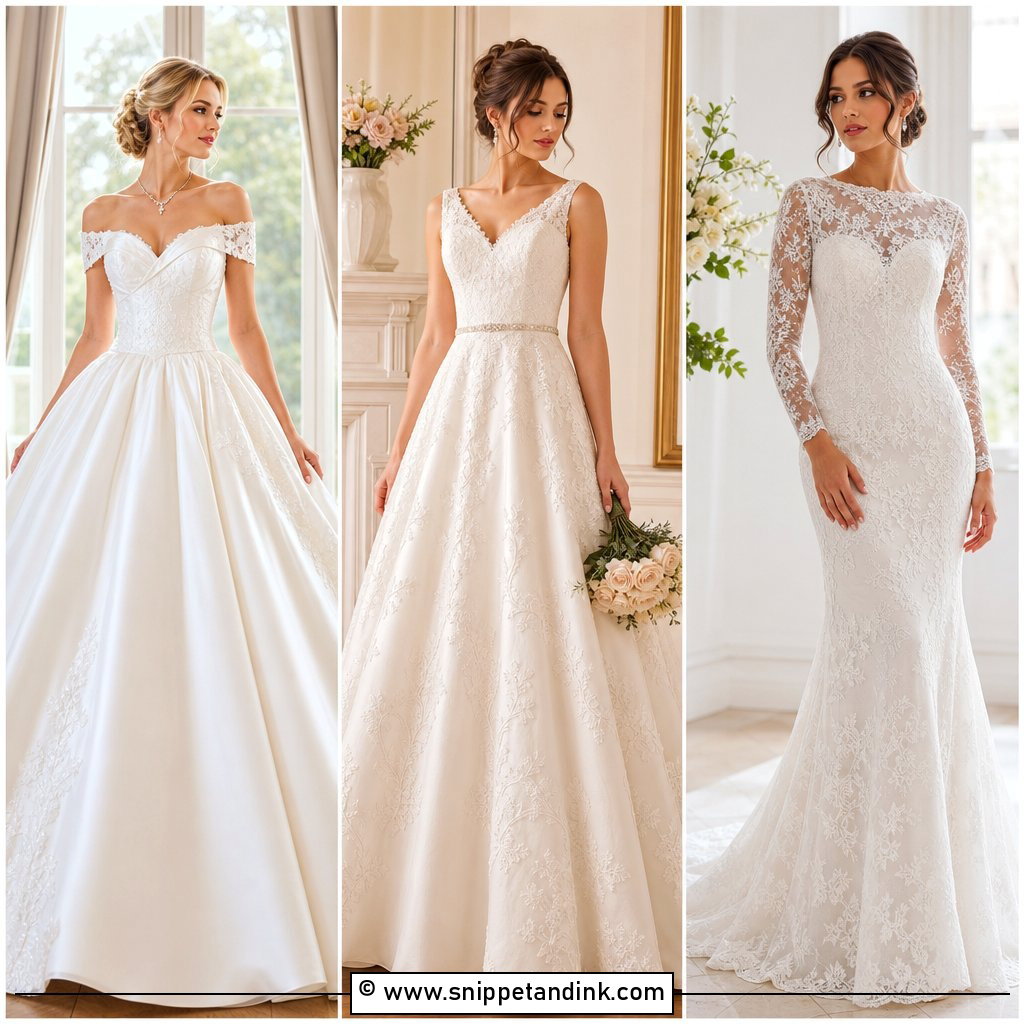
A lace ball gown is the grandest look here and also the heaviest, which is what brides tend to underestimate. A structured bodice with a portrait neckline, a wide waistband, elbow-length sleeves and a full satin or tulle skirt covered in lace appliqués adds up quickly once every underskirt layer is in. Petite brides can drop a layer of underskirt; taller brides may want more fullness. Pearl-and-crystal earrings, satin pumps and a cathedral veil running past the train, with a smooth chignon so the neckline shows. Ask your seamstress for a bustle with several hooks that spread the train’s weight, not one point that drags. Ballrooms and large traditional venues give the skirt room to move.
12. Audrey Hepburn Bateau Neck Wedding Dress
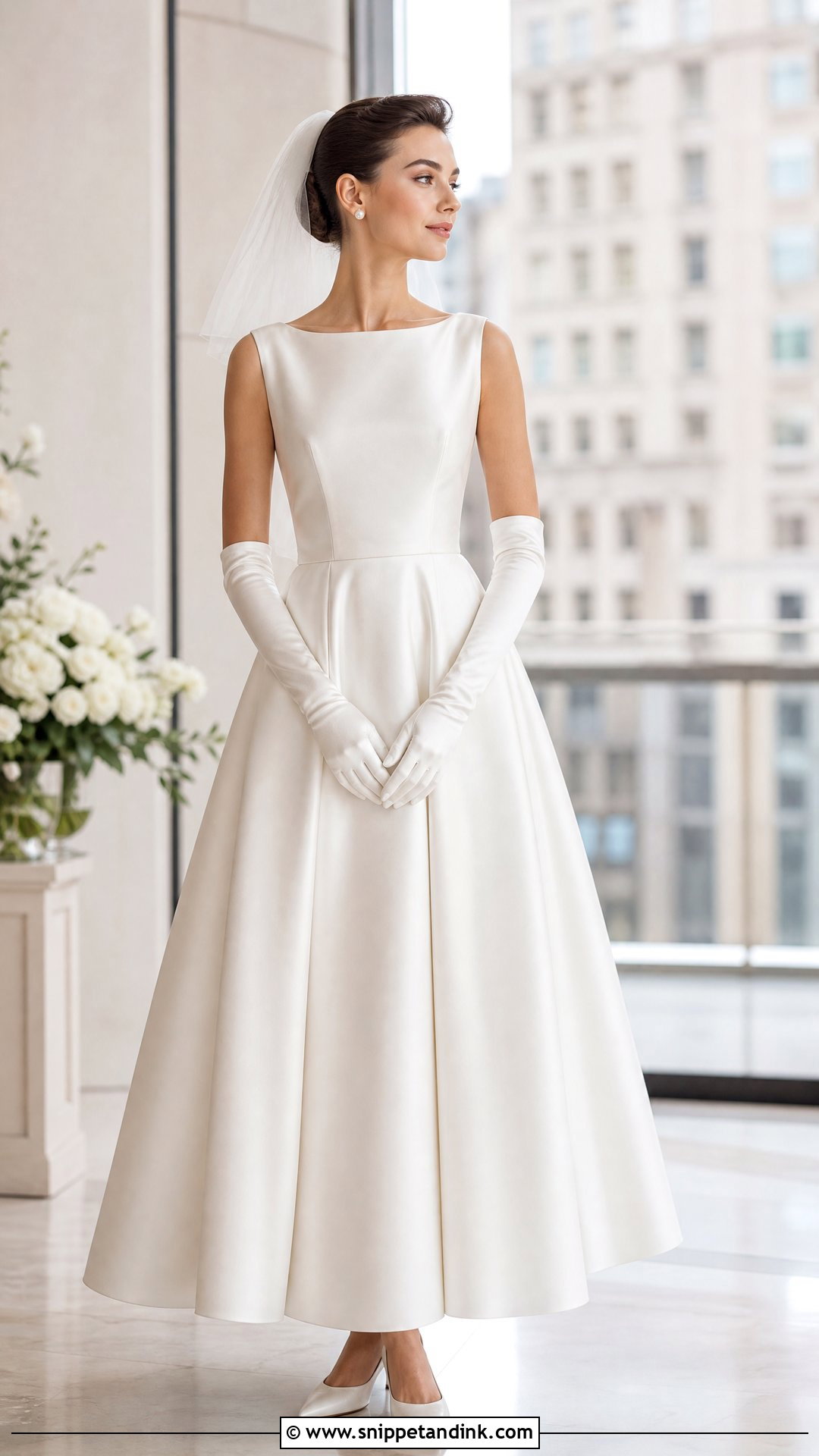
A bateau neckline runs almost straight from shoulder to shoulder, so it shows off the collarbones and balances a full skirt. Here it comes in ivory satin or mikado, with a fitted bodice, narrow waist and ankle-length circle skirt. Mikado is a stiff, heavy silk with a slight sheen, and it holds that clean shape far better than soft satin. Pointed kitten heels, pearl studs, wrist-length gloves, a short veil above a neat bun and a compact white bouquet suit the Audrey Hepburn feel, with a small structured bag after the ceremony. That wide neckline leaves nowhere for bra straps to hide, so I’d choose a dress with internal boning and built-in cups. Civil ceremonies, daytime receptions and city weddings suit it.
13. 1960s Mod Mini Wedding Dress
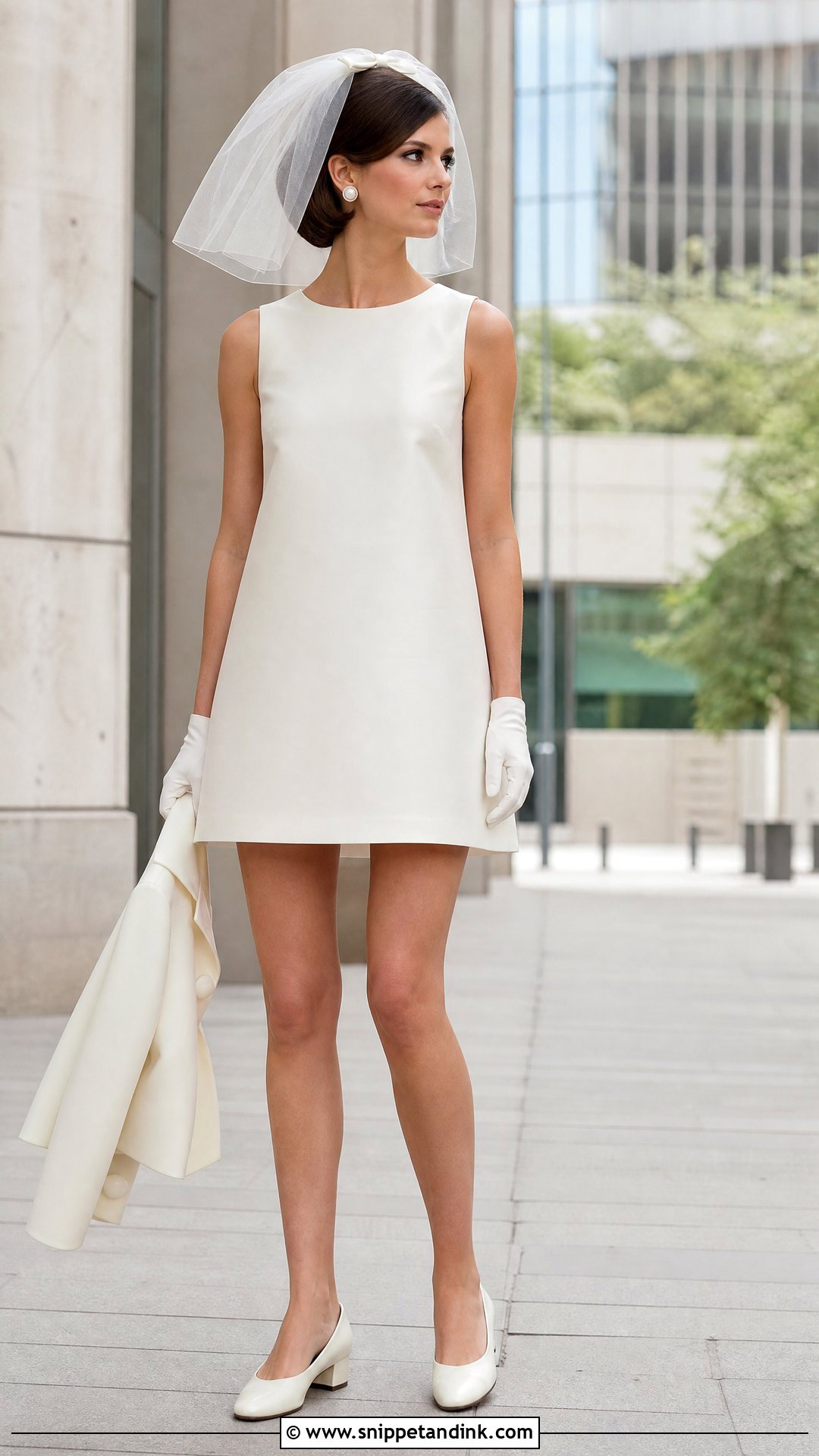
Short A-line shifts were a real 1960s bridal direction, and a mod mini feels playful and very simple. Choose a structured ivory A-line with a high round neckline, clean seams and a hem length you’re comfortable with at your venue. Low block-heel pumps, sheer tights if you like, pearl button earrings and a short bubble veil go with it. Hair decides whether this tips into costume, so I’d go for a polished bob, flipped ends or a sleek low ponytail rather than a towering beehive. A matching cropped coat with bracelet-length sleeves covers you at a cooler celebration, and a knee-length shift keeps the shape if you’d like more coverage. Keep the bouquet small; anything large overwhelms such a short silhouette.
14. 1960s Empire Line Wedding Dress
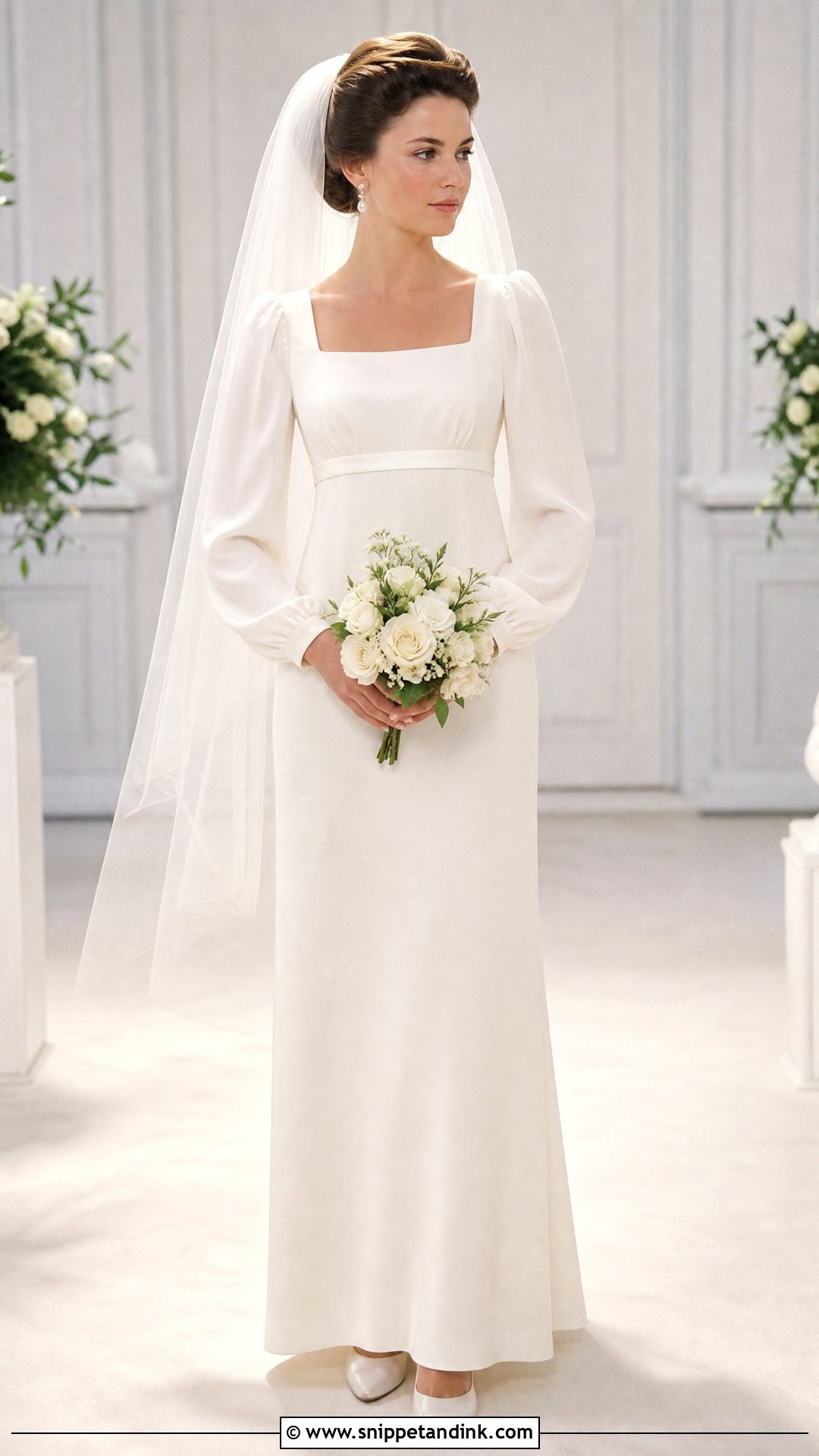
Slender empire lines were the other face of 1960s bridal, more grown-up than the mini. Picture a floor-length gown with a raised waist, narrow skirt, square or rounded neckline and lightly gathered sleeves, in silk crepe, chiffon or matte satin. Simple ivory pumps, delicate drop earrings and a chapel veil behind smooth center-parted hair, with a narrow ribbon under the bust for definition. Because the skirt falls from high up, it flatters petite, straight, apple and plus-size figures without gripping the natural waist. The weak point is the bodice. With so little fabric holding everything up, I insist on proper internal support so it stays put through the ceremony and all the hugs afterward.

15. 1970s Prairie Lace Wedding Dress
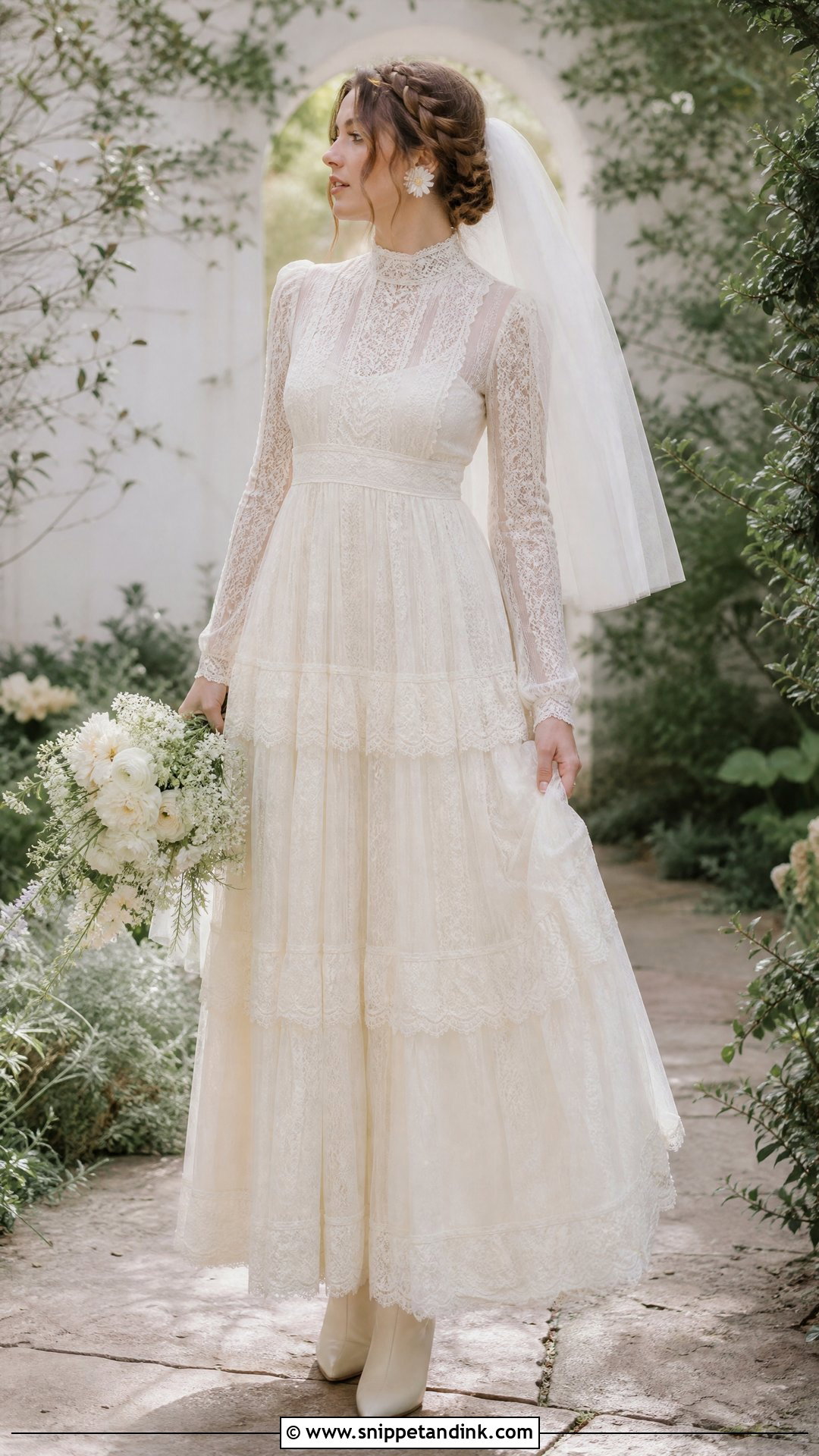
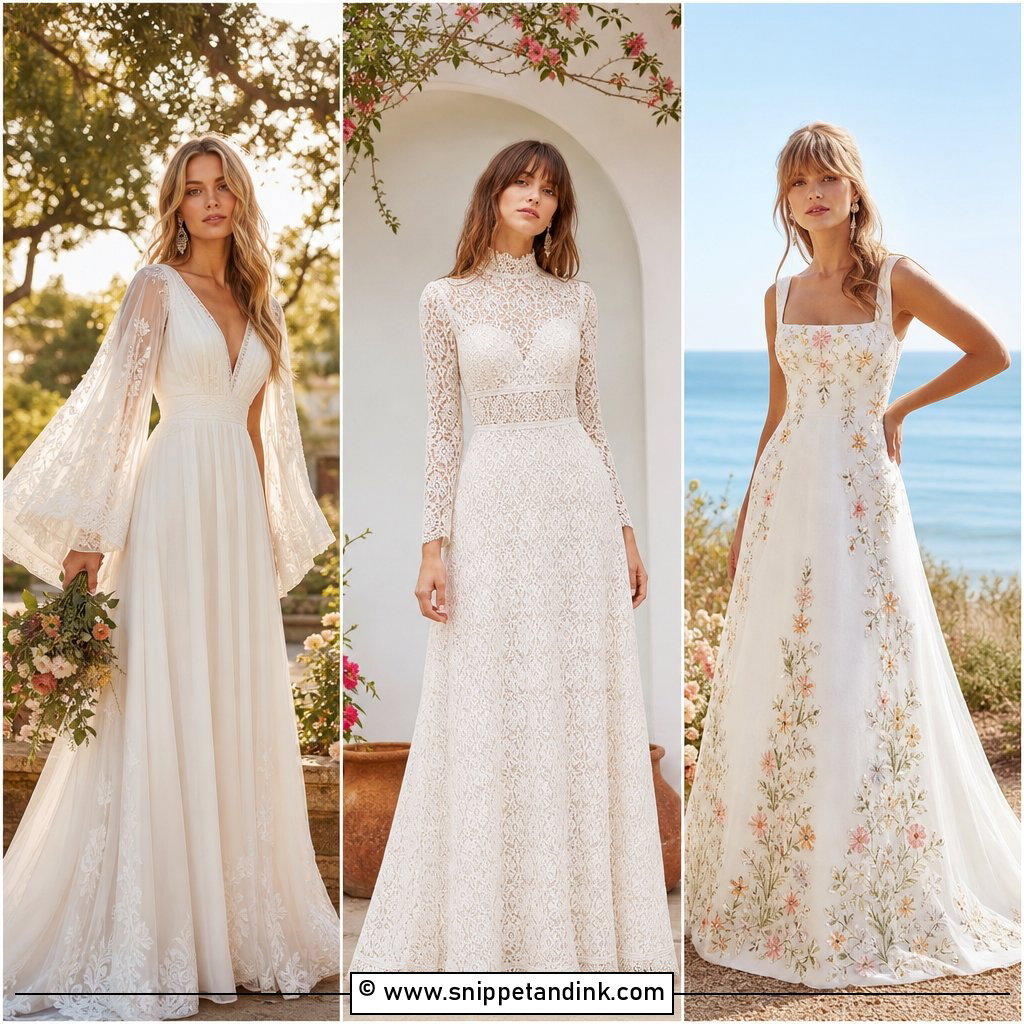
The 1970s looked back to Edwardian and Victorian dressing, which is why a 1970s prairie lace wedding dress shares their high necks and long sleeves while feeling far more relaxed. Look for ivory with a softly raised waist, a high lace neckline and a flowing tiered skirt. Cream leather boots or comfortable block heels, small floral earrings and a fingertip veil under a loose braided updo suit it. A natural bouquet of white flowers and greenery works, but keep it tidy rather than wild. Cotton lace and light chiffon move well outdoors in spring or fall. Tiers add width wherever they sit, so I check the seam placement on the bride herself; on a shorter frame, fewer, deeper tiers look cleaner than many narrow ones.
16. 1970s Bell Sleeve Boho Wedding Dress
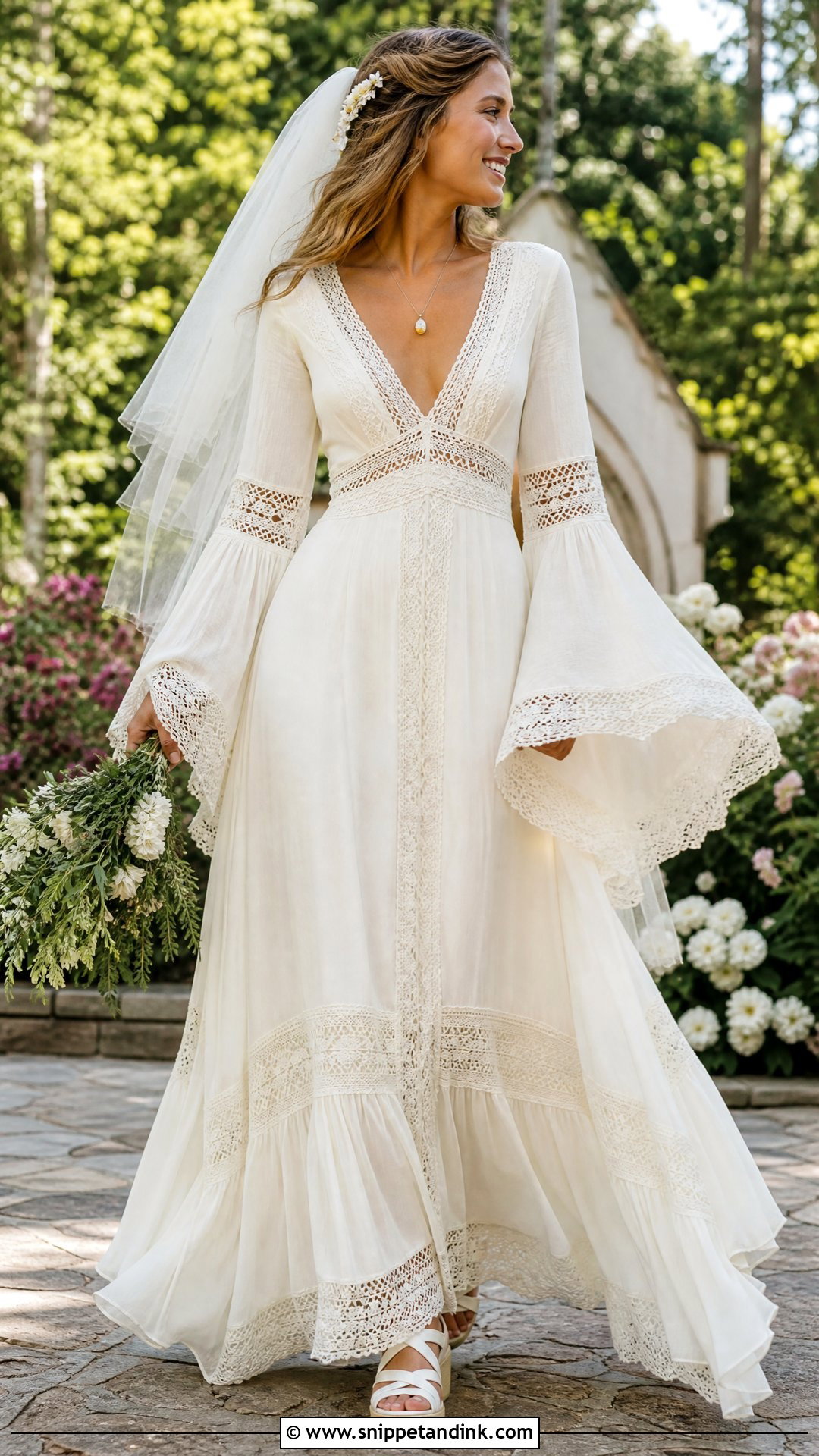
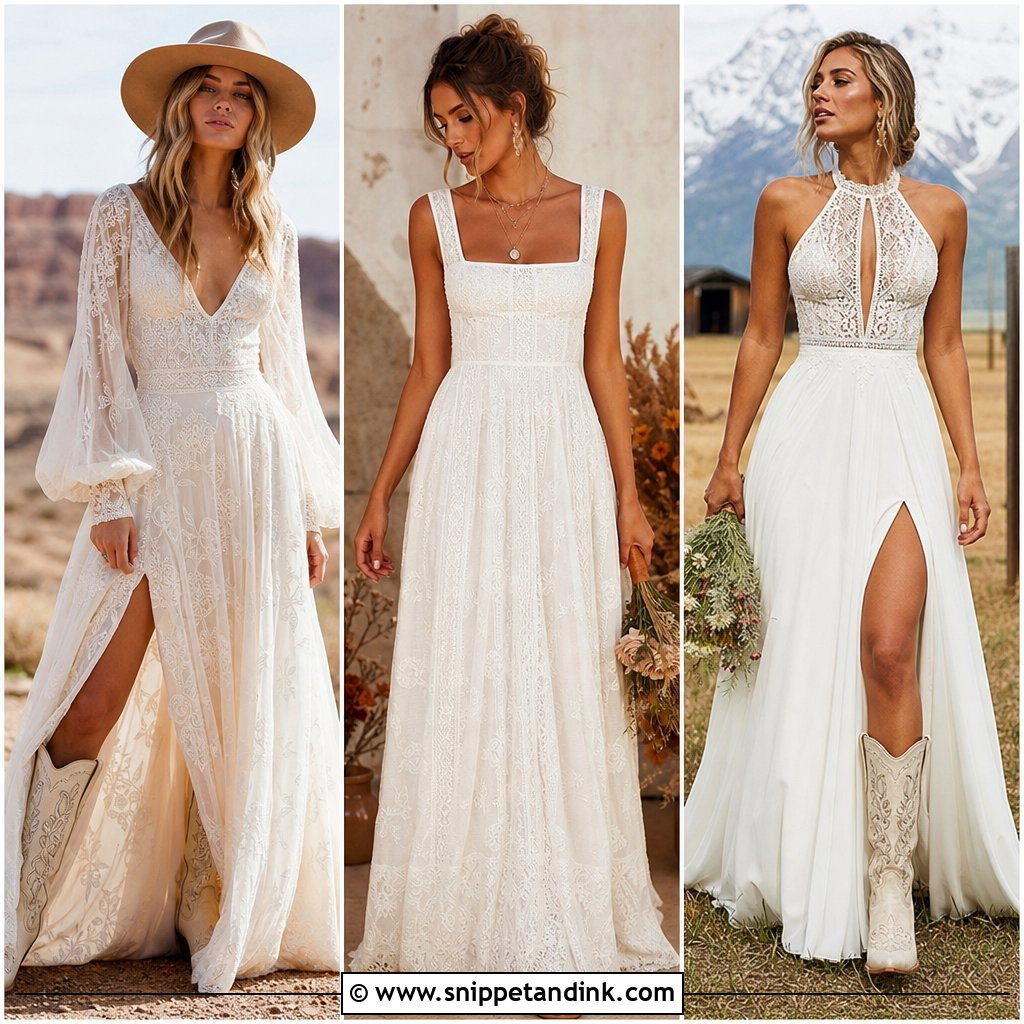
Movement is what makes a 1970s bell-sleeve boho wedding dress. Choose a flowing ivory gown with a V-neck, fitted upper bodice, long flared sleeves and an easy A-line skirt; crochet lace panels bring texture, and a soft lining stops it looking too sheer. Ivory platform sandals or stable block heels, a simple pendant and a floral comb in loose waves. A plain chapel veil or a fine lace-edged one beats anything heavily embellished. Watch the sleeve length. Wide sleeves should end above the fingertips, or they’ll catch the bouquet, trail through the cake and drag across every table setting. Gardens, deserts and woodland settings suit it, with the hem adjusted for the ground.
17. 1980s Puff Sleeve Wedding Dress
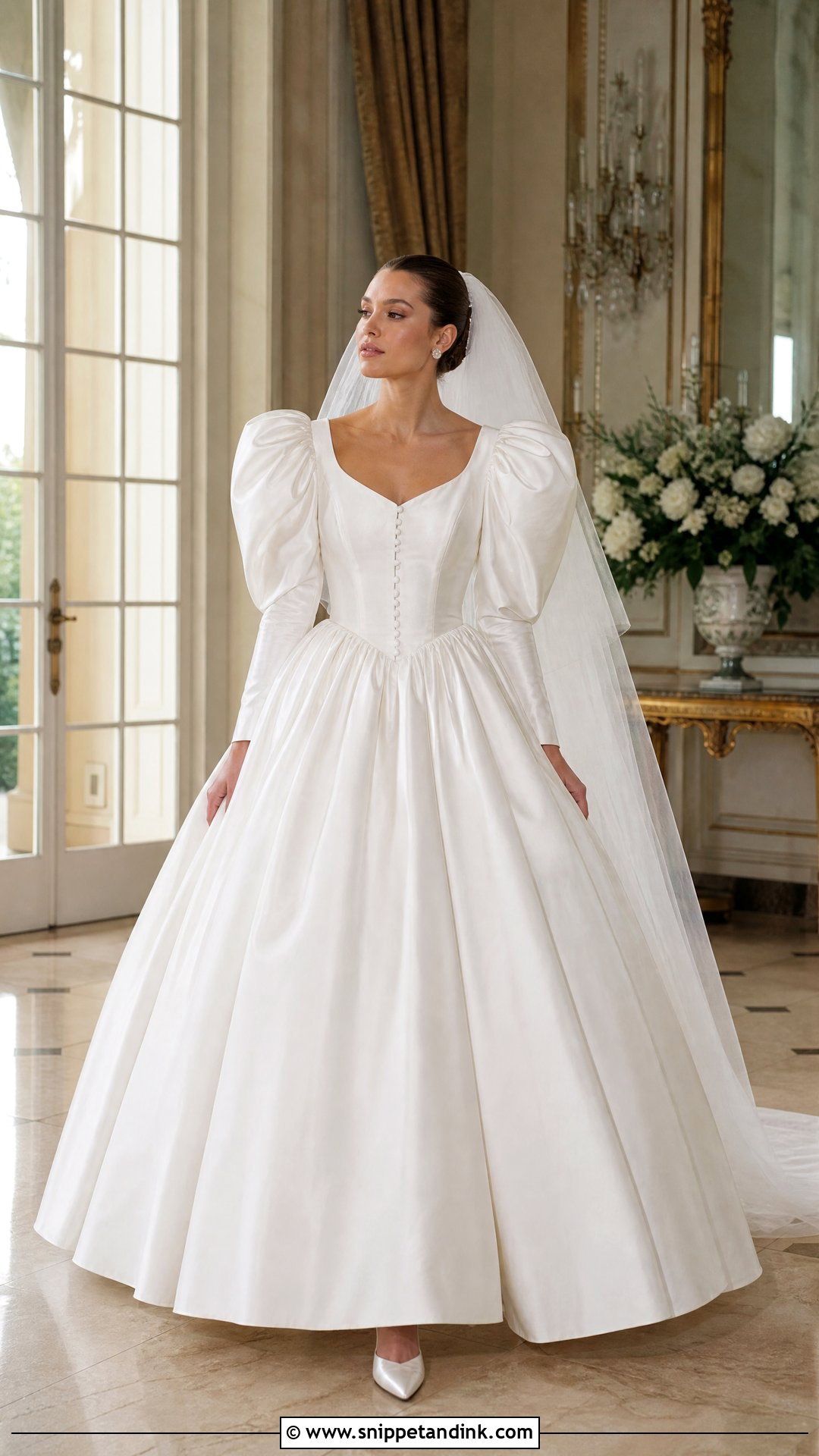
Full ball gowns and statement sleeves define 1980s bridal, and the modern way in is lighter fabric and smaller proportions. A 1980s puff-sleeve wedding dress in satin, with full sleeves, a fitted waist, covered buttons and a wide skirt with a manageable train, still feels formal and celebratory, and a softly curved neckline modernizes it. Satin pumps, crystal studs and a full-length veil attached to a sleek bun are enough; with sleeves this big, jewelry should stay refined. My fitting check is simple: raise your arms as if hugging someone. If the puff starts in the wrong place, it lifts the whole bodice. Shorter brides usually look better with a smaller puff and a less voluminous skirt.
18. 1990s Minimal Satin Slip Wedding Dress
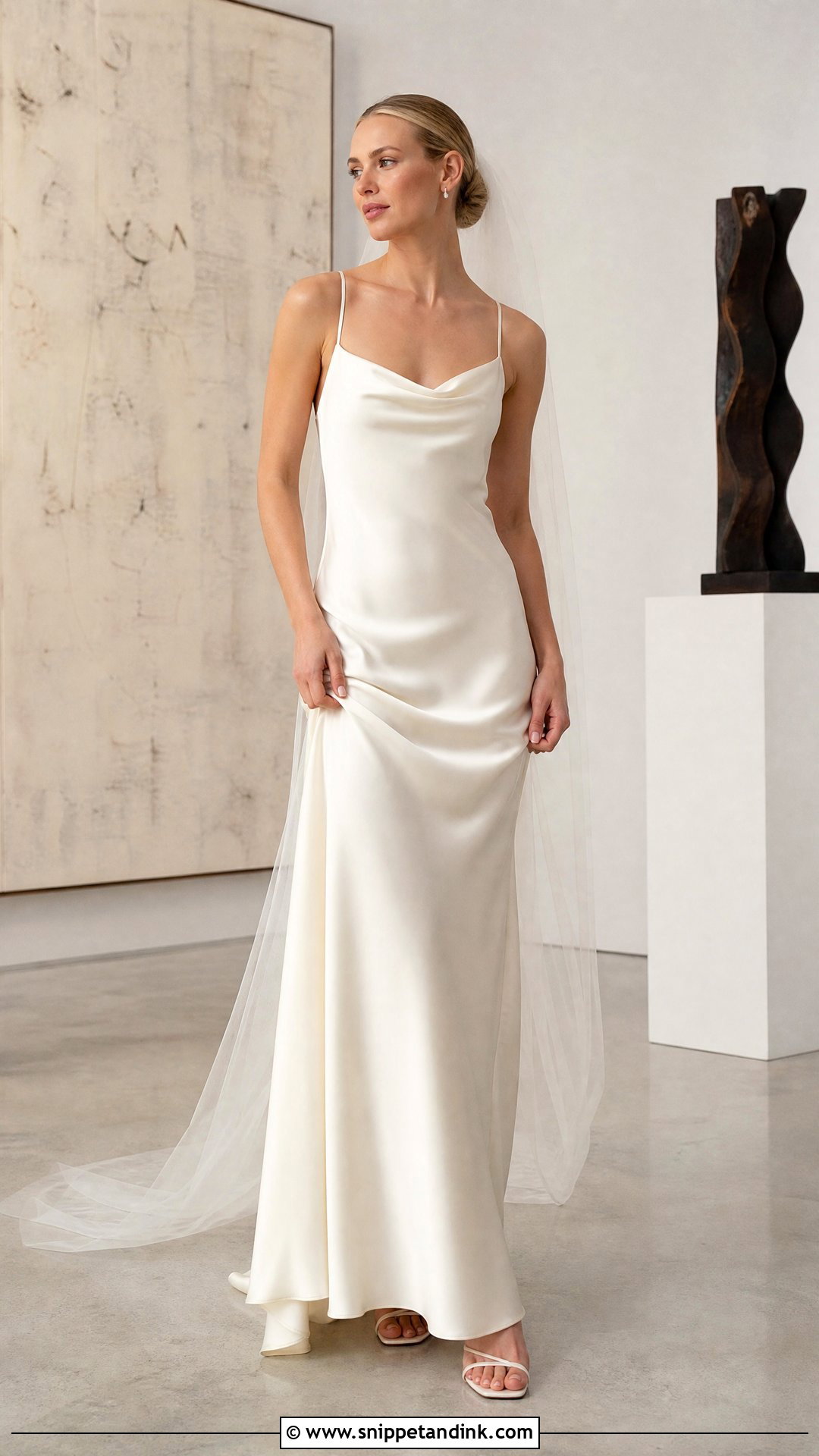
The 1990s slip is old school with no lace or volume at all. A bias-cut ivory gown with slim straps, a soft cowl neckline and a fluid skirt to the floor is worn with understated strappy heels, small diamond or crystal studs and a long sheer veil, and a smooth low bun or polished shoulder-length hair keeps it clean. Satin slips show everything underneath, down to the edge of a seam or a line of lace from a bra. So I fit these over the exact underwear the bride will wear on the day, never over whatever she arrived in. A light silk wrap covers your shoulders outdoors or at a cool reception. Keep the accessories simple and let the fabric and tailoring look expensive. City venues, galleries and small hotels suit it.
19. Old Hollywood Mermaid Wedding Dress
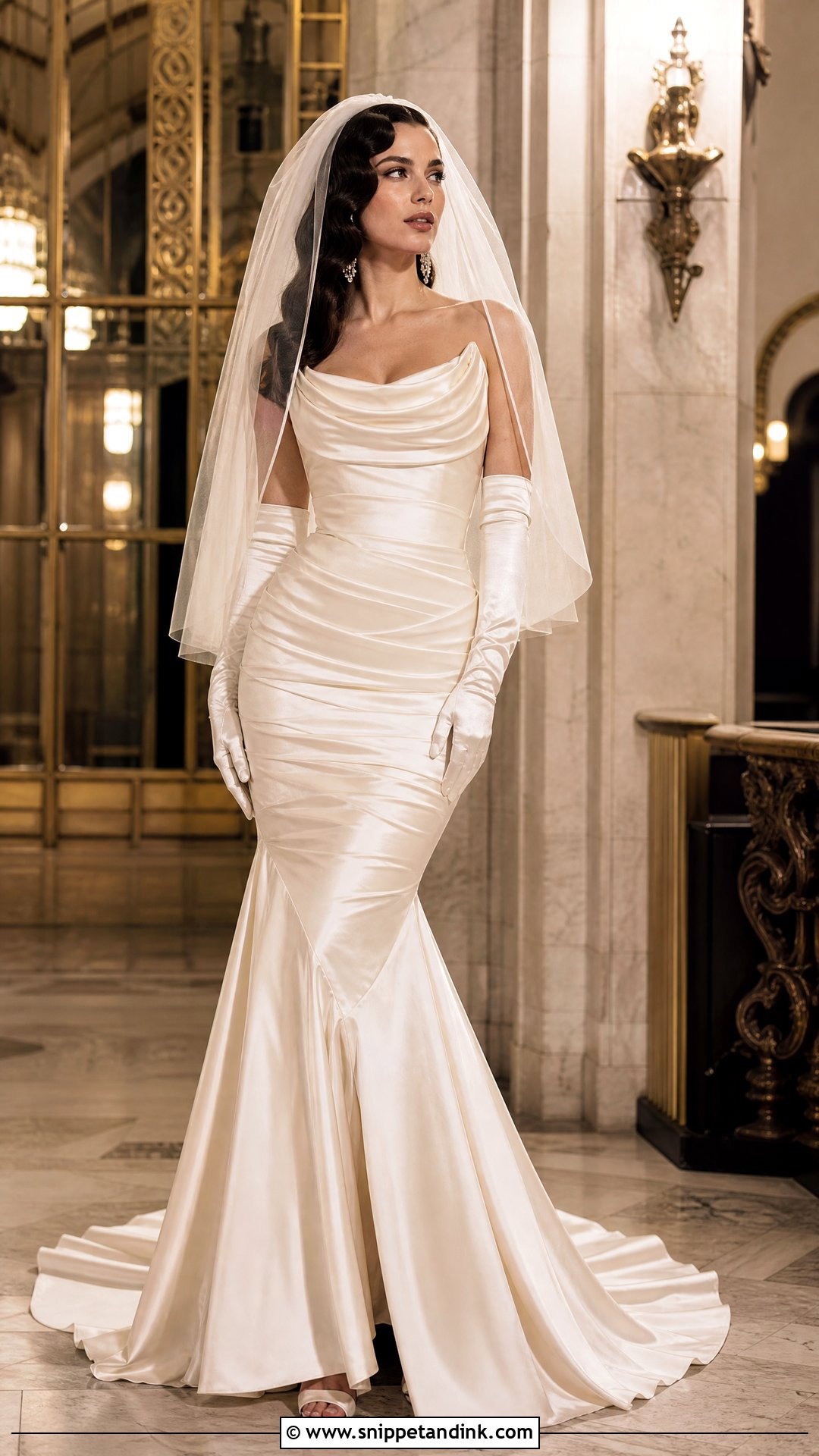
A mermaid gown is all about where the flare starts. In an Old Hollywood satin version with a draped neckline, fitted waist and hips and a skirt opening around the knee, I have the bride walk, sit and climb a few steps during alterations. If the skirt pins her knees, raising the flare point slightly gives her movement without changing the look. Ivory peep-toe heels, crystal drop earrings, a fingertip veil and deep side-parted waves complete it. Long gloves add drama as long as they’re plain, and a narrow bouquet of calla lilies follows the gown’s long shape. Evening ballrooms and historic theaters, where satin and understated jewelry catch the light, suit it.


20. Grace Kelly Lace Wedding Dress
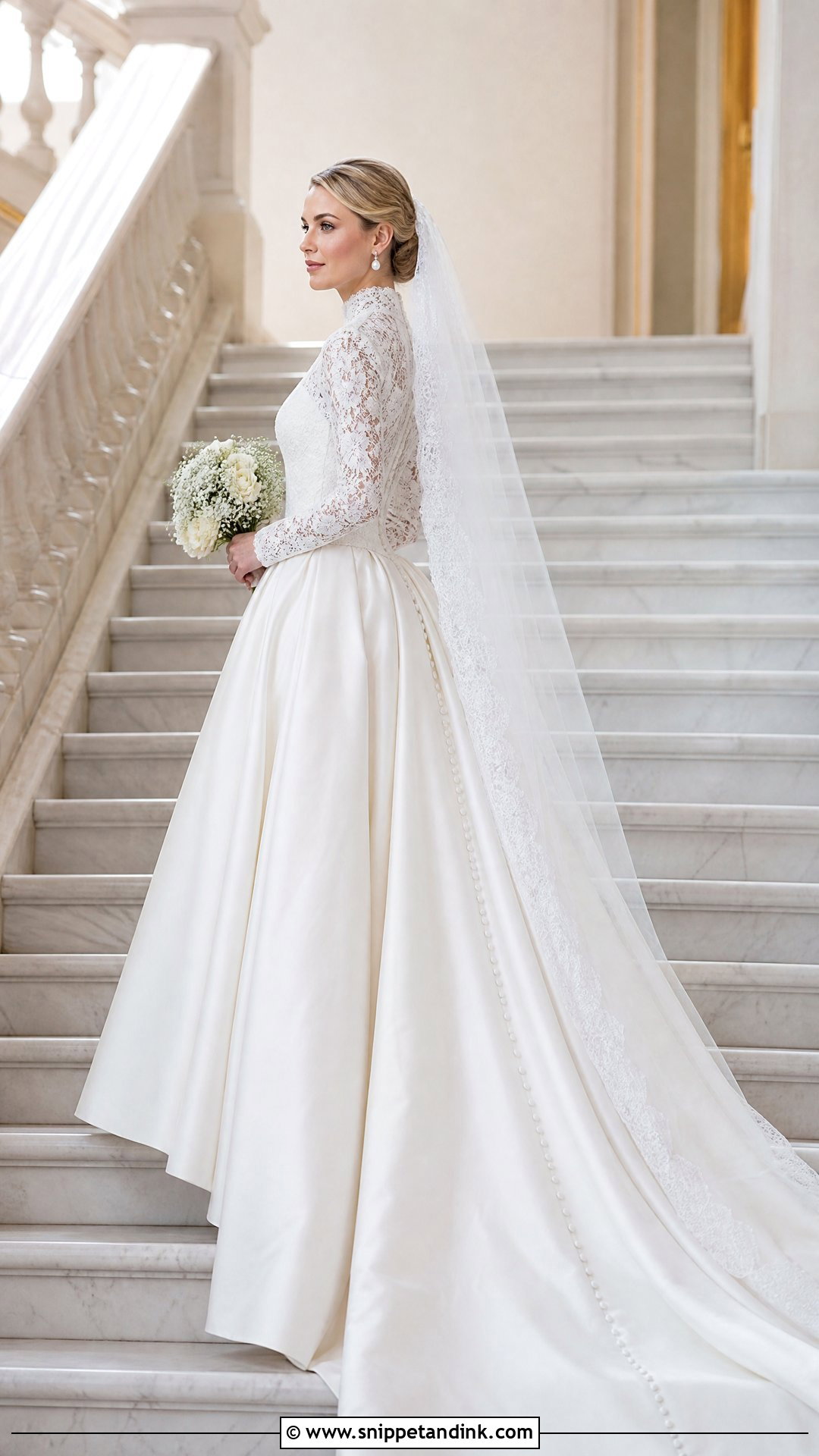
A Grace Kelly-style lace gown pairs full coverage with a sharply defined shape. Choose a high lace neckline, fitted long sleeves, a structured bodice and a full silk skirt, with covered buttons and a long train. Pearl earrings, closed-toe satin heels and a cathedral veil edged in minimal lace go with it, and a neat low bun keeps the neckline and veil clear. White roses or lilies are formal enough without hiding the bodice. What separates a good copy from a poor one is lace matching. I ask the seamstress to line up the motifs at the shoulders, cuffs and center seams, because a flower cut in half at the shoulder shows in every close-up. Stretch lining and discreet support keep it comfortable.
Shapewear and Petticoats That Each Silhouette Needs
Every era in this list was built over its own foundation, and the wrong underwear can undo the shape of the right dress. Bring the actual pieces to every fitting, because a hem or waist pinned without them will be off on the day.
Victorian and Edwardian
A supportive longline bodice or a corselet sewn into the dress gives the period waist without lacing you in. It also stops a high lace collar from being pulled down by the weight of the skirt.
1920s through 1930s
Smooth and flat is the rule. Laser-cut briefs with no edges and a minimal bra or stick-on cups, because a bias cut or a beaded column shows every edge underneath.
1950s and 1980s volume
Full skirts need a petticoat or crinoline, chosen with the dress so the lengths match, and a strapless longline bra to anchor the bodice. Wear the petticoat when you practice walking; it changes your stride.
After the wedding, send the gown for professional cleaning promptly, before invisible sugary spills oxidize into brown marks. Store it in acid-free tissue in a breathable box, away from light. Plastic garment bags trap moisture and yellow old fabric faster than anything.
One Era, One Detail, and a Dress You Can Dance In
Old-school dresses work when one recognizable detail meets modern construction. Pick the era that suits your personality, your venue and the formality you want, then plan the whole outfit around it: veil, shoes, jewelry, hair, bouquet and coverage for the season. An original gown brings history and handwork no new dress can copy, while a vintage-inspired one gives you wider sizing, stronger fabric and easier alterations. Whichever you choose, put movement and support first. Good tailoring will do more for you than any amount of decoration, and one clear historical direction keeps the look personal without tipping into costume.
You'll Like These Ideas:





Leave a Reply